
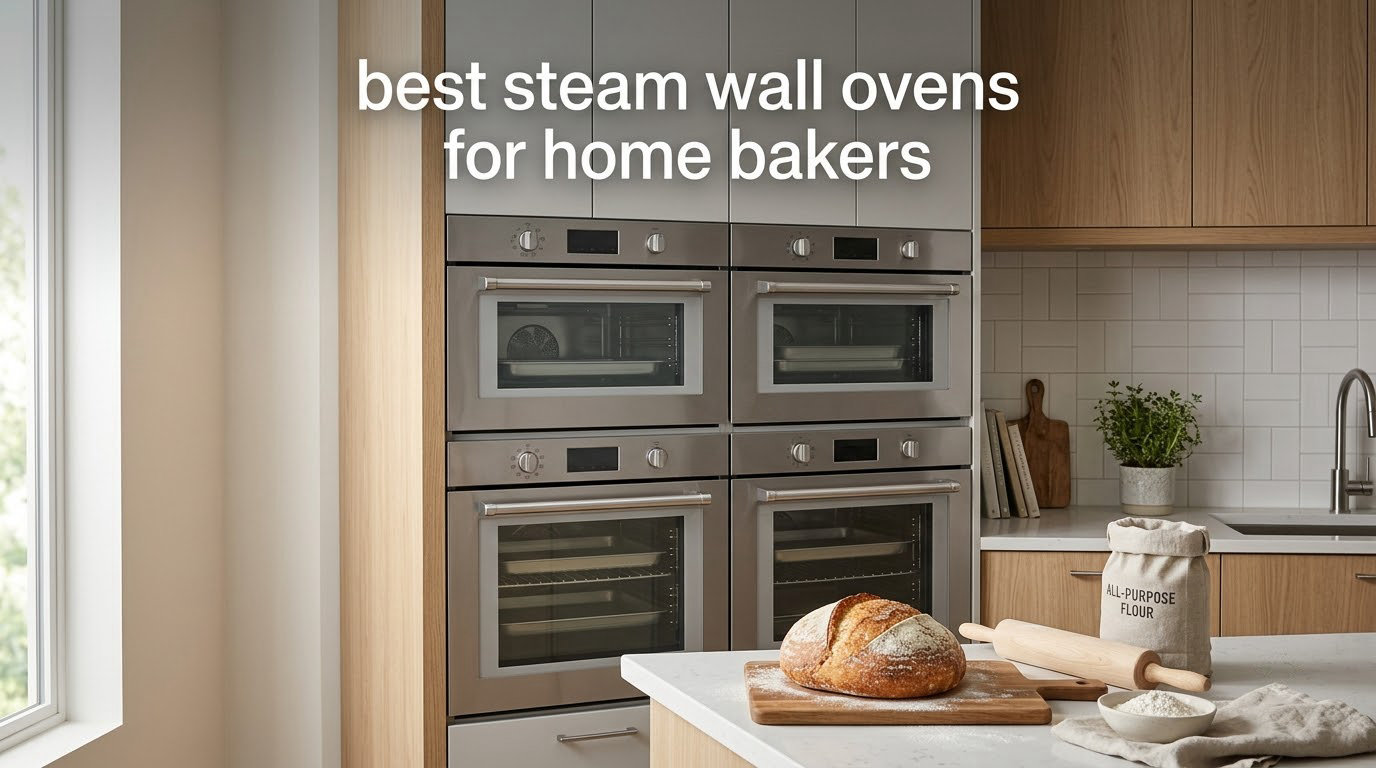
A steam wall oven is a built-in kitchen oven with a dedicated steam generator that injects controlled humidity into the cavity during cooking, so bakers can add moisture on demand for better oven spring, glossier crusts and a lighter crumb without covering dough in a Dutch oven. That is the whole idea, and it is the reason the best steam wall ovens for home bakers sit at the top of everyone’s wishlist.
Before we go further, an honest disclosure. We spent a long stretch researching this category and the number of genuinely available steam wall ovens with verifiable owner feedback is small. There are countertop steam ovens, combi speed ovens and cookware brands that get mixed into search results for this term, and they are not the same thing. A wall oven is built into a cabinet cavity, hardwired to a 240V circuit, and its steam function is a first-class cooking mode rather than a pan of water on the oven floor. Everything below is a real built-in steam wall oven.
That said, the owner feedback on several of these is thin. Some carry fewer than a half-dozen ratings. Rather than pad this list with countertop appliances that fail the wall oven qualifier, we picked only real built-in units and we told you exactly how much real-world evidence sits behind each one. For a broader look at steam appliances beyond the built-in category, our guide to the best steam ovens covers countertop models too.
Top 3 Picks: Steam Wall Ovens for Home Bakers in 2026

Garvee 24 Inch Steam and Convection Oven
- 2.5 cu.ft built-in steam wall oven
- 3D convection with dual high-output heaters
- 8 modes plus 108 smart recipes
- Stepless 1°F temperature adjustment

Samsung NV51K6650DG Steam Cook Double
- 5.1 cu.ft across two cavities
- Dual convection with Steam Cook
- Wi-Fi and voice control
- Self Clean cycle

ROBAM CQ762 Combi Steam Oven
- 13 cooking functions plus 5 auxiliary
- High-temperature steam to 300°F
- 1.2L reservoir for 60 minutes of steaming
- 50 preset automated recipes
The Garvee leads this list for a reason that has nothing to do with a spec sheet: it is the only steam wall oven in the group with a review base large enough to actually learn from. At 23 ratings it is the best-documented unit here, and it holds up on the two things a baker cares about most, a stepless 1°F temperature dial and a steam-assisted bake that runs to 482°F.
The Samsung NV51K6650DG pairs a 4.7-star average with two independent cavities, which changes what a weekend bake looks like. The ROBAM CQ762 is the specialist, a 30-inch combi steam oven whose whole design brief is steaming, with 13 cooking functions and a reservoir that covers a full hour of continuous steam.
Best Steam Wall Ovens Compared in 2026
| Product | Specifications | Action |
|---|---|---|
| Garvee 24 Inch Built-in Steam and Convection Oven |
|
Check Latest Price |
| Samsung NV51K6650DG 30 Inch Double Wall Oven |
|
Check Latest Price |
 Garvee 24 Inch Steam Electric Combo Wall Oven Garvee 24 Inch Steam Electric Combo Wall Oven |
|
Check Latest Price |
 PtioHavn 24 Inch Electric Steam Wall Oven PtioHavn 24 Inch Electric Steam Wall Oven |
|
Check Latest Price |
| ROBAM CQ762 30 Inch Combi Steam Oven |
|
Check Latest Price |
 Samsung NV51K7770DG Flex Duo Double Wall Oven Samsung NV51K7770DG Flex Duo Double Wall Oven |
|
Check Latest Price |
Two patterns jump out of that table and both matter for a baker. First, every one of these is an electric 240V built-in oven, so the electrical conversation is identical across the whole list. Second, the cavity sizes fall into two distinct camps, a 2.5 cu.ft compact group and a 5.1 cu.ft double group, with the ROBAM sitting oddly in between at 1.7 cu.ft.
1. Garvee 24 Inch Built-in Steam and Convection Oven, Best Documented for Baking
Garvee 24 Inch Built-in Steam & Convection Oven with 8 Cooking Functions, 108 Smart Recipes, 2.5 Cu.ft Stainless Steel Convection Oven with Enamel Cavity, Touch Control, Stepless Temperature Adjus
2.5 cu.ft enamel cavity
3000W plus 3500W heaters
Stepless 1°F control to 482°F
8 modes
Pros
- Largest review base in the set at 23 ratings
- Stepless 1°F adjustment is unusually precise for a compact wall oven
- Dual high-output heaters of 3000W and 3500W drive fast preheat
- Enamel cavity with laser-welded seams wipes clean
- Bake and steam-bake range reaches 482°F
Cons
- Specification sheet lists no timer function
- 4.1-star average with roughly 9 percent one-star ratings
- Installation depth of 26.89 inches is deeper than a typical 24-inch cabinet
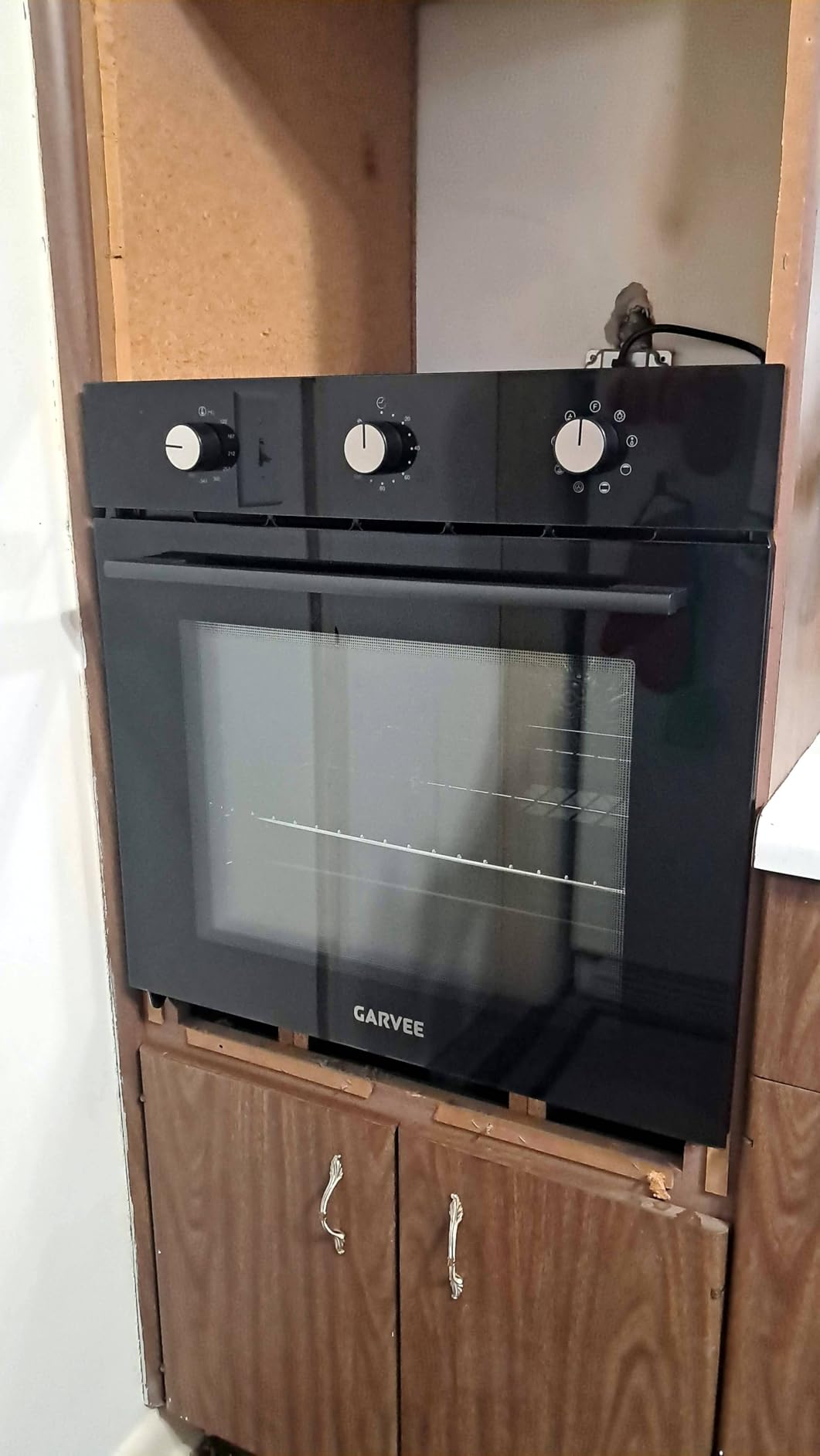
This is the one I keep coming back to, and the reason is evidence rather than excitement. Twenty-three ratings is not a huge sample, but it is roughly ten times the real owner feedback available on any other built-in steam wall oven we could verify, and across that sample the same things keep getting praised: how much fits inside, and how evenly it heats.
The heating hardware is the story for baking. A 3000W lower element paired with a 3500W upper element is serious output for a 2.5 cu.ft cavity, and combined with the 3D cyclic convection that is a preheat you will notice on a Saturday morning. Most of these ovens are still coming to temperature when you have already scored your loaf.
The stepless temperature control is the sleeper feature. It adjusts in 1°F increments from 212°F to 482°F, with the steam function itself available from 140°F to 230°F and the combined bake and steam-bake range from 212°F to 482°F. When you are proofing a dough and then want to shift into a damp 450°F bake, being able to land on the exact number rather than hunting through a five-degree menu is a real workflow improvement.
Eight modes cover the baking essentials, including Bake, Convection Bake, Pizza, Keep Warm and Air Fry. The 108 smart recipes are mostly useful for beginners who want a guided starting point, though experienced bakers will find their own two modes faster once they know this oven.
The enamel cavity is laser welded, which means there are no exposed seams to trap flour dust. For a bread kitchen that matters more than it sounds, because ordinary baked-on carbon in a conventional cavity is the single biggest reason bakers end up scrubbing.
What the 2.5 cu.ft cavity means for your bake schedule
Two and a half cubic feet is compact by built-in standards, and it is the honest tradeoff here. It fits one Dutch-oven-sized loaf, a couple of sheet-pan loaves, or a full pizza on a stone, but it will not let you bake a large batch of rolls and a braise at the same time.
For a single baker working one dough at a time, that constraint rarely bites. It becomes a real problem only if you are running a holiday baking marathon where everything needs to come out of one oven in one cycle.
The five rack positions are the number to pay attention to rather than the cubic footage alone. Five positions in a compact cavity means you can stagger racks for even browning across two loaves, which is the setup that matters for crust color.
Where the specification sheet needs reading twice
The product specification lists the timer function as not available, even though the control panel is a full touch interface with keep-warm and eight program modes. If you plan to set a long proof overnight, verify the controls before you commit.
It also lists no warranty, which is the real reliability question with this oven. The 4.1-star average and the roughly 9 percent one-star share tell you most owners are satisfied and a few are not, and with no written warranty on the record, long-term parts support is something to confirm directly with the manufacturer.
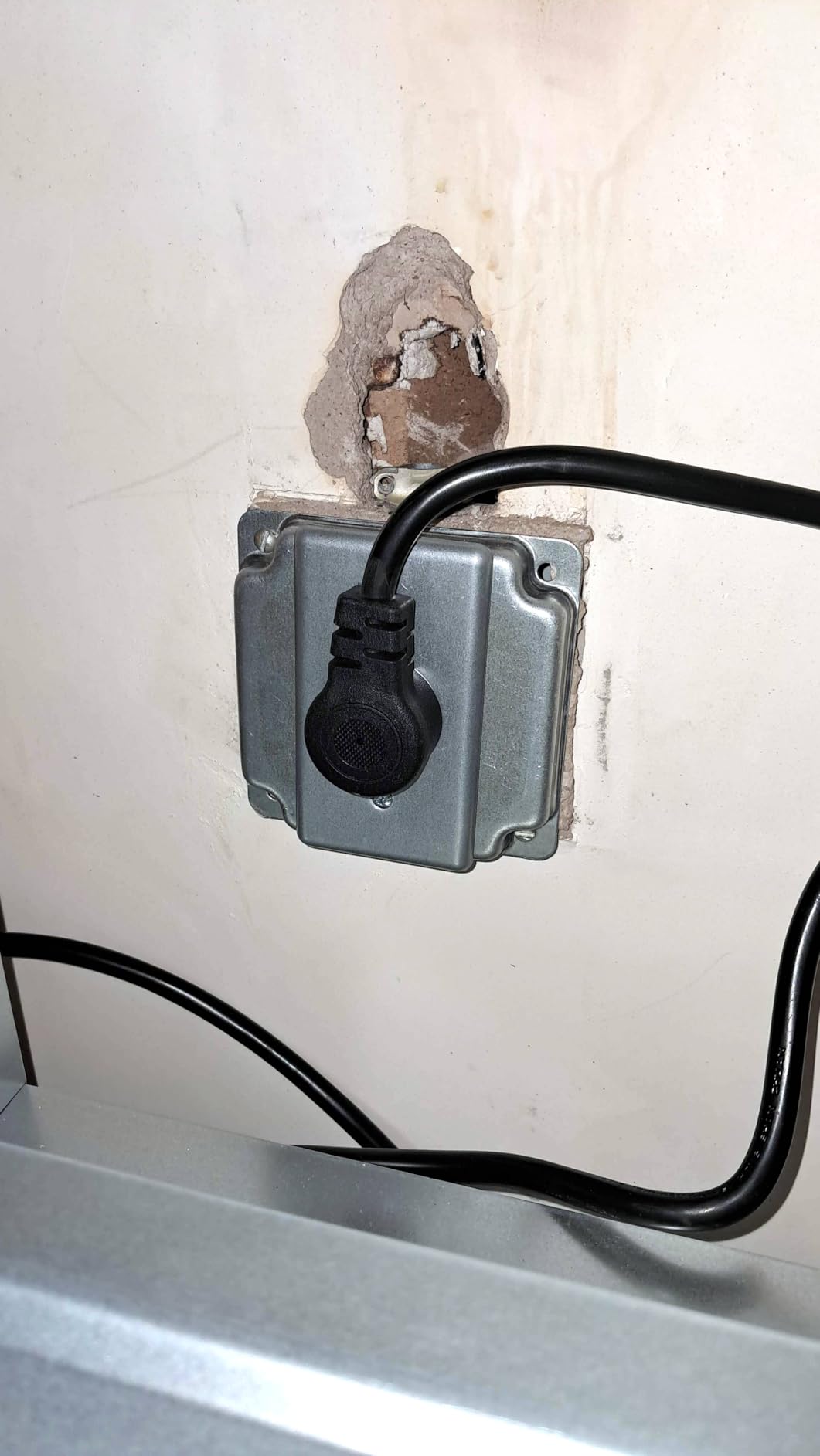
Finally, the 26.89-inch installation depth is deeper than the 23.4-inch figures typical of a 24-inch cabinet opening. Measure your cutout before ordering.
2. Samsung NV51K6650DG 30 Inch Double Wall Oven, Two Independent Cavities
SAMSUNG 30″ Smart Double Wall Oven w/Steam Cook, Wi-Fi, Large Oven Capacity, NV51K6650DG/AA, Fingerprint Resistant Stainless Steel, Black
5.1 cu.ft in two cavities
9300W dual convection
Steam Cook mode
Wi-Fi and Self Clean
Pros
- Two independent cavities let you bake at two temperatures at once
- 5.1 cu.ft total handles large holiday bakes
- Steam Cook plus dual convection for even browning
- Self Clean cycle handles grease burn-off
Cons
- Only 15 ratings for a major appliance
- One owner reports a component failure with very high repair cost
- Service access is difficult once the unit is wall-mounted
This oven holds a 4.7-star average across 15 ratings, the strongest average among the conventional wall ovens in this group, and the reason for its high placement is not subtle: it is one of two picks that give you two separate ovens in one 30-inch cabinet, and the simpler of the two. The upper and lower cavities heat and cook independently, so a bread bake and a dessert can run side by side at different temperatures.
For a home baker that changes the maths on entertaining. A 5.1 cu.ft total cavity is close to double the compact units, and the split means you are not choosing between a big batch of rolls and a cake that needs a gentler heat.
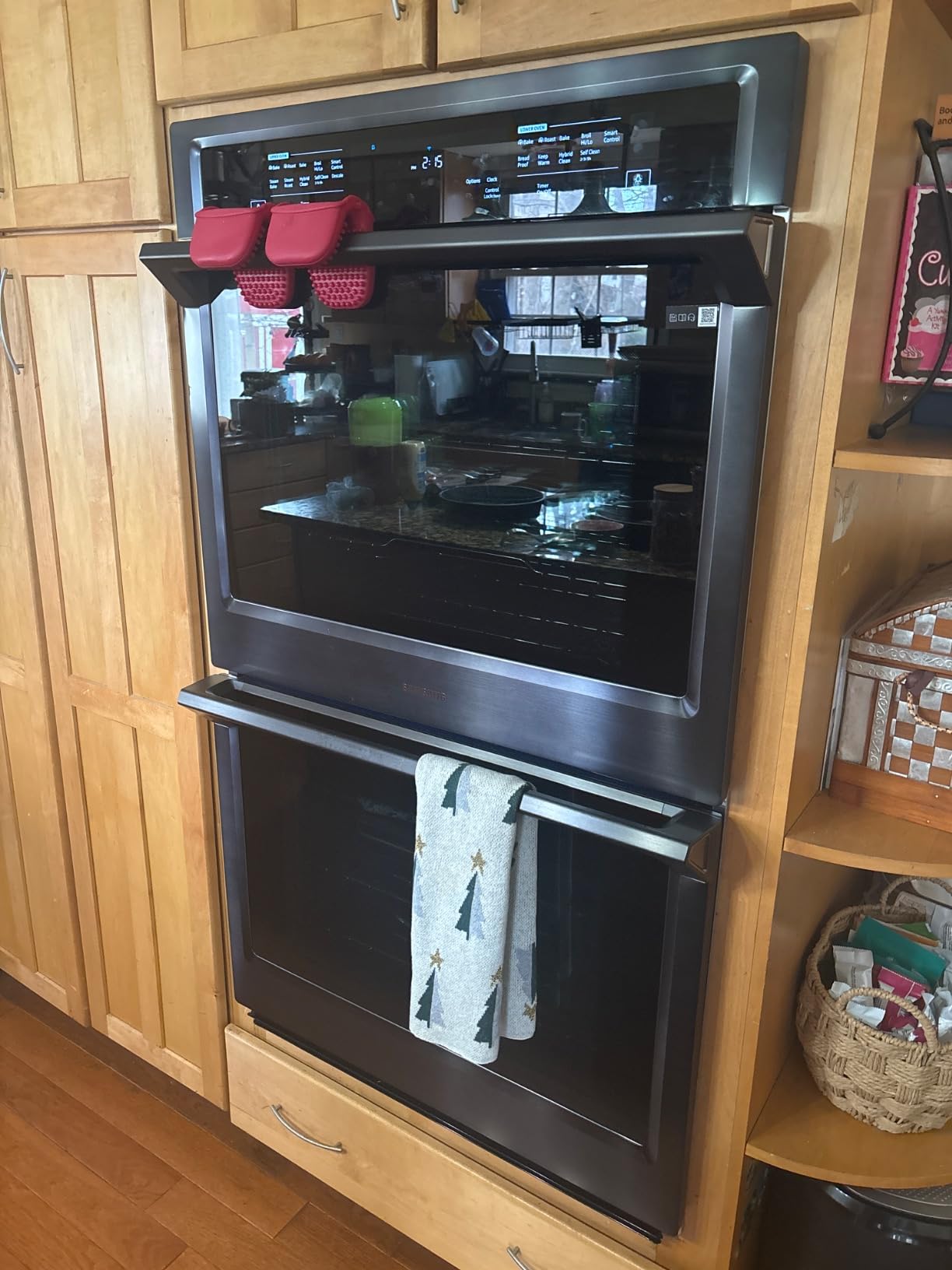
Steam Cook is the moisture mode here, and the way it is described is telling. Rather than a humidity percentage dial, it delivers a defined burst of moisture during the cooking, which is closer to the Dutch oven effect than to a full combi steam system. That is a meaningful difference from the ROBAM later in this list.
Dual convection runs in both cavities and handles the even browning that matters for a loaf with a strong top heat element. The 9300W rating gives the preheat speed you want when you are trying to bake two things in a fixed window.
SmartThings app control and voice control through Bixby, Alexa or Google are genuinely useful for a long bake. You can start a bread program and walk away without living in front of the oven.
Why two cavities beat one big cavity for baking
A single large cavity forces one temperature on everything inside it. Two independent cavities mean your levain-heavy sourdough can bake at full heat while a laminated pastry or a delicate cake holds at a lower temperature in the other chamber.
It also solves the batch problem the compact ovens cannot. A 5.1 cu.ft split across two chambers still holds a real holiday bake, and both chambers can run the same program if you need a double batch at one temperature.
The one caution is airflow. Because a divider splits the cavity, a very large single loaf needs to sit in one chamber, so check that the chamber’s internal height suits your banneton before committing.
The service problem nobody mentions until it happens
Fifteen ratings for a major appliance is a thin base, and one owner reports a combination microwave component failure with very high repair costs. The broader point stands regardless of that single account: once a double wall oven is installed, getting a technician to it is harder than for a freestanding range.
Service access is the real con here, and it is the one we would weigh most heavily in a kitchen where cooking is a daily necessity rather than a weekend hobby. Confirm that a regional service network covers your address before you finalize the installation quote.
The Self Clean high-temperature cycle is a genuine plus after a week of bread baking, since it burns off flour and grease without you scrubbing an enamel or steel cavity by hand.
3. Garvee 24 Inch Steam Electric Combo Wall Oven, Best for Compact Kitchens
Garvee 24 Inch Built-in Steam Electric Oven Combo, 2.5 Cu.ft Convection Wall Oven, 5 Cooking Modes, Steam Function, Triple-Layer Glass, Easy Clean Interior, Timer & Safety Lock, Silver
2.5 cu.ft cavity
2000W rated power
Triple-layer glass door
Steam Clean mode
Pros
- Compact 22.43-inch depth fits tighter cabinet openings
- Ten-in-one mode list covers Steam and Steam-Bake modes
- Re-engineered water tank cuts maintenance and improves steam delivery
- Enamel liner with a dedicated Steam Clean mode
Cons
- Only 4 ratings available
- One buyer reports the height did not match the existing opening
- Shortest warranty in the set at 30 days
This is the smallest, simplest oven on the list and the one built for the situation most of us are actually in, a condo kitchen, a secondary kitchen, or a cabinet opening that will not take a full-size appliance. At 22.43 inches deep it is the most forgiving installation of the group.
The mode list is genuinely broader than the spec sheet number suggests. Ten-in-one covers Steam, Steam-Bake, Air Fry and Grill alongside the conventional baking modes, and for a baker the combination of a steam mode and an air fry mode in the same cavity is useful for finishing a loaf or crisping a topping.
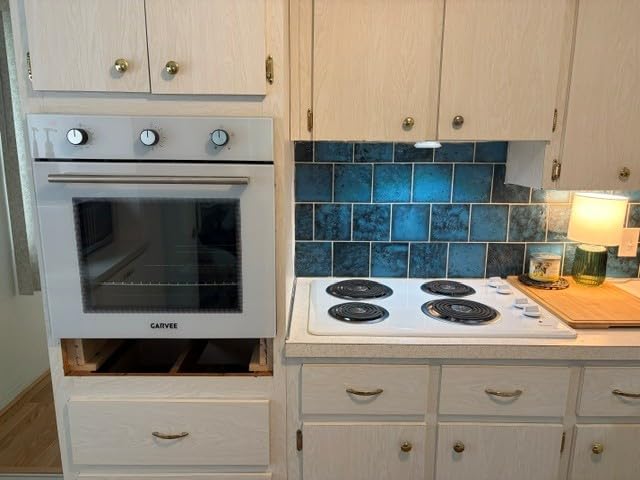
The re-engineered water tank is the detail that separates this from the first Garvee in the list. Removing the reed switches and float components from the tank design reduces the number of moving parts that can fail, and buyers specifically note that it improves steam delivery reliability.
Steam Clean combined with the enamel liner is the low-effort cleaning story. It will not replace a proper deep clean, but it makes weekly bread baking much less of a chore than scrubbing a steel cavity with flour baked into the corners.
Five-tier adjustable racks in a 2.5 cu.ft cavity is a well-used layout, and the listing notes the rack spacing accommodates a 15 lb turkey, which is a fair proxy for how much you can fit vertically.
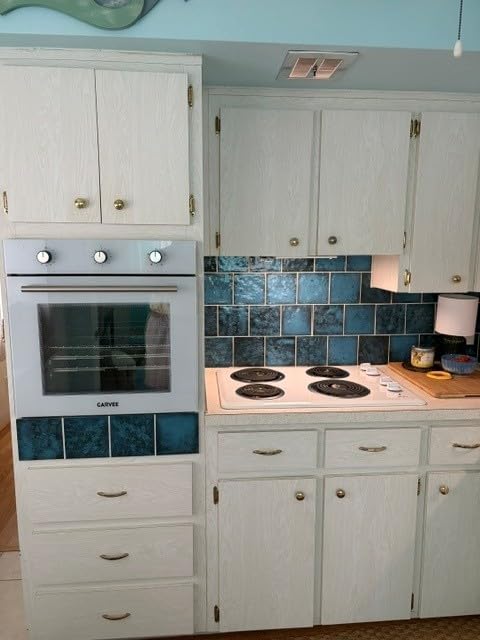
What you get and what you give up in a compact oven
You get the build-in form factor, a real steam function, a triple-layer door that stays cool to the touch, and a footprint that will fit more kitchens than anything else here. What you give up is capacity for large batches and the deeper cavity that lets tall loaves rise without crowding the top element.
Buyers with this oven report quick, even heating and precise temperature holding, which are the two properties that decide whether a crust browns properly. One owner specifically notes good sourdough results from the steam mode, which is the closest thing to a direct baking endorsement in this entire dataset.
At 2000W rated wattage it does not preheat as aggressively as the 3000W and 3500W dual-element units. If you bake on a schedule, plan a longer preheat.
Two things to verify before you order
One buyer reports that the delivered height did not match the existing cabinet opening. The listed dimensions are 22.43 inches deep by 23.43 inches wide by 22.64 inches high, so measure your opening against the actual unit rather than the nominal 24-inch size.
Another buyer disputes the convection claim, describing air movement outside the oven box rather than circulating food heat. If even browning is your priority, the 3000W models with clearer convection specs are the safer bet, and this is worth asking the manufacturer directly.
The 30-day manufacturer warranty is the shortest here, and with only 4 ratings there is very little long-term evidence to draw comfort from. Treat this one as the value pick for a specific kitchen, not a set-and-forget appliance.
4. PtioHavn 24 Inch Electric Steam Wall Oven, Best Straightforward Controls
PtioHavn 24” Electric Steam Wall Oven 2.5 Cu.Ft 3000W Built In Single Oven
2.5 cu.ft cavity
3000W heating
108 automatic menus
Double-layer glass door
Pros
- 3000W heating system gives fast preheat
- 108 automatic menus suit bakers new to steam modes
- Double-layer glass door holds cavity temperature
- ETL certified with a touch panel safety lock
Cons
- Only 3 ratings and no written review text
- Smallest evidence base in the set
- Verify the 22.8 by 21.8 by 23.22 inch cabinet opening first
What this oven does well is not exciting to read about. It has a 3000W heating system with 3D hot air circulation, a double-layer tempered glass door with a viewing window, a touch control panel with a safety lock, and ETL certification. That is a competent, straightforward wall oven with a steam mode attached.
For a baker, the 108 automatic menus and 8 cooking modes are the practical part. Those menus include steam, baking, steam-assisted cooking and convection, which means a new user can get a decent result before learning how humidity interacts with their dough.
The double-layer door is worth a mention for bread specifically. Retaining cavity heat matters during a long bake, because temperature recovery after you open the door to rotate a loaf is what determines whether you get an even bake or a loaf with a pale band.
Why the simple approach appeals to some bakers
There is a real argument for fewer controls and more presets. A combi oven with humidity percentages and stage programming rewards experimentation, which is rewarding if you enjoy the experimentation and frustrating if you want to bake the same good loaf every Sunday.
An automatic menu approach gives you a repeatable result with one press. For a household that bakes a few loaves a week and mostly reheat and roast, that is the better trade.
The 2.5 cu.ft cavity is listed as fitting a whole chicken, a pizza, bread or casserole dishes, which is a fair description of the usable volume in this class.
The honest limitation is the evidence, not the oven
This oven carries three ratings, a 4.6-star average and no written customer review text at all. That is a small-sample signal, not an owner consensus, and we would be misleading you if we presented it as anything more.
None of the technical claims in that average are independently verifiable from owner reports because there are no owner reports. What you can rely on is the specification set, and on the fact that a double-layer door plus 3000W plus 3D circulation is a sound combination on paper.
The listing does call out one specific instruction worth following exactly: verify a 22.8 by 21.8 by 23.22 inch cabinet opening before installation. The listed unit dimensions are 23.62 inches in each direction, so a snug fit is a real question here. The timer function is available on this model, which is more than we can say for the first oven in this list.
5. ROBAM CQ762 30 Inch Combi Steam Oven, Best Dedicated Steam System
ROBAM 30 Inch Built-in Combi Steam Oven, 1.7 cu.ft, 13 Cooking Functions
1.7 cu.ft / 48L cavity
Steam to 300°F
1.2L reservoir, 60 min steaming
50 preset recipes
Pros
- The only dedicated combi steam system in the group
- 13 cooking functions plus 5 auxiliary modes
- 1.2L external reservoir covers 60 minutes of continuous steaming
- 50 preset recipes flatten the combi learning curve
Cons
- 1.7 cu.ft is the smallest cavity here
- Only 2 ratings
- 220V rating is atypical for US installations
The ROBAM is the only genuinely combi steam oven in this group, and that distinction is worth understanding before you read the rest. Every other pick is a conventional convection wall oven with a steam-assisted mode added. The CQ762 is built around steam as a primary cooking environment, with convection as the partner.
The cavity is 1.7 cu.ft, or 48 litres, and the listing notes it fits multiple layers despite the modest number. Smallest here does not mean unusable for bread, but it does mean a single loaf at a time and careful rack planning for a pastry run.
The 1.2 litre external water reservoir is the practical headline. Sixty minutes of continuous steaming from one fill is far beyond what a compact tank-fed unit offers, and an external reservoir refills without pulling the oven out of the cabinet.
High-temperature steam up to 300°F is a genuinely specialized range. Combined with the 13 cooking functions and 5 auxiliary modes, including fermentation, sterilization, warming, defrost and descaling, this oven covers proofing, steaming and combi cooking in one cabinet.
That fermentation function deserves attention from bakers specifically. A dedicated proof mode with controlled temperature is more useful than a keep-warm setting for a long overnight retard, and having descaling built into the mode list is a hint that the manufacturer expects serious steam use.
When a combi steam oven beats a wall oven with a steam mode
It beats it when your baking is genuinely humid work, steamed vegetables, dumplings, dim sum, whole fish, or bread where you want to control the humidity profile in stages rather than simply adding moisture at the start.
A wall oven with a steam-assisted mode approximates the Dutch oven effect in a single burst. A combi oven can hold a humidity percentage and change it partway through a bake, which is the difference between a good loaf and a very good one for people who care about that difference.
It loses when capacity is the priority. At 1.7 cu.ft you are not baking a full sheet pan of rolls alongside a braised dish, and the 30-inch cabinet width is being used for a smaller cavity than the Samsung doubles manage.
Check the electrical spec and the evidence base
This oven is rated at 220 volts and 3000 watts, which is atypical for a US installation. Before you commit to a remodel, confirm with the manufacturer or your electrician how this unit is intended to be powered, because a voltage mismatch is an expensive discovery to make after the cabinet is cut.
The 5.0-star average is the highest in the group and also the least meaningful, because it comes from exactly two ratings. Judge this oven on its specification set and its 13 cooking functions, not on that number.
The positive note is the 1-year limited parts and labor warranty and a three-layer insulated door with a 3D control panel that pauses automatically when the door opens. That auto-pause matters more than it sounds, since opening a pressurized combi oven mid-program is the fastest way to lose your crust.
6. Samsung NV51K7770DG Flex Duo Double Wall Oven, Best for Two Temperature Zones
SAMSUNG 30″ Smart Double Wall Oven w/Flex Duo, Steam Cook, Wi-Fi, Large Oven Capacity, NV51K7770DG/AA, Fingerprint Resistant Stainless Steel, Black
5.1 cu.ft in two chambers
Flex Duo Smart Divider
Dual convection, Steam Cook
Three racks, Self Clean
Pros
- Flex Duo Smart Divider runs two temperatures with no flavor transfer
- 5.1 cu.ft total with three racks
- Steam Cook plus dual convection for bread and roasts
- App and voice control for monitoring long bakes
- Self Clean and fingerprint-resistant finish
Cons
- One owner reports power failures and a sensor replaced twice
- Same owner found cavity crevices hard to clean and warranty refused
- Only 6 ratings and one of them is a 1-star review
- Product page does not list dimensions
The NV51K7770DG is the feature-max version of the Samsung double oven pair, and the Flex Duo Smart Divider is the reason to choose it over the model earlier in this list. The divider physically splits the cavity so you can cook two dishes at separate temperatures with no flavor transfer between them.
For a baker that is a different capability, not just a bigger oven. Bread at full heat in one zone and a slow-cooked dish at a lower temperature in the other is a genuine multi-task that a conventional wall oven cannot do at all.
Steam Cook and dual convection sit on top of that, and the 5.1 cu.ft total capacity across two cavities with three racks is a lot of baking space for a residential kitchen.
When the Smart Divider earns its cost
It earns it during a hosting weekend, a holiday baking block, or any week when you are producing both bread and a braised main course. The flavor isolation is the real benefit, because a garlic roast in the same oven as a plain loaf will not doom the loaf but will not help it either.
It does not earn it for a solo baker working one dough at a time. If your week is one sourdough and a few rolls, the standard double oven at the top of this list does the same job with a simpler divider.
The 1-year parts and labor warranty matches the other Samsung, which is shorter than the ROBAM’s structural confidence suggests you would want, and shorter than the coverage most premium built-in brands offer.
The durability account you should read before you buy
One owner reports the oven failed to power on reliably and that the sensor was replaced twice within a few years. The same buyer found the cavity crevices difficult to clean and reports warranty support was refused.
That single account is what pulls the 4.2-star average down from what six ratings would otherwise suggest, and it is why this oven sits at six in our ranking rather than higher. With only 6 ratings and one of them a 1-star experience, the sample is too small to dismiss the report and too small to confirm it.
The product page also does not list dimensions, so get the cutout requirement from the installation guide before you plan the cabinet. At 273 pounds this is a heavy unit and the cabinetry around it needs to be built for that.
How to Choose a Steam Wall Oven for Baking
Steam wall ovens fall into three distinct categories, and confusing them is the most common expensive mistake in this category. Get the taxonomy right first and the model choice gets much easier.
Steam-only, combi, or wall oven with a steam mode
A wall oven with a steam mode, which covers the two Garvee units, the PtioHavn and both Samsungs, delivers a burst of moisture during a conventional convection bake. It approximates the covered-Dutch-oven effect. It is the simplest and most forgiving setup, and for most home bakers it is entirely sufficient.
A combi steam oven, which here means the ROBAM CQ762, treats steam as a primary cooking environment alongside convection and lets you control humidity as a variable across the bake. It is the right tool for laminated pastry, steamed dishes and staged humidity bakes, and it carries more mechanical complexity to match.
A steam-only oven, the third category, is rare in the built-in wall oven market and generally cannot reach the high temperatures bread needs. If you are shopping for bread rather than vegetables, skip it.
Plumbed water line or internal tank
Plumbed units, often marketed as DirectWater, connect to a household water line and never run dry mid-bake. They are the right choice if you are doing long or high-volume steaming, and they require a plumber plus a cabinet cutout that accounts for the line.
Tank-fed units, which include all six ovens on this list, use an internal or external reservoir you refill by hand. They install without plumbing, which is a major advantage in a rental, a secondary kitchen or a remodel where a water line is not in scope.
The trade-off is attention. A tank that runs out mid-loaf ruins the bake, and hard water accelerates scale in the steam path.
Temperature ceiling and control granularity
For bread, your oven needs to reach and hold at least 450°F. The Garvee at the top of this list runs its bake and steam-bake range to 482°F with stepless 1°F adjustment, which is the most precise control here.
Pay attention to the adjustment increment. Five-degree steps force you to bake at 450°F or 455°F when your recipe calls for exactly 450°F, and on a loaf that difference shows in the crust.
Cavity size and rack configuration
For a single baker, 2.5 cu.ft is genuinely enough. For batch bakers, holiday production or large laminated pastry runs, the 5.1 cu.ft double ovens are the only ones in this group that will keep up.
Count rack positions rather than just cubic feet. Five positions in a compact cavity lets you stagger two loaves for even browning, which matters more than raw volume.
Controls, connectivity and cleaning
Decide how much you want to fiddle. Automatic menus give repeatable results with one press. Manual humidity control rewards experimentation and demands more of you.
Wi-Fi and app control are genuinely useful for long bakes, and less useful for a 45-minute loaf you are standing next to anyway. Treat them as a convenience, not a differentiator.
On cleaning, a high-temperature Self Clean cycle is the single most valuable feature for a weekly bread baker. It is worth more than a smart panel, because it is the difference between finishing a bake and then scrubbing the oven.
Before you go further, our guide to the best wall ovens covers the non-steam built-in category, and picking the right bakers racks for your new cavity is a smaller decision that pays off immediately.
Baking Bread and Pastry in a Steam Wall Oven
The reason home bakers chase this appliance comes down to one word, oven spring. That is the rapid expansion of dough in the first minutes of a hot bake, when the gases inside the loaf expand and the still-soft crust stretches instead of tearing. Steam delays the crust from setting so you get more expansion and a lighter crumb.
This is exactly what a covered pot does, which is why a Dutch oven works so well. A steam wall oven does the same thing without the 450°F pot in your kitchen, and without the weight and the preheat time a cast iron dutch oven demands.
The steam schedule that home bakers actually use
Steam in the first phase, dry heat to finish. A protocol that circulates in home baking communities runs roughly like this: preheat fully, load the loaf with full steam at 450°F, hold 100 percent humidity for the first 5 minutes, step down to 80 percent for the next 10 minutes, then drop to 30 percent for the final stretch.
That gives you 15 minutes of total steam. The early moisture buys your oven spring, the step-down lets the surface begin drying and setting, and the mostly-dry finish is what produces a crackling, caramelized crust rather than a soft one.
The most common mistake is leaving full steam running the whole bake. Over-steaming is the single most reported complaint from home bakers with steam ovens, and the result is a wet, dense loaf bottom caused by condensation pooling under the dough.
Which oven settings suit which bake
For sourdough, you want maximum heat with staged humidity, which favors an oven with a wide temperature range and manual or staged steam control. The combi approach suits this best, and the stepless control on the top pick in this list is the closest match among the wall ovens.
For baguettes, steam matters more and for longer because the shape is wetter and thinner. These ovens handle baguettes well because the moisture delivery plus convection reproduces the moist-heat phase a bakery deck oven provides.
For croissants and laminated pastry, a combi oven with a fermentation mode is the clear winner, because the lamination depends on precise temperature and the butter needs a controlled warm environment between stages.
For pizza on a stone, high radiant heat and rapid preheat matter most, and dual high-output heaters are what separate the 3000W-plus models from the 2000W compact unit.
When a Dutch oven is still the better answer
If you bake two loaves a month, a good cast iron pot costs a fraction of a built-in oven, requires no installation, and produces an excellent crust. The oven earns its place when you bake weekly, when you want a second cavity for entertaining, or when you also cook a lot of vegetables, fish and casseroles that benefit from steam.
There is also a real argument for a countertop combi steam oven if you rent or cannot remodel. It will not do everything a built-in does, but it gets you real combi steaming without a cabinet cutout or an electrician. That is a reasonable compromise for many bakers.
Installation and Maintenance Reality Check
Every oven on this list is an electric built-in wall oven running on 240 volts, and that is the first constraint to understand. You need a dedicated circuit with adequate capacity, and a shared circuit with a microwave or a second oven is a code problem that a licensed electrician needs to resolve before the cabinet is cut.
Depth is the second constraint and the one most often missed. The compact units here run roughly 22.4 to 23.6 inches deep, while the 24-inch Garvee at the top of this list is listed at 26.89 inches. Standard 24-inch cabinet openings assume around 24 inches. Measure the opening, not the nominal appliance size.
Flush versus proud installation is the third. Some of these units are designed to sit proud of the cabinet face and others are built for a flush fit, and choosing wrong means a visible step or a door that will not open fully.
The 220V rating on the ROBAM CQ762 is a specific call-out. Confirm power requirements with the manufacturer before committing to a remodel involving that unit.
On maintenance, the honest costs are water and descaling. Tank-fed ovens need regular refills, and a long bake or a multi-hour steam session can empty a small reservoir. Over time, mineral scale builds in the steam path, and the ROBAM is the only unit here with descaling listed as a dedicated mode.
Water hardness is the variable most buyers never think about. Hard water accelerates scale, and in a well-water area that means more frequent descaling cycles and a shorter steam path life. A filtration system on the supply line mitigates it, and on plumbed units it is close to essential.
Owners of larger combi ovens report that they consume noticeably more water than smaller ones, which is a genuine ongoing cost if you run long steam services. Confirm reservoir capacity and expected refill frequency before you commit to a unit built for extended steaming.
Finally, serviceability. A built-in wall oven is harder to reach than a freestanding range, and the review data here includes durability and service access complaints on major units. Confirm that a regional service network covers your address, and that the warranty length matches your expected ownership period.
Frequently Asked Questions
Can you use a steam oven to bake bread?
Yes, and a steam-assisted wall oven is the easiest way to get oven spring without a covered pot. Preheat fully, load the loaf at full humidity around 450°F, hold steam for the first 5 minutes, step down to 80 percent for 10 more, then finish mostly dry for a crisp crust. Leaving steam on the entire bake causes condensation and a soggy loaf bottom.
What are the downsides of steam ovens?
The main drawbacks are a thin review base in this category, temperature consistency complaints from some owners, tank refills and descaling maintenance, and installation complexity since every unit needs a 240V circuit and a correct cutout. Over-steaming is the most common home baking error, and it produces soggy loaf bottoms. Plumbed models also require a plumber.
Is a steam bake oven worth it for home baking?
It is worth it if you bake sourdough, baguettes or pizza weekly and want oven spring without a heavy cast iron pot. If you bake a few times a month, a good convection oven plus a Dutch oven will get you most of the way. The steam function matters most in the first 10 to 20 minutes of a hot bake, when the crust is still soft enough to stretch.
Do steam wall ovens need plumbing to install?
Not necessarily. All six models covered here are tank-fed and install without a water line, though a plumber-free installation still requires a dedicated 240V circuit and a correctly measured cabinet cutout. Plumbed or DirectWater models connect to a household line and never run dry, which suits high-volume steaming but adds installation cost and complexity.
Which steam oven is best for baking bread?
Among the models reviewed, the Garvee 24 Inch Built-in Steam and Convection Oven is the strongest all-round bread oven, with stepless 1°F control, a 482°F ceiling and the largest review base at 23 ratings. If your priority is a fully-featured combi steam system, the ROBAM CQ762 offers dedicated combi cooking, 60 minutes of continuous steaming and a fermentation mode.
What brands make the best steam ovens?
The built-in steam wall oven category is thin compared with conventional wall ovens. Among the verified models here, Samsung offers the most capacity with two 30-inch double ovens, ROBAM makes the most specialized combi steam unit, and Garvee covers the compact 24-inch segment with two models. Miele, Wolf, Thermador and Bosch are widely discussed but did not have qualifying built-in steam listings with usable owner feedback at the time of this research.
Conclusion
Six built-in steam wall ovens clear the bar for this roundup, and the honest summary is that capacity and evidence point in different directions. The Samsung doubles give you the most baking space and the strongest average among the wall ovens here, while the ROBAM and the compact Garvee units give you the most specialized steam hardware per inch of cabinet.
For most home bakers, our pick is the Garvee 24 Inch Built-in Steam and Convection Oven. It is the only unit here with enough owner feedback to judge properly, its stepless 1°F control and 482°F ceiling are exactly what a bread baker needs, and the dual high-output heaters solve the preheat problem. Our steam oven guide covers the countertop route if a cabinet cutout is not in your plans.
Bake weekly and want two loaves at two temperatures? Look at the Samsung NV51K6650DG. Do laminated pastry and fermented dough and want real combi control? The ROBAM CQ762, with its fermentation mode and 60-minute reservoir, is the specialist tool. Fitting a condo or secondary kitchen? The compact 24-inch units are the only realistic options.
Whatever you choose, measure the cutout, confirm your 240V circuit, and plan your steam schedule before the first bake. Updated for 2026.