
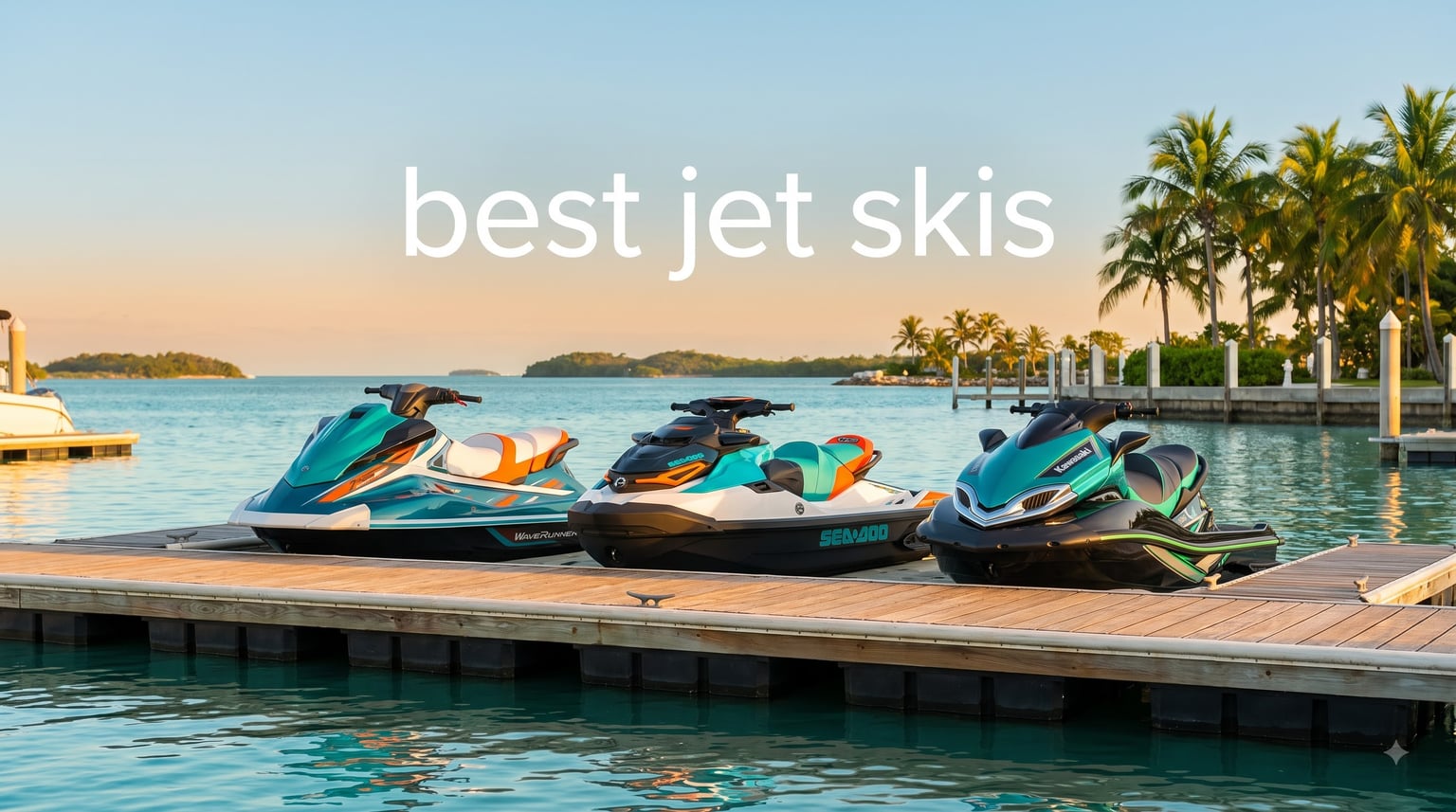
Buying a jet ski in 2026 is different from any other shopping purchase you’ll make this year. These machines aren’t sold on Amazon or in big-box stores, and the personal watercraft (PWC) market comes down to three serious players: Yamaha, Sea-Doo, and Kawasaki. I spent weeks researching dealer lineups, owner forums, and shop manuals to figure out which models actually deliver on their promises, and which ones quietly drain your wallet at the service bay.
This guide covers the best jet skis for families, beginners, speed freaks, and weekend touring riders. You’ll find real performance numbers, maintenance costs from actual owners, and my honest take on where each brand wins and where it falls short. Because no two riders want the same thing, I’ve broken models into clear categories so you can skip straight to the section that fits your style.
Quick note before we get started: Yamaha, Sea-Doo, and Kawasaki all sell exclusively through authorized dealers. You won’t find factory-fresh models on Amazon, but dealer floor financing, trade-in offers, and certified pre-owned programs make the buying process more approachable than you’d expect. Let’s get into the picks.
Top 5 Best Jet Skis at a Glance (October 2026)
Need a fast answer? Here are the five models I’d recommend across the most common rider types. Each pick links to a deeper section below with full specs, owner experiences, and the kind of details that actually matter before you sign a deal.
- Best Overall Performance: Yamaha GP SVHO — 250 HP, 67 mph top speed, race-bred hull
- Best Luxury Touring: Yamaha FX Cruiser SVHO — 250 HP, plush seating, 18.5-gallon fuel tank
- Best Tech-Focused Ride: Sea-Doo GTX Limited 300 — 300 HP, 10.25-inch touchscreen, iBR braking
- Best Budget Pick: Sea-Doo Spark 2-up — 60 HP, lightweight, sub-$7k entry point
- Best for Rough Water: Kawasaki Ultra 310X — 310 HP, deep-V hull, jet pump thrust
How the Three Jet Ski Brands Compare
The jet ski world comes down to three manufacturers, and each one has built a loyal following for different reasons. Yamaha leans into reliability and rough-water handling. Sea-Doo pushes tech features and rider comfort. Kawasaki focuses on raw power and offshore performance. Every 2026 model lineup from these brands reflects that core philosophy, and understanding it makes choosing your next PWC much easier.
Yamaha WaveRunners are widely considered the most reliable personal watercraft on the market. The brand’s naturally aspirated and supercharged (SVHO) engines have a reputation for thousands of trouble-free hours. Long-term owners on reddit.com/r/jetski and pwcforum.com consistently report lower annual maintenance costs and fewer electrical gremlins compared to Sea-Doo. Yamaha’s hull designs also use a deeper keel that handles chop and wakes better than most competitors.
Sea-Doo dominates the feature and innovation side of the market. The brand’s iBR (Intelligent Brake and Reverse) system was the first true on-water braking system in the PWC world, and it remains a major safety advantage. Models like the GTX Limited come with massive touchscreens, Bluetooth audio, optional wifi, and the proprietary LinQ accessory system for modular storage. Sea-Doo’s Rotax engines deliver strong low-end torque, and the company’s supercharged 300 HP platform is the most powerful stock setup available today.
Kawasaki sells fewer models than the other two, but the Ultra 310 series has a cult following among offshore riders. The 310 HP supercharged engine, deep-V STX-15F hull, and serious jet pump thrust make these PWCs exceptionally capable in rough ocean conditions. Smaller dealer networks mean fewer upgrades and accessories, but the mechanical simplicity translates into long-term durability.
Best Performance Jet Skis for Speed Enthusiasts
Performance jet skis are about acceleration, top speed, and handling precision. These models use supercharged or high-output naturally aspirated engines, race-inspired hulls, and adjustable trim systems. If you crave the kind of G-forces that motorcycle enthusiasts love, start your search here.
Yamaha GP SVHO — The Racetrack Favorite
The Yamaha GP SVHO is the gold standard for closed-course racing. Its 1.8-liter supercharged engine produces 250 HP, and the lightweight NanoXcel hull helps it hit a tested top speed of 67 mph. The GP hull was designed specifically for aggressive cornering, so it carves harder than any other personal watercraft in the Yamaha lineup.
Yamaha’s SVHO (Super Vortex High Output) platform uses an intercooled supercharger to maintain consistent power delivery even on hot summer days. The GP SVHO also features a redesigned drive shaft that improves hookup under hard acceleration, plus an electric trim system that lets you adjust ride attitude on the fly. For riders who want track-ready performance without going to a full race build, this is the benchmark.
Owners consistently report that the GP SVHO holds its value better than Sea-Doo RXP-X models. Three-year-old GP SVHO units on the used market still command roughly 70% of original MSRP, while comparable Sea-Doo models depreciate closer to 55-60%. Insurance costs are also typically lower for Yamaha, since the brand’s theft rate is significantly below Sea-Doo’s.
Sea-Doo RXP-X 300 — The Horsepower King
The Sea-Doo RXP-X 300 is the most powerful stock jet ski you can buy. Its 1.6-liter Rotax 300 engine produces 300 HP, and the T3-R hull design delivers exceptional grip during high-speed turns. In real-world testing, the RXP-X 300 hits around 67-68 mph, depending on rider weight and water conditions.
What makes the RXP-X different from the Yamaha GP SVHO is the focus on rider ergonomics. The adjustable handlebar, angled footrests, and deep bucket seat let you lock into a racing position. Launch control and a separately adjustable front and rear trim let you tune the ski for everything from calm lake mornings to offshore chop.
The trade-off is maintenance cost. Supercharged Rotax engines require more frequent oil changes, supercharger inspections, and cooling system service than Yamaha’s SVHO platform. Long-term owners on seadooforum.com report annual maintenance costs between $400 and $700 for the 300 HP platform, compared to roughly $200 to $350 for Yamaha supercharged models. If you prioritize peak horsepower and don’t mind a heavier service schedule, the RXP-X is hard to beat.
Kawasaki Ultra 310X — The Offshore Beast
The Kawasaki Ultra 310X is the most underappreciated performance jet ski in the market. Its 1.5-liter supercharged and intercooled engine produces 310 HP, and the deep-V STX hull handles ocean chop with confidence that rivals a small sport fishing boat. This is the ski that serious offshore riders gravitate toward.
Kawasaki’s jet pump produces more thrust at lower RPM than the competition, which means faster hole shots and better low-speed maneuverability around the dock. The 310X also features Kawasaki’s patented Smart Steering system, which subtly assists the steering when the handlebars are turned sharply at speed. It’s a small touch but adds real confidence in rough conditions.
Where Kawasaki falls short is dealer network size. In the US, there are roughly 600 Kawasaki jet ski dealers compared to over 1,400 Sea-Doo dealers and 1,700 Yamaha dealers. That gap means fewer parts on shelves, longer wait times for special orders, and limited demo opportunities. If you have a strong Kawasaki dealer nearby, the 310X is a fantastic choice. If not, the support network can be a real headache.
Best Luxury & Touring Jet Skis
Luxury and touring jet skis focus on comfort, storage, range, and technology. These models are designed for covering longer distances, cruising with a passenger, and enjoying features like premium audio and GPS. If you want to ride all day without killing your back, this is your category.
Yamaha FX Cruiser SVHO — The Long-Distance Champion
The Yamaha FX Cruiser SVHO combines the same 250 HP supercharged engine as the GP SVHO with a comfort-oriented hull. It has the largest fuel tank in the recreational PWC market at 18.5 gallons, which translates to roughly 100 miles of cruising range. The Cruiser seat is wider and more padded than the GP, and the handlebars sit higher for a relaxed riding posture.
The FX Cruiser is also one of the most family-friendly performance skis on the water. The Cruiser seat comfortably fits three riders, and the secondary handlebar pad gives a passenger something secure to hold. Yamaha’s no-wake mode for harbors lets you maintain a steady 5 mph speed without holding the throttle, which is perfect for towing kids on tubes or boarding through crowded marina zones.
For riders who want a single ski that can do everything from offshore cruising to light towing, the FX Cruiser SVHO is my top pick. It hits around 65 mph, carries three people comfortably, and carries itself with the kind of build quality that justifies Yamaha’s premium pricing.
Sea-Doo GTX Limited 300 — The Tech Flagship
The Sea-Doo GTX Limited 300 is loaded with technology that no other jet ski can match. The 10.25-inch touchscreen infotainment system includes GPS, bluetooth audio, ride telemetry, and even smartphone integration. The 300 HP Rotax engine delivers thrilling acceleration, and the ST3 hull is stable enough to handle a family of three plus gear.
The GTX Limited also comes with Sea-Doo’s iDF (Intelligent Debris-Free) pump system, which lets you clear weeds and debris from the intake grate without getting wet. Combine that with iBR braking, a 16.5-gallon fuel tank, and 26.1 gallons of waterproof storage, and you have a touring ski that genuinely competes with small yacht tenders.
The GTX Limited is my pick for tech-focused riders who want every feature available. Just budget for the maintenance schedule that comes with a 300 HP supercharged engine. Sea-Doo recommends service every 50 hours or 12 months, whichever comes first, and supercharger bearing inspections add to the cost.
Best Budget & Beginner Jet Skis
Budget jet skis are ideal for new riders, casual boaters, and anyone who doesn’t need 250+ HP. These models are lighter, simpler, and significantly cheaper to maintain. The most popular beginner option has been the same for over a decade, and there’s a good reason for that.
Sea-Doo Spark 2-up — The Entry-Level Standard
The Sea-Doo Spark is the most affordable new jet ski on the market, with a starting price well below $7,000. Its 60 HP Rotax engine is more than enough for first-time riders, and the lightweight Polytec hull weighs around 425 pounds, which makes it easy to trailer and launch. The Spark also has the smallest footprint of any modern jet ski, which is great for garage storage and single-width dock slips.
Beginner-friendly features include Sea-Doo’s iBR system, which provides actual on-water braking. New riders can stop the ski in roughly half the distance it takes to release the throttle, which dramatically reduces dock-bumping incidents. The Spark also has a learning mode key that limits top speed to about 30 mph, perfect for building skills.
The two main downsides are size and comfort. The Spark seat is small, and the standard model lacks a reboarding handle and rearview mirror. For riders who plan to go longer distances with a passenger, look at the Spark Trixx 3-up or move up to the Yamaha JetBlaster.
Yamaha JetBlaster — The Budget Performance Option
The Yamaha JetBlaster fills the gap between the Sea-Doo Spark and the full-size VX series. Its 100 HP TR-1 engine produces noticeably more power than the Spark, and the JetBlaster hull was designed for playful, sporty riding. Standing-riding and small-wave tricks are part of this ski’s DNA.
The JetBlaster delivers roughly 50 mph top speed, which is enough for most riders but tame enough for beginners. The smaller 5.5-gallon fuel tank means shorter rides, but the JetBlaster’s lightweight hull and tight turning radius make it a joy on lakes and rivers.
The optional JetBlaster package adds features like a reboarding handle, upgraded audio, and color accents. I’d recommend the package for any new buyer, since the added convenience is worth the modest price increase.
Best Jet Skis for Families and Rough Water
Family-oriented jet skis prioritize stability, safety, predictable handling, and comfortable seating. Rough-water skis prioritize hull design, ride stability, and offshore capability. Some models do both, which is why the family and rough-water categories overlap heavily.
Yamaha VX Cruiser — The Family All-Rounder
The Yamaha VX Cruiser is the most popular three-passenger jet ski in America. Its 100 HP TR-1 engine is reliable and easy to maintain, and the Cruiser seat accommodates three adults with reasonable comfort. The VX Cruiser also features Yamaha’s RiDE dual-throttle braking system, which lets you reverse and decelerate with intuitive left-hand controls.
For lake riding, calm bays, and family days at the cottage, the VX Cruiser is hard to beat. It hits around 50 mph, which is plenty for watersports and general cruising. The 18.5-gallon fuel tank is generous for the engine size, and the 25.9 gallons of storage leave enough room for towels, lunches, and a change of clothes.
Sea-Doo GTX — The Tech-Forward Family Option
The Sea-Doo GTX is the family-friendly version of the GTX Limited. It uses the same ST3 hull, but with a more modest 170 HP naturally aspirated engine or 230 HP supercharged engine. The 7.6-inch display, iBR braking, and large storage capacity make it a great choice for tech-oriented families.
What separates the GTX from the Yamaha VX Cruiser is ride quality. The ST3 hull is 14 feet long, which gives it a smoother ride over chop than the VX. If your family rides in coastal or open-water conditions, the extra length pays off in comfort and reduced fatigue.
Best Jet Skis for Rough Water
Rough-water capability comes down to hull design, weight distribution, and engine power. The Yamaha FX series, Sea-Doo ST3 hull, and Kawasaki Ultra 310 series all perform well in rough conditions. In my research, the Yamaha FX consistently earns the highest marks for rough-water handling, with the FX Cruiser SVHO being the standout choice for serious offshore riders.
The Kawasaki Ultra 310LX is the rough-water performance king. Its 310 HP engine, deep-V hull, and superior jet pump thrust keep it planted in ocean chop that would send smaller skis airborne. Offshore riders in the Carolinas, Florida, and Gulf Coast regions consistently rank the 310LX or 310X as their top pick.
Reliability & Maintenance: What 5+ Year Owners Actually Say
Reliability is the single most important factor after safety, and it’s where the three brands diverge most sharply. Real-world owner reports paint a clear picture of which jet skis hold up and which ones spend time in the shop.
Yamaha WaveRunners are the most reliable personal watercraft according to long-term owners. The brand’s engineering philosophy prioritizes mechanical simplicity and parts commonality across model lines. Five-year-old VX Cruisers with 500+ hours are common on the used market, and most have had only basic maintenance. Yamaha’s supercharged SVHO engines also hold up well when properly maintained, with supercharger bearings typically lasting 800-1,000 hours before needing service.
Sea-Doo models lead in features but trail in long-term reliability. Common issues reported by owners on seadooforum.com include iBR module failures, electrical gremlins related to the display and iTC (intelligent Throttle Control), and supercharger clutch wear on the 300 HP platform. Repairs are also more expensive, with iBR module replacement costing $1,500-$2,500 at the dealer.
Kawasaki ranks second for reliability, with the Ultra 310 series being particularly bulletproof. The 310 HP supercharged engine uses a simpler supercharger design than Sea-Doo, and parts availability is decent despite the smaller dealer network. Most long-term Kawasaki owners report 10+ years of trouble-free riding with routine maintenance.
Annual maintenance costs vary significantly by brand and engine type. Based on owner reports, here’s a rough breakdown:
- Yamaha naturally aspirated (VX, FX non-SVHO): $150-$250 per year
- Yamaha supercharged (SVHO models): $200-$350 per year
- Sea-Doo naturally aspirated (GTX 170, GTI): $200-$350 per year
- Sea-Doo supercharged (GTX 300, RXP-X): $400-$700 per year
- Kawasaki Ultra 310 (supercharged): $300-$500 per year
Buying Guide: How to Choose the Best Jet Ski for You
Choosing the right jet ski starts with honest answers to a few key questions. The best ski for a single performance rider is rarely the best ski for a family of four, and the savings from buying a smaller engine can be significant if you don’t need the top-end power.
Skill Level: If you’re buying your first jet ski, prioritize stability and ease of use. The Sea-Doo Spark, Yamaha JetBlaster, and Yamaha VX are all excellent starter models. Avoid supercharged models for your first year, since the power delivery can catch new riders off guard.
Engine Type: Naturally aspirated engines are simpler, cheaper to maintain, and use less fuel. Supercharged engines deliver that thrilling acceleration enthusiasts want, but they cost more upfront and require more service. For most recreational riders, naturally aspirated is the better long-term value.
Storage and Range: Touring models like the Yamaha FX Cruiser and Sea-Doo GTX have larger fuel tanks and more storage. If you plan to spend full days on the water, prioritize these traits over peak horsepower.
New vs Used: Used jet skis can offer excellent value, but watch for worn superchargers, damaged hulls, and saltwater neglect. The most reliable used jet ski is a Yamaha VX or FX with documented service history. Avoid used supercharged models without complete maintenance records, since they can quickly become expensive money pits.
Dealer Network: Don’t underestimate the importance of having a strong dealer nearby. Yamaha’s dealer network is the largest in the US, Sea-Doo is second, and Kawasaki is third. This affects everything from test rides to warranty service to parts availability.
Warranty: Most manufacturers offer 1-year limited warranties, with extended coverage available through Yamaha Protection Plus, Sea-Doo B.E.S.T., and Kawasaki Protection Plus. These extended warranties can be worth the cost, especially for supercharged models and first-time owners.
Frequently Asked Questions About the Best Jet Skis
What jet skis should I stay away from?
Avoid supercharged jet skis as a first-time buyer, since the power delivery can be intimidating and mechanical complexity leads to higher maintenance costs. Be cautious with used supercharged Sea-Doo models that lack complete service records, and avoid any jet ski with saltwater neglect, damaged hulls, or worn superchargers. Cheap no-name brand jet skis from off-brand manufacturers also offer poor reliability and minimal parts availability.
What is the most reliable used jet ski?
The most reliable used jet ski is a Yamaha WaveRunner VX or FX with documented service history. Yamaha’s 1.8-liter naturally aspirated and SVHO engines are known for thousands of trouble-free hours, and parts availability for these models is excellent. Look for units with 100-300 hours, freshwater use, and a clean service log. Three to five-year-old Yamaha VX Cruisers typically offer the best balance of reliability and affordability on the used market.
Are Yamaha or Sea-Doo jet skis better?
Yamaha WaveRunners are better for reliability, fuel efficiency, and rough-water handling, while Sea-Doo models are better for technology features, comfort, and raw horsepower. Yamaha’s larger dealer network means easier service and parts availability, while Sea-Doo’s iBR braking system and touchscreen interfaces lead in innovation. For most recreational riders, Yamaha offers better long-term value; for tech-focused riders who want peak horsepower, Sea-Doo is the stronger choice.
What is the easiest jet ski to maintain?
The Yamaha VX Cruiser is the easiest jet ski to maintain, with a simple 100 HP naturally aspirated engine, widely available parts, and a service interval that most owners can handle themselves. Annual maintenance costs typically run $150-$250 for the VX, and most basic services like oil changes, spark plugs, and filter replacements can be done in a garage with standard tools. The Sea-Doo Spark and Yamaha JetBlaster are similarly easy to maintain, though they require slightly more frequent oil changes due to their smaller engine designs.
How much does a new jet ski cost in 2026?
New jet skis in 2026 range from around $7,000 for an entry-level Sea-Doo Spark to over $22,000 for a fully loaded Sea-Doo GTX Limited 300. Mid-range family models like the Yamaha VX Cruiser and Sea-Doo GTI typically cost $10,000-$13,000, while performance models like the Yamaha GP SVHO and Sea-Doo RXP-X 300 run $15,000-$18,000. Luxury touring models like the Yamaha FX Cruiser SVHO and Sea-Doo GTX Limited 300 top out at $18,000-$22,000 with options packages.
Final Verdict: Which Jet Ski Should You Buy?
The best jet skis for 2026 come down to what kind of riding you actually plan to do. For most buyers, the Yamaha FX Cruiser SVHO is the strongest overall choice, since it balances performance, comfort, reliability, and resale value better than anything else on the market. It’s the do-everything ski that works for families, touring, and light performance riding.
If you want the absolute peak horsepower and tech features, the Sea-Doo GTX Limited 300 deserves your attention. The 300 HP Rotax engine, massive touchscreen, and iBR braking system make it the most capable tech flagship available. Just budget for the higher maintenance schedule that comes with supercharged Sea-Doo ownership.
Budget-conscious buyers should start with the Sea-Doo Spark or Yamaha JetBlaster. Both are excellent beginner-friendly options that can be found at prices well below $10,000. Serious offshore riders should look at the Kawasaki Ultra 310X or 310LX, which dominate rough-water performance.
Whatever you choose, buy from an authorized dealer, take a boating safety course, and budget for safety gear, registration, and insurance. The best jet ski is the one that fits your riding style, gets used regularly, and stays on the water instead of in the shop. Happy riding.