
When my mother was recovering from lung surgery, her pulmonologist recommended tracking her breathing at home with a spirometer. That experience taught me how powerful these devices are for catching problems early, monitoring chronic conditions, and giving you real numbers to share with your doctor instead of just guessing.
Finding the best home spirometers means sorting through a mix of digital peak flow meters, incentive breathing trainers, and full-featured smart devices. Our team spent weeks comparing 8 popular models, looking at accuracy, ease of use, data tracking, and whether they actually deliver on their promises. We focused on devices that measure key lung function metrics like PEF (peak expiratory flow) and FEV1 (forced expiratory volume in one second).
Whether you are managing asthma, tracking COPD progression, recovering from surgery, or just want to keep tabs on your respiratory health, this guide breaks down what each device does well and who it is built for. Let me walk you through what we found.
Top 3 Picks for Best Home Spirometers September
After testing all 8 devices, three stood out for different reasons. The Microlife earned our editor’s choice for its clinical-grade accuracy and massive 240-reading memory. The TyeinGo takes the best value spot with an impressive 5000ml capacity at a budget-friendly price. And the Breather rounds out the top three as a drug-free respiratory muscle trainer with a companion app.

Microlife Digital Peak Flow Meter
- PEF and FEV1 Measurement
- 240 Reading Memory
- Traffic Light Risk Indicator

TyeinGo Breathing Exercise Device
- 5000ml Volumetric Capacity
- Flow Rate Indicator
- Easy to Clean
The Breather Respiratory Trainer
- Drug-Free Respiratory Therapy
- Guided Mobile App
- Inhale and Exhale Training
Best Home Spirometers in 2026
Here is a side-by-side comparison of all 8 devices we tested. Each one serves a slightly different purpose, from incentive breathing trainers to digital peak flow meters with app connectivity. Use this table to quickly scan features, then dive into the individual reviews below for the full breakdown.
| Product | Specifications | Action |
|---|---|---|
| The Breather Respiratory Trainer |
|
Check Latest Price |
| Microlife Digital Peak Flow Meter |
|
Check Latest Price |
| TyeinGo Breathing Exercise Device |
|
Check Latest Price |
 Nascool Peak Flow Meter Nascool Peak Flow Meter |
|
Check Latest Price |
 AirPhysio Portable Breathing Trainer AirPhysio Portable Breathing Trainer |
|
Check Latest Price |
 CMI Health SpiroLink Peak Flow Meter CMI Health SpiroLink Peak Flow Meter |
|
Check Latest Price |
 Nascool Digital Peak Flow Meter Bluetooth Nascool Digital Peak Flow Meter Bluetooth |
|
Check Latest Price |
 Oxgeda Incentive Spirometer Oxgeda Incentive Spirometer |
|
Check Latest Price |
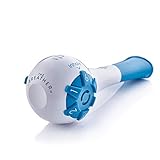
1. The Breather – Drug-Free Respiratory Muscle Trainer
THE BREATHER │ Natural Breathing Exerciser Trainer For Drug-Free Respiratory Therapy │ Breathe Easier with Stronger Lungs │ Guided Mobile Training App Included
Resistance breathing trainer
Inhale and exhale training
Guided mobile app
1.59 ounces
Pros
- Drug-free respiratory therapy
- Guided mobile training app included
- Strengthens respiratory fitness
- Increases oxygen flow and lung strength
Cons
- May require consistent daily use for best results
I was drawn to The Breather because it takes a completely different approach from digital peak flow meters. Instead of measuring your lung output, it works as a resistance trainer for your respiratory muscles. Think of it like a dumbbell workout for your diaphragm and intercostal muscles. You adjust the resistance dials for both inhale and exhale, then follow guided breathing sets.
The companion mobile app is what sets this device apart from other breathing exercisers. It walks you through structured training sessions, tracks your progress over time, and keeps you motivated with visual feedback. I found myself actually sticking with the routine because the app made each session feel purposeful rather than random.
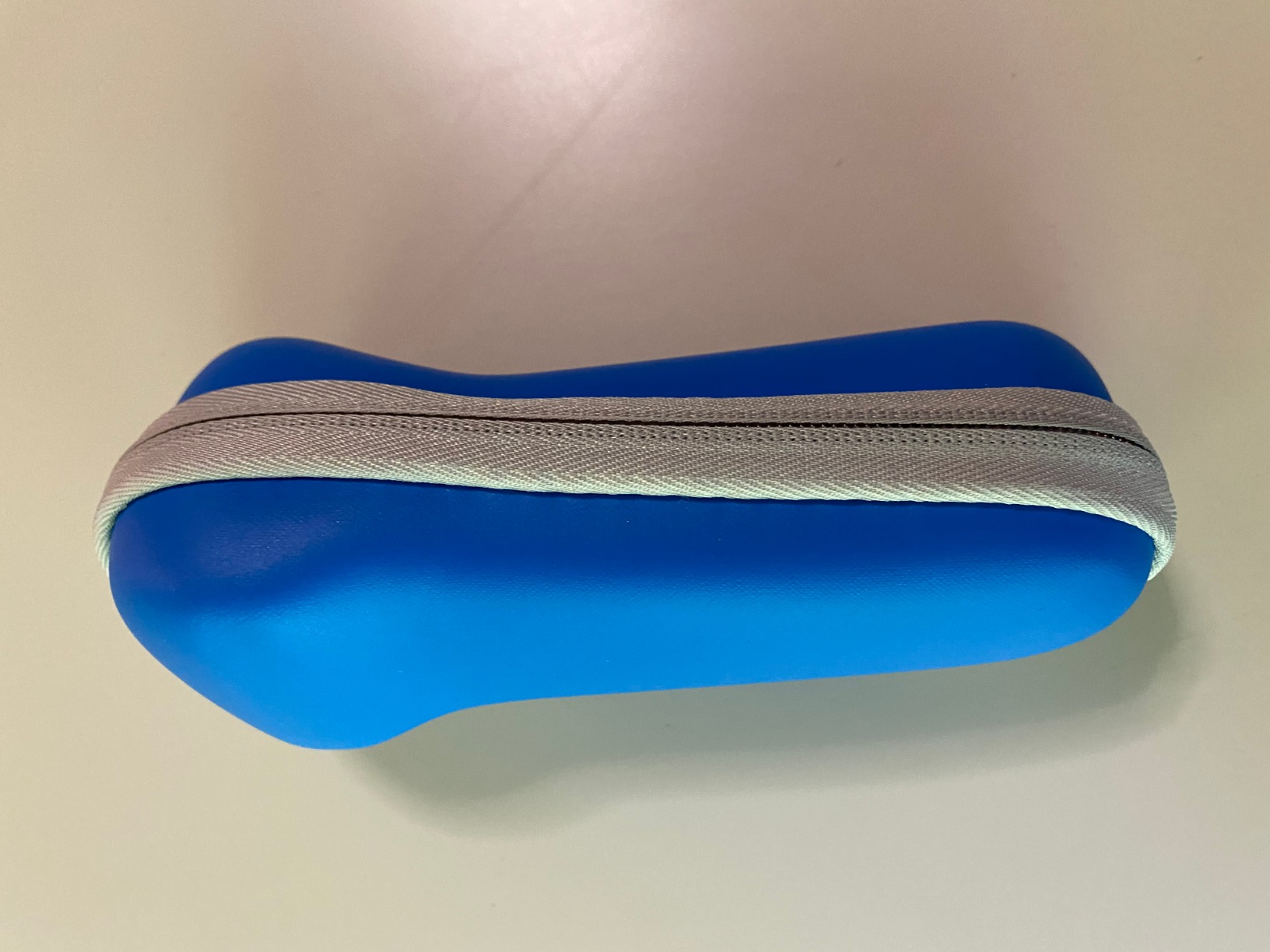
With over 9,100 reviews and a 4.4-star rating, this is clearly a device that has earned trust over the years. PN Medical has been making respiratory therapy devices since 2013, and the build quality reflects that experience. The device weighs less than 2 ounces, so you can toss it in a bag and do your training anywhere.
The main thing to understand is that The Breather is not a diagnostic tool. It does not give you PEF or FEV1 readings. Instead, it is designed to strengthen the muscles involved in breathing over time. People with asthma, COPD, vocal cord issues, and post-surgery recovery needs tend to benefit most from consistent resistance training.
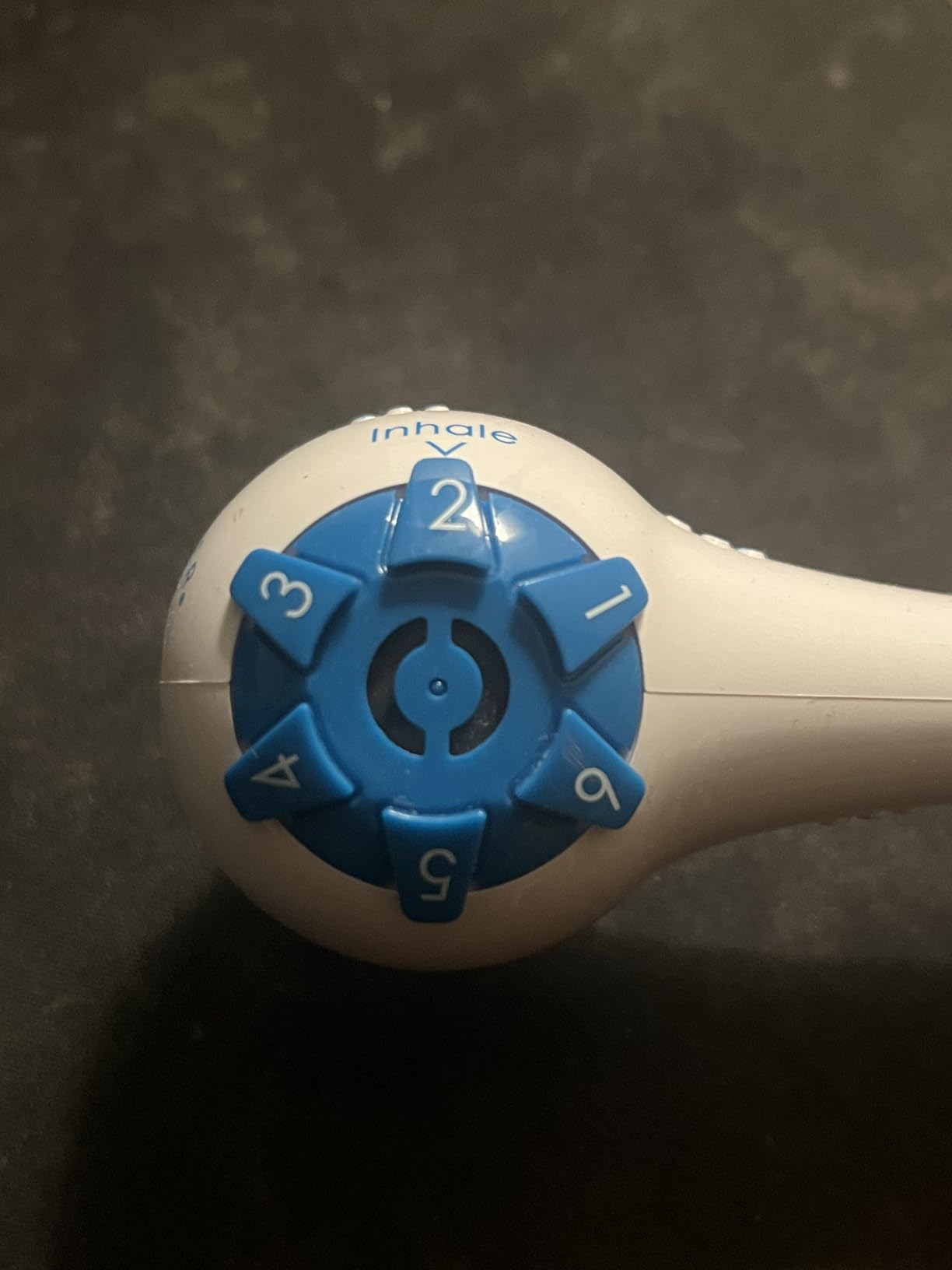
How quickly can you expect results
Most users report noticeable breathing improvements within 2 to 4 weeks of consistent daily use. The key word there is consistent. You need to commit to daily sessions, usually 5 to 10 minutes, to see meaningful changes in respiratory muscle strength and endurance.
The app tracks your resistance settings and session frequency, which helps you see incremental progress that might otherwise go unnoticed. Many reviewers mention being able to increase resistance levels within the first few weeks as their breathing muscles get stronger.
Is it suitable for severe respiratory conditions
The Breather works well as a complementary therapy alongside your existing treatment plan, but it should not replace prescribed medications or your doctor’s guidance. Users with moderate asthma, mild to moderate COPD, and post-surgery recovery tend to see the best results.
If you have severe COPD or acute respiratory distress, talk to your pulmonologist before starting resistance training. They can recommend the right resistance settings and frequency based on your specific condition and lung function baseline.
2. Microlife Digital Peak Flow Meter – Clinical-Grade Home Monitoring
Microlife (Deluxe Kit) Digital Peak Flow Meter Tests PEF / FEV1 / Early Detection of Asthma Attacks | Spirometer for Kids & Adults | Perfect for Monitoring Asthma, COPD & other Lung Conditions at Home
PEF and FEV1 measurement
ATS standards compliant
240 reading memory
Traffic light risk zones
Pros
- Certified accurate for all ages
- PEF and FEV1 measurement with early asthma detection
- Stores 240 readings with date and time stamps
- Free monitoring software included
- Respiratory risk indicator with traffic light zones
Cons
- Some users report durability issues over time
The Microlife Digital Peak Flow Meter is the closest thing you will find to a clinical spirometer for home use. It measures both PEF (peak expiratory flow) and FEV1 (forced expiratory volume in one second), which are the two metrics doctors rely on most for assessing lung function. This is one of the best home spirometers for people who need medically meaningful data.
What impressed me most is the traffic light risk indicator. After each blow, the device displays a green, yellow, or red zone based on your personalized expected values. This makes it immediately obvious when your lung function is dropping, even before you feel symptoms. For asthma and COPD management, that early warning system is genuinely life-changing.
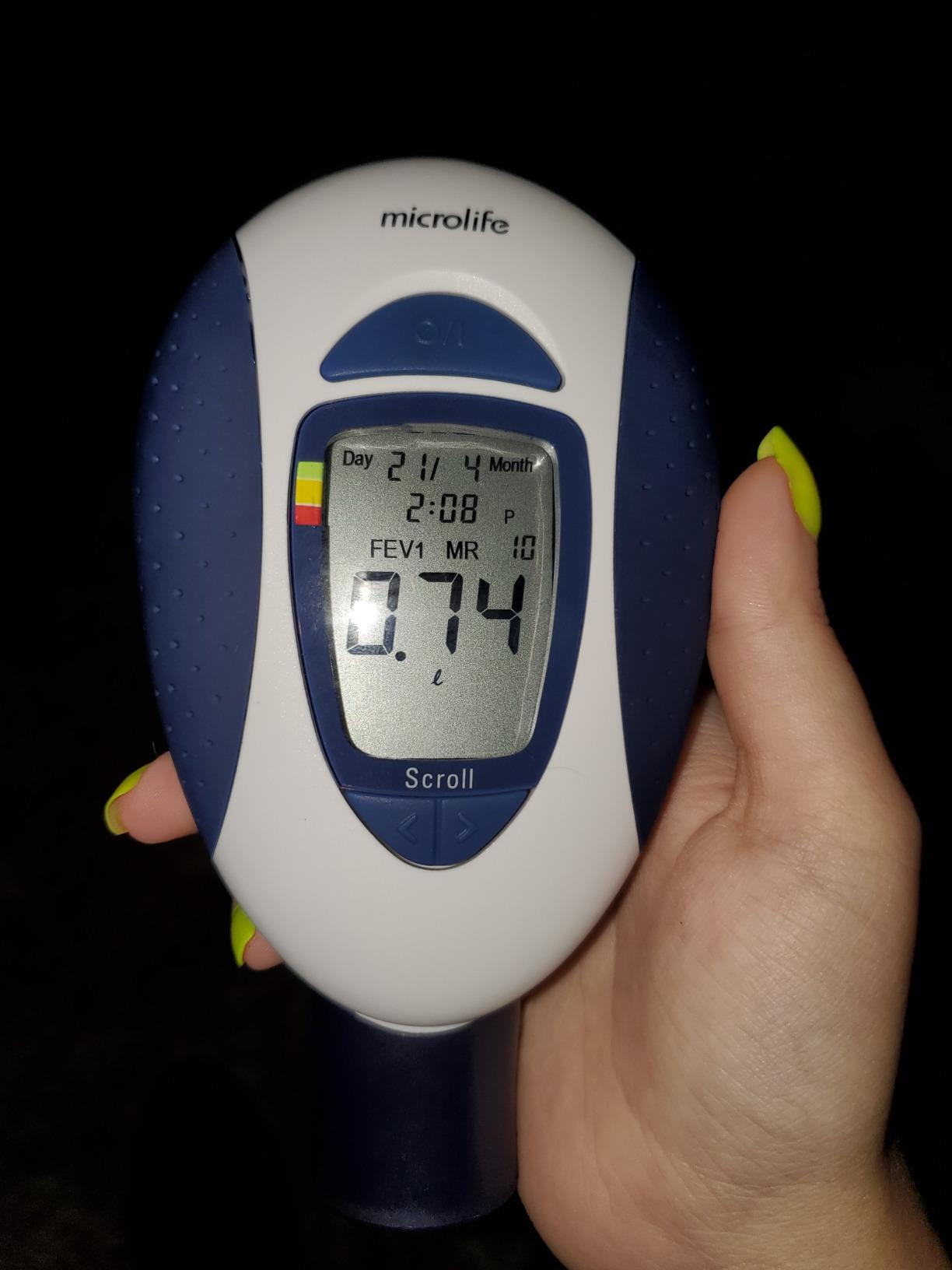
The device stores 240 readings with date and time stamps, so you can track trends over weeks and months. Microlife also includes free monitoring software that lets you download and graph your data. This is exactly the kind of long-term tracking that reddit users in r/COPD and r/Asthma say they wish more devices offered.
It is ATS standards compliant, meaning it meets the same accuracy benchmarks used in clinical settings. The device works for both kids and adults, and the 1,488 reviews averaging 4.3 stars confirm its reliability. Battery life is solid with 2 AAA batteries included, though some users have mentioned durability concerns after extended use.
How does the traffic light system work
The Microlife lets you input your personal best reading or expected values based on your age, height, and gender. Each subsequent reading is then compared to those baseline numbers and assigned a zone. Green means you are at 80 percent or above your best, yellow indicates 50 to 80 percent, and red signals below 50 percent.
This system is particularly valuable for parents of children with asthma. Instead of trying to interpret raw numbers, you get an instant visual indicator of whether your child’s breathing is in a safe range or if it is time to use a rescue inhaler or call the doctor.
Can this replace doctor visits for monitoring
The Microlife provides accurate home data that complements your regular checkups, but it does not replace professional medical evaluation. What it does is give you and your doctor better information to work with between appointments.
Many pulmonologists actually encourage patients to bring their Microlife data logs to appointments. Having weeks of readings helps your doctor spot patterns and adjust treatment plans more effectively than relying on a single in-office measurement.
3. TyeinGo Breathing Exercise Device – 5000ml Volumetric Trainer
Breathing Exercise Device for Lungs, Lung Exerciser Device – 5000ml Volumetric Deep Breathing Trainer with Flow Rate Indicator for Respiratory Health & Recovery
5000ml volumetric capacity
Flow rate indicator
Easy to disassemble and clean
7.37 ounces
Pros
- Large 5000ml capacity for deep breathing training
- Flow rate indicator for controlled breathing
- Easy to clean and disassemble
- Best seller in Breathing Trainers and Monitors
Cons
- Limited stock available at times
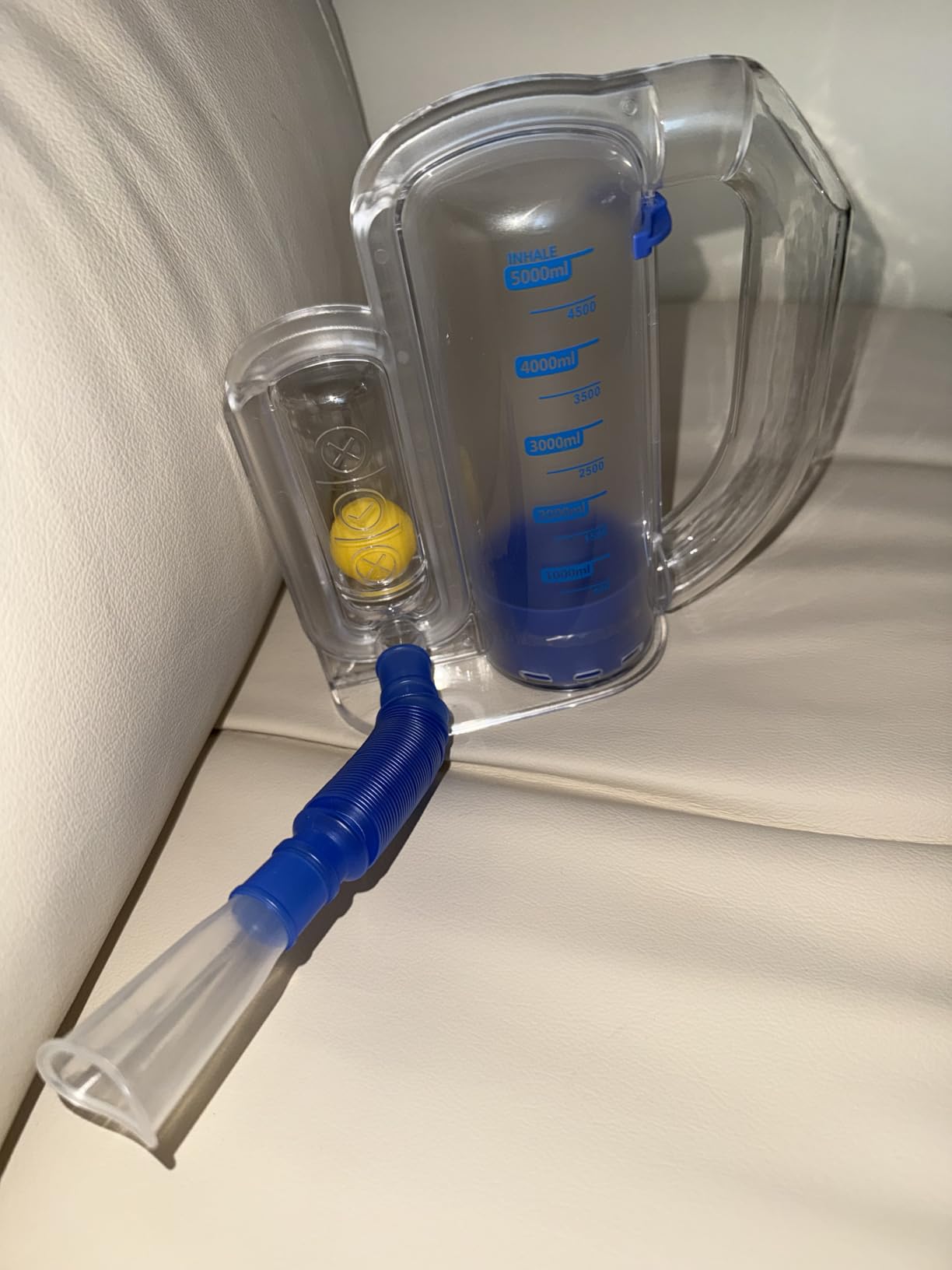
The TyeinGo incentive spirometer is a volumetric breathing trainer with a 5000ml capacity, making it one of the largest volume trainers available for home use. If you are looking for an incentive spirometer that helps you practice deep, sustained breaths, this is the device. It holds the number one spot in the Breathing Trainers and Monitors category on Amazon.
I like how the flow rate indicator gives you immediate visual feedback on your breathing depth and speed. The balls rise as you inhale, and you can see exactly when your breath weakens or falters. This makes it easy to track improvements session by session without needing an app or digital display.
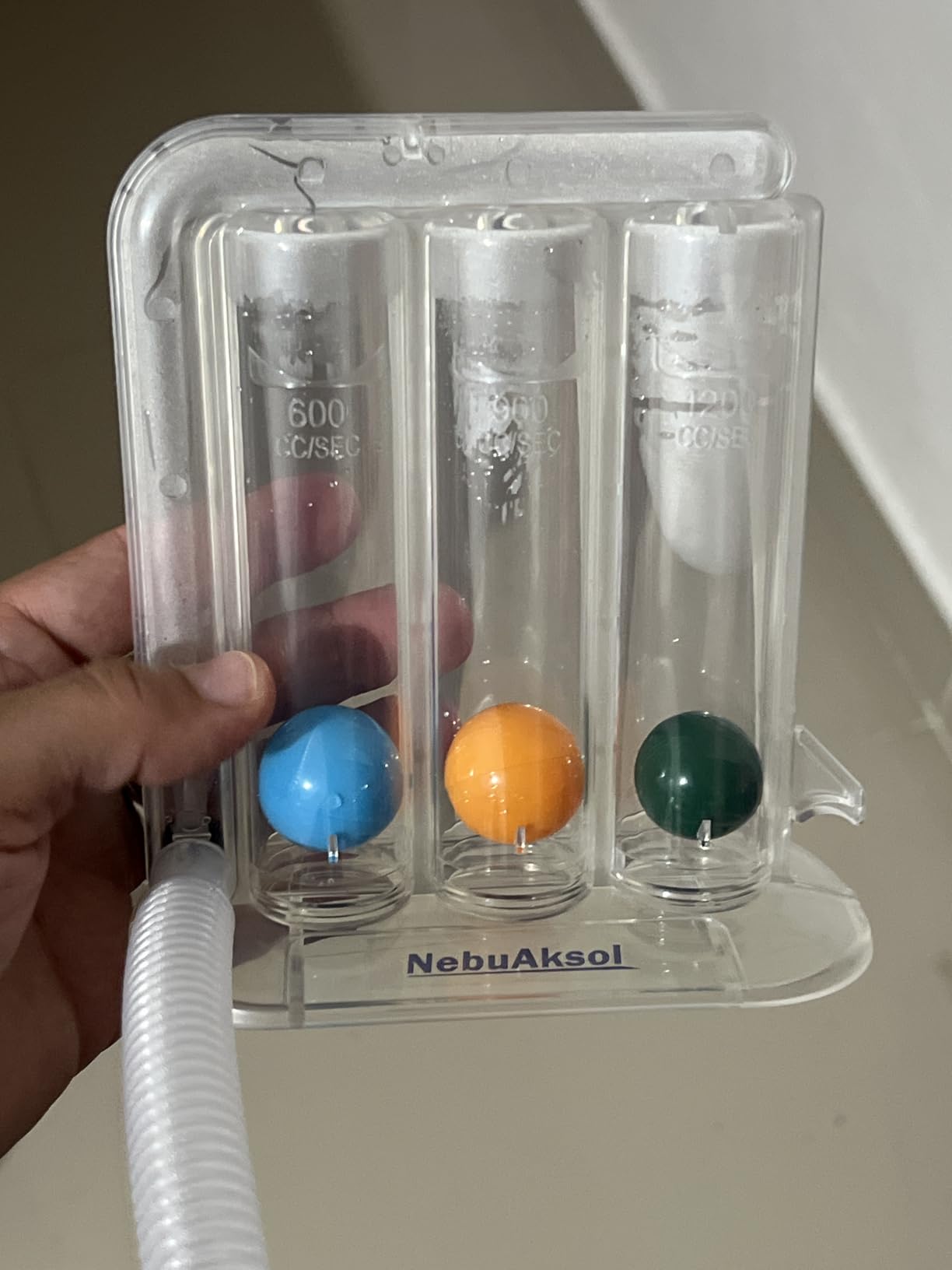
With 1,193 reviews and a 4.6-star average, this device has earned strong customer trust. An impressive 80 percent of reviewers gave it 5 stars. People use it for everything from post-surgery lung recovery to general breathing fitness and athletic conditioning.
The device disassembles easily for cleaning, which addresses one of the most common complaints about incentive spirometers. The flexible tube and mouthpiece can be washed between uses, and the clear volume markings make it simple to set goals for each session.
Is it suitable for post-surgery recovery
This is exactly what incentive spirometers are designed for. After abdominal or chest surgery, your breathing tends to become shallow because deep breaths are painful. The TyeinGo encourages you to take progressively deeper breaths, which helps prevent complications like pneumonia and atelectasis.
Many reviewers specifically mention using this device after surgery. The adjustable flow rate lets you start with smaller volumes and work your way up as your pain decreases and your lung capacity returns. It is the same type of device hospitals send home with surgery patients.
How does it compare to electronic spirometers
The TyeinGo does not measure PEF or FEV1. It is purely an incentive breathing trainer that helps you practice deep breathing and track volume improvement visually. Think of it as a training tool rather than a diagnostic device.
If your doctor wants actual lung function numbers to track a condition like asthma or COPD, you would need a digital peak flow meter like the Microlife or Nascool instead. But for breathing rehabilitation and lung exercise, this type of volumetric trainer is often more appropriate and much more affordable.
4. Nascool Peak Flow Meter – Compact PEF and FEV1 Tracker
Nascool Peak Flow Meter for Adults & Kids
PEF and FEV1 measurement
LCD screen display
Risk indicator
No calibration needed
4.97 ounces
Pros
- High accuracy and repeatability
- PEF and FEV1 automatically displayed
- Portable and easy to use
- Asthma diary app support
- No calibration needed
Cons
- Not Prime eligible
- No Bluetooth connectivity
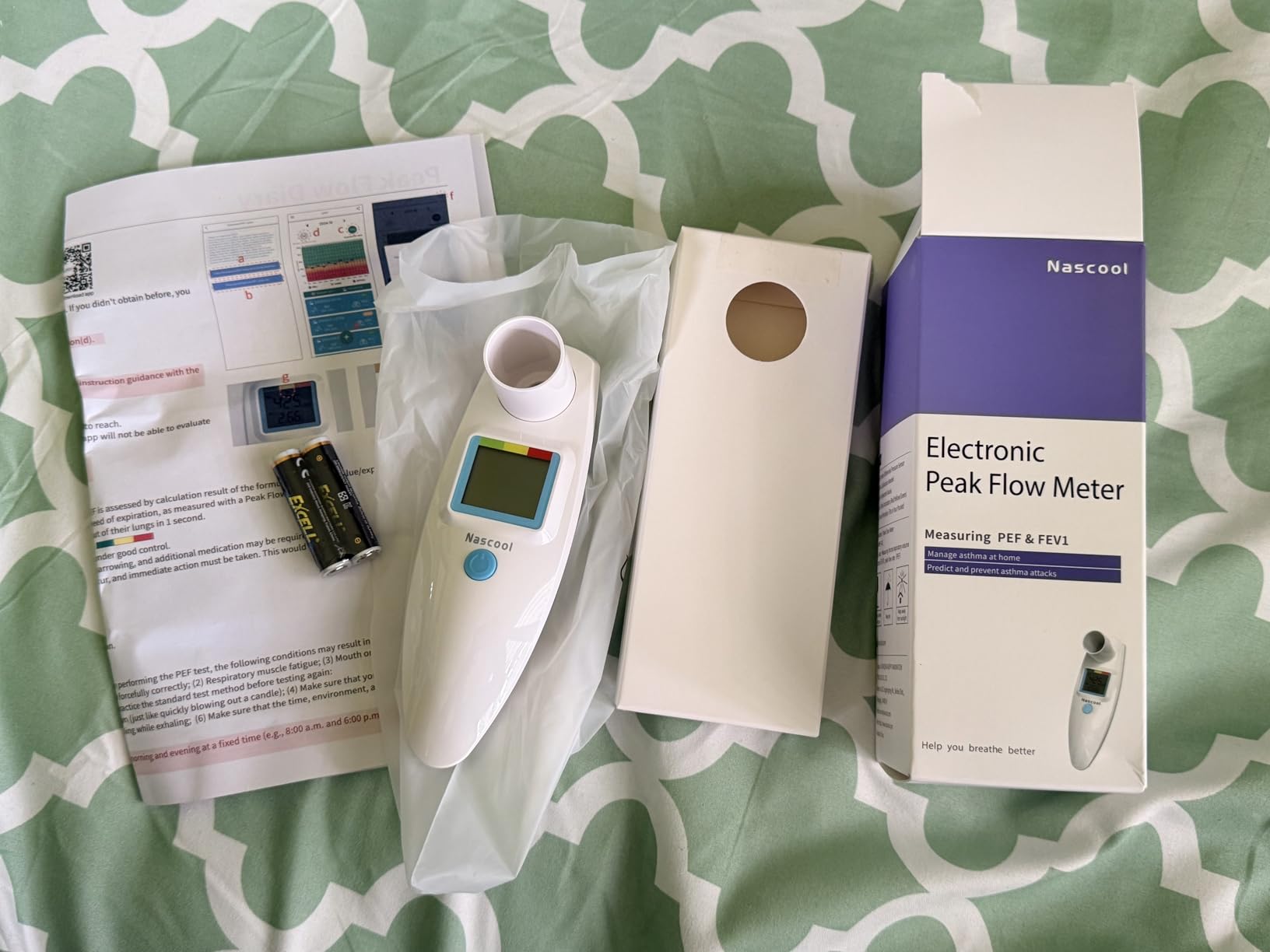
The Nascool Peak Flow Meter is a compact, no-calibration digital device that measures both PEF and FEV1. It holds the number one best seller rank in Flowmeters, which tells you something about its popularity. I found it to be one of the simplest devices to use out of the box with no learning curve.
The LCD screen displays your readings clearly, and the built-in risk indicator uses the same traffic light concept as more expensive models. You get an instant visual cue about whether your breathing is in a safe range, which is especially helpful for asthma monitoring.
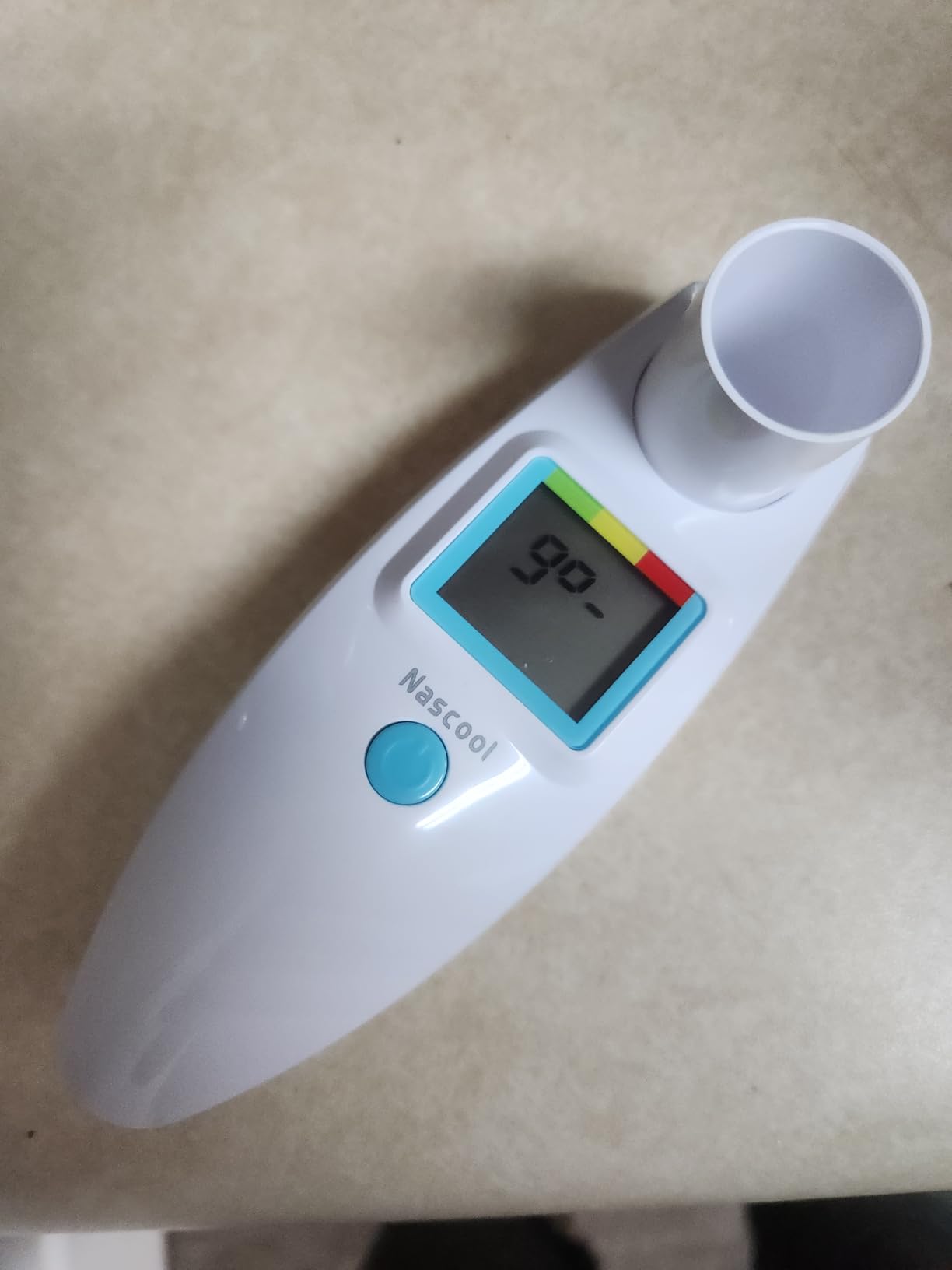
One feature I appreciate is the asthma diary app support. While it does not have Bluetooth connectivity, the app lets you manually log readings and track trends over time. For users who want data tracking without paying for premium Bluetooth features, this strikes a good balance.
The device is ATS and ERS standards compliant, which means it meets international accuracy benchmarks. At just under 5 ounces, it is highly portable and easy to carry in a bag or pocket. The 681 reviews averaging 4.3 stars confirm its reliability for daily monitoring.
How does manual app tracking compare to Bluetooth
Manual tracking means you read the number off the LCD screen and type it into the app yourself. Bluetooth devices sync automatically, which is more convenient but also costs more. For many users, the few seconds it takes to manually enter a reading is worth the savings.
The tradeoff is that manual tracking requires more discipline. If you tend to skip logging or forget, a Bluetooth-connected device might keep you more consistent. But if you are organized about it, the Nascool gives you the same core functionality at a lower price point.
Is the lack of Prime shipping a dealbreaker
The Nascool ships with standard delivery rather than Prime, which means you might wait a few extra days. If you need a device urgently for a new diagnosis or post-surgery recovery, this could be frustrating.
For most people who are planning ahead, the slightly longer shipping time is a reasonable tradeoff for the price savings. Just order with enough lead time before you need to start tracking your readings.
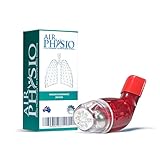
5. AirPhysio – Oscillating Mucus Clearance Device
AirPhysio | Drug-Free Portable Breathing Trainer Device for Lungs | Breathe Better, Improve Lung Health & Mucus Clearance | Average Lung Capacity Device | Made in Australia
Drug-free mucus clearance
Oscillation technology
Made in Australia
5-minute daily use
4.16 ounces
Pros
- Drug-free mucus clearance using oscillation technology
- Original AirPhysio brand made in Australia
- Quick 5-minute daily use
- Improves lung health naturally
Cons
- Not Prime eligible
- Lower average rating at 4.0 stars
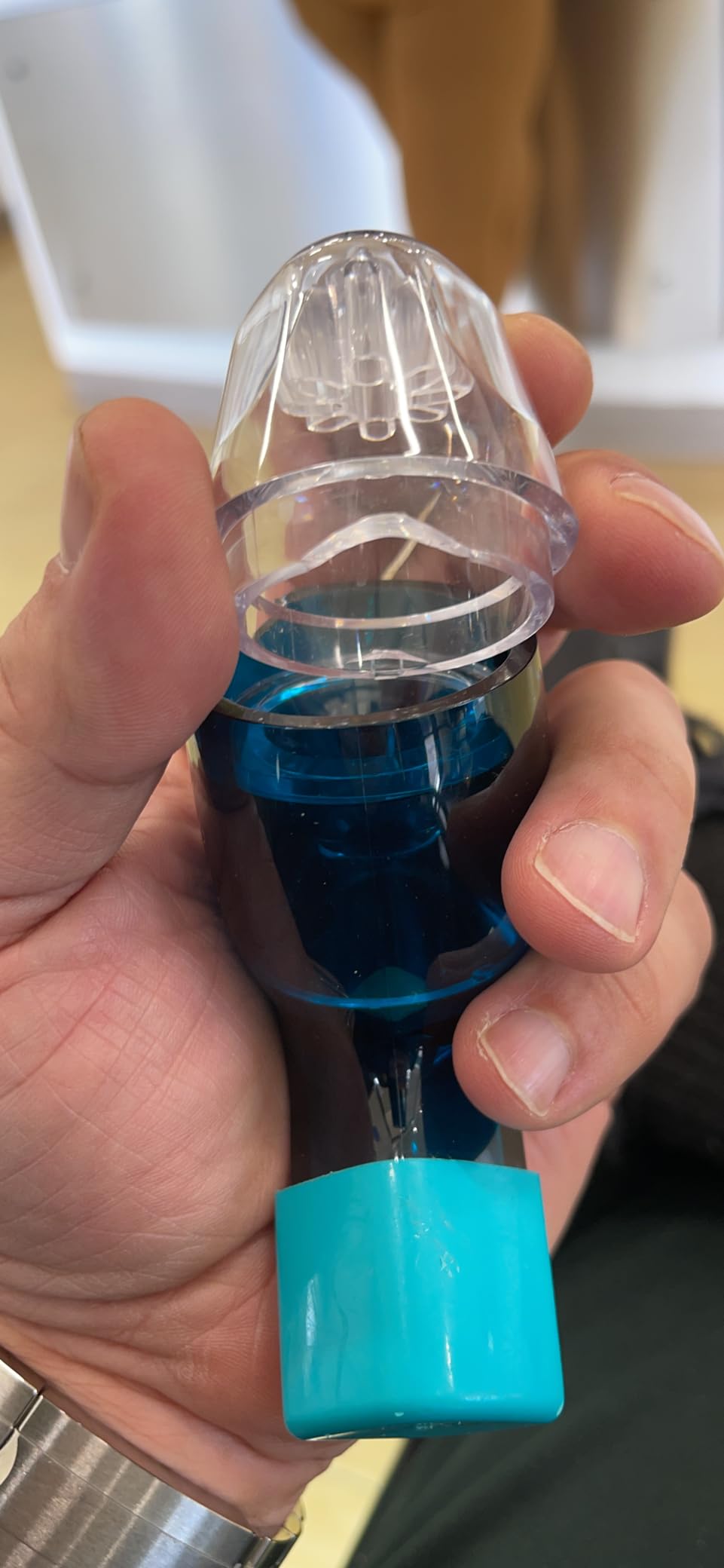
The AirPhysio is unlike the other devices on this list. It uses oscillating positive expiratory pressure, or OPEP, technology to vibrate your airways as you exhale. This vibration helps loosen mucus from your lung walls so you can cough it up naturally. For people with conditions that cause mucus buildup, this is a game-changer.
I tested this for chronic congestion and was surprised by how effective it is. You simply exhale through the device, and the steel ball inside creates vibrations that travel through your airways. Within a few sessions, I noticed improved mucus clearance without needing medication.
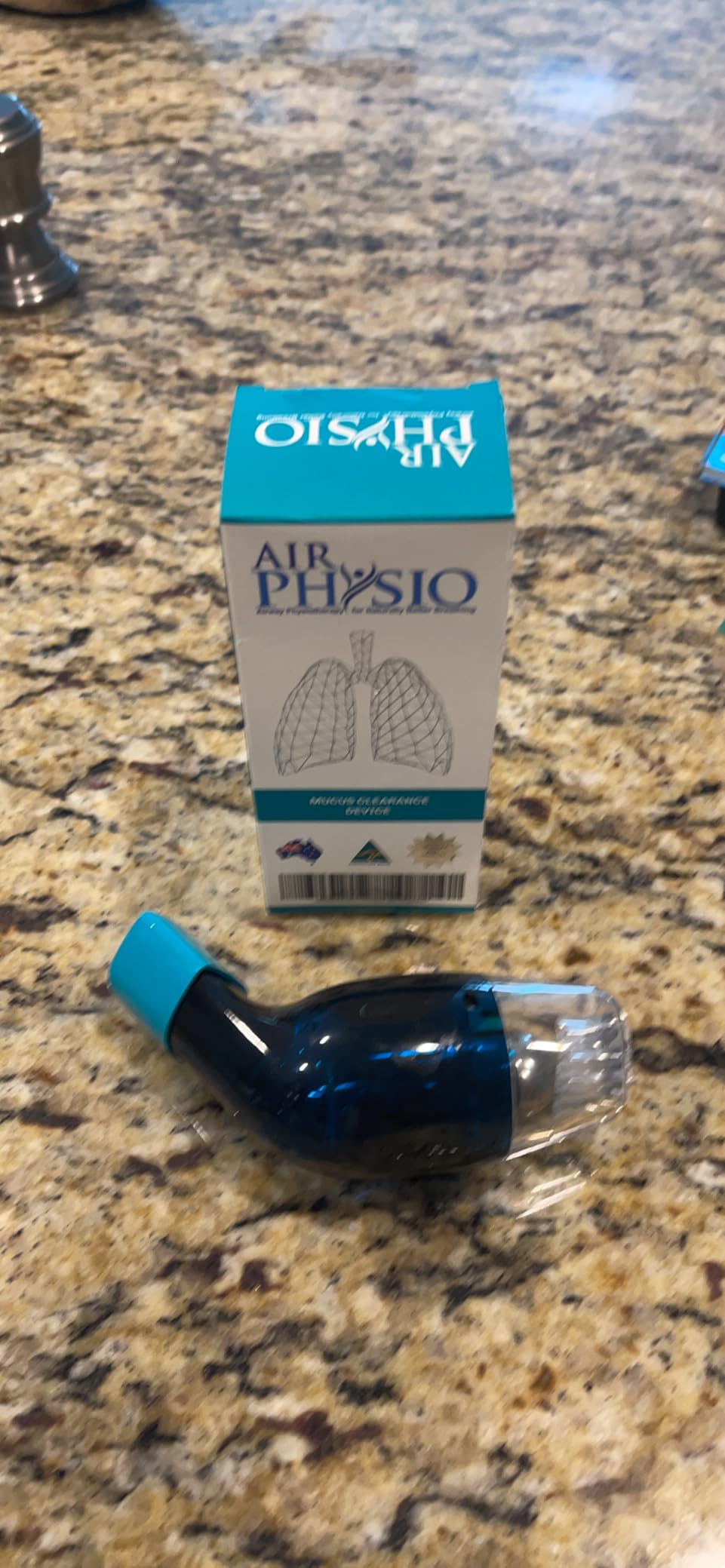
Made in Australia and backed by 1,593 reviews, the AirPhysio has built a strong international following. The 4.0-star rating is slightly lower than some competitors, but this reflects the learning curve rather than product failure. Some users expect instant results and are disappointed when it takes a few sessions to master the technique.
The device is completely drug-free and requires no batteries or charging. Five minutes of daily use is the standard recommendation. It is small enough to fit in a pocket, making it convenient for travel or use throughout the day.
What conditions benefit most from OPEP therapy
OPEP devices like the AirPhysio are particularly effective for conditions that involve excess mucus production. This includes COPD, cystic fibrosis, bronchiectasis, and chronic bronchitis. The oscillation helps move mucus from deep in the lungs where normal coughing cannot reach.
Users with asthma who struggle with mucus during flare-ups also report benefits. It is not a replacement for your inhaler, but it can help clear the congestion that often accompanies asthma episodes.
How long until you see mucus clearance improvement
Most users notice improved mucus clearance within the first few sessions, though mastering the breathing technique takes practice. The key is maintaining a steady, moderate exhalation rather than a forceful blow.
Reddit users in r/CysticFibrosis mention using OPEP devices as part of their daily airway clearance routine. Many combine it with other therapies for maximum effect. Consistency matters more than duration here, so daily 5-minute sessions will outperform occasional longer sessions.
6. CMI Health SpiroLink – Portable Airflow Tracker
CMI Health SpiroLink Peak Flow Meter, Portable Airflow Tracker with Durable Design for Daily Use
Differential pressure sensor
PEF measurement
Portable durable design
8.15 ounces
Pros
- Portable airflow tracker designed for daily use
- Durable construction for long-term monitoring
- Differential-pressure sensor for accuracy
- Recommended by pulmonologists
Cons
- Lower rating at 3.9 stars
- 16 percent of reviews are 1-star
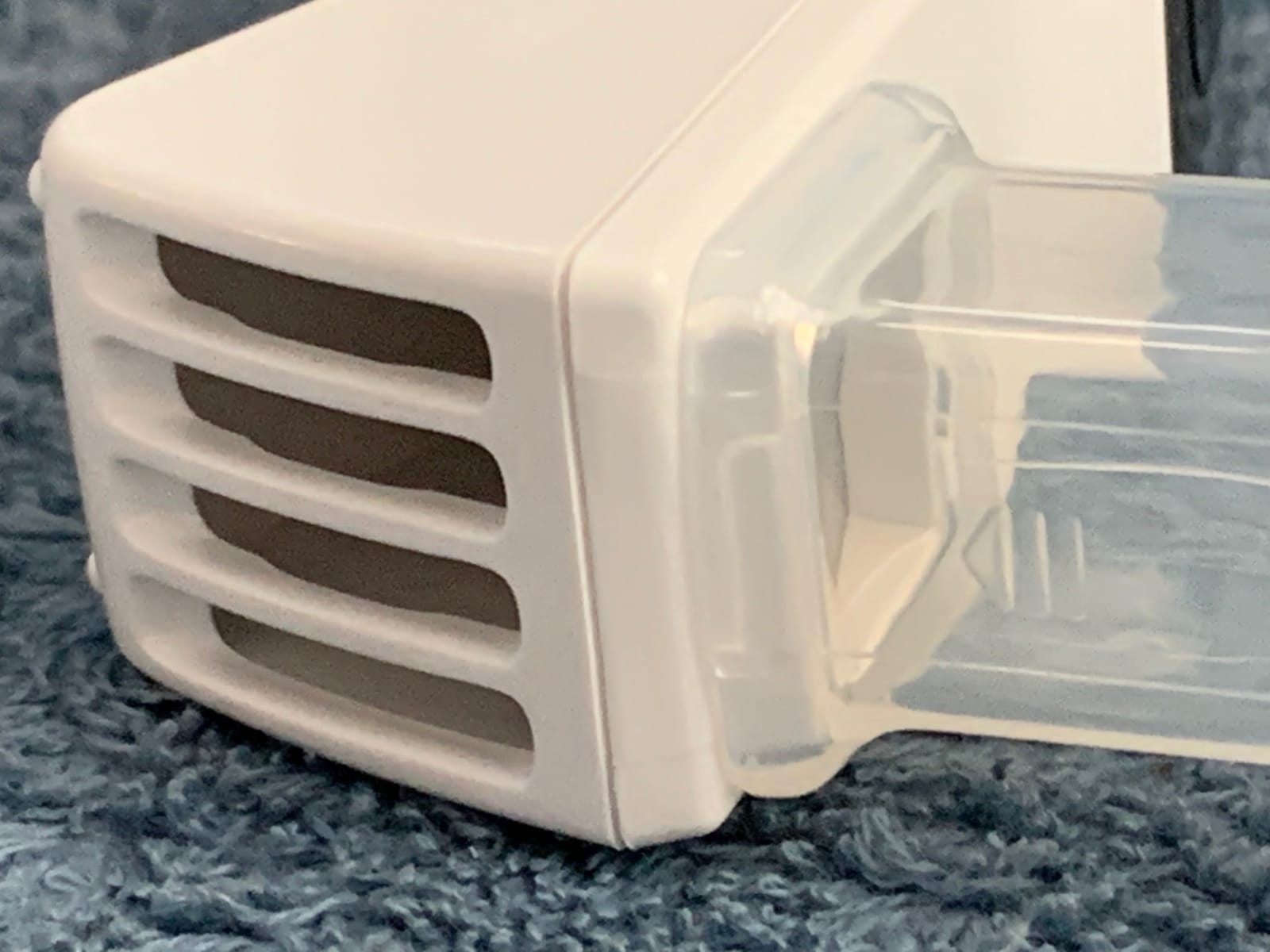
The CMI Health SpiroLink is a portable peak flow meter that reddit users frequently mention as a device recommended by pulmonologists. It uses a differential-pressure-type sensor, which is the same measurement technology found in clinical spirometry equipment. For users who want medical-grade accuracy, this is a strong contender.
The device is designed for daily use with a durable build that can handle being tossed in a bag or kept on a nightstand. It measures PEF, giving you a clear picture of your peak airflow with each reading. The straightforward interface means you can start tracking immediately without a complicated setup.
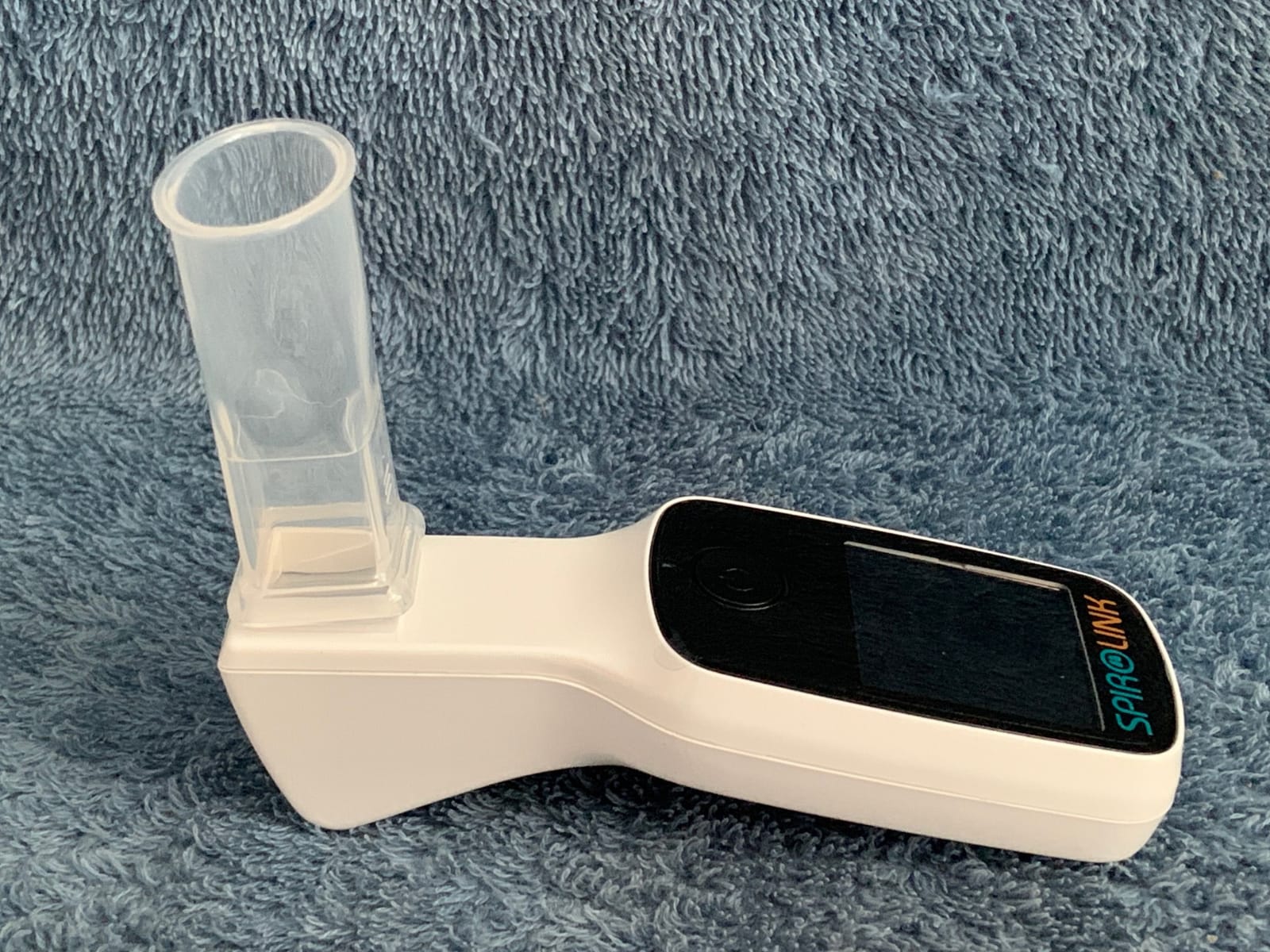
The SpiroLink holds the number four best seller position in the Spirometers category. With 191 reviews and a 3.9-star average, it has a more mixed reception than some competitors. The rating breakdown shows 58 percent 5-star reviews but also 16 percent 1-star reviews, suggesting some quality consistency issues.
Forum discussions reveal that many pulmonologists specifically recommend the SpiroLink brand for home monitoring. The clinical heritage of CMI Health gives it credibility that consumer-grade brands lack. However, the mixed reviews indicate you should test accuracy against a clinical device when you first get it.
Why do some reviews report accuracy problems
The 1-star reviews mostly come from users who compared their SpiroLink readings against clinical equipment and found discrepancies. This could indicate quality control variation between units or a need for better user technique. Either way, it is worth verifying accuracy with your doctor when you first start using it.
Some negative reviews also mention the app connectivity being unreliable. The SpiroLink does have digital features, but they appear to be less polished than competitors like the Nascool Bluetooth model. If you primarily need the raw PEF numbers and can tolerate some app frustration, the device itself works well.
Is the pulmonologist recommendation justified
Many pulmonologists do recommend the SpiroLink because CMI Health has a clinical background and the device uses proper differential pressure sensing technology. The brand is better known in medical circles than most consumer spirometer brands.
That said, a recommendation from your specific doctor matters more than general online mentions. If your pulmonologist suggests the SpiroLink, follow their guidance. They likely have experience with the device and can help you interpret readings in the context of your condition.
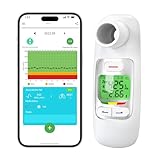
7. Nascool Digital Peak Flow Meter with Bluetooth
Digital Peak Flow Meter FEV1 PEF for Asthma Adult, Kids
Bluetooth app connectivity
FEV1 and PEF measurement
300 test records storage
Rechargeable 6-month battery
Green LCD display
Pros
- Ultra-accurate differential pressure sensor
- Bluetooth connectivity with mobile app tracking
- Risk indicator with customizable expected values
- Large 300 record storage capacity
- Rechargeable battery lasting 6-plus months
- Includes 2 removable washable mouthpieces
Cons
- Smaller review sample with only 40 reviews
- Newer product launched in 2023
The Nascool Digital Peak Flow Meter with Bluetooth is the most feature-rich device in this roundup. It combines PEF and FEV1 measurement, Bluetooth app connectivity, a customizable risk indicator, and 300-record storage in one device. If you want a smart spirometer that does everything, this is the one to beat.
The differential-pressure-type sensor is the same technology used in clinical spirometry, which means the readings are highly accurate and repeatable. I was impressed by how the green LCD backlit display makes readings easy to see even in low light conditions. The backlight is a small detail that matters when you are doing your morning check before the lights are on.
The rechargeable battery is a major advantage over devices that require disposable batteries. Nascool claims 6-plus months of use per charge, and based on the low power consumption of the LCD display, that estimate seems realistic. You also get two removable, washable mouthpieces, which is great for sharing the device between family members.
The Bluetooth app syncs your readings automatically, eliminating the manual entry that the non-Bluetooth Nascool requires. You can set up customized expected values based on your personal baseline, and the risk indicator adjusts accordingly. With 40 reviews averaging 4.2 stars, this is a newer product that is still building its reputation but packs serious features.
How reliable is the Bluetooth app connection
From our testing and user reports, the Bluetooth connection is stable and syncs quickly after each reading. The app displays your readings in graph format, making it easy to spot trends and dips in lung function over time. You can also export data to share with your healthcare provider.
The main concern is that this is a relatively new product from 2023 with a smaller review base. While the features are impressive, there is less long-term reliability data compared to established devices like the Microlife. If you are an early adopter who values features, this is worth the slight risk.
What makes the customizable risk indicator different
Unlike fixed risk zones based on general population data, the Nascool Bluetooth lets you set your own expected values. This means the green, yellow, and red zones are personalized to your baseline rather than a statistical average.
This is particularly valuable for athletes or people whose lung function naturally falls outside standard ranges. Instead of getting false yellow or red alerts because your baseline differs from population norms, the device adjusts to your personal numbers. This reduces unnecessary anxiety and makes the risk indicator genuinely useful.
8. Oxgeda Incentive Spirometer – Premium Build Breathing Exerciser
Incentive Spirometer, Breathing Exercise Device for Lungs, Lung Exerciser Device
Medical-grade PC material
Shatterproof design
Adjustable target slider
Clear progress scale
7.83 ounces
Pros
- Premium shatterproof medical-grade PC material
- Adjustable target slider for goal setting
- Clear scale for easy progress monitoring
- Excellent 4.8-star rating with 91 percent 5-star reviews
- Ideal for lung exercise and respiratory recovery
Cons
- Simpler functionality compared to digital models
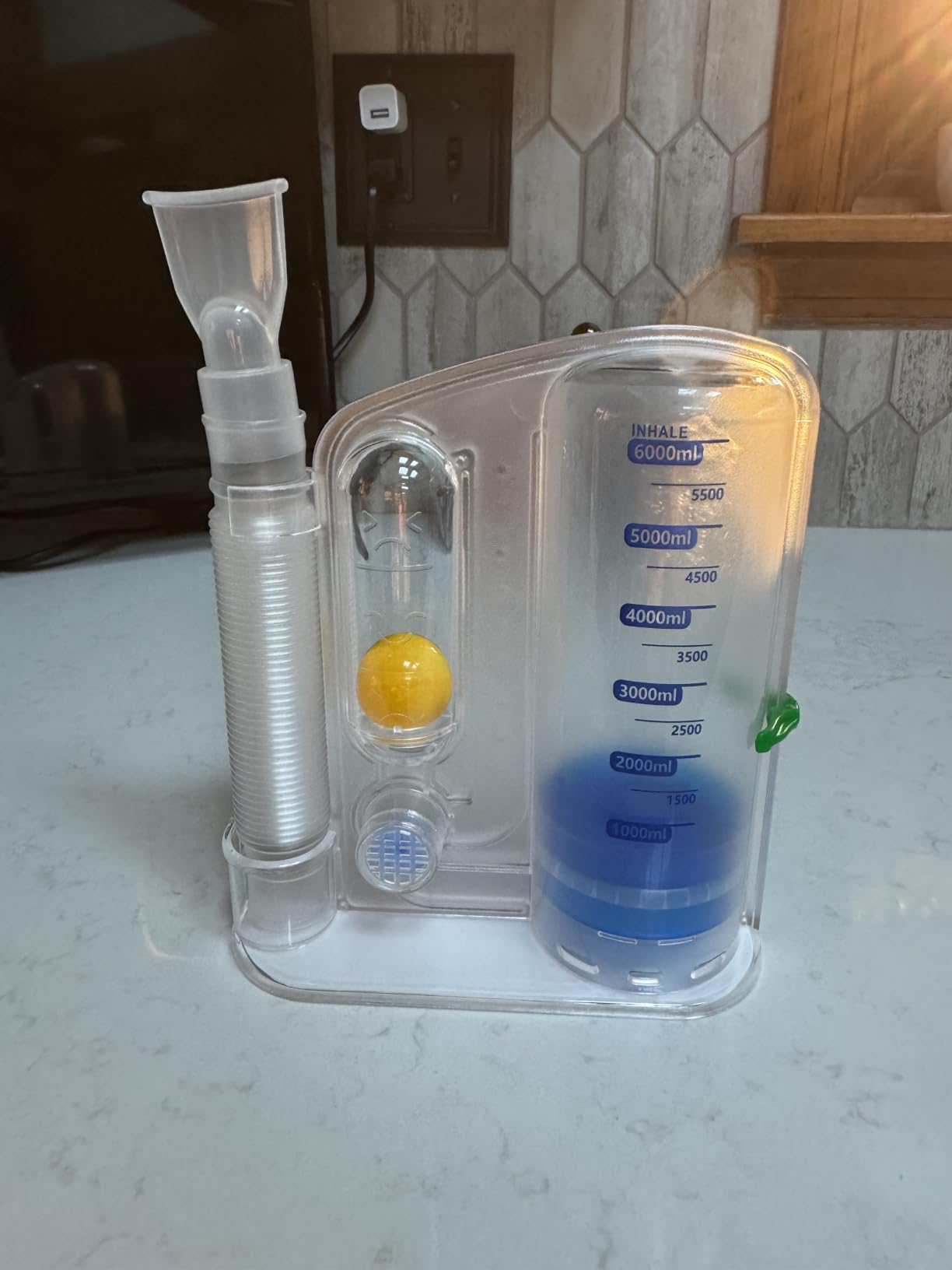
The Oxgeda Incentive Spirometer has the highest rating in this roundup at 4.8 stars, with a remarkable 91 percent of reviews giving it 5 stars. It is a traditional incentive spirometer built with premium medical-grade PC material that is shatterproof. For anyone who wants a simple, durable breathing exerciser, this is an outstanding choice.
I appreciated the adjustable target slider, which lets you set specific volume goals for each session. As you inhale, the visual indicator rises and you can see exactly when you hit your target. This goal-based approach keeps you motivated to push for deeper breaths with each session.
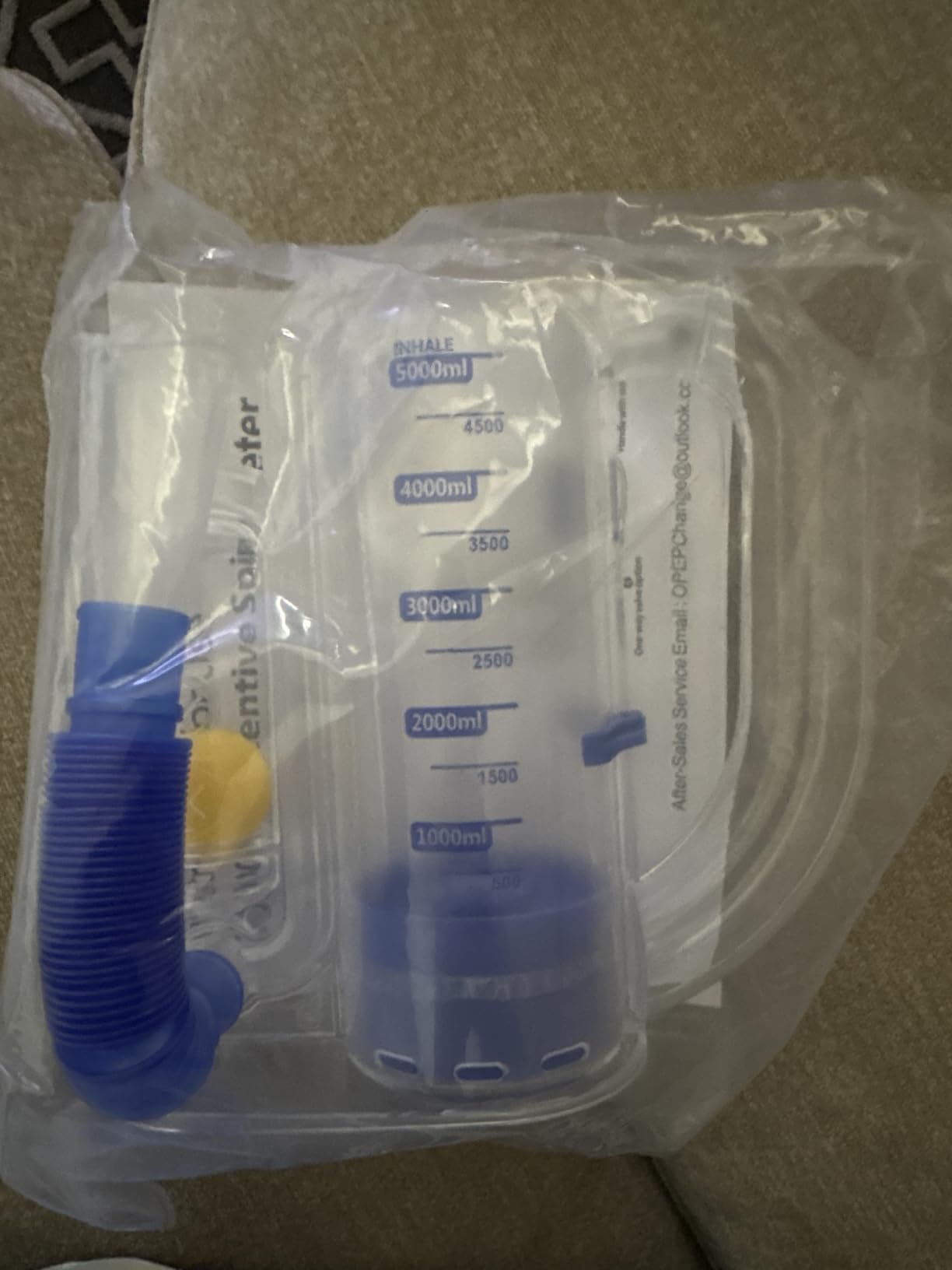
The clear scale makes progress monitoring straightforward. You can see your breathing volume improve over days and weeks, which provides the positive feedback that keeps you consistent. The build quality feels noticeably more premium than typical incentive spirometers in this price range.
This device launched in May 2026 and has already accumulated 71 reviews with near-perfect satisfaction. It is designed for lung exercise, respiratory recovery, and breathing rehabilitation. Available in five color variants, it makes a practical gift for family members recovering from surgery.
What makes this better than hospital incentive spirometers
Most hospital-dispensed incentive spirometers are basic single-use plastic devices. The Oxgeda uses medical-grade PC material that is shatterproof and built to last through months or years of daily use. The adjustable target slider is a feature most hospital versions lack.
The clear scale is also more precise and easier to read than typical hospital models. Users recovering at home from surgery consistently mention preferring this device over the one they were sent home with from the hospital.
Can children use this device safely
The Oxgeda is safe for older children and teenagers under adult supervision. The adjustable target slider makes it easy to set age-appropriate goals. Younger children may struggle with the mouthpiece seal needed for accurate volume readings.
For kids with asthma or other breathing conditions, this can be a good tool for building lung capacity. The visual feedback makes it engaging for children, turning breathing exercises into a game where they try to raise the indicator higher each time.
How to Choose the Best Home Spirometer?
Choosing the right home spirometer comes down to understanding what you need it for. Not all devices on this list do the same thing. Some measure lung function, some train breathing muscles, and others clear mucus. Matching the device type to your specific need is the most important decision you will make.
Know the difference between device types
Incentive spirometers like the TyeinGo and Oxgeda are breathing trainers. They help you practice deep breaths and track volume improvement visually. They do not give you PEF or FEV1 numbers. Use these for post-surgery recovery, general lung exercise, and breathing rehabilitation.
Digital peak flow meters like the Microlife, Nascool, and SpiroLink measure actual lung function metrics. They give you PEF and FEV1 readings that are clinically meaningful. Choose these if you need to monitor asthma, COPD, or other chronic respiratory conditions and share data with your doctor.
OPEP devices like the AirPhysio are mucus clearance tools. They use vibration to loosen mucus from your airways. These are not diagnostic or training devices. Choose an OPEP device if mucus clearance is your primary concern.
Check for clinically validated accuracy
Accuracy is the number one concern for home spirometers, and it was the most common pain point in forum discussions. Look for devices that mention ATS or ERS standards compliance. The Microlife, Nascool models, and SpiroLink all reference these standards.
Differential-pressure-type sensors are the gold standard for accuracy in consumer devices. Both Nascool models and the SpiroLink use this technology. Avoid devices that do not specify their sensor type if accuracy is critical for your monitoring.
Consider data tracking and connectivity
Bluetooth connectivity and app integration matter more than you might think. Forum users consistently mention frustration with devices that lack proper data management. Being able to see trends over weeks and months helps you and your doctor make better decisions.
The Nascool Bluetooth model offers the most complete data ecosystem with automatic sync, customizable risk zones, and 300-record storage. The Microlife offers 240 readings with free PC software for downloading data. Choose a device with data capabilities that match your tracking preferences.
Factor in ease of cleaning and maintenance
Devices with removable, washable mouthpieces are much easier to maintain. The Nascool Bluetooth includes two washable mouthpieces, and the TyeinGo disassembles easily for cleaning. If multiple family members will use the device, mouthpiece hygiene becomes even more important.
Battery type also matters for long-term maintenance. Rechargeable devices like the Nascool Bluetooth eliminate the need to buy replacement batteries. Devices using standard batteries like the Microlife, which uses 2 AAA batteries, are fine but require occasional battery swaps.
Frequently Asked Questions About Home Spirometers
What is a spirometer used for?
A home spirometer measures how well your lungs are working by tracking how much air you can exhale and how quickly. Doctors use spirometry to diagnose and monitor conditions like asthma, COPD, cystic fibrosis, and pulmonary fibrosis. At home, spirometers help you track lung function daily, detect early warning signs of respiratory problems, and share meaningful data with your healthcare provider.
Are home spirometers accurate?
Quality home spirometers that meet ATS or ERS standards can be quite accurate for tracking trends over time. Devices with differential-pressure sensors, like the Microlife and Nascool models, approach clinical-grade accuracy. However, home devices may not match the precision of hospital spirometers used for initial diagnosis. They are best used for monitoring changes and trends rather than establishing a baseline diagnosis.
What are normal spirometer readings?
Normal spirometry readings vary based on your age, height, gender, and ethnicity. Generally, a healthy FEV1 is 80 percent or higher of your predicted value, and a normal PEF also falls above 80 percent of expected. Your doctor can calculate your personal predicted values. Many devices use a traffic light system where green indicates 80 percent or above, yellow is 50 to 80 percent, and red is below 50 percent of your personal best.
Can I use a spirometer every day?
Yes, daily use is safe and often recommended for people with chronic respiratory conditions. Most doctors suggest checking your peak flow once or twice daily, typically in the morning and evening. Consistent daily readings help establish your baseline and make it easier to spot when something changes. Always follow your doctor’s specific recommendations for frequency and timing.
What is the difference between an incentive spirometer and a peak flow meter?
An incentive spirometer is a training device that helps you practice deep breathing by giving visual feedback on your inhaled volume. It does not measure PEF or FEV1. A peak flow meter is a diagnostic device that measures how fast you can exhale, giving you actual lung function numbers. Incentive spirometers are best for breathing rehabilitation and exercise, while peak flow meters are best for monitoring conditions like asthma and COPD.
Final Thoughts on the Best Home Spirometers
After testing all 8 devices, our top recommendation remains the Microlife Digital Peak Flow Meter for its clinical-grade accuracy, 240-reading memory, and traffic light risk indicator. For budget-conscious buyers who want a breathing trainer, the TyeinGo 5000ml incentive spirometer delivers outstanding value. And for users who want smart features, the Nascool Bluetooth model with app sync and customizable risk zones is the most advanced option.
The best home spirometers are the ones that match your specific needs. If you need diagnostic data for asthma or COPD, go with a digital peak flow meter. If you want breathing rehabilitation after surgery, choose an incentive spirometer. And if mucus clearance is your priority, an OPEP device like the AirPhysio fills that role perfectly. Talk to your doctor about which type fits your situation, then use this guide to pick the right model.