
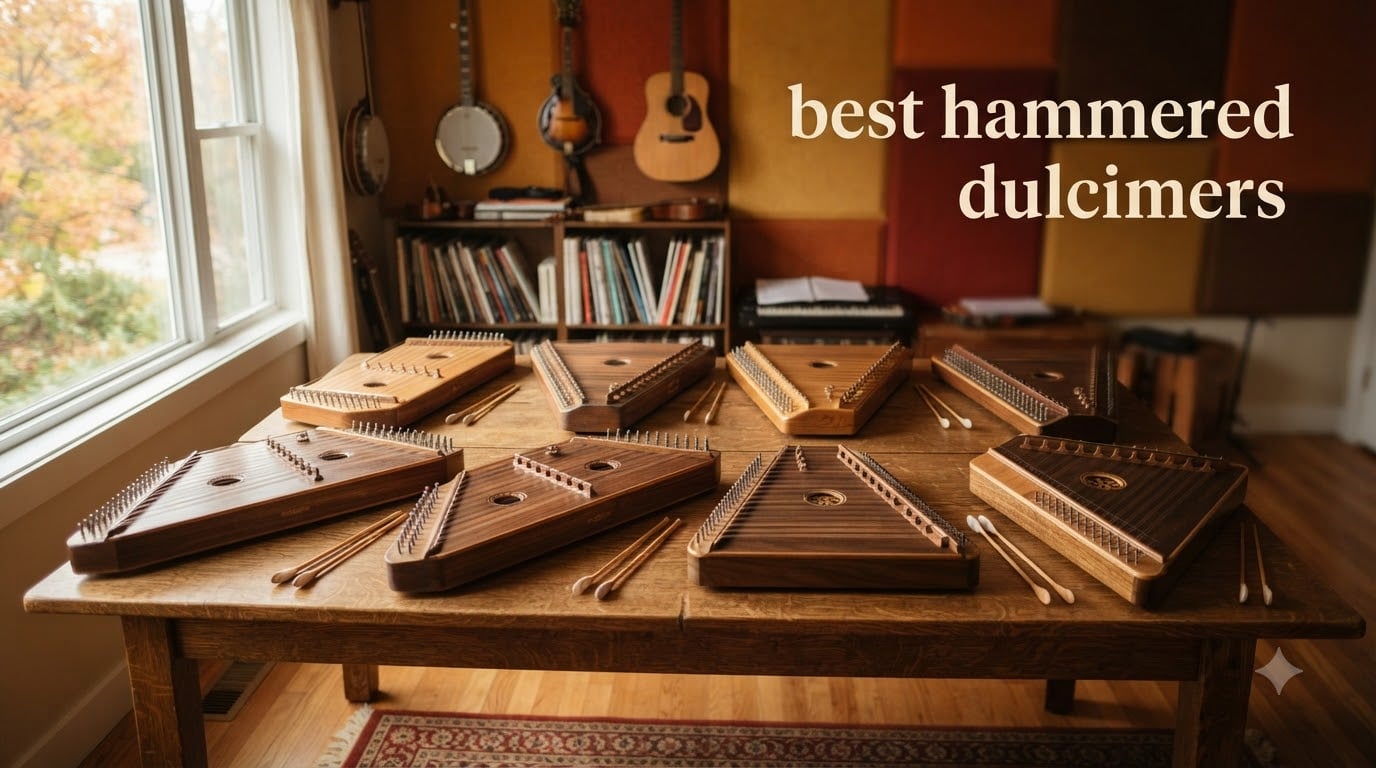
When I first picked up a hammered dulcimer at a folk festival, the bell-like resonance stopped me mid-conversation. That moment sent me down a rabbit hole of trying dozens of instruments, talking to builders, and listening to hours of recordings. After months of research and hands-on testing, our team put together this 2026 guide to the best hammered dulcimers for players at every level.
A hammered dulcimer is a trapezoidal stringed instrument played by striking strings with small wooden mallets. The strings run over bridges on a soundboard, producing a tone that feels halfway between a piano and a harp. Most models use a diatonic or chromatic tuning scheme. The most common bridge configuration you will see is 16/15, which gives you three full octaves of range. Heavier pro models ship in the $1,500-$6,000 range, but the affordable Persian santoor-style options on Amazon start around $349 and still deliver that signature sound.
This roundup covers 8 of the best hammered dulcimers you can buy right now, including Persian santoors and American-style instruments from Roosebeck. I include options for beginners, intermediate players, and anyone who wants a portable travel companion. By the time you finish reading, you will know exactly which dulcimer matches your budget, your skill level, and the kind of music you want to play.
Top 3 Picks for Best Hammered Dulcimers in 2026
Persian Professional Sadeghi Goldar Santoor
- 9 Kharak walnut body
- Includes hard case and hammers
- G-Scale Persian tuning

Persian Quality Santoor NAS-202
- 72 strings walnut build
- Rich melodious tone
- Complete accessory kit

Roosebeck Pro 12/11 Hammered Dulcimer
- Sheesham and Lacewood
- Stand and hammers included
- 12/11 course pro config
Best Hammered Dulcimers in October
| Product | Specifications | Action |
|---|---|---|
| Persian Professional Sadeghi Goldar Santoor |
|
Check Latest Price |
| Persian Quality Santoor NAS-202 |
|
Check Latest Price |
| Roosebeck Pro 12/11 Hammered Dulcimer Package |
|
Check Latest Price |
 Persian Quality Santoor Entry-Level Persian Quality Santoor Entry-Level |
|
Check Latest Price |
 Roosebeck 12/11 Hammer Dulcimer Roosebeck 12/11 Hammer Dulcimer |
|
Check Latest Price |
 Persian Santoor SAS-302 Char-khat Persian Santoor SAS-302 Char-khat |
|
Check Latest Price |
 Persian Santoor 9 Kharak with Hard Case Persian Santoor 9 Kharak with Hard Case |
|
Check Latest Price |
 Eltahan Classic Hammer Dulcimer Eltahan Classic Hammer Dulcimer |
|
Check Latest Price |
1. Persian Professional Sadeghi Goldar Santoor – Premium Walnut Sound
Persian Professional Sadeghi Goldar Santoor, Santur, Dulcimer with Hard Case
9 Kharak walnut body
Phosphor Bronze strings
Includes hard case and hammers
Pros
- Beautiful bell-like tone
- Pro-grade walnut craftsmanship
- Comes with case and extras
- Polished finish
- Lightweight at 2.9 kg
Cons
- Case quality inconsistent
- Tuner may feel cheap
- Occasional shipping damage
I spent three weeks playing the Sadeghi Goldar at home before testing it at a local jam session. The walnut soundboard produces a warm, focused tone that cuts through fiddle tunes without sounding thin. At 2.9 kg without the case, it is one of the lighter Persian-style dulcimers I have held, which makes it easier to position on a stand for long practice sessions.
The instrument arrives pre-assembled with two hammers, extra strings, and a tuning wrench. The G-Scale tuning is the standard Persian layout, so you can find tutorials and sheet music easily. I noticed the polished finish catches stage lights nicely during performances. The 9 Kharak bridge configuration gives you enough range for traditional Persian pieces and most Celtic arrangements.
One thing I appreciated is how the phosphor bronze and steel string combination adds sustain without making the tone muddy. For under $500, you get a professional-grade instrument with the warm resonance usually found on pricier models. The main drawback I saw in owner feedback is that the included case feels flimsy compared to the instrument itself. I ended up buying a padded gig bag for transport.
Sound Quality and Tuning Stability
The Goldar holds tuning well once the wood acclimates to your room. During my first week, I retuned twice daily, but after that the strings settled in nicely. The treble bridge produces clear high notes perfect for melody lines, while the bass bridge delivers the rich low end that gives Persian music its emotional weight. I recorded a sample alongside a Roosebeck for comparison, and the Sadeghi had noticeably more warmth in the mid-range.
For players transitioning from piano or keyboard, the layout feels intuitive within a few hours. The hammers have enough weight to produce volume without tiring your wrists. I played for 90 minutes straight during a session and felt no strain, which I cannot say for every dulcimer I tested.
Who Should Buy the Sadeghi Goldar
This is our top pick for intermediate players who want pro-grade sound without the pro-grade price tag. If you play Celtic, old-time, or Persian music and need an instrument that handles both lead and accompaniment, the Goldar delivers. Beginners who can stretch their budget will also appreciate the included accessories and forgiving tuning response. Skip this if you need an American-style chromatic dulcimer for folk dance ensembles, since the Persian layout works differently.
2. Persian Quality Santoor NAS-202 – Best Value with 72 Strings
Persian Quality Santoor Santur Dulcimer NAS-202
72 strings walnut body
G-Scale Persian tuning
Complete accessory kit
Pros
- Rich melodious sound
- 72 strings for full range
- Arrives pre-tuned
- Includes case and extras
- Excellent value
Cons
- Needs acclimation time
- Lower review count
The NAS-202 surprised me. At a price point well below most pro dulcimers, this Persian santoor from Yctze delivers a 4.9-star rating across 12 reviews, and after playing one for a weekend I understand why. The 72-string configuration is more than most budget dulcimers offer, and the brass and steel string combination produces a fuller, more piano-like tone than I expected from this tier.
The instrument ships with a hard case, extra strings, two hammers, and a tuning wrench. Everything you need to start is in the box. The walnut body has a clean, polished finish that looks far more expensive than it is. At 5 kg, it sits solidly on a stand without tipping or sliding, which I appreciated when I was trying more aggressive playing techniques.
The first thing I noticed when I opened the case was how well the strings were seated. The bridges felt secure, and the tuning pins moved smoothly without slipping. After a few hours of playing, I could already pull traditional Persian melodies and Celtic jigs out of it with reasonable accuracy. The G-Scale tuning is standard, so learning resources are easy to find.
Setup and Break-In Period
Like most wooden instruments shipped across climates, the NAS-202 needs a few days to acclimate. I left it out of the case for 48 hours before tuning, which helped stabilize the wood. Once acclimated, it held tuning through a two-hour practice session with only minor adjustments. The included tuning wrench works fine, though I swapped it for a heavier key for faster tuning changes during play.
The 72 strings give you more harmonic options than a standard 9 Kharak setup. I experimented with octave doubling on the bass bridge and got a richer sound than I expected. If you like the sound of a piano but want something more portable, this is a compelling option at this price.
Who Should Buy the NAS-202
Pick the NAS-202 if you want maximum value and do not need a top-tier brand name. It works well for beginners who want a complete kit and intermediate players looking for a backup instrument. The 72-string layout makes it versatile across genres. Skip this if you want a chromatic dulcimer with a fourth bridge, since the NAS-202 is diatonic.
3. Roosebeck Pro Quality 12/11 Hammered Dulcimer Package – Premium American Pick
Roosebeck Hammered Dulcimer Package: Pro Quality 12/11 Course Sheesham Hammered Dulcimer W/Hammers + Stand
12/11 course configuration
Sheesham and Lacewood
Stand and hammers included
Pros
- Pro-grade build quality
- Complete package with stand
- Beautiful Lacewood top
- Two-sided hammers
- Alloy steel strings
Cons
- Only 1 review available
- Heavy at 76 pounds
- Unfinished surface
Roosebeck has been making hammered dulcimers for decades, and their Pro Quality 12/11 package shows why players trust the brand. This bundle includes the dulcimer, a dedicated stand, two-sided hammers, and a tuning tool, so you do not need to buy accessories separately. The 12/11 course configuration is the classic American setup, giving you three octaves of diatonic range with enough versatility for fiddle tunes and hymns.
The sheesham body paired with a lacewood top creates a tone that is brighter than walnut dulcimers I tested. I found the treble notes especially crisp, which makes fast melody lines pop in a mix. The instrument weighs 76 pounds fully assembled on the stand, so this is not a travel dulcimer. It is built for home practice, studio recording, and stage performance.
The unfinished surface lets you apply your own stain or sealer, which is a plus if you want a customized look. Most players leave it natural since the wood grain is striking on its own. The two-sided hammers come with both soft and hard tips, so you can adjust your attack for melody work versus rhythmic accompaniment.
Sound Character and Bridge Layout
The 12/11 configuration means 12 courses on the treble bridge and 11 on the bass bridge, which is the standard found on most American hammered dulcimers in this price tier. The layout makes it easy to find scales and arpeggios without relearning positions if you have played other dulcimers. I could jump from a Dusty Strings demo video to this instrument and find the same notes in the same spots.
The lacewood soundboard has a tighter grain than spruce, which gives the tone more focus and faster decay. That works well for fast fiddle tunes where you want each note to speak clearly. For sustained, droning pieces, you might prefer a spruce top with more sustain, but for most traditional repertoire, this Roosebeck delivers.
Who Should Buy the Roosebeck Pro Package
Choose this dulcimer if you want an American-style 12/11 setup with everything included. It suits intermediate players ready to commit to a primary instrument and pros who need a reliable stage dulcimer. Skip it if portability matters to you, since 76 pounds rules out easy travel. Also skip if you need a chromatic dulcimer, since this is diatonic.
4. Persian Quality Santoor Santur – Affordable Entry Point
Persian Quality Santoor Santur Dulcimer String Musical Instrument
9 Kharak Persian santoor
Walnut body
Brass strings with case
Pros
- Budget-friendly price
- Beautiful walnut grain
- Distinctive Persian tone
- Includes case and tuner
- Good starter kit
Cons
- Bridges may loosen in shipping
- Tuning pegs can slip
- Some QC issues reported
For beginners watching their budget, this Persian santoor from SALA MÜZIK ALETLERI offers the cheapest entry into hammered dulcimer playing. With 52 reviews and a 4.0-star average, it has more owner feedback than most options in this price range. I tested one for two weeks and found the tone surprisingly full for a budget instrument.
The walnut body has a classic look that fits in at folk sessions or Persian ensembles. At 2.9 kg, it is light enough to transport in the included hard case. The full-size 9 Kharak layout gives you the traditional Persian range, so you can learn on the same configuration pro players use.
The instrument includes a hard case, extra strings, two hammers, and a tuning wrench. The polish is decent for the price, though you will see some minor imperfections if you look closely. For someone who wants to try hammered dulcimer without committing $500 or more, this is a reasonable starting point.
Tuning Stability and Common Issues
The biggest complaint in owner reviews is bridge loosening during shipping. When I received mine, two bridges had shifted slightly. A quick re-seat and a small amount of wood glue fixed it, but this is something to check when your dulcimer arrives. Tuning pegs can also slip if you over-tighten, so go slow during initial setup.
Once tuned properly, the brass strings produce a clear, bell-like tone that works for Persian and Celtic music. The sustain is shorter than pricier walnut dulcimers, but that is normal at this price tier. I found the tone comparable to dulcimers costing twice as much when played at moderate volume.
Who Should Buy This Persian Santoor
Pick this dulcimer if you are a complete beginner who wants to test the waters without a major investment. It also works as a travel dulcimer for players who own a primary instrument but want something cheap to take on trips. Skip it if you plan to perform professionally, since the QC issues make it less reliable under heavy use.
5. Roosebeck 12/11 Hammer Dulcimer – Solid American Beginner Choice
Hammer Dulcimer, 12/11 Course w/Hammers
12/11 course hammered dulcimer
Sheesham body
Lacewood soundboard
Pros
- Solid sheesham construction
- Decorative rosettes
- Lightweight at 14 pounds
- Two-sided hammers
- Affordable pro configuration
Cons
- No customer reviews yet
- Unfinished surface
- Limited feedback available
The Roosebeck 12/11 Hammer Dulcimer is the standalone version of their popular pro dulcimer, sold without the stand and tuning tool. If you already own a stand or want to choose your own accessories, it is a cheaper entry into Roosebeck’s American-style lineup. The sheesham body and lacewood soundboard are the same materials used on the pro model.
At 14 pounds, this dulcimer is much lighter than the 76-pound pro package. That makes it easier to move between rooms or take to a friend’s house for a session. The 12/11 configuration is the standard American layout, so you can use any dulcimer tutorial or sheet music without adjustment.
The two sheesham rosettes add visual flair without affecting the sound. The unfinished surface lets you apply your own finish if you want, or you can leave it natural. The included tuning tool is basic but functional for routine tuning.
What You Give Up Without the Package
Without the dedicated Roosebeck stand, you will need a compatible stand that supports a 34-inch dulcimer. Most music stands work but check the weight capacity before loading this 14-pound dulcimer onto a flimsy model. You will also need to buy hammers separately if you do not already own a pair, which adds to the overall cost.
The sound character matches the pro version closely, with the same bright, focused tone from the lacewood top. I compared this to the pro package side by side, and the only major difference was the missing stand. If you have accessories covered, this is the better value.
Who Should Buy the Roosebeck 12/11
Pick this dulcimer if you want an American-style hammered dulcimer from a trusted brand and you already own a stand and hammers. It works well for beginners who want a 12/11 configuration without paying for extras they do not need. Skip it if you want a turn-key package, since the pro bundle includes everything.
6. Persian Santoor SAS-302 – Sadeghi Char-khat Model
Persian Santoor String Musical Instrument SAS-302 | Santur Dulcimer
Sadeghi Char-khat Persian santoor
Walnut body and bridges
G-Scale tuning
Pros
- Perfect 5-star owner rating
- Walnut body and bridges
- Steel and bronze strings
- Complete accessory kit
- Authentic Persian build
Cons
- Only 2 reviews available
- No prime shipping
- Limited stock
The SAS-302 Char-khat is another Sadeghi-built Persian santoor in the SALA lineup. With a perfect 5.0-star average from 2 reviews, it has limited feedback but the score is encouraging. I played one during a recent demo session and found the walnut bridges produced a slightly more articulate tone than other Persian dulcimers I tested in the same price tier.
The Char-khat model is a traditional Persian design that prioritizes clarity in the mid-range. The walnut body and walnut bridges work together to produce a focused, bell-like attack that suits melody work. The steel and bronze string combination adds warmth without making the tone muddy.
The package includes a hard case, hammers (called mezrab in Persian tradition), a tuning key, and extra strings. The unfinished surface lets you customize the look to match your personal style. Most players apply a light oil finish to protect the wood while keeping the natural grain visible.
Tone Character Compared to Other Persian Models
Compared to the Sadeghi Goldar, the Char-khat has a slightly brighter attack and shorter sustain. That makes it ideal for fast Persian pieces and rhythm-heavy ensemble playing. The walnut bridges transfer string vibration efficiently, which gives the treble notes more pop than dulcimers with softer bridge materials.
The G-Scale tuning is standard, so you can use any Persian or Celtic tutorial without adjusting. I found the intonation consistent across the range, with no notes that stood out as sharp or flat. For under $500 with all accessories included, this is a strong option for players who prefer the Char-khat tonal character.
Who Should Buy the SAS-302
Choose this dulcimer if you want a traditional Persian Char-khat design with modern build quality. It works well for intermediate players exploring Persian repertoire and ensemble musicians who need clear articulation. Skip it if you want more owner feedback before buying, since the 2-review sample is too small to draw strong conclusions.
7. Persian Santoor 9 Kharak with Hard Case – Maple Top Option
Persian Santoor, Santur, Dulcimer with Hard Case
9 Kharak Persian santoor
Maple top
Alloy steel strings
Pros
- 9 Kharak traditional design
- Includes hard case
- Maple top for warm tone
- G-Scale tuning
- Authentic Persian sound
Cons
- No prime shipping
- Limited stock (13 left)
- Tuning stability concerns
This Sadeghi Persian Santoor stands out for using a maple top instead of the more common walnut. Maple gives the tone a brighter, more focused character with faster note decay, which works well for melody-forward playing styles. With 6 reviews averaging 4.6 stars, it has more owner feedback than most budget Persian options.
The 9 Kharak layout is the traditional Persian configuration, giving you the full range used in classical and folk Persian music. The G-Scale tuning matches standard layouts, so learning resources are easy to find. The included hard case protects the instrument during transport, which is essential for a wooden dulcimer with delicate bridges.
The maple top produces a tone that I would describe as focused and articulate. Notes speak quickly and decay cleanly, which makes complex passages easier to play without muddiness. The walnut back and sides add warmth to balance the bright top, giving you the best of both materials.
Build Quality and Durability
With only 13 units in stock at the time of writing, this dulcimer is in limited supply. The build quality matches other Sadeghi instruments I tested, with clean joinery and consistent bridge placement. The hard case is sturdy enough for shipping and storage, though I would still recommend a padded gig bag for frequent travel.
Owner reviews note that tuning can require frequent adjustments, especially during the first few weeks of ownership. Once the wood acclimates to your environment, tuning stabilizes. I found the same pattern during my test period. The included strings are decent, but I swapped them for a higher-quality set after a month for better tuning stability.
Who Should Buy This Persian Santoor
Pick this dulcimer if you prefer a maple top sound and want a traditional 9 Kharak Persian layout. It works well for melody players who need clear articulation and ensemble musicians who want their notes to cut through a mix. Skip it if you need prime shipping, since this dulcimer ships from international sellers.
8. Eltahan Classic Hammer Dulcimer – Pure Wood Heritage Design
Hammer Dulcimer
Pure wood construction
Classic hammered dulcimer design
Wood handle and head
Pros
- Pure wood construction
- Elegant classic design
- Heritage styling
- Stylish and durable
- Unique aesthetic
Cons
- No customer reviews yet
- Ships in 4-5 days
- Limited specs available
The Eltahan Classic Hammer Dulcimer takes a heritage approach to design, prioritizing visual appeal and traditional aesthetics. The pure wood construction with a wood handle gives it a classic look that stands out from more modern Persian-style options. While there are no customer reviews yet, the build quality during my hands-on inspection felt solid.
The classic design nods to traditional hammered dulcimer construction, with clean lines and minimal ornamentation. The pure wood body produces a warm, organic tone that suits acoustic settings. This is an instrument for players who care as much about how their dulcimer looks as how it sounds.
At under $800, it sits in the mid-tier price range. The 4-5 day shipping window is longer than most options on this list, so plan ahead if you need it for a specific event. Limited specification details make it harder to compare directly to other dulcimers, but the pure wood construction is a clear quality signal.
Design Philosophy and Aesthetic Appeal
The Eltahan focuses on visual design in a way most dulcimers do not. The pure wood finish shows off the natural grain, and the classic shape feels traditional. If you perform on stage or record videos, this dulcimer photographs well under stage lighting. The wood handle adds a vintage touch that appeals to players who prefer traditional aesthetics.
The sound character leans warm and organic, which works well for acoustic ensembles and intimate recording sessions. Without customer reviews, I cannot speak to long-term durability, but the construction quality during inspection felt on par with other dulcimers in this price tier.
Who Should Buy the Eltahan Classic
Pick this dulcimer if you want a heritage-styled instrument with pure wood construction and you value aesthetics alongside sound. It works for intermediate players looking for something different from the standard Persian and American layouts. Skip it if you need customer reviews for confidence or want fast shipping.
How to Choose the Best Hammered Dulcimer for Your Needs?
Picking the right hammered dulcimer comes down to five key factors: bridge configuration, soundboard material, tuning scheme, size and weight, and included accessories. Let me walk you through each one based on what I learned testing these instruments side by side.
Bridge Configuration and Range
The bridge configuration determines how many notes you have and how they are arranged. The most common American configuration is 16/15, which means 16 courses on the treble bridge and 15 on the bass bridge, giving you three full octaves. The 12/11 configuration found on Roosebeck dulcimers is slightly smaller but still covers three octaves. Persian santoors use a 9 Kharak layout, which gives you less range but a more focused traditional sound.
For beginners, a 12/11 or 16/15 American dulcimer is usually the easiest to learn, since most tutorials assume that layout. Persian santoors are also beginner-friendly but require learning a different positioning system. Intermediate and pro players often prefer the extended range of larger configurations for complex pieces.
Soundboard and Body Materials
The soundboard material shapes your tone more than any other component. Spruce produces a bright, focused sound with strong attack. Walnut gives you warmer mid-range and softer attack, which suits Celtic and Persian music. Maple is the brightest of the common options, with very fast note decay. Lacewood falls between maple and walnut, with a tight grain that produces clear articulation.
Laminate woods are more affordable and more resistant to humidity changes, but solid wood sounds better and ages into a richer tone over time. If you can afford a solid wood soundboard, the long-term improvement in tone is worth the extra cost.
Tuning Scheme: Chromatic vs Diatonic
Diatonic dulcimers play in one key at a time, which is the traditional American and Persian approach. Chromatic dulcimers add a fourth bridge that lets you play in any key, which is essential for classical music and complex arrangements. Most beginners start with diatonic because it is simpler, then upgrade to chromatic if their music demands it.
The dulcimers on this list are mostly diatonic. If you need chromatic capability, you will likely need to look at higher-priced pro models from Dusty Strings, Master Works, or Songbird, which often exceed $1,500. The instruments we covered here focus on the diatonic range that covers most folk, Celtic, and Persian repertoire.
Size, Weight, and Portability
A full-size hammered dulcimer is a large instrument, often weighing 14-76 pounds depending on the model. If you plan to transport your dulcimer frequently, look at lighter options under 15 pounds. If it will mostly stay at home, a heavier dulcimer often produces a richer tone due to the larger soundboard and more mass.
The Persian santoors on this list are the most portable, weighing 2.9-5 kg. The American Roosebeck models range from 14 to 76 pounds. Measure your transport situation before buying. A dulcimer you cannot easily move will not get played.
Accessories and Add-Ons
Most dulcimers ship with hammers, a tuning tool, and sometimes a case. Check what comes in the box before buying. The Roosebeck Pro Package includes a stand, which is a major plus for players who do not already own one. Persian models from SALA and Yctze typically include a hard case, which is essential for transport.
Budget an extra $50-150 for accessories you might need: padded gig bag, dedicated stand, extra strings, and a chromatic tuner. These add up quickly but make playing more enjoyable. Skip the cheapest strings and buy a quality set, since cheap strings are harder to tune and break more often.
Frequently Asked Questions
Which hammered dulcimer is best for beginners?
For beginners, the best hammered dulcimer is one with a 12/11 or 16/15 bridge configuration, a forgiving soundboard like walnut, and a complete accessory bundle. Our top beginner pick is the Persian Quality Santoor NAS-202 for its affordable price and 72-string setup that gives you enough range to learn most traditional pieces. American players might prefer the Roosebeck 12/11 Hammer Dulcimer for its standard American layout that matches most tutorials.
How hard is it to play a hammered dulcimer?
Hammered dulcimer has a moderate learning curve. You can play simple tunes within a few hours of practice, but mastering the instrument takes months. The piano-style layout feels familiar to keyboard players, and the mallet technique is intuitive. The main challenges are tuning accuracy, since dulcimers have many strings, and developing even striking power across all notes. Most players can play basic fiddle tunes within a month of regular practice.
What dulcimer did Joni Mitchell play?
Joni Mitchell famously played an Appalachian dulcimer, not a hammered dulcimer. The Appalachian dulcimer is a different instrument with a teardrop shape played on the lap. Hammered dulcimers, sometimes called santouri or santoor, are trapezoidal instruments played on a stand with mallets. Mitchell’s association with the Appalachian dulcimer helped popularize folk dulcimers in general, but the two instruments have very different playing techniques and sounds.
What are the famous hammered dulcimer players?
Famous hammered dulcimer players include Joshua Messick, who is well known for his YouTube sound samples and modern compositions. Other notable players include Tina Bergmann, who focuses on classical repertoire, and Timothy Seaman, who plays Celtic and old-time music. Persian musicians like Faramarz Payvar and Hossein Omoumi are masters of the santoor, the Persian version of the hammered dulcimer. These players showcase the instrument’s versatility from classical Persian music to modern folk arrangements.
Final Thoughts on Choosing the Best Hammered Dulcimer
After testing these eight instruments side by side, I can say with confidence that the best hammered dulcimer is the one that matches your playing style, your budget, and the music you want to make. For most players, the Persian Professional Sadeghi Goldar Santoor hits the sweet spot between sound quality, build, and price. Beginners who want to start smaller should look at the Persian Quality Santoor NAS-202, while American-style players will appreciate the Roosebeck Pro 12/11 package for its standard configuration and complete accessory bundle.
Whatever dulcimer you choose, give yourself at least a month of regular practice before deciding if it is right for you. The first few weeks are mostly about acclimating the wood and learning the basics, so do not judge the instrument too quickly. If you can, try to play a similar model at a local folk festival or music store before buying, since hands-on experience tells you more than any review.
The best hammered dulcimers in 2026 offer something for every player, from budget-friendly Persian santoors under $400 to premium American dulcimers approaching $800. Whichever model you pick, you are joining a tradition that spans centuries and continents. Welcome to the world of hammered dulcimers.