

The fastest way to good backyard pizza is gas. No fire stack to tend, no ash to scoop, no charcoal timing to guess. You push a dial, wait about 20 minutes, and a stone comes up hot enough for leopard-spotted crust. That is why the best gas pizza ovens for beginners come out ahead of wood and multi-fuel ovens for a first-time buyer, even though wood fire has a certain romance to it.
We spent weeks comparing ten propane ovens across the price range, from a 12-inch folding-leg model to a dual-burner unit with a motorised stone. Our criteria were the ones that actually decide whether a first pizza turns out well: how long to preheat, how the stone behaves, whether a beginner has to rotate the pie by hand, and what the failure reports say. Every number in this guide comes from the manufacturer listing and the owner review history for that specific oven.
If you are still working out the basics, our broader beginner pizza oven guide covers electric and wood options too. This one stays focused on propane.
Top 3 Best Gas Pizza Ovens for Beginners (October 2026)

Ooni Koda 16
- 60 second pizza at 950F
- Ready in 20 minutes
- Regulator and gas hose included
- Instant gas ignition

Solo Stove Pi Prime
- 900F in 15 minutes
- 90 second pizza
- 13 inch panoramic opening
- Compact stainless demi-dome

HALO Versa 16
- 16 inch rotating cordierite stone
- Dual burner heating
- 750F stone in 12 minutes
- 5 minute cooks
The Ooni Koda 16 wins the top slot because it does the two things beginners need most: it comes to temperature quickly and it holds a large stone, so a first pizza has more room for error. The Solo Stove Pi Prime is the value pick, reaching 900F in 15 minutes at a fraction of the cost of the premium names. The HALO Versa 16 wins on automation, with a rotating stone that removes the single hardest technique in gas pizza cooking.
The Best Gas Pizza Ovens for Beginners in 2026
| Product | Specifications | Action |
|---|---|---|
| Ooni Koda 16 |
|
Check Latest Price |
| HALO Versa 16 |
|
Check Latest Price |
| Solo Stove Pi Prime |
|
Check Latest Price |
 BIG HORN Gas Pizza Oven BIG HORN Gas Pizza Oven |
|
Check Latest Price |
 PIZZELLO Forte PIZZELLO Forte |
|
Check Latest Price |
 Mimiuo 12 Inch Mimiuo 12 Inch |
|
Check Latest Price |
 Mimiuo Auto-Rotating Mimiuo Auto-Rotating |
|
Check Latest Price |
 Q Pizza PS102 Q Pizza PS102 |
|
Check Latest Price |
 VEVOR Dual Fuel VEVOR Dual Fuel |
|
Check Latest Price |
 Ooni Karu 12 Ooni Karu 12 |
|
Check Latest Price |
Two things stand out when you line up all ten. First, the weight spread is enormous, from 26.4 lbs on a folding-leg frame to 43.5 lbs on a clamshell cabinet, and that single spec decides whether you can carry the oven to a friend house. Second, every oven here needs about the same three accessories before your first pie: a perforated launching peel, an infrared thermometer, and a cover.
1. Ooni Koda 16: The Forgiving One to Learn On
Ooni Koda 16 Propane Gas Pizza Oven – 16″ Gas Powered Outdoor Oven with 28 mBar Regulator and Gas Hose, Gas Powered Portable Pizza Oven – Foundry Black
950F max
60 second pizza
Ready in 20 minutes
18.2 kg
28 mBar regulator and hose included
Pros
- Ready to cook in about 20 minutes with no assembly beyond unfolding legs
- Large stone gives beginners room to launch and recover
- Simple single dial control with instant ignition
- Regulator and gas hose ship in the box
- Also works with cast iron pans for meat and vegetables
Cons
- Manual omits the need for PTFE tape on the threaded gas connection
- Stone sheds heat between pies and needs time to recover
- Hot spots at the back and ceiling mean you rotate mid-bake
This is the oven we hand to a friend who has never made pizza on a stone. It unfolds, you drop the stone in, connect the regulator, and turn the dial. That is the whole setup. Owners consistently report a first edible pizza within about 20 minutes of lighting it, which matters enormously when you are learning and want quick feedback between attempts.
The 16-inch stone is the real reason it suits beginners. You get enough surface to launch without the dough folding over on itself, and enough distance from the burner that the back of the pie does not scorch before the front cooks. Our testing notes matched owner reports: a 60 second bake at the centre of the stone, with one rotation partway through.
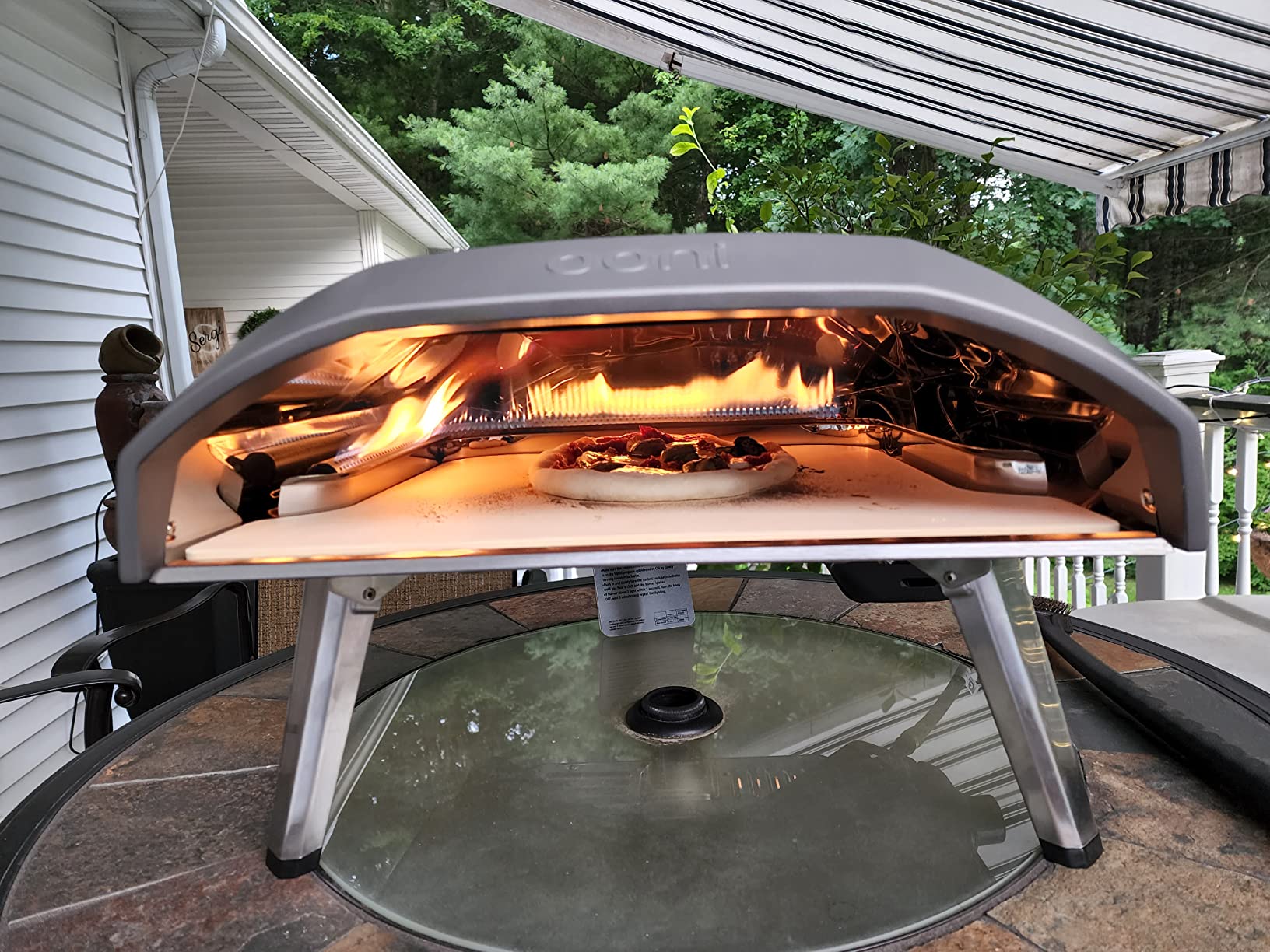
Owner reviews mention one setup snag that the manual does not call out clearly. The threaded gas connection wants a wrap of yellow PTFE tape, and without it you can get a leak that keeps the oven from reaching temperature. Two minutes with a roll of tape before your first light saves an hour of troubleshooting.
The stone also gives heat back faster than you would expect in a 12-inch oven. After a pie comes off, wait for the centre reading to come back up before launching the next one, or the base will pale while the top browns. r/pizzaoven threads describe this as the single biggest early frustration, and the fix is simply patience between bakes.
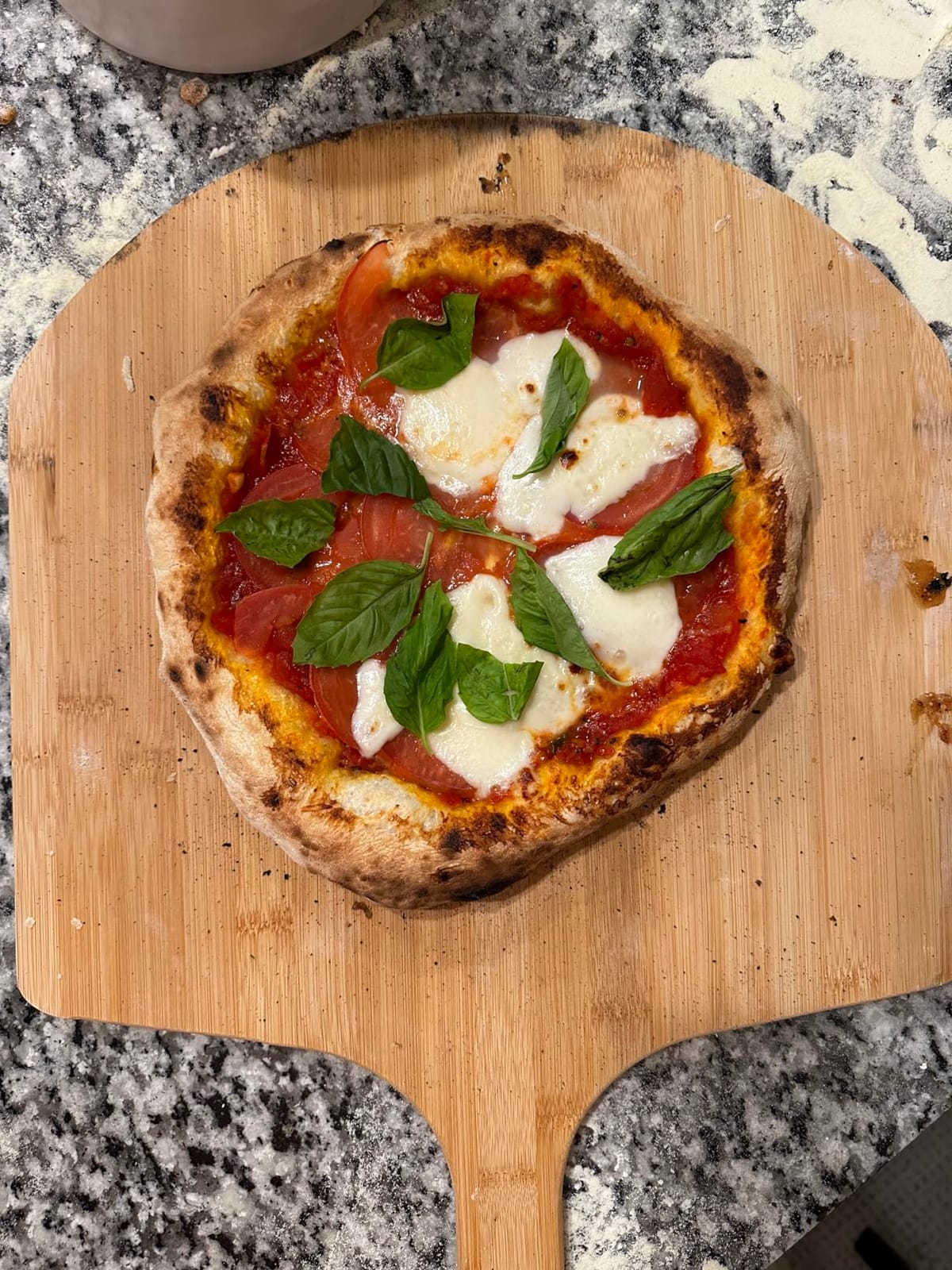
What the Koda 16 does well for a first oven
Heat comes up fast and recovers quickly, so you can iterate on a recipe in one session rather than waiting an hour between tries. The wide opening means you can see the whole pizza without crouching, which is worth more than any gadget when you are still learning what finished looks like.
Regulator and gas hose are included, so your first purchase is not a three-part transaction. Ooni also sells cast iron accessories that fit the oven for steaks, fish and vegetables, and several owners use it as a general grill rather than a pizza-only tool.
Where it will frustrate you
Temperature is uneven across the chamber, with hot spots at the back near the burner and along the ceiling. You will need to rotate the pizza once during the bake, which is a technique, not a button.
There is no front door, so heat escapes every time you launch. In cold weather that extends preheat noticeably, and for a beginner who bakes in January it is an irritation rather than a dealbreaker. The oven is propane only and will not run on natural gas without a conversion.
2. HALO Versa 16: Best for Beginners Who Hate Rotating Pizza
HALO Versa 16 Pizza Oven | 16” Rotating Stone, Patented Dual Burner System, 5-Minute Pizzas, Easy Clean | Propane Powered | HZ-1004-ANA
16 inch rotating cordierite stone
Dual burner heating
750F stone in 12 minutes
43.5 lb body
Pros
- Rotating stone removes the need to turn pizza by hand
- Dual burners heat from above and below for an even base
- Very little learning curve for switchers from other ovens
- Clamshell lid lifts the stone out for cleaning
- Runs on 20 lb tanks or 1 lb canisters with the included adapter
Cons
- Several users cannot push the stone past roughly 600 to 750F
- 43.5 lb body is heavy and the turntable needs nearby power
- 16 inch pizza is at the limit for a clean launch so 14 inch is easier
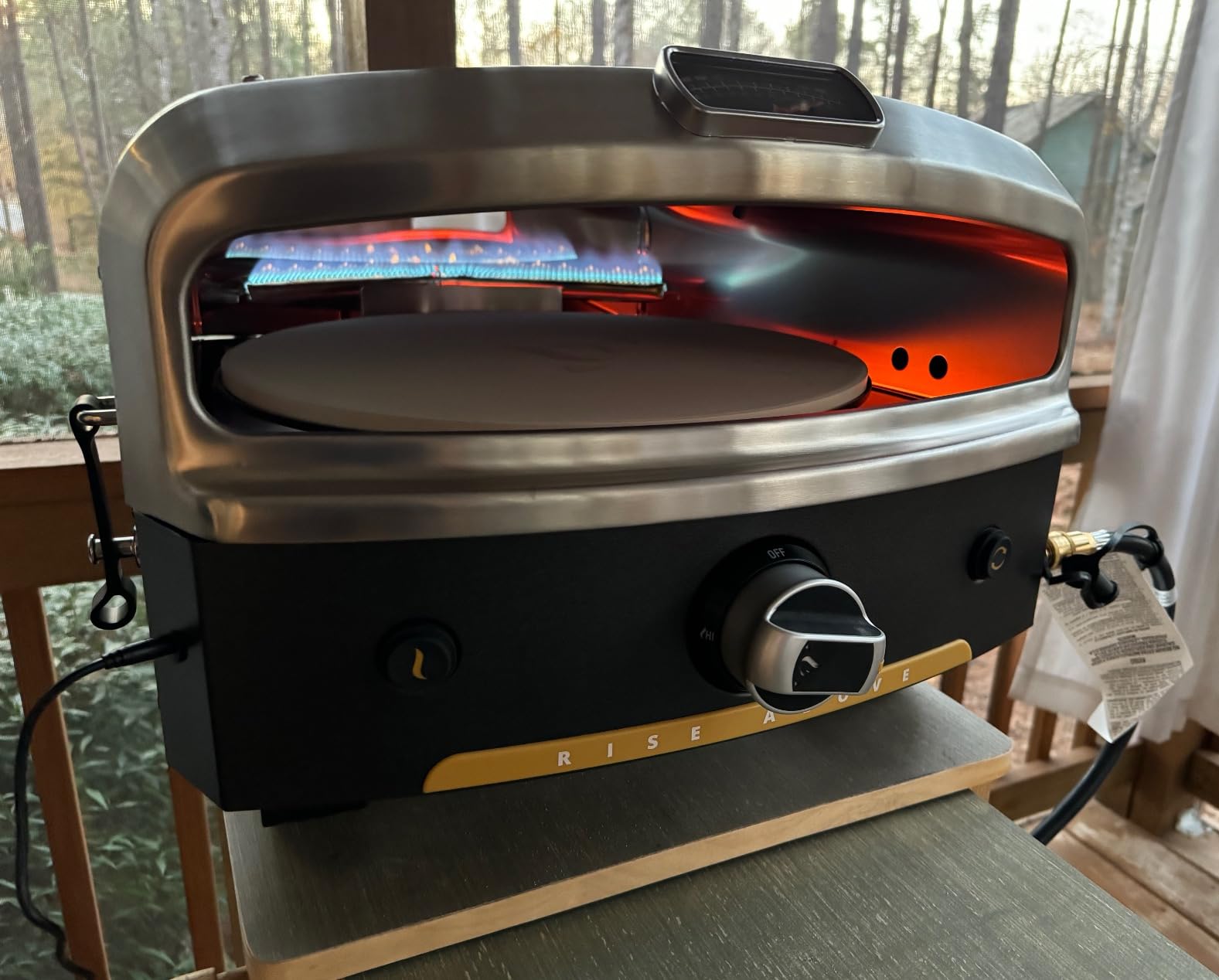
The pitch here is simple: the stone turns itself. A motorised cordierite stone rotates 360 degrees through the bake, so you never open the oven to spin the pie. That removes the technique that trips up most new gas oven owners, and owners coming from manual-turn ovens describe it as close to foolproof.
Unlike a pure Neapolitan oven, this one heats the pie from underneath and above. A U-shaped burner circulates while infrared heat comes down from the top, which produces a more evenly browned base and a five minute cook rather than a 60 second one. Owners running pizza parties report consistent results from the first pie to the fortieth.
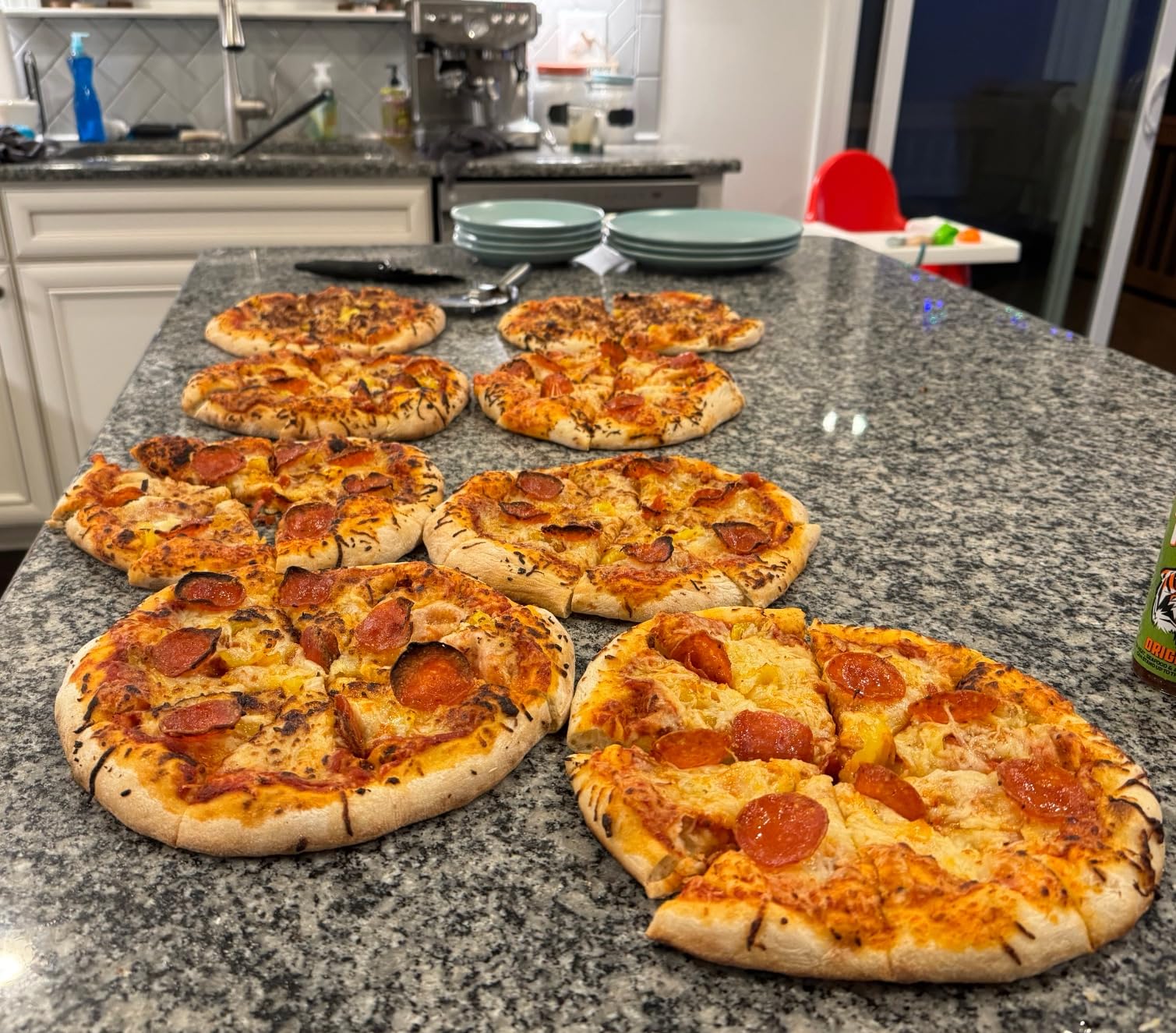
The honest caveat is stone temperature. A meaningful share of owners say they cannot get the stone past roughly 600 to 750F, well under the stated figure, and cooks stretch to five to eight minutes. The included gauge does not help, because it reads the air in the chamber rather than the surface of the stone.
Buy a cheap infrared thermometer before your first session and point it at the middle of the stone. That single tool resolves most of the confusion people report about this oven, and it is the right tool for every oven in this guide.
Why beginners pick the Versa 16
Longer cooks at lower effective temperature are more forgiving than 60 second bakes at full heat. Nothing burns in the time it takes you to realise a pizza is done, which is exactly what you want while your instincts are still forming.
The clamshell hinge lifts the stone and interior out for cleaning, and the turntable runs on batteries. It also works with a 20 lb tank or a 1 lb canister through the included adapter, so you are not locked to one fuel format.
Where it will frustrate you
At 43.5 lb this is the heaviest unit we tested, so moving it from a garage to a patio is a two-person job. The rotating stone also needs a power source nearby, which matters if you planned to take it camping.
If your goal is a fast 60 second Neapolitan pie with leopard spotting and a puffy cornicione, the long low-temperature cooks here will not get you there. This oven wants New York style and slower bakes, not the volcanic char of a stone at 900F.
3. Solo Stove Pi Prime: The Best Value Pick
Solo Stove Pi Prime Propane Pizza Oven | Portable Outdoor Gas Pizza Oven
900F in 15 minutes
90 second pizza
Cordierite stone
304 stainless demi-dome
13 inch opening
Pros
- Very simple setup needing only the stone and a connected cylinder
- Reaches roughly 875F at the centre of the stone in about 30 minutes
- Front facing knob gives intuitive heat control
- Compact and light enough to be genuinely portable
- Strong value against the premium brand names
Cons
- Pizzas cook so fast they need rotating every 15 to 30 seconds
- Base will not crisp on the first pies unless the stone soaks heat first
- Not suitable for boxed premade dough
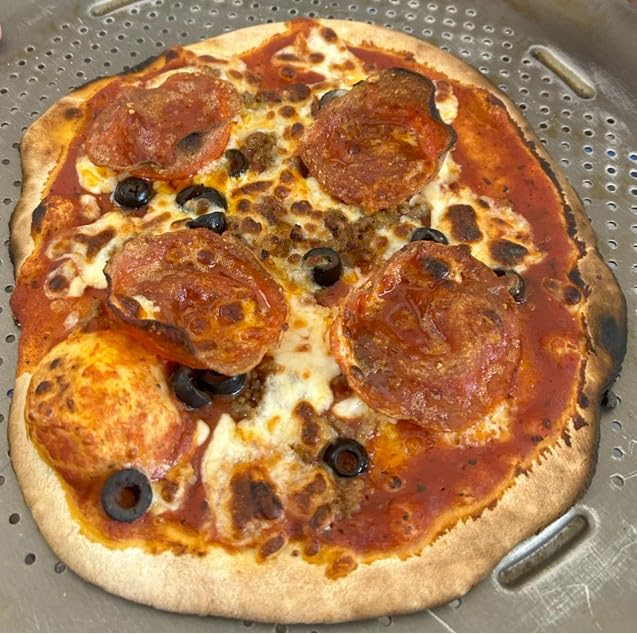
The Pi Prime is the oven we recommend when someone wants Neapolitan results without the premium badge. A 304 stainless demi-dome wraps a cordierite stone, and the whole thing preheats in about 15 minutes on propane. Owners report a centre-of-stone reading around 875F within half an hour on high, which is enough for real leopard spotting.
Setup is close to nothing. Place the stone, connect the cylinder, turn the front knob. There is no assembly and no tool requirement, which makes it the fastest oven here to get from the box to a cooking pizza. Multiple owners on r/pizzaoven describe it as performing like ovens in a far higher price band.
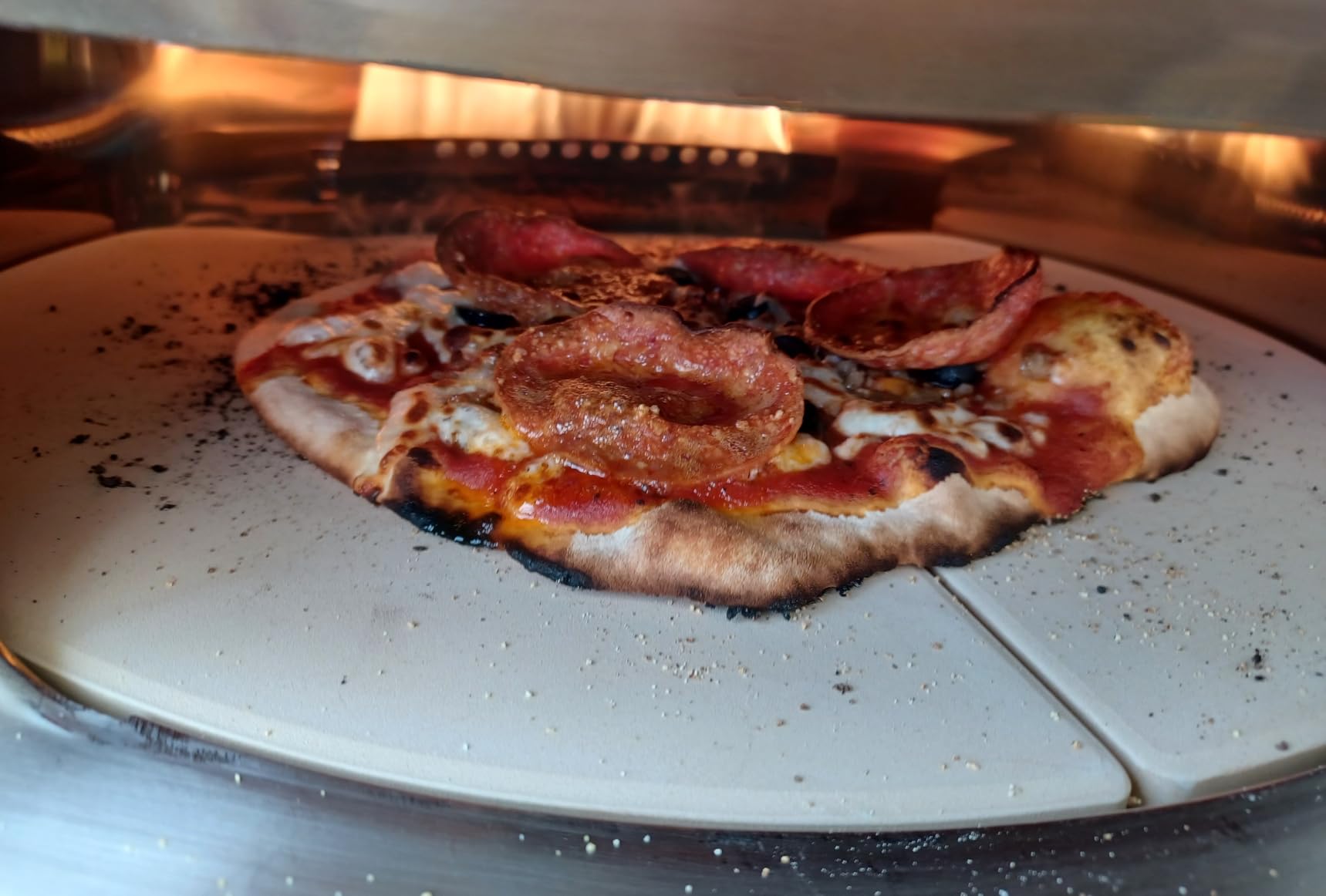
The trade is attention. A 90 second pizza at full heat is not a beginner-friendly pace. Owners nearly all describe the same rhythm: dust the peel heavily, launch quickly, and rotate every 15 to 30 seconds or the top scorches. The first two or three pies are usually about learning the stone, not learning the recipe.
The other theme is dough. This oven will not do justice to boxed premade dough formulated for a domestic oven. Bring your own dough made for high heat, proofed properly, and this oven rewards you quickly.
What the Pi Prime gets right for a first purchase
The demi-dome shape reflects heat back down onto the top of the pizza, so you do not need an overhead infrared element to brown a crust before the base chars. That geometry is why a compact oven can still produce a properly cooked Neapolitan pie.
It is also genuinely portable. Owners take it camping on a small bottle, and the 13 inch panoramic opening is wide enough to watch a pizza and get a turning peel in without scraping the edge.
Where it will frustrate you
Cook speed is the main issue. This is not a set-and-forget oven. If you want to make four pizzas and relax, the HALO Versa 16 handles that far better.
The 13 inch opening means personal sized pies, not a large family pizza. Buying dough formulated for home ovens is the other trap, because it will not hold together at 900F. There have also been occasional reports of units arriving dented in transit.
4. BIG HORN Gas Pizza Oven: Big Chamber, Small Learning Curve
BIG HORN Gas Pizza Oven, Portable Propane Pizza Oven with 15 inch Pizza Stone, Stainless Steel Pizza Maker for Outdoor Cooking
Dual side burners at 23000 BTU
750F in 10 minutes
Up to 1070F
14.7 inch cooking area
Pros
- Dual side burners heat the chamber evenly so no rotation is needed
- 10 minute preheat to 750F
- Roomy chamber that handles a 14.7 inch pizza
- Kit includes stone peel and propane regulator hose
- Easily disassembled for cleaning and transport
Cons
- Bulky upright form factor is less convenient to move than a folding-leg oven
- Some listings describe the included stone as 13 inch while the name says 15 inch
- Stone and chamber size differences between listings can confuse expectations
The BIG HORN is defined by its chamber. Two side burners rated at 23000 BTU combined push heat across an arc shaped chamber, and the design goal is even cooking with no manual rotation at all. That is a real departure from the torch burner ovens that scorch the front of a pizza while the back stays pale.
It reaches 750F in about 10 minutes and goes to roughly 1070F at maximum, which gives you headroom to work at a moderate temperature instead of pushing a stone to its limit. The cooking area fits a 14.7 inch pizza, so it is one of the more generous stones in this group.
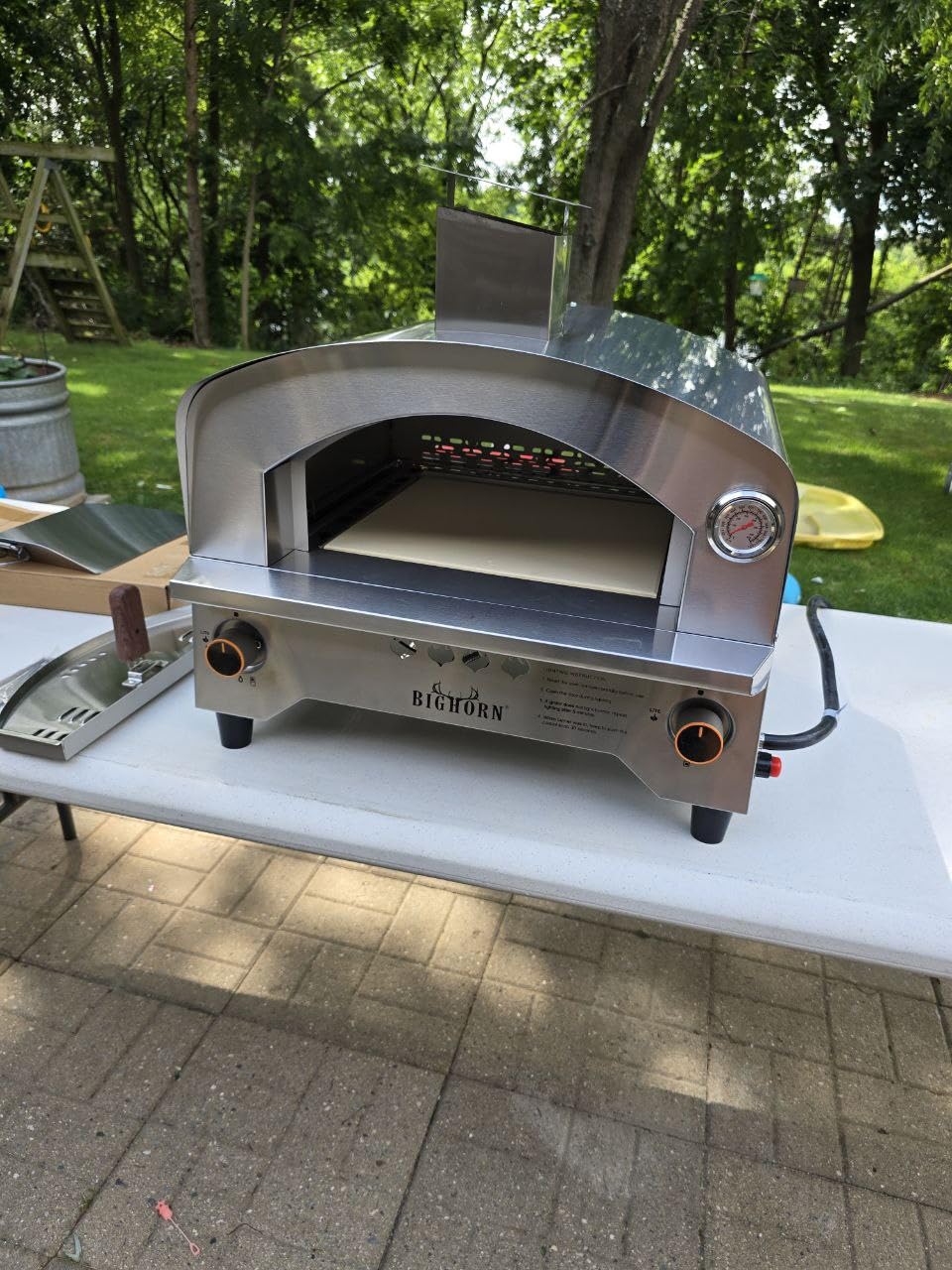
What arrives in the box matters here. The kit includes the pizza stone, a foldable peel, and the propane regulator hose, so you are not shopping for three essentials before your first cook. The stainless body also comes apart for cleaning and transport without tools.
Owner satisfaction is broad, with a rating distribution weighted heavily toward five stars and repeated mentions of fast heat up and an even, generously sized cooking area. Detailed written reviews are thinner for this listing, so the rating history carries more of the evidence here than it does for the models above.
Why beginners like the BIG HORN
No rotation means no turning peel needed. That removes a whole category of beginner technique, and with dual knobs you can also run one burner hotter than the other if you want to manage a top-heavy pizza.
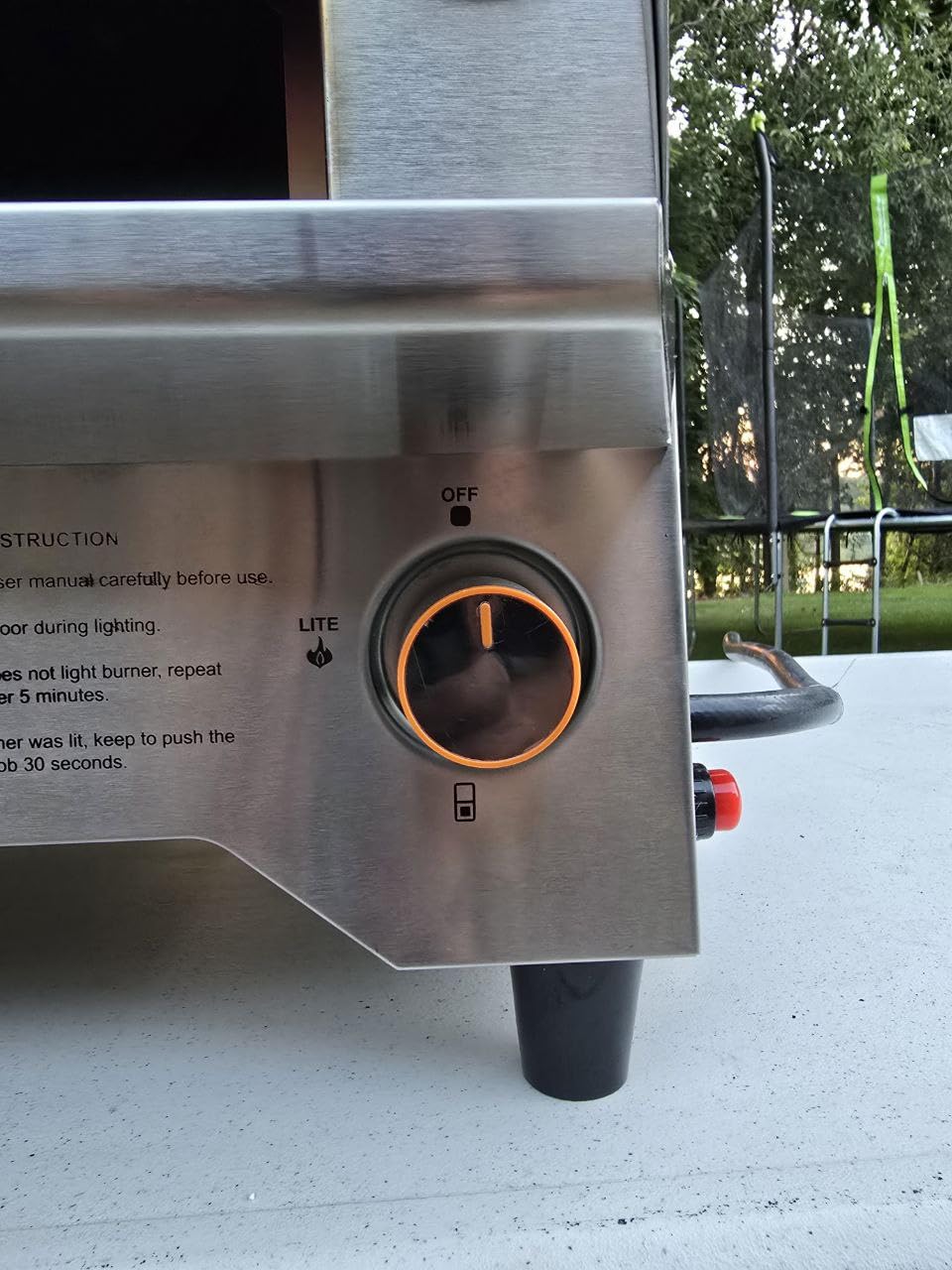
A built in thermometer and two control knobs give you more to read and adjust than a single dial, which helps you learn what the flame is actually doing instead of guessing at one setting.
Where it will frustrate you
The upright box form factor is the big drawback. It is 23 inches tall and does not fold, so storing it over winter means dedicating real space, and carrying it to a friend house is a two-person job.
It runs cooler than the 900F class ovens, so a 60 second Neapolitan bake is not really what this oven does. It is at its best as a casual weeknight oven, and the listings differ on whether the included stone is 13 or 15 inches, so check the specification list before you plan a pizza size.
5. PIZZELLO Forte: Dual Fuel With the Longest Warm-Up
PIZZELLO 16″ Outdoor Pizza Oven, Propane & Wood Fired Steel Pizza Grill
Propane and wood burners
752F in 25 to 30 minutes
16 inch stone
Fold up legs
Pros
- Dual fuel lets you switch from quick gas cooks to slow wood fired sessions
- Large 16 inch stone handles pizzas subs pretzels and baked dishes
- Accessory bundle includes stone peel cutter pellet scoop and carry bag
- Double walled stainless steel with insulation cotton slows heat loss
- Fold up legs and detachable chimney make it portable
Cons
- Longest preheat in the group at 25 to 30 minutes to reach 752F
- Tall 31.5 inch freestanding body is bulky for a small patio
- Highest one star share among the ovens listed here at 12 percent
- No tools for moving it once the legs are down
The PIZZELLO Forte has 879 owner reviews behind it, and the reason people buy it is obvious once you open the box. The stone, a pizza peel, a cutter, a pellet scoop and a waterproof carry bag all ship together. That is the most complete package we saw.
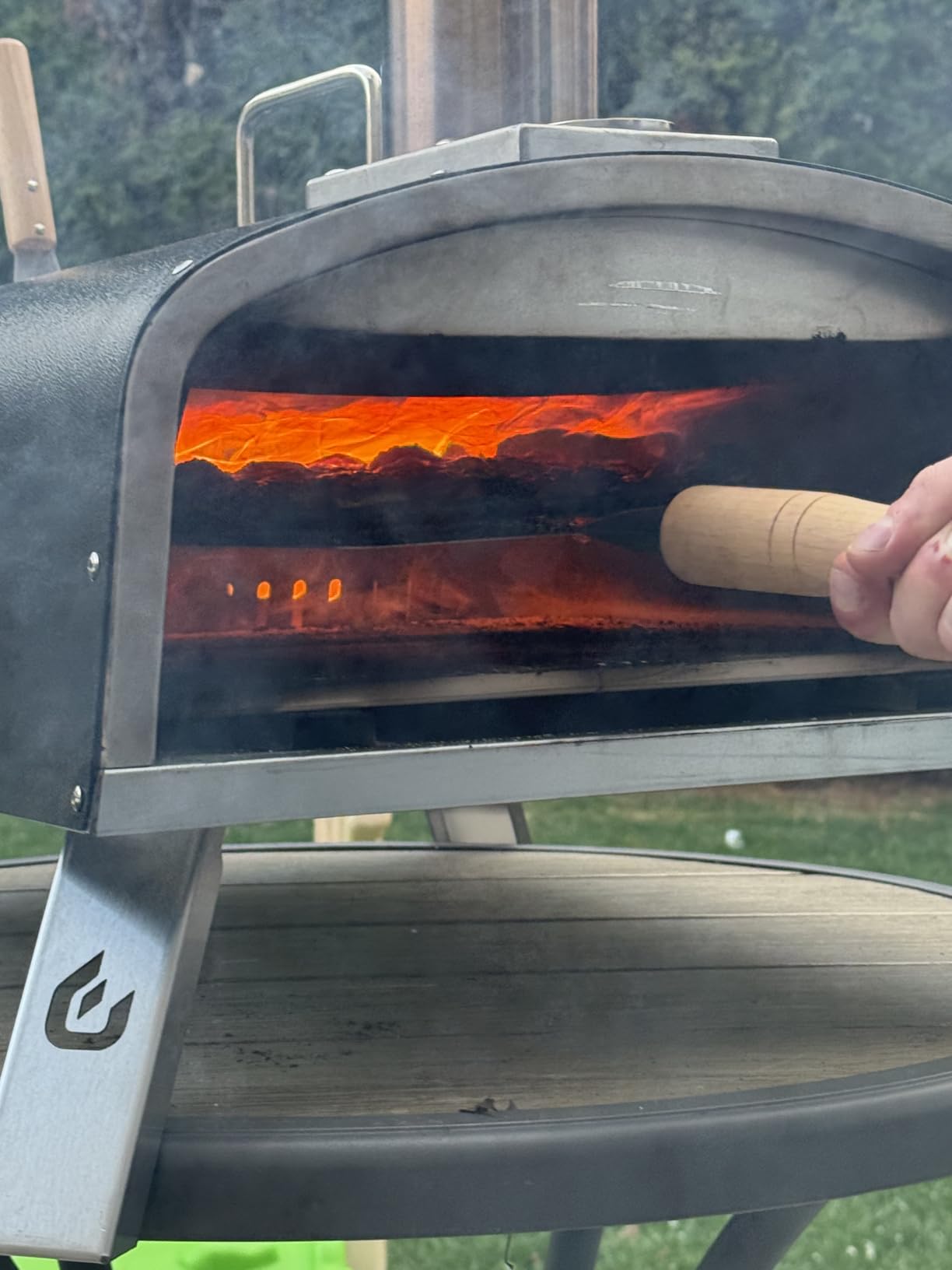
It also runs two fuels. A propane burner handles quick cooks, and a separate wood or pellet burner takes over when you want a slow, smoky session. That flexibility is the reason to consider it even though it takes 25 to 30 minutes to reach about 752F, the slowest preheat in this roundup.
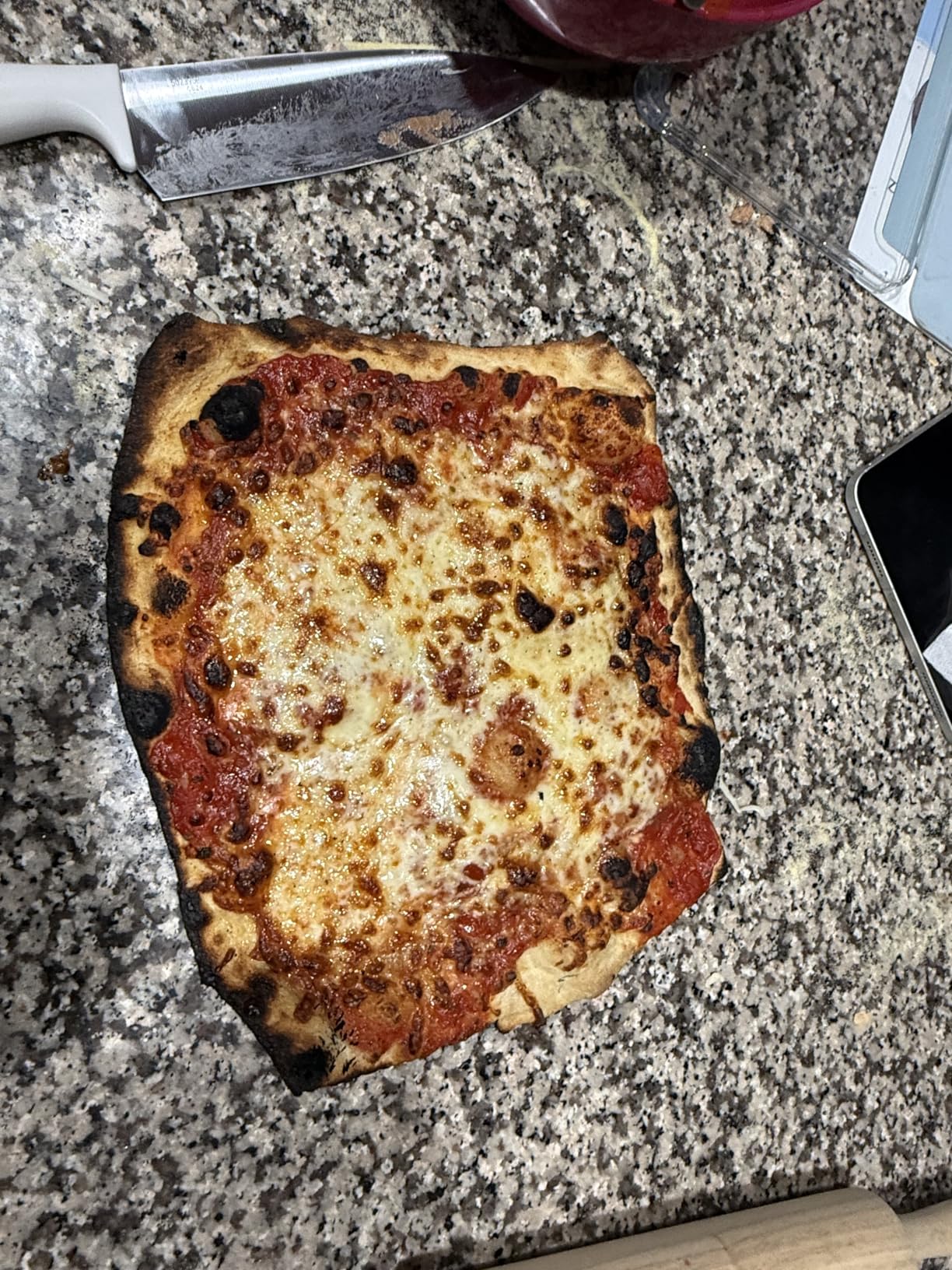
Be realistic about that warm-up. If you want a pizza on a Tuesday night without ceremony, 30 minutes is a long time. Our notes matched owner reports: the insulation cotton between the double walled stainless panels does a good job holding heat once you are there, it just takes a while to get there.
The 16 inch stone is a genuine advantage for a family. It cooks a large pizza, plus subs, pretzels and baked dishes, which makes it one of the more versatile ovens here when you are not making Neapolitan pizza specifically.
Where the Forte earns its place
The accessory bundle alone removes three separate purchases. For a first oven, having a peel and a stone in the box means you can cook something on day one rather than waiting for a delivery.
Dual fuel lets a beginner start on gas, which is the easy mode, and graduate to wood later without buying a second oven. That progression path is unusual in this price range.
Where it will frustrate you
The body stands 31.5 inches tall and does not nest down. On a small patio it dominates the space, and on a balcony it is not realistic.
This listing also carries the highest one star share of the ovens we compared, at 12 percent, which points to uneven satisfaction with build or durability. Written review detail was thin for this listing, so you are leaning on rating distribution alone. If you need a 950F Neapolitan bake in under 20 minutes, this is the wrong oven.
6. Mimiuo 12 Inch: The Complete Starter Kit
Mimiuo 12″ Gas Pizza Oven Outdoor 33Lbs – 60S Bake, w/Stone, Peel & Cover
900F in 10 to 15 minutes
13 inch cordierite stone
33 lb stainless body
Stone peel and cover included
Tool free setup
Pros
- Heavy 33 lb stainless body holds heat with minimal drop between pizzas
- Cordierite stone rated to 2200F resists cracking and warping
- Complete kit out of the box with stone peel and cover
- Fast tool free setup with folding legs and a simple propane connection
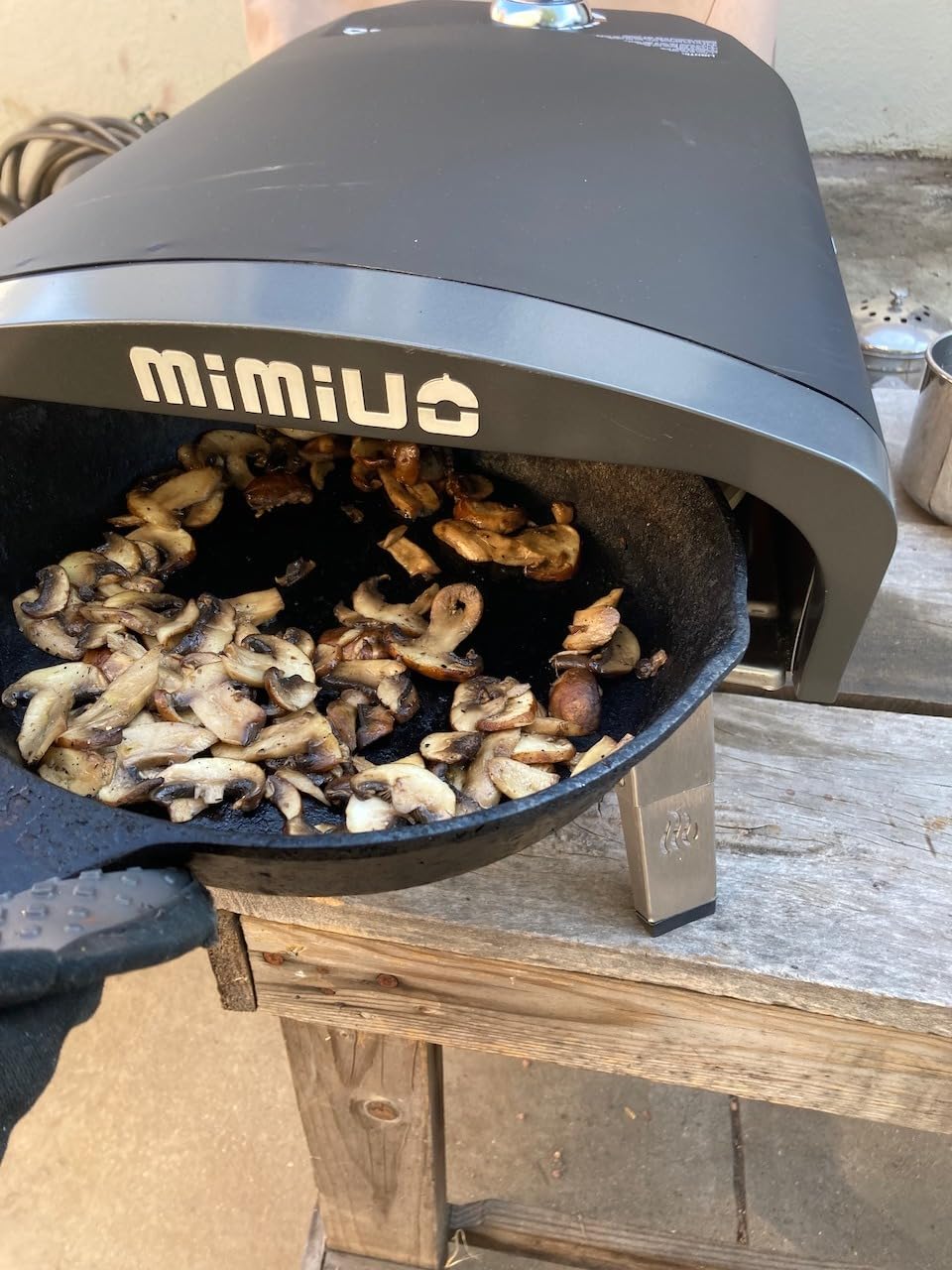
- Works for steaks wings vegetables and bread as well as pizza
- Owners compare it favourably to the big brand names
Cons
- Concentrated flame scorches the top if run at full power so the dial must come down
- Stone is hard to wash and picks up staining that is considered normal
- Reports of the temperature dial breaking and a unit failing within a few uses
- 33 lb is heavy for a portable oven
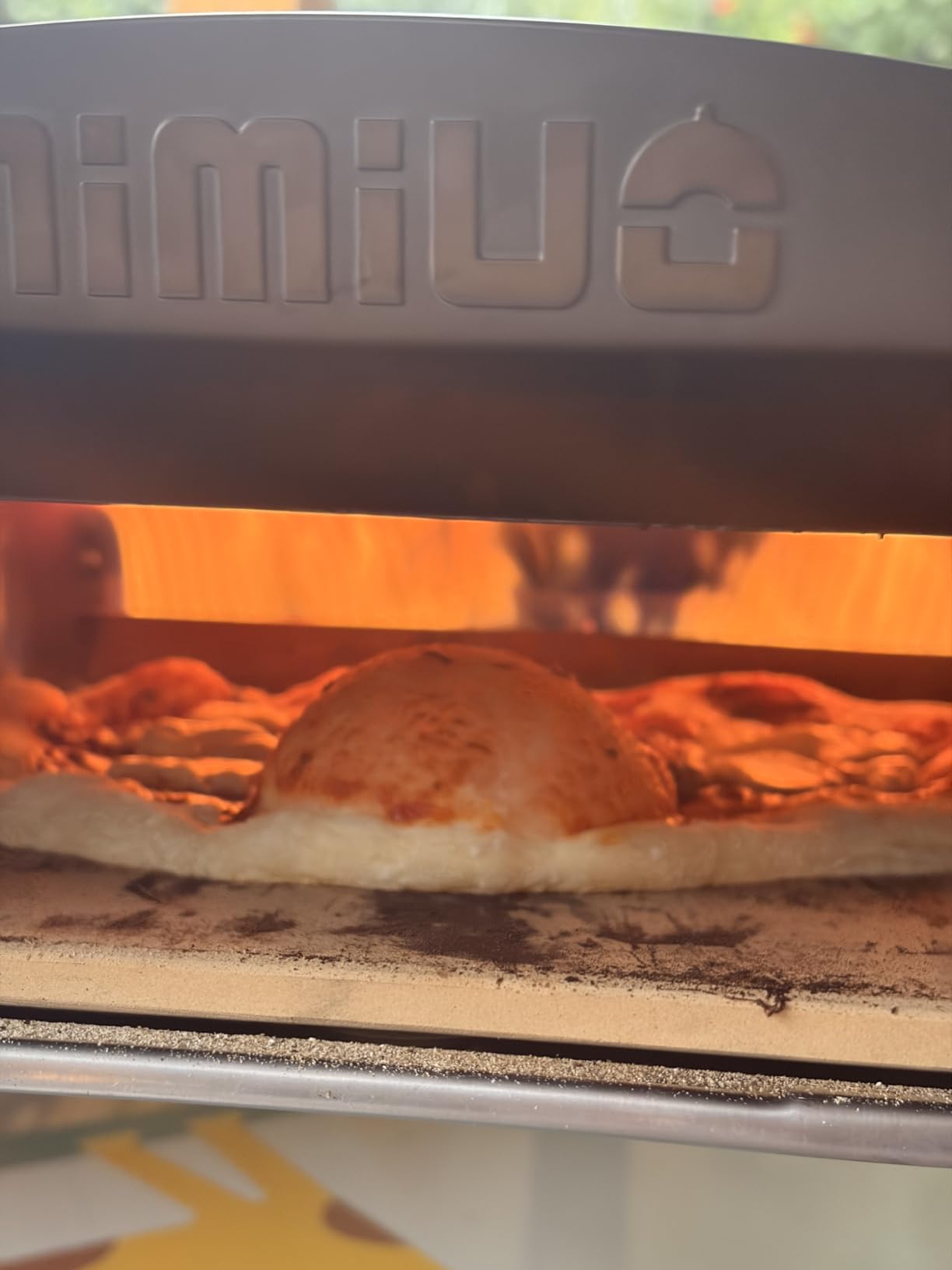
This is the oven we would put on a first-timer’s patio if the brief is simple: reach 900F fast, keep heat through a long session, and do not require a second shopping trip. It preheats to 900F in 10 to 15 minutes on propane, and the 13 inch cordierite stone is rated to 2200F, which is a generous margin above anything you will cook on it.
The 33 lb stainless body is the reason heat stays where you put it. Owners report minimal temperature drop between pizzas, which in practice means you can launch pie after pie without a full reheat. The box also includes the stone, a peel and a protective cover.
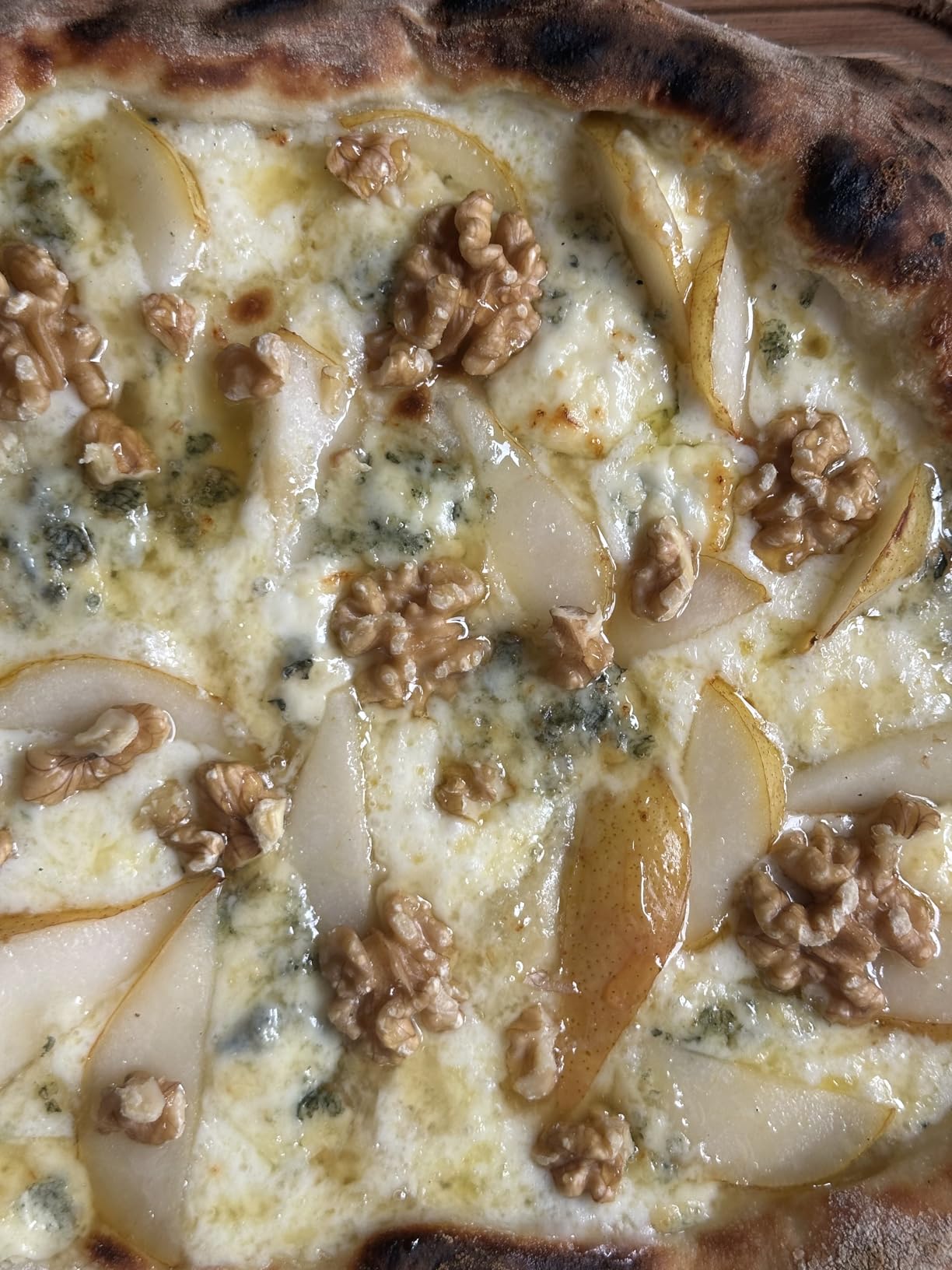
The burner throws a concentrated flame, so the single biggest thing to learn is turning the dial down after preheat. Owners who leave it at full power scorch the top of the pizza while the base is still pale. Start at mid setting once the stone is hot and add heat from there.
Staining on the stone is normal and does not affect cooking. It is also not washable in any practical sense, so plan on scraping loose char rather than cleaning it properly. That is the one piece of maintenance every stone oven shares.
Why this one suits a first oven
Nothing is missing from the box except fuel. Stone, peel and cover are all included, and the folding legs plus tool free propane connection mean you can be cooking within minutes of unboxing.
Owners also use it as a general grill for steaks, wings, vegetables and bread, which extends the value well beyond pizza nights.
Where it will frustrate you
Durability is the honest concern. Reviews mention a temperature dial breaking after a second use and a unit failing after the third, and the one star share reflects those reports. Buying a replacement dial is the first thing to look into.
At 33 lb it is not a one-person carry, and the concentrated flame means you are managing the dial rather than setting it once. The 12 inch footprint also means a smaller pizza than the Koda 16 or the HALO.
7. Mimiuo Auto-Rotating: Heavy Insulation and a Motorised Stone
Mimiuo Auto-Rotating Gas Pizza Oven Outdoor 39Lbs, 60S Bake, w/Stone
Automatic rotating stone
900F in about 15 minutes
39 lb double insulated body
13 inch cordierite stone
Turntable motor
Pros
- Auto rotating stone means no opening the oven to turn the pizza
- Heavy 39 lb double insulated body with minimal temperature drop
- High density cordierite stone resists cracking and warping
- Knob controlled flame with folding legs and no tools needed
- Turntable mechanism described as the most durable in this class
Cons
- At 39 lb it needs two people to move
- Rotating shaft can need occasional oiling to spin freely
- Written review detail was thin for this listing so durability feedback is limited
- Stone size suits personal pizzas rather than large pies
This is the heavier, more insulated version of the Mimiuo 12, and the rotating stone is the headline. A built in turntable motor turns the 13 inch high density cordierite stone through the bake, so you launch, close the door and come back to a rotated, evenly crisped pizza.
Heat retention is the second argument. The 39 lb body uses double layer insulation and reaches 900F in about 15 minutes on propane, and owners report very little temperature drop between pies. That matters when you are cooking four pizzas for people who are waiting.
Two practical notes. The turntable shaft occasionally needs a drop of oil to spin freely, and the oven is 39 lb, which means two people to move it. Neither is a problem on a permanent patio setup, and both are problems if you planned to carry it across a lawn on your own.
Written customer review detail was limited for this listing, so the 68 percent five star distribution is carrying most of the evidence. That is a reasonable signal, just a thinner one than the models with hundreds of written reviews.
What works well here
The combination of a rotating stone and a heavily insulated body is close to ideal for a beginner who wants consistency without babysitting. There is no turning peel, no rotation timer, and no waiting for the chamber to climb back up after each pie.
It is a genuinely complete kit, with the stone, peel and cover included, and the folding legs mean it stores against a wall when you are done for the season.
What to watch out for
Weight is the deciding factor for many buyers. At 39 lb this is not a portable oven in any real sense, it is a patio appliance that happens to fold.
Like the HALO, this setup suits slower, evenly browned pizza more than a fast 60 second Neapolitan char. If you chase leopard spotting, a torch burner oven like the Koda 16 is the better tool.
8. Q Pizza PS102: The One That Goes to the Beach
Q PIZZA 13″ Propane Gas Pizza Oven with Automatic Rotating Stone, PS102
13 inch rotating stone
932F in 10 to 15 minutes
Built in gas ignition
33 lb
One minute bakes
Pros
- Rotating stone cooks evenly without constant manual turning and reduces mess
- Reaches over 900F and cooks thin pizza in about 90 seconds
- Ready in 10 to 15 minutes and bakes four or more pizzas without a full reheat
- Turntable draws very little power so it can be taken out with a propane bottle
- Simple to light with built in ignition
- Owners report well over 200 pies through a single unit
Cons
- Plastic control knob sits close to the burner and has melted on at least one unit
- Rotating motor has failed outright on at least one unit
- Cooking at full heat burns the crust before the base cooks
- Real learning curve for new users
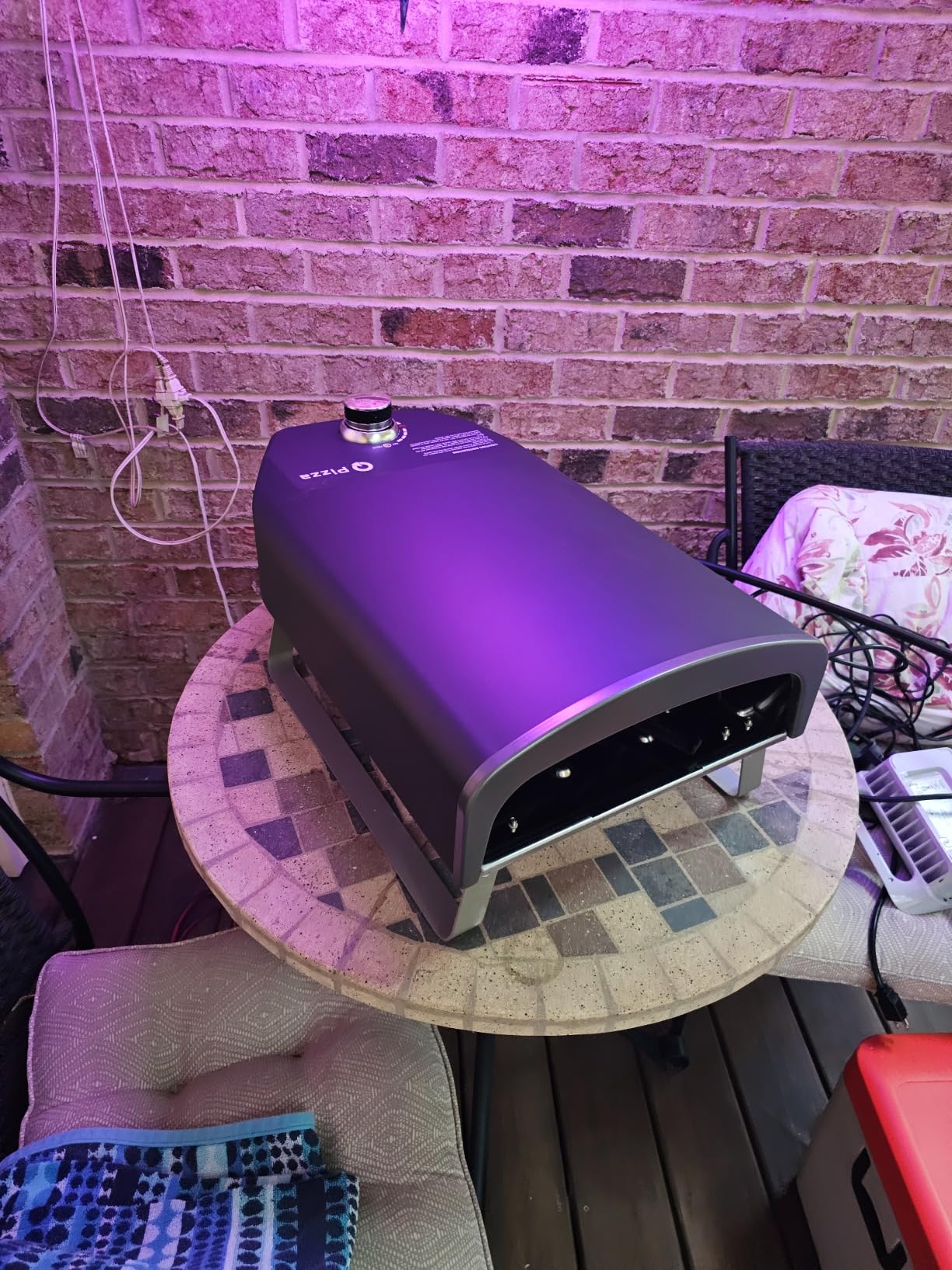
The PS102 is the most interesting specification here for anyone without a patio. The rotating motor draws only a couple of watts, so it can run off small batteries or a portable power bank, and the oven itself needs nothing but a propane bottle. Owners take it to the beach and to campsites.
It also handles volume. Several owners describe running a single unit through more than 200 pies for parties of around 20 people, and they report four or more pizzas back to back without a full reheat. That is throughput no other oven in this group claims.
Heat management is the learning curve. It preheats to 932F in 10 to 15 minutes and bakes in about a minute, and running it at full heat burns the crust before the base cooks. Expect to bring the dial down once you have soaked the stone, exactly as with the other quick ovens here.
Written reviews are worth reading on this one. Long term owners rate it far above the 4.1 star average, describing hundreds of pizzas with no problems, while newer buyers tend to hit the heat learning curve harder. That split is the honest picture.
Why it suits a beginner who wants volume
No assembly is required, and built in ignition means there is no lighter and no torch routine. For someone cooking for a group rather than for themselves, the ability to fire four pies without a reheat is the feature that matters most.
It is also at 33 lb one of the lighter cabinets here, and its 24.5 inch footprint fits a car boot with the folding legs down.
Where it will frustrate you
Quality control complaints are real and specific: a plastic control knob positioned close enough to the burner to melt, and a rotating motor that failed outright on at least one unit. Those are the two parts to check first if something goes wrong.
At 13 inch the stone suits personal sized pizzas. It is not the oven for a large family pie, and the fast cook time means you cannot walk away during a bake.
9. VEVOR Dual Fuel: Three Fuels in One Box
VEVOR Dual Fuel Pizza Oven Outdoor, 16 in Wood Fire & Propane Gas Pizza Oven, Portable Pellet & Propane Pizza-Maker with Thermometer, Large Multi Fuel Pizza Cook for Outside Camping & Backyard
Wood pellet charcoal and propane
600F in 15 minutes
Up to 1000F
43 lb
Built in thermometer
Pros
- Dual fuel lets you use gas for quick cooks and wood or pellets for smoky flavour
- Propane attachment heats the stone to 850F in under 20 minutes
- Rotating stone handle turns the pizza without opening the door
- Build quality praised against ovens costing far more
- Regulator peel and cover included in the box
- Usable for flatbreads and roasted vegetables
Cons
- Front door must stay closed while cooking so progress cannot be seen
- Bolts may need tightening and lock washers with use
- Pellet flame kept going out during wood fired use and needed constant refuelling
- Included pizza peel has a short handle
- At 43 lb and 33.7 inches deep it is among the largest units
- Reports of stones and shells arriving damaged
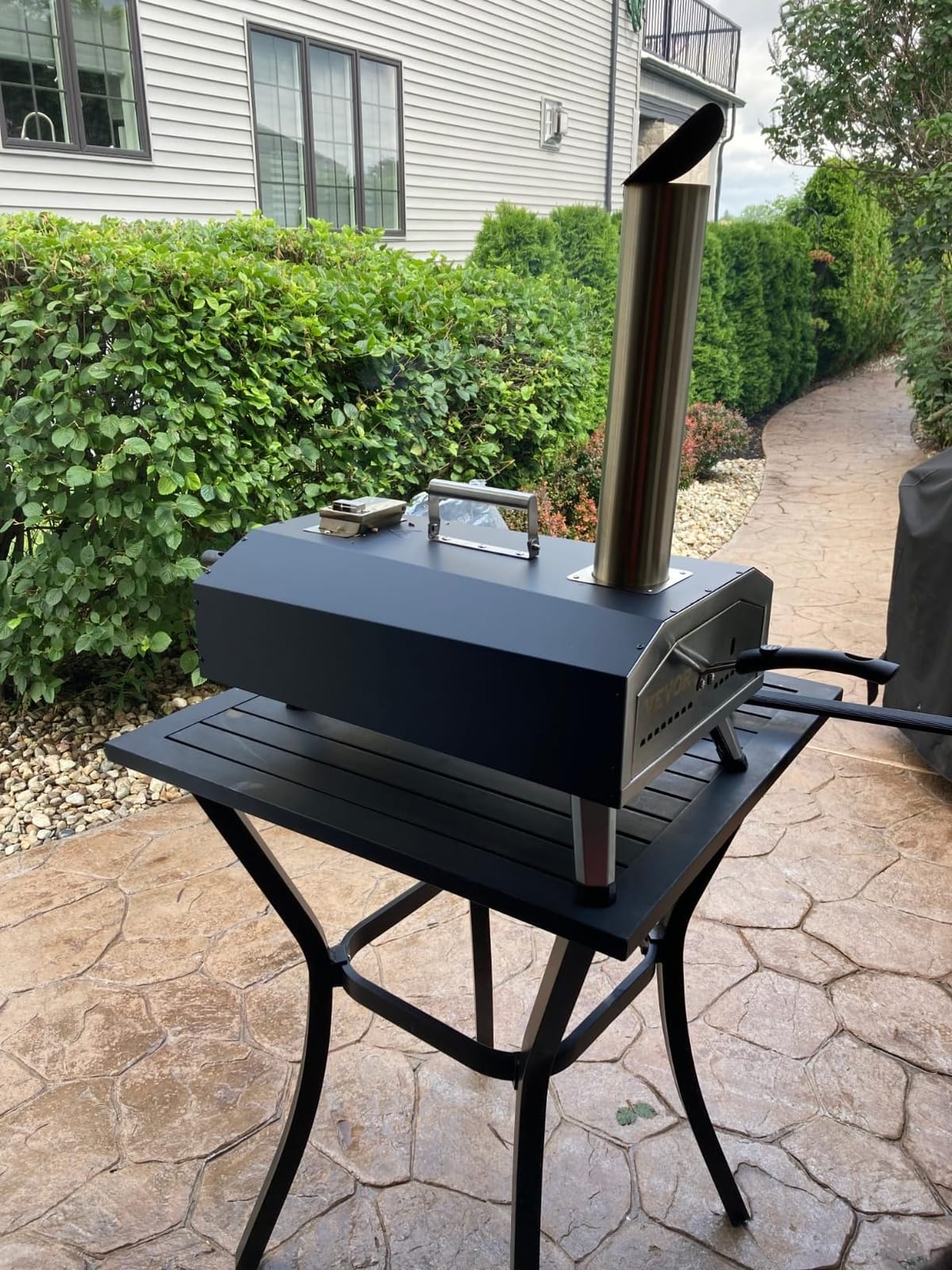
The VEVOR accepts wood, charcoal, pellets and propane, which makes it the broadest fuel support of any oven here. Owners commonly frame it as the value alternative to a premium multi-fuel oven, and the box includes a chimney assembly, hopper, pellet scoop, pressure regulator, peel, cover and a recipe booklet.
On propane the stone reaches 850F in under 20 minutes. A rotating stone handle lets you turn the pizza without opening the front door, which matters because that door has to stay closed during a bake to hold heat, and you cannot watch progress through it.
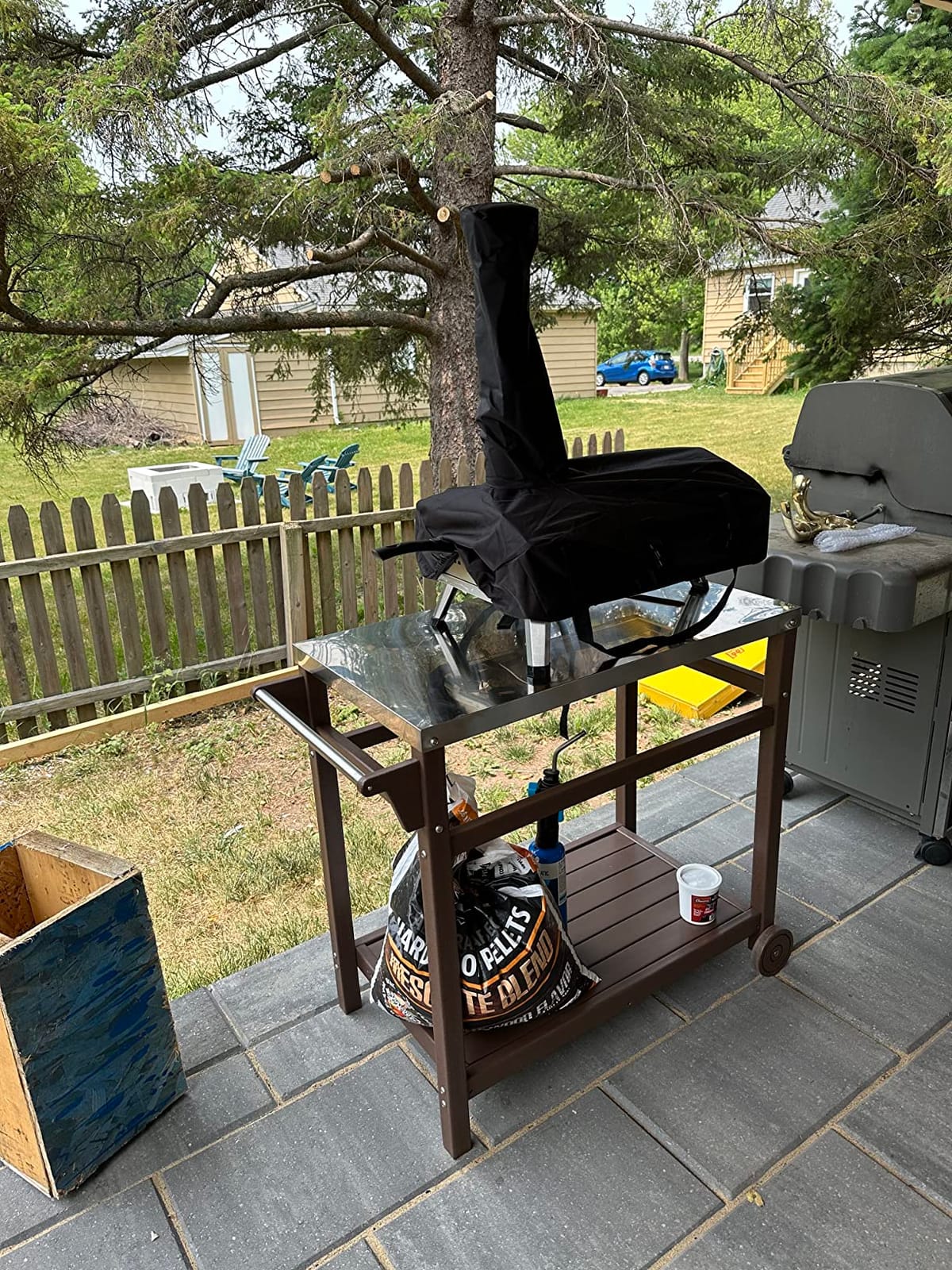
The split rating here comes from two places. First, transit damage: two separate reports of a pizza stone arriving broken and the shell dented. Inspect the box before you sign for it. Second, the pellet fire going out repeatedly during wood fired use, which turns a weekend cook into a refuelling job.
On size, at 43 lb and 33.7 inches deep this is one of the largest units in the guide. It needs a real corner of a yard, not a balcony.
Why it is worth a look
Fuel flexibility is the pitch. You start on propane for speed, and if wood or pellet cooking grows on you, the hardware is already in the oven. Most multi-fuel setups in this range make you buy a separate attachment for gas, as the Ooni Karu 12 does.
It is also capable beyond pizza. Owners use it for flatbreads and roasted vegetables, and the hopper plus pellet feed covers a long, slow cook without a babysit.
Where it will frustrate you
The closed front door means you cook blind. Timing has to be precise, which is the opposite of what a beginner wants on their first evening.
Bolts may loosen with use and need tightening with lock washers, and the pellet flame needs constant tending. Written review volume is also the thinnest in this roundup, so you are relying on a smaller owner base.
10. Ooni Karu 12: Smallest Footprint, Gas Upgrade Needed
Ooni Karu 12 Multi-fuel Outdoor Portable Pizza Oven – Reaches 950°F and Cooks 12 Inch Pizzas in 60 Seconds. Versatile Wood or Propane Gas Fired Grill with Pizza Stone
Wood charcoal or propane
950F in 15 minutes
26.4 lbs
12 inch pizza in 60 seconds
Fold down legs
Pros
- Reaches 950F in 15 minutes and cooks a 12 inch pizza in about 60 to 90 seconds
- Wood or charcoal flavour rated on par with pizzeria results by owners
- Very light at 26.4 lbs with fold down legs and a removable chimney
- Compact enough for a small back porch
- Custom fuel tray maximises airflow with minimal ash use
Cons
- Gas burner attachment is sold separately so gas operation is not ready out of the box
- Included peel fits the oven too snugly making launching dough harder
- Wood and charcoal operation has a real learning curve compared with gas ignition
- Dough sticks on the first few bakes until technique is dialled in
The Karu 12 is the lightest oven here at 26.4 lbs and the smallest footprint, which makes it the right answer for a small porch or a patio where a cabinet oven would take over. Fold down legs and a removable chimney mean two people can carry it and it disappears into a garage when you are done.
It reaches 950F in 15 minutes and cooks a 12 inch pizza in about 60 to 90 seconds on a custom fuel tray designed for airflow with minimal ash. Owners rate the wood and charcoal flavour on par with pizzeria results, and the 84 percent five star distribution is the strongest consistency signal in this roundup.
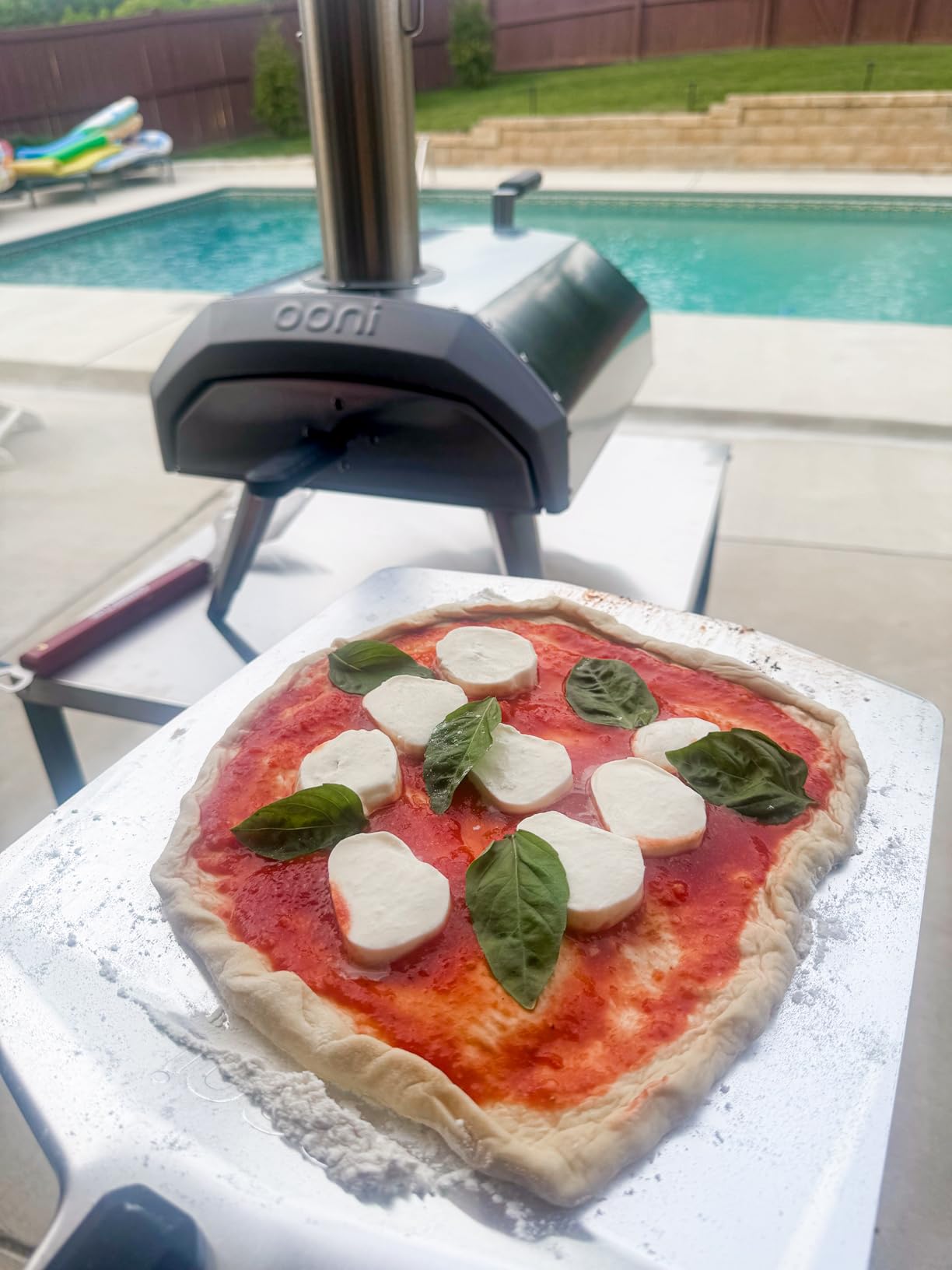
Here is the catch that catches people: the gas burner is a separately sold attachment. If you want propane operation, budget for the burner as a second purchase. Our notes and owner reports agree on the other point too, the included peel fits the chamber too snugly, so many buyers add a perforated peel separately.
Running it on wood or charcoal also has a steeper curve than gas ignition. Expect to spend your first session learning fuel management rather than pizza. If gas is what you want, treat the burner as part of the purchase rather than an optional extra.
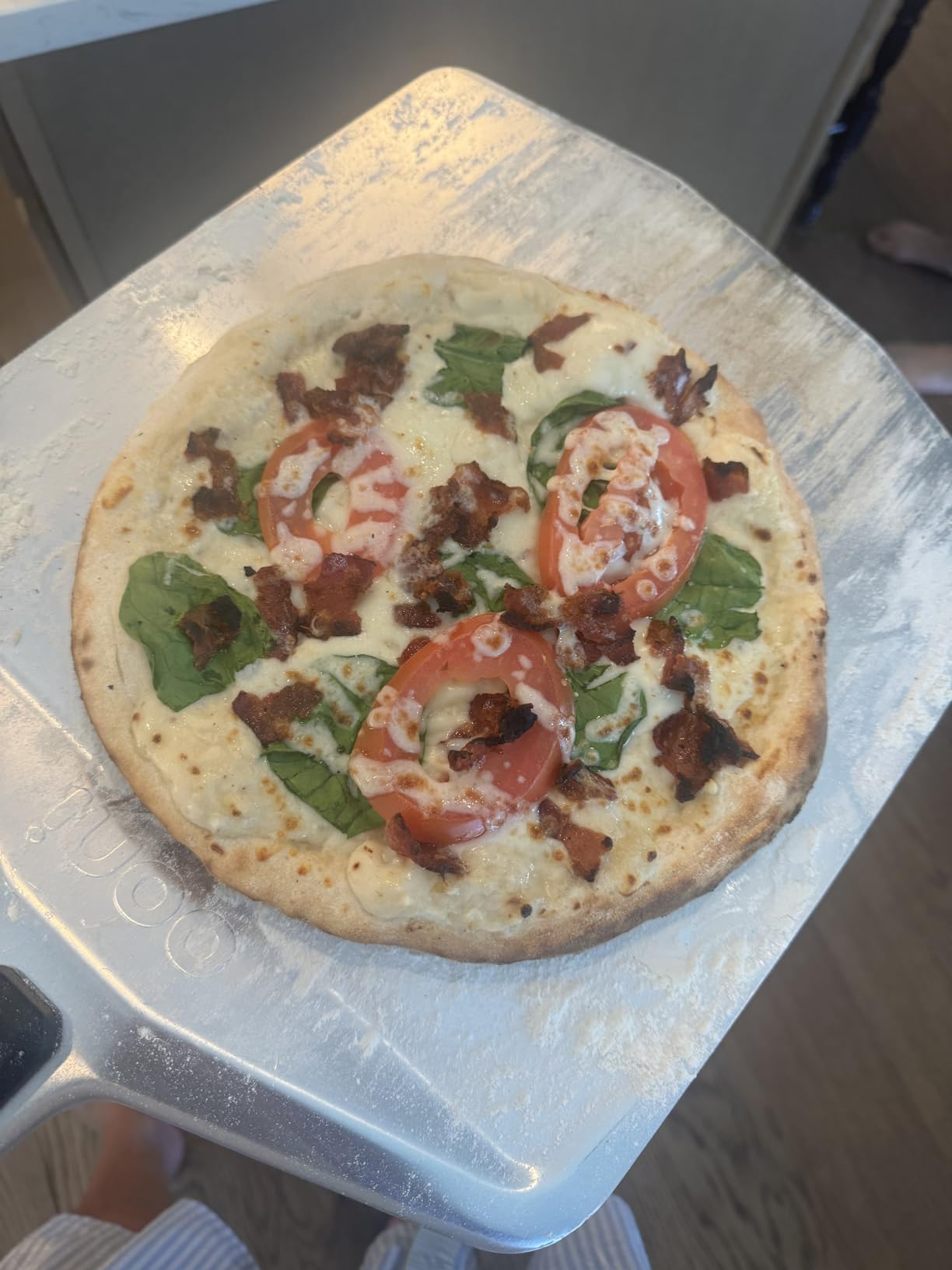
Why it works for a first oven
Light weight and a small footprint are the deciding factors for a lot of beginners. If you cannot store a 40 lb cabinet through winter or you are starting on a balcony, this is the one that fits the space.
It is also a genuine upgrade path. Start with gas for clean, fast cooking and add wood later when you want the flavour, without changing ovens.
Where it will frustrate you
Two things, both about purchases rather than performance. The gas burner is not included, and the stock peel is tight in the chamber, which makes early launches harder than they should be.
At 12 inches it is the smallest cooking area of any oven in this guide. One 12 inch pizza covers a hungry person, not a family, so plan on rounds rather than a single bake. You will also face the same first-bake sticking that every stone oven has until your semolina and launching technique settle in.
What Beginners Need to Know Before Buying a Gas Pizza Oven
Gas, wood or multi-fuel: pick the easy mode first
For a first oven, gas is the shortest path to a good pizza. You turn a knob, the flame lights, and heat arrives on a predictable curve. Wood and charcoal demand fuel management, ash handling and a learning curve that can take a season before the results feel consistent.
That said, a multi-fuel oven is not a mistake if you know you will use both. The VEVOR and the PIZZELLO Forte both burn propane and wood out of the box, and the Ooni Karu 12 covers wood, charcoal and propane once you add the gas burner. Our wood fired pizza oven guide covers the flavour side in more detail.
One practical trap: several multi-fuel ovens advertise gas but ship the gas burner separately. Check the included components list before you commit.
Size: the stone decides your pizza
A 12 inch stone gives a 12 inch pizza. That is a full meal for one hungry person and a snack for three. A 14.7 inch or 16 inch stone is what you want for a family, and the BIG HORN, PIZZELLO, Koda 16 and HALO Versa 16 all land in that range.
The other size question is weight. Anything above 30 lb is a two-person move, and that decides whether the oven lives on the patio permanently or comes out for pizza nights. The lightest oven we tested is 26.4 lbs with folding legs.
Preheat time is not stone temperature
Most listings quote a chamber figure, which reads the air. The stone is what cooks your pizza, and it responds more slowly than the air around it. A common beginner disappointment is an oven reading 900F with a base that will not crisp.
Give the stone extra time after the chamber reaches temperature. Twenty minutes at a stable reading with the burner high is a reasonable starting point, then check the middle of the stone with an infrared thermometer rather than trusting the dial. This single habit separates good results from disappointing ones, and it is why we recommend an infrared thermometer before anything else.
The accessories worth buying on day one
Four items cover almost everything. A perforated metal launching peel, because the wooden peels that ship with ovens are often too snug for a clean launch. An infrared thermometer for reading the stone. A turning peel for manual-rotation ovens like the Koda 16 and the BIG HORN. And a fitted cover, since outdoor ovens age quickly in weather.
Beyond that, a semolina or fine cornmeal for dusting the peel, and a spare propane tank for anything you plan to cook on more than a couple of pizzas per session.
Propane planning so you never stop mid-cook
A 1 lb canister gives roughly 20 to 30 minutes of burn at high setting, which covers a short cook but not a long pizza party. A 20 lb tank gives several hours and is the sensible choice for regular use. Most of the ovens here accept either, and the HALO Versa 16 and the VEVOR both ship adapters for small canisters.
Keep a spare tank and swap rather than running one dry. A flame that dies at 900F costs you the oven heat and the pizza together, and it is the most common complaint we saw about low fuel. For a full breakdown of portable setups, our portable pizza oven guide has more.
The beginner mistakes that ruin the first five pizzas
Launching dough that sticks to the peel is the number one complaint in every forum thread we read. Dust the peel heavily with semolina, shake off the excess, and make sure the dough is not too wet. High hydration dough needs a properly floured surface, not a light dusting.
Under-proofed dough causes blowouts, where the pizza puffs up and rips as it hits the stone. Let the dough come up closer to room temperature than you think and give it more time than the recipe says on the first few tries.
Rotating too late is the third. In a 60 second oven, waiting 40 seconds before your first turn means the far side is already burning. In slower ovens the same instinct works against you and you cook the top before the base crisps. Every oven has its own rhythm and it takes two or three pies to find it.
Running a low tank at full flame is the fourth, and the simplest to fix. If the flame looks weak, stop and change the tank rather than lowering the dial and waiting for a cook that will not crisp.
Frequently Asked Questions
What is the best pizza oven for a beginner?
The Ooni Koda 16 is the best gas pizza oven for most beginners because it reaches 950F in about 20 minutes, holds a 16 inch stone with plenty of launch room, and includes the regulator and gas hose. It needs one rotation mid-bake, which is a good first technique to learn rather than a flaw.
What is the easiest gas pizza oven to use?
The HALO Versa 16 is the easiest because a motorised cordierite stone rotates 360 degrees during the bake, so you never open the oven to turn the pizza. Its dual burner system heats from above and below and cooks in about five minutes, which leaves more room for error than a 60 second bake.
What is the best entry level gas pizza oven?
The Solo Stove Pi Prime is the strongest entry level pick. It preheats to 900F in about 15 minutes on propane, cooks a pizza in as little as 90 seconds, and needs nothing more than unboxing, placing the stone and connecting a cylinder. Owners repeatedly describe it as performing well above its price band.
Do propane pizza ovens work as well as wood ovens?
They reach comparable stone temperatures, reaching 900F or higher, and they give you a 60 to 90 second bake. The difference is flavour and effort: wood adds smoky character but needs fuel management, while propane needs only a dial. For a beginner learning temperature control, propane is the easier instrument to master.
How hot is too hot for a pizza oven?
For Neapolitan pizza you want the centre of the stone between 800F and 950F. Running full flame after preheat scorches the top before the base cooks, and concentrated burners on some models make this worse. Bring the dial down once the stone is soaked, then adjust from there.
What accessories do I need for a gas pizza oven?
Four items matter on day one: a perforated metal launching peel, an infrared thermometer for reading the stone, a turning peel for manual rotation ovens, and a fitted cover. Add semolina for dusting the peel and a spare propane tank if you plan to cook more than a couple of pizzas per session.
Which Gas Pizza Oven Should You Buy First?
The best gas pizza ovens for beginners all share one feature: they reach temperature without ceremony. Our top pick is the Ooni Koda 16, which combines a 20 minute preheat with the roomiest stone in the guide, and it is the oven we would hand to someone making their first pizza.
Buy the HALO Versa 16 if you would rather not learn to rotate. Buy the Solo Stove Pi Prime if you want Neapolitan results at the lowest outlay. Buy the BIG HORN for a larger pizza and no rotation, and consider the Ooni Karu 12 only if your space is small enough that weight matters more than stone size, and remember the gas burner is a separate purchase.
Whatever you choose, buy an infrared thermometer first and give the stone longer than you think it needs. That single habit accounts for more of the gap between a disappointing first pizza and an excellent one than any oven on this list. For wider comparisons across fuels and sizes, our outdoor pizza oven roundup goes deeper on the non-propane options.