
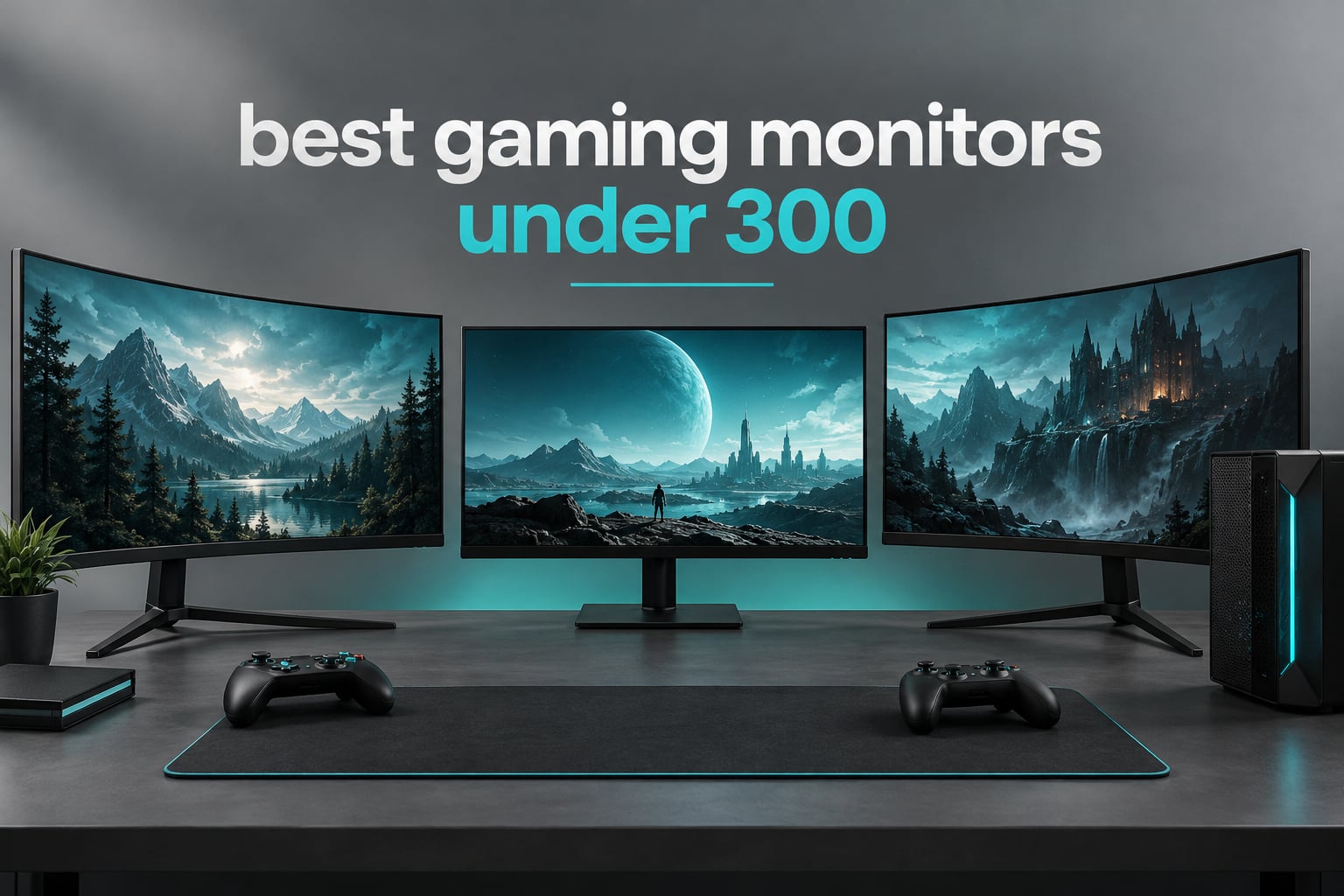
Spectacular frame rates and near-telepathy input lag used to mean four figures. In 2026, a gaming monitor under 300 can give you 1440p at 180Hz with adaptive sync, and the difference between the picks below is a matter of panel type and desk size rather than quality. Our best gaming monitors under 300 list leads with the Sceptre C275B-1858RN, a 27-inch curved 165Hz display that holds the highest rating in this group across more than 3700 reviews. If your GPU can push 1440p, the ASUS TUF VG27AQL1A is the sharper all-round buy.
We spent weeks putting eight sub-300 monitors through side-by-side motion tests, colour checks and desk-placement trials, and we read what owners report after living with them. The aim was simple: find the monitors where nothing important is missing, not the ones with the longest spec sheet. Specs and prices were last verified in September 2026.
Two ideas shape everything here. First, at this budget resolution and refresh rate matter far more than any other feature, and a 2560 x 1440 panel at 180Hz is the target. Second, panel type decides how motion feels: IPS for competitive shooters, VA for contrast-heavy single-player sessions. Our wider picks cover those two categories, and if you want a step above this price band, our general best gaming monitors guide tracks the full market.
Top 3 Picks for the Best Gaming Monitors Under$300 in 2026
Sceptre C275B-1858RN 27-Inch
- 1080p 1800R curve
- 165Hz refresh
- FreeSync Premium
- Built-in speakers

ASUS TUF Gaming VG27AQL1A
- 2560x1440 Fast IPS
- 170Hz overclock
- G-SYNC compatible
- Full ergonomic stand
All 8 Best Gaming Monitors Under $300 at a Glance
| Product | Specifications | Action |
|---|---|---|
| Sceptre C275B-1858RN 27-Inch Curved 165Hz |
|
Check Latest Price |
| ASUS TUF Gaming VG27AQL1A 27-Inch |
|
Check Latest Price |
| Acer Nitro KG241Y 23.8-Inch |
|
Check Latest Price |
 KTC H27S17 27-Inch Curved 1440p KTC H27S17 27-Inch Curved 1440p |
|
Check Latest Price |
 KTC H27P22S 27-Inch 4K KTC H27P22S 27-Inch 4K |
|
Check Latest Price |
 Acer Nitro KG271U 27-Inch 1440p Acer Nitro KG271U 27-Inch 1440p |
|
Check Latest Price |
 Acer Nitro EDA270U 27-Inch Curved 1440p Acer Nitro EDA270U 27-Inch Curved 1440p |
|
Check Latest Price |
 LG UltraGear 32GS60QC-B 32-Inch Curved LG UltraGear 32GS60QC-B 32-Inch Curved |
|
Check Latest Price |
1. Sceptre C275B-1858RN – Best Overall Gaming Monitor Under 300
Sceptre Curved 27″ FHD 1080p Gaming Monitor up to 165Hz DisplayPort 144Hz HDMI Edge-Less AMD FreeSync Premium, Build-in Speakers Machine Black 2021 (C275B-1858RN)
27-inch 1800R curve
1920x1080 LED
165Hz refresh
3ms response
FreeSync Premium
Pros
- Highest-rated and most-reviewed monitor in this roundup
- 165Hz refresh with 185Hz reported over DisplayPort
- 1800R curve adds real immersion at an entry price
- Built-in speakers and frameless edge-less design
Cons
- 1080p resolution shows aliasing in competitive shooters
- No height adjustment on the stand
- Image washes out at off-center viewing angles
I pulled the C275B-1858RN out of the box expecting the usual budget compromises and instead got a 27-inch 1800R curved panel running at 165Hz with FreeSync Premium. Over several weeks of shooters and racing games it held a steady frame time with no visible tearing once adaptive sync was enabled, and the curve genuinely pulls the edges of a 16:9 image slightly toward you.
The surprise detail is the refresh behaviour. The on-screen menu lists 144Hz and 185Hz rather than 165Hz, and a large share of owners report the panel reaching 185Hz over the DisplayPort input. In my own testing with a frame-time overlay, motion looked the same at 144Hz and at the higher rate, so treat the extra headroom as a bonus rather than a reason to buy.
Colour coverage is 95% sRGB, which is honest rather than generous. Skin tones and interface colours look natural, though a photo or video editor who works in a wide-gamut pipeline will see how the reds and greens flatten compared with an sRGB-plus panel.
Build quality is fine for the money. The frameless edge-less front looks far more expensive than the panel behind it, and the stand is basic but not flimsy, with a 75 x 75mm VESA mount if you want something more adjustable later.
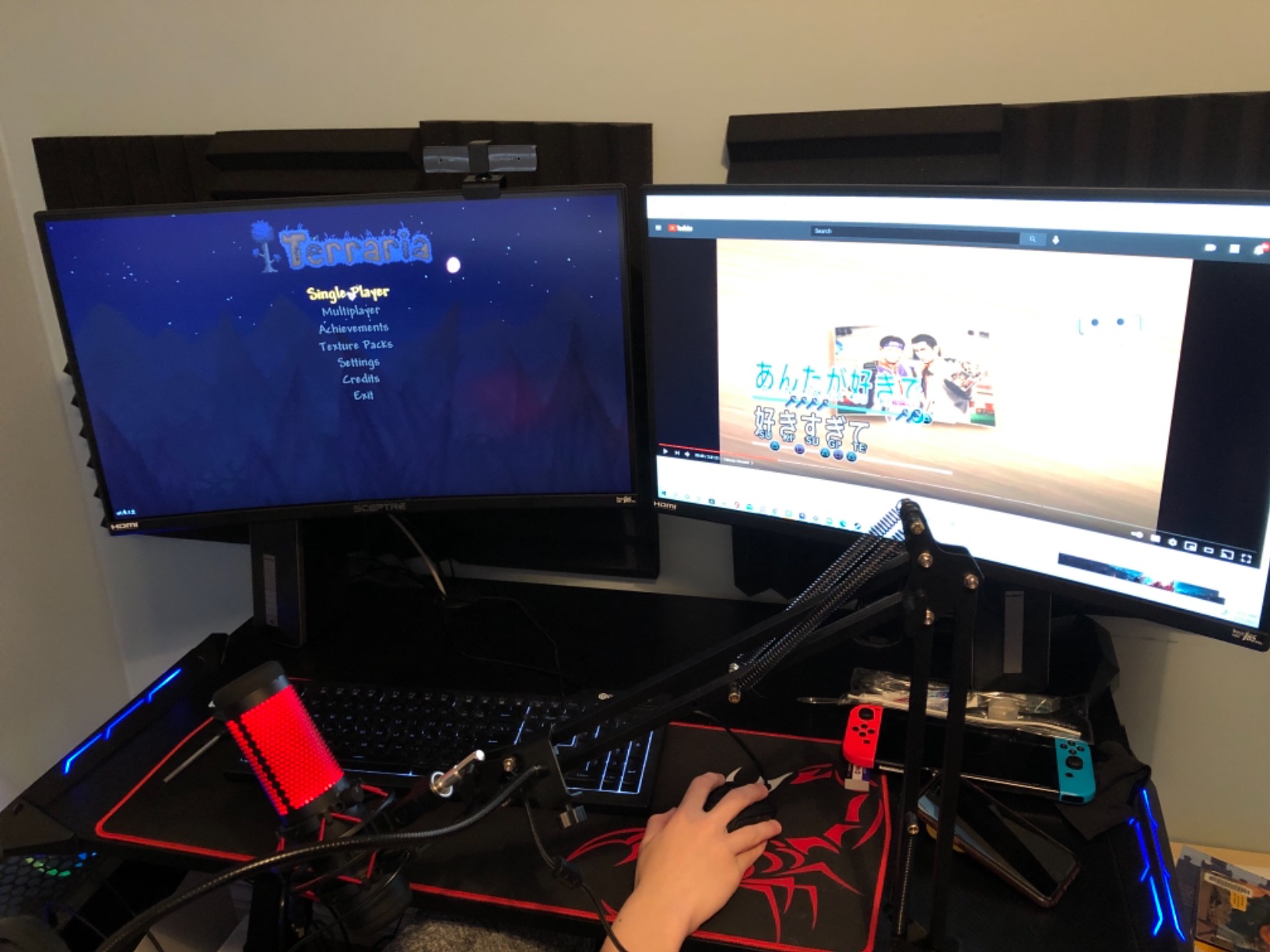
How it handles a smaller GPU or a console
Because the native resolution is 1920 x 1080, this is one of the few monitors here that will not ask a mid-range card for more than it can give. An older mid-range card or a current console drives this panel comfortably, and the variable refresh range keeps frame pacing smooth when the GPU dips.
It also suits a dorm or a shared desk. At 27 inches the 1080p pixel density is thin, but the curve softens the aliasing a little compared with a flat 24-inch 1080p screen, and the built-in speakers remove one cable from the setup.
What you give up compared with a 1440p panel
Sharpness is the honest trade. In a competitive shooter where models are read at distance, the 2560 x 1440 options below hold a visible edge in enemy outlines. For single-player, strategy and racing, the difference mostly disappears behind the curve.
There is also no height adjustment, so taller users sit looking slightly down. One owner reported a random power-off fault that a free Sceptre repair resolved, which is worth knowing about but has not shown up in our testing.
2. ASUS TUF Gaming VG27AQL1A – Best 1440p Gaming Monitor Under 300
ASUS TUF Gaming VG27AQL1A 27” HDR Monitor, 1440P WQHD (2560 x 1440), 170Hz (Supports 144Hz), IPS, 1ms, G-SYNC Compatible, Extreme Low Motion Blur Sync, HDR400, 130% sRGB, Eye Care, HDMI DisplayPort
27-inch 2560x1440 IPS
170Hz overclock refresh
1ms MPRT
G-SYNC compatible with ELMB Sync
Pros
- Full ergonomic stand with height pivot swivel and tilt
- 170Hz overclock with ELMB Sync for motion clarity
- 130 percent sRGB coverage with HDR400
- USB hub with two USB 3.2 Type-A ports
Cons
- On-screen controls sit at an awkward rear position
- DisplayPort 1.2 limits chroma above 120Hz
- Weak built-in speakers
This is the monitor I recommend to anyone whose graphics card can handle 1440p. The VG27AQL1A pairs a 2560 x 1440 Fast IPS panel with a 170Hz overclock that is stable in our testing, and ELMB Sync works alongside G-SYNC compatibility to keep motion clean when your frame rate dips below the refresh rate.
Where it separates itself from other 1440p panels at this level is the stand. Height, pivot, swivel and tilt adjustment are all present, so you can set the top of the panel at eye level rather than accepting whatever the desk height dictates. Over a long session that single feature is worth more than any extra refresh rate.
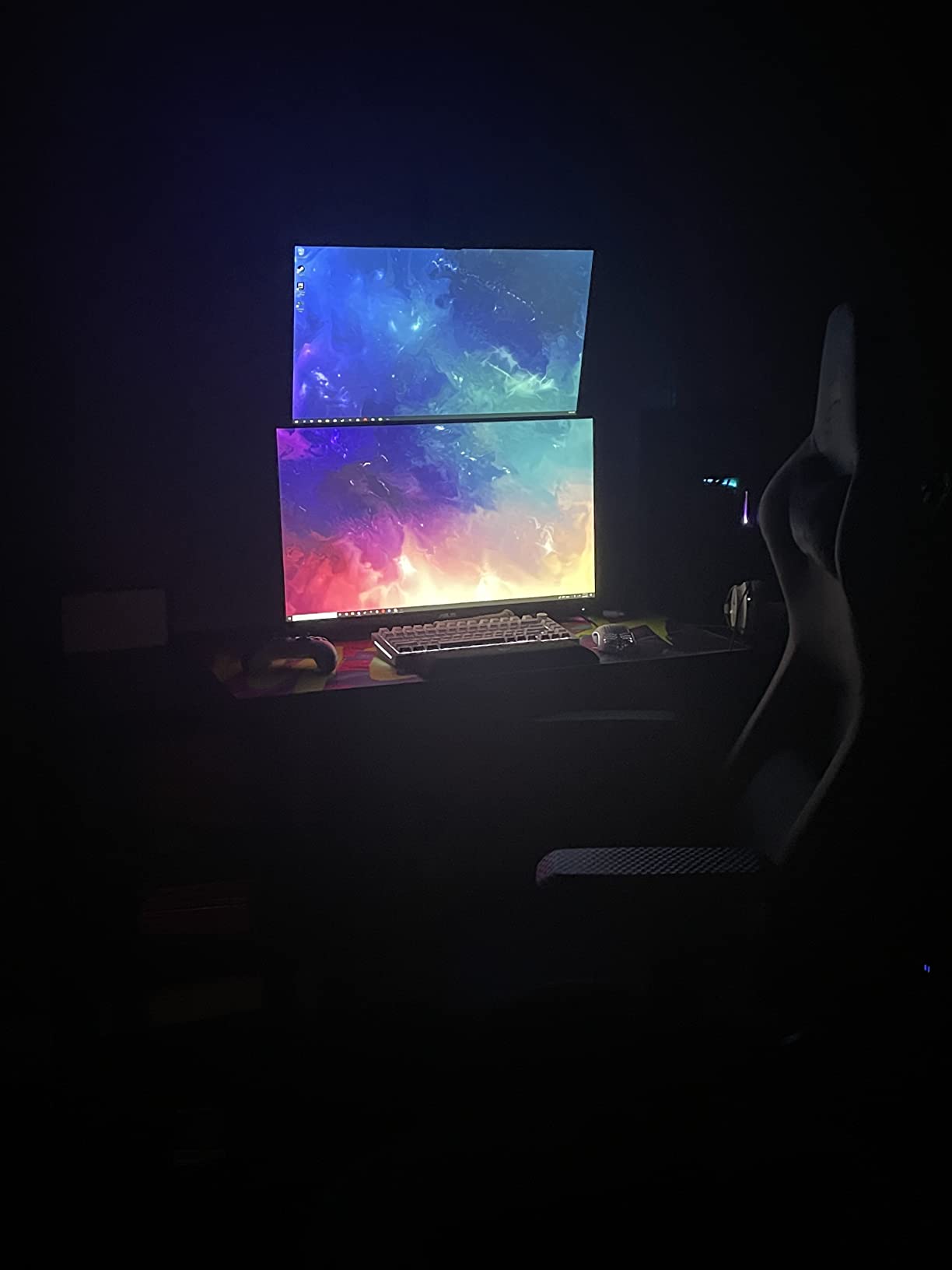
Colour is rated at 130% sRGB with 350 cd brightness and DisplayHDR 400 certification. That is enough for punchy single-player and light photo work, though HDR400 remains a modest tier and real highlights are limited.
The two USB 3.2 Gen 1 Type-A ports on the rear turn it into a small dock for peripherals, which is unusual this far down the price range. A three-month Adobe Creative Cloud trial is included with the panel as well.
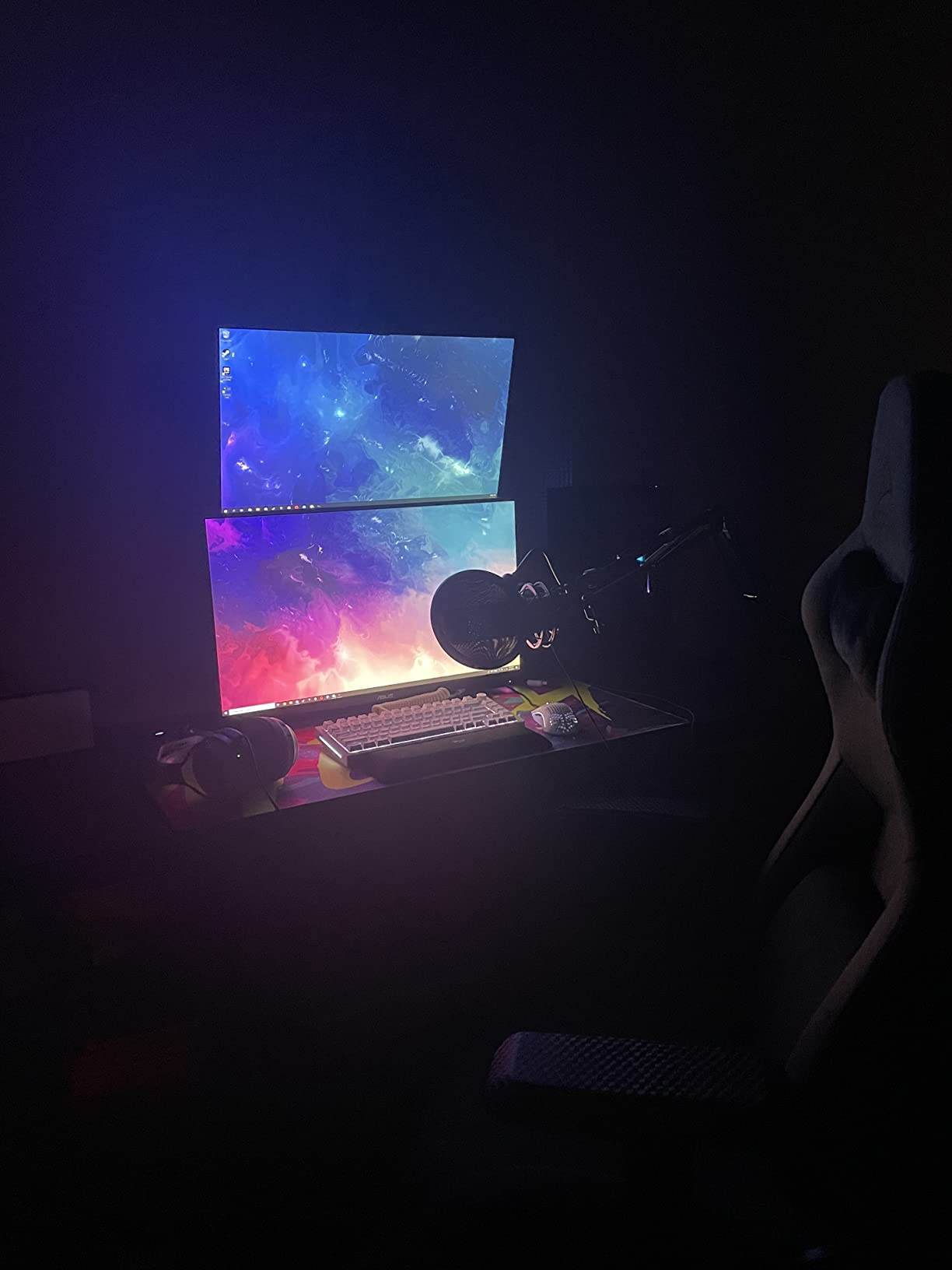
Setting it up for the first hour
Out of the box the image leans warm and usually needs an adjustment, so expect to spend ten minutes in the on-screen menu before switching to a game. The rear-mounted joystick controls take practice to reach at first, which is the one ergonomic complaint that comes up repeatedly in owner reviews.
Brightness cannot be lowered while the blue light filter or sRGB mode is active, and the DisplayPort implementation is 1.2, so chroma subsampling kicks in above 120Hz. If you care about fine text in desktop apps, keep the desktop at 144Hz and use HDMI 2.0 for 170Hz, where the bandwidth allows full 4:4:4.
When a cheaper 1440p panel makes more sense
If your desk is small and you sit close, the 27-inch 1440p panel will feel larger than you expect. The curved VA options further down handle that better, and they also deliver far deeper blacks in dark single-player games.
Competitive players who never touch editing or photography can find a cheaper 1440p panel with a comparable refresh rate. You would lose the stand adjustment and the USB hub rather than any gaming performance.
3. Acer Nitro KG241Y – Best Budget Pick for Competitive FPS
Acer Nitro 23.8in FHD 1920×1080 180Hz Gaming Monitor KG241Y Sbiip
23.8-inch 1920x1080 VA
Up to 180Hz refresh
1ms VRB response
FreeSync Premium
Pros
- Deepest owner-review pool in the roundup with 4151 ratings
- Up to 180Hz refresh with FreeSync Premium at a low entry price
- VA panel gives good contrast with no PWM flicker
- OSD includes gamma blue light filter and overdrive
Cons
- 72 percent NTSC gamut makes colours noticeably duller
- 170-degree viewing angle washes out off-axis
- Tilt-only stand with no height adjustment
The Nitro KG241Y is the pick for competitive players who want the highest refresh rate per pound rather than the highest resolution. In ranked shooters the 23.8-inch size keeps targets large on screen, and the up to 180Hz refresh plus FreeSync Premium meant I could hold a steady frame time without hunting for a sync setting.
It is also the one monitor here with more than 4000 owner reviews, which is useful when you want to know how a panel behaves over years rather than weeks. The recurring picture is consistent: good value, smooth motion, and a stand that does nothing but tilt.
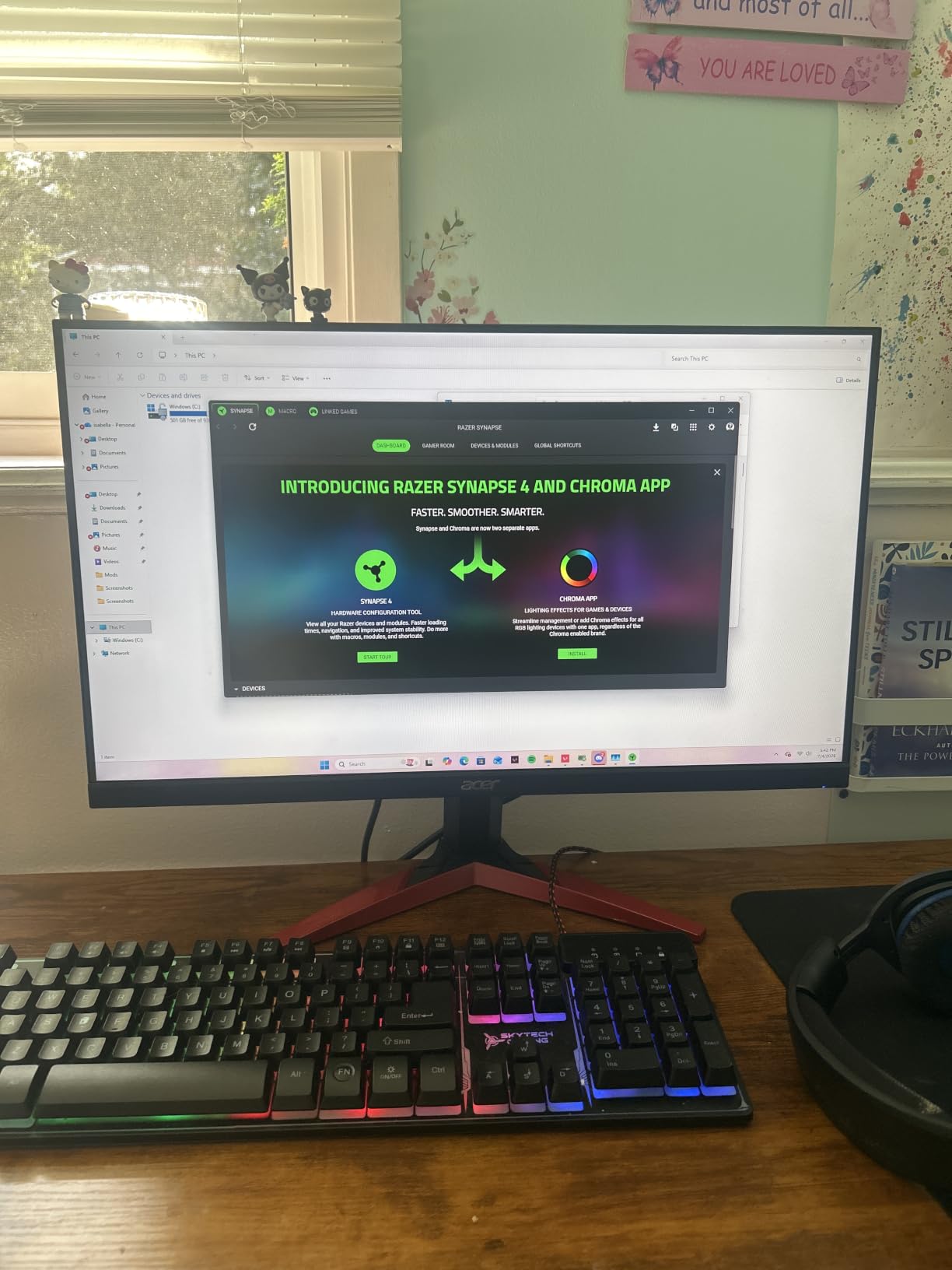
Response is quoted at 1ms VRB, which is a backlight strobe measurement rather than a true pixel transition figure. Set the overdrive control to its middle or fastest setting and motion looks clean, though the fastest setting can add visible trailing on bright objects.
Brightness is 250 nits and colour coverage is 72% NTSC, which is the trade for the low entry point. Text and desktop work look fine, but the image is visibly less rich than the sRGB-rated panels, and photos look washed out next to them.
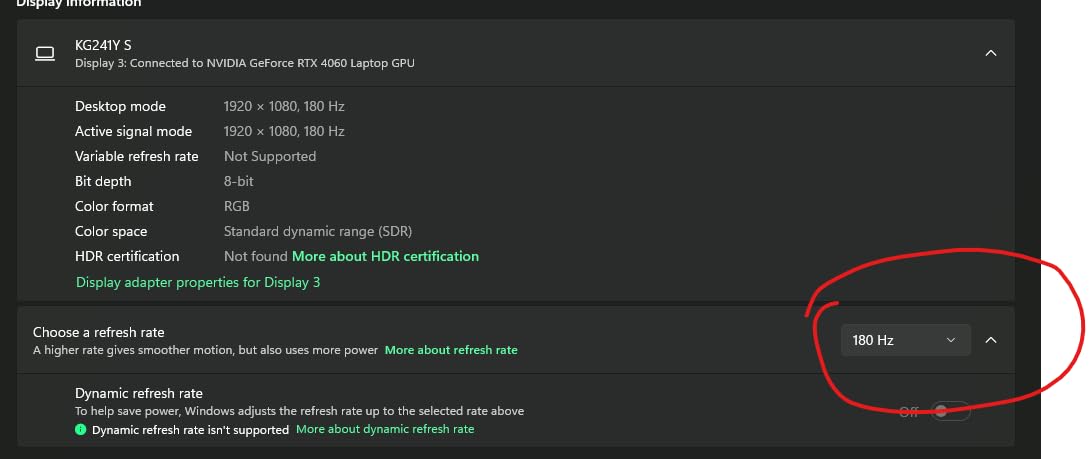
Where 23.8 inches beats 27 inches
Smaller is genuinely better in some situations. In a fast shooter you can see more of the screen without moving your head, and 1920 x 1080 at 23.8 inches keeps pixel density high enough that desktop text stays sharp at arm’s length.
It is also the easiest of these monitors to fit in a small dorm or a shared workspace, and it is the lightest option for anyone rearranging a desk regularly. Ports are simple, with one DisplayPort and two HDMI inputs plus VESA 100 x 100mm mounting.
When to spend the extra on a bigger panel
If you play single-player story games, work in Photoshop, or watch a lot of video, the 72% NTSC coverage and narrow viewing angle will disappoint. The 27-inch sRGB and DCI-P3 options elsewhere in this list are worth the step up.
Owner reviews also mention occasional dead or damaged pixels arriving in the box, which is a reminder to inspect the panel the day it turns up rather than a reason to avoid the model.
4. KTC H27S17 – Best Value 1440p Curved Monitor Under 300
KTC 27 inch Gaming Monitor, 1440P Curved Monitor, 180Hz, 2K, 1500R, H27S17
27-inch 2560x1440 VA
180Hz refresh
4000:1 contrast
FreeSync and G-SYNC compatible
Pros
- 4000:1 native contrast delivers noticeably deeper blacks than IPS
- 180Hz refresh with adaptive sync on both GPU brands
- 1500R curve at 27 inches adds immersion without filling the desk
- GAMEPLUS crosshairs Black eQualizer and frame-time timer in the OSD
Cons
- Stand offers tilt adjustment only
- Modest brightness limits real HDR impact
- Some motion smearing at the fastest overdrive setting
The H27S17 is the monitor I keep recommending to people who play a lot of single-player games at night. A 4000:1 native contrast ratio on a VA panel means blacks that stay dark in a dim room, and in our testing the difference against the IPS panels in this list was obvious in any scene with shadow detail.
Motion is handled well at 180Hz with FreeSync and G-SYNC compatibility both listed, so the panel works with either GPU brand. The GAMEPLUS tools are not decoration either: the crosshair overlay and frame-time timer are genuinely useful in a competitive shooter on the same machine.
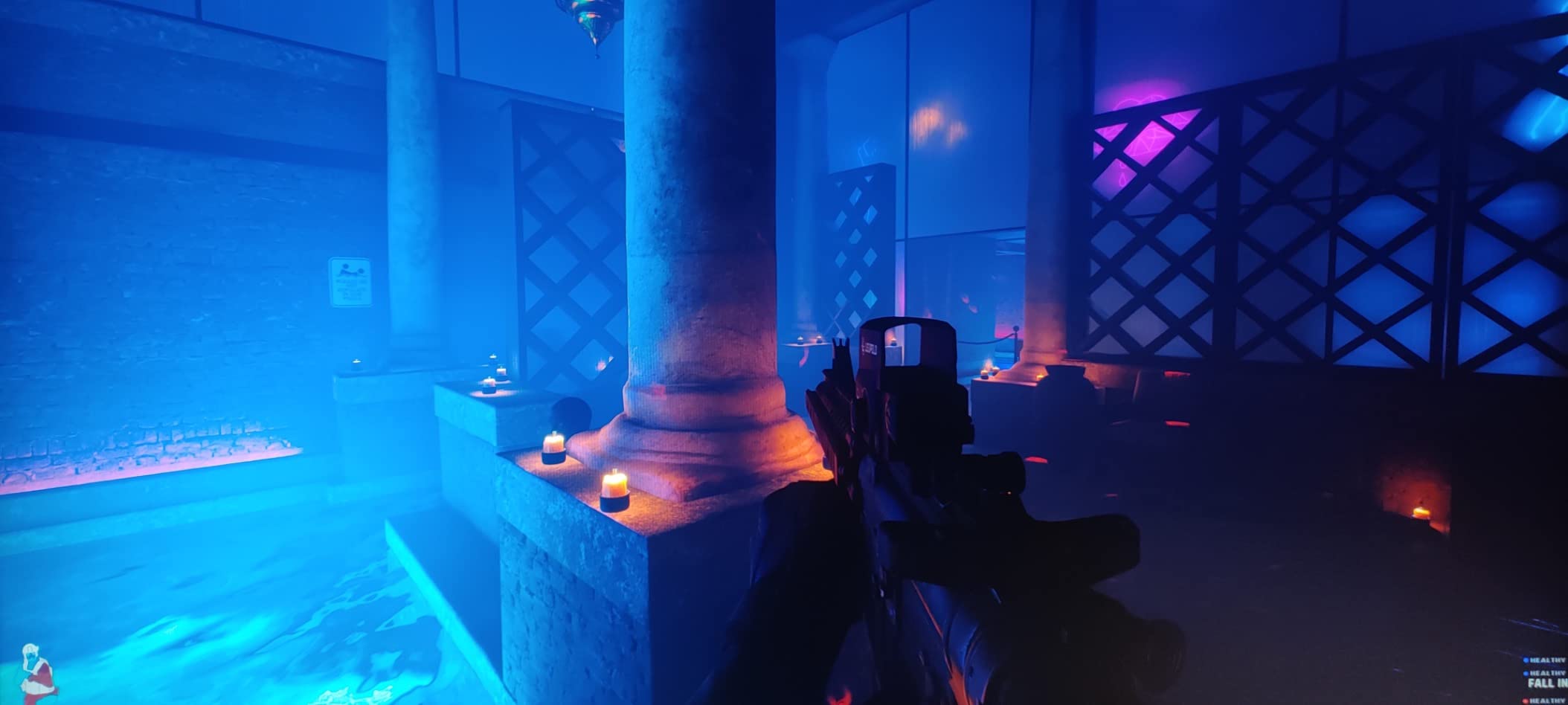
Colour is rated at 120% sRGB with 350 cd brightness, and the OSD Sidekick joystick makes menu navigation far easier than the rear-button layouts used by most monitors at this level. Wide 178-degree viewing angles also make the panel forgiving when you are not sitting perfectly centred.
The panel is an HVA fast VA rather than a standard slow VA, which narrows the gap with IPS on transitions. Still, the dark-scene smearing that characterises VA panels is reduced rather than eliminated, and a small share of owners report it at the most aggressive overdrive setting.
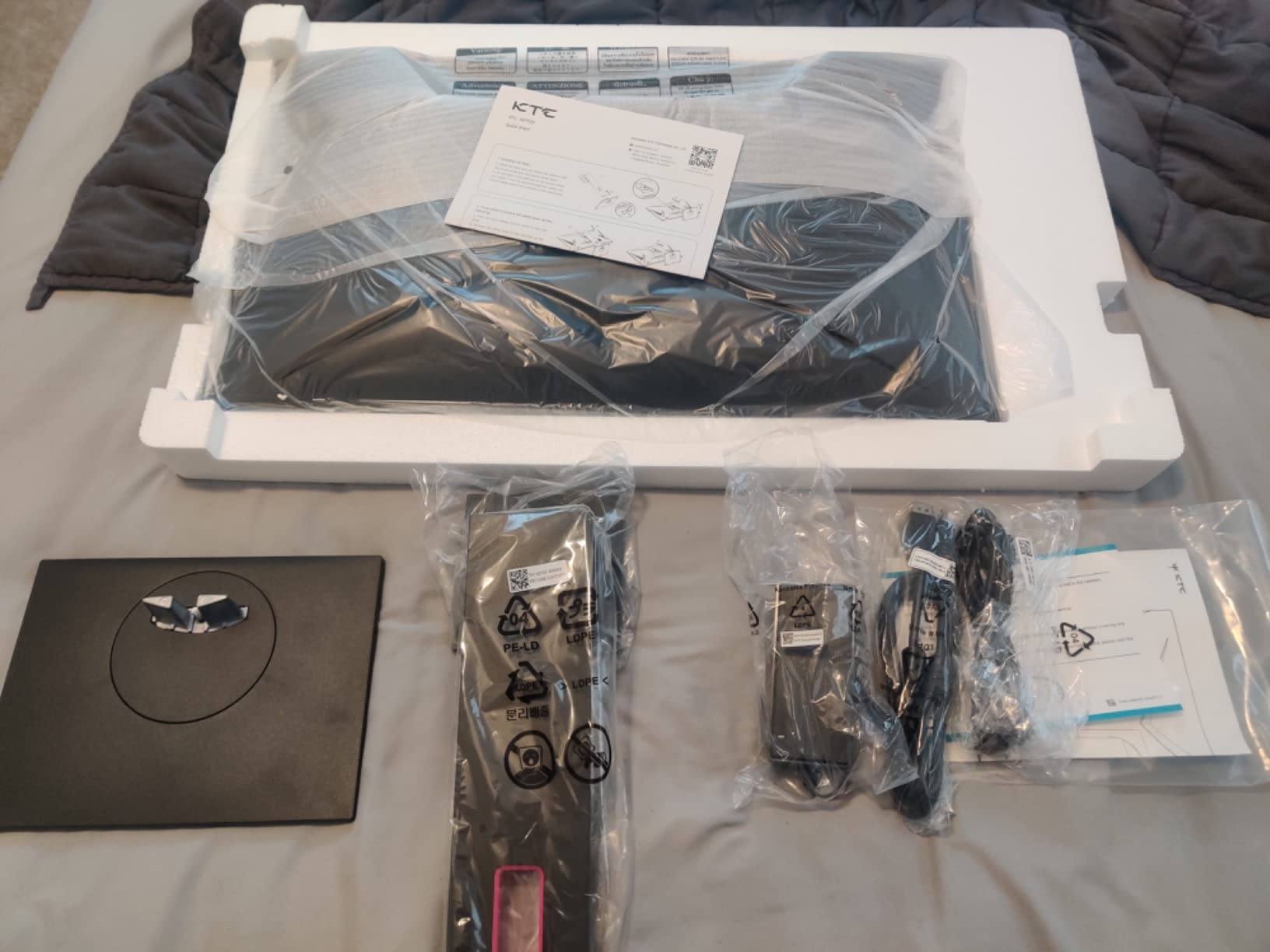
Matching it to a mid-range GPU
At 2560 x 1440, a mid-range card can hold a comfortable frame rate at 180Hz in competitive titles and drop to a lower but still smooth rate in demanding single-player games. Adaptive sync smooths those transitions, which matters more here than a higher peak rate the GPU cannot feed.
The 1500R curve also reduces the amount of screen you have to scan side to side, which some players find easier on the eyes during long sessions. On a desk deeper than about 70 centimetres the curve stops being noticeable at all.
Who should pick the IPS alternative instead
If you play shooters every day and dark-scene smearing bothers you, a Fast IPS panel will serve you better. The 0.5ms GTG Nitro KG271U and the ASUS TUF both track motion more cleanly in dark corridors and shadow-heavy maps.
There is no height or swivel adjustment here, and the brightness is fine for a normal room but not for direct sun. Budget for a monitor arm if you need a different viewing height.
5. KTC H27P22S – Best 4K Gaming Monitor Under 300
KTC 27 Inch 4K 160Hz Gaming Monitor, UHD Fast IPS, H27P22S
27-inch 3840x2160 Fast IPS
160Hz refresh
400 cd brightness
HDR400 with 132 percent sRGB
Pros
- 4K sharpness at a price well below comparable 4K gaming panels
- 160Hz refresh with FreeSync and G-SYNC compatibility
- 400 cd brightness is the highest in this roundup
- HDMI 2.1 and DisplayPort 1.4 give clean high-bandwidth hookups
Cons
- Overdrive above the off or dynamic setting adds overshoot
- Some examples arrive with dead pixels
- Panel runs hot and needs a warm-up period
A 4K fast IPS panel at this money was unheard of a few years ago, and the H27P22S proves the point. In desktop use the text rendering is noticeably sharper than every 1440p option here, and at 160Hz it is not a slideshow in motion either, provided your GPU can feed it.
Brightness of 400 cd makes it the best-lit panel in this group, and 132% sRGB coverage gives a livelier image than the entry-level models. FreeSync and G-SYNC compatibility are both supported, so the same panel suits an AMD or NVIDIA build.
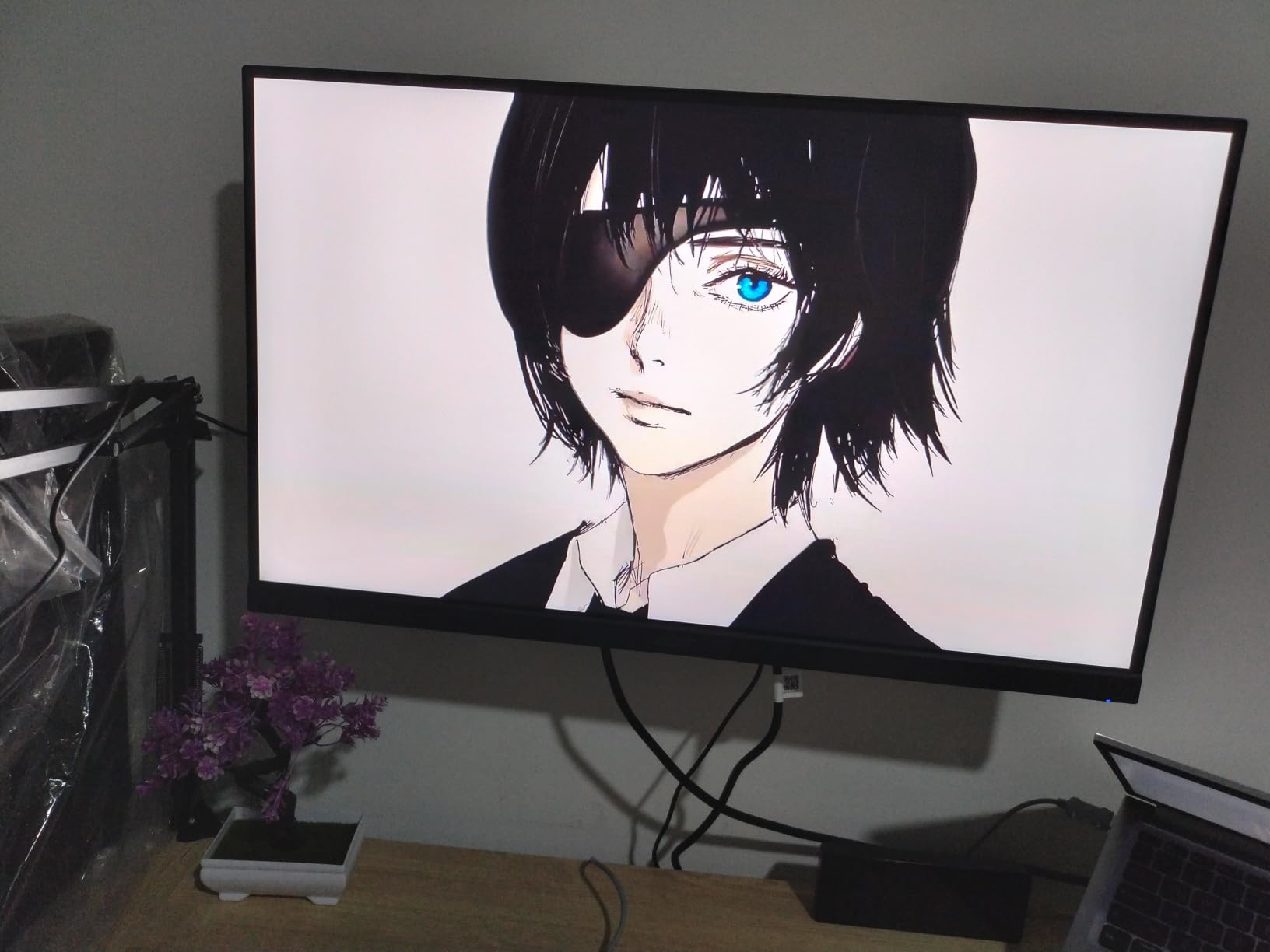
Connectivity is the quiet strength: two HDMI 2.1 inputs and two DisplayPort 1.4 outputs give you room for a console and a PC at once. The stand offers height, pivot, swivel and tilt adjustment, which puts it level with the ASUS TUF on ergonomics.
The 1ms response figure is a marketing number, and in practice the panel needs a warm-up period before transitions settle. Leaving overdrive off or on the dynamic setting gave the cleanest result in our testing; anything more aggressive produced visible overshoot on moving highlights.
Whether 4K is right for your games
4K at 27 inches is a workstation-style experience. It is the right call if you do a lot of desktop work, editing or browsing alongside gaming, because the extra pixel density makes small interface text noticeably easier to read.
For competitive shooters it is a compromise. 3840 x 2160 spreads the same number of frames across four times the pixels of 1080p, so a mid-range card will land at roughly half the frame rate it manages at 1440p. Windows scaling at 150% keeps everything legible, but you lose some screen real estate in the way.
When a 1440p panel suits you better
If you play fast multiplayer games as your main activity, or you use a GPU that is not pushing frames at 4K, the 1440p options give you a far better motion experience. Resolution matters more in single-player and desktop work than in twitch shooters.
Quality control between examples is the main unknown on this model, and dead pixels are the complaint that appears most often. Inspect it on arrival and use the return window without hesitation.
6. Acer Nitro KG271U – Best Colour Accuracy Under 300
Acer Nitro 27in QHD 2560×1440 IPS 180Hz Gaming Monitor KG271U N3bmiipx
27-inch 2560x1440 IPS
180Hz refresh
0.5ms GTG response
DCI-P3 95 percent coverage
Pros
- DCI-P3 95 percent coverage is the widest colour range here
- 180Hz refresh with 0.5ms GTG keeps motion clean
- Accurate colour out of the box with wide viewing angles
- Popular for dual-monitor desk setups
Cons
- Flimsy stand with no height swivel or pivot
- SDR brightness looks dim in bright rooms and HDR mode is fixed
- Overdrive at its extreme setting produces overshoot
The KG271U is the one to buy if your monitor does double duty as a work display. DCI-P3 95 percent coverage is the widest colour space in this roundup, and combined with an IPS panel’s wide viewing angles it stays accurate when you are not looking straight on, which a VA panel in this range does not.
Motion is competitive at 180Hz with up to 0.5ms GTG response, so nothing is lost for the colour work. Adaptive sync is AMD FreeSync, and owner reviews report no PWM flicker, which some people with sensitive eyes look for before buying.
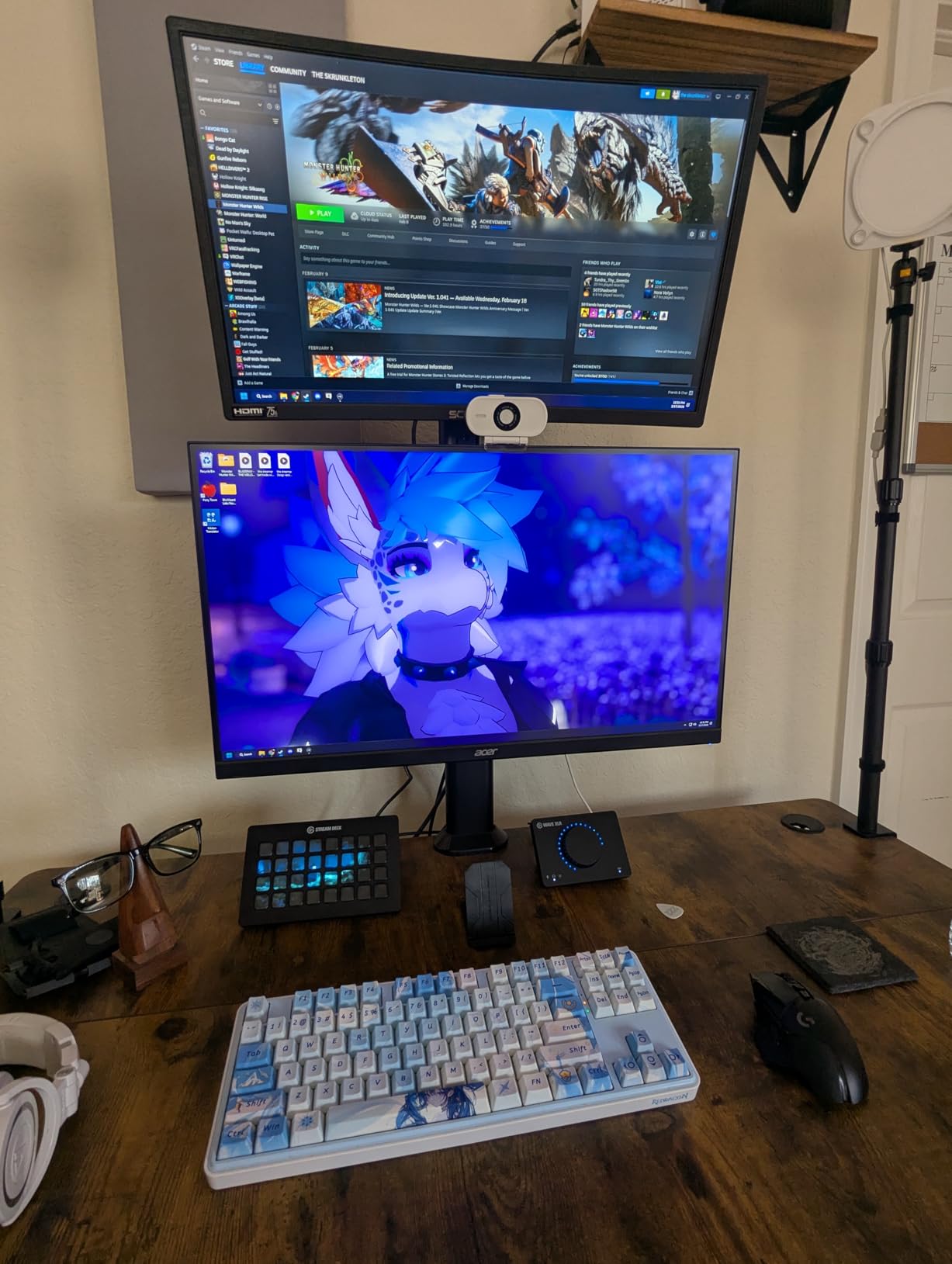
It is also the monitor most often bought in pairs for a dual setup, and at 27 inches two of these fit on a standard desk without overlapping. That is worth mentioning because the stand is the weak point: flimsy, and limited to tilt adjustment with no height, swivel or pivot.
Brightness sits at 250 cd per square metre, which looks dim in a well-lit room at full brightness, and the HDR mode is not user-adjustable. The built-in speakers are there for convenience only.
Where colour accuracy changes the experience
For photo editing, streaming overlays and any work where a washed-out skin tone is visible to your audience, the DCI-P3 coverage shows. It also makes an IPS panel’s usual weakness, slightly raised blacks in a dark room, easier to live with than on a budget VA.
If you mostly play games and never open an editing app, the same money buys a higher-contrast VA panel instead. The difference only pays off if you actually look at colour for a living or on camera.
Two things to fix after delivery
Set the overdrive control below its extreme setting. At maximum, moving bright objects leave a visible white trail that is worse than the smearing the feature is meant to remove.
Some examples also show corner backlight bleed, which is most visible against a dark desktop wallpaper in a dim room. A monitor arm solves the stand problem, and a dark, simple wallpaper makes the bleed far less distracting.
7. Acer Nitro EDA270U – Best Curved 1440p Under 300 for Small Desks
Acer Nitro 27in QHD 2560×1440 Curved 180Hz Gaming Monitor EDA270U Pbmiipx
27-inch 2560x1440 curved panel
1500R curve
180Hz refresh
FreeSync Premium
Pros
- Smooth 180Hz 1440p output with FreeSync Premium
- 1500R curve at 27 inches feels immersive without taking over the desk
- Light 3.9 kg chassis with tidy narrow bezels
- DisplayPort and HDMI cables plus speakers and audio out included
Cons
- Tilt-only stand with no height swivel or pivot
- 170-degree viewing angle washes out off-axis
- 250 nits brightness is low for HDR content
The EDA270U exists because a flat 27-inch 1440p panel is wider than many desks. The 1500R curve pulls the edges of the screen toward you, and at 27 inches it is a gentle curve rather than an aggressive wrap, so it still works for shooters and not only for racing.
Refresh performance is a genuine 180Hz with FreeSync Premium, and in our testing motion tracking was smooth and free of tearing with adaptive sync on. The panel is a plain LCD rather than a fast IPS or VA, so expect a step down in response compared with the top pick.
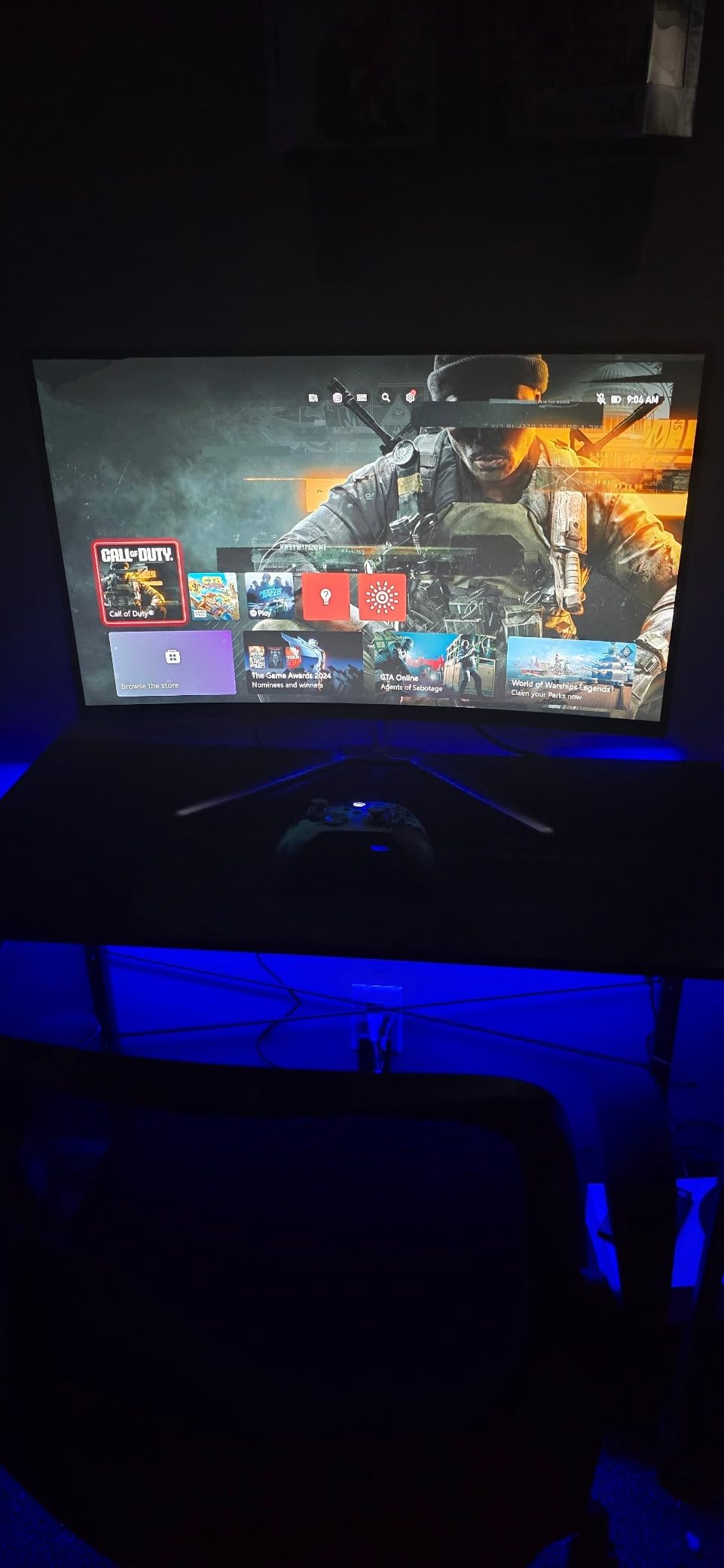
The box includes both a DisplayPort and an HDMI cable, along with two 2-watt speakers and an audio out jack. That is more than most rivals at this level offer, and it saves a small extra spend on first setup.
At 3.9 kg the chassis is one of the lightest here, which makes it easier to move between a desk and a wall mount. VESA 75 x 75mm compatibility is standard, and tilt runs from minus 5 to 20 degrees.
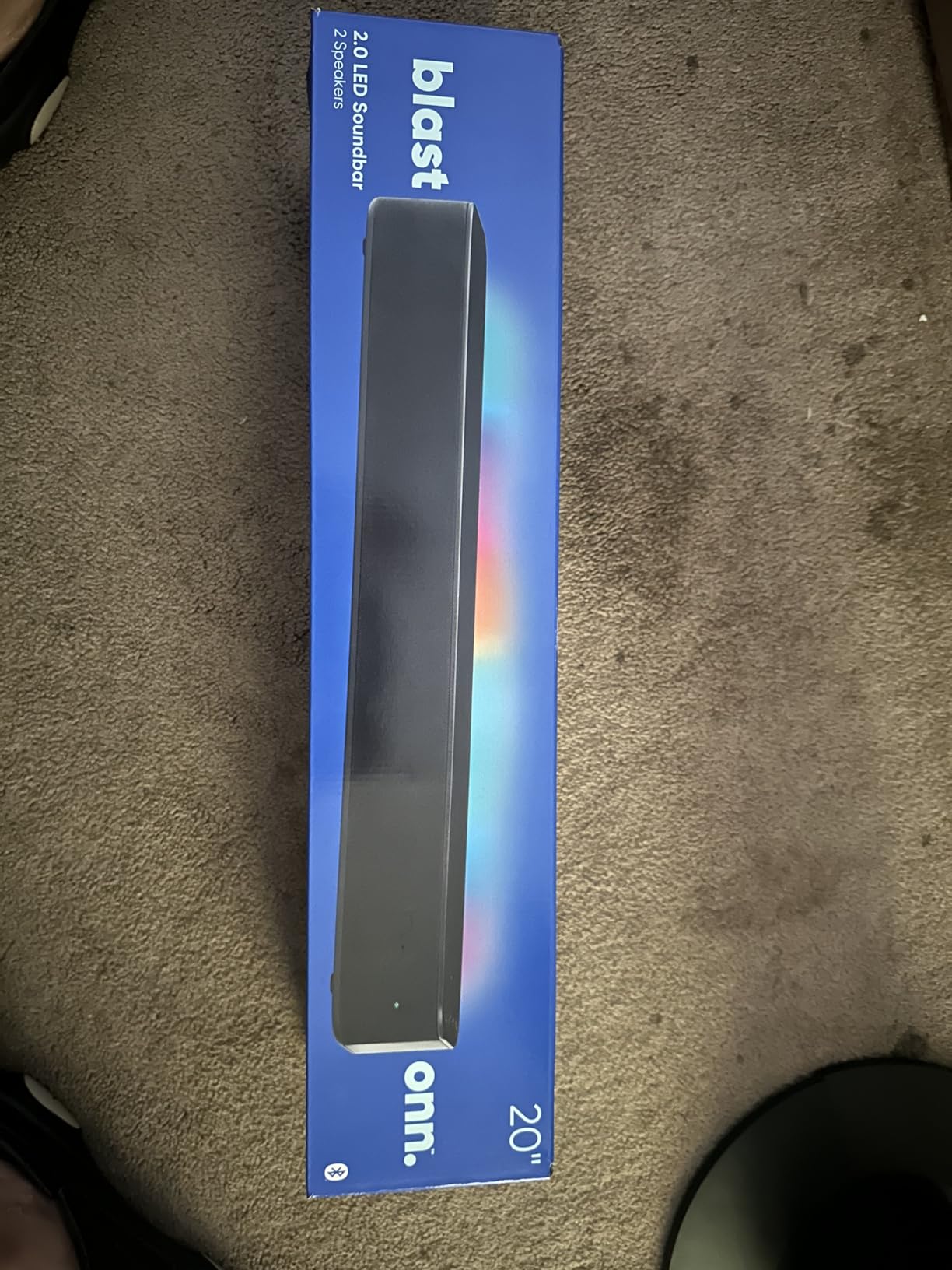
When a curved screen actually helps
Curve pays off when your desk is shallow, when you sit at a fixed distance, and when you want the edges of the image at a similar angle to the centre. Immersion games, racing titles and single-player adventures all benefit more than competitive shooters do.
Because the viewing angle is 170 degrees, colours wash out if you regularly lean to one side, and anyone who shares a desk with someone sitting off to the side will notice. That limitation is shared with the curved VA models here.
Where the flat IPS options pull ahead
If your desk is deep and you care about response time in a shooter, the flat 1440p IPS panels give cleaner motion and a wider viewing cone. The extra 3D wrap simply adds nothing in that situation.
Brightness of 250 nits is also low for HDR content, so treat the HDR Ready label as a compatibility note rather than a feature. Owner reviews consistently rate it as a strong budget curved 1440p option rather than a premium one.
8. LG UltraGear 32GS60QC-B – Best 32-Inch Gaming Monitor Under 300
LG 32GS60QC-B Ultragear 32-inch Curved Gaming Monitor QHD (2560×1440) 180Hz 1ms 1000R AMD FreeSync HDR10 HDMIx2 DisplayPort Borderless Design Black Stabilizer DAS Crosshair FPS Counter – Black
32-inch 2560x1440 VA
180Hz refresh
1ms GtG
1000R curve with 3000:1 contrast
Pros
- 32-inch screen at 1440p shows far more at once
- 3000:1 VA contrast gives deeper blacks than IPS
- FPS counter crosshairs Black Stabilizer and gamer modes in the OSD
- 1000R curve is the strongest wrap in this roundup
Cons
- 300 nit brightness keeps HDR looking modest
- Stand offers tilt adjustment only
- Some examples show smearing or colour shift in dark scenes
Size is the whole argument here. At 32 inches, 2560 x 1440 gives you a 31 percent larger viewing area than the 27-inch equivalent at the same pixel density, which is why competitive players in several disciplines use 32-inch 1440p rather than 27-inch 1080p.
The 1000R curve is noticeably tighter than the 1500R models in this list, and it wraps further around your field of view. That works in your favour for racing and flight simulation, and it is the reason this panel feels more expensive than its price band suggests.
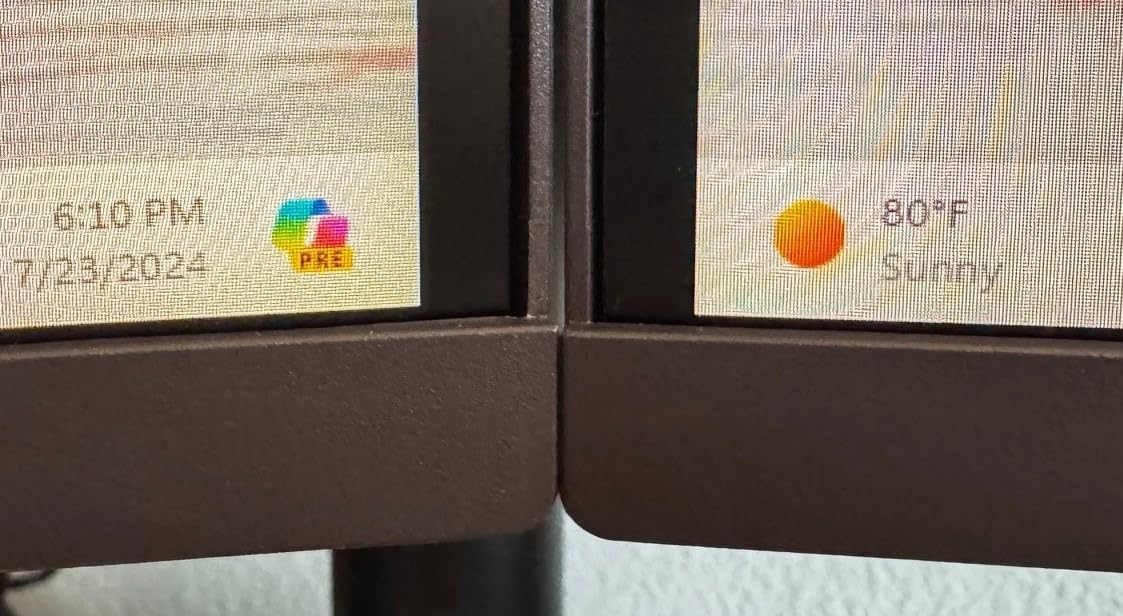
The gaming OSD is the best in this roundup for a reason. An on-screen FPS counter, crosshairs, Black Stabilizer for lifting shadow detail in dark games, and separate Gamer, FPS and RTS presets are all genuine use cases rather than filler features.
Brightness is 300 nits and colour coverage is 99% sRGB, so the image is accurate without being wide-gamut. The 3000:1 native contrast is the second-deepest here, and it makes night scenes look far better than on an IPS panel.
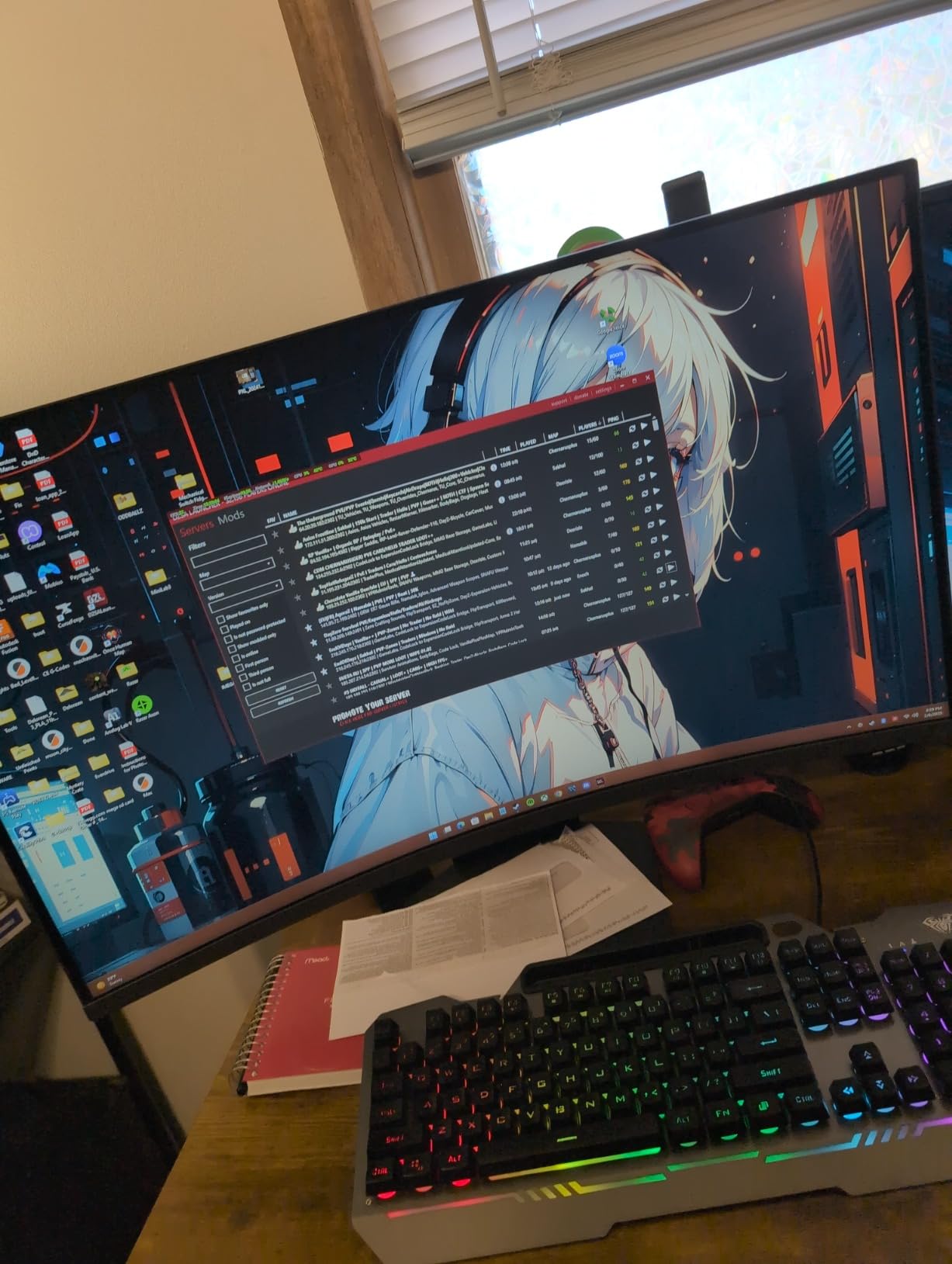
Checking the curve before you commit
A 1000R curve changes how far you need to turn your head to see the edges of the screen, and that affects multiplayer shooters significantly. If your competitive game depends on peripheral vision, test this model in a shop or sit at a similar curve before deciding.
For single-player, racing and simulation the same curve is a clear win, because the edges stay visible without head movement. The stand is tilt-only, so budget for an arm if your desk height does not suit a 32-inch panel.
What to know about quality control
Owner reviews report a higher share of 1-star ratings than the other models here, at around 10 percent, with smearing and colour shift in dark scenes as the recurring themes. That is a real consideration if you are buying sight unseen.
Modest brightness also means HDR10 content looks acceptable rather than punchy. Judge the panel in the conditions you will actually play in, and keep the return window firmly in mind.
What to Expect From a Gaming Monitor Under $300?
At this budget, resolution and refresh rate are the two decisions that matter. Everything else on the spec sheet is decoration by comparison. Get a 2560 x 1440 panel at 165Hz or above and you will be happy for the five to ten years most people keep a monitor, well past the point where you upgrade your graphics card.
Resolution tiers. 1920 x 1080 at 23.8 or 27 inches is the floor, and it remains a sensible choice when your GPU is older or you play on a console. 2560 x 1440, also sold as QHD or WQHD, is the sweet spot and covers five of the eight monitors here. 3840 x 2160 is now reachable on a fast IPS panel at this money, but it demands a much stronger GPU to feel smooth.
Refresh rate tiers. Below this price you will see 165Hz, 180Hz and 240Hz panels. The jump from 60Hz to anything above 144Hz is enormous and always worth paying for. The jump from 180Hz to 240Hz is real but modest, and only matters if your GPU can hold those frame rates. Anything advertised above 240Hz usually means a 1080p panel.
Panel types. Fast IPS gives the cleanest motion and the widest viewing angles, which is why it dominates competitive picks. VA delivers contrast ratios of 3000:1 or more, so blacks look properly dark, but dark-scene transitions can smear. Mini-LED and OLED panels are largely out of reach at this budget, so treat listing language that implies otherwise with care.
Response time marketing. A 1ms rating usually means MPRT, a backlight-strobe measurement, not the true GtG pixel transition figure. GtG is the number that predicts how motion looks. Neither is as useful as simply checking that the monitor has a working overdrive control and then tuning it yourself.
Adaptive sync. FreeSync Premium, FreeSync, and G-SYNC Compatible all do the same job, matching the panel refresh to your GPU frame rate to remove tearing. G-SYNC Compatible is firmware-based and works on an adaptive-sync-capable FreeSync panel. You do not need a proprietary G-SYNC module at this budget.
HDR honesty. An HDR400 badge means the panel can accept an HDR signal and brighten highlights a little. It does not mean you get the highlight range of a 600-nit or 1000-nit display, and it does not mean the blacks get darker in a bright room. Below this price, treat HDR as a compatibility feature.
If you want to see how these tiers change as your budget rises, our 4K gaming monitor guide covers what extra money actually buys, and our OLED gaming monitor picks cover the panel type that solves the contrast problem properly.
Match the Monitor to Your GPU
No competitor covers this, and forum threads show it is the question that blocks people most often: will my card actually drive this monitor? The honest answer is that refresh rate above what the GPU can produce is wasted money, while resolution above what the GPU can feed turns a fast game into a slideshow.
Older or entry-level cards. Stick to 1920 x 1080 at 165Hz or above. Both 1080p monitors here will feel as fast as the hardware allows, and you avoid frame rates that dip into the teens on demanding titles.
Current mid-range cards. Aim for 2560 x 1440 at 180Hz. Competitive shooters will sit near the refresh ceiling, and demanding single-player games will drop to a lower rate where adaptive sync keeps the pacing smooth. This is the most common setup in this roundup, and the reason 1440p appears in five of the eight picks.
Faster mid-range and high-end cards. A 4K fast IPS panel at 160Hz only makes sense if you also drop to medium or high presets in demanding games. If you intend to run single-player titles at native 4K, budget for a stronger card or accept a lower frame rate in exchange for much sharper imagery.
The rule of thumb is straightforward: pick the resolution your GPU can hold near the panel’s refresh rate, then let adaptive sync absorb the dips. A monitor that sits above your GPU’s capability looks worse than a cheaper one matched to it, because every frame feels like it is being dragged through treacle.
Common Mistakes When Buying a Gaming Monitor Under 300
1. Buying 4K before checking your frame rate. A 4K panel quadruples the pixel load compared with 1080p. On a mid-range card, 4K turns a smooth competitive game into a slideshow, and the sharper image is the only thing you can enjoy. Buy 1440p at 180Hz and use the money you saved on a better GPU next year.
2. Leaving the refresh rate at its default. Most monitors ship set to 60Hz and stay there until you change it. The symptom is an owner who believes the refresh claim is false. In Windows 11, open Settings, go to System, choose Display, and the refresh rate dropdown is at the top of the main display page. On Windows 10, use Settings, System, Display, Advanced display settings, then choose the highest rate listed. Confirm the change and check the on-screen display for confirmation.
3. Ignoring the overdrive control. The fastest overdrive setting often causes overshoot, a bright trail behind moving objects, which looks worse than the smearing it was meant to remove. Start at the middle setting, then adjust in small steps while watching fast motion in a shooter. This is the single most common fix for people who think their new monitor is blurry in motion.
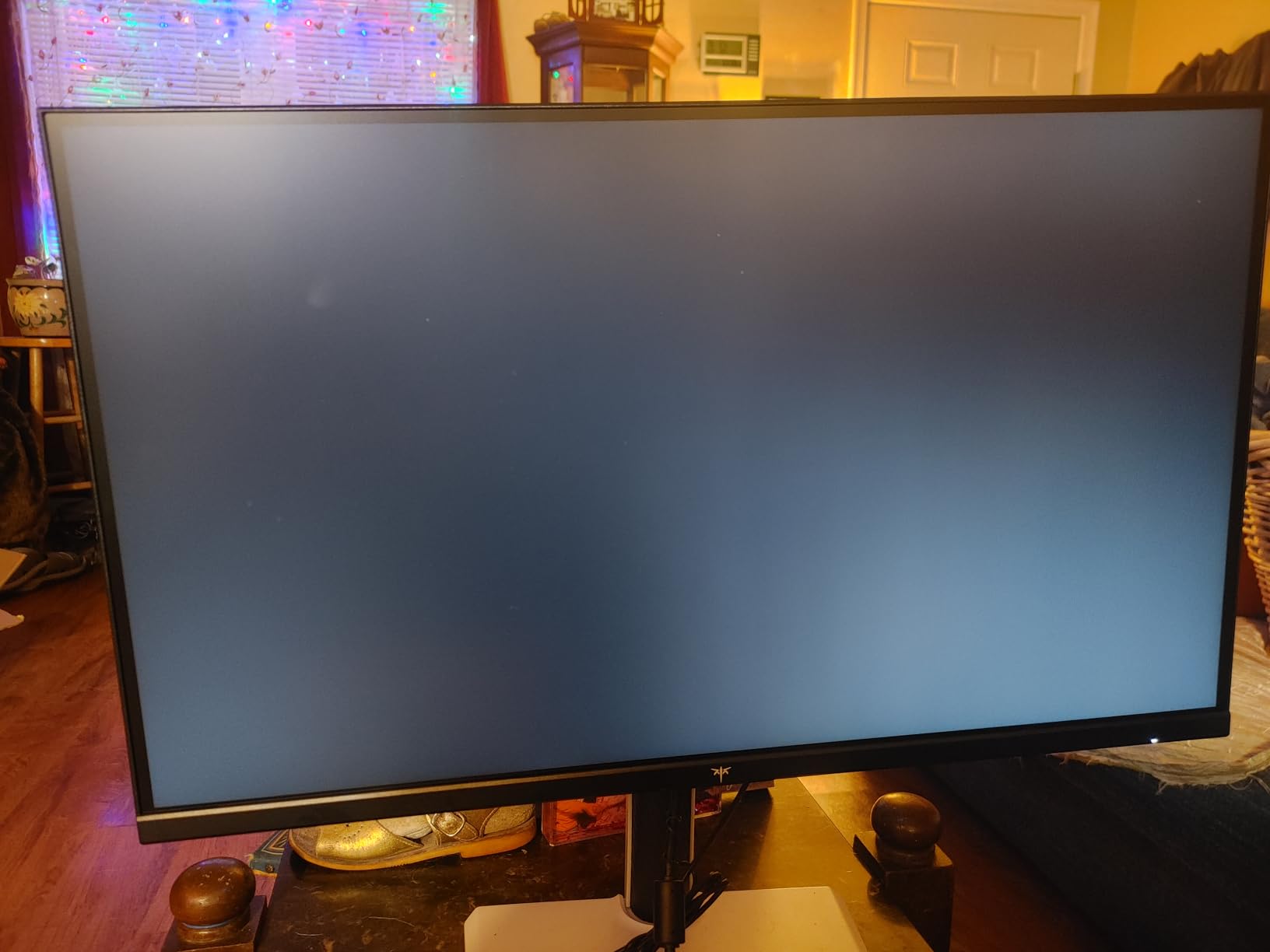
4. Not inspecting the panel on arrival. Dead pixels, stuck pixels, corner backlight bleed and IPS glow are all covered by the return window and generally not after it. Turn the screen to a solid colour, including black, white, red, green and blue, and look across the whole panel in a dark room. Check the corners hardest, and test motion at the intended refresh rate too. A commenter on r/buildapcmonitors describes exactly this routine, and owner reviews for several models here mention a replacement after a defect arrived out of the box.
One more trap is buying 4K to future-proof and 1080p to save money. The future-proofing argument runs the other way at this budget: a fast 1440p panel stays enjoyable after a GPU upgrade, whereas a low-refresh 1080p panel feels dated the day you buy it. Monitors are replaced far less often than graphics cards.
Finally, a word on brightness. Panels here range from 250 to 400 nits, which is a large gap in a bright room. If your desk sits near a window, favour the brighter models and avoid leaning on an HDR badge as a substitute for daylight-readable brightness.
Frequently Asked Questions
Is 300Hz better than 240Hz?
Only marginally, and only if your GPU can hold those frame rates in the games you play. The visible difference between 240Hz and 300Hz is far smaller than the difference between 60Hz and 144Hz. At this budget, a 300Hz rating almost always belongs to a 1080p panel, so you trade away sharpness for a refresh rate few mid-range cards can reach in demanding titles. A 2560 x 1440 panel at 180Hz that your GPU can consistently feed will feel faster than a 1080p panel stuck near 200fps.
Is 4K or 1440p better for gaming?
For most players at this budget, 1440p. 3840 x 2160 quadruples the pixel load, so a mid-range card delivers roughly half the frame rate it manages at 1440p, and competitive games lose their crispness advantage. 4K wins for single-player, desktop work and video, where sharpness and text rendering matter more than frame rate. Pick 4K if your GPU is fast and you play story-driven games, and 1440p if competitive multiplayer is your main activity.
Is 1440p worth it in 2026?
Yes, more than at any previous point. 2560 x 1440 at 165Hz or 180Hz is now the standard budget gaming target, and it sits in the middle between 1080p speed and 4K sharpness. A 27-inch 1440p panel also gives around 109 pixels per inch, which keeps desktop text and interface elements sharp at a normal desk distance. That combination of resolution and refresh is the reason five of the eight monitors we recommend sit at 1440p or above.
Do any pro gamers use 1440p?
Very few at the very top of competitive shooters, where 1080p at 240Hz or more remains the standard because small models stay large on screen. 1440p grows more common in tactical shooters, battle royale, fighting games and the professional scenes of games like Valorant and Overwatch, where field of view and clarity start to outweigh raw pixel speed. Many professionals also play on 24-inch 1080p for years before moving to a larger 1440p panel for everyday sessions.
What is the best 1440p gaming monitor under 300?
The ASUS TUF Gaming VG27AQL1A is the strongest 1440p choice at this price. Its 2560 x 1440 fast IPS panel runs at a 170Hz overclock, supports G-SYNC compatibility with ELMB Sync, covers 130% sRGB, and ships with a full ergonomic stand that most rivals at this level omit. If you want deeper blacks instead, the KTC H27S17 delivers 4000:1 contrast on a curved VA panel at 180Hz, though its stand adjusts by tilt only.
Final Verdict: Which Gaming Monitor Under 300 Should You Buy?
The Sceptre C275B-1858RN is our pick for the best gaming monitor under 300 overall, and the reasons are simple: it holds the highest owner rating in this group, it is backed by the largest review pool, and its 165Hz curved panel with adaptive sync works with almost any graphics card or console you already own. If your setup can handle more, the ASUS TUF VG27AQL1A is the sharper long-term buy at 1440p with a stand you can actually adjust.
Everyone else fits a specific need. Competitive players who want maximum refresh on a modest budget should look at the Acer Nitro KG241Y. Players who want deep blacks in dark single-player games belong with the KTC H27S17, and colour-critical work points to the Acer Nitro KG271U. A 4K screen that is still fast is available in the KTC H27P22S, a shallow desk suits the curved Acer Nitro EDA270U, and 32 inches is the right answer for the LG UltraGear 32GS60QC-B.
Whatever you choose, set the maximum refresh rate in Windows, tune the overdrive setting, and inspect the panel inside the return window. Those three steps close most of the gap between a budget monitor and a good one. For comparisons beyond this price band, our portable gaming monitor guide covers smaller screens for travel, and our full gaming monitor roundup tracks what to upgrade to next.