
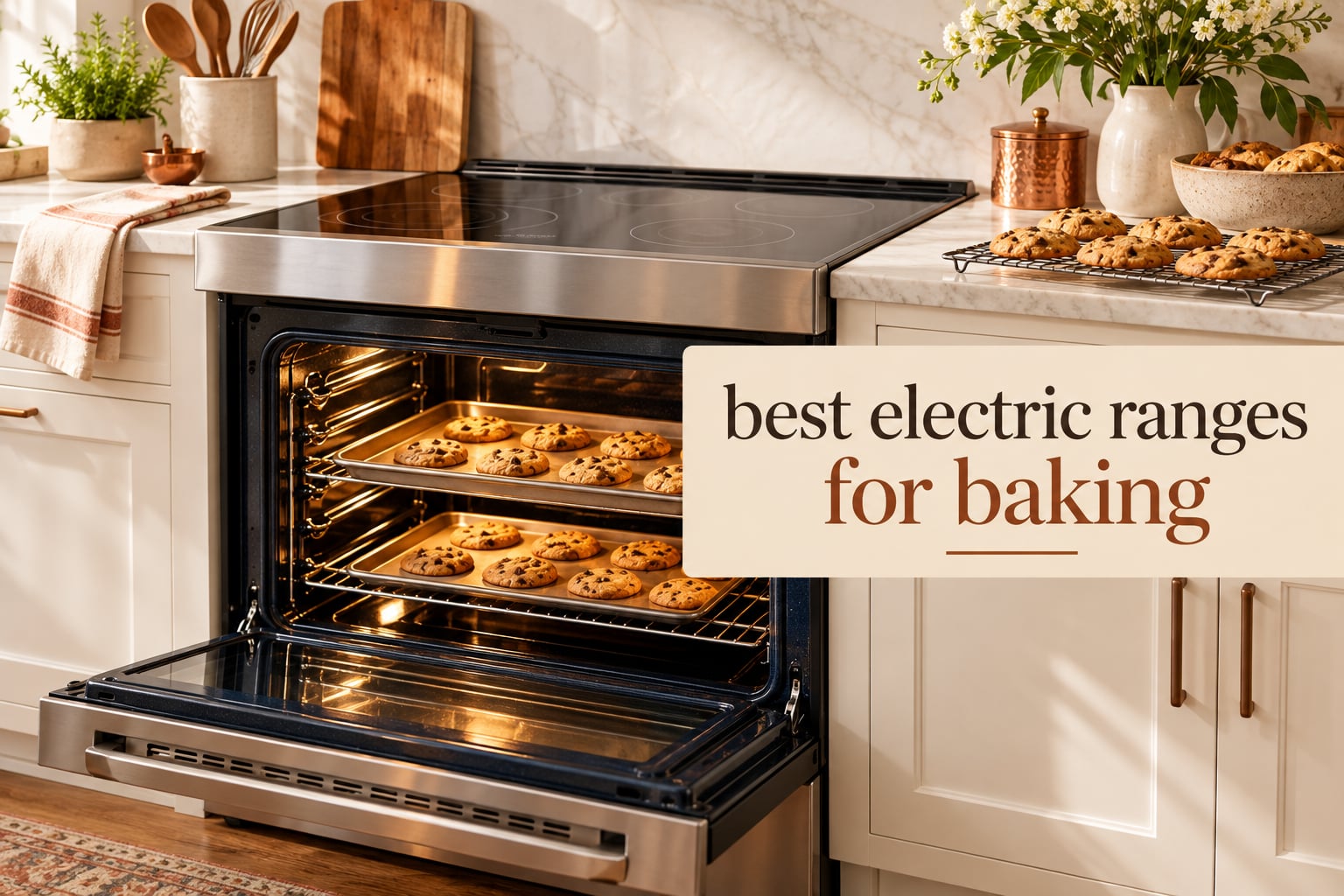
If you want one honest answer, the Rangaire RRE303TS is the best electric range for baking in 2026 for most home bakers. It pairs a 5 cubic foot TrueAire convection cavity with a dedicated convection element, a fan, three telescoping racks and a built-in AirFry mode, and owners consistently call the oven its standout feature. If your kitchen rules out a slide-in install, the COSMO Stellar 4.9 cu. ft. model is the next best fit.
That said, the best electric range for baking is rarely the biggest or the most expensive one. Baking quality is decided by the convection system, the strength of the bake element and the cavity size, not by the cooktop or the app. I compared eight 30-inch and 36-inch electric ranges across those specific criteria, read the owner feedback on each one, and sorted them by what they actually do inside the oven.
For a broader look at the category, our general guide to the best electric ranges covers the cooking side. This one is narrower on purpose, and it is written for people who bake rather than people who sear.
Top 3 Picks: Electric Ranges for Baking in 2026

Rangaire RRE303TS
- TrueAire convection with dedicated element
- 5 cu. ft. cavity
- 3 telescoping racks
- Built-in AirFry

COSMO Stellar 4.9 cu. ft.
- Convection fan kills cold spots
- Two dual-element burners
- Cool-to-touch handle
- Triple-thick glass
Kenmore 5.6 cu. ft. Induction
- True Convection with conversion
- 3 chrome racks
- Temperature probe
- Self-clean oven
Best Electric Ranges for Baking, Side by Side in 2026
Every pick below is a 240V electric range with a glass or ceramic cooktop and an electric bake element. The differences that matter to a baker are the convection arrangement, the cavity volume, the rack count and whether the controls are front or rear mounted. Read the table first, then jump to the full review for the one that fits your kitchen.
| Product | Specifications | Action |
|---|---|---|
| Rangaire RRE303TS |
|
Check Latest Price |
| COSMO Stellar 4.9 cu. ft. |
|
Check Latest Price |
 VEVOR 36 in. Compact Freestanding VEVOR 36 in. Compact Freestanding |
|
Check Latest Price |
 Samsung Bespoke 6.3 cu. ft. Smart Slide-In Samsung Bespoke 6.3 cu. ft. Smart Slide-In |
|
Check Latest Price |
 Empava 30 in. 4.8 cu. ft. Empava 30 in. 4.8 cu. ft. |
|
Check Latest Price |
 Bosch 800 Series HEI8056U Bosch 800 Series HEI8056U |
|
Check Latest Price |
 Kenmore 5.2 cu. ft. Rear Control Kenmore 5.2 cu. ft. Rear Control |
|
Check Latest Price |
| Kenmore 5.6 cu. ft. Induction |
|
Check Latest Price |
1. Rangaire RRE303TS 30 in. Slide-In with True Convection and AirFry
Rangaire RRE303TS Electric Range Oven with Timer and AirFry Infrared Stove Burners, True Convection, Easy Reach Racks, 30″, Stainless Steel
5 cu. ft. TrueAire convection
240V slide-in, radiant cooktop
3 telescoping racks
1 year parts and labor
Pros
- TrueAire convection with a dedicated heating element and fan
- Built-in AirFry removes the need for a countertop fryer
- Telescoping racks make the rear positions reachable
- Smooth ceramic glass wipes clean
- Responsive Rangaire customer service
Cons
- Knobs have no numbers or tick marks
- No on or off light for the cooktop elements
- Burner sizes are limited at roughly 9
- 10 and 5 inch
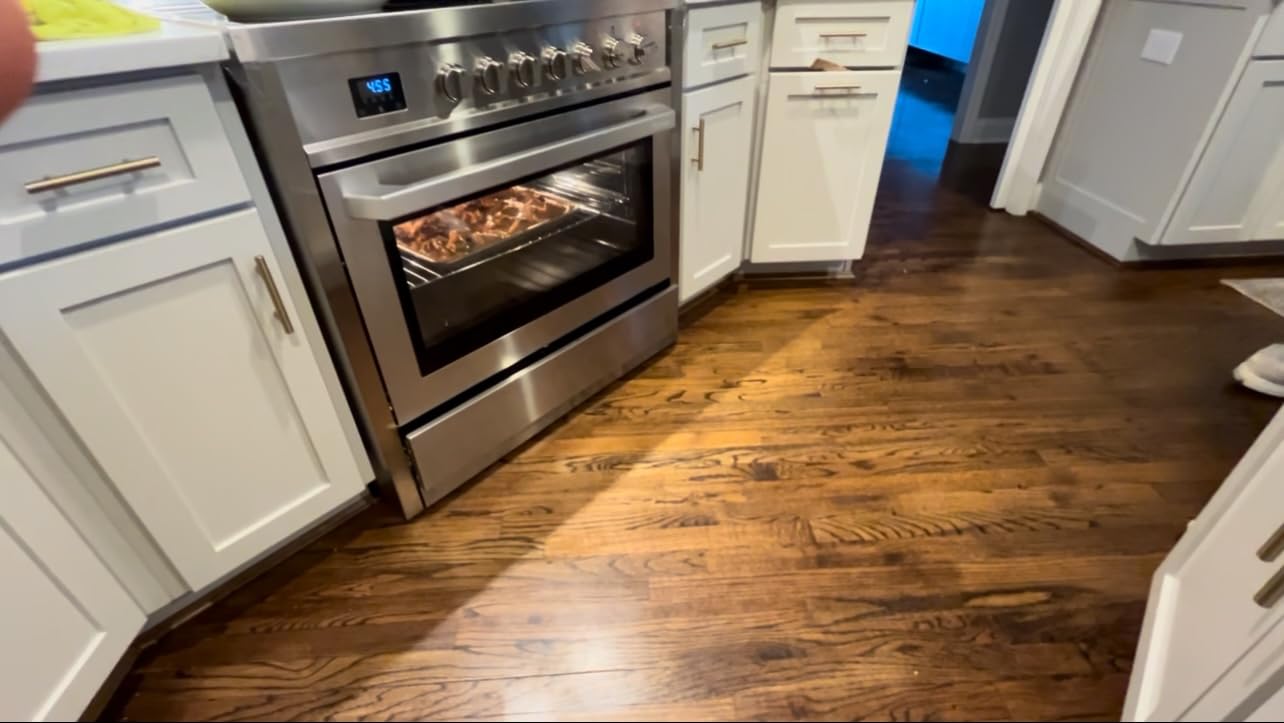
This is the range I kept coming back to while I worked through the list. The oven is the reason. Owners describe the TrueAire cavity as heating fast, cooking evenly and producing good bakes, and the dedicated convection element wrapped around the fan is the part that separates this oven from a standard fan-convection box where the fan just pushes around heat from one element.
Three telescoping EasyReach racks in a 5 cubic foot cavity is a good ratio for a baker. A full sheet pan sits in comfortably, and pulling a tray from the back position does not mean leaning into a hot oven. I also liked the PerfectCook glass touch timer with automatic shutoff, which matters more than it sounds when a bake runs longer than expected.
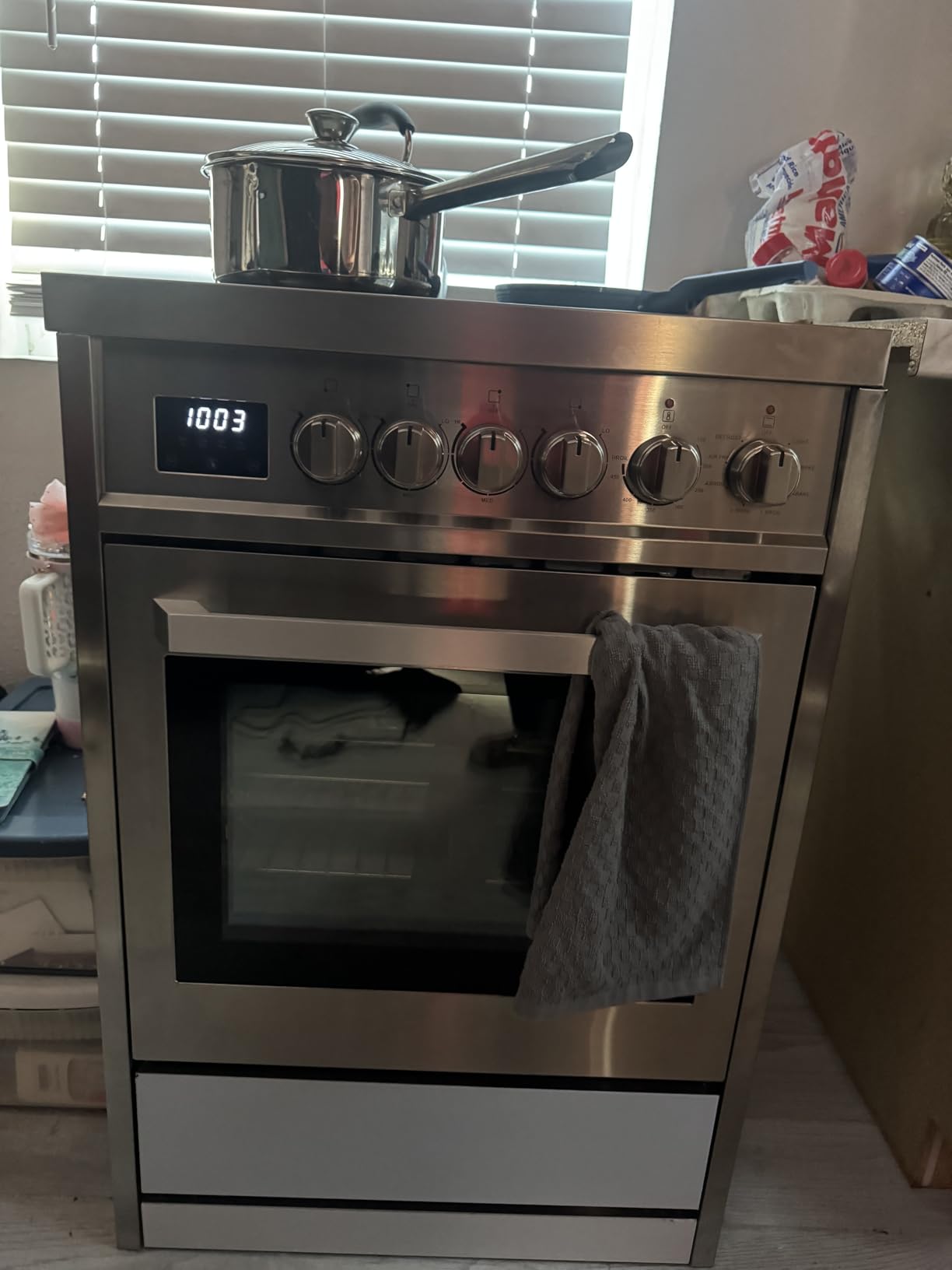
The cooktop is where the complaints live, and they are worth hearing before you commit. Several 30-inch owners report slow heat-up to a rolling boil, and the knobs carry no numbers or tick marks at all, so heat settings have to be learned by clock position. There is also no clear indicator light, which makes it genuinely hard to tell whether an element is on.
Burner selection is limited too, with roughly 9-inch, 10-inch and 5-inch sizes. That covers most cake tins and a standard skillet, but it will not fit a very wide stockpot or a small burner that a saucepan needs. Raised cooktop markings without centre lines make both cleaning and pan alignment more awkward than they should be.
What it does well for a weekly bake
Even multi-rack cookie sheets are the strength here, because the dedicated convection element keeps recovery fast once the fan is loaded. The AirFry mode is a genuine second oven for crisping, reheating and finishing, and owners regularly say it retires a countertop appliance.
The oven suits a household that bakes two or three times a week and wants a slide-in look with a flush front. If you bake in a freestanding opening, skip to the Kenmore and Empava models further down.
Where it will frustrate you
Learning knob positions with no reference marks is a real adjustment period, and it hits hardest on the first few bakes. Buy a cheap oven thermometer and map the dial to actual temperature in an afternoon rather than guessing for months.
It is a 240V slide-in at 180.5 pounds, so the install needs a proper 30-inch cabinet cutout and a dedicated circuit. Owners also report a missing AirFry basket in at least one box, so check the carton before the delivery driver leaves.
2. COSMO Stellar 4.9 cu. ft. Convection Slide-In Range
30 in. Stellar Coll 4.9 cu. ft. 4 Burner Electric Range, Convection, Black
4.9 cu. ft. convection oven
240V slide-in, matte black
2 racks
1 year limited warranty
Pros
- One of the highest average ratings among the ranges we looked at
- Convection fan distributes heat and removes cold spots
- Two dual-element burners handle large and small cookware
- Cool-to-touch handle and triple-thick glass
- Oven cavity cooling ventilation
Cons
- Power cord not included
- Slide-in install needs a 240V circuit and cabinet cutout
- Only two racks listed for a 4.9 cu. ft. cavity
- Listings disagree on whether the housing is matte black or stainless
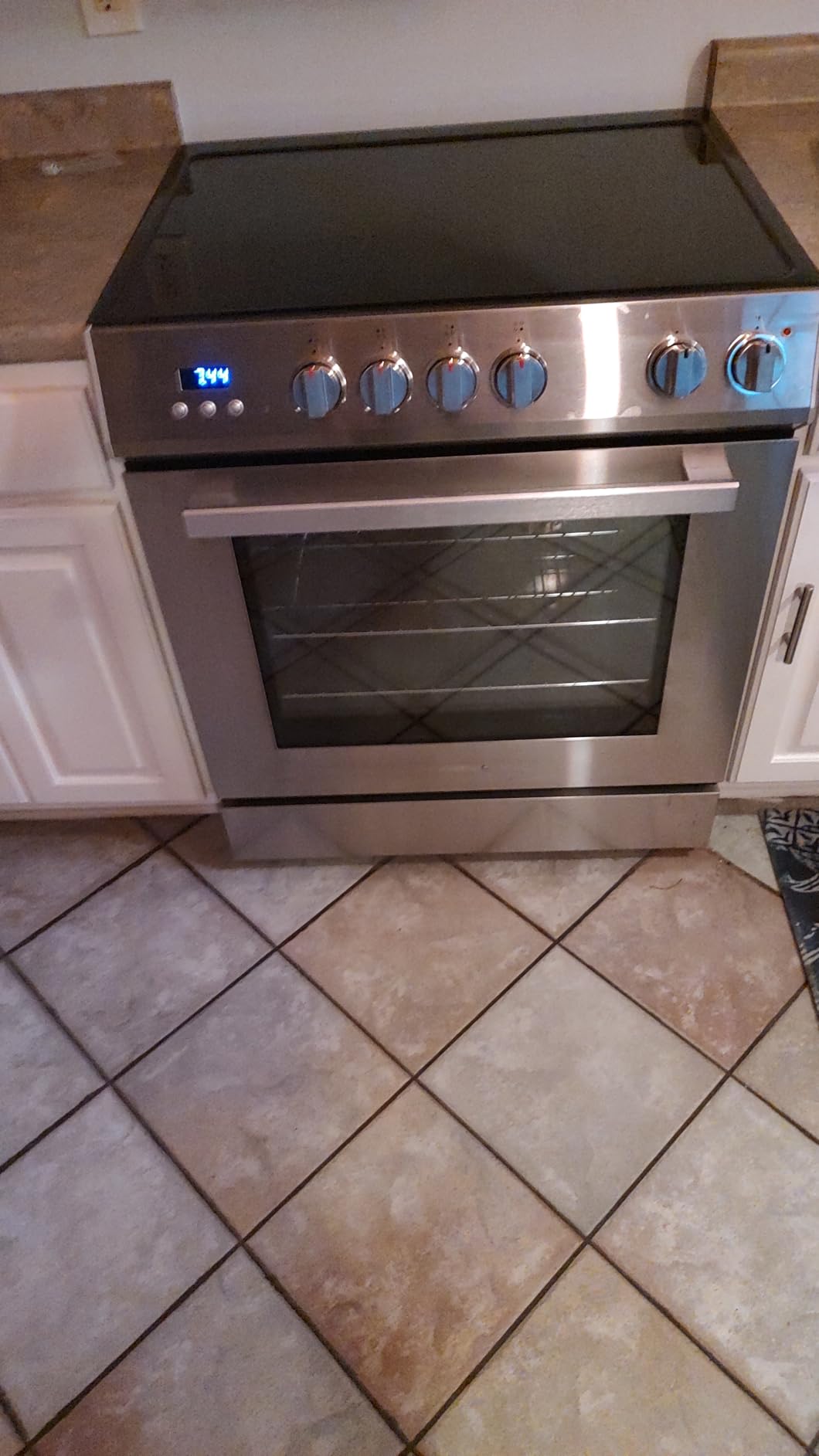
The COSMO Stellar carries the strongest owner rating of the ranges we looked at, with 71 percent of reviews at five stars. The reason owners give is unflashy and correct: the convection fan spreads heat around the cavity and cuts the cold spots that ruin the back corner of a sheet pan. On a 4.9 cubic foot cavity that matters.
It is also a well-specified stove, which is unusual in a baking-focused list. Two dual-element burners give you an 8.75-inch element and a 5.5-inch element on both the left and right fronts, so you can size a pan to the burner instead of guessing. The safety hardware around the door is thoughtful too, with cavity cooling ventilation, overheat protection, triple-thick glass and a cool-to-touch handle.
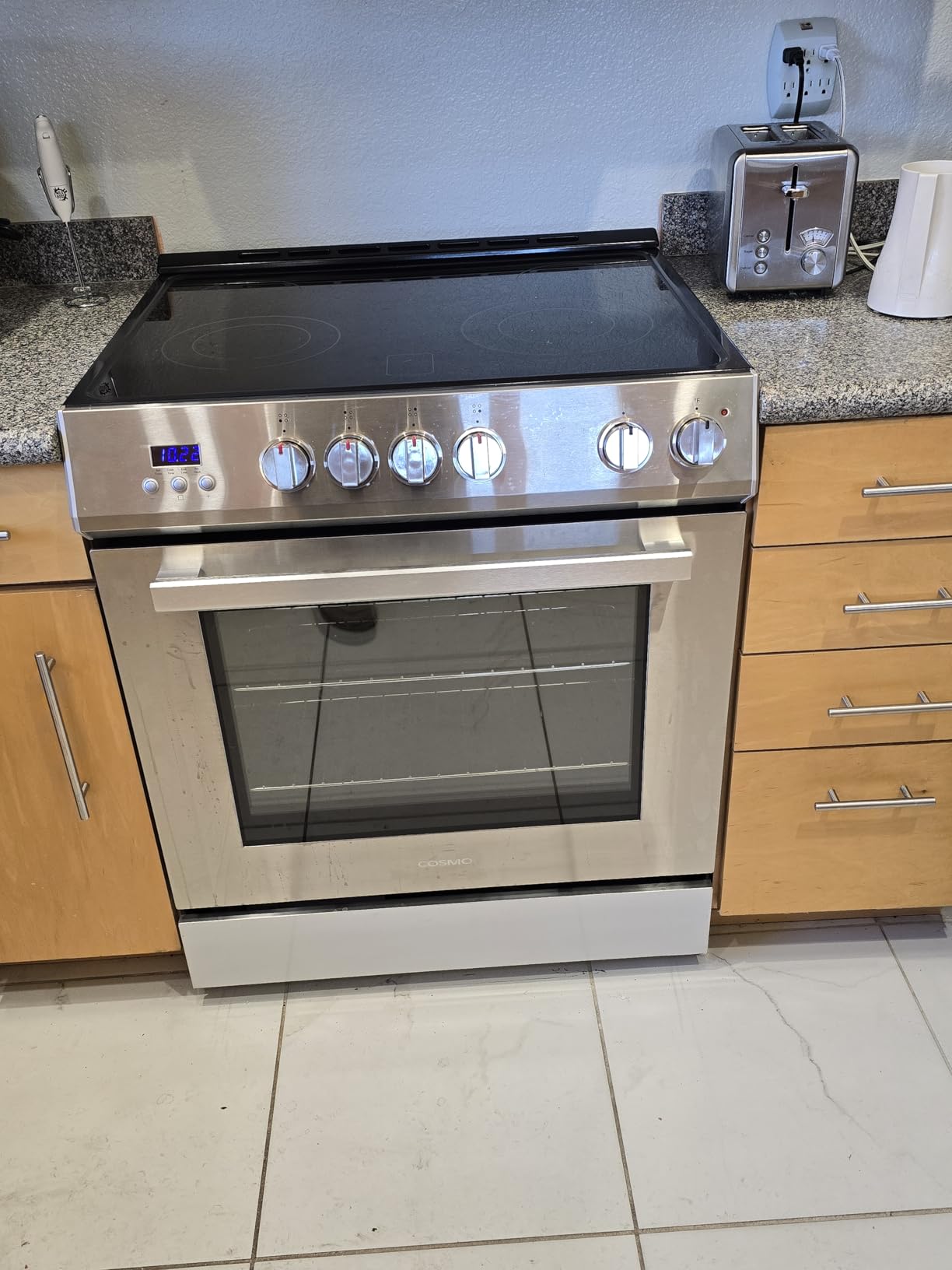
The caveats here come mostly from the spec sheet rather than from owners, and two of them matter. It is listed as a slide-in, so it needs a 240V connection and a cabinet cutout, and the power cord is not included. Budget for an electrician if your existing circuit is not already in place.
The second is the rack count. Two racks in a 4.9 cubic foot cavity limits you to one or two tray bakes at a time, and it is the one design choice here that a serious multi-rack baker would push back on. I would ask the manufacturer for a third rack before ordering.
Where it earns its rating
Even convection heat in a mid-size cavity is exactly what a weekday baker needs for layer cakes, muffins and single sheet pans. The fan handles recovery after the door opens, so a mid-bake check costs you less temperature than it would in a radiant-only oven.
The matte black finish and heavy-duty knobs give it a premium look that reads well in a modern kitchen, and the digital display with a timer keeps bake times honest.
Where it falls short
Two racks is the binding constraint. Anyone planning holiday cookie production across three trays at once will feel it immediately, and the fix is a third rack rather than a different oven.
Only 13 ratings back this listing, so treat the score as encouraging rather than proven. Before you commit, ask a showroom employee to confirm the rack count and the colour of the actual unit in front of you.
3. VEVOR 36 in. 6.0 cu. ft. Compact Freestanding Oven
VEVOR 36in Electric Range Oven, 2.7/4.8/6 Cu. Ft. Compact Freestanding Oven
6.0 cu. ft. convection oven
Freestanding 36-inch body
2 racks
2 year manufacturer warranty
Pros
- A roomy 6.0 cu. ft. convection cavity
- second largest listed here
- 9600W cooktop across five burners
- Pizza
- convection bake
- roast and keep warm modes
- Two-year warranty is among the longest listed
- Dedicated burner knobs plus a digital oven panel
Cons
- Power cord not included
- About 208 pounds in a 36-inch body
- One owner reports the rear fan reduces usable cavity depth
- Keypad described as not especially easy to use
Capacity is the entire argument for this one. At 6.0 cubic feet, it takes a whole turkey, a full sheet pan with clearance on both sides, or a large batch of rolls on two racks. If you bake for a crowd at Thanksgiving, cavity volume beats almost every other spec.
The mode list is also unusually useful for pastry work. Convection bake, convection roast, a dedicated pizza mode and keep warm run alongside standard bake and broil, and the digital panel handles time and temperature while five separate burner knobs run the cooktop. That separation matters when you are managing a stovetop topping and an oven bake at the same time.
Two heavy-duty chrome racks and a triple-layer glass door back the capacity claim. The 3500W and 3000W dual oven elements recover temperature well after a cold load, which is the factor that decides whether a large roast browns evenly from the edges in.
What works for big-batch baking
The 6.0 cubic foot cavity means you are not rearranging pans mid-bake, and the freestanding 36-inch format drops into a standard 36-inch opening without a cabinet cutout. Two years of manufacturer warranty is also the longest coverage in this group, which matters on a brand with a thin service footprint.
Five burners at 9600W total means you can run two pots, a skillet and a low burner for a delicate sauce at the same time. That is the kind of multitasking a holiday bake demands.
Where the risk sits
Seven ratings is a very thin evidence base, and one owner notes the range is shallower than expected because the rear convection fan eats cavity depth. Measure your opening and check depth clearance carefully before a 208-pound unit arrives.
The keypad drew a complaint about ease of use, and the spec table lists only two racks even though the marketing copy references six adjustable positions. Treat the rack count as unconfirmed and ask before buying.
4. Samsung Bespoke 6.3 cu. ft. Smart Slide-In Range NSE6DG8700SRAA
SAMSUNG Bespoke Smart Slide-In Electric Range 6.3 cu. ft. with Smart Oven Camera & Illuminated Precision Knobs, NSE6DG8700SRAA, Stainless Steel
6.3 cu. ft. slide-in cavity
5 sealed elements
2 racks
1 year parts and labor
Pros
- Largest oven cavity listed at 6.3 cu. ft.
- Air Sous Vide for controlled low-heat cooking
- Built-in Air Fry with the tray included
- Illuminated knobs show when the cooktop is active
- Internal camera lets you check browning without opening the door
Cons
- The most expensive range in the roundup
- Sous vide bag is not included
- Knobs must be pinched before they turn
- Only four ratings
- so baking consistency is unverified
The feature set here is the most ambitious of the group. The 6.3 cubic foot slide-in cavity is the largest here, and the internal smart oven camera captures time-lapse video so you can watch a bake develop without opening the door, which is a real advantage during multi-hour bread or roast cooking.
Air Sous Vide is the sleeper feature for a baker. Precise, controlled heat and airflow in a sealed bag at a held temperature gives you fish, poultry and vegetables with none of the guesswork, and it is a cooking mode rather than a gimmick. Built-in Air Fry comes with the tray in the box, which removes both the extra cost and the extra accessory hunt.
The illuminated precision knobs solve a problem I flagged in the Rangaire review. These light up when an element is in use, and they require a pinch-to-turn action before they move, so nothing gets switched on accidentally. For a household with children, that is a meaningful upgrade.
Who this range suits
A cook who bakes in large volumes and wants to monitor progress remotely, or who wants sous vide without buying a separate circulator. The recessed handle and Bespoke styling also make it the most design-forward unit here.
Five sealed elements and a 30-inch slide-in footprint at 26.5 inches deep give you more cavity width than a traditional 30-inch range, which helps when fitting a full sheet pan.
Where caution belongs
Four ratings is a very small base here, and no written owner feedback on baking consistency came back for this ASIN. Everything above is specification, not observed results, and you should treat it that way.
The pinch-to-turn knobs are an extra step some cooks find fussy, the sous vide bag is not included, and a 30-inch slide-in demands a precise cabinet cutout and a 240V connection. It is also the most expensive range in the group, which makes the thin evidence base harder to justify.
5. Empava 30 in. 4.8 cu. ft. Radiant Range with Steam Clean
Empava 30″ Electric Range,4.8 Cu.Ft Oven,Radiant Ceramic Cooktop
4.8 cu. ft. oven
240V, radiant ceramic cooktop
6 rack positions
2 year manufacturer warranty
Pros
- Rear controls stay clear of heat and out of reach of children
- Steam clean avoids harsh chemicals
- Fingerprint-resistant rear panel
- Installs as freestanding or slide-in for flexibility
- Only 153 pounds
- one of the lighter units here
Cons
- No convection fan listed
- so bakes rely on standard radiant heat
- Rear knobs mean reaching across a hot cooktop
- Power cord not included
- Only 12 ratings
This one is built around a different priority: keeping hot surfaces out of reach. The control panel and knobs sit at the back of the range, away from the cooktop and away from small hands. The panel is also fingerprint-resistant, which matters in a kitchen that gets used heavily during a bake.
For cleaning, the built-in steam clean function loosens grease without harsh chemicals. That is a meaningful choice for a baker, because self-clean cycles run at very high temperatures for hours, and owners on forums report pitting in bottom pans that they attribute to the clean cycle. Steam cleaning is the gentler option.
The oven itself is a 4.8 cubic foot cavity with adjustable rack positions and a 150F to 550F range, which covers bread, cakes and roasting. Four radiant ceramic elements give you two 2100W burners for boiling and searing and two 1200W burners for simmering.
Where it fits a household
If children or a busy dog share the kitchen, rear controls are worth more than a convection fan. The steam clean also runs in a fraction of the time a full self-clean needs, which suits someone who bakes often and does not want an oven locked up for hours.
It installs as either a freestanding or slide-in range, which is unusual flexibility for a 30-inch body, and at 153 pounds it is one of the lighter units here.
What it costs you as a baker
No convection fan is listed in the specification. That is the honest drawback: multi-rack sheets and thick layer cakes will rely on static radiant heat, and you may need to swap trays halfway through a bake.
Rear knobs mean reaching across a hot cooktop to adjust a burner, which is a real ergonomic cost during a long service. The power cord is not included, and 12 ratings is a thin base to judge baking results from.
6. Bosch 800 Series 30 in. Slide-In with True Convection HEI8056U
Bosch 800 Series 30 in 5 Burner Element Slide-in Electric Range in Stainless Steel with True Convection Oven and Self-Cleaning HEI8056U
4.6 cu. ft. True Convection oven
240V slide-in, 5 elements
3 racks
1 year manufacturer warranty
Pros
- True Convection from a recognized premium brand
- Five cooking elements give more burner options than the four-element ranges here
- Self-cleaning cycle removes routine scrubbing
- Three racks for a mid-size 4.6 cu. ft. cavity
- Warming drawer holds finished bakes out
Cons
- Heaviest range here at 229 pounds
- Touch controls give no physical knob feedback
- Only 7 ratings with a heavy one-star share
- Dimensions are not listed in the specification
The Bosch 800 Series is the most conventional answer to the question of what a premium electric range should be. A 4.6 cubic foot True Convection oven, a self-cleaning cycle, a warming drawer and five cooking elements in a 30-inch slide-in body.
True Convection with a dedicated element is the part that matters for baking, because it keeps heat moving through the cavity when the door is opened and closed. Three racks in a 4.6 cubic foot oven give you a real multi-rack option for cookie production, which many 30-inch ranges in this roundup cannot offer.
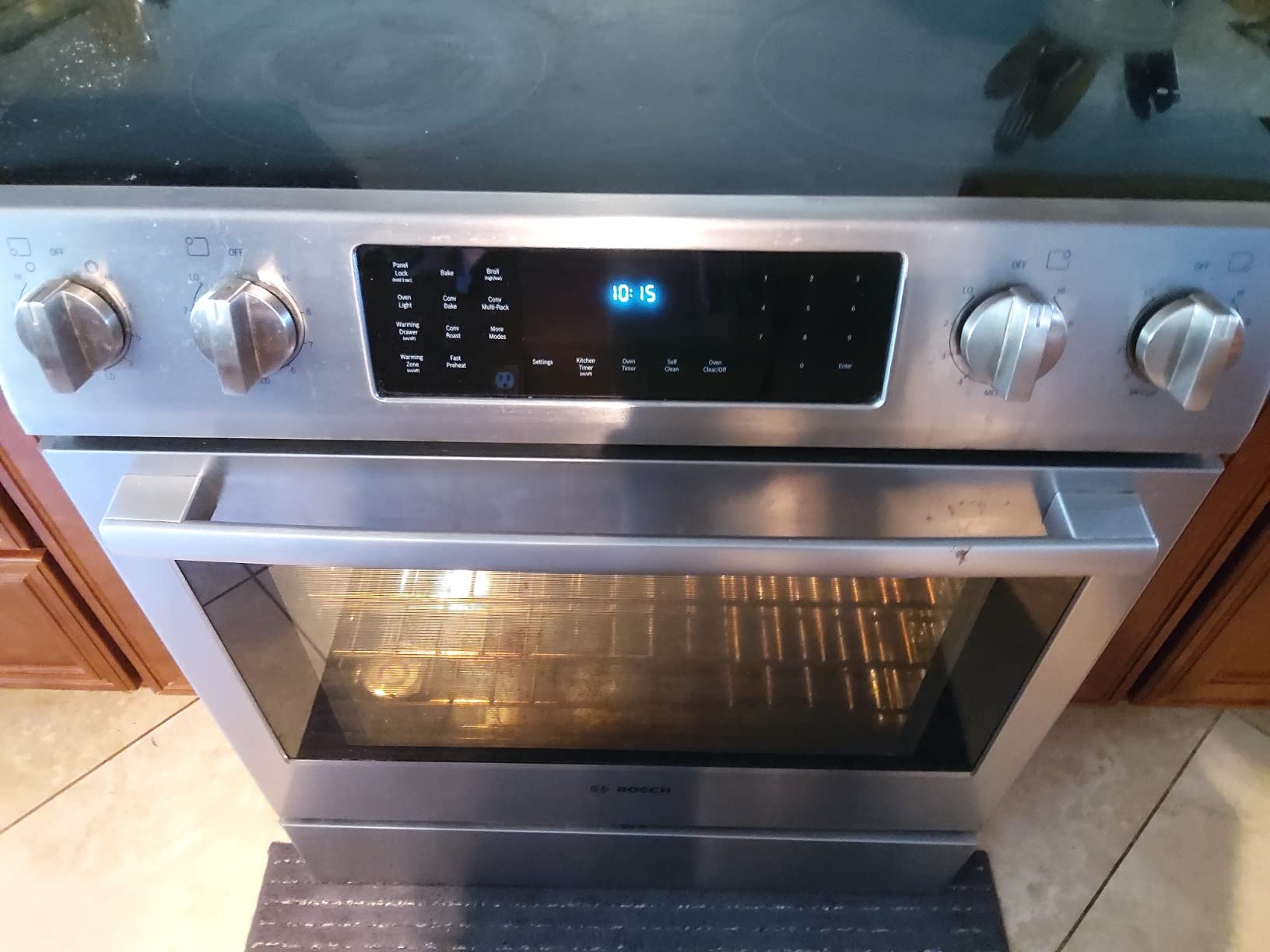
The warming drawer is a baker’s feature that rarely gets credit. It holds a finished loaf or a sheet of baked goods at a low temperature without drying them out, which is genuinely useful when dinner and dessert land at different times.
Who this is for
A buyer who wants a brand name with an established service network and would rather not debug an unfamiliar oven. Five elements is unusual at 30 inches and gives more burner sizing options than the four-element units in this list.
Self-cleaning is the right call for someone who bakes enough to bake on a pan crust regularly and does not want to scrub a hidden bake element by hand.
Where the drawbacks sit
At 229 pounds this is the heaviest range in the roundup. Moving it in or out for a repair is a serious job, and if the oven ever fails, plan for a professional removal rather than a weekend DIY.
Touch controls mean no physical feedback when you turn a setting, which some cooks find imprecise. And the rating split here is unusually polarized for so few reviews, with 59 percent at five stars against 29 percent at one star, so read the one-star reviews before you commit.
7. Kenmore 5.2 cu. ft. Rear Control Freestanding Electric Range
Kenmore 5.2 cu ft. Rear Control Electric Range – White
5.2 cu. ft. oven
Freestanding, rear control knobs
2 racks
1 year appliance warranty
Pros
- Among the lower-cost ranges in this roundup
- Best sales rank in the group at number 6 in freestanding ranges
- Rear controls stay away from heat and small children
- Hidden bake element leaves no crevices to collect spills
- Two 8-inch and two 6-inch elements match cookware well
Cons
- No convection fan listed
- Only two racks for a 5.2 cu. ft. cavity
- Rear controls mean reaching across the cooktop
- A 3.5 average rating with a 14 percent one-star share
- Listings mix up finish names
The Kenmore 5.2 cu. ft. sits at the accessible end of this roundup, and its cavity is genuinely larger than several picks above it. At 5.2 cubic feet it takes a full sheet pan with room on either side, and the freestanding body drops into a standard 30-inch opening with no cabinet cutout work.
The hidden bake element is a real design win for a baker. A concealed element means a seamless oven floor with no hard-to-reach ledges to trap spills, which is the difference between wiping an oven and scrubbing one. The steam clean cycle handles the lighter jobs, and a large window with a halogen light lets you watch a bake without opening the door.
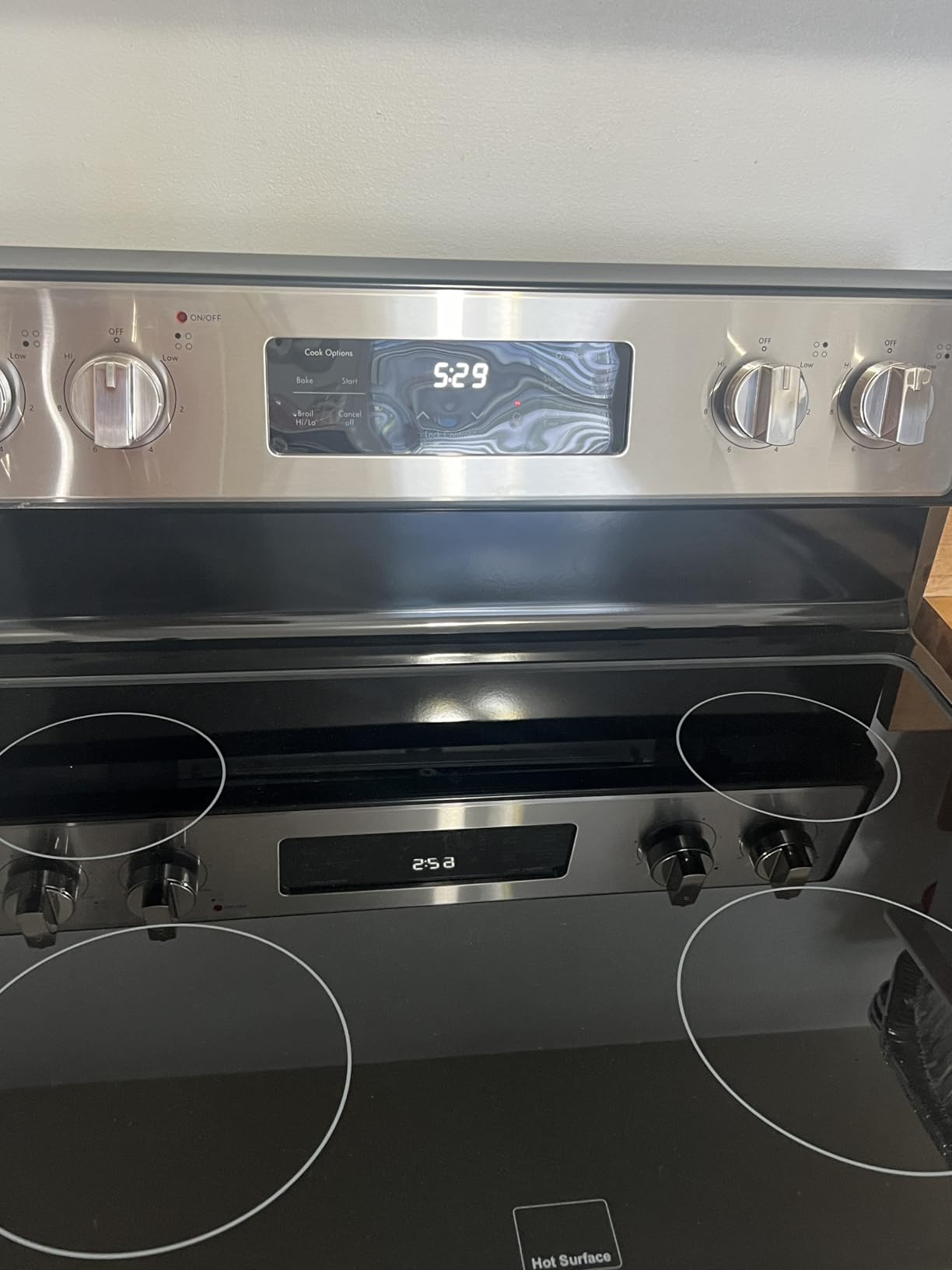
Element sizing is sensible: two 8-inch and two 6-inch burners, so you can match heat to a small saucepan or a wide skillet. The storage drawer underneath takes baking sheets and pizza trays out of the cabinet.
Where it holds up
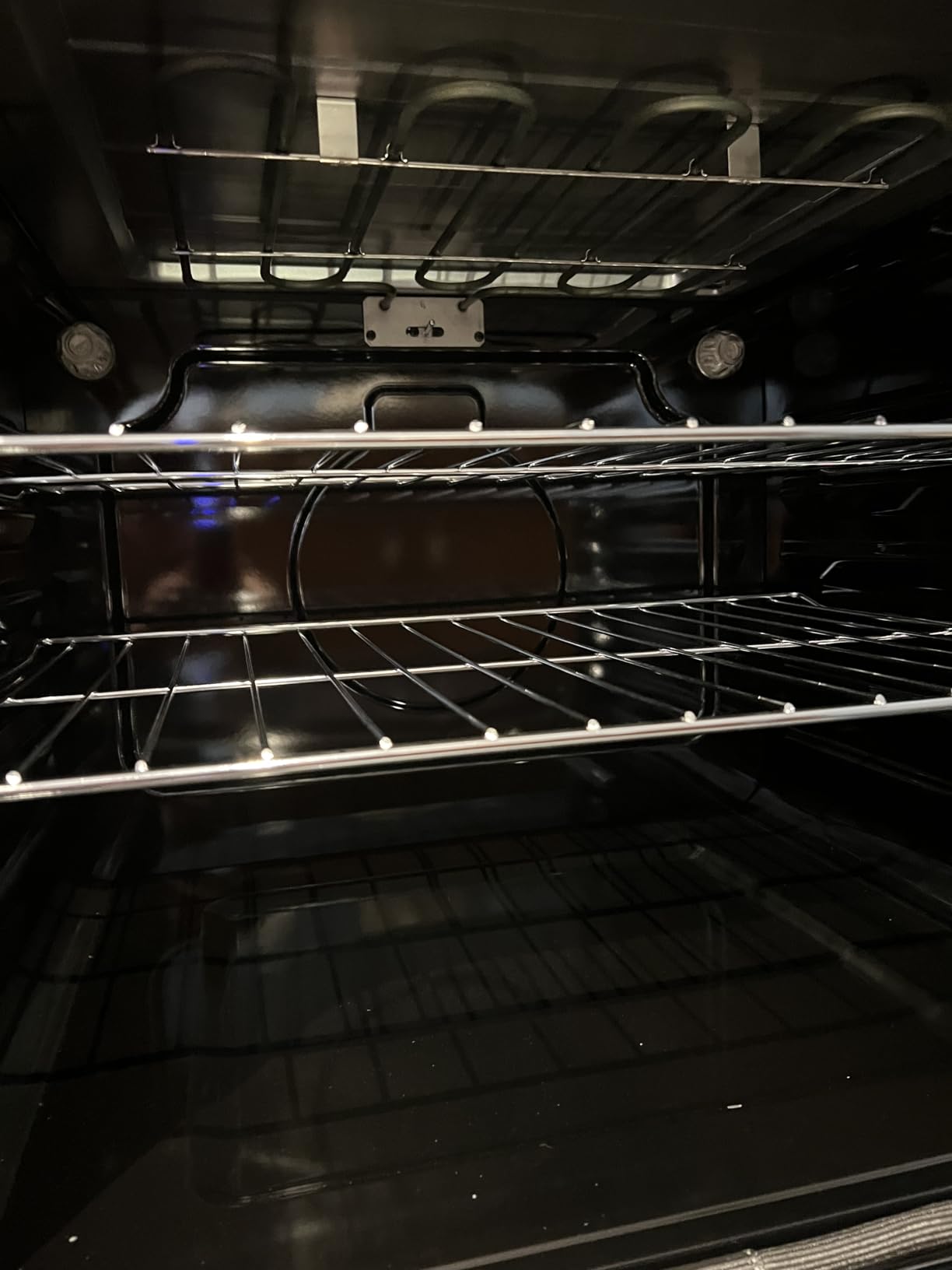
For a baker who mostly makes cakes, cookies and casseroles in single pans, the cavity size and the easy-clean floor are enough. The halogen light and large window are better than most at this level, and judging a rise through the door matters more than a smart feature.
Rear controls can be replaced independently of the cooktop, and the freestanding format is the easiest install in this group. No cabinetry work, no cutout measurements, no electrician.
Where it falls behind
There is no convection fan in the listed specification. That is the dealbreaker for a serious baker, because multi-rack sheets will need tray rotation and thick cakes can bake unevenly front to back.
The 3.5 average rating is also well below what the better-reviewed picks here attract, and the finish naming across listings is inconsistent, so confirm the colour of the actual unit in person.
8. Kenmore 5.6 cu. ft. Induction Range with True Convection
Kenmore 5.6 cu. ft. Electric Induction Range Oven – Stainless Steel
5.6 cu. ft. True Convection oven
4 induction elements with Turbo Boil
3 racks
1 year appliance warranty
Pros
- True Convection with conversion is a strong baking cavity specification
- Temperature probe monitors a bake without opening the door
- Lockable front controls praised by owners with children
- Self-clean plus hidden bake element reduce cleaning effort
- Three chrome racks support real multi-rack baking
Cons
- Induction elements cycle on and off rather than modulating power
- Small elements heat only the centre of a pan
- Tight layout fits one large skillet at a time
- Cooktop clicking and humming with buzzing pot handles
- One owner reports cooktop glass cracking and a denied claim
Owners like the oven and are divided about the cooktop, and the 20 ratings here are a substantial body of independent feedback. The pattern is consistent and useful: the oven gets the praise, the cooktop collects the complaints.
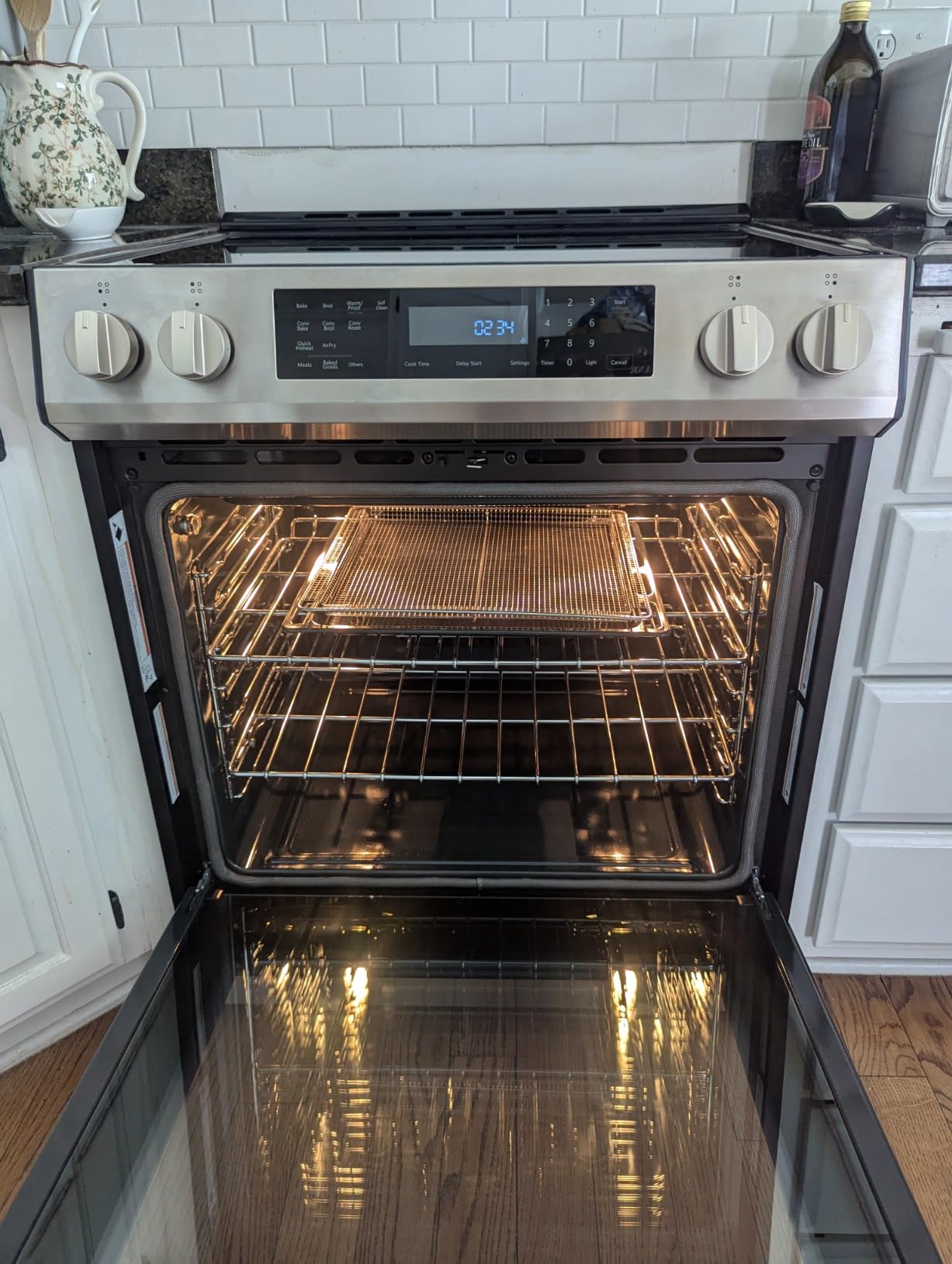
The oven side deserves the attention. A 5.6 cubic foot True Convection cavity with convection conversion, three ultra-durable chrome racks, a temperature probe, self-clean and a hidden bake element is the most complete baking specification in this list. Three racks plus true convection is what a multi-rack cookie baker actually needs, and the probe means you can monitor a long bake without opening the door and losing heat.
Lockable front controls are another quiet win. Several owners with children specifically praised being able to lock the panel, which stops accidental cooktop activation, and front controls mean you never reach across a hot burner.
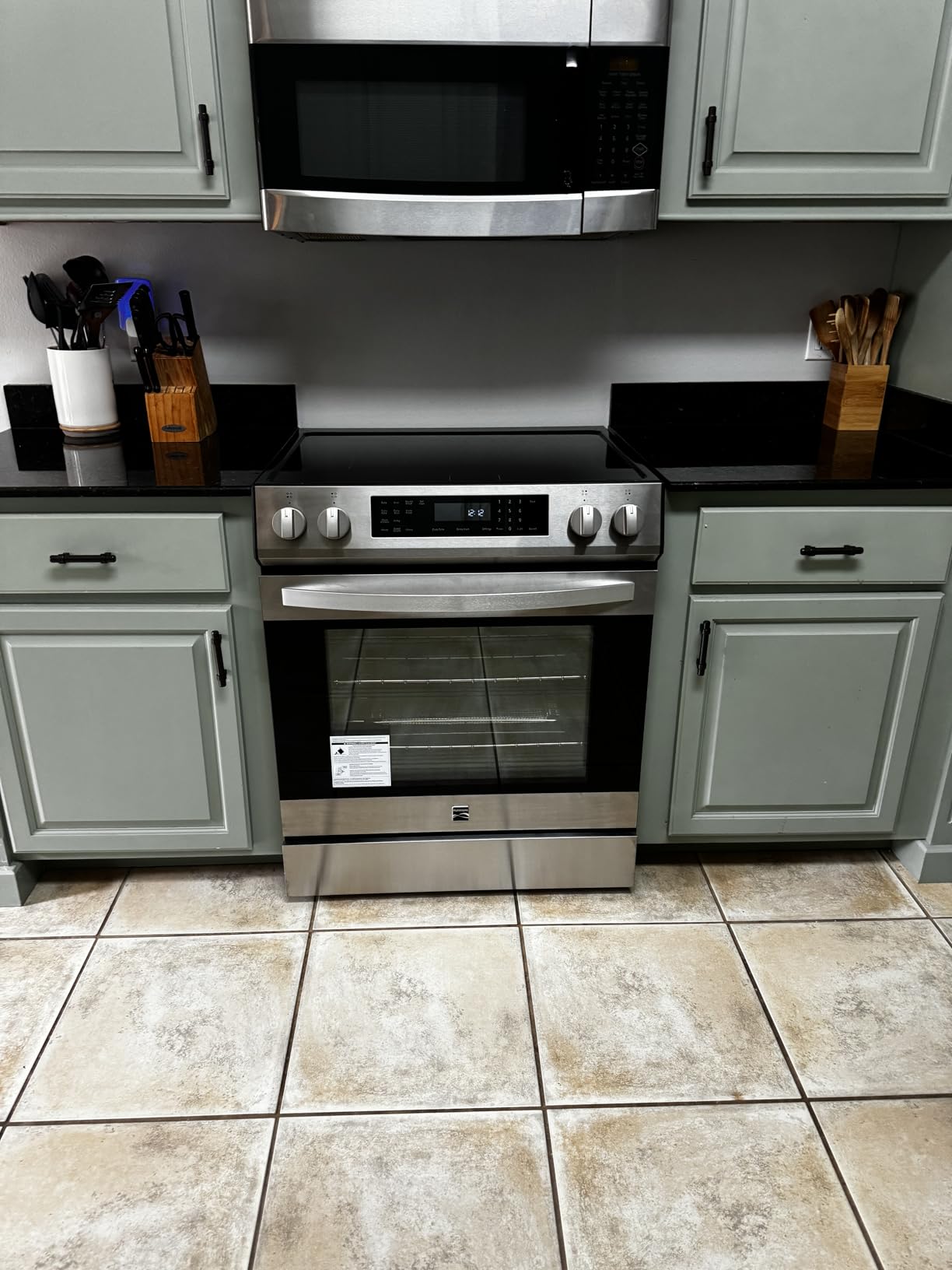
The cooktop is where the rating goes. Multiple reviewers say the induction elements switch fully on and off in short cycles instead of regulating power, which makes a steady simmer difficult. The elements are also small, roughly 4 inches, so the centre of a pan gets intense heat while the edges get none, and the layout is tight enough that only one large skillet such as a 12-inch pan fits at a time.
Other recurring notes are clicking and humming from the cooktop, metal pot handles that vibrate with a buzz, a preheat chime too quiet to hear from across a room, and a timer that requires a specific sequence found in the manual.
Why bakers should still look here
If you bake more than you cook, this is the strongest baking cavity in the roundup on paper: true convection with conversion, three racks, a probe and self-clean. The locked front controls and hidden bake element make it the most family-friendly of the convection models here.
Induction heat is also the most precise on the cooktop side, and for scorched milk or a hard-boiled egg it beats every radiant range listed here. If your cooking is mostly heating and stirring rather than long simmers, that is a fair trade.
Where owners push back
The cycling behaviour is a genuine functional limit, not a preference. A true constant simmer is difficult, and for melting chocolate or making a custard you will need a double boiler or a small independent burner.
Durability is a separate flag worth weighing. One owner reports the cooktop glass cracking after nine months and being denied warranty coverage, and another reports an oven that did not work at all. Two complaints out of twenty is not a failure rate, but it is enough to consider a warranty that is longer than one year.
Electric vs Gas for Baking: Why Dry Heat Wins
Gas combustion adds a small amount of moisture to the oven cavity, and that moisture is the core argument against gas for pastry and bread. A dry cavity gives you crisp bottoms, stable crust colour and predictable results, which is exactly what electric radiant heat delivers and what a convection fan then distributes evenly.
The other half of the argument is control. Radiant elements cycle on and off to hold temperature, and a fan moves that heat around the cavity, so a setpoint at 325F behaves the same way on a Tuesday as it does on a Sunday. Bakers who have moved from gas to electric frequently report the same thing on baking forums: even colour that gas never gave them.
There is a real counter-argument. Gas burners respond instantly to a flame you control, and the long cool-down after you turn an electric element off is a genuine loss if you are finishing a sear or reducing a sauce. If your cooking is stove-led more than oven-led, that trade may go the other way, and our best gas ranges guide covers the other side of it. If you want the middle ground, the best dual fuel ranges give you gas burners with an electric oven.
Owners also note that electric ovens take roughly 10 to 15 minutes to heat food after a cold start. Plan your bake schedule with that buffer rather than assuming instant preheat, and the outcome is well worth it.
What to Look for in an Electric Range for Baking
True convection versus standard fan convection
True convection, sometimes sold as European convection, means a third heating element sits behind the fan so hot air is actively forced through the cavity rather than merely stirred. A standard convection oven still has a fan, but it circulates heat from the two elements at the top and bottom.
For a baker the difference shows up on multi-rack bakes. With a dedicated convection element the oven recovers temperature after the door opens faster, so the tray on the bottom rack does not lag behind the one on top. If you bake a full oven of cookies every month, that is the single most valuable feature on this page.
Convection bake, temperature accuracy and calibration
Convection bake means the range converts a standard recipe to convection, usually by dropping the temperature about 25 degrees, following the manufacturer manual. Some bakers find the automatic conversion too aggressive for a delicate cake and simply set the oven by hand.
Oven temperature accuracy is the complaint that shows up most often in owner posts, usually as cupcakes burnt on one side and raw in the middle. Buy an oven thermometer, and check the real cavity temperature at 325F and 400F during the first week you own the range. If it is off by more than about 15 degrees, have it adjusted. Once you know your offset, write it on the inside of the cabinet door.
Oven capacity and whether your pans actually fit
Cavity volume in this roundup runs from 4.6 to 6.3 cubic feet, and the practical question is whether a full sheet pan sits flat with clearance on both sides. A half sheet pan is easier; a full sheet pan needs roughly 5 cubic feet or more, and a tall dough proof or a large cast-iron pan needs more depth than width.
Rack count matters as much as volume. Two racks limit you to a single tray bake no matter how big the cavity is, and three racks across true convection is the combination we would prioritise for holiday production. Our picks with three racks are the Rangaire, the Bosch and the Kenmore induction model.
Slide-in versus freestanding and the 240V circuit
Slide-in ranges sit flush between cabinets and usually have front or rear controls hidden under a false drawer front, which gives a built-in look. Freestanding ranges have visible side panels and rear controls, and they drop into a standard opening without cabinetry work.
Every range here needs a 240V dedicated circuit, and a slide-in additionally needs a precise cabinet cutout plus a 240V connection run. Two of the picks do not include a power cord, which means an electrician rather than a plug-in. Budget for that before you shop, not after. If your kitchen has no 240V circuit at all, this is an electrical project before it is an appliance purchase.
Reliability, cleaning cycles and what owners report
Reliability expectations and owner satisfaction are two separate things, and forums treat them that way. Reddit shoppers most often recommend GE and Frigidaire for basic 30-inch electric ranges and avoid Samsung and LG over frequent reliability complaints, though that is buyer-report sentiment rather than lab data. KitchenAid specifically draws criticism for design features rather than failure rate.
On cleaning, be cautious with self-clean cycles. A KitchenAid steam-oven owner on The Fresh Loaf reports pitting in the bottom pan that they attribute to running the clean function, and independent owners caution against it. Steam clean, where offered, is the gentler option and the better choice for a baking cavity you depend on every week.
One more practical note: brands differ enormously in where they are actually sold. A recommendation thread on Reddit from a buyer in Alaska makes the point plainly, that in a rural market you are limited to whatever big-box stores stock, and premium brands simply may not be available. Before falling in love with a model, check that a store within reasonable travel distance sells it, and if you are serious about bread and pastry, our picks for baking steels and hand mixers round out a serious home setup.
Frequently Asked Questions
Which electric oven is best for baking?
The Rangaire RRE303TS is the best all-round electric range for baking, because its 5 cubic foot cavity pairs a dedicated TrueAire convection element and fan with three telescoping racks. If a slide-in install does not suit your kitchen, the COSMO Stellar 4.9 cu. ft. convection range is the alternative pick.
What is the best electric oven for home baking?
For everyday home baking of cakes, cookies and casseroles, prioritize oven cavity size and a convection fan over cooktop features. A 4.8 cubic foot cavity takes a full sheet pan, and true convection keeps the bottom rack from lagging when you open the door mid-bake.
Which electric range has true convection?
True convection, also called European convection, means a third heating element is wrapped behind the fan so hot air is forced through the cavity rather than just stirred. Among our picks, the Rangaire RRE303TS, the Bosch 800 Series HEI8056U and the Kenmore 5.6 cu. ft. induction range all specify a dedicated convection element.
Is there a downside to a convection oven?
The main downsides are that convection can brown the outside of a bake faster than the inside, and that the temperature adjustment required by the manual surprises first-time users. In multi-rack bakes convection can also dry out lean breads faster, which is why lowering temperature about 25 degrees matters.
Which brand of electric oven range is the most reliable?
Owner reports most often recommend GE and Frigidaire for basic 30-inch electric ranges, while Samsung and LG draw frequent reliability complaints on appliance forums. Treat that as buyer sentiment rather than lab data, and check the warranty length and local service coverage before you commit.
What ovens do professional bakers use?
Professional kitchens overwhelmingly use commercial convection ovens, which run higher fan speeds and stronger heating elements than a home range. Home bakers close that gap by choosing true convection with a dedicated element, verifying real cavity temperature with an oven thermometer, and running steam where a loaf needs it.
The Verdict: Which Electric Range Should You Buy?
For most home bakers in 2026, the Rangaire RRE303TS is the best electric range for baking. It has the combination that matters most, a dedicated convection element, a 5 cubic foot cavity and three telescoping racks, and the owner feedback backs it up rather than just the spec sheet. Its unmarked knobs and slow burners are real, and you can live with both.
Buy the Kenmore 5.6 cu. ft. induction range instead if multi-rack baking is your priority and you cook in short bursts rather than long simmers. Buy the Bosch 800 Series if you want a conventional premium brand with self-clean and a warming drawer, and accept the 229-pound install. Buy the VEVOR if holiday volume is the goal, and the Kenmore 5.2 cu. ft. if budget matters more than a convection fan.
Whichever you choose, buy an oven thermometer in the same order, verify the cavity at 325F and 400F, and learn what your range actually does before you need it. That one afternoon of testing is worth more than any feature list.