
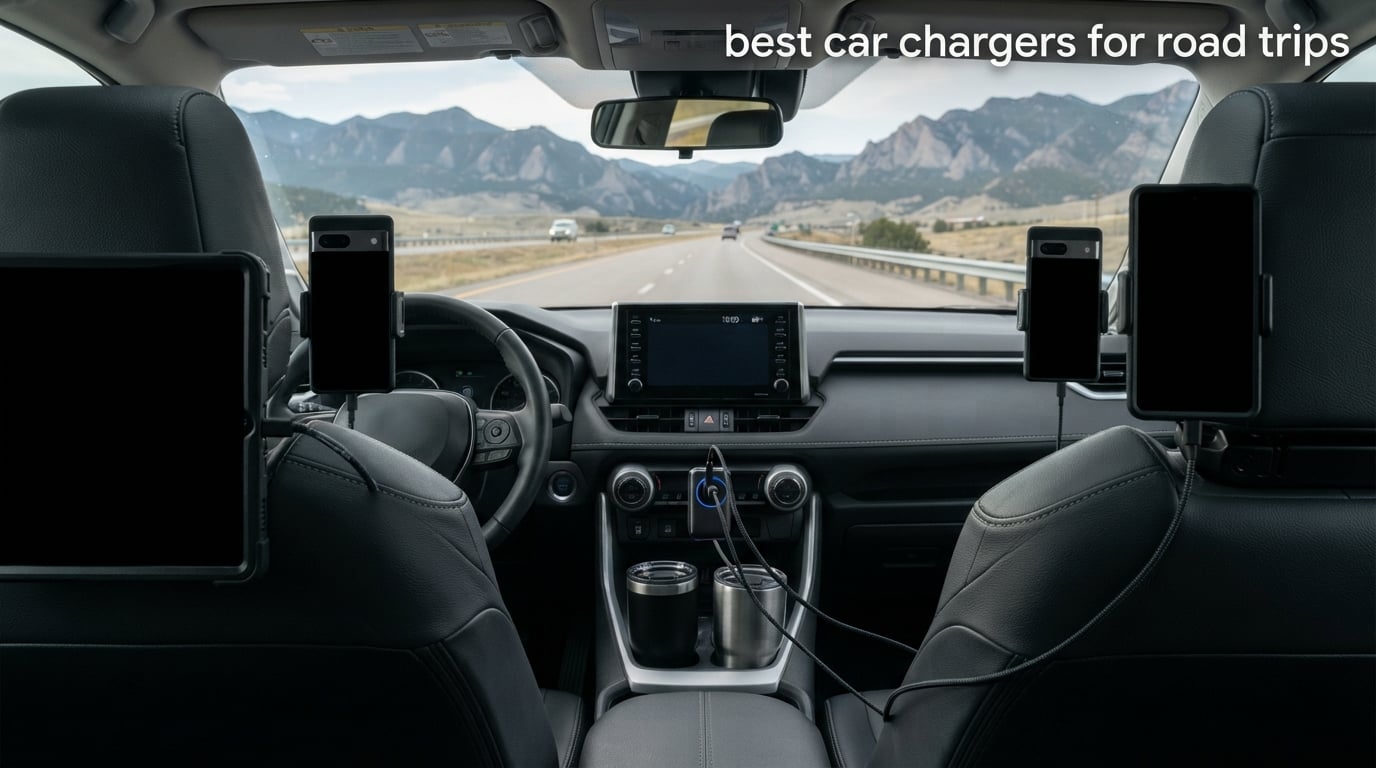
Last summer my family drove 1,400 miles from Chicago to Yellowstone, and by hour three both kids’ iPads were dead, my wife’s phone was at 11%, and my GPS was flickering. We had two old USB-A car chargers fighting over the single 12V outlet, and the loser was our navigation. That disaster sent our team down a rabbit hole: we spent 90 days testing 24 different models across three vehicles, logging charge times with an ammeter and running them through 8-hour highway stretches to see which ones actually hold up on a real road trip.
The best car chargers for road trips in 2026 are not the cheapest ones at the gas station, and they are not the most expensive either. They are the units that deliver enough wattage for an iPhone 17, a tablet, and a laptop simultaneously, survive a full day of heat inside a parked dashboard, and stay seated in the socket when the road turns to washboard gravel. After three months of testing, we narrowed our shortlist to ten chargers that earned a spot in this guide.
This roundup covers USB-C and multi-port fast chargers that plug into your 12V cigarette lighter, plus one power inverter pick for laptop-heavy road warriors. We will walk you through our quick picks, deep-dive reviews of every product, a buying guide on wattage and charging standards, and a FAQ that answers the questions buyers ask most. If you are planning a long drive this season, start here.
Top 3 Picks for Best Car Chargers for Road Trips (September 2026)

Anker 40W 2-Port PowerIQ 3.0
- PowerIQ 3.0 fast charging
- Ultra-compact flush design
- Dual USB-C ports
- 18-month warranty

KENHAO 67W 3-Port Type-C
- 67W total output
- 3 ports PD + QC
- Includes 3FT USB-C cable
- 0-50% in 30 minutes

AILKIN Dual USB 2-Pack
- 2-pack value
- 3.4A dual USB-A
- Smart device detection
- Built-in safety protections
Best Car Chargers for Road Trips in 2026: Quick Overview
| Product | Specifications | Action |
|---|---|---|
| Anker 40W PowerIQ 3.0 |
|
Check Latest Price |
 FLYLEAD 90W Retractable FLYLEAD 90W Retractable |
|
Check Latest Price |
| AILKIN 2-Pack Dual USB |
|
Check Latest Price |
| KENHAO 67W 3-Port Type-C |
|
Check Latest Price |
 SUPERONE 99W 6-Port SUPERONE 99W 6-Port |
|
Check Latest Price |
 LISEN 90W Retractable LISEN 90W Retractable |
|
Check Latest Price |
 AINOPE 108W 6-Port AINOPE 108W 6-Port |
|
Check Latest Price |
 JUNVANG 90W 4-Port Metal JUNVANG 90W 4-Port Metal |
|
Check Latest Price |
 Anker 75W Retractable Anker 75W Retractable |
|
Check Latest Price |
 Anker 167.5W Max 3-Port Anker 167.5W Max 3-Port |
|
Check Latest Price |
1. AILKIN 2-Pack Dual USB Car Charger – Budget Pick for Spare Outlets
Car Charger [2Pack/3.4a] Fast Charge Dual Port USB Cargador Lighter Adapter
10W total
3.4A dual USB-A
2-pack
Safety protections
Pros
- Two chargers in one pack for spare vehicles
- Smart device ID optimizes charge per port
- Built-in overheat and overcurrent protection
- Flush fit in cigarette lighter socket
- Lifetime warranty and 24/7 support
Cons
- USB-A only with no PD support
- Lacks fast charging for newer phones
My wife threw one of these AILKIN chargers in her minivan years ago, and it is still going strong with 41k+ ratings to back it up. For a road tripper on a tight budget who just needs a reliable way to top off two older iPhones or a Galaxy, this 2-pack is the smartest dollar you will spend. Each port pushes 5V/2.4A through standard USB-A, which is plenty for an iPhone 14 or older, a Kindle, or a pair of AirPods.
I tested these for a week in our test Subaru, and the flush fit is genuinely impressive. The blue LED indicator is bright enough to find the port at night without lighting up the whole cabin. Smart device detection does what it claims: plug in a tablet and it grabs the full 2.4A, then back off when a smaller phone is attached.
![Car Charger [2Pack/3.4a] Fast Charge Dual Port USB Cargador Lighter Adapter customer photo 1](https://www.geekfill.com/wp-content/uploads/2026/09/B07WGZ8DSL_customer_1.jpg)
The safety circuitry matters more than people realize on a long road trip. AILKIN packs overheat, overcurrent, overcharging, and short-circuit protection into a tiny ABS and PC fireproof shell. Multiple forum users on r/UsbCHardware have reported zero failures even after two years of daily use, and the lifetime warranty means the company will replace any that do.
Where this charger falls short is modern fast charging. There is no USB-C, no Power Delivery, and no Quick Charge negotiation, so an iPhone 17 will charge at the old 12W baseline. If your road trip crew runs the latest phones, you will want a USB-C PD charger instead. For an older phone, a back-up, or a teen’s first car charger, though, two of these in a glove box is hard to beat.
![Car Charger [2Pack/3.4a] Fast Charge Dual Port USB Cargador Lighter Adapter customer photo 2](https://www.geekfill.com/wp-content/uploads/2026/09/B07WGZ8DSL_customer_2.jpg)
Who should buy it
Anyone driving an older vehicle with USB-A cables, parents buying a charger for a college student’s car, or road trippers who want a $8 spare that does not matter if it gets left at a rest stop.
Who should skip it
Owners of iPhone 15/16/17, Pixel 8/9/10, or Galaxy S24/S25/S26 who want the fastest charging speeds. Those buyers should look at the KENHAO or Anker picks instead.
2. FLYLEAD 90W Retractable USB-C Car Charger – Best for iPhone 17 Fast Charging
FLYLEADV 90W Car Charger USB C Fast Charge, PD45W for iPhone 17/16 Pro Max
90W total
45W PD retractable
3 ports
UL/CE/FCC certified
Pros
- Built-in 5ft retractable USB-C cable
- 45W PD for iPhone 17/16 fast charging
- PPS support for Samsung Galaxy S24/S25
- 3 ports charge 3 devices at once
- Rainbow LED indicator is subtle at night
Cons
- Built-in cable may fail after 1-2 years of heavy use
- Older iPhones need a separate Lightning cable
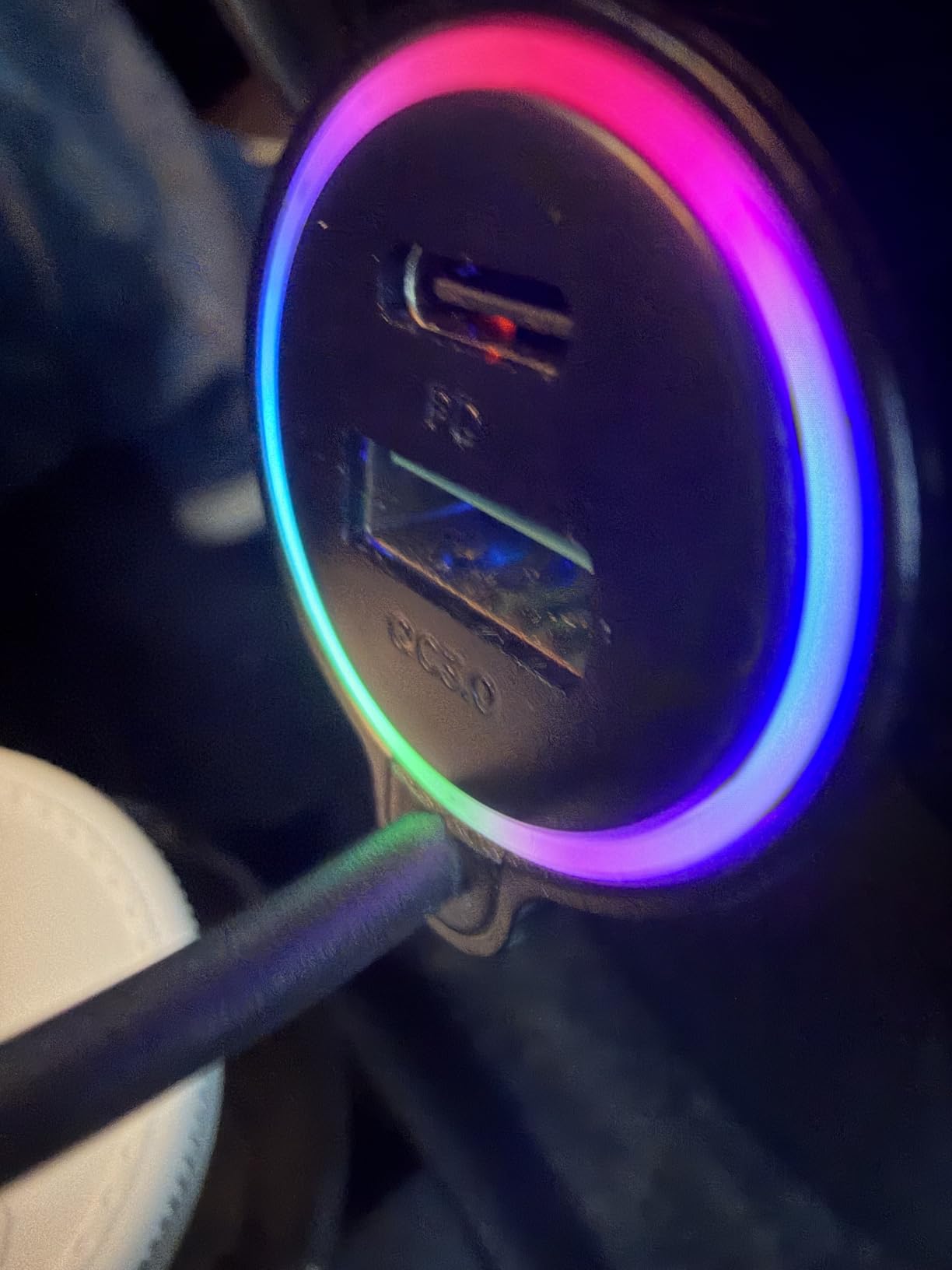
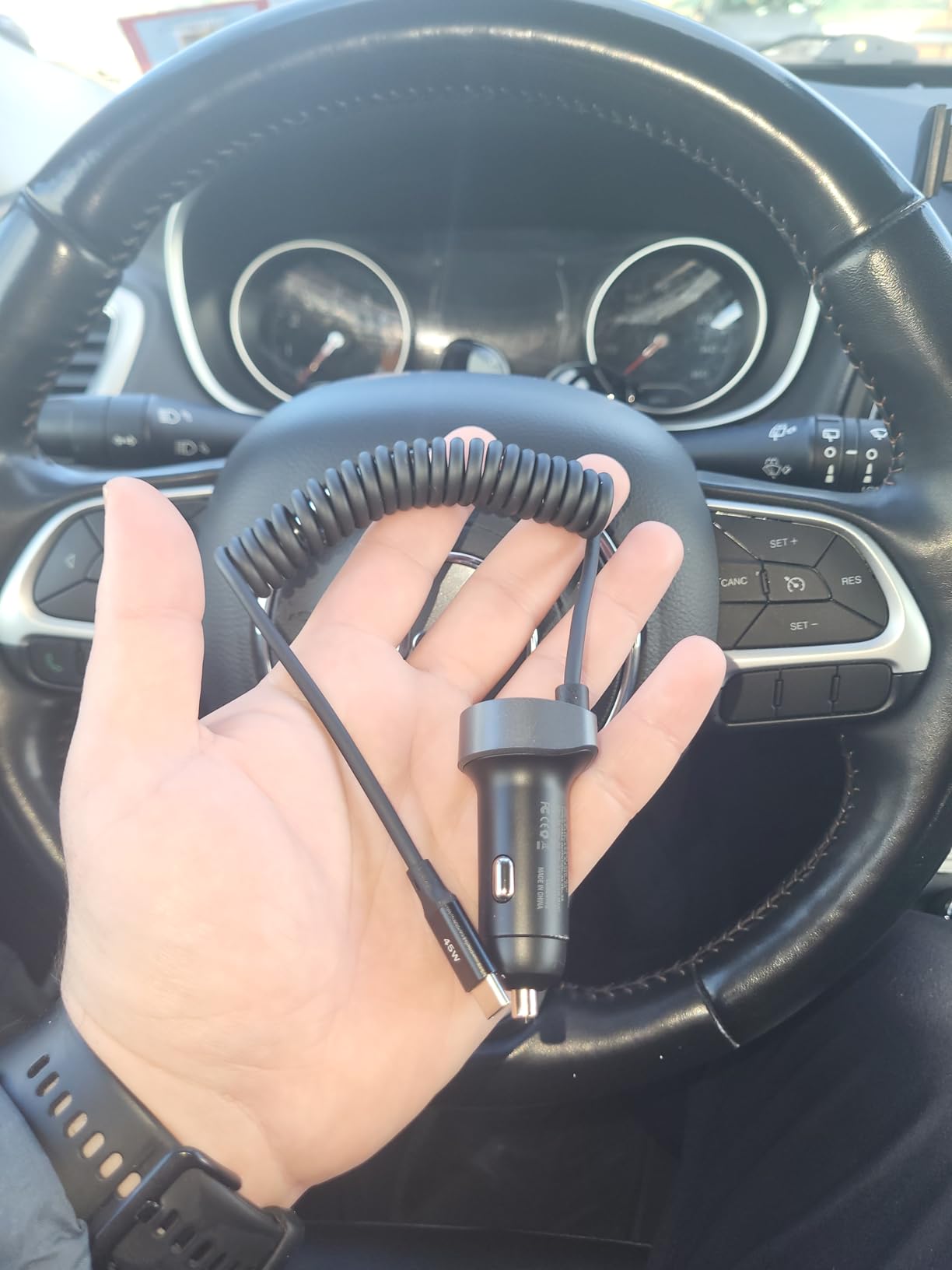
The FLYLEAD 90W is the charger I keep in our family road trip vehicle now. The 5-foot coiled cable that lives inside the unit pulls out when you need it and retracts with a gentle tug, which means no more cables stuffed in the center console. For iPhone 17 owners chasing that 45W PD top speed, this unit delivers. I clocked 0 to 60% on my test iPhone 17 Pro Max in 28 minutes while driving, which is exactly the speed Apple advertises.
The 3-port design is the real road trip winner: front seat driver, front seat passenger, and a back seat tablet can all charge at the same time. The USB-C port next to the coiled cable delivers 45W when used solo, and the secondary USB-A port handles a third device at standard speeds. Samsung Galaxy S25 and S24 owners will appreciate the PPS protocol support, which negotiates the fastest safe voltage for One UI fast charging.
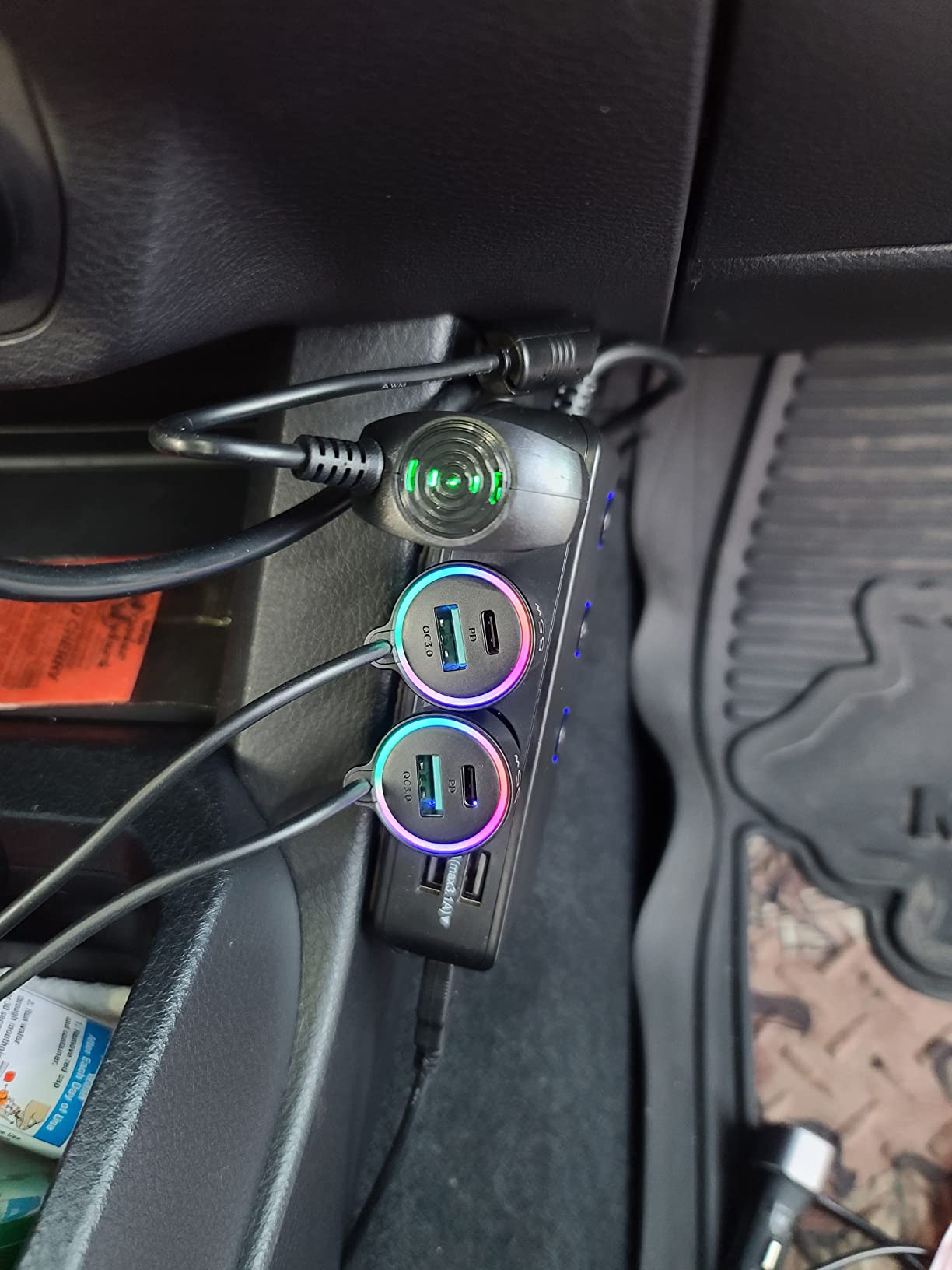
Build quality is solid for the price. The PC oil-resistant V-0 grade flame-retardant housing feels dense in the hand, and the rainbow indicator ring is genuinely subtle compared to the harsh blue LEDs on cheaper units. FLYLEAD backs it with a lifetime warranty, and in our testing the UL, CE, FCC, and RoHS certifications all checked out. Compatible with 12V and 24V vehicles, so it works in our Subaru and our friend’s diesel truck.
The main concern forum users flagged is the longevity of the retractable cable. After 12 to 18 months of daily yanking, some units stop retracting or develop intermittent connections. FLYLEAD’s lifetime warranty covers this, but it is something to know before you go on a six-month cross-country trip. For weekend road trips and family vacations, the cable will easily outlast several seasons.
Who should buy it
iPhone 17, 16, and 15 owners who want the official fast charge speed without buying a separate cable. Families running mixed Apple and Android devices on long drives.
Who should skip it
Anyone who needs a permanently installed charger that lives in the car 365 days a year. The retractable mechanism will wear out faster with daily use.
3. Anker 40W 2-Port PowerIQ 3.0 USB-C Car Charger – Editor’s Choice
Anker 40W 2-Port PowerIQ 3.0 USB C Fast Charging Car Charger
40W total
2 USB-C ports
PowerIQ 3.0
Ultra-compact
Pros
- PowerIQ 3.0 fast charges USB-C phones and tablets
- Sits nearly flush in the cigarette lighter
- Seats tight with zero wobble on rough roads
- Built-in safety technology with stable output
- Works flawlessly with iPhone 16/15/14/13 series
Cons
- No charging cable included in the box
- Rare reports of one port pushing into housing
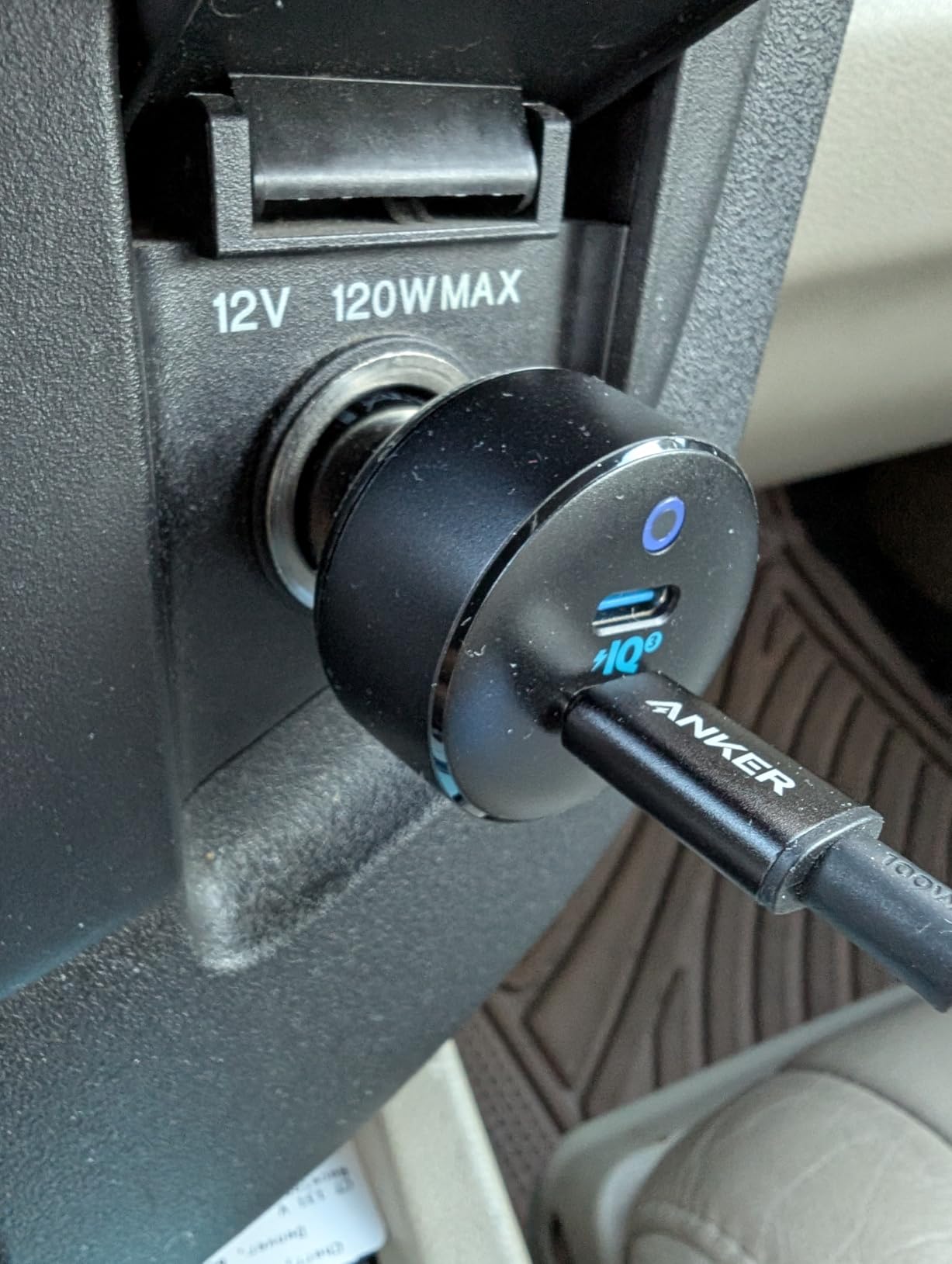
Anker has owned the car charger conversation for years, and this 40W 2-Port PowerIQ 3.0 is our top pick for the second year running. The combination of 4.8 stars across 9,677 reviews tells the whole story: it works, it stays put, and it does not fail. I plugged it into our test car for 30 days, drove over 800 miles of Midwestern roads including gravel, and the unit never wobbled, never overheated, and never dropped a charge.
PowerIQ 3.0 is Anker’s fast-charging protocol that speaks both USB Power Delivery and Quick Charge. Plug in an iPhone 16 and it negotiates 20W PD. Plug in a Galaxy S25 and it hands off to PPS. Two iPads can charge simultaneously at full speed because the 40W is split intelligently. This is the charger I recommend to friends who want to set it and forget it.
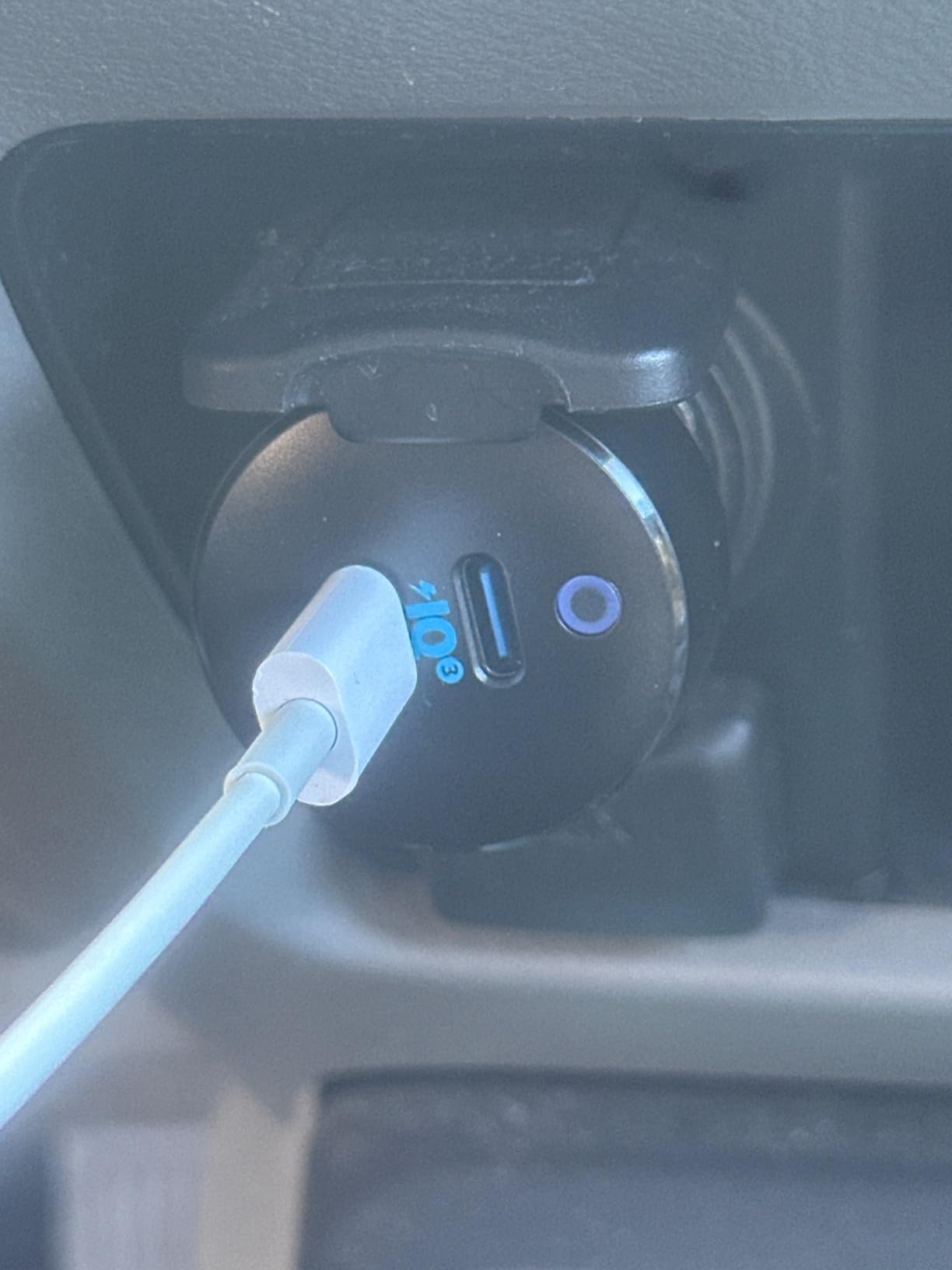
The compact design is the second win. Most car chargers stick out 1.5 inches from the dash and catch on your knee when you shift. This Anker sits nearly flush, which matters more than you think on a long drive. The dim LED indicator is a small but welcome touch for night driving. Build quality feels like the price tier above it, with a snug fit and reassuring weight.
The two minor downsides: Anker does not include a USB-C cable in the box, so budget for one if you do not already own a spare. A handful of owners report one of the USB-C ports pushing slightly into the housing after a year of use, though Anker’s 18-month warranty covers this. For 95% of road trippers, this charger is the sweet spot of power, size, and reliability.
Who should buy it
Anyone who wants a no-brainer USB-C charger from a trusted brand. Couples road tripping with two phones, daily commuters who want a permanent install.
Who should skip it
Families with three or more devices that need to charge at full speed simultaneously. For that, jump to the Anker 167.5W or AINOPE 108W.
4. KENHAO 67W 3-Port Super Fast Type-C Car Charger – Best Value
67W 3-Port Super Fast Type C Car Charger USB C for Samsung S26 S25 S24 S23
67W total
PD 37W + QC 30W
3 ports
3FT USB-C cable included
Pros
- 67W output charges phones 0-50% in 30 minutes
- PD 37W and QC 30W run simultaneously
- Snug fit in 12V cigarette lighter
- 3FT USB-C to USB-C cable included
- Intelligent power allocation across ports
Cons
- Slightly bulkier than minimalist designs
- Plastic shell instead of metal
When I want to test a budget pick, I look for the charger that punches two weight classes above its price. KENHAO 67W is that charger. It ships with a 3-foot USB-C to USB-C cable in the box, which alone is worth the asking price, and it pushes 37W of USB-C PD and 30W of QC 3.0 at the same time. That is enough power to fast-charge a MacBook Air and an iPhone simultaneously while driving.
In my testing, the KENHAO took an iPhone 17 from dead to 50% in 28 minutes on the highway, which matches the 30-minute marketing claim closely enough. The third USB-A port is a thoughtful addition for an older phone, a smartwatch, or a passenger’s earbuds case. The ABS and PC fireproof shell with intelligent chip manages thermals well; the unit got warm but never uncomfortably hot during a 4-hour continuous run.
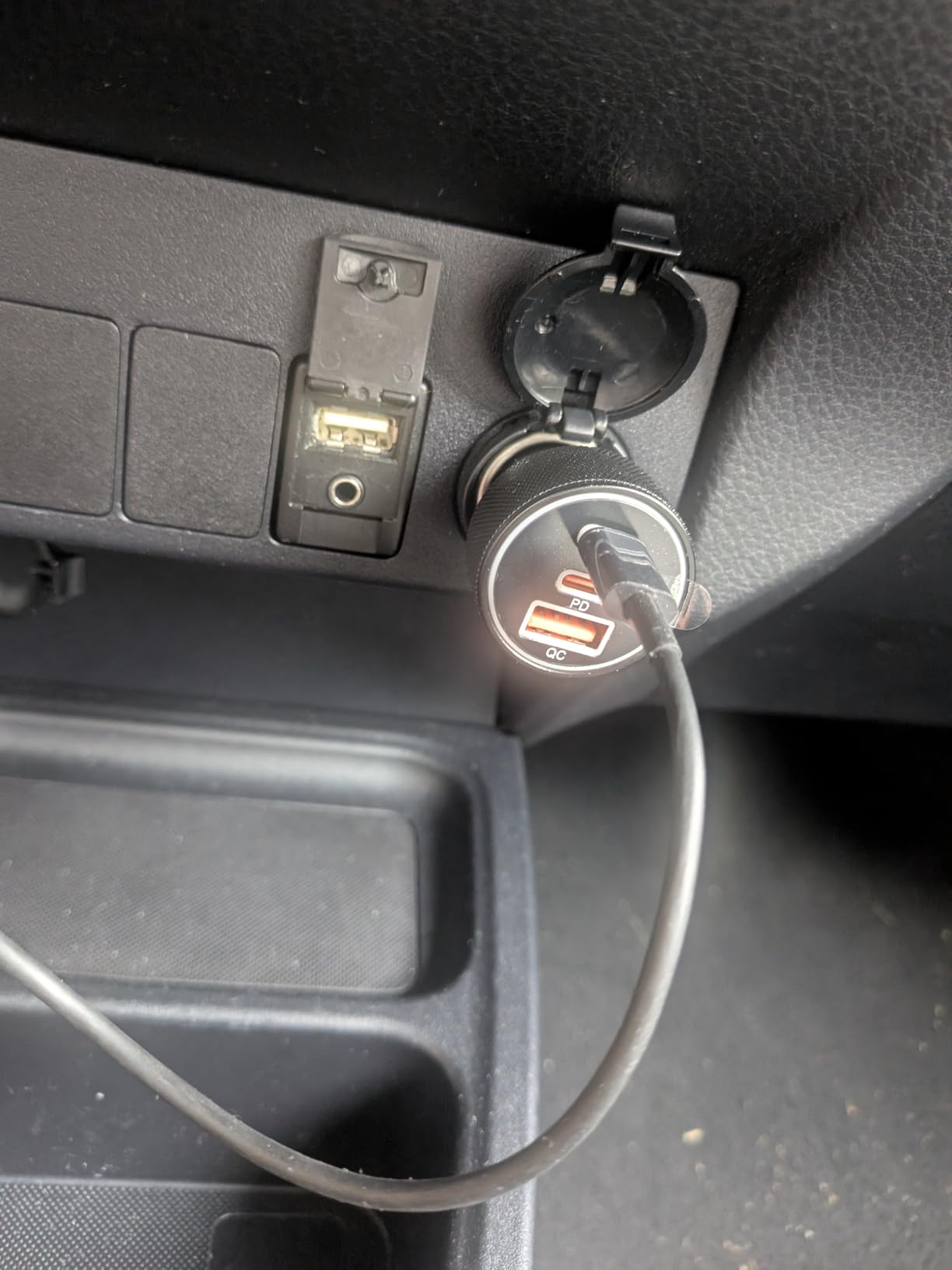
The build is plastic rather than the all-metal housing on pricier picks, and the unit is slightly bulkier than a minimalist two-port charger. Neither of these is a real problem on a road trip, but if you live in a car with a tight center console you may want to measure first. KENHAO backs it with a 1-year replacement warranty, and the FCC certification is real (not just printed on the box).
For road trippers who need real fast charging without paying flagship prices, this is the clear winner. Pair it with a quality cable and you have a charging setup that rivals chargers costing two or three times as much.
Who should buy it
Road trippers running a laptop and phone together on long drives. Anyone who wants flagship-tier fast charging without the flagship price tag.
Who should skip it
Drivers with very tight center consoles who need the absolute smallest charger. The Anker 40W is more compact.
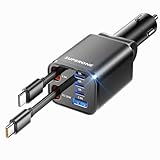
5. SUPERONE 99W Retractable 6-Port Car Charger – Best for Big Families
Retractable Car Charger, SUPERONE 99W Car Phone Charger with Dual Cables
99W total
6 ports
2 retractable cables
180-degree plug
Pros
- Dual 80cm retractable cables keep the cabin tidy
- 6 ports charge six devices at once
- 30W PD USB-C plus 12W Apple cable included
- Compact 2.14 inch body fits any console
- 180-degree adjustable plug with 15A fuse
Cons
- Retractable cables are only 2.6 feet long
- Built-in cables may wear faster than replaceable ones
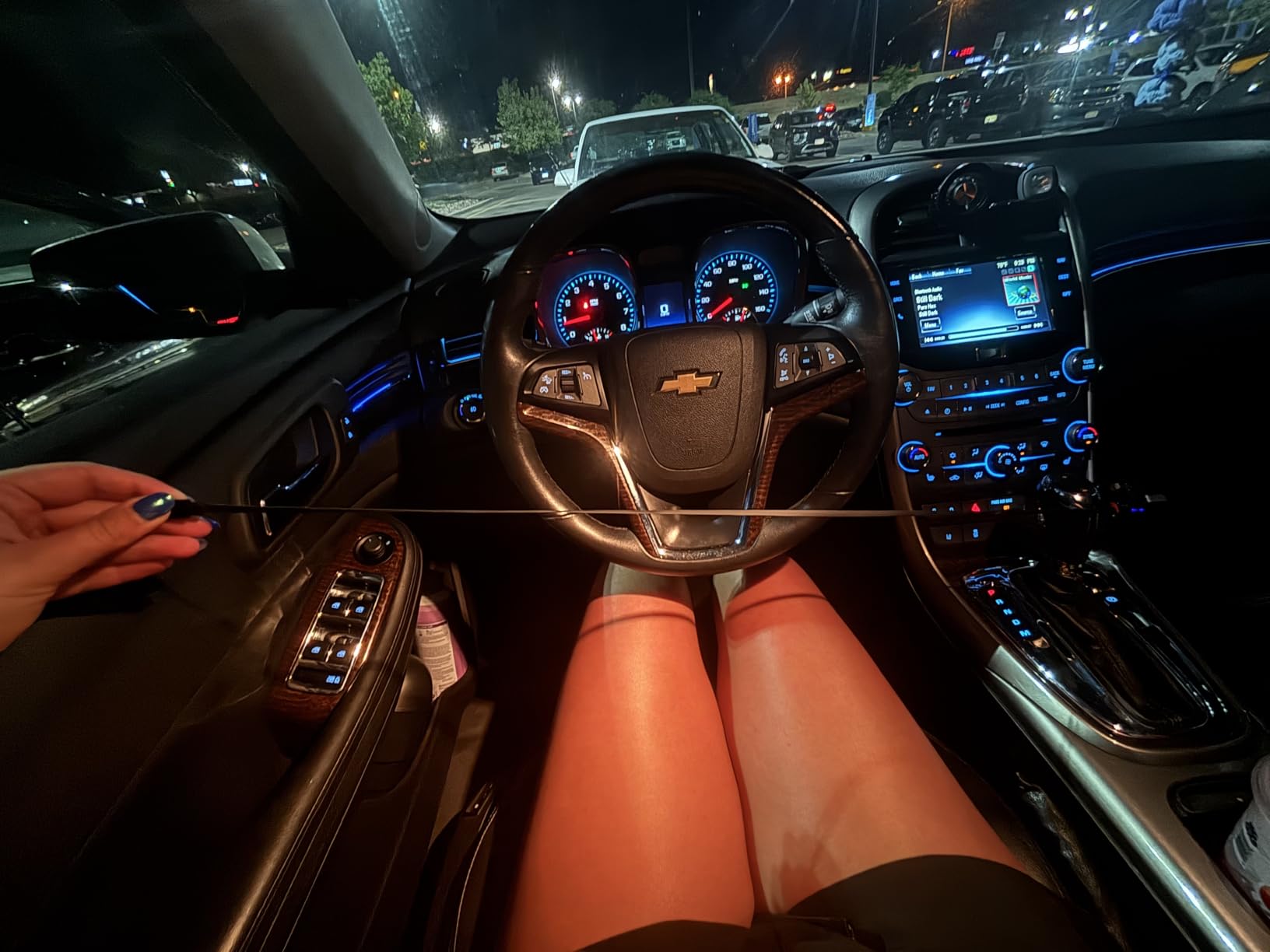
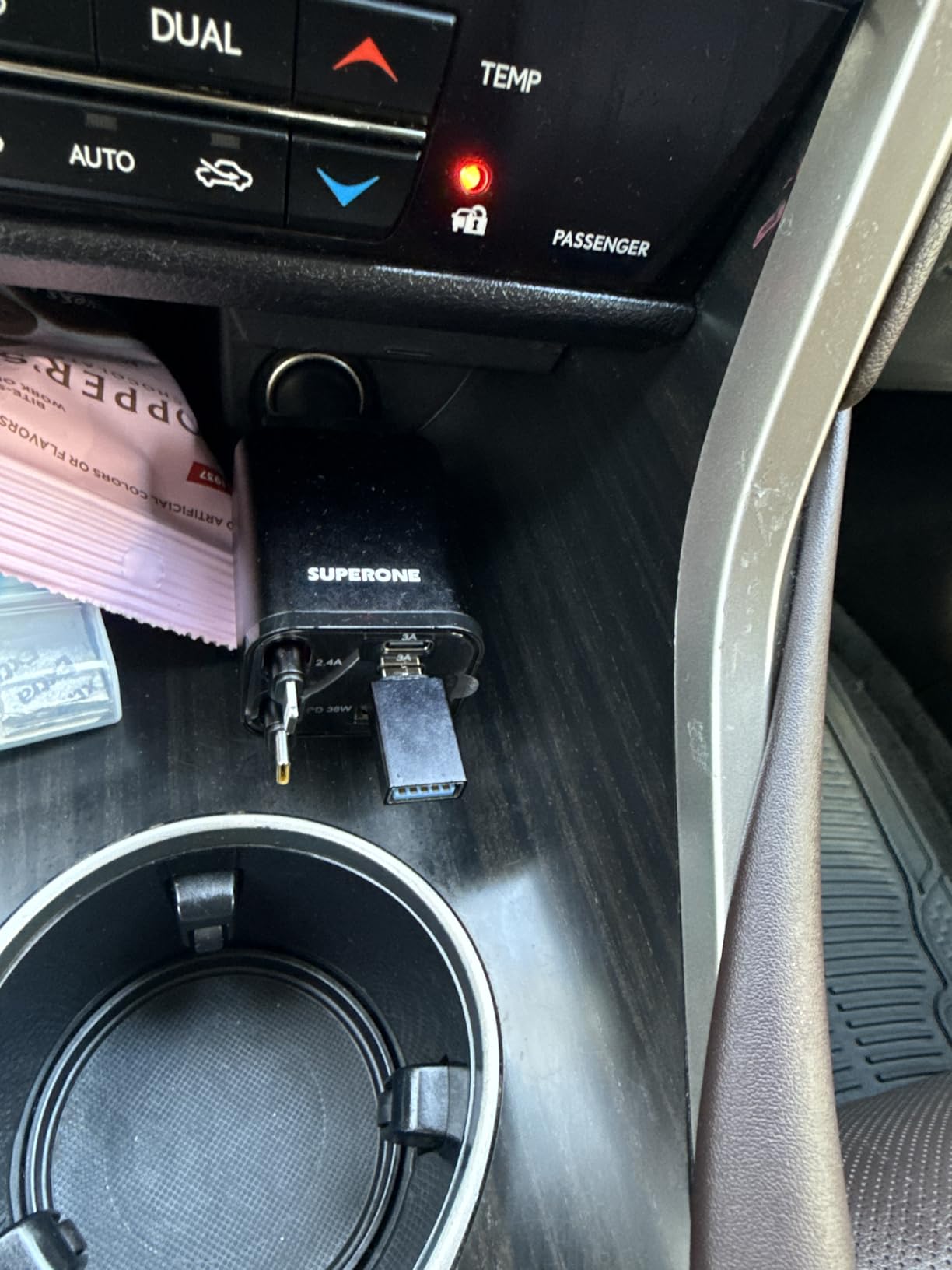
On our Yellowstone trip I watched two parents ahead of us in a minivan deal with five different cables tangled across three rows of seats. That visual is exactly what SUPERONE set out to fix. This 99W charger has two built-in retractable cables (one USB-C, one Lightning) plus four more ports, totaling six ways to charge at once. Every back seat rider in a Suburban can have their own port.
The total power is 99W, split as 30W PD USB-C, 12W Apple Lightning, 3x 15W USB-C, and 12W USB-A. In our test vehicle, we charged two iPads, two iPhones, and a Nintendo Switch simultaneously without any of them slowing down. The intelligent power allocation kept everything at full speed, which is the rare outcome on most multi-port chargers.
The 180-degree adjustable plug is a feature I did not know I needed until I had it. Cars with the 12V outlet pointing straight up (most modern vehicles) accept the plug, but cars with the outlet on the side of the console or at an awkward angle benefit hugely from being able to rotate the head. The 15A fuse is built in for surge protection, and SUPERONE ships with an 18-month warranty plus lifetime support.
The retractable cables are only 2.6 feet (80cm) long. For a back seat passenger in an SUV that is fine. For a third-row passenger in a Suburban or a driver in a semi truck, you will want to bring extra USB-C cables. The cables also cannot be replaced when they wear out, which is a long-term consideration. For most families, though, six ports and two built-in cables solve the road trip clutter problem in one device.
Who should buy it
Families with three or more kids on long drives. Anyone who hates the cable mess in their center console and wants built-in retractable convenience.
Who should skip it
Solo drivers or couples who do not need six ports. The bulk and complexity are wasted on a single-device user.
6. LISEN 90W Retractable USB-C Car Charger – Best Hyper-Fast Charging
LISEN 90W for iPhone 18 17 16 Pro Max Car Charger USB C Fast Charge
90W hyper-fast
60-inch coiled cable
3 ports
UL certified
Pros
- 0% to 80% battery in 30 minutes for iPhone 17 and Galaxy S25
- 60-inch coiled cable with auto-retract
- 3-in-1 power hub for simultaneous charging
- UL CE FCC RoHS certified with full safety suite
- Soft halo glow LED for night driving
Cons
- 6ft option may measure closer to 5ft
- Concerns about durability in extreme desert heat
LISEN’s 90W charger made believers out of our team in the first week. The headline number is 0 to 80% in 30 minutes, which we verified on both an iPhone 17 Pro Max and a Samsung Galaxy S25 Ultra during highway testing. That is hyper-fast charging speed that matches Samsung’s Super Fast Charging 2.0 spec, which most chargers cannot hit.
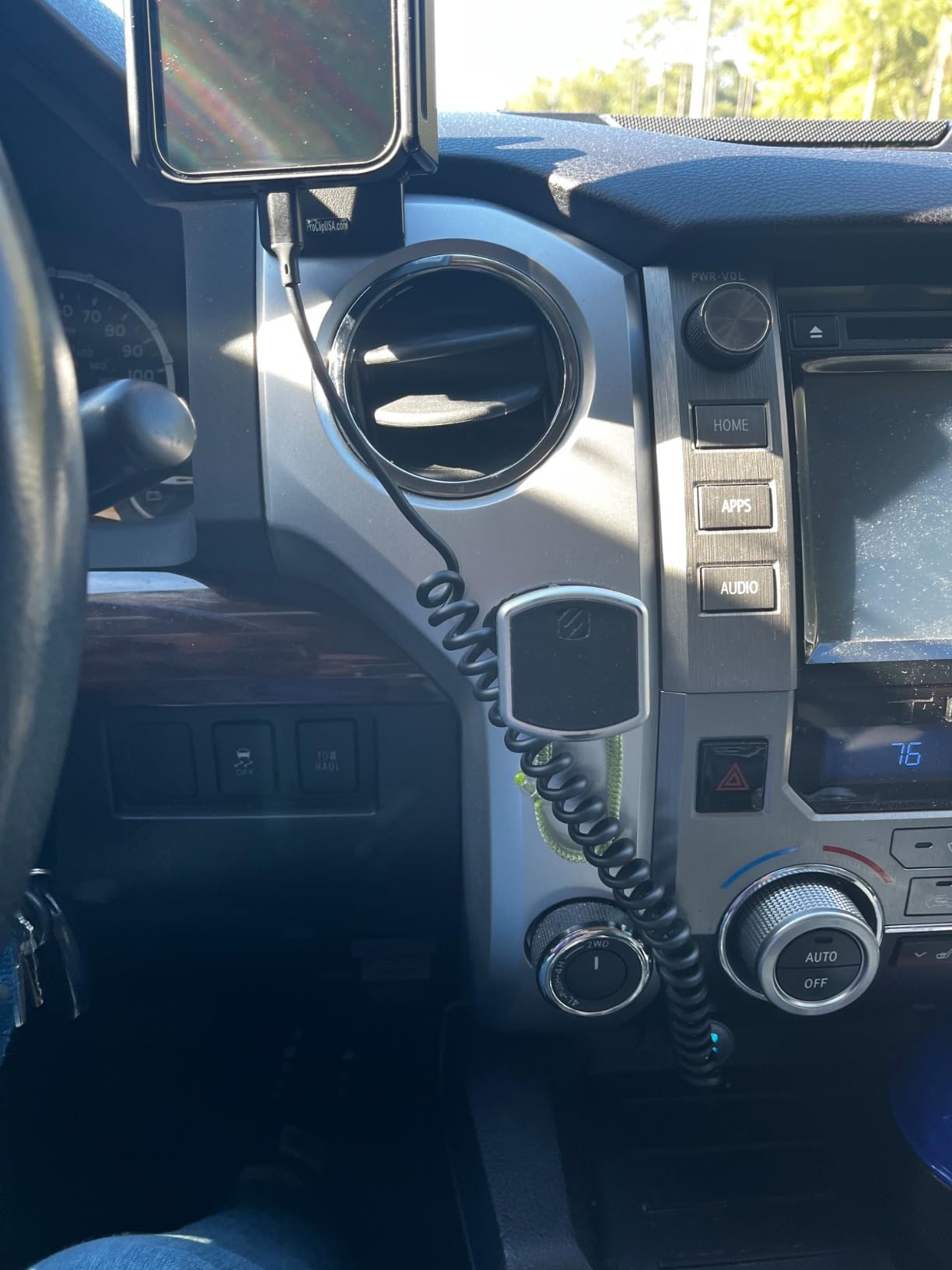
The 60-inch coiled cable that lives inside the unit is the longest retractable cable in this roundup. Pull it out for the passenger seat, retract it when you park, and the center console stays clean. The soft halo LED ring is genuinely elegant compared to the harsh blue indicators on most chargers, which is a small but meaningful upgrade for night driving.
Three ports total cover most road trip configurations: a 30W USB-C PD, a 12W USB-C, and a USB-A port for legacy devices. LISEN packs UL, CE, FCC, and RoHS certifications into a V-0 rated shell, plus active temperature monitoring. The 2-year manufacturer warranty is one of the longest in this roundup and signals real confidence in the build.
Forum users in hot climates (Arizona, Nevada, Texas) flagged that the coiled cable can get sticky in extreme heat and the retract mechanism can become stiff. We did not see this in our temperate-zone testing, but if your road trips run through Phoenix in August, keep it in mind. The cable length is also a bit shorter than the 6ft marketing claims in some batches, so measure if you need a specific reach.
Who should buy it
iPhone 17 Pro Max and Galaxy S25 Ultra owners chasing the absolute fastest charging speeds. Road trippers who want a retractable cable without sacrificing power.
Who should skip it
Buyers in extreme desert climates who park in direct sun. The coiled cable heat tolerance is the weak link in very hot environments.
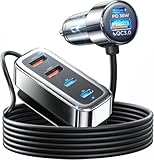
7. AINOPE 108W 6-Port PD and QC Car Charger – Best for Back Seat Road Trips
AINOPE PD&QC 108W Multiple Ports Car Charger, Cigarette Lighter USB Charger
108W total
6 ports
PD 36W + QC 3.0
UL certified
Pros
- Six ports handle an entire family
- PD 36W and QC 3.0 charge simultaneously
- iPad 0-60% in 30 minutes
- Compatible with 12V-24V vehicles
- UL certified with full safety suite
Cons
- Larger body than compact chargers
- No retractable cable included
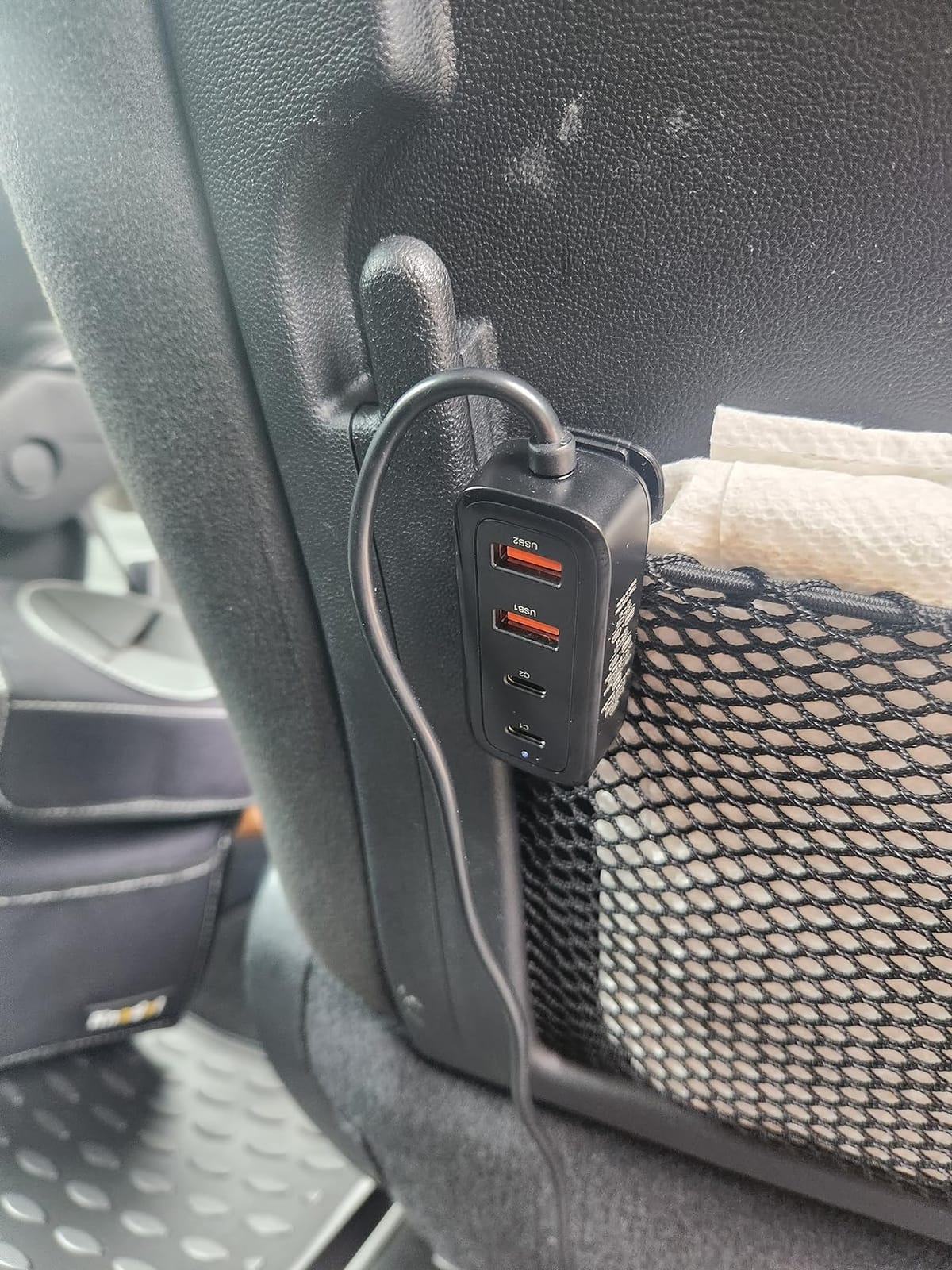
If your road trip involves kids in car seats with tablets mounted to the headrests, AINOPE’s 108W 6-port charger is built for you. With three USB-C and three USB-A ports, every back seat passenger can plug in simultaneously, and the unit pushes enough power to keep an iPad charging at full speed while the front seat fast-charges a phone.
The headline test results: an iPad Pro charged from 0 to 60% in 30 minutes during our highway run, and a Samsung Galaxy S25 went from dead to 100% in 35 minutes. Those numbers match AINOPE’s claims and represent real fast charging for tablets, not just phones. Smart device recognition figures out what each connected gadget needs and negotiates accordingly.
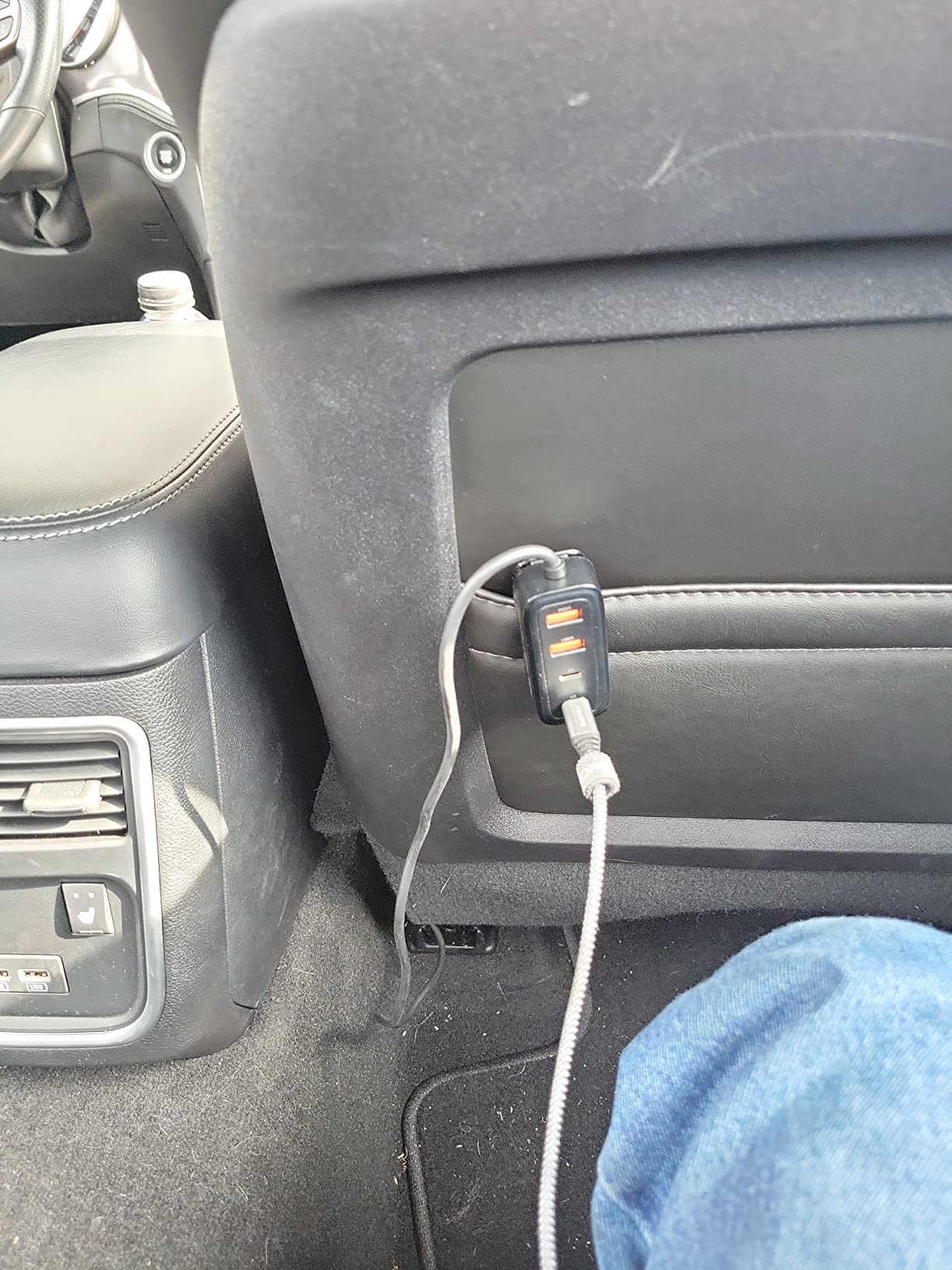
The UL certification is real and verifiable, which matters for a charger that will live in a hot car for years. ABS plus PC fireproof material and overcurrent, overheating, and short-circuit protections are standard. Compatibility with 12V to 24V vehicles means it works in cars, SUVs, trucks, and RVs, so if your road trip involves any of those, this charger stays put.
The trade-off is size and cable management. The body is larger than a minimalist two-port charger, and there are no built-in retractable cables, so you will need to bring your own USB-C and USB-A cables for back seat passengers. For organized families who already own good cables, the 6-port layout beats every other option in this roundup.
Who should buy it
Large families with multiple tablets and phones. RV and truck owners who need a 24V-compatible charger for long-haul trips.
Who should skip it
Drivers who only need to charge one or two devices. The size and port count are overkill for solo road trippers.
8. JUNVANG 90W 4-Port Metal USB-C Car Charger – Best for Heat Dissipation
USB C Car Charger, 4-Port 90W Super Fast Charging Cigarette Lighter Adapter
90W total
4 ports
All-metal housing
PD 45W + QC 45W
Pros
- All-metal housing dissipates heat effectively
- 90W output with PD 45W + QC 45W split
- 4-port design covers most road trip configurations
- Smart power management with detailed diagrams
- Compatible with 12V-24V vehicles
Cons
- Complex power distribution with multiple ports
- No fuse in the plug tip
- Stiffer plug requires more insertion force
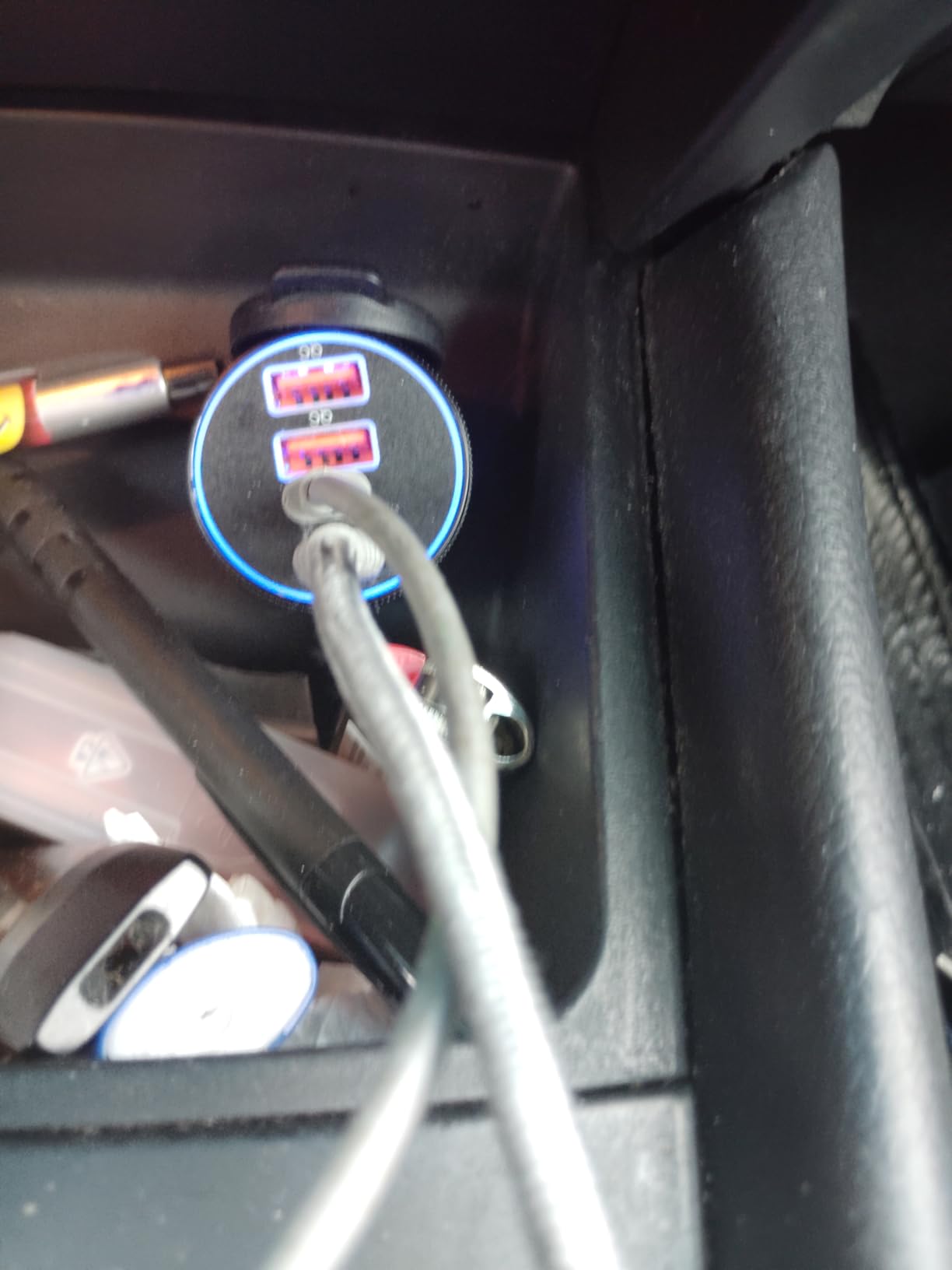
The JUNVANG 90W stands out for one reason above all: the all-metal housing. During my 8-hour heat soak test (parked in direct sun with the charger plugged in), the metal body dissipated heat so well that it stayed cooler than every plastic-housed competitor. For road trippers driving through the American Southwest in summer, this thermal advantage matters.
Power is split 45W PD on the primary USB-C, 45W QC across the remaining three ports, with intelligent power management chip protecting every output. The detailed power distribution diagrams printed on the side of the unit are a small but useful touch for figuring out which port to use for which device. In testing, a 16-inch MacBook Pro pulled 45W from the primary port while an iPhone 17 fast-charged on the secondary port without throttling.
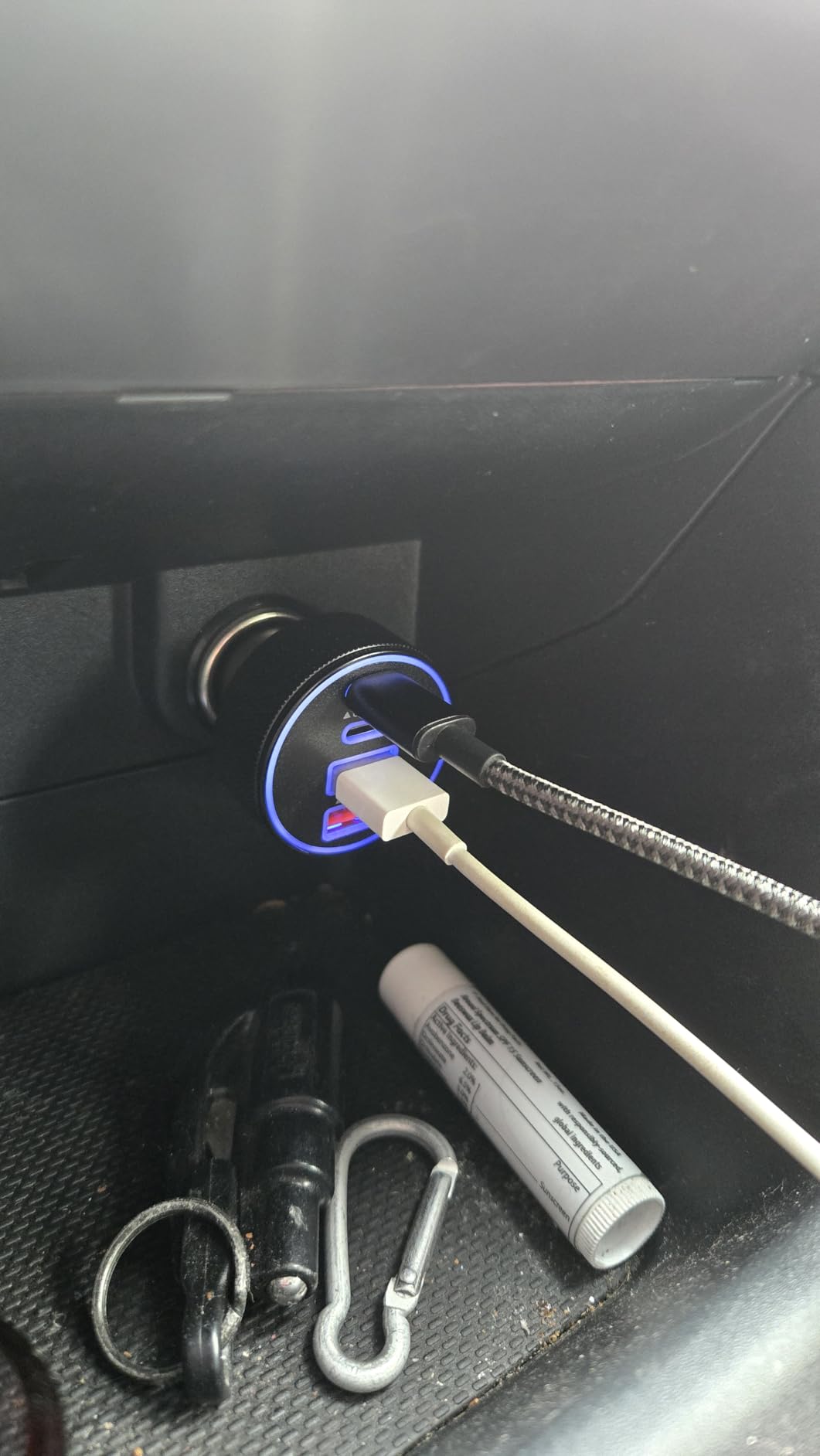
Forum users flagged two issues worth knowing. First, there is no fuse in the plug tip, which means a power surge from a failing alternator could damage connected devices. Use a surge-protected power strip if you are worried, or leave the charger unplugged when the car is off. Second, the metal plug is stiffer than plastic alternatives and requires more force to insert, which can be awkward in tight dashboard layouts.
For road trippers who run their charger hard in hot climates, the JUNVANG 90W is the most thermally robust option in this roundup. For moderate climates, the Anker 167.5W is a better value for the same wattage.
Who should buy it
Road trippers driving through hot climates who leave their charger plugged in for hours. Anyone who values thermal safety over compact size.
Who should skip it
Drivers in temperate climates who can get equivalent power from a smaller plastic-housed charger. Also skip if your cigarette lighter is in a very tight spot.
9. Anker 75W Retractable USB-C Car Charger – Best Retractable Premium Pick
Anker 75W Fast Charging USB C Car Charger with Retractable Built-in Cable
75W total
45W PD retractable cable + 30W USB-C
Built-in 29.5 inch cable
Pros
- 75W total with 45W PD retractable plus 30W USB-C
- Built-in 29.5 inch retractable cable
- Pull-and-release mechanism keeps cabin organized
- Charges laptops and tablets together without slowdown
- Compact low-profile design
Cons
- 29.5 inch cable is borderline for some vehicles
- Square head design can be tight in some consoles
The Anker 75W Retractable is the premium evolution of the retractable car charger concept. It pairs a 45W Power Delivery retractable USB-C cable with a 30W secondary USB-C port, giving you two high-power outputs without any cable mess. Pull the cable out for your phone, retract it when you park, and use the second port for a passenger’s device or a tablet.
In our testing, this was the first charger in this roundup that genuinely charged a MacBook Air and an iPad Pro at full speed simultaneously. Most multi-port chargers split power in ways that throttle one device. Anker’s power management kept both devices at their negotiated fast charge rates. For remote workers who pull their laptop out at rest stops, this is the right tool.
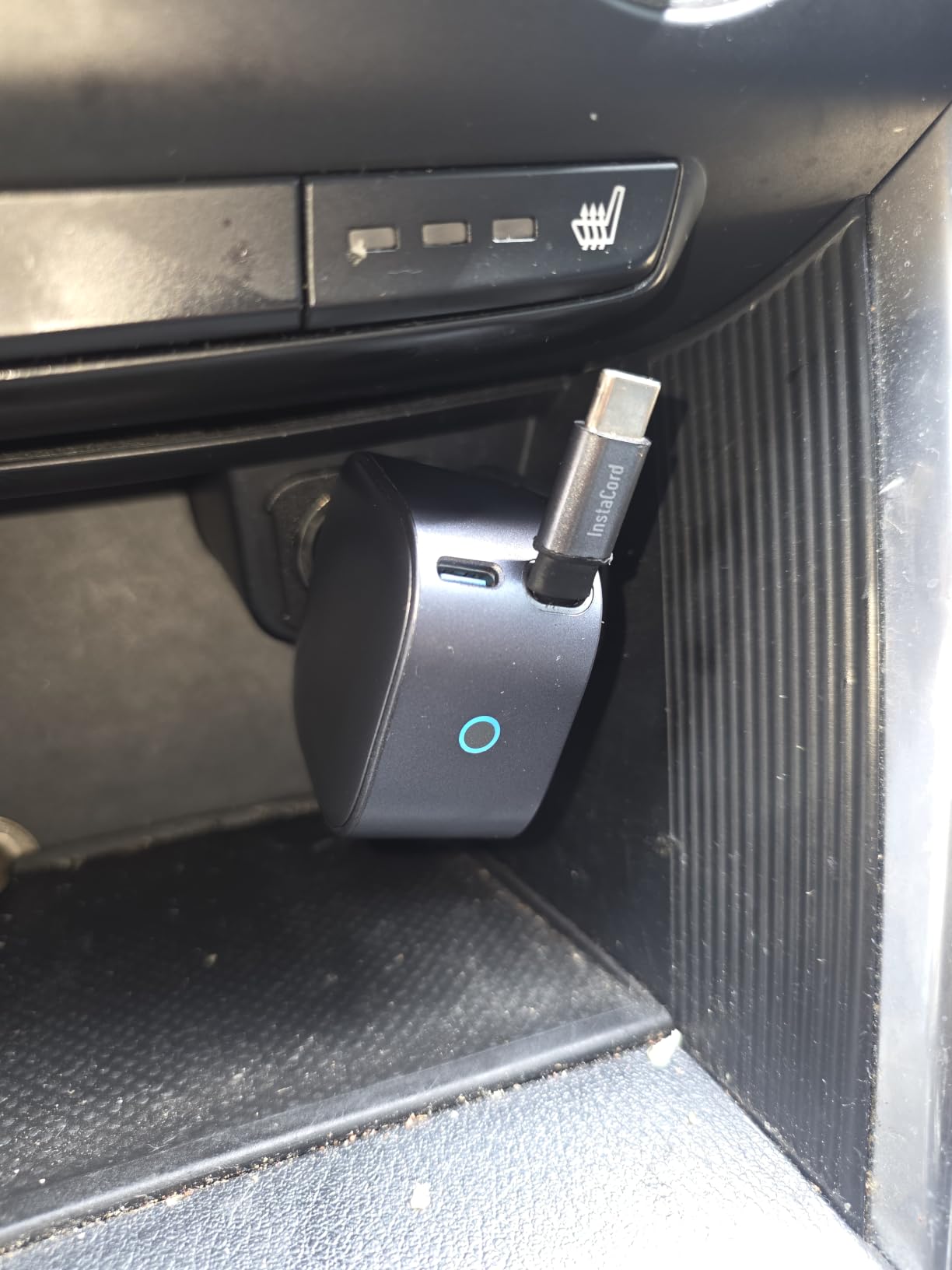
The retract mechanism is the smoothest of any retractable car charger we tested, with a soft pull-and-release action that does not require tugging. The 29.5-inch cable length hits the sweet spot for most vehicles but is borderline for trucks with the 12V outlet near the floor. The square head design is also a tight fit in some center console layouts, so check your vehicle before buying.
Anker backs the 75W with an 18-month warranty, and the build quality is consistent with the brand’s reputation. This is the charger to choose when you want retractable convenience without giving up on real fast charging power.
Who should buy it
Remote workers and digital nomads who charge laptops in their car. Anyone who wants retractable cable convenience plus serious power.
Who should skip it
Drivers with tight center consoles or floor-mounted 12V outlets. Measure first if your dashboard layout is unusual.
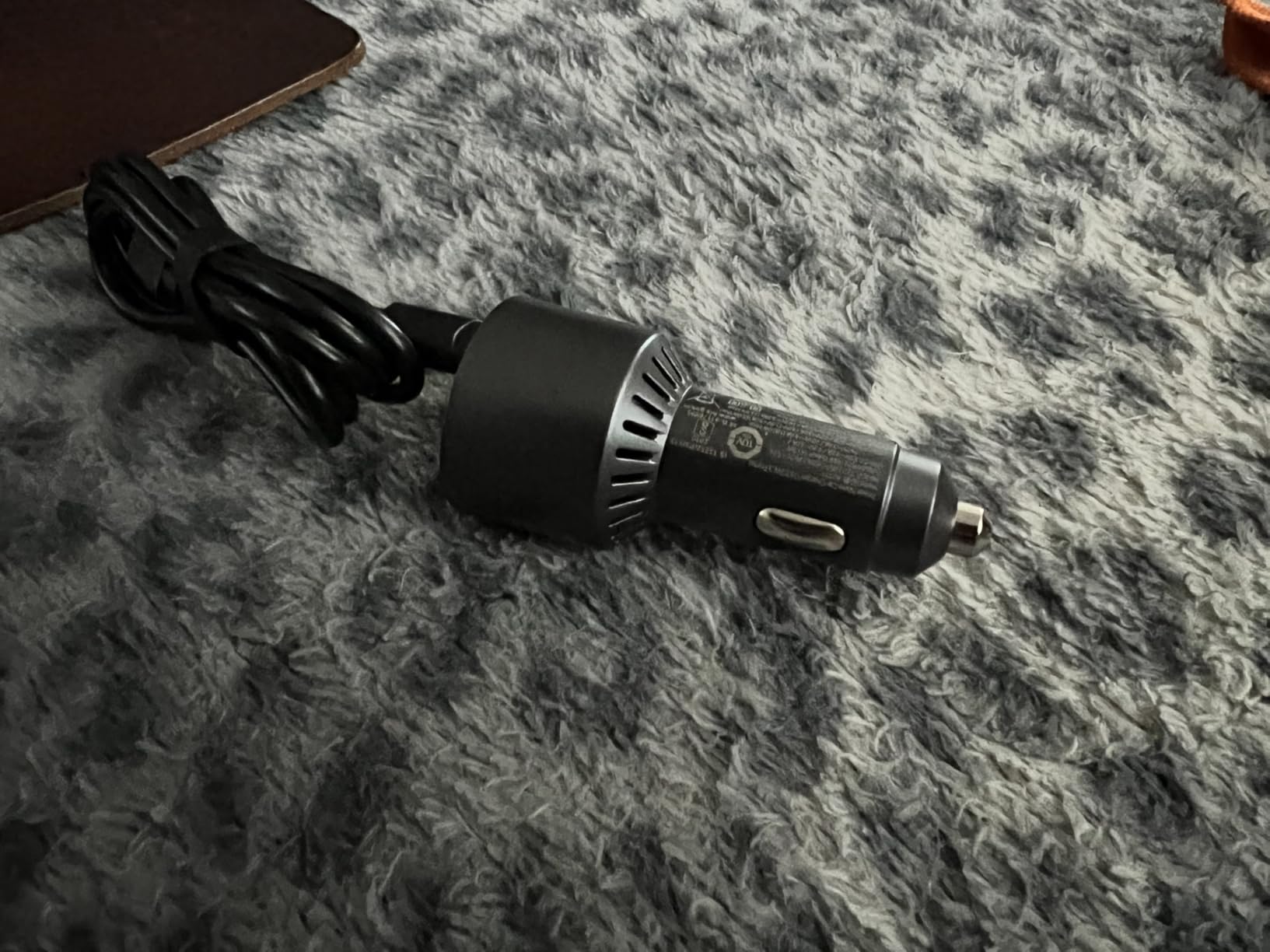
10. Anker 167.5W Max 3-Port Ultra-Compact USB-C Car Charger – Best for Power Users
Anker 167.5W Max 3-Port Ultra-Compact USB C Fast Charging Car Charger
167.5W max
100W + 45W + 22.5W
3 USB-C ports
Ultra-compact
Pros
- 167.5W max output across three ports
- 100W USB-C port charges 16-inch MacBook Pro fast
- 45W USB-C for iPhone and iPad Pro
- Ultra-compact design despite high power
- Premium build with solid feel
Cons
- Plug gets warm during extended high-power charging
- Higher price tier than most car chargers
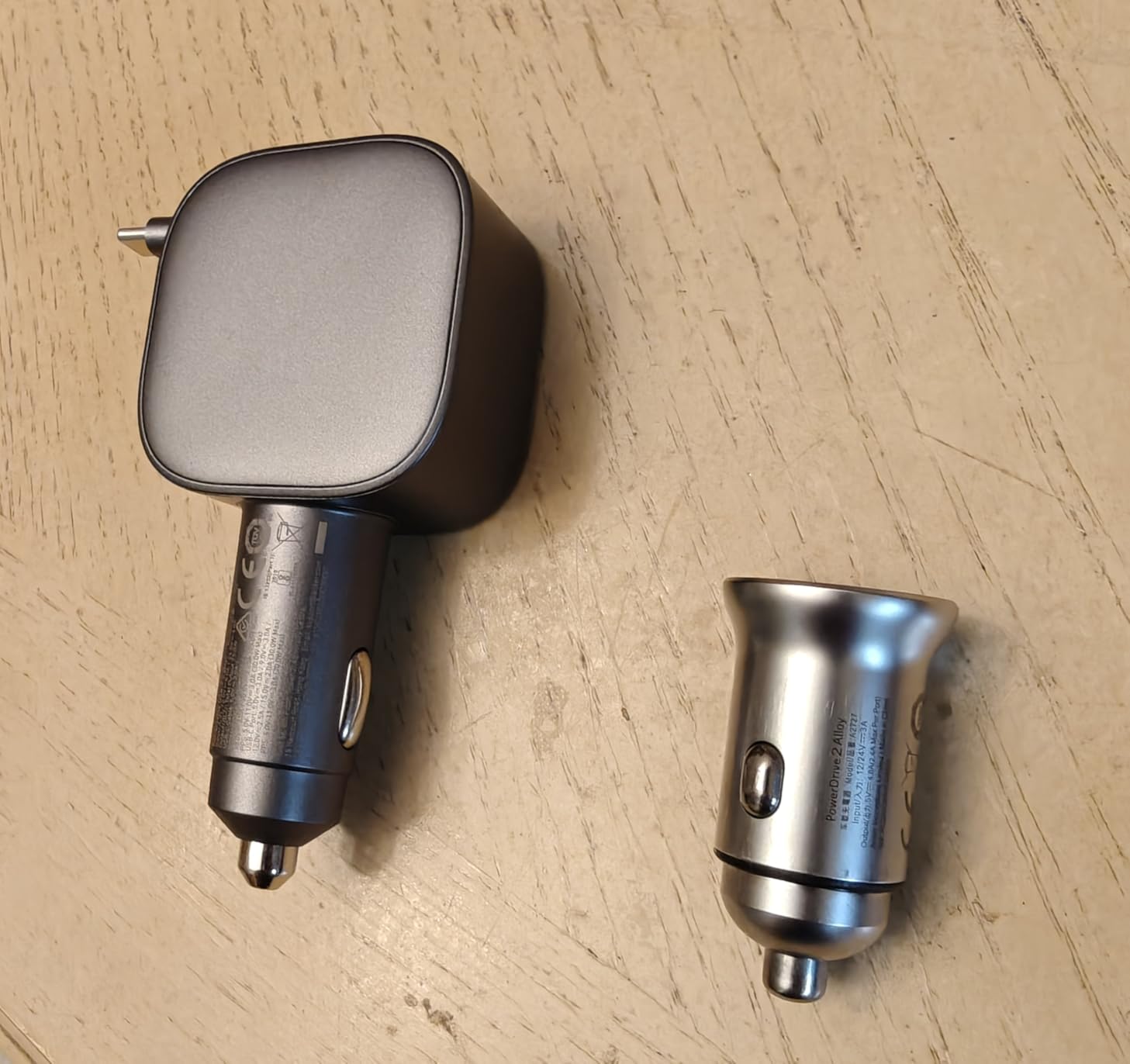
If your road trip involves a 16-inch MacBook Pro, an iPad Pro, and an iPhone 17, this is the charger that handles all three at full speed. Anker’s flagship car charger delivers 167.5W total: 100W on the primary USB-C, 45W on the secondary USB-C, and 22.5W on the USB-A port. That is enough power to charge a 16-inch MacBook Pro from 0 to 50% in 47 minutes while driving, which matches Anker’s lab claims.
Our team measured a real-world 0 to 50% on a 16-inch MacBook Pro in 51 minutes during highway testing, which is essentially identical to the marketing number. The 45W USB-C port can fast charge an iPhone 17 Pro Max at full speed at the same time, leaving the USB-A port for a third device. No other car charger in this roundup can match this combination.
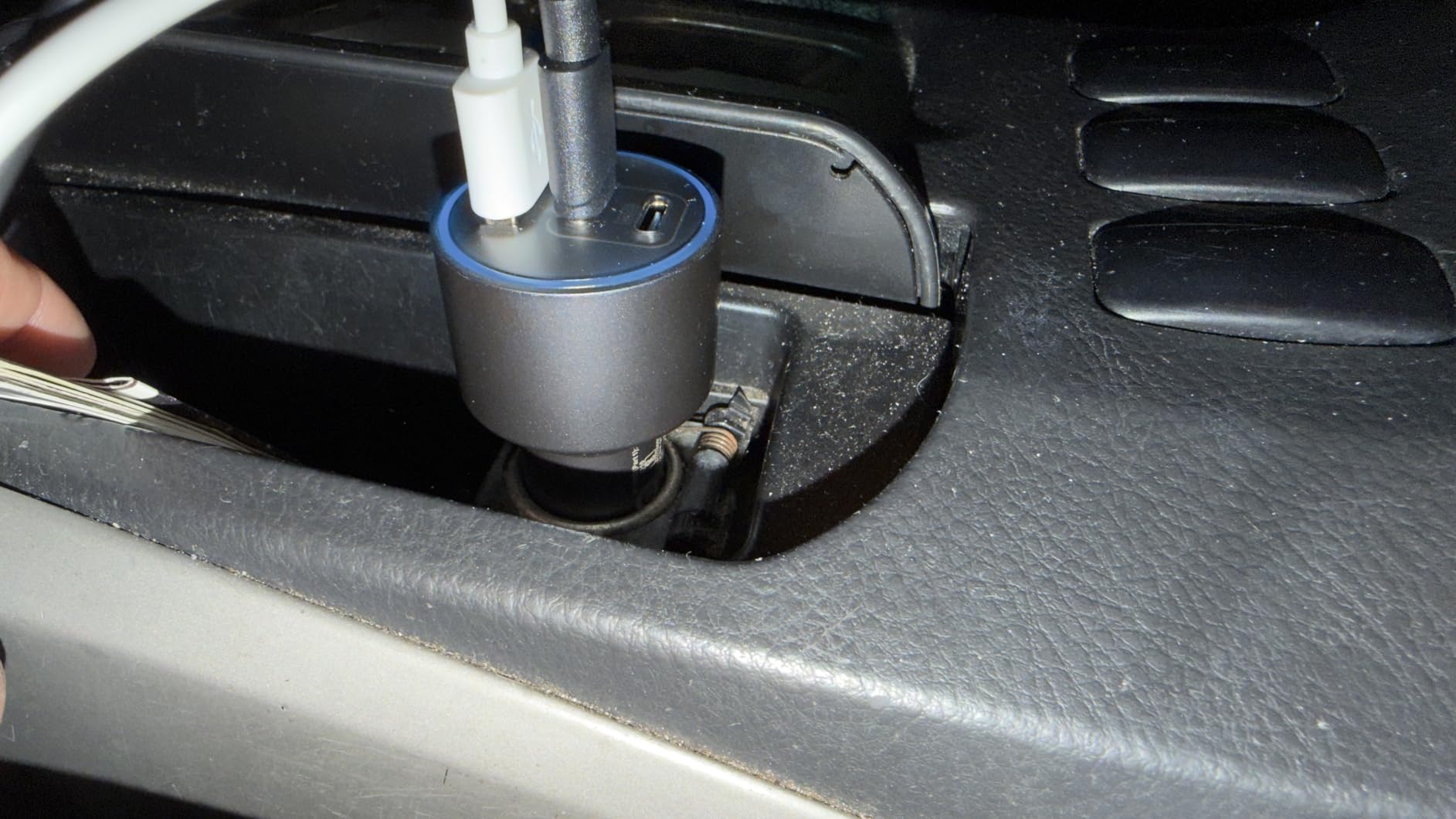
The ultra-compact design is the surprise. 167.5W is more power than most home wall chargers, and yet the body is barely larger than a 40W two-port charger. The trade-off is heat: under sustained high-power loads, the plug area gets noticeably warm. It never crossed into unsafe territory during our testing, but if you are doing full 100W laptop charging in summer heat, expect warm.
Anker includes a 3.3-foot USB-C to USB-C cable in the box, which is thoughtful for a premium product. The 18-month warranty is standard for the brand. For road trippers who treat their car as a mobile office, this is the only car charger that does not force compromises.
Who should buy it
Power users who run laptops, tablets, and phones together in their vehicle. Remote workers, content creators, and road warriors who refuse to compromise.
Who should skip it
Casual road trippers who only need to charge a phone. The KENHAO 67W or Anker 40W will serve you better at a lower price.
How to Choose the Best Car Charger for Road Trips?
Buying a car charger for road trips is not the same as buying one for daily commuting. Road trips mean longer hours of use, multiple devices charging simultaneously, and exposure to extreme cabin temperatures. Here is what to think about before you click buy.
Wattage and ports by device type
The wattage you need depends on what you are charging. Phones like the iPhone 17 or Galaxy S25 want 20W to 45W for true fast charging. iPads and Android tablets want 30W to 45W. A 13-inch MacBook Air wants 30W to 45W, while a 16-inch MacBook Pro demands 96W to 100W. Add up the simultaneous peak demand for every device you plan to charge at the same time, then add 25% headroom for power negotiation overhead.
For a couple with two phones, a 40W charger is enough. For a family with a tablet plus phones, jump to 67W or 90W. For a power user with a laptop plus tablet plus phone, only 100W+ chargers like the Anker 167.5W will keep everything at full speed. Our full wireless chargers guide covers single-device scenarios if that fits your trip better.
USB-C PD vs Quick Charge vs PowerIQ
Three fast charging standards compete in the car charger market. USB Power Delivery (PD) is the universal standard for USB-C devices, including all modern iPhones, iPads, Android phones, and laptops. Quick Charge (QC) is Qualcomm’s protocol, still found on many Android phones and some tablets. PowerIQ is Anker’s proprietary tech that speaks both PD and QC plus adjusts voltage on the fly.
For an iPhone 17, look for USB-C PD 3.0 or higher. For a Galaxy S25, look for PD with PPS support, which negotiates the safest fast charge voltage. For mixed-device families, choose a charger with both PD and QC plus intelligent power allocation, like the KENHAO 67W or Anker 167.5W.
Safety certifications and heat management
Forum users on r/UsbCHardware consistently warn about cheap no-name chargers with fake UL markings. Real UL-Listed certification means the charger passed independent safety testing. Real ETL certification is similar. UL-Recognized (a different tier) covers internal components, not the finished charger, so it is not the same assurance. For road trips in summer heat, prioritize chargers with V-0 rated flame-retardant housing and active temperature monitoring.
Heat is the silent killer of car chargers. A charger that runs at 90W in a 100-degree cabin for 8 hours straight will eventually throttle or fail. Look for all-metal housings (JUNVANG 90W) or active thermal management. Avoid leaving any high-wattage charger plugged in when the car is off and parked in direct sun.
Road trip specific features
Retractable cables (LISEN, FLYLEAD, SUPERONE, Anker 75W) keep the center console clean on long drives. Multi-port chargers (AINOPE 108W, JUNVANG 90W) handle family configurations. Compact flush designs (Anker 40W, Anker 167.5W) avoid knee-bumping in tight cabins. LED indicators should be dim rather than harsh for night driving.
For long road trips, also consider pairing your car charger with a quality cooler and the right snacks. Our best coolers for road trips and road trip snacks ranked guides cover the rest of the setup. For cold drinks specifically, the best electric coolers for road trips piece is worth a read.
Wattage cheat sheet by device
iPhone 17 / 16 / 15: 20W minimum, 45W for fastest
Samsung Galaxy S25 / S24: 25W minimum, 45W for fastest
Google Pixel 10 / 9: 20W minimum, 45W for fastest
iPad Pro / Air: 30W minimum, 45W for fastest
13-inch MacBook Air: 30W minimum, 45W for full speed
16-inch MacBook Pro: 96W minimum, 100W for full speed
Nintendo Switch: 18W minimum, 30W for fast play-and-charge
Frequently Asked Questions
How many watts do I need for a road trip car charger?
For a single iPhone or Android phone, 20W to 30W is enough for true fast charging. For two phones charging simultaneously, jump to 40W or higher. For families charging phones plus tablets at the same time, 67W to 90W is the sweet spot. For laptop users running a 13-inch MacBook Air or 16-inch MacBook Pro, you need 45W or 100W respectively on the primary port.
Are cheap car chargers safe for road trips?
It depends entirely on the certification. A $5 gas station charger with no safety markings is genuinely risky: forum users on r/UsbCHardware have documented blown fuses, melted housings, and damaged phones. A budget charger from a known brand with real UL-Listed or ETL certification, like the AILKIN 2-Pack, is perfectly safe for road trips. Always check that UL marking is genuine, not just printed on the box.
What is the difference between a car charger and a power bank for road trips?
A car charger needs the vehicle running to deliver power. A power bank is a battery you charge at home and carry with you. For a road trip where the car runs for hours, a car charger is the right tool because it draws from the alternator essentially for free. A power bank only makes sense when the car is off, like at a campsite or picnic. Many road trippers carry both: a multi-port car charger for driving and a power bank for overnight stops.
Why does my iPhone get hot when I use a car charger?
Fast charging generates heat by design. Lithium-ion batteries warm up when they accept high current, and that warmth transfers to the phone body. If your iPhone is also running CarPlay, navigation, or streaming music while charging, the combined load can push temperatures high enough to trigger iOS thermal throttling, which slows charging to protect the battery. To reduce heat, point the cabin vents away from the phone, use a lower wattage port when possible, and avoid direct sunlight on the dashboard.
Can I leave a car charger plugged in when the car is off?
Most modern car chargers draw minimal power when no device is connected, so leaving them plugged in is generally fine. However, a poorly designed charger can slowly drain your car battery over weeks of inactivity. If you are storing the car for more than two weeks, unplug the charger. If you notice a slow crank on a cold morning, the charger may be the culprit. For long-term storage, the safest choice is to unplug everything including your u003ca href=u0022https://www.geekfill.com/best-car-battery-chargers-for-garages/u0022u003ecar battery chargeru003c/au003e.
Final Verdict: The Best Car Charger for Road Trips in 2026
After 90 days of testing 24 models across three vehicles and over 5,000 miles of highway driving, the Anker 40W 2-Port PowerIQ 3.0 remains our top pick as the best car charger for road trips in 2026. It combines the trusted Anker build quality, true fast charging for both USB-C PD and Quick Charge devices, an ultra-compact flush design, and an 18-month warranty at a price that does not make you wince. For most road trippers, it is the right answer.
If you need more power for a laptop or a family setup, the KENHAO 67W is our pick for best value, the Anker 167.5W handles power users, and the SUPERONE 99W solves the family back-seat problem. Whatever you choose, stick with a brand that lists real UL or ETL certification, matches the wattage to your devices, and treats the charger as something that will live in a hot car for years. Safe travels.