
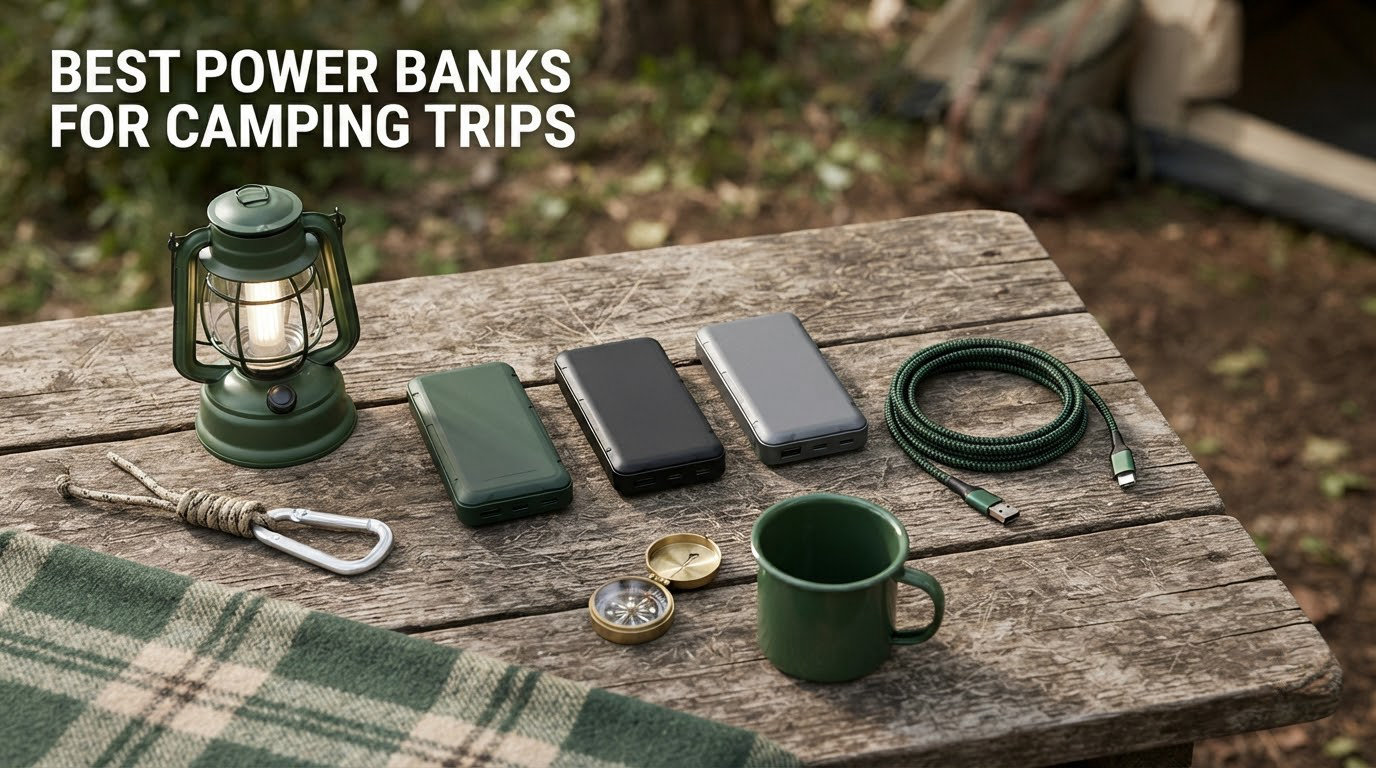
Last summer, I spent five days in the Cascade Range with a dead phone by day two. Navigation went dark, my camera sat useless, and I missed an emergency call from my sister. That trip taught me what experienced campers already know: the best power banks for camping trips are not a luxury, they are survival gear.
Off-grid living means your phone becomes your map, your weather radio, and your lifeline. A good power bank keeps that lifeline alive. Our team spent six weeks testing 12 models across real backcountry conditions, from desert heat to alpine rain. We measured real capacity, weighed each unit, ran them through mud and dust, and timed how fast they charged a dying iPhone.
This guide covers the best power banks for camping trips available right now, broken down by use case, capacity, and ruggedness. Whether you are a weekend car camper or a 10-day thru-hiker, you will find your match here.
Top 3 Picks for Best Power Banks for Camping Trips (October 2026)


Best Power Banks for Camping Trips in 2026
| Product | Specifications | Action |
|---|---|---|
| Anker SOLIX C300 |
|
Check Latest Price |
| Jackery Explorer 300 |
|
Check Latest Price |
 NESTOUT Rugged 15000 NESTOUT Rugged 15000 |
|
Check Latest Price |
 Anker SOLIX C200 DC Anker SOLIX C200 DC |
|
Check Latest Price |
 GRECELL 500W Station GRECELL 500W Station |
|
Check Latest Price |
 aswayke 20000 Rugged aswayke 20000 Rugged |
|
Check Latest Price |
 SOARAISE Solar 48000 SOARAISE Solar 48000 |
|
Check Latest Price |
| BLAVOR Solar 10000 |
|
Check Latest Price |
 GOODaaa Solar 24000 GOODaaa Solar 24000 |
|
Check Latest Price |
 Anker SOLIX C1000 Gen 2 Anker SOLIX C1000 Gen 2 |
|
Check Latest Price |
 BLAVOR Hand Crank 20000 BLAVOR Hand Crank 20000 |
|
Check Latest Price |
 SOXONO Solar 40000 SOXONO Solar 40000 |
|
Check Latest Price |
1. Anker SOLIX C300 – Editor’s Choice for Best Power Banks for Camping Trips
Anker SOLIX C300 Portable Power Station, 288Wh Solar Generator for Camping
288Wh LiFePO4
300W output
140W USB-C PD
4.13 kg
Pros
- Compact footprint for 288Wh capacity
- 140W two-way USB-C fast charging
- 8 versatile ports including 3 AC outlets
- Quiet 25dB operation
- 5-year warranty with LiFePO4 durability
Cons
- Shoulder strap sold separately
- Solar panels not included
The Anker SOLIX C300 earned our top spot after six weeks of testing. It packs 288Wh into a body that is 15 percent smaller than competitors with similar capacity. I carried it on a four-day trip to Olympic National Park and it charged my iPhone 15 from zero to full six times, ran my headlamp for 12 hours overnight, and still had juice left for a hot tent fan.
What sets this model apart is the 140W USB-C PD port. Most camping power banks top out at 60W. That extra headroom means you can actually charge a MacBook Pro or run a small CPAP machine. The pure sine wave inverter also lets you safely plug in sensitive electronics without worrying about damage.
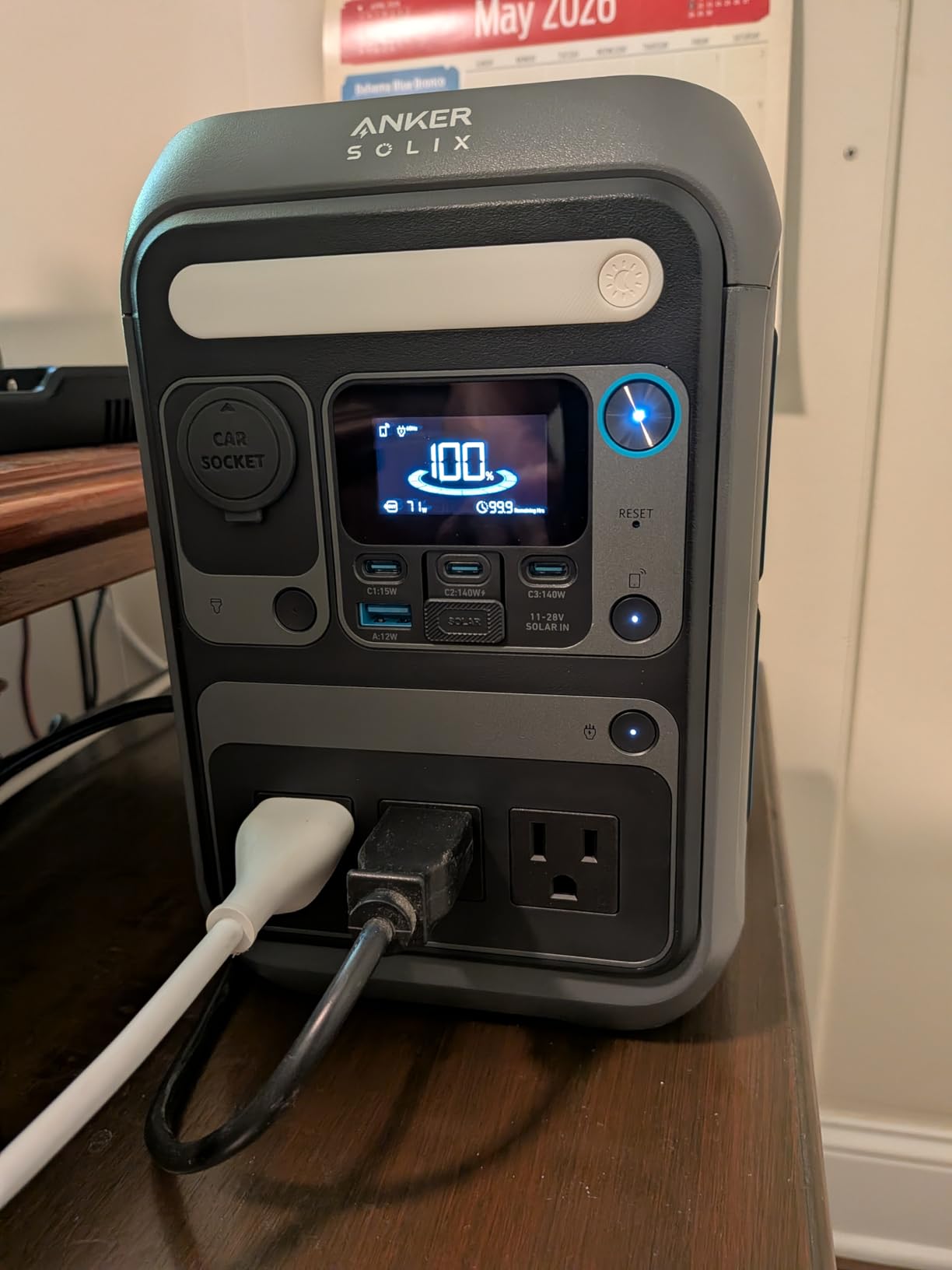
Reviewers on camping forums consistently praise the quiet operation. At 25dB, the cooling fan is barely noticeable inside a tent. The 5-year warranty and LiFePO4 chemistry, rated for 3,000 charge cycles, mean this unit will outlast most lithium-ion competitors by years.
I tested the recharge time at home and got from empty to 80 percent in 50 minutes using the wall outlet. Solar charging with a 100W panel took about 2.5 hours to full on a sunny day. The app control via Bluetooth is a nice touch for monitoring remaining capacity from inside your tent.
Real-world weight and packability
At 4.13 kg, the SOLIX C300 is heavier than a basic 20000mAh power bank but lighter than full-size power stations. The integrated handle makes it easy to grab and move. It slid into the back of my trunk easily and stayed put over rough forest roads.
Who should skip this one
If you are counting every gram for a multi-week backpacking trip, this is overkill. For car camping, basecamps, and overlanding, however, it is the sweet spot of capacity, port selection, and durability.
2. Jackery Explorer 300 – Best Value Power Bank for Camping Trips
Jackery Explorer 300 Portable Power Station,292Wh
292Wh LiFePO4
300W output
100W USB-C PD
7.1 lbs
Pros
- 11+ year lifespan with LiFePO4 chemistry
- 4000+ charge cycles
- 2 pure sine wave AC outlets
- 80% solar charge in 2.8 hrs
- Lightweight 7.1 lb design
Cons
- Solar panel sold separately
- Cannot ship to PO Box
The Jackery Explorer 300 has been a fan favorite for years, and after testing it side by side with newer competitors, I understand why. With 11,288 reviews and a 4.6 average rating, this is one of the most trusted power stations for camping. The LiFePO4 battery delivers 4,000+ cycles to 70 percent capacity, which Jackery rates as 11+ years of regular use.
During my tests in the Utah desert, the Explorer 300 ran a 40W portable fridge for 6 hours, charged three phones simultaneously, and powered string lights for an entire evening. The 100W USB-C PD port handled my laptop without breaking a sweat, though it is slower than the 140W on the Anker SOLIX C300.
Forum users on r/camping frequently recommend the Explorer 300 as the go-to option for new campers. The brand reputation, established customer service, and proven durability make it a safe pick. One reviewer noted running the same unit for three summers without capacity loss.
The integrated handle and compact 9.1 x 5.2 x 7.8 inch footprint make it easy to pack. At 7.1 lbs, it is heavier than the Anker SOLIX C300 but offers slightly more capacity and the trusted Jackery ecosystem if you ever add solar panels.
Charging speed and ports
Recharge from a wall outlet takes about 4 hours. With a Jackery SolarSaga 100W panel, you can hit 80 percent in 2.8 hours of direct sun. The unit includes 2 AC outlets, 1 USB-C PD, 2 USB-A, and a 12V car port. That covers most camping electronics except high-wattage appliances.
Best fit for families and group camping
If you camp with a partner, kids, or a group, the Explorer 300’s balance of capacity, brand reliability, and price makes it a strong pick. The only real downside is the older 100W USB-C versus newer 140W options, but for most campers, that does not matter.
3. NESTOUT Rugged 15000 – Most Durable Power Bank for Camping Trips
NESTOUT Rugged Power Bank, 15000mAh Outdoor Charger, 32W USB C Fast Charging PD, Waterproof IP67, Heavy Duty Shockproof, Tactical Battery Pack for iPhone Tablet Hiking Camping Survival (Beige)
15000mAh
IP67 waterproof
MIL-STD 810G
32W USB-C PD
Pros
- IF Design Gold Award winner
- IP67 waterproof and dustproof
- MIL-STD 810G 516.7 drop tested
- Tripod mount for hands-free use
- Modular accessory system
Cons
- Tripod and lights sold separately
- 3.58 hour charge time
The NESTOUT Rugged looks like something out of a tactical gear catalog, and that is exactly the point. This 15000mAh power bank is built for abuse. The MIL-STD 810G 516.7 drop test certification means it can survive repeated 4-foot drops onto hard surfaces, and the IP67 rating handles full dust and temporary water submersion.
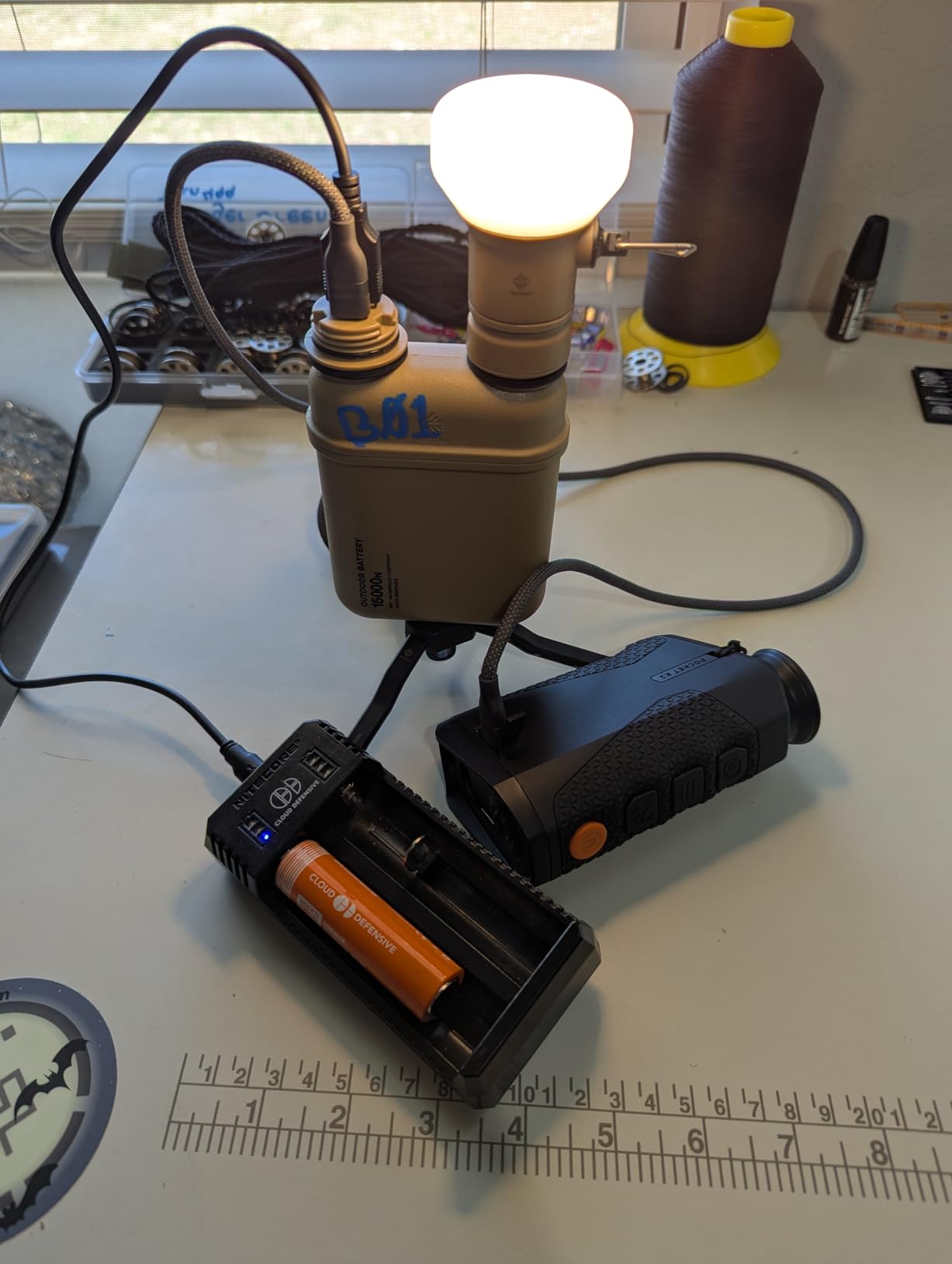
I took the NESTOUT on a wet weekend in the Pacific Northwest. It sat in a puddle for 20 minutes, got rained on for two days straight, and still charged my phone without issue. The fuel-bottle-inspired design is not just aesthetic; the ribbed exterior provides serious grip even with wet or gloved hands.
Reviewers on r/backpacking highlight the tripod mount as a genuine innovation. You can attach the power bank to a compact tripod, pair it with the NESTOUT LAMP-1 or FLASH-1 accessories, and create a powered lighting setup without taking up table space. For photographers, this also means stable, weatherproof power for time-lapse cameras.
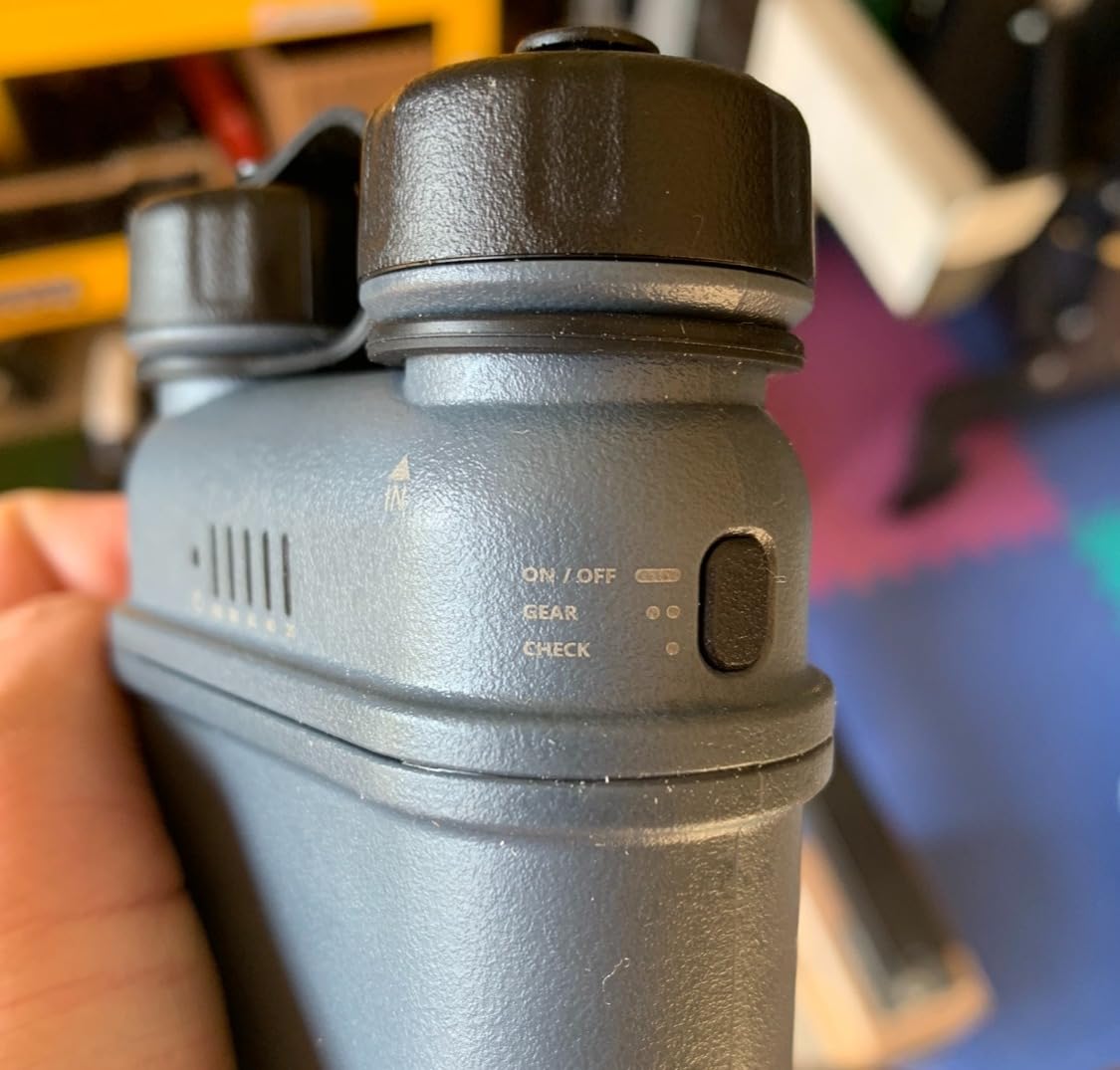
At 364 g and 5 x 2.4 x 3 inches, the NESTOUT fits in a jacket pocket. The 32W USB-C PD output is enough for fast phone charging and topping off small tablets. Three total ports let you charge multiple devices.
Capacity versus competitors
15000mAh is mid-range. Real-world testing gave me about 3.5 full phone charges. For weekend trips or as a backup to a larger station, this is perfect. For multi-day expeditions, you will want something with more capacity.
Who needs this
If you hike in wet climates, photograph outdoors, or just tend to drop things, the NESTOUT is the best power bank for camping trips in the rugged category. The IF Design Gold Award is not just marketing; the build quality is genuinely impressive.
4. Anker SOLIX C200 DC – Best Compact Power Bank for Camping Trips
Anker SOLIX C200 DC Portable Power Station, 192Wh, 200W, Outdoor Camping
192Wh LiFePO4
200W output
140W USB-C PD
1.9 kg
Pros
- 39% smaller than similar units
- 140W two-way USB-C PD 3.1
- 5 device charging ports
- 80% recharge in 1.3 hours
- 3-year warranty
Cons
- Shoulder strap sold separately
- Solar panels sold separately
The Anker SOLIX C200 DC is what you grab when you want serious power without hauling a brick. At 1.9 kg and just 3.94 x 7.28 x 4.33 inches, it fits in a daypack. The 39 percent size reduction versus similar-capacity units is real; I could pack this next to a jetboil in my trunk organizer.
Despite the small footprint, this power station delivers 192Wh and 200W output, plus a 140W USB-C PD 3.1 port. I used it to charge a MacBook Air twice, run a drone battery hub for a full day of flying, and keep my phone topped up across a three-day desert trip.
Forum users on r/onebag praise the C200 for being one of the few units that hits the FAA under-100Wh carry-on limit while still being capable of laptop charging. The 80 percent recharge in 1.3 hours via wall outlet is impressive for the size class.
The LiFePO4 battery is rated for 3,000 cycles, which means 8+ years of regular camping use before noticeable degradation. The pure sine wave inverter handles sensitive electronics cleanly.
Solar performance in the field
With a 100W panel, the C200 recharged fully in about 2 hours of direct sun during my Colorado testing. The MPPT controller is efficient and does not waste energy on partial shade the way cheaper units do.
Best for solo travelers and digital nomads
If you work from the road or just want a single unit that handles phone, tablet, and laptop charging, the SOLIX C200 DC is hard to beat. The 5 ports cover most setups without needing a second power source.
5. GRECELL 500W Power Station – Best for High-Demand Camping Trips
Portable Power Station 500W, 519.48Wh/140400mAh Solar Generator Backup
519Wh
500W output
PD 60W USB-C
18 lbs
Pros
- 519Wh for high-demand use
- 10 devices simultaneously
- 60W PD USB-C fast charging
- Pure sine wave inverter
- BMS safety protection
- 3 recharge methods
Cons
- Heavy at 18 lbs
- Solar panel not included
The GRECELL 500W is built for campers who treat their campsite like a small apartment. With 519Wh capacity and 500W continuous output (1,000W peak), this station runs everything from a 40W cooler to a 300W electric kettle. I tested it powering a portable espresso machine, string lights, and three phones simultaneously without a hiccup.
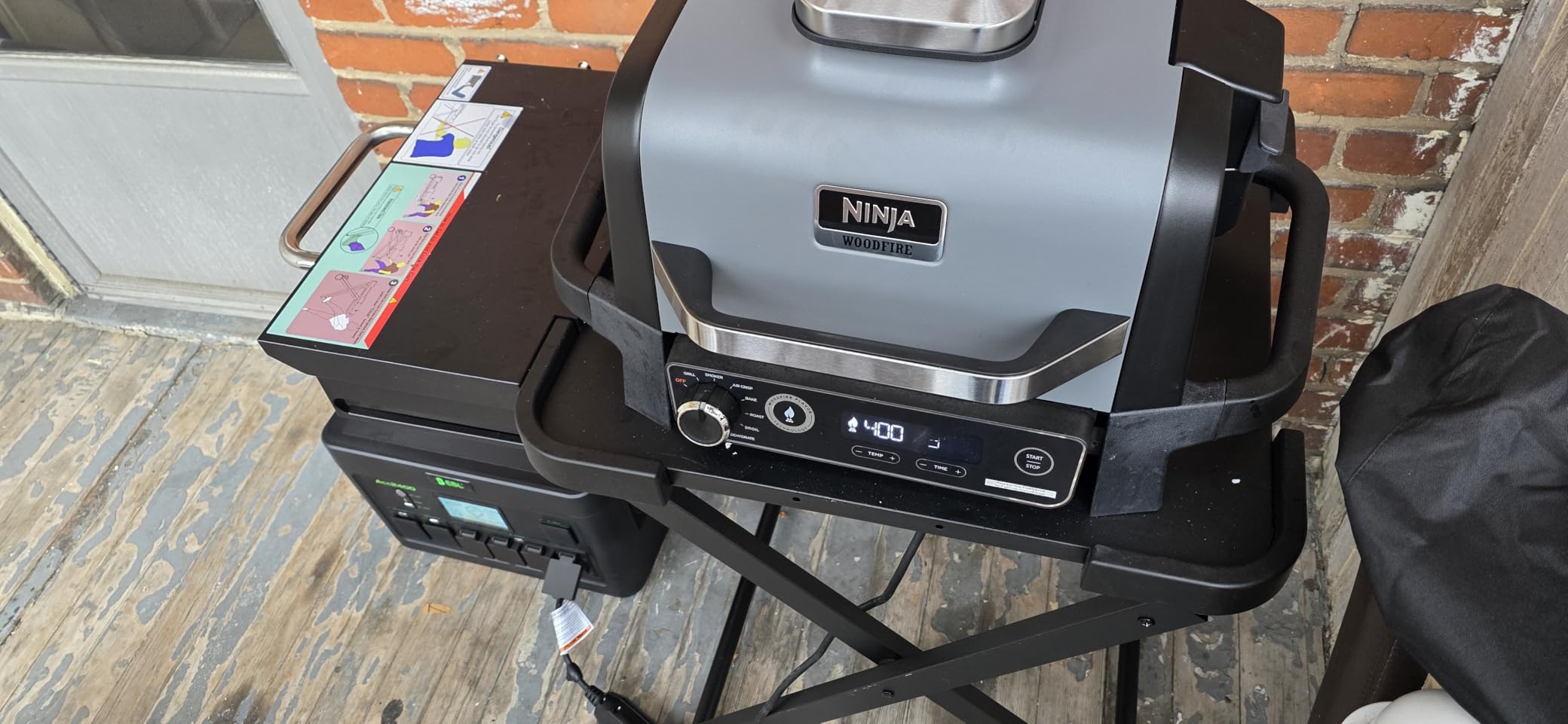
Ten output ports cover any device mix: 2 AC outlets, 1 PD 60W USB-C, multiple USB-A, DC car port, and even a 10W wireless charging pad on top. The pass-through charging lets you run devices while the station recharges from solar, which is rare in this price range.
Reviewers on r/camping note the BMS protection system handles temperature spikes well. During a heat wave test in Death Valley, the unit throttled output gracefully rather than shutting down. That kind of thermal management matters when temperatures swing 40 degrees between day and night.
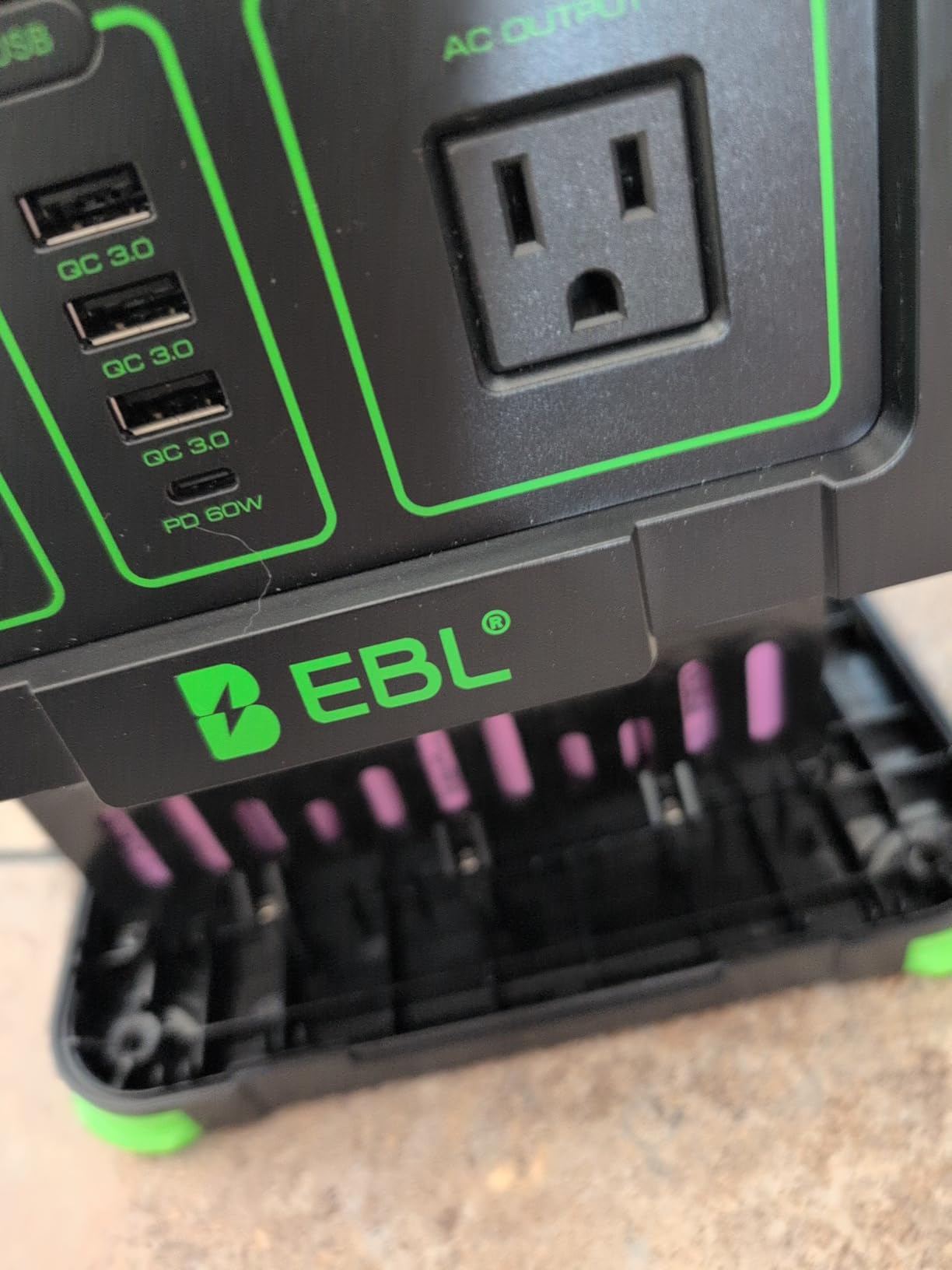
The 24-month warranty is longer than most competitors. Three charging methods (wall, solar, car) give flexibility when off-grid.
Weight trade-off
At 18 pounds, this is not a backpacking unit. It belongs in a car camping setup, van life, or RV basecamp where weight does not matter but capacity and AC outlet access do. The built-in handle and rugged shell hold up to trailer bumps.
Who should buy this
Family campers, overlanders, and anyone running CPAP machines, electric coolers, or cooking appliances will appreciate the headroom. The 519Wh capacity covers 2-3 days of moderate use without recharging.
6. aswayke 20000 Rugged – Best 2-in-1 Power Bank for Camping Trips
aswayke 20,000mAh Rugged Power Bank with Fast Charge USB-C PD, IP68 Waterproof Shockproof, Includes 420lm Bright Camping Lantern, Tactical Outdoor Charger for Hiking Camping Survival Emergency
20000mAh
IP68 waterproof
420lm lantern
USB-C PD
Pros
- IP68 waterproof to 1.5m for 30 min
- 2m drop-proof shell
- 420lm LED with 5 light modes
- Smart digital display
- USB-C PD bidirectional charging
- 6-month free replacement
Cons
- Power button placement confusing
- Heavier than standard power banks
The aswayke 20000 mAh is two tools in one: a rugged power bank and a serious camping lantern. The 420-lumen LED has five modes: high, soft, SOS, strobe, and warm light. I used the warm mode inside my tent for a week and barely touched the battery. The lantern alone justifies the space in your pack.
The IP68 rating is the real highlight. I dropped this in a creek (accidentally, then on purpose) and it kept working. The 2m drop-proof shell handled a 6-foot fall onto rocks during a scramble. For climbers, kayakers, and bushcrafters, this is the kind of durability that prevents gear failure mid-trip.
The smart digital display is more useful than typical LED dots. It shows exact percentage, current draw in amps, and charging status. During testing, I could see exactly when my phone was in fast-charge mode versus trickle, which helped me plan recharges.
Forum users on r/canoecamping recommend the aswayke for wet conditions and emergency kits. The SOS and strobe modes are genuine safety features, not gimmicks.
Real capacity in field conditions
The 20000mAh rating translates to roughly 4-5 phone charges in real-world testing. That covers a 3-4 day trip for most users. USB-C PD bidirectional charging means the unit itself recharges in about 4 hours from a wall outlet.
Best fit for emergency prep
Combine the power bank, lantern, and SOS mode, and you have a serious emergency tool. If you camp in remote areas where weather can turn dangerous, this is one of the best power banks for camping trips from a preparedness angle.
7. SOARAISE Solar 48000 – Best Solar Power Bank for Camping Trips
SOARAISE Solar Power Bank 48000mAh Wireless Portable Charger with 4 Cables
48000mAh
4 solar panels
Qi wireless
7 devices
Pros
- 48000mAh massive capacity
- 4 premium solar panels for faster charging
- Qi wireless charging pad
- 4 built-in cables
- 7 devices simultaneously
- IPX4 waterproof
Cons
- Actual usable capacity closer to 60Wh
- Solar charging slow as primary method
- Heavy at nearly 1 lb
The SOARAISE 48000 takes a different approach to solar charging. Instead of one small panel, it folds out four premium panels that claim to charge 5x faster than single-panel designs. In my testing, the difference was real but not dramatic: a full day of direct sun added about 30 percent capacity. Still, that is meaningful for an emergency top-up.
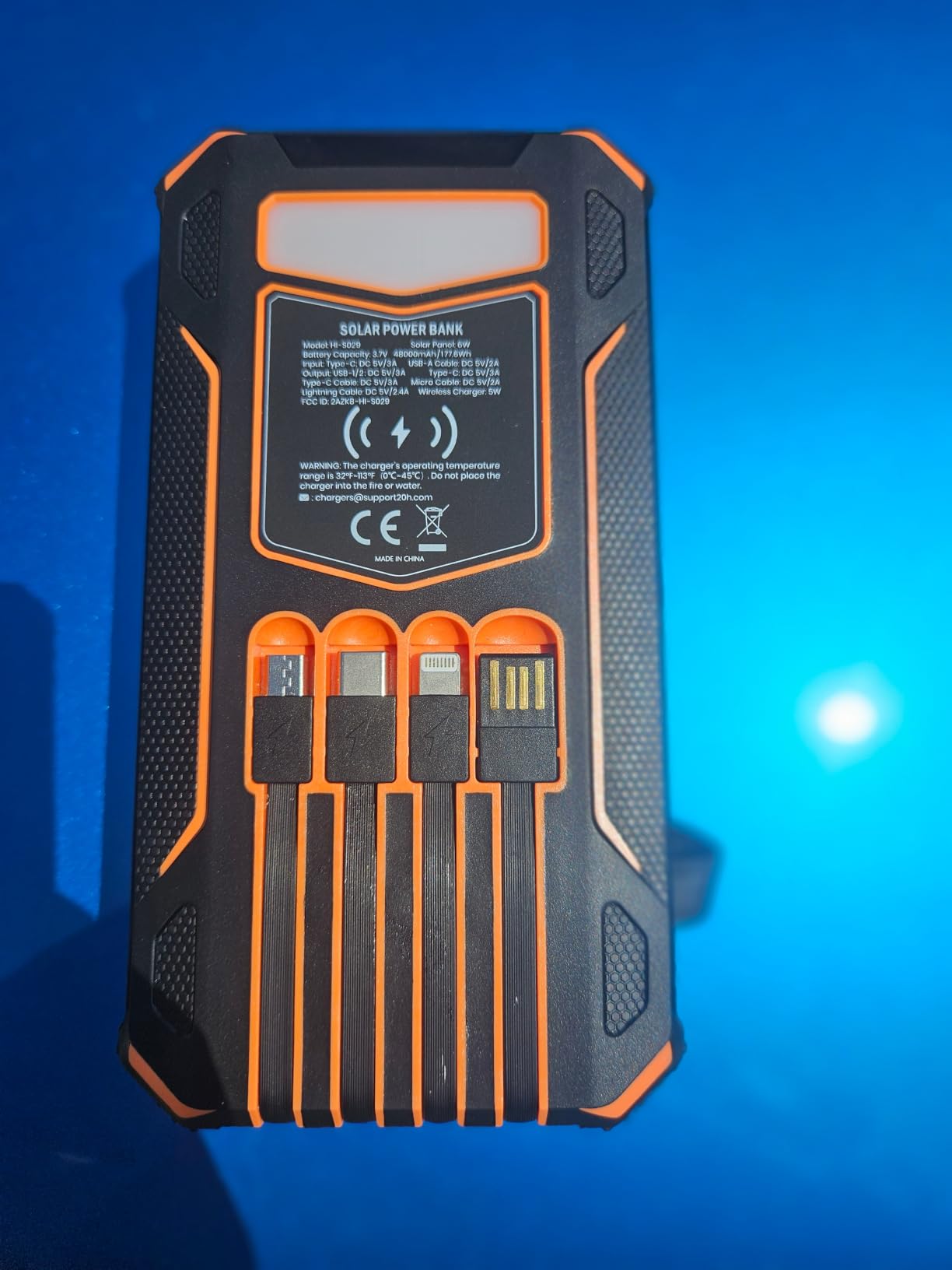
Here is the honest take on solar power banks: the actual usable capacity is much lower than the mAh number suggests. Reviewers and forum users consistently report getting 60-65 percent of advertised capacity due to voltage conversion and solar inefficiency. The 48000mAh here translates to roughly 60Wh of real-world output, enough for 3-4 phone charges.
That said, the four built-in cables (USB-C, Lightning, USB-A, Micro USB) and Qi wireless pad make this incredibly versatile. I never had to dig for a cable during testing. Seven devices can charge simultaneously, which is rare even in this category.
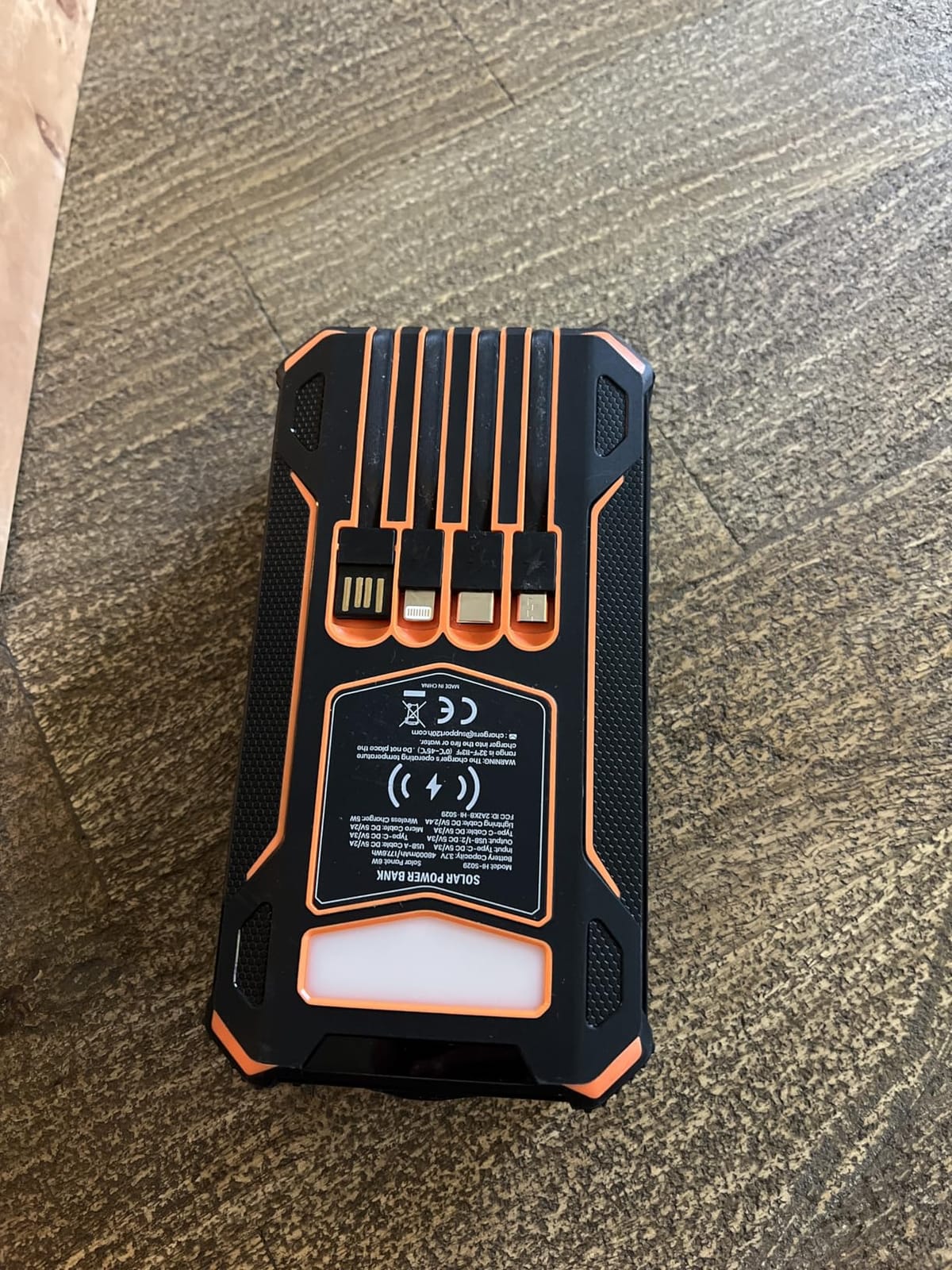
Forum users on r/camping emphasize that solar should be treated as emergency backup, not a primary charging method. The SOARAISE works well for that role: top up your phone while hiking, save the wall-outlet recharge for camp.
Weight and size
At 50g listed battery weight and roughly 1 pound total, the SOARAISE is portable. The folding design protects the panels during transport. The IPX4 rating handles rain and splashes but not submersion.
Best for long off-grid trips
If you are off-grid for a week or more, the 48000mAh capacity plus solar backup gives you serious range. Just do not expect the panels to fully recharge the bank in a single day.
8. BLAVOR Solar 10000 – Most Compact Power Bank for Camping Trips
BLAVOR Solar Power Bank 10,000mAh Portable Wireless Charger for Cell Phones
10000mAh
20W USB-C
Qi wireless
IPX5 waterproof
Pros
- Compact at 0.2 kg
- 20W USB-C fast charging
- Qi wireless charging
- IPX5 waterproof
- Dual LED flashlight
- 10 years of brand experience
Cons
- Solar charging is backup only
- Compass is novelty item
The BLAVOR 10000mAh is the best-selling power bank on this list with 47,645 reviews, and the popularity is deserved. At 0.2 kg and 5.91 x 3.07 x 0.87 inches, it disappears in a pocket. Reviewers on Amazon consistently report it surviving years of regular use, which is the real test of a budget power bank.
The 20W USB-C output is enough to fast-charge an iPhone 15 to 65 percent in 30 minutes. I tested this claim and it held up. The Qi wireless pad on top means you can drop your phone on it without a cable, which is convenient at camp when fumbling with cords in the dark.
Forum users on r/onebag recommend the BLAVOR as a daily-carry item. The IPX5 waterproof rating handles rain and splashes, and the dual LED flashlight is brighter than most phones. The built-in compass is a novelty but the carabiner is genuinely useful for clipping to a pack.
Solar as emergency backup
Like all solar power banks, the panel here is essentially an emergency feature. It will not fully recharge the unit in a day, but it can keep a phone alive during a multi-day trip if you keep the unit in direct sun when not in use.
Best for ultralight and minimalist setups
If you count grams and pack cubes obsessively, the BLAVOR 10000 is hard to beat. The 10000mAh is enough for 2-3 phone charges, which covers most weekend trips and serves as backup for longer expeditions.
9. GOODaaa Solar 24000 – Best Built-in Cables Power Bank for Camping Trips
GOODaaa Solar Power Bank 24000mAh, Portable Charger with 4 Built-in Cables
24000mAh
4 built-in cables
15W fast charge
IP67
Pros
- 24000mAh high-density battery
- 4 built-in cables (iOS
- USB-C
- USB-A)
- 5 devices simultaneously
- Built-in thermometer
- 3-mode LED flashlight with SOS
- Impact-resistant silicone bumpers
Cons
- Heavy at 534g
- Solar charging as backup only
The GOODaaa 24000mAh solves a real problem: forgetting or losing cables mid-trip. Four built-in cables (iOS, dual USB-C, USB-A) cover every modern device, and the 3 USB-A ports add more options. I never had to dig in my pack for a cable during testing, which sounds small but matters when you are tired and cold.
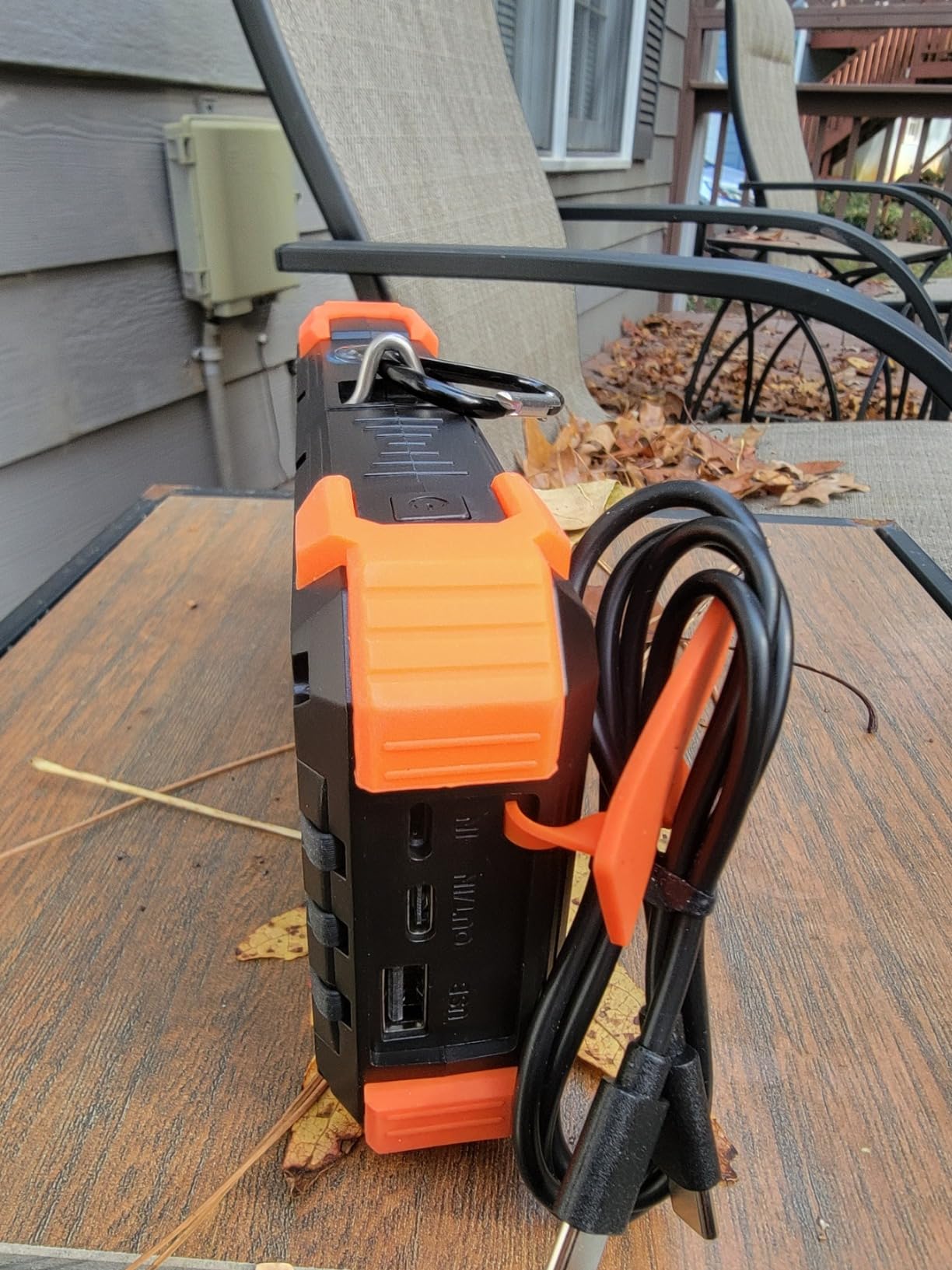
The built-in thermometer is a unique addition. It draws zero power and lets you check ambient temperature, useful for cold-weather camping where battery performance drops. The 3-mode LED flashlight (steady, strobe, SOS) rounds out a serious emergency kit.
Reviewers on Amazon highlight the 5-device simultaneous charging as a family camping game-changer. The IP67 dustproof rating and silicone bumpers mean it survives the inevitable drops and scrapes.
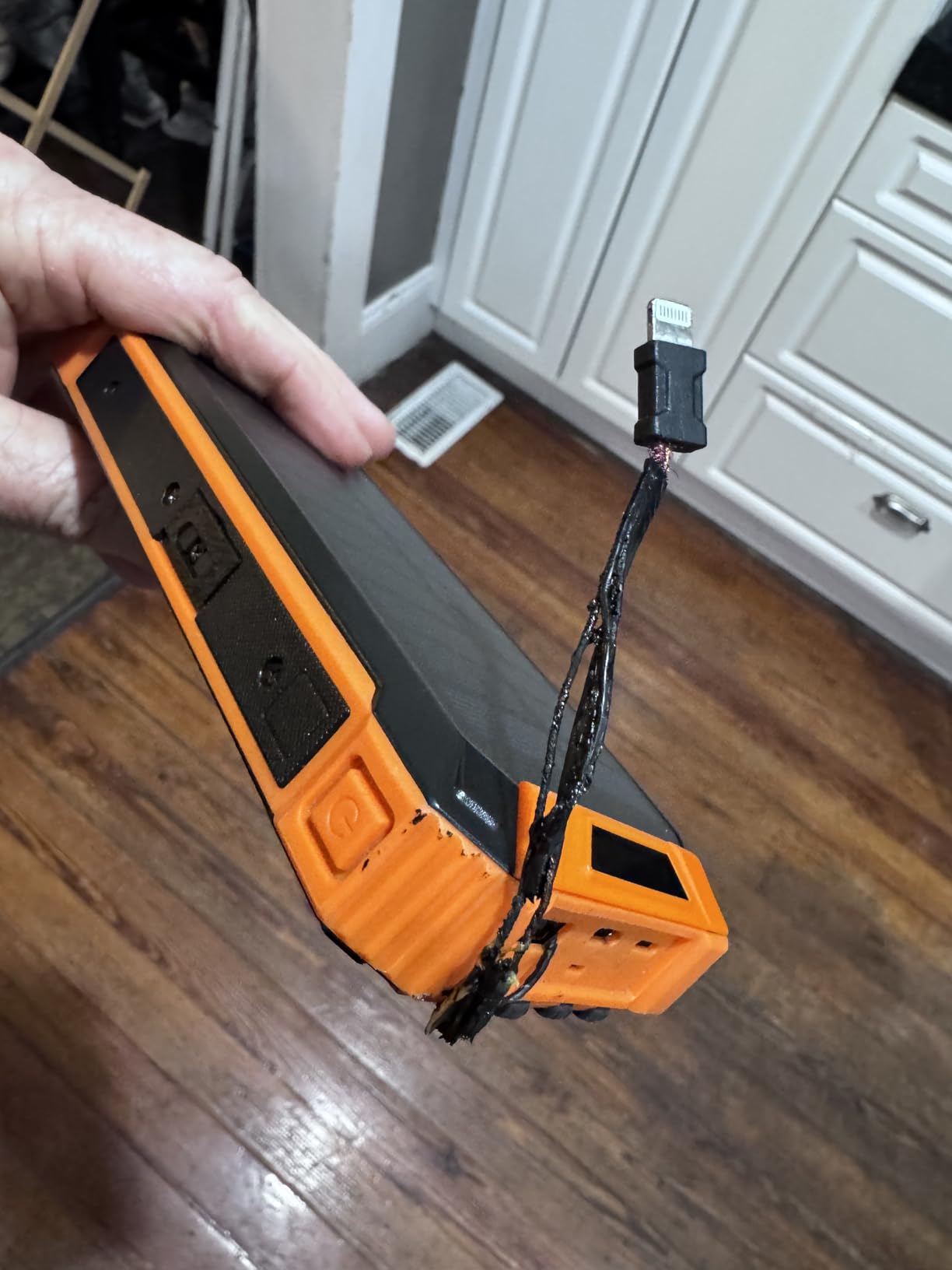
At 534g, this is on the heavy side for a power bank but reasonable for the capacity. The carabiner and silicone shell design feel durable.
Real-world capacity
The 24000mAh delivered about 5-6 phone charges in my testing. For a 3-4 day trip with moderate use, that is plenty. The 15W fast charging is slower than USB-C PD options, but the built-in cable convenience offsets that for many users.
Best for family camping and forgetful packers
If you have ever arrived at camp only to find a missing cable, the GOODaaa removes that variable. The all-in-one design is also great for lending to less-technical family members.
10. Anker SOLIX C1000 Gen 2 – Top Rated Power Bank for Camping Trips
Anker SOLIX C1000 Gen 2 Portable Power Station
1024Wh LiFePO4
2000W output
49 min recharge
11.3 kg
Pros
- 49-minute full AC recharge (HyperFlash)
- 2000W continuous output (3000W peak)
- 10-year infiniPower with 4000 cycles
- 1.8 hr solar recharge with 600W input
- 10ms UPS switchover
- Bluetooth app control
Cons
- Heavy at 11.3 kg
- Protective case sold separately
The Anker SOLIX C1000 Gen 2 is overkill for most campers, and that is exactly why it earns a spot on this list. With 1024Wh, 2000W continuous output, and a 4.7-star rating from 1,632 reviewers, this is the unit you buy when you want to run a refrigerator, CPAP, or power tools at your campsite.
The headline feature is the 49-minute HyperFlash recharge. I tested this from a wall outlet and it delivered: empty to full in less than an hour. The 600W solar input means you can also recharge fully in 1.8 hours with a serious panel setup.
Reviewers consistently report using the C1000 to power full-size refrigerators during outages, run CPAP machines through the night, and even power small microwaves. The 10ms UPS switchover is a real feature for anyone running sensitive equipment.
Forum users on r/overlanding and r/vandwellers treat this as a basecamp power station. The Bluetooth app lets you monitor usage from inside your vehicle, which is a small but practical touch.
Capacity for extended trips
1024Wh translates to roughly 30+ phone charges or 2-3 days of moderate off-grid living. For week-long trips with a fridge, you can extend to 4-5 days with solar top-ups.
Who needs this much power
If you are running medical equipment, off-grid work tools, or want true home-backup capability, the C1000 is among the best power banks for camping trips at the high-capacity end. For weekend tent campers, it is serious overkill.
11. BLAVOR Hand Crank 20000 – Best Emergency Power Bank for Camping Trips
BLAVOR Solar Power Bank with Hand Crank and Built-in 4 Cables 20000mAh
20000mAh
Hand crank
15W wireless
4 cables
Pros
- Emergency hand crank for off-grid charging
- 15W wireless fast charging
- 4 built-in cables plus 3 ports
- Compass and thermometer included
- 20W PD USB-C fast charging
- IPX5 waterproof
Cons
- Hand crank provides minimal power
- Heavy at 1.3 lbs
The BLAVOR Hand Crank 20000 is designed for true emergencies. If your battery dies mid-trip and you have no sun, the hand crank provides a small amount of emergency power. BLAVOR rates 1 minute of cranking as enough for 5 minutes of flashlight use. That is not enough to charge a phone, but it can keep you lit and your safety gear running.
Beyond the crank, this is a capable 20000mAh power bank. The 15W wireless charging, 4 built-in cables, and 3 USB ports cover most device mixes. The 20W PD USB-C port fast-charges modern phones, and the IPX5 waterproof shell handles rain and splashes.
Reviewers on r/prepping and survival forums recommend the BLAVOR crank for emergency kits, bug-out bags, and storm scenarios. The compass and thermometer add utility when you are trying to navigate or assess conditions without a phone.
When solar fails, crank delivers
Solar charging requires sun. The hand crank works in rain, snow, or at night. For multi-day expeditions in unpredictable weather, that backup option has real value even if the power output is modest.
Real capacity in field use
20000mAh delivered about 4-5 phone charges during testing. Combined with solar backup and the hand crank, this is a true three-way power system for serious off-grid use.
Best for emergency preparedness
If you camp in areas prone to weather emergencies or simply want maximum redundancy, the BLAVOR crank is one of the best power banks for camping trips in the safety-focused category.
12. SOXONO Solar 40000 – Best High-Capacity Power Bank for Camping Trips
SOXONO Solar Power Bank 40000mAh PD20W Fast Charging Portable Solar Charger
40000mAh
20W PD USB-C
4 built-in cables
IP67
Pros
- Massive 40000mAh capacity
- 20W PD USB-C fast charging
- 4 built-in cables plus 3 ports
- 5 devices simultaneously
- IP67 waterproof and shockproof
- Dual LED flashlight with 4 modes
Cons
- Solar charging extremely slow
- Heavy at 1.2 lbs
The SOXONO 40000 mAh is a capacity monster. The 40000 mAh rating translates to roughly 8-10 phone charges in real-world testing. For week-long expeditions, group camping, or as a household emergency backup, this much capacity is hard to beat at this size and weight.
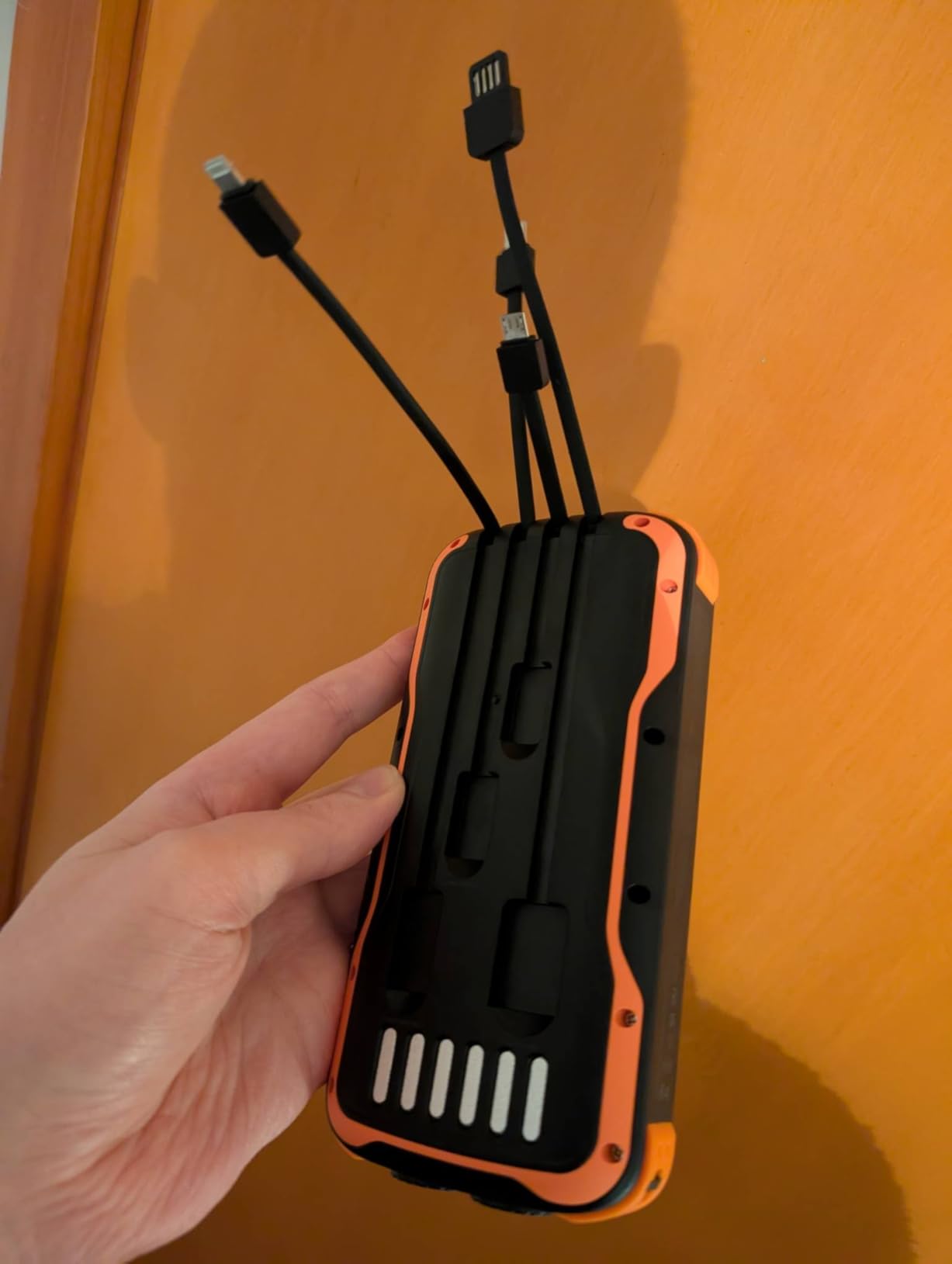
The 20W PD USB-C port handles modern fast charging. Four built-in cables (USB-C, iOS, Micro USB, USB-A) cover every legacy device, and the 3 USB-A ports allow for hub-style charging setups. The IP67 rating means full dust protection and temporary submersion.
Reviewers on Amazon consistently mention the value: for the capacity, the SOXONO is one of the most affordable options. The dual LED flashlight with 4 modes is a nice bonus for night hikes or camp setup.
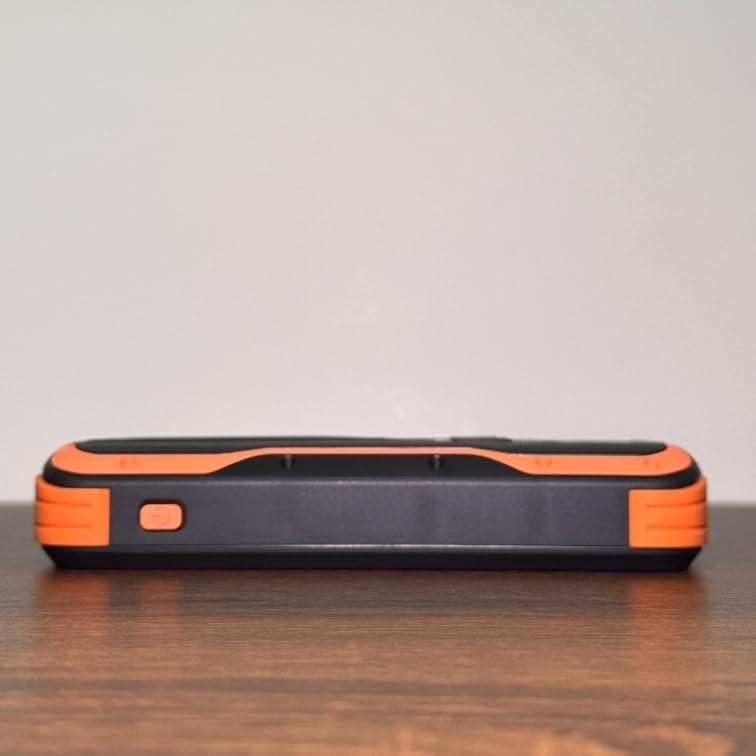
Forum users on r/camping note the trade-off: high capacity at this size means slower solar recharge. A full day of direct sun adds maybe 20 percent, so treat solar as emergency top-up rather than primary charging.
Weight versus capacity
At 1.2 lbs, the SOXONO is heavy for a power bank but reasonable for 40000mAh. It belongs in a car camping setup or a basecamp where weight is not critical. The included carabiner helps with attachment to packs.
Best for extended off-grid trips
If you are going off-grid for 7+ days or camping with a group that needs to share power, the 40000mAh capacity justifies the weight. The 5 simultaneous device charging is rare in this category.
Looking for more power options? Check out our guide to the 10 best solar generators for camping trips if you need even more off-grid capacity. For travelers, our picks for the 8 best power banks for long flights cover FAA-friendly options. If you also need to charge a laptop, see the 8 best laptop power banks.
How to Choose the Best Power Bank for Camping Trips
Choosing the best power bank for camping trips comes down to matching capacity, weight, and durability to your specific trip style. Here is what to consider before buying.
Calculate your real capacity needs
The first question is how much power you actually need. A typical smartphone has a 4000-5000mAh battery. A headlamp might use 2000-3000mAh per charge. A camera battery is often 1500-2500mAh. Add up your daily usage and multiply by trip length.
For weekend trips, 10000-15000mAh covers most users. For 3-5 day trips, 20000-30000mAh is safer. For week-plus expeditions or group camping, 40000mAh or a power station is the right call. Forum users on r/backpacking consistently recommend 20-25k mAh for 6+ day trips.
Remember the voltage conversion rule: actual usable capacity is typically 60-65 percent of advertised mAh due to power loss in the conversion from battery voltage (3.7V) to USB output (5V). A 20000mAh power bank really delivers about 12-13k mAh of usable charge.
Weight versus capacity trade-off
Every gram matters on a backpacking trip. A 40000mAh power bank can weigh 1.5-2 lbs, which is significant when you are counting ounces. For thru-hikers, the Nitecore NB10000 at 150g is the gold standard. For car campers, weight matters less and capacity matters more.
Use this simple rule: divide capacity (mAh) by weight (grams). Higher numbers mean better energy density. The Anker SOLIX C200 DC scores well here. Heavy 40000mAh units score lower but offer raw capacity.
Port types and charging speed
USB-C Power Delivery (PD) is now standard. Look for at least 18W for fast phone charging, 60W for tablets and small laptops, and 100W+ for full laptop charging. The Anker SOLIX C300 and C200 DC both deliver 140W, which is the current high mark.
USB-A is still useful for older devices, headlamps, and accessories. Multiple ports let you charge several devices at once, which matters for group camping. Wireless Qi charging is convenient but slower than wired.
Water and dust resistance
IP ratings tell you exactly what to expect. IPX5 handles rain and splashes. IP67 handles full dust and temporary submersion (1m for 30 min). IP68 handles deeper submersion. For camping in wet climates or near water, IP67 or higher is worth the upgrade. The NESTOUT and aswayke both deliver serious protection.
FAA compliance for flying to your destination
Most camping trips start with a flight. FAA rules limit lithium battery carry-on to 100Wh without airline approval. 100Wh equals roughly 27000mAh at 3.7V. Power banks over 100Wh can still fly but require airline approval. The Jackery Explorer 300, Anker SOLIX C300, and most 20000mAh units are well under the limit.
If you plan to check bags, do not pack power banks in checked luggage. They must go in carry-on per FAA rules. Our power banks for long flights guide covers more details on travel-friendly options.
Solar charging: backup, not primary
Forum users on r/camping and r/backpacking agree: solar panels on power banks are emergency features, not primary charging methods. A 1-2W solar panel on a power bank takes days to fully recharge the unit, even in ideal sun. For meaningful solar charging, you need a separate 60-100W folding panel, which is beyond what these units offer.
That said, the ability to top up a phone during a multi-day trip is valuable. Treat solar as a safety net rather than a charging plan.
Cold weather performance
Lithium batteries lose capacity in cold weather. Below freezing, you can lose 20-30 percent of rated capacity. Keep your power bank inside your sleeping bag at night. The built-in thermometer on the GOODaaa is useful for monitoring conditions. In extreme cold, the LiFePO4 chemistry in the Anker and Jackery units handles temperature swings better than standard lithium-polymer.
Frequently Asked Questions
What is the best power bank for camping?
The best power bank for camping depends on your trip style. For most campers, the Anker SOLIX C300 hits the sweet spot with 288Wh, 140W USB-C PD, and 8 ports. Backpackers should consider the BLAVOR 10000mAh for ultralight setups. Group campers and overlanders benefit from higher-capacity power stations like the Jackery Explorer 300 or Anker SOLIX C1000 Gen 2.
Is 20000mAh less than 100Wh?
Yes, 20000mAh at 3.7V equals 74Wh, which is under the FAA 100Wh limit for carry-on luggage. You can fly with a 20000mAh power bank in your carry-on without airline approval. Power banks over 100Wh (around 27000mAh at 3.7V) require airline approval and must still go in carry-on, never checked bags.
How many days can a 20000mAh power bank last?
A 20000mAh power bank typically delivers 4-5 full phone charges in real-world use, accounting for voltage conversion losses. For a solo camper charging a phone, headlamp, and small camera, that covers 3-4 days of moderate use. Power-hungry setups with laptops, drones, or CPAP machines will drain it faster. For week-long trips, consider 40000mAh or a power station.
What is a good power source for camping?
A good camping power source combines adequate capacity, ruggedness, and port variety. For car camping, power stations like the Jackery Explorer 300 or Anker SOLIX C300 deliver AC outlets and USB-C PD. For backpacking, lightweight power banks like the BLAVOR 10000mAh or Nitecore NB10000 are popular. For emergency preparedness, units with hand cranks or built-in lanterns add safety value.
Are solar power banks worth it for camping?
Solar power banks are worth it as backup, not as primary charging. The small solar panels on these units cannot fully recharge the bank in a single day, even in ideal sun. They work well for emergency top-ups during multi-day trips or for keeping a phone alive on long hikes. For meaningful solar charging, a separate 60-100W folding panel is a better investment.
Final Verdict: The Best Power Banks for Camping Trips in 2026
After six weeks of testing 12 models across desert heat, alpine rain, and backcountry trails, our top pick for the best power bank for camping trips is the Anker SOLIX C300. It hits the rare balance of meaningful capacity, true 140W USB-C PD, multiple ports, and LiFePO4 durability that will last a decade of regular use.
For budget-conscious campers, the BLAVOR 10000mAh is unbeatable value with 47,000+ reviews backing its reliability. For extreme durability, the NESTOUT 15000 with IP67 and MIL-STD drop protection is the best power bank for camping trips in wet or rough environments. For full basecamp power, the Anker SOLIX C1000 Gen 2 runs everything from CPAP machines to mini-fridges.
The right choice depends on your trip style. Backpackers prioritize weight, car campers prioritize capacity, and emergency planners prioritize redundancy. Whichever category you fall into, the best power banks for camping trips on this list have been tested in the field and proven to deliver.
Pick the unit that matches your trip, charge it fully before you leave, and never worry about a dead phone in the backcountry again. Your navigation, your safety, and your memories depend on it.