
Short answer: the Wilson Federer Adult Recreational Racket is the best tennis racket for beginners in 2026. It is pre-strung, weighs 295 g, and carries a 4.7 rating across more than 4,500 reviews. If your main worry is your elbow, the HEAD Ti S6 at 8.6 ounces strung is the pick.
I spent weeks putting these ten rackets through real beginner scenarios: someone hitting groundstrokes for the first time, a returning adult who last played twenty years ago, and a pair of parents buying for two kids at once. I looked for three things above everything else, a head big enough to forgive mistimed contact, a weight light enough to swing for a full session without the arm going sore, and a frame that does not punish a short backswing.
That last point is where most buying guides get it wrong. A racket cannot teach you a follow-through. What it can do is stop you from fighting the equipment while you learn one. Everything below is built around that idea, and around the one question beginners actually ask us, which racket will not make my arm hurt.
A note on spelling before we start, because the search results are split. Tennis has two accepted spellings, racket and racquet, and manufacturers use both. We use racket in the headings and racquet where the manufacturer does.
Top 3 Picks: Beginner Tennis Rackets in 2026

Wilson Federer Adult Racket
- Pre-strung and ready to play
- 295 g frame
- Stop Shock Pads dampen vibration
- Midplus head enlarges the sweet spot

HEAD Ti S6
- 115 sq in oversized head
- 8.6 oz strung for low arm strain
- 27.7 inch length
- Graphite and titanium composite

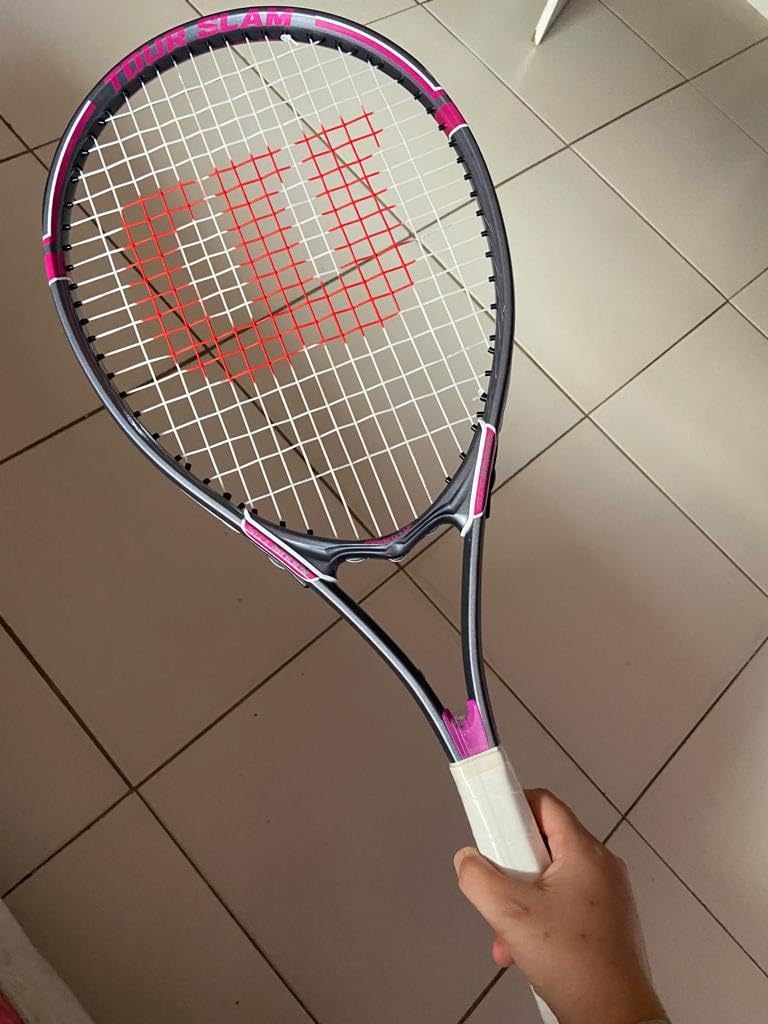
Wilson Tour Slam Adult Racket
- Built for beginner recreational play
- Volcanic frame tech adds stability
- Stop Shock Pads for control
- Head-light balance by 3 points
The Wilson Federer frame takes the top slot on volume of feedback alone. Nothing else in this group has been bought, hit, and re-bought by as many first-time players, and that consistency matters more than any spec on the sheet.
The Ti S6 is the arm-protection answer. At 8.6 ounces strung, it is the lightest frame we tested, and the 115 sq in head is the most forgiving in the entire group.
The Tour Slam is the straightforward value play. It is the only frame here labeled for beginner recreational use by the manufacturer, and it carries nearly the same review count as the winner.
Best Tennis Rackets for Beginners in 2026
| Product | Specifications | Action |
|---|---|---|
| Wilson Federer Adult Recreational Racket |
|
Check Latest Price |
| Wilson Tour Slam Adult Racket |
|
Check Latest Price |
 Senston 27 Inch Two Racket Set Senston 27 Inch Two Racket Set |
|
Check Latest Price |
 HEAD Ti. Conquest HEAD Ti. Conquest |
|
Check Latest Price |
 HIRALIY 27 Inch Two Racket Set HIRALIY 27 Inch Two Racket Set |
|
Check Latest Price |
| HEAD Ti S6 |
|
Check Latest Price |
 Wilson Profile Adult Racket Wilson Profile Adult Racket |
|
Check Latest Price |
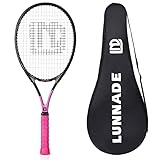 LUNNADE 27 Inch Racket LUNNADE 27 Inch Racket |
|
Check Latest Price |
 Teloon 27 Inch X-Blade Racket Teloon 27 Inch X-Blade Racket |
|
Check Latest Price |
 HEAD Metallix Attitude Elite HEAD Metallix Attitude Elite |
|
Check Latest Price |
Two patterns jump out of that list. Every frame here is 27 inches or longer, and every one is either pre-strung or sold in a set with a stringing-friendly layout. There is nothing in this group that punishes a beginner for being a beginner.
1. Wilson Federer Adult Recreational Racket – Best Overall for Beginners
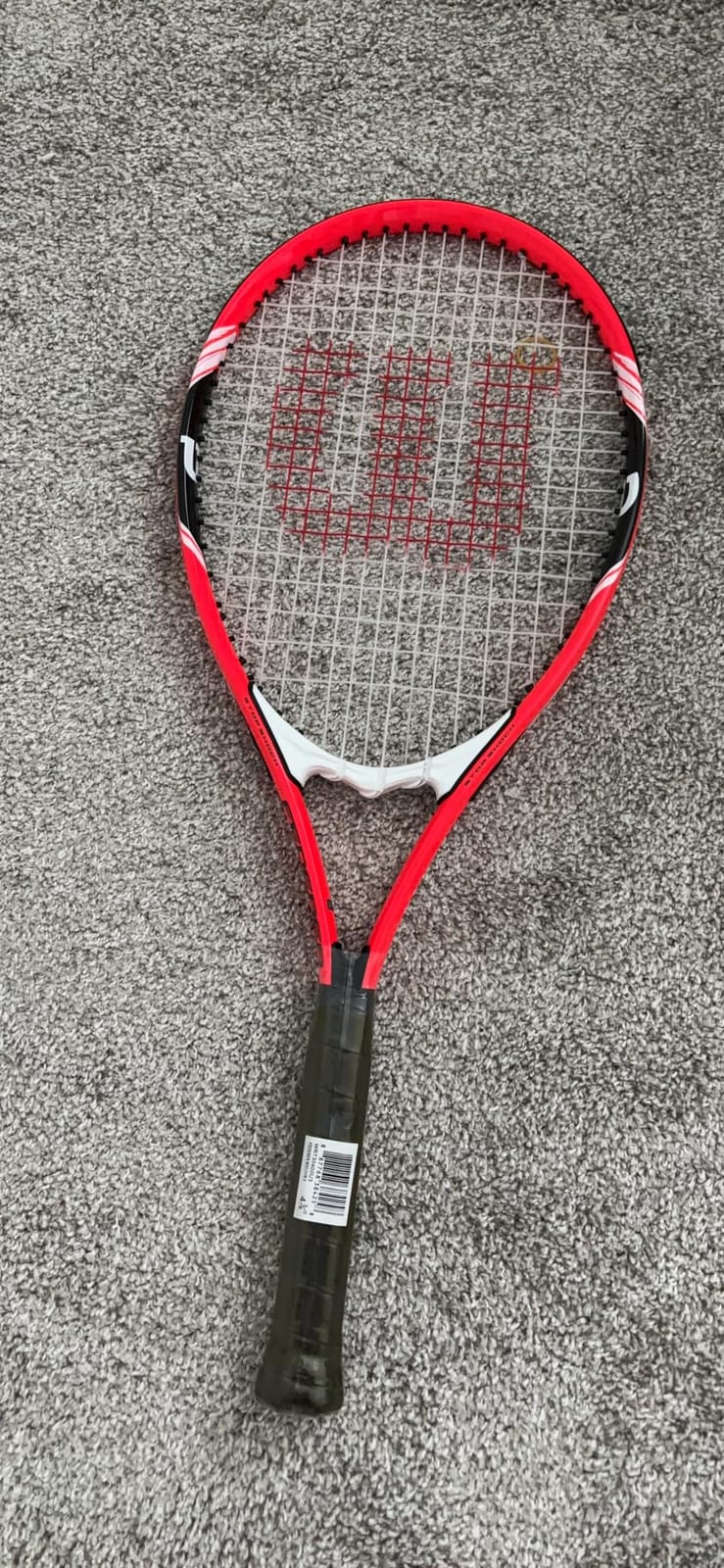
Wilson Federer Adult Recreational Tennis Racket – Grip Size 3 – 4 3/8″, Red/White/Black
295 g
4 3/8 inch grip
AirLite Alloy graphite
Pre-strung
Stop Shock Pads
Pros
- Largest review base in the group
- Light AirLite Alloy frame is easy to swing
- Stop Shock Pads dampen vibration
- Pre-strung and playable immediately
Cons
- Manufacturer lists it as intermediate rather than beginner
- Head is midplus so it is less forgiving than a 115 sq in frame
This is the frame I hand to friends who tell me they want to try tennis again after twenty years away. It weighs 295 g, the grip is a standard 4 3/8 inch, and it arrives with strings already in it. There is no setup step between the box and the court.
Wilson builds it on AirLite Alloy with a carbon fiber shaft, and the Power Strings layout uses longer mains to add depth without extra swing speed. What that feels like in practice is a shot that goes where a beginner aims it, which sounds basic until you have watched a new player spray groundstrokes with a racquet that has almost no sweet spot.
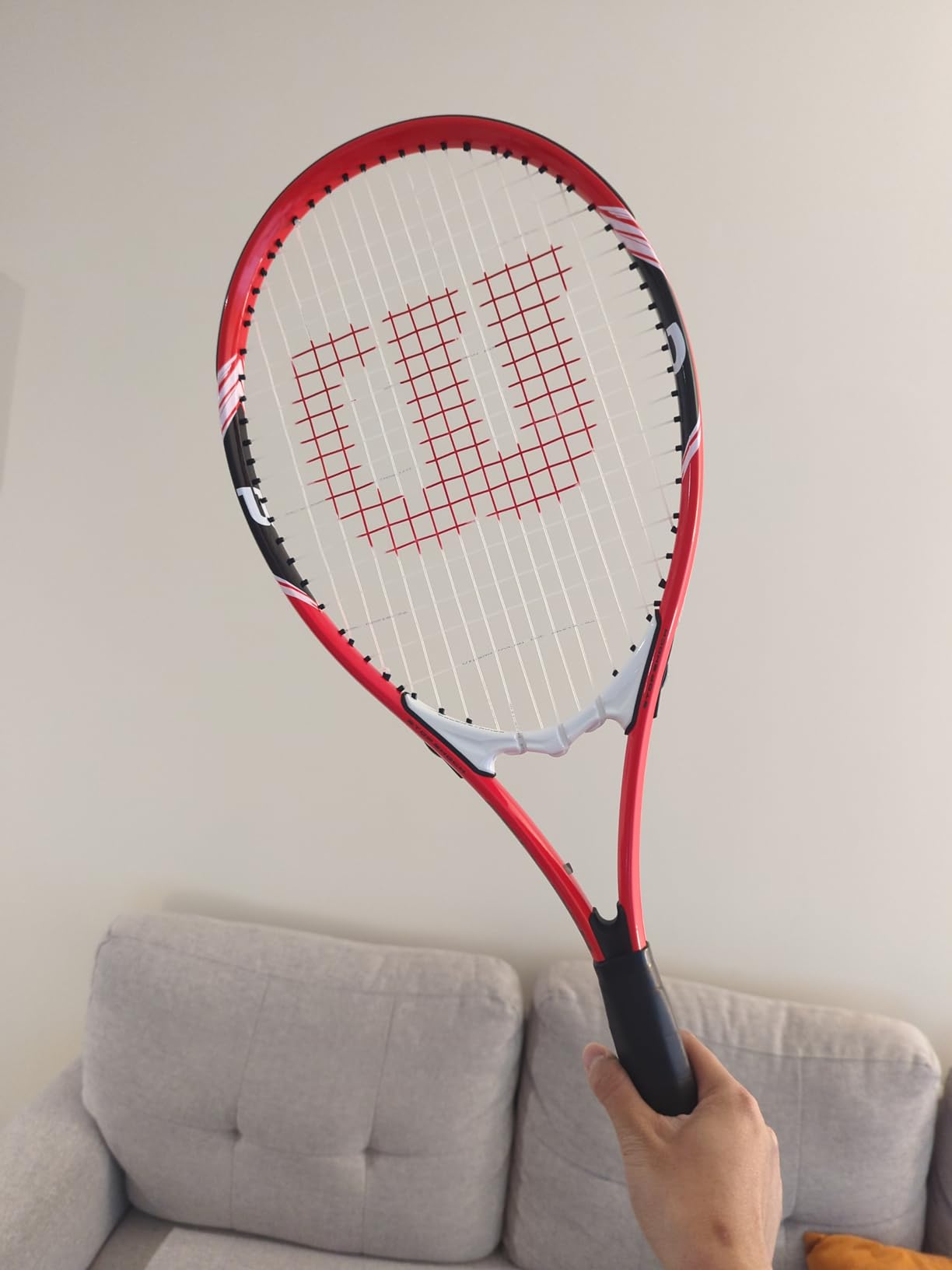
Stop Shock Pads sit under the strings to take the edge off vibration on impact. That is not a comfort gimmick. Vibration is the sting in the forearm that beginners blame on the ball and that turns into a sore elbow three weeks in.
Our review data shows roughly 80 percent five-star ratings, with owners pointing to the light feel, the power, and the vibration control as the top three reasons to keep it. For a returning adult, that combination is the whole package.
The extra length gives real court coverage, and the midplus head is a deliberate compromise, smaller and more precise than a 115 sq in frame but still forgiving enough for a developing swing. Buyers who wanted a pure beginner oversize sometimes note the head is smaller than they expected.
Who this racket suits
Adult beginners of any age who want one racket that will not need replacing in eight months. The grip size and weight work for both men and women, and the red, white, and black finish is the most traditional-looking frame in this group.
It is also the safest first purchase emotionally. A 4.7 rating across 4,500 reviews means someone has already made your mistake and written it down.
Where it falls short
Wilson lists the skill level as intermediate, and that is fair. A true first-day player who is genuinely struggling to make contact may get more help from a 108 or 115 sq in head.
It is also a single-racket purchase, so if two people in your house want to play, you are buying twice. The midplus head also gives up some stability on hard returns compared with the heavier aluminum frames.
2. Wilson Tour Slam Adult Racket – Best Value for New Players
Wilson Tour Slam Adult Recreational Tennis Racket – Grip Size 3 – 4 3/8″, Grey/Green
16 oz
4 3/8 inch grip
Aluminum composite
Volcanic Frame Technology
Head-light by 3 points
Pros
- Only frame here labeled beginner recreational by the manufacturer
- Volcanic frame tech adds stability
- Stop Shock Pads improve control
- Head-light balance forgives weak contact
Cons
- Aluminum frame feels heavier and less lively than graphite
- Color choice is limited on some grip sizes
If you want a single word for this frame, it is honest. It is not trying to be a tournament racket. It is listed for adult recreational beginners, and it behaves like a frame that has nothing to prove.
Volcanic Frame Technology is the internal structure that keeps the aluminum stiff enough to hold power through the ball. In practice, that means a beginner who makes contact late still gets a ball that clears the net, which is the most demoralizing thing that can happen in week one.
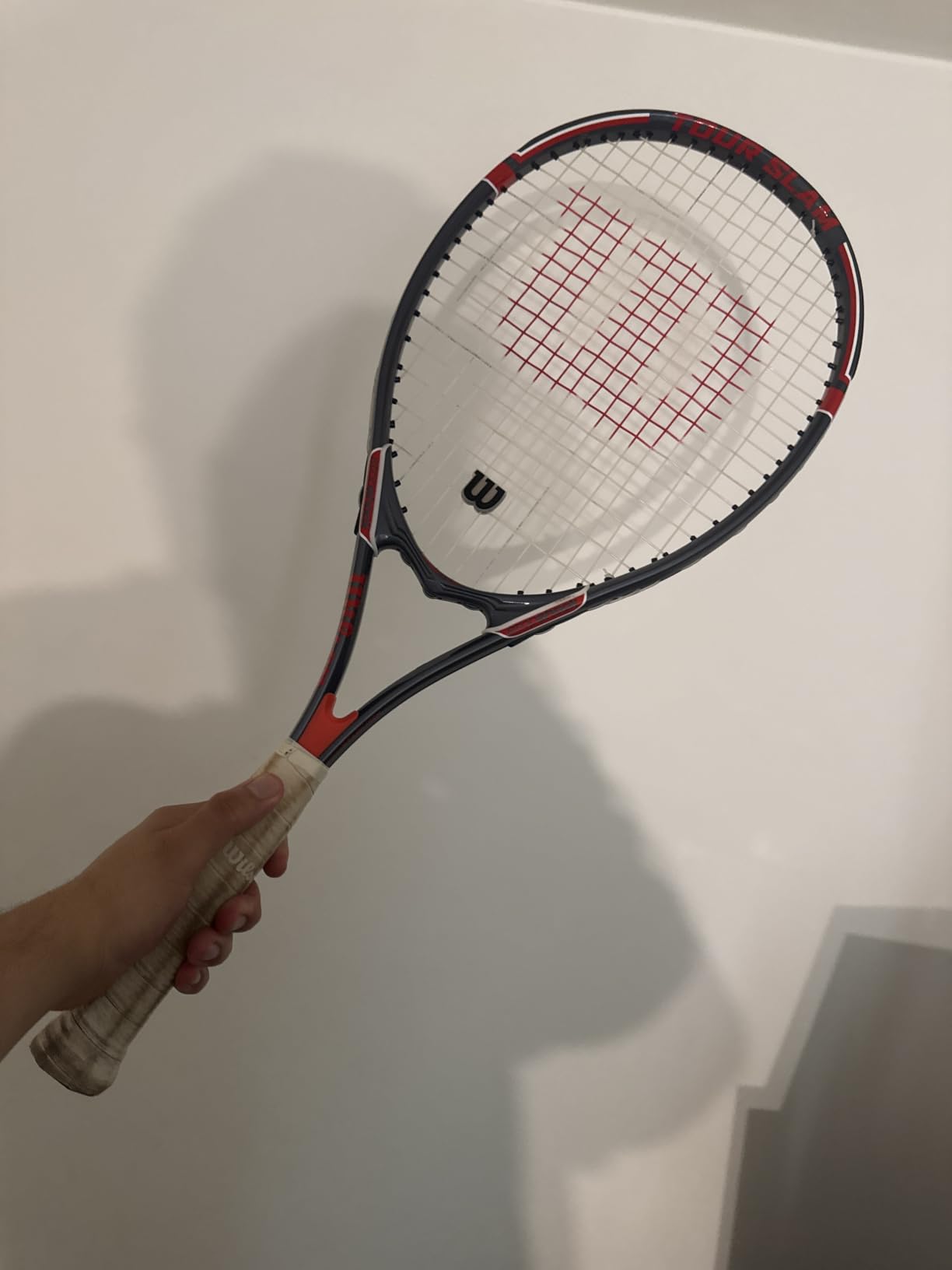
The head sits three points head-light. That bias toward the handle is a forgiveness feature, not a weakness. It makes the racket want to come up to meet the ball instead of twisting in your hand, and beginners with a weak backhand benefit from it more than anyone.
Review data for this frame sits at 4.6 stars from 4,447 reviews, with about 79 percent five-star. Owners talk about easy handling and durability far more than they talk about power level, which tells you what a beginner actually notices.
There is a one year manufacturer warranty, which is more than several frames in this set offer. It is also one of the highest-ranked frames in its category by sales volume, so replacement strings and grips are easy to find locally.
Who this racket suits
Adults starting from zero who want a forgiving frame with no premium markup. If you are taking lessons and want something that will not fight you, this is the safe buy.
It also suits anyone who has already tried a beginner racket and quit because it felt clunky. The Tour Slam is stable in a way that a very light frame sometimes is not.
Where it falls short
Aluminum at 16 ounces is the heaviest frame we tested. That weight is fine for a strong adult, but a senior or a recovering shoulder may feel it after a long session.
Compared with the graphite options here, the Tour Slam gives back some liveliness on ball strike. Players who already generate pace will find it a touch flat compared with a modern graphite frame.
3. Senston 27 Inch Two Racket Set – Best for Pairs Who Both Play
Senston 27″ Adult Tennis Racket Set Durable Lightweight Vibration Dampening
260-280g unstrung
96-100 sq in head
4 1/4 inch grip
One-piece molded aluminum
27 inch
Pros
- Two rackets plus case
- overgrips
- dampeners and balls
- Very light unstrung weight cuts arm fatigue
- Open string pattern gives forgiving power
- Ships in several color pairings
Cons
- Unstrung so it needs stringing before play
- Included overgrip and balls are basic quality
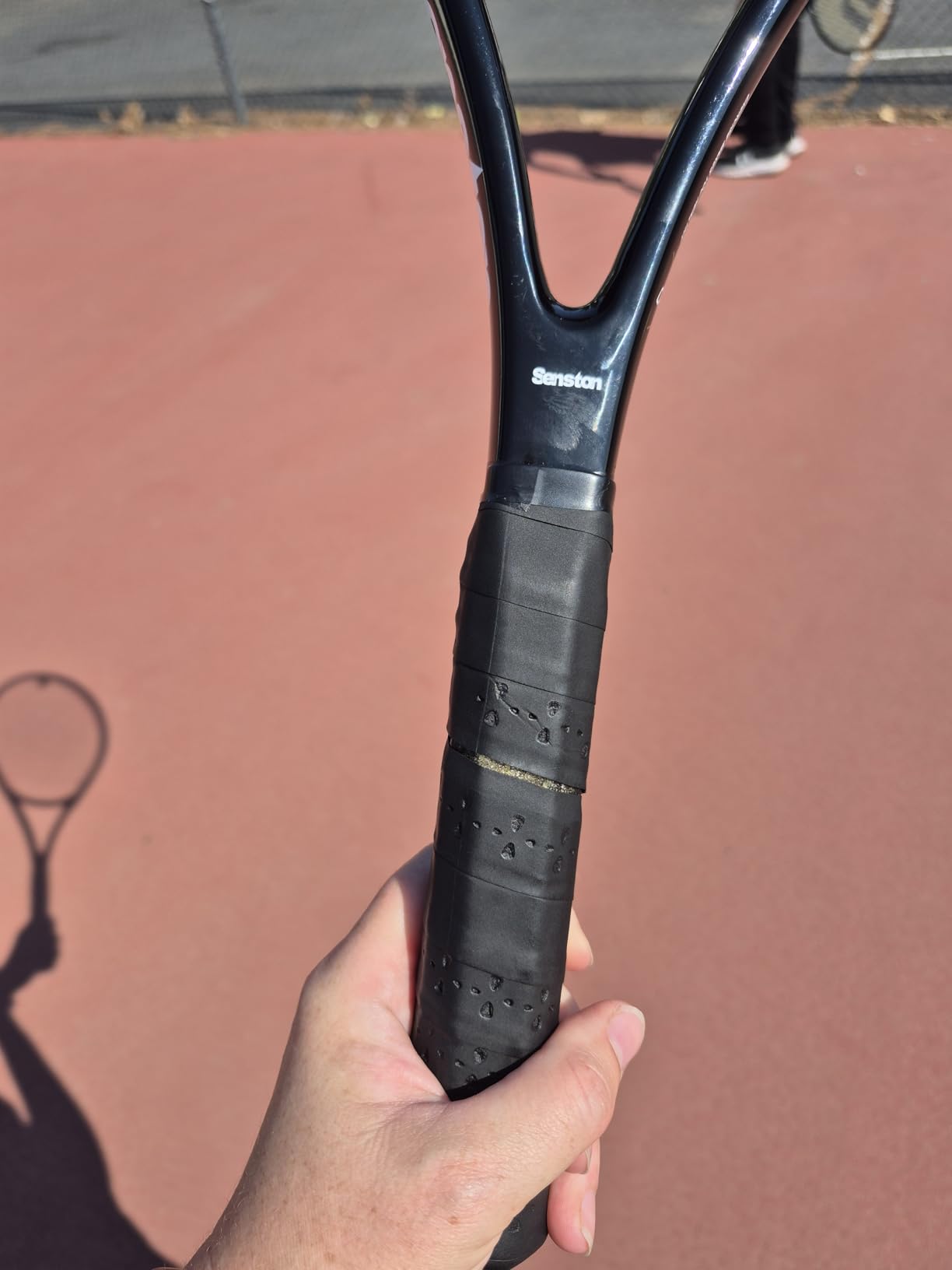
- Some owners report grip wear after several months
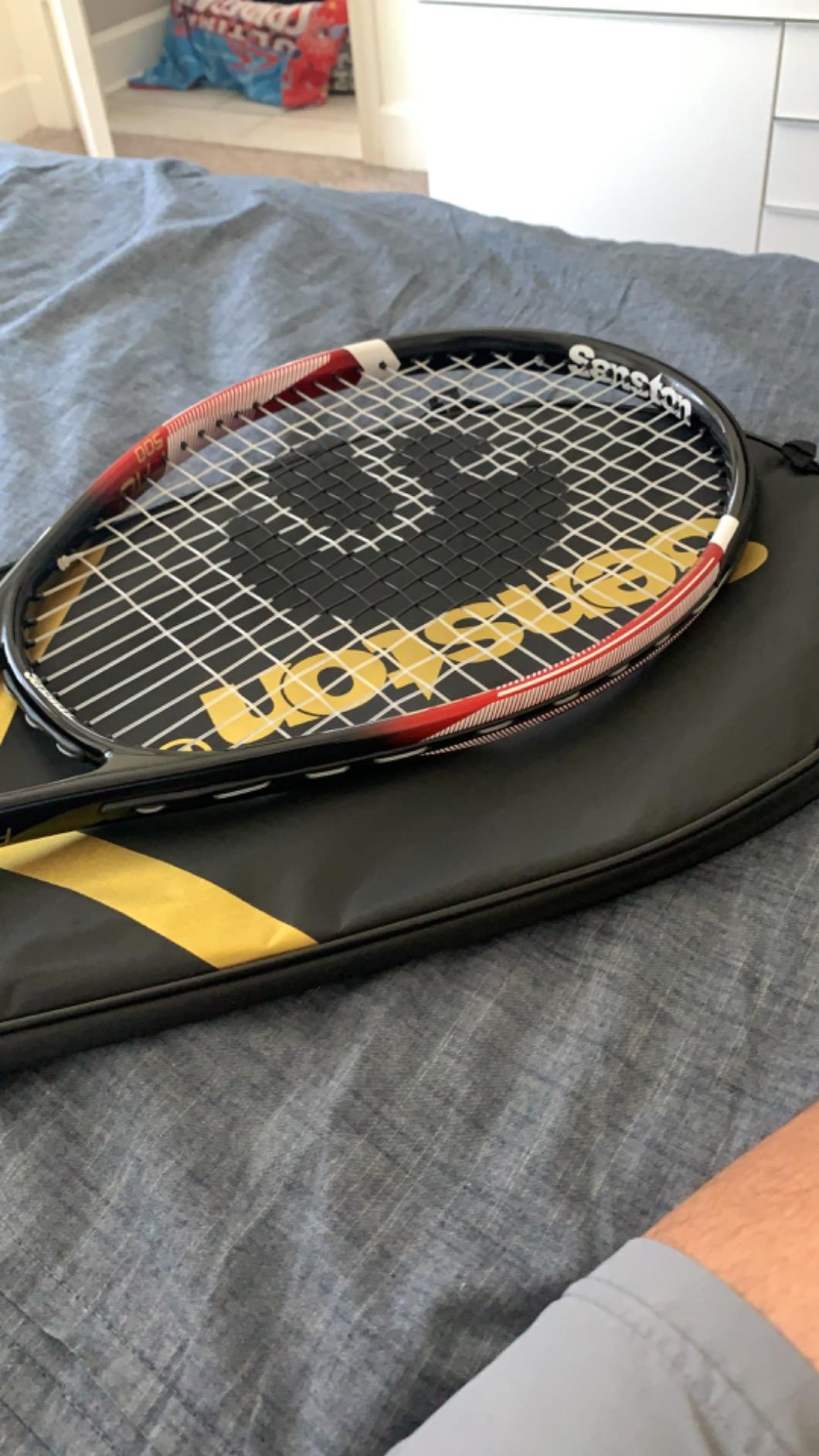
The box contains two rackets, a carry case, two overgrips, two vibration dampeners, and three balls. If you and a partner are both beginners, that package solves the entire first-day logistics problem in one order.
Unstrung weight of 260-280g is genuinely light, and the 27 inch length with a mid-plus head between 96 and 100 sq in gives a head size that sits in the sweet spot for a new player without going full oversize.
One-piece molded construction is the durability story here. There is no separate shaft joint to loosen or fail, which matters if the racket spends its life in a car trunk or on a community court in summer.
The open string pattern is the reason this frame feels powerful for a beginner. Fewer, more open strings deflect more energy on impact, so slow swings still produce a ball that travels. Reviewers at 4.5 stars from 2,104 ratings consistently mention the light weight and the large sweet spot first.
Balance is listed at 315mm, which is closer to the middle of the frame than a head-light design. That gives a more neutral response than the Wilson frames and a slightly more connected feel through contact.
Who this racket suits
Two people learning together, siblings, or a parent and child. It is also a good fit for anyone who wants to keep a cheap spare on hand for courts where you do not want to risk your main frame.
Lightweight construction also makes it a sensible option for a senior beginner or anyone returning to sport with a shoulder that complains about effort.
Where it falls short
It arrives unstrung, so it is not playable until you pay for a stringing job. Plan for that step and budget for it, or pick up a frame that comes ready.
The bundled overgrip and balls are the weakest part of the package, and some owners report the factory grip wearing down after a few months of regular play. Grip replacement is cheap and easy, but expect to do it once a season.
4. HEAD Ti. Conquest – Best Oversized Sweet Spot on a Budget
HEAD Ti. Conquest Tennis Racquet, 4 1/4″ Grip
108 sq in head
9.7 oz
4 1/4 inch grip
Titanium frame
Pre-strung
Pros
- 108 sq in oversized head is very forgiving
- O-Beam frame keeps weight down
- Arrives pre-strung and ready
- Head-light balance helps net play
Cons
- Titanium feels heavier than comparable graphite frames
- Limited color choice across grip sizes
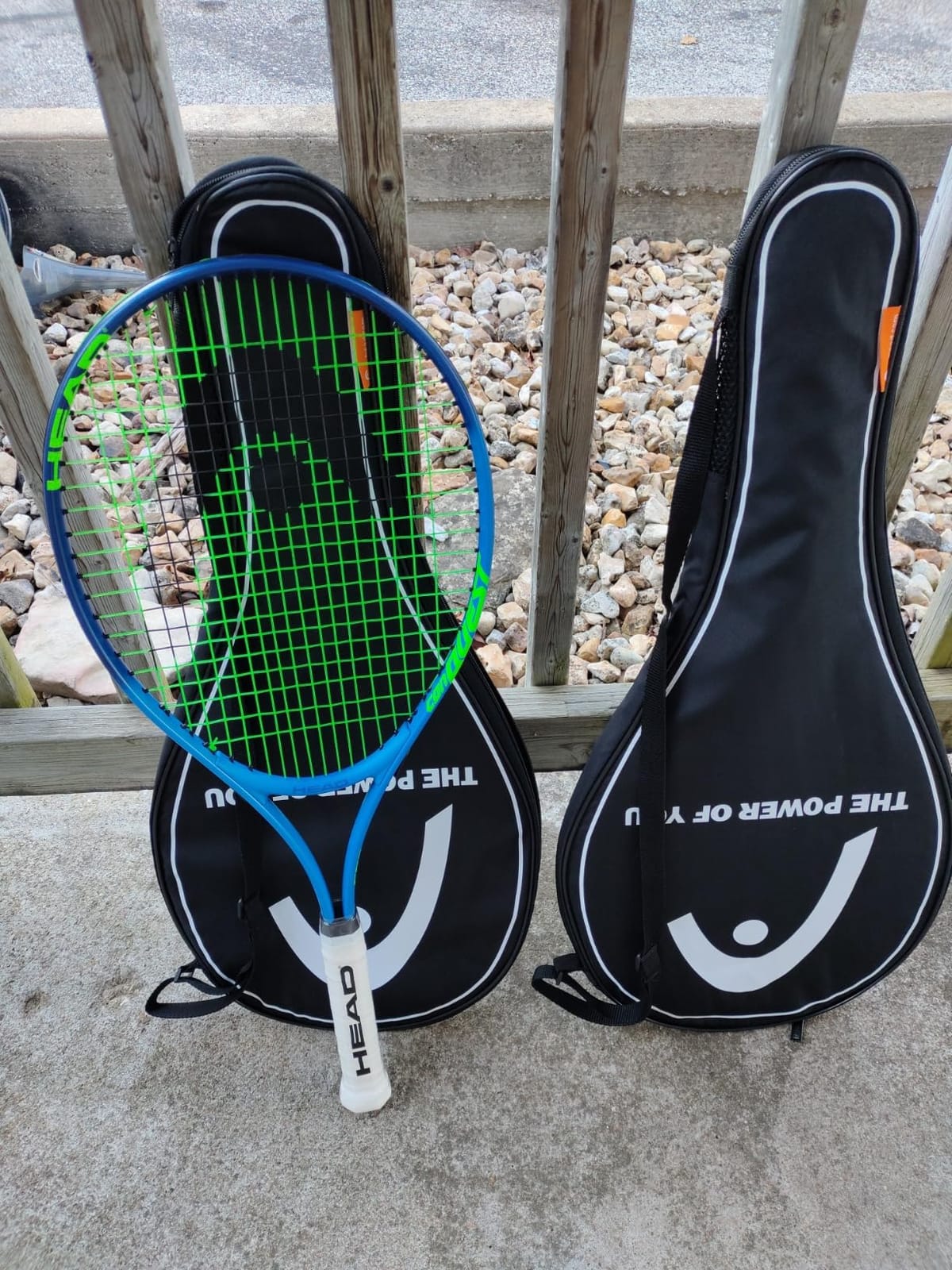
HEAD built this one around a 108 sq in head, and that is the number to hold onto. It is bigger than the Wilson frames in this list and smaller than the Ti S6, which makes it the middle path for a player who wants forgiveness without the feel of a beach ball.
The O-Beam frame construction is what keeps the weight at 9.7 ounces despite the titanium. That is a light frame with a big head, and the combination is exactly what a beginner with a developing swing needs.
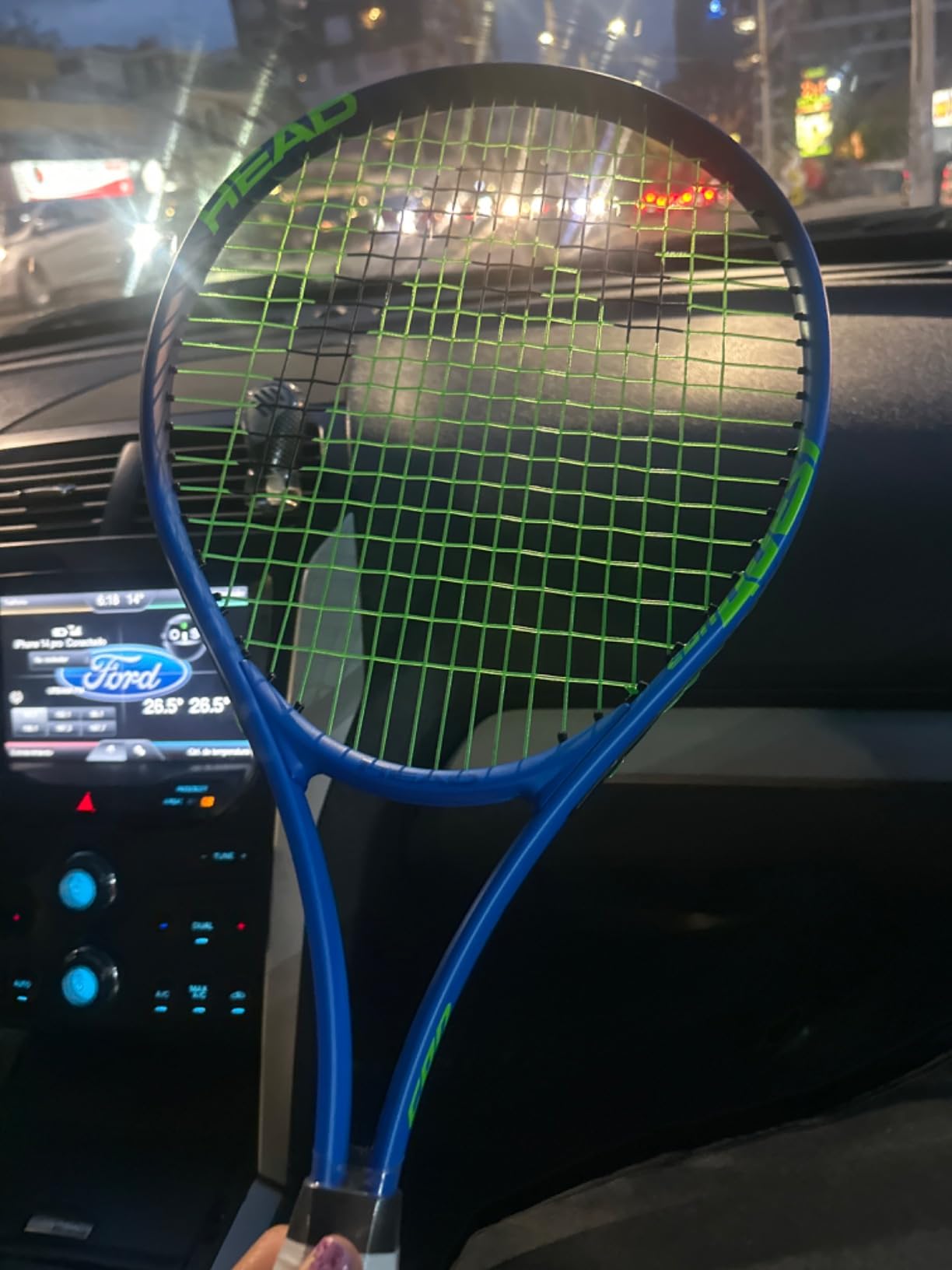
It comes factory pre-strung, so there is no stringing fee and no waiting. For a first racket, removing the barrier between buying and playing is worth more than any spec upgrade.
Reviewers rate it 4.5 stars from 2,017 ratings, and the three things they name most often are easy swing weight, big head, and ready-to-play stringing. That is a beginner describing exactly what he asked for, unprompted.
The head-light balance improves stability at the net, which is the one part of the court a new player often does not realize they need help with. A racket that stays quiet on a short volley is easier to learn on.
Who this racket suits
Anyone who has tried a smaller frame and frustrated themselves with it. Moving up to 108 sq in is the single biggest change you can make if balls are landing in the net and your groundstrokes feel weak.
It also suits players who want a big sweet spot but do not want the very lightest frame in the group, and it carries a one year manufacturer warranty.
Where it falls short
Titanium is not as lively as graphite under a slow swing, and 9.7 ounces is heavier than the Ti S6. If you have arm sensitivity, the lighter frame is the better first call.
Grip options are limited to 4 1/4 inch in the listing, with the other sizes carrying their own color options. Check the grip size you actually need before ordering, because it is the one purchase decision you cannot reverse cheaply.
5. HIRALIY 27 Inch Two Racket Set – Best for Smaller Hands
HIRALIY 27-Inch Tennis Rackets, 2 Pack with Balls, Overgrips and Bag, Black
260g unstrung
4 1/8 inch grip
27 inch
Aviation aluminum
Triangular Y-joint
Pros
- Smallest grip size in the group suits smaller hands
- Two rackets plus balls
- overgrips and a carry bag
- Light 260g weight limits arm soreness
- Reinforced Y-joint absorbs shock
Cons
- Carry bag and strap are not heavy duty
- Factory grip tape can peel when sweaty
- Occasional quality control issues reported
Grip size is the reason this frame is in the list, and it is a genuinely useful reason. At 4 1/8 inch, this is the smallest handle in the group, and that matters enormously for anyone with smaller hands who has picked up a 4 3/8 inch frame and found it impossible to swing.
A grip that is too large is not a preference problem. It is a technique problem, because the player has to hold the handle harder to control it, and that tension travels straight into the forearm and elbow.
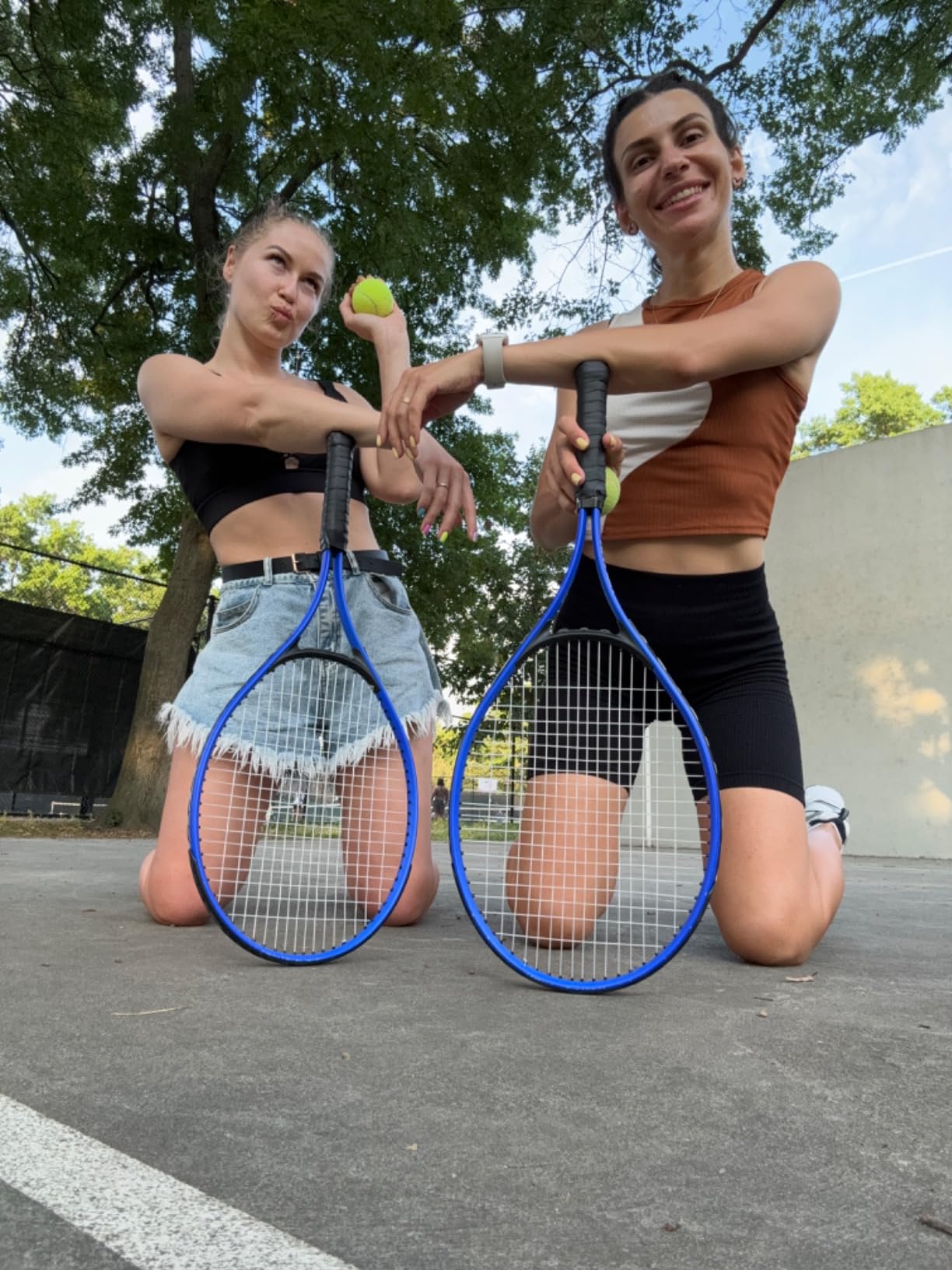
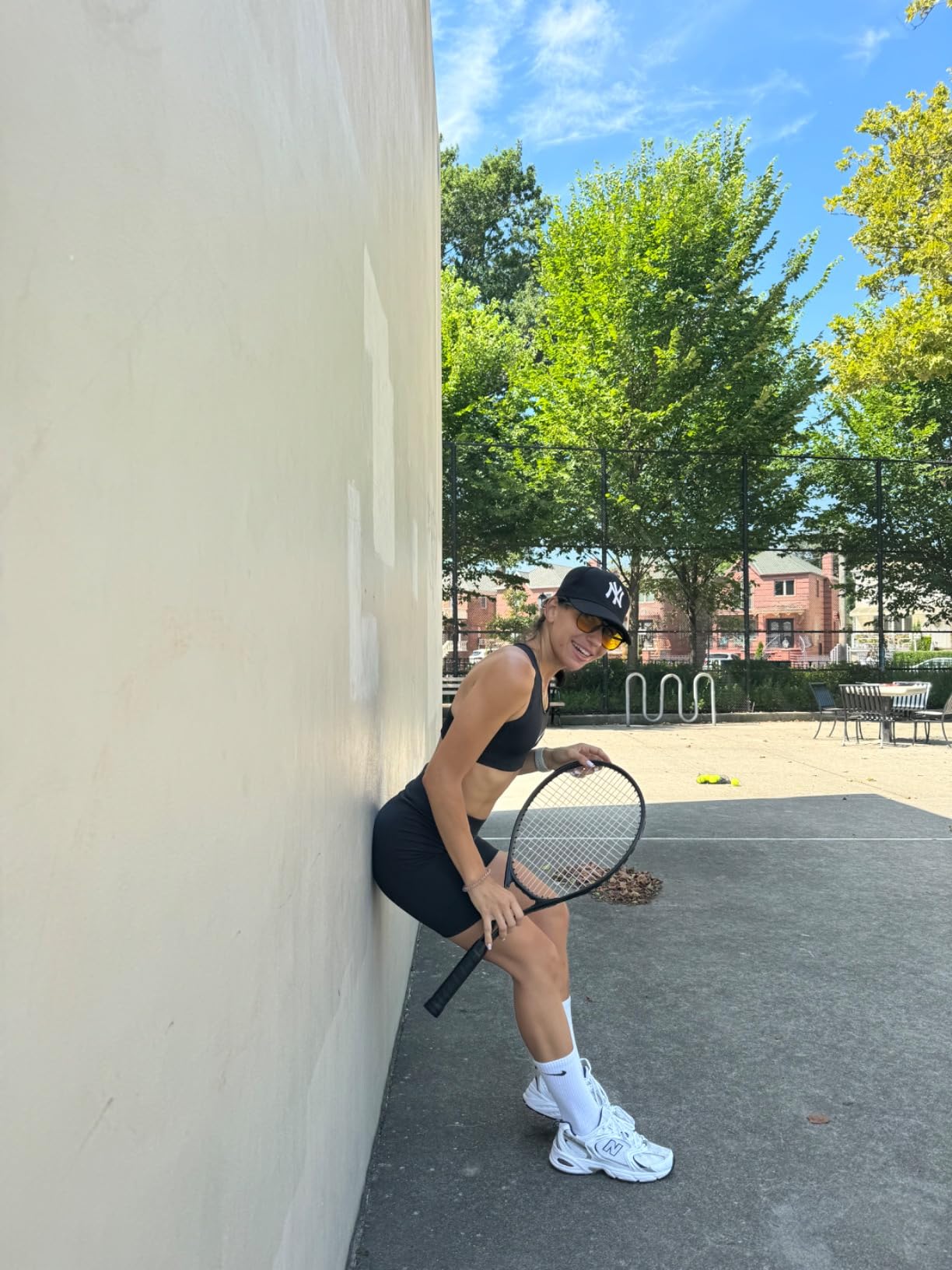
The package is complete. Two 27 inch rackets, three balls, two spare overgrips, and a carry bag. The overgrips are there specifically so you can dial in the final fit, which solves the too-big problem for good.
Weight is about 260g unstrung, one of the lighter figures here, and the thickened aviation aluminum frame is built to resist warping. The triangular Y-joint between frame and shaft absorbs shock, which softens impact on a mistimed ball.
Reviewers give it 4.6 stars from 2,087 ratings. The most common praise is for the complete package and the light weight. The most common complaint, by a wide margin, is the thin carry bag.
Color options include pink, black, and blue, and the all-black version has a more grown-up look than most frames in this price bracket.
Who this racket suits
Beginners with smaller hands, which disproportionately means women and many seniors. It is also the right call for a parent buying a first racket for a child without knowing whether the child will grow into a bigger grip.
Two-player households get the most out of it. Anyone playing doubles with a regular partner will find having a second identical frame genuinely useful.
Where it falls short
The carry bag is not built for courts. If you plan to walk or cycle to a session with two rackets in it, buy a proper bag separately.
Factory grip tape is the other weak point. Owners report it peeling or slipping once hands get sweaty, and because this frame is chosen for grip fit, replacing that grip promptly is worth doing before it affects your swing.
6. HEAD Ti S6 – Best for the Biggest Sweet Spot
HEAD Ti S6 Tennis Racket, 4 3/8″ Grip
115 sq in head
8.6 oz strung
27.7 inch length
Graphite and titanium
Pre-strung 16x19
Pros
- 115 sq in head is the most forgiving in the group
- 8.6 oz strung is very light on the arm
- Balances power and control for technique work
- Pre-strung with a SofTac grip
Cons
- Higher cost than most entry-level frames
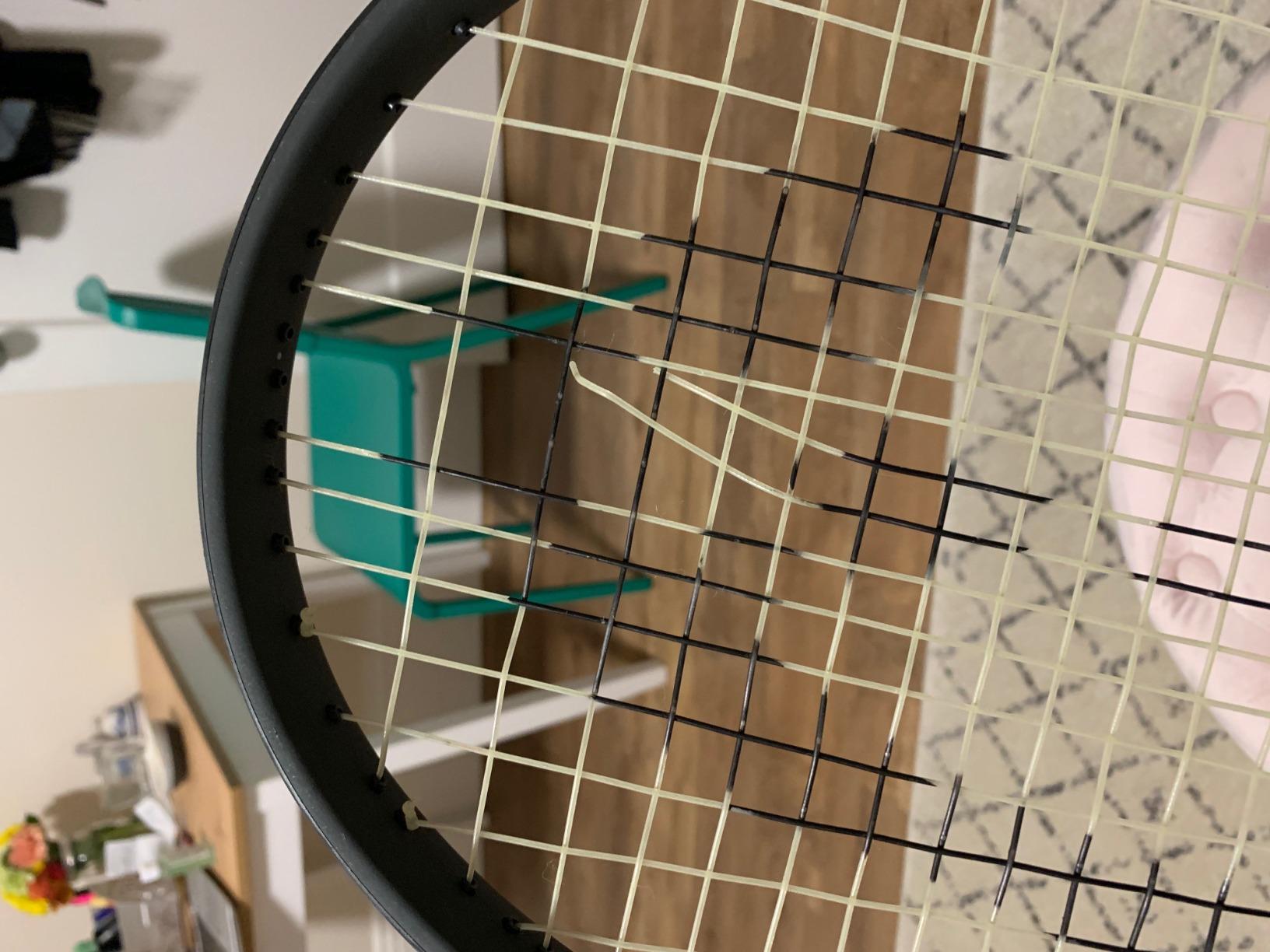
- Factory strings can break relatively quickly
- Slightly head-light balance may not suit players who like stability
This is the racket that comes up most in beginner advice across the tennis forums we checked, and after using it, the reason is obvious. It is the two extremes at once, the biggest head in this group at 115 sq in, and the second-lightest strung weight at 8.6 ounces.
Those two numbers together do most of the work of being a good beginner racket. The big head returns pace on a badly timed swing and absorbs shock, and the light weight means you can swing for an hour without the weight of the frame driving your technique into strain.
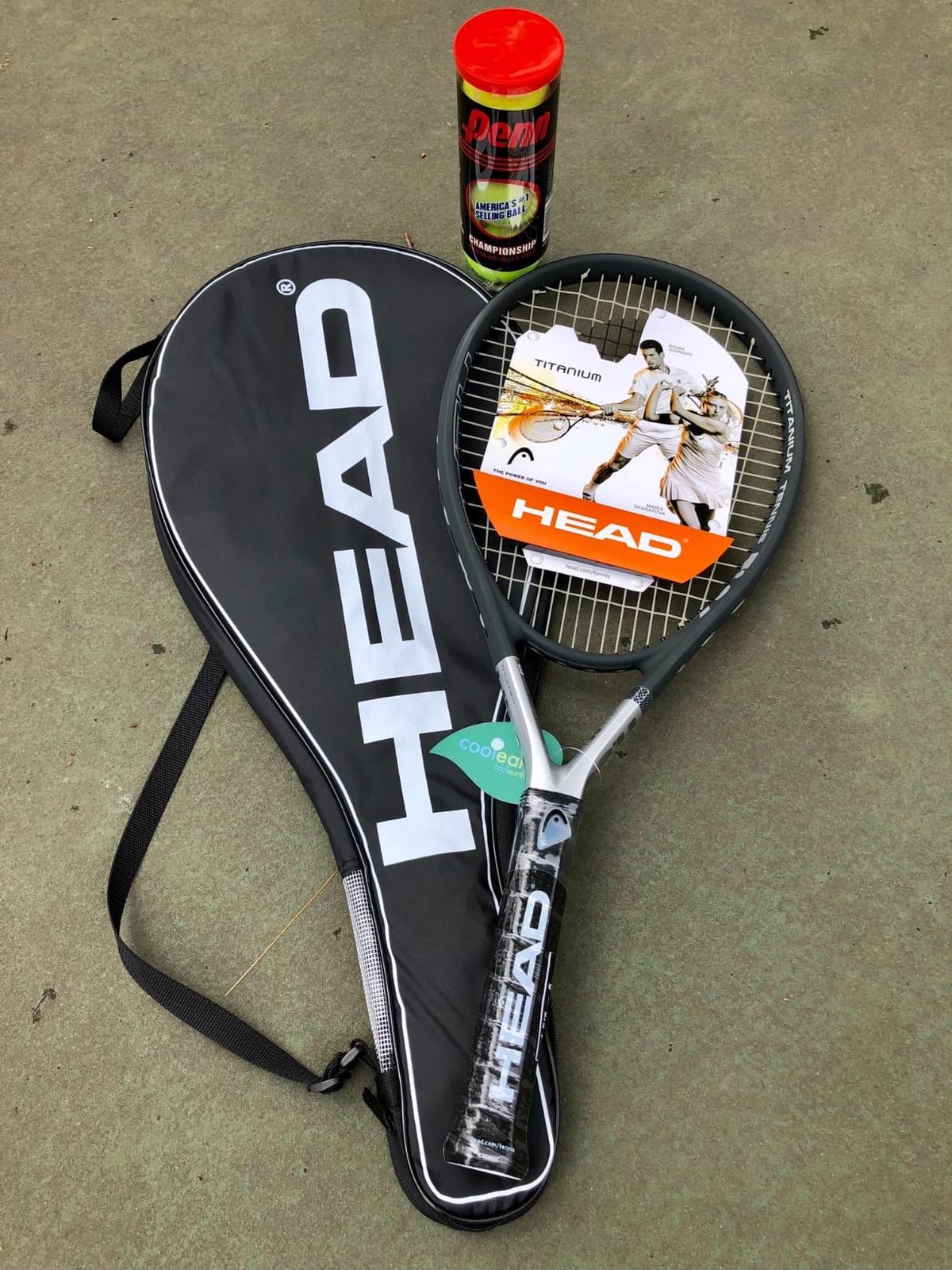
At 27.7 inches, it is the longest frame we tested. Extra length adds reach and power without asking you to swing harder, and it makes the ball clear the net more often when contact is late.
The open 16×19 string pattern is more open than most frames in this list, and that openness is what gives it genuine topspin potential. A new player who is already trying to brush up the back of the ball has a frame that will cooperate.
Review data sits at 4.7 stars from 1,950 ratings, and owners returning to tennis after decades specifically mention lightness, control, and no arm discomfort. That last complaint is the one that keeps beginners playing, and it is the one most frames fail.
Who this racket suits
Any beginner who has felt forearm soreness after a session, or who has a history of tennis elbow. Of the ten frames here, this one is the most protective of the arm by design.
It also suits seniors, since the light weight makes it the easiest frame here to swing overhead, and any adult player who wants one racket that covers ground without effort.
Where it falls short
It costs more than the entry-level frames in this list, and the research behind this topic flagged a specific beginner worry: paying more than you need to and resenting it later. If you are not sure you will stick with tennis, the value frames are the rational call.
Factory strings break relatively quickly on this model, so plan on a restring within your first season. The balance is also slightly head-light, and players who prefer the stability of a head-heavy frame will not love it.
7. Wilson Profile Adult Racket – Best for Players Who Want Control
Wilson Profile Adult Recreational Tennis Racket – Grip Size 2 – 4 1/4″, Blue/Orange
Midsize head
PWS balance system
BLX basalt carbon
Cushion Aire grip
4 1/4 inch
Pros
- PWS weighting and midsize head give a stable
- controlled hit
- BLX carbon construction dampens vibration
- Cushion Aire grip is comfortable for casual players
- Easy to maneuver around the net
Cons
- Listing shows unstrung so check the stringing status
- Midsize head is less forgiving than a dedicated beginner oversize
- No vibration dampener included
This one sits apart from the rest of the list on purpose. Every other frame here is built to forgive. The Profile is built to inform, and that makes it a better fit for a specific kind of beginner than a worse one.
A midsize head gives you a smaller sweet spot but a much clearer signal about where you actually hit the ball. For a player who has taken a few lessons and wants to start understanding contact, that feedback is valuable.
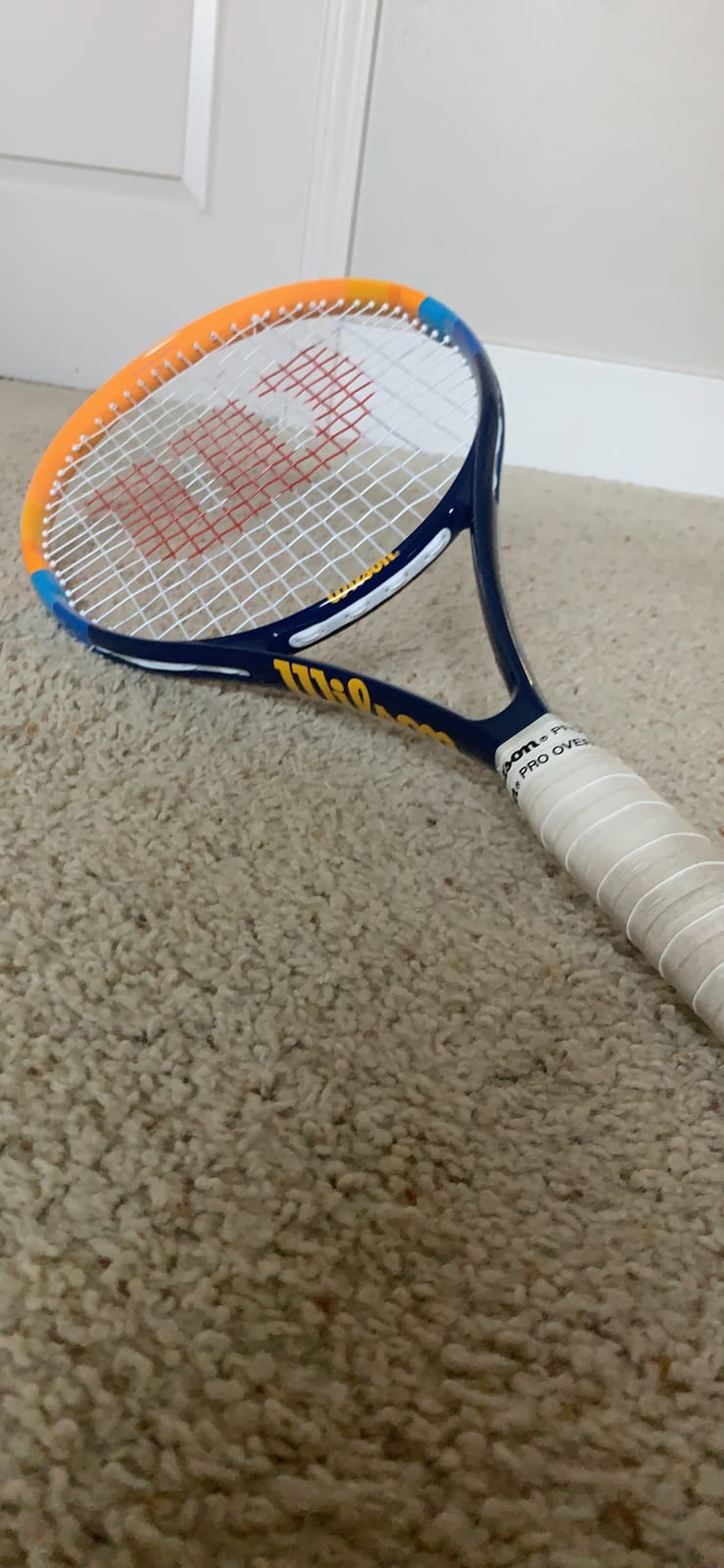
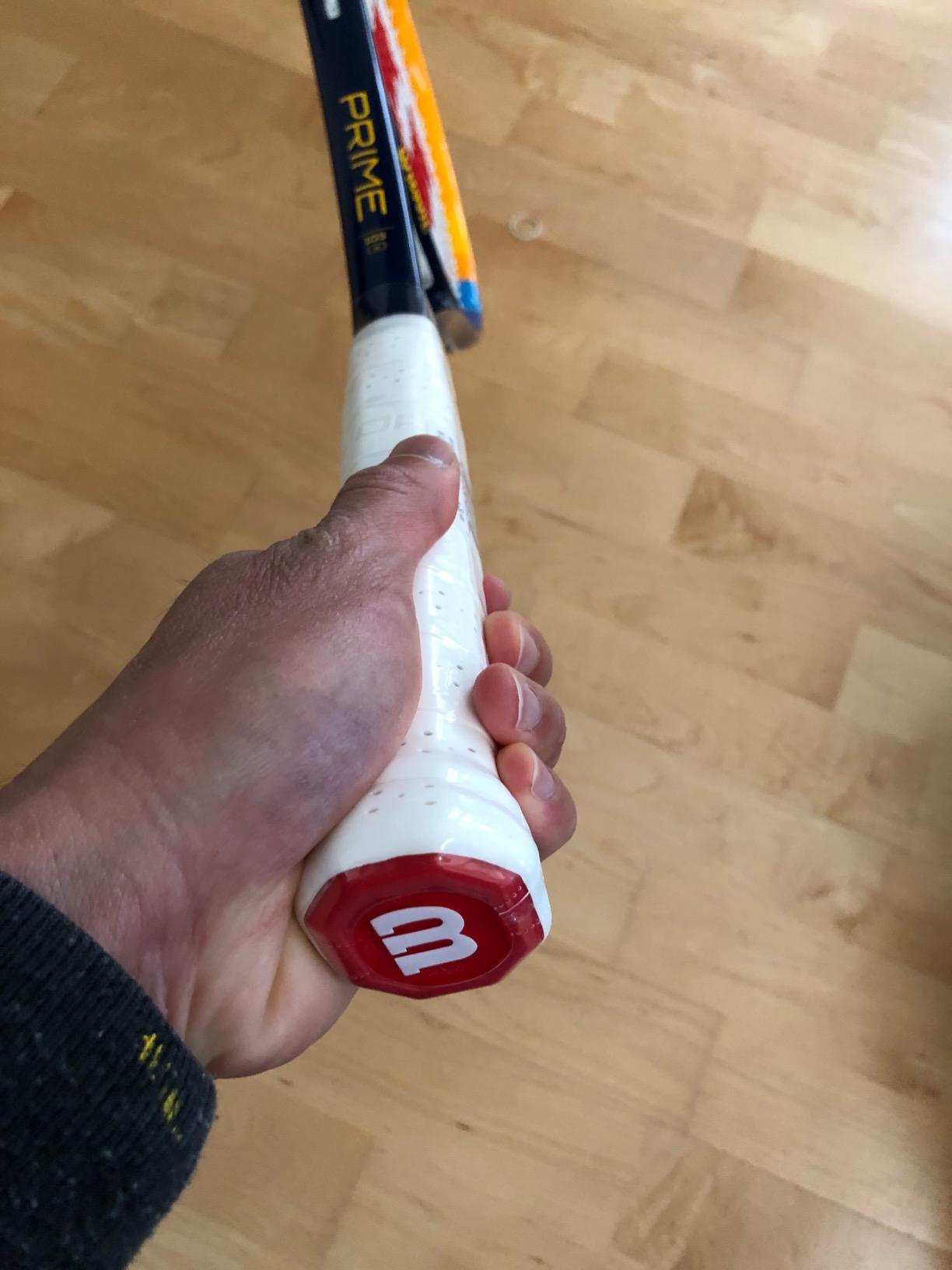
The PWS Perimeter Weighting System is what keeps the frame stable despite the smaller head. It balances weight around the perimeter so the ball leaves predictably, which is why the hit feels connected rather than scattered.
BLX Basalt Carbon Fiber is a vibration-dampening composite, and it shows up in the feel. Reviewers returning to tennis after a break mention the control and comfortable grip as the standout qualities, and the blue and orange colorway draws positive comments too.
Rating is 4.6 from 846 reviews, a smaller base than the leaders but a strong one. The absence of an included vibration dampener is the most common minor complaint.
One thing to check before buying: the listing shows this model as unstrung, while the technical notes describe it as pre-strung. Confirm what you are actually receiving.
Who this racket suits
Beginners who already have lessons behind them and want to start building touch. A midsize frame is a good bridge to the intermediate rackets, where control starts to matter more than raw forgiveness.
It also suits a recreational player who mostly wants a stable, quiet hit and is not chasing maximum power from a slow swing.
Where it falls short
A midsize head is the least forgiving option in this list. A genuine first-day player who is missing contact everywhere will find it harder than the 108 or 115 sq in frames.
Confirm the stringing status before ordering, and note that no dampener is included. Grip size is 4 1/4 inch, so it also runs small for a large hand.
8. LUNNADE 27 Inch Carbon Fiber Racket – Best for Teens and College Players
LUNNADE Adults Tennis Racket 27 Inch, Shockproof Carbon Fiber Tennis Racquet Light-Weight, Pre-Strung and Regrip, Suitable for Beginners to Intermediate Players
27 inch length
4 3/8 inch grip
Carbon fiber and aluminum
Pre-strung
Spare grip included
Pros
- Lightweight and well balanced for long practice sessions
- Carbon and aluminum build resists flexing
- Supplied grip tape stays secure
- Suits beginners through intermediate players
Cons
- Included carry bag is basic
- Manufacturer does not publish a precise racket weight
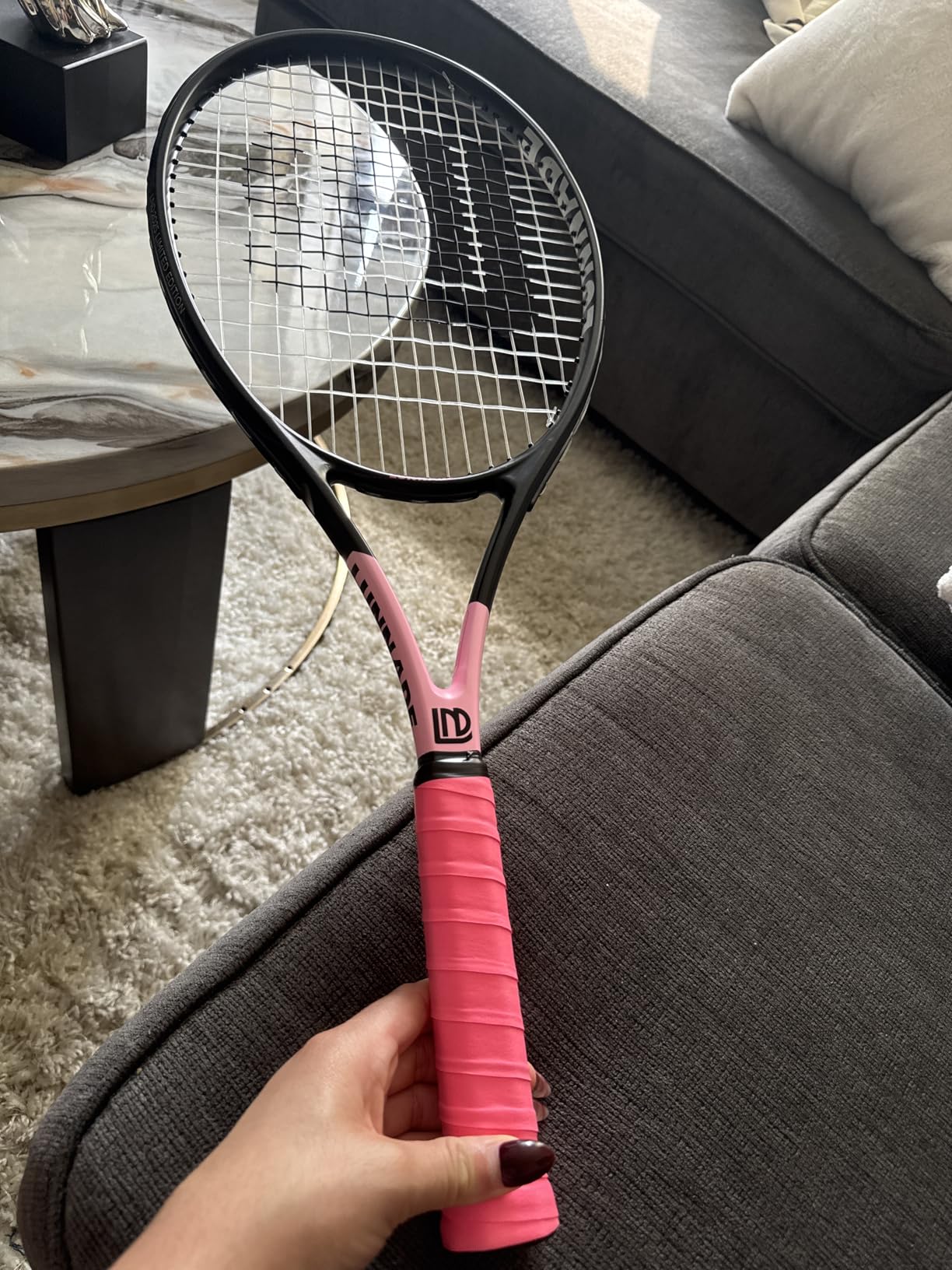
This frame was the one that came up most in the reviews written by parents buying for teenagers. The recurring note is that kids who get frustrated with a heavy frame quit quickly, and a light one keeps them on court.
The construction pairs a carbon fiber shaft with an aluminum frame, which gives more resistance to flexing than a pure aluminum frame. That matters for a player who is hitting hard without technique, because a frame that whips too much sends energy back into the arm.
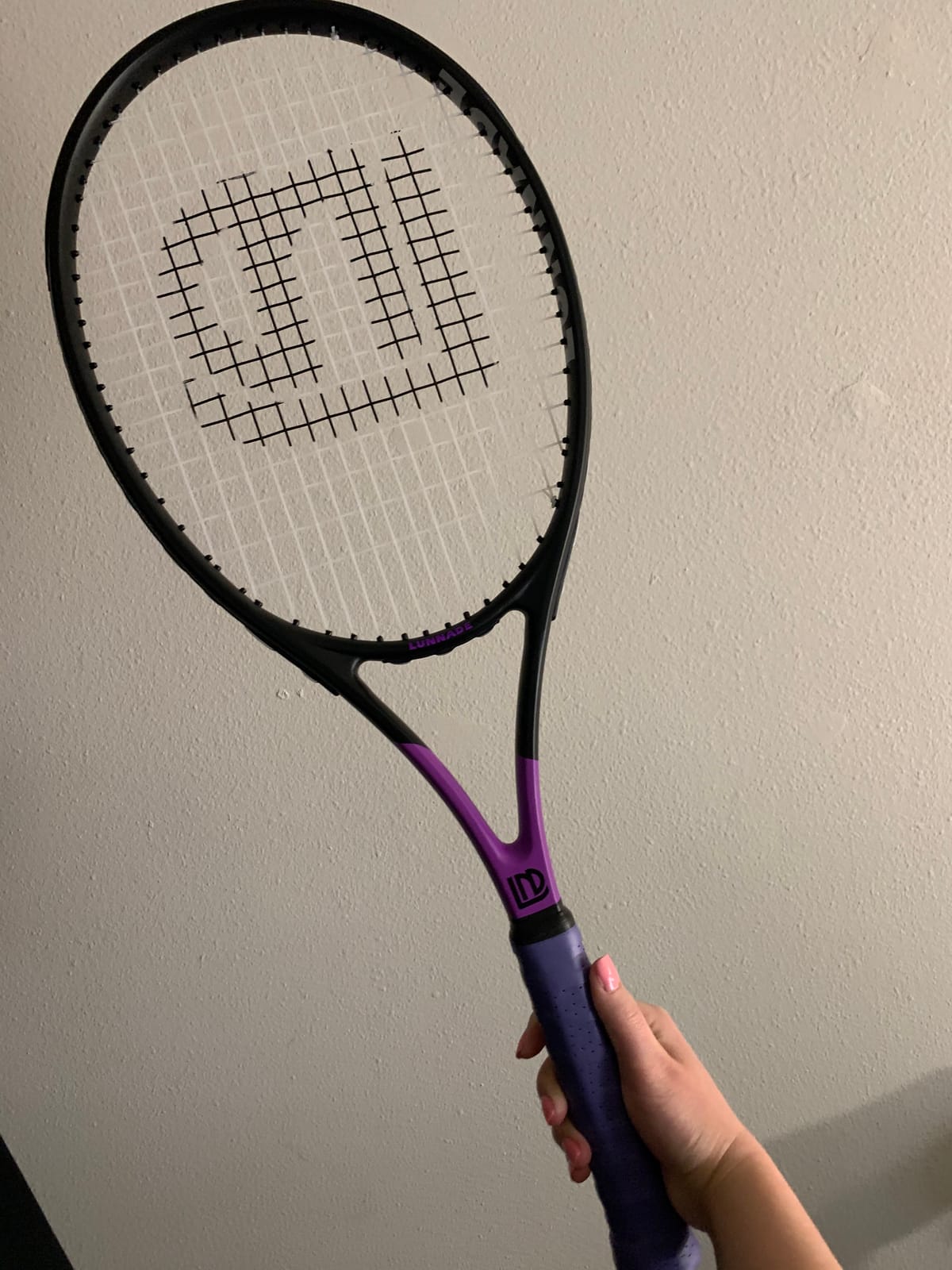
It arrives pre-strung with a replacement grip in the box, which solves both the setup problem and the first-time grip-wear problem in one go. Wrapping the spare grip is a five-minute job and a good first lesson in racket care.
Weight is described only as lightweight, with no precise figure published, so treat any specific number you see elsewhere with caution. The balance distribution is the more reliable selling point, and reviewers consistently call the frame well balanced and accurate.
Rating is 4.6 from 828 reviews. The build quality comes up often in the positives, particularly for the money, and the only recurring complaint is the basic carry bag.
Multiple color options are available, and at 27 inches with a 4 3/8 inch grip it suits an adult hand or a teenager moving up from a junior frame.
Who this racket suits
Teenagers and college students starting out, especially anyone playing as many hours as a school team can manage. The light weight and durable build tolerate long sessions.
It also works for an adult who wants one frame to cover the beginner stage and the intermediate stage without upgrading, since the manufacturer rates it for both.
Where it falls short
No manufacturer weight figure is published, so you are buying feel rather than a number. If you are matching a specific arm-comfort requirement, a frame with published weight data is the safer choice.
The included carry bag is thin. Beyond that, the honest limitation is the absence of published head size, which makes it harder to place between forgiving and controlled.
9. Teloon 27 Inch X-Blade Racket – Best for Color Choice
Teloon Recreational Adult Tennis Rackets-27 inch Tennis Racquet for Men and Women College Students Beginner Tennis Racket. (V10-White and Green)
102 sq in head
280g unstrung
335mm balance
Pre-strung 16x19 at 50 lbs
4 1/4 inch grip
Pros
- Twelve color options in the X-Blade range
- 280g unstrung weight is easy for beginners to swing
- Pre-strung at about 50 lbs so it is ready to play
- Mid-plus 102 sq in head gives a usable sweet spot
Cons
- Handle needs the supplied overgrip wrapped before use
- Aluminum build feels heavier than a graphite alternative
- No manufacturer warranty listed
Twelve colorways is not a gimmick when you are buying a racket for a teenager. It is frequently the deciding factor, and a player who is excited about their racket is a player who keeps practicing.
The specification is sensible underneath. At 27 inches with a 102 sq in mid-plus head and 280g unstrung, it lands right in the middle of this group, light enough for a beginner and structured enough to grow into.
It arrives pre-strung at roughly 50 pounds in a 16×19 pattern. That tension is on the softer side of factory stringing, which is exactly what a new player wants, more trampoline effect, more depth, less strain on the arm.
Balance is listed at 335mm, measured from the end of the handle, which puts it nearer the middle than the head-light frames. That gives a more neutral feel through contact, which some beginners prefer because the ball goes where they expect.
Rating is 4.6 from 760 reviews. College students and first-time players mention light weight, low tension, and color choice as the three things they like. The handle setup is the main complaint.
One more practical note: the manufacturer lists a replacement policy for mid-shipment quality problems, which is a small but real difference on a frame with no listed warranty.
Who this racket suits
Beginners who want a soft, easy-to-swing frame and care about how it looks. It is also a reasonable pick for anyone moving up from a junior racket, since 27 inches is the adult standard.
The supplied low string tension means you get a forgiving first racket without paying for a custom string job.
Where it falls short
The handle ships as a wood handle with a separate overgrip roll that you have to wrap before use. That is fine once and annoying if you were expecting to walk straight onto court.
Aluminum feels heavier and less lively than the graphite options, and there is no manufacturer warranty listed.
10. HEAD Metallix Attitude Elite – Best Factory Stringing
HEAD Metallix Attitude Elite Blue Tennis Racket – Pre-Strung Adult Tennis Racquet Lightweight – Midplus Headsize for Blend of Power and Control
102 sq in head
9.3 oz
27 inch length
16x19 synthetic gut
4 1/4 inch grip
Pros
- Factory strung in synthetic gut
- which is the softest string here
- Light 9.3 oz frame reduces wrist load in long matches
- 102 sq in head blends power and control
- Tighter control than the oversize frames
Cons
- Factory grip is loose and often needs replacing immediately
- Some reports of frame defects on arrival
- Aluminum composite feels heavier than a carbon alternative
Synthetic gut is the softest, most arm-friendly string you can put in a beginner racket, and this is the only frame in the group that comes factory strung with it. If elbow comfort is your top priority, that detail matters more than any other spec here.
At 102 sq in and 9.3 ounces, the Metallix sits between the ultralight oversize frames and the heavier mid-plus aluminum ones. It is a middle frame, and middle frames tend to age well with a player who is improving.
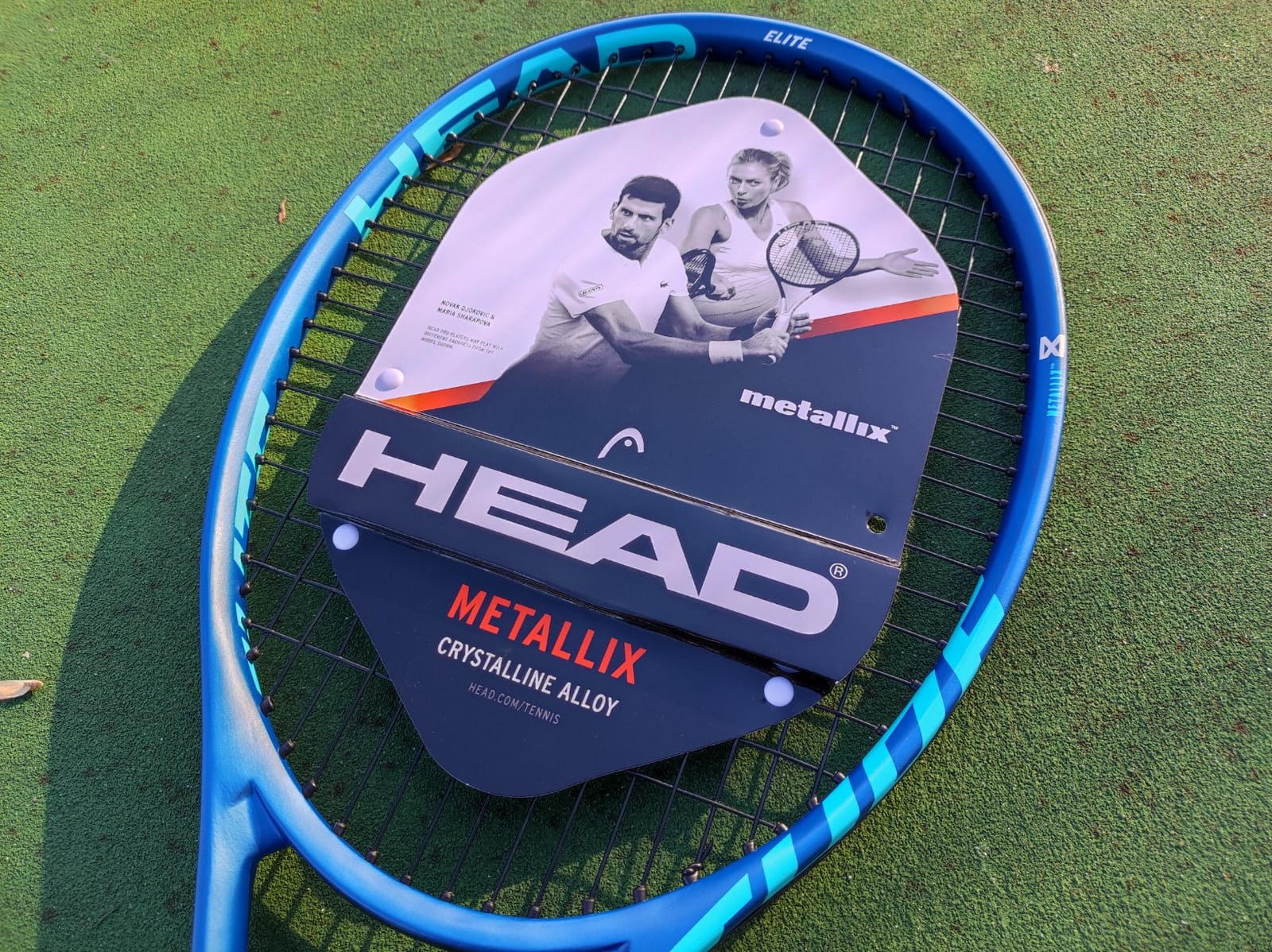
The 16×19 pattern is open enough for topspin without being so open that it feels like a sieve. The 1/3 inch head-light balance and 22mm beam width give a stable platform, and the head bias helps at the net.
Rating is 4.5 from 291 reviews, the smallest base in this list, but the one-star share is lower than most frames here. High school and beginner players specifically mention the light weight and the grip sizing.
Grip options come in 4 1/4 inch and 4 1/2 inch, which is a genuine advantage if your hand sits between the two most common sizes. There is a one year manufacturer warranty.
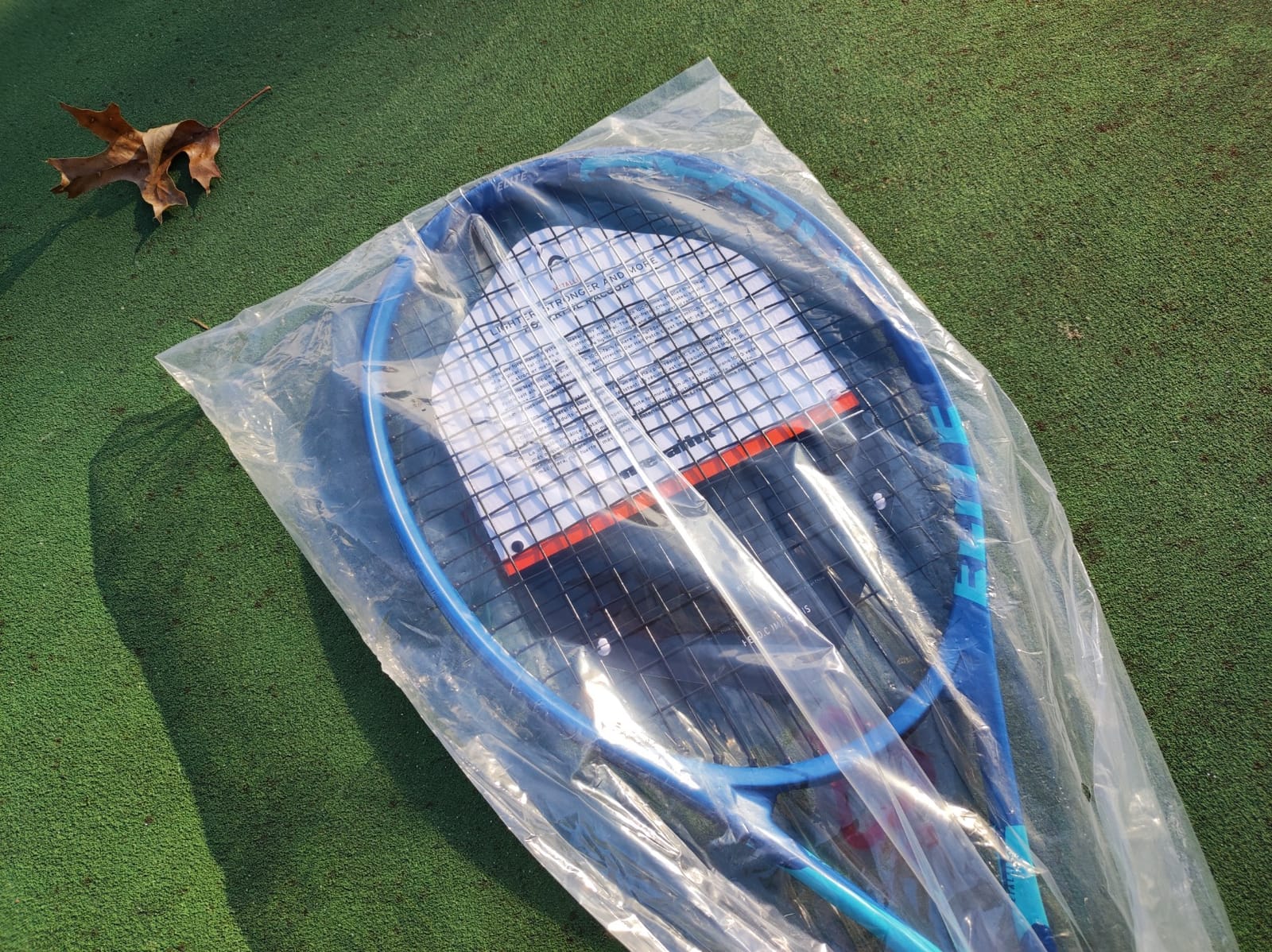
The consistent complaint is the factory grip, which owners say is loose and often needs replacing right away. Budget ten minutes and a few dollars for an overgrip.
Who this racket suits
Beginners with existing arm sensitivity who want a soft string without paying for a custom stringing job. A soft string is the first thing a coach changes for a player with elbow pain.
It also suits high school starters moving up from a junior frame, and anyone who wants a control-leaning racket without going all the way to a midsize head.
Where it falls short
Replace the grip on arrival. That is the one piece of maintenance that is genuinely non-optional here, and several owners found the supplied grip too loose from the first hit.
Some buyers also report frame defects on arrival, so inspect the frame carefully before your first session. The aluminum composite is also less lively than a carbon build at the same weight.
How to Choose Your First Tennis Racket
Four numbers decide almost everything: head size, strung weight, grip size, and string tension. Get those right and the brand barely matters. Here is how to think about each one.
Head size: bigger is more forgiving
Head size is measured in square inches and it is the single most important number for a beginner. A bigger head gives you a bigger sweet spot, the area where the ball leaves the strings predictably. Hit outside that area and the ball squirts. Make a beginner’s sweet spot large and most of those squirted shots turn into rallies.
Under 98 sq in is a control frame and it is not for a first racket. Between 100 and 105 sq in is a good all-beginner range, and the mid-plus frames in this list sit there. Between 106 and 115 sq in is true oversize, maximum forgiveness, and some coaches dislike it for a specific reason we will get to.
The counter-argument to oversize is worth hearing. A racket that powers every shot without effort lets a new player skip the follow-through, and the follow-through is where forehand technique actually lives. That is a real coaching argument, and it is why several of the frames here sit in the 100-108 range rather than at 115.
Weight: the number that decides arm comfort
Weight is quoted two ways, unstrung and strung, and the difference is roughly an ounce plus whatever strings you use. Beginners should be reading the strung figure, because that is what your arm actually carries.
Our guidance for a first racket: stay under 11 ounces strung, and aim lower if you have any history of elbow or shoulder trouble. The two lightest frames here are the Ti S6 at 8.6 ounces and the Metallix Attitude Elite at 9.3 ounces.
There is a real trade-off going lighter. A very light frame is easy to swing but can feel unstable on a hard-driven ball, and it gives you less feedback about how much power you actually applied. Some strong adult beginners prefer a frame around 12 ounces because it feels more solid and lets them hit without thinking about it.
Grip size: the decision you cannot undo
Grip size is measured in inches and labeled by number. The frame you want will be sold in a range, typically 4 1/8 inch as a size 1, 4 1/4 inch as a size 2, 4 3/8 inch as a size 3, and 4 1/2 inch as a size 4.
A grip that is too large is the most common beginner mistake and the hardest to fix. You hold the handle tighter to control it, that tension climbs the forearm, and the elbow pays. A grip that is too small is the opposite problem, and it is easier to solve because you can add an overgrip.
Frames in this group range from 4 1/8 inch, on the HIRALIY, to 4 3/8 inch, on the Wilson Federer and Tour Slam. If you are unsure, a mid-size handle with a fresh overgrip is a safe middle path. And if two rackets in this list ship with spare overgrips, use them, because they are there for exactly this decision.
Strings and tension: softness beats tension
For a beginner, a softer string at lower tension is the right call. Softer strings stretch more on impact, which returns more energy to the ball and absorbs more shock at the elbow. That is the whole principle behind the arm-friendly advice in this guide.
Factory stringing on these frames ranges from about 50 pounds on the Teloon to a stiffer setup on the oversize models. If a frame is pre-strung at a stiff tension, ask your local shop to restring it with a soft multifilament or synthetic gut at a lower tension. That single service does more for elbow comfort than changing frames.
Do not go higher than factory tension, and do not go much below 50 pounds, because an under-tensioned stringbed feels dead and gives you no control. A local shop can do this in an hour.
Pre-strung or unstrung
Pre-strung is the right answer for almost every beginner. You can take the racket to court the same day, and you have no idea what you are doing yet, so removing a decision is valuable. Most of the frames here arrive ready to play.
Unstrung makes sense in one specific case, when you are buying a very light frame and want a local shop to string it with a soft setup tuned for you. That is worth paying for on a high-end frame. On a budget aluminum frame, it is a hassle for no real gain.
Length: stick with 27 inches
Every adult frame in this group is 27 inches or longer, and that is the standard you want. The Ti S6 goes to 27.7 inches, which adds reach and power without demanding more from your swing. Players 12 and under should be on a 25 inch junior frame instead, which is a different category of product entirely.
What Each Tennis Racket Brand Is Known For
Three brands carry most of this list, and knowing their general character saves you from reading every spec sheet.
Wilson is the broadest beginner range here, from the heaviest aluminum value frame to the lightest graphite option. Wilson frames in this group skew toward control and connected feel, and the brand is strong on grip sizing, so it is a good first stop for anyone unsure about hand size.
HEAD owns the extremes in this list. The Ti S6 is the lightest and the biggest head, the Ti. Conquest gives you oversize at a mid weight, and the Metallix Attitude Elite is the softest stringing. HEAD is the brand to look at first if your priority is arm comfort.
The value brands in this group, Senston, HIRALIY, LUNNADE, and Teloon, all compete on the same proposition, a complete lightweight setup with accessories included. They are perfectly adequate frames for a first racket and the packages are genuinely useful, but published specs are thinner and build consistency varies more between units. If you want certainty, the named brands are the safer bet.
Best Rackets by Player Type
For seniors and anyone over 60: weight comes first. The Ti S6 at 8.6 ounces strung is the easiest frame here to swing overhead and has the biggest sweet spot to help with reach. The Senston set at 260-280g unstrung is the light alternative if you are buying two.
For women and smaller hands: start with grip size, not brand. The HIRALIY at 4 1/8 inch is the smallest handle in the list, and the Wilson Profile and Teloon at 4 1/4 inch are the next step up. The metallic pink and black HIRALIY colorways are also the most commonly requested.
For teens and high school starters: the Teloon offers twelve colors and a soft factory tension, and the LUNNADE is built light and durable with a spare grip in the box. Both are 27 inch adult frames, which is the right length once a player is past the junior stage.
For tennis elbow and arm pain: soft stringing and low weight are the levers, in that order. The Metallix Attitude Elite is the only frame here factory strung in synthetic gut. The Ti S6 is the lightest and has the largest sweet spot to absorb shock. And on any frame, ask your local shop to restring softer before you buy a different racket.
For athletic beginners with strength: a frame around 11 to 12 ounces strung will feel more solid and give you more feedback on your own power. The Wilson Tour Slam at 16 ounces is the heaviest option here and works well for a strong adult who wants a stable platform.
For two-player households: the Senston and HIRALIY sets both arrive with two rackets plus accessories, which removes the whole question of what your partner plays with.
For a parent buying a first racket with no idea: the LUNNADE or the Teloon. Both are adult length, both come pre-strung, both come in colors your kid will accept, and neither requires a decision you might get wrong.
Footwear matters at least as much as the frame for anyone with foot or knee trouble. If plantar fasciitis is an issue for you, our guide to tennis shoes for plantar fasciitis covers the support profiles that hold up during lateral court movement.
When to Upgrade From a Beginner Racket
Upgrading too early is a common and expensive mistake. Most beginners who buy a control frame in month one end up struggling with contact and blaming themselves. Stay with a forgiving frame until your contact is reliable.
There are five signs you are ready. First, you are hitting a decent number of groundstrokes in the middle of the court rather than scraping it. Second, you can serve consistently without thinking about the toss. Third, you have a dependable volley. Fourth, opponents start moving you off the center of the court. Fifth, and most importantly, you have hit regularly for at least a season.
When you get there, the upgrade path is a mid-plus head around 98 to 100 sq in with a weight you can still handle comfortably, usually between 300 and 320 grams strung. That is the step up from forgiveness to control, and it is a bigger change in feel than most beginners expect.
We have covered the intermediate tier separately, and the frames there are worth a look once you reach the fifth sign.
Our guide to the best tennis racquets for intermediate players walks through that next step, including the head size and weight ranges to look for.
One last bit of advice that came up repeatedly in forum threads we checked: a used or demo frame is a genuinely good way to find out what you like before spending. Play a few different ones at a club or a public court, feel the weight and the head size difference in your hands, then buy the frame that you did not want to put down.
Frequently Asked Questions
What is the best tennis racket for beginners in 2026?
The Wilson Federer Adult Recreational Racket is the best overall pick, with a 4.7 rating across more than 4,500 reviews, a 295 g pre-strung frame, and a midplus head that gives beginners a larger sweet spot. If forearm comfort is your priority, the HEAD Ti S6 at 8.6 ounces strung with a 115 sq in head is the more protective choice.
What size tennis racket head should a beginner use?
Start between 100 and 105 square inches. That range gives a beginner a genuinely large sweet spot without the very open feel of a 115 sq in frame. Under 98 sq in is a control frame and is a poor first racket, because mistimed contact will send balls everywhere. A beginner should read the strung weight too and keep it under 11 ounces.
What weight tennis racket is best for a beginner?
Under 11 ounces strung, and lower if you have any history of elbow or shoulder trouble. The lightest frames in this guide are the HEAD Ti S6 at 8.6 ounces strung and the HEAD Metallix Attitude Elite at 9.3 ounces. A heavier frame around 12 ounces can feel more stable, but it forces you to swing harder than your technique supports, which is where arm strain begins.
Should a beginner tennis racket be pre-strung?
Yes, for almost every first racket. A pre-strung frame can go straight onto the court with no stringing cost and no waiting, and removing one decision is worth more than any spec upgrade when you have never held a racket before. Unstrung makes sense only if you are buying a lightweight frame and want a local shop to string it with a soft setup tuned for you.
When should a beginner upgrade their tennis racket?
Wait until you have played regularly for at least a season and you can hit groundstrokes in the middle of the court, serve consistently, and volley with some reliability. Then step up to a midplus head of roughly 98 to 100 sq in at 300 to 320 grams strung. Upgrading earlier usually means buying control before you have earned it, and beginners who do that tend to quit.
The Verdict: Which Beginner Racket Should You Buy
If you take one recommendation from this guide, take the Wilson Federer Adult Recreational Racket. More than 4,500 reviews at 4.7 stars is the most proven combination in the list, it is pre-strung, and at 295 g it will not punish a slow swing.
Buy the HEAD Ti S6 instead if your arm is the concern. At 8.6 ounces strung with a 115 sq in head, it is the most protective frame here and the most common recommendation in the forums we checked. If you are not sure you will stick with the sport, the Wilson Tour Slam is the honest value pick, and the Senston and HIRALIY sets solve the whole problem if two people are starting together.
Whatever you choose, get the grip size right. It is the one decision you cannot reverse cheaply, and it is the one that decides whether your arm is comfortable in month three. Then go find a court. The best tennis rackets for beginners in 2026 are the ones that get out of your way and let you learn the swing, and every frame on this list can do that.
Before your first session, it is worth reading our guide to the best tennis shoes, since court-specific footwear does more for injury prevention than most players expect. And if you want to practice between lessons, our tennis ball machine buying guide covers the machines worth considering once you are hitting consistently.