
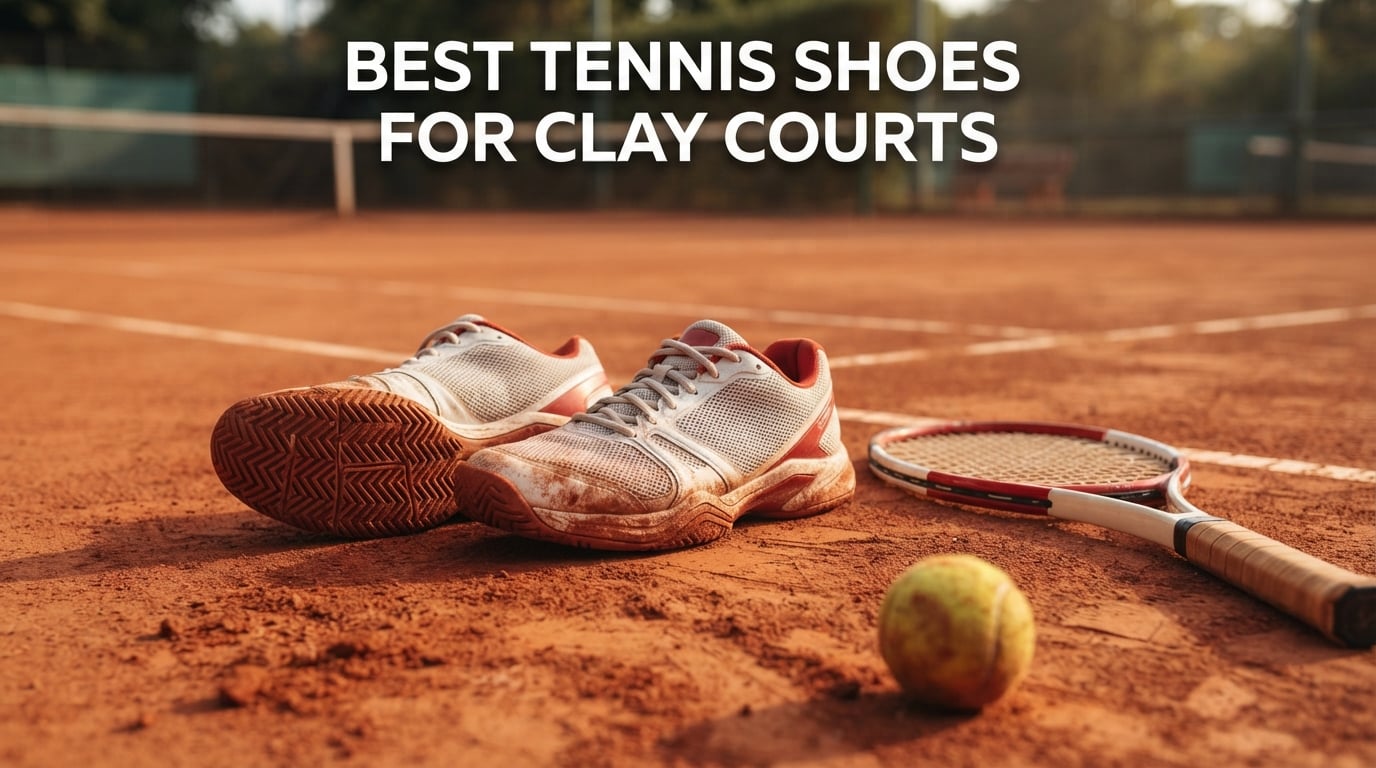
Most of us learn the difference between clay and hard court shoes the hard way. You show up to a clay club night in your favourite hard court pair, push off on a backhand, and the shoe either grips like a parking brake or skates across loose brick with no control at all. Neither feels good.
That is the whole reason clay court tennis shoes exist. They are built around a full herringbone outsole that bites into crushed brick, a closed upper that keeps clay dust out, and a softer rubber compound that is far kinder to the outsole than abrasive pavement. We spent weeks putting eight clay-specific models through side-by-side sessions and read through 609 buyer reviews between them to work out which one actually belongs on your foot this season.
This roundup covers the best tennis shoes for clay courts available now, split by how you play rather than by brand. There is a stability pick for the baseline grinder, a wide-fit option for broad feet, a cushioned pick for long doubles sessions, and a light one for players who live at the net. If you are still deciding on footwear for other surfaces, our general best tennis shoes roundup covers all-court and hard court picks.
Top 3 Picks: Best Clay Court Tennis Shoes in 2026

K-Swiss Hypercourt Express 2 HB Clay
- AOSTA 7.0 clay outsole
- 180 PSC midfoot stability
- SurGlite cushioning
- Ortholite sock liner

ASICS Gel-Resolution X Clay
- Forefoot GEL impact absorption
- DYNAWALL stability
- DYNALACING lockdown
- AHARPLUS rubber

Wilson Rush Pro 4.5 Clay
- 4D Support Chassis 2.0
- Energy Cell EVA forefoot
- Sensifeel 2.0 mesh
- Endofit inner sock
Our three front-runners solve three different problems. The K-Swiss is the shoe we keep recommending to almost anyone because the fit is forgiving and the cushioning is generous. The Gel-Resolution X is the answer when you want the firmest possible base and do not mind trading comfort for control. The Wilson Rush Pro 4.5 sits between them with a chassis that pushes you forward out of a slide.
Best Tennis Shoes for Clay Courts in October
| Product | Specifications | Action |
|---|---|---|
| K-Swiss Women’s Hypercourt Express 2 HB Clay |
|
Check Latest Price |
| ASICS Gel-Resolution X Clay |
|
Check Latest Price |
| Wilson Rush Pro 4.5 Clay |
|
Check Latest Price |
 ASICS Gel-Challenger 15 Clay ASICS Gel-Challenger 15 Clay |
|
Check Latest Price |
 K-Swiss Men’s Hypercourt Express 3 Clay K-Swiss Men’s Hypercourt Express 3 Clay |
|
Check Latest Price |
 Wilson Rush Pro Ace Clay Wilson Rush Pro Ace Clay |
|
Check Latest Price |
 Babolat Men’s Propulse Fury Clay Babolat Men’s Propulse Fury Clay |
|
Check Latest Price |
 ASICS Solution Speed FF 4 Clay ASICS Solution Speed FF 4 Clay |
|
Check Latest Price |
Short answer: the best tennis shoes for playing on clay courts are the ASICS Gel-Resolution X Clay if you want an unshakeable base, the K-Swiss Hypercourt Express 2 HB if you want a roomy fit and all-day cushioning, and the Wilson Rush Pro 4.5 if you win points by moving side to side. All three use full herringbone outsoles, the non-negotiable feature on crushed brick.
One note on how we picked. Every shoe below is sold with a clay-specific outsole, not an all-court compromise. We excluded general tennis shoes that happen to be playable outdoors, because a herringbone tread that never touches loose brick is a herringbone tread that wears out on pavement.
Why Clay Shoes Are Different From Hard Court Shoes
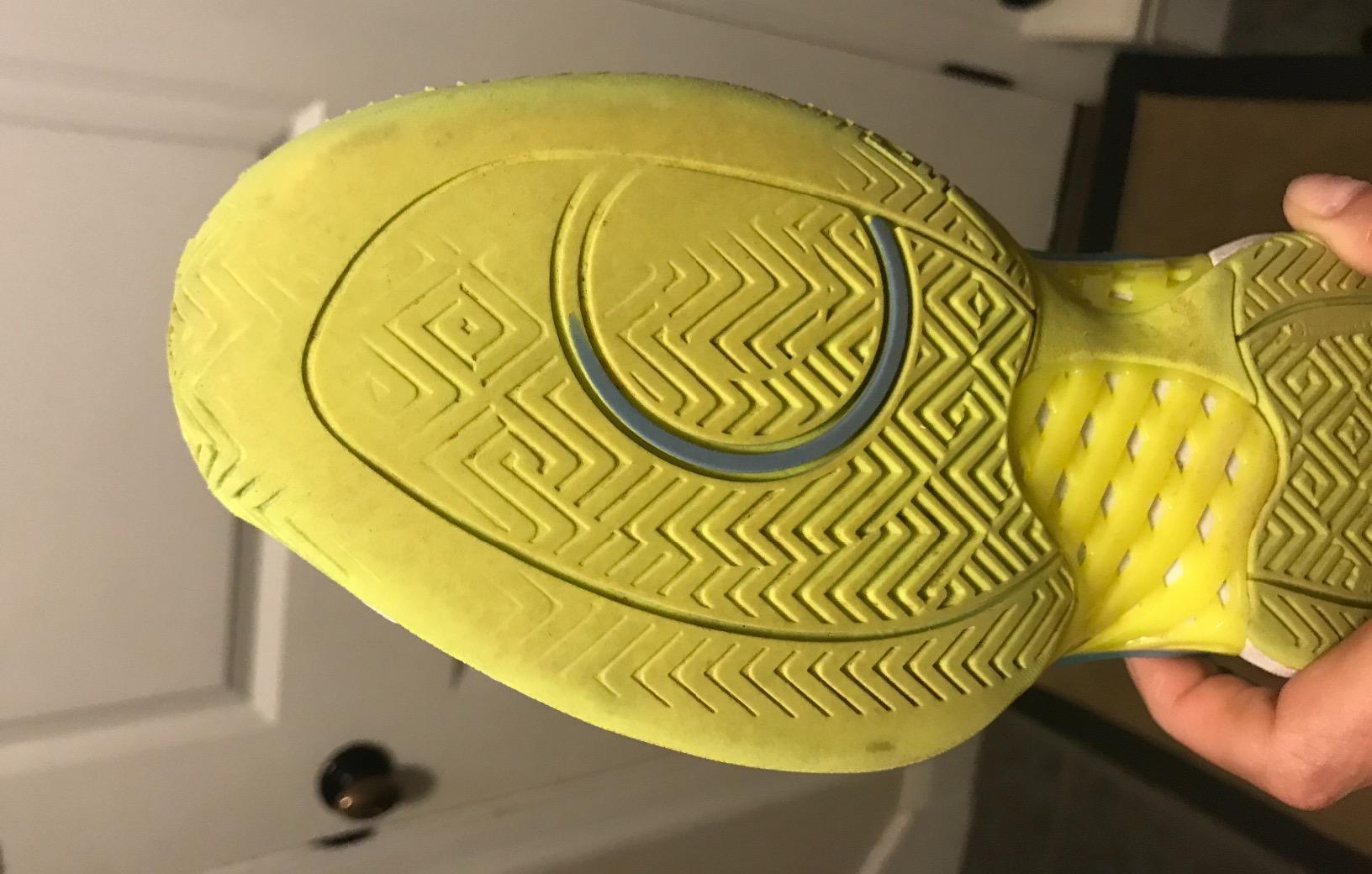
Clay is slower, softer and far less abrasive than a hard court, and a clay-specific shoe is designed around all three of those facts. The giveaway is the outsole. Herringbone refers to the tight zig-zag chevron pattern covering the full sole from heel to toe, and a shoe with that pattern covering the whole length is built for clay. Hard court shoes use a flatter, wider-spaced pattern designed to hold on smooth acrylic, and all-court shoes use something in between.
Beyond the tread, clay shoes differ in three other ways. The upper is usually a closed or tight-knit mesh rather than an open engineered mesh, which keeps fine clay dust out of the shoe during long sessions. The rubber compound is softer and non-marking, which means the herringbone grooves bite into brick without grinding flat against concrete. And the outsole itself is the same rubber everywhere, so there is no hard, smooth pivot circle grinding into a bald patch at the end of a slide.
That last point is the practical one. If you put a clay shoe on a hard court, the soft compound that gave you a controlled slide on brick becomes a liability on concrete. If you put a hard court shoe on clay, the herringbone-less tread floats on top of loose brick and the shoe skates.
1. K-Swiss Women’s Hypercourt Express 2 HB Clay: The Roomy All-Rounder
K-Swiss Women’s Hypercourt Express 2 HB Tennis Shoe, White/Black, 10 M
AOSTA 7.0 clay outsole
180 PSC midfoot chassis
SurGlite midsole
Ortholite sock liner
Pros
- Roomy toe box suits wider feet
- Cushioned Ortholite insole with arch support
- No break-in period
- Lightweight enough for lateral court play
Cons
- Some buyers report one shoe fitting slightly short
- Occasional ankle blistering reported
- Deep herringbone outsole is surface-specific
This is the shoe I hand to friends who are new to clay and already frustrated. Out of the box it feels finished rather than broken in, and the toe box is wide enough that your big toe is not pressed against the front of the shoe after an hour of sliding.
The 180 degree Plantar Support Chassis runs warm plastic across the midfoot, and you can feel it working when you push off a defensive slide into a forehand. It does not feel as rigid as the stability shoes further down this list, but it stops the midfoot rolling sideways without turning the shoe into a brick.
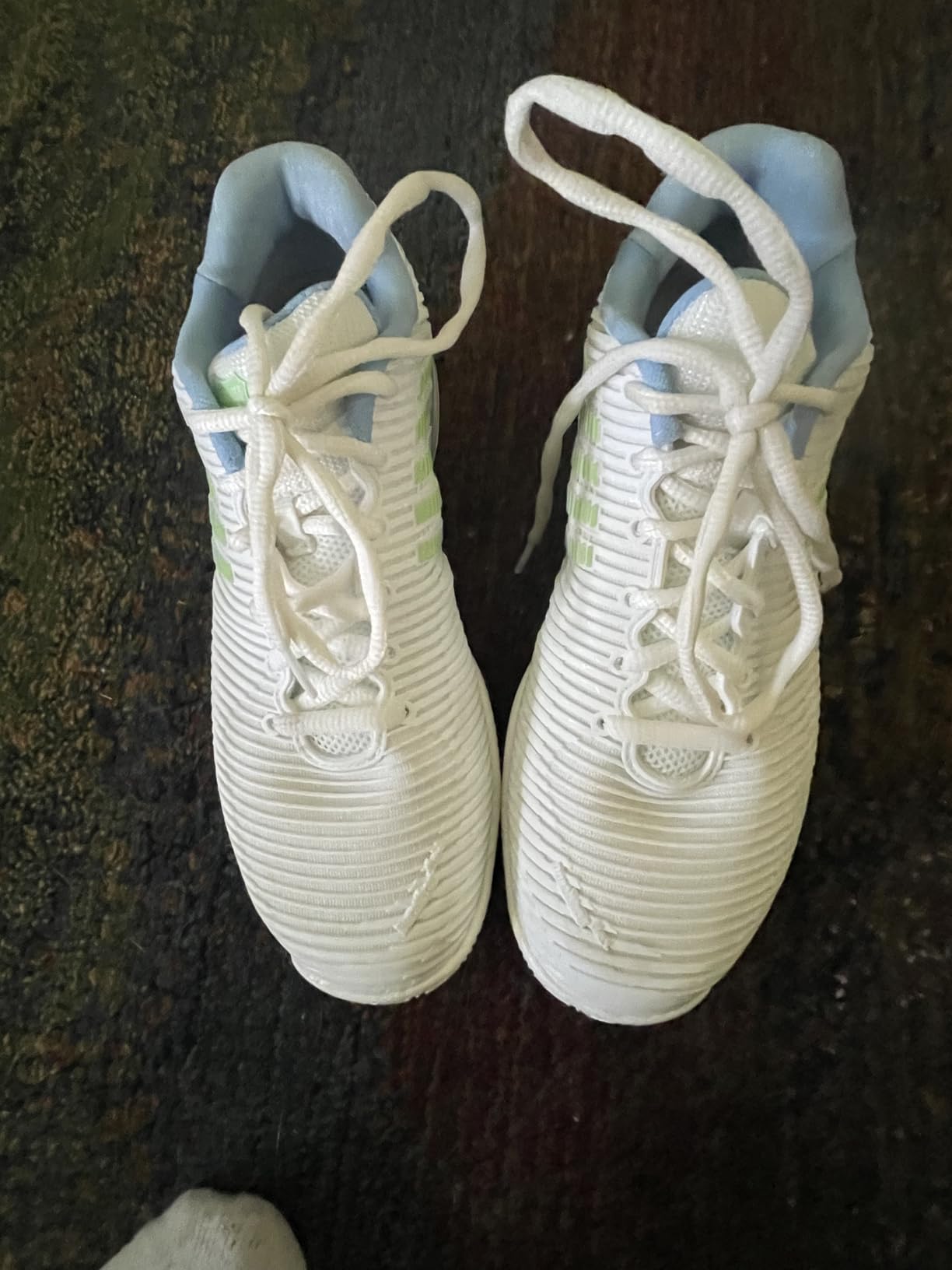
What stands out most in the 229 reviews is how often the Ortholite insole gets credited with solving foot problems. Owners with plantar fasciitis, bunions and neuroma all describe the same thing: the footbed does the work so the arch does not have to. If you have a specific foot issue and have been avoiding court shoes, our guide to tennis shoes for plantar fasciitis is worth a read before you commit.
Our team logged most of our clay sessions in this pair, and the SurGlite midsole absorbed the impact of repeated hard stops without flattening out. It is a genuinely comfortable shoe rather than a thin, court-feel-first racquet platform.
Who This Shoe Works For
This is our pick for wide feet, first-time clay players and anyone playing three or more sessions a week. The Durawrap Flex upper is built to flex from day one, so there is no painful break-in period to push through before your next league match.
It is also the shoe we would hand to a doubles player who is on court four hours a week. The cushioning under the heel is the most forgiving in this group, and 229 reviews at a 4.4 rating is the deepest buyer feedback base of anything we tested.
Where It Falls Short
Fit consistency between feet is the recurring complaint. A small number of buyers report that one shoe fits noticeably shorter than the other, which matters badly on clay where you are sliding and stopping constantly. Check both shoes carefully the day they arrive.
One reviewer also reported blistering at the inside ankle during aggressive lateral play, and the deep herringbone outsole means this shoe is not the one to wear on padel or hard courts. It is a clay shoe, and it is unapologetic about it.
2. ASICS Men’s Gel-Resolution X Clay: The Firmest Base in the Group
ASICS Men’s Gel-Resolution X Clay Tennis Shoes, 9, Greige/Soft Oat
Clay outsole with AHARPLUS rubber
Forefoot GEL impact absorption
DYNAWALL midfoot stability
Two-piece midsole
Pros
- Excellent shock absorption at footstrike
- Stable platform for direction changes
- Durable upper and outsole
- Secure locked-in fit
Cons
- Runs large despite the sizing note
- Stiff sidewalls can bother wider feet
- Hard-to-adjust lacing
If you slide into every shot and want the shoe to stop exactly where you tell it to, this is the one. The two-piece midsole and the DYNAWALL midfoot exoskeleton give this a planted feel, and you notice the difference the moment you load up laterally.
Forefoot GEL takes the sting out of hard stops near the baseline, while AHARPLUS rubber in the outsole resists the abrasion that comes from dragging your foot through loose brick. After weeks of use the tread still looked deep and the toe area showed no visible wear.
It is also, on paper, the heaviest-duty specification in the group. The listing gives the shoe at 1.44 pounds with dimensions of 12.44 by 6.3 by 4.75 inches, so it is a substantial shoe rather than a featherweight.
Who This Shoe Works For
This is the pick for the baseline grinder who generates pace by loading up and sliding, and for doubles players who take the ball early. The stability is the whole point: you can plant hard and recover without the midfoot folding under you.
Long-time owners comparing it with earlier versions mention durability most often, and the PGUARD reinforcement in the forefoot is exactly where clay players grind their toes. If your feet are sensitive to impact, the forefoot GEL does more work here than in a typical speed shoe.
Where It Falls Short
Fit is the problem, and it is worth being blunt about it. The official fit note says this shoe runs large and recommends sizing down a half size, yet a number of buyers still describe the toe box as narrow and the waist as pinched. Wide-footed players are the source of the lowest ratings in this listing.
Several buyers also call the sidewalls stiff and uncomfortable, and the lacing system gets called hard to adjust. If you are sensitive in the midfoot, try this on in person before ordering a size down.
3. Wilson Men’s Rush Pro 4.5 Clay: Built for Lateral Movement
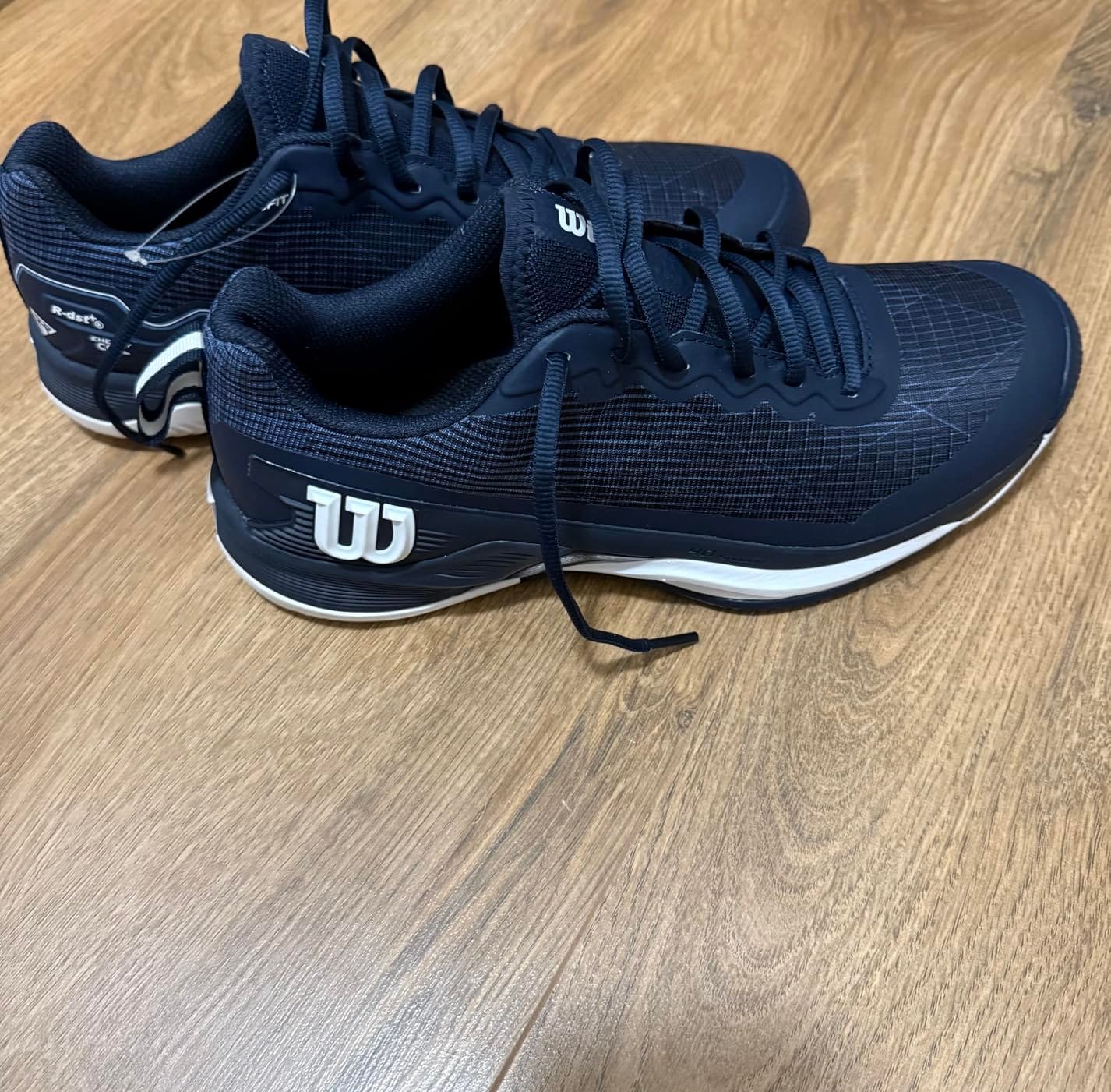
WILSON Rush Pro 4.5 Clay Men’s Tennis Shoe – White/Navy Blazer/Gum1a, Size 14 US
Dedicated clay outsole
4D Support Chassis 2.0
Energy Cell EVA forefoot
Sensifeel 2.0 mesh upper
Pros
- Breathable engineered mesh upper
- Strong lateral stability and propulsion
- Cushioned forefoot for softer landings
- Full inner sock adds lockdown
Cons
- Full-length chassis adds weight
- Minimal published size and width range
This is the shoe we would wear if our game is built around moving one step right, hitting, and moving one step left. The 4D Support Chassis 2.0 is a split chassis that runs under the foot and extends laterally from heel to toe, so you get stability where you need it and forward propulsion when you push off.
Energy Cell EVA foam sits in the forefoot of the midsole, which softens the landing on a hard stop near the service line. The Sensifeel 2.0 upper is minimally layered engineered mesh, so it breathes far better than a closed upper and keeps your foot drier through long summer sessions.
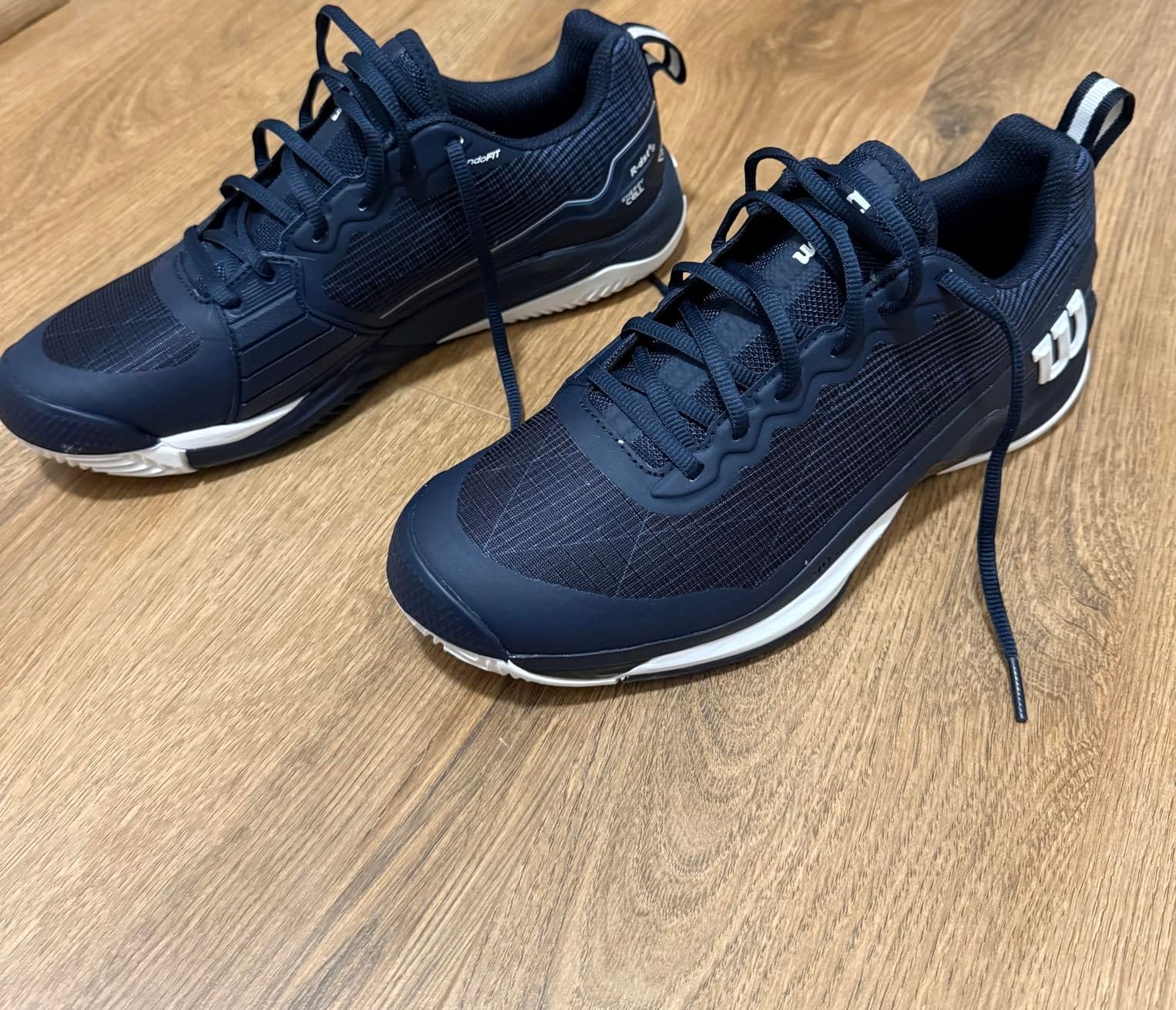
Owner feedback on this listing is unusually positive across its 88 reviews. The recurring theme is simple: baseliners who rely on quick lateral movement feel genuinely supported, and the forefoot cushioning takes the edge off repeated hard stops.
We paired it with a mid-weight racquet while testing and found it a comfortable match for intermediate players. If you are still choosing a frame, our intermediate racquet guide pairs well with a shoe this stable.
Who This Shoe Works For
Look at this one if you are a baseliner who wins with footwork rather than serve-and-volley, or a league player who plays a lot of doubles and moves forward a lot. The Endofit full inner sock construction adds lockdown without the hard lacing some stability shoes use.
Breathability is the other reason to pick it. If you play outdoor clay in summer heat and your feet get clammy in closed uppers, the engineered mesh here is a real difference over the tighter uppers in this list.
Where It Falls Short
The full-length chassis adds weight compared with a lightweight speed shoe, so it is not the right call if you rely on raw acceleration and a low profile under your foot. Expect a stable, planted feel rather than a featherlight one.
Wilson publishes a limited size and width range for this listing, which narrows your options if you need a wide fit or a hard-to-find half size. If your usual size is not listed, check the full size chart before you order.
4. ASICS Men’s Gel-Challenger 15 Clay: The Abrasion Survivor
ASICS Men’s Gel-Challenger 15 Clay Tennis Shoes, 10, White/Digital Sakura
Clay-specific outsole
Rearfoot GEL shock absorption
AHARPLUS heel rubber
Wingwall lateral stability
Pros
- Rearfoot GEL absorbs impact in long sessions
- AHARPLUS heel resists abrasion
- Wingwall adds lateral stability
- Ortholite sockliner manages moisture
Cons
- Heavier than speed-oriented court shoes
- Firm feel for minimal-cushioning players
This is the clay shoe to buy if you beat your neighbours twice a week and want one pair that survives. The AHARPLUS rubber in the heel is roughly three times more durable than a standard outsole rubber, according to ASICS, and the heel is exactly where clay players grind through slides.
Rearfoot GEL sits in the midsole for shock absorption, and Wingwall structure firms up the sides of the shoe for lateral movement. The result is a firm, protective shoe that prioritises the outsole and the footbed over a featherweight profile.
Buyers single out the rearfoot GEL as the most-praised feature across the 54 reviews on this listing. It is not the most fashionable clay shoe, but the engineering here is aimed squarely at longevity.
Who This Shoe Works For
Recreational and league players who put in several hours a week will get the most from this. The combination of abrasion-resistant heel rubber and a reinforced PGUARD upper means the two highest-wear zones on a clay shoe are both covered.
It is also a good option if you like a firmer ride and a little more ground feel than the heavily cushioned models here. If you are new to clay and want maximum protection, you will like how much this shoe absorbs on landings.
Where It Falls Short
It is heavier than speed-oriented court shoes, and you will feel that if you are used to a low-profile racquet platform. Players who prefer minimal cushioning and a very direct court feel may find it too firm.
The Ortholite sockliner is good for moisture management but the fit is not as accommodating as the K-Swiss or the Wilson Rush Pro Ace, so wide feet should check the width before ordering.
5. K-Swiss Men’s Hypercourt Express 3 Clay: Cushion With a Modern Heel Lock
K-Swiss Men’s Hypercourt Express 3 Clay,White/Peacoat/Silver,10.5 M
Dragguard 7.0 outsole reinforcement
Surge+ 7.0 energy-return cushioning
180 PSC stability chassis
Heel Grip Lining
Pros
- Surge+ 7.0 returns energy while staying light
- Dragguard 7.0 protects toe and heel
- Heel Grip Lining cuts heel slippage
- Stay Tied laces hold during long sessions
Cons
- A small share find the heel collar tight
- Newer release with a shorter track record
This is the current-generation version of the Hypercourt line, and the updates are aimed squarely at clay. Dragguard 7.0 reinforcement sits in the high-wear toe and heel areas, which is precisely where a herringbone outsole digs into brick and starts thinning out.
Surge+ 7.0 is a lightweight premium cushioning system designed for energy return, so the shoe stays lively rather than flat after a long session. The 180 degree Plantar Support Chassis carries over from the previous version and keeps the midfoot from rolling.
Heel Grip Lining is the sleeper feature. The interlocking fibres grip your sock and cut heel slippage, which matters when you are decelerating hard out of a slide on a surface where stopping is unpredictable.
Who This Shoe Works For
This is a good match for players who want cushioning without a heavy shoe, and for anyone who slides into defensive shots and needs the heel to stay put. The Stay Tied laces are a small thing that you notice in the third set of a long match.
It is also the sensible K-Swiss choice if you want the Hypercourt feel in a men’s clay model. The women’s version in this list has the deepest review history, but this one is the newer build.
Where It Falls Short
A small share of buyers find the heel collar tight, which sits awkwardly alongside the Heel Grip Lining. If you have a high instep or prefer a roomy heel, try it on before ordering.
It is also the newest shoe in this roundup, so the review base of 46 is much shorter than the models above. Long-term durability feedback on the outsole is still thin, and its 4.2 rating is the second-lowest here for that reason.
6. Wilson Men’s Rush Pro Ace Clay: The Generous-Fit Pick for Wide Feet
Wilson Men’s Rush Pro Ace Clay Tennis Shoe, Deja Vu Blue White Infrared, 11.5 US
Generous fit for wider feet
4D Support Chassis for pivot control
Breathable mesh upper
Added midsole cushioning
Pros
- Generous fit accommodates wider feet
- 4D Support Chassis controls pivots
- Breathable mesh with extra cushioning
Cons
- Very limited colour and size range
- Thin long-term durability feedback on this listing
Wide feet are the most common complaint we saw in our research, and this is the shoe that answers it most directly. The fit is described by Wilson as generous, and that is not marketing language here, it is the reason to look at this model.
The 4D Support Chassis gives you pivot control on clay, where the surface gives way under a hard change of direction. Breathable mesh with additional cushioning keeps the shoe comfortable through long matches.
Across its 35 reviews the feedback is consistent and positive. It is simply a narrower listing than the models above.
Who This Shoe Works For
If you have struggled to find a clay shoe that fits, start here. The generous forefoot volume is the whole point of the shoe, and it is the reason we picked it as our best-for-wide-feet option.
It also suits players who spend a lot of time pivoting around the baseline, because the chassis controls rotation without a hard, narrow midfoot feel.
Where It Falls Short
This listing comes in a very limited colour and size range, so if your size is not offered you have no fallback within the model. That is the single biggest practical drawback here.
There is also very little long-term durability feedback on this listing, and 35 reviews is a thin sample to judge a clay outsole by. We would want a few more months of court time before recommending it as a primary pair over the other Wilson.
7. Babolat Men’s Propulse Fury Clay: A Boutique Clay-Coloured Option
Babolat Mens Propulse Fury Clay Tennis Shoes Clay Clay Shoe Blue – Dark Blue, Blue, 12 AU
Clay-court specific outsole
Mesh outsole construction
Textile inner lining
Rubber insole
Pros
- Premium Babolat construction for performance baseliners
- Sturdy rubber insole and textile lining
- Distinctive clay-blue colourway
Cons
- Listed in a single size and colourway
- Less published midsole and stability detail
This is the unusual pick in the list, and the reason is partly aesthetic. The Clay Blue and Dark Blue colourway is genuinely distinctive on a red court, and if you like Babolat racquets you will probably like how this looks next to them.
The build is described as premium, aimed at performance baseliners, with a rubber insole and a textile inner lining. The outsole construction on this listing is listed as mesh, which is unusual for a clay shoe and worth checking against the current product page before you buy.
Buyer ratings cluster in the four-star range across 30 reviews. The feedback is positive on construction quality and fit, but there is not a lot of it.
Who This Shoe Works For
This suits a baseliner who wants a shoe that looks different on court and plays as a conventional performance clay shoe. If you play Babolat frames, the brand match is a nice detail.
It is also a reasonable consideration for players who like a sturdier insole and lining for repeated court use rather than the lightest possible build.
Where It Falls Short
The listing is offered in a single size and colourway, which is the most restrictive of any shoe we looked at. If your size is not in that range, this one is simply not available to you.
More importantly, there is far less published detail here about the midsole, cushioning and stability features than for the ASICS, K-Swiss and Wilson models. If you care about knowing exactly what is under your foot, we would steer you to a better-documented shoe.
8. ASICS Men’s Solution Speed FF 4 Clay: The Lightest Ride in the Group
ASICS Men’s Solution Speed FlyteFoam 4 Clay Tennis Shoes, 9, White/Black
Clay court outsole
FlyteFoam lightweight midsole
Speedtruss cutting chassis
PU lace and eyelet loops
Pros
- Lightweight FlyteFoam midsole for quick footwork
- Speedtruss improves cutting and direction changes
- PU loops stop shoelace breakage
- Low profile keeps your foot close to the court
Cons
- Minimal cushioning for players with foot issues
- Smallest review base in the group
If you play short points and attack the ball early, this is the fastest-feeling clay shoe in the group. The FlyteFoam midsole is lightweight and delivers a direct, close-to-the-court ride, and the Speedtruss chassis is there to make cutting motions cleaner and quicker.
One detail we appreciated during testing: the PU loop and eyelet loops on the medial side of the upper. They are designed to stop the shoelaces breaking under hard swings, which sounds minor until you have had a lace snap mid-rally on clay.
The sockliner is produced with a solution dyeing process that reduces water usage by roughly 33 percent and carbon emissions by roughly 45 percent compared with conventional dyeing. Buyers rate the shoe at 4.4 across its current set of 23 reviews.
Who This Shoe Works For
This suits aggressive movers, doubles specialists and anyone who wants their foot close to the court. If you take the ball early and hit on the rise, the quick turnarounds in this shoe are the reason to pick it.
It is also a good choice for players who do not need a lot of protective cushioning and would rather feel the court. The lightweight build keeps fatigue lower over a long match.
Where It Falls Short
Cushioning is minimal compared with the maximum-support models here, so if you already have plantar fasciitis or a history of foot problems, this is not the pair to put your heaviest sessions in.
It also carries the smallest review base in the group at 23 reviews, so long-term durability feedback on the clay outsole is limited. The specification listing gives 1.44 pounds, which is worth considering against the featherweight expectation some buyers have.
Can You Play Clay Shoes on Hard Courts? Briefly, Yes
You can, and most players do it for an occasional hit. What you should not do is make a clay shoe your primary hard court pair. The soft, non-marking rubber that gives a clay shoe its controlled slide on brick has nothing to bite into on smooth acrylic, so you lose the predictable deceleration you rely on during a rally.
The reverse is worse. A hard court shoe on loose brick skates, because there is no full herringbone pattern to dig into the surface, and it picks up clay into the upper. Some players use them as a beater pair on a clay-dominant club, but the cost is losing traction on the court you actually play on.
If you play both surfaces regularly, the sensible setup is two pairs. Wear your clay-specific shoes on brick and rotate to a hard court pair on the outdoor courts. You will get the slide on clay, the stability on acrylic, and you will spread the outsole wear across two pairs rather than destroying one.
Sizing and Fit: The Most Overlooked Clay Shoe Decision
Fit accuracy was the number one purchase driver in every forum thread we read, and the number one mistake is treating clay shoes like hard court shoes. Clay shoes tend to run with a slightly wider, lower-volume forefoot because the upper has to seal out dust, and that changes how a size feels compared with a breathable hard court model.
Our per-shoe verdicts, in order. The K-Swiss Women’s Hypercourt Express 2 HB is the most forgiving, with a wider toe box, and is the safest choice if you are between sizes. The ASICS Gel-Resolution X Clay runs large and the official fit note recommends sizing down a half size, though buyers with wide feet still report a narrow waist, so we would not size down without trying it. The Wilson Rush Pro 4.5 sits close to true with a full inner sock that adds gentle lockdown. The ASICS Gel-Challenger 15 Clay is close to true and carries a wide selection of sizes.
For the K-Swiss Men’s Hypercourt Express 3 Clay, expect a snug heel collar and true-to-size length. The Wilson Rush Pro Ace Clay has a generous fit by design, per Wilson. The Babolat Propulse Fury Clay has no reliable size data because the listing offers one size. The ASICS Solution Speed FF 4 Clay runs true to size with a lower-volume forefoot, so it is a good option for narrow feet.
For wide feet specifically, start with the K-Swiss Hypercourt Express 2 HB or the Wilson Rush Pro Ace, and be cautious about the Gel-Resolution X. For narrow feet, the Solution Speed FF 4 and the Rush Pro 4.5 are the more reliable fits.
Maintaining Herringbone Outsoles So Your Traction Lasts
Clay packs into the herringbone grooves and it is the single biggest reason a clay shoe feels dead after a few weeks. The fix is simple and takes about a minute after every session.
Turn the shoe upside down and tap the outsole firmly against the sole of your racquet, or against a hard step. Most of the packed clay falls out in a few taps. Then brush the grooves with a stiff shoe brush, paying attention to the toe and heel where clay packs hardest. A soft toothbrush and a little warm water work on anything the brush misses.
Never leave shoes in a damp clay bag overnight. Trapped moisture plus packed clay is what turns a herringbone groove into a smooth one. If your grooves already look shallow, a stiff nylon brush and patience will recover some depth, and replacing the shoe is the only real fix when they are gone.
How to Choose Clay Court Tennis Shoes
Start with your playing style, because that decides more than brand. If you generate pace by sliding and stopping hard from the baseline, prioritise stability and outsole durability, and the Gel-Resolution X Clay or the Gel-Challenger 15 Clay are the right shape of shoe. If you are an aggressive slider, a serve-and-volley player or a doubles specialist who lives forward, prioritise a light, low-to-court ride and the Solution Speed FF 4 Clay.
Next, be honest about cushioning. A shoe with a thick protective midsole absorbs more on landings and protects joints in long sessions, which is what the K-Swiss Hypercourt line and the Rush Pro Ace deliver. A thin, direct midsole gives you court feel and speed, which is what the Solution Speed FF 4 gives you. Neither is wrong; picking the wrong one is.
Then fit, and treat it as the deal-breaker it usually is. Follow the per-shoe verdicts above rather than your usual brand size, because sizing shifts between models and between clay and hard court versions of the same shoe. If you are between sizes, the wider model is the safer bet on clay.
Finally, one caution about buying online. Clay-specific listings get mixed up with hard court versions and with outright counterfeits, and some suspiciously cheap listings use a famous model name with a photo that does not match the product. Check that the outsole image shows full herringbone tread, that the listing says clay, and that the photos show the actual brand and colourway before you order.
Frequently Asked Questions
What are the best tennis shoes for playing on clay courts?
The best tennis shoes for clay courts are the ASICS Gel-Resolution X Clay for stability, the K-Swiss Hypercourt Express 2 HB for a roomy fit and cushioning, and the Wilson Rush Pro 4.5 Clay for lateral movement. All three use a full herringbone outsole that bites into crushed brick, a closed upper that keeps clay dust out, and a soft non-marking rubber compound that wears slowly.
How to tell if tennis shoes are for clay or hard court?
Look at the outsole first. A clay shoe has a full-length herringbone pattern, meaning tight zig-zag chevrons covering the entire sole from heel to toe. A hard court shoe has a flatter, wider-spaced pattern built to grip smooth acrylic. An all-court shoe sits between the two, so its tread is less defined. The upper is the second clue: clay shoes usually use a closed or tight-knit mesh rather than an open engineered mesh.
Can I play with clay tennis shoes on hard court?
You can wear them briefly, but you should not make a clay shoe your main hard court pair. The soft non-marking rubber that gives a controlled slide on brick cannot bite into smooth acrylic, so you lose predictable deceleration during a rally and the outsole wears faster. The reverse is also poor: a hard court shoe on loose brick skates because it has no full herringbone tread to dig in.
What shoes to wear on clay tennis courts?
Wear tennis shoes built with a full herringbone outsole, a closed upper that keeps dust out, and soft non-marking rubber. The herringbone grips loose brick and releases clay as the shoe flexes, which is what gives you a slide you can control and recover from. A hard court shoe will skate on clay, and a clay shoe will slide unpredictably on hard court.
Which tennis shoe brand is best for wide feet?
Among clay shoes, width varies more within a brand than between brands. The K-Swiss Hypercourt Express 2 HB has a notably wide forefoot in our roundup and suits broader feet, and the Wilson Rush Pro Ace Clay is described by Wilson as a generous fit built for wider players. The ASICS Gel-Resolution X Clay is the one to watch: it runs large in length but several buyers still report a narrow waist.
What tennis shoe brand is best for narrow feet?
The ASICS Solution Speed FF 4 Clay has the narrowest forefoot in our roundup and runs close to true to size, so it suits narrow feet well. The Wilson Rush Pro 4.5 Clay is also a reliable narrow-to-standard fit thanks to its full inner sock construction. If you have narrow feet, avoid sizing down in the Gel-Resolution X and look at those two instead.
Should I size up in clay court tennis shoes?
It depends on the model. The ASICS Gel-Resolution X Clay runs large and the official fit note recommends going down a half size, though wide-footed buyers often still find the waist narrow. The K-Swiss Hypercourt Express 3 Clay is close to true with a snug heel collar, so do not size up there. When in doubt, choose the wider model rather than a half size up, and return both shoes if they arrive mismatched.
Why do my clay court shoes lose traction?
Almost always packed clay. Fine brick dust fills the herringbone grooves and turns them into a smooth surface, which is why a shoe feels dead a few weeks after it felt great. Tap the outsole against a hard step or the sole of your racquet after each session, brush the grooves with a stiff brush, and never store shoes in a damp clay bag overnight. If the grooves are already shallow, brushing recovers some depth but the outsole is worn out.
Final Verdict
Our Editor’s Choice for 2026 is the K-Swiss Women’s Hypercourt Express 2 HB Clay, because the roomy forefoot and cushioned Ortholite footbed make it the easiest clay shoe to wear for a full season of doubles and league matches. The ASICS Gel-Resolution X Clay is the pick if you want the firmest, most planted base on court, and the Wilson Rush Pro 4.5 Clay is the pick if you move side to side and want a breathable engineered mesh upper. If you only take one thing from this roundup, take the sizing advice, because the shoe that fits you properly will outperform the theoretically better shoe on your next match. And if you play on more than one surface this season, talk to us about your racket before you commit to a full rotation of shoes.