
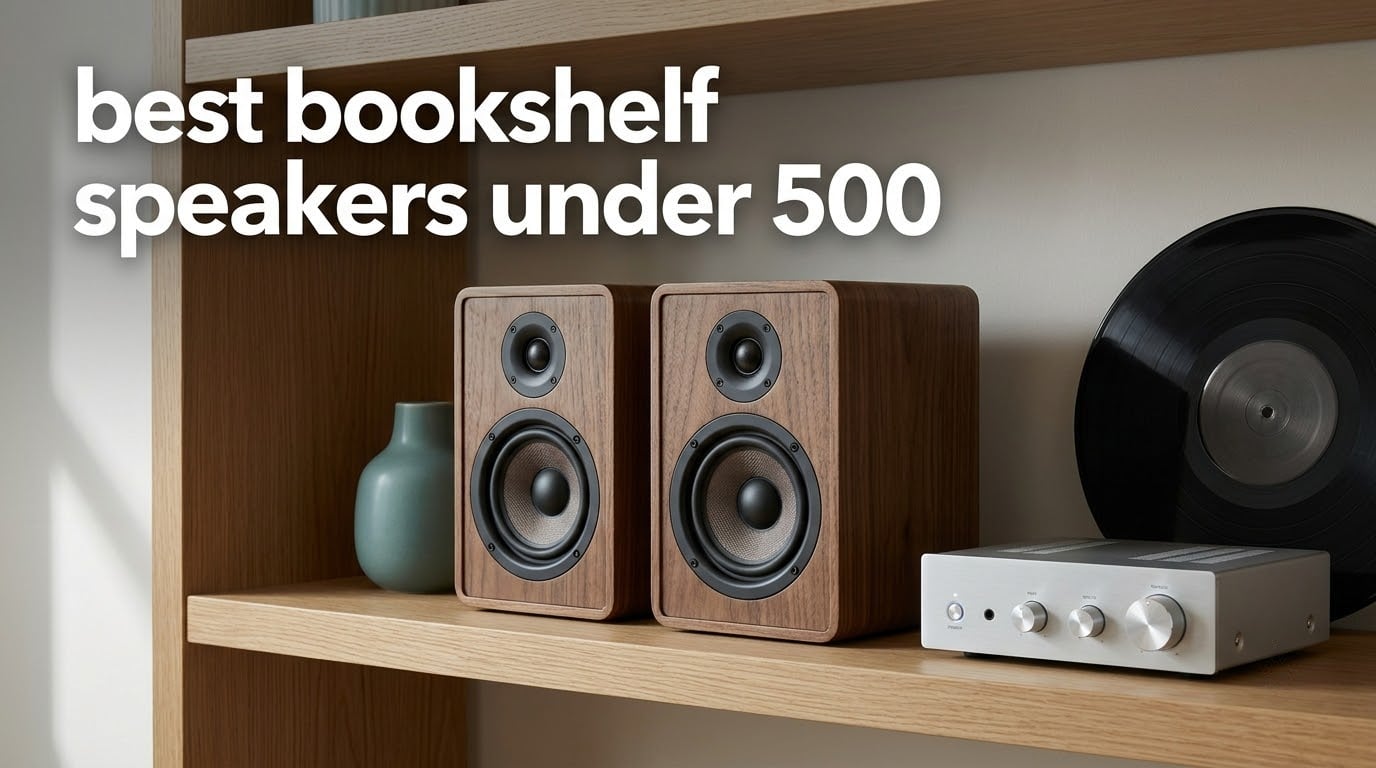
The short answer is the Edifier R1280T — a powered 2.0 pair with 42 watts RMS, a 4-inch woofer and a 13mm silk dome tweeter that needs no amplifier at all. That is why it tops our list of the best bookshelf speakers under 500. The rest of this roundup covers the passive options that sound better once you own an amp, plus the wireless upgrades worth knowing about.
There is one decision that matters more than anything else in this price range, and it is not the driver size or the brand. It is whether you buy a passive pair and budget roughly another few hundred for an amplifier, or you buy a powered pair and plug it straight into a laptop. Get that wrong and the speaker choice is beside the point.
Our team compared all eight pairs below on driver configuration, published frequency response, sensitivity, impedance, power handling and cabinet volume, then cross-checked those numbers against what buyers report after living with them. We favour passive models for critical two-channel listening, and powered models for anyone without a stereo already in the room. We also cover placement, amplifier sizing, and the specs you should ignore.
Top 3 Picks for Best Bookshelf Speakers Under $500 (September 2026)

Best Every Pick at a Glance in 2026
| Product | Specifications | Action |
|---|---|---|
| Edifier R1280T Powered Bookshelf Speakers |
|
Check Latest Price |
| Polk Audio T15 Bookshelf Speakers |
|
Check Latest Price |
| Edifier R1280DBs Bluetooth Speakers |
|
Check Latest Price |
 Klipsch R-15M Bookshelf Speakers Klipsch R-15M Bookshelf Speakers |
|
Check Latest Price |
 Klipsch RP-600M II Bookshelf Speakers Klipsch RP-600M II Bookshelf Speakers |
|
Check Latest Price |
 Polk Audio Signature Elite ES15 Polk Audio Signature Elite ES15 |
|
Check Latest Price |
 Klipsch R-40M Bookshelf Speakers Klipsch R-40M Bookshelf Speakers |
|
Check Latest Price |
 Edifier P12 Passive Bookshelf Speakers Edifier P12 Passive Bookshelf Speakers |
|
Check Latest Price |
Six of the eight pairs below are passive, which means an amplifier or receiver is mandatory. Only the two Edifier powered models contain amplification; nothing else in this list does.
1. Edifier R1280T – Editor’s Choice for First-Time Buyers
Edifier R1280T Powered Bookshelf Speakers -2.0 Near Field Studio Monitor
Powered 2.0
42 watts RMS
4 inch woofer with 13mm silk dome
80 Hz to 20 kHz
Dual RCA and 3.5mm AUX
Pros
- Rich full bass from a 4 inch driver
- Clean stereo separation
- On-speaker bass treble and volume knobs
- Two sources connected at once
- Two year warranty
Cons
- No Bluetooth or subwoofer out
- Highs can sound recessed
- Best in small and medium rooms
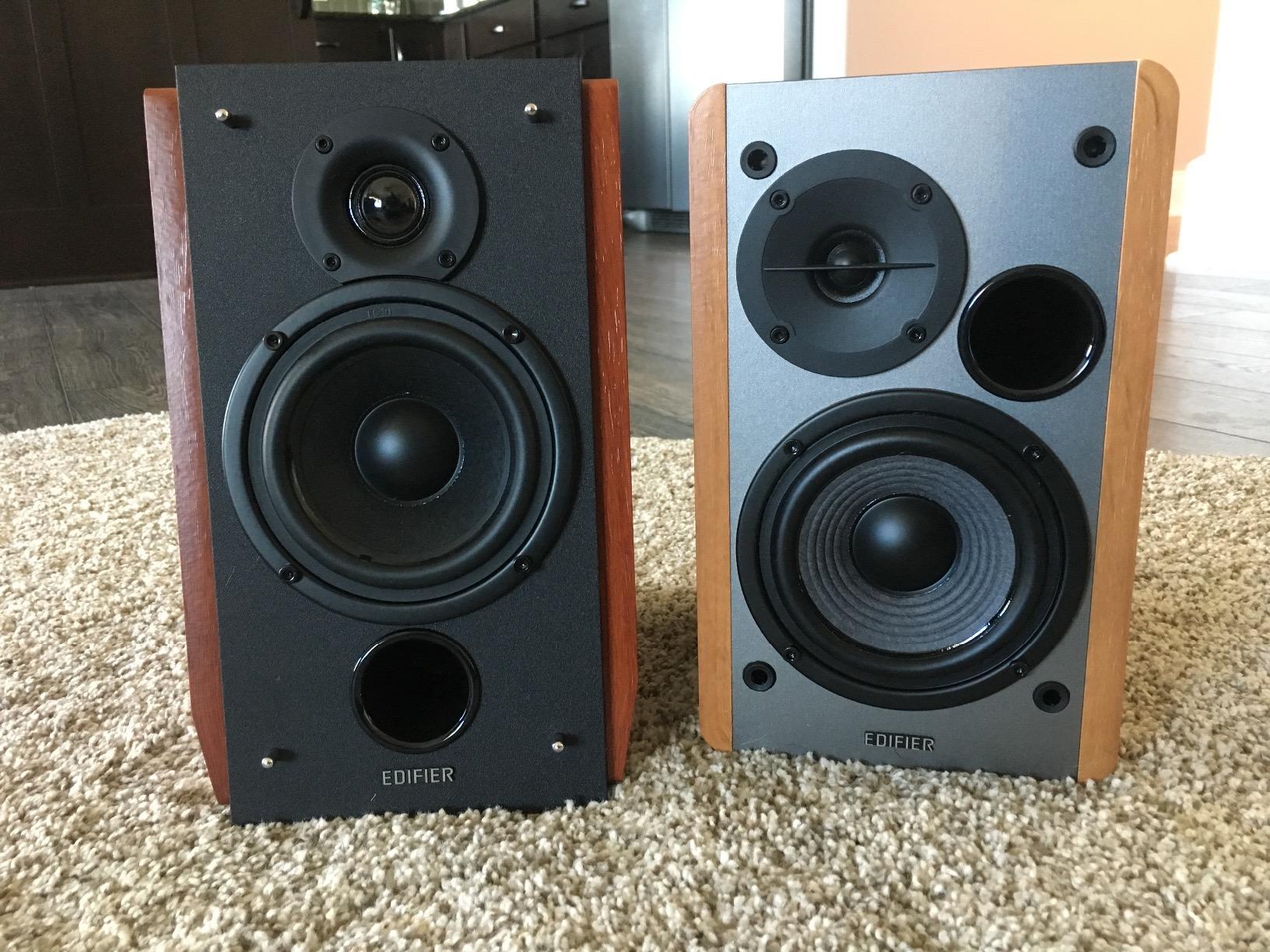
I have had a pair of these on a bookshelf for months, and they remain the first thing I hand to anyone who says they want to start listening to records properly. You unpack two MDF cabinets with a wood-effect vinyl finish, connect one RCA pair or one 3.5mm cable, and the system is playing. There is nothing else in the box to buy.
The sound is warmer and fuller than a 4-inch driver has any right to deliver. Bass carries real weight on acoustic material, and the stereo separation is wide enough that individual instruments sit in their own space instead of collapsing into a blur.
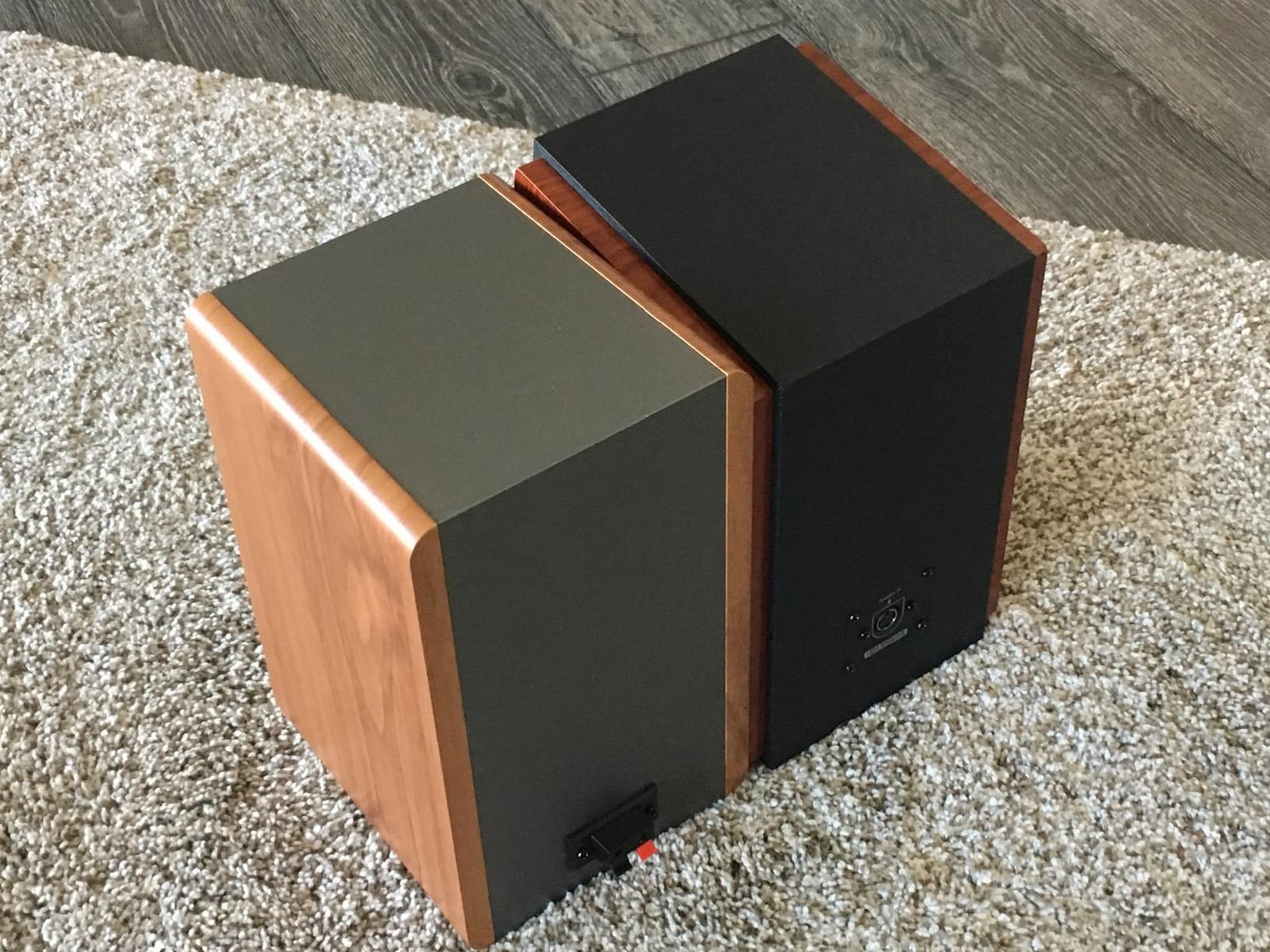
Frequency response is listed at 80 Hz to 20 kHz, which tells you the honest truth: this is a small speaker and the bottom of that range is the limit, not the promise. The 85 dB signal-to-noise ratio means quiet passages stay clean. Output tops out at 42 watts RMS, plenty for a bedroom, office or small living room and short of filling a large open space.
Controls sit on the active speaker: volume, bass and treble, plus a remote that handles volume, mute and input switching. The two AUX inputs mean a laptop and a turntable or CD player can stay connected at the same time, which removes the daily cable swapping that wears people down.
Who this pair suits
This is the pick for a first system, a bedroom, a dorm, or a desktop setup where a separate amplifier is money you would rather spend on records. Owners report that tilting the speakers up toward ear level and dialing a little treble cleans up the midrange noticeably. If you want a broader guide to getting the most from a two-channel setup, our bookshelf speakers for music listening guide covers the rest of the chain.
Where it falls short
The top end is the weak point. This silk dome tweeter lacks the sparkle of a horn-loaded or larger dome design, so cymbals and string detail can sound slightly recessed at low listening levels. There is no Bluetooth, no optical input and no subwoofer out, so later upgrades mean replacing the speakers rather than extending them.
2. Polk Audio T15 – Top Rated Passive Pick
Polk Audio T15 100 Watt Home Theater Bookshelf Speakers, Black, 1 Pair
Passive 5.25 inch design
60 Hz to 24 kHz
8 ohm
50W continuous 100W peak
Five-way binding posts
Pros
- Crisp sound with a defined soundstage
- Bass that punches above the tier
- Five-way binding posts
- Keyhole slots for wall mounting
- Five year warranty
Cons
- Limited output below roughly 60 Hz
- Needs an amplifier
- Dialogue fades at low volume
Buy these if you already own a receiver, or you are about to buy one. The T15 is a genuinely well-engineered two-way design at a price that usually sits far below this tier, and it is the pair I recommend to anyone building a first home theater front stage.
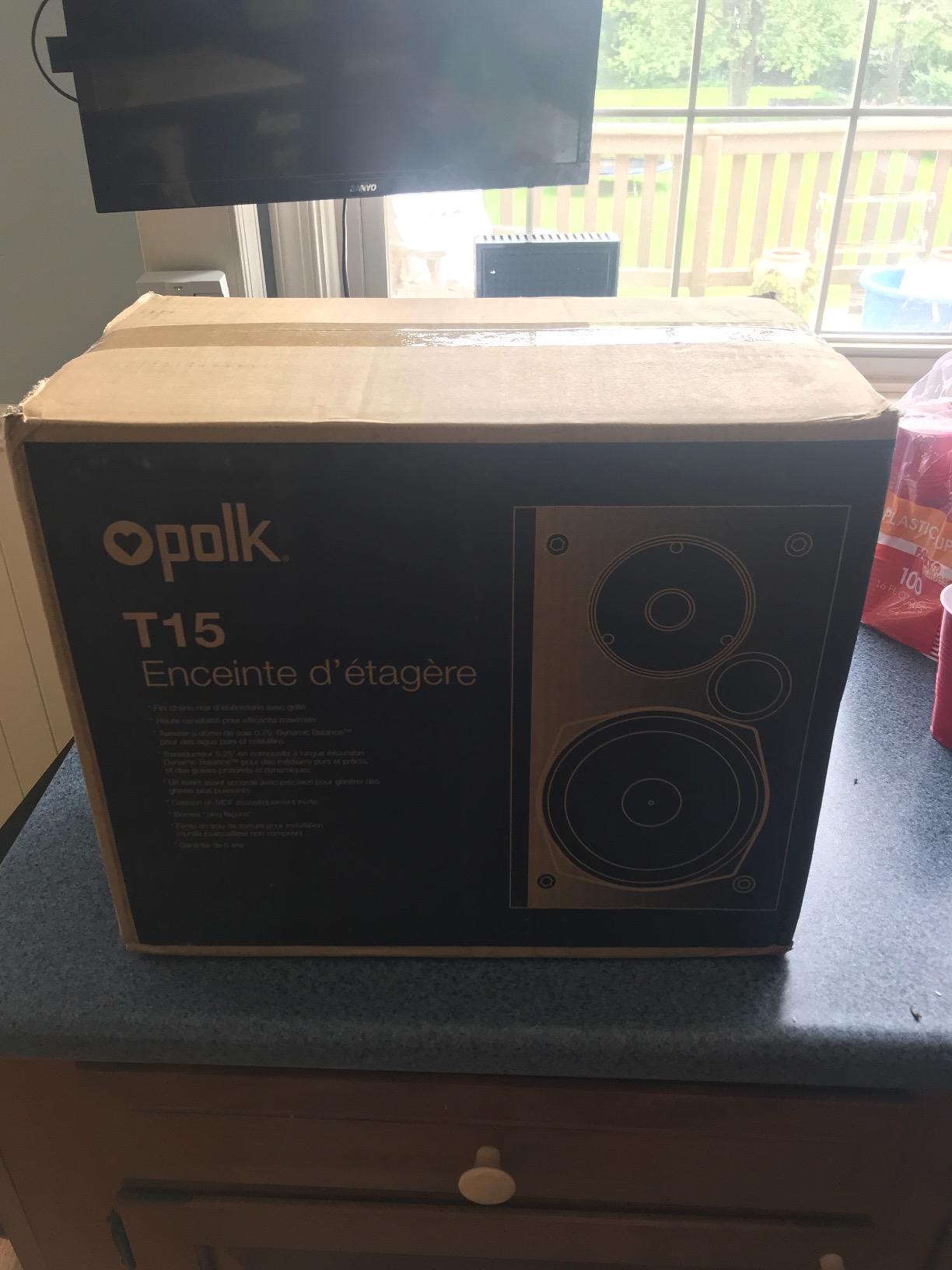
A 0.75 inch silk dome tweeter sits above a 5.25 inch Dynamic Balance driver, and the published response runs 60 Hz to 24 kHz. The bottom figure matters more than the top: 60 Hz is where the driver starts rolling off, which is why owners overwhelmingly add a subwoofer rather than expecting the speakers to handle soundtrack low end.
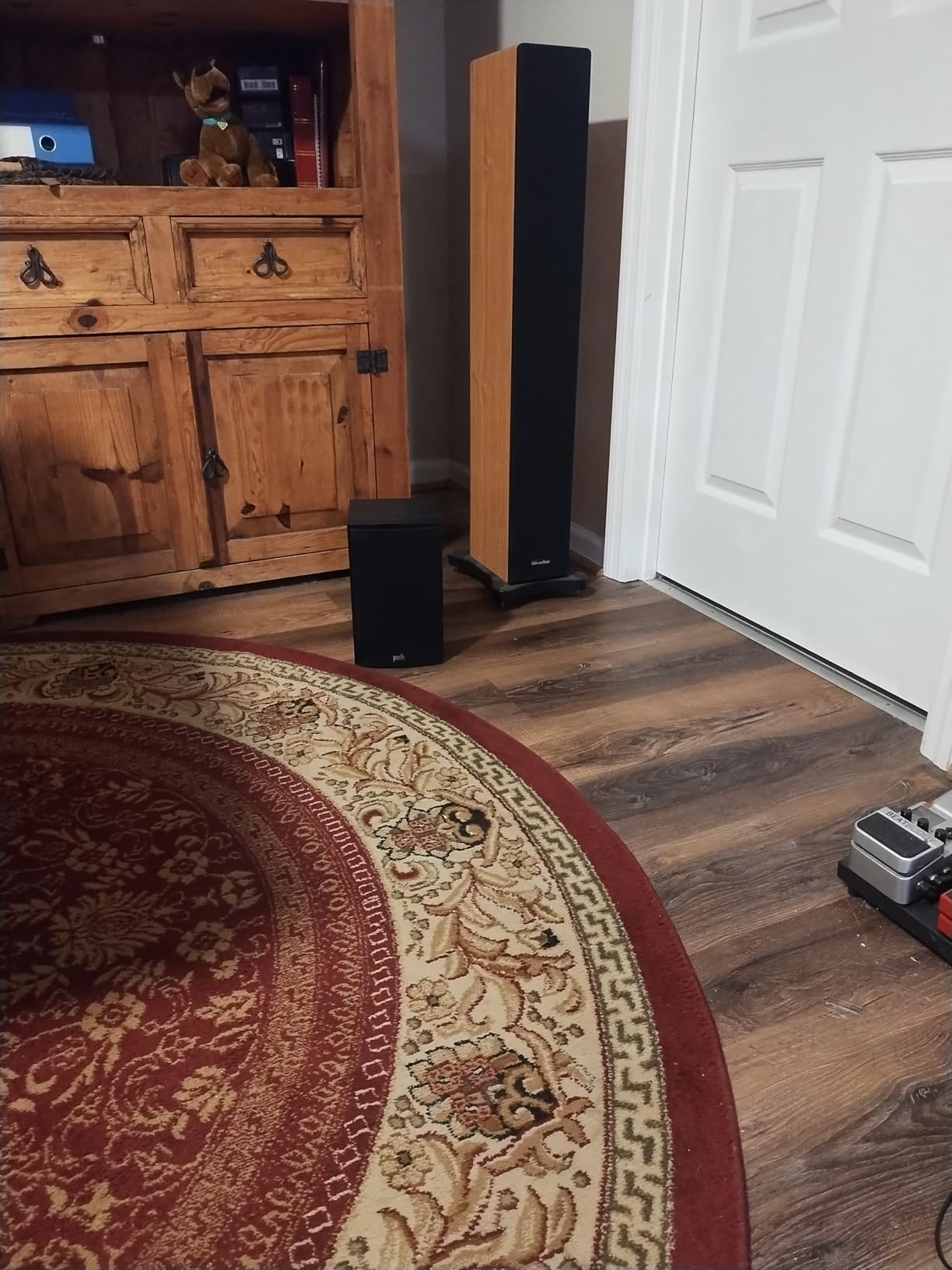
At 8 ohm and 50 watts continuous handling, these are easy loads. Any stereo amplifier or AV receiver will drive them without strain, and five-way binding posts accept banana plugs or bare wire. Rated power peaks at 100 watts, and the cabinet weighs 8.3 pounds, which gives it a solid, planted feel on a stand.
Keyhole slots on the back panel make wall mounting straightforward, so the same pair can move from the front of a room to the rear of a setup. The grilles remove for a cleaner look, though the black vinyl wrap is the most ordinary thing about the package.
Where the T15 earns its place
This is the pick for a 5.1 or 5.1.2 build on a budget, because the design is timbre matched to the rest of the Polk T range, so a matching centre channel and subwoofer integrate cleanly. Placement is the whole game: put the tweeter at or just below seated ear height, angle the pair inward, and give each speaker air.
What buyers should know first
Two things catch people out. Dialogue can lose clarity at low listening volumes, and the low end stops being convincing below roughly 60 Hz. If your room is large, plan on a subwoofer from the start. A five year parts and labour warranty is unusually generous at this level, which matters if you are keeping them for a decade.
3. Edifier R1280DBs – Best Value Pick With Wireless and Subwoofer Out
Edifier R1280DBs Active Bluetooth Bookshelf Speakers – Optical Input – 2.0 Wireless Studio Monitor Speaker – 42W RMS with Subwoofer Line Out – Wood Grain
Powered 2.0
42 watts RMS
Bluetooth 5.0
Subwoofer out with crossover
Optical and RCA
Pros
- Bluetooth optical coax and RCA inputs
- Built-in subwoofer out
- Wood veneer cabinet
- Cables for every input included
- Solid remote control
Cons
- Bass falls off steeply below 60 Hz
- Treble thins when pushed hard
- No app-based EQ
This is the R1280T with the gaps filled. Same 42 watts of amplification, same 13mm silk dome tweeter and 4 inch woofer, but you also get Bluetooth 5.0 with roughly 30 feet of range, optical and coaxial digital inputs, and a subwoofer output with automatic detection and its own crossover.
That last feature is the one I would not give up. Because the line out handles crossover alignment automatically, you can add a sub later and integrate it without recalibrating anything by ear. It is the easiest upgrade path in this roundup.
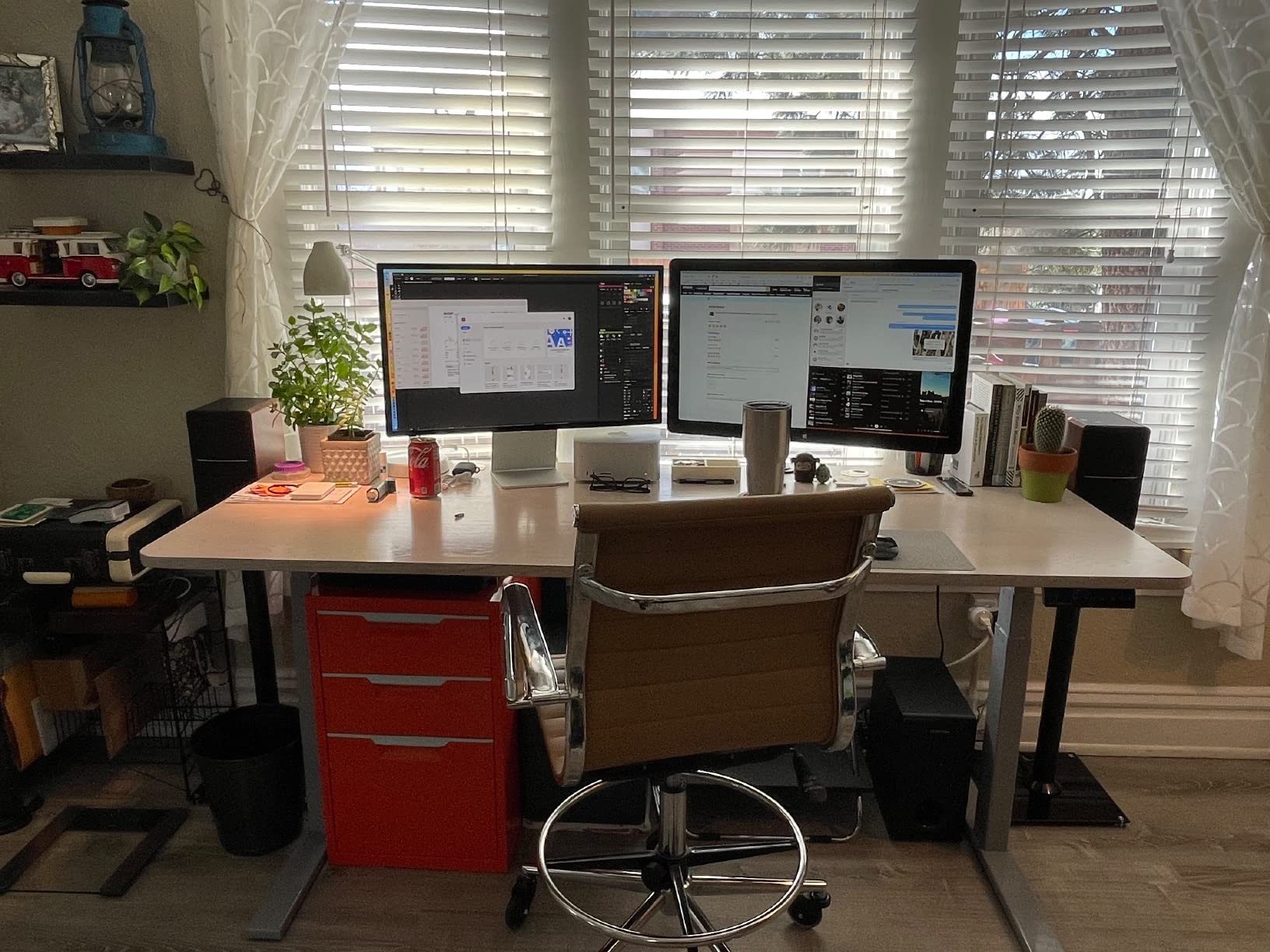
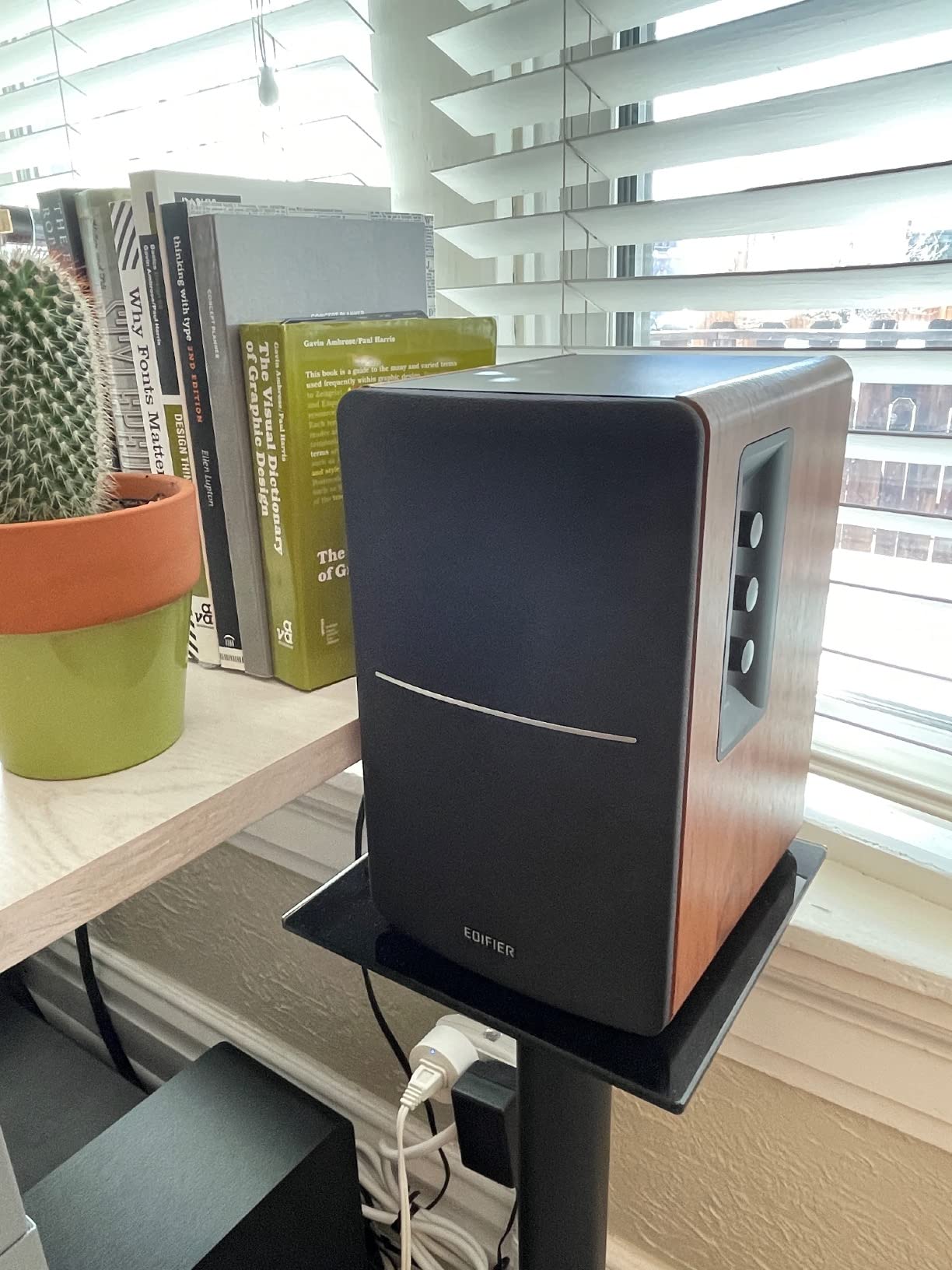
Sound is warm and accurate, with a low end that reviewers frequently describe as surprisingly tight for a 4 inch driver. Perceived thinness is more often a source or Bluetooth feed issue than a speaker problem. An indicator light behind the grille changes colour to show which input is active, which is genuinely useful when you have four sources.
The Soundfield Spatializer widens the soundstage, and a wireless remote handles volume, mute, input mode and power, while bass and treble knobs sit on the active speaker’s side panel. The wood veneer cabinet hides a small footprint, and every cable you need is in the box.
Best fit for a TV and a phone
This is the model to get if your sources are a television, a laptop and a phone, because the optical input carries a digital signal cleanly and Bluetooth removes the last cable. Volume headroom is adequate for bedrooms and small offices. If you want the wider context on powered options, our powered speakers roundup compares the formats.
The limits to plan around
Push these hard and the treble thins while the bass knob adds distortion rather than output. Bass rolls off steeply below about 60 Hz, faint signal noise is audible at very quiet listening levels, and there is no app-based EQ, only the two side-panel knobs. The grilles also fit very tightly. Check the cabinet measurements before you commit to a shelf.
4. Klipsch R-15M – Best for Small Rooms With an Amp
Klipsch R-15M Bookshelf Speaker (Pair)
Passive 5.25 inch two-way
About 94 dB sensitivity
8 ohm
340 watts max
Tractrix horn tweeter
Pros
- Crisp detailed horn-loaded highs
- Punchy bass for its size
- High sensitivity drives small amps
- Compact cabinet
- Improves after about 50 hours
Cons
- Forward horn voicing divides listeners
- Muddy low-mid near a rear wall
- Needs a capable amplifier
About 94 dB of sensitivity changes everything about amp selection. This pair will play loudly from a modest 40 watts per channel amplifier, which makes the R-15M one of the few speakers here you can genuinely pair with a small vintage integrated or a used receiver without regret.
The 1 inch LTS aluminum tweeter loads into a 90 by 90 degree Tractrix horn, and below it a 5.25 inch spun copper injection-molded graphite woofer handles the midrange and upper bass. Rated power handling is 340 watts and impedance is 8 ohm, so it is a forgiving load.
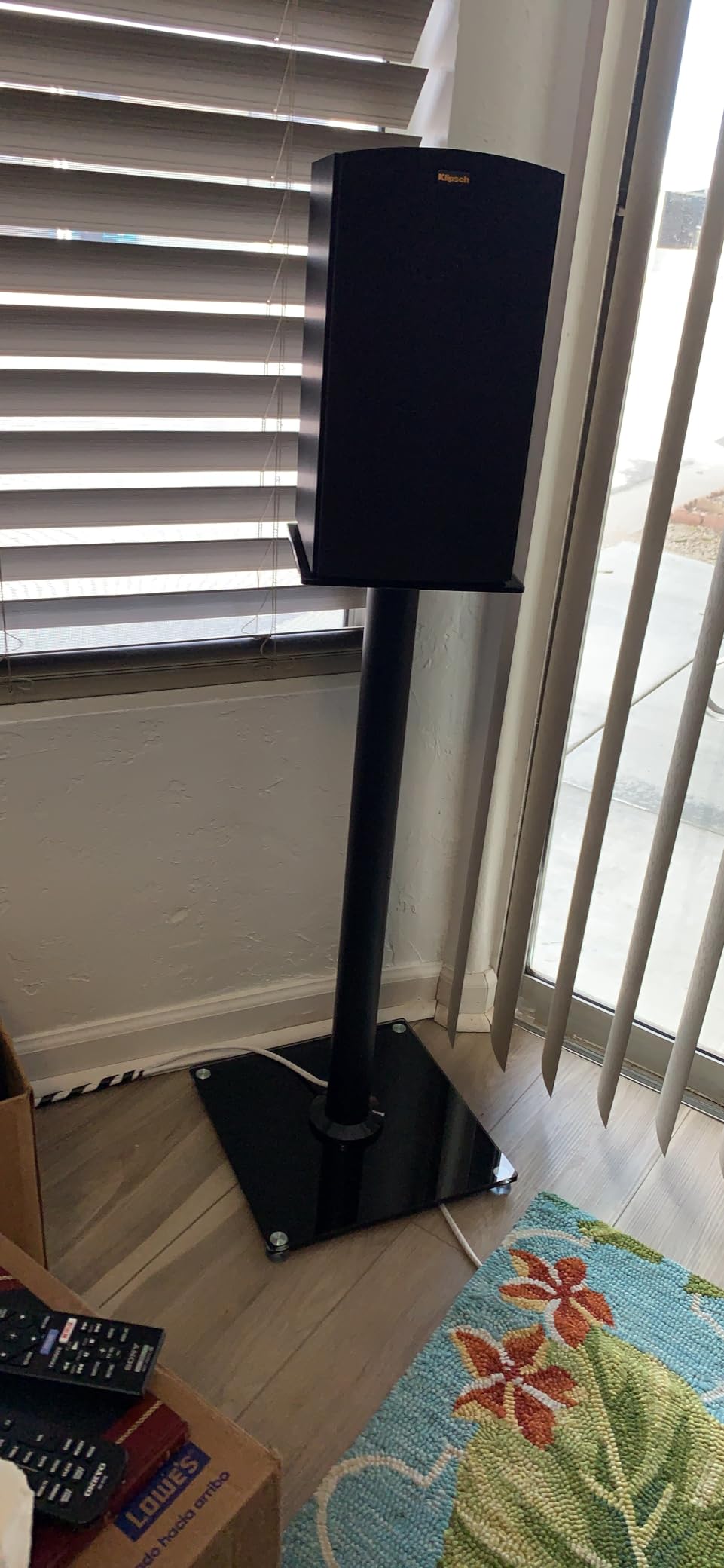
What the horn does is control dispersion. The high frequencies stay aimed forward instead of spraying around the room, which tightens the soundstage and improves imaging. Side-by-side comparisons against soft-dome designs usually end with the Klipsch winning on dynamics and engagement rather than on smoothness.
Owners consistently mention a break-in period of roughly 50 hours before the presentation settles. The cabinet is MDF with a brushed black polymer veneer, the rear port is flared to reduce turbulence, and five-way binding posts are fitted at the back.
Who will love these
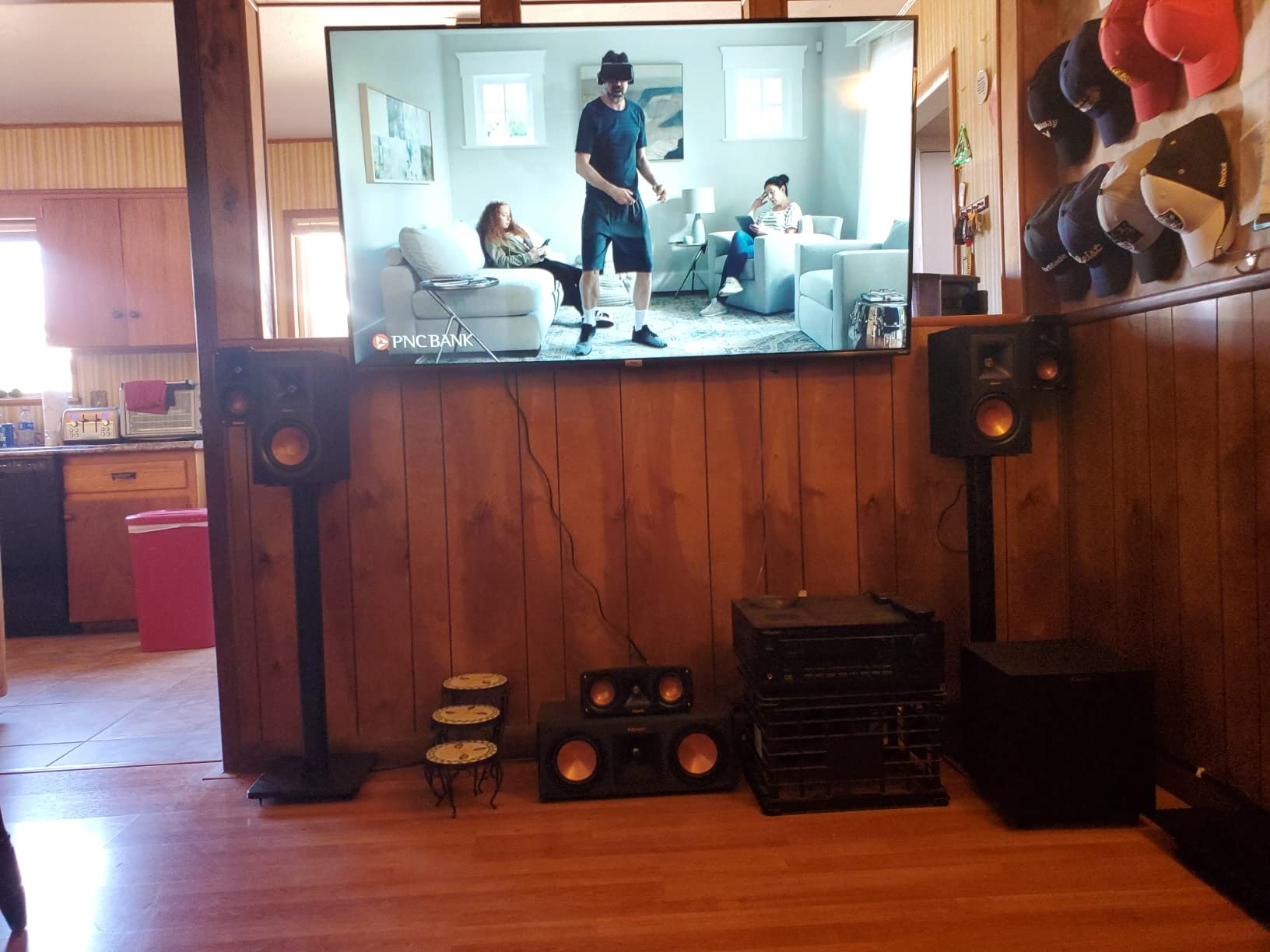
If you listen to rock, metal, film scores or anything with live drums, the forward, lively voicing is the point rather than a flaw. The dimensions, at 12.5 inches tall and 8.2 inches deep, make it easy to place on a stand or a small shelf, and 10.3 pounds per speaker gives it real stability.
Who should pass
Listeners who want a relaxed, neutral or warm presentation usually find the horn forward. Placement is critical: pushed tight against a rear wall these develop a muddy hump around 130 Hz, so pull them out into the room. Bass extension still stops short of true low end, so a subwoofer completes the system.
5. Klipsch RP-600M II – Best for Home Theater
Klipsch Reference Premiere RP-600M II Ebony Bookshelf Speakers
Passive 6.5 inch two-way
Up to 20 kHz
8 ohm
400 watts power handling
Bi-wire and bi-amp terminals
Pros
- Largest drivers and cabinet in the group
- Crisp detailed horn highs
- 6.5 inch Cerametallic woofers
- Bi-wiring and bi-amping
- Ebony finish with magnetic grille
Cons
- Requires a capable amplifier
- Largest cabinet in the group
- Horn voicing stays polarizing
This is the only pair in the roundup with the physical size to act as serious front left and right channels in a dedicated theater. The 6.5 inch Cerametallic woofers move real air, the cabinet is 15.75 inches tall and weighs 18 pounds, and power handling is rated at 400 watts.
Unlike the smaller Klipsch, the tweeter is a 1 inch LTS titanium diaphragm sitting in a larger 90 by 90 degree silicone composite hybrid Tractrix horn, vented for extra detail. The result is cleaner and less strained at high listening levels than a horn of this size usually manages.
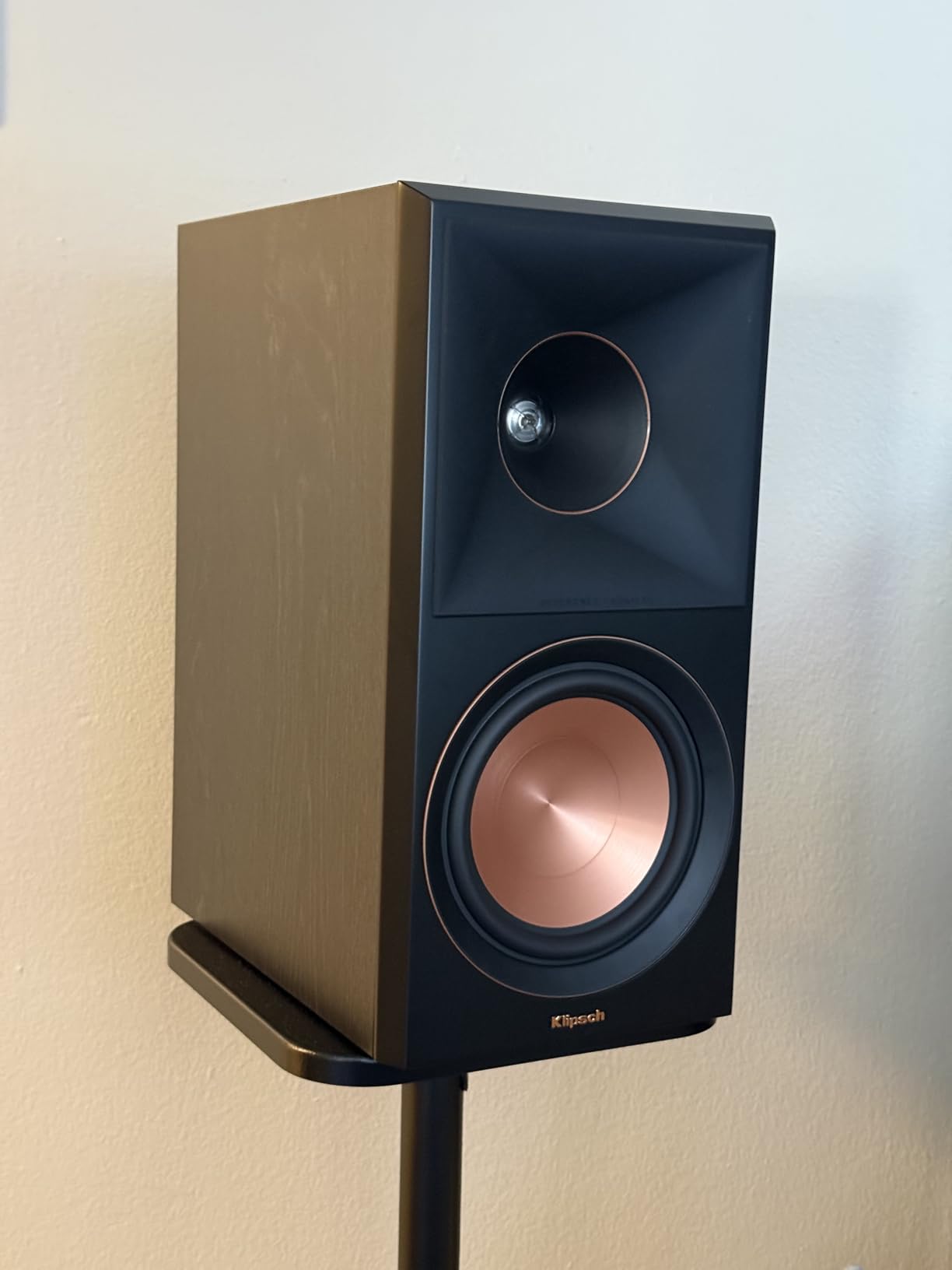
Dual input terminals support both bi-wiring and bi-amping. Running separate amplifier channels to the tweeter and woofer sections is the most direct way to reduce midrange distortion, and the gain in clarity at movie volumes is real. A five year manufacturer warranty backs the design.
Tractrix port geometry moves air out of the cabinet quickly, which is why this pair holds up better than its size suggests when playing dense film mixes. If you want a matched system, note that this is the tier where you should start shopping for matching surrounds rather than improvising later.
Where it earns the badge
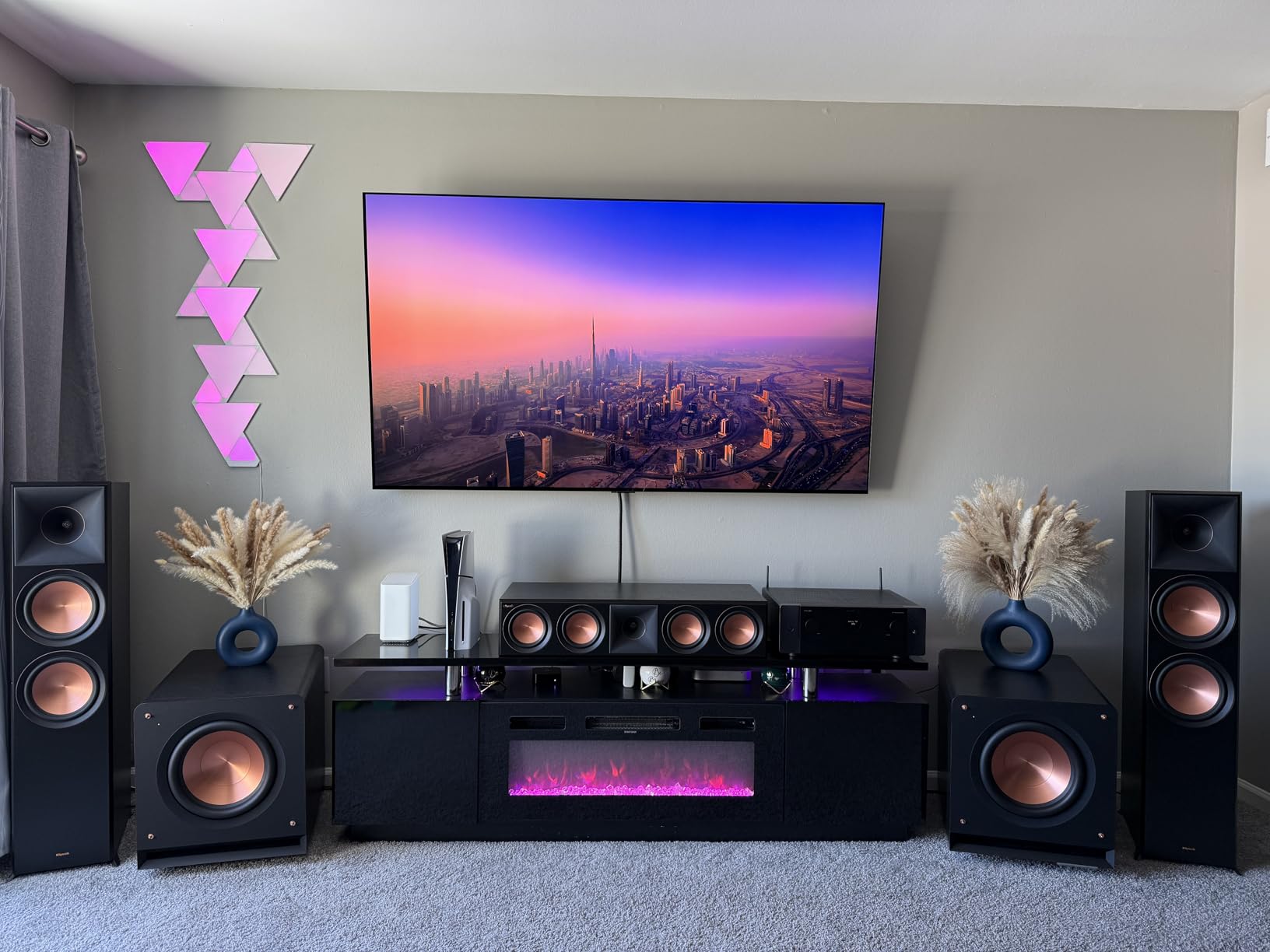
It is the pick for a room where you actually watch films, and for anyone who listens at higher volumes than most people admit to. The Ebony finish and magnetically attached grille also make it the only one of these that looks at home next to a television rather than in front of it. Five-year cover and substantial build quality support a long ownership cycle.
What it costs you to own
It is the biggest, heaviest and most demanding pair here, and it is passive. The cabinet depth of 13 inches means shelf planning matters, and Klipsch horn voicing remains genuinely polarizing for listeners who prefer neutral sound. There is no Bluetooth and no wireless option. Treat it as the end of your upgrade path rather than a starting point.
6. Polk Audio Signature Elite ES15 – Best for Vinyl Listening
Polk Audio Signature Elite ES15 Bookshelf Speaker Pair, Contemporary Walnut
Passive 5.25 inch two-way
1 inch Terylene tweeter
4 and 8 ohm compatible
200 watts
Up to 40 kHz
Pros
- Clear and non-fatiguing highs
- Tight bass from Power Port design
- Works with 4 and 8 ohm amplifiers
- Walnut finish
- Timbre matched for 5.1 builds
Cons
- Passive design needs an amplifier
- Deep cabinet complicates shelves
- Vinyl grain can read as stripes
Polk’s patented Power Port is the interesting part here. Rather than a conventional reflex port, the port shape is designed to move more air while cutting turbulence and distortion, which the manufacturer claims delivers roughly 3 dB more bass than a conventional ported design of the same size. Owners report the low end is tight and well defined rather than loose.
A 1 inch Terylene tweeter pairs with a 5.25 inch woofer inside a Dynamically Balanced acoustic array, with precision crossovers. Response is listed up to 40 kHz, though the useful figure for planning is the low end, where the sealed-feeling power port still needs a subwoofer for soundtrack and organ work.
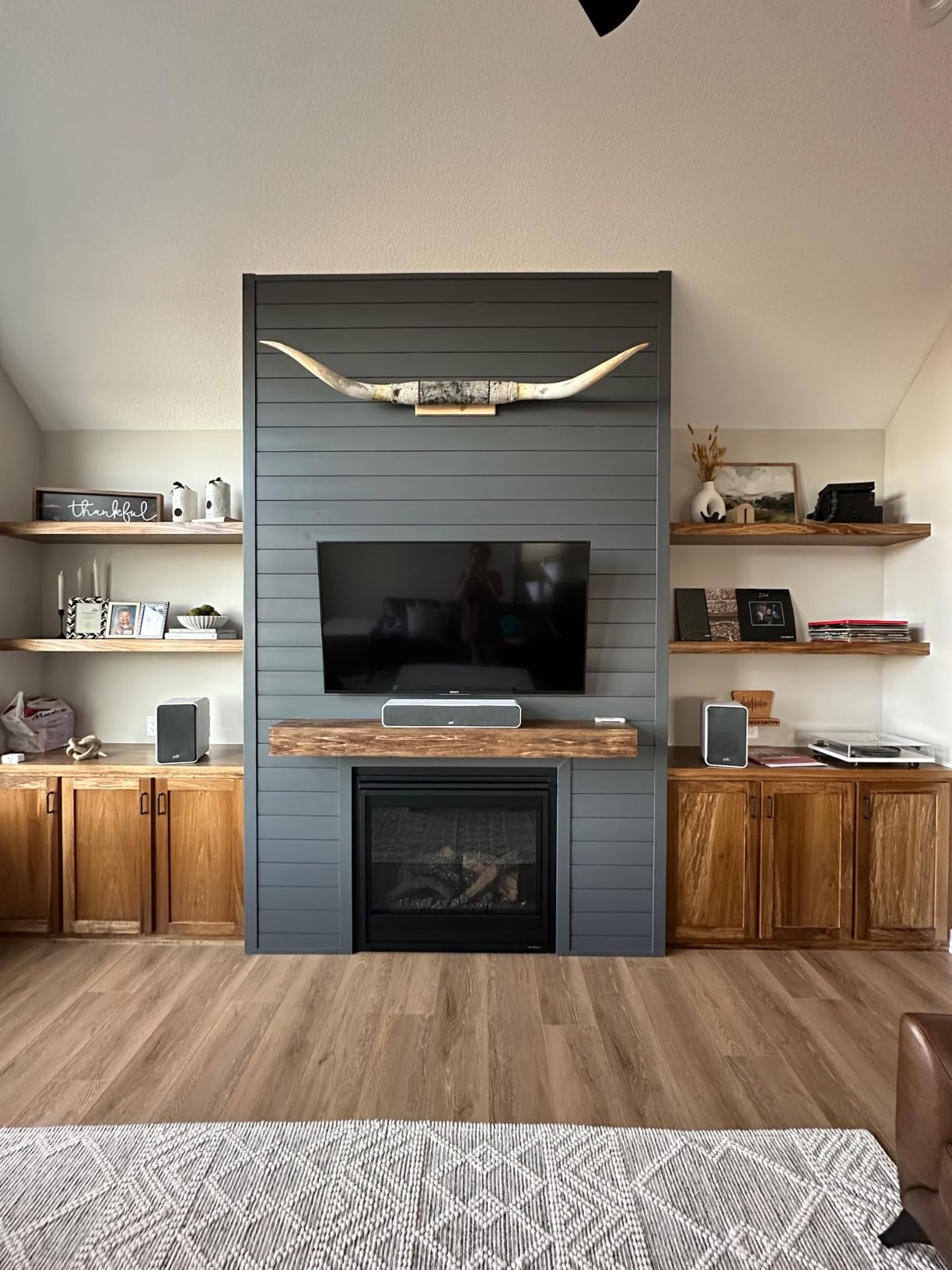
High sensitivity plus 4 and 8 ohm compatibility makes this the least fussy passive pair in the roundup. It will work with almost any amplifier or AV receiver, including Dolby Atmos and DTS:X processing, and it will not punish you for pairing it with something modest. Power handling is 200 watts.
The walnut finish is the visual upgrade over black vinyl wraps, and the build feels more substantial than the step up in cost suggests. Keyhole slots and screw inserts allow wall mounting, so the same pair can serve as side or rear surrounds, on stands, or as height speakers.
Why vinyl listeners gravitate here
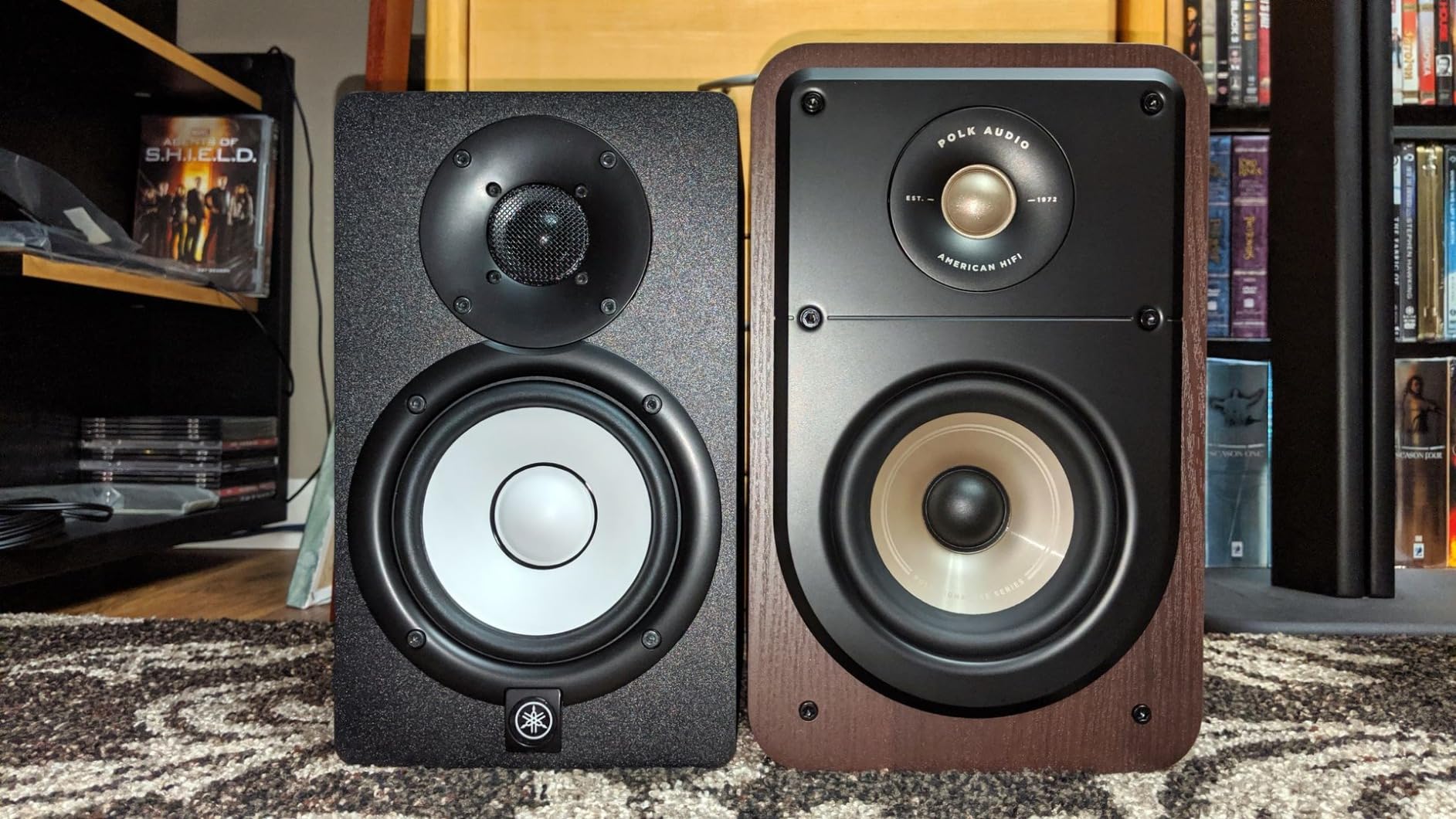
Surface noise and hiss from a cheap phono stage are unforgiving, and the clean, non-fatiguing high end of a Terylene dome is easier to sit through for a full side than a horn. Vocals and acoustic instruments in particular are described as convincing. If your turntable still needs a phono preamp, our bookshelf speakers for turntables guide covers that chain.
Placement and practical limits
The cabinet is deep for a bookshelf speaker, so measure your shelf before you order. Deep bass still benefits from a subwoofer, and a few owners feel the step up from cheaper speakers is modest for the extra spend. A five year limited warranty is solid. Pair it with the ES35 centre and ES10 surrounds for a matched system.
7. Klipsch R-40M – Best Surround Pair for a Klipsch Front Stage
Klipsch Reference Next-Generation R-40M Horn-Loaded Bookshelf Speakers with 4” Spun-Copper Woofers for Best-in-Class Home Theater Sound in Black
Passive 4 inch two-way
About 90 dB sensitivity
8 ohm
200 watts
LTS aluminum tweeter in Tractrix horn
Pros
- Clear directional surround effects
- High sensitivity for its size
- Compact and light to place
- Consistent with Klipsch Reference line
- Edge-to-edge horn with magnetic grille
Cons
- Less full than larger Klipsch models
- 4 inch woofer has limited bass
- Needs an amplifier
The R-40M exists to sit behind you. With a 4 inch thermoformed crystalline polymer spun-copper woofer and a 1 inch LTS aluminum tweeter on a Kapton suspension, it delivers fast, clean effects without demanding much amplifier power. Roughly 90 dB of sensitivity means it plays loudly from a small amp.
Passive though it is, and rated 200 watts at 8 ohm. Owners building a Klipsch system pair it with the R-50M fronts and the R-50C centre, and the matching voicing means the surround field does not draw attention to itself.
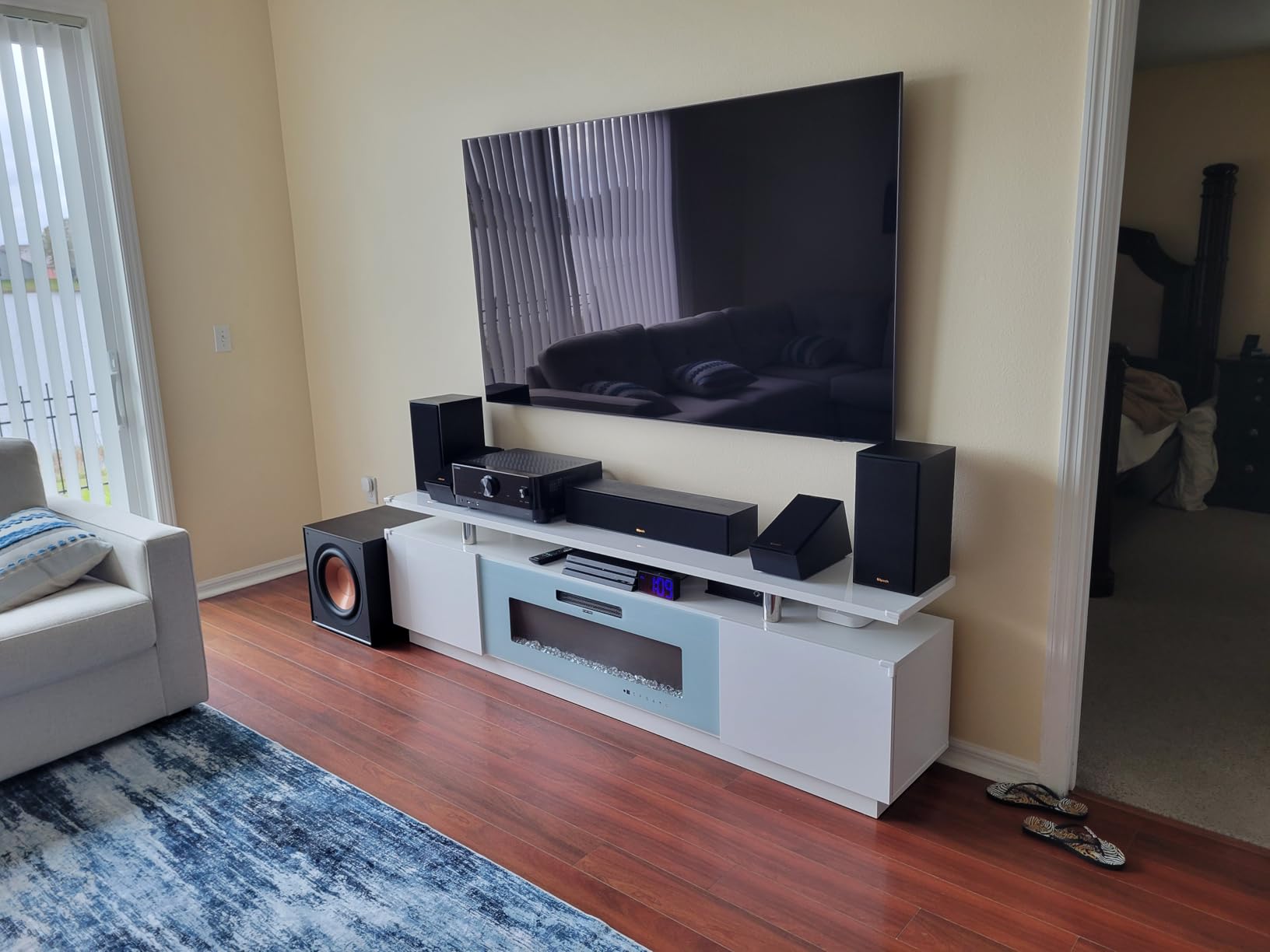
The 90 by 90 degree Tractrix horn has grown in outer dimensions over the previous generation, which widens the bandwidth over which directivity stays controlled. That is what makes effects placement believable. Hidden fasteners, an edge-to-edge horn and low-profile magnetic grilles keep the front face clean.
At 14 pounds for the pair and a shallow footprint, this is the easiest speaker here to tuck into a tight rear cabinet space. The MDF cabinet carries a scratch-resistant textured wood grain vinyl, which survives a move better than a high-gloss finish.
Where it fits in a system
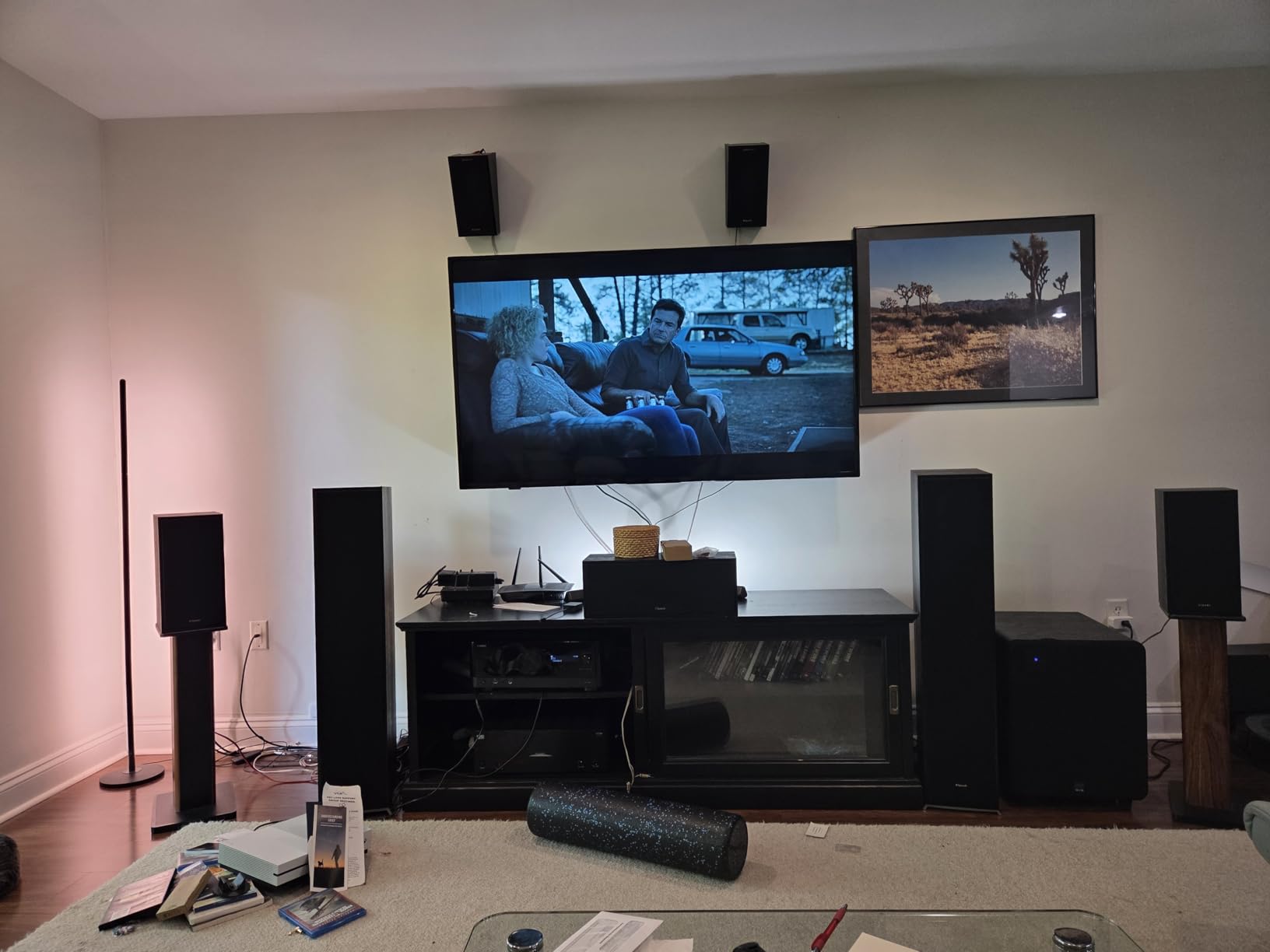
Treat it as a surround or rear channel, not a stereo main. The trade-off is straightforward: the smaller woofer gives you less output and less bass than the Reference Premiere models, which means surround level calibration on your receiver is worth the five minutes. Setting the crossover around 60 to 80 Hz is what completes the system.
Honest drawbacks
A minority of buyers find the bright horn signature thin or tinny, particularly at lower listening volumes, and return the pair. Bass quantity is limited, so a subwoofer is recommended even for music. Published dimensions for this listing appear transposed, so measure the cabinet yourself before committing to a shelf.
8. Edifier P12 – Best Passive Pair on a Tight Budget
Edifier P12 Passive Bookshelf Speaker – 2-Way Speakers with Built-in Wall-Mount Bracket – Wood Color, Pair – Needs Amplifier or Receiver to Operate
Passive 4 inch two-way
6 ohm
40 watts
19mm silk dome tweeter
Built-in wall mount bracket
Pros
- Real crossover network
- All budget goes into the speaker
- Integrated wall mount bracket
- Speaker wire included
- Clear uncolored monitor style sound
Cons
- About 79 dB sensitivity demands power
- Limited low-end punch
- Spring clip terminals
Because there is no amplifier inside, every dollar goes into the driver and the cabinet. That is why the P12 gets a real crossover network rather than the single coupling capacitor common at this level, and owners consistently describe the sound as clear and uncolored with a monitor character.
A 19mm silk dome tweeter sits above a 4 inch bass driver with a bass reflex port, running at 6 ohm with 40 watts of power handling. That impedance sits between the 4 and 8 ohm figures you will see elsewhere, so check your amplifier’s speaker compatibility settings before connecting.
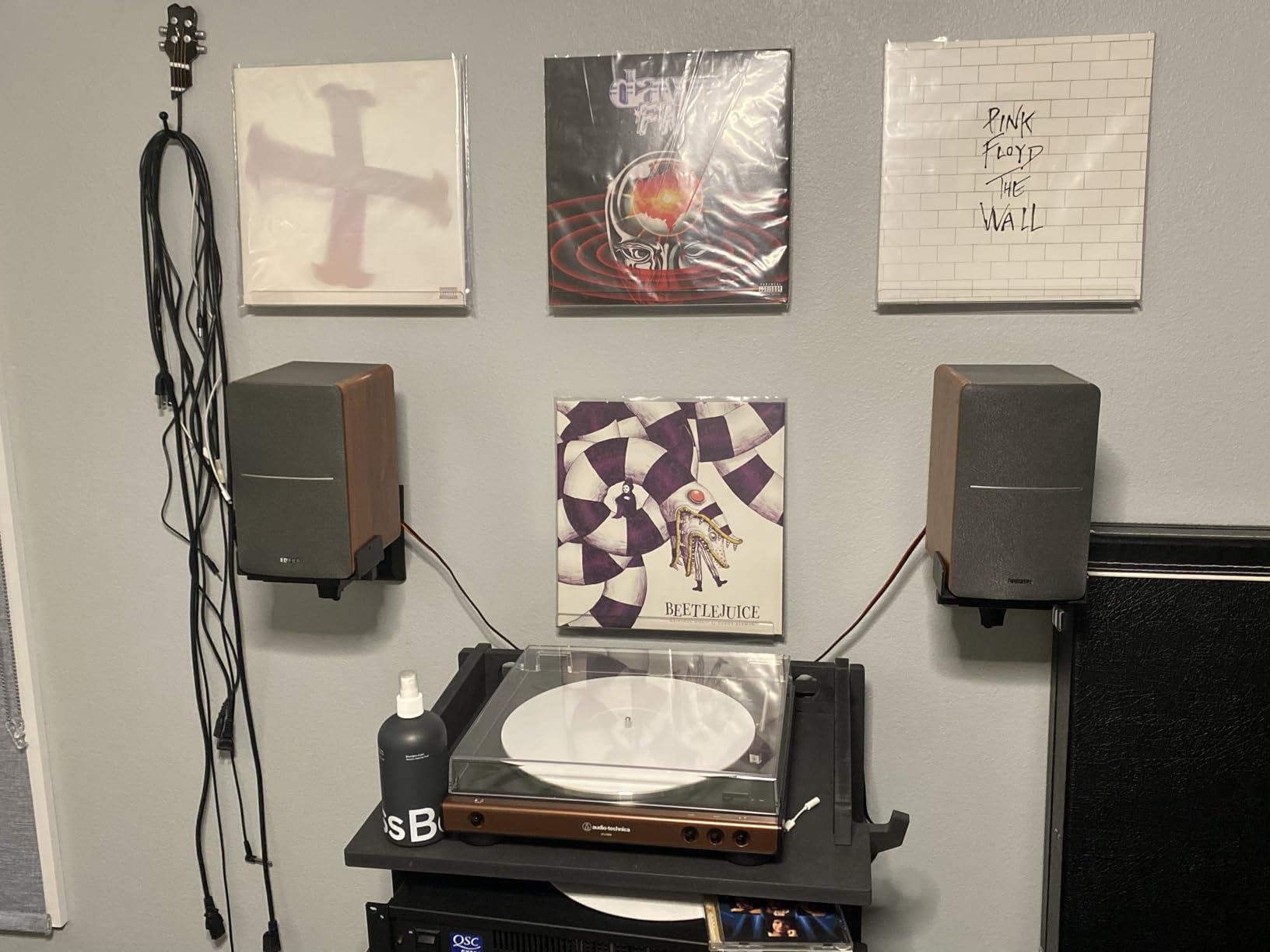
The built-in wall mount bracket is the detail nobody else in this list offers, and it makes these the easiest rear surrounds to install. Speaker wire is included, the wood grain finish suits furniture better than black plastic, and a two year manufacturer warranty covers the pair.
Sensitivity is the number to read here. At around 79 dB these are the least efficient speakers in the roundup, and several owners report the sound improving markedly once they moved from a small amp to something with more current capability.
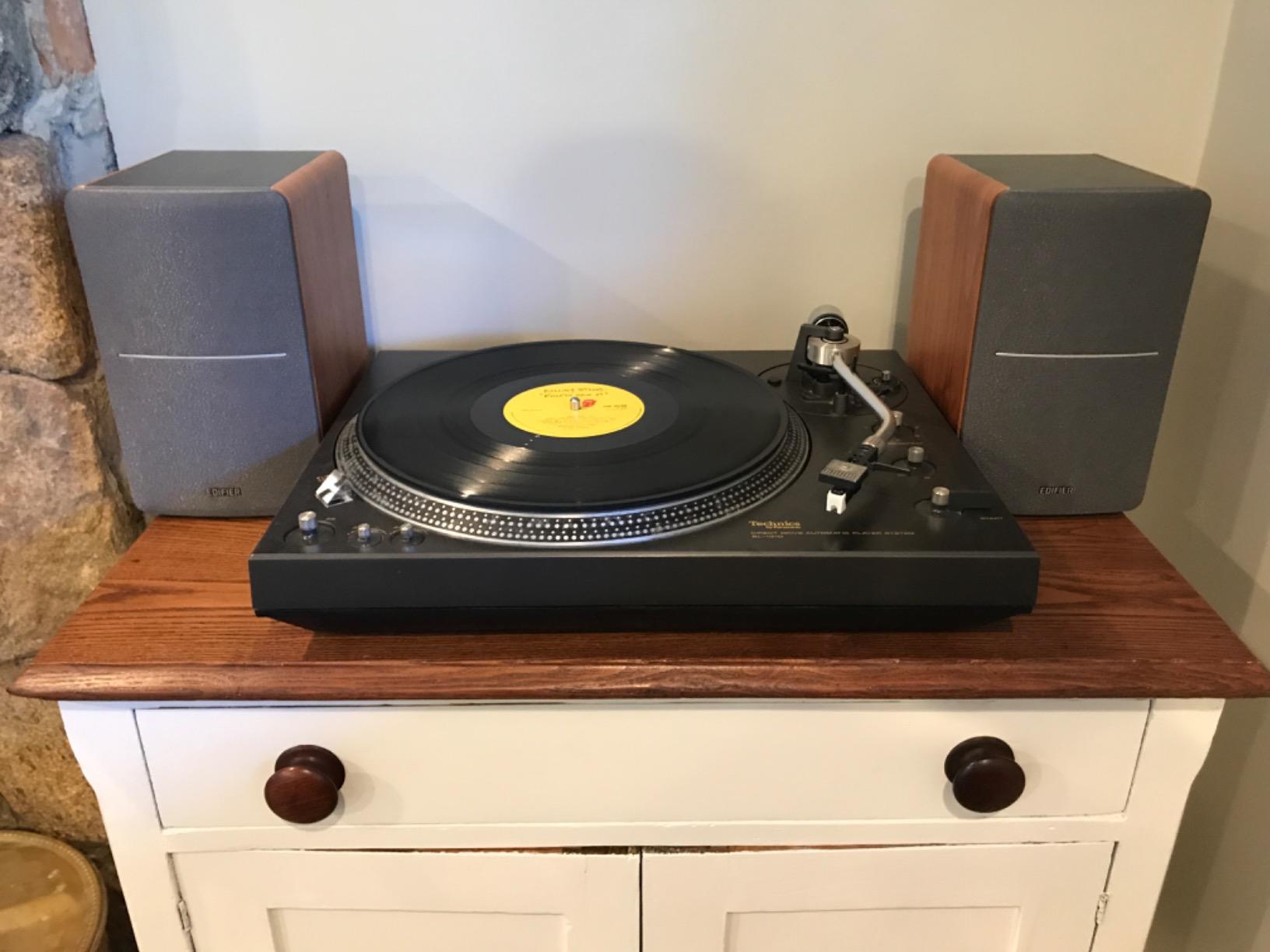
Best used as surrounds or a second pair
This is where the P12 makes the most sense: rear channels in a home theater, a desktop pair, or a second system in another room, where the total cost of ownership stays low because the amp is already there. Clear, uncolored midrange is exactly what a surround channel needs to stay out of the way.
Where it struggles
Low sensitivity means an underpowered amplifier is the most common complaint, and dynamics compress at very low listening volumes. Bass quantity is limited for its size. The spring clip binding terminals are basic compared with screw or banana posts, and one reviewer reports the published dimensions are transposed, so verify before buying shelves.
Bookshelf Speakers Under 500: How to Choose
Do you need an amplifier?
Yes — for every passive model in this roundup, and that is the single most common way buyers overshoot their budget. Six of the eight pairs here are passive: the Polk T15, both Klipsch Reference pairs, the Klipsch Reference Premiere, the Polk Signature Elite and the Edifier P12. None of them will produce sound until an amplifier or AV receiver drives them.
Plan the amplifier as part of the system cost, not as an afterthought. Powered models like the Edifier R1280T and R1280DBs bundle 42 watts RMS each, which is enough for small and medium rooms. If you already own a stereo or receiver, a passive pair is the better buy. If you are starting from nothing and do not want another box in the chain, buy powered.
How much amplifier power do you actually need?
The convention is to match an amplifier’s RMS power per channel to somewhere between 75 and 150 per cent of the speaker’s continuous RMS power handling. The 83 per cent rule is the related, widely quoted guideline: aim for an amplifier whose per-channel output is roughly 83 per cent of the speaker’s continuous rating, and stay within the 75 to 150 per cent band for headroom and safety.
Worked example: the Polk T15 handles 50 watts continuous, so the 83 per cent target is roughly 42 watts per channel, with a sensible band running from about 38 to 75 watts. The Klipsch RP-600M II is rated at 400 watts, which sounds alarming but is a peak-style figure — most of these speakers sound best with an amplifier in the 50 to 150 watt per channel range and never approach their limit.
Sensitivity matters at least as much as wattage. The Klipsch R-15M at roughly 94 dB will fill a room from a 40 watt per channel amp, while the Edifier P12 at around 79 dB will sound thin and compressed on the same amplifier. If you own a low-power amp, buy the high-sensitivity speaker. Under-powering is a far more common fault than over-powering with a modern amplifier.
Powered vs passive: which should you buy?
Buy passive if you already own amplification, want to upgrade it later independently, or want the freedom to change amps without changing speakers. Buy powered if you want a single-box solution with Bluetooth, want to keep the signal chain short, or are working in a small room where 42 watts per side is plenty.
The honest counter-argument, raised repeatedly on audio forums, is that a good passive pair plus a dedicated amplifier can sound better than a powered pair with built-in amplification. That is true, and it is why the passive models dominate the upper half of this list. It only matters if you are willing to buy the amplifier as part of the budget.
Speaker size and driver size for your room
Match the driver to the room, not to the spec sheet. In rooms under about 100 square feet, 4 inch drivers such as the Edifier R1280T, R-40M and P12 control bass better and avoid boom in small spaces. In rooms between 100 and 200 square feet, 5.25 inch designs like the Polk T15, Klipsch R-15M and Polk ES15 are the sweet spot. Above 200 square feet, or for a main theater stage, move up to the 6.5 inch Klipsch RP-600M II.
Driver size sets how much air the speaker can move, not how low it tunes. Every pair in this roundup bottoms out well above the range where subwoofers operate, so a subwoofer is the only way to get true low end.
Speaker placement: stands, ear height, and wall distance
Set the tweeter at seated ear height, which means most bookshelf speakers belong on stands rather than on top of a sideboard, unless that piece of furniture happens to be at the right height for your chair. Angle each speaker inward by roughly 10 to 15 degrees so the two drivers form a triangle with your head.
Give the ports space. Leave several inches behind a rear-firing port and keep the speaker at least 6 inches off a wall, or more if you can. This is not cosmetic: the Klipsch R-15M develops a muddy low-mid hump around 130 Hz when pushed tight against a rear wall, and the same physics affects every ported design here. The keyhole slots on the Polk T15 and ES15 and the bracket on the Edifier P12 exist for wall mounting, but a stand in open air almost always sounds better.
What specs actually matter, and which to ignore
Read the low end of frequency response, not the high end. “Up to 40 kHz” tells you the tweeter reaches ultrasonic frequencies no one can hear, while the useful number is where bass rolls off, such as 60 Hz or 80 Hz. Read sensitivity, because it determines how loud a pair actually plays. Read impedance, because 4 and 8 ohm are not interchangeable with every amplifier.
Ignore wattage ratings that are peak rather than continuous, ignore driver wattage numbers inflated past 300 watts, and treat any listing whose dimensions contradict the stated driver size with suspicion. Two products in this roundup carry dimension data that is clearly transposed, and one has a specification line listing the cabinet as 0.39 inches across. Manufacturer spec sheets always beat retailer listing data.
On sound signature, the choice comes down to tweeter type. Horn-loaded designs such as the Klipsch range control dispersion tightly, which gives the most focused imaging and the most forward, energetic character. Soft dome and Terylene designs such as the Polk and Edifier models are smoother and more forgiving for long listening sessions. Neither is more accurate in the abstract; they are different presentations, and buying the one that matches your taste matters more than any spec.
Frequently Asked Questions
What are the best budget bookshelf speakers?
The Edifier R1280T is the best budget bookshelf speaker for most people because it is powered, needs no amplifier, and still delivers full bass and clean stereo separation from a 4 inch woofer and 13mm silk dome tweeter. If you already own an amplifier, the Polk Audio T15 is the better passive value.
What is the best speaker under 500?
The Edifier R1280T is the best all-round bookshelf speaker under 500 for most buyers, because its built-in 42 watt amplification means you can start listening immediately with no separate amp. The Klipsch RP-600M II sounds best of the eight but assumes you already own a capable amplifier and a large enough shelf.
Do I need a power amp for passive speakers?
Yes. Passive speakers contain no amplification, so they produce no sound until an amplifier or AV receiver drives them. Six of the eight pairs in this roundup are passive. If you are starting from nothing and do not want to add a component to the chain, choose a powered pair like the Edifier R1280T instead.
What is the 83% rule for speakers?
The 83% rule says you should match an amplifier’s RMS power per channel to roughly 83 per cent of a speaker’s continuous RMS power handling, staying inside a 75 to 150 per cent band. For the Polk T15 at 50 watts continuous, that means an amplifier delivering roughly 42 watts per channel, or about 38 to 75 watts.
Do passive speakers sound better than powered speakers?
A good passive pair with a dedicated amplifier usually sounds better than a powered pair with built-in amplification, which is why the passive models dominate this list. The difference disappears when you compare a passive pair with no amplifier against a good powered one. Judge the two on total system cost, not speaker price alone.
What are the best bookshelf speakers for audiophiles?
At this budget the closest thing to an audiophile pick is the Klipsch RP-600M II, with 6.5 inch Cerametallic woofers, a titanium LTS tweeter in a Tractrix horn and bi-amping terminals. The Polk Signature Elite ES15 suits listeners who prefer a softer, non-fatiguing presentation over long vinyl sessions.
How far should bookshelf speakers be from a wall?
Leave at least 6 inches of space behind a rear-firing port, and more if your room allows it. Placement tight against a wall adds a low-mid hump, which is a measurable problem on the Klipsch R-15M around 130 Hz. Stands positioned forward in the room with the tweeters at seated ear height sound better in every model here.
Which Bookshelf Speakers Under 500 Should You Buy?
The Edifier R1280T is the pick for most people in 2026, because it removes the single biggest obstacle at this budget: no amplifier, no extra component, no guessing at wattage. If you already own a stereo or receiver, spend the difference on the Polk Audio T15 for a better passive design, or move up to the Klipsch RP-600M II if your room and shelf can take it.
The one decision that matters most is not the speaker. It is whether your total system budget includes an amplifier. Answer that first, then the rest of this list gets much easier to narrow down.
Use the check buttons on each review to see the current listing, and read the frequency response low limit before you buy, because that one number decides whether you need a subwoofer next year.