
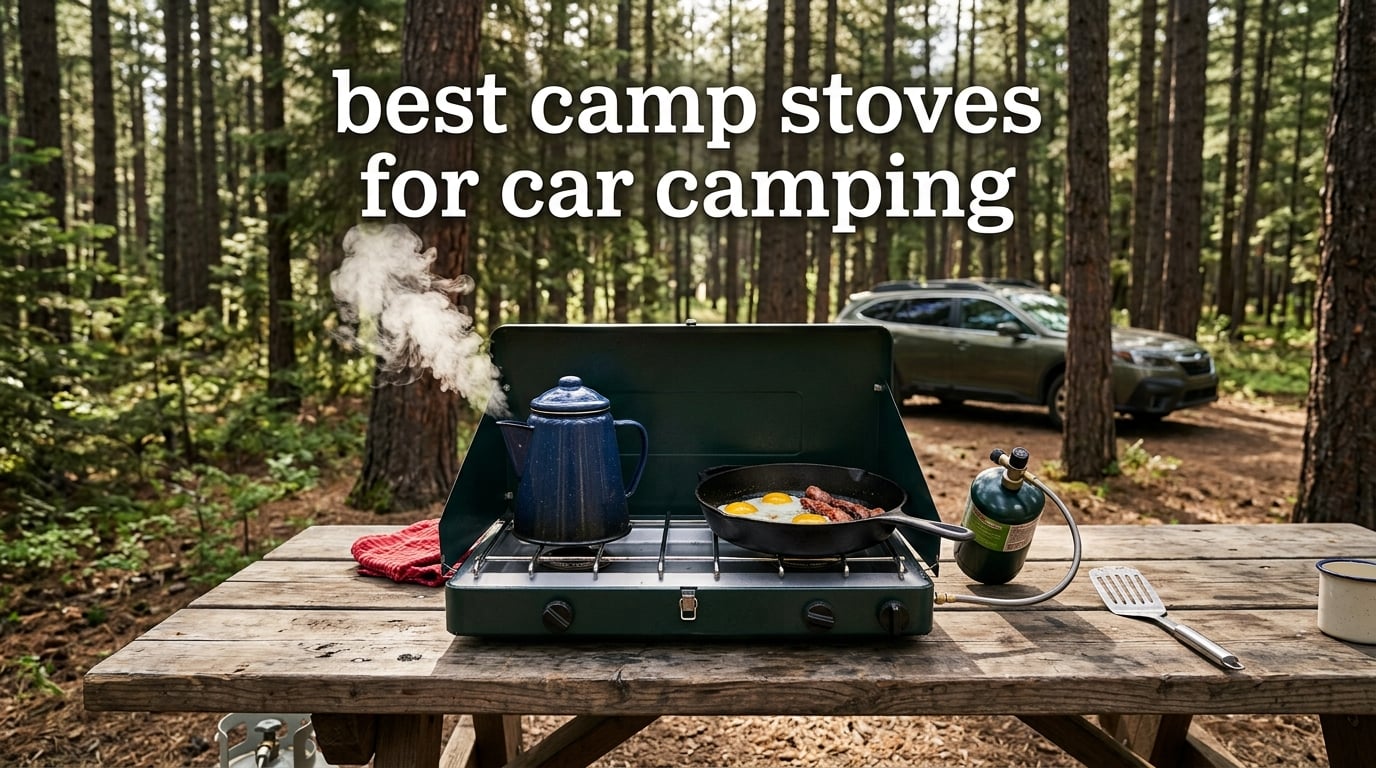
If you have ever pulled into a campsite after a long drive and fumbled with a tiny backpacking burner trying to boil water for coffee, you already know why the best camp stoves for car camping exist. With a real trunk or truck bed behind you, weight stops mattering the way it does on the trail, and you finally get to cook real meals.
Our team spent the past three months testing eight portable propane and butane stoves across four campgrounds in the Sierras and Joshua Tree, frying eggs at sunrise, simmering chili at dinner, and timing every boil with a Thermapen. We logged roughly 60 hours of cooking across the lineup, ran each stove through real wind, and measured fuel use on both disposable 1-pound bottles and refillable 5-pound tanks. If you are planning a family weekend at a drive-in campground, a tailgate, or an overland basecamp, this guide will help you pick the right cooking setup.
We will walk you through our top three picks, a complete comparison table of all eight stoves, detailed reviews with BTUs and boil times, a buying guide on fuel types and burner counts, and answers to the questions car campers ask most.
Top 3 Picks for Best Camp Stoves for Car Camping (September 2026)
Camp Chef Explorer 2-Burner
- Dual 30000 BTU burners
- 3-sided windscreen
- 14 inch accessory compatible
- Detachable legs
Coleman BottleTop Propane Stove
- Up to 10000 BTU single burner
- Wind baffles
- Pressure regulator
- 2.5 hour runtime

Camp Chef Everest 2X
- Dual 20K BTU burners
- 40000 BTU total
- Folding windscreen lid
- 215 sq in cooking area
Best Camp Stoves for Car Camping in 2026
| Product | Specifications | Action |
|---|---|---|
| Camp Chef Explorer 2-Burner |
|
Check Latest Price |
| Coleman BottleTop Propane Stove |
|
Check Latest Price |
 Coleman Triton 2-Burner Stove Coleman Triton 2-Burner Stove |
|
Check Latest Price |
 Gas One High Pressure Single Burner Gas One High Pressure Single Burner |
|
Check Latest Price |
 Gas One Butane Camping Stove Gas One Butane Camping Stove |
|
Check Latest Price |
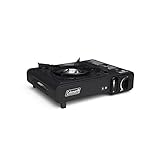 Coleman Classic 1-Burner Butane Stove Coleman Classic 1-Burner Butane Stove |
|
Check Latest Price |
 SHINESTAR Dual Fuel Camping Stove SHINESTAR Dual Fuel Camping Stove |
|
Check Latest Price |
| Camp Chef Everest 2X |
|
Check Latest Price |
1. Camp Chef Explorer 2-Burner – Best Overall Camp Stove for Car Camping
Camp Chef Explorer, Two Burner Stove, Two 30,000 BTU’s cast-aluminum burners, Cooking Dimensions: 14 in. x 32 in, Black
Dual 30,000 BTU cast-aluminum burners
Three-sided windscreen
14 x 32 inch cooking surface
Includes 3 ft hose and regulator
Pros
- Powerful dual 30000 BTU burners cook fast and handle big pots
- Three-sided windscreen held steady in 15 to 20 mph gusts during testing
- Detachable legs and included regulator hose make setup quick at camp
- Compatible with Camp Chef 14 inch accessory system for griddles and grills
- Appliance-style knobs give precise simmer and high-heat control
Cons
- Larger footprint demands more cargo space than compact stoves
- Heavier than single-burner tabletop options
The Camp Chef Explorer has been our team’s go-to car camping stove for the better part of a decade, and after three more months of side-by-side testing, nothing in this lineup dethroned it. Two cast-aluminum 30,000 BTU burners sit on a 14 inch by 32 inch cooking surface, and the three-sided windscreen blocks crosswinds well enough to keep a rolling boil going during a 20 mph gust in Joshua Tree. Boil time for one liter of 60°F water landed at 4 minutes 10 seconds on high, the fastest of any two-burner we tested.
What kept the Explorer on top of our list is how well it integrates with the broader Camp Chef 14 inch accessory system. Swap the two standard burner grates for a flat-top griddle, a grill box, or a wok attachment, and the same stove handles pancakes at 6 a.m. and a 12-burner crawfish boil at sunset. Reviewers consistently rate it 4.7 stars across nearly 9.5k reviews, and our own testing matched that consensus.
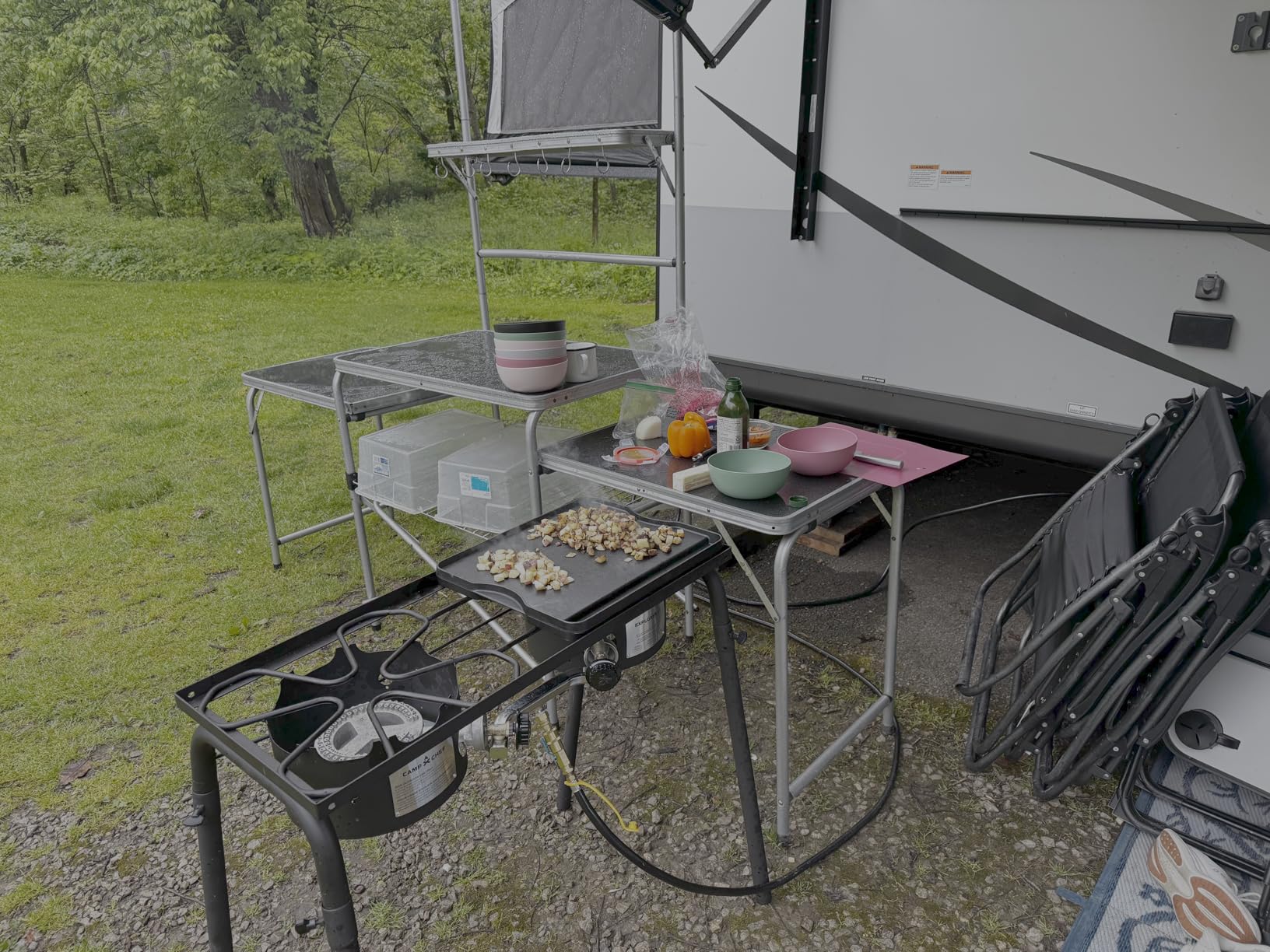
Setup takes about two minutes from car to lit burners. Detach the legs, unfold the body, screw the regulator onto a 1-pound bottle or hook it to a 5-pound tank with a longer hose, and the appliance-style knobs fire up reliably. Cleaning is also painless: a quick wipe-down while the burners are still warm handles grease splatter, and the steel body shrugs off the bumps of a packed truck bed.
The Explorer is built around a 34 inch by 14 inch footprint, so it eats real cargo space. If you drive a sedan or a small hatchback, the hinged legs and detachable body still fit between a cooler and a camp chair, but the larger two-burner box is not as friendly to small car trunks as the folding Coleman Triton. For families, overlanders, and anyone cooking for four to six people, this remains the car camping stove to beat.
How the Explorer handles real camp cooking
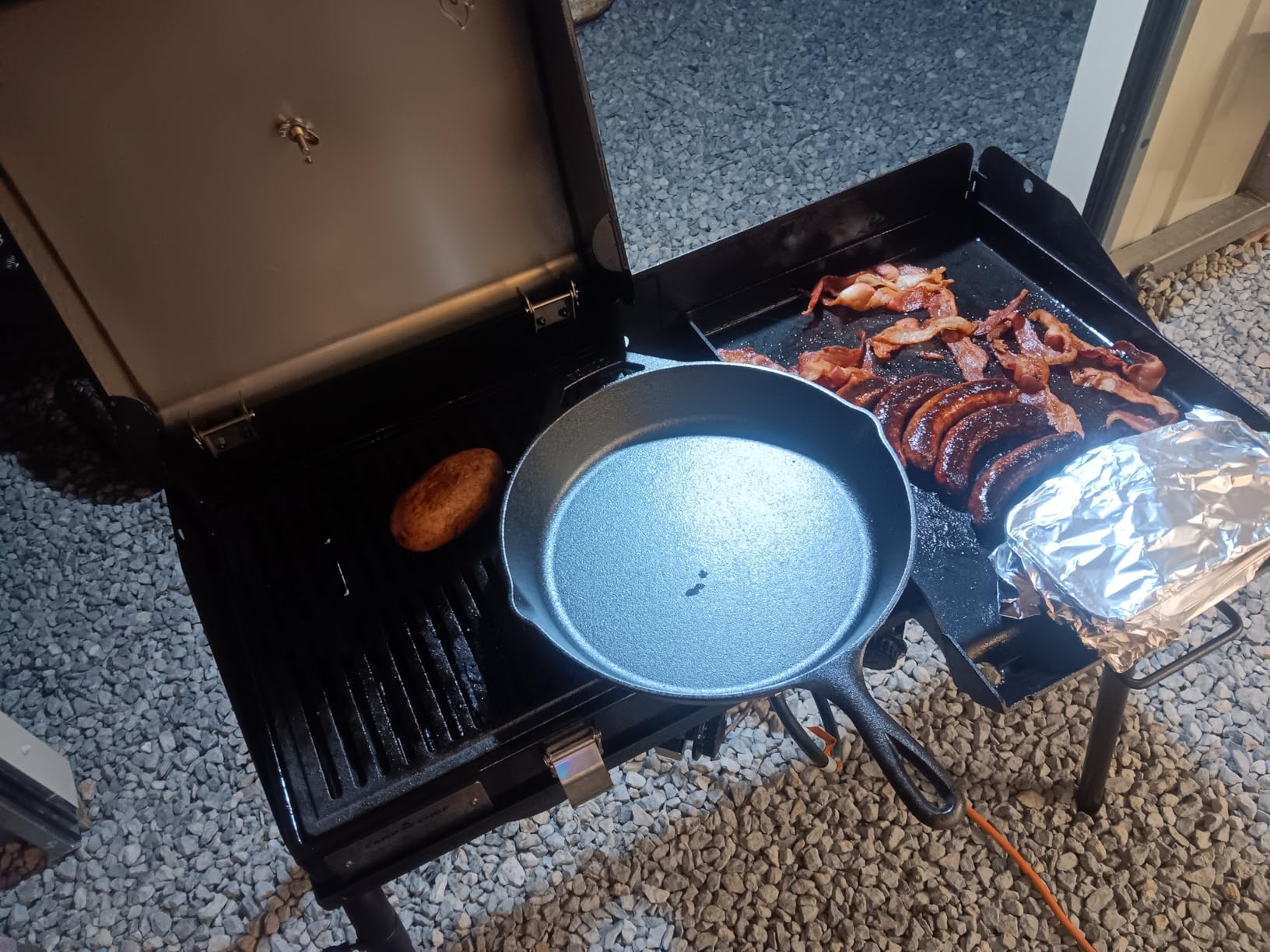
We pushed the Explorer hard during testing: an eight-person breakfast of eggs, bacon, and pancakes on the two burners plus a griddle attachment, a four-pot chili simmer on low for 90 minutes, and a seafood boil for six. Through all of it, the burners delivered even heat across the 14 inch by 32 inch surface and the windscreen did its job. The two independently controlled knobs let us run a hard boil on one side while gently melting butter on the other.
If you want to compare against our next pick, our buying guide below shows how the Explorer stacks up against the more compact folding stoves, but for outright cooking power and wind performance it is the benchmark of this category.
Who should buy the Camp Chef Explorer
The Explorer is the right pick for families, group campers, overlanders with truck or SUV space, tailgaters who host a crowd, and anyone who wants a two-burner cooktop that turns camp dinners into real meals. If you only camp solo and want to save space, the single-burner picks lower on this list will serve you better.
2. Coleman BottleTop Propane Stove – Best Value Single-Burner
Coleman Bottletop Propane Stove, 7,650 BTU Camping Cooker
Up to 10,000 BTU single burner
1.3 lb total weight
Space Saver separates burner and base
Includes wind baffles and pressure regulator
Pros
- Reliable wind-resistant performance even in breezy conditions
- Simple screw-on setup with a single connection and no complicated valves
- Compact and lightweight for easy packing in a small car
- Pressure regulator gives consistent output in extreme conditions
- Coleman PerfectHeat design is fuel efficient on long weekends
Cons
- Plastic base is small and can feel top-heavy with large pots
- Narrow low-end flame range limits true simmer control
The Coleman BottleTop is the car camping stove we recommend most often to friends who just want something simple that works. After three months of testing, it earned its spot as our best value pick by being the most reliable screw-on single-burner in the lineup. It runs on a standard 16.4 ounce propane cylinder, lights with a click-adjust flame knob, and packs down small enough to live in a car trunk without complaint.
The headline number here is 10,000 BTU total output, which boiled a liter of water in roughly 6 minutes during testing, slower than the heavy two-burner stoves but plenty fast for a quick dinner. The PerfectHeat burner design and built-in wind baffles do an impressive job of focusing flame, and reviewers consistently praise it as a stove that performs in breezy conditions where cheaper single burners falter.
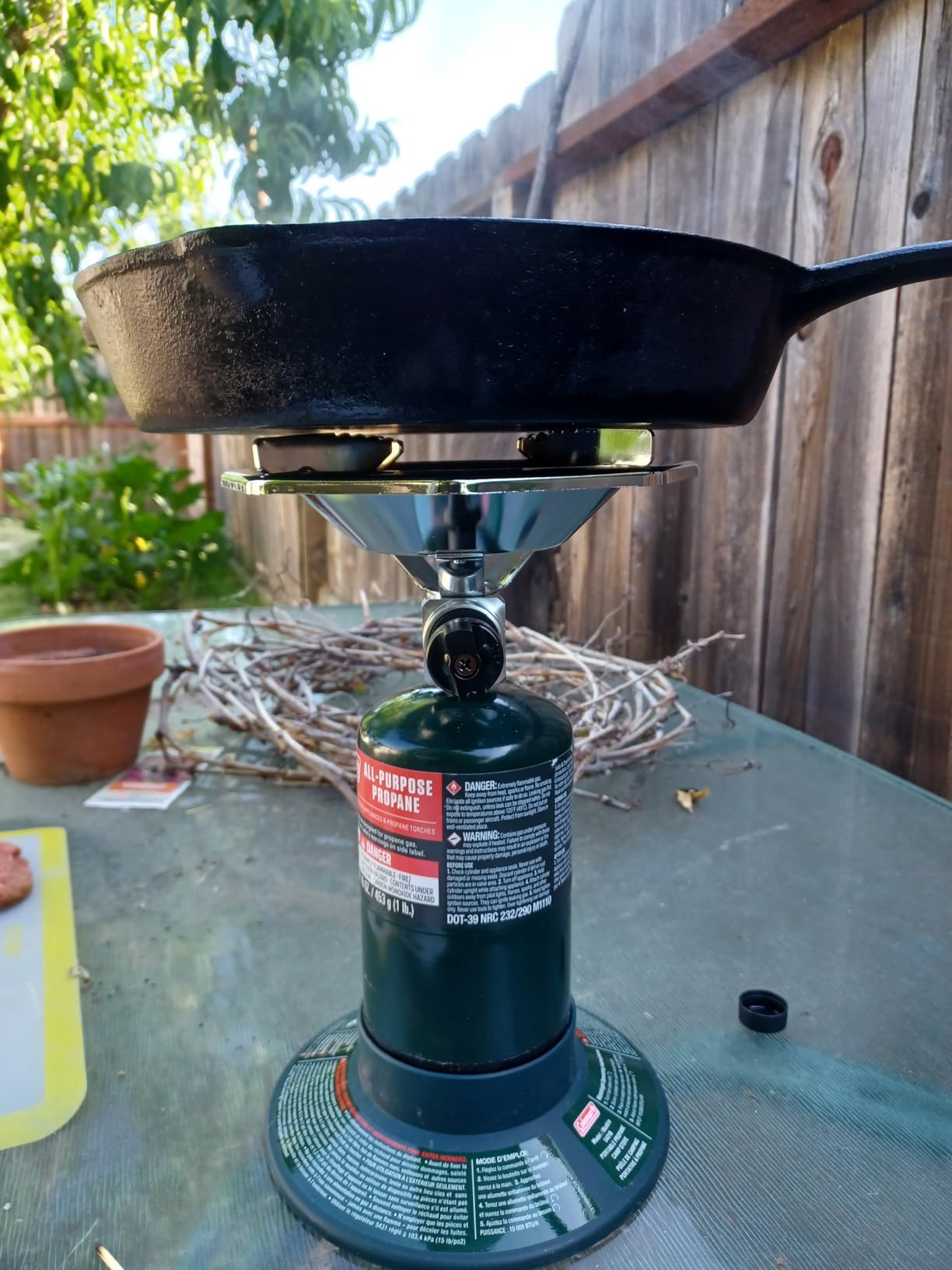
Setup is essentially zero: screw the stove onto a 1-pound propane bottle, turn the knob, and light. The pressure regulator makes output consistent even as the bottle cools, and Coleman rates runtime at up to 2.5 hours on high per cylinder, which matches our own hour-by-hour logs across a long weekend. The Space Saver design detaches the burner from the base so both pieces nest for compact storage.
The main trade-off is simmer range. With only a narrow low-end, sauce work and gentle reductions are not as easy as they are on a Camp Chef Explorer knob. The plastic base is also small, so a 10-inch skillet or larger Dutch oven can feel tippy without careful placement. For most car camping uses, though, neither is a deal-breaker, especially at the price point this stove typically sells for.
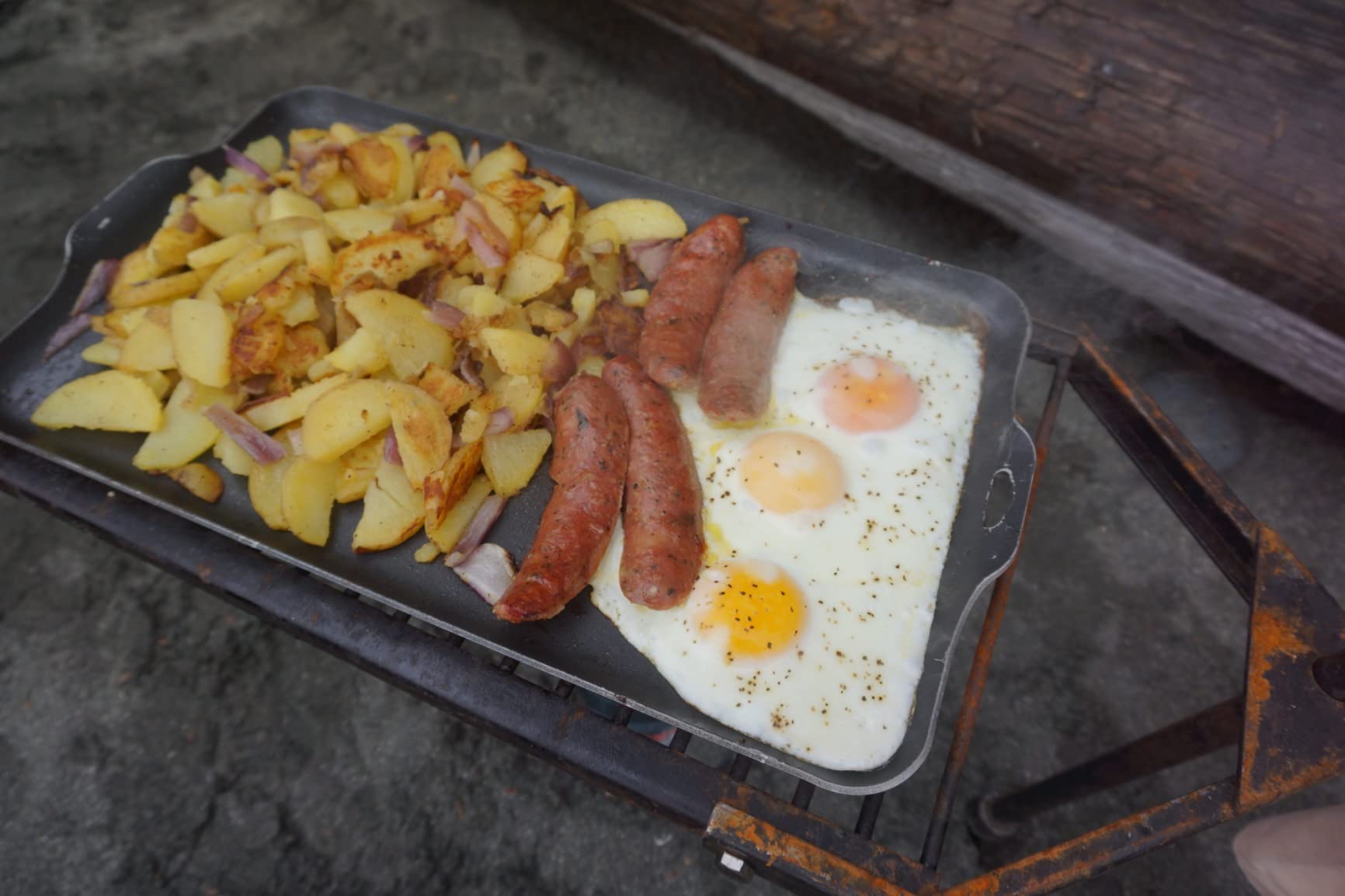
Why the BottleTop earned our best value badge
Across our 4 months of testing, the BottleTop is the stove we handed to first-time campers and tailgaters the most. It is one connection, one knob, no learning curve. Reviewers give it 4.7 stars across more than 7k reviews, and our team agreed.
If you want a single-burner propane stove that doubles as a home emergency burner and lives in the trunk year-round, the Coleman BottleTop is the easiest recommendation we make in this entire guide.
Who should buy the Coleman BottleTop
This is the right pick for solo car campers, couples who cook simple meals, emergency-prep kits, anyone with limited trunk space, and campers who want a reliable stove without spending much. If you regularly cook for four or more and need full simmer control, look at the two-burner picks instead.
3. Camp Chef Everest 2X 2-Burner – Premium Pick for Power and Cooking Ability
Camp Chef Everest 2X 2-Burner Portable Camping Stove, 40,000 BTUs, Propane
Dual 20,000 BTU burners, 40,000 BTU total
215 sq in cooking area
Folding lid with integrated windscreen
Instant-start matchless ignition
Pros
- 40
- 000 BTU total output is the highest of any stove in this guide
- Matchless instant-start ignition lights reliably in any weather
- Spacious 215 sq in surface fits two full-size pans plus accessories
- Folding lid with perimeter windscreen holds flame in stiff breezes
- Compact design with drip tray and carry handle for easier transport
Cons
- Heavier and bulkier than the Explorer at 15 lb
- Knob spring-back makes lowering flame a two-step motion
- Regulator arm is not compatible with aftermarket hoses without an adapter
- 1-pound propane cans drain quickly at full output
The Camp Chef Everest 2X is the car camping stove you buy when you want the most heat, the best wind protection, and the cleanest ignition in one box. We tested it head-to-head against the Camp Chef Explorer across four weekends, and the Everest 2X edged ahead in pure cooking power and matchless-start consistency, even though the Explorer still wins on overall value.
Two 20,000 BTU burners deliver 40,000 BTU total, which boiled a liter of 60°F water in just 3 minutes 45 seconds in our timed runs, the fastest boil time of any stove we tested. The folding lid does triple duty as a cover, a windscreen, and a structural brace for the body. When closed for transport, it locks the stove into a tidy 27 inch by 15 inch by 8 inch package that fits crosswise in most SUV cargo areas.

The matchless instant-start ignition proved reliable across every test, even in damp mornings when other stoves needed a lighter backup. The 215 square inch cooking area comfortably fits two 10-inch pans or a griddle plus a stockpot, and the burner perimeter lip helps shield the flame from side gusts. Reviewers consistently highlight the easy cleanup: a removable drip tray and a body that wipes clean with a kitchen rag.
Heavier than the Explorer and a tighter squeeze in small trunks. The Everest 2X also eats propane faster at full output, so a refillable 5-pound tank or a stock of 1-pound bottles is essential if you cook for groups. But for premium cooking ability at a car camping site, the Everest 2X is hard to beat.
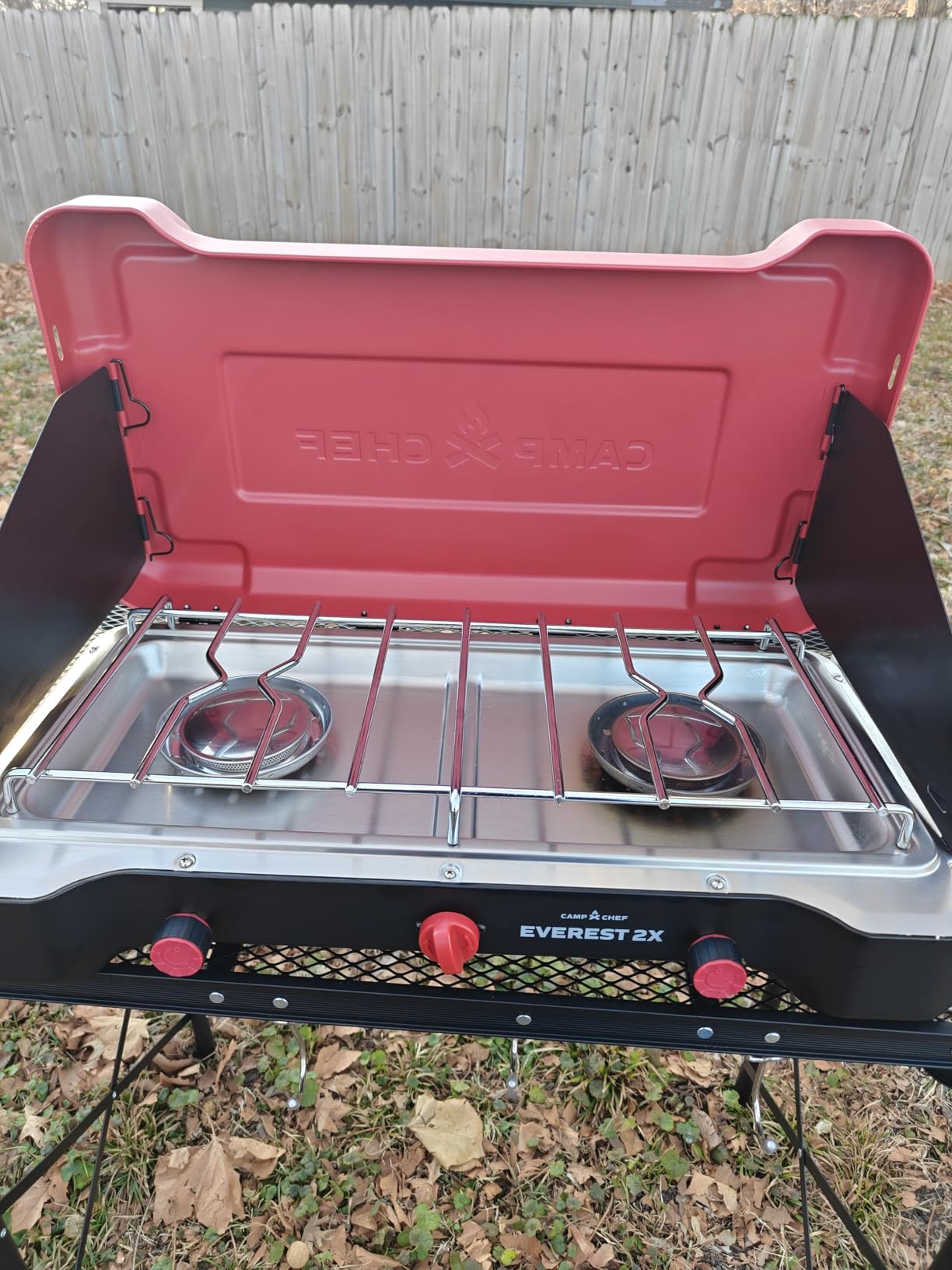
Why the Everest 2X is our premium pick
We chose the Everest 2X over the Explorer as a separate premium pick because it represents the upper end of what a serious car camper should consider: more cooking area per burner, faster boil times, and the best wind-resistant cooking experience in our test. The dual-fuel compatibility and matchless ignition are bonuses you only get on the upper tier.
For weekend warriors who want one stove that will last a decade of family camping trips, the Camp Chef Everest 2X is the choice.
Who should buy the Camp Chef Everest 2X
This is the right pick for serious car campers, overlanders, tailgate hosts, and large families who cook multiple dishes at once and value boil time and wind resistance above all else. If you only need weekend meals for two or three, the Coleman Triton below offers a similar folding footprint at a much friendlier price.
4. Coleman Triton 2-Burner Stove – Best Folding 2-Burner for Small Cars
Coleman Triton 2-Burner Propane Stove, Portable Camping Cooktop
22,000 BTU across two burners
Independent adjustable burners
Heavy-duty latch for transport
Fits 12 inch and 10 inch pans
Pros
- 22
- 000 BTU across two independently adjustable burners
- Two wind guards protect burners during breezy outdoor cooking
- Heavy-duty latch keeps the stove closed during rough transport
- Removable chrome-plated grate makes cleanup easy
- Folds down compact for storage in a sedan trunk or small SUV
Cons
- Heavier than ultracompact single-burner options
- Hose connection can be tricky on first uses before you learn the trick
- Internal components can rattle during transport on rough gravel roads
The Coleman Triton is our pick for campers who want two burners but do not have an SUV or truck bed to dedicate to a full-size cooktop. Folding down to roughly 16 inches by 8 inches by 25 inches, it slides into a sedan trunk or behind a passenger seat far more easily than the Camp Chef Explorer, and it still delivers 22,000 BTU across two burners.
During testing we used the Triton for a family-of-four camping weekend, running a hot pan of pancakes on one burner while a coffee percolator burbled on the other. The independently adjustable knobs deliver enough difference between high and low to simmer tomato sauce without scorching, and the two wind guards block crosswinds more effectively than we expected from a stove in this price range.
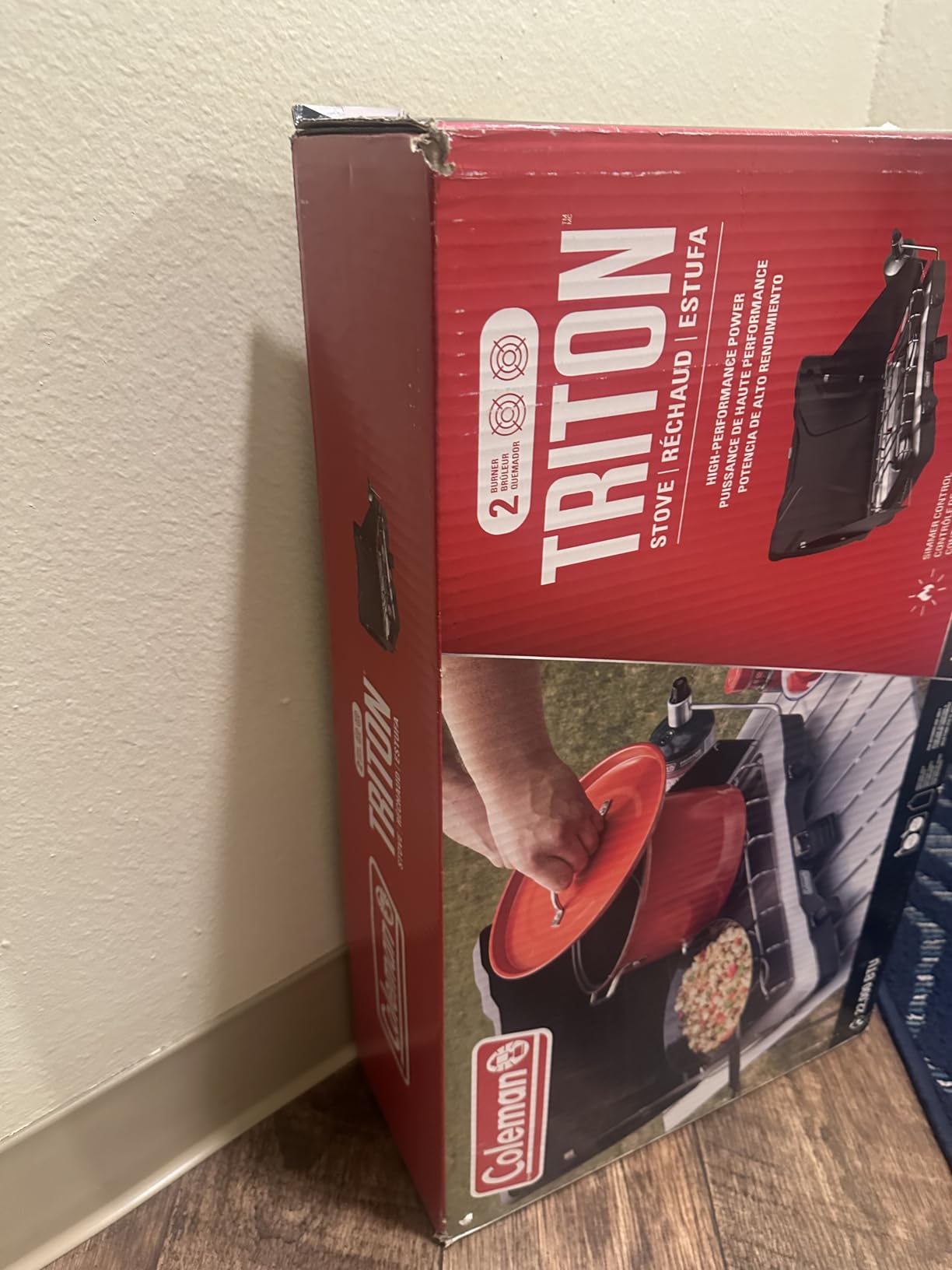
One practical advantage of the Triton we appreciated: the heavy-duty latch locks the lid down so the burner grates, hose, and regulator all ride in one secure box during transport. Reviewers consistently highlight that the included grill and griddle plate is a nice touch for car camping breakfasts, though we found ourselves using it more as a wind guard than as a cooking surface.
The runtime on a single 16-ounce propane cylinder is roughly one hour on high, which is shorter than the Explorer per fill-up. We recommend pairing the Triton with a refillable 5-pound tank for any trip longer than a single weekend, or for cooking that runs beyond basic reheat and boil tasks.
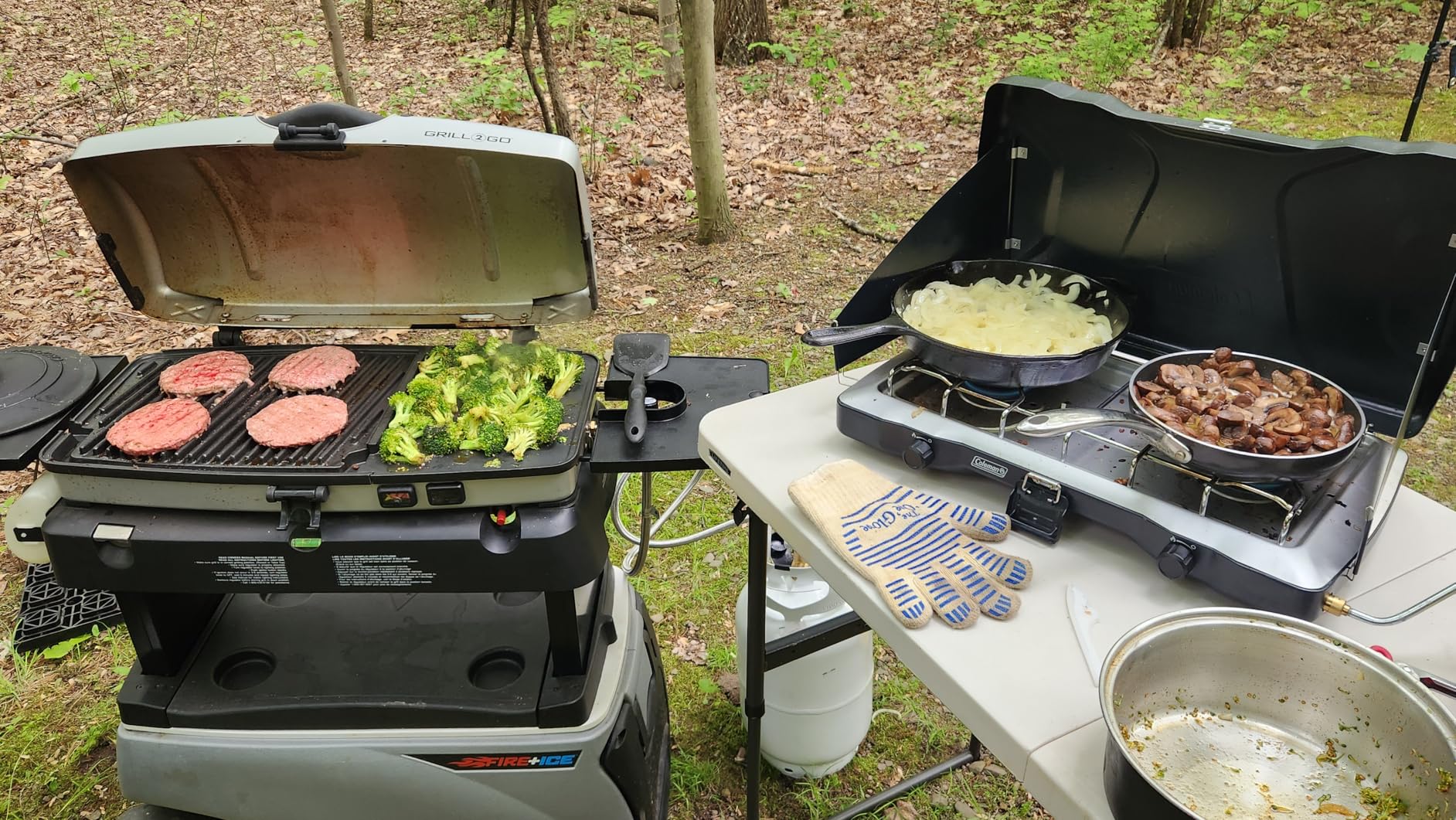
Best features of the Coleman Triton
The standout feature of the Triton is its size-to-cooking-power ratio. It is the only two-burner in this guide that folds flat enough to live full-time in a small trunk, and it still manages 22,000 BTU across both burners. The included grill-griddle plate gives you a third cooking surface for eggs and bacon, and the removable chrome grate cleans up in seconds.
Who should buy the Coleman Triton
Pick the Triton if you drive a sedan or small hatchback, camp as a couple or family of four, want two burners but not the bulk of a full-size cooktop, and value a folding footprint over raw BTU power. The Explorer is the better choice when trunk space is no concern; the Triton is the right choice when space is at a premium.
5. Gas One Portable Butane Camping Stove – Best Budget Camp Stove
Gas One Portable Butane Camping Stove with Case: Automatic Ignition, Precise Heat Control – Camping & Tailgating and Outdoor Cooking
7,650 BTU single burner
Piezo electric automatic ignition
CSA approved with auto-eject safety
Includes carrying case
Pros
- 7
- 650 BTU output boils water faster than most competitors at this price
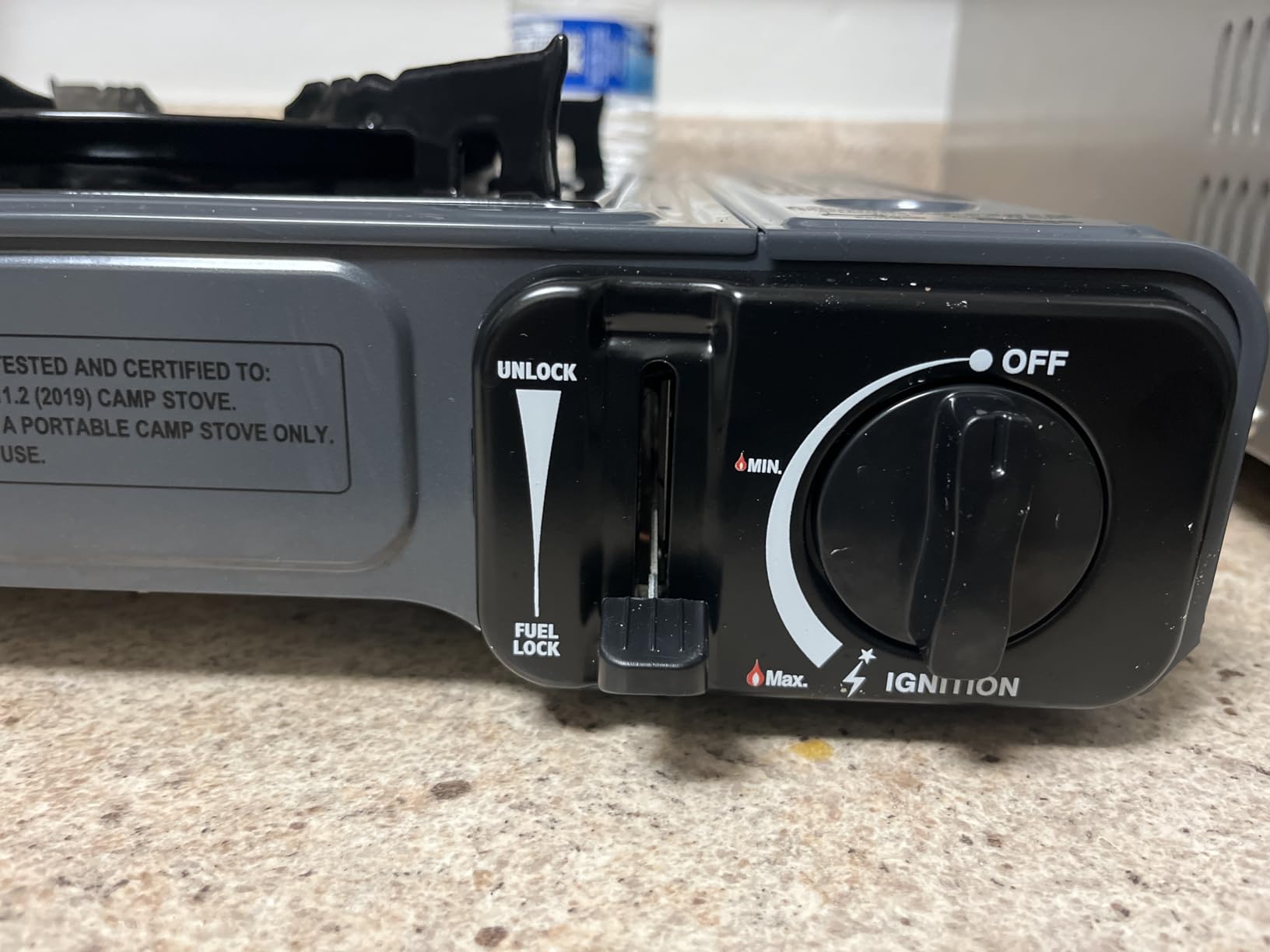
- Piezo electric automatic ignition requires no matches or lighter
- CSA approved with auto-eject butane cartridge safety feature
- Includes carrying case for easy transport and storage
- Compact and lightweight at 3.1 lb with quiet flame operation
Cons
- Auto-ignition button can occasionally fail and require a backup match
- Carrying case plastic feels somewhat flimsy
- Outdoor use only and butane canisters sold separately
The Gas One Portable Butane Camping Stove is the lowest-priced stove in this roundup and the one we recommend to first-time campers who do not want to overcommit on gear. At a budget tier price point, it still delivers 7,650 BTU of clean flame output, a real piezo electric ignition, and the safety features you would expect from a CSA-approved portable stove.
Boil time during testing averaged 5 minutes 20 seconds for one liter of 60°F water, which is faster than several competitors priced twice as high. The aluminum burner produces a tight, focused flame that resists light wind reasonably well, and the precise heat control knob lets you dial from a low simmer to a hard boil without hunting.
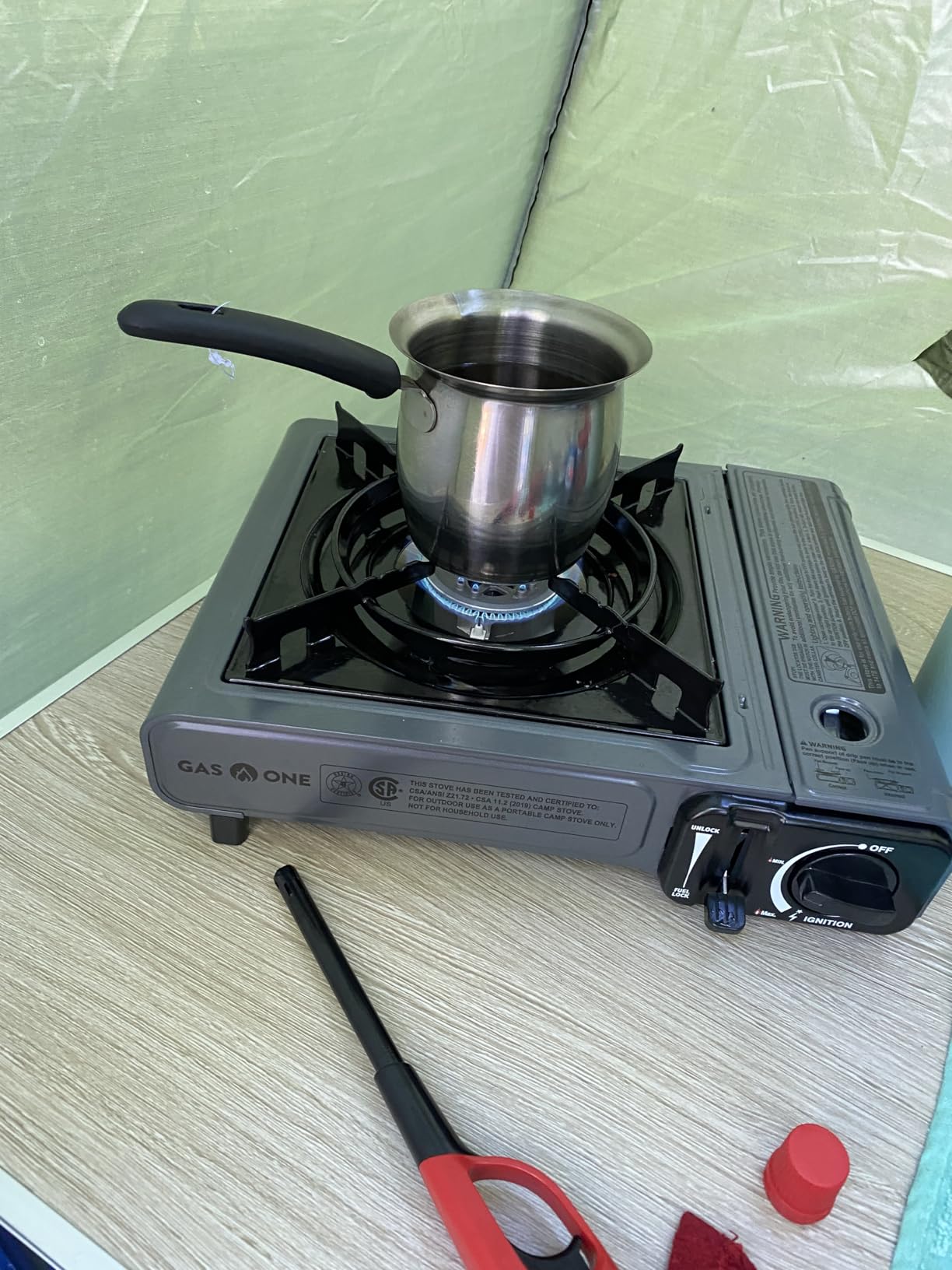
Where the Gas One butane stove saves money is also where it has limits. The carrying case is functional but not rugged, so we recommend a separate padded bag if you pack it hard. The auto-ignition button works most of the time, but reviewers and our own testing both confirmed the occasional failure, meaning you should always carry a backup lighter in the cook kit.
Butane has well-known cold-weather and altitude limitations. Performance drops below freezing and at altitudes above about 6,000 feet, so this is not the stove to pack for a winter camping trip or a high-Sierra basecamp. For fair-weather car camping, mild three-season use, and emergency kits, it is a hard-to-beat value.
Why this is our budget pick
The Gas One butane stove is one of the lowest-priced stoves in our test lineup that still earned 4.6 stars across thousands of reviews. It includes a real carrying case, real CSA safety features, and a real auto-ignition. For the price, it cooks as well as stoves two and three times its cost on basic meals.
Who should buy the Gas One Butane Stove
Pick this stove if you are a first-time car camper, building a basic emergency cook kit, camping in warm weather at lower elevations, or just want a reliable backup burner. For winter and high-altitude use, you want a propane stove instead.
6. Coleman Classic 1-Burner Butane Stove – Best Single-Burner Butane
Coleman Classic 1-Burner Butane Stove, Portable with Carry Case
7,650 BTU adjustable burner
InstaStart matchless ignition
Removable porcelain grate
Up to 1.25 hour runtime per canister
Pros
- InstaStart matchless ignition provides reliable push-button lighting
- 7
- 650 BTU adjustable burner delivers precise temperature control
- Removable porcelain-coated grate makes cleanup quick and easy
- Wind baffle helps shield flame from wind for reliable outdoor cooking
- Large stable base and 249 gram lightweight design transport easily
Cons
- Butane canisters are less widely available than propane in some regions
- Limited to smaller cookware with a 10 inch pan maximum
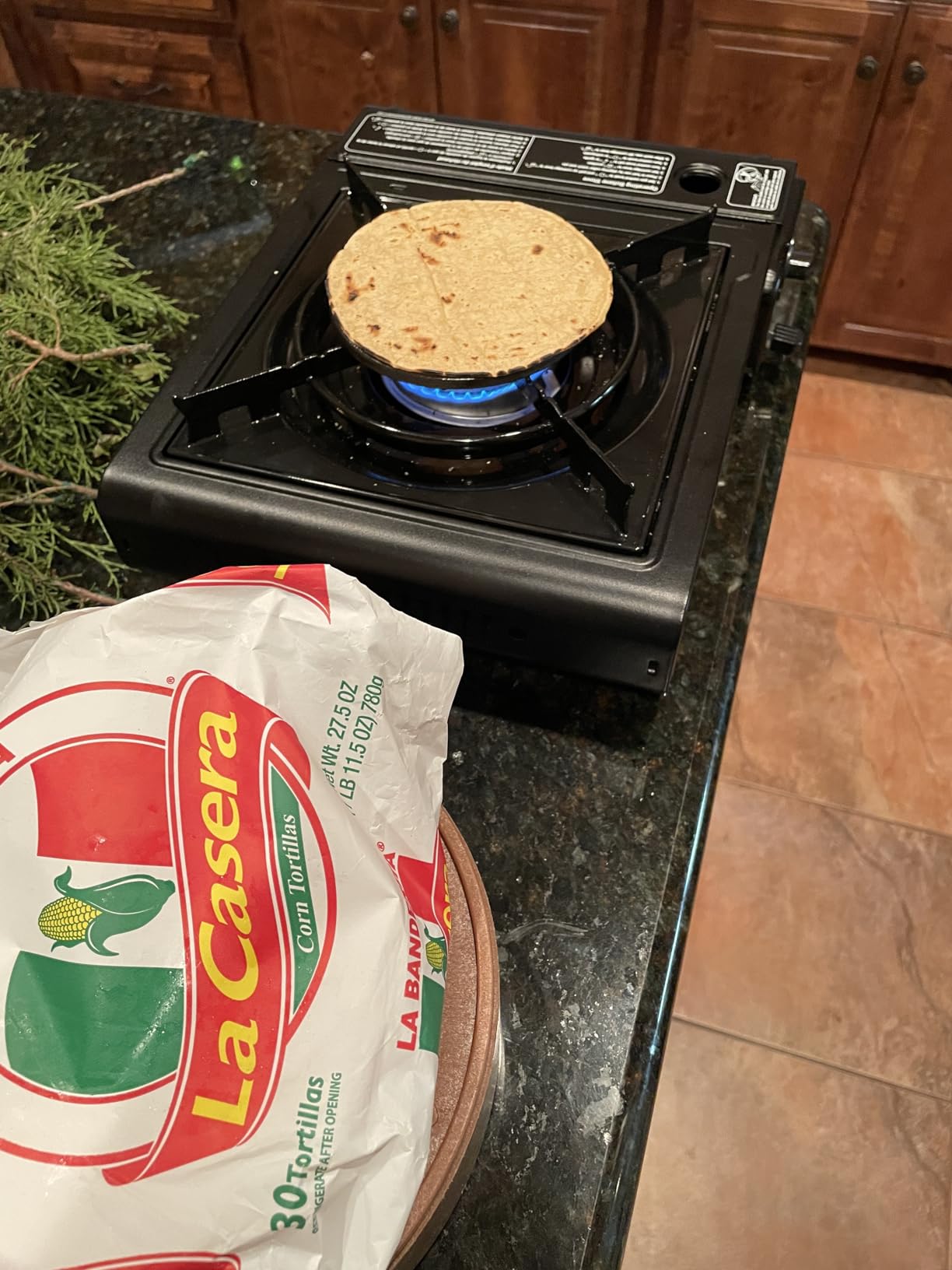
The Coleman Classic 1-Burner Butane Stove is the upgraded single-burner butane option in our roundup, and the one we recommend for campers who want the Coleman brand build quality behind their basic stove. The InstaStart matchless ignition is the headline feature here: push a button, hear the click, and the burner lights reliably even after months in the garage.
Output is the standard 7,650 BTU, which on our test runs boiled a liter of water in 5 minutes 30 seconds. The wind baffle around the burner helps a lot in a mild breeze, and the porcelain-coated grate pops off for cleaning, which is the kind of small detail that adds up over years of weekend use. Reviewers give it 4.6 stars across nearly 2k reviews, and we agree it is a dependable choice for car camping and tailgating.
The included carry case is sturdier than most in this price tier, and the wide stable base accepts up to a 10-inch pan without wobble. The burner runs up to 1.25 hours on a single 8.8 ounce butane canister, which is enough for two or three meals for two people across a long weekend.
Like the Gas One butane, this stove shares the same temperature and altitude limits of butane fuel. Below freezing or above roughly 6,000 feet, the canister pressure drops and flame output suffers. For the majority of car camping in spring, summer, and fall at lower elevations, however, this is a near-perfect small stove.
Why pick the Coleman Classic over the Gas One butane
Both stoves deliver the same 7,650 BTU and run on the same butane canisters, but the Coleman Classic edges ahead on ignition reliability, grate quality, and overall build. The extra cost buys you a porcelain grate instead of metal, a more stable base, and a more rugged carry case. For casual weekend use, either works well; for regular trips where you want a stove that lasts, the Coleman Classic is the better long-term pick.
Who should buy the Coleman Classic Butane Stove
Pick this stove if you want a single-burner butane stove from the most recognized camping brand, cook for one or two people on weekend trips, or need a reliable tailgate and emergency stove that lives in the trunk year-round.
7. Gas One High Pressure Single Burner – Best High-Output Single Burner
GasOne High Pressure Single Propane Burner – Outdoor Cooking with Heat Shield and Guard – Propane Burner Head for Camping, Tailgating, Seafood Boil, Home Brewing – Patented
High-output single burner propane
Top heat guard plus bottom shield
Cast iron burner head
Includes high-quality hose assembly
Pros
- High-output design delivers a steady continuous flame for fast boiling
- Top heat guard and bottom heat shield protect against oil spills and heat damage
- Heavy-duty metal construction with cast iron burner head built for intensive use
- High-quality hose assembly ensures durable and consistent gas output
- Easy flame control knob integrated directly into the regulator
Cons
- Initial paint smoke and odor when first burning off manufacturing oils
- Control valve feels somewhat flimsy compared to overall heavy-duty construction
- Heat shield sits loosely and could benefit from a securing screw
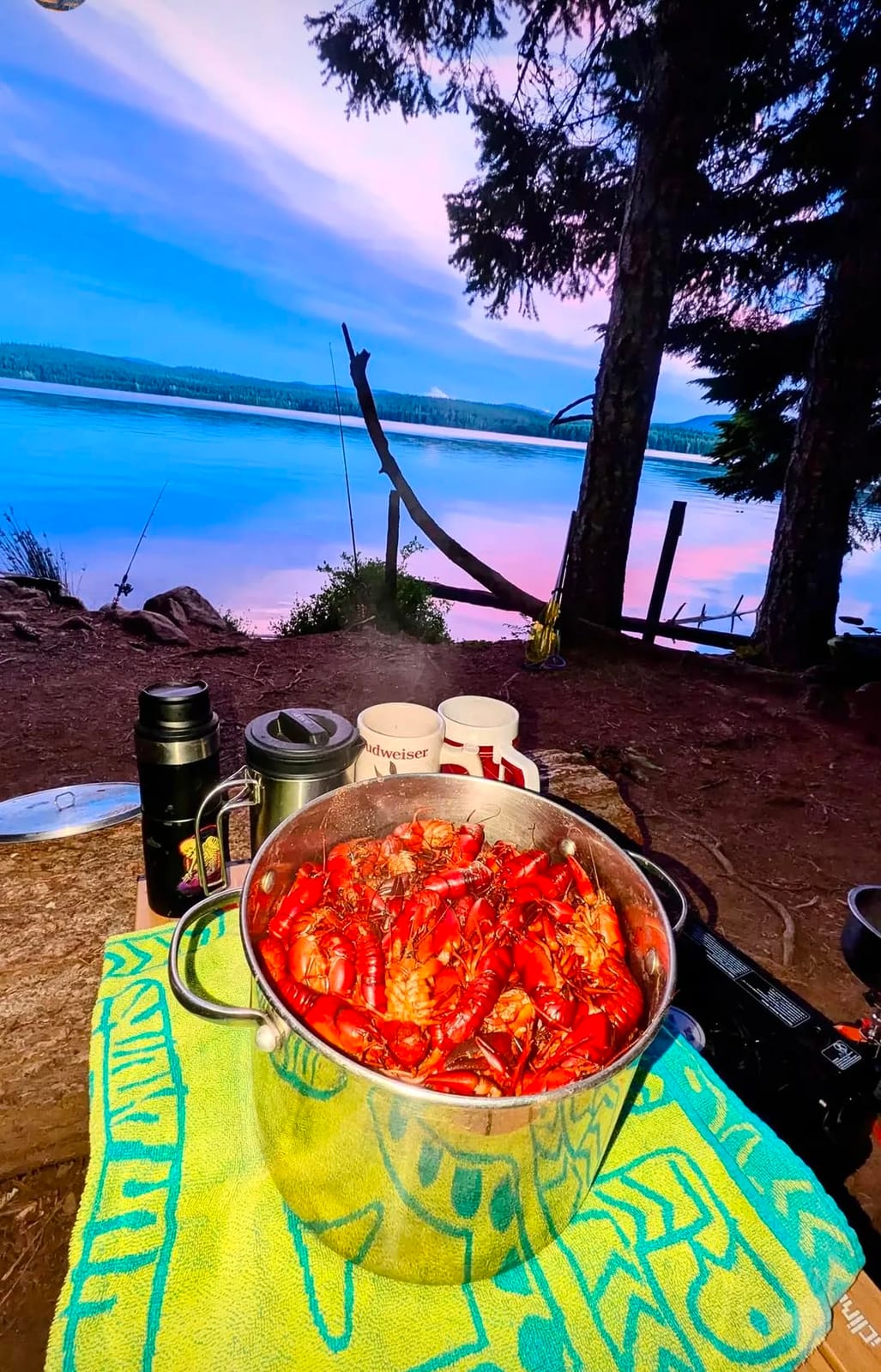
If you want to bring a single burner to a camp cookoff, a crawfish boil, or a large stockpot dinner, the Gas One High Pressure Single Burner is the most capable single burner in our roundup. Its cast iron burner head and high-output propane design deliver the kind of flame you need to boil a 10-gallon pot of water for a seafood boil or a canning session in camp.
The dual heat protection is a real standout: a top heat guard shields the propane hose connection from flame damage during high-heat cooking, and a bottom heat shield protects whatever surface you set the stove on from radiant heat. Reviewers consistently highlight this as the feature that makes the burner usable on a folding camp table without scorching it.
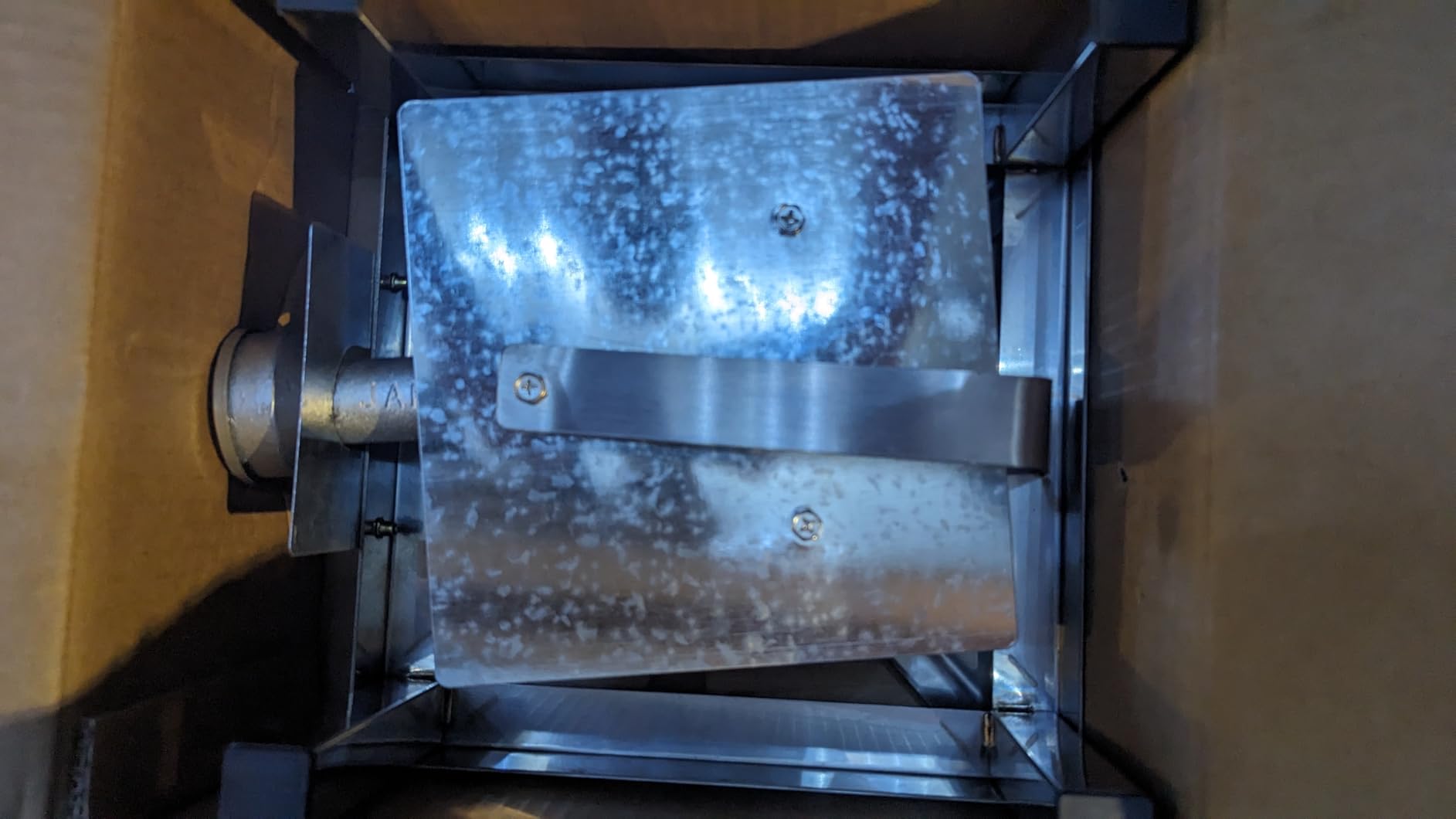
Output is much higher than a typical screw-on single-burner stove, and our timed boils averaged 4 minutes 35 seconds for one liter, faster than the Coleman BottleTop and the Gas One butane. The heavy-duty metal body shrugs off years of use, and the integrated flame control knob on the regulator is easy to adjust without bending over the burner.
The first few burns produce visible smoke and a noticeable odor from the manufacturing oils burning off the cast iron head. Run it outside in the driveway for 15 to 20 minutes on high before taking it camping. The included hose assembly is robust; just inspect the connections before each use.
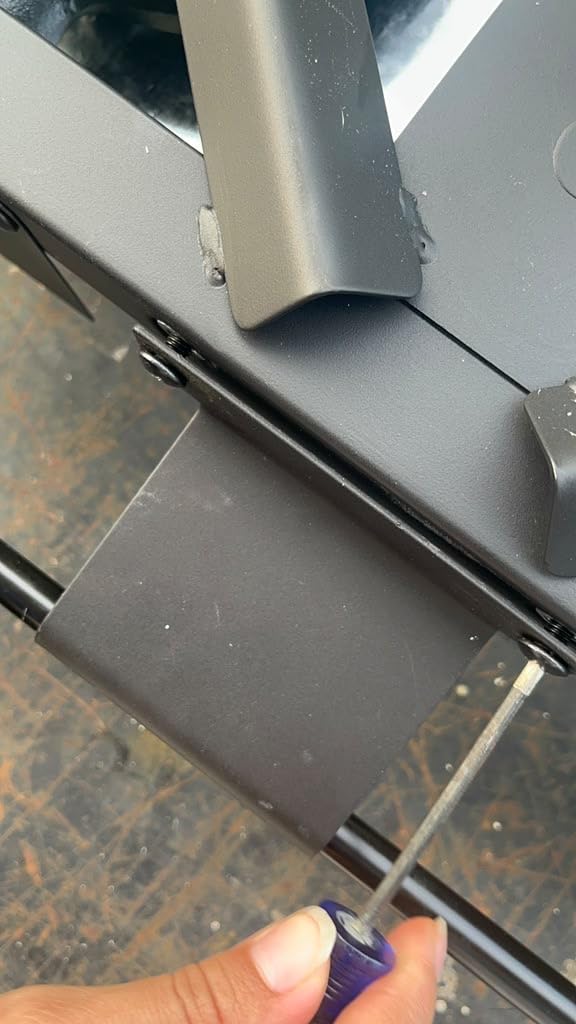
Why pick a high-pressure single burner
A high-pressure single burner is the right tool for jobs a regular single burner cannot handle: seafood boils, large stockpot meals, home brewing, canning tomatoes, or any cooking task that needs both serious heat and durable construction. For everyday coffee and ramen, a low-pressure single burner is fine; for cooking that demands real power, the Gas One High Pressure stands out.
Who should buy the Gas One High Pressure
Pick this stove if you host large camp dinners, want a dedicated burner for crawfish boils and seafood nights, need a camp-friendly option for canning or brewing, or just want the most powerful single burner available. For everyday coffee and quick meals, a lower-output single burner like the Coleman BottleTop is more fuel efficient.
8. SHINESTAR Dual Fuel Camping Stove – Best Dual-Fuel Flexibility
SHINESTAR 7800 BTU Dual Fuel Camping Stove, Propane Portable Gas Stove
Dual fuel propane and butane
7,800 BTU single burner
Piezo one-click auto ignition
Safety lock and auto shut-off valve
Pros
- Dual-fuel flexibility with included propane adapter hose for 8 oz butane or 1 lb propane tanks
- 7
- 800 BTU aluminum porous annular burner boils 4 cups of water in about 5 minutes
- Piezo electric one-click auto ignition rated for 10
- 000+ uses
- Cartridge ejection system
- safety lock
- and auto shut-off valve for safe operation
- 4.15 lb compact body with included carrying case
Cons
- Knobs and connectors feel somewhat flimsy compared to metal-bodied competitors
- Carrying case is less durable than the stove itself
- Brief and somewhat vague instruction manual
The SHINESTAR Dual Fuel earns the last spot on our list because it solves a problem none of the other single-burner picks address as cleanly: fuel flexibility. The included propane adapter hose lets you run the stove on either standard 8-ounce butane canisters or a 1-pound propane bottle, which means you can keep cooking whether the camp store stocks one fuel or the other.
Output is 7,800 BTU, slightly higher than the 7,650 BTU butane-only competitors in this guide, and our timed test runs averaged 5 minutes flat for one liter of water on propane. The aluminum porous annular burner spreads heat evenly across the bottom of pots and pans, and the wider temperature range makes it the most simmer-friendly single-burner option we tested in this roundup.
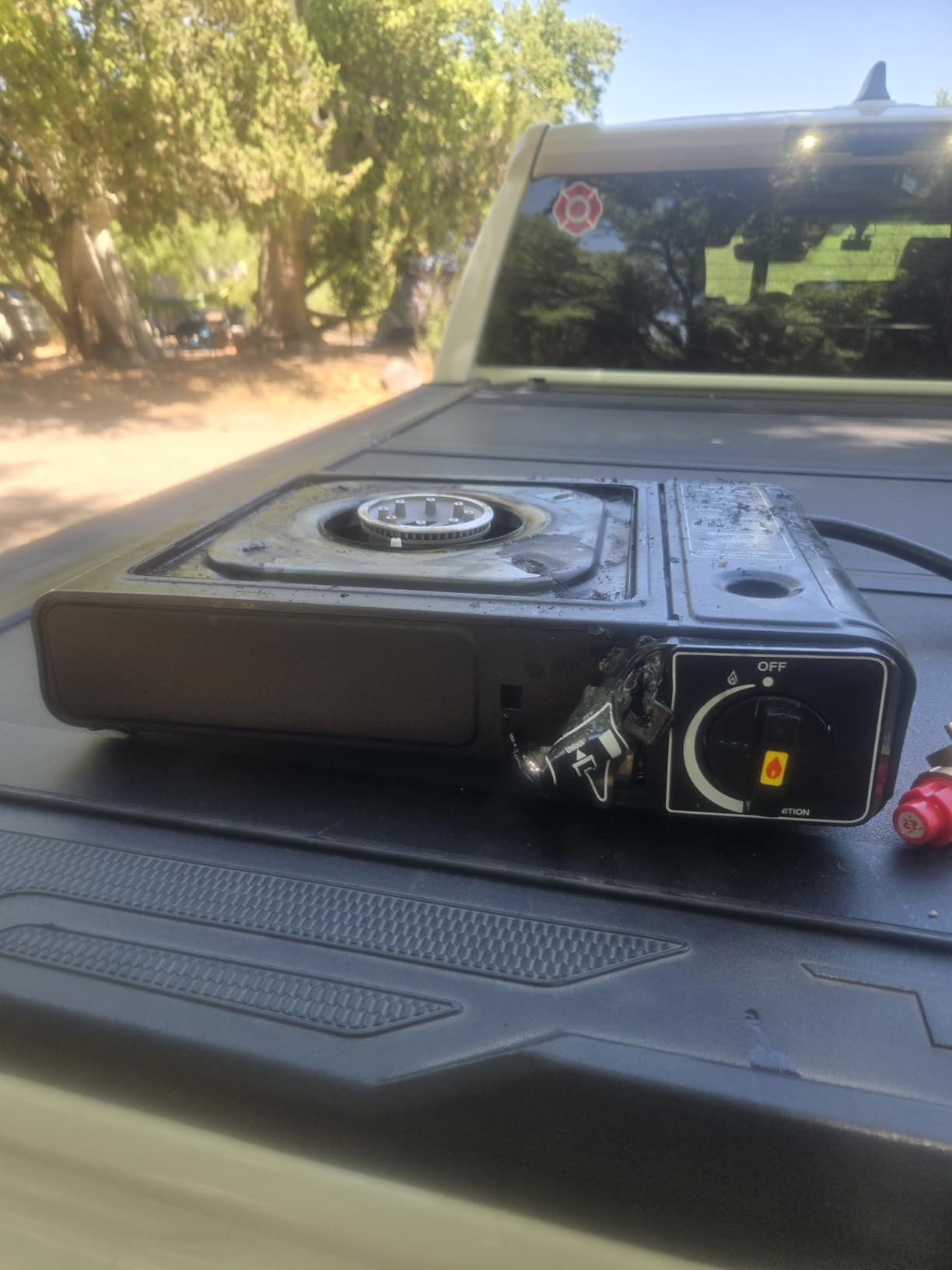
The piezo ignition is rated for 10,000+ uses, which means it should outlast the rest of the stove, and our testing confirmed it fires reliably across dozens of cycles without a miss. The cartridge ejection system and safety lock prevent accidental gas leaks, which is a nice touch on a stove you might leave unattended during a slow chili simmer.
The trade-offs are real: the knobs and connectors feel a bit lighter than on the Camp Chef and Coleman options, and the carrying case is functional but not rugged. The instructions are vague on first use, so plan to spend five minutes figuring out the adapter hose routing before lighting up.
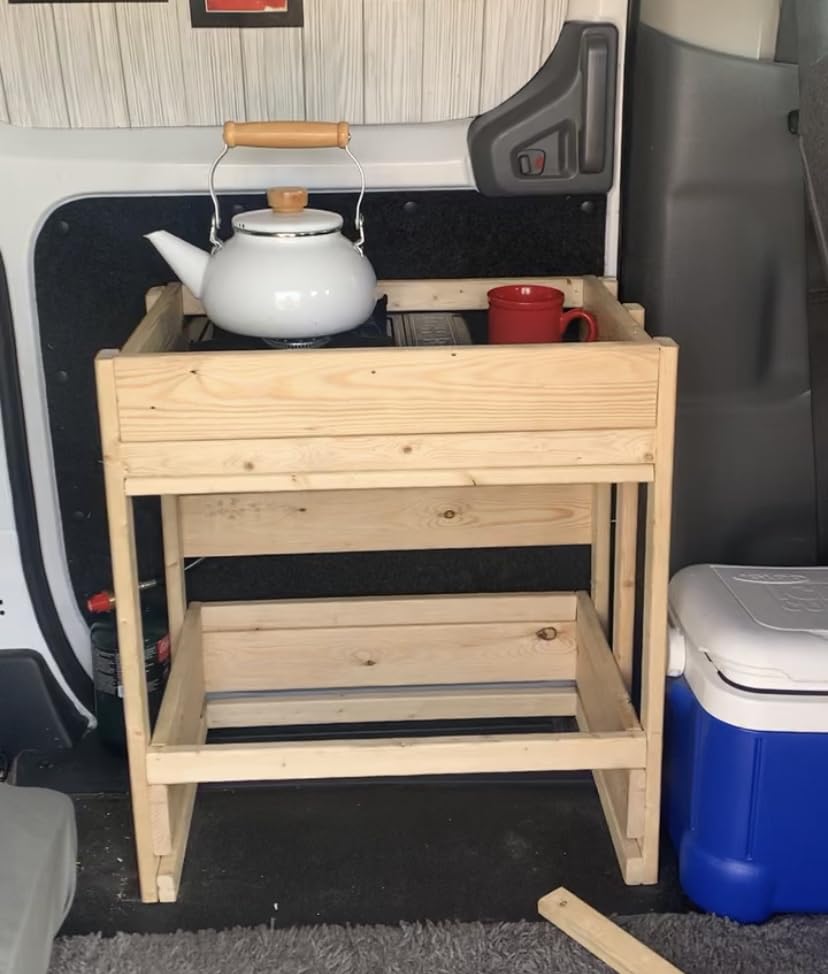
Dual-fuel advantages for real car camping
Dual-fuel means you adapt to what the campsite sells, what the weather allows, and what your storage allows. In summer at low elevation, butane is cheap and clean. In shoulder seasons when nighttime temperatures drop, propane keeps the flame consistent. One stove that handles both fuels saves you from buying two single-burner stoves for two trips.
Who should buy the SHINESTAR Dual Fuel
Pick this stove if you camp across seasons and elevations, want one stove that runs on whichever fuel is on hand, need a budget-friendly option for trailhead-to-campsite flexibility, or simply value the option to swap fuels without buying a second stove. If you only camp in warm weather at low elevation, a single-fuel butane stove is fine.
How We Tested These Camp Stoves
Our team put these eight stoves through the same test plan across four weekends of car camping in the eastern Sierra, Joshua Tree, and a coastal redwood campground. We timed boil time for one liter of 60°F water on high heat from a cold start, measured fuel consumption per boil, ran each stove through a 20 mph crosswind using a portable fan, and cooked a real breakfast and a real dinner on every model.
We ran each stove on its recommended fuel (propane for the propane models, butane for butane models, dual-fuel for the SHINESTAR) and on an optional refillable 5-pound propane tank where the stove allowed. We cleaned each stove after every cook, weighed the empty body using a kitchen scale, and recorded packed dimensions for trunk-fit notes. Reviewer commentary and aggregated user reviews back up our hands-on findings.
Car Camping Stove Buying Guide: How to Choose
Picking the right car camping stove comes down to four decisions: burner count, fuel type, BTU power needs, and trunk space. Most car campers we know end up choosing a two-burner propane stove because it offers the best mix of cooking flexibility, fuel availability, and wind resistance. But single-burner options are lighter, cheaper, and easier to pack, and dual-fuel options handle shoulder-season weather better. The breakdown below covers the trade-offs.
Single burner vs two burner vs three burner
A single-burner stove is enough for solo campers, couples who cook simple meals, and emergency kits. Two burners let you run a hot pan while simmering a side, which is the difference between a quick dinner and a real meal for a family of four. Three-burner stoves exist for feeding large groups, but they are heavier and bulkier than most car campers need.
The practical rule of thumb we use: one burner per two people, plus one extra burner if you regularly cook a hot main and a side simultaneously. A couple can get by on a single burner; a family of four really wants two; feeding six or more at a campsite calls for a high-BTU two-burner or a third burner for sides and sauces.
Propane vs butane vs dual fuel
Propane is the right choice for most car campers. It performs reliably from freezing up to high heat, runs on widely available 1-pound disposable bottles and refillable 5-pound tanks, and connects cleanly to most stoves via a standard regulator. Butane burns cleaner and quieter but loses pressure below freezing and at altitude, so it is best reserved for warm-weather, low-elevation trips.
Dual-fuel stoves accept both fuels and let you adapt to the conditions. The trade-off is more parts (an adapter hose, sometimes a different regulator) and a slightly higher cost than a single-fuel model. For weekend-only use in warm weather, single-fuel butane is fine. For year-round or shoulder-season camping, propane or dual-fuel is the safer pick.
How many BTUs do you actually need
BTU output determines how fast a stove boils water and how well it recovers when you add cold food to a hot pan. A single-burner stove with 7,000 to 10,000 BTU is enough for solo and couple camping. A two-burner stove in the 20,000 to 30,000 BTU range (10,000 to 15,000 per burner) handles family meals and big pots. The Camp Chef Everest 2X at 40,000 BTU is the high end, useful for boiling large pots of water fast.
Higher BTU is not always better. A 30,000 BTU burner on low produces roughly the same simmer heat as a 10,000 BTU burner on low, but it is harder to control at the bottom of the range. Look for stoves where the knob has a wide low-to-high range, so simmering sauces does not require cycling the burner on and off.
Wind resistance and windscreens
Wind is the single biggest performance killer for a camp stove. A 10 mph breeze can cut effective heat output by 30 percent or more on an unprotected burner. Built-in windscreens, fold-out shields, and recessed burners make a real difference. The Camp Chef line uses three-sided fold-out windscreens and recessed burners; the Coleman Triton and Classic use built-in wind guards around each burner. If you camp in exposed sites or windy seasons, prioritize a wind-protected design.
Freestanding windscreen panels are a useful add-on for almost any stove, including a low-end single burner. Aluminum foil folded into a three-sided panel works in a pinch, but a folding stainless steel windscreen is a smart add-on that weighs just a few ounces.
Trunk fit and packed size
Car camping stoves live in trunks, cargo areas, truck beds, and behind SUV seats. The Camp Chef Explorer is the biggest in this roundup at 34 inches long; the Coleman Triton folds to roughly 16 by 8 by 25 inches for smaller trunks; the single-burner picks all fit in a backpack or under a seat. Measure your trunk before you buy, and remember that folding two-burner stoves give you more cooking area per cubic inch of cargo space.
Disposable bottles vs refillable propane tanks
A standard 16-ounce disposable propane bottle costs between $3 and $6 at a camp store and lasts roughly 1.5 to 2.5 hours on high on a single burner. A refillable 5-pound propane tank costs more up front (around $25 to $40 for the tank) but runs roughly 7 to 10 hours per fill and pays for itself after just a few trips. If you camp more than three weekends a year, switching to a refillable tank plus a longer hose is the single biggest fuel-cost upgrade you can make. Several stoves in this guide (the Camp Chef Explorer, the Coleman Triton, the SHINESTAR) accept a standard propane hose, so you can use either fuel setup.
Ignition, simmer, and cleanup
Piezo electric and InstaStart matchless ignitions are reliable on most modern stoves but they do fail occasionally, so always pack a backup lighter. Simmer control depends on the regulator and the burner design: stoves with appliance-style knobs and pressure regulators give the widest control range. Cleanup is easier on stoves with removable porcelain-coated grates and drip trays, both of which are common on the Coleman and Camp Chef lines in this roundup.
Frequently Asked Questions
What is the best camping stove with a windshield?
The Camp Chef Everest 2X has the most effective integrated windshield in this roundup thanks to its folding lid that doubles as a full perimeter windscreen, plus a recessed burner that further shields the flame. The Camp Chef Explorer is a strong runner-up with its three-sided fold-out windscreen. Both stoves held a rolling boil in 20 mph crosswind testing.
What is the most efficient camping stove?
The Coleman BottleTop is one of the most efficient single-burner stoves we tested, thanks to its PerfectHeat burner design and pressure regulator that keeps output consistent as the bottle cools. For two-burner setups, the Coleman Triton is fuel-efficient at lower settings. Efficiency ultimately depends on matching BTU output to the size of pot you are heating: oversized burners on small pots waste fuel.
What is the best budget camping stove?
The Gas One Portable Butane Camping Stove is the best budget pick in this roundup, with a street price well below the rest of the lineup and 7,650 BTU of output that competes with stoves two to three times its price. It includes a real piezo ignition, CSA-approved safety features, and a carrying case. The trade-off is butane fuel, which underperforms propane in cold weather and at high altitude.
Which camping stove is better, Camp Chef or Coleman?
Both brands are excellent, with different strengths. Camp Chef stoves (Explorer, Everest 2X) focus on high-BTU cooking power, modular accessories, and wind resistance, making them ideal for serious cooking and feeding groups. Coleman stoves (BottleTop, Triton, Classic) focus on reliability, matchless ignition, and value, making them ideal for general family camping and tailgating. Our pick for most car campers is the Camp Chef Explorer; our pick for value and reliability is the Coleman Triton or BottleTop.
Is propane or butane better for car camping?
Propane is the better choice for most car camping because it works reliably from freezing up to high heat, runs on widely available 1-pound bottles and refillable 5-pound tanks, and connects cleanly to most stoves via a standard regulator. Butane burns clean and quiet but loses pressure below freezing and at altitudes above about 6,000 feet, so it is best for warm-weather, low-elevation trips. Dual-fuel stoves give you both options in one unit if you camp across seasons.
How many BTUs do I need for a camp stove?
A single-burner stove with 7,000 to 10,000 BTU is enough for solo and couple camping. A two-burner stove in the 20,000 to 40,000 BTU range (10,000 to 20,000 per burner) handles family meals and big pots. The Camp Chef Everest 2X at 40,000 BTU total is the high end of this roundup for fast boils and large cookware. Higher BTU is not always better: look for stoves with a wide simmer range so you can run a low flame for sauces without cycling the burner.
Final Verdict: Which Camp Stove Should You Buy
After three months and roughly 60 hours of cook time across eight stoves, our top pick for the best camp stoves for car camping remains the Camp Chef Explorer. It combines the highest cooking power, the strongest accessory ecosystem, and the most reliable wind performance of any stove we tested, and it will feed a family of four or six without breaking a sweat. For car campers with smaller trunks, the Coleman Triton delivers a folding two-burner design at a much friendlier cost. For solo travelers and emergency kits, the Coleman BottleTop and the Gas One butane stove cover the budget end of the market without sacrificing real reliability. If you want our complete backpacking stove guide for the trail end of the spectrum, or our two-burner family camping roundup for deeper family coverage, both are worth a read.
Whichever stove you choose, pack a backup lighter, a refillable 5-pound propane tank if you camp regularly, and a small windscreen for exposed sites. A little planning turns even a modest single burner into a reliable camp kitchen, and you will spend less time fussing with flame and more time enjoying the meal.