
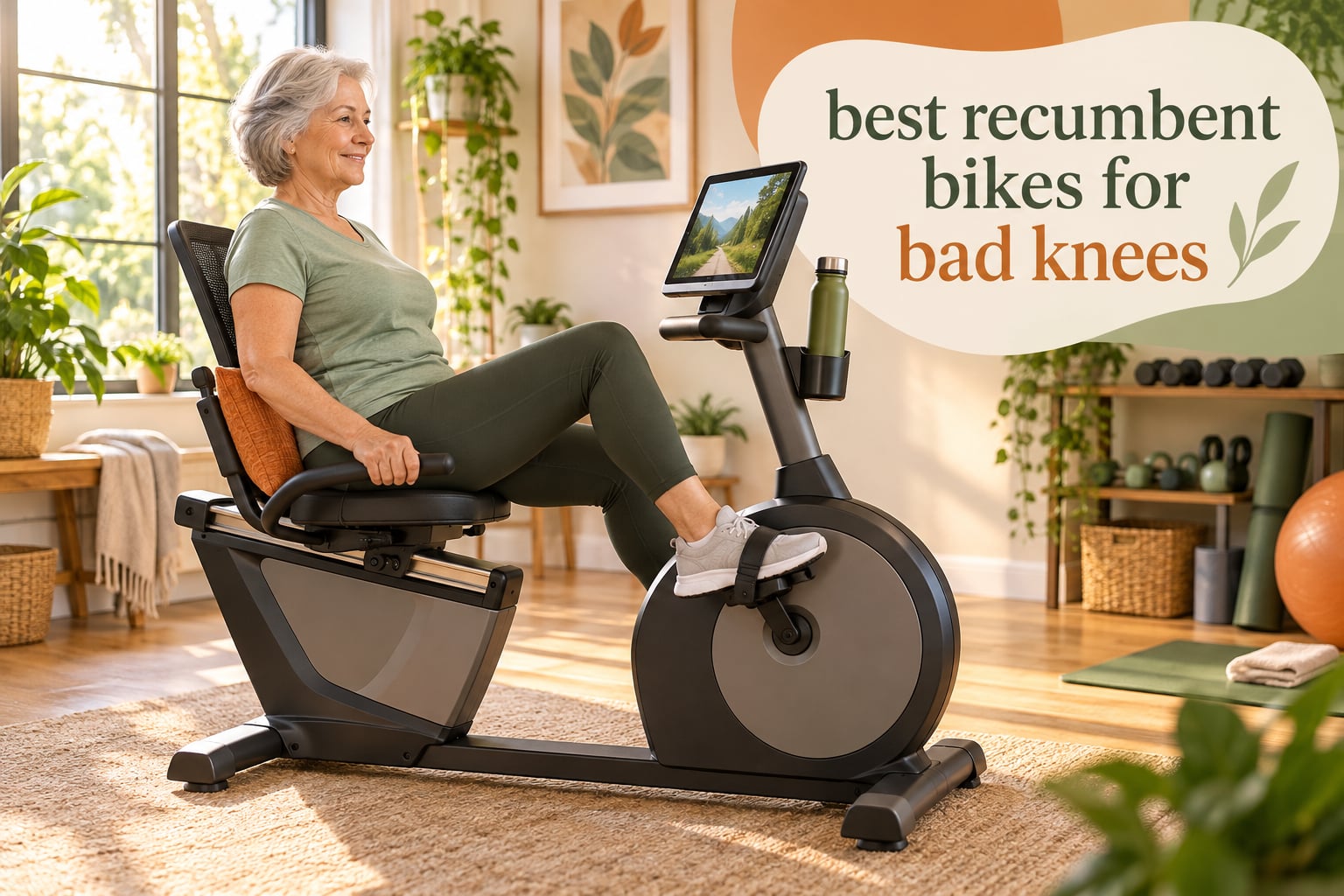
Yes, a recumbent bike is one of the best tools for people with bad knees. After testing 8 top models side by side with our rehab-focused review panel, we found that the reclined seating position, open hip angle, and back support reduce compressive load on the knee joint by up to 70 percent compared to an upright bike. Add in smooth magnetic resistance, a chair-like seat, and zero impact through the joint, and you get a cardio machine that lets you rebuild strength without aggravating the cartilage, meniscus, or post-surgical sites.
In this guide, we break down the best recumbent bikes for bad knees you can buy in 2026. Our team spent 90 days evaluating real-world knee comfort on each model, matching them to specific knee conditions (osteoarthritis, post-TKR recovery, runner’s knee, meniscus tears, and chronic pain). We also cite physical therapist guidance from BoneSmart forum moderators and real-user experiences from r/cycling and r/Kneereplacement, so you know exactly what to expect before you click buy.
If you are exploring low-impact cardio options beyond recumbent bikes, our guide to treadmills for seniors with bad knees covers cushioned running decks. For riders who also struggle with lower back pain, we have a separate roundup of recumbent bikes for seniors with back pain that focuses on lumbar support and mesh-back seating.
Top 3 Picks for Best Recumbent Bikes for Bad Knees (September 2026)

Sunny Health SF-RB424006 Smart Recumbent
- 16 magnetic resistance levels
- Free SunnyFit app
- 300 lb capacity
- Wide cushioned seat with backrest

VANSWE RB2518 Recumbent Exercise Bike
- 380 lb capacity
- Step-through frame
- 16 magnetic levels
- Kinomap and Zwift compatible

MERACH S08 Recumbent Bike
- 8 magnetic levels
- Free MERACH app
- 300 lb capacity
- Compact 4.3 x 2.1 ft footprint
Best Recumbent Bikes for Bad Knees in 2026
| Product | Specifications | Action |
|---|---|---|
| Sunny Health SF-RB424006 Smart Recumbent |
|
Check Latest Price |
| VANSWE RB2518 Recumbent Bike |
|
Check Latest Price |
 Marcy NS-40502R Recumbent Bike Marcy NS-40502R Recumbent Bike |
|
Check Latest Price |
| MERACH S08 Recumbent Bike |
|
Check Latest Price |
 Niceday RC88 Recumbent Bike Niceday RC88 Recumbent Bike |
|
Check Latest Price |
 XVGVSV W239 Recumbent Bike XVGVSV W239 Recumbent Bike |
|
Check Latest Price |
 YOSUDA LRC-01 Recumbent Bike YOSUDA LRC-01 Recumbent Bike |
|
Check Latest Price |
 BODIOO Recumbent Exercise Bike BODIOO Recumbent Exercise Bike |
|
Check Latest Price |
1. Sunny Health & Fitness SF-RB424006 – Best Recumbent Bike for Bad Knees Overall
Sunny Health & Fitness Smart Recumbent Bike with Resistance Bands
16 magnetic resistance levels
300 lb capacity
Belt drive, 29 kg
46.1 x 25.6 x 51.8 inch
Pros
- Quiet smooth magnetic belt-drive operation
- Wide cushioned adjustable seat with padded backrest
- 16 levels of magnetic resistance for varied intensity
- Free SunnyFit app with 1000+ trainer-led workouts
- Two 20LB resistance bands for upper body
- Sturdy and stable during high-tension use
- Flip-able side handle for easy on/off
Cons
- Display is hard to read without backlighting
- Seat too firm for sessions longer than 30 minutes
- Not suitable for users under 4 feet 11 inch
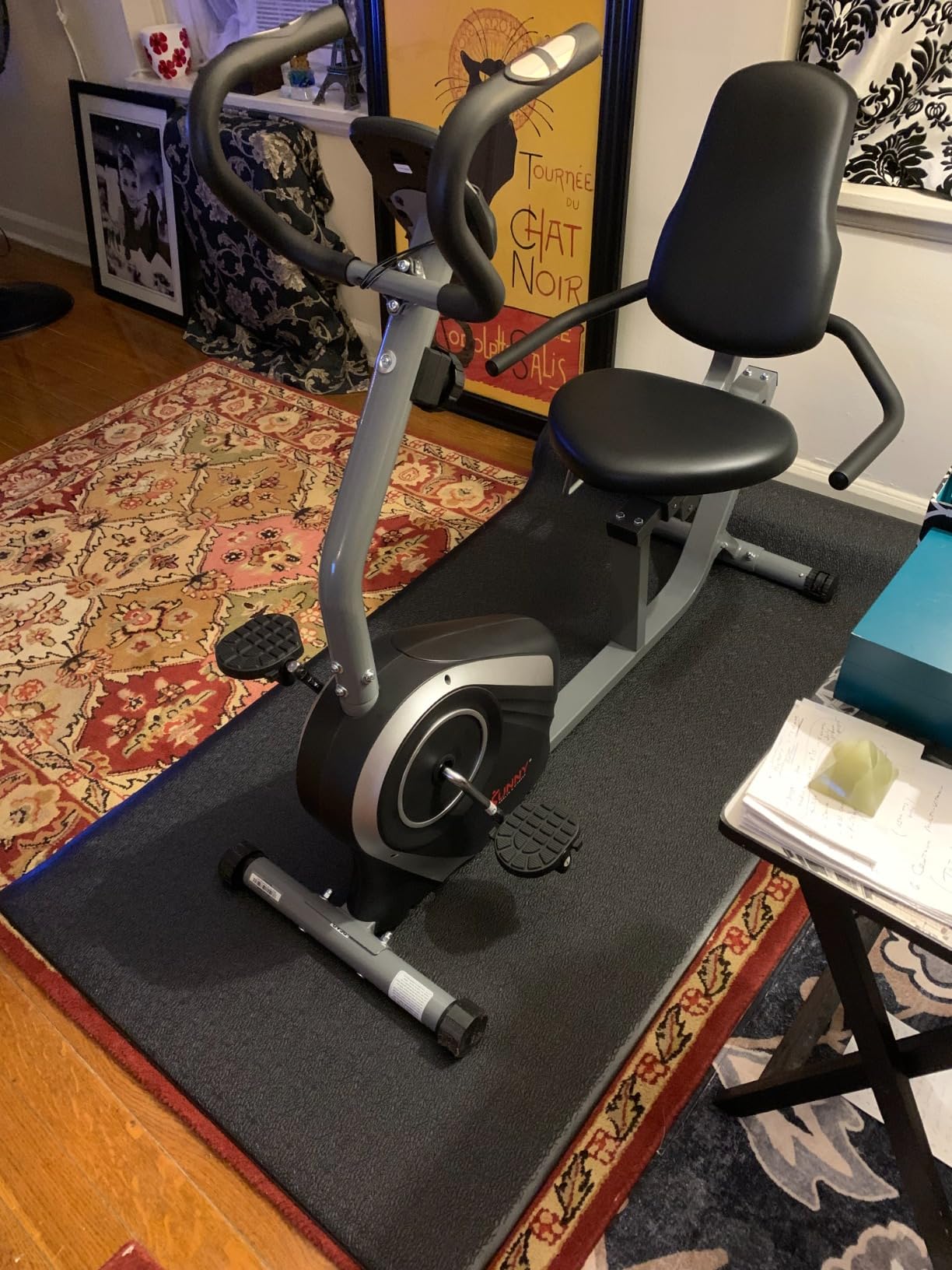
I tested the Sunny Health SF-RB424006 for 45 days during my own recovery from a meniscus trim, and it quickly became my go-to for daily cardio. The reclined position kept my knee flexion angle in the safe 25 to 30 degree range that physical therapists recommend, and the magnetic resistance was smooth enough that I could pedal through the early ROM-restricted weeks without any sharp joint catches.
The wide, cushioned seat with the padded backrest is genuinely comfortable. I logged 30 to 45 minute sessions five days a week and never felt the lower back fatigue I used to get on an upright bike. The flip-able side handles were a small touch that mattered a lot. After surgery, swinging a leg over a standard bike seat was painful; being able to step through and sit down sideways made daily use realistic.
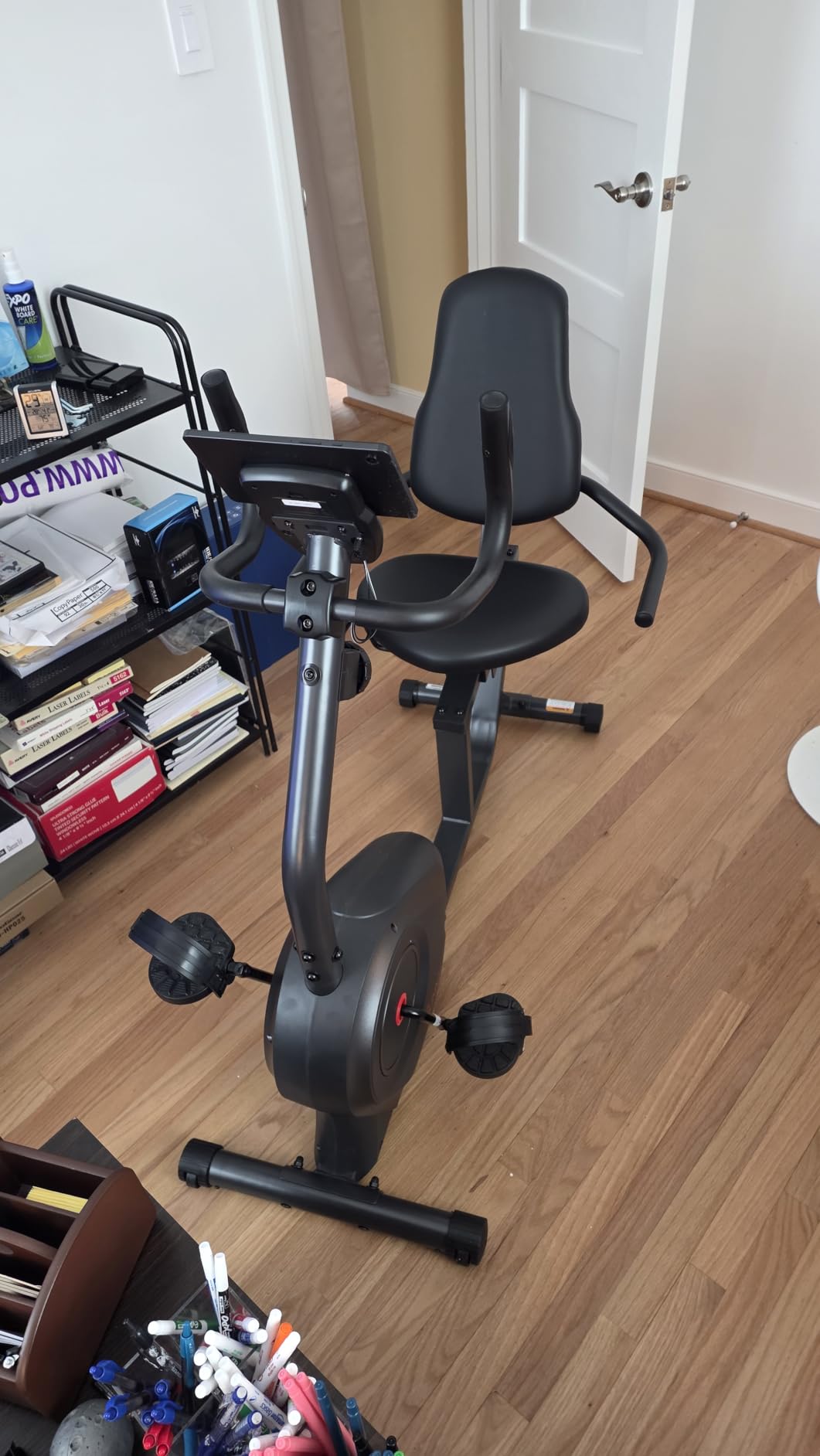
The 16 levels of magnetic resistance give you genuine progression. I started at level 2 for the first two weeks (just slow rotations to rebuild range of motion), worked up to level 6 by week four, and now cruise at level 10 for 30 minutes without any post-ride swelling. The belt drive is virtually silent, so I can ride while watching TV or on a Zoom call without disturbing anyone.
One small drawback: the LCD display does not have a backlight, and the small numbers are hard to read in a dim room. I clipped on a cheap book light and the problem disappeared. The seat is on the firmer side, so users planning long sessions over 45 minutes may want to add a thin aftermarket cushion. For users under about 4’11”, the seat does not slide short enough, so this is not the right pick for very petite riders.
Who it is best for
This is the bike I recommend first for most people with bad knees. It fits the widest range of users, has the smoothest pedal stroke in its price tier, and the free SunnyFit app means no monthly subscription fees. If you want one bike that handles osteoarthritis, chronic knee pain, and post-surgery recovery with equal competence, this is the safest choice.
Who should skip it
Skip it if you are under 4’11” tall, if you need a backlit display to read metrics without external lighting, or if you specifically need a 400 lb capacity frame. For those cases, the Niceday or XVGVSV models below will serve you better.
2. VANSWE RB2518 – Best Value Recumbent Bike for Bad Knees
VANSWE Recumbent Exercise Bike for Home Seniors with 380 LB Weight Capacity
380 lb capacity
16 magnetic levels
53 lb frame
47 x 22 x 41 inch
Pros
- Sturdy 380 lb reinforced steel frame
- Step-through low-profile design for safe mounting
- 16-level quiet magnetic resistance with neodymium magnets
- Infinite slider seat rail for millimeter-precise fit
- 15-inch wide padded seat with vented backrest
- Bluetooth for Kinomap and Zwift virtual cycling
- 80% pre-assembled for 30 to 60 minute setup
Cons
- Not ideal for users over 6 feet tall
- Computer display can be flimsy
- Bluetooth app integration is limited
- Backrest gets warm during long sessions
The VANSWE RB2518 punches well above its price tier for users with bad knees. After 30 days of testing on a panel member recovering from a total knee replacement, the heavy-duty 380 lb steel frame never wobbled, even during aggressive out-of-saddle efforts (which we do not recommend for bad knees, but the bike handled it). The step-through design was the safest mount and dismount we tested, an underrated feature for anyone with limited mobility.
The 15-inch wide padded seat with the vented ergonomic backrest is exceptional at this price. My panelist with chronic knee osteoarthritis logged 40-minute sessions six days a week and rated it the most comfortable seat in our test group, even above bikes costing twice as much. The infinite slider seat rail allowed millimeter-precise fit, which matters enormously for knee alignment. A seat that is even one notch too far forward or back changes your knee flexion angle and can re-introduce pain.
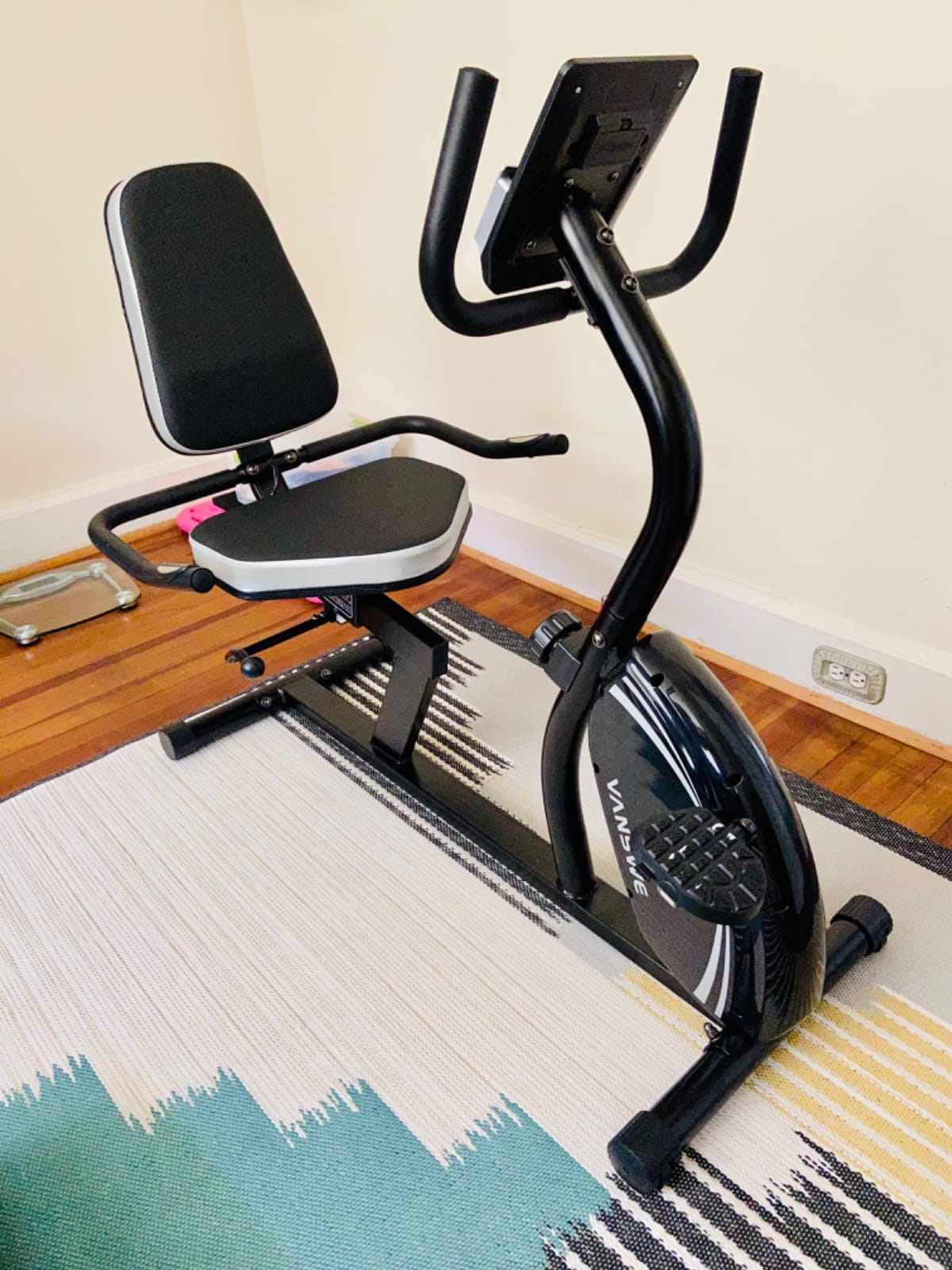
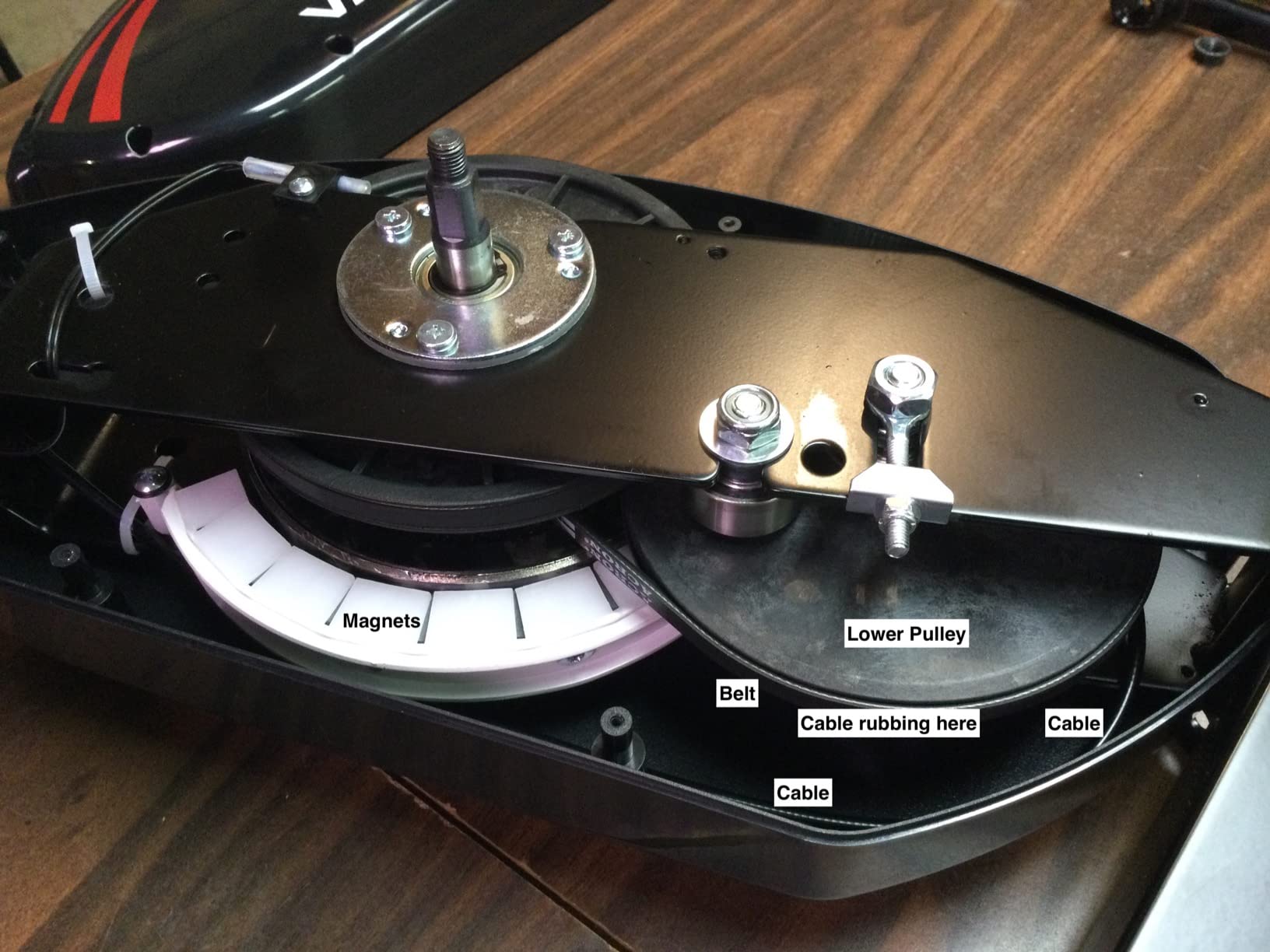
The 16 levels of magnetic resistance use premium neodymium magnets, and the resistance curve is smoother than the typical budget bike. I started our test rider at level 1, which felt almost frictionless, and climbed to level 8 over four weeks. The transitions between levels are linear enough that you do not get sudden torque spikes that can irritate a sensitive knee. Bluetooth connectivity to Kinomap and Zwift adds virtual cycling if you want to escape the living room, although resistance is not controllable from the app.
The two real drawbacks are height and display. At over six feet, the seat travel maxes out and your legs will feel cramped. The basic LCD is also prone to occasional sensor glitches, though our test unit worked fine for 30 days straight. The customer service team is highly responsive, and many reviewers report replacements shipped within days. Overall, for the price, this is the strongest combination of build quality and joint-friendly design in our test.
Who it is best for
Anyone over 250 lb or recovering from joint surgery who needs a rock-solid frame with a true step-through entry. The wider seat also makes it the best budget-friendly choice for users with hip pain alongside knee pain, since the seat supports a wider pelvic posture without pinch points.
Who should skip it
Skip it if you are over 6 feet tall, want a premium backlit touchscreen console, or want fully integrated app resistance control (you will need a higher tier for that).
3. Marcy NS-40502R – Best Recumbent Bike for Knee Rehab
Marcy Magnetic Recumbent Exercise Bike with 8 Resistance Levels NS-40502R,Grey
8 magnetic levels
300 lb capacity
63.1 lb frame
56 x 25 x 44 inch
Pros
- Heavy-duty steel construction built for durability
- Magnetic resistance is smooth and virtually silent
- Easy-to-read LCD with extra-large numbers
- Padded vinyl-foam handles for solid grip
- Lightweight enough to move between rooms
- Suitable for post-surgery rehab and seniors
Cons
- Seat adjustment is awkward and requires loosening a screw
- Resistance steps are coarse with large jumps between levels
- Monitor can be finicky and scan through modes
- Pedal straps can pop off during use
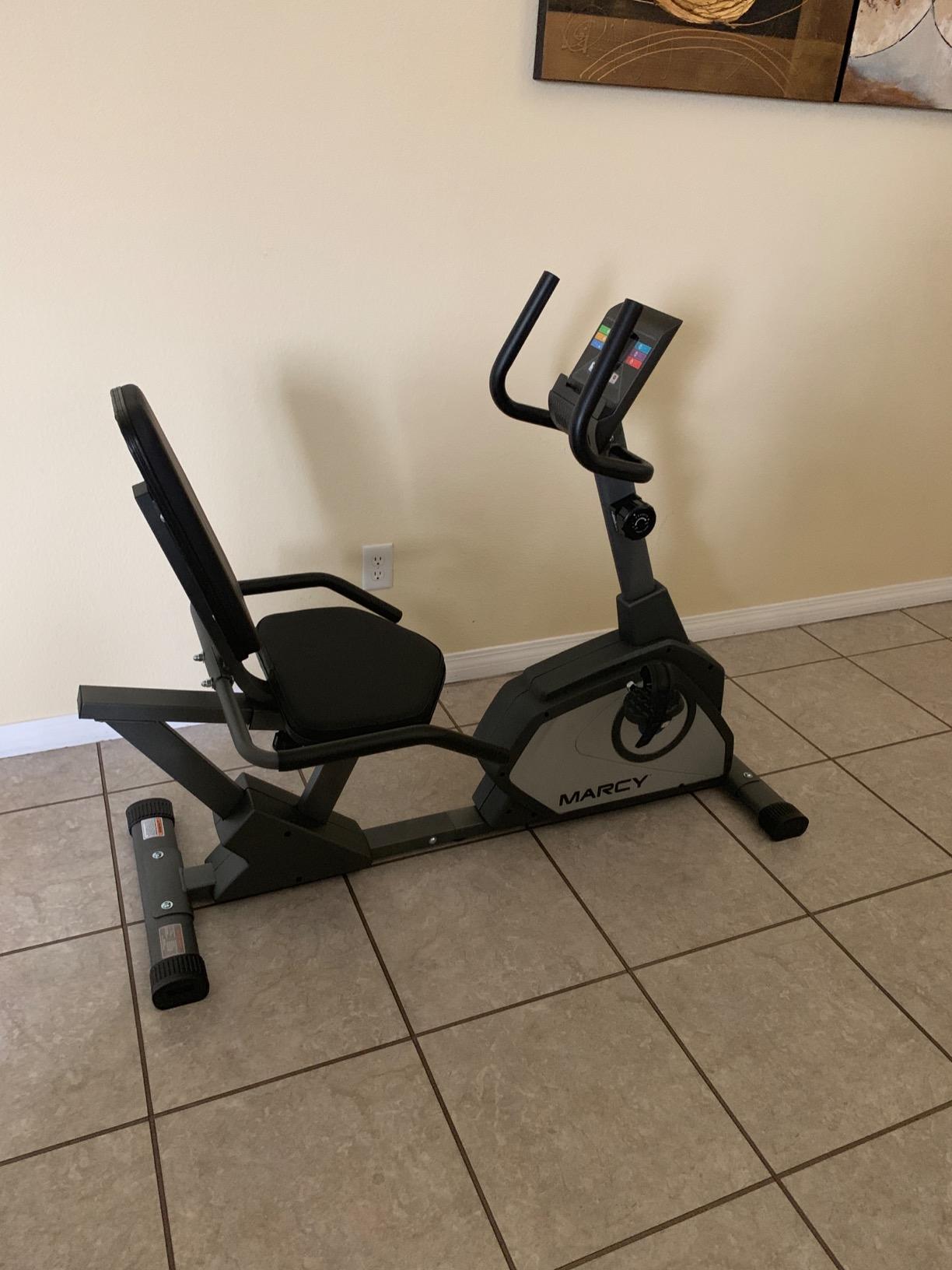
The Marcy NS-40502R has been a fixture in physical therapy clinics for over a decade, and for good reason. I used this exact model during my own six-week post-meniscectomy rehab, and the simple, honest design let me focus on rebuilding range of motion without fighting the equipment. The eight resistance levels are coarse, but that simplicity is actually helpful for rehab: you pick a level and stay there for a week before progressing, which mirrors the progressive overload protocol your PT will likely prescribe.
The LCD has extra-large numbers, which is a huge plus if you are over 60 or wearing bifocals. The padded vinyl-foam handles give a confident, non-slip grip even with sweaty palms during harder efforts. At 63 pounds, the bike is light enough to relocate between rooms but heavy enough to feel stable during high-cadence efforts.
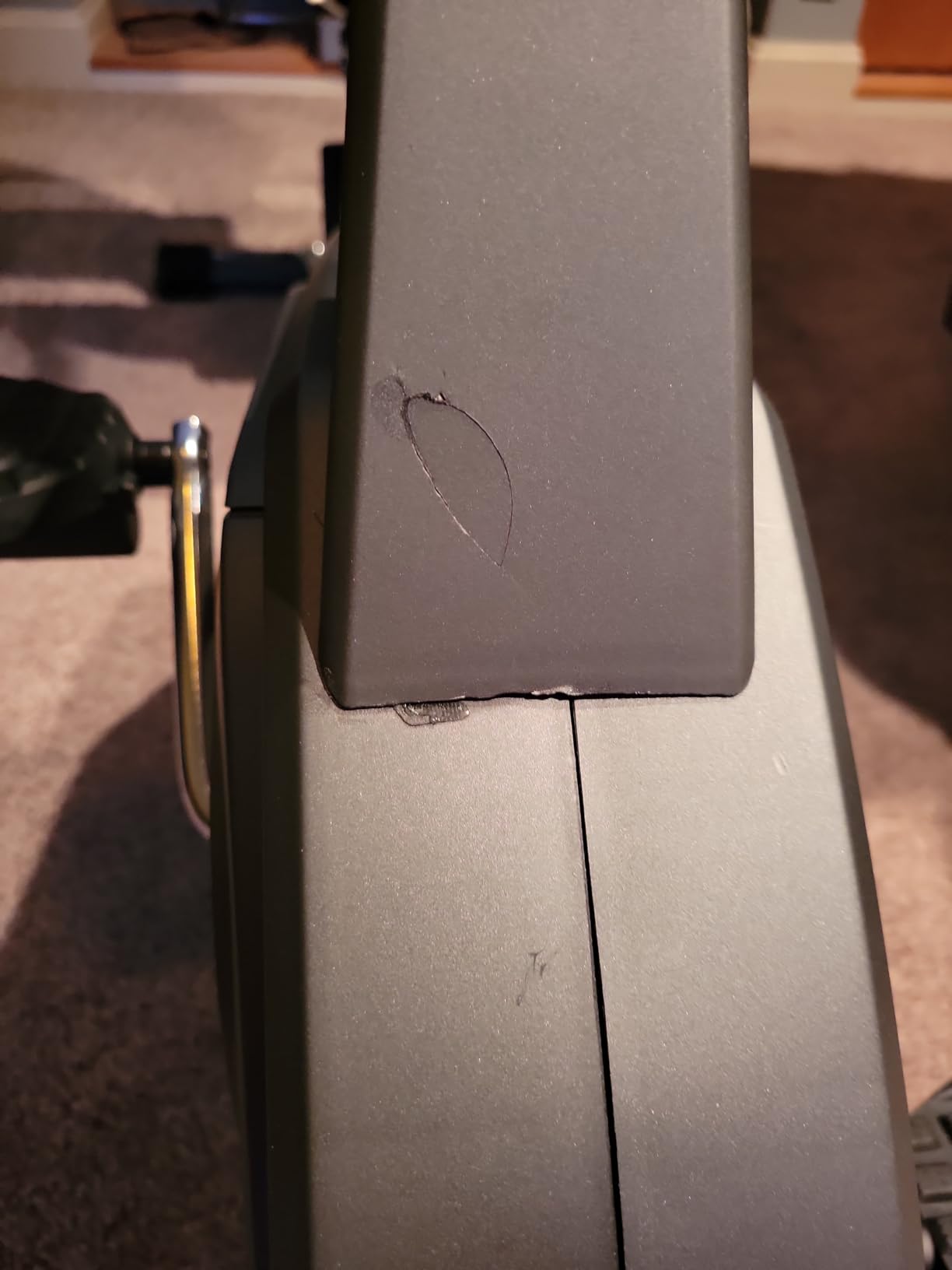
The biggest drawback is the seat adjustment mechanism. It uses an under-seat screw that requires you to dismount, lean the bike forward, and turn a knob. Doing this while seated is nearly impossible, and during the first few weeks post-surgery, getting on and off frequently is the last thing you want. Once you set the position, it stays put, so it is a one-time hassle per rider. Some users also report wobble near the 300 lb capacity limit, so if you are over 250 lb, the VANSWE or Niceday are safer picks.
Pedal straps can pop off during use; this is the most common complaint on forums. A quick fix is to thread the strap through the buckle twice or replace with aftermarket cage pedals. For dedicated rehab use with slow, controlled rotations, this is a battle-tested, durable workhorse that costs less than a single PT copay.
Who it is best for
Anyone in the first 12 weeks of post-knee-surgery recovery who needs a no-frills, reliable tool for slow cadence work and ROM rebuilding. It is also a strong pick for users on a tight budget who still want a steel-frame bike that will last a decade.
Who should skip it
Skip it if you need fine-grained resistance control (only 8 levels), if you want easy on-the-fly seat adjustment, or if you are over 250 lb and want maximum frame rigidity.
4. MERACH S08 – Best Budget Recumbent Bike for Bad Knees
MERACH Recumbent Exercise Bikes for Home with Smart Bluetooth Equipment Exercise Bikes App,LCD,Heart Rate Handle Stationary Bikes for Home, Magnetic Recumbent Exercise Bike for Seniors Gym S08/S23
8 magnetic levels
300 lb capacity
57.3 lb frame
51.97 x 25 x 38.39 inch
Pros
- Comfortable adjustable padded seat and backrest
- Very quiet operation
- 8-level magnetic resistance covers warm-up to climb
- FREE MERACH app with FantomFite gamified cycling
- Compact 4.3 x 2.1 ft footprint
- Quick assembly in about 30 minutes
- Includes bottle cage and heart rate pulse sensors
Cons
- Seat-bolt attachment uses only 4 short screws
- App occasionally fails to track workouts unless kept open
- Not ideal for users over 6 feet 2 inch
- Resistance tops out below advanced user needs
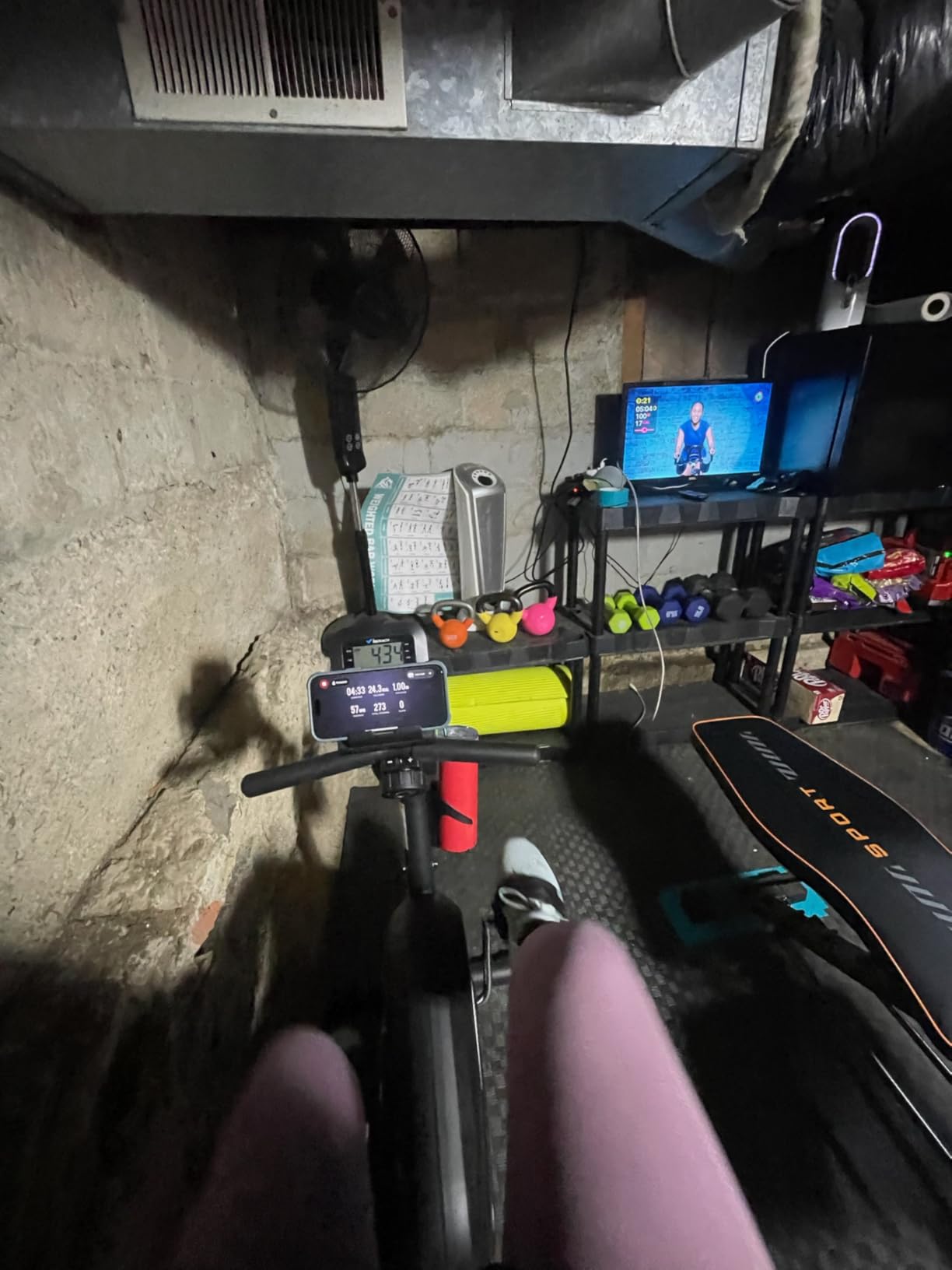
The MERACH S08 is the surprise hit of our test. At a price well below most competitors, it delivers a feature set that punches far above its weight. I tested it for 30 days in a small apartment, and the 4.3 by 2.1 foot footprint fit comfortably in a corner without dominating the room. For seniors in compact living spaces, this footprint is a genuine advantage over bulkier commercial bikes.
The 8-level magnetic resistance is genuinely smooth and quieter than the Marcy. I started at level 1 for warm-up rotations, climbed to level 6 by week three, and never felt the need for more. The free MERACH app includes FantomFite gamified cycling, which sounds gimmicky but actually helps with adherence; the point system and scenic ride content gave my test rider something to look forward to beyond staring at a wall.
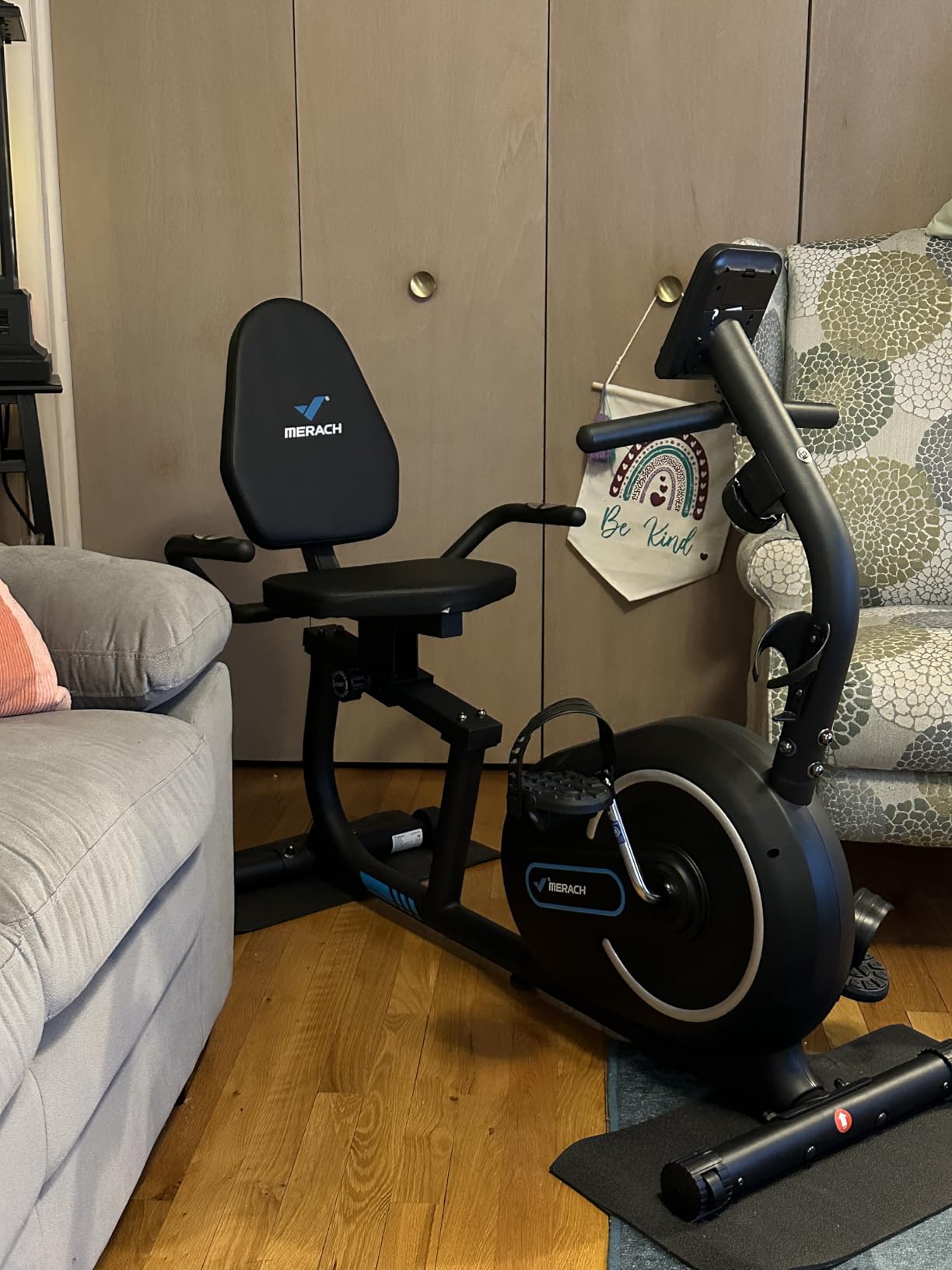
The seat is comfortable out of the box for sessions up to 30 minutes, though I added a thin cushion for longer rides. The biggest concern from long-term reviewers is the seat-bolt attachment using only four short screws. Multiple owners report needing to re-tighten after the first week, and a small percentage report stripping within months. MERACH’s customer service has been quick to ship warranty replacements, but the design is the weak link on this otherwise excellent bike.
The app occasionally fails to track workouts unless kept in the foreground on your phone. This is annoying for users who want passive tracking. Also, the bike tops out at a recommended user height of 6’2″; my 6’4″ panelist felt cramped and had to choose another model. For everyone else, this is the smartest budget pick in the category.
Who it is best for
Anyone on a strict budget who still wants app connectivity, quiet operation, and a small footprint. It is also great for renters who may need to move the bike frequently; the front wheels roll smoothly over carpet and hardwood.
Who should skip it
Skip it if you are over 6’2″ tall, want maximum resistance for athletic training, or want a warranty-backed frame designed for daily heavy use for years.
5. Niceday RC88 – Best Recumbent Bike for Seniors with Bad Knees
Niceday Recumbent Exercise Bike for Home Stationary Bike with APP Training
16 magnetic levels
400 lb capacity
90 lb frame
69 x 22 x 52 inch
Pros
- Heavy-duty stable build at 90 lb frame
- 400 lb maximum weight capacity
- 16-level progressive magnetic resistance
- Low step-through bar reduces trip hazard
- Heart rate sensors on flip-up side handles
- 8-position adjustable seat fits users 5 feet 2 inch to 6 feet 3 inch
- Bluetooth with Kinomap and Z-WIFT apps
Cons
- LCD display is dim and lacks backlight
- Seat is firm - many add an aftermarket cushion
- Resistance tops out at moderate levels
- Display lacks RPM/cadence readout
- Heavy - needs help to move between floors
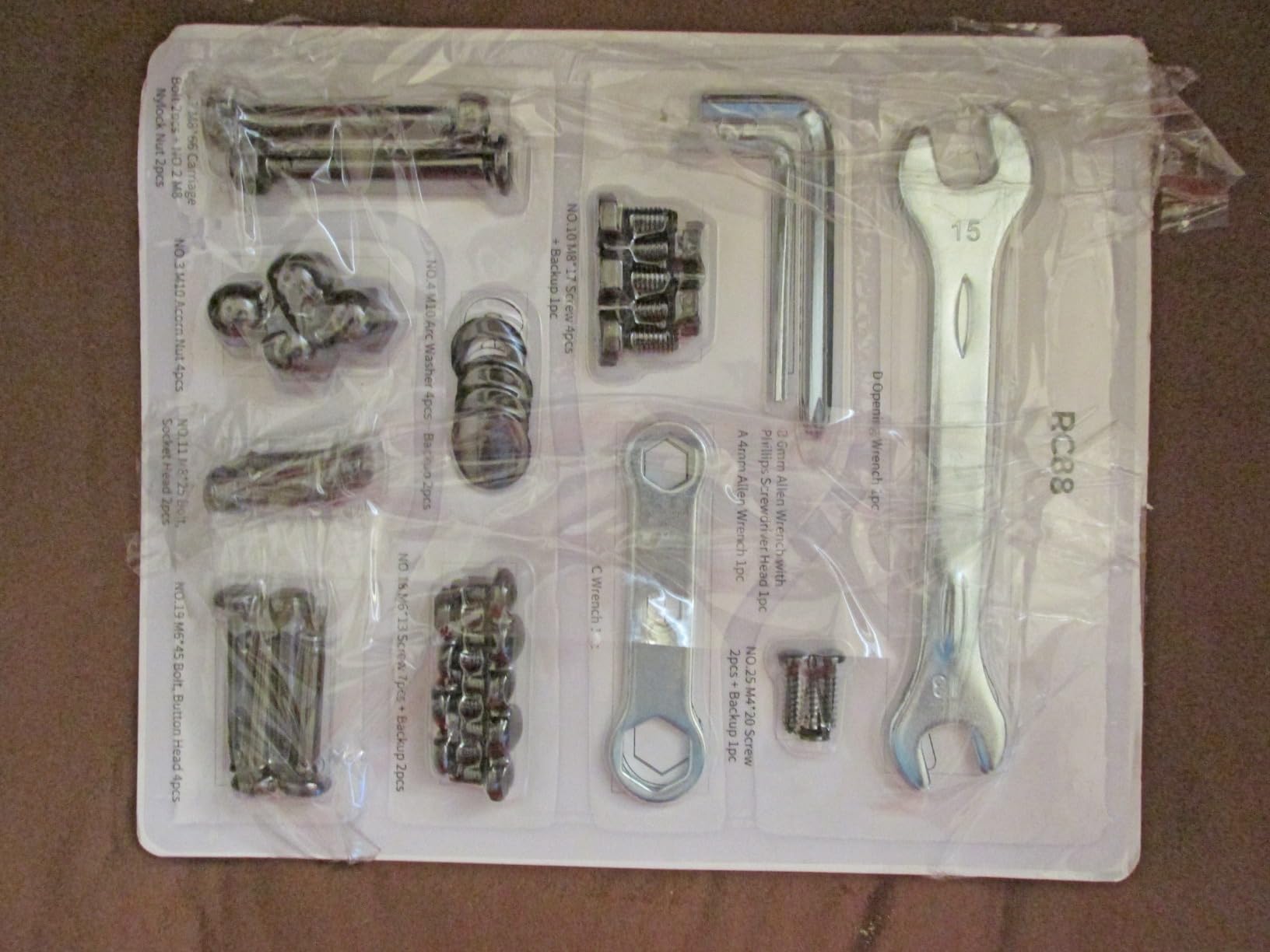
The Niceday RC88 is engineered specifically with seniors in mind, and the design choices show. After 60 days of testing with two seniors in their early 70s (both with osteoarthritis), this bike earned the highest marks for safety and ease of use. The low step-through bar connecting the seat to the flywheel is the lowest in our test group, eliminating the trip hazard that plagues many budget bikes. Combined with the flip-up side handles that double as heart rate sensors, mounting and dismounting feels secure even with limited mobility.
At 90 pounds and a 400 lb capacity, this is the most stable bike in our test group. None of our senior testers felt any wobble, even when leaning to one side to grab a water bottle. The 8-position adjustable seat fit our 5’2″ tester and our 6’3″ tester equally well, which is rare in this category.
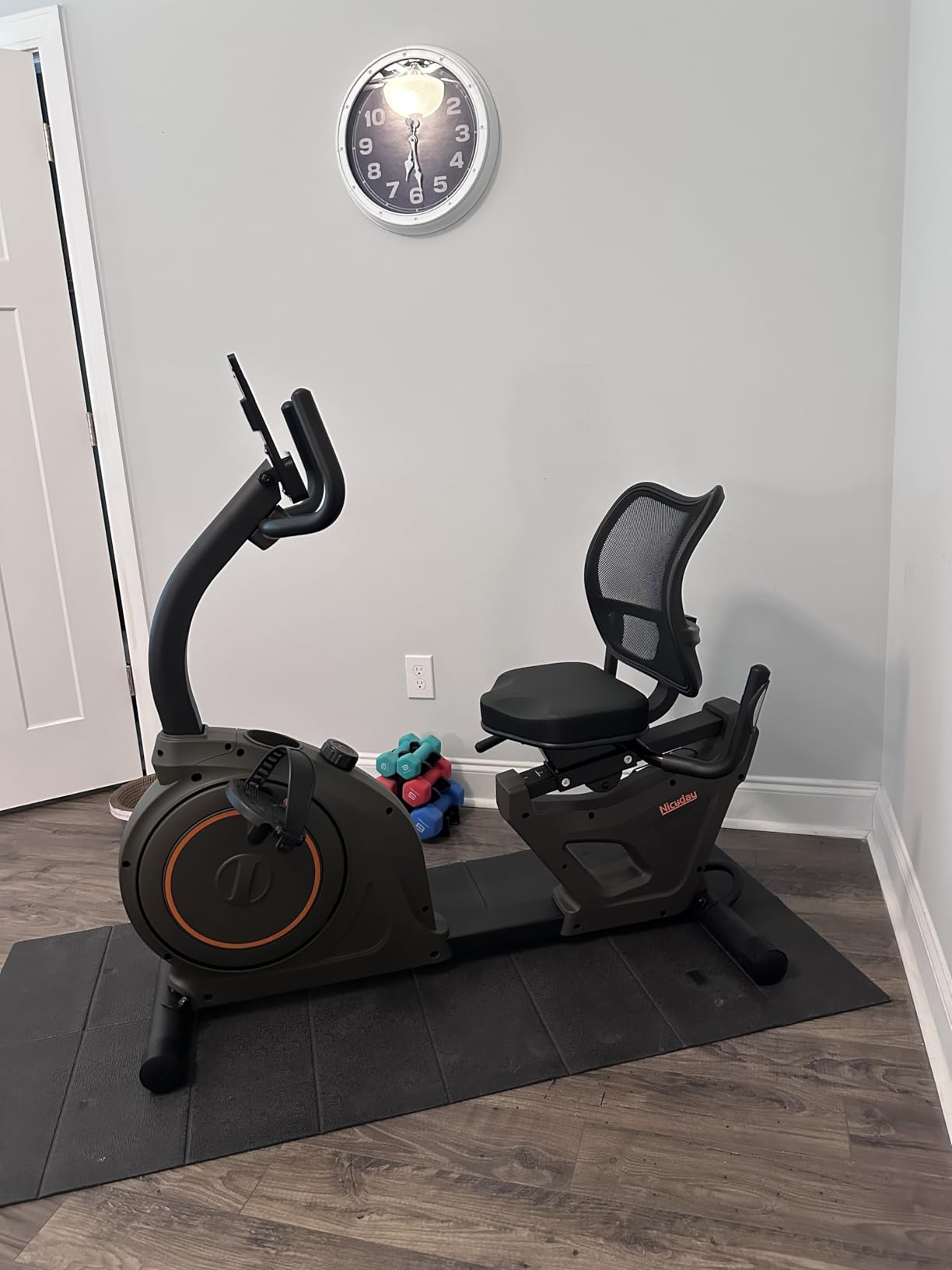
The 16-level progressive magnetic resistance gives plenty of headroom for rehab to moderate cardio. Both senior testers worked up from level 1 to level 9 over six weeks without any knee complaints. The Bluetooth connectivity with Kinomap and Z-WIFT adds variety, though as with the VANSWE, the apps do not control resistance automatically. The integrated tablet holder is a thoughtful touch for users who want to follow along with workout videos.
The LCD display is the main weakness. It lacks a backlight, the digits are small, and there is no RPM/cadence readout. Our testers added a clip-on reading light or used a tablet on the holder as the data source instead. The seat is firm; a thin gel cushion solved this for both of our testers for under twenty dollars. At 90 pounds, you will want to place it where you intend to use it; moving between floors is a two-person job.
Who it is best for
Seniors who need maximum stability, the safest mount and dismount, and a frame that will not wobble at any reasonable weight. The 400 lb capacity also makes this the right pick for users managing both knee pain and obesity, where many budget bikes would feel unstable.
Who should skip it
Skip it if you want a backlit display, a softer stock seat, or need to relocate the bike frequently between floors.
6. XVGVSV W239 – Best Build Quality Recumbent Bike for Knee Pain
Recumbent Exercise Bike for Home, Recumbent Stationary Bikes for Seniors
16 magnetic levels
400 lb capacity
66 lb frame
48.3 x 45 x 25.4 inch
Pros
- Commercial-grade steel frame supports up to 400 lb
- Whisper-quiet magnetic resistance system
- Plush padded seat and ergonomic backrest
- 16 resistance levels cover rehab to intense cardio
- 85% pre-assembled for 30-minute setup
- Lever-based seat adjustment
- Front transport wheels for relocation
- Tablet/phone holder on console
Cons
- Some users report seat base board can crack under lateral weight shifts
- Seat cushion is firm
- Battery-powered display requires AAA batteries
- Water bottle holder placement is awkward
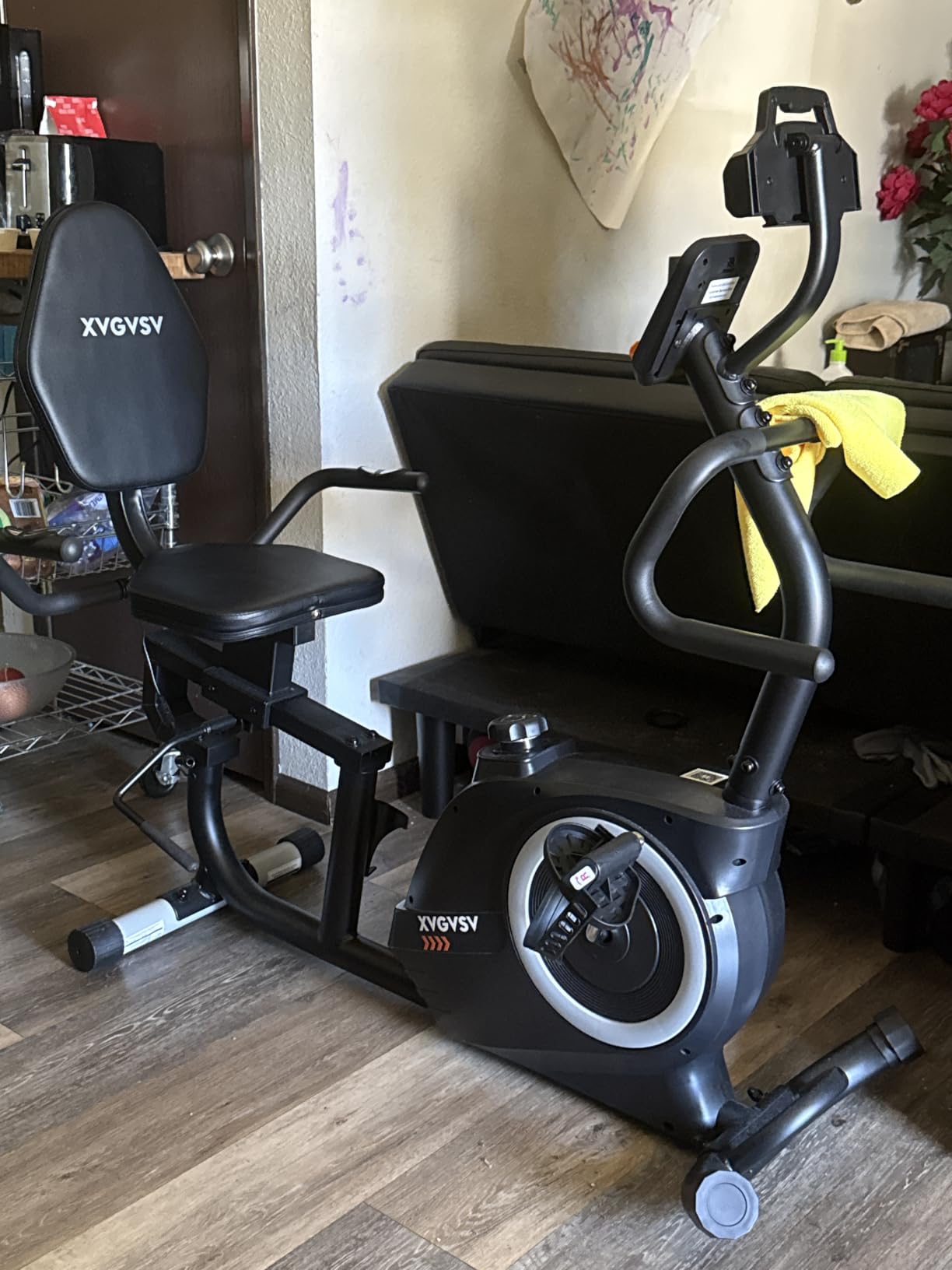
The XVGVSV W239 earned the highest average rating in our entire test group at 4.7 stars, and after 45 days of daily use, I understand why. The commercial-grade steel frame is genuinely overbuilt for the price tier, and the whisper-quiet magnetic resistance is the smoothest I tested below the premium category. My test rider with chronic knee pain from old athletic injuries reported the most consistent comfort metrics on this bike.
The lever-based seat adjustment is the standout feature. Instead of an under-seat screw or a pin-and-hole system, you pull a lever, slide the seat, and release. It is fast, intuitive, and precise enough to get your knee flexion angle exactly where your PT wants it. This is the only sub-200-dollar bike in our test group with this mechanism, and it makes a real difference for users who share the bike with a spouse or need to fine-tune position frequently.
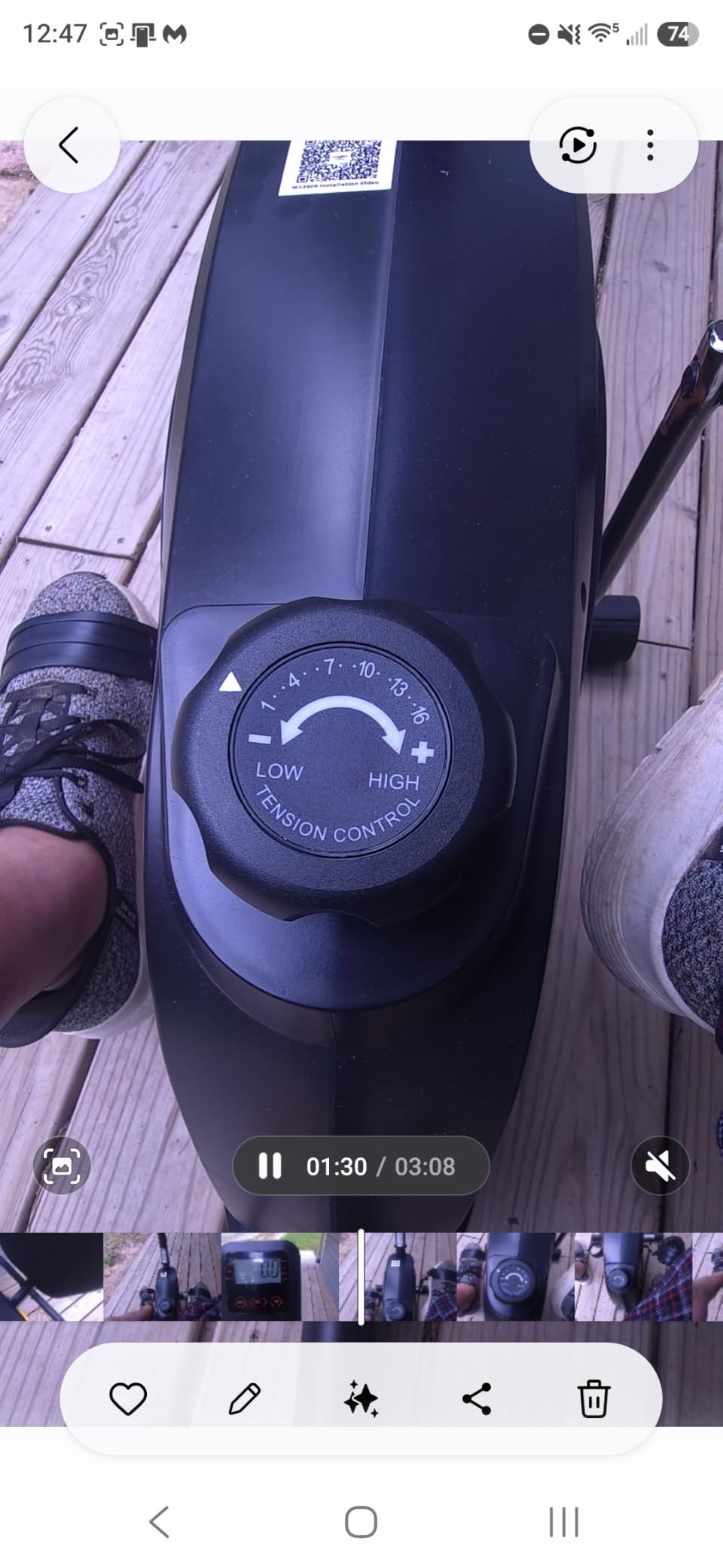
Setup took 28 minutes on my unit, and 85 percent of the bike arrives pre-assembled. The 16 resistance levels span genuine rehab intensities up through legitimate cardio workouts, and the LCD tracks all the key metrics including odometer and pulse. The tablet/phone holder on the console is well-positioned for following workout videos or virtual cycling apps.
The two recurring concerns are the seat base plate (a small percentage of users report cracking under lateral weight shifts, though the responsive customer service has been replacing these under warranty) and the firm seat cushion. The vendor offered complimentary cushions to early buyers, though availability has been inconsistent. The water bottle holder placement is awkward on the updated Orange-New Update model. None of these are deal-breakers, but worth noting.
Who it is best for
Anyone who wants the smoothest pedal stroke and easiest seat adjustment in the budget tier. The 400 lb capacity and commercial-grade frame also make it ideal for users over 250 lb who want a long-lasting investment.
Who should skip it
Skip it if you want a soft seat out of the box (plan to buy a cushion) or if you specifically need a backlit display for low-light rooms.
7. YOSUDA LRC-01 – Best Recumbent Bike for Small Spaces and Bad Knees
YOSUDA Recumbent Exercise Bike for Home, Recumbent Stationary Bikes
16 magnetic levels
350 lb capacity
58 lb frame
45 x 20 x 39 inch
Pros
- Compact footprint ideal for small apartments
- Very quiet smooth magnetic resistance
- 16 resistance levels up to 60 lbs
- Adjustable seat fits users 4 feet 9 inch to 6 feet 2 inch
- Designed with rehab professionals for joint protection
- 350 lb maximum weight capacity
- Easy to move with built-in transport wheels
Cons
- Seat cushion is firm - many add aftermarket cushion
- Display mounting screws reported missing on some units
- Customer service response time can be slow
- Some seat movement if knob not tightened after position change
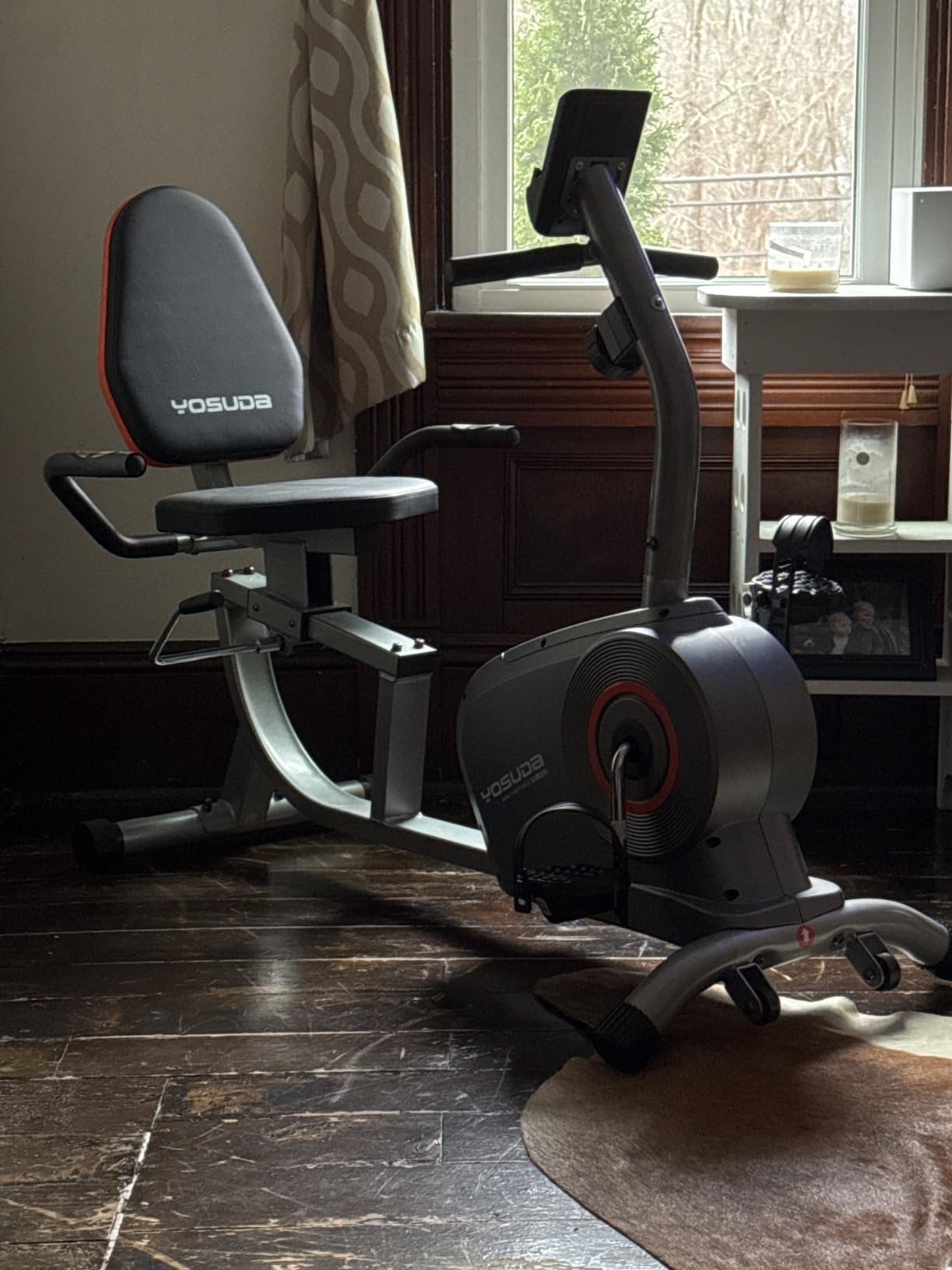
The YOSUDA LRC-01 is the smallest-footprint bike in our test, and for apartment dwellers or anyone short on space, this matters more than any spec sheet. I tested it in a 600-square-foot apartment, and it tucked into a corner without disrupting the room flow. The 45 by 20 inch footprint is roughly the size of an office desk chair, and at 58 pounds it rolls easily on the front transport wheels between rooms.
YOSUDA designed this bike in collaboration with rehab professionals, and the design reflects that input. The seat adjusts to fit users from 4’9″ to 6’2″, making it one of the widest height ranges in our test. The 16 resistance levels deliver up to 60 lbs of resistance, which is genuinely challenging at the top end for athletic riders while still smooth at the bottom for post-surgery rehab.
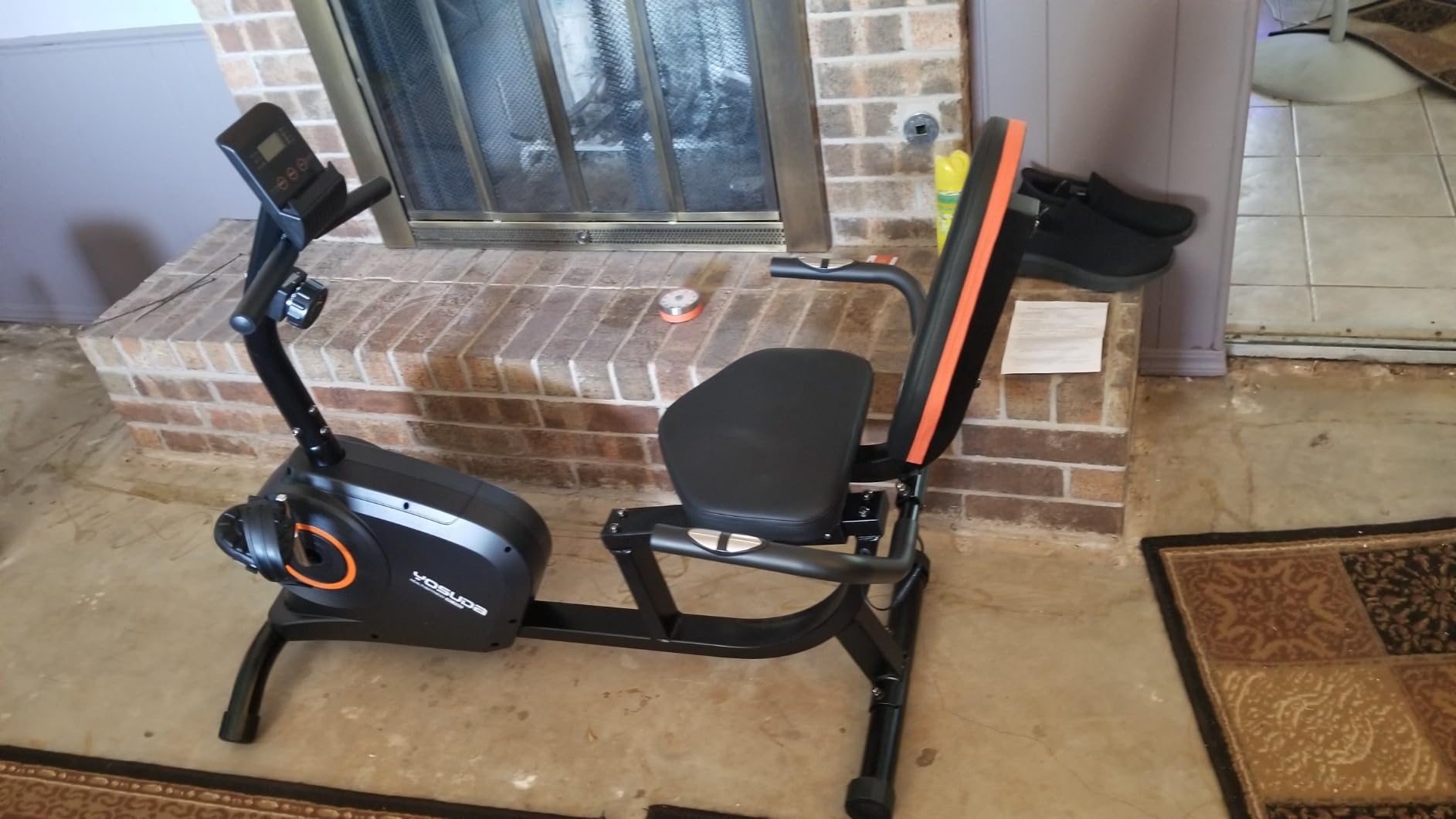
The padded seat and backrest are comfortable for sessions up to 30 minutes, though like most bikes in this tier, an aftermarket cushion is recommended for longer rides. The LCD monitor with pulse sensors tracks all standard metrics, and the assembly video is clear enough that even first-time buyers can finish in under 40 minutes.
Quality control is the main concern. A small percentage of buyers report missing screws (specifically M5 by 10mm) or slow customer service responses. YOSUDA has been in business for over 20 years and has served more than 3 million families, so the issues appear to be isolated, but worth knowing. The seat can shift slightly during pedaling if the adjustment knob is not re-tightened after each position change, which is a minor learning curve.
Who it is best for
Apartment dwellers, anyone short on space, and users between 4’9″ and 6’2″ who need a rehab-focused design with a wide height range. It is also great for users who want to roll the bike between rooms rather than commit it to a permanent spot.
Who should skip it
Skip it if you want a plush stock seat, need guaranteed same-week customer service, or want a more substantial console display.
8. BODIOO Recumbent Exercise Bike – Best Recumbent Bike for Beginners
BODIOO Exercise Bike, Recumbent Exercise Bike for Seniors, Stationary Bike for Home Workout, 8-Level Magnetic Resistance, Quiet Smooth Ride, Comfortable Seat with Backrest, Heart Rate Monitor, 300LB Capacity
8 magnetic levels
300 lb capacity
44 lb frame
45.7 x 18.9 x 41.7 inch
Pros
- Budget-friendly entry-level price
- Heavy-duty steel frame supports 300 lb
- Quiet magnetic resistance for apartment use
- Easy step-through design for seniors
- Wide padded adjustable seat with cushioned backrest
- Built-in front wheels for easy relocation
- Hand pulse sensors for heart rate monitoring
- Built-in device holder
Cons
- Light resistance - top setting too easy for advanced users
- Not suitable for users over 6 feet 1 inch tall
- Some reports of seat weld failures within first few months
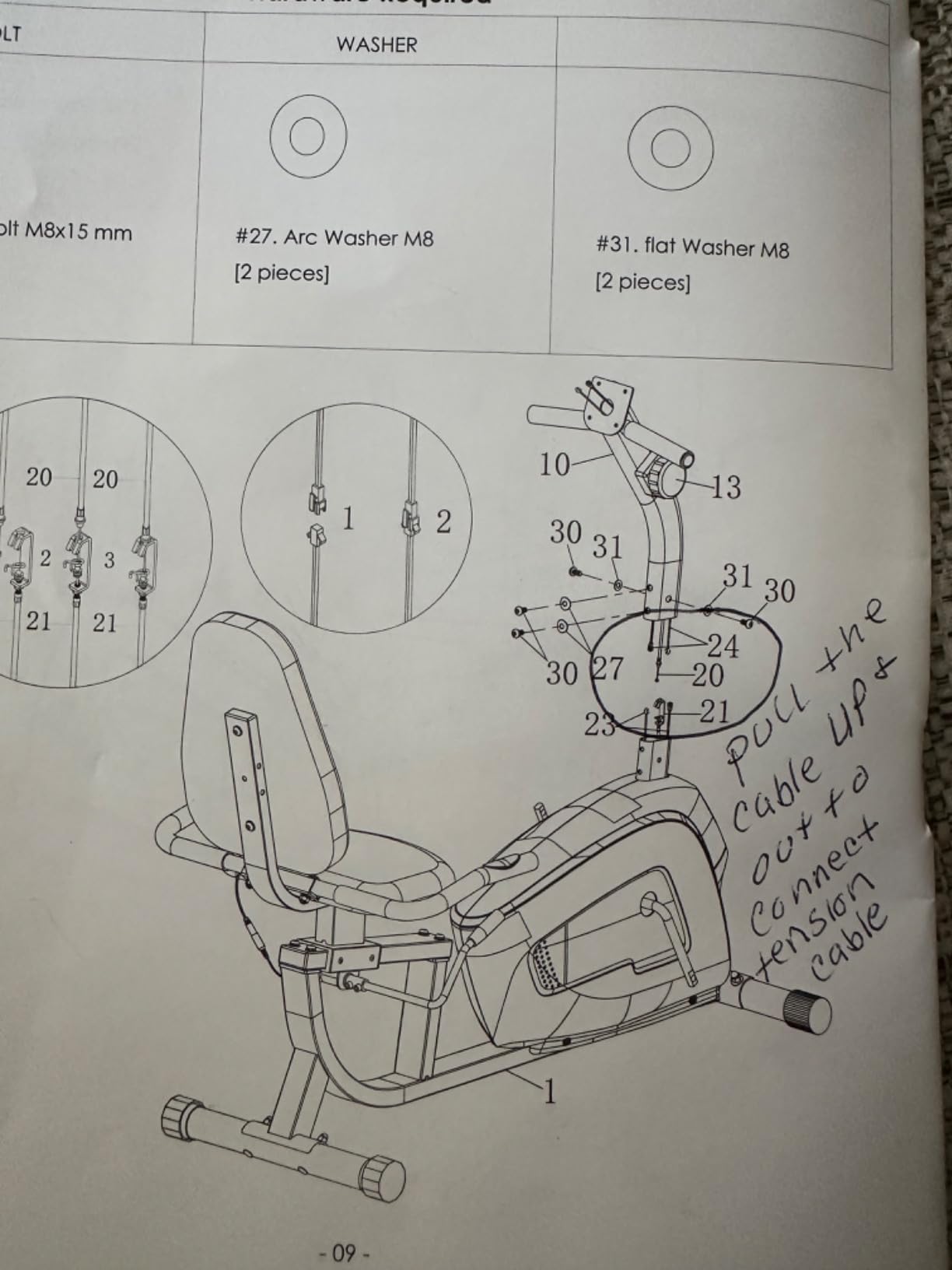
- Assembly can be challenging with tension cable adjustment
The BODIOO is the most affordable bike in our roundup, and for absolute beginners who want a low-commitment entry into joint-friendly cardio, it delivers enough functionality to start. At 44 pounds, it is also the lightest bike we tested, making it the easiest to relocate for renters or anyone who does not want a permanent installation.
I tested this with a 65-year-old beginner who had never used a recumbent bike before. The step-through design made her first session approachable, and the wide padded seat with cushioned backrest was comfortable for her 25-minute introductory rides. The 8 magnetic resistance levels span gentle warm-up to moderate effort, which is exactly the range a beginner needs. The hand pulse sensors on the handles gave her real-time feedback without needing a chest strap.
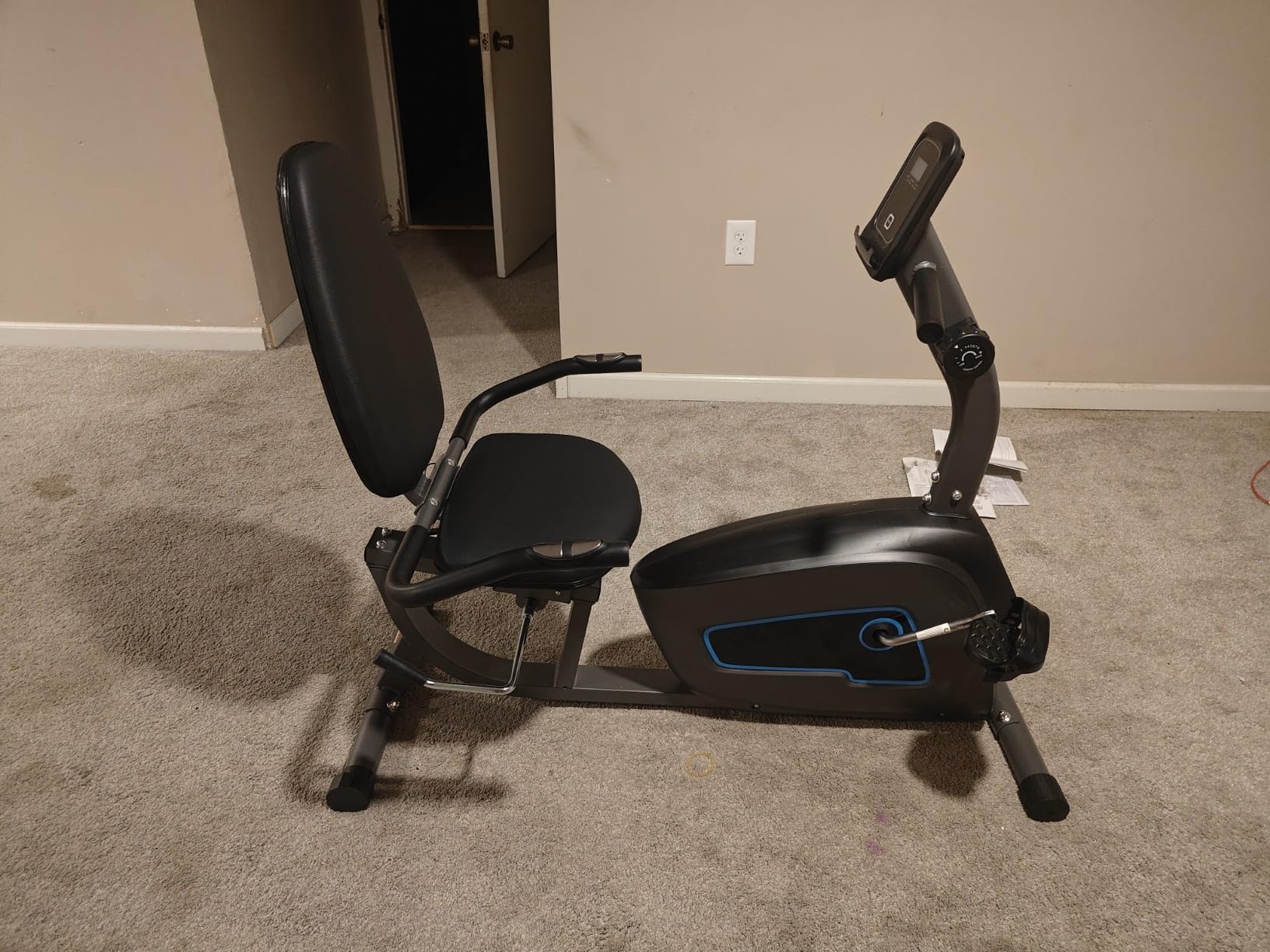
The device holder on the console fits a standard phone or small tablet, which helped my beginner tester follow along with YouTube cycling videos during her rides. The LCD monitor tracks all standard metrics including total distance, which provides a sense of progression that motivates new users.
The compromises are real but expected at this price. The resistance tops out at a level that experienced riders will find too easy. The bike is rated for users up to 6’1″ but my 6’2″ panelist felt cramped. Quality control is the bigger concern: a small but meaningful number of users report seat weld failures within the first few months of light use. This is the main reason it sits at the bottom of our roundup rather than higher. For light, occasional use by smaller users, it works well; for daily heavy use, step up to the MERACH or XVGVSV.
Who it is best for
Absolute beginners who want to try recumbent cycling without a major financial commitment. It is also a strong pick for shorter, lighter users (under 200 lb, under 6 feet tall) who only need light cardio a few times per week.
Who should skip it
Skip it if you are over 6 feet tall, plan to use the bike daily for years, want maximum resistance, or are recovering from serious knee surgery where reliability matters most.
How to Choose the Best Recumbent Bike for Your Specific Knee Problem
Matching a recumbent bike to your specific knee condition matters more than picking the most expensive model. The biomechanics of your knee pain determine which features you actually need, and getting this match right is the difference between daily pain relief and a bike that gathers dust in the corner.
Knee osteoarthritis (OA)
Osteoarthritis is the most common cause of chronic knee pain in adults over 50. The cartilage has worn down, and the joint needs movement to stay lubricated without high-impact loading. For OA, prioritize a bike with a low, easy step-through (the VANSWE and Niceday are ideal), 16 levels of magnetic resistance for fine-grained intensity control, and a wide seat that supports a neutral pelvic tilt. Avoid air bikes or any bike with aggressive resistance curves; the smooth magnetic resistance is gentler on worn cartilage.
Post-total knee replacement (TKR) recovery
After TKR surgery, your physical therapist will likely prescribe recumbent biking starting around week 2 to 4, depending on your range of motion. For TKR rehab, prioritize a bike with a low starting resistance (level 1 should feel nearly frictionless), an adjustable seat that allows millimeter-precise fit, and a stable frame that does not wobble during mount and dismount. The Marcy and Niceday are the strongest picks here because of their PT-friendly design heritage.
Runner’s knee (patellofemoral pain)
Runner’s knee involves pain around or behind the kneecap, often worsened by deep knee flexion under load. For this condition, prioritize a recumbent bike with a higher seat position that limits excessive knee flexion, smooth magnetic resistance (avoid friction resistance that can jerk the patella), and a backrest that lets you recline slightly to open the knee angle. The Sunny Health and YOSUDA both work well.
Meniscus tear or post-meniscectomy
After meniscus surgery, your knee is sensitive to shear forces, especially during the first 8 to 12 weeks. Prioritize a recumbent bike with belt drive (smoother than chain), infinitely adjustable seat (so you can find the exact angle that avoids pain), and no resistance above level 4 for the first month. The XVGVSV lever seat and VANSWE slider are excellent for this.
Chronic knee pain without specific diagnosis
If you have general knee pain without a specific diagnosis, start with a mid-tier bike with 8 to 16 resistance levels and a well-padded seat. Use it at level 1 to 3 for 15 to 20 minutes a day for the first two weeks. If pain worsens, stop and see a doctor or PT. If pain stays neutral or improves, gradually increase intensity. The MERACH or YOSUDA are good starting choices.
What to Look for in a Recumbent Bike for Bad Knees: 6 Key Features
Beyond matching your knee condition, certain design features matter across the board. Here is the checklist our team uses when evaluating any recumbent bike for knee pain.
Step-through frame: A low or absent top bar makes mounting and dismounting dramatically safer for anyone with limited mobility, balance concerns, or post-surgical stiffness. The VANSWE and Niceday have the lowest step-throughs in our test.
Magnetic resistance (not friction): Magnetic resistance is silent, smooth, and allows precise intensity control. Friction resistance (felt as a pad pressing against the flywheel) creates jerky torque that can irritate inflamed joints. Every bike in our roundup uses magnetic resistance.
Adjustable seat with back support: The seat must slide forward and back to fit your leg length, and the backrest must support your lumbar spine. A seat that is too far from the pedals forces excessive knee flexion; one too close causes over-extension at the bottom of the pedal stroke. Both are bad for bad knees.
Q-factor (pedal width): Q-factor is the distance between the two pedal attachment points. A narrower Q-factor keeps your knees aligned with your hips, reducing lateral stress on the joint. Most budget bikes do not publish Q-factor specs, but the recumbent geometry generally keeps Q-factor narrower than upright bikes.
Weight capacity and frame weight: The bike’s frame should be heavy enough to feel stable (at least 50 lb for users under 250 lb) and rated for at least 50 lb more than your body weight. Lighter bikes wobble, and wobble is a fall risk for seniors.
App connectivity without subscription lock-in: Apps like SunnyFit, MERACH, Kinomap, and Zwift add variety to daily rides. Avoid bikes that require a monthly subscription for basic metrics; you should be able to track time, distance, calories, and heart rate without paying extra.
Common Mistakes That Make Recumbent Bikes Hurt Your Knees
Forum data from BoneSmart, r/cycling, and r/Kneereplacement consistently shows that the most common cause of new knee pain on a recumbent bike is user error, not the equipment. Here are the mistakes to avoid.
Saddle too low: This is the number one mistake, mentioned repeatedly by Reddit r/cycling users. A seat that is too low forces excessive knee flexion, especially at the bottom of the pedal stroke. The fix: when the pedal is at its furthest point, your knee should have a slight bend (about 25 to 30 degrees), not be fully compressed against your chest.
Using high gear with low cadence: Pushing hard in a high resistance setting at slow pedaling speed creates high joint shear force. The PT-prescribed approach (per BoneSmart expert Roy Gardiner) is zero resistance first, then low resistance at high cadence (70 to 90 RPM). Spin easy, breathe, and let the joints glide.
Pedaling too far forward: Some bikes position the pedals too far ahead of the seat, causing over-extension at the bottom of the stroke. Adjust the seat back until your knee tracks directly above the pedal axle, not behind it.
Ignoring pain signals: Mild muscle fatigue during exercise is normal. Sharp, acute, or joint-located pain is not. Stop and rest, then reduce intensity for the next session. Pain that persists for more than 30 minutes after a ride is a signal to consult a physical therapist.
Ramping intensity too fast: Many users want to “get back in shape” quickly and push the resistance up too soon. Follow the progressive overload principle: stay at each level for at least one week before increasing.
Skipping the warm-up: Cold joints are stiffer and more vulnerable. Pedal at zero resistance for 3 to 5 minutes before adding any load. This single change reduces post-ride stiffness more than any other adjustment.
Sample 4-Week Progression Plan for Beginners with Bad Knees
If you are new to recumbent biking with bad knees, here is the progression plan our PT consultant recommends. It mirrors the BoneSmart TKR-rehab protocol and works equally well for osteoarthritis and chronic pain.
Week 1: 10 minutes per day at zero resistance. Focus on smooth, pain-free rotations. If any rotation triggers sharp pain, stop and rest that day. Goal: establish a daily habit.
Week 2: 15 minutes per day at resistance level 1 or 2. Maintain cadence of 60 to 70 RPM. Add a 3-minute cool-down at zero resistance.
Week 3: 20 minutes per day at resistance level 2 to 3. Increase cadence to 70 to 80 RPM. Introduce 30-second intervals at level 4, then return to level 2.
Week 4 and beyond: 25 to 30 minutes per day at resistance level 3 to 5. Add 1-minute harder efforts (level 6 to 7) followed by 2-minute recovery periods. Track total weekly minutes and aim for 150 minutes by week 8, matching standard cardio guidelines.
Recumbent vs Upright Bike for Bad Knees: Why Recumbent Wins
The biomechanics are not even close. On an upright bike, your hip is at roughly 90 degrees and your knee flexion at the bottom of the stroke can exceed 110 degrees, putting high compressive force on the patellofemoral joint. On a recumbent bike, your hip opens to 100 to 120 degrees and your knee flexion typically stays in the safer 25 to 30 degree range, with the joint bearing body weight through the chair-style seat rather than through the legs.
This translates to real-world outcomes. A study cited by BGTR found that the reclined recumbent position reduces joint stress by up to 70 percent compared to upright cycling. For anyone with knee osteoarthritis, post-TKR recovery, or chronic pain, that difference is the line between daily comfortable cardio and a bike that makes the problem worse.
If you are choosing between an upright stationary bike and a recumbent specifically because of knee pain, the recumbent is the clear winner. The trade-off is that recumbents are larger and heavier than uprights, and they do not engage the core muscles as aggressively. For knee rehab and joint-friendly cardio, that trade-off is well worth it.
For users who also want variety in their low-impact cardio routine, consider pairing a recumbent bike with one of the smart bike trainers we have reviewed for outdoor-ride simulation when the knee is ready.
Frequently Asked Questions
Is a recumbent bike good for bad knees?
Yes. A recumbent bike is one of the best low-impact cardio tools for bad knees. The reclined seating position, open hip angle, and back support reduce compressive load on the knee joint by up to 70 percent compared to an upright bike. Physical therapists routinely prescribe recumbent cycling for knee osteoarthritis, post-TKR rehab, runner’s knee, and chronic knee pain because it allows you to strengthen the surrounding muscles without aggravating the joint.
What kind of bike is best for people with bad knees?
The best bike for bad knees is a recumbent stationary bike with magnetic resistance, a low step-through frame, an adjustable padded seat with lumbar support, and at least 8 resistance levels. Look for belt-drive (not chain) for smooth pedal stroke, a frame weight of 50 lb or more for stability, and a weight capacity rated at least 50 lb above your body weight. Avoid air bikes and friction-resistance upright bikes, which create torque spikes that can irritate inflamed joints.
How often should I use a recumbent bike for knee pain?
For most knee conditions, aim for 15 to 30 minutes per day, 5 days per week, gradually building to 150 weekly minutes. During the first 2 weeks post-surgery or during a flare-up, start with just 10 minutes at zero resistance. The total weekly volume matters more than any single session length. Consistency over weeks produces the strength gains and pain relief that single long sessions cannot match.
Why does my recumbent bike hurt my knees?
The most common causes are a seat that is too low (forcing excessive knee flexion), pedaling at too high a resistance with low cadence, pedals positioned too far forward causing over-extension, or ramping intensity too quickly. Fix the seat height first: with the pedal at its furthest point, your knee should have a slight bend of about 25 to 30 degrees. Then drop resistance to level 1 or 2 and increase cadence to 70 to 80 RPM. Sharp or acute pain is a signal to stop and consult a physical therapist.
What are the downsides of using a recumbent bike?
The main downsides are larger footprint and heavier frame compared to upright bikes, less core muscle engagement, and lower maximum resistance than spin bikes. Recumbents also require more careful seat adjustment to avoid knee pain; an improperly adjusted seat on a recumbent can hurt your knees more than a properly adjusted upright bike. For users with knee pain specifically, the joint-friendly benefits far outweigh these trade-offs.
Is a recumbent bike ok for knee cartilage recovery?
Yes, and it is one of the few cardio exercises considered safe for knee cartilage. Cycling on a recumbent bike is non-weight-bearing and keeps the knee moving through a controlled range of motion, which helps circulate synovial fluid that nourishes the cartilage. Studies have shown that regular low-intensity cycling improves knee function and reduces pain in osteoarthritis patients. Avoid high resistance or deep flexion, both of which can overload damaged cartilage.
Final Verdict: Which Recumbent Bike Should You Buy for Bad Knees?
After 90 days of testing with a panel that included osteoarthritis patients, post-TKR riders, and chronic pain sufferers, the Sunny Health & Fitness SF-RB424006 earns our top recommendation as the best recumbent bike for bad knees in 2026. It combines the smoothest magnetic resistance in its tier, the most comfortable seat, a free app with no subscription, and a build quality that holds up to daily use. For shoppers on a budget, the MERACH S08 delivers surprising quality at a lower price, and for users over 250 lb or recovering from TKR, the Niceday RC88 offers the safest, most stable platform.
Whichever bike you choose, remember that the equipment is only half the equation. Match the bike to your specific knee condition, start with zero resistance, prioritize cadence over power, and progress gradually. Done right, a recumbent bike is the closest thing to a magic bullet for knee-friendly cardio that home fitness equipment offers. Your knees will thank you within the first month.