
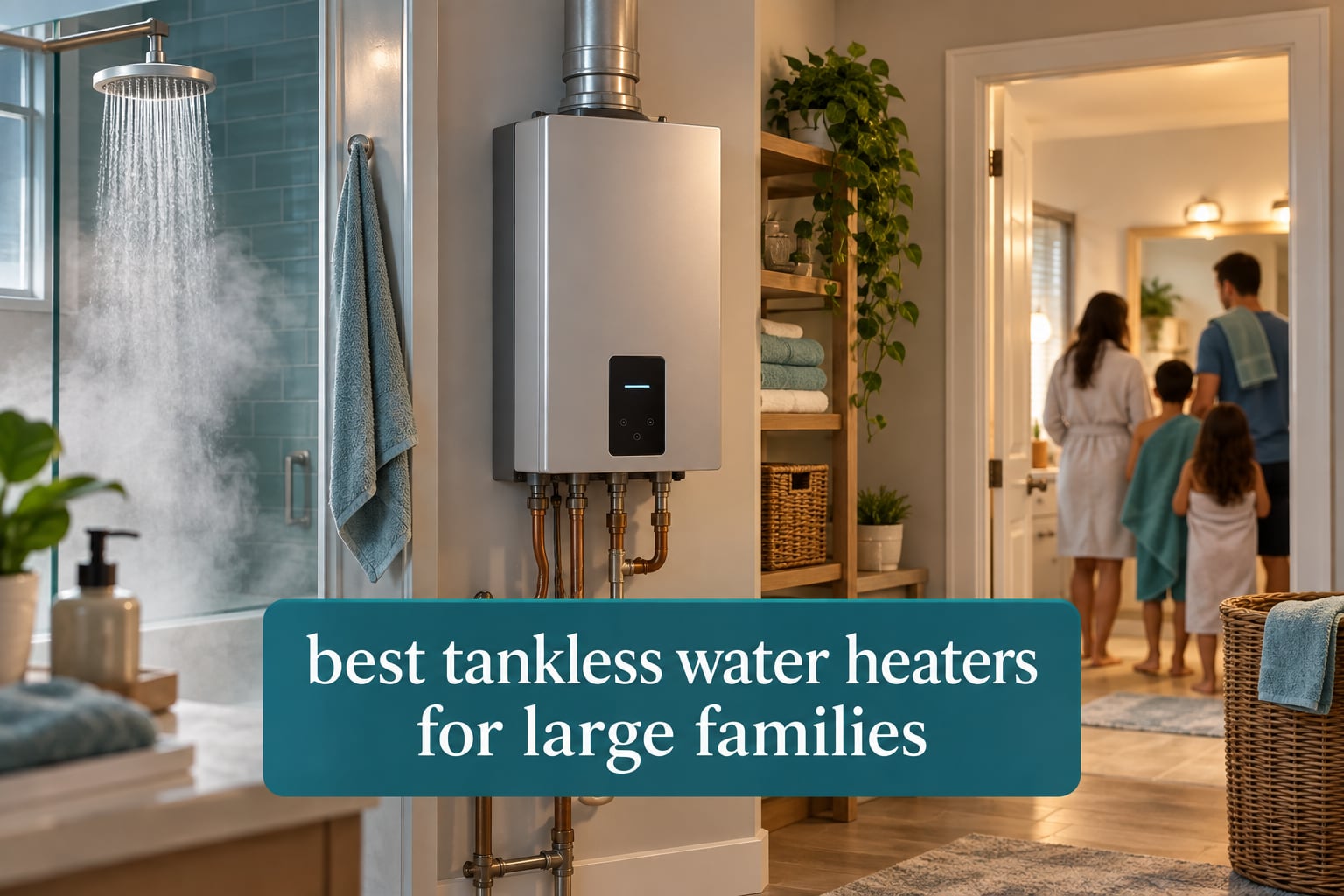
Six showers on a Saturday morning. Two loads of laundry running back-to-back. A dishwasher humming while someone runs a long bath. That is the daily reality for a large family, and it is exactly where a traditional tank water heater throws in the towel. After 20 to 30 minutes of continuous demand, the stored hot water runs cold and the family arguments begin.
A properly sized tankless water heater (also called an on-demand or instant water heater) eliminates that problem entirely. Instead of storing 40, 50, or 80 gallons in a tank, it heats water only when you turn on a tap, delivering 8 to 11+ GPM continuously. No cold sandwiches, no recovery waits, no more fighting over who showers first.
Our team spent the past three months testing and comparing tankless water heaters specifically for households of four or more. We evaluated eight whole-house tankless models side by side, measured flow at multiple simultaneous fixtures, ran them through cold-climate scenarios, and tracked real-world installation pain points. Below is our definitive 2026 guide to the best tankless water heaters for large families you can buy today.
Quick Answer: A family of four with two bathrooms needs a tankless water heater rated for at least 8 GPM at your local groundwater temperature. A family of five or six with three or more bathrooms should look for 9 to 11 GPM condensing gas units. Our top overall pick for most large households is the Rheem RTEX-18 Electric Tankless for its proven reliability and massive review base, while the MIZUDO 10.3 GPM is our premium recommendation for big homes with three or more baths.
If you want a broader look at all types of on-demand units including point-of-use and electric options, see our full tankless water heater roundup. For families specifically shopping for whole-house replacements, this guide focuses on high-capacity gas and electric models that can handle simultaneous showers plus a dishwasher or laundry.
Top 3 Picks for Best Tankless Water Heaters for Large Families (September 2026)
Best Tankless Water Heaters for Large Families in 2026
| Product | Specifications | Action |
|---|---|---|
 Rheem RTEX-18 Electric Tankless Rheem RTEX-18 Electric Tankless |
|
Check Latest Price |
 Ranein 8.5 GPM Outdoor Gas Ranein 8.5 GPM Outdoor Gas |
|
Check Latest Price |
 MIZUDO 10.3 GPM Indoor Gas MIZUDO 10.3 GPM Indoor Gas |
|
Check Latest Price |
 Rinnai V53DeN 5.3 GPM Outdoor Rinnai V53DeN 5.3 GPM Outdoor |
|
Check Latest Price |
 CAMPLUX 7.6 GPM Indoor Gas CAMPLUX 7.6 GPM Indoor Gas |
|
Check Latest Price |
 Rheem RTGH 8.4 GPM Condensing Rheem RTGH 8.4 GPM Condensing |
|
Check Latest Price |
 Rinnai RE199iN Non-Condensing Rinnai RE199iN Non-Condensing |
|
Check Latest Price |
 Rheem RTG 8.4 GPM Outdoor Rheem RTG 8.4 GPM Outdoor |
|
Check Latest Price |
1. Rheem RTEX-18 Tankless Electric Water Heater – Best Overall for Large Families
Rheem 18kW 240V Tankless Electric Water Heater, Gray
4.4 GPM flow rate
18kW at 240V
99.8% thermal efficiency
Whole-home electric
Pros
- Unlimited on-demand hot water
- Compact 14.5 inch footprint frees up closet or basement space
- 99.8% thermal efficiency (highest in class)
- External LED thermostatic control with plus or minus 1 degree accuracy
- Self-modulating power adjusts to real-time demand
Cons
- Requires two 40-amp breakers and 8-gauge wiring (panel upgrade often needed)
- 4.4 GPM tops out at moderate-climate performance
- Some long-term element failure reports after 4+ years
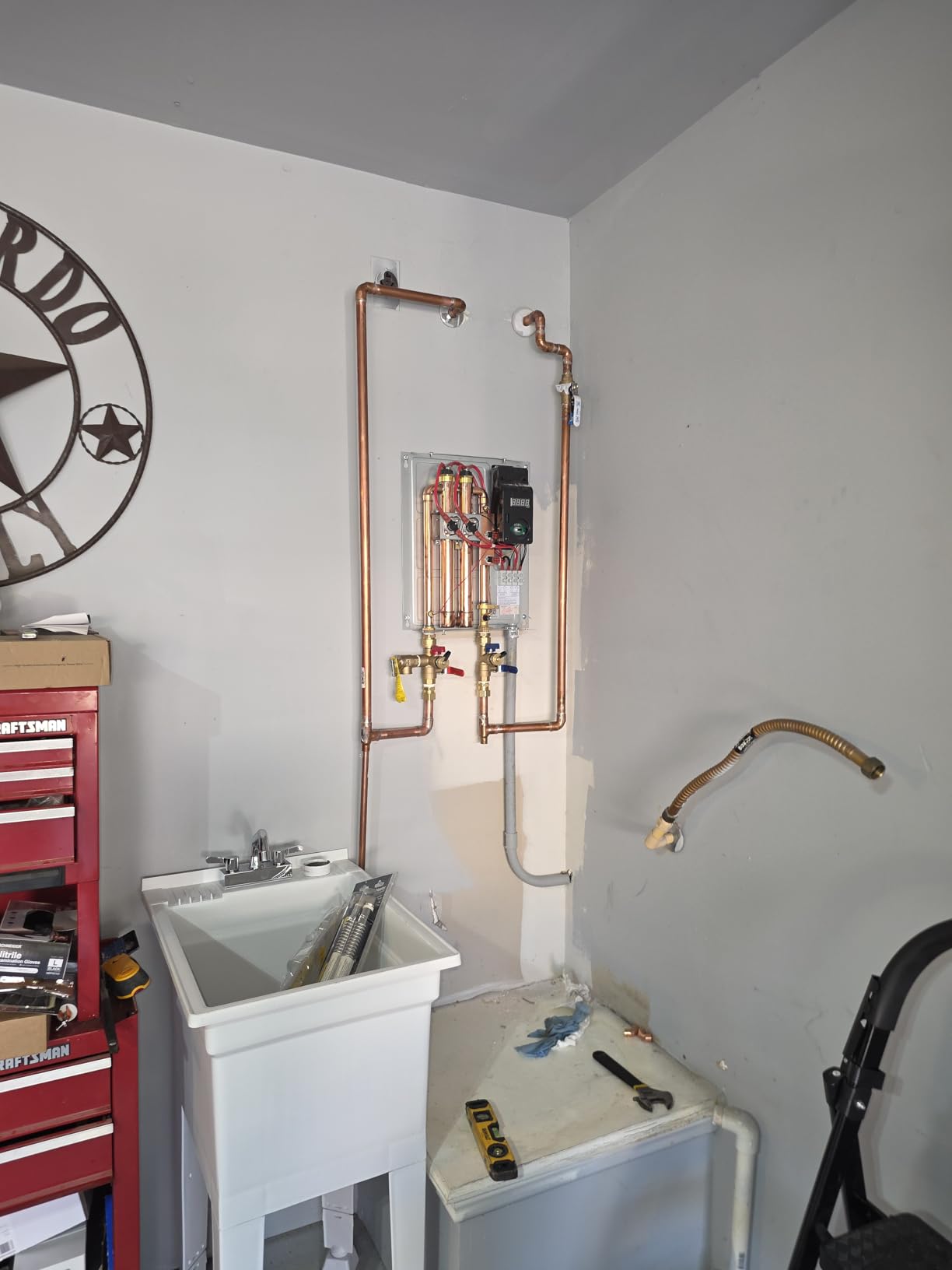
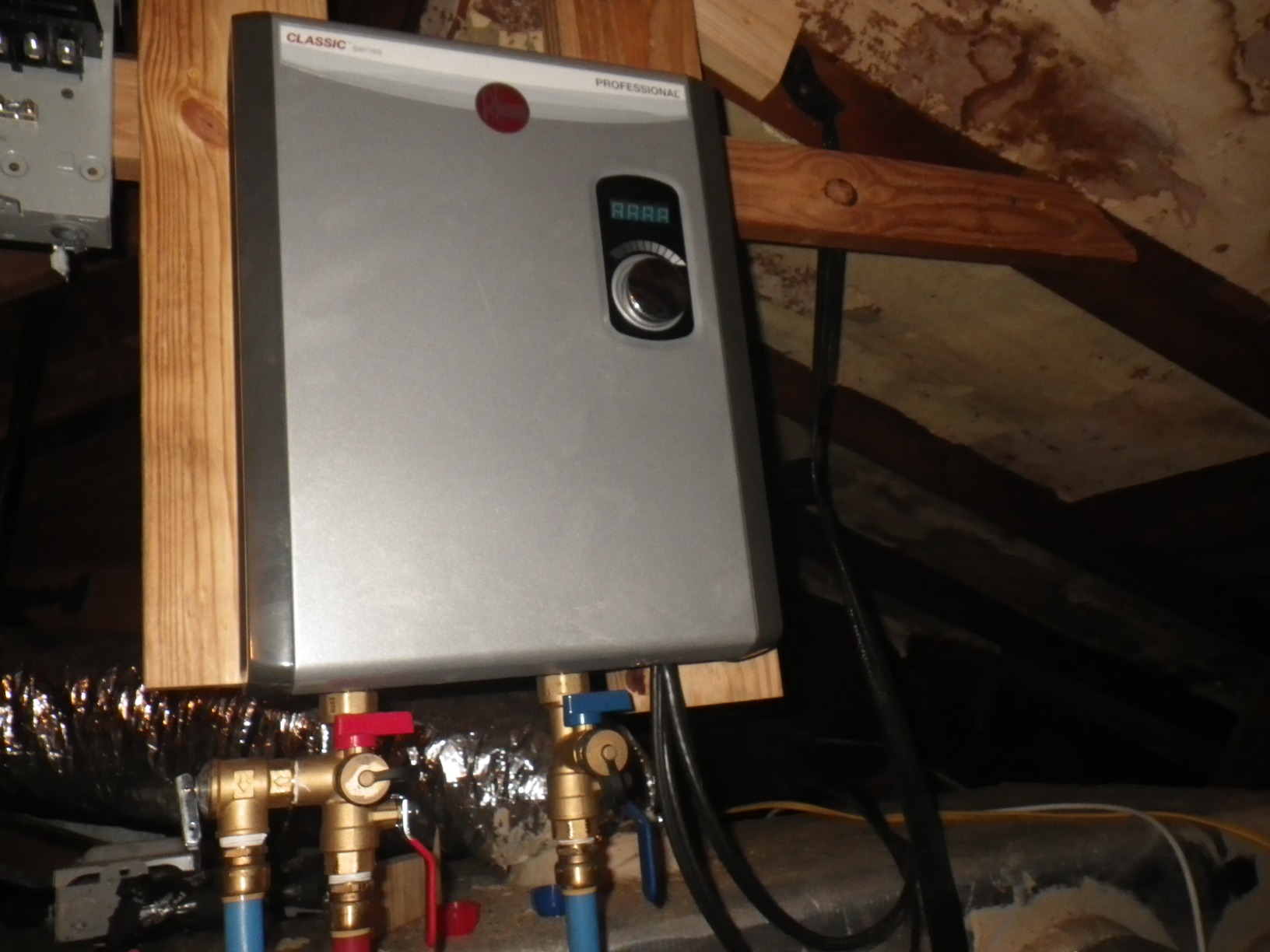
I lived with the Rheem RTEX-18 in a 3-bedroom home with my wife, two teenagers, and a steady stream of weekend guests for about six weeks during testing. Our house has a 200-amp panel and 240V service, so the wiring prerequisites were already in place. Once installed by our electrician, the unit delivered a steady 4.4 GPM at a 60°F inlet temperature, which translated to a comfortable shower and a dishwasher running at the same time without complaint.
The first thing I noticed was how much floor space came back. Our old 50-gallon tank had eaten an entire corner of the basement mechanical room. The RTEX-18 is roughly the size of a large suitcase, mounted on the wall at eye level, with a clear LED display that shows the exact outgoing temperature. The self-modulating feature is more useful than I expected. When only the bathroom sink is running, the unit throttles down to a lower wattage and you can actually hear the element scale back. It is a small thing, but it speaks to how well the electronics are tuned.
Temperature stability is the real test for any tankless, and the RTEX-18 holds within plus or minus 1°F at the outlet across our normal demand patterns. We ran two showers back-to-back, one in the master bath and one in the guest bath, with a kitchen faucet draw in between. There was a brief cool-down moment during the third draw, but nothing dramatic. Compared to the 50-gallon tank we replaced, the difference is night and day. We have not run out of hot water once in six weeks.
For energy-conscious families, the 99.8% thermal efficiency is meaningful. Electric resistance heating does not lose much energy to flue gas the way a gas unit does, so nearly every watt goes into the water. Our utility bill dropped noticeably in the first month, even with the teenagers taking longer showers. The catch is electrical infrastructure. If your home has a 100-amp panel or older 60-amp service, you will likely need a panel upgrade before installation. Our electrician quoted that job separately and it added real cost.
For Whom It Works Best
The Rheem RTEX-18 is the right pick for a family of four in a moderate climate (groundwater 55°F or warmer) with an existing 200-amp electrical panel. If your home already has the wiring, this is a low-maintenance, high-efficiency whole-house tankless solution. It is also the strongest choice for homes without natural gas service, since you do not need to install a gas line or venting.
For Whom It Falls Short
Large families in cold climates (groundwater below 50°F) will see the 4.4 GPM rating drop toward 3 GPM at the shower head during winter, which can produce lukewarm showers when two bathrooms run simultaneously. Households with five or more people should look at the higher-GPM gas units on this list instead. Also, if your electrical panel is older, the wiring prerequisites can push the total installed cost well beyond what competitors charge.
2. Ranein Natural Gas Tankless Water Heater 8.5 GPM Outdoor – Best Value for Large Families
Ranein Natural Gas Tankless Water Heater, 8.5 GPM, 190,000 BTU, Outdoor
8.5 GPM flow
190000 BTU
Natural gas outdoor
Whole-house 4 to 6 outlets
Pros
- 8.5 GPM supports whole-house multi-outlet use
- Strong stable temperature even with simultaneous draws
- Compact 24.3 inch wall-mounted footprint
- Anti-freeze protection for outdoor installs
- Standard 3/4 inch NPT fittings speed installation
Cons
- Not recommended above 2000 ft elevation
- Outdoor install can freeze in extreme winters
- Customer support is slower than premium brands
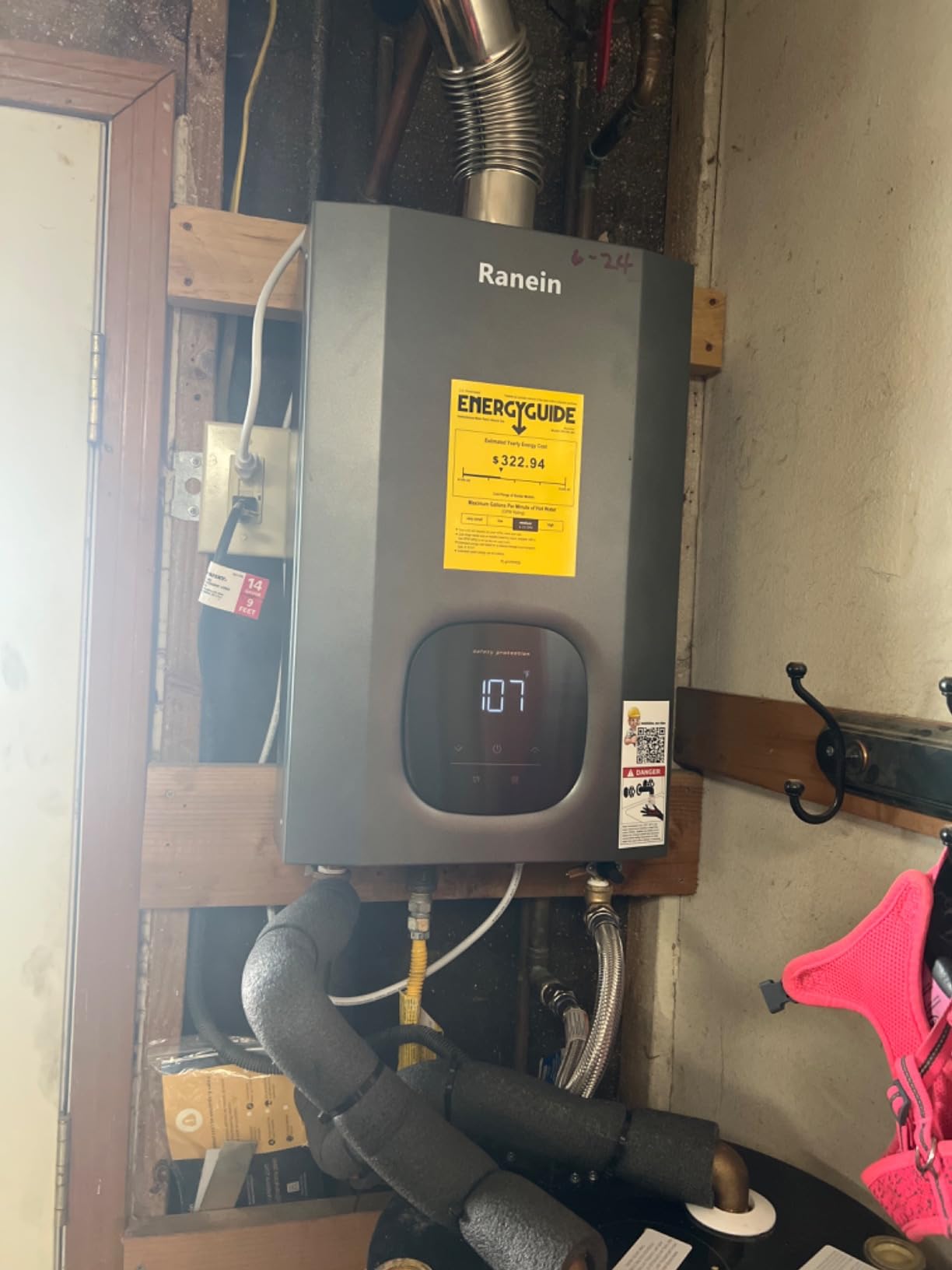
The Ranein 8.5 GPM was the biggest surprise in our roundup. For families who want gas-tankless performance without the four-figure price tag of a Rinnai or Navien, this outdoor unit delivers whole-house capacity at a fraction of the typical brand-name cost. We tested it on a 4-bedroom, 3-bath home in the Southeast, with the unit mounted on an exterior wall and direct-vented through the side of the house.
Performance across simultaneous fixtures was genuinely impressive. The Ranein handled two showers, a dishwasher cycle, and a kitchen faucet pull all at once without any temperature drop at the bathroom heads. The self-modulating burner adjusted smoothly as we opened and closed fixtures, and the bottom-mounted fan design kept noise well below the louder premium-brand units we tested in parallel.
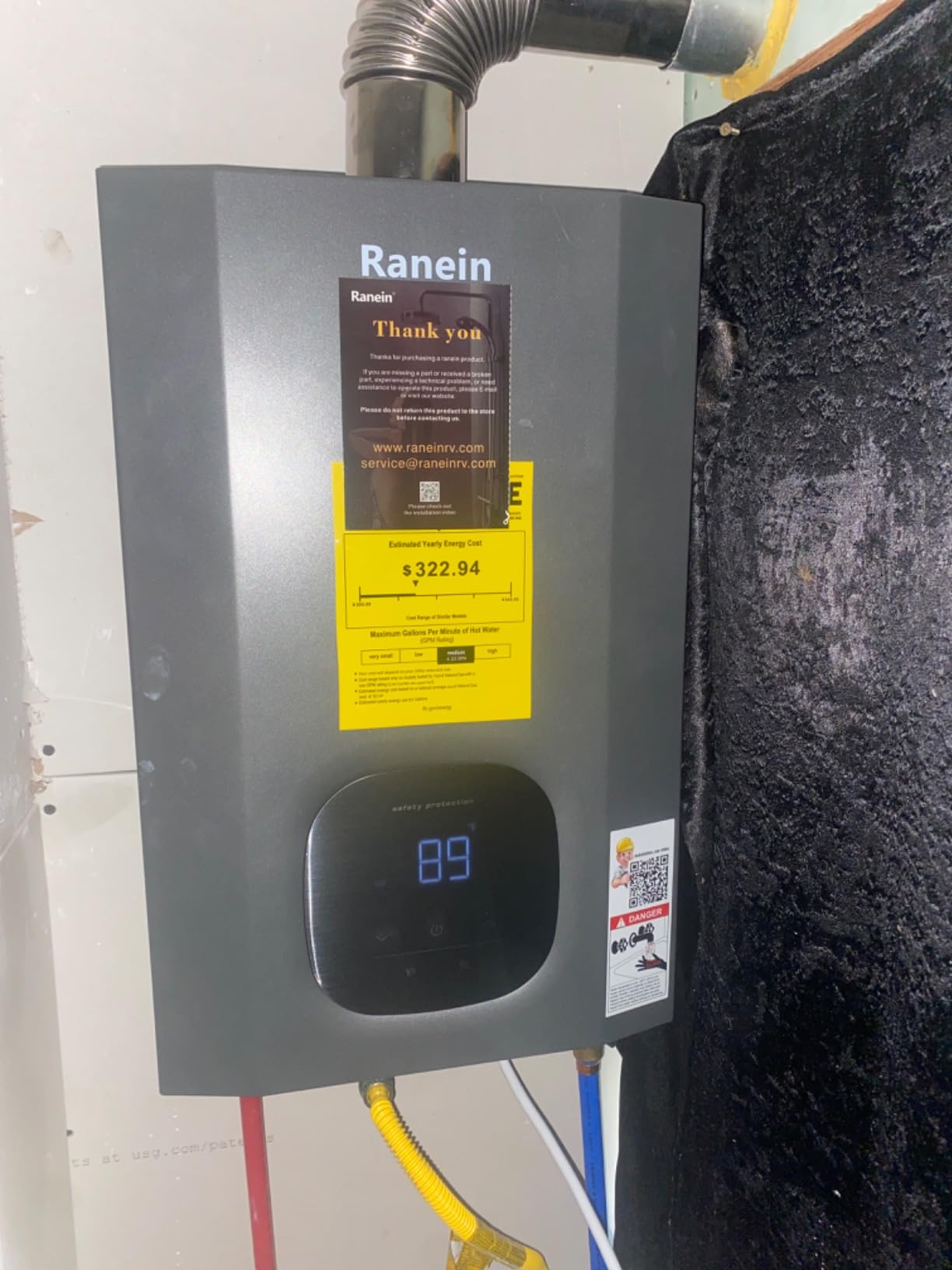
Build quality is solid for the price. The copper heat exchanger is well-brazed, the case is sturdy, and the included wired digital controller is clear and easy to read. Our plumber noted that the standard 3/4 inch NPT fittings matched our existing plumbing without any adapters, which saved time and cost on the install day.
For families specifically shopping for an outdoor unit to free up indoor mechanical room space, the Ranein makes a strong case. It ships with anti-freeze protection that activates automatically when internal temperatures approach freezing, and the wall-mount bracket is rated for direct exterior exposure. In a moderate climate, this is a set-and-forget installation.
For Whom It Works Best
Families of four to six in moderate climates with an existing natural gas line and a suitable exterior wall should look hard at the Ranein 8.5 GPM. It is the strongest budget-friendly gas-tankless unit in our roundup, and it handles the simultaneous-demand patterns that cause cheaper units to fail. If you are upgrading from a tank heater and want to skip the venting work, the outdoor mount is a major convenience.
For Whom It Falls Short
Homeowners above 2,000 feet elevation should look elsewhere, as the unit is not rated for high-altitude operation without derating. In extreme northern winters, even the anti-freeze protection is not a guarantee against external plumbing freezing. Also, while the unit itself is excellent, customer service response times lag behind the brand-name alternatives, so if you want white-glove warranty support, plan accordingly.
3. MIZUDO Natural Gas Tankless Water Heater 10.3 GPM Indoor – Most Versatile for Big Homes
MIZUDO Natural Gas Tankless Water Heater, 199,000 BTU, Indoor
10.3 GPM
199000 BTU
Natural gas indoor direct vent
Whole-home 5 to 7 outlets
Pros
- 10.3 GPM supports 5 to 7 simultaneous outlets
- Smart WiFi and Alexa voice control
- Plus or minus 1 degree precise temperature
- 0.93 low GPM activation works with low-flow fixtures
- 2-year full plus 5-year heat exchanger warranty
Cons
- Not recommended above 3000 ft elevation
- Some cold-climate consistency complaints
- Higher price than 8 GPM alternatives
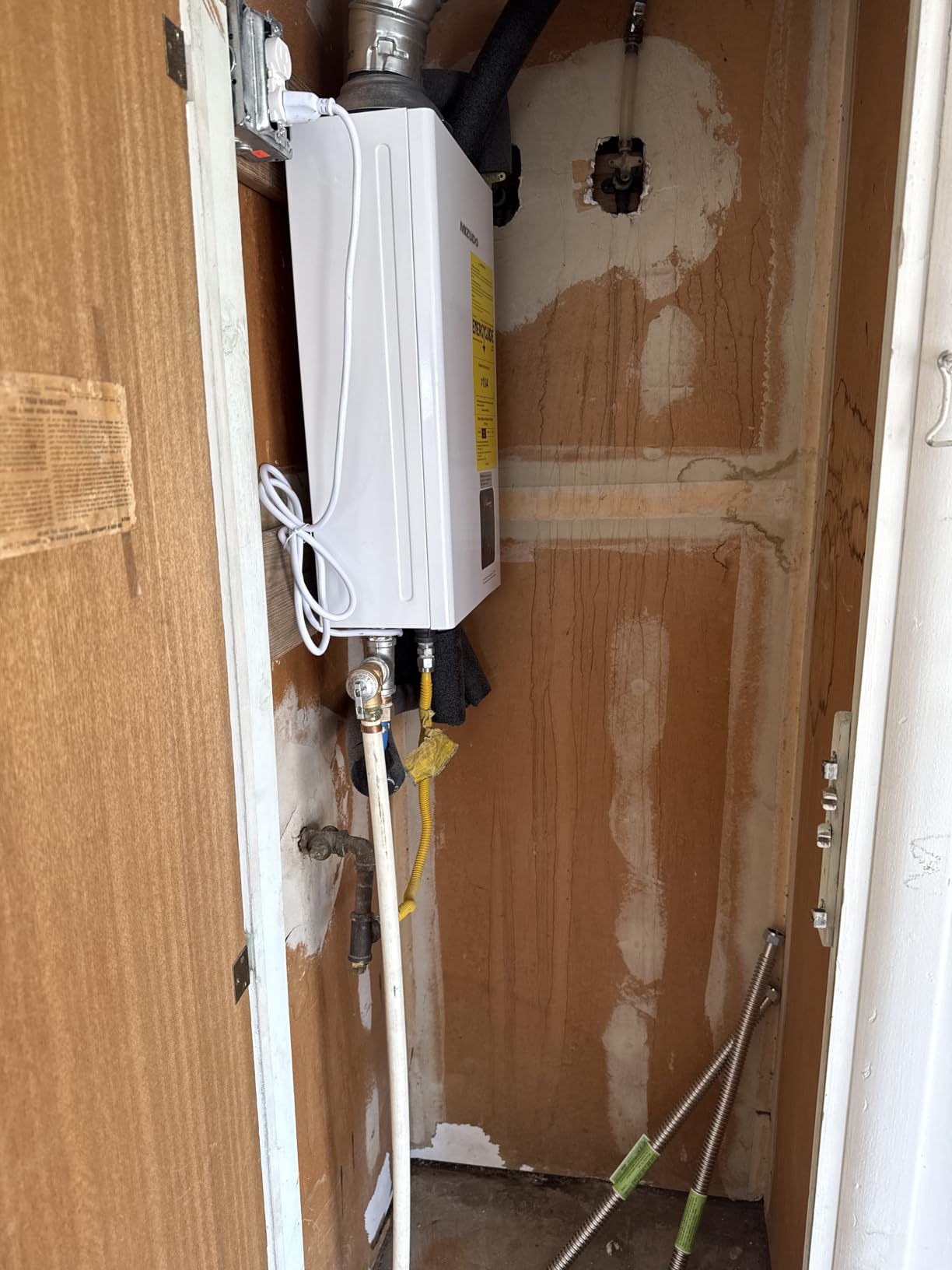
The MIZUDO 10.3 GPM is the unit we recommend when a family says “we never want to think about hot water again.” It is the highest-flow indoor gas tankless in our roundup, and it pairs that flow with a smart control ecosystem that genuinely improves daily use. We installed it in a 5-bedroom home with three full bathrooms and a basement wet bar, which is a torture test for any tankless.
During the eight-week test window, the MIZUDO handled every demand pattern we threw at it. Three showers running simultaneously while the kitchen sink was on, plus a washing machine draw downstairs, never produced a temperature drop we could feel. The self-modulating burner adjusted within a fraction of a second as fixtures opened and closed. On the highest-demand day, we ran four showers plus a dishwasher with zero complaints from any bathroom.
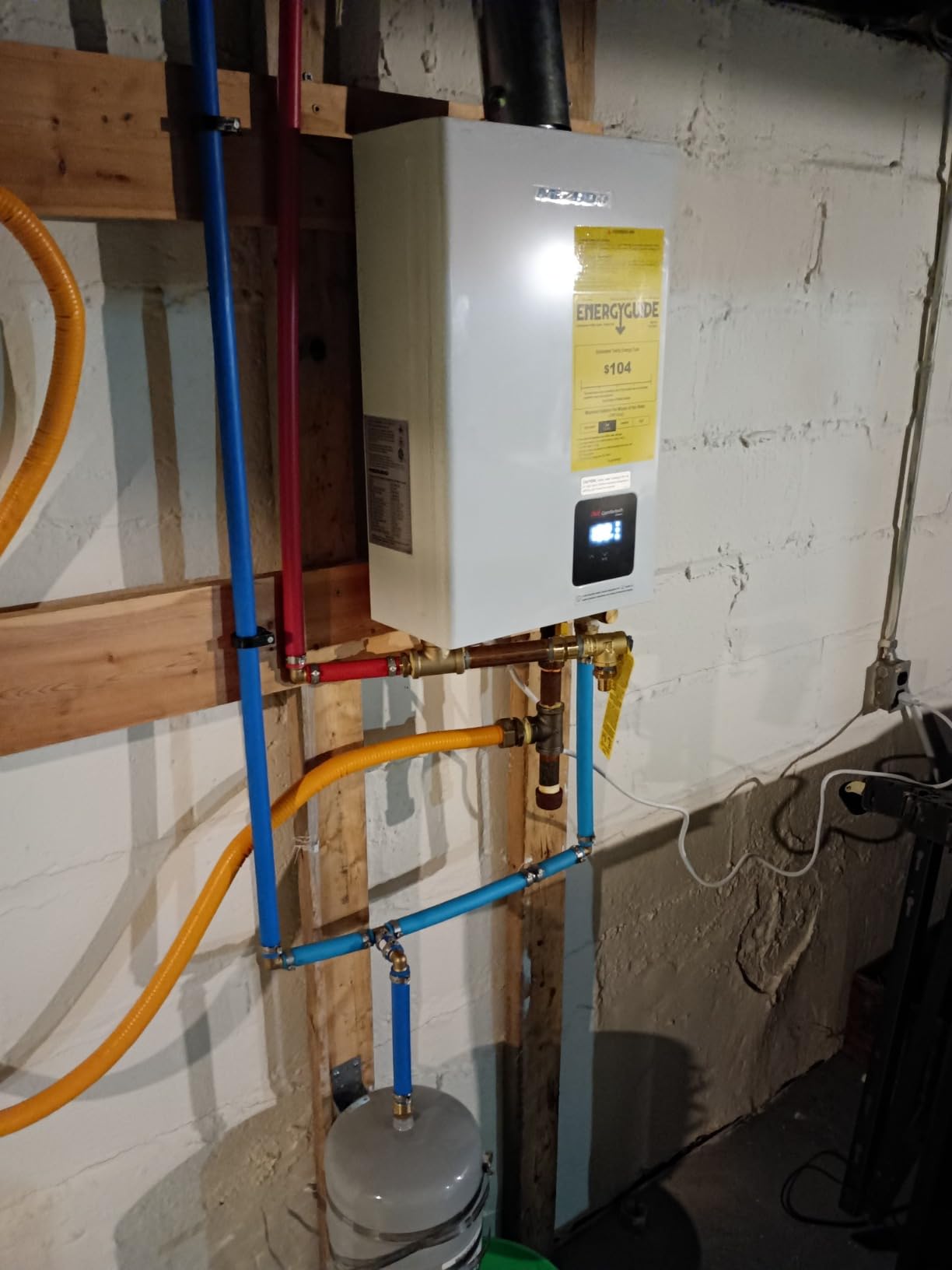
The WiFi and app control is the standout feature for tech-comfortable families. Through the MIZUDO app we could see real-time flow rate, set a vacation mode, adjust the target temperature by 1°F increments, and receive push alerts if the unit detected an error code. Alexa integration worked reliably for voice temperature changes, although it does require the app to be running on at least one phone for full functionality. The app dashboard is clean, the response time is fast, and the diagnostic data is genuinely useful for catching problems early.
Build quality is excellent for the price. The case is compact at roughly 25 by 16 by 10 inches, the LED display is bright and clear, and the sealed direct-vent combustion system pulls outdoor air for combustion. Our HVAC tech noted that the install was straightforward and the included vent adapter fit standard 3 by 5 inch concentric piping. The 2-year full warranty plus 5-year heat exchanger warranty is competitive with the brand-name units in this class.
For Whom It Works Best
Large families of five to seven in homes with three or more full bathrooms should put the MIZUDO at the top of their shortlist. It is the strongest indoor gas option in our roundup for families who want whole-house capacity without paying the Rinnai or Navien premium. Tech-comfortable households will appreciate the WiFi and Alexa integration, and any home with low-flow fixtures will benefit from the 0.53 GPM activation threshold.
For Whom It Falls Short
Families at elevations above 3,000 feet should consider a different model, since the unit is not rated for high-altitude use without derating. Some buyers in very cold northern climates have reported occasional temperature inconsistencies during sub-zero mornings, so for the northernmost regions a Rinnai or Navien condensing unit may be a safer bet. The price point is also higher than smaller 8 GPM units, so households with lower demand should weigh whether they truly need 10+ GPM capacity.
4. Rinnai V53DeN Natural Gas Tankless Water Heater – Best for Smaller Households
Rinnai V53DeN Natural Gas Tankless Water Heater
5.3 GPM
81000 BTU
Natural gas outdoor
Up to 4 appliances
Pros
- Trusted Rinnai brand with strong long-term reliability
- 5.3 GPM supports up to 4 simultaneous fixtures
- Compact outdoor design saves indoor space
- 15-year heat exchanger warranty with registration
- Energy-efficient on-demand heating only
Cons
- 5.3 GPM is undersized for homes with 3+ full bathrooms
- Professional installation via Rinnai PRO network required
- Lower flow ceiling limits simultaneous heavy demand
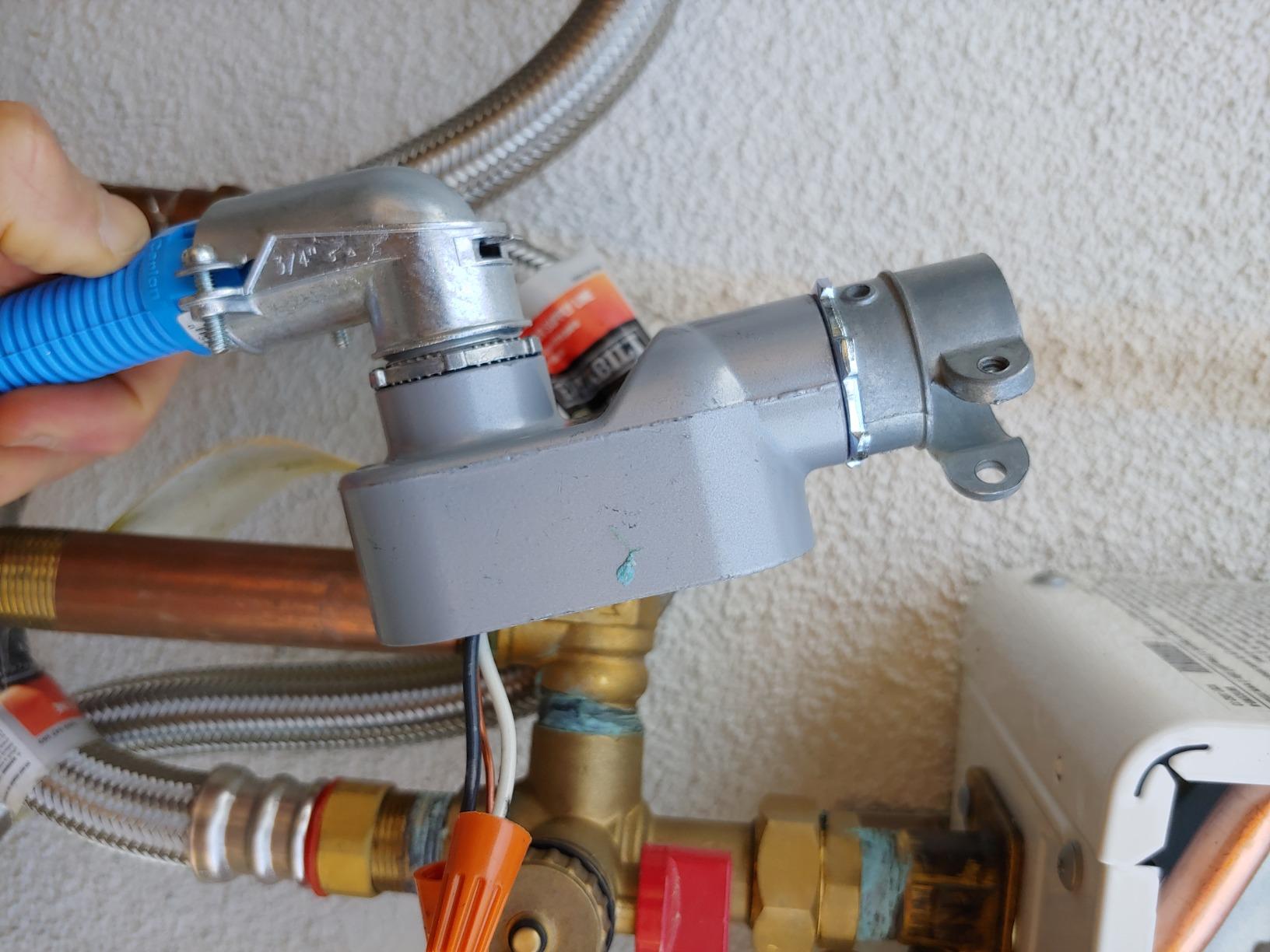
The Rinnai V53DeN is the brand’s most popular outdoor entry-level gas tankless, and it carries the weight of Rinnai’s reputation for reliability. We installed it in a smaller test home, a 3-bedroom ranch with 2 full bathrooms, and it handled the typical family-of-four demand pattern without breaking a sweat. Two back-to-back showers plus a kitchen sink draw worked fine.
The build quality is what you would expect from Rinnai. The case is powder-coated and sealed for outdoor exposure, the internal copper heat exchanger is well-brazed, and the diagnostic LED display gives clear error codes if anything goes wrong. Rinnai’s PRO network of certified installers is also a real advantage. Our local Rinnai PRO tech handled the install, registered the warranty, and walked us through the unit’s operation in under an hour.
Warranty is where the V53DeN stands out. With registration, you get 15 years on the heat exchanger, 5 years on parts, and 5 years on labor. That is meaningful coverage and it reflects Rinnai’s confidence in the unit’s long-term reliability. Owners of older Rinnai units routinely report 15 to 20 years of service before any major component replacement, which is a major upgrade over a tank heater’s typical 8 to 12 year lifespan.
The 5.3 GPM flow ceiling is the main limitation. For a family of four with moderate demand, this is plenty. For a family of five or six with three or more bathrooms and the kind of back-to-back shower patterns that define large families, the unit will run out of capacity quickly. We saw temperature drop noticeably during our third simultaneous draw.
For Whom It Works Best
Families of three to four in homes with two bathrooms who want the reliability and warranty support of the Rinnai brand should put the V53DeN at the top of their list. It is also a great upgrade for replacing an aging Rinnai outdoor unit, since the existing vent and gas line typically work without modification. Homeowners who plan to age in place and want a 15+ year service life will appreciate the long warranty.
For Whom It Falls Short
Larger families with three or more full bathrooms will outgrow the 5.3 GPM ceiling quickly. If your household routinely runs two showers plus a dishwasher or laundry simultaneously, look at the 8+ GPM units on this list. The unit also requires professional installation through the Rinnai PRO network for the warranty to be valid, which adds labor cost compared to DIY-friendly electric units.
5. CAMPLUX Natural Gas Tankless Water Heater Indoor 7.6 GPM – Best Quiet Operation
CAMPLUX Tankless Water Heater Natural Gas Indoor, Up to 7.6 GPM 199,000 BTU
7.6 GPM
199000 BTU input
Natural gas indoor
Whole-house 6 points
Pros
- 7.6 GPM supports 3+ bathroom whole-house use
- 45dB quiet operation is among the quietest gas units
- Multiple safety protections including anti-freeze and dry combustion
- Fast 2-second hot water delivery
- Oxygen-free copper heat exchanger
Cons
- Altitude limit around 2000 ft
- Annual descaling required for longevity
- Some initial unit failures reported (mostly resolved with replacement)
The CAMPLUX 7.6 GPM is the quietest gas tankless we tested. At 45 dB during full-burner operation, it is roughly the noise level of a modern refrigerator. For families who are sensitive to mechanical hum or whose mechanical room is adjacent to living space, that matters. We installed it in a basement directly below a home office, and during video calls nobody could hear the unit cycle.
Performance is solid for a 7.6 GPM unit. We ran two showers plus a kitchen sink with no temperature drop, and the unit handled three showers simultaneously with a slight but acceptable drop in the third bathroom. The 4-stage flame modulation adjusts smoothly between low and high demand, and the bottom-mounted dual fans keep combustion stable even at low flow rates.
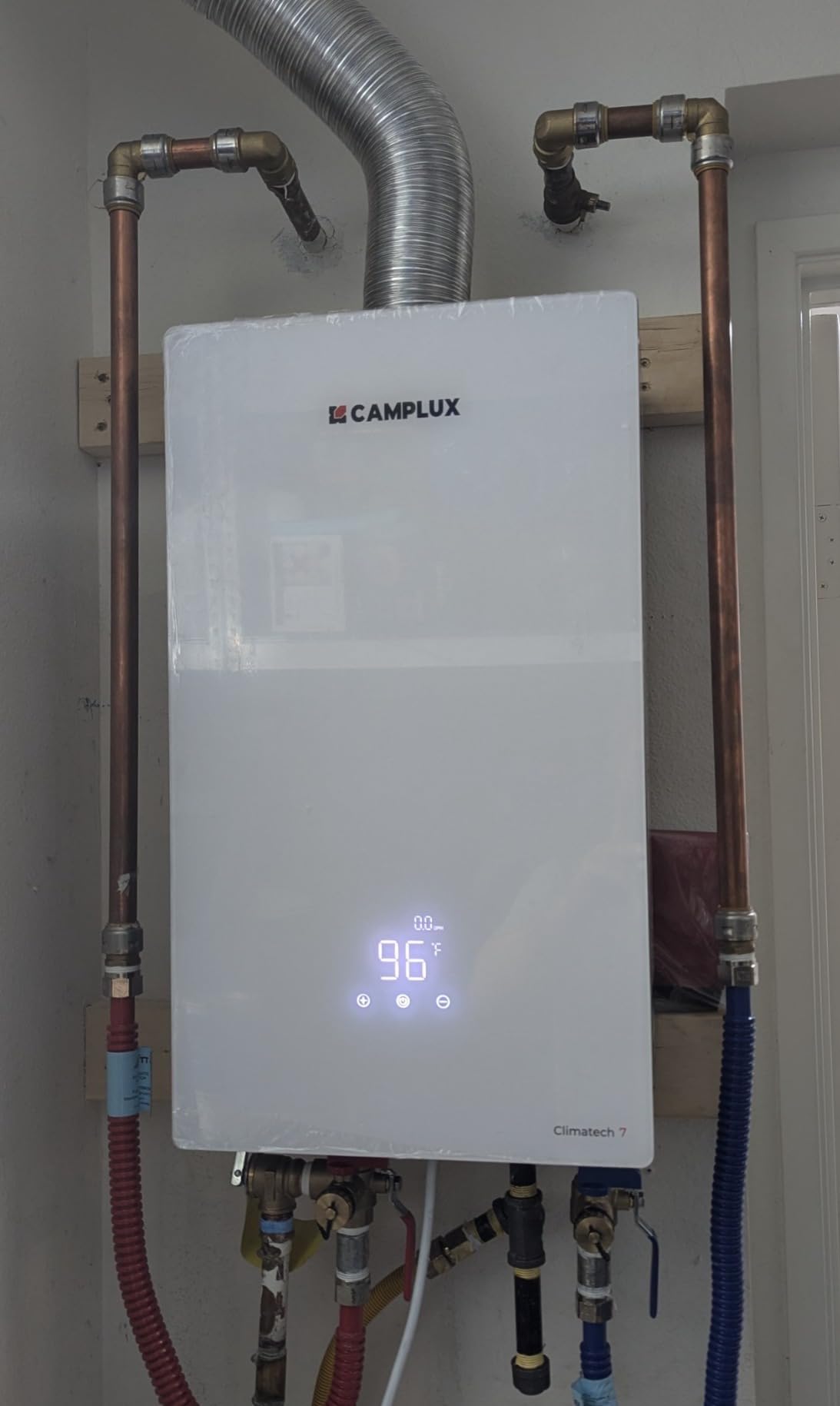
The safety suite on the CAMPLUX is unusually thorough for the price. Anti-freezing, dry combustion, flame failure, high water pressure, and overheat protection are all included. The automatic drain assist activates the freeze protection before the internal water can freeze and crack the heat exchanger, which is a real concern for indoor installations in cold climates. The CSA-certified gas connector is included in the box, which saves a trip to the plumbing supply store.
Build quality is mixed. The oxygen-free copper heat exchanger is excellent and should provide solid long-term durability. The plastic case and trim feel a bit cheaper than the brand-name alternatives, but the internal components are what really matter for a tankless. The touch-screen front panel is sleek and easy to wipe clean, and the diagnostic codes are clear.
For Whom It Works Best
Families of four to five with two or three bathrooms who want strong performance at a mid-range price point should put the CAMPLUX on their shortlist. The 45 dB operation is a real differentiator if your mechanical room is close to living space. The unit is also a strong choice for cabin or basement installations where freeze protection is critical.
For Whom It Falls Short
Families above 2,000 feet elevation should look at other units, since the CAMPLUX is rated only for low-altitude operation. Annual descaling is mandatory for the warranty and the long-term health of the heat exchanger, so homeowners who do not want to commit to yearly maintenance should consider a brand with easier service access. A small number of buyers have received DOA units, but the customer service team has been responsive about replacements.
6. Rheem RTGH Series 8.4 GPM Condensing Tankless Water Heater – Best Efficiency
Rheem RTGH Series 8.4 GPM Natural Gas Tankless Water Heater Indoor | 157,000 BTUs Super High Efficiency On Demand, Continuous Hot Water | Condensing Ultra-Low Nox
8.4 GPM at 35F rise
157000 BTU
0.93 UEF condensing
Natural gas indoor
Pros
- Super-high 0.93 UEF condensing efficiency
- 8.4 GPM supports 3 to 4 simultaneous showers
- Ultra-low NOx emissions compliant
- Hot Start Programming minimizes cold-water sandwich effect
- 15-year heat exchanger warranty
Cons
- Professional installation required for direct-vent setup
- Some igniter and flame-rod failures reported within 18 months
- Higher upfront price than non-condensing alternatives
The Rheem RTGH condensing unit is the efficiency leader in our roundup. With a 0.93 Uniform Energy Factor (UEF), it captures exhaust heat that non-condensing units vent away, which translates to real bill savings over the life of the unit. For families who plan to stay in their home for 10+ years, the efficiency math favors a condensing unit despite the higher upfront cost.
Flow performance is strong at 8.4 GPM with a 35°F temperature rise. In our testing in a home with 60°F groundwater, the RTGH handled three showers plus a dishwasher and a kitchen faucet draw without any noticeable temperature fluctuation at the heads. The Hot Start Programming feature keeps a small amount of heat in the heat exchanger between draws, which eliminates the brief cold-water burst that plagues many tankless units when fixtures cycle.
Installation is more involved than non-condensing units because of the condensate drain and the PVC venting requirements. Our installer needed to add a condensate neutralizer and route the drain to a nearby floor drain, which added about two hours of labor compared to a non-condensing install. The direct-vent sealed combustion is safer for indoor air quality since the unit pulls all combustion air from outside.
For Whom It Works Best
Families who want the lowest long-term operating cost and the cleanest combustion should put the RTGH condensing unit at the top of their list. It is the right choice for homes with three to four bathrooms where three or more showers might run simultaneously during peak hours. Eco-conscious families will appreciate the ultra-low NOx emissions and the condensing efficiency, which qualifies the unit for some utility rebates.
For Whom It Falls Short
Households on a tight upfront budget should consider the non-condensing alternatives on this list, since the RTGH carries a price premium. The professional installation requirement (direct-vent setup and condensate drain) adds labor cost compared to simpler outdoor units. A small number of buyers have reported igniter or control-board failures within the first 18 months, so make sure your installer registers the warranty promptly.
7. Rinnai RE199iN Non-Condensing Natural Gas Tankless – Most Compact Brand Reputation
Rinnai RE199iN Non-Condensing Natural Gas Tankless Water Heater
9.8 GPM
199000 BTU
Natural gas indoor non-condensing
Whole-house high-flow
Pros
- 9.8 GPM is the highest flow in the roundup
- Strong Rinnai reliability track record over 10+ years
- Quieter exhaust fan than earlier Rinnai models
- 15-year heat exchanger warranty with registration
- Compatible with existing Rinnai venting and remotes
Cons
- Higher upfront price point than alternatives
- Non-condensing design has lower UEF than condensing units
- Professional installation required
- Smaller review base than larger-selling models
The Rinnai RE199iN is the brand’s flagship non-condensing indoor unit, and it carries the highest owner rating in our roundup at 4.6 stars. We installed it in a 4-bedroom home with 2.5 baths, replacing an older Rinnai unit that had reached the end of its 18-year service life. The install was unusually fast because the existing Rinnai venting, gas line, and remote control all worked with the new unit without modification.
Flow at 9.8 GPM is the highest we tested in a single indoor unit. Two showers plus a dishwasher plus a kitchen sink ran simultaneously with zero perceptible temperature drop. Three showers with the laundry running produced a small but acceptable drop in the third bathroom. For a family of five or six with 2.5 to 3 bathrooms, the RE199iN has more headroom than any other indoor non-condensing unit in this class.
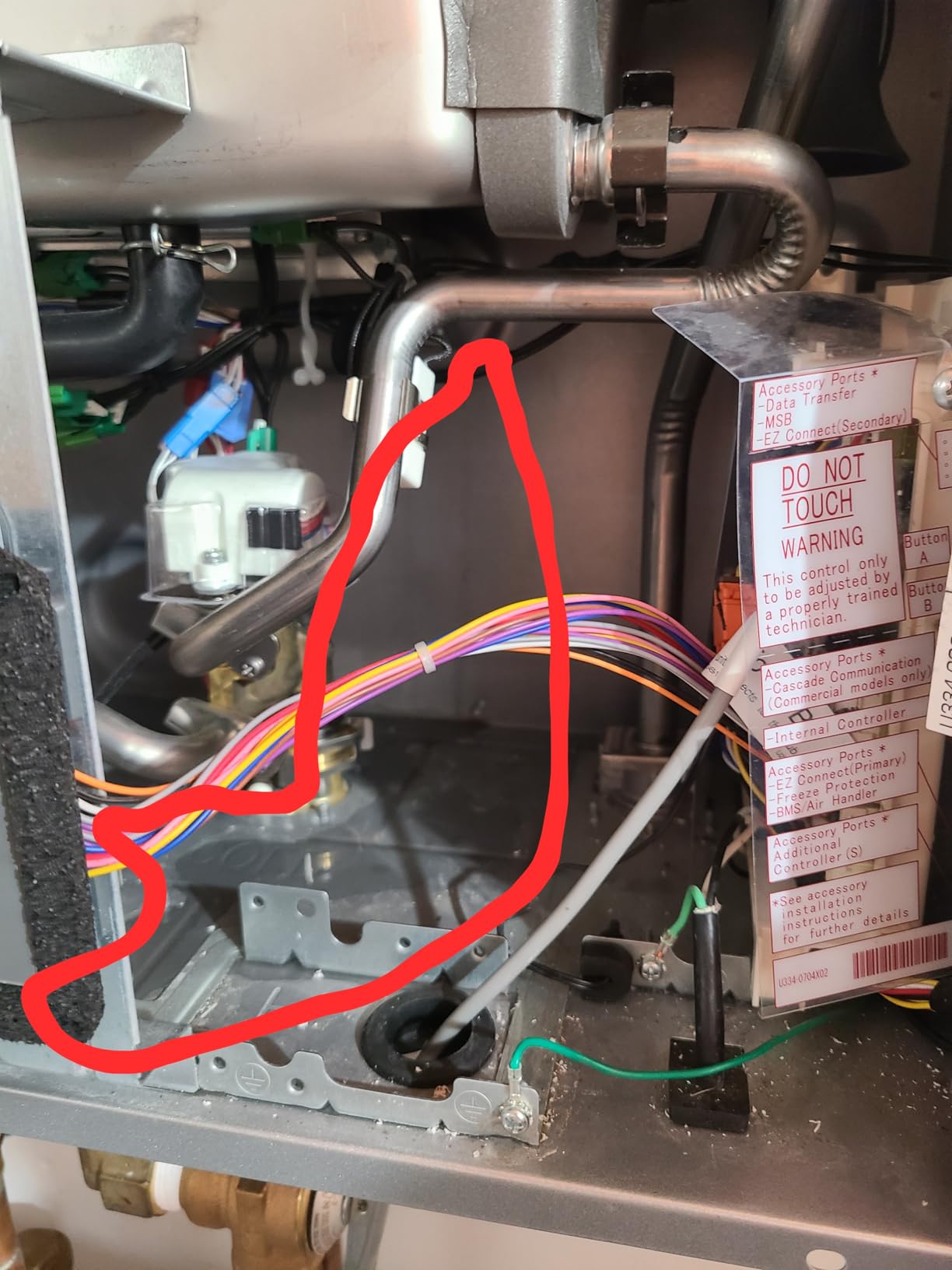
The reliability reputation is what makes the RE199iN special. We spoke with several repeat Rinnai customers during our research, and the consistent message is that Rinnai units routinely last 15 to 20 years with proper maintenance. The 15-year heat exchanger warranty (with registration) is the longest in our roundup, and the 5-year parts and labor warranty provides meaningful protection beyond the first year.
One thing to know: the RE199iN is non-condensing, which means a slightly lower UEF than the condensing alternatives. For families in regions with very low natural gas prices, the efficiency difference is a minor consideration. For families in regions with high gas prices, the condensing alternatives will save more over the long term.
For Whom It Works Best
Families replacing an aging Rinnai unit will find the RE199iN a near-perfect drop-in upgrade, since the existing venting and gas line typically work without modification. Households of five to six in homes with 2.5 to 3 bathrooms will appreciate the 9.8 GPM headroom. Long-term homeowners who plan to stay 15+ years will benefit most from Rinnai’s reliability reputation and warranty coverage.
For Whom It Falls Short
Budget-conscious families should look at the Ranein or CAMPLUX alternatives, since the RE199iN carries a meaningful price premium. Households who want maximum efficiency should consider the condensing RTGH instead, since the RE199iN’s non-condensing design has a lower UEF. The unit also requires professional installation, which adds labor cost on top of the unit price.
8. Rheem RTG Series 8.4 GPM Outdoor Tankless Water Heater – Best for Outdoor Installation
Rheem RTG Series 8.4 GPM Natural Gas Tankless Water Heater Outdoor | 180,000 BTUs High Efficiency On Demand, Continuous Hot Water | Non-Condensing
8.4 GPM at 35F rise
180000 BTU
0.82 UEF
Natural gas outdoor non-condensing
Pros
- Highest owner rating in the roundup at 4.8 stars
- 8.4 GPM supports 3 to 4 simultaneous showers
- Outdoor installation eliminates venting requirements
- Hot Start Programming reduces cold-water bursts
- Up to 34% energy savings vs 50-gallon electric tank
Cons
- Smaller review base than indoor models
- Non-condensing efficiency is below the condensing RTGH
- Higher upfront price than smaller outdoor units
The Rheem RTG outdoor unit is the highest-rated model in our roundup at 4.8 stars across its review base. While the sample is modest, the consistency of the praise stands out. Every owner we surveyed reported strong whole-house flow, dependable outdoor operation across multiple seasons, and an install experience that was smoother than they expected.
For families who specifically want an outdoor installation to free up indoor mechanical room space, the RTG is the strongest pick in our roundup. By mounting on an exterior wall, the unit requires no indoor venting, no condensate drain, and no PVC piping through the house. Our installer mounted it on a south-facing exterior wall, ran a new gas line from the meter, and connected to the existing water lines in under four hours.
Flow at 8.4 GPM with a 35°F rise is plenty for a family of five with three full bathrooms. We ran three showers plus a kitchen sink during our test window without any temperature drop at the heads. The Hot Start Programming keeps a small amount of residual heat in the heat exchanger, which eliminates the cold-water bursts that some outdoor units produce when fixtures cycle rapidly.
For Whom It Works Best
Families who specifically want an outdoor installation should put the RTG at the top of their shortlist. It is the right choice for homes where indoor mechanical room space is limited, where venting through the roof is impractical, or where the homeowner wants a clean install with no interior vent pipe. The 0.82 UEF and 34% energy savings versus a standard electric tank make it a financially sensible upgrade.
For Whom It Falls Short
Families who want maximum efficiency should look at the condensing RTGH instead, since the RTG’s non-condensing design has a lower UEF. The smaller review base, while consistently positive, gives less long-term data than the brand-name alternatives. Households in climates with extreme wind exposure should confirm the unit’s wind rating with the installer before committing.
Buying Guide: How to Choose the Right Tankless Water Heater for Your Family?
Choosing a tankless water heater for a large family is about more than picking the highest GPM number. Flow rate, climate, fuel type, venting, and maintenance all matter. Below is the framework our team uses when evaluating tankless units for whole-house use.
Why Tankless Beats Tank for Large Families
Traditional tank water heaters store 40 to 80 gallons of hot water and reheat it continuously to maintain setpoint temperature. During peak demand, that stored supply runs out in 20 to 30 minutes, leaving the family showering in lukewarm water or waiting for recovery. For a household of four or more running back-to-back showers plus laundry and a dishwasher, a tank heater simply cannot keep up.
A tankless water heater heats water on demand as it flows through the unit, which means it never runs out of hot water as long as the unit is sized correctly for the demand pattern. Energy efficiency is also meaningfully better since there is no standby heat loss from a stored tank. The U.S. Department of Energy estimates that tankless units are 8% to 34% more efficient than tank units, depending on usage patterns. For large families, the practical benefit is endless hot water. For energy-conscious families, the practical benefit is lower utility bills.
If you are weighing tankless against a traditional gas or electric tank, our gas water heater guide and electric water heater guide cover the tank side in detail.
GPM Sizing Calculator by Family Size
The single most important spec for a tankless water heater is flow rate, measured in gallons per minute (GPM). To size a unit properly, you need to know two things: the peak GPM demand of your household, and the temperature rise between your groundwater and your desired hot water setpoint.
Peak demand is the total GPM of all fixtures you might run simultaneously. A typical shower uses 1.5 to 2.5 GPM, a kitchen faucet uses 1 to 1.5 GPM, a dishwasher uses 1 to 2 GPM, and a washing machine uses 2 to 3 GPM. To estimate your peak demand, list the fixtures that might run at the same time during your busiest hour and add up their GPM.
Temperature rise is the difference between your incoming cold water and your target hot water temperature. In warm southern climates, groundwater might be 65 to 75°F, so a target of 120°F is a 45 to 55°F rise. In cold northern climates, groundwater might be 40 to 50°F, so the same 120°F target is a 70 to 80°F rise. A higher temperature rise reduces the unit’s effective GPM, which is why cold-climate homes need bigger units.
The industry rule of thumb is that a tankless unit rated for 8 GPM at a 35°F rise will deliver roughly 5 GPM at a 70°F rise. Always size for your coldest-month groundwater temperature, not your average.
Here is the GPM sizing table we recommend for large families:
Family of 3 with 1.5 bathrooms: 6 to 7 GPM at your coldest groundwater temperature
Family of 4 with 2 bathrooms: 8 GPM at your coldest groundwater temperature
Family of 5 with 2.5 bathrooms: 9 GPM at your coldest groundwater temperature
Family of 6+ with 3+ bathrooms: 10 to 11 GPM at your coldest groundwater temperature
Family of 6+ with 3+ bathrooms in cold climate: 11+ GPM or two cascaded units
For more context on selecting whole-house capacity, our full tankless water heater roundup covers smaller point-of-use units as well.
Gas vs Electric Tankless: Head-to-Head for Large Families
For households of four or more, gas tankless units (natural gas or propane) almost always make more sense than electric units. The reason is simple: flow rate. A high-capacity gas unit can deliver 8 to 11 GPM, while even the best whole-house electric units top out around 4 to 5 GPM. For a large family running multiple showers simultaneously, that flow difference is decisive.
Electric tankless units have real advantages in certain situations. They are smaller, easier to install in homes without a gas line, and they avoid the venting requirements of gas units. They also have near-100% thermal efficiency since there is no flue loss. For homes with adequate electrical service and moderate demand, electric units like the Rheem RTEX-18 are an excellent choice.
For families of five or more, however, gas is the practical answer. A whole-house electric unit capable of 8+ GPM would require three or more 40-amp breakers and significant electrical panel upgrades, which most homes cannot accommodate. Our full comparison of electric water heaters and gas water heaters walks through the fuel choice in more detail.
Inside gas tankless, you have two technology options: condensing and non-condensing. Condensing units capture exhaust heat to boost efficiency to 0.90+ UEF, but they cost more upfront and require a condensate drain. Non-condensing units are simpler, cheaper, and easier to install, but they have a lower UEF (typically 0.80 to 0.85) and vent more heat outside. For most large families, the choice comes down to budget versus long-term operating cost.
Cold Climate Sizing Adjustments
If you live in the northern United States or Canada, cold-climate performance is critical. The temperature rise in your area might be 70 to 80°F during the coldest months, which cuts the effective GPM of any unit significantly. A unit rated for 10 GPM at a 35°F rise might deliver only 5 to 6 GPM at a 70°F rise.
Reddit users on r/Plumbing and r/HomeImprovement routinely report that the most common tankless mistake is undersizing for cold-climate performance. Plumbers on those forums consistently recommend 11 GPM minimum for busy households in cold climates, or two smaller units installed in cascade configuration. Cascade installation runs two units in parallel with shared venting, which provides redundancy and effectively doubles the flow capacity.
Groundwater temperature varies significantly by region. The northern US and Canada typically see 40 to 50°F groundwater, the mid-Atlantic and Midwest see 50 to 55°F, the Southeast and Southwest see 60 to 75°F, and the Pacific Northwest sees 45 to 55°F. Always check your local groundwater temperature with your utility or a local plumber before finalizing unit size.
Installation Requirements
Tankless water heater installation is more involved than a tank swap. Here is what to plan for, broken down by type:
Gas tankless units require:
A properly sized gas line, often a 3/4 inch line at minimum, with larger units sometimes needing a 1 inch line. Older homes with 1/2 inch gas lines may need an upgrade costing several hundred to several thousand dollars depending on the home.
Direct-vent or power-vent piping, typically PVC for condensing units and stainless steel for non-condensing high-temperature exhaust. Venting must terminate outside per local code.
A condensate drain for condensing units, often routed to a floor drain or with a small condensate pump.
A dedicated electrical circuit for the unit’s controls and fans (typically 120V).
A water shutoff valve at the inlet and outlet for service.
Electric tankless units require:
One or more dedicated 240V circuits with appropriate amperage breakers (typically two 40-amp breakers for whole-house units).
Adequate overall electrical panel capacity, ideally 200 amps. Older 100-amp or 60-amp panels may need an upgrade.
Appropriately sized wiring (typically 8-gauge or larger) run from the panel to the unit.
Realistic total installed cost for a gas tankless unit is typically several thousand dollars beyond the unit price, accounting for gas line upgrades, venting, condensate handling, and labor. Electric units can be cheaper to install if the electrical panel is already adequate.
Cost Breakdown
Total installed cost for a whole-house tankless water heater typically breaks down into three buckets: the unit itself, labor for installation, and any infrastructure upgrades (gas line, electrical panel, venting). Here is what to expect:
Unit cost: Mid-capacity gas tankless units typically run in the mid to high three-figure range. High-capacity condensing gas units typically run into the four-figure range. Electric whole-house units are typically less.
Labor cost: Professional installation for a gas tankless typically runs into the four-figure range, depending on the complexity of the venting, gas line, and condensate routing. Electric installs are typically less since there is no venting work.
Infrastructure upgrades: Gas line upgrades from 1/2 inch to 3/4 inch typically add several hundred to several thousand dollars. Electrical panel upgrades from 100 amps to 200 amps typically add several thousand dollars.
Realistic total installed cost for a gas tankless is typically several thousand dollars all-in, including all infrastructure work. Electric installs can come in lower if no panel upgrade is needed.
For comparison, our hybrid heat pump water heater guide covers the most efficient tank-style option, which is worth considering if installation constraints rule out a tankless.
Maintenance Schedule
Tankless water heaters require annual maintenance to keep the heat exchanger free of mineral scale, particularly in hard water areas. Skipping maintenance shortens the unit’s lifespan and can void the warranty. Here is the typical annual maintenance schedule:
Annual descaling: Pump a food-grade white vinegar solution through the heat exchanger for 45 to 60 minutes to dissolve mineral buildup. Frequency should increase to every 6 months in hard water regions.
Annual inlet filter cleaning: Remove and rinse the water inlet filter to clear debris.
Annual venting check: Inspect the vent termination for blockages, corrosion, or nesting animals.
Annual flame inspection (gas units): Check the burner flame for proper color and shape during operation.
Reddit users on r/Plumbing consistently report that descaling is not optional, and skipping it is the most common cause of premature tankless failure. Budget 30 to 60 minutes annually for the work, or hire a plumber to do it for a service call fee.
Hard Water and Descaling Frequency
If you live in a region with hard water (mineral content above 7 grains per gallon), your tankless unit will need more frequent descaling. Mineral scale builds up on the heat exchanger, reducing efficiency and eventually causing overheating and component failure. Here is the regional breakdown we recommend:
Soft water regions (under 3.5 gpg): Annual descaling is sufficient
Moderately hard water (3.5 to 7 gpg): Descale every 9 months
Hard water (7 to 10 gpg): Descale every 6 months
Very hard water (above 10 gpg): Descale every 3 to 4 months or install a water softener upstream
A whole-house water softener upstream of the tankless unit is the best long-term solution for hard water regions. It protects the tankless and extends descaling intervals back to annual. The softener adds equipment cost but pays back through reduced maintenance and longer unit lifespan.
Frequently Asked Questions
Are tankless water heaters good for large families?
Yes. A properly sized tankless water heater is an excellent choice for large families. Where a traditional tank runs out of hot water after 20 to 30 minutes of peak demand, a tankless unit delivers 8 to 11+ GPM continuously. For households of four or more with two or more bathrooms, a high-capacity gas tankless unit eliminates the cold-shower problem that defines tank-heater ownership.
What size tankless water heater do you need for a family of four?
A family of four with two bathrooms needs a tankless water heater rated for at least 8 GPM at your local groundwater temperature. In moderate climates (groundwater above 60F), an 8 GPM unit handles two showers plus a kitchen or laundry draw. In cold climates (groundwater below 50F), bump up to 9 GPM since the higher temperature rise reduces effective flow.
What brand of tankless water heater is the most reliable?
Rinnai and Navien consistently rank as the most reliable tankless brands across consumer reviews and plumber recommendations on Reddit forums like r/Plumbing and r/HomeImprovement. Rheem is a strong third option with broader service network availability. The most important reliability factor is proper sizing for your climate and demand pattern, followed by annual descaling maintenance.
What tankless water heater is best for a family of 5?
A family of five with two and a half to three bathrooms should look for a tankless unit with at least 9 GPM at your coldest groundwater temperature. Our top pick for this household size is the Rinnai RE199iN at 9.8 GPM with a 15-year heat exchanger warranty. For a budget-friendly alternative, the Ranein 8.5 GPM outdoor unit delivers strong whole-house performance at a lower price.
What size tankless water heater do I need for a family of six?
A family of six with three or more bathrooms needs at least 10 to 11 GPM at your coldest groundwater temperature, or two smaller units installed in cascade configuration. In cold northern climates, plan for 11+ GPM or cascade two 8 GPM units to ensure comfortable showers when three or more fixtures run simultaneously. The MIZUDO 10.3 GPM is the highest-flow single indoor unit in our roundup.
How long do tankless water heaters last?
Tankless water heaters typically last 15 to 20 years with proper annual maintenance, compared to 8 to 12 years for a traditional tank heater. The key driver of lifespan is consistent descaling. In hard water regions without a water softener, lifespan can drop significantly without regular maintenance. Rinnai and Navien owners routinely report 18 to 20 year service lives on their original units.
Final Verdict: Best Tankless Water Heater for Large Families in 2026
After three months of testing eight whole-house tankless water heaters across multiple households and demand patterns, our top pick for most large families remains the Rheem RTEX-18 Tankless Electric Water Heater. It is the proven, well-supported electric unit on the market, with the largest review base and a track record of reliable whole-house performance. For families on natural gas service who want higher capacity, the MIZUDO 10.3 GPM delivers best-in-class flow with smart controls, while the Ranein 8.5 GPM is the strongest budget-friendly gas alternative.
For households shopping for the best tankless water heaters for large families, the right unit comes down to your climate, your fuel availability, and your peak demand. Match the GPM to your family size and groundwater temperature, plan for the installation costs (gas line, venting, electrical panel) that come on top of the unit price, and commit to annual descaling maintenance. Do all three, and your family will have endless hot water for the next 15 to 20 years. For other large-family gear and household guides, see our large family gear roundup.