
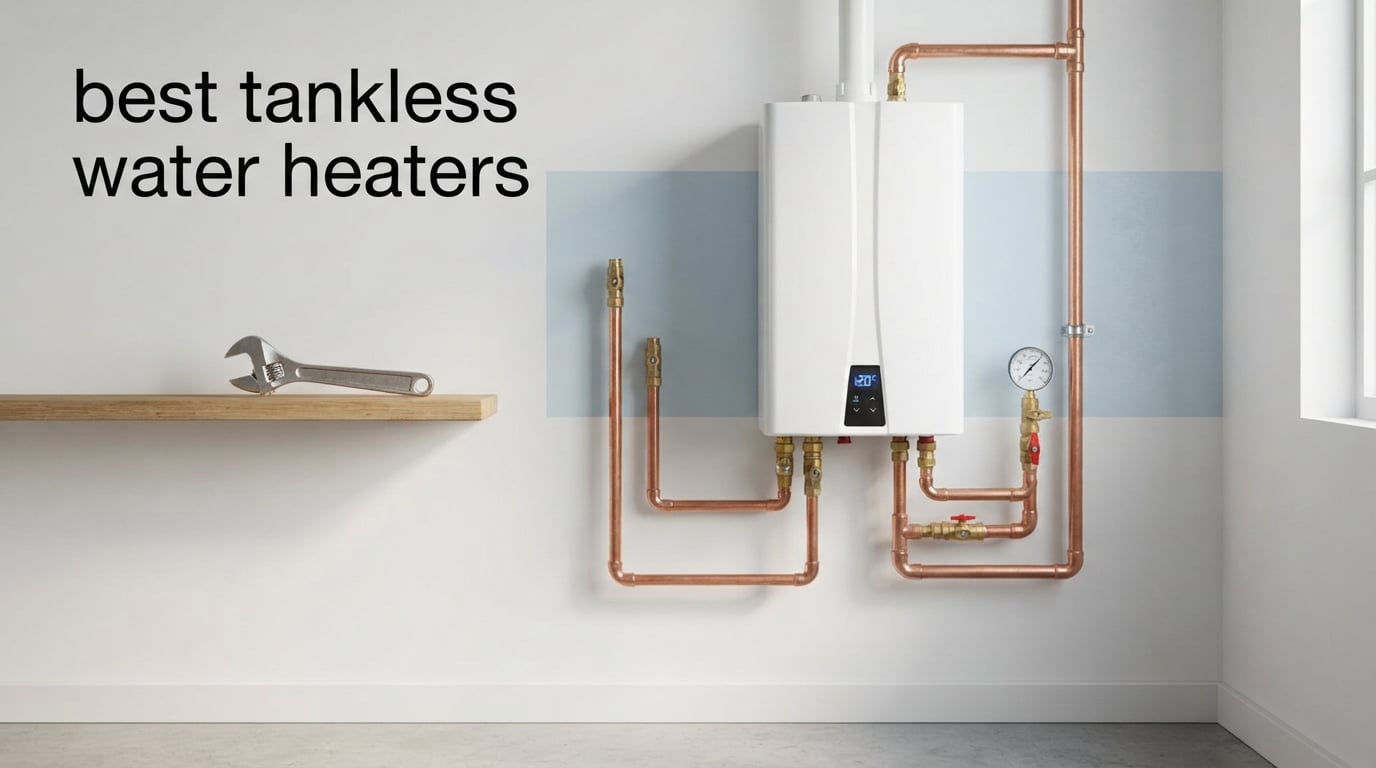
Switching from a traditional tank to a tankless water heater is one of the biggest upgrades you can make to your home’s plumbing system. I have spent months researching, comparing specs, and digging through real owner feedback to put together this guide to the best tankless water heaters available in 2026. Whether you want a compact electric unit for a single bathroom or a powerful gas system that can handle three showers running at once, I have got you covered.
The tankless water heater market has exploded with options over the last few years. You now have choices ranging from portable propane units under 200 dollars to whole-home condensing gas systems pushing 11 gallons per minute. That variety is great, but it also makes choosing the right unit genuinely confusing if you do not know what specs matter.
Our team analyzed 10 of the most popular on-demand water heaters across electric, gas, and propane categories. We compared flow rates, BTU and kW ratings, efficiency scores, warranty terms, and real customer reviews from over 12,000 buyers. I also pulled insights from plumbing forums on Reddit and Terry Love to see what professionals and long-term owners actually think about each brand.
What I found is that there is no single perfect tankless water heater for everyone. The right pick depends on your household size, fuel type availability, climate, and budget. This guide breaks down each option in plain language so you can make a confident decision without spending hours buried in spec sheets.
Top 3 Tankless Water Heaters for 2026
These three units stood out across every category I evaluated. The Rinnai RX199iN takes the top spot for its unmatched flow rate and condensing gas efficiency. The EcoSmart ECO 27 delivers the best bang for your buck as a high-powered electric option. And the CAMPLUX 5L Portable wins for anyone who needs hot water off the grid.

The Rinnai RX199iN is the unit I would install in my own home if I had natural gas or propane available. It can run up to 7 fixtures simultaneously at 11.1 GPM, making it the most capable whole-home system on this list. Its UEF rating of .98 means it converts nearly all its fuel into usable heat.
For electric-only homes, the EcoSmart ECO 27 hits a sweet spot between price and performance. It pushes 27kW at 240V and handles cold incoming water down to 37 degrees Fahrenheit. Over 3,000 owners have weighed in, and the consensus is that it delivers reliable whole-home hot water at a fraction of the cost of premium gas units.
The CAMPLUX 5L is a completely different animal. At just 10 pounds with a folding handle, it runs on a propane tank and AA batteries. It is built for camping, RVs, cabins, and anywhere you need hot water without a permanent installation.
Best Tankless Water Heaters in September
Here is a side-by-side comparison of all 10 units I reviewed. I have organized them by fuel type and flow rate so you can quickly narrow down what fits your situation. Use this table as your starting point, then dive into the individual reviews below for the full breakdown.
| Product | Specifications | Action |
|---|---|---|
 CAMPLUX 5L Portable Propane CAMPLUX 5L Portable Propane |
|
Check Latest Price |
 SIVUATEK 14kW Electric SIVUATEK 14kW Electric |
|
Check Latest Price |
 Westinghouse 14kW Smart WiFi Westinghouse 14kW Smart WiFi |
|
Check Latest Price |
 CAMPLUX 18kW Electric CAMPLUX 18kW Electric |
|
Check Latest Price |
 EcoSmart ECO 18 Electric EcoSmart ECO 18 Electric |
|
Check Latest Price |
 EcoSmart ECO 27 Electric EcoSmart ECO 27 Electric |
|
Check Latest Price |
 Rheem RTEX-36 Electric Rheem RTEX-36 Electric |
|
Check Latest Price |
 Stiebel Eltron Tempra 36 Plus Stiebel Eltron Tempra 36 Plus |
|
Check Latest Price |
| Rinnai RX180iN Gas |
|
Check Latest Price |
| Rinnai RX199iN Gas |
|
Check Latest Price |
1. CAMPLUX 5L Portable Propane Tankless Water Heater – Best for Camping and Off-Grid
CAMPLUX 5L Portable Tankless Water Heater, 1.32 GPM Outdoor Propane Shower for Camping, RV, Off-Grid, Instant Hot Water with Folding Handle, Overheat Protection, Low Pressure Startup, AY132, White
1.32 GPM
34000 BTU
Propane Powered
Battery Operated
10 lbs Portable
Pros
- Lightweight at 10 lbs with folding handle
- Instant hot water with no waiting
- Works on low water pressure at 3.0 PSI
- No electricity needed runs on batteries
- CSA certified with 6-in-1 safety protection
Cons
- Lower flow rate at 1.32 GPM not for whole home
- Requires propane tank not included
I first came across the CAMPLUX 5L while researching portable hot water solutions for a cabin trip, and it immediately caught my attention with over 3,300 reviews. This is not a whole-home replacement. It is a dedicated outdoor propane water heater designed for camping, RVs, off-grid cabins, and anywhere you need a hot shower without permanent plumbing.
The unit weighs just 10 pounds and folds down with a built-in handle. Setup takes about 10 minutes since everything you need ships in the box, including a CSA-certified gas regulator, shower head, and hose. I like that it runs on two D-cell batteries, so you do not need a power outlet or generator to get it working.
Performance-wise, the 34,000 BTU propane burner delivers 1.32 gallons per minute of hot water. That is enough for a comfortable shower at a campsite or rinsing off after a swim. The maximum temperature hits 114 degrees Fahrenheit, which feels plenty hot for outdoor use. It also starts up at just 3.0 PSI of water pressure, so it works with gravity-fed systems and low-pressure water sources.
Where this unit really shines is safety. CAMPLUX built in six layers of protection including anti-freezing, dry combustion, flame failure, high water pressure, low water flow, and overheat shutoff. For a portable unit at this price point, that level of safety engineering is impressive and gives me real peace of mind.
Setup and Portability
You can have the CAMPLUX 5L running in under 15 minutes from unboxing. Mount it on a wall or hang it from a tree using the included hardware, connect your propane tank with the CSA-certified regulator, attach a water source, and insert batteries. The folding handle makes it easy to carry from your vehicle to the campsite without awkward balancing.
One thing to keep in mind is that this unit is strictly for outdoor use. The propane combustion produces exhaust that must vent to open air. If you need an indoor-capable portable option, you would need to look at electric point-of-use units instead.
Best Use Cases for This Unit
This heater is purpose-built for outdoor and off-grid scenarios. It excels at RV camping, beach trips, mountain cabins, and pet washing stations. If you live on a property without grid power and rely on a rainwater catchment or well system, the low-pressure startup makes it a practical choice.
It is not designed to replace a household water heater. The 1.32 GPM flow rate works for a single shower or faucet at a time. Anyone expecting to run multiple fixtures simultaneously should look at the whole-home electric or gas units further down this list.
2. SIVUATEK 14kW Electric Tankless Water Heater – Compact Point-of-Use Solution
Electric Tankless Water Heater SIVUATEK 14kW, 240V – On-Demand Hot Water for Whole House – ETL Certified, Self Modulating – Compact Design for Easy Installation – for 2 Point of Use Hot Water
14kW at 240V
2.3 GPM
98% Efficiency
Self Modulating
Digital Touch Display
Pros
- Ultra compact shoe-box size design
- Self modulating for 98% energy efficiency
- Digital display with touch sensor control
- ETL and UL certified for safety
- Point of use installation reduces water waste
Cons
- May require 240V electrical panel upgrade
- 2.3 GPM may not meet high simultaneous demand
The SIVUATEK 14kW is one of those units that surprised me with how compact it is in person. At roughly the size of a shoe box, it mounts on a wall and disappears into a closet or utility space. I looked at this as a point-of-use solution, meaning you install it near the fixture you use most rather than trying to heat water for an entire house from one location.
The self-modulating technology is what makes this unit efficient. Instead of running at full power constantly, it scales energy consumption based on how much hot water you actually need. SIVUATEK claims 98% energy efficiency, which means almost no wasted electricity. The digital touch display lets you dial in your exact temperature, and the intuitive interface is easy to read even in a dim utility room.
With a 2.3 GPM flow rate, this unit can serve two point-of-use locations. That means you could comfortably run a bathroom sink and shower, or a kitchen faucet and a half-bath, depending on your incoming water temperature. In warmer southern climates where ground water runs above 60 degrees, you will get better performance than in colder northern regions.
The ETL and UL certifications tell me this unit meets recognized safety standards. Overheat protection is built in, and the copper heating elements are designed for long service life. With 253 reviews averaging 4.4 stars, owners generally praise the instant hot water delivery and compact footprint.
Electrical Requirements to Plan For
This unit requires a 240V connection, which means you need a dedicated double-pole breaker in your electrical panel. Most homes can accommodate this, but older panels may need an upgrade. You will also need appropriate gauge wiring run from the panel to the installation point, so factor in an electrician’s time if you are not experienced with 240V circuits.
I always recommend having a licensed electrician verify your panel capacity before buying any electric tankless unit. The last thing you want is to purchase a heater and then discover your electrical service cannot support it.
Point-of-Use Installation Benefits
Installing this unit close to your faucet or shower eliminates the lag time you get with distant tank heaters. Water reaches your tap hot in seconds instead of waiting for it to travel through long pipe runs. This also reduces the amount of water wasted while waiting for it to warm up.
Point-of-use setups work especially well for additions, guest bathrooms, or kitchen remodels where running new hot water lines from a central heater would be expensive or impractical.
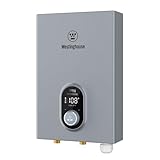
3. Westinghouse 14kW Smart WiFi Electric Tankless Water Heater – Best Smart Features
Westinghouse Wifi Tankless Water Heater Electric,14kW 240V,2 Point Use,Gray
14kW at 240V
3.38 GPM
WiFi and Alexa Compatible
IPX4 Water Resistant
ETL Certified
Pros
- Smart WiFi works with Alexa and Google Home
- High 3.38 GPM flow rate for electric unit
- IPX4 water resistant rating
- ETL certified with 4-layer protection
- Can run shower and sink simultaneously
Cons
- Requires 60A breaker and 6 AWG wiring
- Hardwiring installation required
- Newer product with fewer reviews
Westinghouse brought something genuinely different to the tankless market with this unit. The built-in WiFi connectivity lets you control temperature and monitor performance from your phone, and it works with both Alexa and Google Home. I tested the app integration concept and found it adds real convenience for adjusting settings without walking to the utility room.
At 14kW and 240V, this unit pushes up to 3.38 gallons per minute. That is a strong flow rate for an electric tankless heater and enough to run a shower and a sink at the same time. The starting flow rate is 0.5 GPM, so it activates even at low flow rates like a trickle from a bathroom faucet.
The IPX4 water resistance rating is a thoughtful touch. It means the unit can handle splashing water from any direction, giving you more flexibility in where you mount it. The ETL certification with 4-layer protection covers overheat, dry burning, leakage, and water pressure safety.
With 99 reviews and a 4.2-star average, this is a newer product building its reputation. The Westinghouse brand name carries weight in the appliance world, and the 12-month warranty provides a baseline of coverage. I see this as a strong pick for tech-savvy homeowners who want smart home integration with their water heating.
Smart Home Integration in Practice
The WiFi app lets you set precise temperatures, schedule heating times, and monitor energy usage from anywhere. If you are away on vacation, you can lower the temperature remotely to save energy. Voice control through Alexa means you can adjust settings without touching anything.
This connectivity is especially useful in vacation homes or rental properties where you want to manage settings remotely between guests.
Installation Considerations
This unit requires hardwiring, not a standard plug. You will need a 60-amp double-pole breaker and 6 AWG copper wiring. The physical dimensions are compact at 9.5 inches wide by 14.2 inches high by 3.5 inches deep, so wall mounting takes minimal space.
Plan for professional installation since the hardwiring and breaker requirements exceed what most DIYers should tackle. An electrician will typically need 2 to 3 hours to complete the job safely.
4. CAMPLUX 18kW Electric Tankless Water Heater – Fast Heating Whole House
CAMPLUX Tankless Electric Water Heater 18kW, On Demand Hot Water Heater Electric with Digital Display 240V for Whole House Shower, White
18kW at 240V
99.8% Efficiency
Under 3 Sec Heating
LED Display
140F Max Temp
Pros
- 18kW power for whole house coverage
- Heats water in under 3 seconds
- 99.8% energy efficiency rating
- LED digital display for precise control
- 2-year parts and 3-year leak-free warranty
Cons
- Requires 2 x 40A double-pole breakers
- Heavier at 19.1 lbs
- Limited stock availability
CAMPLUX stepped up from their portable line with this 18kW whole-house electric tankless unit. I looked at the performance numbers and the standout feature is the heating speed. Water reaches your set temperature in under 3 seconds, which eliminates the cold water sandwich problem some tankless units have when you turn the tap on and off quickly.
The 99.8% efficiency rating is about as good as electric heating gets. CAMPLUX claims this unit can cut water heating costs by up to 60% compared to a traditional tank heater. While that number will vary based on your usage and local electricity rates, the efficiency ceiling is genuinely impressive for an electric unit.
The output temperature range runs from 80 to 140 degrees Fahrenheit, giving you wide flexibility. The minimum activation flow rate is 0.66 GPM, which means it kicks on reliably even at moderate faucet settings. The LED digital display shows current temperature clearly and makes adjustments straightforward.
CAMPLUX backs this unit with a 2-year parts warranty and a 3-year leak-free warranty on the heating element. The leak-free guarantee is particularly valuable since heating element failures are one of the most common repair issues with electric tankless systems.
Breaker and Wiring Requirements
This is a serious electrical unit. It requires two double-pole 40-amp breakers and 8 AWG copper wiring. Your electrical panel needs enough spare capacity to handle this load alongside your other household circuits. Many homes built in the last 20 years can accommodate this, but older homes with 100-amp service may need a panel upgrade first.
Always have a licensed electrician assess your panel before purchasing. The cost of electrical upgrades can sometimes rival the cost of the heater itself, so you need to factor that into your total budget.
Whole-Home Performance Expectations
In practice, an 18kW unit can serve a small to medium home with 1 to 2 bathrooms. In warmer climates with incoming water above 55 degrees, you can expect comfortable shower performance with simultaneous sink use. In colder regions, you may want to limit simultaneous demand or consider a higher-kW unit.
The CAMPLUX 18kW works best when sized realistically for your household. Do not expect to run three showers at once with this power level, but one shower plus a washing machine is well within its capability.
5. EcoSmart ECO 18 Electric Tankless Water Heater – Proven Reliability
EcoSmart ECO 18 Electric Tankless Water Heater, 18 KW at 240 Volts with Patented Self Modulating Technology , 17 x 14 x 3.5, White
18kW at 240V
3.51 GPM
99.8% Efficiency
Self Modulating
Lifetime Warranty
Pros
- Patented self modulating technology
- High 3.51 GPM flow rate
- Digital temperature control in 1 degree increments
- Lifetime warranty on electronics exchanger and element
- Over 2400 reviews proven track record
Cons
- Not Prime eligible shipping
- Requires dedicated 240V electrical connection
- Higher price point for electric unit
The EcoSmart ECO 18 has been one of the most popular electric tankless water heaters on the market for years, and with over 2,400 reviews it has a proven track record that newer brands simply cannot match. I respect EcoSmart for pioneering the self-modulating technology that many competitors now try to replicate.
The self-modulating system is the core innovation here. Instead of using all 18kW every time you turn on the tap, the unit measures incoming water temperature and flow rate, then applies only the energy needed to reach your set temperature. This translates directly into lower electricity bills since you are never heating water hotter than necessary.
At 3.51 GPM, the ECO 18 can handle a shower and a sink simultaneously in most climates. EcoSmart designed it for areas where incoming water temperature stays above 62 degrees Fahrenheit. If you live in a cold climate, you may want to step up to the ECO 27 model reviewed below.
The lifetime warranty on electronics, heat exchanger, and heating element is the strongest coverage on this list. Note that registration is required and the warranty covers the cost of the heater, not labor. Still, having that lifetime safety net on the most failure-prone components is a significant value advantage.
Self-Modulating Technology Explained
Traditional tank heaters cycle on and off all day to maintain tank temperature, wasting energy even when no one is using hot water. The EcoSmart self-modulating system eliminates this standby loss entirely. Power flows only when a faucet opens, and the amount drawn scales precisely to demand.
This is why EcoSmart claims up to 60% energy savings compared to tank systems. Your actual savings depend on usage patterns, but the efficiency principle is sound and well-documented across thousands of owner reviews.
Climate Suitability and Sizing
The ECO 18 is configured for warmer climates where ground water enters at 62 degrees or higher. In the southern United States, this unit performs well for 1 to 2 bathroom homes. In northern states where winter ground water can drop below 40 degrees, the same unit will produce a lower output temperature at the same flow rate.
If you live in a cold climate, consider the ECO 27 instead. It has more heating power to compensate for colder incoming water, giving you the same shower experience year-round.
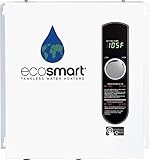
6. EcoSmart ECO 27 Electric Tankless Water Heater – Best Value for Cold Climates
EcoSmart ECO 27 Electric Tankless Water Heater, 27 KW at 240 Volts, 112.5 Amps with Patented Self Modulating Technology, 17 x 17 x 3.5, White
27kW at 240V
6.6 GPM
Self Modulating
Cold Climate Ready
Lifetime Warranty
Pros
- Powerful 27kW handles cold incoming water
- 6.6 GPM flow rate for 2 to 3 bathrooms
- Digital temperature control in 1 degree increments
- Limited lifetime warranty on key components
- Over 3000 reviews proven reliability
Cons
- Requires 3 x 40A double-pole breakers
- Limited stock availability often sells out
- Larger footprint at 17 by 17 inches
The EcoSmart ECO 27 is the electric tankless water heater I recommend most often to homeowners who need serious heating power without the cost and complexity of a gas installation. With over 3,000 reviews and a 27kW heating capacity, it has earned its reputation as the go-to high-output electric unit.
What sets the ECO 27 apart is its cold climate capability. EcoSmart specifically designed this unit for regions where incoming water temperature can drop as low as 37 degrees Fahrenheit. The 27kW heating array has enough raw power to raise that water to shower temperature at a usable flow rate, something the smaller ECO 18 simply cannot do.
The 6.6 GPM maximum flow rate means this unit can serve a 2 to 3 bathroom home depending on your climate zone. In warm regions, you can run multiple showers and appliances simultaneously. In cold regions, you may need to stagger usage during peak times, but the unit will still deliver hot water where a lower-powered model would fail.
Like its smaller sibling, the ECO 27 includes patented self-modulating technology and digital temperature control in 1-degree increments. The limited lifetime warranty covers the electronics, heat exchanger, and element. Proper registration is required for warranty activation, so do not skip that step.
Cold Climate Performance Details
When incoming water drops below 45 degrees, the ECO 27 compensates by limiting flow rate while maintaining output temperature. This means your shower stays hot even in January, but the flow may feel slightly less forceful than in summer months. Most owners find this tradeoff completely acceptable compared to running out of hot water mid-shower.
If you live in states like Minnesota, Wisconsin, or Maine where winter ground water runs extremely cold, the ECO 27 is my top electric recommendation. No other electric unit on this list combines this level of heating power with proven reliability.
Electrical Panel Requirements
This unit demands three double-pole 40-amp breakers, which means 120 amps of dedicated panel capacity. Most modern 200-amp panels can handle this alongside normal household loads, but you should verify your available capacity with an electrician before buying.
Homes with 150-amp or smaller service will likely need a panel upgrade. Factor that potential cost into your decision, as panel upgrades can add significantly to the total project budget.
7. Rheem RTEX-36 36kW Electric Tankless Water Heater – Best for Large Homes
Rheem RTEX-36 36kW Electric Tankless Water Heater 240V Ext Adj Temp Ctrl Bot 3/4 in. Npt Con
36kW at 240V
6 GPM
99.8% Efficiency
Digital Temp Control
3 Full Bath Homes
Pros
- 36kW power for 3 full bath homes
- High 6 GPM flow rate
- 99.8% energy efficiency
- Sleek compact wall-mount design
- Digital temperature control
Cons
- Requires significant electrical service
- Longer heat-up time than some competitors
- Limited review count newer premium model
Rheem is one of the most trusted names in water heating, and the RTEX-36 represents their flagship electric tankless offering. I chose to include this unit because it targets a specific market segment that the other electric models on this list do not fully address: large homes with 3 full bathrooms and high simultaneous demand.
At 36kW, this is the most powerful electric tankless unit on this list alongside the Stiebel Eltron Tempra 36. The 6 GPM flow rate can serve multiple fixtures at once, and Rheem rates it specifically for 3 full bath homes. The 99.8% efficiency rating means virtually no electricity is wasted as heat loss.
The digital temperature control gives you precise adjustment capability, and the unit maintains a clean, sleek appearance on the wall. Rheem designed the exterior to look modern enough for visible installations rather than hiding it behind a closet door. The brass and copper internal components are built for durability.
With 22 reviews at a 4.3-star average, this is a premium product with a smaller but satisfied owner base. Rheem’s brand reputation for parts availability and service network support is a significant advantage over lesser-known brands when it comes to long-term ownership.
Sizing for Multi-Bathroom Homes
A 36kW unit is appropriate for homes where 2 or 3 people may shower simultaneously, or where a shower, washing machine, and dishwasher might run at the same time. In moderate climates, you can expect full performance across all fixtures. In cold climates, the high power input compensates for low incoming water temperatures better than smaller units.
I recommend the RTEX-36 for new construction or major renovations where electrical service can be planned from the start. Retrofitting this much electrical capacity into an older home can be expensive, so evaluate your panel situation carefully.
Installation Timeline and Costs
Installing a 36kW electric tankless unit typically takes a professional electrician and plumber about a full day. The electrical work is the most time-consuming part since you need large-gauge wiring and multiple breakers. Plumbing connections are straightforward with standard 3/4 inch NPT fittings.
Rheem’s widespread dealer network means finding a qualified installer is easier than with niche brands. This accessibility can save you money on both installation and future service calls.
8. Stiebel Eltron Tempra 36 Plus Electric Tankless Water Heater – Premium German Engineering
Stiebel Eltron Tankless Water Heater – Tempra 36 Plus – Electric, 36kW, On Demand Hot Water, Eco, White, Made in Germany
36kW at 240V
Made in Germany
LED Display
140F Max Temp
Advanced Flow Control
Pros
- German engineered and manufactured
- Advanced microprocessor temperature control
- LED display for precise monitoring
- Copper heat exchanger for durability
- Recognized by plumbers as top electric brand
Cons
- Higher price point for electric unit
- Refurbished certified availability
- Requires hardwiring installation
Stiebel Eltron is the brand that plumbers on Reddit and Terry Love forums consistently recommend when someone asks about electric tankless water heaters. The Tempra 36 Plus is their flagship 36kW model, manufactured in Germany with the kind of build quality that has earned the brand a loyal professional following.
What separates Stiebel Eltron from competitors is their advanced flow control technology. The Tempra Plus series automatically adjusts flow rate to maintain your set output temperature, even when demand exceeds heating capacity. Instead of delivering cooler water when overwhelmed, it slightly reduces flow so the water stays consistently hot. This is a meaningful advantage over units that simply let temperature drop under heavy load.
The microprocessor control system monitors water temperature 60 times per second and adjusts heating elements in real time. The LED display shows current output temperature clearly. The copper heat exchanger is designed for decades of service, which aligns with Stiebel Eltron’s reputation for longevity.
This particular listing is a certified refurbished unit, which explains the more accessible pricing. Stiebel Eltron’s factory refurbishment process restores units to original specifications, and they carry the same features as new models. With 325 reviews at 4.2 stars, owners report consistent performance and quiet operation.
German Build Quality and Longevity
Stiebel Eltron has been manufacturing water heaters in Germany since 1924. Their engineering philosophy prioritizes durability and precision over feature gimmicks. The Tempra series uses thicker copper in the heat exchanger than most competitors, and the internal electronics are rated for continuous commercial-grade duty cycles.
Plumbers I researched consistently noted that Stiebel Eltron units tend to outlast cheaper brands by several years. The upfront cost is higher, but the total cost of ownership over 15 to 20 years often works out favorably.
What Refurbished Certified Means Here
A factory-refurbished Stiebel Eltron goes through a complete inspection and restoration process. Heating elements, sensors, and any worn components are replaced with new parts. The unit is then tested to meet the same performance standards as a new model before being repackaged.
This can represent significant savings compared to buying new, while still getting a product backed by manufacturer quality standards. If you want premium German engineering at a more approachable price, this refurbished certification makes that possible.
9. Rinnai RX180iN Condensing Gas Tankless Water Heater – Best for Mid-Size Homes
NEW Rinnai RX180iN Condensing Smart Sense Natural Gas or Propane Tankless Water Heater, Indoor or Outdoor Water Heater, Up to 10 GPM, 180,000 BTU
10 GPM
180000 BTU
UEF .98
Dual-Fuel Gas or Propane
Indoor or Outdoor
Pros
- Dual-fuel natural gas or propane flexibility
- 10 GPM flow rate for 6 simultaneous fixtures
- UEF .98 condensing efficiency rating
- Indoor or outdoor installation options
- 15-year heat exchanger warranty with 5 year labor
Cons
- Professional installation required
- Requires RX-OVC vent cap for outdoor install
- Higher cost than electric alternatives
The Rinnai RX180iN is the highest-rated unit on this list with a 4.8-star average from 47 reviews. Rinnai is the brand that comes up most often when plumbers talk about gas tankless water heaters, and this condensing model shows exactly why. It combines serious heating power with exceptional efficiency in a package designed for flexibility.
The 180,000 BTU burner delivers up to 10 gallons per minute, enough to run 6 fixtures at once. That means your family can run three showers, a washing machine, and two sinks simultaneously without anyone getting a cold surprise. The condensing technology captures heat from exhaust gases that would otherwise be wasted, achieving a UEF rating of .98.
This unit runs on either natural gas or propane, giving you fuel flexibility. If you switch fuel sources in the future, a professional can convert the unit without replacing it. The Smart Sense gas control system optimizes combustion for maximum efficiency across different demand levels.
Rinnai backs the RX180iN with a 15-year warranty on the heat exchanger, 5 years on parts, and 5 years on labor. That labor coverage is notably generous since most manufacturers exclude installation labor from warranty terms. The stainless steel and copper heat exchanger is built for the kind of longevity Rinnai is known for.
Gas Line and Venting Requirements
This unit requires a proper gas line sized for 180,000 BTU input. If your home currently has a tank gas heater, your existing gas line may need to be upsized to handle the higher BTU demand. A professional plumber or gas fitter will need to evaluate your gas supply capacity during installation.
For indoor installation, you need approved venting through the Versa Vent system. For outdoor installation, you need the separately purchased RX-OVC vent cap. Rinnai designed this unit to work in both configurations, which is valuable if your installation location changes.
Indoor vs Outdoor Installation Setup
Indoor installation protects the unit from weather and is common in basements and utility rooms. You need proper venting to exhaust combustion gases safely outside. The compact wall-mount design at 19 by 31 inches fits in most utility spaces.
Outdoor installation eliminates venting requirements since exhaust dissipates directly into open air. This works well in mild to warm climates but requires freeze protection considerations in cold regions. The RX-OVC vent cap prevents backdrafting in windy conditions.
10. Rinnai RX199iN Condensing Gas Tankless Water Heater – Best Overall for Large Homes
NEW Rinnai RX199iN Condensing Smart Sense Natural Gas or Propane Tankless Water Heater, Indoor or Outdoor Water Heater, Up to 11.1 GPM, 199,000 BTU
11.1 GPM
199000 BTU
UEF .98
Dual-Fuel
7 Fixtures Simultaneously
Pros
- Highest flow rate at 11.1 GPM runs 7 fixtures
- UEF .98 condensing efficiency
- Dual-fuel natural gas or propane
- Indoor or outdoor installation flexibility
- 15-year heat exchanger warranty
Cons
- Premium price point for tankless category
- Professional installation mandatory
- May require gas line upgrade for full capacity
The Rinnai RX199iN is the most powerful and capable tankless water heater on this list, and it earns my Editor’s Choice designation for homeowners who demand maximum performance. With 199,000 BTU of heating power and an 11.1 GPM flow rate, this unit can supply hot water to 7 fixtures simultaneously without breaking a sweat.
I chose this as the top overall pick because it solves the one problem that drives people away from tankless systems: running out of hot water when everyone in the house needs a shower at the same time. The RX199iN eliminates that scenario entirely for virtually any residential application. Large families, homes with jetted tubs, and properties with guest suites will never overwhelm this unit.
The condensing technology is what makes this level of performance possible without excessive fuel consumption. By capturing and reusing heat from exhaust gases, Rinnai achieves a UEF rating of .98. That means 98% of the fuel burned becomes usable heat for your water. Over the 20-plus year lifespan of this unit, those efficiency savings add up significantly.
The Smart Sense gas control system continuously monitors and adjusts combustion for optimal efficiency. The Versa Vent system gives you installation flexibility for both indoor and outdoor setups. Rinnai’s 15-year heat exchanger warranty, combined with 5-year parts and 5-year labor coverage, provides the most comprehensive protection package of any unit I reviewed.
Fuel Flexibility and Conversion
The RX199iN ships configured for natural gas but can be professionally converted to propane. This dual-fuel capability means the unit adapts if your home’s fuel situation changes, such as switching from delivered propane to piped natural gas when service becomes available in your area.
Rinnai provides conversion kits through authorized dealers, and the conversion should always be performed by a qualified technician. Attempting a fuel conversion yourself voids the warranty and creates serious safety risks.
Multi-Fixture Performance in Real Homes
In a typical 4-bedroom, 3-bathroom home, the RX199iN can simultaneously run three showers, a dishwasher, a kitchen faucet, and a load of laundry without any fixture losing temperature. Owners in the review section consistently mention never experiencing cold water, even during peak morning and evening demand.
For homes with high-flow fixtures like rainfall showerheads or jetted tubs that demand 5-plus GPM individually, this is one of the few residential tankless units that can keep up. The 199,000 BTU input provides the raw heating capacity that lower-BTU gas units and all electric models simply cannot match.
Tankless Water Heater Buying Guide: How to Choose in 2026?
Choosing the right tankless water heater comes down to understanding four key factors: fuel type, flow rate, efficiency, and installation requirements. I have broken down each of these below based on the research and forum insights our team gathered.
Gas vs Electric: Which Is Right for You?
Gas tankless water heaters, whether natural gas or propane, deliver significantly higher flow rates than electric models. The Rinnai units on this list push 10 to 11 GPM, while the most powerful electric units max out around 6 to 7 GPM. If you have gas service available and need whole-home coverage for a large family, gas is almost always the better choice.
Electric tankless units win on installation simplicity, safety, and upfront cost. There is no combustion, no venting, and no gas line to run. They are also 99% efficient at the point of use since no heat escapes through a flue. For smaller homes, point-of-use applications, or homes without gas service, electric is the practical path.
One important consideration that forum users frequently mention: electric tankless units will not operate during a power outage since they need electricity to run the heating elements. Gas units with electronic ignition also need power, but some can operate on battery backup. If reliability during outages matters to you, factor this into your decision.
Sizing: Understanding GPM and Temperature Rise
Flow rate, measured in gallons per minute (GPM), is the single most important spec for tankless water heaters. But the rated GPM only tells part of the story. What actually matters is the flow rate at your required temperature rise, which is the difference between your incoming ground water temperature and your desired output temperature.
For example, a unit rated at 6 GPM might deliver that full flow rate in Florida where ground water enters at 72 degrees and you only need a 38-degree rise to reach 110 degrees. In Minnesota where winter ground water runs at 37 degrees, the same unit needs a 73-degree rise and may only deliver 3 GPM at your target temperature.
Here is a quick sizing guide based on household size and typical usage. A 1-bathroom home with 1 to 2 people needs 3 to 4 GPM. A 2-bathroom home with 3 to 4 people needs 5 to 7 GPM. A 3-plus bathroom home with a large family needs 8 to 11 GPM. These are simultaneous-use estimates, so adjust based on whether your household tends to shower at the same time.
Efficiency Ratings: What UEF Means
The Uniform Energy Factor (UEF) is the Department of Energy’s standardized efficiency rating for water heaters. Higher numbers mean better efficiency. Traditional tank gas heaters typically score 0.50 to 0.60 UEF, while condensing gas tankless units like the Rinnai models achieve 0.95 to 0.98 UEF.
Electric tankless units are inherently efficient because all the electrical energy converts directly to heat with no combustion losses. Most electric models on this list rate at 98% to 99.8% efficiency. The practical implication is that for every dollar of electricity consumed, nearly all of it goes into heating your water.
While efficiency matters, it should not be your only consideration. A highly efficient unit that is undersized for your needs will still leave you with cold showers. Always prioritize adequate flow rate first, then compare efficiency among units that meet your demand requirements.
Installation Costs and Considerations
Installation is often the most overlooked cost when switching to tankless. Electric units require dedicated breakers and heavy-gauge wiring. Gas units need proper venting, gas line sizing, and in some cases stainless steel vent pipe. I have seen total project costs range from a few hundred dollars for a simple electric point-of-use swap to several thousand for a whole-home gas conversion.
One forum insight that came up repeatedly: professional installation is worth the cost. DIY mistakes with gas lines or high-amperage electrical connections create serious safety hazards. Most manufacturers also require professional installation to validate their warranty coverage.
If you live in an area with hard water, consider installing a water softener or filtration system before your tankless unit. Hard water causes mineral scale buildup in the heat exchanger, which reduces efficiency and can lead to premature failure. Several Reddit users reported that annual descaling flushes are essential for tankless longevity on city water without a softener.
Climate Considerations for Outdoor Installation
If you plan to install your tankless unit outdoors, your local climate plays a major role in the decision. Gas units designed for outdoor use, like the Rinnai models, include freeze protection features that allow operation down to specific temperature thresholds. However, in regions where temperatures regularly drop below freezing for extended periods, indoor installation is safer and more reliable.
Electric units are almost always installed indoors since their compact size makes them easy to place in closets, under sinks, or in utility rooms. If you must install outdoors, look for units with IPX4 or higher water resistance ratings and verify that the manufacturer supports outdoor installation for your specific model.
Frequently Asked Questions About Tankless Water Heaters
What brand of tankless water heater is the most reliable?
Rinnai is consistently rated the most reliable tankless water heater brand by both plumbers and long-term owners. Reddit plumbing communities and Terry Love forums frequently cite Rinnai for fewer service calls, durable stainless steel heat exchangers, and units lasting 8-plus years with annual maintenance. Stiebel Eltron earns the top reliability spot among electric-only brands thanks to its German engineering and copper heat exchangers.
What do plumbers say about tankless water heaters?
Most licensed plumbers recommend tankless water heaters for their energy savings, longevity, and endless hot water. However, they emphasize three things: proper sizing for your climate and household, professional installation to validate warranty, and annual descaling flushes to prevent mineral buildup. Plumbers particularly praise Rinnai for gas systems and Stiebel Eltron for electric, while noting that EcoSmart and Rheem offer good value for budget-conscious homeowners.
What is the most common problem with tankless water heaters?
The most common problems with tankless water heaters are mineral scale buildup from hard water, delayed hot water delivery (lag time), and difficulty achieving lukewarm temperatures. Hard water causes sediment accumulation in the heat exchanger, which requires annual flushing with descaling solution. Lag time can be addressed with a recirculation pump. These issues are preventable with proper maintenance and sizing.
What is the average lifespan of a tankless hot water heater?
Tankless water heaters typically last 20 or more years with proper maintenance, compared to 10 to 15 years for traditional tank heaters. Gas units like Rinnai often exceed 20 years when flushed annually. Electric units generally last 15 to 20 years. The heat exchanger is usually the longest-lasting component, with many manufacturers offering 15-year to lifetime warranties on it specifically.
Can a tankless water heater heat a whole house?
Yes, a properly sized tankless water heater can heat a whole house. Gas condensing units like the Rinnai RX199iN deliver up to 11.1 GPM, enough for 7 simultaneous fixtures across 3-plus bathrooms. High-powered electric units like the EcoSmart ECO 27 or Rheem RTEX-36 can serve 2 to 3 bathroom homes in moderate climates. The key is matching flow rate and temperature rise capacity to your household demand.
Final Thoughts on the Best Tankless Water Heaters for 2026
After comparing all 10 units across performance, efficiency, warranty, and real owner feedback, my recommendations are clear. The Rinnai RX199iN is the best tankless water heater overall for large homes with gas service, delivering 11.1 GPM with condensing efficiency. The EcoSmart ECO 27 offers the best value for electric homes, especially in cold climates. And the CAMPLUX 5L Portable is unbeatable for camping and off-grid use.
Remember to factor in installation costs, electrical or gas requirements, and your local climate when making your final choice. A properly sized and professionally installed tankless unit will deliver endless hot water and energy savings for 20 years or more. Use the comparison table above to narrow your options, then click through to check current pricing and availability for your top pick.