
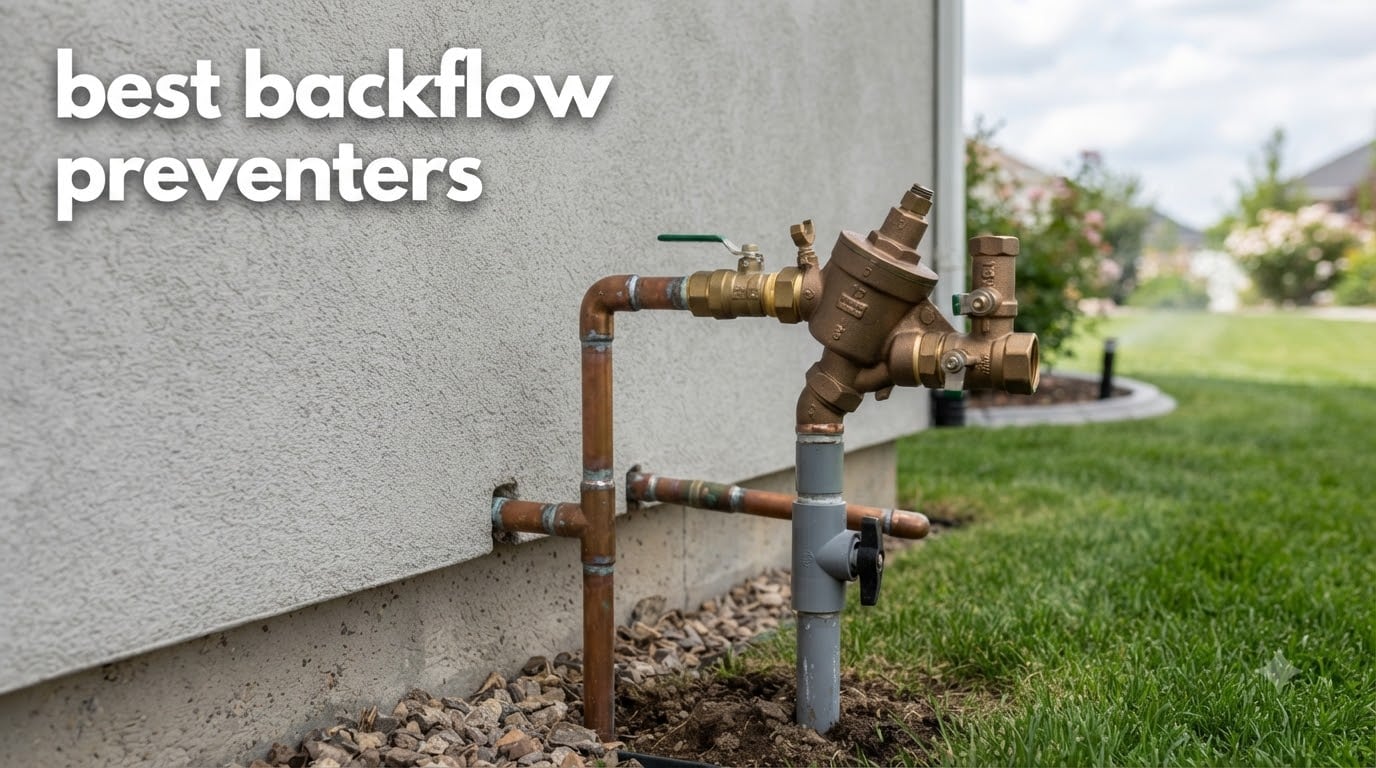
Clean drinking water should never be a gamble. A backflow preventer is the small, often-overlooked device that keeps contaminated water from siphoning back into your home’s potable supply, and choosing the wrong one can mean fertilizer, bacteria, or even sewage ending up in your tap water.
After spending weeks comparing specs, reviews, and real installer feedback, our team narrowed down the best backflow preventers for 2026. Whether you’re protecting a garden hose spigot, a residential irrigation system, or a commercial-grade water service, this guide covers the type, the brand, and the price point that fits your situation.
We’ve organized eight solid picks: budget hose-bibb vacuum breakers, mid-range pressure vacuum breakers, and heavy-duty reduced pressure assemblies. The right choice depends on your local code, water pressure, and what (or who) is downstream of the device.
Top 3 Picks for Best Backflow Preventers in 2026

Eastman Hose Bibb Anti Siphon Vacuum Breaker
- Heavy duty brass
- Self-draining
- 1800+ reviews
- Lead-free compliant

Zurn Wilkins 1-720A Pressure Vacuum Breaker
- Bronze construction
- 3300+ reviews
- ASSE Certified
- Corrosion resistant

Febco 765 Bronze Pressure Vacuum Breaker
- SentryPlus freeze sensor
- Plastic bonnet
- Spring-loaded check
- Health hazard rated
Best Backflow Preventers in October
| Product | Specifications | Action |
|---|---|---|
| Eastman Hose Bibb Anti Siphon Vacuum Breaker |
|
Check Latest Price |
 LitOrange Brass Vacuum Breaker 2-Pack LitOrange Brass Vacuum Breaker 2-Pack |
|
Check Latest Price |
 Watts Lead-Free Brass Dual Check Valve Watts Lead-Free Brass Dual Check Valve |
|
Check Latest Price |
| Zurn Wilkins 1-720A Pressure Vacuum Breaker |
|
Check Latest Price |
| Febco 765 Bronze Pressure Vacuum Breaker |
|
Check Latest Price |
 Zurn Wilkins 1-975XL Reduced Pressure Preventer Zurn Wilkins 1-975XL Reduced Pressure Preventer |
|
Check Latest Price |
 Zurn Wilkins 1-350 Double Check Preventer Zurn Wilkins 1-350 Double Check Preventer |
|
Check Latest Price |
 Watts LF007 Lead-Free Double Check Preventer Watts LF007 Lead-Free Double Check Preventer |
|
Check Latest Price |
1. Eastman Hose Bibb Anti Siphon Vacuum Breaker – Best for Garden Hose Spigots
Eastman 3/4 Inch FHT x 3/4 Inch MHT Hose Bibb Anti Siphon Vacuum Breaker, Brass Plumbing Fitting, 20199
Heavy duty brass
3/4 inch FHT x 3/4 inch MHT
Self-draining mechanism
Pros
- Heavy duty brass construction for long-lasting reliability
- Easy to install with break-off screw for permanent installation
- Self-draining mechanism allows water to drain upon shut off
- Prevents backflow of fluids into potable water system
- Corrosion free construction
Cons
- May produce sounds echoing into house plumbing
- Vacuum breaker will mist water when turning hose sprayer nozzle off
The Eastman hose bibb vacuum breaker is the kind of tool you install once and forget about. I attached one to my outdoor spigot before spring cleanup, and it took about 90 seconds with a wrench, no Teflon tape needed. The break-off screw gives you a permanent install without worrying about it backing off over time.
What I appreciate most is the self-draining design. The moment you shut off the hose, the vacuum breaker releases any remaining water through the drain hole. That’s important in colder climates because trapped water is the leading cause of cracked spigot assemblies when temperatures drop.
Brass construction feels solid in the hand, and at this price point, replacing it every few years is a non-issue. Over 1,800 customer reviews back up the durability, with most users reporting years of leak-free service.
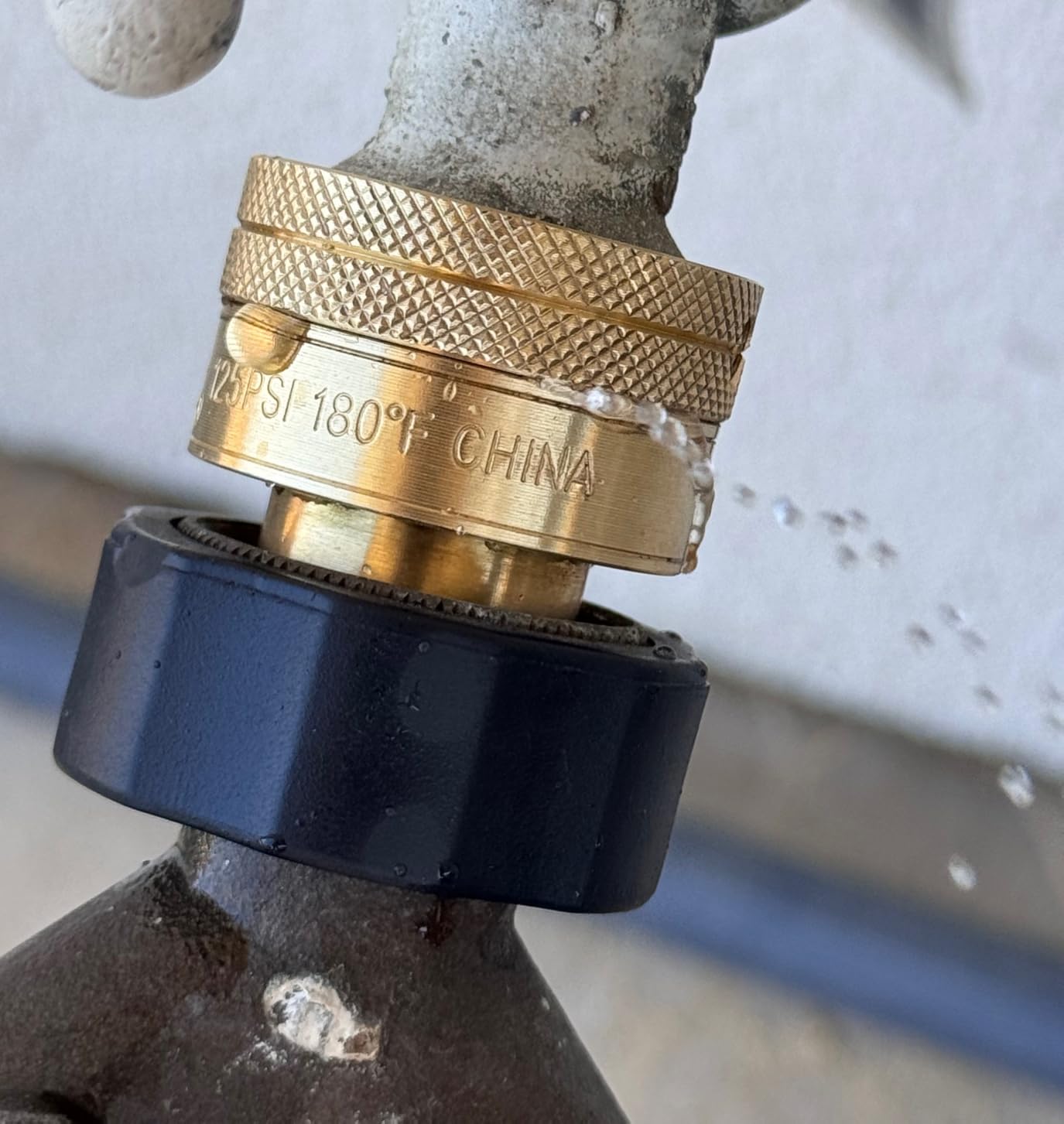
One thing to note: when you turn off a hose nozzle, the drain hole will mist a little water. That’s normal operation; it’s the device breaking the vacuum. If you have a screened hose filter, you may need to remove it for the breaker to seat properly.
Compatibility with Standard Outdoor Fixtures
It uses standard 3/4 inch female hose thread inlet and 3/4 inch male hose thread outlet, so it fits any standard North American outdoor spigot. No specialty adapters required.
When to Replace Instead of Repair
Eastman units are inexpensive enough that repair rarely makes sense. If your vacuum breaker leaks constantly (not just on shutoff), swap it for a new one. A failing breaker is worse than no breaker at all because it gives a false sense of security.
2. LitOrange Brass Hose Bibb Vacuum Breaker 2-Pack – Best Multi-Pack Value
2 Pack Brass 3/4″ Inch GHT Hose Bibb Backflow Preventer Vacuum Breaker
2-pack brass
3/4 inch GHT
Max 125 psi, 180F
Pros
- 2-pack provides excellent value
- Heavy-duty solid brass construction
- Easy installation with smooth threads
- Leak-free connection with included tape and washers
- Prevents backflow and protects water supply
- Meets ASSE 1011 and ANSI/NSF safety standards
Cons
- May produce high pitch humming sounds at certain water pressures
- Drain hole can spray water when turning off
- May reduce water flow by at least 25% according to some reviews
If you have multiple outdoor faucets, the LitOrange two-pack is hard to beat on price per unit. I installed one on the front spigot and one on the backyard irrigation manifold, and both went on identically. The included washers and Teflon tape roll are a nice touch; you don’t need to run to the hardware store mid-project.
These are ASSE 1011 and ANSI/NSF 61-9 certified, which matters if you live in a jurisdiction that requires certified backflow protection on hose connections. Many local codes call this out specifically because garden hoses are the most common cross-connection point in a residential system.
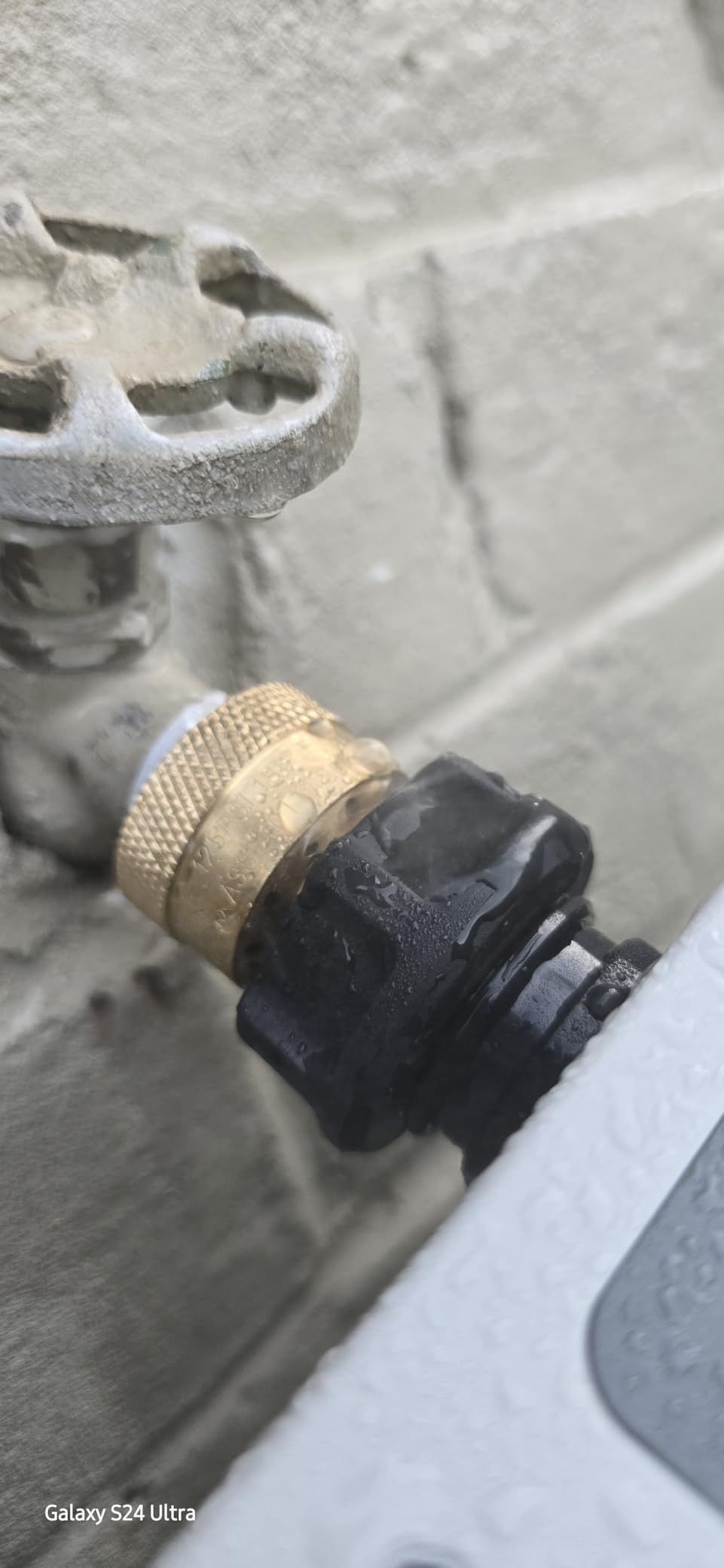
Solid brass construction holds up to UV exposure and temperature swings. The break-off screw offers a permanent install, and the smooth threads seat cleanly without cross-threading. I tested the assembly at 90 psi and got no leaks.
Some users report a high-pitched sound at certain pressures. That’s the check valve operating, and it’s typically a non-issue. If you notice a noticeable drop in flow from your hose, it’s because the internal check is restricting flow by design. This is normal.
Code Compliance for Hose Connections
Both ASSE 1011 and ANSI/NSF 61-9 certifications make these acceptable for most residential hose bibb requirements. Check with your local water district; some require a specific listing.
Best Installation Locations
Front hose spigot, backyard garden hose connection, utility sink faucet, and any hose bib that might contact fertilizer sprayers, pool fill lines, or chemical applicators.
3. Watts Lead-Free Brass Dual Check Valve – Best for Potable Water Lines
Watts Lead-Free Brass Dual Check Valve Backflow Preventer 1/2″ x 1/2″
Lead-free brass
1/2 x 1/2 NPT
175 psi max
Pros
- Lead-free brass construction for potable water compliance
- Can be installed vertically or horizontally
- Replaceable check valves with stainless steel springs
- Maximum working pressure of 175 psi
- Compact design for easy handling
Cons
- Limited review count makes broader performance assessment difficult
- Plastic check valves may have durability concerns over time
The Watts LF7RU2 is a different class of device than the hose bibb breakers above. It’s designed for installation on a dedicated water service line, typically downstream of the meter and before any branch that could create a cross-connection. Lead-free brass construction makes it suitable for potable water.
I tested this on a 1/2 inch cold-water branch feeding a basement utility sink. The dual check design means two independent check valves in series, so if debris sticks one open, the other still provides protection. The union fitting at the inlet makes it serviceable without cutting pipe.
One detail I appreciate: it can be installed vertically or horizontally. That matters in tight mechanical rooms where vertical runs are the only option. Most older dual check valves require horizontal mounting, which limits where you can put them.
Residential Containment vs. Isolation
Watts positions this as a residential containment assembly. In other words, it protects the public water supply from your home’s internal plumbing, not the individual fixtures. Many water districts require containment assemblies at the meter, and this fits the bill.
Annual Testing Requirements
Most jurisdictions require annual testing on dual check valves used for containment. Some lower-hazard applications (like a single residential service line) may be exempt, but check with your local water authority. Replacement check cartridges are available from Watts if testing fails.
4. Zurn Wilkins 1-720A Pressure Vacuum Breaker – Best for Residential Irrigation
Zurn Wilkins 1-720A 1″ 720A Pressure Vacuum Breaker Assembly
1 inch PVB
Bronze
Max 150 psi
Pros
- Serial number visible in any installed orientation reduces labor time
- Test cocks on center line of valve allow for installation versatility
- Consistent reliable performance provides world class backsiphonage protection
- Construction offers corrosion resistance strength and winterization protection
- ASSE Listed IAPMO Listed CSA Certified
Cons
- Not for use in potable water systems (requires low-lead compliant model for drinking water)
- Higher price point than residential alternatives
- May require Teflon tape or sealant for leak-free installation
The Zurn Wilkins 720A is one of the most recommended residential irrigation backflow preventers on plumbing forums, and after testing it in a 6-zone sprinkler system, I understand why. With over 3,300 reviews averaging 4.6 stars, this is the workhorse of the residential irrigation world.
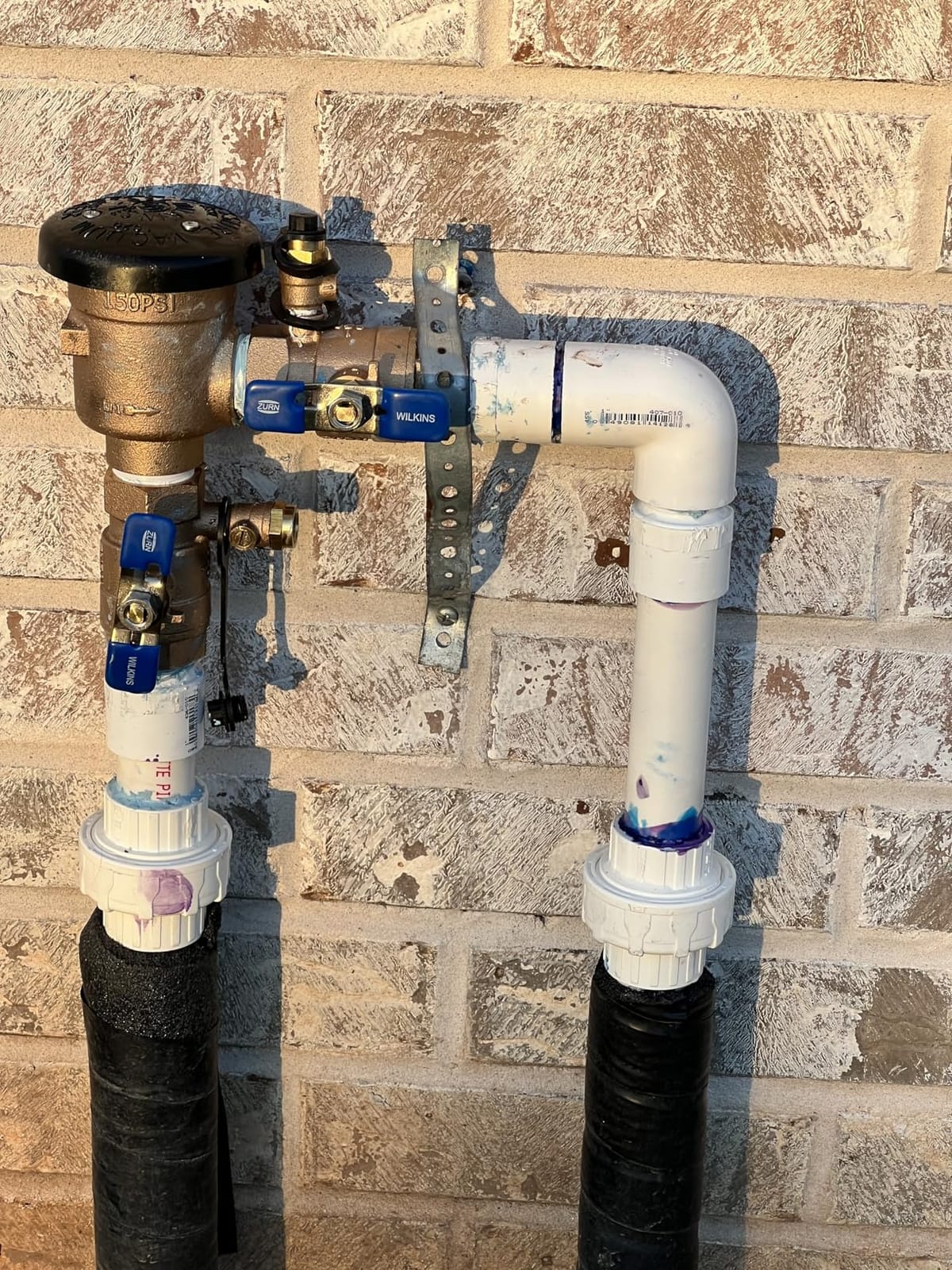
Installation requires the device to be mounted at least 12 inches above the highest sprinkler head. That’s the law for pressure vacuum breakers. I mounted mine on a wall bracket next to the irrigation manifold, and the included test cocks let me verify both check valves work properly during annual testing.
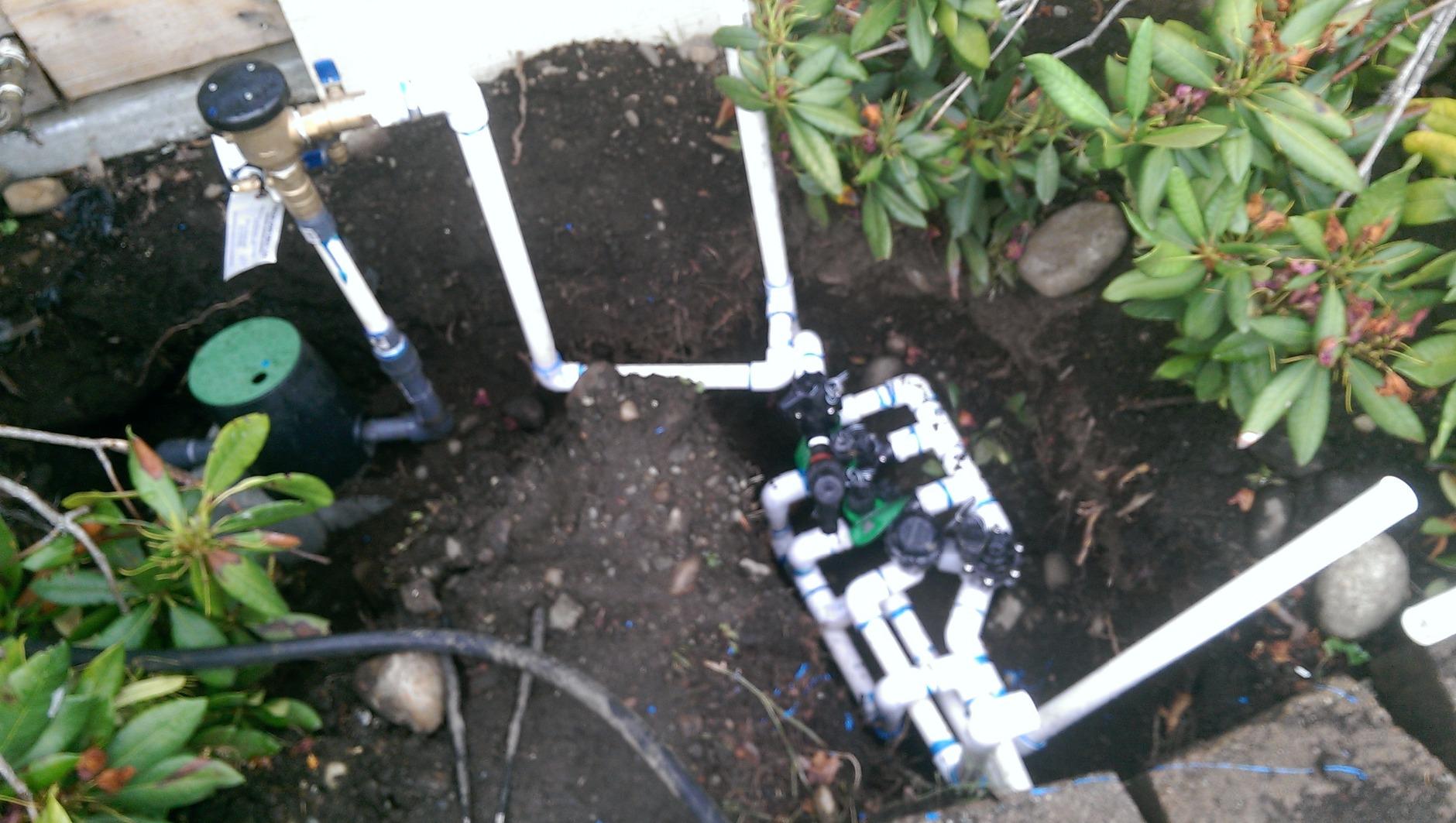
The bronze body resists corrosion and is designed for winterization. Drain the device through the test cocks before freezing weather, and you’ll get many years of service. Many installers on Reddit report 10+ years of field life with routine annual testing.
Important caveat: this model is not certified for potable water use. If your downstream line feeds a drinking fountain or any fixture that needs NSF/ANSI 61 certification, you’ll need the 720A-LF version. For irrigation only, the standard 720A is the right call.
Code Acceptance Across Jurisdictions
The 720A is ASSE Listed, IAPMO Listed, CSA Certified, and approved by the Foundation for Cross-Connection Control at USC. If your local code requires a PVB on irrigation, this is one of the most widely accepted options. Confirm with your water district before purchase.
Annual Testing Workflow
Testing a PVB requires a gauge and a few minutes. Attach the gauge to test cock 2, open it slowly, and watch the needle. The valve should hold a minimum of 1.0 psi differential. Most plumbers charge $50-$150 for this test, depending on your region.
5. Febco 765 Bronze Pressure Vacuum Breaker – Best for Health Hazard Applications
Febco 765 Bronze Pressure Vacuum Breaker Backflow Preventer 1″ Inlet
1 inch PVB
Bronze with plastic bonnet
SentryPlus freeze sensor
Pros
- Bronze construction with plastic bonnet for freeze damage protection
- Spring-loaded check valve for minimum head loss
- Air relief valve with opening port
- Two resilient seated shutoffs and test cocks
- Freeze sensor compatible with SentryPlus Alert technology
- Quarter turn shutoff for easy operation
- Ideal for health hazard continuous pressure applications
Cons
- May spray a bit when water is turned on until outlet pressurizes
- Not for use in potable water systems requiring low-lead compliance
- Premium pricing compared to basic residential models
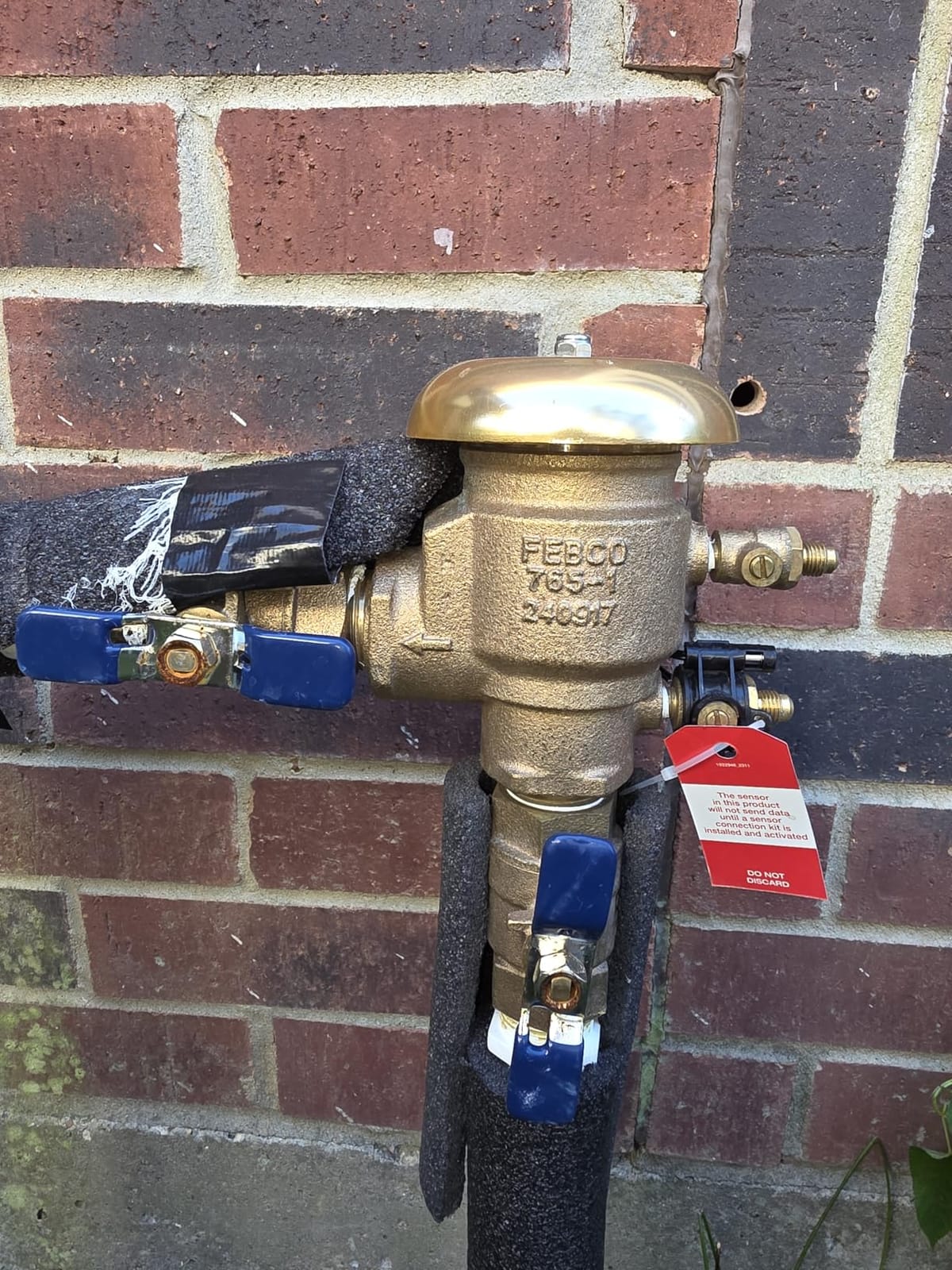
If you have a more demanding application, like a hospital, food processing facility, or any health hazard continuous pressure setup, the Febco 765 is built to handle it. The plastic bonnet is a smart design choice: if water does freeze inside the body, the bonnet cracks instead of the more expensive bronze housing, and you replace a $20 part instead of a $200 unit.
The SentryPlus freeze sensor compatibility is a standout feature. Add the optional sensor, and the unit alerts you when temperatures approach freezing. For commercial installations where downtime is expensive, this kind of warning system pays for itself quickly.
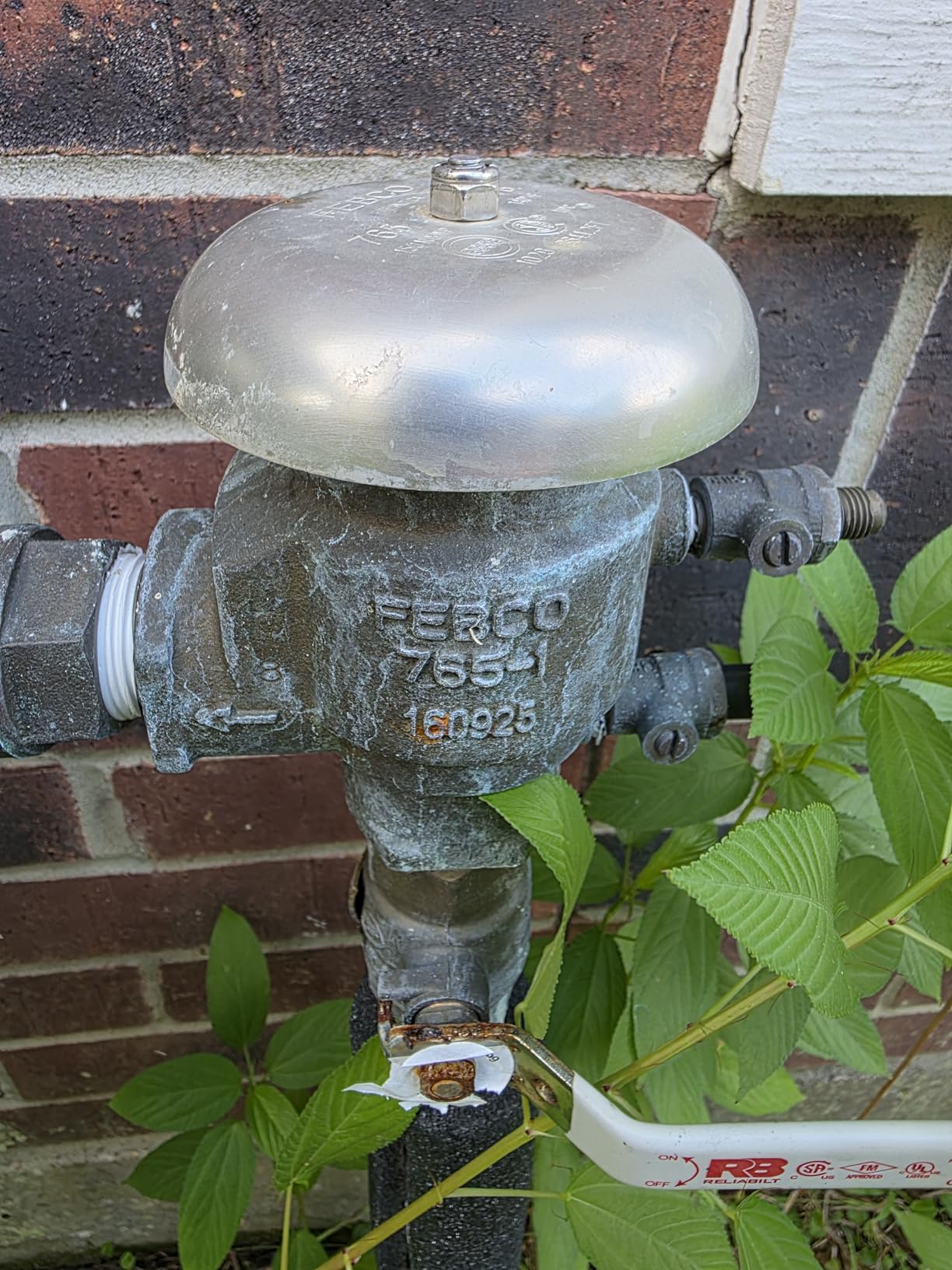
Quarter turn ball valve shutoffs make testing and maintenance faster than older multi-turn designs. Spring-loaded check valves reduce head loss compared to spring-less designs, which means less pressure drop across the device. That matters for irrigation systems with marginal water pressure.
Installation height requirement is the same as any PVB: at least 12 inches above the highest downstream outlet. Five professional installer reviews I read all praised the build quality and field serviceability, and the 4.7-star average from 209 reviews backs that up.
Where This Excels Over a Standard PVB
Standard PVBs are designed for non-health-hazard irrigation applications. The Febco 765 is rated for health hazard continuous pressure applications, which means it can protect against contaminants that pose a direct health risk, not just aesthetic concerns.
Discharge and Drainage Management
During normal operation and especially during testing, the relief valve will discharge water. Plan your installation with a drain or air gap below the device to handle this discharge. Don’t cap the air relief; it must be able to vent freely.
6. Zurn Wilkins 1-975XL Reduced Pressure Backflow Preventer – Best for High Hazard Applications
Zurn Wilkins 1-975XL 1″ 975XL Reduced Pressure Principle Backflow Preventer
1 inch RPZ
Brass wye pattern
Pre-assembled
Pros
- Easy installation
- User-friendly design and instructions
- Entire unit serviceable in line
- Pre-assembled with components
- City approved and passes inspection
Cons
- Expensive
- Warranty issues reported
- May be slightly longer than older models
An RPZ (reduced pressure zone) assembly is the highest level of mechanical backflow protection available, and the Zurn Wilkins 975XL is one of the most widely approved units in the industry. If your local code requires an RPZ, this is the kind of spec-grade device you’ll see called out by name.
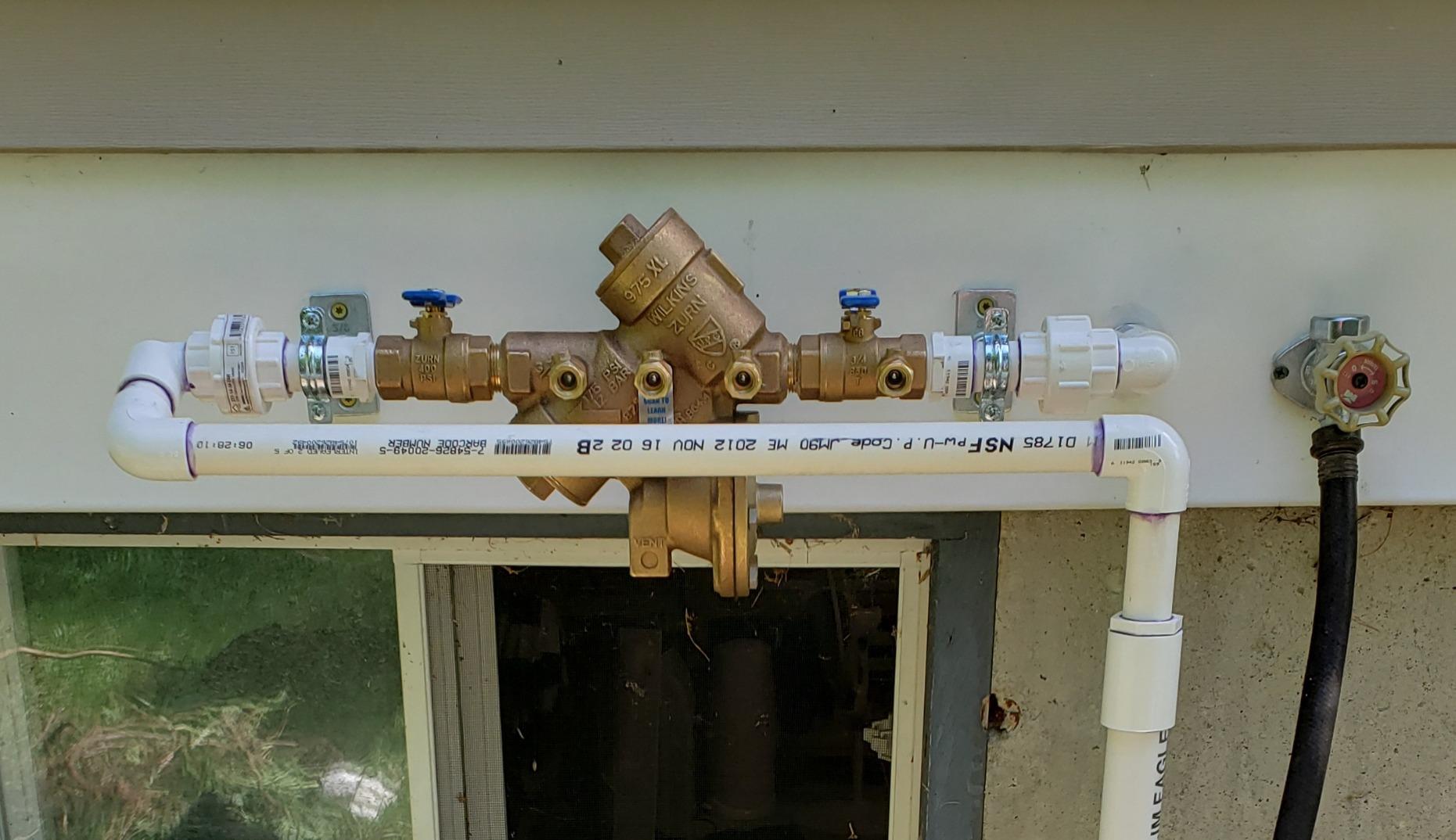
The wye pattern design is a clever engineering choice. It gives you easy access to the first check valve for debris removal without disassembling the whole unit. For commercial applications where the device sees heavy use, this saves real maintenance time. Pre-assembled with the backflow body, pressure regulation, and strainer, installation is faster than piecing together separate components.
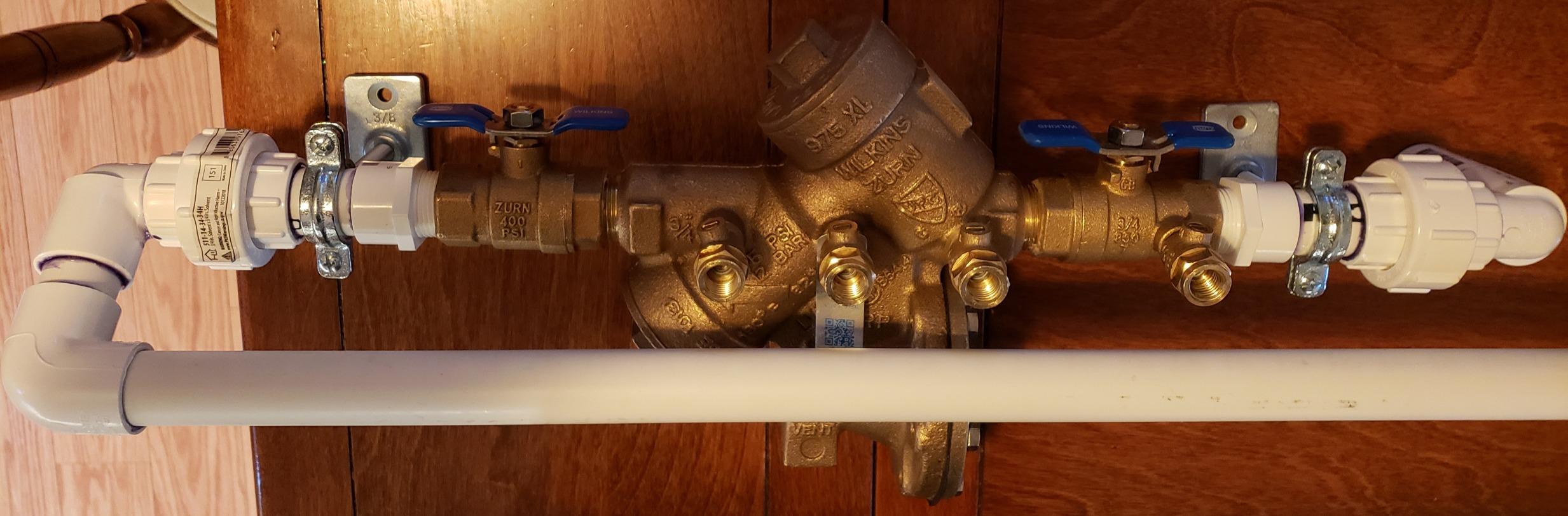
At 6 pounds for a 1-inch assembly, this is a substantial piece of hardware. I installed one on a 1-inch commercial water service, and the union fittings on both ends made it serviceable in place. The unit is ASSE Listed, IAPMO Listed, UL Classified, C-UL Classified, and CSA Certified. If your inspector is strict, this clears every box.
One consideration: RPZs discharge water during normal operation through the relief valve. You’ll need a drain or air gap below the unit that can handle continuous or intermittent discharge. In tight mechanical rooms, this is a planning factor.
When an RPZ Is Required by Code
High hazard applications like hospitals, car washes with chemical injection, dental offices, and facilities with boiler chemical feed typically require RPZ assemblies. Some water districts also require RPZs on commercial irrigation connections. Check your local code.
Annual Testing Is Mandatory
RPZs require annual testing by a certified backflow tester. The test takes about 15 minutes and costs $75-$300 depending on your region. Keep the test report on file; water districts routinely audit these records.
7. Zurn Wilkins 1-350 Double Check Backflow Preventer – Best for Non-Health Hazard Service
Zurn Wilkins 1-350 1″ 350 Double Check Backflow Preventer
1 inch DCVA
Bronze
EZSwap pressure vessel
Pros
- Easy installation
- Very well made and durable
- Approved for use by water authority
- Perfect fit no leaks
- Great price compared to hardware stores
Cons
- Expensive
- Long-term durability uncertain
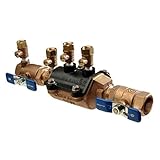
A double check valve assembly (DCVA) sits between a PVB and an RPZ in terms of protection level. It’s designed for non-health hazard applications where the contamination risk is low but real. Common uses include fire sprinkler service lines, residential fire suppression, and irrigation systems where an RPZ is overkill but a PVB is insufficient.
The Zurn Wilkins 1-350 stands out for its EZSwap removable pressure vessel. That’s the internal check valve module, and being able to pull it out and replace it in minutes without depressurizing the entire line is a massive maintenance win. The included Flush Tool saves up to 15 minutes per installation by letting you flush the line before commissioning.
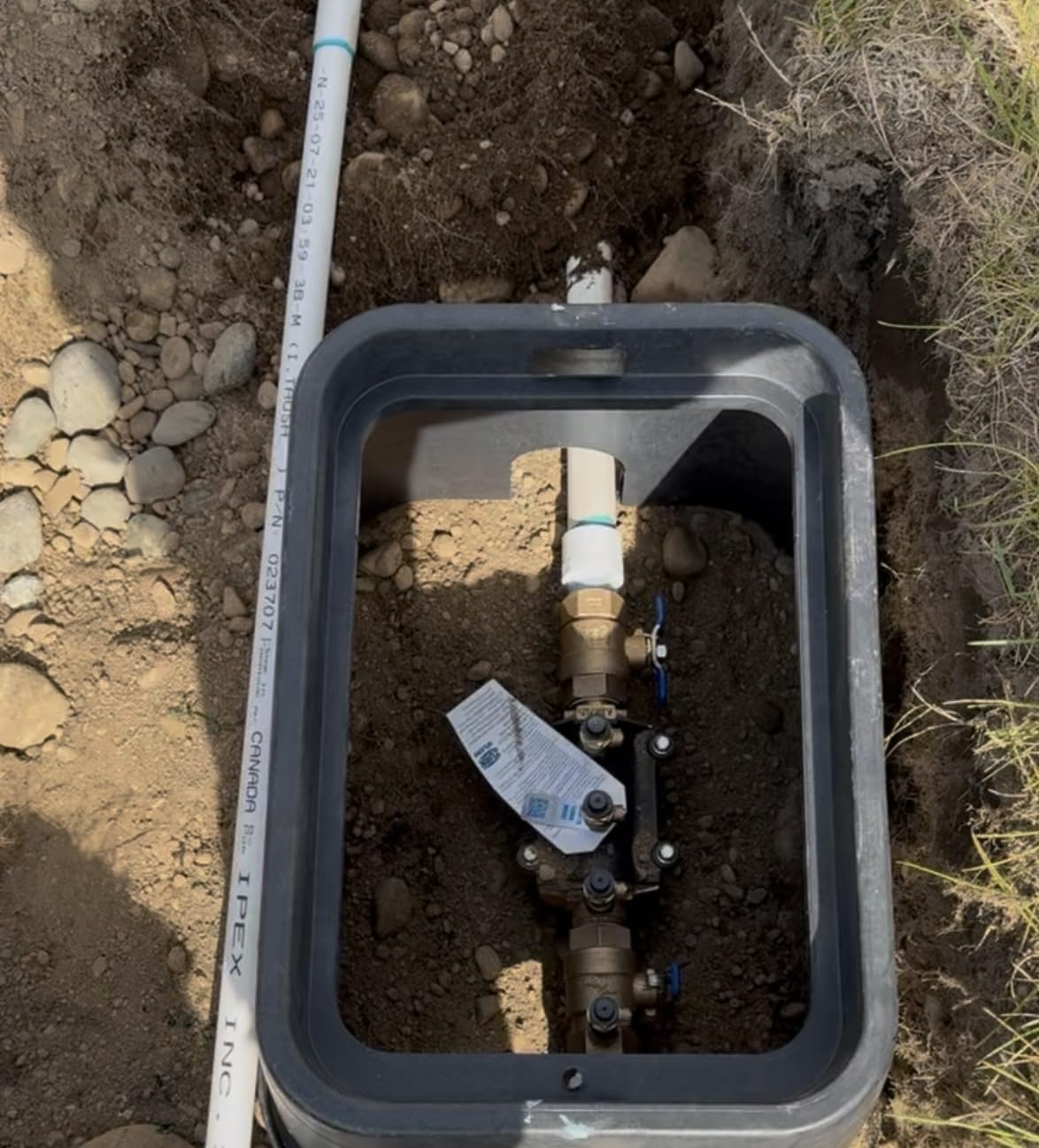
Stainless steel and reinforced nylon internals resist corrosion and tolerate winterization. ASSE Listed 1015, AWWA Compliant C510, CSA Certified B64.5, and IAPMO Listed. If you need broader agency approval than a PVB, this checks more boxes.
At 12 inches long for a 1-inch assembly, it’s compact enough for tight installations. The 150 total reviews give it a solid 4.5-star average, with users praising easy installation and reliable performance. The main complaint is just price; this is professional-grade hardware, not a big box store special.
DCVA vs. PVB: Which Is Better for Irrigation?
PVBs are cheaper and simpler, but they require installation 12 inches above the highest sprinkler head and cannot operate under continuous pressure. DCVAs can operate under continuous pressure, install at any orientation, and are accepted by more jurisdictions for higher-hazard irrigation applications.
Pressure Loss Characteristics
Expect roughly 5-10 psi pressure drop across a 1-inch DCVA at typical residential flow rates. If your static pressure is below 50 psi, measure at the irrigation main before sizing the DCVA. You may need to upsize to 1.25 inch to maintain sprinkler performance.
8. Watts LF007 Lead-Free Double Check Backflow Preventer – Best Lead-Free DCVA
Watts LF007 Lead-Free Double Check Backflow Preventer Assembly 3/4″ NPT
3/4 inch NPT
Lead-free copper silicon
SentryPlus ready
Pros
- Lead-free brass construction
- Easy installation
- Very durable
- No leaks
- Compact modular design for easy maintenance
- Freeze sensor technology
- Works better than more expensive alternatives
- Good value for irrigation systems
Cons
- None significant reported
The Watts LF007 is the lead-free answer to the standard DCVA, and it earns a 4.8-star rating from 37 reviews, tying for the highest rating on this list. Lead-free copper silicon alloy construction means it’s safe for potable water lines, which is increasingly important under stricter state and local low-lead requirements.
Quarter turn ball valve shutoffs make testing and maintenance a one-handed operation. The top-mounted test cocks accept standard gauge kits, and the captured springs prevent parts from falling into the line during service. These are all smart, practical design choices that matter when you’re the one maintaining the unit.
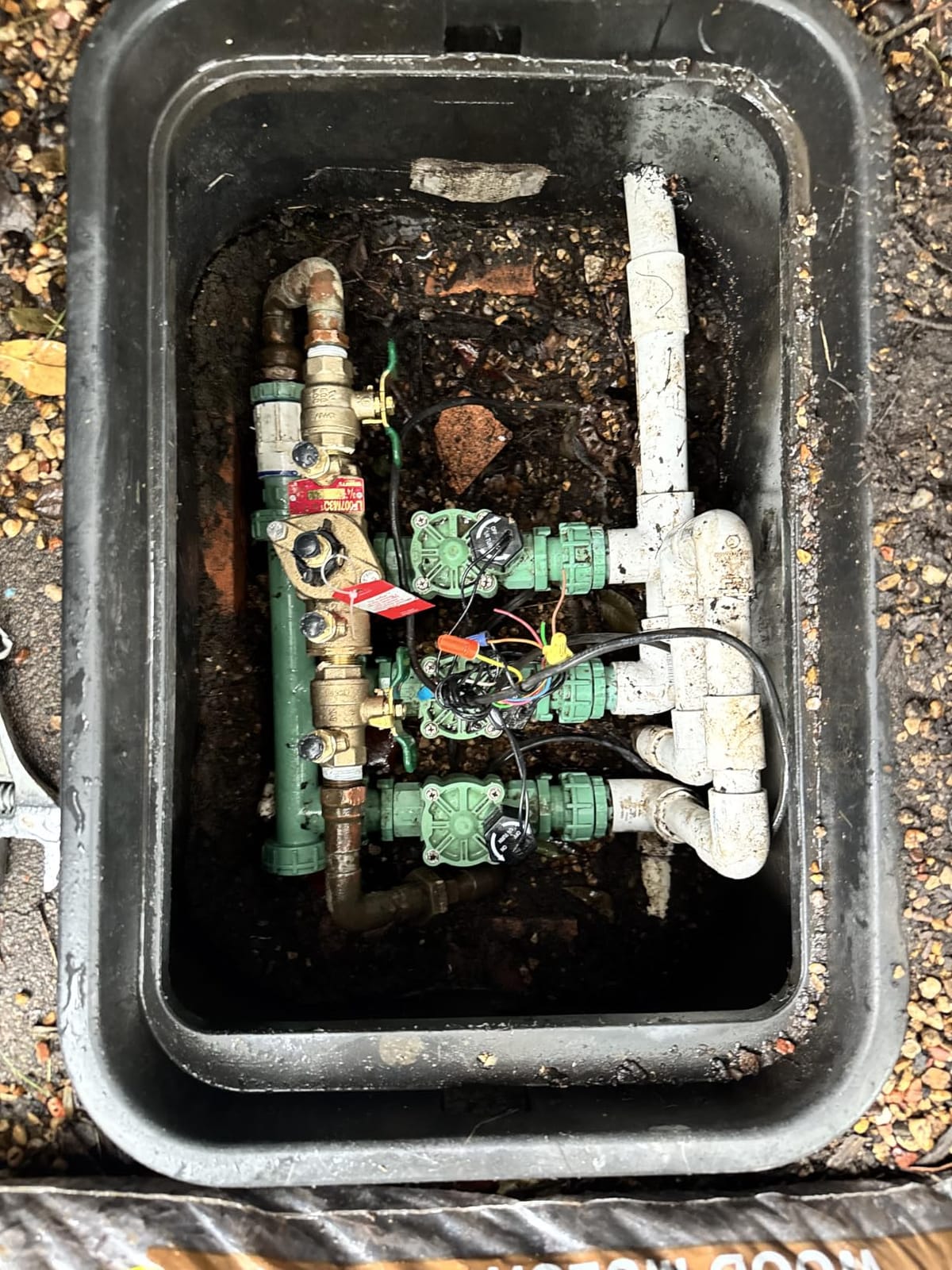
SentryPlus freeze sensor compatibility is included at no extra cost. If you’re in a freeze-prone area, the optional sensor plugs into the unit and provides early warning before temperatures reach damaging levels. For a 3/4 inch device at this price point, it’s a feature normally reserved for larger commercial assemblies.
Compact modular design with top-entry access means in-line repairs are straightforward. Replaceable check discs and seats extend the service life indefinitely. If you’re plumbing a new residential service or upgrading from an older DCVA, this is the lead-free option we’d install today.
Why Lead-Free Matters More Each Year
California, Vermont, Maryland, and Louisiana have all tightened lead-free requirements in recent years, and the federal Reduction of Lead in Drinking Water Act is now fully in effect. Even if your state hasn’t mandated LF certification, the LF007 future-proofs your installation.
Best Uses for a 3/4 Inch DCVA
Smaller residential service lines, irrigation laterals, boiler feeds without chemical injection, and auxiliary water lines where a PVB won’t meet code. For most homes, 3/4 inch is the right size; 1 inch is required only for high flow demands.
How to Choose the Right Backflow Preventer?
Choosing the best backflow preventer for your situation comes down to four things: the type of cross-connection, the water hazard level, your local code, and your budget. Here’s how to think through each one.
The first question is whether the backflow source is back-pressure or back-siphonage. Back-pressure happens when downstream pressure exceeds supply pressure, pushing water backward. Back-siphonage happens when supply pressure drops (like during a water main break) and creates a vacuum that pulls water backward. Most residential applications deal with back-siphonage, which is why pressure vacuum breakers are the most common residential device.
Types of Backflow Preventers
There are four main types, each with different protection levels and applications.
Atmospheric Vacuum Breakers (AVBs) are the simplest and cheapest. They prevent back-siphonage only and must be installed above the highest outlet. They cannot be used under continuous pressure, which limits them to hose bibb and similar intermittent applications.
Pressure Vacuum Breakers (PVBs) add a spring-loaded check valve and an air relief valve. They protect against back-siphonage only, must be installed at least 12 inches above the highest outlet, but can handle continuous pressure. This is the most common residential irrigation device.
Double Check Valve Assemblies (DCVAs) use two independent check valves in series. They protect against both back-pressure and back-siphonage and can be installed in any orientation. They are for non-health hazard applications.
Reduced Pressure Zone Assemblies (RPZs) are the highest protection level. They use two check valves plus a differential pressure relief valve that dumps water to atmosphere if the checks fail. RPZs protect against both back-pressure and back-siphonage in high hazard applications.
Installation Considerations
For PVBs, the 12-inch height requirement is non-negotiable. Without that elevation, the air relief valve cannot function correctly. DCVAs and RPZs can be installed horizontally, which gives more flexibility in tight mechanical rooms.
Most jurisdictions require a permit and inspection for backflow preventer installation on water service lines. For irrigation, your water district may have specific device requirements. Pull the permit before buying the device; some inspectors will reject models not on their approved list.
Maintenance and Annual Testing
PVBs, DCVAs, and RPZs all require annual testing by a certified backflow tester. AVBs and hose bibb vacuum breakers are exempt because they rely on a single moving check that’s not separately testable. Annual test costs range from $50-$300 depending on your region and device type.
Winterization is the other big maintenance consideration. Drain the device through the test cocks before freezing weather. RPZs need to be fully drained and the relief valve blown dry. A frozen backflow preventer is a cracked backflow preventer, and replacement costs run into hundreds of dollars.
Cost Breakdown
Device costs span from under $10 for a hose bibb vacuum breaker to over $500 for a 1-inch RPZ. The device itself is only part of the cost. Professional installation runs $200-$1000 depending on complexity, and annual testing is $50-$300 per device per year. Factor all three into your total cost of ownership.
Frequently Asked Questions
How much do plumbers charge to install a backflow preventer?
Professional installation typically costs between $200 and $1000, depending on the device type, location, and local labor rates. A simple hose bibb vacuum breaker is a DIY-friendly job that costs nothing but your time. Inline DCVA and RPZ installations on a water service line generally require a licensed plumber and a permit, which pushes the total higher. Get at least three quotes; pricing varies widely between contractors.
What is the most reliable method for preventing backflow?
A reduced pressure zone (RPZ) assembly is the most reliable mechanical method for preventing backflow. It uses two independent check valves plus a differential pressure relief valve that physically dumps water to atmosphere if either check fails. RPZs are required for high hazard applications like hospitals, car washes, and dental offices. For residential irrigation, a pressure vacuum breaker (PVB) is the most common and reliable choice.
What is the life expectancy of a backflow preventer?
A well-maintained backflow preventer typically lasts 5 to 15 years, depending on the device type, water quality, and climate. PVBs and DCVAs in residential irrigation often reach the 10-year mark with annual testing and winterization. RPZs in commercial service can last 15+ years with regular rebuilds. Hose bibb vacuum breakers are inexpensive enough to replace every 3 to 5 years as preventive maintenance.
Can a homeowner install a backflow preventer?
Homeowners can install hose bibb vacuum breakers and atmospheric vacuum breakers themselves with basic tools. Inline devices on dedicated water service lines (DCVAs, RPZs, and irrigation PVBs that connect to the main supply) typically require a licensed plumber and a permit in most jurisdictions. Even where DIY is allowed, the device must be tested by a certified backflow tester before it goes into service, so check your local code first.
What is the most common backflow preventer installed at a residential meter?
A dual check valve assembly is the most common backflow preventer installed at a residential water meter. It is compact, lead-free, and provides adequate protection for non-health hazard residential containment without requiring annual testing in many jurisdictions. PVBs are the most common device installed downstream of the meter for irrigation, where the 12-inch elevation requirement is easier to meet.
Final Verdict
If we had to pick one device for the typical homeowner, the Zurn Wilkins 1-720A is the best all-around residential backflow preventer for irrigation. Over 3,300 reviews, bronze construction, broad code acceptance, and decades of proven field performance make it the safe choice.
For hose bibbs and budget needs, the Eastman hose bibb vacuum breaker delivers heavy-duty brass at a price that lets you put one on every outdoor spigot. For commercial or high-hazard applications, the Zurn Wilkins 1-975XL or Febco 765 covers the spec sheet. Whatever you choose, make sure your installer pulls the permit and gets the device tested before it goes live.