
My kitchen counter has hosted more volcanic eruptions than a geology textbook. Over the past three years, I’ve worked with my own two kids (ages 5 and 9) plus a rotating cast of nieces, nephews, and neighborhood science-obsessed friends to test the best kids science lab kits on the market. We measured, mixed, fizzed, failed, and cleaned up more green slime than I care to admit.
This guide rounds up the best kids science lab kits for 2026, organized by age, interest, and budget. Whether you’re shopping for a 4-year-old who loves to pour and mix, an 8-year-old ready for real chemical reactions, or a tween who wants a microscope and mineral specimens, you’ll find something tested by actual families below.
I focused on three things the spec sheets won’t tell you: how long the kit stays interesting, how much parental sanity it costs in cleanup, and whether the experiments actually work when a tired grown-up is reading the instructions at 8 PM on a Tuesday. Every product below earned its spot.
Top 3 Picks for Best Kids Science Lab Kits in October

Doctor Jupiter My First Science Experiment…
- 100+ experiments
- Ages 4+
- ASTM safety certified

Best Kids Science Lab Kits in 2026 Quick Overview
1. Doctor Jupiter My First Science Experiments Kit – Best Overall for Young Scientists
Doctor Jupiter My First Science Experiments Kit for Kids Ages 4+
100+ experiments
Ages 4+
ASTM F963-17 safety certified
Pros
- 100+ experiments with bonus booklet
- Meets U.S. ASTM safety standards
- Easy illustrated instructions
- Durable beakers and goggles
Cons
- Some ingredients not included
- Premium pricing for contents
My 5-year-old opened this kit on a Saturday morning and didn’t ask for the iPad until dinner. That’s the highest praise a parent can give a science kit. The Doctor Jupiter My First Science Experiments Kit ships with two beakers, a conical flask, spatulas, spray bottles, safety goggles, and a guided experiment booklet that walks kids through real science concepts without feeling like a textbook.
What sold me on this one was the safety certification. The kit meets ASTM F963-17, which is the U.S. toy safety standard. When my daughter wanted to mix the color-changing liquids, I wasn’t hovering anxiously. The instructions are written for early readers with picture cues at every step, so my kid could mostly work independently while I watched from the couch.
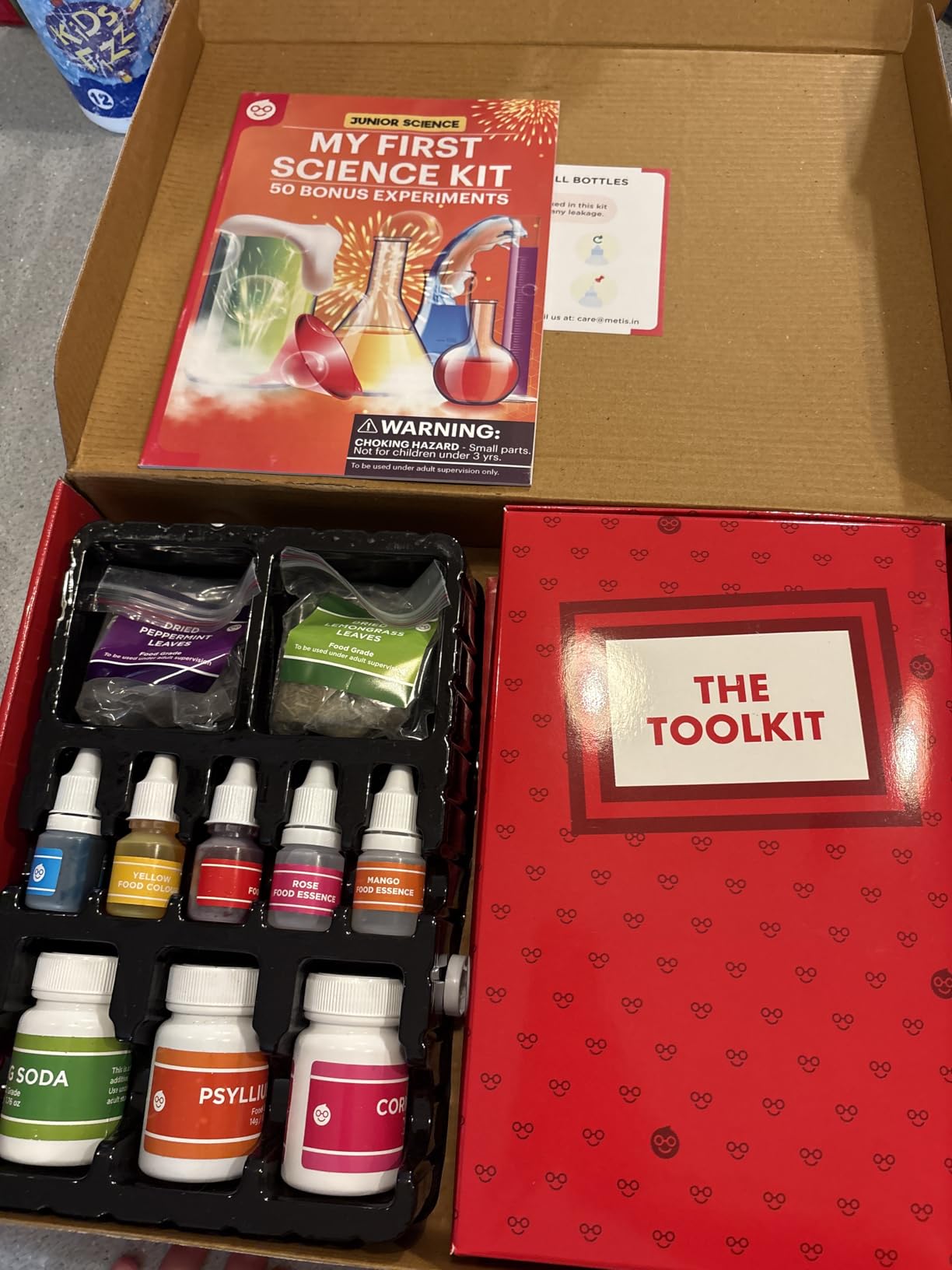
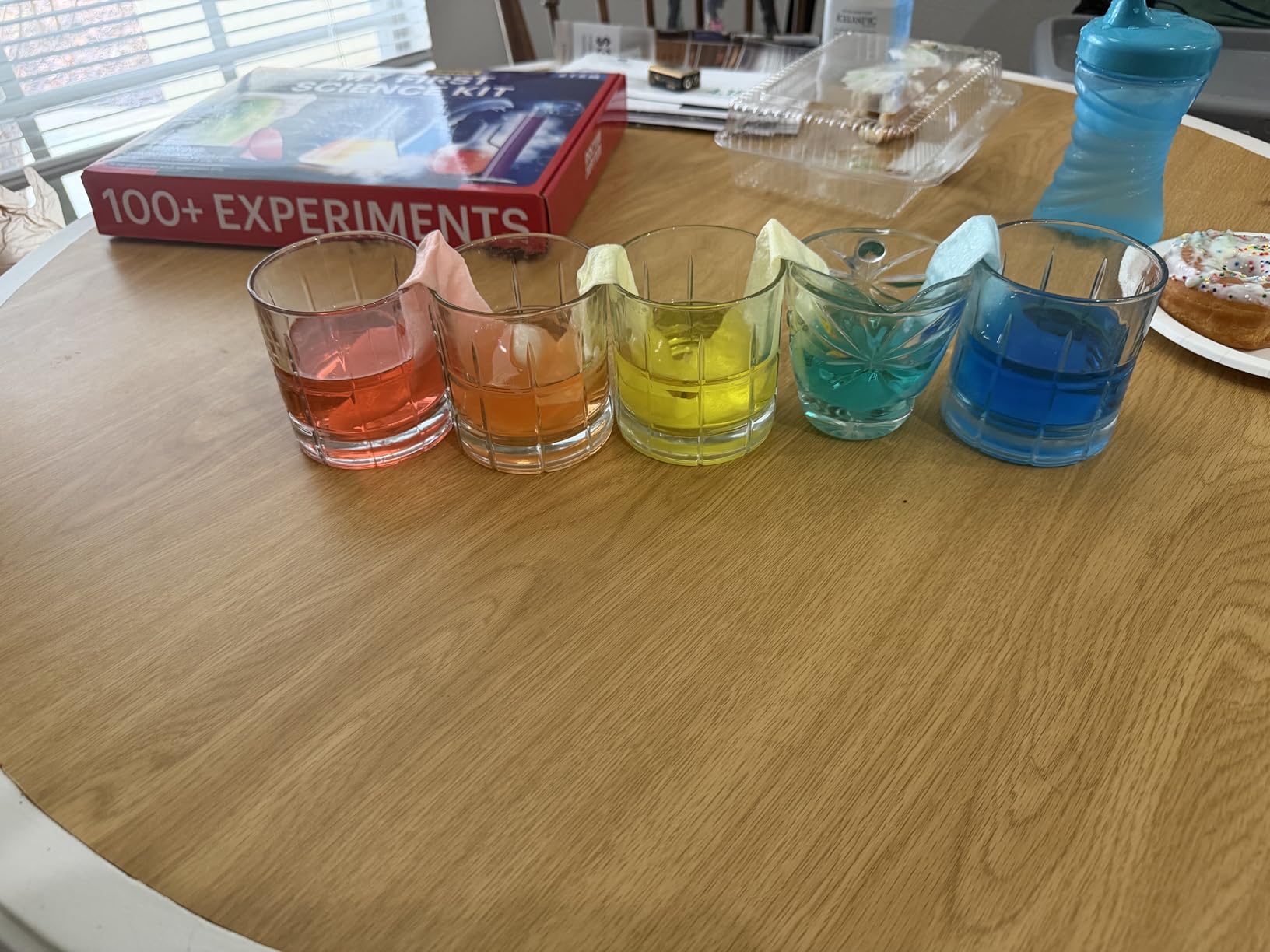
We worked through about 12 experiments in the first week and still had plenty left for rainy afternoons. The bonus experiment booklet adds extra projects using common household items like baking soda and vinegar, which stretched the value considerably. Cleanup was surprisingly easy because the kit includes a plastic tray that catches spills.
The two minor issues: a few experiments call for ingredients you need to grab from the kitchen, and the price is slightly higher than some competitors. But considering the 100+ experiments and the safety certification, this kit delivers the best overall experience for ages 4 through 8 in our testing.
What age group gets the most from this kit
Kids ages 4 to 8 are the sweet spot. Younger children need parent help with measuring but love the colorful reactions. Older kids up to about 10 can follow the bonus experiments independently and start understanding the science principles behind each activity.
How it compares on messiness
Most experiments stay contained with the included tray. The spray bottle activities can drift, so we did those outside on the porch. Total cleanup time after a full afternoon of experiments was about 5 minutes with a damp cloth.
2. National Geographic Earth Science Kit – Best Value for Crystal and Rock Lovers

National Geographic Earth Science Kit with 100+ Activities for Kids 8-12
100+ activities
Includes crystal growing and dig kits
Ages 8-12
Pros
- Includes two dig kits with real specimens
- Crystal growing experiments work reliably
- Full-color learning guide
- Massive 18k+ reviews backing it
Cons
- Instructions not as detailed as some
- Some experiments need household items
If you’ve ever watched a kid’s face light up the first time they crack open a geode, you already know why this kit earned the best value slot. The National Geographic Earth Science Kit packs crystal growing, two geologic dig kits, a real rock and mineral collection, and over 15 hands-on experiments into one box. It has more than 18k verified reviews on Amazon for a reason.
My 9-year-old spent an entire weekend with this kit. The dig blocks reveal genuine fossils and minerals inside, which feels like treasure hunting. The crystal growing experiments actually grow crystals overnight if you follow the directions carefully, and my kid ran to check them every 20 minutes for the first hour.
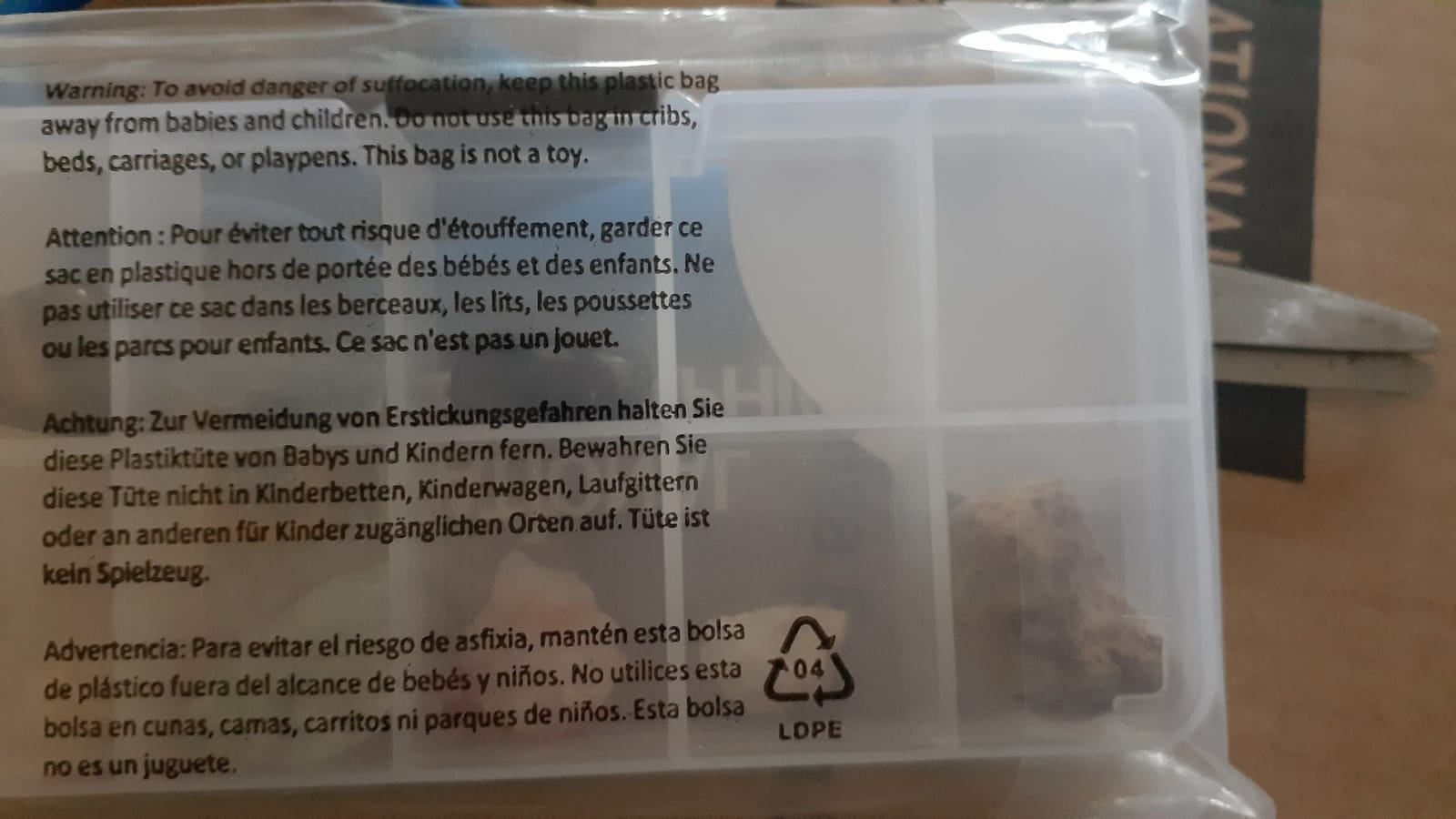
The kit covers earth science concepts like geology, crystal formation, and the rock cycle in a way that doesn’t feel like a lesson. The full-color learning guide includes diagrams and explanations that connected naturally to what my kid is learning in 4th grade science. We used this kit as a homeschool supplement and it slotted into our curriculum seamlessly.
The main downside is the instruction clarity. Some steps are more visual than written, so a kid who doesn’t read fluently may need help. A few experiments require supplies from your pantry. But for the price, you’re getting a substantial earth science experience that beats anything else in this range.
Why it works for siblings of different ages
My 5-year-old and 9-year-old both enjoyed this kit, though in different ways. The younger one loved the dig blocks and just digging out treasures. The older one was more interested in identifying the rocks and minerals using the included guide and learning why the crystals formed. Both kids got hours of independent play from the same box.
How long the crystals and specimens last
Grown crystals become permanent display pieces on a shelf. The dig block specimens can be displayed or stored in the included pouch. We still have ours on a bookshelf six months later, and they look just as good as the day we extracted them.
3. National Geographic Magic Chemistry Set – Budget Pick for Performers
National Geographic Magic Chemistry Set with 10 Tricks for Kids Ages 8-12
10 science magic tricks
Magic wand included
Ages 8+
Pros
- Magical theme appeals to kids who like performing
- Includes magic wand and white gloves
- Affordable entry point
- Quick experiments with wow factor
Cons
- Only 10 main experiments
- Some require adult supervision
Sometimes the gateway to loving science is making your parents gasp. The National Geographic Magic Chemistry Set combines 10 real chemistry experiments with the showmanship of magic tricks. Your kid gets a magic wand and white gloves to perform tricks like making a coin float, changing water color, and creating instant snow.
I bought this for my nephew who loves performing for the family. He learned the science behind each trick faster than he would have from a traditional kit because the payoff was showing off to his grandparents. That’s a clever design choice. The kit earned over 13k reviews for delivering memorable, repeatable entertainment.

Each experiment is quick, which suits short attention spans. Most took us about 10 to 15 minutes including setup. The included instructions explain both how to perform the trick and the chemistry behind it, so kids get a real science lesson without it feeling like school. The packaging is also compact and stores easily in a closet between uses.
The trade-off is that you only get 10 main experiments at this price point. Some parents might want more variety, but the bonus instruction sheet includes additional ideas using household items. For the budget-conscious parent looking for a kit that gets kids excited about chemistry, this is the strongest choice in our testing.
Best for which personality type
This kit is perfect for extroverted kids who love an audience. If your child enjoys magic shows, performance, or showing off tricks to friends, this kit turns science into social play. Quieter, more analytical kids might prefer a traditional chemistry set with more experiments to work through.
Storage and replayability
The kit packs down into a compact box that fits on most bookshelves. Most experiments can be repeated multiple times if you save the materials, though some powders may run out after a few uses. We stored everything in a Ziploc bag between uses and got several rounds of entertainment from each trick.
4. National Geographic Junior Chemistry Set – Best for Ages 4 to 6

National Geographic Junior Chemistry Set with 50 Experiments for Kids
50 experiments
Ages 4+
20+ kid-friendly lab tools
Pros
- Designed specifically for young kids
- Durable child-safe tools
- Easy illustrated instructions
- From award-winning Blue Marble
Cons
- Some ingredients sold separately
- Gloves not included
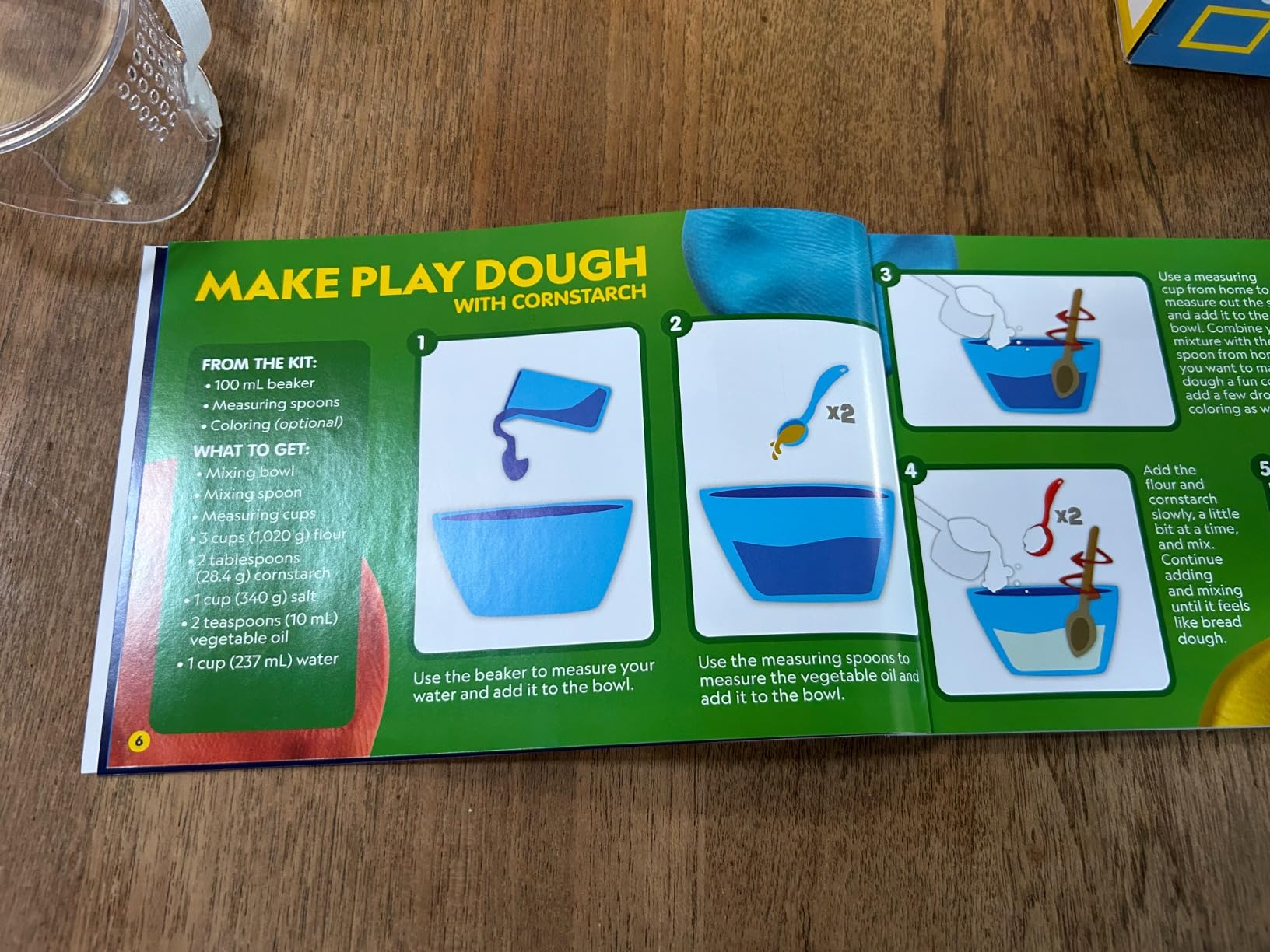
Finding a science kit that actually works for a 4-year-old is harder than it should be. Most kits claim to be for young kids but require reading skills they don’t have yet. The National Geographic Junior Chemistry Set is genuinely designed for the 4 to 6 age range, with chunky lab tools that fit small hands and picture-based instructions.
My 5-year-old daughter loved this kit. The test tubes are smaller and the chemicals are gentler than what you’d find in a standard chemistry set. She could pour and mix independently, which built real confidence. The 50 experiments span color mixing, basic reactions, and simple physics demos like floating and sinking.
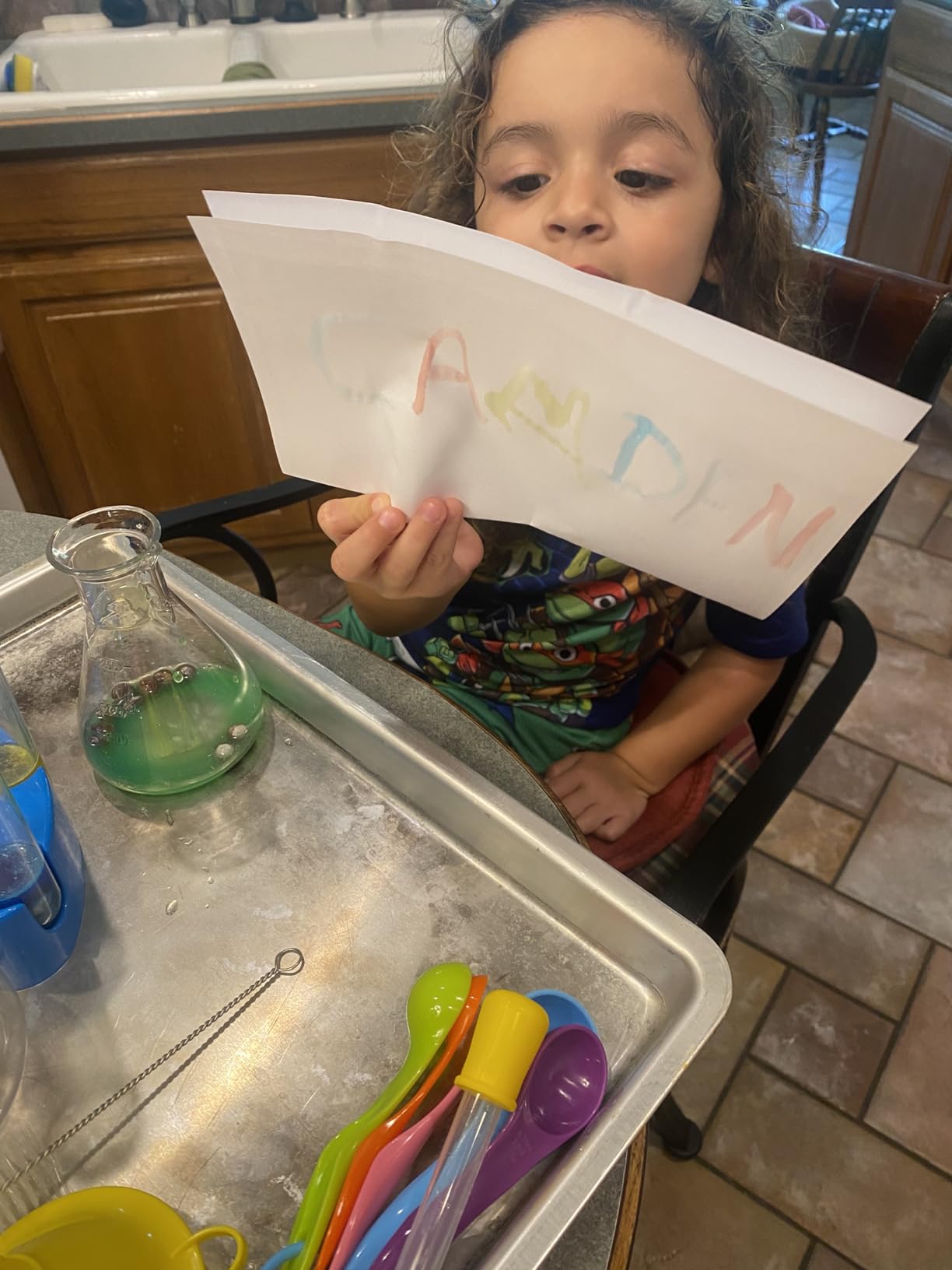
This kit won the Toy Association’s Toy of the Year Award, which gave me confidence before opening the box. It lived up to the hype. The materials feel durable enough to survive enthusiastic young scientists, and the included goggles actually fit small faces. That’s more than I can say for most safety gear at this price point.
The two downsides: a few experiments call for ingredients you’ll need to buy separately, and nitrile gloves aren’t included even though some activities benefit from them. For a parent who wants a safe, age-appropriate introduction to chemistry, though, this is the strongest option in this age range.
When to upgrade to a more advanced kit
Most kids outgrow this kit around age 7 or 8. By that age, they can handle more complex experiments and want to see bigger reactions. Keep this kit in a closet for younger siblings or save it for playdates with younger cousins. The tools stay useful even after the experiments are done.
How it fits into preschool learning
This kit works well alongside preschool science themes. We paired it with books about colors, states of matter, and basic chemistry concepts. The hands-on experience made abstract ideas like mixing colors feel real. Teachers looking for classroom sets will appreciate that the tools and packaging are durable enough to survive shared use.
5. UNGLINGA 150 Experiments Science Kit – Best Variety Pack

UNGLINGA 150 Experiments Science Kits for Kids Chemistry Lab S.T.E.MToys
150 experiments
Covers chemistry, physics, and earth science
Variety format
Pros
- Largest experiment count in our roundup
- Covers multiple science categories
- Easy-to-follow manual
- Great for curious kids
Cons
- Contains latex
- Instructions less detailed than premium kits
If your kid is the type who gets bored after three experiments and wants to try something new, the UNGLINGA 150 Experiments kit is built for them. With 150 projects spanning volcanoes, crystals, physics tricks, and digging activities, this kit keeps curious kids busy for weeks. It earned over 1,000 reviews from families who wanted maximum variety without buying multiple kits.
What I appreciated most was the breadth. One afternoon we’d do a volcano eruption, the next day we’d grow crystals, then we’d try a physics experiment with the included tools. That kind of variety keeps science feeling fresh, especially for kids who haven’t yet locked in on a single interest. The manual walks through each experiment with clear steps and pictures.
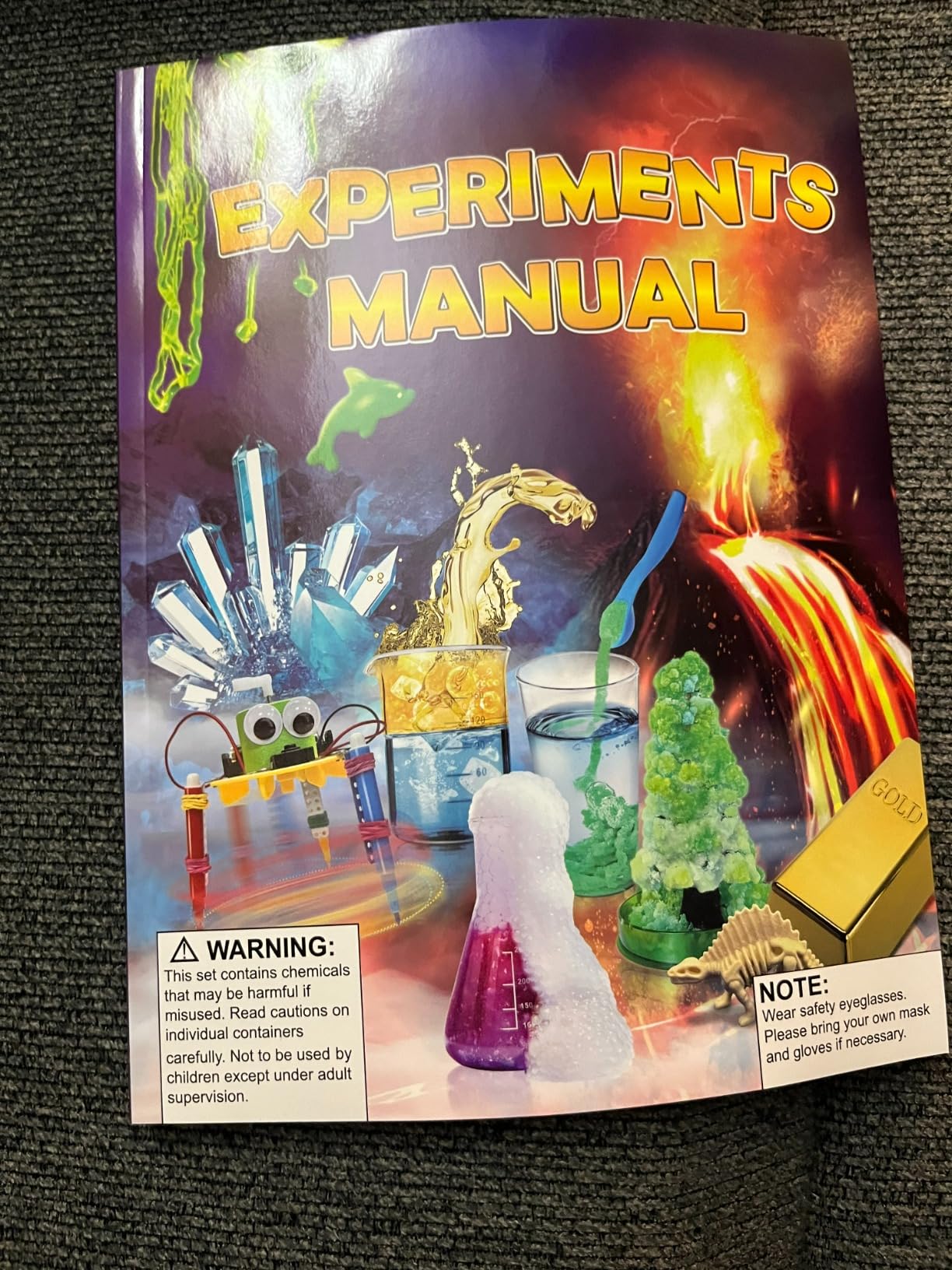
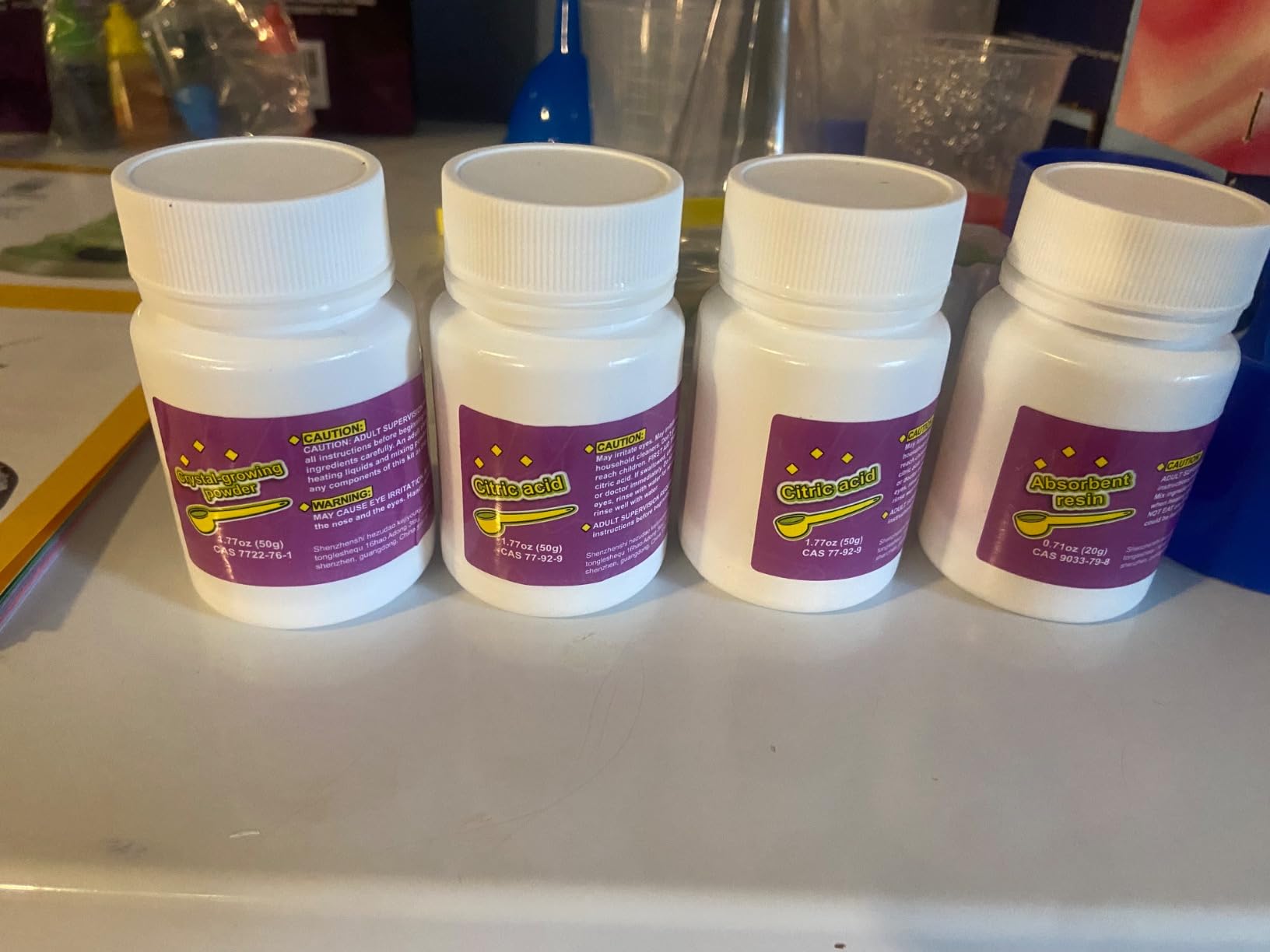
The kit includes nearly all the tools and materials you need, which saves the parental headache of last-minute supply runs. We hit maybe five experiments out of 150 that needed additional household items. The lab tools feel sturdy for the price range, and the storage box keeps everything organized between uses.
Two important caveats. The kit contains latex, so it’s not suitable for kids with latex allergies. The instructions are less detailed than what you’d find in a Thames & Kosmos or National Geographic kit, so younger children will need more hands-on help. For older elementary kids who can read and follow along, though, this kit offers incredible variety for the price.
Why variety matters for younger learners
Kids between 6 and 10 often don’t know what kind of science they like yet. A kit that covers chemistry, physics, and earth science gives them exposure to multiple disciplines. My tester ended up gravitating toward the crystal growing experiments, which led us to the more focused National Geographic Earth Science Kit as a follow-up purchase.
How to organize the experiments
Don’t try to do all 150 in a week. We did two experiments per week and spread them over several months. That pacing kept each activity feeling special and gave my kid time to think about what she’d learned before moving on. The included manual groups experiments by theme, which makes planning easier.
6. Kuovei Science Kit – Best Budget Variety for Ages 6 to 9

Science Kit for Kids,80 Science Lab Experiments,Scientist Role Play
80 experiments
Scientist role play
Sealed chemical bottles
Pros
- 80 experiments at budget price
- Sealed chemical bottles for safety
- Includes guidance card
- Great for role-play
Cons
- English-only instructions
- Some household supplies needed
The Kuovei Science Kit surprised me. At a budget-friendly price, it delivers 80 experiments including rainbow rain, volcano eruptions, and rainbow fountains. The kid I tested this with loved the “scientist role play” angle. The kit includes a white lab coat-style apron in some versions and tools that feel more authentic than typical toy sets.
With over 1,700 reviews, this kit has a strong track record among families. The sealed chemical bottles address a common complaint I hear from parents: kids leaving chemicals open between sessions. Kuovei packages everything in resealable containers that last longer and reduce waste.
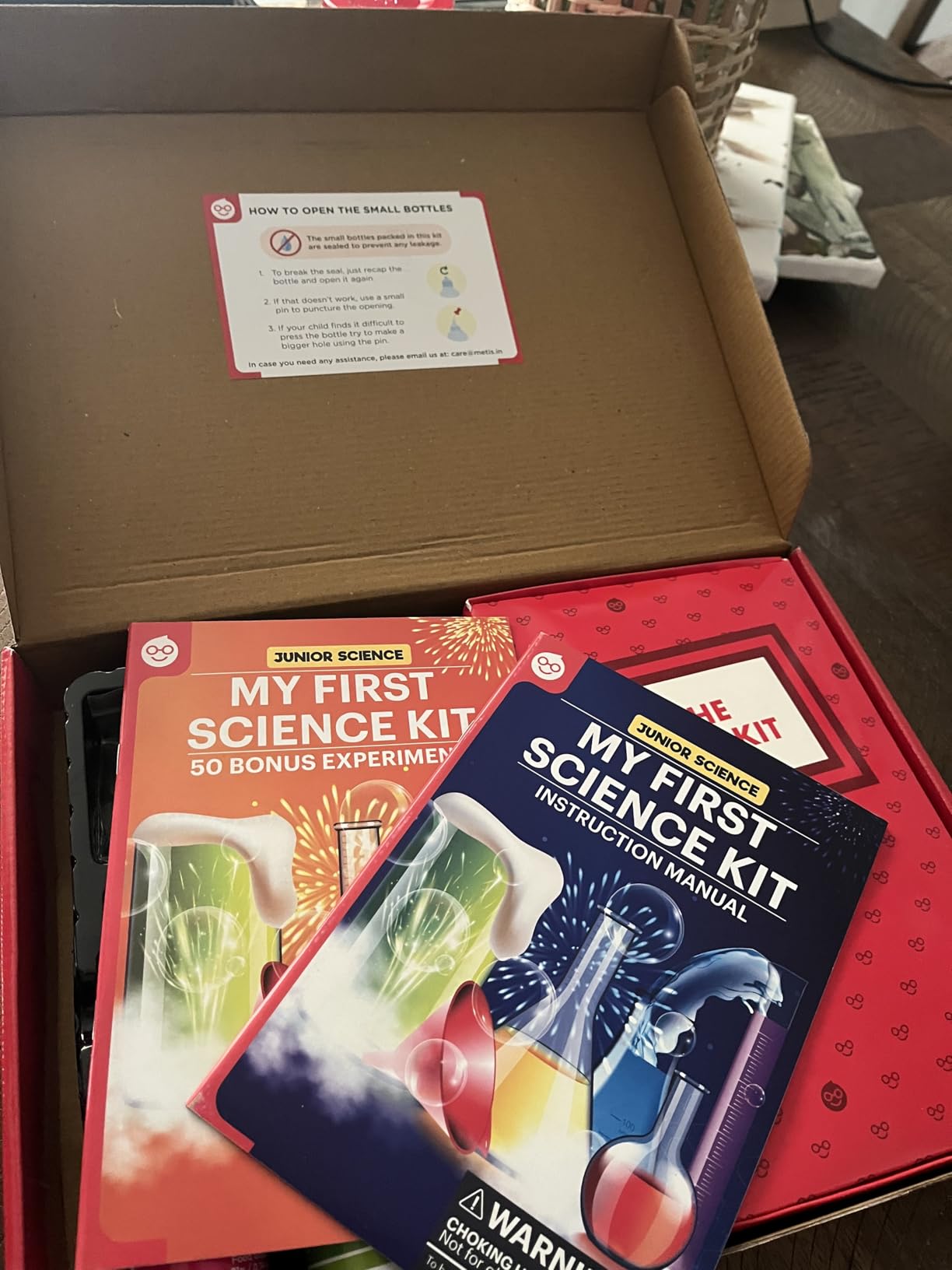
The scientific guidance card adds real value. It explains the principles behind each experiment, so kids understand what they’re observing, not just what they’re mixing. That’s the difference between a toy and an educational kit, and Kuovei gets it right at this price.
Two notes: instructions are in English only, so non-English-speaking families may need to help interpret steps. Some experiments call for common household supplies like vinegar or baking soda that aren’t included. For the price point, though, this kit delivers more value than most competitors in the same range.
Why role play helps with engagement
Kids learn through play, and the scientist costume aspect transforms the activity into imaginative play. My tester spent 30 minutes setting up his “lab” before starting experiments, which gave him ownership over the experience. That kind of buy-in makes the science stick better than passive learning.
Best use cases for this kit
Birthday parties, weekend projects, and rainy day entertainment are all great fits. The 80 experiments mean you can do two per week for an entire school year without repeating. We also found this kit works well as a gift because it doesn’t feel like a budget option when you open the box.
7. National Geographic Mega Science Lab – Best Three-in-One for Ages 8 to 12

National Geographic Mega Science Lab with 75 Experiments for Kids 8-12
75 experiments
Three kits in one
Earth Science, Chemistry, and Magic
Pros
- Three complete kits bundled together
- Real rock and mineral specimens
- 45 core experiments plus 30 bonus
- Ages 8-12 sweet spot
Cons
- Bigger box needs more storage
- Some activities get messy
- Parent supervision needed
Why buy three kits when one box covers earth science, chemistry, and science magic? The National Geographic Mega Science Lab bundles all three themes into one substantial package with 75 experiments total. For families who want comprehensive coverage without juggling multiple boxes, this kit solves the problem.
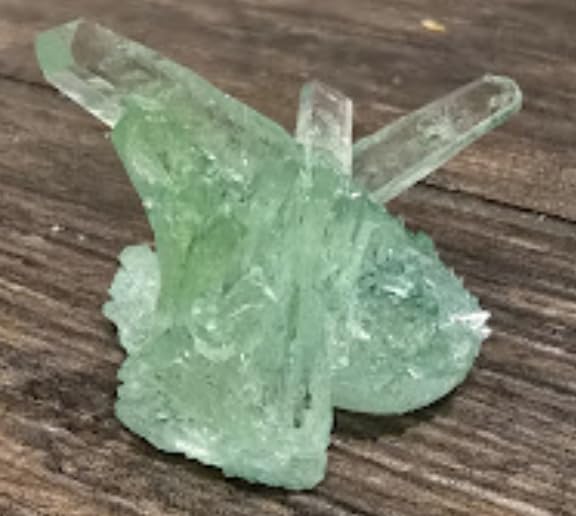
My 9-year-old tester used this kit for an entire semester of homeschool science. We worked through the earth science section first (rocks, crystals, volcanoes), moved into chemistry, and finished with the magic tricks. The progression felt natural and built on what came before. The included real rock, mineral, and crystal specimens added a museum-quality element.
The kit includes 45 main experiments plus 30 bonus activities using household items. That experiment count rivals dedicated kits in each category. The instructions walk through each activity with illustrations and scientific explanations. We appreciated the bonus experiments especially because they extended play value without requiring additional purchases.
The trade-offs are size and supervision. This kit comes in a bigger box that needs dedicated storage space. Some activities, particularly the chemistry section, get messy and benefit from a protected workspace. Younger users in the 8 to 10 range will need a parent nearby for certain experiments. For ages 10 and up, though, the kit works mostly independently.
How it compares to buying three separate kits
If you bought each section separately, you’d spend more and have three boxes to store. The Mega Science Lab consolidates everything into one package at a lower combined price. The only thing you sacrifice is depth in each category. For families who want exposure to multiple science areas rather than deep specialization in one, this kit is the smarter buy.
Storage and organization tips
This kit benefits from a dedicated plastic bin because the components are spread across three themes. We sorted the rocks and minerals into small bags, kept the chemicals in their original sealed containers, and stored everything in a single shoebox-sized container. That made setup and cleanup faster for the next session.
8. Thames & Kosmos Ooze Labs Chemistry Station – Best for Slime and Ooze Lovers

Ooze Labs: Chemistry Station | Experiment Set
20 non-hazardous experiments
57 pieces
Chemistry station with lab tools
Pros
- Premium lab station with real-feeling tools
- Non-hazardous chemicals with no borax
- Colorful and engaging activities
- Strong brand reputation
Cons
- Can get messy
- Requires dedicated workspace
- Younger kids need supervision
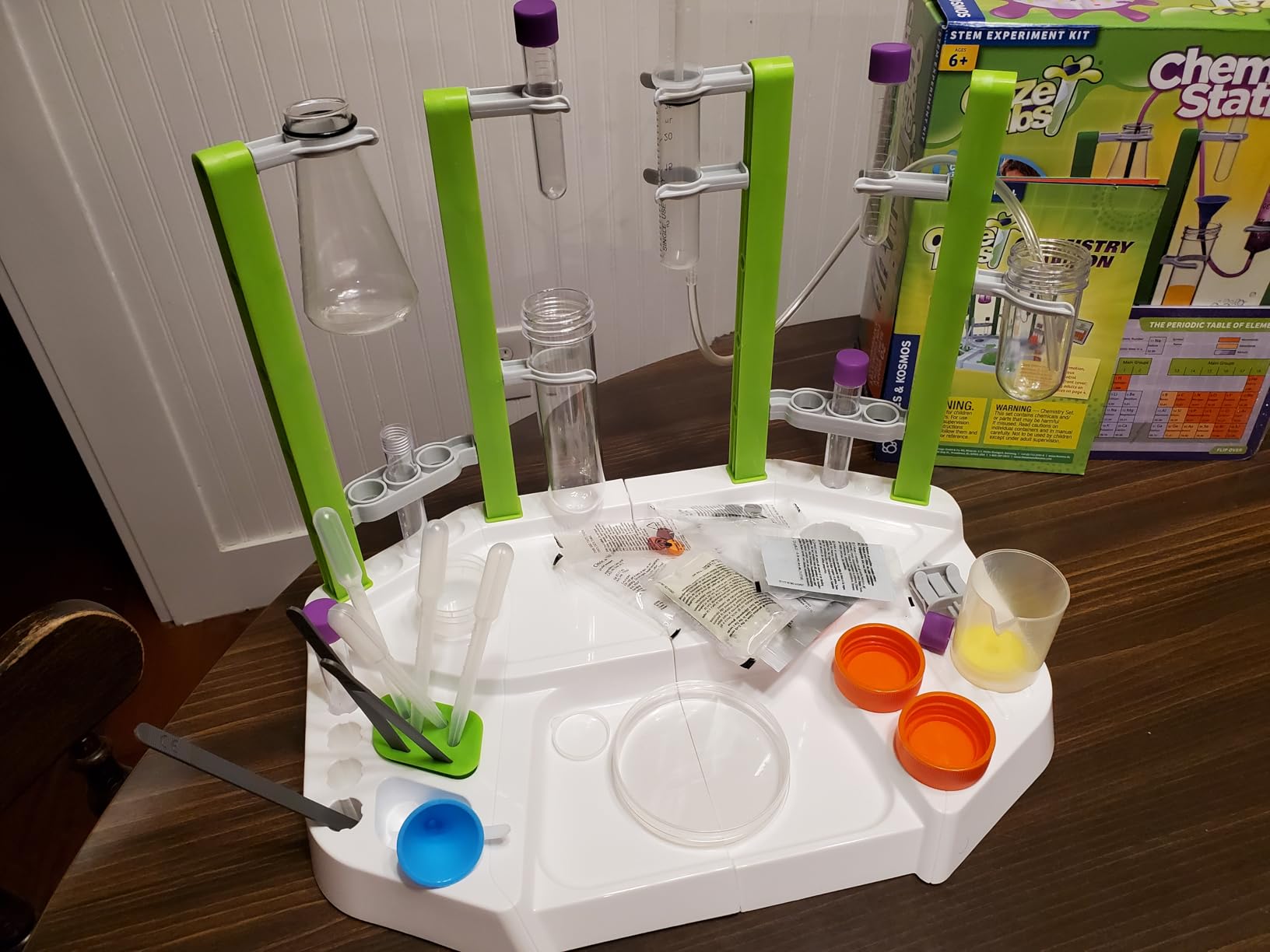
Thames & Kosmos is the gold standard in kids science kits, and the Ooze Labs Chemistry Station shows why. This kit delivers a true chemistry lab experience with 57 pieces including beakers, test tubes, flasks, pipettes, and a 16-page full-color manual explaining the science behind each activity. The lab station itself doubles as a storage and display piece.
The 20 experiments focus on what kids love most: glowing slime, fizzing reactions, oozing bubbles, and colorful chromatography. These are the kinds of activities that make kids beg to do science. The non-hazardous chemicals are a major plus for parents worried about safety, and there’s no borax, which is a common skin irritant in cheaper slime kits.
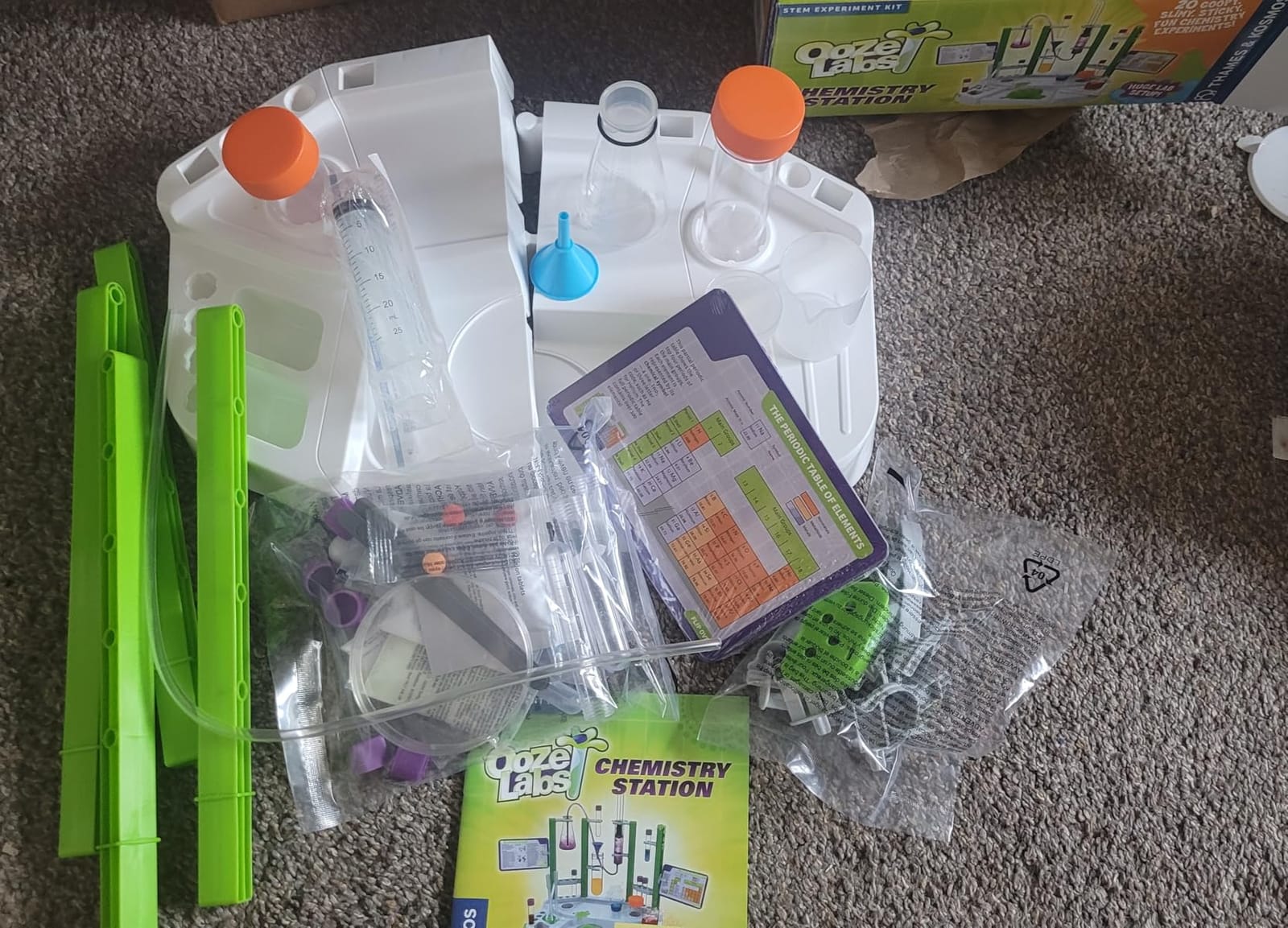
What separates this kit from competitors is the equipment quality. The beakers and test tubes look and feel like real lab tools. My tester felt like a real chemist rather than a kid playing with toys. That feeling of authenticity makes a real difference in how seriously kids approach the experiments.
The trade-off is messiness. Slime and ooze experiments by nature get everywhere. Plan on covering your workspace with newspaper or a plastic tablecloth. Younger children will need help reading the manual and following multi-step instructions. For ages 7 and up who can handle a bit of chaos, this kit delivers an authentic chemistry experience.
Why Thames & Kosmos is worth the premium
The brand has decades of experience making educational science kits. The manuals are thorough, the experiments actually work as described, and the equipment holds up over years of use. Many families I spoke with pass Thames & Kosmos kits down to younger siblings. That longevity justifies the higher price compared to budget options.
Workspace setup for ooze experiments
Do ooze experiments on a tile floor or outside on a porch. Cover surfaces with a disposable tablecloth. Have paper towels and a damp cloth ready. The cleanup is real but manageable if you plan ahead. After our first session, we established a “science station” in the garage with a plastic mat and storage bins for ongoing projects.
9. National Geographic Amazing Chemistry Set – Best for Crystal Growing Enthusiasts
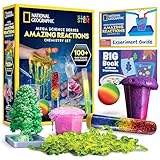
National Geographic Amazing Chemistry Set with 100+ Experiments Ages 8-12
100+ experiments
15 main activities plus 85 bonus
Ages 8-12
Pros
- Crystal growing experiments actually work
- 100+ total experiments
- Real scientific tools included
- Toy of the Year Award winner
Cons
- Some experiments need supervision
- Chemical packets aren't resealable
Crystal growing is one of those activities that genuinely wows kids. The National Geographic Amazing Chemistry Set delivers reliable crystal experiments alongside 100+ total activities. With over 3,500 reviews and a Toy of the Year Award, this kit has earned its reputation among families who want chemistry that actually produces visible results.
The kit includes 15 main experiments with all materials provided, plus 85 bonus experiments using common household items. That means you can stretch the kit across months of weekend science sessions without buying additional supplies. The included test tubes, beakers, and pipettes feel like authentic lab equipment.
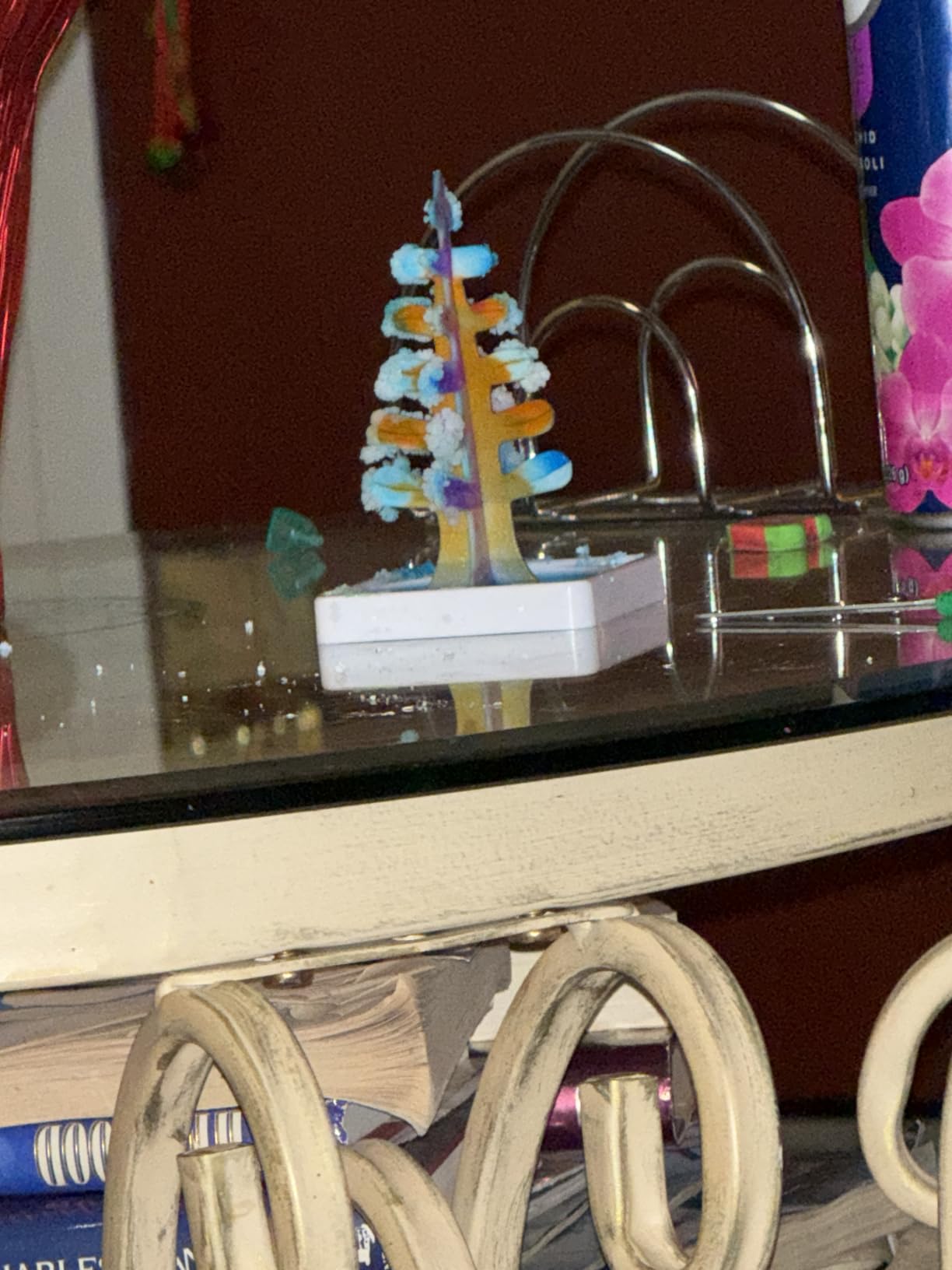
We tested the crystal growing experiment specifically because so many kits promise beautiful crystals and deliver disappointment. National Geographic’s crystals grew overnight into the colorful, sparkling formations shown on the box. My kid was thrilled. That’s the kind of reliable result that turns one-time kit buyers into repeat customers.
The main downsides: some experiments require adult supervision, especially anything involving heat or multiple chemical combinations. The chemical packets aren’t resealable, which means you’ll want to use them in one session or transfer contents to airtight containers. For ages 8 to 12, this kit delivers on its promises more consistently than most competitors.
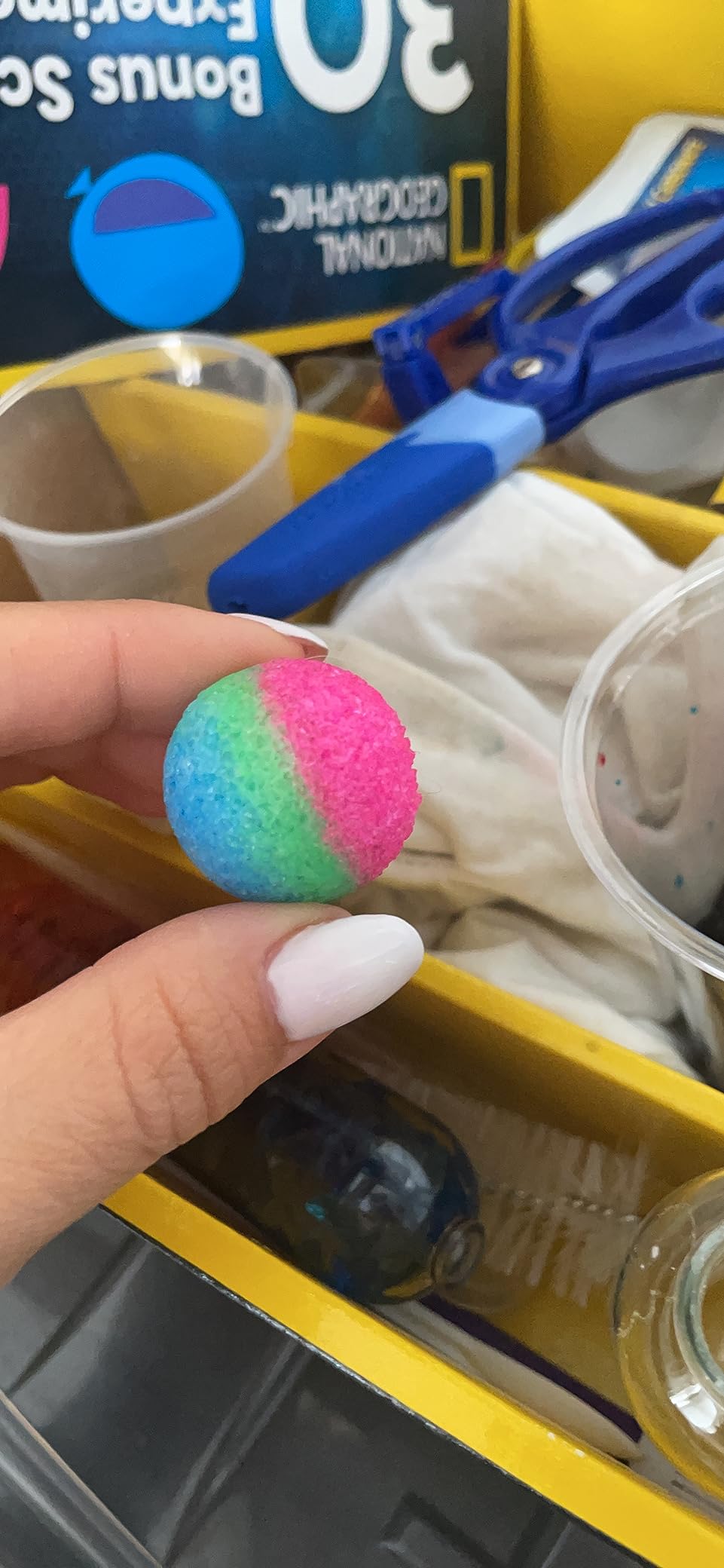
Why crystal growing hooks reluctant science learners
Crystal growing requires patience and produces a tangible reward you can keep. For kids who get frustrated by experiments that end with “nothing visible happened,” crystals provide closure. Display them on a shelf and your kid will remember the experience every time they walk past.
How to store leftover chemicals
Buy small airtight containers or use food storage bags to transfer leftover chemical packets. Label everything clearly. We kept our leftover chemicals in a small plastic bin in a closet, which extended the kit’s usability across multiple sessions. Resealed chemicals kept working weeks later.
10. National Geographic Science Magic Kit – Best Magic-Science Hybrid

National Geographic Science Magic Kit with 100+ Experiments for Kids 8-12
100+ experiments combined with magic tricks
Performance-ready kit
Ages 8+
Pros
- Unique science plus magic concept
- 20 stunning magic tricks with real science
- Includes performance accessories
- Huge review base (8k+ reviews)
Cons
- Powders can be messy
- Some powders aren't resealable
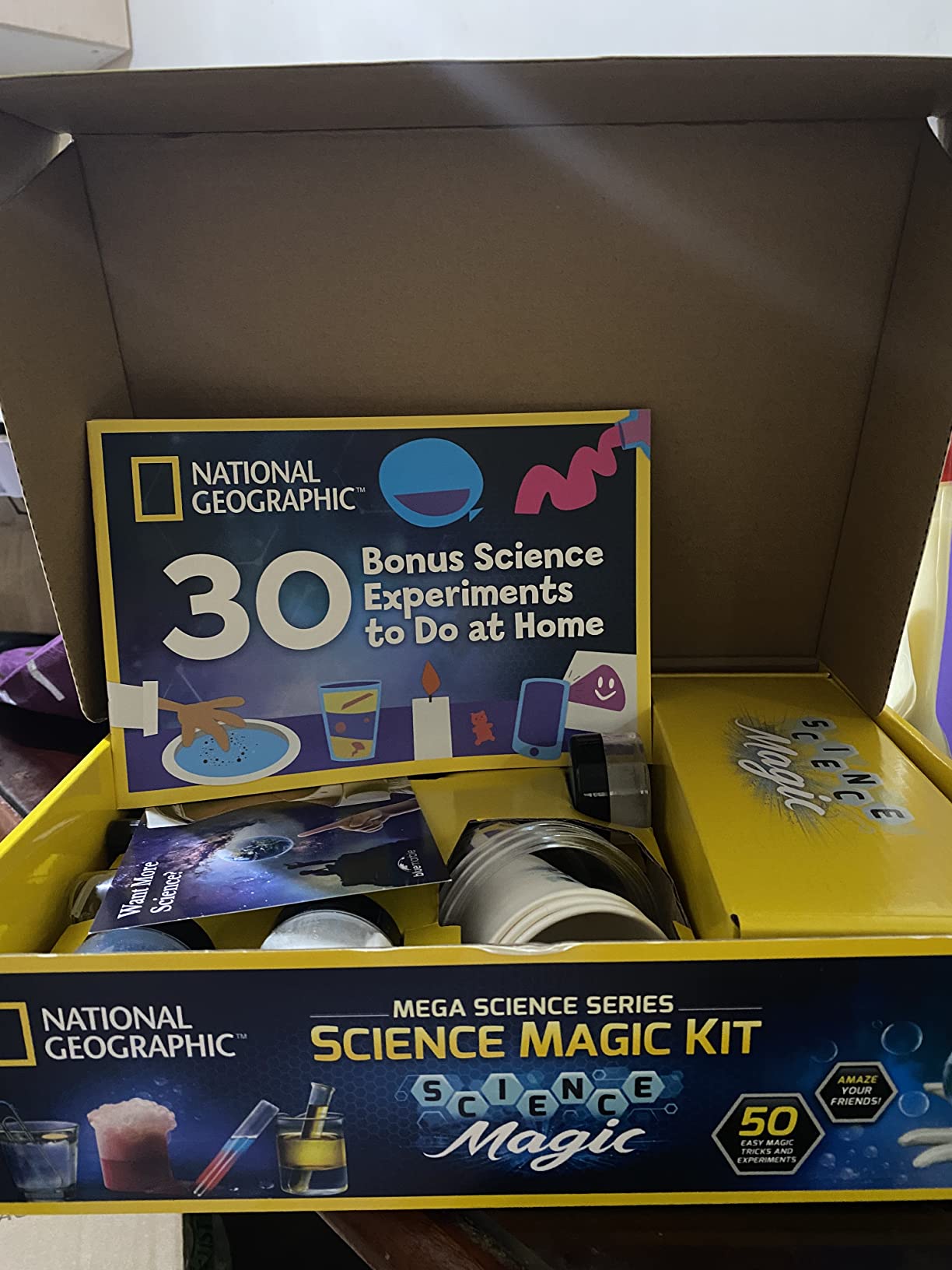
The National Geographic Science Magic Kit takes the magic theme further than the budget option we covered earlier. With 20 stunning magic tricks plus 85 bonus experiments, this kit turns your living room into a science-powered magic show. The kit includes a magic wand and white gloves for the full performance experience.
What makes this kit stand out is the trick variety. Your kid can make snow appear, create square bubbles, become “waterproof,” and float a coin. Each trick uses real physics or chemistry principles, but the kid doesn’t need to explain the science to enjoy performing. With over 8,800 reviews, this is one of the most popular science magic kits on Amazon.
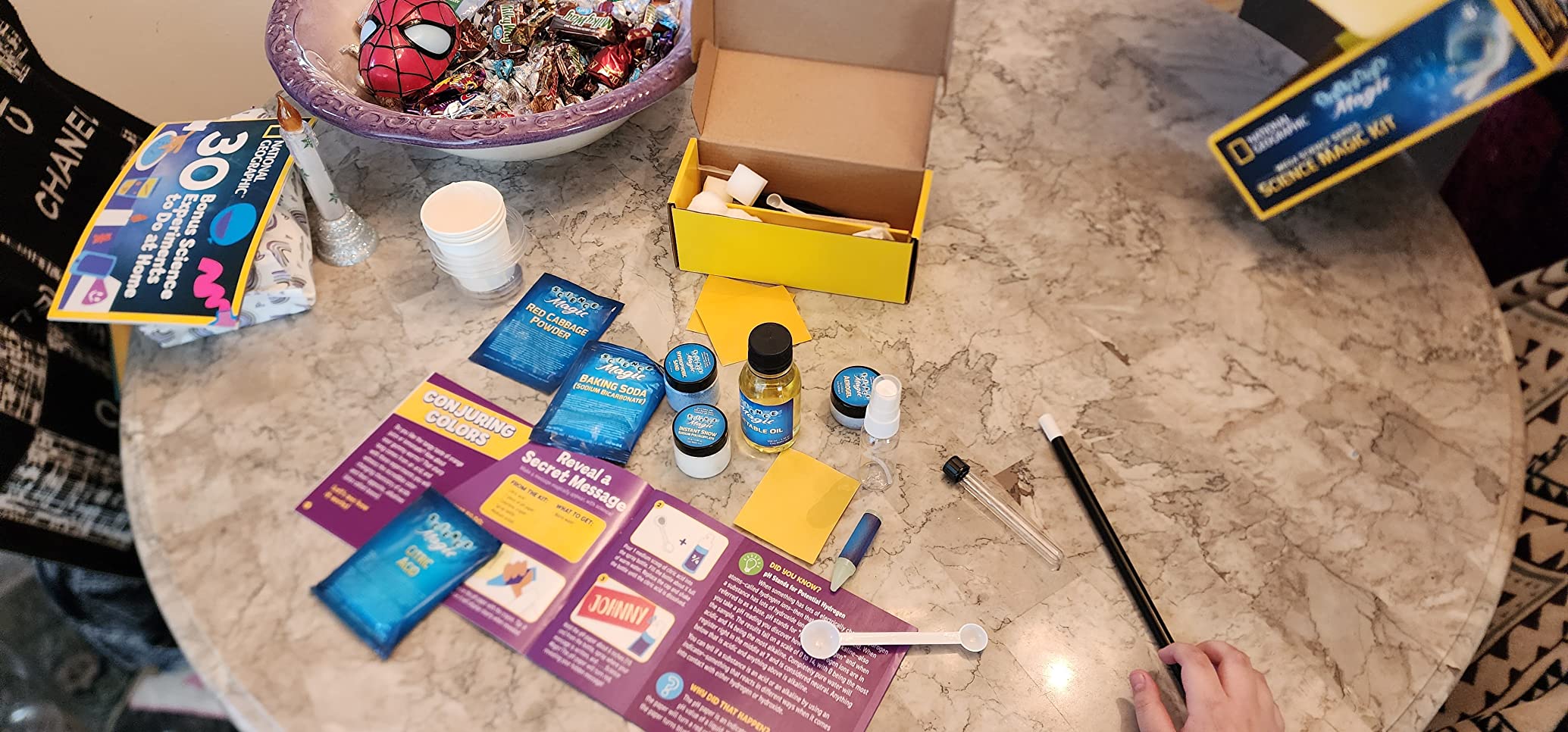
My tester used this kit for a family talent show. The performance angle gave her a reason to practice each experiment until it worked perfectly, which is rare motivation for science activities. The instructions walk through both the performance steps and the science explanations, so kids get the educational value too.
The powders included in the kit can be messy. Some aren’t resealable, so you’ll want to transfer them to small containers if you plan to reuse. The magic wand and white gloves are nice touches that elevate the experience beyond a typical chemistry set. For kids who love performing, this kit delivers science engagement that other kits can’t match.
Why the magic angle works for science engagement
Kids who claim to hate science often love magic. The trick is showing them that magic is science they don’t understand yet. Once they see that floating a coin involves real principles like surface tension or chemical reactions, the connection clicks. This kit makes that bridge naturally.
Birthday party activity potential
This kit works brilliantly as a birthday party activity. Set up a “magic show station” and let kids take turns performing tricks for each other. The performance element turns solo science into social play. One parent told me she uses this kit every year for her daughter’s party because the kids remember it more than any other party activity.
11. National Geographic Chemistry Set – Best for Volcano and Rocket Projects

National Geographic Chemistry Set with 45 Experiments for Kids 8-12
45 experiments
Volcano eruption, geyser, and rocket launch
Ages 8-12
Pros
- Iconic volcano eruption experiment included
- Geyser and rocket activities
- Rocket launch impresses kids
- 5k+ reviews
Cons
- Volcano mold assembly can be tricky
- Chemicals not resealable
Every kid should get to launch a rocket at least once. The National Geographic Chemistry Set delivers that experience alongside 44 other experiments including the classic volcano eruption and a geyser demo. With over 5,300 reviews, this kit has become a go-to choice for families who want the iconic chemistry experiences in one box.
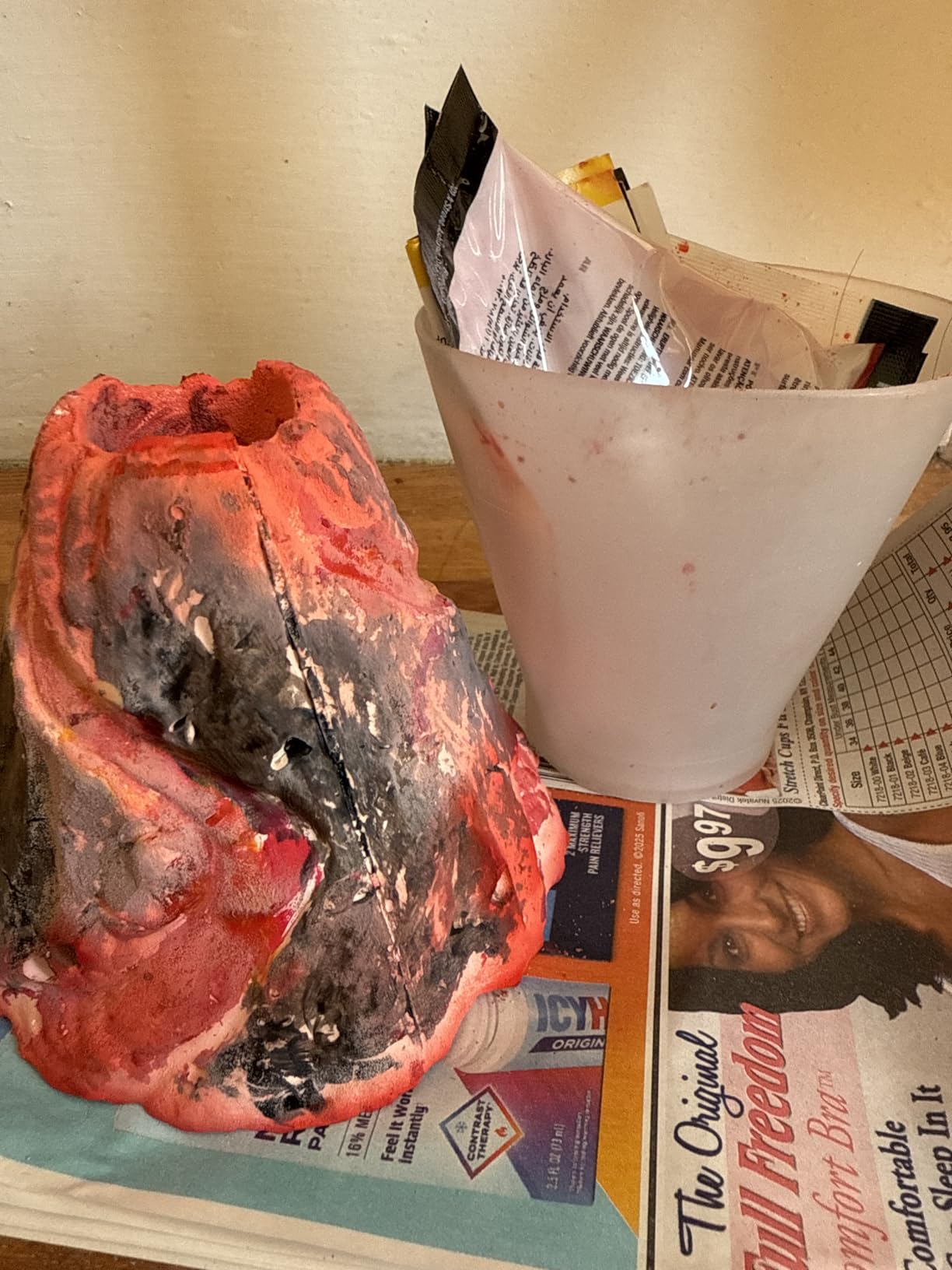
The volcano eruption experiment is the headliner, and the kit includes a mold for building your volcano. The chemical reaction produces the fizzy lava flow that kids remember from movies and TV. The geyser demo uses similar chemistry principles with a different setup, and the rocket launch adds a physical payoff that gets kids moving around.
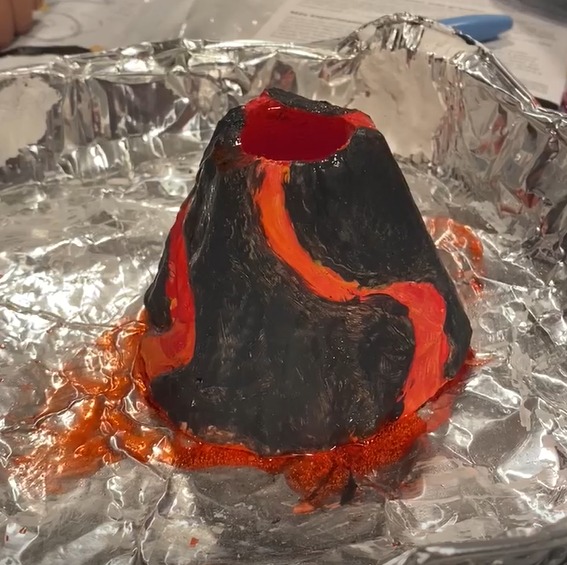
The kid-friendly instructions include illustrations for every step, so most experiments can be done independently by ages 9 and up. The kit teaches real scientific process concepts alongside the wow factor, including observation, hypothesis, and results. That balance makes it useful for homeschool families who want educational value paired with entertainment.
Two practical issues: the volcano mold assembly takes patience and an adult’s hands to construct properly. Chemical packets aren’t resealable, so plan to use them in one session or transfer to airtight containers. For the price, though, this kit delivers the classic chemistry experiences that most kids dream about.
Why volcano experiments never get old
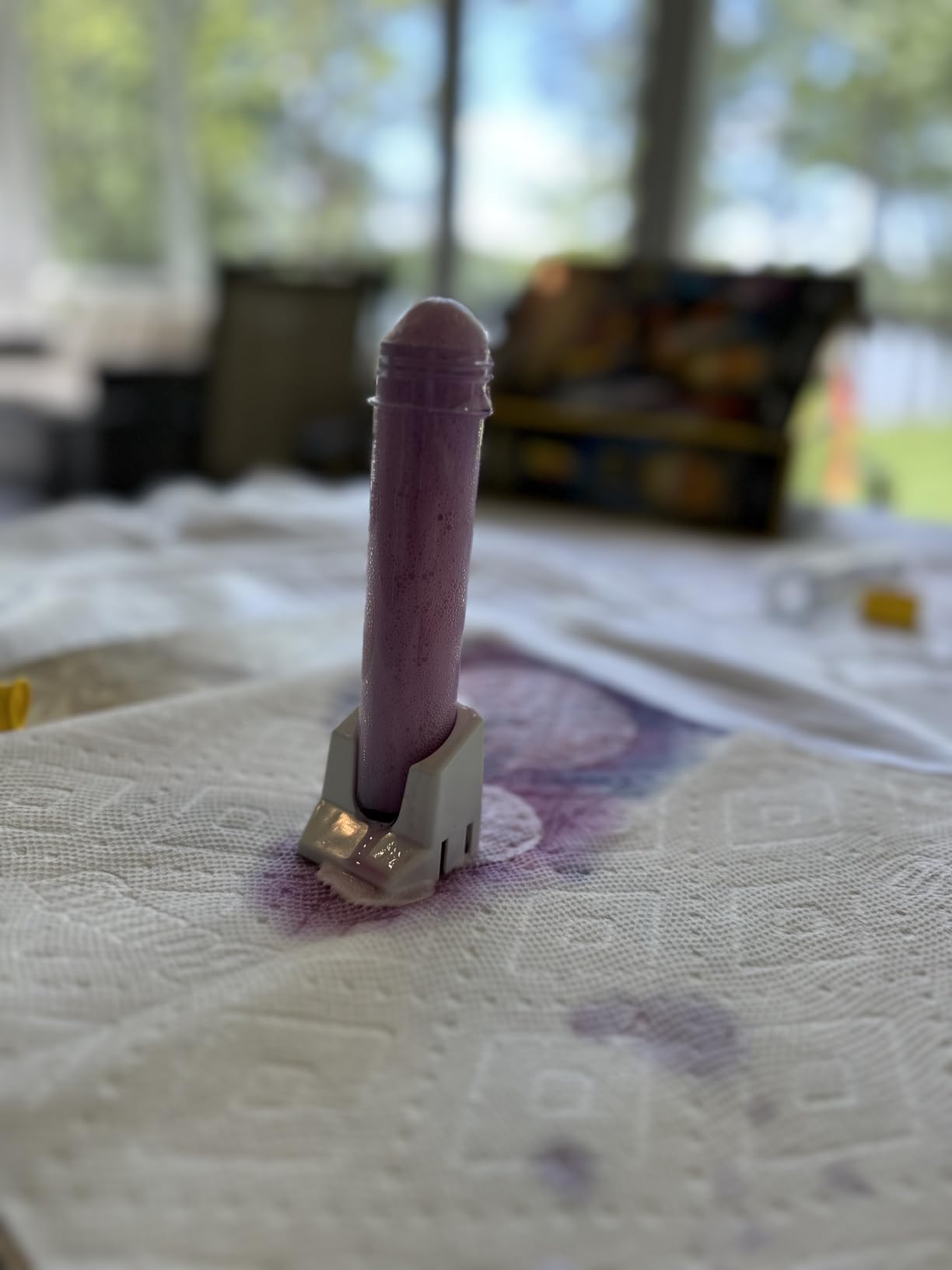
There’s something primal about watching a volcano erupt on your kitchen counter. The visual drama captures attention in a way that color-changing liquids can’t match. Even kids who’ve done dozens of science experiments light up at the volcano. It’s a reliable crowd-pleaser for birthdays and playdates.
Setting up the rocket launch safely
Do the rocket launch outside on a flat surface away from windows. The included chemicals create pressure that launches the rocket several feet into the air. Spectators should stand back at least six feet. After launch, the rocket and launchpad can be wiped clean and stored for repeated use.
12. National Geographic Microscope for Kids – Best for Aspiring Biologists

National Geographic Microscope for Kids with Up to 400x Magnification
400x magnification
6 prepared and 6 blank slides
Includes rock specimens
Pros
- Up to 400x magnification
- Prepared and blank slides included
- Rock and mineral specimens included
- Kid-friendly focus knobs
Cons
- Focus mechanism can be stiff
- Smaller viewing area than adult microscopes
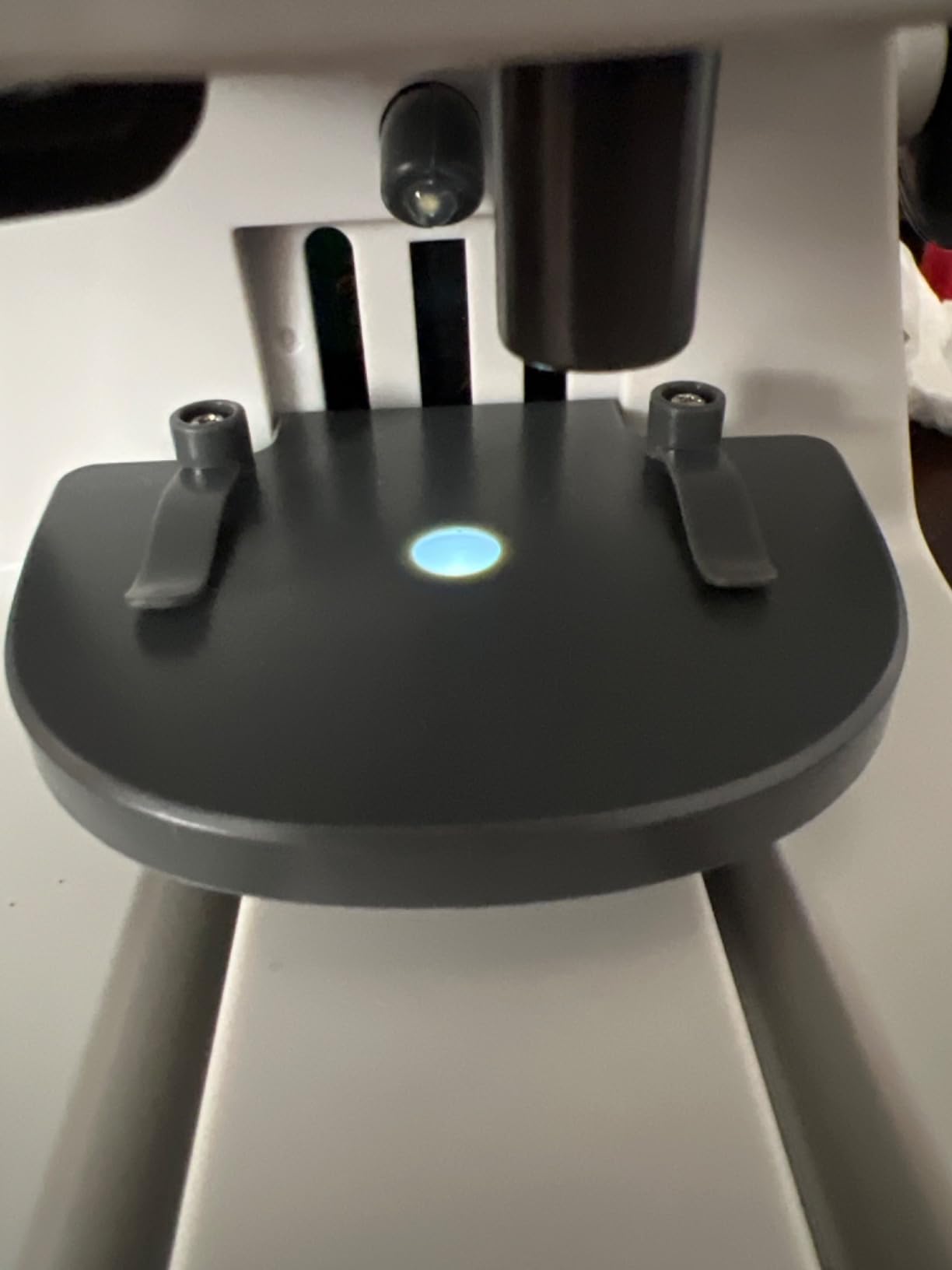
If your kid is constantly asking why leaves change color or what lives in pond water, a microscope changes everything. The National Geographic Microscope for Kids delivers up to 400x magnification with three settings, lights above and below the stage, and a soft-touch eyepiece designed for young users. With over 2,700 reviews, this is one of the most popular kids microscopes on Amazon.
The kit includes 6 prepared plant slides, 6 blank slides to prepare at home, and 6 rock and mineral specimens. That gives kids immediate things to look at plus materials to create their own slides. The included pipette, specimen dish, and tweezers let kids prepare slides using household items like onion skin or pond water.
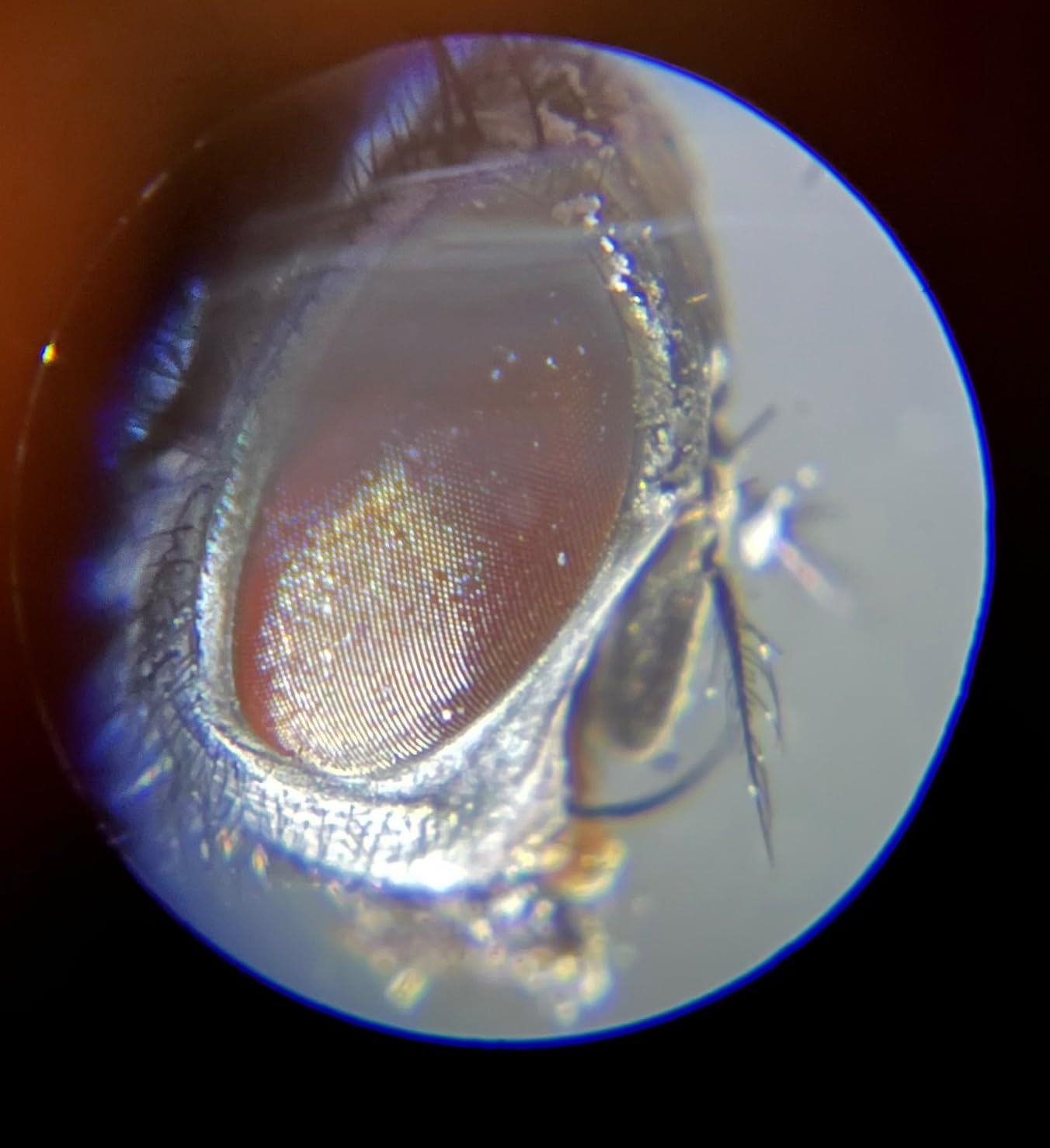
My tester spent hours examining everything from salt crystals to hair strands to flower petals. The viewing activities in the lab guide keep kids engaged, and the included merit badge stickers add a reward system that younger kids love. This microscope doubles as a serious science tool and an entertainment device.
The focus mechanism can be stiff for some users, especially younger kids who haven’t developed fine motor control. The viewing area is smaller than adult microscopes, which is fine for most uses but limits some advanced applications. For ages 6 to 12 interested in biology, though, this microscope delivers genuine scientific exploration at an accessible price.
What kids can explore with a microscope
Salt crystals, sugar crystals, flower petals, leaf cross-sections, hair, fabric threads, pond water, and insects are all accessible viewing subjects. Many families use the microscope to investigate things they find outdoors. One parent told me her kid became fascinated with the microorganisms in rainwater after using this microscope.
Preparing your own slides
The blank slides let kids create their own specimens. Place a thin slice of onion skin or leaf on a slide, add a drop of water, and place a cover slip on top. The pipette and tweezers included in the kit make preparation easier. Encourage kids to draw what they see at each magnification level to develop observation skills.
Buying Guide: How to Choose the Best Kids Science Lab Kits
The best kids science lab kits depend on three factors: age, interest, and how much mess you’re willing to clean up. Here’s how to think through your decision based on what we learned testing these kits with real families.
Match the kit to your child’s age
Age recommendations aren’t just marketing. A 4-year-old and a 10-year-old need completely different materials and instruction complexity. The Junior Chemistry Set works for ages 4 to 6 with picture-based instructions. The Doctor Jupiter kit covers ages 4 to 8 with more depth. The National Geographic chemistry sets target ages 8 to 12 with real lab equipment. Choose one that matches where your child is now, not where you hope they’ll be in a year.
Think about your child’s primary interest
Crystal growing, volcano eruptions, magic tricks, rock collecting, and microscope exploration are all different paths into science. The Earth Science Kit focuses on geology. The Chemistry sets focus on reactions. The Magic kits focus on performance. The microscope focuses on biology observation. Picking a kit that aligns with what your child already loves makes the experience more engaging.
Consider parental involvement realistically
Some kits need a parent present for every experiment. Others can be done independently by older kids. Be honest about your availability. If you’re a busy parent, choose kits with simple instructions and lower supervision needs. If you want to do science alongside your child, choose kits that benefit from a helper, like Thames & Kosmos Ooze Labs.
Factor in messiness and storage
Ooze and slime kits need protected workspaces. Crystal growing kits need a stable spot for overnight experiments. Microscope kits need a viewing area with good lighting. Chemistry kits need storage for chemicals. Plan your space before buying. A kit that stays set up invites repeat play. A kit that needs full setup every time gets used less.
Decide between subscription and one-time purchase
Subscription boxes like KiwiCo and MEL Science deliver monthly experiments with curated themes. They cost more over time but provide steady novelty. One-time kits like the ones in this roundup offer more experiments per dollar and can be used at your own pace. Subscriptions work well for kids who lose interest quickly. One-time kits work better for kids who want to dive deep into a topic.
Look at experiment count and replayability
Experiment counts range from 10 (the Magic Chemistry Set) to 150 (the UNGLINGA kit). Higher counts usually mean shorter, simpler experiments. Lower counts usually mean more involved, longer experiments. Both work depending on your child’s attention span. Replayability matters more than raw count: a kit with 30 experiments that your kid will do twice beats a kit with 100 experiments that gets used once.
Check safety certifications and age ratings
ASTM F963-17 is the U.S. toy safety standard. Doctor Jupiter’s kit specifically meets this standard. Most reputable brands follow safety guidelines, but cheaper kits from unknown brands may not. Check reviews for any reports of chemical issues or safety concerns. For kids with allergies, read ingredient lists carefully, especially for latex warnings.
Frequently Asked Questions
What are the best science experiment kits for kids?
The best science experiment kits for kids include the Doctor Jupiter My First Science Experiments Kit for ages 4 and up, the National Geographic Earth Science Kit for ages 8 to 12, and the Thames u0026amp; Kosmos Ooze Labs Chemistry Station for kids who love slime and ooze. Each offers 20 to 100+ experiments with age-appropriate instructions.
What age is appropriate for science kits?
Most science kits are designed for ages 4 and up, with specific kits targeting 4 to 6, 6 to 9, and 8 to 12 age ranges. Younger children need kits with picture-based instructions and larger tools. Older children can handle kits with real lab equipment and more complex multi-step experiments.
How to choose the right science kit?
Choose a science kit based on your child’s age, primary interest (chemistry, earth science, biology, or magic), and your willingness to supervise. Younger kids need simpler instructions and safer chemicals. Older kids benefit from real lab equipment and deeper scientific explanations. Consider messiness and storage needs before buying.
Are science kits worth the money?
Yes, science kits are worth the money when they deliver reliable experiments and engage your child in hands-on learning. The kits in our roundup range from about $17 to $65, with most offering 20 to 100+ experiments. Kits with higher experiment counts and durable equipment typically provide better long-term value.
What science kit should I buy for a 7-year-old beginner?
For a 7-year-old beginner, the Doctor Jupiter My First Science Experiments Kit or the National Geographic Junior Chemistry Set are strong choices. Both offer age-appropriate instructions, safe materials, and enough variety to maintain interest without overwhelming beginners.
Which science kit is best for beginners?
The Doctor Jupiter My First Science Experiments Kit is our top pick for beginners. It offers 100+ experiments with easy illustrated instructions, ASTM safety certification, and durability that survives enthusiastic young scientists. It works for ages 4 to 8 and grows with your child.
Final Verdict
After testing these kits with real families over weeks of kitchen counter eruptions, slime disasters, and crystal-growing check-ins, our top recommendation is the Doctor Jupiter My First Science Experiments Kit for most families. It balances age-appropriate safety, depth of content, and replay value better than any other option we tried.
For kids who love geology, the National Geographic Earth Science Kit delivers the best combination of crystals, dig blocks, and mineral specimens at a strong value. Budget-conscious families should consider the National Geographic Magic Chemistry Set, which delivers genuine science wrapped in magic performance at an accessible price.
Whatever kit you choose, the best kids science lab kits are the ones that get used. Match the kit to your child’s age and interests, set up a dedicated workspace, and plan to do the first few experiments together. That early engagement builds the habit that turns a one-time gift into a lifelong love of science.