
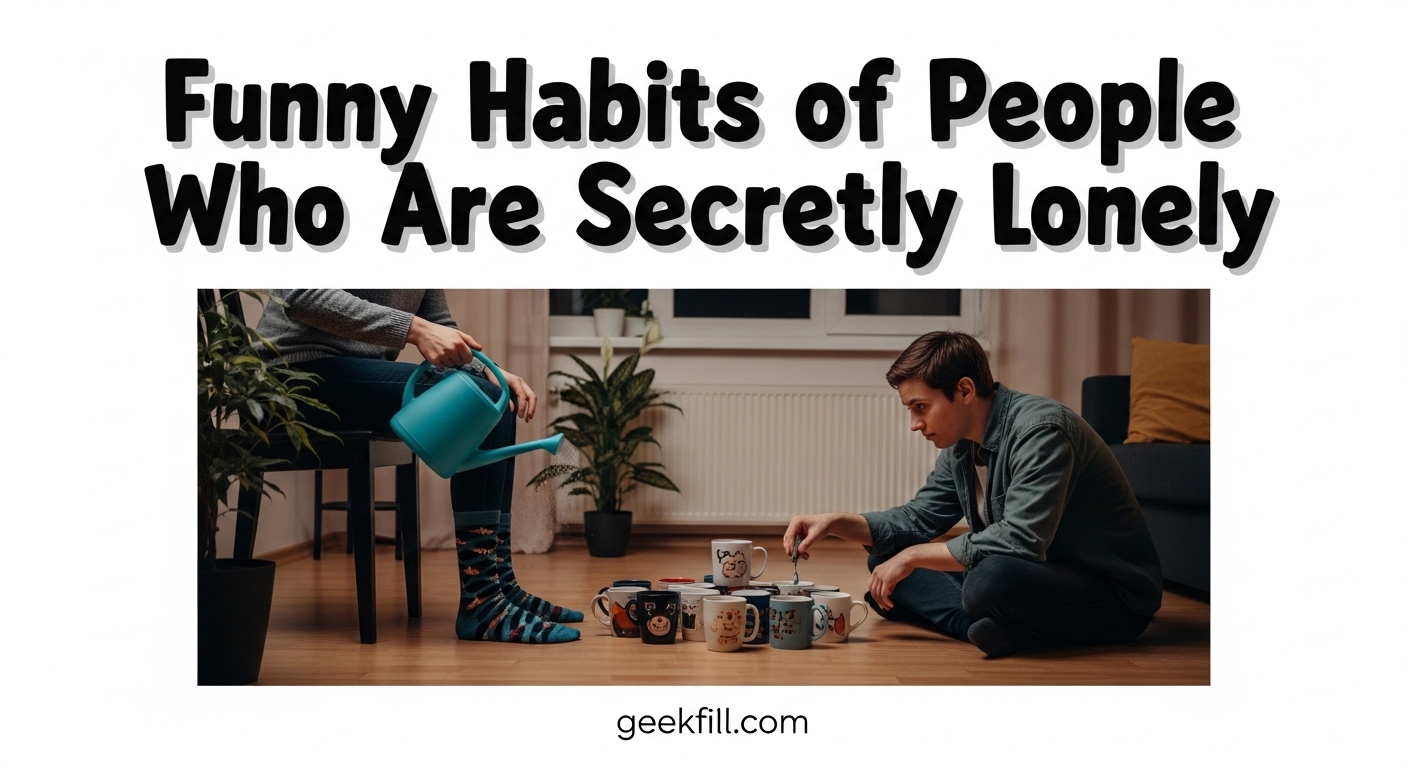
Have you ever found yourself explaining your entire day to a houseplant named Dave? Or narrating your breakfast preparation like you’re starring in a cooking show nobody will ever see? If so, you might recognize some of the funny habits of lonely people that we’re about to explore.
Our team spent the last few weeks diving into Reddit threads, psychology journals, and honest conversations with people who live alone. We discovered something fascinating. These quirky behaviors aren’t signs of losing your mind. They’re clever coping mechanisms your brain develops when it craves connection but doesn’t quite know how to ask for it.
There’s a big difference between being alone and being lonely. One is a choice. The other is a feeling that creeps in unexpectedly, often disguised as weird little habits we pretend not to notice. The person who keeps their TV on 24/7 isn’t necessarily lazy about hitting the power button. The friend who spends forty-five minutes buying milk might not be that indecisive about dairy.
In this guide, we’ll walk through eight funny habits of people who are secretly lonely. Each one comes with the psychology behind why we do it, plus some laughs because if we can’t chuckle at ourselves talking to our pets in full conversations, what can we do? We’ll also share practical tips for turning these habits into bridges toward real connection.
Table of Contents
8 Funny Habits of People Who Are Secretly Lonely
Before we dive in, here’s a quick note. If you recognize yourself in several of these habits, you’re not broken. You’re human. Loneliness has become an epidemic in 2026, especially after the shifts we’ve all experienced in how we work and socialize. These behaviors are simply your brain’s way of filling the silence.
1. They Keep Background Noise On All Day
The television hasn’t been turned off in three days. Not because anyone is watching it. But because the silence feels heavier than the electric bill. This is perhaps the most universal of the funny habits of lonely people we’ve encountered.
We read a Reddit thread where someone admitted to narrating their daily activities in a David Attenborough voice. “Here we see the solitary human attempting to fold laundry. Watch as she consults the same t-shirt three times, uncertain of its destiny.” Over three thousand people upvoted that comment. You’re definitely not alone in this.
The psychology here is straightforward. Your brain craves stimulation and connection. When real human voices aren’t available, recorded ones substitute surprisingly well. Podcasts become companions. Reality shows become roommates. That true crime documentary series? It’s practically family at this point.
The noise serves as an emotional blanket. It fills the space where conversation should live. Many people we talked to admitted they don’t even process what’s playing. They just need the sound of life happening around them. One person told us they sleep with nature documentaries running because the narrator’s voice makes them feel like someone’s keeping watch.
Why We Do This
Silence creates space for thoughts we’d rather avoid. Background noise drow out the uncomfortable internal dialogue. It’s easier to focus on a fictional character’s problems than our own isolation.
Research shows that humans are wired for social connection. When we lack it, our brains get creative. The anterior cingulate gyrus, the brain region that processes social pain, lights up when we’re lonely. Background noise seems to quiet that alarm bell, at least temporarily.
The Connection Tip
Try designating specific quiet hours. Start with just fifteen minutes. Sit with the silence and notice what comes up. Often, the discomfort passes faster than you expect. Use that quiet time to send one text to someone you miss. Real connection starts with small risks.
2. They Turn Small Errands Into Hour-Long Adventures
You needed toothpaste. That’s a ten-minute trip to the pharmacy. But somehow you spent forty-five minutes wandering the aisles, comparing eighteen varieties of dental floss you didn’t plan to buy. Congratulations, you’ve discovered the errand extension habit.
This habit reveals itself in the smallest ways. You drive the long route to the grocery store because it passes more houses with lights on. You linger at the coffee shop counter hoping the barista asks about your day. You become unusually chatty with cashiers, discussing weather patterns with genuine enthusiasm.
One forum user described their Saturday routine in detail. They visit three different stores for items they could get at one. They walk slowly through the produce section. They ask the butcher questions about cuts of meat they have no intention of purchasing. “I’m not shopping,” they wrote. “I’m visiting.” That comment received hundreds of responses saying “same.”
Why We Do This
Public spaces offer something home doesn’t: evidence of other humans living their lives. Being around people, even strangers, triggers a sense of belonging. It’s called social integration, and our brains crave it like water.
The pandemic accelerated this pattern for many people. Working from home eliminated accidental social contact. The commute, the water cooler chats, the lunch breaks with colleagues, all vanished. Errands became the only reliable source of human proximity.
The Connection Tip
Transform one regular errand into a social opportunity. Choose the coffee shop with community seating. Join the grocery store that offers cooking classes. Turn the habit into intentional connection by choosing venues where interaction is possible, not just parallel existence.
3. They Check Their Phone Every 3 Minutes (Even When No One Texts Them)
The screen lights up. You check. No notifications. You put it down. Thirty seconds pass. You pick it up again. Still nothing. This cycle repeats for hours. Sound familiar?
We’ve all seen this habit in action. The person at dinner who keeps their phone face-up. The friend who interrupts conversation to verify their pocket isn’t buzzing. The late-night scroll through apps you’ve already checked twice in the last five minutes.
The funny part? Most people don’t realize they’re doing it. One study found that the average person checks their phone 96 times daily. For those experiencing secret loneliness, that number often doubles. The phone becomes a lottery ticket. Maybe this time someone reached out. Maybe this time there’s proof that someone remembers you exist.
A Reddit user confessed to checking their phone 47 times during a two-hour movie. They had zero notifications. Zero. Not a single text, email, or alert. But they couldn’t stop. The phantom vibration phenomenon is real, and it’s particularly strong when we’re feeling disconnected.
Why We Do This
Dopamine drives this behavior. Every notification is a tiny hit of connection, a microscopic validation that we matter to someone. When real notifications are scarce, the brain starts manufacturing hope. Maybe this time. The anticipation itself becomes addictive.
Smartphones also offer control. Real relationships are unpredictable. Texting allows us to craft responses, edit ourselves, and avoid rejection. The phone becomes a safer alternative to the vulnerability of face-to-face interaction.
The Connection Tip
Set specific phone check times. Start with once per hour. Turn off non-essential notifications so when your phone buzzes, it actually matters. Most importantly, use one of those check times to send a message first. Be the person who reaches out instead of waiting.
4. They Scroll Social Media for “Quick Connection” That Never Satisfies
You open Instagram to check one thing. Forty minutes later, you’re watching a video of a stranger’s vacation from 2019. You’ve seen their wedding photos, their new puppy, and their controversial opinion about pineapple on pizza. You don’t even follow this person.
This habit masquerades as social connection. You’re “keeping up” with people. You’re “staying in the loop.” But the loop is endless, and the satisfaction is fleeting. You close the app feeling somehow more isolated than when you opened it.
We noticed a pattern in forum discussions about this habit. People describe watching stories of acquaintances they haven’t spoken to in years. They scroll through highlights of people who wouldn’t recognize them at a party. They leave comments on posts hoping for a response that rarely comes.
One particularly honest comment stuck with us. “I have 500 followers and I’ve never felt more alone.” That contradiction defines modern loneliness. We’re hyper-connected digitally and starved for actual connection. The funny habits of lonely people in 2026 often center around this digital paradox.
Why We Do This
Social media creates parasocial relationships, one-sided connections where we feel we know people who don’t know us. These faux-relationships trick the brain into feeling socially satisfied without providing actual nourishment. It’s junk food for your social appetite.
The platforms are designed for this. Infinite scroll removes stopping cues. Variable reward schedules keep us engaged. The occasional like or comment triggers dopamine just often enough to maintain the habit, even when the overall experience leaves us empty.
The Connection Tip
Replace one social media session with a direct message to someone you actually care about. Not a like. Not a comment. A real message asking about their life. Schedule video calls instead of scrolling. Set app time limits and notice how your brain rebels, then gently redirect that energy toward real interaction.
5. They Rewatch the Same Shows for the 47th Time
You know every line of The Office. You can quote Parks and Recreation in your sleep. You’ve seen Friends so many times that you notice when they switch actresses playing Rachel’s sister. Welcome to the comfort show rewatch habit.
This isn’t about having bad taste in television. It’s about emotional safety. New shows are risky. The characters might disappoint you. The plot might go somewhere uncomfortable. But Jim and Pam? They always end up together. Leslie Knope always succeeds. The predictability is the point.
Reddit users shared their rewatch counts with surprising honesty. One person had seen The Office twelve times through. Another admitted to starting Brooklyn Nine-Nine over immediately after finishing it. “It’s not even that I want to watch it,” one comment explained. “It’s that I want to hear people being nice to each other while I eat dinner alone.”
The characters become proxy friends. You know their voices, their quirks, their catchphrases. They fill the silence without requiring anything from you. There’s no pressure to respond, to be entertaining, to prove your worth. It’s connection without vulnerability.
Why We Do This
Familiar content reduces cognitive load. When life feels overwhelming and lonely, predictable entertainment offers a vacation for your brain. The basal ganglia, which processes habits and familiar patterns, lights up with satisfaction when we encounter the known.
There’s also a phenomenon called social surrogacy. Fictional characters can partially satisfy the human need for belonging. Studies show that watching familiar shows can actually reduce feelings of rejection and boost mood temporarily. The effect is real, even if the relationship isn’t.
The Connection Tip
Use comfort shows as a bridge, not a wall. Watch them with others through streaming party features. Join online discussion groups about your favorite series. Better yet, ask a friend to start a new show with you. The shared discovery creates real connection that rewatching alone cannot.
6. They Text When They Actually Want to Talk
You have something important to share. Something that needs tone, nuance, the sound of a human voice. So you pull out your phone and type a novel-length text. Then delete it. Then type again. Then delete more. Twenty minutes later, you send a message that says “lol crazy” with a thumbs up emoji.
This habit reflects a fear of real-time communication. Calling feels too vulnerable. What if they don’t answer? What if they answer but sound annoyed? What if you run out of things to say and there’s that horrible silence? Texting offers control. You can edit, reconsider, delay.
One forum user described the phenomenon perfectly. “I say my text messages out loud as I’m writing them. Like I’m rehearsing for a conversation I’m too scared to actually have.” Hundreds of people responded that they do the same. The habit reveals how much we long for voice contact while avoiding its risks.
Another pattern emerges in this habit. The late-night text essays. When the house gets quiet and the loneliness peaks, suddenly you have paragraphs to send. You overshare with acquaintances. You restart conversations that died weeks ago. You send memes at 2 AM hoping someone is awake.
Why We Do This
Text communication reduces social anxiety by removing immediate feedback. There’s no facial expression to interpret, no tone to decode, no real-time pressure to respond intelligently. The temporal lobes, which process auditory and social information, get a break.
However, this safety comes at a cost. Text-based connection lacks the biochemical benefits of voice contact. Studies show that hearing a friend’s voice reduces cortisol levels significantly more than reading their message. We’re choosing the safer option that satisfies us less.
The Connection Tip
Challenge yourself to make one voice call this week instead of texting. Start with someone safe, someone who loves you unconditionally. Notice how different it feels. Notice the satisfaction that comes from actual vocal connection. Build from there. The discomfort fades faster than you expect.
7. They Stay Busy Until the House Gets Too Quiet
Your to-do list is complete. Everything is organized. The kitchen sparkles. It’s 11 PM and you’re alphabetizing your bookshelf. Why? Because stopping means facing the silence. And the silence has questions you don’t want to answer.
This habit manifests as productive procrastination. You start new projects at midnight. You deep-clean areas that were already clean. You take up hobbies that require total concentration. The goal isn’t the output. The goal is exhaustion.
One person on a forum described their solo karaoke nights in vivid detail. They set up a full microphone stand, create a playlist, pour a drink, and perform to an audience of zero. “It’s not about singing,” they wrote. “It’s about having something happening that requires my attention.”
Others described similar rituals. Making elaborate meals for one. Rearranging furniture repeatedly. Taking up complicated crafts. The common thread is creating artificial urgency. If you’re busy, you have an excuse for why you didn’t reach out. If you’re tired, you can sleep without thinking.
Why We Do This ?
Busyness is a socially acceptable anesthesia. Nobody questions why you’re working late or tackling home projects. It looks like ambition. It feels like avoidance. The brain uses activity to suppress uncomfortable emotions. The anterior cingulate gyrus, which processes both physical and social pain, stays quieter when we’re occupied.
There’s also a sense of control. You might not be able to make someone invite you out, but you can organize your closet by color. The habit gives us agency in an area where we feel powerless. It’s not healthy, but it’s understandable.
The Connection Tip
Schedule your busyness. Set a firm stop time for productive activities. When the urge to start another project hits at 10 PM, pause and ask what feeling you’re avoiding. Then address that feeling directly. Call someone. Journal. Sit with the discomfort. It passes, and you’ll wake up more rested.
8. They Wait to Be Invited Instead of Making Plans
Your phone is quiet. Weekend plans are nonexistent. You tell yourself you’re just going with the flow, being spontaneous, seeing what comes up. But what comes up is nothing. Because you’re waiting for an invitation that isn’t coming.
This habit is perhaps the most painful because it’s so visible to others. Friends assume you’re busy. You assume they don’t want you around. The silence becomes a spiral of negative assumptions. “If they wanted me there, they would have asked.”
We read countless forum posts describing this exact thought pattern. “I see photos from parties I wasn’t invited to and wonder what I did wrong.” The answer is usually nothing. The host assumed you had other plans. They thought you’d say no. They forgot to include you in the group text. But your brain fills the gap with rejection.
The habit extends beyond social events. People wait to be asked about their day instead of sharing. They wait for someone to notice they’re struggling instead of asking for help. They wait to be pursued instead of pursuing. The pattern reinforces itself until isolation feels like the only option.
Why We Do This
Rejection sensitivity plays a major role. When we feel lonely, our brains interpret ambiguous social signals negatively. A delayed text response becomes “they hate me.” A group photo we weren’t in becomes “they’re excluding me.” This cognitive bias makes initiating feel terrifying.
There’s also learned helplessness at work. If previous attempts at connection were met with rejection, the brain stops trying. It concludes that social effort is futile. Better to wait and hope than risk confirmation that you’re unwanted. This protective mechanism becomes self-fulfilling.
The Connection Tip
Flip the script. Be the inviter. Start small. Ask one person to coffee. Create the event you wish existed. Yes, some people will say no. That’s normal and not personal. But many will say yes, especially those who were also waiting for an invitation. Someone has to break the silence. Why not you?
FAQ: Understanding These Funny Habits of Lonely People
What are some examples of weird habits?
Common weird habits include talking to houseplants or pets in full conversations, narrating your activities in a documentary voice, sleeping diagonally across the whole bed, eating all meals over the sink to avoid dishes, and keeping the television on 24/7 for background noise. These behaviors often develop as coping mechanisms when living alone or feeling isolated.
What’s one thing you only do when you’re alone?
Many people admit to singing full concert performances to their pets, having elaborate imaginary arguments with people they’ll never confront, dancing around the house to music only they can hear, or eating strange food combinations they’d never admit to in public. The privacy of solitude allows us to be our most authentic, unfiltered selves.
What are some examples of unusual behavior?
Unusual behaviors that signal secret loneliness include extending simple errands into hour-long outings to be around people, checking your phone dozens of times daily despite no notifications, rewatching the same comfort shows repeatedly instead of new content, texting paragraph-length messages when a call would be more appropriate, and staying constantly busy to avoid sitting with uncomfortable feelings.
How to cope with loneliness living alone?
Start by recognizing that your quirky habits are normal coping mechanisms, not personal failures. Build structure into your week with scheduled social activities. Reach out first instead of waiting for invitations. Join groups based on interests rather than just seeking company. Limit social media scrolling in favor of real interactions. Consider therapy if loneliness persists and affects daily functioning. Small consistent actions toward connection matter more than dramatic changes.
Am I lonely or just introverted?
Introversion is a preference for solitude that feels restorative. Loneliness is a distressing sense of lacking desired connection. Introverts enjoy alone time and feel energized by it. Lonely people feel isolated even when they technically prefer company. If your alone time feels heavy, anxious, or accompanied by constant background noise and errand-stretching, that’s likely loneliness rather than healthy introversion.
When do these habits become a problem?
These habits become concerning when they prevent real connection rather than just bridge gaps. If you’re choosing background noise over calling a friend, or if solo habits are increasing while social attempts are decreasing, it may be time to address the pattern. When loneliness affects sleep, work performance, or physical health, professional support can help develop healthier coping strategies.
Breaking the Funny Habits of Lonely People
Recognizing yourself in these habits is the first step toward change. But change doesn’t mean eliminating every quirky behavior. It means expanding your options. The background noise habit isn’t inherently harmful unless it’s preventing you from picking up the phone when a friend calls.
Our team believes in a compassionate approach. These funny habits of lonely people developed for good reasons. Your brain was trying to help you survive a difficult emotional experience. Thank it for the effort, then gently introduce new strategies.
Start with one small shift. Turn off the TV for one hour and call someone instead. Send that invitation you’ve been waiting to receive. Watch a new show with a friend rather than alone for the forty-eighth time. Each tiny step builds momentum toward genuine connection.
Remember that loneliness is one of the most common human experiences. The Reddit threads we explored were filled with thousands of people sharing identical habits. You’re not strange. You’re not broken. You’re a human navigating an increasingly isolated world in 2026.
Final Thoughts on These Funny Habits
We started this article with Dave the houseplant. Let’s end there too. Talking to your plants isn’t a sign that you need professional intervention. It’s a sign that you’re human, that you crave connection, that you’re creative enough to find substitutes when the real thing feels scarce.
The funny habits of lonely people we’ve explored are exactly that. Funny. Relatable. Human. The television that never turns off. The forty-five-minute toothpaste expedition. The forty-seventh rewatch of The Office. These are the stories we’ll laugh about at dinner parties when we’re seventy. “Remember when I used to narrate my cooking like a nature documentary?”
But they’re also signposts. Gentle nudges that it’s time to reach out, to risk vulnerability, to be the one who invites instead of waits. The habits served you when you needed them. Now you might need something different.
So keep Dave. Keep the comfort shows. But maybe, just maybe, call a friend today and tell them about both. Real connection starts with showing someone the quirky, honest, slightly weird version of yourself. And that includes admitting that sometimes you narrate your laundry folding in a British accent. We promise you’re not alone in that.