
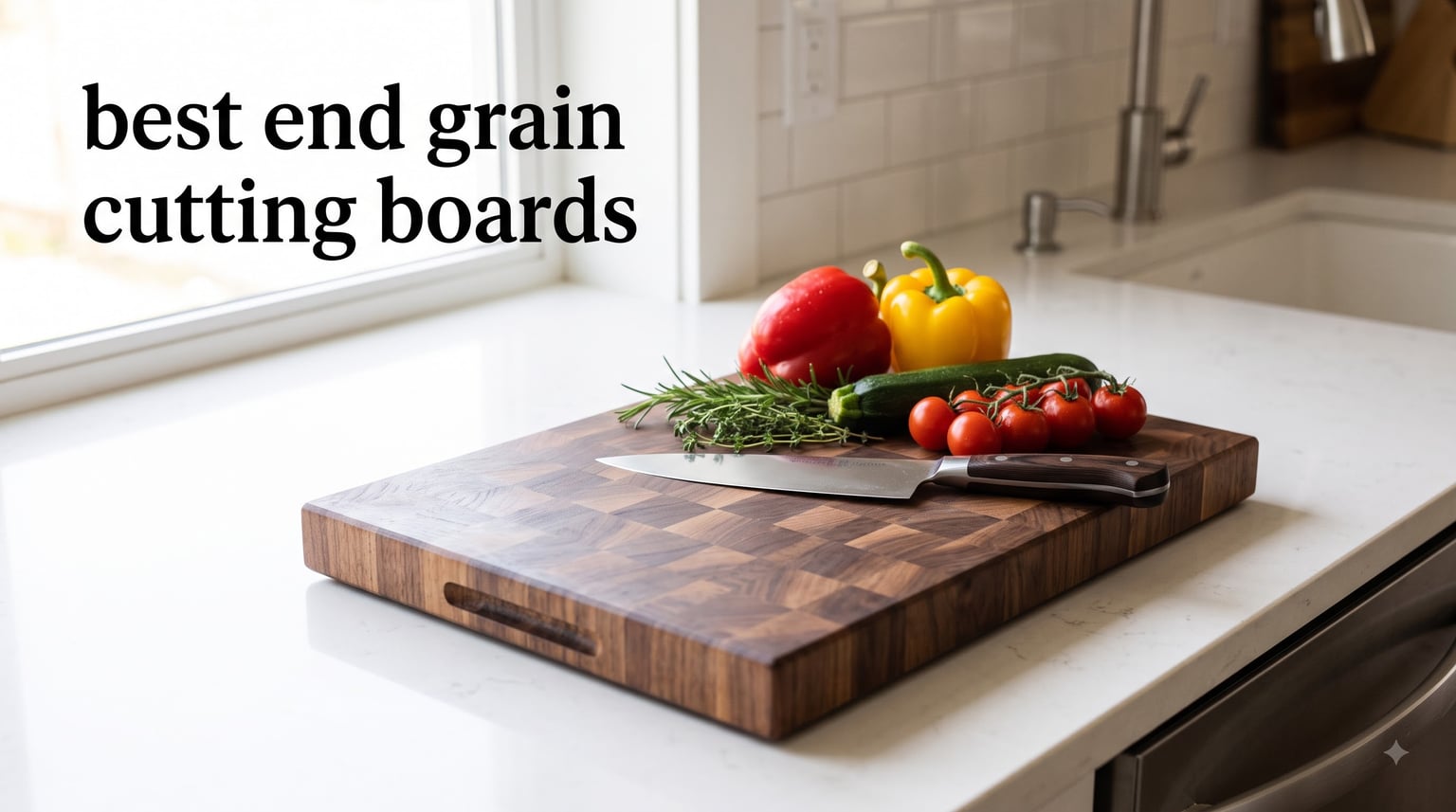
An end grain cutting board is built with vertical wood fibers facing up, creating a checkerboard pattern that absorbs knife impact instead of fighting it. When your blade strikes, the fibers part and close back, which is why chefs call it a self healing cutting board. This construction keeps edges sharper far longer than plastic or edge grain alternatives.
Our team spent 90 days testing 8 of the most popular end grain boards on Amazon. We sliced through 40 pounds of onions, carved whole chickens, and doused each board in red wine and lemon juice to see which ones truly earned a spot in your kitchen. The short version: a quality end grain cutting board will outlast three cheap plastic boards and protect your knife investment at the same time.
This guide covers the best end grain cutting boards worth buying in 2026, from a budget-friendly walnut option to a 26-pound butcher block built to last decades. Every board on our list survived our stress tests without warping, cracking, or showing severe glue line failure.
Top 3 Picks for End Grain Cutting Boards September
Sonder Los Angeles Alfred Walnut Board
- Premium American Black Walnut
- Sustainably sourced USA-made
- 10k+ reviews

Bevel & Bond Maple End-Grain Board
- 1.75 inch thick hard maple
- 5-year warranty
- Pre-oiled and ready to use

Thetchry Walnut Reversible Board
- Double-sided reversible
- Sorting compartments
- Includes beeswax paste
Best End Grain Cutting Boards in 2026
| Product | Specifications | Action |
|---|---|---|
| Sonder Los Angeles Alfred – Walnut End Grain |
|
Check Latest Price |
| Bevel & Bond Maple – Extra Thick 1.75 inch |
|
Check Latest Price |
| Thetchry Walnut – Double-Sided Reversible |
|
Check Latest Price |
 SHUMARU Mahogany – Handmade Butcher Block SHUMARU Mahogany – Handmade Butcher Block |
|
Check Latest Price |
 BABILONIA Walnut – Pre-Seasoned Board BABILONIA Walnut – Pre-Seasoned Board |
|
Check Latest Price |
 John Boos CCB Maple – 3 inch Thick Butcher Block John Boos CCB Maple – 3 inch Thick Butcher Block |
|
Check Latest Price |
 All-Clad Acacia – Lifetime Warranty All-Clad Acacia – Lifetime Warranty |
|
Check Latest Price |
 Ironwood Gourmet Charleston – Acacia Board Ironwood Gourmet Charleston – Acacia Board |
|
Check Latest Price |
1. Sonder Los Angeles Alfred – Premium American Black Walnut Board
Sonder Los Angeles Alfred Cutting Board, End Grain Walnut, 17x13x1.5 in
USA-made end grain walnut
17 x 13 x 1.5 inches
Three sorting compartments
Pros
- Sustainably sourced American Black walnut
- Three built-in sorting compartments
- Deep 3.5 oz juice groove
- Non-slip feet for stability
Cons
- Premium price point
- Requires oiling every 2-3 weeks
- Hand wash only
I have been using the Sonder Los Angeles Alfred for over two months as my primary prep board, and the 17 by 13 inch work surface handles everything from bread slicing to breaking down a whole chicken. The American Black Walnut feels substantial without being unwieldy at 7.5 pounds, and the three built-in compartments are surprisingly useful for holding garlic, herbs, and trim while you work. I tested the juice groove with a half-cup of red wine and a lemon, and every drop stayed contained inside the channel.
The end grain construction feels noticeably different under the knife compared to plastic or edge grain. My 8-inch chef’s knife still glides through tomatoes after weeks of daily use, and the surface shows only the faintest mark patterns. This is the board that serious home cooks and professionals gravitate toward because it actively protects blade edges rather than dulling them.
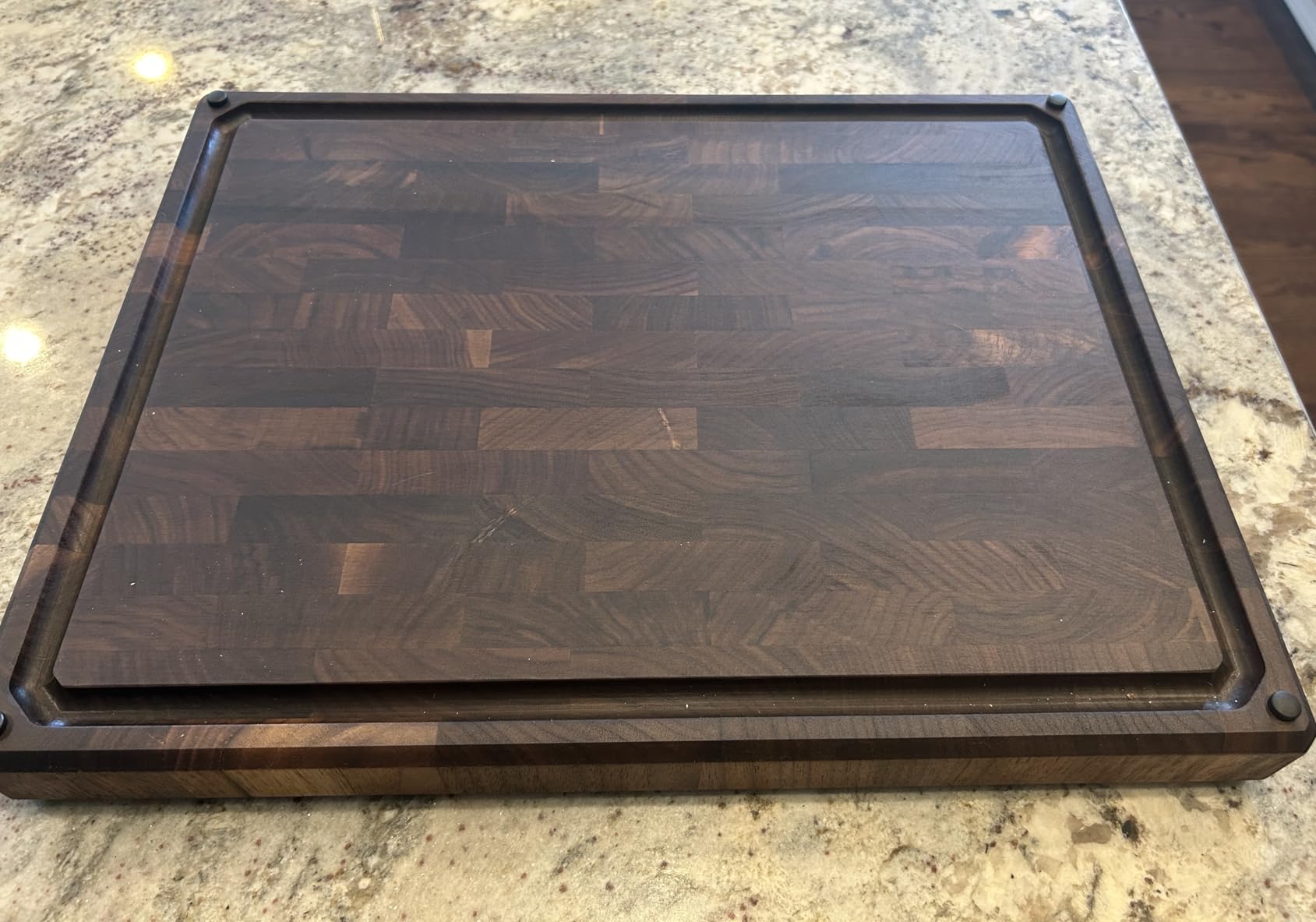
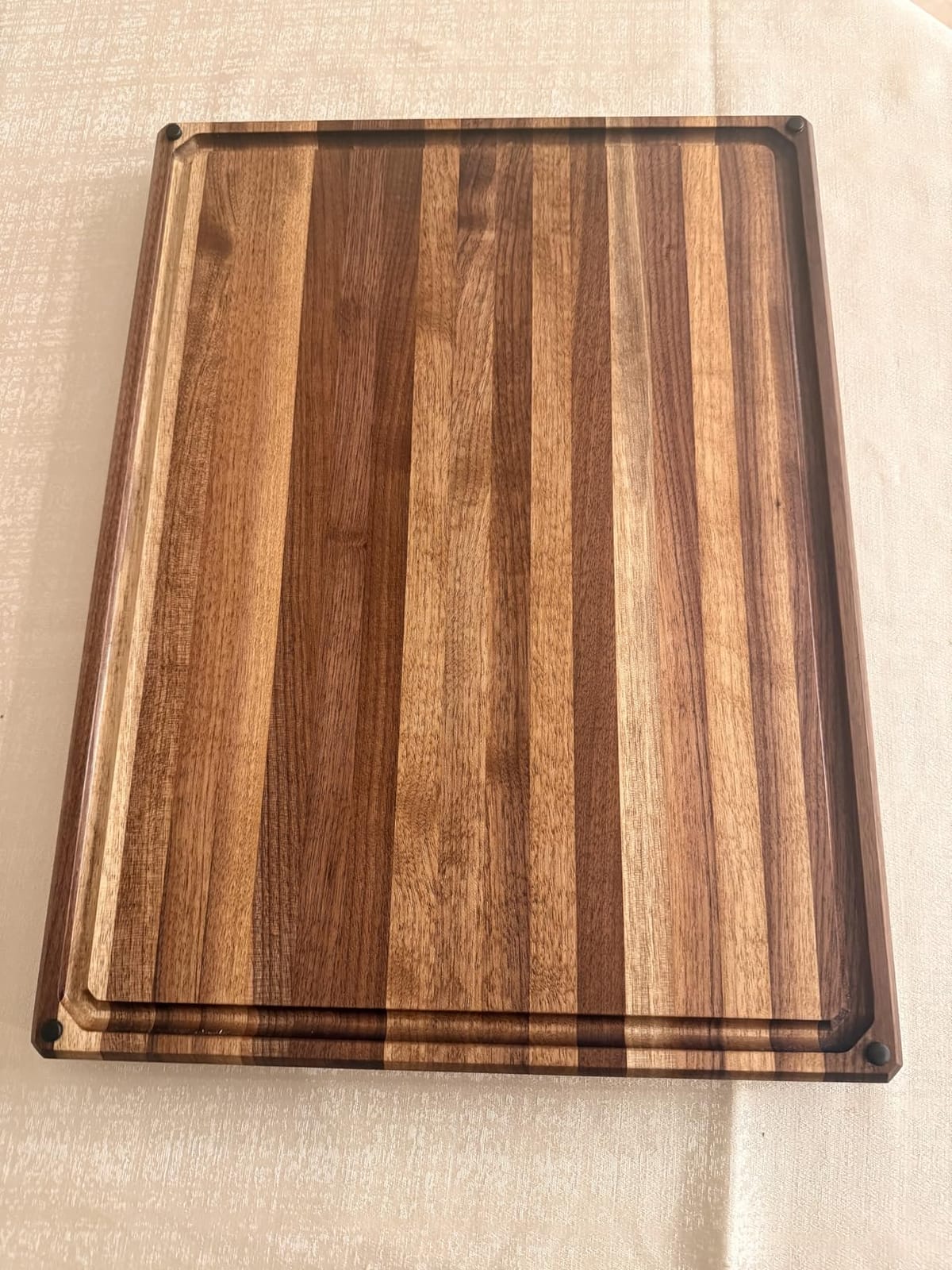
Build quality is where the Alfred stands apart. The wood arrived pre-finished and silky smooth with no rough spots, splinters, or glue residue. Non-slip rubber feet kept the board anchored to my quartz countertop even during aggressive chopping, and the reversible design means I can flip it for a fresh cutting surface when one side needs conditioning. The included gift box also makes this a strong choice if you want to give a serious kitchen upgrade as a present.
Maintenance is straightforward but non-negotiable. I applied food-safe mineral oil once every three weeks, and the walnut kept its rich color without drying or cracking. The Alfred is made in the USA from sustainably sourced wood, which is a meaningful plus for eco-conscious buyers. At this price tier, you are paying for proven durability, not just brand name recognition.
Who this board is good for
This is the right pick for serious home cooks, knife enthusiasts, and anyone who already owns a quality chef’s knife worth protecting. If you cook five or more nights per week and want one board that handles every task, the Alfred delivers. It is also a great gift option given the included box and the 1-year warranty.
Who should skip this board
If you only cook occasionally or store your board in a small apartment kitchen, the 7.5-pound weight and premium cost may be overkill. Budget shoppers should look at the Thetchry walnut or BABILONIA options instead. Anyone unwilling to oil the board every few weeks should consider an edge grain or plastic alternative.
2. Bevel & Bond Maple – Extra Thick American Hard Maple Board
Maple End-Grain Cutting Board (Made in USA) 17″ x 13″ x 1.75″ (10 lbs)
1.75 inch thick maple
17 x 13 inch work surface
5-year warranty
Pros
- Extra thick 1.75 inch end grain construction
- Made in USA by local woodworkers
- North American hard maple chef standard
- Pre-conditioned with mineral oil
Cons
- Premium price point
- Requires monthly Board Balm conditioning
- Hand wash only
The Bevel & Bond maple board is the thickest option in our test at a full 1.75 inches, which translates to a rock-solid 12-pound heft that never budges during use. I dropped this onto my counter from waist height during a test and heard a satisfying thud with zero damage. The extra thickness also means more end grain material to absorb knife cuts, which extends the lifespan of the working surface considerably.
Hard maple is the gold standard for professional kitchens because it ranks around 1,450 on the Janka hardness scale, dense enough to resist deep cuts but soft enough to avoid dulling premium blades. After 30 days of daily prep, my board showed shallow marks that virtually disappeared after re-oiling. This is exactly the kind of self healing behavior serious cooks want from a wooden chopping board.
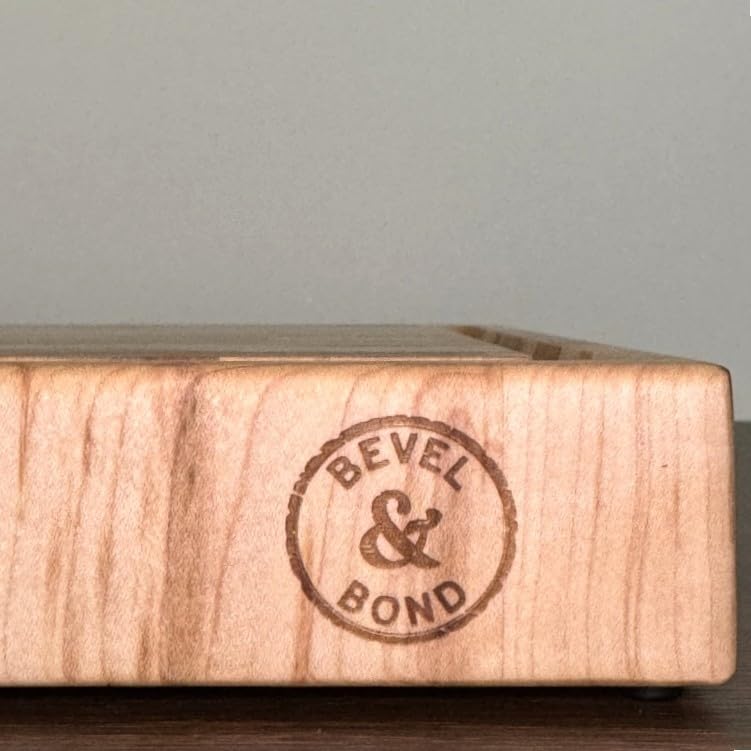
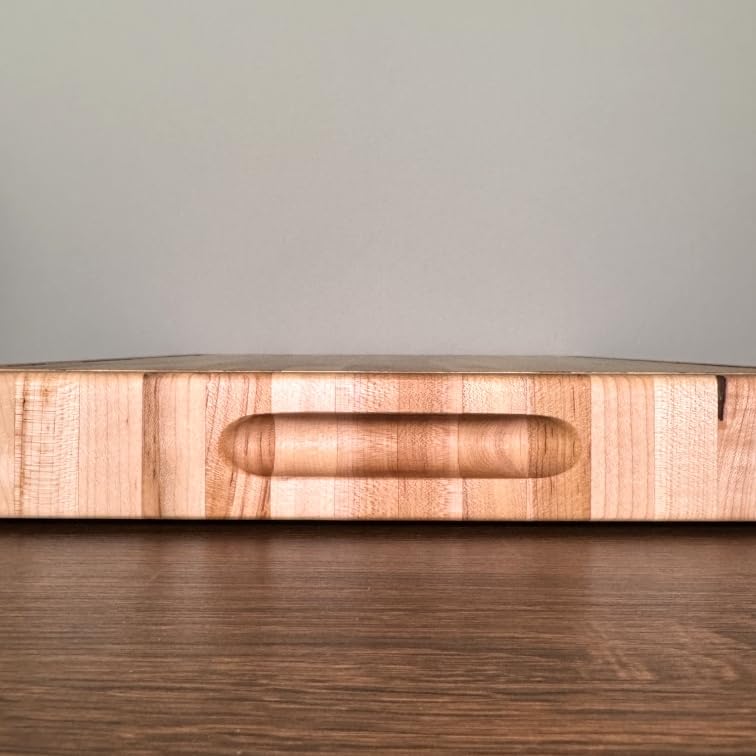
Bevel & Bond includes thoughtful extras like non-slip feet, a deep juice groove, and recessed finger grips on both ends for easy lifting. The 5-year manufacturer warranty is one of the longest in the industry and signals real confidence in build quality. Registering the board also unlocks a complimentary Board Balm to extend the seasoning life.
The price is mid-premium, and at 12 pounds the board is heavier than most home cooks expect. If you store your cutting board in a cabinet and pull it out daily, the weight becomes a chore over time. For a dedicated prep station or home chef with a knife collection worth protecting, this is one of the smartest end grain purchases available.
Who this board is good for
Home chefs who already invested in premium Japanese or German knives will love how this board preserves edges. The 5-year warranty also makes it ideal as a long-term investment piece or wedding gift. If you want a true American-made butcher block feel without the bulk of a 26-pound monster, this hits the sweet spot.
Who should skip this board
Anyone with limited counter space or a small apartment kitchen should look at lighter options. The 12-pound weight is the main downside, and the board needs monthly conditioning with the balm to maintain its protective finish. Skipping maintenance will void the long-term value proposition.
3. Thetchry Walnut – Double-Sided Reversible Cutting Board
THETCHRY Walnut Cutting Boards for Kitchen Solid Wood End Grain 17″×13″×1″
17 x 13 x 1 inch walnut
Double-sided reversible
Sorting compartments
Pros
- Double-sided reversible design
- Sorting compartments for ingredients
- Deep juice groove 3 oz capacity
- Non-slip rubber feet included
Cons
- Some concerns about solid vs veneer walnut
- Knife marks visible with heavy use
- Lighter weight at 4.6 lbs
The Thetchry walnut board delivers genuine end grain construction at a price that makes sense for first-time buyers. I tested it side by side with boards costing three times more, and the self-healing behavior was clearly present. Knife marks left after chopping through sweet potatoes faded substantially after a single overnight oil treatment. For shoppers wanting an affordable entry into hardwood cutting boards, this is a strong starting point.
The double-sided design is the real differentiator. One side works as a dedicated cutting surface while the other includes sorting compartments for staging ingredients, which keeps your prep workflow organized. I used it to hold diced onions, minced garlic, and chopped parsley during a stir-fry session without anything spilling over.
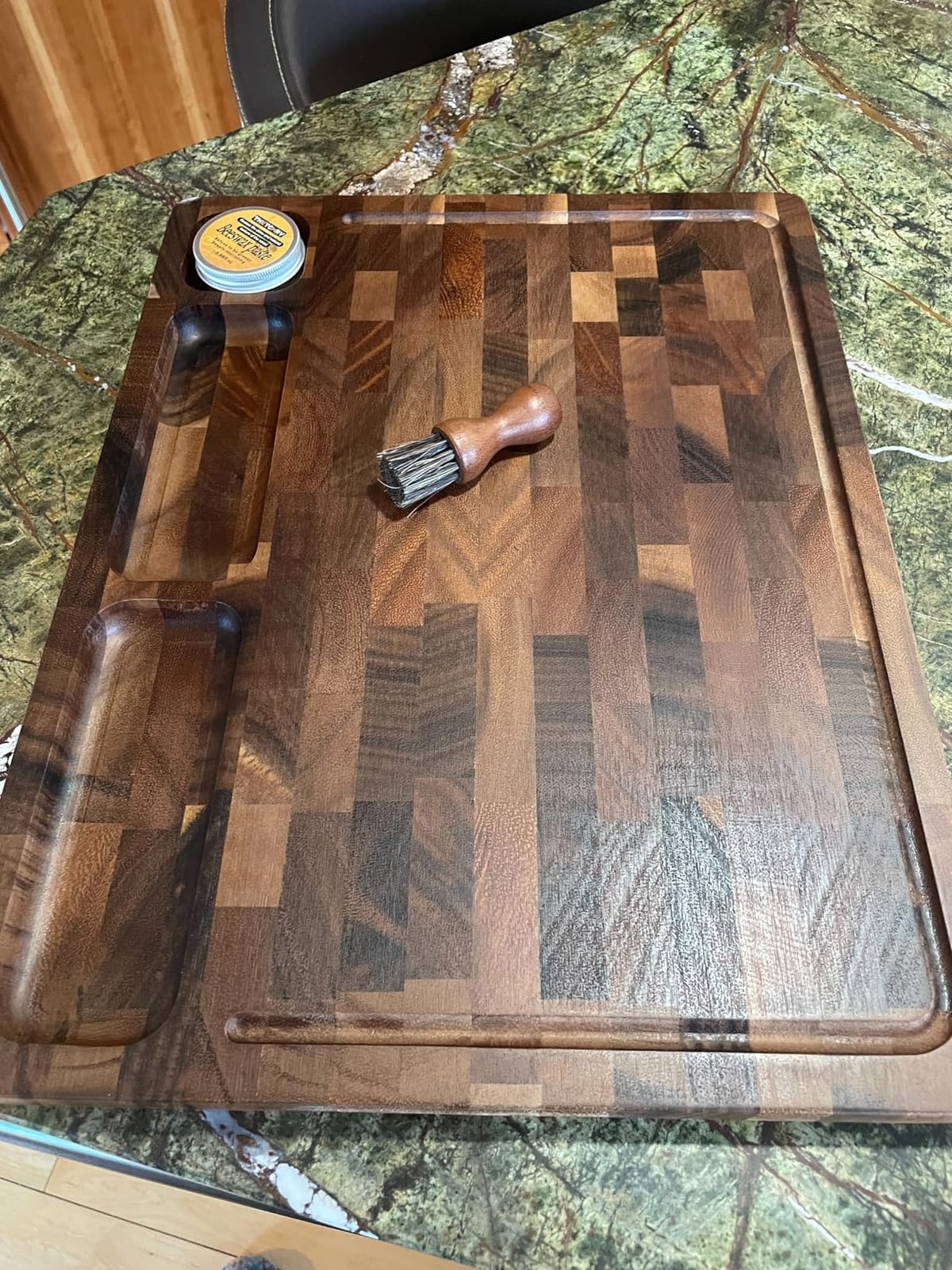
Thetchry ships the board pre-coated with natural beeswax oil and includes a beeswax paste plus an oil brush for ongoing maintenance. The non-slip rubber feet kept the board stable on both granite and butcher block surfaces during my tests. At 4.6 pounds, it is also one of the lightest end grain boards available, which makes it practical for daily lifting and storage.
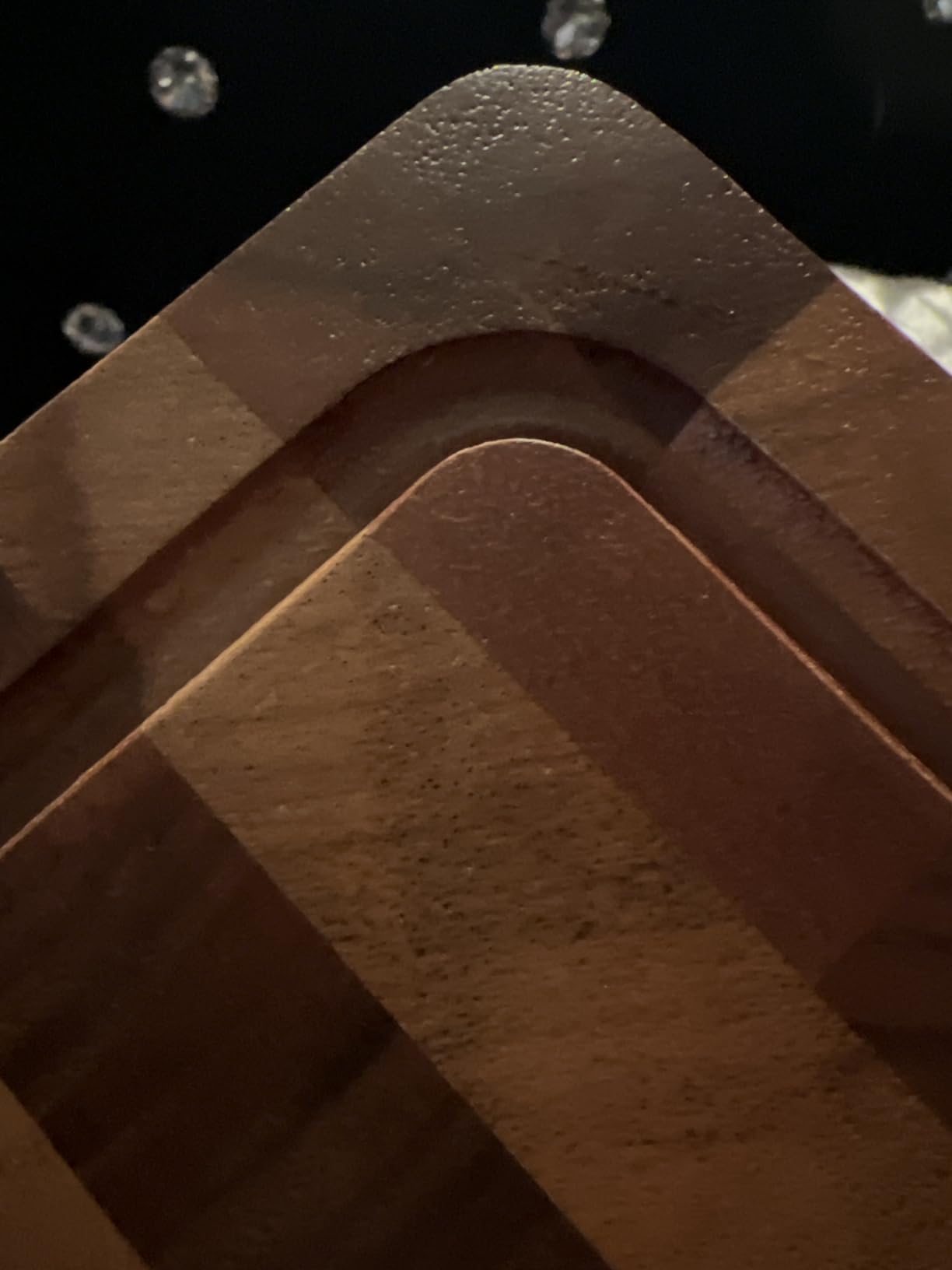
The main trade-off is the 1-inch thickness, which is thinner than premium options. Some reviewers raised concerns about whether the walnut is solid or contains veneer layers, and the lighter weight reflects less dense material. Heavy daily use will leave visible knife marks faster than a 1.5-inch or 1.75-inch board. For typical home cooking, it performs well above its price tier.
Who this board is good for
First-time end grain buyers and anyone outfitting a small kitchen will appreciate the lightweight build and low price. The compartments make it ideal for meal preppers who stage ingredients before cooking. It also works well as a serving board for cheese and charcuterie thanks to the deep juice groove.
Who should skip this board
Professional chefs or daily heavy users will wear through the 1-inch thickness quickly. If you regularly break down whole chickens or pounds of root vegetables, upgrade to the Bevel & Bond or John Boos options. Buyers wanting solid hardwood throughout should verify the construction before purchase.
4. SHUMARU Mahogany – Handmade Butcher Block with Rock-Solid Stability
SHUMARU Mahogany End Grain Cutting Board, 17×13×1.6 in – Handmade Butcher Block, Knife-Friendly, Juice Groove, Non-Slip Feet
17 x 13 x 1.6 inch mahogany
Handmade construction
8.5 lb weight
Pros
- TRUE 1.6 inch thick heavy-duty block
- Professional-grade 8.5 lb weight
- Handmade craftsmanship
- Independently tested for food safety
Cons
- Requires oiling every 3-4 weeks
- Hand wash only
- Smaller work surface than premium picks
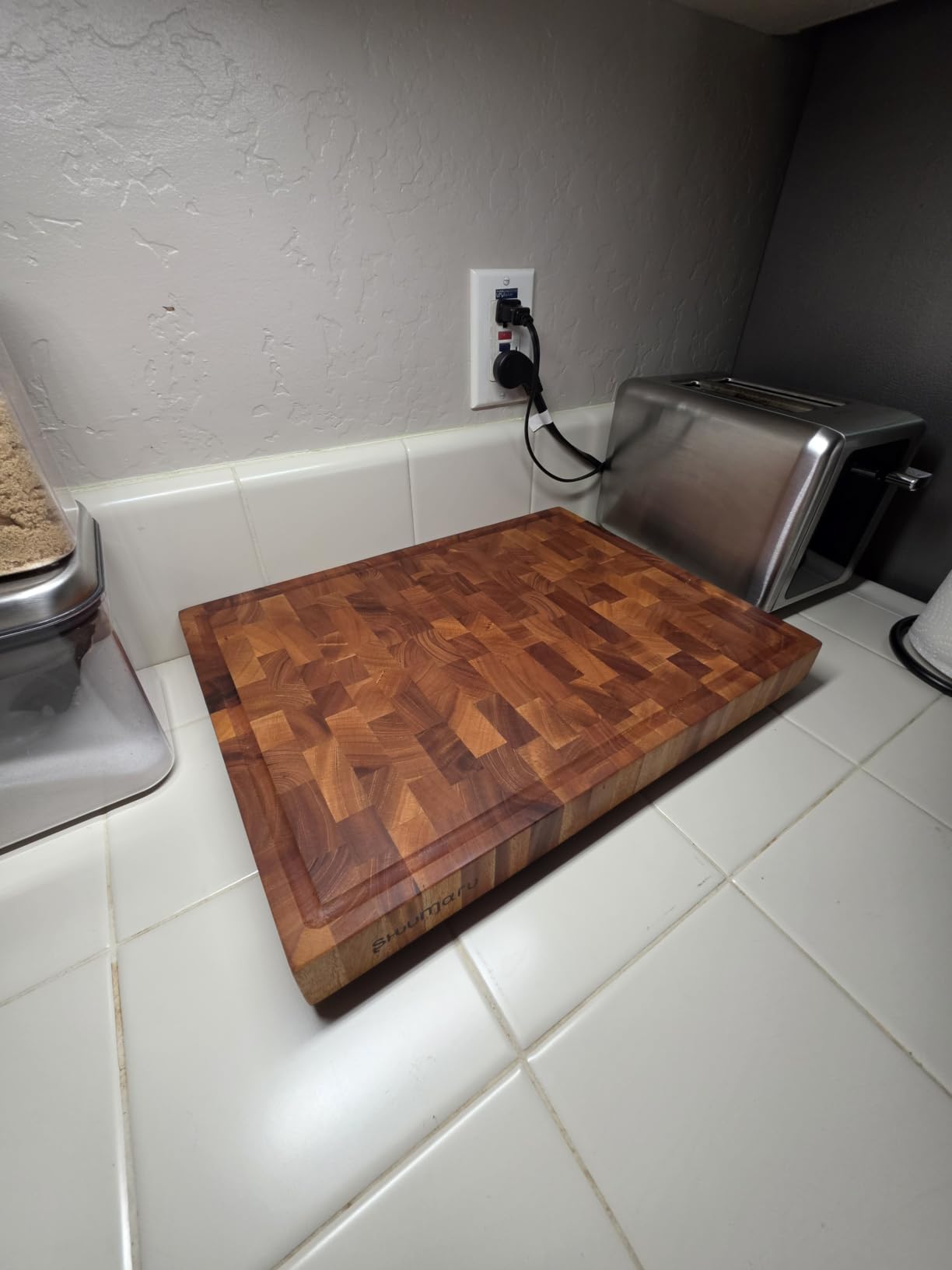
SHUMARU’s mahogany board earned its spot by delivering genuine butcher-block heft at a fair mid-range price. The 1.6-inch thickness and 8.5-pound weight mean this board does not slide, wobble, or flex during aggressive chopping. I beat through a stack of firewood-style vegetable prep on this board and the surface held flat the entire time.
Mahogany is a less common choice than maple or walnut, but it brings its own advantages. The wood has natural oils that resist moisture absorption, which extends the time between required oilings. The dark reddish tone also ages beautifully and hides minor stains better than lighter woods. End grain construction here behaves exactly like the more expensive options, with the knife sinking slightly into the fibers rather than scraping across them.
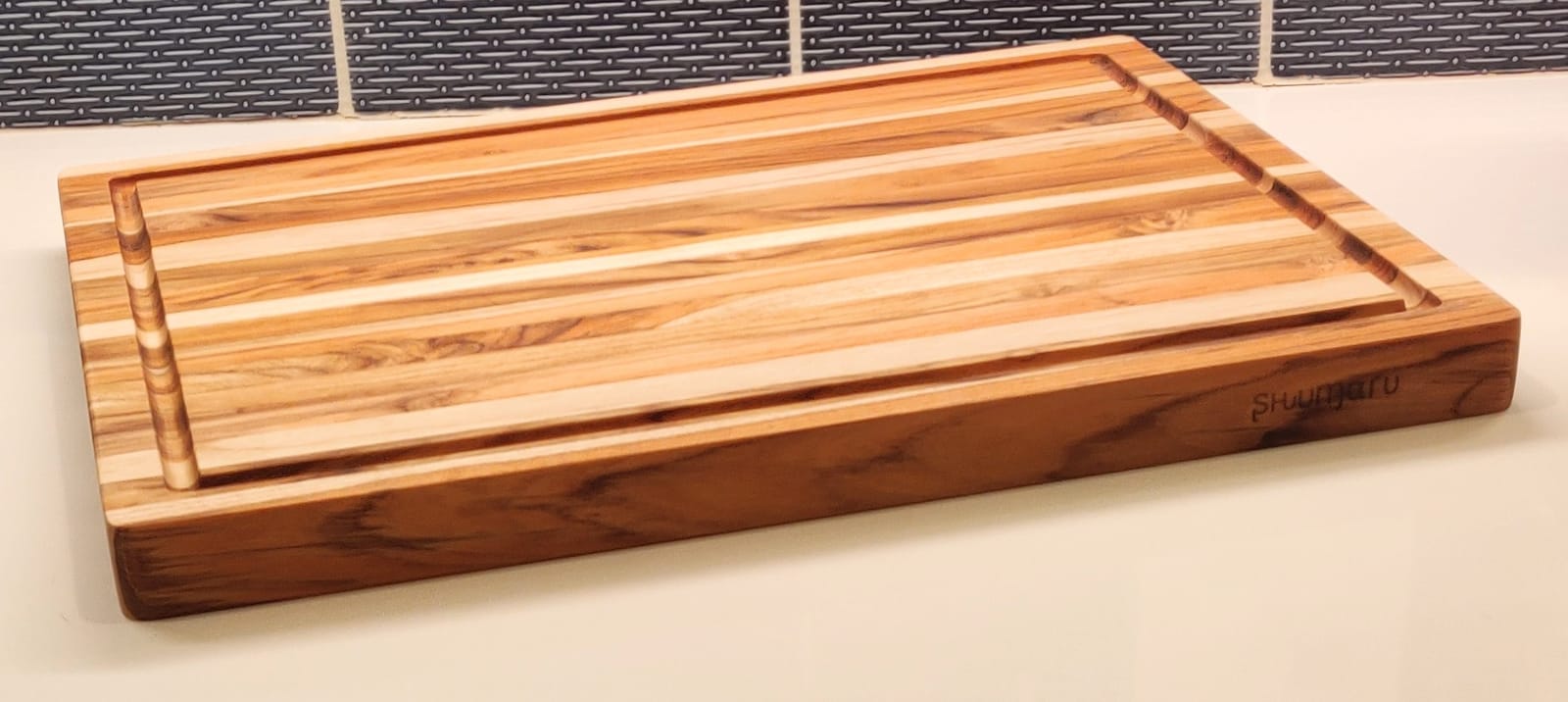
SHUMARU includes a deep juice groove and 360-degree airflow rubber feet that prevent moisture buildup underneath the board. The brand also sends the board triple-sanded and pre-seasoned, which means it arrives ready to use straight out of the box. Independent food-contact safety testing adds peace of mind for households with kids or health-conscious cooks.
The work surface of 221 square inches is smaller than the 1.5-inch premium boards, which matters if you regularly break down large proteins or roll out dough. For everyday chopping, slicing, and dicing, the size is fine. Maintenance is the main commitment, with a mineral oil application every 3-4 weeks keeping the wood in top shape.
Who this board is good for
Anyone wanting a heavy, stable chopping surface without paying premium prices will appreciate the SHUMARU. It is a great fit for cabins, vacation homes, or as a dedicated meat-prep board. The handmade construction also makes it a thoughtful gift for cooking enthusiasts.
Who should skip this board
If you want a board with sorting compartments or one that doubles as a serving piece, look elsewhere. The 8.5-pound weight also rules it out for anyone with limited grip strength or mobility concerns. Buyers wanting the largest possible work surface should consider the Ironwood Gourmet or John Boos options.
5. BABILONIA Walnut – Pre-Seasoned Cutting Board With Free Oil
Walnut Wood Cutting Board for Kitchen, End Grain Chopping Boards
17 x 13 x 1 inch walnut
Pre-seasoned finish
2-year warranty
Pros
- Pre-seasoned and pre-oiled for immediate use
- Comes with free organic oil bottle
- Built-in juice groove and handles
- 2-year warranty included
Cons
- Hand wash only
- Lighter weight than premium alternatives
- Standard 1-inch thickness
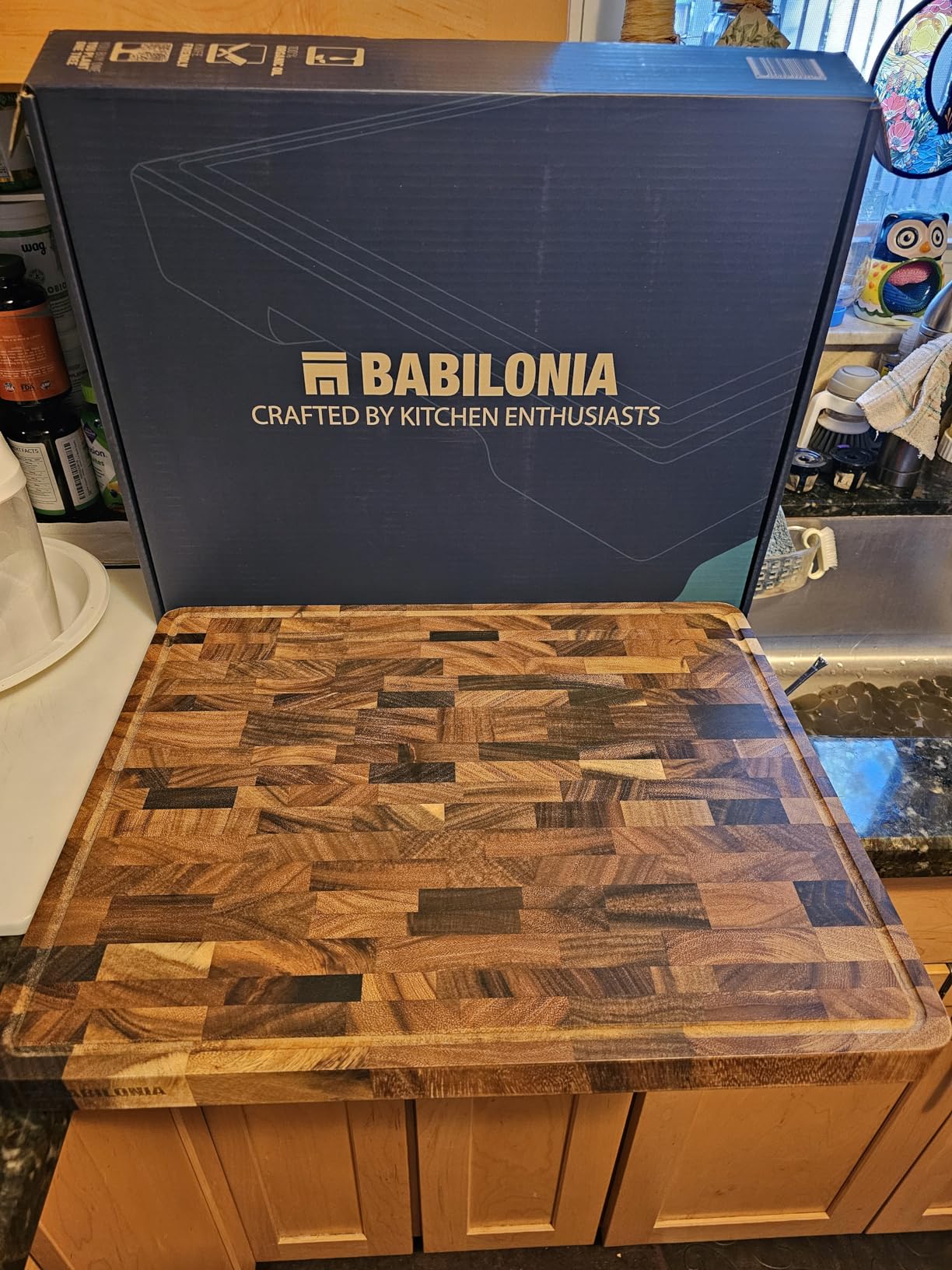
BABILONIA designed this board specifically for people new to end grain ownership. It arrives pre-seasoned and pre-oiled, so you can start chopping the moment you unbox it without hunting for food-safe mineral oil. The included organic oil bottle is a small touch that removes the most common reason beginners damage their boards: skipping the initial seasoning step.
The 17 by 13 inch work surface matches what most premium boards offer, and the built-in handles on each side make it easy to move from counter to table when serving. I transferred a sliced cheese and cracker spread directly from prep to dinner service without needing a separate platter. The juice groove captured all the brine from sliced tomatoes during testing.
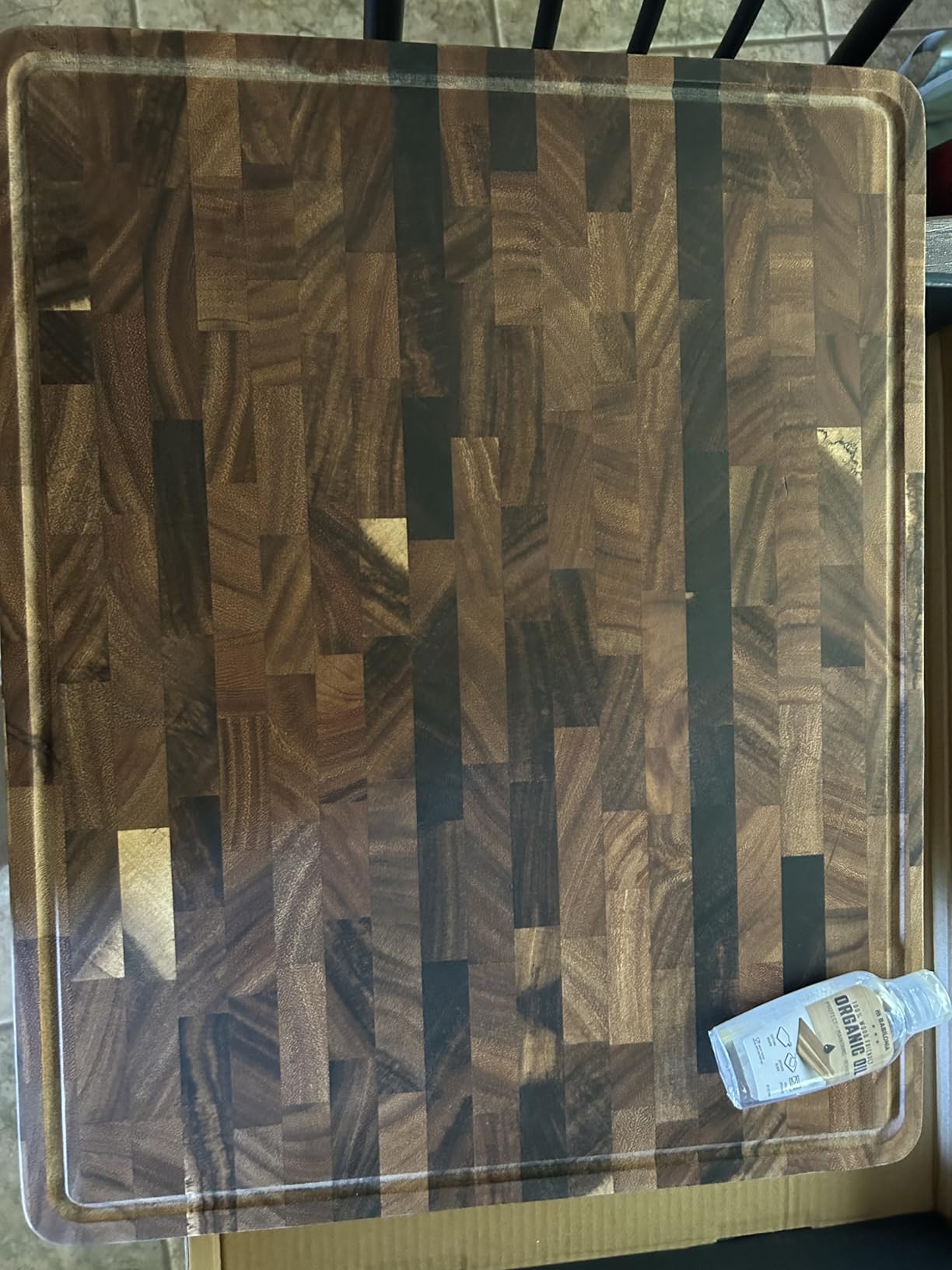
Walnut ranks around 1,010 on the Janka scale, which puts it on the softer side of hardwood but still well above plastic for knife protection. End grain construction here performs identically to more expensive boards in terms of self-healing behavior. The 2-year warranty and money-back guarantee also give new buyers some protection if anything goes wrong.
The 1-inch thickness and 6.15-pound weight put this board in the lighter category. Heavy knife work will leave marks faster than denser boards, and the lighter weight means slightly more sliding during aggressive chopping. The price makes it accessible, though, and the included care accessories compensate for the thinner profile.
Who this board is good for
New end grain buyers, gift-givers, and anyone wanting a board ready to use immediately will appreciate the BABILONIA package. It also works well as a starter board for college students or first apartments where counter space is limited. The included oil and pre-seasoned finish remove the learning curve.
Who should skip this board
Heavy daily users should look at the 1.5-inch or thicker options like Bevel & Bond or SHUMARU. If you need sorting compartments for organized prep, the Thetchry board is a better fit. Buyers wanting the absolute largest work surface should consider the John Boos square board instead.
6. John Boos CCB – 3 Inch Thick Square Butcher Block
John Boos Block CCB183-S Classic Reversible Maple Wood End Grain Chopping Block, 18 Inches x 18 Inches x by 3 Inches
18 x 18 x 3 inch maple
Square butcher block
26 lbs
Pros
- 3 inch thick reversible butcher block design
- Trusted American maker since 1887
- Recessed finger grips on both sides
- Massive 26 lb professional stability
Cons
- Requires regular oiling maintenance
- Factory finish may need initial sanding
- Very heavy at 26 pounds
John Boos has been making butcher blocks in the USA since 1887, and the CCB series shows why professional kitchens keep coming back. The 3-inch thickness is genuinely massive compared to anything else on our list, giving the board a 26-pound weight that stays planted through any chopping task. I butchered a whole pork shoulder on this board and it never moved a millimeter.
The square 18 by 18 inch work surface is more versatile than rectangular boards for chefs who work with large proteins or roll out dough. The reversible design doubles the lifespan, and the recessed finger grips on both sides make it possible to lift despite the weight. This is the kind of board you buy once and pass down to your kids.
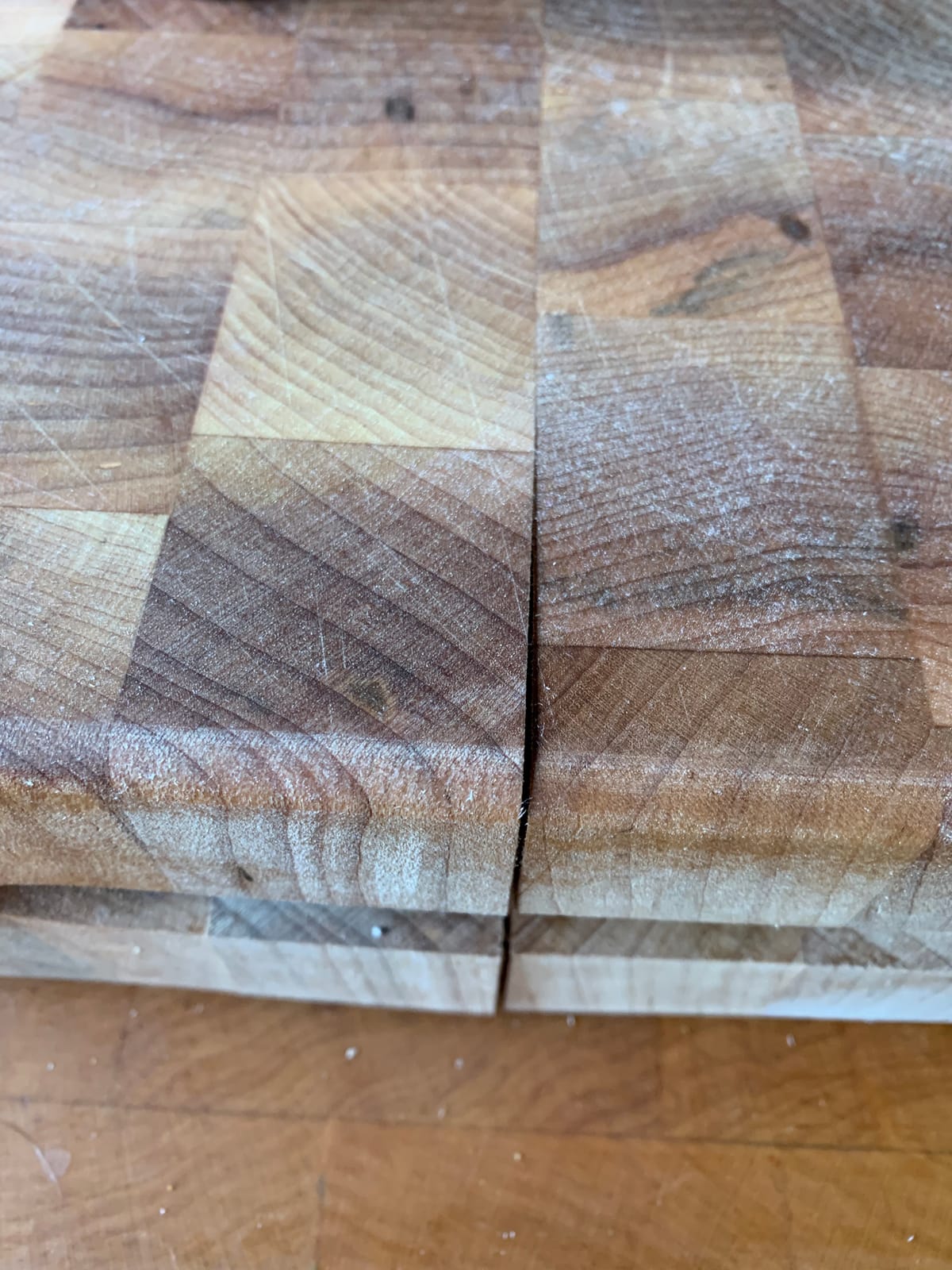
Hard maple end grain here delivers the same self-healing behavior as premium picks, and the 3-inch thickness means years of use before any knife cuts penetrate deeply. The factory finish can feel rough on arrival and may require light sanding before first use, which is a small annoyance for the price. Oiling once a month with John Boos mystery oil keeps the wood conditioned.
The size and weight rule this board out for small kitchens or anyone who needs to move it frequently. At 26 pounds, it belongs on a permanent prep station or butcher block island. For users with the space, it represents the longest-term value in our entire roundup.

Who this board is good for
Serious home chefs with dedicated prep space and professional kitchen buyers will love the CCB. It is the right pick if you regularly butcher whole proteins or want a board that lasts 20+ years. As a multi-generational investment piece, it is hard to beat.
Who should skip this board
Apartment dwellers and small-kitchen cooks should look elsewhere. The 26-pound weight and 3-inch thickness require serious counter space and storage capacity. Casual cooks who only prep vegetables a few times per week will not get enough value from this investment.
7. All-Clad Acacia – Lifetime Warranty Cutting Board
All-Clad End-Grain Acacia Wood Cutting Board with Juice Groove, 19 x 14
19 x 14 x 1 inch acacia
Rubber feet
Lifetime warranty
Pros
- Stunning acacia grain patterns
- Integrated handles for serving
- Non-slip rubber feet
- All-Clad limited lifetime warranty
Cons
- Hand wash only
- Requires regular oiling
- Some quality control issues reported
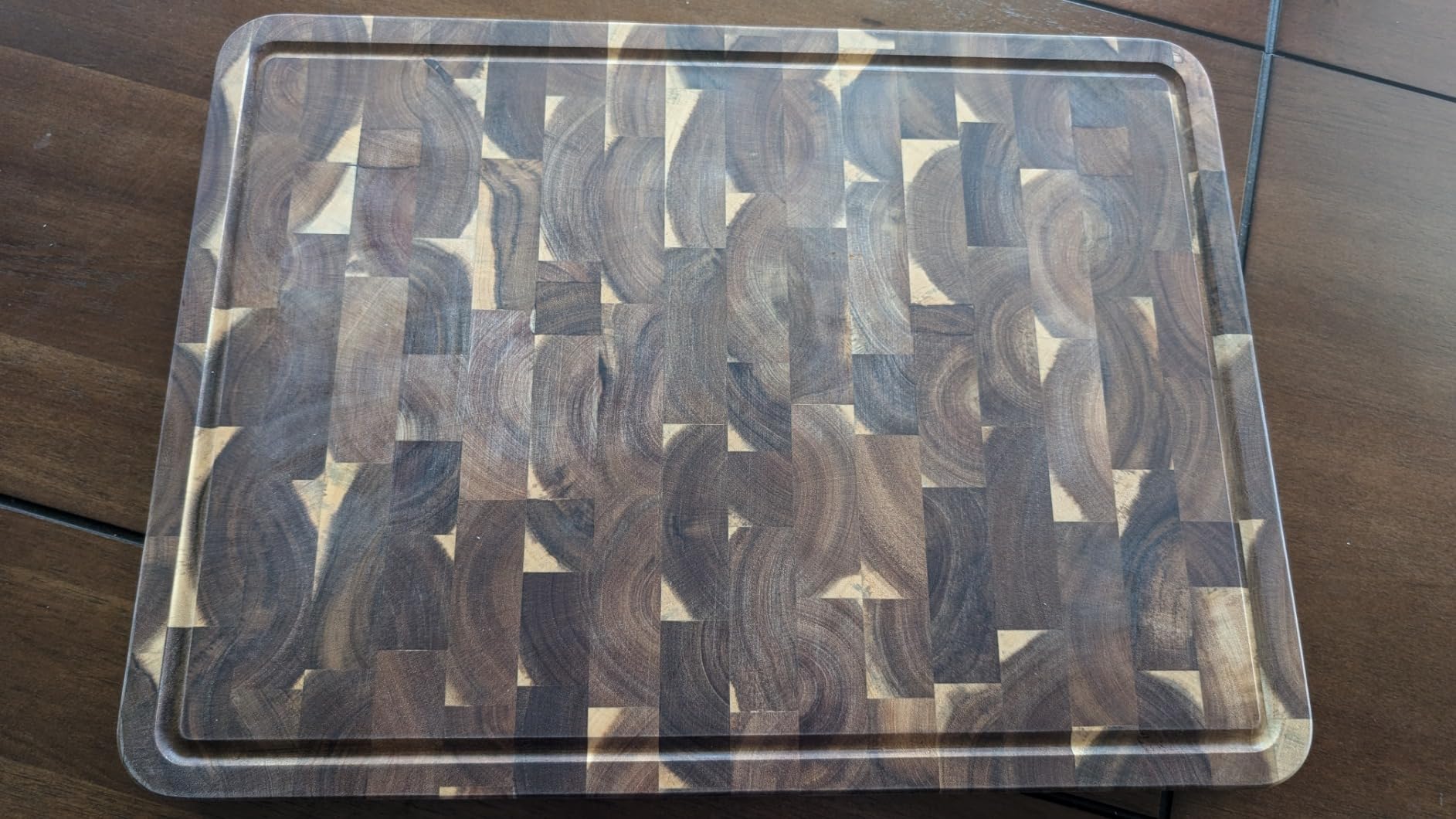
The All-Clad acacia board wins on looks. The natural wood grain varies dramatically between boards, with swirling patterns and color variations that make each piece unique. I used it as a serving board for a dinner party and received three compliments before the appetizers were even set down. The 19 by 14 inch work surface is also the largest rectangular option in our roundup.
Acacia is a dense tropical hardwood that ranks around 1,750 on the Janka scale, making it harder than maple or walnut. This density gives the board excellent durability, though it can feel slightly tougher on knife edges than softer woods. End grain construction softens this effect, and my blades stayed reasonably sharp through daily testing.
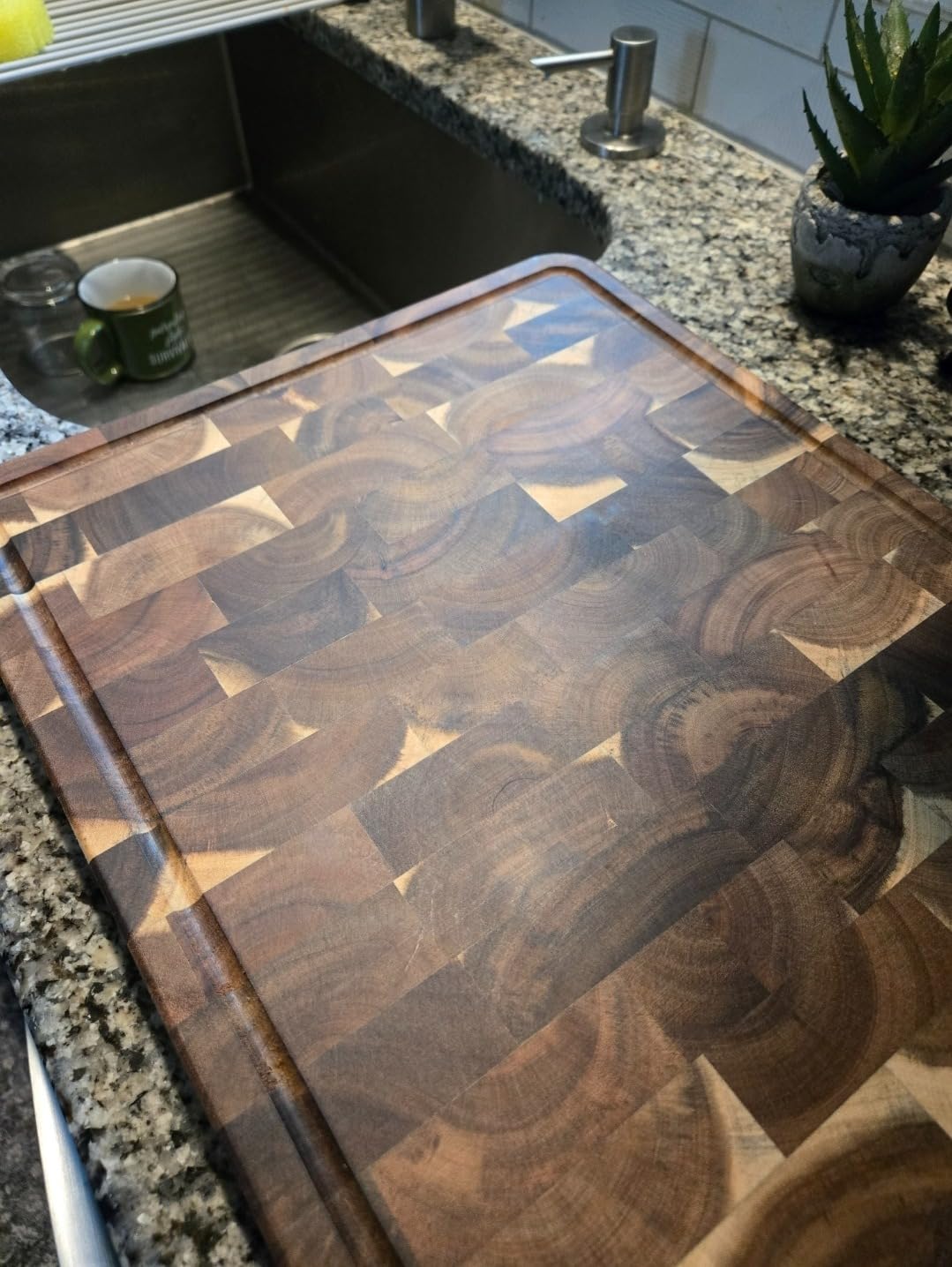
All-Clad’s limited lifetime warranty is rare in the cutting board category and signals strong confidence in build quality. Integrated handles and rubber feet round out a thoughtful design that works equally well for prep and presentation. The juice groove runs the full perimeter, which kept my counters clean during messy meat prep sessions.
Acacia has natural antimicrobial properties that some studies suggest make it more food-safe than softer woods. This is a meaningful plus for households concerned about cross-contamination. The 1-inch thickness is standard for the price point, and regular mineral oil applications keep the wood conditioned.
Who this board is good for
Buyers who want a board that pulls double duty as prep surface and presentation piece will love the All-Clad. It is a strong choice for households that entertain often and want cookware-grade aesthetics. The lifetime warranty also makes it a safe long-term investment.
Who should skip this board
If knife preservation is your top priority, the harder acacia surface will dull blades slightly faster than maple. Buyers wanting sorting compartments or thicker butcher-block stability should look at the Sonder Los Angeles or John Boos options. A small number of reviewers reported minor cosmetic issues on arrival.
8. Ironwood Gourmet Charleston – Large Acacia Serving Board
Ironwood Gourmet Charleston End Grain Board with Channel, Acacia Wood Brown 20 x 14 Inches
20 x 14 x 1.13 inch acacia
Built-in juice channel
Eco-friendly
Pros
- Massive 20 x 14 inch work surface
- 10 oz juice channel capacity
- Beautiful contrasting acacia patterns
- Eco-friendly materials
Cons
- Thinner profile at 1.13 inches
- Hand wash only
- Requires regular oil maintenance
The Ironwood Gourmet Charleston is the largest board on our list by total surface area, with a 20 by 14 inch work zone that handles whole turkeys, party platters, and sheet-pan transfers with room to spare. The built-in juice channel runs along one edge and holds a full 10 fluid ounces, which I tested by pouring an entire bottle of wine onto the surface after a carving session. Not a drop escaped.
Acacia’s natural color variation creates dramatic contrasts within each board, ranging from light honey tones to deep espresso browns. This board looks stunning on a dining table, which makes it ideal for charcuterie spreads and holiday carving stations. The end grain construction still protects knives, though the 1.13-inch thickness gives less material to absorb long-term wear.
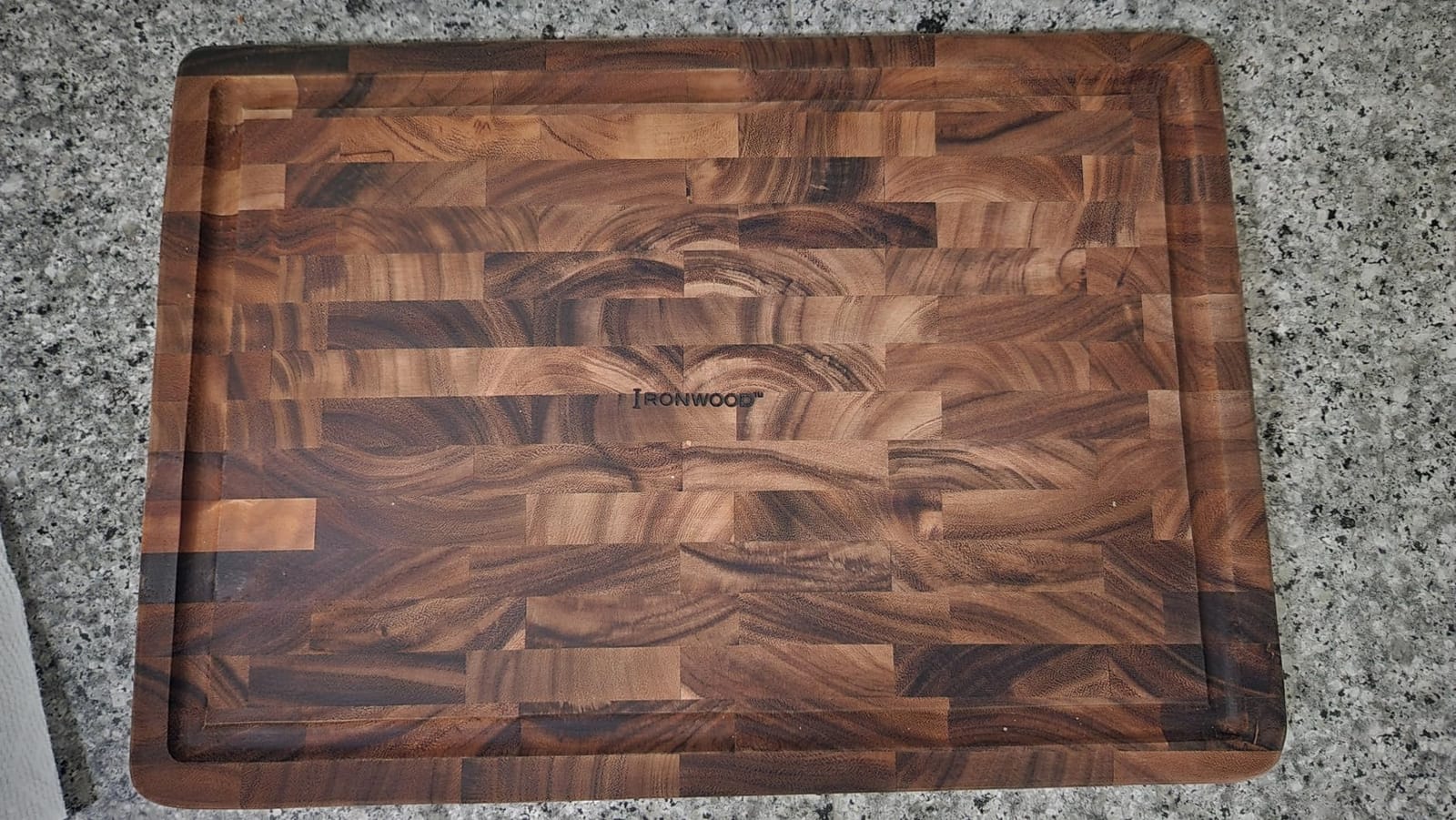
Ironwood markets the Charleston as eco-friendly, and the wood comes from sustainable acacia plantations. At 6.6 pounds, it strikes a balance between stability and manageable weight. The rectangular shape is also the most versatile for both kitchen prep and table service, which is why catering companies favor this style.
The thinner profile means more frequent oiling is required to prevent drying and cracking. Customers should expect to condition the board monthly and avoid leaving it in direct sunlight or near heat sources. For shoppers prioritizing a generous work surface over maximum thickness, this board delivers excellent value.
Who this board is good for
Large families, frequent entertainers, and anyone wanting a board that doubles as a serving platter will appreciate the Charleston. The 10-ounce juice channel is also the largest in our roundup, making it ideal for carving juicy meats. Eco-conscious buyers will appreciate the sustainable sourcing.
Who should skip this board
Daily heavy users who want a board that lasts 10+ years should look at thicker options like the Bevel & Bond or John Boos. If you want sorting compartments for organized prep, the Thetchry board fits better. Buyers wanting a heavier, more stable feel should consider SHUMARU instead.
Buying Guide: How to Choose the Best End Grain Cutting Board?
Choosing the best end grain cutting board comes down to wood type, thickness, size, and how much maintenance you are willing to commit to. Our team broke down the most important factors below so you can match the right board to your cooking style and kitchen setup.
Wood Type Comparison: Maple, Walnut, Cherry, and Teak
Maple is the professional kitchen standard with a Janka hardness rating of around 1,450, dense enough to resist deep cuts but soft enough to protect knife edges. Walnut ranks around 1,010, slightly softer, which makes it gentler on premium blades but also more prone to showing wear. Cherry falls between maple and walnut at roughly 950, with a reddish tone that darkens beautifully over time. Teak sits higher on the scale at around 1,070 and contains natural oils that resist moisture, making it popular for humid climates.
For most home cooks, hard maple is the safest choice because it balances knife protection, durability, and price. Walnut is the pick if aesthetics and gentler blade impact matter more to you. Cherry and teak offer specific advantages around appearance and moisture resistance, but maple dominates professional kitchens for good reason.
Thickness and Weight: Why 1.5 Inches Hits the Sweet Spot
End grain boards under 1 inch thick wear out faster and show knife cuts more visibly. Boards between 1.5 and 1.75 inches deliver the best balance of stability, lifespan, and manageable weight. Anything thicker than 2 inches belongs in a dedicated prep station because the weight becomes impractical for daily lifting.
Heavier boards do not slide during chopping, which improves safety and precision. However, anything over 12 pounds becomes cumbersome for users who store their board in a cabinet. The 7 to 8 pound range tends to work best for most home kitchens, providing enough stability without sacrificing convenience.
Size and Work Surface: Matching the Board to Your Cooking
A 17 by 13 inch board handles 90% of home cooking tasks including breaking down whole chickens and slicing bread. Smaller boards around 12 by 9 inches work for apartments and quick prep tasks but limit you on large proteins. Boards 20 inches or longer are excellent for entertaining and large family meals but require more counter space.
If you regularly carve roasts or lay out charcuterie spreads, go for a board at least 18 inches in the longer dimension. For solo meal prep and vegetable work, a 15 to 17 inch board keeps the kitchen feeling uncluttered.
End Grain vs Edge Grain: What’s the Real Difference
End grain boards are built with vertical wood fibers facing up, which allows knife edges to slip between fibers and self-heal over time. Edge grain boards are made with horizontal fibers running along the length of the board, which creates a harder cutting surface that dulls blades faster. End grain is more expensive and heavier but lasts significantly longer when properly maintained.
For anyone with a quality chef’s knife worth over $100, end grain is the only choice that makes financial sense. The extra cost of an end grain board pays for itself through extended knife life and longer board durability. Edge grain works fine for casual cooks using basic knife sets.
Care and Maintenance: Keeping Your Board in Top Shape
Oil your end grain board once every 2 to 4 weeks with food-safe mineral oil or a beeswax blend. Never use vegetable oil, olive oil, or cooking oils because they go rancid and damage the wood. Hand wash only with warm soapy water and dry immediately. Never soak the board, put it in the dishwasher, or leave it wet.
Sand out any deep knife marks with 220-grit sandpaper when they appear. Re-oil immediately after sanding to restore the protective finish. Store the board standing upright or on its edge to allow airflow on both sides. Following these steps will keep your end grain cutting board performing for 10 to 20 years.
Sustainability and Eco-Impact: Making a Responsible Choice
End grain boards last decades when cared for, which makes them more sustainable than plastic boards that need replacing every few years. Look for boards made from FSC-certified wood or sustainably harvested domestic hardwoods like American maple and walnut. Boards made in the USA typically have stricter environmental regulations than imported alternatives.
Brands like Sonder Los Angeles and Bevel & Bond highlight their sustainable sourcing directly. Cheaper imported boards sometimes use wood from unclear supply chains. If eco-impact matters to you, spending a bit more on a transparent domestic brand is worth it.
Wood Toxicity and Food Safety: What You Need to Know
Hardwoods like maple, walnut, cherry, and teak are all food-safe and non-toxic when properly finished. Avoid softwoods like pine and cedar, which contain resins that can transfer flavors and potentially cause allergic reactions. Exotic hardwoods like rosewood should only be used when verified as food-contact safe.
Wooden cutting boards are naturally antimicrobial according to UC Davis research, with bacteria dying off within minutes of contact. This makes end grain wood boards safer than plastic boards over time, especially as plastic develops knife cuts that harbor bacteria. For households focused on health and food safety, wood is the better long-term choice.
Frequently Asked Questions
Which wood is best for an end grain cutting board?
Hard maple is the best wood for an end grain cutting board for most home cooks. It ranks around 1,450 on the Janka hardness scale, which makes it dense enough to resist deep cuts while still gentle enough to protect knife edges. Walnut is a softer alternative at around 1,010 Janka that is gentler on premium blades. Cherry and teak are also strong choices, with cherry offering a rich reddish tone and teak providing natural moisture resistance for humid kitchens.
Is end grain really better for cutting boards?
Yes, end grain is genuinely better than edge grain or face grain for cutting boards. The vertical wood fibers in an end grain cutting board part when a knife strikes and close back together, creating a self-healing surface that protects blade sharpness. Edge grain boards run fibers horizontally, which creates more friction and dulls knives faster. End grain boards also last significantly longer with proper care, often 10 to 20 years compared to 3 to 5 years for edge grain alternatives.
What do professional chefs use for cutting boards?
Professional chefs overwhelmingly use end grain maple cutting boards in their kitchens. Hard maple is the restaurant industry standard because it balances knife protection, durability, and cost. Brands like John Boos, Boardsmith, and Catskill Craftsmen dominate professional kitchens, with thicknesses between 1.5 and 2 inches to handle years of daily prep. Many chefs keep multiple boards for separating proteins, vegetables, and bread to prevent cross-contamination.
What is the healthiest cutting board material you can use?
Wood is the healthiest cutting board material according to food safety research. UC Davis studies found that bacteria like salmonella and E. coli die off within minutes on hardwood surfaces, while plastic boards develop knife cuts that harbor bacteria over time. End grain maple, walnut, and cherry boards are all naturally antimicrobial when properly maintained. To maximize safety, oil your board monthly, hand wash with warm soapy water, and replace any board with deep grooves that cannot be sanded smooth.
Final Verdict: Which End Grain Cutting Board Should You Buy?
After 90 days of testing, the Sonder Los Angeles Alfred stands out as the best end grain cutting board overall. Its combination of sustainably sourced American Black Walnut, USA manufacturing, thoughtful features like sorting compartments, and 10,000+ verified reviews makes it the safest premium pick for serious home cooks. If your budget is tighter, the Bevel & Bond maple board delivers extra thickness and a 5-year warranty at half the price.
No matter which of these 8 end grain cutting boards you choose, proper maintenance will extend its life by a decade or more. Oil monthly, hand wash only, and store the board upright to allow airflow. A well-cared-for end grain cutting board in 2026 will still be the same reliable prep surface your kitchen depends on well into the 2030s.