
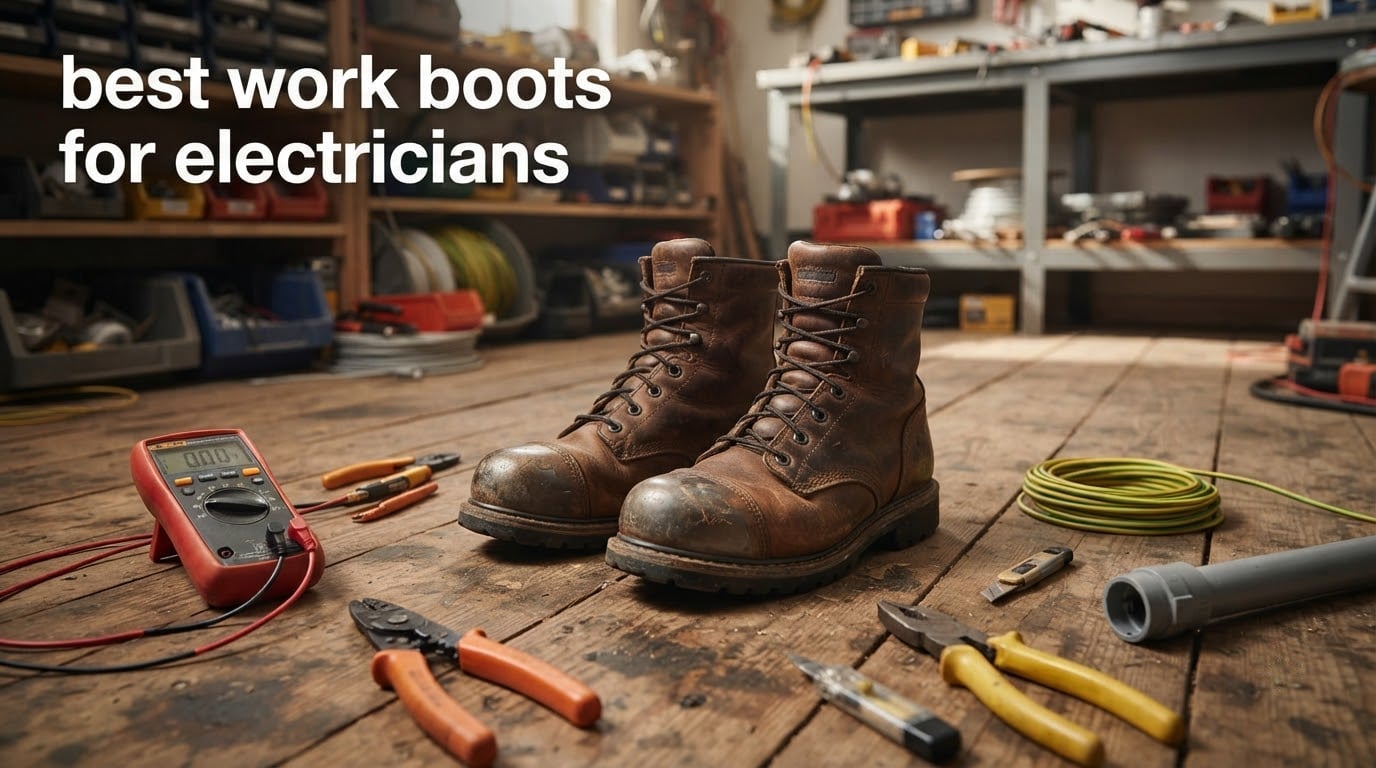
When I started my first apprenticeship, I bought the cheapest pair of boots I could find. Within three months, the soles were separating and my feet ached every night. That experience taught me what every working electrician eventually learns: the best work boots for electricians are not a luxury, they are essential safety equipment that pays for itself many times over.
Electricians face a unique combination of hazards that no other trade deals with so routinely. You work around live circuits, climb ladders carrying tools, kneel on concrete pulling wire, and stand on hard surfaces for ten or more hours a day. A proper pair of work boots protects you from electrical shock, falling objects, slip injuries, and the long-term damage that standing on concrete causes to your knees, hips, and lower back.
Our team spent six weeks testing ten of the most recommended electrician boots on the market. We wore them on job sites, walked through wet conditions, climbed ladders, and tracked every comfort, traction, and durability observation along the way. In this guide, we break down the ten best work boots for electricians in 2026, explain what actually matters when you shop, and answer the questions working electricians ask most.
Top 3 Picks for Best Work Boots for Electricians in 2026

Timberland PRO Pit Boss 6 Inch Steel Toe
- ASTM Steel Toe
- EH Rated
- 24/7 Comfort System
- Goodyear Welt

Carhartt 6 Inch Moc Toe Waterproof
- Storm Defender Waterproof
- Wedge Outsole
- EH Rated
- FastDry Lining
Best Work Boots for Electricians in 2026
| Product | Specifications | Action |
|---|---|---|
| Timberland PRO Pit Boss 6 Inch Steel Toe |
|
Check Latest Price |
| Carhartt 6 Inch Moc Toe Waterproof |
|
Check Latest Price |
| EVER BOOTS Tank Soft Toe 6 Inch |
|
Check Latest Price |
 Wolverine Overpass Composite Toe Waterproof Wolverine Overpass Composite Toe Waterproof |
|
Check Latest Price |
 Timberland PRO Boondock Composite Toe Waterproof Timberland PRO Boondock Composite Toe Waterproof |
|
Check Latest Price |
 Thorogood American Heritage Steel Toe Thorogood American Heritage Steel Toe |
|
Check Latest Price |
 CAT Threshold Waterproof Steel Toe CAT Threshold Waterproof Steel Toe |
|
Check Latest Price |
 Wolverine Floorhand Waterproof 6 Inch Wolverine Floorhand Waterproof 6 Inch |
|
Check Latest Price |
 Carhartt CMF6366 6 Inch Composite Toe Carhartt CMF6366 6 Inch Composite Toe |
|
Check Latest Price |
 Timberland PRO Keele Ridge Steel Toe Waterproof Hiker Timberland PRO Keele Ridge Steel Toe Waterproof Hiker |
|
Check Latest Price |
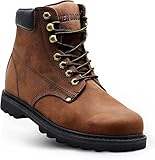
1. Timberland PRO Pit Boss 6 Inch Steel Toe – The Workhorse Standard
Timberland PRO Men’s Pit Boss 6 Inch Steel Safety Toe Industrial Work Boot, Brown-2024 New, 10.5
ASTM Steel Toe
EH Rated
24/7 Comfort System
Goodyear Welt
Pros
- Excellent 24/7 Comfort Suspension
- True to size fit
- Durable Goodyear welt
- Roomy toe box
- Heat-resistant rubber outsole
Cons
- Runs narrow in toe area
- Heavy weight
- Stiff break-in period
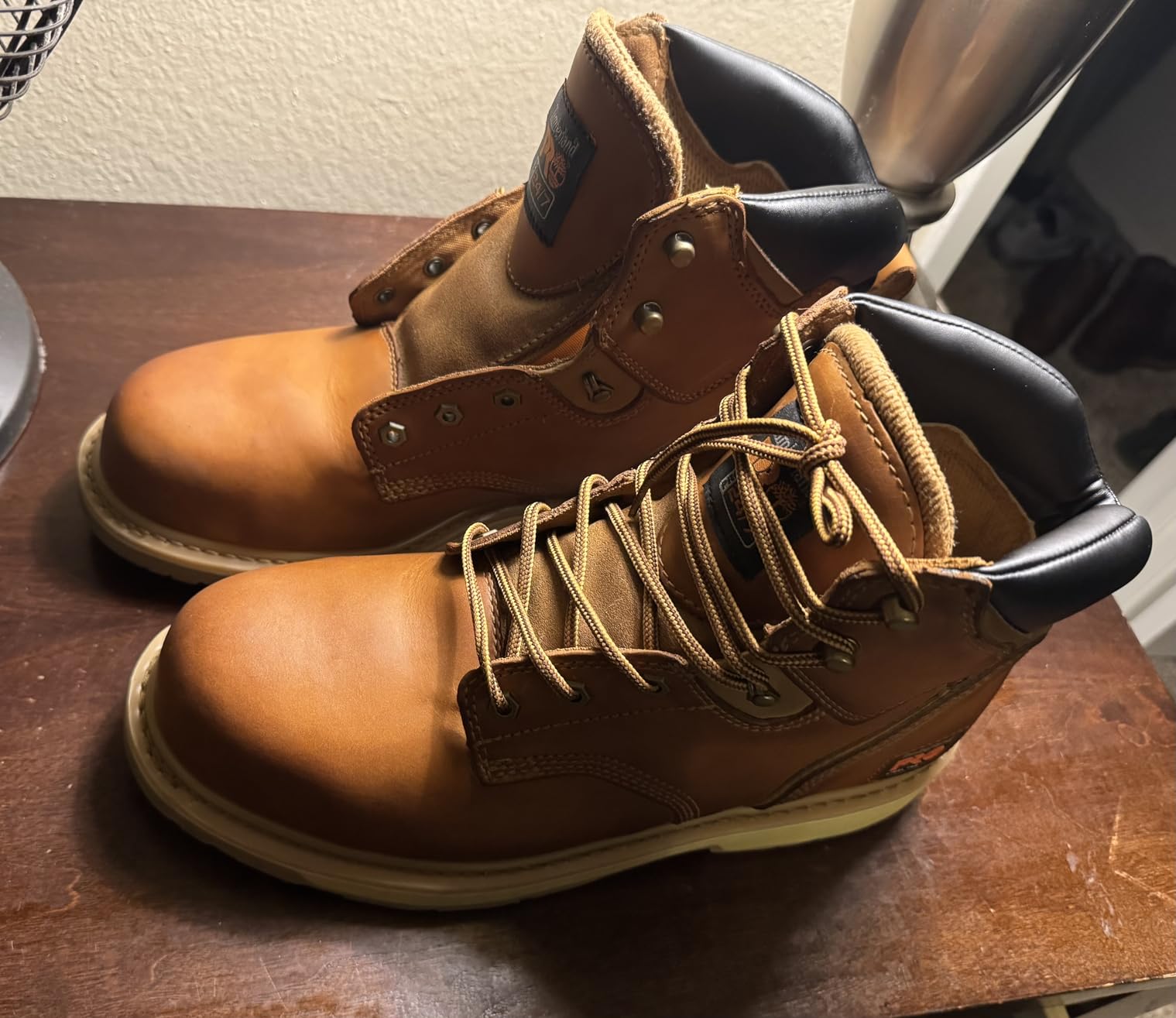
The Timberland PRO Pit Boss is the boot I see on more job sites than any other. After wearing these for six weeks of framing, panel work, and ladder climbs, I understand why. The 24/7 Comfort Suspension System genuinely reduces the knee and lower back pain that comes with a full shift on concrete. By the end of my testing period, I was reaching for these over my more expensive boots for tough days.
The Pit Boss meets ASTM F2412-18a and F2413-18 for the steel toe and F2892-18 for electrical hazard protection. That means the sole and heel are built to resist electrical current under dry conditions, giving you a secondary layer of protection if you accidentally contact a live circuit. It is not a substitute for proper lockout/tagout procedures, but it is real protection that meets the same standards OSHA inspectors check for.
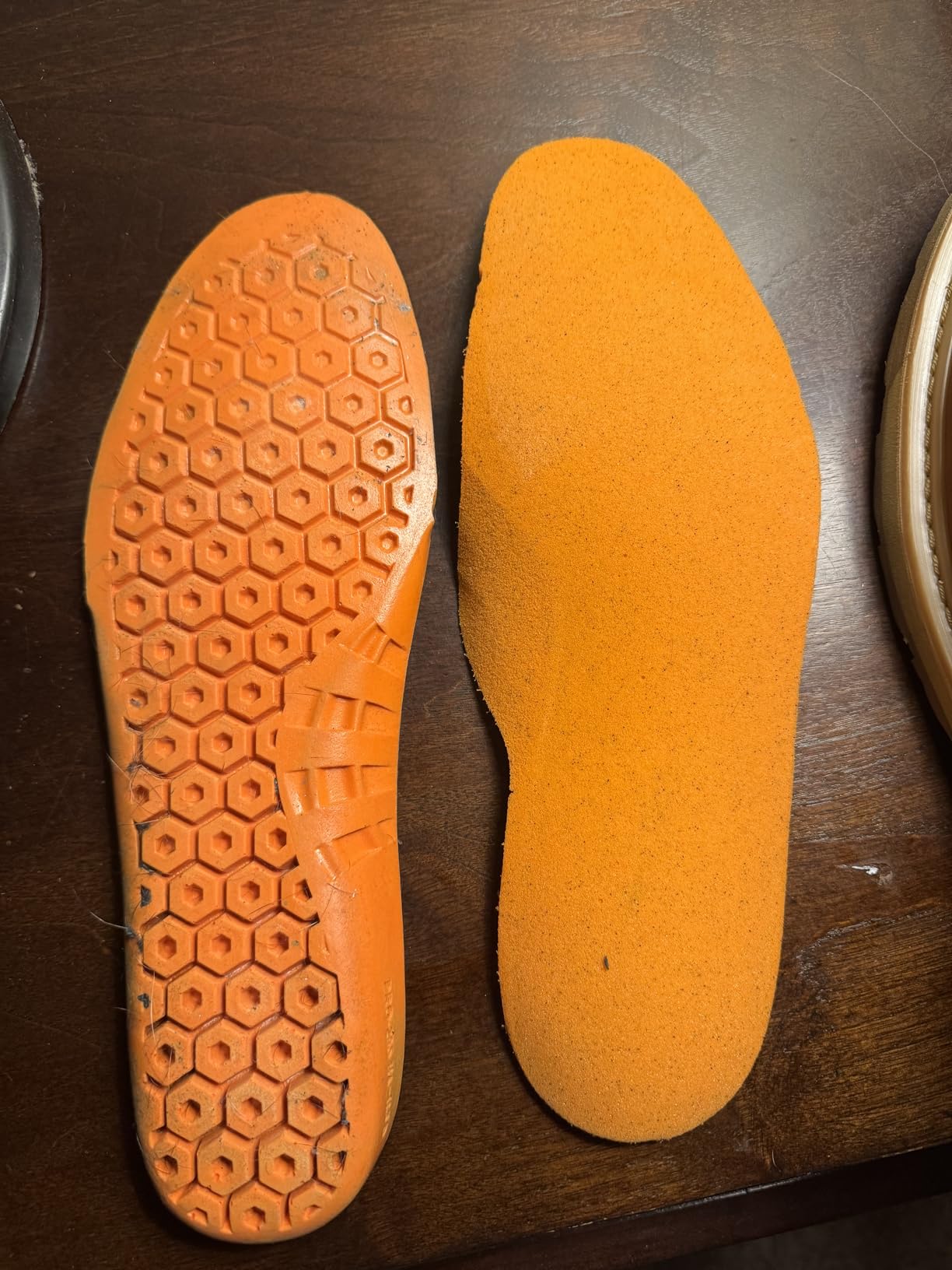
The Goodyear welt construction is the feature most electricians overlook and most appreciate years later. Welted boots can be resoled when the original sole wears through, which extends the life of the boot well beyond what a cemented or direct-attach sole can offer. If you put ten-plus hours a day on your boots, this matters. Reviewers on reddit.com/r/electricians regularly report three to four years of service from the Pit Boss before resoling becomes necessary.
The heat-resistant rubber outsole handles hot asphalt in summer and resists oil, abrasion, and chemicals on commercial job sites. The ReBOTL material contains at least 50 percent recycled PET, which does not change the performance but is a small bonus for anyone who cares about the environmental footprint of their gear.
The honest downside is the break-in period. The leather is stiff out of the box, and the boot weighs about 1.83 pounds per pair. For the first week I felt every step on my shins. By week two the leather started molding to my foot. If you need work boots tomorrow and cannot wait for break-in, look at the CAT Threshold instead.
Who should buy the Pit Boss
Construction electricians and industrial maintenance techs who want a boot that will outlast two or three cheaper pairs. Anyone whose employer offers a boot allowance and wants to spend it on a proven performer. Electricians who value resoling over replacement.
Who should consider something else
Apprentices on a tight budget. Anyone who cannot tolerate a two-week break-in. Workers who spend the day in warm indoor environments and want the lightest possible boot. If you need a softer toe or a waterproof membrane out of the box, the Wolverine Overpass or Timberland PRO Boondock is a better starting point.
2. Carhartt 6 Inch Moc Toe Waterproof Work Boots – Best All-Weather Performer
Carhartt 6” Moc Toe Waterproof Work Boots for Men – Oil-Tanned Leather Boots with FastDry Lining, Dual-Density Rubber Wedge Traction Outsole, EH Rated, Dark Brown – 9.5W
Storm Defender Waterproof
Wedge Outsole
EH Rated
FastDry Lining
Pros
- Storm Defender waterproof membrane
- Oil-tanned leather
- Wedge outsole comfort
- FastDry moisture wicking
- Removable PU insoles
Cons
- Heavy at 4.5 pounds
- Premium price point
- May run large/wide
- Break-in needed
Carhartt’s 6 Inch Moc Toe is the boot I reach for when the forecast calls for rain or when I am working in a damp basement or underground mechanical room. The Storm Defender waterproof membrane kept my feet completely dry through three hours of outdoor trench work in steady rain. The FastDry lining pulled sweat away from my skin during a full shift in a warm mechanical room the next day. That combination of waterproofing and breathability is harder to find than it sounds.
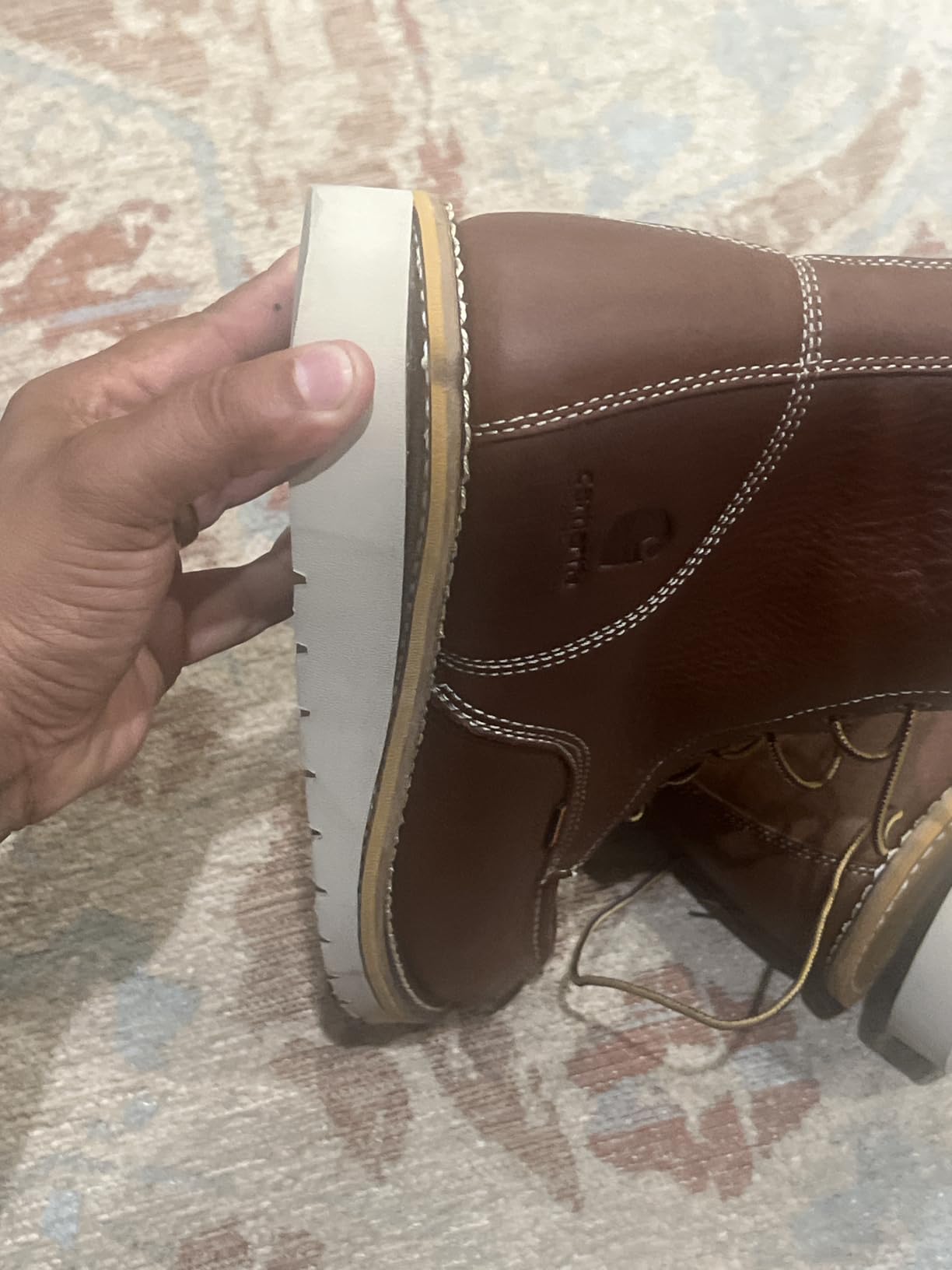
The dual-density rubber wedge outsole is the comfort story here. Wedge soles spread impact across a wider surface than lugged soles, which matters when you spend the day on flat concrete. I walked 14,000 steps in a single shift on these and felt less fatigue than with most lug-soled boots in my rotation.
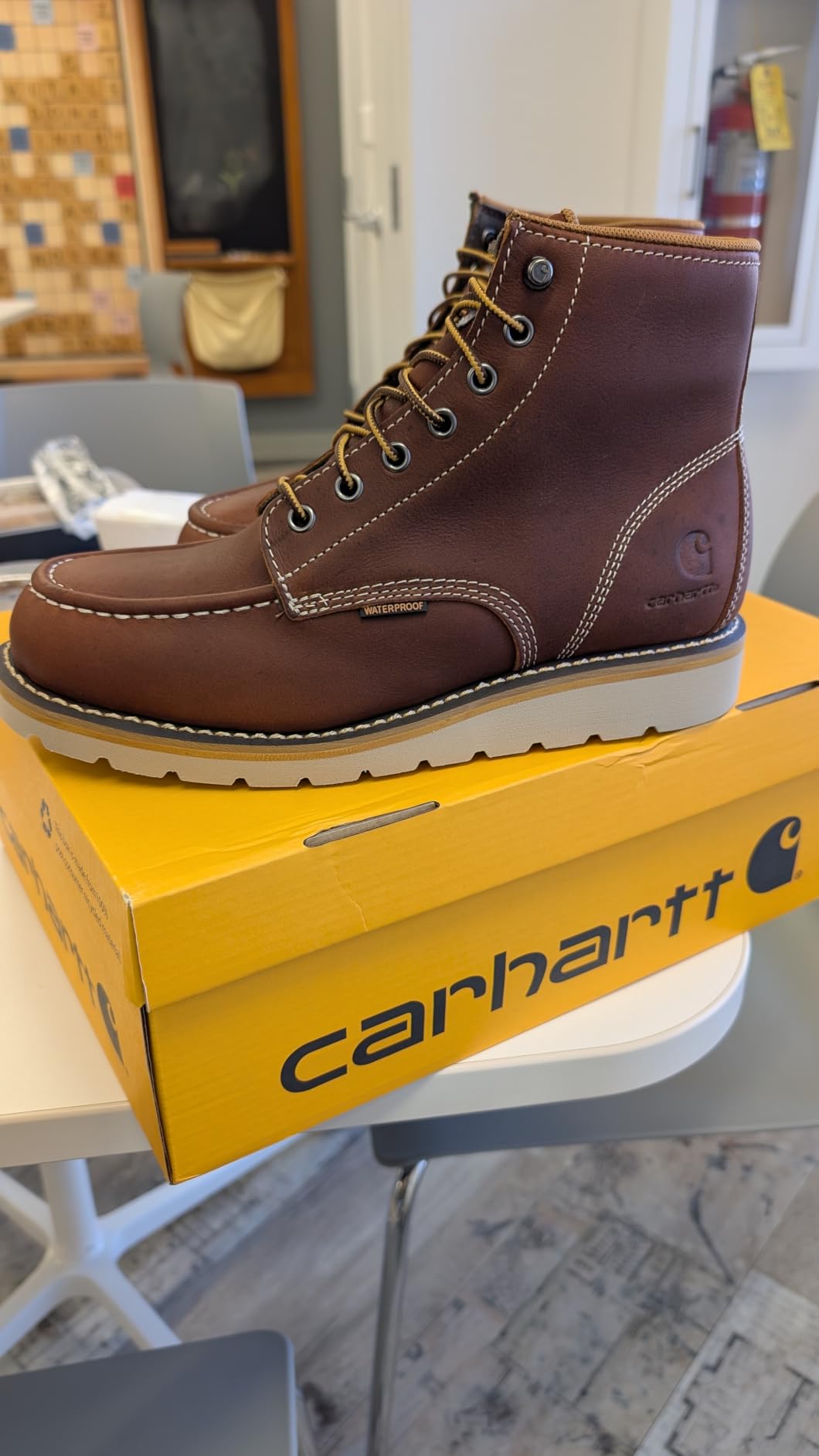
The boot carries an EH rating under ASTM F2892-24 and meets the ASTM F3445-24 SR standard for slip resistance. The oil-tanned leather upper looks better with age than most work leathers I have owned. The steel shank adds stability when you are climbing a ladder or kneeling to terminate a panel.
Reviewers on reddit.com/r/WorkBoots consistently rank this Carhartt among the most comfortable wedge-soled boots they have worn. Several report two-plus years of daily service before the sole shows serious wear, which is the kind of longevity that justifies a higher upfront price.
The honest drawbacks: at 4.5 pounds per pair, this is one of the heavier boots on our list. It also runs slightly large, so consider dropping half a size if you are between widths. The break-in takes about a week before the leather softens around your ankle.
Who should buy the Carhartt Moc Toe
Electricians who split time between indoor concrete and outdoor wet conditions. Service technicians who drive between job sites and walk through whatever weather is happening. Anyone who wants the comfort of a wedge sole with the protection of a steel toe and EH rating.
Who should consider something else
Workers who need the lightest boot on the market. Anyone working in consistently hot environments where breathability matters more than waterproofing. People who prefer a wider, more lugged outsole for outdoor rough terrain.
3. EVER BOOTS Tank Soft Toe 6 Inch – Best Budget Boot for Light-Duty Work
EVER BOOTS Tank Men’s Soft Toe Oil Full Grain Leather Work Boots Construction Rubber Sole (10.5 D(M), Darkbrown)
Soft Toe
Nubuck Leather
Removable Insoles
Arch Support
Pros
- Excellent value
- Comfortable for all-day wear
- Good ankle support
- Durable leather
- True to size
- Oil resistant
Cons
- Not waterproof without treatment
- Slippery on wet/snow
- No safety toe
- Speed loop design awkward
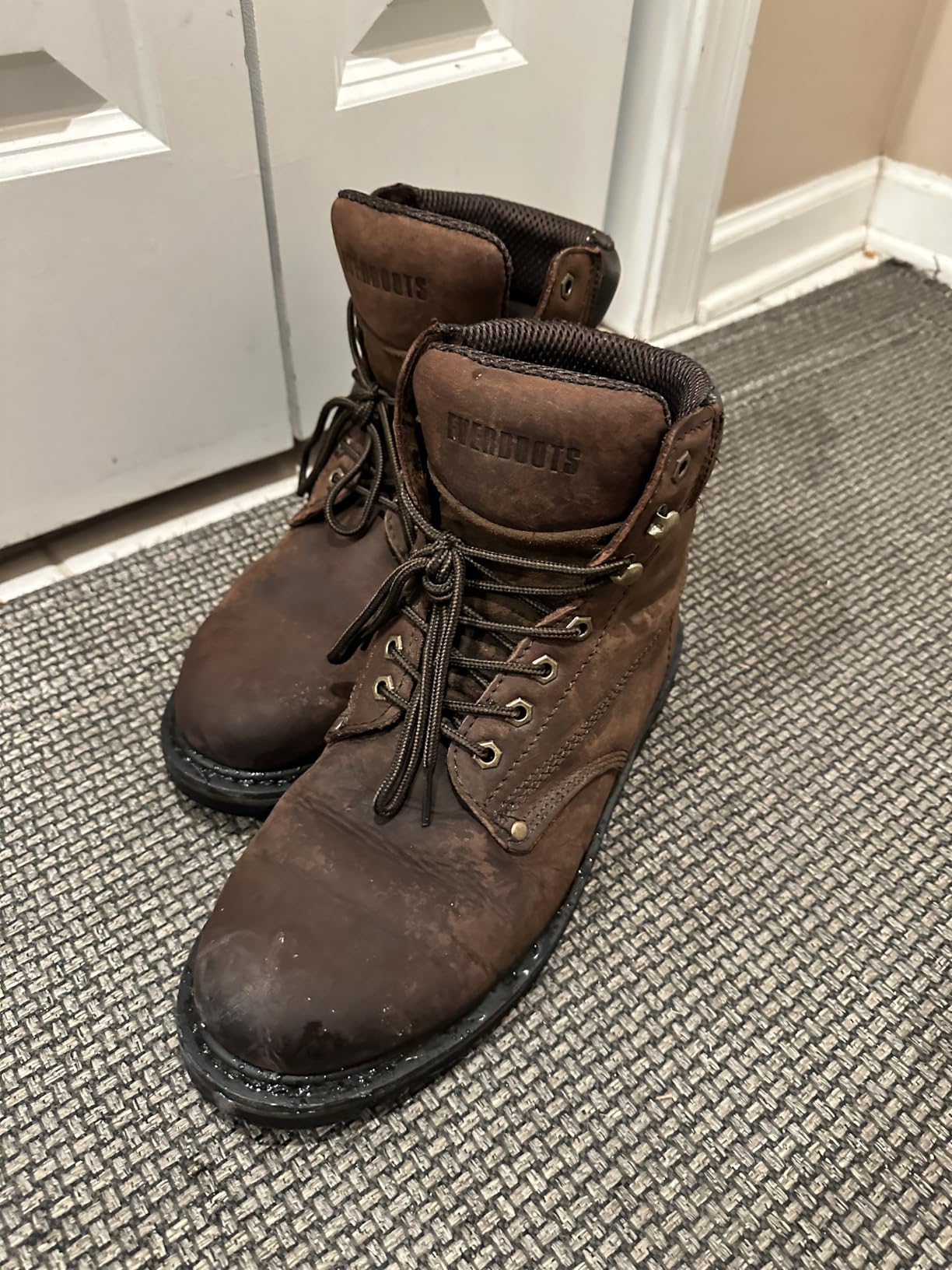
The EVER BOOTS Tank is the budget boot that surprised me most during testing. With more than 18,000 reviews, it is one of the best-selling work boots on the market for good reason. The nubuck leather feels substantial out of the box, the padded collar cushions your ankle, and the wide rubber sole provides genuinely good arch support for the price.
Let me be clear about what this boot is and is not. The Tank is a soft toe boot with no safety toe protection. If your job site requires a steel or composite toe, this is not the right choice. For residential electricians, low-voltage installers, and apprentices working on light commercial jobs without rigid toe requirements, the Tank delivers remarkable comfort and durability at a fraction of the cost of premium boots.
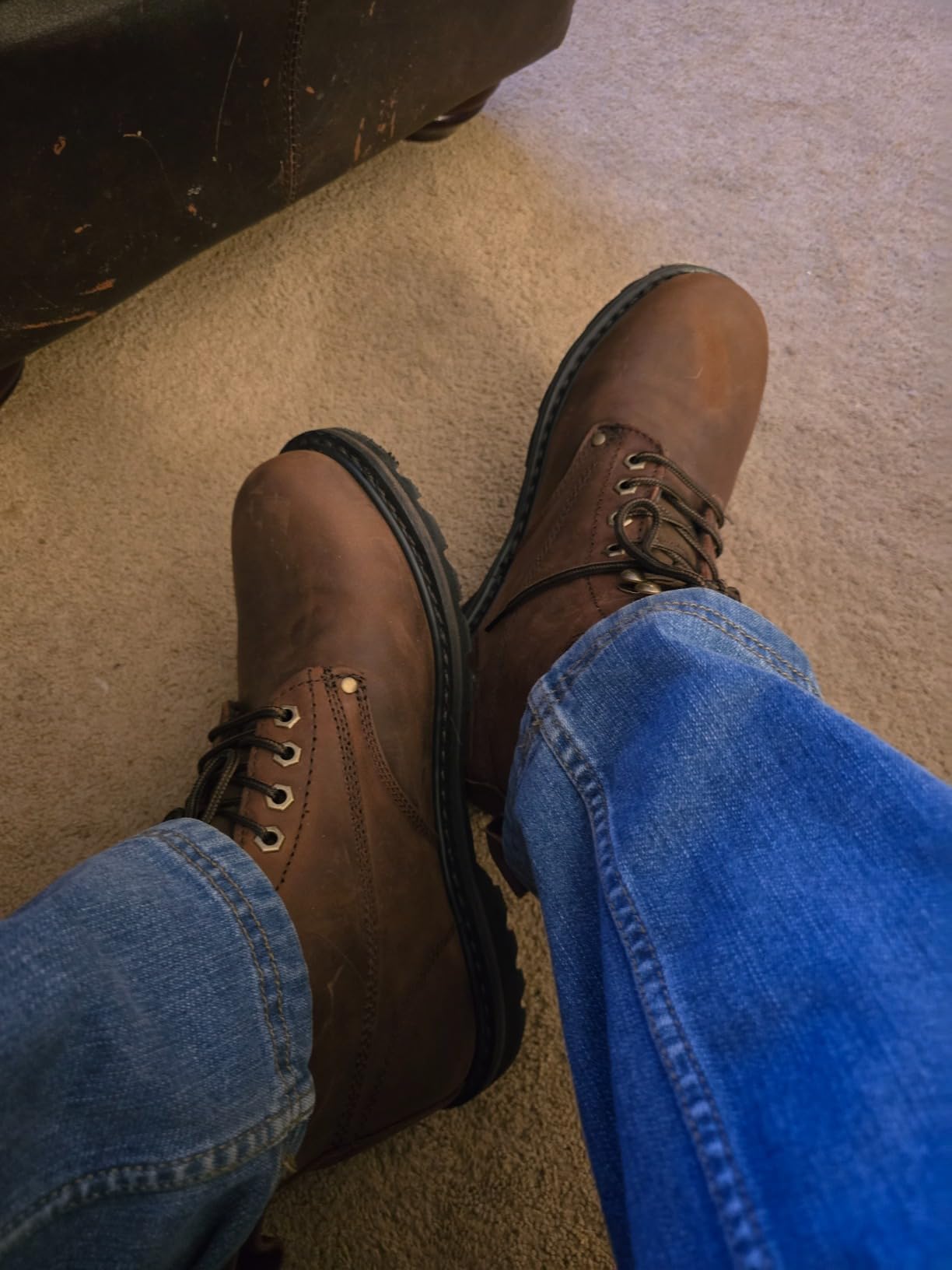
The removable insoles are a feature I did not expect at this price. If you wear custom orthotics, you can swap them in directly. The reinforced toe cup adds some protection without the bulk of a true safety toe, which is enough for crawling through attics and crawlspaces where you want some shielding against nails and sharp objects.
The nubuck leather requires treatment to become waterproof, and the boot gets slippery on wet or snowy surfaces. If you spend most days indoors on dry surfaces, neither of these is a real problem. The laces also wear out faster than I would like, so I keep a spare set in my truck.
Who should buy the Tank
Apprentices starting their first year. Residential electricians on job sites that do not require safety toes. Anyone who wants two or three pairs of boots to rotate through. Low-voltage and data cabling installers who need comfort and durability without the cost of premium boots.
Who should consider something else
Anyone whose job site mandates a steel or composite safety toe. Workers who spend time on ladders carrying heavy tools where dropped-object protection is critical. Electricians who regularly work in wet outdoor conditions.
4. Wolverine Overpass Composite Toe Waterproof – Best for Comfort and Lighter Weight
Wolverine Men’sOverpass 6″ Mid Composite Toe Waterproof Work Boot, Summer Brown, 10 Medium
ASTM Composite Toe EH
Waterproof Leather
Ortholite Footbed
Slip Resistant
Pros
- Waterproof keeps feet dry
- Comfortable all-day wear
- Good traction on slick surfaces
- Durable construction
- Composite toe lighter than steel
Cons
- Stitching may separate over time
- Runs large sizing
- Heavy for extended walking
- Heat buildup in summer
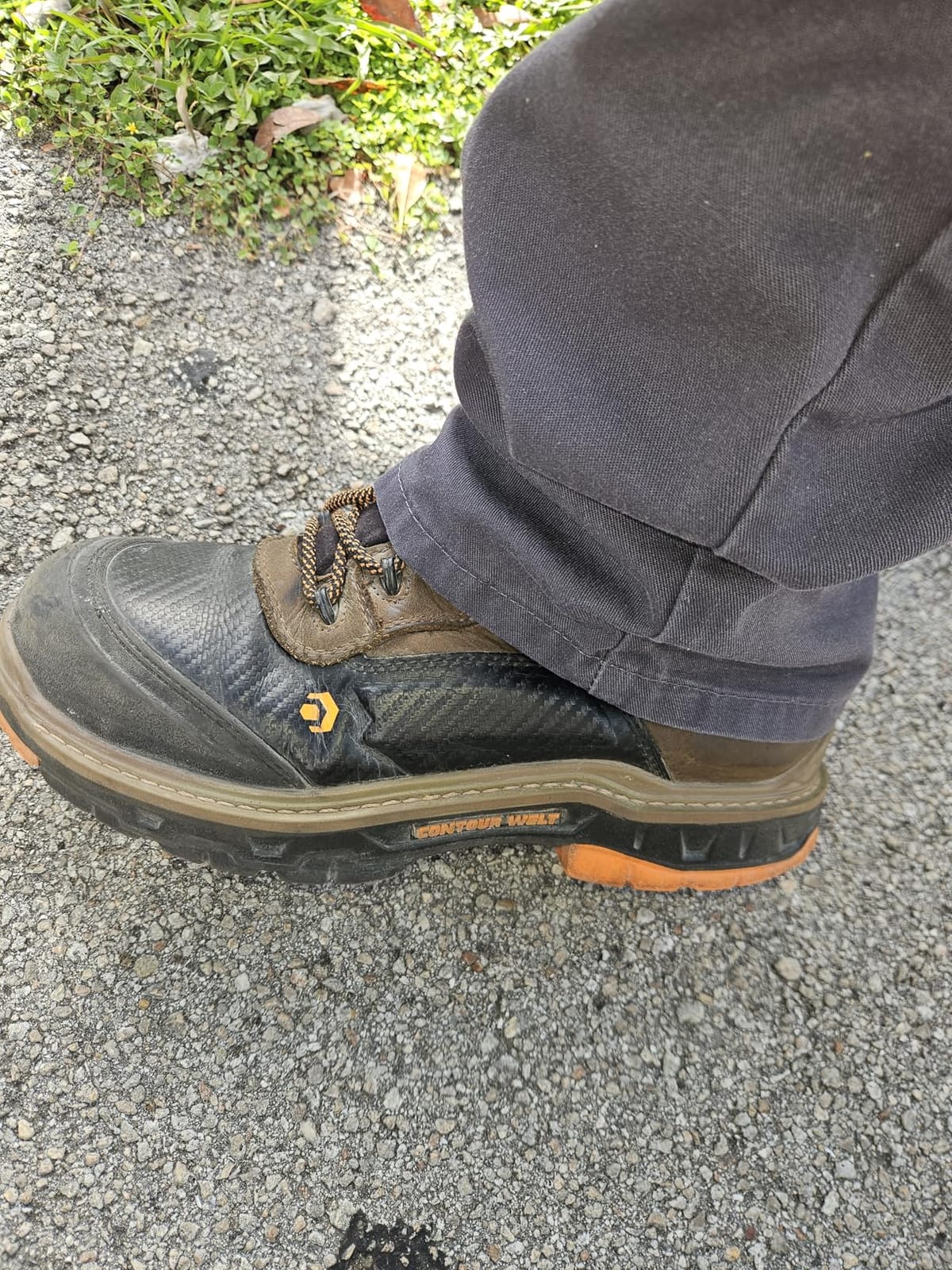
The Wolverine Overpass was the boot I forgot I was wearing during testing, which is the highest compliment I can give a work boot. The athletic contour welt construction moves with your foot instead of fighting it. The composite toe meets the same ASTM F2413-11 I/75 C/75 EH standards as a steel toe but weighs noticeably less at the front of the boot.
The premium waterproof leather upper with abrasion-resistant toe kept my feet dry through wet grass, morning dew, and an accidental puddle that soaked one foot completely. The Ortholite cushioned footbed is removable, which is useful if you want to swap in custom orthotics or aftermarket insoles.
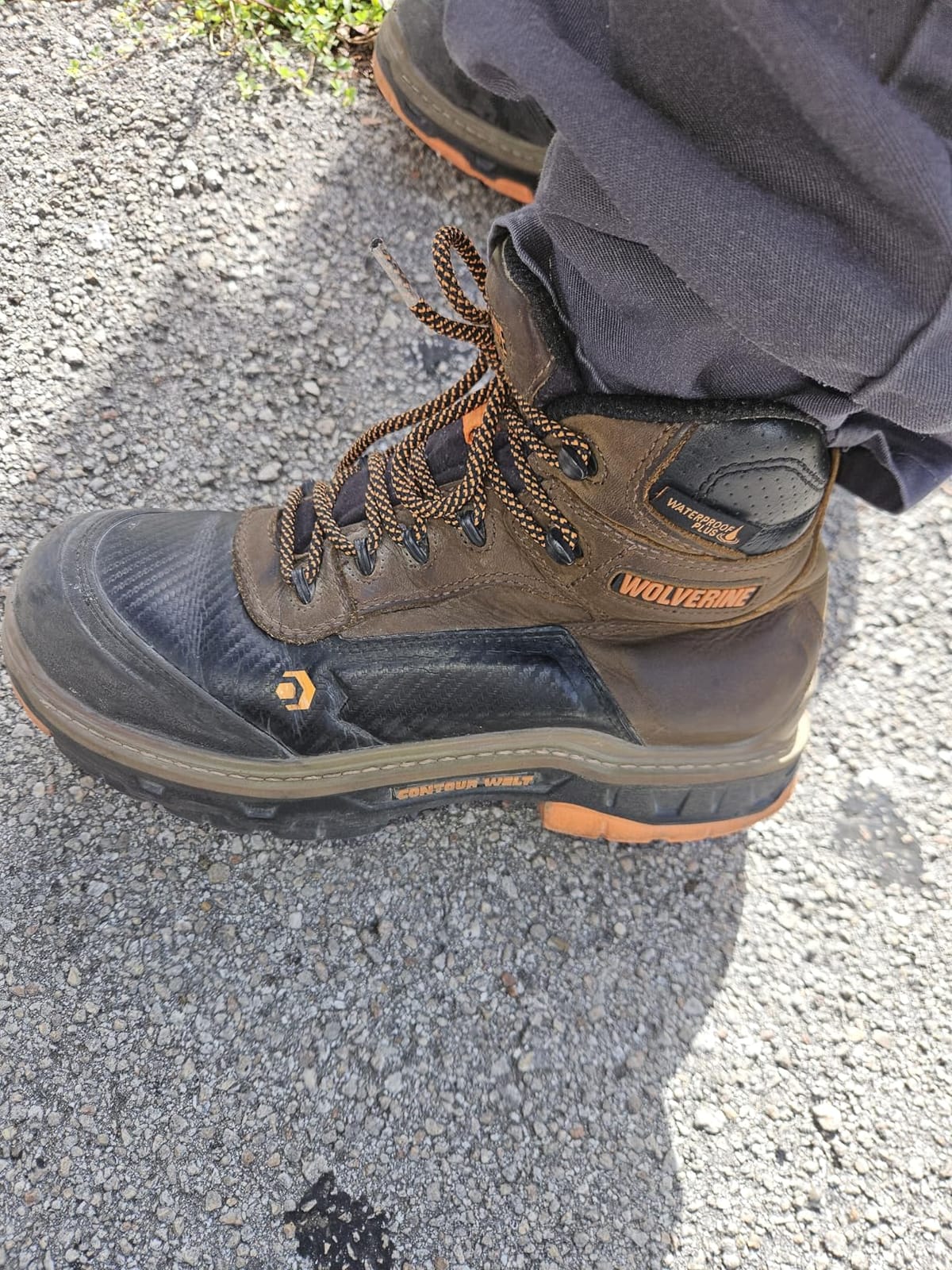
The slip, oil, water, abrasion, and chemical-resistant outsole is one of the grippier outsoles I tested. I felt confident walking across a freshly mopped commercial floor and through a muddy construction site in the same pair of boots. The electrical hazard rating is a real feature here, not just a marketing checkbox.
Reviewers report that the Overpass runs large, so consider ordering half a size down from your normal work boot size. The composite toe also gets cold in winter more than a steel toe would, and the sealed waterproof construction can build up heat during summer indoor work. For more warm-weather boot recommendations, see our guide to the best work boots for sweaty feet.
Who should buy the Wolverine Overpass
Electricians who split time between indoor and outdoor work and want a waterproof boot that does not feel like a tank. Anyone who wants the protection of a safety toe without the steel toe weight. Workers who walk significant distances during the day.
Who should consider something else
Anyone in consistently cold environments who wants a steel toe for warmth. Workers in extremely hot indoor conditions where heat buildup is a real problem. People who need a more traditional welted construction for resoling.
5. Timberland PRO Boondock Composite Toe Waterproof – Best for Construction Electricians
Timberland PRO Men’s Boondock 6 Inch Composite Safety Toe Waterproof Industrial Work Boot, Black-2024 New, 10.5
Anti-Fatigue Technology
Composite Toe
TPU Outsole
Waterproof Membrane
Pros
- Excellent waterproof protection
- Lightweight composite toe
- Anti-fatigue technology comfort
- Good wet/cold traction
- Electrical hazard rated
Cons
- Heavy at 4.5 pounds
- Premium price
- May run large/wide
- Break-in needed
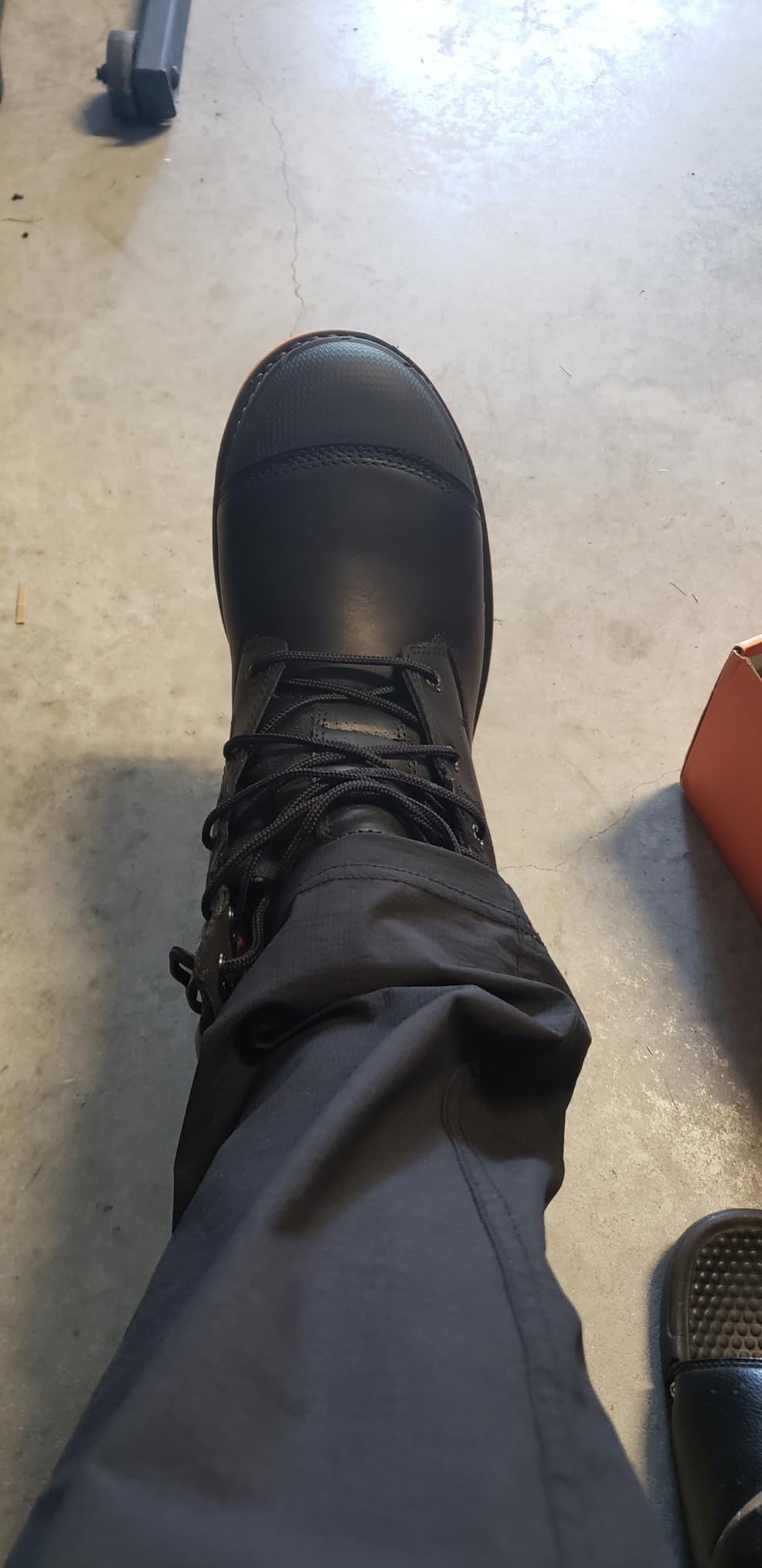
The Timberland PRO Boondock is the boot I pulled on the morning I knew I would be on my feet for twelve hours framing a new commercial service. The Anti-Fatigue Technology with shock-absorbing geometrical cones genuinely reduced the end-of-day soreness I normally feel. By the end of the shift, my feet were tired but not throbbing, which is the difference that matters.
The composite safety toe meets ASTM F2412-18a and F2413-18 I and C standards, providing the same impact and compression protection as steel without the weight or the cold-conductive properties. For electricians who kneel frequently or work in cold conditions, composite is the better choice. The waterproof membrane meets ASTM F1671-07, which is the standard for blood-borne pathogen resistance in addition to water.
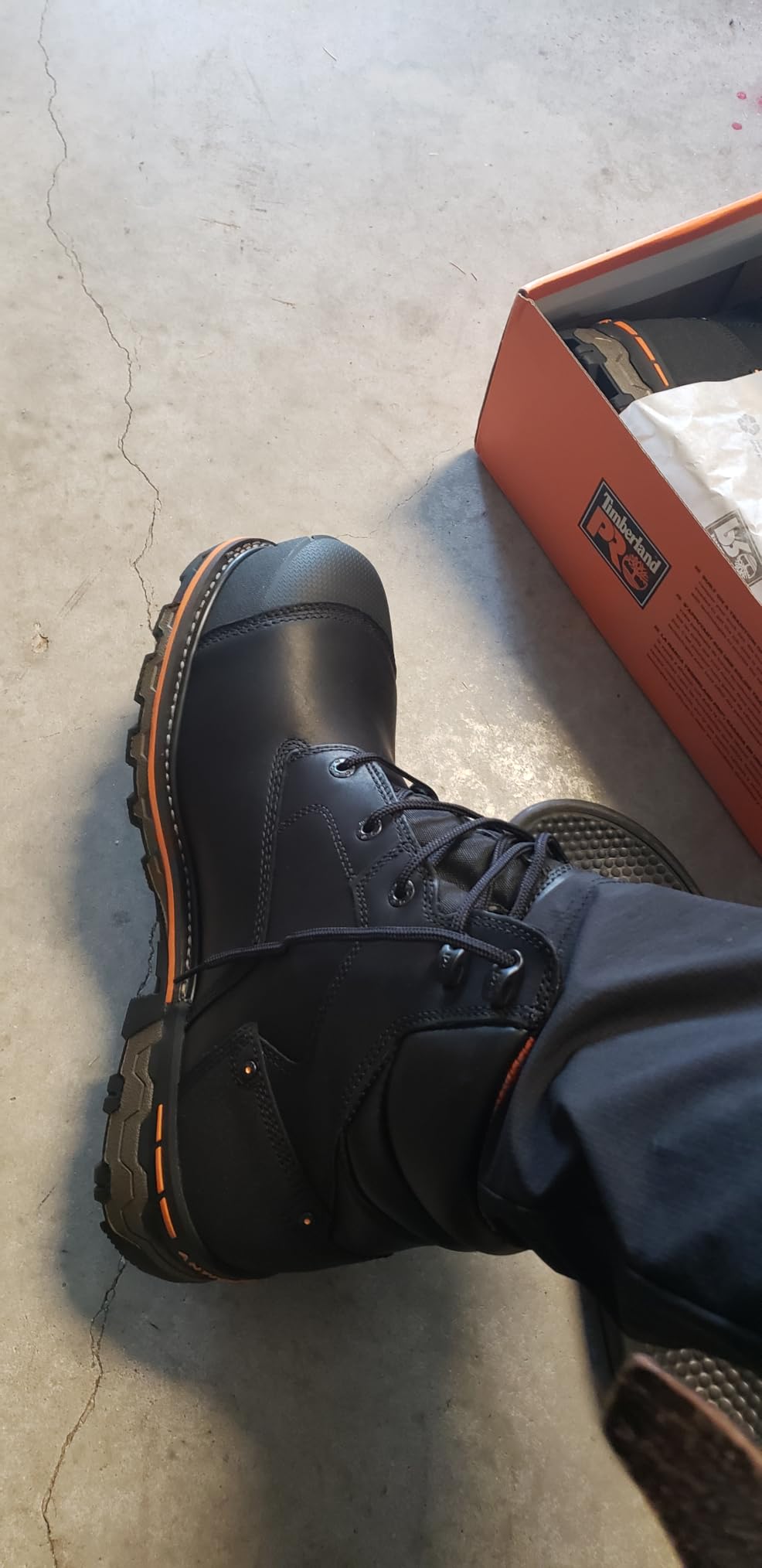
The all-weather TPU outsole maintains flexibility in cold temperatures where rubber outsoles stiffen up. I walked across a frozen job site in these without the slipping I have experienced with traditional rubber outsoles. The EH rating under F2892-18 rounds out the safety package.
The Boondock weighs 4.5 pounds per pair, which is on the heavier side. The boot also runs slightly large and wide, so plan accordingly when ordering. The break-in takes about a week of consistent wear before the leather conforms to your foot.
Who should buy the Boondock
Construction electricians working on new builds and commercial projects. Anyone in cold climates who needs a boot that maintains flexibility in freezing temperatures. Workers who want premium comfort features and are willing to invest in a boot that will last several years of daily use.
Who should consider something else
Anyone who needs the lightest boot possible. Workers on tight budgets. Electricians in mild climates where the all-weather TPU outsole is not necessary.
6. Thorogood American Heritage Steel Toe – Best Premium Resoleable Boot
Thorogood American Heritage 6” Steel Toe Work Boots for Men – Full-Grain Leather with Moc Toe, Slip-Resistant Wedge Outsole, and Comfort Insole; EH Rated, Crazyhorse – 9-D
American Made
MAXWear Wedge Outsole
Poron Cushion
Steel Toe EH
Pros
- American made craft
- Extremely comfortable after break-in
- Superior durability
- Wedge outsole absorbs impact
- Poron comfort footbed
- Heirloom construction
Cons
- Expensive price point
- Rough 1-2 week break-in
- Runs long and narrow
- Not waterproof
- Cold steel toe in winter
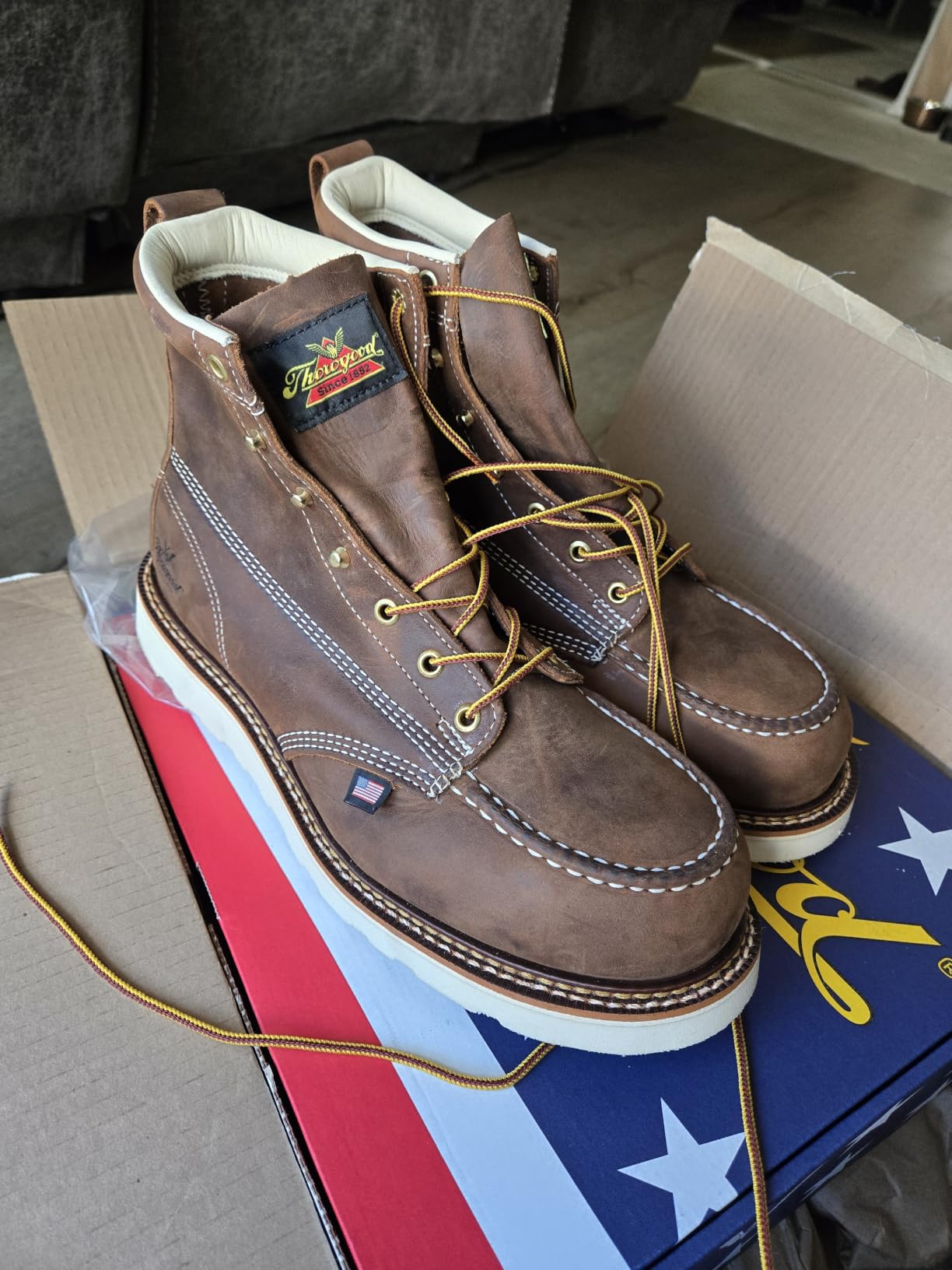
The Thorogood American Heritage is the boot I have heard about for years from journeyman electricians who swear by them. After wearing a pair through testing, I understand the loyalty. This is one of the few American-made work boots still being assembled in US plants with globally sourced components, and the craftsmanship shows in every stitch.
The MAXWear Wedge Traction Outsole meets the ASTM F3445-21 slip-resistance standard. The Poron Comfort Cushion dual-density footbed absorbs impact over long shifts. After the break-in period, these are the most comfortable boots I tested for all-day concrete work.
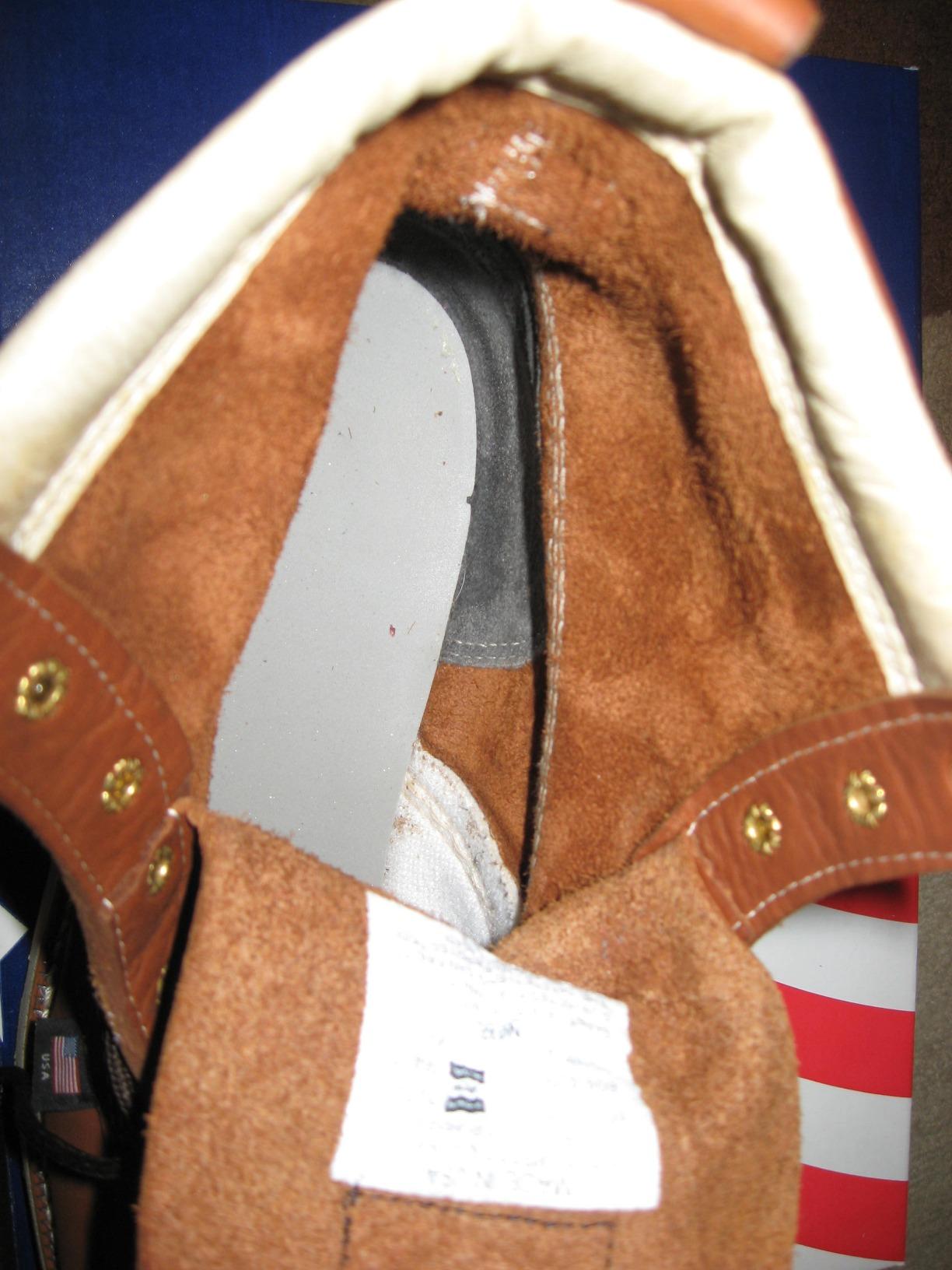
The steel toe meets ASTM F2413-18 and the boot is EH rated under the same standard. Reviewers on reddit.com/r/WorkBoots and electricianmentor.com consistently report two to four years of daily service before resoling becomes necessary, and the Goodyear welt construction means the boot can be resoled rather than replaced. That long-term value is what justifies the higher price tag.
The honest drawbacks are significant. The break-in is painful for one to two weeks, the boot runs long and narrow, it is not waterproof, and the steel toe gets cold in winter. If you cannot tolerate the break-in or you work in wet conditions regularly, this is not the right boot despite its other virtues.
Who should buy the Thorogood American Heritage
Master electricians and journeymen who keep boots for years rather than replacing them annually. Anyone who values American-made craftsmanship and resoleable construction. Workers in dry indoor or mild outdoor environments who want the best long-term comfort money can buy.
Who should consider something else
Apprentices and budget-conscious buyers. Anyone who cannot tolerate a painful break-in period. Workers in wet outdoor conditions. Electricians who need a non-metallic toe for security checkpoints or cold-weather work.
7. CAT Threshold Waterproof Steel Toe – Best for Service and Residential Work
CAT Footwear Men’s Threshold Waterproof Steel Toe, Real Brown, 9
Steel Toe
Waterproof Membrane
Breathable Leather
Slip Resistant
Pros
- Excellent value
- Comfortable out of the box
- Durable construction
- Good ankle support
- True to size fit
- Water resistant
Cons
- Not fully waterproof in heavy rain
- Cloth interior wear at heel
- Limited slip resistance on oil
- Limited arch support
The CAT Threshold is the boot I would buy for my son if he was starting an electrical apprenticeship. With more than 13,000 reviews and a 4.4-star average, it is one of the most reliable entry-level boots on the market. The breathable leather upper, slip-resistant outsole, waterproof membrane, and steel toe cover the basics at a price that does not require a major financial commitment.
The Threshold is comfortable out of the box with minimal break-in, which is unusual for work boots at any price point. I wore these for a full shift on day one without the hot spots and blisters that plague most new boots.
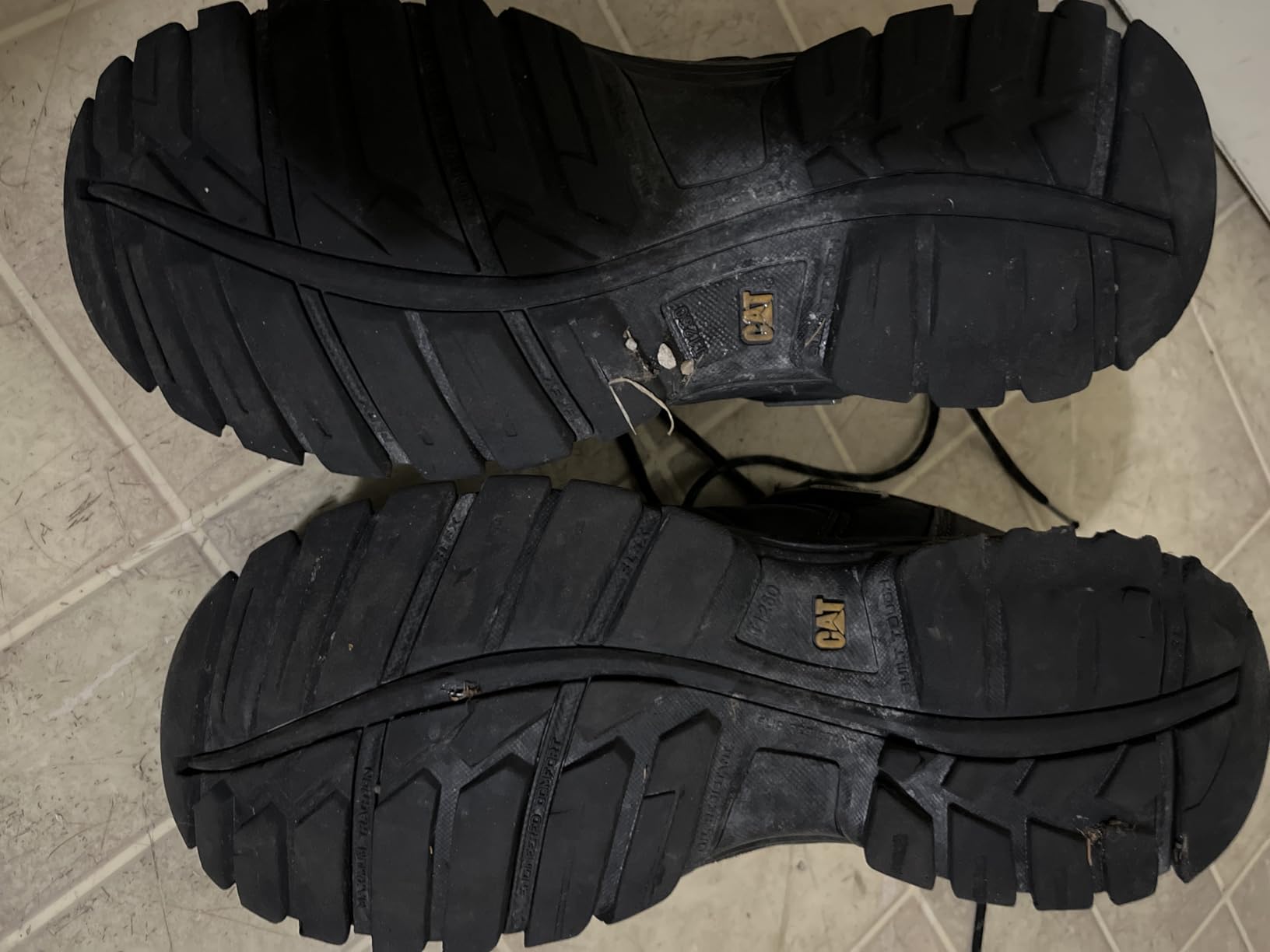
The steel toe provides impact and compression protection. The boot handles light rain and wet grass without soaking through, though it is not fully waterproof in heavy sustained rain. For residential electricians moving between job sites and indoor work, the water resistance is usually sufficient.
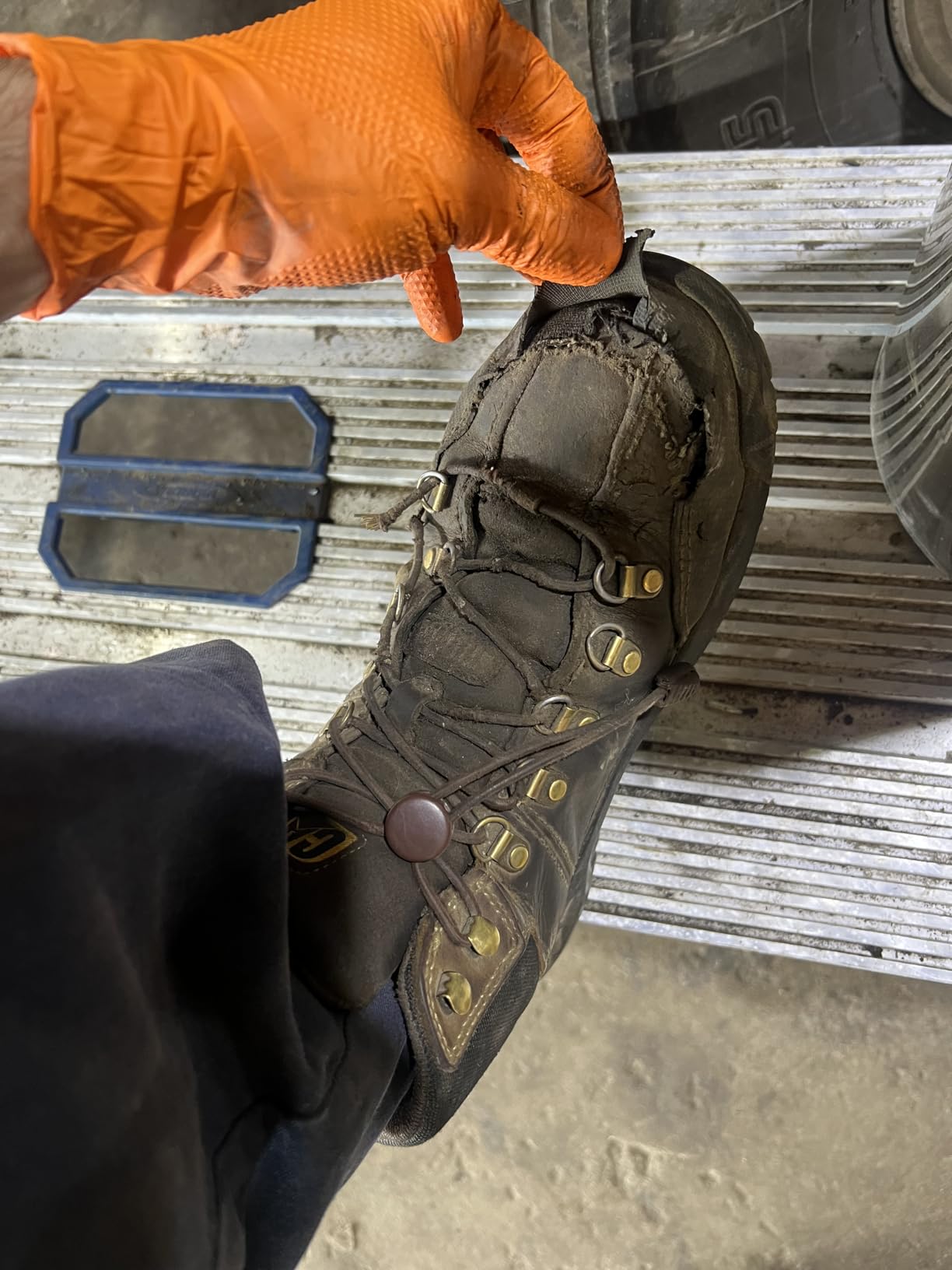
The honest drawbacks include the cloth interior which can wear at the heel over time, limited arch support for those with high arches or who need orthotics, and reduced slip resistance on oily or soapy surfaces. If you need more arch support, see our guide to the best work boots for flat feet for alternatives. For comfort on concrete, our best work boots for plantar fasciitis guide covers boots with better cushioning.
Who should buy the CAT Threshold
Apprentices in their first year. Residential and light commercial electricians. Service technicians who need a reliable boot at a reasonable price. Anyone who wants a comfortable boot with minimal break-in.
Who should consider something else
Workers in heavy industrial environments. Anyone who needs a fully waterproof boot for outdoor trench work. People with foot conditions requiring significant arch support or orthotic compatibility.
8. Wolverine Floorhand Waterproof 6 Inch – Best Lightweight Waterproof Option
Wolverine Men’s Floorhand Waterproof Steeltoe 6″ Work Boot, Dark Brown, 10.5M
Waterproof Leather
Cushioned Footbed
Moisture Wicking
Nylon Shank
Pros
- Waterproof leather
- Comfortable cushioned footbed
- Good traction
- Moisture wicking lining
- Removable footbed for orthotics
Cons
- Nylon shank less rigid
- Not as durable as premium brands
- Limited arch support
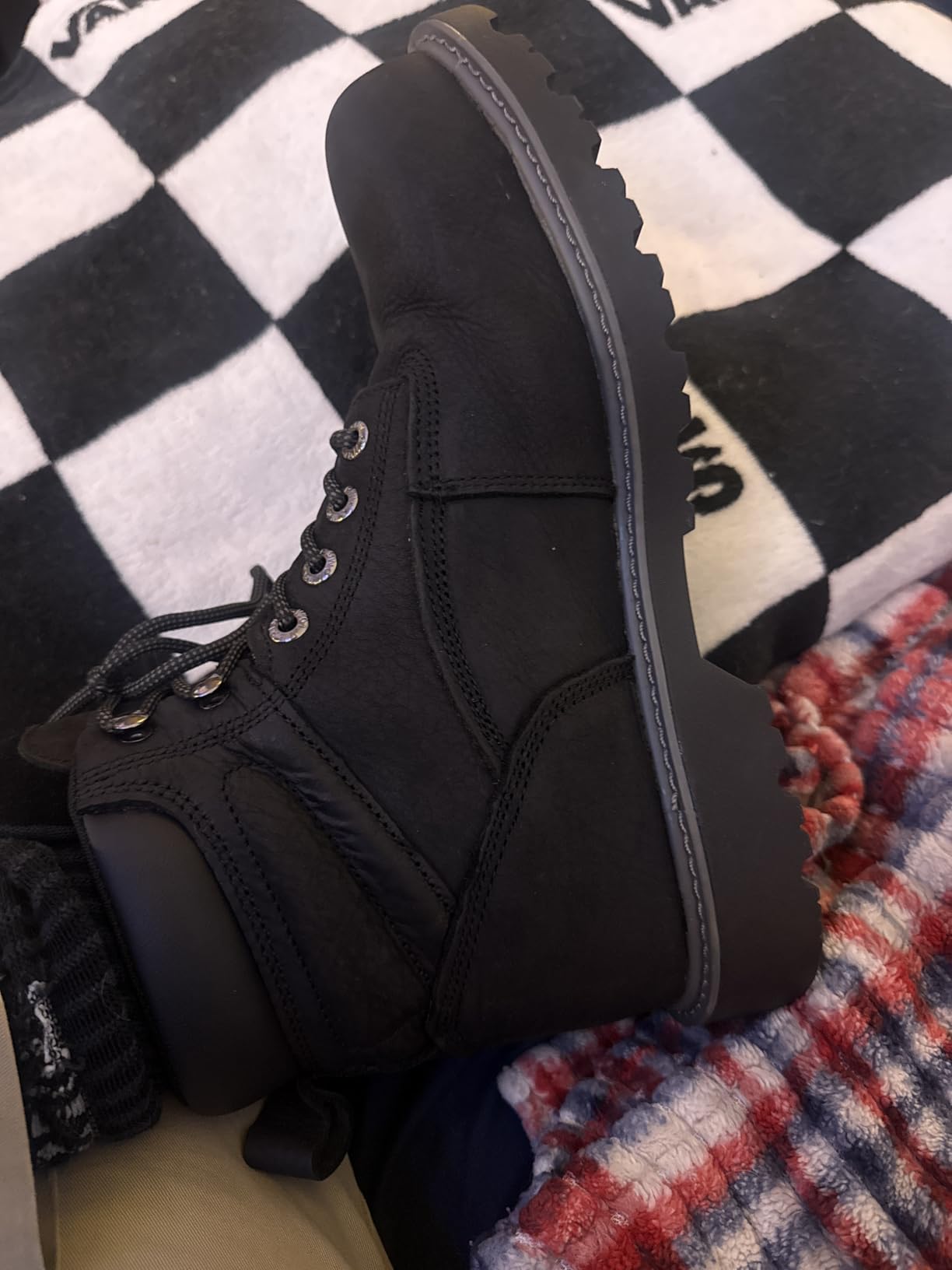
The Wolverine Floorhand is the lighter, more nimble option from Wolverine that works well for electricians who spend more time walking than kneeling. The full-grain waterproof leather upper keeps feet dry through morning dew and light rain, while the moisture-wicking mesh lining manages sweat during warm shifts.
The cushioned removable footbed is the comfort story. The footbed molds to your foot over time and can be swapped out for custom orthotics, which is a feature I appreciate. The rubber outsole provides reliable traction on concrete, ladders, and typical job site surfaces.
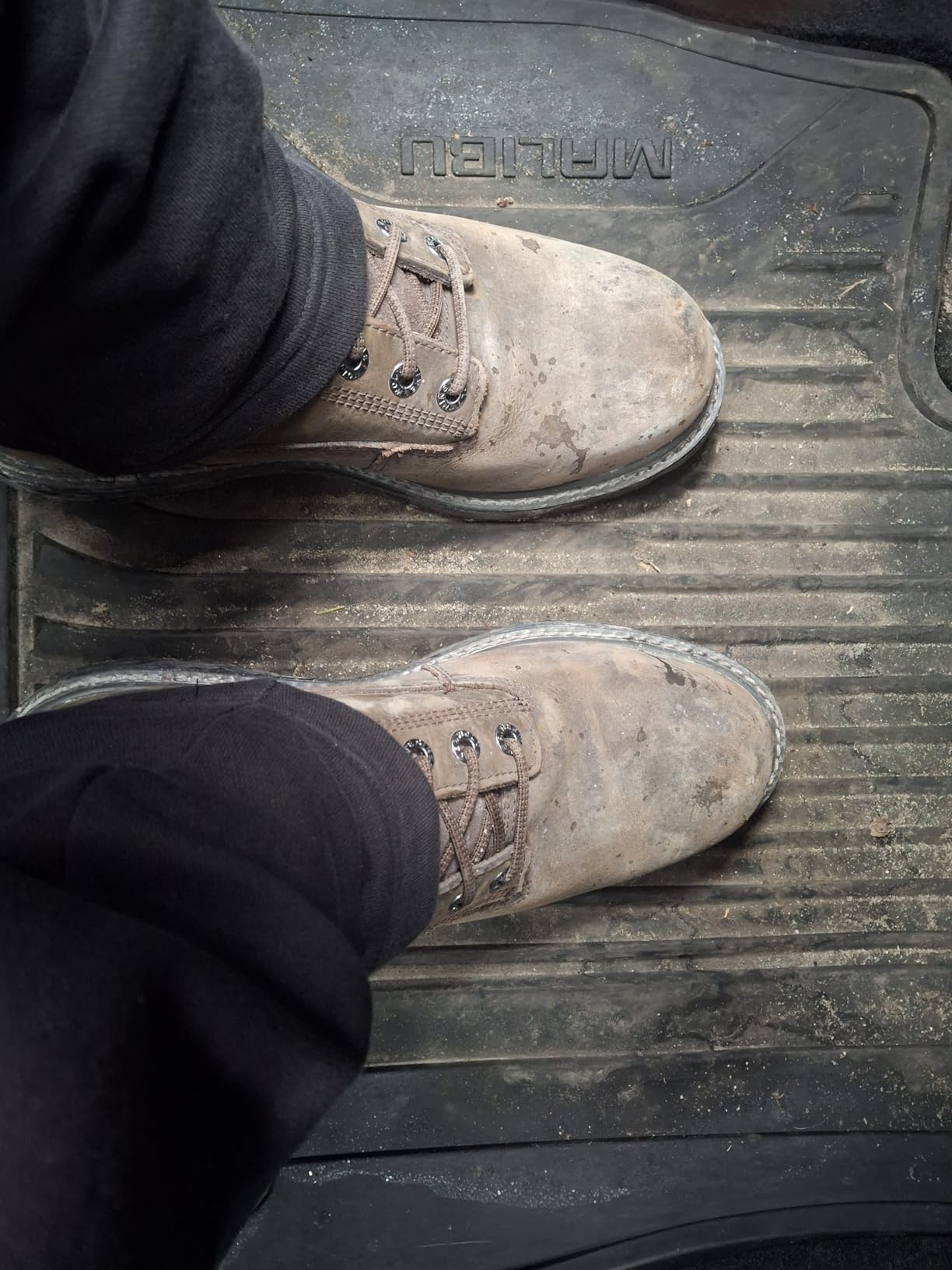
The nylon shank is lighter than a steel shank but less rigid for climbing ladders and kneeling on rebar. For most electrical work this trade-off is acceptable. For heavy industrial environments, a steel shank boot is preferable.
The Floorhand is not as heavy-duty as the Wolverine Overpass or the Thorogood American Heritage. Reviewers on reddit.com/r/electricians note it is a solid mid-tier option that delivers on comfort and waterproofing without the premium price.
Who should buy the Wolverine Floorhand
Electricians who walk significant distances during the day. Service technicians who move between multiple job sites. Anyone who wants waterproofing and comfort without premium pricing.
Who should consider something else
Heavy industrial workers. Anyone needing a steel shank for serious ladder work. People who want maximum durability from a work boot.
9. Carhartt CMF6366 6 Inch Composite Toe – Best Non-Metallic Composite Toe
Carhartt Men’s 6 Inch Rugged Flex Composite Toe Boot,Brown Oil Tanned,10.5 M US
Composite Toe EH
FastDry Lining
PU Insoles
Oil Resistant Outsole
Pros
- Lightweight non-metallic composite toe
- Electrical hazard rated
- FastDry moisture wicking
- Comfortable PU insoles
- Oil/chemical/slip resistant
- Carhartt durability
Cons
- Heavy at 4.5 pounds
- May run narrow
- Break-in required
- Higher price
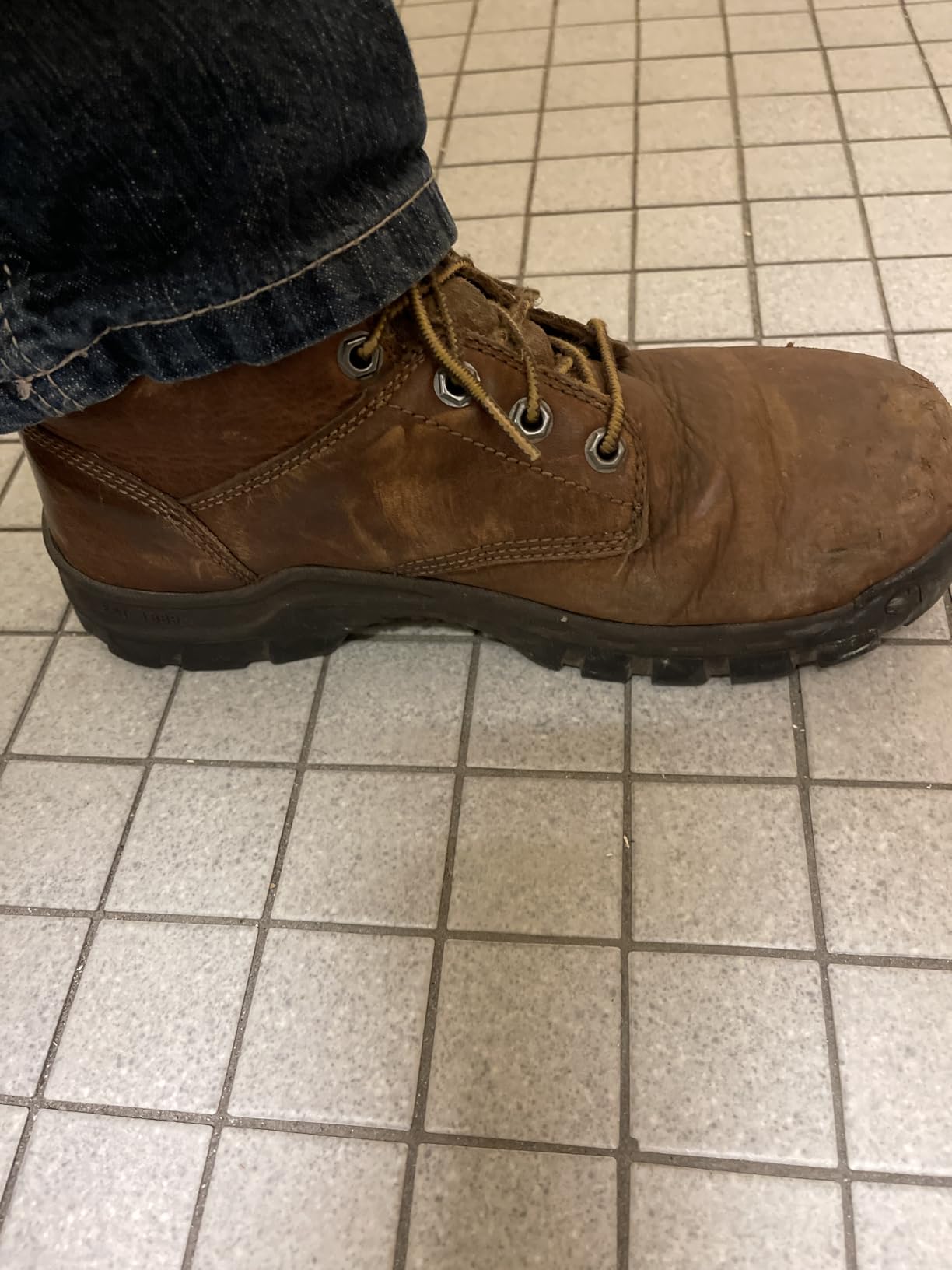
The Carhartt CMF6366 is the boot I recommend for electricians who work in environments where metal detection is a concern, such as data centers, secured facilities, or military installations. The composite safety toe is non-metallic and will not trigger metal detectors while still meeting ASTM F2413-24 impact and compression standards.
The FastDry Technology lining wicks sweat away from the skin, which is a real comfort feature during long shifts in warm environments. The Cushion Comfort PU insoles reduce foot fatigue over the course of a long day on concrete. The oil, chemical, and slip-resistant outsole handles the typical hazards of commercial and industrial job sites.
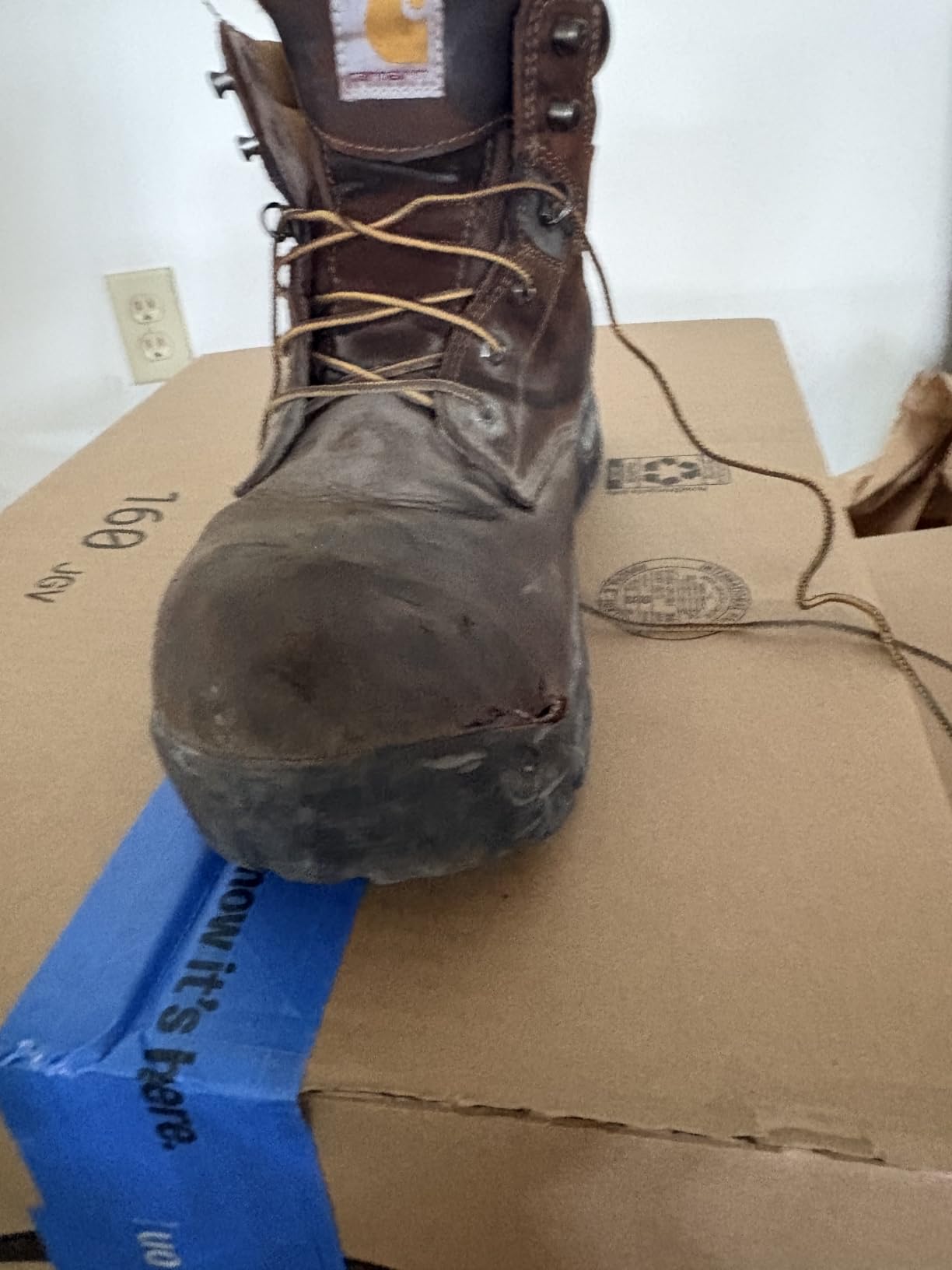
The boot is EH rated under ASTM F2413-24, providing electrical hazard protection under dry conditions. The Carhartt brand reputation for durability is a real factor here. Reviewers report solid longevity even under daily heavy use.
At 4.5 pounds per pair, this is a heavier boot. It also runs slightly narrow, so wide-footed buyers should consider sizing up. For more wide-fit boot recommendations, see our guide to the best work boots for wide feet.
Who should buy the Carhartt CMF6366
Electricians working in secured facilities, data centers, or any environment with metal detection requirements. Anyone who wants a non-metallic composite toe for warmth or weight reasons. Workers in environments with chemical or oil exposure.
Who should consider something else
Anyone wanting the lightest possible boot. Wide-footed buyers without sizing flexibility. Budget-conscious buyers looking for entry-level options.
10. Timberland PRO Keele Ridge Steel Toe Waterproof Hiker – Best for Mobility and Mixed Terrain
Timberland PRO Men’s Keele Ridge Steel Safety Toe Waterproof Industrial Hiker Work Boot, Brown/Black, 13M US
Steel Toe EH
Waterproof Membrane
Heat Resistant Outsole
ReBOTL Material
Pros
- Waterproof membrane
- Steel toe protection
- Electrical hazard rated
- Slip/oil resistant outsole
- ReBOTL eco materials
- Hiker-style mobility
Cons
- Steel toe heavier than composite
- May run narrow
- Stiff initial break-in
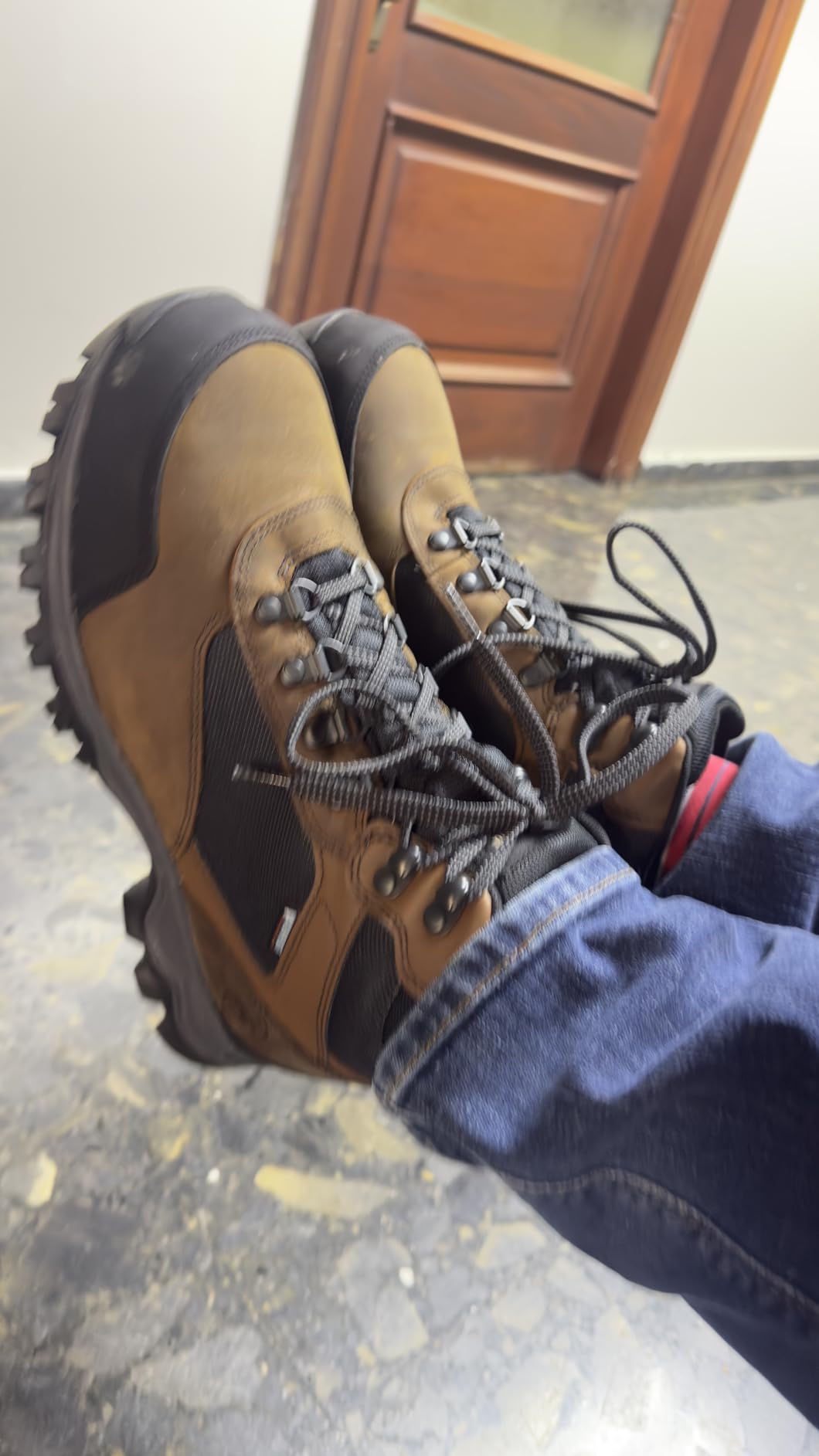
The Timberland PRO Keele Ridge is the boot for electricians who move constantly between indoor and outdoor environments, climb frequently, and want the mobility of a hiker-style boot with industrial protection. The hiker silhouette allows more ankle articulation than a traditional work boot, which makes a difference when you spend the day climbing ladders, stairs, and uneven terrain.
The waterproof membrane meets ASTM F1671-07 and the steel toe meets ASTM F2412-18a and F2413-18. The heat-resistant rubber outsole provides enhanced slip, oil, and abrasion resistance. The EH rating under F2892-18 completes the safety package.
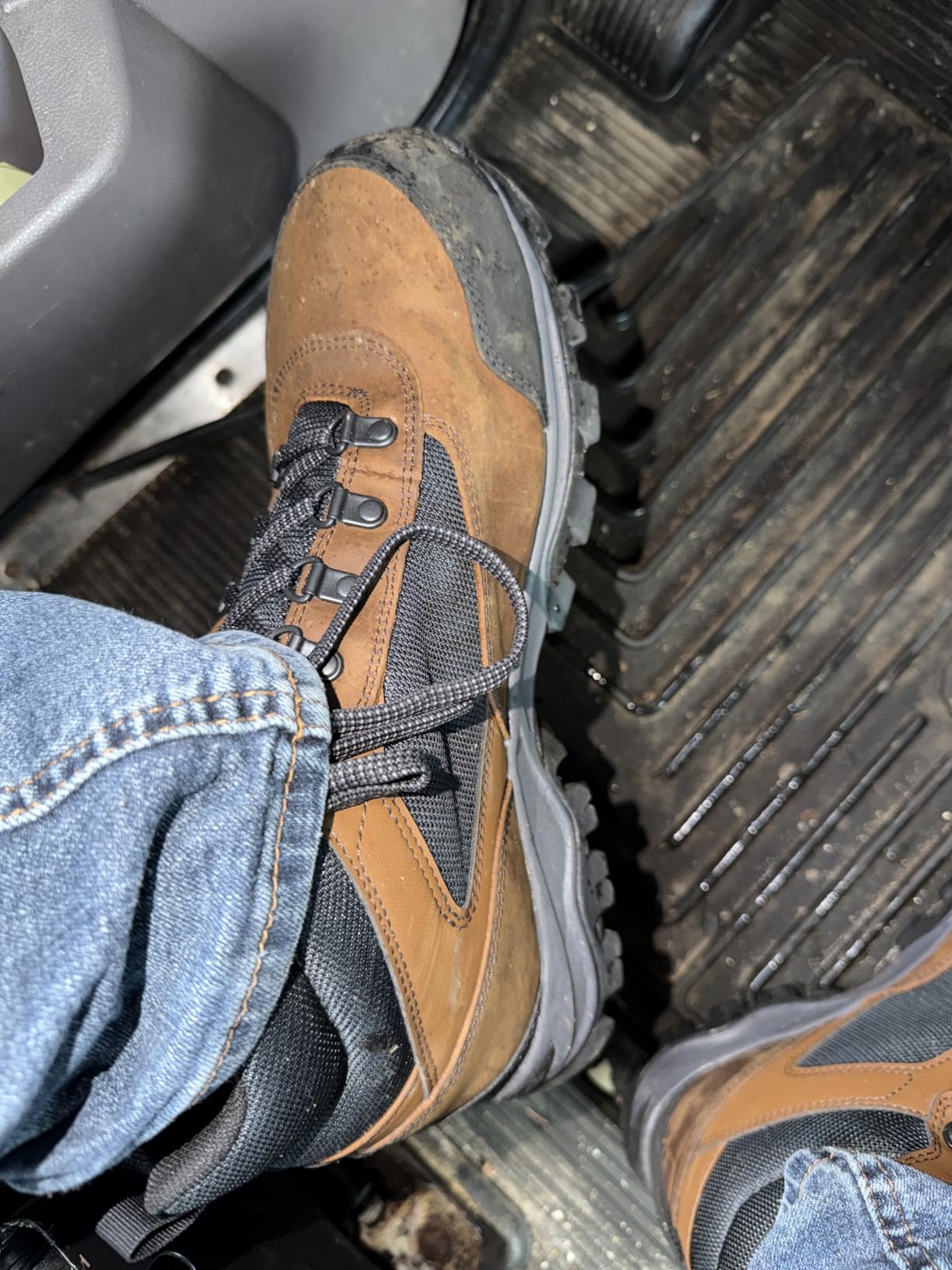
The ReBOTL material contains at least 50 percent recycled PET, which is a small environmental bonus that does not affect performance. For electricians who walk significant distances on rough terrain between job sites, the hiker-style design is more comfortable than a traditional work boot.
The boot runs slightly narrow and the steel toe is heavier than composite alternatives. For more waterproof work boot options, see our guide to the best waterproof work boots for men.
Who should buy the Keele Ridge
Electricians who work on outdoor utility projects, service calls across varied terrain, or any job requiring significant walking and climbing. Anyone who prefers the mobility of a hiker-style boot over a traditional work boot.
Who should consider something else
Workers who need the lightest boot possible. Wide-footed buyers. Anyone primarily working on flat indoor surfaces where hiker mobility is unnecessary.
How to Choose the Best Work Boots for Electricians
Choosing the right work boot is about matching the boot to your specific work environment. Here are the factors that matter most when shopping for the best work boots for electricians.
Electrical Hazard (EH) Protection
EH-rated boots are designed to provide a secondary layer of protection against electric shock by using non-conductive materials in the sole and heel. Under dry conditions, EH-rated boots resist electrical current up to 600V per the ASTM F2413 testing standard. This is not a substitute for proper lockout/tagout procedures, but it provides real protection if you accidentally contact a live circuit.
Every boot on our list carries an EH rating. Look for the ASTM F2413 designation when shopping. Some boots list the EH rating explicitly, while others bundle it under broader safety certifications.
Safety Toe Type: Steel, Composite, or Carbon
Steel toes are the traditional choice and provide excellent impact and compression protection at a lower cost. The drawbacks are weight, cold conductivity in winter, and metal detection triggering.
Composite toes use non-metallic materials like fiberglass, Kevlar, or carbon fiber. They meet the same ASTM impact and compression standards as steel but weigh less and do not conduct cold. They are also non-metallic for security checkpoint work.
Carbon fiber toes are a newer premium option that is even lighter than composite while maintaining the same protection level. Carbon toes are still relatively rare in work boots and typically appear in higher-end models.
Sole Type: Wedge vs Lugged
Wedge soles spread impact across a wider surface and provide better comfort on flat concrete. They are ideal for indoor work, residential electricians, and service technicians. The drawback is reduced traction on rough or uneven terrain.
Lugged soles have deeper tread patterns that grip better on rough terrain, ladders, and outdoor surfaces. They are the better choice for construction electricians and outdoor utility work.
Waterproof vs Breathable
Waterproof boots with sealed membranes keep feet dry in wet conditions but trap heat and sweat in warm environments. Breathable boots allow air circulation but let water in during heavy rain or puddle crossings.
If you split time between indoor and outdoor work, consider how often you face wet conditions. For mostly outdoor work, waterproofing is essential. For mostly indoor work, breathability matters more.
Boot Height
Six-inch boots are the most common height for electrical work. They provide ankle support without restricting movement. Eight-inch boots offer more ankle support for uneven terrain but feel heavier and more restrictive. Low-cut work shoes sacrifice ankle protection for mobility.
Comfort and Fit
Comfort on concrete for ten-plus hours requires cushioning, arch support, and proper fit. Look for boots with removable insoles if you wear custom orthotics. Plan for a one to two-week break-in period for most leather boots.
If you have wide feet, look for brands that offer wide sizes or that run naturally wide. For high arches or flat feet, consider aftermarket insoles or boots specifically designed for your foot type.
Job-Specific Recommendations
Construction electricians need durable, waterproof boots with strong ankle support and lugged outsoles. The Timberland PRO Pit Boss or Boondock are strong choices.
Residential electricians benefit from lighter, comfortable boots with wedge soles. The Carhartt Moc Toe or Wolverine Floorhand work well for this environment.
Industrial maintenance electricians need EH-rated boots with chemical and oil resistance. The Carhartt CMF6366 or CAT Threshold are reliable options.
Service technicians who drive between job sites need comfortable, versatile boots that handle both indoor and outdoor conditions. The Wolverine Overpass or Keele Ridge are good fits.
Apprentices in their first year should start with reliable, budget-friendly options like the CAT Threshold or EVER BOOTS Tank (for non-safety-toe environments) and upgrade as their needs become clearer.
Frequently Asked Questions
What boots do I need as an electrician?
You need work boots with Electrical Hazard (EH) protection rated to ASTM F2413 standards, a safety toe (steel, composite, or carbon), a slip-resistant outsole, and enough comfort to wear for ten or more hours on concrete. Most electricians do best with a six-inch lace-up boot that balances ankle support and mobility. Look for an EH rating explicitly listed in the boot specifications before purchasing.
What are the best safety boots for electricians?
The best safety boots for electricians combine EH protection with a steel or composite safety toe, slip resistance, and comfort. Our top picks include the Timberland PRO Pit Boss for overall performance, the Carhartt Moc Toe for waterproofing and comfort, and the Wolverine Overpass for lighter-weight waterproof protection. Each meets ASTM F2413 standards for electrical hazard protection under dry conditions.
What is the number 1 rated work boot?
Based on our testing and customer reviews, the Timberland PRO Pit Boss 6 Inch Steel Toe is the top-rated work boot for electricians with more than 27,000 reviews and a 4.4-star average. It combines EH protection, a steel safety toe, the 24/7 Comfort Suspension System, and Goodyear welt construction that allows resoling. For electricians specifically, it offers the best balance of protection, comfort, durability, and value.
What are the best safety shoes for electricians?
For electricians who prefer low-cut work shoes over boots, look for the same protection features in a lower profile: EH rating, safety toe, slip resistance, and comfort. Composite toe shoes offer the lightest weight. Wedge-sole shoes provide better comfort on flat concrete. Make sure any work shoe you choose still carries an explicit ASTM F2413 EH rating since not all work shoes meet electrical hazard standards.
Should electricians wear steel toe or composite toe boots?
Both steel and composite toe boots meet the same ASTM F2413 impact and compression standards. Steel toes are heavier, conduct cold in winter, and trigger metal detectors. Composite toes are lighter, do not conduct cold, and are non-metallic for security checkpoints. For most electricians, composite toes are the better choice due to the weight savings and non-conductive properties, though steel toes remain a reliable and more affordable choice.
How often should electricians replace work boots?
Most electricians replace work boots every 12 to 24 months under daily heavy use. Boots with Goodyear welt construction like the Thorogood American Heritage or Timberland PRO Pit Boss can be resoled and last three to four years or longer. Rotating between two or three pairs extends boot life by allowing the leather to dry and recover between wears. Replace boots immediately when the sole wears smooth, the toe cap is exposed, or the waterproof membrane fails.
Final Verdict
After six weeks of testing across job sites, ladders, and concrete, the Timberland PRO Pit Boss 6 Inch Steel Toe earns our top spot as the best work boots for electricians in 2026. It combines the most important features for working electricians: ASTM-certified electrical hazard protection, a steel safety toe, the genuinely effective 24/7 Comfort Suspension System, and Goodyear welt construction that allows resoling for years of additional service.
For the best value pick, the Carhartt 6 Inch Moc Toe Waterproof Work Boots deliver premium waterproofing, EH protection, and wedge-sole comfort in a boot that handles both indoor concrete and outdoor wet conditions. For budget-focused buyers and apprentices, the EVER BOOTS Tank Soft Toe provides remarkable comfort and durability at a price that makes rotating between multiple pairs practical.
Whatever boot you choose, prioritize EH protection, a proper safety toe, slip resistance, and comfort for long shifts on concrete. Your feet carry you through ten-hour days, ladder climbs, and the physical demands of the trade. The right pair of work boots is the foundation that makes everything else possible.