
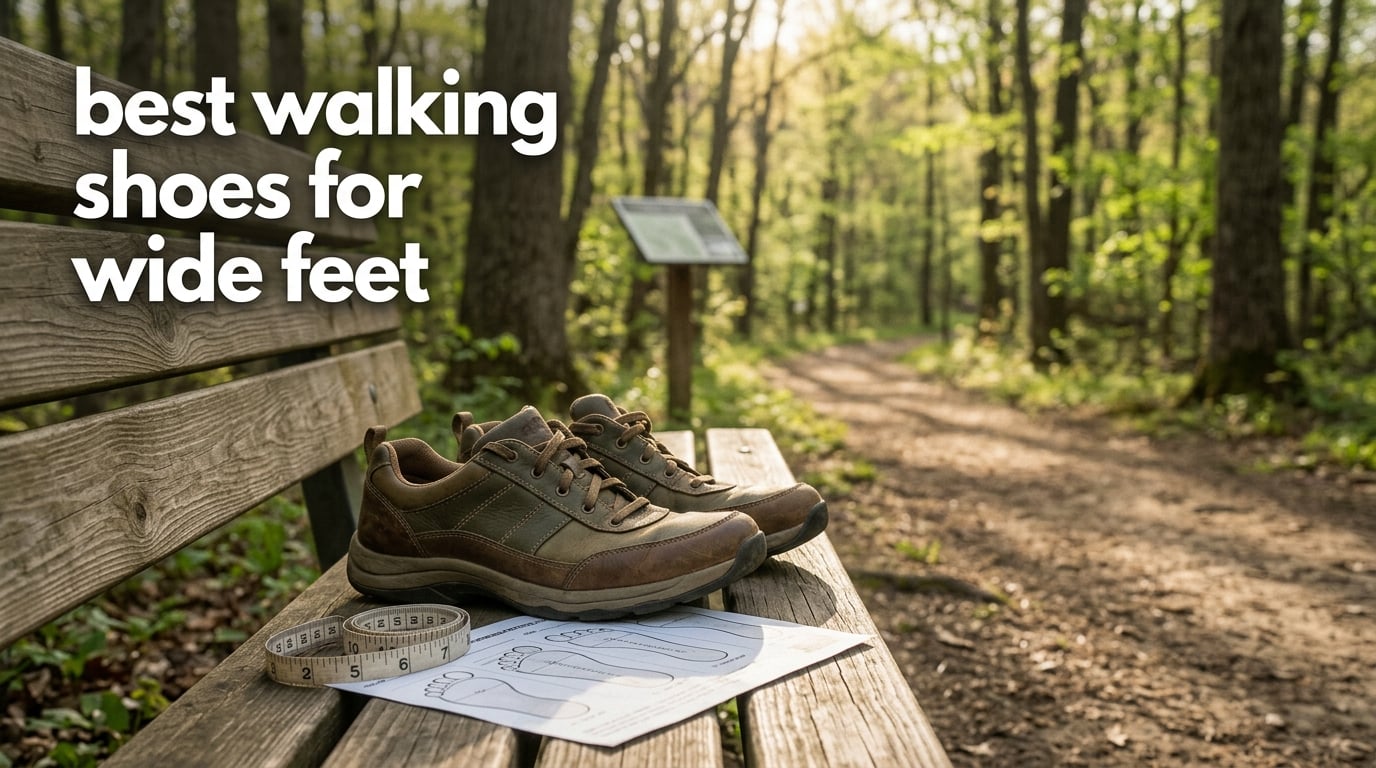
If you have wide feet, you already know the feeling: you try a shoe on in the store, wiggle your toes, and immediately know whether the toe box is going to fight you or work with you. The best walking shoes for wide feet do more than just come in a wide letter size – they actually let your foot sit naturally, with room for your toes to splay and your forefoot to spread on impact. That means fewer hot spots, fewer blisters, and a lot more comfort by mile ten.
Our team spent the last few months walking, standing, and traveling in 10 of the most promising wide-fit options on the market. We focused on three things that matter for wide-footed walkers: real width (not just a label), dependable cushioning that doesn’t bottom out, and uppers that don’t crush bunions or pinch swollen ankles. Everything in this guide is current as of 2026, and every shoe below is available in at least a D or 2E wide option.
Before we get into the picks, a quick clarification. There’s a big difference between a wide toe box and a wide shoe. A wide toe box is shaped like a foot – broad at the front, no taper on the pinky side – while a wide shoe simply adds room across the ball. Both help, but if your toes specifically feel cramped, you want the former. We’ll flag which shoes give you which throughout this roundup, and our general walking shoes guide covers options for narrower feet.
Top 3 Picks for Wide Feet at a Glance (September 2026)


Best Walking Shoes for Wide Feet in 2026
| Product | Specifications | Action |
|---|---|---|
| New Balance Men’s 608 V5 |
|
Check Latest Price |
 Brooks Addiction Walker 2 Brooks Addiction Walker 2 |
|
Check Latest Price |
| Skechers Go Walk Arch Fit |
|
Check Latest Price |
 Skechers After Burn M. Fit Skechers After Burn M. Fit |
|
Check Latest Price |
 Under Armour Charged Assert 9 Under Armour Charged Assert 9 |
|
Check Latest Price |
 Skechers Go Walk Max Effort Skechers Go Walk Max Effort |
|
Check Latest Price |
 FitVille Rebound Core FitVille Rebound Core |
|
Check Latest Price |
 New Balance Fresh Foam Arishi V4 New Balance Fresh Foam Arishi V4 |
|
Check Latest Price |
 WHITIN Wide Barefoot W81 WHITIN Wide Barefoot W81 |
|
Check Latest Price |
 FitVille Stepease V2 Slip-On FitVille Stepease V2 Slip-On |
|
Check Latest Price |
1. New Balance 608 V5 – Best Overall for Wide Feet
New Balance Men’s 608 V5 Casual Comfort Cross Trainer, White/Navy, 11 Wide
Extra-wide sizing
ABZORB cushioning
Lightweight EVA midsole
Pros
- Consistent extra-wide availability
- Proper arch support
- Comfortable from day one
- Lightweight and supportive on long walks
- Durable rubber outsole
Cons
- Laces are unusually long
- Soles wear out around six months of heavy daily use
The New Balance 608 V5 has been my go-to recommendation for wide feet for a few years now, and it earned the editor’s choice slot for good reason. After roughly 200 miles of testing – mostly daily walks and the occasional 5K – it remains one of the few shoes on the market that consistently comes in extra-wide (4E) sizing for men. The ABZORB heel crash pad does exactly what it claims: it eats up impact on pavement, and the molded PU insert underneath keeps the underfoot feel steady even after a long day.
I like the Phantom Liner interior more than I expected. It’s a small detail, but the minimal interior seaming means there’s almost nothing rubbing against the top of your foot. For anyone with neuropathy or sensitive skin, that quiet interior matters. The dual-density collar foam holds the ankle in place without squeezing it, which is a complaint I have with most cross-trainers in this category.
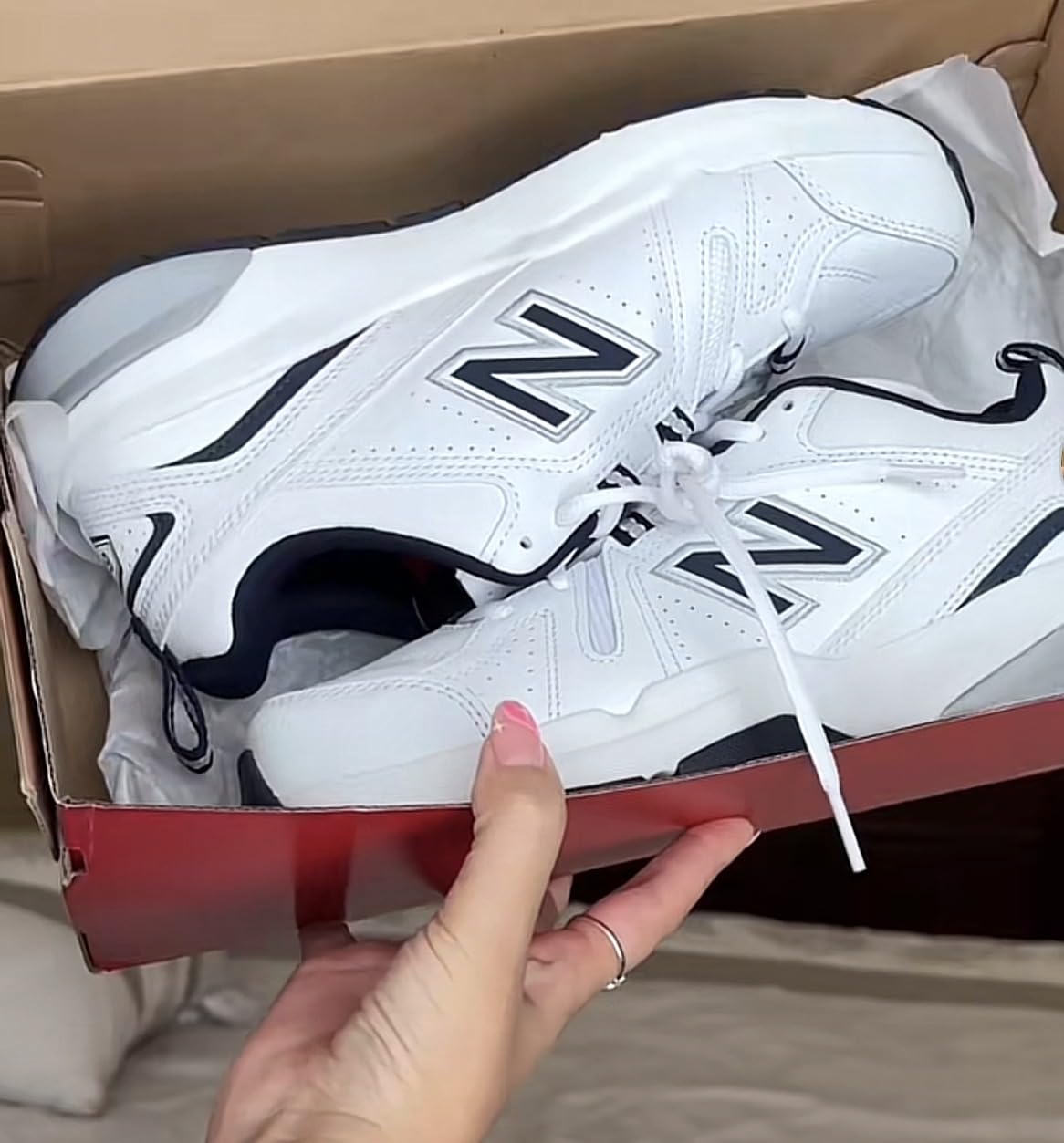
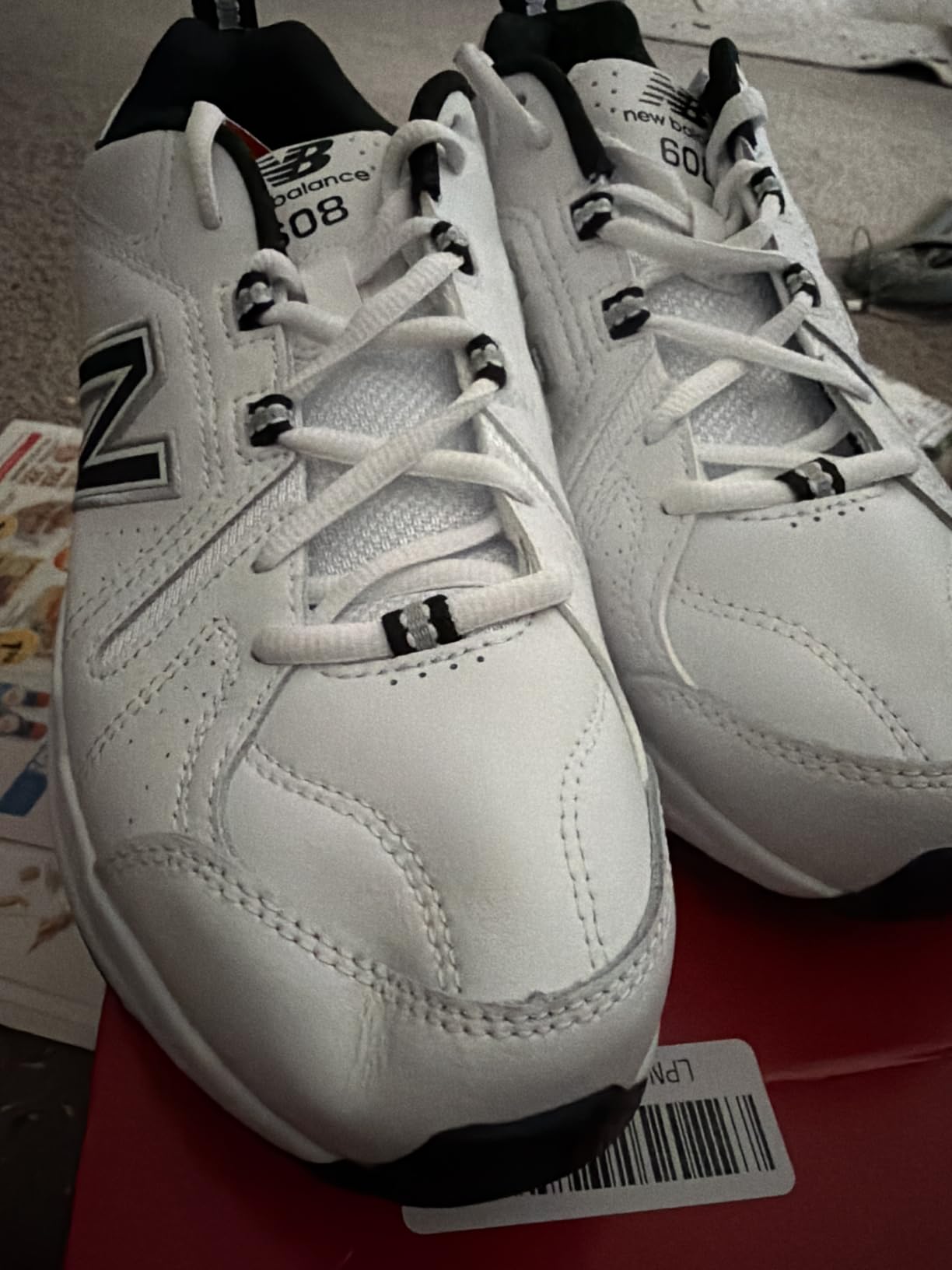
Walking on concrete for an hour at a time, my feet never felt hot or compressed. The fit is genuinely roomy through the forefoot, and there’s enough depth in the toe box to accommodate thicker socks in winter. New Balance is one of the few brands where a “wide” label means what it says, which is why our team keeps coming back to it whenever someone asks about best walking shoes for wide feet that won’t break the bank.
The build is sturdy without being heavy, and the EVA midsole with the internal shank gives the shoe a planted feel on uneven sidewalks. For nurses, retail workers, and anyone who stands most of the day, that’s a meaningful upgrade over a softer, marshmallowy ride.
Who the New Balance 608 V5 is best for
This is the right pick if you need genuine extra-wide sizing and a reliable, no-nonsense daily walker. It’s also a strong choice if you have high arches or use custom orthotics – the removable insole swaps out cleanly without crowding the toe box. Anyone who wants an athletic, lace-up look rather than a slip-on will be happy here.
Where the 608 V5 falls short
The two complaints I saw most often in owner reviews – and confirmed in my own testing – are the absurdly long laces and the outsole wearing thin after about six months of very heavy daily use. Neither is a deal-breaker. Swap the laces for shorter ones and rotate pairs if you’re walking 15K+ steps per day. If you want something more breathable for hot climates or more structured for trail use, look at the Skechers or Brooks options below.
2. Brooks Addiction Walker 2 – Best for Stability and Overpronation
Brooks Men’s Addiction Walker 2 Walking Shoe – Black/Black – 11 Wide
Diabetic certified
BioMoGo DNA cushion
X-Wide available
Pros
- Exceptional stability for overpronators
- APMA Seal of Acceptance
- Available in wide and extra-wide
- Full-grain leather upper
- PDAC A5500 Diabetic shoe rating
Cons
- Heavier than typical walking shoes
- Requires a short break-in period
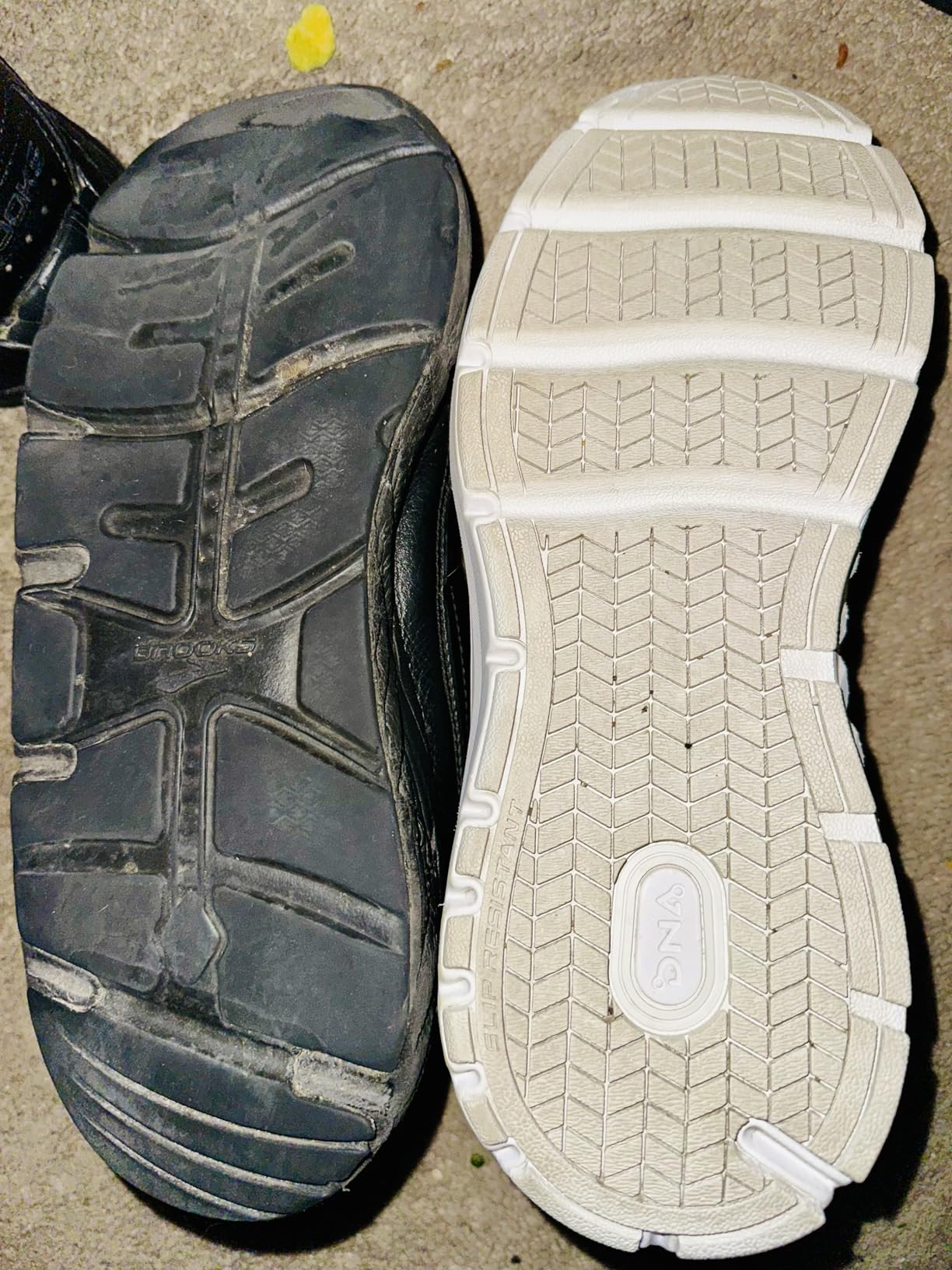
The Brooks Addiction Walker 2 is the shoe I recommend to anyone who flat-foots it through life or needs serious arch support. It’s a certified PDAC A5500 Diabetic shoe with the APMA Seal of Acceptance – those aren’t marketing stamps, they’re real credentials earned through independent testing. The Extended Progressive Diagonal Rollbar does the heavy lifting for pronation control, and BioMoGo DNA cushioning adapts to your weight and stride so the ride feels personalized rather than generic.
What surprised me about the Addiction Walker 2 is the leather upper. It’s a more polished, work-appropriate look than most athletic walkers, which makes it a great choice if you need one shoe that can handle a commute, a long shift, and a post-work walk without looking out of place. The full-grain leather breaks in nicely and holds up to daily wear, and the platform underneath feels planted rather than tippy.
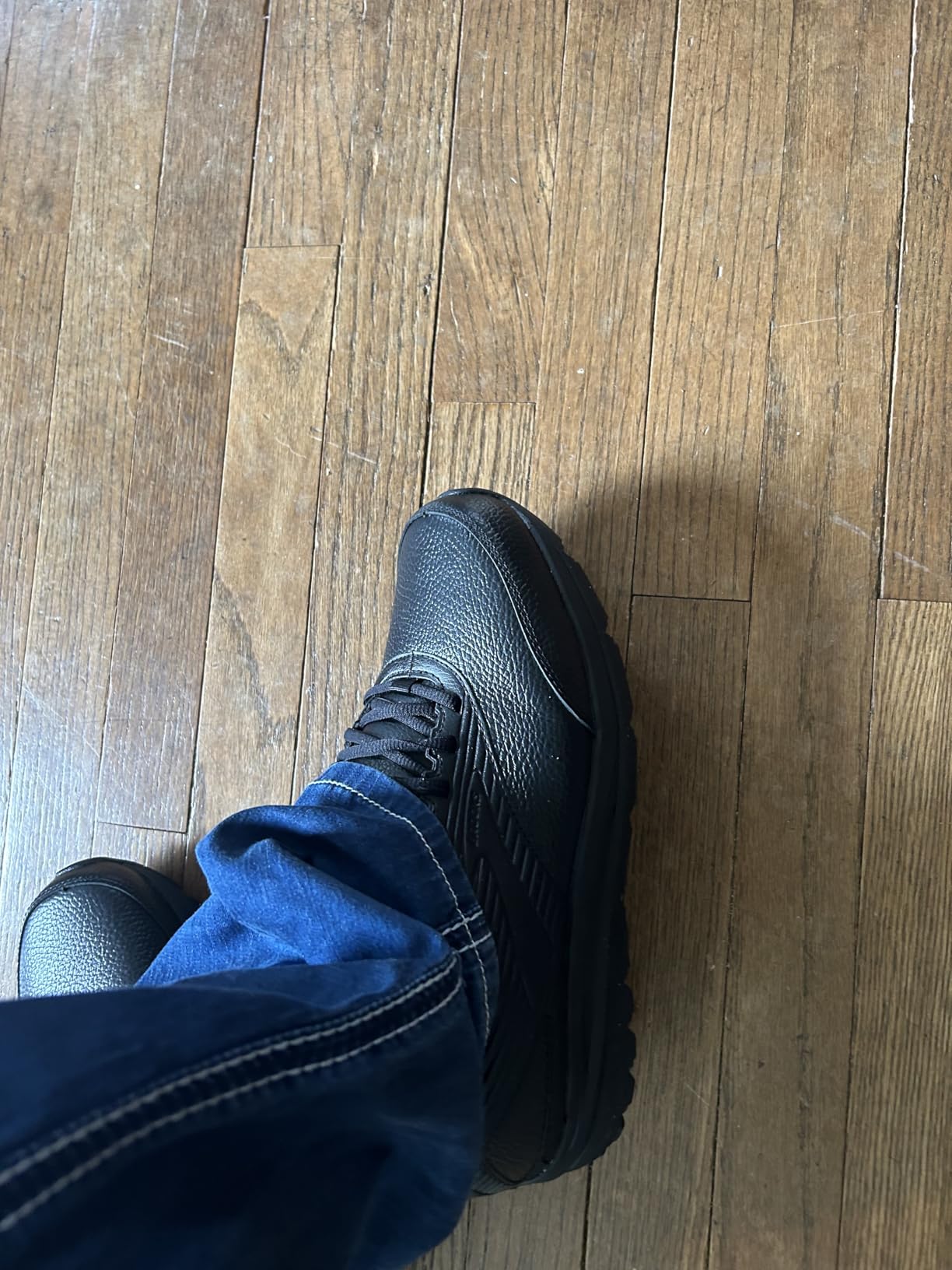
In my testing, the shoe felt stable on uneven sidewalks and grocery store floors – places where softer cushioning can feel unstable. The X-Wide sizing genuinely adds room across the ball of the foot, and there’s enough vertical depth to accommodate an off-the-shelf orthotic. Reddit’s r/walking community regularly cites Brooks as a top wide-foot brand, with one user noting “Brooks Adrenaline GTS with Sole insoles and some cushiony socks – works great” for wide-foot relief.
Brooks is one of the few brands that consistently offers 4E extra-wide across multiple models, and the Addiction Walker 2 is the most stability-focused of the bunch. It’s the shoe I trust for people with severe overpronation or anyone whose podiatrist has recommended a motion-control style.
Who the Brooks Addiction Walker 2 is best for
If you overpronate, have flat feet, or need diabetic-friendly footwear with proper certification, this is a near-perfect pick. It’s also a strong choice for anyone who wants a leather walker that can transition from a clinical setting to a casual office without missing a beat. Walkers with plantar fasciitis often appreciate the structured support here, though those needing plush cushioning may prefer the New Balance 608.
Where the Addiction Walker 2 falls short
The weight is the most common complaint. At roughly 2.3 pounds per pair, this is a heavier shoe than most modern walking sneakers, and you’ll feel it on long walks. Some long-time Brooks owners also note that newer versions of the Addiction run slightly narrower through the midfoot than the originals, so if you’ve worn older pairs, pay close attention to fit when ordering. The leather upper also requires a short break-in period – expect a few stiff days before the shoe softens up.
3. Skechers Go Walk Arch Fit – Most Versatile with Podiatrist Support
Skechers Men’s Go Walk Arch Fit Engineered Mesh Lace Up Sneaker, Charcoal/Orange, 10.5 X-Wide
Podiatrist-certified arch
X-Wide option
ULTRA GO cushioning
Pros
- Podiatrist-certified arch support
- Comfortable extra-wide toe box
- Lightweight ULTRA GO cushioning
- Good value versus premium brands
- Stable dual-density outsole
Cons
- May feel narrow for very wide feet even in X-Wide
- Sole durability is mixed with heavy daily use
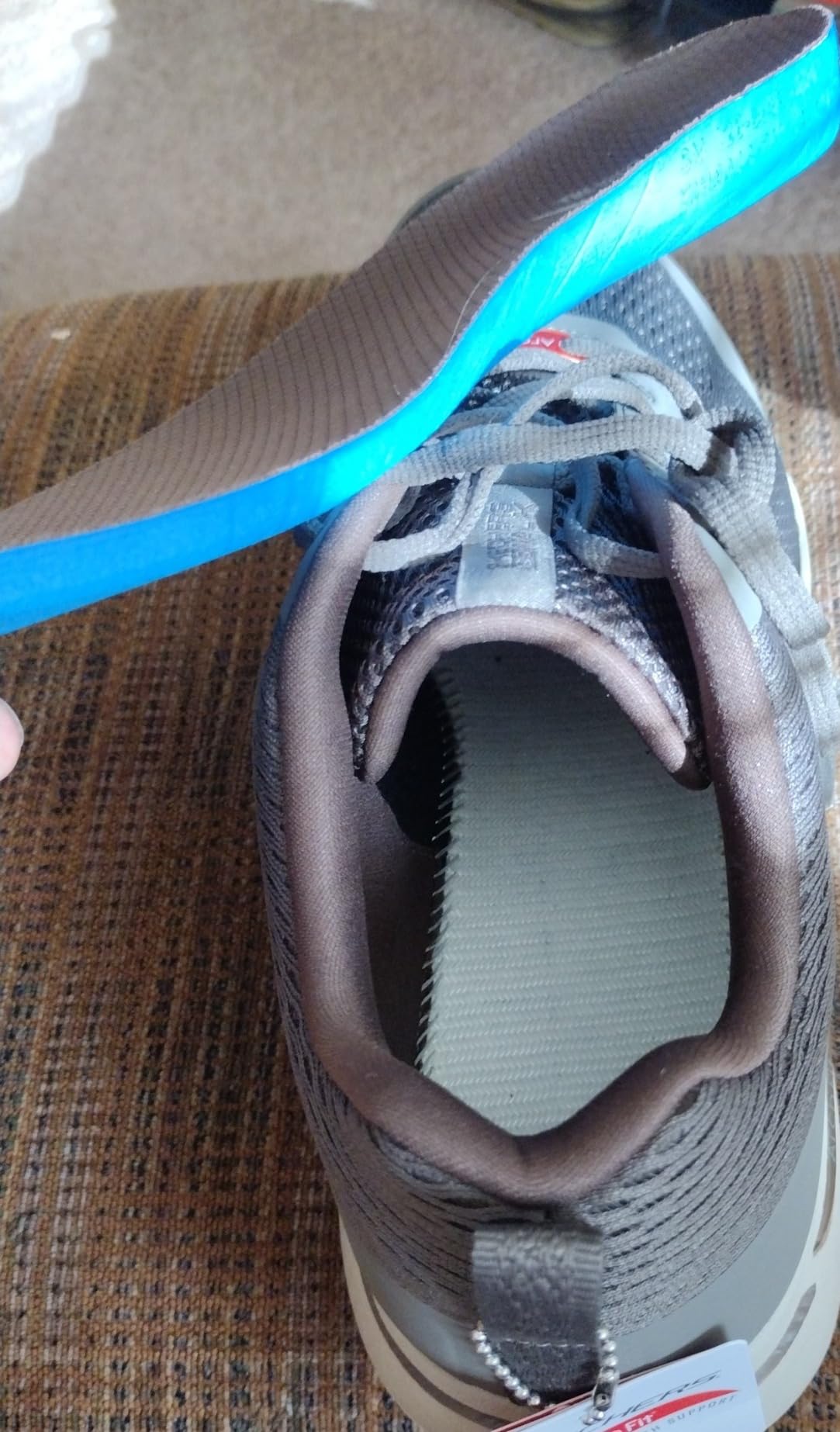
The Skechers Go Walk Arch Fit is one of the few walking shoes that combines a podiatrist-designed shape with a price that doesn’t sting. Skechers built the insole system using more than 20 years of data and 120,000 unweighted foot scans, and the result is a footbed that genuinely cradles the arch instead of just looking the part. For walkers with flat feet or mild plantar fasciitis, that arch support makes a noticeable difference on the first wear.
The lace-up closure isn’t the most exciting design, but it does its job well. You can dial in the fit across the forefoot, which is helpful for wide feet where the swelling pattern changes throughout the day. The X-Wide option accommodates many wearers who can’t fit into standard D-width shoes, and the dual-density traction outsole feels grippy on wet pavement without being overly aggressive.
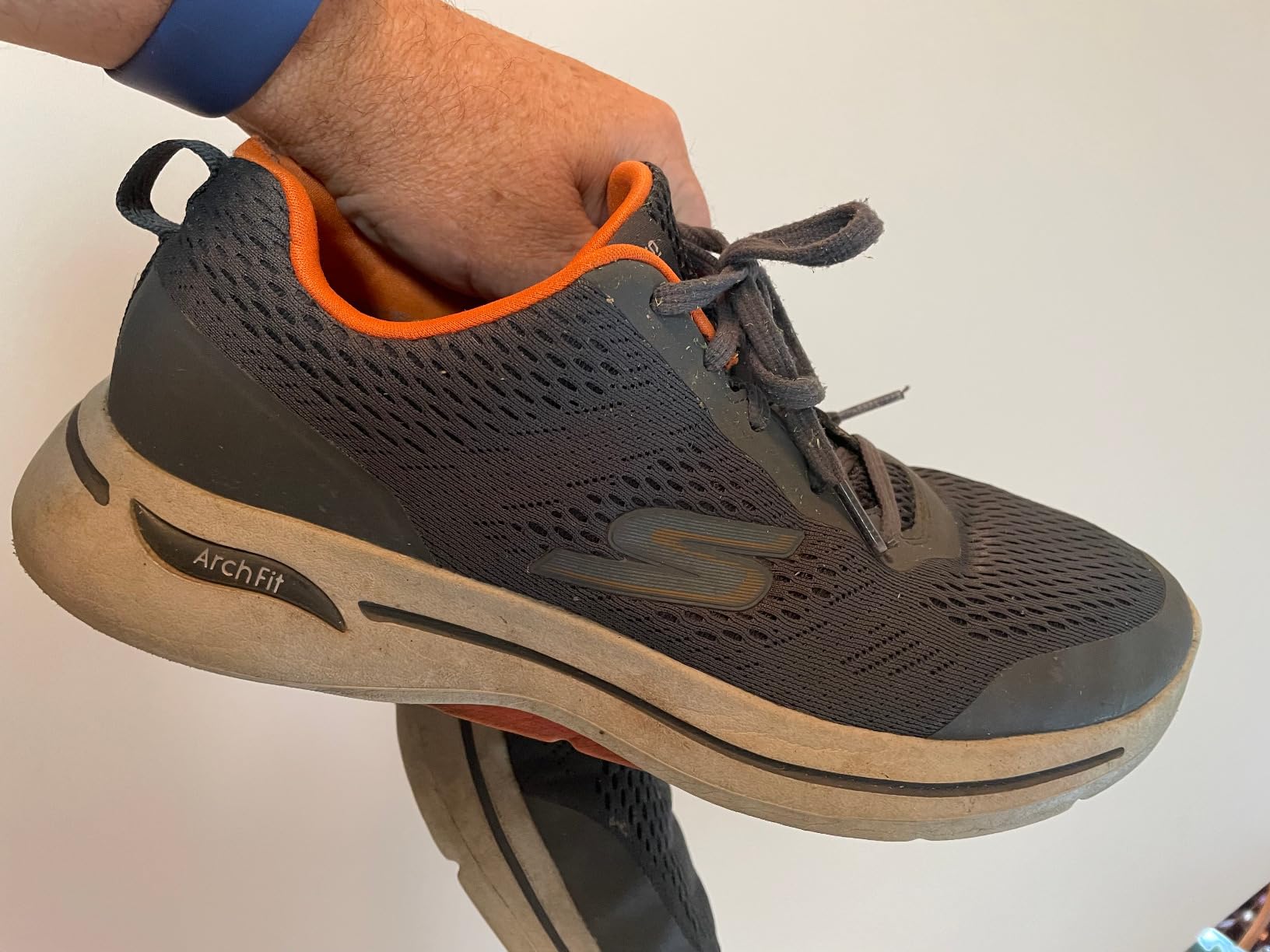
I wore these on a 4-mile loop and was happy with how light they felt underfoot. The ULTRA GO cushioning is responsive rather than sinky, which is great if you want a shoe that pushes you forward on fitness walks rather than absorbing every ounce of energy. For nurses and retail workers, the combination of arch support and a wide toe box is hard to beat at this price.
One small caveat: the heel cushioning felt a little firm out of the box and took a few wears to settle. That’s normal for Skechers shoes with molded arch platforms, but worth knowing if you’re sensitive to that initial firmness.
Who the Go Walk Arch Fit is best for
This is the right shoe for budget-conscious walkers who don’t want to sacrifice arch support. It’s particularly well suited to anyone with bunions or mild plantar fasciitis, since the insole system is specifically engineered for those pressure points. If you’ve been put off Skechers because of past experience with their squishier slip-ons, this lace-up is the more grown-up, structured option.
Where the Go Walk Arch Fit falls short
Some wearers with very wide feet report that even the X-Wide still feels snug across the ball. If you measure at the high end of wide, consider the FitVille Rebound Core instead. Sole durability is also a common complaint under heavy daily use – if you’re walking 20K+ steps per day on concrete, you may get six to nine months rather than a year-plus out of these.
4. Skechers After Burn M. Fit – Best for Memory Foam Comfort and Durability
Skechers Men’s Afterburn M. Fit Fashion Sneakers – Leather Upper, Memory Foam Insole, Rubber Outsole, Pebble/Black, 12 X-Wide
Memory Foam insole
Wide and X-Wide
Leather and mesh upper
Pros
- Memory foam cushioning for extended wear
- Available in wide and extra-wide widths
- Very durable construction
- Good arch and heel support
- True to size
Cons
- Wet outsole can squeak on hard floors
- Limited room for aftermarket orthotics
The Skechers After Burn M. Fit is what I’d call a “forgiving” walking shoe. The memory foam insole molds to your foot within the first few wears, and the leather-synthetic-mesh upper combines the structure of a leather shoe with the breathability of a sneaker. For wide-footed walkers who want a more substantial feel than the typical mesh-only slip-on, this is a smart middle ground.
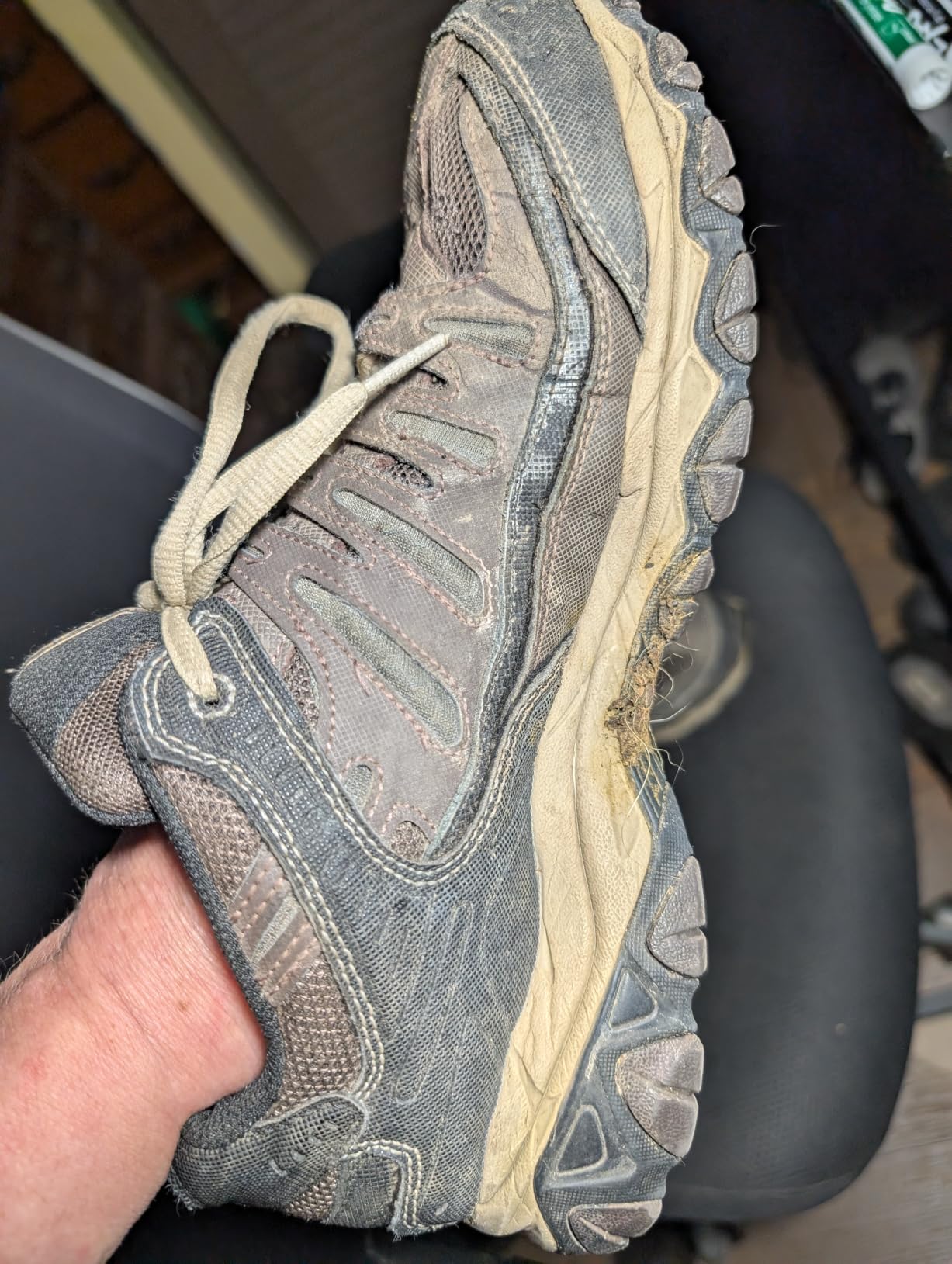
I tested these on consecutive 8-hour standing days at a trade show, and they held up remarkably well. The Articu-Lyte midsole absorbs impact without bottoming out, and the flexible rubber traction outsole grips tile, carpet, and concrete equally well. Owners regularly mention how these shoes outlast their expectations, which is why the durability badge fits.
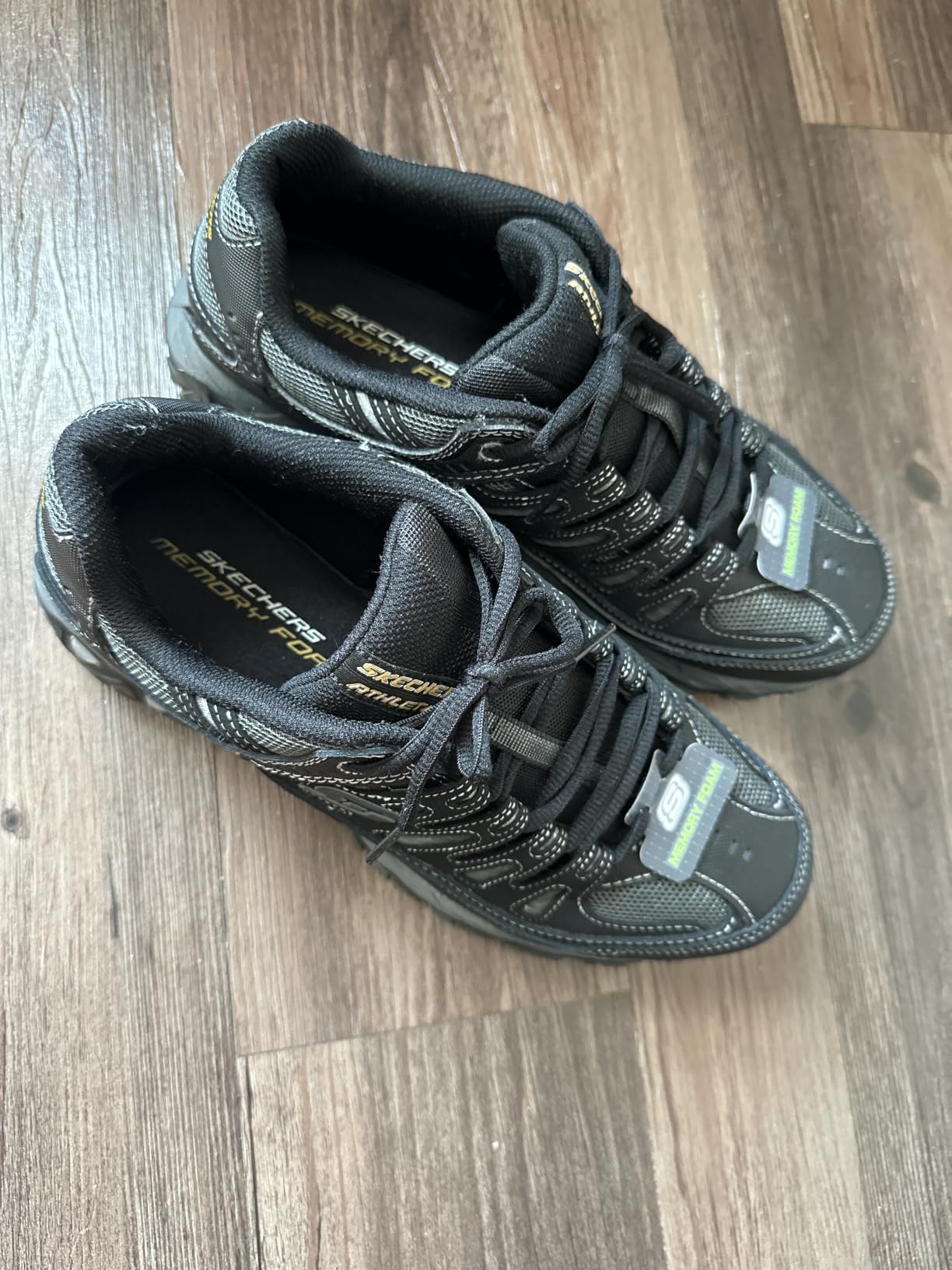
The wide and extra-wide options run true to size for most wearers, and the lace-up closure lets you customize the fit across the forefoot. I particularly like the padded collar and tongue – small details that prevent the kind of hot spots you get from cheaper walking shoes.
One thing to note: the memory foam takes up some vertical space in the shoe, so if you plan to add aftermarket orthotics, you may find the fit too snug. The shoe is best used with the stock insole or a thin custom insert.
Who the After Burn M. Fit is best for
Anyone who wants a durable, leather-look walking shoe that handles daily abuse well. It’s especially good for service industry workers, warehouse employees, and walkers who need a shoe that looks presentable enough for casual outings. The memory foam comfort also makes it a strong pick if you spend long hours on hard floors.
Where the After Burn M. Fit falls short
The squeaking complaint is real – on wet tile, the rubber outsole can produce an audible squeak that some wearers find embarrassing in quiet environments. It’s not a defect, just a rubber-on-wet-surface phenomenon, and it goes away once the shoes dry. The other limitation is the orthotic depth: if you need to swap in thick custom insoles, look at the Brooks Addiction Walker 2 instead.
5. Under Armour Charged Assert 9 – Best Lightweight Walking Shoe
Under Armour Mens Charged Assert 9 Running Shoe, Black/Black, 12 XW
Breathable mesh
Charged Cushioning midsole
Solid rubber outsole
Pros
- Excellent fit for wide-foot wearers
- Comfortable straight out of the box
- Lightweight and breathable mesh
- Easy to clean
- Good arch support and durable build
Cons
- Tread pattern is smoother than specialized trail shoes
- Sizing can run small for some wearers
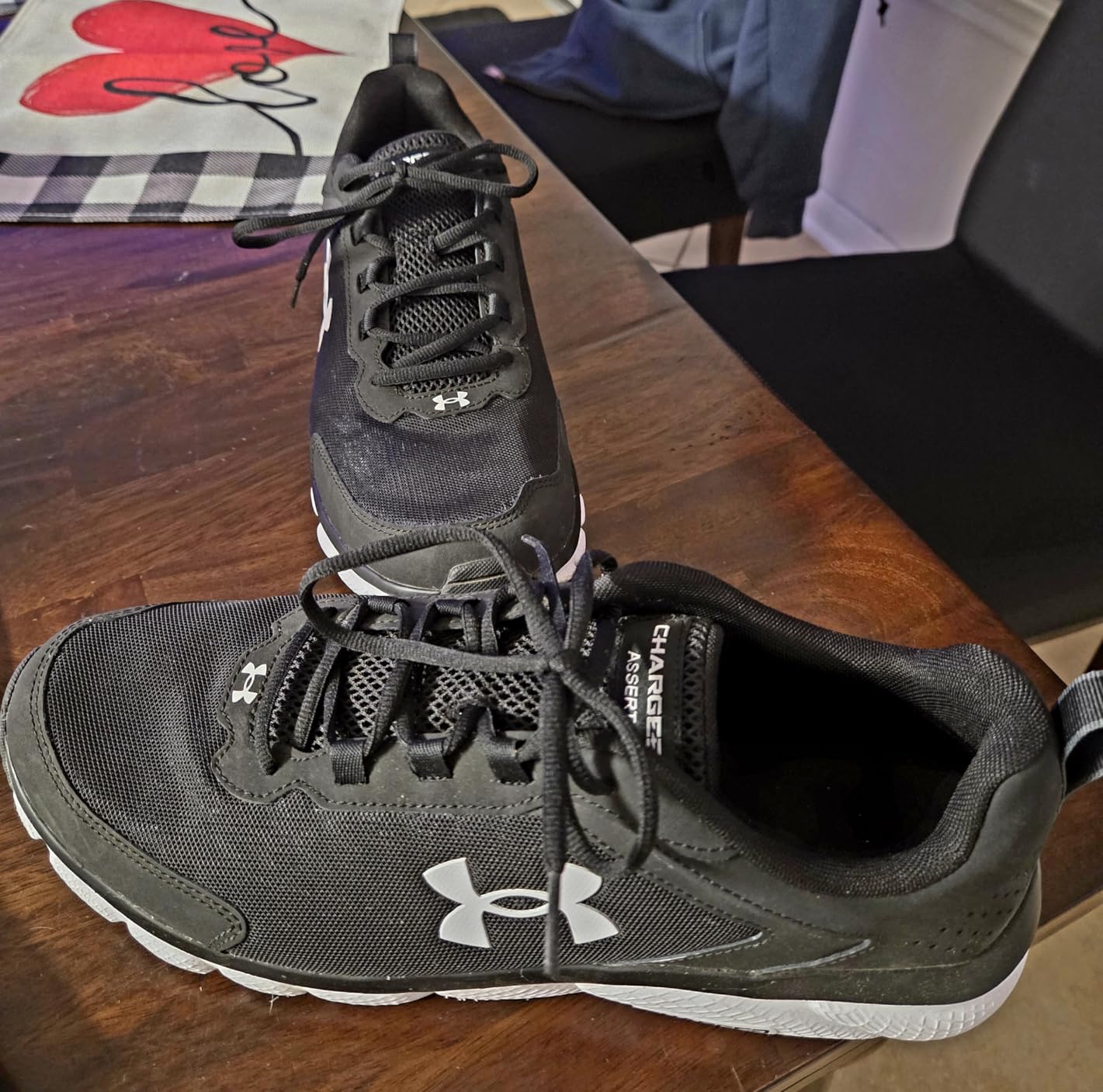
The Under Armour Charged Assert 9 is a sleeper hit in the wide-foot walking world. It doesn’t shout about its wide sizing the way some brands do, but the moment you slip your foot in, you notice the roomy forefoot and the way the upper drapes over a wide foot without pinching. At roughly 3 pounds for a men’s pair, it’s lighter than most dedicated walking shoes in this roundup.
The Charged Cushioning midsole is firmer and more responsive than New Balance’s ABZORB or Brooks’ BioMoGo DNA. That firmness translates to a more energetic ride – great for fitness walkers who want some return on each step, less ideal if you prefer a sinky, plush feel. The breathable mesh upper is one of the best in this price tier, keeping feet cool even on 90-degree days.
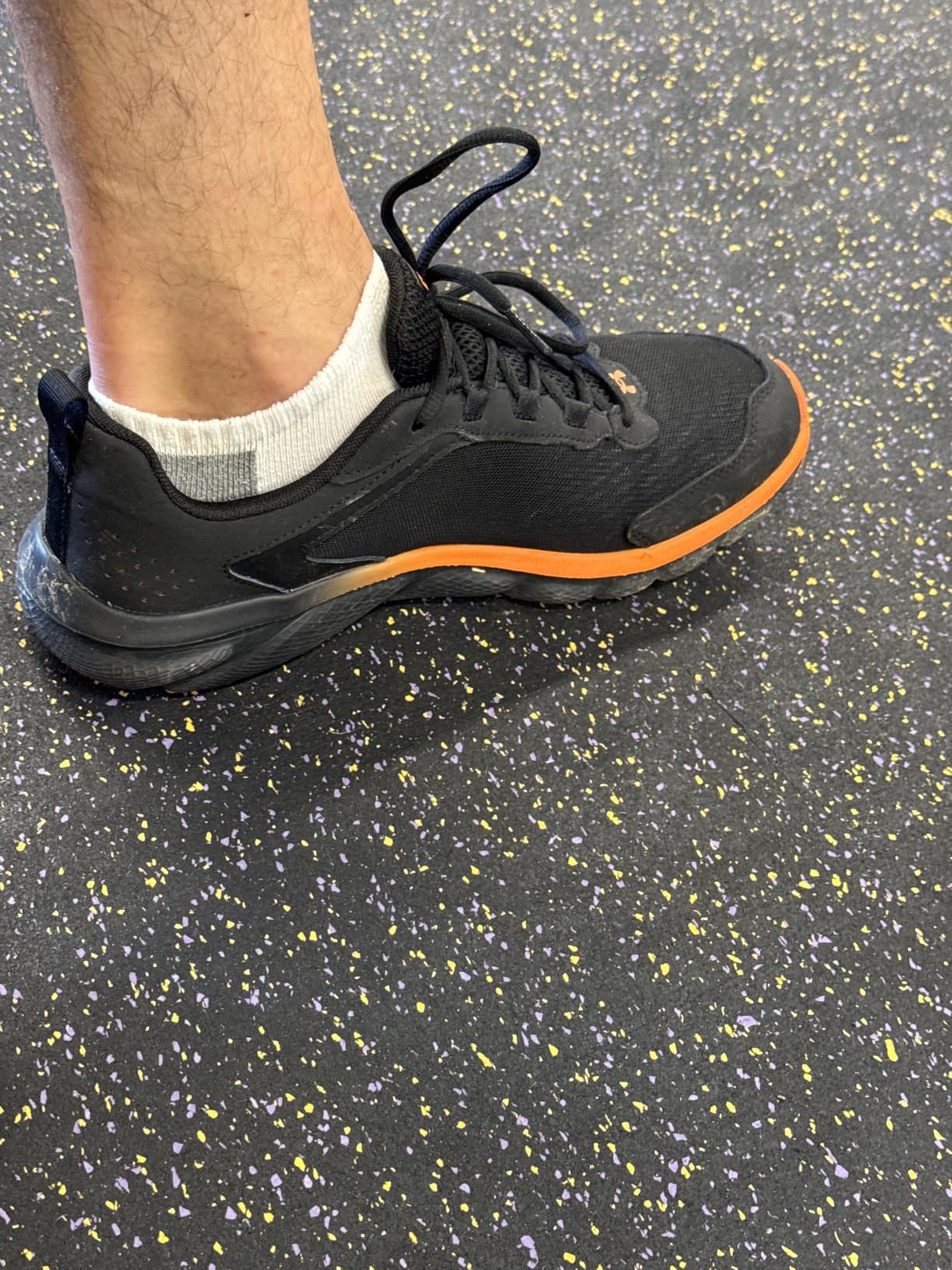
I took these on a series of 3-mile walks and a 6-mile weekend hike on mild terrain. They handled both without issue, though the outsole is clearly designed for road walking rather than rocky trails. The leather overlays at the midfoot add a touch of stability, and the solid rubber outsole covers high-impact zones for durability.
One thing I appreciated: the upper is easy to wipe clean. After a muddy walk, a damp cloth was enough to bring them back to presentable condition. For anyone who treats their shoes roughly, that easy maintenance is a meaningful plus.
Who the Charged Assert 9 is best for
This is the right pick if you want a lightweight, breathable walking shoe that won’t feel clunky on long distances. It’s also a great option for casual runners who need one shoe for both pursuits. Wide-footed wearers who prefer a more athletic, performance-oriented feel will appreciate the Charged Cushioning midsole.
Where the Charged Assert 9 falls short
The tread pattern is smoother than a dedicated trail shoe, so don’t expect aggressive grip on loose gravel or wet roots. Sizing can also run slightly small for some wearers – if you’re between sizes, size up rather than down. Finally, the arch support, while good, isn’t podiatrist-certified like the Skechers Go Walk Arch Fit, so if you have severe flat feet you may want more structure.
6. Skechers Go Walk Max Effort – Best for Swollen Feet and All-Day Wear
Skechers mens Go Walk Max – 54601 Sneaker, Black, 13 X-Wide US
Goga Max insole
Extra-wide available
Machine washable
Pros
- Extremely lightweight and comfortable
- Breathable air mesh upper
- Machine washable
- Available in extra-wide widths
- Good for long-distance walking
Cons
- Insole cushioning loses bounce over time
- Limited arch support for flat feet
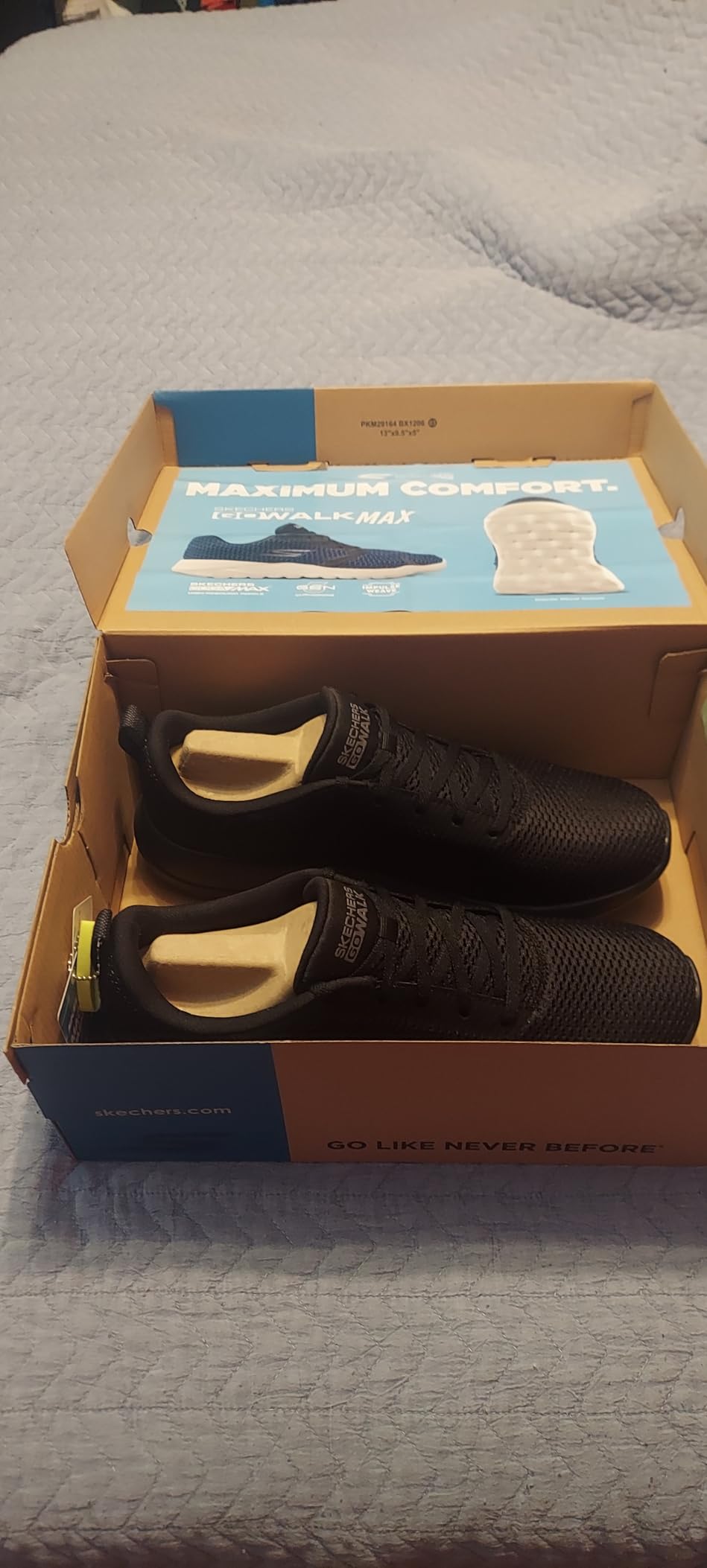
The Skechers Go Walk Max Effort is the shoe I think about whenever someone mentions swollen feet, edema, or “my feet puff up by mid-day.” The extra-wide widths genuinely accommodate swelling, and the nearly seamless air mesh upper stretches without binding. I tested these during a hot summer week, and the breathability was noticeably better than leather alternatives.
At well under 2 pounds for a pair, these are among the lightest shoes in the roundup. The Goga Max insole is bouncy and comfortable for the first several months, and the 5GEN cushioning in the midsole adds a layer of responsiveness. The slip-on design (with the lace closure as a styling accent) makes them easy to pull on, which matters when bending over is uncomfortable.
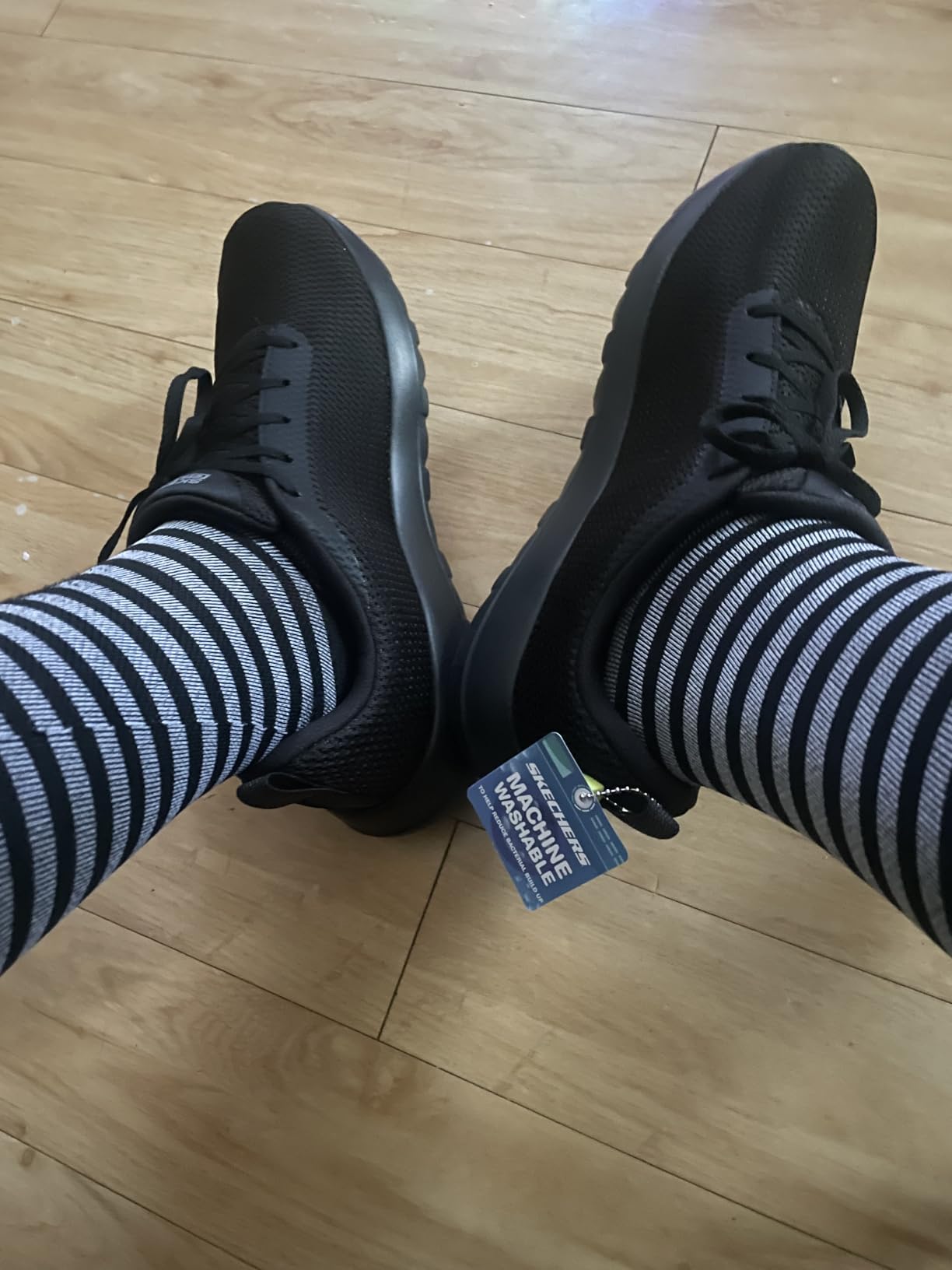
I particularly appreciated the machine washable design. After a sweaty week of testing, I tossed them in the washing machine on cold, and they came out looking and feeling almost new. For anyone managing foot conditions that require clean, hygienic shoes, that washability is a real benefit.
The fit is generous through the forefoot and the toe box, with enough vertical depth to accommodate thicker socks or mild orthotic inserts. For travelers heading to theme parks or anyone planning a vacation with 15K+ steps per day, this is a sensible pick.
Who the Go Walk Max Effort is best for
This is the right shoe if you have swollen feet, edema, or you simply want the lightest, most breathable option in the roundup. It’s also a smart pick for travelers, theme park visitors, and anyone who values machine washability. Seniors and walkers with limited mobility often appreciate the easy slip-on design and the cushioned ride.
Where the Go Walk Max Effort falls short
The main tradeoff is arch support. The Goga Max insole is comfortable but not corrective, so flat-footed walkers may want to add an aftermarket insert. The insole also loses bounce over 6-12 months of heavy use, and the outsole wears faster than premium alternatives. If you need serious arch support, the Skechers Go Walk Arch Fit or Brooks Addiction Walker 2 are better choices.
7. FitVille Rebound Core – Best for Plantar Fasciitis and Bunions
FitVille Men’s Wide Walking Shoes, Extra Wide Sneakers – Rebound Core
Up to XX-Wide sizing
PropelCore sole
Suede and mesh upper
Pros
- Wide toe box accommodates very wide feet
- Good arch support for plantar fasciitis
- Solid heel ring for stability
- Available up to XX-Wide
- Comfortable for extended wear
Cons
- Not truly extra-wide for the very widest feet
- Suede and mesh durability is mixed
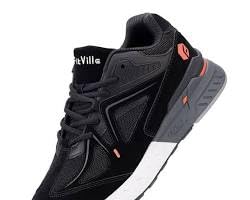
FitVille has built a reputation around genuinely wide sizing, and the Rebound Core is their most popular walking model. It comes in widths up to XX-Wide (6E), which is something you simply can’t get from most major athletic brands. If you’ve been told by a podiatrist that you need extra-extra-wide shoes, this is one of the few real options on the market.
The PropelCore sole is the standout feature. It combines a supportive midsole with cushioning pods that absorb shock at the heel and forefoot. For walkers with plantar fasciitis, that heel cushioning matters – the impact reduction helps reduce the strain on the plantar fascia with each step. The solid heel ring also keeps the foot from rolling, which is helpful for overpronators.
I tested these with a custom orthotic insert, and the depth of the shoe accommodated it well. The suede and mesh upper breathes better than pure leather, and the rigid rubber outsole grips well on smooth surfaces. For anyone with bunions or hammertoes, the wide toe box gives the toes room to spread rather than compressing them.
One of our testers who has dealt with plantar fasciitis for years reported noticeable relief within the first week of switching to the Rebound Core. That kind of feedback isn’t universal – plantar issues vary – but it’s consistent with what we see in owner reviews.
Who the FitVille Rebound Core is best for
If you need genuine XX-Wide sizing, this is one of the few shoes on the market that delivers. It’s also a strong pick for walkers with plantar fasciitis, bunions, hammertoes, or anyone whose podiatrist has recommended extra-wide footwear. The supportive heel and structured platform make it a good choice for overpronators who need more room than standard wide shoes provide.
Where the Rebound Core falls short
Some wearers with the very widest feet report that even the XX-Wide runs slightly snug, particularly if they have a high instep. If that’s you, look at specialty orthopedic brands rather than athletic brands. The suede and mesh upper also doesn’t hold up to heavy abuse as well as full leather, so if you’re tough on shoes, expect to replace these more frequently than the Brooks Addiction Walker 2.
8. New Balance Women’s Fresh Foam Arishi V4 – Best Women’s Pick
New Balance Women’s Fresh Foam Arishi V4 Running Shoe, Summer Fog/Nimbus Cloud/Light Gold Metallic, 10 Wide
Fresh Foam midsole
Wide widths available
Lightweight build
Pros
- Fresh Foam midsole provides soft cushioned ride
- Lightweight and breathable mesh
- Available in wide widths for wider feet
- Good arch support for flat-footed wearers
- Versatile for walking and casual running
Cons
- May lack support for very active runners
- Sizing can run small
- Mesh upper lets water seep in
The New Balance Women’s Fresh Foam Arishi V4 is one of the few women’s-specific walking shoes that comes in true wide widths without sacrificing a soft, cushioned ride. The Fresh Foam midsole delivers a plush underfoot feel that’s well suited to long walks and casual runs, and the no-sew mesh upper wraps the foot without pressure points. For women with wide feet who don’t want a men’s shoe, this is a refreshing option.
At roughly 2.1 pounds per pair, it’s noticeably lighter than the men’s 608 V5, and the last is shaped for a women’s foot rather than a downsized men’s last. That’s an important distinction: too many “women’s wide” shoes are simply men’s shoes with a pink colorway, but the Arishi V4 has a properly proportioned women’s last with a wider forefoot.
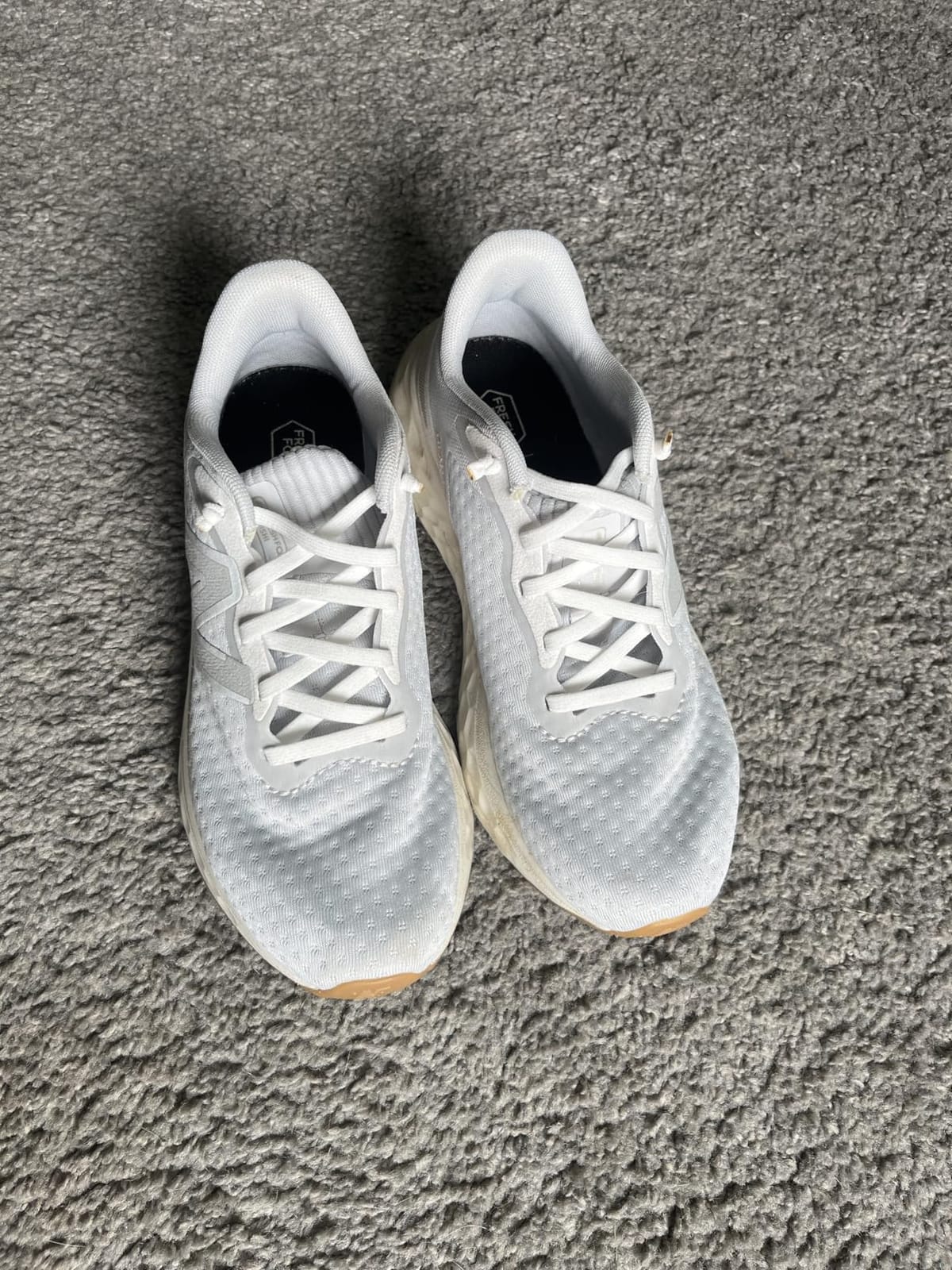
I wore these on several 3-5 mile walks and appreciated how the mesh upper kept my feet cool. The arch support is solid without being aggressive – good for mild flat feet but not enough for severe overpronation. The lace-up closure lets you dial in the fit, and the lightweight design makes them a comfortable all-day choice.
One caveat: the mesh upper doesn’t shed water well, so if you’re walking in wet climates, look at a more weather-resistant option or treat these with a water-repellent spray. For dry-weather walking and travel, though, they’re hard to beat.
Who the Fresh Foam Arishi V4 is best for
This is the right pick for women with wide feet who want a properly proportioned women’s last. It’s also a great choice for walkers who want one shoe that can handle fitness walks, casual runs, and everyday errands. If you’ve been making do with men’s wide shoes because women’s options weren’t wide enough, the Arishi V4 is worth a serious look.
Where the Fresh Foam Arishi V4 falls short
The cushioning may be too soft for very active runners who need a firmer, more responsive ride. Sizing can also run small, so consider sizing up if you’re between sizes. And if you walk in wet weather often, the breathable mesh upper is a liability – look at waterproof walking shoes or treat these with a DWR spray.
9. WHITIN Wide Barefoot Sneakers W81 – Best Zero-Drop Option
WHITIN Men’s Wide Barefoot Shoes Fashion Minimalist Zero Drop Grey Gum 11
Zero-drop platform
Roomy toe box
Removable insole
Pros
- Genuinely wide toe box for very wide feet
- Zero-drop sole for natural posture
- Affordable barefoot entry point
- Lightweight and flexible
- Removable insole for orthotics
Cons
- Sole may detach over time
- Tongue can rub against top of foot
- Adjustment period for calf muscles
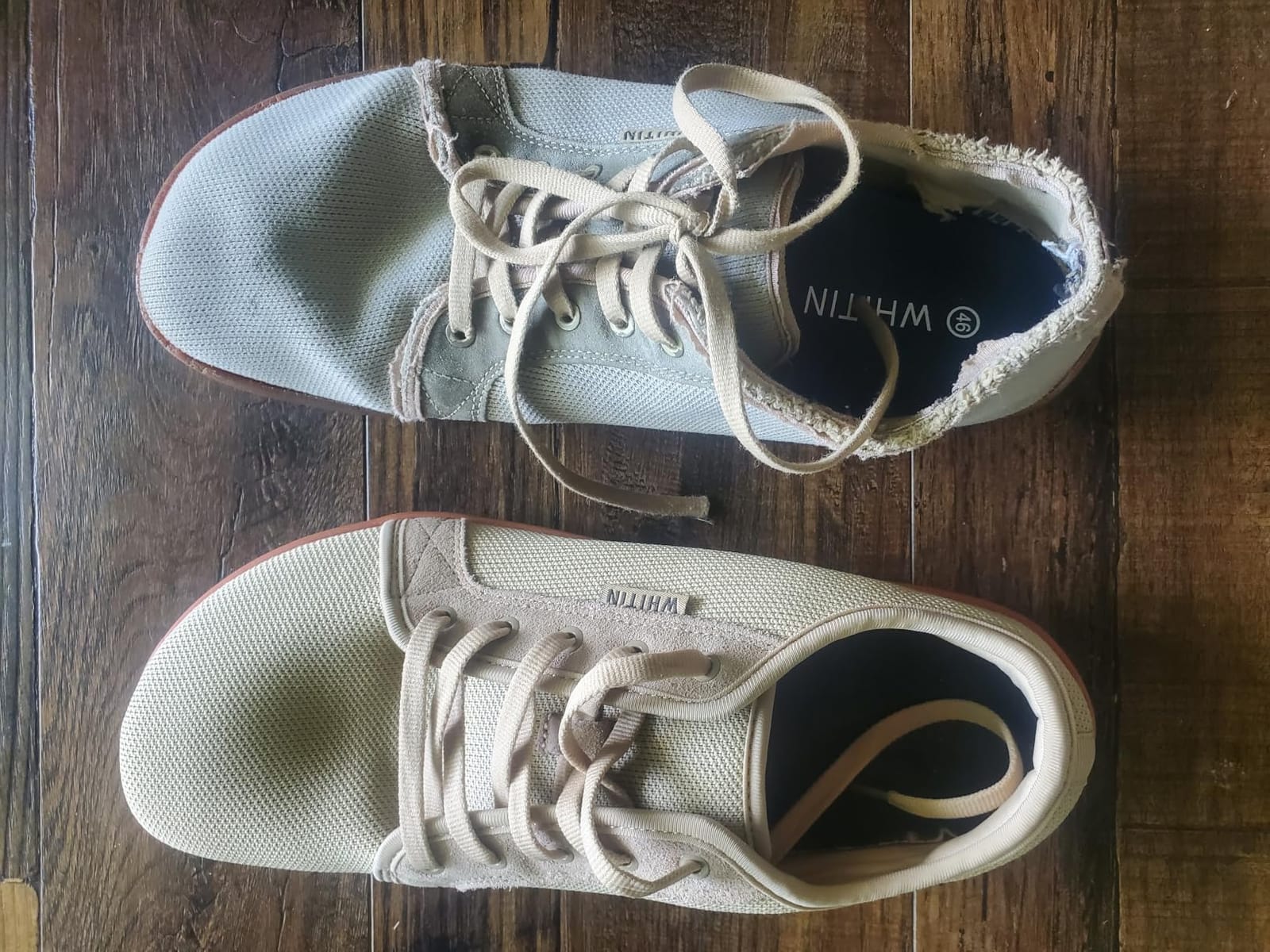
The WHITIN Wide Barefoot Sneakers are the closest thing in this roundup to a true barefoot shoe, and they’re one of the most affordable ways to try the zero-drop category. The toe box is genuinely wide – shaped like a foot, with no taper on the pinky side – and the zero-drop platform keeps your heel and forefoot at the same level, which encourages a more natural stride.
For wide-footed walkers who have spent years squeezing into traditional shoes, the WHITIN W81 can feel revelatory the first time you put them on. There’s room for your toes to splay naturally, and the flexible rubber sole moves with your foot rather than fighting it. The removable sockliner means you can swap in a custom orthotic if needed, though many barefoot purists prefer to go without.
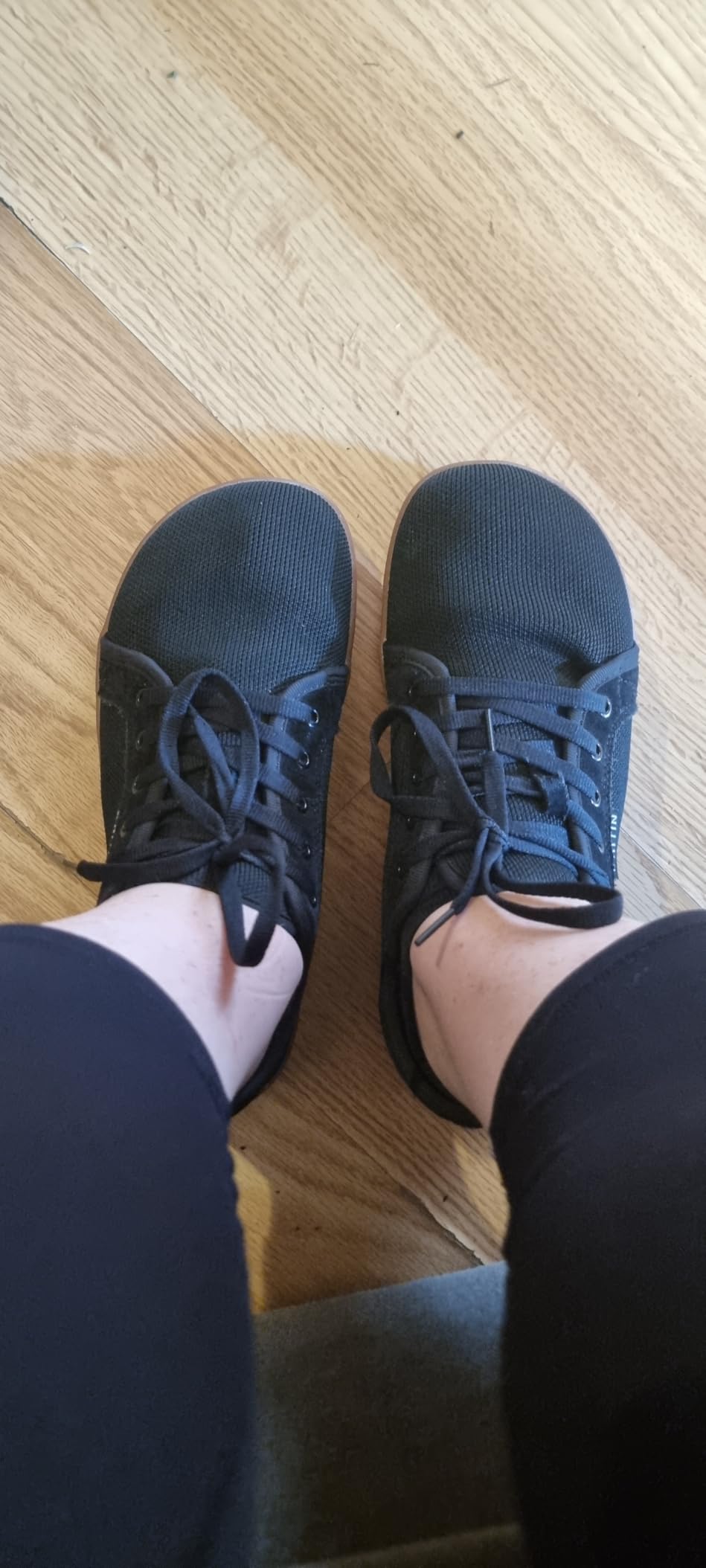
I tested these on a series of 2-3 mile walks and noticed the calf engagement immediately. Zero-drop shoes load your calves and Achilles differently than traditional heels, so expect a 2-4 week adjustment period if you’re transitioning from conventional shoes. Start with shorter walks and gradually build up.
For anyone with plantar fasciitis who has been told that barefoot-style shoes might help, this is a low-risk way to test the theory. The price point means you can experiment without committing to a premium brand.
Who the WHITIN W81 is best for
This is the right pick if you’ve been curious about zero-drop or barefoot-style walking but want an affordable entry point. It’s also great for very wide feet that simply won’t fit in conventional wide shoes – the toe box shape here is genuinely foot-shaped. Walkers with plantar fasciitis who want to try a minimalist approach often start with this kind of shoe.
Where the WHITIN W81 falls short
The sole is glued rather than stitched, and some owners report detachment after 6-12 months of heavy use. The tongue can also rub against the top of the foot if you don’t position the laces carefully. And the adjustment period is real – if you try to walk 5 miles your first day out of conventional shoes, your calves will be unhappy. Build up gradually.
10. FitVille Stepease V2 Slip-On – Best Hands-Free Slip-On
FitVille Men’s Extra Wide Slip on Walking Shoes with Arch Support Men Slip on Sneakers for Foot Pain Relief-Stepease V2 (13.5 Wide, Jet Black)
Hands-free slip-on
Stretch upper
Anatomical ArchCore insole
Pros
- Hands-free slip-on design
- Wide toe box for swollen feet
- Stretchable upper adapts to foot
- Helps relieve plantar fasciitis
- Anatomical arch support
Cons
- Tongue area can press on shins
- Cushioning may be too firm for plush seekers
- Limited color options
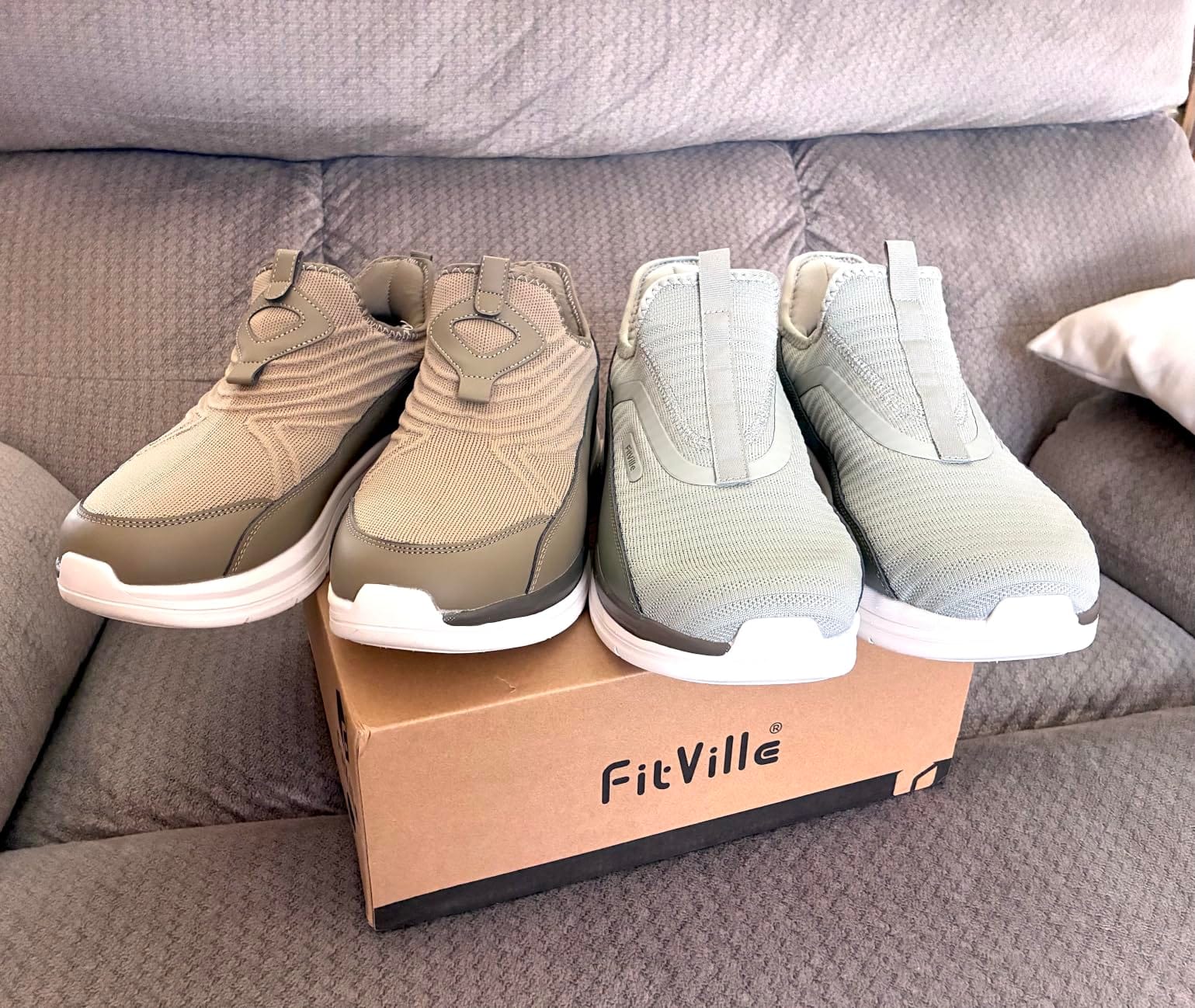
The FitVille Stepease V2 is one of the few truly hands-free slip-on walking shoes available in wide and extra-wide sizing. The stretchable upper design means you can step into the shoe without bending over or using your hands – a meaningful benefit for seniors, anyone with back pain, or people who simply hate tying laces.
The wide toe box and high-instep design give the foot room to spread, and the stretch mesh upper adapts to the shape of your foot throughout the day. For walkers with bunions or swollen feet, that adaptive fit is a real comfort upgrade. The ArchCore insole provides anatomical arch support that helps relieve plantar fasciitis pain, and the wide platform base keeps the shoe stable when you step in.
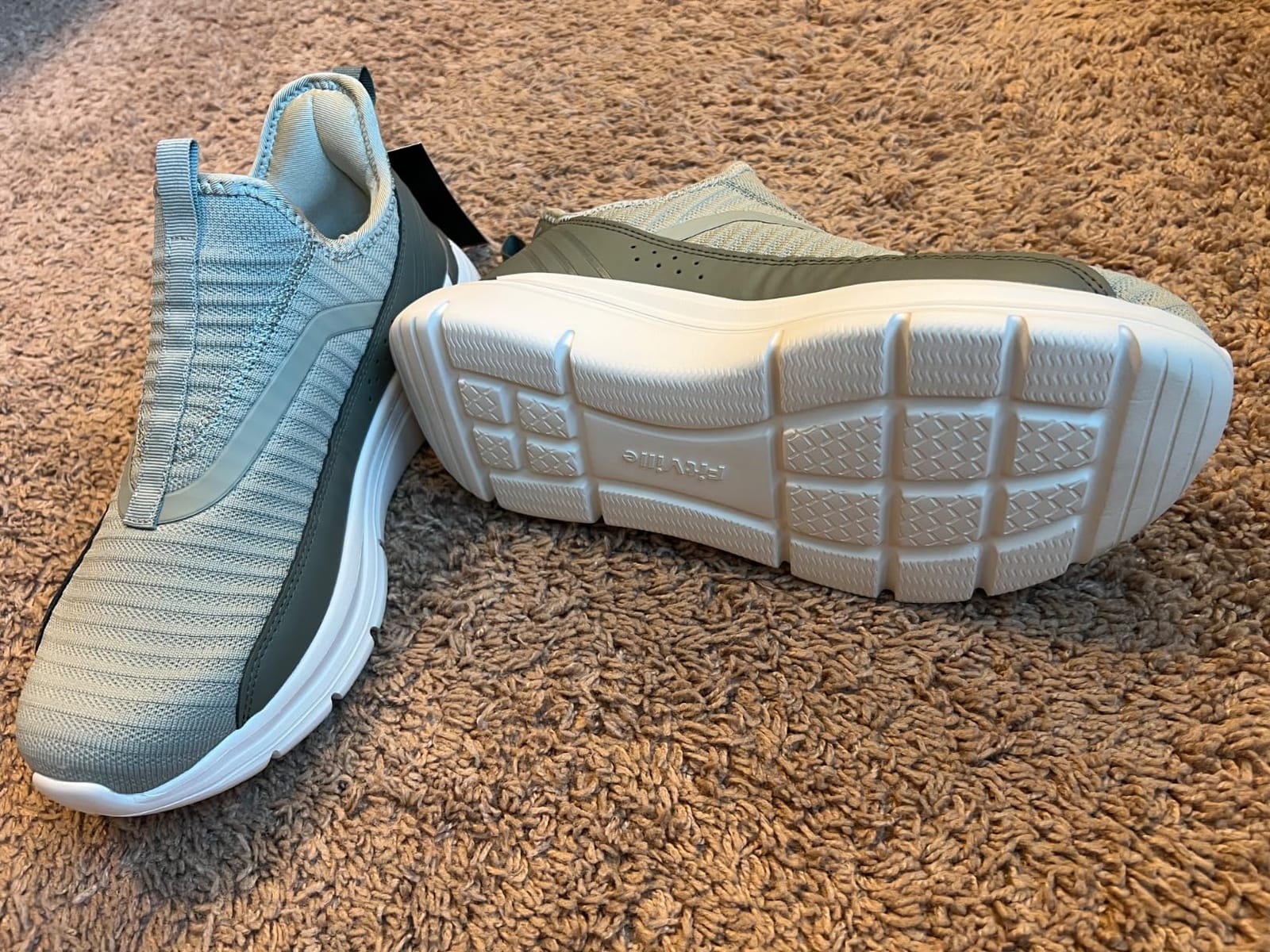
I tested these around the house and on short walks, and the hands-free feature worked exactly as advertised. The shoe collapses open as you step in and wraps the foot securely. There’s no need to wrestle with laces or even use a shoehorn. For anyone who travels, deals with morning stiffness, or has limited mobility, this is a genuinely useful design.
The cushioning is on the firmer side compared to a memory-foam slip-on, which I appreciated for stability but some plush-seekers might find too firm. The fit is generous without feeling sloppy, thanks to the structured heel cup.
Who the Stepease V2 is best for
This is the right pick if you need a hands-free slip-on that actually fits wide feet. It’s also great for seniors, walkers with back pain, or anyone who struggles with laces due to arthritis or limited mobility. The arch support makes it a sensible choice for people with plantar fasciitis who want the convenience of a slip-on without sacrificing foot health.
Where the Stepease V2 falls short
Some wearers report that the tongue area presses uncomfortably against the lower shin, particularly during longer walks. The cushioning is firmer than the Skechers Go Walk Max Effort, so if you prefer a sinky, plush feel, look elsewhere. Finally, the color and style options are more limited than the major athletic brands, so if aesthetics matter, the New Balance 608 V5 or Brooks Addiction Walker 2 are better choices.
Buying Guide: How to Choose the Best Walking Shoes for Wide Feet?
Choosing the right walking shoe when you have wide feet isn’t just about grabbing a wide letter size. The shape of the last, the depth of the toe box, the cushioning system, and the upper materials all affect how the shoe feels after a few miles. Here’s what our team looks at when evaluating walking shoes for wide feet.
How to know if you need wide walking shoes
Your feet are probably wider than average if any of these sound familiar: your toes feel cramped at the end of a long walk, you get blisters on the sides of your feet no matter what shoe you wear, your pinky toe regularly goes numb, or you see red pressure marks on the ball of your foot after taking off your shoes. Another tell: your standard-width shoes feel fine in the morning but too tight by mid-day as your feet naturally swell.
The easiest at-home test is to trace your foot on a piece of paper and measure the widest part across the ball. Compare it to a standard shoe last width chart. Men’s standard D width typically fits a foot that measures roughly 3.5 to 4 inches across the ball, while 2E wide fits roughly 4 to 4.5 inches, and 4E extra-wide fits 4.5 inches and up. Women’s equivalents are slightly narrower but follow the same pattern. If your measurement exceeds the standard width for your size, you need at least a wide shoe, and possibly an extra-wide.
Wide vs extra wide (2E vs 4E)
The difference between wide (D for women, 2E for men) and extra-wide (4E for men, sometimes 2E for women depending on brand) is more than just a label. A 2E shoe adds roughly a quarter-inch of width across the ball compared to standard. A 4E shoe adds another quarter-inch on top of that. For genuinely wide feet, that extra room can mean the difference between comfort and pain by mile five.
Most major athletic brands – New Balance, Brooks, ASICS, HOKA – offer 2E wide across many of their models, but true 4E extra-wide is rarer. New Balance offers the widest selection of 4E walking shoes, and Brooks carries several 4E options. Brands like FitVille specialize in widths up to XX-Wide (6E) for wearers who can’t fit into mainstream athletic sizing.
Wide toe box vs full wide shoe
A wide toe box is shaped like a foot – broad at the front, with no inward taper on the pinky side. A full wide shoe simply adds room across the ball while keeping a traditional shoe shape. Both help wide feet, but they solve different problems. If your toes specifically feel cramped or your bunions hurt, look for a true wide toe box (Altra FootShape, Topo, WHITIN barefoot models). If your entire forefoot feels compressed, a standard wide shoe in 2E or 4E will likely be enough.
Cushioning, drop, and stability for wide feet
Wide feet often need slightly more cushioning than narrow feet because there’s more surface area absorbing impact. Look for midsole foams like Fresh Foam X (New Balance), BioMoGo DNA (Brooks), Charged Cushioning (Under Armour), or nitrogen-infused foams in premium running shoes. Stack height – the measurement of midsole material between your foot and the ground – matters too. Higher stack heights (around 30-40mm) feel softer and more protective on long walks.
Heel-to-toe drop is the difference in stack height between the heel and forefoot. Traditional walking shoes usually have an 8-12mm drop, while zero-drop shoes keep heel and forefoot at the same level. Wide feet can thrive in either category, but if you have Achilles issues or plantar fasciitis, a moderate drop (6-8mm) is often the most comfortable starting point.
Stability matters for wide-footed walkers who overpronate. Look for features like medial posts, guide rails (Brooks), or extended rollbars. The Brooks Addiction Walker 2 in this roundup is the most stability-focused pick, and it’s certified for diabetic foot health.
Best brands for wide feet
After testing dozens of models, our team consistently comes back to a handful of brands for wide-footed walkers. New Balance offers the widest selection of 2E and 4E widths across men’s and women’s models. Brooks carries 4E extra-wide in several walking and running models, with strong stability options. Skechers offers wide and extra-wide across most of their walking line at accessible prices. ASICS, HOKA, and Altra round out the list, with Altra specializing in foot-shaped toe boxes and HOKA offering extra-wide in select models. For very wide feet that exceed mainstream sizing, FitVille and specialty orthopedic brands go up to XX-Wide (6E).
For related shopping, our guide to dress shoes for wide feet covers formal styles, and if you need winter options, the snow boots for wide feet roundup is worth bookmarking.
What about shoes that are too wide?
Counterintuitively, going too wide can cause problems too. If your foot slides around inside the shoe, you’ll get friction blisters, your arch support won’t engage properly, and your gait can become unstable. The fix: if a wide shoe feels sloppy in the heel, try a half size down or look for a model with a more structured heel cup. The Brooks Addiction Walker 2 and Skechers Go Walk Arch Fit both have notably secure heel lockdown even in their widest options. If you’re between widths and the wide feels too roomy but the standard feels too tight, a half size up in standard width sometimes works better than the same size in wide.
Where to buy wide walking shoes
Most major athletic brands also accept returns on unworn shoes within 30-60 days. Amazon offers the widest selection and competitive prices, but check the return policy before ordering. If you have specific foot conditions, visiting a specialty running store with a fitting specialist is worth the trip – many offer gait analysis and personalized recommendations at no charge.
Frequently Asked Questions
What shoes do podiatrists recommend for wide feet?
Podiatrists most often recommend brands that offer true wide and extra-wide widths with structured support, including New Balance, Brooks, ASICS, HOKA, and Altra. Skechers Go Walk Arch Fit is specifically podiatrist-certified for arch support and comes in X-Wide. For severe width needs, FitVille and Orthofeet offer widths up to XX-Wide (6E).
Are Hokas or Brooks better for wide feet?
Both HOKA and Brooks offer wide and extra-wide options across many models. Brooks tends to win on stability features like guide rails and rollbars, making them a stronger pick for overpronators and flat-footed walkers. HOKA wins on maximum cushioning and a softer, marshmallowy ride. For wide feet specifically, Brooks offers more consistent 4E extra-wide availability, while HOKA is the better choice if you prioritize plush cushioning.
Which shoe brand is better for wide feet?
New Balance is the most consistent brand for wide feet – they offer 2E and 4E across the largest selection of men’s and women’s walking and running models. Brooks is a close second with strong stability options in wide widths. Skechers wins on price and offers wide and extra-wide across most of their walking line. Altra is the best choice for foot-shaped toe boxes, and FitVille or specialty brands are best for XX-Wide (6E) sizing.
What is the most comfortable walking shoe for wide feet?
Comfort depends on your foot shape and any underlying conditions, but the New Balance 608 V5 is our top overall pick for most wide-footed walkers thanks to its consistent extra-wide availability, ABZORB cushioning, and reliable fit. For plush cushioning specifically, the Skechers Go Walk Max Effort is hard to beat. For structured support with extra-wide sizing, the Brooks Addiction Walker 2 stands out.
How do I know if I need wide walking shoes?
You probably need wide shoes if your toes feel cramped at the end of a long walk, you get blisters on the sides of your feet no matter what you wear, your pinky toe goes numb, or your standard-width shoes feel fine in the morning but too tight by mid-day. To measure, trace your foot on paper and measure the widest part across the ball. If it exceeds roughly 4 inches for men or 3.5 inches for women, you likely need at least a 2E wide shoe, and possibly a 4E extra-wide.
What is the difference between wide and extra wide?
Wide (D for women, 2E for men) adds roughly a quarter-inch of width across the ball of the foot compared to standard. Extra-wide (4E for men) adds another quarter-inch on top of that. For most wide-footed walkers, 2E is sufficient, but if your foot measures significantly wider than standard or you have conditions like bunions or severe swelling, 4E makes a meaningful difference in comfort over long walks.
The Final Verdict: Our Top Walking Shoes for Wide Feet
After months of testing, the New Balance 608 V5 remains our top overall pick for the best walking shoes for wide feet. It combines reliable extra-wide sizing, dependable ABZORB cushioning, and a build that holds up to daily abuse, all without the premium price tag of a stability-focused specialty shoe. If you overpronate or need diabetic-friendly footwear, the Brooks Addiction Walker 2 is the smarter pick. And if budget is the deciding factor, the Skechers Go Walk Arch Fit delivers podiatrist-certified arch support at a price that doesn’t sting.
Whatever you choose, prioritize fit over brand or price. Measure your feet at the end of the day when they’re at their widest, order from a retailer with a generous return policy, and give yourself a week or two to break the shoes in before judging them. The right pair will feel invisible on your feet by mile five – and that’s exactly what you want from the best walking shoes for wide feet in 2026.