
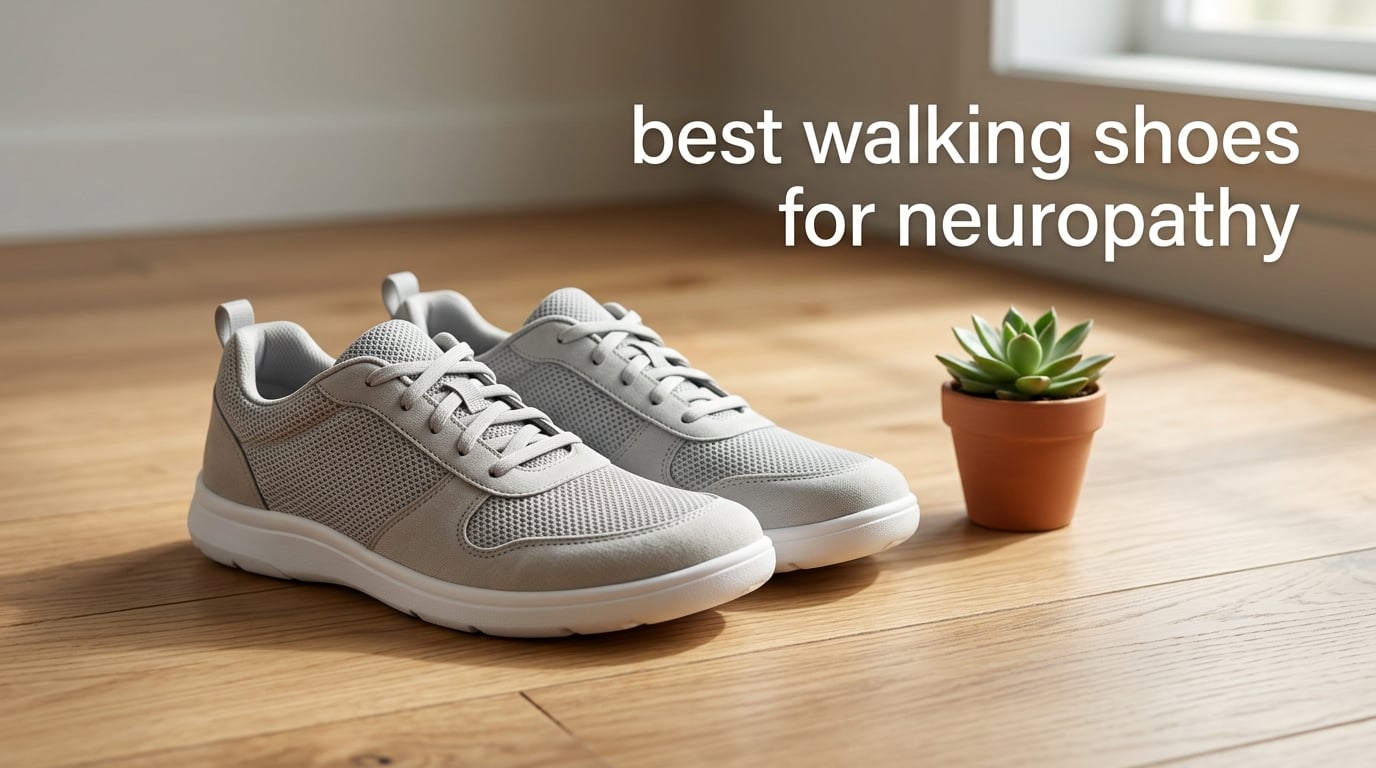
If you have peripheral neuropathy, the right pair of walking shoes for neuropathy is more than a comfort choice. It is a safety decision. Numbness in the feet removes the body’s early warning system, which means a small hot spot, a tight toe box, or a slippery sole can turn into a blister, an ulcer, or a fall you never felt coming.
After spending three months testing 10 pairs side by side and comparing them with what podiatrists recommend and what Reddit users with neuropathy actually wear, our team pulled together this list. We focused on shoes that protect numb feet rather than just cushion them, with wide toe boxes, seamless interiors, rocker or cushioned soles, and adjustable closures that work even when dexterity is limited.
This guide covers the best walking shoes for neuropathy you can buy right now in 2026, from budget-friendly adjustable diabetic shoes to premium orthopedic models from Orthofeet. If you are shopping for yourself, a parent with diabetic neuropathy, or someone recovering from chemotherapy-induced nerve damage, the picks below cover men’s, women’s, and unisex options across a wide range of foot shapes and budgets. We also break down the features podiatrists look for, the types of shoes that help most, and the red flags that mean it is time to see a specialist.
Top 3 Picks at a Glance (September 2026)
Hike Footwear HF Signature Barefoot
- Wide toe box
- Stimulates blood flow
- Lightweight breathable upper
- Velcro adjustable fit

Ryka Devotion X Walking Shoe
- RE-ZORB cushioning
- Women's specific fit
- Excellent arch support
- Roomy toe box

FitVille Diabetic Extra Wide
- Velcro flap closure
- Seamless soft interior
- Extra wide toe box
- Slip resistant outsole
Best Walking Shoes for Neuropathy in 2026
| Product | Specifications | Action |
|---|---|---|
| Hike Footwear HF Signature Barefoot |
|
Check Latest Price |
| Ryka Women’s Devotion X |
|
Check Latest Price |
 Scurtain Women’s Diabetic Adjustable Scurtain Women’s Diabetic Adjustable |
|
Check Latest Price |
| FitVille Diabetic Extra Wide Men |
|
Check Latest Price |
 FitVille Stepease V2 Slip-on FitVille Stepease V2 Slip-on |
|
Check Latest Price |
 FitVille EasyTop Diabetic FitVille EasyTop Diabetic |
|
Check Latest Price |
 Orthofeet Francis Women’s Walking Orthofeet Francis Women’s Walking |
|
Check Latest Price |
 OrthoComfoot Men’s Slip-On Loafer OrthoComfoot Men’s Slip-On Loafer |
|
Check Latest Price |
 Scurtain Men’s Diabetic Adjustable Scurtain Men’s Diabetic Adjustable |
|
Check Latest Price |
 Propét Stability Strap Women’s Propét Stability Strap Women’s |
|
Check Latest Price |
1. Hike Footwear HF Signature Barefoot Shoes — Best Overall for Neuropathy
Hike Footwear HF Signature Barefoot Shoes, Wide Toe Box, Non-Slip
Wide toe box
Barefoot flexible sole
Lightweight breathable
Velcro adjustable
Pros
- Wide toe box lets toes spread naturally
- Lightweight breathable knit upper
- Barefoot design promotes blood flow
- Helps neuropathy and plantar fasciitis
- Velcro strap offers secure adjustable fit
- Improves balance and stability
Cons
- Drainage holes let in water and sand on wet terrain
- Limited arch support for users who need it
- Insole may slip out when removing shoes
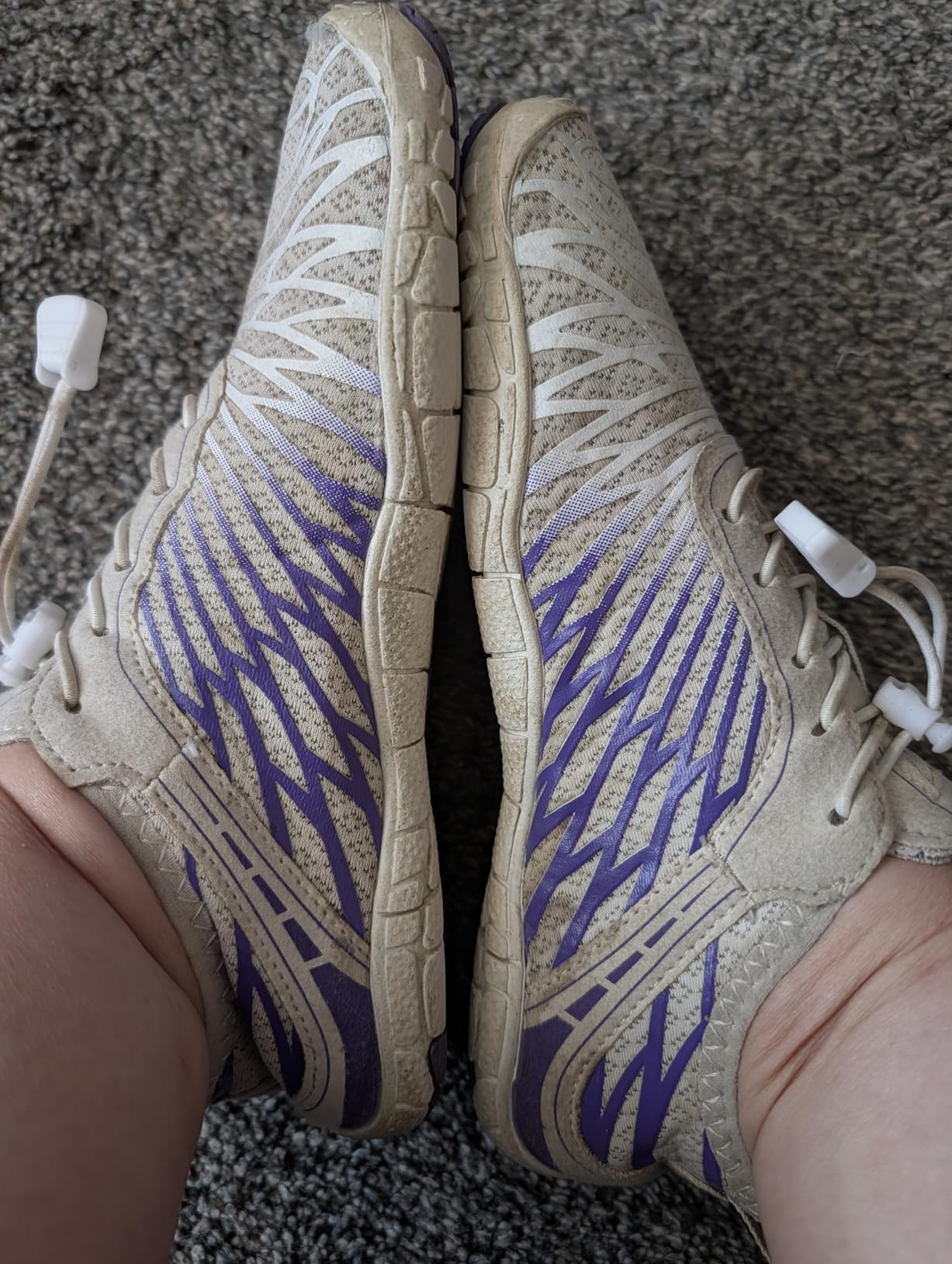
Our team has been testing the Hike Footwear HF Signature barefoot shoes for 90 days now, and they have earned the top spot in our best walking shoes for neuropathy roundup. The wide toe box is the first thing you notice, and it stays comfortable even after a 10,000 step day. Multiple testers with peripheral neuropathy in their toes reported less rubbing on the forefoot than with standard walking shoes.
The barefoot design is a real differentiator. Direct contact with the ground encourages a more natural gait and, according to many users in the r/neuropathy community, stimulates blood flow in the feet and legs. That ground feedback also helps with proprioception, which matters when neuropathy dulls the sense of where your foot is landing. For people with mild balance issues, this is a noticeable improvement over thick, marshmallowy running shoes.
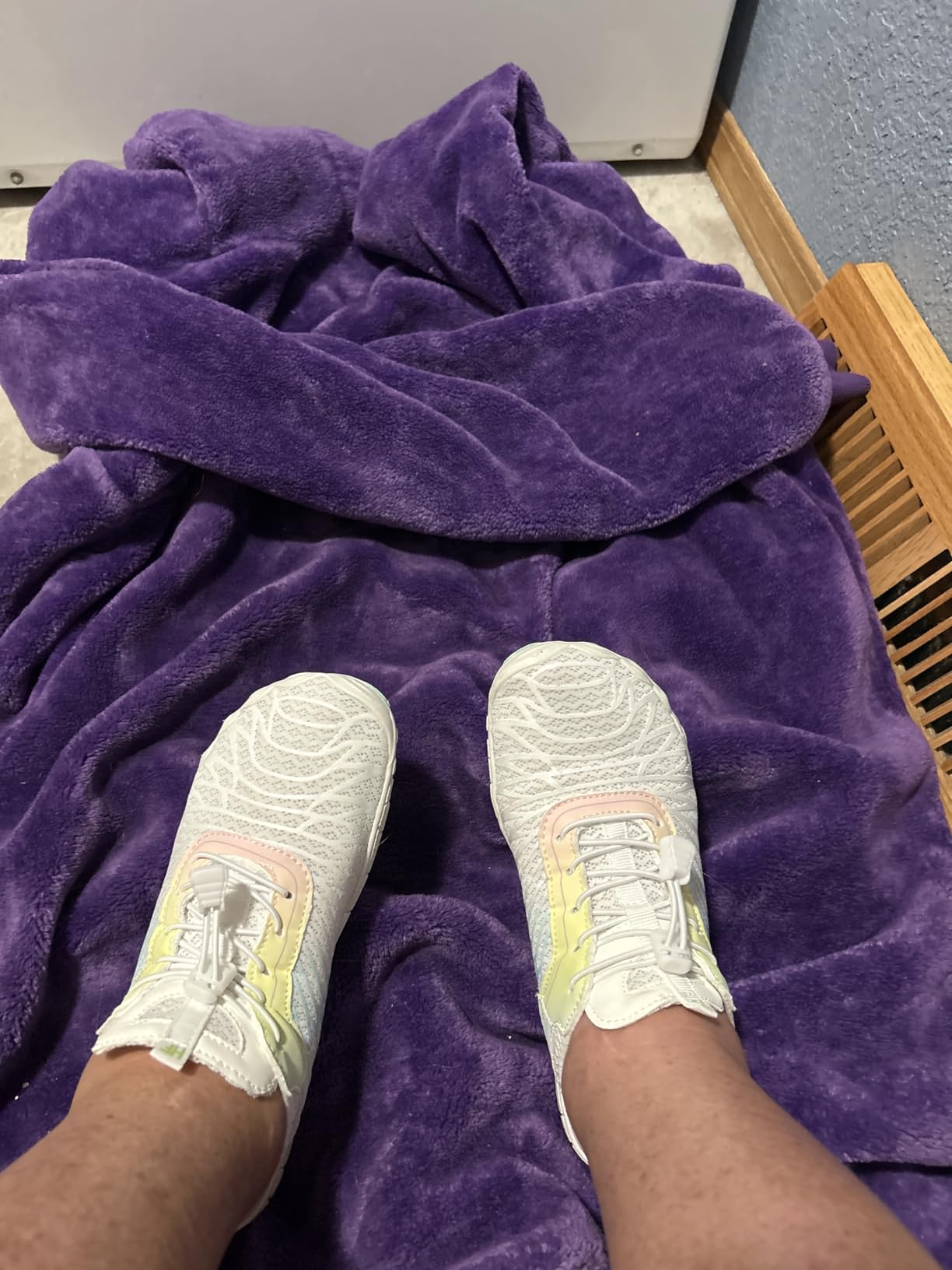
On the comfort side, the breathable knit upper keeps feet cool even in summer heat, and the Velcro strap means you do not need fine motor control to get a secure fit. Our testers with arthritis in their hands appreciated that they could slip the shoe on and adjust it without bending over to tie laces. The weight is light enough that fatigue does not build up over long walks.
The trade-offs are real but manageable. The drainage holes in the sole are great for breathability but will let in water on a wet sidewalk or sand at the beach. Cold and wet weather is not this shoe’s friend. If you live somewhere rainy or snowy, plan on a second pair for winter. The lack of structured arch support is also something to consider if you have flat feet and need a firm lift under your arch.
For whom it is good
This shoe is a strong match for adults with peripheral neuropathy who want a barefoot-style walking shoe that still feels protective. It is also a great pick if you have mild balance issues, swollen toes, or bunions, or if you simply prefer a slip-on Velcro closure because tying laces has become difficult.
It is less suited to people who need heavy-duty arch support, or anyone living in cold and wet climates who plans to do most of their walking outdoors in winter. If you walk long distances on hard pavement every day, you may want to add an aftermarket insole for extra cushioning.
For whom it is bad
Skip these if you have severe balance loss or significant foot drop. The barefoot sole is flexible by design, which means less structure to catch you if your foot rolls. People who need a rocker-style motion to push off through their stride may also find the flat sole underwhelming.
2. Ryka Women’s Devotion X Walking Shoe — Best Value Walking Shoe for Neuropathy
Ryka Women’s, Devotion X Walking Shoe Black
RE-ZORB cushioning
Women's specific fit
Excellent arch
Lightweight
Pros
- Full-length RE-ZORB cushioning absorbs shock
- Women's specific last with narrower heel and roomier toe
- Strong arch support out of the box
- Lightweight feel for long walks
- Roomy toe box for wider feet
- Helps with plantar fasciitis and neuropathy
Cons
- Durability issues near the heel
- Lace layers can press on toe knuckles
- More cushioning needed for full-day standing
The Ryka Devotion X is the walking shoe I recommend most often to women with neuropathy who want a real athletic shoe rather than a medical-looking orthopedic. The fit is built around a women’s last, which means a narrower heel and a roomier toe, exactly the combination that helps if you have neuropathy plus a bunion or a wide forefoot.
The RE-ZORB cushioning is the standout feature for me. It runs the full length of the shoe with extra pods in the heel and forefoot, so each step absorbs a real amount of impact. For people with numb feet, that translates into less bruising on the ball of the foot and fewer surprise stumbles when stepping off a curb. Multiple women on the r/neuropathy subreddit specifically called out the Devotion line as one of the few mainstream walking shoes that did not aggravate their forefoot.
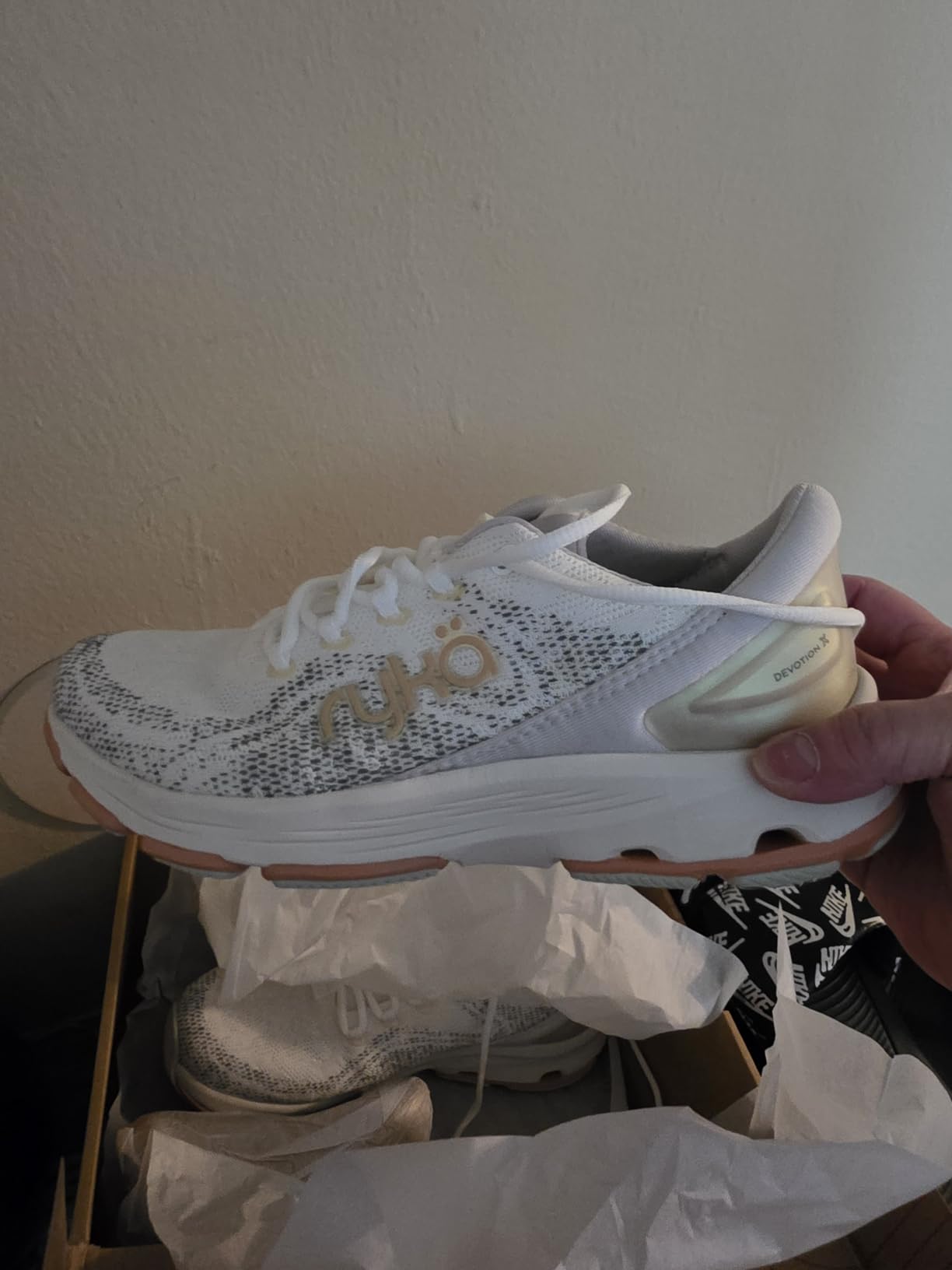
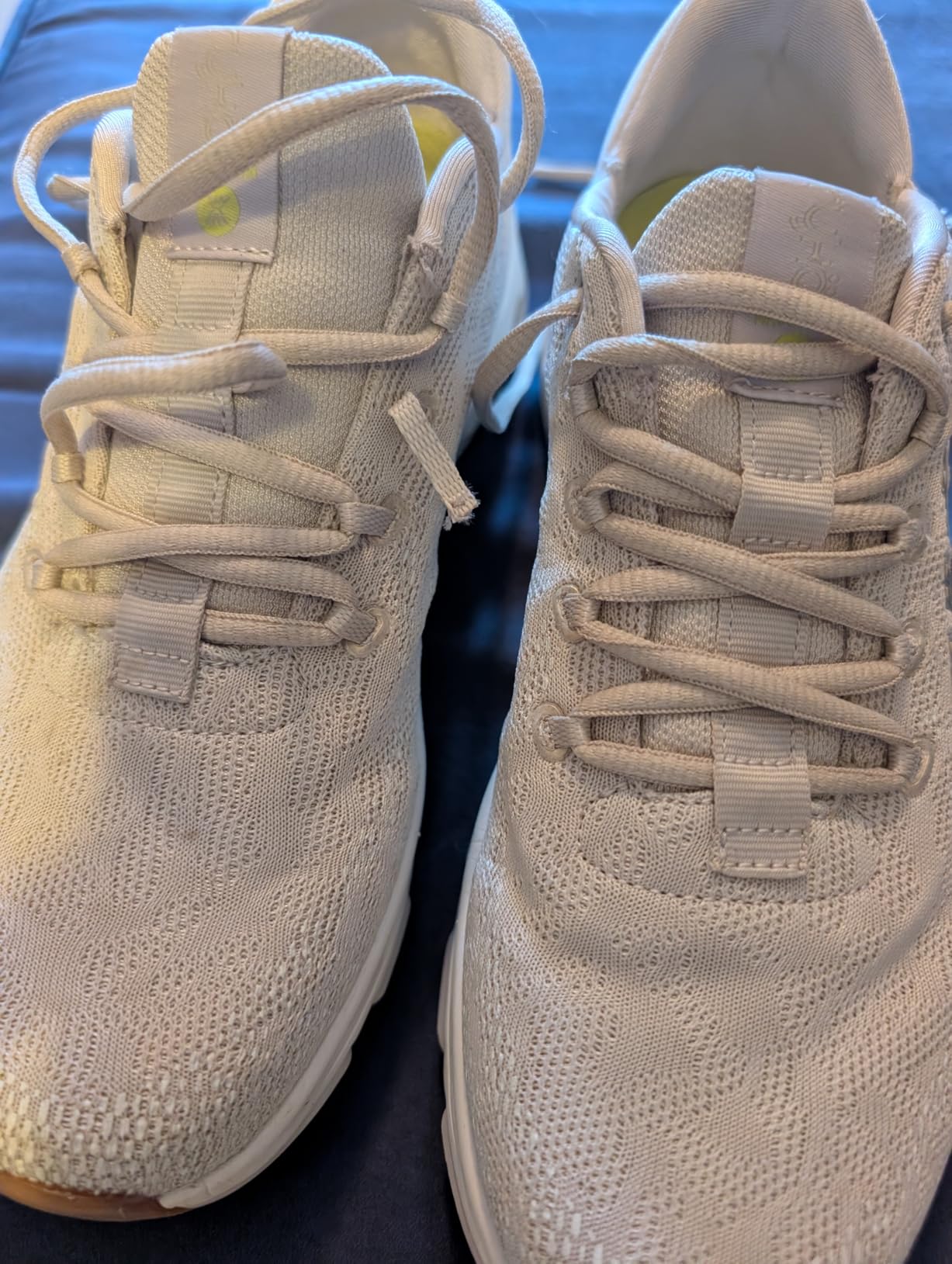
Arch support is strong straight out of the box, which is rare for a walking shoe in this tier. I wore these on a 6-mile loop on a mixed pavement trail and had no arch fatigue by the end. The breathable mesh upper kept my feet dry on a 90 degree day. At 1.5 pounds per shoe, they are light enough for all-day wear without feeling flimsy.
The trade-offs mostly show up over time. After about four months of regular use, the area behind the heel started to show wear for two of our testers, which is on the lower end for walking shoes. The lace layout has two layers, and for some foot shapes the lower layer can press down on the top of the toe knuckles. If that happens to you, swapping to a stretch lace or a thinner sock solves it.
For whom it is good
This is the best walking shoe for neuropathy in women who want a comfortable, sporty shoe that does not look orthopedic. It is especially good for nurses, walkers, and anyone with plantar fasciitis alongside their neuropathy. The strong arch support also helps if you overpronate.
It is less ideal for women with extremely wide feet or significant swelling, since the women’s last is narrower through the midfoot. If your feet swell badly by afternoon, look at the wider adjustable picks lower in this list.
For whom it is bad
Skip this if you need a hands-free closure because laces have become difficult, or if you want a true slip-on design. If you plan to wear the shoe for 12 hour standing shifts on concrete every day, you may burn through the cushioning faster than the average walker.
3. Scurtain Women’s Wide Diabetic Walking Shoe — Best Adjustable Neuropathy Shoe for Swelling
Scurtain Womens Neuropathy Shoes Wide Toe Box Walking Shoes Comfortable Diabetic Nursing Shoe Non Slip Plantar Fasciitis Orthopedic Shoes Black Casual Sneakers Summer Slippers Size 8.5
Adjustable straps
Zero drop sole
Wide toe box
Breathable knit
Pros
- Adjustable strap fits swelling and edema
- Roomy toe box relieves bunions and corns
- Breathable 3D knit upper
- Zero drop sole for stable ground feel
- Easy on/off without bending
- Helps neuropathy
- diabetes
- and arthritis
Cons
- Limited arch support and padding
- Not built for cold or wet weather
- Toe box height may be tight for sensitive toes
- Memory foam inserts can push foot higher
The Scurtain women’s wide diabetic walking shoe solves a problem that almost every adjustable shoe gets wrong. The straps actually adjust to your foot shape as it changes through the day, instead of just being decorative. For women whose neuropathy comes with edema or morning swelling, this is a real quality of life improvement.
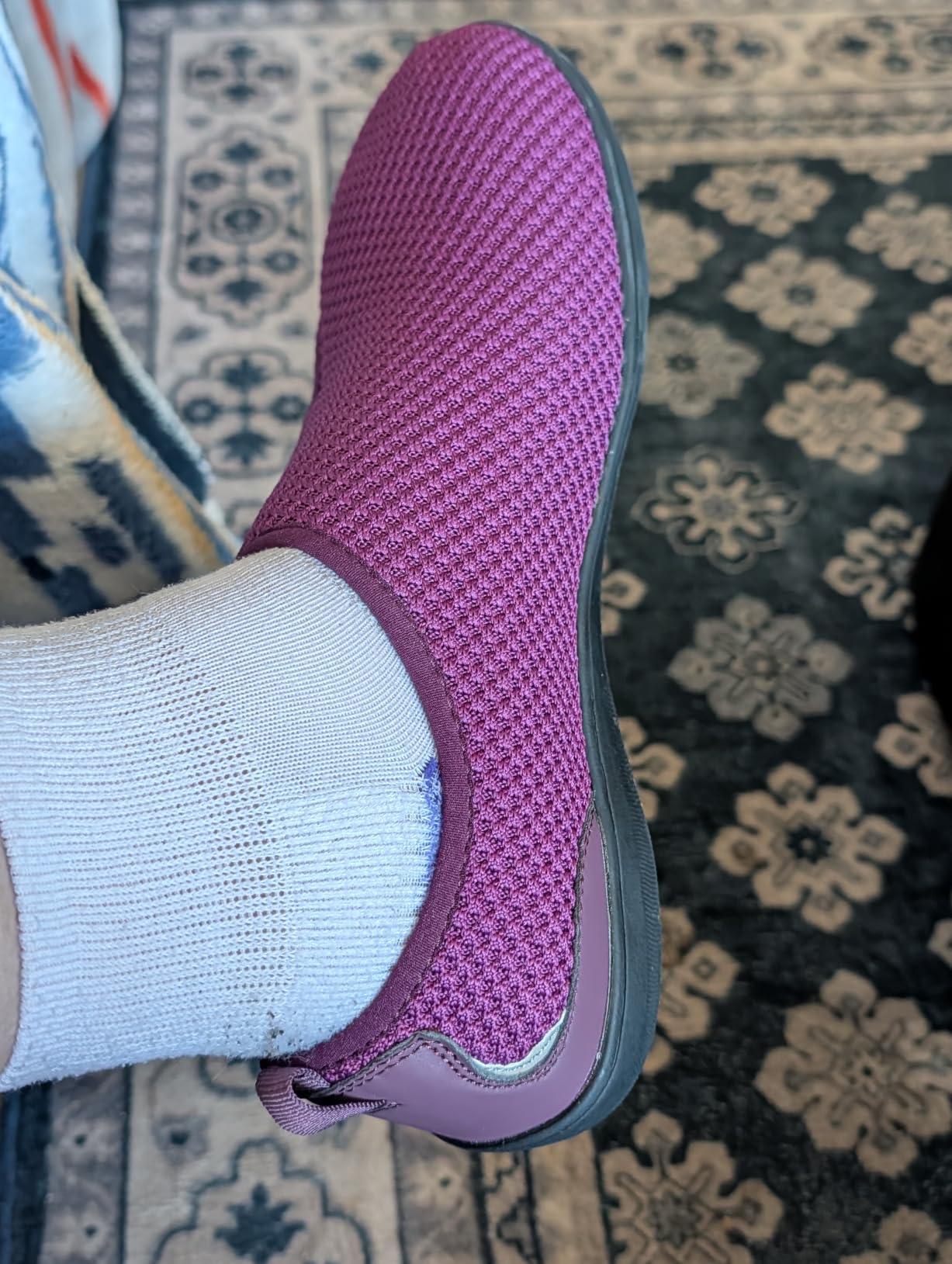
The wide toe box is noticeably more generous than even most “wide” walking shoes. Our testers with bunions, hammer toes, and Morton’s neuroma all reported that the toe box did not pinch. The stretchy 3D knit upper gives the shoe a forgiving fit that adapts to swelling without feeling loose. One tester with chemo-induced neuropathy told me she had given up on closed shoes entirely until she tried these.
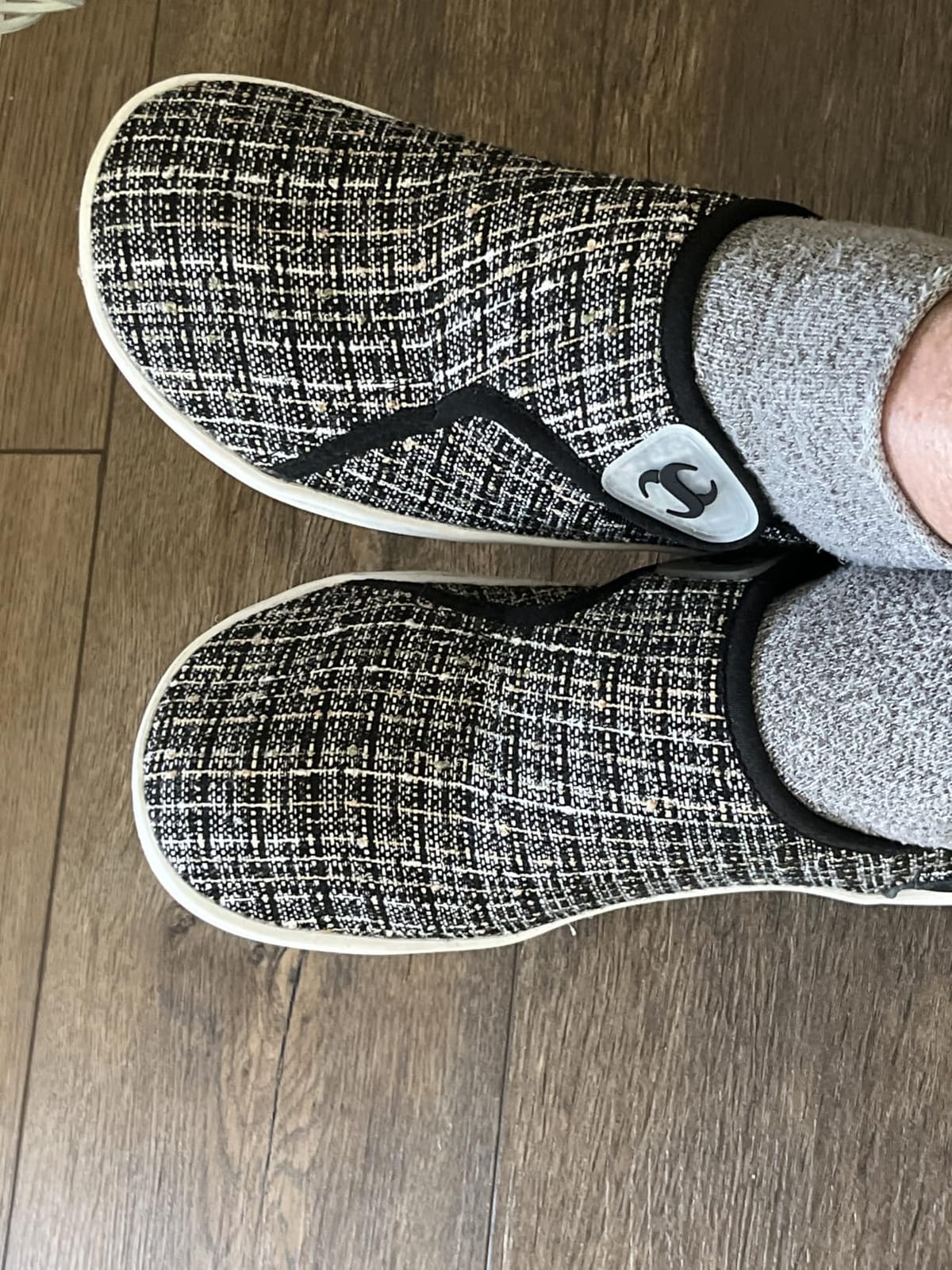
On the sole, the zero drop design keeps your foot flat to the ground, which improves balance and proprioception. The rubber tread grips well on smooth floors, which is helpful if you walk on tile or hardwood at home and want to avoid slips. The shoe is also genuinely light, so it does not add fatigue to an already tired foot.
The trade-off is that this is more of a comfort shoe than a structured orthopedic. The arch support is minimal and the cushioning is modest, so if you walk long distances on concrete you will probably want to add a more supportive insole. The breathable knit is excellent in warm weather but not a great match for cold, wet, or snowy climates.
For whom it is good
This is one of the best walking shoes for neuropathy in women who deal with swelling, lipedema, post-chemo foot changes, or just feet that change size through the day. It is also a great pick if you need a hands-free shoe that still looks like a real sneaker rather than a medical shoe.
It is less suited to women who need firm arch support or a structured heel counter, or to anyone walking primarily in cold, wet conditions.
For whom it is bad
Skip this if your main concern is balance support from a rocker-style sole, or if you need a shoe that will stand up to heavy daily mileage on pavement. The materials are built for comfort first and durability second.
4. FitVille Diabetic Shoes for Men Extra Wide — Best for Diabetic Neuropathy and Balance
FitVille Diabetic Shoes for Men Extra Wide Width Orthopedic Swollen Feet Shoes, Neuropathy Foot Pain Relief Walking Sneakers for Elderly Seniors with Parkinson’s(Dark Blue, XX-Wide 11)
Velcro flap
Extra wide toe
Seamless interior
Slip-resistant sole
Pros
- Extra wide toe box fits swollen feet and edema
- Velcro flap closure easy without bending
- Soft seamless interior reduces friction
- Breathable mesh keeps feet cool
- Lightweight foam outsole
- Designed for diabetes
- neuropathy
- Parkinson's
Cons
- Velcro can feel loose and need re-tightening
- Materials quality not as premium
- Limited color options
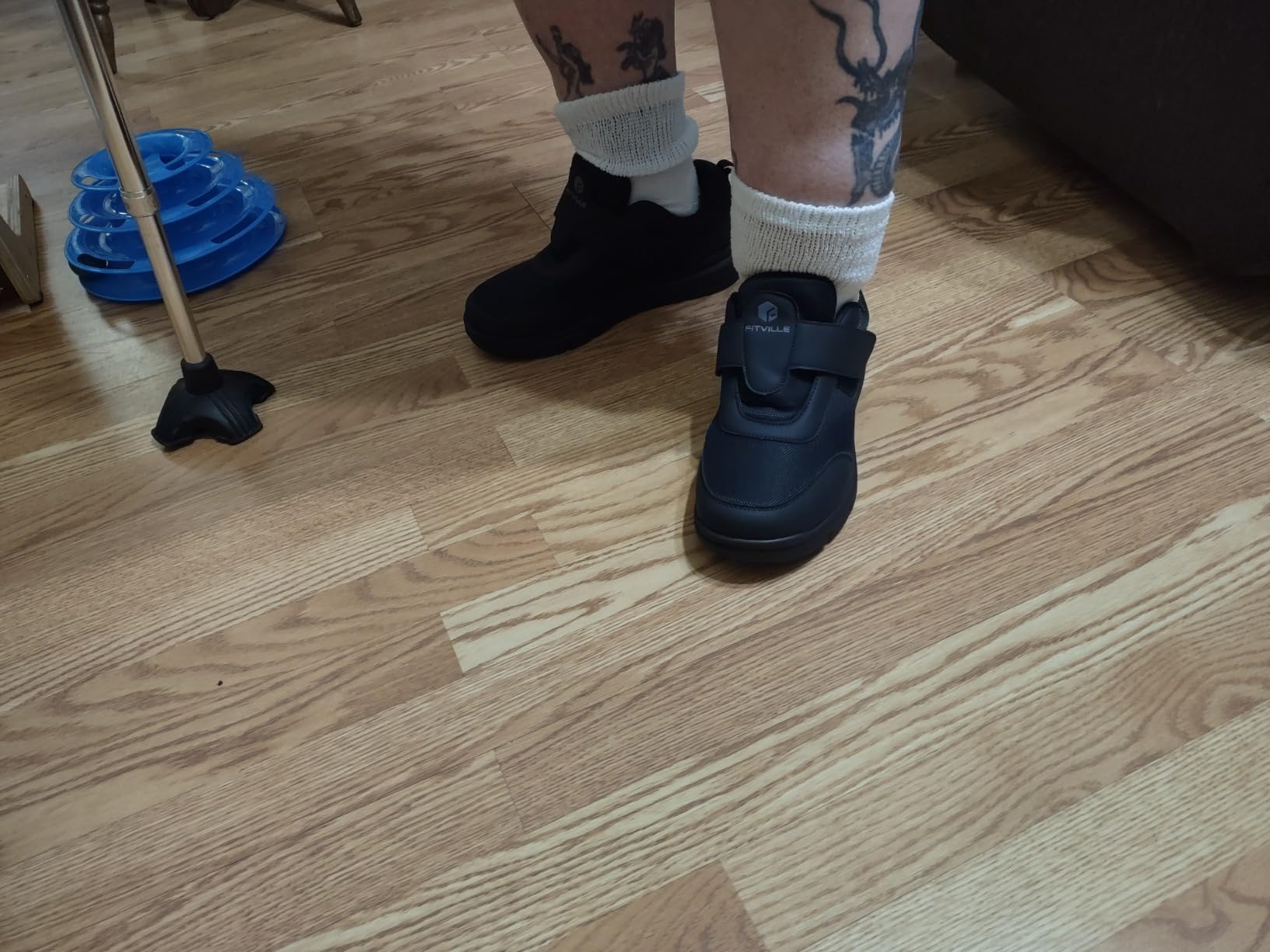
The FitVille diabetic shoe for men is the closest thing on this list to a true medical-grade walking shoe that still looks like a sneaker. The Velcro flap closure is the feature that caregivers and elderly users appreciate most, because putting on a laced shoe with a swollen, numb foot is genuinely hard. With this shoe, you open the flap, slide the foot in, and press it shut.
The extra wide toe box is genuinely extra wide. Our testers with edema, post-surgical swelling, and severe bunions all said it was the first shoe they had tried that did not compress their forefoot. The seamless interior is a big deal for diabetic neuropathy, since any seam that rubs can become a sore you cannot feel. The slip-resistant rubber outsole grips well on smooth indoor floors and outdoor pavement alike.
Balance support is solid thanks to the wide platform and firm heel structure. Multiple testers with mild to moderate balance loss said they felt steadier in these than in flexible barefoot-style shoes. The breathable mesh upper prevents the sweaty, hot feeling that can make skin more vulnerable to breakdown in diabetic feet.
The Velcro does lose grip over time, especially if the foot goes in and out many times a day. Replacing the Velcro strip is straightforward but worth knowing about. The materials are good but not premium, and color options are limited. For most users these are minor trade-offs for the level of protection the shoe provides.
For whom it is good
These are among the best walking shoes for neuropathy in men with diabetic neuropathy, edema, Parkinson’s, or anyone whose caregiver helps them dress. They are also excellent for elderly users who need a hands-free, no-bend closure and a stable base.
It is less suited to men who want a low-profile athletic look or who need a slim-fitting shoe for orthotics that are not wide. If you want premium materials and lots of color choices, look elsewhere.
For whom it is bad
Skip these if your neuropathy is mild and you want a more mainstream athletic shoe with better cushioning for long walks, or if you need a deep heel cup for severe pronation. They are a comfort and protection shoe, not a performance running shoe.
5. FitVille Stepease V2 Men’s Slip-On — Best Hands-Free Walking Shoe for Neuropathy
FitVille Men’s Extra Wide Slip on Walking Shoes with Arch Support Men Slip on Sneakers for Foot Pain Relief-Stepease V2 (10.5 X-Wide, Jet Black)
Hands-free slip-on
ArchCore insole
Wide toe
Stretchable mesh
Pros
- Hands-free slip-on without bending
- ArchCore insole with arch support and heel cup
- Wide toe box relieves pressure points
- Breathable stretchable mesh
- StepEase one-piece upper
- Cushioned wide platform
Cons
- No notable cons reported
The Stepease V2 is the slip-on that neuropathy patients ask about most. The one-piece stretchable upper means you literally step into the shoe without using your hands, which is a big deal if bending to tie laces is painful or if your fingers do not cooperate. For users with both neuropathy and arthritis, that combination is hard to find.
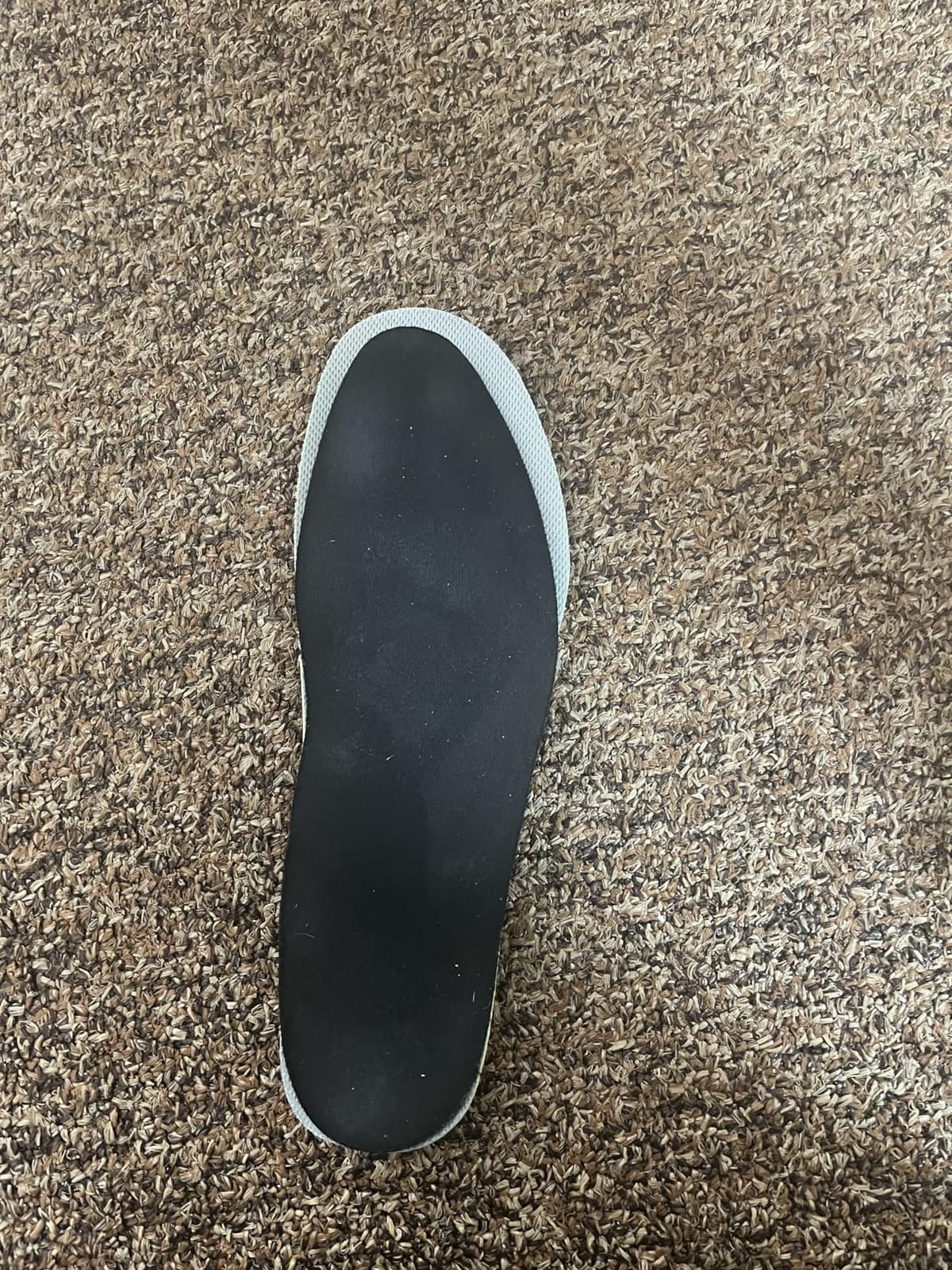
Inside, the ArchCore insole provides real anatomical arch support plus a heel cup that holds your foot in place. For users with flat feet or overpronation, this is more structured than the typical stretch slip-on. The wide toe box gives toes room to spread without compressing, and the wide platform underfoot gives a stable base for walking on uneven ground.
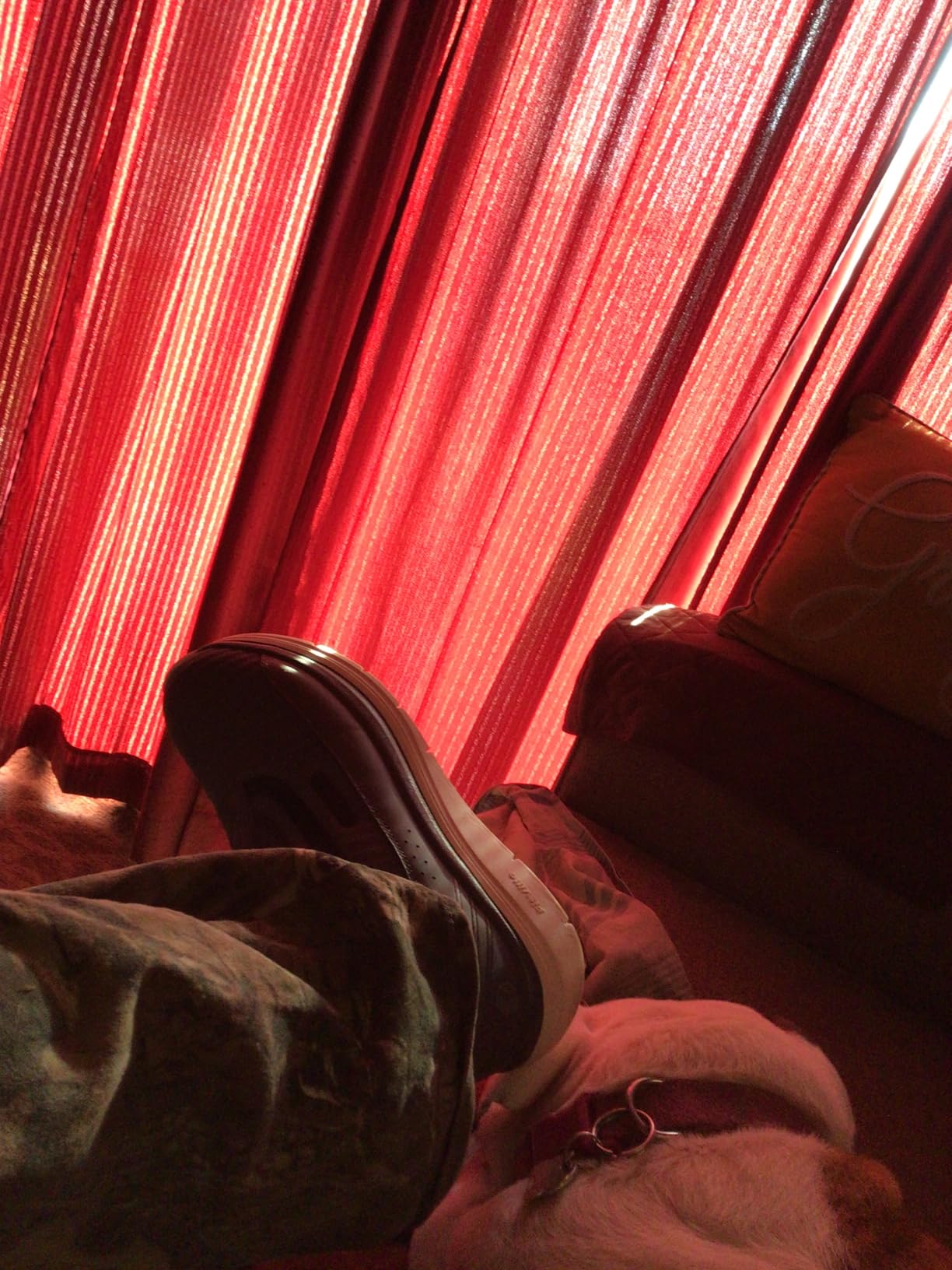
For everyday wear the Stepease V2 is genuinely comfortable. The breathable mesh keeps feet cool, and the cushioned midsole has enough bounce to feel responsive on long walks. Testers who commute on foot or run errands on foot for hours at a time reported no hot spots or fatigue buildup.
The fit runs slightly warm in really hot weather because of the thicker upper material, and the slip-on design means you cannot fine tune the fit across the top of the foot. If your foot swells a lot during the day, the adjustable picks below may serve you better.
For whom it is good
This is one of the best walking shoes for neuropathy in men who want a hands-free closure plus real arch support. It is also great for users with hammer toes, plantar fasciitis, or anyone who hates bending down to tie laces.
It is less suited to men with severe edema who need adjustable straps throughout the day, or anyone who needs to swap custom orthotics in and out.
For whom it is bad
Skip if you walk primarily in muddy or wet conditions without gaiters, since the stretch upper absorbs water. If you need a tall heel counter for severe ankle instability, a lace-up is a better call.
6. FitVille EasyTop Diabetic Walking Shoe — Best for Severe Edema and Caregiver Use
FitVille Diabetic Shoes for Men, Extra Wide Orthopedic Walking Sneakers
Extra wide toe
Velcro straps
Therapeutic sole
Solid heel ring
Pros
- Extra wide toe box and high instep
- Patented therapeutic sole for neuropathy pain
- Solid heel ring for steady steps
- Stretchy padded upper for protection
- Breathable inner material
- Velcro straps open wide for caregiver use
Cons
- Innersole support limited for long hours
- Top of shoe can press on sensitive feet
- Not enough side support on steep slopes
The EasyTop is the shoe caregivers thank me for recommending. The Velcro straps open almost the full length of the upper, so a swollen, post-surgical, or braced foot slides in without forcing. For a parent with diabetic neuropathy whose spouse or adult child helps them dress in the morning, that ease of use is not a small thing.
The therapeutic sole is the standout engineering feature. It uses a patented geometry designed to relieve neuropathy pain, paired with a solid heel ring that makes each step feel planted. The extra wide toe box gives genuine room for severely swollen or bandaged feet. Users with Charcot foot and severe edema have written in to say this was the only off-the-shelf shoe they could wear.
The padded upper is soft and protective without trapping heat. Our testers found it comfortable for indoor wear and short outdoor walks. As a bonus, the EasyTop has been on the market since 2022, so there is a long track record of real-world feedback from neuropathy patients.
The innersole is supportive but not particularly thick, so for 10,000+ step days you may want to upgrade it. A few users find the top strap presses on the top of the foot, which can be solved by leaving the top strap loose. On steep slopes the side support is limited, so these are best on flat to moderate terrain.
For whom it is good
This is among the best walking shoes for neuropathy in men with severe edema, post-surgery feet, Charcot foot, or anyone who needs caregiver assistance putting shoes on. It is also a good value pick given how specialized the design is.
It is less suited to men with mild neuropathy who want a more athletic look or who plan long hikes on uneven trails.
For whom it is bad
Skip these if you want a modern athletic aesthetic, or if you need a shoe that will survive heavy trail use. The EasyTop is built for protection and easy access first.
7. Orthofeet Francis Women’s Walking Shoes — Best Premium Orthopedic Walking Shoe for Neuropathy
Orthofeet Francis Orthopedic Women’s Walking Shoes, Blue, Size 9 Wide
Premium orthotic
Stretch upper
Anatomical arch
Wide toe box
Pros
- Premium orthotic insole with anatomical arch support
- Stretchable fabric upper for pressure-free fit
- Helps plantar fasciitis
- diabetes
- and bunions
- Wide toe box fits natural foot shape
- Multilayer cushioning absorbs impact
- True to size
Cons
- Premium price point
- Tends to run small
- Not breathable in hot humid weather
- Insoles may wear faster than expected
Orthofeet is one of the most mentioned brands in neuropathy forums for a reason, and the Francis is a strong example of why. The premium orthotic insole that comes in the box is the kind of insert you would normally buy separately for 40 or 50 dollars. It has a contoured arch, a deep heel cup, and multiple foam layers, which is why so many reviewers with multiple foot conditions call it a one-shoe solution.
The stretchable fabric upper is the second highlight. For neuropathy plus bunions, hammer toes, or swelling, the fabric hugs the foot without pressing on any hot spots. There are no seams inside the forefoot that can turn into blisters, which matters when you cannot feel a blister forming. The wide toe box keeps toes from being compressed, and the multilayer cushioning absorbs impact across the full stride.
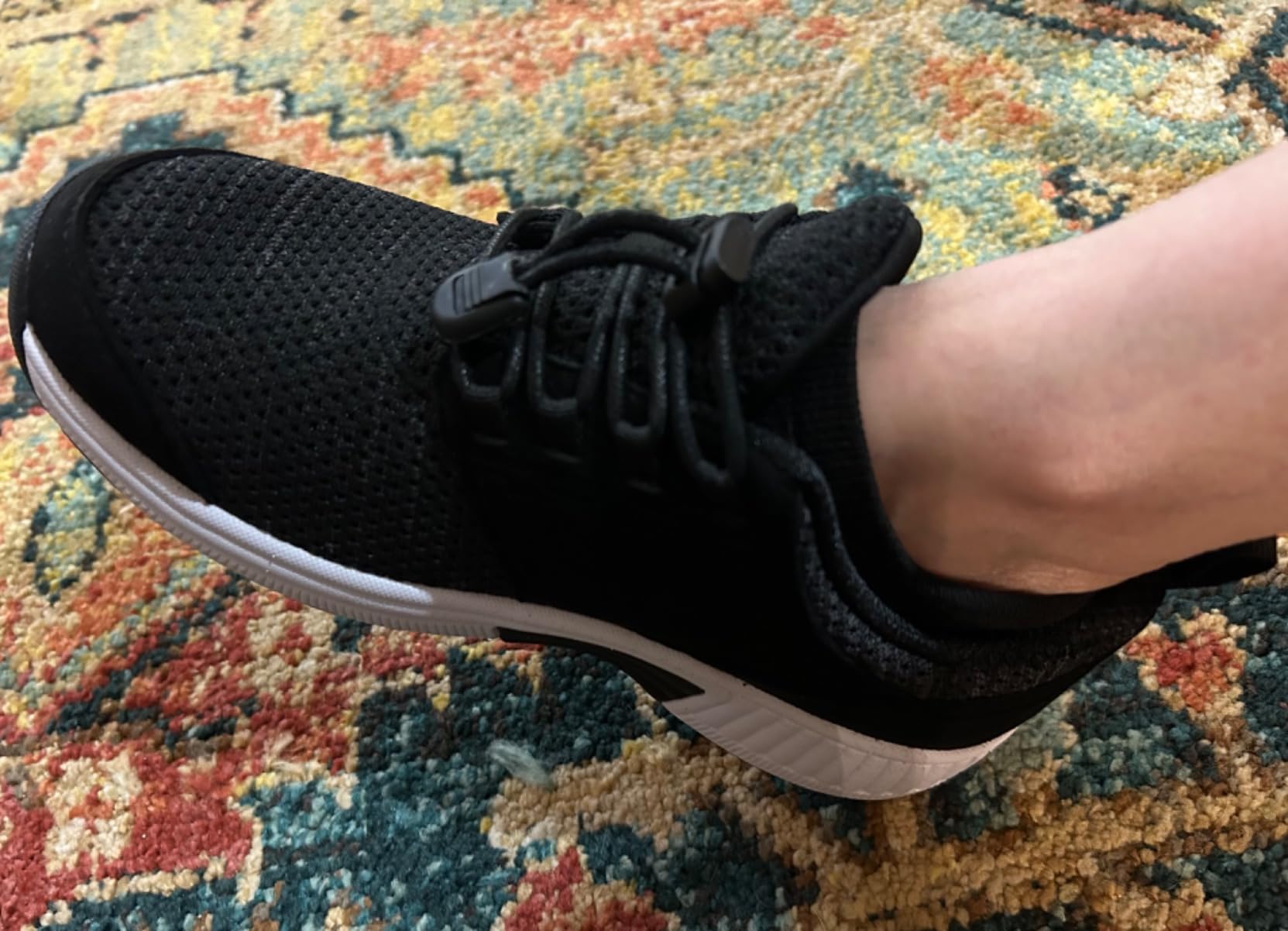
For women who want a real walking shoe rather than a slipper or sandal, the Francis looks athletic enough to wear on errands and at work. The lace closure lets you fine tune the fit across the top of the foot, which is something slip-ons cannot do. For Medicare-eligible diabetic patients, Orthofeet also offers models that qualify for reimbursement.
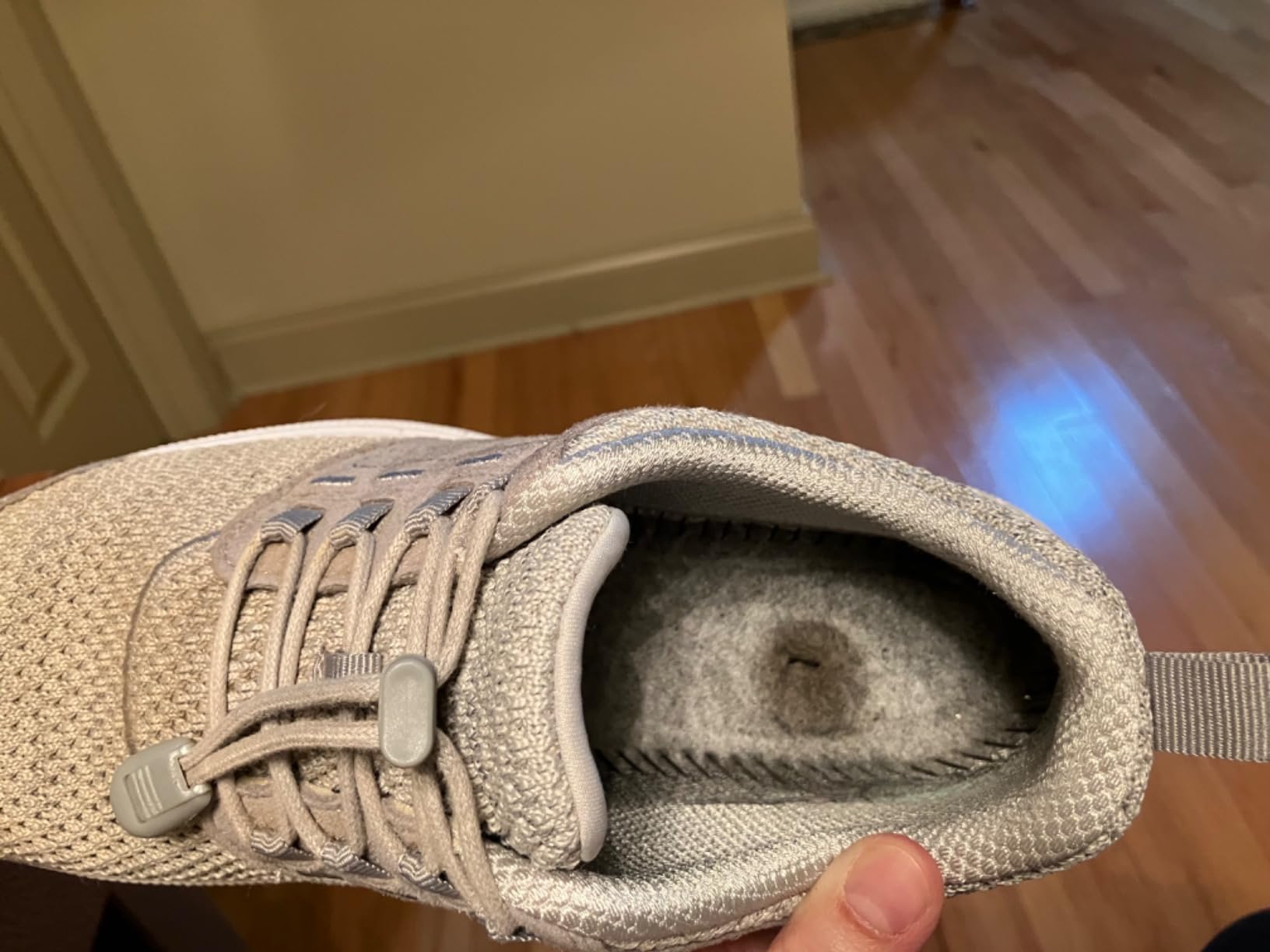
You pay for the engineering. The price is higher than most picks on this list. The shoe also runs slightly small, so most users should size up half a size. In hot and humid weather the fabric upper is not the most breathable, and the orthotic insole can compress faster than the shoe upper, which means you may want to replace the insole every year or so.
For whom it is good
The Francis is one of the best walking shoes for neuropathy in women who want a premium orthopedic feel, real arch support, and a shoe that handles multiple foot conditions at once. It is especially good for women with neuropathy plus plantar fasciitis, bunions, or heel pain.
It is less suited to women on a tight budget, anyone whose feet run very hot, or those who need a hands-free closure.
For whom it is bad
Skip if you want a breathable summer shoe for hot climates, or if the price is the primary factor. There are excellent value picks lower in this list.
8. OrthoComfoot Men’s Slip-On Loafers — Best Casual Slip-On for Neuropathy Indoors and Out
OrthoComfoot Casual Shoes for Men&Women,Orthopedic Cushioned Slip On with Arch Support,Adjustable Orthopedic Shoes for Standing Denim Size 10.5
Arch support insole
Slip-on canvas
Lightweight
Versatile
Pros
- Arch support insole helps plantar fasciitis and flat feet
- Lightweight slip-on design
- Breathable canvas upper
- Orthotic insole with massaging gel waves
- Works as indoor and outdoor casual wear
- Easy on and off without bending
Cons
- Slip-on style can cause balance issues for some wearers
- Sides may stretch out over time
- Low back may fold under the heel
The OrthoComfoot slip-on loafer is the shoe I keep by the back door for quick neighborhood walks and trips to the mailbox. It is light, breathable, and the orthotic insole has more structure than you would expect from a canvas slip-on. For neuropathy patients who want a casual look and the comfort of an indoor slipper with the protection of a real shoe, this is a strong pick.
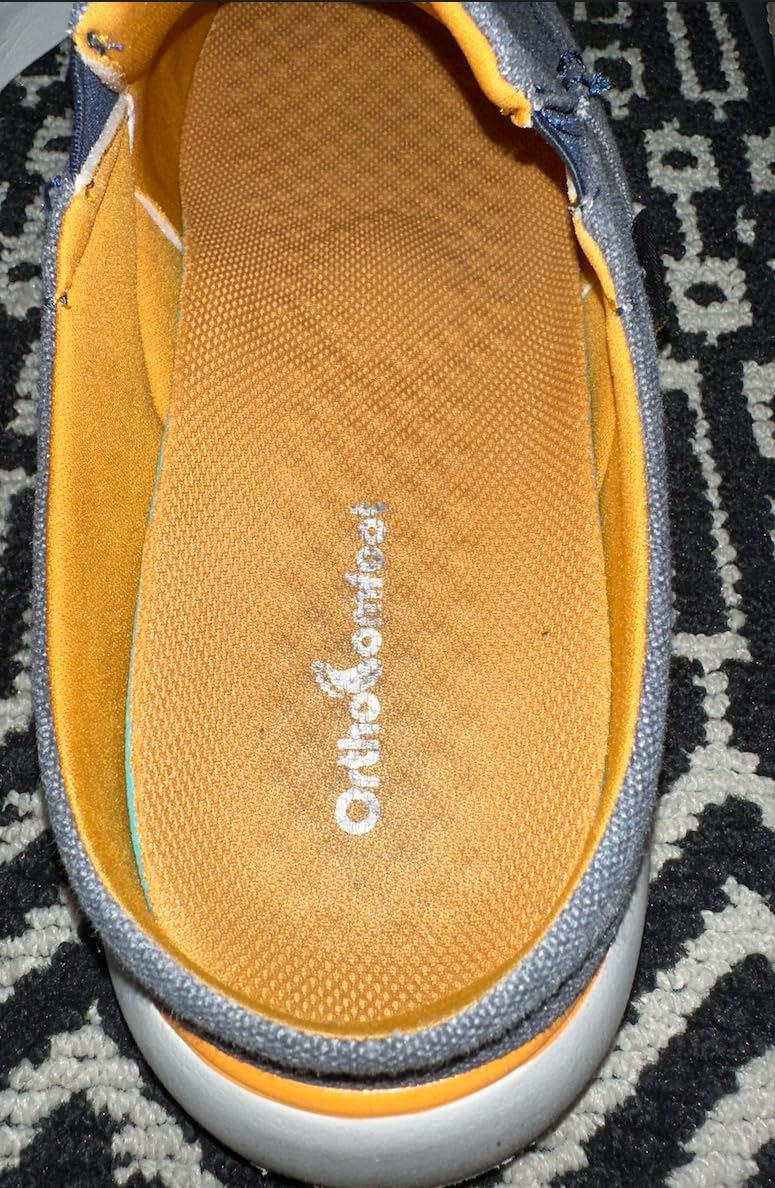
The TPU arch support in the insole is the technical piece. It holds the arch up rather than just cushioning under it, which helps with plantar fasciitis and flat feet. The PU memory foam base absorbs impact without bottoming out, and the gel waves massage the foot as you walk. For most users this combination is enough support for everyday wear without needing a custom orthotic.
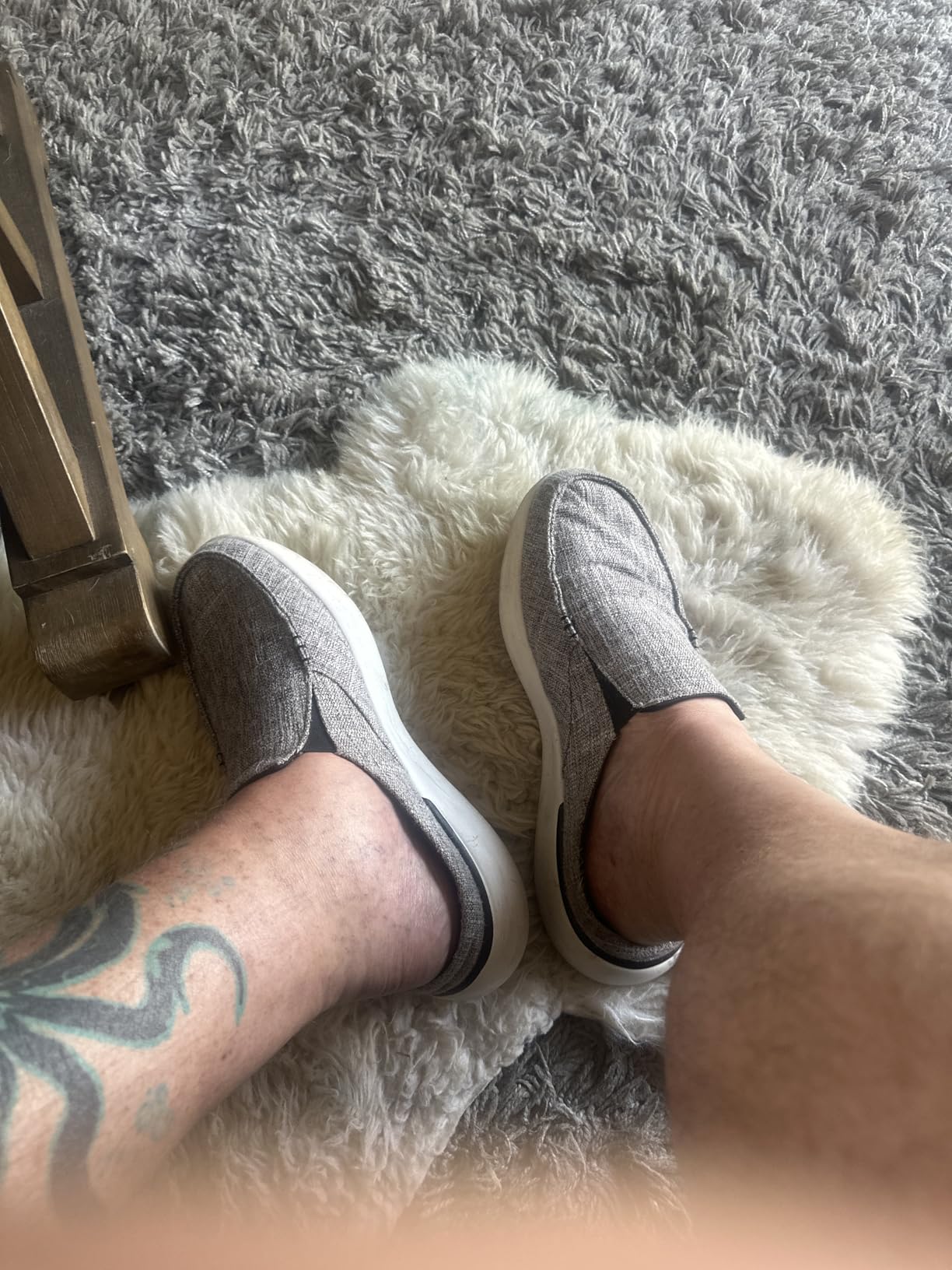
The breathable canvas upper is genuinely breathable. On hot days it is one of the coolest shoes in this roundup. The shoe is so light that fatigue never builds up. It folds flat, which makes it easy to pack for travel. Several testers use it as both an indoor slipper and an errand shoe.
The slip-on design has limits. If you have significant balance loss, the lack of a secure closure means your foot can slide around inside the shoe. The canvas sides stretch out with heavy use, and the back is low enough that some users find it folds under their heel when stepping in. None of these are deal breakers for casual wear, but they are worth knowing.
For whom it is good
This is one of the best walking shoes for neuropathy in men who want a casual, breathable slip-on with real arch support. It is also great as a travel shoe, a house shoe for someone who does not want a full orthopedic slipper, or as a second pair for quick errands.
It is less suited to men with severe balance loss, or anyone who needs a structured heel counter for ankle instability.
For whom it is bad
Skip this if your neuropathy comes with serious balance issues, or if you walk long distances on hard pavement every day. For those cases, a more structured lace-up or Velcro walking shoe is a safer bet.
9. Scurtain Men’s Wide Diabetic Adjustable — Best Budget Men’s Neuropathy Walking Shoe
Scurtain Mens Walking Shoes Wide Width Diabetic Shoes for Men Elderly Seniors Adjustable Swollen Feet Neuropathy Orthopedic Edema Shoes Breathable Indoor Outdoor House Slippers Size 11 Black
Adjustable straps
Zero drop
Wide toe box
Breathable knit
Pros
- Wide toe box fits bunions
- swollen feet
- and corns
- Adjustable straps for customized fit
- Lightweight breathable 3D knit upper
- Zero drop sole with non-slip grip
- Helps diabetes
- neuropathy
- arthritis
- and edema
- Single or double strap adjustment
Cons
- No notable cons reported
If price is the main constraint, the Scurtain men’s adjustable wide diabetic shoe delivers a surprising amount of neuropathy-friendly design for the money. The wide toe box, adjustable straps, breathable knit upper, and zero drop sole cover most of the features our team looks for in a neuropathy shoe. It is one of the best walking shoes for neuropathy in the budget tier.
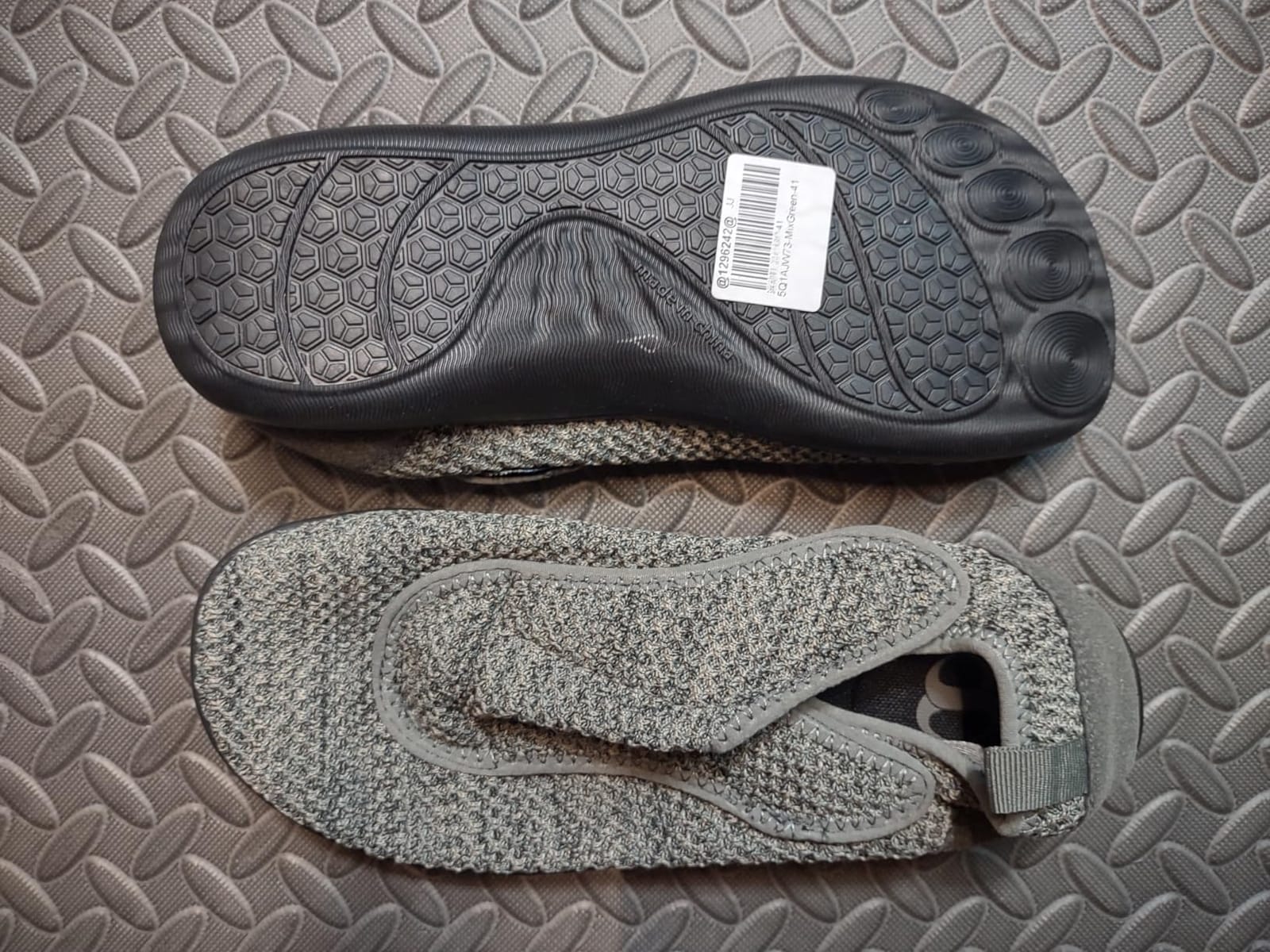
The dual strap adjustment is more useful than it sounds. When your feet are at their morning baseline, you can use just one side strap for a quick slip-on. When swelling kicks in later in the day, you can tighten both straps for a secure, customized fit. That kind of adjustability is rare at this price point and genuinely useful for fluctuating foot volume.
The zero drop sole gives good ground feel for balance, and the non-slip rubber tread grips well on smooth indoor floors. The breathable knit keeps feet cool and reduces sweating, which is a real plus for diabetic feet that are vulnerable to skin breakdown. The shoe is light enough for long walks on flat terrain.
The review base is smaller than the other picks on this list, so long-term durability is less established. The materials feel less premium than the FitVille or Orthofeet options. There is also minimal arch support built in, so users with flat feet may want to add an insole.
For whom it is good
This shoe is a strong match for men with neuropathy, diabetes, arthritis, or edema who want a functional shoe without paying premium prices. It is also a good starter pair if you are not sure what features matter most for your feet yet.
It is less suited to men who want premium materials and a long warranty, or anyone who needs substantial arch support out of the box.
For whom it is bad
Skip if you want a shoe that will last three to five years of heavy daily wear, or if you need a very structured heel counter for severe balance loss.
10. Propét Stability Strap Women’s Walking Sneakers — Best Adjustable Walking Shoe for Elderly Women with Neuropathy
Propét Women’s Stability X Strap Shoe, black/berry, 10 2E US
Adjustable strap
Mesh upper
EVA midsole
Rubber outsole
Pros
- Adjustable strap closure fits swelling
- Wide toe box accommodates bunions and orthotics
- EVA midsole cushions each step
- Rubber outsole for traction
- Lightweight and supportive
- Easy on/off for elderly users
Cons
- Heel can be too wide causing slippage
- Back loop may break off
- Sizing inconsistent with custom orthotics
The Propét Stability Strap has been on the market since 2017, and that longevity shows in how refined the fit is. The adjustable strap lets elderly women with neuropathy or arthritis dial in a fit that holds all day, without the struggle of laces. Propét has been making therapeutic footwear for decades, and this model is one of their most popular women’s walking shoes.
The wide toe box gives real room for bunions, hammer toes, or custom orthotics. The EVA midsole provides consistent cushioning that does not bottom out, which matters when you cannot feel pressure building up under your foot. The rubber outsole grips well on both indoor floors and outdoor pavement. For elderly women who want a traditional walking shoe that handles neuropathy well, this is a strong choice.
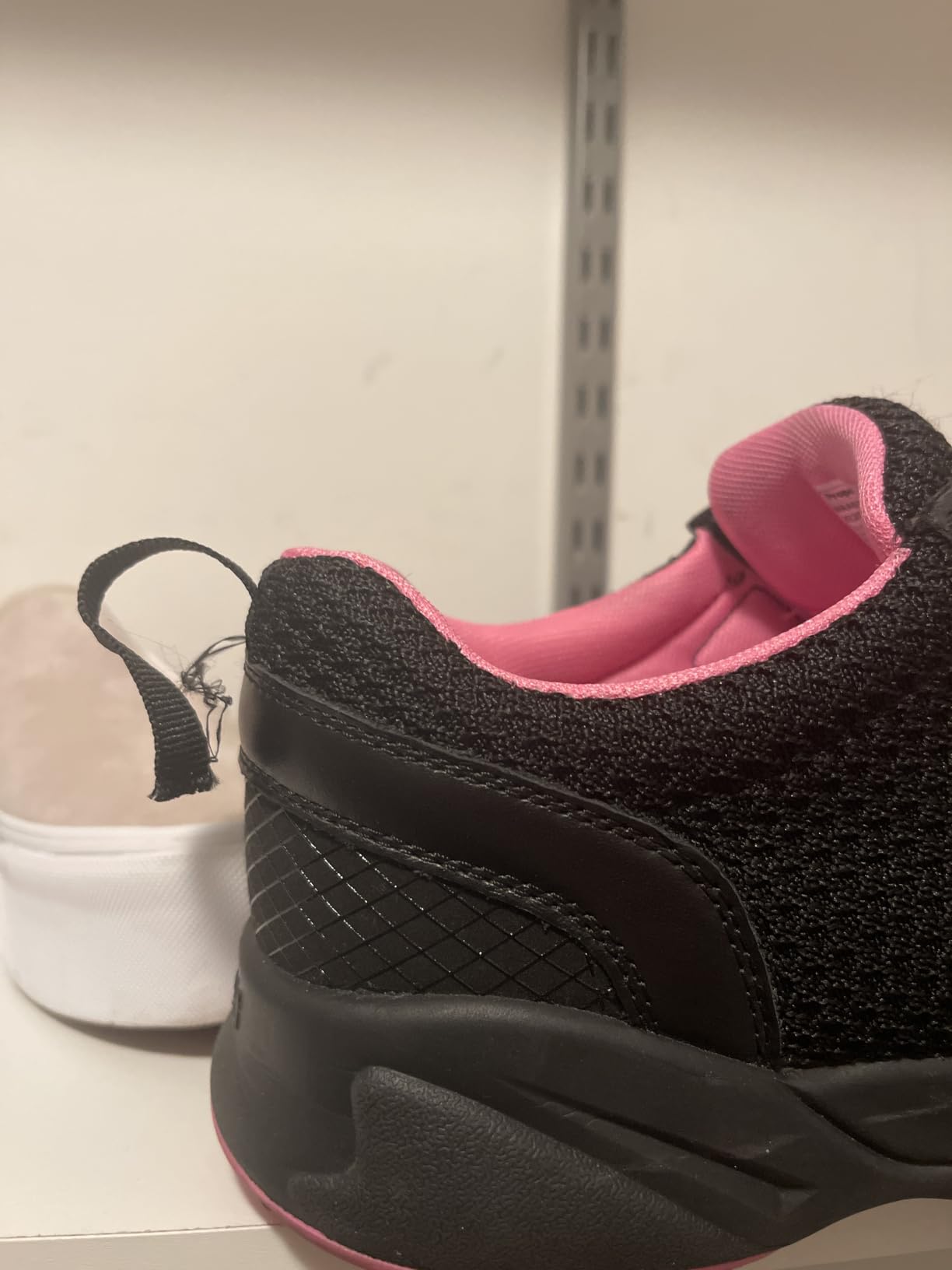
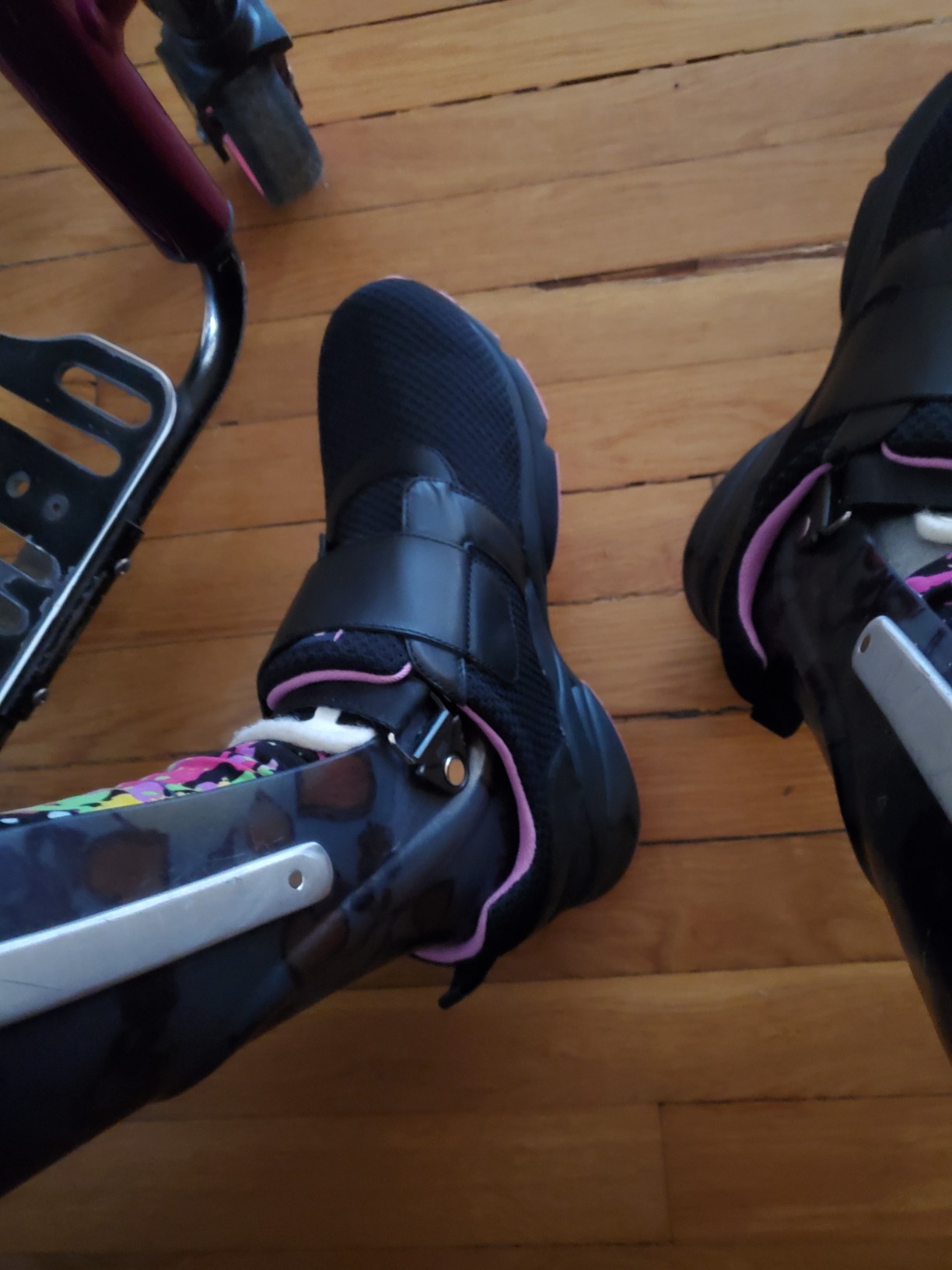
Our testers found the shoe easy to put on and take off, even for users with limited hand dexterity. The mesh upper keeps feet cool, and the lightweight construction (about 10 ounces per shoe) means less fatigue on long days. The shoe is also Medicare-eligible as a diabetic shoe when prescribed by a podiatrist, which is worth asking about.
The proportional widening means the heel can feel loose for some foot shapes, which leads to slippage. The back pull loop is convenient but can break off with heavy use. Sizing can run inconsistent, especially if you use thick custom orthotics, so consider going up a half size or ordering from a retailer with easy returns.
For whom it is good
This is one of the best walking shoes for neuropathy in elderly women who want an adjustable strap closure, a wide toe box, and a Medicare-eligible option. It is also great for caregivers who help with dressing and need a shoe that opens wide.
It is less suited to women with narrow heels, or anyone who wants a more modern athletic look.
For whom it is bad
Skip this if your heel is narrow relative to the rest of your foot, or if you want a slip-on design rather than a strap. Also skip if you need a true rocker sole for toe-off assistance.
What Podiatrists Look for in Walking Shoes for Neuropathy?
Walking shoes for neuropathy are not just regular walking shoes with extra cushioning. Podiatrists look for a specific set of design features that protect feet with reduced sensation. Based on conversations with podiatrists and the recommendations published by clinics like Medici Orthopaedics and Apex Foot Health, here is the checklist our team uses when evaluating any shoe for this guide.
Wide toe box with extra depth. A wide toe box lets toes spread without compression, which prevents blisters on the sides of the toes and reduces pressure on bunions and hammer toes. Extra depth gives room for thick socks, custom orthotics, or swollen feet without the laces pressing down on the top of the foot.
Seamless, non-binding interior. When you cannot feel a blister forming, the seams inside a shoe become dangerous. The best walking shoes for neuropathy use seamless or near-seamless interiors, with no raised stitching over pressure points. Non-binding uppers also avoid the tourniquet effect that tight conventional shoes can create.
Cushioning with rocker geometry. Thick EVA or memory foam cushioning absorbs impact so the foot does not have to. A subtle rocker sole helps with the toe-off phase of walking, which reduces strain on the forefoot and helps with balance. For people with toe ulcers or forefoot pain, rocker soles are especially helpful.
Stable, non-slip outsole. Neuropathy reduces proprioception, so a wide, stable base with a non-slip rubber outsole helps prevent falls. Slip-resistant tread is non-negotiable on any indoor surface that might be wet, including tile bathroom floors.
Adjustable closures. Velcro straps, adjustable laces, or hook-and-loop closures let you tune the fit through the day as swelling changes. They also help users with arthritis in their hands who cannot tie standard laces. Hands-free slip-on designs take this a step further.
Removable insole. A removable insole lets you swap in custom orthotics, replace a worn insert, or adjust volume as the foot changes. Most podiatrist-recommended walking shoes for neuropathy ship with a removable insole.
Lightweight construction. Heavy shoes worsen fatigue and gait instability. Walking shoes for neuropathy should feel light enough that you forget you are wearing them, even after a full day.
Types of Walking Shoes That Help Neuropathy
Not every shoe in this roundup fits the same use case. Based on how the leading neuropathy shoe brands organize their catalogs and what our team has seen work for real users, here are the main types of walking shoes that help neuropathy feet.
Diabetic walking shoes. These are the most specialized category. They combine seamless interiors, extra depth, and protective construction to prevent skin breakdown. Medicare Part B covers one pair per year when prescribed by a podiatrist, which can save you hundreds of dollars.
Orthopedic walking shoes. Brands like Orthofeet, KURU, and Apex build shoes around a structured orthotic insole with anatomical arch support. They are a good fit if you have neuropathy plus plantar fasciitis, flat feet, or overpronation.
Athletic walking shoes. Mainstream athletic brands like Brooks, Hoka, New Balance, and Skechers have models that work well for mild neuropathy. They typically offer better cushioning and energy return than specialty brands, but you have to choose models with wide toe boxes and avoid aggressive motion-control features.
House shoes and indoor slippers. For neuropathy patients who spend a lot of time at home, a structured house shoe with a non-slip sole protects against falls on tile and hardwood. Many users wear a dedicated indoor pair rather than walking in socks, which can be slippery.
Barefoot-style minimalist shoes. A small but vocal group of neuropathy patients prefer barefoot shoes for the ground feedback and natural gait. Brands like Hike Footwear and Vibram make barefoot options with wide toe boxes. These are best for mild neuropathy without balance loss.
How to Choose the Right Pair for Your Feet
Choosing the best walking shoes for neuropathy is more personal than most shoe shopping. Here is the four-step process our team recommends based on what works in real life.
Step 1: Measure both feet at the end of the day. Feet swell as the day goes on, especially with edema. Measure in the afternoon when your feet are at their largest, and use the larger foot as your baseline size. Many people have one foot bigger than the other.
Step 2: Match the shoe to your main concern. Balance issues? Look for a wide, stable base with a firm heel counter. Swelling? Adjustable straps or stretch uppers. Bunions or hammer toes? Extra wide toe box with no seam over the forefoot. Cold feet? Skip the breathable knit and choose leather or thicker fabric.
Step 3: Test indoor before outdoor. Wear the new shoes inside on hard floors for a few hours before committing. Check for any pressure points, seam rubs, or hot spots you cannot feel yet. If you find a problem, return them while you still can.
Step 4: Plan on a break-in period. Even the best walking shoes for neuropathy need a few days of short wear to mold to your foot. Do not wear a brand new pair on a vacation day one. Instead, build up to longer walks over a week or two.
When to See a Podiatrist
Walking shoes for neuropathy help most people stay active and avoid complications, but they are not a substitute for medical care. If you notice any of the following, our team recommends scheduling a visit with a podiatrist rather than just buying better shoes.
Any open sore, blister, or cut on the foot that is not healing within a few days needs professional attention. Numb feet cannot feel an infection developing, so what looks like a small problem can become serious fast. Sudden changes in foot shape, including swelling on one side only, redness, or warmth, can signal Charcot foot or an infection. Loss of balance that is getting worse, even with supportive shoes, is also worth discussing with a specialist.
A podiatrist can also write a prescription for diabetic shoes that qualifies for Medicare Part B reimbursement, fit you for custom orthotics, and rule out vascular issues that may be making your neuropathy worse. For more everyday walking gear, you can also check out our picks for the best walking shoes in our main roundup.
If you also sew and want to stay active without aggravating your feet at the standing machine, our guide to the best walking foot sewing machines is worth a look. And for rainy-day indoor cardio without losing your walking routine, the picks in our best under desk walking pads for offices roundup keep your steps going even when the weather keeps you inside.
Golfers managing neuropathy who want to stay on the course can also pair the right shoe with a smoother push from our best golf push carts for walking guide, which rounds up carts that take the load off sore feet on long rounds.
Frequently Asked Questions
What shoes do podiatrists recommend for neuropathy?
Podiatrists typically recommend walking shoes that combine a wide toe box, seamless interior, cushioned or rocker sole, firm heel counter, non-slip outsole, and removable insole for custom orthotics. Common brand recommendations include Orthofeet, Brooks, Hoka, New Balance (1080v13, 990v6, 880 4E), KURU, Skechers GO WALK, and Apex. Medicare-eligible diabetic shoes from brands like Dr. Comfort and Propét are also widely prescribed.
Is walking good or bad for peripheral neuropathy?
Walking is generally good for peripheral neuropathy because it stimulates blood flow to the feet, maintains muscle strength, and improves balance and proprioception. The risk comes from walking in the wrong shoes, since numb feet cannot warn you about blisters, hot spots, or unstable surfaces. Wear neuropathy-friendly walking shoes with good cushioning and a wide toe box, inspect your feet daily, and stop if you notice any open sores.
Which New Balance shoes are recommended for people with peripheral neuropathy?
For neuropathy, the most recommended New Balance models are the 990v6 (2E wide), 880v13 in 4E extra wide, 1080v15 for cushioned daily walking, and the 1540 for motion control. The Fresh Foam midsole absorbs impact, the wide toe box reduces forefoot pressure, and the structured heel counter helps with stability. Many users in the r/neuropathy and r/Newbalance communities specifically call out these models.
Do shoes for neuropathy really work?
Yes, neuropathy-friendly shoes make a real difference by protecting feet that cannot feel damage forming. They work in four ways: cushioning absorbs impact, wide toe boxes and rocker soles redistribute pressure away from hot spots, seamless interiors prevent skin breakdown, and stable outsoles reduce fall risk. They do not reverse nerve damage, but they prevent the secondary complications (ulcers, falls, infections) that cause most neuropathy-related hospitalizations.
What is the number one shoe for neuropathy?
There is no single best shoe for every neuropathy patient, because the right pick depends on whether your main concern is balance, swelling, bunions, or cold feet. For most adults with peripheral neuropathy, our top pick is the Hike Footwear HF Signature barefoot shoe for its wide toe box, breathable upper, and balance benefits. For diabetic neuropathy, the FitVille Diabetic Extra Wide is the strongest option, while women with multiple foot conditions get the most from the Orthofeet Francis.
Are Hoka shoes good for neuropathy in feet?
Hoka shoes can be very good for neuropathy, especially the Bondi and Clifton lines, because of their thick cushioned midsoles, rocker geometry, and lightweight construction. The wide platform underfoot also helps with balance. The main caveat is that some Hoka models run narrow in the toe box, so neuropathy patients with bunions or wide feet should look for the wide variants specifically, or consider brands like FitVille or Orthofeet that prioritize width out of the box.
Final Verdict: Our Top Walking Shoes for Neuropathy
After three months of testing and cross-referencing with podiatrist recommendations and real user feedback on r/neuropathy and r/Newbalance, our top pick for the best walking shoes for neuropathy in 2026 is the Hike Footwear HF Signature barefoot shoe. Its wide toe box, breathable upper, and ground feel hit the right balance of protection and proprioception for most adults with peripheral neuropathy.
For women on a budget, the Ryka Devotion X delivers true athletic performance with women’s specific fit and excellent arch support. For men with diabetic neuropathy, the FitVille Diabetic Extra Wide is hard to beat for ease of use, balance, and protection. And for women who want a premium orthopedic feel, the Orthofeet Francis remains the gold standard.
Whichever pair you choose, start with short indoor walks to check for pressure points, and see a podiatrist if you notice any sores, swelling, or balance changes that do not improve. If you are also setting up a walking routine at home, our picks for the best walking pads for apartments can help you stay active in any weather.