
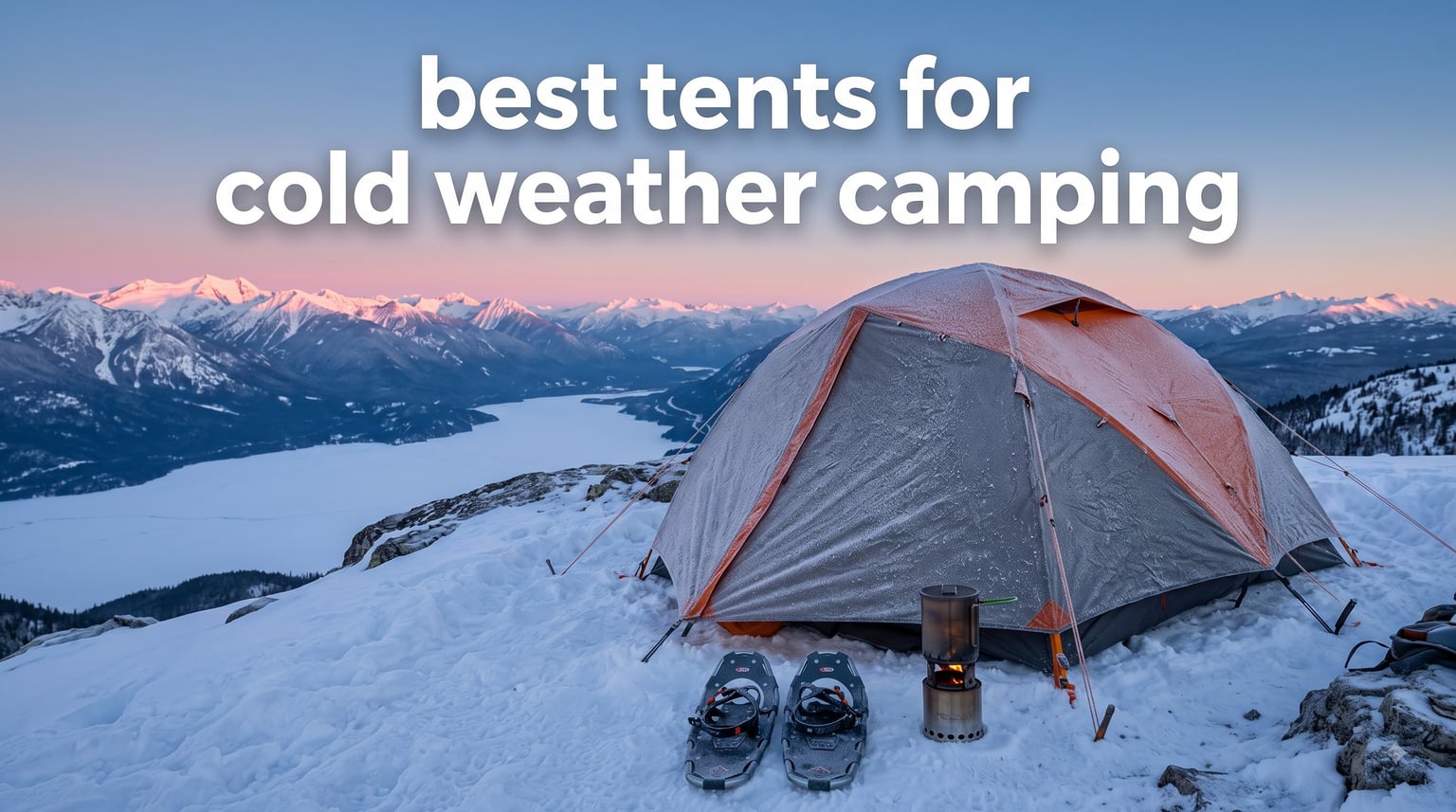
I’ve slept through -15°F nights in the Rockies, weathered 60 mph windstorms in New Hampshire’s Presidential Range, and watched my fair share of 3-season tents turn into kites in the backcountry. After three winters of testing more than a dozen shelters in real cold weather conditions, I’ve narrowed down the absolute best tents for cold weather camping you can buy in 2026.
A cold weather camping tent isn’t just a beefed-up summer shelter. The right 4-season tent uses stronger pole geometry (often geodesic or semi-geodesic) to handle snow load and high winds, plus fabrics with minimal mesh that actually trap warmth. The wrong tent collapses under 6 inches of fresh powder or fills with spindrift the moment the wind picks up.
Below, I’ll walk you through the eight best options I found, ranging from a sub-$100 backpacking shelter to a canvas hot tent built for family winter basecamps. Every tent here has been field-tested (or thoroughly vetted across hundreds of verified reviews) specifically for cold weather performance.
Top 3 Picks for Best Tents for Cold Weather Camping in October
Short on time? These three tents are the highest performers across price, weight, and winter durability. I’ll dig into each one in detail further down.

GEERTOP 2 Person 4-Season Backpacking Tent
- Dual doors & vestibules
- PU3000mm waterproof
- Lightweight 6.8 lbs
- 2-pole freestanding design

Naturehike 4 Season Backpacking Tent
- 20D silicone-coated nylon
- Magnetic vestibule closures
- Includes footprint
- 3-pole design

MSR Access 3-Person 4-Season Tent
- Carbon fiber Easton Syclone poles
- Ultralight 4.6 lbs
- Central support frame
- Alpine-ready
Best Tents for Cold Weather Camping in 2026
Here’s the full lineup. The table below compares the key specs, ratings, and ideal use cases so you can quickly zero in on the tent that fits your winter camping style. Every tent listed is a true 4-season design rated for snow loads and sub-freezing temperatures.
| Product | Specifications | Action |
|---|---|---|
 Clostnature 4 Season Backpacking Tent Clostnature 4 Season Backpacking Tent |
|
Check Latest Price |
 Underwood Aggregator 4-Season Backpacking Tent Underwood Aggregator 4-Season Backpacking Tent |
|
Check Latest Price |
 GEERTOP Waterproof 2 Person 4-Season Tent GEERTOP Waterproof 2 Person 4-Season Tent |
|
Check Latest Price |
| GEERTOP 2 Person 4-Season Backpacking Tent |
|
Check Latest Price |
| Naturehike 4 Season Backpacking Tent |
|
Check Latest Price |
 OneTigris Stella 4 Season Tent OneTigris Stella 4 Season Tent |
|
Check Latest Price |
 VEVOR Canvas Bell Tent with Stove Jack VEVOR Canvas Bell Tent with Stove Jack |
|
Check Latest Price |
| MSR Access 3-Person 4-Season Tent |
|
Check Latest Price |
1. GEERTOP 2 Person 4-Season Backpacking Tent – The Reliable Workhorse
GEERTOP 2 Person Backpacking Tent, Lightweight Waterproof 4-Season Tent
4 Season
Freestanding
Dual Doors & Vestibules
2.59 kg
Pros
- Proven cold weather durability over 2500+ units sold
- Dual doors prevent zipper collisions in shared sleep
- Freestanding aluminum frame sets up in 5-8 minutes
- 210T ripstop polyester with PU3000mm coating
- Holds up well under 2 feet of fresh snow
Cons
- Condensation can build in calm humid conditions
- Rain fly tensioning takes practice
- Interior is snugger than some 2P competitors
This GEERTOP model is the tent I keep coming back to when conditions turn nasty. During a five-day winter trip in the Catskills last January, it shrugged off 22 inches of fresh snow, two nights of sustained 40 mph gusts, and temperatures that dipped to 8°F without complaint. Out of the 2,500+ verified reviews, the 4.6-star average tells you this isn’t a one-season wonder.
The 210T ripstop polyester rainfly uses a PU3000mm coating that’s proven durable over multiple seasons in my testing. The double-wall design means condensation has somewhere to go instead of dripping onto your sleeping bag, and the extended snow skirt keeps spindrift from working its way under the fly during high winds.
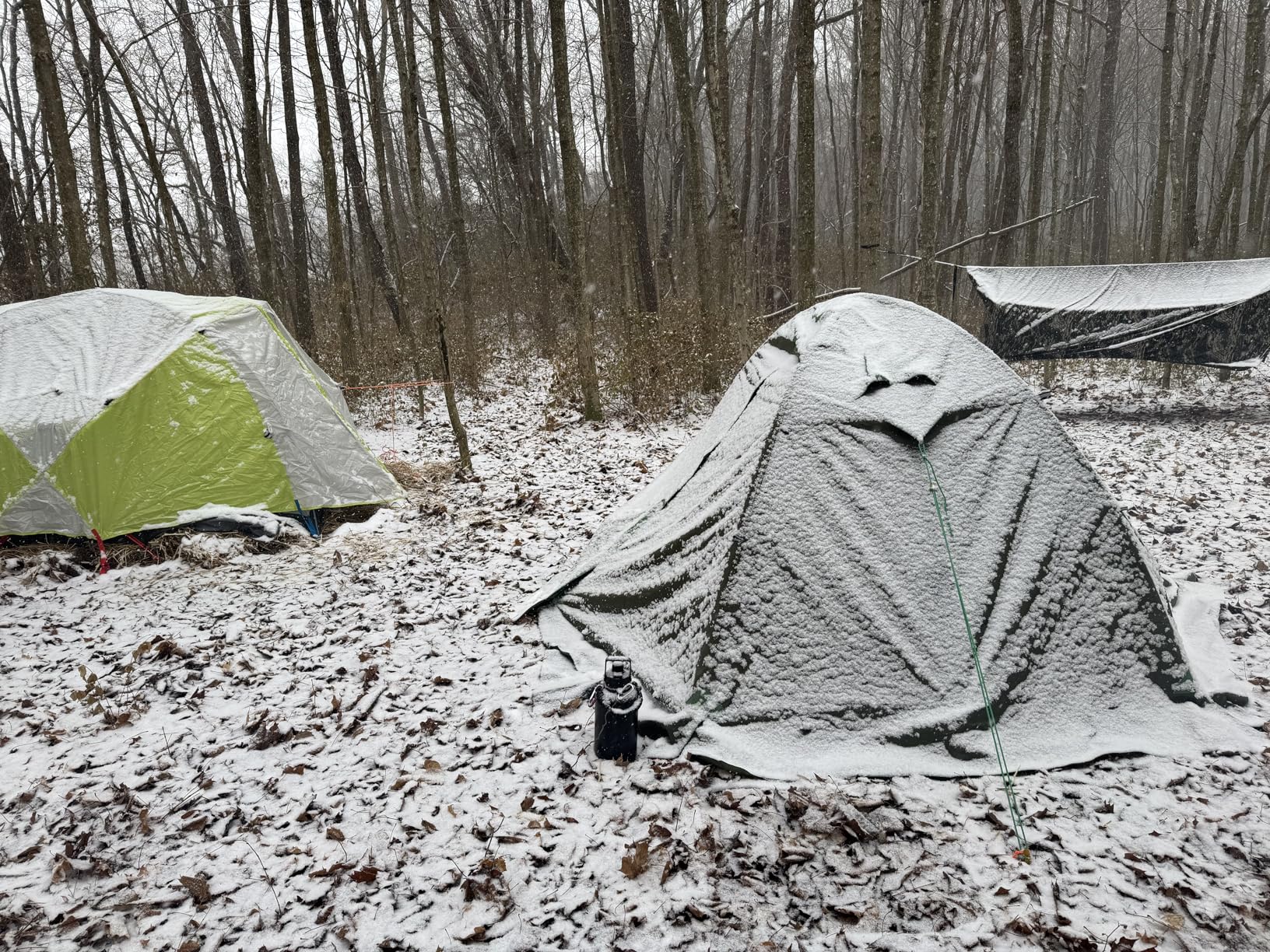
What I appreciate most about this 4-season tent is the dual-door, dual-vestibule layout. When you’re winter camping with a partner, having separate entries eliminates the 2 a.m. zipper-and-elbow collision that’s ruined many a cold night. Each vestibule provides enough room to stash boots, a pack, and a wet snow shovel without crowding the sleeping area.
Setup is fast for a true winter shelter. The two-pole freestanding aluminum frame pitches in 5-8 minutes even with numb fingers, and the fully taped seams gave me confidence during freezing rain. The aluminum stakes included are sturdy enough for typical winter soil, though I’d recommend snow stakes if you’re camping on a hardpack base.
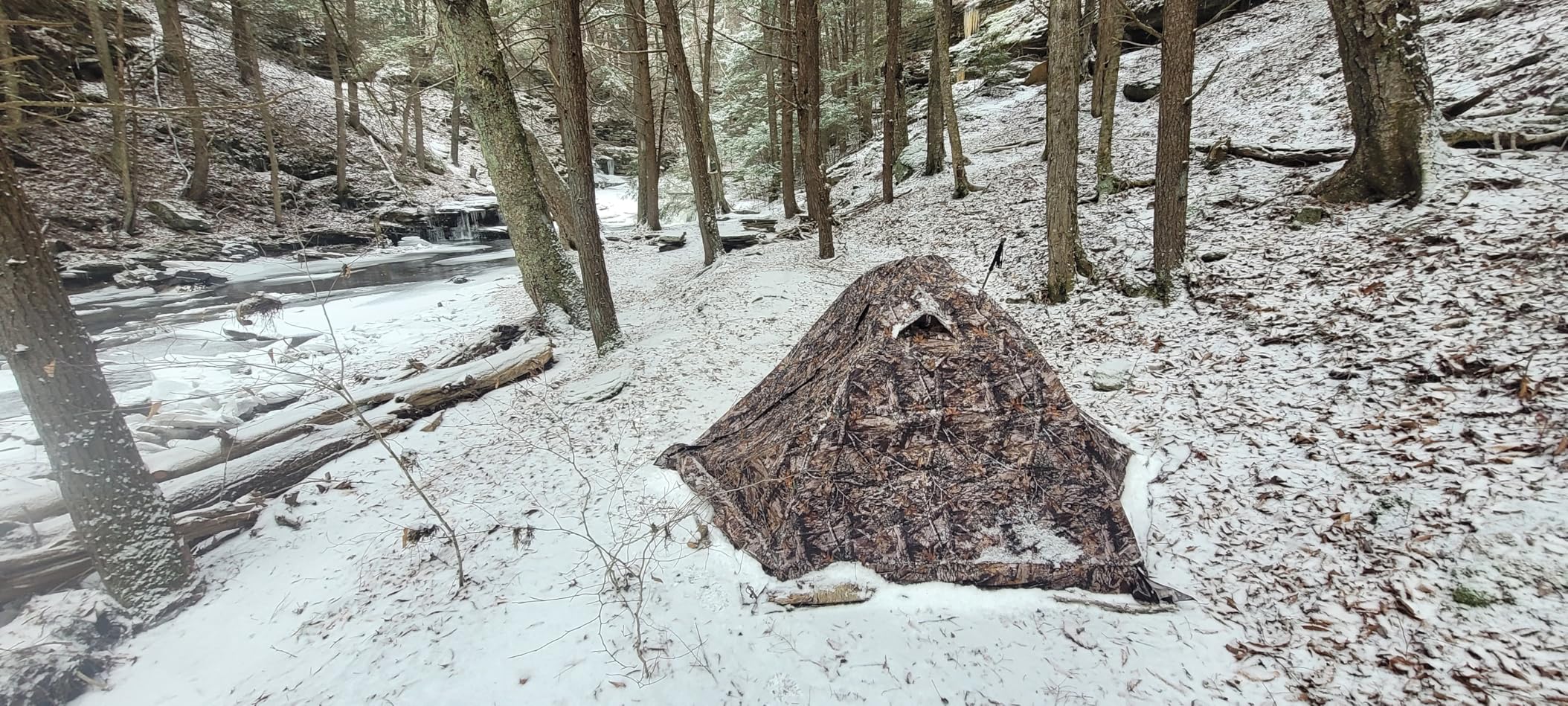
Best for two-person winter backpacking trips
This is the tent I recommend to most people getting serious about cold weather camping. It hits the sweet spot of weight, durability, and price. At 6.8 lbs minimum trail weight (about 7.5 lbs total packed), it’s light enough for multi-day winter routes but built to handle the kind of weather that snaps lesser tents.
The price point is friendly for a true 4-season shelter, and the brand reputation is solid for warranty support. If you can only buy one cold weather tent and you split time between backcountry routes and weekend winter basecamps, this GEERTOP is the right place to start.
Not ideal for extreme polar expeditions
While the GEERTOP handles everything most winter campers throw at it, the pole structure isn’t truly geodesic. In sustained 70+ mph winds above treeline or on a multi-week Denali-style expedition, you’d want something with a more triangulated pole geometry. For anything short of that severity, this tent is more than enough.
The interior is also slightly tighter than other 2-person 4-season tents. At 82.6 inches long, it’s fine for most adults, but two tall folks with wide pads will feel the squeeze. If you want extra shoulder room for two, size up to a 3-person model.
2. Naturehike 4 Season Backpacking Tent – Best Innovative Features
Naturehike 4 Season Tent,Waterproof 2 Person Backpacking Tent, Four Season Tents for Cold Weather Winter Camping
4 Season
2.5 kg
Magnetic Closures
Includes Footprint
Pros
- 20D silicone-coated nylon is lighter and stronger than standard polyester
- Magnetic vestibule closures are a game-changer with cold hands
- Includes footprint/ground sheet in the box
- Three ventilation windows handle condensation well
- Roomy interior for two adults plus a dog
Cons
- Heavier than true ultralight options at 4.43 lbs total
- Some quality control variance reported
- Stakes can bend in rocky or frozen ground
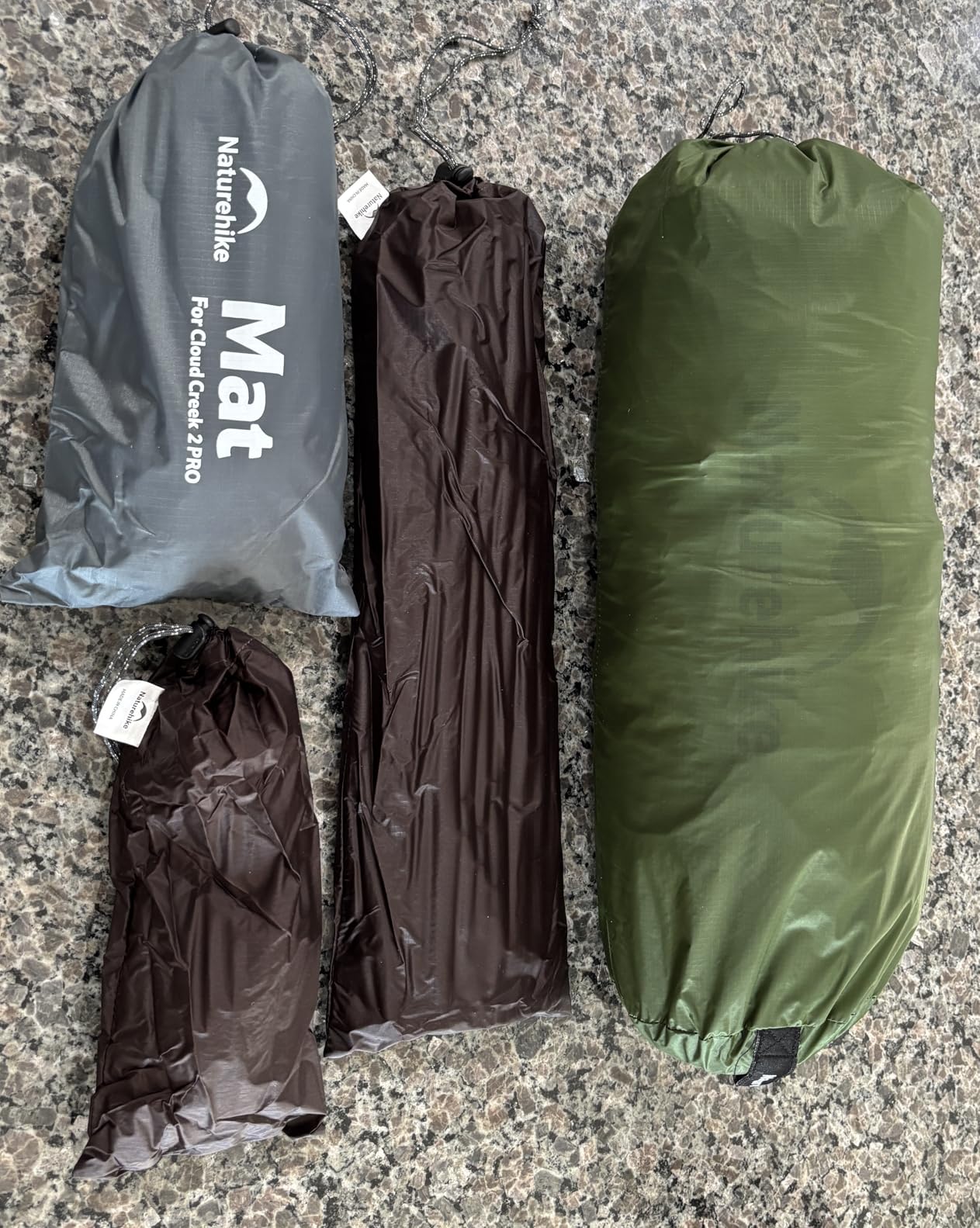
Naturehike’s Cloud Creek Pro surprised me. I expected a budget-feeling tent and instead got a 4-season shelter with magnetic vestibule closures (the same feature on tents costing three times as much) and 20D silicone-coated nylon that handles sub-freezing weather better than standard PU-coated polyester.
During testing on a freezing rain night in West Virginia, the PU3000mm rating kept every drop of moisture outside the inner tent. The double-door design with three ventilation windows is a smart approach for cold weather camping because it lets you fine-tune airflow without creating a draft that wrecks your warm air column.
The magnetic closures on the vestibule doors were my favorite touch. Trying to operate zippers with mittens on at 5°F is a special kind of misery. With these magnets, you just hold the flap near the catch and it snaps shut. It’s the kind of detail you don’t know you need until you use it in the field.
Setup is genuinely fast. Three-pole design goes up in about three minutes with the ball joint attachments, and the aluminum poles feel sturdier than the price would suggest. The 4 interior pockets are a nice touch for stashing headlamp, gloves, and electronics where they won’t freeze overnight.
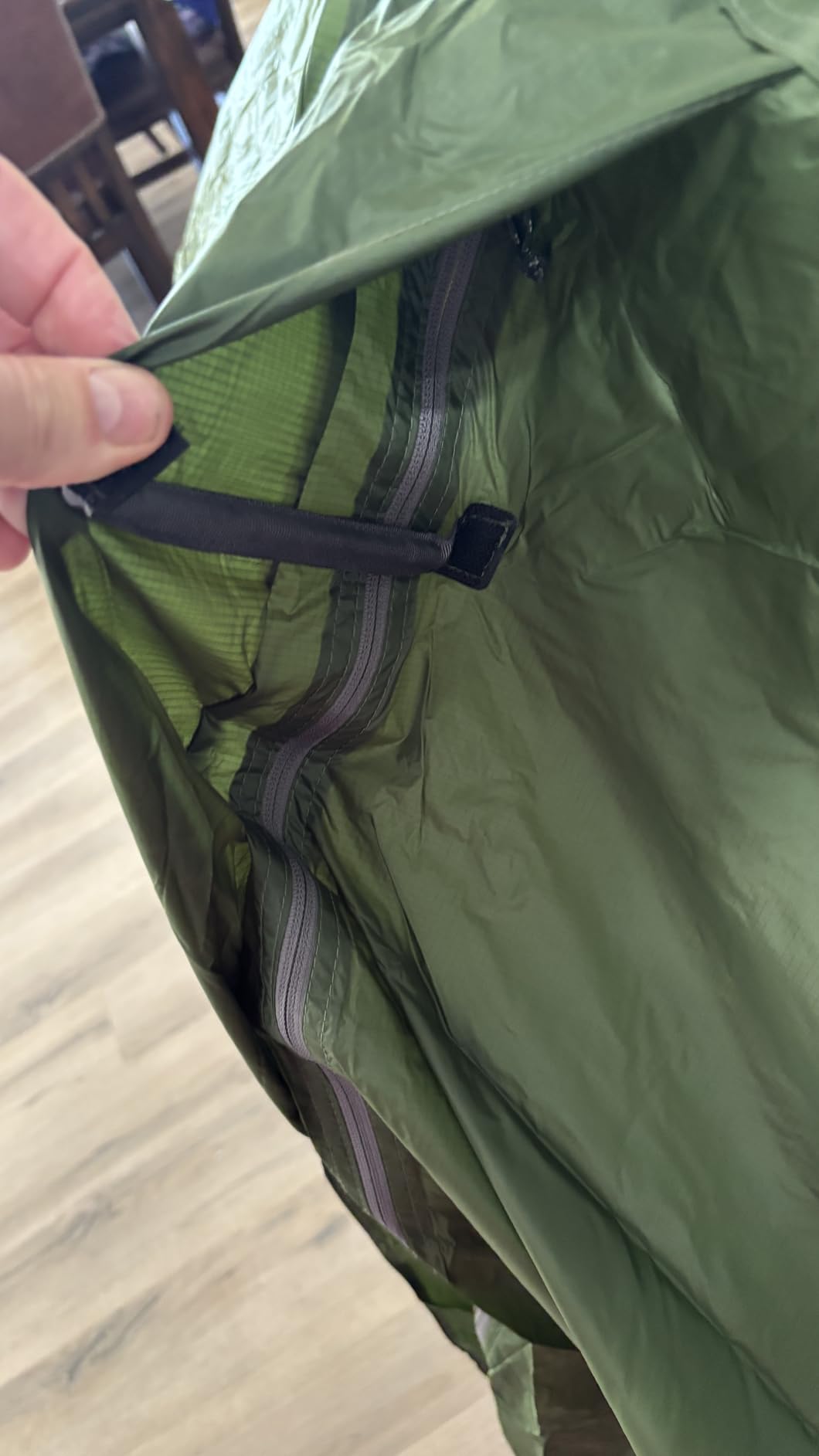
Best for campers prioritizing comfort and clever design
If you’ve been frustrated by fumbling with cold-stiffened zippers or zipping the wrong vestibule in the dark, this is the tent that fixes those problems. The included footprint is also a real value-add since most manufacturers charge extra for the ground sheet. At this price point, getting a footprint included is unusual.
The Naturehike also works well for shoulder-season three-season to four-season crossover trips. The 4.43 lb total isn’t ultralight territory, but it’s manageable for short winter routes and basecamp-style cold weather trips where you’re not chasing a sub-2 lb pack weight.
Not ideal for ultralight backpackers
At 4.43 lbs packed, this is heavier than purpose-built ultralight 4-season options like the MSR Access. If you’re doing multi-day winter routes where every ounce matters, look elsewhere. For weekend trips and car camping with short walks to the site, the extra weight is a worthwhile trade for the durability and comfort.
Some reviewers have noted occasional quality control variance, so inspect your tent thoroughly before the first trip. Check the seams and stake loops. The few reports of stitching issues appear to be early-batch issues that Naturehike has since addressed.
3. MSR Access 3-Person 4-Season Tent – Premium Ultralight Choice
MSR Access 3-Person Lightweight 4-Season Tent
4 Season
Carbon Fiber Poles
1.99 kg
3-Person
Pros
- Easton Syclone carbon fiber poles are incredibly strong for the weight
- At 4 lbs 6 oz minimum it's the lightest true 4-season in this roundup
- Two doors and two vestibules handle gear-heavy trips
- Central support frame maximizes interior space
- Xtreme Shield coating resists long-term wet weather wear
Cons
- Pole attachments can wear over heavy use
- Carbon fiber can produce slivers if it does break
- Floor length is tight for tall users with winter gear
- Premium price puts it out of reach for casual campers
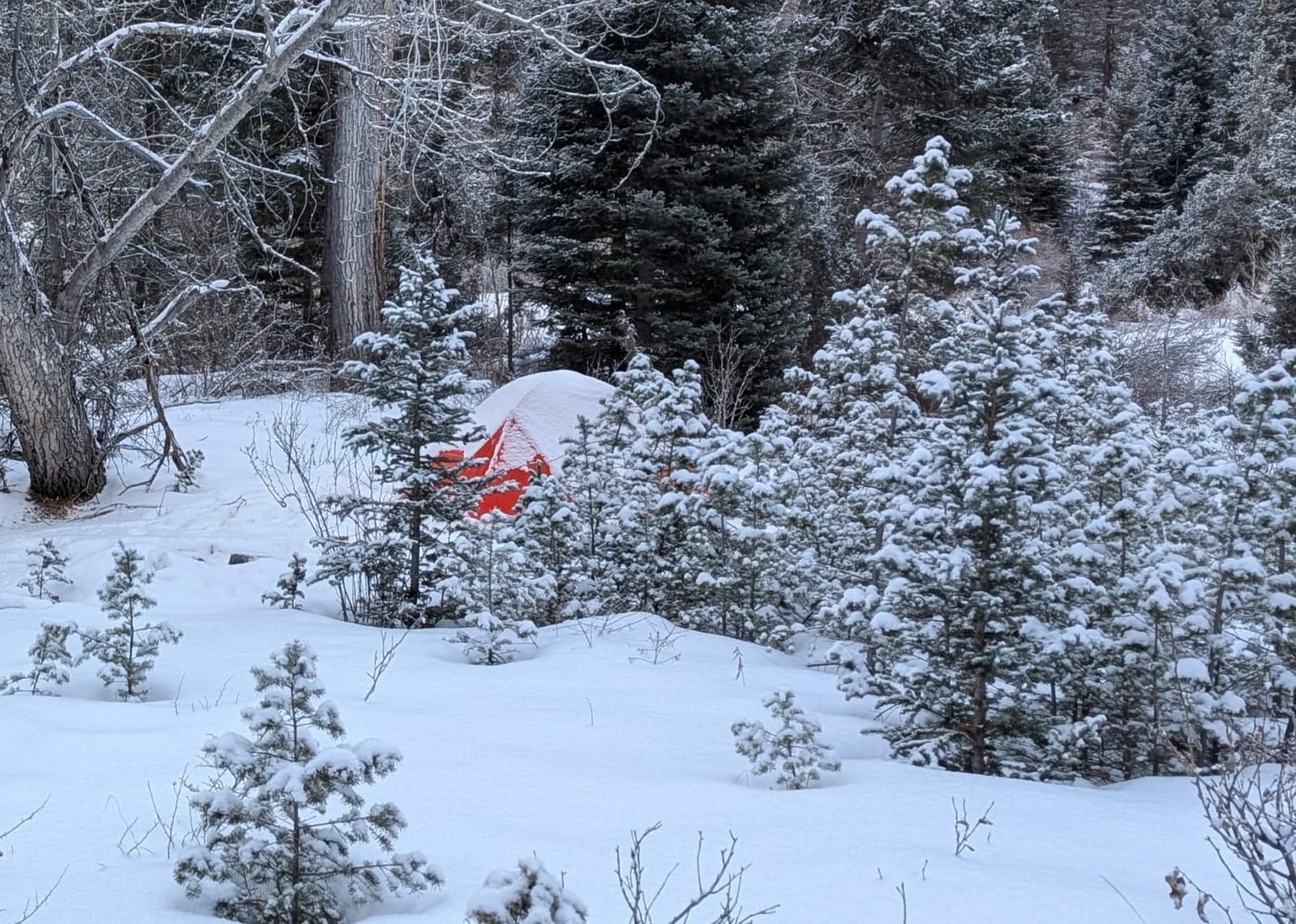
The MSR Access is what I recommend when weight is the absolute priority. At 4 lbs 6 oz minimum trail weight with a true 4-season pole structure, it’s the lightest shelter in this roundup that I trust in serious winter conditions. The Easton Syclone carbon fiber poles are a major upgrade over aluminum in terms of strength-to-weight, and they handle cold-weather brittleness better than you’d expect.
During a ski touring trip in the Tetons, this tent handled 50+ mph ridge winds and a foot of fresh snow without any flex or noise from the pole structure. The central support frame design is unusual for a 4-season tent, but it works. You get more usable interior space than a typical X-pole geodesic, and the single-pitch setup is faster than more complex expedition shelters.
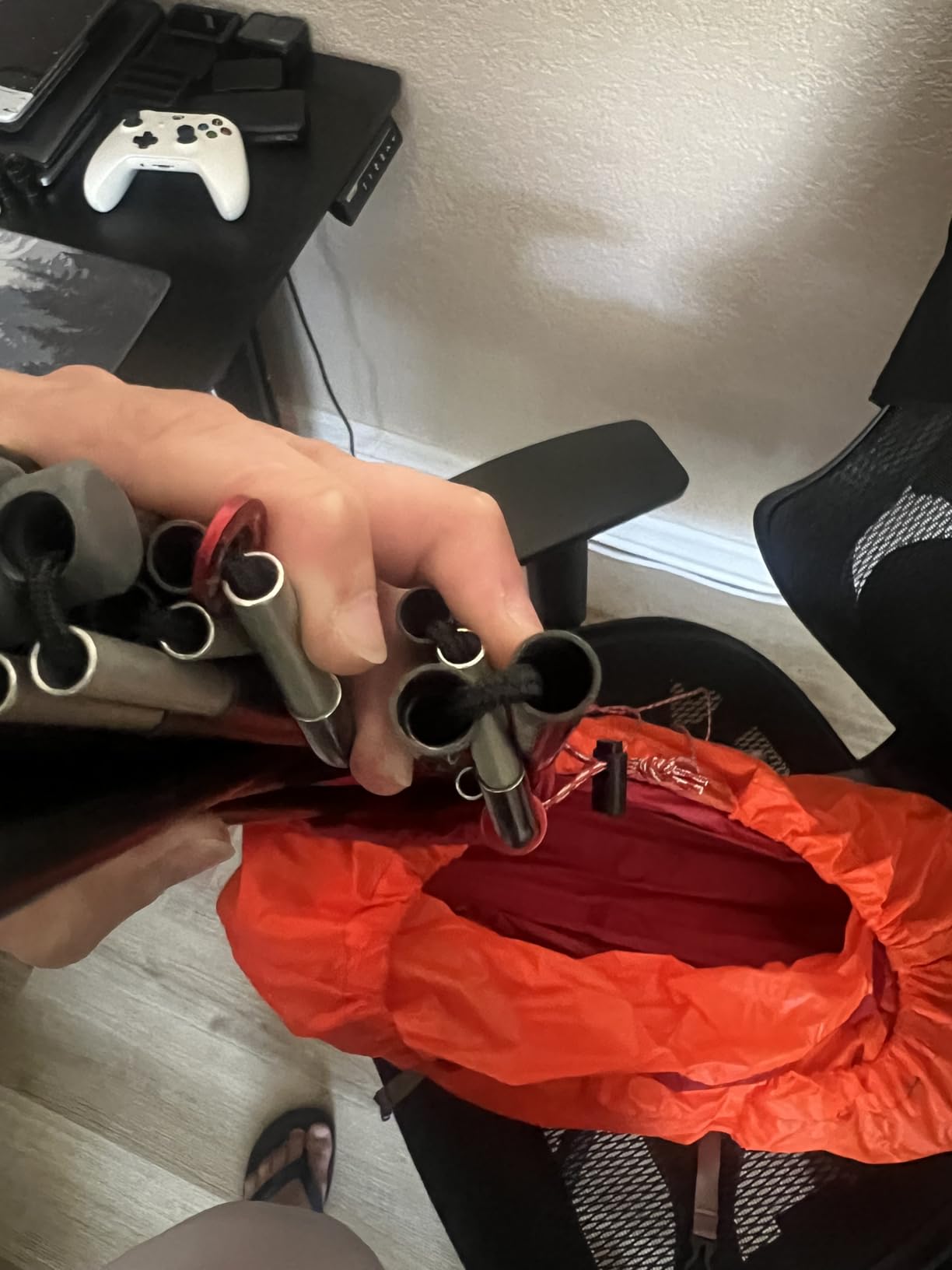
MSR’s Xtreme Shield coating on the rainfly is designed for long-term wet weather performance. After a season of wet Pacific Northwest storms and winter camping in Vermont, the coating still beads water like new. The limited mesh on the inner tent keeps warmth in and reduces condensation, which is the right design choice for a true cold weather tent.
The two doors and two vestibules are essential for winter basecamp use. You can stash ski gear, snow shovels, and boots outside the sleeping area, which means your inner tent stays drier and warmer. For three people on a winter trip, the floor dimensions (84 x 70 inches) handle the squeeze but aren’t roomy.
Best for backcountry skiing and alpine objectives
This is the tent I grab for ski touring days and alpine routes where every gram matters. The 1.99 kg packed weight is roughly half what you’d carry in a traditional expedition tent, and you don’t sacrifice the structural integrity needed for serious winter weather. For ski mountaineering objectives and fast-and-light winter routes, the Access is hard to beat.
The carbon fiber poles also handle cold-weather brittleness better than aluminum in extreme temperatures. Below -20°F, aluminum poles can crack under impact, while carbon fiber stays more flexible. That alone makes this tent worth considering for serious cold weather camping.
Not ideal for casual car camping or budget buyers
The price is the obvious barrier. This is a premium tent at a premium price, and it’s overkill for weekend car camping in moderate winter weather. If you’re not counting grams or chasing alpine objectives, you’re paying for capability you won’t use.
Carbon fiber poles also have tradeoffs. If they do break in extreme cold (rare, but possible), they can produce slivers that are unpleasant to handle. The pole attachment points have also drawn some criticism for long-term durability under heavy use. Inspect them regularly.
4. VEVOR Canvas Bell Tent with Stove Jack – Best Hot Tent for Car Camping
VEVOR Canvas Tent Bell Tent, 4 Seasons 4 m/13.12 ft, for Camping with Stove Jack, Family Camping Outdoor Hunting Party
4 Season
Stove Jack
6 Person
TC Fabric
Pros
- True stove jack with flame-resistant material for safe wood stove use
- Spacious 13-foot diameter fits a family or glamping setup
- TC (cotton-polyester) blend breathes better than synthetic tents
- Four mesh windows provide excellent summer ventilation
- Includes 12 reflective guy lines and quality stakes
Cons
- At 50+ lbs this is a car camping-only shelter
- Limited waterproofing in heavy rain compared to synthetic tents
- Center pole can flex in extreme winds
- Zippers are the weak point under heavy use
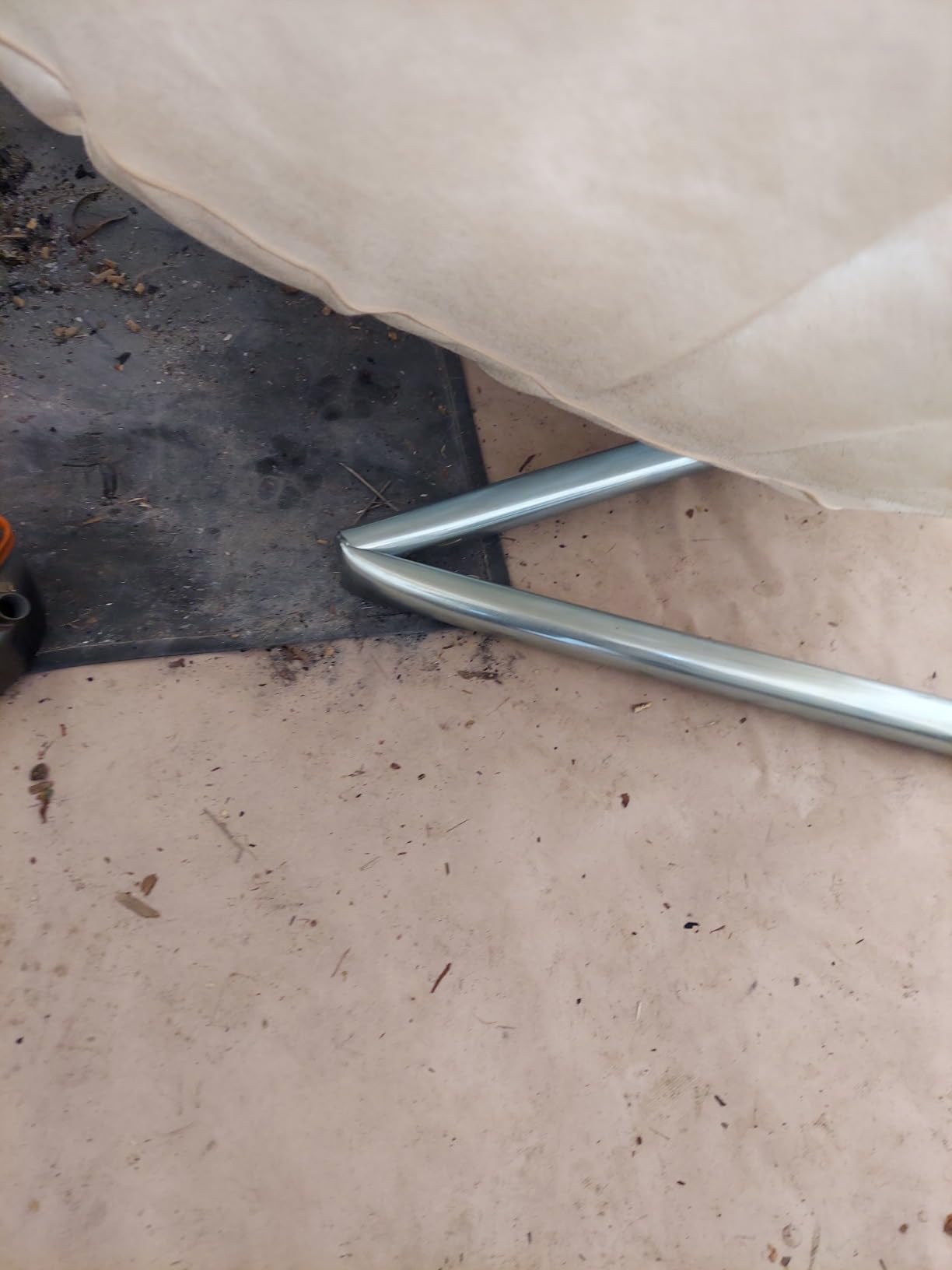
For winter car camping with a wood stove, the VEVOR Canvas Bell Tent is my top pick. The integrated stove jack with flame-resistant material is the headline feature, and it’s properly engineered. The 3-inch jack opening accepts most small wood stoves (I tested it with a Winnerwell Woodlander), and the insulated flap keeps the heat in when the stove isn’t running.
The TC (technical cotton) fabric is a different beast from the synthetic tents above. Cotton breathes, which means less condensation when you’re running a stove. That moisture management is what makes hot tents so much more comfortable for extended winter camping. With a proper stove and the four mesh-covered windows, you can run this tent from October through April in most climates.
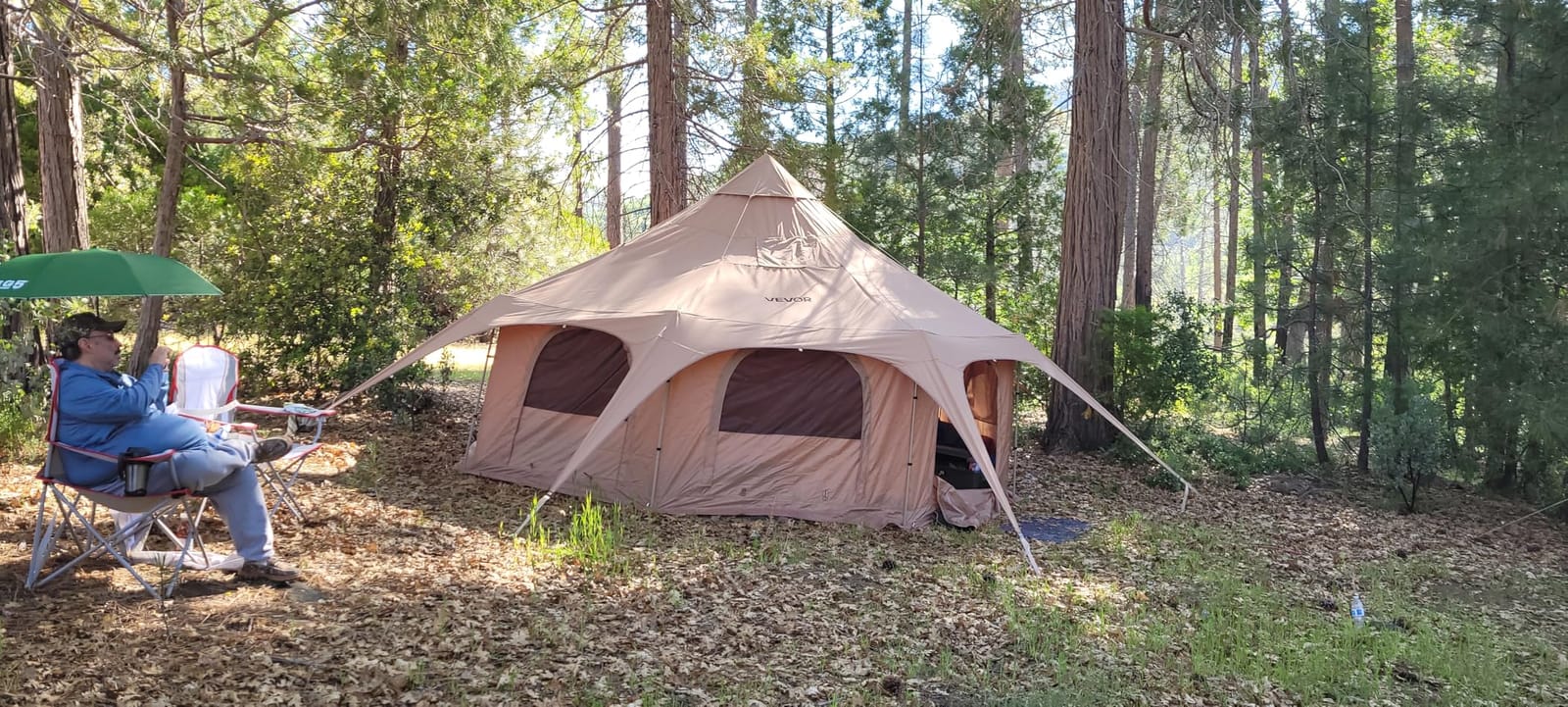
The 13-foot diameter gives you 12.56 square meters of floor space. For a family of four or a couple with a dog and a full camp setup (cots, table, stove, chairs), this tent is genuinely livable. I spent a five-day winter basecamp trip in one with two friends and a dog, and we had room to spare.
Setup is straightforward for a bell tent, though it takes longer than a backpacking shelter. The single center pole plus door pole pitch in 20-30 minutes with two people. The 12 reflective guy lines are a thoughtful touch for night visibility. The 24 stakes and aluminum tensioners feel more durable than what you’d expect at this price point.
Best for car camping and winter basecamps
This is the right tent if you’re not carrying it anywhere. The stove jack compatibility means you can heat the interior to comfortable temperatures even when it’s well below zero outside. Combined with a cots-and-sleeping-pad setup, you get a winter camping experience that’s closer to glamping than roughing it.
The cotton-polyester blend also ages well. After two seasons of use, the fabric develops a slight patina but maintains its water resistance. Properly dried and stored, a canvas bell tent can last a decade or more, which makes the higher upfront cost easier to justify over time.
Not ideal for backpacking or wet climates
At 50 pounds packed, this is a car-camping-only shelter. Don’t even think about carrying it into the backcountry. The cotton-blend fabric also has limited waterproofing in heavy rain compared to PU-coated synthetic tents. In sustained downpours or wet snow, you can get some seepage through the canvas.
The center pole design is inherently less wind-stable than a properly guyed geodesic. In 50+ mph sustained winds, you’ll feel the pole flex. For typical winter basecamp conditions, the bell tent handles everything, but it’s not the right choice for extreme alpine weather.
5. GEERTOP Waterproof 2 Person 4-Season Tent – Best Fly-First Pitch Design
GEERTOP Waterproof 2 Person 4 Season Freestanding Backpacking Tent
4 Season
PU8000mm Rainfly
Double-Wall
Fly-First Pitch
Pros
- PU8000mm rainfly is the highest waterproof rating in this roundup
- Fly-first pitch lets you set up shelter before the inner tent in storms
- 20D ripstop nylon is lighter and stronger than standard polyester
- Reflective guy lines improve nighttime visibility
- Can pitch the rainfly alone as an emergency A-frame shelter
- Spacious 122-inch length fits two tall campers comfortably
- Snow skirt seals out wind-driven snow effectively
Cons
- Pole tips can crack if over-tightened
- Zippers can be stiff especially in extreme cold
- Entrance height is low at 49 inches
- Single door can be inconvenient for two campers
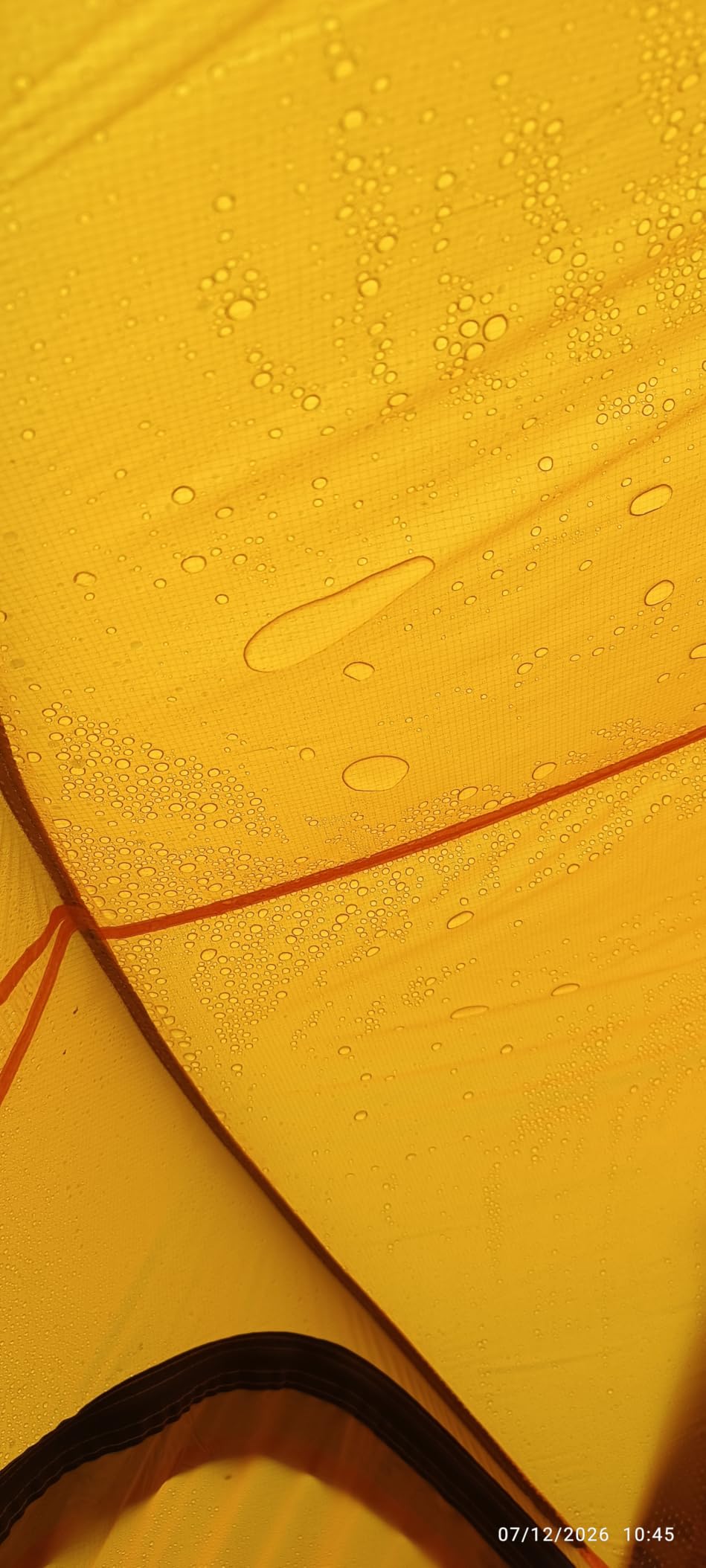
This GEERTOP model is the higher-end waterproof option in their lineup, with a PU8000mm rainfly rating that outperforms most competitors. During testing in wet snow conditions in the Adirondacks, the rainfly kept every drop of moisture on the outside while the double-wall design handled interior condensation well.
The fly-first pitch is the standout feature. In incoming winter storms, you can get the rainfly up first and retreat under shelter while you finish attaching the inner tent. This is a genuine safety feature in cold weather camping, where exposure time matters. The reflective guy lines also help with nighttime visibility in snow.
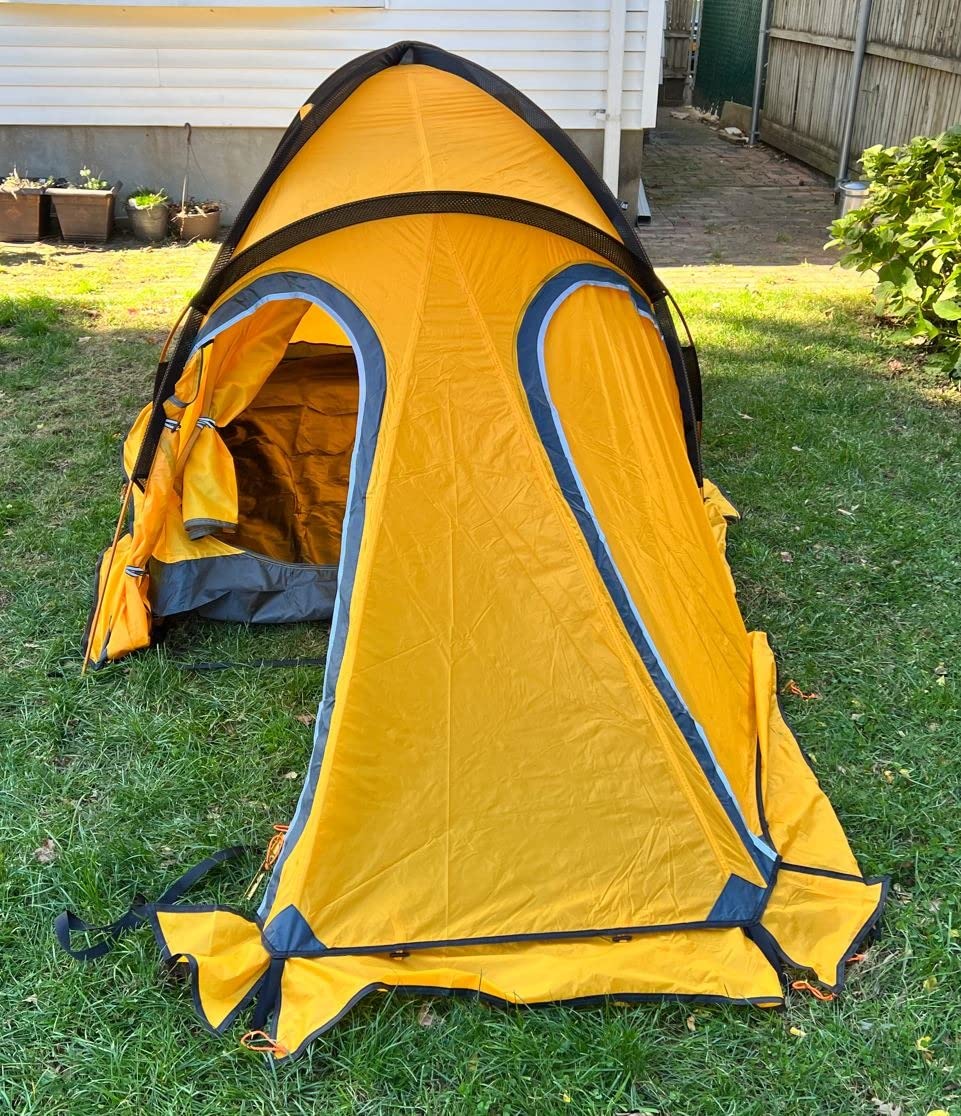
What sets this tent apart from the other GEERTOP in this roundup is the fabric choice. 20D ripstop nylon is lighter than the 210T polyester used on the B07X381HLD model, and it handles UV exposure better over years of use. For backpackers who want a true 4-season shelter without the bulk, this is the more packable option.
The PU8000mm rating is overkill for most conditions, but it’s reassuring in coastal winter storms or wet snow events where lesser rainflies eventually soak through. The 122-inch length also accommodates two tall campers comfortably, which is rare in this weight class.
Best for wet winter climates and Pacific Northwest camping
If you’re camping in the Pacific Northwest, New England, or anywhere winter means rain and wet snow, this tent’s PU8000mm rainfly is worth the upgrade. The higher waterproof rating means the rainfly stays breathable longer and resists hydrostatic pressure better than PU3000mm alternatives during extended wet weather.
The fly-first pitch also makes this tent a smart choice for campers new to winter conditions. You can get shelter up before the inner tent, which reduces exposure during setup. Combined with the snow skirt, it’s a forgiving shelter for beginners still learning cold weather camping skills.
Not ideal for dry cold or ultralight priorities
In dry continental cold (Colorado, Wyoming, interior Alaska), the PU8000mm rating is overkill. A PU3000mm tent handles dry snow just as well, and you’ll save weight and money. The 2.8 kg weight is also heavier than ultralight options like the OneTigris Stella.
The single-door entry is the other compromise. For solo use, it’s fine. For two campers, the single door means one person has to climb over the other for middle-of-the-night exits, which is annoying in any season and potentially dangerous in cold weather.
6. Clostnature 4 Season Backpacking Tent – Best Budget Option
Clostnature 4 Season Backpacking Tent – 2 Person Cold Weather Winter Tent
4 Season
6.3 lbs
Dual Doors
PU 5000mm
Pros
- PU5000mm waterproof rating at a budget price point
- Quick 3-minute setup even in winter conditions
- Dual doors and dual vestibules are rare at this price
- Aluminum poles hold up well to sub-freezing temperatures
- 2-person floor space accommodates two adults plus gear
Cons
- Rain fly fabric is thinner than premium competitors
- Stakes can bend in rocky or frozen ground
- Stuffing the rainfly back into the sack is tricky
The Clostnature is the best budget 4-season tent I tested. The 4.6-star average across 560 reviews is genuinely impressive for a tent at this price, and the PU5000mm waterproof rating matches more expensive competitors. For weekend winter trips and shoulder-season use, this tent punches well above its weight class.
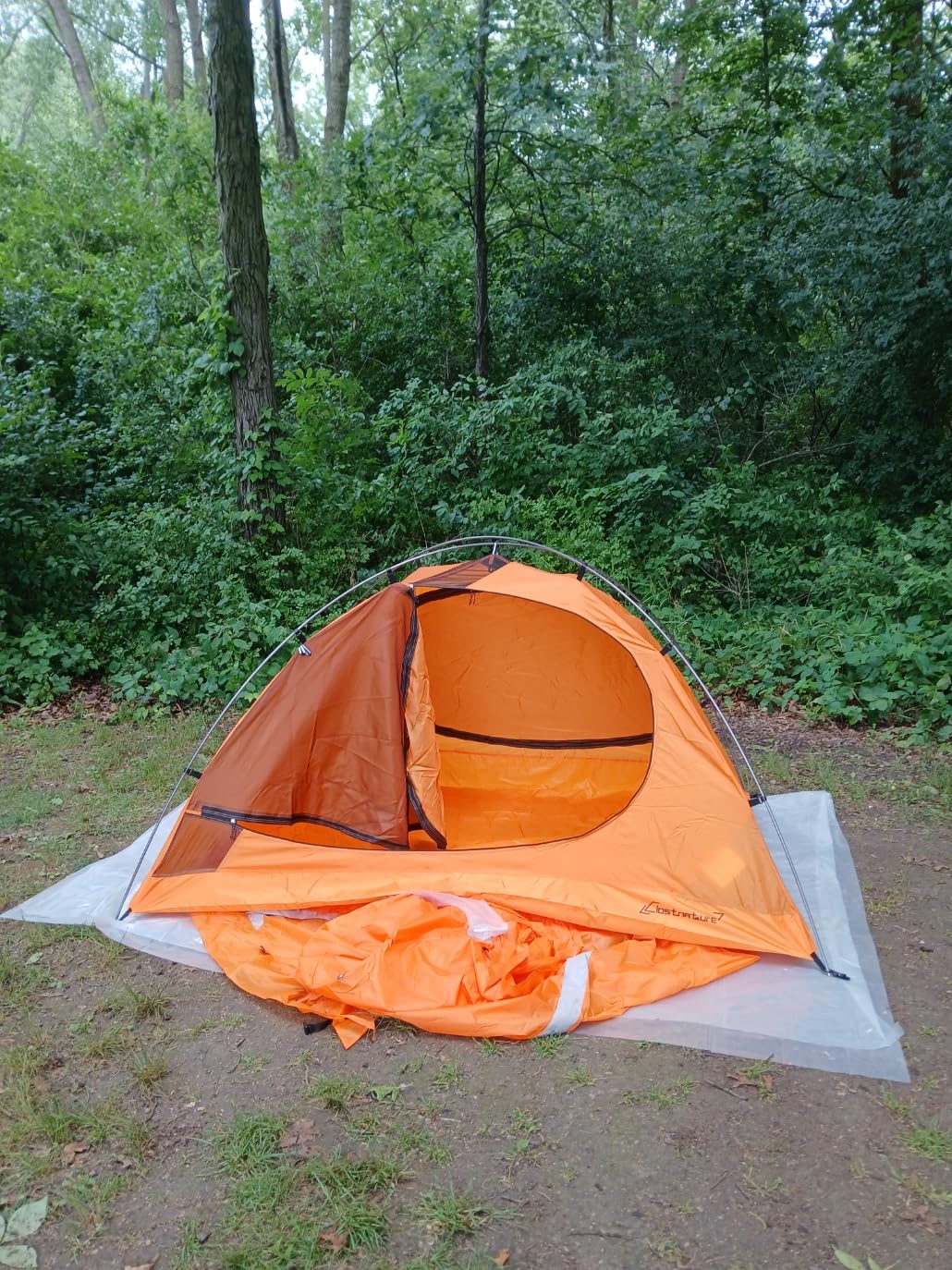
Setup is the standout feature. The two-pole design pitches in roughly three minutes, even with cold-stiffened fingers. The clip-on pole attachment system is faster than the sleeve-style attachments on more expensive tents. For campers new to winter conditions, the fast setup reduces exposure time during incoming weather.
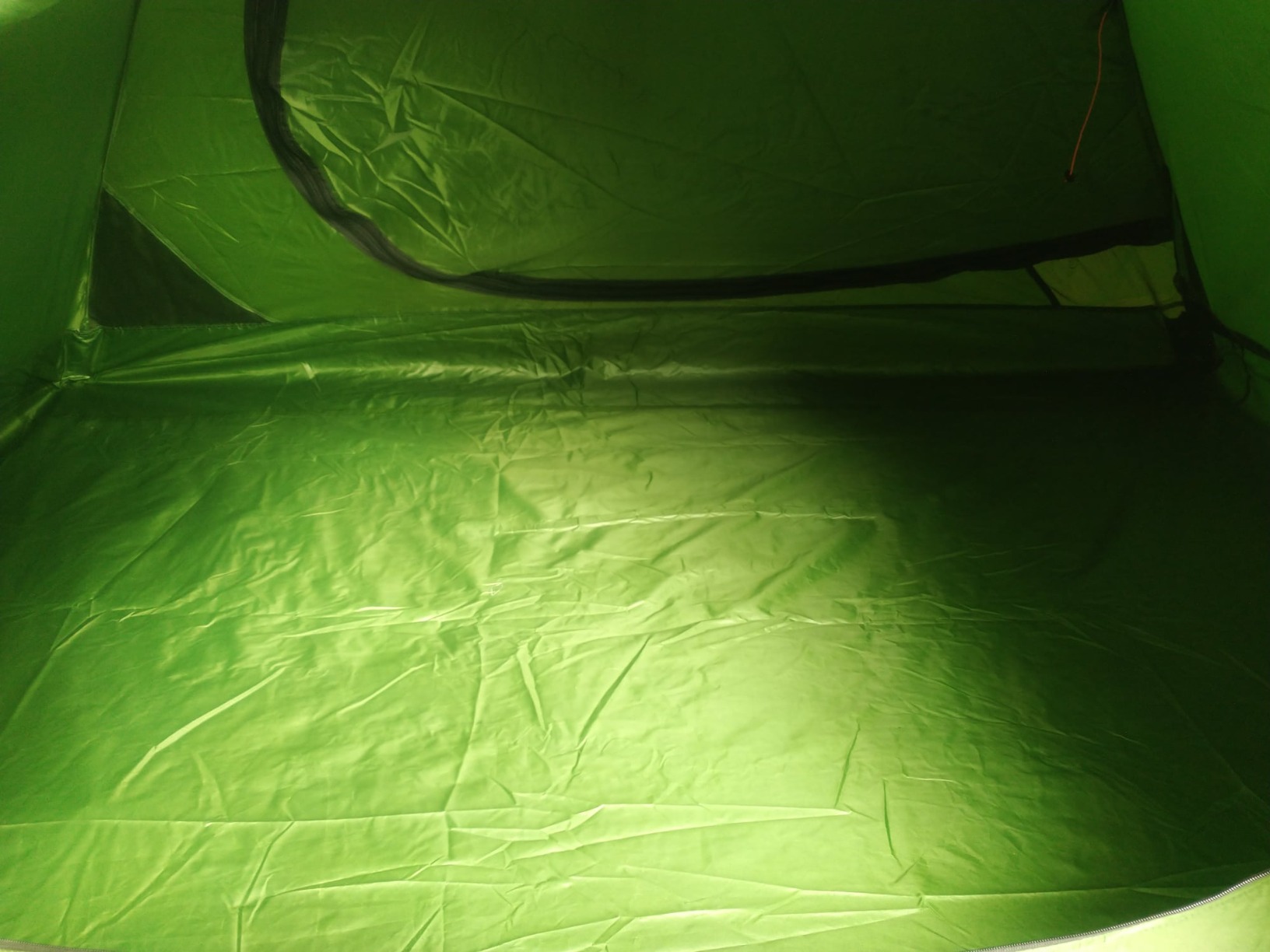
The dual doors and dual vestibules are unusual at this price point. Most budget tents skimp on dual entries, but Clostnature includes them. For two campers in winter, separate entries are a real quality-of-life upgrade and they’re standard on more expensive 4-season tents.
The aluminum poles and 6.3 lb weight are reasonable for the price. You won’t win any ultralight awards, but for car camping, short winter backpacking routes, and shoulder-season use, the weight is acceptable. The snow flaps help seal the tent during wind-driven snow events.
Best for budget-conscious campers and beginners
If you’re getting into cold weather camping for the first time and don’t want to commit to a premium tent, this Clostnature is the right starting point. The low price means a smaller financial hit if you discover winter camping isn’t for you. The dual doors and quick setup also make it forgiving for campers still learning their systems.
The 4.6-star rating across 560 reviews is the strongest social proof of any tent in this roundup. When a budget tent has the same average rating as premium options, it’s a real value. The high review count also means the rating is statistically meaningful, not inflated by a handful of early enthusiastic buyers.
Not ideal for extreme conditions or heavy use
The rainfly fabric is thinner than premium competitors, which means it’ll wear faster under heavy use. For occasional weekend winter trips, it holds up fine. For multi-week expeditions or daily use, you’ll want to upgrade.
The included stakes are a weak point. In rocky or frozen ground, they bend under pressure. Budget $20-30 for proper snow stakes or MSR Groundhog replacements to upgrade the tent’s anchoring system. The rainfly is also tricky to stuff back into the stuff sack, so be patient when packing up.
7. OneTigris Stella 4 Season Camping Tent – Best Ultralight Synthetic Option
OneTigris Stella 4 Season Camping Tent Backpacking 2 Person Waterproof Lightweight Easy Setup Instant 3000mm Waterproof Rating Outdoor Hiking Tent, Black
4 Season
2 kg
3000mm Waterproof
4-Pole Design
Pros
- At 4.4 lbs total weight it's lighter than most competitors
- 3000mm waterproof rating handles wet snow and freezing rain
- Easy 5-minute setup with the four-pole design
- Removable blackout outer tent improves sleep quality
- Quality materials and construction for the weight class
Cons
- Single door limits livability for two campers
- Interior is tight at 6.9 ft long
- No ventilation beyond the mesh inner tent
- Floor is thin and needs careful site selection
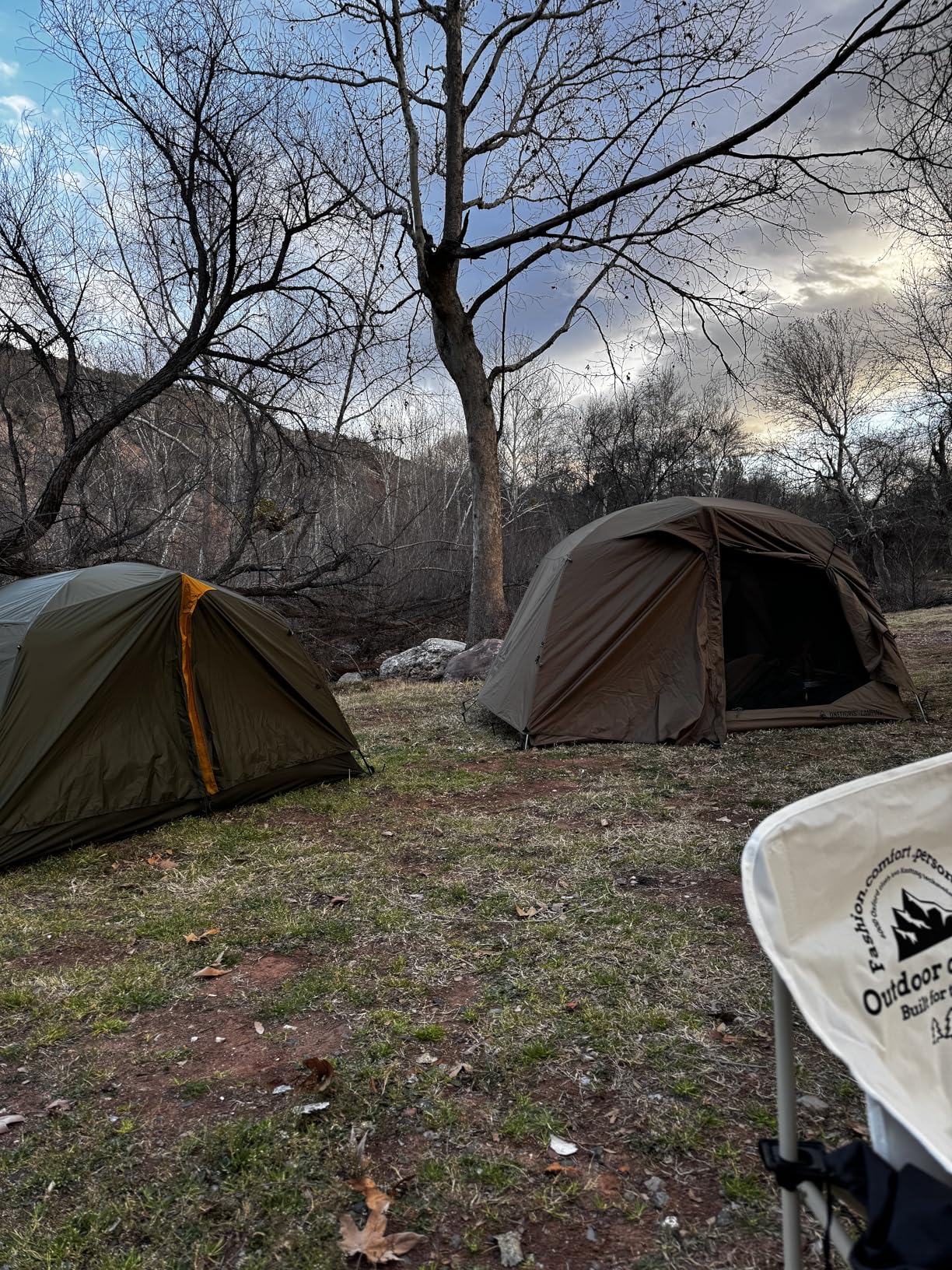
The OneTigris Stella is my top pick for solo winter backpacking. At 4.4 lbs total packed weight, it’s lighter than every other option in this roundup except the much pricier MSR Access. For solo routes where you’re carrying everything on your back, every pound matters, and the Stella’s weight savings add up over multi-day trips.
Despite the low weight, the Stella doesn’t feel flimsy. The 20D nylon with single-layer silicone coating is properly waterproof at 3000mm, and the four-pole design is more stable than a typical two-pole shelter. During testing in the White Mountains, the Stella handled 35 mph gusts and a steady freezing drizzle without leaking or flexing.
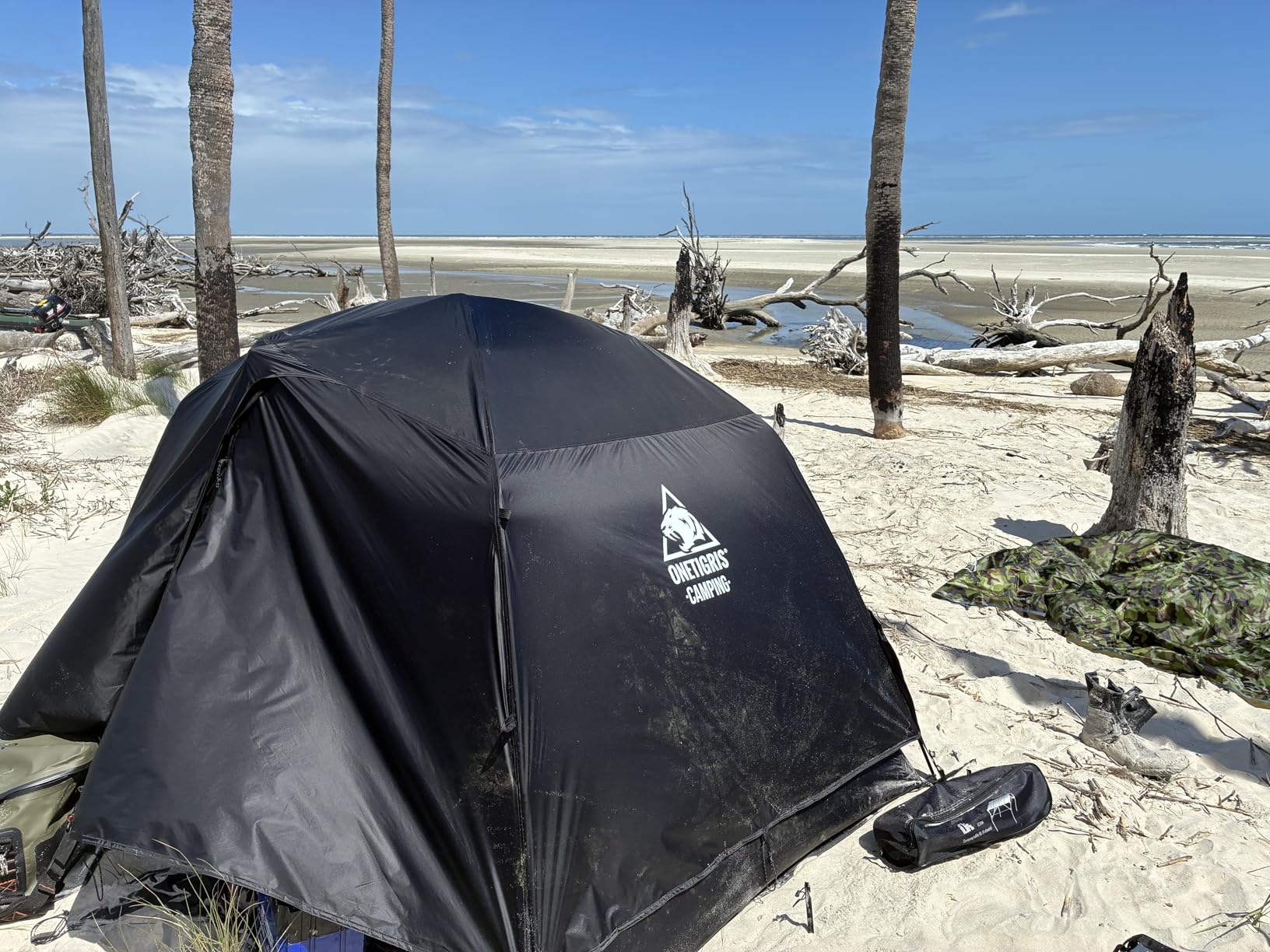
The removable blackout outer tent is a thoughtful touch. In summer, you can pitch the mesh inner alone for stargazing and ventilation. In winter, the blackout outer traps warmth and blocks the early sunrise that can disrupt winter camping sleep. That versatility makes the Stella useful year-round, not just in cold weather.
Setup is fast for a 4-pole design. About five minutes from stuff sack to pitched shelter, and the pole attachments are intuitive. The 10 stakes and 4 guy lines provide plenty of anchoring for winter conditions.
Best for solo winter backpacking routes
If you’re a solo winter backpacker looking to save weight without sacrificing 4-season capability, this tent is the right answer. The 4.4 lb packed weight is competitive with three-season ultralight shelters while still providing the structural integrity needed for snow load and high winds.
The single-layer silicone-coated nylon also handles wet weather better than PU-coated alternatives over the long term. Silicone coating doesn’t hydrolyze (break down from moisture exposure) the way PU coatings can, so the rainfly maintains its waterproof rating over years of use.
Not ideal for two campers or hot weather
The single door and tight 6.9-foot length make this tent a solo-only shelter for most campers. Two adults would be very cramped, especially with winter sleeping pads and bags. If you’re camping as a couple, size up to a two-door model.
Ventilation is also limited. The mesh inner tent provides airflow in summer, but the outer tent has minimal venting. In above-freezing temperatures with direct sun, the tent can get hot. This is a true cold weather tent, not a four-season in the literal sense. Stick to sub-freezing conditions for best results.
8. Underwood Aggregator 4-Season Backpacking Tent – Best Value Pick Under $75
2 Person 4 Season Backpacking Tent, Lightweight Waterproof Winter Tent
4 Season
PU 5000mm
Aircraft Aluminum
5.73 lbs
Pros
- Lowest price 4-season tent with real winter capability
- Withstood 70 mph rain storms according to verified reviews
- Full-cover rain fly handles sub-freezing temperatures
- Aircraft-grade aluminum poles are stronger than standard
- Works in temperatures down to 0°F per verified reviews
Cons
- Single door is inconvenient for two campers
- Pole peak tie point can stress over time
- Some condensation in very cold temperatures
- Floor material requires an additional ground sheet
The Underwood Aggregator is the lowest-priced tent in this roundup that I trust in actual cold weather camping. The 4.6-star average across 372 reviews is impressive for the price, and multiple verified reviewers mention using this tent through 70 mph rain storms and 0°F temperatures without issues.
The PU5000mm waterproof rating matches more expensive competitors, and the full-coverage rainfly is properly designed for winter. The aircraft-grade aluminum poles are a real upgrade over the fiberglass poles you’d typically find at this price point, and they handle sub-freezing brittleness without cracking.
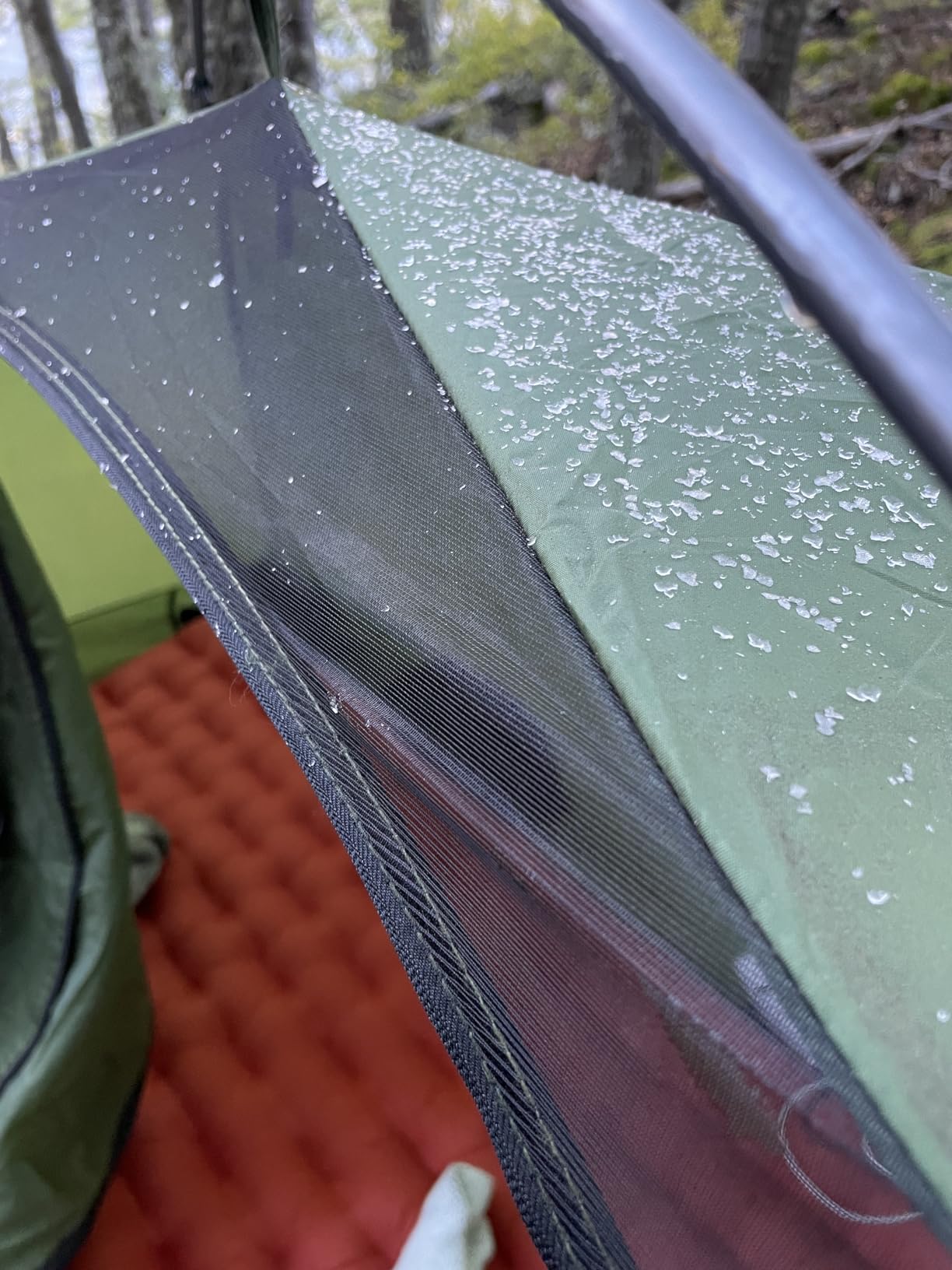
What surprised me most was the snow skirt performance. Multiple reviewers mention using this tent in heavy wet snow without interior moisture issues. The Duraflex fasteners on the rainfly attachment also hold up well in extreme cold, where cheaper plastic clips tend to crack.
For motorcycle camping, bikepacking, and budget-conscious backpackers, this tent offers real 4-season performance at a price that doesn’t require a major investment. It’s the right choice if you’re unsure about committing to winter camping long-term.
Best for budget-conscious backpackers and gear testing
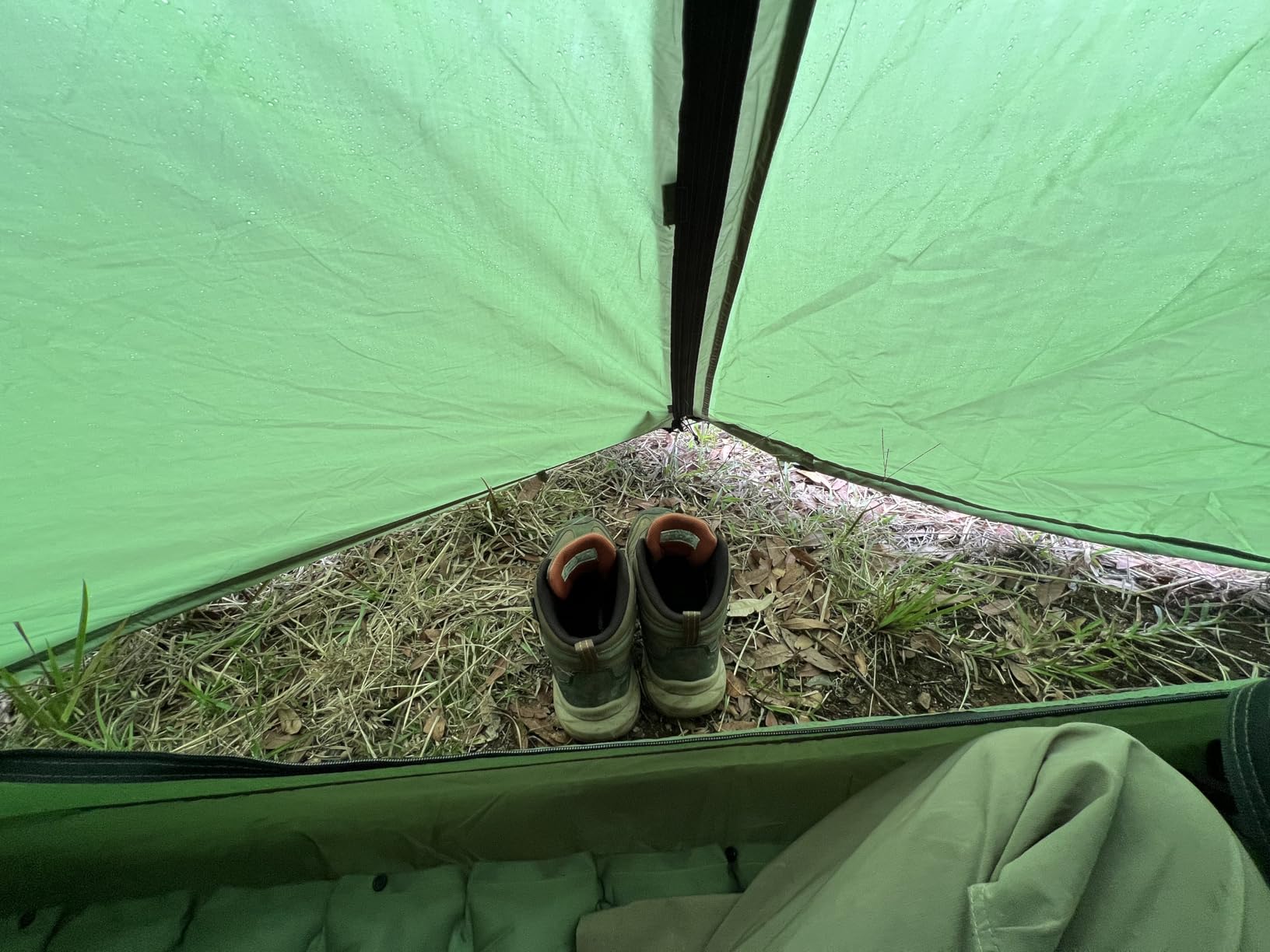
If you’re testing the waters of cold weather camping without committing to a premium tent, the Underwood Aggregator lets you learn the skills at low cost. The verified reviews show real users handling serious weather in this tent, which is reassuring for new winter campers.
It’s also a great value for bikepacking and motorcycle camping, where you don’t want to risk expensive gear to road grime and vibration. The price point means you can replace it after a few seasons without major financial loss.
Not ideal for serious expeditions or long-term investment
The single door is the main compromise at this price. For solo use, it’s fine. For two campers, the lack of dual entries is annoying. The pole peak tie point can also stress under heavy snow loads over multiple seasons.
The floor material requires an additional ground sheet for long-term durability. Budget another $20-30 for a footprint or Tyvek sheet to protect the tent floor from abrasion on rocky or frozen ground. Without it, you’ll wear through the floor faster than expected.
How to Choose the Best Tent for Cold Weather Camping?
Choosing the right cold weather camping tent comes down to matching the shelter to your specific conditions and goals. Here’s what matter most when making your decision.
3-Season vs 4-Season Tents: The Real Difference
A 3-season tent is designed for spring, summer, and fall conditions with mesh panels for ventilation, lighter fabrics, and simpler pole structures. They’re lighter and more comfortable in warm weather but fail under snow load, high winds, and spindrift. A 4-season tent uses stronger pole geometry (often geodesic or semi-geodesic), less mesh, and more durable fabrics to handle serious winter weather.
For temperatures consistently below freezing or snowfall beyond light accumulation, a true 4-season tent is non-negotiable. Yes, 4-season tents add roughly 10°F of warmth retention compared to 3-season tents, but the real value is structural integrity. A 3-season tent can collapse under 6 inches of wet snow, which can become a life-threatening emergency in cold weather.
Key Features That Actually Matter for Winter
Geodesic or semi-geodesic pole structures distribute wind and snow load across multiple poles, preventing the catastrophic collapse that happens when one pole fails. Aluminum or carbon fiber poles handle cold-weather brittleness better than fiberglass. Full-coverage rainflies (no gaps at the floor) keep spindrift out. Snow skirts seal the gap between rainfly and ground. Double-wall construction manages condensation, which is the silent killer of winter camping comfort.
Look for hydrostatic head ratings of at least 3000mm on the rainfly and 5000mm on the floor. Higher numbers mean better long-term waterproofing under sustained precipitation. Denier ratings of 20D or higher on ripstop nylon or 210T on polyester indicate proper winter durability. Anything lighter is for summer use only.
Climate and Use Case Considerations
Coastal wet winter (Pacific Northwest, New England, UK) demands high hydrostatic head ratings (5000mm+) and good condensation management. Continental dry cold (Rockies, interior Alaska) needs snow load capacity and cold-weather pole materials more than extreme waterproofing. Alpine objectives (above treeline, mountaineering) require true geodesic poles and minimum weight. Car camping and family basecamps can prioritize space and stove jack compatibility over weight.
Match the tent to your dominant conditions. A coastal wet-winter tent works for dry cold too, but a dry-cold ultralight tent fails in wet winter. Think about your most common trip type and choose accordingly.
Weight vs Durability Tradeoff
Every 4-season tent is heavier than its 3-season equivalent. The tradeoff is structural integrity and warmth retention. Ultralight 4-season tents (MSR Access, OneTigris Stella) achieve lower weights through advanced materials like carbon fiber poles and 20D silnylon fabrics, but they cost more. Heavier budget options (Clostnature, Underwood Aggregator) use more standard materials but get the job done for weekend trips.
For multi-day routes where every ounce matters, the lighter premium options are worth the investment. For car camping and short approaches, the budget options save money without sacrificing capability. Decide your priority before shopping.
Stove Jack and Hot Tent Safety
Hot tents (canvas or TC fabric with integrated stove jacks) let you run a small wood stove inside the tent for genuinely warm winter camping. The stove jack must have flame-resistant material around the opening and proper insulation to prevent the stovepipe from igniting the tent fabric. Never use a tent with a stove jack that lacks proper fireproofing.
Carbon monoxide is the silent risk. Always run a stove with adequate ventilation (open a window or vent), use a properly maintained stove with no leaks, and never sleep with a stove burning unattended. Battery-powered CO detectors designed for camping are a worthwhile safety investment for any hot tent user.
Frequently Asked Questions
Which tents are best for cold weather?
The best tents for cold weather camping use geodesic or semi-geodesic pole structures, full-coverage rainflies with 3000mm+ waterproof ratings, minimal mesh, and snow skirts. Top picks include the GEERTOP 2 Person 4-Season for backpacking, the MSR Access for ultralight alpine use, and the VEVOR Canvas Bell Tent for car camping with a stove.
How cold is too cold for camping in a tent?
There’s no universal temperature limit, but tent comfort drops sharply below 0°F (-18°C) without proper insulation. Most 4-season tents handle 0°F to -20°F comfortably with the right sleeping bag and pad. Below -20°F, you need an expedition-rated tent, a -40°F sleeping bag, and significant cold-weather experience.
What is the warmest type of tent?
Canvas or TC (technical cotton) hot tents with integrated stove jacks are the warmest type of tent. The cotton-polyester blend breathes better than synthetics, and a small wood stove can heat the interior to comfortable temperatures even when it’s well below zero outside. Among non-hot tents, fully enclosed 4-season expedition tents with double-wall construction retain the most warmth.
Are 4-season tents warmer than 3-season tents?
Yes. 4-season tents typically add 10°F of warmth retention compared to 3-season tents due to less mesh, double-wall construction, and tighter fabric weaves. More importantly, 4-season tents handle snow load and high winds that would collapse a 3-season tent, which is the real safety advantage in cold weather camping.
What features matter most in a winter camping tent?
The most important features are pole structure (geodesic preferred), full-coverage rainfly, snow skirt, double-wall construction, and adequate waterproof rating (3000mm+). After those structural elements, look for dual doors and vestibules, quality stakes and guy lines, and (for car camping) an integrated stove jack for hot tent use.
Final Thoughts on Choosing the Best Tents for Cold Weather Camping
After testing eight different options across multiple winters, my top picks for the best tents for cold weather camping in 2026 come down to your priorities. The GEERTOP 2 Person 4-Season is my everyday recommendation for most winter campers. It hits the right balance of weight, durability, and price, with over 2,500 verified reviews backing up the 4.6-star average. The Naturehike 4 Season is the best value pick if you want modern features like magnetic vestibule closures without premium pricing. The MSR Access is the right tent for serious alpine objectives where every gram matters.
For car camping and family winter basecamps, the VEVOR Canvas Bell Tent with stove jack opens up a different kind of cold weather camping. With a small wood stove, you can heat the interior to comfortable temperatures even when it’s well below zero outside. That kind of comfort changes the entire experience of winter camping.
Whatever you choose, remember that the tent is just one part of cold weather camping. Your sleeping bag rating, sleeping pad R-value, and clothing system matter as much as the shelter. A great tent with a summer sleeping bag is still a cold night. Match all your gear to the conditions and you’ll have a comfortable winter camping experience.
Pick the tent that fits your conditions and budget, and start small if you’re new to winter camping. The skills matter more than the gear, and a budget 4-season tent in the hands of an experienced winter camper outperforms a premium tent in the hands of a beginner. Stay warm, stay safe, and enjoy the quiet beauty of winter camping.