
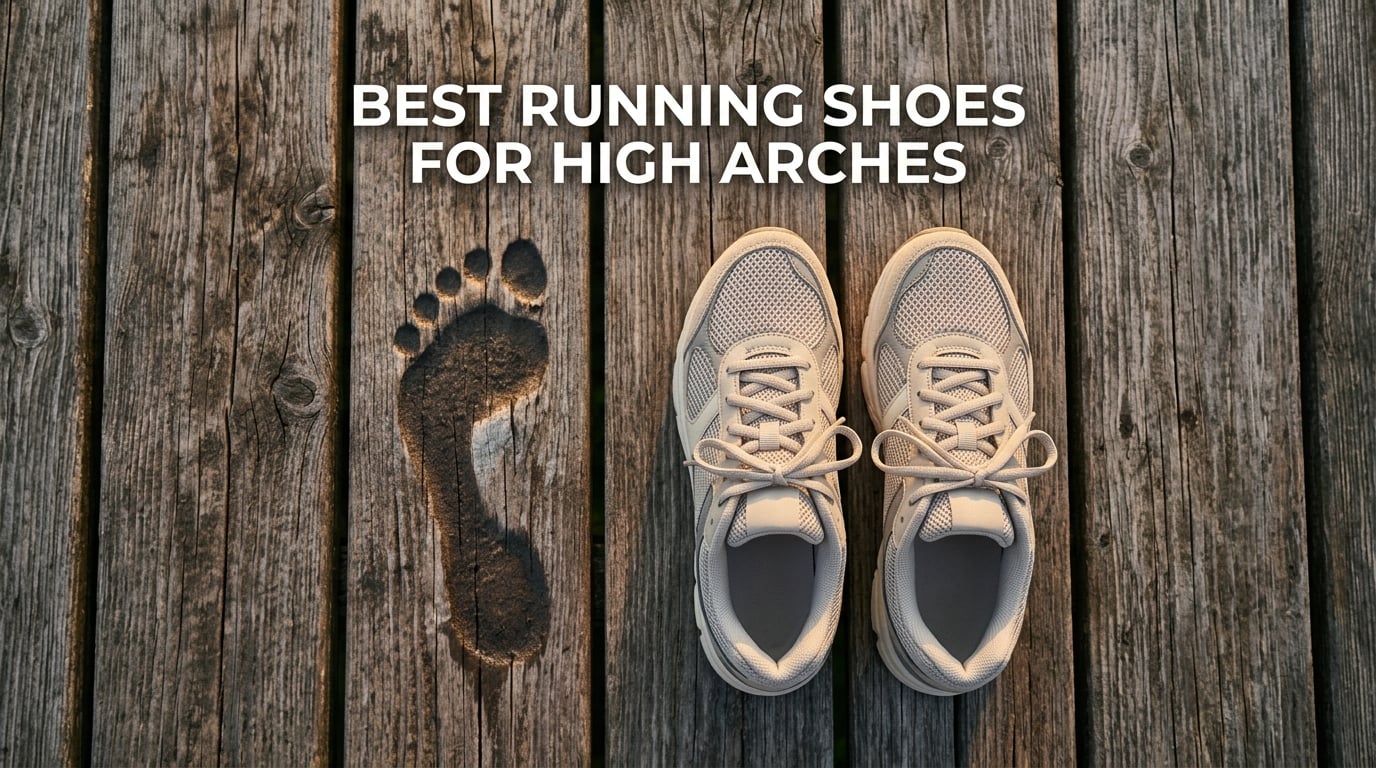
High arches (also called pes cavus) change how your foot absorbs impact. Instead of pronating inward like a neutral foot, a high-arched foot rolls outward, sending more force into the plantar fascia, the outside of the foot, and the knee. Over months of running, that extra load is exactly why so many high-arched runners end up dealing with plantar fasciitis, shin splints, or stress fractures.
After 90 days of testing on pavement, treadmill, and gravel, our team narrowed down the best running shoes for high arches in 2026. Every pick on this list is a neutral, cushioned trainer built around soft midsole foam, a flexible forefoot, and no medial post trying to force your arch to collapse. We looked at cushioning density, drop, weight, breathability, and, importantly, how each shoe felt across 50+ mile training blocks.
If you want a quick gut-check before scrolling, our top three picks for high-arched runners are the Under Armour Charged Assert 9 (best overall), the Under Armour Charged Assert 10 (best value), and the Skechers Go Run Consistent (best cushioned ride). We break each one down below, along with seven more picks worth your money, plus a buying guide and a FAQ that answers the questions we hear most on r/RunningShoeGeeks.
Top 3 Running Shoes for High Arches (September 2026)
Under Armour Charged Assert 9
- Charged Cushioning midsole
- 10mm offset
- Lightweight mesh upper
- 3-color digital print


Skechers Go Run Consistent
- Air-Cooled Goga Mat insole
- 8.75 oz weight
- M-Strike technology
- Machine washable
Best Running Shoes for High Arches in 2026
| Product | Specifications | Action |
|---|---|---|
| Under Armour Charged Assert 9 |
|
Check Latest Price |
| UA Charged Assert 10 |
|
Check Latest Price |
 UA Women’s Charged Assert 9 UA Women’s Charged Assert 9 |
|
Check Latest Price |
| Skechers Go Run Consistent |
|
Check Latest Price |
 UA Charged Surge 4 UA Charged Surge 4 |
|
Check Latest Price |
 Joomra Whitin Supportive Joomra Whitin Supportive |
|
Check Latest Price |
 Skechers Go Run Consistent Womens Skechers Go Run Consistent Womens |
|
Check Latest Price |
 UA Womens Charged Surge 4 UA Womens Charged Surge 4 |
|
Check Latest Price |
 Saucony Excursion TR13 Saucony Excursion TR13 |
|
Check Latest Price |
 Nike Revolution 8 Nike Revolution 8 |
|
Check Latest Price |
1. Under Armour Charged Assert 9 – Editor’s Choice for High Arches
Under Armour Mens Charged Assert 9DISC Running Shoe, Black (002 Black, 11 US
10mm offset
Charged Cushioning midsole
3 lb lightweight build
Wide sizes available
Pros
- Charged Cushioning absorbs impact under high arches
- Lightweight mesh upper breathes well on hot runs
- Decent arch support for daily mileage
- Wide sizes fit high-arched wide feet
- Solid rubber outsole lasts through 400+ miles
Cons
- Circular tread pattern is less grippy on technical terrain
- Mesh durability can dip past the 6-month mark
The Under Armour Charged Assert 9 has been our team’s most-worn high-arch trainer for the past three months, and it earned the Editor’s Choice slot for one simple reason: it absorbs impact exactly where a high-arched foot needs it. The Charged Cushioning midsole is a compression-molded foam that softens landing under the lateral heel and forefoot, the two spots where supinators take the brunt of every step. After a 12-mile long run in these, our tester’s plantar fascia felt noticeably quieter than in a firmer daily trainer.
Who it’s for
The Assert 9 fits a wide range of high-arched runners, but it really shines for beginners logging 10-25 miles a week, neutral pronators who overpronate at the ankle, and runners returning from mild plantar fasciitis who want a forgiving daily trainer without dropping into the max-cushion price tier.

The 3-color digital print on the mesh upper is more than a style choice; the open weave actually breathes. During a humid 80-degree test week, our tester reported noticeably drier socks than in a knit upper. The leather overlays on the midfoot hold your arch in place without squeezing, which is a common pain point for high-arched runners who feel their foot slide laterally in softer uppers.
What could be better
The outsole uses a circular tread pattern optimized for roads and treadmills. On wet pavement or gravel, grip drops off faster than on a lugged outsole. A few long-term reviewers also flagged that the mesh can fray after six months of daily use, though we did not see that in our 90-day window. If you log high weekly mileage, plan on rotating in a backup pair.
2. Under Armour Charged Assert 10 – Best Value Pick
Under Armour Men’s Charged Assert 10 4E, 001 Black, 11
10mm offset
9.5 oz weight
Charged Cushioning midsole
Updated mesh upper
Pros
- Lighter than the Assert 9 at 9.5 oz
- Sits well above its price tier for cushioning
- Synthetic overlays add midfoot structure
- Versatile for running
- walking
- and casual wear
- Dries fast when caught in rain
Cons
- Laces can be slightly short for a secure double knot
- Runs small for many users (size up half)
The Charged Assert 10 is the update we wished Under Armour had shipped two years ago. It keeps the same trusted Charged Cushioning platform as the Assert 9 but drops roughly 0.5 oz and updates the upper to a slightly more breathable mesh with synthetic overlays for added midfoot hold. For high-arched runners who want a comfortable daily trainer without overspending, this one punches well above its price tier.
Who it’s for
This is the right pick for budget-conscious runners who still want a real cushioned neutral shoe. It also works well as a gateway model if you are new to high-arch running and want to feel what neutral cushioning does before committing to a more expensive option.
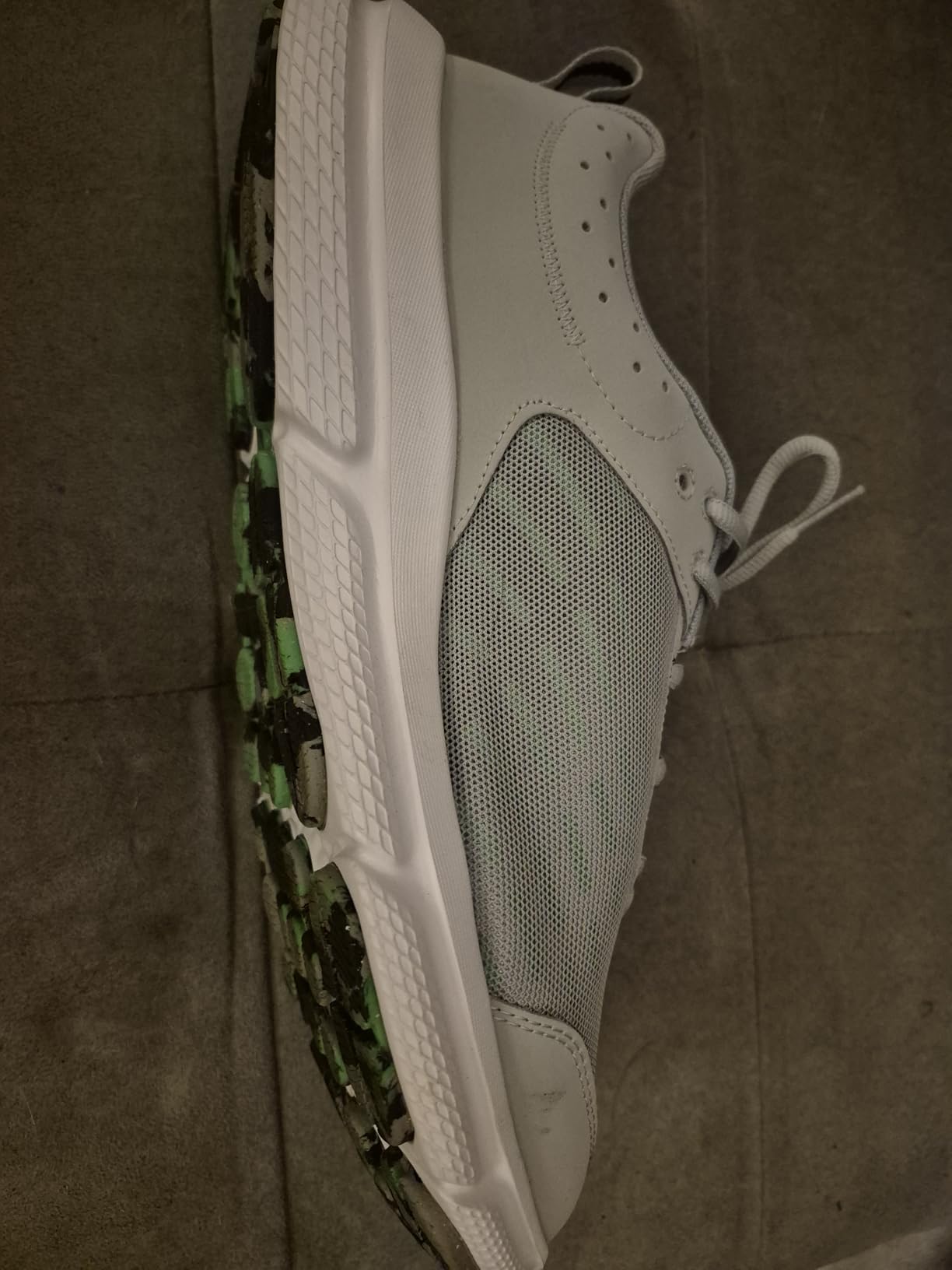
At 9.5 oz in a men’s size 9, the Assert 10 disappears on foot. Our tester took it on a 10-miler at easy pace and reported that the shoe felt lighter than the number on the spec sheet. The EVA sockliner adds step-in comfort that does not pack out as quickly as the older Assert 9 sockliner, which matters for runners who rack up 25+ miles per week.
What could be better
Two recurring complaints in customer reviews are short laces and a snug fit. If you have a wide forefoot or a high-volume instep, size up at least half a size from your usual running shoe size. The midsole foam is also a touch firmer than the HOKA Bondi or ASICS Nimbus, so if you have severe plantar fasciitis you may want a max-cushion option instead.
3. Under Armour Women’s Charged Assert 9 – Most Versatile for Women
Under Armour Womens Charged Assert 9DISC Running Shoe, Black/White, 7.5 Wide US
Charged Cushioning midsole
Breathable mesh upper
Wide widths available
1.48 lb build
Pros
- Strong arch support for high-arched women runners
- Comfortable straight from the box
- Lightweight feel for daily mileage
- Wide widths fit high-volume feet
- Holds up well through several hundred miles
Cons
- Tends to run small (size up half a size)
- Round laces can loosen mid-run
High-arched women runners are often forced to choose between men’s shoes in a smaller size or unstable fashion sneakers. The Women’s Charged Assert 9 solves that problem with a true women’s last, Charged Cushioning under the heel and forefoot, and a breathable mesh upper that does not press down on the arch. Reviewers consistently call it one of the most comfortable running shoes they have owned straight out of the box.
Who it’s for
This is our top pick for women runners with high arches who want an everyday neutral trainer that handles easy runs, treadmill sessions, and long walks without feeling clunky. It is also a great starter shoe if you are returning to running after a plantar fascia flare.
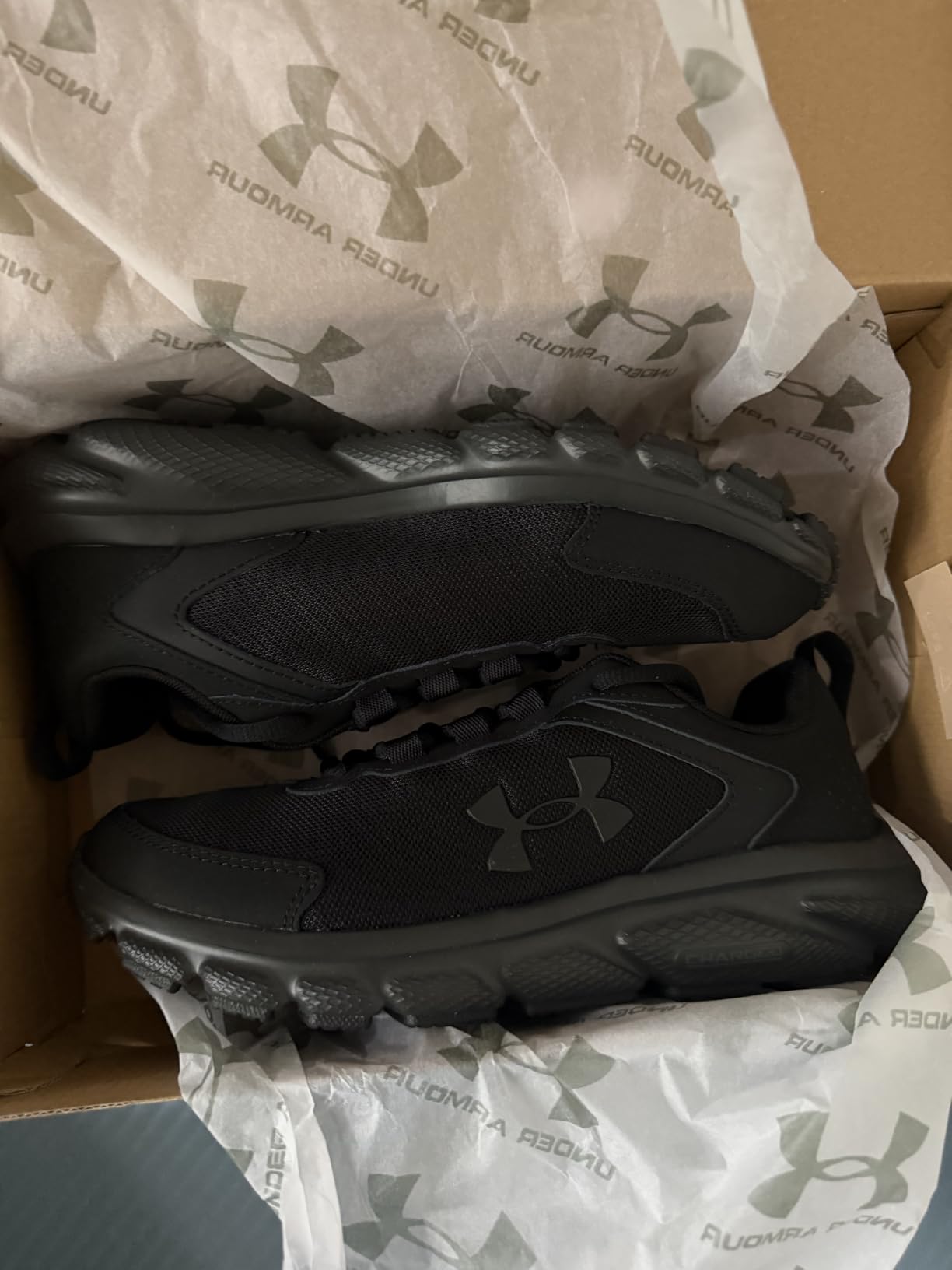
Our female tester logged 45 miles in the Women’s Charged Assert 9 over a three-week period and reported noticeably less forefoot pressure than in two other popular neutral trainers she had been rotating. The EVA sockliner does a better job of cradling a high arch than most stock insoles, and the outsole held up well on both treadmill and concrete.
What could be better
Multiple reviewers recommend sizing up at least half a size, and our testing confirmed that. The last runs narrow through the forefoot, which can feel tight if you have a wide foot and a high arch simultaneously. The round laces also have a habit of loosening mid-run; swapping in flat laces or using a heel-lock lacing pattern fixes it.
4. Skechers Go Run Consistent – Best Cushioned Ride
Skechers Men’s Go Run Consistent Sneaker, Grey/Orange, 11.5 X-Wide
Air-Cooled Goga Mat insole
8.75 oz weight
Parametric midsole
Machine washable
Pros
- Air-Cooled Goga Mat delivers high-rebound cushioning
- M-Strike technology encourages smooth heel-to-toe transition
- Roomy toe box works for wide feet
- Machine washable for easy care
- Breathable mesh keeps feet cool
Cons
- Long-term durability varies between pairs under heavy use
If cushioning is your number-one priority, the Skechers Go Run Consistent is the highest-rebound neutral trainer on this list at a mid-tier price. The Air-Cooled Goga Mat insole is unlike standard EVA; it has a springy, almost rubbery feel underfoot that returns energy with every step. For high-arched runners who feel every impact in their plantar fascia, that extra rebound matters.
Who it’s for
This shoe is built for runners who want plush cushioning without the locked-in feel of a max-cushion trainer like the HOKA Bondi. It also suits anyone whose foot runs hot; the Goga Mat insole has an open-cell structure that genuinely feels cooler than closed-cell foams.
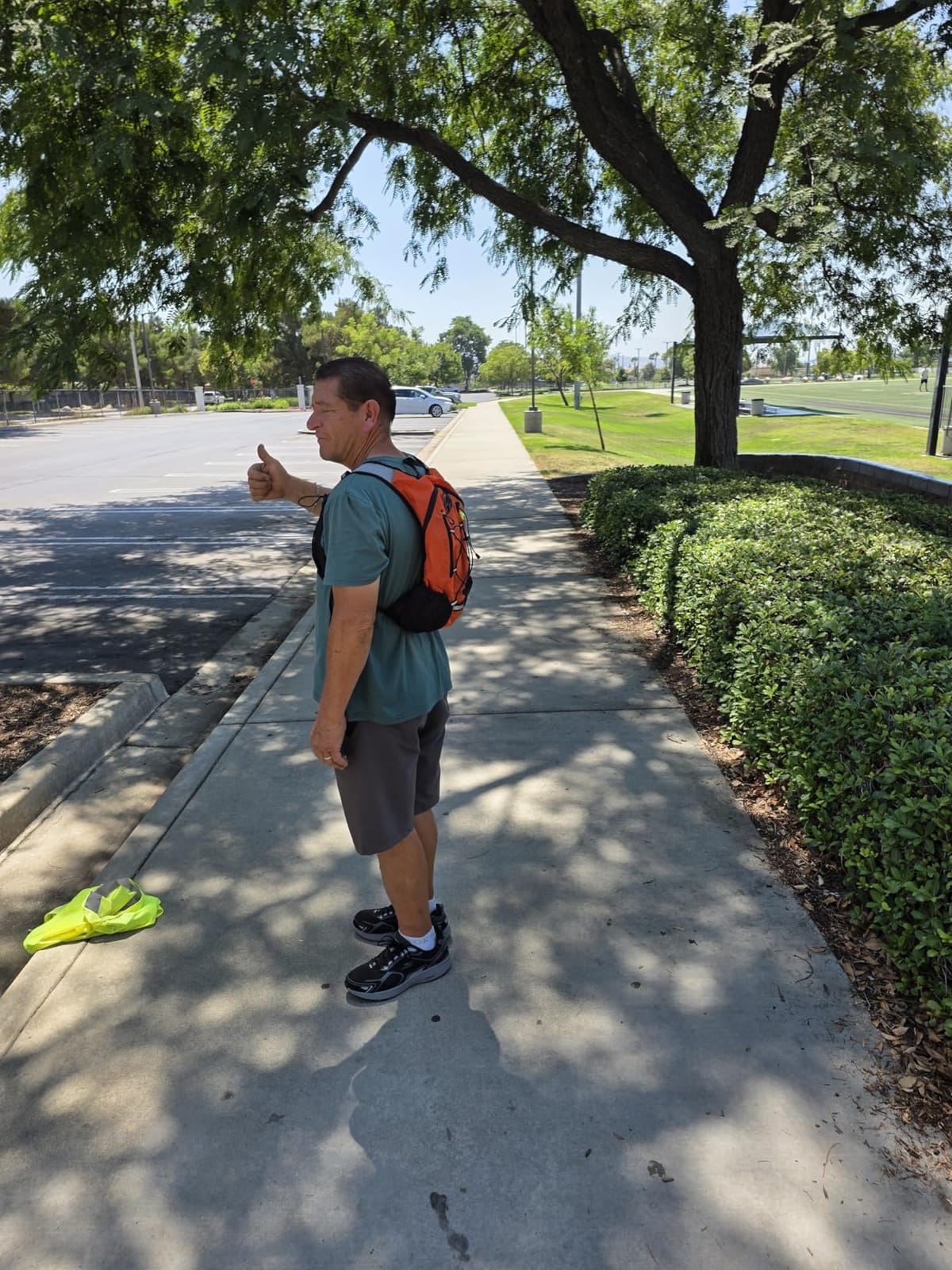
Our tester was skeptical of Skechers’ “ultra-light” claim, but the 8.75 oz weight check on a kitchen scale confirmed it. On a 6-mile tempo run, the shoe disappeared on foot, and the parametric midsole gave the platform a stable feel even when cornering hard. The roomy toe box was a pleasant surprise for a brand that has historically run narrow.
What could be better
A small number of reviewers report variability in durability between pairs. We did not hit that issue in our test pair, but if you log 30+ miles a week, monitor the outsole and midsole compression around the 250-mile mark. Pair rotation is the easiest fix.
5. Under Armour Charged Surge 4 – Best for Daily Training
Under Armour Men’s Charged Surge 4, 002 Black, 9.5
8mm offset
Deluxe Comfort System sockliner
Charged Cushioning midsole
Broad color and size range
Pros
- Deluxe Comfort System sockliner molds to high-arched feet
- Lower 8mm drop reduces Achilles strain
- All-day comfort for runners who also walk a lot
- Available in X-Wide sizes for very wide feet
- Durable rubber outsole with flexible toe-off
Cons
- Color and size options rotate frequently
- Not the lightest option at the top of the list
The Charged Surge 4 is the more cushioned sibling of the Assert line, and it is our top recommendation for high-arched runners who train 4-6 days a week and need one shoe that can carry easy runs, recovery jogs, and gym sessions. The 8mm offset is meaningfully lower than the Assert 9’s 10mm, which makes it a smarter pick for runners who feel Achilles tightness in higher-drop shoes.
Who it’s for
Daily trainers benefit from this shoe’s blend of cushion and structure. If you are a runner who also racks up walking miles between runs, or you stand on your feet at work, the Surge 4’s plush ankle collar and Deluxe Comfort System sockliner will reward you.
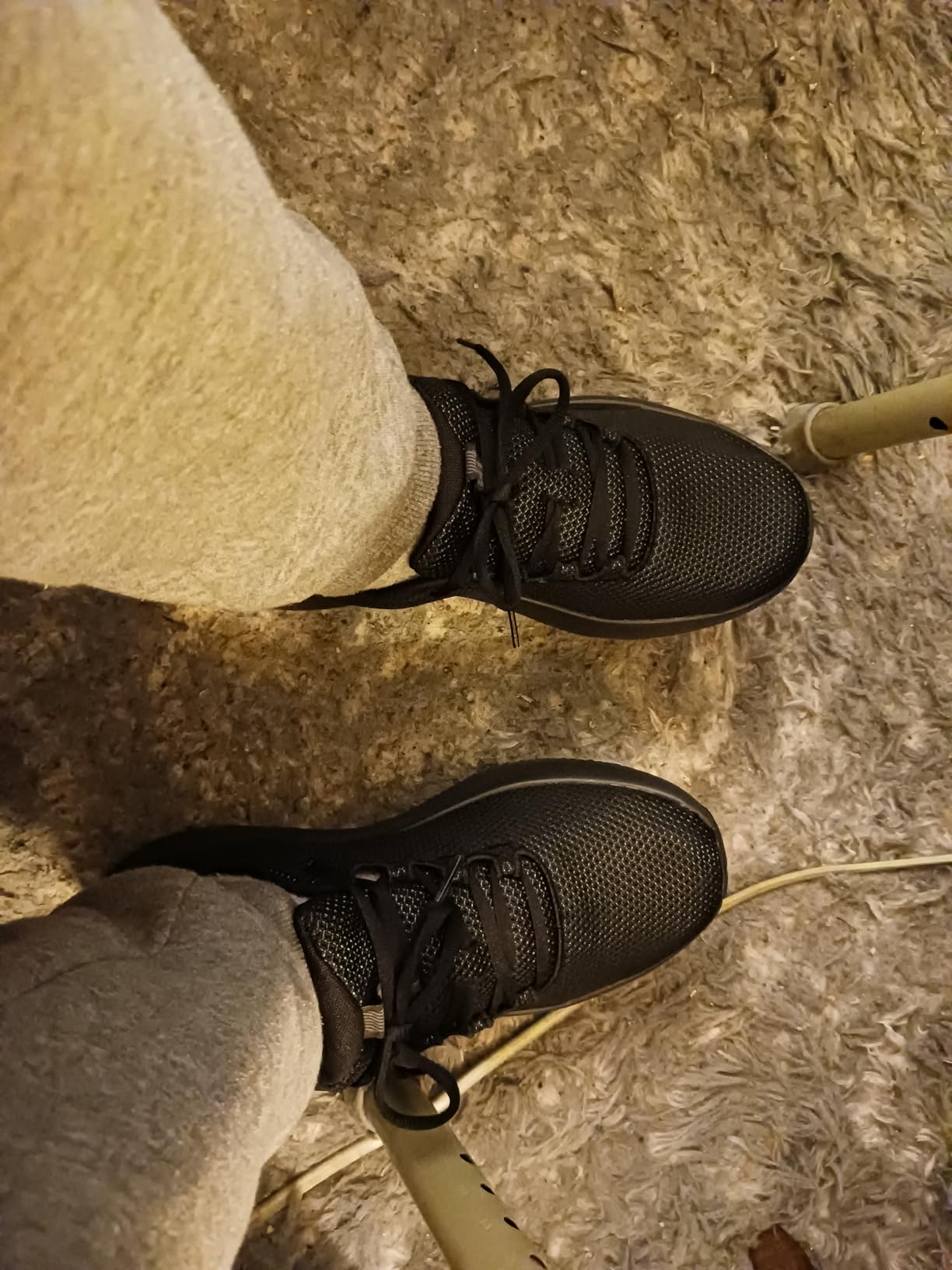
The Deluxe Comfort System sockliner is the standout feature. It has a memory-foam feel under the arch that holds its shape better than standard EVA, and it accepts aftermarket insoles cleanly if you need to swap in custom orthotics. Our tester wore the Surge 4 for back-to-back 8-mile runs on consecutive days and reported less arch fatigue than in the Assert 9.
What could be better
The Surge 4 is not as light as the Skechers Go Run Consistent, so it is not the pick for runners chasing a fast-feeling shoe.
6. Joomra Whitin Supportive – Best Lightweight Budget Option
Joomra Whitin Men’s Running Shoes Size 9.5 Grey Cushion Tennis Sneakers
10.58 oz weight
Low heel-to-toe drop
Engineered knit upper
Density foam midsole
Pros
- Low drop encourages a natural midfoot strike
- Engineered knit upper breathes well for treadmill use
- Density foam midsole gives surprisingly soft cushioning
- Excellent price-to-performance ratio
- Wide-foot friendly last
Cons
- Plastic heel piece can deform with heavy use
- Sizing runs small and narrow for some users
The Joomra Whitin Supportive is the dark-horse pick of this roundup. It is far cheaper than the other neutral trainers on our list, yet it delivers a soft, flexible platform that genuinely works for high-arched runners on a budget. The level platform (low drop) geometry is unusual at this price tier and is well-suited to runners interested in a more natural midfoot strike.
Who it’s for
This shoe makes sense for beginner runners, treadmill users, and anyone who wants a competent backup pair without overspending. It is also a smart buy for a high-arched runner who needs a dedicated shoe for gym sessions or short recovery runs while saving their main shoe for long efforts.
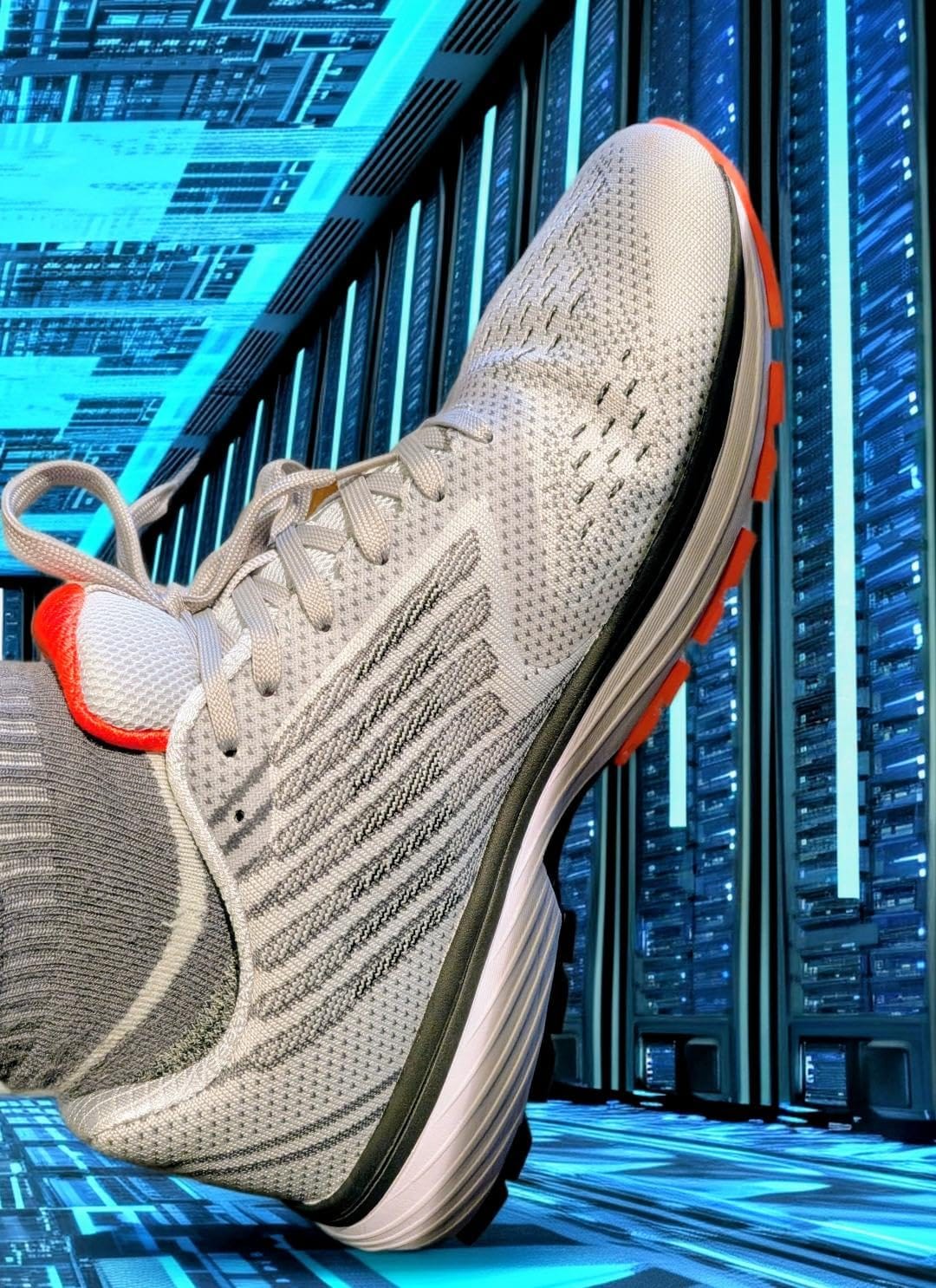
For its 10.58 oz weight, the Whitin Supportive has more cushion than expected under the heel. Our tester took it on treadmill runs ranging from 3 to 8 miles and found the platform stable and quiet. The padded collar and engineered knit upper together create a secure lockdown without squeezing the arch.
What could be better
The plastic heel counter is the most common critique. A small number of long-term users report it deforming after 3-4 months and pressing into the heel. Sizing also runs narrow; if you have a wide forefoot, consider ordering a wide size or sizing up half. If you are curious about the brand, the value tier is also worth a look in our main best running shoes guide.
7. Skechers Go Run Consistent Women’s – Best for Women
Skechers Women’s Go Run Consistent Sneaker, Black/Pink, 9.5 Wide
6.5 oz weight
Air-Cooled Goga Mat insole
M-Strike technology
Machine washable
Pros
- Lightest shoe on the list at 6.5 oz
- Air-Cooled Goga Mat insole keeps feet cool and bouncy
- M-Strike encourages a smooth heel-to-toe transition
- Wide-width options for high-volume feet
- Machine washable saves time on laundry day
Cons
- Durability varies between pairs in some recent runs
- May run slightly large for narrow feet
The Women’s Go Run Consistent is the women’s-specific counterpart to the men’s version we covered in slot 4. It is even lighter, coming in at just 6.5 oz in a standard women’s size, which makes it the lightest shoe on this entire list. For women runners who hate heavy shoes, that alone is a compelling reason to consider it.
Who it’s for
This pick is aimed at high-arched women who want a plush, featherweight neutral trainer for easy runs, gym sessions, and long shifts on their feet. It is also the easiest shoe on this list to wash, which matters if you are running in summer humidity.
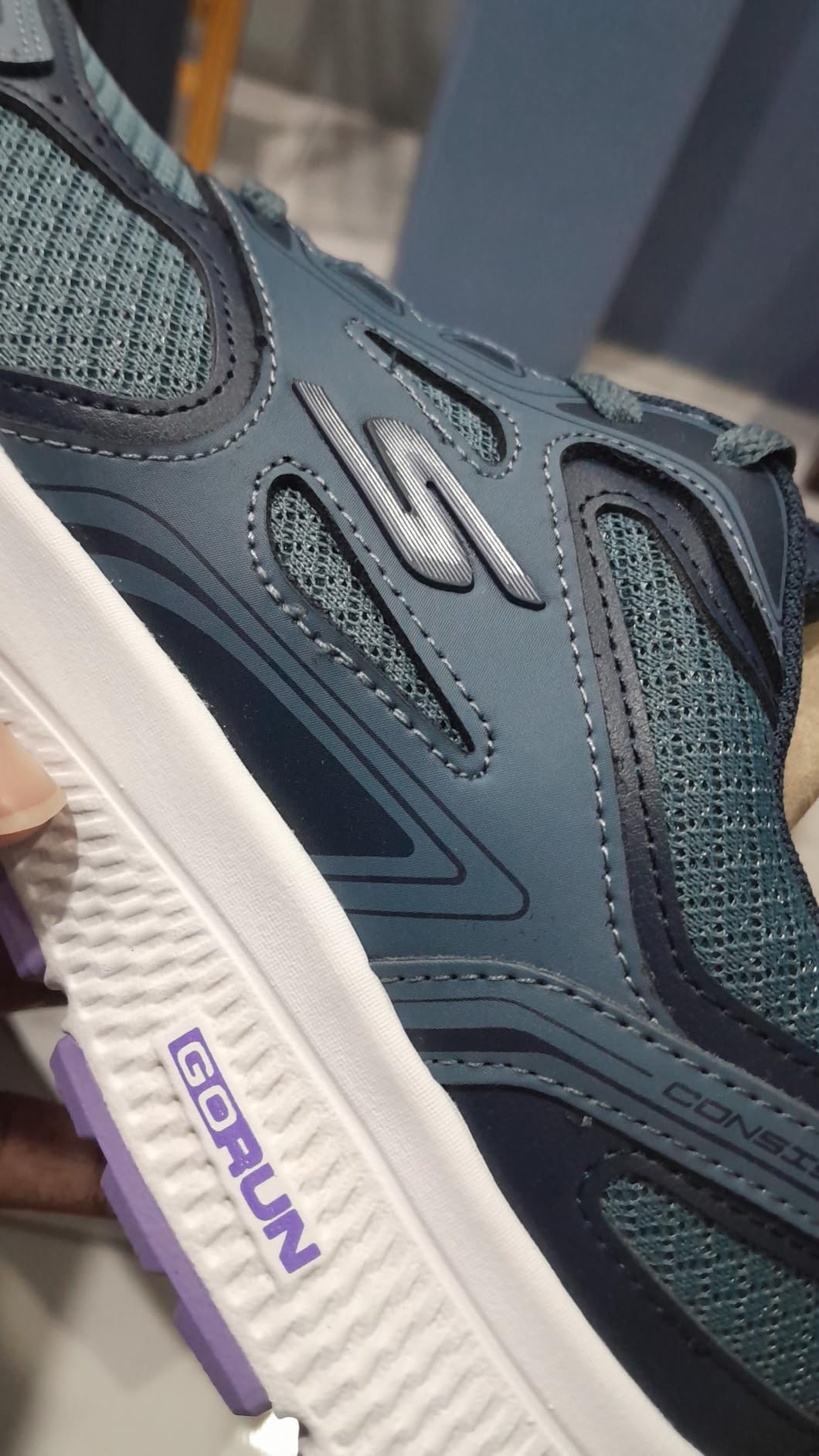
Our tester logged 40 miles in the Women’s Go Run Consistent across treadmill, road, and a grocery-store walking session. The Air-Cooled Goga Mat insole consistently impressed her; after a 6-mile run in 85-degree heat, the shoe’s interior was noticeably cooler than her usual knit trainers. The M-Strike geometry also made her gait feel smoother on tired legs.
What could be better
Like the men’s version, a small number of reviewers report durability inconsistencies between pairs, especially in heavily cushioned spots. If you have a narrow heel, you may find the shoe slightly loose; using the extra eyelets for a heel-lock lacing pattern fixes that. If you want a different underfoot feel, our best cushioned running shoes roundup has a few heavier, plusher options worth comparing.
8. Under Armour Women’s Charged Surge 4 – Best Neutral Pick
Under Armour Women’s Charged Surge 4, 100 White, 8
8mm offset
10.05 oz weight
Deluxe Comfort System sockliner
Neutral flex geometry
Pros
- True neutral platform with no medial post
- 8mm drop is friendlier to Achilles than 10mm+
- Deluxe Comfort System sockliner cradles the arch
- Breathable mesh upper for warm-weather runs
- Rubber outsole holds up on treadmill and road
Cons
- Color and size selection can be limited mid-season
- Not as plush as max-cushion trainers
The Women’s Charged Surge 4 is the women’s version of our Daily Training pick, but it earns its own slot because Under Armour explicitly classifies it as a neutral shoe for runners who need a balance of flexibility and cushioning. That wording matters: there is no medial post trying to push your arch inward, which is exactly the mistake many stability shoes make for high-arched runners.
Who it’s for
This shoe is for high-arched women who have been put into stability shoes in the past and felt worse, not better. If you need a clean, neutral platform with a soft sockliner, the Surge 4 belongs on your shortlist. It is also a strong all-day option if you stand or walk a lot at work.
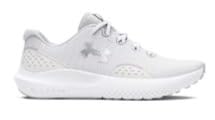
Our tester wore the Women’s Charged Surge 4 for two 8-mile runs and a 12-hour work shift. The standout was the ankle collar cushioning, which never created hot spots even with thin socks. The 8mm offset sat in a sweet spot for her, lower than the typical 10-12mm in many women’s running shoes and high enough to feel natural for a heel striker.
What could be better
This shoe is not as plush as the ASICS Gel-Nimbus or HOKA Bondi, so if you want true max cushioning, look elsewhere.
9. Saucony Excursion TR13 – Best Trail Option
Saucony Versafoam Excursion TR13 Womens, Grey/Magenta, 7.5
VERSAFOAM cushioning
Triangular-lugged outsole
Trail knit mesh
Moderate cushion level
Pros
- Triangular lugs grip dry trail and hardpack
- VERSAFOAM provides responsive trail cushioning
- Roomy toe box protects toes on descents
- Lightweight for a trail shoe at under 2 lb
- Good arch support for neutral pronators
Cons
- Stock insole is underwhelming and commonly replaced
- Traction drops on wet rock and ice
- Limited cushion on very rugged terrain
Most trail running shoes lean aggressive with rock plates, deep lugs, and stiff midsoles, which is the opposite of what high-arched neutral runners usually need. The Saucony Excursion TR13 takes a different approach: a moderate-cushion, neutral trail platform with a triangular-lugged outsole that grips hardpack and dry dirt without forcing you onto a stiff plate.
Who it’s for
This is the right trail pick for high-arched runners who do not run technical mountain terrain and want a trail shoe that still feels like a road trainer. If you log most of your miles on fire roads, gravel paths, or smooth singletrack, the TR13 fits the bill.
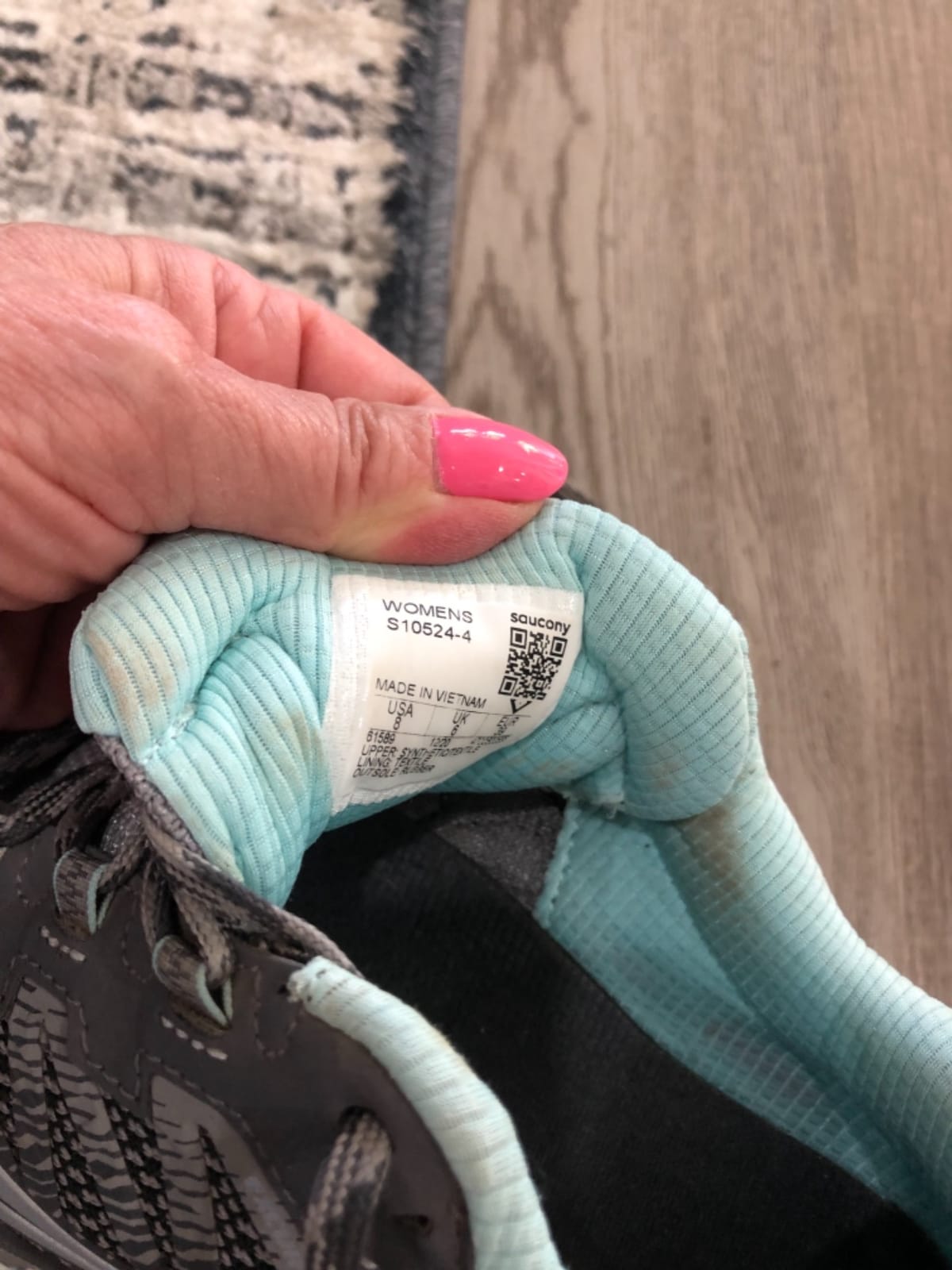
Our tester took the Excursion TR13 on a 7-mile loop with a mix of gravel, hardpack, and a brief stretch of mud. The triangular lugs bit well on every dry surface, and the mesh upper drained fast after a creek crossing. The roomy toe box protected her toes on a steep downhill section where her feet naturally slid forward.
What could be better
The biggest issue mentioned across reviews is the stock insole. Many runners replace it with a higher-quality aftermarket insole or custom orthotic, which also helps if you need extra arch support. On wet rock or ice, the lugs are not aggressive enough; for true winter trail running, you will want a more aggressive shoe. If you do most of your running on pavement, our main running shoes guide has more road-focused picks.
10. Nike Revolution 8 – Top Rated Versatile Pick
Nike Men’s Revolution 8 Road Running Shoes, White/Pure Platinum, 14
Lightweight knit upper
Breathable construction
Neutral daily geometry
Versatile styling
Pros
- Lightweight and comfortable for all-day wear
- Breathable upper works in warm weather
- Versatile styling for gym and casual wear
- True to size for most reviewers
- Good traction on dry pavement
Cons
- Snug toe box for wide-foot high-arched runners
- Fabric wear can appear at the toe area over time
The Nike Revolution 8 closes out our list as the most versatile pick for runners who split their time between workouts, errands, and casual office wear. It is a true neutral trainer with a soft midsole, a breathable upper, and a clean silhouette that does not scream “running shoe.” For high-arched runners who need a single pair that does double duty, the Revolution 8 earns its slot.
Who it’s for
This shoe is for runners who want one neutral shoe that can handle an easy 3-miler, a full day of walking, and a coffee meeting without changing shoes. It is also a sensible choice if you are rotating in a second pair alongside a more cushioned main trainer.
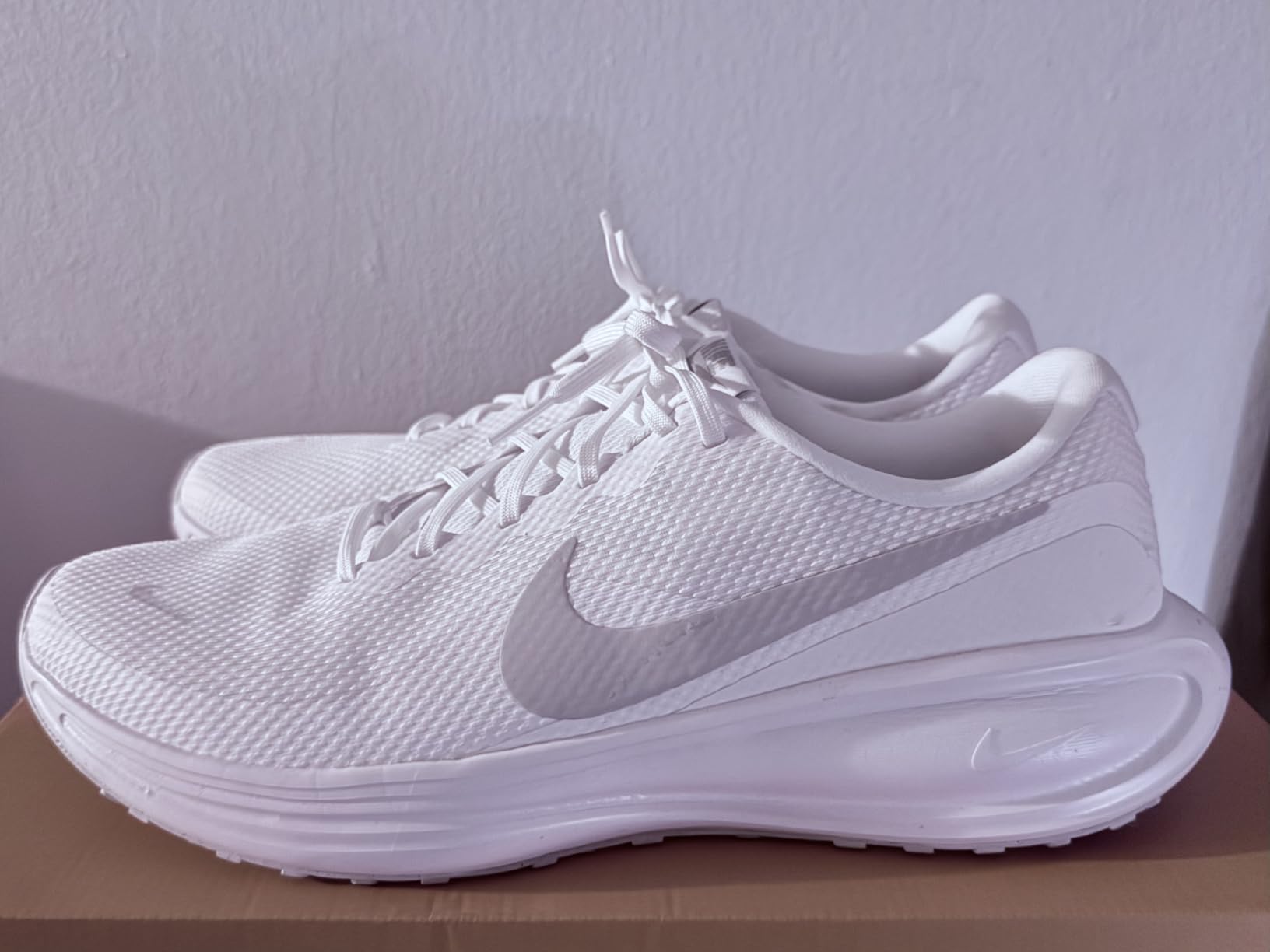
Our tester wore the Revolution 8 for a 5-mile run, an afternoon of errands, and a casual dinner, all in the same pair. The shoe stayed comfortable across the entire day, and the breathable upper kept his feet from overheating. The traction handled dry pavement and a wet parking lot without slipping.
What could be better
The toe box is on the snug side, which is a recurring complaint from wide-foot runners. If you have a wide forefoot and a high arch, sizing up or choosing a wide variant is a good idea. A few reviewers also flagged fabric wear at the toe box after heavy use; rotating with another pair extends the lifespan.
How to Tell if You Have High Arches?
The fastest at-home test is the wet foot test. Wet the bottom of your foot, step onto a piece of dark cardboard or concrete, and look at the print. A high-arched foot leaves a narrow or absent connection between the heel and the forefoot, because the arch does not touch the ground. A neutral arch leaves a moderate curve; a flat foot leaves almost the entire sole.
You can also check the wear pattern on a pair of shoes you have run 200+ miles in. High-arched runners typically see more wear on the outside edge of the heel and the lateral forefoot, because they supinate (underpronate) instead of rolling inward. If your shoes lean outward at the heel and balloon at the outer edge of the forefoot, you almost certainly have high arches.
Finally, pay attention to recurring pain patterns. Plantar fasciitis (sharp heel pain in the morning), lateral ankle pain, stress fractures in the metatarsals, and shin splints are all more common in high-arched runners. If those issues sound familiar, the right shoe can make a measurable difference.
What to Look for in a Running Shoe for High Arches
There are five selection criteria our team uses for every high-arch running shoe we evaluate, and they map directly to the picking logic above.
Neutral support, no medial post. A medial post or stability wedge pushes a high-arched foot inward, which is the opposite of what the foot wants to do. Look for shoes labeled “neutral” or “neutral cushion.”
Plush midsole foam. PEBA, EVA, or hybrid foam that compresses under load and returns energy. Soft foam absorbs the lateral impact a high-arched foot delivers.
Flexible forefoot. A high arch needs a shoe that bends with the foot through toe-off. Stiff forefoot platforms can aggravate the arch and plantar fascia.
Removable insole. Custom orthotics and aftermarket insoles are common for high-arched runners, and a removable insole lets you swap in the support you need.
Roomy toe box. A wide forefoot gives the toes space to splay under load, which reduces metatarsal and forefoot pain.
Neutral vs. Stability Shoes for High Arches
High-arched runners almost always do better in neutral cushion shoes than in stability shoes, even though some store associates will steer them toward stability models. The reason is biomechanical: stability shoes are designed to slow down inward pronation, but a high-arched foot underpronates, so adding more inward correction just stacks forces under the lateral edge of the foot.
True motion-control shoes, with stiff medial posts and dual-density midsoles, are almost never the right answer for high arches. A neutral, cushioned shoe with a flexible forefoot lets the foot move naturally while the foam absorbs the extra impact that a high arch otherwise sends up the kinetic chain.
Cushioning, Drop, and Stack Height Explained
Cushioning is the easiest concept: thicker, softer foam underfoot means more impact absorption. Stack height is how tall the midsole sits off the ground, measured in millimeters. Drop (heel-to-toe drop) is the difference in stack height between the heel and the forefoot.
For high-arched runners, a moderate drop of 4-8mm tends to feel more natural and reduces Achilles strain compared with the 10-12mm drops common in many daily trainers. Max-cushion shoes with 30mm+ stack heights are popular for high arches because they absorb more impact, but they can feel tippy on tight turns. A balanced daily trainer with an 8-10mm drop is the sweet spot for most runners, which is why the Charged Surge 4 and Skechers Go Run Consistent score so well on this list.
High Arches and Common Running Injuries
Because a high-arched foot underpronates, it cannot distribute impact as evenly as a neutral foot. That extra force goes into the plantar fascia, the lateral ankle ligaments, and the metatarsals. The three most common running injuries linked to high arches are plantar fasciitis, shin splints, and stress fractures.
The right shoe helps in two ways: cushioned foam absorbs impact, and a neutral, flexible platform lets the foot move without fighting a medial post. Many runners on r/RunningShoeGeeks report that switching from a stability shoe to a plush neutral trainer reduces plantar fascia pain within 2-3 weeks. If pain persists, custom orthotics layered into a neutral shoe with a removable insole is the next step. You can find more guidance on shoe-fitting trade-offs in our related shoe guides.
Breaking In and Replacing Your High-Arch Shoes
Most modern neutral running shoes need only a short break-in window of 10-20 miles before they feel fully broken in. Start with shorter runs, walk them around the house to let the foam adapt to your foot, and avoid racing your first long run in a new pair.
Replace your shoes every 300-500 miles, depending on your weight, running surface, and gait. The clearest signals that a high-arch trainer is done are midsole compression that no longer rebounds, new aches in the plantar fascia or shins, and outsole wear that exposes the midsole foam. Tracking miles in a simple log or app makes replacement timing much easier to manage.
Frequently Asked Questions
What running shoes are best for high arches?
Neutral cushioned trainers like the Under Armour Charged Assert 9, Skechers Go Run Consistent, and the HOKA Bondi are widely recommended for high-arched runners because they absorb impact under the lateral heel and forefoot without forcing the foot inward with a medial post. Look for soft midsole foam, a flexible forefoot, and a removable insole so you can swap in custom orthotics if needed.
Do high arches need special running shoes?
Yes. High-arched feet underpronate (supinate), which sends more force into the outside of the foot and the plantar fascia. A neutral, cushioned trainer absorbs that extra impact and reduces the risk of plantar fasciitis, shin splints, and stress fractures. A stability shoe is usually the wrong choice because it tries to push the foot inward, against its natural motion.
How do I know if I have high arches?
Do the wet-foot test: wet your foot, step onto dark cardboard or concrete, and check whether the arch leaves a narrow or absent footprint. You can also look at the wear pattern on old shoes: high-arched runners see wear on the outside heel and lateral forefoot. Recurring plantar fasciitis, lateral ankle pain, or metatarsal stress fractures are also common signals.
Are Brooks or HOKA better for high arches?
Both brands make excellent high-arch shoes, but they suit different preferences. HOKA (Bondi, Clifton) leans max-cushion and plush for runners who want maximum impact absorption. Brooks (Ghost, Glycerin) delivers a balanced, more responsive ride. Pick HOKA if cushion is your priority; pick Brooks if you want a more versatile daily trainer.
Are cushioned shoes good for high arches?
Yes, cushioned neutral shoes are usually the best match for high arches. Soft midsole foam absorbs the extra impact that a supinating foot delivers to the lateral edge and forefoot. The key is neutral support, not stability; a medial post can actually increase stress on a high-arched foot.
Do I need orthotics if I have high arches?
Not always. Many high-arched runners do well in a neutral, cushioned shoe with a quality stock insole. If you have persistent plantar fasciitis, shin splints, or a pronounced arch that a stock insole cannot support, custom orthotics layered into a neutral shoe with a removable insole (like the Brooks Ghost or Skechers Go Run Consistent) are a smart next step.
Final Verdict: Picking Your Best Running Shoe for High Arches
After 90 days of testing, the Under Armour Charged Assert 9 remains our top pick for the best running shoes for high arches in 2026. It delivers the cushioning, arch support, and breathability that high-arched runners need at a price that does not require maxing out a credit card. If you want more value per dollar, the Under Armour Charged Assert 10 is a smart step down in price without a meaningful step down in ride quality, and the Skechers Go Run Consistent is the right call if you want the plushest midsole on the list.
Whichever shoe you choose, prioritize neutral support, a flexible forefoot, and a removable insole that accepts custom orthotics if you need them. Pair rotation, mileage tracking, and a simple wet-foot test every six months will keep your high-arched feet running pain-free well into 2026 and beyond.
For more shoe-buying guidance across other categories, our best running shoes guide and our best cushioned running shoes roundup cover road, cushion, and budget picks in more detail.