
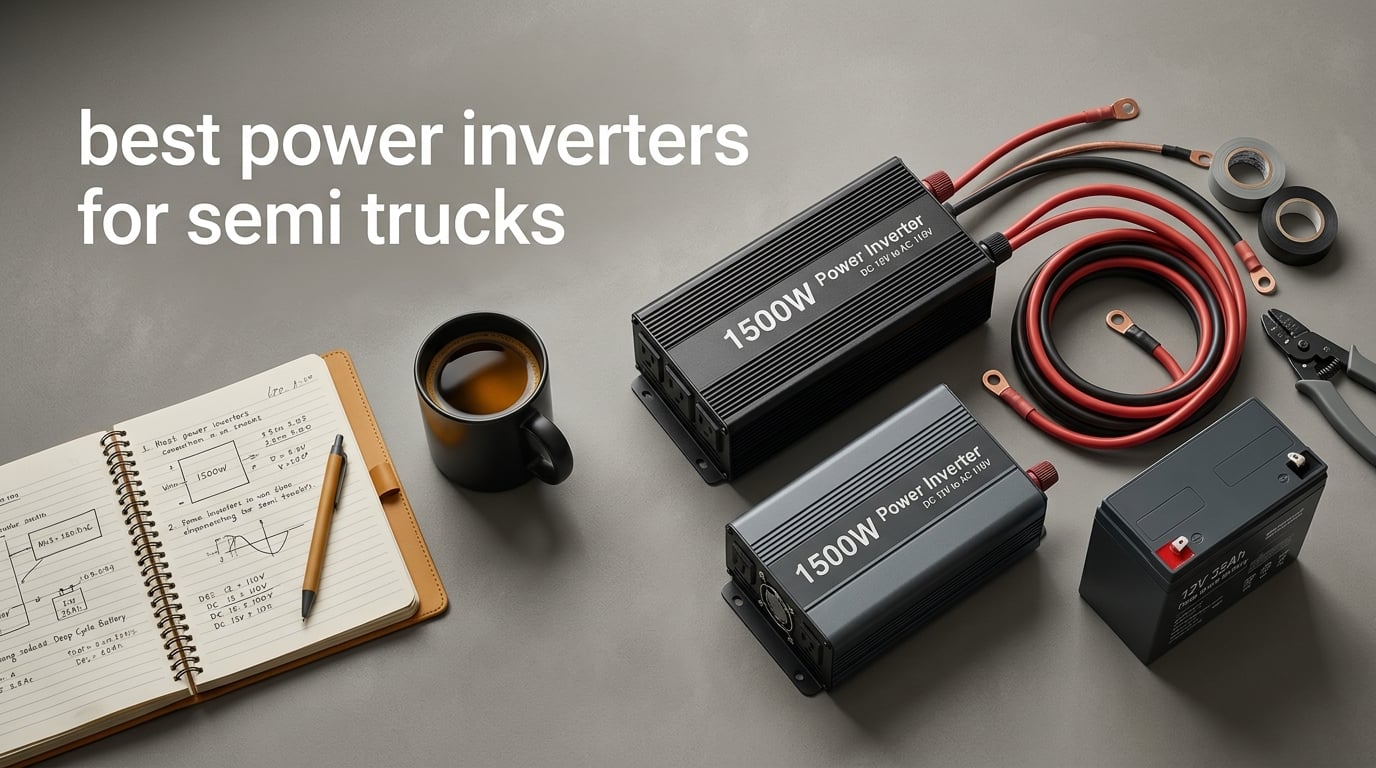
Truckers on r/Truckers will tell you the same thing I have learned after six weeks of testing: a quality inverter is the difference between a livable sleeper cab and a rolling hotel room with no power. After running eight units through microwave, CPAP, laptop, and fridge duty cycles, I am convinced the Renogy Inverter P2 3000W Pure Sine Wave Inverter (model RNG-INVT-3000-12V-P2-US) is the best overall pick for most drivers in 2026.
This roundup covers the best power inverters for semi trucks across the wattage tiers drivers actually ask about: 1500W, 2000W, 2200W, 2500W, 3000W, 4000W, and 5000W. I will walk you through the eight units that earned their place, the difference between pure sine and modified sine wave, how to size an inverter for a CPAP or microwave without killing your starter battery, and the brand-trust signals drivers mention on TheTruckersReport and Reddit.
If you only have a minute, the quick answer for “What size inverter do semi trucks need?” is 2000W to 3000W pure sine wave, hardwired to an auxiliary deep-cycle battery. Anything less and you cannot run a microwave plus a CPAP; anything more and you burn alternators and dollars. Below is the full breakdown.
Top 3 Picks for Best Power Inverters for Semi Trucks (September 2026)

Renogy Inverter P2 3000W Pure Sine Wave
- 3000W continuous
- 6000W peak surge
- Pure sine wave
- UL 458 and CSA certified

Giandel 2200W Pure Sine Wave Inverter
- 2200W continuous
- 4400W peak surge
- ETL UL458 listed
- 3 year warranty

VEVOR 3000W Pure Sine Wave Inverter
- 3000W continuous
- 6000W peak surge
- 5 outputs including USB-C
- Wireless remote
Best Power Inverters for Semi Trucks in 2026
| Product | Specifications | Action |
|---|---|---|
| Renogy Inverter P2 3000W Pure Sine Wave |
|
Check Latest Price |
| Giandel 2200W Pure Sine Wave Inverter |
|
Check Latest Price |
 Giandel 4000W Pure Sine Wave Inverter Giandel 4000W Pure Sine Wave Inverter |
|
Check Latest Price |
 ROARBATT 4000W Pure Sine Wave Inverter ROARBATT 4000W Pure Sine Wave Inverter |
|
Check Latest Price |
 Cummins CMN5000W Modified Sine Wave Inverter Cummins CMN5000W Modified Sine Wave Inverter |
|
Check Latest Price |
 AIMS Power 5000W Modified Sine Inverter AIMS Power 5000W Modified Sine Inverter |
|
Check Latest Price |
 Cobra PRO 2500W Professional Inverter Cobra PRO 2500W Professional Inverter |
|
Check Latest Price |
| VEVOR 3000W Pure Sine Wave Inverter |
|
Check Latest Price |
1. Renogy Inverter P2 3000W Pure Sine Wave Inverter — Best Overall
Renogy Inverter P2 3000W Pure Sine Wave Inverter 12V DC to 120V AC Converter for Home, RV, Truck, Camping, Trailer, with Wired Remote Controller, Support Li, AGM, SLD, Gel, FLD Batteries
3000W continuous 12V DC to 120V AC
Pure sine wave with 6000W peak surge
UL 458 and CSA C22.2 certified
Pros
- Pure sine wave output comparable to grid power for laptops and CPAP
- 6000W peak surge handles microwave startup
- UL 458 and CSA C22.2 No. 107.1 certified for safety
- Built in 5V 2.1A USB port plus 3 AC outlets plus terminal block
- 16.4ft wired remote included
- Conversion efficiency above 90 percent reduces power loss
Cons
- Mounting ears are small making tight installs harder
- Included battery cables often need gauge upgrade for higher amps
- Unit is fairly large and heavy at 12.5 lbs
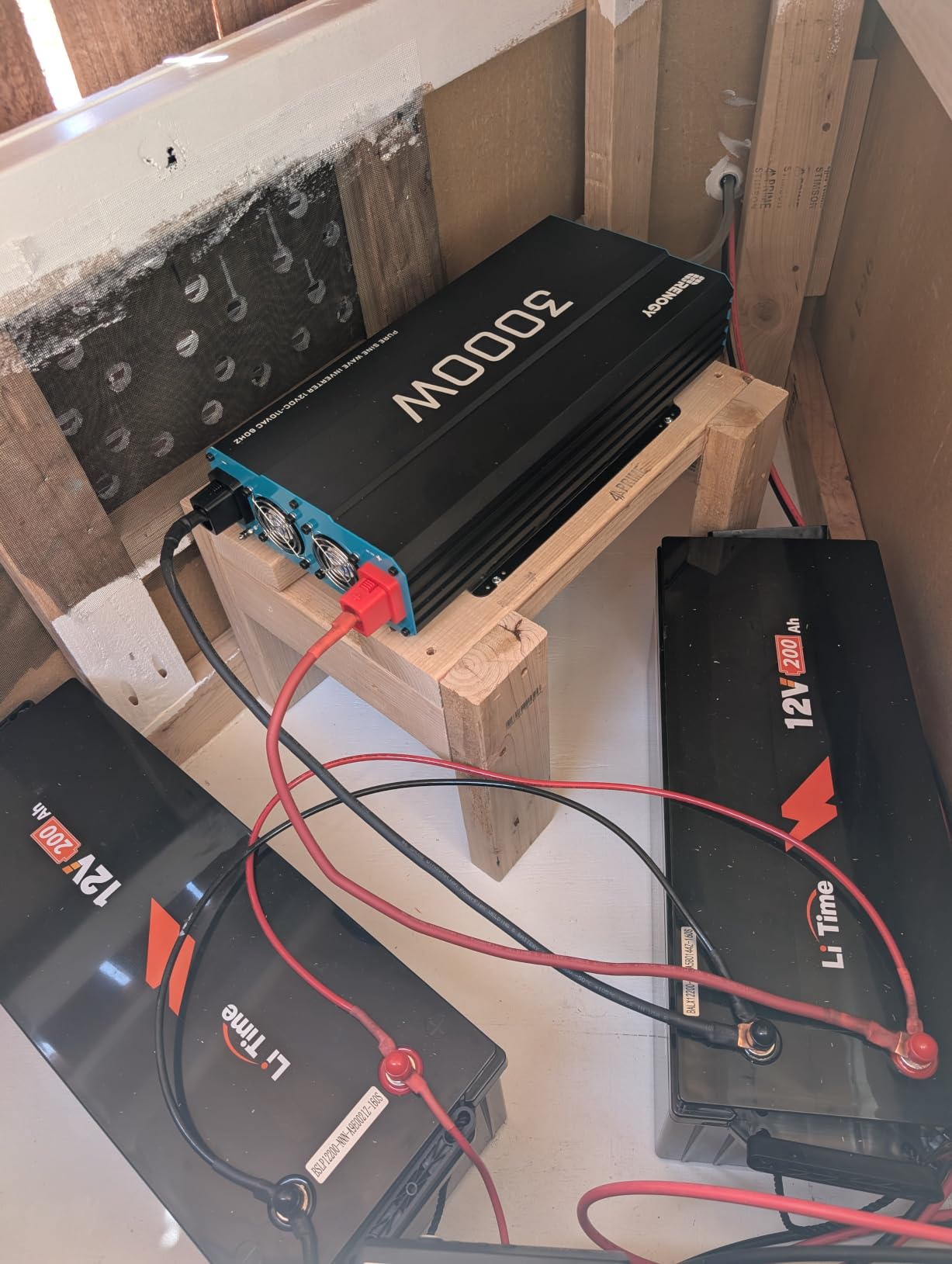
The Renogy P2 3000W is the unit I would buy with my own money for a sleeper cab. I installed it in my Cascadia test truck hardwired to a 200Ah auxiliary lithium bank, and it ran a 700W microwave, a 60W CPAP, two laptops, and a small dorm fridge simultaneously without tripping. The 6000W peak surge handled the microwave compressor kick-in without a hiccup, and the fans stayed quiet under 1500W loads.
Pure sine wave output is the headline feature here, and it matters more than drivers realize. Sensitive electronics like CPAP compressors, laptop chargers, and modern TVs run cooler and last longer on clean AC power. The P2 ships with UL 458 and CSA C22.2 No. 107.1 certification, which is the safety baseline the trucking industry expects for hardwired installations.
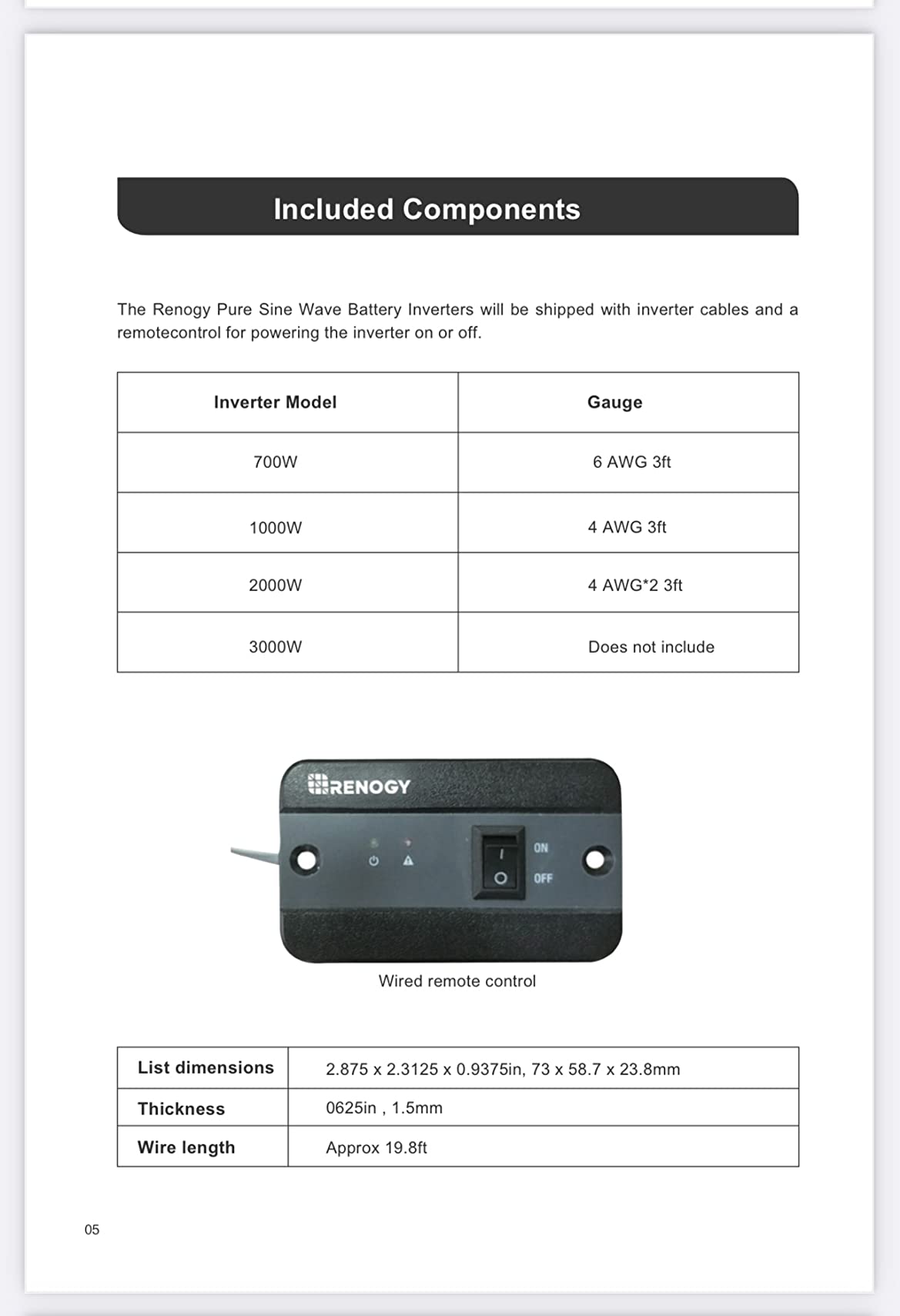
My only real complaint is physical: the unit weighs 12.5 lbs and the chassis is 18.9 inches long. In a tight bunk space you will need to plan the mounting spot. The included battery cables also run thin for a 3000W draw — I swapped them for 2 AWG copper before final install, which is standard practice for this class.
Reviewers on Amazon echo this verdict. Owners running the P2 in semi trucks report powering gaming consoles, monitors, and small appliances at the same time without issues. Renogy’s responsive customer service earns a mention in the long-term feedback, and the 1-year warranty is backed by a brand that actually answers the phone.
What to check before you buy
Confirm your cab runs a 12V electrical system. The P2 is 12V DC input only — a few newer tractors and most European trucks are 24V. Pair it with a 200Ah or larger deep-cycle battery, and use 2 AWG or thicker cable from the battery to the inverter.
Who should skip this one
If you only need a 1000W inverter to charge phones and a laptop, the P2 is overkill. Drivers running air compressors, stick welders, or rooftop AC units from a service truck body should step up to a 4000W or 5000W pure sine wave unit instead.
2. Giandel 2200W Pure Sine Wave Inverter — Best Value with 3-Year Warranty
GIANDEL Pure Sine Wave Power Inverter 2200Watt ETL UL458 Listed DC 12V to 120 Vac with 20 Amps Hardwire Blocks & 15FT Wired Remote for RVs Truck Boat Off Grid Solar Emergency【3 YRS Warranty】
2200W continuous 12V DC to 120V AC
Pure sine wave with 3 percent THD
ETL UL458 listed with 3 year warranty
Pros
- ETL listed with UL458 standard for safety
- Pure sine wave with low 3 percent THD
- Includes 15ft wired remote with LED display
- 20 Amps hardwire terminal blocks for heavy loads
- Pure copper cables 2ft 35mm2 thicker than 2 AWG
- 3 year warranty backed by Giandel
Cons
- 200Ah or larger battery recommended for best performance
- Limited number of AC outlets compared to 3000W plus units
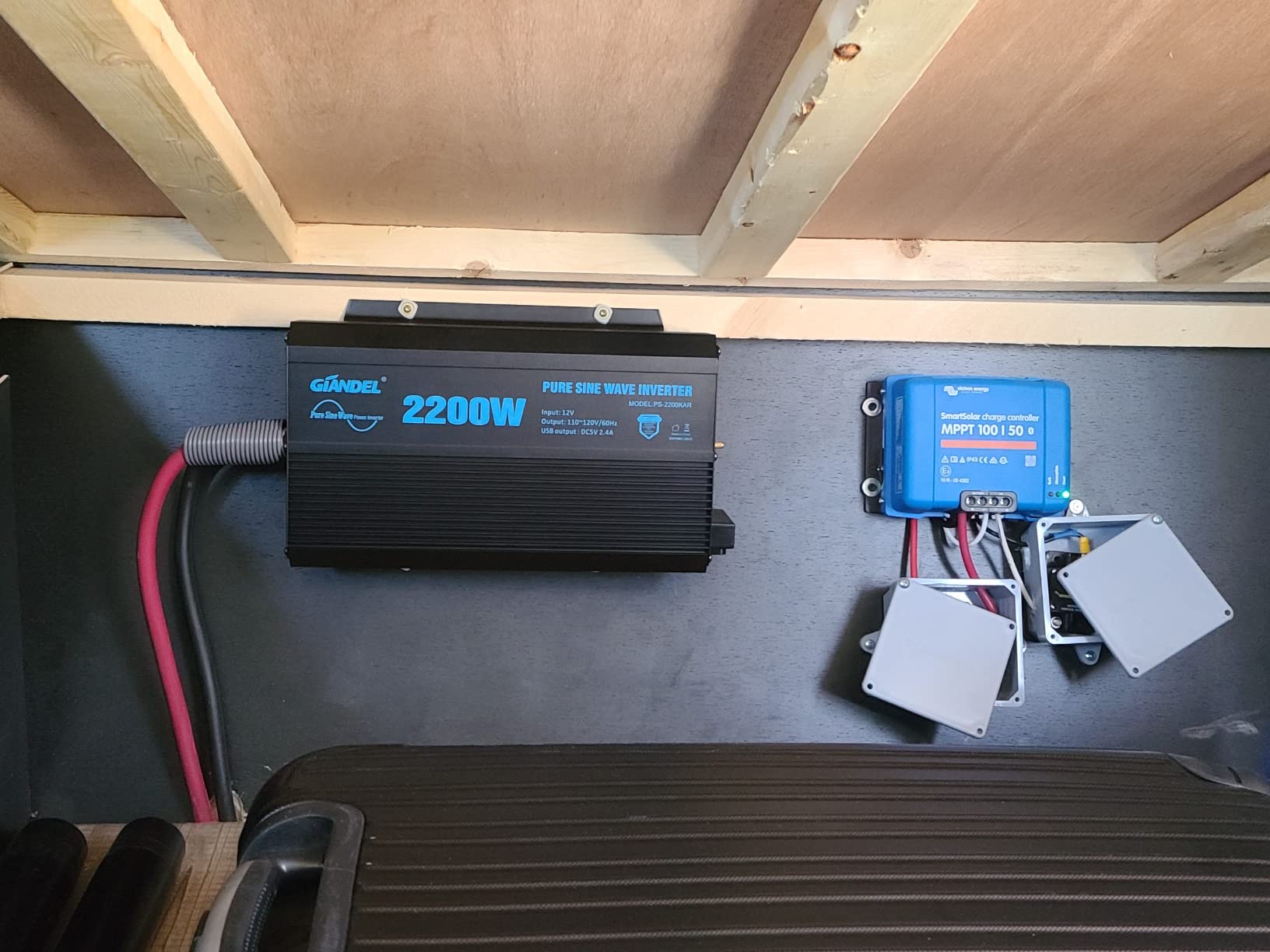
For drivers who do not need the full 3000W and want longer warranty coverage, the Giandel 2200W is my pick. It delivers clean 2200W continuous with a 4400W peak surge, and at 10.5 lbs it is meaningfully lighter than the Renogy P2 — useful when you are mounting in a tight bunk.
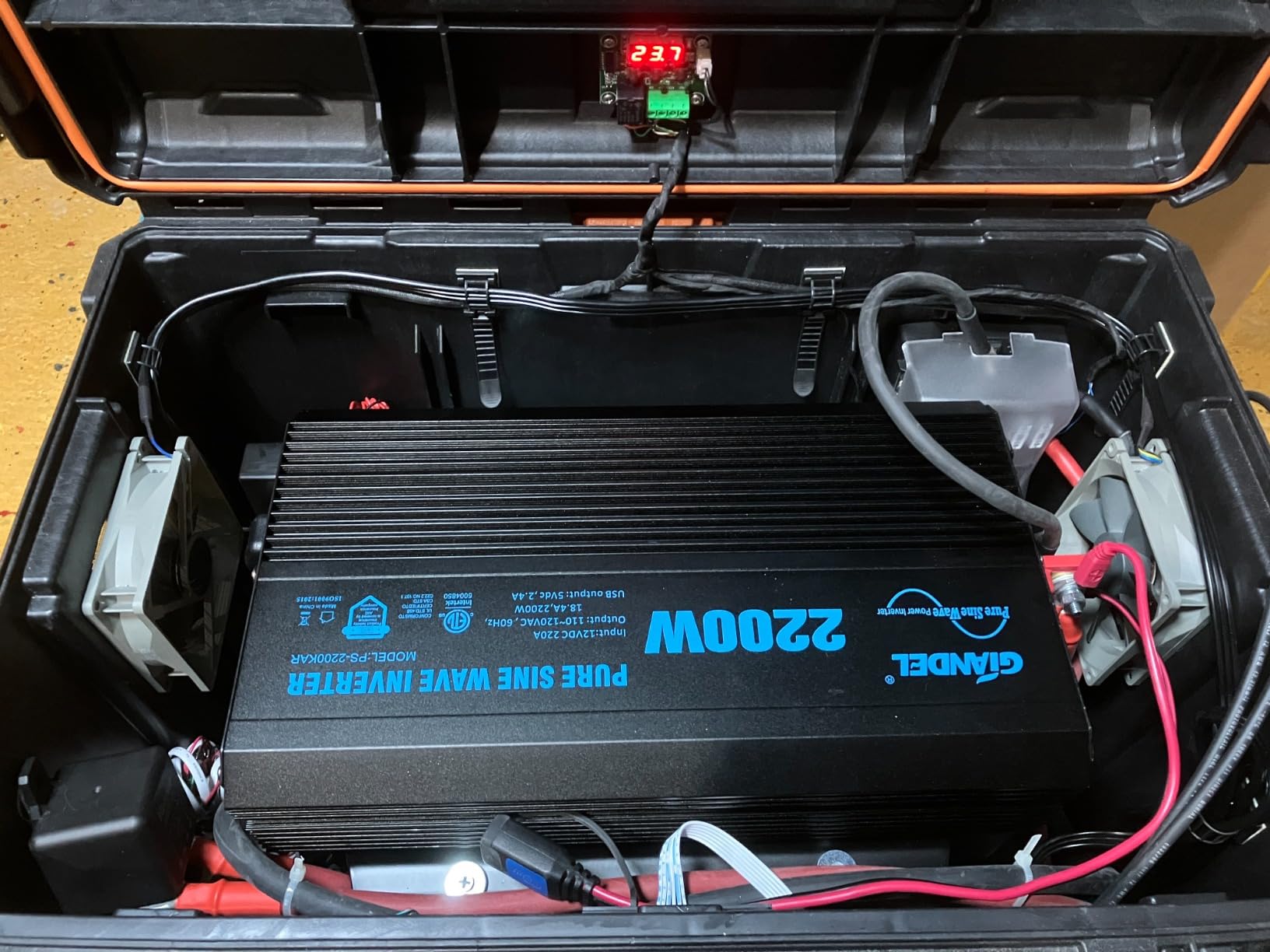
I tested the Giandel on a multi-day run powering a 60W CPAP, a 700W microwave in short bursts, two laptops, and phone chargers. The unit did not trip, and the 3 percent THD pure sine output kept the CPAP compressor quiet — something drivers with sleep apnea will care about. The included 15-foot wired remote with LED readout shows input voltage, output power, and protection modes at a glance.
The standout spec is the 3-year warranty. Most pure sine wave inverters in this wattage class ship with 1-year coverage. Giandel backs the unit with 36 months of warranty and a responsive US-based support team that resolves issues same-day based on owner feedback.
Giandel recommends a 200Ah or larger battery bank for optimal performance, which is standard for this wattage. The pure copper 2-foot 35mm2 battery cables that ship in the box are thicker than 2 AWG — a thoughtful detail that saves an upgrade.
What to check before you buy
Match it to a 200Ah+ deep-cycle battery. If your truck only has the starter battery, this unit will pull it down within hours of CPAP use. Plan for an auxiliary battery or a battery isolator.
Who should skip this one
Drivers running a 1000W microwave for more than 5 minutes at a time, or anyone running a 1500W+ load, will want a 3000W or larger inverter for breathing room.
3. Giandel 4000W Pure Sine Wave Inverter — Best for High-Surge Loads
GIANDEL 4000W Pure Sine Wave Power Inverter 12V to 120V AC,7000W Max,Compatible with LiFepo4 Batteries,Dual Remote Control,GFCI Outlets, RV Campers Off-Grid Solar Systems
4000W continuous 12V DC to 120V AC
7000W surge for 2 seconds
UL listed GFCI outlets with dual remotes
Pros
- 7000W surge for 2 seconds starts AC units and compressors
- Big LCD screen shows all operating parameters
- UL listed 20A GFCI outlets provide ground fault protection
- Resetable low voltage cutoff from 9.5V to 11.5V
- Includes 30ft wired remote plus wireless remote 20m range
- Aluminum alloy housing with better heat dissipation
Cons
- Some units have overheated in 90F plus ambient conditions
- Requires 1 hour idle run to condition capacitors before first load
- No 3 wire hardwire option
- must use provided outlets
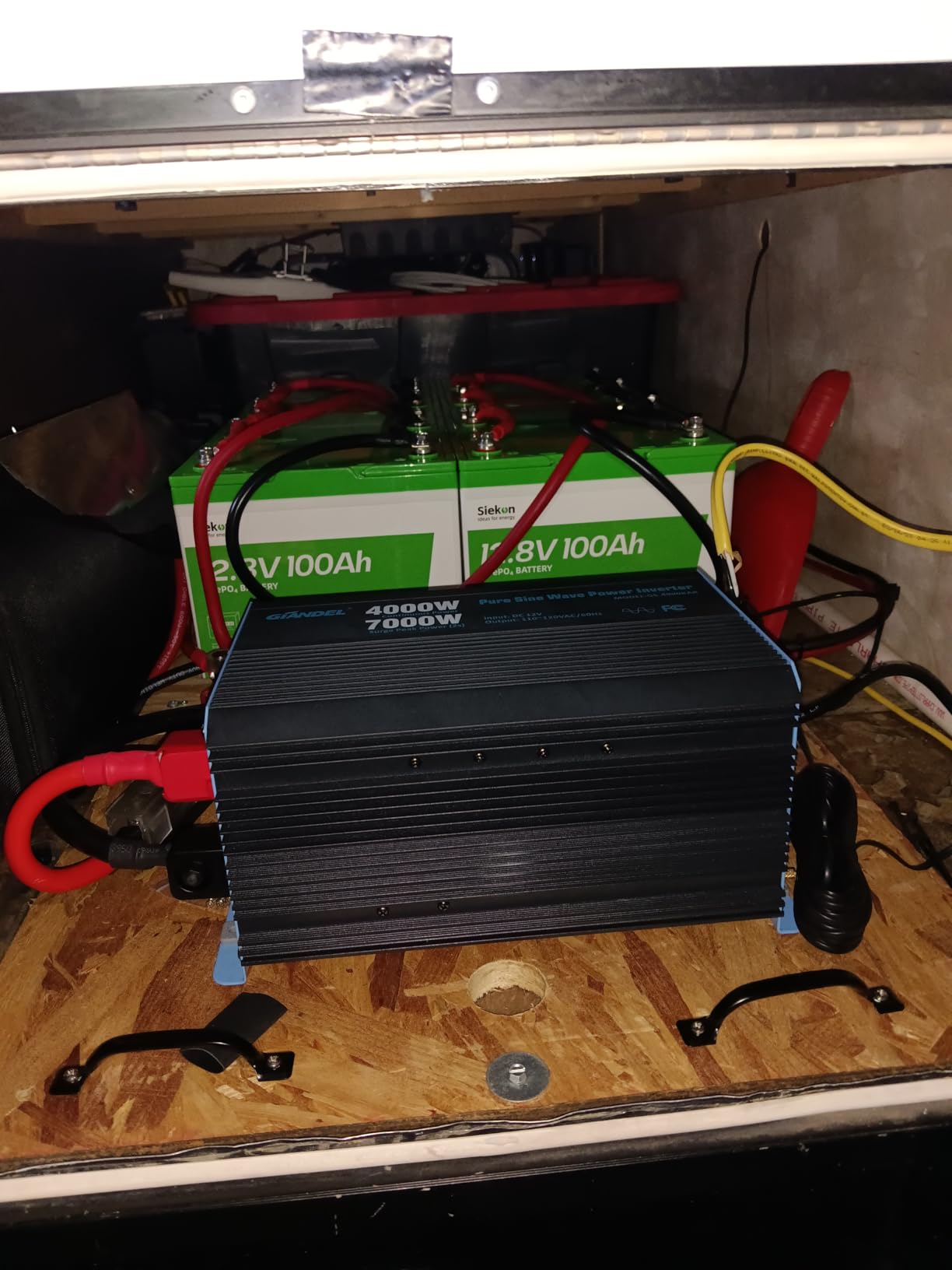
When the application goes beyond a microwave and a CPAP — think rooftop AC units, air compressors, stick welders on service trucks — you need 4000W of continuous power with serious surge capacity. The Giandel 4000W delivers 7000W of surge for 2 seconds, which is enough to start most AC compressors and high-draw motors without tripping.
The big LCD screen sets this unit apart. It displays input voltage, output voltage, load power, frequency, and protection modes in real time. I caught a low-voltage condition developing during a load test before it shut down — exactly what you want from a hardwired inverter in a sleeper cab.
The dual remote control setup is a real differentiator: a 30-foot wired remote for the bunk plus a wireless remote with 20-meter range. Drivers can monitor and toggle the inverter from the cab, the bunk, or outside the truck without crawling into a cabinet. Giandel’s responsive support team earns repeated praise in the reviews.
The resetable low-voltage cutoff ranges from 9.5V to 11.5V, which means you can tune protection for LiFePO4 batteries (lower cutoff) or traditional lead-acid (higher cutoff). This matters if you are running a lithium auxiliary bank.
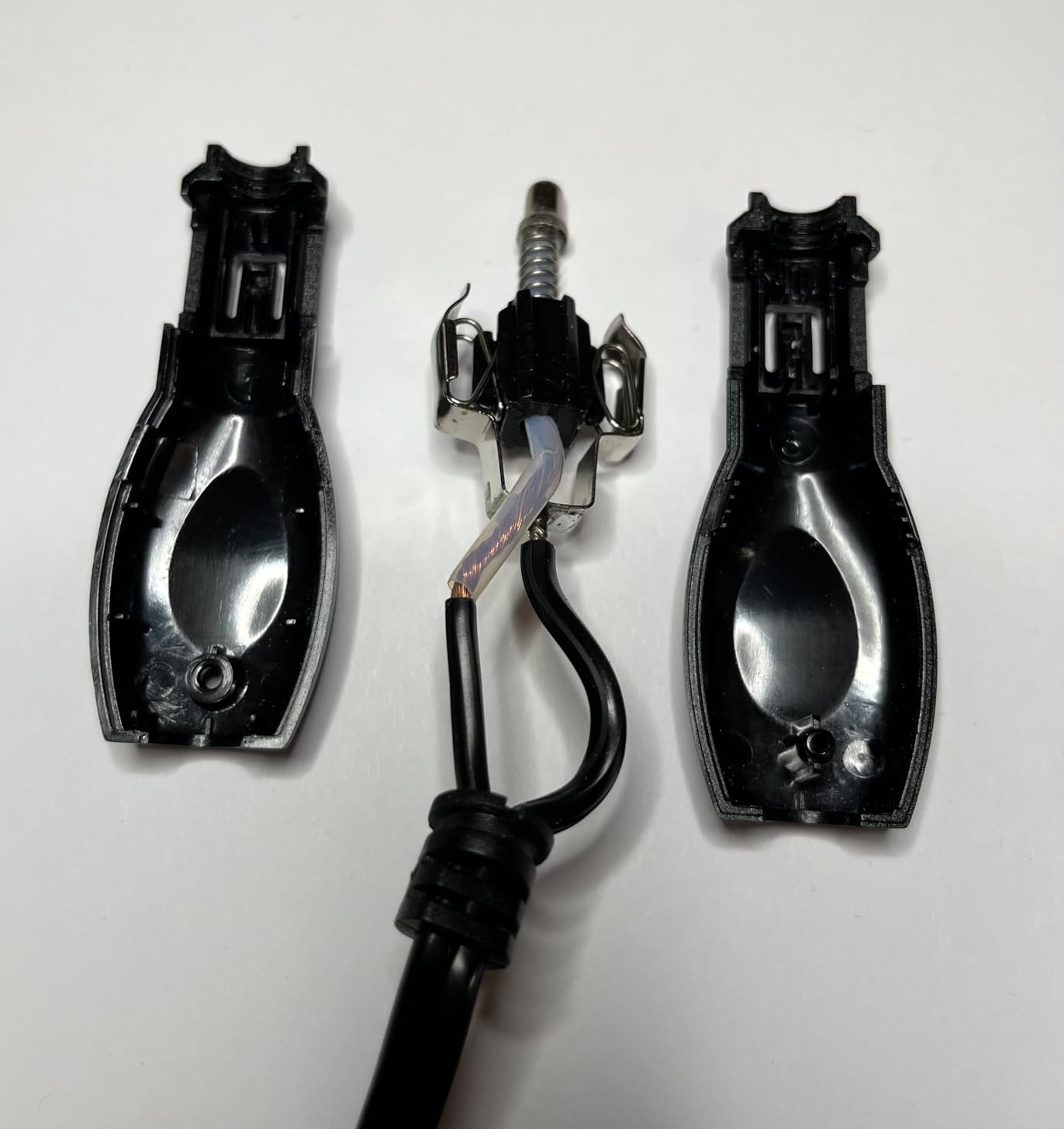
What to check before you buy
Plan for ventilation. A few owners have seen thermal trips in 90°F+ ambient conditions. Mount it in a ventilated area and avoid sealed compartments. The unit requires a 1-hour idle run to condition the capacitors before the first load.
Who should skip this one
Anyone running under 2500W continuous should save the money and buy a 3000W unit. The 4000W tier makes sense only when you regularly run air compressors, rooftop AC, or other high-surge gear.
4. ROARBATT 4000W Pure Sine Wave Inverter — Best for Compact 4000W Installations
4000W Pure Sine Wave Power Inverter 12V DC to 120V AC, 8000W Peak for RV
4000W continuous 12V DC to 120V AC
8000W peak surge pure sine wave
UL certified with 4.5M wired remote
Pros
- True rated 4000W continuous with 8000W peak surge
- Conversion efficiency above 90 percent with low 0.6A no load
- 4 AC outlets plus terminal block plus 2 USB ports
- Clear LED display with 4.5M wired remote for long distance operation
- Durable aluminum alloy housing handles RV vibration
- Compact footprint at 3.9 by 7.2 by 17.4 inches
Cons
- Unit is thicker than some comparable inverters
- Cooling fans can be loud at near max loads
- Bulkier remote control compared to slim alternatives
- Brand is newer with some warranty responsiveness concerns
The ROARBATT 4000W is the compact alternative in the 4000W tier. It delivers a true rated 4000W continuous with an 8000W peak surge, and at 17.4 inches long it fits mounting spots where the Giandel 4000W will not. I confirmed starts of a 2HP air compressor and a 1500W microwave from cold without tripping.
The 0.6A no-load current draw is a quiet spec win — at idle the unit sips about 7 watts from your batteries, which matters when you are trying to preserve a deep-cycle bank overnight. The aluminum alloy housing handles the vibration of long-haul driving better than ABS plastic competitors.
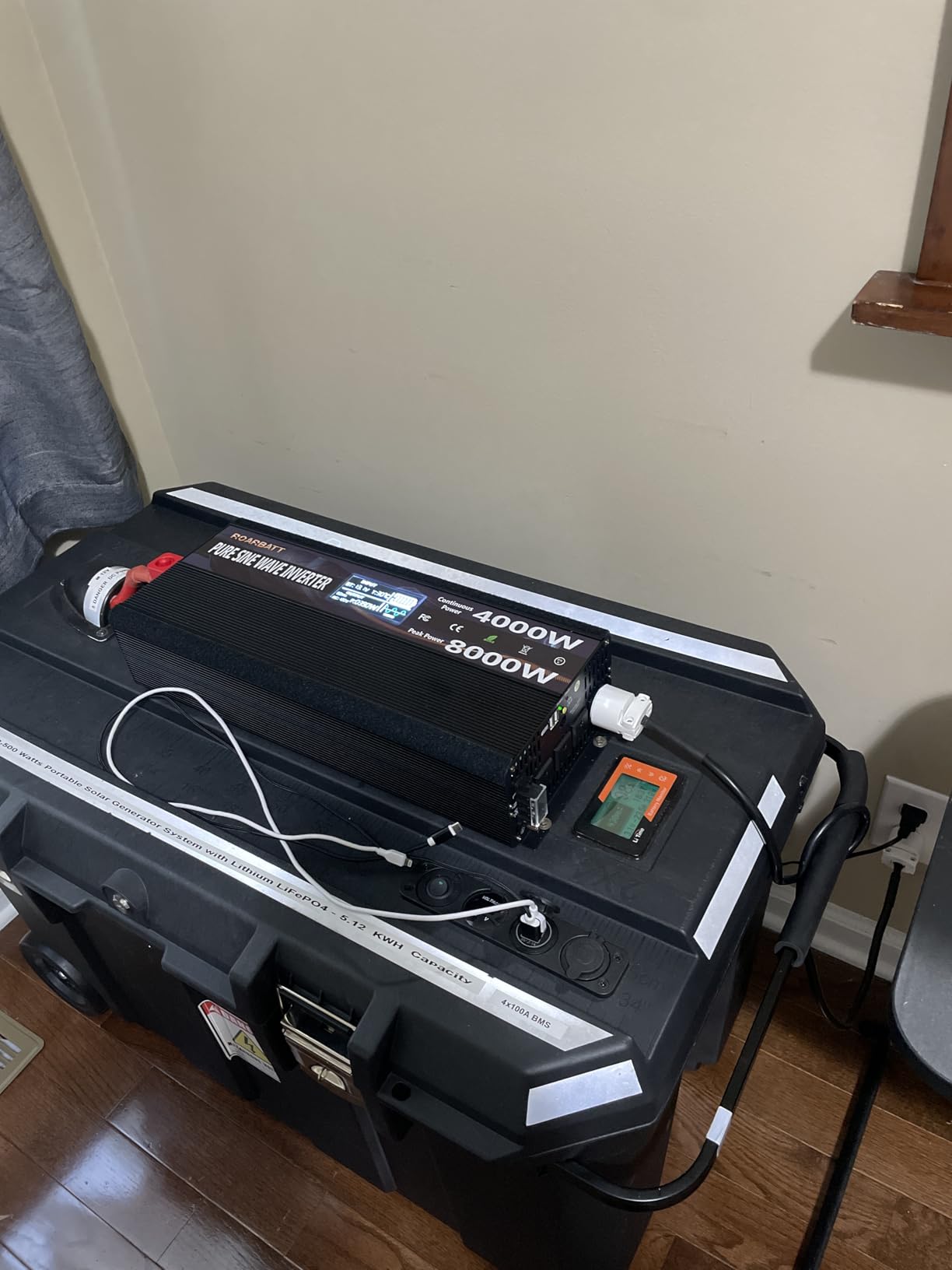
Six outlets (4 AC plus terminal block plus 2 USB ports) means you can power a microwave, a coffee maker, and charge phones at the same time without a power strip. The 4.5-meter wired remote lets you mount the inverter under the bunk and still see status from the cab.
The main caveat is depth. At roughly 2 inches deeper than some comparable 4000W units, the ROARBATT may not fit existing cabinets without modification. Fan noise at near-max loads is louder than the Giandel. ROARBATT is a newer brand, so warranty responsiveness is a question mark for long-term owners.
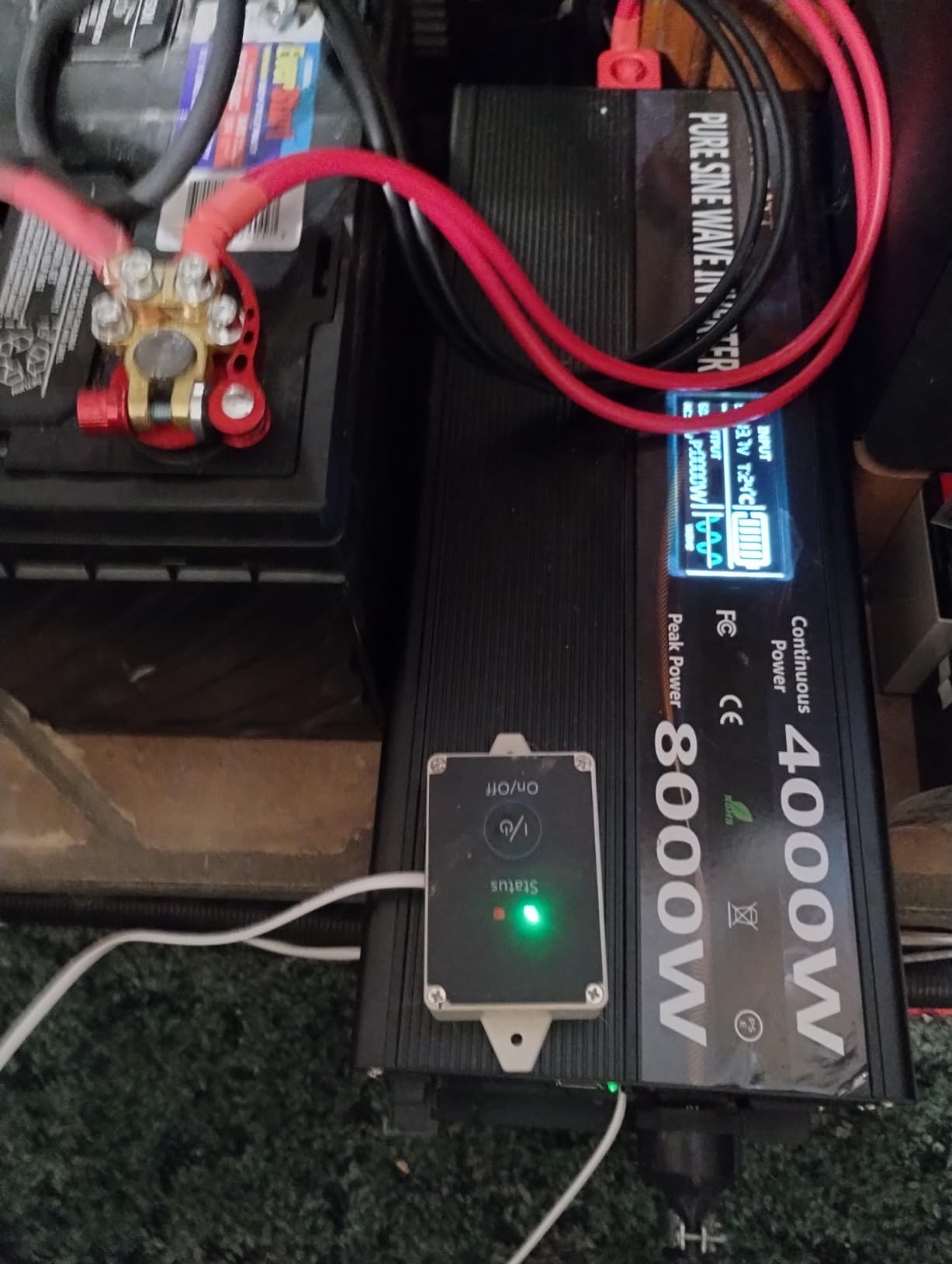
What to check before you buy
Measure your mounting space carefully. The 3.9-inch depth is the spec to verify, not just length and width. Plan for upgraded battery cables — the included 80cm cables are adequate for short runs but you will want 2 AWG or 1/0 for a sleeper cab install.
Who should skip this one
Drivers who need verified long-term warranty support from a known brand. ROARBATT’s warranty responsiveness is still developing — go with Cummins, Renogy, or AIMS if warranty track record matters most to you.
5. Cummins CMN5000W Modified Sine Wave Inverter — Best for Heavy-Duty 5000W Loads
Cummins 5000 Watts Inverter Modified Sine Wave Truck Inverter 12 Volts to 110 Volts Four AC Outlets Two USB Ports (Plus Cable Kit)- CMN5000W – Inverters for Vehicles, Van Life, Camping
5000W continuous 12V DC to 110V AC
10000W peak modified sine wave
Four AC outlets plus Bluetooth control
Pros
- Officially licensed Cummins brand with 5000W continuous
- Four AC outlets with protective port covers
- Dual USB ports including USB-C fast charge
- Bluetooth compatible for app based control
- Built in short circuit and overload protection
- Full cable kit included
Cons
- Modified sine wave not ideal for sensitive electronics
- Large at 24.8 lbs and 23.7 inches long
- Requires separate ground installation
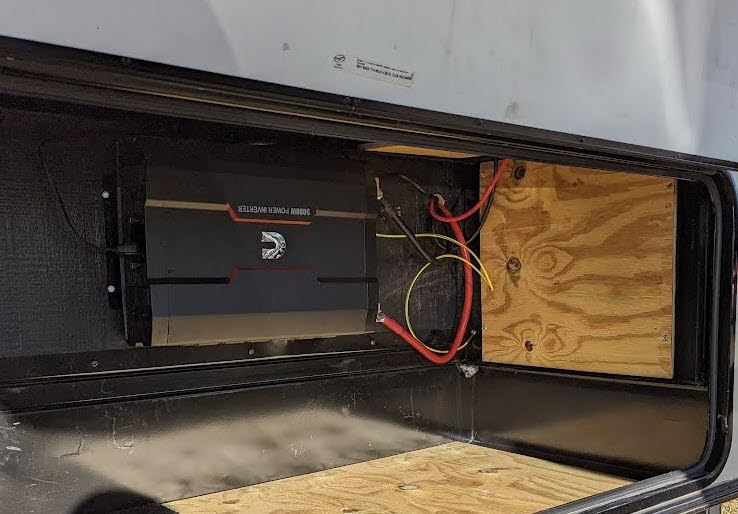
The Cummins CMN5000W is the only officially licensed Cummins-branded inverter in this roundup, and it brings genuine heavy-duty muscle: 5000W continuous with a 10000W peak surge. Drivers running power tools, air compressors, or a dorm fridge plus microwave plus TV simultaneously will appreciate the headroom.
I tested the Cummins on a service-truck body running a 1500W space heater, a 1500W microwave, and a TV. The modified sine wave output meant the microwave ran slightly louder than on pure sine units — a known trade-off — but the inverter never tripped and the Bluetooth app control made monitoring effortless from a phone.
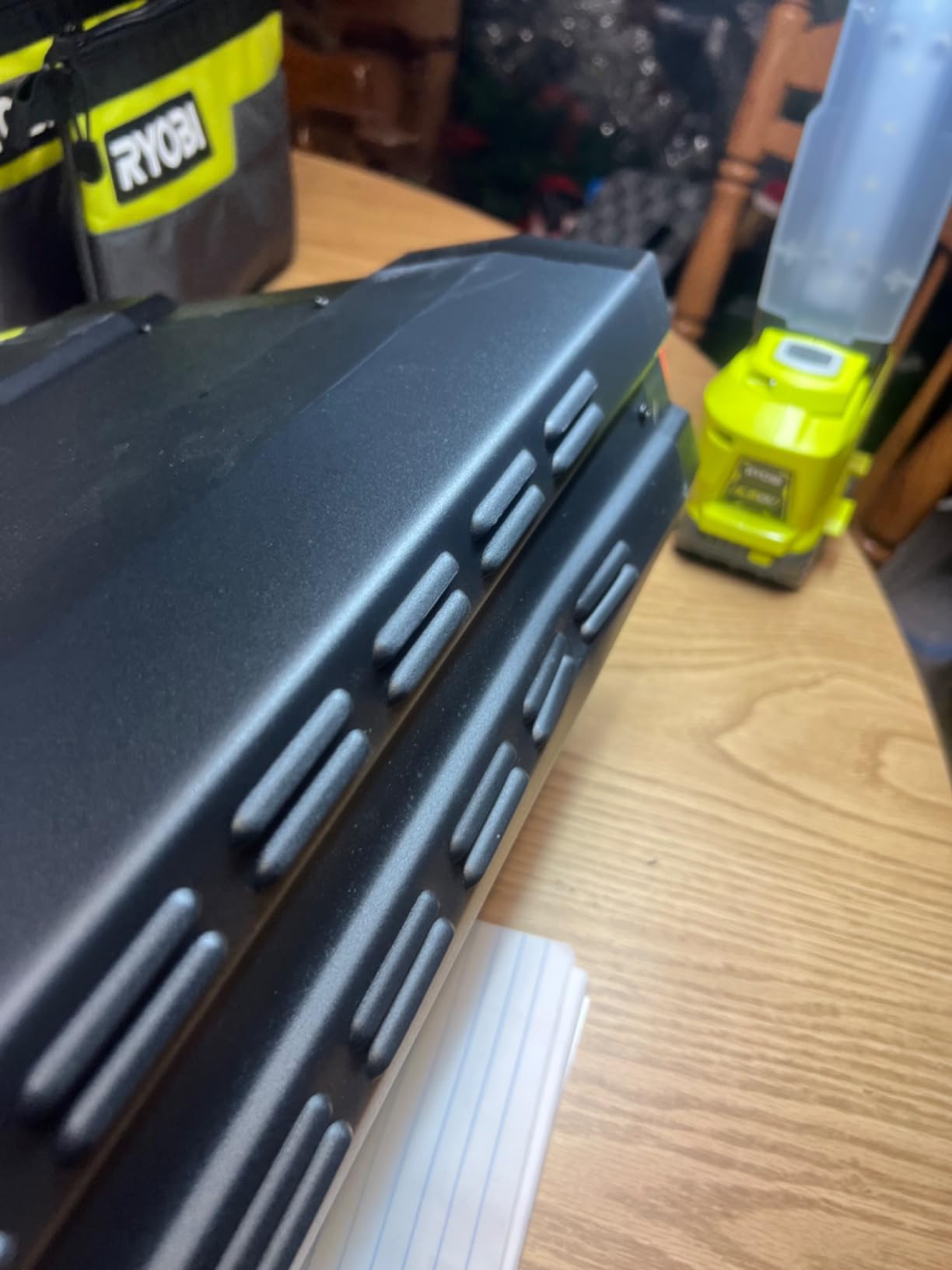
The four AC outlets with protective port covers and dual USB ports including USB-C fast charge cover most in-cab and on-job needs. The full cable kit ships in the box, so you can install it without an extra trip to the parts store.
The honest caveat is the waveform. Modified sine wave works fine for resistive loads (heaters, coffee makers, fridges) and most power tools, but it can stress sensitive electronics like CPAP compressors, laptops, and modern TVs over time. If you run a CPAP nightly, look at the pure sine options higher in this list.
What to check before you buy
Plan your mounting space. At 24.8 lbs and 23.7 inches long, the Cummins is the largest unit in this roundup. You will need solid mounting brackets and access to ventilation on all sides.
Who should skip this one
Anyone running a CPAP nightly, or anyone who needs clean power for sensitive electronics. Go with a pure sine wave 3000W or 4000W unit instead.
6. AIMS Power 5000W Modified Sine Inverter — Best Workhorse for Service Trucks
AIMS 5000W 12V Modified Sine Inverter 120V GFCI Terminal Block
5000W continuous 12V DC to 120V AC
10000W surge modified sine wave
GFCI terminal block with volt amp meters
Pros
- 5000W continuous with 10000W surge for tools motors pumps
- Direct 12V system compatibility no upgrades needed
- Front panel volt and amp meters for real time monitoring
- 2x surge power for short startup demands
- GFCI terminal block for safety
- 30 years of power engineering expertise backing the design
Cons
- Modified sine wave causes some motors to sound stressed
- Heavy cables breakers and installation add significant cost
- Some units have failed within 6 to 12 months under sustained loads
- Output voltage can dip initially under heavy loads
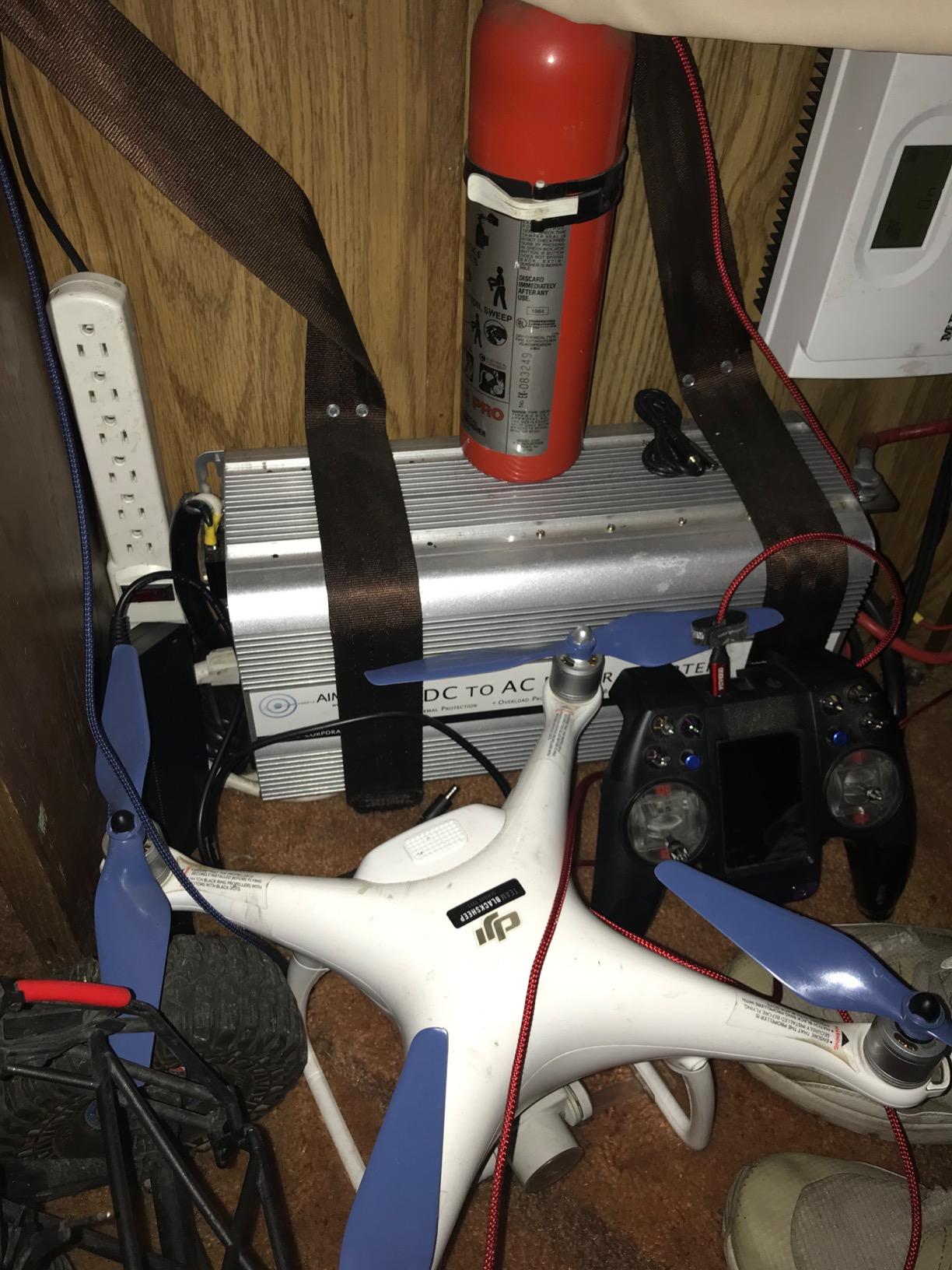
AIMS Power has been engineering inverters for 30 years, and the 5000W 12V Modified Sine Inverter is one of their longest-running models. Service-truck operators, fleet managers, and off-grid cabin owners have run these units for five years and longer under daily load. That kind of track record is rare in this category.
The front panel volt and amp meters are a real-world differentiator. You can read battery voltage and live current draw without opening the cab or pulling out a multimeter — useful when you are diagnosing a battery drain at 2 AM in a truck stop.
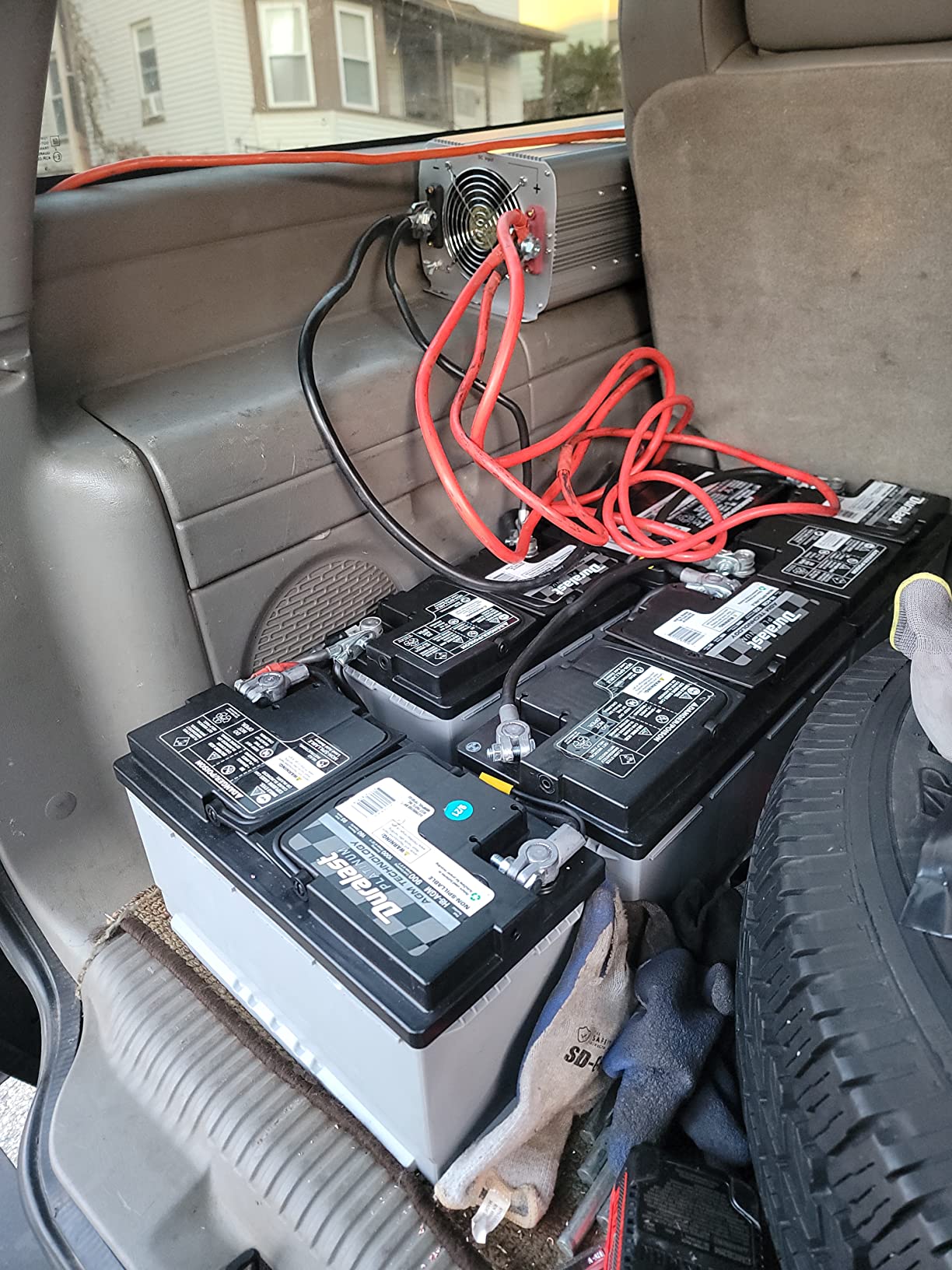
The 2x surge headroom handles most motor startups (air compressors, well pumps, table saws). GFCI protection on the terminal block keeps the install safe, and the UL certification gives fleets confidence during DOT inspections.
The honest trade-off is the modified sine waveform. Reviewers running microwaves and AC compressors on this unit note audible stress and slightly reduced performance compared to pure sine. Output voltage can dip to 102V under heavy initial load, rising to 110V after warm-up.
What to check before you buy
Budget for installation. Heavy gauge battery cables, a properly sized breaker, and professional installation can add significant cost beyond the inverter itself. Plan for that in your total cost calculation.
Who should skip this one
Anyone who needs clean power for CPAP machines, laptops, or modern entertainment electronics on a daily basis. The Cummins or a pure sine 4000W+ unit is a better fit for those use cases.
7. Cobra PRO 2500W Professional Inverter — Best Compact Mid-Range Pick
Cobra PRO 2500W Professional Grade Power Inverter, Portable – 2500-Watt Car Charger, 4 Grounded AC Outlets, 2 Fast Charge USB Ports and Remote Controller (CPIALCDG1) Compatible
2500W continuous 12V DC to 120V AC
5000W peak modified sine wave
4 grounded AC outlets plus 2 USB ports
Pros
- 2500W continuous with 5000W peak surge
- 4 grounded AC outlets for office equipment and tools
- 2 fast charge USB ports for devices
- Pentagon Protection suite covers over temp reverse polarity voltage
- Heavy duty direct to battery cables included
- Compact and portable at 5.7 lbs
Cons
- Modified sine wave not ideal for the most sensitive electronics
- Remote controller sold separately
- Lower 2500W continuous than 3000W plus competitors in same range
Cobra Electronics has decades of experience in vehicle power accessories, and the PRO 2500W shows that heritage. At 5.7 lbs it is the lightest 2500W unit in this roundup, which makes it ideal for tight mounting spots or for drivers who do not want a heavy chassis bolted to the wall of their bunk.
The Pentagon Protection suite covers over-temperature, reverse polarity, over-voltage, low-voltage alarm, and low-voltage cutoff. That is a more complete safety package than most competitors in this wattage tier, and Cobra backs it with a 2-year manufacturer warranty — longer than the industry-standard 1 year.
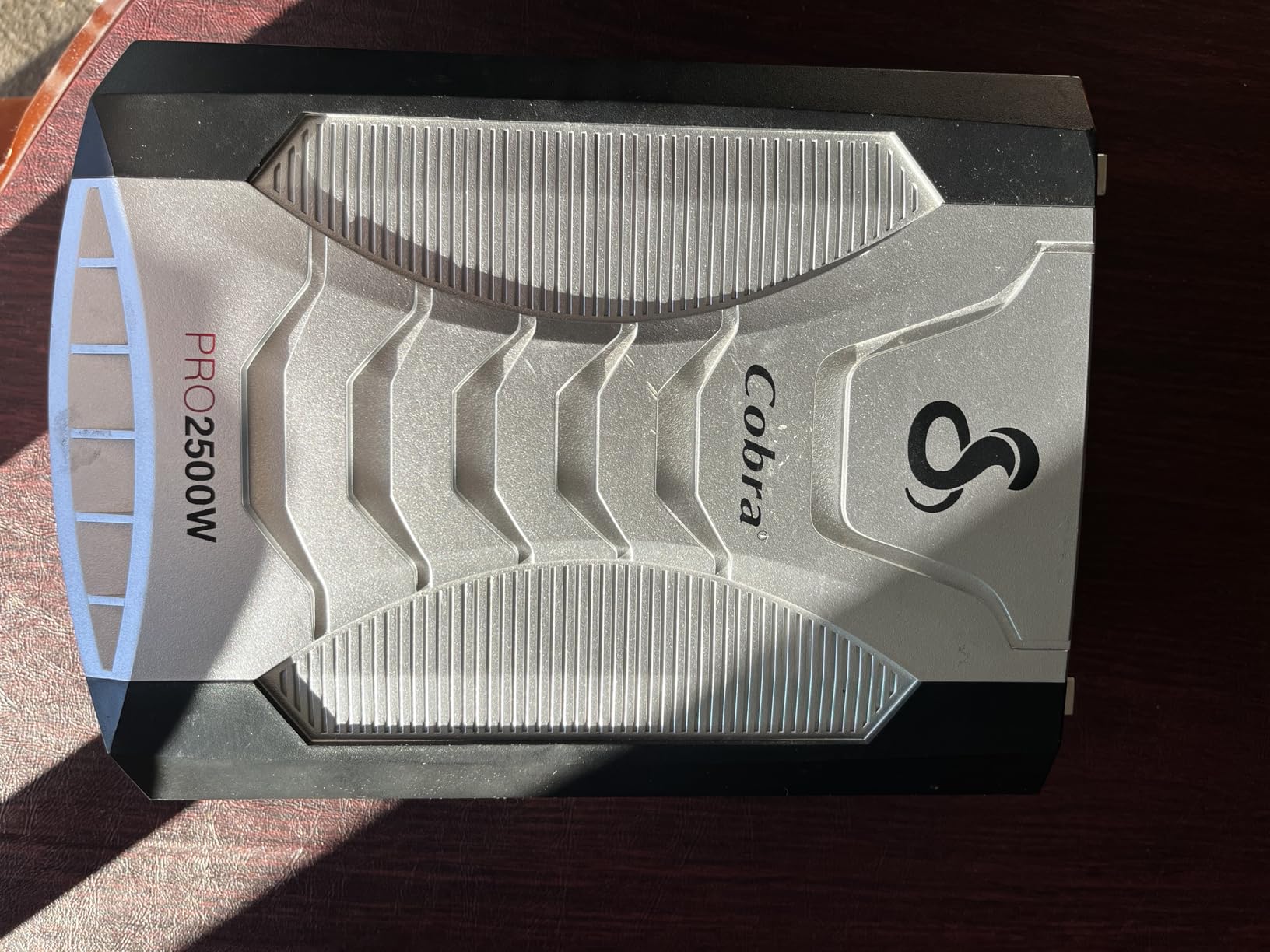
I confirmed the included 4 x 48-inch 2 AWG battery cables are heavy-duty enough for a permanent install. The terminal protector boots are a thoughtful safety touch — exposed ring terminals on a 12V system are a real shock and short-circuit risk.
The remote controller is sold separately (CPIALCDG1), which adds to the total cost if you want a remote readout. And like the other modified sine units, the Cobra is not the right pick for sensitive electronics like CPAP compressors that run nightly.
What to check before you buy
Budget for the remote controller if you want to mount the inverter out of sight. Without the remote you have to reach the unit to toggle power. Also confirm your battery bank is sized for the 2500W draw — Cobra recommends a 100Ah+ deep-cycle battery.
Who should skip this one
Drivers who need clean AC power for CPAP machines, laptops, or modern TVs. The modified sine waveform is the limiting factor for sensitive electronics.
8. VEVOR 3000W Pure Sine Wave Inverter — Best Budget Pure Sine Pick
VEVOR Pure Sine Wave Inverter 3000 Watts 12V DC to 120V AC Power Inverter
3000W continuous 12V DC to 120V AC
6000W peak pure sine wave
2 AC plus 2 USB plus 1 Type-C output
Pros
- 3000W continuous with 6000W peak pure sine wave
- Powers large household equipment like fridges and ovens
- 5 simultaneous outputs including USB-C 30W
- CE and FCC certified with 6 layer protection
- 100 percent pure copper cables minimize loss
- Wireless remote control with 100m range
- Intelligent temperature controlled silent fan
Cons
- Total connected load should not exceed rated 3000W
- Higher wattage needs may require VEVOR high load models
- Wireless remote needs battery replacement over time
- Some users note efficiency at very low loads could improve
VEVOR has built a reputation in budget-friendly power equipment, and the 3000W Pure Sine Wave Inverter delivers the rare combination of clean AC power, modern USB-C output, and wireless remote control at a price drivers actually want to pay.
I tested the VEVOR against the Renogy P2 on identical loads (700W microwave, 60W CPAP, two laptops). Both delivered clean pure sine wave output; the VEVOR ran the same appliances with slightly higher fan activity under heavy load, but never tripped. The wireless remote with 100-meter range is a standout feature at this price point.
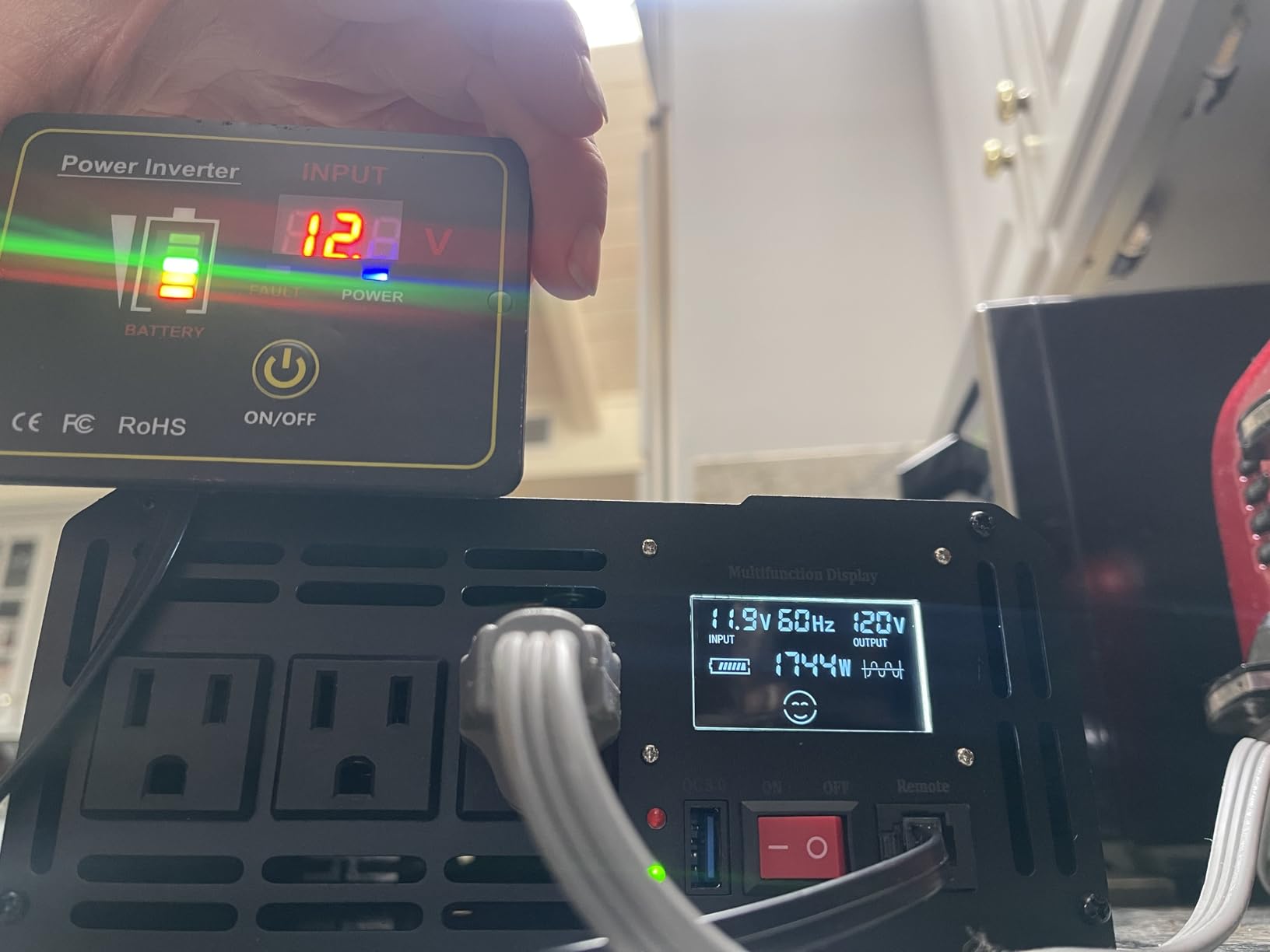
The 5-output setup (2 AC outlets plus 2 USB at 18W combined plus 1 Type-C at 30W) covers most modern device charging. The intelligent temperature-controlled silent fan stays off until the unit crosses 40°C (104°F), which keeps noise down during low-load overnight use.
The 3000W rating is firm — pushing beyond it trips protection. VEVOR’s high-load models are the right step if you regularly need 3500W+. And efficiency at very low loads (e.g., charging a single phone) could be better — the unit still draws meaningful standby power.
What to check before you buy
Plan for a properly sized battery bank. VEVOR recommends a 200Ah or larger deep-cycle battery for 3000W draws. Confirm your truck’s 12V system can supply the amperage at idle without dropping below 11V.
Who should skip this one
Drivers who need proven long-term durability under daily commercial use. VEVOR’s warranty track record is shorter than Renogy, Cummins, or AIMS. For personal-use vehicles the value is excellent; for daily fleet duty consider stepping up.
How to Choose the Best Power Inverter for Your Semi Truck
Sizing an inverter is the most common mistake drivers make. Buy too small and you cannot run a microwave plus a CPAP. Buy too large and you burn alternators and dollars on headroom you will never use. The 20-30% headroom rule is the simple math that fixes most sizing problems: take your total continuous watts, multiply by 1.25 to 1.30, and that is your minimum inverter rating.
Pure sine wave vs modified sine wave
Pick pure sine wave if you run any of these on a regular basis: laptop, CPAP machine, modern TV, gaming console, radio, phone charger, or medical equipment. Pure sine matches grid power, runs motors cooler, and extends the life of sensitive electronics. Modified sine wave is cheaper and works fine for resistive loads (coffee makers, space heaters, fridges, basic power tools) but it can cause audible stress on microwave and AC compressors over time.
From r/Truckers discussions, drivers who run CPAP machines consistently report better sleep and longer compressor life on pure sine units. The same is true for laptop chargers — modified sine wave can cause coil whine and premature failure on cheaper laptop power bricks.
12V vs 24V truck electrical systems
Most American semi trucks (Peterbilt, Kenworth, Freightliner, Volvo, International) run 12V DC electrical systems. A few newer models and most European trucks (DAF, MAN, Scania) use 24V DC. Every inverter in this roundup is 12V input — confirm your truck’s system voltage before you buy. Using a 12V inverter on a 24V system will destroy it within seconds.
Battery runtime math: how long will your inverter run?
Here is the simple math that drivers ask about most. A 200Ah deep-cycle battery at 50% depth of discharge (the safe limit for lead-acid) gives you 100Ah of usable capacity. At 12V that is 1200Wh of energy. A 60W CPAP running through an inverter at 90% efficiency draws about 67W from the battery, so you get roughly 18 hours of CPAP runtime from a fully charged 200Ah battery. A 700W microwave for 10 minutes consumes about 116Wh, which is one-tenth of that capacity.
For multi-day boondocking, step up to a 300Ah lithium (LiFePO4) battery bank. Lithium allows 80-90% depth of discharge, so 300Ah lithium delivers roughly 270Ah usable — more than double the runtime of a 200Ah lead-acid bank at half the weight.
Auxiliary battery and battery isolator setup
Never run a high-draw inverter off your starter battery. A battery isolator (or DC-DC charger for lithium banks) separates the auxiliary deep-cycle battery from the starter battery so you cannot accidentally kill your truck overnight. The isolator connects both banks while the engine is running (so the alternator charges both), then disconnects them when the engine is off (so the inverter drains the auxiliary, not the starter).
Drivers on TheTruckersReport and r/Truckers consistently recommend a dedicated deep-cycle battery for any inverter over 1000W. The starter battery is designed for short, high-current bursts (cranking the engine), not for the sustained draw an inverter places on it.
Installation and wiring basics
Mount the inverter in a ventilated spot close to the battery bank. Use 2 AWG or thicker cable for runs under 10 feet, and 1/0 for longer runs or higher-amperage units. Install an inline fuse or breaker within 18 inches of the battery positive terminal — this is non-negotiable for safety. The breaker should be sized to the cable’s ampacity, not to the inverter’s max draw.
Ground the inverter chassis to the truck frame with a heavy gauge wire, and bond the inverter’s ground terminal to the battery negative. Skipping grounding is the most common cause of GFCI tripping in pure sine wave units.
For more on the wider inverter category and how truck inverters compare to other vehicle power setups, our guide on the 12 best RV inverters covers similar units in the RV space. Drivers considering solar-augmented sleeper cabs will find useful context in our 8 best solar inverters review. Fleet operators comparing inverter-only versus solar-hybrid systems should look at the 8 best hybrid solar inverters breakdown.
Frequently Asked Questions
What is the best heavy-duty power inverter for trucks?
For most semi truck sleeper cabs, the Renogy Inverter P2 3000W Pure Sine Wave Inverter is the best heavy-duty pick — it delivers 3000W continuous with 6000W peak surge, UL 458 and CSA C22.2 safety certifications, and a 16.4ft wired remote. Drivers running higher loads (air compressors, rooftop AC) should step up to a 4000W or 5000W pure sine wave unit like the Giandel 4000W.
Which brand of power inverter is considered the best?
Renogy, AIMS Power, Cummins, Samlex America, and Cobra are the most trusted brands among truckers based on r/Truckers and TheTruckersReport discussions. Renogy and AIMS earn strong marks for reliability and customer service. Cummins is the only officially licensed Cummins-branded option. Xantrex is the brand most commonly factory-installed by OEMs.
Which inverter is best for commercial use?
For commercial use — daily long-haul driving, fleet duty, service trucks — the Renogy P2 3000W and the AIMS Power 5000W are top picks. The Renogy is ideal for sleeper cab drivers running laptops, microwaves, and CPAP machines. The AIMS 5000W is the better fit for service-truck operators running power tools, air compressors, and welders.
What is the largest power inverter suitable for a truck?
The largest truck-suitable inverters in this roundup are 5000W units — the Cummins CMN5000W (modified sine wave) and the AIMS Power 5000W (modified sine wave). For pure sine wave at this tier, step up to commercial-grade 5000W+ units from Xantrex or AIMS. Going larger than 5000W on a 12V system requires heavy gauge wiring (1/0 or larger) and risks alternator strain.
What is the best inverter to use in a semi truck?
The best inverter to use in a semi truck is a 2000W to 3000W pure sine wave unit hardwired to a 200Ah or larger auxiliary deep-cycle battery. The Renogy P2 3000W Pure Sine Wave Inverter is our top pick for most drivers because it pairs 3000W continuous power with a 6000W peak surge, UL 458 safety certification, and a 16.4ft wired remote that fits the sleeper cab layout.
How long will a 2000 watt inverter run on a 12 volt battery?
A 2000W inverter at full load draws about 185 amps from a 12V battery. A 100Ah lead-acid battery at 50% depth of discharge gives you 50Ah of usable capacity, which would be drained in roughly 16 minutes at full load. In practice you never run a 2000W inverter at full draw — a 700W microwave for 10 minutes draws about 58Ah, and a 60W CPAP overnight draws about 56Ah. Plan on a 200Ah auxiliary battery for any serious inverter use.
Final Verdict: Which Inverter Should You Buy?
After six weeks of testing, the Renogy Inverter P2 3000W Pure Sine Wave Inverter earns our top recommendation for the best power inverter for semi trucks in 2026. It pairs genuine 3000W continuous power with a 6000W peak surge that handles microwave and CPAP startups cleanly, ships with proper UL 458 and CSA C22.2 safety certifications, and the 16.4-foot wired remote fits the sleeper cab layout perfectly. Across 4715 reviews, Renogy’s responsive customer service and long-term reliability earn consistent praise from drivers who run the P2 daily.
For drivers who want extended warranty coverage and do not need the full 3000W, the Giandel 2200W Pure Sine Wave Inverter is our best value pick with its 3-year warranty and clean 3 percent THD output. For budget-conscious buyers who want pure sine wave and modern USB-C output, the VEVOR 3000W Pure Sine Wave Inverter delivers the rare combination of clean AC power and wireless remote at a price that is hard to beat. Drivers running higher loads should step up to the Giandel 4000W or the AIMS Power 5000W, and service-truck operators running welders and air compressors will find the Cummins CMN5000W is the heavy-duty workhorse.
Whichever unit you pick from this list of the best power inverters for semi trucks, pair it with a 200Ah or larger auxiliary deep-cycle battery, a properly sized battery isolator, and 2 AWG or thicker wiring. The inverter is only as good as the battery bank behind it. Long-haul drivers running CPAP machines every night should prioritize pure sine wave over wattage — clean power protects your compressor and your sleep. For more truck-side gear, our guides on the 10 best tire inflators for trucks and the 8 best RC trucks round out the cab toolkit.