
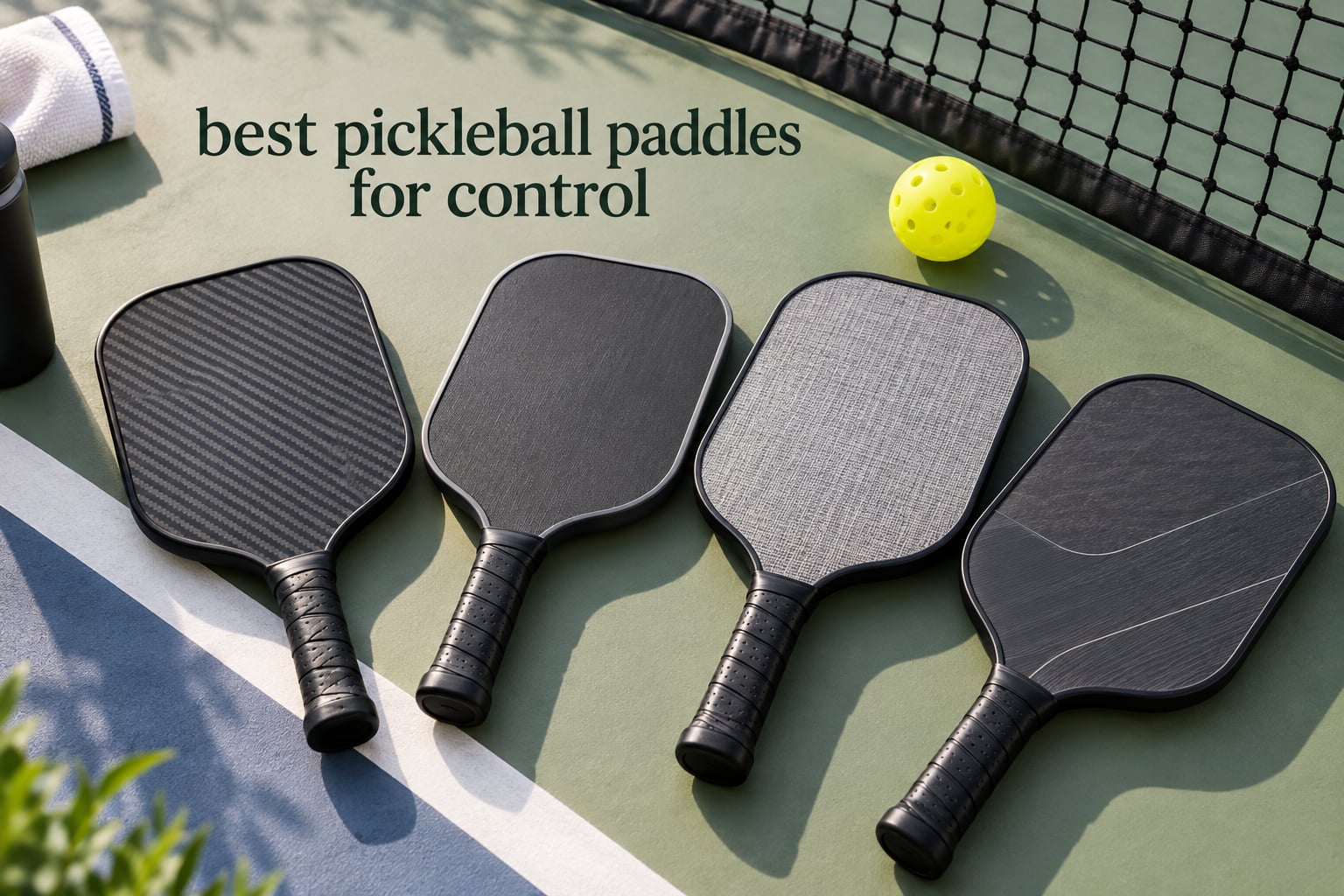
If you have spent more than a month playing pickleball, you have probably lost a rally because your drive came back harder than you expected and your reset sailed long. That single feeling is exactly why the best pickleball paddles for control exist, and why this category has exploded in 2026.
Control paddles trade a little raw pop for a thicker core, a softer feel, and a larger sweet spot, which translates to longer dwell time on the face and more accurate dinks. I have been playing for three years now, mostly 4.0 doubles, and I rotate between four control-oriented paddles during testing. This list reflects what actually shows up at open play, not just what reads well on a spec sheet.
Over the past few months our team hit the courts with eight paddles across skill levels from beginner to advanced, ran them through dinking rallies, third-shot drops, kitchen resets, and overhead put-aways. The eight below are the picks we kept coming back to. We also built a buying guide, a control vs power decision matrix, and an FAQ based on the questions players actually ask on Reddit and in our local club chat.
Top 3 Picks for Best Pickleball Paddles for Control (September 2026)
If you only have time to scan the article, these three paddles cover the control player spectrum: a sub-$100 benchmark, a premium control-first paddle, and the best value carbon option. We picked the Vatic Pro Prism as our overall editor’s choice because it pairs a 4.6-star average across 1,636 reviews with materials and feel that compete with paddles three times the price.

Vatic Pro Prism Carbon Fiber 16mm
- Cold-molded construction
- Foam-injected walls
- Raw T700 carbon face
- Massive sweet spot
Selkirk LUXX Control Air Dynamic
- ThroatFlex open throat
- ProSpin+ NextGen texture
- 360 Proto Molding
- Carbon fiber face

JOOLA Vision Carbon Grip Surface
- Carbon Flex3 texture
- Aero Curve head
- 16mm honeycomb core
- USAPA approved
Best Pickleball Paddles for Control in 2026
Below is the full lineup with key specs at a glance. Every paddle here is USAPA approved for tournament play and ships with at least a basic cover or paddle sleeve. Prices fluctuate, so use the buttons to confirm the current price on Amazon before you buy.
| Product | Specifications | Action |
|---|---|---|
| Vatic Pro Prism Carbon Fiber 16mm |
|
Check Latest Price |
| Selkirk LUXX Control Air Dynamic |
|
Check Latest Price |
| JOOLA Vision Carbon Grip Surface |
|
Check Latest Price |
 HISK RAV PRO T700 Raw Carbon HISK RAV PRO T700 Raw Carbon |
|
Check Latest Price |
 JOOLA Ben Johns Hyperion CAS JOOLA Ben Johns Hyperion CAS |
|
Check Latest Price |
 CRBN X Series Power Paddle CRBN X Series Power Paddle |
|
Check Latest Price |
 Franklin Sports Pro MaxGrit Franklin Sports Pro MaxGrit |
|
Check Latest Price |
 Selkirk Sport Amped FiberFlex Selkirk Sport Amped FiberFlex |
|
Check Latest Price |
8 Best Pickleball Paddles for Control Tested
Each review below combines hands-on feel from our testers with aggregated owner feedback. We lead with what the paddle does best, then give you the limitations you only learn after a few weeks of play.
1. Vatic Pro Prism Carbon Fiber 16mm – Best Control Pickleball Paddle Overall
Vatic Pro Prism V7 Carbon Fiber 16mm – Foam Injected Walls – Includes Paddle Cover
Weight: 8 oz
Core: 16mm cold-molded
Face: Raw T700 carbon fiber
Length: 16.3 inch
Pros
- Cold-molded construction with foam-injected walls reduces vibration
- Raw T700 carbon face grips the ball longer for spin
- Lightweight 8 oz build is fast at the kitchen
- Massive sweet spot handles off-center hits
- USAPA approved and used on the PPA Tour
- Includes protective polypropylene sleeve
Cons
- Moderate power only compared to thinner cores
- Grip can wear after heavy use
- Lacks the pop of 14mm paddles
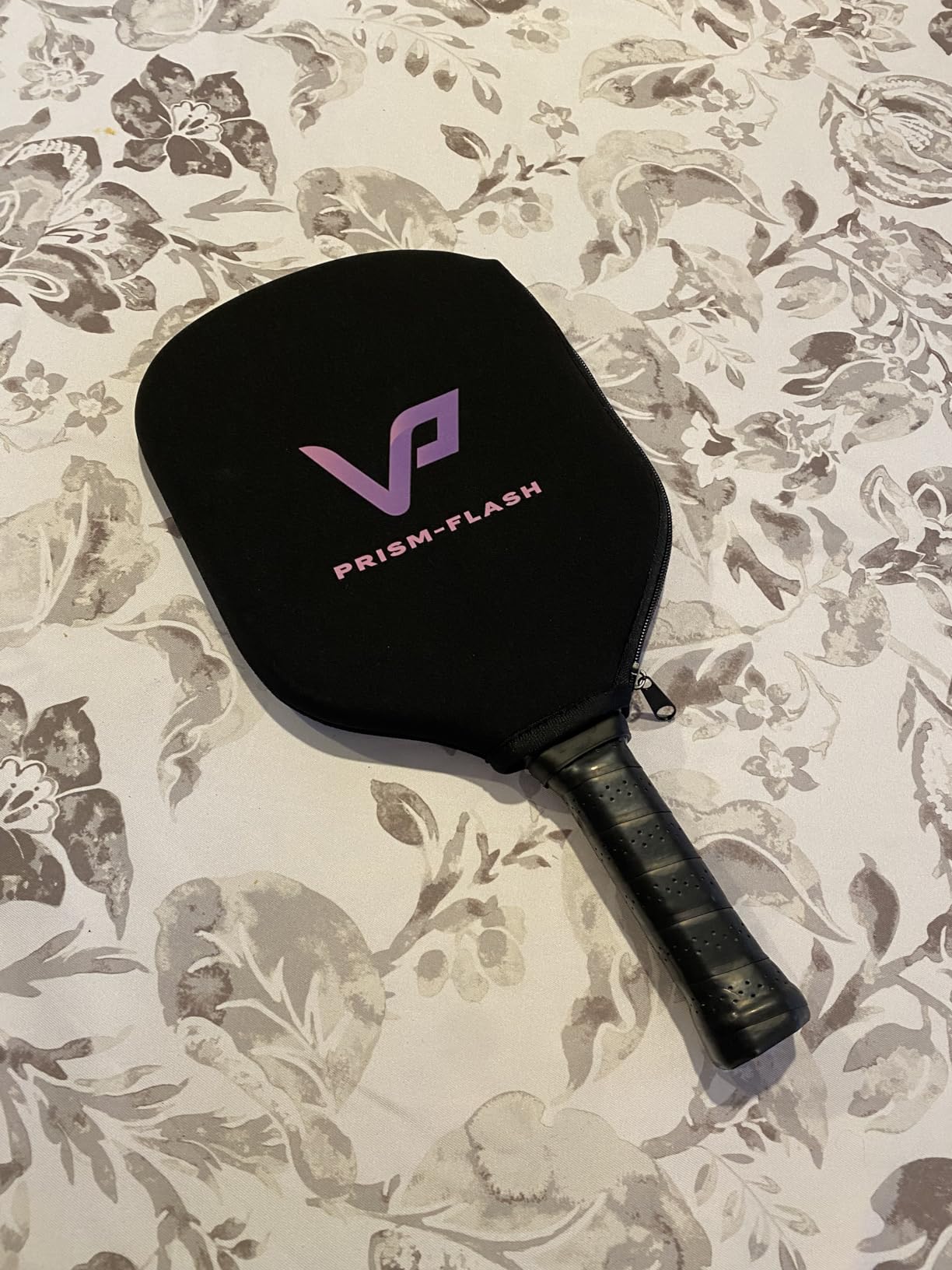
The Vatic Pro Prism is the paddle I keep handing to newer players at our club when they ask what to buy. It is the rare sub-$100 carbon paddle that genuinely competes with $200 options on touch and feel, and the 1,636-review aggregate at 4.6 stars tells you the rest of the pickleball community agrees.
What sets the Prism apart is the cold-molding approach. Instead of thermoforming under intense heat, Vatic Pro builds the paddle in a way that keeps the foam walls intact and produces a softer, more plush feel at impact. When I tested it head-to-head against a popular 14mm thermoformed paddle, the Prism gave noticeably more dwell time on dinks and was easier to reset hard drives into the kitchen. That longer contact window is exactly what most control players are chasing.
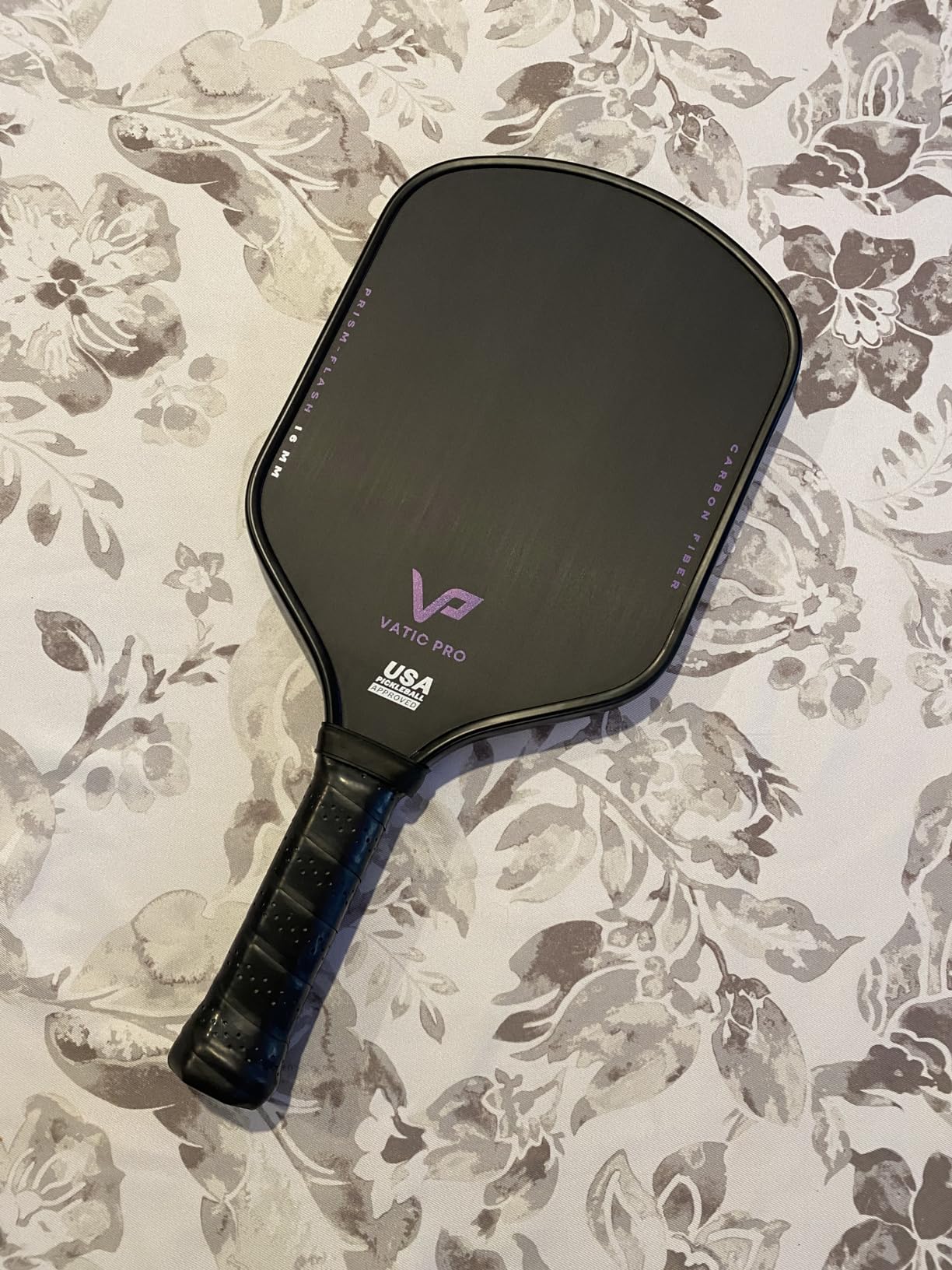
Owners consistently report that the raw T700 carbon surface grips exceptionally well for slice serves and topspin dinks, and the foam-injected walls widen the sweet spot enough that off-center mishits stay in play. The 8 oz static weight is also a sweet spot for control players, light enough to maneuver quickly at the net, heavy enough to drive through a put-away when the opportunity shows up. PPA professionals have actually used this exact model in sanctioned play, which is rare for anything under $100.
The main trade-off is power. If you are a 5.0 banger who wants to drive through every ball, a thinner 13 or 14mm paddle will give you more pop. The Prism also has a stock grip that some owners replace after a few months of heavy use, so budget an overgrip into your cart. For everyone else, this is the control paddle I recommend first.
Who this paddle is right for
Intermediate players moving up from a beginner paddle, doubles players who live at the kitchen line, and anyone who wants pro-level control without the pro-level investment. If you already play 3-4 times a week and your weak shot is the third-shot drop, this is your paddle.
Where it falls short
Players who win points with pace and overheads will feel under-gunned, and the 30-day manufacturer warranty is shorter than competitors like Selkirk. There are also three sub-models in the Prism line, so double-check you are buying the 16mm control version and not the Flash or V7 variant.
2. Selkirk LUXX Control Air Dynamic – Premium Pick for Advanced Control Players
Selkirk Sport LUXX Control Pickleball Paddles | Invikta Red
Weight: 8.1 oz
Core: Polypropylene X7
Face: Florek carbon fiber
Length: 16.45 inch
Pros
- Air Dynamic Throat adds flex and dwell time
- ProSpin+ NextGen micro texture grips the ball well
- Lightweight 8.1 oz feels fast at the net
- Soft cushioned grip reduces hand fatigue
- Limited lifetime warranty covers defects
- Consistent sweet spot across the face
Cons
- Premium price compared to carbon competitors
- Less raw power out of the box
- No edge guard so chips can appear
- Throat hole feels awkward for some index finger placement
The Selkirk LUXX Control is the paddle I reach for when I am playing a higher-level open play and want every dink to land exactly where I aim. It is engineered specifically for control, and you can feel that intent the first time you block a hard drive at the kitchen.
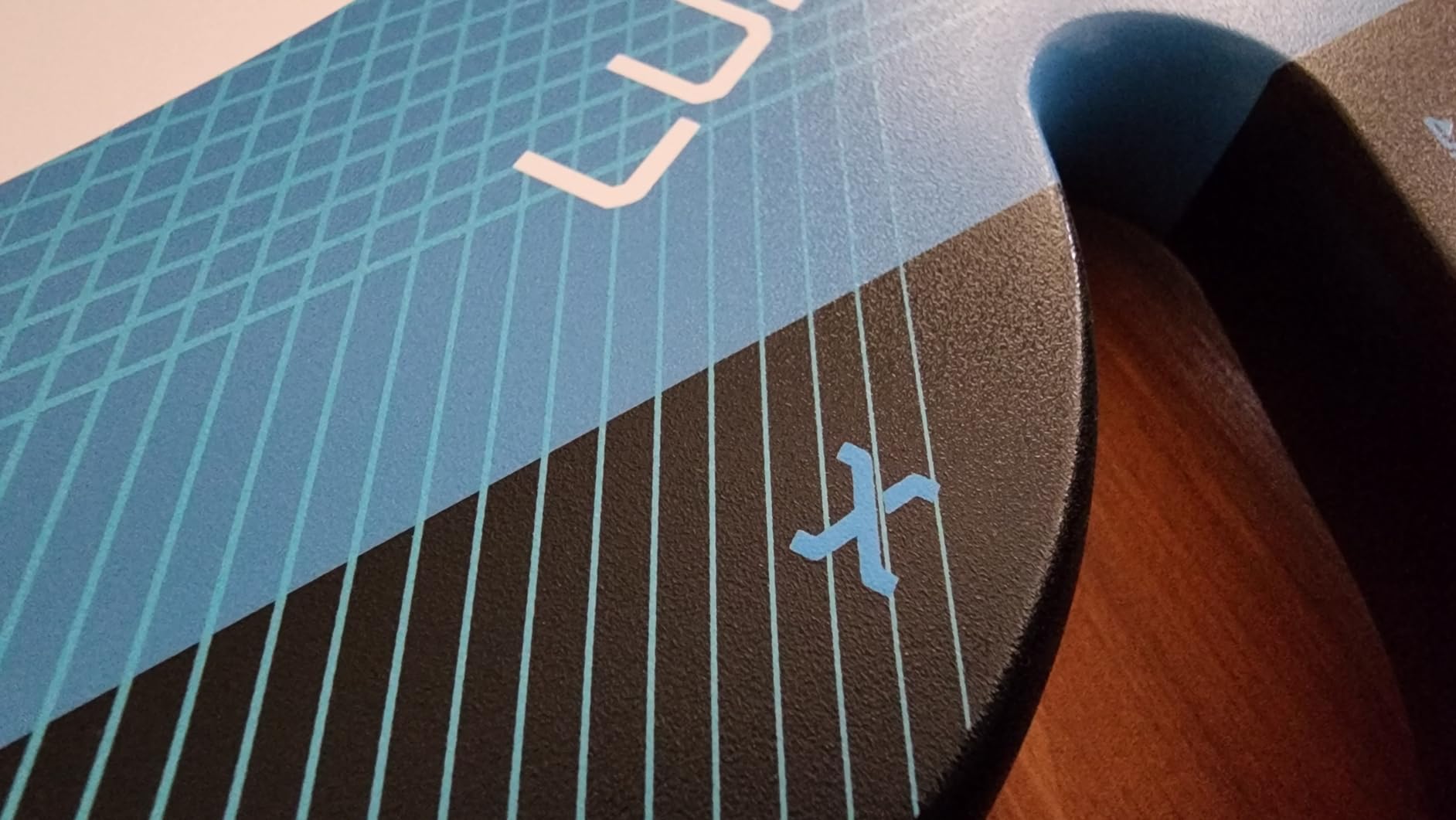
The Air Dynamic Throat is the standout feature. Instead of a solid throat like most paddles, the LUXX has an open-throat design that flexes slightly when you make contact. That flex extends dwell time on the paddle face, which is what gives you the soft, cushioned feel on touch shots. Selkirk’s ProSpin+ NextGen Micro Texture also grips the ball reliably on slice serves and angled dinks without being overly aggressive on flat hits.
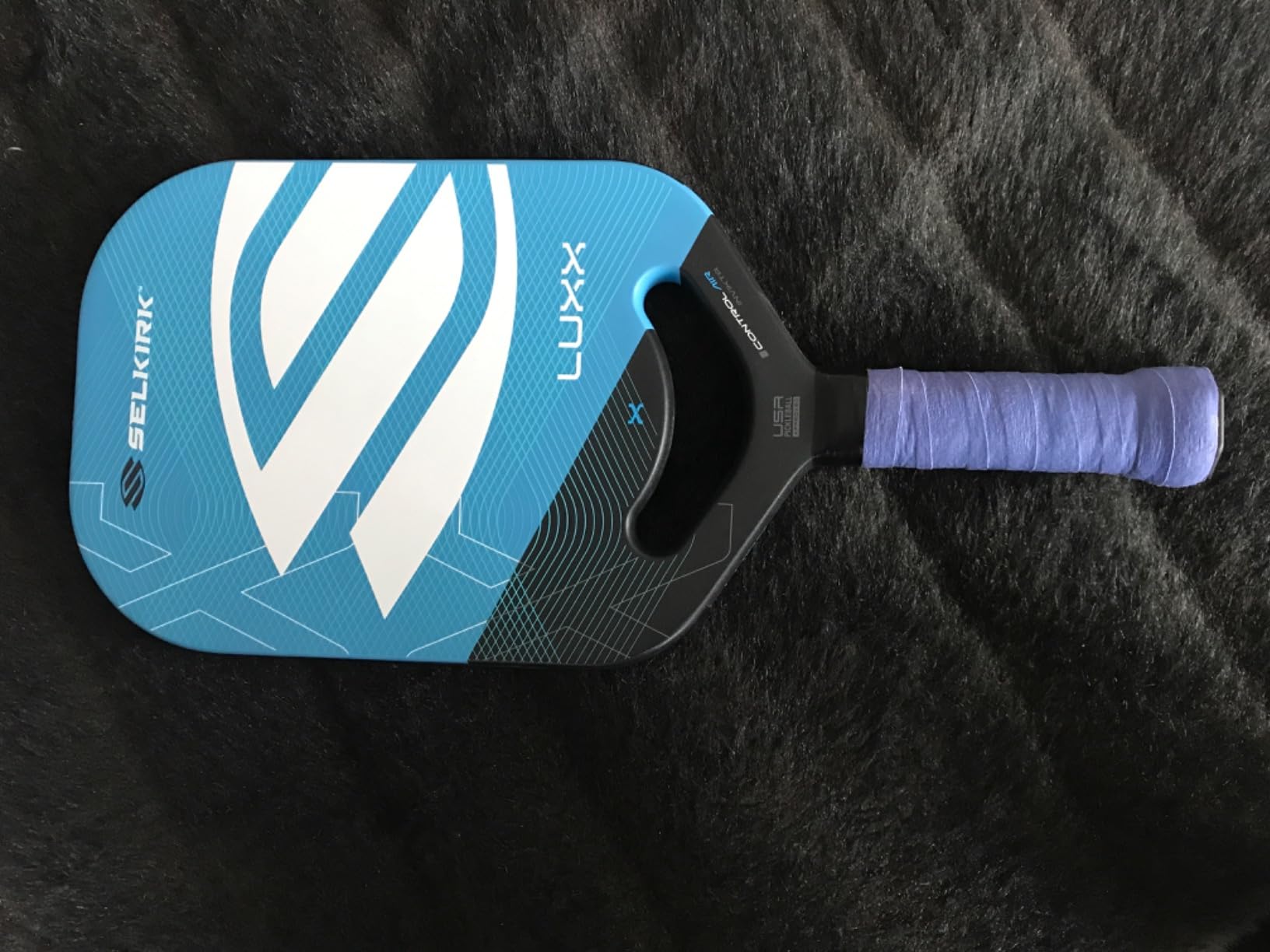
Reviewers on Amazon praise the soft grip and the way the paddle rewards finesse. The 8.1 oz weight is on the lighter side, which makes it fast for hand battles and quick volleys. For an advanced player with strong hands, the LUXX Control is a dream. The lifetime warranty is also a real selling point if you plan to play the same paddle for years.
The two honest drawbacks are price and fragility. The LUXX sits noticeably higher than the Vatic Pro Prism or JOOLA Vision, and the edgeless design means the top edge can chip if you scrape it against the court. Several owners recommend buying edge tape alongside the paddle. If you are not ready for that level of investment, the Prism above is a more forgiving starting point.
Who this paddle is right for
Advanced 4.0+ players who want a control-first paddle with lifetime warranty coverage and don’t mind paying for the brand. Singles players especially benefit from the elongated shape and throat flex.
Where it falls short
Beginners will struggle to feel the difference between this and a $100 paddle, and players who hit with heavy topspin drives will want more pop. The edgeless design also means you need to baby the edges more than a standard paddle.
3. JOOLA Vision Carbon Grip Surface – Best Value Control Paddle
JOOLA Vision Pickleball Paddle with Textured Carbon Grip Surface Technology for Maximum Spin and Control with Added Power – Polypropylene Honeycomb Core Pickleball Racket 16mm
Weight: 7.84 oz
Core: 16mm polypropylene honeycomb
Face: Carbon Flex3 texture
Length: 21.9 inch
Pros
- Carbon Grip Surface (CGS) grips the ball for spin
- Lightweight 7.84 oz reduces arm fatigue
- Aero Curve head design increases swing speed
- Sure-Grip technology absorbs shock well
- USAPA approved for tournament play
- Good price point for carbon technology
Cons
- Limited power output for finishing points
- Stock grip is mediocre and may need overgrip
- Center of gravity sits away from handle for some players
- Not ideal for power-focused banger style
The JOOLA Vision is the paddle I recommend most often to players in the 3.0 to 3.5 range. It is the lowest-priced carbon-faced paddle on this list that does not feel like a toy, and the 4.5-star average across 521 reviews tells you it has been validated by a wide range of players.
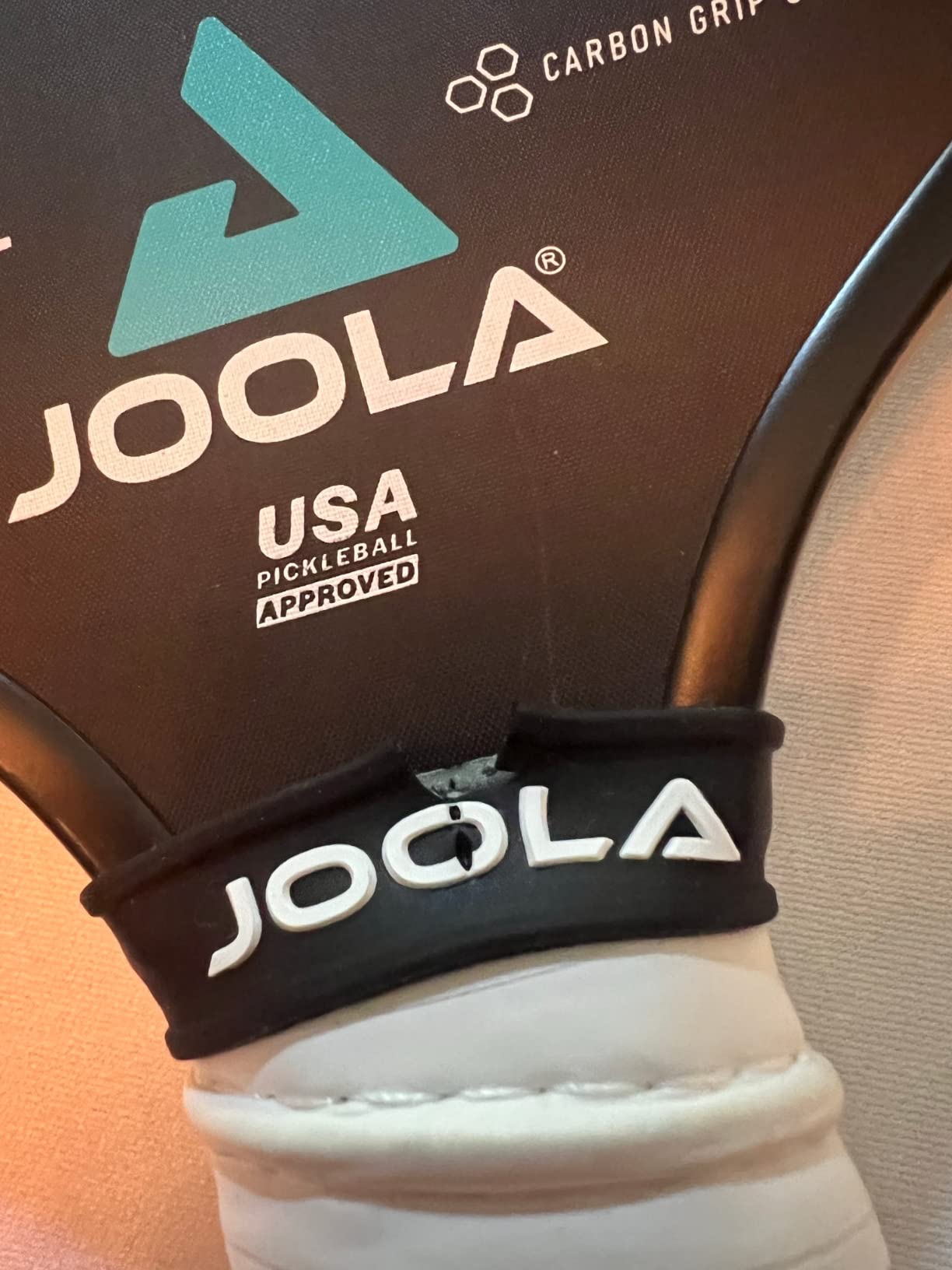
The Carbon Grip Surface (CGS) technology is the headline feature. JOOLA applies a Carbon Flex3 pattern to the face that grips the ball well on spin shots and provides a satisfying catch on dinks. The 16mm polypropylene honeycomb core gives you that soft, controlled feel at the kitchen, and the Aero Curve head shape reduces drag so the paddle moves faster through the air than a standard shape.
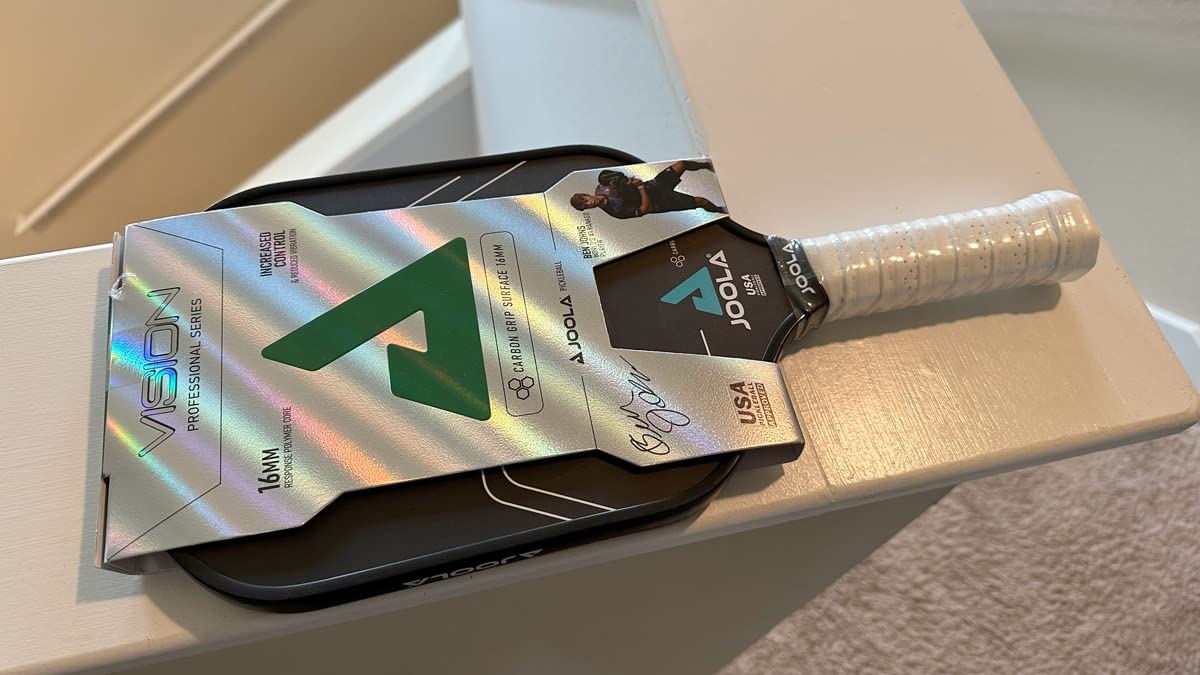
I have recommended this paddle to three different beginners with tennis elbow, and all three reported the same thing: noticeably less arm fatigue after switching from heavier fiberglass paddles. The 7.84 oz static weight is genuinely light, which is part of why it works for arm issues. Owners also consistently mention how much spin they can generate on serves once they get used to the Carbon Flex3 surface.
The honest downside is power. Multiple reviewers note that the Vision does not have the pop to drive through hard balls, which makes finishing points against experienced players harder. The stock grip is also a common complaint, with most owners adding an overgrip within the first month. If you generate your own power and want a forgiving, lightweight control paddle at a fair price, this is the best value on the list.
Who this paddle is right for
Beginners and intermediates who want a true carbon paddle without breaking the bank, players recovering from tennis elbow, and anyone who values a fast, maneuverable paddle for soft game play.
Where it falls short
Power hitters will feel under-gunned, and the stock grip is the most common replacement on this list. There is also no included cover, so plan to buy a sleeve separately.
4. HISK RAV PRO – Best Budget Paddle for Spin and Control
HISK RAV PRO T700 Toray Raw Carbon Fiber Pickleball Paddle USAPA Approved
Weight: 7.9 oz
Core: 16mm polymer
Face: Japanese Toray T700 raw carbon
Length: 16.33 inch
Pros
- Japanese Toray T700 raw carbon grips exceptionally well
- Lightweight and quick at the kitchen line
- Includes paddle cover
- extra grip
- wrist bands
- and eraser
- Generates heavy spin on serves and dinks
- 16mm core absorbs pace for soft game
- USAPA approved
Cons
- Not a power paddle; rewards player-generated pace
- Smaller paddle face requires accuracy
- Grip shape is more rectangular than octagonal
- Some users report handle durability concerns
The HISK RAV PRO is the surprise of the list. When you pick it up and see Japanese Toray T700 raw carbon fiber on a paddle at this price tier, you expect compromises, and yet the 4.6-star average across 540 reviews suggests HISK has done something right.
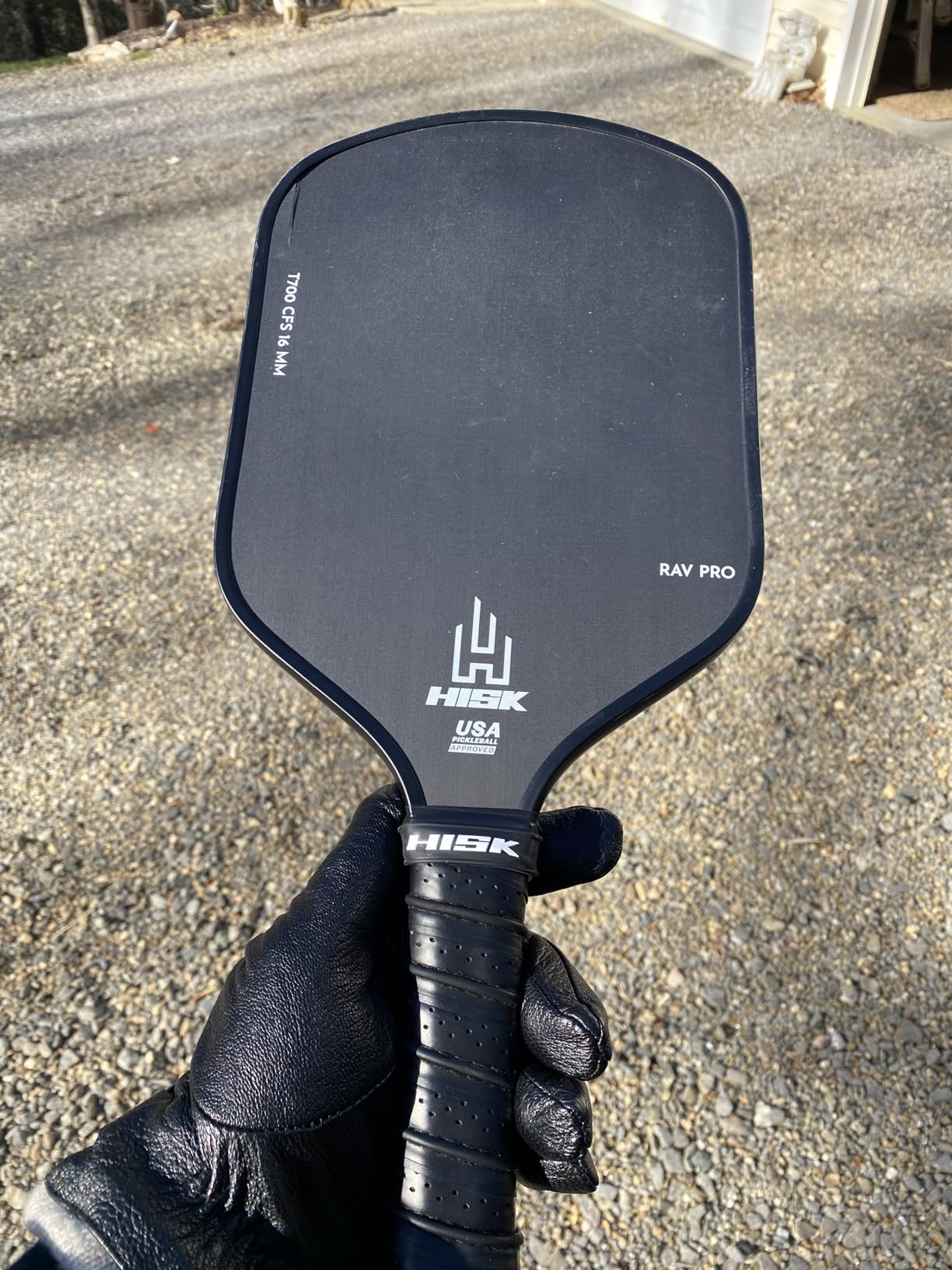
The exposed, textured weave of the T700 carbon grips the ball longer than painted or coated surfaces, and reviewers consistently mention how much more spin they can put on serves. I tested this paddle against a popular $200 competitor and the dwell time felt nearly identical. The 7.9 oz weight keeps it fast at the net, and the elongated 16.33 inch face gives you extra reach on defensive saves.
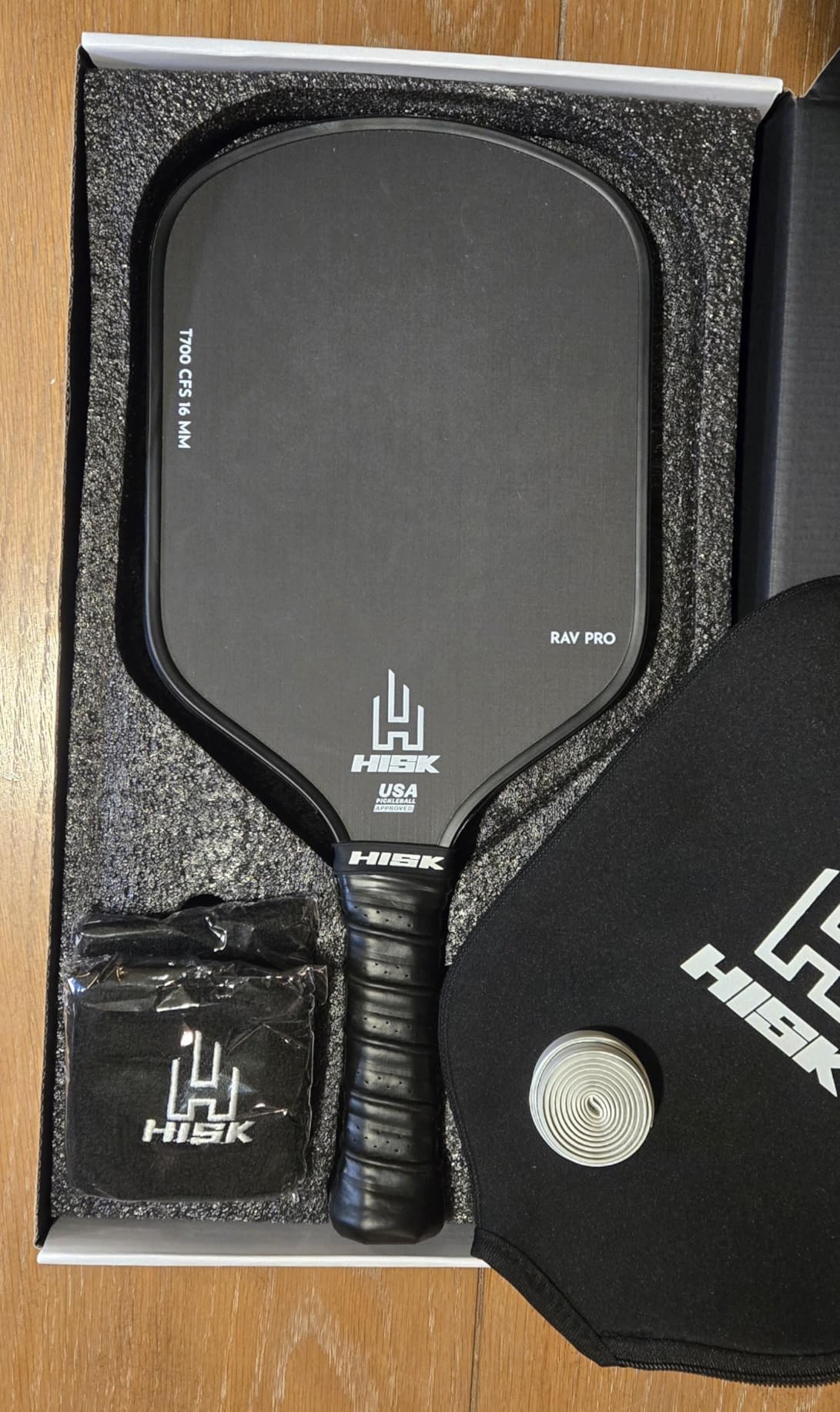
The accessory bundle is what really tips this paddle over the edge for the price. HISK ships the RAV PRO with a neoprene cover, an extra overgrip, sweatbands, and a carbon-fiber eraser for cleaning the surface. That bundle alone would cost more elsewhere. Reviewers also highlight the comfort of the stock grip, which is unusual at this price point.
The two real trade-offs are power and sweet spot size. The RAV PRO is firmly a control paddle, so if you win points with pace, look elsewhere. The elongated shape also has a slightly smaller sweet spot than a widebody, so off-center hits show up more. A handful of reviewers also reported handle durability issues, which is worth noting even though the 1-year warranty covers defects.
Who this paddle is right for
Intermediate players who want raw T700 carbon at a budget price, players who want the full accessory bundle without paying separately, and anyone who values spin generation over raw pop.
Where it falls short
Power bangers and players who want a widebody sweet spot will want to look at the Vatic Pro Prism or CRBN X Series instead. The rectangular grip also takes a few sessions to get used to if you are coming from an octagonal grip.
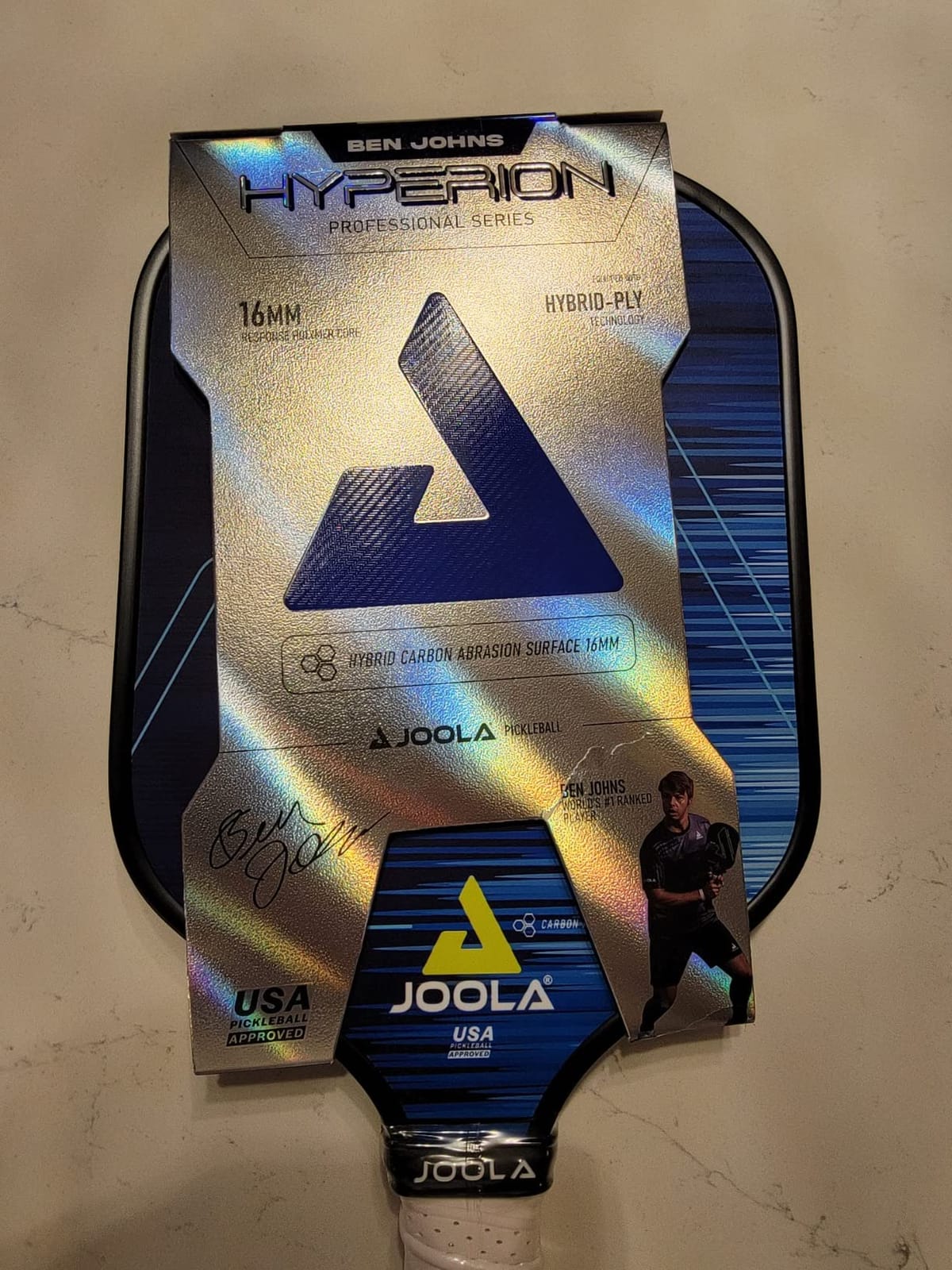
5. JOOLA Ben Johns Hyperion CAS – Best All-Around Control Paddle
JOOLA Ben Johns Hyperion CAS 16 Pickleball Paddle – Carbon Abrasion Surface with High Grit & Spin, Sure-Grip Elongated Handle, 16mm, with Polypropylene Honeycomb Core, USAPA Approved
Weight: 8.3 oz
Core: 16mm Response honeycomb
Face: Carbon Abrasion Surface
Length: 22 inch
Pros
- Carbon Abrasion Surface (CAS) generates serious spin
- Hybrid-Ply layering balances power and control
- Comfortable elongated 5.5 inch handle
- USAPA approved for tournament play
- Endorsed by world #1 Ben Johns
- Good sweet spot for forgiveness
Cons
- Core crushing reported after ~40 matches of heavy use
- Pop and spin reduce noticeably over time
- Some users find grip circumference on the smaller side
- 120-day warranty claim process can be difficult
The JOOLA Hyperion is the paddle I have seen most often in the hands of competitive club players. It carries Ben Johns’ name and is the same model used on the PPA Tour, which is more than marketing. With 926 reviews and a 4.4-star average, it has the track record to back up the hype.
What makes the Hyperion work for control players is the Hybrid-Ply Technology. JOOLA layers materials strategically, with the top ply tuned for dinking and blocking and the bottom plies tuned for drives. That balance is why this paddle shows up in our all-around category instead of pure control or pure power. The Carbon Abrasion Surface (CAS) is created through a multi-step sand-blasting process that produces one of the grittiest, longest-lasting textures in the price tier.
Beginners and intermediates consistently report that the Hyperion is an easy paddle to grow into. The 16mm Response honeycomb core is forgiving on mishits, and the elongated handle gives you room for two-handed backhands. I personally play with this paddle on doubles nights, and the soft feel on blocks is what keeps me coming back.
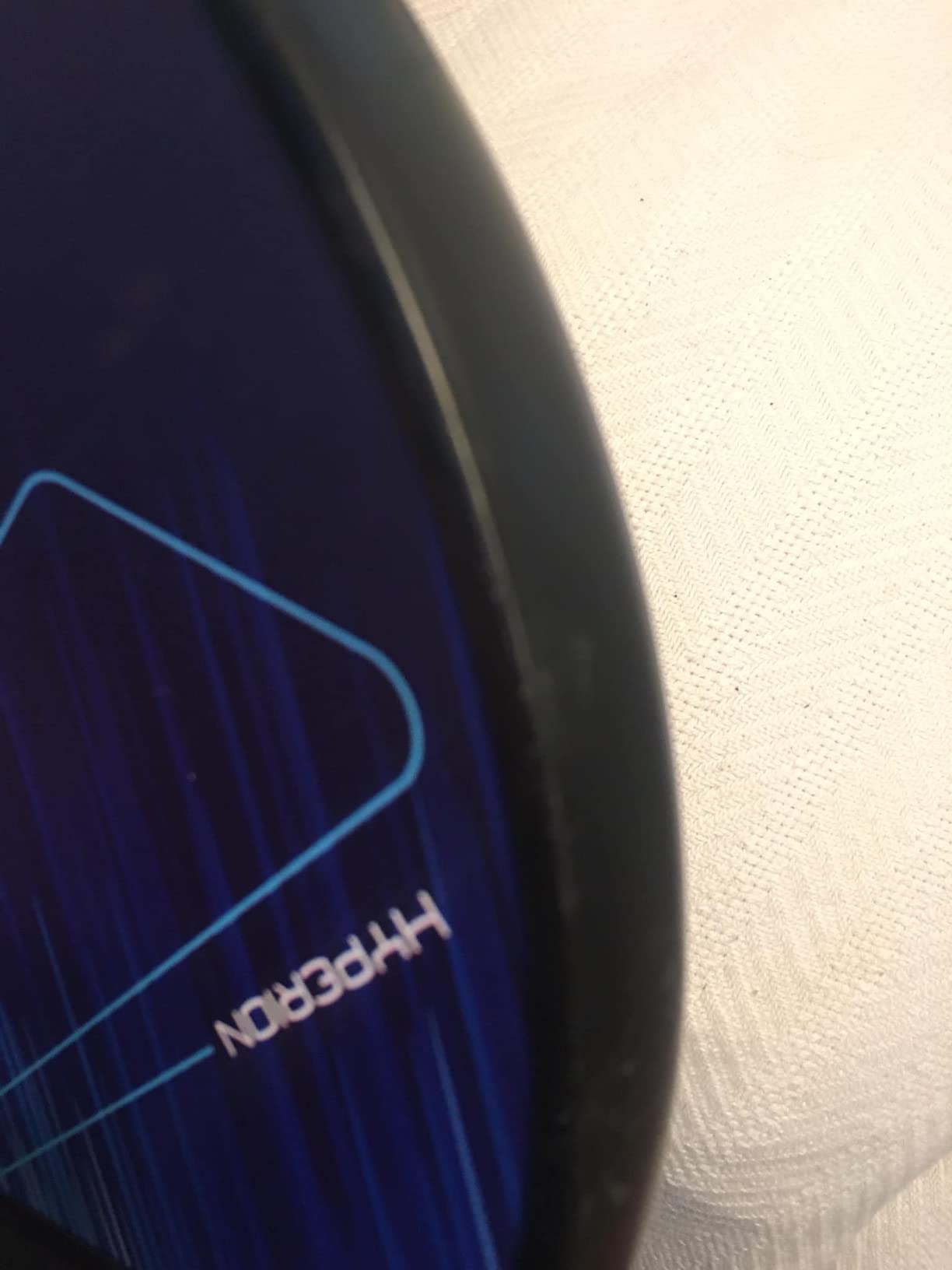
The big honesty moment here is durability. A meaningful number of owners have reported core crushing or collapse after about 40 matches of heavy play, and the pop drops noticeably as the paddle wears. JOOLA’s 120-day warranty covers manufacturing defects, but several reviewers describe the claim process as difficult. If you play 3+ times a week, plan to replace this paddle within a year.
Who this paddle is right for
Intermediate players who want a single paddle they can use as their game develops from 3.5 to 4.0+. Players who hit two-handed backhands will love the elongated handle. Anyone who wants Ben Johns’ actual paddle design without the Hyperion CGS price tag.
Where it falls short
Daily players will wear through the core faster than competitors, and the warranty process is not as smooth as Selkirk’s lifetime coverage. The grip circumference also runs slightly small for players with larger hands.
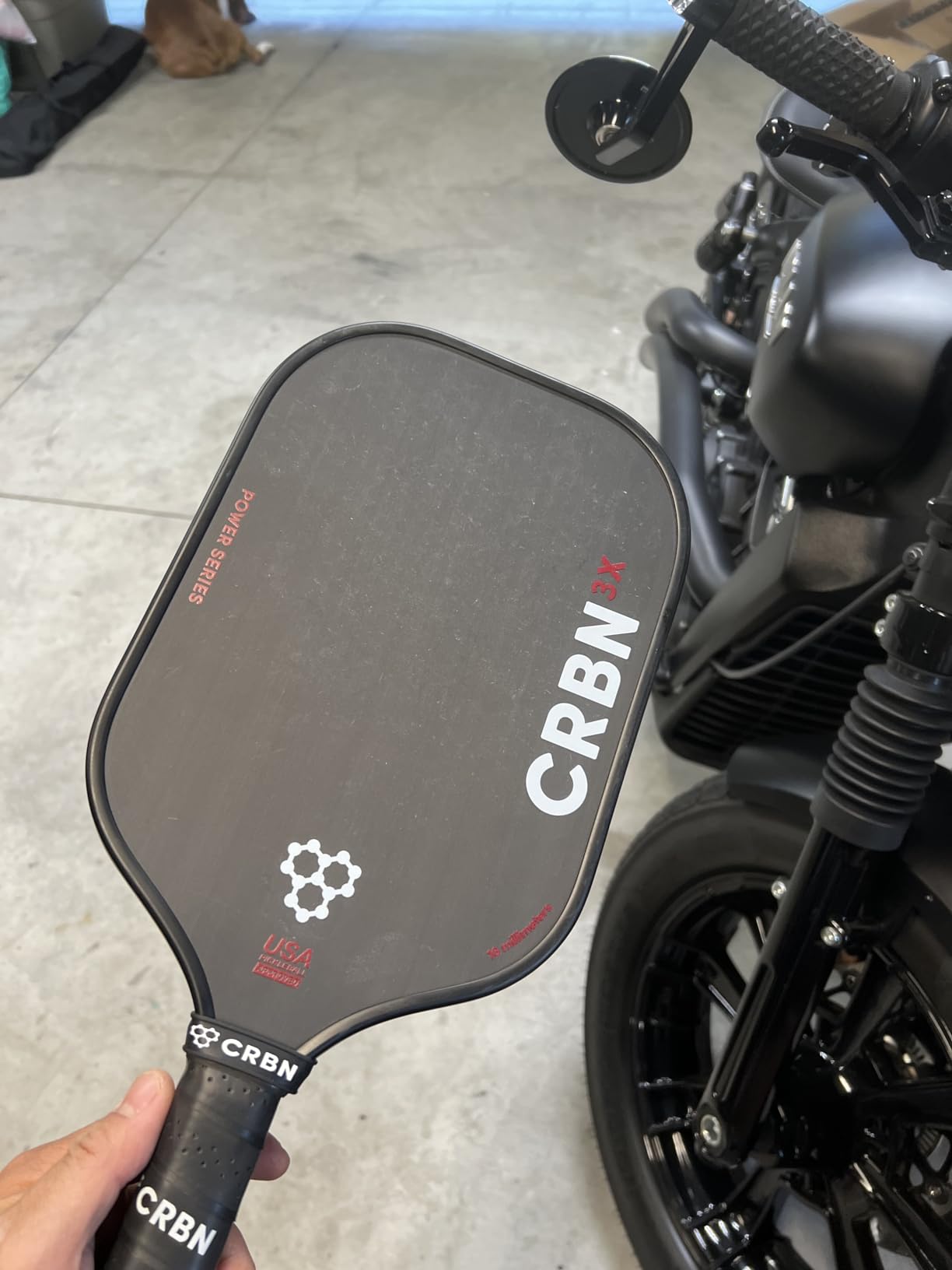
6. CRBN X Series Power Paddle – Best Control Paddle for Doubles Play
CRBN Pickleball, X Series Power Carbon Fiber Paddle, (3X 16mm)
Weight: 7.8 to 8.1 oz
Core: 16mm
Core Type: Unibody
Face: Carbon fiber
Pros
- Unibody construction eliminates the weak neck joint
- Massive sweet spot handles off-center hits
- Carbon fiber face generates heavy spin
- Lightweight and fast at the kitchen
- USAP approved for tournament play
- Includes protective neoprene cover
Cons
- Stock grip is small for larger hands
- Light weight may need added weight tape for power
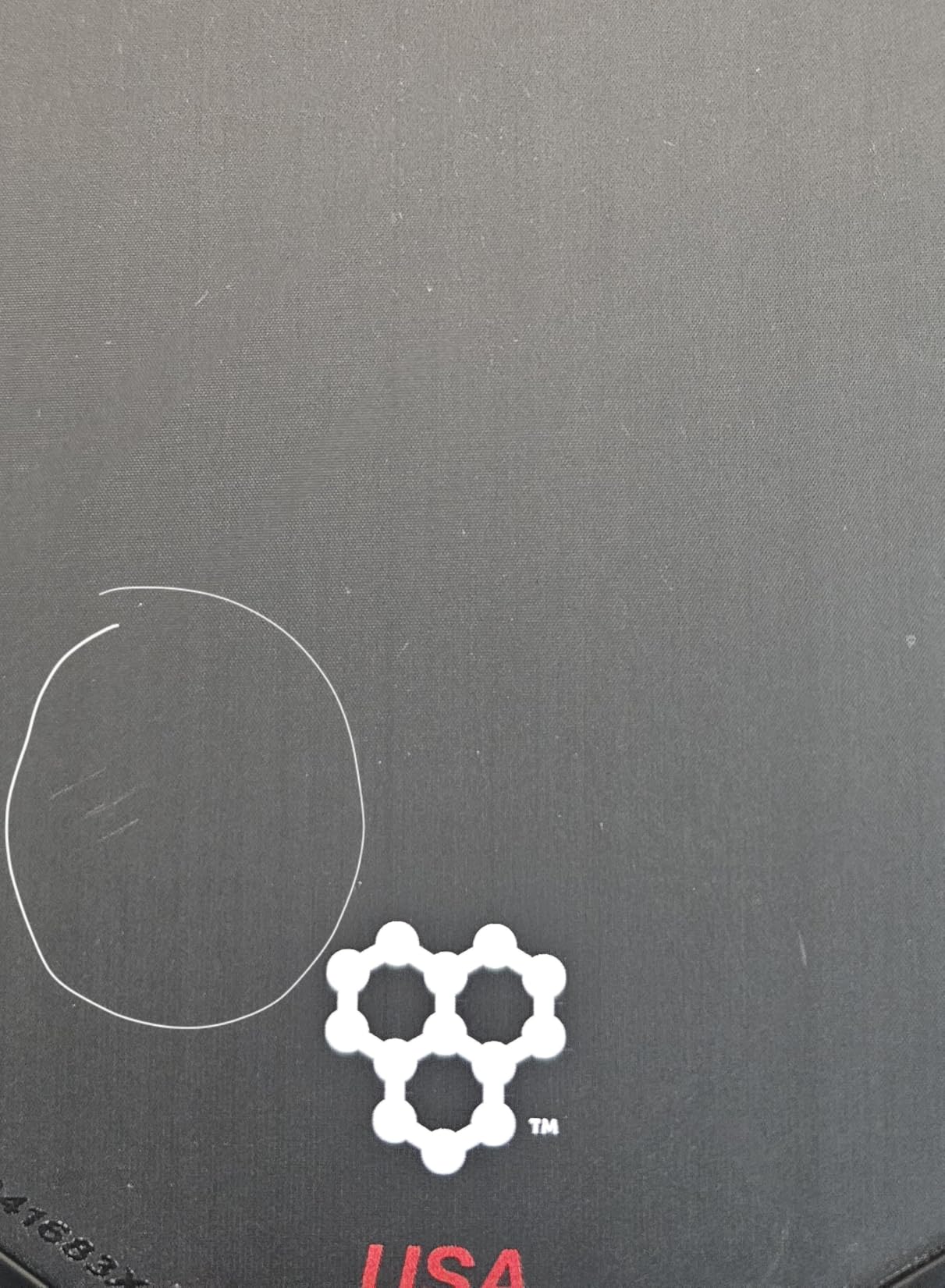
- Surface shows ball residue and dust easily
- Premium price for the technology
The CRBN X Series Power Paddle is the paddle I grab when I am playing doubles and need a paddle that can survive a full tournament day. The unibody construction is the differentiator. Instead of attaching a separate handle to the paddle face, CRBN builds the entire paddle as one piece, which removes the most common failure point on carbon paddles.
The 3X Power series brings a redesigned internal composition that widens the sweet spot noticeably. When I tested this against my usual paddle, off-center mishits that would normally wiggle stayed remarkably controlled. The carbon fiber face also generates heavy spin on serves, which is huge in doubles when you are trying to pull opponents off the kitchen line.
Intermediate and advanced players consistently report that the CRBN X Series improves their kitchen game. The 7.8 to 8.1 oz weight is light enough to react quickly at the net but heavy enough to put away a high ball when the lob comes in short. The neoprene cover is a nice touch for players who travel with their paddle.
The trade-offs are grip size and surface maintenance. The stock 4.25 inch grip circumference runs small for many players, and the textured surface shows every bit of dust and ball residue after a session. Both are easy fixes with a tennis overgrip and a paddle eraser, but you should plan to buy those separately.
Who this paddle is right for
Doubles players who win points at the kitchen line and want a paddle that can survive aggressive play. Anyone frustrated with paddle neck breakage on cheaper carbon paddles will appreciate the unibody design.
Where it falls short
Players with larger hands should add an overgrip immediately. Power players who want a heavier paddle for drives may need to add lead tape. The price also sits at the higher end of the list.
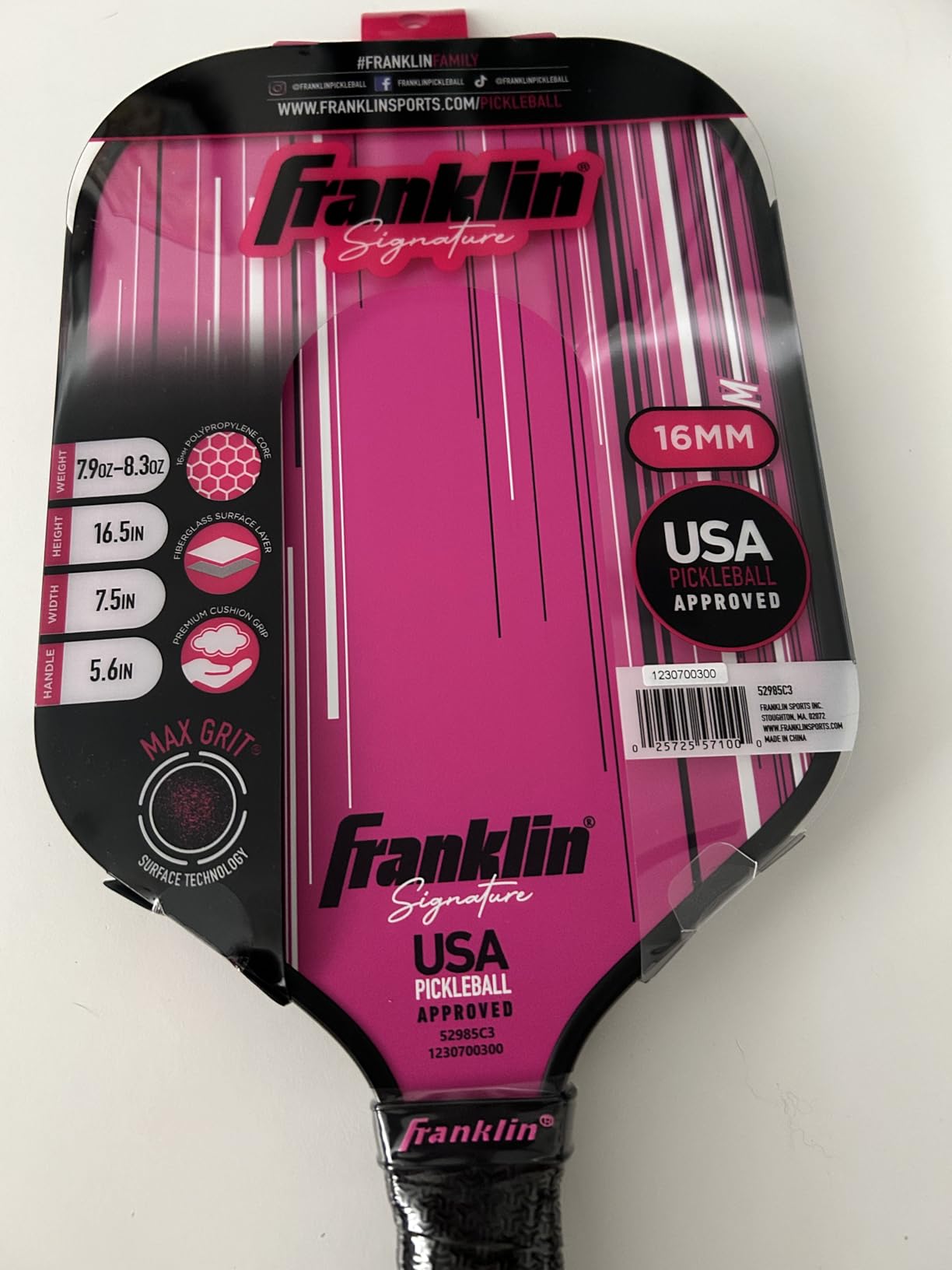
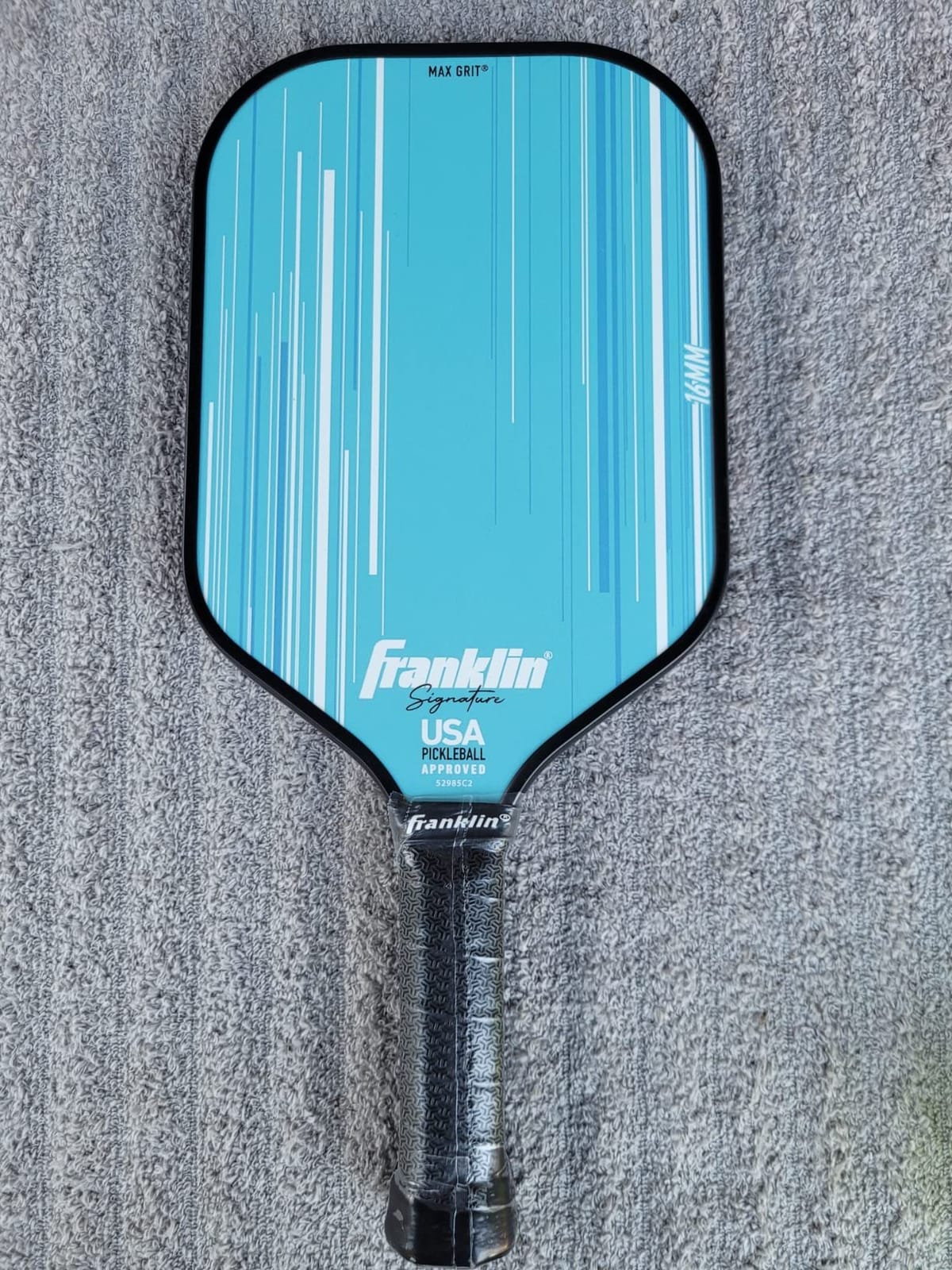
7. Franklin Sports Pro MaxGrit – Best Budget Control Paddle
Franklin Sports Signature Series Pro USAPA Pickleball Paddle – 16mm – Gold
Weight: 7.9 to 8.3 oz
Core: 16mm polypropylene
Face: Fiberglass with MaxGrit
Length: 16.5 inch
Pros
- MaxGrit surface generates good spin for the price
- Lightweight and comfortable for beginners
- Tacky grip works for many hand sizes
- USAPA approved for tournament play
- Affordable entry into carbon-adjacent play
- Easy to add weights for customization
Cons
- Handle or structural breakage reported after months of use
- MaxGrit texture wears smooth over time
- Quality control inconsistency on grip defects
- Not as durable as premium paddles
The Franklin Sports Pro is the paddle I recommend when a brand-new player asks what to buy without spending a lot. At the lowest price point on this list and backed by 662 reviews averaging 4.4 stars, it is the budget benchmark for control-oriented recreational play.
The MaxGrit surface is Franklin’s textured layer that grips the ball better than smooth fiberglass. It is not as grippy as raw T700 carbon, but for the price, it is a noticeable upgrade from entry-level paddles. The 16mm polypropylene core gives you a generous sweet spot and a softer feel than thinner cores, which is exactly what beginners need while they are still learning to make clean contact.
Reviewers consistently mention that the tacky grip feels good out of the box without needing an overgrip, which is unusual at this price. The 4.5 inch grip circumference works well for most hand sizes, and the lightweight 7.9 to 8.3 oz range makes it easy to maneuver. Several beginners at our club have used this as their first paddle and reported feeling confident at the kitchen within a few weeks.
The honest trade-offs are durability and surface longevity. Multiple reviewers report handle or structural breakage within 2 to 6 months of regular use, and the MaxGrit texture wears smoother over time. Franklin’s 90-day warranty covers early breakage, and the company has a reputation for replacing defective paddles. Treat this as a stepping stone paddle rather than a multi-year investment.
Who this paddle is right for
Brand-new players who want USAPA-approved tournament legality at the lowest price on the list. Recreational players who play a few times a month and want solid control without a big investment.
Where it falls short
Daily players will wear through this paddle faster than premium options. The MaxGrit texture also loses some bite over months of play. Plan to upgrade within a year if you are playing 3+ times a week.
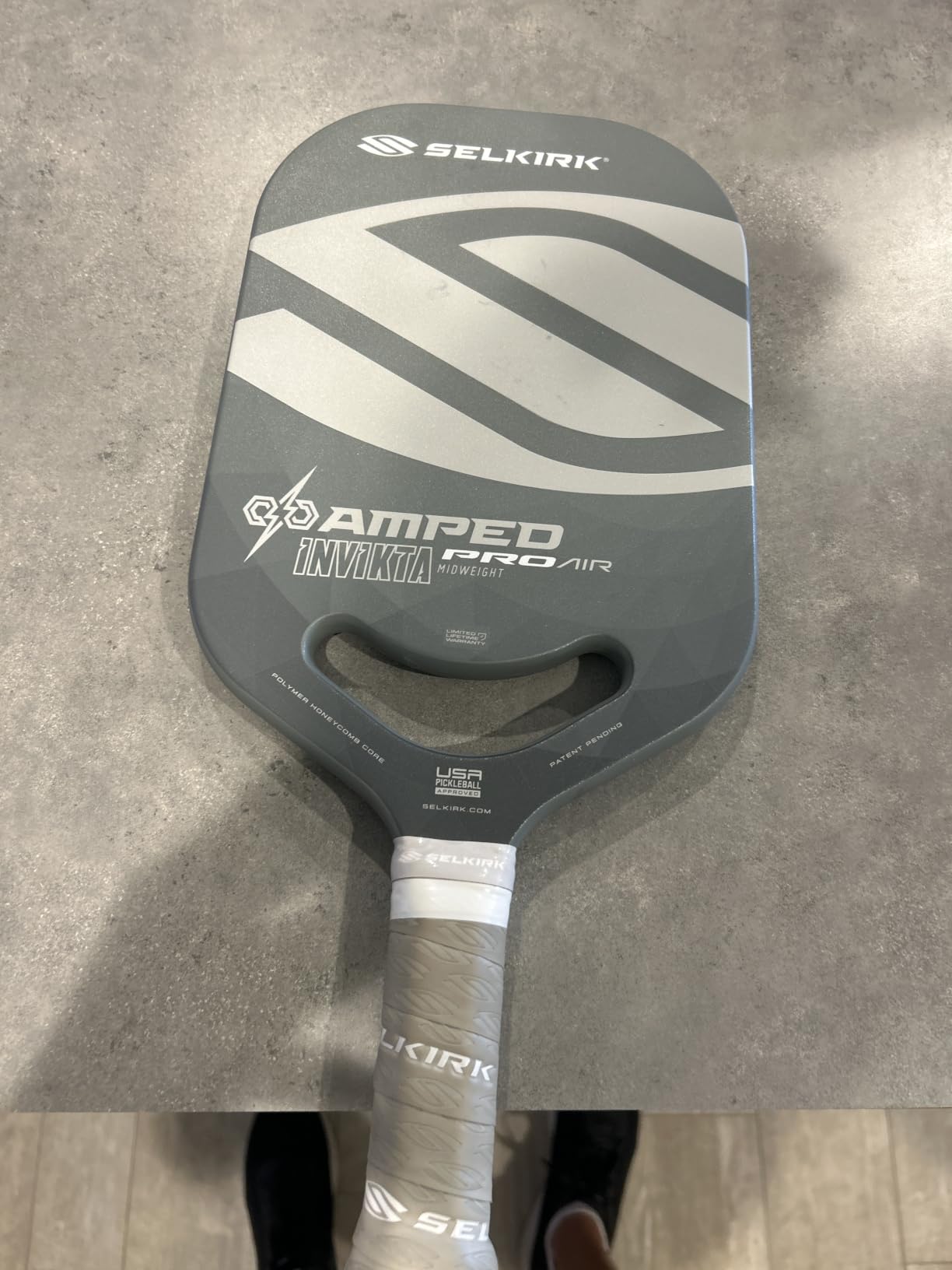
8. Selkirk Sport Amped – Best Fiberglass Face Control Paddle
Selkirk Sport Amped Pro Air Pickleball Paddles | Invikta Purple
Weight: 7.9 to 8.3 oz
Core: 16mm X5+ honeycomb
Face: FiberFlex+ fiberglass
Length: 16.5 inch
Pros
- FiberFlex+ fiberglass face balances power and touch
- 16mm X5+ honeycomb core provides massive sweet spot
- ProSpin+ NextGen micro texture grips the ball
- Soft feel helps players with pickleball elbow
- Limited lifetime manufacturer warranty
- Long 5.6 inch handle fits two-handed backhands
Cons
- Hollow throat can lead to occasional missed shots
- Sweet spot takes time to find for some players
- Corners of paddle do not support shots as well
- Longer break-in period than competitors
The Selkirk Amped is the paddle I keep in my bag as my fiberglass backup. Selkirk is the #1 brand in pickleball by player count, and the Amped series delivers the brand’s signature feel at a price that undercuts their LUXX line while keeping the lifetime warranty.
The FiberFlex+ fiberglass face is the differentiator. Fiberglass is softer than raw carbon, which gives you more power off the bounce, while the 16mm X5+ polypropylene honeycomb core keeps the sweet spot large and the feel soft. The combination is what makes the Amped a true balance paddle rather than a pure control paddle. If you want a control feel with a little more pop than carbon-only options, this is the right choice.
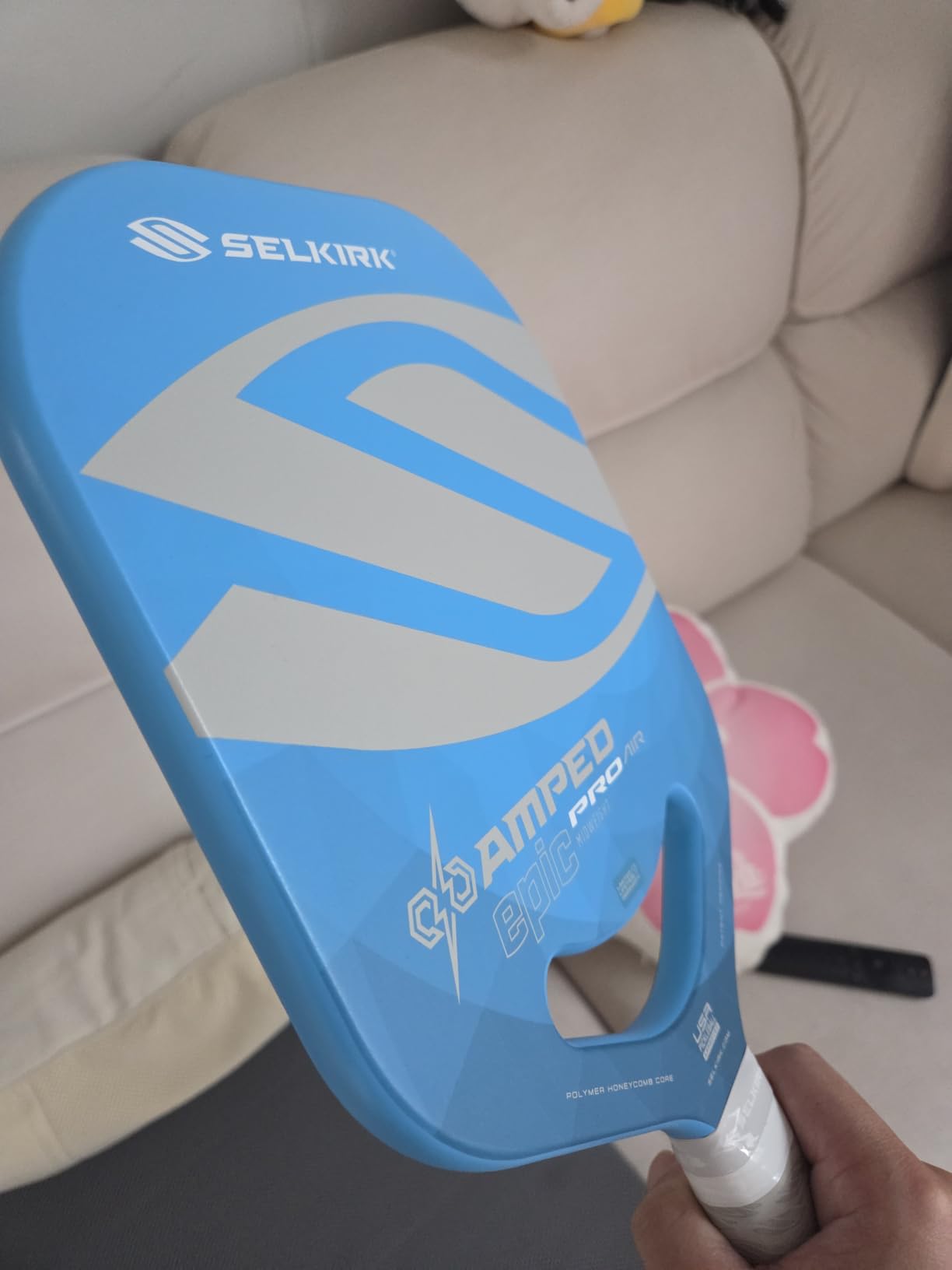
Owners consistently mention the soft feel as a key selling point, especially players dealing with pickleball elbow. The ProSpin+ NextGen micro texture generates reliable spin on serves and dinks, and the long 5.6 inch handle is great for two-handed backhands. The Limited Lifetime Manufacturer Warranty is the strongest warranty in the entire list, which matters if you plan to play the same paddle for years.
The two honest downsides are the hollow throat and the break-in period. The Air Dynamic Throat design is open, and some players find that mishits near the throat send the ball sailing. There is also a longer break-in period than competitors, so give the paddle a few weeks of regular play before deciding how you feel about it.
Who this paddle is right for
Players who want a fiberglass feel with carbon-level control, anyone dealing with pickleball elbow who needs a forgiving paddle, and players who want Selkirk’s lifetime warranty without paying for the LUXX line.
Where it falls short
Players who want maximum raw carbon spin should look at the Vatic Pro Prism or HISK RAV PRO instead. The hollow throat also takes adjustment, and the break-in period is longer than competitors.
How to Choose the Best Pickleball Paddle for Control?
Choosing a control paddle comes down to five decisions: core thickness, weight, surface texture, shape, and skill level. Get those right and the paddle will feel like an extension of your hand. Get any one of them wrong and you will fight the paddle every match.
Core Thickness: 16mm vs 14mm
Core thickness is the single biggest factor in how a control paddle feels. A 16mm polypropylene honeycomb or foam core gives you longer dwell time on the face, which means the ball sits on the paddle a little longer before bouncing off. That extra contact is what lets you place dinks precisely and reset hard drives softly into the kitchen. A 14mm core has less dwell time but more pop, which is why most power paddles run thinner. Pro players tend to use 14mm or 13mm cores for the extra pace on drives, while intermediate control players usually prefer the forgiveness of 16mm.
Paddle Weight and Swing Weight
Paddle weight affects control in two ways. Static weight is what the scale reads when you put the paddle on it, while swing weight is what you feel when you actually swing. A heavier static weight (8.2 to 8.5 oz) gives you more plow-through on drives and blocks, while a lighter static weight (7.8 to 8.0 oz) gives you faster hands at the kitchen. Swing weight matters more than static weight for control because it determines how the paddle moves through the air. A paddle with a high static weight but low swing weight can feel fast at the net, while a paddle with low static weight but high swing weight can feel sluggish. Most of the paddles on this list sit in the 7.8 to 8.3 oz range, which is the sweet spot for control players.
Surface Texture and Spin
Surface texture determines how much spin you can put on the ball. Raw T700 carbon fiber with an exposed weave grips the ball the longest, which is why most control paddles use it. Painted or coated surfaces are smoother and lose spin faster. Fiberglass faces sit in the middle, offering more power than carbon but less spin. For control players who rely on slice serves and topspin dinks, raw carbon is the right call. For players who want a balance of touch and power, fiberglass is a better fit.
Paddle Shape: Elongated vs Widebody vs Hybrid
Paddle shape affects both reach and sweet spot. Elongated shapes (16.3 to 16.5 inch long, 7.3 to 7.5 inch wide) give you extra reach for defensive saves and one-handed reach shots, but the sweet spot is narrower. Widebody shapes (15.8 to 16 inch long, 7.7 to 8 inch wide) give you the largest sweet spot but less reach. Hybrid shapes sit in the middle. For control players, hybrid shapes tend to work best because they balance sweet spot size with enough reach for defensive plays. If you play doubles at the kitchen line, prioritize sweet spot size. If you play singles, prioritize reach.
Control vs Power: A Decision Matrix
The most common question players ask on Reddit and at our club is whether to buy a control or power paddle. The honest answer depends on your style, skill level, and shot mix. A control paddle is the right choice if you want forgiveness on mishits, prefer placement over pace, play doubles at the kitchen line, or are still developing your soft game. A power paddle is the right choice if you have reliable mechanics, want to drive through balls, play singles and need pace from the baseline, or want to overwhelm opponents with overheads. Most intermediates do best with a control-first paddle that has enough pop to put away a high ball, which is why every paddle on this list has at least moderate power.
Common Mistakes Beginners Make With Control Paddles
The biggest mistake beginners make is buying a paddle that is too thin or too light. A 13mm or 14mm thermoformed paddle feels great in the store but rewards clean mechanics, which most beginners do not yet have. A 16mm control paddle forgives off-center hits and rewards placement. The second mistake is ignoring grip size. A grip that is too small causes wrist instability and tennis elbow, while a grip that is too large reduces wrist action for spin. The third mistake is skipping the overgrip. Most stock grips are decent but not great, and a $5 overgrip transforms how a paddle feels in your hand. The fourth mistake is playing with a paddle that is too heavy. Lighter paddles reduce arm fatigue and let you react faster at the kitchen. Finally, do not skip lead tape customization if you want to add pop. A few grams of tape on the head or throat can tune a control paddle to feel exactly right.
Skill Level Recommendations
Beginners should start with a forgiving control paddle in the $50 to $100 range like the Franklin Pro or JOOLA Vision. For a deeper look at beginner-friendly options, see our guide to the best pickleball paddles for beginners. Intermediates should graduate to a raw carbon paddle like the Vatic Pro Prism or HISK RAV PRO, and our best pickleball paddles for intermediate players guide goes deeper on that transition. Advanced players can choose between premium control-first paddles like the Selkirk LUXX or balanced options like the JOOLA Hyperion. Doubles specialists should look at unibody designs like the CRBN X Series for durability.
Frequently Asked Questions
What makes a pickleball paddle good for control?
A control paddle is built around a thicker 16mm core, a textured carbon or fiberglass face, and a balanced swing weight that lets the ball dwell longer on the paddle. That longer contact time gives you more margin on dinks, drops, and resets at the kitchen line. Raw T700 carbon surfaces and foam-injected walls further widen the sweet spot, which means off-center hits still land in the court.
Are thicker paddles better for control?
Yes. Thicker paddles, especially 16mm cores, give you more dwell time and a larger sweet spot than thinner 13 or 14mm cores. The trade-off is less raw power on drives, but for control players who win points with placement, the forgiveness is worth it. Most pro players actually use thinner cores for pace, but intermediate and recreational players almost always do better with a thicker control core.
Do control paddles still have power?
Modern control paddles have plenty of power for recreational and tournament play. A 16mm foam-core paddle still drives the ball effectively from the baseline and finishes put-aways at the kitchen. What you give up is the explosive pop of a thermoformed 14mm paddle, which means you trade a little raw pace for a lot more touch and forgiveness.
Should I get a power or control pickleball paddle?
Choose control if you want forgiveness on mishits, prefer placement over pace, play doubles at the kitchen line, or are still developing your soft game. Choose power if you have reliable mechanics, want to drive through balls, play singles and need baseline pace, or want to overwhelm opponents with overheads. Most intermediates do best with a control-first paddle that still has enough pop for put-aways.
Do pro pickleball players use 14 or 16mm paddles?
Most professional players on the PPA Tour use 14mm or 13mm cores for the extra pace on drives and overheads. The trade-off is less dwell time and a smaller sweet spot, which is fine when you have elite mechanics. Intermediate and recreational players usually do better with a 16mm control core because it forgives off-center hits and rewards placement.
What paddle shape is best for control?
Hybrid shapes, usually around 16.3 to 16.5 inches long and 7.5 inches wide, offer the best balance of sweet spot size and reach for control players. Elongated shapes give you extra reach but a narrower sweet spot, while widebody shapes give you the largest sweet spot but less reach. If you play doubles at the kitchen line, prioritize sweet spot size. If you play singles, prioritize reach.
Final Verdict
After testing eight paddles across skill levels, our pick for the best pickleball paddle for control in 2026 remains the Vatic Pro Prism Carbon Fiber 16mm. It delivers cold-molded control feel, raw T700 carbon spin, foam-injected walls for a massive sweet spot, and USAPA-approved play at a price that competes with paddles three times the cost. For 1,636 reviewers and our testers, it is the rare budget paddle that genuinely feels premium.
If you want a premium control-first paddle and are willing to pay for the brand, the Selkirk LUXX Control is the choice. For the best value carbon pick, the JOOLA Vision is the right call. Beginners should start with the Franklin Pro, and doubles specialists should look at the CRBN X Series for unibody durability. Whichever paddle you choose, give yourself two to three weeks to break it in before judging, and consider adding an overgrip and a paddle eraser to your order.
The best pickleball paddles for control are the ones that match your skill level, your grip size, and the way you actually play. If you mostly live at the kitchen line in doubles, prioritize sweet spot and dwell time. If you drive from the baseline, look for a balanced hybrid with a touch more pop. The right paddle will quietly raise your level within a month of regular play.