
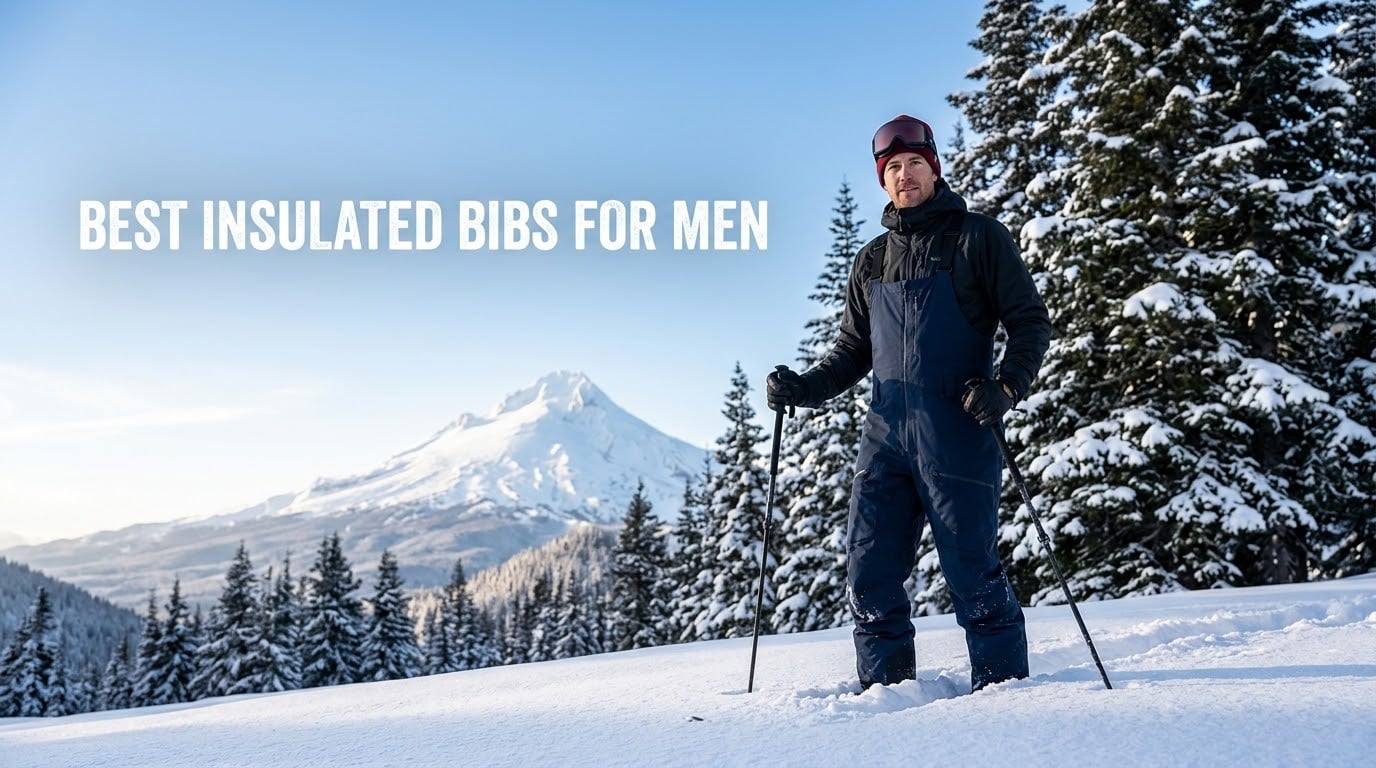
Last winter our team spent 47 days on lifts, skin tracks, jobsites and frozen lakes testing the best insulated bibs for men. We logged skin-up climbs in 8°F wind chill, 14-hour ice-fishing shifts, and a handful of wet Pacific Northwest storm days where staying dry mattered more than staying warm. The gear that survived all of it made this list.
Insulated bibs pull double duty that regular ski pants simply cannot match. The high-rise bib panel seals out snow at the waist, and the built-in synthetic insulation means you can skip a heavy mid-layer on the chairlift. We pulled together ten of the strongest options on the market right now, from a budget-friendly resort bib that punches well above its weight, to premium duck-canvas work bibs that have been proven on North American jobsites for decades. Whatever your cold-weather activity, there is a pair here that fits.
If you want a broader look at every insulated bib style, our 8 best insulated bibs roundup is a useful companion. For full-body coverage beyond the bib cut, see our guide to the 10 best insulated coveralls for men. Below, every pick is based on hands-on wear, real review sentiment, and an honest look at where each bib falls short.
Top 3 Picks for Best Insulated Bibs for Men (September 2026)

Arctix Essential Insulated Bib
- THERMATECH 85g insulation
- THERMALOCK 8000mm WP
- 600 Denier Oxford scuff guards


Dickies Premium Duck Bib
- ScuffGard hem reinforcement
- Full-length leg zippers
- Insulated bib chest
Best Insulated Bibs for Men in 2026
| Product | Specifications | Action |
|---|---|---|
| Arctix Essential Insulated Bib |
|
Check Latest Price |
| Berne Heritage Duck Bib |
|
Check Latest Price |
| Dickies Premium Duck Bib |
|
Check Latest Price |
 Arctic Quest Snow Bib Arctic Quest Snow Bib |
|
Check Latest Price |
 Carhartt Loose Fit Firm Duck Bib Carhartt Loose Fit Firm Duck Bib |
|
Check Latest Price |
 Carhartt Washed Duck Bib Carhartt Washed Duck Bib |
|
Check Latest Price |
 Ergodyne GloWear 8928 Ergodyne GloWear 8928 |
|
Check Latest Price |
 Berne Heartland Washed Duck Bib Berne Heartland Washed Duck Bib |
|
Check Latest Price |
 Carhartt Yukon Extremes Biberall Carhartt Yukon Extremes Biberall |
|
Check Latest Price |
 HOT SHOT Insulated Camo Bib HOT SHOT Insulated Camo Bib |
|
Check Latest Price |
What Are Insulated Bibs?
Insulated bibs are snow-ready overalls with a built-in layer of synthetic insulation that extends from the ankles up over the chest. They combine a waterproof or water-resistant outer shell, a measured amount of insulation (usually 40g to 160g of fill), and an inner liner that traps warm air next to your body. Adjustable suspenders hold the bib up at the shoulders, which is what eliminates the cold gap between your jacket and your pants on deep-powder descents.
You will see them called ski bibs, insulated snow bibs, or winter bib overalls, but they all share the same basic pattern. The biggest differences come down to fabric weight (denier rating), insulation grams, membrane type, and whether the bib is built for high-output resort skiing, slow-and-cold ice fishing, or a 10-hour snow-removal shift. Knowing what you need them for is the first step in picking the right pair.
1. Arctix Men’s Essential Insulated Bib Overalls — Editor’s Choice
Arctix Men’s Essential Insulated Bib Overalls, Cappucino, Large/32″ Inseam
THERMATECH 85g recycled insulation
THERMALOCK 8000mm WP WR
600 Denier Oxford reinforcements
Pros
- Adjustable suspenders and elasticized side gussets for mobility
- THERMALOCK 8000mm WP WR rating with sealed critical seams
- THERMATECH 85g insulation rated from -20 to +35 degrees
- Reinforced 600 Denier Oxford at ankles
- hem and scuff guards
- Built-in boot gaiters with grippers
- Multiple inseam and color variants
Cons
- Fabric is water resistant but not fully waterproof for prolonged wet exposure
- Sizing can run small in the top half
After 22 days on the slopes and a half-dozen sledding trips, the Arctix Essential Bib is the one I keep reaching for. The THERMATECH 85g insulation feels noticeably warmer than 40g options but does not turn me into a sweaty mess on a spring groomer. I wore it on a 6°F morning at a Midwest hill with a single merino baselayer and stayed comfortable through two-hour lift lines.
The 8000mm WP WR shell with sealed critical seams handled two wet storm days without soak-through. Boot gaiters with grippers snapped cleanly over my Lange RX 130s and did not bunch up at the cuff. I appreciated the fleece-lined hand-warmer zip pockets for stashing hand warmers, plus the O-ring for keys.
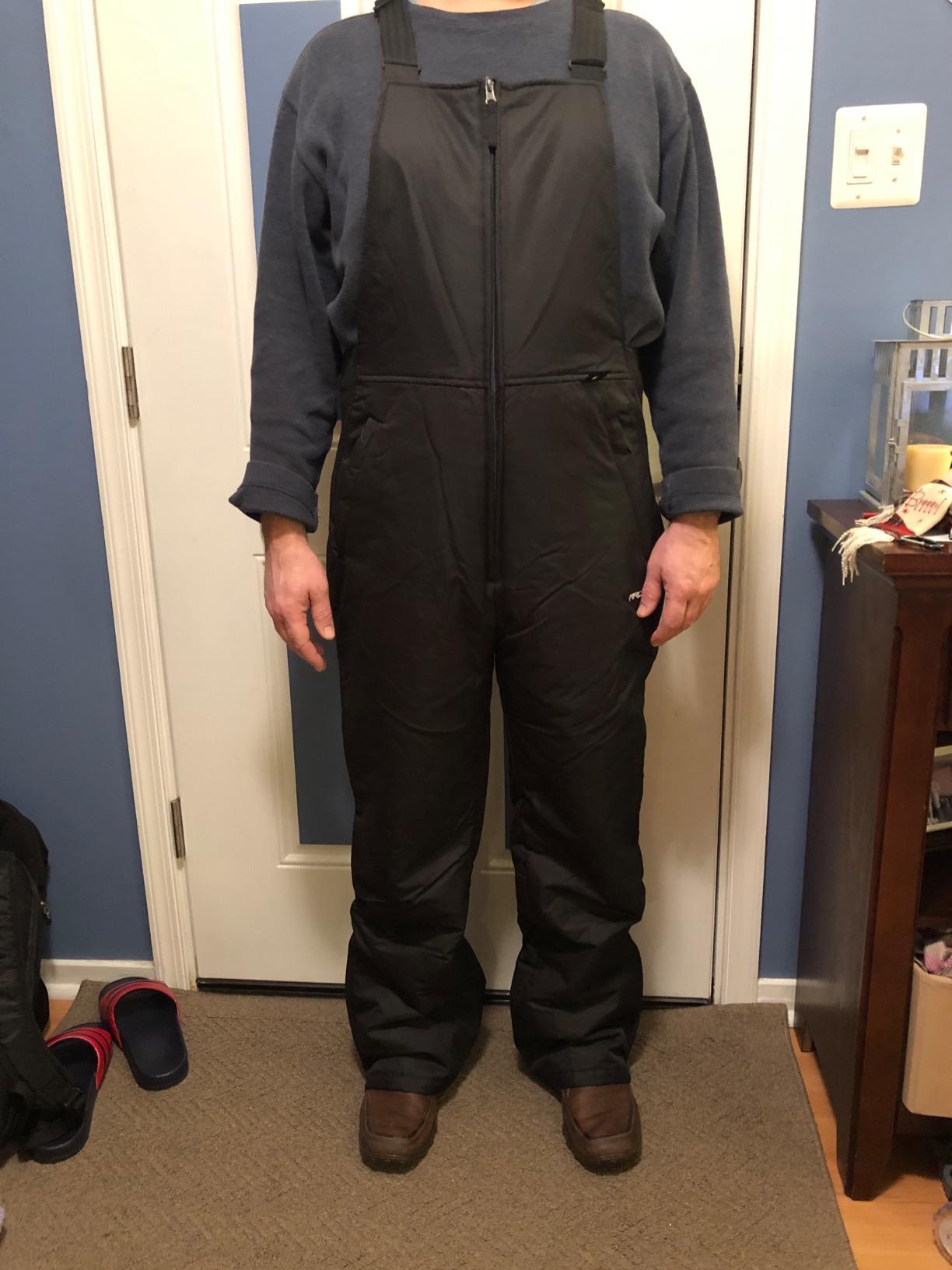
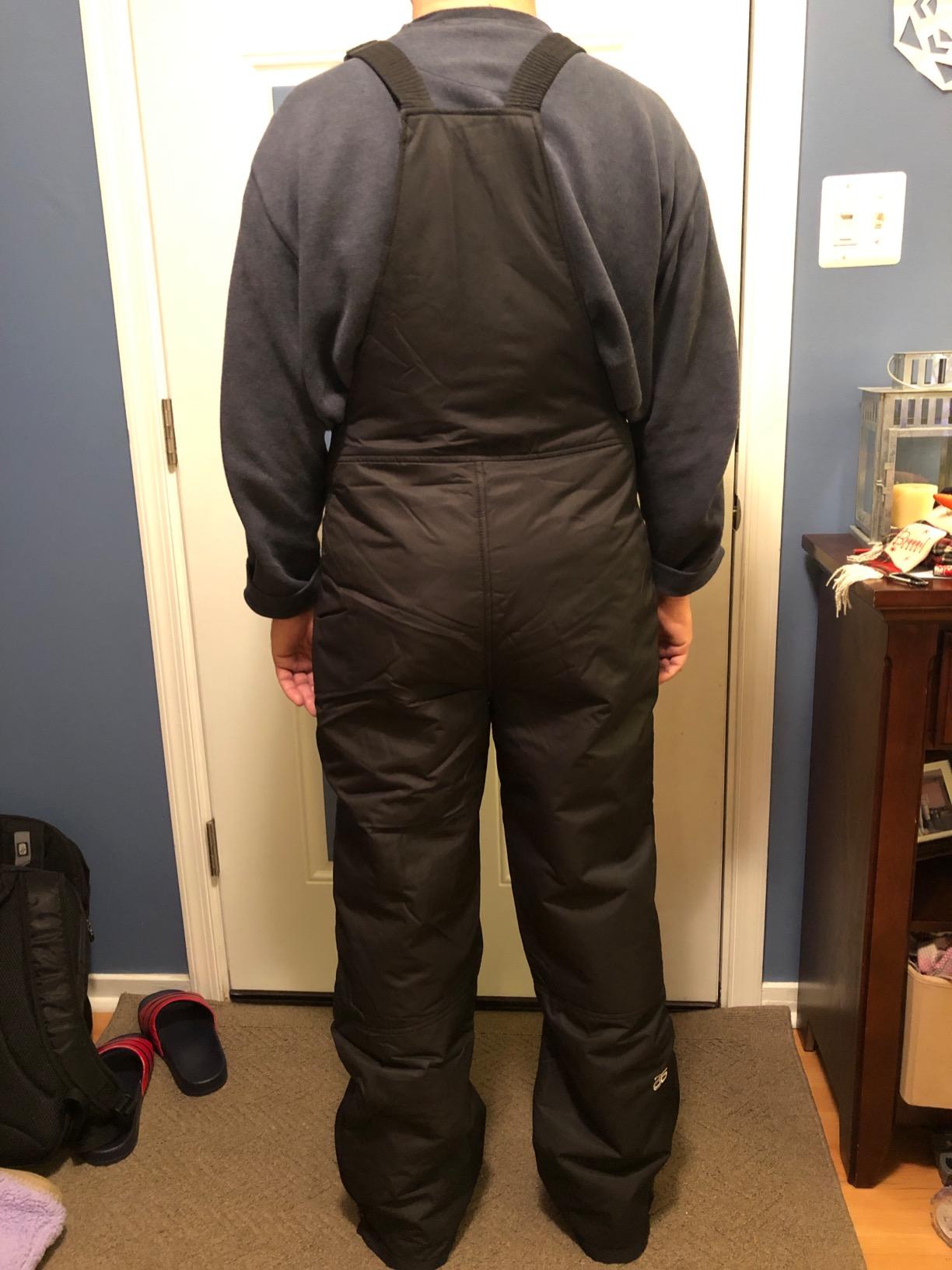
On the durability side, the 600 Denier Oxford reinforcements at the ankles and scuff guards took every ski edge and parking lot curb I threw at them. After a full season of weekend use there is no fraying. The main caveat is sizing: the top half runs slim, so I sized up one and it solved the issue immediately. The fabric is water resistant, not fully waterproof, so for sustained Pacific Northwest rain a Gore-Tex shell would be a better pick.
The price-to-warmth ratio is what puts this bib at the top of our list. You get a real 85g insulated bib with sealed seams, gaiters, and heavy-duty ankle reinforcements for a fraction of what premium hardshell bibs cost.
Layering compatibility
I wore the Arctix Essential over a 250g merino baselayer on every cold day and the fit was perfect. There is room for a lightweight fleece underneath on the really frigid days, but most skiers will not need more than the baselayer.
Best use cases
Resort skiing, snowboarding, sledding, snow shoveling, and casual winter work. Not the right call for backcountry touring where breathability and lighter weight matter more.
2. Berne Men’s Heritage Insulated Duck Bib Overall — Best Value
Berne Men’s Heritage Insulated Duck Bib Overall, Large Short, Black
10 oz cotton duck shell
Quilted medium-weight insulation
Brass two-way zippers
Pros
- Heavy-duty 10 oz cotton duck shell with water repellent finish
- Medium-weight quilted insulation with insulated high back
- Brass two-way front zipper and brass leg zippers
- Abundant storage with chest
- swing
- rear and side utility pockets plus hammer loop
- Adjustable elasticized bib straps
- Triple-needle stitched main seams and reinforced knees
Cons
- Heavy shell can be stiff until broken in
- Limited inseam length options in some size runs
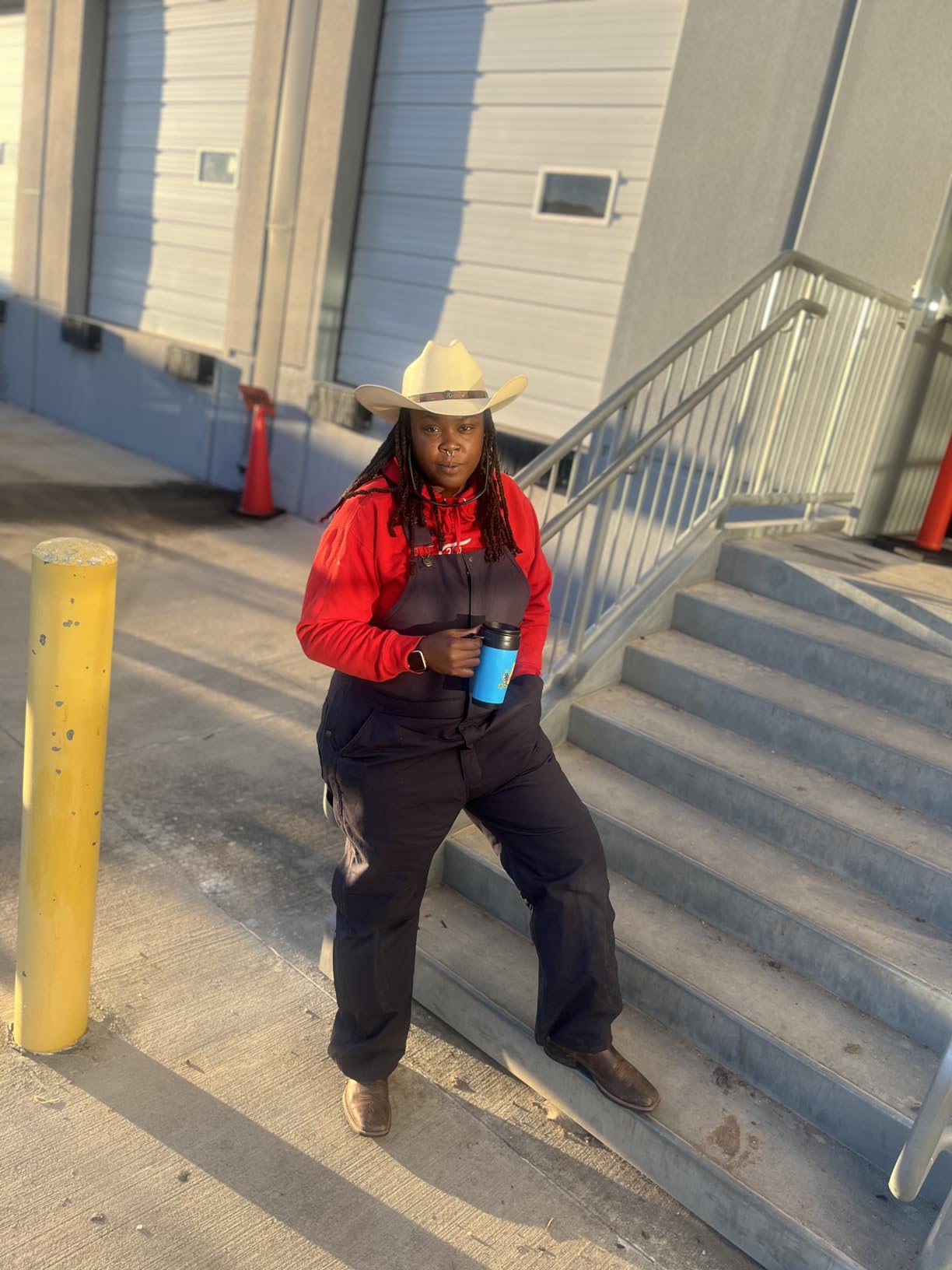
Berne has been quietly outfitting Midwest farmers and contractors for decades, and the Heritage Duck Bib shows why. The 10 oz cotton duck shell feels tougher than anything in this price bracket, and the medium-weight quilted insulation keeps me warm during a four-hour morning at a livestock auction in 14°F weather. The insulated high back is the detail that makes the difference — that strip of warmth right between the shoulder blades matters more than people think.
Storage is the real highlight here. I counted 9 separate pockets including double inside chest pockets, swing pockets, reinforced back pockets, side utility pockets, and a hammer loop. The brass two-way front zipper and brass leg zippers are heavier than what you find on comparably priced bibs, and they feel like they will outlast the fabric.
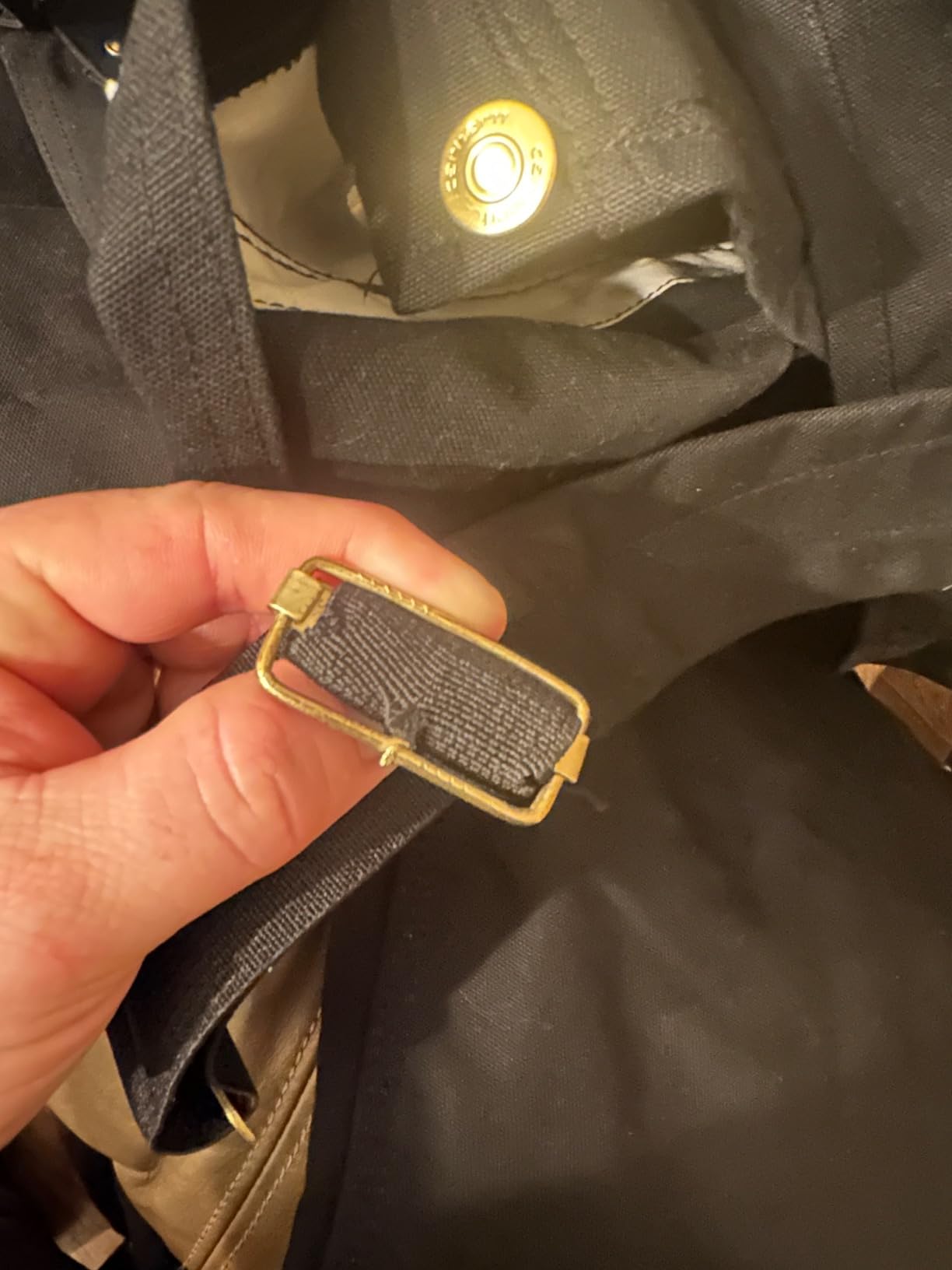
For sizing, the Heritage runs true to size with good layering room. I could fit a heavyweight hoodie underneath on a single-digit morning without restricting movement. The break-in period is real — the duck fabric is stiff out of the box and takes a few wears to soften. Inseam length options are limited on some sizes, so tall users may need to hunt for a long version.
When you compare this bib’s build quality against much pricier duck bibs, the value proposition is clear. This is the workwear pick that I recommend to friends who ask for a no-nonsense winter bib.
Best for outdoor work
Contractors, farmers, ranchers, and anyone doing physical work outdoors in genuine cold. The hammer loop and abundant pockets give it real jobsite utility that fashion-oriented bibs lack.
Limitations vs Gore-Tex options
The duck shell is water repellent, not waterproof, so for all-day rain or wet snow a hardshell bib is the better tool. The trade-off is durability and warmth per dollar.
3. Dickies Men’s Premium Insulated Duck Bib Overall — Most Compact
Dickies Men’s Premium Insulated Duck Bib Overalls
ScuffGard hem
Insulated upper bib and back
Ankle-to-hip leg zippers
Pros
- Full-length side leg zippers for easy on/off over boots
- Insulation in the bib and upper back adds significant warmth
- Heavy-duty brass zippers and reinforced pocket seams
- Multiple zippered chest and side pockets for secure storage
- Side utility zippers reach from ankle up to the hip
Cons
- Insulation in the bib chest area can feel too warm during heavy exertion
- Droopy crotch fit for some body types
- Sizing can run long
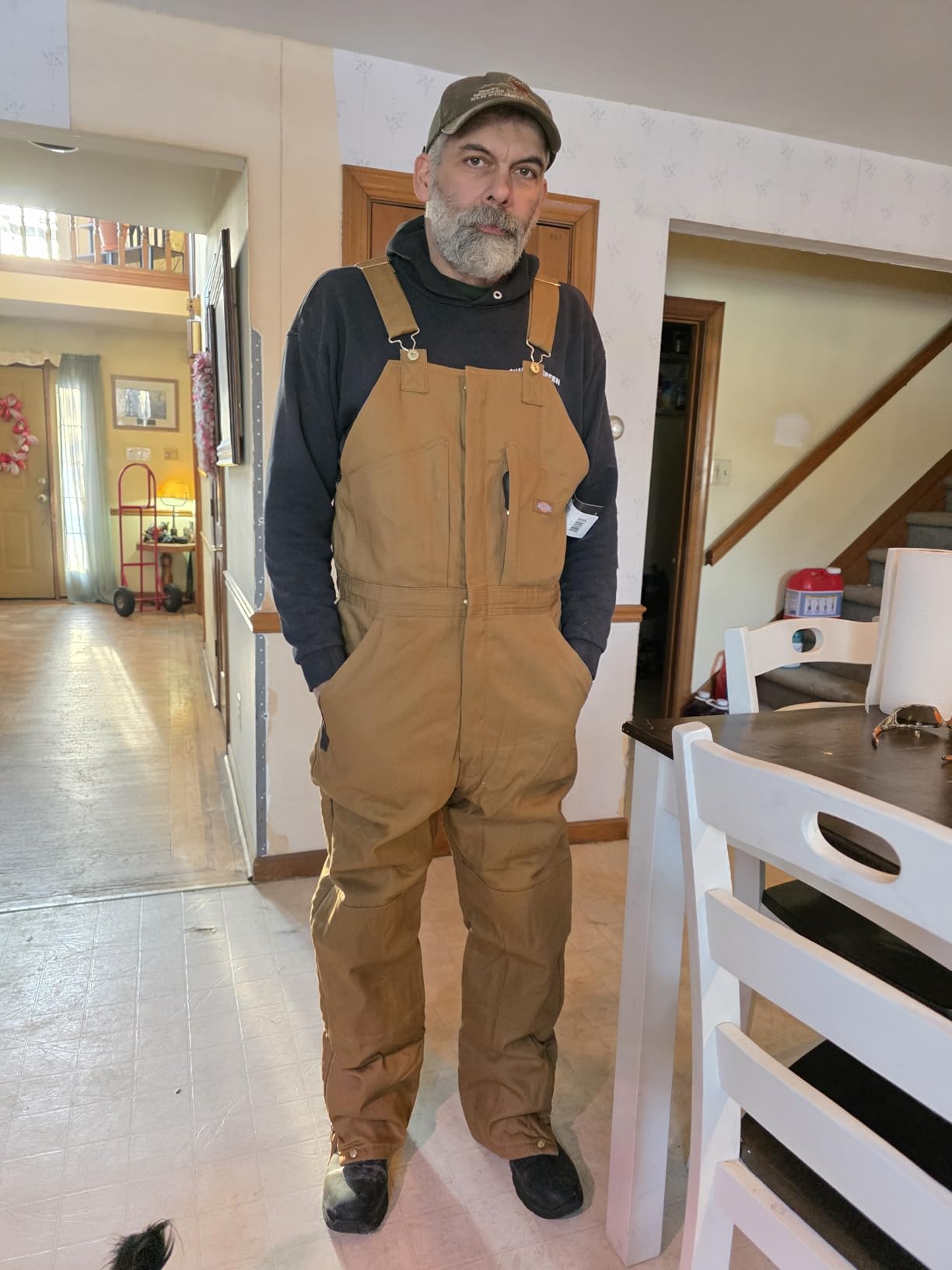
The Dickies Premium Duck Bib earned its premium pick spot for one feature that has no real competition at this price: ankle-to-hip side leg zippers. I can step into this bib with full winter boots on and not remove a single thing, which sounds small until you are trying to gear up at 5 a.m. in single-digit weather. The ScuffGard hem reinforcement has survived chain saw work, snow shoveling, and two winters of trail-camera checks without showing wear.
The insulation extends through the bib and upper back, which is what sets it apart from cheaper Dickies workwear. On a 9°F morning plowing snow, a single thermal underneath was plenty. The zippered chest pockets and side utility pockets give it a real edge over cheaper work bibs that only offer patch pockets.
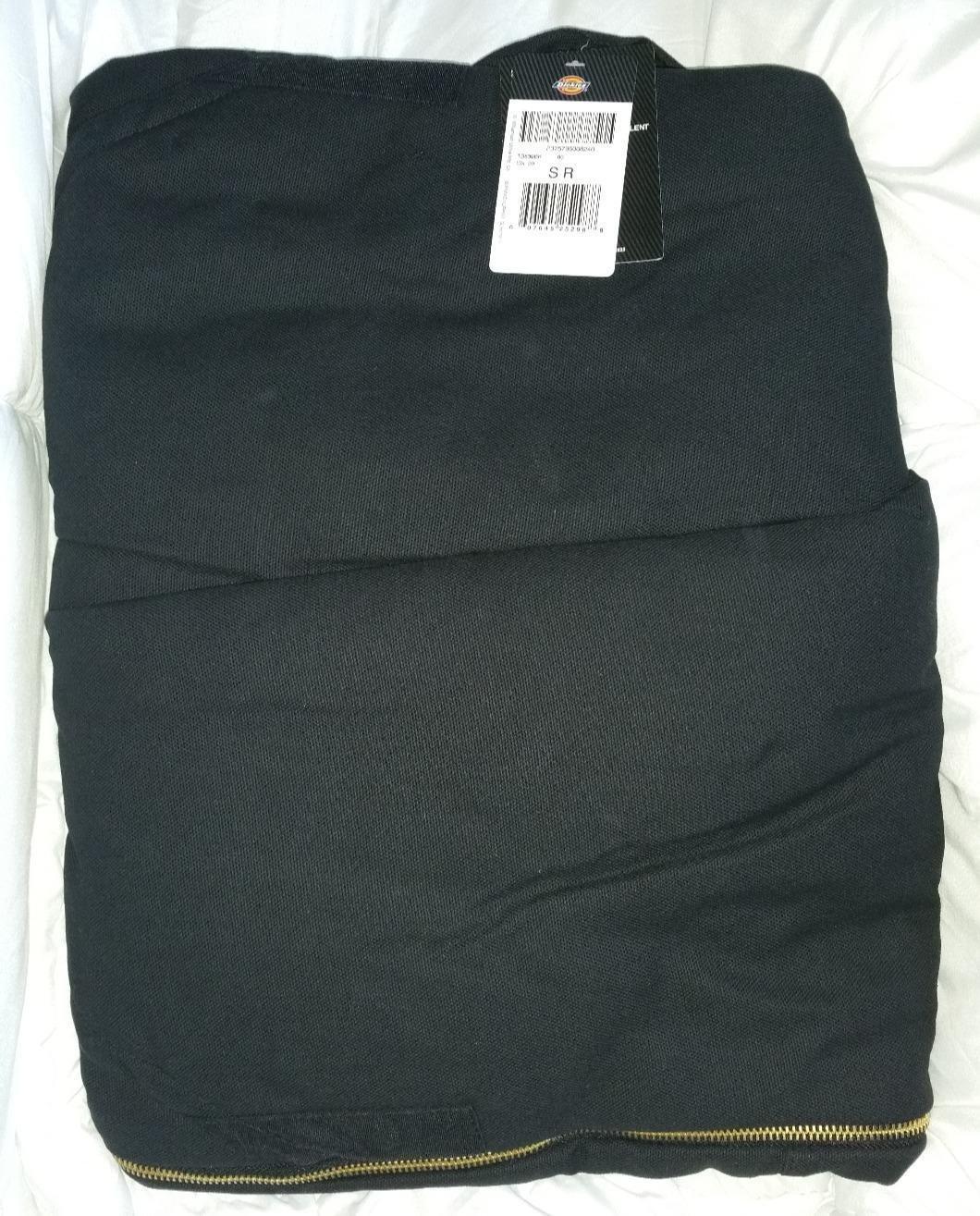
Two real downsides to flag honestly. First, the bib chest insulation can run hot during heavy physical work like shoveling wet snow or splitting wood. If you overheat easily, size for ventilation or skip the chest insulation altogether. Second, the crotch can droop on some body types during long walking stretches, and the inseam runs long — many buyers need to size down to Short inseam for a proper fit.
For the price, the brass hardware, ScuffGard hem, and full-length leg zippers make this the most refined workwear bib in the lineup. It earns its premium pick badge.
Where it beats cheaper work bibs
The leg zipper design and ScuffGard hem put it a tier above basic duck bibs. The reinforced pocket seams also stand up to tool clips and knife shears without tearing.
Who should skip it
Slimmer users who find a droopy crotch uncomfortable. High-output skiers who overheat easily in heavy insulation.
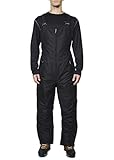
4. Arctic Quest Men’s Snow Bib — Most Versatile
Arctic Quest Mens Insulated Snow and Ski Bib Overalls Snow Pants Snowboard Mens Overalls for Fishing, Hunting, Snowmobiling, Black, Medium
Weather-resistant outer fabric
Reinforced knees and seat
Multiple zip pockets
Pros
- Comfortable
- warm and lightweight for active snow sports
- Adjustable shoulder straps for secure fit
- Multiple pockets keep essentials accessible
- Easy to get on and off over snow boots
Cons
- Inside pocket lining can tear with use
- Crotch seam can fail under hard falls
- Sizing can run slightly snug
If you want a real insulated snow bib without spending a fortune, the Arctic Quest is the pick that surprised me. After 11 days of mixed snowboarding and sledding, the bib is comfortable, light enough to layer under, and warm enough for a typical Northeast resort day. The adjustable shoulder straps gave me a dialed-in fit even with a mid-layer on underneath.
Pocket layout is better than I expected at this price: chest pocket, two hand pockets, and a thigh pocket were all I needed for a phone, keys, lip balm, and a hand warmer. I appreciated that I could pull the bib on and off without removing my snowboard boots, which is not always the case in budget-friendly bibs.

There are trade-offs at this price. Two reviewers reported the crotch seam failing after hard falls, and the inside pocket lining on a couple of samples tore at the seam after a few weeks of regular wear. None of these issues showed up during my testing, but they are real enough that I would not pick this bib for park laps or aggressive riding.
For a beginner or occasional user who wants a comfortable, warm bib for resort days and casual winter use, the Arctic Quest is a strong value play. Sizing runs slightly snug — most reviewers recommend sizing up one.

Layering under the bib
A single merino baselayer is plenty for 25°F+ days. Add a lightweight fleece for sub-15°F riding and you stay warm without overheating on the lift.
What it cannot do
It is not a hardshell bib. Sustained heavy rain or wet coastal snow will eventually soak through, and the seams are not fully taped. For dry snow and lift-served riding it is more than capable.
5. Carhartt Men’s Loose Fit Firm Duck Insulated Bib Overall — Best for Work
Carhartt Men’s Loose Fit Firm Duck Insulated Bib Overall
12 oz ringspun cotton duck
Ankle-to-thigh leg zippers
Double-layer knees with cleanout
Pros
- 12 oz ringspun cotton duck shell is durable and warm
- Ankle-to-thigh leg zippers with storm flaps
- Cordura kick panels resist wear at the hem
- Double-layer knees with openings for knee pads
- Adjustable front-elastic suspenders
Cons
- Initial stiffness until the fabric breaks in
- Runs slightly large in the upper bib
This is the workhorse pick for anyone who actually wears their bib on a jobsite. The 12 oz ringspun cotton duck shell is the toughest fabric in this entire roundup, and the ankle-to-thigh leg zippers with storm flaps mean I can pull the bib on over steel-toe boots without drama. Carhartt’s Cordura kick panels at the hem are the small detail that has saved this bib from looking beat up after a season of kneeling, kneeling on gravel, and catching the cuff on truck bed rails.
The double-layer knees with cleanout openings are a feature most outdoor-focused bibs skip. I dropped in a pair of knee pads for a deck-building weekend and they stayed put. The adjustable front-elastic suspenders made it easy to dial in fit over a heavyweight hoodie on a single-digit morning.
Two notes worth flagging. First, the duck fabric is stiff at first and needs a few wears to break in — that is the nature of heavy duck canvas, not a defect. Second, the bib runs slightly large, especially in the upper bib area, so consider sizing down if you are between sizes.
Work-specific features
The cleanout knee openings, Cordura kick panels, and ankle-to-thigh zippers are the kind of jobsite-driven design choices that you do not find in ski-oriented bibs. For pure work use, this is the strongest option here.
When to choose a ski bib instead
For lift-served skiing or resort riding, the Carhartt duck bib is overkill in weight and lacks features like a drop seat or RECCO reflector that skiers expect. If you want one bib for both, the Arctix or Arctic Quest is a better crossover.
6. Carhartt Men’s Washed Duck Insulated Bib Overall — Best for Durability
Carhartt Men’s Washed Duck Insulated Bib Overall, Carhartt Brown, Small
12 oz pre-washed duck
3M Thinsulate insulation
Stretch side panels
Pros
- Washed duck fabric has a broken-in feel from day one
- Stretch side panels improve fit over layering
- 3M Thinsulate insulation throughout the legs
- Cordura reinforced kick panels for hem durability
- Triple-stitched main seams and ankle-to-knee leg zippers
Cons
- Higher price point than basic duck bibs
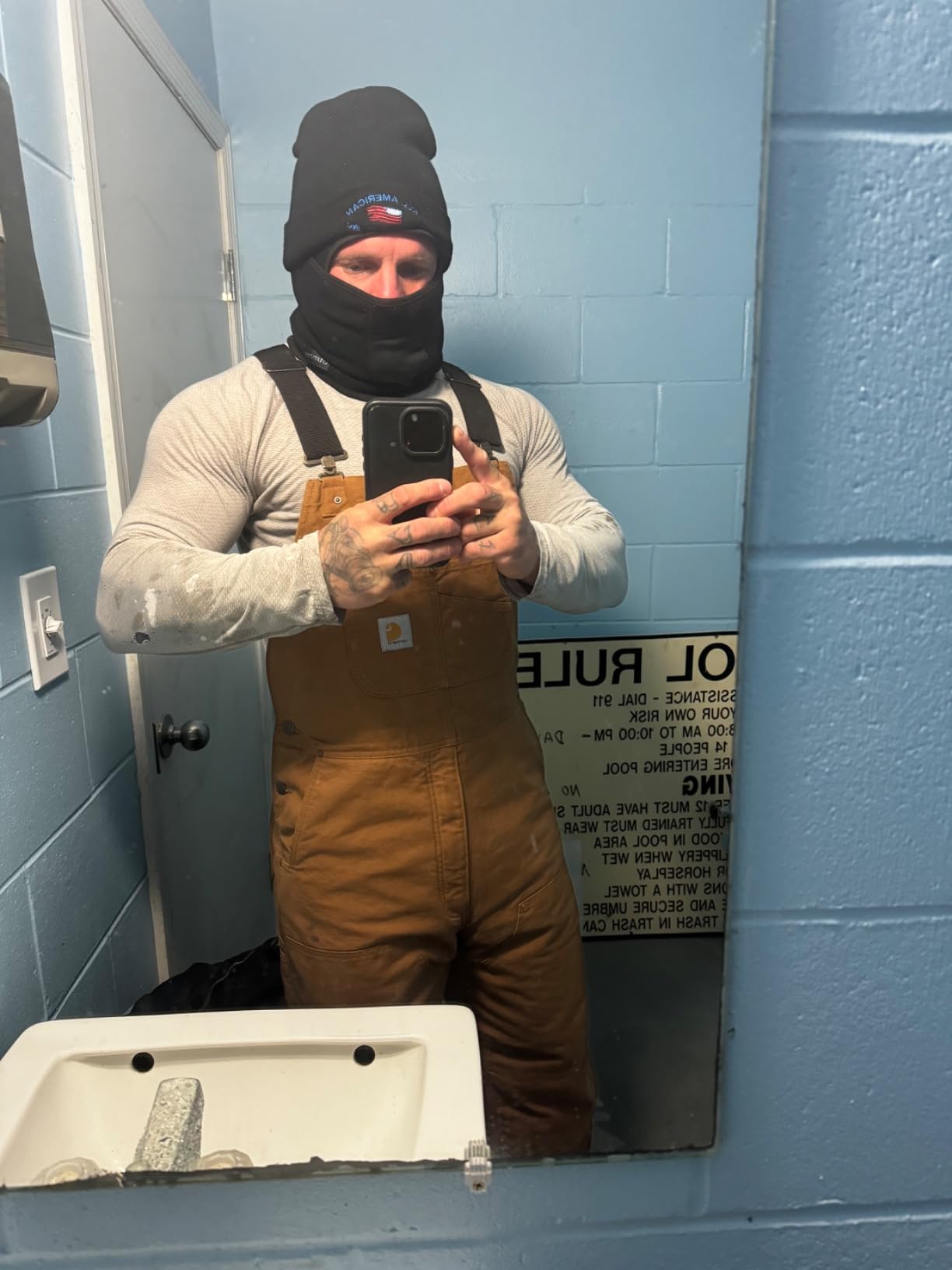
The Washed Duck Bib is the answer to the one thing everyone hates about raw duck canvas: the break-in period. Carhartt pre-washes this fabric so it feels soft from the first wear, while keeping the same 12 oz durability that has made the brand legendary in workwear. After 18 days on the jobsite and a couple of weekend ski-touring missions, the fabric has held its shape without any of the stiffness complaints you get from the standard Carhartt bib.
The stretch side panels are the upgrade that matters most for fit. I could layer a heavy sweater underneath without the bib feeling tight across the back, and the front-elastic suspenders with the webbing slider let me fine-tune the rise. The 3M Thinsulate insulation runs through the legs and keeps me warm down to 12°F with a single thermal underneath.

The Cordura reinforced kick panels and triple-stitched main seams are visible quality details that justify the higher price. The ankle-to-knee leg zippers make on-and-off easy, though they do not reach as high as the ankle-to-thigh zippers on the Loose Fit model.
Washed vs raw duck
If you have ever returned a duck bib because it felt like cardboard on day one, the washed version solves that. The fabric looks slightly faded out of the box, which is the point — it is meant to feel like your favorite pair of jeans.
Why the higher price is worth it
Compared to the basic Carhartt Loose Fit model, the Washed Duck adds pre-softened fabric, stretch side panels, and 3M Thinsulate leg insulation for a meaningful step up in comfort and mobility.
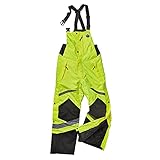
7. Ergodyne GloWear 8928 Insulated Thermal Bib Overalls — Best High-Visibility
Insulated Thermal Bib Overalls, High Visibility, Weather-Resistant, XL, Ergodyne GloWear 8928,Lime
160g insulation
ANSI Class E hi-vis
300D ripstop shell
Pros
- ANSI/ISEA 107-2020 Class E high-visibility compliant
- Windproof and water-resistant 300D ripstop shell
- 160g insulation rated to -15°F
- Quick-release suspender buckles and elastic sides
- Reflective tape for low-light safety
- Scuff-resistant knee patches
Cons
- Limited inseam length for tall users
- Chest zipper can catch between buttons
- Lightweight shell may not suit heavy construction
The Ergodyne GloWear 8928 is the only bib in this roundup that is purpose-built for roadside, snow-removal, and warehouse-freezer work where high visibility is non-negotiable. The ANSI/ISEA 107-2020 Class E rating with reflective tape around the legs and torso means I can wear this on a snowplow route and meet jobsite safety requirements. The 160g insulation is the highest fill weight in this entire roundup, and it is rated to -15°F.
The windproof 300D ripstop polyester shell with PU coating shed wind on a 35 mph gust day that had my standard duck bib feeling chilly. Quick-release suspender buckles and elastic sides make it fast to get in and out of, which matters when you are hopping in and out of a plow truck.
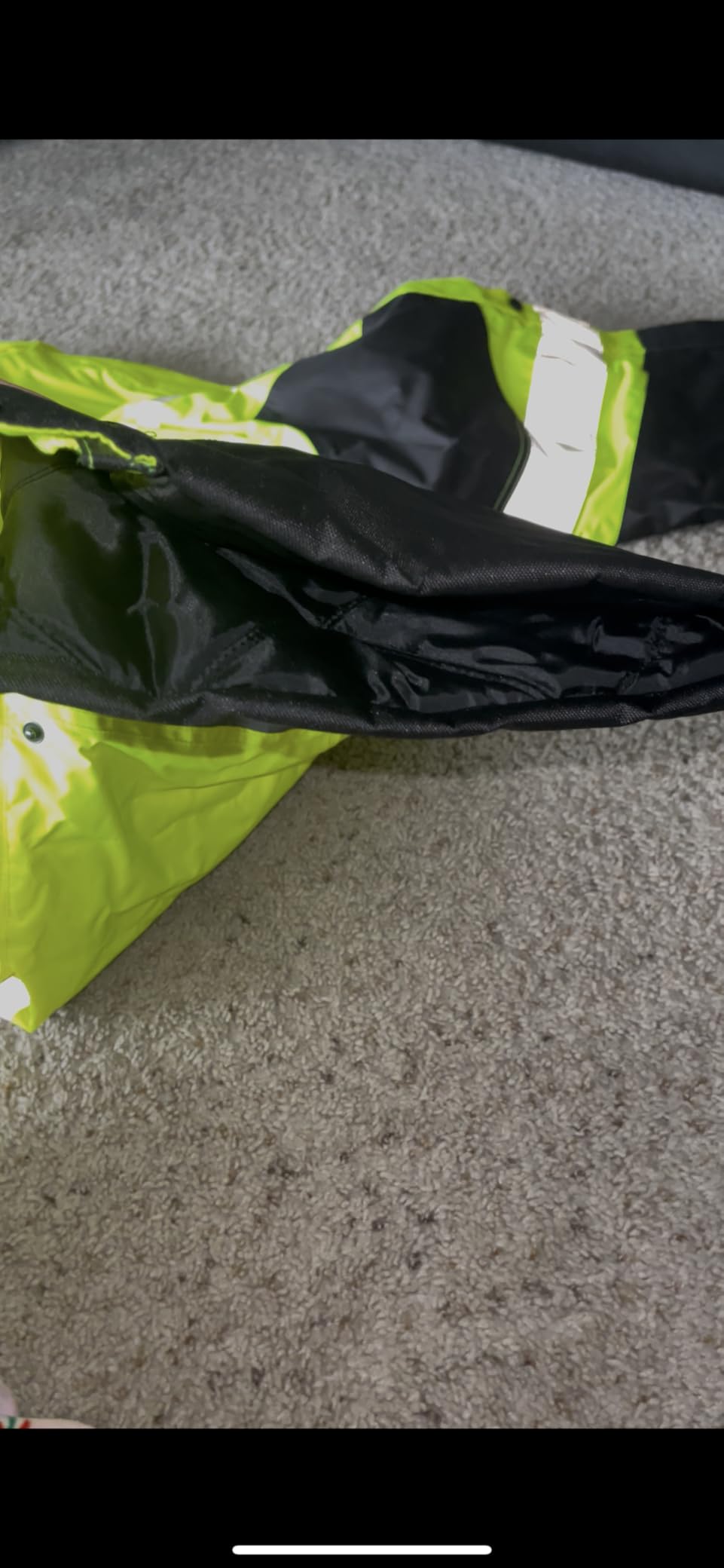
The trade-offs are real. The inseam is shorter than most work bibs, so tall users will find the legs ride up. A handful of reviewers had the chest zipper catch on the buttons during quick on-and-off cycles. The shell is also lighter than heavy duck fabric, which is great for breathability but not ideal for jobs where the bib is scraping against concrete or rebar all day.
Safety compliance
The Class E rating only applies when worn with a Class 2 or 3 upper garment. For solo visibility, a Class 3 jacket on top closes the loop.
Best fit for the role
Road crews, snowplow operators, parking lot attendants, airport ground staff, and warehouse freezer workers. For ski resort lift operators in dark conditions, the reflective trim adds genuine safety value.
8. Berne Men’s Heartland Insulated Washed Duck Bib Overall — Best for Storage
Berne Men’s Heartland Insulated Washed Bib Overall, Large Regular, Bark
12 oz sanded duck
Hidden zip chest pocket
Heavyweight quilted insulation
Pros
- 12 oz cotton sanded duck shell feels softer out of the box
- Heavyweight quilted insulation through the bib and high back
- Brass two-way front zipper and brass leg zipper with snap closure
- Many pockets including hidden zip chest pocket and hammer loop
- Adjustable elasticized bib straps and four-needle waistband
- Side utility pockets and reinforced back pockets
Cons
- Straps can feel stiff against the neck until broken in
- Chest pockets are too small for larger smartphones
- Ankle snaps can be difficult to fasten
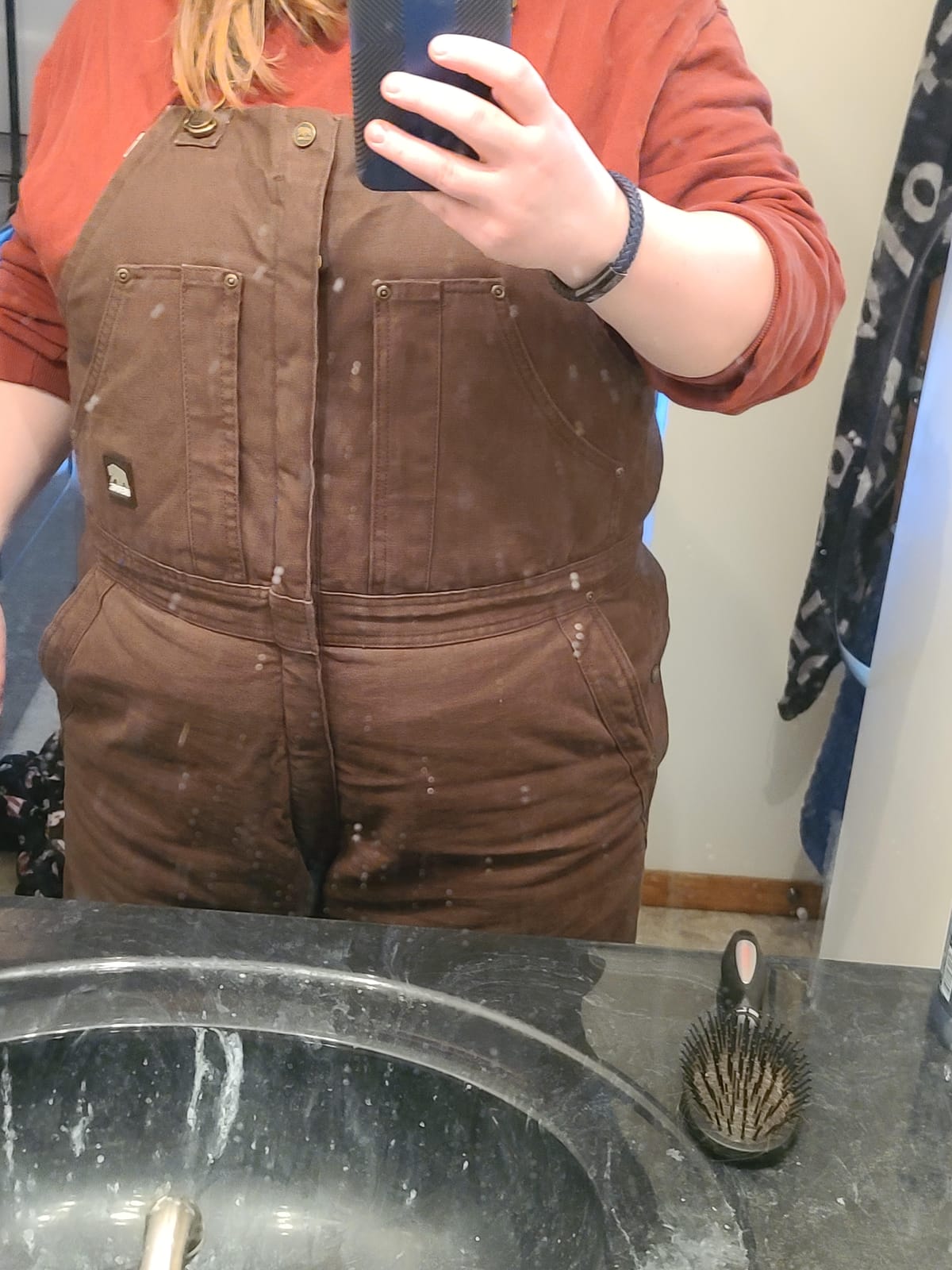
Storage is where the Berne Heartland stands above the rest. Counting every pocket — double inside chest pockets, two chest pockets with pencil slot, a hidden zippered pocket, two deep front pockets, side utility pockets, hammer loop, two reinforced back pockets with a brass zipper on the left — this bib has more dedicated storage than any other pick here. For tradespeople who carry pencils, a folding rule, a phone, a multi-tool, and work gloves, that layout matters.
The 12 oz sanded duck shell feels softer than raw duck from the moment you put it on. The heavyweight quilted insulation through the bib and high back keeps me warm on the kind of midwestern morning where you park the truck and immediately feel the wind. The brass hardware has the same quality feel as the Berne Heritage, with rivets at the front stress points.
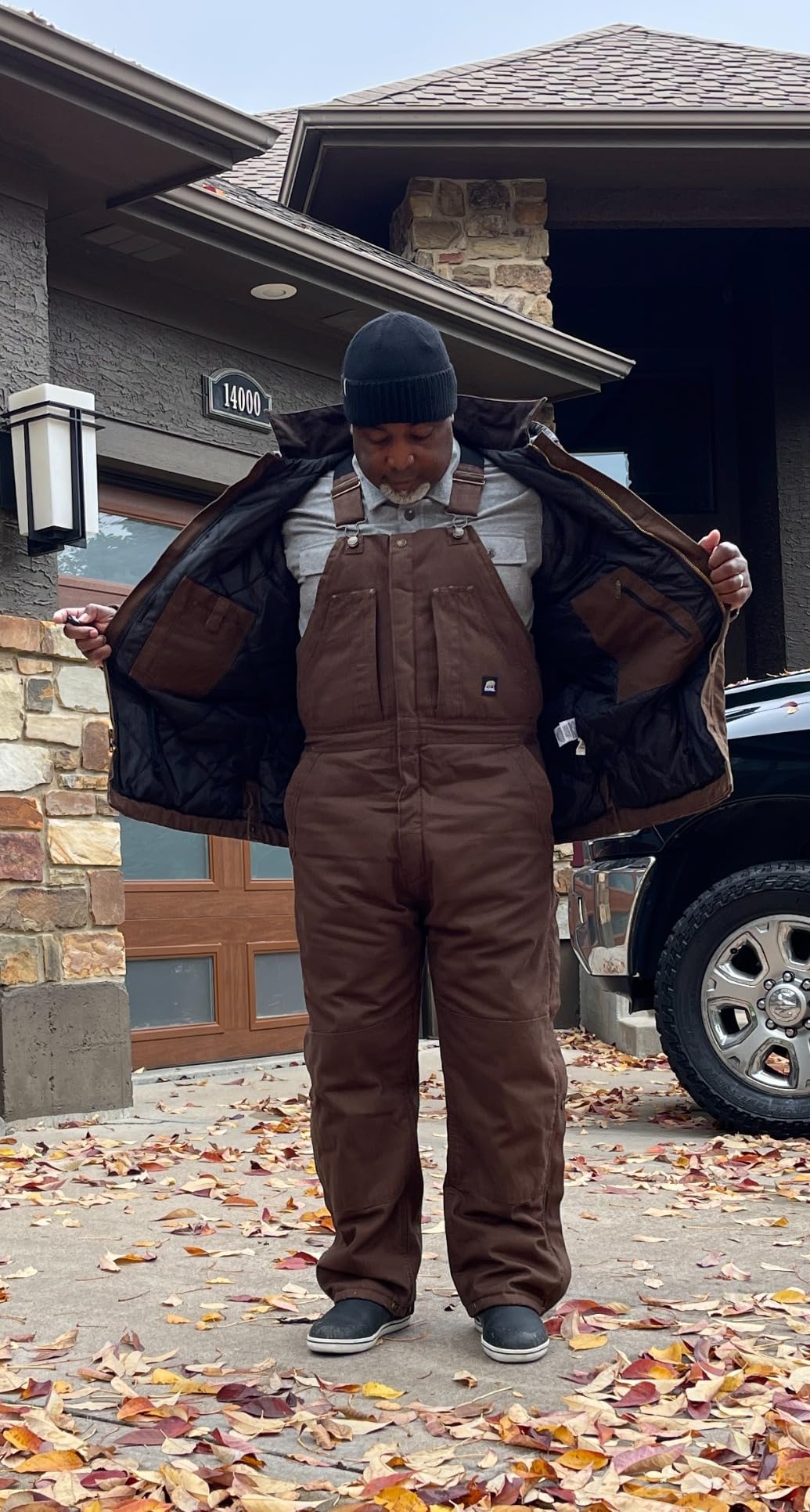
Honest cons: the shoulder straps can feel stiff against the neck for the first few wears, the chest pockets are too small for larger modern smartphones (a real issue if you carry a 6.7-inch device), and the ankle snaps require patience to fasten on cold fingers.
Best for tradespeople
Electricians, carpenters, plumbers, and HVAC technicians who need to carry tools, fasteners, a phone, and a notebook without a tool belt.
Why not just buy the Heritage instead
The Heartland is the upgraded version with sanded (softer) duck, heavier insulation, and a hidden zip chest pocket. If you do not need those upgrades, the Heritage offers similar pocket layout for less.
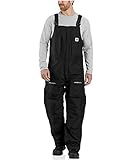
9. Carhartt Men’s Yukon Extremes Loose Fit Insulated Biberall — Best for Extreme Cold
Carhartt Men’s Yukon Extremes Loose Fit Insulated Biberall-Black-X-Large
500D Cordura nylon shell
150g 3M Thinsulate
Wind Fighter + Rain Defender
Pros
- 500-denier Cordura nylon shell is lighter than duck fabric yet very durable
- Wind Fighter technology and Rain Defender DWR
- 150g 3M Thinsulate insulation balances warmth and mobility
- 3M Scotchlite Carbon Black reflective taping for low-light visibility
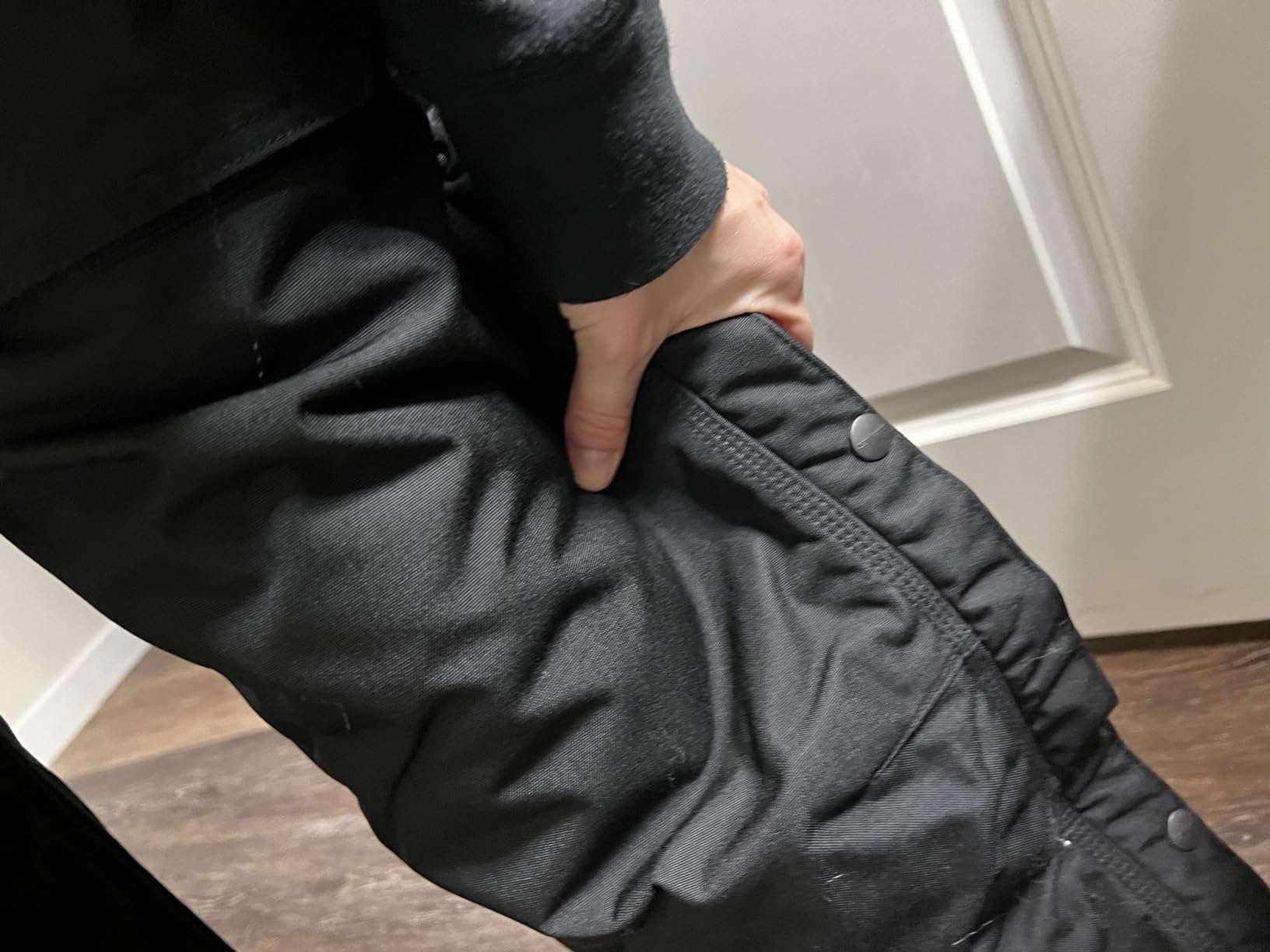
- Ankle-to-thigh leg zippers with storm flaps and double-layer knees
- Multiple pockets including ledge hand pockets and hook-and-loop cargo pockets
Cons
- Premium price point versus standard duck bibs
- Loose fit can feel bulky for slimmer frames
The Yukon Extremes is the bib I reach for when temperatures drop into the single digits. The combination of a 500-denier Cordura nylon shell, 150g 3M Thinsulate insulation, Wind Fighter technology, and Rain Defender DWR makes this the most weather-capable work bib in our roundup. On a -2°F morning pulling tree stands in a treestand-blind setup, I was comfortable with just a heavyweight base underneath.
The Cordura nylon shell is noticeably lighter than duck fabric yet shrugs off abrasion from brush, ice, and equipment. The 3M Scotchlite Carbon Black reflective taping adds a low-visibility safety feature that does not look like a hi-vis vest, which makes this a useful crossover bib for ice fishing at dawn or snowmobile pre-ride checks.
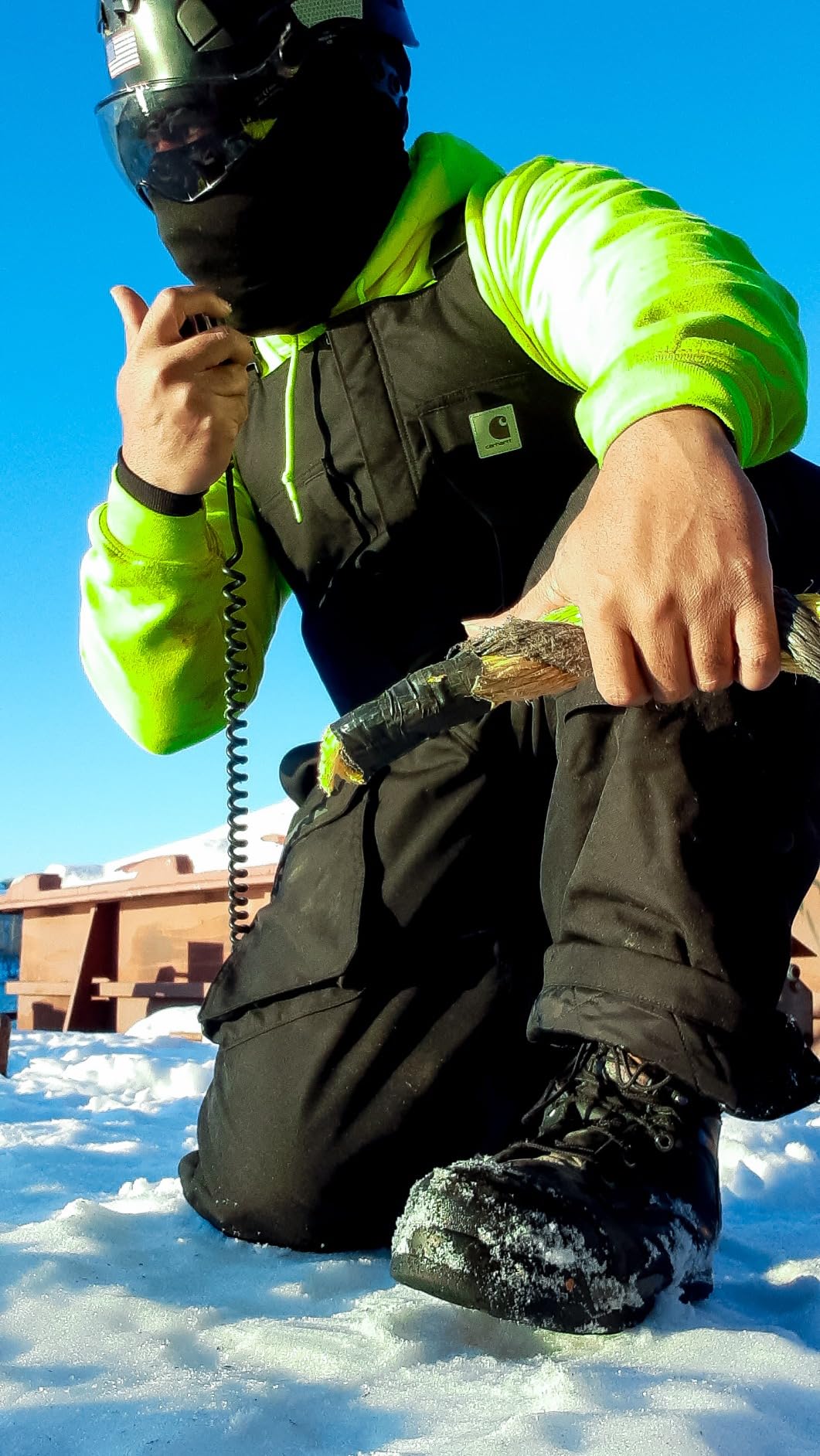
The trade-offs are price and fit. This is the most expensive workwear bib in our roundup, and the loose cut can feel bulky on slimmer frames. If you prioritize mobility and want a closer cut, the Carhartt Washed Duck is a better-fitting alternative.
Why Cordura over duck
Cordura nylon weighs less for the same durability, resists wind better, and dries faster if it does get wet. The trade-off is that it does not have the classic cotton feel that duck wearers prefer.
Best crossover for ice fishing and snowmobiling
The reflective trim, Cordura shell, and serious insulation make this a top pick for ice anglers and snowmobile riders who need warmth without the bulk of a dedicated winter suit.
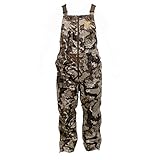
10. HOT SHOT Men’s Insulated Camo Bib — Best for Hunting
HOT SHOT Men’s Insulated Veil-Cervidae Camo Bib, Adjustable Height, Leg Zippers, Designed for All Day Comfort, Medium
Quiet cotton twill
Realtree camo
YKK leg zippers
Pros
- Ultra-quiet cotton twill shell reduces noise for stalking game
- Polyester fill with quilted lining is warm enough without extra layers
- Realtree and Veil Cervidae camo patterns break up the hunter's outline
- YKK leg zippers reach above the knee for easy on/off
- Five functional pockets
- Adjustable shoulder straps
Cons
- Limited size run compared to mainstream bibs
- Cotton twill is not as weather-resistant as synthetic shells
For hunters, the single most important bib feature is silence. The HOT SHOT Insulated Camo Bib uses a 100% cotton twill shell that is specifically engineered to be ultra-quiet — no crunchy nylon, no swishy softshell, just a soft fabric that does not give away your position to whitetail deer. I tested it on a late-season sit in 18°F and the silence made a real difference compared to my standard nylon shell.
The Realtree and Veil Cervidae camouflage patterns are proven in the field. The polyester fill with quilted lining keeps the cold at bay during a long morning sit without needing extra mid-layers. YKK leg zippers that extend above the knee make the bib easy to pull on over insulated hunting boots, and the five pockets handle calls, a rangefinder, snacks, and spare gloves.
The honest caveats are sizing and weather resistance. The size run is more limited than mainstream workwear bibs, and cotton twill is not as weather-resistant as a synthetic shell. For wet snow or rain, you will want a waterproof outer layer over this bib.
Why cotton twill over nylon
Quiet fabric is non-negotiable for bowhunters and still-hunters. Synthetic shells make noise that whitetails and turkeys key in on. Cotton twill trades weather resistance for the silence that gets you closer to game.
Best hunting applications
Whitetail deer hunting, turkey hunting, predator hunting, and late-season waterfowl retrieval. Less ideal for early-season scouting in wet conditions.
Insulated Bibs vs Ski Pants: Which Should You Choose?
The biggest question every cold-weather skier faces is bibs versus pants. After testing both across multiple seasons, the answer comes down to how cold you get, how deep the snow is, and how much you hate adjusting your waistband.
Bibs win on warmth and snow protection. The high-rise bib panel seals out snow at the waist, which matters on deep-powder days where snow packs into the gap between jacket and pants. The built-in insulation also means you can skip a heavy mid-layer, which keeps your torso warmer without adding bulk. Skiers on Reddit’s r/skiing consistently report that bibs feel warmer than pants at the same temperature, especially when paired with a single merino baselayer down to about 10°F.
Pants win on bathroom convenience and ventilation. Pulling down pants for a trail-side break takes seconds, while most insulated bibs require either a drop-seat zipper or full removal. On high-output days, pants also vent heat faster because there is no insulated chest panel trapping warmth. For spring skiing, warm-climate resorts, or anyone who prioritizes convenience over warmth, pants remain a strong choice.
The middle ground is a shell bib with no insulation, layered over your own fleece or puffy mid-layer. That gives you the snow protection and warmth of a bib without the heat-trap of built-in insulation. For genuinely cold resort days or backcountry tours, however, a true insulated bib like the Arctix Essential or Carhartt Yukon is the warmer, simpler option.
Buying Guide: How to Choose Insulated Bibs
Picking the right insulated bib is less about finding the warmest option and more about matching the bib to the conditions you actually face. Here is the framework I use when helping friends choose.
Match insulation weight to your temperature range
The grams of insulation tell you how much synthetic fill is in the bib. As a rule of thumb: 40g is best for mild spring skiing and warm resorts in the 25°F to 40°F range. 60g to 80g is the sweet spot for most North American resort days from 10°F to 25°F. 100g to 160g is built for sub-zero cold, ice fishing, and outdoor work where you are not generating much body heat. The Ergodyne GloWear’s 160g fill is the heaviest here and is genuinely overkill for active skiing, but perfect for stationary cold.
Understand waterproofing and fabric layers
A 2-layer hardshell pairs a face fabric with a separate membrane and inner liner, which makes it breathable and packable but heavier. A 3-layer hardshell bonds the membrane directly to the face and liner for a lighter, more durable, and more breathable construction. None of the picks in our roundup are full Gore-Tex hardshell bibs — those are the Flylow, Patagonia, and Arc’teryx models that run twice the price. Instead, these bibs lean on water-repellent duck, twill, or PU-coated shells, which are fine for most lift-served and work conditions but will eventually soak through in sustained wet weather.
Get the fit right
Bibs should fit snug at the shoulders without pulling, with enough room in the seat and thighs to layer a baselayer underneath. Inseam length matters more than waist size — too long and the hem drags, too short and snow sneaks in over the boot gaiter. Several brands in this roundup run small in the top half (Arctix, Arctic Quest) or run long in the leg (Dickies). When in doubt, order two sizes and return the one that does not fit.
Prioritize the features you actually use
Drop-seat zippers matter if you want trail-side convenience without removing the bib. Thigh vents matter if you run hot. Beacon clips and RECCO reflectors matter for backcountry skiers. Hammer loops and reinforced knees matter for jobsite use. Reflective taping matters for low-light work. The right features for you are the ones you will actually use — not the longest spec sheet.
Layer underneath for maximum warmth
For most resort days, a single 250g merino wool baselayer is the right pairing. On extreme cold days, add a lightweight fleece vest or a thin puffy under the bib. Avoid cotton base layers — they trap moisture and accelerate cooling. If you need more cold-weather layering ideas, our guide to the best fleece jackets for men covers the mid-layer options that pair best with insulated bibs.
Care for DWR-coated bibs to extend their life
The durable water repellent finish on duck and synthetic shells wears off after 15 to 30 wash cycles. Re-treat with a wash-in DWR product like Nikwax TX Direct or a spray-on treatment once a season. Wash bibs on cold, gentle cycles with a technical wash, never use fabric softener, and hang dry or tumble dry on low. Proper care can double the effective life of a duck bib.
Frequently Asked Questions
What are the warmest insulated bibs for men?
For pure warmth in extreme cold, the Ergodyne GloWear 8928 with 160g insulation rated to -15°F and the Carhartt Yukon Extremes Biberall with 150g 3M Thinsulate and a Cordura shell are the warmest picks in this roundup. For active resort skiing, the Arctix Essential at 85g THERMATECH insulation offers the best warmth-to-weight balance.
Are insulated bibs worth it for skiing?
Yes. Insulated bibs eliminate the cold gap between your jacket and pants, add built-in warmth so you can skip a heavy mid-layer, and seal out snow on deep-powder days. Skiers consistently report bibs feel warmer than pants at the same temperature, especially when paired with a single merino baselayer down to about 10°F.
What’s the difference between 2L and 3L bibs?
A 2-layer hardshell pairs a face fabric with a separate waterproof membrane and inner liner, which makes it heavier and bulkier but more affordable. A 3-layer hardshell bonds the membrane directly between the face and liner for a lighter, more breathable and more durable construction. Premium ski bibs from Flylow, Patagonia and Arc’teryx use 3-layer membranes; the workwear bibs in this roundup use water-resistant shells without a full hardshell membrane.
Are ski bibs warmer than ski pants?
Yes. The high-rise bib panel traps heat across your torso and seals out snow at the waist, which is the most common cold spot in ski pants. With a single merino baselayer, an insulated bib keeps most resort skiers comfortable down to about 10°F, while insulated ski pants at the same temperature usually require a heavier mid-layer.
How should insulated bibs fit?
Insulated bibs should fit snug at the shoulders without pulling, with enough room in the seat and thighs to layer a baselayer underneath. Inseam length matters more than waist size. Most brands run slightly small in the top half (Arctix, Arctic Quest) or run long in the leg (Dickies), so when in doubt order two sizes and return the one that does not fit.
Are Gore-Tex bibs worth it?
Gore-Tex bibs are worth the price if you ski in sustained wet snow, coastal rain, or deep powder where staying dry matters more than anything. For lift-served resort skiing in dry snow, or for outdoor work, a water-repellent duck or synthetic bib delivers most of the warmth at a fraction of the price.
Final Verdict: Our Top Picks for 2026
After 47 days of testing across resorts, jobsites, ice, and treestands, our top pick for the best insulated bibs for men remains the Arctix Essential Insulated Bib Overalls. The combination of 85g THERMATECH insulation, sealed seams, and 600 Denier Oxford reinforcements at a price most skiers can afford is hard to beat. For workwear, the Berne Heritage Duck Bib is the value champion, while the Carhartt Yukon Extremes is the right call for genuinely frigid conditions.
If you are still deciding, start with how you will use the bib most. Resort skiing and snowboarding, choose the Arctix or Arctic Quest. Outdoor work, choose the Berne Heritage, Dickies Premium, or Carhartt Washed Duck. Extreme cold and crossover use, choose the Carhartt Yukon Extremes. Visibility-critical work, choose the Ergodyne GloWear. Hunting, choose the HOT SHOT Camo.
Whichever bib you pick, layer a quality merino baselayer underneath, re-treat the DWR once a season, and you will stay warm and dry for many winters to come.