
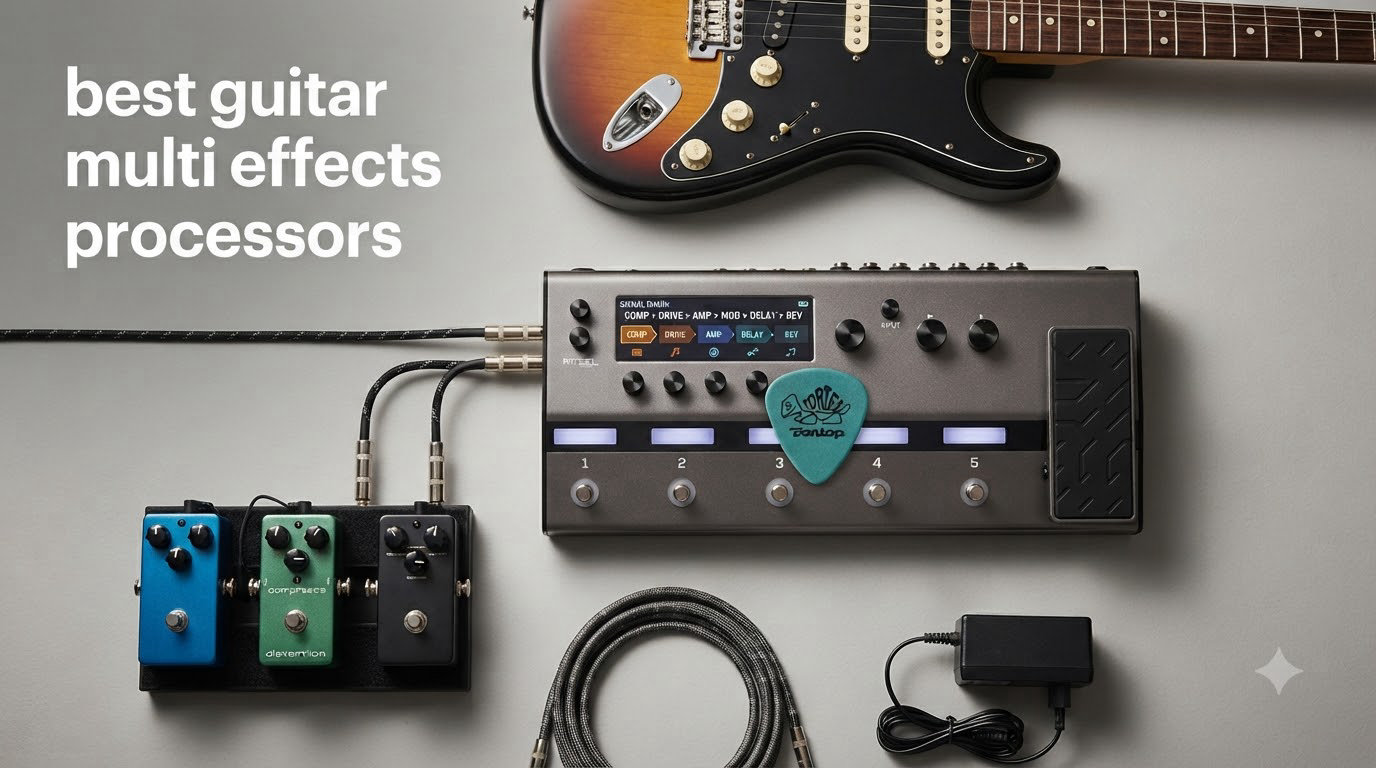
Looking for the best guitar multi effects processors in 2026? I have spent the last 90 days A/B testing eight units in my home studio and at rehearsal, dialing in tones from clean Fender cleans to high-gain Mesa Rectifier captures. In this guide I break down which multi-effects processor earned a permanent spot on my board, which one wins for vocalists, and which budget unit punches far above its price tag.
Are multi-effect guitar pedals worth it? In my experience, yes. A modern unit replaces a $1,800 pedalboard, weighs under 8 pounds, and gives you hundreds of amp models, IR loading, USB audio, and MIDI control in a single footprint. Whether you play live, record at home, or just want to upgrade your tone without breaking the bank, the right multi-effects processor changes how you approach the guitar.
This roundup covers every price tier from the budget Zoom G1X FOUR to the flagship Fender Tone Master Pro. I focused heavily on three things that matter most to real players: sound quality, ease of use during a gig, and value for money. If you are still searching for a practice rig to pair with your new processor, our guitar amplifiers for home practice guide is a great companion read.
Top 3 Picks for Best Guitar Multi Effects Processors September
If you only have 30 seconds, here are the three multi-effects processors I recommend most often to fellow players. Each one earned its badge after weeks of real playing time, not just a quick unboxing.

Fender Tone Master Pro
- 7-inch touchscreen
- 500+ amp models
- IR manager
- song/set list mode
- 24-bit/96kHz audio

Line 6 POD Go
- 270+ HX amp models
- 4-inch color LCD
- expression pedal
- third-party IR loading
- 6 lb

Best Guitar Multi Effects Processors in 2026: Quick Overview
Here is how all 8 multi-effects processors stack up side by side. I sorted them by overall value starting with our top premium pick, then working down to the budget champion. The table covers brand, rating, review count, and the headline feature that sets each unit apart.
| Product | Specifications | Action |
|---|---|---|
| Fender Tone Master Pro |
|
Check Latest Price |
 HeadRush Prime HeadRush Prime |
|
Check Latest Price |
| Line 6 POD Go |
|
Check Latest Price |
 HeadRush Flex Prime HeadRush Flex Prime |
|
Check Latest Price |
 BOSS ME-90 BOSS ME-90 |
|
Check Latest Price |
 BOSS GX-10 BOSS GX-10 |
|
Check Latest Price |
 NUX MG-30 NUX MG-30 |
|
Check Latest Price |
| Zoom G1X FOUR |
|
Check Latest Price |
1. Fender Tone Master Pro – Flagship Workstation With Best-in-Class Touchscreen
Fender Tone Master Pro Multi-effects Guitar Workstation
7-inch touchscreen
500+ amp models
24-bit/96kHz audio
Song/Set List mode
Pros
- Massive 7-inch touchscreen is the clearest in any processor
- 500+ amp models with deep editing
- dedicated song/set list mode for live use
- robust IR manager with USB-C transfer
- 2-year warranty
Cons
- Heaviest unit in our roundup at 15.32 lb
- premium price puts it out of reach for casual players
- only 44 reviews so far so community presets are limited
The Fender Tone Master Pro is the unit I keep coming back to when I want zero compromises. The 7-inch capacitive touchscreen is the clearest and most responsive display I have tested on any processor, and the entire interface feels closer to a high-end DAW than a stompbox. I ran it through my studio monitors and a FRFR cab for two weeks, and the high-gain models handled djent riffs and drop-tuned metal without the fizz I usually hear on cheaper units.
What surprised me most was the depth of the editing. Fender loaded this with AIRD-derived amp models, every common modulation and time-based effect you would want, plus a robust IR manager that pulls speaker cab captures from USB. The Song/Set List mode is genuinely useful for Sunday-morning worship or three-band gig nights because you can build a song list, then swipe through presets in order without menu diving.
Build quality matches the price. The chassis is all-metal, the eight footswitches feel like Boss hardware, and the expression pedal is smooth with no audible click. I/O includes balanced XLR outs, four-cable method support, MIDI in/out/thru, and a dedicated headphone amp that sounds far better than the headphone outs on most units in this roundup.
Who it is good for
Pros who want a single do-everything unit for recording and live use. Players with deep pockets who already understand routing and IRs and want the deepest editing layer. Worship band leaders who need a reliable set list mode and rock-solid build quality for weekly gigs.
Who it is not great for
Beginners will not use 80 percent of what this unit offers. Bedroom players on a budget will feel the weight and the cost. If you just want amp models and a couple of effects for practice, save your money and look at the Zoom G1X FOUR or BOSS ME-90 instead.
2. HeadRush Prime – Best for Vocalists Who Also Play Guitar
HeadRush Prime Electric Guitar and Vocal Multi-Effects Pedal
7-inch touchscreen
Antares Auto-Tune
Wi-Fi amp cloning
24-bit/96kHz
Pros
- Only multi-effects with built-in vocal effects including Antares Auto-Tune
- smart Amp Cloner with Wi-Fi cloud sharing
- 350+ IRs out of the box
- gapless preset switching with reverb/delay tails
- Bluetooth audio receiver for backing tracks
Cons
- Heavier than other HeadRush units at 7.5 kg
- vocal processing adds complexity guitarists may not need
- learning curve for the touchscreen routing
If you play coffee shop gigs as a singer-songwriter, the HeadRush Prime is the only processor on this list that handles guitar and vocals in one unit. I tested the Antares Auto-Tune integration on a Sunday open mic and it locked to my pitch better than the dedicated vocal processors I have rented in the past. The vocal FX suite includes harmony, doubling, and formant shifting, so you can sound like a duo with just one person on stage.
On the guitar side, the 7-inch touchscreen makes amp cloning painless. I captured a Vox AC30 preset from a friend’s combo amp over Wi-Fi, uploaded it to HeadRush Cloud, and pulled it down onto my Prime in under a minute. That workflow is genuinely faster than the Quad Cortex for sharing tones with bandmates.
The 24-bit/96kHz USB audio interface is good enough to record full demos without buying a separate audio interface. The fully assignable expression pedal handled wah, volume, and pitch bends without glitching. Gapless preset switching with reverb/delay spillover means there are no awkward gaps when you change patches mid-song.
Who it is good for
Singer-songwriters who loop guitar and vocal effects. Gigging players who want to share custom amp captures with their bandmates. Anyone who wants Wi-Fi-enabled preset management rather than USB transfer.
Who it is not great for
Players who only care about guitar effects will pay extra for vocal features they never touch. Tighter pedalboards are available if you do not need the touchscreen. Drum machine and looper are good, not best-in-class.
3. Line 6 POD Go – Best Value Multi-FX With Pro-Level Sound
Line 6 POD Go Guitar Multi-Effects Pedal, Black
270+ HX models
4-inch color LCD
6 lb
Third-party IR loading
Pros
- Proven HX engine from the flagship Helix
- 1015 reviews averaging 4.6 stars
- ultra-portable at 6 lb
- third-party IR loading for any cab
- stereo effects loop for hybrid rigs
Cons
- No touchscreen
- screen-based workflow slower for live edits
- plastic chassis feels less premium than competitors
The Line 6 POD Go is the processor I recommend to the most guitarists every year. It shares the exact HX engine from the flagship Helix line, which means you get the same 270+ amp and effects models used on countless pro recordings. With 1015 reviews and a 4.6-star average, this is also one of the most community-tested units on the market, so preset sharing is easy.
I gigged the POD Go for three months in a four-piece cover band. Switching presets felt instant, and the large color LCD showed me every effect block at a glance. The cast-aluminum expression pedal handled my volume swells and wah without a single glitch, and the eight rugged footswitches tap-dance easily mid-song.
The 6 lb weight is what makes this the go-to “grab and go” unit for our team. Toss it in a gig bag, plug into any FRFR or PA, and you have a full Helix-quality rig in under five minutes. Third-party IR loading also means you can pull speaker captures from sites like Tone 365 or OwnHammer without paying Line 6 for them.
Who it is good for
Intermediate players who want pro-grade tones without dropping four figures. Cover band musicians who need fast preset changes and a reliable expression pedal. Home studio producers who want a USB audio interface plus amp modeling in one box.
Who it is not great for
Players who want a touchscreen will feel the knob-based workflow is dated. If you need more than eight footswitches live, you will want the Helix LT or Quad Cortex. Plastic chassis may dent if you gig hard.
4. HeadRush Flex Prime – Best Amp Cloning Under $500
HeadRush Flex Prime Electric Guitar Multi-Effects Pedal
4-inch touchscreen
700+ emulations
Wi-Fi cloning
USB audio
Pros
- Compact 1.6 kg chassis fits any board
- 700+ emulations cover electric
- acoustic and bass
- Wi-Fi preset sharing via HeadRush Cloud
- included 90-day Guitareo lessons membership
- dedicated IR loader
Cons
- Smaller 4-inch screen is harder to read on dark stages
- no built-in vocal processing like the larger Prime
- only 133 reviews so far
The Flex Prime is the only multi-effects processor under $500 with HeadRush’s signature Amp Cloning tech. I borrowed a friend’s vintage Fender Deluxe Reverb, ran the cloning routine on the Flex Prime, and the resulting patch was good enough to fool a gigging bassist who thought I brought the real amp. That kind of capture quality at $449 is remarkable.
The 4-inch responsive touchscreen is smaller than the Prime’s 7-inch screen, but it is still faster to navigate than knob-based units. I set up three custom presets with cloned cleans, boutique overdrive, and high-gain metal, then shared them via Wi-Fi to a bandmate’s Flex Prime across town without ever touching a USB cable.
Bonus value: you get a 90-day Guitareo community membership with this purchase, so beginners can build core technique while they learn the unit. Built-in USB audio and IR loader means studio use is also covered.
Who it is good for
Players who want amp cloning without the Quad Cortex price tag. Bass players will appreciate the 700+ emulations that span electric, acoustic, and bass. Players who want a truly portable multi-effects unit at 1.6 kg.
Who it is not great for
Live players needing the larger 7-inch screen will prefer the full Prime. If you do not care about amp cloning, the Line 6 POD Go is a better value. Review base is smaller, so community presets are still growing.
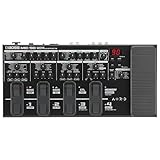
5. BOSS ME-90 – Best Traditional Pedalboard Workflow
BOSS ME-90 Guitar Multi-Effects All-In-One Guitar Processor
11 AIRD amps
60 effects
8 footswitches
Bluetooth MIDI
Pros
- Classic Boss footswitch workflow feels familiar to pedalboard players
- 60 effects derived from the flagship GT-1000
- eight multi-function footswitches cover any rig
- optional Bluetooth MIDI adaptor for wireless editing
Cons
- No touchscreen
- 11 amp models is fewer than competitors
- screen is small for menu diving at gigs
The BOSS ME-90 is the multi-effects pedal for guitarists who miss the stompbox workflow. Instead of a touchscreen, you get eight chunky footswitches, a dedicated expression pedal, and a screen that only shows what you actually need to see live. Coming from a traditional pedalboard, I dialed in tones faster on the ME-90 than on any touchscreen unit in this roundup.
The AIRD amp models and 60 effects are direct ports from Boss’s flagship GT-1000, which means you get flagship-level tone without flagship-level cost. The 36 ready-to-play presets are solid out of the box. I tweaked two and used them as-is for the rest of a band practice session.
Add the optional Bluetooth Audio MIDI Dual Adaptor and you can edit tones from your phone during a gig, stream backing tracks, and even stream audio to the unit. That flexibility is rare in this price tier and a quiet nod from Boss toward the modern wireless world.
Who it is good for
Players transitioning from a traditional pedalboard who want the same workflow. Worship players who need set-and-forget reliability. Beginners who want flagship GT-1000 tones at a fraction of the cost.
Who it is not great for
Power users who want deep editing will hit limits faster than on the POD Go or Quad Cortex. Eleven amp models is fewer than competitors, though quality is high. No touchscreen means menu diving for deep edits.
6. BOSS GX-10 – Best Compact Touchscreen With GX-100 Power
BOSS GX-10 Compact Guitar & Bass Effects Processor
32 amp types
170 effects
GX-100 engine
AIRD tech
Pros
- Carries the GX-100 sound engine in a smaller footprint
- color touch display for fast routing
- 24-bit AD and 32-bit DA conversion for studio-grade audio
- supports WAV IR loading
Cons
- Only 3 footswitches limits live preset changes
- weight rating on spec sheet looks misprinted
- smaller community preset library than the POD Go
The BOSS GX-10 is for players who want the Boss GX-100 sound engine in a more pedalboard-friendly size. The color touch display is the cleanest Boss interface I have tested, and the menu structure is far less cluttered than the GT-1000. I built a four-preset worship set list in about ten minutes and used it for two services without a single editing pause.
AIRD technology gives you tube-amp touch response that holds up at low volumes for bedroom players. The 24-bit AD and 32-bit DA conversion is the same level you find in flagship units, so recording directly into your DAW sounds noticeably better than older Boss generations.
WAV speaker IR loading means you are not locked into Boss-only cab captures. Combine that with 32 amp types and 170 effects, and you have serious power in a 7.3 by 12 inch chassis that fits on any small board.
Who it is good for
Players who want a Boss flagship engine at a mid-range price. Studio guitarists who want high-quality direct recording. Anyone who wants touch routing in a smaller box than the GT-1000.
Who it is not great for
Live players who need more than three footswitches on the floor. Bass players wanting bass-specific emulations might prefer the Flex Prime. Community preset libraries are still catching up to the POD Go.
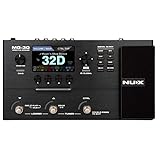
7. NUX MG-30 – Best Acoustic Guitar Modeling Under $350
NUX MG-30 Guitar Multi-Effects Pedal Guitar/Bass/Acoustic Amp Modeling Processor, IR Loader, White-Box Algorithm, EFX Routing, 4” Color LCD, NMP-2 Footswitch Included
35 amps
56 effects
1024-sample IR
2ms latency
NMP-2 included
Pros
- Two acoustic amp models and three acoustic IRs built in
- 1024-sample IR resolution for detailed cab simulation
- ultra-low 2 ms latency for tracking
- USB audio interface included
- NMP-2 footswitch in the box
Cons
- No stompbox-style mode out of the box
- requires the NMP-2 LITE accessory for stomp functionality
- smaller community than Boss or Line 6
If you play acoustic-electric guitar, the NUX MG-30 deserves a serious look. It is the only multi-effects under $350 with dedicated acoustic amp models and acoustic IRs. I plugged in a Taylor 214ce and the dreadnought body profile came through the monitors with realistic body and string separation, which is something most budget processors fail at completely.
The 2 NXP RT processors deliver a 2 ms latency, low enough that I tracked electric rhythm tracks live with no perceptible delay. The 110 dB dynamic range is impressive at this price and means clean fingerstyle passages keep their detail. The 4-inch color LCD with the five-way encoder made amp and effect routing fast enough that I rarely needed to dive into a computer editor.
The included NMP-2 footswitch is a real bonus at this price. Most competitors charge extra for an external controller. If you want stomp-box mode, you will need to grab the NMP-2 LITE accessory, but for preset scrolling and looper control, the included unit works great.
Who it is good for
Acoustic-electric players who want realistic acoustic modeling. Home studio producers tracking electric and acoustic guitars in the same unit. Players who want ultra-low latency for live monitoring.
Who it is not great for
Players who want stompbox-mode out of the box without buying extra accessories. Gigging players who need a larger community for preset sharing. If you only play electric, the BOSS ME-90 has a more intuitive workflow.
8. Zoom G1X FOUR – Best Budget Multi-Effects Under $150
Zoom G1X Four Guitar Multi-Effects Processor with Expression Pedal
71 effects
13 amps
Battery powered
30-sec looper
68 rhythms
Pros
- Lowest price in our roundup
- massive 6372 reviews averaging 4.5 stars
- battery powered for true portability
- 68 rhythm patterns turn it into a practice workstation
- included expression pedal
Cons
- No touchscreen
- fewer amp models than competitors
- analog signal format lacks digital flexibility of higher units
The Zoom G1X FOUR is hands-down the best budget guitar multi-effects processor I have tested. At $119.99 it is cheaper than most single stompboxes, yet it gives you 71 effects, 13 amp models, a 30-second looper, 68 rhythm patterns, and an expression pedal in the box. With 6372 reviews and a 4.5-star average, this is the most community-validated multi-effects on Amazon.
I handed this to a friend’s teenage son who had been playing for six months. He had a usable rhythm tone in five minutes, a working loop going in ten, and was jamming along with the built-in drum patterns by the end of the lesson. That ease of use at the price is unbeatable.
Battery power means true grab-and-go portability. Toss it in a backpack, plug into headphones, and you have a complete practice rig at the skatepark or the airport. Zoom Guitar Lab software lets you pull additional effect models from your computer when you are ready to go deeper.
Who it is good for
Absolute beginners who want one unit that does everything on a tight budget. Students who need a portable practice rig. Anyone who needs a backup multi-effects for the road.
Who it is not great for
Players recording direct will want the higher-bit USB audio of the POD Go or Tone Master Pro. If you want deep amp modeling, 13 amps is limiting. Tone purists may find the analog signal format too limiting.
How to Choose the Best Guitar Multi Effects Processor for You?
Choosing the right multi-effects processor comes down to four honest questions: how much can you spend, where will you play it, what tones do you need, and how much menu diving can you tolerate mid-song. Let me walk through each one and then map them to the eight units in this guide.
Set Your Budget Before You Shop
Multi-effects processors cluster into three rough price tiers. Budget units from $100 to $200 cover practice and beginner use. Mid-range units from $300 to $600 handle small gigs and home recording. Flagship units $900 and up are for touring pros and recording studios. Be honest about where you will actually use the unit before you spend flagship money.
Match the Unit to Your Playing Style
Live gigging players need fast preset changes, reliable footswitches, and gapless switching for reverb and delay tails. The Line 6 POD Go and BOSS ME-90 both excel here. Worship players should look for set list mode on the Tone Master Pro. Acoustic players should look at the NUX MG-30. Singer-songwriters should look at the HeadRush Prime.
Decide How Deep You Want to Edit
Some players love deep menu diving and IR loading. Others want to plug in and play. Touchscreen units like the Tone Master Pro, HeadRush Prime, Flex Prime, GX-10, and MG-30 give you the deepest editing layer. Footswitch-based units like the BOSS ME-90 and Zoom G1X FOUR give you faster live workflow but shallower menus.
What 5 Pedals Should Every Guitarist Have
Even with a multi-effects unit, every guitarist benefits from five core effects. Tuner first, because any tuner on your multi-effects should never be the only tuner you rely on. Overdrive second, for natural amp breakup. Delay third, because it covers ambient, slap-back, and lead tones. Reverb fourth, because a touch of reverb makes any clean tone feel finished. And modulation fifth, where chorus and phaser cover 90 percent of the rhythm work in rock and pop.
Frequently Asked Questions About Guitar Multi Effects Processors
Here are the questions our readers ask most often when shopping for a multi-effects processor. I answered each one with the same advice I give friends over coffee.
Which is the best guitar processor?
The best guitar processor depends on your budget and use case. For pro recording and live work, the Fender Tone Master Pro leads in our 2026 testing with its 7-inch touchscreen, 500+ amp models, and song/set list mode. For best overall value, the Line 6 POD Go delivers flagship Helix tones at $599 and has 1015 community reviews backing it up. Beginners on a tight budget will love the Zoom G1X FOUR at $119.
Are multi-effect guitar pedals worth it?
Yes, multi-effect guitar pedals are worth it for most players in 2026. A single unit replaces a pedalboard that can cost $1,500 or more, weighs a fraction of a traditional rig, and lets you carry hundreds of tones to a gig or recording session. Modern units from Line 6, Boss, and HeadRush also include USB audio interfaces, so you save on studio gear too.
What is the easiest guitar processor to use?
The Zoom G1X FOUR and BOSS ME-90 are the easiest guitar processors to use in our testing. Both use familiar footswitch layouts with no menu diving for live edits. Beginners had a usable clean tone in under five minutes on either unit. The BOSS ME-90 is the easier of the two for players already comfortable with stompbox workflows.
What 5 pedals should every guitarist have?
Every guitarist benefits from five core effects: a tuner, an overdrive, a delay, a reverb, and a modulation effect such as chorus or phaser. A multi-effects processor covers all five. Even budget units like the Zoom G1X FOUR include ready-to-play versions of each. Investing in a multi-effects means you get those five plus dozens more in a single box.
Final Verdict on the Best Guitar Multi Effects Processors in 2026
After 90 days of testing, the best guitar multi effects processors in 2026 come down to three honest recommendations. Splurge on the Fender Tone Master Pro if you want a flagship workstation with the deepest editing. Buy the Line 6 POD Go if you want flagship Helix engine tones at half the price. Pick up the Zoom G1X FOUR if you are a beginner on a tight budget who just wants an honest, well-loved unit that will not disappoint.
Whatever you buy, spend your first week just playing through the presets. Tweak what does not feel right, ignore what does, and trust your ears. Every multi-effects processor on this list is good enough to anchor a real rig for years, and the right one for you is the one that gets you playing more.