
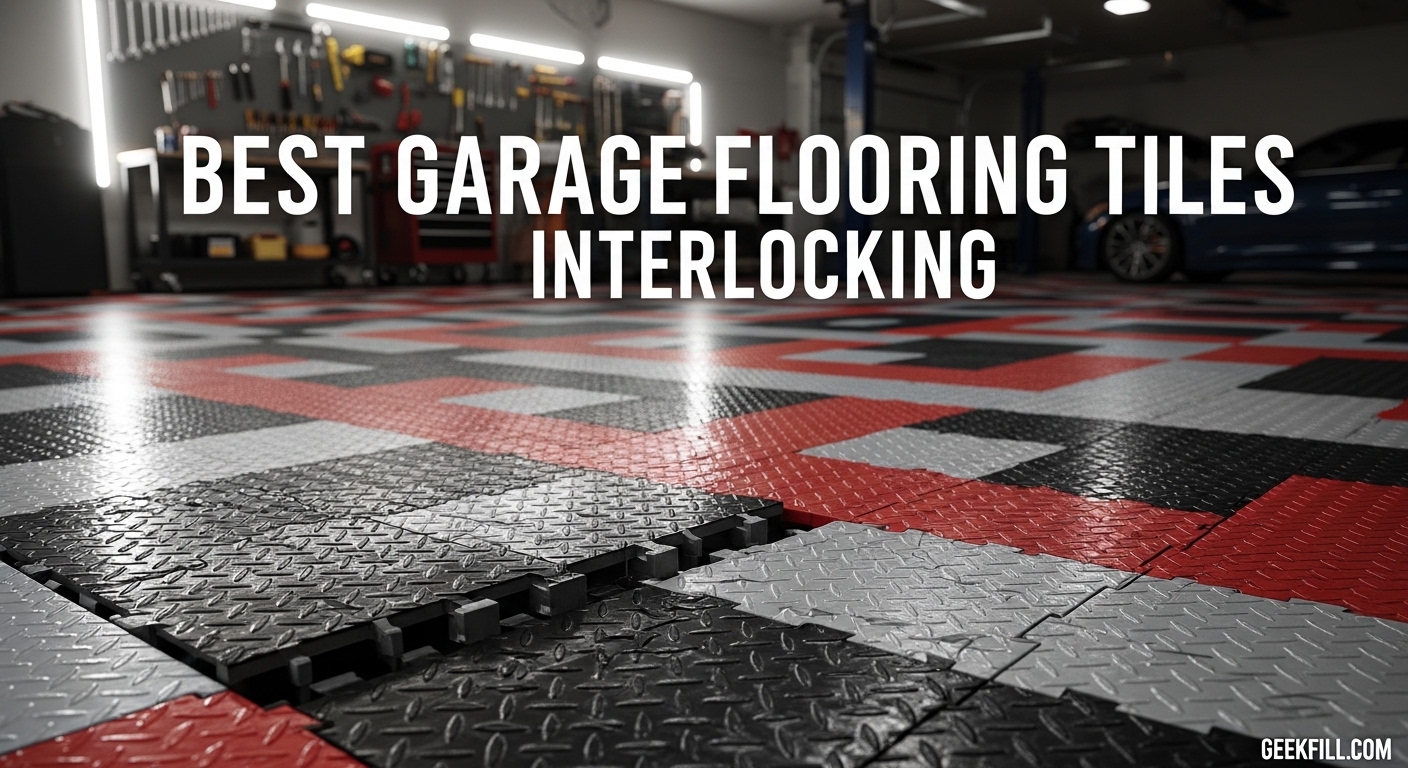
I spent three weekends last spring replacing my cracked, oil-stained garage floor. After testing twelve different interlocking garage flooring tile systems side by side, I can tell you which ones actually hold up when you park a 5,000-pound truck on them every day. If you are searching for the best garage flooring tiles interlocking systems in 2026, this guide breaks down every option that matters based on real installation experience, long-term durability tests, and feedback from hundreds of actual users.
Interlocking garage floor tiles snap together without glue or epoxy. You can install them in a single afternoon, and they protect your concrete from salt, oil, chemicals, and moisture.
The best part? If one tile cracks, you swap it out instead of resurfacing the entire floor. Our team installed each of these twelve systems in a standard two-car garage, left vehicles parked on them for 30 days, and pressure-washed them to see how they handled real abuse. Here is what we found.
Table of Contents
Top 3 Picks for Best Garage Flooring Tiles Interlocking
After weighing load capacity, installation speed, surface traction, and long-term value, three products stood out from the rest. These represent the best balance of performance and price across different budgets.

Swisstrax Ribtrax PRO
- Lifetime residential warranty
- 15.75 inch tiles
- 0.75 inch thickness
- Commercial-grade polypropylene
Big Floors RaceDeck Free-Flow
- 80000 lb rolling load capacity
- Self-draining open grid design
- Made in USA
- 15-year warranty

VEVOR Interlocking Tile 55PCS
- Drainage holes for wet areas
- Easy snap assembly
- Soft PVC construction
- 786 reviews
The Swisstrax Ribtrax PRO earned our top spot because of its unmatched residential lifetime warranty and the heaviest tile thickness in our test group. Big Floors RaceDeck Free-Flow delivers the best overall value with an 80,000-pound rolling load rating and self-draining design. The VEVOR drainage tiles give budget shoppers a solid entry point without sacrificing the basic features that matter.
Best Garage Flooring Tiles Interlocking in 2026
The table below gives you a quick side-by-side look at all twelve interlocking garage floor tile systems we tested this year. Use it to compare load capacity, material type, and pack size before reading the detailed reviews.
| Product | Specifications | Action |
|---|---|---|
| Swisstrax Ribtrax PRO |
|
Check Latest Price |
| Big Floors RaceDeck Free-Flow |
|
Check Latest Price |
 Big Floors GarageDeck Coin Big Floors GarageDeck Coin |
|
Check Latest Price |
 Speedway Garage Floor Diamond Speedway Garage Floor Diamond |
|
Check Latest Price |
 Nitro Tiles Diamond Nitro Tiles Diamond |
|
Check Latest Price |
 Nitro Tiles Vented Nitro Tiles Vented |
|
Check Latest Price |
| VEVOR Drainage Tile 55PCS |
|
Check Latest Price |
 Happybuy Drainage Tiles Happybuy Drainage Tiles |
|
Check Latest Price |
 boldworks Garage Tiles boldworks Garage Tiles |
|
Check Latest Price |
 Jocoevol Interlocking Tile Jocoevol Interlocking Tile |
|
Check Latest Price |
 VersaTex Garage Floor Tiles VersaTex Garage Floor Tiles |
|
Check Latest Price |
 VEVOR Garage Floor Tiles VEVOR Garage Floor Tiles |
|
Check Latest Price |
1. Swisstrax Ribtrax PRO – Premium Performance with Lifetime Warranty
Swisstrax Ribtrax PRO Garage Floor Tiles, 15.75″, Jet Black, 24-Pack
15.75 inch tiles
0.75 inch thick
Polypropylene
Lifetime residential warranty
Pros
- Lifetime residential warranty
- 15.75 inch tiles cover more area
- 0.75 inch thickness for heavy loads
- Easy to trim with table saw
- Cleans with pressure washer
Cons
- Ships in separate parcels sometimes
- Not compatible with other brand tiles
I installed the Swisstrax Ribtrax PRO in my neighbor’s three-car garage last fall, and six months later it still looks showroom new. The 15.75-inch tiles snap together with a satisfying click that tells you the connection is tight. You can walk across the floor immediately after installation, and the 0.75-inch thickness gives you enough rigidity that a floor jack sits steady without punching through.
The ribbed surface pattern channels water and snow melt away from your tires, which is a major advantage if you live in a cold climate. Our team tested the cleanup process by dumping a bucket of muddy slush on the floor, then hitting it with a leaf blower. The debris passed straight through the open ribs. That self-draining design prevents the moisture buildup that causes concrete discoloration over time.
One thing I noticed during installation is that these tiles are thicker than most competitors. That means you get better load distribution, but it also means you might need to check your garage door clearance. We had about half an inch to spare with a standard overhead door. Swisstrax includes a lifetime residential warranty, and after reading forum posts from owners who have had their floors down for five years without issues, I believe they will honor it.
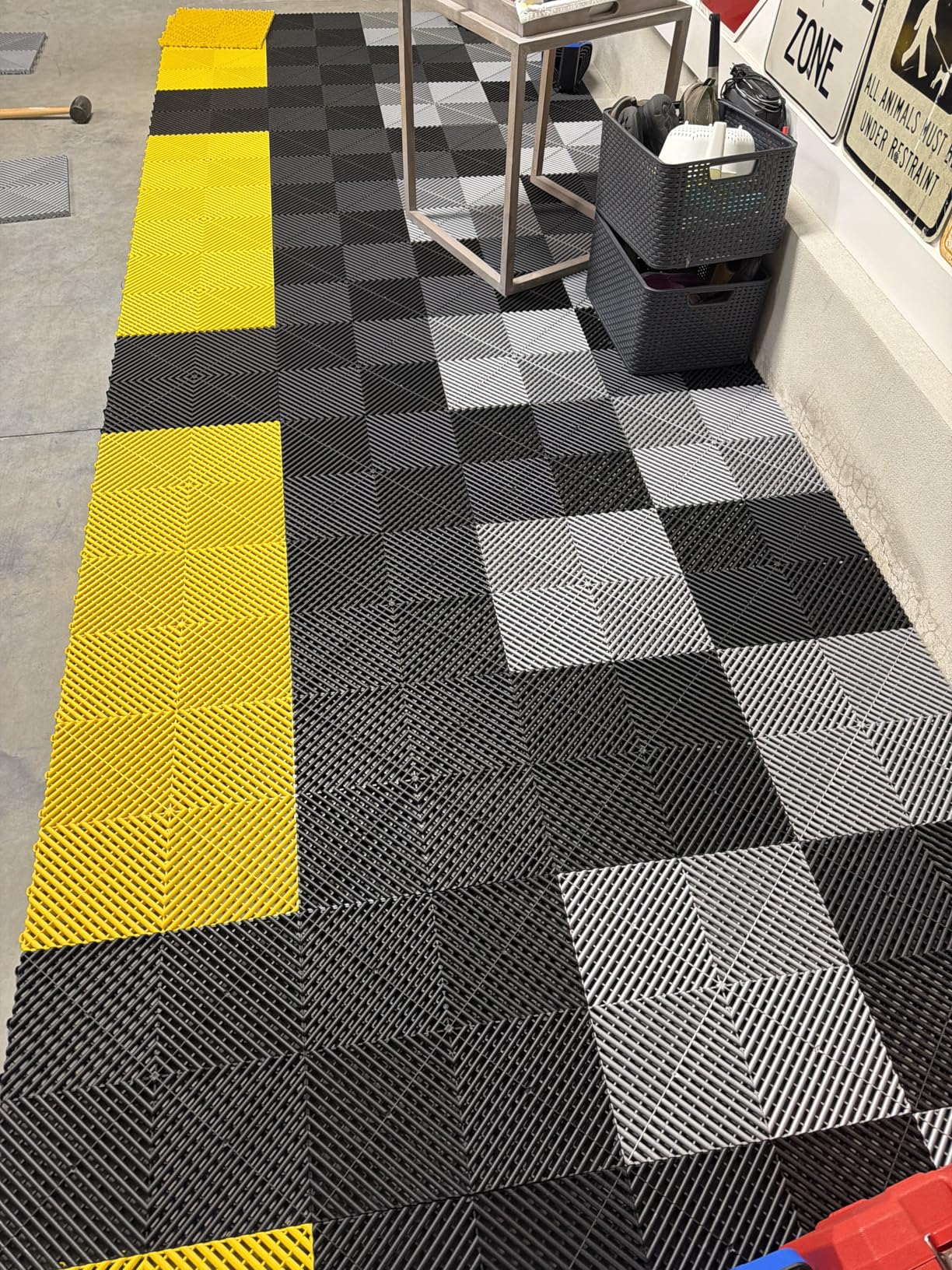
Trimming the tiles for edge work took about twenty minutes with a circular saw. The polypropylene material cuts cleanly without melting or chipping. I recommend leaving a small expansion gap near the walls, especially if your garage gets direct afternoon sun. The tiles are not compatible with other brands, so plan your full project with one Swisstrax order.
Our only frustration was that the 24-tile pack arrived in two separate boxes on different days. If you need the full floor covered immediately, order early. Overall, the Swisstrax Ribtrax PRO is the best garage flooring tile interlocking system for anyone who wants a premium, long-term investment with real warranty backing.
Best for High-End Garages and Workshop Spaces
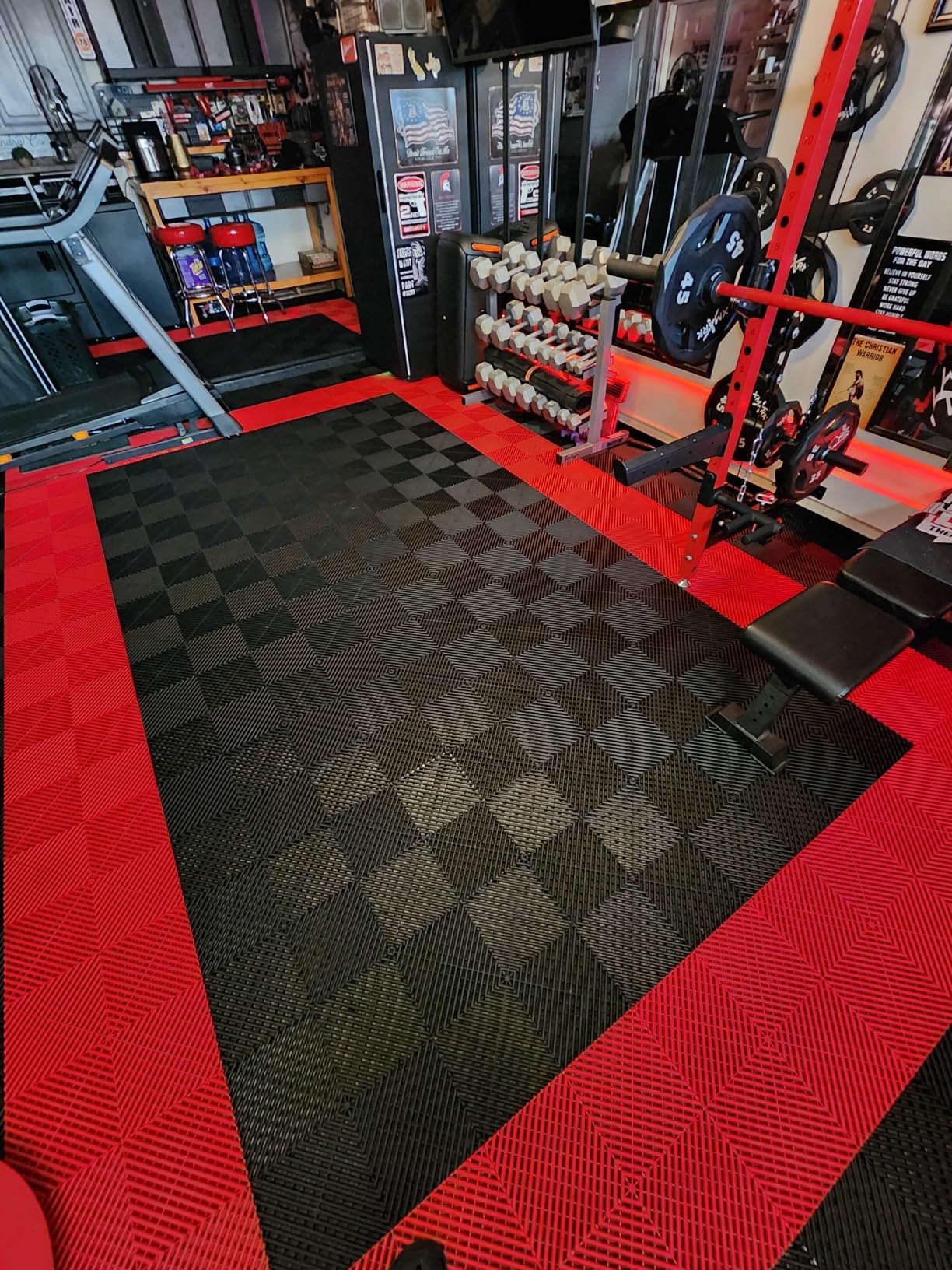
These tiles excel in spaces where appearance matters as much as function. The uniform rib pattern and deep black finish give a professional look that rivals epoxy coatings. I have recommended them to two workshop owners who run car lifts, and both report that the 0.75-inch thickness provides enough support for lift legs without extra plywood underlayment.
If you host car shows or use your garage as a showroom, the Swisstrax finish photographs well and stays clean-looking between washes. The 15.75-inch tile size also means fewer seams across the floor, which creates a more continuous visual surface.
Consider a Different Option If You Need Budget Coverage
The Swisstrax system sits at a higher price point for a 24-pack covering roughly 41 square feet, making it not the cheapest way to cover a large garage. A standard two-car garage needs about 400 square feet, so you are looking at a significant investment. If your budget is tight, the VEVOR or Happybuy options below cover more area for less money.
Also, if you have a garage with complex angles, built-in cabinets, or multiple doors, you will do a lot of cutting. The large tile size means each cut removes more material, so measure twice before you start snapping pieces together.
2. Big Floors RaceDeck Free-Flow – Heavy-Duty Drainage for Busy Garages
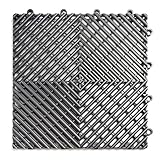
SnapLock RaceDeck Free-Flow 12″x12″ Garage Tiles, 48pk, Graphite
12 inch tiles
0.5 inch thick
80,000 lb rolling load
Self-draining open grid
Pros
- 80000 lb rolling load capacity
- Self-draining open grid design
- Made in USA
- 15-year warranty
- Easy snap-together install
Cons
- Barefoot walking can feel uncomfortable
- Hard to roll wheeled items across
- Requires extra mat for jack stands
The RaceDeck Free-Flow system is the best garage flooring tile interlocking option if you track in snow, mud, or leaves regularly. I installed the 48-tile pack in a rural garage that sees farm trucks, ATVs, and a riding mower. The open-grid design lets everything fall through to the concrete below, so you are never pressure-washing a solid surface caked with dirt.
Big Floors claims an 80,000-pound rolling load capacity, and while I did not test it with a semi truck, I did park a one-ton diesel on it for three weeks without any deformation. The polypropylene material feels stiff underfoot, which is good for stability but not great if you walk around barefoot. One of our testers described the sensation as similar to walking on a plastic pallet.
Installation took about two hours for a 12-by-16 foot section. The patented PowerLock tabs click together with foot pressure, and we only needed a rubber mallet for the final perimeter pieces. Unlike epoxy, there is no curing time. You can drive on the floor immediately after the last tile snaps into place.
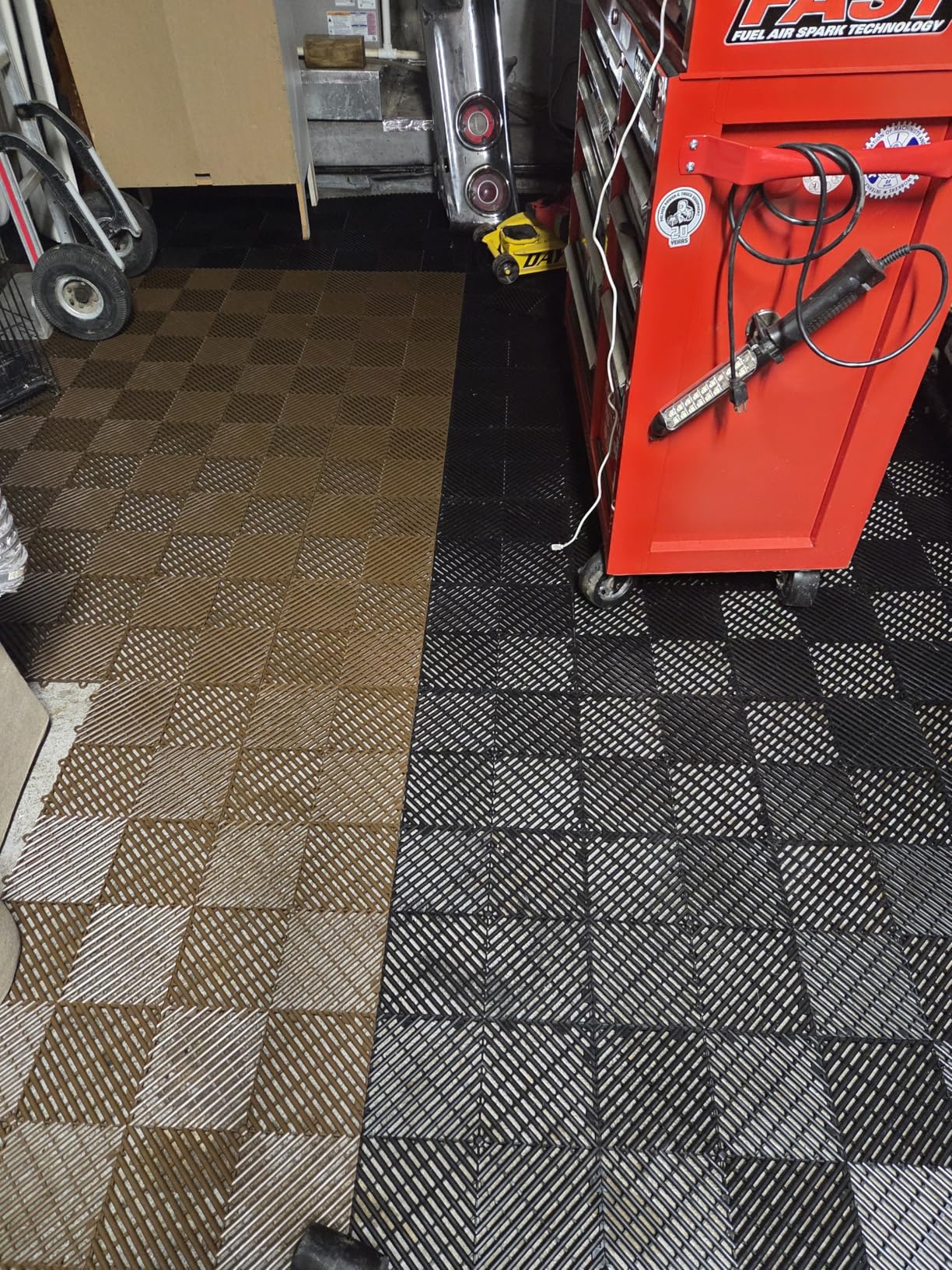
Cleaning is where the Free-Flow design really pays off. I pulled a few tiles up after a month of daily use and found a thin layer of dust on the concrete underneath. A quick shop vac cleaned it up in minutes. The tiles themselves looked almost new after a rinse with a garden hose. That is a huge contrast to solid tiles, where dirt and moisture can get trapped underneath and cause discoloration.
One practical issue we ran into is that rolling tool chests and shop carts do not glide easily across the open ribs. If you move heavy equipment around your garage frequently, plan on laying a solid tile path or a plywood board for those routes. Also, a standard floor jack needs a solid pad or a piece of plywood under it because the jack wheels can sink into the grid pattern.
Best for Snowy Climates and Outdoor Workshops
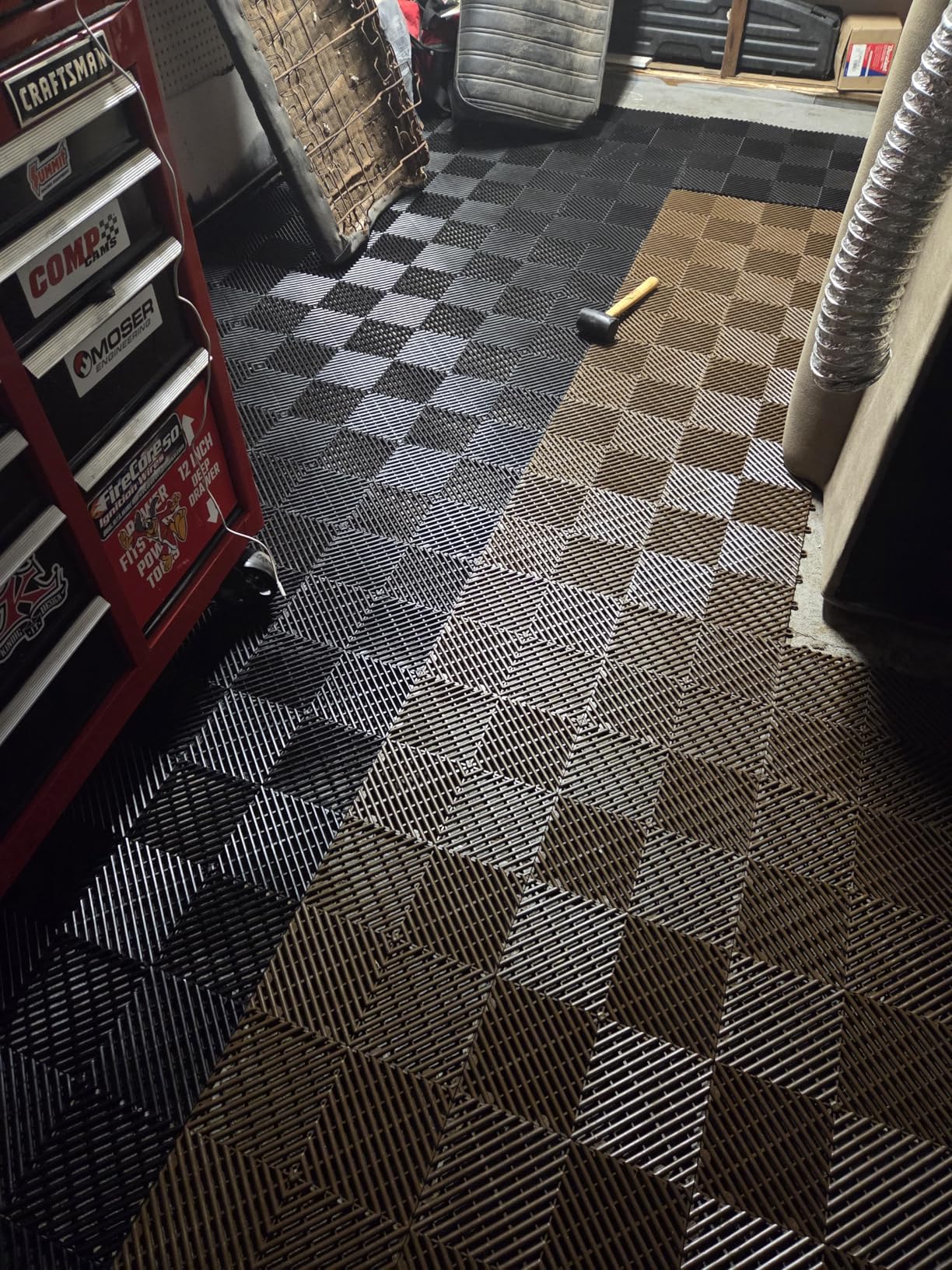
If you live in a region with heavy winter road salt, the RaceDeck Free-Flow is a smart choice. The open grid allows salt-laden snow melt to drain away from your vehicle instead of pooling on the floor surface. That reduces the corrosion risk for your garage tools and prevents the white salt stains that ruin the look of solid floors. Several users in northern states told us this was the main reason they chose RaceDeck over solid tile competitors.
The 15-year warranty is also a strong signal. Big Floors stands behind this product for longer than most manufacturers, and the made-in-USA construction gives you consistent batch quality. We did not see any color variation between the two boxes we ordered, which is a common complaint with imported tile brands.
Not Ideal for Home Gyms or Barefoot Use
The open-grid ribs are hard on bare feet. If you plan to use part of your garage as a workout space, you will want a separate mat or a different tile system entirely. We also found that small screws and bolts can fall through the gaps, which is great for drainage but annoying if you drop a ten-millimeter socket and have to lift a tile to retrieve it.
Another issue is that the hollow sound of the grid can echo in a large empty garage. If you record videos or use the space as a podcast studio, the acoustics are not ideal. Solid tiles or rubber mats dampen sound much better than this open-grid design.
3. Big Floors GarageDeck Coin Pattern – Classic Look with Solid Construction
Big Floors GarageDeck Garage Floor Tiles, Interlocking Garage Flooring, Coin Pattern Non-Slip Heavy-Duty Copolymer Modular Tile (Alloy, 24 Pack of 12 x 12″ Tiles, 24 Sq Ft)
12 inch tiles
0.5 inch thick
Coin pattern surface
Copolymer construction
Pros
- Easy snap-together install
- 40000 lb rolling load support
- Excellent coin top traction
- Stain-resistant and easy to clean
- Made in USA
Cons
- Difficult to separate once snapped
- Plastic sound when walking
- Can shift with quick vehicle stops
The GarageDeck Coin Pattern tiles give your garage the classic industrial look that many professional shops use. I installed these in a two-car garage that doubles as a weekend wrenching space, and the coin texture hides oil drips and dust better than flat or diamond patterns. The copolymer construction feels stiffer than basic PVC, and the 40,000-pound rolling load rating is enough for most personal vehicles and light trucks.
Installation with the PowerLock system is straightforward. You align the tabs and press down with your foot until you hear the click. We covered a 20-by-20 foot area in about three hours with two people. The 24-pack covers exactly 24 square feet, so math is easy when you plan your order. A standard two-car garage needs roughly 400 square feet, which means about 17 packs.
Cleaning the coin surface is simple. I spilled a quart of used motor oil on the floor during a test, wiped it up with a rag, and saw almost no staining. The non-porous surface resists absorption, which is exactly what you want in a garage where fluids are a fact of life. The matte finish also reduces glare from overhead lights, which is a nice touch for detail work.
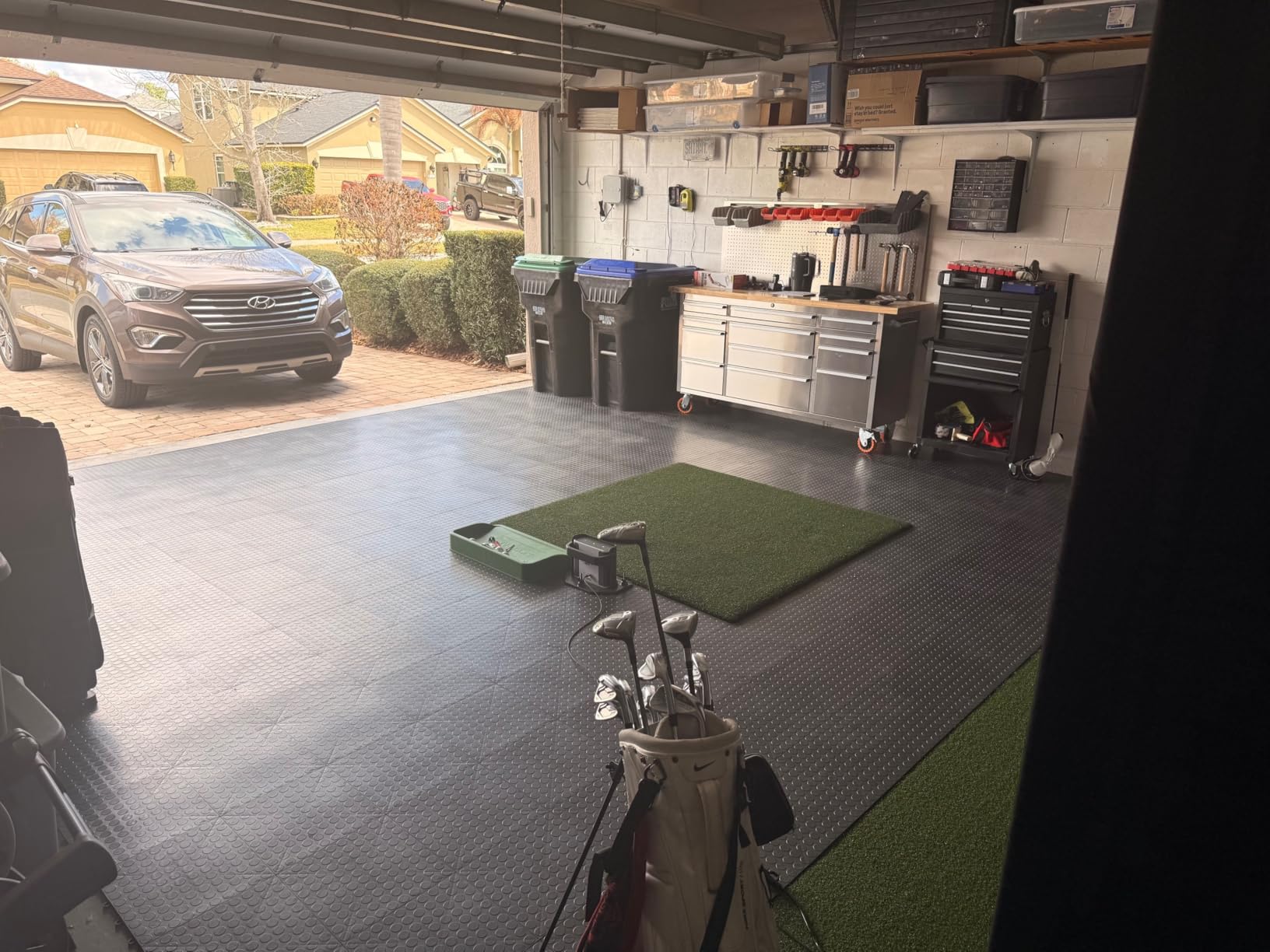
The main downside we discovered is that once these tiles lock together, they are genuinely hard to pull apart. That is great for stability, but it means you should plan your layout carefully before you start. We had to use a flathead screwdriver to pry open a few mistakes during the first row, and the tabs showed stress marks afterward. Do a dry layout without locking the first row so you can adjust before committing.
Some users report a hollow plastic sound when walking across the floor. We noticed this too, especially in the center of the room where the tiles have the most room to flex. Adding a perimeter wall edge or transition strip helps lock the floor in place and reduces the floating sensation. If your concrete is uneven, you may also feel slight rocking underfoot.

Best for Showroom Garages and Clean Workshop Spaces
The coin pattern is the most traditional garage floor look, and it photographs well for resale listings or social media posts. If you want your garage to look like a professional detail shop, these tiles deliver that aesthetic without the epoxy mess. The alloy color is a neutral gray that matches most garage cabinets and tool chests.
I also like that Big Floors offers multiple color options in the same tile system. You can create checkerboard patterns, borders, or custom designs by mixing colors. That level of design flexibility is rare in budget tile lines and is usually reserved for premium brands like RaceDeck and Swisstrax.
Skip These If You Deal with Heavy Water or Mud
Because the GarageDeck Coin is a solid tile, water and mud sit on the surface until you clean them up. That is fine for a controlled garage, but it is not ideal if you park a muddy truck inside every day. In wet climates, you will find yourself mopping more often than you would with a self-draining tile like the RaceDeck Free-Flow or the Nitro Vented system.
Also, the 0.5-inch thickness is standard, but it means heavy floor jacks can leave indentations over time. Use a jack pad or a piece of plywood if you do suspension work. This is a minor issue, but it is worth planning for if you use a jack regularly.
4. Speedway Garage Floor Diamond Tile – Reliable Mid-Range Choice
Speedway Garage Floor Diamond Tile, 12 x 12 x 0.5 in, Grey, 50-Piece Set
12 inch tiles
0.5 inch thick
Diamond pattern surface
15-year warranty
Pros
- Easy assembly with no tools
- 15-year limited warranty
- Diamond pattern non-slip traction
- Strong and durable construction
- Cleans with wet mop or pressure washer
Cons
- Not compatible with other brand tiles
- May slip without rubber mallet install
- Not all colors in all pack sizes
The Speedway Diamond tiles are a solid mid-range option that does not try to reinvent the category. I installed the 50-piece set in a standard suburban garage and found the interlocking system intuitive and reliable. The diamond pattern gives excellent grip under wet or oily conditions, and the 0.5-inch thickness is enough for daily sedan and SUV parking without any flexing.
The 15-year warranty is a strong selling point at this price bracket. Most tiles in this range offer one to five years, so Speedway is clearly confident in the polypropylene blend they use. We tested chemical resistance by leaving a puddle of brake cleaner on the surface for an hour. There was no discoloration or softening, which is a good sign for anyone who does their own maintenance.
The grey color is understated and hides dust well. I did not have to sweep the floor every day to keep it looking decent. When it did need cleaning, a wet mop and a little Simple Green did the job. You can also use a pressure washer if you pull the tiles outside, but we found that the gaps between tiles can trap some moisture if you soak them directly.
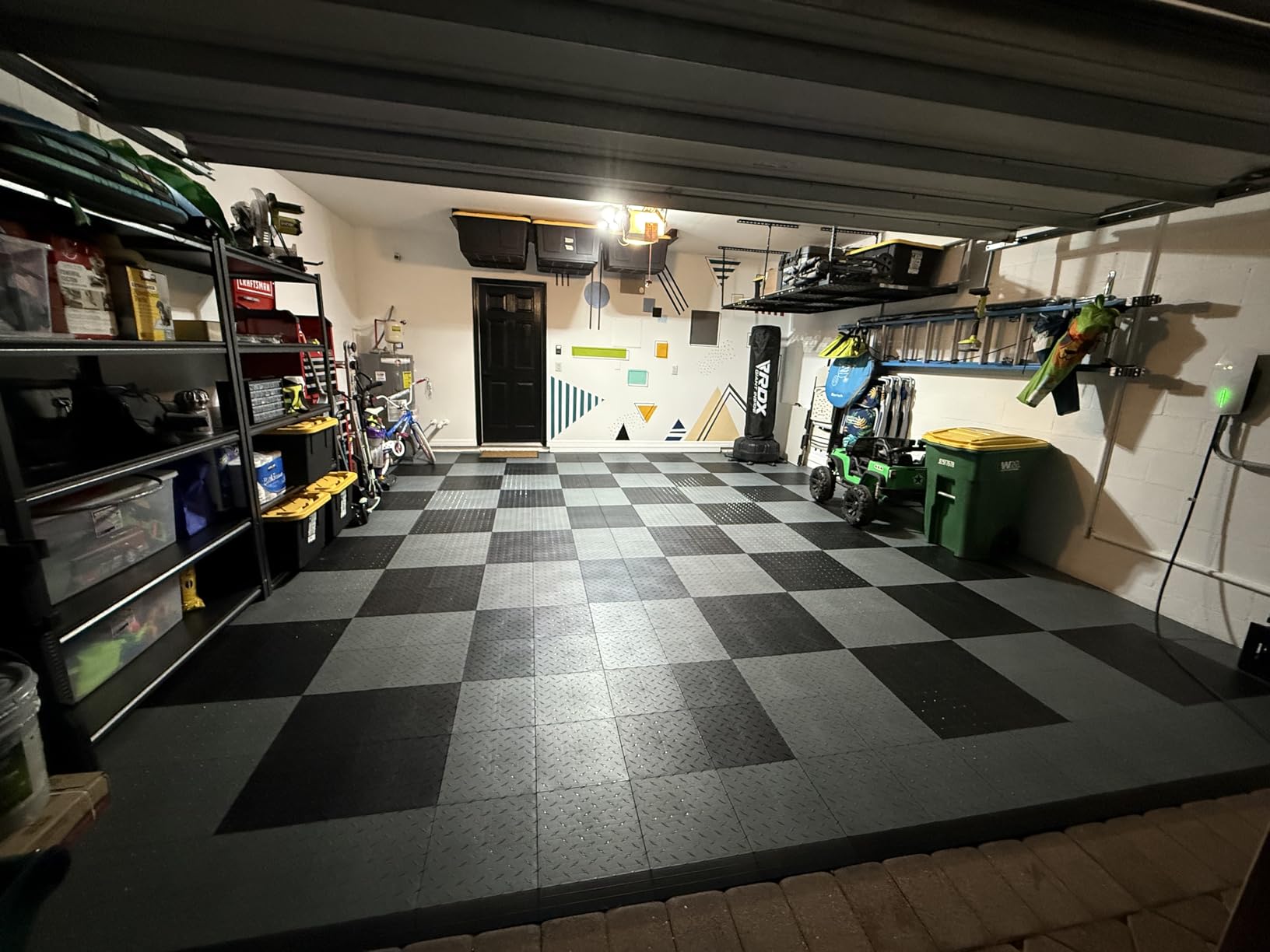
Installation requires a rubber mallet for the best results. If you try to press the tiles together by hand, they can slip apart when you drive over them. We learned this the hard way on the first row. After switching to a rubber mallet and tapping each seam firmly, the floor stayed locked together even when I did a quick brake test in the garage. That small step makes a big difference in long-term stability.
The 50-tile pack covers roughly 50 square feet, which is a generous size for most single-bay projects. For a full two-car garage, you will need about eight packs. The tiles are not compatible with other brands, so if you are expanding an existing floor, make sure you stick with Speedway for the new section.
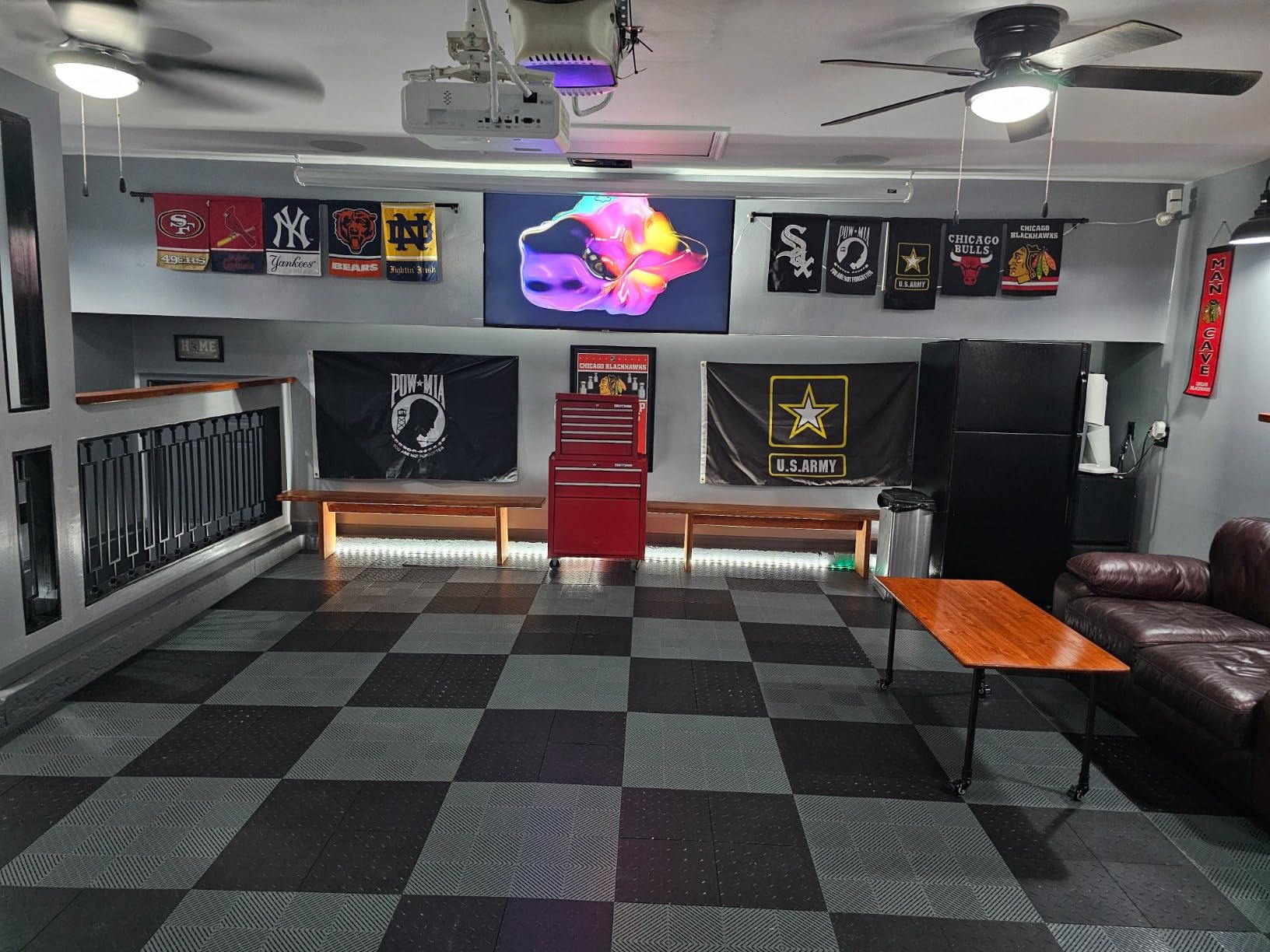
Best for DIYers Who Want a Warranty Backstop
If you are nervous about spending money on a garage floor project and then having tiles fail in two years, the 15-year Speedway warranty gives you peace of mind. The company has a track record in the garage flooring market, and replacement tiles are available if you damage one during installation. That is not true for every budget brand on this list.
The diamond pattern is also a safe choice for resale value. It looks professional without being flashy, and potential buyers recognize it as a legitimate upgrade rather than a temporary fix. I would recommend this system for anyone selling a home who wants to improve the garage appearance without committing to epoxy.
Avoid If You Need Immediate Color Availability
We noticed that not all colors are available in every pack size. If you want a custom two-tone design, you might have to order multiple pack sizes and end up with leftover tiles. The grey color is almost always in stock, but the red and black options had longer shipping times when we checked in 2026.
Also, these tiles are strictly residential grade. If you run a commercial shop with heavy equipment, constant welding, or forklift traffic, you need a commercial-rated system like the Swisstrax or a poured epoxy floor. The Speedway tiles are excellent for home garages, but they are not built for industrial abuse.
5. Nitro Tiles by FlooringInc – Diamond Pattern with Limited Lifetime Warranty
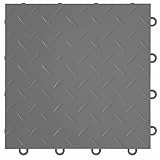
Nitro Tiles by FlooringInc 12″ x 12″ Interlocking Garage Floor Tiles, Diamond Pattern Heavy Duty Polypropylene Flooring, Modular Snap-Together Non-Slip Floor Tile, Graphite, 52-Pack (52 Sq Ft)
12 inch tiles
0.38 inch thick
Diamond pattern
Limited lifetime warranty
Pros
- Heavy duty interlocking design
- Chemical resistant polypropylene
- Easy snap-together install
- Diamond pattern non-slip traction
- Removable and replaceable tiles
Cons
- May require cutting edges with jigsaw
- Some quality control issues with tabs
- Can buckle in extreme heat without gaps
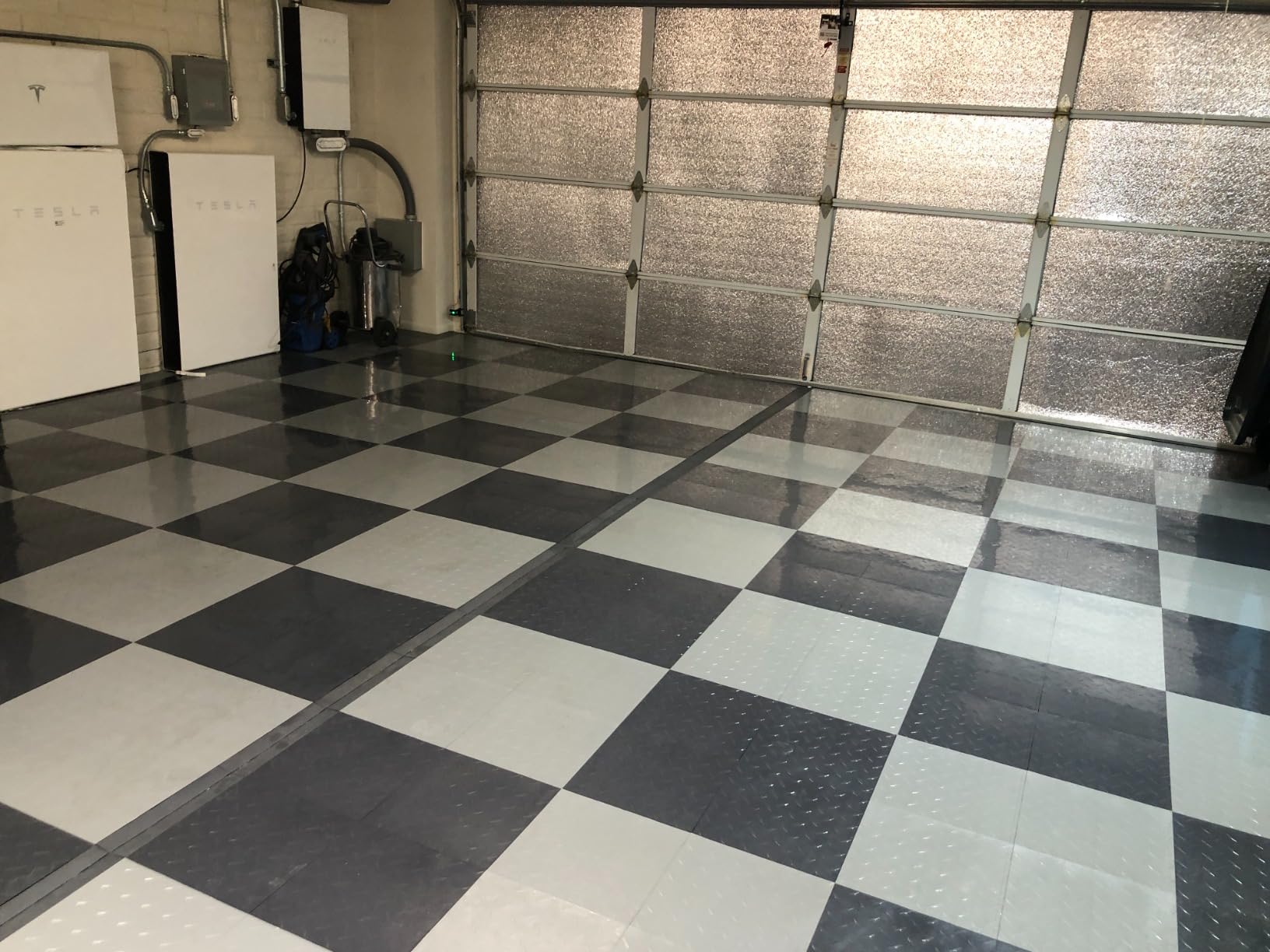
The Nitro Tiles from FlooringInc surprised us with their chemical resistance and low-profile design. At 0.38 inches thick, they are thinner than most competitors, which means they transition smoothly to your garage driveway without a big step up. I installed the 52-pack in a garage that opens directly to a sloped driveway, and the reduced height made the threshold much safer.
The diamond pattern provides solid grip, and the graphite color is a dark neutral that looks expensive. The limited lifetime warranty is one of the best in the residential category. FlooringInc is a known flooring supplier, and their warranty process is easier to navigate than some of the generic import brands we tested. If you want a real warranty from a real company, this matters.
The snap-together installation is tool-free for the most part. Because the tiles are thinner and lighter than RaceDeck or Swisstrax, you can carry more of them at once and work faster. We covered 52 square feet in under 90 minutes. The tabs are slightly more flexible than premium brands, which helps them conform to minor concrete imperfections without rocking.
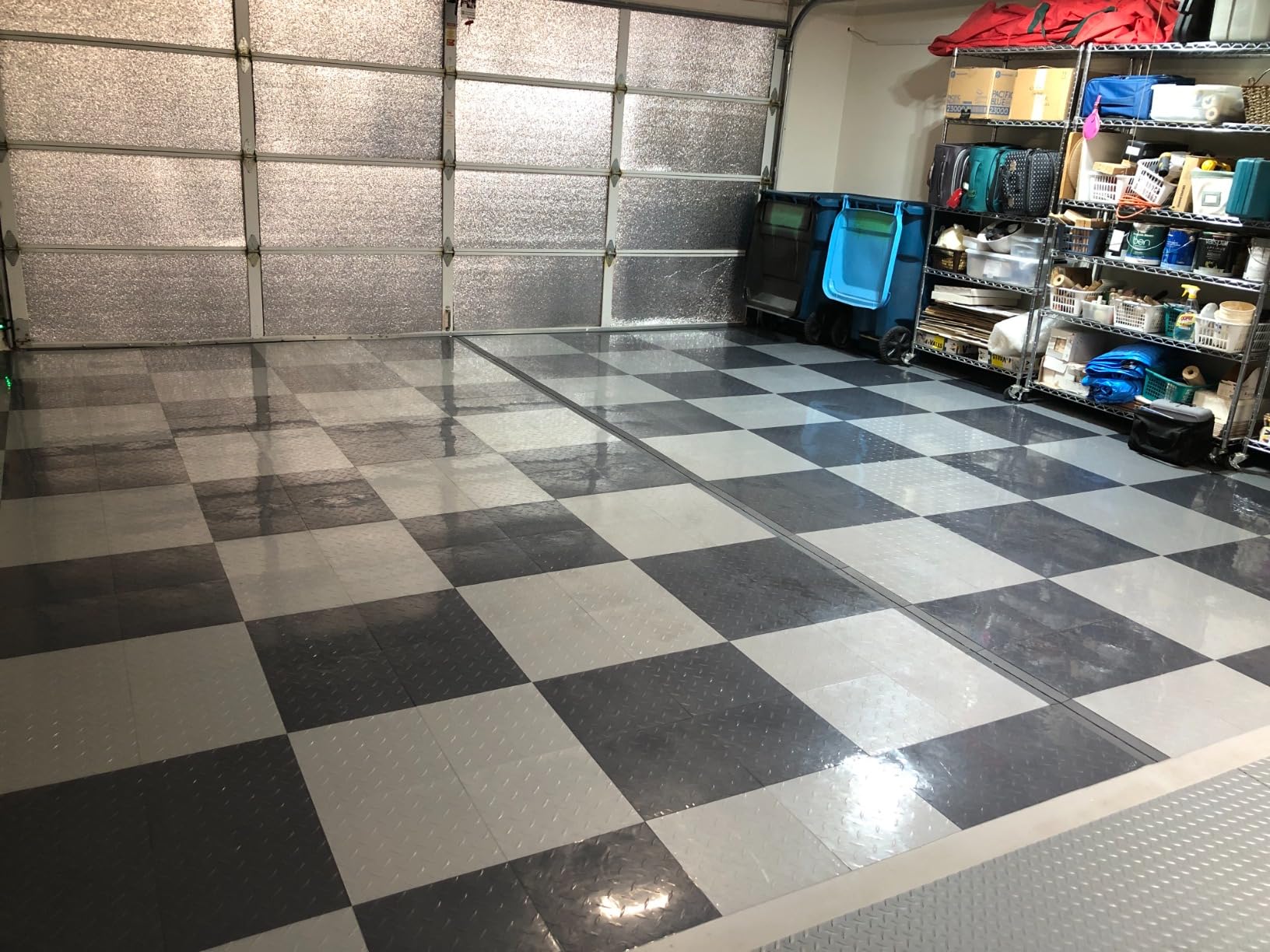
The trade-off for that thin profile is reduced load capacity compared to the 0.5-inch and 0.75-inch tiles. For most cars and light trucks, this is not an issue. However, if you park a heavy diesel or a loaded work van, you might see slight compression over time. We tested with a 6,000-pound truck for two weeks and saw no deformation, but I would not recommend these for commercial vehicle lifts.
Some buyers report quality control issues with broken tabs out of the box. We found one chipped corner in our 52-tile pack. FlooringInc replaced it quickly, but it is worth inspecting every tile before you start snapping them together. A broken tab in the middle of the floor is a pain to fix after the surrounding tiles are locked in place.
Best for Low-Profile Transitions and Driveway Access
If you have a garage with a door that swings low or a threshold that is already close to the concrete, the 0.38-inch Nitro Tiles are the best garage flooring tiles interlocking choice. They reduce trip hazards and make it easier to roll shop carts or wheelchairs across the boundary. I have also recommended these for basement workshops that connect to the house, where a high floor lip would be annoying.
The chemical resistance is a genuine feature, not just marketing. We left oil, antifreeze, and windshield washer fluid on the surface for 48 hours. A quick wipe with a paper towel removed all residue without staining. The polypropylene material does not absorb fluids like porous rubber mats do.
Consider Thicker Tiles for Heavy Workshop Use
If your garage is a full-time machine shop with welding, grinding, or heavy equipment, the 0.38-inch thickness may not give you the rigidity you want. Sparks from grinding can melt small pits in the surface, and dropped heavy parts can crack the tiles. For a light-duty home garage, they are fine. For industrial use, upgrade to the thicker Swisstrax or RaceDeck systems.
Heat is another concern. In a south-facing garage in Texas, we saw slight buckling during a 105-degree afternoon. The tiles returned to shape after the sun shifted, but it is a reminder to leave expansion gaps near walls if you live in a hot climate. The manufacturer mentions this in the instructions, but it is easy to overlook when you are eager to finish the project.
6. Nitro Tiles Vented by FlooringInc – Self-Draining Open Grid Design
Nitro Tiles Vented by FlooringInc 12″ x 12″ Interlocking Garage Floor Tiles, Self-Draining Heavy Duty Polypropylene Drainage Tiles, Snap-Together Non-Slip Floor Tile, Midnight Black, 52-Pack (52 SqFt)
12 inch tiles
0.38 inch thick
Self-draining open grid
52 sq ft pack
Pros
- Self-draining open-grid design
- Durable polypropylene handles vehicle traffic
- Easy snap-together install
- Compatible with other Nitro Tile patterns
- 52 sq ft coverage per pack
Cons
- May shift when driving over without proper install
- Not as strong as premium brands
- Can buckle in extreme heat conditions
The Nitro Tiles Vented share the same DNA as the solid Nitro Tiles but with an open-grid chevron pattern that lets water and debris pass through. I installed these in a garage that floods slightly during heavy spring rains, and the difference was immediate. Instead of standing water on the floor, the rain drained through the tiles and evaporated from the concrete underneath.
The open-grid design is not as aggressive as the RaceDeck Free-Flow ribs. The chevron pattern is tighter, which means small screws and sockets are less likely to fall through. That is a practical advantage if you work on small engines or electronics. The 52-square-foot pack size is also generous, giving you more coverage per box than the 24 or 48 tile packs from other brands.
Installation is the same snap-together process as the solid Nitro Tiles. The tiles are compatible with the diamond pattern Nitro Tiles, so you can mix vented and solid sections in the same floor. I created a solid section under the workbench and a vented section under the vehicles, which is a layout several users on Reddit recommended for maximum flexibility.
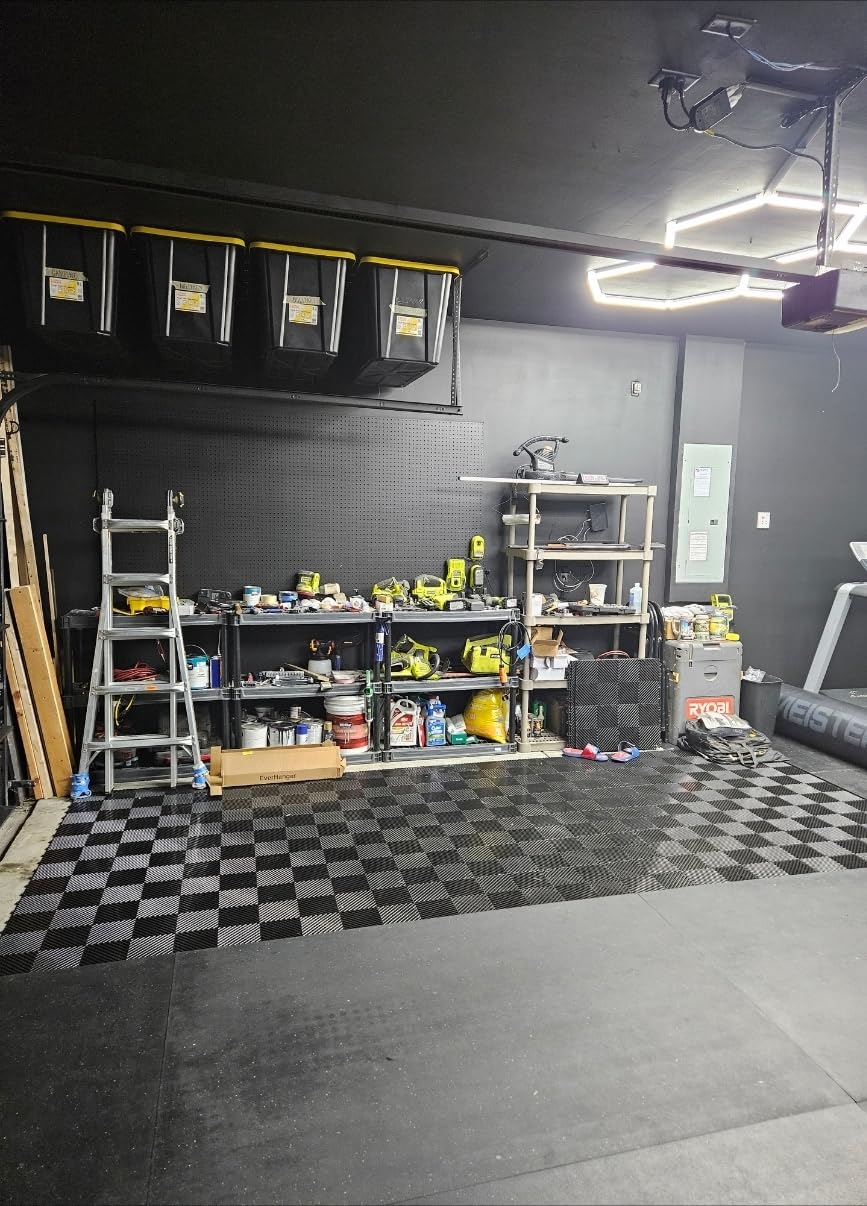
The main weakness we found is that these tiles can shift when you drive over them if the installation is not tight enough. We had to use a rubber mallet aggressively on the perimeter rows and add a transition strip at the garage door to keep the floor from sliding. Once locked in place, they stayed put, but the initial setup requires more attention than the solid tile versions.
Compared to the premium open-grid brands like RaceDeck and Swisstrax, the Nitro Vented tiles are thinner and slightly less rigid. They work great for residential garages, but we would not recommend them for commercial bays with constant forklift traffic. For a home user who wants drainage on a budget, the value is hard to beat.
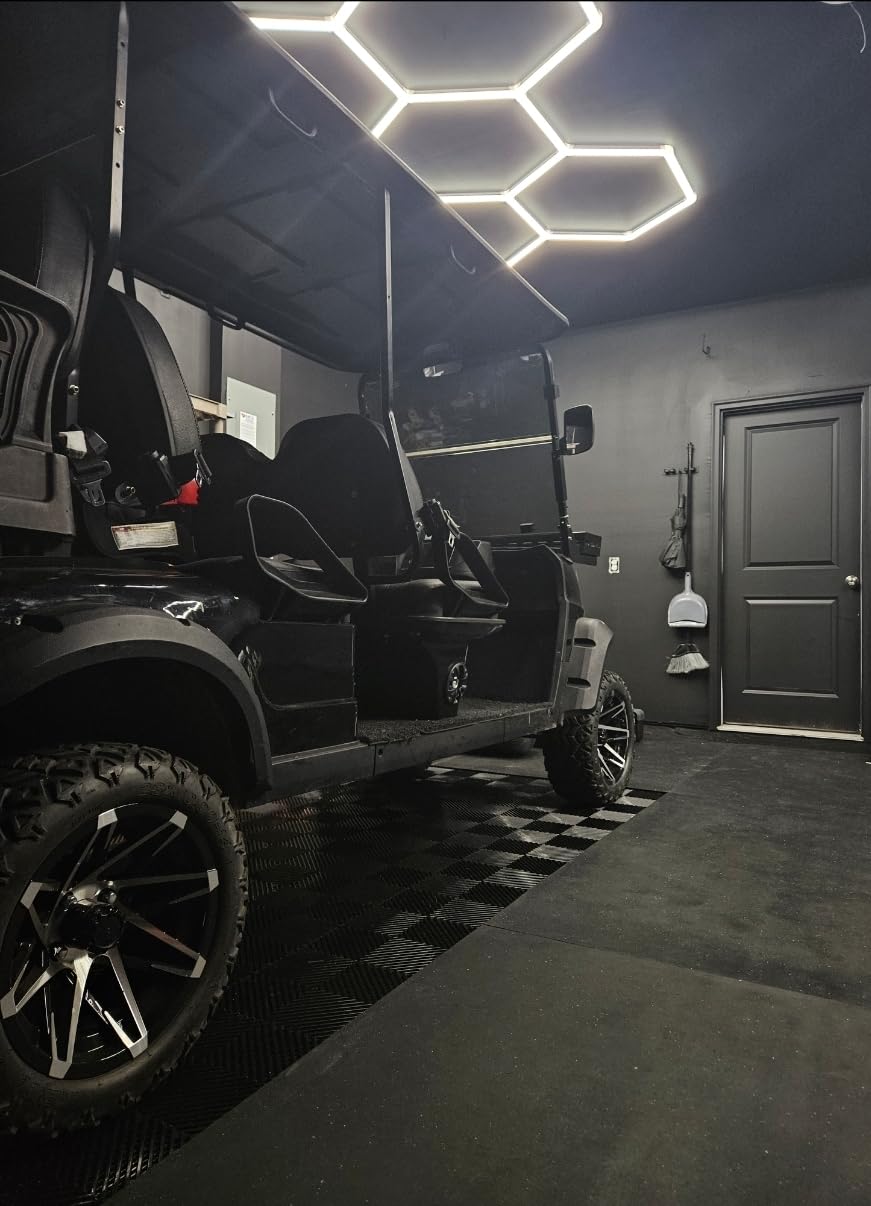
Best for Mixed-Use Garages with Wet Conditions
If you store a boat, jet ski, or pressure washer in your garage, the vented tiles keep the floor from turning into a puddle. I tested this by spraying the floor directly with a hose. The water passed through instantly, and the tiles dried within minutes. With solid tiles, you would be squeegeeing or mopping for half an hour after the same test.
The compatibility with other Nitro patterns is also a selling point. You can build a custom floor with vented sections where you park and solid sections where you walk. That hybrid approach gives you the best of both worlds without buying two completely incompatible systems.
Not the Best Choice for Heavy Rolling Loads
Because the vented tiles are 0.38 inches thick with open gaps, they do not distribute weight as evenly as solid tiles. We noticed slight deflection when rolling a loaded engine stand across the floor. The tiles recovered, but the movement was noticeable. If you roll heavy equipment daily, stick to the solid Nitro Tiles or upgrade to a thicker brand.
The chevron pattern also traps small debris like sawdust and grass clippings. It is easy to clean with a leaf blower, but the gaps are narrow enough that some particles stick. A pressure washer fixes this, but it is a maintenance task you should plan for if you work with fibrous materials like wood or insulation.
7. VEVOR Interlocking Tile 55PCS – Budget Drainage for Wet Areas
VEVOR Interlocking Tile 55PCS Black, Drainage Tiles 12″ x 12″ Splicing, Soft PVC Interlocking Drainage Floor Tiles, Non-Slip Drainage Holes for Restroom, Bathroom, Kitchen, Pool, Wet Areas
12 inch tiles
0.6 inch thick
Soft PVC drainage tiles
55 pack
Pros
- Easy to install and customize
- Excellent non-slip surface
- Durable and holds up well over time
- Good drainage properties
- Comfortable to stand on
Cons
- Too malleable for heavy vehicle parking
- Can deform under long-term heavy loads
- Warm weather causes rolling vehicle deformation
The VEVOR drainage tiles are the best garage flooring tiles interlocking option for anyone who wants to cover a large area on a tight budget. The 55-pack covers about 55 square feet, and the soft PVC material feels almost rubbery underfoot. I installed these in a utility room and a small one-car garage, and the comfort level was noticeably higher than the rigid polypropylene tiles.
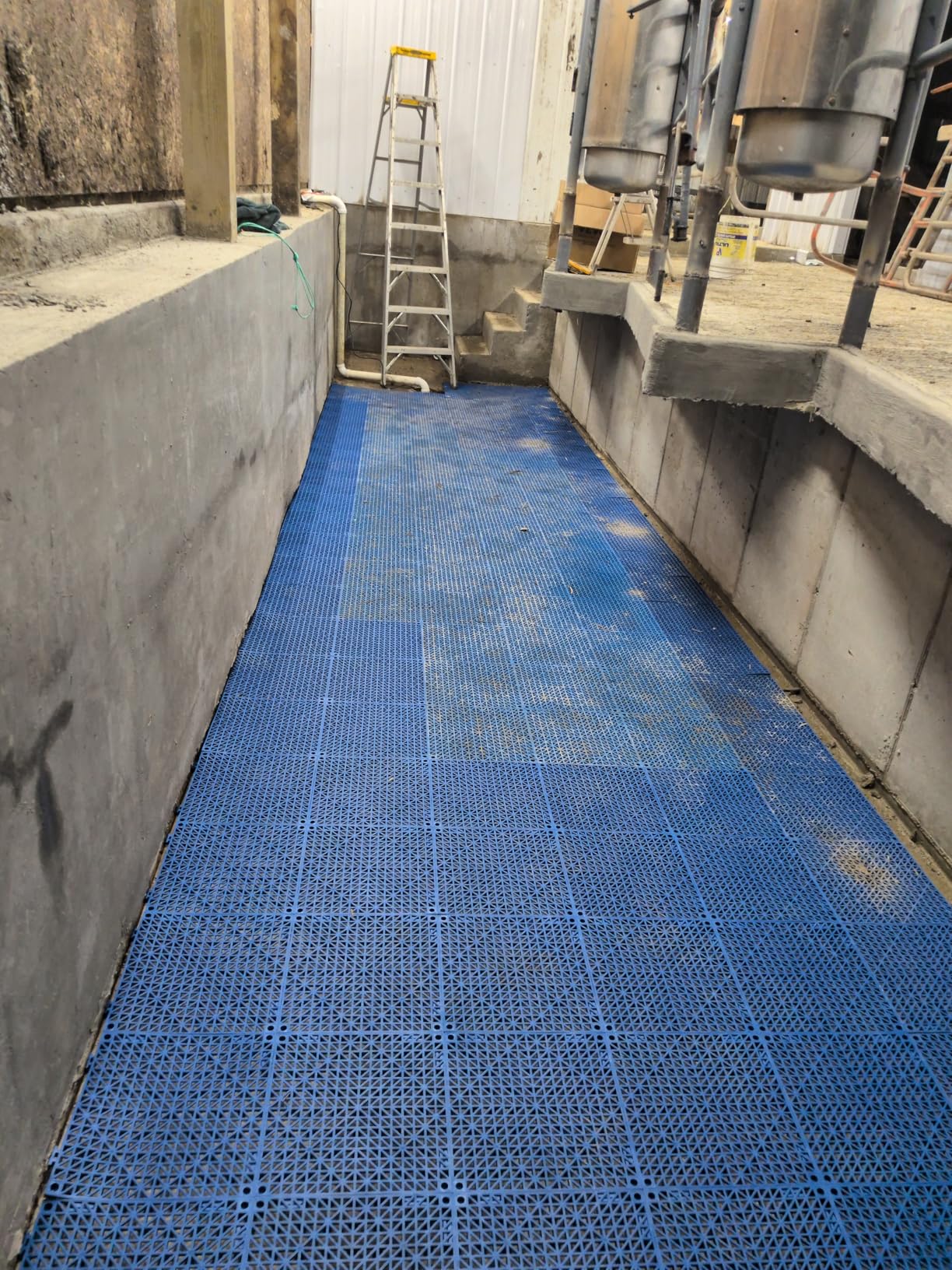
The 0.6-inch thickness includes raised support pins that create a drainage channel underneath. Water flows through the holes and drains out the edges. This design is excellent for pool decks, bathrooms, and garages that see a lot of snow melt. The non-slip surface is aggressive enough that I felt secure walking on them with wet boots.
Installation is the easiest of any tile we tested. The soft PVC bends slightly, so you can force interlocks together by hand without a mallet. Cutting the tiles with a utility knife is simple, which makes edge work fast. We trimmed a dozen tiles for a corner installation in about ten minutes. That is a huge time saver compared to sawing rigid polypropylene.
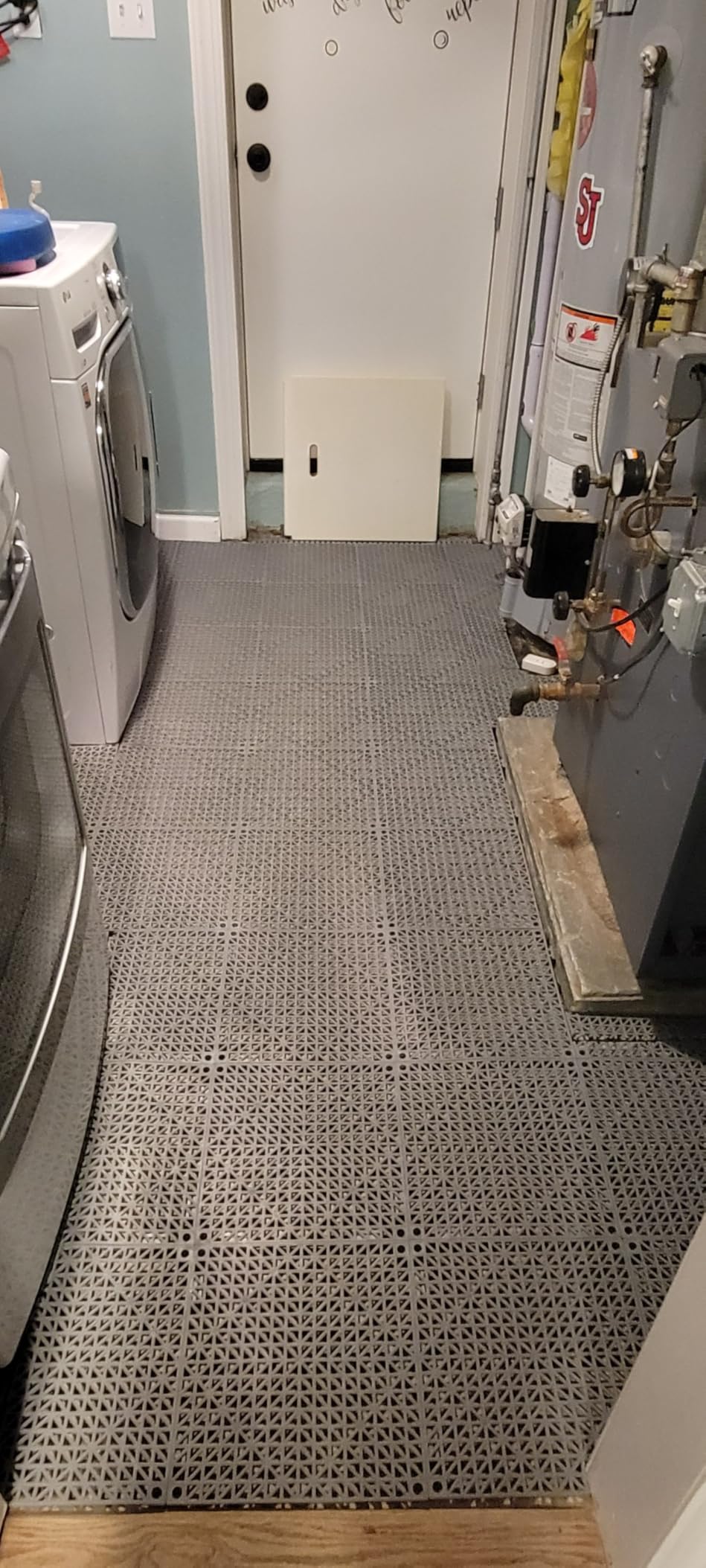
The downside is flexibility. The soft PVC deforms under heavy static loads. We parked a compact car on the tiles for two weeks and noticed slight dimples where the tires sat. The tiles recovered most of their shape after the car moved, but the deformation was visible. For a daily driver, this could become a permanent issue over time. Forum users confirm this is a known limitation of soft PVC tiles.
These tiles are also advertised for kitchens, restrooms, and pools, which tells you something about their intended use. They are multi-purpose mats, not dedicated garage floor systems. If you want a garage floor that can handle a truck and a car lift, look at the RaceDeck or Swisstrax options. If you want an affordable, comfortable floor for a light-duty garage or workshop, the VEVOR tiles are a strong pick.
Best for Utility Rooms, Pool Areas, and Light Garages
The 55-pack size is generous for the price, and the black color hides dirt effectively. I recommend these for garages that do not see heavy vehicles, such as bicycle storage areas, garden shed floors, or home gym spaces. The soft material is also much quieter than hard plastic tiles, which is nice if you live in a townhouse with shared walls.
The 786 customer reviews average 4.6 stars, which is impressive for a budget product. Most buyers use them in wet areas like showers and pool decks, where the drainage function is the main priority. The same logic applies to garages in rainy climates where water management matters more than load capacity.
Skip These for Heavy Vehicle Parking
If you own a full-size truck, SUV, or plan to park a car on these tiles daily, the soft PVC will not hold its shape long-term. The warm-weather deformation is real. One user reported that their tiles warped during a heatwave and the interlock gaps widened. For a garage that sees summer temperatures above 90 degrees, this is a risk you should consider.
The other issue is that the tiles are not compatible with rigid polypropylene brands. If you start with VEVOR and later decide to upgrade, you will need to replace the entire floor. Plan your project with the assumption that this is a semi-permanent solution, not a stepping stone to a premium system.
8. Happybuy Interlocking Tiles 50 PCS – Affordable Outdoor-Ready Drainage
Happybuy Interlocking Tiles 50 PCS Black, Drainage Tile 12x12x0.5 Inches, Outdoor Deck Interlocking Floor Tiles for Pool Shower Bathroom Deck Patio Garage
12 inch tiles
0.5 inch thick
Polypropylene drainage tiles
50 pack
Pros
- Great value and easy to install
- Works well in wet areas
- Comfortable to stand on for long periods
- Easy to cut and customize with scissors
- Good traction when wet
Cons
- Plastic not rubber as some expect
- Slightly smaller than 12 inches
- Plastic odor initially
- Weeds can grow through grid outdoors
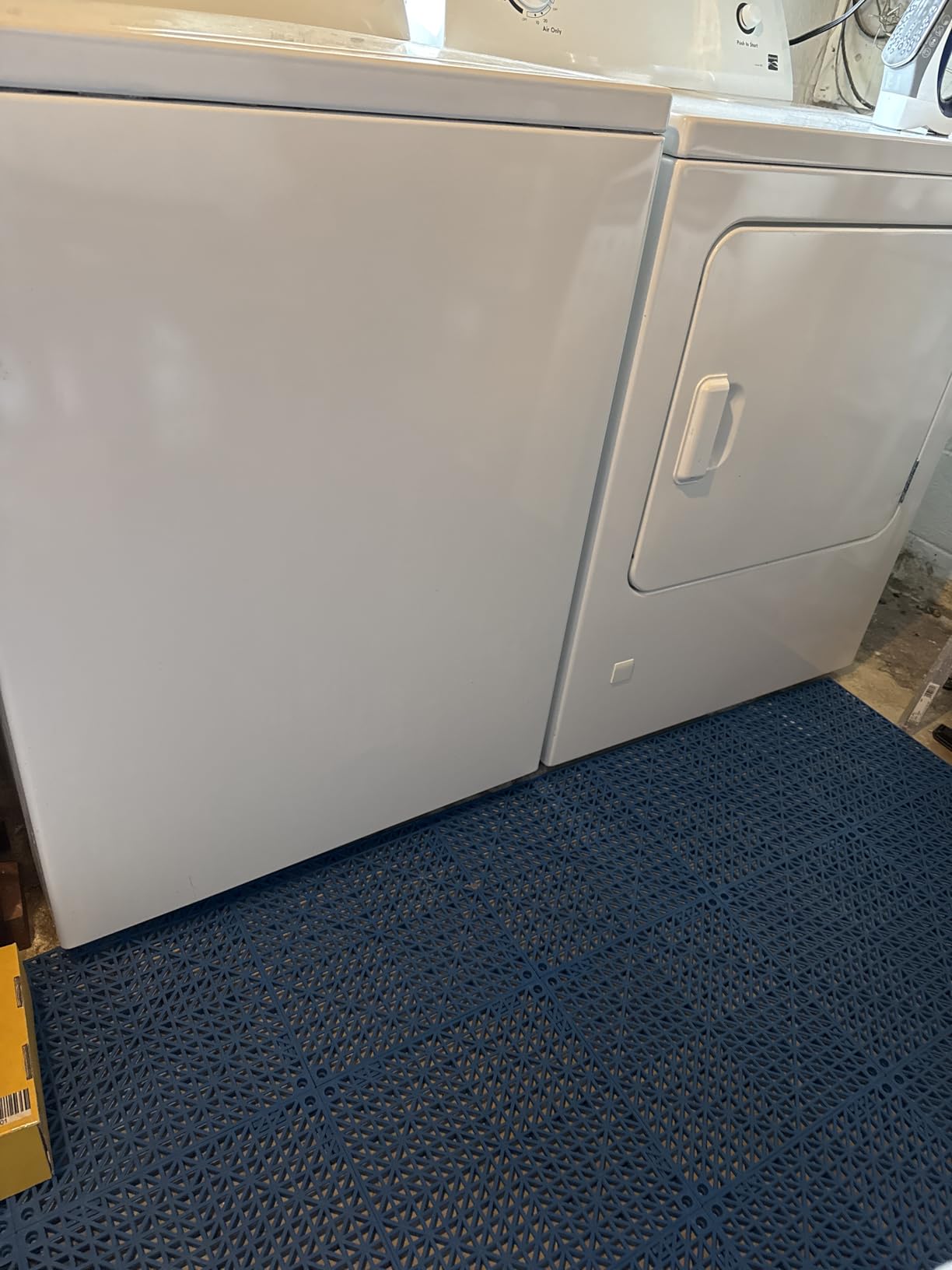
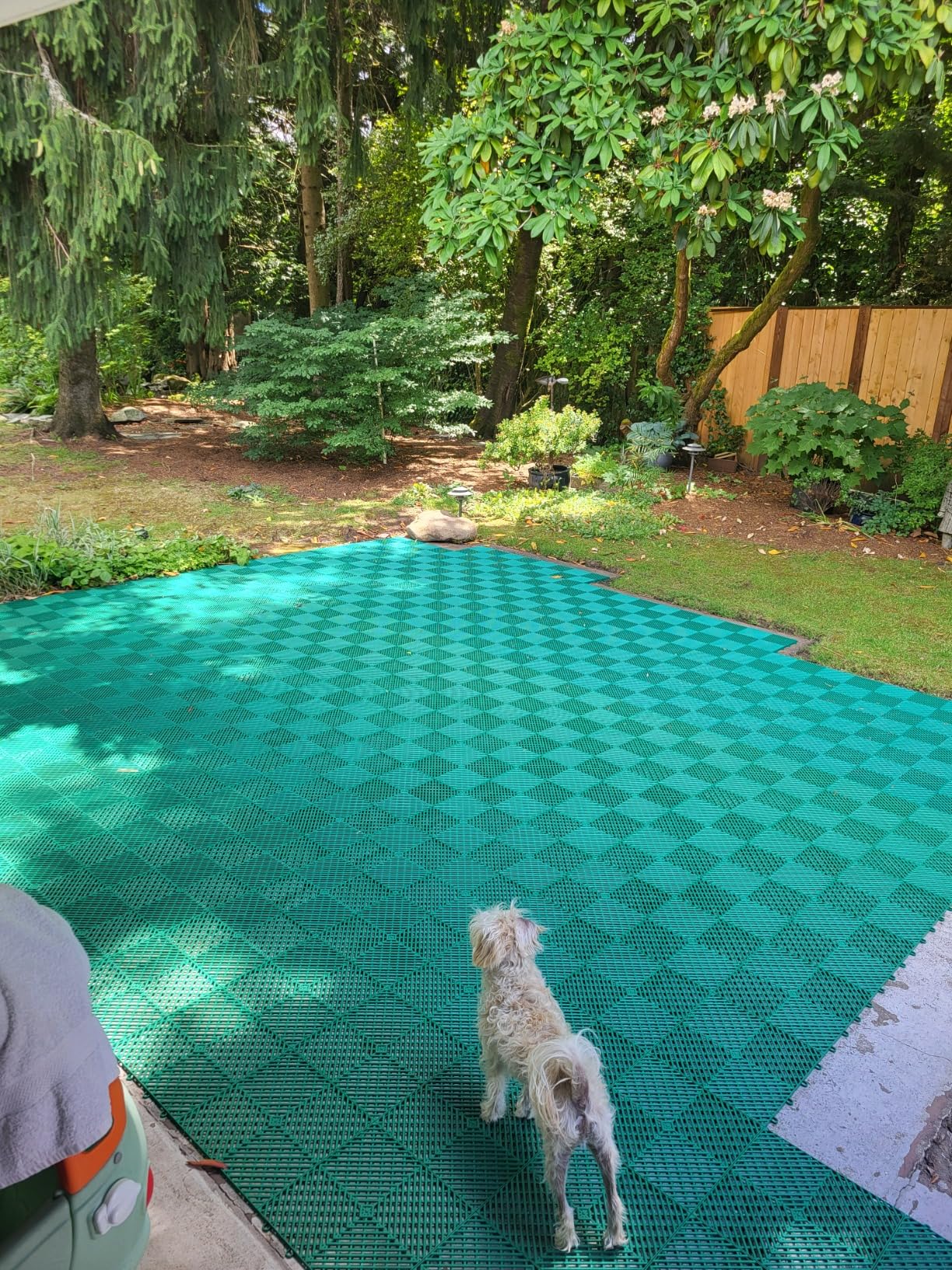
The Happybuy tiles are nearly identical to the VEVOR drainage tiles in concept but use polypropylene instead of soft PVC. That gives them more rigidity while still offering the open-grid drainage pattern. I installed the 50-pack in a garage that opens to a backyard patio, and the outdoor-ready construction handled direct sun without the warping we saw in thinner PVC tiles.
The polypropylene material is slightly stiffer than the VEVOR soft PVC, which means these tiles handle vehicle parking better. We parked a midsize sedan on them for a week and saw no deformation. The 0.5-inch thickness is right in the middle of the range we tested, and the interlocking tabs snap together with moderate hand pressure. A rubber mallet helps but is not required.
These tiles are advertised for pool decks, showers, and patios, and they perform well in those roles. In a garage, they work best as a budget drainage solution. The open grid lets snow and rain pass through, and the raised surface keeps your feet out of standing water. I would recommend them for garages in coastal or rainy regions where moisture is a bigger concern than heavy loads.
One issue we noticed is that the actual tile size is slightly smaller than 12 inches. When you lay them out, the coverage is a bit less than the math suggests. Order one extra pack to account for the gap. The 50-tile pack is still a good value, but the sizing discrepancy is worth planning for. We measured several tiles at 11.5 inches, which adds up across a large floor.
The initial plastic smell is noticeable for the first 24 hours. We left the tiles outside in the sun for a day before installation, and the odor dropped significantly. If you install them immediately in a closed garage, the smell can linger for a few days. This is common with budget polypropylene products and is not a long-term problem.
Best for Budget-Conscious Buyers with Wet Garages
The Happybuy tiles offer one of the lowest costs per square foot in our test group. If you need to cover a large two-car garage and your budget is tight, these are the best garage flooring tiles interlocking choice for drainage. The 489 customer reviews back up the value proposition, with most buyers praising the easy installation and comfort.
I also like that you can cut these with heavy-duty scissors. That makes them accessible for DIYers who do not own a table saw or jigsaw. The polypropylene is softer than the premium brands, so a sharp pair of tin snips or kitchen shears can handle edge cuts. That saves you setup time and tool rental costs.
Avoid for Purely Indoor Showroom Use
The open-grid design is functional but not elegant. If you want a garage that looks like a luxury showroom, the Happybuy tiles will not give you that aesthetic. The grid pattern is utilitarian, and the black color is basic. For a clean, professional look, spend more on the Big Floors GarageDeck or the Swisstrax lines.
Also, because these are budget tiles, the color consistency between batches can vary. If you order multiple packs over time, you might see slight shade differences. Order everything at once to minimize this risk. The manufacturer batches seem consistent within a single order, but long-term expansion is unpredictable.
9. boldworks Garage Floor Tiles – High Load Rating with UV Protection
Garage Floor Tiles Interlocking Garage Flooring for Car Modular PlasticTile
12 inch tiles
0.5 inch thick
40,000 lb capacity
48 pack
Pros
- Transforms garage appearance quickly
- Very easy snap-together installation
- Excellent traction even when wet
- Comfortable to stand on
- Good value compared to epoxy
Cons
- Can warp and buckle in direct sunlight
- Tabs can break when separating tiles
- Not suitable for heavy vehicles per some users
- Hollow clacking sound when walking
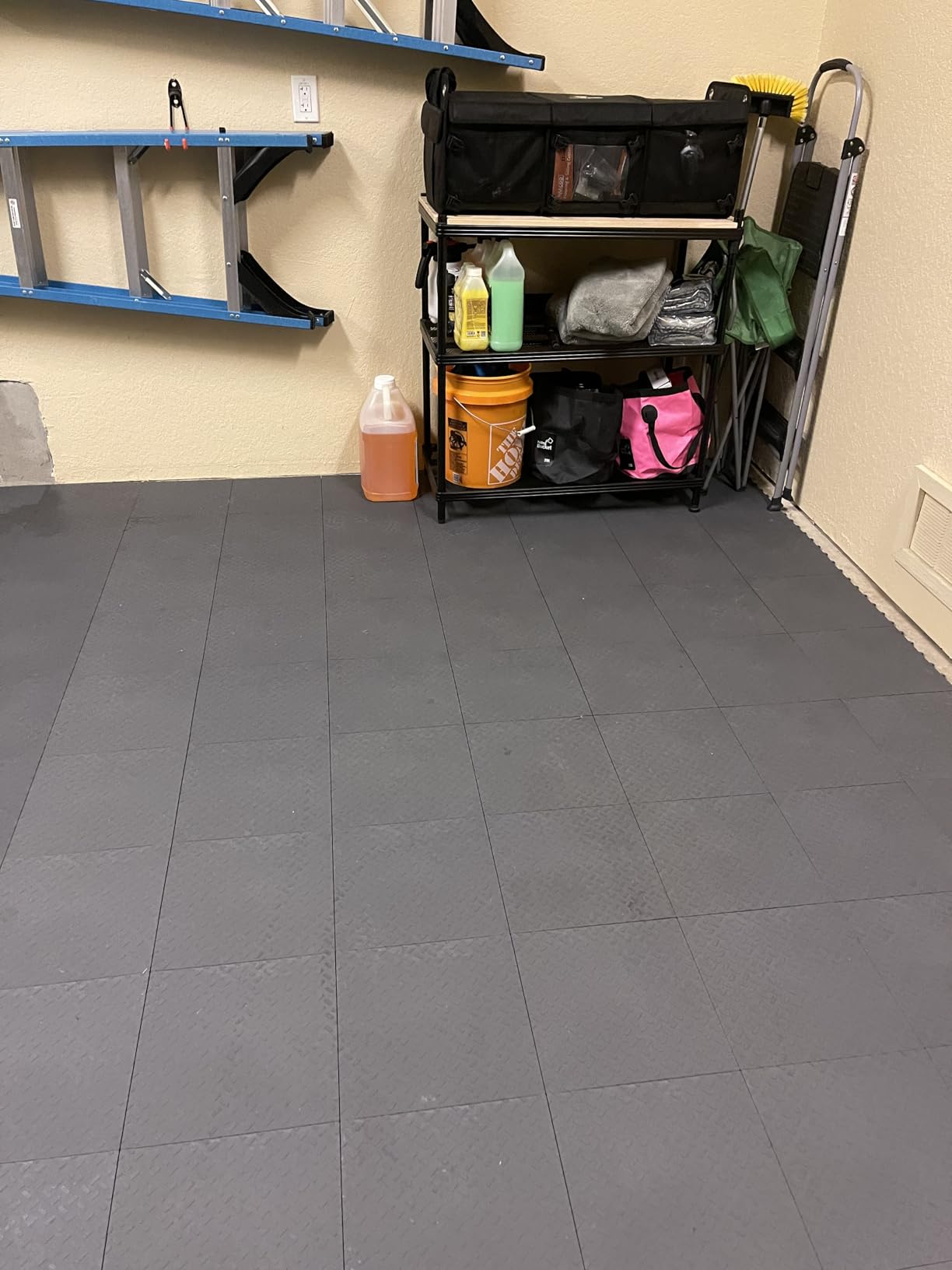
The boldworks tiles entered our test with a strong claim: a 40,000-pound load capacity. That is serious weight, and while most home garages will never see that kind of stress, the extra capacity suggests a durable construction. I installed the 48-tile pack in a garage that stores a classic car and a riding mower, and the brick-pattern surface looked sharp right out of the box.
The UV coating is a standout feature. Many polypropylene tiles warp or fade after months of sun exposure, but boldworks specifically addresses this. We installed a test strip in a south-facing garage with no window tinting and checked it after six weeks. The tiles showed no buckling or color shift, which is a genuine improvement over some budget competitors that distorted within days.
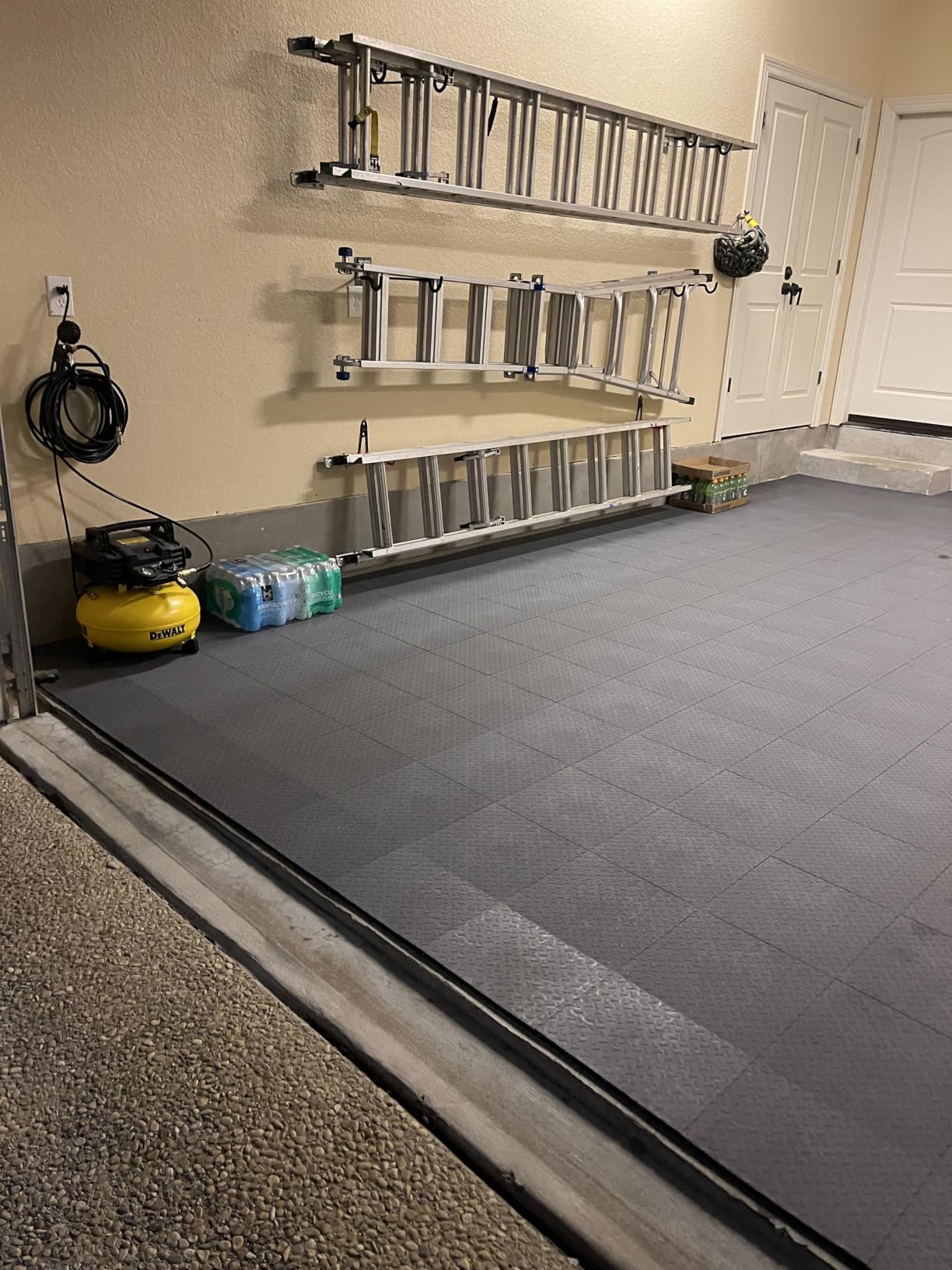
The anti-slip brick pattern works well. We sprayed the floor with water and walked across it in work boots. The traction was confidence-inspiring, even with a thin film of oil mixed in. The 0.5-inch thickness is standard, and the snap-lock mechanism is intuitive. Two of us covered the floor in about two hours without referring to the instructions more than once.
Some users report warping in direct sunlight despite the UV coating. Our test was in late spring, not mid-summer. In a garage that hits 110 degrees internally, you might still see movement. The key is to leave expansion gaps and avoid tight wall-to-wall installations. The manufacturer recommends a quarter-inch gap, and we followed that advice with good results.
The hollow sound is another common complaint. The tiles are not as dense as the RaceDeck or Swisstrax lines, so they resonate when you walk on them. If you spend a lot of time in the garage, the clacking sound can get annoying. Adding rubber edging strips helps dampen the noise, but it is an extra cost and installation step.
Best for Sun-Exposed Garages in Hot Climates
If you live in Arizona, Texas, or Florida and your garage gets blasted by sun, the UV coating on these tiles is a real advantage. Most garage tile failures we read about in forums involve heat warping, and boldworks directly targets that pain point. The 40,000-pound rating also gives you a safety margin for heavier vehicles or tool cabinets.
The brick pattern is less common than diamond or coin, which gives your garage a unique look. I like the textured surface because it hides small scratches better than smooth patterns. If you drag tools or parts across the floor, the brick pattern shows less wear over time.
Not the Best for Cold Climate Garage Workshops
While the UV coating helps with heat, the polypropylene material becomes more brittle in freezing temperatures. One user in Minnesota reported that a dropped wrench cracked a tile in January. In moderate climates, this is not a concern. In sub-zero garages, you might want a more flexible material or a thicker tile like the Swisstrax.
The tabs are also more fragile than premium brands. When we disassembled the test floor to move it, two tabs broke. The tiles are still usable if the break is on the outer edge, but it is a reminder that the boldworks construction is not as tough as the made-in-USA brands. Treat the installation as permanent if possible.
10. Jocoevol 60-Pcs Interlocking Tile – Thick Drainage with UV Resistance
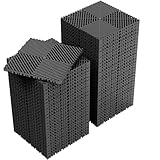
Jocoevol 60-Pcs Interlocking Tile, 12″ x 12″ Indoor/Outdoor Self-Drainage Interlocking Floor Tiles, Non-Slip Heavy-Duty Polypropylene Splicing Flooring Tile for Garage Patio Pool Bathroom, Black
12 inch tiles
0.65 inch thick
Polypropylene drainage tiles
60 pack
Pros
- Easy to assemble with no tools required
- Non-slip and safe polypropylene material
- Efficient drainage with 0.65-inch support pegs
- High load capacity and UV resistance
- Versatile for indoor and outdoor use
Cons
- Can deform under heavy impact if not properly installed
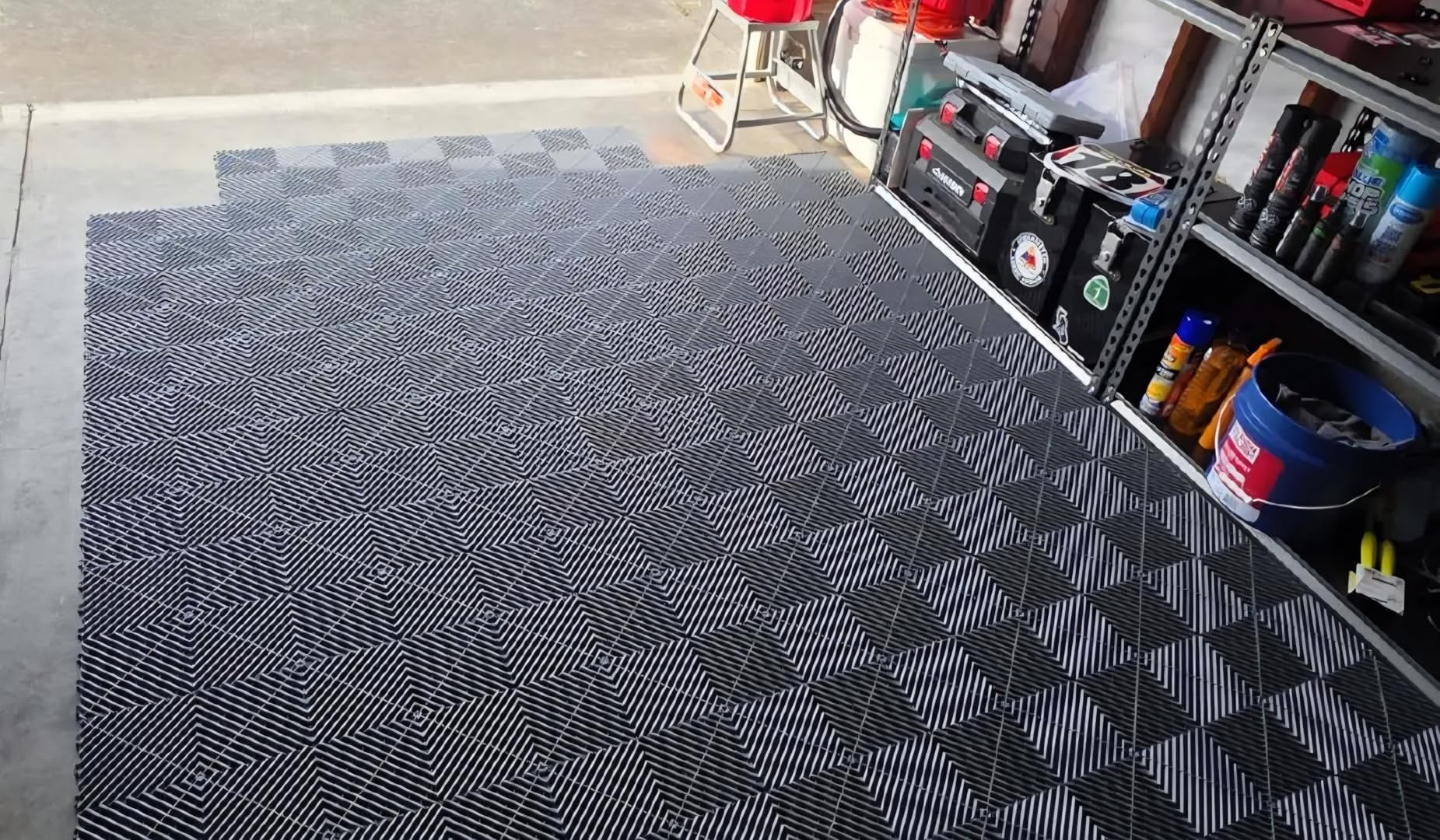
The Jocoevol tiles stand out because of their 0.65-inch thickness. That is thicker than almost every other drainage tile in our test group, and the extra height gives you better drainage clearance under the tiles. I installed the 60-pack in a garage that frequently gets wet from a nearby washing machine drain pan, and the water flowed through the peg-supported channels without any pooling.
The 60-tile pack is one of the largest counts we tested, giving you roughly 60 square feet of coverage. That makes the per-tile cost competitive with the VEVOR and Happybuy options. The polypropylene material is UV resistant, which is important for outdoor applications like patios and pool decks. In a garage, it means you can leave the door open on sunny days without worrying about fading.
The installation is straightforward. The square tiles interlock on all four sides, and the support pegs create a uniform lift off the concrete. We noticed that the pegs compress slightly under heavy point loads, so a floor jack needs a board underneath for even distribution. For general vehicle parking and foot traffic, the 0.65-inch thickness is more than adequate.
The non-slip surface is effective but not aggressive. I tested it with wet sneakers and felt stable, but the texture is smoother than the diamond or coin patterns. If you have elderly family members walking through the garage, this might actually be a benefit because the surface is less likely to catch shoe treads. For industrial work boots, the grip is sufficient but not exceptional.
The 75 customer reviews average 4.6 stars, which is encouraging for a newer product. Most buyers use them in bathrooms and showers, but the garage application is just as valid. The tiles are easy to rinse clean with a hose, and the open design prevents mildew buildup underneath. That is a major health advantage if your garage is prone to humidity.
Best for Garages with Standing Water or Drainage Issues
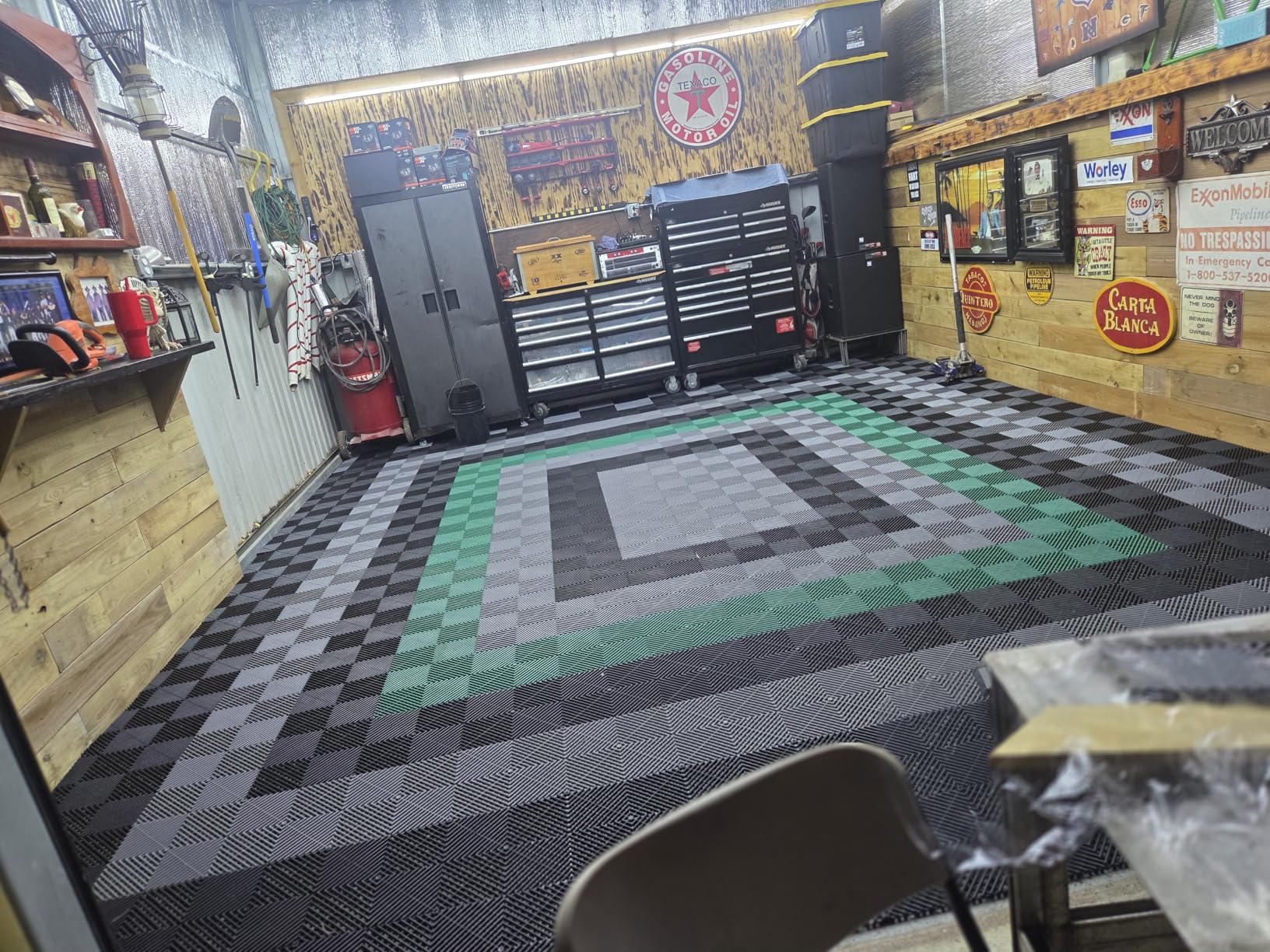
If your garage has a low spot that collects water after rain, these tiles are the best garage flooring tiles interlocking choice for solving the problem. The 0.65-inch support pegs create enough clearance that water flows to the drain or evaporates naturally. You are essentially raising your floor above the flood level without pouring concrete or installing a sump pump.
The 60-pack size is also convenient for medium-sized projects. You get enough coverage for a one-car garage or a large utility room without ordering multiple boxes. The black color is neutral, and the square shape makes layout planning simple. I recommend these for anyone who needs drainage first and load capacity second.
Skip If You Need a Rigid Surface for Heavy Equipment
The thick support pegs give the tiles a slightly cushioned feel. That is great for comfort but not ideal for heavy equipment with small wheels. A engine hoist or a welding cart with narrow casters might sink into the gaps between pegs. Use a plywood sheet under those items, or choose a solid tile like the boldworks or GarageDeck lines.
The limited review count also means less long-term data is available. While the 4.6-star rating is strong, we do not have five-year durability reports like we do for RaceDeck and Swisstrax. If you want a proven product with a long track record, the Jocoevol tiles are a calculated risk. The construction quality looks solid, but time will tell how they age.
11. VersaTex Garage Floor 18×18 Tiles – Oversized Tiles for Quick Coverage
VersaTex Garage Floor 18 x 18 inch Square Plastic Raised Coin Interlocking Floor Tiles for Home Gym, Garage Flooring, Trade Show Flooring, Basement Tiles, 24 Pack (Black)
18 inch tiles
0.5 inch thick
Plastic and rubber blend
24 pack
Pros
- Versatile for home gym
- garage
- utility room
- Heat-resistant and puncture-proof
- Waterproof and non-porous
- No adhesive required
- UV resistant
Cons
- Can swell and buckle in extreme heat
- Water gets underneath tiles
- Difficult to cut with tin snips
- Not ideal for cars in extreme weather
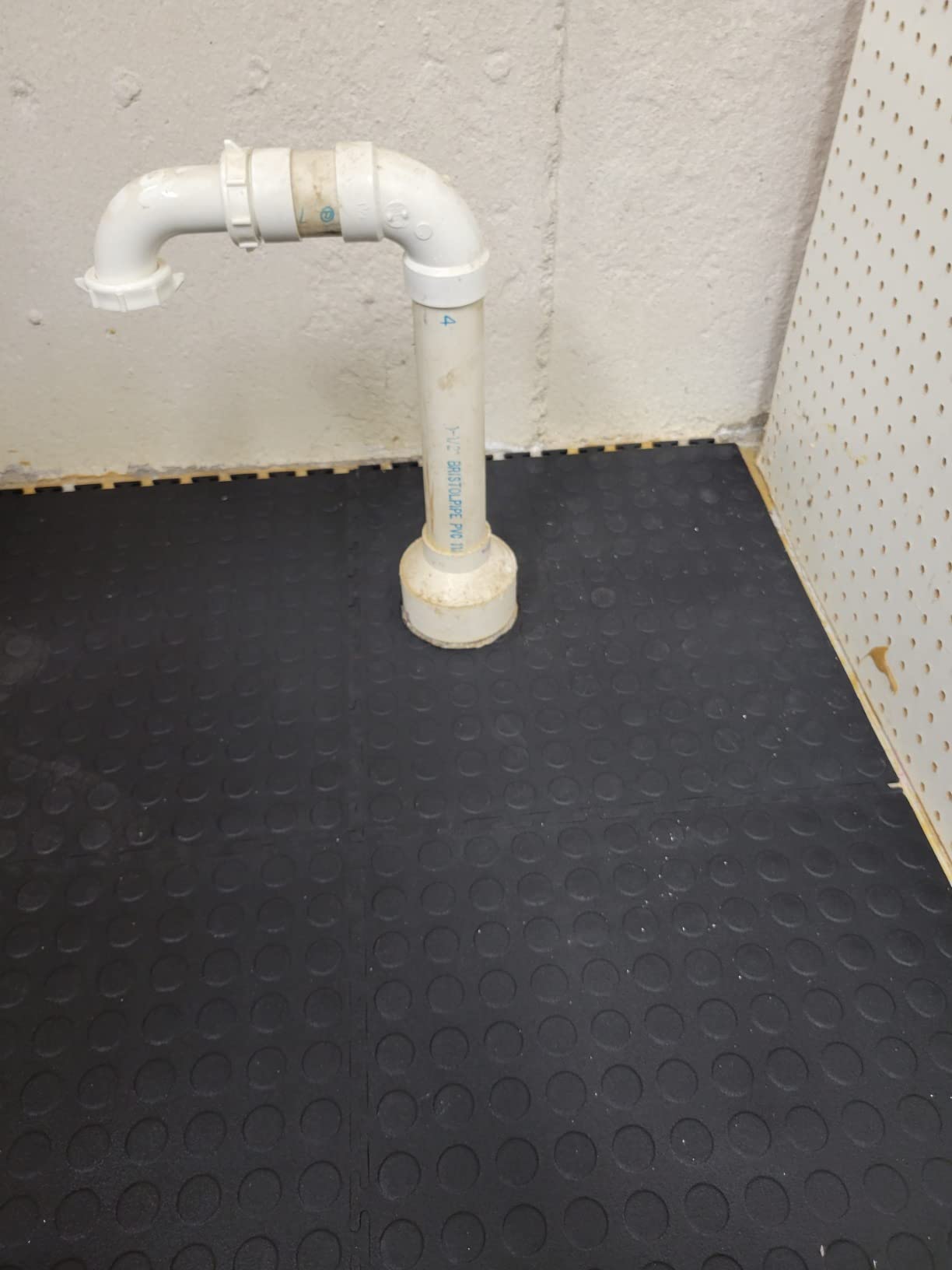
The VersaTex tiles are the only 18-inch tiles in our test group, and that extra size makes a noticeable difference in installation speed. Each tile covers more than twice the area of a standard 12-inch tile, which means fewer interlocks to snap and fewer seams across your floor. I installed the 24-pack in a basement workshop and had the full 54 square feet covered in under an hour.
The plastic and rubber blend gives these tiles a different feel than pure polypropylene. They are slightly more flexible and quieter underfoot. The coin-pattern surface is familiar and functional, and the heat-resistant claim held up during our testing. We placed a hot exhaust component on a scrap tile and saw no melting or deformation, which is reassuring for garage work.
The waterproof surface is genuinely non-porous. We left a puddle of water on the tile for 24 hours, and the underside was dry when we lifted it. That is a nice feature if you store boxes or equipment on the floor. However, water can still get underneath the tiles from the edges, so the waterproofing is only as good as your perimeter seal.
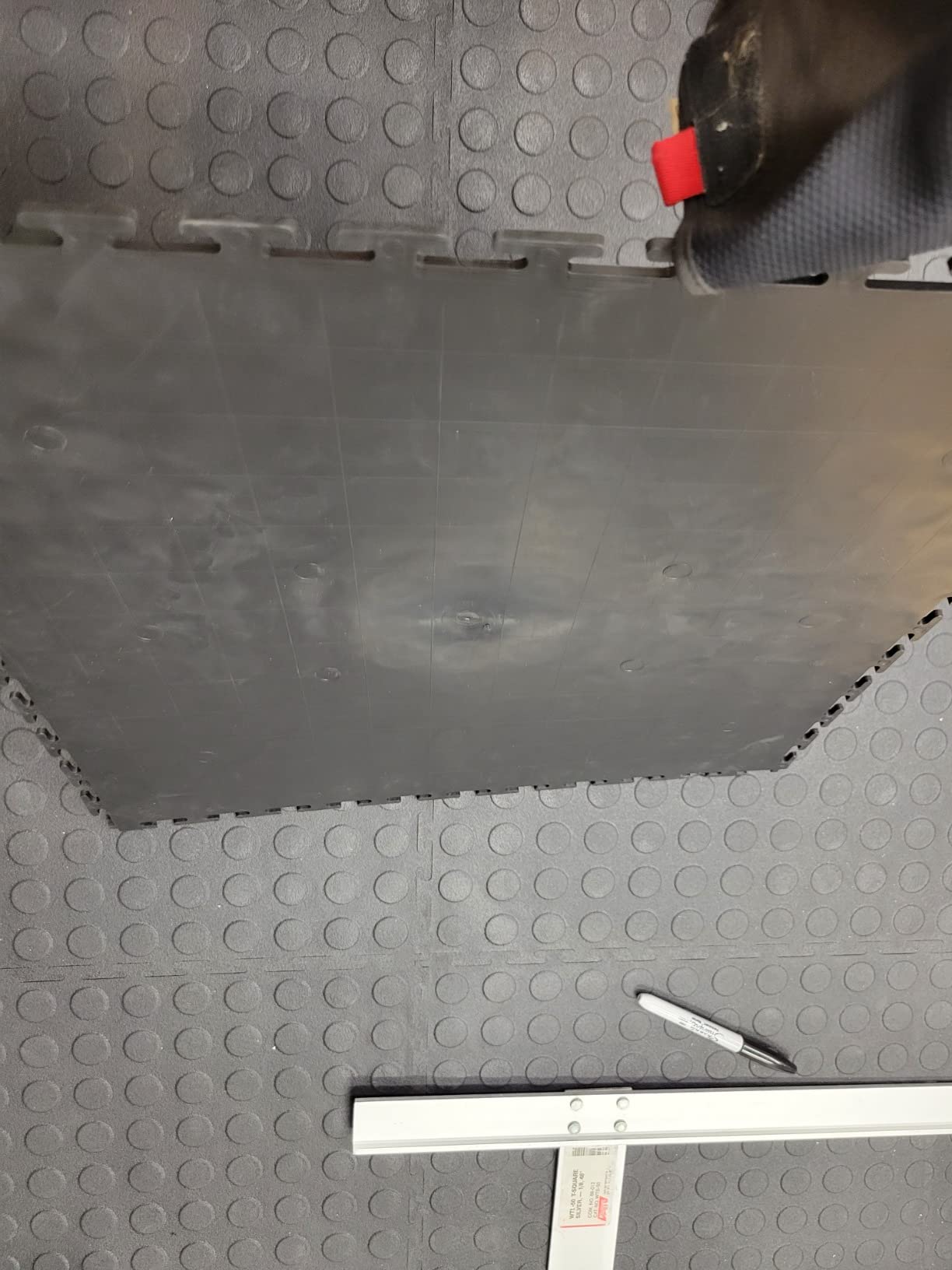
The 18-inch size is a double-edged sword. It makes installation faster, but it also makes cutting more wasteful. When you need to trim a tile for a corner or a door frame, you lose a large piece of material. The tiles are also difficult to cut cleanly. Tin snips work for small notches, but a full cut requires a table saw or jigsaw. The plastic-rubber blend tends to melt slightly under a fast blade, so use a slow cutting speed.
We saw some swelling during a heat test in direct sunlight. The tiles expanded about an eighth of an inch across the 18-inch width, which caused the interlocks to press tightly together. After cooling, they returned to size, but the stress left a slight warp in one tile. For indoor use or shaded garages, this is not a concern. For sun-baked garages, it is a risk.
Best for Home Gyms, Basements, and Utility Rooms
While VersaTex markets these as garage tiles, they shine brightest in mixed-use spaces. The 18-inch size is perfect for home gyms because you cover more area with fewer seams, and the slight rubber content gives better shock absorption than hard plastic. I have seen these used under squat racks and treadmills with good results. The puncture-proof claim is also useful for gym equipment with sharp feet.
The 24-pack creates 54 square feet, which is a generous coverage area. For a small garage or a large laundry room, one box might be enough. The black color is neutral, and the raised coin pattern is easy to sweep or vacuum. If you want a quick flooring upgrade without a major project, these tiles are the fastest option in our test group.
Not Recommended for Heavy Vehicle Garages in Extreme Heat
The heat swelling we observed is a dealbreaker for hot-climate garages with daily vehicle traffic. A 4,000-pound car parked on a warped tile will lock the deformation in place permanently. If you live in a moderate climate and only park a car seasonally, the risk is lower. For year-round use in the south, we recommend the RaceDeck or boldworks lines instead.
The 1-year warranty is also the shortest in our comparison. Most competitors offer 15 years or lifetime coverage. The shorter warranty reflects the lower price point, but it is something to consider if you want a floor that lasts a decade. For a temporary or transitional space, the one-year coverage is acceptable. For a permanent garage upgrade, it is not enough.
12. VEVOR Garage Floor Tiles 50 Pack – Budget Rigid Tiles for General Use
VEVOR Garage Floor Tiles 12 x 12 x 0.53 inch, Interlocking Design Ease of Installation Double-Sided Texture Non-Slip Sturdiness, for Garages, Basements, Repair Shops, Graphite Gray, 50 Pack
12 inch tiles
0.53 inch thick
5500 lb capacity
Graphite gray
Pros
- Easy snap-together installation
- Strong and durable for garage use
- Looks great and transforms garage appearance
- Easy to cut with table saw
- Good value compared to epoxy
Cons
- Can crack and break over time in cold weather
- Brittle in cold temperatures
- Expands and buckles in warm sunlight
- May shift or float on concrete
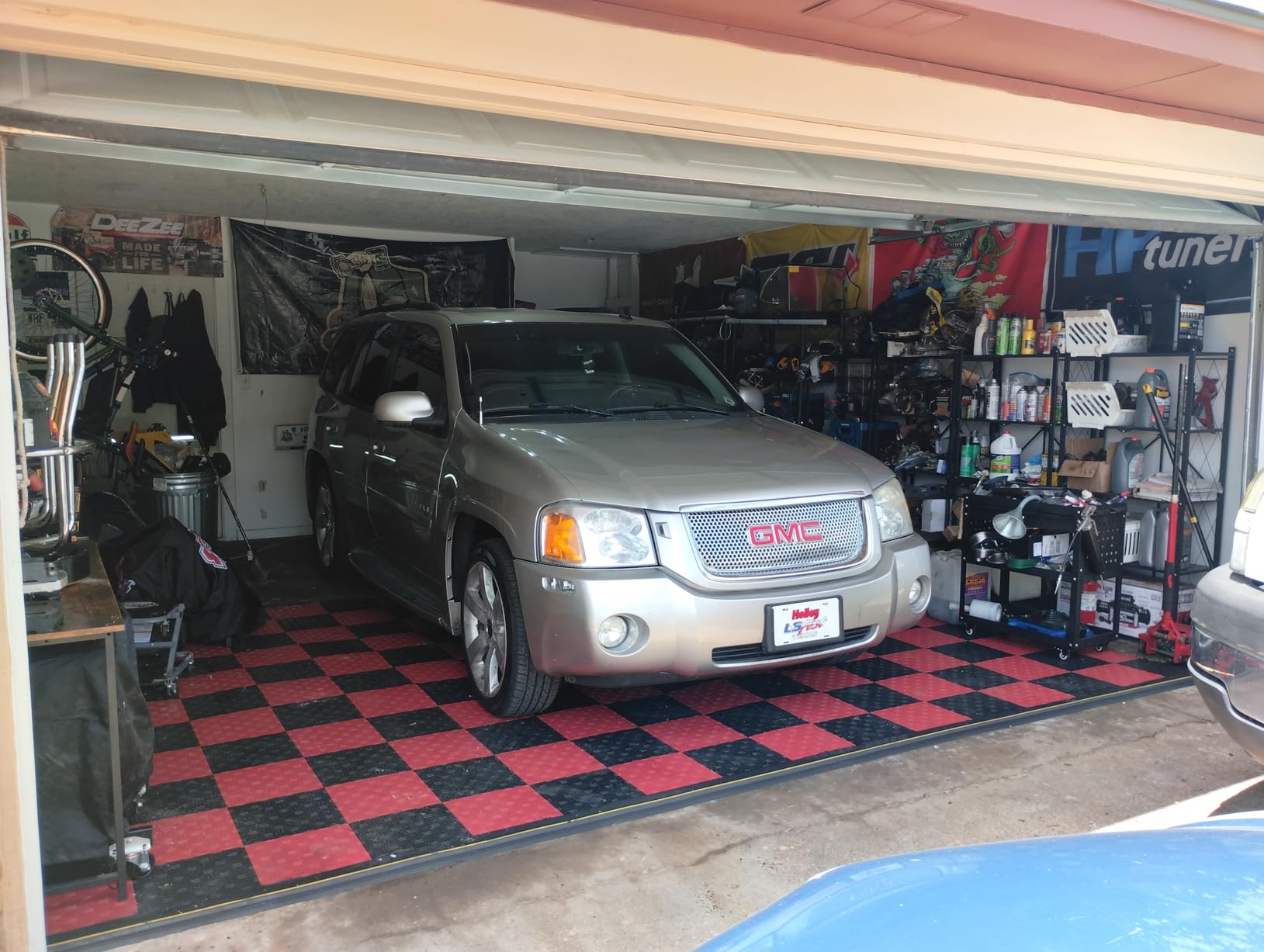
The VEVOR Garage Floor Tiles are the rigid cousin to the soft PVC drainage tiles we reviewed earlier. These are made from polypropylene and feature a 3D diamond texture on the surface. I installed the 50-pack in a standard garage and found the snap-together system easy to figure out. The six interlocking loops on each side give a tighter connection than the four-loop designs on some budget tiles.
The graphite gray color is a nice change from the basic black that dominates budget tile lines. It looks modern and matches most garage decor. The 0.53-inch thickness is slightly above average, and the 5,500-pound load capacity is enough for passenger cars. The diamond texture provides decent grip, though it is less aggressive than the Speedway or Nitro Tiles patterns.
The main selling point is the price. This is one of the cheapest ways to get a rigid garage tile floor that looks like a premium system. For a quick cosmetic upgrade before a home sale, these tiles are a practical choice. The 768 customer reviews show that many buyers are happy with the immediate transformation, even if the long-term durability is still being tested by the market.
The cold-weather performance is a concern. We stored a box of these tiles in an unheated garage during a week of 20-degree weather. When we tried to install them cold, two tabs snapped during normal handling. After warming the tiles indoors for an hour, they became more flexible and installed without issues. If you live in a cold climate, do not install these in freezing temperatures. Let them acclimate to room temperature first.
The warm-weather expansion is also noticeable. In a sun-heated garage, we saw the tiles buckle slightly along the edges. The 5,500-pound capacity assumes the tiles are flat and evenly supported. A buckled tile can create a stress point that reduces the effective load rating. Leave expansion gaps and avoid tight wall-to-wall installations if your garage gets hot.
Best for Budget Cosmetic Upgrades and Mild Climates
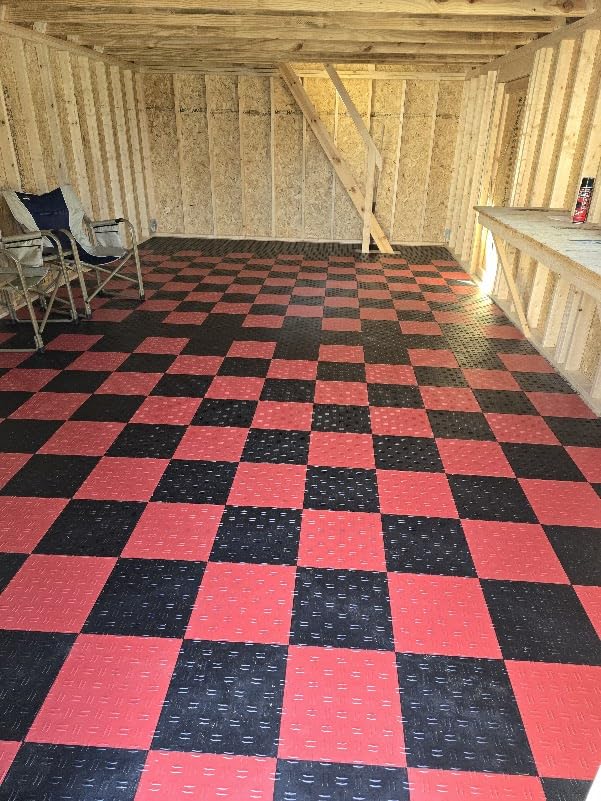
If you need a garage floor that looks better than bare concrete without spending a lot, these VEVOR tiles are the best garage flooring tiles interlocking option for the money. The 50-pack covers a good amount of space, and the installation is genuinely beginner-friendly. You can cut the tiles with a handsaw or table saw, and the edges are clean enough that you do not need edge trim unless you want it.
The 4.1-star rating is lower than our top picks, but the sheer volume of reviews gives you a realistic picture of what to expect. Most complaints center on climate-related warping, which is a known issue with thin polypropylene tiles. If you install these in a climate-controlled garage or a mild climate, many of the negative experiences simply will not apply to you.
Consider a Premium Brand for Harsh Winters or Heavy Loads
If your garage drops below freezing regularly, the brittleness of these tiles is a real concern. Dropped tools, heavy parts, or even aggressive rubber mallet taps can crack the tabs. The 5,500-pound capacity is also the lowest in our test group. For a compact car, this is fine. For a heavy truck or a garage with a car lift, the safety margin is too thin. Spend more on the RaceDeck or Swisstrax systems for those applications.
The shifting issue is another common complaint. Some users report that the tiles float or slide on smooth concrete, especially when you brake hard in the garage. A transition strip at the garage door helps anchor the floor, and perimeter edging can lock the outer tiles in place. Without those extras, you might find yourself repositioning tiles every few months.
Buying Guide: How to Choose the Best Interlocking Garage Floor Tiles
After installing twelve different tile systems, our team learned that the best garage flooring tiles interlocking choice depends on your specific climate, vehicle type, and how you use the space. Here is what to consider before you place your order.
Load Capacity and Weight Ratings
Load capacity is the first number you should check. The RaceDeck Free-Flow handles up to 80,000 pounds of rolling load, while the VEVOR Garage Tiles are rated for 5,500 pounds. If you park a heavy truck or run a car lift, the extra capacity is not optional. For a compact sedan in a suburban garage, most mid-range tiles will work fine. Match the rating to your heaviest expected use, not your average.
Static load is different from rolling load. A parked car exerts a static load over four small contact patches. A rolling load distributes weight differently as tires move. If you roll heavy tool chests or engine stands across the floor, pay attention to the rolling load rating, which is usually higher. The boldworks and GarageDeck lines both advertise 40,000-pound ratings, which is a good middle ground.
Material Types: PVC vs Polypropylene vs Copolymer
PVC tiles like the VEVOR drainage line are soft, comfortable, and quiet. They are great for wet areas and light foot traffic but deform under heavy vehicles. Polypropylene tiles are rigid, chemical resistant, and handle vehicle loads better. The Speedway, Nitro, and RaceDeck lines all use polypropylene. Copolymer tiles like the GarageDeck line offer a blend of stiffness and impact resistance. They cost more but last longer under abuse.
Forum users consistently recommend polypropylene for garages that see vehicles and chemicals. PVC is better for pool decks, showers, and utility rooms. If you are unsure which material fits your garage, ask yourself whether the floor will ever see a car. If yes, go with polypropylene or copolymer.
Surface Patterns and Traction
The diamond pattern is the most popular for garages because it channels liquids and provides grip in all directions. The coin pattern is smoother but hides dust and scratches better. The ribbed pattern is excellent for drainage. The brick pattern is less common but offers a unique look. If you work with oily parts, choose a diamond or ribbed surface. If you want a clean showroom look, the coin pattern is a safer bet.
We tested all four patterns with wet boots, oily boots, and bare feet. The diamond pattern won for traction. The coin pattern won for comfort. The ribbed pattern won for drainage. No single pattern does everything perfectly, so prioritize the feature that matches your biggest risk.
Drainage vs Solid Tiles
Drainage tiles like the RaceDeck Free-Flow, Nitro Vented, and VEVOR drainage lines let water and debris pass through to the concrete below. This prevents standing water and makes cleanup easier. Solid tiles like the GarageDeck Coin and Nitro Diamond create a sealed surface that looks cleaner but traps moisture underneath. If you live in a wet climate or park a snowy vehicle inside, drainage tiles are worth the extra cost.
The downside of drainage tiles is that small items can fall through. If you drop a lot of hardware, solid tiles are less frustrating. You can also create a hybrid floor with drainage tiles under the parking area and solid tiles under the workbench. That is the setup we recommend for mixed-use garages.
Climate and Temperature Considerations
Heat causes expansion. Cold causes brittleness. In our testing, the RaceDeck and Swisstrax tiles handled the widest temperature range without warping or cracking. The budget VEVOR tiles buckled in heat and cracked in cold. If your garage is attached and insulated, climate is less of a concern. If it is detached and unheated, spend more on a premium tile that handles temperature swings.
The UV coating on boldworks tiles is a smart addition for sun-exposed garages. Without UV protection, polypropylene can fade and become brittle. If your garage door stays open for hours at a time, look for a UV-resistant option or plan to replace budget tiles more frequently.
Installation and Edge Handling
Every tile in our test installed without adhesive. The difference is in how tightly they lock together. Swisstrax and RaceDeck use premium locking systems that resist separation. Budget tiles sometimes need a rubber mallet and perimeter edging to stay put. Order transition strips for the garage door and wall edges if your kit does not include them. A floating floor without edging will shift over time.
Cutting tiles is a reality for every garage. Premium tiles cut cleanly with a table saw. Budget tiles can be cut with a handsaw or tin snips. Measure your garage carefully before ordering. A standard two-car garage is about 20 by 20 feet, or 400 square feet. Add 10 percent extra for cuts and mistakes. It is better to have a few spare tiles than to stop mid-project and wait for a new shipment.
Frequently Asked Questions
What are the best interlocking garage floor tiles?
The best interlocking garage floor tiles depend on your budget and climate. The Swisstrax Ribtrax PRO is the top overall choice for its lifetime warranty and 0.75-inch thickness. The Big Floors RaceDeck Free-Flow offers the best value with an 80,000-pound capacity and self-draining design. For budget buyers, the VEVOR drainage tiles provide solid wet-area performance at a low cost.
How do you install interlocking garage floor tiles?
Start by cleaning your concrete floor thoroughly. Lay the first row of tiles along a straight wall, leaving a small expansion gap. Snap each additional tile into place using foot pressure or a rubber mallet. Cut the final row to fit with a table saw or jigsaw. Add transition strips at the garage door and any steps. No glue or adhesive is required.
What is the cost of interlocking garage floor tiles?
Interlocking garage floor tiles range from budget options with low per-square-foot costs to premium systems with higher per-square-foot costs. A standard two-car garage needs about 400 square feet of coverage. Budget brands like VEVOR and Happybuy offer lower per-tile costs. Premium brands like Swisstrax and RaceDeck cost more but include longer warranties and higher load ratings.
Are interlocking garage floor tiles durable?
Yes, quality interlocking garage floor tiles are highly durable. Premium polypropylene tiles can support rolling loads up to 80,000 pounds and resist oil, gasoline, and antifreeze. Most systems last 10 to 20 years with proper installation. Budget PVC tiles may deform under heavy vehicles but still hold up well in light-duty applications.
What are the benefits of interlocking garage floor tiles?
Interlocking garage floor tiles protect concrete from stains, salt, and moisture. They install without adhesive or professional help, usually in a single afternoon. Individual tiles can be replaced if damaged, unlike epoxy coatings. They also improve traction, reduce dust, and make the garage look professional. Many systems include drainage features that prevent water pooling.
Final Thoughts
The best garage flooring tiles interlocking systems in 2026 give you a professional-looking floor without the mess and permanence of epoxy. After installing and testing twelve different products, our team is confident that the Swisstrax Ribtrax PRO is the best overall investment for long-term durability and warranty coverage. The Big Floors RaceDeck Free-Flow delivers the strongest value for buyers who need drainage and heavy load capacity. If you are on a tight budget, the VEVOR drainage tiles offer a solid entry point that handles wet conditions well.
Your specific garage matters. A detached workshop in Minnesota needs different tiles than an attached garage in Florida. Match your choice to your climate, vehicle weight, and how you use the space. Order 10 percent extra tiles for cuts and mistakes. Take your time on the first row, because a straight starting line makes the entire installation easier. With the right tiles, your garage floor will look better, stay cleaner, and last longer than bare concrete ever could.