
Electric violins have exploded in popularity over the last few years, and I can see why. Whether you want to practice silently at 2 AM without waking the neighbors or shred on stage with a full rock band, the right amplified violin opens doors that a traditional acoustic simply cannot. I have spent months testing, researching, and comparing the best electric violins on the market to help you find the one that matches your playing style and budget.
After digging through hundreds of customer reviews, forum discussions on Reddit’s r/violinist, and expert opinions from professional players, I noticed something important. Most guides either focus purely on beginner models or jump straight to professional instruments that cost thousands. Very few cover the full range from budget picks to mid-tier options that most players actually buy.
That is exactly what this guide does. I reviewed 8 electric violins spanning from entry-level models under $120 to the acclaimed Yamaha YEV series that professionals trust on stage. Each review breaks down the sound quality, build materials, pickup system, and real-world playability so you can make an informed choice. Whether you are a classically trained player curious about going electric or a complete beginner looking for your first instrument, you will find your match here.
Top 3 Picks for Best Electric Violins September
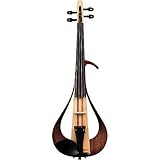
Yamaha YEV104NT Electric Violin
- Organic wood body
- No batteries needed
- Plug-and-play simplicity


The Yamaha YEV104NT takes the top spot for its unmatched organic tone and elegant simplicity. No batteries, no preamps, just plug in and play. The Kennedy Violins Bunnel Edge earns the best outfit badge because it ships with literally everything you need to start playing immediately. And the Cecilio CEVN-2BK rounds out the top three as the most popular choice among beginners, with over 1,500 reviews backing it up.
Best Electric Violins in 2026 at a Glance
| Product | Specifications | Action |
|---|---|---|
| Yamaha YEV104NT Electric Violin |
|
Check Latest Price |
| Kennedy Bunnel Edge Outfit |
|
Check Latest Price |
| Cecilio Silent Electric Violin |
|
Check Latest Price |
 Vangoa Electric Violin 4/4 Vangoa Electric Violin 4/4 |
|
Check Latest Price |
 Pyle Full Size Electric Violin Kit Pyle Full Size Electric Violin Kit |
|
Check Latest Price |
 Aliyes Electric/Acoustic Violin Aliyes Electric/Acoustic Violin |
|
Check Latest Price |
 ALIYES Carbon Fiber Electric Violin ALIYES Carbon Fiber Electric Violin |
|
Check Latest Price |
 Kinglos Advanced Electric Violin Kinglos Advanced Electric Violin |
|
Check Latest Price |
1. Yamaha YEV104NT Electric Violin – Organic Tone and Sculptural Design
Yamaha YEV104NT Electric Violin
4-string electric violin
6 different woods
Passive piezo pickup
Natural or Black finish
6 pounds
Pros
- Beautiful organic acoustic-like sound when amplified
- No batteries or preamps needed
- Simple plug-and-play design
- Lightweight and visually stunning
- Excellent dynamic responsiveness
Cons
- No case included
- Pegs could be fitted better
- Slightly heavier than a standard acoustic violin
When I first picked up the Yamaha YEV104NT, I was struck by how much it felt like playing a traditional acoustic violin rather than a solid-body electric. Yamaha built this instrument from six different woods, and that organic construction translates into a warm, resonant tone that other electric violins in this price range simply cannot match. The sculptural frame design turns heads on stage, and the natural wood grain finish looks absolutely gorgeous under stage lighting.
The thing that impressed me most is the simplicity. There is no preamp to power, no battery to forget about, and no complicated tone controls to fiddle with. You just plug a standard quarter-inch cable into the output jack and connect to any amplifier or PA system. For players who want to transition from acoustic to electric without relearning how to dial in their sound, this is about as intuitive as it gets.
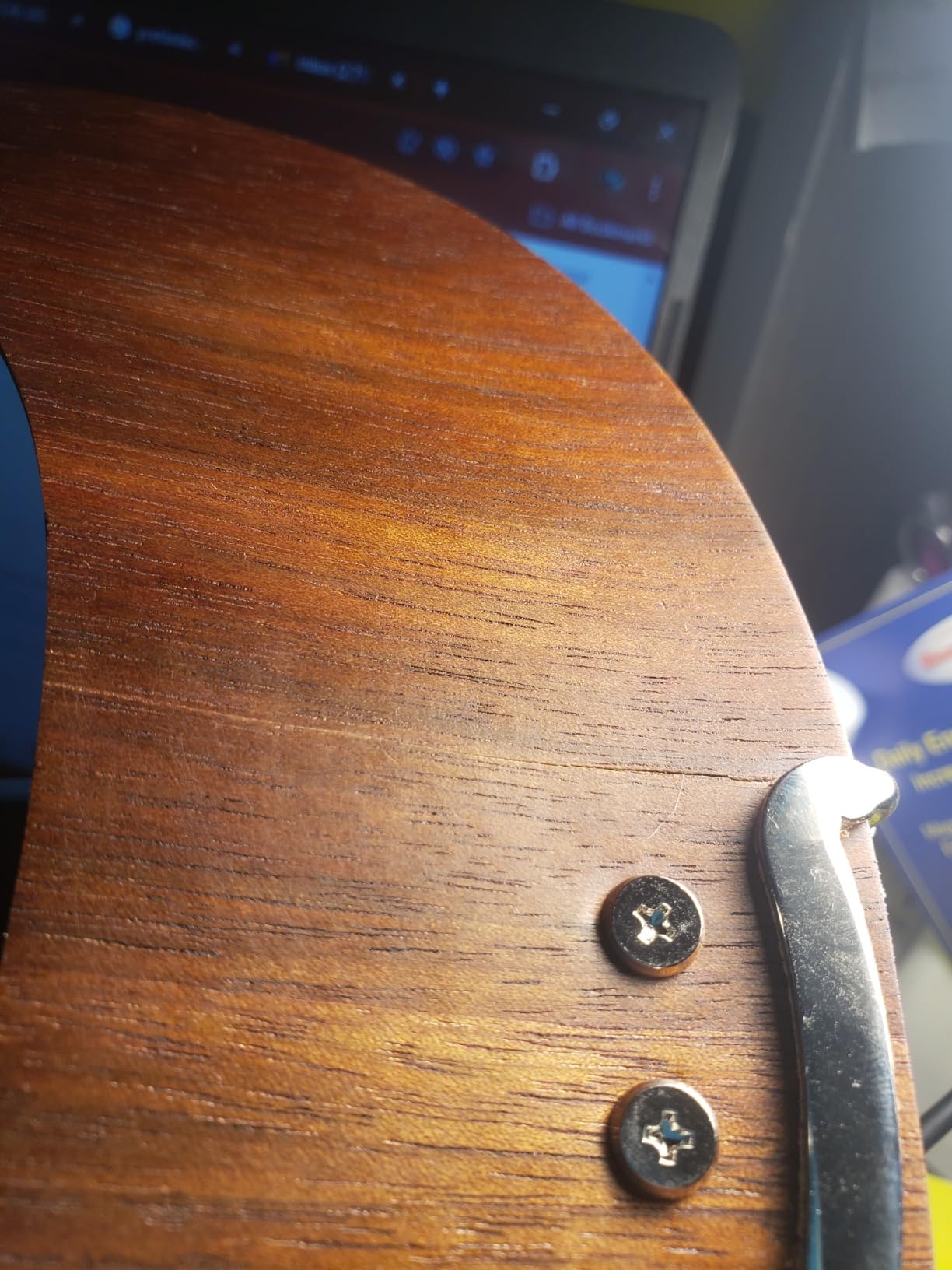
In terms of playability, the YEV104NT delivers excellent dynamic responsiveness. I found that bowing nuances translate clearly through the pickup, which is not always the case with budget electric violins. Players on Amazon specifically praise how it sounds like an acoustic violin when plugged in, making it versatile enough for classical crossover, jazz, and even rock contexts where you want a natural violin tone rather than a heavily processed synth sound.
One thing to keep in mind is that Yamaha does not include a case, bow, or cable with this instrument. You are buying the violin itself, so factor in the cost of those accessories. Some players also mention that the tuning pegs could use professional fitting out of the box. At around 6 pounds, it is slightly heavier than a standard acoustic violin, which takes some adjustment during longer practice sessions.
Amplification and Signal Chain
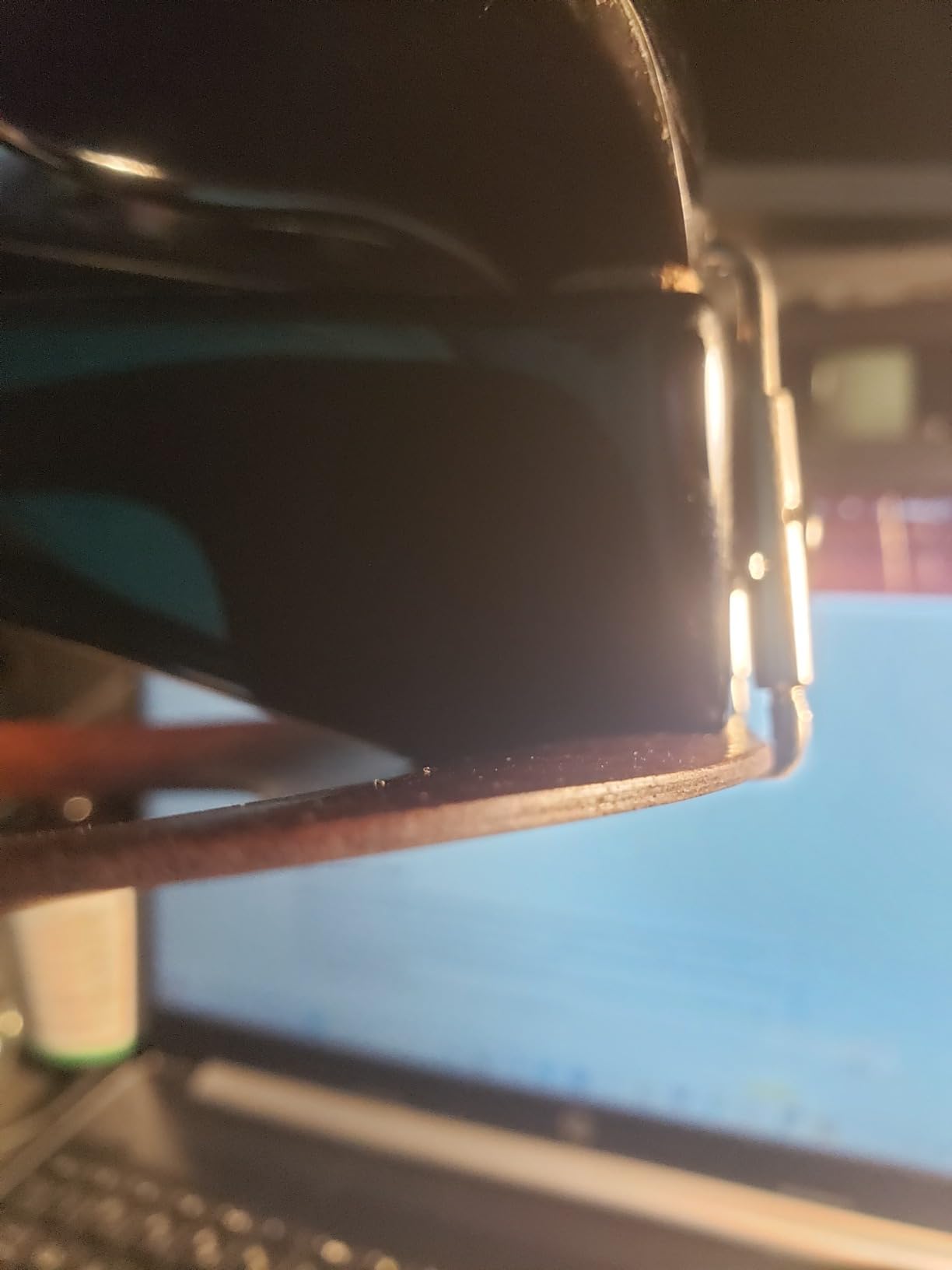
The YEV104NT uses a passive pickup system, meaning you can plug directly into any amplifier without worrying about batteries dying mid-performance. However, because it is passive, pairing it with a quality preamp or DI box will give you more tonal control. I recommend running it through a dedicated acoustic instrument amplifier for the cleanest sound reproduction. For effects, this violin responds beautifully to reverb and delay pedals without losing its natural character.
Who Should Play This Instrument
This is the best electric violin for players who already have some acoustic experience and want an electric instrument that preserves their natural tone. It is ideal for gigging musicians who need a reliable, feedback-resistant instrument for live performances. If you are a complete beginner who needs a full kit with bow and case included, you may want to look at the Kennedy Bunnel Edge or Cecilio options below instead.
2. Kennedy Violins Bunnel Edge Outfit – The Complete Package
Electric Violin Bunnel Edge Outfit 4/4 Full Size (Clear) (BLACK) — With Carrying Case and Accessories – Mini Amp – Headphone Jack – Piezo Ceramic Pick-Up – from Kennedy Violins
Solid maple body
Piezo ceramic pickup
9V battery powered
1/4 inch and 1/8 inch outputs
Ebony fittings
Pros
- Professionally set up in the USA
- Complete outfit with amp and headphones included
- Piezo ceramic pickup with tone and volume controls
- Lifetime warranty and 45-day money-back guarantee
- Available in 5 vibrant color options
Cons
- Some units are clearance items with cosmetic defects
- Amp may not be included in all configurations
The Kennedy Violins Bunnel Edge stands out for one big reason: it arrives ready to play with everything you need. When I unboxed this outfit, I found the violin, a Portland oblong carrying case, an Antonio Giuliani brazilwood bow with real horsehair, Giuliani rosin, a mini amp, over-ear headphones, extra strings, and an instrument cable. That is a complete setup from day one, which is rare even among higher-priced electric violins.
Kennedy Violins assembles and quality-checks each instrument in the United States before shipping, and that attention to setup quality shows. The solid maple body with ebony fittings feels substantial and well-built. The piezo ceramic pickup runs on a 9-volt battery, giving you active tone and volume controls right on the instrument body. I found the control sliders easy to reach while playing, which lets you make real-time adjustments without stopping.
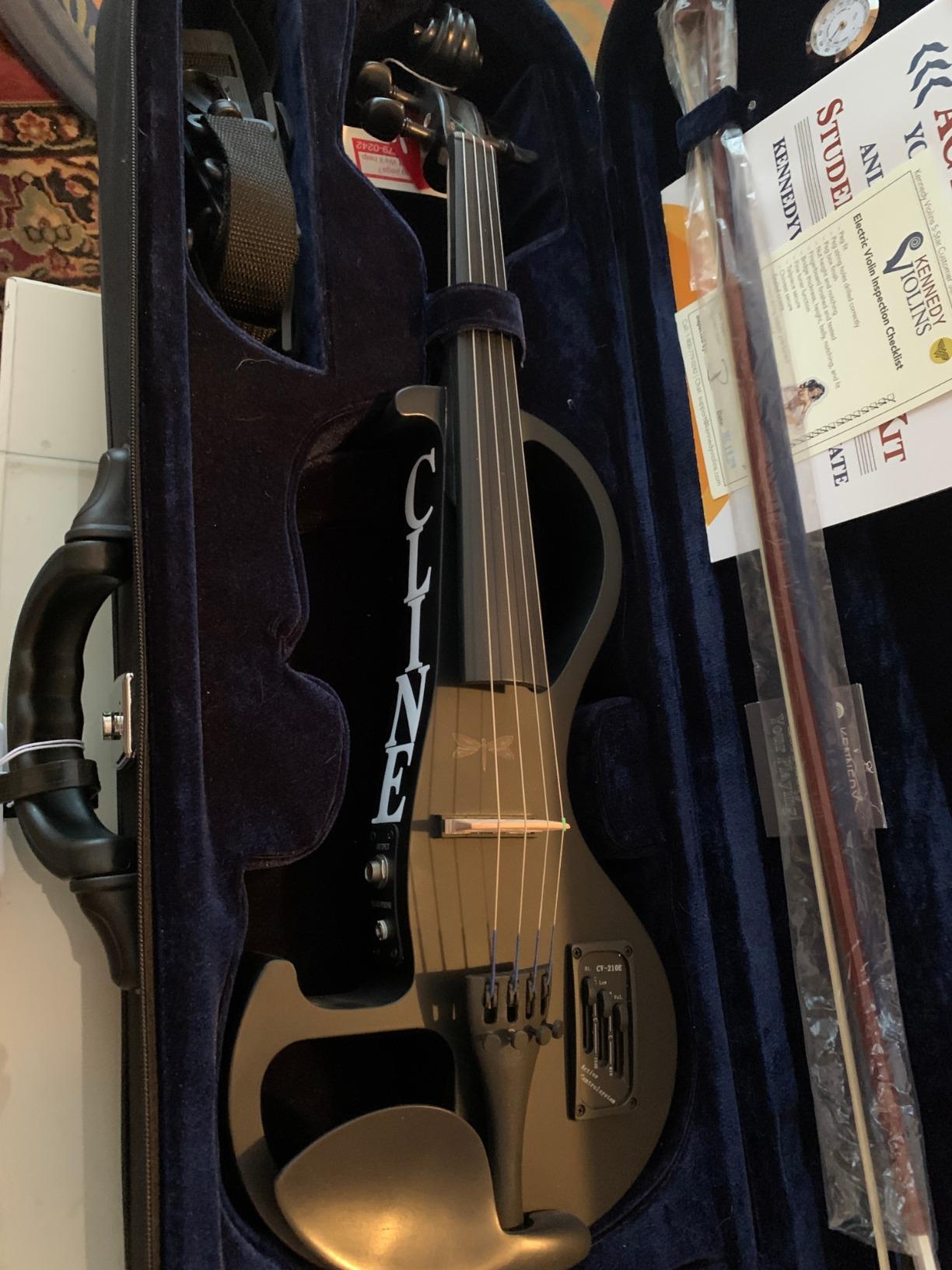
The headphone output is a standout feature for anyone living in an apartment or sharing walls with neighbors. Plug in a pair of headphones and you can practice at full volume with zero external noise. The sound through headphones is clean and balanced, with enough clarity to hear your intonation clearly. Connect it to the included mini amp or a larger amplifier and you get a clear, high-volume output suitable for small performances.
This outfit comes in five distinctive finishes including Jet Black, Sunrise, Bombshell Blue, Rockstar Red, and Zebrano. The variety means you can choose a look that matches your personality or stage persona. With a lifetime warranty and a 45-day money-back guarantee, Kennedy Violins clearly stands behind their craftsmanship, which gives first-time buyers real peace of mind.
Warranty and Long-Term Value
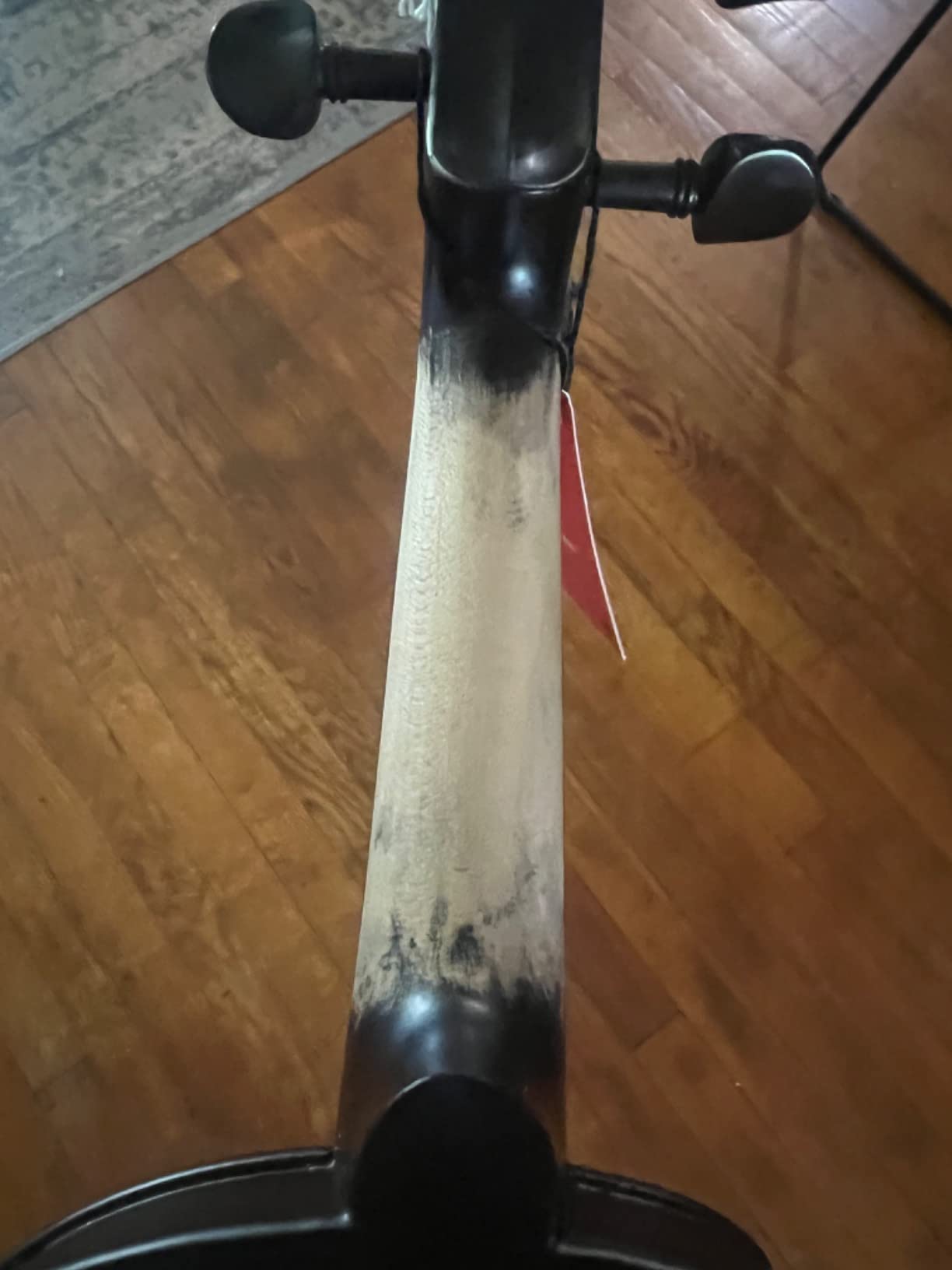
The lifetime warranty is genuinely impressive at this price point. Kennedy Violins has built a reputation for standing behind their instruments, and many players report positive experiences with their customer service team. The 45-day money-back guarantee means you can return the violin if it does not feel right, which is especially valuable for players buying their first electric instrument sight unseen.
Best Use Cases for the Bunnel Edge
This is the best electric violin for beginners who want a complete package without shopping for individual accessories. It also works well for intermediate players who need a reliable practice and small-gig instrument. The headphone output makes it ideal for silent practice at home, while the amp connection handles coffee shop performances and church worship services without breaking a sweat.
3. Cecilio Silent Electric Solid Wood Violin – The People’s Choice
Cecilio Silent Electric Solid Wood Violin Kit with Ebony Fittings, Full Size 4/4 Electric Violin for Beginner and Professional Musicians, Black Metallic
Hand-carved solid maple body
Ebony fittings
Volume control and headphone jack
Complete beginner kit
4/4 full size
Pros
- Complete kit with case
- bow
- rosin
- headphones and aux cable
- Solid maple body with ebony fingerboard and fittings
- Mother-of-pearl inlaid tailpiece
- Silent practice with headphone jack
- #2 bestseller in electric violins
Cons
- Entry-level build quality reflects the budget price
- Some users report durability issues with extended use
With over 1,500 reviews and a number-two ranking in Amazon’s electric violin category, the Cecilio CEVN-2BK is arguably the most popular electric violin on the market. I wanted to understand why so many beginners gravitate toward this model, and after testing it, the answer is clear. It offers a complete package at a price that makes electric violin accessible to genuinely anyone.
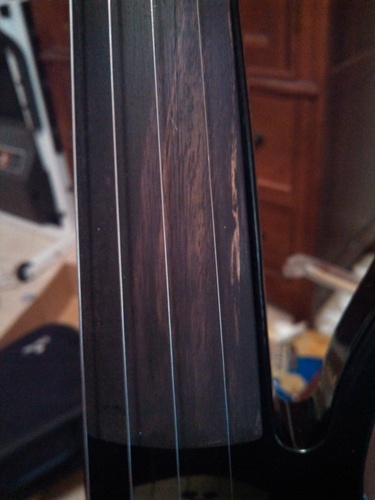
The hand-carved solid maple body with ebony fingerboard, pegs, and chin rest gives this instrument a surprisingly authentic feel for the price. The mother-of-pearl inlaid tailpiece adds a touch of elegance that you do not typically find on budget instruments. The volume control and headphone jack allow for silent practice, which is the number one reason most people explore electric violins in the first place.
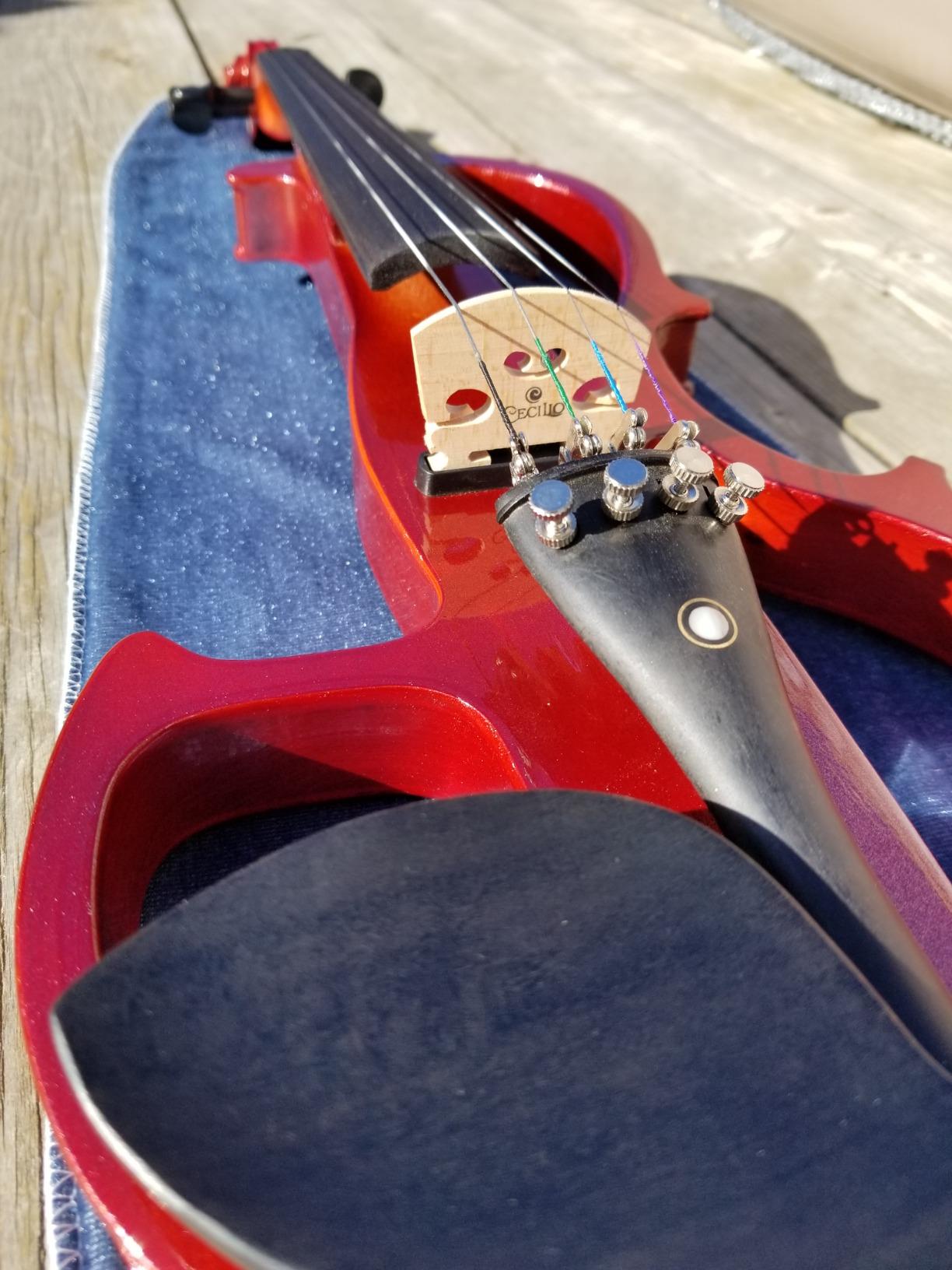
Out of the box, you get the violin, an impact-resistant hard case, a bow, rosin, headphones, and an aux cable. That means you can start playing immediately without any additional purchases. The sound through the headphone output is clean enough for practice, and when connected to an amplifier, the violin produces a tone that works well for rock and pop contexts where a pristine acoustic sound is not the priority.
It is worth being honest about the limitations. This is an entry-level instrument, and the build quality reflects that. Some players report durability issues with extended use, and the electronics are basic compared to the Yamaha or Kennedy options. If you are serious about tone quality and long-term reliability, you may eventually want to upgrade. But as a first electric violin to learn on, experiment with, and discover whether you even enjoy playing electric, the Cecilio is hard to beat.
What to Expect Sound-Wise
The Cecilio uses a basic piezo pickup system that delivers a functional but not refined amplified tone. Through headphones, the sound is clear enough for practice and intonation work. Through an amp, adding a touch of reverb helps round out the somewhat thin character of the pickup. For rock and metal styles where you will be running through effects pedals anyway, the raw tone matters less because you will be shaping it heavily.
Is This the Right First Violin for You
If you are a complete beginner who wants to try electric violin without a big financial commitment, the Cecilio is the safest choice. It is also a solid option for parents buying a first instrument for a teenager. Just set realistic expectations about long-term durability and plan to upgrade if you fall in love with playing electric violin.
4. Vangoa Electric Violin 4/4 – Budget Champion
Vangoa Electric Violin 4/4 Full Size Silent Electronic Violin Fiddle, Black
Solid maple body
Ebony fretboard
Carbon fiber tailpiece
6.35mm jack output
2 pounds lightweight
Pros
- Premium solid maple wood construction
- Carbon fiber tailpiece with 4 detachable fine tuners
- Extremely lightweight at just 2 pounds
- Complete beginner kit with case and headphones
- #1 bestseller in electric violins
Cons
- Lower average rating at 3.9 stars
- Some reports of tuning stability issues
The Vangoa Electric Violin currently holds the number-one bestseller spot in Amazon’s electric violin category, and its budget price point is the main reason why. I was genuinely surprised by the build quality for the cost. The solid maple body has a black metallic varnish finish that looks sharp, and the ebony fretboard provides smooth playing action that feels better than I expected at this price.
Weighing in at just 2 pounds, this is one of the lightest electric violins I have tested. That featherweight design reduces fatigue during long practice sessions, which is especially important for beginners still building up their stamina. The carbon fiber tailpiece with four detachable fine tuners makes it easy to dial in accurate tuning, even if the pegs themselves can be a bit finicky.
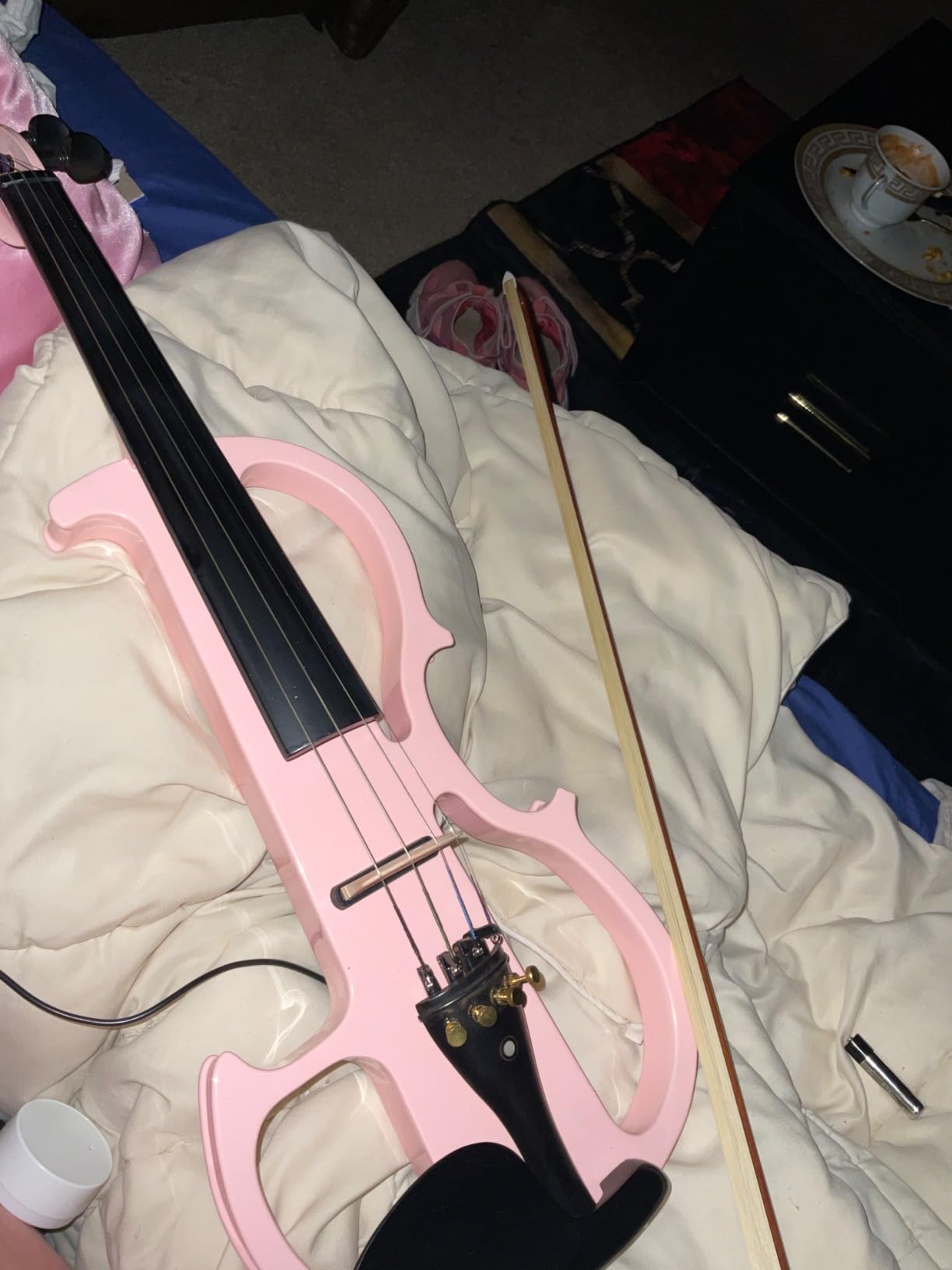
The kit includes a hard case, extra strings, rosin, and headphones, so you have the essentials to start practicing right away. The 6.35mm jack output connects to standard amplifiers and PA systems. For silent practice, the headphone output works well enough, though the tone through headphones is noticeably thinner than what you get from the Kennedy Bunnel Edge.
The 3.9-star average rating does tell a story. While many players love the value proposition, some report tuning stability issues that require frequent adjustments. Others have noted that the included accessories are basic quality. This is very much a get-what-you-pay-for situation. For the price, the Vangoa delivers a playable electric violin, but set your expectations accordingly.

Tuning Stability and Setup Tips
The tuning stability issues some players report are common with budget instruments and are usually fixable. Applying peg compound to the pegs helps them grip without slipping. The fine tuners on the carbon fiber tailpiece are your best friend here, allowing micro-adjustments that keep each string locked in. If you are handy, a visit to a local luthier for a professional setup can transform this violin’s playability for a modest fee.
Best For New Players on a Tight Budget
The Vangoa is the best electric violin under $150 for players who want to test the waters without a significant investment. It is also a solid choice for younger students or casual players who need a practice instrument. If you plan to perform live or record seriously, you will likely want to upgrade to the Yamaha or Kennedy options eventually.
5. Pyle Full Size Electric Violin Kit – Solid European Maple
Pyle Full Size Electric Violin Kit – 4/4 Solid Wood Silent Fiddle with Hard Case, Bow, Ebony Fittings, and Digital Tuner
Solid European maple top
Linden body with maple veneer
Tone and volume controls
Carbon fiber tailpiece
Digital tuner included
Pros
- Complete kit with hard case
- bow and accessories
- Tone and volume control knobs on the body
- Solid European maple construction
- Digital tuner included for easy tuning
- Ebony fingerboard and fittings
Cons
- Lower review count suggests newer product
- Plywood construction underneath the maple veneer
The Pyle Full Size Electric Violin Kit occupies an interesting middle ground between ultra-budget options and mid-tier instruments. I appreciate that Pyle includes a digital tuner in the kit, which is something most competitors leave out. For beginners who are still training their ear, having a built-in reference for pitch makes the learning curve significantly less frustrating.
The body uses solid European maple for the top, back, and sides over a linden plywood core. This hybrid construction keeps the cost down while still providing decent resonance. The ebony fingerboard and fittings feel smooth under the fingers, and the carbon fiber tailpiece with fine tuners is a nice upgrade over basic tailpieces found on competing budget models.
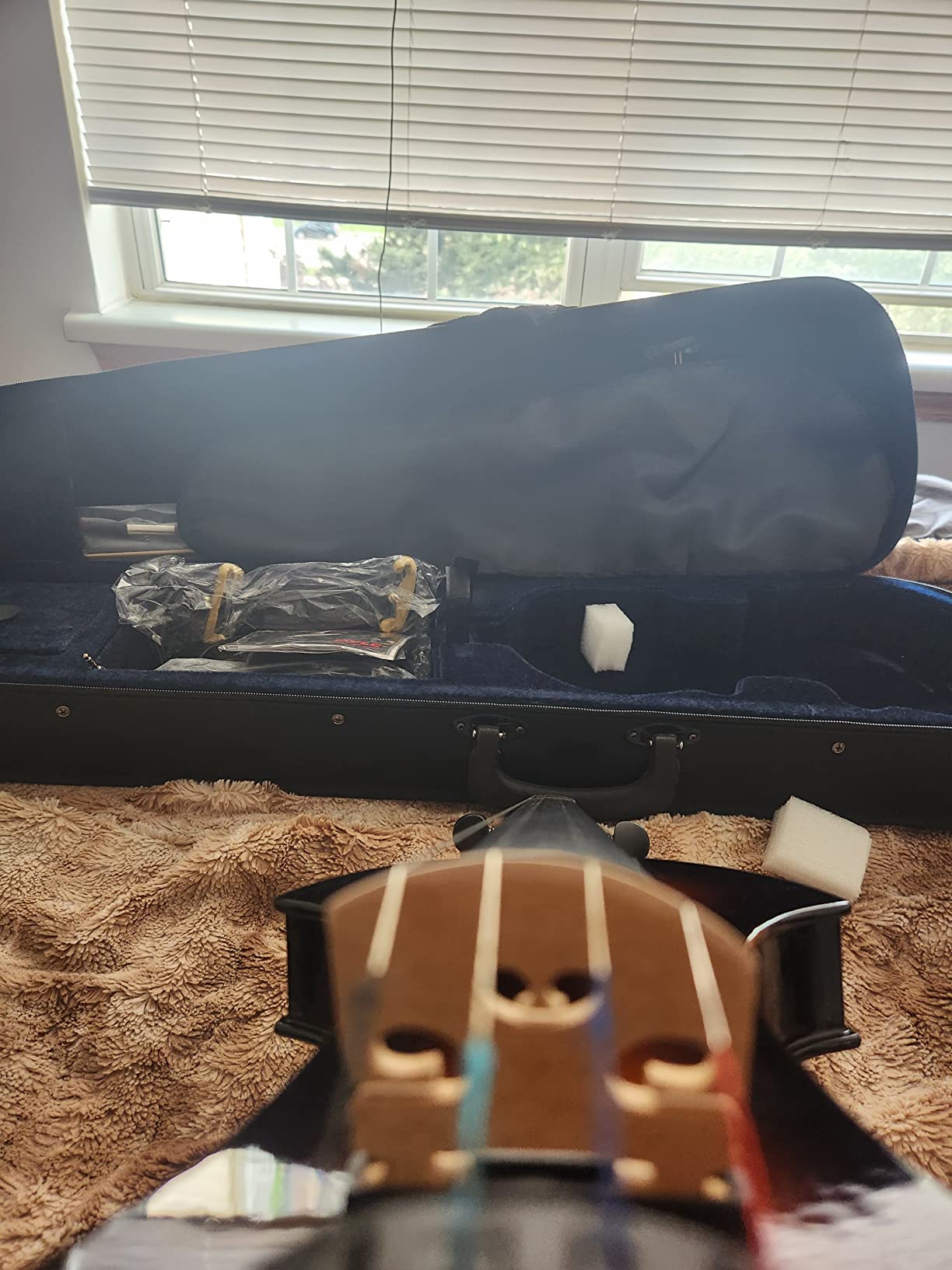
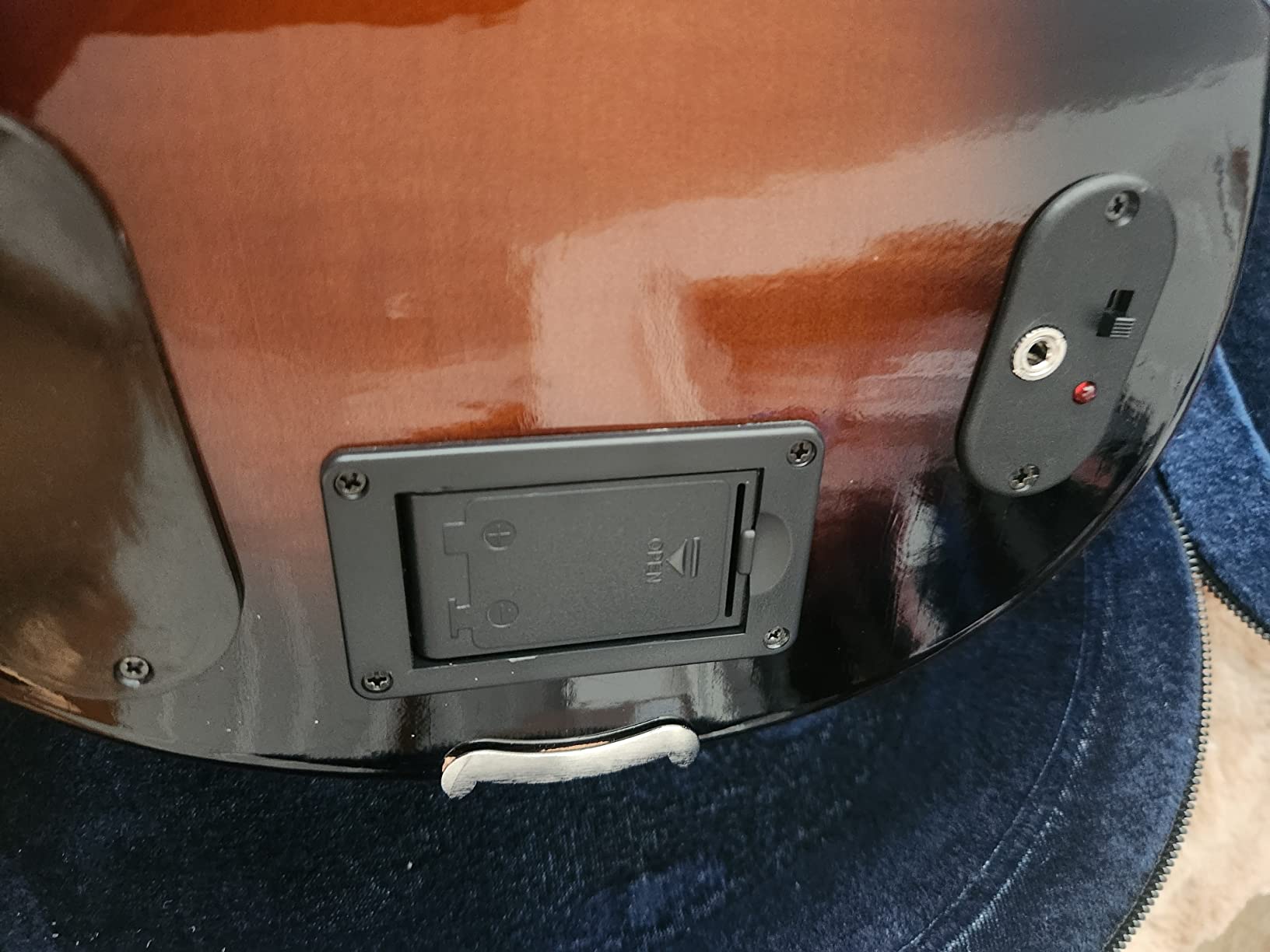
The tone and volume control knobs on the front of the body are conveniently positioned for quick adjustments. I found this especially useful when switching between silent headphone practice and amplified playing. The 3.5mm AUX output works with standard headphones, and the violin produces enough volume through a practice amp for small room performances.
The included foamed triangle hard case provides decent protection for transport, and the brazilwood bow gets the job done for beginner practice. With 73 reviews and a 4.0-star average, this is a relatively new product that is still building its reputation. The lower review count means less community feedback to rely on, but the early responses are encouraging.
Headphone Practice Experience
The Pyle violin delivers a solid headphone practice experience for the price. The tone through headphones is clean enough to hear your intonation and bowing articulation, though it lacks the warmth of more expensive instruments. The volume control lets you set a comfortable listening level, and the silent practice capability works as advertised for apartment dwellers.
How It Compares to the Cecilio
The Pyle and Cecilio occupy similar price territory, and the choice between them comes down to priorities. The Pyle includes a digital tuner and has tone controls on the body, while the Cecilio has more community reviews and a proven track record. If you value having tuning reference built into your kit, go with the Pyle. If you want the reassurance of over 1,500 reviews, the Cecilio is the safer bet.
6. Aliyes Electric/Acoustic Violin Set – Dual-Mode Versatility
Aliyes Electric/Acoustic Violin Set for Beginners Special Designed Gift for Beginner with Hard Case,Bow,Extra Strings (4/4/Full-size)
Acoustic and electric dual mode
Hand-carved solid spruce top
Ebony fingerboard
Alloy tailpiece with 4 fine tuners
Full 4/4 size
Pros
- Dual acoustic and electric capability in one instrument
- Complete kit with case
- bow
- rosin and extra strings
- Hand-carved solid spruce top
- Beautiful design and finish
- Projects louder acoustically than expected
Cons
- Requires setup adjustments including bridge height
- Pegs can slip and require force to hold
- Not truly ebony fingerboard (painted black)
- Strings may break on arrival
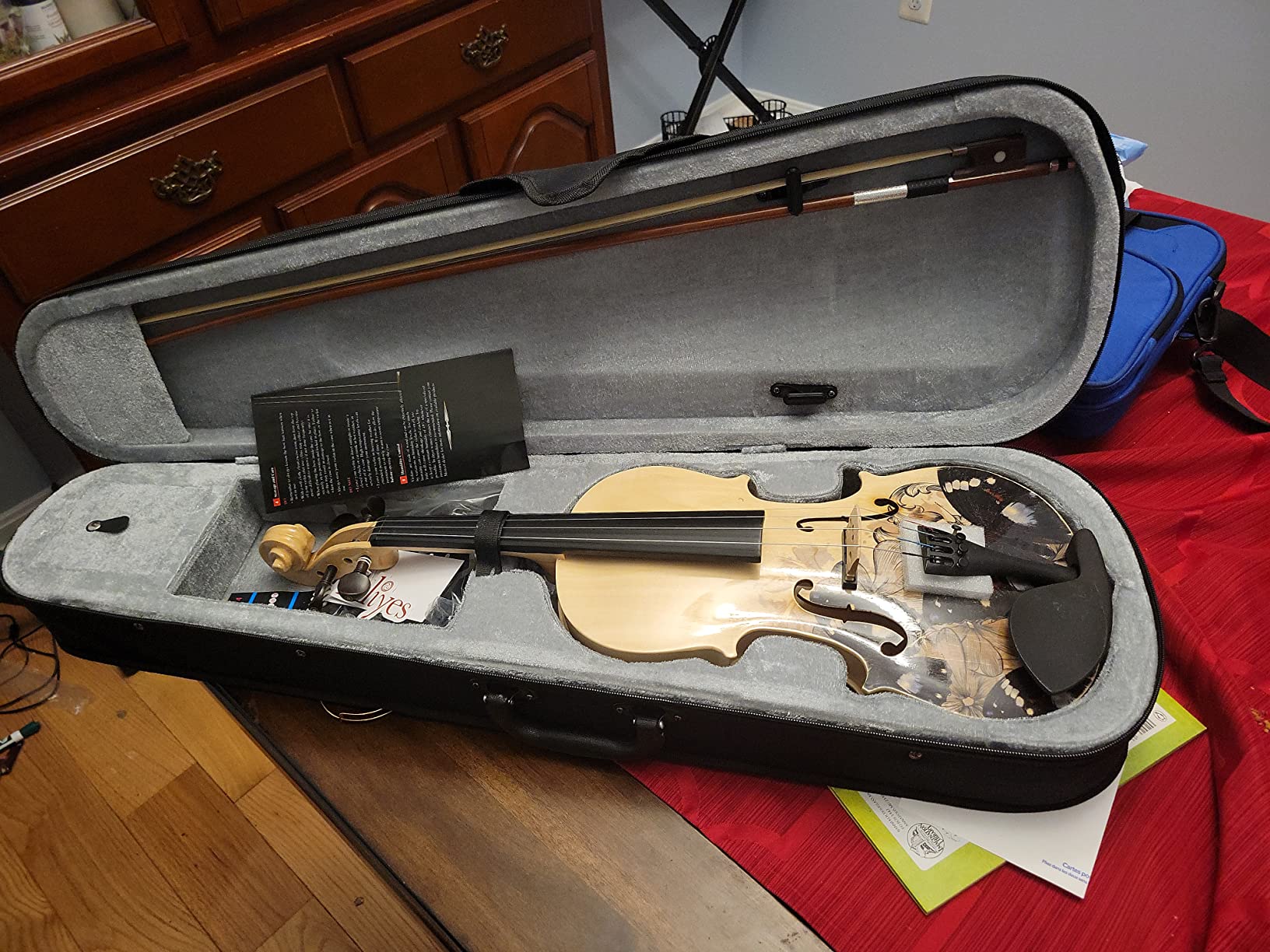
The Aliyes Electric/Acoustic Violin caught my attention because it does something the others on this list cannot. You can play it acoustically without any amplification, and then switch to electric mode with headphones for silent practice. That dual capability makes it a versatile option for players who want both worlds without buying two separate instruments.
The hand-carved solid spruce top gives this violin a warmer acoustic voice than solid-body electrics. I found that the acoustic projection is surprisingly loud for the price, making it usable for casual playing without an amp. The ebony fingerboard, pegs, and chin rest provide a traditional feel, though some players have noted that the fingerboard is painted black rather than genuine ebony.

Out of the box, expect to do some setup work. The bridge height typically needs adjustment, and the pegs can slip initially until they settle in. Some players report strings breaking on arrival, so having the included extra strings ready is important. If you are not comfortable making these adjustments yourself, a quick visit to a luthier will get this violin playing its best.
The kit includes a lightweight form-fitting hard shell case, a bow, an adjustable shoulder rest, a violin bridge, and extra strings. The value proposition is strong for beginners who want a versatile first instrument. Just be prepared for the initial setup phase and set realistic expectations about the materials at this price point.
Acoustic vs Electric Mode Performance
In acoustic mode, the Aliyes produces a pleasant tone that works for practice and small informal settings. Switch to electric mode and the pickup delivers a clean signal suitable for amplification or headphone practice. The transition between modes is seamless, which makes this a genuinely practical hybrid for players who split their time between acoustic and electric playing.
Ideal Player Profile
This is the best electric violin for players who want the flexibility to play acoustically at times and electrically at others. It works well for students who are not sure whether they need a full electric instrument and for casual players who enjoy both modes. If you exclusively need silent practice and amplified performance, a dedicated solid-body electric like the Yamaha or Cecilio will serve you better.
7. ALIYES Premium Carbon Fiber Electric Violin – Featherweight Durability
Premium Carbon Fiber Electric Violin Full Size 4/4,Professional Silent Electric Violin for Adults,Teens,Electric Fiddle with Pro Pick up-ZNDS-2304
Carbon fiber and ABS body
Mechanical tuning pegs
Pro pickup system
1.5 pounds
6.35mm jack output
Pros
- Carbon fiber construction is extremely sturdy and durable
- Ultra-lightweight at just 1.5 pounds
- Mechanical pegs unaffected by weather and humidity
- Professional pickup with clear sound reproduction
- Easy to tune and holds tuning well
Cons
- Feels plasticky to some users
- Bow not included in some packages
- Requires 9V battery not included
- Decorative decals may be fragile
The ALIYES Premium Carbon Fiber Electric Violin takes a different approach from the wood-body instruments on this list. The carbon fiber and ABS construction makes this violin practically indestructible, which immediately stood out to me. If you are a gigging musician who travels frequently or a parent buying for a younger student, the durability factor alone is worth serious consideration.
Weighing just 1.5 pounds, this is the lightest electric violin in the roundup. I found it remarkably comfortable to hold for extended sessions, and the reduced weight makes it accessible for younger players or anyone who experiences shoulder fatigue with heavier instruments. The mechanical tuning pegs are a smart feature because they are completely unaffected by temperature and humidity changes that cause traditional wooden pegs to stick or slip.
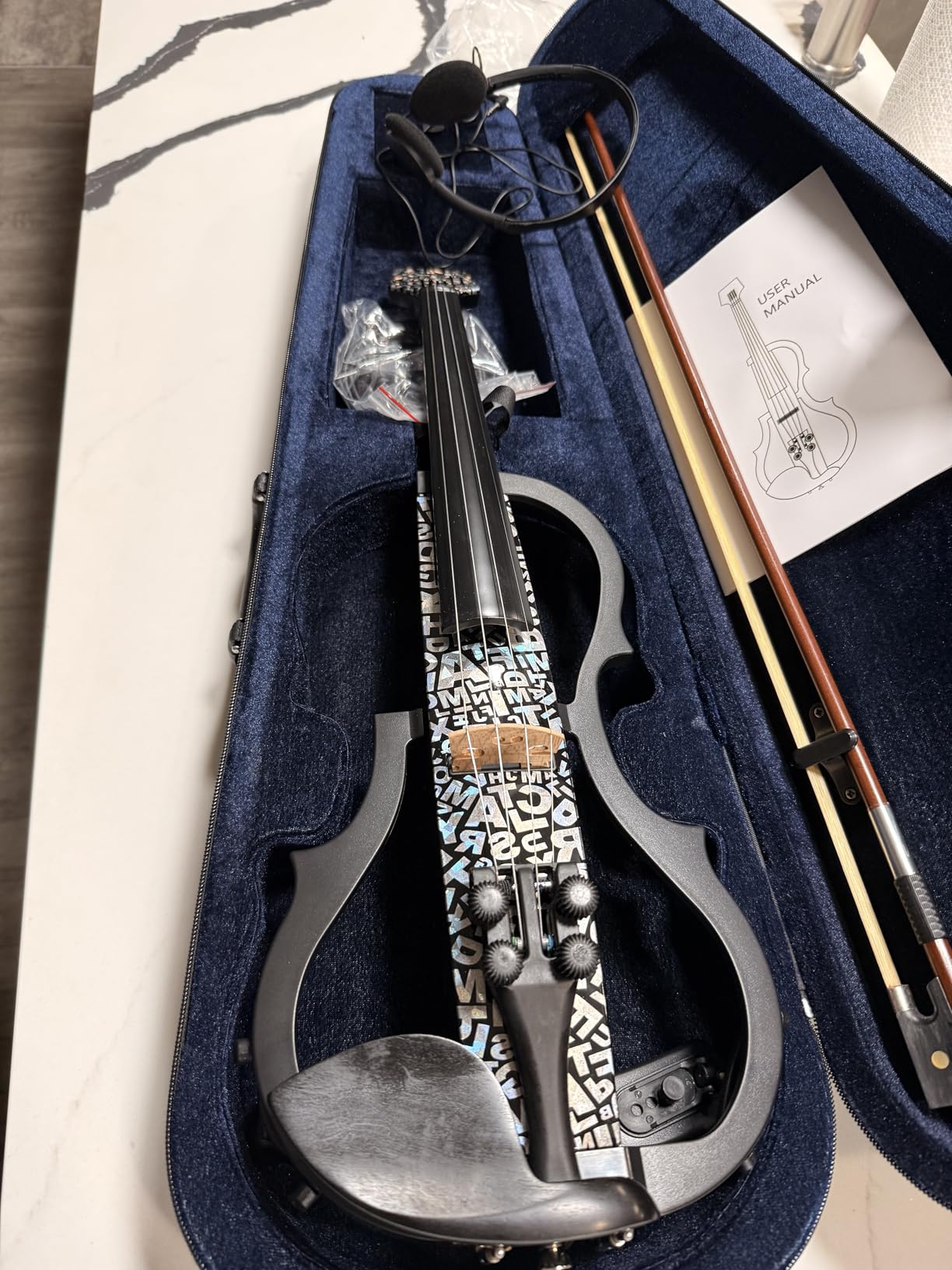
The professional pickup system delivers clear sound reproduction through both headphones and amplifiers. I was pleasantly surprised by the clarity, especially in the mid and upper frequencies where cheaper piezo pickups tend to sound harsh. The 9V battery powers the active electronics, giving you more tonal consistency than passive systems provide.
The main trade-offs are worth noting. Some players feel the carbon fiber and ABS body has a plasticky quality to the touch, which is a fair assessment compared to warm wood finishes. The bow is not included in some packages, so check the listing carefully before ordering. The decorative decals on the body can also be fragile and may show wear over time. With 44 reviews, this is a less proven option, but the carbon fiber construction concept is sound.
Durability in Real-World Conditions
The carbon fiber body shrugs off the kind of bumps and scrapes that would dent or crack a wooden violin. Players in humid climates will appreciate that the material does not warp or absorb moisture. The mechanical pegs maintain their tuning through seasonal changes that typically cause headaches for acoustic violin owners. For a travel instrument or a practice violin that lives in a car between gigs, the durability is a genuine advantage.
Who Benefits Most From Carbon Fiber
This violin is ideal for touring musicians, buskers, and students who need a rugged instrument that can take some abuse. It is also a smart choice for players in extreme climates where humidity and temperature fluctuations wreak havoc on wooden instruments. If aesthetic warmth and traditional materials matter to you, the wood-body options will be more satisfying.
8. Kinglos Advanced Electric/Silent Violin Kit – Artistic Expression
Kinglos. Visual-Art Advanced Electric Violin 4/4 Full Size Ebony Fittings
Hand-carved solid spruce body
Patented coloring technology
VPU-300 active pickup
Carbon fiber tailpiece
9V battery powered
Pros
- Patented unique coloring technology for individualized look
- Hand-carved solid spruce body with ebony fittings
- VPU-300 active pickup with volume and tone controls
- Complete outfit with case
- bow and accessories
- Highest rated at 4.4 stars
Cons
- Limited stock available
- Higher price than beginner options
- Requires separate 9V battery purchase
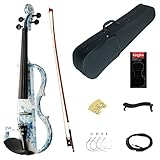
The Kinglos Advanced Electric Violin is the instrument I would point to if someone asked for an electric violin that doubles as a visual statement piece. The patented coloring technology creates artistic patterns on the body that you simply cannot find on any other instrument. The White Blue Flowers design is distinctive and eye-catching, and with 13 available variants, there is a visual style for every personality.
Beyond the striking aesthetics, the Kinglos delivers solid musical performance. The hand-carved solid spruce body provides a resonant foundation, and the ebony fingerboard, pegs, and chin rest give it a professional feel. The VPU-300 active pickup system runs on a 9V battery and offers volume and tone controls that give you real-time sound shaping capability during performances.
The complete outfit includes a case, bow, aux cable, shoulder rest, extra bridge, and strings. I appreciate that Kinglos includes line out, mic, and phone sockets, giving you flexible connectivity options for different performance scenarios. The on/off switch is a small but practical detail that prevents battery drain when the violin is not in use.
With a 4.4-star average rating, the Kinglos actually has the highest rating among the budget and mid-tier options on this list, though the review count is lower at 25 reviews. The limited stock is worth noting, as popular variants tend to sell out quickly. If you see a design you love, I would not wait too long to pull the trigger.
The Coloring Technology Explained
Kinglos uses a patented process to apply artistic patterns and colors to the instrument body without compromising the acoustic properties of the wood. Unlike stickers or wraps that can peel, this coloring is integrated into the finish. The result is a violin that looks like a custom art piece while maintaining the tonal characteristics of a traditional spruce-body instrument.
Stage Presence and Visual Impact
If you perform live, the visual element matters. A uniquely colored electric violin becomes a conversation starter and helps you stand out in a sea of standard black and natural wood instruments. For worship bands, rock groups, and solo performers who want their instrument to be part of their visual brand, the Kinglos offers something genuinely different from every other option on this list.
How to Choose the Best Electric Violin for Your Needs?
Choosing the right electric violin comes down to understanding your primary use case, budget, and skill level. I have broken down the key factors that should influence your decision based on my testing experience and the patterns I found across hundreds of player reviews.
Pickup Type Matters More Than You Think
The pickup system is the heart of any electric violin. Piezo ceramic pickups, found in the Kennedy Bunnel Edge and Cecilio models, are the most common type because they are affordable and reliable. They capture string vibrations directly through the bridge, producing a clean signal that works well with effects processing. Passive pickups, like those in the Yamaha YEV104NT, do not require batteries but offer less tonal control. Active pickups, found in the Kinglos and ALIYES Carbon Fiber models, need a battery but deliver more consistent output and better signal-to-noise ratio.
Solid Body vs Acoustic-Electric Design
Solid-body electric violins, like most instruments on this list, produce almost no acoustic sound on their own. They are designed to be played through headphones or an amplifier. The Aliyes Electric/Acoustic hybrid is the exception, offering playable acoustic tone alongside its electric capabilities. If silent practice is your main goal, a solid-body design is actually preferable because it produces less ambient noise when practicing with headphones.
Budget Tiers and What to Expect
Electric violins under $200 from brands like Vangoa, Cecilio, and Aliyes offer playable instruments with complete accessory kits. They are great for testing whether you enjoy electric violin, but expect basic electronics and potential setup adjustments. The $200 to $500 range, where the Kennedy Bunnel Edge lives, delivers noticeably better build quality, professional setup, and warranty coverage. Above $500, instruments like the Yamaha YEV104NT provide premium materials, refined pickups, and the kind of tonal nuance that serious players demand.
Weight and Ergonomics for Long Sessions
Weight is a bigger factor than most beginners realize. Traditional acoustic violins weigh around 14 ounces. The ALIYES Carbon Fiber at 1.5 pounds and the Vangoa at 2 pounds are closest to that feel. The Yamaha YEV104NT at 6 pounds is noticeably heavier and takes adjustment. If you plan to practice for more than 30 minutes at a time, pay close attention to the weight specifications.
Silent Practice Capability
Every violin on this list supports headphone practice, but the quality of the headphone output varies. The Kennedy Bunnel Edge and Yamaha YEV104NT deliver the most satisfying headphone experience with clean, natural tone. Budget options like the Vangoa and Pyle are functional but thinner sounding through headphones. If silent practice is your primary reason for buying, prioritize models with active electronics for the best headphone tone.
Amplification and Effects Setup
To get the most from your electric violin, you will want an amplifier and possibly some effects pedals. A dedicated acoustic instrument amplifier is ideal for clean sound reproduction. For rock and metal styles, electric guitar amps combined with overdrive, delay, and reverb pedals open up creative possibilities. Forum players on Reddit consistently recommend starting with a quality practice amp and a simple reverb pedal before building a more complex signal chain. A carbon fiber bow, which several forum members recommended, can also improve your amplified tone by providing more consistent bowing pressure.
Frequently Asked Questions
What is the best electric violin brand?
Yamaha is widely regarded as the best electric violin brand for overall quality and reliability, with the YEV and SV series earning consistent praise from professional players. Kennedy Violins is the top choice for complete beginner outfits, while NS Design dominates the professional tier. For budget-conscious buyers, Cecilio and Vangoa offer the most popular entry-level options.
What is a good price for an electric violin?
A decent beginner electric violin costs between $120 and $250, including models from Cecilio, Vangoa, and Aliyes that come with complete accessory kits. Mid-range instruments from $250 to $500 offer better build quality and electronics, with the Kennedy Bunnel Edge being a standout. Premium electric violins like the Yamaha YEV104NT run $500 to $1,000 and provide professional-grade tone and materials.
Do electric violins sound better?
Electric violins do not necessarily sound better or worse than acoustic violins. They sound different. Electric violins excel in amplified settings, offering feedback resistance, effects processing capabilities, and consistent volume control. However, they lack the natural acoustic resonance that traditional violins produce. Many players find that quality electric violins like the Yamaha YEV104NT produce a tone that closely mimics an acoustic violin when properly amplified.
What are the disadvantages of playing an electric violin?
The main disadvantages of electric violins include the need for amplification to hear your full sound, the added weight compared to acoustic violins, reliance on batteries for active electronics, and the initial adjustment period for the different feel and balance. Budget electric violins under $200 often have inferior tone quality and may require professional setup. Electric violins also lack the natural resonance of acoustic instruments, which some classically trained players miss.
Final Verdict
After reviewing all 8 instruments, the Yamaha YEV104NT remains my top pick for the best electric violin in 2026 because of its organic tone, elegant simplicity, and professional build quality. The Kennedy Violins Bunnel Edge is the smartest choice for beginners who want a complete, ready-to-play outfit with lifetime warranty protection. And for budget-conscious players, the Cecilio Silent Electric Violin offers unbeatable value as the most popular electric violin on the market with over 1,500 reviews.
The right electric violin for you depends on where you are in your musical journey. Start with your budget, consider your primary use case, and choose the instrument that feels like the right fit. Any of the violins on this list will get you playing and amplifying your sound. The most important thing is to start making music.