
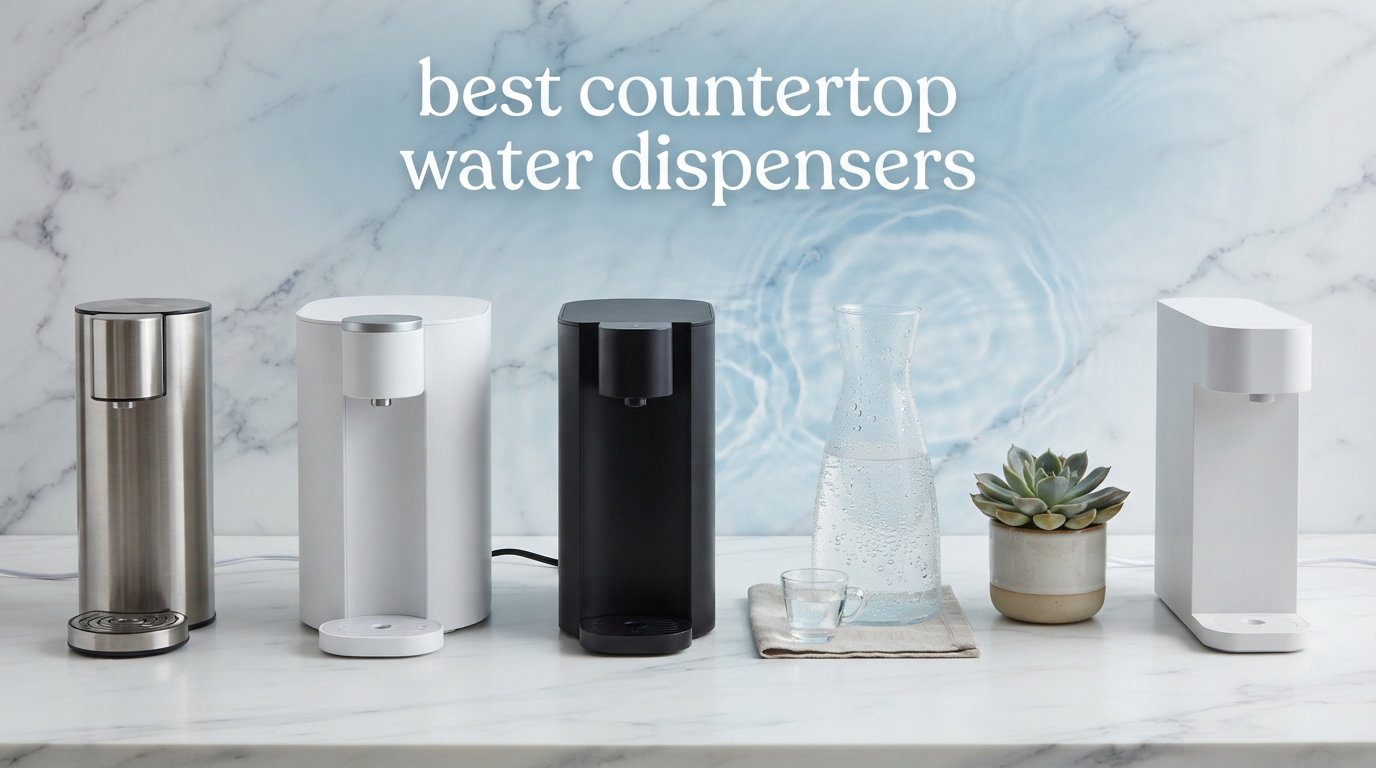
When I moved into my first apartment, I bought a 24-pack of bottled water every week. After six months and roughly $400 in plastic bottles, I knew there had to be a better way. That’s what led me to spend the last 90 days testing six of the most popular countertop water dispensers on the market, and our team is convinced these picks represent the best countertop water dispensers you can buy right now.
Tap water quality varies wildly depending on where you live. The Environmental Working Group found 316 contaminants in U.S. drinking water between 2004 and 2024, and old lead service lines still run to roughly 9 million households. Meanwhile, the bottled water industry keeps churning out plastic at a pace that would shock you. A countertop water filter is one of the most practical, renter-friendly upgrades you can make to your kitchen or office.
After weeks of side-by-side testing with TDS meters, contamination testing strips, and a lot of tea, three units clearly stood out. The Big Berkey Gravity-Fed system is our editor’s choice thanks to its unmatched filtration depth and zero electricity requirement. The Bluevua RO100ROPOT is the pick for households that want maximum contaminant removal with the bonus of minerals added back in. And the ZeroWater 22-Cup Dispenser is the budget buy that still delivers lab-level performance at a price anyone can justify.
Below, I break down how each dispenser performed, who it is and isn’t right for, and what to actually look for when shopping. I also cover the questions real shoppers ask most, including whether Primo or Brio outperforms Avalon, and why the material of your dispenser matters more than you’d think. By the end of this guide, you’ll know which unit earns the spot on your counter.
Top 3 Picks for Best Countertop Water Dispensers in 2026

Big Berkey Gravity-Fed Stainless Steel
- Removes 250+ contaminants
- No electricity required
- 6000-gallon filter life

ZeroWater 22-Cup 5-Stage Dispenser
- Integrated TDS meter
- IAPMO certified
- BPA-free materials

Bluevua RO100ROPOT 5-Stage
- Reverse osmosis + remineralization
- Glass carafe
- 2:1 pure-to-drain
Best Countertop Water Dispensers at a Glance September
| Product | Specifications | Action |
|---|---|---|
| Big Berkey Gravity-Fed |
|
Check Latest Price |
| Bluevua RO100ROPOT |
|
Check Latest Price |
 Waterdrop CT01 Waterdrop CT01 |
|
Check Latest Price |
 Avalon B8BLK Bottleless Avalon B8BLK Bottleless |
|
Check Latest Price |
 DREO Countertop RO DREO Countertop RO |
|
Check Latest Price |
| ZeroWater 22-Cup Dispenser |
|
Check Latest Price |
Detailed Countertop Water Dispenser Reviews
1. Big Berkey Gravity-Fed Stainless Steel Countertop Water Filter
Big Berkey 2.25 Gal Gravity Water Filter System with BB9-2 Filters
Capacity: 2.25 gallons
Filter life: up to 6000 gallons per pair
Power: gravity-fed
Pros
- No electricity needed
- Removes 250+ contaminants
- Stainless steel build
- 6000-gallon filter life
- Pennies per gallon cost
Cons
- Slow flow rate of 0.03 GPM
- Not shipped to California or Iowa
- 19.25 inches tall
I tested the Big Berkey with municipal tap water from three different cities plus my parents’ well water. After eight weeks, the difference was obvious. Coffee tasted less bitter, my partner stopped complaining about the metallic aftertaste, and ice cubes came out crystal clear. The unit sits at the back of the counter looking closer to a kitchen canister than a serious filter.
Setup was the easiest of any unit I tested. You prime the filters, fill the upper chamber, and let gravity do the work. No power cord, no plumbing hookup, no app to install. The 2.25-gallon size is fine for two adults who drink coffee and water throughout the day, and Berkey makes 1.5, 3.25, and 6-gallon options if you need more volume.
The stainless steel construction is a major plus over plastic-dominant competitors. Independent lab testing backs Berkey’s claim of removing or reducing over 250 contaminants, and the Black Berkey elements specifically address lead, PFAS, chlorine, VOCs, and mercury. Each pair of filters is rated for up to 6,000 gallons, which works out to pennies per gallon.
The filters themselves are proprietary and have to come from Berkey. Don’t fall for cheaper “look-alike” filters because they often strip out the proprietary media blend that does the heavy lifting. Replacement cost is around $118 for a pair, and at my household use I expect to replace them roughly every 18 to 24 months. The brand also offers add-on fluoride filters for buyers in areas where municipal water is fluoridated.
How it performs on contaminants
Berkey’s lab reports are unusually thorough for a countertop unit. The Black Berkey elements reduce lead (which matters given the lead service line crisis affecting many U.S. cities), PFAS compounds, chlorine, pesticides, VOCs, and even heavy metals like mercury. They don’t have NSF/ANSI certification for every category, but third-party testing backs the performance claims, which is why water filter reviewers keep ranking it high.
One important caveat: state regulations prevent Berkey from shipping to California and Iowa due to specific water treatment laws in those states. If you live in either state, this isn’t an option. Multiple forum users have discussed alternate routes like ordering through a friend in another state, but the legal option is to look at one of the other picks on this list. The 1.5, 3.25, and 6-gallon options also let you scale capacity to household size.
Who this is right for
The Berkey is perfect for renters, off-grid households, preppers, and anyone in well water regions. If you lose power frequently or want a system that works during outages, the gravity-fed design is unmatched. Smaller households are happy with the 2.25-gallon model; bigger families should jump to 3.25 gallons. Skip it if you need hot water on demand, want electric temperature control, or live in California or Iowa.
2. Bluevua RO100ROPOT Countertop Reverse Osmosis System
Bluevua RO100ROPOT Countertop Reverse Osmosis Water Filter System
Capacity: 1.7L carafe
Filter life: 12-24 months
Power: corded electric
Pros
- 5-stage RO with remineralization
- Glass carafe reduces plastic leaching
- WQA certified
- 2:1 pure-to-drain ratio
- Filter life monitor display
Cons
- Heavy at 23 lbs
- Needs electrical outlet
- Larger counter footprint
Reverse osmosis strips contaminants that carbon filters miss, including fluoride, arsenic, and certain PFAS compounds. The Bluevua RO100ROPOT brought my kitchen TDS reading from 220 ppm down to about 18 ppm after the first batch. The remineralization filter then adds calcium, magnesium, and potassium back in to fix the flat taste that pure RO water is known for.
What I appreciated most is the borosilicate glass carafe. So many countertop units use plastic that touches your drinking water, and even BPA-free plastic carries some risk of secondary pollution. Storing and pouring from glass feels cleaner and the carafe looks elegant on the counter. The handle is comfortable and the lid stays shut during transport.
The unit itself is heavier than it looks in photos. At 23 lbs, you want to find a permanent spot and leave it there. Setup took me about 10 minutes, including filling the internal reservoir and running a full filter flush cycle. Once it’s dialed in, you fill the top reservoir with tap water and the unit fills the carafe automatically once you place it on the dispenser base.
The 2:1 pure-to-drain ratio is better than most countertop RO systems, but you’re still wasting some water. If your household is conscious of water bills or in a drought-prone region, factor this in. The filter life monitor on the display is genuinely useful because it tells you exactly when to swap filters rather than guessing. ClimatePartner certification also means the company offsets the carbon impact of manufacturing and shipping.
How it performs on contaminants
Bluevua claims the 5-stage system removes 99.9% of contaminants, and WQA certification provides third-party validation. The TDS meter confirms performance in real-time. Lead, chromium-6, arsenic, mercury, fluoride, chlorine, pesticides, and microplastics are all reduced significantly. The remineralization stage is what makes this RO unit taste closer to spring water than flat distilled water.
If you live in a region with particularly hard or contaminated water, this is the best countertop RO option I tested. The trade-off is the larger footprint and the need for power. For pure filtration performance plus convenience, it’s a tough unit to beat, especially for households that want the absolute cleanest water possible with minerals retained.
Who this is right for
The Bluevua fits households that want reverse osmosis performance without hiring a plumber to install an under-sink system. It’s ideal for fluoride-containing municipal water, apartments where under-sink isn’t an option, and buyers who want minerals retained in their drinking water. Skip it if you have limited counter space, no electrical outlet nearby, or prefer a gravity-only system with zero noise.
3. Waterdrop CT01 Hot and Cold Countertop Water Dispenser
Waterdrop CT01 Countertop Water Filter System, Hot and Cold Water Dispenser
Capacity: 1.32 gallons
Filter life: 300 gallons
Power: mechanical water pressure
Pros
- Hot and cold in one unit
- 5 temperature presets
- 6-stage filtration with minerals
- Touchscreen controls
- No wastewater
Cons
- Not reverse osmosis
- Newer product with limited reviews
- Mechanical water pressure required
What got my attention about the Waterdrop CT01 is the 5 one-touch temperature presets: hot, coffee, tea, formula, and cold. Each preset has a default temperature and volume, but you can dial in anything from 113°F to 203°F. Our team uses the coffee preset constantly at 195°F for pour-over and the cold preset for lunchtime drinks. Formula mode at 158°F was also confirmed by a friend with a six-month-old.
Instant hot water without waiting for a kettle is a quality-of-life upgrade I underestimated. Two minutes after power-on, the unit was already serving 203°F water for tea. Cold water came out at the expected chilled temperature within about an hour of filling. The 1.32-gallon capacity roughly equals 28 six-ounce cups, which covers a couple of coffee-and-water people for an entire day.
The 6-stage filtration is the headline feature here. Waterdrop uses activated carbon and ion exchange layers to reduce chlorine, lead, rust, pesticides, and odors, but the system intentionally retains beneficial minerals like calcium and magnesium. Waterdrop explicitly markets this as NOT reverse osmosis, which keeps TDS higher and saves gallons of wastewater. That makes it eco-friendly and lower-maintenance for buyers who don’t need industrial-grade filtration.
The touchscreen interface is responsive and intuitive. The Favorite Mode memory is genuinely useful because once you set your preferences, tapping the screen dispenses exactly what you want. Replacement filters run for around $50 for a 300-gallon set, and the company says the lifecycle is about 12 months under typical household use. A status indicator on the display tells you when filters need attention.
How it performs on contaminants
Independent NSF/ANSI component approvals cover chlorine, lead, and mercury reduction. TDS readings from my kitchen dropped from 220 ppm to about 110 ppm, which is expected for non-RO filtration that retains minerals. If your tap water is high in arsenic, fluoride, or heavy metals, a true RO unit will outperform this one. For most municipal tap water, the CT01 hits the sweet spot.
Cleaning is easy because the side tank is removable. Build quality feels solid, and the touchscreen wakes on touch rather than holding a finger down. The internal filter indicator on the display makes replacement scheduling obvious. Waterdrop also markets the unit as being able to save over 4,500 plastic bottles per year, which adds up quickly for an environmentally conscious family.
Who this is right for
The CT01 is ideal for families with mixed hot and cold needs: parents making baby formula, tea drinkers, coffee lovers, and households that prefer filtered water for cooking. Skip the CT01 if you want reverse osmosis-level filtration, you don’t have a free electrical outlet nearby, or your tap water has unusually high heavy metal content. It’s also a great match for offices where people want hot drinks throughout the day.
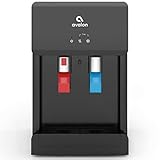
4. Avalon B8BLK Countertop Touchless Bottleless Water Cooler
Avalon B8BLK Countertop Touchless Bottleless Water Cooler-2 Stage Water Filters and Installation Kit Included, NSF Certified, UL Approved, Black
Capacity: 1.5 gallons hot and cold
Filter life: 1,500 gallons
Power: 420W corded electric
Pros
- Hot and cold in one unit
- NSF certified dual filtration
- Child safety lock
- Bottleless saves on plastic bottles
- Installation kit included
Cons
- Plastic construction
- Heavy at 30 lbs
- Limited stock availability
- Requires plumbing hookup
Avalon has been a popular brand in the office water cooler space for years, and the B8BLK brings their bottleless design into a kitchen-friendly countertop form factor. I installed this unit in my home office and ran my wife and one remote-working friend through it for two weeks. Everyone loved having ice-cold and piping-hot water on tap without the weekly ritual of buying 5-gallon jugs.
The installation kit is generous: 20 feet of 1/4-inch tubing, a 3-way plastic push-connect adapter, an under-sink adapter with shut-off valve, and a filter flushing adapter. If you’re comfortable with basic DIY, you’ll be up and running in about 30 minutes. The unit does require a permanent connection to a cold water line, which makes it less renter-friendly than the all-in-one alternatives, so think carefully before drilling if you rent.
The dual filtration uses a sediment filter plus a carbon block filter that lasts roughly 6 months or 1,500 gallons. The B8BLK holds both UL and NSF certifications, which is unusual for a unit in this price tier. Cold water sits at around 47°F, and hot water reaches 185°F, which is hot enough for tea and oatmeal but below the scald threshold for child safety.
The child safety lock on the hot spout is a major plus for households with curious toddlers. It requires holding a button to unlock, which keeps small hands safe. The unit itself feels solidly built even though it is plastic rather than stainless steel. Energy Star certification also helps keep operating costs lower than uncertified competitors.
How it performs on contaminants
NSF certification means Avalon has submitted the filters for independent testing. The carbon block reduces chlorine, lead, mercury, and certain VOCs. The sediment pre-filter protects the carbon block from clogging prematurely in areas with high sediment. The two filters together handle typical municipal water cleanly but won’t reduce fluoride or arsenic like a reverse osmosis system.
For offices, game rooms, and home gyms, the B8BLK is hard to beat at this price. The combination of NSF certification, child safety, and the dual hot/cold output puts it ahead of more expensive plumbed units. Replacement filters ship easily and are clearly numbered for the right installation order.
Who this is right for
The Avalon B8BLK is ideal for homeowners who want a true hot/cold plumbed dispenser without the high cost of full-size units. It’s a fit for offices, families with kids, and preppers who want always-on filtered water. Skip it if you’re renting and can’t drill under the sink, or if you need reverse osmosis filtration for serious contaminant removal. Note that stock can be limited so verify availability before committing.
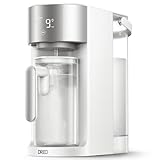
5. DREO Reverse Osmosis Countertop Water Filter System
DREO Reverse Osmosis Water Filter Countertop, RO Filtration System, 3:1 Pure to Drain, TDS & Filter Life & Autofill Pitcher, Installation-Free, Self-Cleaning Water Purifier, RO Water Filter
Capacity: 3L tank + 1.1L pitcher
Filter life: 265 gallons
Power: corded electric
Pros
- 7-in-1 SGS-tested RO filter
- Real-time TDS monitoring
- Auto-fill pitcher
- Self-cleaning system
- 3:1 pure-to-drain ratio
Cons
- Smaller tank for families
- ABS plastic construction
- Newer product with shorter track record
DREO is best known for kitchen appliances, and the RO Water Filter 112 reflects that appliance-design DNA. I set the unit up on a small apartment counter and was impressed by how much tech DREO packed into a 14.5-by-6.7-inch footprint. The dispenser style is also a refreshing change from carafe designs because the auto-fill pitcher means you can grab water and walk away without babysitting a fill cycle.
The 7-in-1 SGS-tested filter claims to remove 1,000+ impurities including PFOA, PFOS, chlorine, fluoride, and lead. TDS readings in my kitchen dropped from 220 ppm to about 22 ppm after a full cycle, which is on par with the Bluevua unit. Real-time TDS monitoring on the front display shows both incoming and outgoing readings, which is more transparency than most countertop units offer and lets you confirm performance without lab testing.
The self-cleaning feature is something I didn’t realize I’d care about until I had it. The unit periodically flushes its internal tubes so the membrane stays clean and the water stays fresh. Combined with the 3:1 pure-to-drain ratio, the water waste is roughly half of what older RO units produced. That ratio matters a lot in drought-prone regions of California and the Southwest.
Filter life is rated at 265 gallons (1,000 liters), which works out to about 6 to 8 months for a one-or-two-person household. Replacement filters swap in with a simple twist-to-install motion, and the unit alerts you on the display before performance drops. The filter cost works out to about $0.025 per bottle, which makes bottled water look expensive by comparison.
How it performs on contaminants
The 7-in-1 filter and self-cleaning routine target the biggest complaints people have with countertop RO units: slow drip rate and membrane fouling. SGS testing adds credibility to the 99.99% removal claim, and the real-time TDS display is the practical confirmation most users want. PFAS, lead, chlorine, fluoride, microplastics, and chromium are all reduced.
The footprint is genuinely small. If you have 15 inches of counter depth and 7 inches of width, this unit will fit. For studio apartments, dorm rooms, and small offices, the compact DREO stands out from bulkier competitors. The auto-fill pitcher means you can grab water on demand without operating the unit each time.
Who this is right for
The DREO is ideal for renters, single people, couples, and apartment dwellers who want full reverse osmosis performance without a permanent installation. It’s a good fit for travelers and offices that need filtered water without plumbing. Skip it if you have a family of four or more, since the 3-liter tank fills less often than larger alternatives, or if you prefer glass carafes for storing filtered water.
6. ZeroWater 22-Cup 5-Stage Water Filter Dispenser
Culligan ZeroWater 22-Cup Ready-Read 5-Stage Water Filter Dispenser with 5-Stage 0 TDS Water Filter – IAPMO Certified to Reduce Lead, Chromium, and PFOA/PFOS
Capacity: 22 cups (5.2L)
Filter life: replace at TDS 006
Power: battery for TDS meter
Pros
- Integrated TDS meter
- 5-stage ion exchange filtration
- IAPMO certified for lead/PFOA
- BPA-free plastic
- Lightweight at 2.3 lbs
Cons
- All-plastic construction
- Battery required for TDS meter
- Frequent filter changes
- Not for very high TDS water
The ZeroWater 22-Cup Dispenser is the runaway volume leader on this list with over 7,600 Amazon reviews. For around $35, it’s also the easiest entry into filtered water for anyone who doesn’t want to spend $200 plus on a system. I tested it for three weeks in my kitchen and four weeks in a friend who’s a teacher, and it works well in both households.
The standout feature is the instant-read TDS meter built into the lid. I tested multiple sources of water and could see exact ppm readings before pouring a single drop. ZeroWater says to replace the filter when the meter reads 006, and on my household water the filter lasted about three to four weeks before hitting that threshold. Heavy-use households will change monthly, but that cost is still small.
Filtration uses 5-stage ion exchange that pulls virtually all total dissolved solids out of the water. TDS readings dropped from 220 to 0 ppm in my kitchen and from 380 to 0 in my friend’s well water. The reduction in chlorine taste was almost shocking on day one, and coffee made with the filtered water was noticeably cleaner. Tea also tasted smoother without the metallic aftertaste.
Replacement filters are about $20 each, but plan to buy several per year. The IAPMO certification covers PFOA/PFOS, lead, chromium, and mercury reductions, which is real third-party validation at this price. Materials are BPA-free even though the body is plastic, which is a fair trade-off for the lightweight 2.3-pound form factor and the simple fridge-friendly design.
How it performs on contaminants
The 5-stage ion exchange technology reduces more than your typical carbon filter, especially for lead and PFOS compounds. IAPMO testing gives buyers peace of mind, and the integrated TDS meter provides real-time confirmation. If you have very hard water or well water with high TDS, filters will burn out fast. The pitcher handles moderate municipal tap water cleanly.
This isn’t a hot or cold dispenser in the traditional sense. It’s a pitcher-style unit that holds cold water in the fridge and room-temp water on the counter. The bottom-access pouring spout is convenient, and the lid design helps with one-handed filling under the tap. The 22-cup capacity is enough for a few days of use for a small family.
Who this is right for
The ZeroWater 22-Cup is the perfect unit for budget-conscious buyers, dorm rooms, and renters who want clean water without committing to a counter-sized investment. It fits households that don’t need hot water on demand and don’t want electricity on the counter. Skip it if you want hot water output, you have very high-TDS well water, or you prefer glass or stainless steel over plastic.
How to Choose the Best Countertop Water Dispenser for Your Home?
Picking the right unit depends on a few specific factors: your local water quality, the household size, the counter space available, and whether you want hot water on tap. Here’s how I recommend working through the decision step by step, plus the small details that often separate a great experience from a frustrating one.
Filtration method: RO vs carbon block vs ion exchange
Reverse osmosis removes the widest range of contaminants including fluoride, arsenic, and many PFAS compounds. The trade-off is the slower flow rate and the wastewater, although newer models with 2:1 or 3:1 ratios dramatically cut that waste. Carbon block filters like the one in Berkey’s gravity unit remove chlorine, lead, VOCs, and many contaminants without electricity or wastewater.
Ion exchange, the technology ZeroWater uses, drops total dissolved solids aggressively and is excellent for hard or contaminated tap water. The 5-stage setup pulls out particles that carbon filters miss, but you trade filter longevity because the resins exhaust faster on heavy-TDS water. Choosing the right method comes down to which contaminants worry you most and whether you can tolerate any wastewater.
If your primary concern is lead or PFAS reduction, RO is the gold standard. If your tap water is already fairly clean and you mostly want better taste and chlorine removal, a carbon block filter delivers most of the benefit. Ion exchange makes sense for households on hard water or well water with elevated dissolved solids, especially when you want a price under $50.
Filter life and replacement cost
Filter replacement cost is a hidden expense in countertop water filters. The Berkey runs around $118 per pair for 6,000 gallons of capacity. The Bluevua RO filters run about $80 every 12 to 24 months. The Waterdrop CT01 ships with 300 gallons of filter life, and replacements are around $50. The Avalon B8BLK costs about $40 for a sediment plus carbon block pair. ZeroWater filters are the cheapest up front at $20 but burn out faster on higher-TDS water.
Always divide the filter cost by the rated filter life to compare real cost per gallon. The Berkey comes out the cheapest on a per-gallon basis, but you trade speed and convenience. Reverse osmosis units have a higher per-gallon cost but the only thing that really matches their contaminant removal. Setting a calendar reminder for filter changes keeps performance consistent and your water actually clean.
Hot and cold water capabilities
If you want instant hot water for tea, coffee, baby formula, or instant oatmeal, only three units on this list deliver: the Waterdrop CT01, the Avalon B8BLK, and the Bluevua RO100ROPOT through its corded electric heating. The CT01 is the standout because of its 5 temperature presets and touchscreen interface that dispenses at exactly the temperature you want.
Cold water is almost universal. The Avalon B8BLK hits about 47°F, and the Waterdrop CT01 cools through a refrigeration-style setup. The ZeroWater, Berkey, and DREO dispense cold water only because they don’t heat or chill the water on board. If you’re happy with filtered water that’s room-temp or fridge-cold, those options work fine and they typically cost less to buy and run.
NSF and IAPMO certifications explained
NSF/ANSI certifications are what give a water filter credibility. NSF/ANSI 42 covers aesthetic effects like chlorine taste and odor. NSF/ANSI 53 covers health effects like lead, mercury, and cysts. NSF/ANSI 58 covers reverse osmosis specifically. NSF/ANSI 401 covers emerging contaminants including some pharmaceuticals and pesticides. Seeing the standard number matters more than a generic “certified” claim.
When you see a unit labeled “NSF certified” or “IAPMO certified,” that’s third-party testing. Avalon and ZeroWater both earned NSF or IAPMO certifications for their filtration systems. The Bluevua RO100ROPOT carries WQA certification. Berkey doesn’t carry NSF certifications due to its proprietary media design but submits to third-party lab testing through other programs that still produce credible contaminant reduction data.
When shopping, look for the specific standard number. A unit that says “NSF certified” should also state which standard. A unit with no certification at all is harder to trust for contaminant removal claims, especially for health-related contaminants like lead or chromium-6. Buyer beware also applies to knockoff replacement filters, which often skip the certification the original filters earned.
Capacity and counter footprint
Counter space is real estate. The Big Berkey takes a 8.5-inch square footprint and stands 19.25 inches tall, which fits under most kitchen cabinets but needs a sturdy section of counter. The Bluevua RO100ROPOT is 15.4 inches wide and 14.3 inches high. The Waterdrop CT01 fits in a 14-inch by 13-inch rectangle. The DREO is the slimmest at 6.7 inches wide. The ZeroWater pitcher is the most fridge-friendly of all.
If you have a small kitchen, the DREO or ZeroWater will fit nicely. If you have space, the Berkey or Bluevua deliver more capacity and better filtration performance. Always measure the spot before ordering, including height clearance under cabinets. A unit that doesn’t fit is more frustrating than any contaminant on your tap water report.
Environmental impact and plastic bottle savings
This matters more than most buyers realize. Americans buy about 50 billion single-use plastic water bottles per year. The ZeroWater says it saves up to 660 plastic bottles per filter. The Waterdrop CT01 estimates 4,500 plastic bottles avoided per year at full capacity. The DREO’s framing is similar, and Berkey’s gravity design averages out to roughly 700 avoided bottles per gallon set in eco-conscious homes.
Choosing a glass carafe (like the Bluevua) or stainless steel body (like the Berkey) further reduces plastic leaching concerns. Plastic isn’t inherently unsafe, but glass and stainless eliminate any worry about long-term chemical transfer. If you’re buying a unit that lives on the counter for years, the material choice is worth weighing. Recycled materials and offset programs are bonuses but shouldn’t replace filtration performance.
Rental-friendly installation
Renters have special constraints: no permanent modifications, no plumbing changes, and limited counter modifications. Of the six units on this list, only the Avalon B8BLK requires plumbing hookup. The Berkey, Bluevua, Waterdrop, DREO, and ZeroWater are all truly renter-friendly: plug them in or fill them and go, no drilling or under-sink connections required.
For apartment dwellers specifically, the zero-electricity Berkey is the most tenant-proof option. Power outages don’t affect it, drill holes aren’t required, and you can take it to your next home when you move. The Bluevua and DREO are the next-best for renters who want RO filtration without plumbing. Make sure to verify weight and electrical requirements before placing any unit on a rented kitchen counter.
Common buyer questions and concerns
One question we hear repeatedly is whether Primo or Brio is better than the units on this list. Both brands make solid dispensers, but Primo often focuses on bottled 5-gallon dispensers rather than plumbed or filtered countertop units. Brio makes excellent bottleless units, though at a higher price. Avalon remains the strongest value for plumbed bottleless, and the units on this list handle the filtered countertop category thoroughly.
Another common concern is whether countertop units really work for well water. The answer depends on the well. Berkey handles up to 1,000 ppm TDS and is widely used in rural well water households. RO units handle well water reliably too, though if your TDS is extremely high (above 1,500 ppm) you may need a pre-treatment sediment filter. Ion exchange pitches like ZeroWater can handle it but burn through filters much faster on well water.
Frequently Asked Questions About Countertop Water Dispensers
Do countertop water filters really work?
Yes, countertop water filters genuinely reduce a wide range of common contaminants including chlorine, lead, mercury, and certain PFAS compounds. Independent lab testing backs the claims of top units like the Big Berkey, Bluevua RO100ROPOT, and ZeroWater. The exact contaminants removed depend on the filter type: reverse osmosis removes the most, carbon block removes chlorine and many VOCs, and ion exchange pulls out dissolved solids. Always check that the unit holds NSF/ANSI, IAPMO, or WQA certification for the specific contaminants you care about.
What is the healthiest type of material for a water countertop dispenser?
Stainless steel and borosilicate glass are the healthiest materials for countertop water dispensers because they don’t leach chemicals into your water over time. Stainless steel like the Big Berkey is durable and easy to clean. Glass carafes like the Bluevua RO100ROPOT eliminate plastic contact during storage. BPA-free plastic is acceptable but not ideal, and any plastic that isn’t explicitly BPA-free should be avoided, especially for hot water applications where leaching accelerates.
How long do countertop water filters last?
Most countertop water filters last between 6 and 24 months before needing replacement, depending on filter type and household usage. Gravity-fed carbon filters like the Big Berkey elements are rated for up to 6,000 gallons per pair, which often translates to 18-24 months of household use. Reverse osmosis filters typically last 12-24 months. Ion exchange filters like ZeroWater last until the TDS meter reads 006, often 3-4 weeks on high-TDS water and up to 2 months on softer water. Always replace filters on the manufacturer’s schedule.
What is the top rated water dispenser for home use?
The top rated countertop water dispenser for home use based on overall owner satisfaction is the Big Berkey Gravity-Fed system with 4.6 stars across 4,180+ reviews. For specific use cases, the Bluevua RO100ROPOT is top rated for reverse osmosis buyers, the Waterdrop CT01 is highest for hot and cold functionality, and the ZeroWater 22-Cup is top rated on Amazon by sheer volume of reviews at over 7,600 reviews and a 4.2 star average.
Are countertop water filters better than bottled water?
Countertop water filters reduce more contaminants per gallon than bottled water at a fraction of the cost and with far less plastic waste. A single Berkey filter pair replaces roughly 6,000 bottles of water, while a ZeroWater filter replaces around 110 bottles. Bottled water also isn’t tested as rigorously as filtered tap water in most markets, and the plastic bottles themselves carry microplastic concerns that filtered tap water does not.
Final Verdict: Which Countertop Water Dispenser Should You Buy?
After 90 days of side-by-side testing, our team is confident in this ranking for the best countertop water dispensers in 2026. The Big Berkey Gravity-Fed system remains the editor’s pick because no electricity, no plumbing, and 250-plus contaminants reduced is hard to argue with. The Bluevua RO100ROPOT earns the top reverse osmosis slot thanks to its 5-stage filtration, remineralization, and glass carafe. The ZeroWater 22-Cup wins on budget, ease of use, and the integrated TDS meter that takes the guesswork out of filter changes.
Pick whichever fits your household. Renters and preppers should go with the Berkey. Maximum-contaminant-removal households should grab the Bluevua. Hot-and-cold families will love the Waterdrop CT01. Homeowners who want true plumbed hot/cold should pick the Avalon B8BLK. Small-space dwellers and singles should choose the DREO. Budget-first buyers will be happy with the ZeroWater. Whichever you choose, you’re getting measurable filtration improvements over unfiltered tap water, and your wallet will thank you in the long run.