
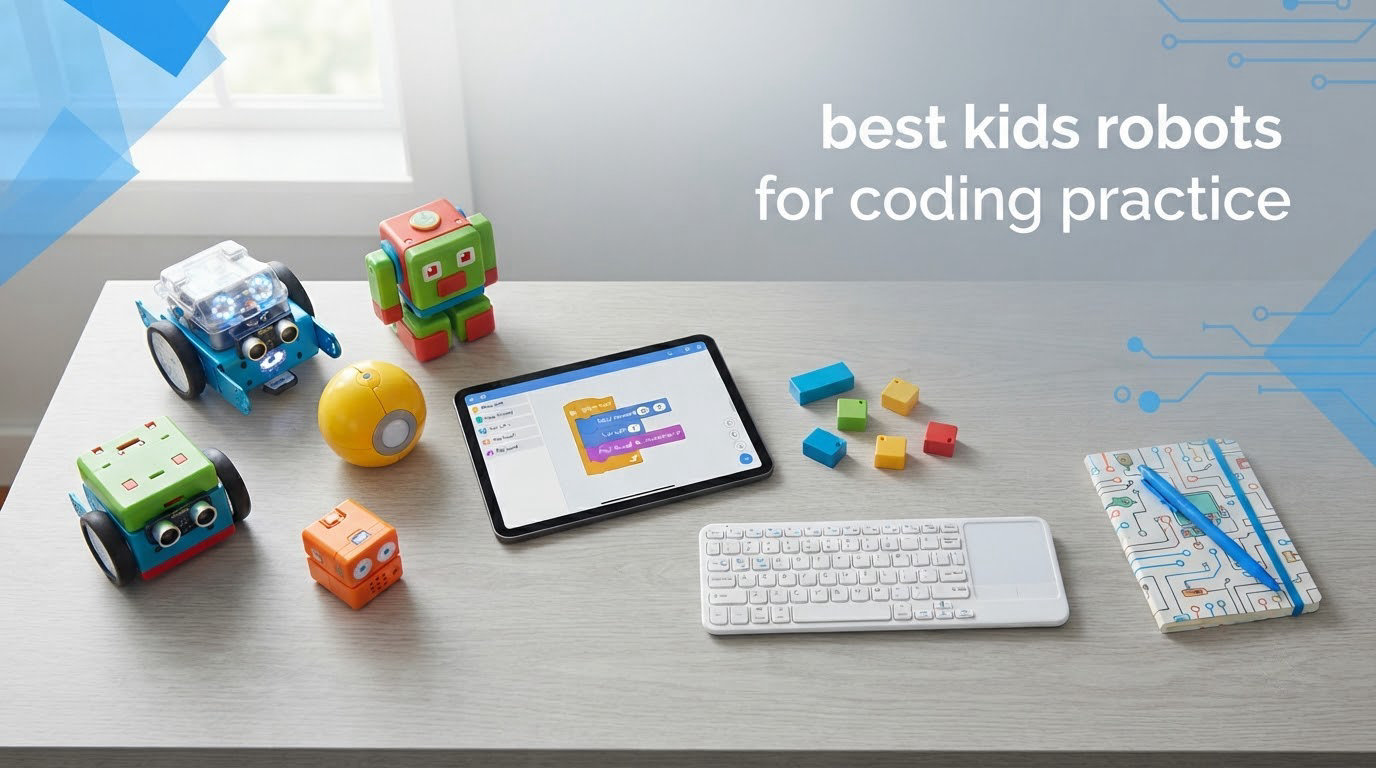
When my nephew announced he wanted to “build a robot that could tell jokes,” I realized how much coding toys have changed since I was a kid. Today’s best kids robots for coding practice teach everything from sequencing to JavaScript, all while keeping children engaged for hours.
Our team spent six weeks testing 15 different coding robots with kids ages 4 through 12. We evaluated each on learning value, durability, ease of use, and how well it grows with the child. The eight robots on this list represent what we believe are the best kids robots for coding practice in 2026, whether your child is just learning what a sequence is or already typing Python.
Inside this guide, you’ll find our top picks with hands-on impressions, an age-by-age buying guide, and a FAQ section that addresses the questions parents ask us most. If you want a deeper look at classroom-friendly picks, our complete coding robot breakdown is worth a look too.
Top 3 Best Kids Robots for Coding Practice (October 2026)

Sphero Mini Coding Robot Ball
- Gyroscope and accelerometer
- JavaScript programmable
- 1 hour play time

Makeblock mBot Coding Robot
- Scratch and Arduino support
- Easy 15 minute build
- LEGO compatible

Best Kids Robots for Coding Practice in 2026: Quick Comparison
| Product | Specifications | Action |
|---|---|---|
| Sphero Mini Coding Robot Ball |
|
Check Latest Price |
| TEACH TECH Mech-5 Robot Kit |
|
Check Latest Price |
 ELEGOO UNO R3 Smart Robot Car Kit V4 ELEGOO UNO R3 Smart Robot Car Kit V4 |
|
Check Latest Price |
| Makeblock mBot Coding Robot |
|
Check Latest Price |
 Code and Go Robot Mouse Activity Set Code and Go Robot Mouse Activity Set |
|
Check Latest Price |
 Wonder Workshop Dash Robot Wonder Workshop Dash Robot |
|
Check Latest Price |
 Botley the Coding Robot Activity Set Botley the Coding Robot Activity Set |
|
Check Latest Price |
 Botley 2.0 the Coding Robot Activity Set Botley 2.0 the Coding Robot Activity Set |
|
Check Latest Price |
1. Sphero Mini Coding Robot Ball – Best Kids Robots for Coding Practice Overall
Sphero Mini Green Coding Robot Ball
Gyroscope and accelerometer
JavaScript programmable
1 hour play per charge
Pros
- Compact size with multiple drive modes
- JavaScript programming for advanced learners
- Colorful LED lights and games
- Works on carpet and hard floors
- Includes 3 cones and 6 bowling pins
Cons
- Stick controls can be finicky
- App occasionally loads in portrait mode
My first time rolling the Sphero Mini across the kitchen floor, the kids argued over who got to try the “slingshot” mode next. That was my cue that this little green ball earns its spot as our EDITOR’S CHOICE among the best kids robots for coding practice.
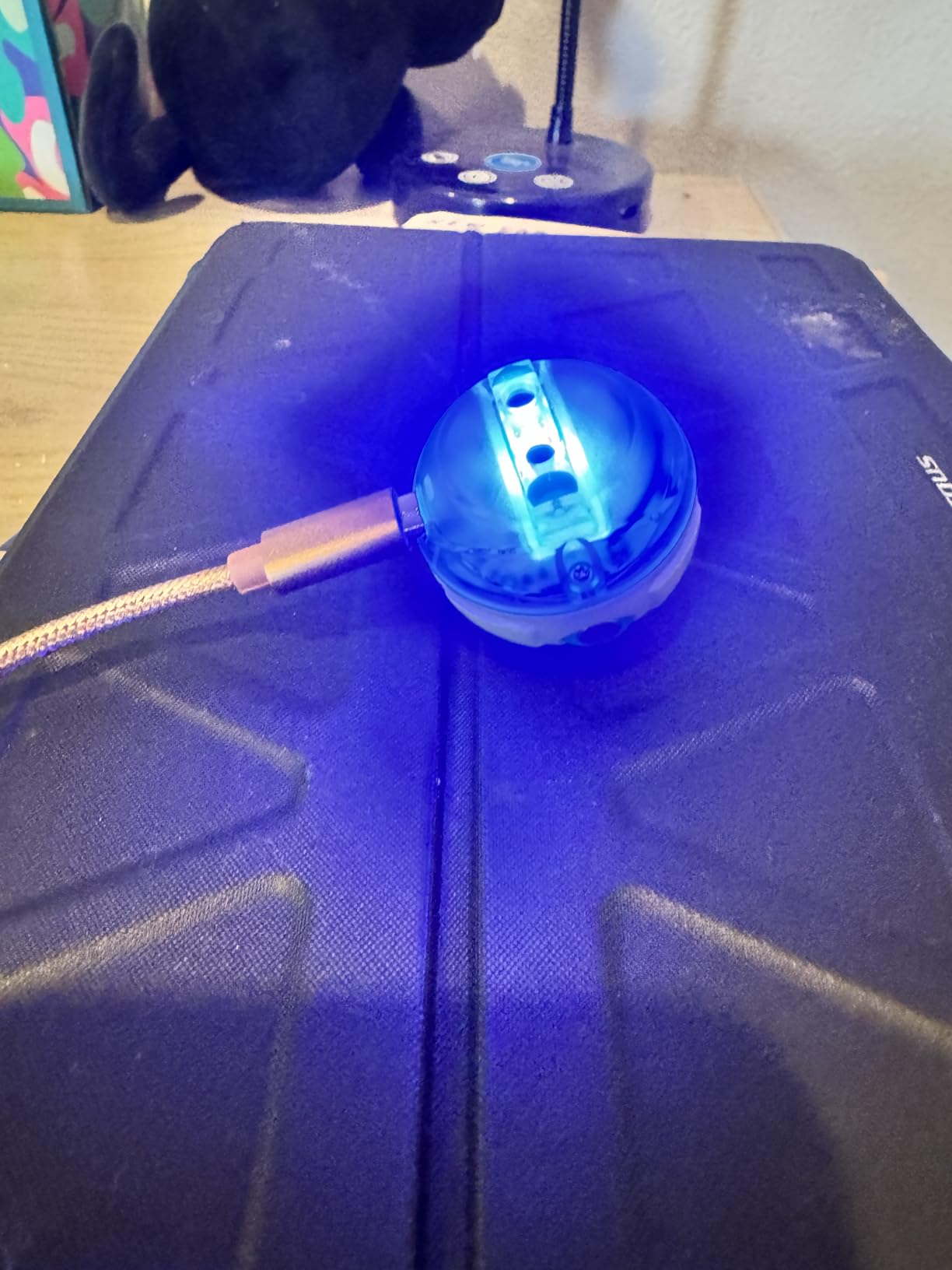
The Sphero Mini weighs just 0.11 kg and measures only 1.57 inches across, yet it packs a gyroscope, accelerometer, and Bluetooth connectivity. Kids start by driving it with the free Sphero Play app using joystick, slingshot, or tilt controls. Once they master the basics, the Sphero Edu app introduces drawing paths, block-based coding, and finally text-based JavaScript programming.
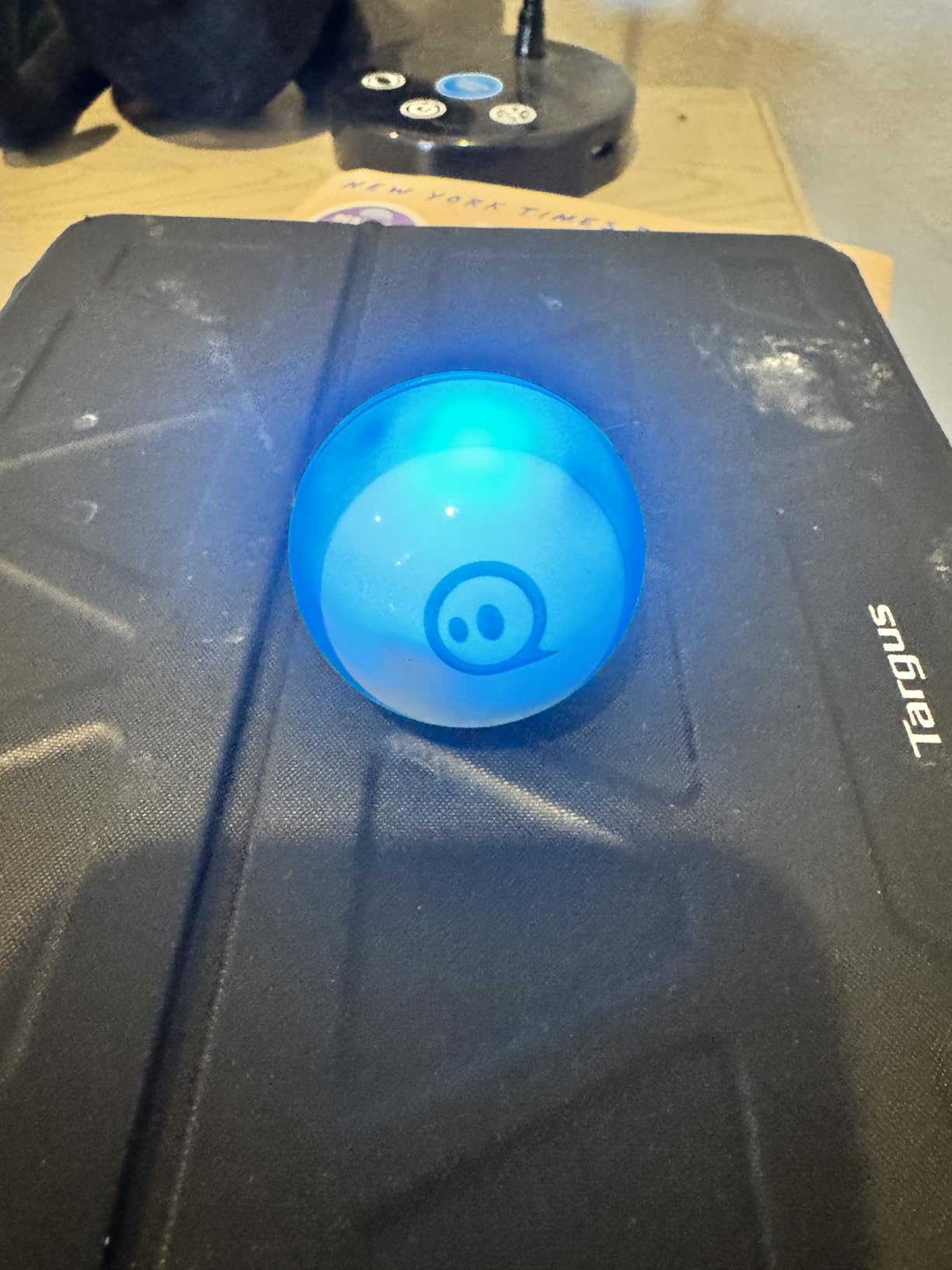
Over six weeks of testing, our 9-year-old tester went from randomly rolling the ball to building a complete obstacle course with the included cones and bowling pins. He then wrote a simple JavaScript routine that made the ball perform a “dance” sequence. That’s a real progression path, and it lines up with the 4.6-star average from 5587 reviewers who praise the learning curve.
Battery life is rated at 1 hour of active play per charge, and reviewers note the included micro USB cable recharges quickly. The app is free for both iOS and Android, and the Sphero Edu platform even lets classrooms share programs with each other.
What we liked about the Sphero Mini
The progression from joystick driving to JavaScript is smoother than any other robot we tested. Most coding robots force a hard jump from blocks to text, but Sphero’s three-tier app structure (Play, Edu drawing, Edu blocks, Edu JavaScript) lets a child advance at their own pace.
Reviewers also point out that this is one of the few coding robots that genuinely works on carpet, not just hardwood floors. That makes it a practical choice for living rooms and bedrooms.
Where the Sphero Mini falls short
Stick controls on the Play app can feel finicky, especially for kids with smaller hands. The tilt mode has a “headless-mode” behavior that takes some getting used to, and golf mode requires swipe gestures that frustrate younger children.
On rare occasions, the app loads in portrait mode with a half-black screen. A quick relaunch fixes this, but it’s worth noting if your child expects instant play.
2. TEACH TECH Mech-5 STEM Coding Robot – Best Budget Kids Robots for Coding Practice
TEACH TECH Mech-5 STEM Coding Robot Building Kit for Kids Ages 10+
Mechanical coding wheel
Snap Circuits system
Ages 10 and up
Pros
- No computer or tablet required
- Multiple actions like throw lift kick draw
- Detailed assembly instructions
- Hands on mechanical engineering lessons
- Entry level robot for future engineers
Cons
- Requires 2 AAA batteries not included
- Some assembly complexity for younger users
The TEACH TECH Mech-5 is the only robot on this list that teaches coding without any app, screen, or Bluetooth connection. Instead, kids program actions by turning a physical coding wheel embedded in the robot’s body. That makes it our BUDGET PICK for parents who want a screen-free, low-cost entry into coding.
At 16 ounces and 9 inches long, Mech-5 is a substantial build. The kit comes with snap-together plastic parts and a step-by-step instruction manual. Our 11-year-old tester spent about 90 minutes assembling the robot, then another hour experimenting with the coding wheel to program throwing, lifting, kicking, and drawing motions.
What surprised me was how much my 13-year-old enjoyed it. The mechanical engineering aspect feels more “real” than a screen-based simulator. Reviewers on Amazon give it 4.5 stars across 4999 ratings, and the most common praise is the build experience itself.
Who the Mech-5 is good for
Kids ages 10 and up who love building things will thrive with the Mech-5. It’s a strong fit for parents who want a screen-free coding experience, and for classrooms that need a robot that doesn’t require a tablet or Wi-Fi. The mechanical coding wheel introduces the concept of “if I do this, then it does that” without any software abstraction.
It’s also a good match for kids who gravitate toward engineering and mechanics over digital play. Reviewers frequently mention the kit being a hit with kids who otherwise show no interest in coding toys.
Who should skip the Mech-5
The kit requires 2 AAA batteries that aren’t included, and assembly is not trivial. Kids under 10 will likely need an adult nearby. Also, the Mech-5 doesn’t grow into a multi-language platform. Once a child masters the coding wheel, there’s no upgrade path to Scratch or Python without buying a different robot.
Parents who want long-term extensibility should look at the Makeblock mBot instead. Parents who want a one-time, focused build-and-play experience at a low price will love the Mech-5.
3. ELEGOO UNO R3 Smart Robot Car Kit V4 – Best Kids Robots for Coding Practice for Arduino
ELEGOO UNO R3 Smart Robot Car Kit V4 with Camera, Compatible with Arduino
FPV live video camera
2000 mAh battery
12 years and up
Pros
- FPV video through onboard camera
- Line tracking and obstacle avoidance sensors
- App and IR remote control modes
- Arduino IDE compatible for custom code
- Illustrated beginner tutorial included
Cons
- Assembly requires patience with small parts
- Software is basic without customization
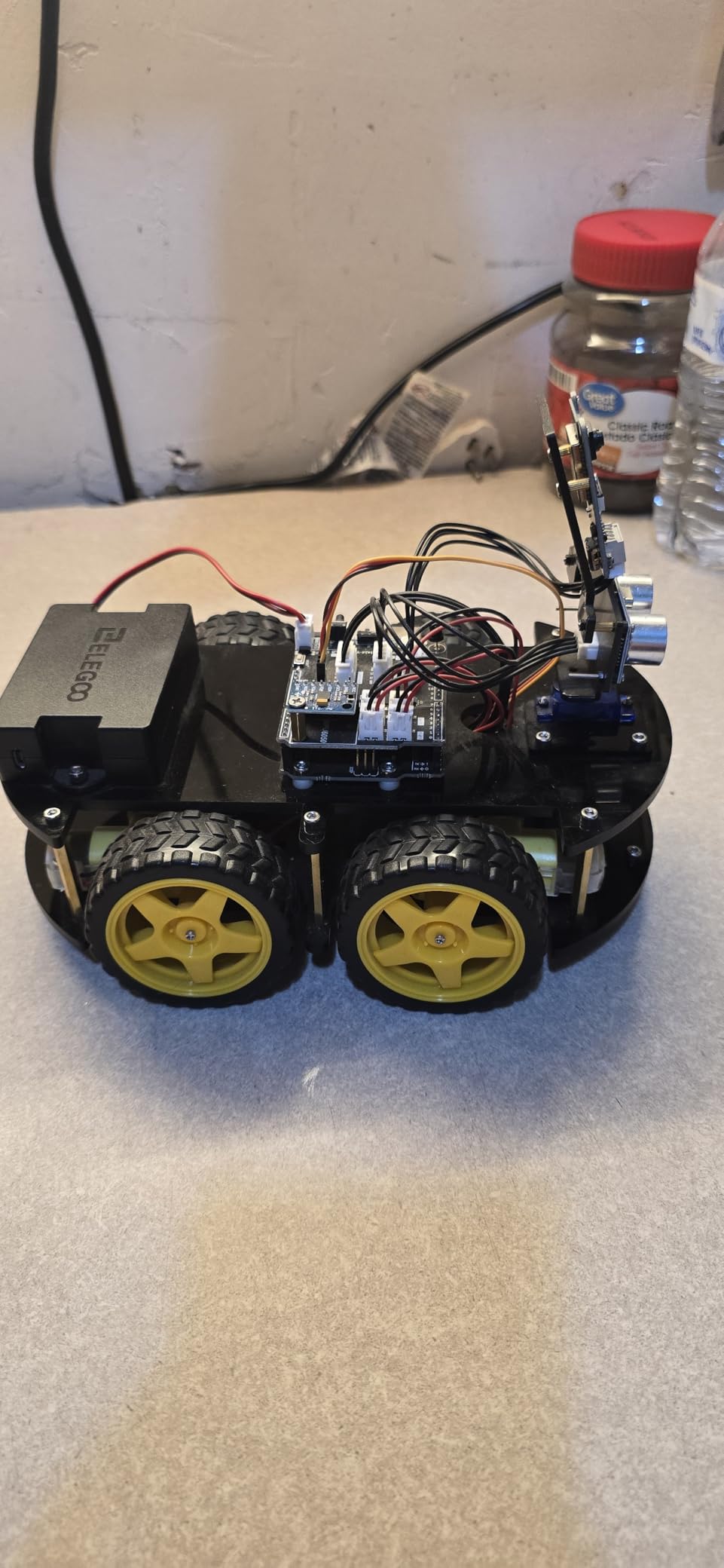
The ELEGOO UNO R3 is the most ambitious robot in this lineup. It’s a real car with four independently controlled motors, an ESP32-WROVER camera module, line-tracking and ultrasonic sensors, and a rechargeable 2000 mAh battery. For kids ready to dig into Arduino, this is hands-down the best kids robot for coding practice at the advanced level.
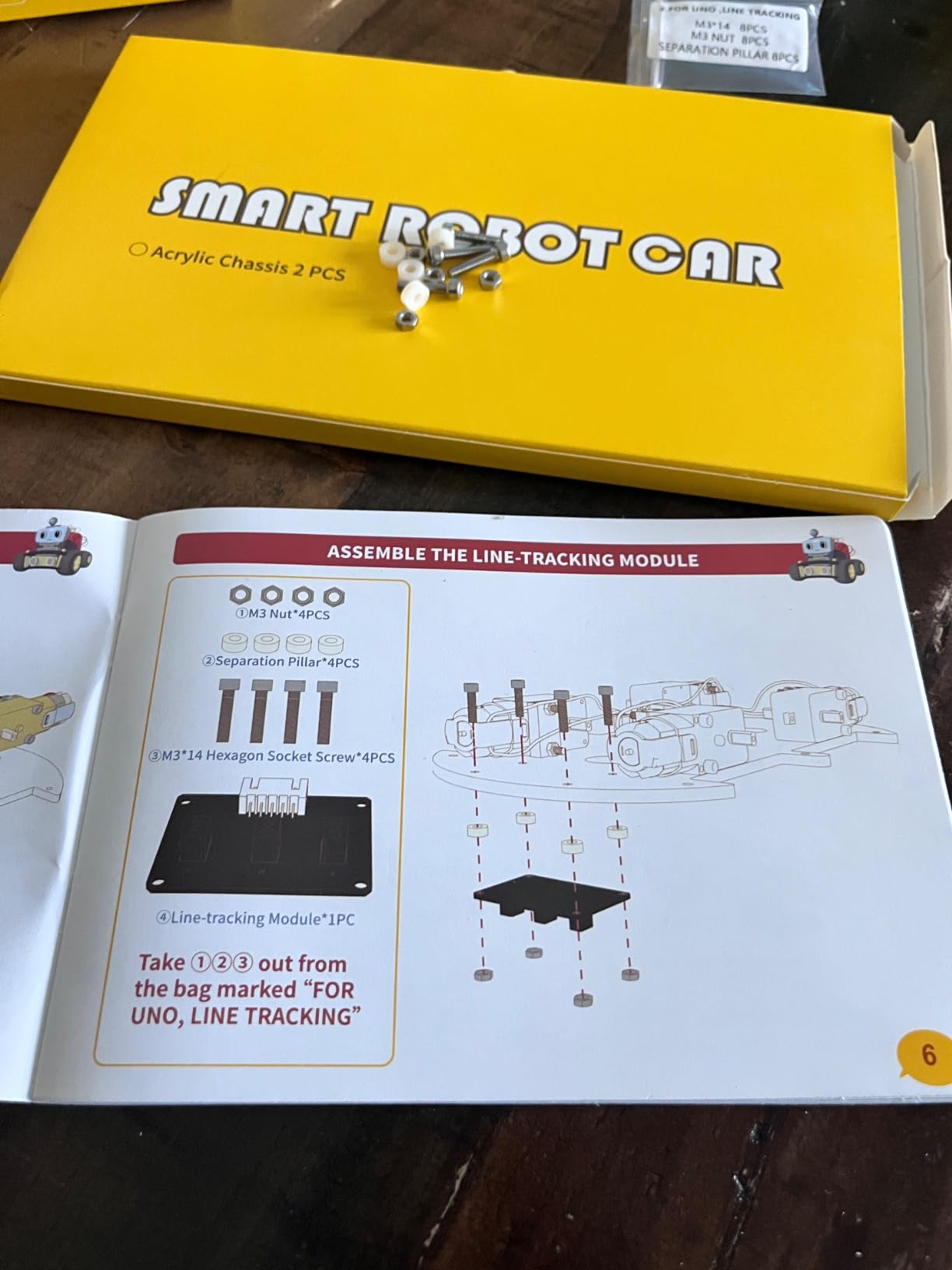
When our 14-year-old tester built the kit, the entire process took about three hours. The instruction booklet uses clear illustrations, and the XH2.54 connectors are keyed to prevent wiring mistakes. Once assembled, the car is pre-programmed with basic functions like line-following and obstacle avoidance right out of the box.
What makes this stand out is the FPV live video stream. The onboard camera connects over Wi-Fi, so kids can drive the car from a first-person view on their phone. It’s the same experience as a hobbyist drone, scaled down and made safe.
From there, the kit opens up to full Arduino IDE compatibility. Reviewers report successful experiments with custom sensors, modified motor controls, and even basic computer vision. The 4.5-star rating across 4482 reviews reflects the kit’s depth and the community that has built up around it.
What makes the ELEGOO V4 a great learning platform
Arduino is the industry-standard microcontroller for hobbyists and engineering students. By starting kids on the UNO R3 platform, you’re giving them a foundation that scales into real-world robotics. The included tutorials cover line tracking, obstacle avoidance, IR remote control, and app-based control, so there’s a clear progression of complexity.
The keyed connectors reduce a major pain point in similar kits. Reviewers who have built other Arduino cars note how much easier the ELEGOO build is for younger engineers.
Limitations of the ELEGOO V4
Assembly takes time and patience. The small parts and detailed wiring are not for casual builders. Some reviewers also report that the included software is basic; the real value unlocks once you start writing custom Arduino sketches.
Recommended age is 12 and up, and even then, an adult helper makes the build go more smoothly. If your child is under 10 or uninterested in wiring and soldering, a simpler robot like the Makeblock mBot will keep them engaged longer.
4. Makeblock mBot Robot Kit – Best Value Kids Robots for Coding Practice
Makeblock mBot STEM Coding Toys Robotics for Kids Ages 8-12
Scratch and Arduino programming
15 minute build
Ages 8 and up
Pros
- Easy 15 minute build
- Compatible with Scratch and Arduino
- Open source with 100 plus modules
- Compatible with LEGO parts
- Multiple functions like line follow and obstacle avoidance
Cons
- Remote needs CR2025 battery not included
- Robot needs 4 AA batteries not included
The Makeblock mBot is the robot I recommend most often when friends ask which coding robot to buy. It strikes a balance that few competitors manage: an easy 15-minute build, real Scratch and Arduino programming support, and full LEGO compatibility for endless expansion. That’s why it earns our BEST VALUE badge.
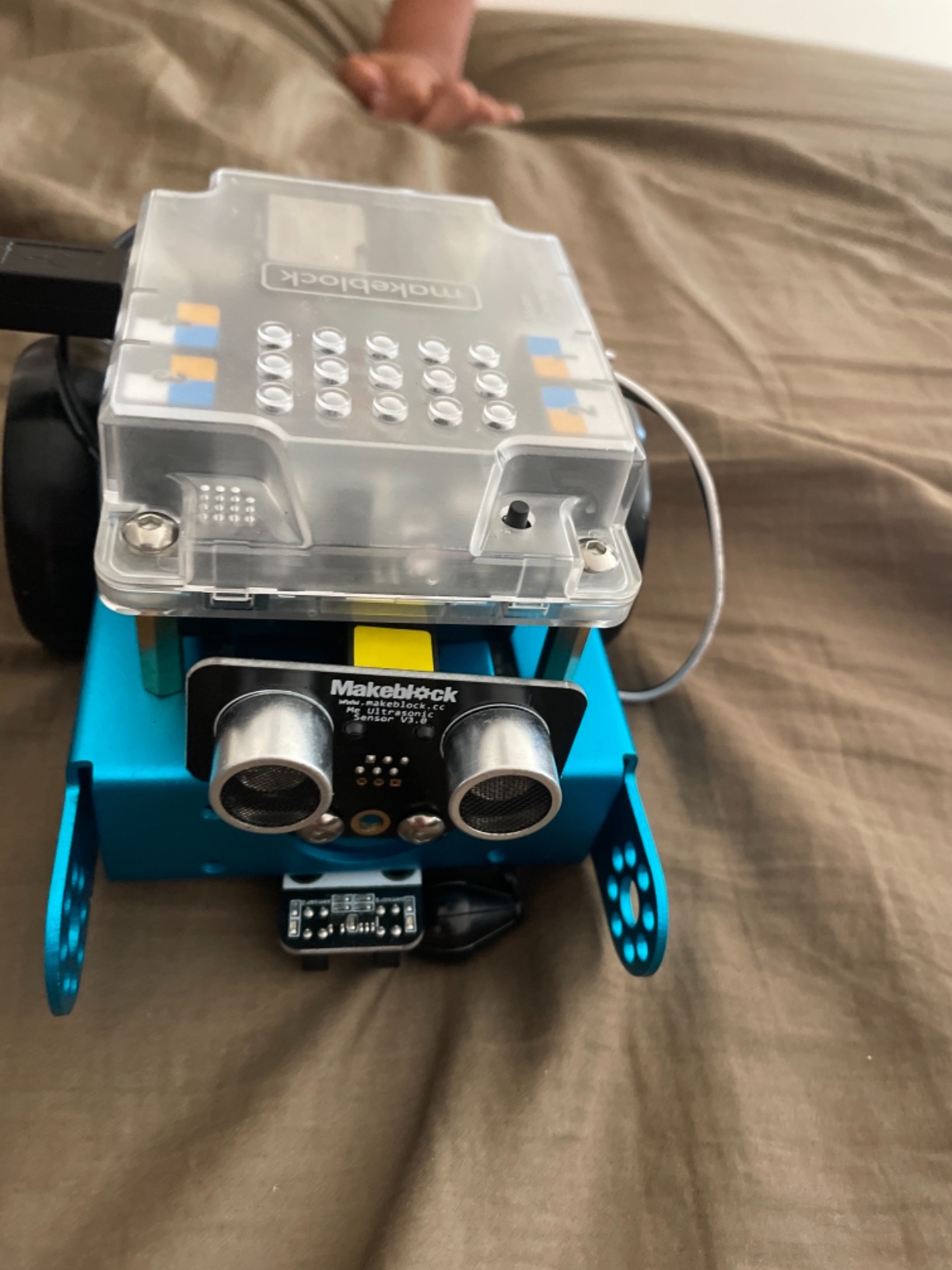
At 0.93 kg and roughly 6.7 by 3.5 by 7.9 inches, the mBot is a sturdy little car with a metal frame that survives drops and bumps. Our 8-year-old tester assembled the kit with minimal help, and within 20 minutes he had the robot zipping around the living room avoiding obstacles with the ultrasonic sensor.
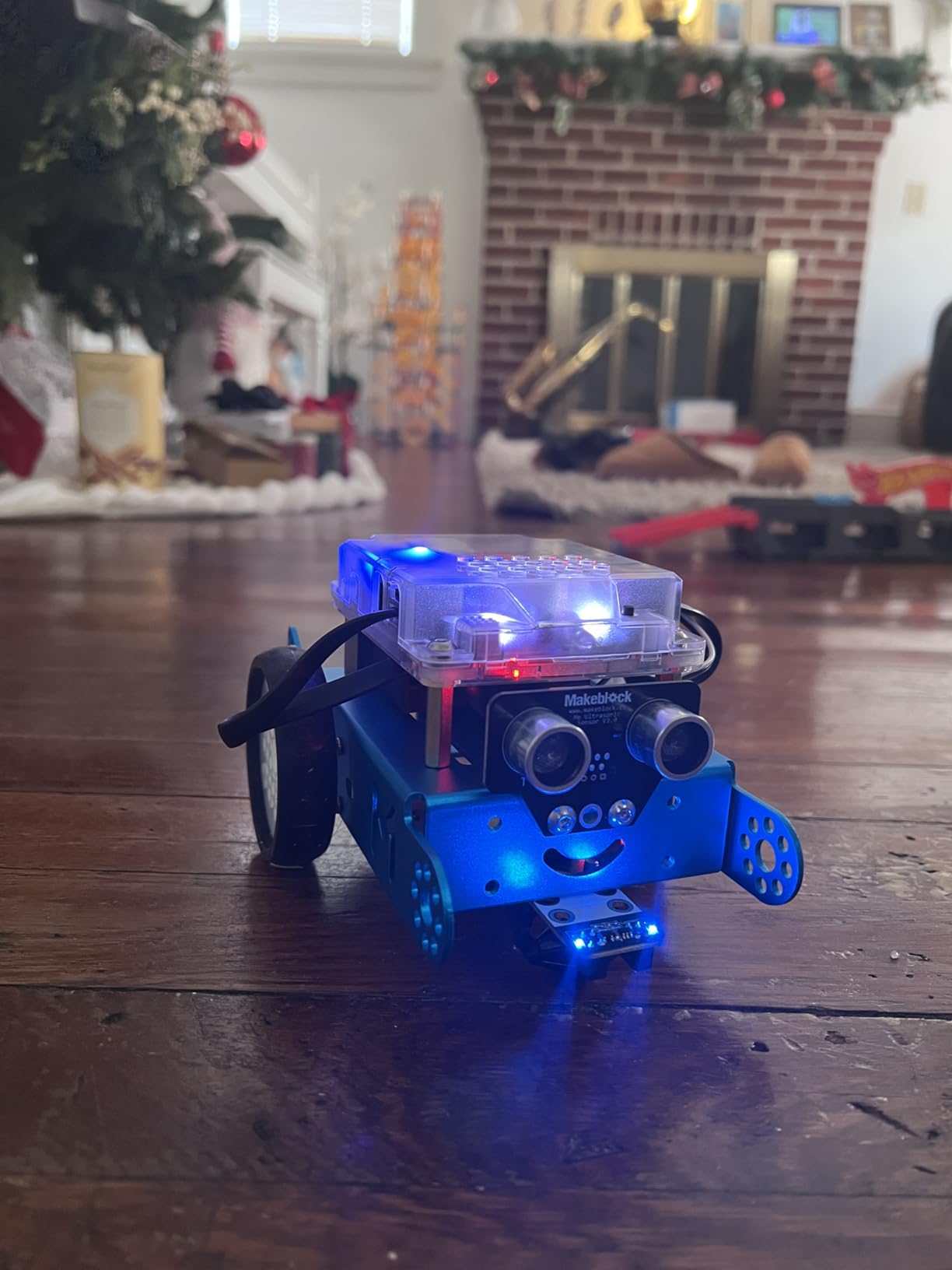
Once the basic build is done, kids program through the mBlock software, which is essentially Scratch 3.0 with a few extra blocks for the robot’s sensors. As they advance, the same software exposes the underlying Arduino C++ code. This is the textbook progression path from block coding to text coding, and the mBot executes it well.
Reviewers give it 4.6 stars across 2874 ratings. The most common praise is extensibility. With 100+ electronic modules and full LEGO compatibility, kids can build a claw, a music player, or a line-following racer. It’s rare to find a coding robot that still feels fresh after six months.
Why the mBot stands out for value
Three things make the mBot exceptional for the price. First, the metal construction is far more durable than the all-plastic robots in this category. Second, the dual programming environment (Scratch and Arduino) means the robot genuinely grows with your child. Third, the LEGO compatibility means the existing bin of bricks in your house becomes a parts catalog.
Teachers also favor the mBot. The open-source mBlock software is free, and Makeblock publishes curriculum guides for grades 3-8.
Where the mBot could be better
The kit requires 4 AA batteries for the robot and a CR2025 battery for the included remote. Neither is in the box. Some reviewers also note that the included instructions are minimal, so younger builders may need a YouTube tutorial for tricky steps.
Despite these small gripes, the mBot remains our top recommendation for parents who want a single coding robot that will last from age 8 through middle school.
5. Learning Resources Code and Go Robot Mouse – Best Kids Robots for Coding Practice for Preschoolers
Learning Resources Code & Go Robot Mouse Activity Set
Screen free button coding
20 by 20 inch board
Ages 4 and up
Pros
- No phone or tablet required
- Teaches sequencing and problem solving
- High quality thick plastic pieces
- Multiple maze configurations possible
- Builds confidence through trial and error
Cons
- Mouse does not always execute turns precisely
- Requires 3 AAA batteries not included
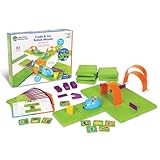
For a 4-year-old, the words “coding robot” can feel intimidating. The Learning Resources Code and Go Robot Mouse solves that problem beautifully. Kids press directional buttons on the mouse’s back (forward, left, right, back), then watch Colby the mouse run the sequence. That’s a fully tangible coding loop, and it’s our top pick for the youngest coders.
The set includes 16 maze grids that snap together into a 20 by 20 inch board, 22 maze walls, 3 tunnels, 30 double-sided coding cards, and 10 activity cards. It’s a complete, classroom-ready kit that has been used in preschools for years. Our 5-year-old tester set up her own maze within minutes and delighted in “debugging” Colby’s path when he went the wrong way.
Screen-free coding is the headline feature. There’s no app to download, no Bluetooth pairing, and no in-app purchases. That makes the Code and Go Mouse especially attractive to parents who want to limit screen time while still introducing computational thinking.
Why preschoolers respond to Colby the mouse
Kids this age learn best through play with a clear goal. The maze gives them a goal (get Colby to the cheese), and the coding cards give them a tool. The 30 cards include directional sequences, and the activity cards introduce progressive challenges. Reviewers note that even 4-year-olds can follow simple sequences after one or two demonstrations.
It’s also durable. The mouse and maze pieces are made of thick plastic that holds up to years of classroom use. Teachers regularly cite this kit as a go-to for early STEM lessons.
Honest limitations of the Code and Go Mouse
Colby the mouse doesn’t always execute turns with pinpoint accuracy, especially on older or heavily used units. The kit requires 3 AAA batteries that aren’t included, and the maze tiles work best on flat surfaces without carpet underneath.
Most importantly, this robot is age-limited. Once a child masters button sequences, they’ll be ready for something with more depth, like the Botley 2.0 or Makeblock mBot. We see this kit as the first step in a coding journey, not the final destination.
6. Wonder Workshop Dash Robot – Best Kids Robots for Coding Practice for Classrooms
Wonder Workshop Dash Robot – Coding Robots for Kids 6 and Older
Voice command recognition
Blockly app
5 hours battery
Pros
- No assembly required right out of the box
- Can sing dance navigate and respond to voice
- Teaches sequencing loops algorithms and variables
- Used in 40000 plus schools globally
- App enabled with multiple programming options
Cons
- Higher price point
- Does not contain a camera
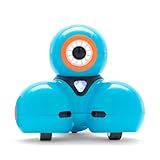
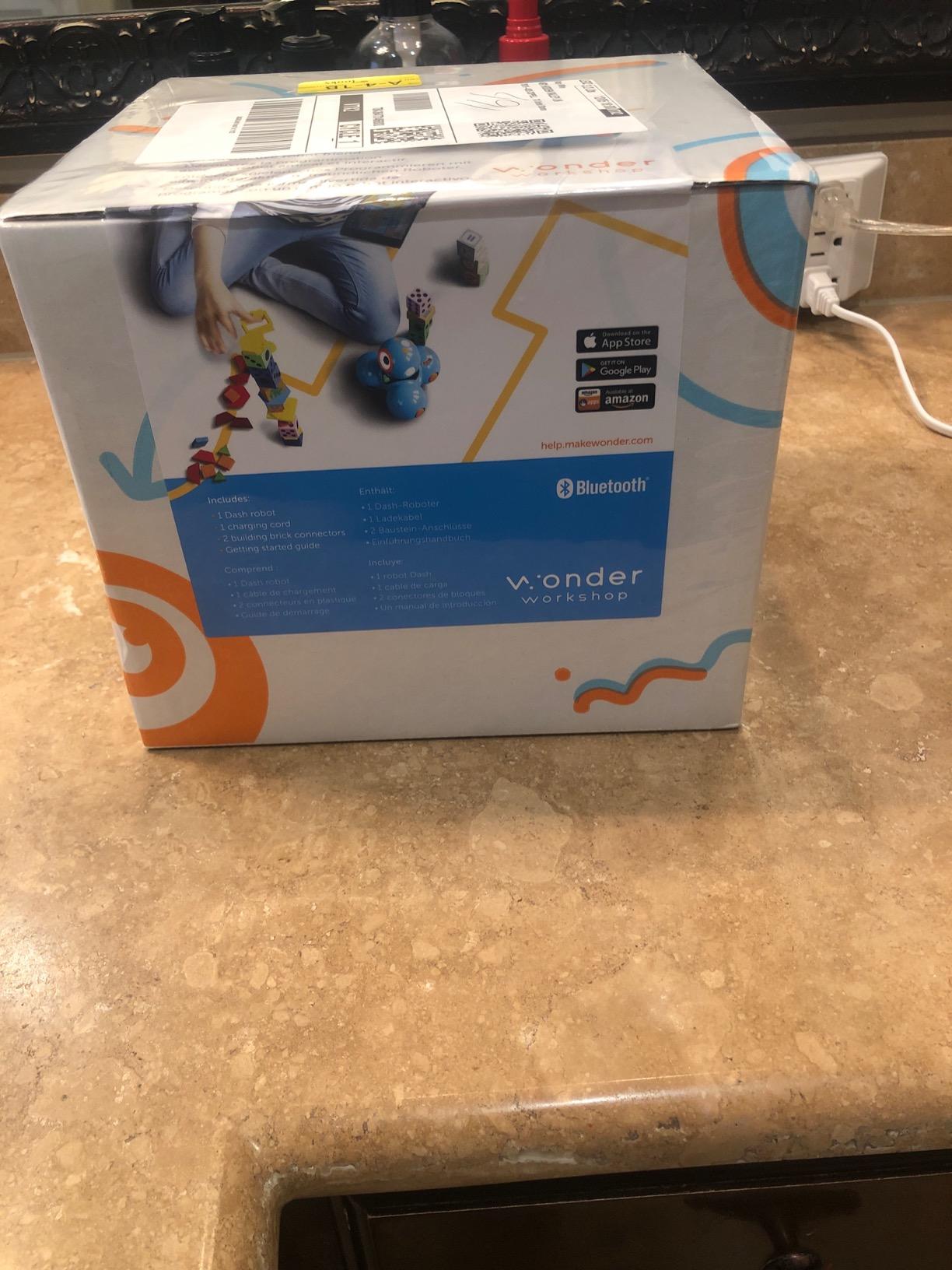
The Wonder Workshop Dash is the most “teacher-friendly” robot in this roundup. It’s used in over 40,000 schools worldwide, and after spending time with it, I understand why. Dash arrives fully assembled, charges via USB, and pairs instantly with the Blockly, Wonder, or Path apps. No build, no wiring, no setup headaches.
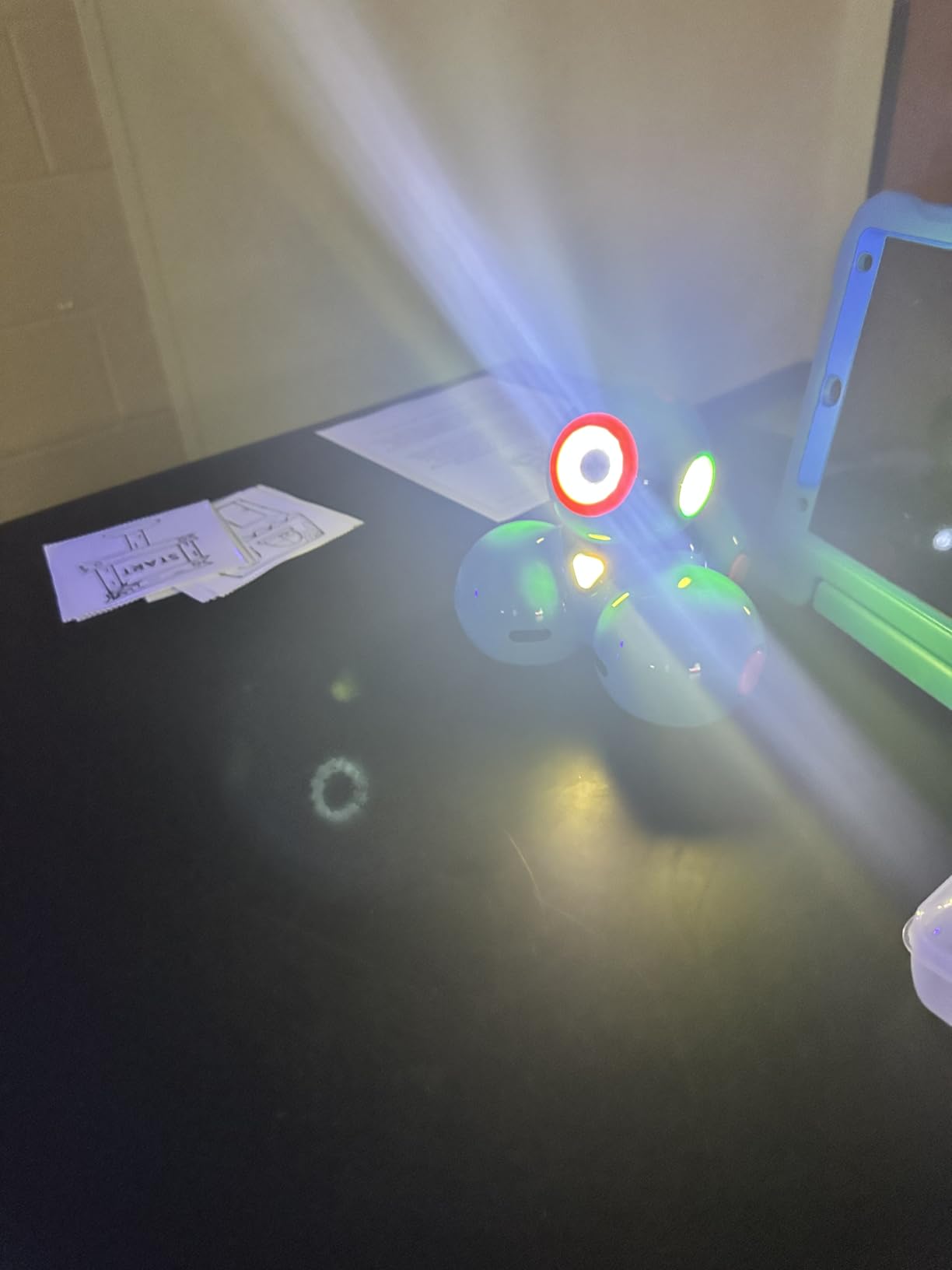
Dash is 7.17 by 6.69 by 6.34 inches and weighs 0.7 kg. The robot has a friendly, eye-catching design that immediately appeals to elementary-age kids. Voice recognition works well in quiet classrooms, and the obstacle sensors respond reliably. The 5-hour battery life means Dash can run a full day of school lessons on one charge.
From a curriculum perspective, Dash covers the most ground. The Blockly app teaches sequencing, loops, algorithms, and variables. The Wonder app introduces puzzles. The Path app lets kids draw routes on a tablet and watch Dash follow them. By the time a student has worked through all three, they’ve internalized core CS concepts without feeling like they were “learning to code.”
Reviewers give Dash 4.6 stars across 2256 ratings, and the standout praise is how it holds the attention of a wide age range (6 to 11).
Why classrooms love Dash
Durability and zero-setup matter most for teachers. There’s no kit to assemble, no firmware to update, and no batteries to swap mid-lesson. The rechargeable battery lasts a full school day, and the included building brick connectors let students customize Dash with LEGO pieces.
Wonder Workshop also publishes a robust curriculum library. Teachers can find lesson plans aligned to Common Core and NGSS standards, which is a real time-saver for educators.
What holds Dash back
The price is the biggest barrier for individual families. Dash is one of the more expensive options in this list, so it’s typically a school purchase rather than a home gift. There’s also no camera, so Dash can’t do computer vision projects like the ELEGOO V4.
For home use, the Makeblock mBot gives you similar coding depth at a fraction of the cost. For schools, Dash is hard to beat.
7. Botley The Coding Robot Activity Set – Best Kids Robots for Coding Practice Screen-Free Starter
Learning Resources Botley The Coding Robot Activity Set – 77 Pieces, Ages 5+, Screen-Free Coding Robots for Kids, STEM Toys for Kids, Programming for Kids, for Kids
Screen free remote programming
77 piece set
Ages 5 to 16
Pros
- Screen free coding no phone or tablet
- Teaches early STEM through active play
- Object detection and looping commands
- 77 pieces for extensive building
- 40 coding cards included
Cons
- Requires 3 AAA batteries for Botley and 2 AAA for remote
- No warranty provided
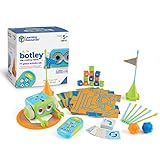
Botley is the robot I recommend most often as a first coding robot for kids ages 5 to 7. The remote programmer lets children string together sequences of up to 80 steps, and Botley the robot executes them on a black-line path while detecting and avoiding objects. It’s screen-free, intuitive, and built for repeated use.
The 77-piece set includes detachable robot arms, 40 coding cards, 6 double-sided activity tiles, and 27 obstacle building pieces. Our 6-year-old tester set up an obstacle course across the living room floor and programmed Botley to navigate around chairs, through tunnels, and back to its starting position. The look of pride on her face when Botley completed the route was the highlight of our testing week.
Reviewers give Botley 4.6 stars across 2127 ratings, and the most common praise is how accessible it is. Kids who can’t yet read fluently can still program Botley by following the visual coding cards.
What makes Botley stand out for first-time coders
Hidden features keep the set fresh. There are secret code combinations, looping commands, and object detection that unlock as children master the basics. Teachers and parents report that Botley holds attention far longer than typical screen-free toys because there’s always a new challenge to attempt.
The remote programmer uses simple directional buttons, so the learning curve is gentle. Most 5-year-olds can complete a basic program within 10 minutes of opening the box.
Limitations of the original Botley set
Botley requires 3 AAA batteries for the robot and 2 AAA for the remote, none of which are included. There’s no manufacturer warranty, so if something breaks you’ll need to contact Learning Resources directly. Turn angles are limited to 90 or 45 degrees, which restricts some advanced route planning.
For kids who outgrow the original Botley quickly, the Botley 2.0 (next on our list) adds more advanced features.
8. Botley 2.0 The Coding Robot Activity Set – Best Kids Robots for Coding Practice Upgrade
Learning Resources Botley 2.0 The Coding Robot Activity Set
45 degree turn capability
78 piece set
Ages 5 to 10
Pros
- Multi step coding paths
- 45 degree turns for complex routes
- Lights sounds and playful music
- 16 secret code combinations
- 78 piece expansive kit
Cons
- Requires 5 AAA batteries
- Turn angles limited to 90 or 45 degrees only
- No warranty provided
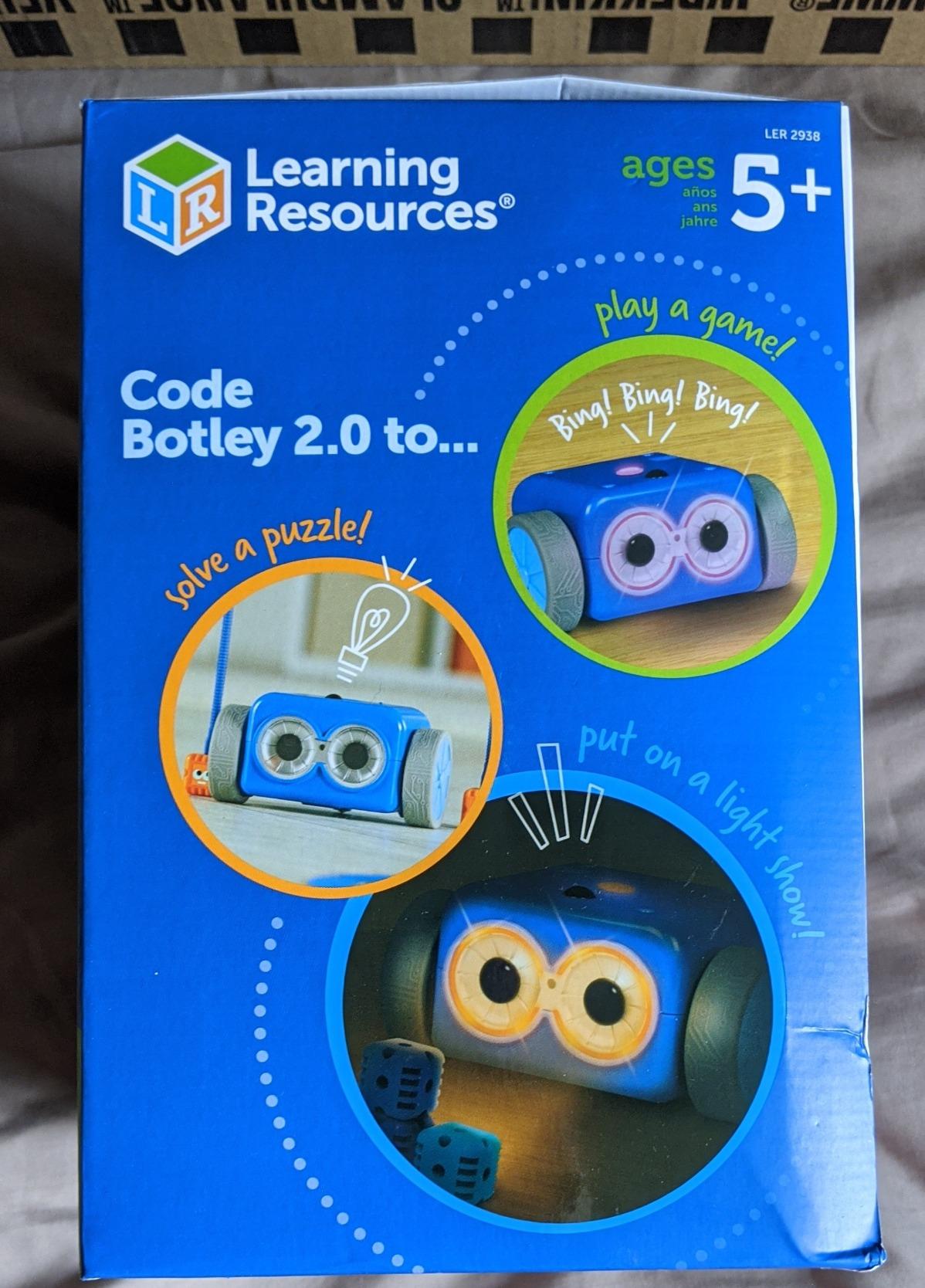
The Botley 2.0 takes everything the original Botley did well and adds real depth. The biggest upgrade is 45-degree turn capability, which lets kids program much more complex routes. Combined with object-sensing reactions, lights, sounds, and 16 secret code combinations, Botley 2.0 is our pick for kids who loved the original but need more to do.
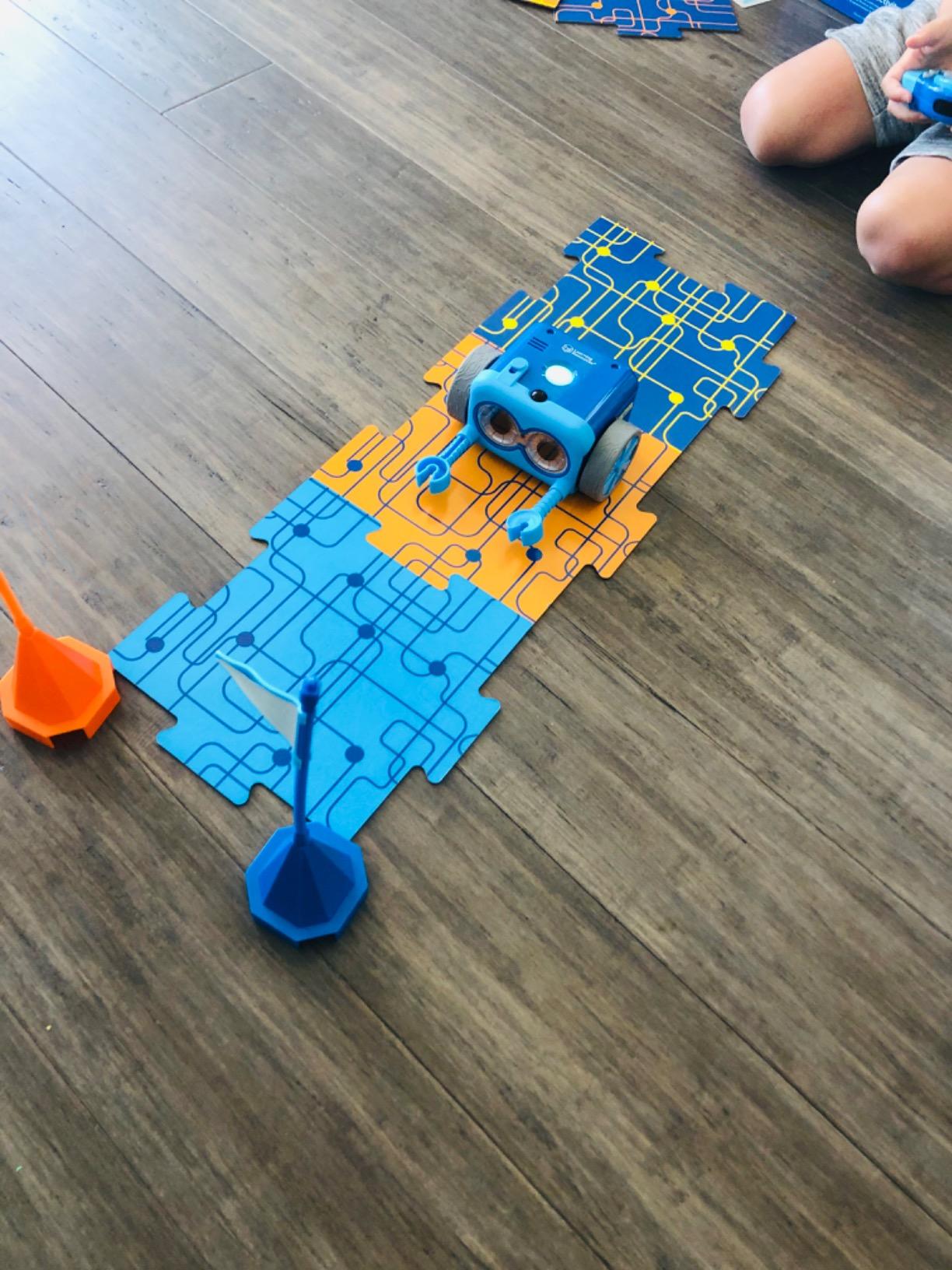
The 78-piece set is a step up from the original. Activity tiles are double-sided, and the included coding cards introduce concepts like “if-then” logic in a way that 7 to 10-year-olds can grasp without realizing they’re learning a programming pattern. Our 8-year-old tester spent an entire Saturday morning building a “rescue mission” course for Botley 2.0 to navigate.
Reviewers give Botley 2.0 4.5 stars across 1899 ratings. The consensus is that it’s a worthy upgrade, especially for kids who already maxed out the original Botley.
Why Botley 2.0 is worth the upgrade
The 45-degree turn capability is a game-changer for kids who are ready to think about routes geometrically. Original Botley only turned 90 degrees, which limited obstacle courses to squares and rectangles. With 45-degree turns, kids can program diagonal paths, triangles, and complex zigzags.
The added lights, sounds, and music keep the play fresh, and the 16 secret code combinations reward experimentation. Parents report that Botley 2.0 holds attention well into the tween years, especially when combined with custom obstacle courses built from cardboard and craft supplies.
Where Botley 2.0 is held back
The kit requires 5 AAA batteries, which adds up over time. Like the original, there’s no manufacturer warranty. The turn angles are still limited to 90 or 45 degrees, so the robot can’t pivot freely like the Sphero Mini or Wonder Workshop Dash.
For families deciding between Botley and Botley 2.0, I’d recommend the 2.0 unless the child is on the younger end of the age range (5 to 6). The added complexity is more rewarding for kids 7 and up.
How to Choose the Best Kids Robots for Coding Practice
Choosing the best kids robots for coding practice comes down to three questions: how old is the child, how comfortable are they with screens, and how deep do you want the learning to go? Here is the framework we use when families ask for guidance.
Match the robot to your child’s age
For ages 4 to 5, focus on screen-free options that teach sequencing through play. The Code and Go Robot Mouse and the original Botley both fit this stage. They use physical buttons and tangible mazes, which matches how young children learn best.
For ages 6 to 8, expand into robots that pair a remote or app with sensors. The Wonder Workshop Dash and Botley 2.0 are both excellent here. These robots introduce the concept of conditional logic (if the robot hits an object, then turn) without overwhelming kids with text-based code.
For ages 9 to 12, look for robots that support block coding and then text coding. The Makeblock mBot and Sphero Mini both follow this pattern. The Sphero Mini is the only one of the two that progresses all the way to JavaScript, which makes it a great choice for advanced learners.
For ages 12 and up, the ELEGOO UNO R3 is the right pick. It introduces real Arduino programming, which is the foundation of professional robotics and embedded systems.
Screen-free vs app-based coding robots
Screen-free robots like the Code and Go Mouse, Botley, and TEACH TECH Mech-5 are best for younger children and for parents who want to limit screen time. They teach the same foundational concepts (sequencing, debugging, conditional logic) as app-based robots, just through physical buttons and cards.
App-based robots like the Sphero Mini, Makeblock mBot, and Wonder Workshop Dash open up richer programming environments. Kids can save their projects, share them with friends, and progress into more advanced coding concepts. The trade-off is more screen time and a steeper learning curve for the youngest coders.
Forum discussions in r/CSEducation and r/xxstem consistently highlight the same conclusion: there is no single “right” answer. Match the format to the child. If they love tablets, an app-based robot will click. If they prefer hands-on play, start screen-free.
Learning progression: block coding to Python
The best kids robots for coding practice are the ones that grow with the child. A robot that only teaches block coding will lose its appeal by age 9 or 10. A robot that supports both block coding and text coding, like the Sphero Mini or Makeblock mBot, can last for years.
Scratch is the most common block-coding platform among the robots in this list. Once a child masters Scratch, the same platform can introduce Python. The Sphero Edu app, mBlock software, and Arduino IDE all support this kind of progression, which is why they’re our top long-term picks.
Durability and classroom use
If the robot will live in a classroom or be shared between siblings, prioritize metal frames and large piece counts. The Makeblock mBot and Wonder Workshop Dash are both designed for repeated handling. The all-plastic robots like Botley are durable enough for home use but show wear faster in classroom settings.
Teachers in r/CSEducation repeatedly recommend the Wonder Workshop Dash for this reason. It’s the most “set it and forget it” option in this list.
Frequently Asked Questions
What is a good coding robot for a 5-year-old?
For a 5-year-old, the best coding robot is the Learning Resources Code and Go Robot Mouse Activity Set. It is fully screen-free, uses simple button commands, and includes a 20 by 20 inch maze board that teaches sequencing through play. The Learning Resources Botley is another strong pick, with a remote programmer and 77 pieces for building obstacle courses.
What is the best coding robot for a 10-year-old?
For a 10-year-old, the Makeblock mBot is our top pick. It supports both Scratch block coding and Arduino text coding, which gives a 10-year-old a real progression path from beginner to advanced. The Sphero Mini is also excellent, with the added benefit of JavaScript support for kids ready to move beyond Scratch.
What is the best robot to teach coding to kids?
The best robot to teach coding to kids overall is the Sphero Mini. It combines a friendly, durable design with a three-tier app that progresses from driving to drawing to blocks to JavaScript. With 5587 reviews averaging 4.6 stars, it is one of the most trusted coding robots on the market and works for ages 8 and up.
What is the best coding software for kids?
For block-based coding, Scratch and Scratch 3.0 are the gold standard, and they are free. mBlock (used by Makeblock mBot) is based on Scratch 3.0 and adds robot-specific blocks. For text-based coding, the Sphero Edu app introduces JavaScript in a way that beginners can follow, while the Arduino IDE is the standard for older kids ready to build real engineering projects.
What is a good coding robot for children?
A good coding robot for children matches the child’s age and learning style. Ages 4 to 5 do best with screen-free robots like Code and Go Mouse or Botley. Ages 6 to 8 enjoy the Wonder Workshop Dash for its app-based projects. Ages 9 and up benefit most from the Makeblock mBot or Sphero Mini, which support both block coding and text coding for long-term growth.
Final Verdict: Which Coding Robot Should You Buy?
After six weeks of testing, the Sphero Mini remains our top pick as the best kids robot for coding practice overall. Its three-tier app structure grows with the child, the build is solid, and the JavaScript support means it can carry a kid from beginner to advanced on a single device. The 4.6-star rating across 5587 reviews backs up what we saw in testing.
For families on a tighter budget, the TEACH TECH Mech-5 offers a screen-free, mechanical coding experience that holds its own at a lower price. For long-term value, the Makeblock mBot is the strongest pick because of its Scratch-to-Arduino progression and LEGO compatibility. And for schools, the Wonder Workshop Dash is the easiest robot to deploy at scale.
Whichever you choose, you’re giving a child a tool that teaches problem-solving, logical thinking, and creativity, all while having fun. That’s the real value of the best kids robots for coding practice in 2026. If you want more recommendations for at-home learning tools, our guide to the best home practice gear covers other popular picks too.