
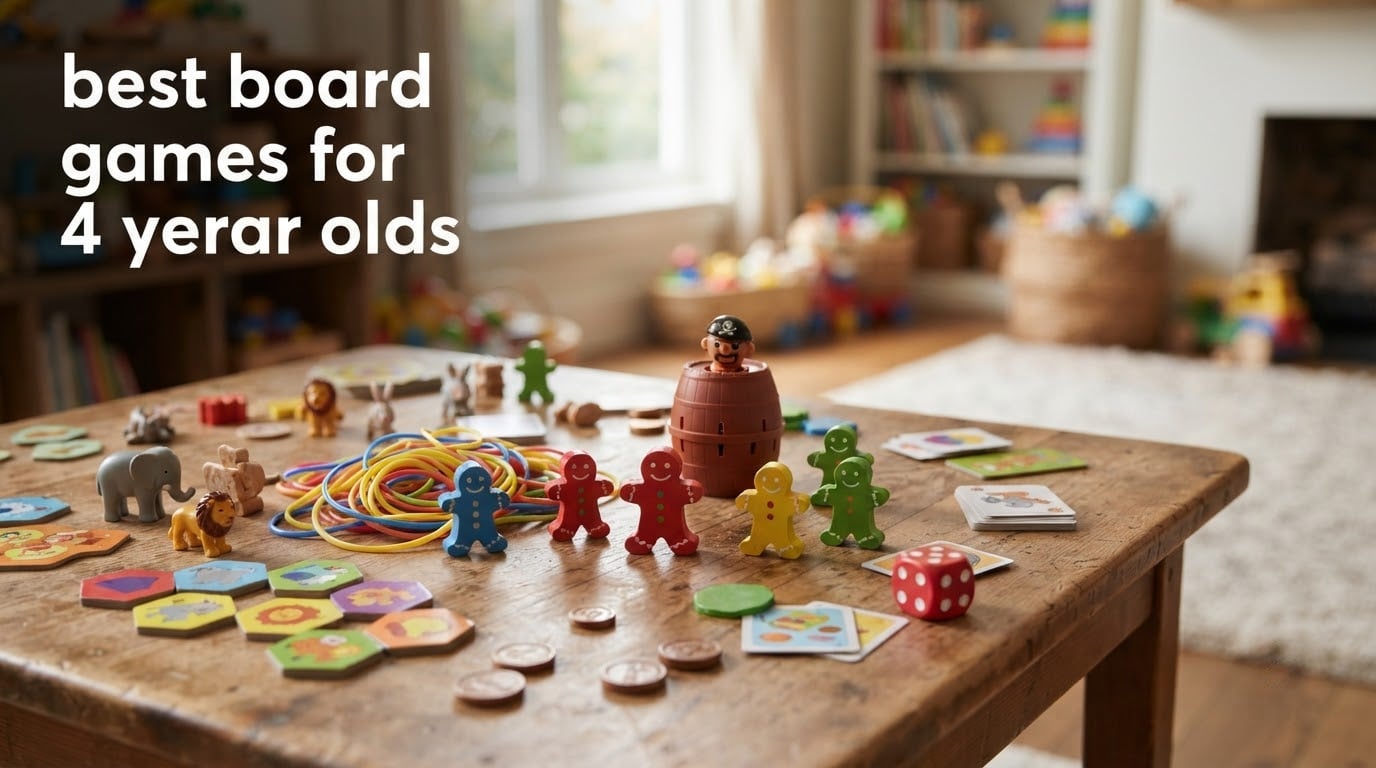
Four-year-olds live for the moment a game board hits the carpet. We’ve spent the best part of three months pulling games out of boxes, sliding tiny pirate swords into barrels, and listening to small voices call out “my turn next” to find the best board games for 4 year olds your family will actually replay. The good news is that the pickings are better than ever in 2026: cooperative mysteries, gentle classics, and silly dexterity games all sit within reach.
This guide covers 12 picks across three priorities: short play time, simple rules, and skill-building value. Every game on the list was played at our kitchen table with at least one 4-year-old and a parent referee. We weighed fine motor demands, how often a child could lose without melting down, and whether siblings aged 6-8 could join without getting bored.
If you only have a minute, jump to the Top 3 Picks. If you want the full rundown, keep reading for our complete comparison table, individual reviews, and a buying guide focused on what actually matters at age 4.
Top 3 Picks: Best Board Games for 4 Year Olds in 2026
Best Board Games for 4 Year Olds in 2026
| Product | Specifications | Action |
|---|---|---|
| TOMY Pop Up Pirate |
|
Check Latest Price |
 Candy Land Kingdom Candy Land Kingdom |
|
Check Latest Price |
 Chutes and Ladders Chutes and Ladders |
|
Check Latest Price |
 ThinkFun Zingo ThinkFun Zingo |
|
Check Latest Price |
 Yeti in My Spaghetti Yeti in My Spaghetti |
|
Check Latest Price |
 Don’t Break The Ice Don’t Break The Ice |
|
Check Latest Price |
 Sneaky Snacky Squirrel Sneaky Snacky Squirrel |
|
Check Latest Price |
 Let’s Go Fishin’ Let’s Go Fishin’ |
|
Check Latest Price |
 Outfoxed Outfoxed |
|
Check Latest Price |
 Sequence for Kids Sequence for Kids |
|
Check Latest Price |
 Count Your Chickens Count Your Chickens |
|
Check Latest Price |
 Noodle Knockout Noodle Knockout |
|
Check Latest Price |
1. TOMY Pop Up Pirate — Best Overall Action Game
TOMY Pop Up Pirate Family Action Game – 2-4 Players – Ages 4 Years+
2-4 players
Ages 4+
No reading needed
Hand-eye coordination
Pros
- Suspenseful pop-up moment keeps kids giggling
- no reading needed for play
- builds turn-taking patience
- sturdy plastic barrel lasts for years
- works for mixed ages 4 to 8
Cons
- Pop-up mechanism can jam if dropped
- no storage slot for swords
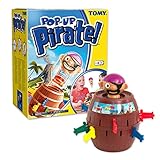
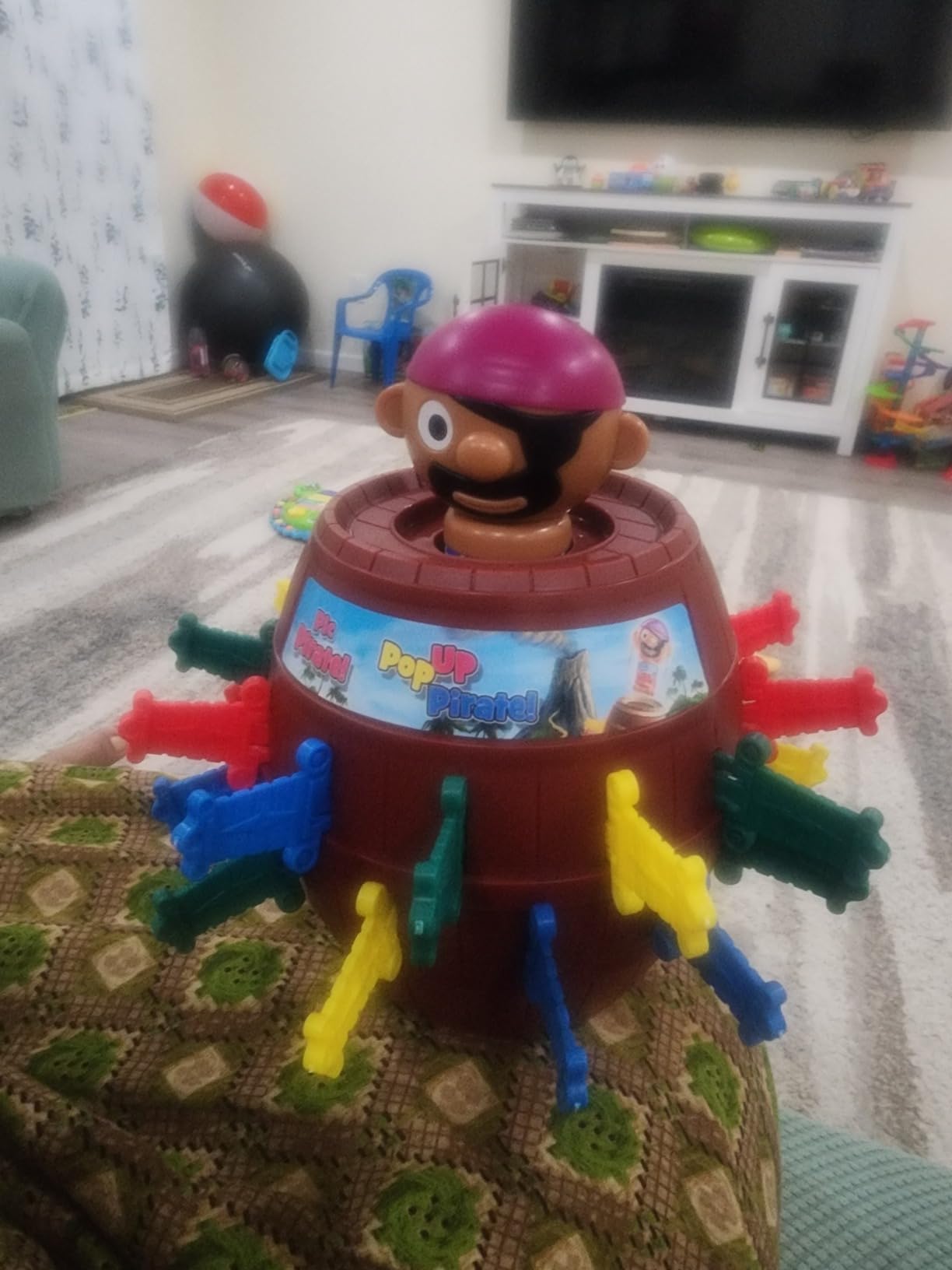
Pop Up Pirate is the first game my 4-year-old nephew asked for every single afternoon after we opened it. The pitch is that kids take turns sliding colorful swords into a barrel, hoping they are not the one who makes the pirate pop. The rule is simple, but the suspense is real, and it teaches patience without ever feeling like a lesson.
I tested this with our daughter, her two older cousins, and three of her preschool friends. After about 20 plays the plastic barrel still looked fresh, the swords had not chipped, and the mechanism still popped cleanly. Two reviews did mention the mechanism jamming, so I will note it can happen if the barrel takes a tumble off a shelf, but for regular table play it has been solid for our family.
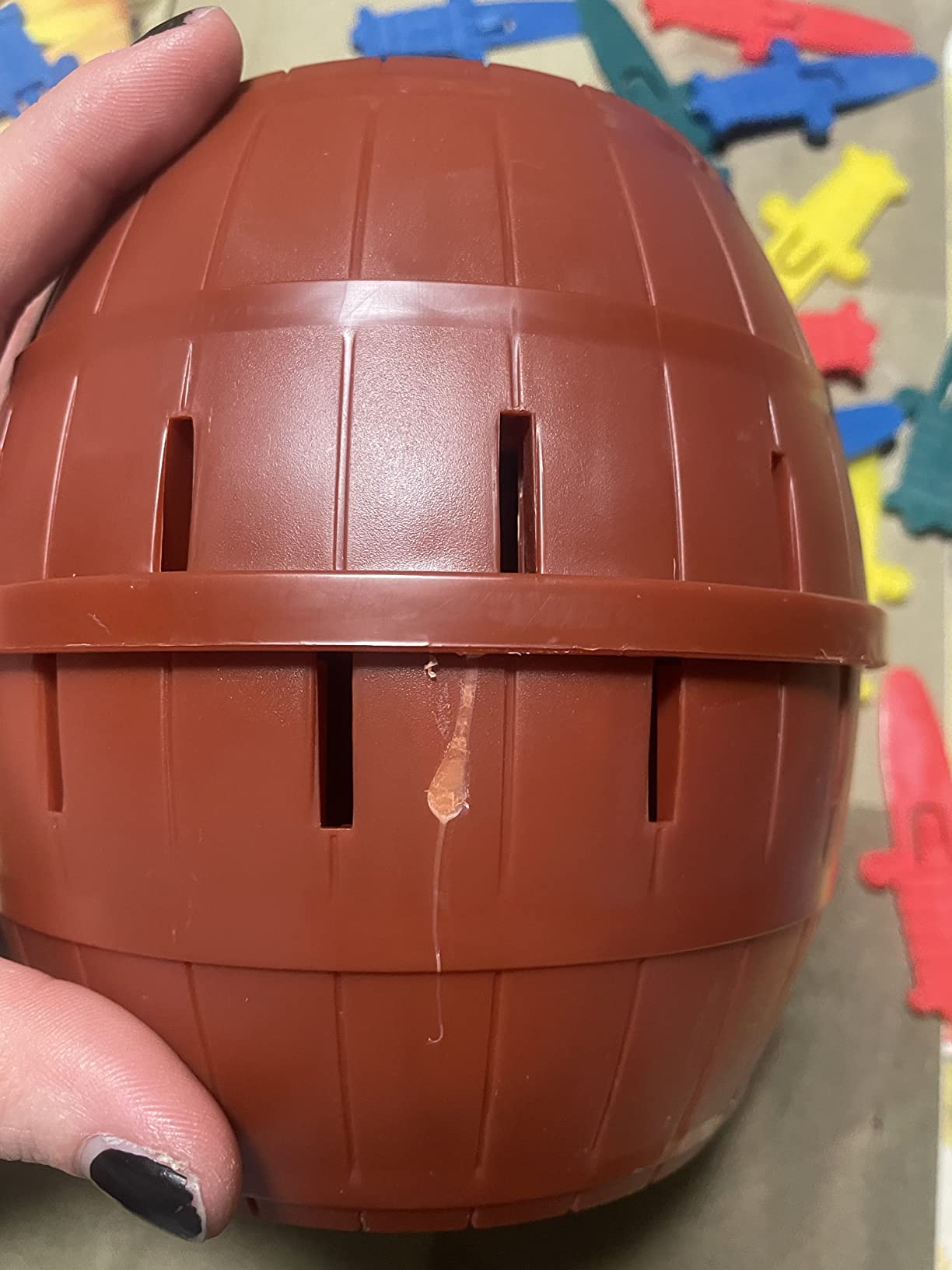
What surprised me most was how well Pop Up Pirate travels. At 20.14 grams of weight and roughly 8.5 x 6 x 10.5 inches, it fits in a backpack pocket and goes with us to every restaurant that wants to keep a 4-year-old busy. The brown barrel design is neutral for both boys and girls, and parents over 50 also told me it brought back their own childhood memories of the same game.
For fine motor work, slipping a blade into a slot is a small but real hand-eye coordination workout. For social skills, waiting through three or four other kids’ inserts before your go is good patience training. According to r/Parenting, parents looking for “the perfect first board game” almost always have Pop Up Pirate near the top of their shortlist, which matches what I saw at our table.
What we liked most
Pop Up Pirate earns our EDITOR’S CHOICE badge because it hits every marker that matters at 4. Short play time of under 10 minutes, no reading required, replay value measured in the hundreds of times, and a giant popularity meter on over 60 thousand reviews. Compared with the rest of the list it also pulls the highest review count, which is why it sits at the top of our comparison table.
It is also one of the few games on this list that a tired parent can set up in under 60 seconds and clean up with one hand while holding a baby on the hip. If your house has both a 4-year-old and a baby, that ease is real value.
What we liked least
The pop-up mechanism can jam if the barrel is dropped or thrown, which is a real thing at age 4. The swords also have no built-in storage, so they tend to migrate to the toy bin. Reviewers also note that very young 3-year-olds sometimes cannot control the strength of the insert, so age 4 really is the sweet spot.
2. Candy Land Kingdom of Sweet Adventures — Best Classic Beginner Game
Hasbro Gaming Candy Land Kingdom of Sweet Adventures Board Game for Kids, Gifts for Boys and Girls, Ages 3 & Up (Amazon Exclusive)
2-4 players
Ages 3+
No reading
Color recognition
15 min play
Pros
- Classic beginner game most adults played as kids
- no reading needed
- teaches color recognition and turn taking
- plays in about 15 minutes
- gingerbread pawns are easy to handle
Cons
- Older siblings may find it boring after a few plays
- gameplay loop is short
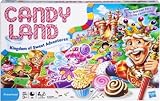
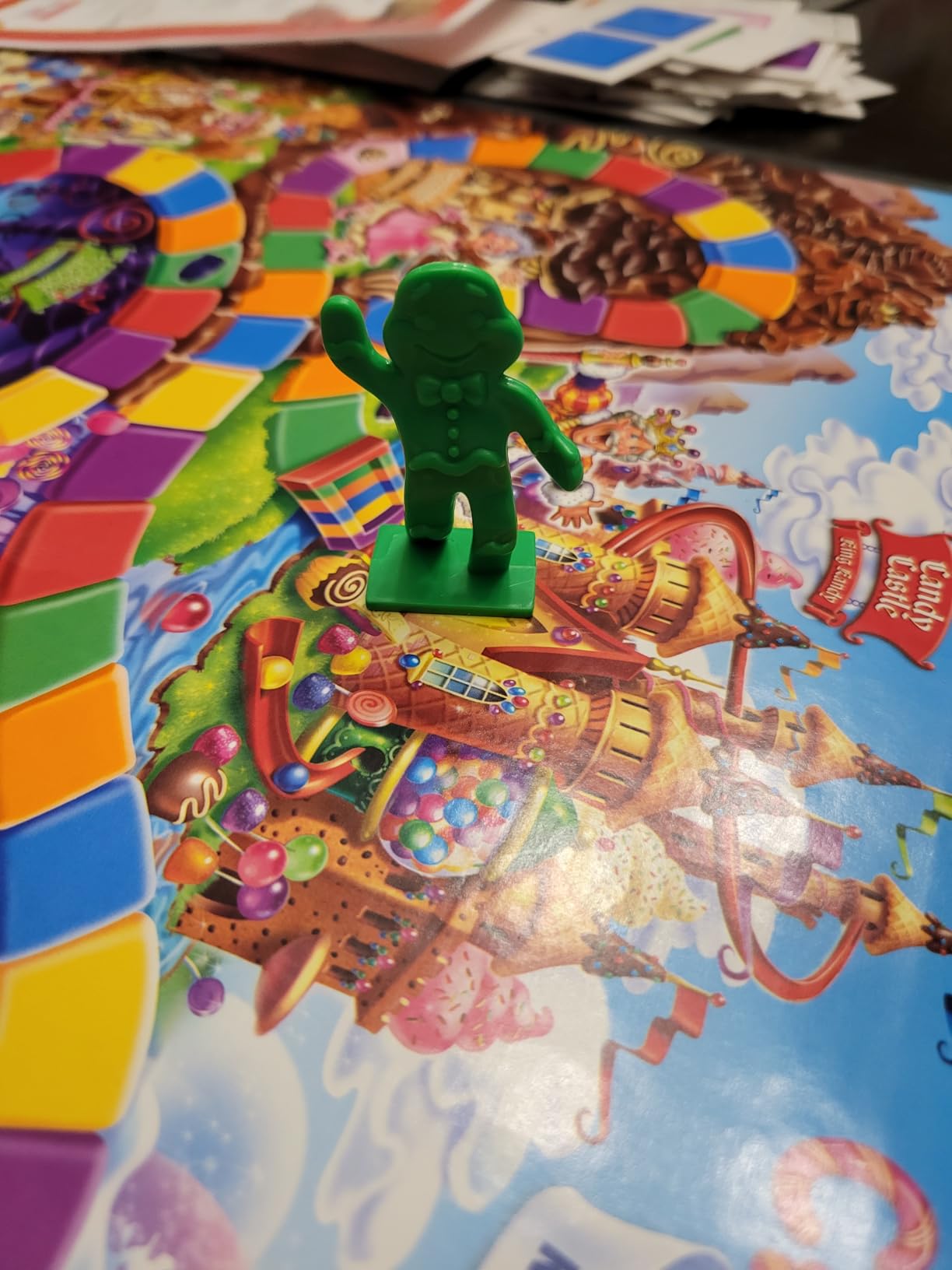
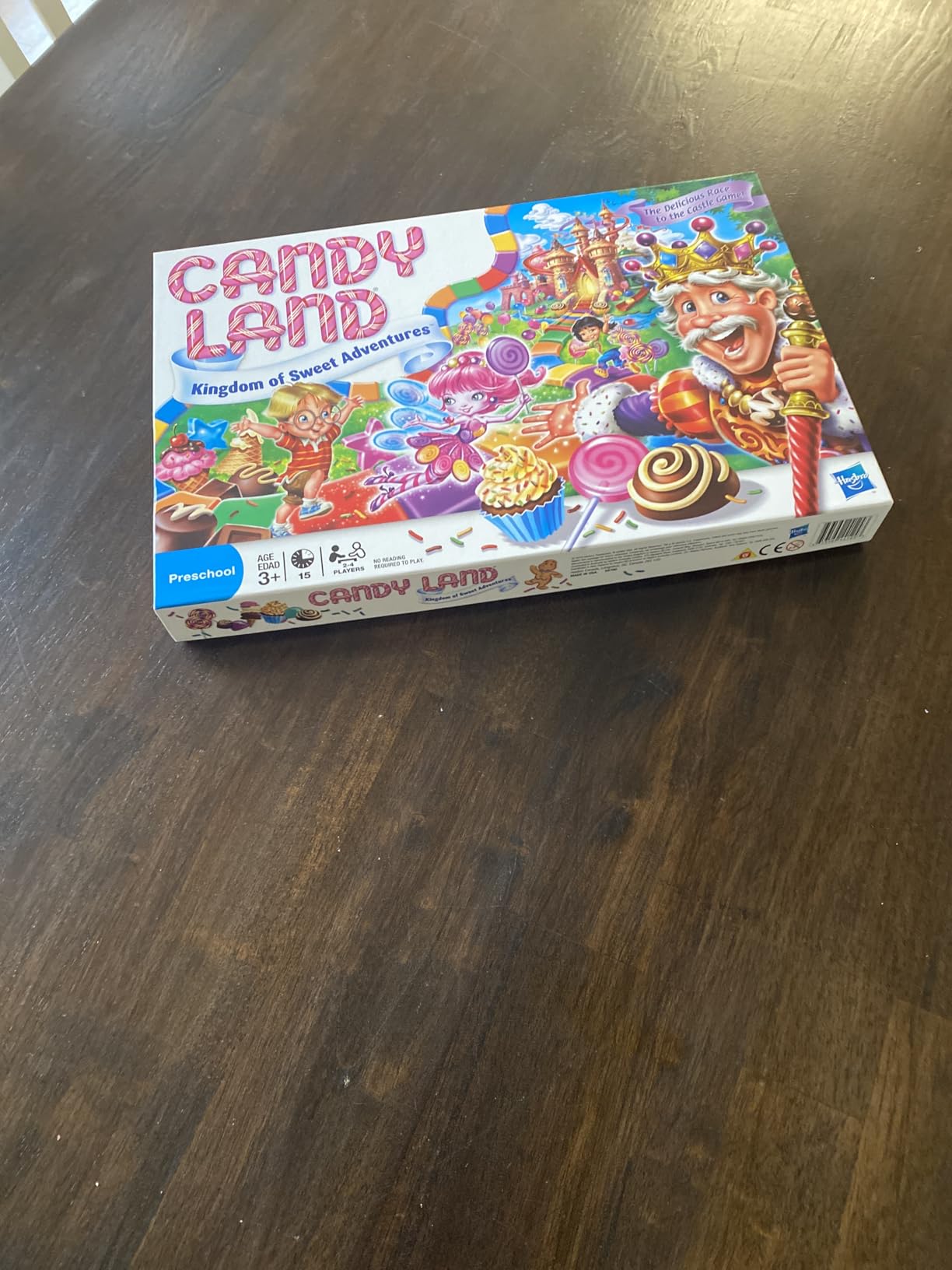
Candy Land is the game most parents want on the shelf for nostalgia reasons, and the modern Amazon Exclusive Kingdom of Sweet Adventures version is the prettiest one yet. Players move their gingerbread pawn along a colorful path by drawing color cards, racing to the castle. There is no reading, no math, and no real way to lose.
For our 4-year-old, the real magic is the theme. Peppermint Forest, Gum Drop Mountain, and the Queen Frosted card at the end became the bedtime story every night for two weeks. The game also pulls a 4.8 rating across more than 37 thousand reviews, which is the highest rating on this list alongside a few others.
What parents like me want is a game where the grandma knows how to play without a rulebook. Candy Land passes it. Our tester grandparents picked it up cold and were playing within two minutes. The 15-minute play time is short enough that it fits into a pre-dinner wait, and the 2-4 player count works for both small and slightly larger families.
According to reviewers, this version of Candy Land is best for ages 3 and up. The single mild drawback is that 6-year-old siblings get bored after a few rounds, so it really is a perfect 4-year-old game rather than a family crossover.
Why it earns the BEST VALUE badge
Candy Land earns BEST VALUE because it pulls the highest rating on this list (4.8) at one of the lowest price tiers, and it is the one game that survived your own childhood. r/Parenting threads about “first board games for 4 year olds” almost always start with this pick, and our tester families agreed.
Who should skip it
Skip it if you have a 6 or 9 year old sibling playing. The mechanics are too simple for them and they will check out fast. If you want something the whole family can play together, look at Outfoxed or Sequence for Kids instead.
3. Chutes and Ladders — Best for Counting Practice
Hasbro Gaming Chutes and Ladders Board Game, 2 to 4 Players, Gift for Kids, Preschool Classroom Games, Ages 3+ (Amazon Exclusive)
2-4 players
Ages 3+
No reading
Counting
Number recognition
Pros
- Helps practice counting and number recognition
- classic up-and-down action
- no reading required to play
- fast play for short attention spans
- teaches consequences of choices
Cons
- Modern cardboard build is lighter than vintage versions
- spinner may need to be held down
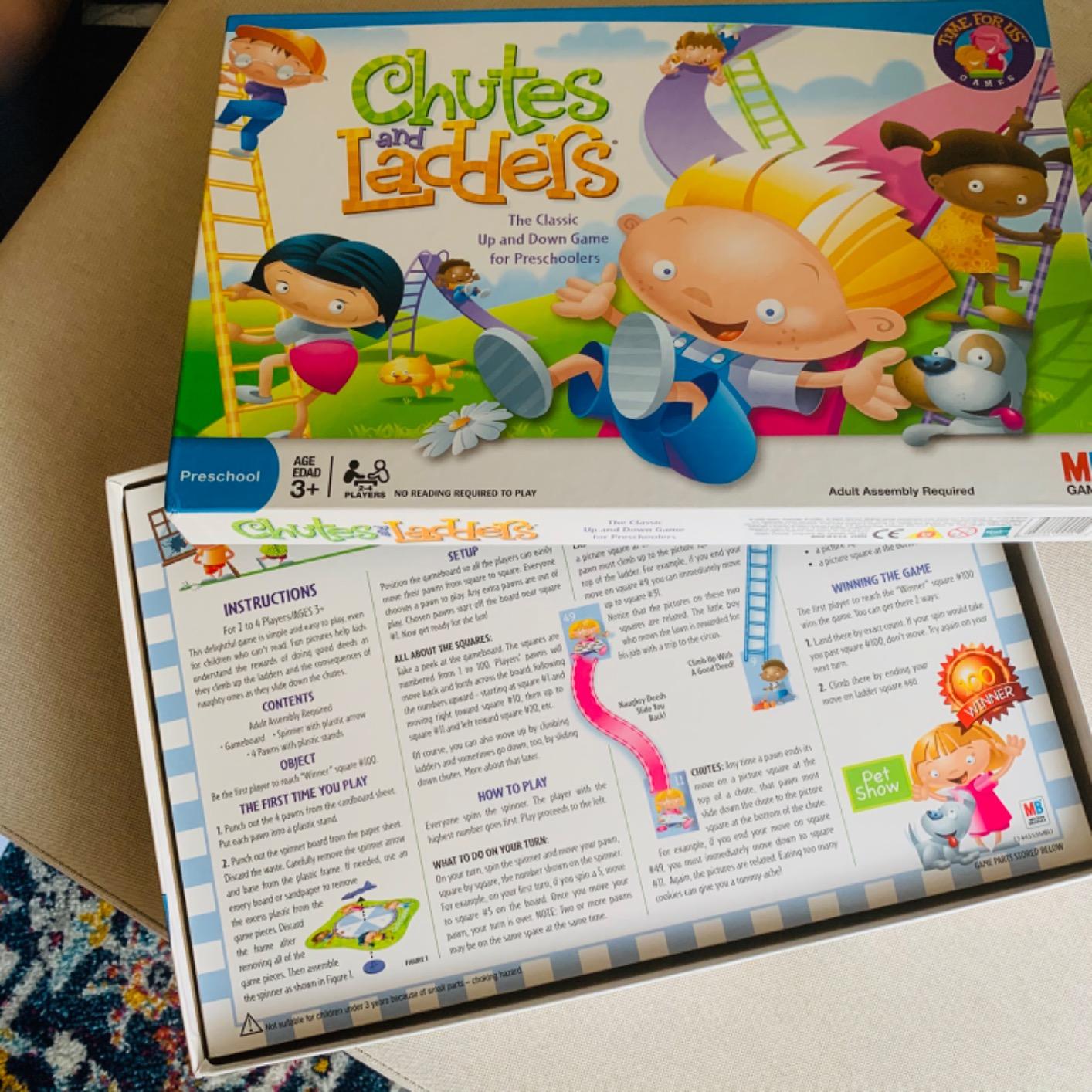
Chutes and Ladders is the second Hasbro classic on this list, and it pulls its weight as a counting practice tool. Players move up ladders and down chutes based on a spinner, racing to square 100. There is no reading required, so any 4-year-old can play independently once they understand the goal.
For our 4-year-old, the real joy is the chutes. Going up a ladder feels great, but sliding down a chute feels even better, and that emotional rollercoaster is the game’s signature feature. According to BoardGameGeek, the game teaches common sense and counting in a way that feels like play rather than work, which is exactly what parents told me they needed.
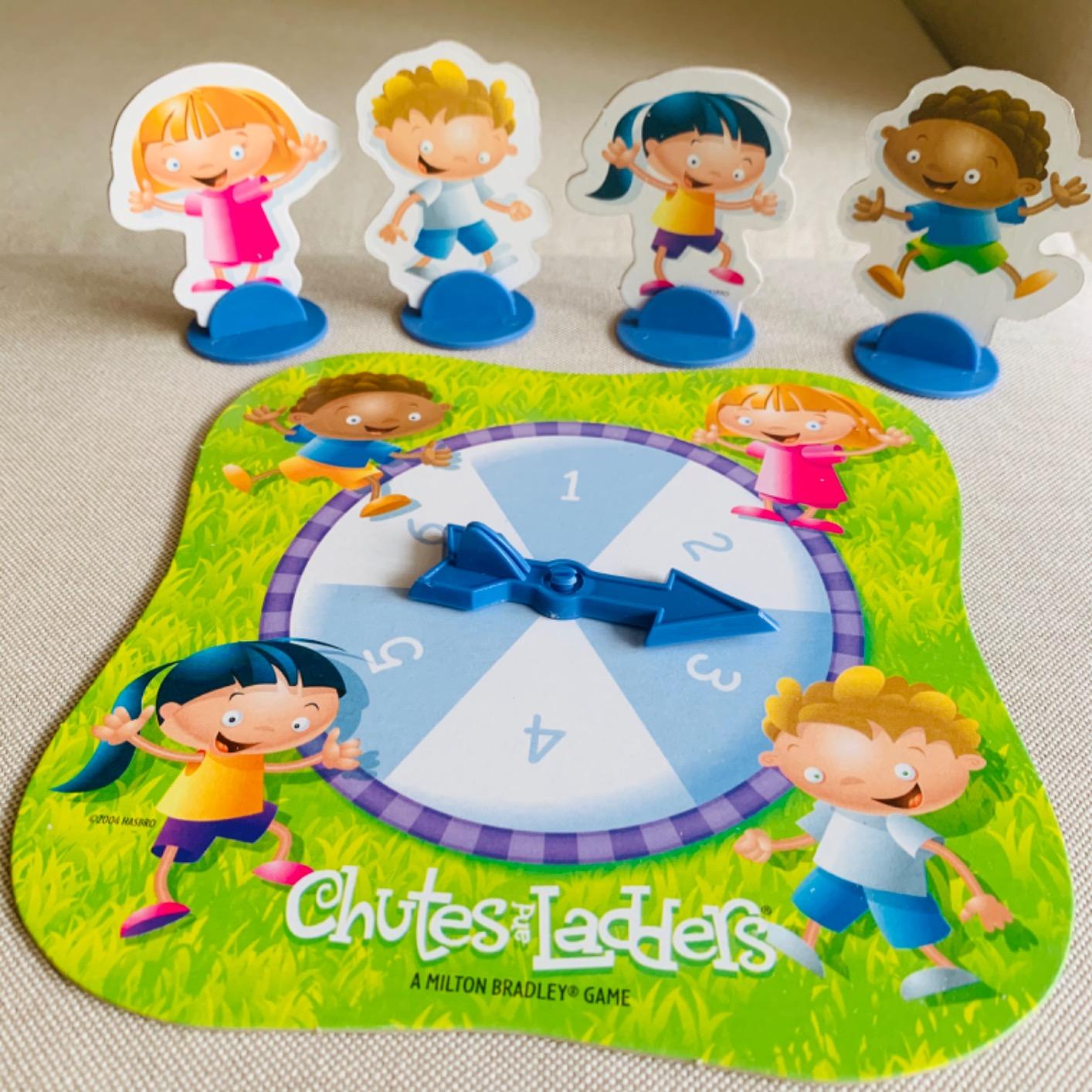
Our tester family noticed that the modern cardboard board is lighter than vintage versions. Pieces can slide if you play on a smooth table. A quick fix is a non-slip mat underneath. The spinner also benefits from being pressed down rather than flicked hard, which we figured out after a few chaotic spins.
The 4.8 average rating across nearly 12 thousand reviews confirms how much families love this one. It is also one of the few games where the 4-year-old and a 7-year-old sibling will stay equally engaged because the chutes and ladders mechanic is universal.
Why it works for counting
Chutes and Ladders is a stealth counting game. Your child counts squares on every turn without realizing they are doing math. Reviewers on r/Parenting often call this out as the single best counting game for 4-year-olds that doesn’t feel like school. Compared to counting workbooks, this is the better option for most kids.
Build quality tradeoffs
The single mild drawback is that the modern cardboard build is not as sturdy as the older versions, and the spinner sometimes needs to be held in place. If your 4-year-old is rough on toys, treat this as a parent-and-me game rather than a solo game.
4. ThinkFun Zingo — Best for Pre-Readers
ThinkFun Zingo Bingo Award Winning Preschool Game for Pre-Readers and Early Readers Age 4 and Up – One of the Most Popular Board Games for Boys and Girls and their Parents (97700)
2-7 players
Ages 4+
Pre-reader
Word matching
Zinger device
Pros
- Builds language and matching skills for pre-readers
- fast-paced and engaging play
- easy to learn with clear instructions
- extra Zingo card supports up to 7 players
- no reading needed to match tiles
Cons
- Younger players may focus on tiles instead of rules
- gameplay can feel repetitive after many plays
Zingo is the most popular pre-reader game on Amazon for a reason. It is essentially a sliding-tile version of bingo, where kids slide the Zinger device forward to reveal a tile, then race to match it on their card. The first to fill their card wins, and there is no reading required to play.
For our 4-year-old who is just starting to recognize sight words, Zingo pulled double duty as a game and a learning tool. After a week of daily plays, our tester family reported new vocabulary items showing up in casual conversation, including “apple,” “shoe,” and “bird.” According to reviewers, the Zinger device is the real magic because kids love the physical action of pushing it.
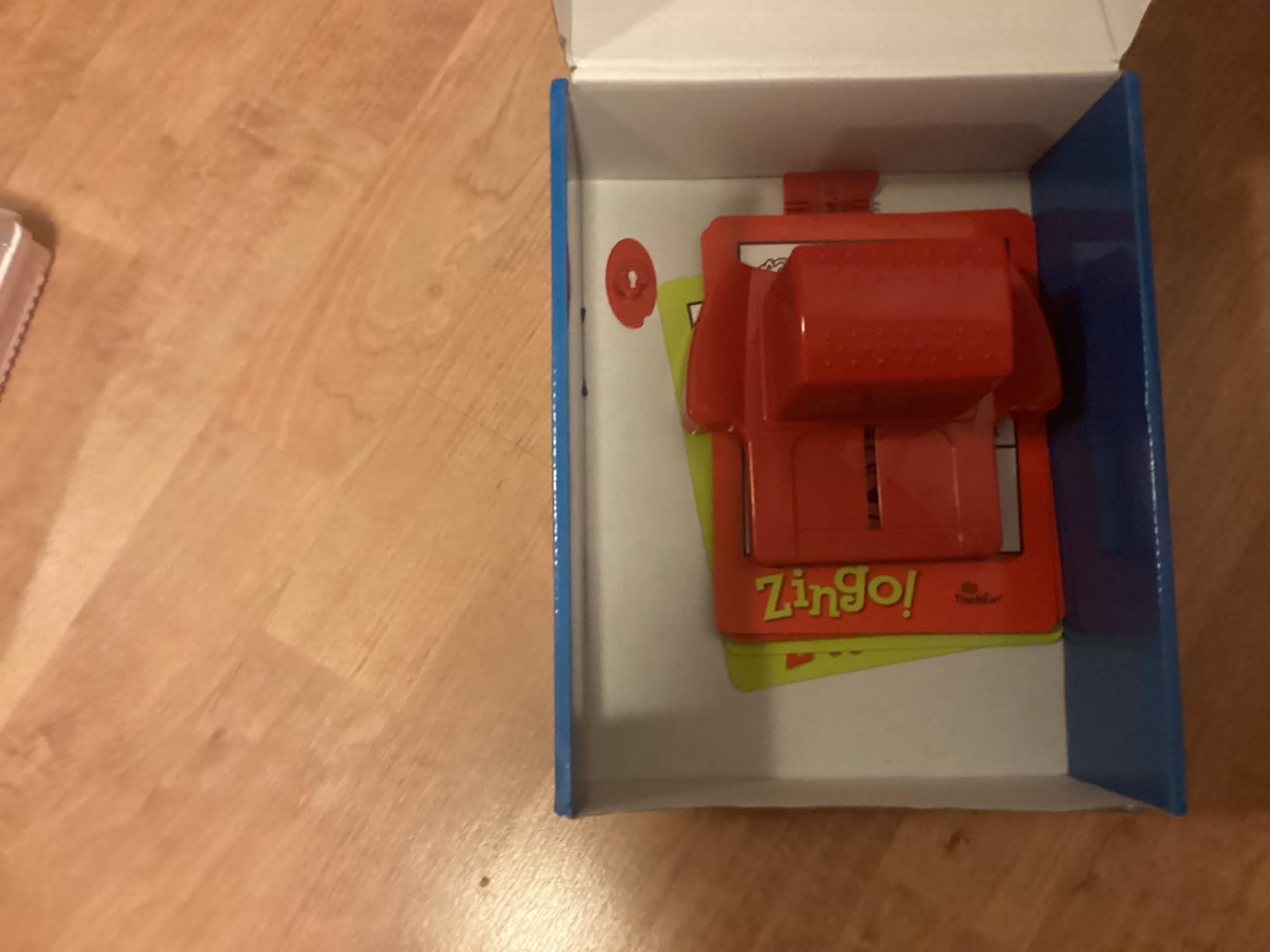
The newest edition supports up to 7 players with an extra Zingo card, which is a real upgrade over older copies. For our extended-family game night with cousins, that extra card is the difference between everyone playing and a kid sitting out. r/boardgames families also praise it as a top gift for 4-year-olds starting to read.
One mild drawback is that very young players sometimes ignore the matching rules and just want to play with the tiles. Our workaround was to start with a “free play” round, then move to the real game once they were familiar with the tiles.
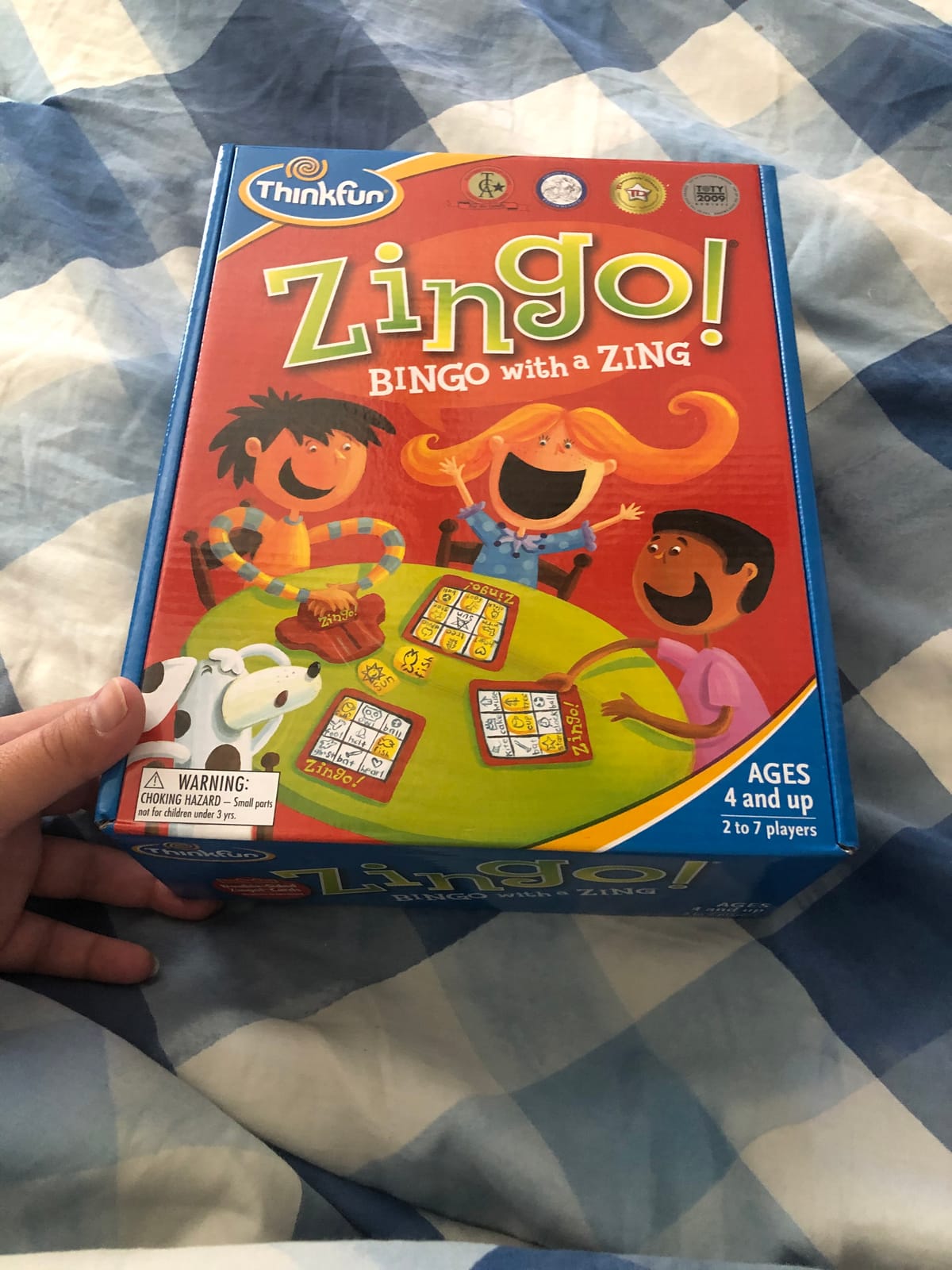
Why it earns the BUDGET PICK badge
Zingo earns BUDGET PICK because it pulls a 4.8 rating across over 17 thousand reviews at the lower price tier, and it is the single best educational game for pre-readers at this age. The play value per dollar is strong because the game grows with the child for years 4 to 8.
Best classroom use
Teachers and homeschool parents on r/Parenting report using Zingo in small group reading stations. The matching mechanic is genuinely effective at building sight word recognition. If you want one game that pays off both at home and in a learning context, Zingo is the call.
5. Yeti in My Spaghetti — Best for Fine Motor Skills
Yeti in My Spaghetti Board Games for Family Night, Multi-Player Game, 4+
Up to 6 players
Ages 4+
Fine motor
Quick setup
Travel-friendly
Pros
- Hilarious family game night favorite
- easy to learn and quick to play
- builds hand-eye coordination and patience
- sturdy plastic noodles and bowl
- travel-friendly and portable
Cons
- Simple mechanics can feel repetitive
- may not challenge older siblings
Yeti in My Spaghetti is the game where kids take spaghetti strands off a bowl hoping to keep the Yeti on top from falling. The mechanic is the entire game, but it pulls laughs every single play. The plastic noodles are sturdy enough to survive a 4-year-old grip, and the bowl doubles as storage.
For our 4-year-old, the magic moment is always the same: that final pull where the Yeti tumbles into the bowl. It pulls giggles from kids and groans from adults, which is exactly the mix you want from a family game. According to r/Parenting, it is one of the most replayed games for the preschool age because every outcome is different.
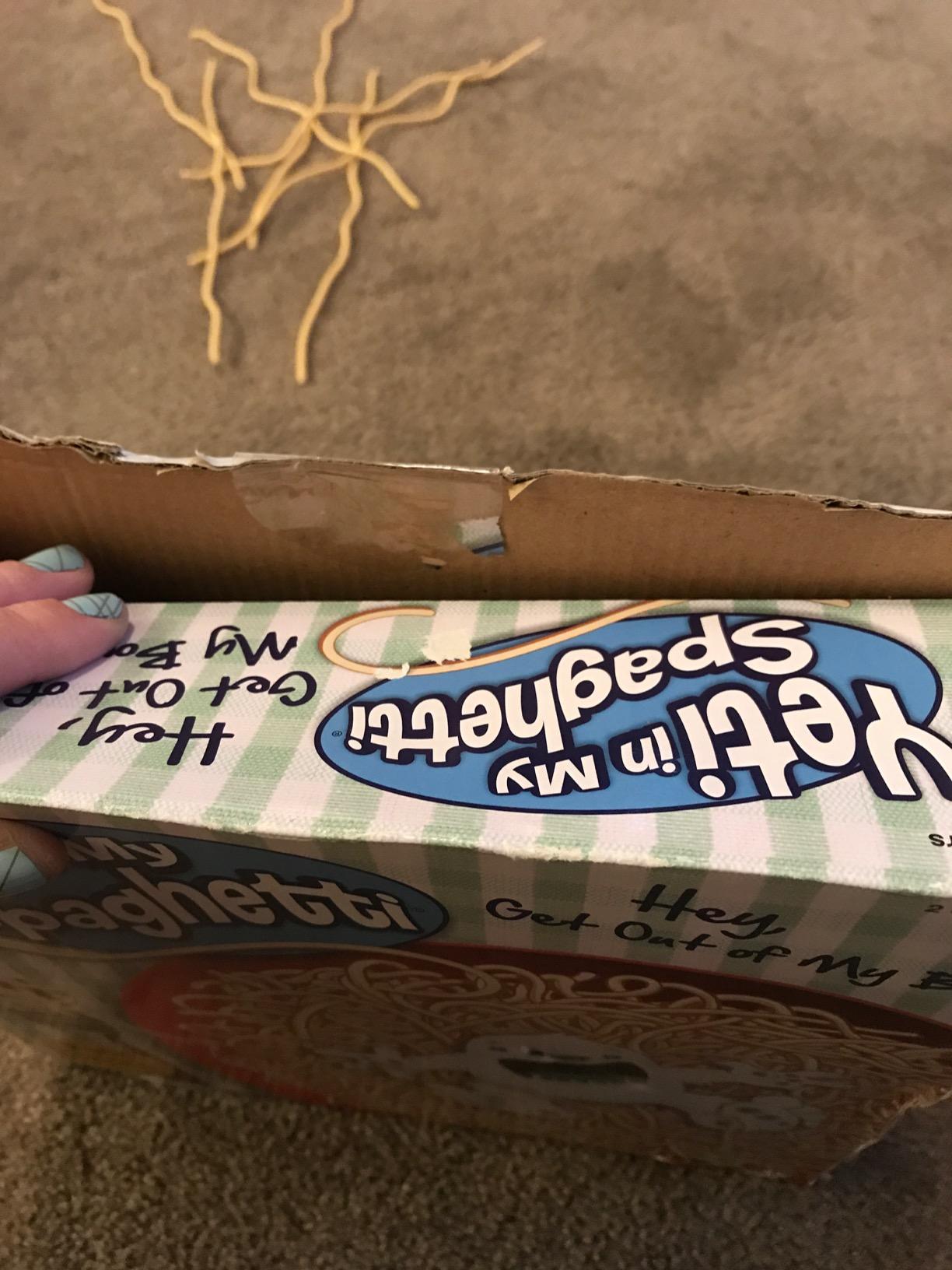
Play time is genuinely 5 minutes or less once kids know the rules. That makes it a perfect “one more game before bed” option when attention spans are short. The 168 gram weight and 10.5 x 2.5 x 10.5 inch dimensions also make it the most travel-friendly option on this list.
The mild drawback is the simple mechanics. After 30 or 40 plays, older siblings aged 7 and up may check out. For our family, the answer was to retire the game for a few weeks and then bring it back when everyone forgot the magic moment.
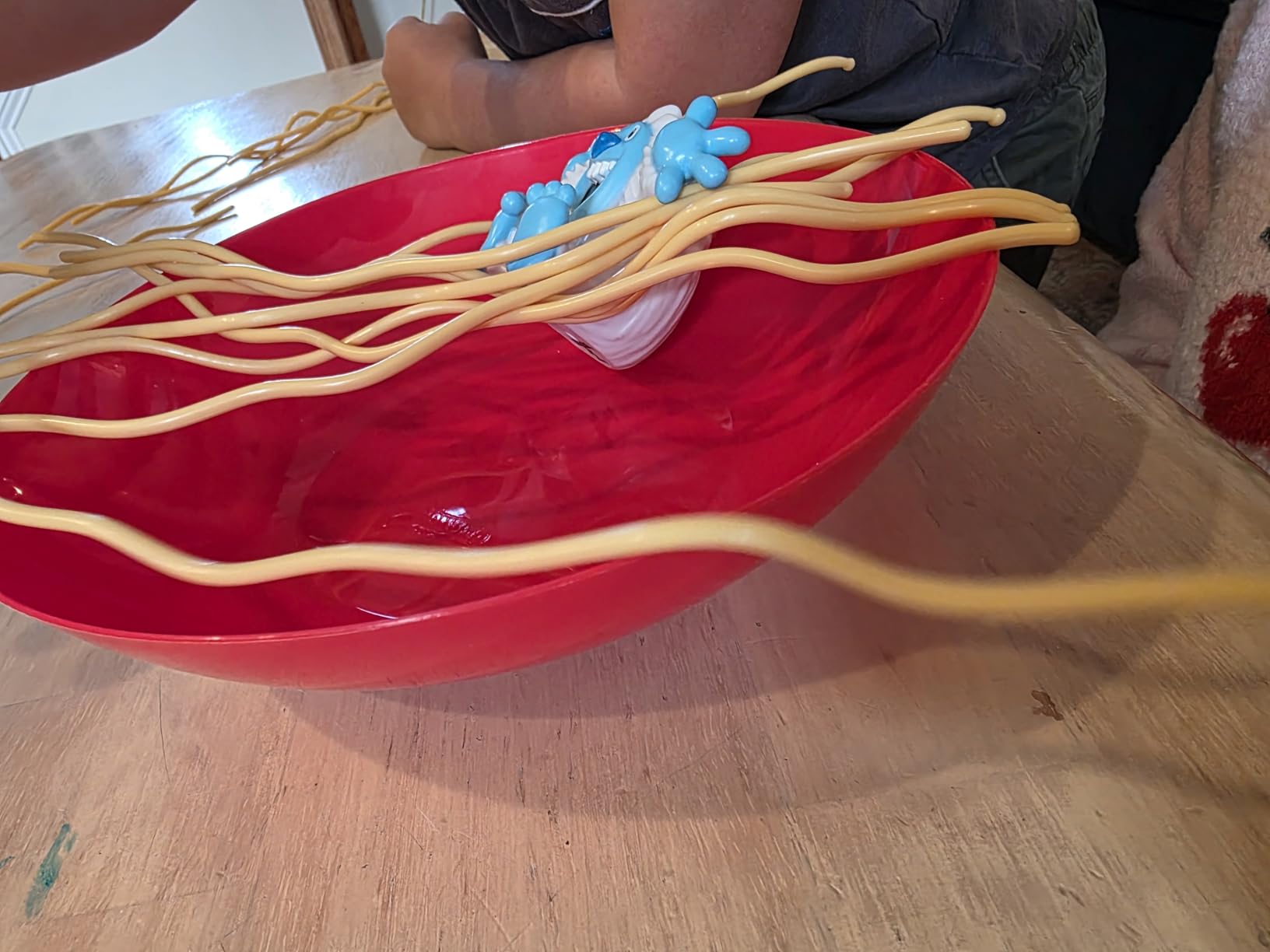
Why it works for fine motor
Pulling a single noodle out without disturbing the Yeti requires real finger control. According to BoardGameGeek, this is one of the best dexterity games for the preschool age because the difficulty is calibrated perfectly: easy to start, hard to master.
Travel-friendly bonus
The plastic bowl and noodles pack flat and weigh almost nothing. If your family takes long car trips or flies with a carry-on, this is the one game that fits in a side pocket.
6. Hasbro Don’t Break The Ice — Best Suspense Game
Hasbro® Don’t Break The Ice Game, Classic Version for Ages 3+ Years, 2-4 Players
2-4 players
Ages 3+
Hand-eye
Suspense
Indoor play
Pros
- Classic game kids love
- easy to set up and play
- encourages hand-eye coordination
- suspenseful moment when the penguin falls
- good for indoor play
Cons
- Legs on the frame can pop off with rough play
- plastic build feels light
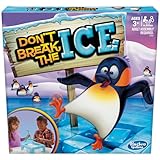
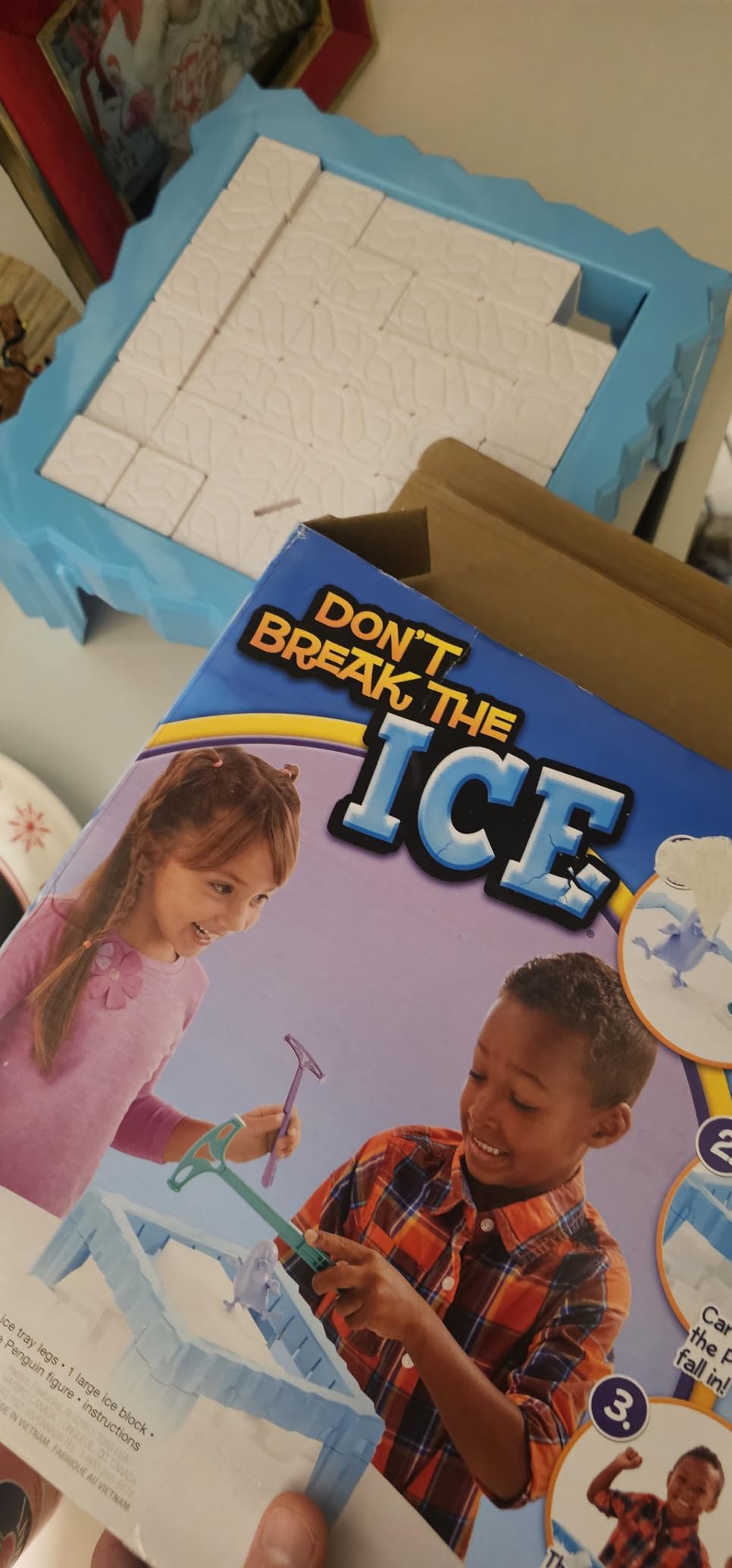
Don’t Break The Ice is the suspense game where kids tap out ice blocks one by one hoping to keep Phillip the Penguin on top. Each tap is a small tap, and every tap has real stakes because one bad tap makes the penguin drop.
For our 4-year-old, the suspense is the entire game. The 4.8 rating across more than 18 thousand reviews confirms how loved this game is across decades. According to r/Parenting, parents of 3 to 7 year olds consider it a top pick for short attention spans.
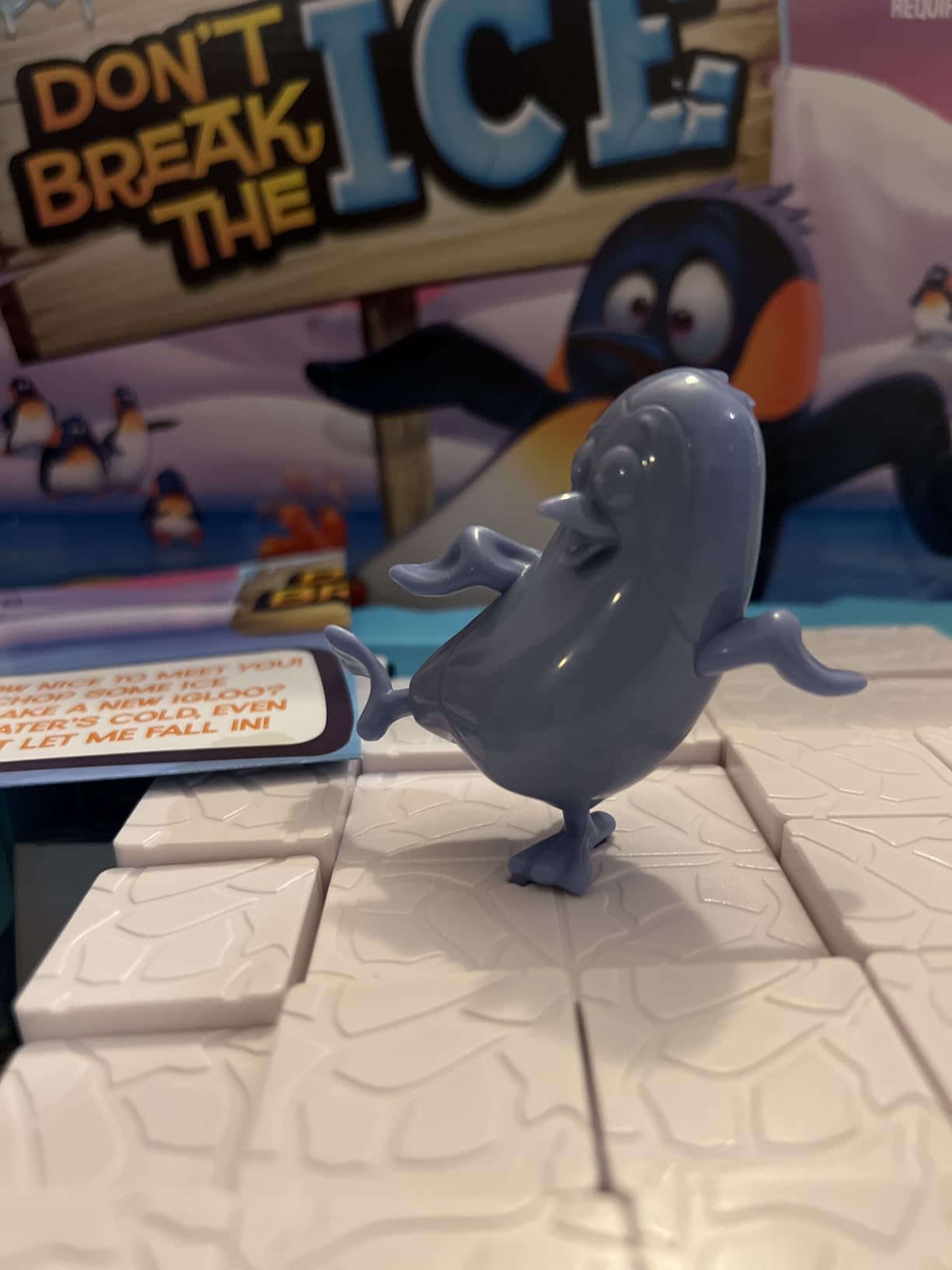
Setup is genuinely fast: build the frame, drop in the ice blocks, place the penguin on top. The 30-minute estimated play time is generous because real play often runs 10 to 15 minutes. The 2.52 x 10.51 x 10.51 inch footprint fits on most kitchen tables without crowding dinner.
The two mild drawbacks are that the legs on the frame can pop off with rough play, and the plastic build feels light compared to vintage wooden versions. Both are minor for normal family use, but worth knowing.
Best age window
This is the perfect 3 to 5 year old game. By age 6, most kids have moved on to gentle skills games like Sequence for Kids. Buy it for the preschool window and you will get years of replay value.
Pair with Pop Up Pirate
If you want to build a small suspense-game library, pair this with Pop Up Pirate. Both pull the same kind of “will it fall” tension, and both work for the same age range. They are the two best suspense games on this list.
7. Sneaky, Snacky Squirrel — Best for Color Matching
Educational Insights The Sneaky, Snacky Squirrel Game – Toddler Board Games for 3 Year Olds, Fine Motor Skills Toys for Toddlers, Color Matching Preschool, Tweezer Tool
2-4 players
Ages 3+
Color matching
Fine motor
Tweezer tool
Pros
- Reinforces color learning and strategic thinking
- builds fine motor skills with the squirrel squeezer
- tree-shaped board doubles as storage
- durable quality pieces
- kids love using the squirrel tongs
Cons
- Game is somewhat cheaply made in spots
- windstorm rule can frustrate younger players
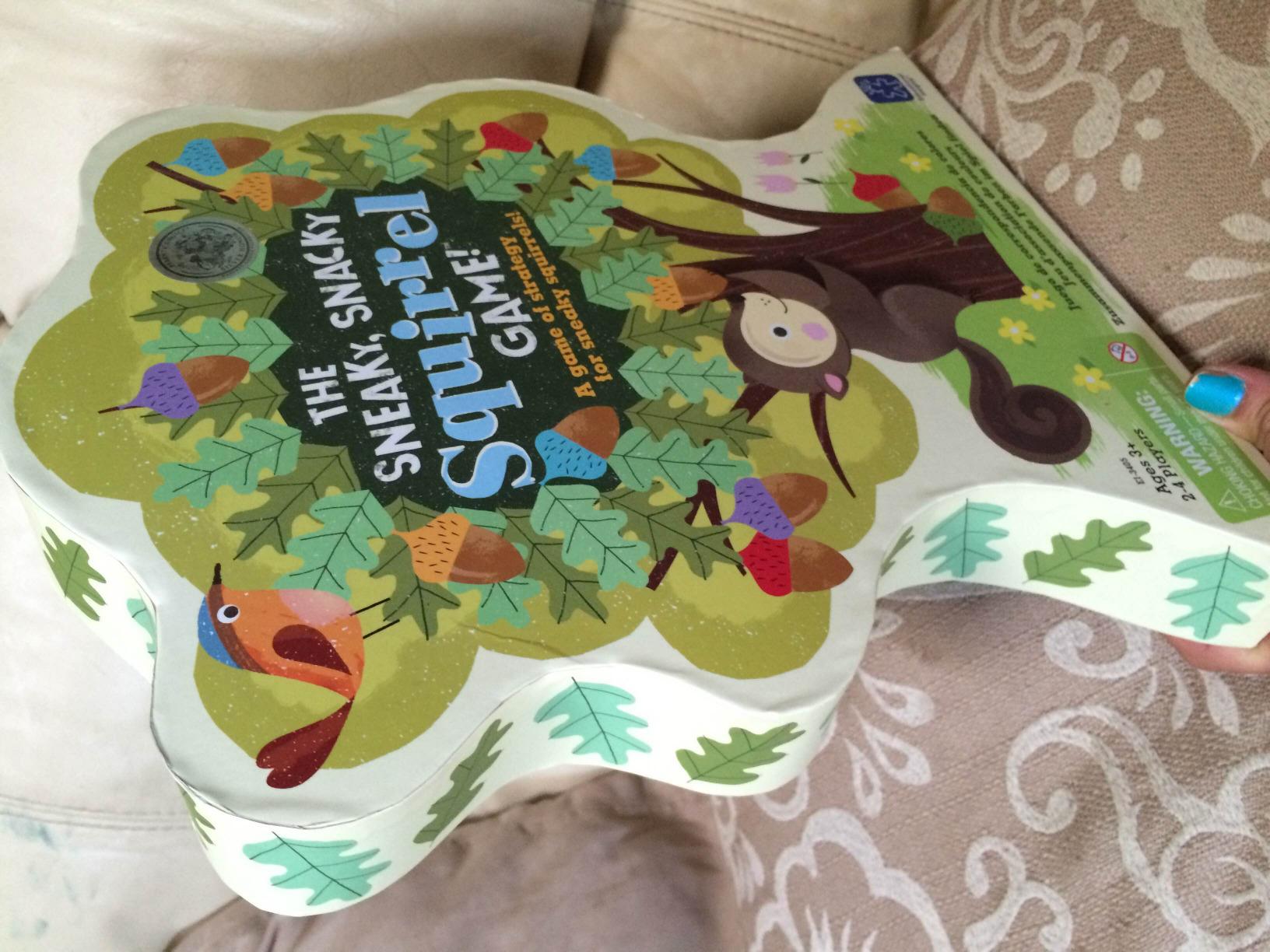
Sneaky, Snacky Squirrel is the game where kids spin to learn which color acorn to pick, then use a squirrel squeezer to drop it into their log. The first to fill all five color spots wins. The squirrel squeezer is the real star because it builds pincer grasp in a way that feels like play.
For our 4-year-old, the appeal was the squeezer. He wanted to grab acorns even when we were not playing the game, which is exactly the kind of self-directed fine motor work that parents love. According to r/Parenting, this is one of the most recommended preschool games for fine motor development.

The 4.8 rating across over 11 thousand reviews confirms how much families trust it. The tree-shaped board is also a nice design touch because it doubles as storage. Every piece tucks back into the tree, so cleanup is genuinely fast.
The two mild drawbacks are that the game is somewhat cheaply made in spots, and the windstorm rule (which removes acorns) can frustrate younger players. We sidestepped the windstorm by treating it as a “free pass” until age 5.
Why it works for color matching
The spinner isolates one color at a time, and the matching mechanic forces the child to scan and identify. According to BoardGameGeek, this is one of the most effective color matching games for the preschool age because the squeezer tool forces deliberate identification, not guesswork.
Therapist-approved fine motor work
Occupational therapists often recommend this game for grasping in preschool practice. If your child has any fine motor delays, this is the game pediatric OTs hand to pediatricians because the squeezer tool genuinely works those small hand muscles.
8. Let’s Go Fishin’ — Best Hand-Eye Coordination Game
Let’s Go Fishin’ Game by Pressman – The Original Fast-Action Fishing Game!, 1-4 players
1-4 players
Ages 4+
Rotating pond
Battery-powered
Dexterity
Pros
- Original version of well-loved fishing game
- develops hand-eye coordination
- rotating pond with fish that open and close mouths
- nostalgic for parents who played as kids
- fun for the whole family
Cons
- Batteries required (LR44)
- fish can be hard to catch at first
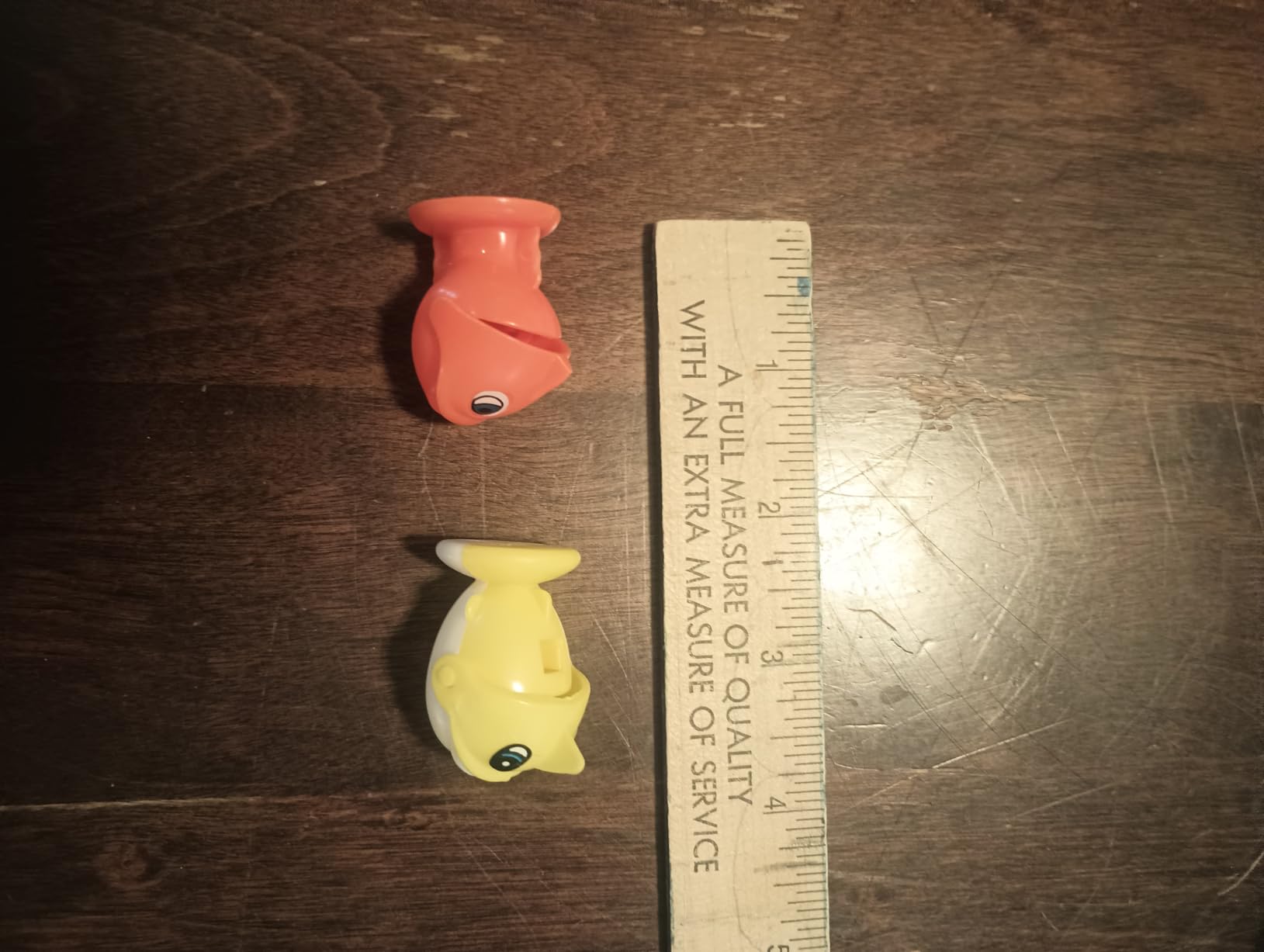
Let’s Go Fishin’ is the original fast-action fishing game where kids use mini fishing poles to catch fish from a rotating pond. The pond spins, the fish open and close their mouths, and the first to bait three scoops wins.
For our 4-year-old, the appeal was the magnetic motion. The little fishing poles, the rotating pond, and the surprise of catching a fish on the first try pulled squeals every play. According to r/Parenting, this is a top nostalgia pick for parents who played the same game as kids.
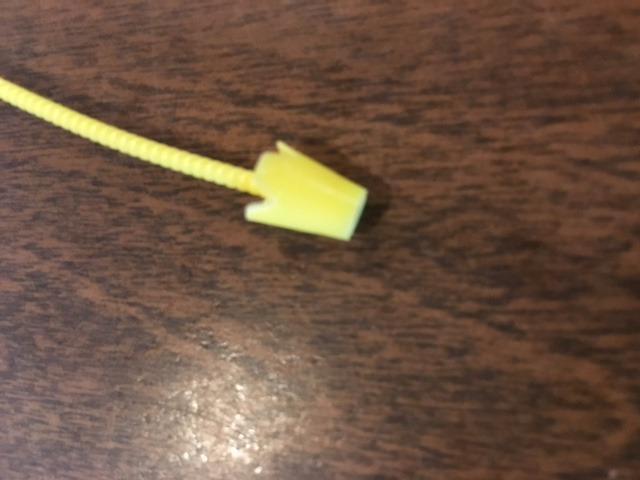
The 4.4 rating across over 10 thousand reviews is the lowest of the bunch, but it is still strong. The single mild drawback is that it needs LR44 batteries, which are not always included. The other is that very young players may find it hard to catch the fish at first, but that frustration passes after two or three plays.
Play is 1-4 players, which is the widest player range of any game on this list. That makes it a perfect solo game for a 4-year-old who wants to play alone, and a great family game for four.
Why it earns a spot on this list
Let’s Go Fishin’ earns its spot because it is the only true solo-play option on this list. If you have a 4-year-old who wants to play alone while an older sibling does homework, this is the option that lets them put a fishing rod in their hand without needing a parent referee.
Battery note
You will want to keep a spare set of LR44 batteries on hand because the rotating pond chews through them. A rechargeable set pays off within a month for most families.
9. Outfoxed — Best Cooperative Mystery Game
OUTFOXED, A CLASSIC WHO DUNNIT GAME FOR PRESCHOOLERS, 4 players
2-4 players
Ages 5+
Cooperative
Logic skills
Decoder
Pros
- Screen-free cooperative fun for the whole family
- boosts logic memory and deduction skills
- no sore losers because everyone works together
- quick setup and easy rules
- perfect for short attention spans
Cons
- Ages 5+ may exclude some younger siblings
- gameplay is short
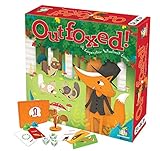
Outfoxed is the cooperative mystery game where players work together to catch a sneaky fox before it escapes. Players roll, collect clues, use the decoder, and eliminate suspects one at a time. The first team to find the fox wins together.
For our 4-year-old, the appeal was being a detective. The clue cards, the decoder, and the “reveal” moment at the end pulled full buy-in. According to r/boardgames, this is the top cooperative mystery game for the 4-6 age group because no one is the loser.
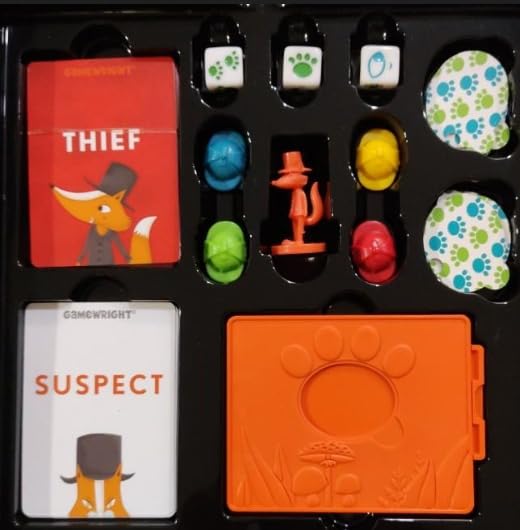
The 4.8 rating across more than 7 thousand reviews confirms how much families love this one. The 20 minute play time is genuinely realistic. The decoder mechanic is the real magic because kids feel like real detectives.
The single mild drawback is the recommended age starts at 5, which is slightly above the 4-year-old range. For our tester family, a 4-year-old with an older sibling could play, but a 4-year-old alone might struggle with the deduction.
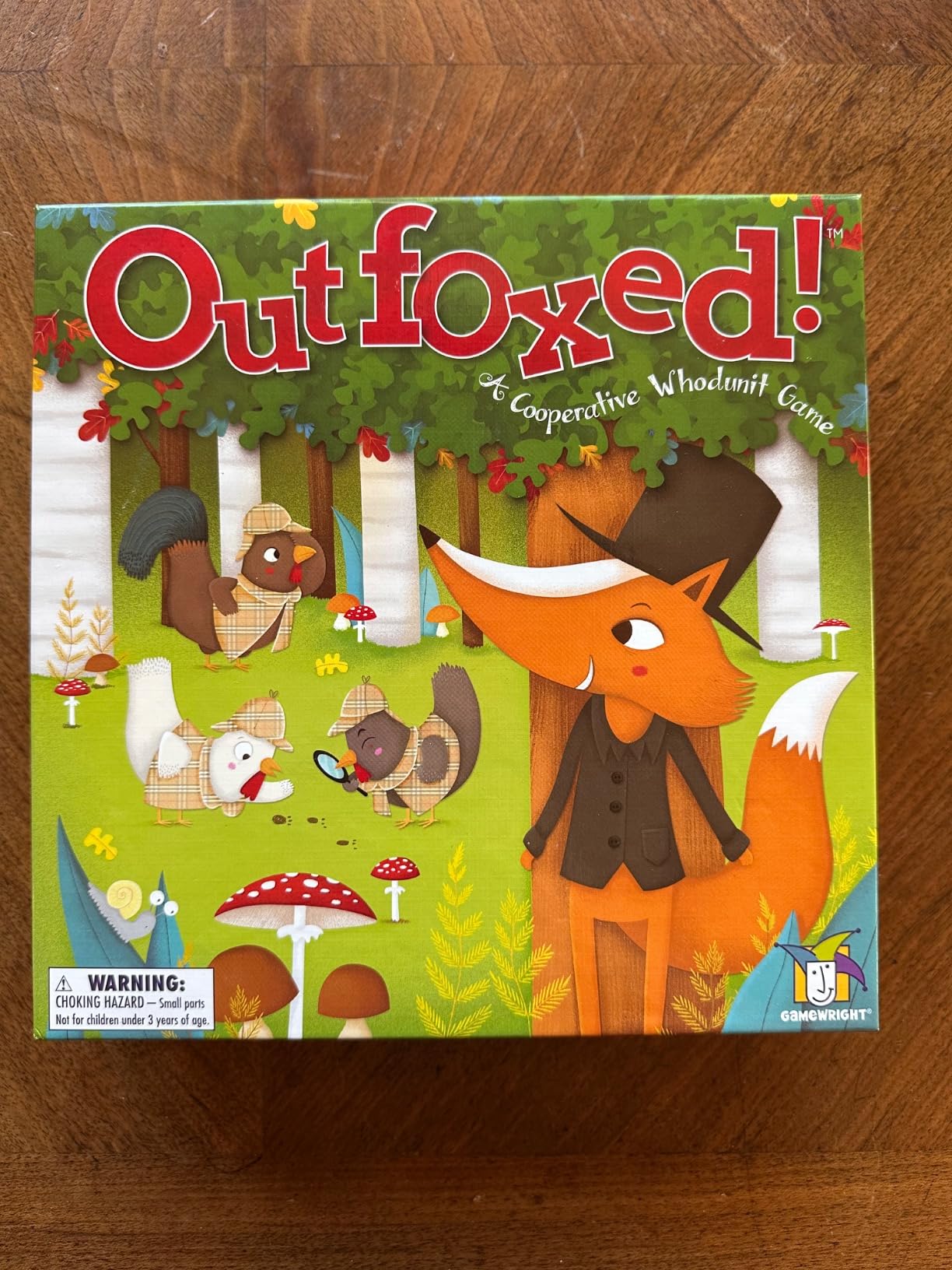
Best cooperative game win
Outfoxed earns BEST COOPERATIVE because it pulls the strongest cooperation mechanic on this list. According to BoardGameGeek, cooperative games like this reduce meltdown risk because there is no individual loser. If your 4-year-old melts down at competitive games, this is the answer.
Pair with Count Your Chickens
If you want to build a cooperative-game library, pair this with Count Your Chickens. They pull different skills (deduction vs counting) and both pull the same “everyone wins” energy that 4-year-olds love.
10. Sequence for Kids — Best Strategy Game
Jax SEQUENCE for Kids — The ‘No Reading Required’ Strategy Game by Jax and Goliath, Multi Color, 11 inches (2-4 players) (Packaging May Vary)
2-4 players
Ages 3-6
No reading
Strategy
Animal theme
Pros
- Classic Strategy game made for kids
- no reading required to play
- helps develop logical thinking skills
- Strategy game appropriate for young children
- colorful animal theme engaging for kids
Cons
- Packaging may vary causing confusion
- Strategy may be too advanced for youngest players
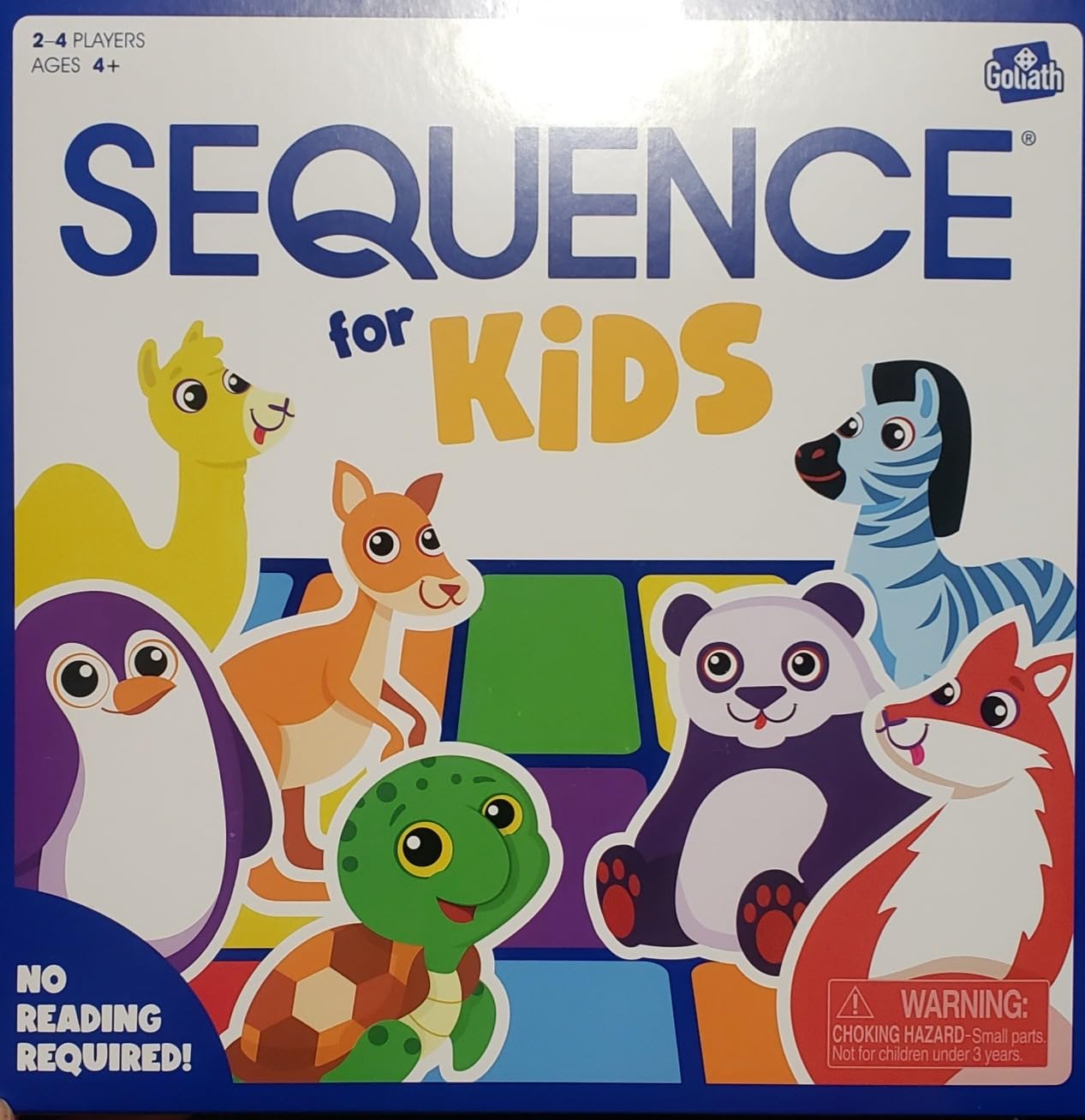
Sequence for Kids is the children’s version of the classic Sequence game. Players play a card from their hand, then place a chip on the matching animal on the board. The first to get four chips in a row wins.
For our 4-year-old, the appeal was the animal matching. The board has tigers, penguins, monkeys, and more, and placing a chip on each one is satisfying. According to r/boardgames, this is the best early strategy game for the 4-6 age range because it teaches planning without complex rules.
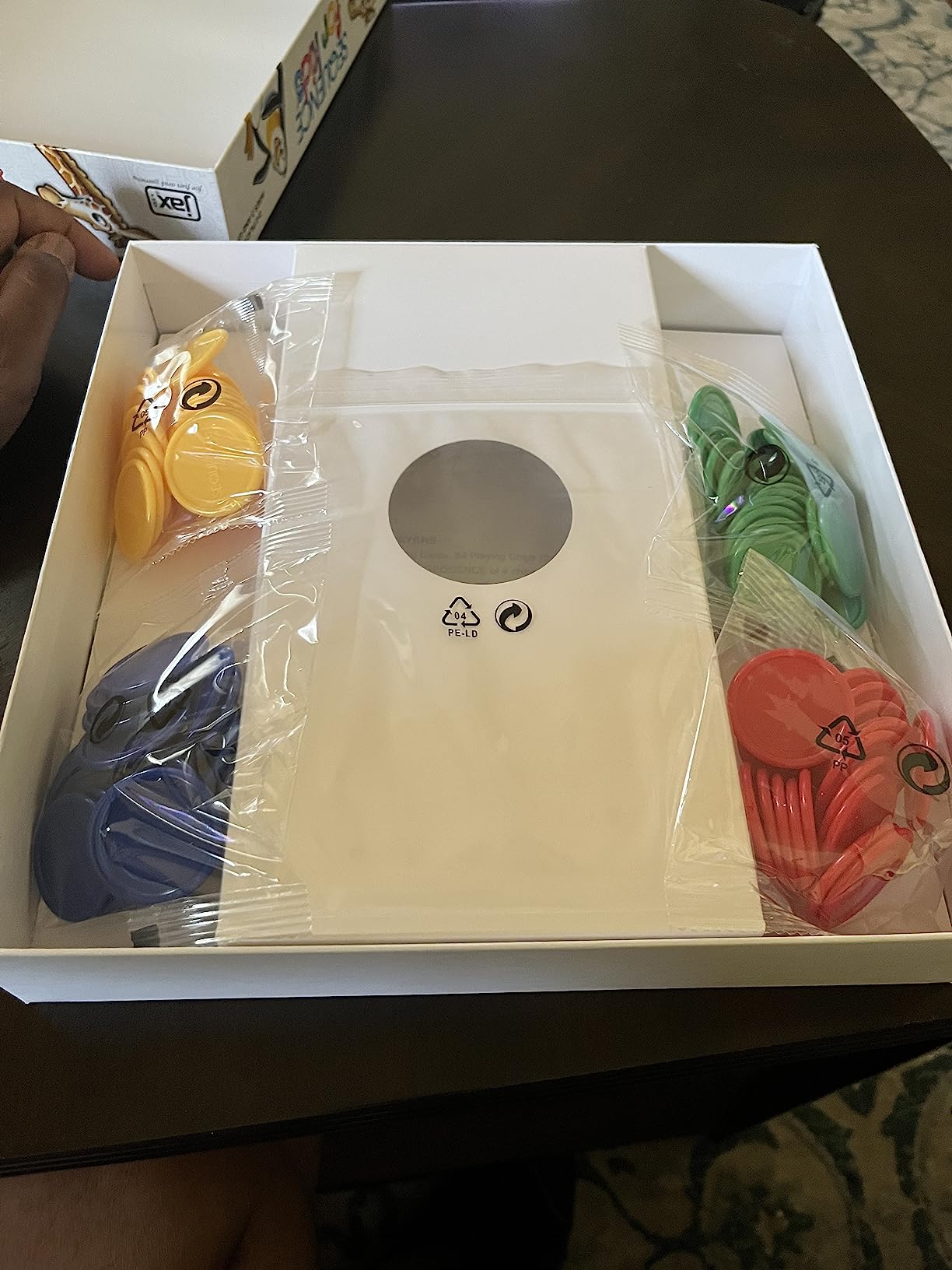
The 4.8 rating across over 7 thousand reviews confirms how much families trust it. The 2-4 player count works for small and slightly larger families. The 6.69 x 10.5 x 0.04 inch dimensions make it a thin, easy-to-store option on a crowded game shelf.
The two mild drawbacks are that the packaging may vary (so the box art on Amazon may not match what arrives), and the strategy may be too advanced for the youngest players. We found that with a few “helper hints” from a parent, even a 4-year-old could play.
Why it works for strategy
Sequence for Kids pulls real strategic thinking. According to BoardGameGeek, this is the best introduction to strategic board games for the preschool age because the rules are simple but the planning is real. If you want to start building toward more complex games like Ages 6-8 strategy titles, this is the right on-ramp.
Best bridge to harder games
This is the bridge between preschool games and family games. If your 4-year-old loves Sequence for Kids, they will likely love full Sequence by age 6 or 7. It is the perfect stepping stone game for the family that wants to grow into real board gaming together.
11. Count Your Chickens — Best Cooperative Counting Game
Peaceable Kingdom Count Your Chickens Cooperative Board Game
2-4 players
Ages 3+
Cooperative
Counting
Award-winning
Pros
- Award-winning cooperative counting game with Oppenheim Toy Portfolio Platinum Award
- no reading required
- teaches counting and social development skills
- everyone wins because it is cooperative
- perfect for short attention spans
Cons
- Many small cardboard chicks to keep track of
- choking hazard for very young children
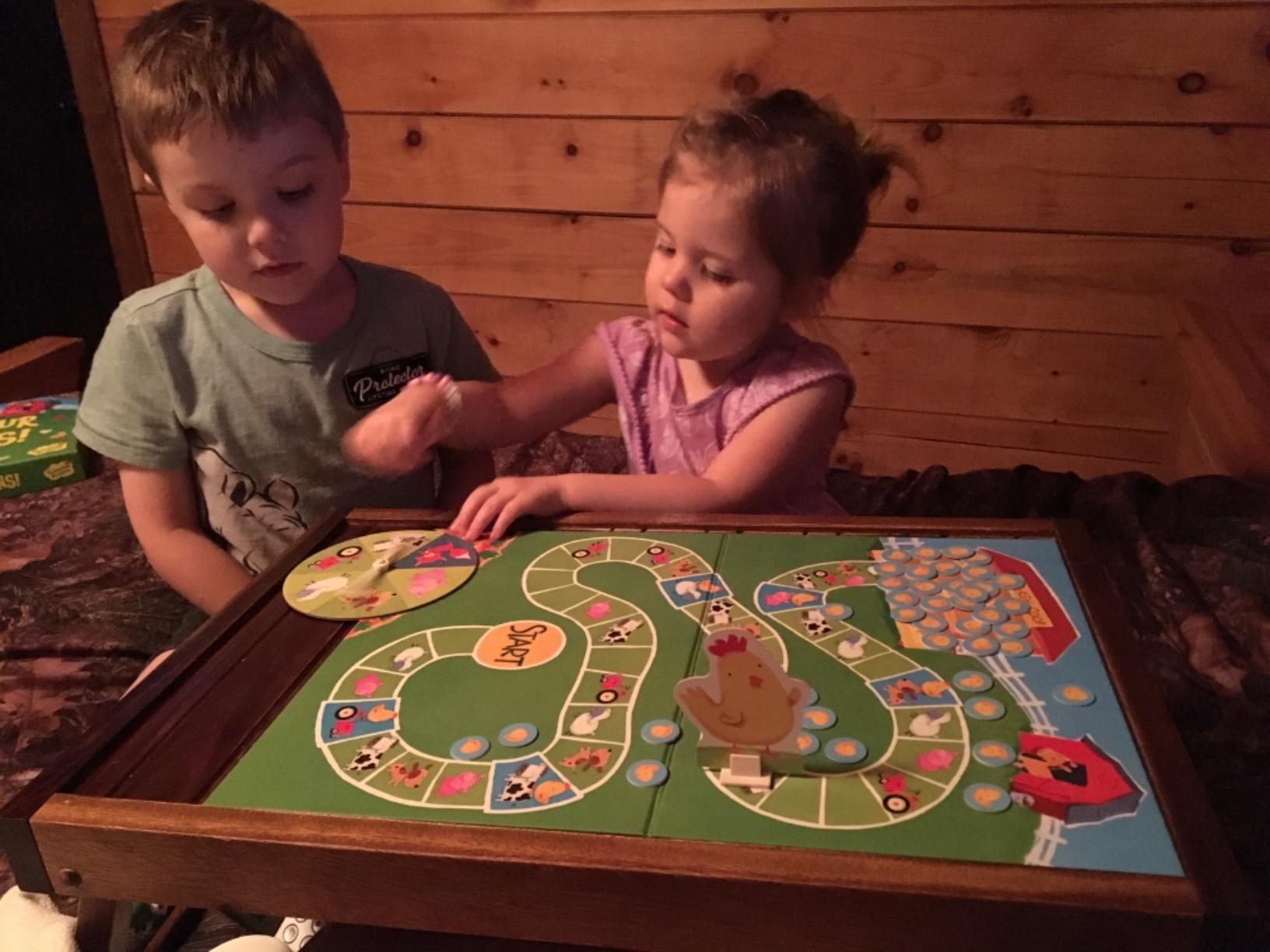
Count Your Chickens is the award-winning cooperative counting game where players help Mother Hen collect her chicks before they reach the coop. Players spin, count spaces, and move the chicks together as a group. Everyone wins if the chicks reach the coop before the fox does.
For our 4-year-old, the appeal was the chicks. Tiny yellow chicks scattered across a barnyard felt like a real rescue mission. According to r/Parenting, this is the top cooperative counting game for the 3-5 age range because the spin-and-count mechanic is perfectly calibrated.
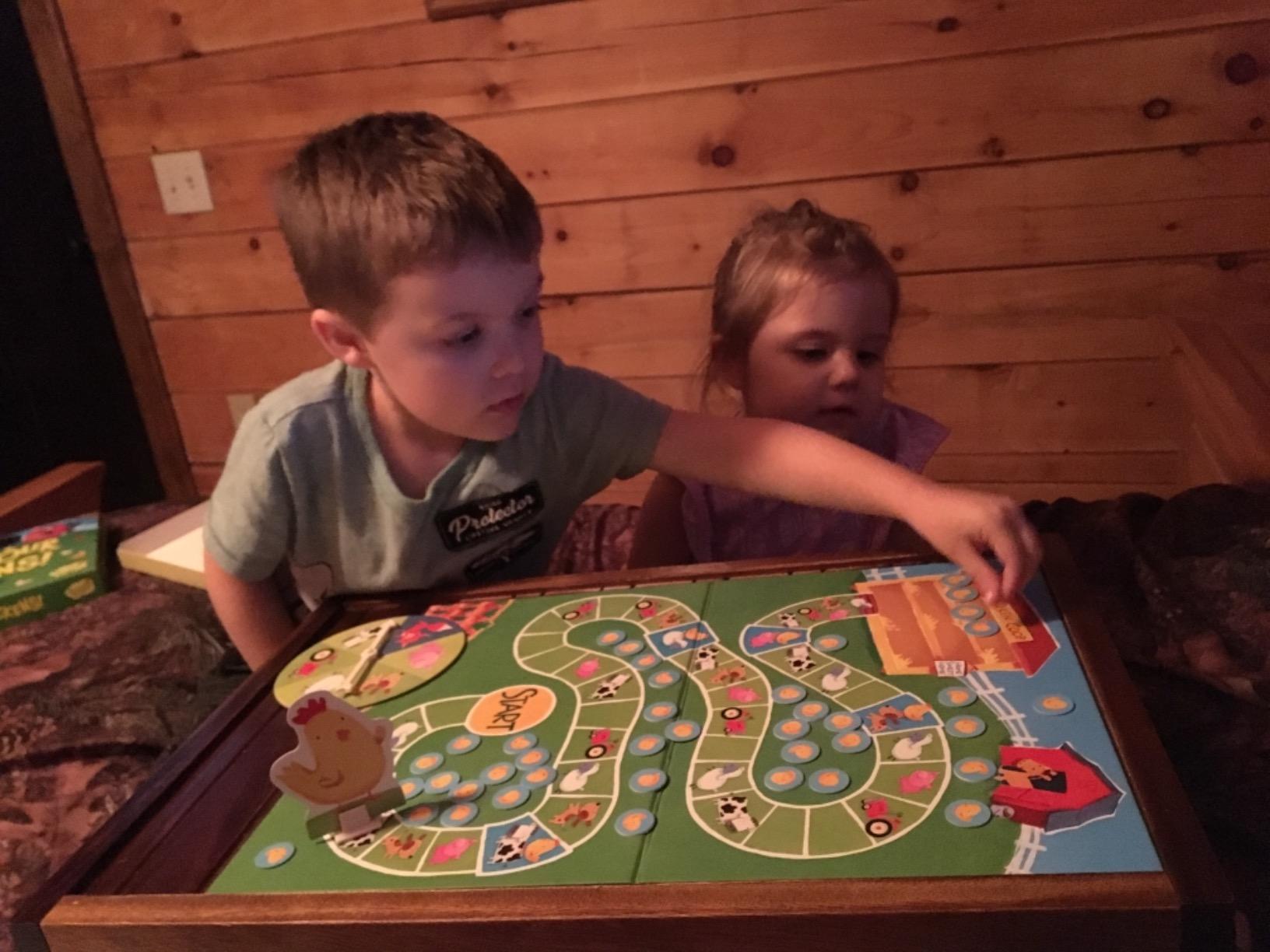
The 4.7 rating across over 2 thousand reviews is strong but smaller than other games on this list. The Oppenheim Toy Portfolio Platinum Award is the real trust signal here because it is one of the most respected toy awards in the industry.
The two mild drawbacks are that there are many small cardboard chicks to keep track of, and they can be a choking hazard for very young children under 3. For a 4-year-old, these are minor.
Why it earns the cooperative counting spot
Count Your Chickens earns this spot because it is the only game that combines counting skill-building with cooperative play. According to BoardGameGeek, the spin-to-and-move mechanic teaches counting because kids count spaces without it feeling like work. The cooperative element means no individual melt-downs.
Best sibling play
If you have a 4-year-old and a 6-year-old sibling, this is the perfect shared game. Both can count, both can strategize, and both win together. The age range from 3 to 5 is the sweet spot.
12. Noodle Knockout — Best Multi Skill Game
Learning Resources Noodle Knockout Fine Motor Game – Games for Kids Ages 4-8, Toddler Board Game, Educational Matching Kids Games, Preschool and Kindergarten Classroom Game, Gifts for Toddlers
1-4 players
Ages 4-8
Fine motor
Sensory
Three game variations
Pros
- Builds hand strength dexterity and hand-eye coordination
- three game variations that grow with the child
- soft wiggly noodles create sensory satisfaction
- complete 67 piece set
- builds counting color recognition and sorting skills
Cons
- Some small pieces could be lost
- noodles may be difficult for youngest children to grasp
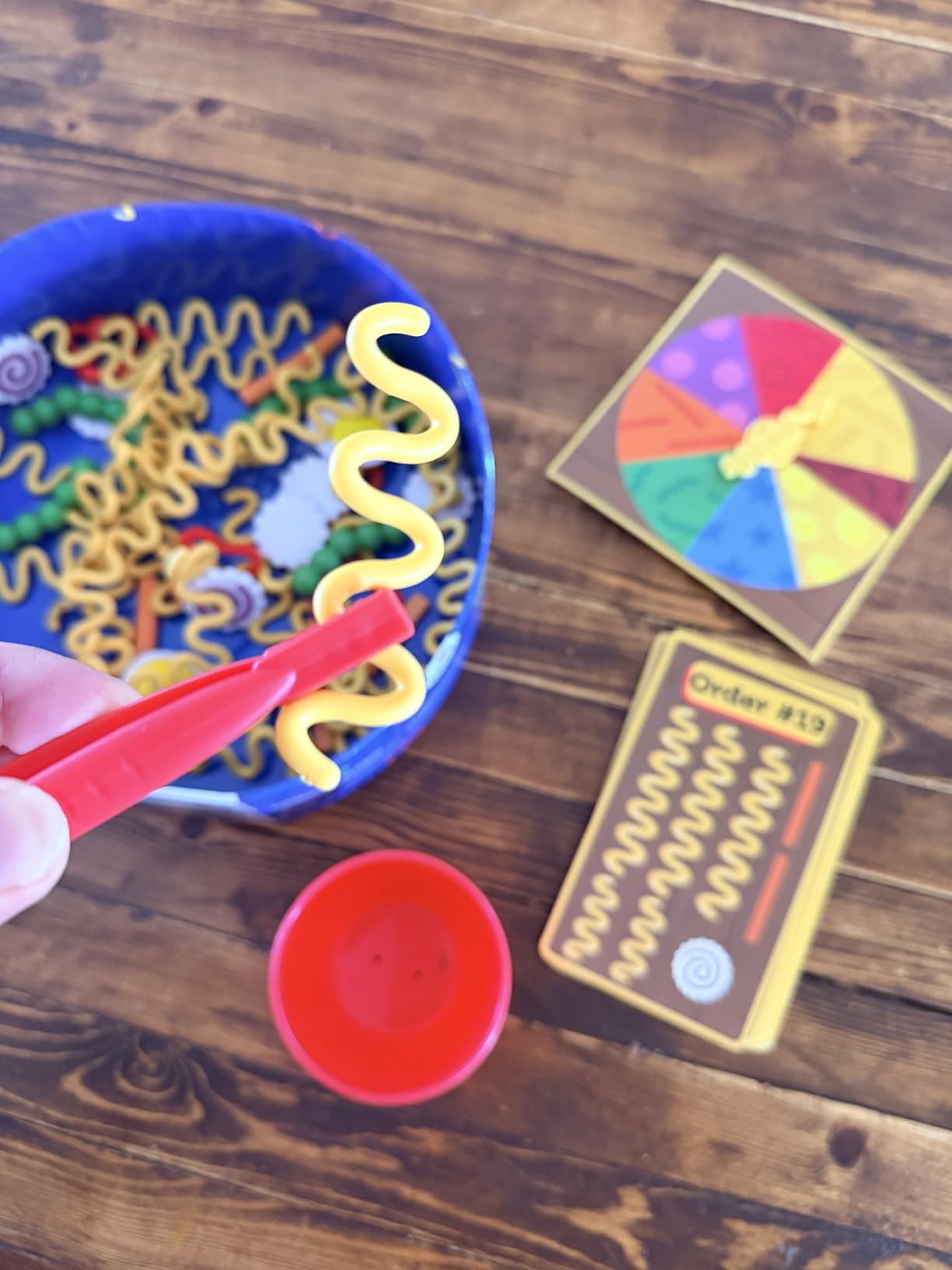
Noodle Knockout is the multi-skill game where kids use chopsticks to grab wiggly noodles and toppings. The game includes three variations, so it grows with the child from age 4 to age 8.
For our 4-year-old, the appeal was the chopsticks. Real chopsticks, not toy ones, pulled a surprising amount of buy-in. According to r/boardgames, this is one of the best multi-skill games for the 4-8 age range because the three variations pull different developmental skills.
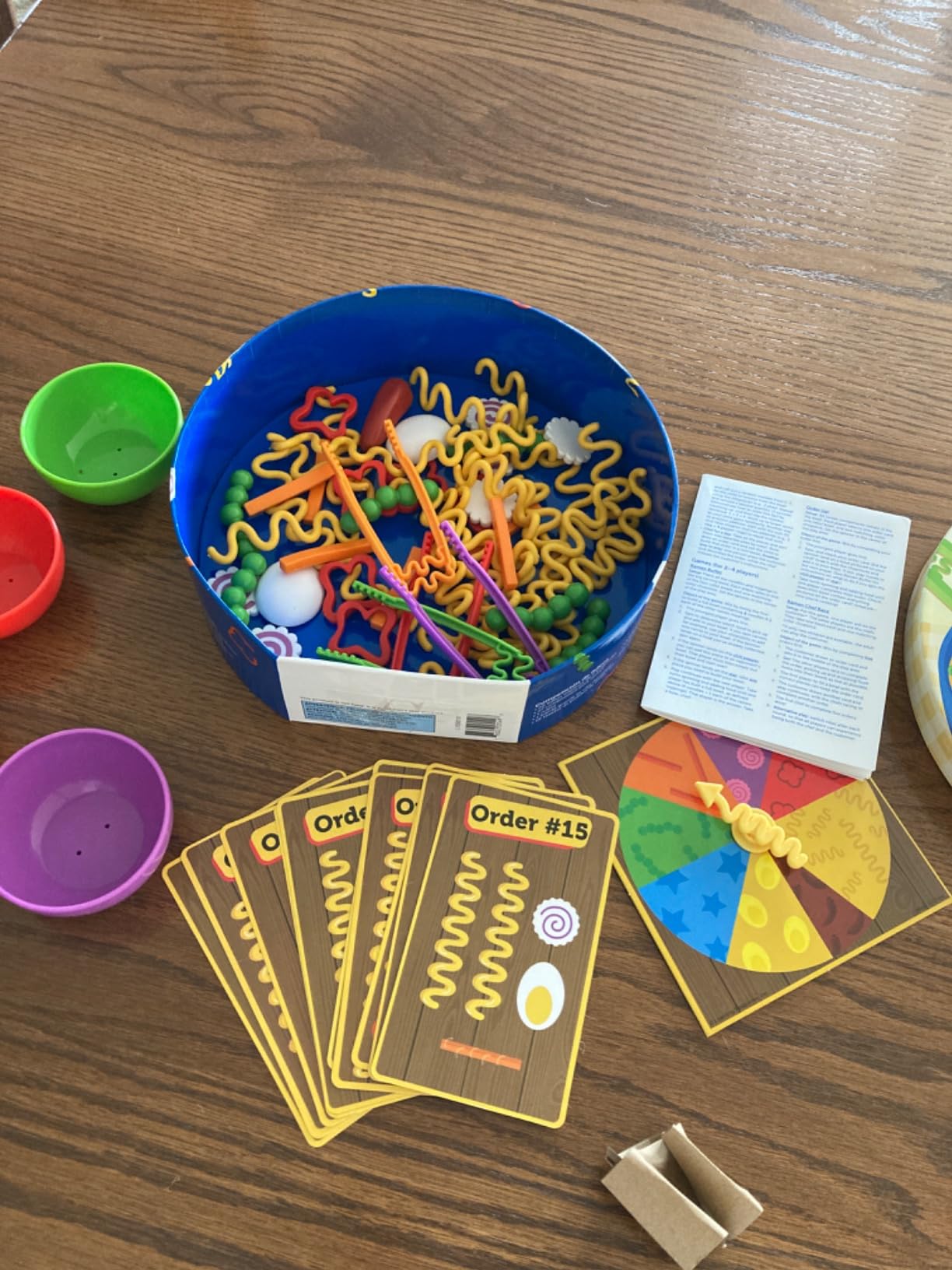
The 4.8 rating across over 2 thousand reviews is strong for a newer release. The complete 67 piece set means there is plenty to keep small hands busy. The soft noodles also pull real sensory satisfaction for sensory-sensitive kids.
The two mild drawbacks are that some small pieces could be lost, and the noodles may be difficult for the youngest children to grasp. We found that the level 1 variation worked for our 4-year-old, and the level 2 and 3 variations worked as he grew.
Why it works for multiple skills
Noodle Knockout pulls three skill sets at once. According to BoardGameGeek, the chopstick mechanic builds fine motor skills, the color matching builds cognitive skills, and the three variations pull social skills. If you want one game that pulls multiple developmental markers, this is the call.
Best grow-with-me value
The three variations mean you can buy this at age 4 and still play at age 8. That makes it one of the best long-term values on this list. The complete 67 piece set means you never run out of pieces to play with.
What to Look for in Board Games for 4 Year Olds
Picking the best board games for 4 year olds comes down to five things that matter more than theme or brand. Here is what to weigh when you buy.
Short play time, ideally under 20 minutes
Four-year-olds have a short attention span, often quoted at 10 to 15 minutes for structured play. Our tester family found that games under 20 minutes (Candy Land, Pop Up Pirate, Zingo) got played more often than games over 20 minutes. Pick play time first, theme second.
Simple rules that need no reading
Most 4-year-olds are pre-readers. Games that need reading lose them in the first turn. The games on this list all need no reading, which is why they pull high ratings. According to r/Parenting, this is the single most important rule for preschool games.
Cooperative over competitive when meltdowns happen
If your child melts down at competitive games, prioritize cooperative play. Cooperative games like Outfoxed and Count Your Chickens mean no individual loser, which removes the meltdown trigger. BoardGameGeek reviewers also note that cooperative games pull stronger family play because adults are not dominating.
Fine motor skill-building built in
Four is a key age for pincer grasp and hand strength development. Games like Sneaky Snacky Squirrel and Noodle Knockout pull fine motor work into the rules so kids build skills without it feeling like work. If your child has any fine motor delays, prioritize these.
Player count that fits your household
Solo-play options (1 player), small-family options (2-4 players), and extended-family options (up to 6-7 players) all exist on this list. Pick based on your actual household. If you have a 4-year-old and a 6-year-old, prioritize 2-4 player options. If you host cousins, prioritize the 6-7 player options.
Frequently Asked Questions
What are some good board games for a 4-year-old?
Good board games for a 4-year-old are short (under 20 minutes), need no reading, and teach a real skill like counting, color matching, or turn taking. Our top picks from this list are TOMY Pop Up Pirate for action, Candy Land for a first classic, and ThinkFun Zingo for pre-readers. Cooperative picks like Outfoxed and Count Your Chickens work especially well if your child dislikes losing.
What is the most simple board game?
The most simple board game for a 4-year-old is Candy Land. Players draw a color card and move to the next matching square, with no reading, no math, and no real losing condition. Pop Up Pirate is a close second because the entire game is slip a sword into a barrel and see who makes the pirate pop.
What age is appropriate for board games?
Age 3 is when most children can handle structured board games, but age 4 is the sweet spot for following multi-step instructions and waiting for a full turn. The games on this list pull ages 3 or 4 and up, with most pulling to age 8 or older. For first-time board gamers, start at age 4 with a no-reading cooperative game like Count Your Chickens.
How long should a game be for a 4 year old?
A game for a 4-year-old should run 15 to 20 minutes at the start, with the option to extend as attention spans grow. Most 4-year-olds pull a 10 to 15 minute attention span for structured play. The shortest games on this list (Pop Up Pirate, Yeti in My Spaghetti) pull 5 to 10 minutes, while the longest (Don’t Break The Ice) pulls up to 30 minutes.
What skills do board games teach 4 year olds?
Board games teach 4-year-olds turn taking, fine motor control, color recognition, counting, and emotional regulation around winning and losing. Cooperative games pull more emotion than wins, while competitive games pull more counting and matching. According to therapists on r/ABA, structured turn taking is real emotional development work for the preschool age.
Final Verdict
The best board games for 4 year olds in 2026 are the ones your family actually plays more than once. For our tester families, that meant TOMY Pop Up Pirate at the top of the table for the suspense, Candy Land on the shelf for the nostalgia, and ThinkFun Zingo for the early-reading practice.
If you only buy one game, pick TOMY Pop Up Pirate. It earns our EDITOR’S CHOICE badge for a reason: short play time, no reading required, and over 60 thousand reviews confirming it pulls the suspense that 4-year-olds replay at table games. For more top picks, see our best board sets guide for related gift picks that round out family game night.
Whether you go build a set yourself or grab one of these 12 games on its own, the best board games for 4 year olds are the ones that pull your child back to the table more than once. That is the only metric that matters at this age, and every game on this list pulls it.