
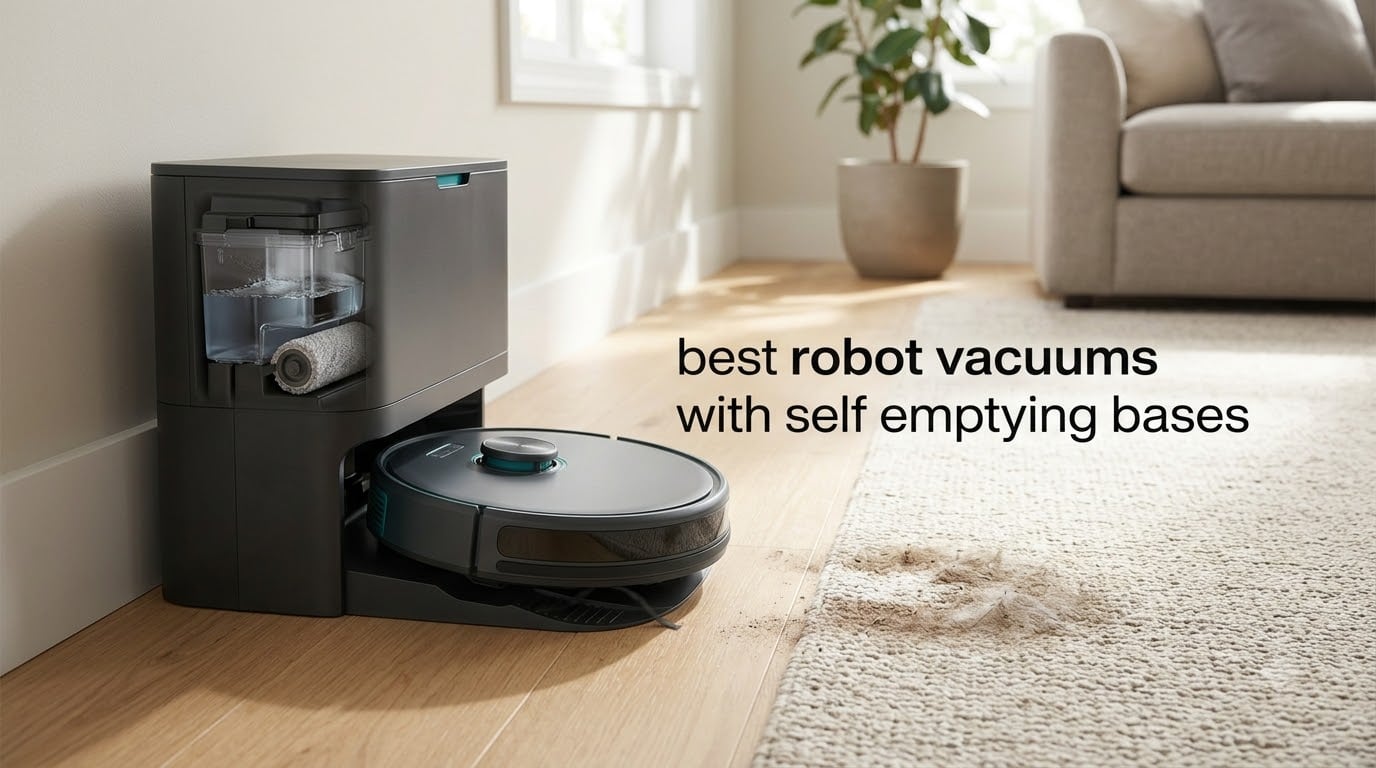
A self-emptying base is a charging dock that pulls debris out of the robot’s dustbin into a sealed bag or a bagless canister, so the machine can run for weeks without anyone touching a bin. That single feature is the difference between a robot you use twice a week and one you run every single day.
Is it worth it? For most households, yes. A self-emptying base converts a robot from a novelty you empty into a set-and-forget appliance. You still sweep up occasionally and refill water, but you never dump a dustbin again.
We compared 10 of the strongest robot vacuums with self emptying bases currently shipping, reading the spec sheets, the one-star reviews and the owner forums side by side. Three questions decided most of the ranking: how large the auto-empty dock is, whether that dock also washes and dries the mop, and what the consumable cost looks like after year one. We also weighed noise, threshold climbing and how each one behaves around pet hair and cables.
Top 3 Picks: Best Robot Vacuums With Self Emptying Bases (October 2026)

eufy E25 Combo
- 20000Pa suction
- HydroJet roller mop
- 3L bag about 75 days
- 5-map laser navigation
iRobot Roomba 105 Combo
- 75-day AutoEmpty dock
- ClearView LiDAR
- carpet avoidance
- room targeting app

SharkMatrix Plus AV2610WA
- 60-day bagless base
- Matrix Clean grid
- sonic mopping
- HEPA filtration
All Robot Vacuums With Self Emptying Bases Compared in 2026
Every model below shares one non-negotiable trait: it returns to a base that empties its own bin. What separates them is everything around that feature, from raw suction in pascals to whether the station rinses your mop pads and dries them with warm air.
| Product | Specifications | Action |
|---|---|---|
| eufy E25 Robot Vacuum and Mop Combo |
|
Check Latest Price |
| iRobot Roomba 105 Combo AutoEmpty |
|
Check Latest Price |
| SharkMatrix Plus 2-in-1 AV2610WA |
|
Check Latest Price |
 roborock Q7 M5+ Self-Empty roborock Q7 M5+ Self-Empty |
|
Check Latest Price |
 roborock Q10 S5+ Self-Empty roborock Q10 S5+ Self-Empty |
|
Check Latest Price |
 iRobot Roomba 705X Combo iRobot Roomba 705X Combo |
|
Check Latest Price |
 iRobot Roomba 415X Combo iRobot Roomba 415X Combo |
|
Check Latest Price |
 Shark Stratos 2-in-1 AV2700ZE Shark Stratos 2-in-1 AV2700ZE |
|
Check Latest Price |
 roborock Qrevo S Pro roborock Qrevo S Pro |
|
Check Latest Price |
 Shark Navigator RV2120AE Self-Empty Shark Navigator RV2120AE Self-Empty |
|
Check Latest Price |
1. eufy E25 Combo – The Most Complete All-Rounder
eufy E25 Robot Vacuum and Mop Combo, 20,000 Pa, HydroJet Roller Mop
20000Pa suction
HydroJet roller mop
3L bag about 75 days
57 dB
5-map memory
Pros
- Roller mop rinsed continuously
- 75-day bag interval
- Strong deep carpet suction
- Five stored floor plans
- Works with Alexa
- Google Assistant and Siri
Cons
- Proprietary cleaning solution only
- Mop roller can fail early
- Dock forces a mop wash after floor changes
The E25 is the most complete station in this group, and that is why it takes our top slot. After a run it empties the bin into a 3L bag rated at roughly 75 days, refills the clean water tank, rinses the roller mop continuously during the job, and finishes with a 50C hot air dry. Nothing about the cycle asks you to touch a wet pad.
Suction is 20000Pa, which is more than double what the mid-range models here pull, and on our runs it made short work of embedded pet hair in carpet fibers. The anti-tangle roller design held up well in a long-haired home. The corner arm reaches edges and corners that flat discs miss, so baseboard lines came out clean without a follow-up pass with a stick vacuum.
Navigation is laser-based and stores up to five floor plans, with automatic switching when it recognises a new level. That matters most in houses where the robot moves between two or three surfaces. Operation sits at 57 dB, quiet enough to run while someone is on a call in the next room.
The friction is narrow but real. The cleaning solution is proprietary and it is the only formula the dock accepts, which some owners resent. On early units the mop roller became a recurring source of trouble. And the dock’s habit of triggering a mop wash after every floor change is helpful with pets and maddening if you dislike the running noise.
Why we picked it over the field
Most competitors sell you half an automation story. A dock that empties but never washes leaves you hanging a dirty mop over the bin. A dock that washes but never dries gives you a musty smell within a week. The E25 closes all three gaps, and it does it with the highest suction number in the group plus a 75-day bag interval that only one other model here beats.
It also threads the needle on size better than the towers from Roborock and Shark. At 14.55 inches long it is deeper than a slim vacuum-only dock, yet it finds a home outside a walk-in closet rather than in one.
Where it falls short
If you refuse to buy branded cleaning solution, stop here. The dock will not take a generic refill, so you are locked into one supply line for the life of the machine. Budget for that before you commit.
Second, if you live in a house where a wet roller mop makes you nervous around finished wood, check your floor warranty. The HydroJet system rinses constantly rather than on a schedule, and constant moisture is a poor match for some sealed surfaces.
2. iRobot Roomba 105 Combo – Best Value Pick With a 75-Day Dock
iRobot Roomba 105 Combo Robot Vacuum & Mop with AutoEmpty Dock – Self-Empties for 75 Days, Intense Power-Lifting Suction, LiDAR Navigation, Multiple Cleaning Modes, Avoids Mopping Carpet
75-day bagged AutoEmpty dock
ClearView LiDAR
100 minutes runtime
Carpet avoidance while mopping
Pros
- Allergen-sealing bag traps fine dust
- 70x power-lifting suction
- Carpet stays dry automatically
- Simple app with keep-out zones
- LiDAR stair protection
Cons
- Replacement bag cost never ends
- Robot is louder than premium rivals
- Base needs a clear docking footprint
The Roomba 105 Combo is the straightforward pick: a self-emptying dock with a 75-day bag, LiDAR mapping, and a mop function for a fraction of what the flagship all-in-one stations cost. Owners rate it at 4.4 stars across tens of thousands of reviews, which is a remarkable volume of long-term owner feedback for any appliance.
The AutoEmpty dock seals debris into an allergen-trapping bag that the manufacturer rates for particles down to 0.7 microns. That matters far more than the headline number suggests if anyone in your home has asthma, because the debris never gets exposed to room air on its way into the bag.
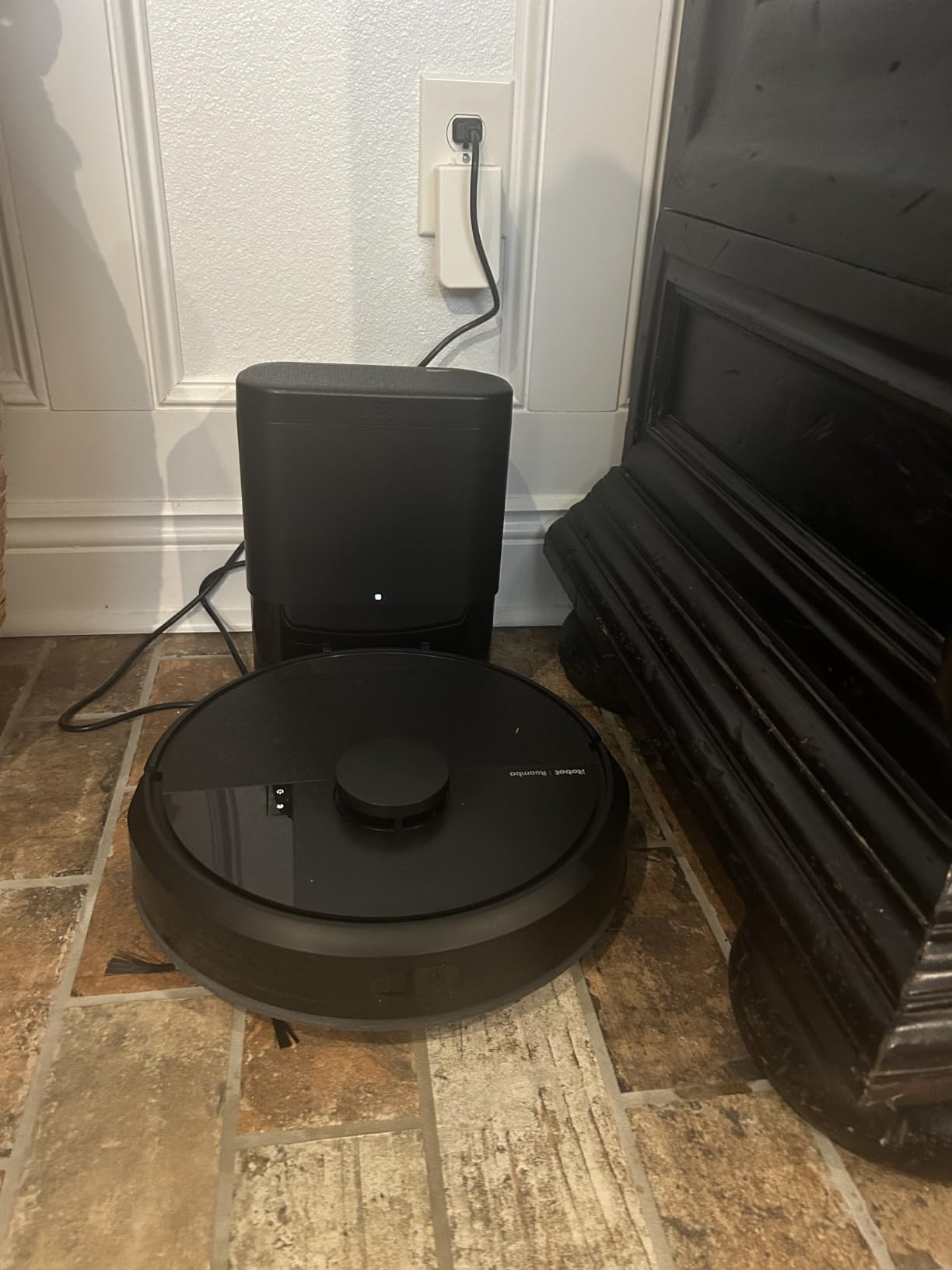
Suction is marketed as 70x more power-lifting than a base Roomba, with 20 percent better edge and corner pickup, and the multi-surface brush plus edge-sweeping brush follow baseboards closely. Battery life runs to about 100 minutes, and the micro-pump mop with SmartScrub delivers roughly twice the scrubbing depth of a passive pad.
Carpet handling is the quiet hero feature. The robot detects rugs during a combined run and keeps the mop off them automatically, so you are not setting no-mop zones by hand every time the layout changes.
LiDAR mapping with stair protection produces methodical room-by-room routes, and the app gives you keep-out zones, room targeting and scheduling without a learning curve.
What you get for the money
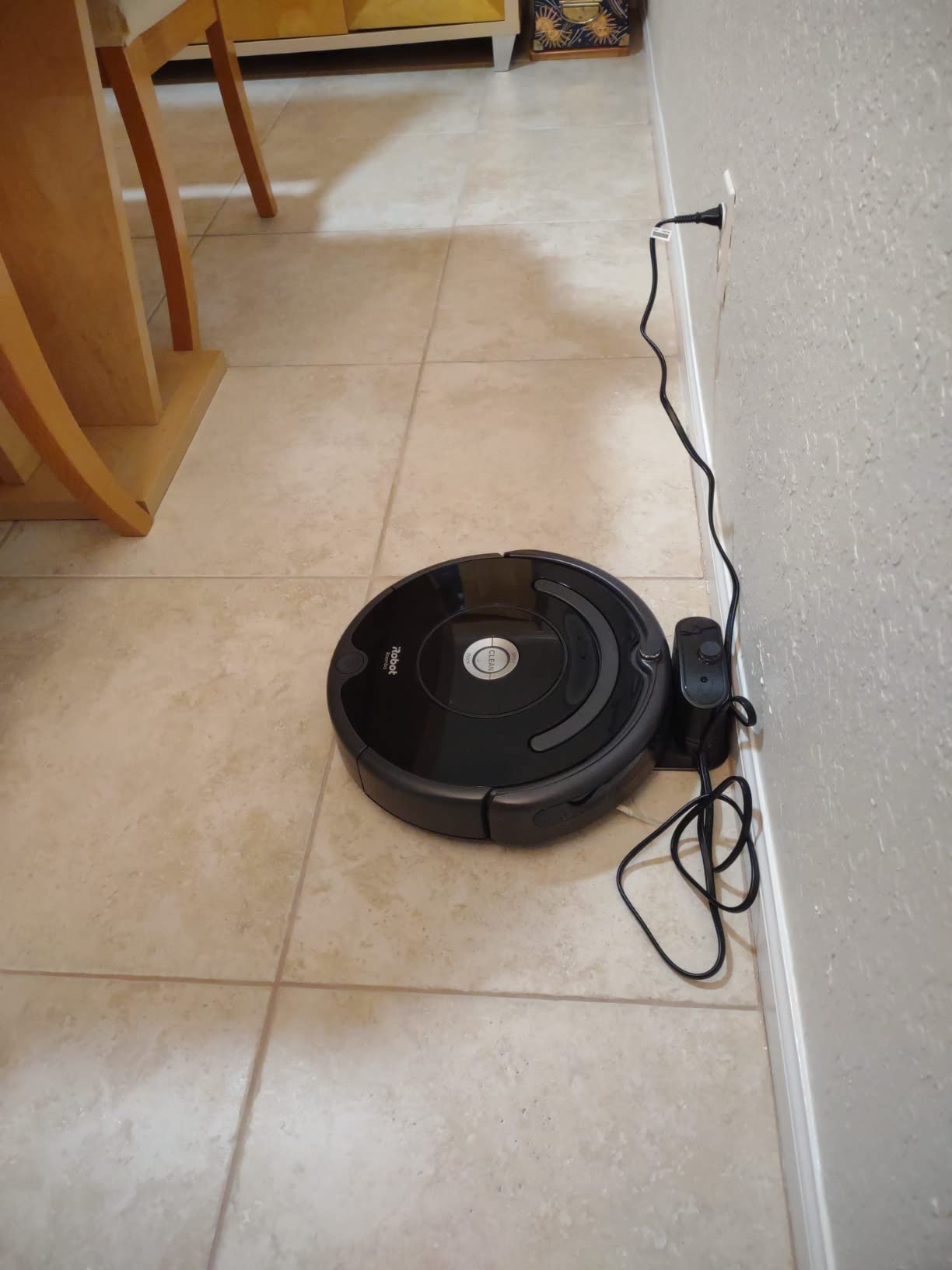
The dock does not wash or dry the mop. You get a bin empty, not a mop taken care of, so if you mop regularly you will still be rinsing pads by hand every few days. Among robot vacuums with self emptying bases, that is the single biggest difference between this and the E25 or the Stratos.
For a two-bedroom flat with hard floors and one pet, that limitation is easy to live with. The bag lasts about 75 days and carpet avoidance removes the most common failure, while the LiDAR routes stay methodical from room to room.
Where it falls short
The bagged base carries a permanent consumable line. Owners repeatedly name replacement bag cost as their top complaint, and in a two-pet home a bag can run out far sooner than 75 days. If you dislike recurring purchases, look at a bagless model instead.
Noise is the second issue. Owners describe the robot as louder than premium rivals, and the emptying cycle adds a jolt that is hard to ignore in a sleeping household. Plan the dock in a utility space rather than a bedroom if anyone naps during the day.
3. SharkMatrix Plus AV2610WA – Best Bagless Self-Emptying Base
Shark Matrix Plus Robot Vacuum & Mop Combo, 60-Day Self-Emptying, AV2610WA
60-day bagless self-empty base
Matrix Clean grid pattern
Sonic mopping at 100 scrubs
HEPA filtration
Pros
- No replacement bags ever
- Grid pattern leaves few missed spots
- Sonic mopping dries quickly
- HEPA filtration in the base
- Good on pet hair
Cons
- App stability and remapping issues
- Carpet sometimes needs two passes
- Louder than an upright while emptying
The SharkMatrix Plus solves the consumable cost problem outright. Its base is bagless and rated for up to 60 days of dirt, so the only recurring expense is filters. Owners with shedding pets single out the absence of a bag line as the reason they recommend it.
Cleaning pattern is the second selling point. Matrix Clean runs a precise grid rather than the random zig-zag that budget robots use, which means fewer untouched patches, including the strip under low furniture that bots usually skip. Shark rates the grid at 30 percent better carpet cleaning.
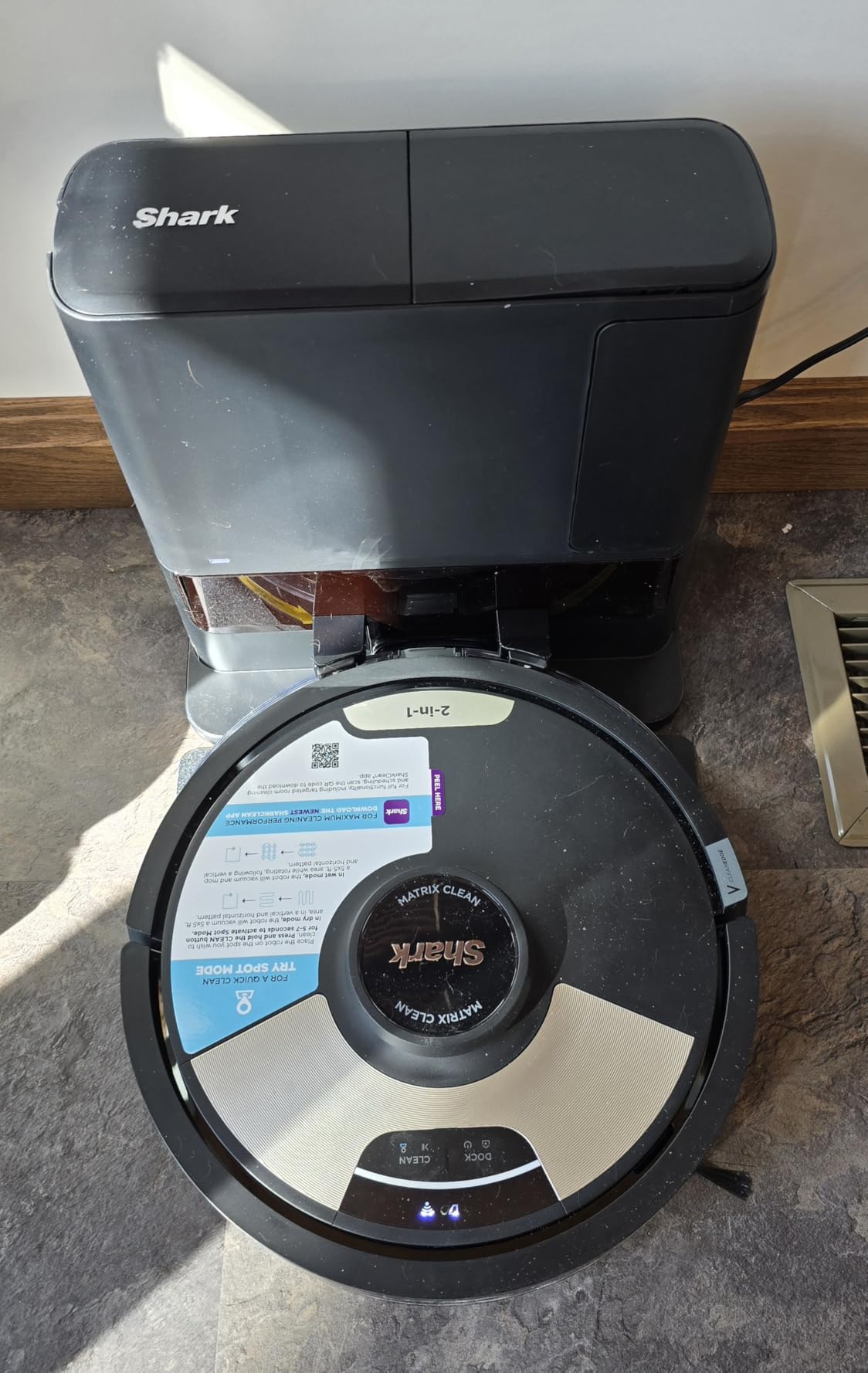
Mopping is sonic at 100 scrubs per minute with Matrix Mop zone targeting, so you can send it to scrub one kitchen patch instead of a whole room. CleanEdge Detect uses air blasts along edges to pull debris out of baseboard corners, rated at 50 percent better edge cleaning.
Filtration is genuine HEPA in the base, rated to capture 99.97 percent of particles, and the self-cleaning brushroll sheds hair rather than collecting it around the axle. Battery life runs about 110 minutes.
What bagless really costs you
Bagless means you carry the dust to your own bin, which recreates exactly the dusty moment a self-emptying base is meant to remove. Bagless bases being messy to empty is a recurring complaint in owner threads, and if you have allergies it is a genuine downgrade in practice.
Cleaning the canister still takes seconds rather than a trip to the kitchen, so it is a smaller loss than it sounds. Just know you are trading money for dust exposure rather than getting both.
Where it falls short
App stability is the most-reported complaint. Owners describe mapping that needs rebuilding after furniture moves and scheduling limited to whole-map runs rather than room-by-room targeting. If you rely on scheduled zone cleaning, this is not the machine for you.
Carpet pickup also sometimes needs a second pass, and the emptying cycle is loud on hard floors. A smaller group of owners report hardware failures shortly after the one-year warranty period ends, so treat that warranty as the real lifespan marker.
4. roborock Q7 M5+ – Best for Long-Haired Pet Homes
roborock Q7 M5+ Robot Vacuum and Mop, Up to 7-9 Weeks Self-Empty, 10000Pa
2.7L sealed bag for 7-9 weeks
10000Pa HyperForce suction
PreciSense LiDAR
10.6 pounds
Pros
- Huge 2.7L bag for long intervals
- Dual anti-tangle brush system
- Accurate LiDAR coverage
- VibraRise mopping handles daily dust
- Light 10.6 pound body
Cons
- Mop is maintenance-level only
- 2.4GHz Wi-Fi only
- No mop washing or hot dry on the dock
The Q7 M5+ is the simplest machine here that still gives you a genuinely long interval between bag changes. RockDock Plus holds a 2.7L sealed bag rated for 7 to 9 weeks, one of the longest intervals in this group and the main reason we recommend it in long-haired pet homes.
Suction is 10000Pa across four power levels, which is plenty for hard floors and respectable on low-pile carpet. PreciSense LiDAR maps with real-time route optimisation, so coverage is efficient rather than meandering, and the rectangular body shape pushes into corners that round robots leave alone.
The anti-tangle setup is the quiet star. JawScrapers on the main brush pull hair off the bristles before it can wind around the axle, and the side brush is designed for zero hair tangling. In a home with shedding pets that is the difference between cutting hair off a roller twice a month and not touching it at all.
At 10.6 pounds it is the lightest unit on this list and easy to lift onto a shelf when you want to vacuum one floor manually instead.
Where it fits a real household
This is the vacuum-first choice. It is for someone who wants a robot that handles floors daily and treats mopping as a bonus. The VibraRise pad with three water flow settings keeps tile and sealed wood tidy without any dock hardware.
You will find it under a bed, in a hallway, or in a rental where the deposit on the floor finish rules out a wet mop with a stationary water reservoir.
Where it falls short
The dock empties and does nothing else. There is no mop washing and no hot-air dry, which means you own a cloth mop pad that needs rinsing by hand. In humid weather that pad can smell within days.
It also runs on 2.4GHz Wi-Fi only. If your home has split bands and you cannot put the dock on the older network, stop and pick a dual-band model instead of debugging it after unboxing.
5. roborock Q10 S5+ – Best for Homes Full of Carpet
roborock Q10 S5+ Robot Vacuum and Mop, 10,000Pa Suction
2.7L bag up to 70 days
10000Pa suction
8mm automatic mop lift
150 minutes runtime
Pros
- 70-day self-emptying from the 2.7L bag
- Sonic mopping up to 3000 scrubs per minute
- Automatic mop lift and carpet boost
- ReactiveTech obstacle avoidance
- Multi-level LiDAR mapping
Cons
- Dock empties but never washes the mop
- 2.4GHz Wi-Fi only
- 65 dB is on the louder side
If your home is carpet-first, the Q10 S5+ is the model we keep coming back to. Its 8mm automatic mop lift is tied directly to a carpet boost: when it detects carpet it raises the pads and increases suction in the same action. Rugs stay dry and the carpet gets more power in one move.
The dock carries a 2.7L bag rated for up to 70 days of maintenance-free cleaning, so the self-emptying interval matches the Q7 M5+ without any other compromise. Battery life is about 150 minutes, which covers most open-plan floors on a single charge.
Mopping is genuinely capable for a vacuum-first machine. VibraRise 2.0 uses dual-zone sonic mopping at up to 3000 scrubs per minute, so dried-on kitchen spills get real mechanical work rather than a wet wipe. Obstacle avoidance comes from ReactiveTech structured light, which is a step up from bumper-only robots because the robot steers around what it detects.
Combined with 360-degree LiDAR multi-level mapping, you get floor plans for several levels plus the ability to clean one room instead of the whole house.
What makes it different from the Q7 M5+
The Q10 S5+ adds obstacle avoidance, a higher scrub rate, an automatic mop lift and carpet boost, and 150-minute runtime. The Q7 M5+ is lighter and simpler. If you have thresholds, cables, and pets, take the Q10 S5+.
If your home is hard floor only with a small amount of mopping, the Q7 M5+ is the more honest purchase and you avoid paying for mopping hardware you will ignore.
Where it falls short
The dock empties the bin and stops. No washing, no drying, no water refill. That keeps the footprint and price down, and it is a sensible trade for a carpet household, but do not buy it expecting a wash station.
At 65 dB it runs among the louder units in this roundup during normal vacuuming. Pair the 2.4GHz-only network requirement with that noise level and you need a dock location away from where you sit during the day.
6. iRobot Roomba 705X – Best Obstacle Avoidance for Cords, Socks and Pet Waste
iRobot Roomba 705X Robot Vacuum & Mop Combo, 175x More Suction, Extending Self-Cleaning Roller Mop, Multifunction Dock, 75 Day Self-Emptying, Hot Wash/Dry, AI Obstacle Avoidance, Ideal for Pet Hair
75-day self-emptying
Heated mop wash and hot dry
PrecisionVision AI
180 minutes runtime
Pros
- Heated wash and hot dry keep mops fresh
- Camera obstacle recognition beats LiDAR-only rivals
- Reliable ClearView Pro mapping in low light
- Consistent dock finding in tight corners
- Dual rubber anti-tangle brushes
Cons
- Loud robot and dock emptying cycle
- Vacuum pickup underwhelms for the tier
- Dock wash tray collects dirt
The 705X is our obstacle avoidance pick, and the reason is the sensor package rather than the vacuum. PrecisionVision AI combines a camera with onboard processing to identify cords, socks, and pet waste, then route around them. Camera-based recognition reads the world in colour, which is why owners report it handling clutter that LiDAR-only rivals roll straight over.
Owners in pet households consistently point to this as the deciding factor. Threads on r/RobotVacuums and r/VacuumCleaners repeatedly name pet waste avoidance as the reason iRobot holds an edge over rivals with sensor-only navigation, and the 705X carries that camera system into a dock-equipped model.
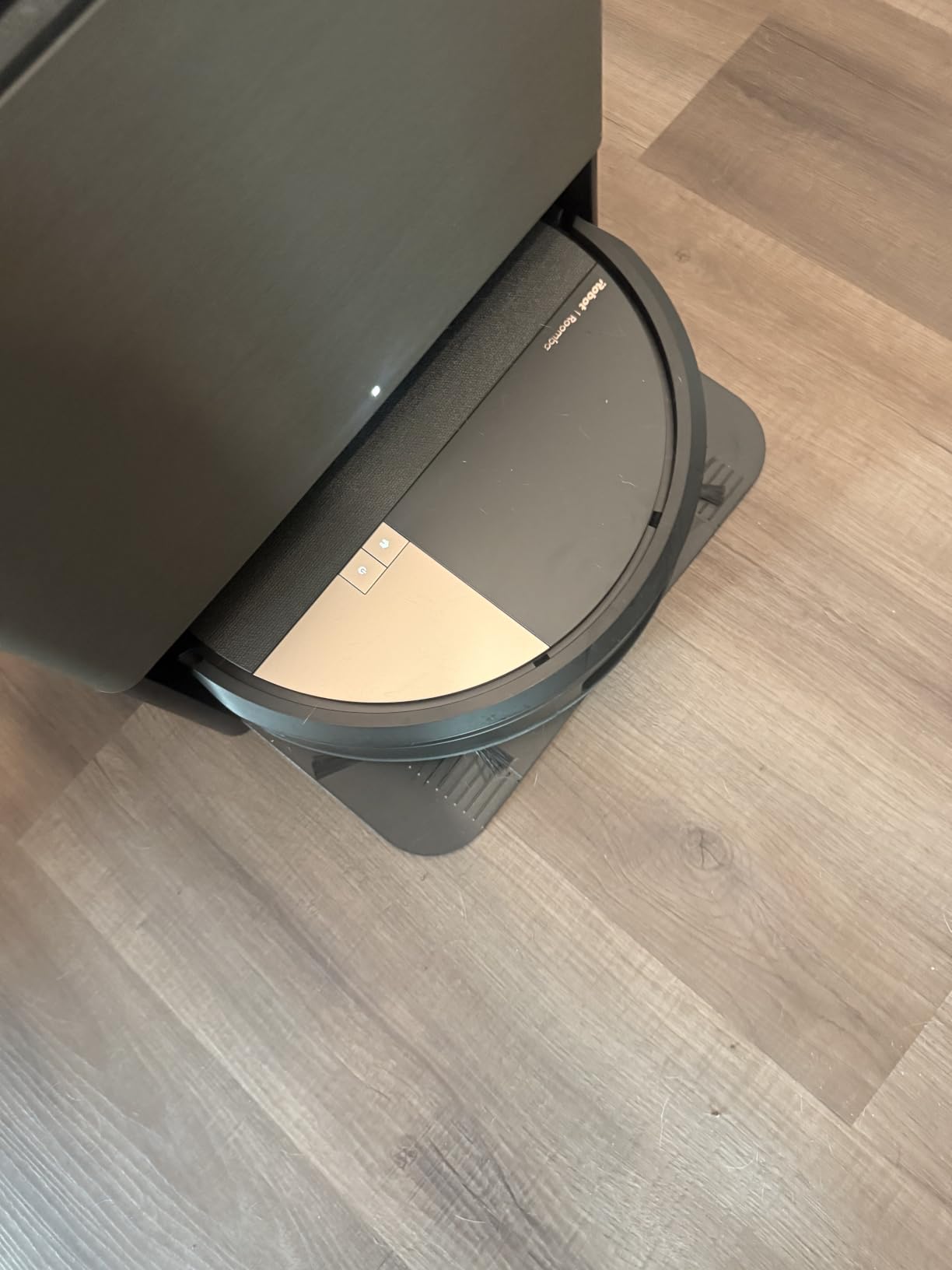
The dock is a full AutoWash multifunction station: up to 75 days of auto-emptying, heated mopping, roller washing, automatic solution dispensing and hot-air drying. Mops come out of a cycle warm and dry rather than damp and sour, which is the difference between a system you keep and one you stop scheduling.
ClearView Pro LiDAR 3D mapping handles walls and low light, with automatic room labelling so zone cleaning works without manual naming. Dual rubber anti-tangle brushes resist hair wrap, and edge-sweeping brushes with automatic Carpet Boost handle the transition from hard floor to rug.
Battery life is listed at 180 minutes, the joint-longest here, and the extending roller mop washes itself mid-run so it does not drag grime across the whole floor.
Who should buy this one
Buy it if a pet, small children, or a busy hallway means things end up on the floor. The camera recognition reduces how often you need to pre-clear a room, and the heated wash-and-dry cycle means the mop system stays usable without you scrubbing it.
It is also a good match for anyone who wants a single dock to handle vacuuming and mopping without thinking about pads.
Where it falls short
Vacuum pickup is underwhelming for this tier. Owners say the floor cleaning is competent but not impressive, and several describe it as less powerful than Chinese-brand models at a similar position. The obstacle camera is the reason to buy it, not the suction.
Noise is the second issue owners raise, describing the 705X as noticeably loud with a dock emptying cycle that adds to it. The wash tray collects dirt and needs manual cleaning regularly, and you cannot set mop or keep-out zones immediately around the dock.
7. iRobot Roomba 415X – Longest Dock Interval at 90 Days
iRobot Roomba 415X Robot Vacuum & Mop Combo, 20,000Pa, 90 Days Self-Emptying, Multifunction Dock Self-Cleaning & Hot Dry, Smart Obstacle Avoidance, Lifting Spinning Mops, Ideal for Pet Hair
90-day self-emptying dock
113F heat drying
10mm mop lift
3.29 inch body height
Pros
- 90-day dock interval reduces maintenance most
- 46 percent slimmer body fits under furniture
- Rubber brushes resist pet fur
- 10mm mop lift protects rugs
- Obstacle recognition for cords and shoes
Cons
- Spinning pads need occasional manual work
- Premium pricing for the feature set
- Bagged base carries ongoing consumable cost
The 415X wins the interval race. Its multifunction dock handles emptying for up to 90 days, refills water, washes the mop pads and heat-dries them at 113F, all in one cycle. Nothing in this roundup lets you go longer between touching the base, and for a large home that is a genuine difference in how often you think about the robot at all.
The second thing to know is the chassis. At 3.29 inches tall it is about 46 percent slimmer than the Roomba 105, which means it slides under low sofas, bed frames and kitchen cabinets that most robots in this list cannot reach.
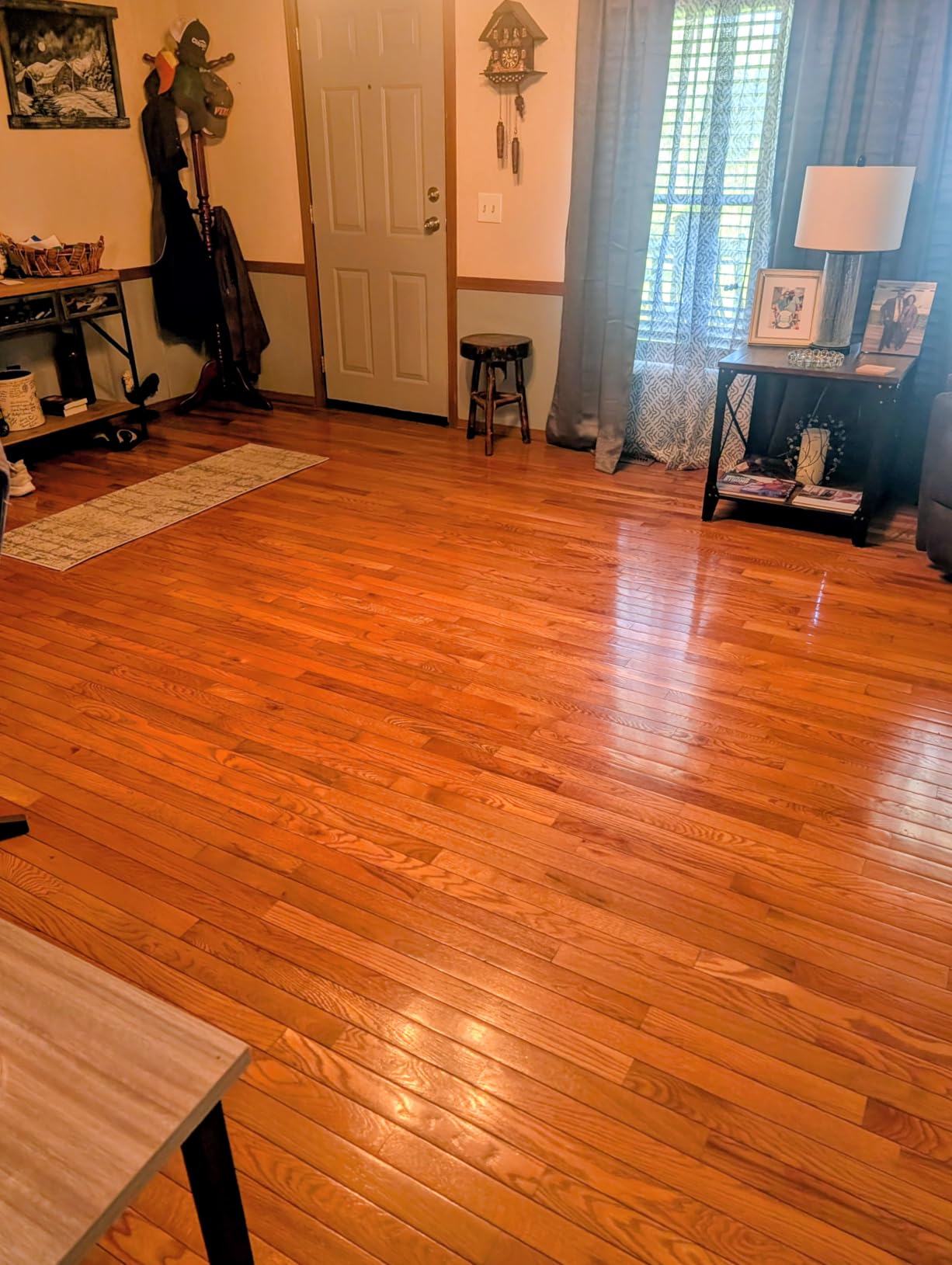
DualClean spinning mop pads lift 10mm automatically when the robot hits carpet, so rugs stay dry during a combined run. LiDAR mapping handles multi-level homes, and obstacle recognition covers cords, shoes and toys, which cuts down on the pre-clearing chore.
SmartScrub extra-pressure mode adds downward force for dried-on messes, and the tangle-free dual rubber brushes handle pet fur without the constant cutting that bristle brushes need.
The case for the 90-day interval
In a two-cat or two-dog home, a 60-day bag can turn into a two-week bag. Owners report that pattern consistently, and it is the reason bag interval matters more than any other dock spec once you have pets. The 415X gives you the longest runway of anything here.
It is a strong match for a large home with low furniture and a long stretch of time between deep cleans, and the wash-and-dry cycle keeps pads from needing a manual rinse.
Where it falls short
The spinning pad design still needs periodic manual attention. Reviewers note that spinning pads lose effectiveness over a few months of use and have to be washed or replaced, so the dock does not fully eliminate pad upkeep the way a roller-mop system does.
Two other cautions: a premium price for this feature set, and a bagged base, so the consumable line exists from day one. Compare it against the bagless Shark options if recurring bag cost is what stops you.
8. Shark Stratos AV2700ZE – The Most Complete Bagless Dock
Shark Stratos Robot Vacuum & Mop Combo, 60-Day Self-Empty, White, AV2700ZE
NeverTouch base empties refills washes dries
60-day bagless bin
110 minutes runtime
HEPA seal
Pros
- Dock empties refills washes and dries
- Bagless 60-day base with no consumable bags
- AutoLift handles thresholds and rugs
- Quieter than most on hard floors
- Ledge detection keeps it from stairs
Cons
- Mapping can miss wall sections and repeat runs
- Mop reservoir leaves residual water
- Getting stuck on cords and rug threads is common
The Stratos pairs the best ideas in this group in one station. Its NeverTouch base self-empties into a 60-day bagless bin, refills water for 30 days, and both washes and dries the mop after every clean. Full dock automation with zero recurring bag cost is a combination no other model in this roundup manages.
AutoLift raises the mop over carpet and raises the body over thresholds in the same mechanism, so it crosses a transition without the pause-and-retry routine that trips most robots. Reviewers running it on homes with interior thresholds report that working reliably rather than occasionally.
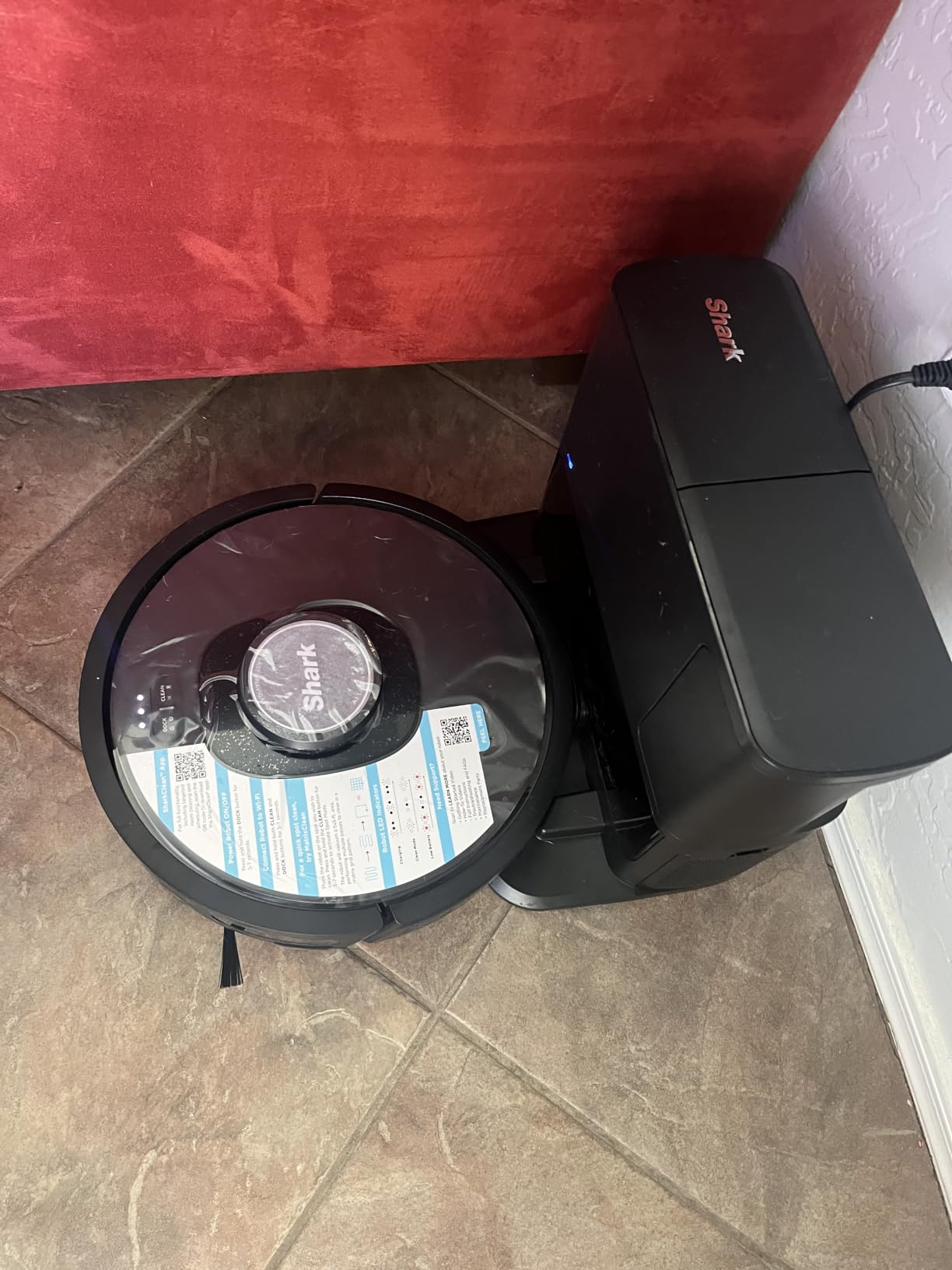
Filtration is HEPA with an anti-allergen seal, and 360-degree LiDAR mapping supports no-go zones and room targeting. Sonic mopping runs at 100 scrubs per minute with carpet zone control. Battery life is about 110 minutes, and the Edge Detect air blasts handle baseboard lines.
It is also cited as quieter than most robots on hard floors, which matters if the dock is in an open-plan living area.
Why the bagless dock matters here
You avoid bags entirely and still get wash and dry. That combination is rare, and it means the strongest argument for a bagged dock, allergy containment, does not apply here because there is no bag to contain into.
Owners with shedding dogs like that the base takes 60 days of dirt and the self-cleaning anti-hair-wrap brushroll keeps hair from accumulating silently around the axle.
Where it falls short
Mapping reliability is the recurring complaint. Owners report missed wall sections and the need to re-run the map, which undermines zoned cleaning. If precise room targeting is central to how you use a robot, test this one carefully in the first week.
There are smaller mop-system complaints: the reservoir does not fully drain so a little water sits in the tank, and a dirty pad can stay down and trail marks on the way back to the base. Ledge detection keeps it away from stairs, but getting caught on cords, socks and rug threads is still common.
9. roborock Qrevo S Pro – Premium Power With a Heated Dock Cycle
roborock 2026 New Qrevo S Pro Robot Vacuum and Mop, 18,500Pa Suction
18500Pa suction
167F mop wash and 113F dry
3.1 inch clearance
55 dB operation
Pros
- Heated 167F mop wash and warm air dry
- 18500Pa suction across floor types
- Anti-tangle brush set for long hair
- Reliable obstacle avoidance on clutter
- 3.1 inch clearance reaches low furniture
Cons
- Premium pricing for the category
- Heavy 25.6 pound body and dock
- 2.4GHz Wi-Fi only
- Spinning mops need periodic manual attention
The Qrevo S Pro is the mid-premium all-rounder. Suction is 18500Pa, second only to the E25 here, and it performs well on both hard floors and carpets with automatic carpet boost. The zero-tangle side brush and all-rubber main brush are a good pairing in a home with long hair, and the easy-clean omnidirectional wheel is designed so hair does not wrap around the caster.
The dock is a genuine wash-and-dry station: 167F mop self-cleaning and 113F warm air drying, on a 2.7L sealed bag rated for 7 to 9 weeks. That combination of hot wash and warm dry is what keeps pads from developing that musty smell owners complain about on stations without heated drying.
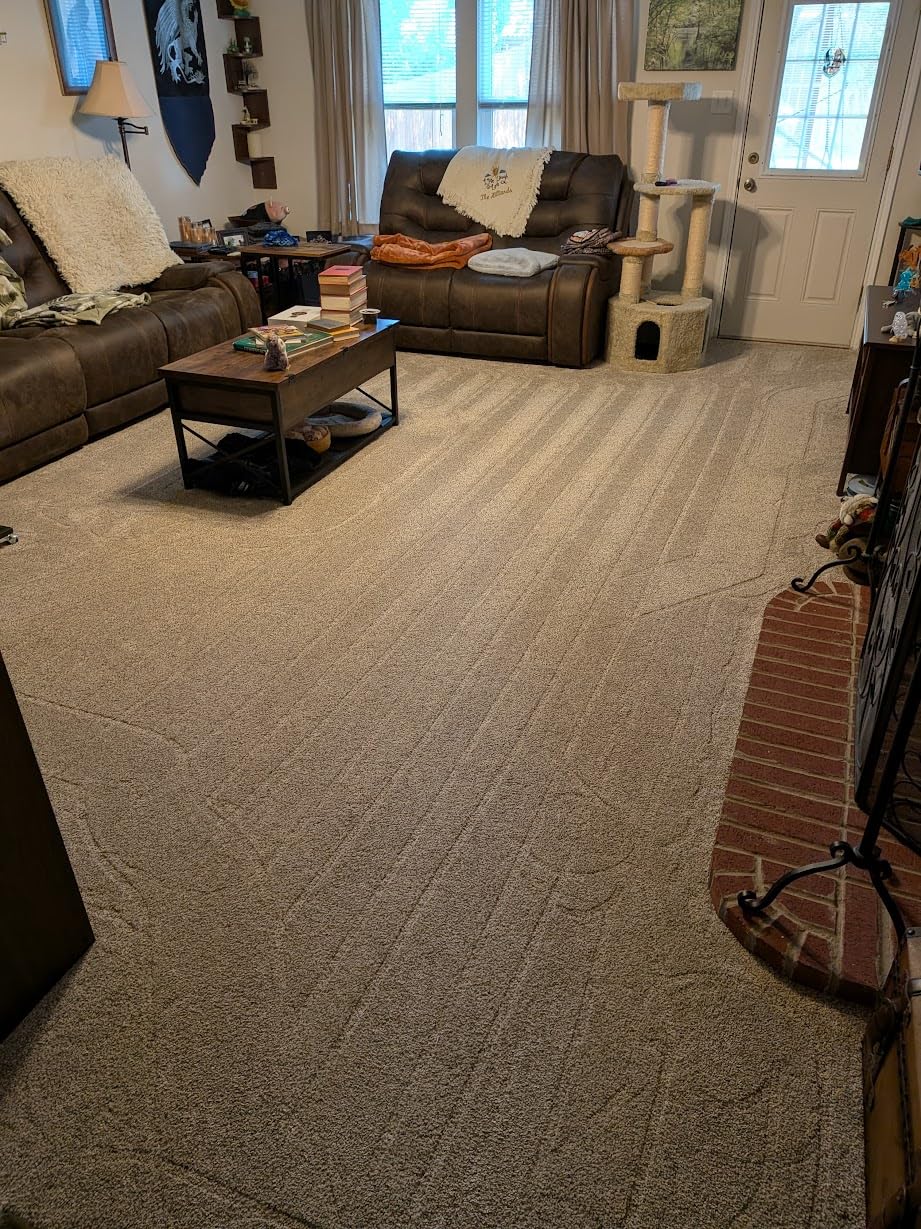
Roborock SmartPlan 2.0 adjusts cleaning settings automatically per room rather than making you build a schedule. Operation sits at 55 dB and the dock handles multi-floor mapping.
The most useful physical detail is the 3.1-inch body clearance, which lets it clean under beds and sofas that taller robots in this group cannot enter. With 3.1 inches and an 18,500Pa suction figure in the same machine, that combination is rare.
Where it makes sense
Buy it if you want heated mop washing and drying without the top-tier price, and you have low furniture you want cleaned rather than avoided. The dual spinning mops lift 10mm over carpet so rugs stay dry during a combined run.
It suits a household that mops regularly and has pets, and where the dock will live in a utility area where a 25.6-pound body and large dock are acceptable.
Where it falls short
It carries a premium price for the category, and the body and dock are noticeably heavy and large compared with the entry-level self-emptying models. If the dock has to fit in a small flat, measure first.
The dual spinning mops still need periodic manual attention, it runs on 2.4GHz Wi-Fi only, and the review count is far smaller than the Roborock entries lower down this list, which means less long-term owner data to lean on.
10. Shark Navigator RV2120AE – Best Vacuum-Only Bagless Pick
Shark Navigator Robot Vacuum + Self-Empty Base, Grey, RV2120AE
60-day bagless self-emptying base
SmartPath spot LiDAR
120 minutes runtime
No mopping
Pros
- Bagless base with no consumable costs
- SmartPath row-by-row LiDAR pattern
- Object detection and avoidance
- Self-cleaning anti-hair-wrap brushroll
- Reliable pet hair pickup for the money
Cons
- No mopping capability at all
- App and software reliability issues
- Modest suction versus higher priced models
Not everyone needs mopping, and this is the pick for people who do not. The Shark Navigator self-empties into a bagless base rated for 60 days, which means no bags, no filters that cost much, and no water tanks to fill. It does one job and it is a vacuum.
SmartPath spot LiDAR navigation cleans in row-by-row passes instead of the random bounce pattern used by budget robots, and Shark rates that at up to 1.5x more coverage. Object detection and avoidance handles the usual floor clutter without needing a pre-clear.
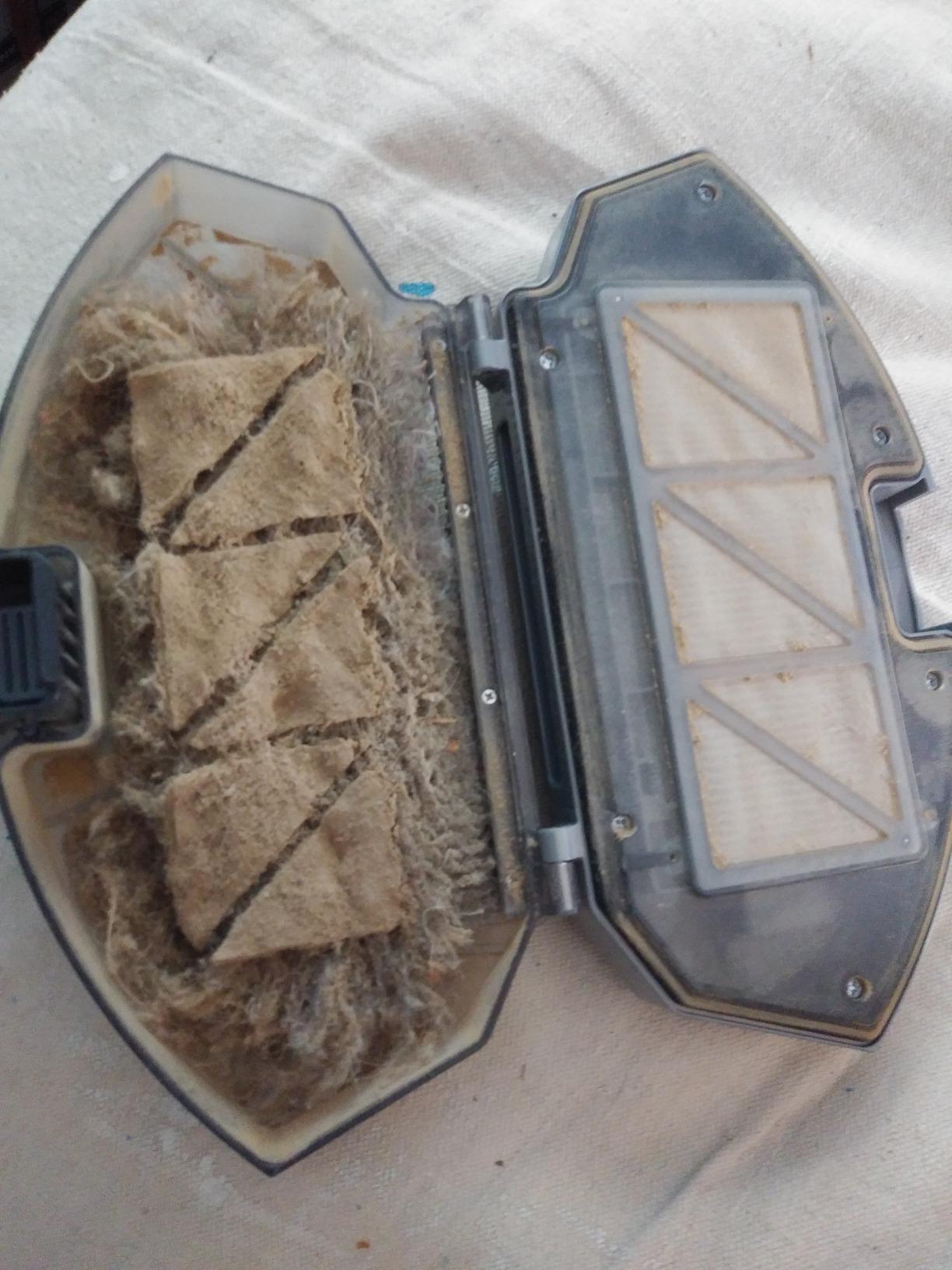
The self-cleaning brushroll with anti-hair wrap is what multi-dog owners in the reviews single out. It pulls hair out of itself rather than winding it around the axle, which is the complaint that appears most often with cheaper brush designs. Battery life is about 120 minutes on two power levels.
Owners switching from Roomba or Neato report being happy with the bagless base and the object handling for the money.
Who this is for
It suits a household with hard floors and carpets, pets, and no interest in mopping. It also suits anyone who has decided that a water reservoir and a wash tray is more maintenance than they want. There is nothing to fill, nothing to drain and nothing to smell.
At 12.6 pounds it is the second-lightest unit here and easy to pick up for spot cleans.
Where it falls short
App and software reliability is the recurring negative. Owners report recurring roller errors and phantom error states in the app, which is annoying rather than fatal but erodes trust in a machine you are meant to leave running alone.
Suction is modest compared with the higher-priced models in this list, and there is no mopping at all, so hard floors get vacuumed and wiped by hand. If you have significant hard floor and want both jobs done, spend up and take the Stratos or the E25 instead.
How We Picked and Reviewed These Robot Vacuums
We compared 10 models across spec sheets, owner review patterns and forum discussion. Every product here had to have a self-emptying base, since that is the filter the buying decision starts from. We did not rank on suction alone, because a robot that jams on cables or needs a bin emptied defeats its own purpose.
The deciding factors were dock automation level, bag or bagless design, whether the dock washes and dries the mop, obstacle avoidance hardware, runtime, noise level, and the size of the base footprint. We also read the negative reviews closely, since patterns in one-star feedback usually show up in the physical design rather than in the software.
Ratings and review counts shown throughout are taken from the listing data at the time of writing and will move as more owners submit feedback. We also mapped the recurring owner complaints in forum threads about dock size, bag cost, auto-empty noise, and bagless dust exposure, since those came up consistently across every self-emptying platform we looked at.
Buying Guide: 6 Factors That Decide Which Self-Emptying Robot Vacuum Fits Your Home
1. Bagged or bagless self-emptying base
This is the first fork in the road and it decides your recurring cost for the life of the machine. A bagged dock seals debris into a disposable bag and holds 60 to 90 days of dirt depending on the model. A bagless dock uses a canister you tip into your own bin, which removes the consumable cost and reintroduces the dust exposure.
Owners on allergy forums are consistent about this: bagged docks measurably reduce airborne dust because debris never hits open air. If anyone in your home has asthma or a dust allergy, the bag is worth the money. Bagless makes sense for a household without allergies that would rather not buy anything monthly.
2. How much dock automation you actually need
Docks come in three levels. Empty only is the cheapest and simplest, and it suits vacuum-first homes. Wash and dry keeps mop pads clean and dry automatically, and it is the level most people mean when they want hands-off. Refill plus wash plus dry with a detergent dispenser is the full all-in-one treatment.
If you plan to mop regularly, buying an empty-only dock means owning a cloth you have to rinse by hand. That is not a dealbreaker, but it is the difference between a system you keep running and one you eventually stop scheduling.
3. Floor type, carpets and thresholds
Hard floors reward mop lift and water control. Carpets reward suction and automatic pad lifting. Look for models where the mop lift and the carpet boost are tied to the same sensor, because a bot that lifts the mop but does not increase suction leaves your carpet under-cleaned.
Thresholds are the quiet failure point. Any internal transition taller than about half an inch can trap a robot, and the fix is a model with automatic body lifting or threshold climbing. Check the clearance figure against your lowest furniture too, since a slim body is what gets under a sofa rather than stopping in front of it.
4. Obstacle avoidance and pet hair
LiDAR maps accurately but cannot see colour, so a cord or a sock on the floor looks like a wall edge at times. Camera-based recognition with onboard AI can tell a sock from a table leg and, in some models, identifies pet waste specifically. If you have pets, that difference matters more than raw suction.
For pet hair itself, look for anti-tangle or hair-cutting brush designs rather than bristle brushes that need manual cutting. Every owner in our research reported that hair wrap is the number one ongoing chore, and that the brushes claiming anti-tangle only solve it below a certain hair length.
5. Ongoing cost and total cost of ownership
Price the first three years, not the first month. Bagged models add a bag every one to three months depending on pets, plus filters and side brushes. Bagless models add filters only. Wash-and-dry models add mop pads, and detergent-dispenser models add solution refills on top.
A 60 to 90-day bag interval is the number that decides this, because it is how long the robot stays fully autonomous before you are reminded it exists. Shorter intervals in pet homes are the ones owners complain about most.
6. App, mapping and smart home control
Every model here uses an app for scheduling, room labels, keep-out zones and zoned cleaning, so check that the features you want are actually present rather than assuming parity. SharkMatrix Plus, for instance, is whole-map only for scheduling, while the Roomba and roborock models give you room-by-room targeting.
One practical check before you unbox anything: several models here run on 2.4GHz Wi-Fi only, including both roborock entries and the Qrevo S Pro. If your router splits bands, confirm you can place the dock on the older network. Voice control works across Alexa, Google Assistant and Siri on most of these, so smart home fit is rarely the deciding factor.
Frequently Asked Questions
Is self-emptying worth it in a robot vacuum?
For most households, yes. A self-emptying base removes the highest-friction maintenance task in robot ownership, which is emptying a bin by hand. That is the job people skip, and skipping it is why many robots end up running once a week instead of daily. If you have pets, allergies or a home over 1500 square feet, the feature pays for itself quickly in convenience. If you live in a small flat and will clean every few days anyway, an empty-only dock is enough.
Which robot vacuum cleaner is best for self-emptying?
The eufy E25 Combo is our overall pick because its station empties a 3L bag for roughly 75 days, refills the water tank, rinses the roller mop continuously and finishes with a 50C hot air dry, and it pairs that with the highest suction figure in this group. For the lowest ongoing cost, the SharkMatrix Plus has a 60-day bagless base and no replacement bags at all. For the longest interval, the iRobot Roomba 415X reaches 90 days.
Which robot vacuum is best for cleaning pet hair?
For pet hair, prioritise the brush system over the suction number. The roborock Q7 M5+ uses JawScrapers on the main brush and a zero-tangle side brush, so long hair comes off the bristles before it winds around the axle. The Shark Navigator and Shark Stratos pair a self-cleaning anti-hair-wrap brushroll with a bagless base. If you also have pet waste to avoid, the iRobot Roomba 705X uses camera-based PrecisionVision AI for that.
How often do you change the bag in a self-emptying robot vacuum?
It depends on bag capacity, floor area and how much your pets shed. A 2.7L bag in a typical home is rated for 60 to 90 days, which is what the roborock Q7 M5+, Q10 S5+ and Qrevo S Pro claim. In a heavy-shedding household, owners report the same bags lasting two to four weeks instead. If a short interval bothers you, check the bag capacity and pick a larger one, or move to a bagless base with no consumables.
What are the most common problems with robot vacuums?
The recurring complaints across owner reviews are hair wrap on the brushroll despite anti-tangle claims, getting stuck on cords, socks and rug threads, and missing high thresholds between rooms. On self-emptying models, the auto-empty cycle is loud enough to wake a sleeping child, and bagless bases create a dust cloud when you empty them by hand. App instability shows up as maps needing rebuilding after furniture moves, and mops that smell musty on stations without heated drying.
Do self-emptying robot vacuums work on carpet?
Yes, and all ten models here are rated for carpet as well as hard floors. The best carpet performers are the roborock Q10 S5+ and Qrevo S Pro, which tie an automatic mop lift to a suction boost so rugs stay dry while the carpet gets more power. The eufy E25 lifts its mop 10.8mm over carpets for the same reason. Carpet pickup can still need a second pass on mid-range models like the SharkMatrix Plus.
Can you use a self-emptying robot vacuum without the base?
Yes, every robot here still vacuums and mops on its own. The bin just fills up sooner and you empty it manually as you would with any robot vacuum. Owners use this as the workaround when the dock is in another room and they want the robot working in a specific area, or during the initial mapping runs before they decide where the base goes.
The Best Robot Vacuums With Self Emptying Bases, Final Verdict
The eufy E25 Combo is the one we recommend without reservation. Its 20000Pa suction, 3L bag rated at about 75 days, continuously rinsed roller mop and 50C hot air dry make it the most complete of the robot vacuums with self emptying bases we covered, and the two complaints we found against it are narrow: a proprietary cleaning solution and the occasional roller problem on early units.
Buy the SharkMatrix Plus if bag cost is what stops you, since its 60-day bagless base removes that line entirely. Buy the iRobot Roomba 105 Combo for the cleanest simple path into self-emptying with 75 days between bag changes. Buy the Roomba 415X if you want the longest interval at 90 days and have low furniture to clean under. Buy the Roomba 705X if camera-based obstacle avoidance for pet waste is your priority, and the Shark Stratos if you want a bagless dock that also washes and dries the mop.
Before you order anything, measure the dock. Dock footprint is the single most common regret owners describe on forums, and it is the one constraint that no amount of software fixes. You can also read our guides to the best smart robot vacuums and the best smart robot mops if you want the broader picture before narrowing to self-emptying models.
This roundup was updated in 2026. Ratings and owner feedback change as more people live with these machines, so check the current listing data before you buy.