
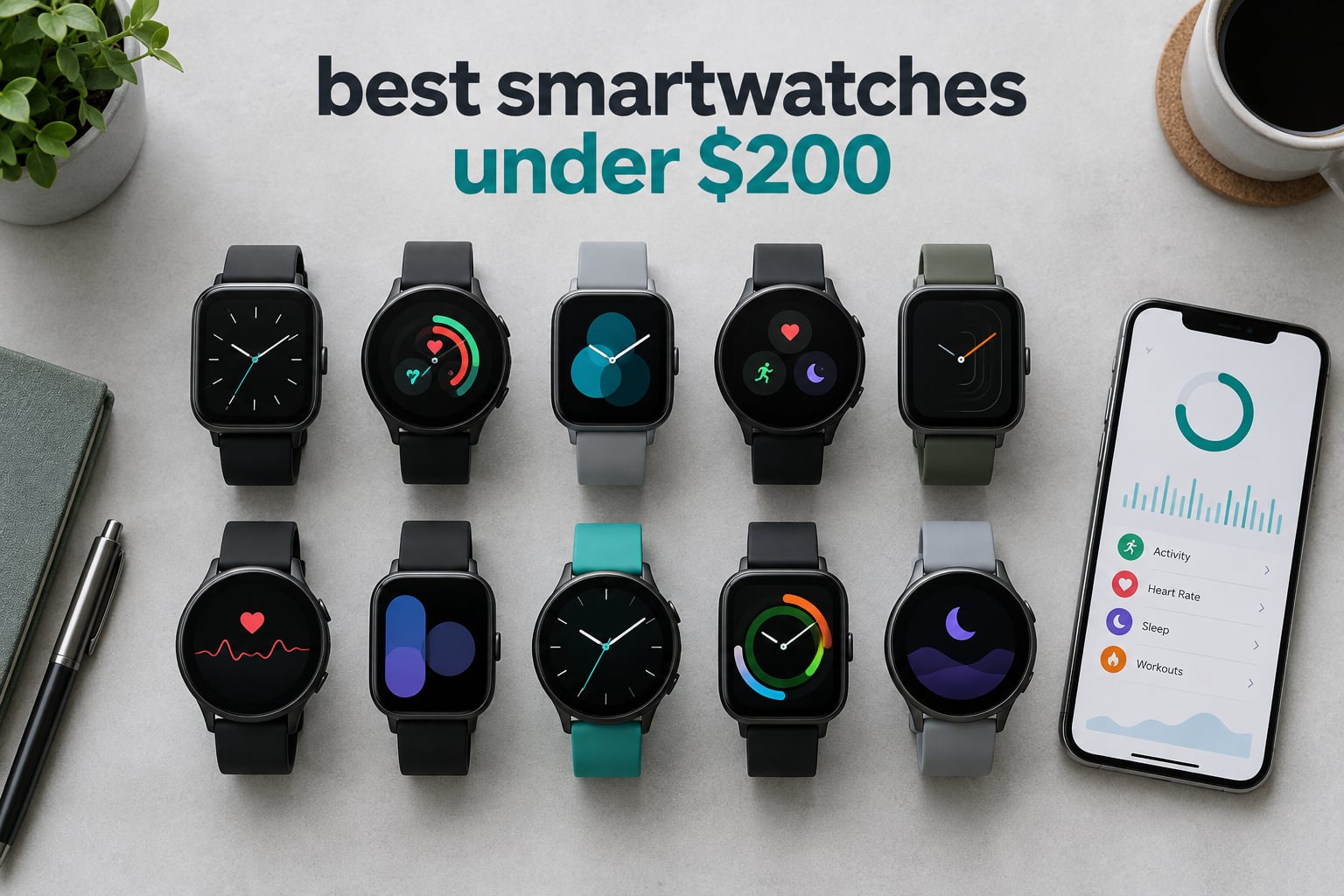
The best smartwatch under 200 dollars right now is the Garmin Vivoactive 5, which pairs a bright AMOLED screen with built-in GPS and up to 11 days of battery life in smartwatch mode. It is the pick I keep coming back to after working through ten watches in this price band, because it does the three things that actually matter under 200 dollars better than anything else here: it tracks sleep and steps in a way owners trust, it runs a week without a charger, and it works with both iPhone and Android.
That last point deserves more attention than it usually gets. Your phone decides which watches you can even pair with. An Apple Watch only talks to an iPhone, and most Wear OS watches only talk to Android. Garmin, Amazfit, Xiaomi and cmf watches cross that line, which matters if you ever change phone brands. Get the phone match wrong and no amount of polish elsewhere will save the purchase.
Before the individual picks, two quick answers to the questions people ask most. What phone do you use? If iPhone, lean Garmin, Amazfit or cmf; if Android or Samsung Galaxy, your options widen to nearly everything here. And is your focus fitness tracking or smart notifications and calls? Fitness-first buyers should look at heart rate, sleep and GPS. Notification-first buyers should look at Bluetooth calling and an app that handles phone notifications properly, which is where several budget watches still fall short.
Every watch below sits at or under the ceiling. I did not quietly include models that only qualify when they are discounted, which is a habit several competitor roundups have picked up. Prices in this category move weekly, so treat the figure on each product listing as the number that actually applies on the day you read this.
Top 3 Picks for Best Smartwatches Under $200 (October 2026)
Three watches earn a place on the shortlist before the other seven get considered. The Garmin Vivoactive 5 wins on balance. The Garmin Forerunner 165 takes running. The Amazfit Bip 6 covers everything else at a price that leaves room in the budget.

Garmin Vivoactive 5
- AMOLED display
- built-in GPS
- 11-day battery
- Body Battery sleep and stress scores

Garmin Forerunner 165
- Running metrics with training effect
- 11-day battery
- 19 hours GPS
- incident detection

Best Smartwatches Under $200 in October
Ten good watches under 200 dollars are not ten identical products. Battery life ranges from about two days to nearly three weeks, four of them handle Bluetooth calls, one has no GPS at all, and two run Wear OS. This table lays out the shortlist before the detail so you can rule things out quickly.
| Product | Specifications | Action |
|---|---|---|
| Garmin Vivoactive 5 |
|
Check Latest Price |
| Garmin Forerunner 165 |
|
Check Latest Price |
| Amazfit Bip 6 |
|
Check Latest Price |
 Xiaomi Redmi Watch 5 Lite Xiaomi Redmi Watch 5 Lite |
|
Check Latest Price |
 Samsung Galaxy Fit 3 Samsung Galaxy Fit 3 |
|
Check Latest Price |
 cmf Watch 3 Pro cmf Watch 3 Pro |
|
Check Latest Price |
 Amazfit Active 2 Premium Amazfit Active 2 Premium |
|
Check Latest Price |
 cmf Watch Pro 2 cmf Watch Pro 2 |
|
Check Latest Price |
 Samsung Galaxy Watch 5 Pro Renewed Samsung Galaxy Watch 5 Pro Renewed |
|
Check Latest Price |
 Amazfit Bip 5 Amazfit Bip 5 |
|
Check Latest Price |
1. Garmin Vivoactive 5: Best Overall, AMOLED Plus 11-Day Battery
Garmin vívoactive® 5, Health & Fitness GPS Smartwatch, 42mm, Black
AMOLED display
Built-in GPS
Up to 11 days battery
1.31 oz case
Pros
- Exceptional battery life with weekly charging or less
- Lightweight and slim enough to sleep in
- Body Battery and sleep scoring owners rank above pricier rivals
- Built-in GPS for phone-free runs
- Works with both iPhone and Android
Cons
- No voice assistant or speaker
- No third-party app store
- Food logging needs a paid subscription
- Nap detection can log false positives
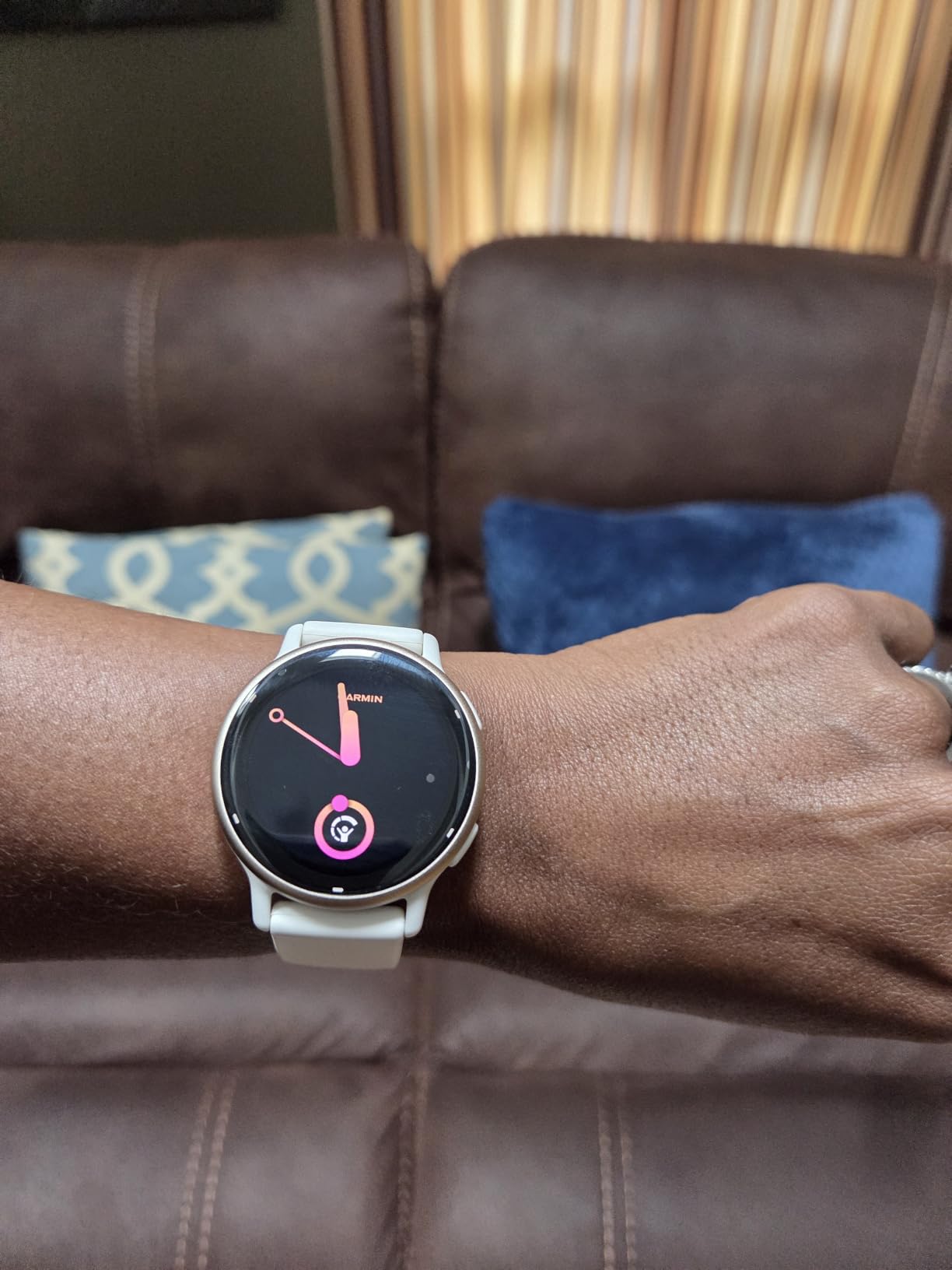
The Vivoactive 5 is the one I put on my own wrist when I want one watch to do everything. It weighs 1.31 ounces and measures 42mm, which is small enough to sleep in without waking up with a mark on your arm. That comfort matters more than it sounds, because a watch you take off at night is a watch that never sees your sleep data.
Battery life is where it separates itself. Garmin rates it at up to 11 days in smartwatch mode, and owners consistently report charging about once a week or even less once notifications are trimmed. The AMOLED panel is bright and readable in daylight, which is a real upgrade over the dim LCDs that dominated this category two years ago.
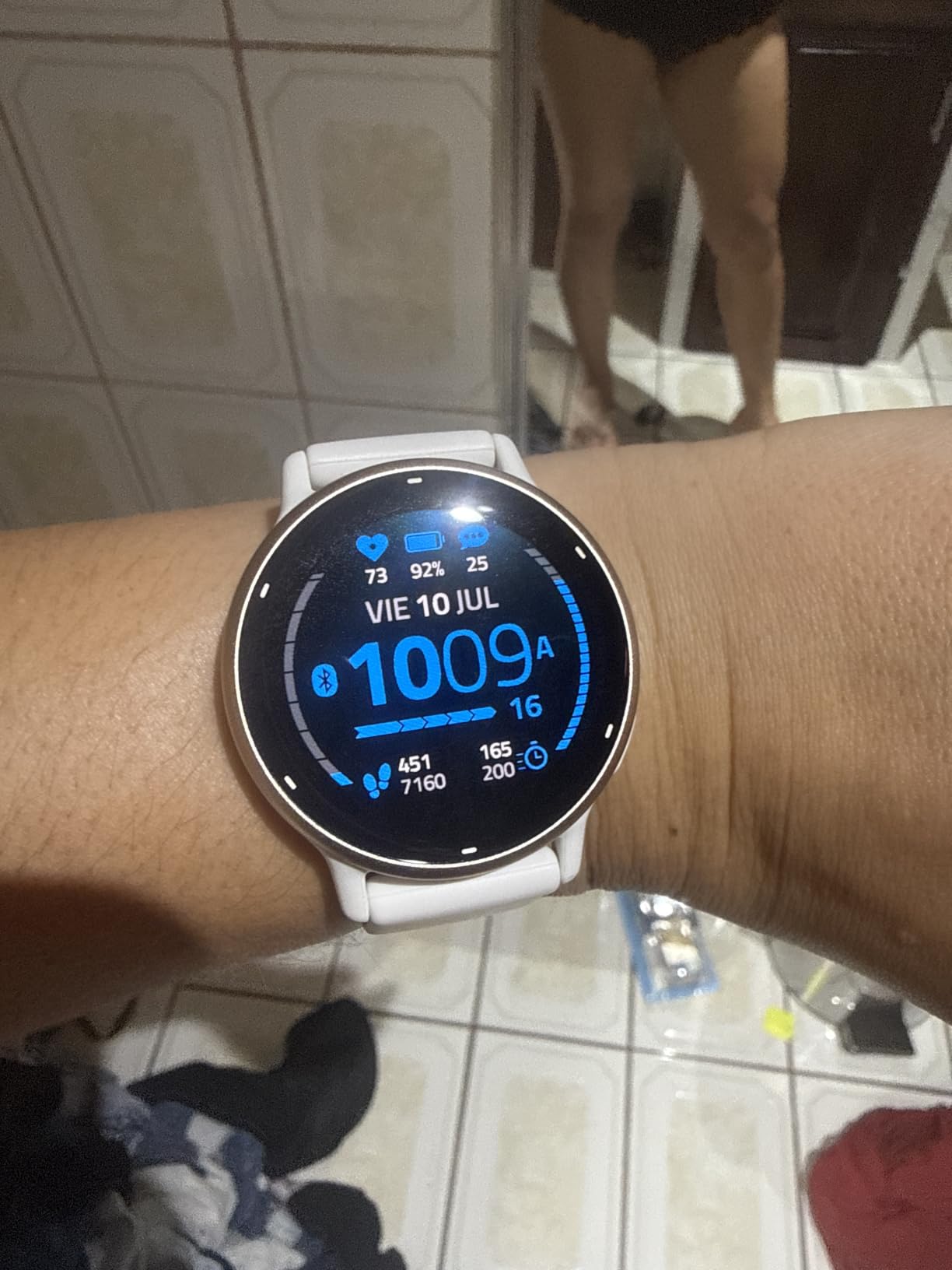
The health side is the strongest argument for this watch. Body Battery scores your energy through the day, the sleep score pulls in HRV status, and there is automatic nap detection with a nap log. Reviewers comparing it against Apple Watch hardware repeatedly say the Garmin sleep data looks better to them, which is the single most valued attribute in our reader research.
It is also one of the few watches in this roundup with a real music story. You can download Spotify, Amazon Music or Deezer playlists to the watch and listen through wireless headphones without your phone nearby. Menstrual cycle and pregnancy tracking are included, which is why it also shows up in our picks for smartwatches for women.
Who the Vivoactive 5 suits best
This is the watch for someone who wants accurate sleep and step data, a week between charges, and zero ecosystem lock-in. If you are coming off an Apple Watch or a Fitbit and you are tired of charging nightly, this is the shortest adjustment period available under the ceiling.
It also works well as an everyday watch because the design is unobtrusive. The 42mm slate case goes with casual clothes and gym wear equally well, and the AMOLED screen handles watch faces far better than the older transmissive panels.
Who should skip the Vivoactive 5
Skip it if you want to answer calls from your wrist or install apps. There is no speaker, no microphone and no third-party app store here. Notifications arrive and you read them, but you reply on your phone.
Skip it if food logging matters to you, because that part of Garmin Connect sits behind a paid subscription. And skip it if you are an Android user who lives in a specific app ecosystem and expects watch faces and data to sync deeply with Samsung Health or Google services. Garmin Connect does the job, but it is its own world.
2. Garmin Forerunner 165: Best for Runners Who Want Real Training Data
Garmin Forerunner® 165, Running Smartwatch, 43mm, Black
43mm AMOLED at 1000 nits
Built-in GPS
11 days smartwatch, 19 hours GPS
1 year warranty
Pros
- Highest rated in this roundup at 4.6 stars
- Button controls work with wet or sweaty hands
- Training effect and recovery time metrics
- 19 hours of GPS battery for long runs
- Incident detection and Assistance location sharing
Cons
- Small 1.2-inch screen crowds data
- Limited multisport and sensor depth for the money
- No speaker or third-party apps
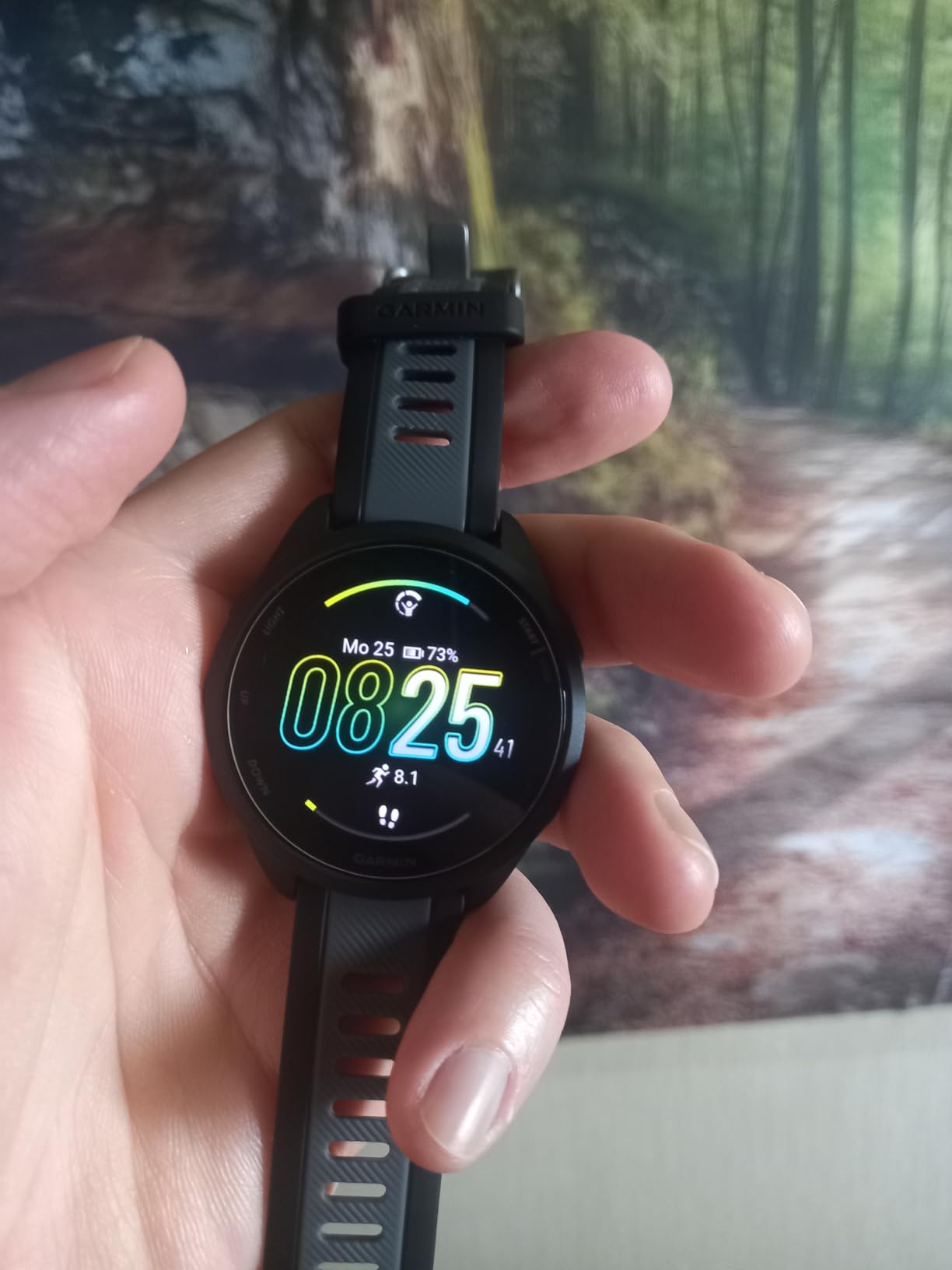
The Forerunner 165 is the running watch, full stop. Where the Vivoactive rounds out your life, this one narrows in on training load, recovery and pace, and it does it with the highest rating in this group at 4.6 stars across more than 5000 reviews.
The interface is the selling point for anyone who has used a Garmin before. Physical buttons sit below the touchscreen, so you can start a workout or lap the screen with a wet finger, a gloved hand, or mid-stride. Most smartwatch-only competitors force you to swipe a small screen to do the same things.
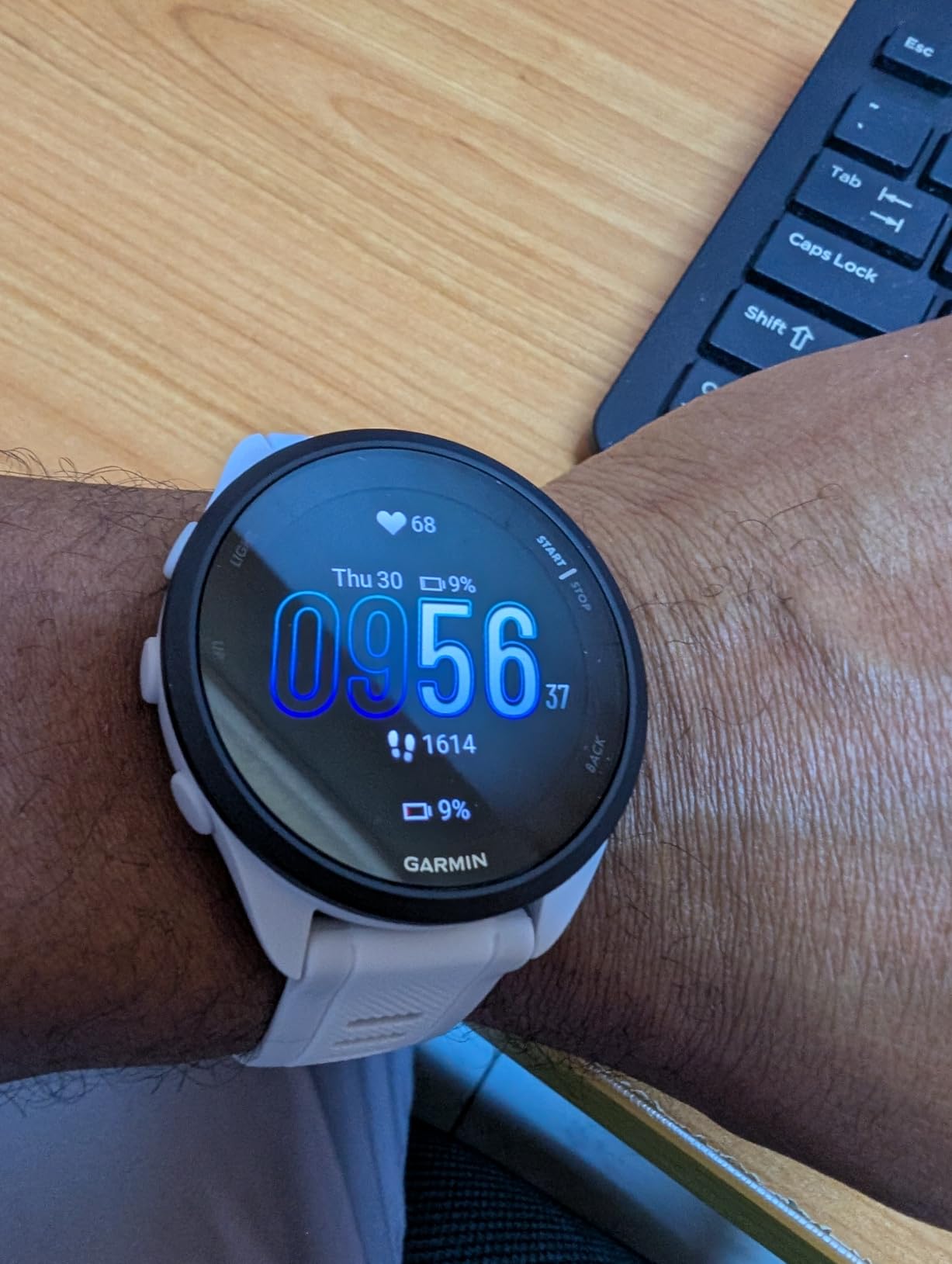
Battery numbers are honest here: up to 11 days in smartwatch mode and up to 19 hours with GPS active. Nineteen hours covers a marathon and the drive home without a top-up. For weekend long runs, the deeper battery in our GPS smartwatch picks is worth a look, but at this price nothing else matches the combination.
You also get Garmin Coach adaptive plans, race adaptive training, morning report with weather and HRV status, and Garmin Pay contactless payments. Incident detection can send an alert with your location if you fall during a run, and Assistance lets a contact follow your live position during an outdoor session.
Who the Forerunner 165 suits best
It suits runners who want structured training rather than a step counter. If you are following a half marathon plan or building toward a first road race, the daily suggested workouts and training effect labels give you a real program instead of a dashboard.
It also suits anyone who prefers buttons over gestures, and anyone who needs safety features during solo workouts. The 43mm case and 20mm silicone band fit most wrists without adjustment.
Who should skip the Forerunner 165
Skip it if you need more than sport data. There is no speaker and no app store, so this does not function as a smart notification hub in the way a Wear OS watch does.
Skip it if you want the deeper sensor and multisport platform of a higher-tier Garmin. This is an entry-level Forerunner, so advanced recovery metrics and specialist profiles are trimmed away. Skip it too if your training data is dense enough that a 1.2-inch 324 by 394 screen makes you squint mid-run.
3. Amazfit Bip 6: Best Budget All-Rounder With GPS and Offline Maps
Amazfit Bip 6 Smart Watch, 1.97″ AMOLED Display, GPS, iOS/Android
1.97-inch AMOLED at 2000 nits
14-day battery
Five-satellite GPS
50 m water resistance
Pros
- Large bright AMOLED readable in direct sunlight
- Two-week battery ends nightly charging
- Built-in GPS with free downloadable maps
- Lightweight aluminum body
- 140+ workout modes with AI coaching
Cons
- Some early units report touchscreen failures
- Zepp app pushes subscription prompts
- Water resistance claims draw scepticism
- Aluminum feels less premium than the Active 2
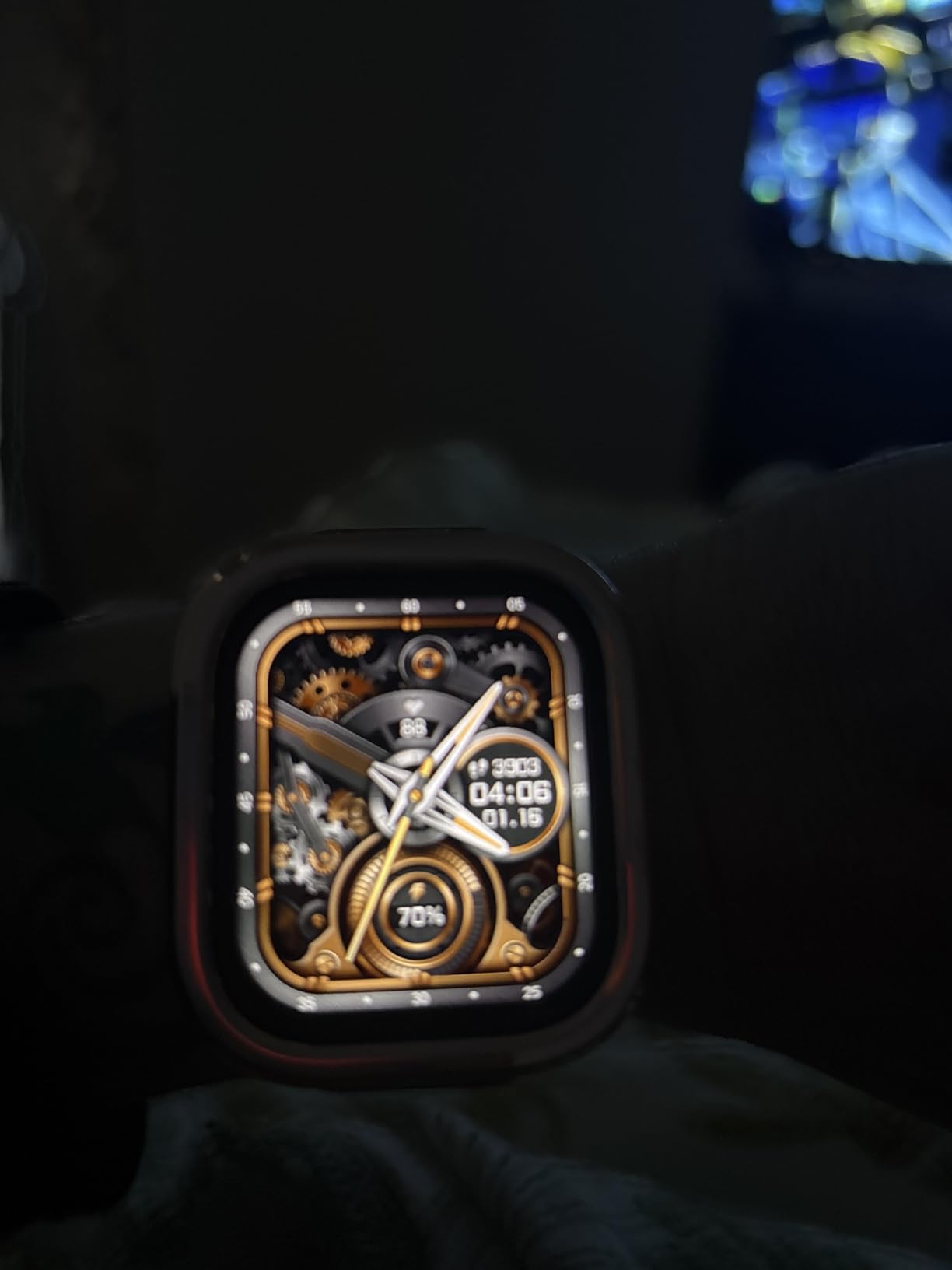
The Bip 6 is the watch to buy when the budget is the first constraint but GPS is not negotiable. A 1.97-inch AMOLED panel rated at 2000 nits makes it one of the brightest screens in this roundup, and the 340 mAh cell is rated for 14 days.
The maps are the quiet differentiator. Amazfit lets you download maps for offline use with turn-by-turn directions, and the five-satellite system covers BeiDou, GLONASS, GPS and Galileo. That combination is unusual this far below the ceiling and it lets the watch guide you along a trail without your phone.
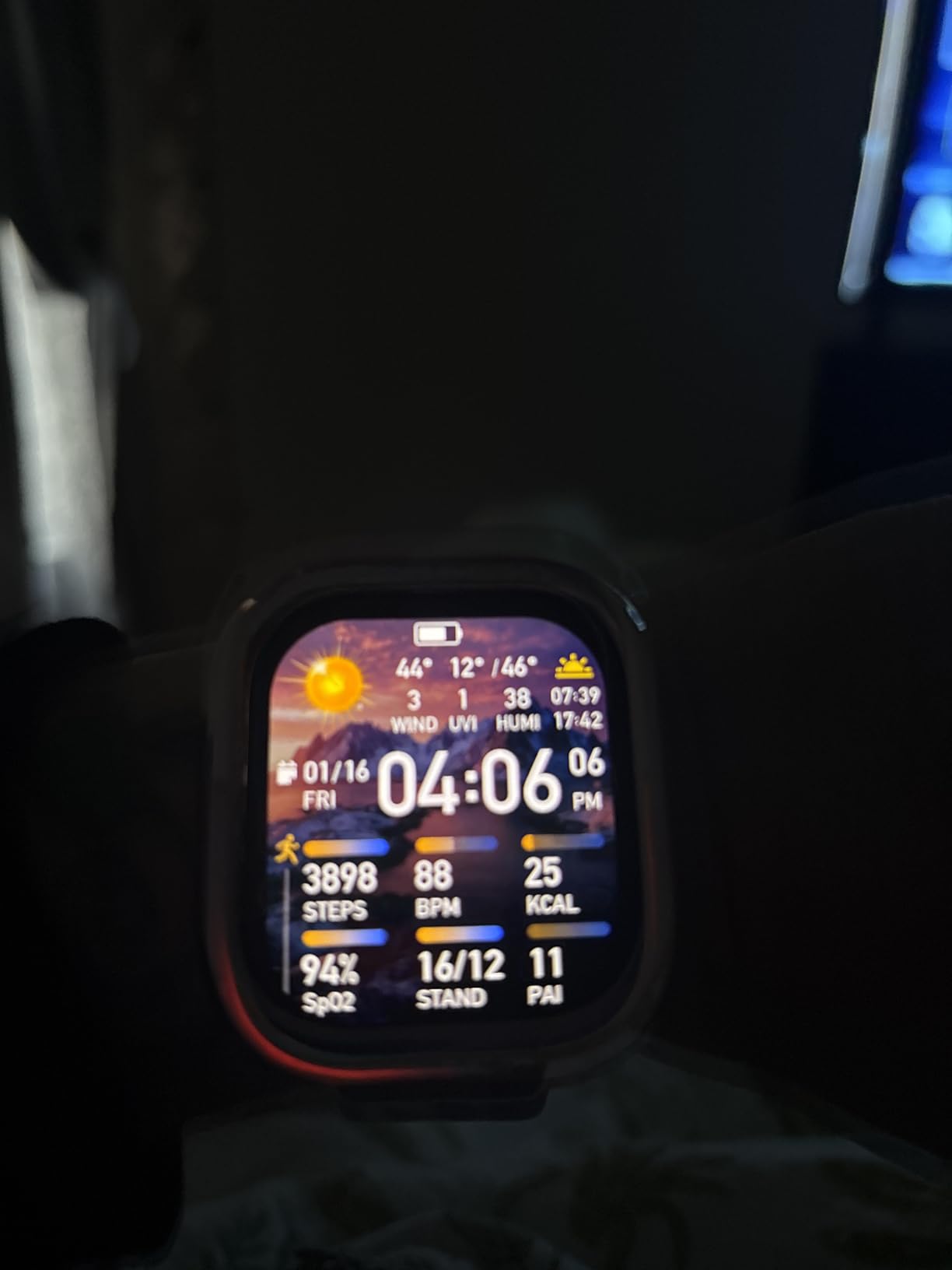
Health tracking covers 24/7 heart rate, sleep, blood oxygen and stress, all measured and reported through the Zepp app. Workout coverage is broad with more than 140 modes including HYROX Race and strength training, and there is personalised AI coaching on top.
Compatibility is one of the reasons this watch keeps showing up in community buying advice. It pairs with Android 7.0 and later or iOS 14 and later, so switching phone brands does not mean replacing your watch. Build quality is lightweight aluminum at 1.44 ounces rather than the soft plastic feel of older budget trackers.
Who the Bip 6 suits best
It suits first-time smartwatch buyers who want a big screen, long battery and maps without crossing the ceiling. People upgrading from a basic fitness band often find the display size is the feature they notice most.
It also suits hikers and travellers who want turn-by-turn guidance on the wrist. If you want even longer battery, our hybrid smartwatch guide covers a different battery-versus-features tradeoff.
Who should skip the Bip 6
Skip it if you rely heavily on reply-from-wrist messaging, because the Zepp ecosystem handles replies differently depending on your phone. Skip it if you are sensitive to app upsell prompts, since the Zepp app regularly advertises premium tiers.
Some owners report reliability problems and touchscreen failures within the first months, so buy from a seller with straightforward returns. And if you want a more premium wrist presence, the aluminum case reads more functional than luxurious.
4. Xiaomi Redmi Watch 5 Lite: Best Value With 18-Day Battery and Calling
XIAOMI Redmi Watch 5 Lite Global 1.96″ Amoled Up to 18 Days Battery GNSS Dual Mic 150+ Workout Modes 5ATM Water Resistance Heart Rate Sensor (Black)
1.96-inch AMOLED with always-on
18-day typical battery
Five-system GNSS
Bluetooth calling
Pros
- Battery frequently measured between 10 and 19 days
- Built-in GNSS works without a phone and syncs to Strava
- Bluetooth calling with dual-mic noise cancellation
- Large bright screen readable outdoors
- 150+ workout modes with running courses
Cons
- On-watch calling can interfere with car Bluetooth
- Android notification handling has persistent quirks
- Some GPS dropouts on long rides
- Included strap is hard to fit and wears quickly
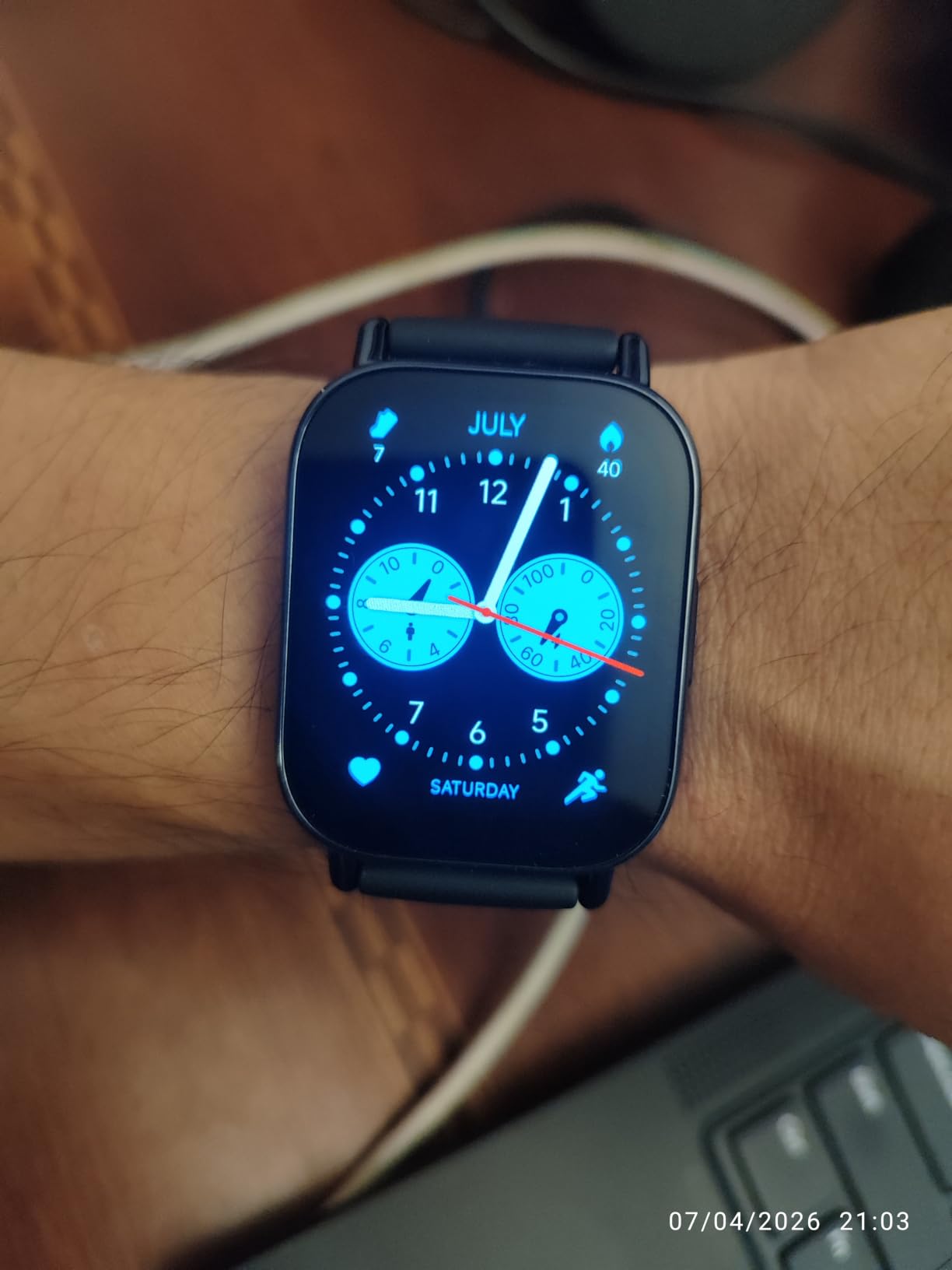
The Redmi Watch 5 Lite is the specification-sheet winner of this group and, at a fraction of the ceiling, the easiest recommendation on value. The claim is up to 18 days on a 470 mAh cell, and owners independently report landing anywhere between 10 and 19 days depending on settings.
Calling is the feature that makes people double-take at this price. Dual microphones with noise cancellation and directional audio pickup handle short calls without a companion app open, which is something most competing budget watches at this level do not offer at all.
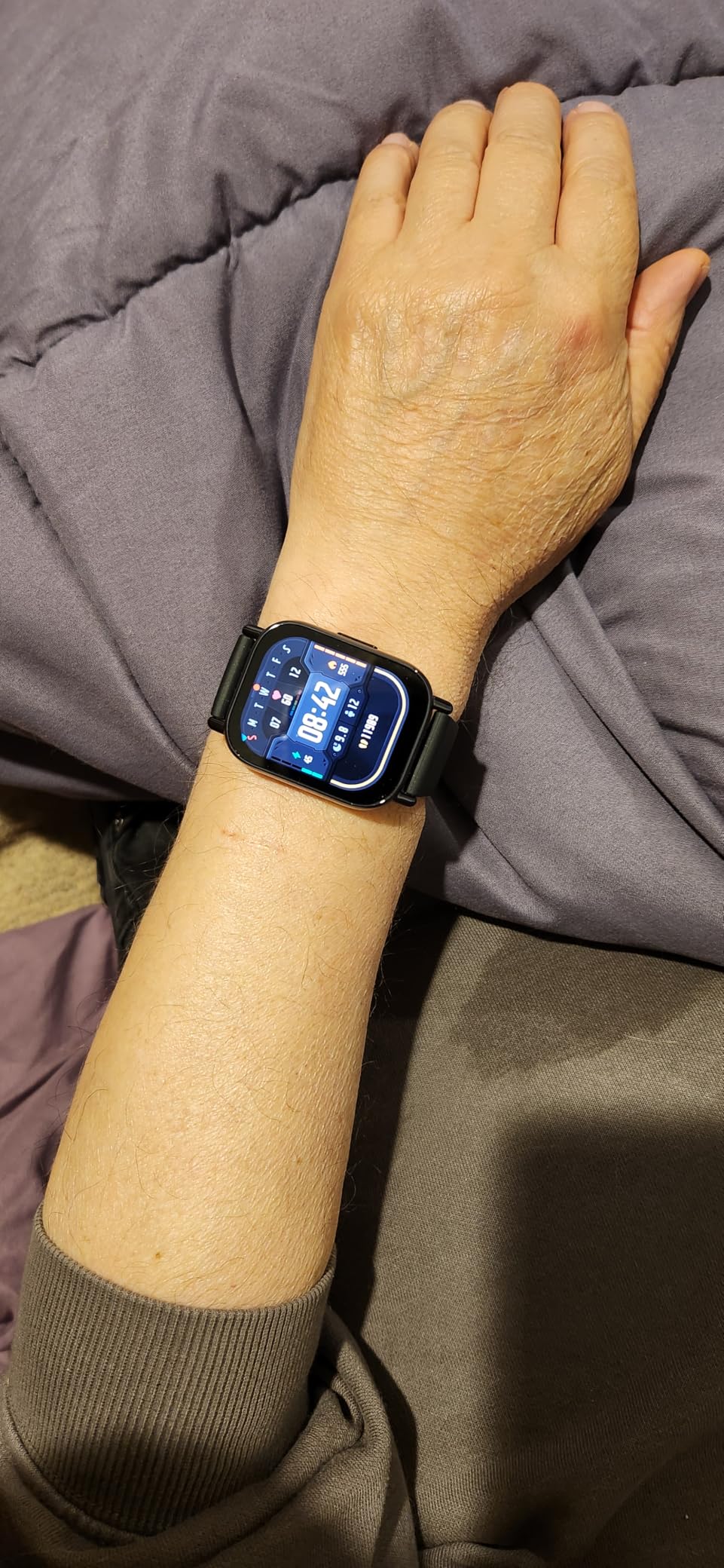
The GNSS chip is receiver-independent and supports five systems, so route tracking works with the phone left behind. Owners running cycling routes report syncing straight to Strava afterwards, which is convenient when you do not want a handlebar computer.
It pairs with Android 8.0 and later or iOS 12 and later, and Bluetooth 5.3 keeps syncing stable. The 1.96-inch AMOLED hits a 75.8 percent screen-to-body ratio and supports always-on display, with 5ATM water resistance for pool and rain.
Who the Redmi Watch 5 Lite suits best
It suits anyone who measures battery life in weeks rather than days. If your previous watch died every second evening, this is the most dramatic improvement available without changing brands.
It also suits people who want usable Bluetooth calling on a budget. And it is a reasonable second watch for someone who already owns a smartwatch but wants something with far more endurance for hiking or travel days.
Who should skip the Redmi Watch 5 Lite
Skip it if your phone runs a heavily customised Android skin and you need flawless notification handling. Some owners report a persistent notification-bar icon and other integration quirks, and the app takes some setup patience.
Skip it if you take calls in the car regularly, since on-watch Bluetooth calling has been reported to interfere with vehicle systems. Be cautious if sleep and heart rate accuracy is your top priority; several owners consider its readings less precise than premium trackers. If water and impact resistance matter, look at our rugged smartwatch picks instead.
5. Samsung Galaxy Fit 3: Best for Samsung Galaxy Owners
SAMSUNG Galaxy FIT 3 [2025, 40MM] 1.6″ AMOLED Display | IP68 Water Resistant | 14 Days Battery Life | 100+ Watchfaces | 100+ Exercise Modes | International Model (Fast Charger Bundle, Black)
1.6-inch AMOLED
Up to 14 day battery
5ATM and IP68
50 g aluminium body
Pros
- Samsung health features at a low entry point
- Two-week battery from a small 208 mAh cell
- Bright AMOLED with smooth touch response
- Swim-ready 5ATM and IP68 ratings
- Sleep coaching with SpO2 and snore detection
Cons
- Android only with no iPhone pairing
- No built-in GPS
- International model with no US warranty
- Samsung Pay not supported
The Galaxy Fit 3 is the compact option. At 50 g with a 1.6-inch AMOLED screen, it has one of the smaller footprints here, and for smaller wrists or overnight wear that matters. Battery is rated at up to 14 days from a 208 mAh cell, which is one of the better capacity-to-size ratios in the group.
The health suite is the draw for Samsung users. Sleep coaching, blood oxygen monitoring, heart rate and snore detection all come standard, and the watch pairs directly with Samsung Health. Water resistance is 5ATM plus IP68, so it is genuinely swim-ready and dust-resistant.
![SAMSUNG Galaxy FIT 3 [2025, 40MM] 1.6](https://www.geekfill.com/wp-content/uploads/2026/09/B0CTCLBST5_customer_1.jpg)
With more than 100 watch faces and more than 100 exercise modes including automatic activity detection, it covers the customisation that Samsung phone owners tend to expect from the ecosystem.
There are important caveats. This is the international model, which means the warranty is limited outside its home market, and it pairs with Android devices only. If you ever move to an iPhone, the watch stops being useful.
![SAMSUNG Galaxy FIT 3 [2025, 40MM] 1.6](https://www.geekfill.com/wp-content/uploads/2026/09/B0CTCLBST5_customer_2.jpg)
Who the Galaxy Fit 3 suits best
It suits Android and Samsung Galaxy owners who want familiar health and notification handling at a low entry point. The small size makes it a good sleep and discrete-work watch.
It also suits anyone upgrading from an older Samsung Galaxy Fit and wanting a modern AMOLED panel with a two-week battery instead of a two-day one.
Who should skip the Galaxy Fit 3
Skip it if you own an iPhone. Android-only pairing is not a preference here, it is a hard limit. Skip it if you run or hike without your phone, because this watch has no built-in GPS and depends on the phone for location.
Skip it if you want Samsung Pay or if you need a local warranty on a Samsung device. And buyers who want a larger screen or calling capability should compare the cmf picks further down.
6. cmf Watch 3 Pro: Best for Design and Bluetooth Calling
CMF BY Nothing Watch 3 Pro Smart Watch for Men Women, Bluetooth Call AI Energy Score, 1.43” Heart Rate Tracking, Sleep Monitor, GPS & 130 Sport Modes, Fitness Tracker for Android iOS, IP68 Dark Grey
1.43-inch AMOLED at 670 nits
13-day battery
Bluetooth calls with speaker
Built-in GPS
Pros
- Distinctive metal case that suits casual clothing
- Real Bluetooth calling with AI noise reduction
- 13-day battery with a 2.5 hour charge
- 130+ sport modes with GOMORE analysis
- Syncs to Apple Health and Strava
Cons
- Dimmest panel in this roundup at 670 nits
- Small screen limits how much data fits
- Limited on-wrist app ecosystem
- Lower 4.2 rating with more one-star reviews
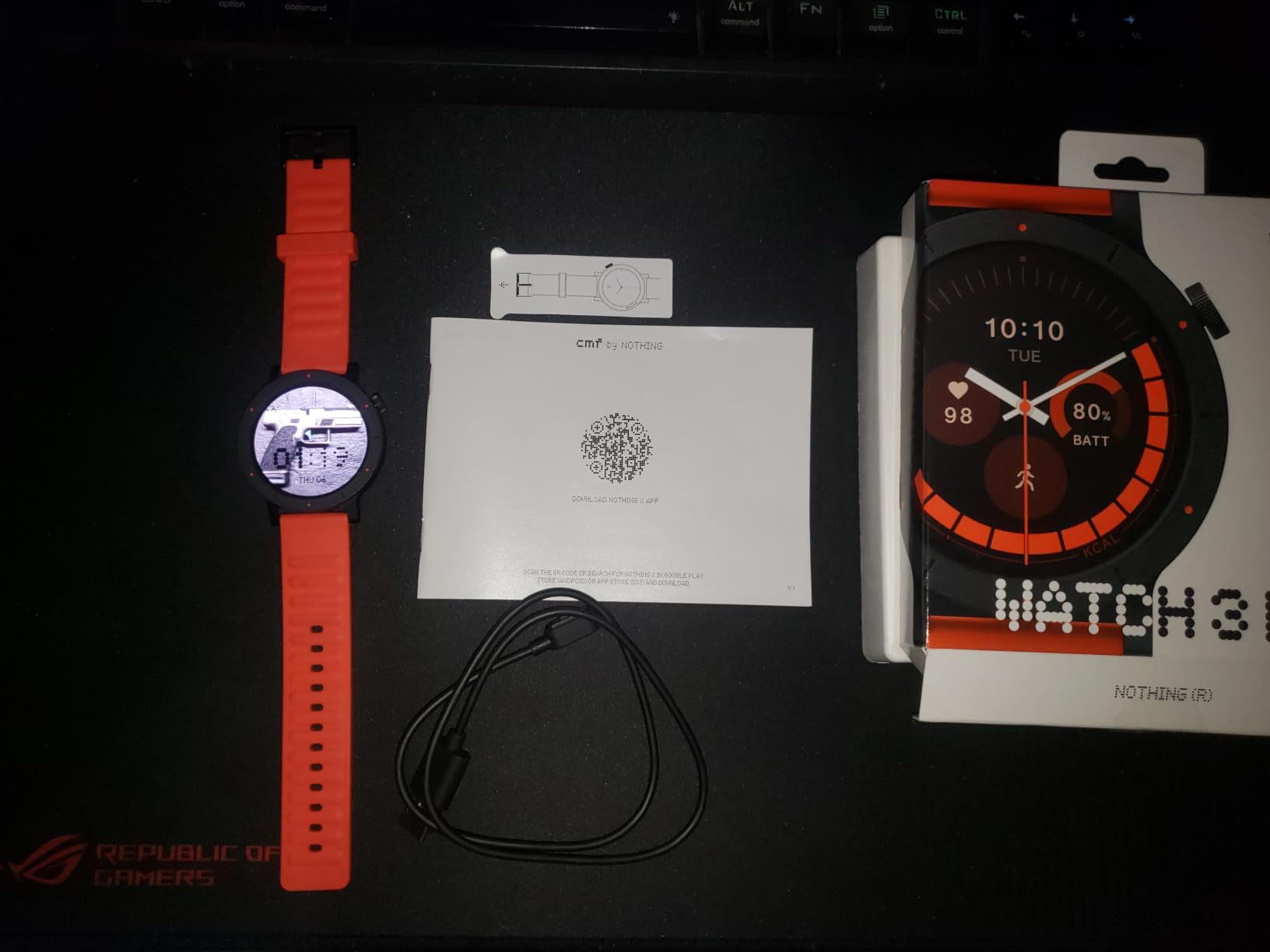
The cmf Watch 3 Pro is the one here that looks like a piece of industrial design rather than a fitness gadget. The metal case and flat-dial styling come from Nothing’s design language, and it wears more like a normal watch than a tracker.
It also does real phone calls. Dual MEMS microphones, a built-in speaker and AI noise reduction handle short conversations, and up to 30 contacts sync for quick replies. Battery is rated at 13 days with a full charge in about 2.5 hours.
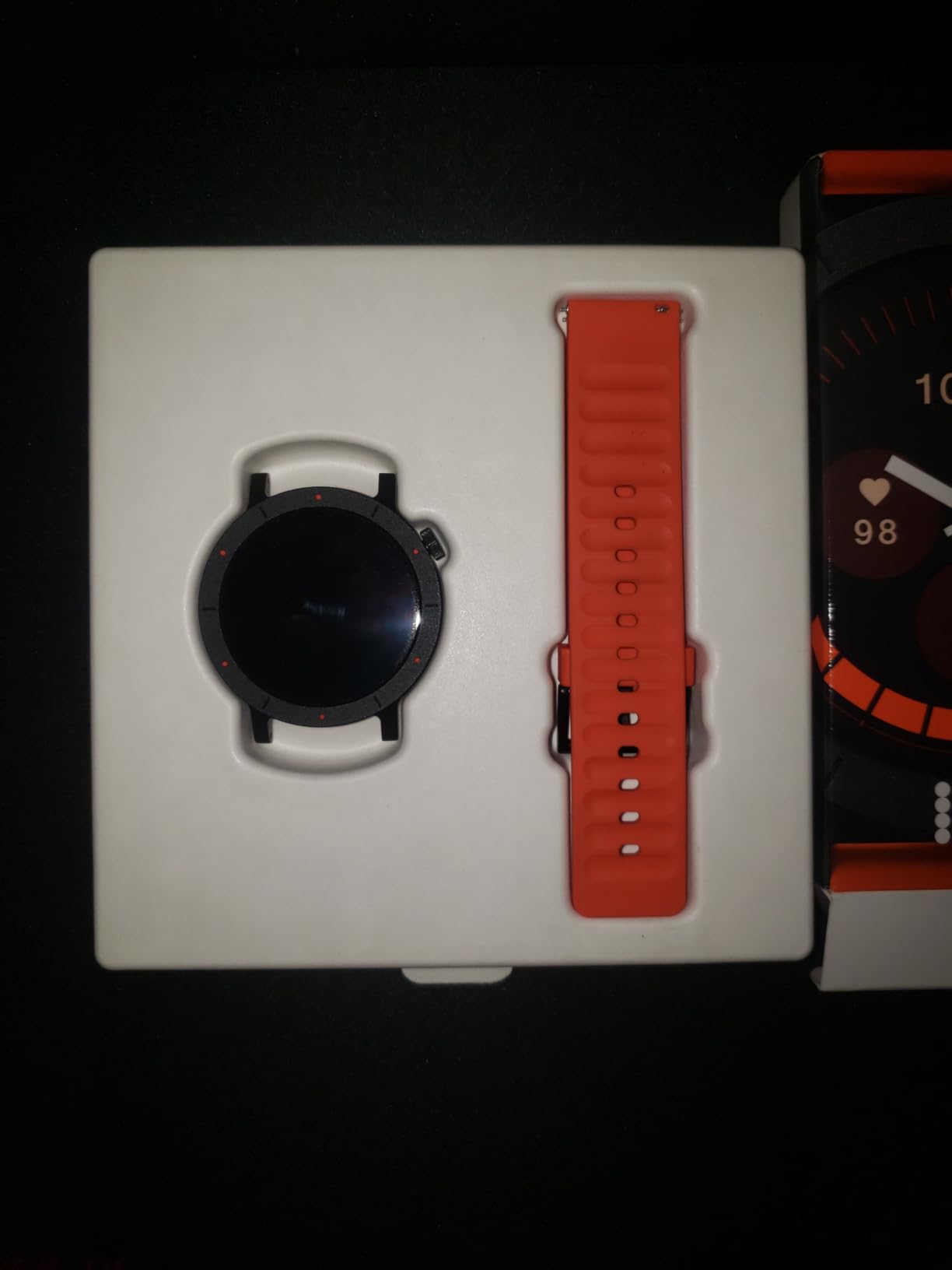
Sport features are more serious than the price implies. There are more than 130 modes with GOMORE performance analysis, 7-type motion recognition and an Active Score based on MET values. The health sensor is a 4-channel unit reading heart rate, SpO2 and stress, and sleep tracking analyses naps and recovery.
Sync works through the Nothing X app 3.0 into Apple Health, Google Fit and Strava, so it is genuinely cross-platform despite being one of the smaller watches here.
Who the cmf Watch 3 Pro suits best
It suits people who refuse to wear a rectangular slab and want calling as a bonus. The design reads well with casual clothing, which is a smaller consideration than it sounds for anyone who wears a watch every day.
It also suits buyers who want the health features of a bigger watch without a big case. The 1.43-inch AMOLED keeps the footprint discreet at 52 g.
Who should skip the cmf Watch 3 Pro
Skip it if you read your watch outdoors in direct sun. A 670-nit maximum is the dimmest panel in this roundup, and reviewers single it out as the clearest weakness.
Skip it if you need third-party apps on the wrist. The ROTS operating system handles notifications and quick replies but does not offer a broad app store. And if you want the highest confidence in long-term support, the 4.2 rating comes with a higher share of one-star reviews than the picks above it.
7. Amazfit Active 2 Premium: Best Build Quality Under the Ceiling
Amazfit Active 2 Premium Smart Watch 1.32″ Sapphire Glass, GPS, iOS/Android
Stainless steel case
Sapphire glass
1.32-inch AMOLED at 2000 nits
10-day battery
Pros
- Sapphire glass and steel that look far pricier than they are
- Bright 2000-nit AMOLED with always-on option
- Battery holds about a week with GPS and heart rate running
- Route tracking verified against bike computers
- Leather strap plus silicone sport band included
Cons
- Battery falls short of the claim with GPS or always-on on
- No Wi-Fi so syncing is slow over Bluetooth
- No text replies on iPhone
- Zepp app sends subscription prompts
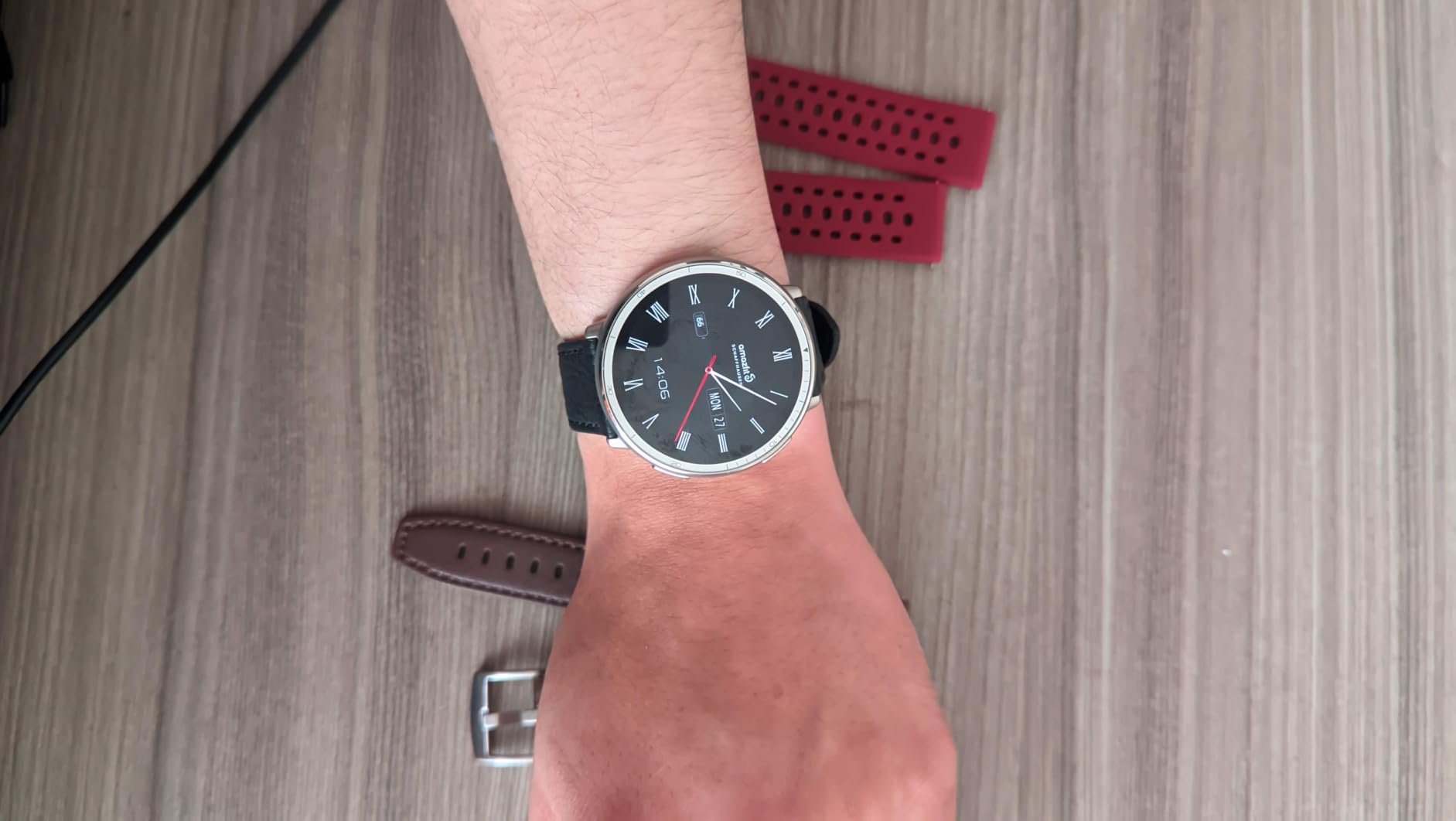
The Active 2 Premium is the one to buy if you care how the watch feels on the wrist as much as what it measures. Sapphire glass over a stainless steel case is a combination you normally find well above this budget, and it handles daily knocks far better than plastic-covered competitors.
It is lighter than the Vivoactive 5 at 1.12 ounces and the 1.32-inch AMOLED runs at 2000 nits. Zepp Flow voice control with speech-to-text message replies is a genuine smartwatch feature in a fitness-first body.
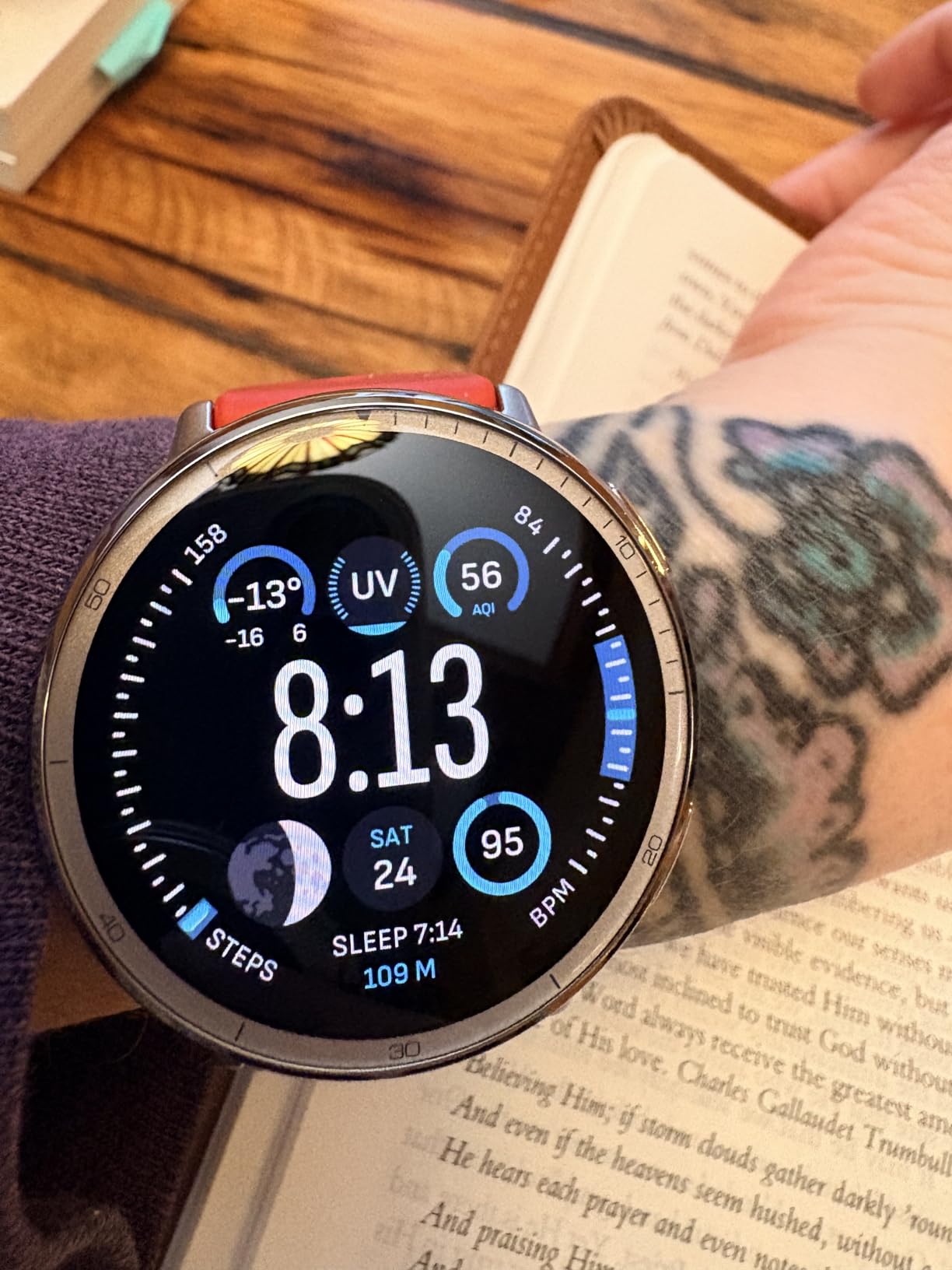
Owners frequently frame this as an Apple Watch and Fitbit alternative at a fraction of the cost. The BioTracker sensor handles heart rate and sleep, GPS uses five satellite systems, and free downloadable maps plus global ski maps cover offline navigation.
Battery is rated at 10 days. In practice, reviewers report about a week with GPS and heart rate in regular use, and clearly less than that if you run GPS continuously or leave the always-on display on. There is a barometer for elevation and 50 m water resistance.
Who the Amazfit Active 2 Premium suits best
It suits people moving up from a cheap tracker who want something that looks like a watch, not a gadget. It is the most understated choice here, and the included leather and silicone straps let you switch between dress and training without buying anything.
It also suits skiers, hikers and cyclists who want offline maps and a barometer at a mid-range price.
Who should skip the Amazfit Active 2 Premium
Skip it if you reply to messages from your wrist on an iPhone. Apple’s restrictions mean text replies do not work there, which is a genuine limitation for iPhone owners.
Skip it if you need fast syncing, because there is no Wi-Fi and everything goes over Bluetooth. And skip it if promotional notifications in the Zepp app bother you; owners report them arriving frequently. Altimeter readings also drift noticeably on steep hikes.
8. cmf Watch Pro 2: Best Wear OS Experience Under the Ceiling
CMF Watch Pro 2 Smartwatch for Men Women, Fitness Tracker with Heart Rate, SPO₂ Monitoring,120 Sports Model, Bluetooth Calls with AI Noise Reduction, IP68 Waterproof with GPS for Android iOS Blue
1.32-inch AMOLED at 60Hz
Wear OS
Up to 11 day battery
IP68 with multi-system GPS
Pros
- Real Wear OS means actual third-party apps
- Bluetooth calls with AI noise reduction
- Interchangeable bezel and standard 22 mm straps
- Reviews praise sleep accuracy and step readings
- Syncs to Apple Health and Strava
Cons
- Bezel ring twists loose and can detach
- No NFC so no contactless payments
- Occasional app disconnects and slow GPS locks
- Vibration motor is harsh even at low settings
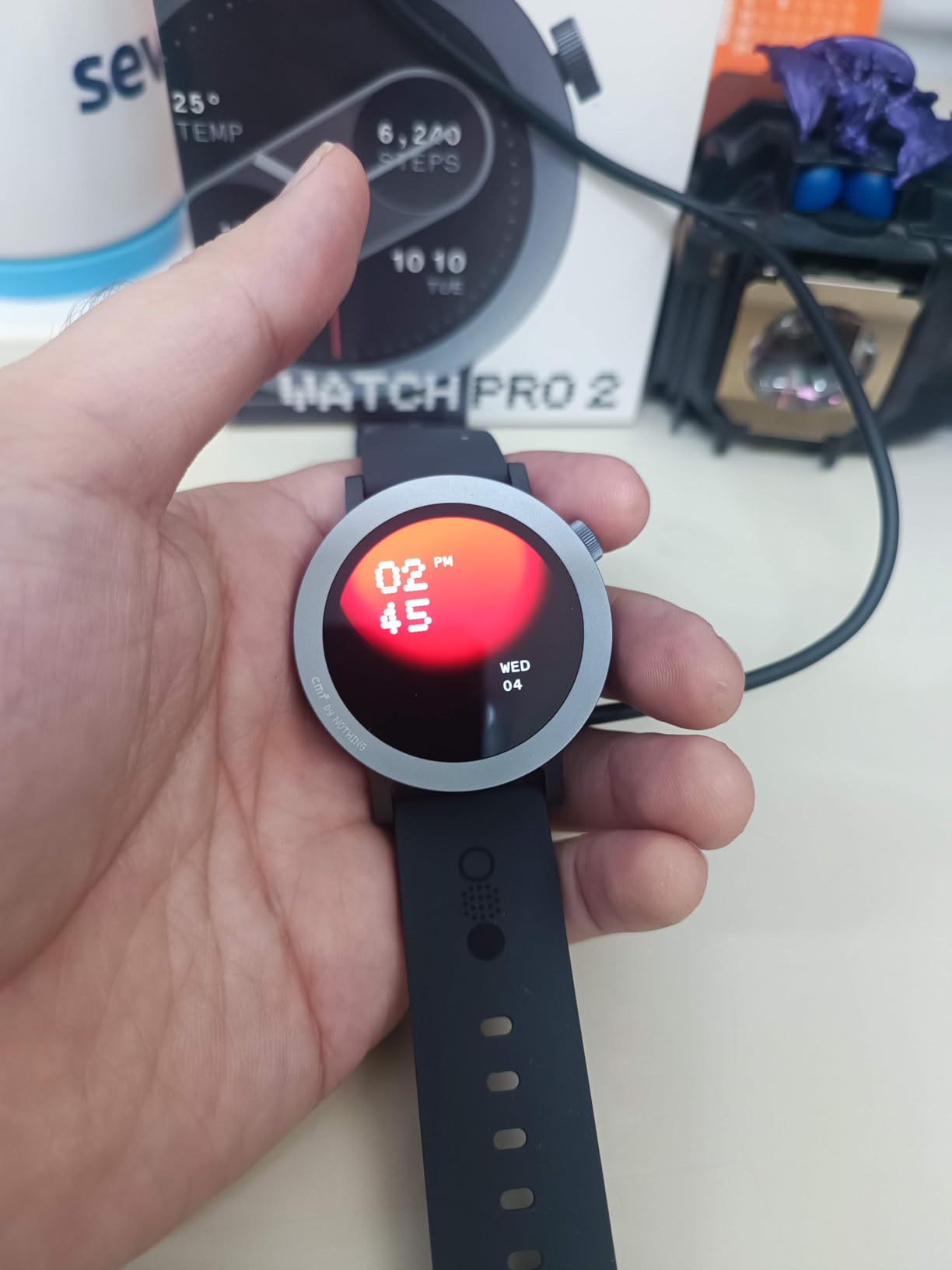
This is the watch in the roundup with the most complete Wear OS experience, and that changes what the device can do compared with the fitness-first picks above it. You get a real app store on the wrist, so maps, messaging and third-party training apps behave the way they would on a much more expensive watch.
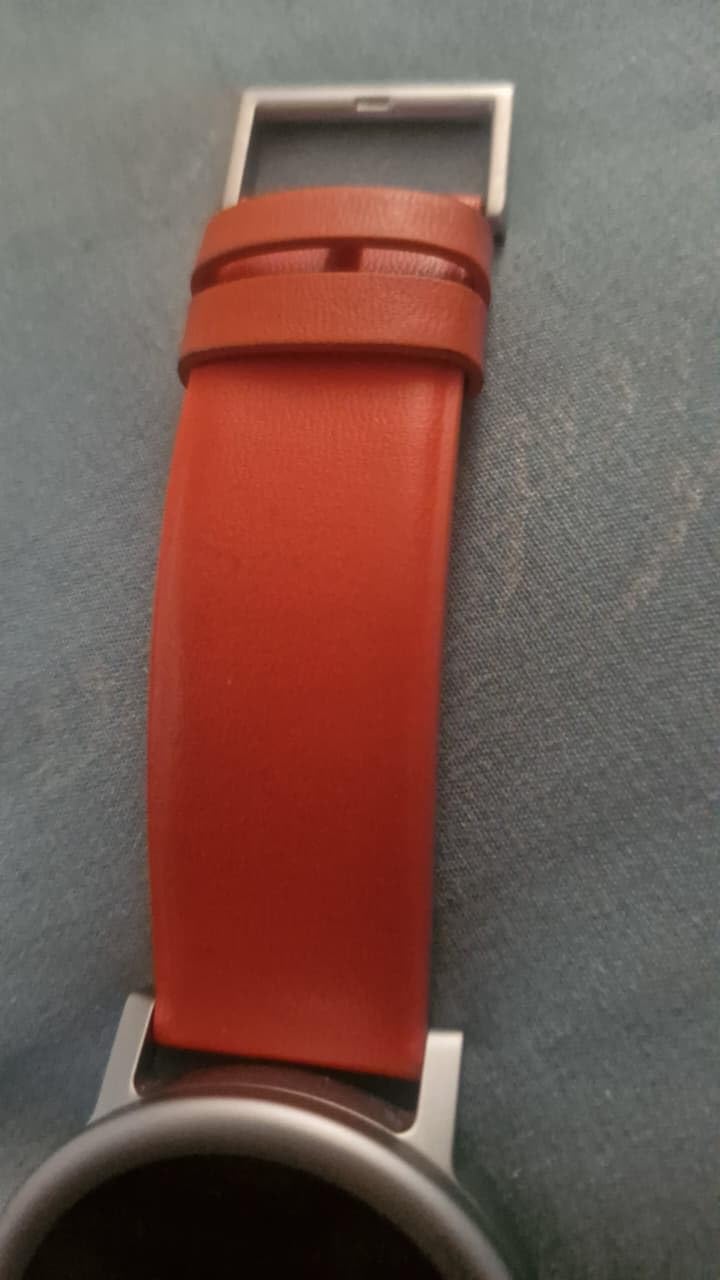
The design is the other argument. An interchangeable bezel and standard 22 mm straps mean you can change the look with inexpensive accessories rather than replacing the whole watch, and 100+ watch faces cover the rest. The panel is 1.32-inch AMOLED at 466 by 466, 353 PPI and 60Hz.
Health tracking covers 24/7 heart rate, SpO2, sleep patterns and stress, with a Smart Movement Algorithm for aerobic and anaerobic effectiveness, training load and recovery time. There are 120 sport modes with auto-recognition of five activities and a 3D warm-up guide.
Gesture control lets you answer calls and manage music with a wrist movement, which is more useful than it sounds when you are carrying groceries or a laptop. Battery is rated at up to 11 days, with owners reporting roughly 7 to 10 in real use.
Who the cmf Watch Pro 2 suits best
It suits anyone who wants smartwatch apps at a budget price. That is a short list at this budget and most picks restrict you to notifications only. It also suits style-conscious buyers who want to swap bezels rather than commit to one look.
It suits sleep and step tracking accuracy seekers on a budget. Reviews call the readings accurate, which addresses the accuracy anxiety that dominates our forum research.
Who should skip the cmf Watch Pro 2
Skip it if you want contactless payments, because there is no NFC. Skip it if you are hard on your watch, because the interchangeable bezel ring is reported to twist loose and can come off during normal use.
Skip it if a strong vibration ruins your sleep. The motor is described as too intense even on low settings with no way to soften it. Some owners also hit app disconnects and slow GPS acquisition that needs a restart, and interval timers cannot run alongside workout tracking.
9. Samsung Galaxy Watch 5 Pro Renewed: Best Rotating Bezel and Titanium Build
SAMSUNG Galaxy Watch 5 Pro 45mm Bluetooth Smartwatch w/Body, Health, Fitness and Sleep Tracker, Black (Renewed)
45mm titanium case
1.4-inch AMOLED at 1000 nits
Dual-band GPS
16 GB storage
Pros
- Titanium case and rotating bezel at a fraction of original retail
- Sapphire crystal display resists scratches and knocks
- Deep Samsung ecosystem integration
- Sleep analysis blends pulse and breathing with blood oxygen and skin temperature
- 45mm sizing suits most wrists
Cons
- Weakest endurance here at roughly 2 to 3 days per charge
- Renewed units may show blemishes or paint residue
- Some health features such as ECG need a Samsung phone
- Non-Samsung Android phones get limited apps and faces
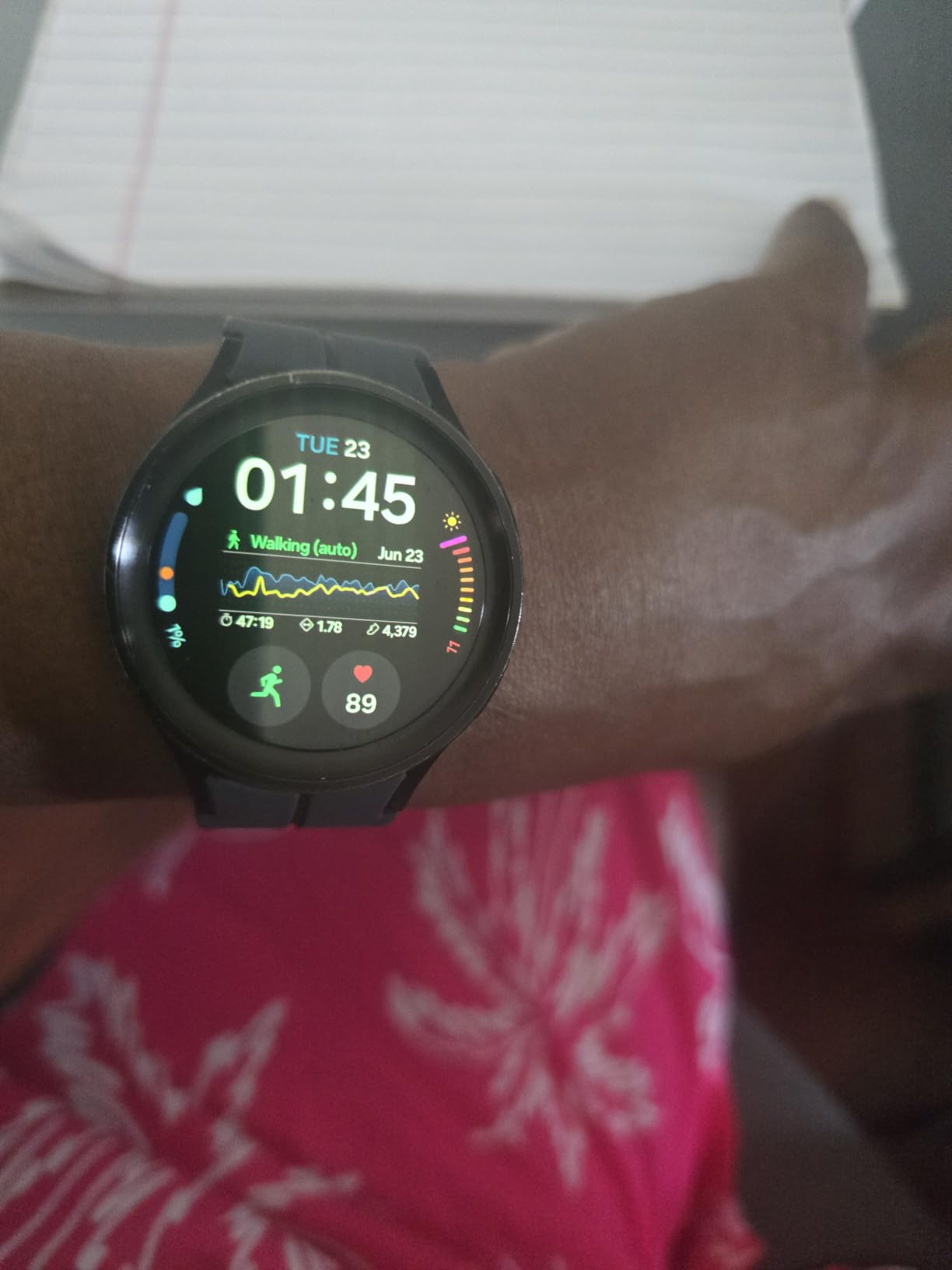
The renewed Galaxy Watch 5 Pro is the hardware deal of this roundup. You get a titanium case, sapphire crystal and a physical rotating bezel, all of which normally sit far above this price, and the review history across more than 2000 ratings sits at 4.4 stars.
Sleep analysis is the standout feature. It combines pulse fluctuation, breathing data, blood oxygen and skin temperature, which is a wider sensor blend than most competitors at this price attempt. Body composition analysis and automatic workout detection with running and cycling detection round it out.
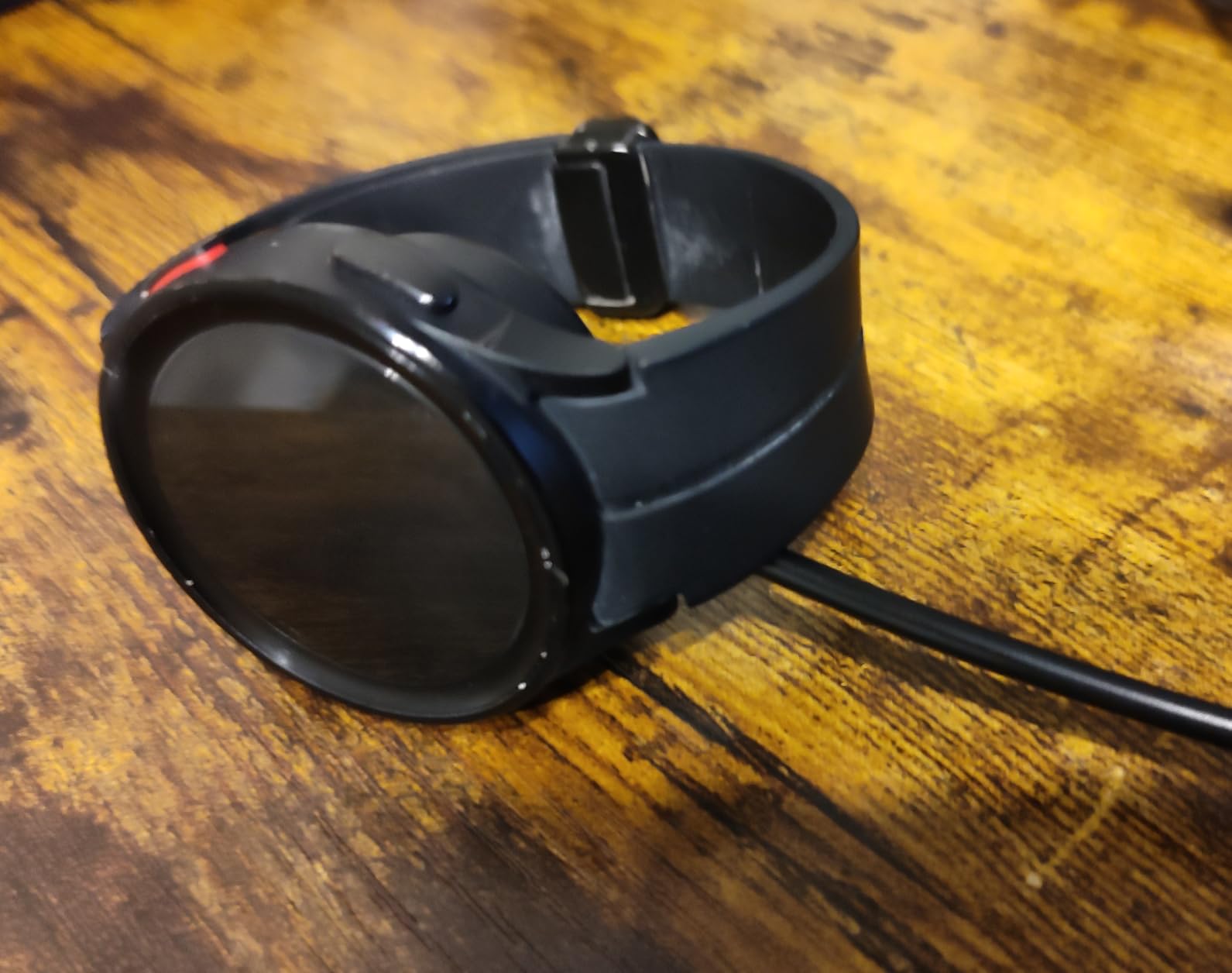
Connectivity is genuinely strong: dual-band GPS, Wi-Fi and Bluetooth, with 16 GB of storage so music and apps live on the watch. The rotating bezel is not decoration, it is a faster way to scroll through menus than swiping.
What you accept is endurance. Owners report charging every two to three days, which makes this the weakest battery in the roundup by a wide margin. Because it is a renewed unit, cosmetic condition varies and a limited warranty applies rather than a full manufacturer warranty.
Who the Galaxy Watch 5 Pro Renewed suits best
It suits Samsung Galaxy phone users who want the deepest ecosystem integration available. Notification forwarding, watch faces and health data all behave as designed on a Samsung handset, and a rotating bezel is a genuinely nicer interface than a touchscreen alone.
It also suits buyers who care about materials. Titanium and sapphire hold up to daily knocks better than the plastic bodies common at this price.
Who should skip the Galaxy Watch 5 Pro Renewed
Skip it if charging every two days is unacceptable to you. If battery life is your top criterion, pick a Garmin or Redmi instead.
Skip it if you mind cosmetic variation, since renewed units can arrive with blemishes or paint residue. Skip it if you own a non-Samsung Android phone, because ECG needs a Samsung device and the weather app and watch face downloads are limited elsewhere. Our kids smartwatch picks cover a very different use case if that is what you are really after.
10. Amazfit Bip 5: Best Starter GPS Watch With a Big Screen
Amazfit Bip 5 Smart Watch, 1.9″ Screen, 10-Day Battery, GPS, iOS/Android
1.9-inch high-resolution display
10-day battery, 30 in saver mode
Built-in GPS
40 g body
Pros
- Very large screen readable without glasses
- Owners report 9 to 12 days between charges
- Zepp app handles Android notifications and calendars better than rivals
- Customisable photo watch faces
- Lightweight 40 g body
Cons
- Heart rate is not continuous and cannot update faster than once a minute
- GPS can take minutes to acquire
- Bluetooth calling drained battery and was hard to set up
- No third-party apps beyond the Amazfit store
The Bip 5 is the most approachable watch here for someone who has never worn one. The 1.9-inch high-resolution display is large enough to read without glasses, and photo watch faces let you put your own images on the screen instead of hunting through a store.
Where it stands out is notification handling. The Zepp app manages Android notifications, calendar entries and email more completely than competing budget watches, which is the part of the smartwatch experience that most often disappoints people moving up from a fitness band.
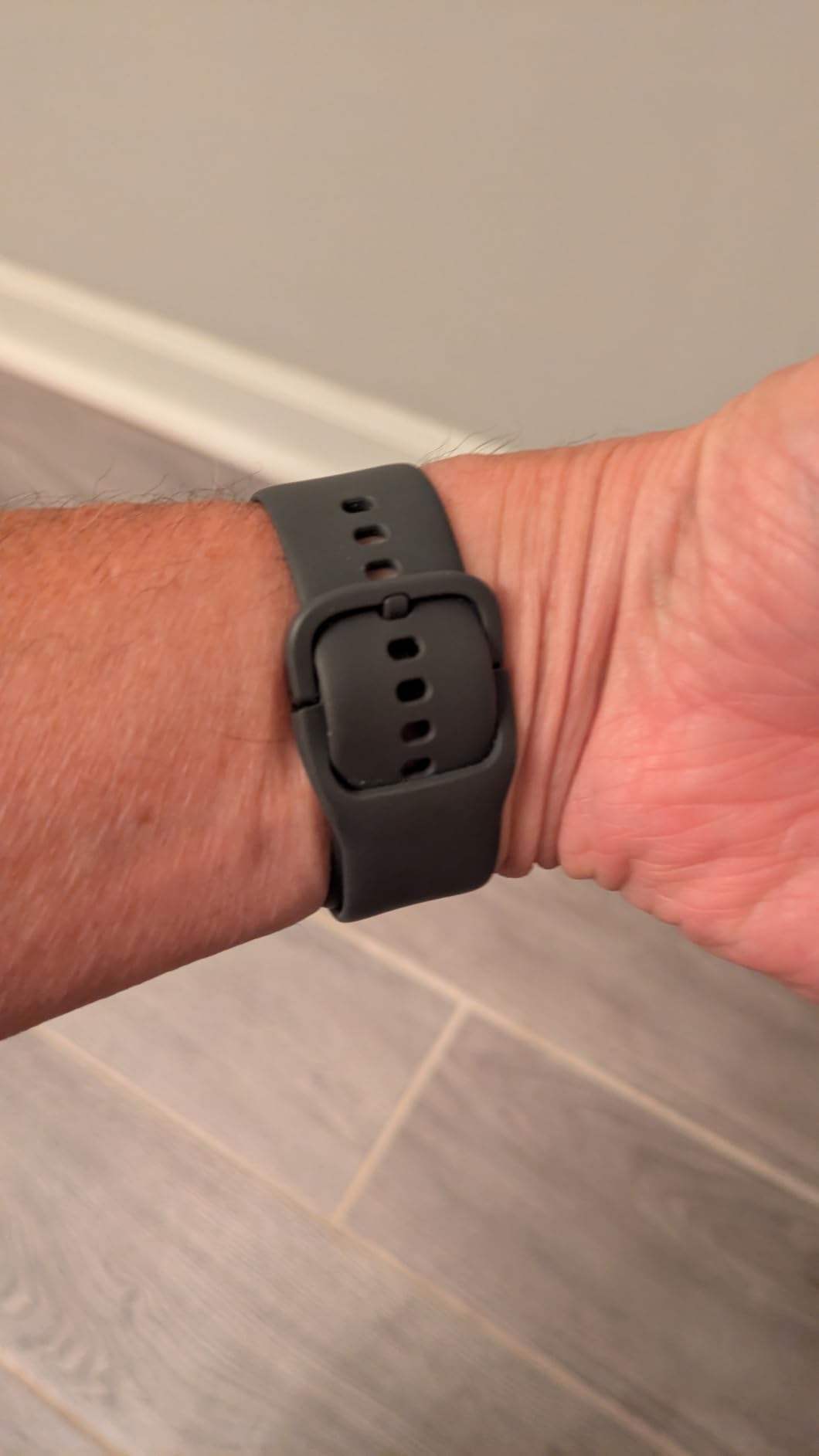
Battery is rated at 10 days, extending to 30 in battery saver mode, and owners report landing between 9 and 12 days in normal use. Tracking covers heart rate, blood oxygen, sleep quality and stress, with more than 120 sport modes and automatic activity detection.
It pairs with Android 7.0 or later and iOS 14 or later, and syncs to Strava, Apple Health and Google Fit. There is Bluetooth calling, voice control and Alexa integration through the Zepp app, plus IP68 water resistance in a 40 g body.
Who the Amazfit Bip 5 suits best
It suits first-time buyers who want notification handling to work properly on an Android phone, especially if you rely on calendar and email alerts. It is also a good gift choice for someone unsure whether they will wear a smartwatch at all.
It suits anyone who needs a big readable screen and long battery without spending much.
Who should skip the Amazfit Bip 5
Skip it if you want continuous heart rate. Sampling is interval-based by default and will not update faster than once a minute, which makes it a poor choice for interval training or resting heart rate trends.
Skip it if GPS speed matters, since acquisition can take several minutes and occasionally needs a restart. Skip it if you want to run apps on the wrist, and skip it if you want to take calls on it, since calling drained battery quickly and was hard to get working for some owners. It carries the lowest rating in this roundup at 4.1 stars, so buy with the expectation of a budget-tier device.
How We Picked These Smartwatches
We read the full review sets for each watch rather than relying on headline ratings, and we weighted attributes the way our reader research says buyers actually care about them: sleep and step tracking accuracy, battery measured in days, cross-platform compatibility, a maintained companion app, and honest limits. Ratings were a signal, not the decision.
Two products earned their place on reputation rather than on paper alone. Community consensus repeatedly names Amazfit as the best budget brand because it pairs real hardware with an actively supported app, and the same threads point to Fitbit when health metrics matter most. We kept every pick under the ceiling at full price rather than including models that qualify only when discounted.
A note on measurement. Heart rate and step data on these watches comes from optical sensors, so readings are reliable at rest and degrade during high-motion exercise. Sleep stages are estimates derived from movement and heart rate variability, not clinical measurements. Treat the numbers as wellness guidance, not diagnosis. If you have a heart condition, talk to a clinician rather than your watch.
How to Choose a Smartwatch Under the Ceiling
Start with your phone, because that decision removes most of the field instantly. Apple Watch hardware is not an option here at all, so iPhone buyers should look at Garmin, Amazfit, cmf and Xiaomi models. Android and Samsung Galaxy owners can consider every watch in this roundup, plus the Samsung-specific picks.
Second, decide whether you are fitness-first or smartwatch-first. Fitness-first means heart rate, sleep, GPS and sport modes matter more than apps and messages. Smartwatch-first means notifications, calling and app support matter more, which narrows you toward the cmf models and the Galaxy Watch 5 Pro.
Third, look at battery honestly rather than by headline number. The Galaxy Watch 5 Pro claims 20 hours, which in practice means two to three days. The Redmi Watch 5 Lite claims 18 days, and owners report 10 to 19. The gap between the advertised figure and the real figure is usually about always-on display and GPS use, so check whether you can live without those before chasing the biggest claim.
Fourth, think about what you give up staying under the ceiling. No watch here has ECG or cellular connectivity, and only one pairs with a modern Wear OS app ecosystem. One model in this group has no GPS at all. If you need those features daily rather than occasionally, a higher tier exists and this roundup is the wrong place to shop.
Fifth, account for the software side of the bill. Garmin puts food logging behind a subscription, and the Zepp app pushes premium tiers to Amazfit owners. Over two years those prompts add up, which is part of the total cost of ownership people rarely calculate. Budget watches with no mandatory subscription, such as the cmf models, look better on that calculation.
Sixth, consider form factor honestly. Rounders in our reader research wanted a round watch and the category keeps not delivering one. The closest options under this ceiling are rounded rectangles, so treat watch face diameter as the deciding spec if appearance is your top filter. A watch you dislike looking at is one you stop wearing, and a watch you stop wearing tracks nothing.
Seventh, set expectations on health accuracy. Optical heart rate sensors read most accurately when you are still, and the readings drift as movement increases. Skin tone also affects how reliably the light-based sensors read, so if your numbers look inconsistent, check your fit and tighten the strap before concluding the watch is faulty.
Frequently Asked Questions
What is the best smartwatch under the ceiling?
The Garmin Vivoactive 5 is our pick, with a bright AMOLED display, built-in GPS and up to 11 days of battery life in smartwatch mode. It works with both iPhone and Android, weighs 1.31 ounces and carries more than 12000 ratings. Runners should look at the Forerunner 165, and buyers on the tightest budget should consider the Amazfit Bip 6.
Which smartwatch has the most accurate readings?
Accuracy depends on what you measure. The Garmin Vivoactive 5 and Galaxy Watch 5 Pro use wider sensor blends for sleep, and the Active 2 Premium route tracking has been verified against bike computers and Strava. All of these are optical and accelerometer based, so readings are reliable at rest and drift during high-motion exercise. Expect wellness-grade data rather than clinical measurement.
What is the best budget smartwatch with long battery life?
The Xiaomi Redmi Watch 5 Lite leads on endurance, rated at up to 18 days on a 470 mAh cell with owners reporting 10 to 19 days in real use. The Amazfit Bip 6 follows at a rated 14 days and the Samsung Galaxy Fit 3 at up to 14 days. If you want the longest possible runtime with Bluetooth calling included, the Redmi is the clear answer.
What is the best budget smartwatch for iPhone?
The Garmin Vivoactive 5 is the safest choice because Garmin pairs with both iPhone and Android without cutting features. The Amazfit Bip 6 and Bip 5 also support iOS, though the Bip 5 cannot reply to text messages from the wrist. The cmf models sync to Apple Health. The Galaxy Fit 3 is Android only and should be avoided entirely if you own an iPhone.
Which budget smartwatch works with both iPhone and Android?
The Garmin Vivoactive 5 and Forerunner 165, both Amazfit models, the Redmi Watch 5 Lite and both cmf watches all cross platforms. The Samsung Galaxy Fit 3 is Android only, and the Galaxy Watch 5 Pro works best with a Samsung phone since ECG needs one. The only real loss on a cross-platform watch is wrist message replies on iPhone for some Amazfit models.
Is a budget smartwatch at this price worth it?
Yes, for the core experience. At this ceiling you get heart rate, blood oxygen, sleep and stress tracking, built-in GPS on most models, smartphone notifications and anywhere from 2 to 18 days of battery. What you give up is ECG, cellular connectivity, a premium app ecosystem and high-end materials. For tracking and notifications, the value is genuine.
Why are people ditching smart watches?
The common reasons are short battery life on premium-tier budget models, unreliable health readings, notifications that arrive poorly formatted, and subscription paywalls for features buyers assumed were included. Community threads also report disappointment with Bluetooth call quality and with square screens. Buying for sleep and step accuracy rather than for apps is what keeps most owners satisfied.
Which Smartwatch Should You Buy?
The Garmin Vivoactive 5 is the best smartwatch at this budget for most people, because it pairs the most trusted sleep and step tracking in this group with a week of battery and no phone-brand restrictions. If you run, the Forerunner 165 gives you real training metrics and a 4.6-star rating. If the budget is tight, the Amazfit Bip 6 delivers GPS and offline maps for far less.
Two picks stand out for specific needs. The Xiaomi Redmi Watch 5 Lite wins on value with an 18-day rated battery and Bluetooth calling. The cmf Watch Pro 2 pairs the most complete Wear OS experience in this group with real Bluetooth calls, so it is the pick if running apps from the watch matters to you.
Whatever you choose, match the watch to your phone first. That one rule eliminates more bad purchases at this budget than any spec comparison. And if you want a wider view of how these compare to pricier hardware, read our GPS smartwatch guide before you decide. We keep this ranking updated through 2026 as new models land under the ceiling.