

The reciprocating saw, also called a sawzall, is the saw most likely used for demolition work. Its straight serrated blade drives rapidly back and forth, so it can plunge into a wall, cut flush against a stud, or drop into an open floor cavity where a circular saw simply cannot reach.
For concrete, block and masonry, the saw changes: a demolition hammer or a concrete saw takes over. But for wood framing, subfloor, drywall, roofing and nail-embedded lumber, the reciprocating saw is the tool that does the work.
We compared eight of the strongest reciprocating saws for demolition in 2026, weighing raw cutting power against the thing buyers actually complain about: how the saw feels in your hand after two hours of gutting a bathroom. Every pick below lists tool weight, stroke length and blade clamp type, because those three numbers predict demo performance better than any marketing label.
Two notes before the list. First, none of these eight saws offers orbital action, the circular stroke that speeds up soft wood cutting, so we score them on stroke length and power instead. Second, seven of the eight ship as bare tools, which changes the real cost of ownership more than the saw’s price tag does.
Top 3 Picks: Best Reciprocating Saws for Demolition (October 2026)
Our winner balances brushless power, a full-size stroke and a body light enough for overhead work. The runner-up wins on one-handed control. The third wins on raw crosscutting speed in tight stud bays.

DEWALT 20V MAX XR DCS367B
- Brushless motor
- 1-1/8 inch stroke
- Keyless 4-position blade clamp
- LED light
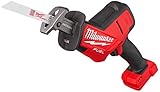
Milwaukee M18 FUEL Hackzall 2719-20
- Brushless POWERSTATE motor
- One-handed design
- Pivoting shoe
- 7/8 inch stroke

DEWALT 20V MAX DCS387B
- 1-1/8 inch stroke
- 0 to 2900 SPM
- 4-position blade clamp
- Pivoting shoe
Best Reciprocating Saws for Demolition in 2026
Tool weight below is the bare saw unless noted. Check the included battery weight yourself before committing, since a cordless recip saw with a high-capacity pack installed can weigh more than the corded alternative.
| Product | Specifications | Action |
|---|---|---|
| DEWALT 20V MAX XR DCS367B |
|
Check Latest Price |
| Milwaukee M18 FUEL Hackzall 2719-20 |
|
Check Latest Price |
| DEWALT 20V MAX DCS387B |
|
Check Latest Price |
 BLACK+DECKER 20V MAX BDCR20C BLACK+DECKER 20V MAX BDCR20C |
|
Check Latest Price |
 DEWALT 12 Amp DWE305 Corded DEWALT 12 Amp DWE305 Corded |
|
Check Latest Price |
 Milwaukee M18 Hackzall 2625-20 Milwaukee M18 Hackzall 2625-20 |
|
Check Latest Price |
 Makita XRJ05Z 18V LXT Makita XRJ05Z 18V LXT |
|
Check Latest Price |
 RYOBI ONE+ 18V PCL515B RYOBI ONE+ 18V PCL515B |
|
Check Latest Price |
1. DEWALT 20V MAX XR DCS367B: Best Overall Reciprocating Saw for Demolition
DEWALT 20V MAX XR Reciprocating Saw Cordless, Brushless, Compact,Variable Speed, Pivoting Head, LED Light, Tool Only (DCS367B)
Brushless motor
1-1/8 inch stroke
0 to 2,900 SPM
5.4 lb tool weight
3 year warranty
Pros
- Brushless motor for longer runtime on a pack
- 1-1/8 inch stroke moves serious material per pass
- Keyless 4-position blade clamp for fast flush cuts
- Compact 14.5 inch body fits between studs
- LED light for dark cavities
Cons
- Bare tool
- battery and charger sold separately
- Compact frame can still bind on dense laminated demolition lumber
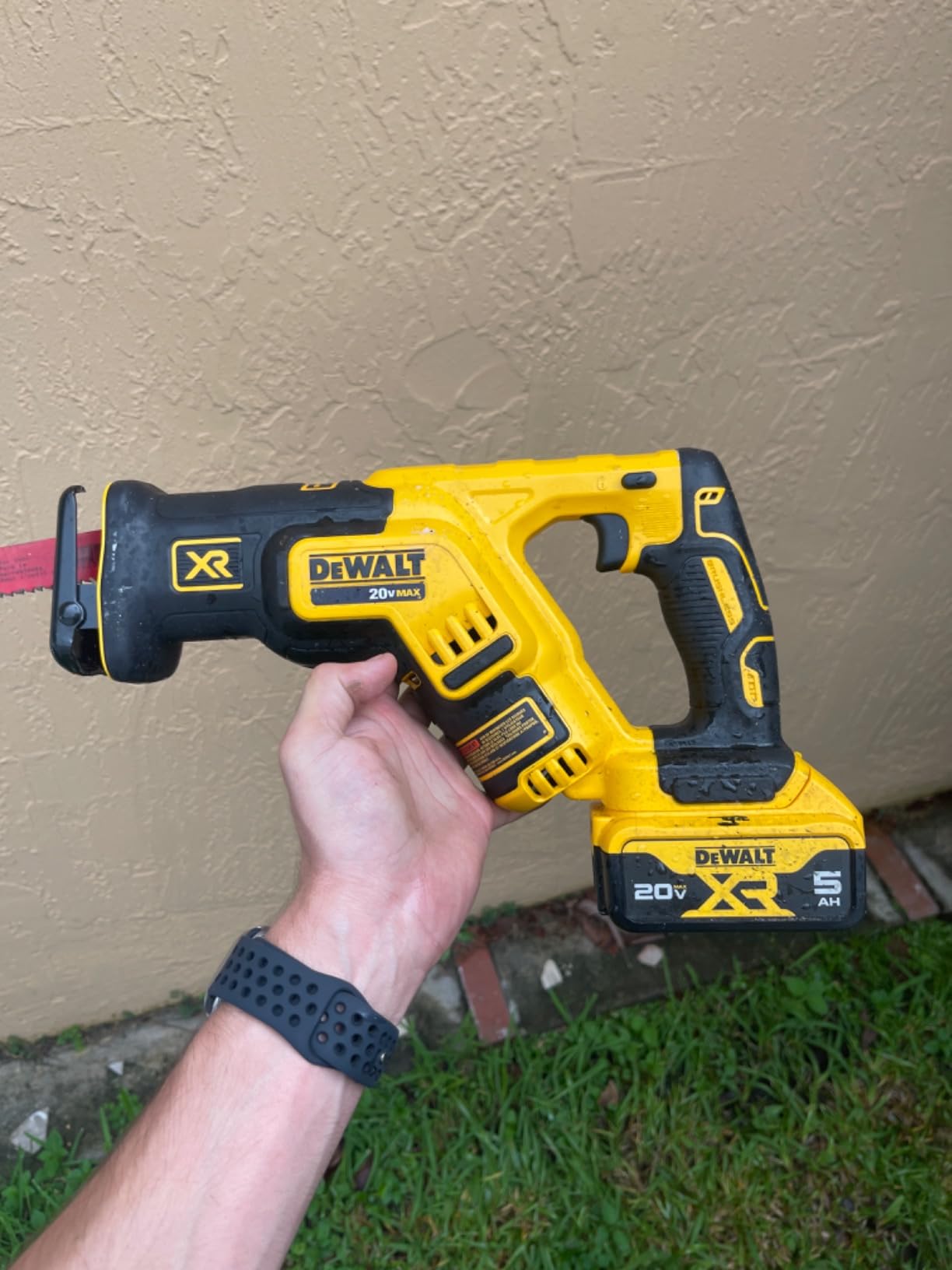
This is the saw we keep handing to people who ask for one reciprocating saw and nothing else. At 5.4 pounds it is light enough for ceiling work, and the 1-1/8 inch stroke is long enough to bite deep into a 2×8 in a single pass. That combination is what separates it from the lighter one-handed saws further down this list.
The brushless motor is the reason it holds speed where cheaper brushed saws bog down. When a blade meets a hidden nail or a knot in old growth lumber, the extra torque keeps the stroke moving instead of stalling, and the variable speed trigger lets you feather into the cut rather than slam into it.
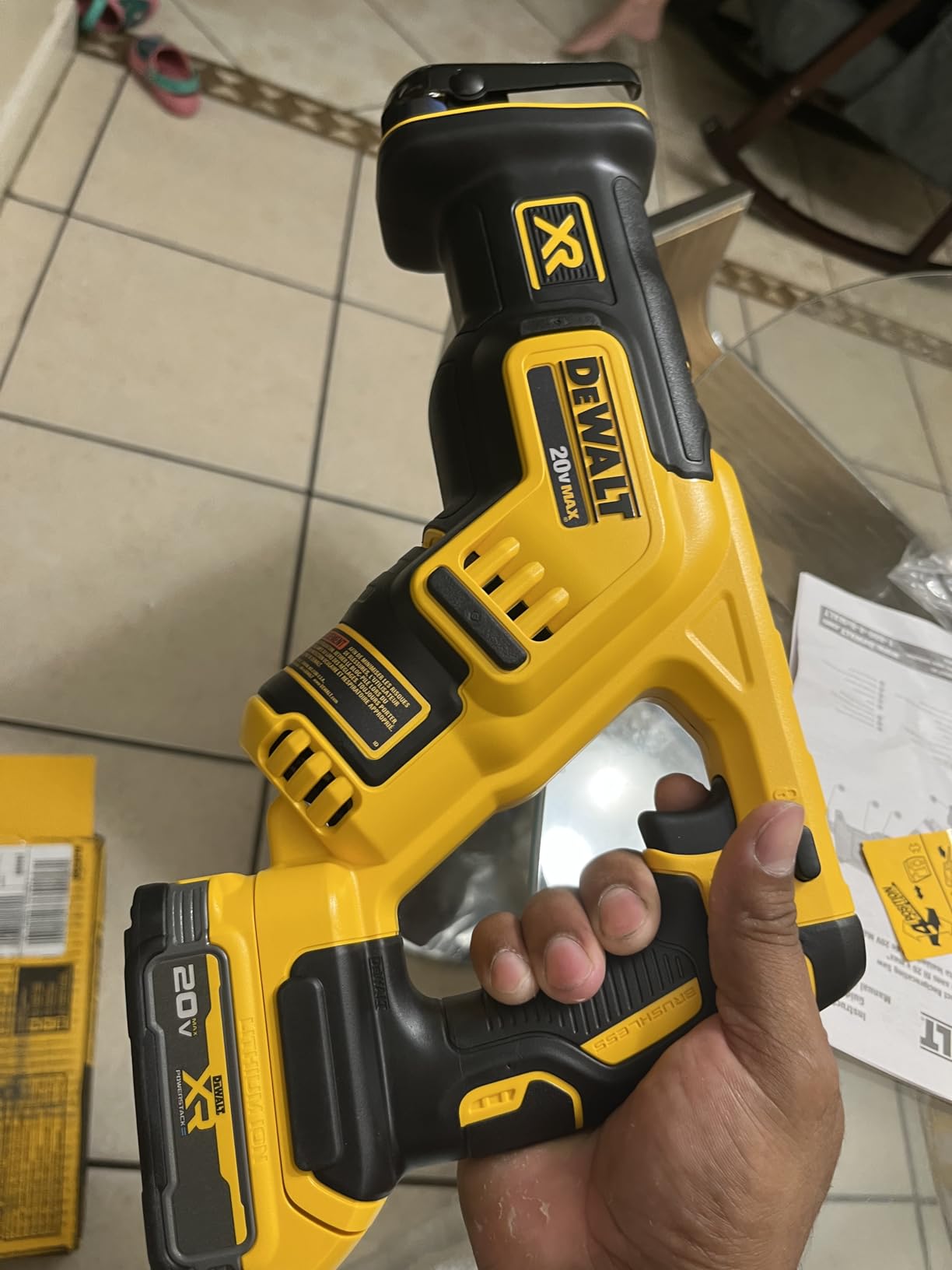
Owners consistently point at the keyless four-position blade clamp as the feature they notice most. Swapping between flush-cut and standard mounting takes seconds without a wrench, which matters on a demo where you change blades constantly. Over 10,800 reviews at 4.8 stars, the loudest complaint is packaging, not performance.
If you are already in the DEWALT 20V MAX platform this is the obvious buy. If you own no batteries at all, factor in a pack and a charger before comparing it to the kits further down.
How it behaves on nail-embedded lumber
This is the saw we would point at a wall that still has its framing nails in it. The 24-tooth, 1-1/8 inch stroke combination and the brushless torque together mean a nail strike is a moment of lost speed rather than a stalled cut.
Blade choice matters more than saw choice here. A coarse demolition blade with a carbide or bi-metal edge survives embedded fasteners that would destroy a fine-tooth wood blade, and you can read more about matching teeth per inch to material in our blade guide below.
When you should pick a different saw
If your work is mostly overhead or above a ladder, the Milwaukee Hackzall in section 2 gives you one-handed control that this saw cannot match in that position. If you want a ready-to-use kit with a battery in the box, look at the BLACK+DECKER instead.
If you are tearing out an entire floor of subfloor and nothing else, a full-size corded saw with more mass will feel less lively on the return stroke. This saw is a tool-and-material compromise, and it is a good one.
2. Milwaukee M18 FUEL Hackzall 2719-20: Best Recip Saw for Overhead Work
Milwaukee 2719-20 M18 FUEL Hackzall (Bare Tool), Red, Black,
Brushless POWERSTATE motor
7/8 inch stroke
One-handed design
Pivoting shoe
REDLINK Plus overload protection
Pros
- One-handed body is the easiest to control overhead
- Pivoting shoe keeps contact and reduces vibration
- Brushless motor cuts fast for its size
- REDLINK Plus protects against overload
- Works with the M18 battery range
Cons
- Bare tool
- battery and charger sold separately
- 7/8 inch stroke is shorter than full-size saws and removes less material per pass
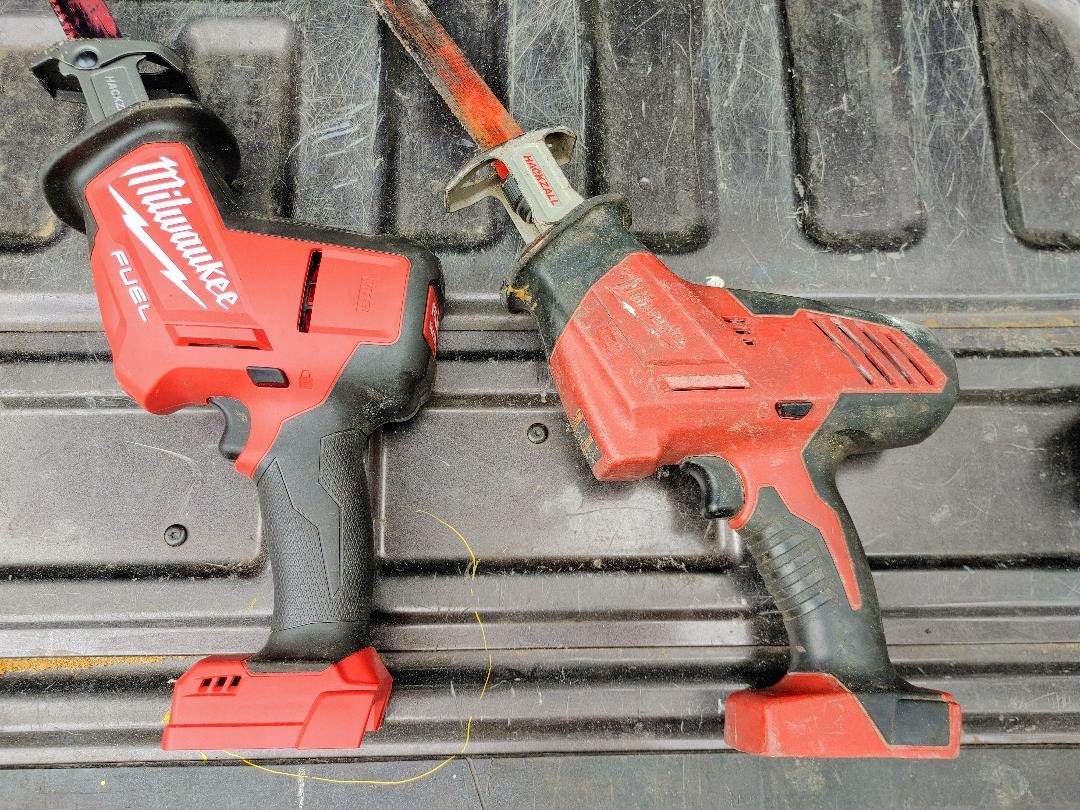
The Hackzall exists because full-size saws become unusable above your head, and this is the one-handed answer to that problem. It weighs about 4 pounds and holds a full grip around the barrel, which is the only way to keep a reciprocating saw under control when you are cutting joists above a stairwell.
The pivoting shoe is the part people notice after an afternoon. Because the shoe rocks to meet the material, the blade stays engaged instead of kicking off the cut, and that constant contact reduces both vibration and the bucking that shakes your wrist.
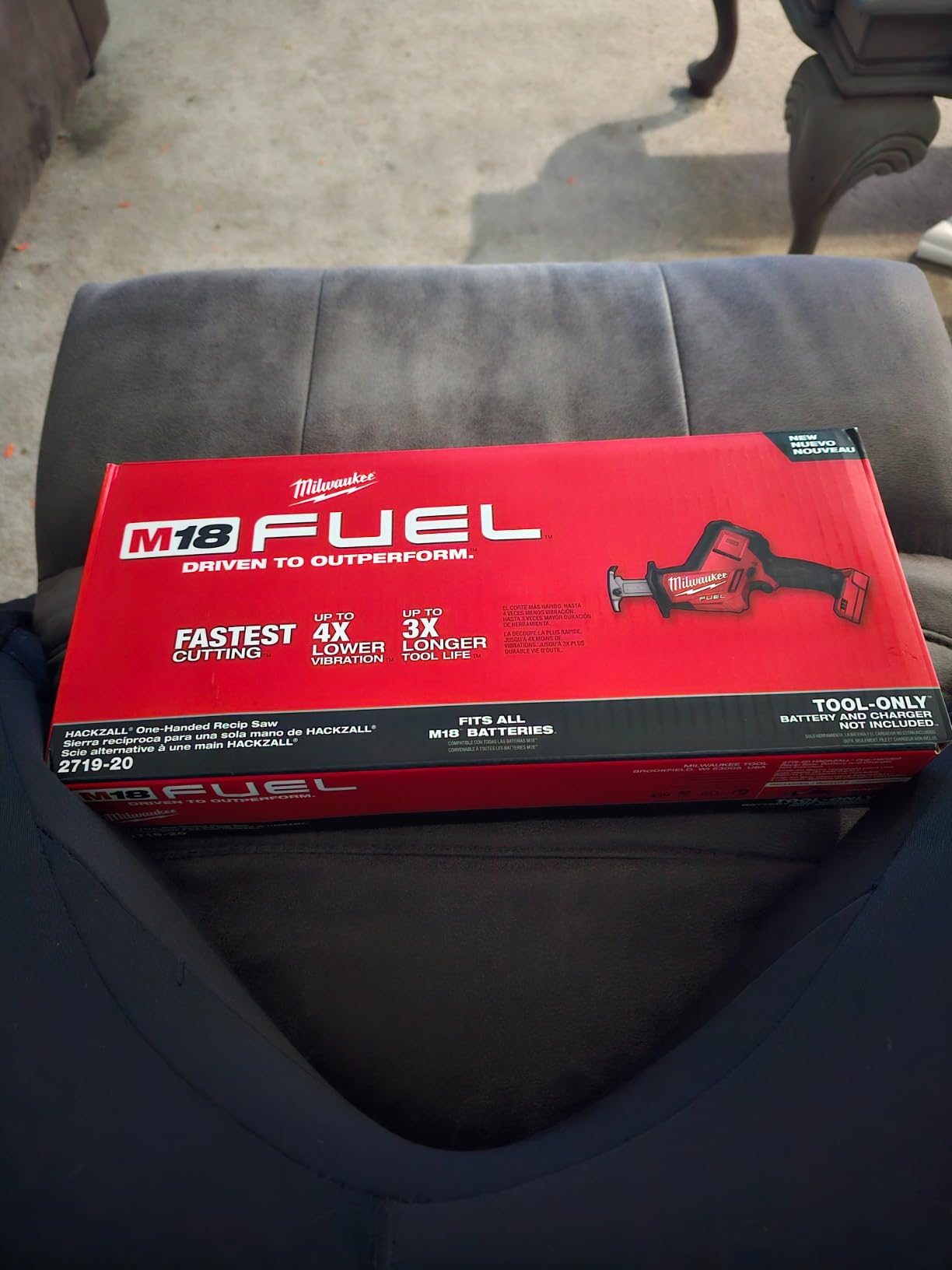
Reviewers rate it highly for control and repeatedly mention the shoe as the reason. At 4.8 stars across more than 6,500 reviews, it is the second most proven saw in this group, and the electronics add overload protection so a jammed blade does not cook the motor.
The honest limitation is stroke length. At 7/8 inch, it removes less material per pass than the full-size saws, so a stud takes longer and a 4×4 post takes several passes. For overhead work that trade is worth it; for a ground-level gut-out it is not.
Where it clearly beats the full-size saws
Any cut where you cannot get two hands on the tool. Cutting a header while standing on a ladder, trimming a joist over your head in a gutted room, or working in a crawl space where your body position is wrong are all cases where this saw finishes the job and a full-size saw does not.
The one-handed format also helps in a half-demolished kitchen, where you often need one hand for a pry bar or a flashlight while the other keeps cutting.
When the short stroke costs you
Ground-level heavy lumber is the weak spot. Owners doing deck removal report making more passes than they expected on thick treated boards, and the 8 inch blade length limits plunge depth on deep cuts.
If most of your demo happens at waist height or below, choose a full-stroke saw and save the Hackzall for the overhead portion of the job.
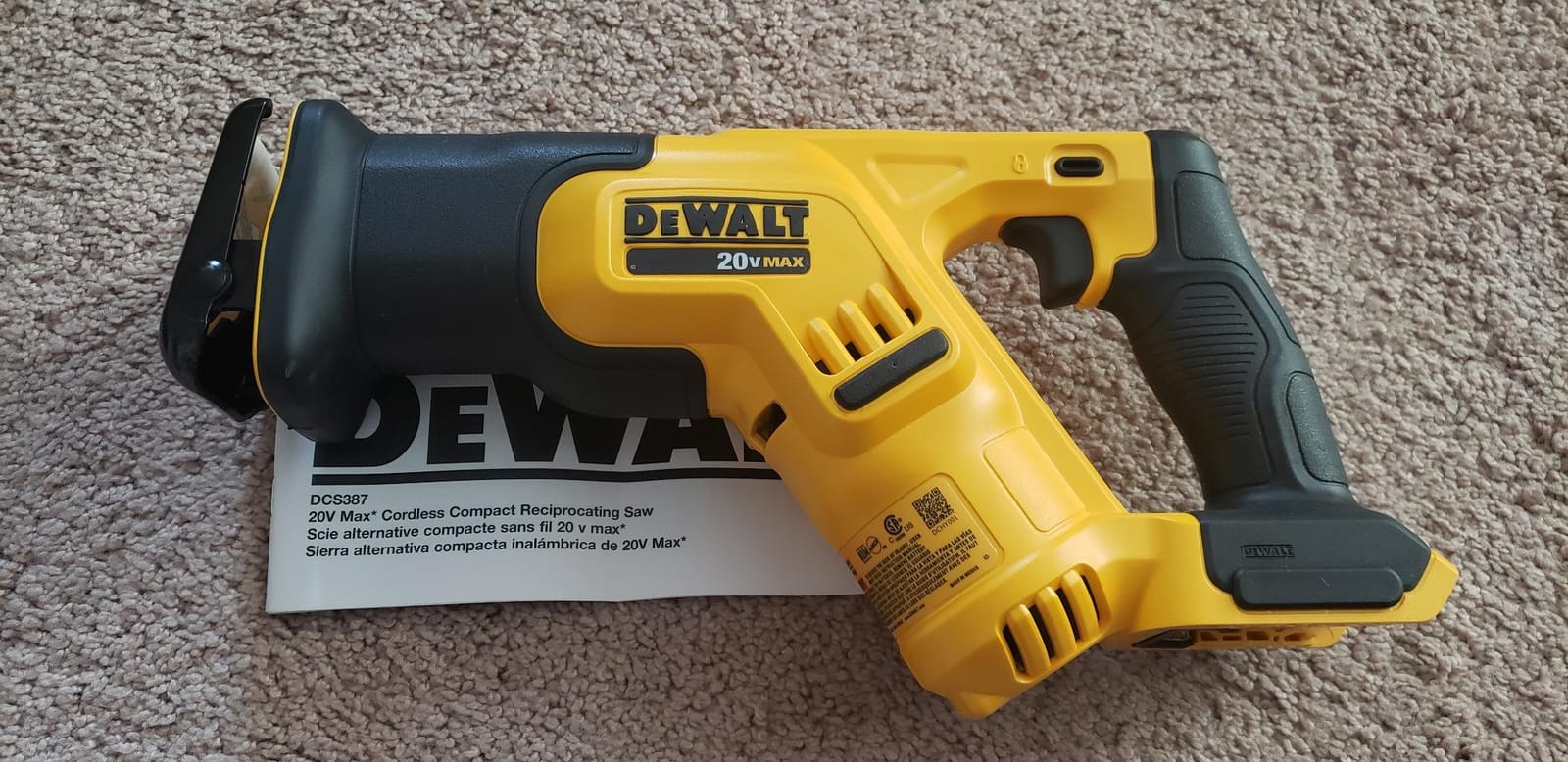
3. DEWALT 20V MAX DCS387B: Best Recip Saw for Stud Bays and Sheathing
DEWALT 20V MAX Cordless Reciprocating Saw, Compact, Variable Speed, LED Light, Bare Tool Only (DCS387B)
1-1/8 inch stroke
0 to 2,900 SPM
14 inch total length
Four-position blade clamp
3 year warranty
Pros
- Compact 14 inch length fits between studs and in tight spots
- 1-1/8 inch stroke cuts fast through framing
- Tool-free four-position blade clamp
- Variable speed trigger for control at the cut line
- Bright LED work light for dark bays
Cons
- Bare tool
- battery and charger sold separately
- Lower peak power than the brushless XR model for the toughest lumber
This saw and the XR version above answer the same question with different emphases. The DCS387B is the value entry into DEWALT’s reciprocating line, rated 4.8 stars across more than 4,500 reviews, and it keeps the feature set most demo work actually needs: a full 1-1/8 inch stroke and a four-position blade clamp.
At 14 inches long, it slides into a stud bay without the awkward diagonal angling you get with a full-size saw. When you are cutting wall segments out between studs so you can drop a section cleanly, that compact footprint is the whole point.
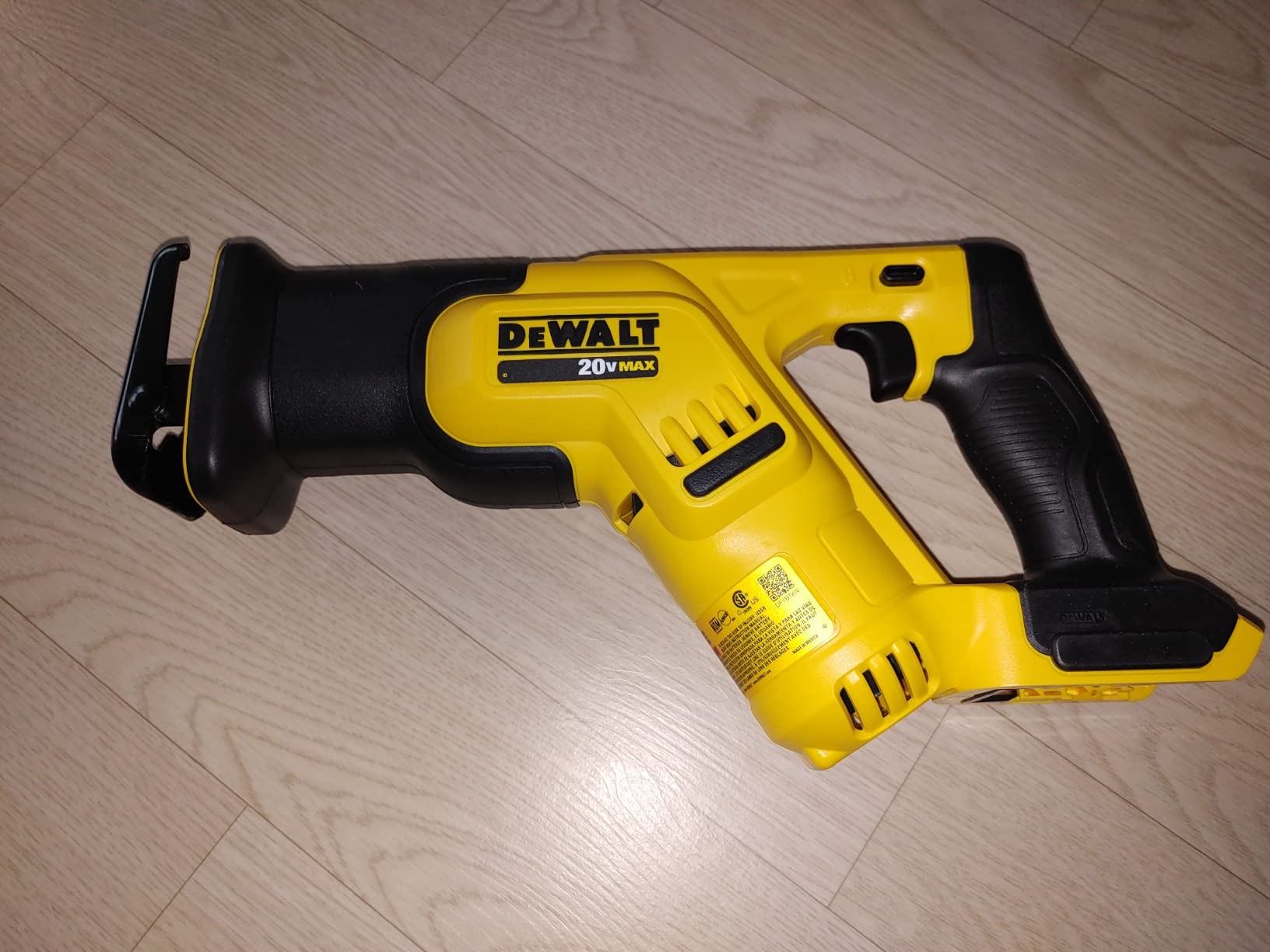
The variable speed trigger spanning 0 to 2,900 SPM lets you start a plunge cut slow, which reduces blade binding on entry, then open it up once the teeth are engaged. Owners mention the tool-free clamp and the pivoting shoe together most often, since both reduce downtime between cuts.
Where it separates from the XR model is peak output. The brushed motor in this saw can bog down on dense laminated lumber that the brushless XR moves through, so for green construction lumber you are fine, and for old nail-laminated beams you will feel the difference.
Wall segment removal and flush cuts
This is the saw to buy if your demo plan is written as “cut out the wall, take it down whole.” The four-position clamp lets you mount the blade for a near-flush cut against the remaining framing, which is how you avoid gouging the studs you plan to keep.
Sheetrock and sheathing come off fast with this stroke length, and the LED helps in the cavities where daylight does not reach.
When the lighter build shows
Reviewers who push this saw into thick structural material report slower progress than a corded 12 amp saw in the same material. It is a momentum difference, not a capability difference, and it matters most on continuous all-day cutting.
Owners upgrading from a kit saw report the brushless jump in the XR model is the single most noticeable improvement they have made, so consider that step if heavy lumber is your normal material.
4. BLACK+DECKER 20V MAX BDCR20C: Best Value Reciprocating Saw Kit
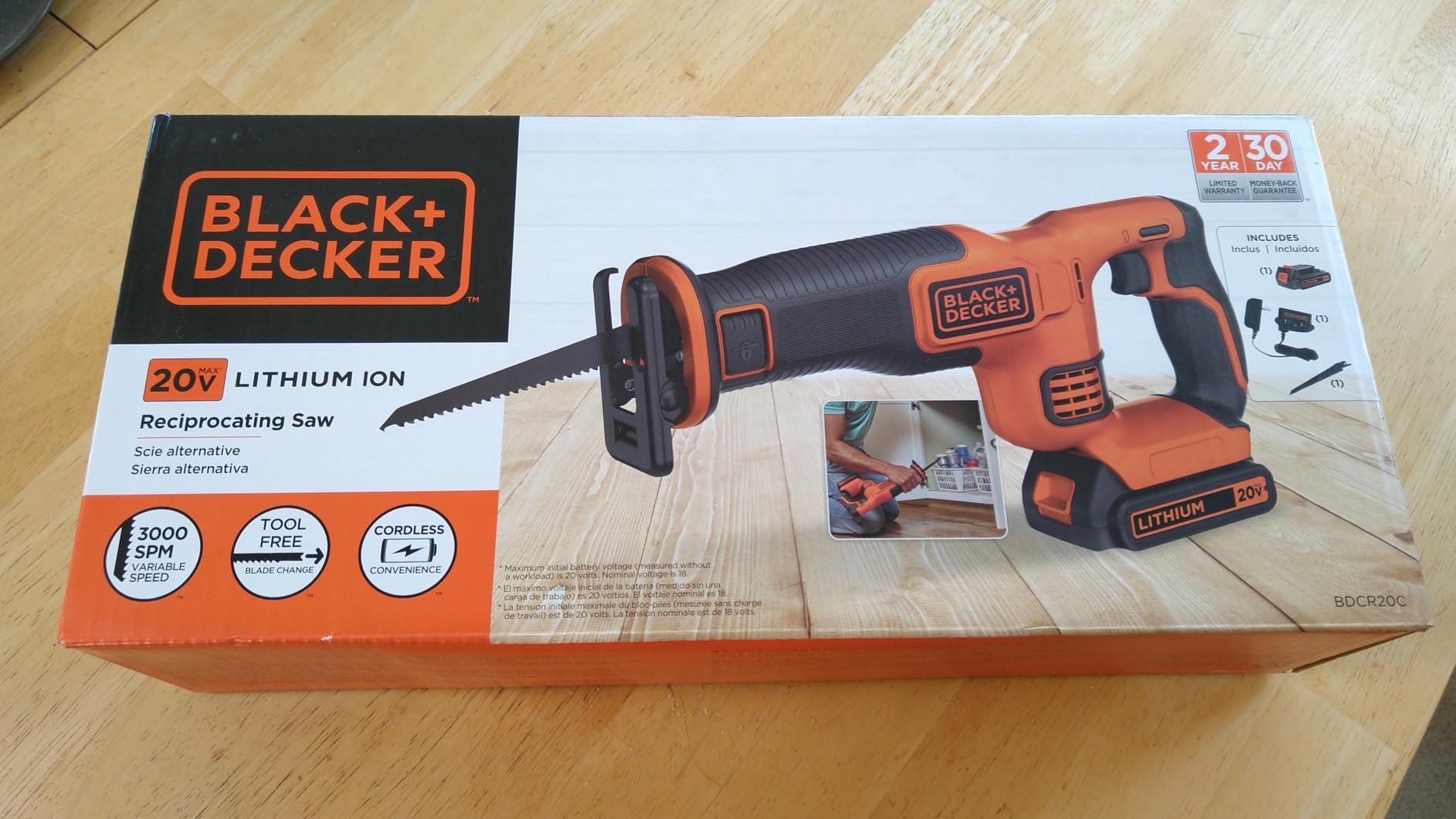
BLACK+DECKER 20V MAX* Cordless Reciprocating Saw Kit (BDCR20C)
Complete kit with battery and charger
7 inch blade
Tool-free blade change
Pivoting shoe
2 year warranty
Pros
- Battery and charger included
- no extra buying to get started
- Large review base of more than 10000 owners
- Tool-free blade change and pivoting shoe
- Variable speed trigger
Cons
- 7 inch blade and modest power limit heavy material removal
- Less vibration damping than pro-grade saws on long sessions
- 2 year warranty is shorter than DEWALT and Milwaukee coverage
Seven of the eight saws in this roundup are bare tools. This is the exception, and that difference decides who should buy it: anyone starting from zero batteries, or anyone who does not want a platform decision before they can make their first cut.
It carries a 4.5 pound body, a variable speed trigger, a pivoting shoe and a tool-free blade change, which is a genuinely useful feature set for occasional work. Owners doing window trim removal and small gut-outs rate it as dependable for its class.
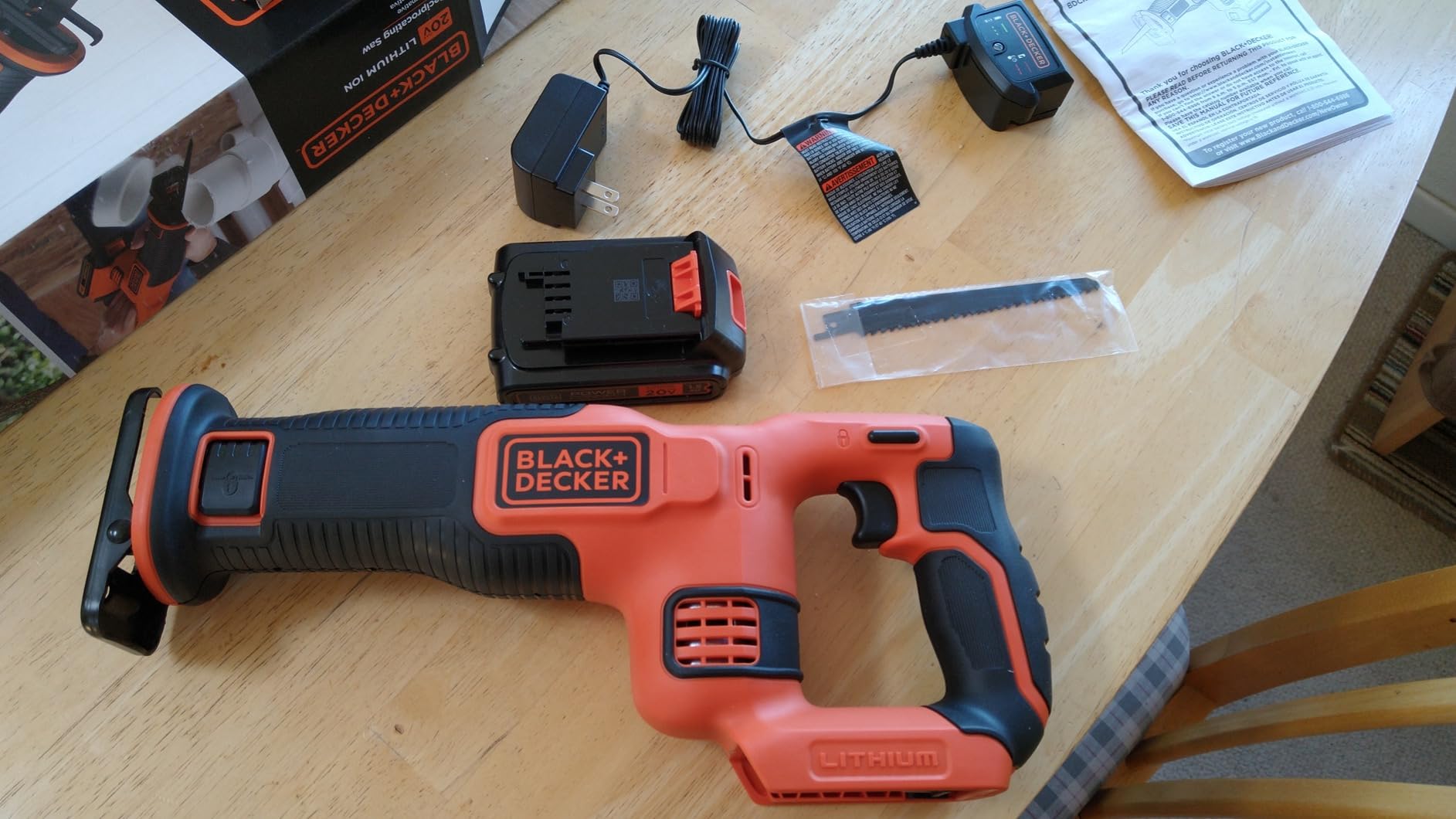
At 4.6 stars across more than 10,000 reviews, it has the second largest owner base in this group, and the reviews are consistent about what it is: a capable tool for light and medium demo that will not replace a full-size saw on structural lumber.
The included 7 inch blade is short for demolition. Our advice is to buy a longer wood blade and a demolition blade on day one rather than working with the one in the box.
Where the included battery changes the maths
Platform lock-in is the loudest complaint in tool forums about cordless saws, and this kit sidesteps it for the first purchase. If you are unsure whether you will use a reciprocating saw beyond a single project, the kit is the lowest-risk way to find out.
The trade-off is that BLACK+DECKER packs are not interchangeable with DEWALT or Milwaukee packs, so a second saw in this platform costs more than adding a battery to either of the top two.
When to keep looking
Sustained demolition sessions expose the lighter build. Owners report more hand fatigue on long gut-outs, and the 7 inch blade limits plunge depth on stacked lumber.
If your project is a whole gut-out rather than a remodel with trim and window work, put the budget toward a bare tool in a platform you can grow instead.
5. DEWALT 12 Amp DWE305: Best Corded Reciprocating Saw for Continuous Cutting
DEWALT Reciprocating Saw, 12 Amp, 2,900 RPM, 4-Position Blade Clamp, Variable Speed Trigger, Corded (DWE305)
12 amp motor
0 to 2,900 SPM
1-1/8 inch stroke
Four-position blade clamp
8 lb tool weight
Pros
- Steady 12 amp output with no runtime ceiling
- 1-1/8 inch stroke with a responsive variable trigger
- Four-position clamp for near-flush cuts
- Weighs 8 lb which helps dampen vibration
- Relatively quiet under load
Cons
- 8 lb corded weight is tiring overhead and awkward one-handed
- No blade tension adjustment on the tool
- Cord has to be routed around you on a teardown
The corded case for demolition is simple and still true: uninterrupted power. At 12 amps and 1,100 watts, this saw does not slow as the battery drains, does not need a second pack, and does not care how long the session runs.
That is the deciding factor for anyone cutting stacked lumber, pressure-treated deck boards, or a bathroom floor where the material fights back. Owners doing pressure-treated teardown report cutting far more material per session than they manage with a cordless saw and a spare pack.
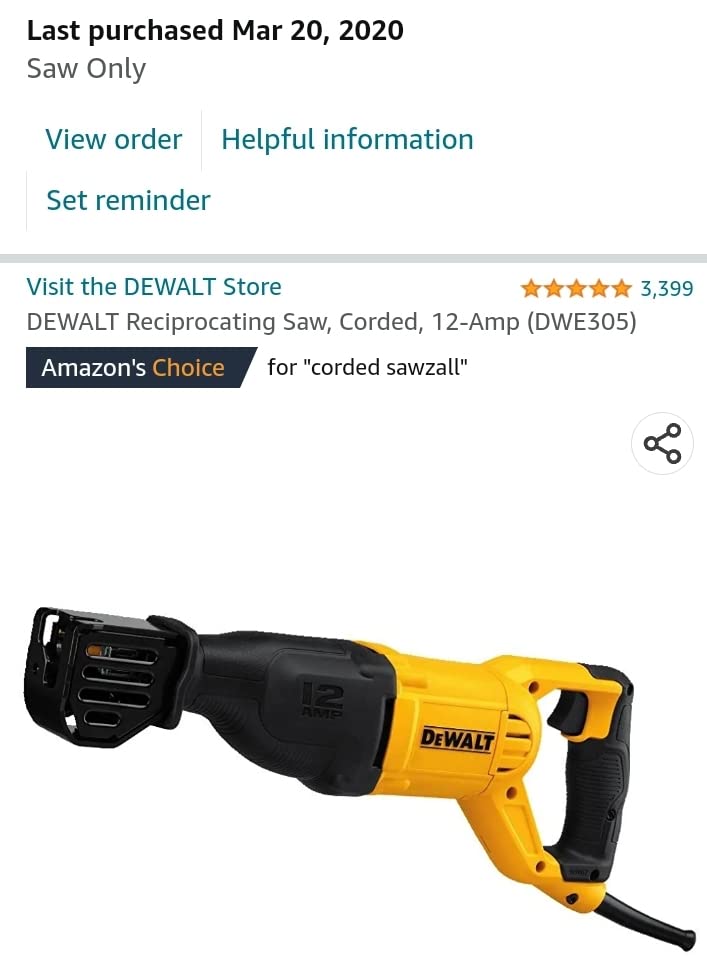
The mass is a feature as much as a complaint. At 8 pounds the saw damps vibration better than the lightweight cordless models, and reviewers note it runs relatively quietly under load, which matters when you are working next to occupied walls.
The four-position blade clamp gives you the same flush-cut mounting options as the battery models, so you are not trading capability for power.

Jobs where corded power still wins
Long single-material cuts: tearing out a full deck, cutting through a pile of stacked 2x material, or opening up a floor where the saw spends most of its time under load. Constant power means you set a speed and it stays there.
It also suits anyone who does not want a battery ecosystem at all. If you own no packs and no charger, a corded saw is one purchase rather than three.
When the cord becomes the problem
Cords snag on ladder rungs, wrap around your feet, and have to be routed back to an outlet every time you move a wall. On a stairwell or a second-floor gut-out, that overhead is real.
Reviewers also note the 8 pound weight is punishing for ceiling work and one-handed cuts, and the tool has no blade tension adjustment, which some buyers blame for shorter blade life.
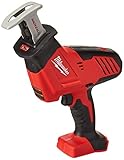
6. Milwaukee M18 Hackzall 2625-20: Best Recip Saw for Tight Rooms
Milwaukee 2625-20 M18 18-Volt Lithium-Ion Cordless Hackzall Reciprocating Saw, Bare Tool
One-handed compact body
Anti-vibration handle
QUIK-LOK tool-free clamp
4 lb tool weight
5 year warranty
Pros
- Compact 13.4 inch body fits where full-size saws cannot
- Anti-vibration handle reduces fatigue
- QUIK-LOK clamp takes Sawzall and Hackzall blades
- Built-in LED lights the cut line
- Works with the whole M18 battery range
- 5 year tool warranty is the longest here
Cons
- Bare tool
- battery and charger sold separately
- Brushed motor is less efficient than the FUEL Hackzall
- Small 4 inch included blade limits out-of-box cutting depth
This is the small saw for the part of the job nobody photographs: reaching into a closet, cutting around a duct, working in a bay where you cannot get your shoulders square. At 4 pounds and 13.4 inches long, it goes where nothing else in this roundup will.
The anti-vibration handle is worth mentioning because hand-arm fatigue is the demo complaint we hear most. On short, repetitive cuts the handle does a noticeable amount of work keeping the buzz out of your wrist, and at 4.7 stars across more than 3,100 reviews owners rate it as solid rather than exceptional.
The QUIK-LOK clamp accepts standard Sawzall and Hackzall blades, so if you own blades for another recip saw, they fit here. That matters more than it sounds when you already have a blade drawer full.
Compatibility across the entire M18 battery lineup, including the compact packs, is the quiet advantage. If you already own Milwaukee tools, this saw slots into what you have rather than asking you to start over.
Where compact size pays off
Small bathrooms, closets, and cuts made from inside a wall cavity after the drywall is already off. Reaching a hidden fastener behind a stud without knocking it loose is much easier with a saw this short.
It is also a good second saw for anyone who already owns the Milwaukee full-size model and wants a dedicated overhead tool.
Where compact costs you
The brushed motor lags the FUEL Hackzall on efficiency and longevity, and it will not push a long blade through dense material the way a full-stroke saw will.
The 4 inch blade in the box is small for demolition, so plan to buy longer blades before you start rather than after your first frustrating plunge cut.
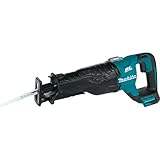
7. Makita XRJ05Z 18V LXT: Best Recip Saw for Dense Lumber
Makita XRJ05Z 18V LXT Lithium-Ion Brushless Cordless Recipro Saw, Tool Only
1-1/4 inch stroke
Two-speed brushless motor
0 to 2,300 or 3,000 SPM
Tool-less blade change
3 year warranty
Pros
- Longest 1-1/4 inch stroke in this roundout for fast material removal
- Two-speed brushless motor for control or speed
- Tool-less blade change
- 18V LXT has one of the broadest battery selections
- 90 percent of reviews are five star
Cons
- Heaviest cordless option here at about 8 lb with a battery
- Tool only
- battery and charger sold separately
- Small 4 inch included blade
Stroke length is the number that matters most on thick material, and at 1-1/4 inches this saw has the longest of the eight. Every pass moves more wood than the 7/8 inch and 1 inch saws here, which means fewer passes on a stack of lumber and less time with the blade buried.
The two-speed brushless motor gives you a genuine choice rather than a single ramp. Low speed at 0 to 2,300 SPM for starting cuts and plunging, high speed at 0 to 3,000 SPM once the teeth are engaged and you want material moving.
At 4.8 stars with 90 percent five-star ratings, the owner satisfaction here is the highest in the roundup. Reviewers single out the long stroke and the smooth power delivery of the brushless motor as the reasons the tool feels quicker than its weight suggests.
The trade is weight. Listed at about 8.2 pounds with a battery installed, this is the heaviest cordless option here, and owners doing extended overhead work report feeling it.
When stroke length pays for the weight
Structural lumber, laminated beams, stacked material, and thick hardwood removed during a remodel. On those cuts, a longer stroke means fewer passes and less arm movement per cut, and the weight helps dampen the saw as it works.
Owners working in the 18V LXT platform get access to one of the broadest battery ranges in the industry, which makes charging logistics easier on a long job.
When it is the wrong choice
Overhead and above-ladder work is where this saw is least comfortable. The weight transfers to your arm faster than on lighter models, and the 17-1/4 inch body is longer than you want when your working position is awkward.
If you do not already own LXT packs, the three-part cost of saw, battery and charger needs to be weighed before you commit.
8. RYOBI ONE+ 18V PCL515B: Best Budget Recip Saw for Occasional Demo
RYOBI ONE+ 18V Cordless Reciprocating Saw – 3,400 SPM Variable Speed, 1 in. Stroke Length, Tool Only (Battery Not Included) – PCL515B
3,400 SPM variable speed
1 inch stroke length
4.24 lb tool weight
ONE+ 18V battery platform
Tool only
Pros
- Lowest entry point among cordless recip saws here
- Lightweight at 4.24 lb for extended overhead work
- 3400 SPM speed and 1 inch stroke handle light teardown
- No cord to route or trip over
- Uses the same ONE+ 18V packs as the rest of the range
Cons
- Tool only
- battery and charger sold separately
- Often arrives without a blade included
- Heavy-draw motor wants at least a 3Ah battery
- Stiff trigger spring tires the trigger finger
This is the occasional-use pick. For trim removal, window openings, a small bathroom refresh, or cutting branches and stumps, it does the job at 4.24 pounds and 3,400 strokes per minute, and it does it without a cord across your path.
Owners treat it as a value tool that still survives several days of hard work, rating it 4.6 stars across more than 1,600 reviews. Forum regulars who demolish occasionally single out lightweight cordless saws like this one for exactly that reason: less mass, no battery hassle.
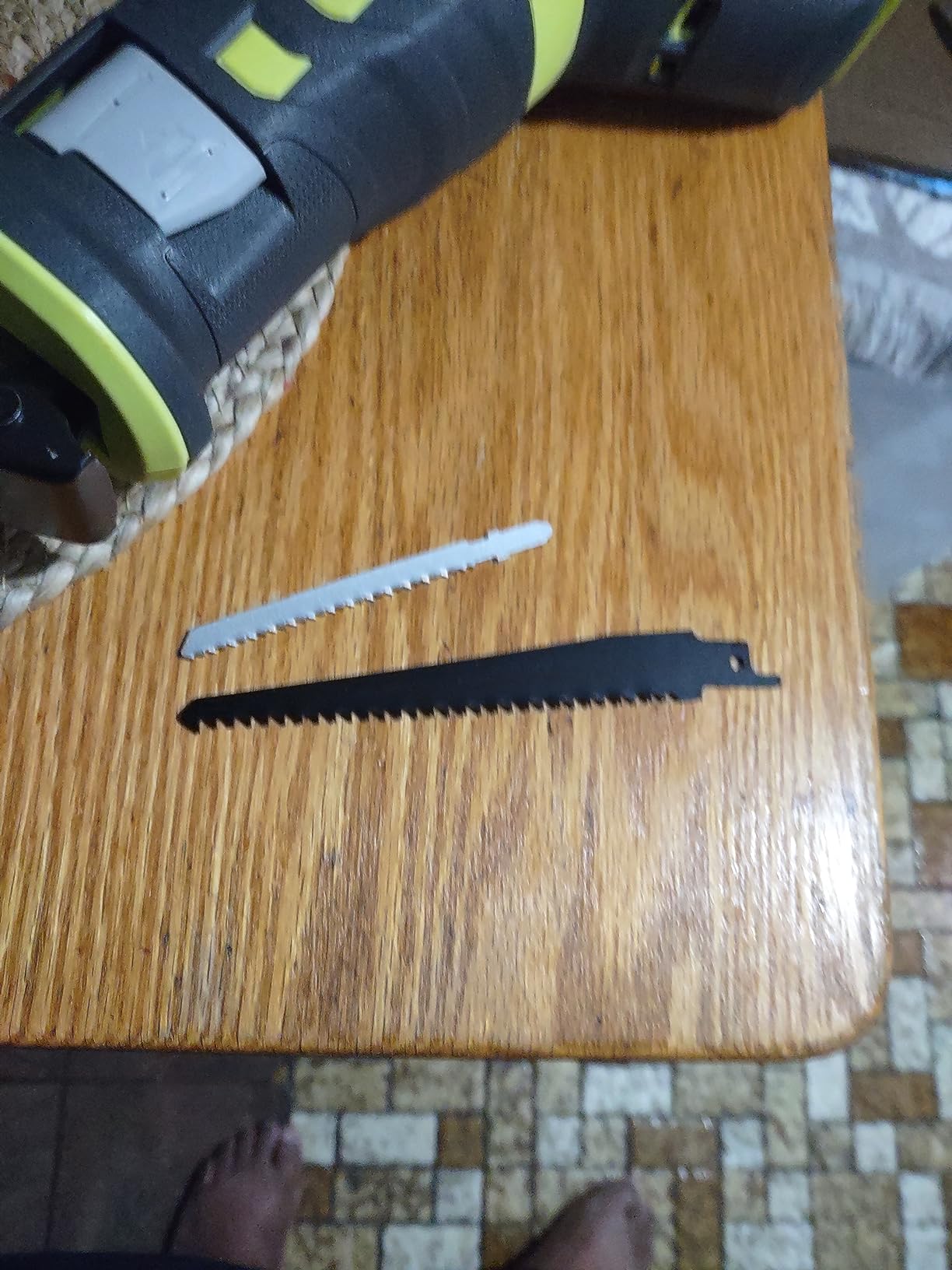
Two practical notes. First, the motor draws heavily, so a small pack will not run it at full speed, and the ONE+ platform’s higher-capacity packs serve it better than the smallest ones. Second, the saw frequently arrives with no blade, so include a blade in your first order.
The stiff trigger spring is the most repeated complaint in the reviews, and it is real: on long cuts, the constant pressure against the trigger is tiring on the trigger finger.
Where it earns its place
Renovation work with a scattered punch list rather than a single gut-out. Window and trim removal, cutting back carpet tack strips and trim, opening a wall for a new doorway, and light branch work are all jobs it finishes comfortably.
No cord means no routing it around you and no tripping hazard while you are on a ladder, which is a genuine safety plus in tight spaces.
When the low cost runs out
The 1 inch stroke is the shortest here, so thick lumber removal is slower per pass, and the 17 inch body is long for a compact tool. Sustained structural demo will make you wish for more stroke and more torque.
If you already own ONE+ 18V packs for a drill or a driver, this saw costs you one bare tool and nothing more, which is the scenario where it is unbeatable value.
Corded vs Cordless Reciprocating Saws for Demolition
Cordless wins for demolition in 2026, with one exception: continuous heavy cutting in a single spot. The old complaint that cordless saws lack power no longer holds for typical demo work, and what remains is a battery management question rather than a capability question.
The exception is sustained cutting of dense or thick material. The 12 amp corded saw in section 5 never slows and never needs a second pack, which is why it still earns a place on job sites doing full tear-outs.
Weight is where the debate actually lives. Forum users weighing cordless against corded for demo tend to land on the same worry: cordless saws get heavy once a high-capacity pack is installed, and the Makita at about 8.2 pounds with a battery shows how that happens. Judge every cordless saw by its weight with the pack attached, not the bare tool weight in the listing.
Mobility is the second difference. On a jobsite, ladders, stairwells and gutted rooms, a cordless saw simply works. A corded saw needs an outlet within reach and a cord routed around whatever you are standing on.
Our verdict: buy cordless for a renovation or a whole gut-out, and buy corded only if you already know you will be cutting thick stacked material for hours with a nearby outlet, or if you refuse to buy into a battery platform. For metal work such as conduit or Unistrut, a dedicated [cold saw](https://www.geekfill.com/best-cold-saws/) gives cleaner cuts than either.
Best Reciprocating Saw Blades for Demolition
The saw matters less than the blade, and this is the section most roundups skip. Match teeth per inch and blade material to what you are actually cutting, and a modest saw will outperform a premium saw with the wrong blade.
For nail-embedded lumber, use a coarse 3 to 5 TPI bi-metal demolition blade. The thick body survives nail strikes, and the coarse teeth shed material instead of clogging.
For structural lumber and green construction material, a 5 to 8 TPI bi-metal wood blade cuts fast and stays sharp for the volume of material a gut-out produces.
For unknown material in an old house, a variable 6 to 9 TPI carbide blade is the safe pick, because carbide teeth tolerate fasteners and mixed debris that would wreck a plain wood blade.
For drywall and clean interior finish work, a fine 10 to 14 TPI bi-metal blade gives a controlled cut with less tear-out. For thin-wall pipe and conduit, use 14 to 18 TPI bi-metal; for Unistrut and heavier steel, drop to a metal-cutting blade with a carbide or bimetal edge suited to the gauge.
Replace blades sooner than you think. A dull blade makes the motor work harder, overheats it, and is the most common reason a reciprocating saw seems to have lost power. For finish-grade cuts after demo, a trim saw is the correct tool rather than a finer recip blade.
How We Picked and Ranked These Saws
First, cutting output: stroke length and power delivery together. A long stroke only helps if the saw has the torque to keep it moving through dense material.
Second, weight in the hand, because a demo is hours of repetitive motion and a heavy saw limits how long you can work.
Third, blade clamp and pivoting shoe quality, since a four-position keyless clamp and a rocking shoe directly reduce downtime and vibration between cuts.
Fourth, platform and ownership reality: whether the saw is a bare tool, which battery system it locks you into, and what the warranty covers. Rating and review count broke the remaining ties, and we only recommend picks with a large verified owner base.
Demolition Safety: Nails, Kickback and PPE
Eye protection is not optional. Reciprocating saw blades are designed to break, and a snapped tooth travelling at speed is a genuine hazard on a teardown.
Expect kickback when the blade binds, and never reach into a cut to free it. Release the trigger, let the blade stop completely, then clear the material.
Inspect every blade before fitting it and drop any with bent teeth or a cracked tang. Nail strikes weaken a blade invisibly, and the next cut is where it fails.
Use hearing protection and a respirator when cutting treated lumber or drywall, and cut outside or with dust control where possible.
Check behind every wall before cutting. Hidden plumbing, wiring and asbestos-containing materials are the real risks in demolition, not the saw itself. If you are cutting concrete or block, use proper eye, ear and respiratory protection as covered in our concrete saw guide.
Frequently Asked Questions
What saw is most likely used for demolition work?
A reciprocating saw, also called a sawzall, is the saw most likely used for demolition work. Its straight serrated blade drives rapidly back and forth, so it can plunge into a wall, cut flush against a stud, or drop into an open floor cavity where a circular saw cannot reach. Concrete and masonry demolition use a demo saw or hammer instead.
What is the best demo saw on the market?
For most demolition work the DEWALT 20V MAX XR DCS367B is the best demo saw, because its brushless motor, 1-1/8 inch stroke and light 5.4 pound body handle framing, sheathing and nail-embedded lumber without tiring your arm. For overhead work the Milwaukee M18 FUEL Hackzall gives better one-handed control, and for continuous thick-lumber cutting a 12 amp corded saw never slows down.
What are the best reciprocating saw blades for demolition?
For nail-embedded lumber use a coarse 3 to 5 TPI bi-metal demolition blade. For structural lumber use 5 to 8 TPI bi-metal, and for clean wood 10 to 14 TPI gives a controlled cut. A variable 6 to 9 TPI carbide blade is the safest choice when you do not know what is behind the wall, and 14 to 18 TPI bi-metal handles thin-wall pipe and conduit.
What are the differences between cordless and corded reciprocating saws?
A reciprocating saw draws steady power from the wall, so it never slows down and never needs a second battery, but the cord limits where you can work. A cordless saw runs wherever you go, which matters on ladders, stairwells and open floors, and you trade some constant output for battery capacity and platform commitment.
Is corded or cordless better for demolition?
Cordless is better for most demolition work because it is far more mobile and current battery saws have enough power for typical framing and lumber cuts. Corded is still better for continuous heavy cutting of thick or stacked material in one location, where steady output matters more than freedom of movement. Judge cordless saws by their weight with a battery installed.
What is the best saw for rip cuts?
A reciprocating saw is not a ripping saw. Rip cuts run along the grain and need a circular saw or table saw to stay straight and controlled. A reciprocating saw suits crosscuts during demolition, where plunge cuts, flush cuts and cutting sections out of walls matter far more than grain direction.
The Bottom Line on the Best Reciprocating Saws for Demolition
The DEWALT 20V MAX XR DCS367B is the best reciprocating saw for demolition overall, because a brushless motor, a 1-1/8 inch stroke and a 5.4 pound body cover framing, sheathing and nail-embedded lumber without wearing out your arm.
Match it to the job instead. Overhead cuts and ladder work belong to the Milwaukee M18 FUEL Hackzall, small closed rooms to the Milwaukee M18 Hackzall, dense stacked lumber to the Makita XRJ05Z, continuous thick cutting to the DEWALT 12 amp corded saw, and occasional renovation work to the BLACK+DECKER kit or the RYOBI ONE+.
Buy the blade to match the material, keep a spare charged pack if you go cordless, and check the tool weight with the battery installed before you commit. That one habit answers most of the questions people argue about in the forums.