
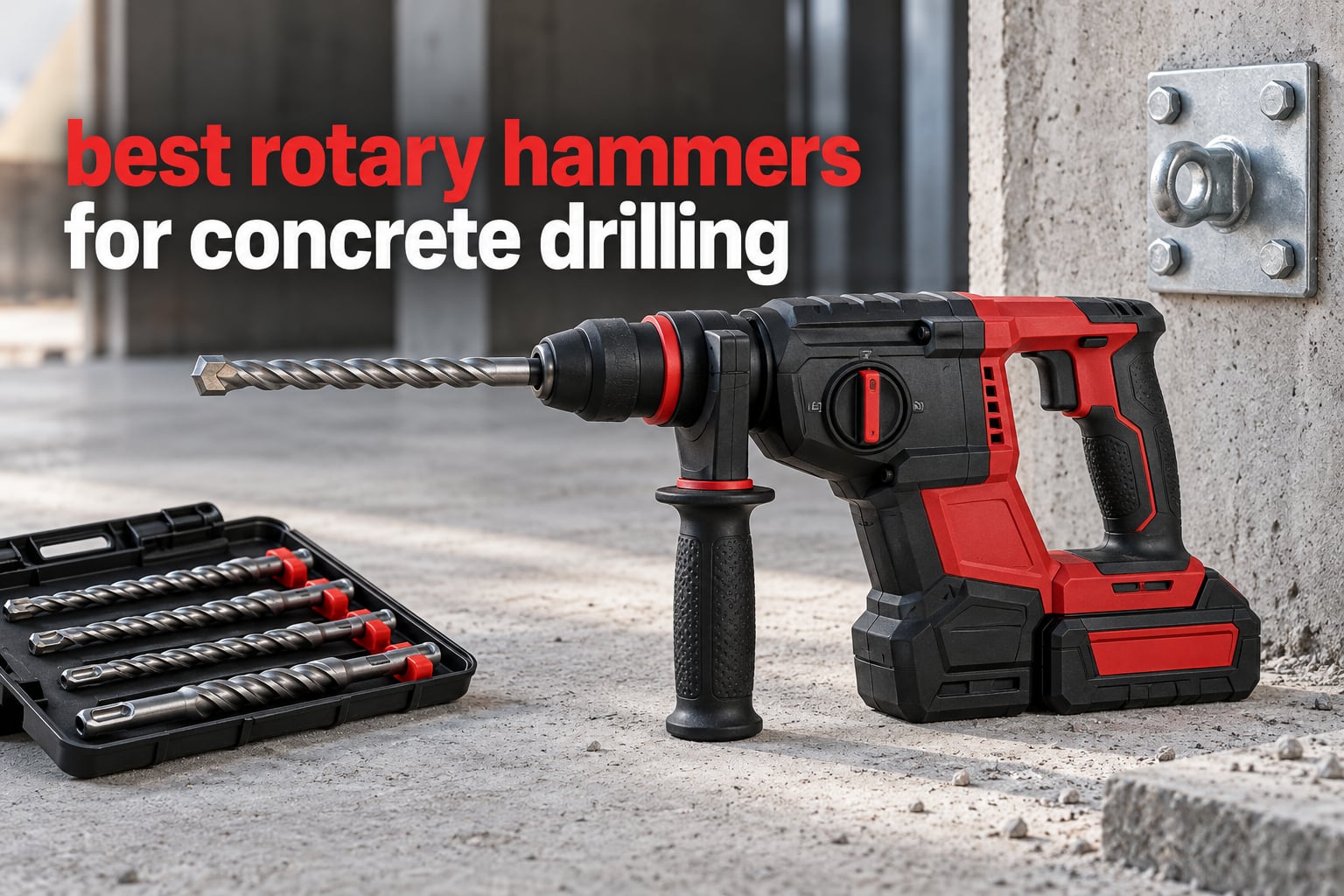
Yes, a rotary hammer will drill through concrete. It is the only handheld tool class that combines a cam-driven hammering action with rotation, delivering thousands of impacts per minute that shatter the aggregate instead of just grinding against it. A normal drill bogs down. A hammer drill manages masonry screws in brick. A rotary hammer walks through poured concrete, slabs and block as if it were wood.
Choosing between them is less about power and more about the hole you need. If you are mounting a shelf, running conduit through a basement wall or setting posts, you want a 1/2-inch-class SDS Plus tool. If you are drilling 1-inch cores, trenching or breaking slab, you need an SDS Max combination hammer. Getting that wrong means buying a bigger, heavier tool than your job requires, or a smaller one that stalls halfway through.
Below is my list of the best rotary hammers for concrete drilling in 2026, covering corded and cordless, SDS Plus and SDS Max, plus the compact and D-handle models that most roundups skip entirely. I have leaned on published specifications, the size of each review base, and the patterns that show up repeatedly in owner reports. I have also flagged where a tool is the wrong choice for a job, because the most common mistake is not buying a weak rotary hammer, it is buying a strong one for six anchor holes.
If you want the wider context first, our guides to rotary hammers for masonry and demolition hammers for concrete cover the neighbouring tool classes in more depth.
Top 3 Picks: Best Rotary Hammers for Concrete Drilling (October 2026)
DeWalt DCH273B 20V MAX Cordless
- 2.1 Joules impact energy
- Three application modes
- Shocks Active Vibration Control
- 20V MAX brushless

Bosch 11255VSR Bulldog Xtreme
- 7.5 amp motor at 0-5800 BPM
- 2.0 ft-lbs impact energy
- Three modes
- D-handle

DeWalt DCH133B 20V MAX D-Handle
- 2.6 Joules impact energy
- 5 lb bare tool weight
- Three-mode dial
- Brushless motor
The DCH273B is the safest single answer for most households because it does the common jobs well, weighs 6.4 pounds and never needs an outlet. The Bosch 11255VSR is the one to buy if you already own no batteries and want power that never dips. The DCH133B is the one to buy if weight is your problem, because 5 pounds changes how long you can hold it overhead.
Best Rotary Hammers Compared in 2026
| Product | Specifications | Action |
|---|---|---|
| DeWalt DCH273B 20V MAX Cordless |
|
Check Latest Price |
| Bosch 11255VSR Bulldog Xtreme |
|
Check Latest Price |
| DeWalt DCH133B 20V MAX D-Handle |
|
Check Latest Price |
 DeWalt D25263K 8.5 Amp Corded DeWalt D25263K 8.5 Amp Corded |
|
Check Latest Price |
 Bosch GBH2-28L Bulldog Xtreme Max Bosch GBH2-28L Bulldog Xtreme Max |
|
Check Latest Price |
 Milwaukee 2912-20 M18 FUEL Milwaukee 2912-20 M18 FUEL |
|
Check Latest Price |
 Bosch RH540M SDS-Max Combination Hammer Bosch RH540M SDS-Max Combination Hammer |
|
Check Latest Price |
 Milwaukee 2613-20 M18 D-Handle Milwaukee 2613-20 M18 D-Handle |
|
Check Latest Price |
Two things stand out across the table. First, only one of these eight is SDS Max, because the vast majority of residential and trade anchor work happens inside the SDS Plus ceiling. Second, every tool here has three modes or a mode selector, so chipping is available when you need to strip tile or clean out a rough opening.
1. DeWalt DCH273B 20V MAX Cordless Rotary Hammer – Best Overall
DEWALT 20V MAX SDS Rotary Hammer Drill, Cordless, 3 Application Modes, Bare Tool Only (DCH273B)
20V MAX brushless
2.1 Joules impact energy
Drill, hammer drill and chip modes
6.4 lb tool weight
Pros
- Compact and light for a rotary hammer
- handles overhead work and tight spaces
- Three modes cover drilling and light material removal
- Strong impact energy for its cordless size
- Good runtime on a single charge
Cons
- Not a heavy demolition tool
- Requires SDS Plus bits
- Bare tool only so batteries and charger are extra
This is the tool I end up recommending to people who are not sure what they need. The DCH273B puts out 2.1 Joules of impact energy, which sounds modest until you realise it is doing that from a battery with no cord trailing behind it. At 6.4 pounds it is light enough to hold one-handed into a ceiling, which is the situation where most people first discover they picked the wrong hammer.
What I like most is the mode dial. Drill, hammer drill and chip run off a single rotating selector, so moving from drilling a 1/2-inch anchor hole to knocking out thinset or trimming a door jamb takes seconds rather than a trip to change accessories. It is also one of the few cordless rotary hammers rated for overhead and downward work out of the box, with a 360-degree side handle and a depth rod in the box.
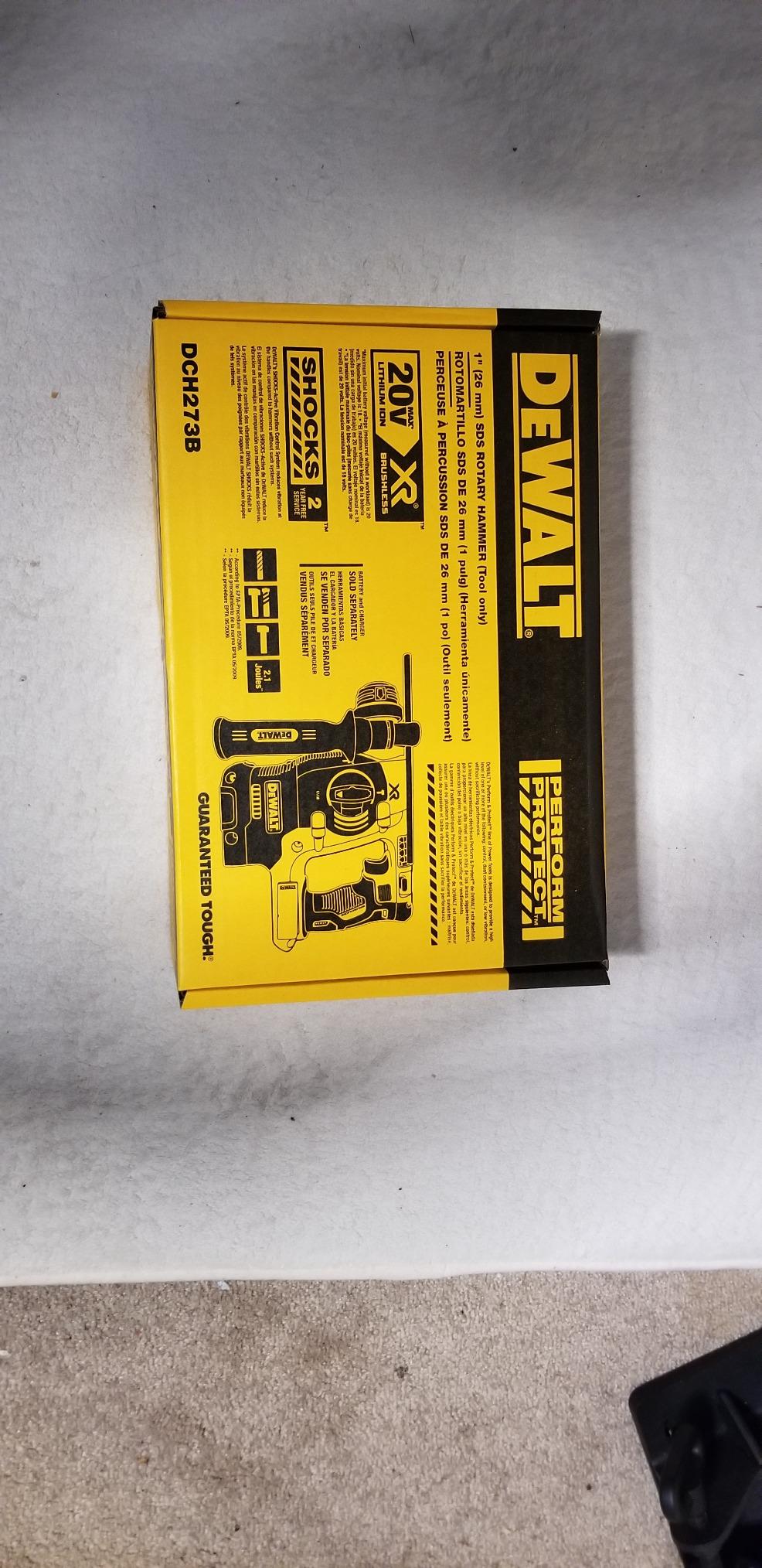
Shocks Active Vibration Control is the feature that gets more credit than it deserves. It dampens the handle rather than the motor, so the sting in your palms during a long run of anchor holes is noticeably lower than on an undamped machine of the same class. Owners drilling rod, strut, cable tray and seismic attachments report it holds up well in that production role, and the brushless motor keeps output steady as the pack drains.
It is OSHA Table 1 compliant when paired with the DWH303DH on-board extractor, which matters if you are drilling interior concrete in an occupied space. I would still add a P100 respirator because the extractor handles the larger fraction, not all of it. Battery platform is the deciding factor: if you own no 20V MAX packs, your real entry cost is the tool plus two batteries plus a charger.
How it holds up on repeat anchor work
For a homeowner running twenty anchor holes for cabinets or a wall-mount TV, this clears the job without a battery swap. For a contractor drilling all day, a single 5 amp-hour pack becomes the limit rather than the tool. Reviewers consistently describe it as noticeably stronger and faster than a standard hammer drill on concrete, cinder block and masonry, which is exactly the comparison that matters if you are upgrading.
Where it is the wrong tool
Three situations rule it out. Continuous slab breaking, because the chip mode is a convenience rather than a demolition system. And drilling holes larger than about 1/2 inch, where the chuck class is the ceiling.
2. Bosch 11255VSR Bulldog Xtreme – Best Value Corded Pick
BOSCH 11255VSR Bulldog Xtreme SDS-Plus Rotary Hammer
Corded 7.5 amp
0-5800 BPM and 0-1300 RPM
2.0 ft-lbs impact energy
Three modes, D-handle
Pros
- Long-term durability reported by owners
- Punches through reinforced concrete and slab quickly
- D-handle and vibration control ease long sessions
- Three modes plus variable speed with reverse
- Carrying case
- side handle and depth gauge included
Cons
- Included depth gauge is flimsy and short
- Variable-speed trigger is very sensitive
- 10.4 lb is heavy for overhead work
On Garage Journal, long-term owners describe the Bulldog class as a tool that has never let them down, and the 11255VSR is the version of that idea with the longest public record. It is a 7.5 amp corded machine putting out 2.0 foot-pounds of impact energy at up to 5,800 beats per minute. That is more than enough to drill anchor holes all day without a battery conversation.
Three modes cover rotation-only drilling, rotary hammer drilling and hammer-only chiselling, selected from a collar on the chuck. The D-handle gives you two-handed control for overhead and downward work, and the SDS Plus system locks bits with no key and no sleeve pull, so a stuck bit is released by pulling the sleeve back rather than fighting it.
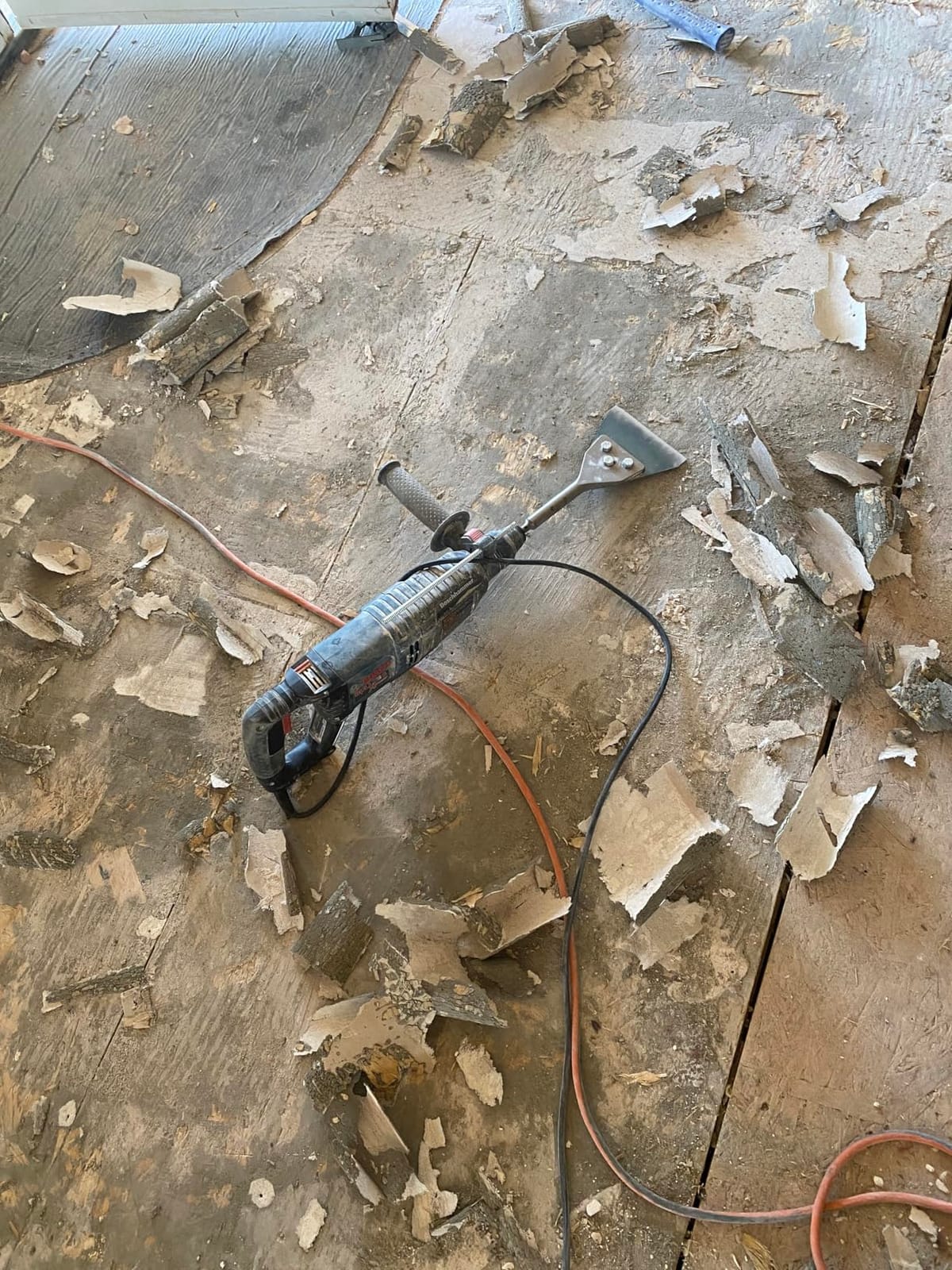
Owners with multi-year histories report it still delivering full performance after heavy use on tile and thinset removal, slab breaking and hundreds of holes in foundation walls, and they specifically mention the mode dial and reverse switch not losing position. Forward and reverse are equally strong, which is the fastest way to free a bit that has bound up in aggregate. The carrying case, auxiliary handle and depth gauge are all included, which is more than several competitors in this group manage.
Two honest complaints recur. The included depth gauge is short and bends if you lean on it, so for anything past a shallow anchor I would mark depth with tape on the bit instead. And the variable-speed trigger is hair-trigger sensitive, meaning that starting a hole accurately at low speed needs a feather touch that some hands find tiring over a full afternoon.
Why corded still wins for a full day of drilling
The power curve is flat. A 115V motor drawing 7.08 amps does not weaken as the job goes on, so hole after hole after hole comes out the same. R/Tools users describe rotary hammers as power hungry and worry about charging mid-task, and for anyone drilling twenty or more holes a shift that worry is a real constraint rather than a theoretical one. Add a 25-foot cord and the outlet problem is solved too.
Where it is the wrong tool
At 10.4 pounds it is the heaviest SDS Plus tool here, and drilling with that mass held above your head is genuinely tiring. It also carries only a one-year parts warranty, so if you are a full-time contractor buying one, the three-year coverage on the DeWalt models is worth weighing. Buyers wanting standard twist bits in rotation-only mode need an SDS Plus chuck adapter.
3. DeWalt DCH133B 20V MAX D-Handle – Top Rated Cordless
DEWALT 20V MAX SDS Plus 1 Inch Cordless Rotary Hammer with D-Handle, Bare Tool Only (DCH133B)
20V MAX XR brushless
2.6 Joules impact energy
1500 rpm, 20 N m torque
5 lb bare tool weight
Pros
- 4.8 rating across a very large review base
- Only 5 pounds
- light enough for one-handed use
- 2.6 Joules cuts concrete quickly
- No cord or outlet constraints
- D-handle and depth rod add control
Cons
- Bare tool only
- Higher-Ah DEWALT batteries advisable for sustained work
- Not a substitute for a dedicated breaker
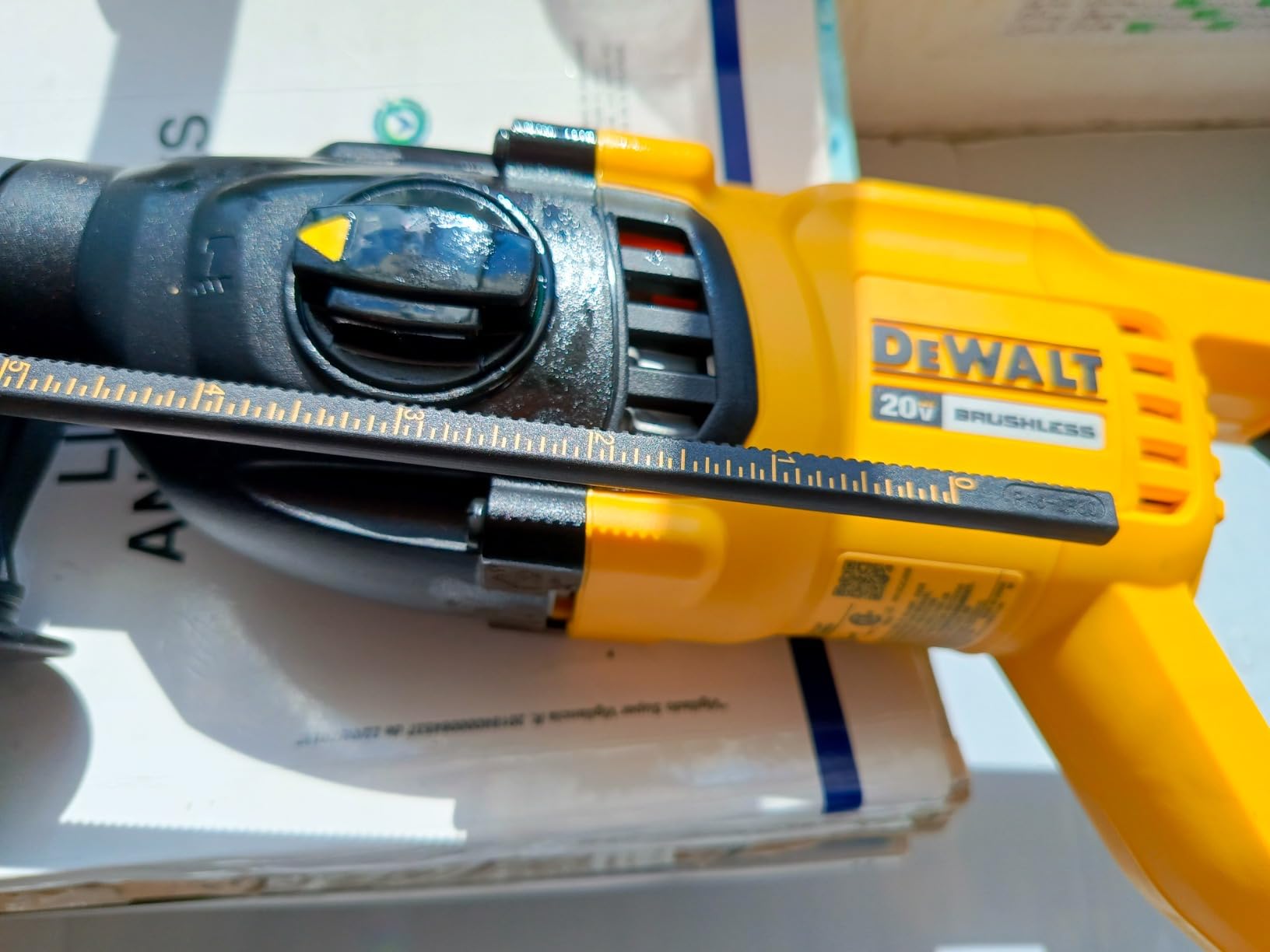
The DCH133B is the one I suggest for anyone whose drilling happens above shoulder height, or inside a wall cavity where you are working one-handed. At 5 pounds it is the lightest tool in this group, and at 2.6 Joules it also out-hits the DCH273B on paper, so the lighter option is not the weaker option here.
It spins up to 1500 rpm with 20 N m of torque, and the D-handle plus 360-degree side handle give you the control you would otherwise get from a heavier body. Owners use it for trenching, ground loosening, anchor and post holes, and several report it replacing a pick on hard soil outright. It is also sold for rod hanging, structural connections and beam and column anchorage, which tells you where the engineers think it sits.
The 4.8 rating across more than two thousand reviews is one of the strongest consistency signals in the roundup, and reviewers compare it favourably to rented prosumer tools without much prompting. Weight and balance are the recurring positives, including genuine one-handed operation. My caveat is the same one reviewers raise: for sustained concrete drilling, higher-amp-hour DEWALT packs are advisable, because the tool is only as good as the energy you give it.
It comes as a bare tool. That is the right call if you already have 20V MAX batteries and the wrong call if you do not, since the platform cost is where most of the money goes. A few units arrive without the hanging hook, so check the box contents before you rely on belt storage on site.
When 5 pounds changes the outcome
Weight is not a spec-sheet detail in this class. Drilling 1/2-inch holes overhead in a slab of a house, alone, without a ladder you trust, is a different job when the tool weighs five pounds rather than ten. The same logic applies to between-stud and above-cabinet work where your off hand is bracing rather than gripping. If your drilling is mostly vertical, this is the pick.
Where it is the wrong tool
It is still an SDS Plus tool, so the 1/2-inch class ceiling applies. It is not a breaker, and no amount of battery capacity changes that. And in rotation-only mode you are limited to the same bit ecosystem as the rest of the SDS Plus group, so plan on masonry bits rather than a general-purpose bit set.
4. DeWalt D25263K 8.5 Amp Corded Rotary Hammer – Best for Heavy Anchor Holes
DEWALT SDS Rotary Hammer Drill, Vibration Control Shocks, 115 Volts, Corded (D25263K)
Corded 8.5 amp
3.0 Joules impact energy
Shocks Active Vibration Control
1150 rpm maximum
Pros
- 3.0 Joules of impact energy for an SDS Plus drill
- 8.5 amp motor for drilling and chipping
- Vibration control reduces felt vibration
- Full power forward and reverse frees stuck bits
- Kit box
- side handle and depth rod included
Cons
- Corded
- so you need outlet reach
- Vibration control adds bulk versus lighter cordless models
- 115V unit not usable directly on 230V circuits
When the answer to which rotary hammer is simply the one that hits hardest without being a different chuck class, the D25263K wins. Three Joules of impact energy is a lot of hit for an SDS Plus tool, and the 8.5 amp motor drives both drilling and chipping without dropping off. For slab work, trenching and dense structural concrete, that headroom is felt.
Shocks Active Vibration Control again, this time on a tool that is already heavy, and it does what it is meant to do. The rotating brush ring is the underrated feature: it delivers full torque forward and reverse, so when a bit binds in aggregate you can back it out at full power rather than waiting for a slow reverse to free it. There is also an integral clutch that limits sudden torque reaction if the bit jams.
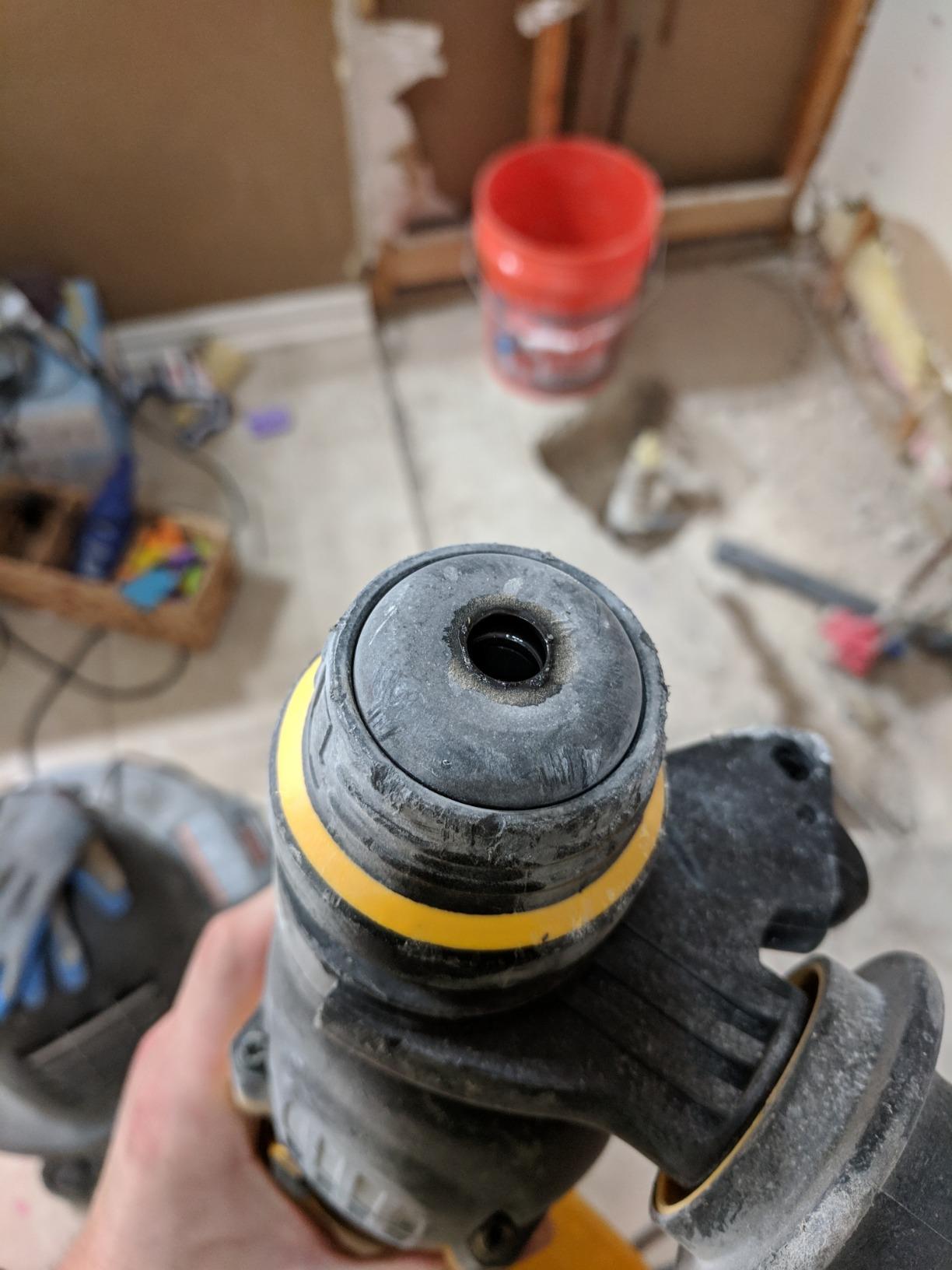
It also works with the D25301D dust extraction system, which matters more than most spec sheets admit for interior work. Buyers highlight the vibration control as a comfort benefit on long jobs and the forward and reverse brush ring as a practical rescue tool. The kit box, 360-degree side handle and depth rod are all in the case, and there is a two-year free service period behind the three-year limited warranty.
The trade-offs are structural rather than quality. It is corded, so you plan the job around cord reach. The vibration damping adds bulk against a bare compact cordless body. And the listed voltage is 115V, so outside North America this is not a straight swap for a 230V tool.
Why extra impact energy changes hole quality
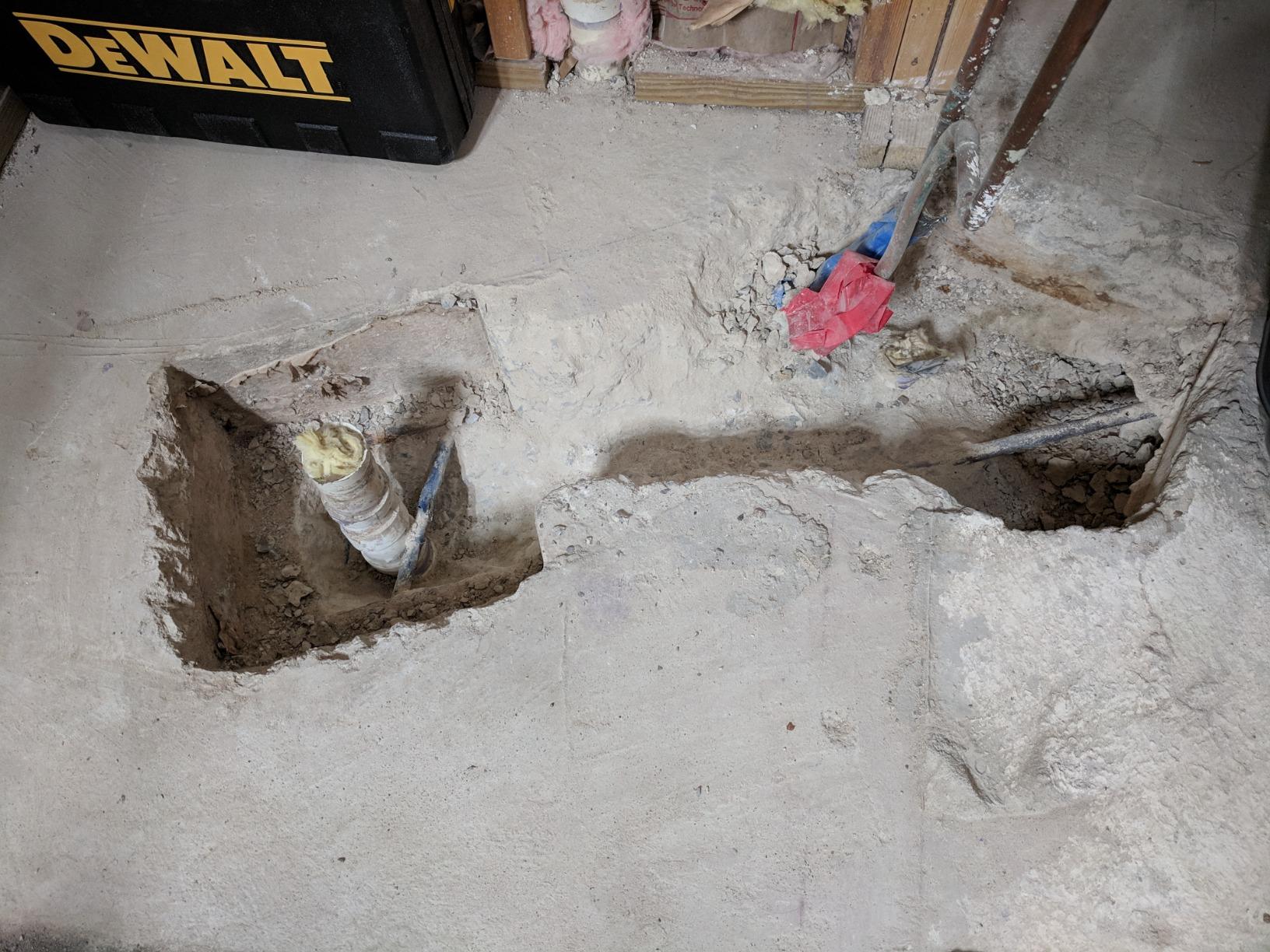
Impact energy is what actually breaks the stone. Higher joules means fewer hits needed per centimetre, less heat in the bit, less rounding of the carbide, and a hole that stays on line when you are drilling into a reinforced foundation wall rather than merely starting. If you are installing expansion anchors rather than tapping concrete screws, the difference shows up in the anchor, not just the tool.
Where it is the wrong tool
It is the wrong pick for overhead work and for anyone without reliable outlet access. It is also the wrong pick if your only jobs are 1/4-inch and 3/16-inch masonry screws in block, because you would be carrying more tool than the task needs. Chipping is available here, but this is not a demolition hammer and it is not trying to be one.
5. Bosch GBH2-28L Bulldog Xtreme Max – Best for Contractor Use
BOSCH 8.5 Amp GBH2-28L SDS-plus Bulldog Xtreme Max 1-1/8 In. Rotary
Corded 8.5 amp
2.4 ft-lbs impact energy
6.4 lb tool weight
KickBack Control bind-up sensor
Pros
- Contractors report multiple units running full shifts without failure
- KickBack Control and reverse free bound bits
- Light enough for one-handed work
- Vibration control keeps long sessions comfortable
- Side handle and depth stop hold firm
Cons
- Included plastic case can arrive with damaged internals
- Depth stop can slip if not fully ratcheted first use
- 120V corded only
- Not intended for the largest demolition jobs
The GBH2-28L is the odd one out in this list in the best way: 8.5 amps of corded power in a 6.4 pound body. That is roughly the weight of a cordless rotary hammer with the sustained output of a bench tool, which is why contractors buy it in multiples. One owner reports roughly 150 correctly sized holes per hour.
KickBack Control uses an integrated sensor to stop rotation during a bit bind-up, and combined with counter-balanced vibration control it does much of the fatigue management for you. There is a D-handle for overhead and downward drilling, a HammerHook for on-site storage, Vario-Lock for chiselling angle, and three modes across drill only, hammer drill and chisel.
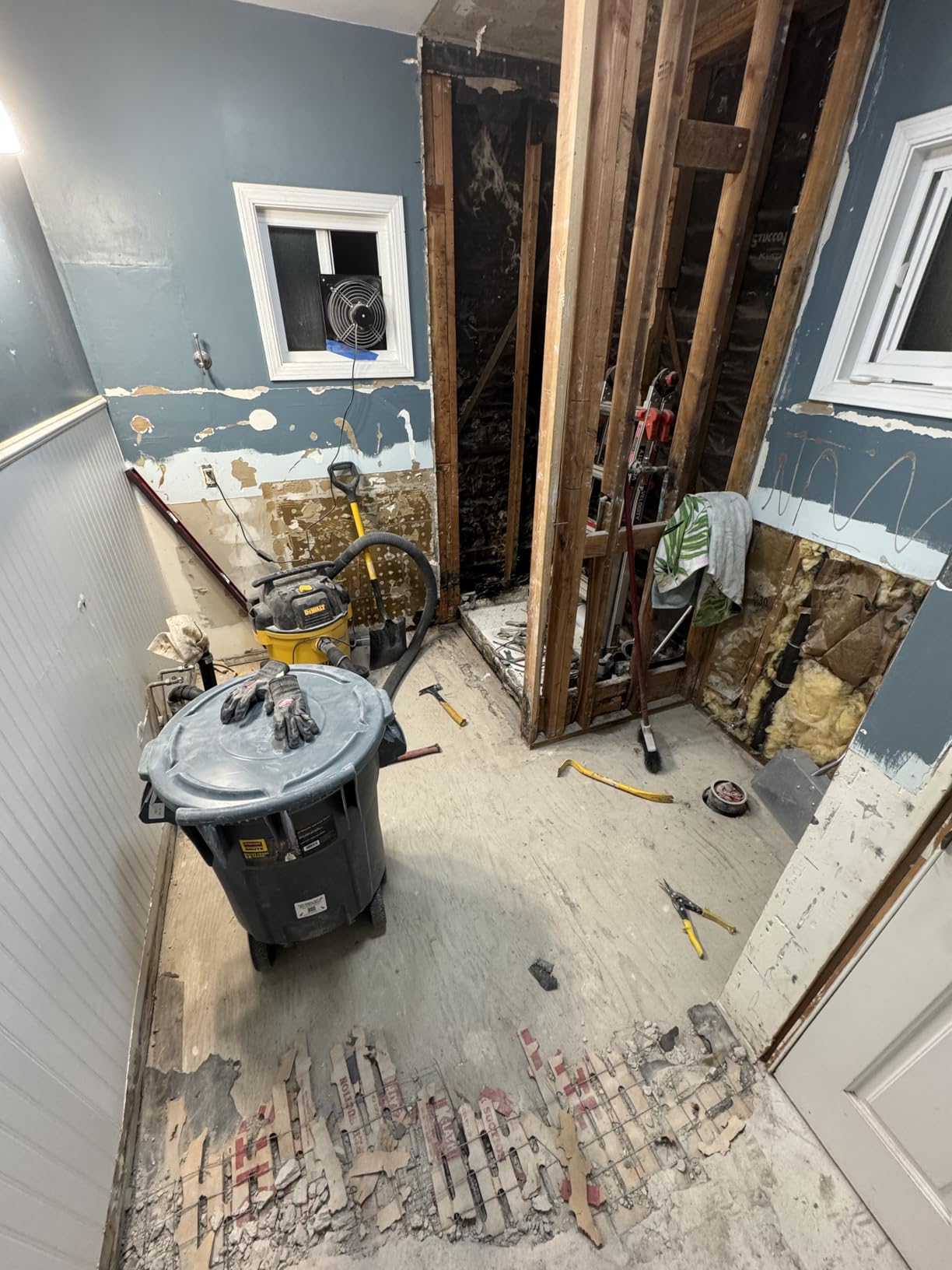
The review base is dominated by professional contractors rather than weekend owners, and that shows in the content. Multi-unit owners describe pushing tools through large demolition areas and running them nine hours a day, with the tools getting warm and slightly weeping grease while continuing to perform. They also report working them one-handed in tight spaces, which is unusual for a corded 8.5 amp machine.
The complaints are small and fixable. The plastic case can arrive with broken internal retaining pieces, so check it on arrival. The depth stop can slip if the ratchet is not fully engaged on the first use, a thirty-second habit that solves it permanently. The listed voltage is 120V, so plan accordingly outside North America.
Why contractors buy this one in pairs
Serviceability and parts. Bosch runs its own module and parts ecosystem, and owners on forums single out that availability as a reason to stay in the brand. A tool that a local shop can service beats a sealed unit every time when you are drilling production holes and a failure stops the crew. The Vario-Lock chisel positioning and three modes also mean the same machine handles tile and thinset removal without a second purchase.
Where it is the wrong tool
It is not intended for the largest demolition jobs, so a full slab breakdown still belongs to a breaker. The 120V-only configuration is a genuine limit for 220 to 240V regions. And for a homeowner doing six anchor holes over a weekend, this is a professional tool bought for a hobby, and the money is better spent on bits.
6. Milwaukee 2912-20 M18 FUEL – Best for M18 Platform Owners
Milwaukee 2912-20 M18 Fuel 18V 1″ Sds Plus Brushless Rotary Hammer
M18 FUEL brushless
1 inch SDS-plus chuck
1330 rpm, 2 ft-lb torque
AUTOSTOP bind-up control
Pros
- Brushless output compared favourably to an 800W corded hammer drill
- AUTOSTOP protects the wrist on large holes
- Compact enough for awkward access
- Battery swap from other M18 tools
- Anti-vibration reduced long-term discomfort
Cons
- Battery and charger not included
- Heavy drilling drains packs quickly
- 7.5 lb feels heavy with a large battery
- Standard bits need an adapter
Platform loyalty is a legitimate reason to buy this, and one r/Tools user made exactly that call, choosing a cheaper tool because they already owned four batteries in the same system. If M18 is already in your garage, the 2912-20 is a straightforward pick. It runs a brushless motor at up to 1330 rpm with 2 foot-pounds of torque through a 1 inch SDS Plus chuck.
Owners frequently compare it to a corded 800W hammer drill they replaced and describe it as equal or better in power while removing the extension cord. AUTOSTOP senses bind-ups and reacts, which is credited with reducing wrist strain on large-diameter holes and with stopping spin when bits grab. It is compact enough to reach tight or awkward spots while matching the output of larger machines.
At 7.5 pounds the tool itself is not light, and that number goes up once a high-capacity pack is fitted. That is the central trade-off here: the output is genuinely good, but concrete is one of the hardest draws in the M18 range and the packs empty faster than a drill or driver would. Several reviewers explicitly recommend buying extra high-capacity M18 packs, and the anti-vibration system is credited by one user with reducing long-term elbow and wrist discomfort.
One practical note. Using standard drill bits or hole saws requires an SDS Plus chuck adapter, which is a small purchase that saves an afternoon of confusion if you plan to do non-concrete work in rotation-only mode.
When the battery platform decides the purchase
Platform lock-in is the single most common decisive factor in this category, and it is rational. A homeowner with three 5 amp-hour M18 packs gets a usable rotary hammer for the cost of the tool alone, while the same buyer choosing DeWalt pays for batteries twice. Contractors buying one of anything should pick the platform where their spares already live.
Where it is the wrong tool
Do not buy it expecting all-day cordless production drilling without budgeting spare packs. At 7.5 pounds plus a large battery it is not the overhead tool, and for a single upper-floor room with no outlets a corded alternative may serve better. It is also an SDS Plus tool, so holes above 1/2 inch are outside its class.
7. Bosch RH540M SDS-Max Combination Hammer – Best for Heavy Breaking
BOSCH RH540M SDS-max 1-9/16 In. Combination Hammer for Concrete
Corded 12 amp
6.1 ft-lbs impact energy
SDS-max chuck, 340 rpm max
15.2 lb tool weight
Pros
- Class-leading impact energy for large-hole drilling
- SDS-max handles large holes and serious chiselling
- Vario-Lock with 12 chisel positions
- Field-serviceable modules
- Service Minder brushes
Cons
- 15.2 lb is tiring for extended overhead work
- SDS-max bits cost more than SDS Plus equivalents
- 120V corded design
- Lowest rating in this group
This is the tool that crosses out of anchor drilling and into demolition, and it is the only SDS Max tool on this list. At 6.1 foot-pounds of impact energy the RH540M delivers roughly twenty percent more hitting force than comparable combination hammers, and the SDS Max system gives you access to the large-diameter bits that a 1/2-inch SDS Plus chuck physically cannot hold.
The dual mode selector switches between rotary hammer and hammer-only, and Vario-Lock indexes the chisel across twelve positions so you can set the working angle for the material in front of you. The 12 amp motor tops out at 340 rpm, which is deliberately low. This is a hammer first and a drill second.
Reviewers acknowledge the class-leading energy for large-diameter concrete drilling, trenching and demolition chiselling, and value the Vario-Lock positioning and quick SDS Max bit changes. Service Minder brushes and field-serviceable modules matter more than they sound: on a machine this size, being able to service modules in the field rather than replacing the tool changes the economics completely.
It carries the lowest average rating of the group, with a slightly larger share of one-star feedback than the rest, and the reason is almost always handling rather than power. At 15.2 pounds it is a two-handed, deliberate tool. Buyers whose work is mostly drilling should look at the SDS Plus picks instead. If you are doing heavy breaking or core-sized holes, our core drilling machines guide covers the next step up.
When you have genuinely outgrown SDS Plus
Two signals mean you have hit the SDS Plus ceiling. The first is physical: you need a hole larger than about 1/2 inch, and the bit will not fit the chuck. The second is that the work is chipping, trenching or breaking rather than drilling.
Where it is the wrong tool
It is the wrong tool for mounting anything, for a single weekend in a basement, or for anyone with a back or shoulder issue. Fifteen pounds held overhead is a bad idea, and even at waist height a full day of this is a lot. SDS Max consumables also cost more than SDS Plus equivalents, so if you only need a handful of holes, the cheaper class wins on total cost even without the weight argument.
8. Milwaukee 2613-20 M18 Brushless D-Handle – Best for Overhead Work
Milwaukee Electric – M18. BRUSHLESS 1. SDS Plus D-Handle Rotary Hammer
M18 brushless
5.3 lb tool-only weight
1270 rpm, 1.95 ft-lb torque
AVS Anti-Vibration System
Pros
- Fast in concrete
- brick and even boulders
- Light at 5.3 lb tool-only
- AVS improves comfort on long runs
- Cordless freedom retires the extension cord
- Up to 100 holes per charge on XC5.0
Cons
- Battery and charger not included
- Feels heavy once a 6Ah pack is fitted
- Lower review count than the older models here
The 2613-20 is the newest tool in this group and the one that surprised me most. Milwaukee claims it drills 3/8-inch by 2-inch holes faster than corded 1-inch D-handle rotary hammers, and owners report roughly five-second holes four to five inches deep in concrete floors, brick and hard ground. Several retired their corded tools and extension cords entirely after switching.
At 5.3 pounds tool-only it is the second-lightest SDS Plus machine here, and the D-handle gives you two-handed control without tipping the whole weight over your head. The AVS Anti-Vibration System is aimed squarely at comfort on long runs, and the brushless motor is rated for more than fifty percent longer runtime than a brushed equivalent.
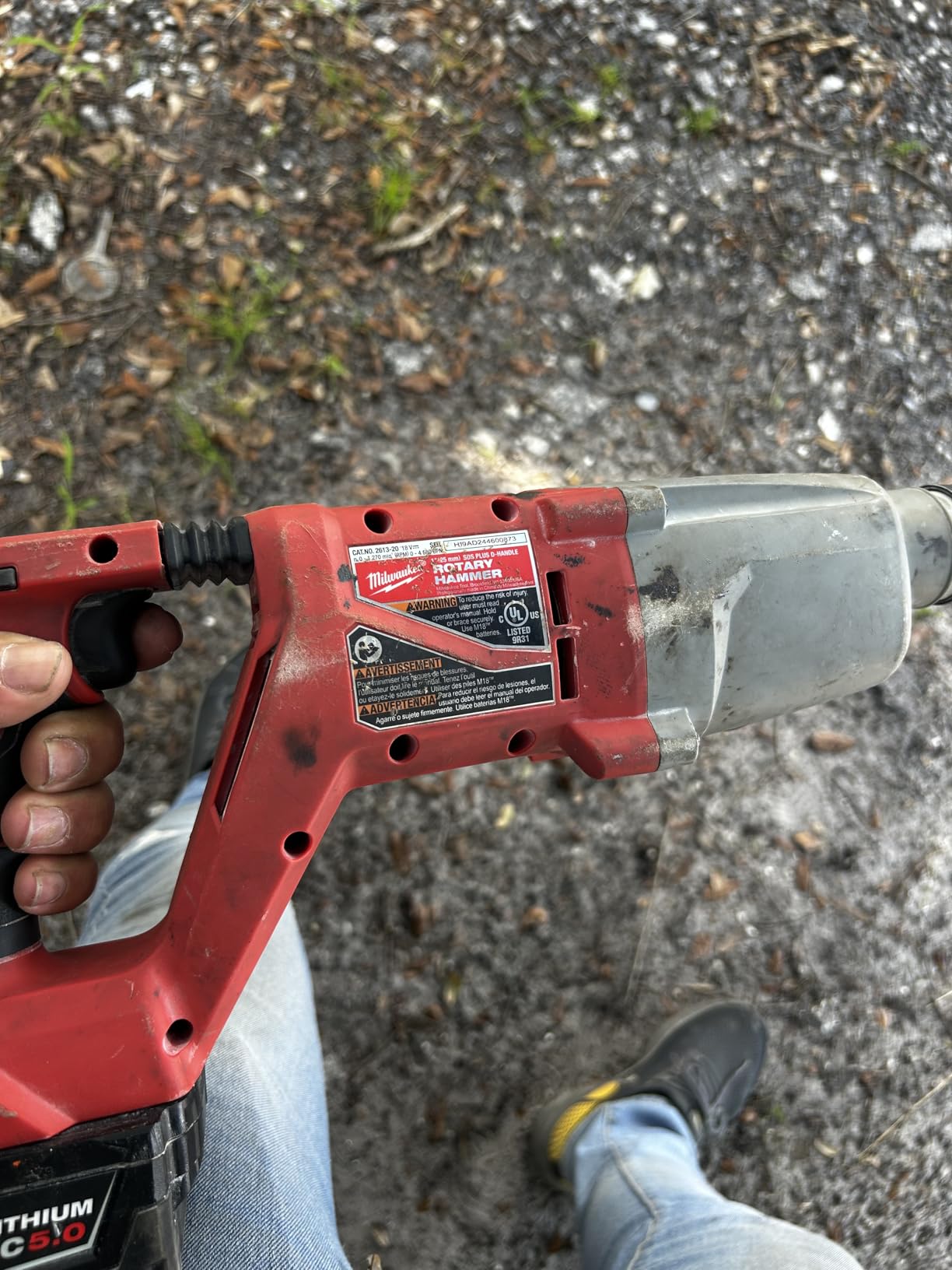
Up to 100 holes of 3/8-inch by 2-inch per charge with an XC5.0 pack is the number that makes this credible for a full day of light production drilling, and it is the only per-charge hole count any tool in this roundup publishes. Ruggedness and compact size are praised for job-site and field use, where a compact body that fits in a case beats a full-size machine.
The caveat is consistent across reviews and it is the battery. Results depend on the pack, high-capacity M18 packs are strongly recommended, and the tool feels noticeably heavier once a 6Ah battery is fitted. Its review base is also the smallest here, so treat the star rating as newer and less proven than the long records on the DeWalt and Bosch models.
Where 100 holes per charge changes the day
That runtime figure is the reason to consider this over a corded alternative. A contractor drilling clip and bracket fixings, or a fitter running the same hole pattern across a floor, gets most of a shift from one pack. For a homeowner drilling overhead anchors in a basement with no outlet nearby, that freedom is worth more than the modest review count suggests.
Where it is the wrong tool
Larger holes drain it faster, and by the time you fit a 6Ah pack you have given back much of the weight advantage that made it interesting. It is an SDS Plus tool, so the 1/2-inch ceiling applies. And if you own no M18 batteries, you are buying a platform on day one, which changes the arithmetic completely.
Rotary Hammer vs Hammer Drill: The Difference That Matters
A hammer drill adds a small hammering action to an ordinary drill, typically producing 500 to 1,500 impacts per minute. That is enough for masonry screws in brick and light block. It is not enough for poured concrete, structural slabs, or any hole much past a quarter inch, where the tool will bog, overheat or stall.
A rotary hammer separates the two actions. A cam-driven pneumatic mechanism drives a piston that strikes the back of the bit, and a gear train rotates it, producing roughly 2,500 to 4,000 impacts per minute. Impact energy, measured in foot-pounds or joules, is the number that predicts concrete performance, and the gap between these two tools is the gap between 2.0 foot-pounds and 6.1.
The third tool in this family is the impact driver, and it is not a substitute. An impact driver delivers a socket-driving blow at low torque, so buying one to drill concrete is the most common category mistake in this search. If you are choosing between a hammer drill and a rotary hammer for an anchor job, take the rotary hammer.
SDS Plus vs SDS Max: Which Chuck Class You Need
SDS Plus and SDS Max are not interchangeable. SDS Plus uses a 10mm shank and covers holes up to about 1/2 inch. SDS Max uses a 20mm shank, delivers substantially more impact energy, and covers holes up to about 1-9/16 inch. An SDS Max bit physically will not fit an SDS Plus chuck, and the reverse is true as well.
SDS Plus, 10mm shank: holes up to 1/2 inch, 3/8 inch concrete screws, Tapcon-style fasteners, 1/4 inch expansion anchors, conduit and box mounts, most residential work.
SDS Max, 20mm shank: holes up to 1-9/16 inch, large expansion anchors, core-sized holes, trenching, slab breaking, serious chiselling.
Owners on the Festool owners forum note using SDS Plus bits in their own hammers as a cheaper substitute when a premium bit system is out of reach, which is a useful reminder that the chuck class is the hard boundary, not the brand. If you only need holes up to 1/2 inch, an SDS Max tool is money and weight you will never use.
Corded vs Cordless Rotary Hammers for Concrete Work
Corded gives you flat, unchanging output and no battery management. That is why professionals and anyone drilling twenty or more holes a shift reach for it first. The cost is a heavier body, cord drag, and the requirement that an outlet be within reach.
Cordless gives you freedom from outlets and a lighter body under load, and the gap has closed dramatically. Owners of the Milwaukee 2912-20 describe it as equal or better than the corded 800W hammer drill it replaced. The honest cost is runtime. Concrete is one of the highest draws in any battery platform, and every owner comment across these reviews comes back to the same advice: buy spare high-capacity packs.
So the decision is fairly simple. Hours of drilling per day points to corded. A single upper-floor room, an outdoor project with no power, or overhead work where weight matters points to cordless. And whichever you pick, buy the platform you already own batteries for. If you are still deciding between brands and own none of them, start with the middle of the list and add bits.
Which SDS Bit for Which Hole, and What Bits Cost You
Bit sizing is simple arithmetic, and getting it wrong is what stalls tools. Match the bit diameter to the fastener or anchor, not to the chuck.
1/4 inch hole: for 1/4 inch expansion anchors and light-duty concrete screws.
3/8 inch hole: for 3/8 inch concrete screws and standard 3/8 inch expansion anchors. This is the most common residential anchor hole.
1/2 inch hole: for 1/2 inch expansion anchors, the practical ceiling for SDS Plus.
Above 1/2 inch: you need SDS Max. Stop here if your chuck is SDS Plus.
Bits are a consumable line item, not an accessory. Carbide dulls far faster in abrasive concrete than in wood, and a blunt bit generates heat instead of impact, which is a common cause of the complaint that a cheap rotary hammer is destroying bits. For our broader view of the tool family, see our rotary tool roundup.
If a bit will not release from the chuck, the sleeve on an SDS chuck is the release mechanism, not a jam to force. Pull the sleeve back fully until you feel it click, then remove the bit. Forcing it is how chucks get damaged, and it is the most common question owners ask about this tool class.
Rebar, Concrete Dust and Kickback Safety
Hitting rebar is the most common real-world failure mode in concrete drilling and it happens without warning. A standard rebar scanner, or knowledge of where the pour lines sit in your wall, tells you before you start. If you hit steel, stop. The bit will blunt, the carbide can break loose, and pushing through wastes a bit and stalls the tool. Relocate the hole. For genuine bar cutting, you need a rebar cutter, and our power hammer guides cover that class.
Concrete dust contains crystalline silica, which is a serious long-term inhalation risk and is regulated under OSHA rules covering construction. Use a P100 or better respirator, safety glasses, and wet drilling or a dust shroud where water is safe for the material. Several tools here pair with an extraction system, such as the DeWalt DCH273B with the DWH303DH unit and the D25263K with the D25301D. ContractorTalk consensus splits by job in a useful shorthand: for drilling, stay with SDS Plus, and for demo work move to SDS Max.
Then hold the tool with two hands, keep the chuck pointed away from your support hand, and let the bit do the work. Kickback happens when a bit binds and the tool tries to spin, which is why the Bosch KickBack Control and the DeWalt integral clutch exist. Those features are not marketing. They are the reason a 3/8 inch hole in a foundation wall is an inconvenience instead of an injury.
Buy or Rent a Rotary Hammer? The Maths for Occasional Users
This is the most repeated question in the forums and no competitor answers it, so here is the arithmetic. A rental counter charges a daily rate plus a damage waiver, and a project that runs longer than a day multiplies that. Users report that three separate one-day rentals for three separate jobs cost as much as, or more than, owning the tool outright, and the counter experience and advice at the big-box rental desks is treated as credible corroboration on forums.
So the rule is simple. One or two anchor holes for a shelf: rent. A weekend of conduit, a bathroom rough-in, several rooms of cabinets, or anything where the rental clock keeps restarting: buy. The trigger is not the size of the job, it is how many times you would pay a rental counter.
Once you own it, the ongoing cost is bits, not the tool. A starter set of SDS Plus masonry bits covers 1/4 inch, 3/8 inch and 1/2 inch, and a carbide-tipped bit for concrete outlasts one used in brick by a wide margin. Budget for replacements, and keep the original depth gauge from the box somewhere safe.
How to Choose a Rotary Hammer for Concrete Drilling
Work through this in order and the answer falls out on its own. First, list your largest required hole diameter, because that alone sets your chuck class. Under half an inch means SDS Plus. Above that means SDS Max and a different decision entirely.
Second, map the hole to its fastener. Concrete screws, expansion shields and core holes are different products, and the manufacturer of the anchor will publish the exact hole diameter and depth. Drilling to the specified depth is what makes the anchor hold its rated load, and the depth rod included with most of these tools is there for that reason.
Third, count hours. Under an hour of drilling points cordless. A full shift points corded. Fourth, pick the battery platform you already own, and only consider switching platforms if you are replacing several tools at once. Fifth, be honest about overhead work. If a third of your drilling happens above shoulder height, weight is a purchasing criterion, not a comfort detail.
Finally, budget for bits. Concrete is abrasive, carbide dulls, and a blunt bit is what makes a good rotary hammer feel underpowered. Our masonry rotary hammer guide goes deeper on the fastener side of the decision.
Frequently Asked Questions
Will a rotary hammer drill through concrete?
Yes. A rotary hammer combines a cam-driven hammering mechanism with rotation to deliver roughly 2500 to 4000 impacts per minute, which shatters concrete aggregate instead of grinding against it. A standard hammer drill manages masonry screws in brick but bogs down or stalls in poured concrete.
Do I need a rotary hammer or a hammer drill for concrete?
For poured concrete, slabs and any hole past about a quarter inch, you need a rotary hammer. A hammer drill produces only 500 to 1500 light impacts per minute and is suitable for masonry screws in brick and light block. Impact drivers are not concrete tools at all.
Which is better for concrete, SDS or SDS Plus?
SDS Plus is the right answer for almost all residential and trade anchor work. It uses a 10mm shank and handles holes up to about 1/2 inch. SDS Max uses a 20mm shank, is far heavier, and covers holes up to about 1-9/16 inch for core work, trenching and demolition. The two are not interchangeable.
What is the best hammer bit for drilling into concrete?
Use a carbide-tipped SDS Plus masonry bit matched to the fastener hole diameter, not the chuck size. A 1/4 inch hole suits 1/4 inch expansion anchors, a 3/8 inch hole suits 3/8 inch concrete screws and standard anchors, and a 1/2 inch hole suits 1/2 inch expansion anchors. Holes above half an inch require SDS Max.
Who makes the best cordless rotary hammer drill?
Among the cordless models here, the DeWalt DCH273B and DCH133B lead on light weight and vibration control, and the Milwaukee 2613-20 offers the strongest published runtime at up to 100 holes per charge. The best choice is usually whichever battery platform you already own.
Are cordless rotary hammers any good?
Yes for holes up to 1/2 inch. Owners of the Milwaukee 2912-20 describe it as equal or better than the corded 800W hammer drill they replaced. The trade-off is runtime, since concrete is one of the heaviest draws on any battery, and most owners recommend carrying spare high-capacity packs.
Can a rotary hammer break concrete?
In chip and hammer-only mode, yes at a light demolition level. That is how these tools remove tile, thinset and small floor patches. Real slab and foundation breaking needs a dedicated demolition or breaker tool, and holes larger than about half an inch need an SDS Max combination hammer.
Should I buy or rent a rotary hammer?
Rent for one or two anchor holes. Buy if you would rent more than twice, since three one-day rentals can cost as much as owning the tool. The deciding factor is not job size but how many separate days the rental clock would restart, and the ongoing cost of ownership is bits rather than the tool itself.
Final Verdict: Who Should Buy Which
If you want one tool and one decision, take the DeWalt DCH273B. It covers the anchor work almost everyone actually needs, weighs 6.4 pounds, and needs no outlet. If overhead work dominates, the DCH133B at 5 pounds is the better answer. If you drill a full shift and want output that never dips, the Bosch 11255VSR or GBH2-28L is the pick, and the GBH2-28L wins on weight-to-power.
If you already own M18 batteries, the Milwaukee 2912-20 or 2613-20 makes the platform decision for you. If you genuinely need holes larger than half an inch, the Bosch RH540M is the only correct class on this list. That is the best rotary hammers for concrete drilling shortlist in 2026, and whichever you pick, buy a set of carbide masonry bits in the diameters your anchors actually call for.