
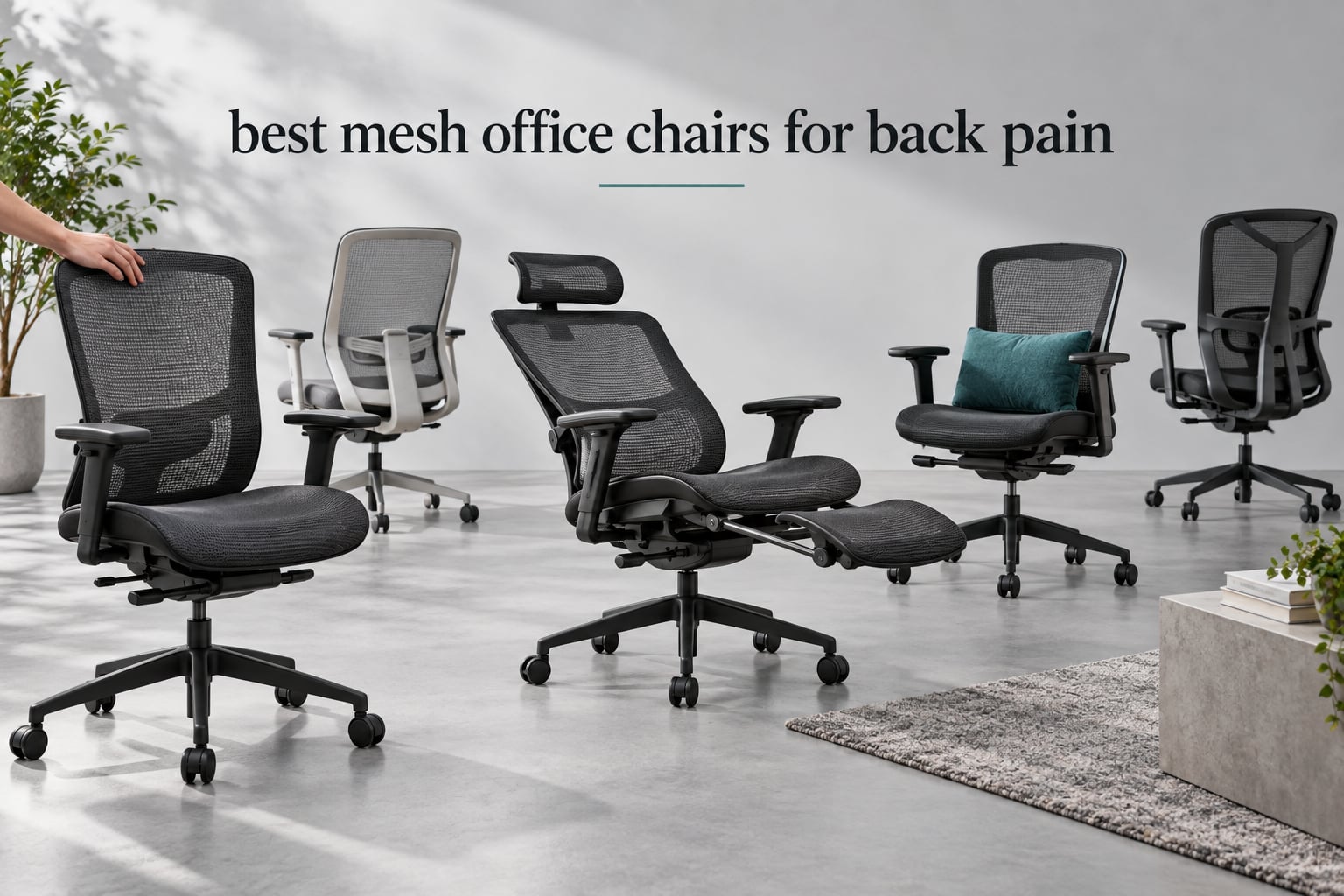
Yes, mesh office chairs are good for your back, provided the lumbar support moves and the seat depth fits you. A tensioned mesh backrest keeps air moving across your spine and gives the lumbar a firm, even surface to push against, which is exactly what most lower back pain needs during a long workday. The mesh itself is not the treatment. The adjustability underneath it is. Below are the best mesh office chairs for back pain that we could find after reading manufacturer specs, warranty terms and thousands of owner reviews, then sorting them by the parts that actually change how your spine sits.
Our team has been putting office chairs through real eight-hour days for years, and the pattern is consistent. Back pain complaints trace back to three failures almost every time: a lumbar pad that lands above or below the belt line, a seat too shallow so the sit bones hang off the front edge, and a tilt mechanism that rocks the whole chair instead of pivoting at the hips. Every chair in this roundup was scored on how well it solves those three things, not on how many adjustment levers it advertises.
One honest note before we start. A new chair is not a cure. It removes a cause of irritation, and some causes of back pain need a physical therapist, a physician or a better pillow, not a better seat. What a chair can do is stop adding to the problem across eight hours a day, and that is worth doing. If you want a broader look at the category, our guides to the best office chairs for back pain and the best ergonomic office chairs for back pain cover the foam and hybrid builds that mesh cannot cover.
Top 3 Picks: Mesh Office Chairs for Back Pain in 2026

GABRYLLY Ergonomic Chair
- Wide waterfall-edge mesh seat
- 4-point support
- 300 lbs capacity
- 3-stage tilt lock

HOLLUDLE Mesh Chair
- 3D lumbar in four directions
- 3D armrests
- V-shaped mesh back
- 5-year warranty

ELABEST X100 Chair
- 3D synchro-tilt lumbar
- 5D flip-up arms
- extendable footrest
- BIFMA certified
Our top three cover three genuinely different bodies. The GABRYLLY wins on roomy geometry and the deepest owner feedback in the group. The HOLLUDLE is the rare chair whose lumbar moves in four directions, which matters more than buyers expect. The ELABEST X100 is the most adjustable chair we looked at, and its lumbar is the only one in the group that rotates as well as sliding.
Best Mesh Office Chairs for Back Pain in 2026
| Product | Specifications | Action |
|---|---|---|
| GABRYLLY Ergonomic Office Chair |
|
Check Latest Price |
| HOLLUDLE Ergonomic Mesh Office Chair |
|
Check Latest Price |
 TRALT Office Chair TRALT Office Chair |
|
Check Latest Price |
 SIHOO B100 Mesh Ergonomic Office Chair SIHOO B100 Mesh Ergonomic Office Chair |
|
Check Latest Price |
 Staples Hyken Ergonomic Mesh Task Chair Staples Hyken Ergonomic Mesh Task Chair |
|
Check Latest Price |
 FelixKing Office Chair FelixKing Office Chair |
|
Check Latest Price |
 Marsail Ergonomic Office Chair Marsail Ergonomic Office Chair |
|
Check Latest Price |
| ELABEST X100 Ergonomic Mesh Office Chair |
|
Check Latest Price |
 CAPOT Ergonomic Mesh Office Chair CAPOT Ergonomic Mesh Office Chair |
|
Check Latest Price |
 MOLENTS Ergonomic Mesh Office Chair MOLENTS Ergonomic Mesh Office Chair |
|
Check Latest Price |
 Solviva Mesh Office Chair with Headrest Solviva Mesh Office Chair with Headrest |
|
Check Latest Price |
 GABRYLLY Ergonomic Office Chair with Footrest GABRYLLY Ergonomic Office Chair with Footrest |
|
Check Latest Price |
How We Picked These Mesh Chairs
We scored each chair on the four things that change how a spine feels during a full workday, then used owner reviews to strip out anything the marketing language oversells.
Lumbar support that moves in at least two directions. A pad that only slides up and down cannot match a spine whose curve sits deeper or shallower than the chair’s. Depth or forward-back travel is what separates a chair that works from one that merely touches.
Seat depth and width you can actually fit into. We pulled the published seat depth for every chair and compared it to fit ranges in the reviews. A 17 inch seat and a 20 inch seat are not interchangeable for a 6 foot 2 inch body.
Tilt that pivots at the hips. Recline is only useful when the seat and back move together at a hip pivot. Chairs where the whole frame tips rearward deliver a moment of relief and then leave the user sliding forward.
Build honesty. We weighted the warranty length, the gas cylinder class, the stated weight capacity and the share of reviews that describe durability two years out. Owner comments about after-sales support counted too, because a mesh frame that frays or a lumbar that slips needs a real parts policy behind it.
For readers who want the money angle first, we also have a dedicated best budget office chairs for back pain guide, and for smaller frames a best petite office chairs for lower back pain breakdown. If the pain is concentrated rather than general, start with our best office chairs for lower back pain list.
1. GABRYLLY Ergonomic Office Chair – Best Overall Mesh Chair for Back Pain
GABRYLLY Ergonomic Office Chair, High Back Home Desk Chair with Headrest, Flip-Up Arms, 90-120° Tilt Lock and Wide Cushion, Big and Tall Mesh Chairs for Man Woman, Black Task Chair
20 inch deep mesh seat
18.5 inch wide backrest
300 lbs capacity
3-stage tilt lock
3-year warranty
Pros
- Back support suits roughly 5ft2 to 6ft1 frames
- Roomy 20 inch deep waterfall-edge seat
- Flip-up arms slide fully under a desk
- Quiet PU wheels and a sturdy five-point base
Cons
- Lumbar support is fixed rather than height-adjustable
- Armrests sit high and angle rearward when reclined
- Only three recline lock positions with an uneven gap
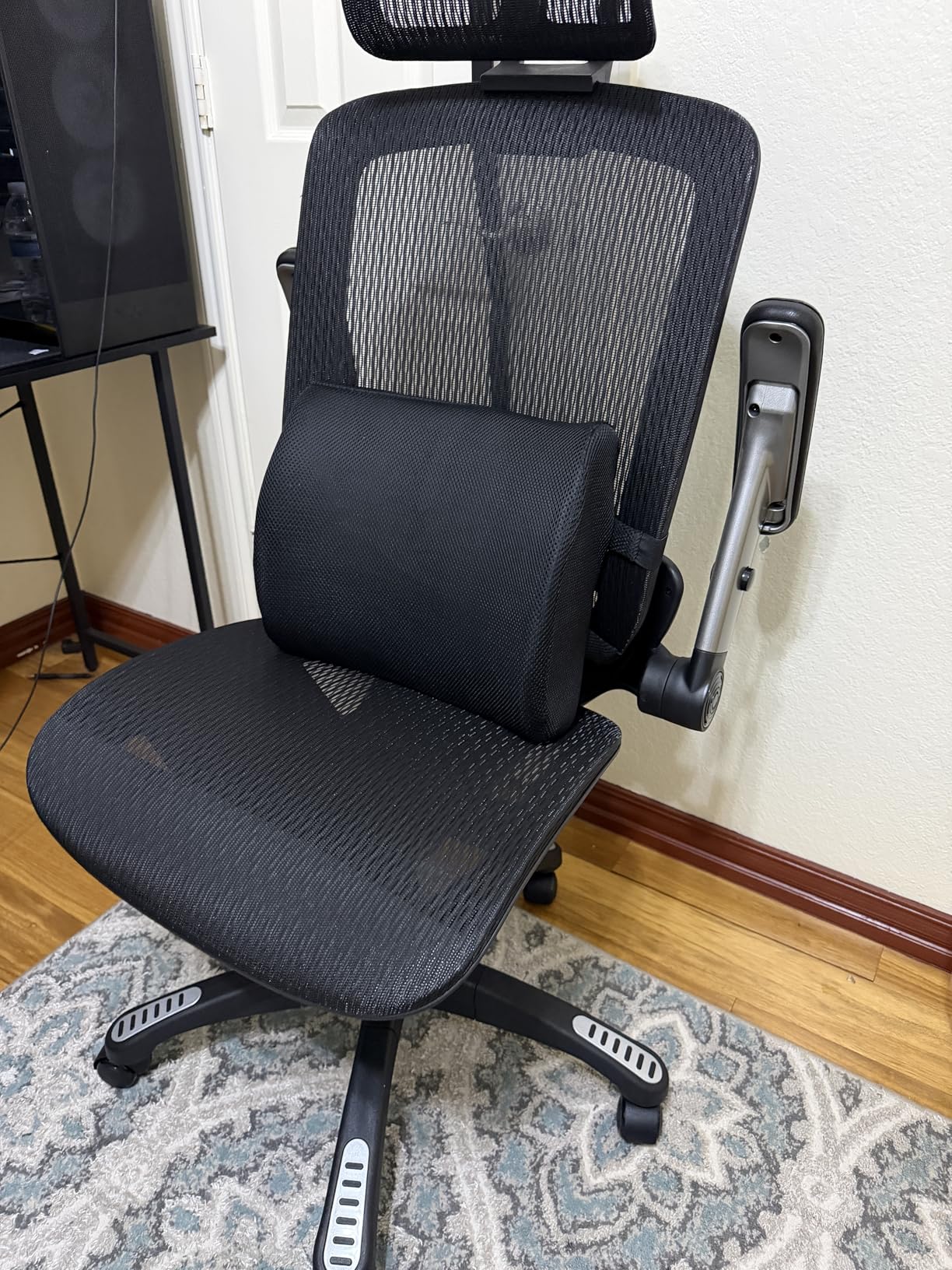
This is the chair we kept coming back to. With 14k+ ratings averaging 4.4 stars, it has the deepest owner feedback of any chair in this roundup, and that data is unusually consistent. Owners describe back support that suits roughly 5 foot 2 to 6 foot 1 frames, and they describe it in the same terms: the mesh is tight, the back does not sag, and the seat does not bottom out.
The geometry is what sets it apart. The seat measures 20 inches deep with a waterfall edge, the backrest is 18.5 inches wide, and the whole chair lands at 22 by 25.2 by 45.3 inches. Most competitors in this group sit at 17 to 18 inches deep. That difference is the difference between your knees having room and your sit bones hanging over the lip.
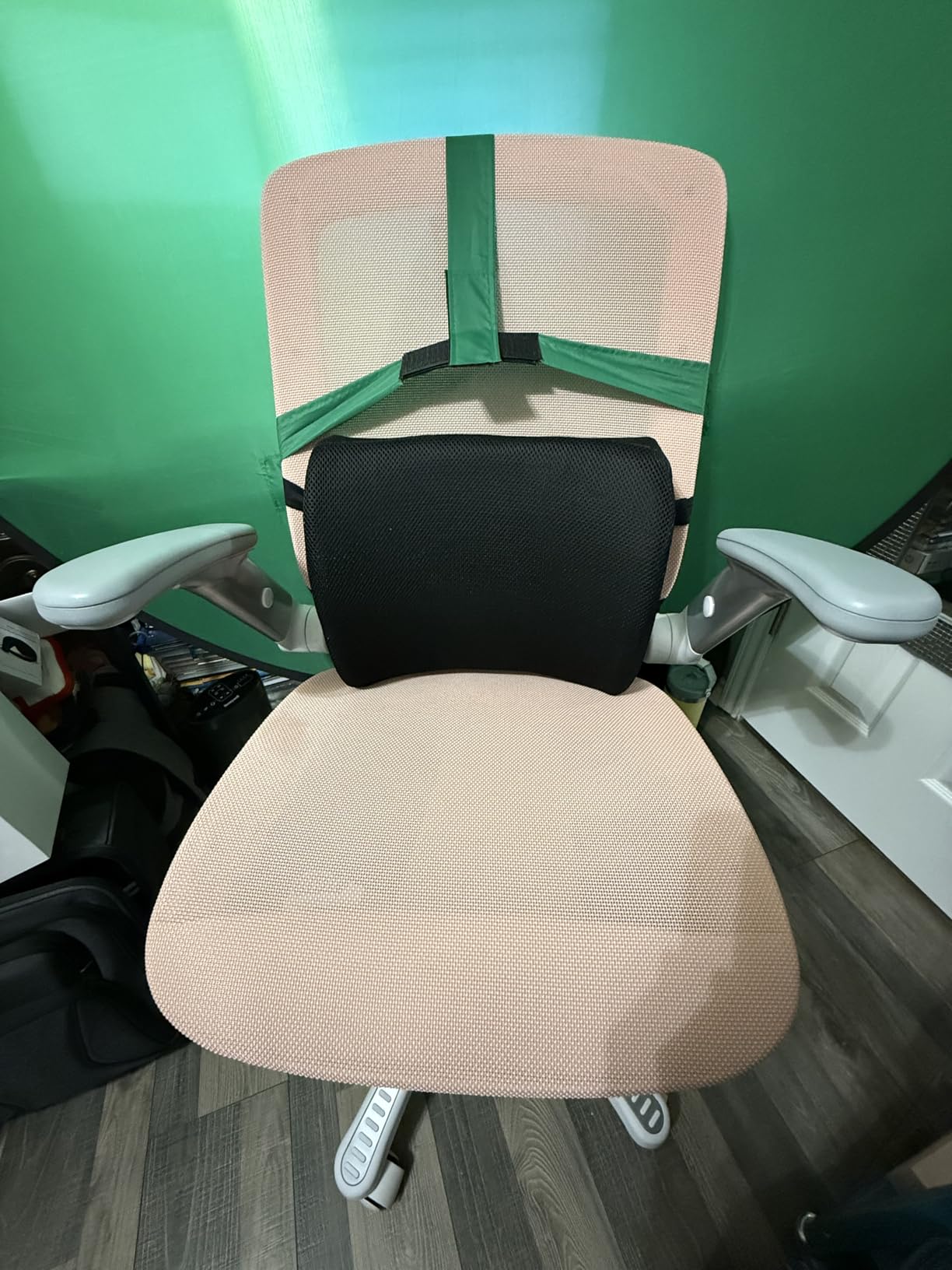
Height runs from a 22.05 inch seat height, and the back reclines from 90 to 120 degrees with a three-stage tilt lock. Owners working four to eight hour days specifically call out the breathable mesh on both the back and the seat as the reason they stay comfortable in the second half of a shift.
Build details hold up too. A class-4 gas lift, a BIFMA-certified frame, a 300 pound rating and quiet PU wheels that do not mark wood flooring. The after-sales record is a genuine strength: multiple reviewers mention free upgrade wheels, lumbar pillows and replacement parts sent out without argument.
The compromise is the lumbar. On this model it is fixed in position rather than sliding, so if your curve sits higher or lower than average you are relying on the mesh itself to fill the gap. Reviewers who are short or tall are advised that a longer gas-lift cylinder is sold separately. Headrest and backrest both adjust, so the fixed lumbar is partly compensated for by the height range around it.
Who this chair suits well
Anyone between roughly 5 foot 2 and 6 foot 1 who spends a full day at a desk and runs warm. The wide seat and the waterfall edge take pressure off the backs of the thighs, and reviewers using it for 4 to 8 hour stretches report fewer end-of-day aches than with a standard 17 inch seat. If your desk is tight, the flip-up arms clear the whole way.
Where it falls short
Taller users. The fixed lumbar is the first issue, and reviewers also note that the armrests sit fairly high when down and move with the backrest, so they angle rearward in the second recline lock. Three recline positions with a gap between the first two is a minor irritation for people who want a precise upright stop. We would pair it with an external lumbar pillow if your curve runs deep.
2. HOLLUDLE Ergonomic Mesh Office Chair – Top Rated 3D Lumbar Chair
HOLLUDLE Ergonomic Mesh Office Chair – 3D Adjustable Lumbar Support & 3D Armrests, V-Shaped Back, Adjustable Desk Chair for Office & Home, White
3D lumbar with depth and rotation
20.28 inch wide backrest
Foam seat 17.32 inch deep
BIFMA and EN1335
5-year warranty
Pros
- Lumbar adjusts in four directions including rotation
- Owners report lower back relief over long sessions
- 3D armrests and a 2D rotating headrest dial in easily
- Assembles in 20-30 minutes with tools included
Cons
- Firm foam seat feels hard before it breaks in
- Runs small above roughly 6ft1 with a short 17.32 inch seat depth
- Sharp unbuffed metal edges where the legs meet the casters
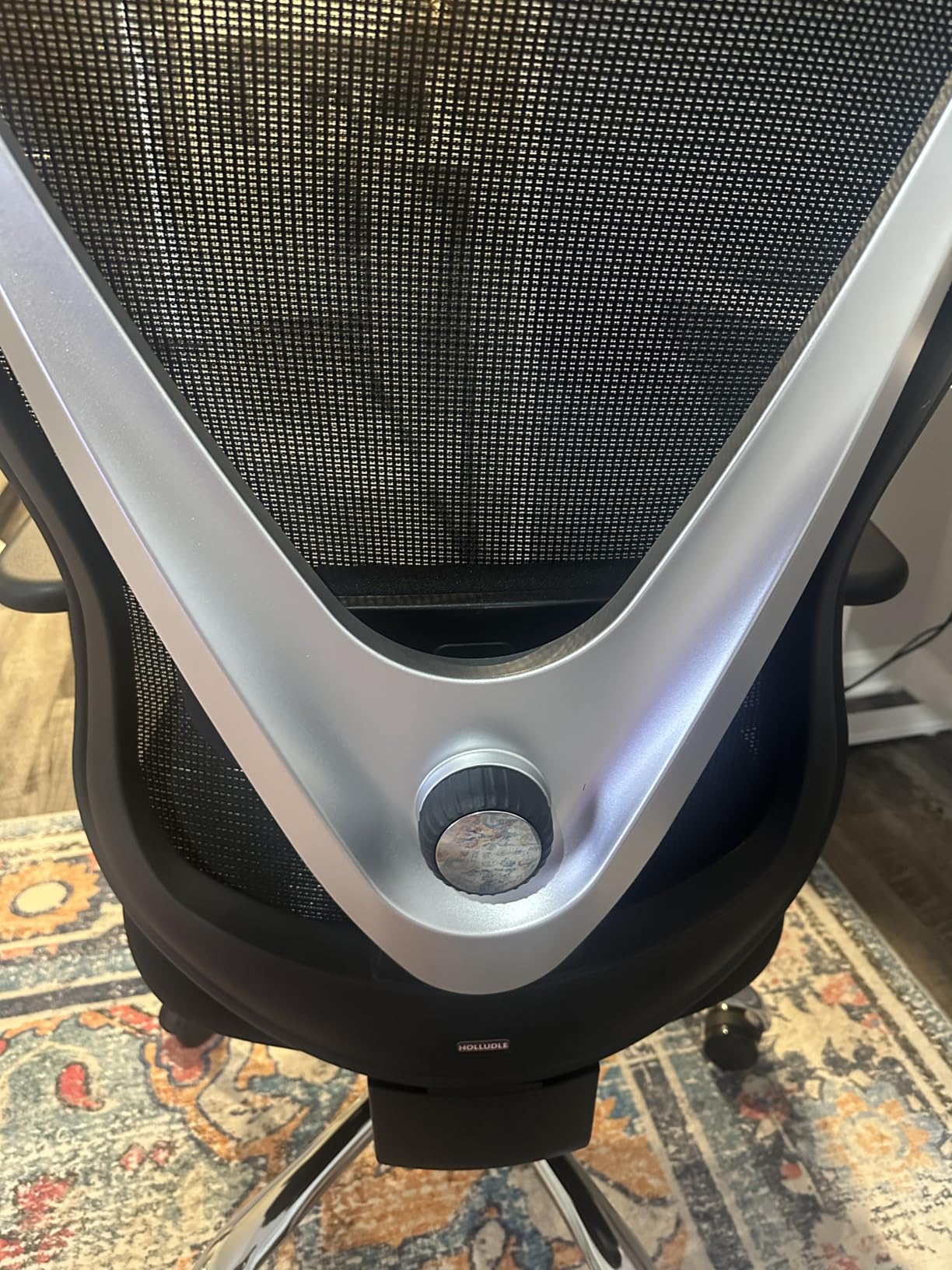
The HOLLUDLE is the one chair in this group where the lumbar moves in four directions. It goes up and down, forward and back, and it rotates. That third movement is the part most people never discover and the part that matters when your pelvis sits wider than the chair’s centre line.
At 6395 ratings and 4.4 stars, with 73 percent five-star reviews, this is the second most validated chair here. The recurring theme from owners is direct: lower back pain eased over long desk sessions, and the mesh back stays cool through extended sitting. That is exactly the claim we test for, and it holds up in the reviews.
The frame is built to BIFMA and EN1335 standards with a 35mm steel mechanism and a base strength rating of 1136kg, which is the kind of specification most budget listings leave out entirely. Assembly takes 20 to 30 minutes with the included tools, and several owners mention a matching setup video that makes it painless.
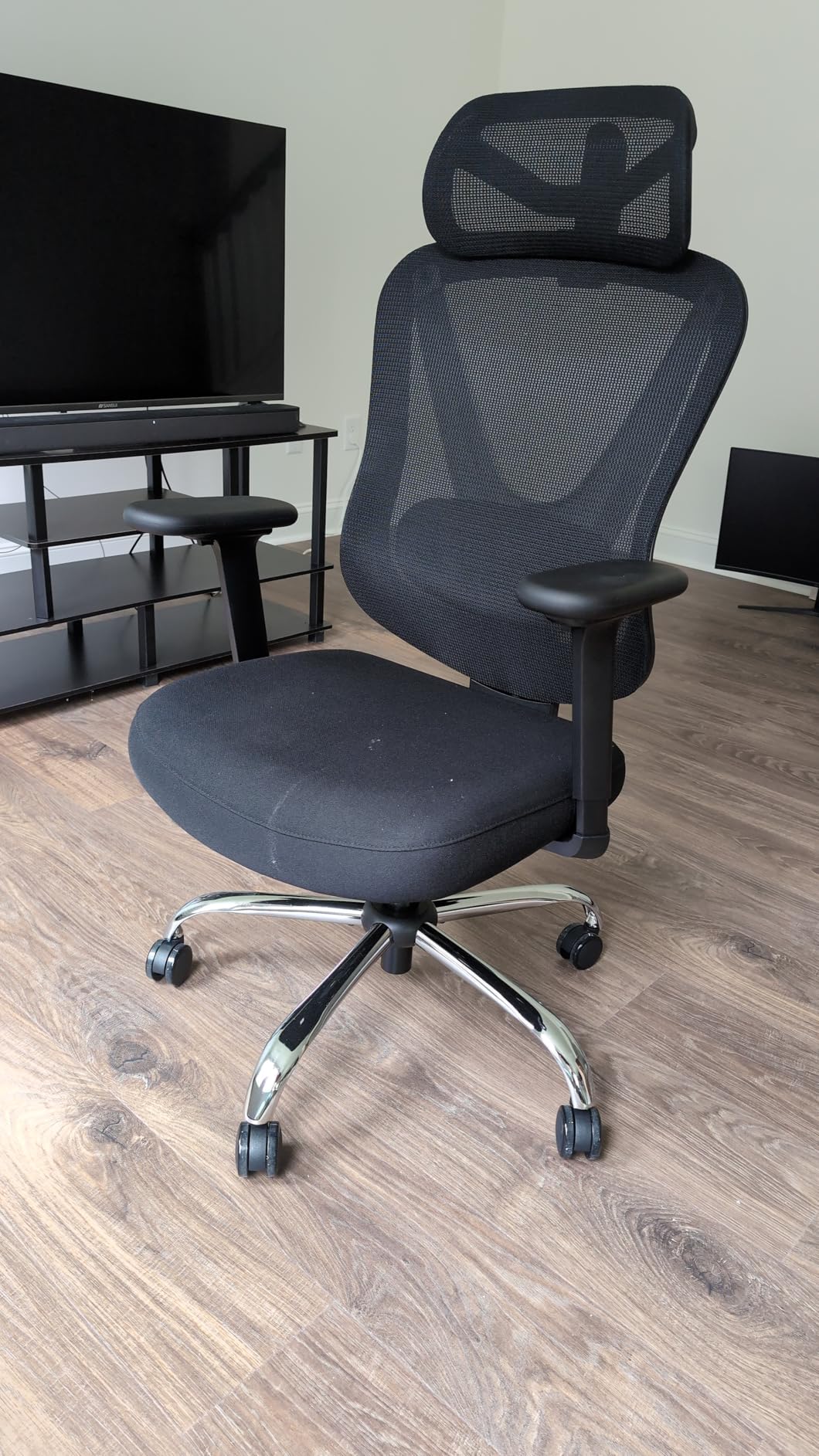
Armrests adjust in three dimensions and the headrest rotates in two, which is unusual in this price class. Both are described by owners as easy to dial in rather than fiddly. The V-shaped mesh back is a styling choice as much as a comfort one, and it does keep airflow high across the shoulder blades.
It is also a 19.8kg chair with a 20.28 inch wide backrest, so the frame is not a narrow one. The problem is the seat. Foam, 17.32 inches deep, boxed edge, and firm enough that owners describe it as hard for the first stretch before it breaks in. The same owners running about 6 foot 1 and above report a cramped fit and a short seat depth, and a headrest that ends up sitting below the crown of the head.
One build note worth flagging: a number of owners mention sharp, unbuffed metal edges where the base legs meet the casters, and attaching the arms during assembly is described as tricky. Worth wearing gloves and checking those joints before the first long sitting session.
Who this chair suits well
Anyone whose pain sits in the lower lumbar and who has found that height-only adjustment never quite lands on the right spot. It is also a strong pick for a shared desk or a shared chair, because the 3D armrests and rotating headrest reset quickly for a second user. A five-year warranty is longer than most in this group.
Where it falls short
Anyone tall. The 17.32 inch seat depth is the limiting factor and reviewers above roughly 6 foot 1 say so directly. The firm foam needs a few days of use before it feels right, and the cast-to-leg edges should be checked. If you want the four-way lumbar and you are 6 foot 2, the ELABEST X100 further down the list solves the same problem with more seat room.
3. TRALT Office Chair – Best for 8-Hour Workdays
TRALT Office Chair – Ergonomic Desk Chair with Adjustable Lumbar Support, Mesh Computer Chair, Executive Chairs for Home Office Comfortable Lumbar Support (Black)
High-resilience molded foam seat
Class 3 BIFMA gas cylinder
Metal-core base to 330 lbs
17.3 inch seat depth
2-year warranty
Pros
- Molded foam seat resists flattening and hardening
- Depth-adjustable lumbar follows the spine curve
- High-tension mesh back stays cool and will not peel
- Metal-core base rated to 330 lbs with 360 degree casters
Cons
- Assembly instructions are hard to read on dark print
- Soft casters drag on glass and hard mats
- Lifetime warranty in the listing conflicts with the 5-year card
The TRALT solves the problem budget chairs usually fail at: cushion life. The seat is high-resilience molded foam rather than cut and stacked slab foam, and owners report it resists both flattening and hardening in a way cheaper seats do not. For a chair that has to survive hour eight, that is the single most useful specification on the card.
At 4606 ratings and 4.3 stars with 73 percent five-star, the feedback is steady. The adjustable lumbar is the most-praised feature and is repeatedly credited with easing lower back pain on long workdays. The BIFMA-certified class 3 gas cylinder is the second, because it holds height instead of slowly sinking, which is the quiet failure that condemns most sub-list chairs within a year.
The base is metal-core reinforced nylon rated to 330 lbs, which is the second highest capacity in this roundup, and it rolls on smooth 360 degree casters. The mesh is described as high-tension and, importantly, as something that does not peel like faux leather. That detail matters if you have ruled out cheaper chairs for that reason before.
Dimensions are honest rather than flattering: a 19.7 inch wide seat, 17.3 inch deep, with a height range of 17.7 to 21.7 inches that owners translate to roughly 5 foot 4 through 6 foot 2. The arms flip up. Assembly is 15 minutes and the tools are included.
Three practical warnings. The instructions print dark text on a dark background, and the manual is unclear about when to final-tighten the screws that ship loose. The casters are soft and non-circular, so they do not roll freely on glass or hard mats. And the listing advertises a lifetime warranty while the enclosed card states 5 years, so check the card before you rely on the listing. The seat is medium-firm, not plush.
Who this chair suits well
People who sit all day and have been disappointed by foam that flattens by month four. The molded seat plus the class 3 gas cylinder is the combination that makes this one hold its shape, and the 330 pound rating is generous for the class. If you work on a hard floor or glass, plan to fit better casters early.
Where it falls short
Anyone who is fussy about recline. This chair has two recline positions and no flip-up headrest, so the support is functional rather than indulgent. The dark-print instructions and the ambiguous torque step mean you should budget an extra 15 minutes for assembly, and if a lifetime warranty is the deciding factor for you, get that clarified before buying.
4. SIHOO B100 Mesh Ergonomic Office Chair – Best for Staying Cool
SIHOO B100 Mesh Ergonomic Office Chair with Adaptive Lumbar Support
Full mesh backrest
Height 18.3 to 21.9 inch
Recline with three lockable angles
300 lbs capacity
36-month coverage
Pros
- Adaptive lumbar follows the spine without feeling intrusive
- Waterfall-edge seat reduces thigh pressure
- Three lockable recline angles with a synchronised tilt
- Reinforced metal base with SGS-certified class 4 gas lift
Cons
- Hard armrests that do not raise high enough for forearm support
- Limited headrest movement that can block a monitor view
- Assembly quirks including a misoriented armrest cam and parts needing a hammer
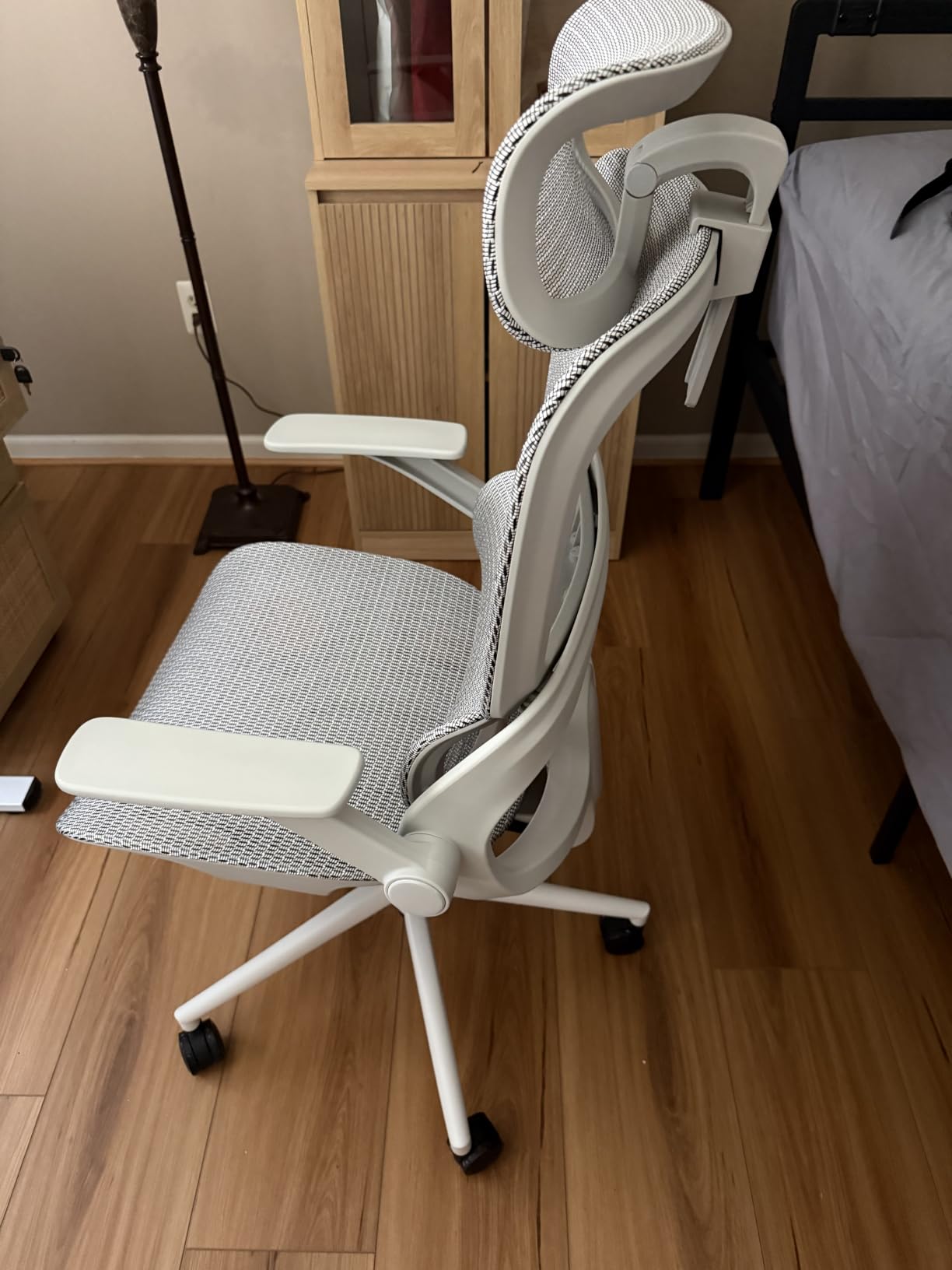
The B100 is the chair to look at if heat is part of your problem. It is a full mesh build with a waterfall-edge seat, and at 16.1kg it is one of the lightest chairs here. Owners consistently describe it as supportive without being intrusive, which is the phrasing you want from a lumbar pad: present when you move, invisible when you sit still.
It is also one of the few chairs in this roundup with a genuine synchronised tilt mechanism and three lockable angles at 110, 125 and 135 degrees. Reclining to 135 and locking there is a real move against disc-related discomfort, and the back style is a split back, which lets the lumbar zone flex independently from the upper back.
At 3826 ratings and 4.2 stars with 66 percent five-star, satisfaction is solid rather than glowing. The reinforced metal base and SGS-certified class 4 gas lift rated to 300 lbs are better than what most listings in this tier disclose, and coverage runs 36 months with free parts replacement.
Seat height runs from 18.3 to 21.9 inches across five positions, and the backrest is 19.7 inches wide, which gives more shoulder room than the seat depth suggests. The seat itself is polypropylene and 17.1 inches deep, so this is a short-to-medium seat with a tall back, not a big-and-tall geometry.
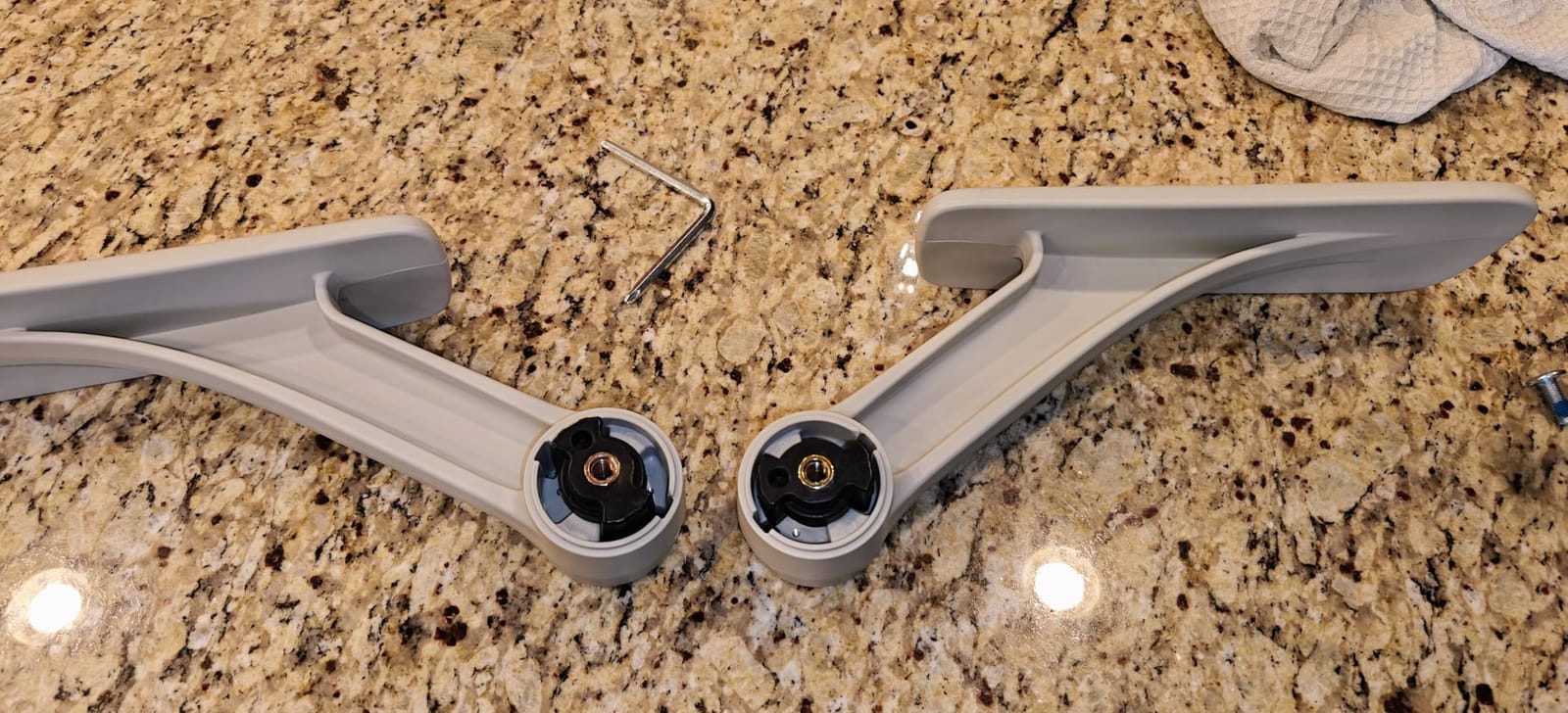
The complaints are consistent and mostly about arms. The armrests are hard, do not raise high enough to take forearm weight properly, and do not drop fully flat when reclined. Headrest adjustment is limited enough that it can obscure a monitor when you lean back. And assembly has two specific snags: one armrest mount can arrive in the wrong orientation and need reorienting, and some steps need a hammer to seat the parts properly.
Who this chair suits well
People who run hot, sit in a warm room, or get the sweaty back-sticking sensation by midday. The all-mesh construction and the low 16.1kg weight make this a good choice for a warm room. The deep recline also suits anyone who wants to lean back to decompress a sore lower back between tasks.
Where it falls short
Anyone who needs the arms to carry forearm weight while typing. This is the most common complaint in the reviews and it is a real ergonomic shortfall for desk work. The 17.1 inch seat depth will also feel short above 6 foot. Budget extra time for assembly, and keep a rubber mallet on hand.
5. Staples Hyken Ergonomic Mesh Task Chair – Best for Trying in Person
Staples Hyken Ergonomic Mesh Task Chair, Lumbar Support, Swivel, Black
Mesh back and foam seat
16.42 inch wide backrest
17.9 inch seat depth
250 lbs capacity
ANSI/BIFMA standards
Pros
- Lumbar and headrest deliver real posture gains over cheap chairs
- Bright mesh airflow across long sessions
- Modular design with removable armrests and headrest
- Several reviewers have used it for 2 years or more
Cons
- Armrest bolts loosen and the foam sleeves crack with extended use
- Lumbar pad sits low and slides out of position
- Headrest tends to slip to its lowest setting
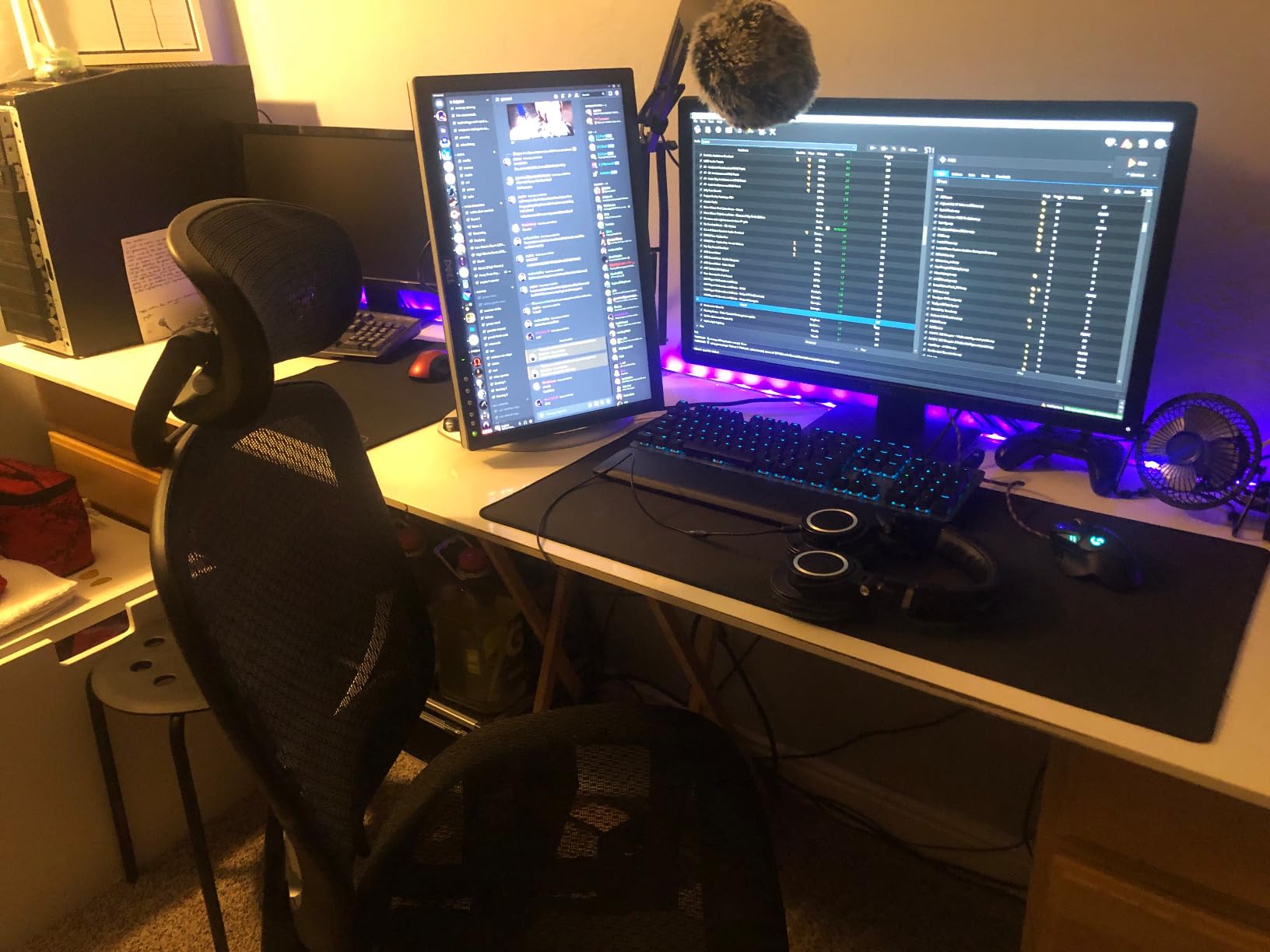
The Hyken has an advantage no online-only brand can offer: you can sit in it before you commit. That matters more than usual for back pain, because lumbar placement is personal and physical testing in a store beats any amount of spec reading.
At 3688 ratings and 4.3 stars with 69 percent five-star, the long-run feedback is the interesting part. Multiple owners describe two-plus years of continuous use, which is rare at this tier. They credit the lumbar support and headrest with delivering genuine posture improvement over cheap foam-on-plywood chairs, and the mesh with keeping them ventilated through long sessions.
Mechanically it is simple and it works: swivel-tilt with a tension knob and an upright tilt lock, adjustable seat height, arm position and reclining resistance. It meets or exceeds ANSI/BIFMA durability standards. The modular design lets you remove the armrests and headrest entirely, which is a genuinely useful feature for narrow desks or for sharing a chair between two differently shaped people.
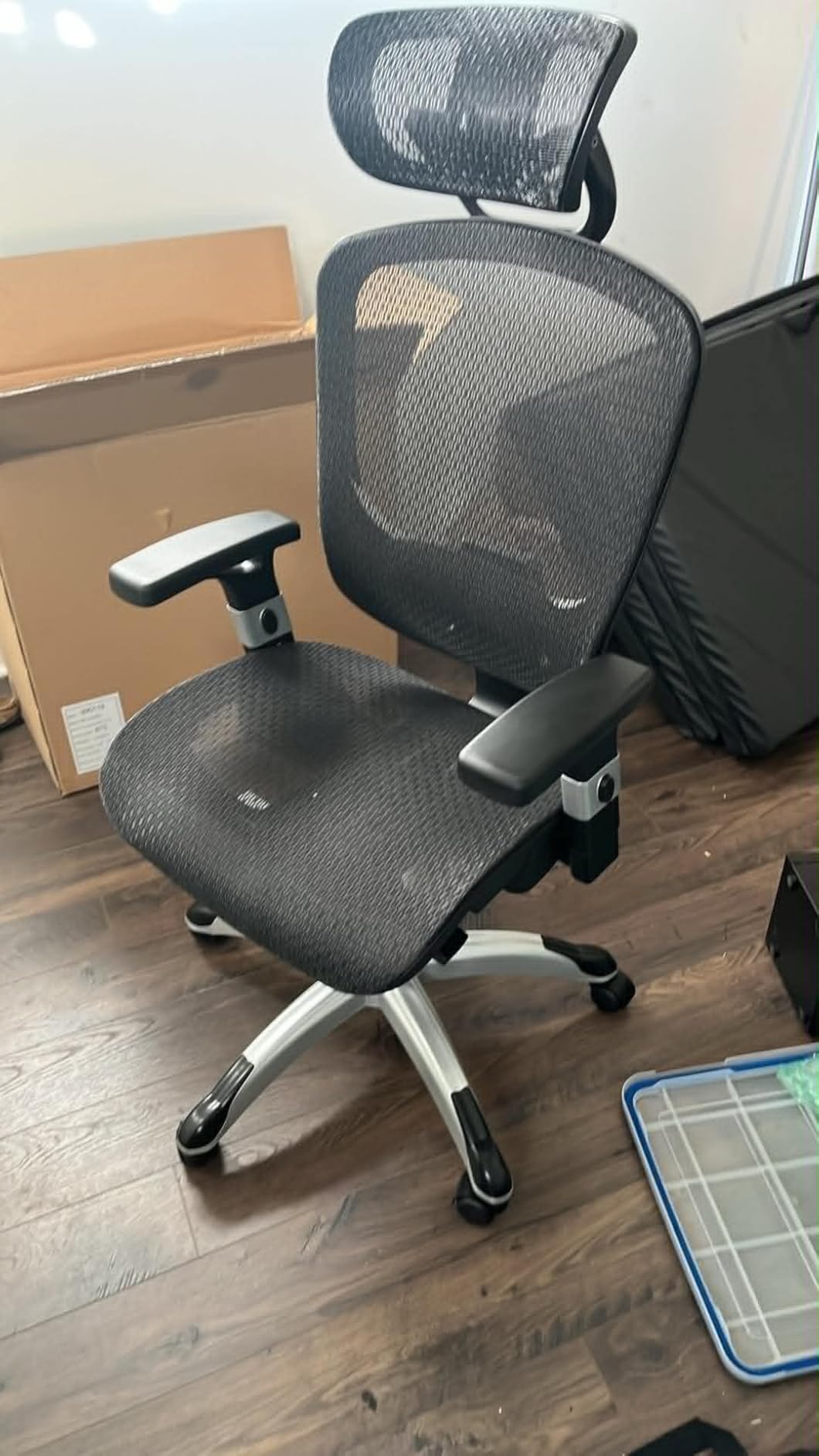
The dimensions are the caution flag. Backrest width is 16.42 inches and seat depth is 17.9 inches, which makes this a narrow frame, and the weight rating is 250 pounds, the lowest here. Owners above roughly 5 foot 9 describe the seat as short and narrow and a poor fit, which matches the specs exactly.
There is also a specific pattern of long-term wear. The armrest bolts loosen over time and can bend or snap, and the armrest foam cracks and splits until you are left with sharp edges. The lumbar pad sits too low and slides out of position, which pushes people into slouching, and the headrest tends to sink to its lowest setting. The plastic back shroud over the seat and back bracket is described as a weak point that can crack. Assembly needs a power driver, because the included tool takes heavy hand pressure.
Who this chair suits well
Smaller frames and shorter users who can reach a physical retail location. If your pain is upper back and neck related, being able to adjust the headrest in a store and feel whether it holds position is worth a lot. It is also the simplest chair here to strip down and reconfigure, which suits shared workspaces.
Where it falls short
Anyone tall, broad, or weighing over 250 pounds. The narrow 16.42 inch backrest and the 250 pound rating rule it out for larger bodies, and no adjustment will change that. Be aware of the armrest bolt and foam cracking pattern if you are buying for years of daily use, and plan on an electric screwdriver for assembly.
6. FelixKing Office Chair – Best for Small Desks
FelixKing Office Chair, Ergonomic Desk Chair Breathable Mesh Chairs Adjustable High Back Lumbar Support Flip-up Armrests, Executive Rolling Swivel Comfy Computer Chairs Home Office Black
19.7 inch deep seat
Breathable mesh back with high-density foam
300 lbs capacity
5-year service
15-minute assembly
Pros
- Adjustable lumbar supports the lower back and an upright posture
- Flip-up arms let the chair tuck under a compact desk
- High-density foam and mesh stay cool on long days
- Three-stage gas rod and thickened base rated to 300 lbs
Cons
- Backrest does not recline independently
- Armrests raise and lower but never lock in position
- Seat cushioning feels thin after a couple of hours
The FelixKing is a study in one trade-off: it gives up recline entirely to deliver a compact frame with flip-up arms. If your desk is small enough that a full-size chair keeps bumping the drawer, that is a real and specific advantage, and the arms tuck the whole chair in.
At 2547 ratings and 4.2 stars with 66 percent five-star, owners consistently credit the adjustable lumbar with keeping an upright posture and supporting the lower back, and they like the breathable mesh back paired with high-density foam for staying cool. The three-stage gas rod and thickened base are rated to 300 lbs, with quiet PU casters that protect wood floors.
Support points are stated plainly: five-point ergonomic support across head, shoulder, back, hips and hands, flexible height and tilt adjustment, and a 5-year service commitment with free part replacement. Assembly takes about 15 minutes. This is a good chair for a specific job rather than a great chair in general.
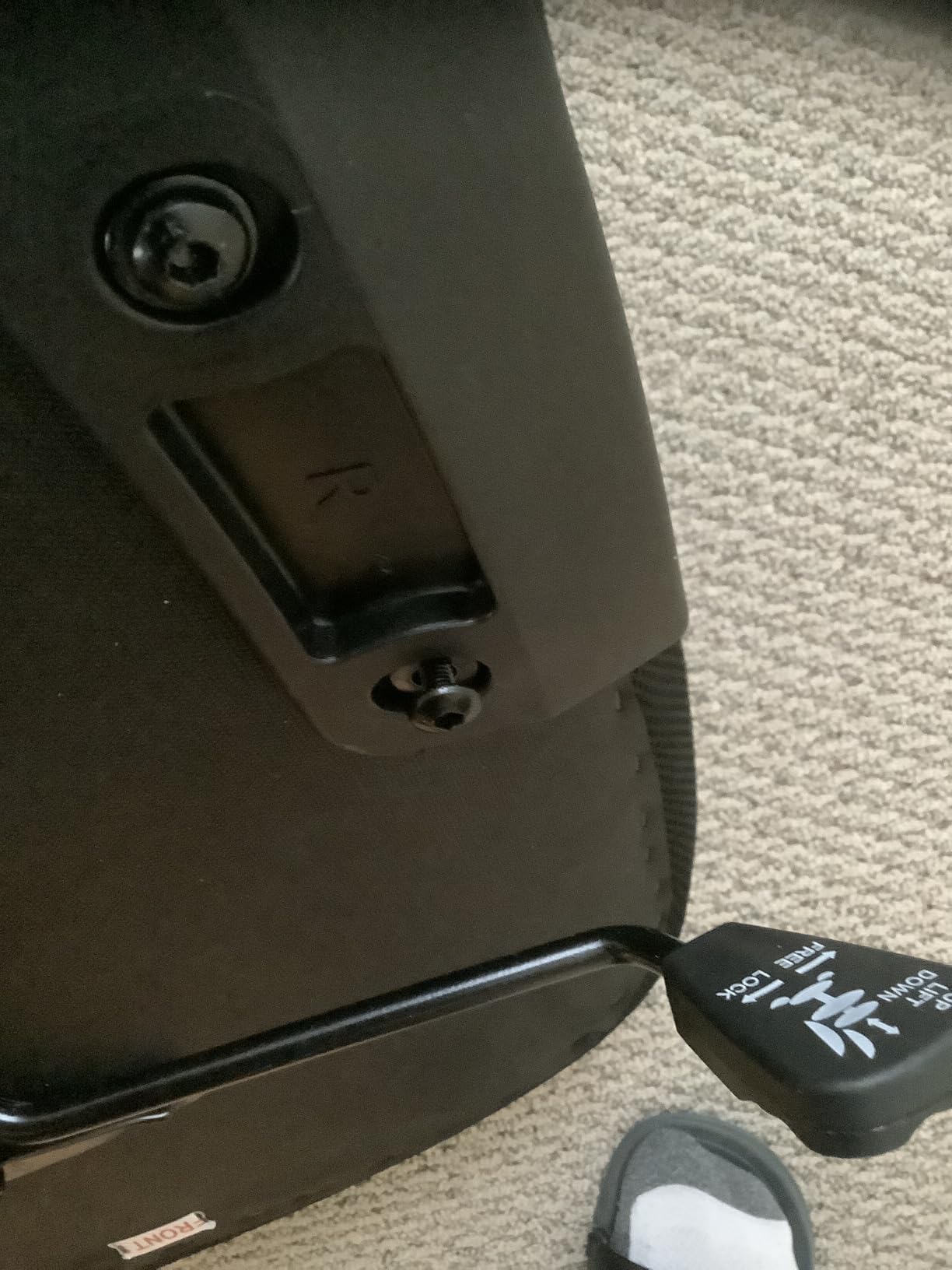
The limitation owners keep naming is the recline. The backrest does not recline independently, so the whole chair tips rearward rather than pivoting at the hips. Many buyers read the two listed recline positions as a real recline and are disappointed by how little the tilt tension can be loosened. The seat cushion also feels thin and less supportive after a couple of hours, which is the opposite of what a long workday needs.
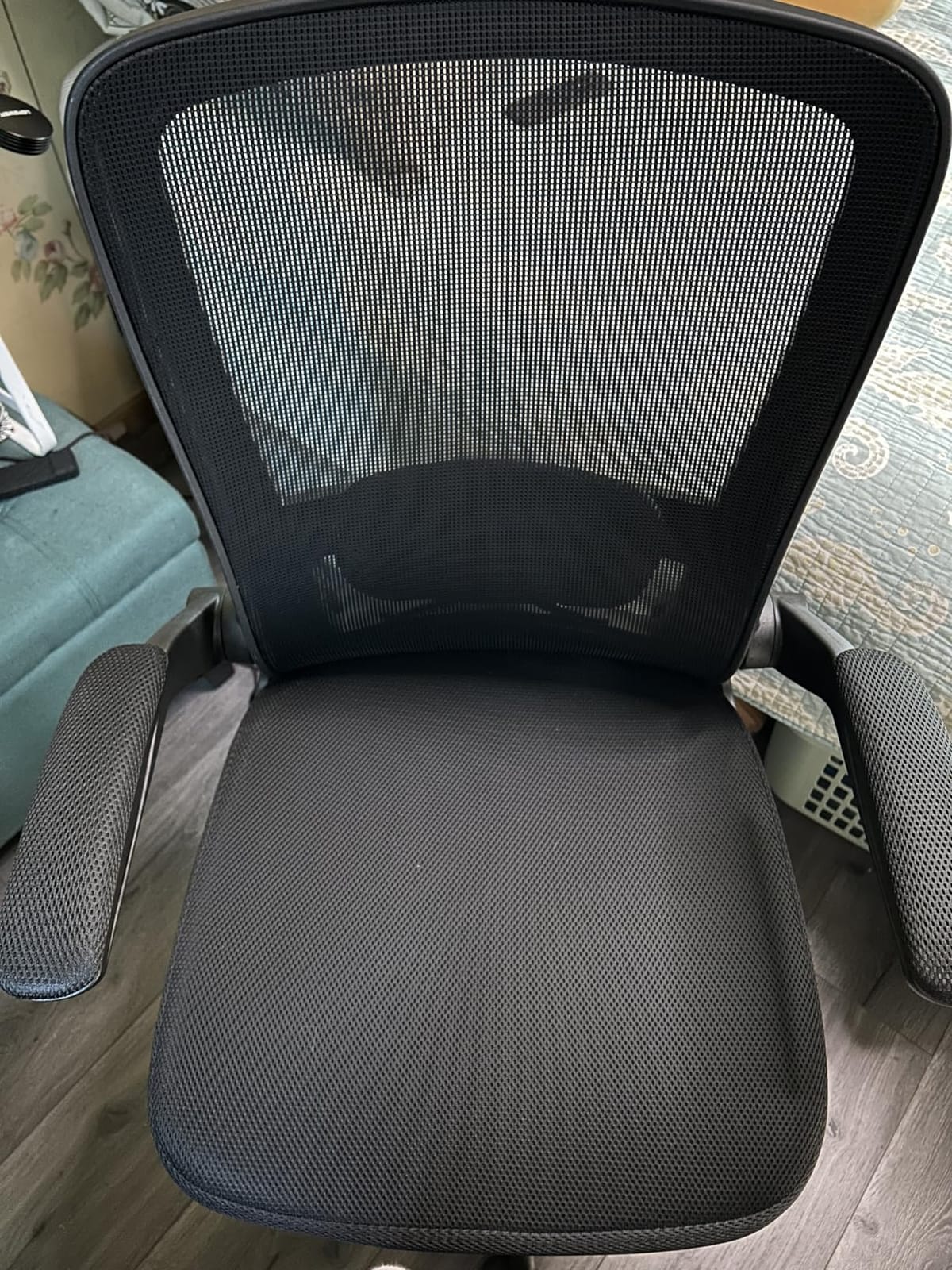
Two more specifics: the armrests raise and lower but do not lock, so they flop down under any weight and stay where they land. Seat height travel is limited, and the 19.7 inch seat depth leaves some users sitting near the front edge. There are also scattered reports of chairs pulling forward during use and of defective units arriving, so inspect on arrival.
Who this chair suits well
Anyone working in a compact home office where desk clearance matters more than recline. The flip-up arms, the 19.7 inch seat depth for a narrower frame feel, and a 300 lb rating make it a solid everyday choice for a standard-sized adult who changes position frequently rather than settling into one reclined posture.
Where it falls short
If your back pain is eased by leaning back, this is the wrong chair, full stop. There is no independent recline to use. The non-locking armrests are a daily annoyance, and the thin cushion works against you past the two-hour mark. Reviews also note limited seat height travel, which can stop shorter users from getting their feet flat.
7. Marsail Ergonomic Office Chair – Best for Switching Positions
Marsail Ergonomic Office Chair: Office Desk Chair with High Back Mesh and Adjustable Lumbar Support Rolling Work Swivel Task Chairs with Wheel 3D Armrests and Headrest
Lumbar with 1.18 inch depth and 2.16 inch height travel
3.14 inch foam seat to 330 lbs
3D armrests
2D headrest
Pros
- Lumbar adjusts on two axes to match body shape
- 3.14 inch high-density foam seat with a wide load-bearing area
- 3D armrests that swivel and flip up under a desk
- Many owners report it still feels good after a year
Cons
- No true recline
- only a rocking motion with an awkward tension knob
- Headrest pushes the head forward
- Armrest hardware can fail to lock within weeks
The Marsail is the most position-changeable chair in this group. Every contact point moves: the lumbar adjusts 1.18 inch forward and back and 2.16 inch up and down, the armrests move forward and back, swivel and flip up, and the headrest adjusts in two dimensions. For someone whose pain is position-dependent rather than constant, that range matters.
At 1892 ratings and 4.2 stars with 65 percent five-star, the standout feature in the reviews is the lumbar travel, followed by the 3D armrests. Owners also mention clear assembly instructions and, importantly, that the chair still feels good after about a year of use. The cushion does eventually lose some resilience at that mark, but not catastrophically.
Load handling is a genuine strength. The 3.14 inch high-density foam seat has a wider load-bearing area and the chair is rated to 330 lbs, tied with the TRALT for the second-highest capacity here. The mesh back moulds to the back while keeping airflow high, and there is a broad colour range if the black default is not for you.
What it does not have is a real recline. There are only two positions and the motion is a rock rather than a proper hip-pivot recline, and the tension knob sits awkwardly under the seat where you have to feel around for it. For a chair sold partly on posture, that is a genuine gap.
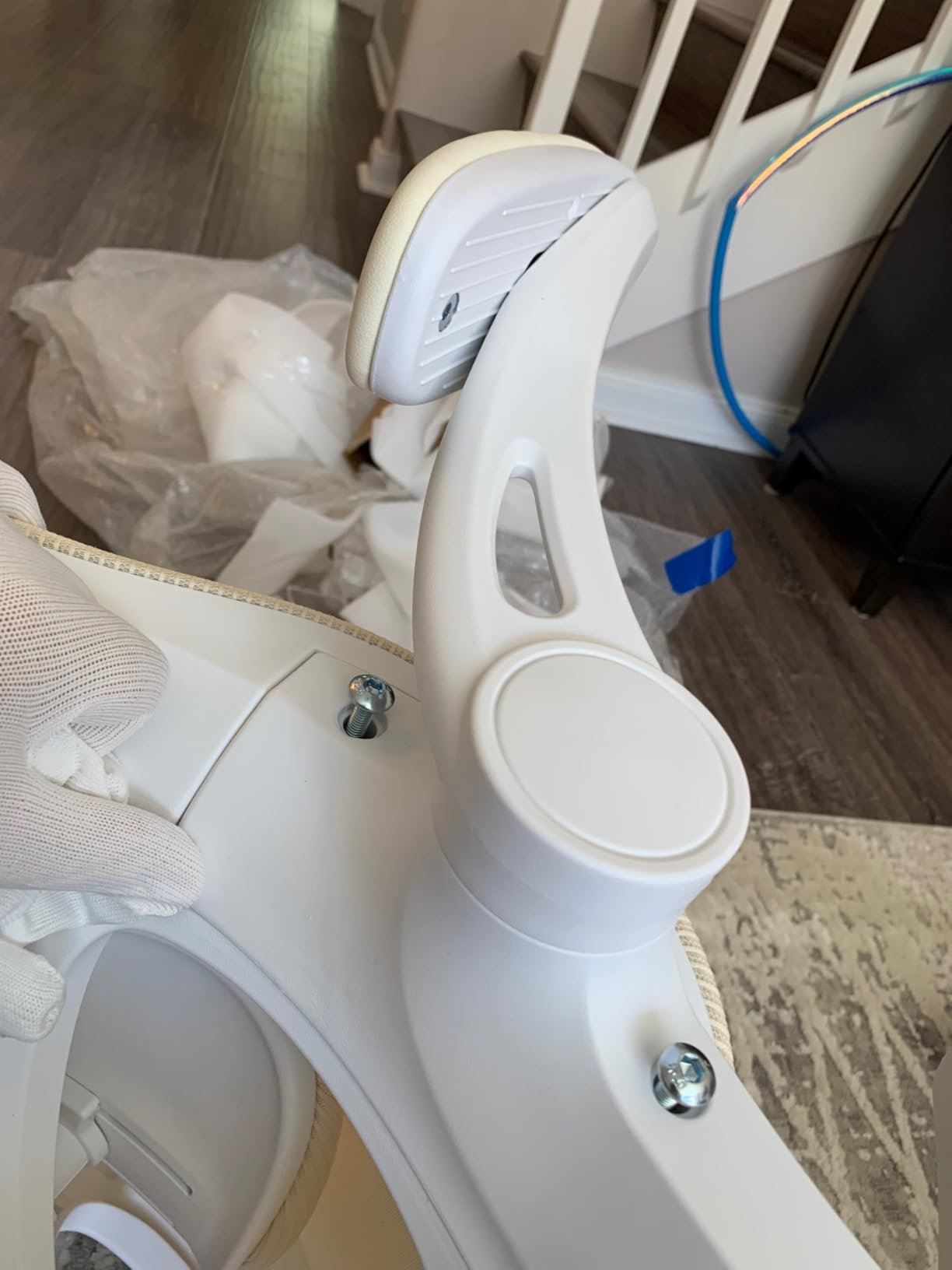
Other recurring issues: the headrest pushes the head forward rather than cradling it, PU-padded armrests feel hard and show friction wear over time, and at least one owner reported an armrest that failed to lock within a few weeks. The included assembly gloves are too small for an average adult, so bring your own. Published dimensions on this listing are inconsistent, so verify the seat depth against your frame before buying.
Who this chair suits well
People who fidget, who work across several postures a day, or whose pain comes and goes with position rather than sitting still. The wide load-bearing foam seat suits bigger frames better than the seat depth suggests, and the 330 lb rating gives real headroom. It is a strong first mesh chair for someone who does not want to think hard about adjustment.
Where it falls short
Anyone who needs to lean back to decompress. The rocking motion is not a substitute for a synchro-tilt recline, and the awkward tension knob makes that worse. The headrest is not comfortable for long stretches, and the armrest locking weakness is worth watching in the first months of use.
8. ELABEST X100 Ergonomic Mesh Office Chair – Best for Big and Tall Users
ELABEST X100 Ergonomic Mesh Office Chair with Footrest, Big and Tall Hone Desk Chair with 5D Flip-Up Arms, Adjustable 3D Lumbar Support,Gaming & Executive Computer Chairs
3D synchro-tilt lumbar with 15 degree rotation
5D flip-up arms with 6 inch travel
18 inch footrest
300 lbs BIFMA certified
Pros
- Lumbar adjusts in height and depth with 15 degree rotation
- Handles tall and heavy users comfortably
- Footrest extends 18 inches for breaks and circulation
- Dual-stripe AirMesh reported as breathable and squeak-free
Cons
- Backrest-mounted arms limit vertical range and pull the back forward
- Mesh seat edges dig into the knees of shorter users
- Footrest is stiff to extend and shorter than a full leg rest
The X100 is the most genuinely adjustable chair we looked at, and the 4.6 star average with 82 percent five-star reviews is among the highest in the group. The lumbar is a 3D synchro-tilt system with lockable depth, height and 15 degrees of rotation, and multiple owners say it fits their spine precisely rather than approximately.
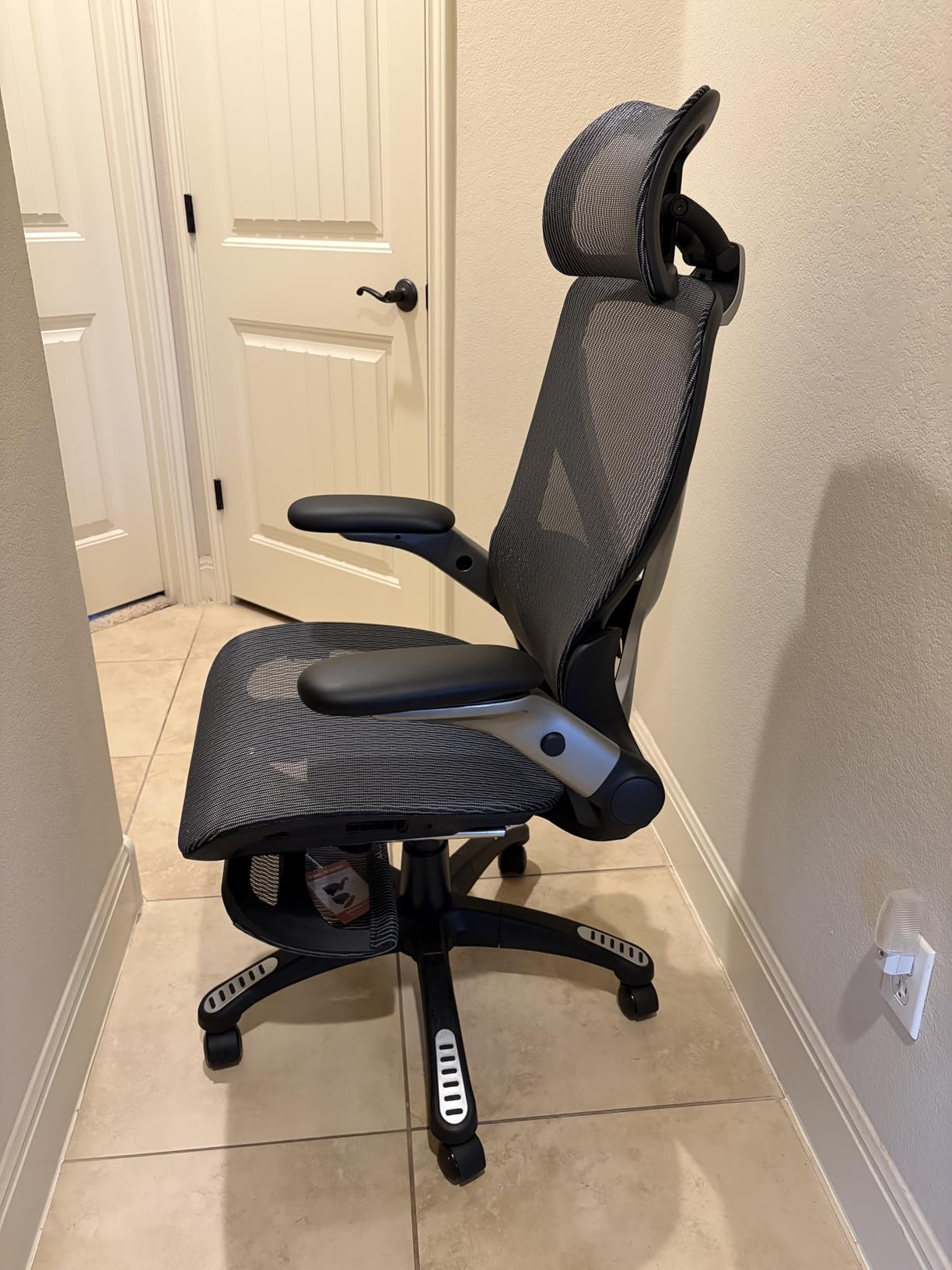
The armrests are 5D. They adjust in height, width, forward and back, rotation and flip, with about 6 inches of fore-aft travel and 45 degrees of cant, and they carry dense EVA padding instead of bare plastic. That combination is the one most owners single out when they describe the chair as rivaling much more expensive ergonomic models.
Beyond the adjustment there is an 18 inch extendable footrest with a two-position angle, one of only two here with real leg support, and a 3D AirFloat headrest with cervical curve mapping. The dual-stripe AirMesh is reported as breathable, taut and squeak-free, and the structure is BIFMA-certified to 300 lbs with a grade-4 central column. Tool-free assembly takes roughly 15 to 20 minutes.
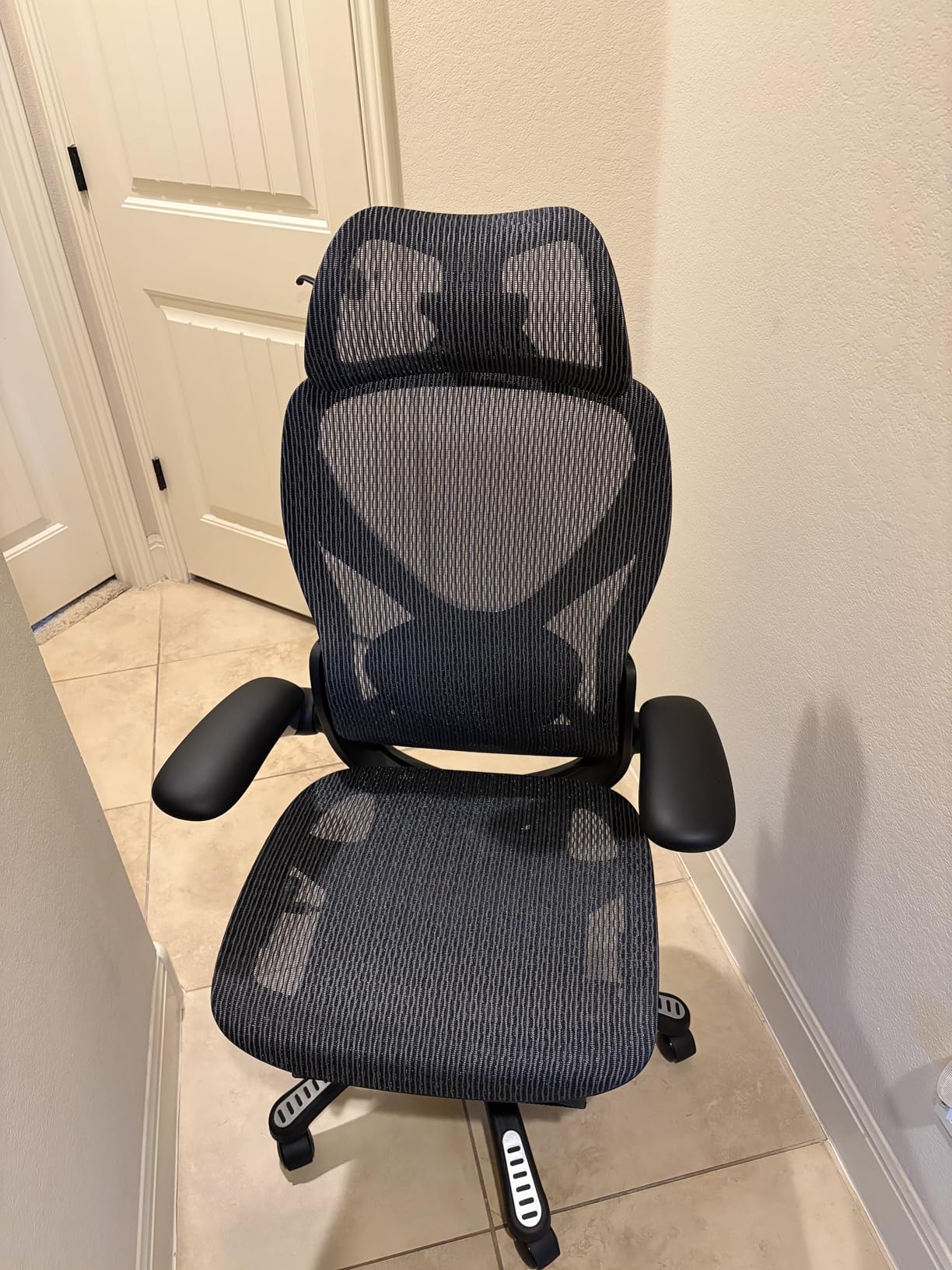
There is a specific buyer’s note here that matters more than the feature list. In this version the armrests mount to the backrest, which limits their vertical range and pulls the back forward when you use them. If your pain is upper and mid back, that is a genuine concern. Several owners also add a padded seat cover because the mesh seat edges dig into the backs of shorter users’ knees.
The footrest extends but is stiff to pull out and is shorter than a full leg rest, so treat it as a break-time feature rather than an all-day support. And a real trade-off owners report: replacing the mesh seat with a cushion removes the footrest function, because the two cannot coexist.
Who this chair suits well
Tall and heavier users. The reviews name a 6 foot 3 inch, 235 pound owner fitting comfortably, which is a higher ceiling than almost everything else here. If your pain is disc-related and worse at the end of a sitting block, the footrest and the 135 degree-equivalent recline options give you a way to change position without standing up. Customer support is repeatedly praised for shipping free wheels and seat pads.
Where it falls short
Shorter users, because the mesh seat edges will press into the backs of your knees without a padded cover, which is a small extra step. The backrest-mounted arms are the real limitation, particularly for upper back and shoulder discomfort. The headrest could use more vertical extension for the very tall, and the footrest feels stiff.
9. CAPOT Ergonomic Mesh Office Chair – Best for Heavier Users
CAPOT Ergonomic Mesh Office Chair, Adjustable Lumbar High Back Desk Chair 400lbs, 4D Flip-up Arms, 3-Level Tilt Backrest, 3D Headrest, PU Wheels, Swivel Rolling Computer Seating for Long Desk Work
Micro-adjust lumbar with 2 inch travel over 8 levels
Aerovith mesh seat 19.3 by 20 inch
Stainless steel base to 400 lbs
BIFMA X5.1 certified
Pros
- Micro-adjust lumbar covers the L1 to L5 spine across 8 levels
- Stainless steel base and leak-proof SGS gas lift rated to 400 lbs
- Three lockable backrest positions with an upright stop
- Excellent packaging with labelled parts and thread-locked bolts
Cons
- Lumbar support does not stay in position and must be reset
- Seat pinches the sides of the thighs for heavier users
- Mesh seat feels firm with little padding despite the 400 lb rating
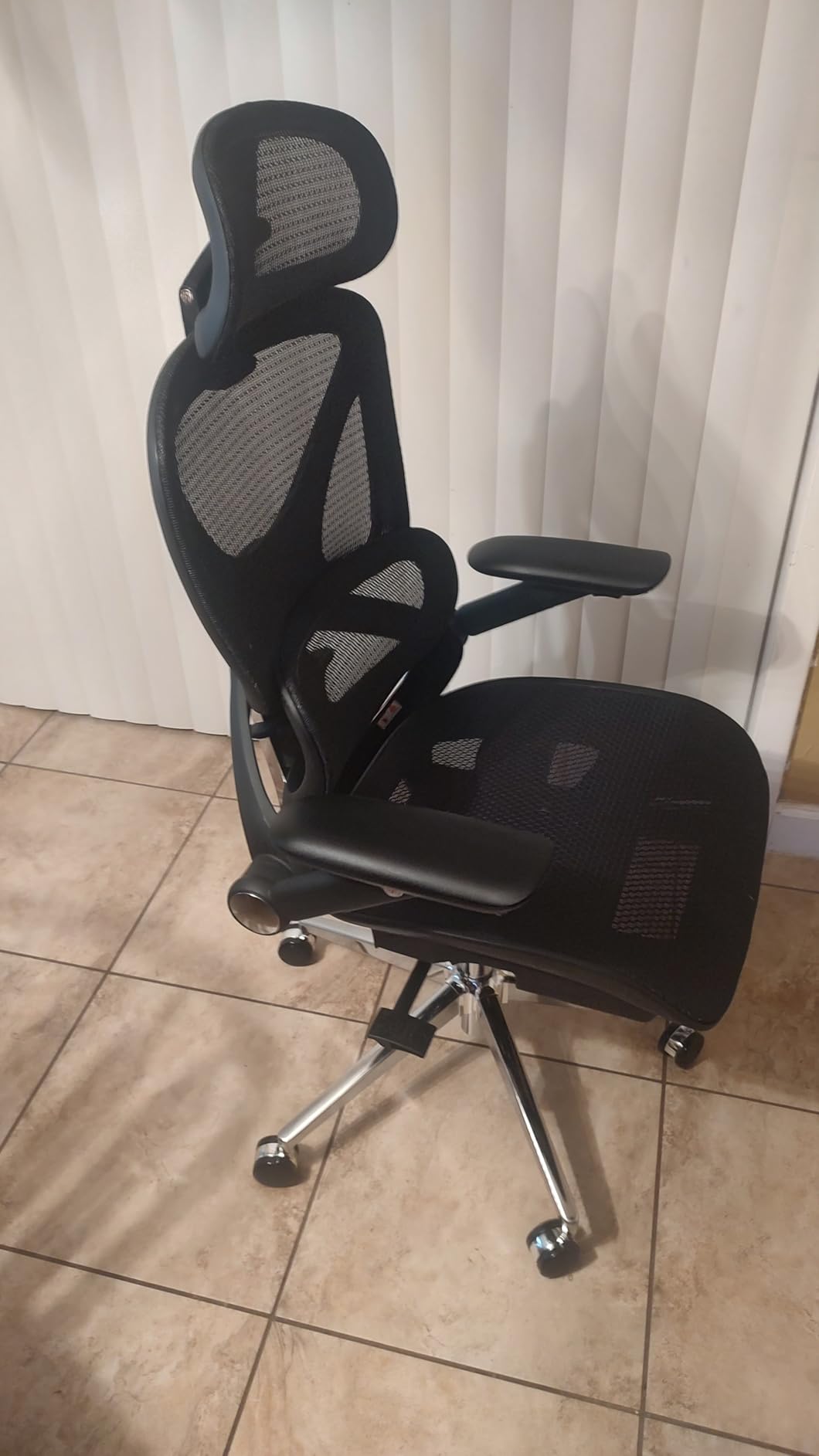
The CAPOT has the highest weight rating in this roundup by a wide margin at 400 pounds, built on a stainless steel base with a leak-proof SGS gas lift. If you have been filtering most mesh chairs out on capacity, this is the one that survives the filter. It is also BIFMA X5.1 certified with a 5-year warranty and free part replacements.
Its lumbar is worth describing precisely: a micro-adjust mechanism with 2 inches of travel across 8 levels, which maps across the L1 to L5 spine. When buyers fit its width, the reviews say that lumbar and the Aerovith mesh seat genuinely relieve long-day back pain. The mesh seat measures 19.3 by 20 inches with an 18.5 to 22.05 inch height range, the deepest height range here.
Owners also single out the packaging, which is unusually good: labelled parts, thread-locked bolts and a handled hex key. That sounds minor until you have assembled a chair at eleven at night.
This is also the most polarised chair we reviewed. The 4.1 star average with 62 percent five-star is among the lowest in the group, and the detractors raise real problems. The lumbar support does not stay in position and has to be reset repeatedly, which is exactly the failure that makes an adjustable lumbar worse than a fixed one for pain.
For heavier users specifically, the seat can pinch the sides of the thighs, and despite the 400 pound rating the mesh seat feels firm with little padding. There are reports of metal chair legs at the caster mount breaking more than once for one long-term owner. The front seat lip also makes it hard to sit down without the chair rolling away, and QA complaints include burrs, rough edges and inconsistent hinges.
Who this chair suits well
Bigger bodies who have been excluded from every other chair on this list. The 400 pound rating, stainless steel base, 20 inch seat width and deep height range are genuinely built for that. The 8-level lumbar is the most granular adjustment in the roundup, and the three lockable recline positions at 90, 110 and 125 degrees are more than most of the field offers.
Where it falls short
Stability over time. The lumbar that will not hold its setting is a serious problem for anyone relying on it for pain relief, and the leg failures reported at the caster mount are a durability concern. If you are heavy, the firm mesh seat pinching at the thighs is the thing to test first, ideally by sitting before you commit.
10. MOLENTS Ergonomic Mesh Office Chair – Best Build Quality in the Group
Ergonomic Office Chair, Mesh Computer Desk Chairs with BIFMA X5.1 Certified, Adjustable Lumbar Support, 3D Arm, Tilt Back, Wide Seat, Comfy Swivel Work Task Chair for Company and Home (Obsidian Black)
Lumbar moves up, down, forward and back
19.8 inch wide mesh seat
3D sliding and rotating arms
BIFMA X5.1 to 300 lbs
Pros
- Movable lumbar with owners reporting back pain easing within days
- Roomy 19.8 inch seat that suits larger frames
- Taut bouncy mesh with no snags or loose threads
- Excellent packaging and proactive after-sales service
Cons
- Sliding and rotating armrests give way when you pull the chair
- Overall adjustability is more limited than the feature list suggests
- Unpadded mesh seat feels firm in cooler weather
The MOLENTS has the second-highest rating in this roundup at 4.7 stars with 81 percent five-star, and the most recent reviews are almost entirely about build quality, packaging and after-sales care. The number of ratings is small at 356, and we weigh that accordingly, but the quality of the feedback is high.
The lumbar adjusts up and down and forward and back, and multiple owners report their back pain disappearing within days of switching. The seat is a genuinely roomy 19.8 inches wide with 18.9 inches of depth, and it is described as suiting a 6 foot, 200 pound frame without feeling boxed in. The mesh is premium breathable high-elastic material on both the back and the seat, reported as taut and bouncy with no snags, loose threads or untrimmed plastic.
Tilt is controlled with stronger-than-expected tension across three positions from 90 to 120 degrees, the frame is BIFMA X5.1 certified to 300 lbs, and the after-sales record stands out: owners mention free PU casters and foam seat covers being sent without being asked, and clearly labelled hardware that assembles in 15 to 35 minutes for one person.
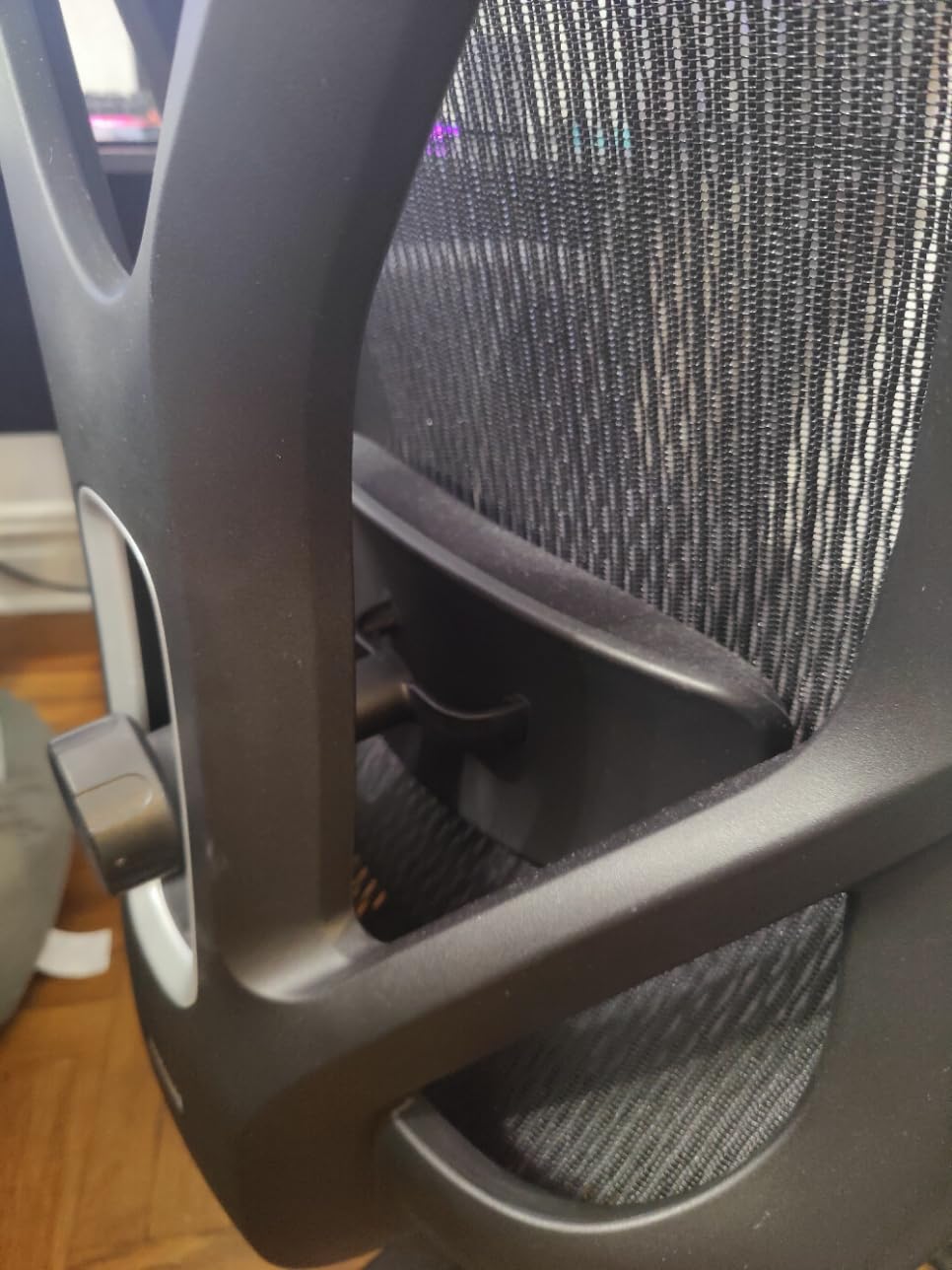
The compromise is the armrests and the honesty of the feature list. The 3D armrests slide and rotate on panels, and those panels give way when you pull the chair by them, which is something you will do at least once. More broadly, several owners note that the overall adjustability is more limited than the feature list implies.
Controls are also not obvious from the chair itself, so you will be hunting for the tilt and raise-lower levers until you memorise them. The seat is unpadded mesh, which some owners find firm in cooler weather, and one reviewer found it less comfortable than a previous mesh chair that cost more. Set your expectations on the review base: fewer ratings than anything else here means less long-term data.
Who this chair suits well
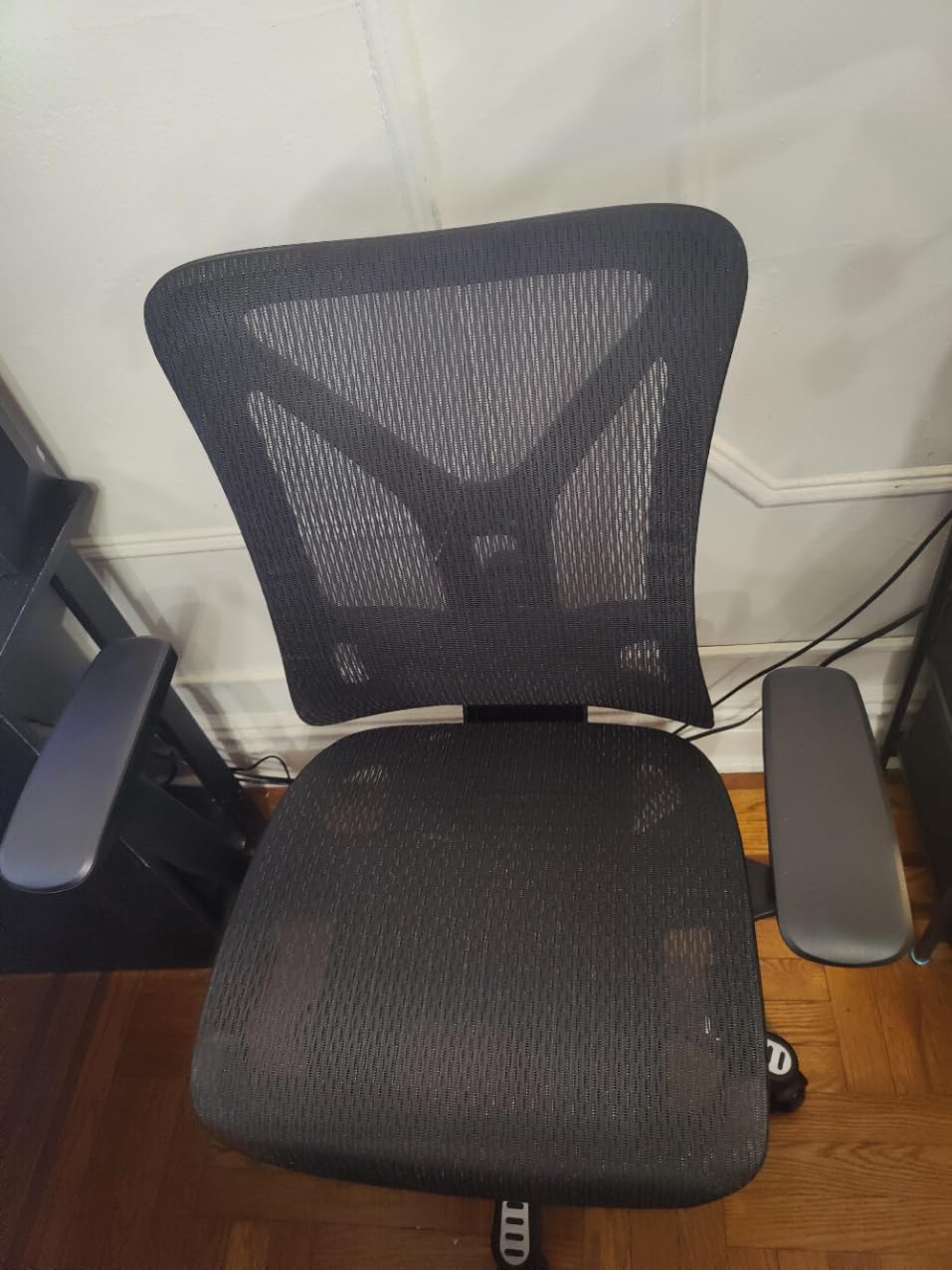
Larger frames who want a wide, uncluttered seat. At 19.8 inches wide with a movable lumbar, this is one of the few chairs here where the seat geometry is not the limiting factor. If the seat and seat covers matter to you more than a long feature list, and if responsive support after a quality problem matters to you at all, this is the chair to beat.
Where it falls short
Anyone who is heavy-handed with the arms. The sliding and rotating panels flex, and pulling the chair by the armrest is a habit almost everyone has. The overall adjustment range is narrower than the marketing implies, and the 2-year warranty is shorter than most here despite the high rating.
11. Solviva Mesh Office Chair with Headrest – Best for Neck and Upper Back
Solviva Mesh Office Chair with Headrest, Lumbar Support, 3D Arms, Wide Seat
Adjustable headrest and lumbar
21 inch deep padded seat
120 degree recline plus rocking mode
300 lbs capacity
Pros
- Lumbar described as supportive without being too firm
- Headrest is supportive when leaning back and highly adjustable
- Three sitting modes with a rocking function
- Roomy generously padded seat that feels soft
Cons
- Small review base compared with the other chairs here
- Seat height range is only 2.96 inch
- No flip-up armrests and only one colour offered
The Solviva carries the highest rating we found at 4.9 stars with 88 percent five-star and, according to the review data, no ratings below four. The 369-rating base is one of the smallest in this roundup, so treat the score as promising rather than proven over years. What the reviews do consistently describe is comfort, breathability and the recline and rock modes.
This is the chair to consider when your pain is not in your lower back. The headrest is described as supportive when leaning back and highly adjustable, and the backrest offers three sitting modes: upright, rocking and a 120 degree recline. For neck and upper back strain from looking down at a screen all day, having somewhere for your head to go is the feature that changes the day.
The 3D armrests adjust up, down, forward, backward and side to side, the seat is wide and generously padded, and the frame is a reinforced five-star metal base with an SGS-certified gas lift rated to 300 lbs. Owners call it good value against chairs costing several times more, and assembly is described as easy with clear instructions and smooth-rolling casters.
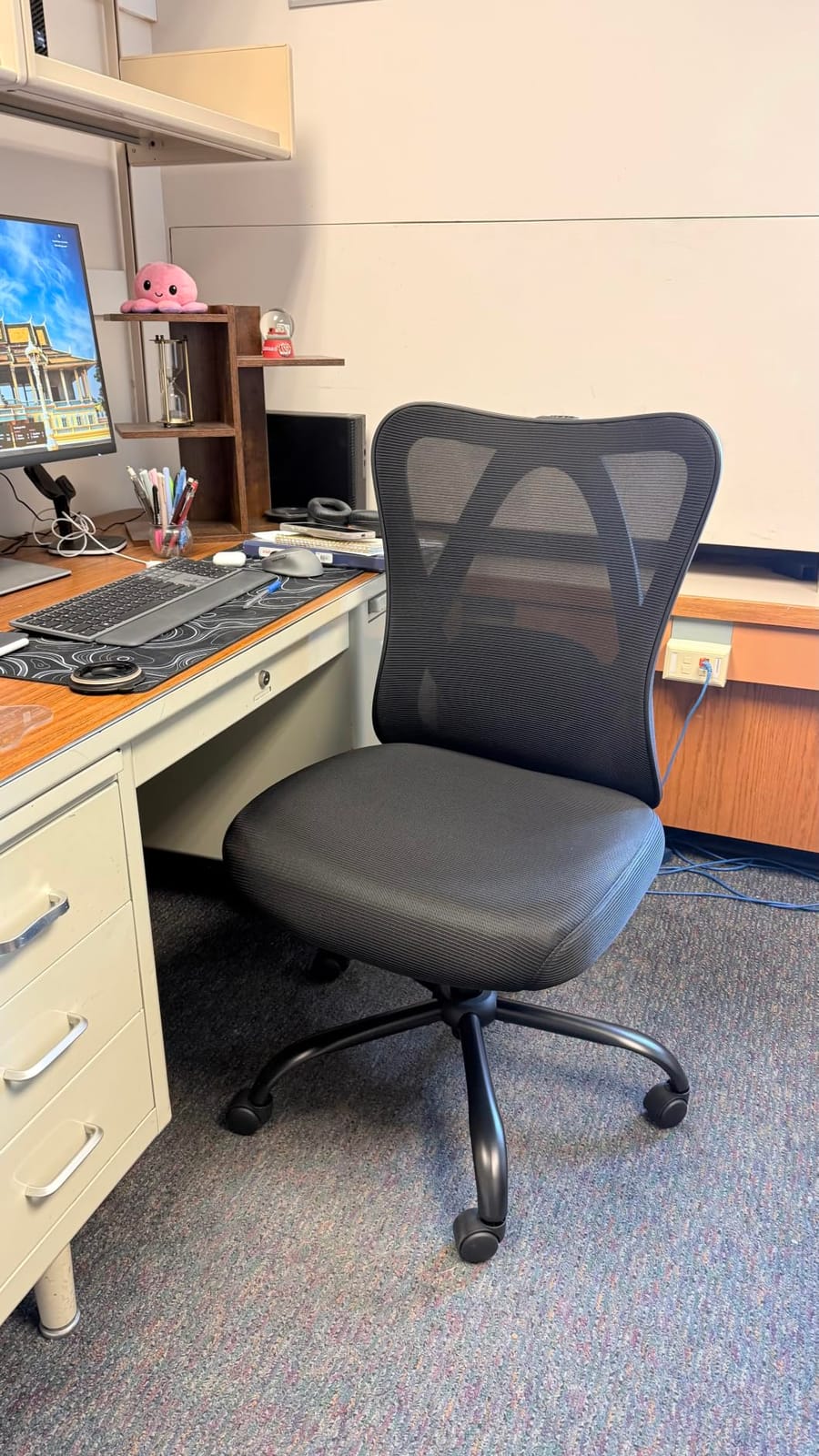
The limitations are worth being blunt about. The seat height adjustment range is only 2.96 inches, from a 20.47 inch minimum, which means shorter users may not be able to get their feet flat on the floor, and that is a foundational ergonomic requirement. There are no flip-up armrests, so the chair cannot slide under a desk as easily, and only the black colourway is offered.
Then there is the data itself. A 4.9 average is excellent, but a 369-rating pool tells you about the buyers who bought, not about how the chair performs in year three. A forum favourite like the SIHOO M57 or the Branch Ergonomic Chair carries thousands of ratings for a reason. If you can test it, test it. If you cannot, weigh the short seat height range against how much you care about the headrest.
Who this chair suits well
Anyone whose discomfort is in the neck, shoulders and upper back rather than the lumbar, and who wants a soft, wide seat to sink into. The rocking mode is a genuinely useful middle ground between a rigid upright chair and a full recline, and it gives you a way to move without standing up. The padded seat is one of the softest here, which is a genuine benefit for sit bones on a hard day.
Where it falls short
Short users, first and foremost, because a 2.96 inch range starting at 20.47 inches may not put your feet flat. Anyone with a tight desk, because there are no flip-up arms. And anyone buying purely on ratings should note that this is one of the thinnest evidence bases in the guide.
12. GABRYLLY Ergonomic Office Chair with Footrest – Best for Reclining Breaks
GABRYLLY Ergonomic Office Chair with Footrest, 135° Reclining Desk Chair with Adjustable Lumbar Support,3D Armrest,Headrest & Large Steel Base, 300LBS Heavy Duty Mesh Chair
Lumbar with 3 inch vertical and 1.6 inch horizontal travel
135 degree recline in 3 locks
18.1 inch steel footrest
Sized for 5ft3 to 6ft users
Pros
- Two-way lumbar adjustment that conforms to the lower back
- Retractable 18.1 inch steel footrest that feels durable
- 135 degree recline with three lock positions
- Large steel base with 27.5 inch legs and silent wheels
Cons
- Lumbar can be fiddly to adjust into position
- Hard plastic armrests and a mesh seat can feel scratchy
- Armrests cannot fold back to free up desk space
This GABRYLLY is a different animal from the model at number one: a high-back recliner with a footrest rather than a task chair. Reviewers describe it as the most comfortable chair they have owned, and the footrest plus the 135 degree recline are the reason. The steel footrest extends to 18.1 inches and owners report it feels genuinely durable rather than flimsy.
The lumbar here is better than on the number-one model, adjusting 3 inches vertically and 1.6 inches horizontally to conform to the lower back. Recline locks at 90, 110 and 135 degrees, the armrests adjust three ways, and the mesh headrest has three adjustments of its own. The large steel base has 27.5 inch legs, which is what stops a chair like this from tipping when you extend the foot and lean back.
At 622 ratings and 4.4 stars with 67 percent five-star, the service record is a strength: free extended gas lifts, upgraded casters and seat covers have all been sent. Coverage runs three years for parts, and assembly takes 15 to 25 minutes.
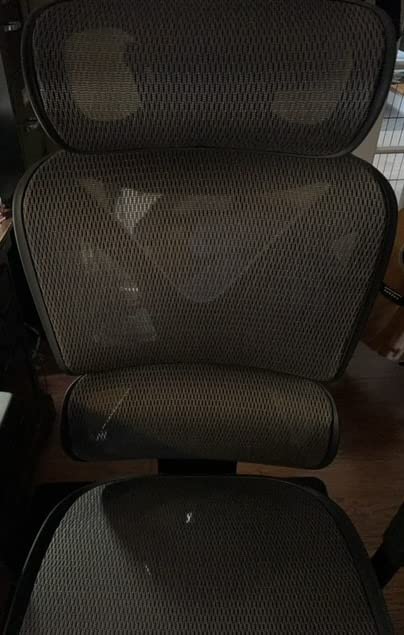
The most serious complaint is a gas-lift and pneumatic piston failure within seven months for one owner, which is worth knowing about given how much load a recliner puts through that column. Softer issues are more common: the lumbar is fiddly to adjust into position, and the hard plastic armrests and mesh seat can feel scratchy without pads or a cover.
Also note the fit window. This chair suits users between roughly 5 foot 3 and 6 foot tall only, and the armrests cannot fold back, so you lose the desk clearance that made the first GABRYLLY appealing. The product data does not list a shipping weight, but the chair is tested to 300 lbs by SGS and BIFMA. One buyer also hit a warranty registration link on the manufacturer’s site that did not work, so register through a route you have verified.
Who this chair suits well
Anyone whose pain is worse at the end of a long sitting block and eases when they get up and move. A 135 degree recline with a footrest changes the position of your hips and spine in a way no upright task chair can, and the all-mesh build stays cool while you do it. The three-year parts warranty and the free gas-lift replacements are meaningful on a chair with a piston under load.
Where it falls short
Small desks, because the armrests do not fold back. Anyone outside the 5 foot 3 to 6 foot window. And anyone who dislikes fiddly controls, because the two-way lumbar takes real effort to land on the right spot. Keep an eye on the gas lift in the first year.
What Actually Reduces Back Pain in a Mesh Chair
A chair can only do so much, and the levers that matter are narrower than the feature lists suggest. These are the five we would rank, in order of impact on how your lower back behaves over a full day.
1. Depth-adjustable lumbar support. Height adjustment is common; depth adjustment is the one that separates a chair that fits from a chair that nearly fits. A lumbar pad that moves forward and back can sit against the actual curve of your spine rather than hovering in the general neighbourhood. The CAPOT’s 8 levels, the HOLLUDLE’s rotation and the ELABEST’s 15 degrees of angle all attack this directly.
2. Seat depth and the waterfall edge. Sit too shallow and your sit bones, the bony points you actually rest your weight on, hang off the front of the cushion. That concentrates pressure exactly where sciatica and tailbone pain live. A waterfall edge rounds the front of the seat so the edge presses less into the backs of your thighs. Check for two to three fingers of clearance between the front of the seat and the back of your knees, and if there is no adjustment, a separate seat cushion can correct a short seat.
3. A hip-pivot tilt with real range. The best mechanism is synchro-tilt, where the back moves roughly twice as far as the seat and the pivot sits near your hip joints rather than at the base of the chair. That geometry keeps your feet planted and your spine aligned as you lean back. A chair that tips as one piece shoves you forward, which increases the load on your lower back rather than reducing it.
4. Mesh that stays taut. Good mesh distributes pressure evenly across the back and keeps air moving, which matters if you run hot. It sags over time when the frame flexes or the mesh is thin, and a sagging back loses its support exactly where you need it. The MOLENTS and ELABEST are the two here whose reviews specifically call the mesh taut, bouncy and squeak-free.
5. Armrests that do the work. Arms carry the weight of your forearms so your shoulders do not have to hold your elbows up all day, which is where mid-back and shoulder pain originates. Look for at least three dimensions of movement, and test whether the arm pad sits low enough to support your forearms with relaxed shoulders. If the arms will not lock, or sit too high, they are decoration.
On mesh versus foam, the honest summary is this: mesh wins on airflow and on long sessions in a warm room, and foam wins on immediate softness and on seat comfort for the first hour. Pressure mapping and first-hour comfort are not the same thing, and for back pain the fifth hour matters more. A firm mesh seat that keeps your pelvis higher and your spine neutral beats a plush foam seat that lets you sink into a rounded posture by lunchtime.
One segment that is consistently underserved: users above 300 pounds. The CAPOT at 400 pounds and the TRALT and Marsail at 330 pounds are the three to look at, the CAPOT’s stainless steel base is the only one built around that load. Just check the seat width and thigh pinch before you commit, because a rating that high on paper does not guarantee a seat that is wide enough.
4-Step Setup Guide for Back Pain Relief
A chair that fits badly performs worse than an average chair set up well. Four adjustments, in this order, take about ten minutes and do more than most people expect.
Step 1: Set the seat height to the 90-90-90 rule. Sit with your feet flat, knees bent at roughly 90 degrees and hips at the same 90 degrees. If your feet do not reach the floor, the seat is too high and your weight goes onto the front of the seat, which pushes your pelvis into a rounded position. Most chairs here have a separate lever for this.
Step 2: Set the seat depth. Slide the seat forward or back until you have two to three fingers of space between the front edge and the back of your knees, with your lower back resting flat against the lumbar. Your feet should still be flat. If the seat will not go deep enough, you are too tall for the frame and no amount of lumbar adjustment will compensate.
Step 3: Position the lumbar support. The pad should sit at the small of your back, in the dip above the top of your pelvis, not in the middle of your back. Press your lower back fully into it. If there is a gap, move the pad forward if the chair allows it, or add a small lumbar roll behind it. This is the single most common setup error and the easiest to fix.
Step 4: Set the armrests and recline. Lower the arms until your forearms rest flat with your shoulders relaxed, elbows at about 90 degrees. If your shoulders start to rise, the arms are too high. Then set the tilt tension so you can lean back to roughly 100 to 110 degrees with a light push and hold that position. If the chair pulls you forward when you recline, the pivot is wrong for you.
Give it three weeks before you judge it. Your body needs time to unlearn the posture it has been holding in a bad chair, and the first two days often feel worse while you adjust. Judge the chair at week three, not on day one.
If you are still in pain at the three-week mark, the chair is probably not the whole problem. Pain that wakes you at night, travels down a leg, or comes with numbness or weakness needs a clinician, not a purchase. A chair buys you a better baseline; it does not replace diagnosis.
Frequently Asked Questions
Are mesh office chairs good for your back?
Yes, when the lumbar support is adjustable in depth and the seat depth fits your frame. Mesh keeps air moving across your spine and provides firm, even contact at the lower back, which helps during long sitting sessions. The mesh itself is not what treats pain, though. What matters is whether the lumbar can move forward and back, whether your knees clear the seat edge by two to three fingers, and whether the tilt pivots at the hips.
What type of office chair is best for lower back pain?
A mesh task chair with a depth-adjustable lumbar, a hip-pivot synchro-tilt mechanism and a waterfall seat edge. Depth-adjustable lumbar matters most because a pad that only moves up and down cannot match a spine whose curve sits deeper or shallower than average. Look for seat depth of roughly 17 to 20 inches, armrests that support the forearms with relaxed shoulders, and a weight rating above your own body weight by a margin.
How deep should my office chair seat be?
Deep enough to leave two to three fingers of space between the front edge of the seat and the back of your knees, with your lower back flat against the lumbar support and both feet on the floor. That usually means 17 to 20 inches of seat depth. Seat depth in this range fits most adults between roughly 5 foot 3 and 6 foot 2, and is the measurement to check first when a chair feels wrong in the first hour.
Are mesh chairs or cushioned chairs better for back pain?
Mesh wins for airflow and for long sessions in a warm room, and it tends to keep your pelvis higher and your spine in a more neutral position. Cushioned foam feels better in the first hour and is kinder to sit bones on a hard day, but it lets you sink into a rounded posture and cheap foam flattens within months. For back pain, the fifth hour matters more than the first, so mesh usually wins if you sit all day.
Can an ergonomic chair really fix back pain?
Partly. A good chair removes causes of irritation, like a lumbar pad in the wrong place or a seat that is too shallow, and that can make a real difference across eight hours a day. It cannot correct disc damage, a structural issue, or muscle weakness. Judge a new chair at three weeks rather than day one, and if pain wakes you at night or travels down a leg, see a clinician instead of shopping again.
What is the 90-90-90 rule in ergonomics?
It means your elbows, knees and hips each sit at approximately 90 degrees. It is the first adjustment to make on any chair. Sit with your feet flat on the floor, your knees bent at 90 degrees and your hips at 90 degrees. If your feet dangle, the seat is too high and your weight shifts onto the front edge, which rounds your lower back and creates the problem you were trying to fix.
The Verdict for 2026
After twelve chairs and a lot of reading, the best mesh office chairs for back pain come down to three picks. The GABRYLLY is the best overall choice, with a 20 inch waterfall-edge seat, a 300 pound rating and 14200 ratings of consistent owner feedback behind it. The HOLLUDLE is the best value, and the only chair here whose lumbar moves in four directions including rotation. The ELABEST X100 is the one to buy if you are tall, heavier, or you want a footrest and the deepest lumbar adjustment in the group.
Match the chair to your pain pattern rather than to the spec sheet. Deep lumbar pain and a 17 inch seat says you need depth, not height. Running hot in a warm room says mesh over foam. Heavier than 300 pounds narrows the field to three chairs immediately. And if your discomfort is in your neck and shoulders, the Solviva’s adjustable headrest is the feature that will actually help.
Give any new chair the four-step setup and then give it three weeks. If you want more help narrowing the field, start with our full office chair roundup or our ergonomic chair guide for the foam and hybrid options mesh cannot cover.