
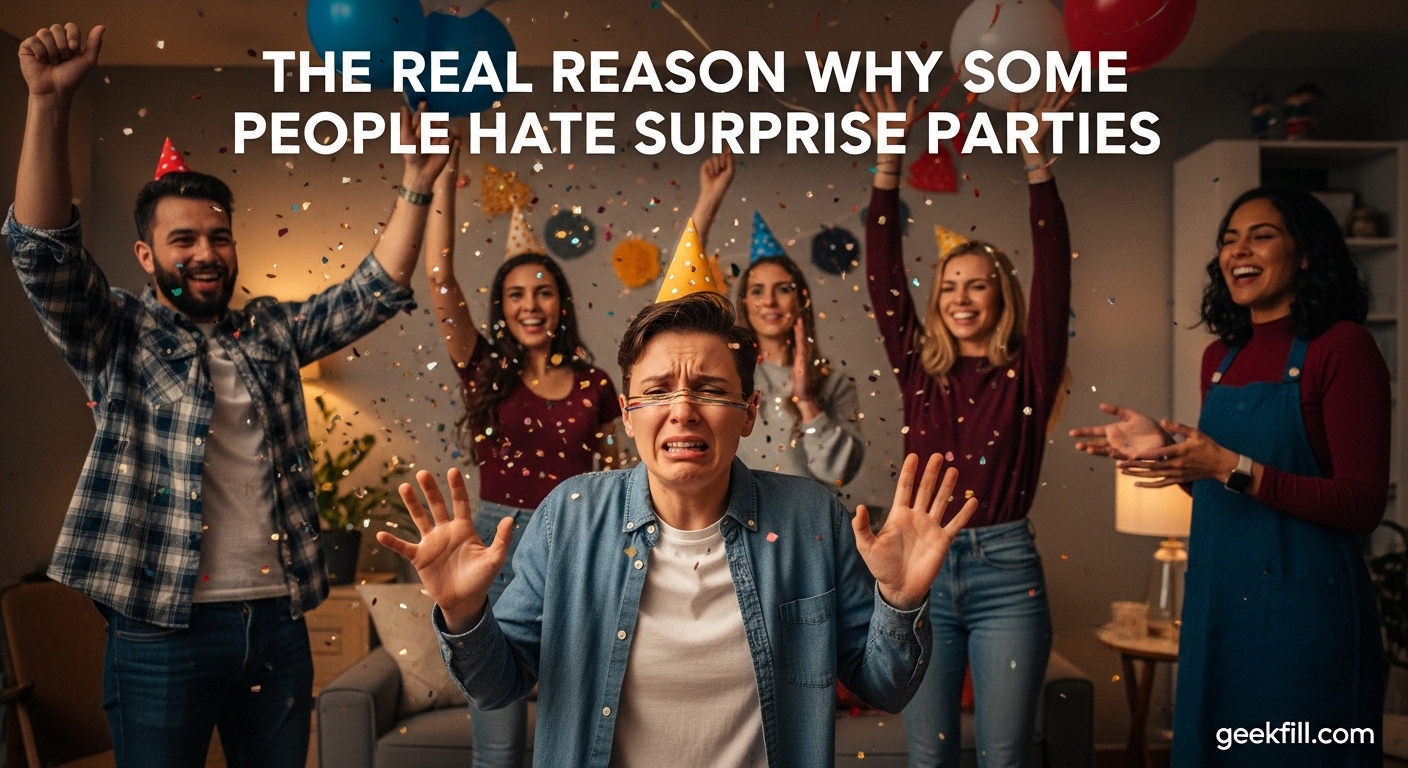
I was scrolling through Reddit last month when I stumbled on a thread that stopped me cold. A user had shared their surprise birthday party experience, and the comments section was filled with people saying the same thing: “I hate surprise parties, and I thought I was the only one.” That is when I realized this topic deserved a deeper look. Here is the real reason why some people hate surprise parties, backed by psychology, neuroscience, and real experiences from people who have been there.
According to research from Sensory Intelligence, 66% of people don’t actually want surprise parties. That is two out of every three people walking around who would prefer to skip the sudden burst of noise, the crowd jumping out from behind furniture, and the immediate pressure to react. The dislike is not about being ungrateful or antisocial. It runs much deeper into how our brains process unexpected events.
Let me walk you through what is actually happening when someone throws you a surprise party, and why your reaction (or your friend’s reaction) makes complete sense from a neurological and psychological perspective.
Table of Contents
What Happens in Your Brain When You’re Surprised
Your brain treats surprises as potential threats. When someone jumps out and yells “Surprise!” your brain does not know if this is a party or a predator. For a fraction of a second, everything freezes. Research published in the journal Cell shows that unexpected stimuli trigger a brain freeze moment where your neural circuits essentially pause to recalibrate. Your emotions intensify by up to 400% during this window. That intensity can feel exhilarating for some people and terrifying for others.
The problem is that this response is automatic. You cannot choose to have a milder reaction. Your amygdala, the brain’s threat detection center, fires before your prefrontal cortex can evaluate the situation. For people with lower sensory thresholds or higher baseline anxiety, this sudden surge of stress hormones feels genuinely overwhelming.
Dr. Tania Luna, who literally wrote the book on surprises, explains this phenomenon in her research. She describes how surprises force our brains to rapidly shift from one reality to another. The person walking through their door expected an empty house and quiet evening. Instead, they get twenty people, flashing lights, and loud noise. That gap between expectation and reality is where distress lives.
The Need for Control and Predictability
One of the most common complaints from people who hate surprise parties centers on loss of control. A Reddit user in r/introvert captured it perfectly: “You feel out of control. I need control. At all times.” This is not about being a control freak in the colloquial sense. It is about autonomy and the fundamental human need to prepare for social interactions.
When you know about a party in advance, you can make dozens of micro-decisions that protect your wellbeing. You choose what to wear. You decide how long to stay. You prepare conversation topics. You mentally rehearse your exit strategy. You might even eat beforehand or arrange transportation. Surprise parties strip away all of these preparation layers at once.
Routines serve as anchors for mental health. A study cited in Psychology Today found that unpredictable events disrupt our cognitive equilibrium and create measurable anxiety. Even positive surprises can trigger this response because our brains cannot instantly distinguish between good and bad unexpected events. The physiological reaction is nearly identical.
For people who rely on routines to manage anxiety, ADHD, autism spectrum traits, or sensory sensitivities, surprise parties represent a sudden and complete disruption of their carefully maintained stability. The party is not just an inconvenience. It destabilizes their entire evening, sometimes their entire week.
The Consent Problem: Why Surprise Parties Violate Boundaries
Here is a perspective that rarely gets discussed. Surprise parties often violate consent. You are being forced into a social situation without the opportunity to say no. That alone makes many people deeply uncomfortable.
A comment on a Substack article about surprise parties revealed the hidden guilt many people feel: “I had to act like it was a brilliant surprise and much more fun to eat Iceland frozen party food at home instead of a nice fancy burger at a restaurant. I was livid all night but had to pretend to be overjoyed.” This person felt trapped. They could not leave without disappointing friends who had gone to effort and expense. They could not express their true feelings without being labeled ungrateful.
The consent issue becomes even more pronounced for people with social anxiety or those who simply do not enjoy large gatherings. You might have planned a quiet evening alone, or with one close friend, or doing an activity you actually enjoy. Instead, you are suddenly the center of attention in a room full of people expecting you to perform happiness.
Good intentions do not erase the discomfort of boundary violations. Your friends may have spent weeks planning. They may have spent money. They clearly care about you. But those factors do not change how you feel in the moment. The inability to decline graciously, because the surprise has already happened, creates a specific kind of psychological stress.
Neurodiversity and Sensory Processing
The connection between neurodiversity and surprise aversion deserves its own section. People with ADHD, autism, OCD, and sensory processing differences often experience surprise parties as genuinely distressing rather than merely inconvenient.
For individuals with ADHD, surprises disrupt executive function. Your brain was planning one sequence of events, and now it must completely reorient. That cognitive switching cost is higher for ADHD brains. The sudden social demands, the noise, the need to mask natural reactions, all compound into significant overwhelm.
People on the autism spectrum often have specific sensory thresholds. A room full of people talking simultaneously creates sensory overload. The unpredictability of who will be there, what will happen, and how long it will last violates the need for environmental control that many autistic people rely on for comfort.
Even for neurotypical introverts, the equation is simple. Surprise parties force immediate, extended social interaction without recovery time. An introvert who arrives home expecting solitude has no social energy available. They have not budgeted their energy for this interaction. The result is often shutdown, shutdown masking as social engagement, or outright panic.
The Social Pressure to Perform Happiness
Beyond the neurological and autonomy issues, surprise parties create intense social pressure. You are put on the spot. Everyone is watching your reaction. There is an unspoken expectation that you will display immediate, effusive joy regardless of your actual feelings.
A Reddit user in r/introvert described their experience bluntly: “I felt really uncomfortable being put on the spot.” This performance pressure is exhausting. You must read the room, gauge appropriate reactions, express gratitude repeatedly, and maintain emotional displays that may not match your internal state.
The expectation of gratitude adds another layer. Even if you hate the surprise, you are expected to be thankful. Your friends planned this. They spent money. They took time. Social convention demands you respond with joy. For people who value authenticity, this dissonance between felt emotion and required expression creates genuine distress.
There is also the practical problem of not being able to leave. At a normal party, you can duck out early with a believable excuse. At your own surprise party, leaving feels like rejecting the people who organized it. You are effectively trapped until the host decides the event is over.
How to Tell If Someone Hates Surprise Parties
If you are considering planning a surprise party, look for these signs that someone might not appreciate it:
- They mention disliking being the center of attention
- They prefer small gatherings over large parties
- They have routines they stick to religiously
- They mention sensory sensitivities or overwhelm
- They are introverted or have mentioned social anxiety
- They have ADHD, autism, or other neurodivergent traits
- They specifically said they do not want a surprise party
The last point seems obvious, but people often dismiss direct requests because they think the person will enjoy it anyway. Trust what people tell you about their own preferences.
What to Do Instead of a Surprise Party
You can still create a meaningful celebration without the element of surprise. Consider these alternatives:
- Plan the party with the person’s input on guest list and timing
- Give them a heads up that “something is planned” without spoiling all details
- Offer a smaller, more intimate dinner rather than a large gathering
- Plan the celebration for a day when they have no other commitments
- Create an experience-based gift rather than a party
- Ask directly what they want for their birthday
The goal is celebrating the person in a way they actually enjoy. Sometimes that means skipping the party entirely and doing something low-key they genuinely love.
Frequently Asked Questions
Why do some people not like surprises?
People dislike surprises because they trigger a stress response in the brain, violate personal autonomy, disrupt carefully planned routines, and create social pressure to perform happiness. The brain’s initial reaction to surprise is threat detection, which causes emotional intensification and anxiety regardless of whether the surprise is positive or negative.
What personality type doesn’t like surprises?
Introverts, people with high control needs, and those who prefer predictability typically dislike surprises. INFJ and INTJ personality types often report strong aversion to surprises. Additionally, people with neurodivergent traits including ADHD, autism, and sensory processing sensitivities frequently find surprises overwhelming and distressing.
Why do ADHD people not like surprises?
People with ADHD often dislike surprises because they disrupt executive function and require immediate cognitive switching. The brain must abandon its planned sequence of events and completely reorient, which creates higher cognitive costs for ADHD brains. Surprises also create sudden social demands and sensory input that can trigger overwhelm and shutdown.
Are surprise parties a bad idea?
Surprise parties can be a bad idea if the person has expressed dislike for surprises, has anxiety or sensory sensitivities, is introverted, or values control and predictability. Research shows 66% of people do not want surprise parties. The best approach is asking directly what someone wants for their celebration rather than assuming a surprise will be appreciated.
Conclusion
The real reason why some people hate surprise parties comes down to brain wiring, autonomy, consent, and sensory processing. It is not about being difficult or ungrateful. It is about how different nervous systems respond to unexpected social demands.
If you are planning a celebration for someone in 2026, the best gift might be skipping the surprise entirely. Ask them what they want. Respect their answer even if it does not match your vision of a perfect celebration. Two-thirds of people would rather have their preferences honored than experience the momentary shock of a roomful of people jumping out at them.
The people who love you want to celebrate you. Make sure you are celebrating them in ways they can actually enjoy.