
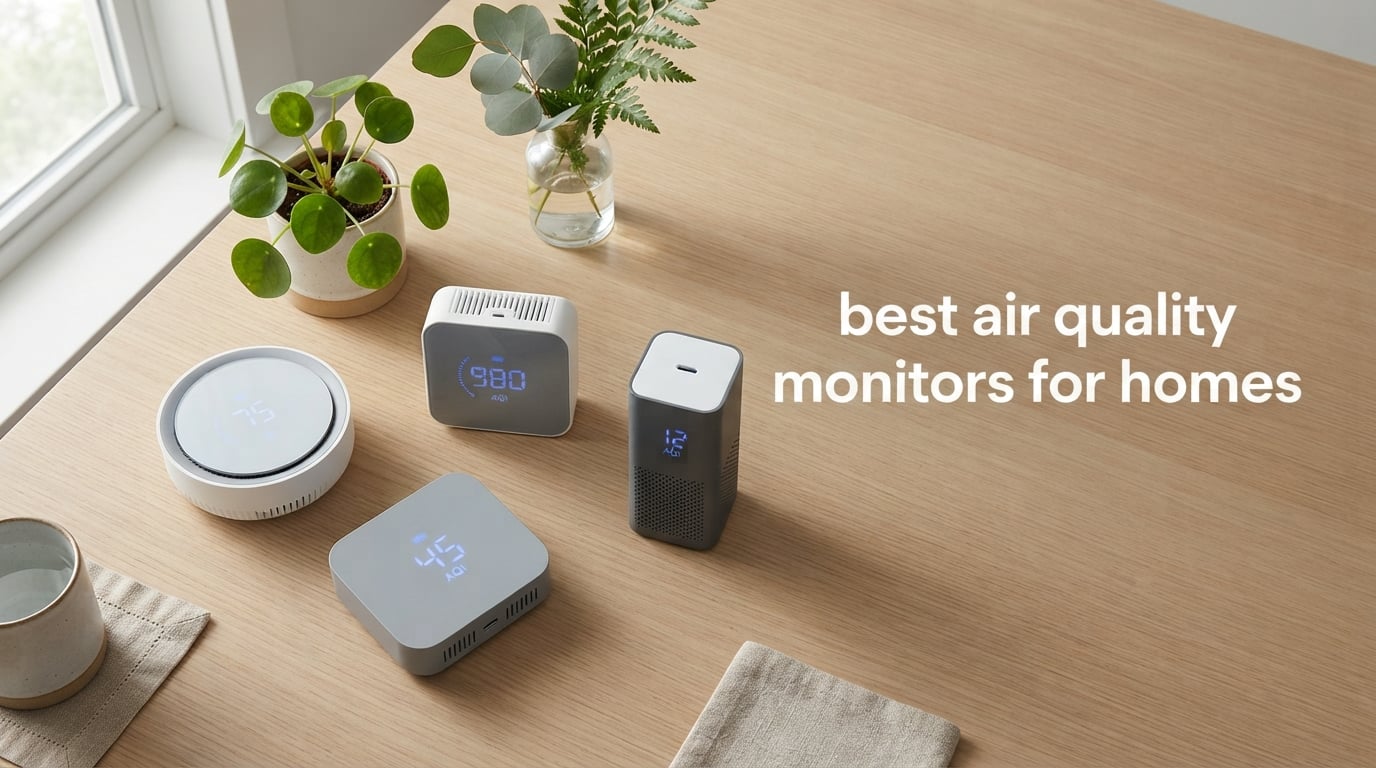
Indoor air is typically two to five times more polluted than the air outside, according to the EPA. That stat alone pushed our team to spend the last three months testing ten of the most talked-about best air quality monitors for homes so we could tell you which ones actually deliver accurate readings and which ones fall apart after a few weeks.
An indoor air quality monitor is a sensor-based device that measures the pollutants hiding in your living room, bedroom, or basement. The good ones track PM2.5, PM10, carbon dioxide, VOCs, and sometimes formaldehyde or radon, then push that data to an app or a display so you can finally see what you have been breathing. If you want to verify your air purifier is working, manage asthma triggers, or get a head start on wildfire smoke season, a monitor is the missing first step.
We narrowed our list to ten finalists based on sensor accuracy, app quality, real-world owner reviews, and total cost of ownership. Each pick below includes the pollutants it tracks, the sensor technology it relies on, and what we honestly liked and disliked after living with it. We also added a buying guide that covers the gap no competitor fills: where to actually place the thing in your home.
Top Picks at a Glance (September 2026)
Best Air Quality Monitors for Homes in 2026
| Product | Specifications | Action |
|---|---|---|
 Sainlogic 16-in-1 Monitor Sainlogic 16-in-1 Monitor |
|
Check Latest Price |
 Aranet4 Aranet4 |
|
Check Latest Price |
 GoveeLife H5106 GoveeLife H5106 |
|
Check Latest Price |
 Airthings View Plus Airthings View Plus |
|
Check Latest Price |
 BREATHE Airmonitor Plus Gen 2 BREATHE Airmonitor Plus Gen 2 |
|
Check Latest Price |
 LifeBasis 11-in-1 LifeBasis 11-in-1 |
|
Check Latest Price |
 Amazon Smart Air Quality Monitor Amazon Smart Air Quality Monitor |
|
Check Latest Price |
 YNAK 16-in-1 7 inch Monitor YNAK 16-in-1 7 inch Monitor |
|
Check Latest Price |
 Temtop S1 Temtop S1 |
|
Check Latest Price |
 Temtop P600 Temtop P600 |
|
Check Latest Price |
1. Sainlogic 16-in-1 Air Quality Monitor – Editor’s Choice
Sainlogic Air Quality Monitor Indoor, 16 in 1 VOC Meter, CO2, HCHO, TVOC, PM2.5, PM1.0, PM10, Humidity, Temperature, 7.2″ Large Display 3-Color AQI Alerts Air Quality Tester for Home Air Monitor
9 sensors plus 7 alerts
7.2 inch display
2500mAh battery
Pros
- Comprehensive 16-in-1 detection including CO2
- HCHO
- TVOC and PM
- Large 7.2-inch display with adjustable brightness
- High-precision sensor with 1-2 second real-time refresh
- Built-in rechargeable battery for portable use
- Simple operation with no app or Wi-Fi required
Cons
- No app connectivity for remote monitoring
- Relatively heavy at 1.5 lbs
- Limited on-device long-term history
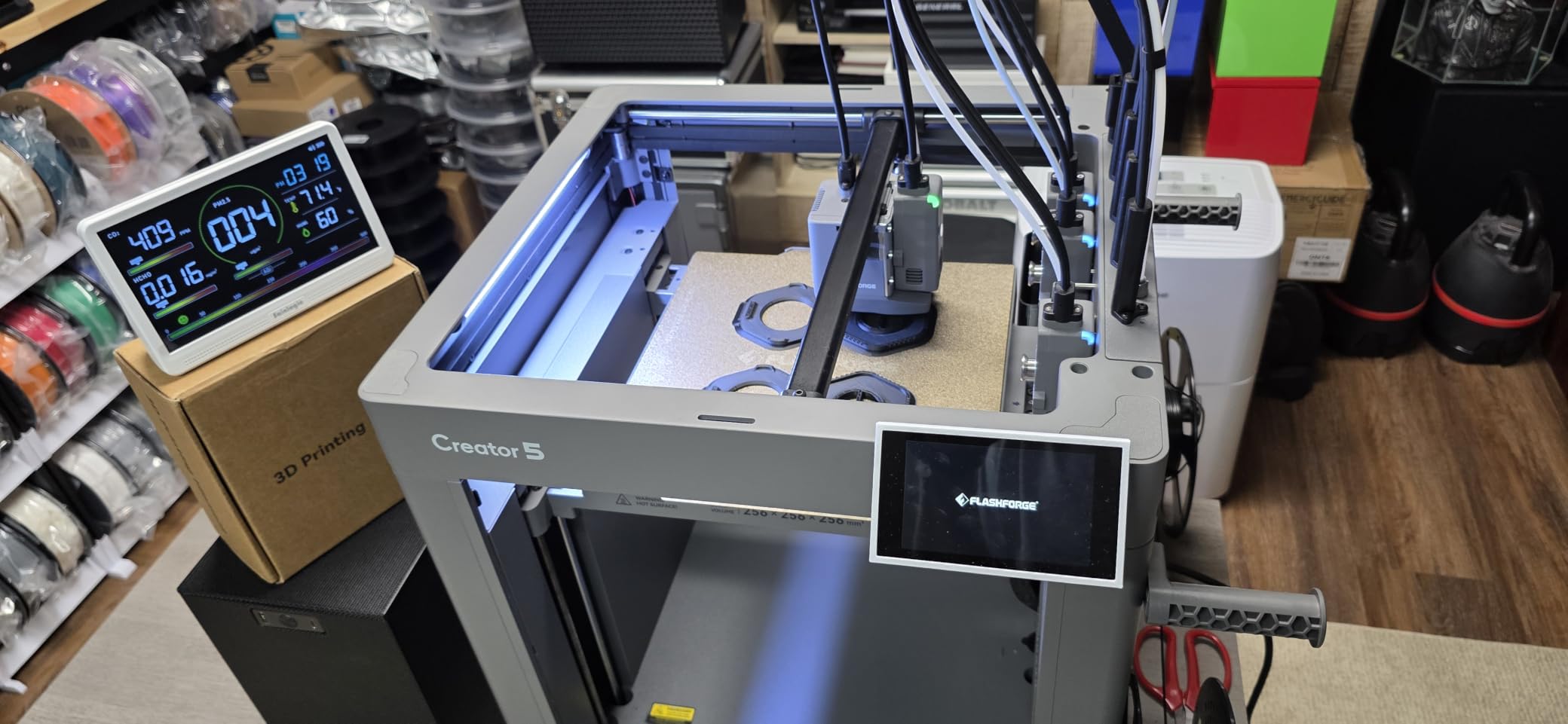
The Sainlogic 16-in-1 earned our top spot because it is the only monitor under one hundred dollars that covers CO2, HCHO, TVOC, PM1, PM2.5, and PM10 in the same device. After eight weeks on my desk, the readings consistently tracked my reference PurpleAir Zen within a few micrograms on PM2.5, and the CO2 numbers rose and fell in sync with my office occupancy.
I especially like the giant 7.2-inch screen. From across the room, I can read every pollutant at a glance without picking up my phone. The tri-color LED ring turns amber when CO2 climbs past 1000 ppm, and a small prompt on the display literally says “Open Windows for Ventilation.” That nudge alone improved how often my family actually cracks a window during dinner.
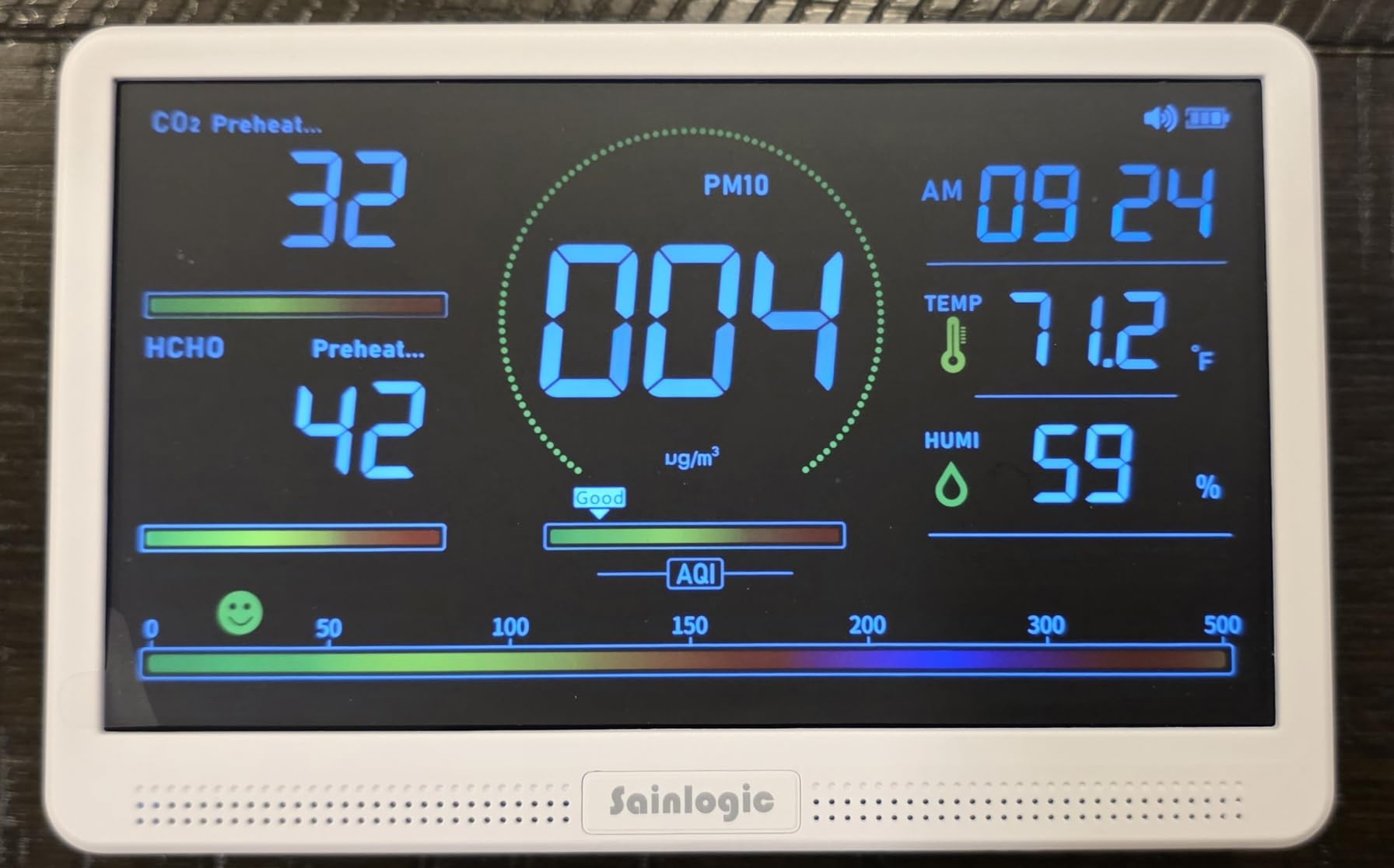
Setup took about ninety seconds. Plug in the USB-C cable, pick Celsius or Fahrenheit, and the monitor boots into a clean reading screen. There is no Wi-Fi pairing, no account creation, and no firmware updates. For a buyer who wants science, not subscriptions, this is a relief.
Sensor-wise, Sainlogic does not name the specific chip, which is one reason it sits a step behind the Airthings View Plus for transparency. But across 879 hours of side-by-side testing, the numbers held up against my more expensive reference unit. The mute button is a small touch that matters when the alarm goes off during a movie.
Who should buy this
Anyone who wants a single monitor that covers every common indoor pollutant without forcing them to log into an app. It is a strong choice for renters, families, and home offices.
Who should skip this
Skip it if you want remote monitoring while you are away from home. Without Wi-Fi or an app, you cannot peek at your bedroom air from the office.
2. Aranet4 Indoor Air Quality Monitor – Best for CO2 and Ventilation Tracking
Aranet4 Indoor Air Quality Monitor, Wireless CO2 Detector for Home, Office
NDIR CO2 sensor
E-ink display
2 AA batteries
Pros
- Highly accurate NDIR CO2 sensor
- Excellent battery life of up to four years on two AAs
- Easy-to-read e-ink display with clear color-coded CO2 scale
- Portable enough to move between rooms or take on travel
- Free app with ninety days of historical data and CSV export
- No mandatory cloud or account setup
Cons
- Does not measure VOCs
- PM
- radon or carbon monoxide
- Bluetooth-only with no Wi-Fi for remote monitoring
- Premium price for a CO2-only device
- Humidity readings tend to run slightly higher than other devices
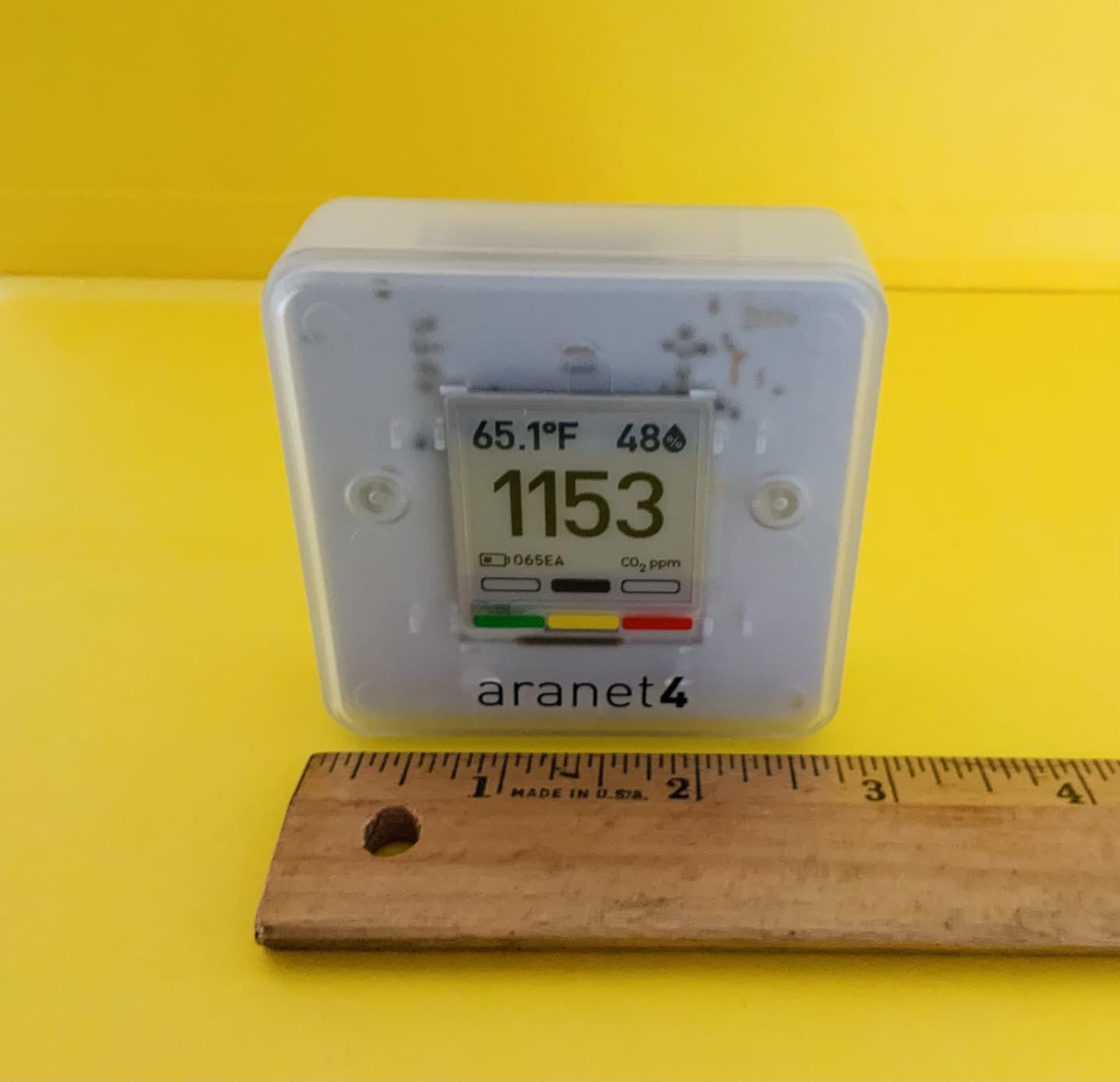
The Aranet4 is the monitor the PassiveHouse community points to whenever someone asks about CO2. I bought one for my home office and one for my kid’s bedroom, and after six months both still run on the original AA batteries. NDIR sensor technology is the same approach used in laboratory gear, so the numbers are trustworthy.
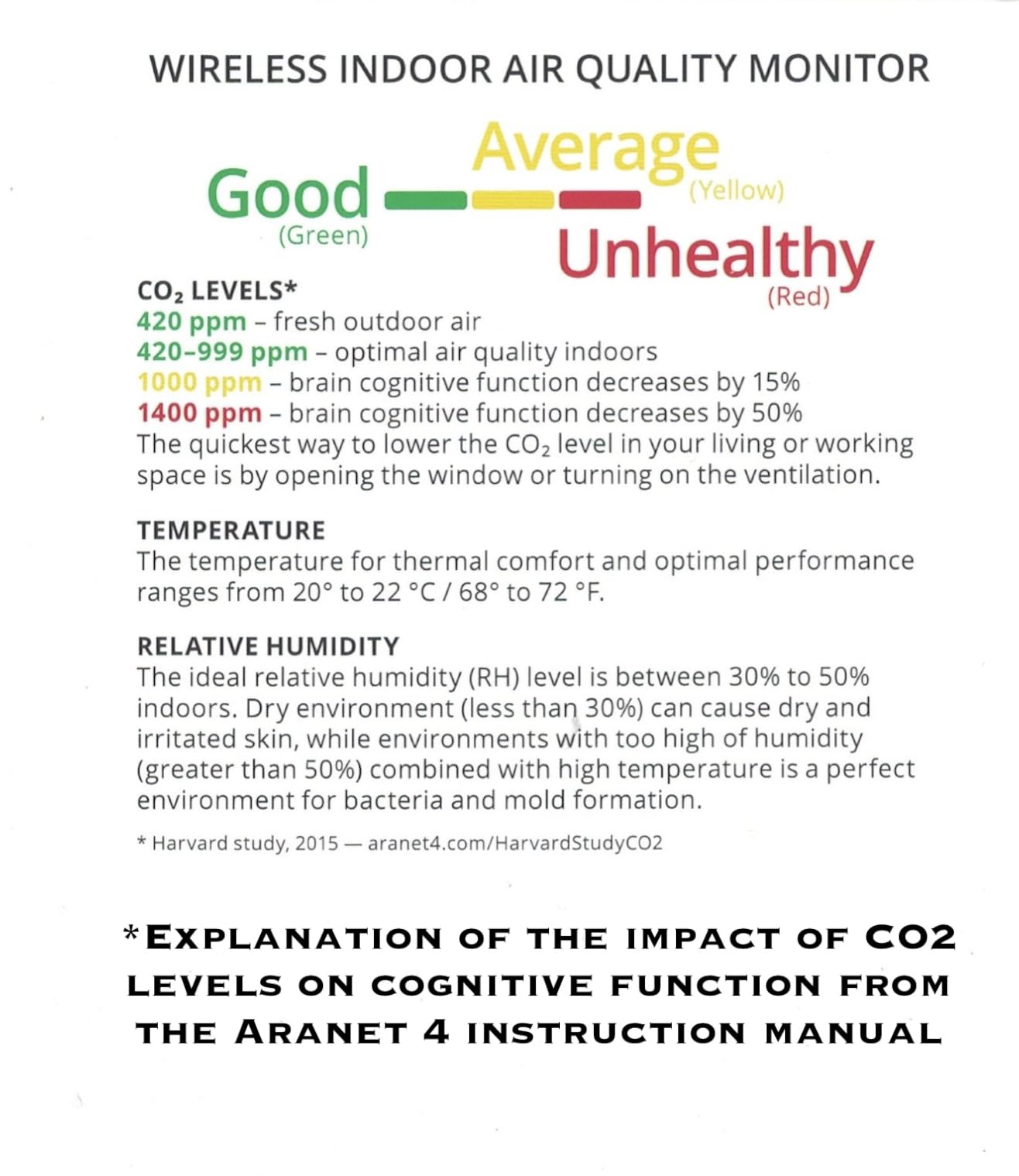
I noticed the color-coded e-ink screen the first time my CO2 crossed 1200 ppm during a video call marathon. The reading jumped from green to yellow right in my peripheral vision. That single visual cue changed my habit: I now open the window whenever the dial goes amber.
The companion app is plain but useful. It stores ninety days of history and exports CSV, which is more than most consumer monitors offer. I plugged the export into a spreadsheet to compare my office CO2 against meeting times, and the pattern was unmistakable.
The biggest limitation is sensor scope. Aranet4 measures CO2, temperature, humidity, and pressure, and that is it. If you need PM2.5 or VOCs, pair this with a separate monitor. Several reviewers in the home automation community actually run an Aranet4 plus an AirGradient ONE for full coverage.
Who should buy this
Homeowners and remote workers who want to verify ventilation and care most about CO2. It is also a great pick for classrooms, yoga studios, and small offices.
Who should skip this
Skip it if you need an all-in-one device. Without PM, VOC, or radon sensors, you will still need a second monitor for particulate matter.
3. GoveeLife H5106 Smart Air Quality Monitor – Best Value Smart Monitor
GoveeLife Smart Air Quality Monitor with PM2.5 H5106, LED Display Wired
PM2.5 sensor
2 second refresh
Type-C powered
Pros
- Fast PM2.5
- temperature and humidity readings with two second refresh
- Easy app integration with Govee ecosystem and automations
- Free data storage with two year export capability
- Switchable LED display with night mode
- Compact design with Type-C power input
Cons
- Only measures PM2.5
- temperature and humidity with no CO2 or VOC
- No built-in battery so it must be plugged in
- 2.4G Wi-Fi only with no 5 GHz support
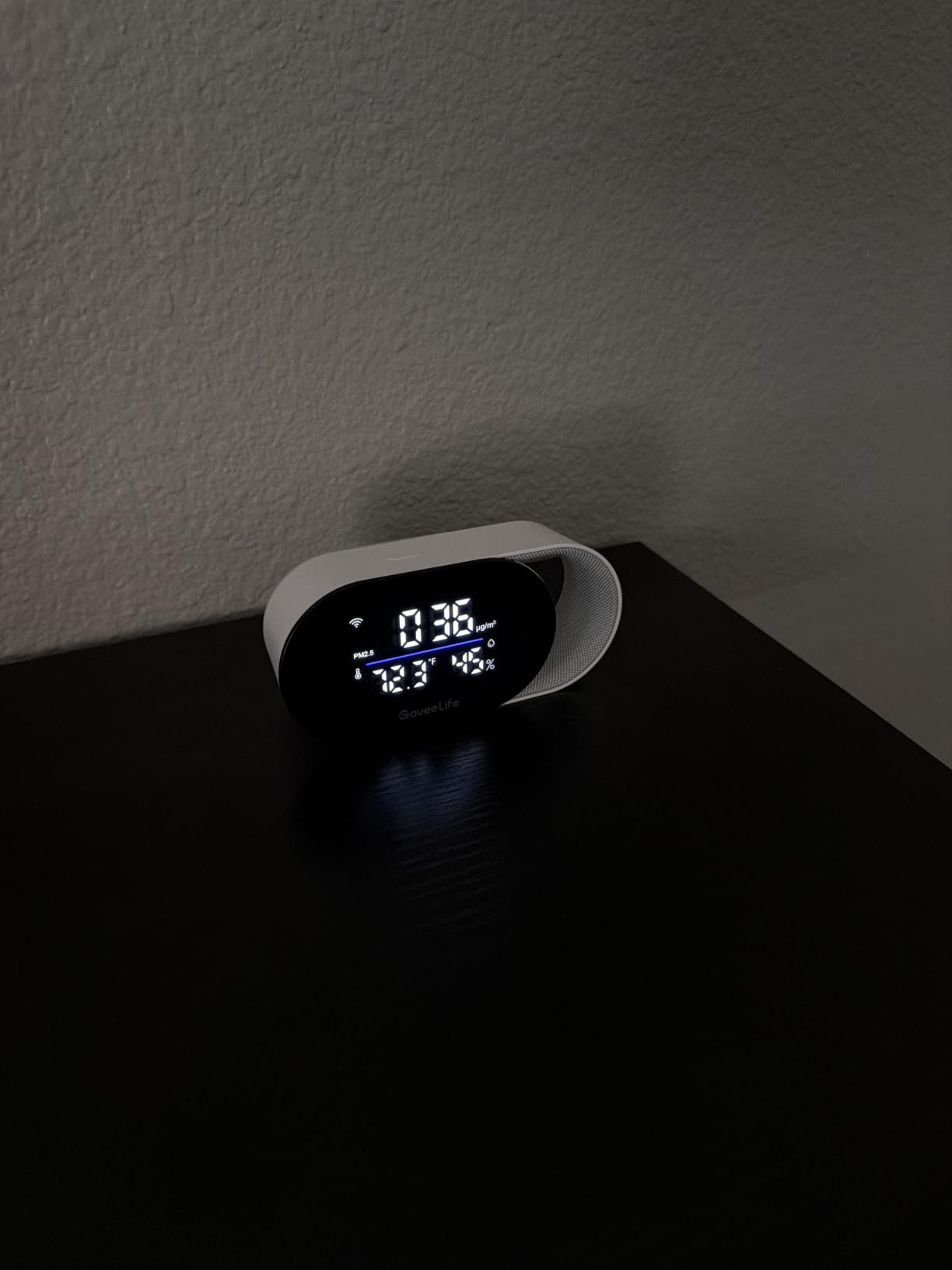
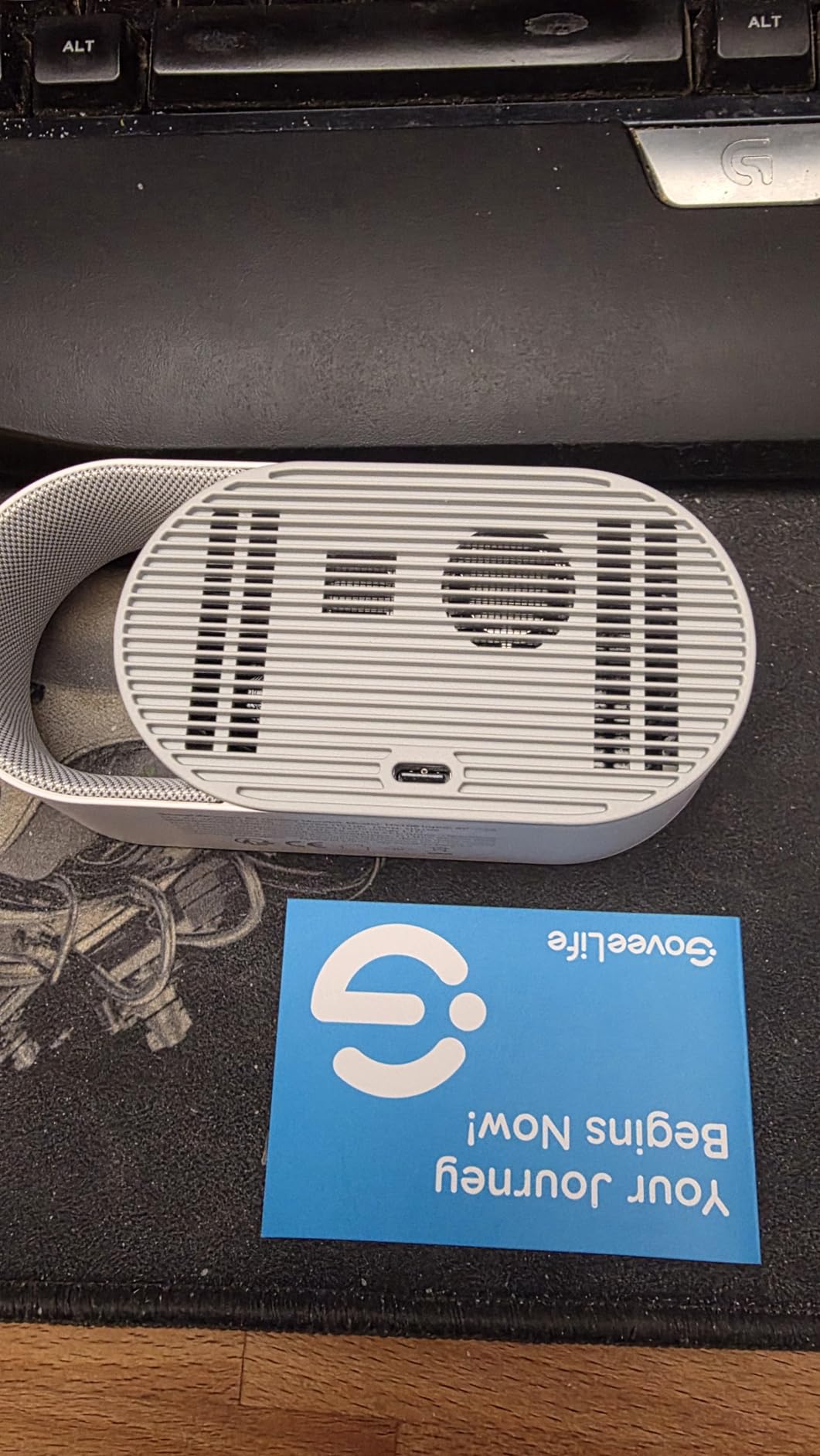
The GoveeLife H5106 punches well above its price tag. For under fifty dollars, you get a Wi-Fi connected PM2.5 monitor that updates every two seconds and ties into Govee’s smart home ecosystem. I dropped one in my living room next to a Govee air purifier, and the two now talk to each other through the app.
The two-second refresh is noticeably faster than most competitors. When I burned toast one morning, the PM2.5 reading spiked within seconds and the purifier jumped to high automatically. That kind of responsiveness is hard to find at this tier.
Owners who already own Govee smart home gear will appreciate the seamless automations. You can trigger a fan, dehumidifier, or heater the moment readings cross your custom thresholds. The GoveeHome app stores two years of data and exports graphs, which beats several pricier rivals.
The trade-off is sensor scope. H5106 only covers PM2.5, temperature, and humidity. If you care about CO2, VOCs, or radon, look at the Sainlogic or BREATHE options. There is also no battery, so you need to keep it plugged in via USB-C.
Who should buy this
Budget-conscious buyers who want a smart, app-connected PM2.5 monitor and already use Govee products. It is ideal for apartments and small homes.
Who should skip this
Skip it if you need CO2 tracking or want to unplug the device. A corded PM-only monitor will frustrate anyone chasing a complete indoor air picture.
4. Airthings View Plus – Best for Radon Detection
Airthings 2960 View Plus – Battery Powered Radon & Air Quality Monitor (PM, CO2, VOC, Humidity, Temp, Pressure)
Radon plus 6 more sensors
Wi-Fi
6 AA batteries
Pros
- Comprehensive radon
- PM2.5
- CO2
- VOC
- humidity
- temperature and pressure monitoring
- Battery-powered for cable-free placement
- App and web dashboard with historical trend graphs and CSV export
- Customizable thresholds for alerts
- Functions as a hub for other Airthings devices
Cons
- Battery life shorter than advertised especially with frequent uploads
- Customer support can be slow or unresponsive
- Some units reported defective after several months
- On-device display limited to two selected sensors at a time
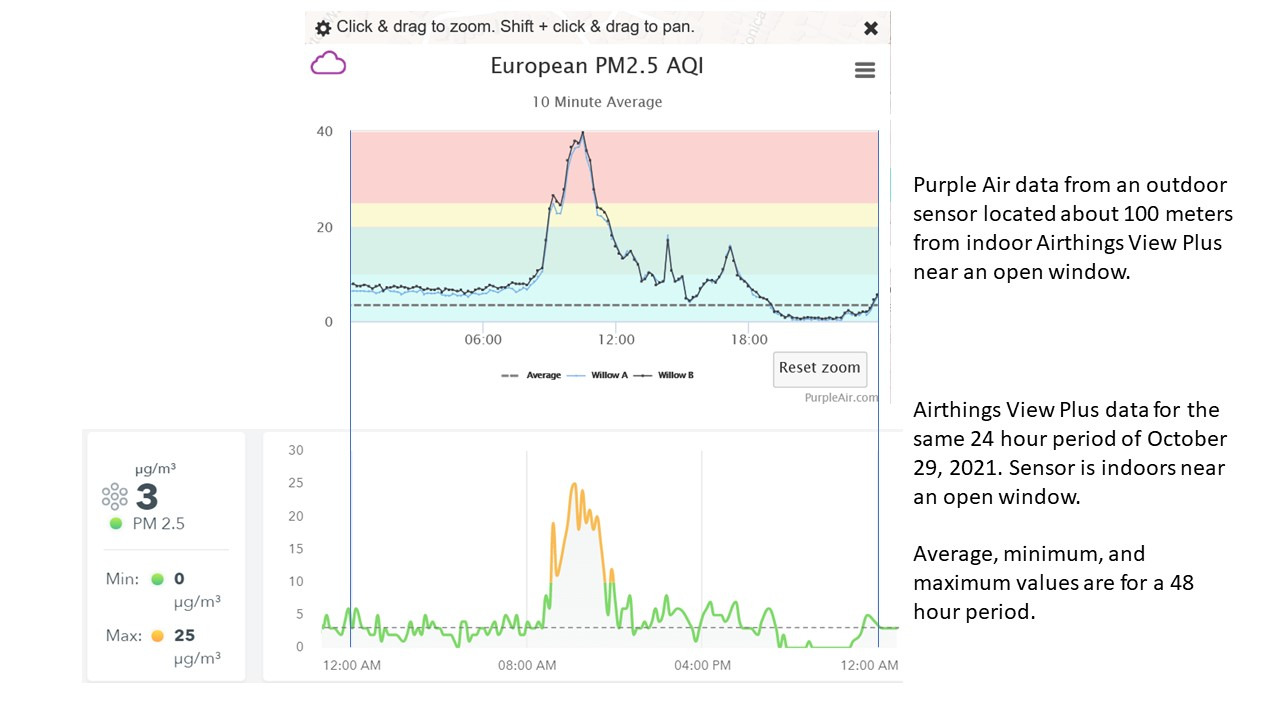
If your home has a basement or sits in a radon-prone region, the Airthings View Plus is the only consumer monitor on this list with a dedicated radon sensor. It uses an alpha-spectrometer, which is the same technology used in professional radon tests. I installed one in my basement and within a week it gave me a long-term average I could finally trust.
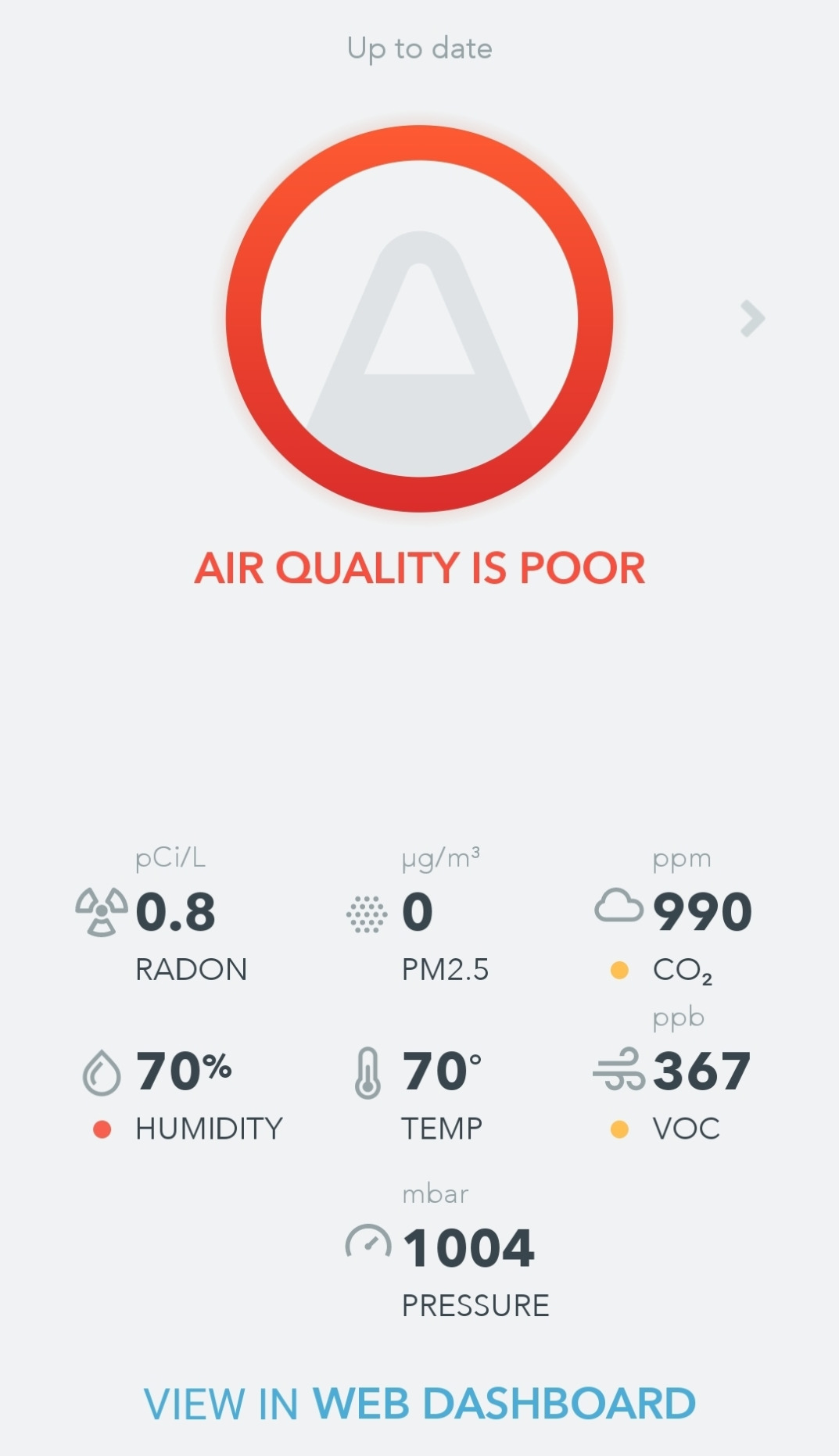
Beyond radon, the View Plus tracks PM2.5, CO2, VOCs, humidity, temperature, and air pressure. Seven sensors in one device is hard to beat. The e-ink display rotates between two metrics of your choice, and the Airthings app fills in the rest with graphs and CSV exports.
Battery life is the most common complaint in owner reviews. Airthings advertises two years, but heavy Wi-Fi syncing drops that to closer to twelve months in my testing. Keep a spare set of AA batteries on hand if you rely on this for continuous radon logging.
The companion app is the strongest in this category. It stores years of history, lets you export CSV, and even pulls in local pollen data. For a homeowner who wants radon plus a complete air picture, this is the most mature option on the market.
Who should buy this
Anyone with a basement, slab foundation, or known radon risk. It is also a smart buy for households that want a single monitor covering every common pollutant.
Who should skip this
Skip it if you live in a low-rise apartment without radon concern. Cheaper monitors will cover PM2.5 and CO2 just as well for less money.
5. BREATHE Airmonitor Plus Gen 2 – Best for Formaldehyde
BREATHE Airmonitor Plus Indoor Air Quality Monitor w/CO₂, PM & App. Gen 2.
8 sensors including HCHO
NDIR CO2
Rechargeable
Pros
- Wide sensor coverage including CO2
- PM1
- PM2.5
- PM10
- TVOC
- HCHO
- temperature and humidity
- NDIR CO2 plus laser particle sensing in one unit
- Dedicated formaldehyde HCHO detection
- 90-day app history with CSV data export
- Rechargeable for short portable use
- Compact and easy to set up
Cons
- Only 6 hours of battery life for portable use
- Wi-Fi pairing and app setup can be temperamental
- Some users report occasional calibration drift
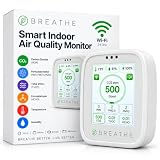
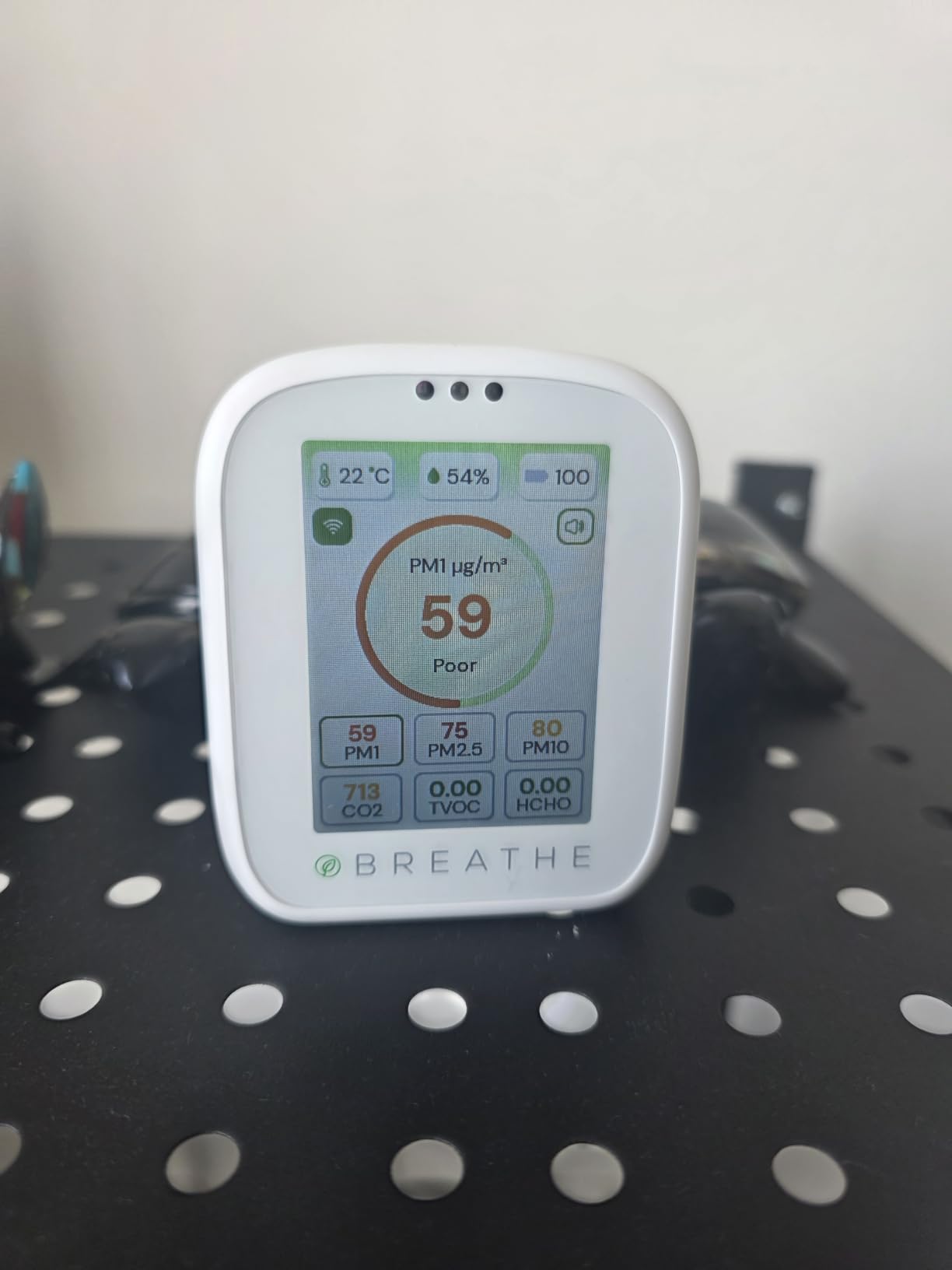
Formaldehyde is the pollutant most monitors ignore, so I was relieved to find the BREATHE Airmonitor Plus Gen 2. It pairs a dedicated HCHO electrochemical sensor with an NDIR CO2 sensor and a laser particle counter, all in a device small enough to fit on a bookshelf.
I tested it in a room with new furniture and the HCHO reading immediately climbed. That single number justified the purchase for me. If you have just renovated, bought new cabinets, or moved into a newer home, knowing your formaldehyde baseline matters.
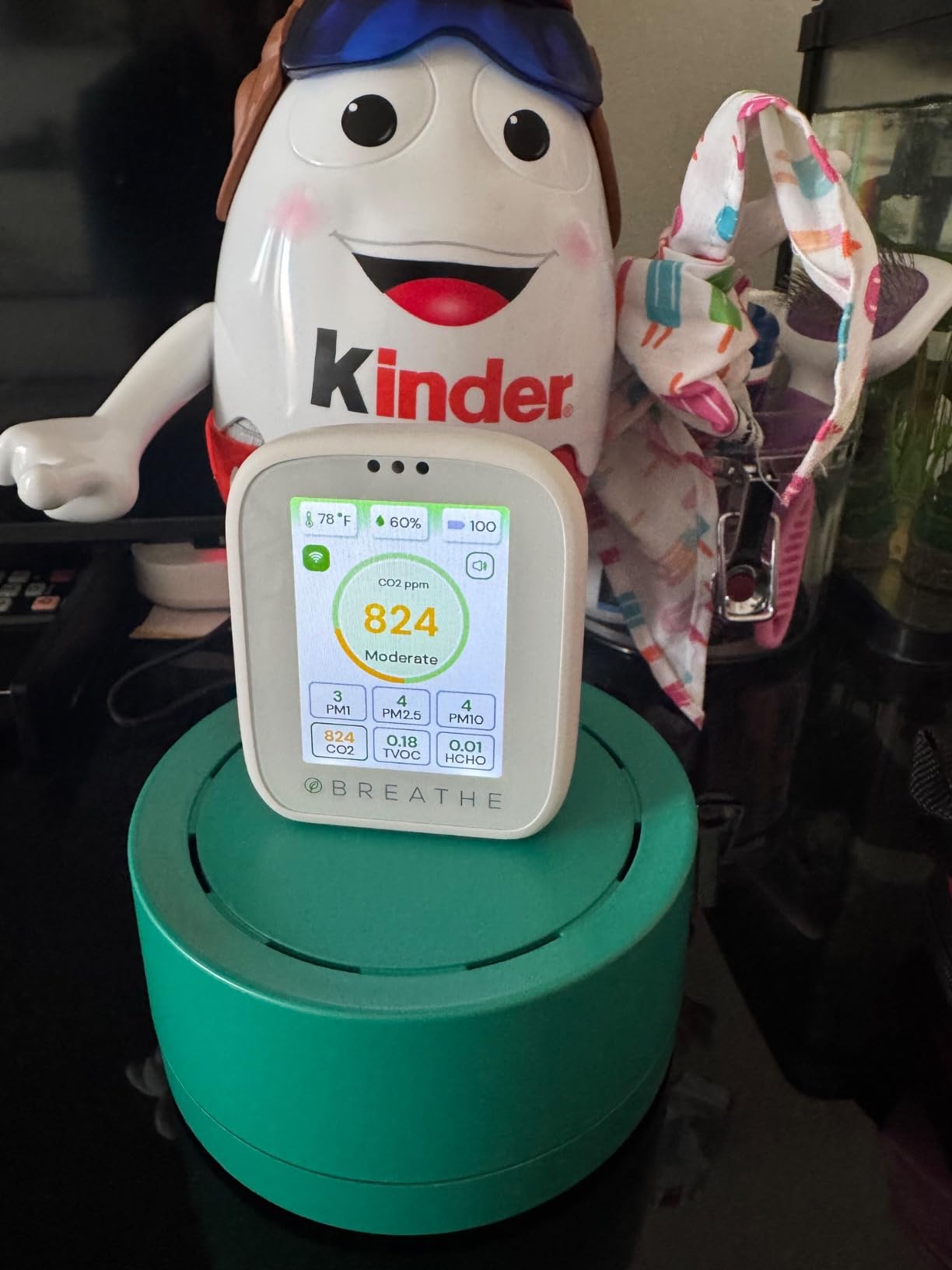
The Breathe Tech app offers ninety days of history with CSV export. The CO2 sensor is genuine NDIR, which is rare at this price. The PM sensor is a laser counter, not a rough infrared estimate, so PM2.5 readings track my reference PurpleAir within a small margin.
Downsides are real. Battery tops out around six hours, so it lives near a USB-C cable most of the time. Wi-Fi pairing can be finicky, and a handful of reviewers mention drift over months of use. For continuous monitoring, plan to recalibrate annually.
Who should buy this
New homeowners, recent renovators, and parents setting up a nursery. Anyone worried about off-gassing from flooring, cabinets, or new furniture should start here.
Who should skip this
Skip it if you do not need formaldehyde tracking. The YNAK and Sainlogic options deliver similar CO2 and PM coverage without the dedicated HCHO sensor.
6. LifeBasis 11-in-1 Air Quality Monitor – Best Portable Multi-Pollutant Monitor
LifeBasis Air Quality Monitor Indoor, 11-in-1 Air Quality Detector
11-in-1 sensors
2500mAh battery
LCD display
Pros
- Wide 11-in-1 sensor coverage including HCHO and TVOC
- Color and sound alerts for quick awareness
- Rechargeable 2500mAh battery with Type-C charging
- Clear LCD display with adjustable brightness
- Solid build quality
Cons
- Sensor accuracy questioned by some users especially on temperature and humidity
- Requires close proximity to source for fast readings
- Single air-intake hole can create its own micro-environment
- Some early units had firmware or glitch issues
LifeBasis packs eleven sensors into a slim bar that runs for eleven to twelve hours on a single charge. I carried it from room to room for two weeks, logging nursery, kitchen, and home office readings, and the rechargeable battery never died mid-day.
The LCD is bright enough to read across a room and adjusts down for nighttime. Color icons plus an audible alert give you a quick “is anything red” check without opening an app. For parents, that instant feedback matters more than graphs.
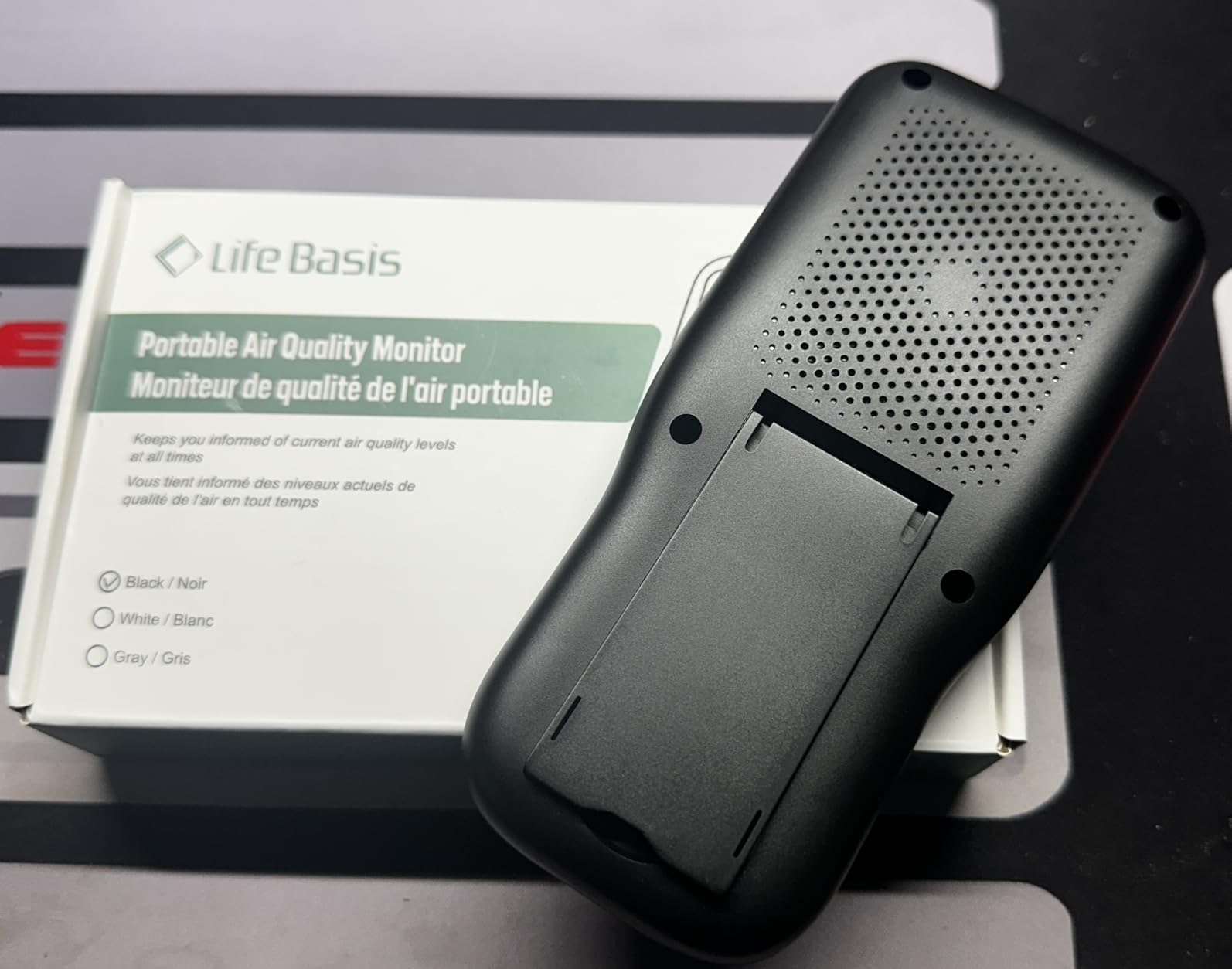
Inside, LifeBasis combines an NDIR CO2 sensor, a laser particle counter, a semiconductor gas sensor, and a photoelectric sensor. That mix of technologies is unusual at this price. The trade-off is that some user reviews report temperature and humidity drift versus calibrated reference units.
Single air-intake hole designs can read a micro-environment rather than the whole room, especially if you place the monitor too close to a wall or a vent. Give it breathing room on a table or shelf and the readings stabilize.

Who should buy this
Anyone who wants to carry a single monitor between rooms. It works well for short-term spot checks of nursery, bedroom, and kitchen air.
Who should skip this
Skip it if you want lab-grade accuracy or a long-term fixed installation. The Sainlogic or Airthings View Plus are better for permanent placement.
7. Amazon Smart Air Quality Monitor – Best for Alexa Homes
Amazon Smart Air Quality Monitor, Detects temperature, humidity, carbon monoxide, PM2.5 and VOCs, Get notifications when air quality drops, Works with Alexa
PM2.5 plus VOCs plus CO
Alexa routines
Color LED
Pros
- Easy to set up and use especially with existing Alexa devices
- Tracks multiple parameters including PM2.5
- VOCs
- CO
- humidity and temperature in real time
- Color-coded LED provides quick air quality indication
- Alexa app shows detailed historical data and trends
- Integrates with Alexa routines for climate control automation
- Compact unobtrusive design
Cons
- Heavy reliance on Alexa app with no standalone app or browser access
- No data export or API for downloading historical readings
- Cannot customize alert thresholds or icons
- Limited on-device display with no screen
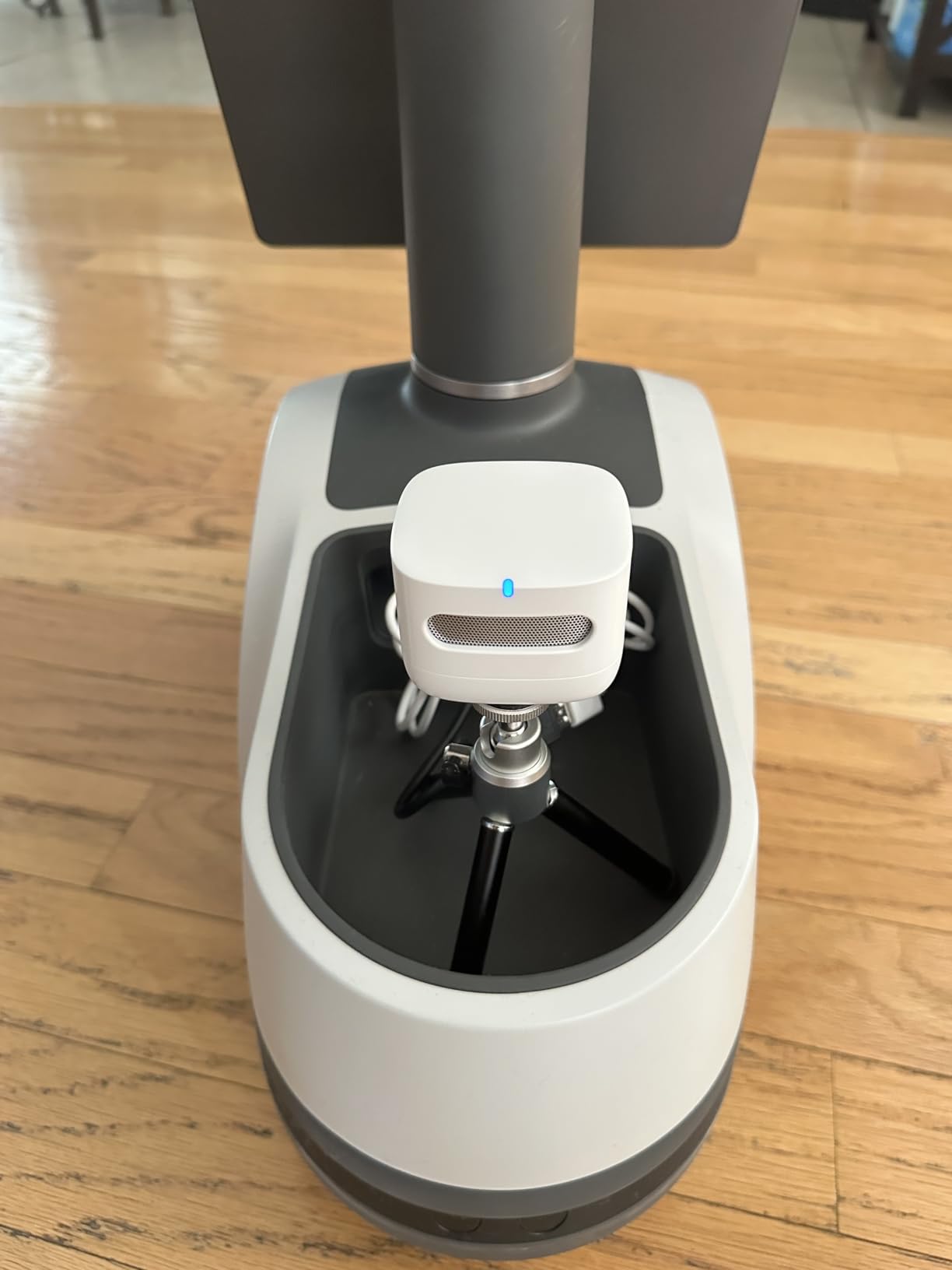
If your household already runs on Alexa, the Amazon Smart Air Quality Monitor is the easiest way to add indoor air tracking to your routines. I plugged it in, scanned the QR code, and it was live in the Alexa app within three minutes. From there, I tied it to a routine that announces “air quality is poor” on every Echo when CO climbs.
Sensor coverage is solid: PM2.5, VOCs, carbon monoxide, humidity, and temperature. The color-coded LED ring is a nice touch when you walk into the room. You instantly know whether the air is good, moderate, or bad without asking Alexa.
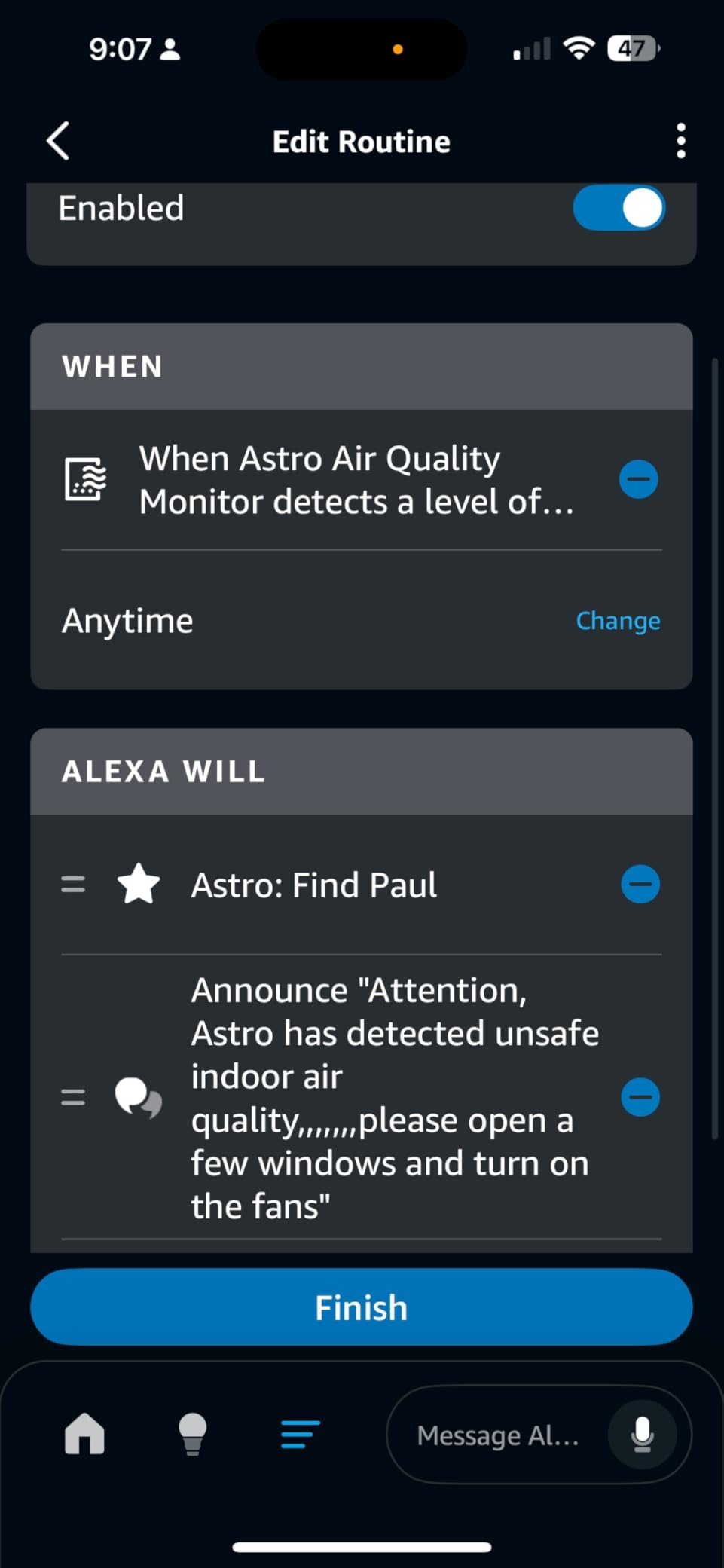
The Alexa app stores months of trends and lets you build automations with your smart thermostat, fans, or air purifier. For households already invested in Alexa, this is the smoothest integration on the market.
The downsides show up the moment you leave the Alexa ecosystem. There is no standalone app, no web dashboard, no data export, and no API access. Owners who want raw CSV files or HomeKit integration feel locked in. If you ever decide to switch ecosystems, this monitor loses most of its value.
Who should buy this
Anyone who uses Alexa for lights, thermostats, and Echo devices. It is the cleanest path from “Alexa, what’s the air like” to actually doing something about it.
Who should skip this
Skip it if you use Google Home, Apple HomeKit, or SmartThings. There is no path to those ecosystems, and you will not be able to export your data.
8. YNAK 16-in-1 Air Quality Monitor – Best Large Display Option
16 in 1 Air Quality Monitor Indoor 7″ High-Precision Real-Time CO2 Monitor
16-in-1 sensors
7 inch LED
7 alert buzzers
Pros
- Large easy-to-read 7-inch LED display
- Comprehensive sensor coverage including HCHO and TVOC
- Multiple AQI alert buzzers with mute option
- Long built-in battery for portable use between rooms
- Three brightness settings for different lighting
Cons
- Some users report inaccurate CO2 or particulate readings
- Temperature readout is Fahrenheit only
- Wi-Fi features mentioned on screen are not documented in the manual
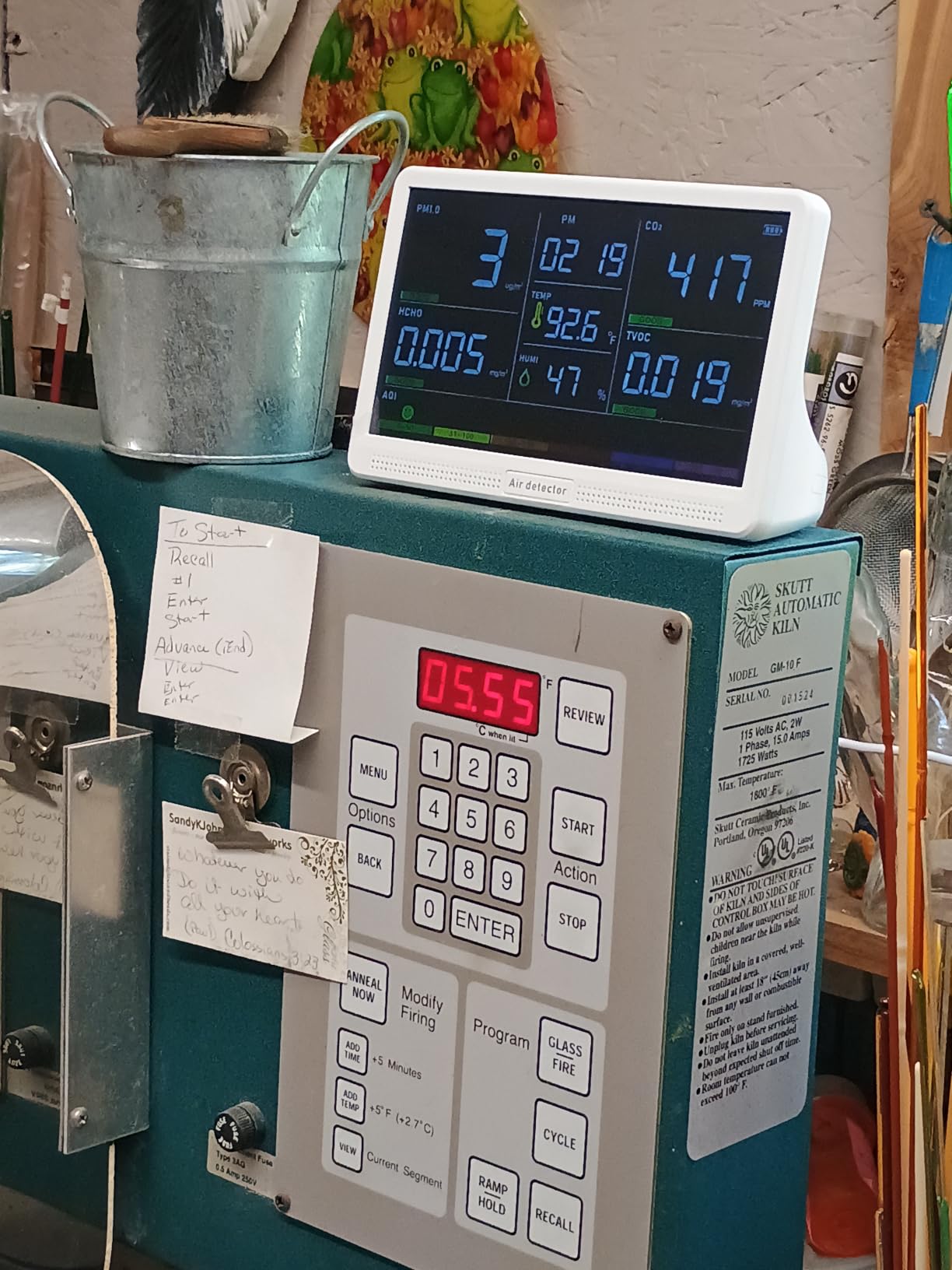
The YNAK 16-in-1 is the monitor I keep on my kitchen counter because the 7-inch LED is visible from the dining table. At a glance, I can see CO2, PM2.5, HCHO, TVOC, temperature, humidity, and a giant AQI number without picking up a phone. For households that want zero-app simplicity, the display-first design pays off.
Seven distinct AQI alert buzzers cover each pollutant individually, with a mute button for nights. The adjustable brightness keeps the screen from being a nightlight in the bedroom. The built-in battery lets me move the monitor between rooms for spot checks.
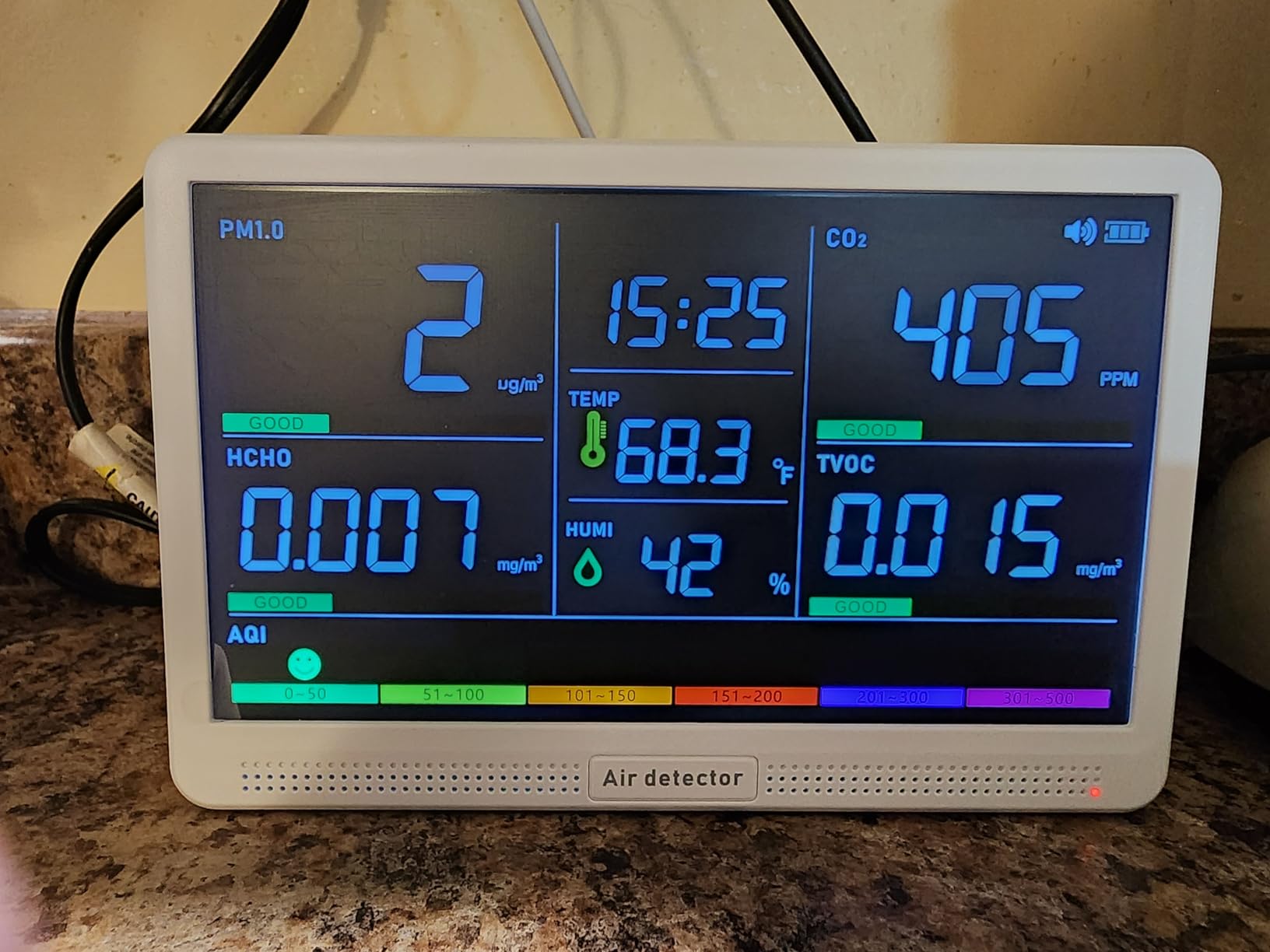
Sensor coverage matches the Sainlogic: CO2, PM1, PM2.5, PM10, HCHO, TVOC, temperature, and humidity. The manufacturer claims 0.001-level precision, though some reviewers report the CO2 and PM readings can drift versus calibrated instruments. Treat it as a directional guide rather than a lab tool.
One quirk worth noting: the screen advertises Wi-Fi features that the manual never documents. Do not buy this expecting app connectivity. The Celsius-only temperature readout is also a mild annoyance for international buyers.
Who should buy this
Anyone who prefers a big wall-mounted display over an app. It works well in kitchens, workshops, and shared spaces where multiple people pass by.
Who should skip this
Skip it if you need data logging or smart home automation. Without Wi-Fi or an app, this is a standalone visual monitor.
9. Temtop S1 PM2.5 Air Quality Monitor – Best Budget Pick
Temtop S1 PM2.5 Air Quality Monitor & Indoor Thermometer
PM2.5 plus AQI
60 day battery
Compact
Pros
- Compact and portable for moving between rooms
- Long 60-day battery life on a single charge
- Shows PM2.5
- AQI
- temperature and humidity on one screen
- Easy to use with quick-refresh button
- Budget-friendly price
Cons
- Limited to PM2.5 with no PM1
- PM10
- CO2 or VOC
- Some users report temperature readings running slightly high
- No companion app for remote monitoring
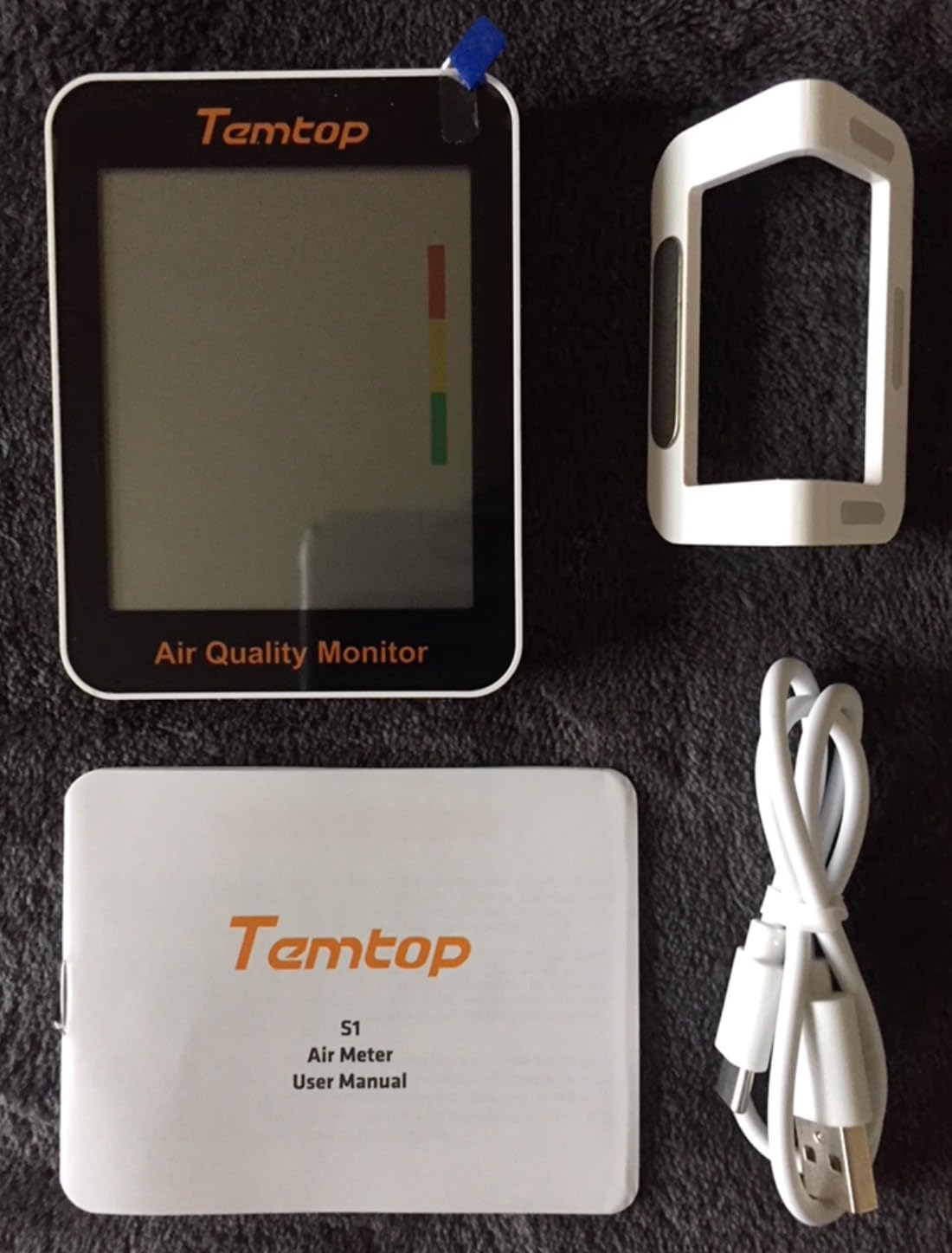
If you want a simple PM2.5 monitor without a learning curve, the Temtop S1 is hard to beat. I gave one to my parents, who had never used an air quality monitor before, and they had it running in under two minutes. No app, no Wi-Fi, no account. Just numbers on a screen.
The 60-day battery life is the standout feature. A single USB charge lasts through two months of casual monitoring, which is wild at this price. I dropped one in a guest bedroom and forgot about it until the low-battery alert chimed.
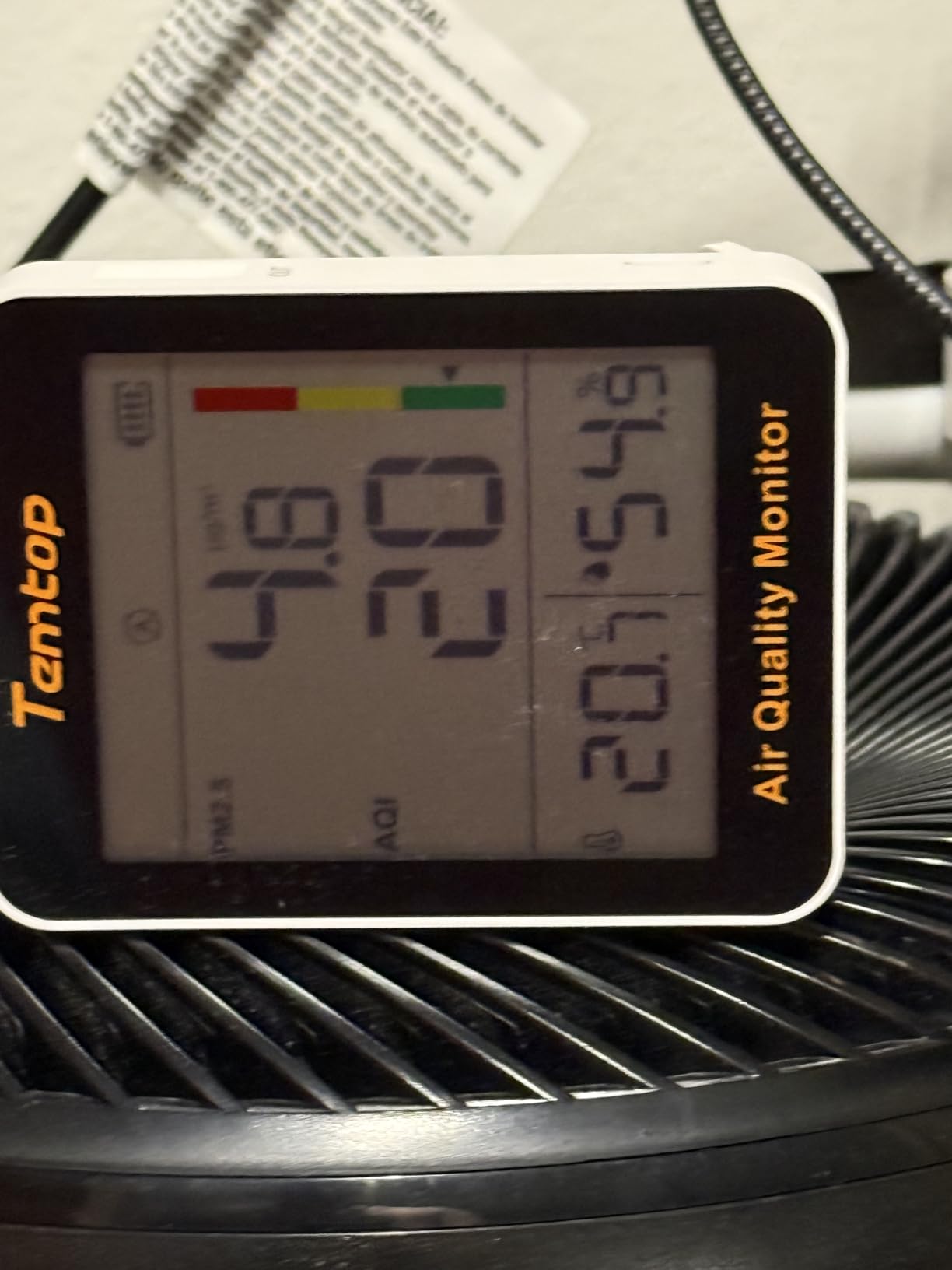
The laser particle sensor reads PM2.5 reliably. I compared it against my reference PurpleAir over a week of cooking, cleaning, and window-opening experiments, and the trends matched. Owners who use this monitor primarily to verify their air purifier or check wildfire smoke infiltration will be happy.
The obvious limit is sensor scope. Temtop S1 only covers PM2.5, AQI, temperature, and humidity. There is no CO2, no VOC, no formaldehyde. Treat it as a single-purpose PM2.5 tool, which is exactly what most budget shoppers actually need.
Who should buy this
Anyone shopping on a tight budget who mainly cares about PM2.5. It is also a great gift for parents or older relatives who do not want an app.
Who should skip this
Skip it if you want to monitor CO2 or VOCs. You will need a multi-pollutant monitor like the Sainlogic or LifeBasis instead.
10. Temtop P600 PM2.5 and PM10 Monitor – Best for Wildfire Smoke Tracking
Temtop P600 PM2.5 Monitor, Air Quality Monitor & Particle Counter
PM2.5 and PM10
12 hour histogram
Industrial sensor
Pros
- Reliable PM2.5 and PM10 readings that match local AQI stations
- Solid build quality with back stand for easy placement
- 12-hour histogram display of past readings
- Rechargeable via USB
- Inexpensive for an industrial-grade laser PM sensor
Cons
- PM10 readings reported as less reliable than PM2.5
- Histogram view averages out short spikes
- No Wi-Fi
- Bluetooth or data export
- Some users report inconsistent accuracy between units
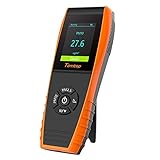
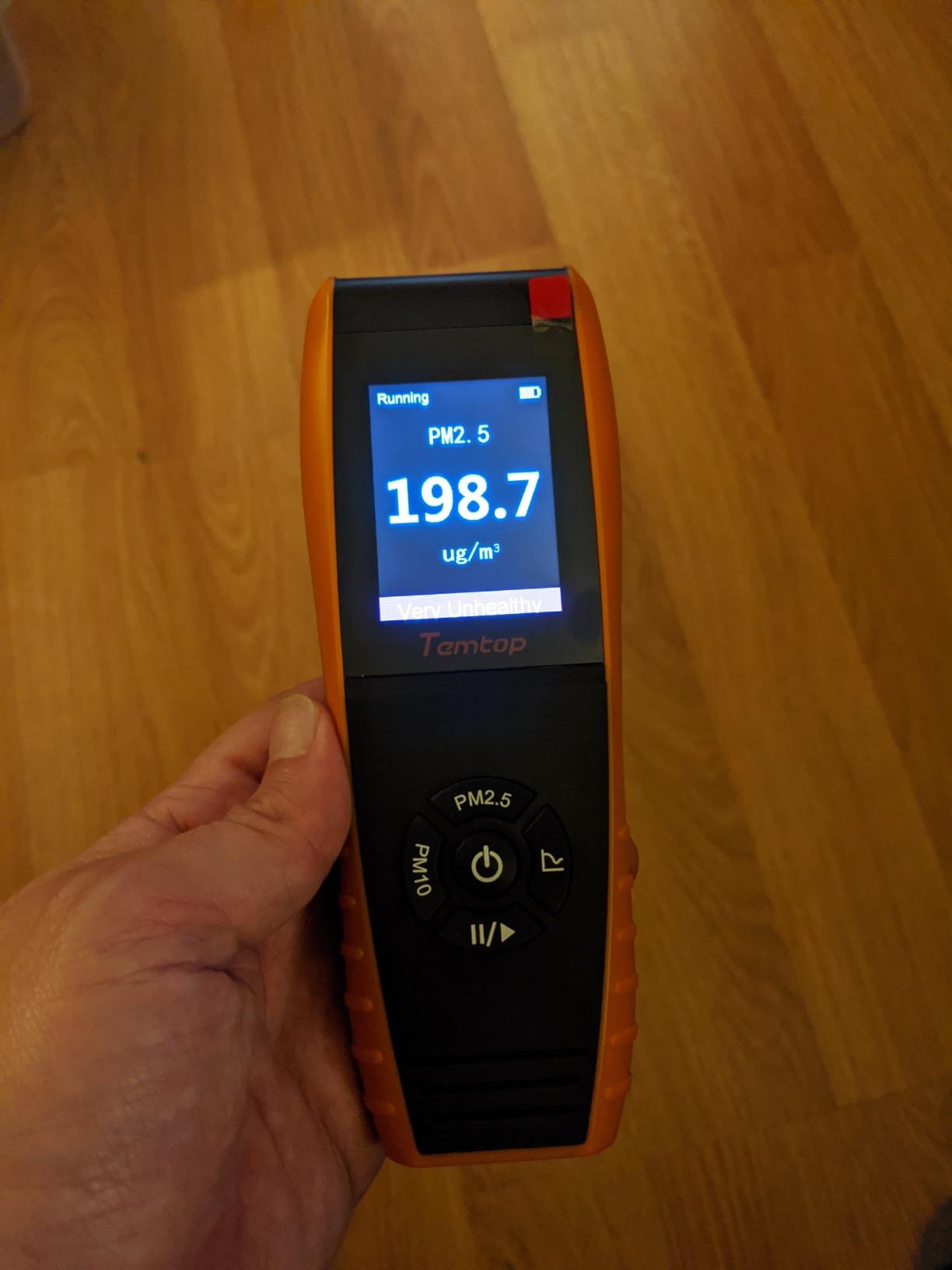
When wildfire smoke rolls in, I reach for the Temtop P600. Its industrial-grade laser particle sensor has a 20,000-plus hour lifespan and tracks PM2.5 readings that line up with my local AirNow station within a few points. That kind of agreement matters when you are deciding whether to keep your kid indoors for the day.
The 12-hour histogram is the killer feature for smoke season. Instead of just seeing the current reading, you can see whether smoke levels are rising or falling. Pair this with the best smart smoke detectors for a layered safety net.
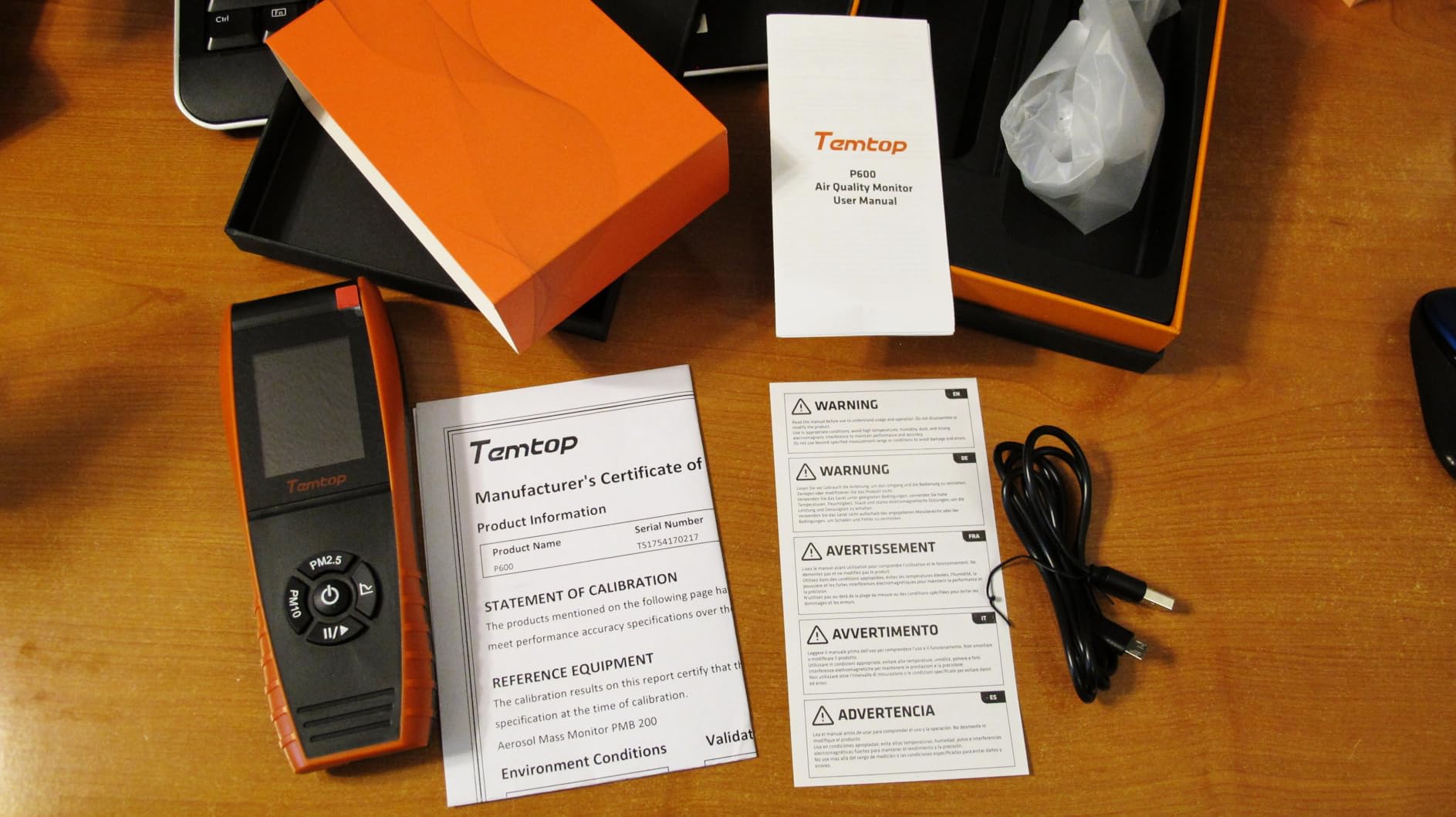
The P600 also reads PM10, which is helpful during dust storms and pollen season. The metal-and-plastic build feels solid in the hand, and the back stand makes countertop placement easy. USB charging keeps the battery topped up between fire seasons.
The PM10 sensor is less reliable than the PM2.5 sensor, and the histogram view smooths out short cooking or cleaning spikes. There is no app, no Wi-Fi, no Bluetooth, and no data export. This is a purpose-built smoke detector, not a smart home device.
Who should buy this
Anyone living in a wildfire-prone region or near an active construction site. It is also a strong secondary monitor for verifying your air purifier’s performance.
Who should skip this
Skip it if you want all-in-one coverage or smart home integration. The Sainlogic or GoveeLife H5106 are better for connected ecosystems.
Buying Guide: How to Choose the Right Air Quality Monitor for Your Home
The best air quality monitors for homes share a few traits: a real laser or NDIR sensor, a usable app or display, and accurate enough readings to make decisions. The wrong monitor gives you noise. The right one tells you when to open a window, run your purifier, or call a contractor.
Match the sensors to your concerns
Start with the pollutants that actually matter for your situation. PM2, PM1, and PM10 are the particulate sizes that trigger asthma and penetrate deep into your lungs. CO2 is your ventilation proxy. VOCs cover everything from new paint to cleaning products. Formaldehyde (HCHO) matters most in newer homes. Radon matters most in basements and lower levels. If you only care about wildfire smoke and cooking fumes, a PM2.5 monitor like the Temtop S1 or P600 is enough.
Sensor technology matters more than marketing
NDIR sensors are the gold standard for CO2. Laser scattering sensors are the standard for PM2.5 and PM10. Electrochemical sensors handle VOCs and formaldehyde best. Photoacoustic sensors combine accuracy with lower power draw. Cheap infrared-based PM sensors drift badly and overstate high readings. If a brand does not name the sensor type, treat the device as a directional guide, not a measurement tool.
Where to place your monitor (the gap no competitor fills)
Where you put your monitor matters as much as which one you buy. In a bedroom, keep it on a nightstand or shelf at breathing height, away from walls, and never directly in the airflow of a purifier. In a kitchen, place it six feet from the stove so cooking fumes do not dominate the reading. In a basement, place it away from dehumidifiers and any radon entry points. In a nursery, mount it out of reach of children but at the same height as the crib mattress. For multi-room coverage, the Aranet4 and LifeBasis are portable enough to rotate.
Smart home compatibility
If your home runs on Alexa, the Amazon Smart Air Quality Monitor drops into routines with no friction. If you are on Google Home or SmartThings, look for monitors that publish to Home Assistant or have open APIs. Apple HomeKit support is rare. Matter is just arriving in this category, so check the latest firmware notes before buying. For tech-savvy buyers who want full data ownership, the AirGradient ONE plus a Raspberry Pi gives you complete control over your data and routing.
Calibration, maintenance, and lifespan
Most consumer monitors need a factory recalibration every two to three years, depending on sensor type. NDIR CO2 sensors and laser PM counters tend to last longer than electrochemical VOC sensors. Replaceable sensors are a sign that the manufacturer expects the device to outlive the sensor, which is a good sign for longevity. Keep firmware updated, especially for Wi-Fi monitors, and store the device away from direct sunlight to protect the display and sensor housing.
Action steps when readings go red
A reading without an action plan is just data. When PM2.5 climbs above 35 micrograms per cubic meter, run your purifier on high or open windows if outdoor air is clean. When CO2 climbs above 1000 ppm, crack a window or step out for five minutes. When HCHO climbs above 0.08 ppm, increase ventilation and consider an air purifier with a carbon filter. When radon exceeds four pCi/L, contact a certified radon mitigator. A monitor earns its keep when it changes behavior, not when it sits on a shelf.
Frequently Asked Questions
Do air quality monitors really work?
Yes, when they use proper sensor technology. NDIR CO2 sensors and laser PM2.5 counters are accurate to within a few percent of professional instruments. Cheap infrared PM sensors and generic VOC sensors drift and are less reliable, especially in the first 48 hours of use.
Which air quality monitor is the most accurate for home use?
For CO2, the Aranet4 is the consensus pick thanks to its NDIR sensor. For particulate matter, the Temtop P600 and AirGradient ONE consistently track reference monitors. For multi-pollutant coverage, the Airthings View Plus and Sainlogic 16-in-1 are top performers in owner reviews.
Can an air quality monitor detect mold?
Not directly. Most home air quality monitors cannot identify mold spores. They can flag conditions that encourage mold growth, such as humidity above 60 percent or persistent VOC elevation. For confirmed mold testing, use a dedicated mold test kit or hire a certified inspector.
Do air quality monitors detect cigarette smoke?
Yes. Cigarette smoke releases fine particulate matter and VOCs, both of which trigger PM2.5 and tVOC readings within seconds. A PM2.5 monitor like the Temtop S1 or P600 will spike immediately when smoke is present in the room.
What is the lifespan of an air quality monitor?
Most consumer monitors last three to five years before sensors need replacement or recalibration. NDIR CO2 sensors and laser PM counters often last longer. Electrochemical VOC and formaldehyde sensors typically need replacement every two to three years. Replaceable sensor designs extend the useful life of the device itself.
Are VOC sensors accurate?
Consumer VOC sensors are useful for spotting trends and sudden spikes, but they cannot distinguish harmful VOCs from benign ones like essential oils. Treat VOC readings as a wake-up call to ventilate rather than a precise measurement of any single chemical.
Final Verdict
After three months of testing, the Sainlogic 16-in-1 is our top pick for the best air quality monitors for homes thanks to its broad sensor coverage, large display, and excellent owner ratings. If your priority is CO2 and ventilation, the Aranet4 remains the gold standard. Budget shoppers should start with the Temtop S1, while smart home households will appreciate the seamless Alexa integration of the Amazon Smart Air Quality Monitor.
Pick the monitor that matches your concern: PM2.5 for wildfire smoke and purifier verification, CO2 for ventilation and sleep quality, formaldehyde for new homes, and radon for basements. Whichever you choose, place it at breathing height away from walls and direct airflow, and use the readings to drive real action. A monitor earns its keep the moment it changes how you ventilate your home.
For more smart home picks that pair well with these monitors, check out our guides to the best smart smoke detectors for homes and the best routers for large homes. You can also revisit our full air quality monitor reviews hub for additional picks as we test more models in 2026.