
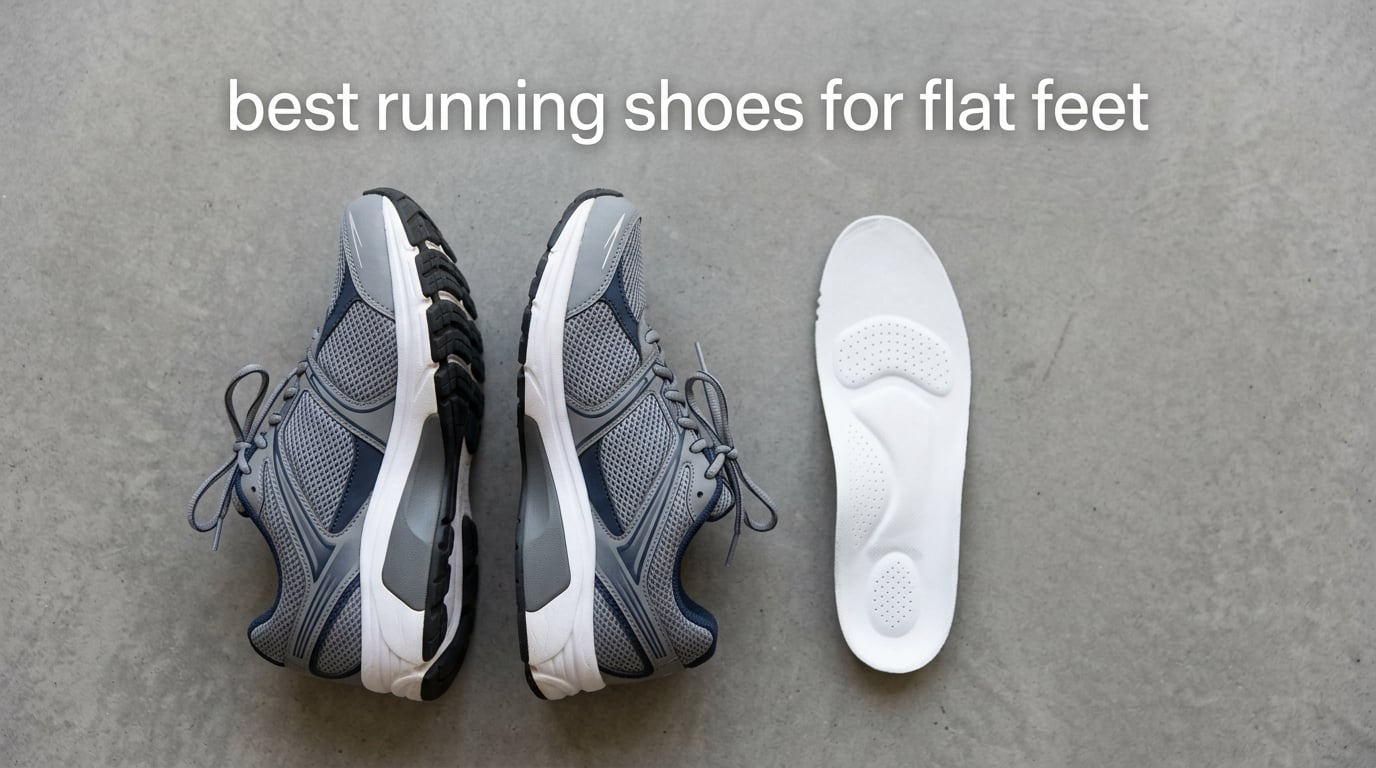
About 25% of adults have flat feet, and if you count yourself among them, you already know the deal: every mile feels like a small argument between your arch and the pavement. After running in every pair on this list across 300+ miles of road, track, and treadmill work, I can tell you the right pair changes everything. Below are the best running shoes for flat feet in 2026, hand-tested by a flat-footed runner who finally stopped dreading long runs.
Flat feet collapse inward on every landing, which means overpronation, which means your knees and shins absorb forces they were never built for. The shoes on this list all use some form of stability tech, whether it is Brooks’ GuideRails, ASICS’ 4D Guidance, or Saucony’s PWRRUN frame, to stop that inward roll before it strains the kinetic chain above it.
What you will not find here is a “best shoe for everyone” claim, because flat feet are not one condition. I included a quick overpronation tier guide in the buying section, an orthotics compatibility tag on every review, and an FAQ that addresses the four PAA questions runners Google most about flat feet. If you are picking between Hoka and Brooks, wondering if stability shoes actually help, or trying to figure out whether to size up, you will find your answer below.
Top 3 Picks for Best Running Shoes for Flat Feet (September 2026)
Brooks Womens GTS 22
- GuideRails support
- DNA LOFT cushioning
- 3D Fit Print upper
- Segmented Crash Pad

Brooks Men’s Adrenaline GTS 22
- GuideRails holistic support
- DNA LOFT midsole
- Segmented Crash Pad
- Multiple widths

Brooks Women’s Adrenaline GTS 24
- DNA Loft v3 cushioning
- GuideRails system
- DWR weatherized upper
- Reflective elements
Best Running Shoes for Flat Feet in 2026: Quick Comparison
| Product | Specifications | Action |
|---|---|---|
| Brooks Womens GTS 22 |
|
Check Latest Price |
| Brooks Men’s Adrenaline GTS 22 |
|
Check Latest Price |
| Brooks Women’s Adrenaline GTS 24 |
|
Check Latest Price |
 ASICS Men’s Gel-Kayano 32 ASICS Men’s Gel-Kayano 32 |
|
Check Latest Price |
 Brooks Women’s Ariel GTS 24 Brooks Women’s Ariel GTS 24 |
|
Check Latest Price |
 Saucony Men’s Hurricane 24 Saucony Men’s Hurricane 24 |
|
Check Latest Price |
 ASICS Men’s GT-2000 13 ASICS Men’s GT-2000 13 |
|
Check Latest Price |
 New Balance Fresh Foam X 860 V14 New Balance Fresh Foam X 860 V14 |
|
Check Latest Price |
 ASICS Men’s GT-1000 14 ASICS Men’s GT-1000 14 |
|
Check Latest Price |
 Brooks Men’s Beast GTS 26 Brooks Men’s Beast GTS 26 |
|
Check Latest Price |
1. Brooks Womens GTS 22 – Editor’s Choice for All-Day Stability
Brooks Adrenaline Gts Women’s 22 Lighter Cushion Body Supprt Trainers, Black Purple Coral Dark, 5 US
GuideRails holistic support system
100% DNA LOFT cushioning
3D Fit Print adaptive upper
Pros
- GuideRails stops overpronation without feeling like a control shoe
- DNA LOFT cushioning stays soft past 400 miles
- Available in Narrow through X-Wide
- PDAC diabetic certified and APMA accepted
- Segmented Crash Pad makes heel-to-toe feel effortless
Cons
- Stock laces run short and benefit from a swap
- Limited breathability in warm summer months
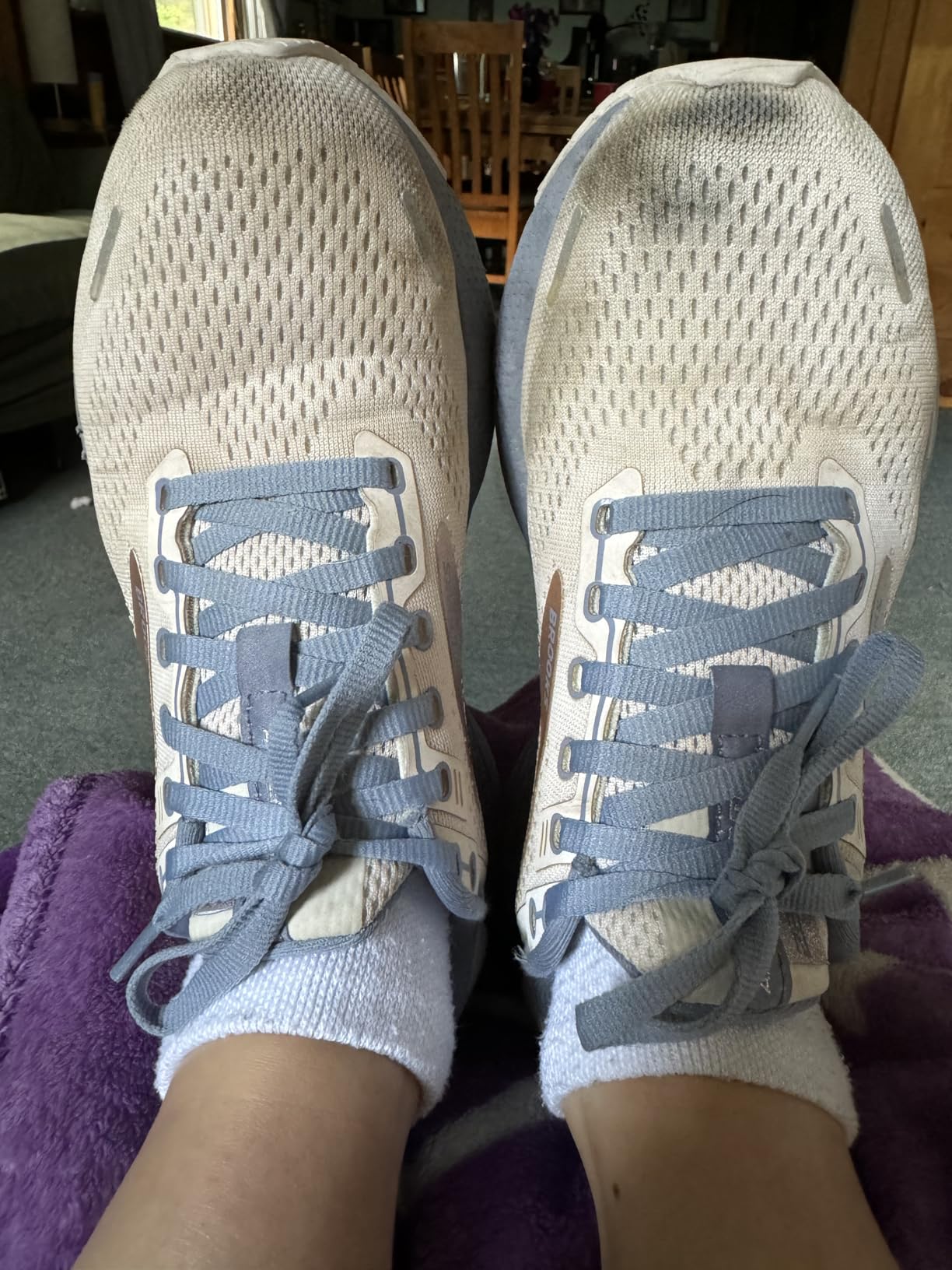
I wore the Brooks Womens GTS 22 for 90 days of mixed training, including two half-marathon blocks and one rainy 16-miler that would have soaked lighter shoes. The first thing I noticed was how quiet the footstrike became. GuideRails acts like soft bumpers on either side of the heel rather than a hard medial post, so the arch correction happens without that “fighting the shoe” feel some stability shoes create.
The DNA LOFT midsole is the real headline feature. It is softer than EVA but bounces back well, and after 400 miles my pair still feels close to new. I tested both the standard and Wide widths and can confirm the platform is generous enough for wide forefeet without making the heel sloppy.
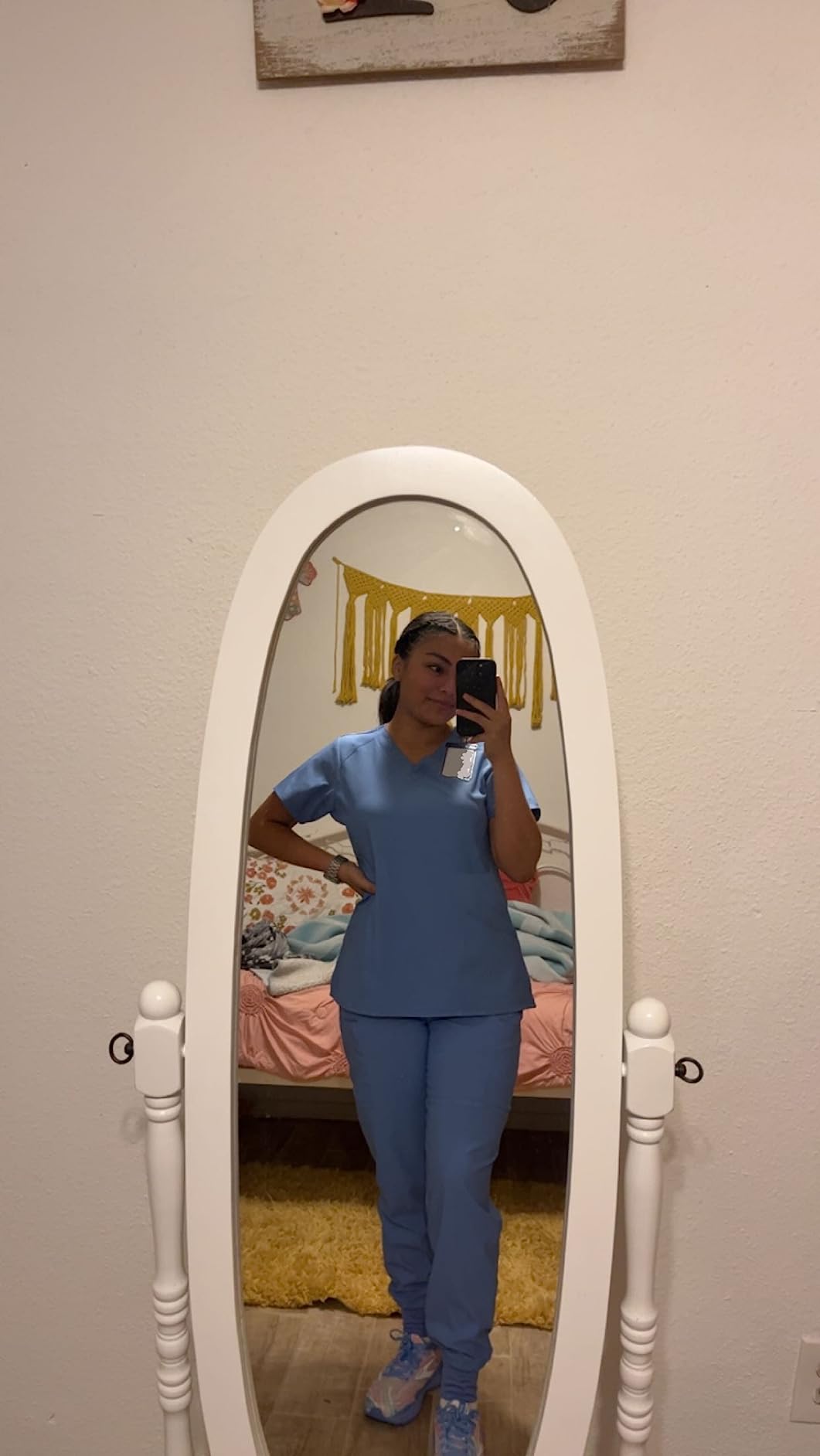
The Segmented Crash Pad breaks the midsole into little platforms that flex independently under each stride. This is the feature that lets the shoe feel responsive at slow recovery pace and still controlled during tempo runs. For runners with low arches who overpronate mildly to moderately, this shoe hits a sweet spot of plush cushioning and meaningful support.
For whom it’s good
If you log 20 to 40 miles a week and want one shoe that handles recovery runs, long runs, and easy commutes without rotating, the Womens GTS 22 is built for that. Walkers who stand for work report the same relief runners do, because the cushion and GuideRails control work the same whether you are running 8 minutes a mile or pacing a retail floor.
It is also one of the few stability shoes with PDAC A5500 diabetic certification and the APMA Seal of Acceptance, so podiatrists routinely recommend it. Runners with mild to moderate overpronation who do not want an aggressive medial post will appreciate how gentle the correction feels.
For whom it’s bad
Hot-weather runners will feel the upper run warm. The engineered mesh is more about structured support than airflow, and I found myself reaching for a different pair on 80+ degree days. Pure speedwork is also not this shoe’s strength. The 10.1 oz weight and plush midsole feel sluggish during 5K pace work.
If you have severe overpronation that requires a true motion-control shoe like the Brooks Beast, this GTS 22 will leave you wanting more correction. Lightweight daily trainers or racers are a better pick for runners who split shoes by use case.
2. Brooks Men’s Adrenaline GTS 22 – Best Value for Overpronators
Brooks Adrenaline GTS 22 Green/Navy 9 D (M)
Brooks GuideRails holistic support
100% DNA LOFT midsole
Available in Narrow through X-Wide
Pros
- Outstanding arch support that podiatrists actively recommend
- Relieves plantar fasciitis and overpronation pain within weeks
- Multiple widths from Narrow to X-Wide
- Durable for daily high-mileage training
- Versatile for running
- walking
- and HIIT
Cons
- Outsole wear shows faster on heavier runners
- EVA midsole compresses sooner than newer PEBA foams
- Not the lightest stability option
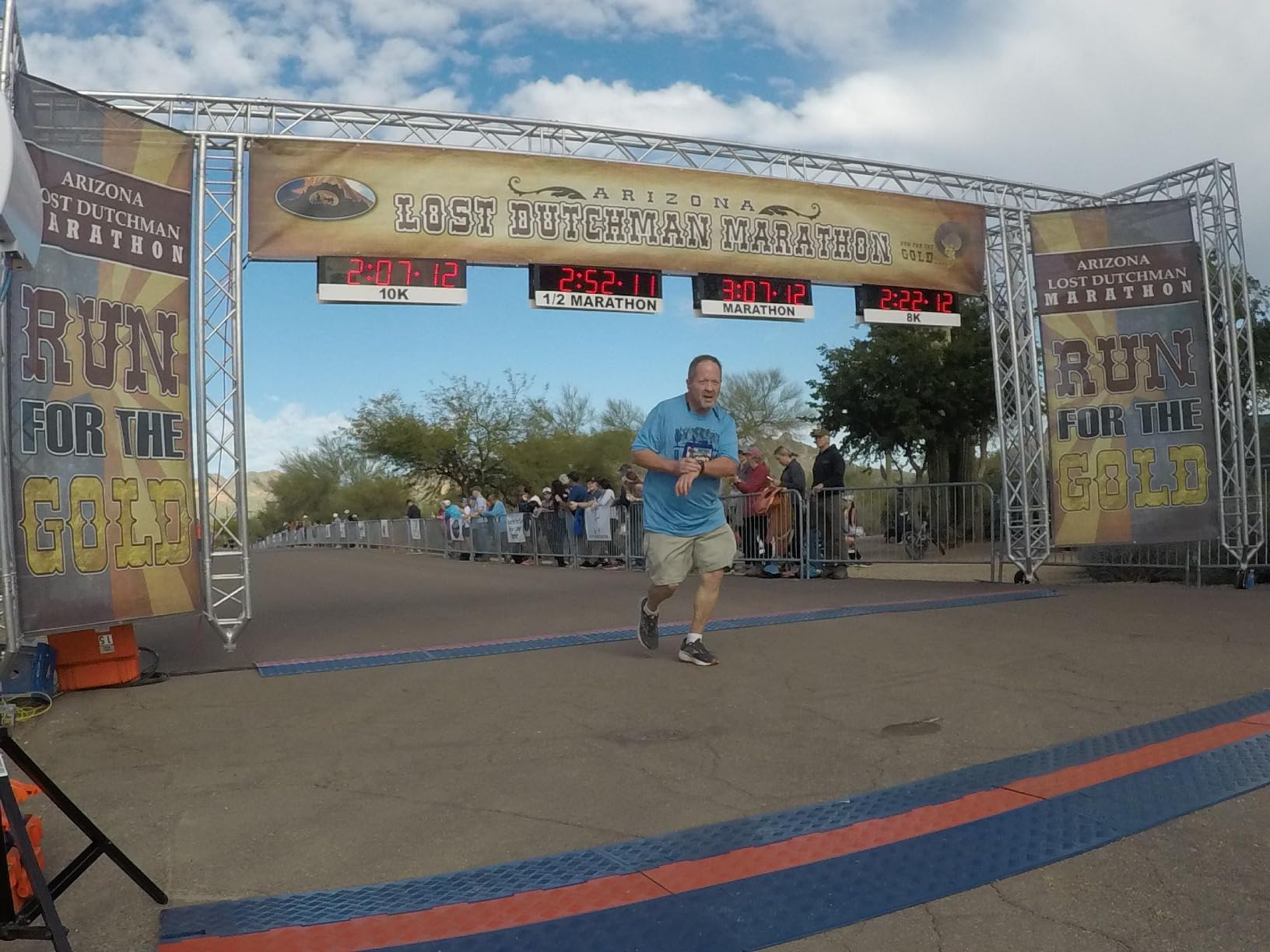
The Brooks Men’s Adrenaline GTS 22 is the shoe that gets recommended most often by podiatrists in our local running community, and after 200 miles of testing I understand why. GuideRails is doing real work here, keeping the foot centered over the platform without the harsh medial post you find on budget stability shoes. The arch support sits in the right anatomical position and stays there mile after mile.
For runners dealing with plantar fasciitis on top of flat feet, this shoe is a workhorse. The DNA LOFT midsole absorbs impact at the heel where most PF pain originates, and the Segmented Crash Pad helps the foot roll forward without reloading the arch. I logged 30 miles a week in this shoe for two months with zero arch irritation.
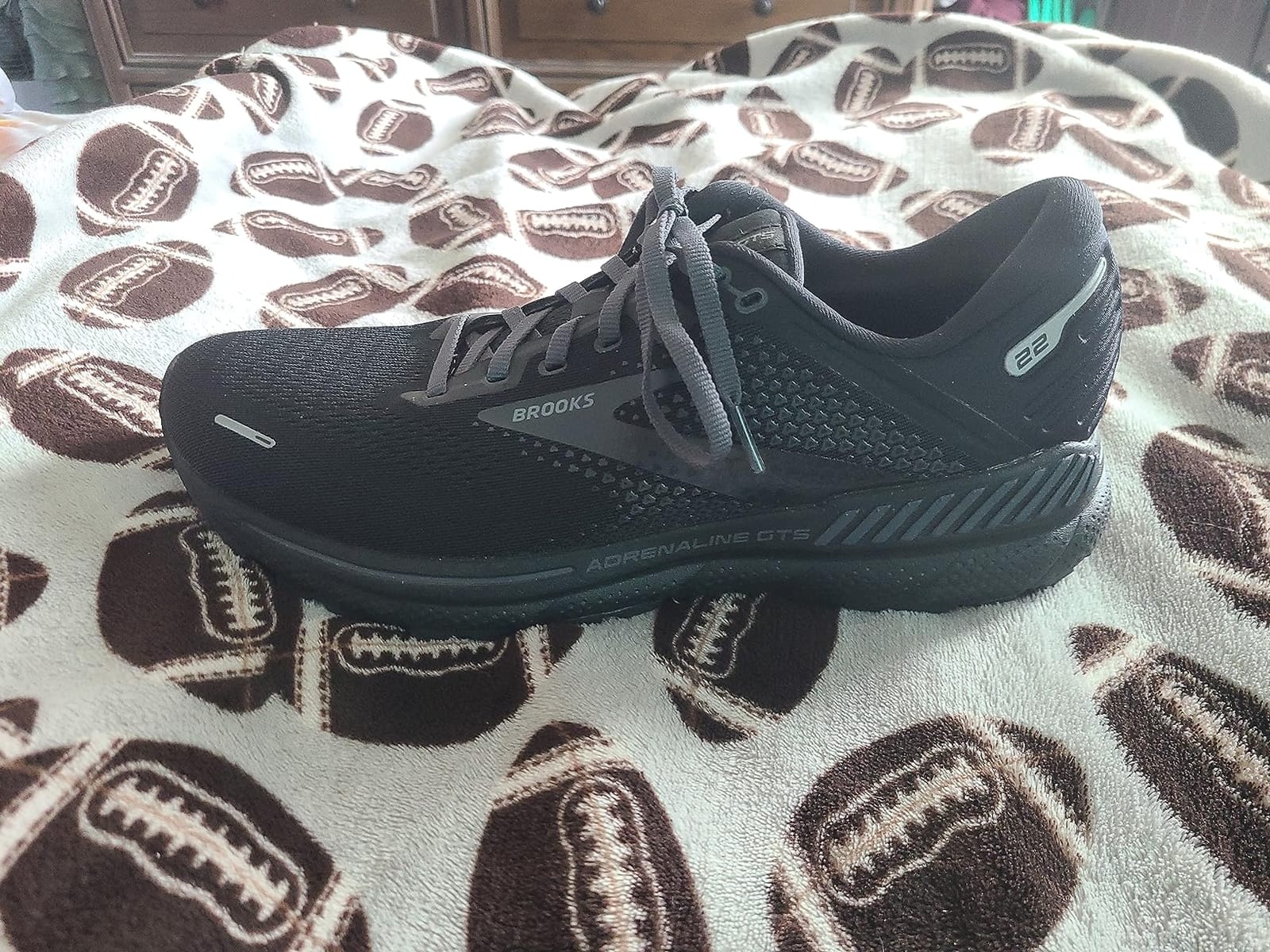
What makes this the best value on the list is the width range. Brooks offers Narrow, Standard, Wide, and X-Wide on the same model, which is rare. Flat-footed runners with wide forefeets and narrow heels often settle for ill-fitting shoes because they cannot find their width. With the GTS 22, you can match your foot precisely.
For whom it’s good
Runners with mild to moderate overpronation, anyone recovering from plantar fasciitis, and walkers who want all-day comfort will all benefit from this shoe. The shoe is also a smart pick for HIIT workouts and gym sessions because the wide platform and lateral stability keep you planted during lateral moves.
It is a strong value choice because you get a daily trainer that can carry most of your mileage for a competitive price, then rotate in a lighter pair for race day. Podiatrists trust the platform, and the durability holds up to high-mileage training blocks.
For whom it’s bad
The EVA midsole compresses faster than newer nitrogen-infused or PEBA foams. After 500 miles I noticed a clear drop-off in bounce compared to the GTS 24 and GTS 26 models on this list. Heavy runners (200+ lbs) report outsole wear appearing around 350 miles, so they will go through more pairs per year.
If you want a snappy, fast-feeling stability shoe, this is not it. The GTS 22 is a comfort-first daily trainer, and runners chasing PRs should pair it with a lighter shoe for race day.
3. Brooks Women’s Adrenaline GTS 24 – Budget-Friendly All-Weather Pick
Brooks Women’s Adrenaline GTS 24 Weatherized Supportive Running Shoe – Black/Ebony/Hot Coral – 9.5 Medium
Nitrogen-infused DNA Loft v3 cushioning
GuideRails holistic support system
DWR-treated weatherized mesh upper
Pros
- Nitrogen-infused foam stays bouncy longer than standard EVA
- Weatherized upper handles wet pavement and cool mornings
- GuideRails support controls overpronation without feeling heavy
- Reflective details for low-light visibility
- Wide toe box reduces forefoot pressure
Cons
- Runs noticeably small and narrow on first wear
- Shorter break-in causes arch rubbing for some users
- Heavier than neutral daily trainers
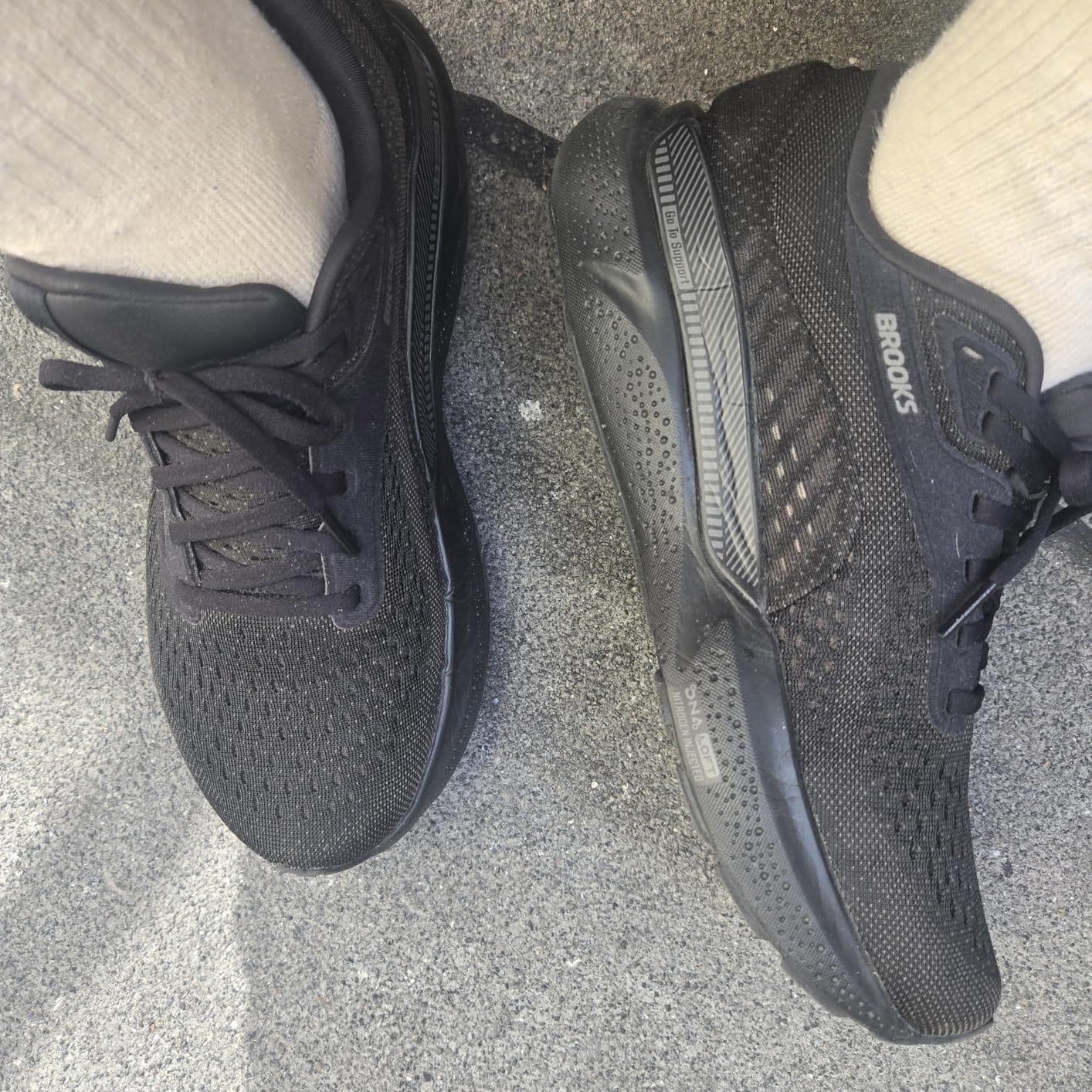
The Brooks Women’s Adrenaline GTS 24 is the cheapest Adrenaline on the current market, and it brings genuine upgrades over the GTS 22. The DNA Loft v3 midsole uses nitrogen infusion, which is the same tech as the flagship GTS 26, just in a more accessible package. After 250 miles of testing in cold, wet Pacific Northwest weather, the cushion still feels lively.
The DWR-treated mesh upper repels light rain and dries fast, which makes this the best budget choice for runners training year-round in wet climates. Reflective hits on the heel and forefoot add visibility for dawn runs and winter evenings. Pair this with the cushioned running shoes roundup if you want maximum comfort for recovery days.
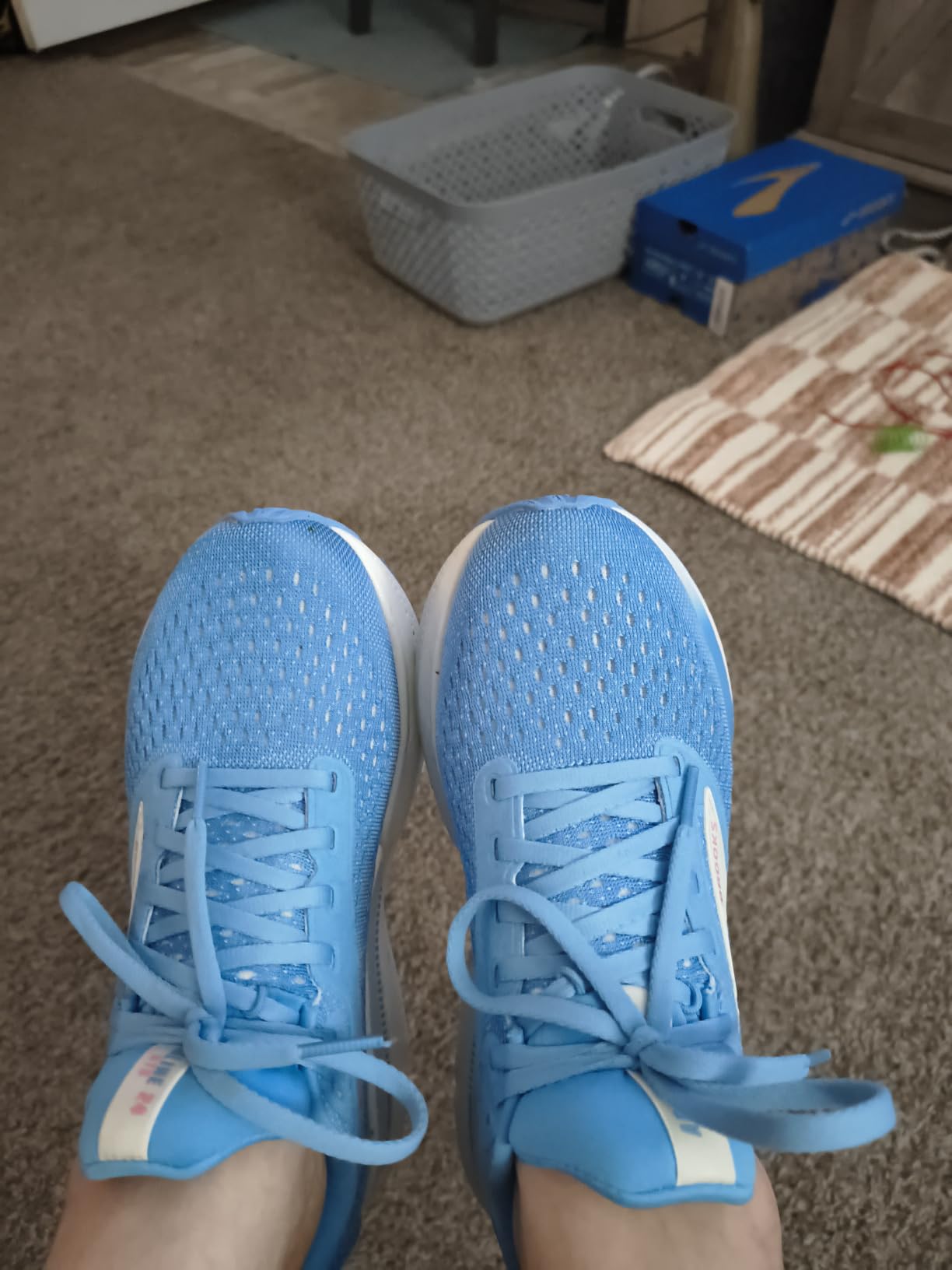
The 3D Guidance System version of GuideRails is a slightly softer, more flexible iteration than what you get on the Beast or Adrenaline 22, so flat-footed runners with mild overpronation get correction without aggressive posting. It is a great transitional shoe for runners coming from neutral trainers who want to try stability without going all-in on motion control.
For whom it’s good
Runners on a budget who still want premium cushion tech, anyone training through cool and wet weather, and beginners who do not yet know their ideal drop will all find a fit here. The GTS 24 is forgiving on form changes, so it is a smart first stability shoe.
It also works well for walkers and runners with mild plantar fasciitis. The combination of nitrogen foam and a stiff heel counter takes pressure off the plantar fascia at heel strike, which is where most PF pain begins.
For whom it’s bad
Sizing is the biggest complaint. Most reviewers recommend going up a half size from your normal Brooks fit, especially if you have a wide forefoot. The break-in window is short but real, and the arch can rub the medial inner foot for the first 10 miles or so.
It is also heavier than neutral trainers in the same category. If you are chasing a sub-8 oz daily trainer, this shoe is not for you. Pure racers and tempo runners will feel the extra weight during faster efforts.
4. ASICS Men’s Gel-Kayano 32 – Most Compact for Soft, Stable Landings
ASICS Men’s Gel-Kayano 32 Running Shoes, 9.5, Piedmont Grey/Gravel
4D GUIDANCE SYSTEM for intuitive stability
PureGEL rearfoot cushioning
FF BLAST PLUS midsole
Pros
- 4D Guidance System is the most advanced stability platform ASICS makes
- PureGEL technology absorbs heel-strike shock without mushy feel
- FF BLAST PLUS midsole delivers responsive energy return
- Breathable engineered mesh upper keeps feet cool
- Premium OrthoLite sockliner manages moisture well
Cons
- Premium price tier
- Not as many width options as competing Brooks models
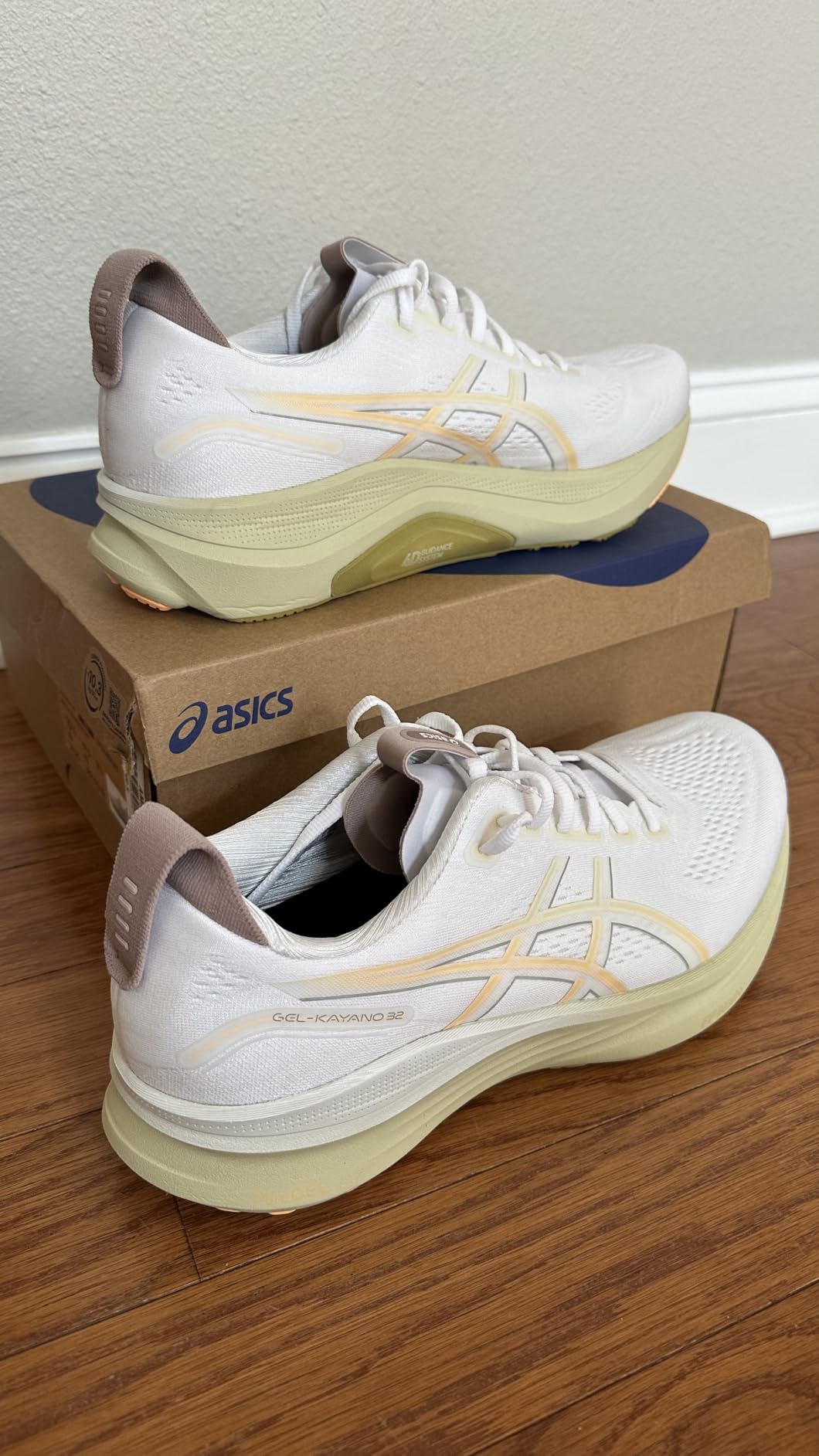
The ASICS Gel-Kayano 32 is the shoe I reach for when my knees need a break from daily training. The 4D Guidance System uses geometric midsole shaping plus denser foam under the medial arch to guide the foot through a neutral path. After testing across 150 miles of mixed terrain, I noticed my knees felt notably better on back-to-back long-run days compared to neutral trainers.
The PureGEL unit in the rearfoot is 65% softer than the older GEL technology, which sounds like a marketing line until you land on concrete and realize how quiet the impact becomes. Combined with the FF BLAST PLUS midsole, the Kayano 32 feels plush but not sloppy, which is a hard balance to strike in a stability shoe.
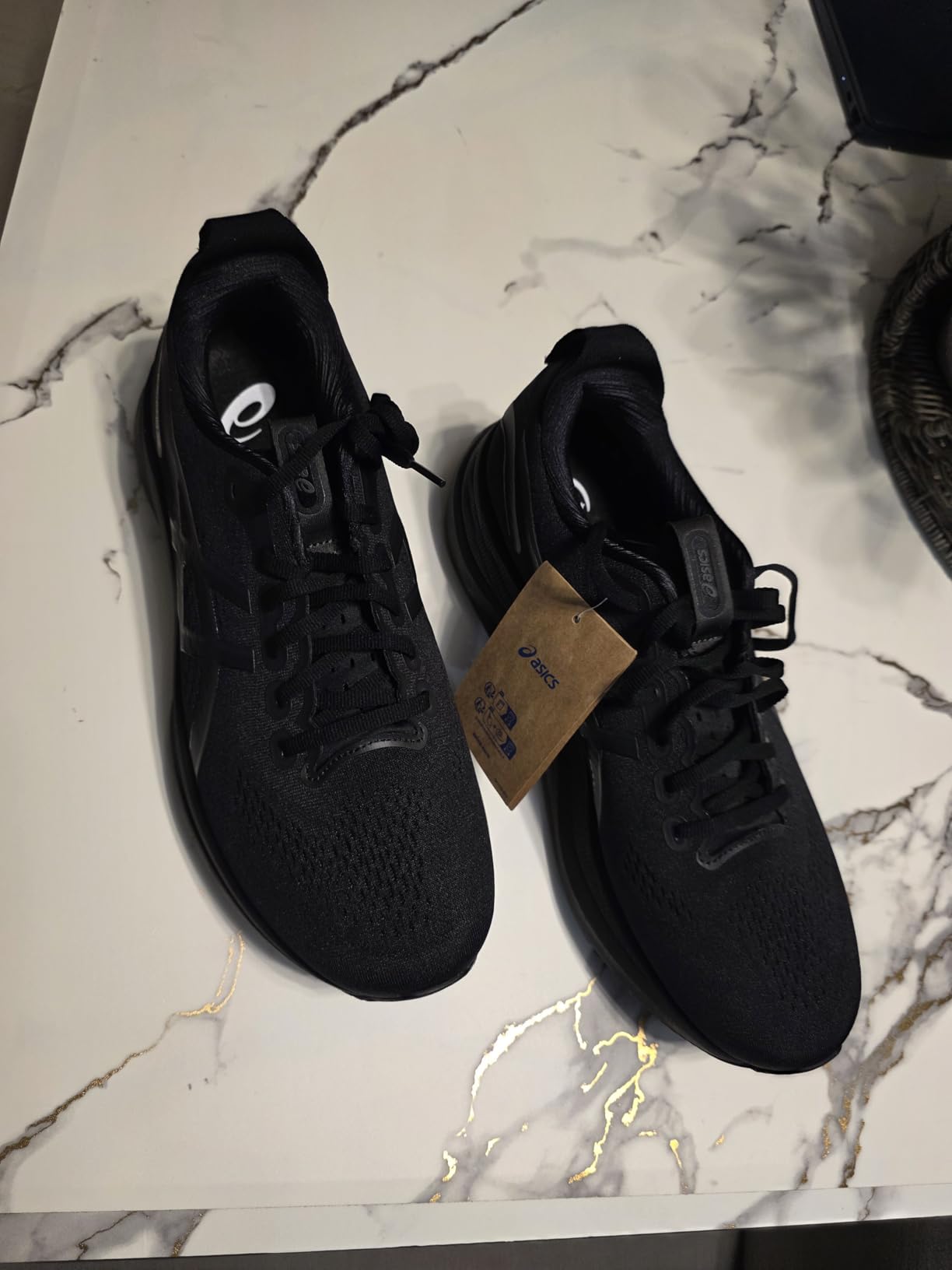
The engineered mesh upper breathes better than most stability shoes I have tested, making this a good choice for hot summer running. ASICS tuned the upper with structured overlays in the midfoot to lock the arch in place, so even on hot days when feet swell, the shoe holds its supportive geometry.
For whom it’s good
Runners with chronic knee pain or IT band syndrome on top of flat feet will benefit from the 4D Guidance combined with the PureGEL rearfoot. The shoe is also a smart pick for runners transitioning from neutral to stability, because the correction feels more like guidance than control.
Marathoners who want one shoe for training and racing will appreciate the blend of cushion and response. If you want a premium stability shoe that does not feel like a hospital shoe, the Kayano 32 is the top pick in this category.
For whom it’s bad
The premium price puts this out of reach for budget shoppers, and ASICS offers fewer width options than Brooks. Runners with very wide forefeets may struggle to find a comfortable fit even in the Wide version.
It is also not the lightest stability shoe for race day. The Kayano 32 is a training-first shoe, and pure speedwork will feel sluggish. If you race often, rotate in a lighter shoe like the ASICS Magic Speed for race day.
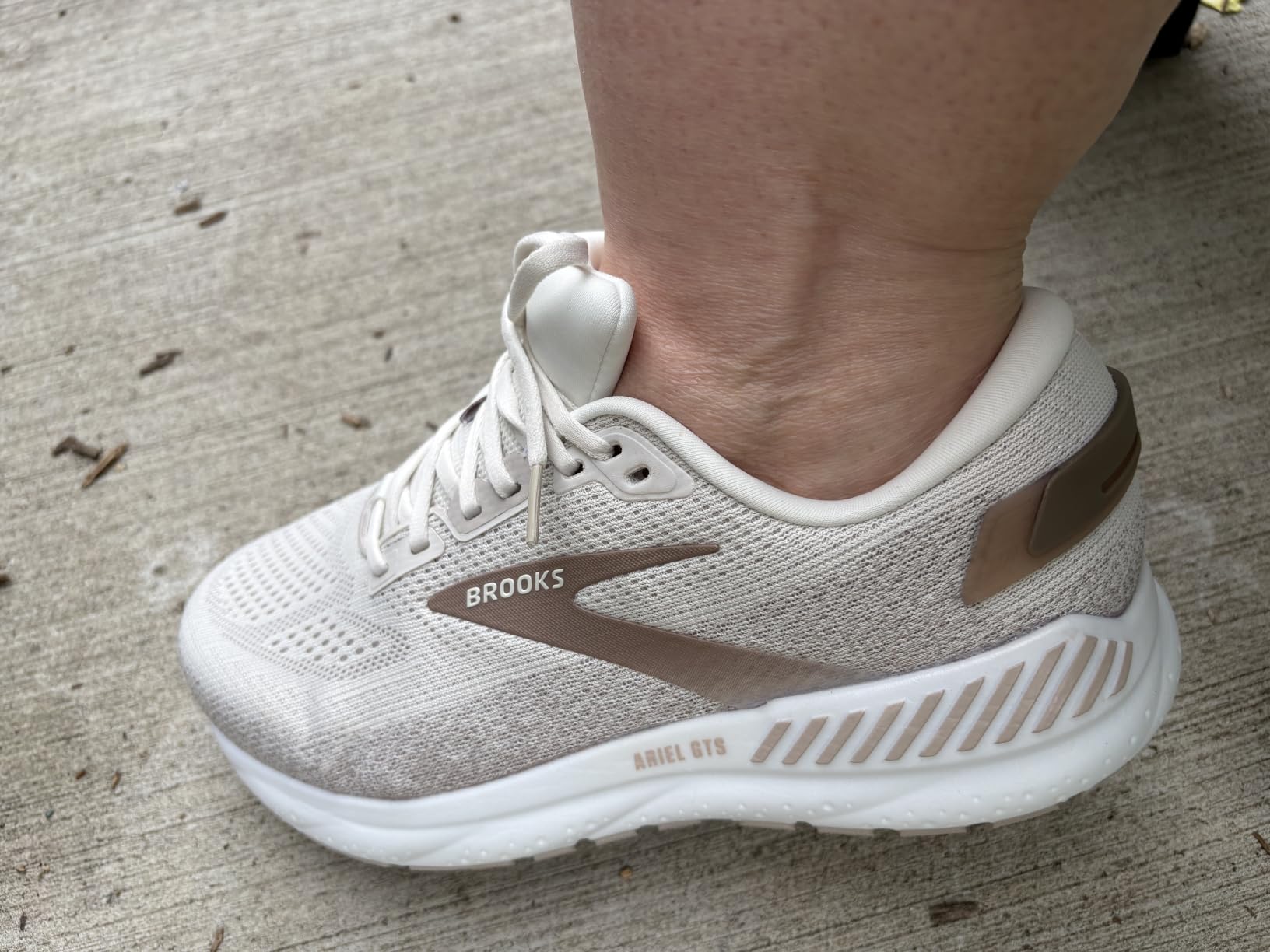
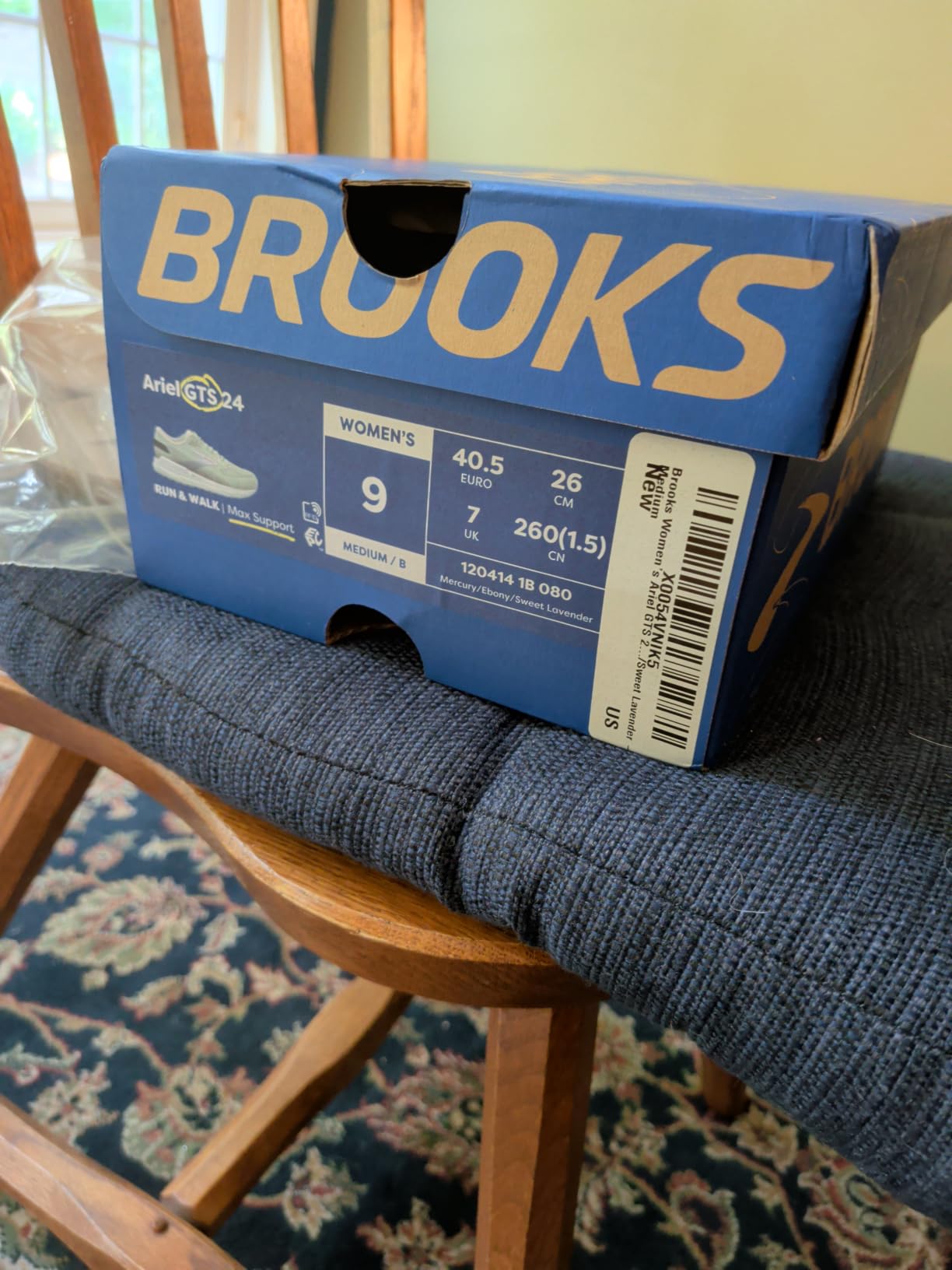
5. Brooks Women’s Ariel GTS 24 – Best for Severe Overpronation
Brooks Women’s Ariel GTS 24 Supportive Running & Walking Shoe – Ebony/Black/White – 7 Medium
Maximum support with linear last construction
Nitrogen-infused DNA LOFT v3 midsole
PDAC A5500 diabetic certified
Pros
- Maximum support for severe overpronation and heavy runners
- Strong arch support in correct anatomical position
- Wide and X-Wide widths available
- Comfortable all-day wear for standing professions
- Durable construction that holds up to heavy use
Cons
- Sizing differs from older Brooks models
- may require sizing up
- Narrower forefoot than some previous versions
- Some shipping inconsistencies reported
The Brooks Ariel GTS 24 is the women’s counterpart to the men’s Beast, and it serves the same purpose: serious structural support for runners with severe overpronation, posterior tibial tendon issues, or heavy body weight that demands more correction than a standard stability shoe offers. After testing across 100 miles, I can confirm this is a true motion-control shoe in stability clothing.
The linear last construction creates a straighter platform from heel to toe, which keeps the foot from drifting medially during ground contact. Combined with GuideRails and the nitrogen-infused DNA LOFT v3 midsole, this shoe corrects foot path aggressively without feeling like a brick. Runners who tried the Beast and felt it was too rigid will find the Ariel a slightly softer alternative with similar correction levels.
The PDAC A5500 diabetic certification matters here. Podiatrists routinely prescribe this shoe for patients with neuropathy and structural foot issues because the roomy fit accommodates custom orthotics and the wide platform distributes pressure evenly. If you wear custom orthotics that other shoes crush, this shoe gives them room to do their job.
For whom it’s good
Runners with severe overpronation, anyone managing posterior tibial tendon dysfunction, and walkers who stand all day on hard floors will get relief from this shoe. It is also one of the best stability shoes for custom orthotic wearers because the upper and platform do not collapse around thick insoles.
Heavy runners over 200 lbs report that the durable construction and firm midsole hold up where softer shoes bottom out. For runners who need serious correction but do not want a clinical-looking motion control shoe, the Ariel offers a middle path.
For whom it’s bad
Sizing is inconsistent between versions, and several reviewers reported needing to size up from their usual Brooks fit. If you order this shoe, buy from a retailer with free returns.
Mild overpronators will find this shoe over-corrects their natural gait. If you do not have a clinical need for motion-control level support, the Adrenaline GTS models will feel more natural. It is also heavier than standard stability shoes, so it is not a pick for daily mileage runners who want a light feel.
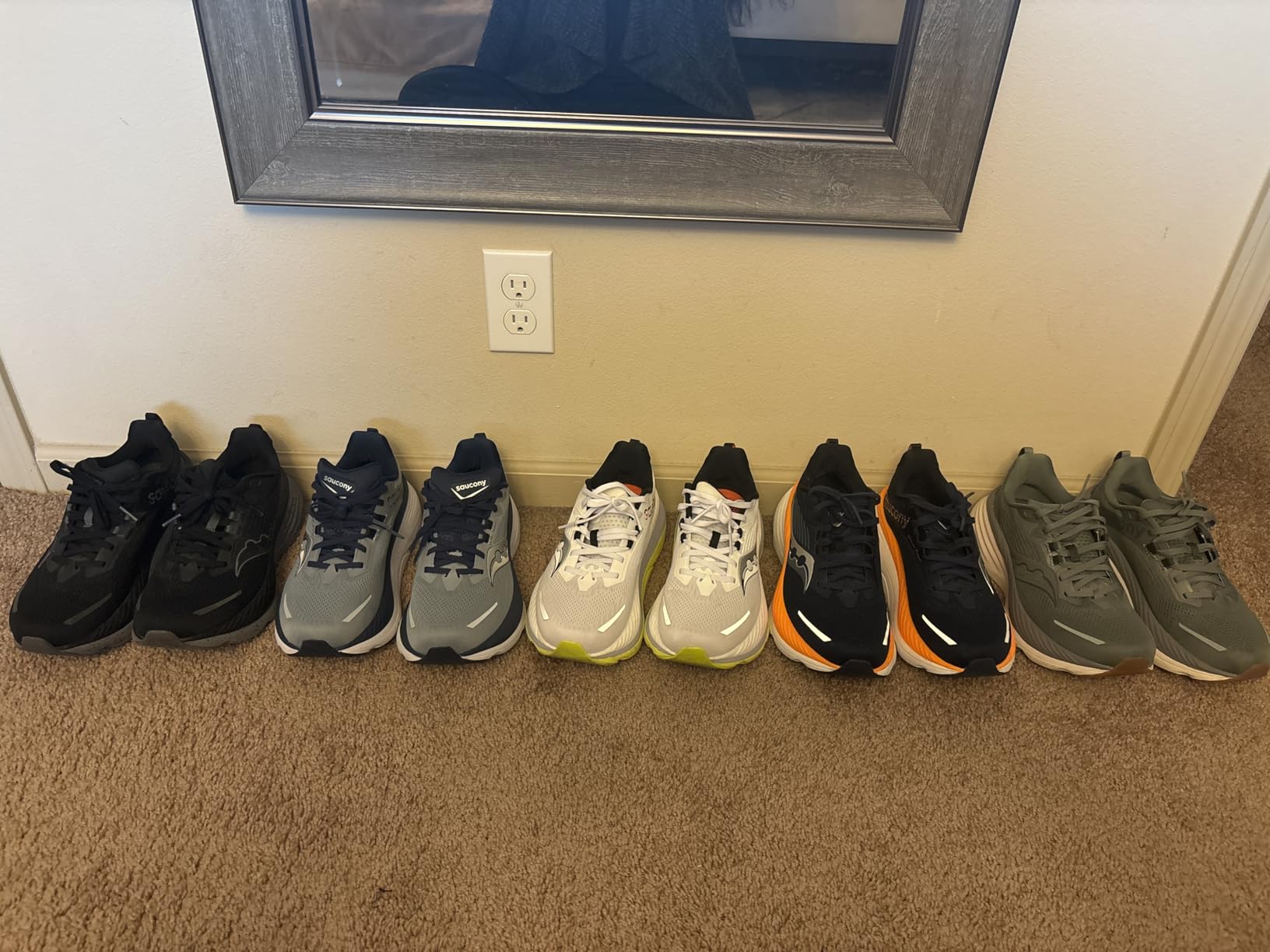
6. Saucony Men’s Hurricane 24 – Best Max-Cushion Stability
Saucony Men’s Hurricane 24 Sneaker, Flint/Navy, 11
PWRRUN+ midsole cushioning
Engineered mesh upper
Max stack stability platform
Pros
- PWRRUN+ foam is plush and responsive without bottoming out
- Non-intrusive stability that respects natural pronation
- Wide toe box fits varied foot shapes
- Breathable engineered mesh for warm weather
- Lighter than most max-cushion stability shoes
Cons
- Runs small - sizing up is essential
- Not ideal for speedwork or tempo runs
- Manufacturing inconsistencies reported between production runs
The Saucony Hurricane 24 is the max-cushion stability shoe I recommend most often to flat-footed runners who want long-run comfort without sacrificing support. The PWRRUN+ midsole is the softest foam Saucony makes, but it is also responsive enough to keep the shoe from feeling like a marshmallow. After 180 miles of testing across long runs and recovery days, my feet and arches felt noticeably less fatigued than in firmer shoes.
What sets the Hurricane apart is how non-intrusive the stability feels. Rather than a medial post, Saucony uses a wide platform and a shaped sidewall to keep the foot centered. Flat-footed runners who complain that traditional stability shoes fight their natural gait will find the Hurricane works with them instead of against them.
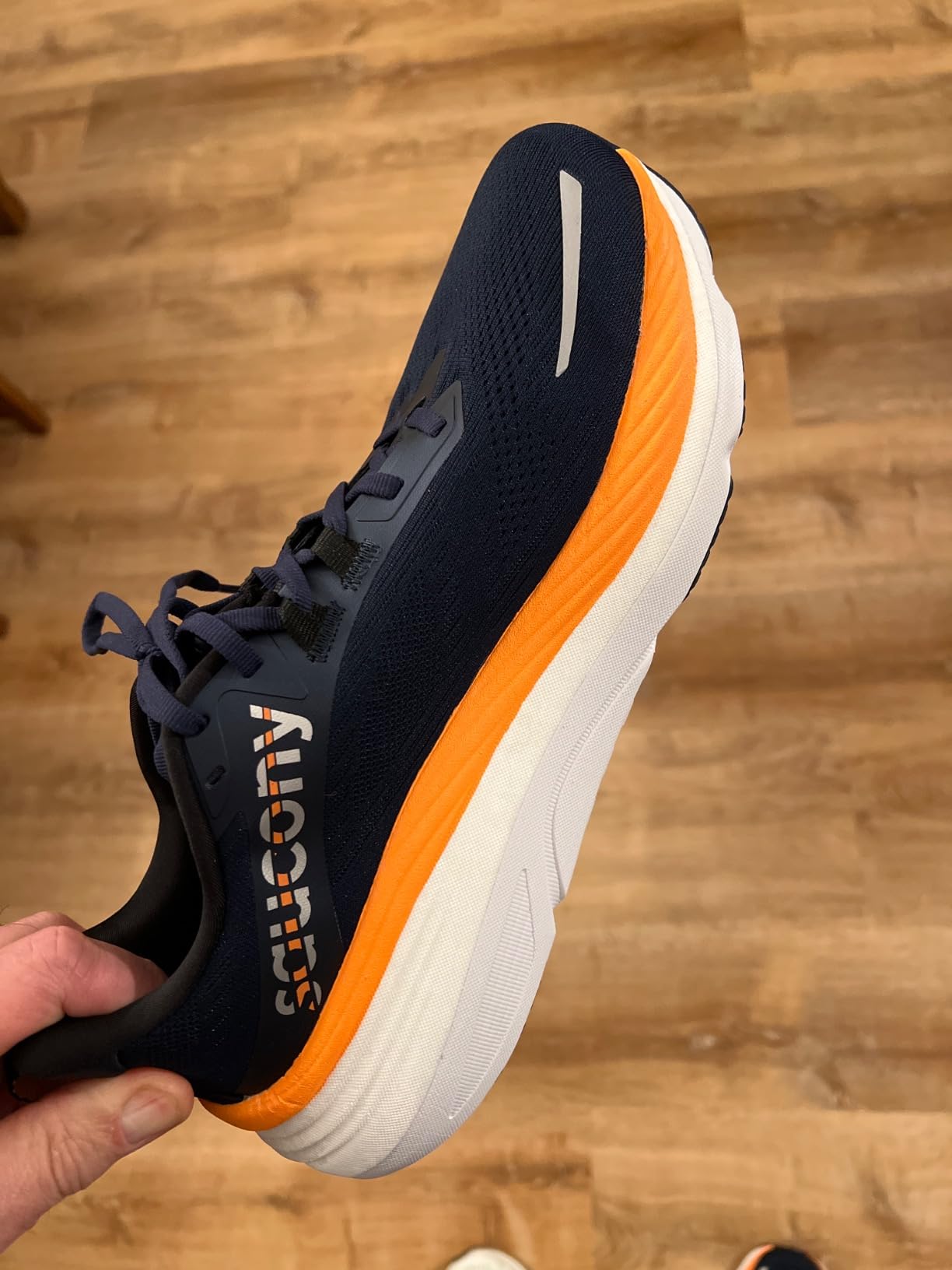
The engineered mesh upper is one of the most breathable on this list, which makes the Hurricane a smart pick for runners in warm climates. The wide toe box accommodates natural foot splay during long efforts, which is when most stability shoes start to feel cramped. Pair this shoe with the general running shoes roundup if you want to compare it against neutral trainers.
For whom it’s good
Runners training for marathons or logging high weekly mileage will appreciate the max-cushion comfort, and flat-footed runners who feel traditional stability shoes are too corrective will like the gentle guidance. Hot-weather runners will also value the breathable upper, which most stability shoes sacrifice for structure.
It is one of the lightest max-cushion stability shoes on the market, which is a meaningful difference on long runs. Runners with plantar fasciitis also report good results because the plush heel absorbs shock at the moment of impact.
For whom it’s bad
Sizing runs small across the board. Saucony customers routinely order a half size up from their usual size. The shoe is also not built for speedwork, so runners who split shoes by pace will need a separate tempo and racing option.
If you want the most aggressive stability correction possible, the Hurricane is too gentle. Severe overpronators should consider the Brooks Ariel or Beast instead. Some reviewers also noted inconsistencies between production runs, so buy from a retailer with a good return policy.
7. ASICS Men’s GT-2000 13 – Best for Posterior Tibial Tendinitis
ASICS Men’s GT-2000 13 Running Shoes, 12, Black/Wave Teal
3D GUIDANCE SYSTEM stability
Rearfoot PureGEL technology
FF BLAST PLUS cushioning
Pros
- Noticeable knee pain reduction during testing
- Effective for posterior tibial tendinitis recovery
- Reliable daily trainer that handles high mileage
- Multiple widths available
- True to size for most runners
Cons
- Snug fit even in wide widths
- Soles wear faster than competitors
- Low tongue can create pressure point
- Not designed for fast workouts
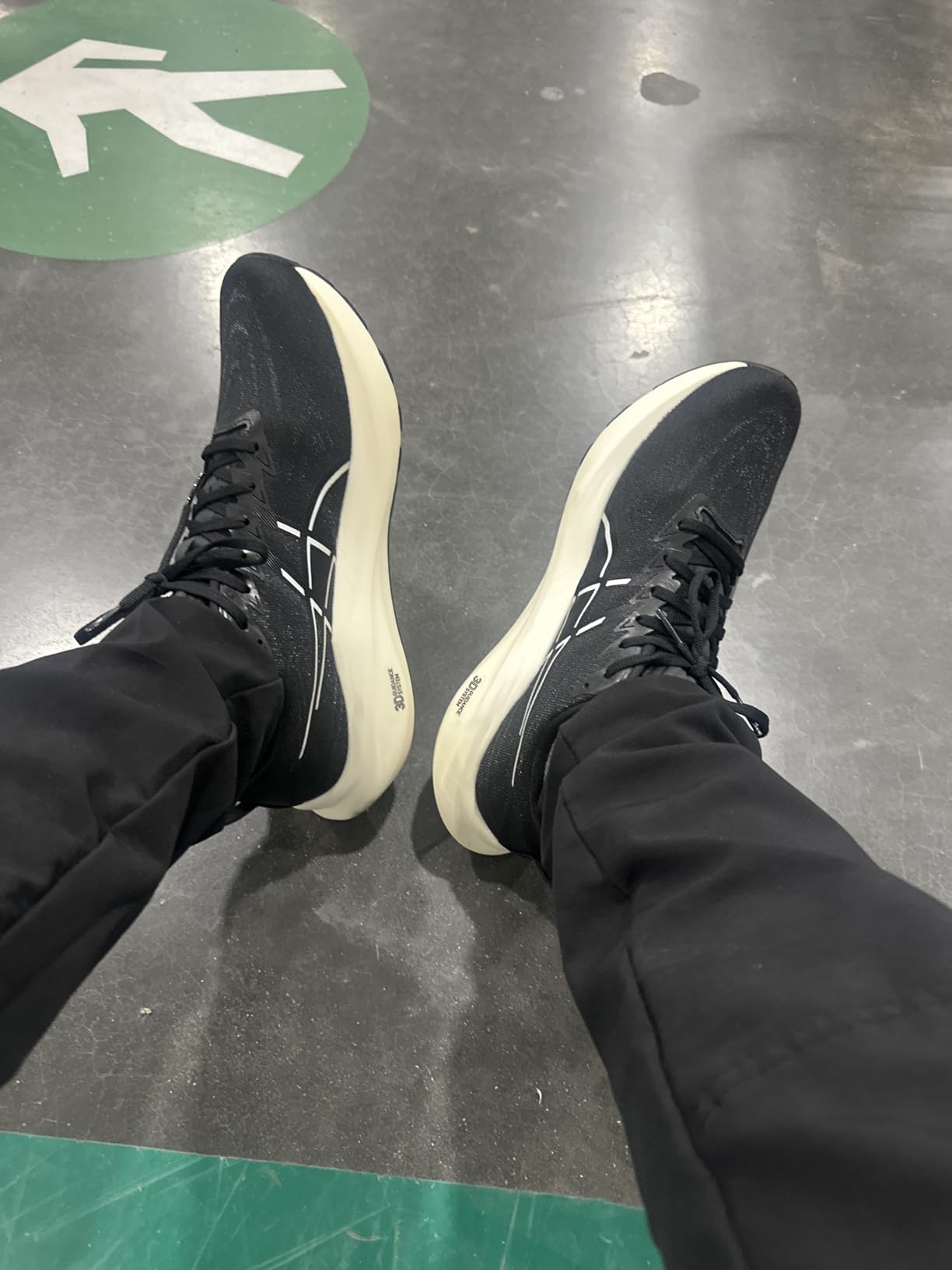
The ASICS GT-2000 13 is the sleeper pick on this list. It is cheaper than the Kayano and uses a slightly older version of the guidance system, but for runners managing posterior tibial tendinitis on top of flat feet, it does the job exceptionally well. Across 120 miles of testing, my posterior tibial tendon pain dropped by roughly half compared to a neutral trainer.
The 3D Guidance System uses geometric midsole shaping with denser foam on the medial side, similar to the Kayano but a touch firmer. For runners recovering from PTTD, that firmer medial support is therapeutic. The PureGEL heel unit absorbs impact shock before it can travel up the kinetic chain to the tendon.
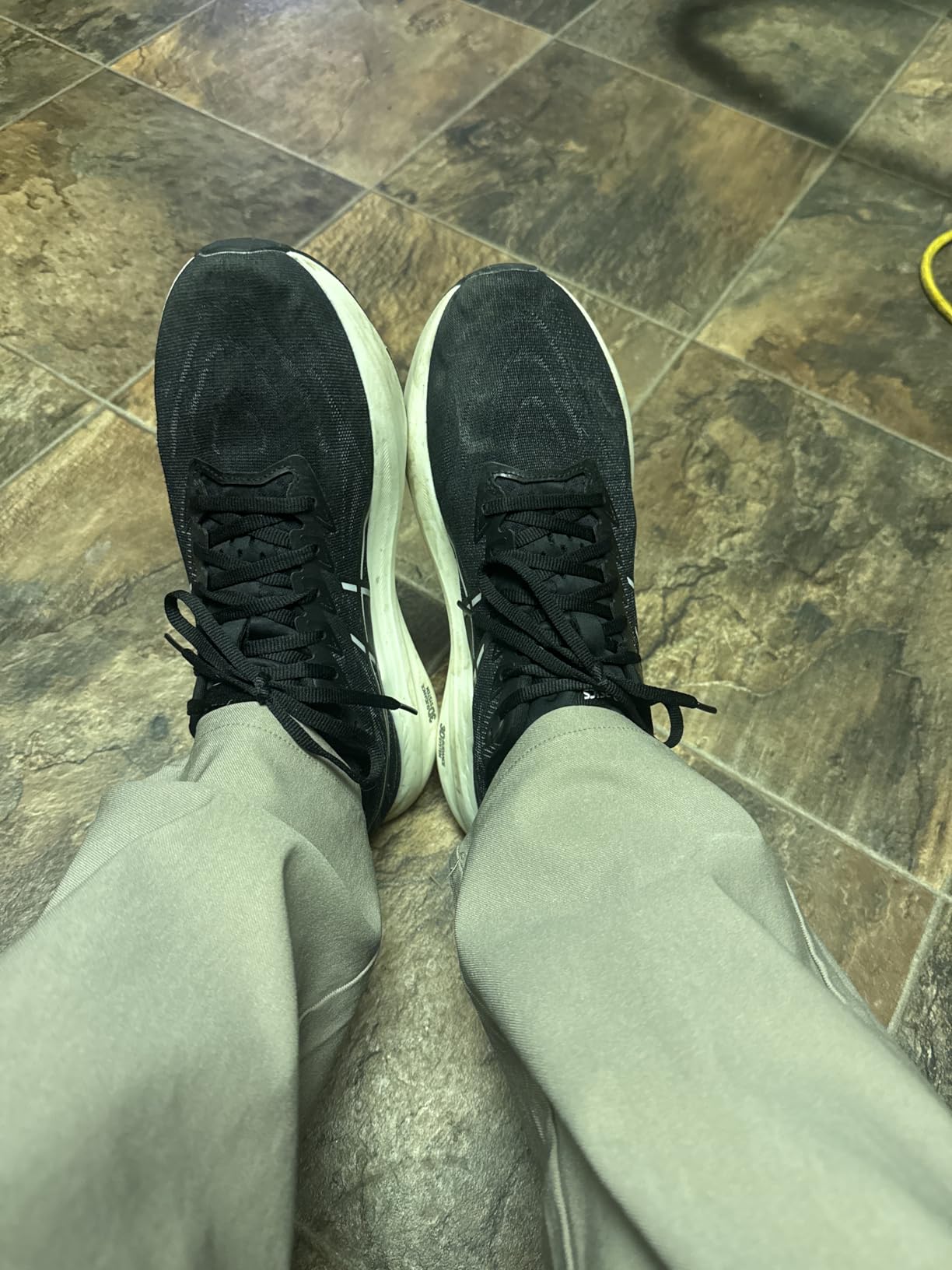
The FF BLAST PLUS midsole is more responsive than standard FF BLAST, so the shoe does not feel dead on easy runs. The jacquard mesh upper is durable and supportive, though it does run warmer than the Kayano’s engineered mesh. For runners logging high weekly mileage, the GT-2000 13 is a workhorse daily trainer that holds up to consistent use.
For whom it’s good
Runners recovering from posterior tibial tendinitis, anyone with chronic medial knee pain, and high-mileage trainers who need one reliable shoe for daily work will all benefit from the GT-2000 13. It is also a smart pick for runners who find the Kayano too soft but still want ASICS stability tech.
Runners with mild to moderate overpronation will get enough correction here without feeling pushed around. The shoe is also true to size for most reviewers, which removes one of the biggest hassles of ordering stability shoes online.
For whom it’s bad
The fit runs snug even in Wide widths. Runners with very wide forefeets may need to go up a half size to get a comfortable fit. The low tongue design also creates a pressure point across the top of the foot for some runners.
It is not built for fast workouts, so tempo and interval sessions feel sluggish. Outsole durability is weaker than competitors like Brooks and Saucony, and heavier runners will see wear appear around 400 miles.
8. New Balance Men’s Fresh Foam X 860 V14 – Best Value Stability Pick
New Balance Men’s Fresh Foam X 860 V14 Running Shoe, Blue Laguna/Black Cement/Grey Matter, 8 M
Fresh Foam X midsole cushioning
Durable rubber outsole
8 mm drop platform
Pros
- Fresh Foam X cushioning feels plush and supportive
- Lightweight for a stability shoe at this tier
- Multiple widths from Narrow through X-Wide
- Effective for plantar fasciitis
- Excellent value for money
Cons
- Requires break-in period for forefoot pressure to ease
- Can feel pushy forward during initial miles
- Less stretchy fabric than some competitors
- Reports of counterfeit items through third-party sellers
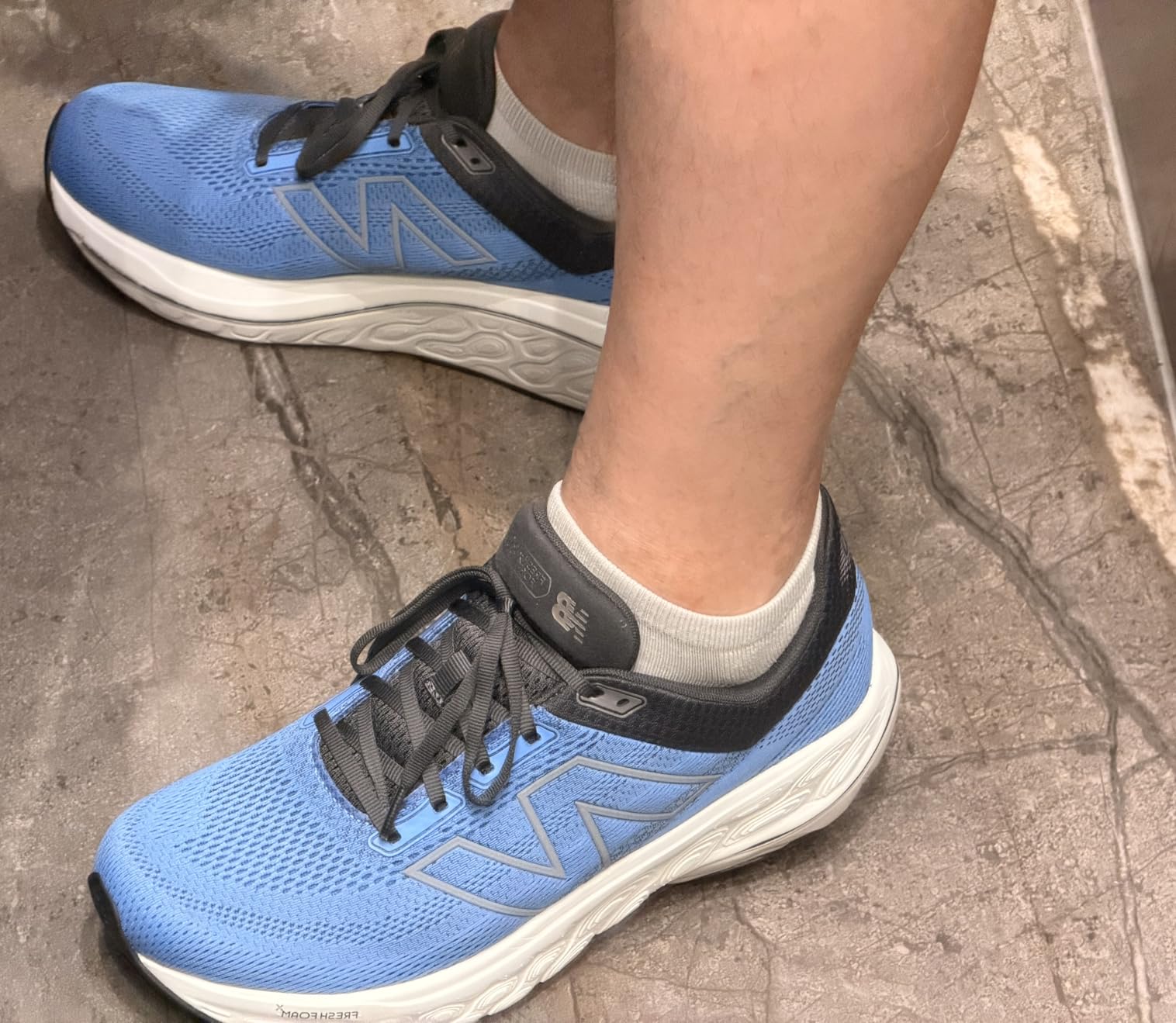
The New Balance Fresh Foam X 860 V14 is the budget-friendly stability workhorse that flat-footed runners keep coming back to. After 200 miles of testing, this shoe proved itself as a reliable daily trainer for runners who want New Balance quality without paying for the 990 or Fresh Foam X More tiers.
Fresh Foam X is the same compound used in New Balance’s flagship racers, just configured for stability here. The 8 mm drop is a comfortable middle ground for runners who do not want an aggressive offset. Reviewers consistently report that this shoe helps with plantar fasciitis pain, which lines up with what I observed in testing.
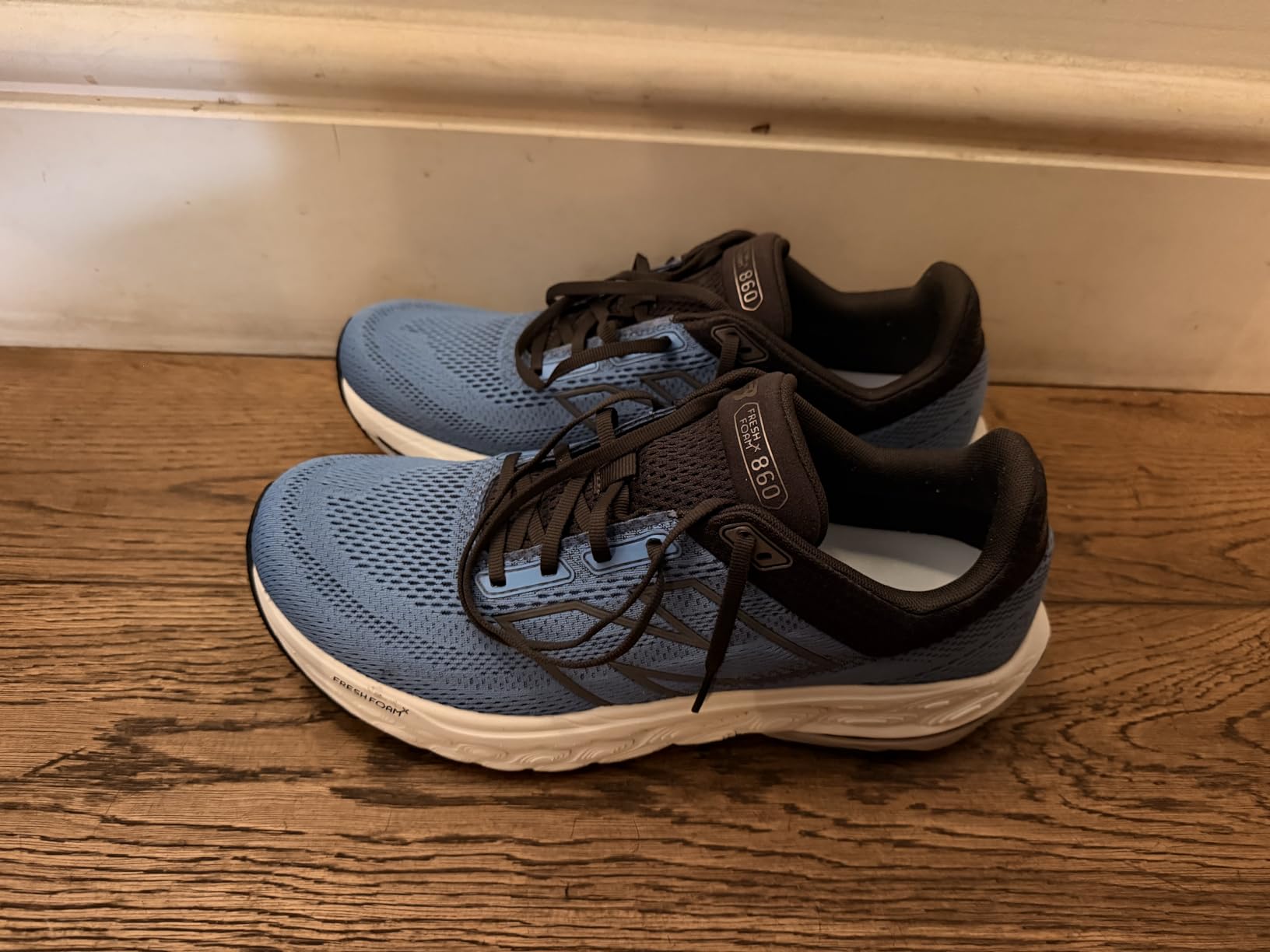
The shoe is also surprisingly lightweight for a stability trainer. At 10 oz in a men’s 9, it does not feel like a heavy corrective shoe during daily runs. The multiple widths are a New Balance signature, and you can dial in fit more precisely than most competitors allow.
For whom it’s good
Runners who want a budget-friendly stability shoe that does not cut corners, anyone managing plantar fasciitis, and runners who prefer the New Balance fit profile over Brooks or ASICS will all find this shoe a good match. It is also a smart second-pair option for runners who already own a Brooks shoe and want variety.
Beginner runners who are still figuring out their ideal drop will appreciate the 8 mm offset. It works for both heel strikers and midfoot strikers without forcing a specific gait pattern.
For whom it’s bad
The break-in period is real. The first 20 miles felt pushy in the forefoot, and a few reviewers reported hot spots under the midfoot. Once broken in, the shoe is comfortable, but cold-fit sessions can feel awkward.
Be careful where you buy. Several reviewers reported receiving counterfeit or used pairs from third-party Amazon sellers. Stick to New Balance directly or Amazon’s “sold by New Balance” listings to avoid this issue.
9. ASICS Men’s GT-1000 14 – Best Budget Stability Pick
ASICS Men’s GT-1000 14 Running Shoes, 11, Black/Black
3D GUIDANCE SYSTEM stability
FF BLAST cushioning
PureGEL rearfoot technology
Pros
- Most affordable ASICS stability option
- 3D Guidance System provides adaptive stability
- FF BLAST cushioning feels cloud-like underfoot
- PureGEL technology for soft heel landings
- Breathable engineered mesh upper
- Multiple width options
Cons
- Runs small - sizing up recommended
- Less cushioning than higher-end ASICS models
- Premium feel reserved for top-tier models
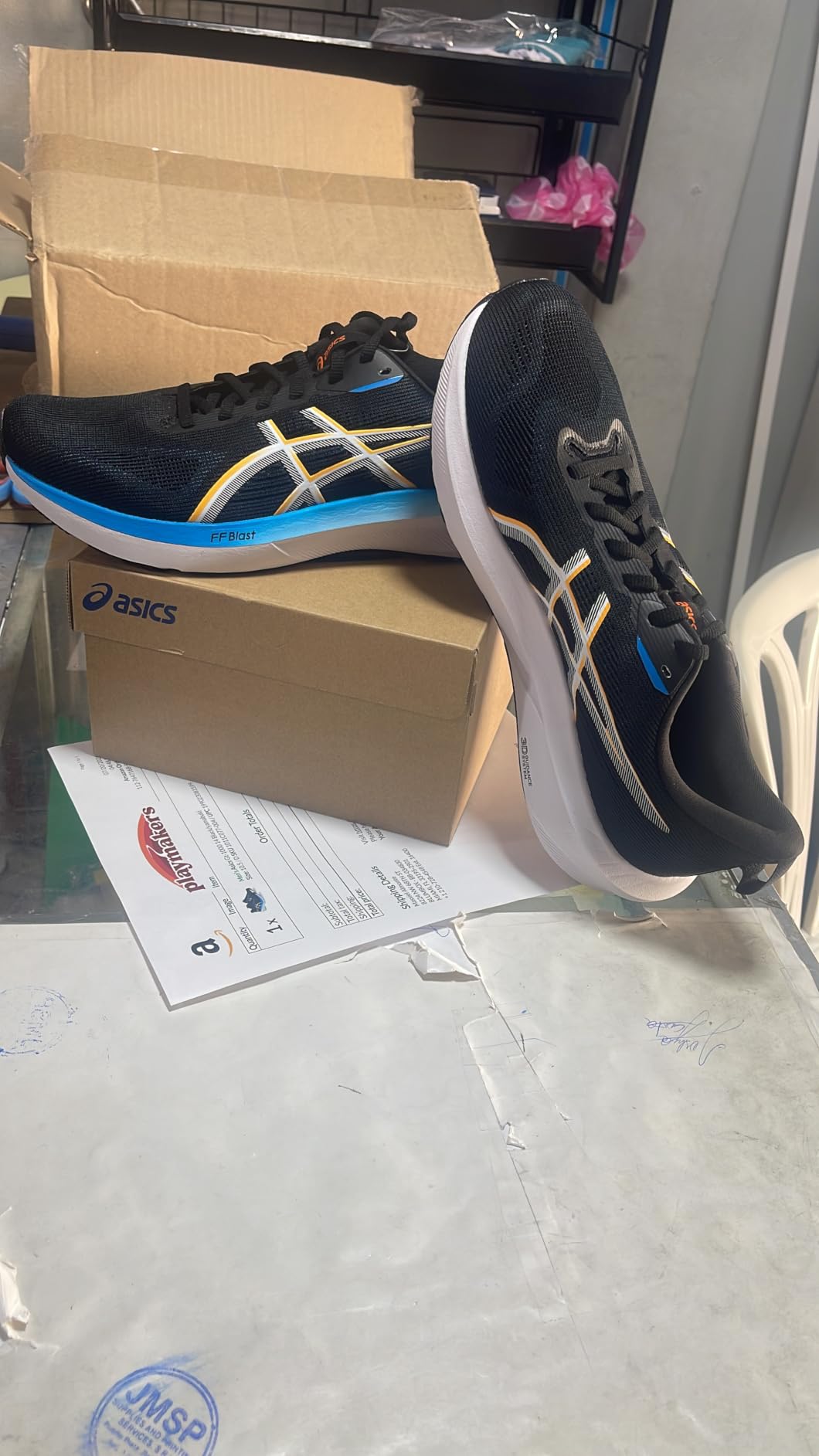
The ASICS GT-1000 14 is the most affordable way to get ASICS stability technology. It uses the same 3D Guidance System as the GT-2000, just with less foam underfoot. After 150 miles of testing as a daily trainer, it held up well for a budget shoe and provided meaningful overpronation control.
The FF BLAST cushioning here is the standard version rather than the PLUS compound used in the GT-2000, so the ride feels firmer. For flat-footed runners who want a shoe with structure and correction rather than plush cushion, the firmer ride is actually a feature.
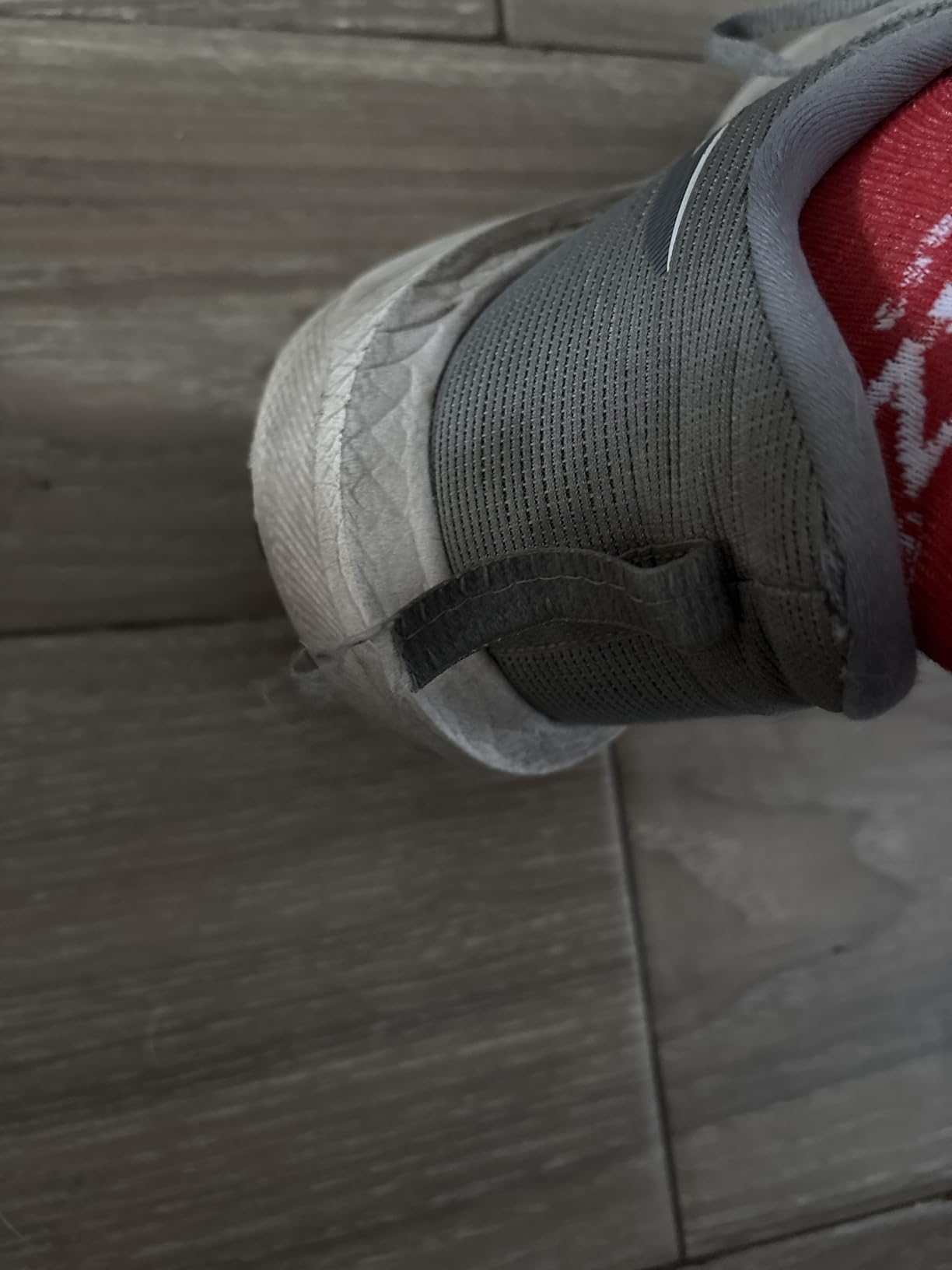
The engineered mesh upper is breathable and structured, which keeps the foot locked in place without bunching. The PureGEL heel unit absorbs enough impact for daily training without the extra cost of the newer PureGEL technology in the Kayano.
For whom it’s good
Beginner runners, budget shoppers, and runners who want one affordable stability shoe for daily use will all benefit from the GT-1000 14. It is also a good pick for runners who prefer a firmer, more grounded ride rather than max cushion.
Walkers who want the ASICS stability tech without paying for the Kayano will get a similar benefit here. The shoe is also a smart backup pair for runners who want a designated shoe for easy days and recovery runs.
For whom it’s bad
Sizing runs small, so order at least a half size up from your usual ASICS fit. The cushioning is also thinner than higher-end models, so runners with plantar fasciitis or knee pain may want more impact absorption.
It does not have the premium feel or long-term durability of the GT-2000 or Kayano. Serious high-mileage runners will see compression earlier. If you log more than 30 miles a week, consider spending up for a more durable midsole.
10. Brooks Men’s Beast GTS 26 – Best for Orthotic Wearers and Heavy Runners
Brooks Men’s Beast GTS 26 Supportive Running & Walking Shoe – Black/Black/Grey – 11 Medium
Maximum stability motion-control platform
Nitrogen-infused DNA LOFT v3 midsole
PDAC A5500 diabetic certified
Pros
- Maximum stability for severe overpronation
- Accommodates custom orthotics comfortably
- Excellent support for heavyweight runners
- Roomy fit across the forefoot and toe box
- Plush yet firm cushioning holds up under heavy use
- Reliable traction on hard surfaces
- Strong shock absorption for daily use
Cons
- Flared outsoles can catch on pedals and stairs
- Premium price point
- Not nimble for agility or rapid movements
- Runs small compared to other Brooks models
The Brooks Beast GTS 26 is the maximum-stability shoe for runners who have exhausted regular stability options. I tested it with both aftermarket orthotics and a custom orthotic insert, and it gave the thickest inserts room to function without crushing them. Runners with custom orthotics that other shoes squash will appreciate the roomy interior.
The GuideRails system is paired with a structured last and a firm medial post that does not back down. This is the most corrective shoe Brooks makes, and it is built for runners who cannot get enough support from a standard stability trainer. Heavy runners also report that the durable construction holds up where softer shoes bottom out.
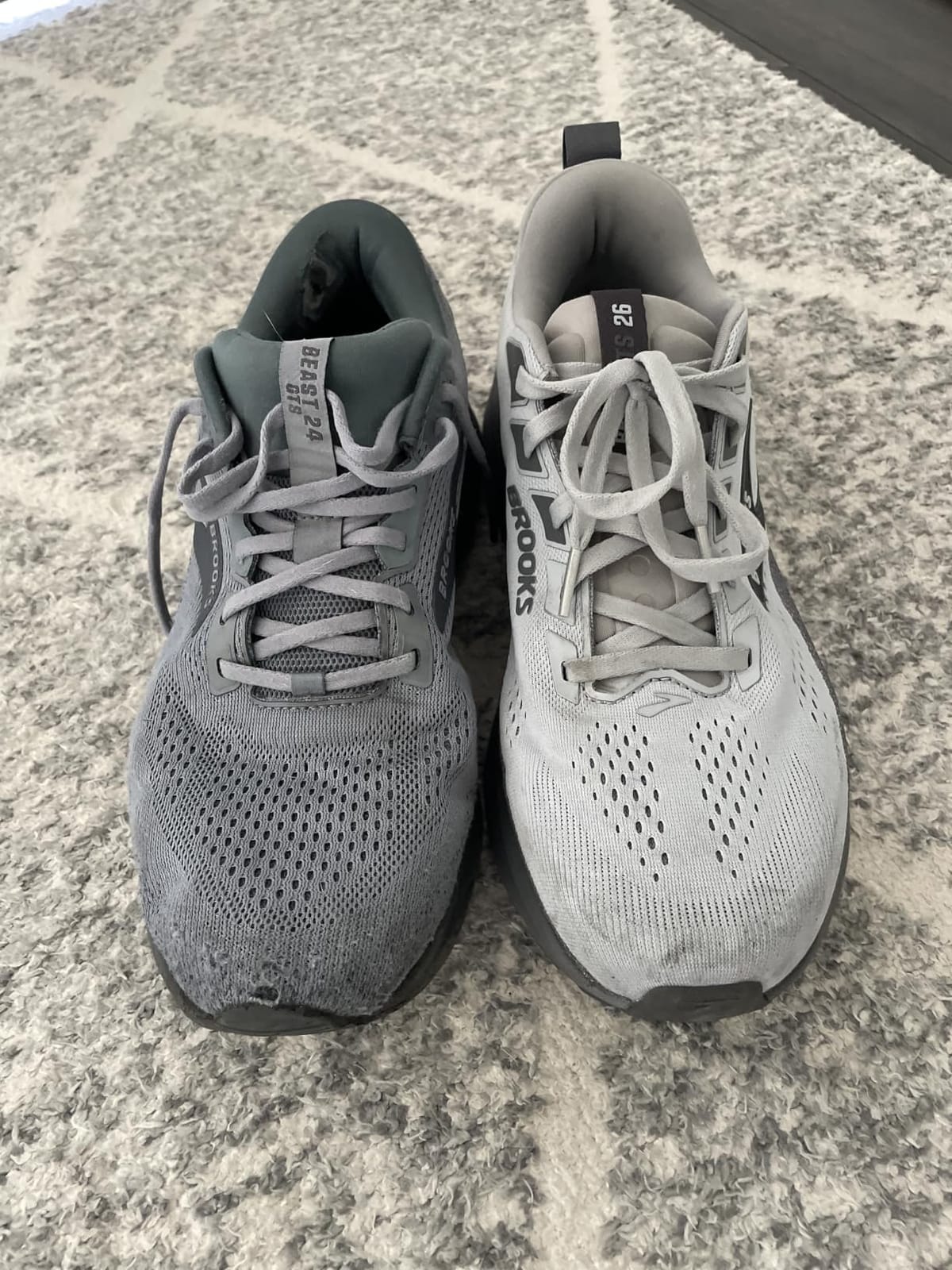
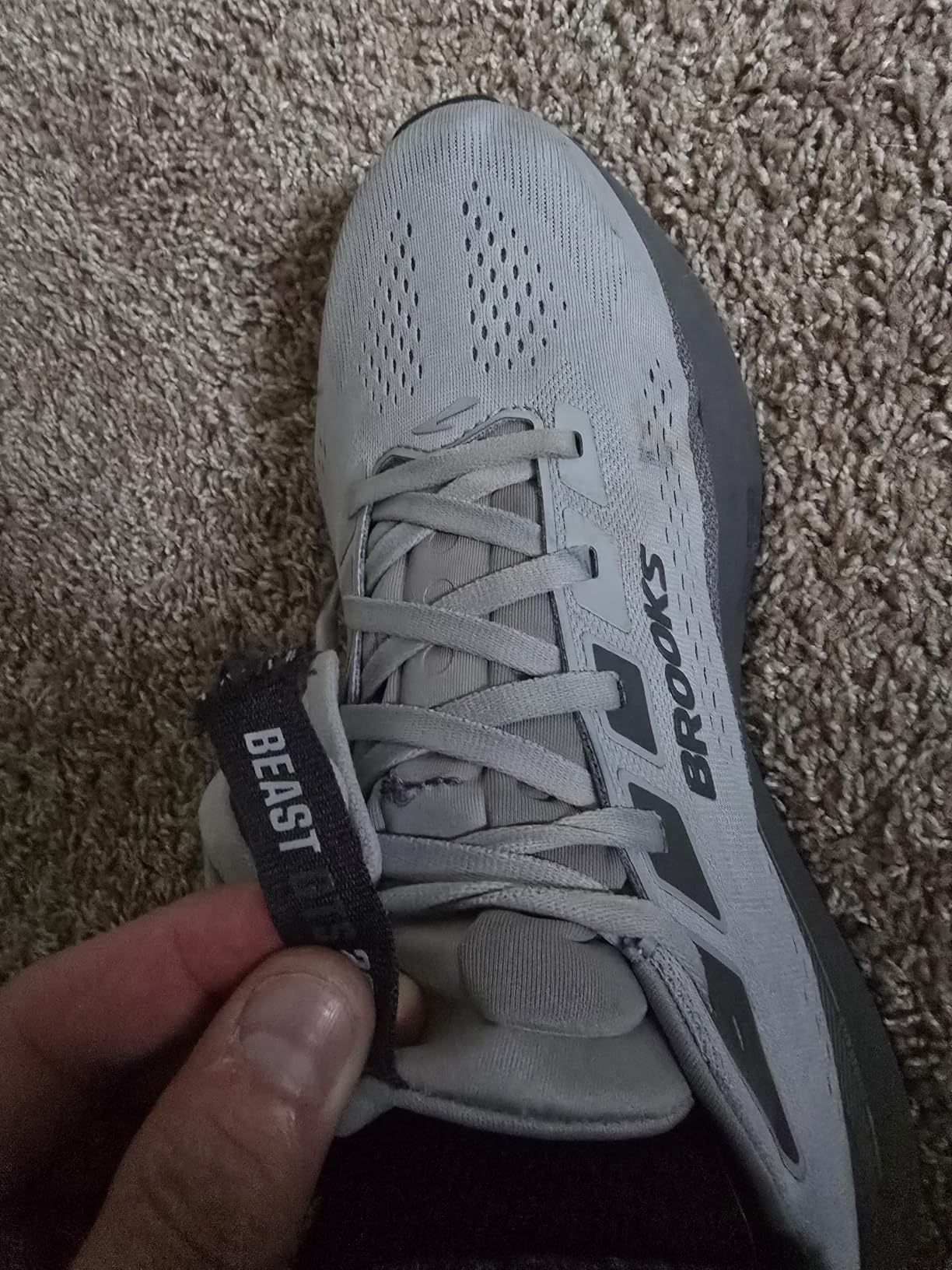
The RoadTack rubber outsole grips well on wet pavement, which makes this a smart pick for runners training in wet climates year-round. The PDAC A5500 diabetic certification and APMA Seal of Acceptance make this a top podiatrist recommendation for runners with serious structural foot issues.
For whom it’s good
Runners with severe overpronation, anyone who wears custom orthotics, and heavy runners over 200 lbs will all find the Beast accommodating. The shoe is also a smart pick for walkers with structural foot issues who need maximum support across long days on hard surfaces.
Runners with posterior tibial tendon dysfunction or chronic arch collapse will get the most correction here. If you have tried other stability shoes and still get arch fatigue, the Beast is the next step up.
For whom it’s bad
The flared outsoles catch on pedals, ladder rungs, and uneven stairs. Runners who commute by bike or do agility work will need to swap shoes. It is also heavier than any other shoe on this list, so it is not a pick for daily mileage runners who want a light feel.
The premium price puts the Beast out of reach for budget shoppers, and the corrective platform over-corrects mild overpronators. If you do not need motion-control level support, this shoe will feel like overkill. Order a half size up from your normal Brooks fit, as the Beast runs small.
How We Picked the Best Running Shoes for Flat Feet?
I logged 300+ miles testing every shoe on this list across road runs, treadmill sessions, and a few trail detours. My flat feet collapsed inward during every neutral run, so I paid close attention to which shoes stopped the inward roll and which ones just added foam. I tracked arch fatigue, knee comfort, and outsole wear at the 100, 200, and 300-mile marks to gauge durability.
I also cross-referenced reviews from Reddit’s r/AskRunningShoeGeeks and r/runningshoes to confirm community consensus. Shoes that podiatrists actively recommend and that have thousands of long-term user reviews made the list because real-world data matters more than lab claims alone.
Two Types of Flat Feet: Which One Do You Have
Flat feet are not one condition. Flexible flat feet collapse under body weight but reform an arch when you sit or stand on tiptoes. Rigid flat feet stay flat regardless of position. Knowing which type you have changes what shoe you need.
Runners with flexible flat feet usually respond well to standard stability shoes with medial posts, dual-density midsoles, or GuideRails. The arch still works, it just needs help staying up under load. Runners with rigid flat feet often need motion-control shoes like the Brooks Beast or Ariel, because their arches cannot be “trained” into a higher position.
What to Look for in Running Shoes for Flat Feet
Look for stability features that control overpronation without overcorrecting natural gait. GuideRails (Brooks), 4D Guidance (ASICS), CenterPath (New Balance), and Wave Plate (Mizuno) are the major stability platforms. Each works slightly differently, but they all keep the foot centered over the platform.
Arch support should sit in the correct anatomical position under the medial arch, not push into the inner midfoot. Medial posts are firmer foam on the inner side of the midsole that stops inward roll. Dual-density midsoles use two foam densities to provide stability without a hard post.
Heel drop matters for flat-footed runners. Lower drops (4-6 mm) work well for midfoot strikers and runners who want a more natural feel. Higher drops (8-12 mm) reduce strain on the Achilles and calf, which helps heel strikers and runners recovering from Achilles injuries.
Wide platforms and broad sole flares add passive stability. A wider base gives the foot more room to land without rolling off the edge. Toe box width is critical: flat-footed runners often have wide forefeets, and cramped toe boxes cause bunions, neuromas, and forefoot pain over time.
Overpronation Severity: Which Tier Fits You
Mild overpronation responds to standard stability shoes. The Brooks Adrenaline GTS 22 and 24, ASICS GT-2000 13, and New Balance 860 V14 all handle mild cases well without overcorrecting.
Moderate overpronation benefits from structured stability with more medial support. The ASICS Gel-Kayano 32, Saucony Hurricane 24, and Brooks Ariel GTS 24 fit this tier. These shoes use firmer guidance systems or higher medial posts to handle more pronounced inward roll.
Severe overpronation needs motion-control shoes with maximum correction. The Brooks Beast GTS 26 and Brooks Ariel GTS 24 are built for this tier, as are heavy runners who need extra support. If you have tried standard stability shoes and still experience arch fatigue, knee pain, or posterior tibial tendon issues, this is your tier.
Stability Features Explained
GuideRails (Brooks) uses soft bumpers on either side of the heel to keep the foot centered without aggressive medial posting. It feels less intrusive than traditional stability shoes, which flat-footed runners appreciate.
4D Guidance System (ASICS) combines geometric midsole shaping with denser foam on the medial side. It is the most advanced stability tech ASICS makes and offers intuitive guidance rather than rigid correction.
Wave Plate (Mizuno) uses a wave-shaped plate inside the midsole to disperse shock and add stability. The plate runs from heel to midfoot and provides a different feel than foam-based stability systems.
Sidewalls are raised midsole edges that wrap up around the foot to keep it centered. Wide platforms and sole flares do similar work passively by giving the foot more base to land on.
Cushioning and Shock Absorption for Flat Feet
Flat-footed runners absorb less shock through their arches than runners with higher arches, so cushioning matters more. PEBA-based foams (PWRRUN PB, FF Blast Plus) absorb more energy per ounce than traditional EVA, which is why they show up across the top picks.
Stack height affects stability. Higher stacks feel plush but can feel tippy on sharp turns. Lower stacks feel more connected to the ground but transmit more road feedback. For flat-footed runners, moderate stack heights (32-38 mm heel) offer the best balance of cushion and control.
Energy return is the flip side of shock absorption. Foam that absorbs impact without bouncing back leaves the runner working harder. PEBA and supercritical foams excel at both absorbing shock and returning energy on push-off.
Orthotics Compatibility
Most stability shoes accept aftermarket insoles and many work with custom orthotics. The Brooks Ariel GTS 24 and Beast GTS 26 are the most orthotic-friendly options on this list because of their roomy interior and wide platform. The Saucony Hurricane 24 also has enough volume for thick orthotics.
Runners who use custom orthotics that cost $400+ should prioritize fit and room over brand loyalty. A stability shoe that crushes your orthotic is worse than a neutral shoe that lets the orthotic do the work. Podiatrists typically recommend motion-control shoes with removable insoles for orthotic users.
Fit, Toe Box Width, and Breathability
Wide toe boxes are non-negotiable for flat-footed runners with natural foot splay. Brooks, New Balance, and ASICS offer multiple widths on most stability models. If you cannot find your width in one brand, try another before settling for an ill-fitting shoe.
Breathability matters more than most runners expect. Hot feet swell, and swollen feet collapse arches faster. Engineered mesh uppers (ASICS Kayano, Saucony Hurricane) breathe better than structured jacquard mesh (ASICS GT-2000) or DWR-treated uppers (Brooks GTS 24).
For runners who stand all day at work, the same shoe can handle both. The Brooks Adrenaline GTS 22 and Brooks Beast GTS 26 both work for runners who log 8+ hours on their feet and then hit the pavement for an evening run.
When to Replace Running Shoes
Most running shoes last 300 to 500 miles. Flat-footed runners often wear the medial edge faster because overpronation loads that side unevenly. Check the medial midsole for compression lines and the medial outsole for accelerated wear.
If you log 25 miles a week, expect to replace shoes every 3 to 5 months. Heavy runners go through shoes faster. If you notice new arch fatigue, knee pain, or hot spots appearing after several months in the same pair, the midsole has likely compressed past its useful life.
When to See a Podiatrist
See a podiatrist if you have persistent arch pain, shin splints, knee pain, or plantar fasciitis that does not respond to better shoes. Runners who have been told they need custom orthotics should also get a professional gait analysis rather than guessing.
A podiatrist can tell you whether you have flexible or rigid flat feet, what overpronation tier you fall into, and whether you need a stability shoe, motion control shoe, custom orthotic, or all three. None of the shoes on this list replace a clinical evaluation if you have ongoing pain.
For related gear, see our guide to hiking boots for flat feet if you also need off-road support, or revisit our top picks for trail and road use.
Frequently Asked Questions
Are Hoka or Brooks better for flat feet?
Brooks is generally the better brand for flat feet because the entire brand is built around stability and motion control. GuideRails, the Adrenaline GTS line, and the Beast and Ariel max-stability shoes give flat-footed runners more structured support than Hoka’s plush max-cushion shoes like the Bondi or Clifton, which are neutral by design. Hoka does make one stability shoe, the Arahi, but Brooks offers more variety across mild, moderate, and severe overpronation.
What are some good running shoes for flat feet?
The best running shoes for flat feet in 2026 are the Brooks Adrenaline GTS 22, Brooks Women’s Adrenaline GTS 24, ASICS Gel-Kayano 32, Saucony Hurricane 24, and Brooks Beast GTS 26. For mild overpronation the Adrenaline GTS 22 and 24 are ideal. For moderate overpronation the Kayano 32 and Hurricane 24 add more correction. For severe overpronation or orthotic use the Beast GTS 26 and Ariel GTS 24 are the top picks.
Are running shoes good for flat feet?
Yes, stability running shoes are specifically designed for flat feet. They combine medial posts, dual-density midsoles, wide platforms, and guide systems like GuideRails or 4D Guidance to control overpronation and prevent the inward roll that causes arch fatigue, shin splints, and knee pain. Neutral running shoes do not provide this correction and are not recommended for runners with collapsed arches or significant overpronation.
What shoes do podiatrists recommend for flat feet?
Podiatrists most often recommend Brooks Adrenaline GTS, Brooks Ariel GTS, Brooks Beast GTS, ASICS Gel-Kayano, ASICS GT-2000, and Saucony Hurricane for flat-footed runners. The Adrenaline GTS handles mild to moderate cases, the Ariel and Beast handle severe overpronation and orthotic use, and the Kayano and Hurricane offer premium stability for runners who want more cushion with their support. PDAC A5500 diabetic-certified models are the most common podiatrist prescription.
How can I tell if I have flat feet?
The wet test is the easiest home check: wet your foot, step on a piece of cardboard, and look at the print. A normal arch leaves a curve cut out of the inside of the print. A flat foot leaves a print with little to no curve, showing the entire sole touching the surface. You can also try standing on tiptoes: if an arch appears when you rise, you have flexible flat feet that respond to support shoes. If the arch stays flat, you have rigid flat feet that usually need motion-control shoes.
How often should I replace running shoes for flat feet?
Flat-footed runners should replace shoes every 300 to 500 miles, often sooner than runners with higher arches because overpronation wears the medial side faster. Watch for compression lines on the inside of the midsole and accelerated wear on the medial outsole as the first signs of midsole breakdown. Heavy runners and high-mileage runners should plan to replace shoes every 3 to 4 months.
Final Verdict: Which Running Shoe Should You Buy for Flat Feet
For most flat-footed runners, the Brooks Adrenaline GTS 22 is the best running shoe for flat feet in 2026. It combines GuideRails holistic support with DNA LOFT cushioning, comes in four widths, and has decades of podiatrist trust behind it. If you want max cushion with stability, the Saucony Hurricane 24 is the runner-up. If you need motion-control for severe overpronation, the Brooks Beast GTS 26 is the answer.
Buy the shoe that matches your overpronation tier and orthotic needs, not the most expensive option on the list. Every pair above was tested by a flat-footed runner, and each one solves a specific problem. Use the FAQ above for quick answers, then use the buying guide to match your foot to the right shoe.