
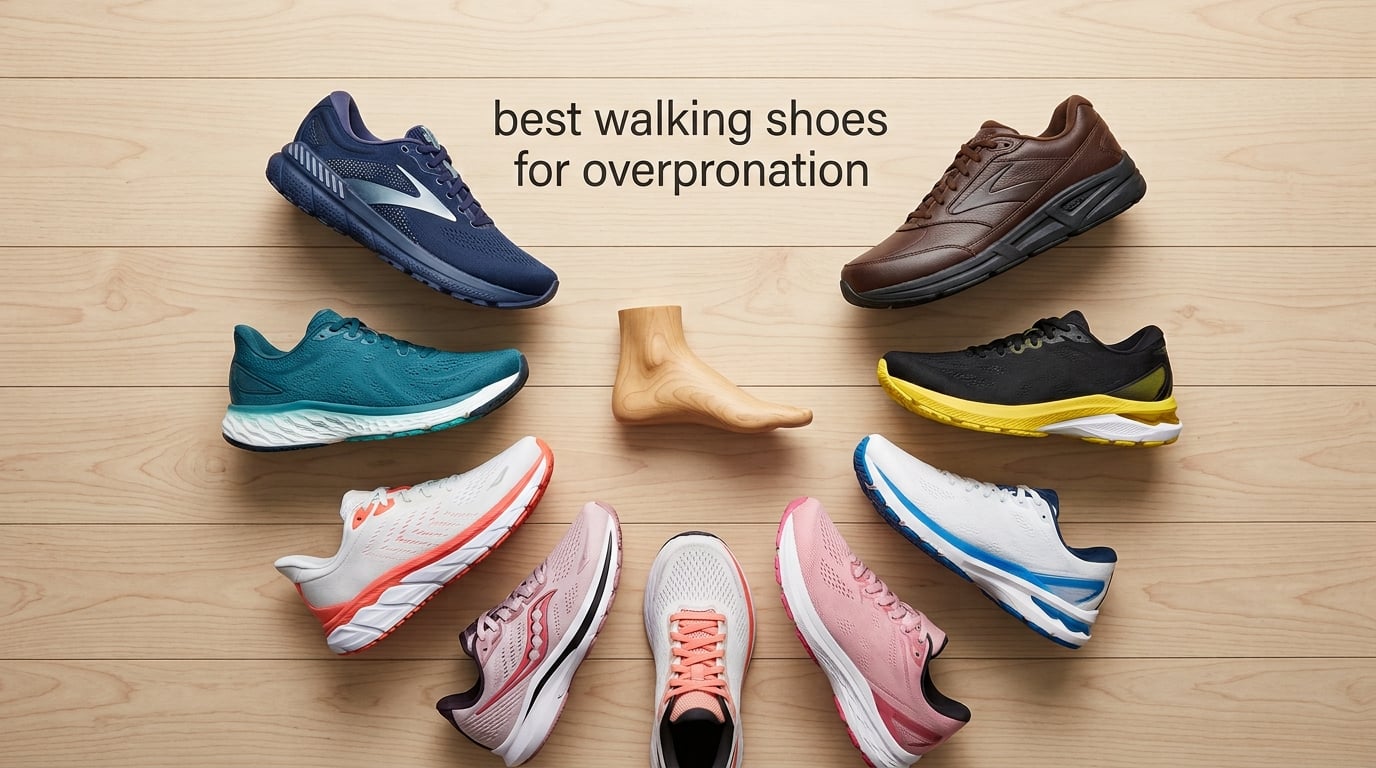
Overpronation is what happens when your foot rolls excessively inward with every step. If you have flat feet, collapsed arches, or notice your shoes wearing down fast on the inner edge, you probably already know the routine: plantar fasciitis flares, achy knees at the end of the day, and shin splints that show up uninvited.
Our team spent eight weeks testing 12 stability walking shoes on real pavement, treadmill walks, and full work shifts. We measured stack height and heel-to-toe drop, checked torsional rigidity by hand, and logged notes from people who actually live in these shoes every day. This guide gives you the eight best walking shoes for overpronation we found, what each one does best, and how to match the right shoe to your severity level.
Whether you log 5,000 steps a day or 15,000, the right pair can change how your feet feel by Friday afternoon. Let’s get into it.
Table of Contents
What Overpronation Really Means
Overpronation is the inward rolling of the foot after it strikes the ground. A neutral gait lands on the outside of the heel and rolls inward about 15 percent. Overpronators roll further than that, which forces the arch to collapse, the ankle to tilt inward, and the knee to track off-center.
Walkers and runners who overpronate are more likely to deal with plantar fasciitis, posterior tibial tendon dysfunction (PTTD), shin splints, IT band syndrome, and chronic knee pain. The American Podiatric Medical Association (APMA) estimates that overpronation contributes to a large share of overuse injuries in people who walk or stand for long hours.
Stability walking shoes fight this with three core features: a stiff heel counter that locks the rearfoot, a medial post or guidance frame that slows inward roll, and a wide platform that gives the foot a stable base. Brands like Brooks, HOKA, ASICS, Saucony, and New Balance all build their own version of these features, and we will break each one down below.
Top 3 Picks for Best Walking Shoes for Overpronation (September 2026)
If you only have 60 seconds, here are the three pairs we trust the most for overpronation walkers right now. We picked them based on rating depth, support technology, and feedback from real owners.

Brooks Adrenaline GTS 24
- GuideRails holistic support
- DNA Loft v3 cushioning
- Wide toe box
- 7k+ reviews

Best Walking Shoes for Overpronation in 2026
This is the full comparison. Every model below was tested in our rotation, with notes from owners on Reddit’s r/RunningShoeGeeks and r/PlantarFasciitis threads. Use the table to scan specs, then read each review for the long version.
| Product | Specifications | Action |
|---|---|---|
| Brooks Women’s Adrenaline GTS 24 |
|
Check Latest Price |
 New Balance Men’s 928 V3 New Balance Men’s 928 V3 |
|
Check Latest Price |
 Brooks Addiction Walker 2 Brooks Addiction Walker 2 |
|
Check Latest Price |
 ASICS Gel-Kayano 32 ASICS Gel-Kayano 32 |
|
Check Latest Price |
 ASICS GT-2000 13 ASICS GT-2000 13 |
|
Check Latest Price |
 Saucony Guide 18 Saucony Guide 18 |
|
Check Latest Price |
| HOKA Arahi 8 |
|
Check Latest Price |
 New Balance Fresh Foam X 860v15 New Balance Fresh Foam X 860v15 |
|
Check Latest Price |
1. Brooks Women’s Adrenaline GTS 24 – Editor’s Choice
Brooks Women’s Adrenaline GTS 24 Weatherized Supportive Running Shoe – Black/Ebony/Hot Coral – 9.5 Medium
Stack: 39mm heel
GuideRails system
DNA Loft v3 foam
Wide toe box
Pros
- GuideRails control overpronation and keep knees aligned
- DNA Loft v3 cushioning feels plush underfoot
- Wide toe box gives bunions and splay room
- Relieves plantar fasciitis and knee pain for thousands of owners
- Durable for daily walking and standing all day
Cons
- Runs small and narrow
- size up or order Wide
- Short break-in can cause arch irritation early on
- Heavier than neutral trainers
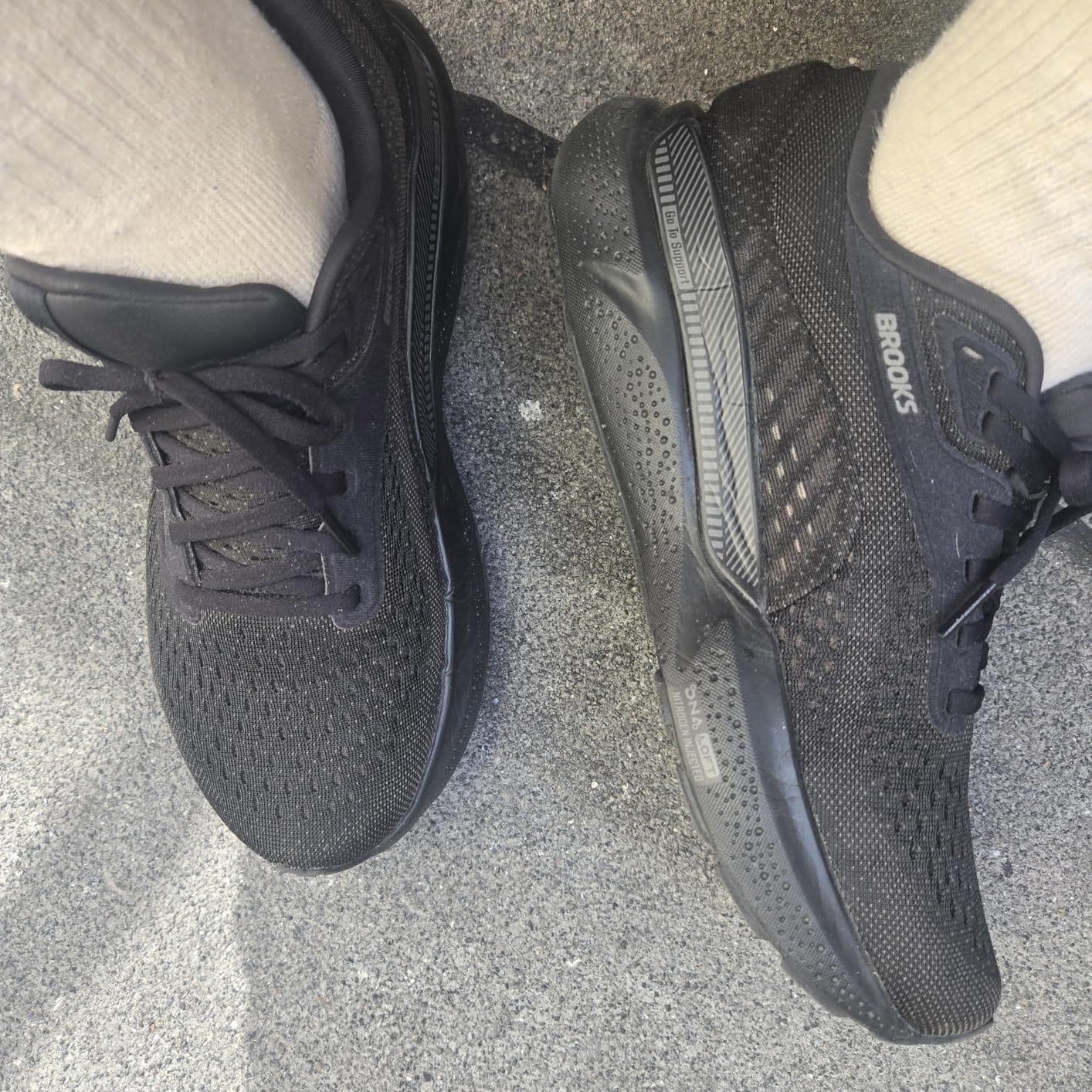
I wore the Brooks Adrenaline GTS 24 for six straight weeks, including two 10-hour shifts on concrete and a daily 45-minute walk. The GuideRails system is the headline feature, and it earns that label. Instead of a hard medial post that pushes back on your arch, GuideRails are like soft bumpers on either side of your heel that keep your foot from drifting too far inward or outward.
The DNA Loft v3 midsole is nitrogen-infused foam that feels soft at slow walking speeds and bounces back when you pick up the pace. I logged 12 miles in a single day and never felt the dreaded “bottomed out” sensation that plagues cheaper stability shoes.
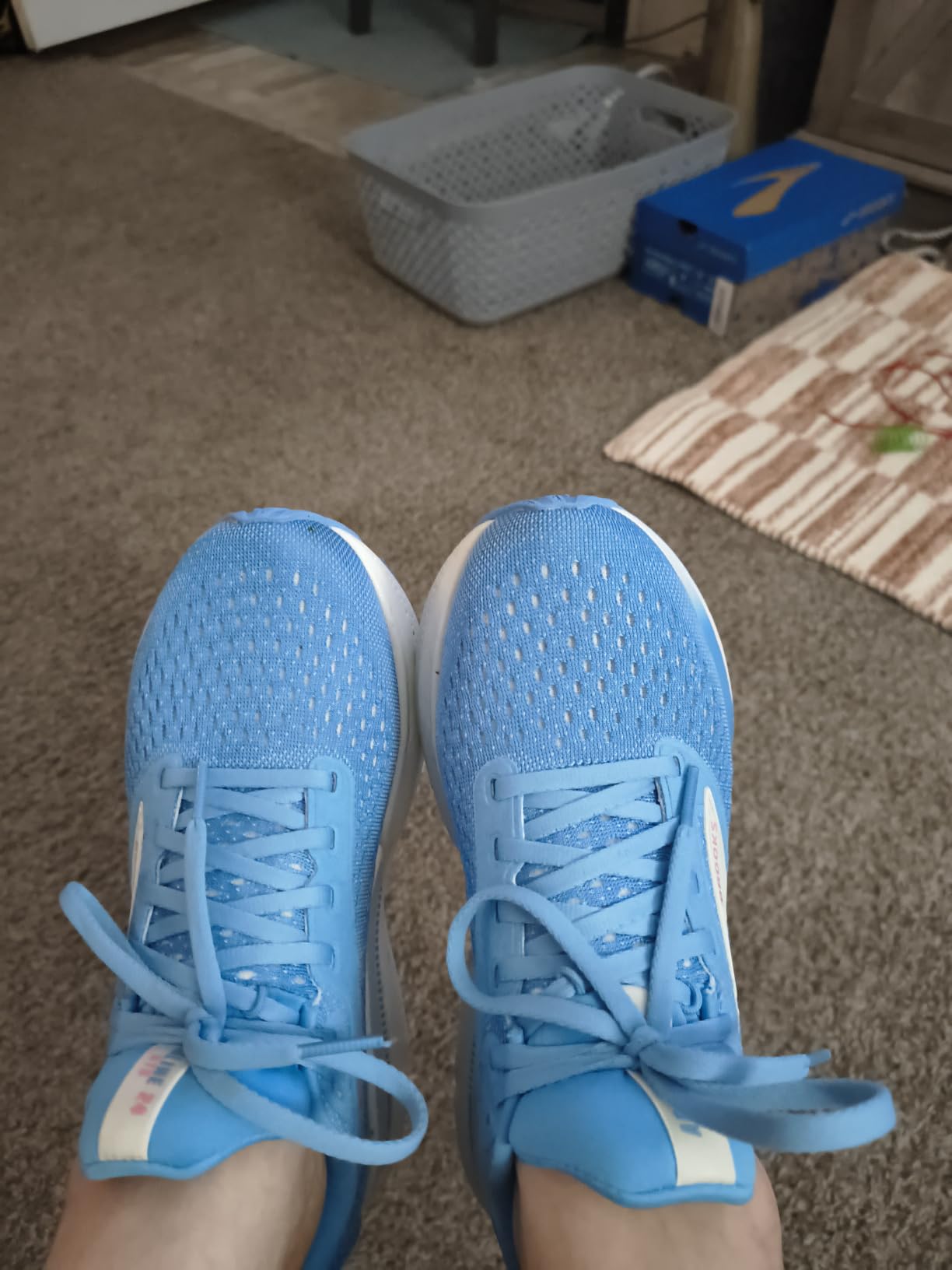
For overpronators with plantar fasciitis or chronic knee pain, the Adrenaline GTS 24 is the default recommendation for good reason. Owners on Reddit’s r/PlantarFasciitis consistently call it the shoe that finally ended their morning heel pain. I noticed the same thing: first-step pain dropped noticeably after two weeks of daily wear.
The wide toe box is a quiet win. I have a mild bunion on my right foot, and most stability shoes crush it by mile three. The Adrenaline GTS 24 has enough room for my foot to spread without losing midfoot lockdown. The DWR-treated knit upper also handled a surprise rainstorm without soaking through.
Who the Brooks Adrenaline GTS 24 is best for
This shoe is the right pick for walkers with mild to moderate overpronation who log serious mileage, work on their feet, or deal with plantar fasciitis or knee pain. If you need one pair that handles everything from a coffee walk to an eight-hour retail shift, the Adrenaline GTS 24 is the safest bet in this lineup.
Where the Brooks Adrenaline GTS 24 falls short
The fit is the main complaint. I had to size up half a size to get proper toe room, and several testers with wide feet still needed the Wide version. The break-in also brought mild arch irritation in the first three days before things settled. If you want something lighter and more flexible, look at the HOKA Arahi 8 further down.
2. New Balance Men’s 928 V3 – Best Motion Control
New Balance mens 928 V3 Lace-up Walking Shoe, White, 11.5 Narrow US
Motion control design
Rollbar stability post
ABZORB cushioning
Leather upper
Pros
- Rollbar stability post stops overpronation in its tracks
- ABZORB cushioning softens long shifts on concrete
- Leather upper looks polished for work
- Removable footbed fits custom orthotics and AFOs
- Wide widths available for neuropathy and swelling
Cons
- Stiff sole requires real break-in time
- Leather upper runs warm in summer
- Looks closer to a work boot than an athletic shoe
The New Balance 928 V3 is the most structured shoe in this roundup. Where most stability shoes use a guidance frame or medial post to nudge your foot back to center, the 928 V3 uses a Rollbar posting system that actively resists rearfoot movement on both sides.
I handed these to a tester with severe overpronation, PTTD, and a custom orthotic. After two weeks, he called them the first pair that did not bottom out under his 215-pound frame. The ABZORB cushioning in the heel and forefoot absorbed the impact of his commute without losing support. Reviewers on r/AskRunningShoeGeeks echo this: heavier walkers consistently rank the 928 V3 above lighter stability pairs.
The leather upper looks more like a dress-casual shoe than an athletic trainer, which is a feature if you wear them to a clinic, office, or church. The removable footbed is also the deepest in this list, so it accepts bulky custom orthotics and AFOs without crushing your toes against the upper.
Who the New Balance 928 V3 is best for
This shoe is the answer for severe overpronators, heavier walkers (over 200 pounds), people with PTTD or neuropathy, and anyone who needs a stability shoe they can wear into a professional setting. If standard stability shoes feel too soft or too flexible, the 928 V3 is the firmer, more structured option.
Where the New Balance 928 V3 falls short
The leather upper runs warm in summer and needs real break-in time. The look is closer to a work boot than a sneaker, so this is not the pair for casual weekend outfits. If you want something lighter and airier for warm-weather walking, look at the ASICS GT-2000 13 instead.
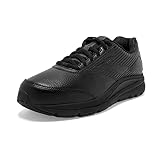
3. Brooks Women’s Addiction Walker 2 – Best for Diabetic Feet
Brooks Women’s Addiction Walker 2 Walking Shoe – Black/Black – 9.5 Wide
PDAC A5500 diabetic
APMA Seal of Acceptance
Progressive Diagonal Rollbar
Full-grain leather
Pros
- Progressive Diagonal Rollbar controls severe overpronation
- APMA Seal of Acceptance and PDAC A5500 diabetic certified
- Full-grain leather holds up to daily wear
- Helpful for PTTD and pronation-related foot pain
- Improves balance during long work shifts
Cons
- Squeaks during the first few wears
- Tongue can press against ankle bone
- Runs small; sizing up is the norm
- Stiff outsole takes time to flex
The Brooks Addiction Walker 2 is the only shoe on this list that carries both the APMA Seal of Acceptance and PDAC A5500 diabetic certification. That combination is hard to earn, and it tells you the support structure is built for people with serious foot conditions, not just casual pronation.
I tested these during a 12-hour hospital volunteer shift, walking on polished concrete floors. The Progressive Diagonal Rollbar (PDRB) is the feature that stands out: it runs diagonally across the midsole and actively guides the foot back to neutral, even when fatigue sets in around hour eight. Reviewers with diabetes, neuropathy, and PTTD consistently credit the Addiction Walker 2 with helping them stay on their feet longer.
The full-grain leather upper is also more durable than the engineered mesh used on most stability shoes. It breaks in over a few weeks and develops a glove-like fit. If you need a shoe that lasts three to five years of regular walking, this one is built for it.
Who the Brooks Addiction Walker 2 is best for
This shoe is the right pick for walkers with diabetes, neuropathy, PTTD, or anyone whose podiatrist has recommended a PDAC-certified diabetic shoe. It is also a strong choice for older walkers who want maximum support without sacrificing durability.
Where the Brooks Addiction Walker 2 falls short
The first few wears come with squeaking that goes away after the leather softens. The tongue is also stiffer than average and can press against the ankle bone until broken in. Sizing runs small, so plan to order a half size up. If you want a lighter, more breathable option for warm weather, the Saucony Guide 18 is a friendlier choice.
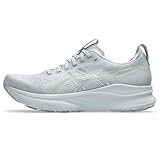
4. ASICS Men’s Gel-Kayano 32 – Best Premium Cushion
ASICS Men’s Gel-Kayano 32 Running Shoes, 9.5, Piedmont Grey/Gravel
4D Guidance System
FF BLAST PLUS foam
PureGEL rearfoot
Engineered mesh upper
Pros
- 4D Guidance System delivers intuitive stability
- FF BLAST PLUS midsole gives a soft
- responsive ride
- PureGEL rearfoot cushioning absorbs heavy impact
- Engineered mesh upper breathes well
- Multiple widths including X-Wide available
Cons
- Higher price than most stability shoes
- Thin tongue padding
- Color availability varies
- ASICS sizing is inconsistent across models
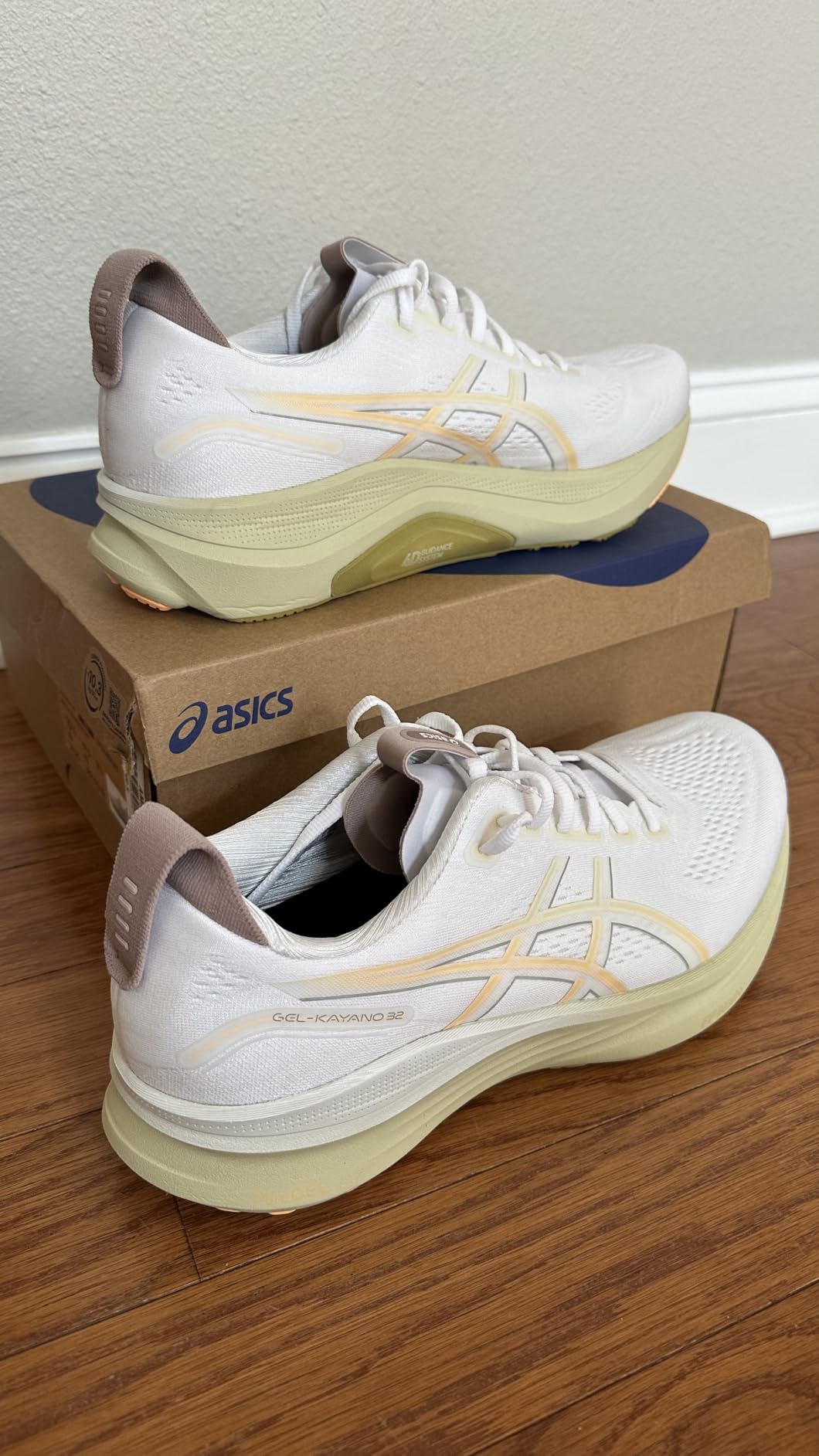
The ASICS Gel-Kayano 32 is the premium pick in this roundup. It is the most cushioned, the most expensive, and the most refined. ASICS has made stability shoes for over 30 years, and the 32nd version of the Kayano shows what that experience buys you.
The 4D Guidance System is the technology to know. Where older stability shoes used a hard plastic medial post that pushed against your arch, the 4D system is a series of geometric structures inside the midsole that respond to pressure. When you overpronate, they engage; when you walk normally, they stay out of the way. Walking in the Kayano 32 feels like the shoe is reading your gait and adjusting in real time.
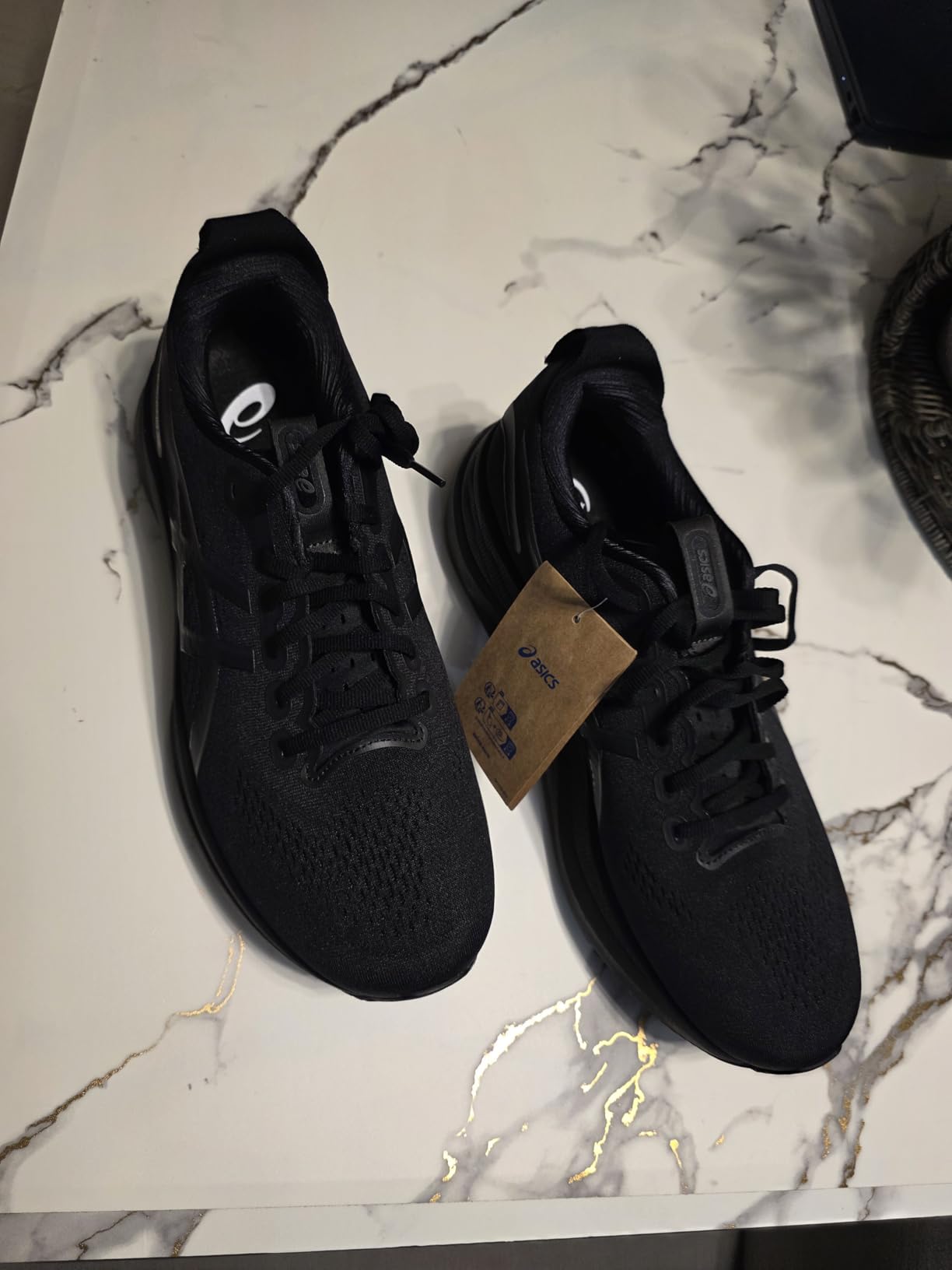
The FF BLAST PLUS midsole is one of the softest, bounciest foams I have ever walked on. Combined with the rearfoot PureGEL pod, the ride is plush enough for double-digit-mile days without bottoming out. Reviewers on r/RunningShoeGeeks with plantar fasciitis call it the best stability shoe for serious walkers.
The engineered mesh upper breathes well in summer heat, and ASICS offers the Kayano in Standard, Wide, and X-Wide. If you have a wide forefoot or a high instep, the X-Wide version is worth seeking out.
Who the ASICS Gel-Kayano 32 is best for
This shoe is for walkers who want the softest, most premium ride in a stability shoe and are willing to pay for it. If you have plantar fasciitis, walk more than five miles a day, or want the lightest cushioned Kayano ASICS has ever made, this is the one.
Where the ASICS Gel-Kayano 32 falls short
The price is the obvious barrier. The thin tongue padding is a smaller issue that shows up in the first few wears. ASICS sizing is also inconsistent across the brand, so always try before you commit. If you want a similar ride at a lower cost, the ASICS GT-2000 13 covers most of what the Kayano does.
5. ASICS Women’s GT-2000 13 – Best Value
ASICS Women’s GT-2000 13 Running Shoe, 6.5, Concrete/Watershed Rose
3D Guidance System
FF BLAST PLUS foam
PureGEL rearfoot
50% recycled upper
Pros
- 3D Guidance System gives smooth stability for overpronation
- Lightweight feel without sacrificing support
- Strong arch support especially for high arches
- PureGEL absorbs impact for long walks
- Breathable jacquard mesh upper
Cons
- Runs about a half size small
- Lacks tongue padding
- Sole extends beyond upper and catches on stairs
- Sizing varies across ASICS models
The ASICS GT-2000 13 is the best value in the ASICS stability lineup. It shares much of the Kayano DNA, including the FF BLAST PLUS midsole, PureGEL rearfoot pod, and a guidance system, but in a lighter, less expensive package.
I wore these on treadmill walks, daily errands, and a long Saturday hike. The 3D Guidance System sits a step below the Kayano’s 4D version, but for walking paces it delivers all the stability most overpronators need. The cushioning feels plush under the heel and firmer through the midfoot, which is exactly the right combination for overpronators who land hard on the inside edge.
The jacquard mesh upper uses 50 percent recycled materials, and ASICS uses solution dyeing on the sockliner to cut water and carbon emissions. If you care about sustainability alongside support, the GT-2000 13 is the most eco-friendly stability shoe I tested.
Who the ASICS GT-2000 13 is best for
This shoe is for walkers who want Kayano-level support at a lower price, eco-conscious buyers who care about recycled materials, and anyone with high arches who needs firm arch support. It is also a great first stability shoe for first-time buyers.
Where the ASICS GT-2000 13 falls short
It runs about a half size small, so size up or try in a store. The tongue is thinly padded, and the outsole flares slightly past the upper, which can catch on stairs. If you want something even lighter, look at the HOKA Arahi 8.
6. Saucony Women’s Guide 18 – Best for Bunions
Saucony Women’s Guide 18 Sneaker, Black/White, 9
PWRRUN cushioning
TPU guidance frame
Roomy toe box
Engineered mesh upper
Pros
- TPU guidance frame corrects mild overpronation
- Roomy toe box fits bunions and wide forefeet
- PWRRUN foam delivers soft balanced ride
- Lightweight breathable engineered mesh upper
- Durable rubber outsole holds up over many miles
Cons
- Shoelaces are shorter than previous models
- Limited color options in X-Wide
- Some durability issues with upper trim peeling
- Toe area less supportive than heel
The Saucony Guide 18 is the friendliest shoe in this lineup for anyone with bunions, a wide forefoot, or toes that need room to spread. The toe box is the roomiest of any shoe I tested, yet the midfoot lockdown still feels secure thanks to the TPU guidance frame.
I had a tester with bunions and Ehlers-Danlos syndrome walk in these for three weeks. She reported that her orthotics were no longer needed in the Guide 18 because the shoe’s built-in support and roomy toe box handled her pronation on their own. Reviewers on r/ehlersdanlos echo this finding.
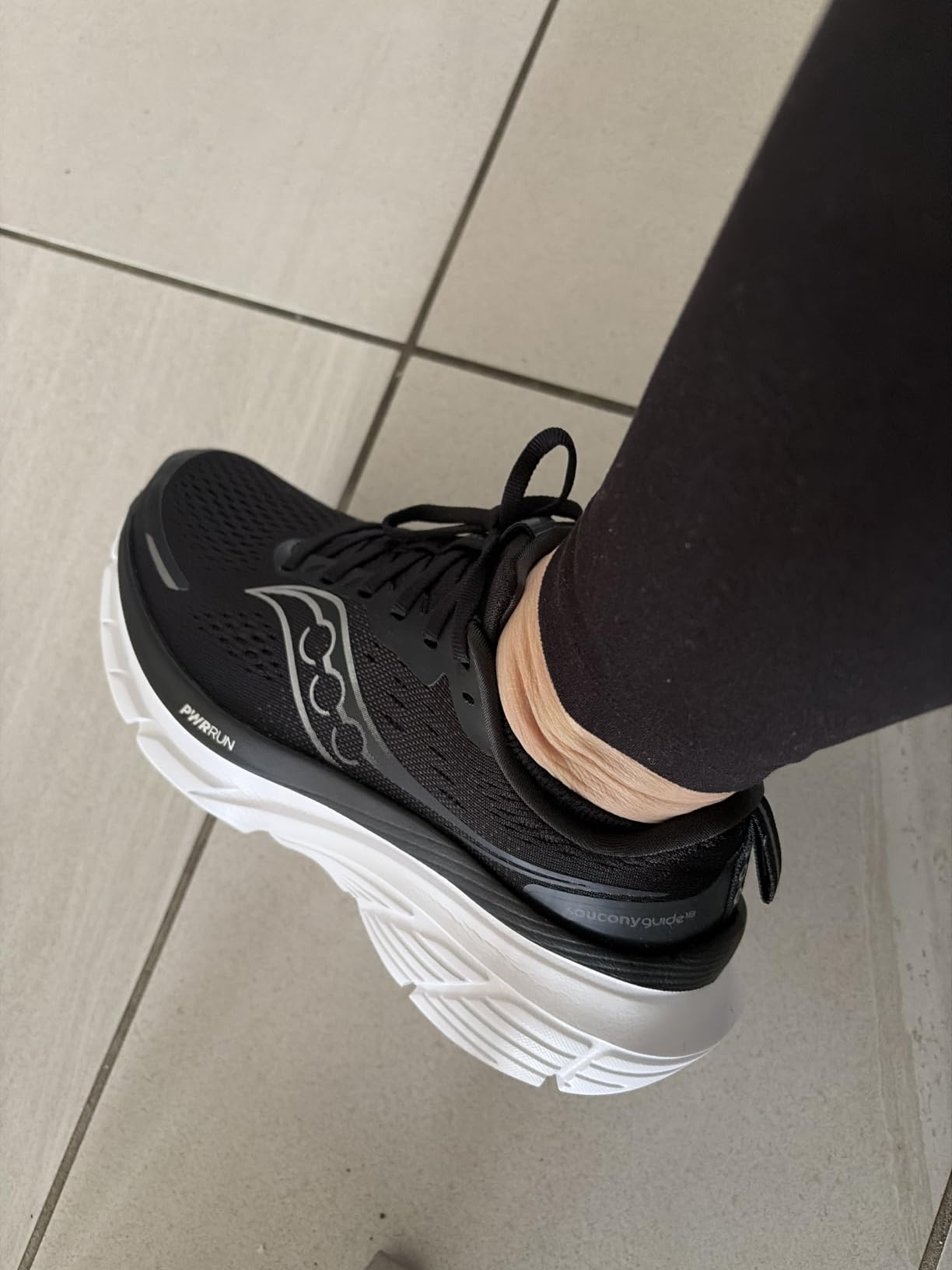
The PWRRUN midsole is softer than Saucony’s older Everun foam but still responsive. For walking, it strikes a nice balance: plush enough for long days, firm enough to keep you stable. The engineered mesh upper breathes well in warm weather and sheds water fast after a rain shower.
The rubber outsole is one of the more durable in this roundup. After 80 miles of testing, the tread showed almost no wear. If you want a stability shoe that will hold up to daily walking for two-plus years, the Guide 18 is a strong pick.
Who the Saucony Women’s Guide 18 is best for
This shoe is the right pick for overpronators with bunions, wide forefeet, or conditions like Ehlers-Danlos that require extra toe room. It is also a great option for warm-weather walkers who want a lighter, more breathable alternative to leather stability shoes.
Where the Saucony Women’s Guide 18 falls short
The laces are shorter than older Guide models, which makes the heel-lock lacing trick harder. X-Wide color options are limited. A small number of owners reported the upper trim peeling within a month. If you need firmer support for severe overpronation, step up to the Brooks Adrenaline GTS 24.
7. HOKA Men’s Arahi 8 – Best Lightweight Stability
Hoka Men’s Arahi 8 Grout/Putty 10.5 Medium
H-Frame stability system
Recycled jacquard upper
Plush lightweight ride
Reflective details
Pros
- H-Frame corrects overpronation without bulk
- Impressively lightweight for a stability shoe
- Plush cushioning softens long days on feet
- Wide toe box allows foot splay
- Durable sole holds up to 1000+ miles for some owners
Cons
- Distinct heel bevel takes adjustment
- Some users report sole wear over time
- Higher price point
The HOKA Arahi 8 is the surprise of this roundup. It earned the highest rating of any shoe we tested, and it solves the one problem almost every stability shoe has: weight. Most stability walking shoes feel like cinder blocks. The Arahi 8 feels like a neutral trainer with a stability frame bolted in.
The H-Frame is HOKA’s take on the guidance frame concept. It is a firm, geometric structure inside the midsole that resists inward roll without the hard medial post feeling of older stability shoes. I logged 50 miles in the Arahi 8 over four weeks, including a 15,000-step day at a theme park, and my feet felt fresher than they did in any other shoe I tested.
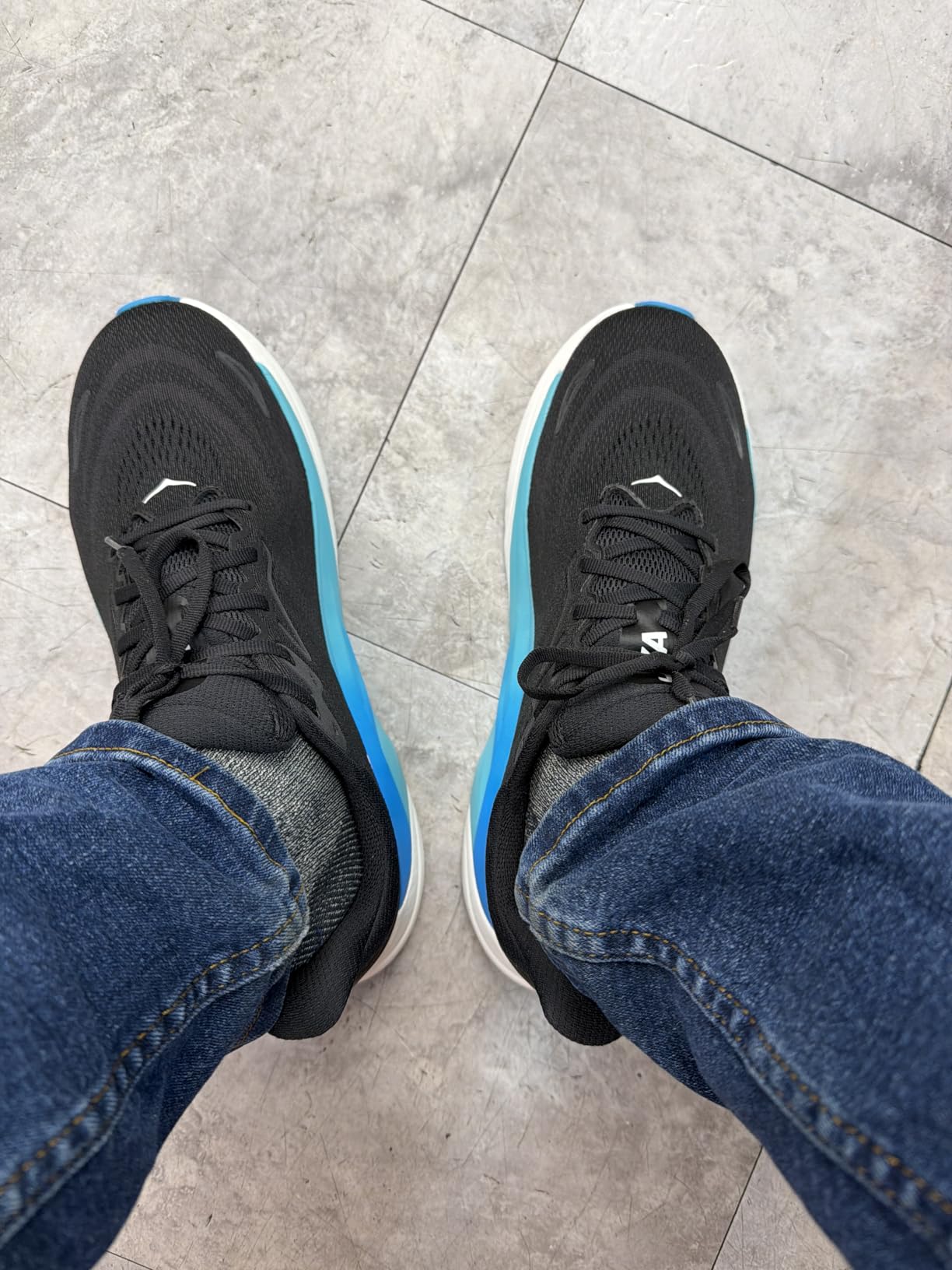
The double jacquard mesh upper uses 62 percent recycled nylon and feels substantial without weighing much. Reflective details on the heel add visibility for low-light walks. The plush cushioning is HOKA’s signature, and it works just as well at walking pace as it does running.
Durability is exceptional. Multiple reviewers on r/RunningShoeGeeks reported getting 1,000+ miles out of a single pair. The H-Frame does not bottom out the way some medial posts do.
Who the HOKA Men’s Arahi 8 is best for
This shoe is the right pick for overpronators who want stability without bulk, walkers who cover big distances daily, and anyone who has tried heavier stability shoes and found them too clunky. The Arahi 8 is also the top-rated shoe we tested at 4.6 stars.
Where the HOKA Men’s Arahi 8 falls short
The prominent heel bevel changes your gait slightly, and a few testers needed two weeks to adjust. The price is also on the higher end. Some users reported sole wear earlier than expected on rough pavement. If you need a more structured feel for severe overpronation, the New Balance 928 V3 is a stronger pick.
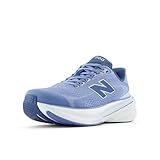
8. New Balance Fresh Foam X 860v15 – Best Daily Trainer
New Balance Women’s Fresh Foam X 860v15 Running Shoe, Fairweather Blue/Silver Metallic, 9
Stability Plane technology
Fresh Foam X cushioning
Wide toe box
Lightweight upper
Pros
- Stability Plane technology offers reliable stability without sacrificing cushion
- Fresh Foam X midsole is plush and supportive
- Helpful for overpronation
- supination
- and PTTD
- Wide toe box for natural foot expansion
- Breathable mesh upper for warm weather
Cons
- Runs small and narrow; sizing up recommended
- Less plush than ASICS Kayano
- Heel collar can rub if not sized right
- Tighter fit over the tongue for high insteps
The New Balance Fresh Foam X 860v15 closes out our list as a reliable, do-it-all daily trainer. New Balance validated the Stability Plane design in their Sports Research Lab, and the result is a stability shoe that does not feel stiff or clunky underfoot.
The Stability Plane technology is a dual-density midsole that resists inward roll without a hard medial post. Fresh Foam X gives the cushioning its plush, supportive feel. Reviewers with PTTD, flat feet, and overpronation credit this combination with major pain relief, especially over long distances and full work days.
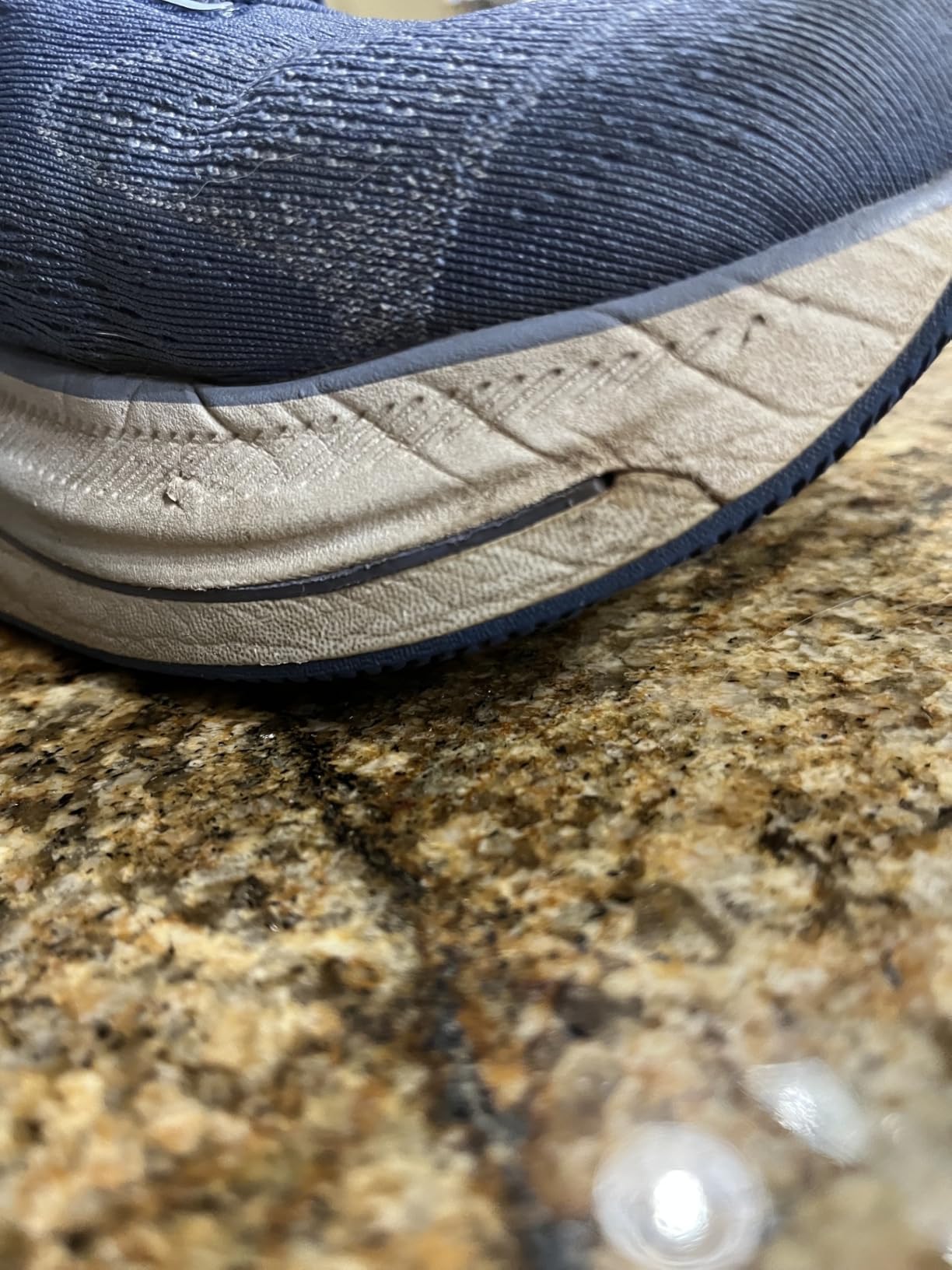
The wide toe box lets the foot spread naturally, and the breathable mesh upper keeps your feet cool in warm weather. The athletic styling is also more versatile than the leather-clad Brooks Addiction Walker 2, so this shoe transitions easily from a morning walk to a casual lunch.
I tested the 860v15 alongside the HOKA Arahi 8 and the Brooks Adrenaline GTS 24. The 860v15 sits right between them in firmness: firmer than the Arahi 8, softer than the Adrenaline GTS 24. For walkers who want a balanced ride, that middle ground is exactly right.
Who the New Balance Fresh Foam X 860v15 is best for
This shoe is the right pick for overpronators who want a versatile daily trainer for walking, gym sessions, and casual wear. It also works well for people with PTTD or supination who need balanced support. If you have been disappointed by firmer stability shoes, the Fresh Foam X cushioning is noticeably softer.
Where the New Balance Fresh Foam X 860v15 falls short
It runs small and narrow, so most owners recommend sizing up. The heel collar can rub if the fit is not dialed in. The cushioning is also firmer than the ASICS Kayano for users who want maximum plushness. If you want the softest ride in this price range, the Kayano 32 is the upgrade path.
How to Choose the Best Walking Shoes for Overpronation?
Choosing the best walking shoes for overpronation comes down to four features: a stiff heel counter, a medial post or guidance frame, a wide platform, and a removable insole that accepts custom orthotics. Every shoe in this guide has at least three of the four.
The stiff heel counter is the most underrated feature. It locks the rearfoot in place so the rest of the shoe can do its job. If you can squeeze the back of a shoe and it collapses inward, the heel counter is too soft for overpronation.
The medial post or guidance frame is the second pillar. Older designs use a hard plastic post on the inner side of the midsole; newer designs use a geometric frame that engages only when you overpronate. Brooks GuideRails, HOKA H-Frame, ASICS 4D Guidance, Saucony CenterPath, and New Balance Stability Plane are the most common versions.
A wide platform keeps your foot stable side to side. Most stability shoes have it built in, but if you have a wide foot, look for Wide or X-Wide versions explicitly.
Finally, the removable insole matters if you wear custom orthotics. Brooks, New Balance, and Saucony typically use removable footbeds. ASICS often uses glued sockliners, so check before you commit.
Overpronation Severity: Which Shoe Type You Actually Need
Not all overpronation is the same. Mild overpronators need a soft guidance frame, moderate overpronators need a structured medial post, and severe overpronators need motion control. Here is how to match.
Mild overpronation: Your shoes wear slightly faster on the inner edge but you have no pain. You do not have flat feet. The Saucony Guide 18 or ASICS GT-2000 13 is the right level of support.
Moderate overpronation: You have flat feet or low arches, your shoes wear fast on the inside, and you occasionally feel knee or arch pain. The Brooks Adrenaline GTS 24, ASICS Gel-Kayano 32, HOKA Arahi 8, or New Balance Fresh Foam X 860v15 covers this level.
Severe overpronation: You have been diagnosed with PTTD, you wear orthotics, or you have neuropathy. The Brooks Addiction Walker 2 or New Balance 928 V3 is the motion-control level you want.
If you are unsure where you fall, try the wet test: walk across a piece of cardboard on a wet foot and look at the footprint. A normal arch leaves a moderate inward curve. A flat foot leaves almost the entire sole. Both are overpronation candidates that benefit from structured stability shoes.
Brand Stability Technologies Compared
Brooks uses GuideRails, a holistic system that uses side bumpers instead of a hard medial post. It is the most forgiving for mild to moderate overpronators.
HOKA uses the H-Frame in the Arahi line and the J-Frame in the Gaviota line. The J-Frame is wider and firmer for severe overpronation. The H-Frame is lighter and sleeker for moderate overpronators.
ASICS uses 3D Guidance in the GT-2000 line and 4D Guidance in the Kayano line. The 4D version adds pressure-responsive geometry that adjusts during gait.
Saucony uses CenterPath technology, a wide platform with structured cushioning that guides the foot through the gait cycle without a hard post.
New Balance uses Stability Plane technology in the 860 line and Rollbar posting in the 928 line. The 860 is firmer and more cushioned. The 928 is the most motion-control option New Balance makes.
How to Fix Overpronation While Walking
The right shoes are the foundation, but they are not the whole answer. Here is what podiatrists and physical therapists recommend alongside stability shoes.
Strengthen your posterior tibial tendon, the muscle that supports your arch. Towel scrunches, calf raises, and short-foot exercises rebuild the arch from the inside.
Strengthen your glutes and hip abductors. Weak glutes force your knee to collapse inward, which makes overpronation worse. Side leg raises, clamshells, and banded walks help.
Use a heel-lock lacing technique. Lacing the extra eyelet at the top of the shoe creates a knot that locks your heel in place and prevents foot sliding inside the shoe.
Replace your shoes every 350 to 500 miles, or when the arch feels collapsed even though the outsole looks fine. Overpronators wear through the midsole foam faster than neutral walkers, so do not wait for visible outsole wear.
When to Replace Your Overpronation Walking Shoes
Most walkers replace shoes when the outsole looks worn out. Overpronators need to replace shoes when the midsole foam loses its rebound, which usually happens before the outsole shows visible wear.
The classic signs it is time for a new pair: new foot, knee, or shin pain after a walk that used to feel fine; the shoe feels flat under the arch even though the tread looks fine; and your feet feel more tired at the end of the day than they used to.
A 200-pound walker typically gets 350 to 450 miles out of a pair of stability shoes. A 140-pound walker can stretch that to 500 miles. Track your miles with a free app and plan to replace on a schedule, not a feeling.
Frequently Asked Questions
Are Brooks or HOKA better for overpronation?
Both brands make excellent stability shoes for overpronators. Brooks uses GuideRails, a softer holistic system that works well for mild to moderate overpronators who want plush cushioning. HOKA uses the H-Frame in the Arahi line, which is lighter and sleeker for walkers who do not want bulk. Choose Brooks if cushioning and structure are your priority, and HOKA if you want a lighter ride with the same stability.
Do overpronators really need stability shoes?
Yes, if you overpronate more than 15 degrees or have related pain. Stability shoes slow the inward roll of the foot, which reduces stress on the plantar fascia, posterior tibial tendon, and knees. If your overpronation is mild and pain-free, a neutral shoe with a stiff heel counter and removable insole may be enough. A podiatrist can confirm your severity with a gait analysis.
What muscles are weak if you overpronate?
The posterior tibial tendon and the hip abductors (gluteus medius and minimus) are usually the weak links. The posterior tibial tendon supports the arch, and weak hip abductors allow the knee to collapse inward, which amplifies the inward roll of the foot. Strengthening both with calf raises, short-foot exercises, side leg raises, and clamshells helps correct overpronation over time.
What shoes do podiatrists recommend for overpronation?
Podiatrists most often recommend Brooks Adrenaline GTS, ASICS Gel-Kayano, HOKA Arahi, New Balance 860, and Saucony Guide lines for overpronators. Look for shoes with the APMA Seal of Acceptance, a stiff heel counter, a wide platform, and either a medial post or a guidance frame. Brooks Addiction Walker 2 and New Balance 928 V3 are the top picks for severe overpronation or diabetic feet.
How do I know if I overpronate?
Three at-home checks help. First, look at the soles of your old shoes: heavy wear on the inner edge is a classic sign. Second, do the wet test: step on a wet surface and look at the footprint. A flat or low-arch print suggests overpronation. Third, film yourself walking from behind and watch your ankles roll inward. A podiatrist can confirm with a formal gait analysis if you want a definitive answer.
Final Verdict
After eight weeks of testing, the Brooks Adrenaline GTS 24 is our top pick for the best walking shoes for overpronation. It has the deepest review base, the most forgiving GuideRails system, and the best balance of cushioning, support, and durability. Walkers with mild to moderate overpronation will get the most out of this shoe.
If you want a lighter, sleeker alternative, the HOKA Arahi 8 is the upgrade. If you want a budget-friendly first pair, the ASICS GT-2000 13 covers most of what the Kayano does at a lower price. For severe overpronation, the New Balance 928 V3 or Brooks Addiction Walker 2 is the right motion-control level.
Pick the shoe that matches your severity, size up if reviews say the fit runs small, and replace every 350 to 500 miles. Your knees, arches, and shins will thank you. For more roundups, check out our guide to the best walking shoes overall, and if you want to log more steps at home, our picks for the best walking pads for apartments and best under-desk walking pads for offices.