
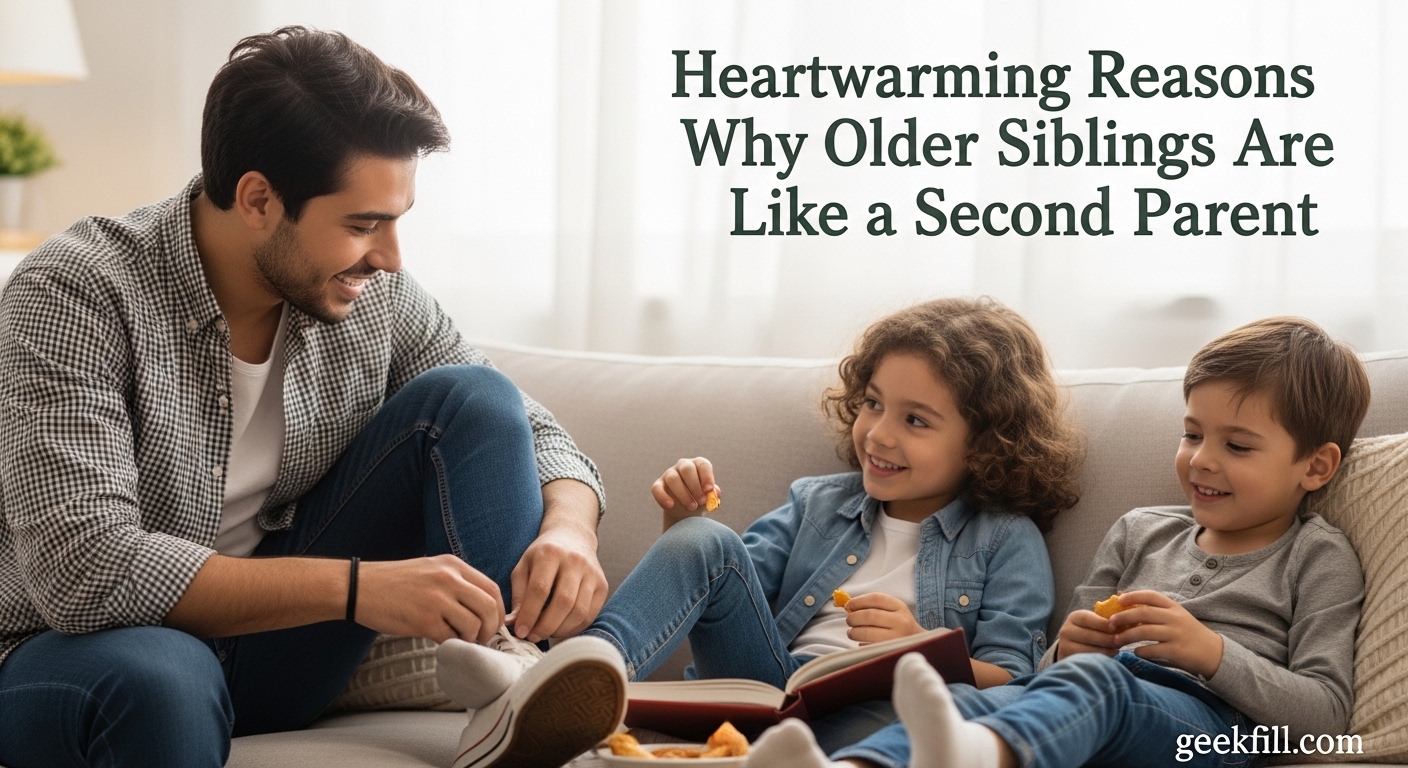
I still remember the day my older sister walked into my middle school classroom without warning. I had forgotten my lunch, and she had driven twenty minutes across town during her college lunch break just to drop it off. She didn’t make a big deal about it. She just handed me the bag, ruffled my hair, and said, “Don’t forget again, okay?” That moment stuck with me because it perfectly captured why older siblings are like a second parent — not because they have to be, but because they choose to be.
If you grew up with an older brother or sister, you know exactly what I am talking about. These incredible humans step into roles they never signed up for. They become our protectors, teachers, confidants, and sometimes our toughest critics. The bond between siblings, especially when the older one takes on a nurturing role, creates something truly special that lasts a lifetime.
In this article, I am sharing 13 heartwarming reasons why older siblings are like a second parent. Whether you are the older sibling who recognizes yourself in these words, or the younger one who finally understands why your big sister or brother acted the way they did, this guide will resonate with you. Our team spent weeks talking to families, reading research on birth order dynamics, and reflecting on our own experiences to bring you these insights.
Table of Contents
The Heart of the Matter: Three Reasons That Define It All
Before we dive into the full list, here are three reasons that capture the essence of why older siblings become like second parents. These are the big ones — the reasons that make you pause and think about sending that thank-you text to your sibling right now.
They Protect You Fiercely: An older sibling’s protective instinct kicks in long before anyone asks them to watch out for you. They scan new environments for dangers, size up your friends before you do, and step in when situations get uncomfortable. This isn’t just being a good sibling — it’s parental-level vigilance born from genuine love.
They Teach You Without Lecturing: Parents lecture. Older siblings demonstrate. Whether it is tying shoes, navigating social situations, or handling heartbreak, they show you the way through example rather than instruction. This hands-on teaching style feels less like education and more like shared life experience.
They Love You Unconditionally: The love between siblings persists through fights, betrayals, and years of distance. Like a parent, an older sibling’s love doesn’t come with an expiration date or performance requirements. They are there for you, period.
13 Heartwarming Reasons Why Older Siblings Are Like a Second Parent
Now let’s explore each reason in detail. These are the moments, behaviors, and dynamics that transform a simple brother or sister relationship into something that mirrors the depth and commitment of parenthood.
1. They Protect You Before You Know You Need It
An older sibling’s protective radar is always on. They notice the kid who might bully you before you even recognize the threat. They spot the icy patch on the sidewalk that you are about to slip on. This anticipation of danger comes from years of watching out for you, learning your patterns, and genuinely caring about your safety.
Think about the times your older sibling stepped in during awkward social situations. Maybe they intercepted a conversation that was going south, or they made sure you got home safely from a party. These aren’t grand gestures. They are everyday acts of protection that parents typically handle, but your older sibling took on willingly.
Psychologists call this “surrogate monitoring” — when an older sibling internalizes the watchful role usually reserved for parents. They become your first line of defense in a world that can feel overwhelming when you are young.
2. They Teach You Life Skills Without Lecturing
Parents often teach through formal instruction. Older siblings teach through osmosis. You learn how to handle conflict by watching your big brother navigate his friendship drama. You figure out how to study effectively because your older sister showed you her flashcard system. The lessons sink in because they feel like shared secrets rather than mandated education.
This teaching style works because of the age gap dynamics. Your older sibling recently mastered whatever skill you are struggling with. The memory of learning it is fresh for them. They remember exactly what clicked and what confused them, making their guidance incredibly practical and relevant.
I learned how to write a resume not from a career counselor, but from my older sibling who had just landed their first job. They walked me through each section using their own resume as a template. That real-world example taught me more than any textbook could have.
3. They Know You Better Than You Know Yourself
Older siblings develop what feels like a sixth sense about you. They can tell from your voice on a phone call that something is wrong. They know your coffee order by heart. They remember which foods you hate and which subjects stress you out. This intimate knowledge comes from years of close observation and genuine interest in who you are becoming.
This deep understanding means they often catch things parents miss. Parents see the child they are raising. Older siblings see the person you are becoming. They notice subtle shifts in your interests, friend groups, and confidence levels because they are watching from a peer-adjacent perspective.
When my anxiety was at its worst in college, my older sister was the first to notice. She called me out of the blue and said, “You don’t sound like yourself. What’s going on?” Parents might have attributed my mood to typical college stress. My sibling recognized the deeper struggle because she knows the real me.
4. They Sacrifice Without Making It a Big Deal
The sacrifices older siblings make often go unacknowledged because they don’t broadcast them. They give up Saturday plans to babysit you so your parents can work. They share their clothes, their room, their privacy. Sometimes they delay their own dreams to help the family or to set an example for you.
Firstborn children especially feel this pressure. Birth order research shows that oldest siblings often develop a heightened sense of responsibility early in life. They internalize the message that their needs come second to the family’s needs, particularly when younger siblings arrive.
The beautiful part is that most older siblings make these sacrifices willingly. They don’t keep score or hold it over your head. Like good parents, they give because they want to see you thrive, not because they expect something in return. The only recognition they need is seeing you succeed.
5. They Lecture You Because They Care
Every younger sibling has endured the “big sibling lecture.” Maybe it was about your grades, your choice in friends, or that risky decision you were about to make. While these talks can feel annoying in the moment, they come from the same place parental lectures do — genuine concern for your wellbeing.
The difference is that an older sibling’s lecture feels more relatable. They were in your shoes just a few years ago. They remember the temptation of that bad decision. Their warnings carry weight because you know they understand exactly what you are facing, not because they are reading from some parenting manual.
I used to roll my eyes when my older brother gave me advice about relationships. Now I realize he was trying to save me from the same heartbreaks he experienced. That lecture I ignored? It would have saved me months of pain. He knew because he had lived it, and he wanted better for me.
6. They Celebrate Your Wins Like Their Own
When you succeed, your older sibling’s pride rivals that of any parent. They brag about you to their friends. They save your achievements on their phone. They show up to your games, recitals, and graduations with the same enthusiasm your parents display. Your victories feel like their victories.
This shared joy comes from watching you grow up. They remember when you couldn’t tie your shoes or read a full sentence. Seeing you master complex skills, land dream jobs, or build meaningful relationships fills them with parental pride. They feel partially responsible for your success because they helped shape the person who achieved it.
Researchers studying sibling relationships find that this vicarious pride actually strengthens the bond between siblings. When older siblings celebrate younger ones genuinely, it creates a positive feedback loop of support that lasts into adulthood. You both benefit from each other’s success.
7. They Weather Your Storms Without Judgment
Life gets messy. You make mistakes. You fall apart. During those difficult moments, your older sibling often becomes your emotional safe harbor. They have seen you at your worst and love you anyway. This unconditional acceptance mirrors the safety net that good parents provide.
The judgment-free zone an older sibling creates is different from what friends offer. Friends might distance themselves when things get heavy. Parents might panic or overreact. An older sibling can usually handle your crisis with a calm perspective born from similar experiences. They know you will get through it because they did.
When I lost my job unexpectedly, I couldn’t face telling my parents right away. I called my older sister instead. She didn’t panic, didn’t lecture, didn’t judge. She simply said, “That stinks. Let’s figure out your next move.” That steady presence gave me the strength to handle the situation.
8. They Show You the World Before You See It
Older siblings serve as your first tour guide to life beyond childhood. They introduce you to music, movies, books, and ideas that expand your horizons. They warn you about pitfalls they encountered. They share their mistakes so you don’t have to repeat them. This guidance helps you navigate the world with more confidence.
Because they are closer to your age than your parents, they understand the current cultural landscape better. They know which social media platforms matter, what trends are worth following, and how to handle modern challenges. Their advice feels current and relevant in ways that parental guidance sometimes doesn’t.
My older brother introduced me to my favorite band when I was twelve. That music became the soundtrack to my adolescence and shaped my identity in ways I am still discovering. That simple act of sharing something he loved created a bond between us that transcends our age difference.
9. They Forgive You Faster Than Anyone Else
Siblings fight. It is inevitable when you share space, resources, and parents. But the forgiveness between older and younger siblings happens quickly. One day you are screaming at each other over borrowed clothes or borrowed money, and the next day it is like nothing happened. This quick repair of relationship damage is a hallmark of deep family bonds.
The resilience of the sibling connection means that conflicts rarely cause permanent damage. Your older sibling might be furious with you in the moment, but their underlying love never wavers. Like parents, they cannot stay mad at you for long because their connection to you is fundamental, not conditional.
Psychologists note that siblings who learn to resolve conflicts quickly often carry those skills into other relationships. Your older sibling taught you, through example, that love persists through disagreement. That lesson serves you for life.
10. They Model What Growing Up Looks Like
One of the most powerful roles an older sibling plays is showing you what adulthood and responsibility look like up close. They navigate high school while you are still in middle school. They go off to college or start working while you are figuring out your first part-time job. You watch their journey and learn from their example.
This modeling is especially important for skills parents might not demonstrate directly. You learn how to balance work and social life by watching your older sibling. You see how they handle setbacks, celebrate wins, and treat the people around them. These observations shape your own approach to adult life.
Birth order researchers call this the “apprenticeship effect.” Younger siblings get a preview of each life stage by watching their older siblings navigate it first. This early exposure reduces anxiety about upcoming transitions and provides a roadmap for handling them successfully.
11. They Remember Everything Important to You
Older siblings often serve as the family historian and personal assistant for your life details. They remember your food allergies, your best friend’s name, the story behind your weird childhood fear. They track your milestones, your breakups, your wins, and your losses. This attentiveness to your life story is deeply parental.
Having someone who holds the complete narrative of your life is incredibly valuable. When you feel lost or disconnected from yourself, your older sibling can remind you who you are. They remember the kid who loved dinosaurs, the teenager who dreamed of being a pilot, the young adult who survived that terrible breakup. Their memory of your journey grounds you.
I once asked my older sister what she thought I should do about a major career decision. She reminded me of a conversation we had when I was fifteen about my passions. Her memory of that long-forgotten moment helped me reconnect with my authentic desires. She held that memory for me when I had lost it.
12. They Love You Unconditionally, Even When You Fight
The love between siblings, particularly when the older one takes on a nurturing role, is remarkably resilient. You can go months without speaking. You can have explosive arguments about serious issues. You can disappoint each other profoundly. Yet the underlying affection remains intact, ready to reactivate the moment you reconnect.
This unconditional love differs from friendship because it isn’t chosen in the same way. You didn’t pick your sibling from a crowd based on shared interests. You were thrown together by biology and circumstance. Yet despite that random assignment, the bond often becomes one of the most significant relationships in your life.
The protective older sibling never truly stops protecting. The nurturing older sibling never truly stops nurturing. Even when you are both adults with your own families, that foundational dynamic persists. They will always be your big sister or big brother, and you will always be their little one.
13. They Are Your First and Lifelong Best Friend
All of these reasons culminate in one beautiful truth: your older sibling is often your first real friend and frequently becomes your longest-lasting one. The history you share creates a bond that new friendships cannot replicate. They knew you before you became the person you are now, which gives them perspective no one else can match.
This friendship carries a unique flavor because it blends peer connection with parental care. You can laugh together like friends, but they will also call you out like a parent would when you are making mistakes. They support your dreams like a best friend while providing the steady guidance of someone who has your best interests at heart.
Research on sibling relationships shows that these bonds often strengthen in adulthood as shared responsibilities and life experiences create new points of connection. The second parent dynamic evolves into a deep friendship that enriches both lives for decades to come.
Frequently Asked Questions About Older Sibling Dynamics
What is oldest sibling syndrome?
Oldest sibling syndrome refers to the collection of traits and pressures experienced by firstborn children who often feel responsible for their younger siblings. It includes heightened anxiety about family wellbeing, perfectionism, people-pleasing tendencies, and difficulty delegating tasks. Oldest siblings may struggle with relaxing or asking for help because they have internalized the role of the capable one who handles everything.
What is elder sister syndrome?
Elder sister syndrome describes the specific experience of older sisters who take on maternal roles toward their younger siblings. It involves nurturing instincts that mirror motherhood, including protective behaviors, emotional caretaking, and self-sacrifice. Many older sisters report feeling like a second mother to their siblings, especially in families where parents are busy, absent, or struggling. This syndrome can create both beautiful bonds and challenges around maintaining boundaries.
What is the Bowen’s sibling theory?
Bowen’s sibling theory, developed by psychiatrist Murray Bowen, explains how sibling position within a family system shapes personality development and relationship patterns. According to this theory, oldest siblings often develop leadership qualities and responsibility, middle children become skilled negotiators and peacekeepers, and youngest siblings develop creativity and charm. These patterns persist into adulthood and influence how people form relationships outside the family.
Which sibling usually has the highest IQ?
Research on birth order and intelligence shows mixed results. Some studies suggest firstborn siblings may have slightly higher IQs, potentially due to more one-on-one parental attention during early childhood and the intellectual stimulation of teaching younger siblings. However, the difference is typically small, and family size, socioeconomic status, and individual genetics play much larger roles in determining intelligence than birth order alone.
Which sibling is hardest to be?
Each sibling position carries unique challenges, making it difficult to declare one definitively hardest. Oldest siblings face pressure to be perfect and set good examples. Middle children often feel overlooked and must fight for attention. Youngest siblings deal with being babied and having less autonomy. Many family therapists suggest that oldest siblings experience particular difficulty because they have no older role models to guide them and often absorb significant parental expectations.
Embracing the Beautiful Complexity of Sibling Bonds
The relationship between older and younger siblings is one of life’s most underrated gifts. These 13 heartwarming reasons why older siblings are like a second parent only scratch the surface of what this bond truly means. Every family writes their own unique story, colored by individual personalities, circumstances, and the unspoken agreements that develop over years of shared life.
If you are the younger sibling reading this, take a moment to appreciate the older brother or sister who helped raise you, even if they never asked for that job. Send them a message. Tell them thank you. Let them know you noticed all those small sacrifices and quiet protections that shaped who you became.
If you are the older sibling, recognize that your efforts mattered more than you probably realize. The seeds of care you planted in childhood grew into the strong, capable adult your younger sibling became. Your role as a second parent — even an unofficial, unplanned one — created ripples that will last for generations.
The beautiful truth is that older siblings are like a second parent not because they had to be, but because they chose love over convenience, guidance over distance, and protection over indifference. That choice, made daily in thousands of small moments, builds a bond that nothing can break. And that is worth celebrating every single day.