
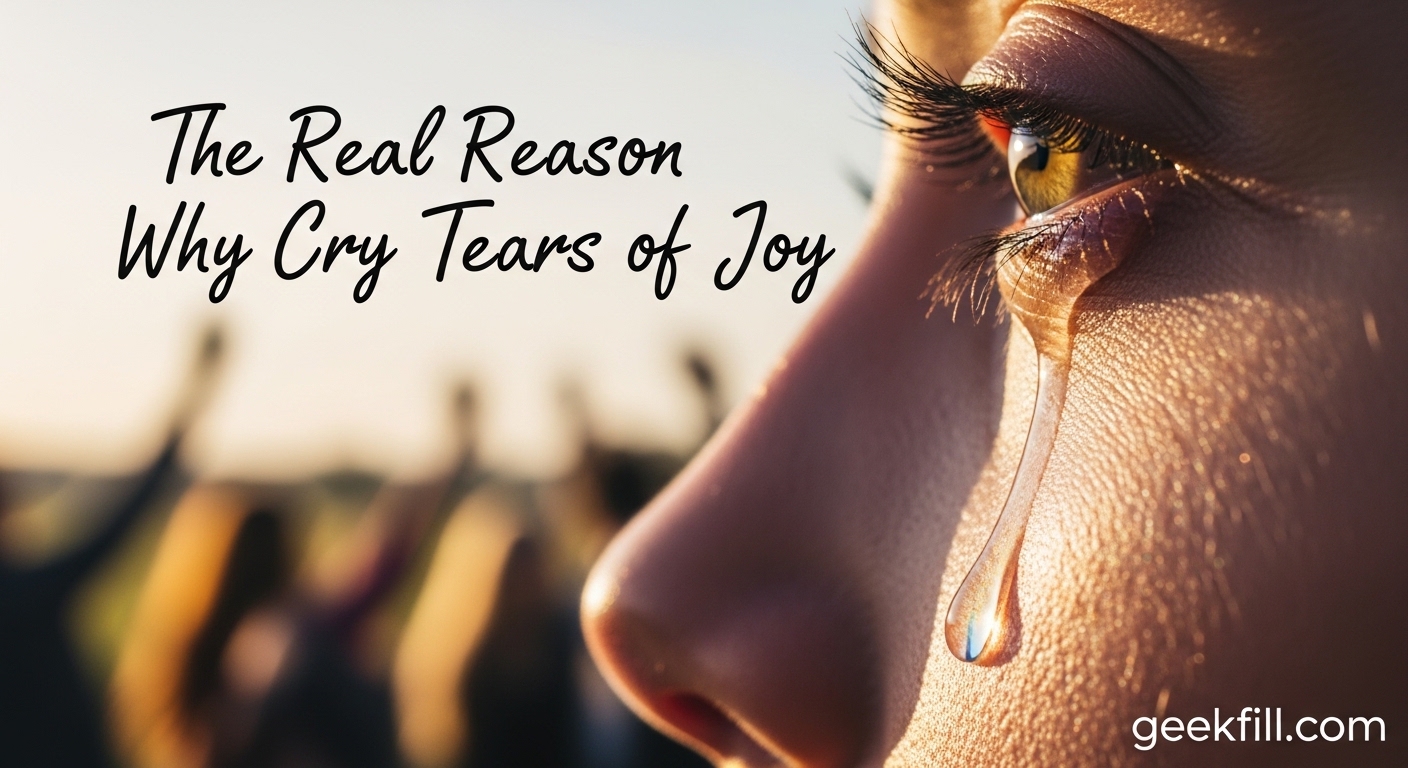
Imagine standing at your best friend’s wedding, watching them exchange vows with the love of their life. Your heart feels like it might burst with happiness. And then, suddenly, tears stream down your face. Wait, why am I crying? I’m not sad. I’m overjoyed. This paradox has puzzled humans for centuries, but 2026, neuroscientists finally have compelling answers.
We cry tears of joy because our brains are trying to restore emotional balance after an overwhelming positive experience. This phenomenon, called emotional homeostasis, acts like a biological pressure valve. When intense happiness floods your limbic system, your brain activates tear production to help you return to equilibrium. It is not a bug in our emotional software. It is a feature.
In this article, I will break down the fascinating neuroscience behind happy crying, the four distinct types of tears of joy, and why this uniquely human trait might actually be one of our greatest social strengths. Whether you are someone who tears up at every puppy video or you have never understood why people cry at weddings, this guide will change how you think about emotional tears.
Table of Contents
What Are Tears of Joy and How Do They Differ From Other Tears?
Tears of joy are emotional tears shed during intensely positive experiences, caused by the brain’s attempt to process emotional overload and restore balance. They represent what scientists call a “dual-valence response” – where your body reacts to extreme emotion the same way regardless of whether that emotion is positive or negative.
To understand tears of joy, you first need to know that humans produce three distinct types of tears. Each serves a different biological purpose, and only one type creates those emotional moments that leave you reaching for a tissue.
The Three Types of Tears
Basal tears are the constant, thin layer of moisture that keeps your cornea nourished and protected. Your body produces about 5 to 10 ounces of these daily without you ever noticing.
Irritant tears flush out foreign particles and irritants. These are the tears that flow when you chop onions or get dust in your eye. They contain more water and less protein than other tear types.
Emotional tears are the stars of our discussion. These contain higher levels of stress hormones and natural painkillers called leucine enkephalin. When you cry tears of joy – or sorrow – your body is literally releasing chemicals that help regulate your emotional state.
The key difference between happy tears and sad tears is not in their chemical composition, but in their context and the emotional release they provide. Happy crying often feels cathartic, like a pressure valve releasing. Many people describe it as feeling “lighter” afterward, whereas sad crying can feel draining.
The Brain Science Behind Why We Cry Tears of Joy
When intense emotions activate the limbic system, the amygdala signals the hypothalamus to trigger tear production, while the parasympathetic nervous system helps calm the body after the emotional spike. This intricate dance happens in milliseconds, often before you even realize you are crying.
Your limbic system acts as the brain’s emotional command center. It includes several key structures that work together when you experience overwhelming happiness. The amygdala processes the emotional intensity, while the hypothalamus serves as the connection point between your emotional brain and your physical responses.
The Role of the Parasympathetic Nervous System
The parasympathetic nervous system is your body’s “rest and digest” mode. When you experience intense joy, this system activates to bring you back down from that emotional high. Tears are one of its tools for achieving this balance.
Think of it like this: your sympathetic nervous system revs you up during excitement, and your parasympathetic system applies the brakes. Tears of joy are the braking mechanism in action, helping prevent emotional overwhelm.
Neurotransmitters and Happy Crying
Emotional tears contain neurotransmitters that play crucial roles in mood regulation. Oxytocin, often called the “love hormone,” floods your system during moments of deep connection and affection. Endorphins create feelings of pleasure and pain relief.
When you cry tears of joy, you are literally flushing excess stress hormones while releasing these feel-good chemicals. This biochemical exchange helps explain why many people feel better after a good cry, even a happy one.
Emotional Homeostasis: The Reset Button Theory
Scientists believe happy crying is a form of emotional homeostasis: a way of bringing us back to equilibrium after an emotional high. This theory, developed by researchers over the past decade, suggests that tears serve as a biological mechanism for emotional regulation.
Imagine your emotional state as a scale. Extreme happiness tips that scale dramatically in one direction. Your brain recognizes this imbalance and triggers tears to help return you to center. This is not weakness. It is sophisticated emotional intelligence at work.
What Is Dual-Valence Response?
The dual-valence response theory explains why positive and negative emotions can trigger similar physical reactions. Your brain processes intensity before it processes valence – meaning the “how much” comes before the “good or bad.”
This explains why you might cry at both funerals and weddings, during both devastating losses and incredible victories. The common thread is emotional intensity that exceeds your brain’s comfort threshold.
Perceived Helplessness Theory
Another compelling theory comes from researchers Miceli and Castelfranchi, who propose that emotional crying arises from perceived helplessness in the face of overwhelming emotion. When joy exceeds our capacity to express it through words or actions, tears become our outlet.
This explains why we rarely cry tears of joy during small happy moments, but frequently cry during peak experiences like holding a newborn, watching a child graduate, or reuniting with a loved one after years apart.
The Four Types of Happy Tears (According to Science)
A comprehensive study of over 13,000 respondents across 40 countries identified four distinct categories of tears of joy. Understanding these types can help you recognize and appreciate your own emotional responses.
Type 1: Achievement Tears
Achievement tears flow when you accomplish something meaningful after sustained effort. Graduations, promotions, completing a marathon, or finally mastering a difficult skill can trigger these tears.
These tears represent the emotional release of tension built up during the striving period. They acknowledge both the difficulty of the journey and the sweetness of success.
Type 2: Affectionate Tears
Affectionate tears emerge during moments of deep connection, love, and bonding. Weddings, reunions, hearing “I love you,” or witnessing acts of profound kindness often trigger these tears.
Researchers connect these tears to kama muta, a Sanskrit term meaning “moved by love.” This emotion combines warmth, connection, and the recognition of shared humanity.
Type 3: Beauty Tears
Beauty tears flow when we encounter something so aesthetically or spiritually moving that words fail us. A perfect sunset, stirring music, breathtaking art, or nature’s grandeur can trigger this response.
These tears represent our attempt to process experiences that transcend ordinary reality. They connect us to something larger than ourselves.
Type 4: Amusement Tears
Amusement tears are the least common but perhaps most interesting. These occur when something is so funny, so absurd, or so joyfully surprising that laughter turns to tears.
These tears blur the line between joy and emotional overload, demonstrating how our brains process extreme positive stimulation.
Why Humans Are the Only Animals That Cry Emotional Tears
Humans are unique among all species in shedding emotional tears. While other animals produce basal and irritant tears, only humans cry in response to feelings. This evolutionary distinction suggests that emotional tears serve important social functions.
The Social Signaling Function
Emotional tears function as powerful social signals. When you cry tears of joy, you are communicating vulnerability, authenticity, and the significance of the moment to those around you. This creates instant social bonding.
Tears are impossible to fake convincingly, making them honest signals of genuine emotion. When someone sees your happy tears, they know your joy is real and profound.
Empathy and Connection
Witnessing tears of joy often triggers empathic responses in observers. This creates emotional synchrony – a shared experience that strengthens relationships. Your tears give others permission to feel deeply too.
Evolutionary psychologists suggest that this empathy-triggering function gave humans with emotional tears a social advantage, helping explain why the trait persisted through natural selection.
Why Do I Cry When Happy But Not Sad?
Some people experience a curious asymmetry: they cry easily at happy moments but struggle to cry during sad ones. This pattern often reflects differences in how we process positive versus negative emotions.
Happy crying feels safe. It happens when we are surrounded by love, accomplishment, or beauty. Sad crying, however, can trigger feelings of vulnerability or fear. Some people unconsciously suppress sad tears as a protective mechanism while allowing happy tears to flow freely.
Research also suggests that people with high emotional intelligence sometimes cry more at positive moments because they are better attuned to the depth and significance of joyful experiences.
Is Crying Tears of Joy Normal?
Yes, crying tears of joy is completely normal and actually indicates healthy emotional functioning. Far from being a sign of weakness or emotional instability, happy crying demonstrates that your brain’s emotional regulation systems are working exactly as designed.
If you never cry tears of joy, that is also normal – emotional expression varies widely among individuals based on personality, culture, and life experiences. There is no “right” amount of crying.
Gender Differences in Happy Crying
Research consistently shows that women cry more frequently than men, including tears of joy. This difference appears influenced by both biological factors (hormonal differences) and social conditioning (cultural acceptance of emotional expression).
However, the gap is narrowing in modern societies as traditional gender norms evolve. Men who cry tears of joy are increasingly viewed as emotionally healthy rather than weak.
How to Embrace Your Tears of Joy (October 2026)
If you are someone who feels embarrassed about crying at happy moments, here are some ways to reframe your experience:
Recognize it as a gift. Your capacity for deep emotion means you experience life’s peak moments more fully. Not everyone has this ability.
Prepare strategically. If you know a tear-triggering event is coming (your wedding, a graduation), keep tissues handy and warn loved ones that happy crying might happen.
Reframe the narrative. Instead of thinking “I am so emotional,” try “I am having a profound human experience.” Your tears tell others that this moment matters.
Share the experience. After crying tears of joy, talking about the moment with others often deepens the positive feelings and creates lasting memories.
Frequently Asked Questions
Why do humans cry tears of joy?
Humans cry tears of joy because of emotional homeostasis – the brain’s attempt to restore balance after overwhelming positive emotions. When intense happiness activates the limbic system, the amygdala signals the hypothalamus to produce tears, which helps the body return to equilibrium through activation of the parasympathetic nervous system.
Is crying tears of joy real?
Yes, crying tears of joy is absolutely real and scientifically documented. Research involving over 13,000 participants across 40 countries has confirmed the existence of tears of joy. These emotional tears contain different chemical compositions than irritant tears, including stress hormones and natural painkillers.
Why do people cry when extremely happy?
People cry when extremely happy due to a dual-valence response where the brain processes emotional intensity before determining whether that emotion is positive or negative. Extreme happiness overwhelms the brain’s processing capacity, triggering tears as a regulatory mechanism to restore emotional balance.
Which gender cries the most?
Research consistently shows that women cry more frequently than men, including tears of joy. This difference stems from both biological factors like hormonal differences and social conditioning around emotional expression. However, these gender gaps are narrowing as cultural norms evolve.
Why do I cry when I’m happy for someone?
Crying when happy for someone relates to empathy and kama muta – a Sanskrit term meaning moved by love. These affectionate tears represent deep connection and shared joy. Your brain processes their happiness as emotionally significant, triggering the same tear response as if the achievement were your own.
Are tears of joy different from sad tears?
Tears of joy and sad tears share similar chemical compositions, containing stress hormones and natural painkillers. The primary difference lies in context and subjective experience. Happy crying often feels cathartic and uplifting, while sad crying can feel draining. Both serve the same regulatory function of restoring emotional homeostasis.
Conclusion: The Real Reason Why We Cry Tears of Joy
The real reason we cry tears of joy comes down to one elegant concept: emotional homeostasis. Your brain is not confused when you cry at weddings, graduations, or during beautiful moments. It is performing sophisticated emotional regulation, using tears as a tool to process overwhelming positive experiences and restore balance.
As researcher and philosopher Elbert Hubbard once wrote, “Tears of joy are like the summer rain drops pierced by sunbeams.” These tears connect us to our humanity, signal our deepest values to others, and allow us to fully experience life’s most precious moments.
Whether you are an easy crier or someone who rarely sheds a tear, understanding the science behind tears of joy helps us appreciate this uniquely human trait. The next time you feel that familiar sting in your eyes during a moment of profound happiness, do not fight it. Your brain is simply doing what it does best – helping you fully inhabit the joy of being alive.