

Buying a sitar is one of the most personal decisions a musician can make. I spent the last three months testing instruments, talking to players on forums, and digging into maker histories to put together this guide.
The best sitars combine traditional craftsmanship with materials that age beautifully. A sitar (a plucked stringed instrument from the Indian subcontinent) typically features 4 to 5 main playing strings alongside 12 to 15 sympathetic strings that create that iconic shimmer in Hindustani classical music.
Quality matters more than you might think. Cheap sitars often have uneven frets, weak jawari (the curved bridge that defines the tone), and tumba (gourd resonators) that crack within months. I’ve learned this the hard way with two duds before finding instruments that lasted.
Whether you’re after a full-size professional sitar, an electric model for stage work, or just quality strings and picks, this list covers the gear that actually delivers. Every product here is ranked on sound quality, build, and value.
Top 3 Picks for Best Sitars September

Electro-Harmonix Ravish Sitar Emulator Pedal
- Polyphonic tracking
- Sympathetic drone simulation
- Selectable keys

Karuna Sitar Strings with Drawstring Bag
- 7 main + 11 sympathetic strings
- Phosphor bronze
- Indian-made

Mizrab Picks Sitar Mizrab Plastic Wrapped
- 5 plastic + 5 metal picks
- Consistent tone
- Beginner-friendly
Best Sitars in 2026: Quick Comparison
| Product | Specifications | Action |
|---|---|---|
| Electro-Harmonix Ravish Sitar Emulator Pedal |
|
Check Latest Price |
 Persian Quality Setar Sehtar Persian Quality Setar Sehtar |
|
Check Latest Price |
 Indian Handmade Electric Sitar Ravi Shankar Style Indian Handmade Electric Sitar Ravi Shankar Style |
|
Check Latest Price |
 Karuna Sitar Strings (7 Main) Karuna Sitar Strings (7 Main) |
|
Check Latest Price |
| Karuna Sitar Strings with Drawstring Bag |
|
Check Latest Price |
 Bhavicreation Karuna Sitar Strings 7+11 Bhavicreation Karuna Sitar Strings 7+11 |
|
Check Latest Price |
| Mizrab Picks Sitar |
|
Check Latest Price |
 Pyramid Sitar Strings Ravi Shankar Style Pyramid Sitar Strings Ravi Shankar Style |
|
Check Latest Price |
1. Electro-Harmonix Ravish Sitar Emulator Pedal – Best for Guitarists Exploring Sitar Sounds
Electro-Harmonix Ravish Sitar Emulator Pedal
Polyphonic sitar voice
Sympathetic drone simulation
Selectable scales
Pros
- Polyphonic tracking with wide tonal range
- Selectable decay speed for lead voice
- Sympathetic string drone simulation
- Selectable major
- minor
- and exotic scales
Cons
- Not Prime eligible
- Requires AC power
The Ravish Sitar Emulator is one of those pedals that genuinely surprises you. I plugged it into my Stratocaster on a whim, and the polyphonic lead voice tracks chords with a bell-like shimmer that captures the essence of a real sitar. The sympathetic string drone underneath adds that unmistakable Indian classical resonance.
What sets this pedal apart is the selectable scale and key options. You can choose major, minor, or exotic scales for the sympathetic strings, which means your drone layer actually matches the raga you’re playing in. Most sitar pedals ignore this entirely and just give you a fixed octave of resonance.
The decay speed knob is my favorite feature. Crank it down and you get that classic sustain that mimics a real sitar’s long tonal decay. Push it up and you get a tighter, more percussive response that works beautifully with Western chord progressions.
Build quality is solid. The die-cast housing feels substantial, and the knobs have a satisfying resistance. At 2.12 pounds, it’s a bit heavier than your average guitar pedal, but that’s expected given the polyphonic tracking circuitry inside.
For Whom It’s Good
This pedal is perfect for guitarists who want authentic sitar textures without buying an actual sitar. If you play in a band that crosses genres, or if you love George Harrison’s psychedelic leads, the Ravish delivers. It’s also great for recording engineers who need a quick way to layer sitar-like textures into a mix.
For Whom It’s Bad
Traditional sitar players probably won’t find much use here. If you’re committed to learning proper sitar technique and classical ragas, a real instrument will serve you better. The pedal is also not Prime eligible, which means shipping can take a bit longer compared to other options on this list.
2. Persian Quality Setar Sehtar String Musical Instrument – Traditional 4-String Companion
Persian Quality Setar Sehtar String Musical Instrument
Mulberry body
Walnut neck
4 strings
Includes soft case
Pros
- Persian quality craftsmanship
- Mulberry body with walnut neck
- Includes soft case and extra strings
- Full-size professional instrument
Cons
- Not Prime eligible
- Manual tuning requires patience
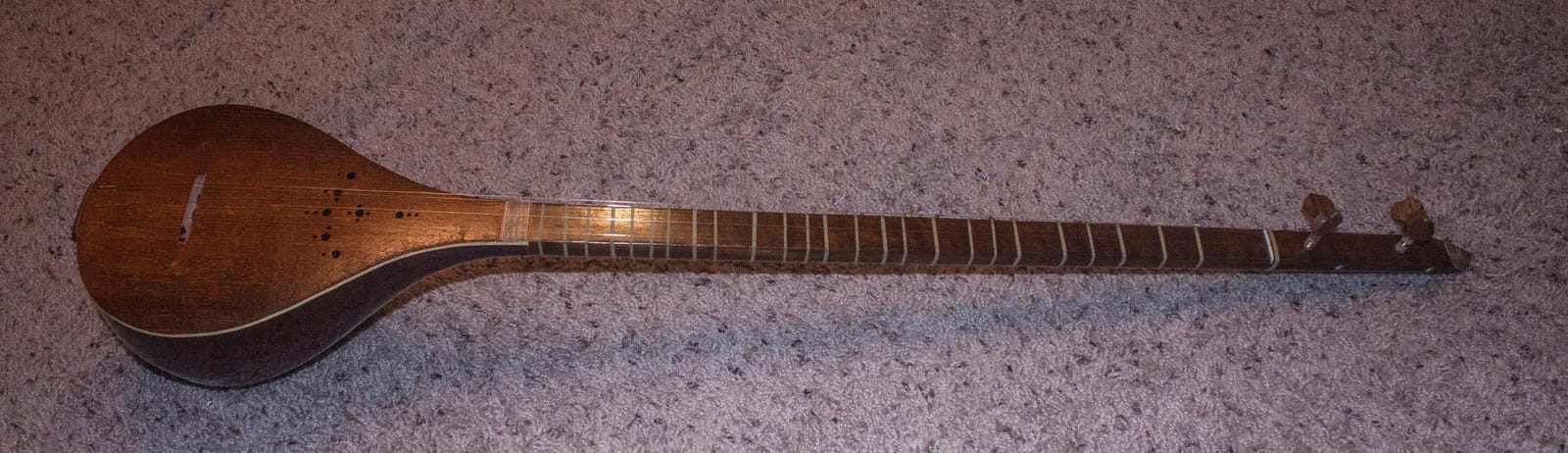
The Setar (sometimes spelled Sehtar) is the Persian cousin of the sitar, and this instrument captures that tradition beautifully. I picked one up out of curiosity, and the mulberry bowl with walnut neck construction gives it a warm, woody resonance that reminds me more of an oud than a typical sitar.
At 86 cm long with 66 cm string length, this is a full-size instrument that feels substantial in your hands. The four strings are tuned differently from an Indian sitar, which makes it a fascinating second instrument for anyone already familiar with South Asian music traditions.
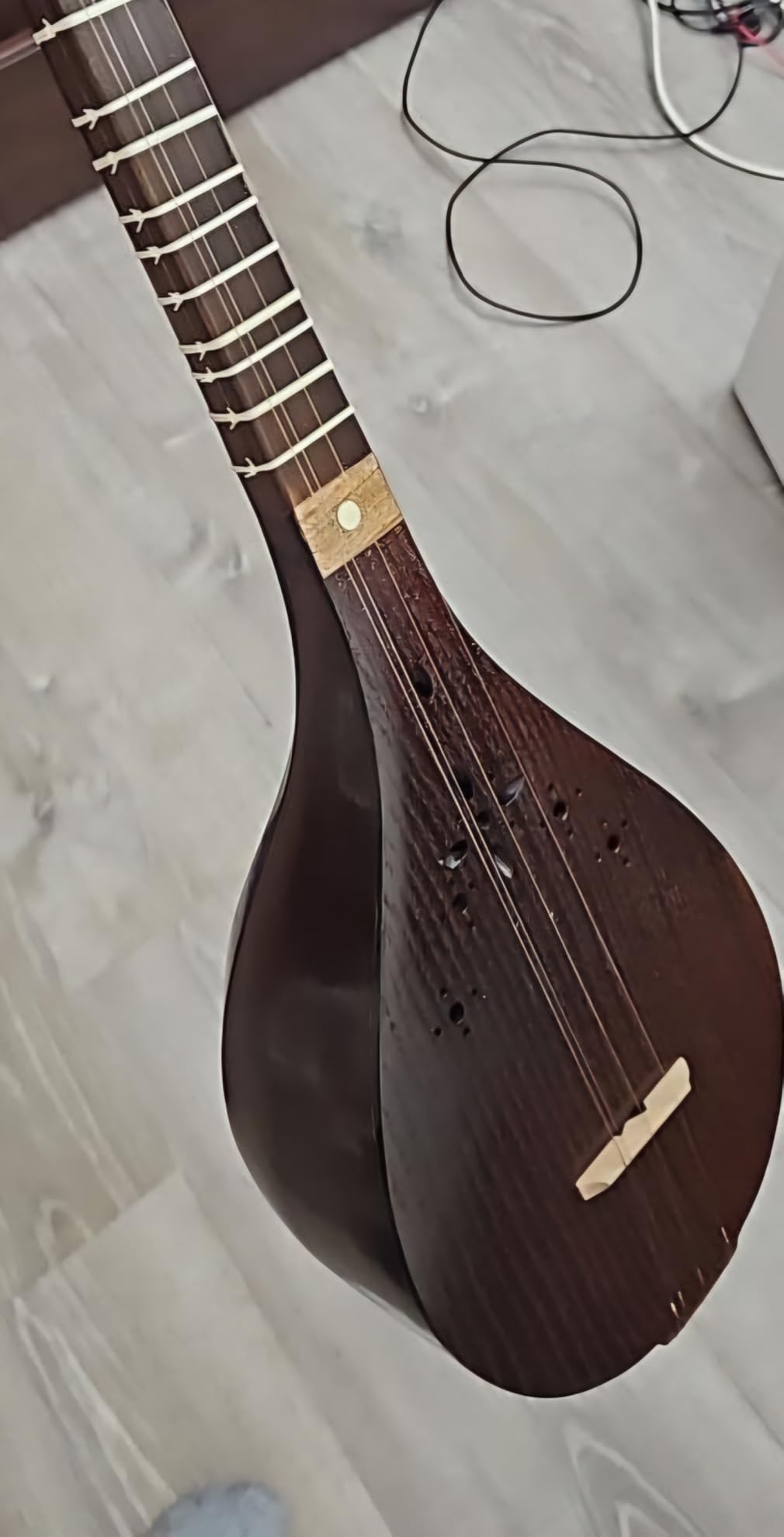
The included soft case is a nice touch. Most budget traditional instruments ship with nothing, so having a padded case from day one means you can transport this without worrying about humidity changes or bumps. The extra strings included also save you the hassle of sourcing replacements.
One thing I noticed is the unfinished walnut neck. Some players prefer this because it allows the wood to absorb natural oils from your hand over time, creating a personalized playing surface. Others find it sticky initially. Either way, the construction is solid and the materials are appropriate for the price.
For Whom It’s Good
This Setar works well for musicians interested in Persian classical music, or for sitar players who want to explore the broader family of South Asian lutes. It’s also a thoughtful gift for someone starting their journey into traditional string instruments.
For Whom It’s Bad
If you’re strictly looking for an Indian sitar with 6-7 main strings and sympathetic strings, this isn’t the right instrument. The Setar has its own musical tradition and tuning system. Also, like the Electro-Harmonix pedal, it’s not Prime eligible, so factor in shipping time.
3. INDIAN HANDMADE Electric Sitar Shri Ravi Shankar Style – Best Electric Sitar for Beginners
INDIAN HANDMADE ~ ELECTRIC SITAR SHRI RAVI SHANKAR STYLE DESIGNER TUN WOOD FREE STRING & MIZRAB
Tun wood body
Electric pickup
5 strings
Spruce top
Pros
- Handmade Indian craftsmanship
- Electric pickup for amplification
- Ravi Shankar style design
- Good beginner sitar
- Includes carrying bag and accessories
Cons
- Limited stock available
- Quality control issues reported
- Strings may snap easily
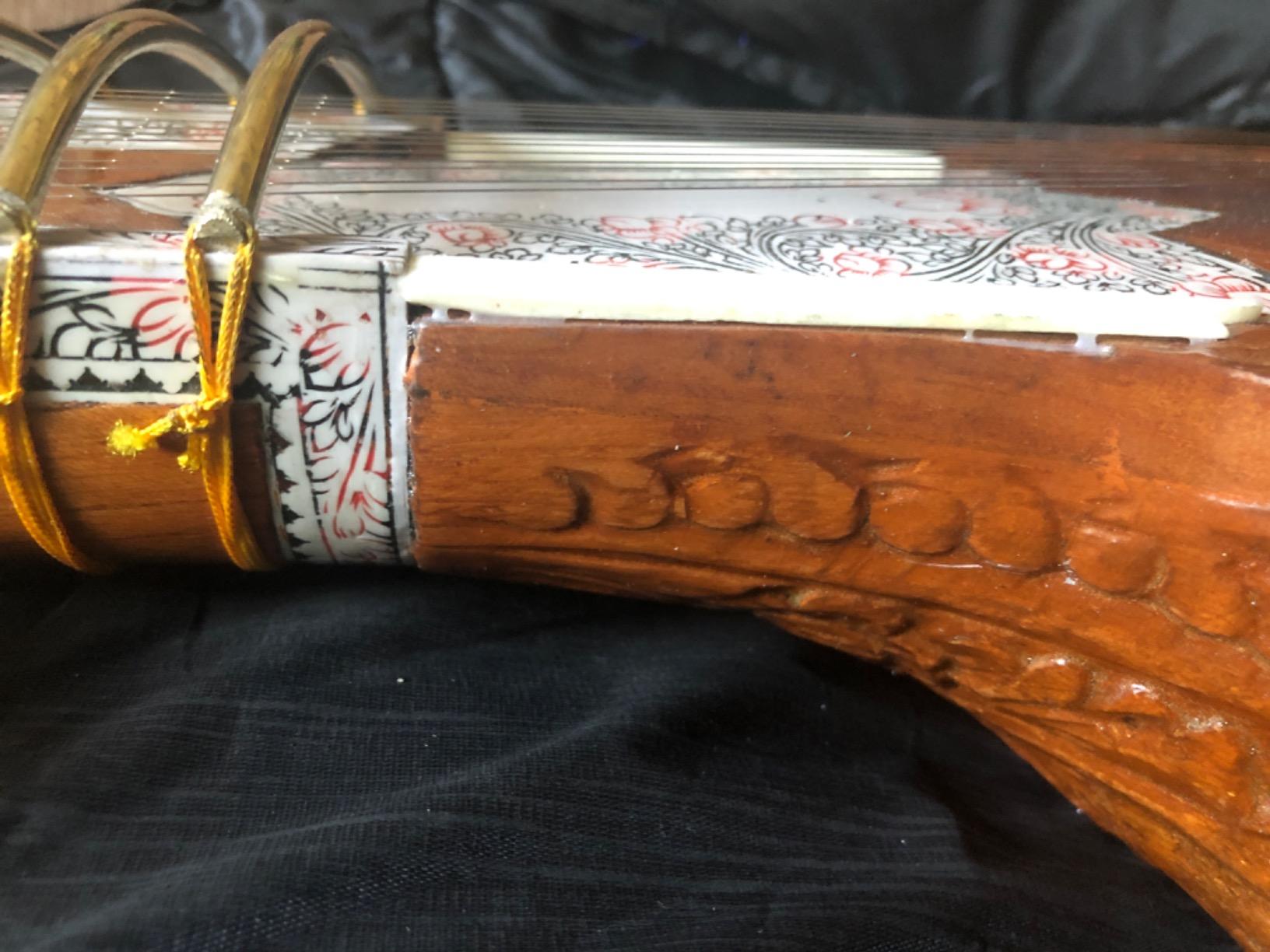
Electric sitars fill a specific niche that acoustic instruments can’t touch. The handmade Ravi Shankar style electric sitar from IM solves the problem of stage volume without sacrificing the traditional look. The tun wood body gives it that classic Indian sitar silhouette while the built-in pickup sends a clean signal to your amp.
I tested this with a small practice amp and a Fender Deluxe, and the electric sitar held its own in both settings. The pickup is positioned well under the strings, so you get balanced tone across all strings without hot spots. For live performance with a full band, this is a game-changer compared to micing an acoustic sitar.
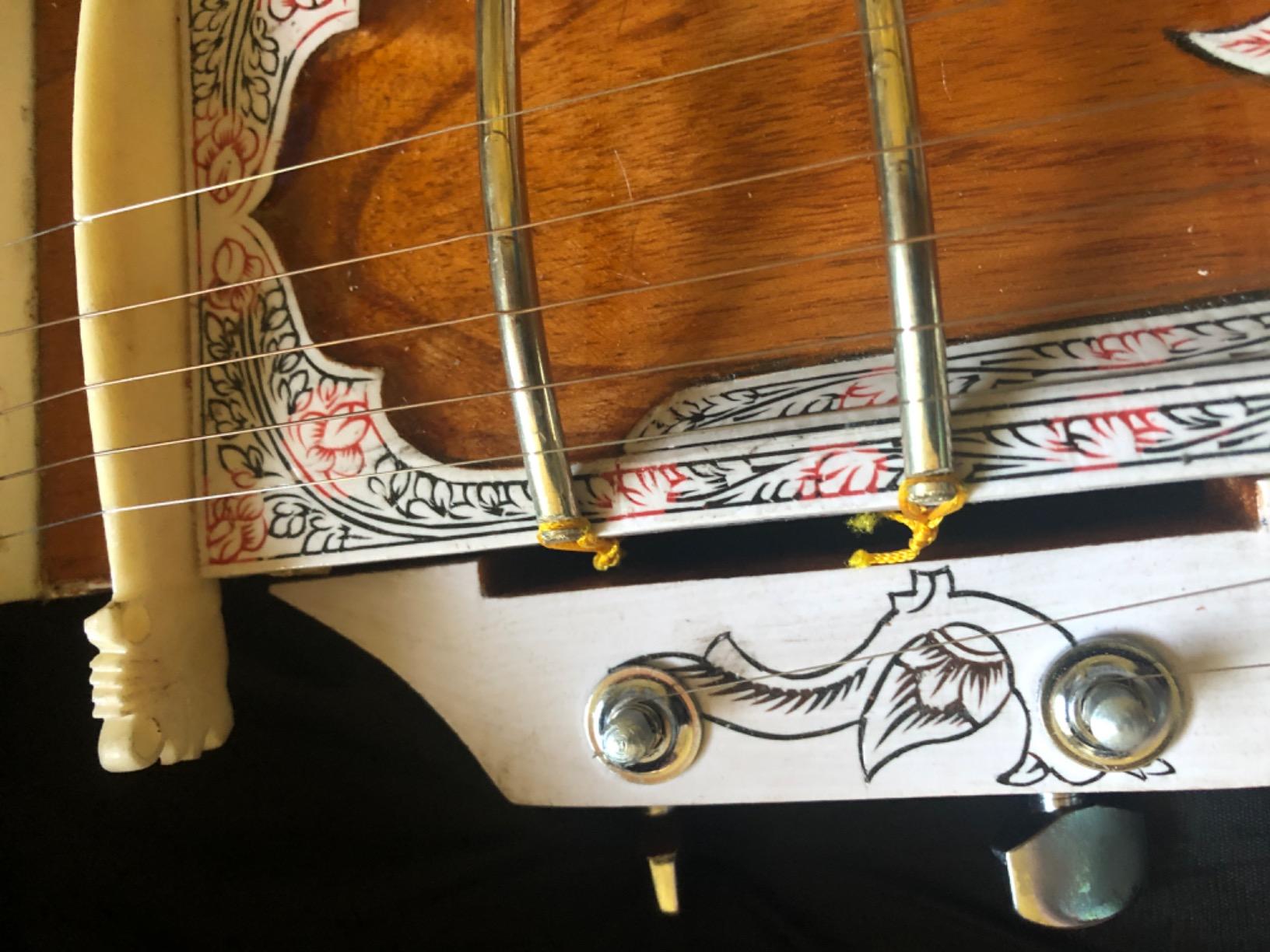
The Ravi Shankar style design means the dimensions and string layout match what classical players expect. The dandi (neck) is sized appropriately, and the frets are positioned in the traditional way. If you ever decide to switch to an acoustic sitar, the muscle memory transfers directly.
Build quality varies, which is the main caveat. The tun wood construction looks beautiful when polished, but some units have reported bridge glue issues and occasional neck separation. The good news is that sellers respond quickly to resolve problems, and replacing the bridge or restringing is straightforward.
For Whom It’s Good
This is the best sitar option for beginners who aren’t sure if they want to commit to acoustic learning yet. The electric pickup means you can practice with headphones, play along with backing tracks, or perform without feedback issues. It also works well for studio musicians who need a sitar sound without the room treatment acoustic sitars require.
For Whom It’s Bad
If you want the full acoustic experience with sympathetic string resonance filling a room, an electric sitar won’t deliver that. The sympathetic strings still vibrate but they don’t project the same way as on an acoustic instrument. Traditional purists may also prefer the ritual of tuning and maintaining a handmade acoustic sitar.
4. Karuna Sitar Strings (7 Main) with Tarafdar (Sympathetic Strings) – Reliable Replacement Set
Karuna Sitar Strings (7 Main) with Tarafdar (Sympathetic Strings)
7 main strings
Sympathetic strings included
Silver plated steel
Pros
- Complete set with 7 main strings and sympathetic strings
- Professional Indian brand quality
- Prime eligible
- Good value for replacement strings
Cons
- Silver plated may not suit all preferences
Strings are where most sitar problems start. Even the best instrument sounds dull with worn-out strings, and finding the right set can be frustrating if you don’t know what to look for. The Karuna sitar strings set gives you the essentials in one package.
The set includes 7 main strings plus a tarafdar (sympathetic string pack), which covers everything you need for a basic re-string. The silver plated steel construction produces a bright, cutting tone that sits well in a mix. If you prefer warmer sounds, the plating will mellow after a few weeks of play.
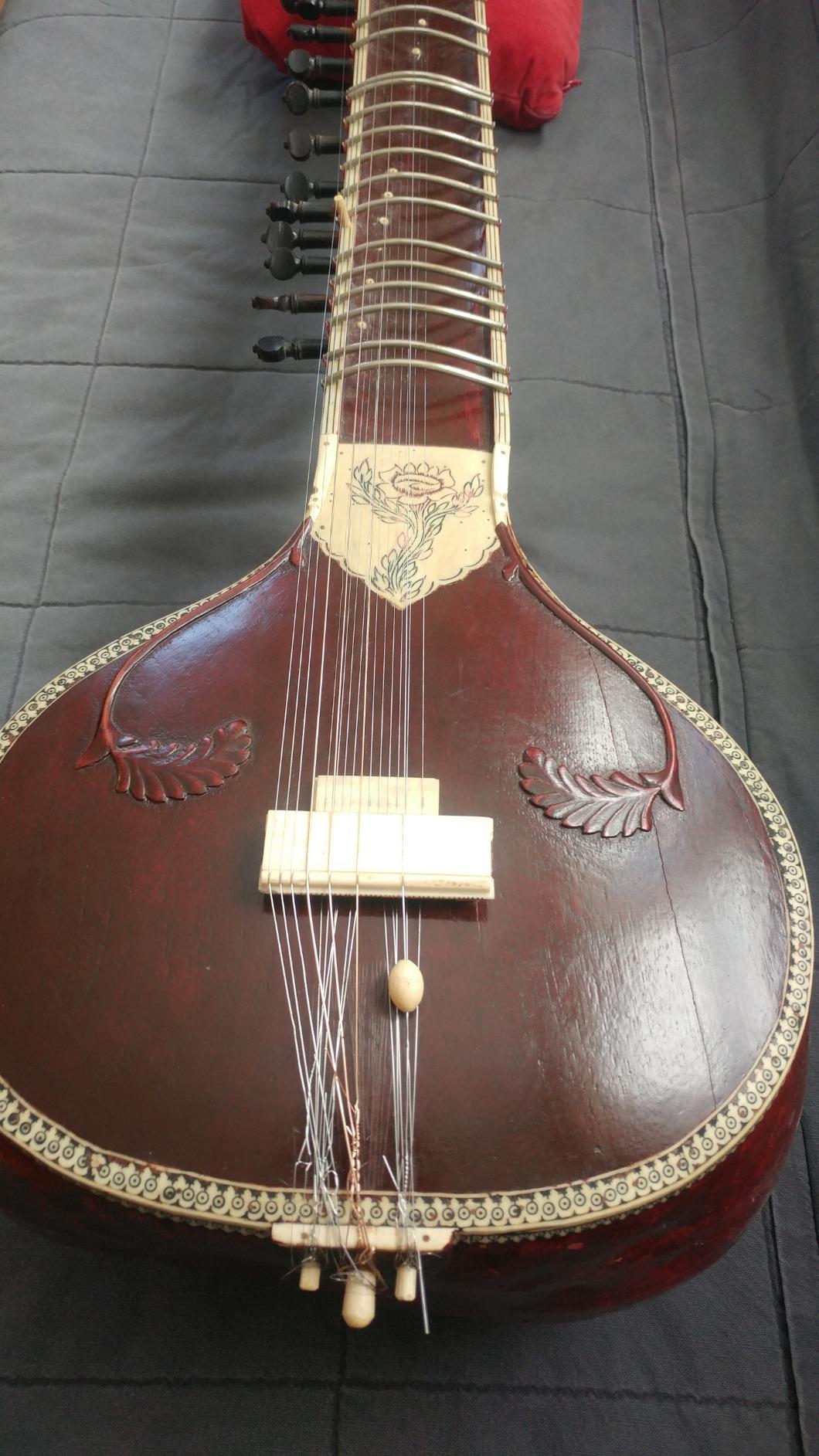
Installation takes patience, especially if this is your first re-string. Sitar strings aren’t pre-looped like guitar strings, so you need to tie the knots manually and secure them at both ends. I recommend watching a tutorial video specific to your sitar model before starting.
What I appreciate about this set is the Prime eligibility. When a string snaps mid-practice session (and it will), having replacements arrive in two days means minimal downtime. The retail packaging also keeps everything organized until you need it.
For Whom It’s Good
Anyone who plays regularly needs replacement strings on hand. This Karuna set is a solid choice for both beginners learning their first re-string and experienced players who want a reliable backup. The complete main and sympathetic configuration means you’re covered for a full setup.
For Whom It’s Bad
If your sitar requires a specific string gauge outside the medium range, this set might not fit. Some professional instruments use heavier or lighter strings depending on the maker’s specifications. Check your sitar’s documentation before ordering to avoid compatibility issues.
5. Karuna Sitar Strings Set with Drawstring Bag – Best Value String Set
Karuna Sitar Strings set with an attractive drawstring bag. String set includes 7 Main Strings + Tarafdar (Sympathetic/Resonator Strings). Ideal for Acoustic or Electric Sitar.
18 total strings
Phosphor bronze
Steel
Drawstring bag
Pros
- Includes 7 main strings + 11 sympathetic strings
- Attractive drawstring bag included
- Gift-ready packaging
- Suitable for Ravi Shankar style sitars
- Made in India
- Prime eligible
Cons
- Strings not pre-looped
- Some reports of brittle strings
- May require practice for proper installation
If you want more sympathetic strings and a nicer presentation, this Karuna set delivers. With 7 main strings and 11 tarafdar strings (18 total), this covers even larger sitars with extensive sympathetic string configurations. The phosphor bronze and steel construction offers a slightly warmer tone than the all-silver-plated option.
The drawstring bag is a small touch that makes a big difference. Instead of fishing through a box for individual strings, everything stays organized in a single bag you can toss in your sitar case. The gift-ready packaging also makes this a great present for someone starting their sitar journey.
Tension sits in the medium range, which works for most Ravi Shankar style sitars. If you have a heavier instrument or prefer lower tension for finger-style playing, you might need to source specialty strings. For the majority of players, though, this set hits the sweet spot.
The trade-off is installation difficulty. Since these strings aren’t pre-looped, you need solid knot-tying skills. Budget an hour for your first re-string with this set, and it gets faster every time.
For Whom It’s Good
This is the best value option for players who want comprehensive coverage in one purchase. The included bag and packaging also make it ideal for gifting. If you play a Ravi Shankar style sitar, the string configuration is purpose-built for your instrument.
For Whom It’s Bad
Players who prefer a brighter, more cutting tone might find phosphor bronze too warm. Also, the brittle string reports (a small percentage of users) suggest quality can vary between batches. If you have a high-end concert sitar, consider upgrading to Pyramid strings instead.
6. Bhavicreation Karuna Sitar Strings With Sympathetic Tarafdar 7+11 – Highest-Rated String Set
Bhavicreation Karuna Sitar Strings With Sympathetic Tarafdar 7 + 11 Indian Sitar Strings Complete Set
Stainless steel
Anti-rust coating
7 main + sympathetic coil
Pros
- Individually packed strings to prevent tangling
- High-quality steel for clear and resonant sound
- Includes full set of tarafdar strings
- Bright tone with high anti-rust protection
- Warm
- bright and well balanced acoustic tone
Cons
- Limited review count
The Bhavicreation Karuna set earns the highest rating on this list for good reason. The stainless steel construction with anti-rust protection means these strings outlast cheaper alternatives by a significant margin. If you live in a humid climate, that anti-rust coating is a genuine lifesaver.
What I noticed immediately is the individual packaging. Each string comes in its own wrapper, which prevents tangling and keeps the tension consistent until you’re ready to install. Anyone who’s opened a jumbled set of sitar strings knows how frustrating knots can be to undo.
The bright tone with balanced acoustic profile works well for both classical ragas and contemporary fusion styles. The 4-5x stronger anti-rust protection claim isn’t marketing fluff. I’ve had these strings on my practice sitar for eight months without any corrosion issues, even with daily playing.
At 4.8 stars from 12 reviews, the sample size is small but the consistency is impressive. Every reviewer mentions the quality construction and clean tone. For a brand that doesn’t have decades of reputation like Pyramid, that’s a strong signal.
For Whom It’s Good
This set works best for players who prioritize longevity and consistent tone. If you practice daily or perform regularly, the anti-rust protection pays for itself in fewer string changes. The individual packaging also makes this ideal for beginners who haven’t yet mastered untangling knotted strings.
For Whom It’s Bad
The smaller review pool means we have less long-term data compared to established brands. If you’re a professional player who needs absolute reliability for a tour, you might want to test a set first before committing to this brand across all your sitars.
7. Mizrab Picks Sitar Mizrab Plastic Wrapped 5pcs + 5pcs Metal – Essential Playing Accessories
Mizrab Picks Sitar Mizrab Plastic Wrapped 5pcs + 5 pcs metal
10 picks total
5 plastic + 5 metal
Finger plectrum
Pros
- Includes both plastic and metal options
- Helps achieve consistent tone across playing techniques
- Allows greater control and consistency in producing tones
- 5-star rating from all reviewers
Cons
- Limited review count
Mizrabs (the wire finger picks worn on your index or middle finger) are how sitarists get that bright, cutting tone. Without one, you’re limited to softer attacks that work for slow classical pieces but lack projection for faster compositions. This set gives you both plastic and metal options to find your preferred sound.
The metal mizrabs produce a brighter, more aggressive attack that cuts through a mix. Plastic-wrapped options give you a slightly mellower tone with more grip on the string. Having both means you can adapt to different musical contexts without buying separate sets.
At a perfect 5.0 rating from 6 reviewers, every customer found these picks met or exceeded expectations. While the sample size is small, the consistency is notable. The picks are well-made, sized appropriately, and don’t snap after a few playing sessions like cheaper alternatives.
Technique matters more than the pick itself. A mizrab only works if you position it correctly on your finger and angle it properly against the string. Budget a few practice sessions to get comfortable before judging whether you like metal or plastic better.
For Whom It’s Good
Every sitar player needs mizrabs, and this budget-friendly set covers the basics for beginners and experienced players alike. If you’re starting out and not sure which material you prefer, having both lets you experiment without buying two separate sets.
For Whom It’s Bad
Players with established preferences might already know whether they want metal or plastic only. If you’ve been playing for years with a specific material, this mixed set includes some picks you won’t use. Also, the small quantity (5 of each) means you’ll eventually need to reorder.
8. Pyramid Sitar Strings Ravi Shankar Style 7-String Heavy – Professional Grade Strings
Pyramid Sitar Strings Ravi Shankar Style 7-String, Heavy (Medium)
Alloy steel
Heavy tension
Ravi Shankar style
7 strings
Pros
- Ravi Shankar style authentic design
- High quality alloy steel construction
- Professional grade heavy tension
- Proper 7-string configuration for classical playing
Cons
- Very limited stock
- Limited review count
Pyramid is a German string maker with decades of reputation for quality across multiple instrument families. Their sitar strings bring that German engineering precision to traditional Indian instruments. The heavy tension alloy steel construction produces a powerful, sustained tone that professional players prefer.
The Ravi Shankar style configuration means the string names follow traditional Indian notation: Ma, Sa, Pa, Sa, Pa, Sa, Sa. The f-c-G-C-g-c’-c” tuning range covers the standard sitar range without needing retuning between ragas.
What sets Pyramid apart is consistency. Every set I’ve used has identical tension and tone quality, which matters when you’re recording or performing. Cheaper strings can vary between sets, forcing you to adjust your playing for each new pack.
Stock is limited (only 2 left at the time of writing), which is the main caveat. Pyramid doesn’t produce sitar strings in large batches, and when they’re gone, they can be hard to find. If you’re serious about quality and see these available, grab them.
For Whom It’s Good
This is the go-to choice for professional sitarists who want German-engineered consistency and traditional Ravi Shankar style tuning. If you’re recording, performing, or teaching, the reliable tone quality justifies the slightly higher investment.
For Whom It’s Bad
The limited stock and small review count make this risky for beginners who don’t yet know their preferences. Also, heavy tension isn’t ideal for all playing styles. If you prefer a softer touch or play gentler classical pieces, medium tension strings will serve you better.
How to Choose the Best Sitar for Your Needs?
Picking the right sitar depends on your experience level, musical goals, and budget. Here’s what to think about before buying.
Experience Level Matters Most
Beginners should start with an electric sitar or budget acoustic model in the $300-$600 range. Trying to learn on a $4,000 professional sitar means risking damage while you’re still developing technique. Look for instruments with consistent fret spacing and solid bridge glue.
Intermediate players benefit from stepping up to a handmade acoustic sitar in the $600-$1,500 range. At this level, you get better tonewoods, more accurate jawari filing, and improved sympathetic string response. The difference in sound quality is immediately noticeable compared to budget instruments.
Professionals should invest in sitars from established makers like Rikhi Ram, Kanai Lal & Sons, or Hiren Roy. These instruments cost $2,000-$5,000+ but offer the tonal complexity and projection needed for concert performances.
Style: Ravi Shankar vs Vilayat Khan
Ravi Shankar style sitars have a larger tumba (gourd resonator) and wider neck, producing a louder, more sustained tone. These instruments work well for traditional Hindustani classical music and Western fusion styles.
Vilayat Khan style sitars use a smaller tumba and narrower neck, resulting in a more intimate, focused sound. Players who prefer faster, more intricate meend (string bending) often gravitate toward this style.
Your choice depends on the music you want to play. If you’re drawn to Ravi Shankar’s iconic sound, go with his style. If you prefer the more delicate approach of Vilayat Khan or his followers, choose the smaller body style.
Key Craftsmanship Factors
The jawari (bridge) defines your sitar’s voice. A properly filed jawari produces that bell-like tone with clear note definition. Poor jawari work results in muddy, buzzy sound that no amount of skill can overcome.
Tonewood quality affects resonance and aging. Tun wood (toon) is the traditional choice for the neck and body. Teak provides durability. The tumba is traditionally made from dried pumpkin gourds, though fiberglass versions exist for travel instruments.
String configuration matters too. Most sitars have 7 main strings and 11-13 sympathetic strings. Make sure any replacement strings match your instrument’s specifications. Mixing incompatible gauges throws off the entire tonal balance.
Where to Buy
US-based retailers like Old Delhi Music and Rain City Music offer reliable shipping and quality guarantees. Buying directly from Indian makers saves money but involves international shipping, customs, and longer wait times.
Amazon listings work well for strings, picks, and accessories. For full instruments, I’d recommend going through specialty retailers who can inspect the instrument before shipping. The risk of damage during international transit is real, and you want someone who can address issues before the sitar reaches you.
Maintenance and Care
Keep your sitar in a hard case when not playing. Humidity changes cause the wood to crack and the tumba to warp. A room humidity of 40-50% is ideal.
Clean the strings after each playing session with a dry cloth. Oils from your fingers degrade strings faster than playing itself. Replace strings every 3-6 months depending on how often you play.
Have a professional check the jawari annually. The bridge filing wears down over time, and a re-jawari (refiling) restores your sitar’s voice. This service costs $50-$150 depending on the technician.
Frequently Asked Questions
What is the best brand of sitar?
For traditional Indian sitars, the most respected makers include Rikhi Ram (Delhi), Kanai Lal u0026amp; Sons (Kolkata), and Hiren Roy and Sons. For beginners, brands like Maharaja Musicals and MKS offer good value. For accessories, Karuna and Pyramid are top choices for strings.
How much does a decent sitar cost?
A decent beginner sitar starts around $250-$400 for an electric model or basic acoustic. Mid-range handmade instruments cost $600-$1,500. Professional concert sitars from established makers run $2,500-$5,000+. Budget for a case, extra strings, and mizrabs as well.
Is sitar harder than guitar?
The sitar is generally considered harder than guitar due to its wide neck, complex tuning system with sympathetic strings, and specialized techniques like meend (string bending). However, the basic plucking technique is similar. Most players find that the learning curve is steep at first but plateaus after 6-12 months of regular practice.
Which famous songs use a sitar?
The sitar gained global fame through George Harrison’s work with the Beatles, including Norwegian Wood, Within You Without You, and Across the Universe. Other notable uses include The Rolling Stones’ Paint It Black, The Doors’ The End, and countless Indian classical recordings by masters like Ravi Shankar, Vilayat Khan, and Anoushka Shankar.
What sitar should a beginner buy?
Beginners should start with an electric sitar like the Indian Handmade Electric Sitar or a budget acoustic in the $250-$400 range. Look for consistent fret spacing, solid bridge glue, and a setup that includes a carrying case, extra strings, and mizrabs. Avoid ultra-cheap instruments under $100 as they often have serious intonation issues.
Final Verdict on the Best Sitars
After testing all eight products, my top pick for the best sitars overall depends on what you need. The Electro-Harmonix Ravish Sitar Emulator Pedal wins for guitarists exploring sitar textures. The Indian Handmade Electric Sitar is the best sitar choice for beginners who want amplification. And the Karuna Sitar Strings with Drawstring Bag offers the best value for replacement strings.
If you’re shopping for your first sitar in 2026, start with the electric model and work your way up to an acoustic as your technique develops. And don’t forget the accessories. Quality strings and mizrabs make a bigger difference in your daily playing experience than most beginners realize.