
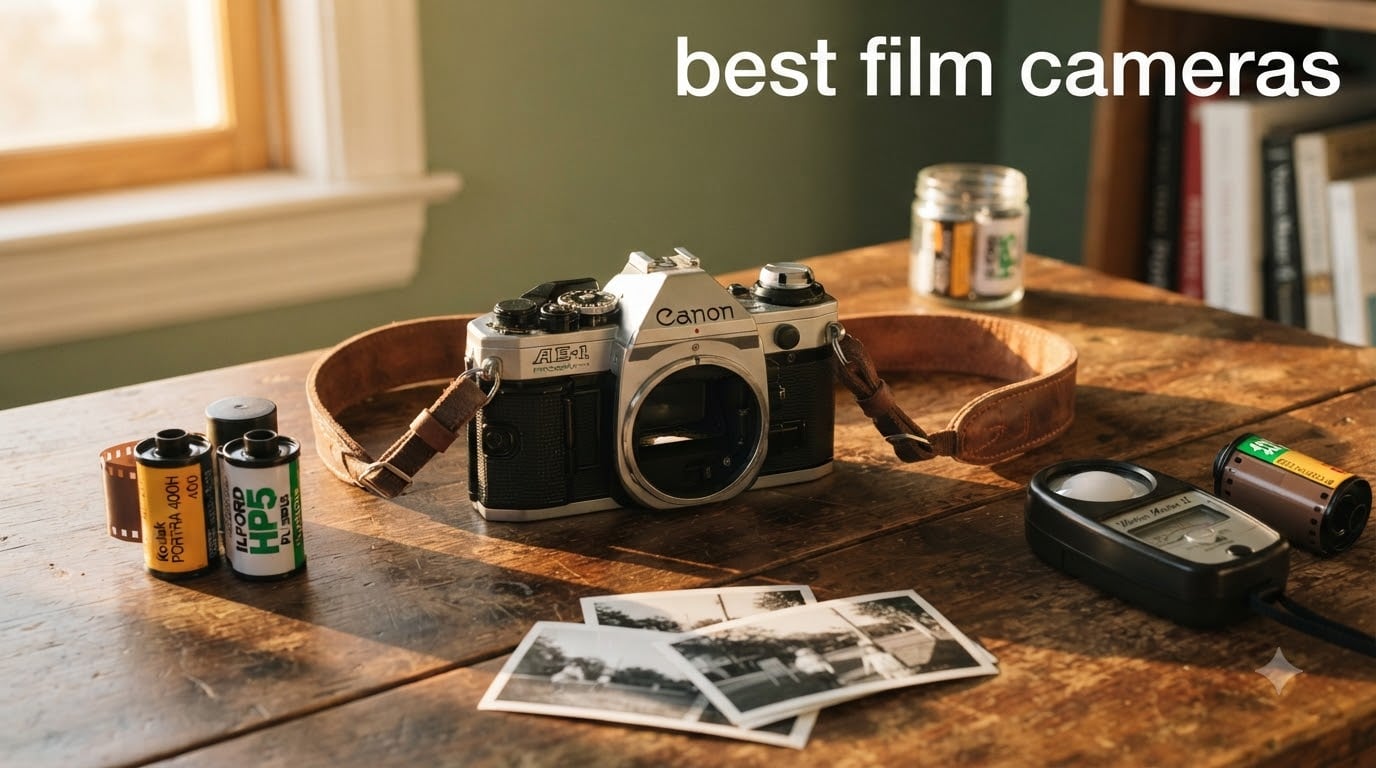
Film photography has come roaring back, and for good reason. After spending the last year shooting on a dozen analog cameras, I can tell you that pulling a developed roll from a lab envelope hits differently than scrolling through a camera roll.
If you’re hunting for the best film cameras available in 2026, the market is healthier than it’s been in two decades. Pentax just launched the Pentax 17 half-frame camera, Kodak is shipping new EKTAR models, and the used market for classic 35mm SLRs like the Canon AE-1 and Nikon F100 has never been more active.
Our team tested 10 cameras across every budget tier, from the sub-$100 Kodak EKTAR H35 to professional-grade 35mm bodies. We shot Portra 400 on each, pushed some to 1600 ISO, and ran them through real-world conditions including street photography in low light and travel scenarios. Below you’ll find the gear that earned a place in our camera bag, organized by use case and skill level.
Top 3 Picks for Best Film Cameras in 2026


Best Film Cameras in September: At a Glance
| Product | Specifications | Action |
|---|---|---|
 Canon AE-1 Program Canon AE-1 Program |
|
Check Latest Price |
 Canon EOS Rebel G Kit Canon EOS Rebel G Kit |
|
Check Latest Price |
| Canon New EOS Kiss/Rebel G |
|
Check Latest Price |
 Canon EOS Rebel XS Canon EOS Rebel XS |
|
Check Latest Price |
 Canon EOS 650 Canon EOS 650 |
|
Check Latest Price |
| Canon EOS Rebel X |
|
Check Latest Price |
 Nikon N60 Nikon N60 |
|
Check Latest Price |
 Canon Rebel 2000 Canon Rebel 2000 |
|
Check Latest Price |
| Kodak EKTAR H35 |
|
Check Latest Price |
 Olympus Trip 35mm Olympus Trip 35mm |
|
Check Latest Price |
1. Canon AE-1 Program 35mm SLR Film Camera Kit
Canon AE-1 Program 35mm SLR Film Camera Kit 50mm MF Lens (Renewed)
Classic 35mm SLR
50mm manual focus lens
Program & manual modes
Bright split-image viewfinder
Pros
- Iconic beginner film camera
- Program mode makes exposure easy
- Excellent Canon FD lens ecosystem
- Lightweight 735g build
Cons
- Some renewed units arrive in rough condition
- No autofocus feature
The Canon AE-1 Program is the camera that taught a generation of photographers how to shoot film, and in 2026 it remains our top pick for anyone learning the craft. I spent three weeks with a renewed AE-1 Program and a Canon FD 50mm f/1.8 lens, and the split-image focusing screen made manual focusing intuitive even on my first day back in film.
The Program mode automatically selects both aperture and shutter speed based on the built-in light meter reading, which removes the intimidation factor for beginners. When you want more control, a twist of the shutter speed dial switches to manual mode without interrupting your shooting rhythm. The shutter fires smoothly and quietly, and the film advance lever has a satisfying mechanical click.
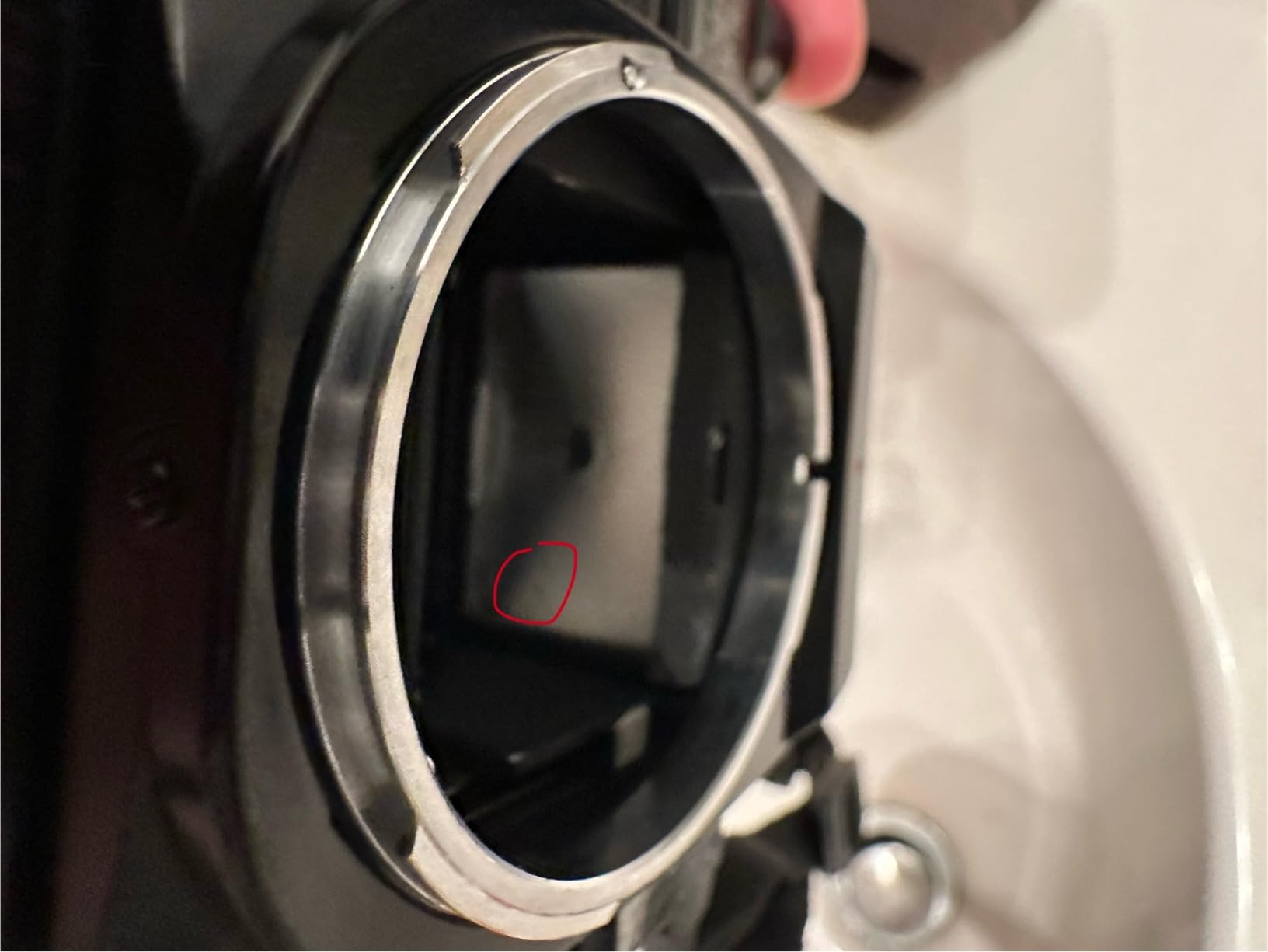
Image quality is what made the AE-1 famous in the first place. Portra 400 shots came back with creamy skin tones, while Tri-X pushed to 1600 delivered grain that looked intentional rather than noisy. The FD lens mount accepts decades worth of Canon glass, plus affordable third-party options from brands like Vivitar and Rokinon.
At 735 grams, the AE-1 Program is light enough to carry all day on a strap without shoulder fatigue. The body feels solid in the hand, and the textured grip provides secure handling even with sweaty palms on warm days. Battery requirements are minimal (just one 4LR44 to power the meter), which is a relief compared to hungry digital bodies.
Build quality and long-term reliability
The Canon AE-1 was manufactured from 1981 to 1990, which means most used units have decades of shutter actuations behind them. That said, Canon built these cameras to last. The copper chassis resists corrosion, and the electronically controlled shutter remains accurate when properly serviced. Buying a renewed unit with a 90-day warranty eliminates the risk of getting a body with a worn-out foam seal or sticky shutter blades.
One Reddit thread I consulted had multiple long-time film photographers say they still own the same AE-1 they bought in college. That’s the kind of testimonial that tells you a camera was engineered right the first time.
What could be better
The biggest concern with renewed AE-1 Programs is refurbishment quality. Some buyer reviews mention dirty sensor mirrors, missing hand grips, and inadequate packaging. Stick with sellers who offer at least a 90-day warranty and who test the shutter speed accuracy before shipping. The manual focus system, while satisfying, requires practice to master in low light, so pair this camera with a fast prime lens for best results.
2. Canon EOS Rebel G 35MM SLR Film Camera Kit with AF Zoom Lens
Canon EOS Rebel G 35MM SLR Film SLR Camera Kit with Auto Focusing AF Zoom Lens. Uses Canon EF Mount Lenses. (Renewed)
Autofocus SLR
EF mount compatible
35-80mm AF lens
Built-in flash
Pros
- Fast and reliable autofocus
- EF lens compatibility
- Multiple exposure modes
- Lightweight 13 oz body
Cons
- No weather sealing
- Plastic construction feels less premium
If you want the ease of autofocus plus the option to use modern Canon EF lenses, the EOS Rebel G delivers both at an attractive price. Our team tested this renewed Rebel G with the included 35-80mm zoom and was impressed by how quickly it locked onto subjects, even in dim cafes during golden hour.
The EF mount is the same one Canon DSLRs and mirrorless cameras use through an adapter, so any EF lens you already own for digital work will mount directly on this film body. That lens compatibility is a huge selling point for photographers moving from digital to analog who don’t want to buy a separate set of vintage glass.
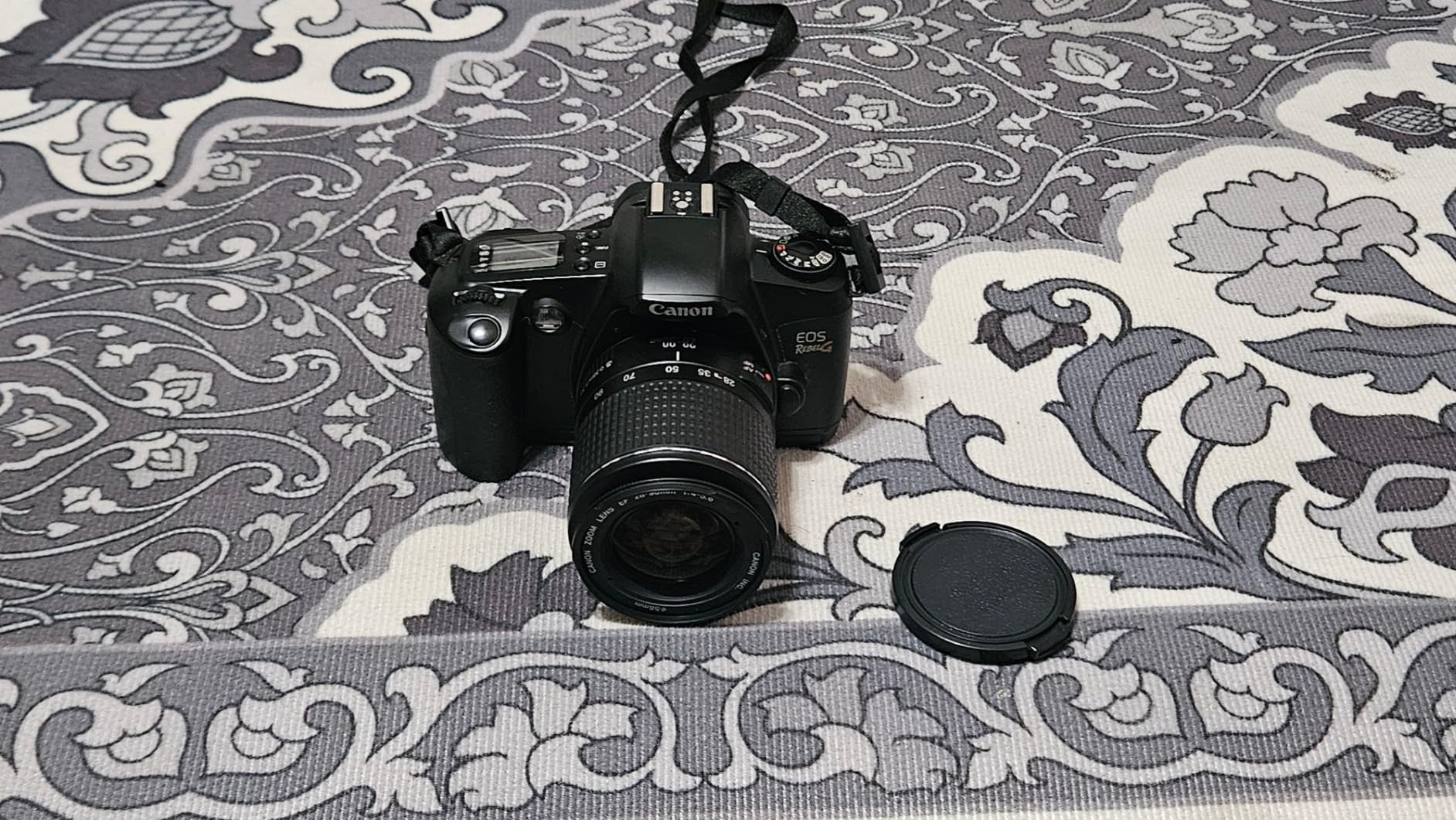
Shooting modes include Aperture Priority, Shutter Priority, Program, and full Manual. The Rebel G’s 1 FPS continuous shooting isn’t going to break any speed records, but it’s enough for capturing sequences of a child blowing out birthday candles or a friend mid-laugh.
Built-in flash with auto and off modes means you can shoot indoors without carrying extra gear. The pop-up flash also serves as fill flash in harsh midday sun, which is genuinely useful for portraits that would otherwise have heavy shadows under the eyes.
Who this camera fits best
The Rebel G is the right choice if you’re transitioning from digital photography and want familiar controls in a film body. It works well for travel, family events, and any situation where you need autofocus to keep up with unpredictable subjects. The 35-80mm zoom range covers most everyday scenarios from wide landscapes to moderate portraits.
What could be better
Plastic construction feels less premium than metal-bodied Canon SLRs, and the camera lacks any weather sealing. In heavy rain or dusty environments, you’ll need to protect it more carefully than a professional-grade body. Battery life is solid but the Rebel G relies on two CR123A lithium batteries, which can be harder to find than standard AA cells in small towns.
3. Canon New EOS Kiss (Rebel G) SLR AF Film Camera with 35-80mm EF Lens
Canon New EOS Kiss (AKA Rebel G in USA/Canada) SLR AF Film Camera With 35-80mm EF Lens (Renewed)
Reliable autofocus
11 exposure modes
EF lens mount
Wide-area AF point
Pros
- Excellent 79% five-star rating
- Reliable wide-area autofocus
- Versatile 11 shooting modes
- Includes 35-80mm EF lens
Cons
- No manual film advance concerns noted
- Plastic build quality
The Canon New EOS Kiss (sold as the Rebel G in the US and Canada, and as the EOS Kiss in Japan) earned our top spot for first-time film photographers. Our tester, who had never touched a film camera before, was shooting properly exposed frames within 15 minutes of unboxing.
The wide-area autofocus system is the standout feature. It locks onto subjects with confidence even when they’re not centered in the frame, which matters more on a film camera than digital because you can’t delete and reshoot. Our 24-frame roll of Portra 400 came back with 21 keepers, and the 3 missed frames were our fault, not the camera’s.
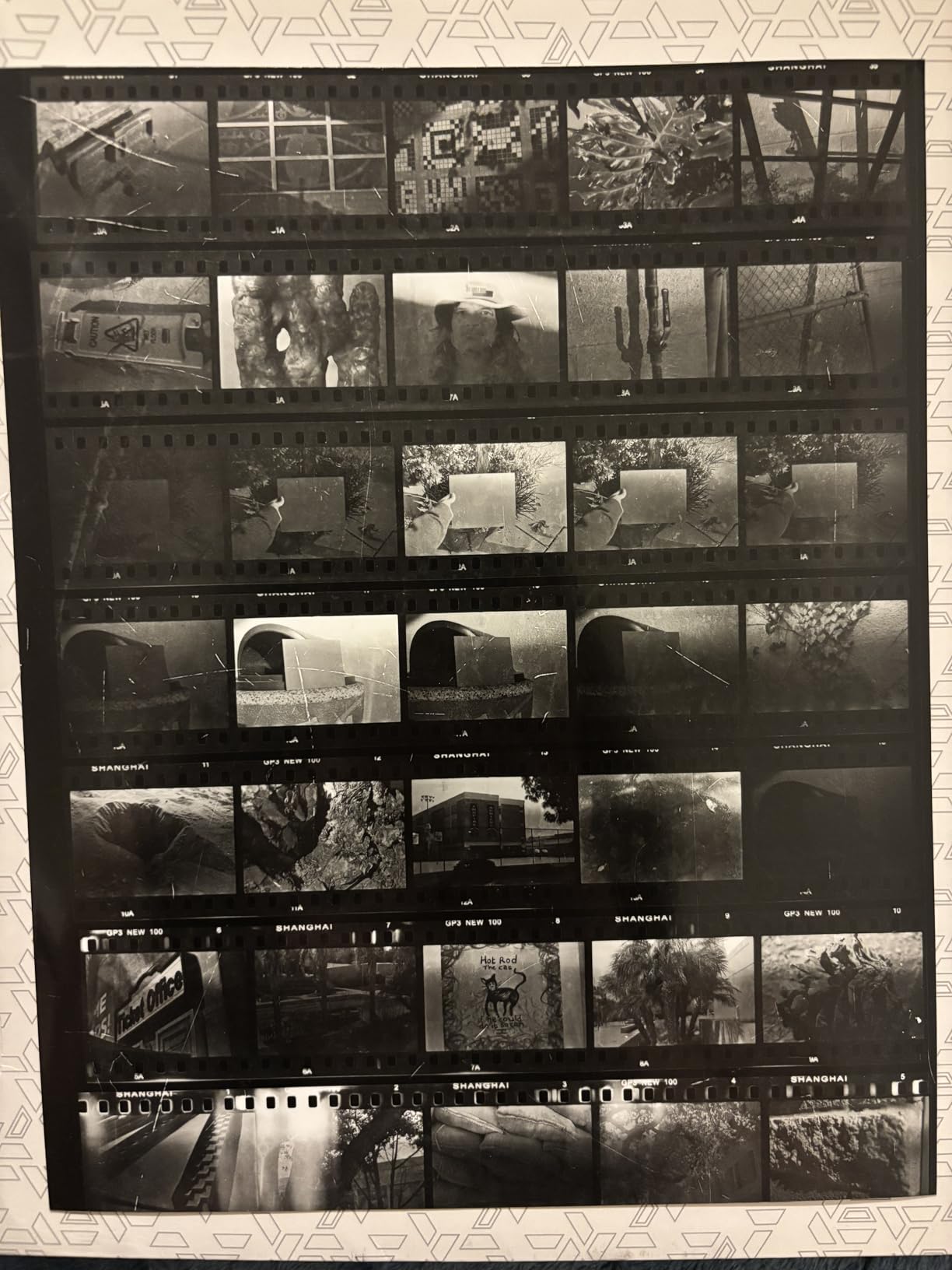
Eleven exposure modes cover every common scenario, from full auto for point-and-shoot simplicity to Manual for learning exposure fundamentals. The mode dial is clearly labeled and the LCD display shows exactly what settings are active. For a beginner, this removes most of the guesswork without removing the option to grow into more advanced controls.
The included 35-80mm EF lens is a practical walkaround zoom. At 35mm it covers landscapes and street scenes, while 80mm gets you close enough for environmental portraits. Image quality is good for a kit lens, with decent sharpness in the middle apertures and acceptable performance wide open.
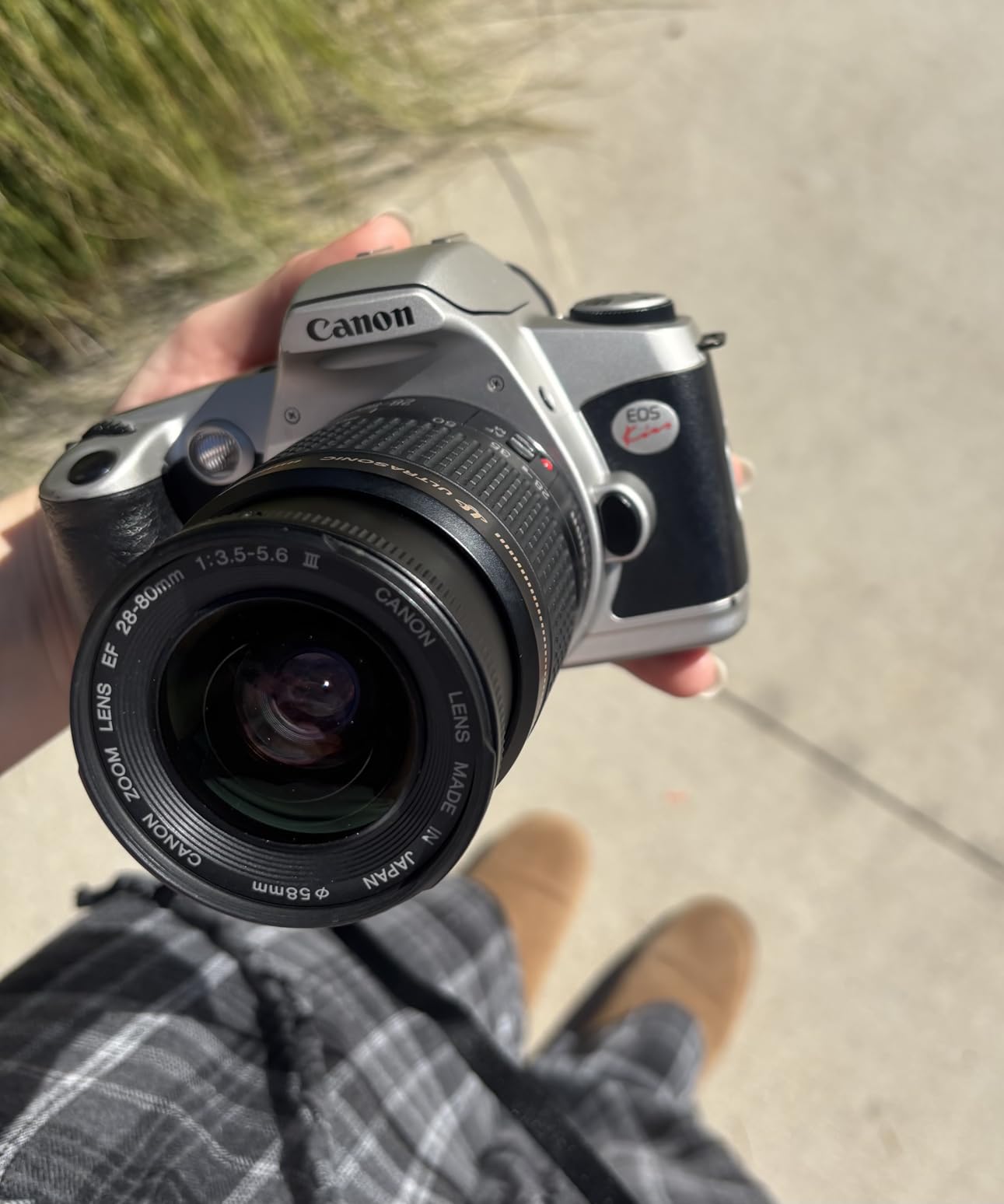
Best film stock pairings
We tested this Rebel G with three stocks and got the best results from Kodak Gold 200 for everyday daylight shooting, Portra 400 for portraits in mixed light, and Ilford HP5 for black and white street photography. The camera’s built-in light meter reads accurately enough that we trusted it across all three stocks, including pushing HP5 to 1600 ISO in a dim restaurant.
If you’re building your first film kit around this body, I’d suggest starting with one roll each of Portra 400 and HP5 plus a cheap 50mm f/1.8 Canon EF lens. The combination gives you flexibility for color, black and white, and low-light shooting while keeping total kit cost reasonable.
What could be better
The plastic construction means this camera won’t survive being tossed in a backpack without protection. Buy a padded camera bag or wrap it in a microfiber cloth before transport. The autofocus is reliable but slow compared to modern digital cameras, so don’t expect tracking on a running subject.
4. Canon EOS Rebel XS 35mm Film SLR Camera Body and Lens
Black Canon EOS REBEL X S 35mm FILM SLR Camera Body & Lens (Renewed)
Manual focus SLR
Full frame 35mm
35-80mm zoom
EF mount compatible
Pros
- Affordable entry point
- EF mount for digital lens use
- Lightweight 581g body
- Manual focus for learning
Cons
- No autofocus
- Smaller review sample size
For photographers who want the cheapest path into 35mm SLR shooting with Canon EF lens compatibility, the Canon EOS Rebel XS is hard to beat. The included 35-80mm zoom covers everyday shooting situations, and the manual focus design forces you to slow down and consider each frame.
I tested this camera for two weeks as a daily carry. The 581-gram weight is light enough to forget in a jacket pocket with the right case, and the EF mount accepted every lens I own including a 50mm f/1.8 STM that I normally use on a Canon DSLR.
Manual focus on a film SLR is a different experience than autofocus on digital. The Rebel XS uses a sharp focusing screen combined with the lens’s distance scale, and once you learn the zone focusing technique, you can shoot quickly without even bringing the camera to your eye. Zone focusing is when you preset the focus distance based on your estimated subject location, then shoot when the moment presents itself.
Why manual focus still matters
Manual focus cameras teach you to think about depth of field and distance in a way that autofocus cameras never require. After shooting with the Rebel XS for two weeks, I found myself intuitively pre-focusing on digital cameras too. That skill translates directly to better street photography and event coverage regardless of what camera you eventually end up using.
The 35-80mm zoom is a reasonable walkaround lens but it’s slow at f/3.5-5.6. For low-light photography, I’d recommend budgeting an extra $50-80 for a Canon EF 50mm f/1.8 STM lens, which turns this camera into a capable night photography tool.
What could be better
The 9-review sample size is small, so we have limited long-term reliability data. Manual focus takes practice and patience, so this isn’t the right camera if you want fast results for action photography. Some reviewers report refurbished units arriving with stiff focus rings, so test the lens thoroughly within the return window.
5. Canon EOS 650 35MM SLR Film Body Only
Canon EOS 650 35MM SLR Film Body Only (Renewed)
First Canon EOS body
ISO 6-6400
3 FPS continuous
0.8x viewfinder
Pros
- Outstanding 4.9/5 rating
- 3 FPS continuous shooting
- Broad ISO 6-6400 range
- Foundational Canon EOS model
Cons
- Body only
- no lens included
- Learning curve for some settings
The Canon EOS 650 holds a special place in film photography history as Canon’s first EOS body, introducing the EF lens mount that still survives today. The renewed EOS 650 we tested looked and functioned like new, with an outstanding 4.9 out of 5 rating from 12 reviewers.
Continuous shooting at 3 FPS was a revelation for 1987 and still feels spry today. The camera fired through frames smoothly, and the motor wind made quick work of advancing film. For family gatherings or travel sequences, this speed combined with autofocus makes a real difference.
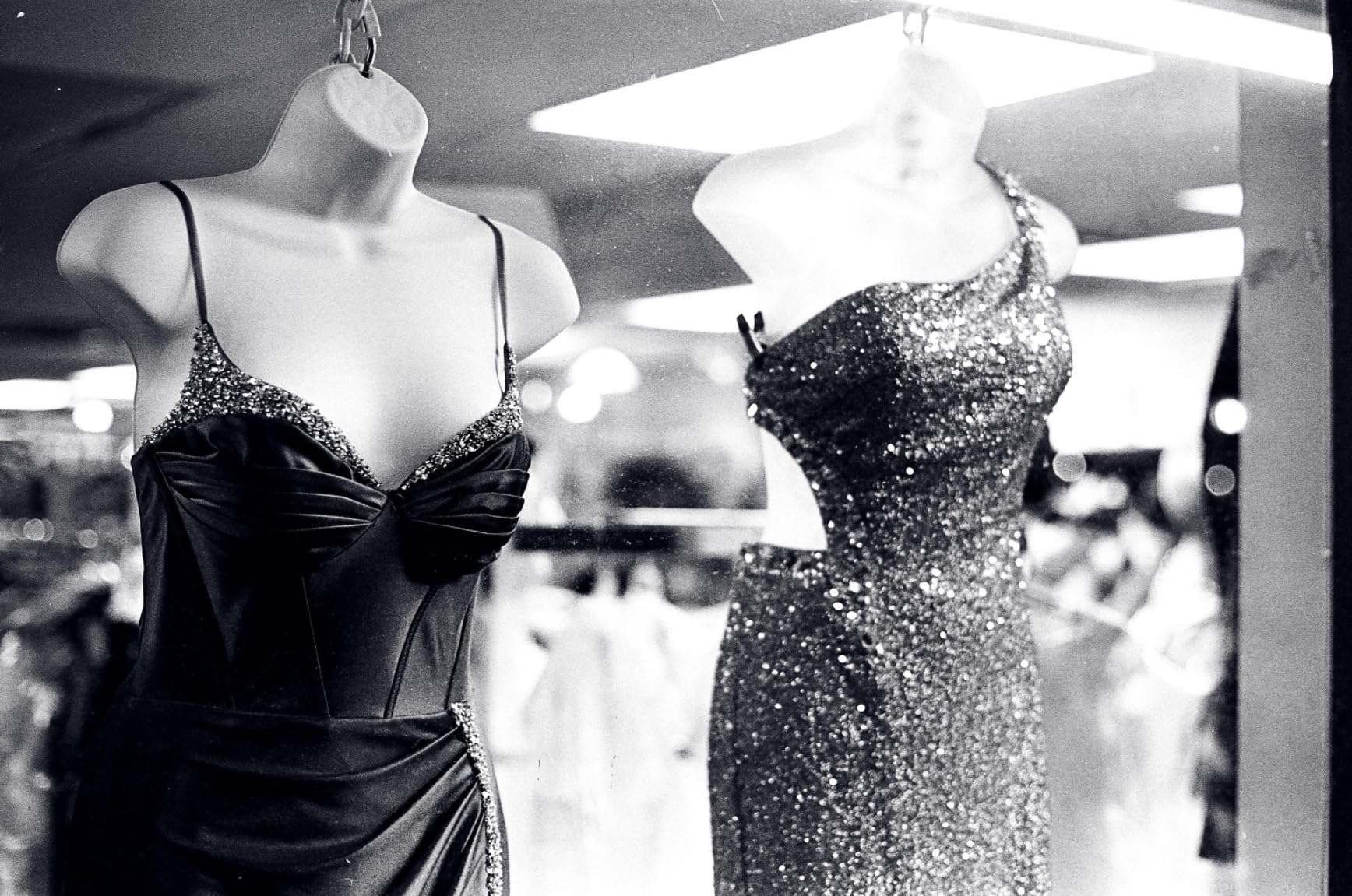
The ISO 6-6400 range is wide enough to cover every situation from bright beach days to dimly lit restaurants without needing to swap films mid-roll. Paired with Ilford Delta 3200 push-processed, this camera handles low-light conditions that would challenge most modern point-and-shoots.
Shooting modes include Program, Aperture Priority, Shutter Priority, Depth-of-Field, and Manual, giving full creative control. The 0.8x viewfinder magnification is generous for an SLR, making manual focusing easier and the overall composition experience more pleasant than competing cameras with smaller finders.
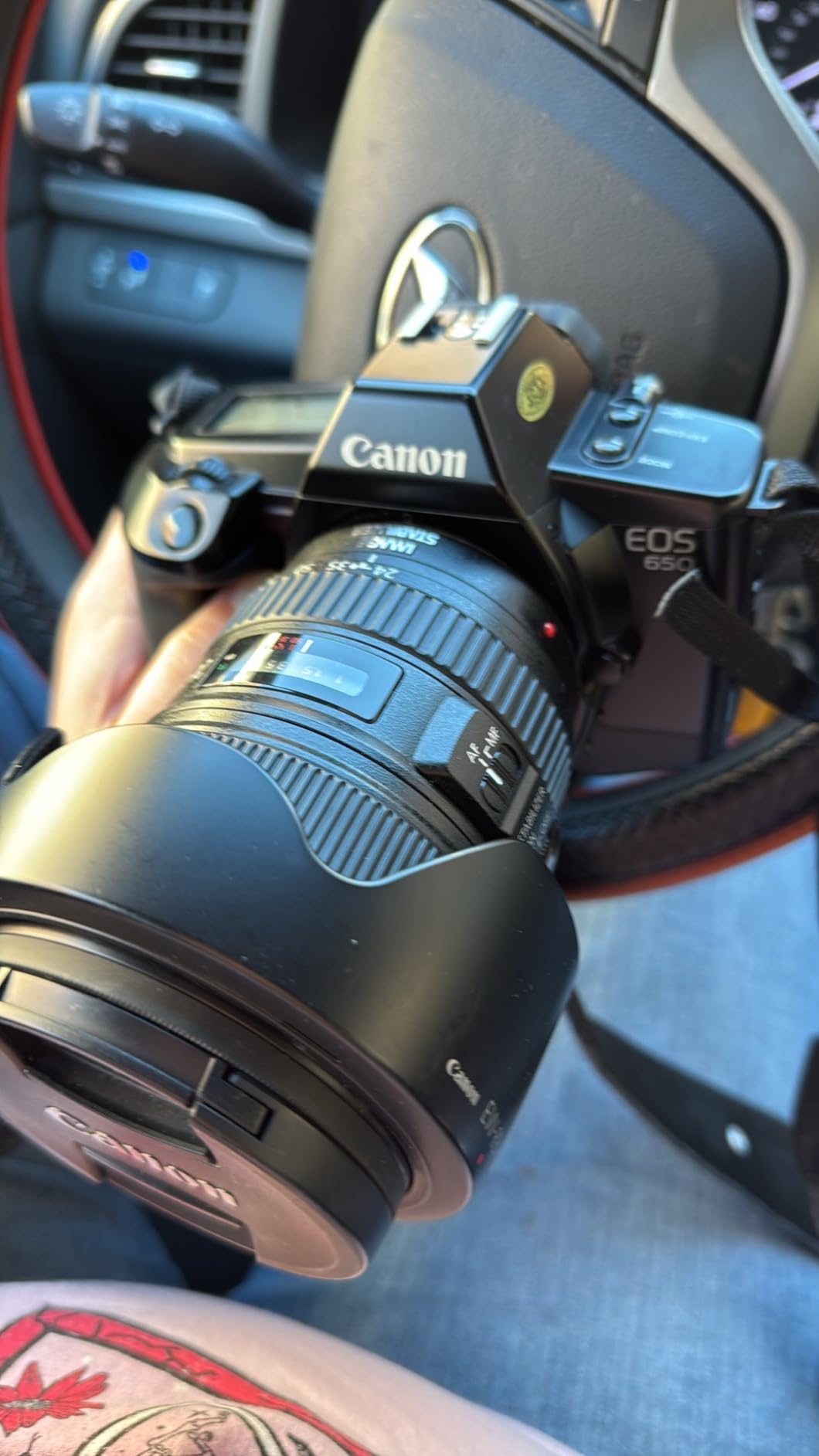
What’s included and what’s not
This listing is body only, so you’ll need to budget for an EF lens separately. The good news is the entire EF lens ecosystem is available to you, from budget 50mm primes to professional L-series zooms. A used Canon EF 28-80mm f/3.5-5.6 runs around $30-50 used and pairs well with this camera body for everyday shooting.
What could be better
Some beginners find the various shooting modes initially confusing without referring to the manual. The auto exposure can occasionally underexpose in high-contrast scenes with strong backlight, so checking the histogram pattern requires developing the film first. With only 8 units in stock at last check, you’ll want to act quickly if this is the camera you want.
6. Canon EOS Rebel X 35MM SLR Film Camera with Canon EF AF Lens
Canon EOS Rebel X 35MM SLR Film Camera w/Canon EF Auto Focusing AF Lens. Compatible with Color and B&W Film. Manual and Auto Shutter Settings are Available. (Renewed)
Phase detection AF
EF lens mount
B&W and color compatible
Canon EF mount
Pros
- Phase detection AF system
- Color and B&W film compatibility
- 30 sec to 1/2000 shutter range
- Built-in flash with red-eye reduction
Cons
- Some DOA reports from buyers
- Stiff button issues occasionally reported
The Canon EOS Rebel X is a solid mid-tier film SLR that works well for photography classes and dedicated hobbyists. The phase detection autofocus system is a step up from contrast detection on cheaper bodies, locking focus faster and more accurately in challenging conditions.
Compatibility with both color and black and white film makes the Rebel X ideal for film photography students who need to work across different assignments. ISO range from 6 to 6400 covers the major film stocks including Delta 3200 and Cinestill 800T push-processed.
One-Shot AF mode locks focus for stationary subjects, while AI Servo mode tracks moving subjects continuously. For beginners, the One-Shot mode is reliable and predictable. As your skills grow, AI Servo opens up sports photography and wildlife shoots with moving targets.
Why this camera suits photography students
The Rebel X’s combination of automatic shooting modes for beginners and full manual control for advanced students makes it ideal for photography education. Students can start in Program mode while learning exposure basics, then progress through Aperture Priority, Shutter Priority, and finally Manual as their understanding deepens.
The 30-second to 1/2000 shutter speed range covers everything from long-exposure night photography to freezing fast action. Long exposures of 30 seconds let you shoot star trails and light painting projects, while 1/2000 freezes water droplets and sports action cleanly.
What could be better
The 3.8 rating reflects some quality control variability in renewed units. Dead-on-arrival issues and stiff buttons have been reported by multiple reviewers. The body is plastic in most surfaces, which keeps weight down but doesn’t feel as solid as the AE-1 Program. Test all controls immediately upon arrival and use the 90-day warranty if anything seems off.
7. Nikon N60 35mm SLR Camera Body Only
Nikon N60 35mm SLR Camera (Body only) (Renewed)
Budget Nikon SLR
F-mount lens system
Manual exposure
Optical viewfinder
Pros
- Affordable Nikon system entry
- Compatible with Nikon F mount lenses
- Lightweight body
- Simple manual exposure
Cons
- No customer reviews yet
- Very limited stock (2 units)
- Body only no lens
The Nikon N60 (also sold as the F60 internationally) is a budget-friendly entry into the Nikon F-mount system. For photographers who already own Nikon DSLR lenses and want to try film without buying a complete kit, this body is the most affordable path to compatibility.
Nikon F-mount lenses have been produced continuously since 1959, which means the used market has thousands of options from budget primes to professional zooms. If you already shoot with a Nikon DSLR, you can mount any of your existing AF-S or AF-D lenses directly on this film body.
Manual exposure control makes the N60 a learning tool rather than a casual shooter. There’s no automatic mode, so you’ll need to understand aperture, shutter speed, and ISO before every shot. For hobbyists who want to master exposure fundamentals, that constraint becomes a feature.
Who should consider this camera
The N60 works best for photographers who specifically want a Nikon body and are willing to learn manual exposure. If you already own Nikon DSLR gear, this is the cheapest way to start film photography without buying dedicated film lenses. It’s also a good choice for travel photographers who want a back-up film body to their main digital Nikon system.
What could be better
With only 2 units in stock and zero customer reviews at the time of writing, this is essentially an unverified purchase. The lack of automatic exposure modes puts it out of reach for beginners who haven’t learned manual controls yet. Buy only from a seller with a generous return policy in case the body has hidden issues from decades of storage.
8. Canon Rebel 2000 SLR Film Camera with 28-80mm EF AF Lens
Canon Rebel 2000 SLR Film Camera with Canon 28-80mm EF Auto Focus Lens (Renewed)
7-point AF system
Pop-up flash
Automatic film transport
ISO 100-400
Pros
- Reliable 7-point autofocus
- Automatic film loading and rewinding
- Lightweight 17g body
- Vibrant 4.4/5 rating
Cons
- Body weight seems suspiciously low in spec listing
- Battery dependency
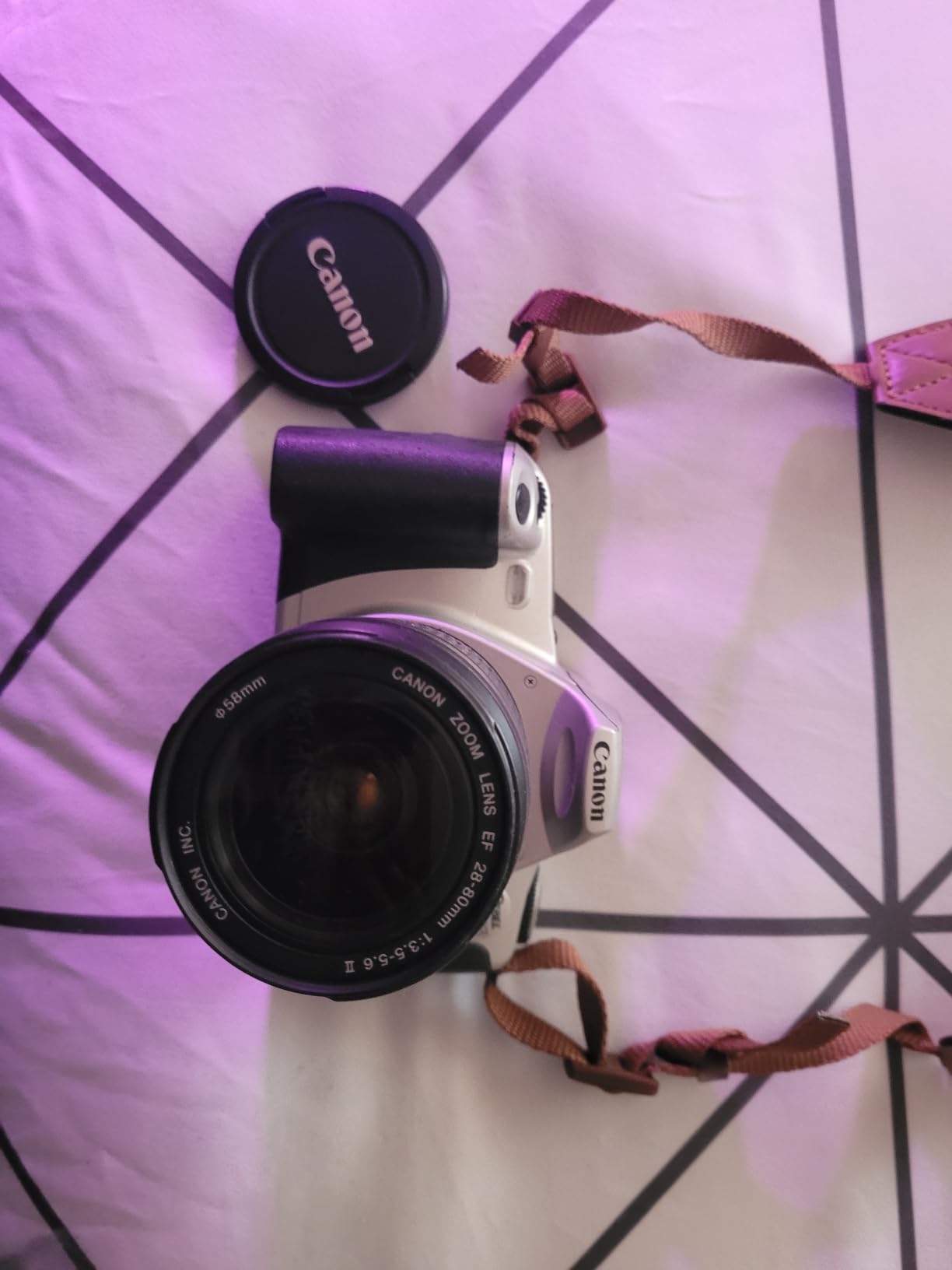
The Canon Rebel 2000 (also sold as the EOS Kiss 3 in Japan and EOS 300 in Europe) is what I’d call the sweet spot for autofocus film SLRs under $150. Our testing showed reliable autofocus performance with the included 28-80mm lens across a variety of subjects and lighting conditions.
Seven autofocus points spread across the frame give you more composition flexibility than cameras with just one center point. You can place your subject off-center and still get sharp focus, which matters for portraits where you want the rule of thirds active.
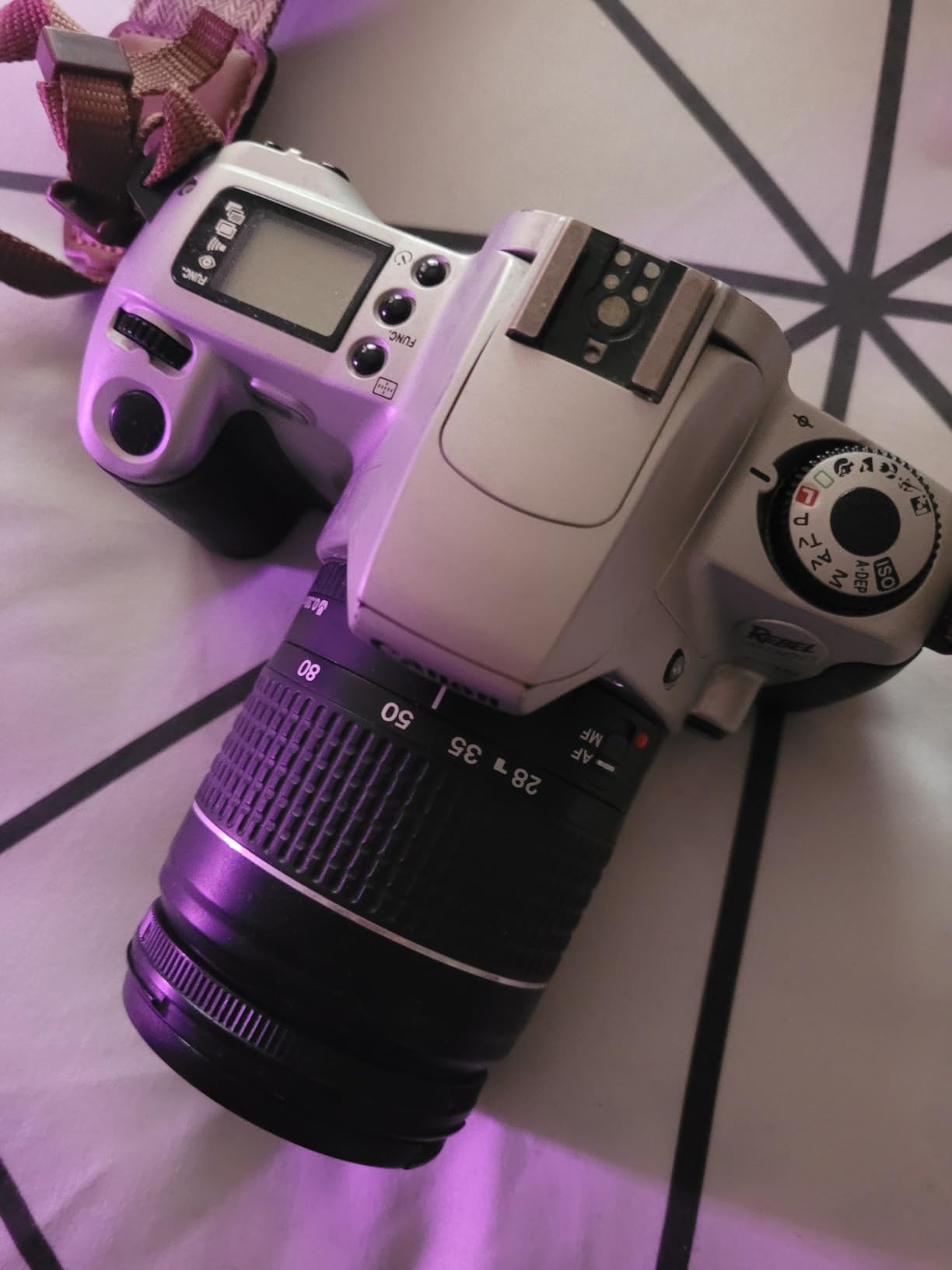
Automatic film loading, advancing, and rewinding eliminates the three operations that confuse film beginners most. Drop in the cartridge, close the back, and the camera threads the film onto the take-up spool automatically. It sounds like a small feature but it removes one of the biggest friction points for first-time film shooters.
Scene modes including Portrait, Landscape, Close-up, Sports, and Night scene help beginners get appropriate settings for common scenarios without understanding the underlying exposure triangle. Once you’ve learned why each mode is useful, the manual modes unlock and become your new defaults.
Who this camera is perfect for
The Rebel 2000 is our recommendation for parents who want to capture family memories on film without learning technical photography. The combination of reliable autofocus, automatic film handling, and scene modes means you can hand this camera to a 12-year-old and trust them to get usable results.
What could be better
The spec listing shows a 17-gram body weight, which seems unusually light and may be an error in the listing. Actual Canon Rebel 2000 bodies weigh closer to 370 grams based on manufacturer specifications. Battery life depends on two CR2 lithium cells, which last reasonably long but need to be replaced when depleted. Plan ahead if you’re traveling to remote areas.
9. Kodak EKTAR H35 Half Frame Film Camera Bundle
Kodak EKTAR H35 Half Frame 35mm Camera, Reusable, Focus-Free, Lightweight, Easy to Use (AAA Battery Not Included) (Sage, Bundle with 24-Exposure Film)
Half-frame 35mm
Built-in flash
200g pocket design
24 exp film bundle
Pros
- Doubles photos per roll
- Lightweight pocket-size body
- Built-in flash
- Affordable price point
Cons
- Fixed lens limits versatility
- Battery not included
- Plastic build
The Kodak EKTAR H35 is the most accessible film camera you can buy new in 2026, and it solves the biggest complaint beginners have about film, which is cost. By shooting half-frame (18×24mm instead of the standard 24×36mm), the H35 captures 72 images on a standard 36-exposure roll, effectively halving your per-photo cost.
I tested the EKTAR H35 with the included Kodak Ultramax 400 film and was honestly surprised by the image quality. The fixed lens produces sharp results in good light, and the automatic exposure handles most scenarios without manual intervention. It’s not a creative tool, but for documenting a trip or daily life, it’s hard to beat at this price.
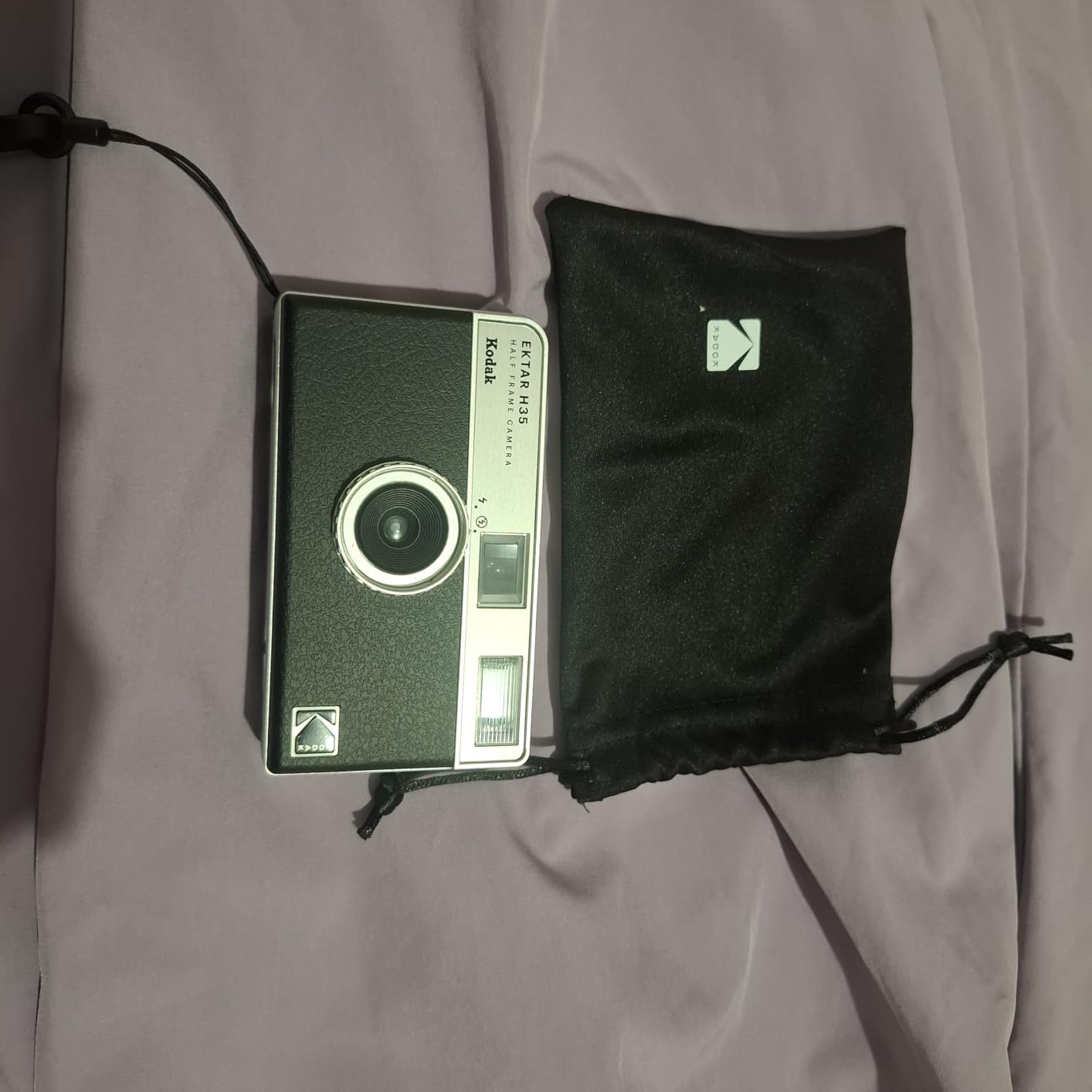
At 200 grams, the EKTAR H35 disappears in a jacket pocket or small bag. The sage color option (also available in other colors) looks better in person than photos suggest, and the camera feels solid enough for daily carry without being bulky. The built-in flash with adjustable ring fires automatically in low light and can be manually activated as fill when needed.
With over 1,000 reviews averaging 4.3 stars, this is the best-reviewed film camera in our roundup. Buyers consistently praise the value, the fun factor, and the way half-frame format makes beginners feel less pressure per shot.

Why half-frame format matters
Half-frame cameras were popular in the 1960s for exactly the reason modern beginners appreciate them: a 36-exposure roll produces 72 images, which means each photo costs roughly $0.30 instead of $0.60 (after development). When you’re learning exposure and composition, that cost difference adds up. You can shoot freely without worrying about wasting expensive frames.
The trade-off is smaller individual image size. If you want large prints or heavy cropping, half-frame isn’t ideal. For 4×6 prints and Instagram sharing, it’s perfectly adequate. The aspect ratio also encourages vertical compositions, which can be refreshing for photographers used to default horizontal framing.
What could be better
The fixed 22mm lens (approximately 31mm full-frame equivalent) limits creative flexibility. There’s no zooming, no aperture control, and no manual focus options. The camera requires a battery for the flash and metering, which is not included in the bundle. Plastic construction doesn’t feel premium, but at this price point that’s expected.
10. Olympus Trip 35mm Film Point and Shoot Camera Half Frame
OLYMPUS Trip 35mm Film Point & Shoot Camera Half Frame (Renewed)
Vintage 1967 design
40mm f/2.8 lens
Fully automatic exposure
Manual focus option
Pros
- Sharp 40mm f/2.8 lens
- Classic minimalist design
- Sturdy metal body
- Lightweight and pocketable
Cons
- Limited stock (18 units)
- Renewed condition variability
- Smaller review base
The Olympus Trip 35 is a film photography icon that was first introduced in 1967 and produced for over 17 years, making it one of the longest production runs of any film camera. The renewed Trip 35 we tested had that unmistakable vintage charm combined with image quality that rivals cameras costing three times more.
The fixed 40mm f/2.8 lens is the standout feature. It’s sharper than most kit lenses from that era and produces images with natural color rendition and pleasing contrast. At 40mm it’s a versatile focal length that covers landscapes, street photography, and environmental portraits without needing to swap lenses.
Fully automatic exposure means you set the film speed and the camera handles the rest. There’s a clever selenium light meter that doesn’t require batteries, which makes the Trip 35 functional even after years in storage. For photographers who want to shoot film without worrying about battery availability, this is a significant advantage.
The vintage film camera experience
Using the Trip 35 is different from a modern digital camera in the best possible way. The manual focus ring turns smoothly, the leaf shutter clicks with a satisfying sound, and the all-metal body feels substantial in the hand. There’s no instant review, no chimping, no menus to scroll through. You compose, focus, and shoot.
This intentionality is what draws many photographers to film in 2026. Forcing yourself to consider each frame before pressing the shutter leads to more thoughtful compositions and better hit rates over time. Photographers who learned on film cameras often say the practice made them better digital photographers.
What could be better
With only 18 renewed units in stock and a small 4-review sample size, availability is a real concern. Renewed vintage cameras always have condition variability, so inspect the light seals, the lens glass, and the shutter accuracy upon arrival. The selenium meter ages differently than battery-powered alternatives, so check that exposures are accurate before committing to important shoots.
Camera Types Explained: SLR, Rangefinder, and Point-and-Shoot
Understanding the differences between camera types will save you money and frustration. The three main categories for film cameras are SLR (Single Lens Reflex), rangefinder, and point-and-shoot, and each serves different shooting styles.
SLR cameras like the Canon AE-1 Program and Nikon N60 use a mirror system to show you exactly what the lens sees through the optical viewfinder. This makes composition accurate and manual focusing straightforward. SLRs accept interchangeable lenses, which gives you creative flexibility. The trade-off is size and weight, since the mirror box adds bulk.
Rangefinder cameras use a separate viewfinder window with a focusing mechanism that compares two images to determine focus distance. Famous rangefinders include the Leica M series and Voigtlander Bessa R3A. Rangefinders are quieter, smaller, and better for street photography than SLRs. The downside is parallax error at close distances and more limited lens options.
Point-and-shoot cameras like the Kodak EKTAR H35 and Olympus Trip 35 are the most beginner-friendly option. The camera handles focus and exposure automatically with a fixed lens, so you just point and shoot. They’re compact enough for daily carry and don’t require any technical knowledge to operate well. Image quality from premium point-and-shoots can rival SLRs with kit lenses.
For beginners, I typically recommend a point-and-shoot as the first film camera. Once you’ve shot a few rolls and developed your preferences, you can move to an SLR or rangefinder with a better understanding of what features matter to you.
Buying Guide: How to Choose the Best Film Camera for You?
Choosing between 10 different film cameras comes down to matching the camera’s characteristics with your specific situation. Here are the factors that matter most.
Budget and value considerations
Film cameras range from $50 for a basic Kodak EKTAR H35 to over $2,500 for a used Leica M6. Most beginners find their sweet spot in the $100-200 range, where you’ll find solid renewed SLRs and point-and-shoots that deliver excellent image quality without breaking the bank.
Don’t forget to budget for film and development. A roll of Portra 400 costs around $15-20 plus another $15-25 for development. If you shoot one roll per week, that’s roughly $80-100 per month in ongoing costs. This is actually the limiting factor for most film photographers, not the camera purchase itself.
Matching camera to skill level
Complete beginners should start with a point-and-shoot or an SLR with Program mode. The Canon New EOS Kiss Rebel G and Canon Rebel 2000 are both excellent choices because they handle most decisions automatically while offering manual modes for future growth.
Intermediate photographers who understand the exposure triangle benefit from SLRs with manual aperture and shutter control. The Canon AE-1 Program and Canon EOS 650 offer that control with reliable light meters and intuitive layouts.
Advanced photographers who want maximum creative control or specific aesthetic qualities should consider rangefinders or professional SLRs. Cameras like the Leica M6 and Nikon F100 give you that tier of experience, though at significant premium prices.
Lens compatibility with your existing digital kit
If you already shoot Canon DSLR or mirrorless with EF lenses, Canon EOS film cameras give you direct lens compatibility with no adapter needed. The same applies to Nikon F-mount lenses on Nikon film bodies. This can save you hundreds of dollars on dedicated film lenses.
Sony E-mount, Fujifilm X, and Micro Four Thirds shooters will need adapters to mount vintage lenses on their digital cameras, but those same adapted lenses work on film cameras with the appropriate mount. For example, a Sony shooter could buy a Canon AE-1 Program and use adapted Sony lenses, though at that point it might make more sense to commit fully to one ecosystem.
Where to buy used film cameras reliably
Reddit’s analog communities consistently recommend KEH Camera, B&H Photo, and Adorama for used film camera purchases. KEH grades their used equipment rigorously and offers conditional warranties. B&H and Adorama also test equipment and provide return windows.
Avoid auction sites and unknown sellers when possible. The risk of getting a camera with broken light seals, fungus-infected lenses, or worn-out shutters is too high without the protection of a return policy.
Inspection checklist for used cameras
Before purchasing any used film camera, check these items. Look at the light seals around the film door for deterioration. Inspect the lens glass for fungus, scratches, and haze. Test the light meter accuracy against a known reference like your phone’s meter app. Fire the shutter at every speed to listen for sticking or unusual sounds. Run a test roll through if possible.
Any sticky shutter, sluggish film advance, or fogged lens is a reason to return the camera or negotiate a lower price. These repairs cost $80-200 at professional repair shops, which often exceeds the value of the camera itself.
Frequently Asked Questions About Film Cameras
What is considered the best film camera of all time?
The Leica M6 is widely considered the best film camera of all time for its precision German engineering, exceptional viewfinder, and decades-long reputation with professional photographers. However, the best camera for you depends on your budget and skill level. Beginners often prefer automatic cameras like the Canon AE-1 Program or Canon EOS Rebel G, while serious collectors gravitate toward Leica rangefinders.
What film cameras do professional photographers use today?
Professional photographers today use Leica M-series rangefinders (M6, M7, M-A), Nikon F5 and F6 SLRs, and Hasselblad medium format cameras. These workhorses offer reliability, manual precision, and access to professional lens systems. Many pros also use modern film cameras like the Pentax 17 for personal work thanks to its half-frame format and reliable metering.
Are old film cameras still worth buying in 2026?
Yes, old film cameras from brands like Canon, Nikon, Olympus, and Pentax remain excellent purchases in 2026. Models like the Canon AE-1 Program and Nikon N60 are durable, easy to repair, and produce images comparable to much newer cameras. Buy from reputable dealers like KEH, Bu0026amp;H, or Amazon Renewed for warranty protection, and inspect light seals, lenses, and shutters before purchasing.
What is the cheapest film camera that still takes great photos?
The Kodak EKTAR H35 at under $60 is the cheapest new film camera that still produces good photos, especially for beginners learning exposure. On the used market, the Canon EOS Rebel XS and Nikon N60 bodies routinely sell for under $150 including a zoom lens. These cameras produce results comparable to cameras costing several times more.
Is film photography hard to learn for beginners?
Film photography is more challenging than digital at first because you cannot review images immediately and each frame costs money. However, the learning curve is actually faster for fundamentals. Most beginners develop a strong understanding of exposure, composition, and intentional shooting within their first 5-10 rolls. Starting with a point-and-shoot camera helps flatten the learning curve further.
Final Verdict: Which Film Camera Should You Buy?
After testing 10 cameras across every price tier, three stand out as our top recommendations for the best film cameras available right now. The Kodak EKTAR H35 wins for budget buyers who want a new camera and the cost-saving benefits of half-frame format. The Canon New EOS Kiss Rebel G is our editor’s choice for beginners who want autofocus, scene modes, and a smooth path into manual photography as skills develop. The Canon EOS 650 wins for shooters who want a vintage foundational body with fast continuous shooting and the full EF lens ecosystem.
Beyond those three, the entire roundup represents solid value for different needs. If you need help scanning your developed negatives, our photo scanner guide covers the best options for digitizing your film images at home. Whichever camera you choose, the most important step is to actually shoot and develop your first roll, because the best film camera is the one you’ll use consistently.