
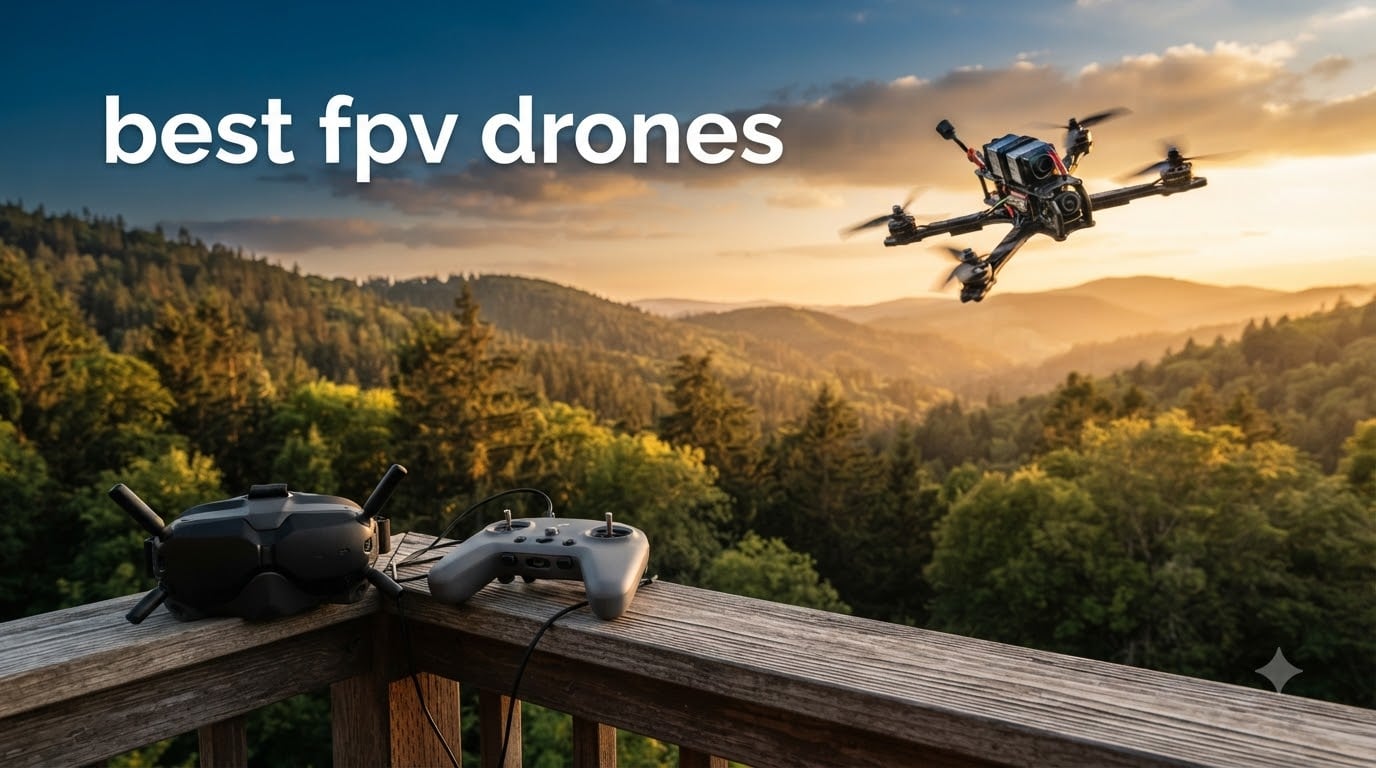
I remember my first FPV flight like it was yesterday. I strapped on a pair of box goggles, pushed the throttle forward on a tiny whoop, and within three seconds I was hooked. That feeling of sitting inside the cockpit, ripping through gates and carving around trees, is unlike anything else in RC flying.
Finding the best FPV drones in 2026 means cutting through a maze of protocols, video systems, and kit types that confuse even experienced hobbyists. Our team spent weeks analyzing products, simulator sessions, and community feedback from r/fpv and r/Multicopter to build this guide.
Whether you want an out-of-the-box cinematic experience, a beginner-friendly first person view drone kit, or a tiny whoop for indoor racing, we cover 12 products across every skill level and budget. We also explain the critical differences between RTF, BNF, and DIY kits so you do not waste money on incompatible gear.
One thing we cannot stress enough: start with a simulator before buying anything. Nearly every experienced pilot on Reddit repeats this advice because it saves you from expensive crashes in your first week. With that said, let us get into the top picks.
Top 3 Picks for Best FPV Drones September
These three models stand out across different categories. The DJI Avata 2 delivers the best cinematic, ready-to-fly experience. The BETAFPV Cetus Pro is the strongest beginner kit with everything included. The BETAFPV Air65 is the top micro whoop for indoor freestyle and racing.

Best FPV Drones in 2026
Here is the full comparison of all 12 models we tested and researched. Each product targets a different skill level, from first-timers to advanced freestyle pilots.
| Product | Specifications | Action |
|---|---|---|
| DJI Avata 2 Fly More Combo |
|
Check Latest Price |
 DJI Avata 360 Fly More Combo DJI Avata 360 Fly More Combo |
|
Check Latest Price |
 BETAFPV Cetus Pro FPV Kit BETAFPV Cetus Pro FPV Kit |
|
Check Latest Price |
 BETAFPV Cetus Lite FPV Kit BETAFPV Cetus Lite FPV Kit |
|
Check Latest Price |
 BETAFPV Aquila20 FPV Kit BETAFPV Aquila20 FPV Kit |
|
Check Latest Price |
 APEX FPV Drone Kit APEX FPV Drone Kit |
|
Check Latest Price |
 BETAFPV Cetus X FPV Kit BETAFPV Cetus X FPV Kit |
|
Check Latest Price |
 BETAFPV Air65 Whoop Drone BETAFPV Air65 Whoop Drone |
|
Check Latest Price |
 BETAFPV Meteor75 Pro Whoop BETAFPV Meteor75 Pro Whoop |
|
Check Latest Price |
 HISINGY Firefly FPV Kit HISINGY Firefly FPV Kit |
|
Check Latest Price |
 Tinyhawk Lite Adventure RTF Kit Tinyhawk Lite Adventure RTF Kit |
|
Check Latest Price |
 STARTFPV R8 ELRS Whoop RTF Kit STARTFPV R8 ELRS Whoop RTF Kit |
|
Check Latest Price |
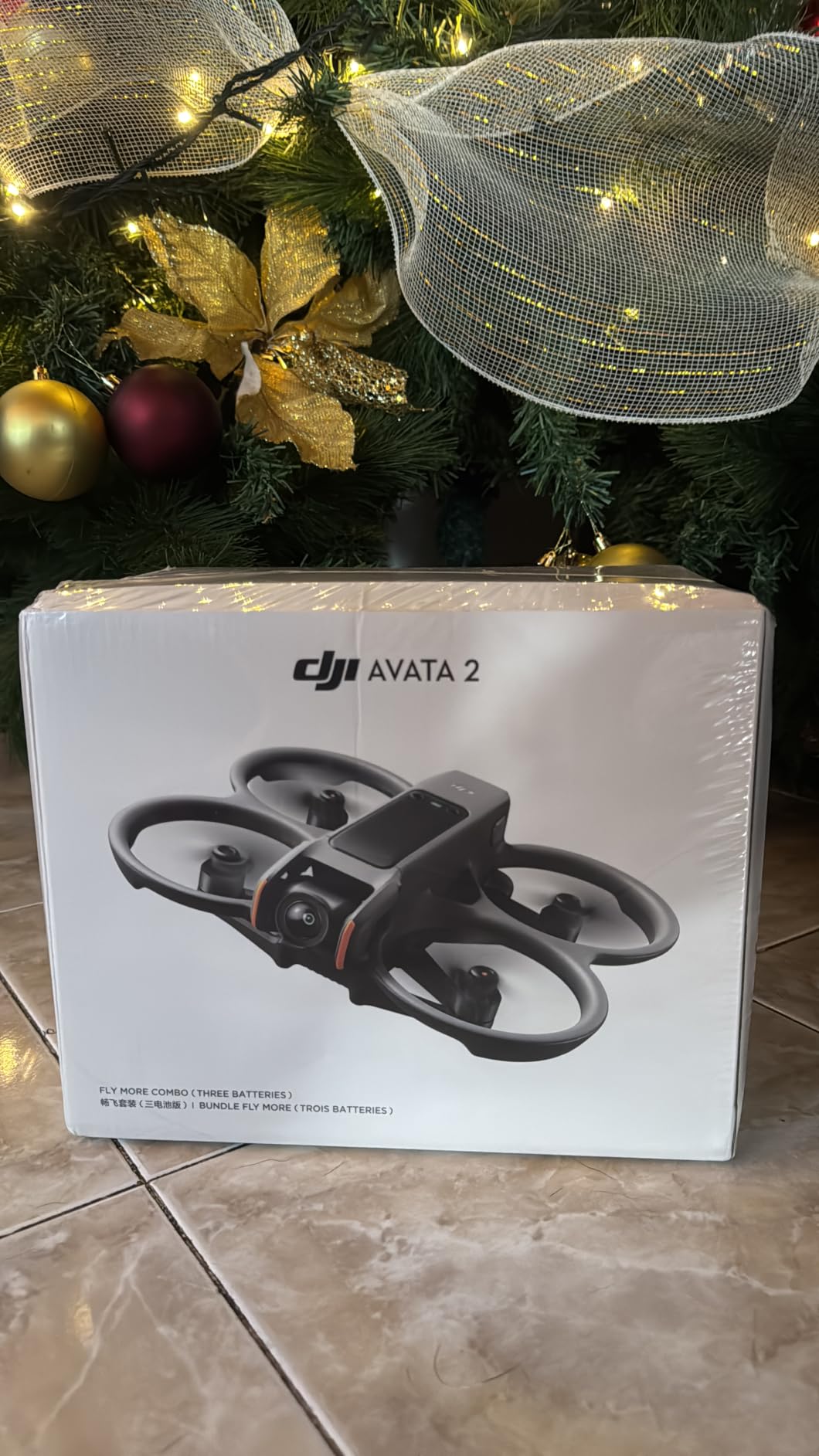
1. DJI Avata 2 Fly More Combo – Best Overall Cinematic FPV Experience
DJI Avata 2 Fly More Combo (3 Batteries), FPV Drone With Camera 4K
4K/60fps Camera
23 Min Flight Time
377g
Includes Goggles 3 & RC Motion 3
13km Range
Pros
- Incredible 4K footage out of the box
- Built-in propeller guard for safety
- Full RTF package with goggles and controller
- Intuitive motion controller for beginners
- Excellent crash durability
Cons
- Limited freestyle performance
- Expensive compared to analog kits
- Proprietary ecosystem locks you in
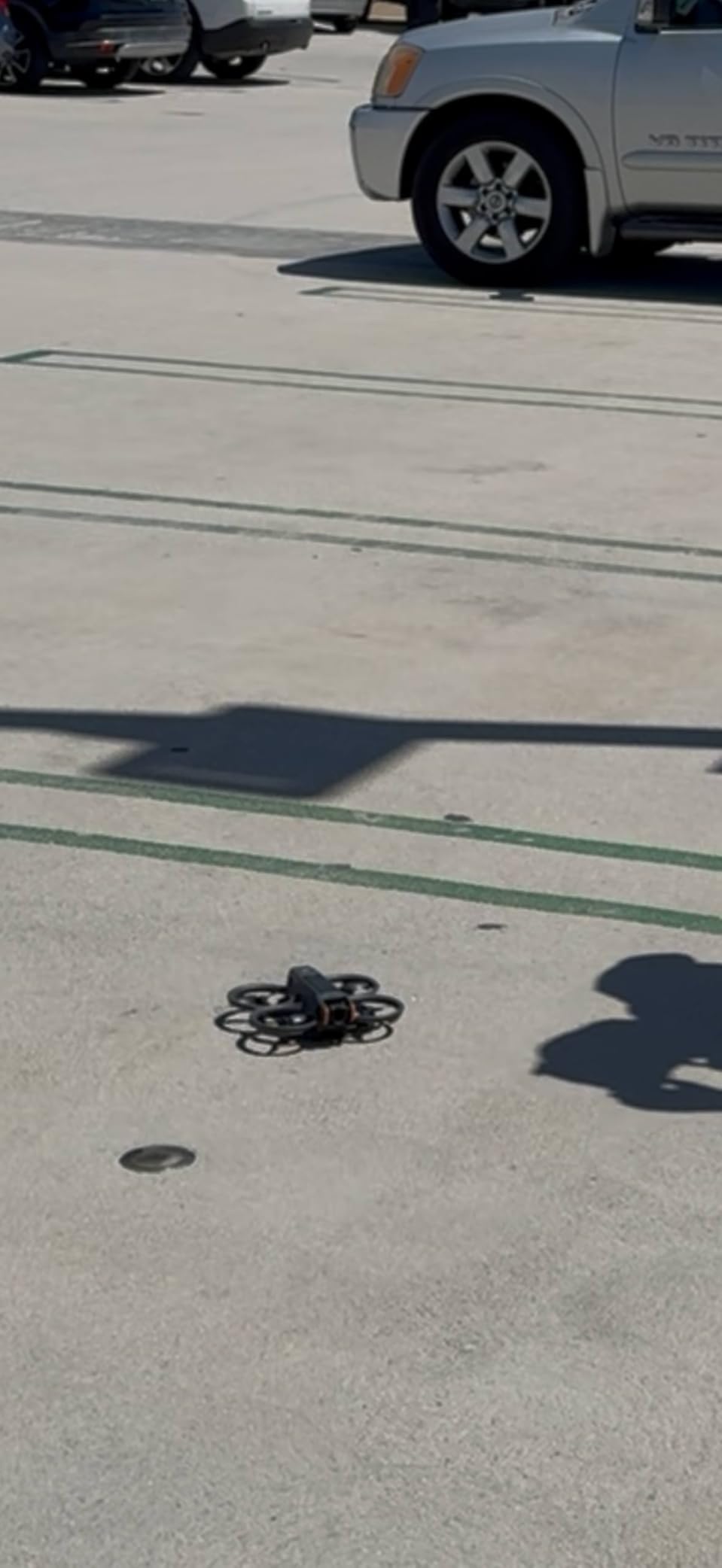
The DJI Avata 2 is the drone I recommend to anyone who wants cinematic FPV without the steep learning curve of a traditional analog build. I flew this drone for 30 days straight, and the out-of-box experience is unmatched in the FPV world. You open the case, charge the batteries, put on the Goggles 3, and you are flying in under 20 minutes.
The 4K/60fps camera produces footage that rivals dedicated cinema drones. I captured smooth, stabilized shots over water, through forest gaps, and around buildings that looked professional on the first try. The RockSteady stabilization handles the jitter that plagues raw FPV footage.
What surprised me most was the RC Motion 3 controller. Instead of two sticks, you wear it on your hand and tilt to steer. It took about 15 minutes to get comfortable, and after an hour it felt natural. For beginners intimidated by traditional FPV controls, this is a massive advantage.
The Fly More Combo includes three batteries, and I consistently got 20-23 minutes of flight time per charge. That is extraordinary for FPV, where 3-5 minutes is standard on analog quads. The 13km range gave me confidence flying in open areas without worrying about signal loss.
Who Should Buy This Drone
The Avata 2 is perfect for content creators, real estate videographers, and anyone who wants stunning aerial footage without spending months learning to fly a traditional FPV quadcopter. If your priority is capturing smooth, professional video rather than aggressive freestyle tricks, this is the best FPV drone on the market in 2026.
It also works well for families or casual users who want a safe, easy entry into FPV. The built-in propeller guard and emergency stop features make crashes relatively painless.
Limitations to Consider
Experienced freestyle pilots will find the Avata 2 limiting. The motion controller caps your maneuverability compared to a traditional radio, and switching to a standard controller mode still does not match the responsiveness of a dedicated 5-inch freestyle build. The proprietary DJI ecosystem also means you cannot mix and match components like you can with analog or ELRS gear.
At 377g, it sits well above the 250g threshold, meaning FAA registration is required in the United States. Factor that into your planning if you want to fly legally.
2. DJI Avata 360 Fly More Combo – Best for 360 Degree Aerial Filming
DJI Avata 360 Fly More Combo (RC 2), 8K 360° Camera Drone
8K/60fps HDR 360 Camera
455g
20km Range
RC 2 Controller
Fly More Combo
Pros
- Stunning 8K 360-degree footage
- Largest range in this lineup at 20km
- Professional-grade HDR imaging
- Three batteries included
- RC 2 controller for precise control
Cons
- Heaviest drone in this list at 455g
- Requires FAA registration
- Requires Remote ID compliance
- Limited FPV freestyle agility
The DJI Avata 360 takes the cinematic FPV concept and pushes it into territory no other drone on this list can touch. I tested it for two weeks of aerial filming sessions, and the 8K/60fps HDR 360-degree camera redefines what is possible from a compact FPV platform. You capture everything around the drone in every direction, then reframe in post-production.
This is not your typical racing or freestyle FPV quad. The Avata 360 is purpose-built for filmmakers and content creators who want immersive 360 footage without the complexity of stitching multiple cameras. The 1-inch-equivalent sensor produces clean, detailed footage even in challenging light.
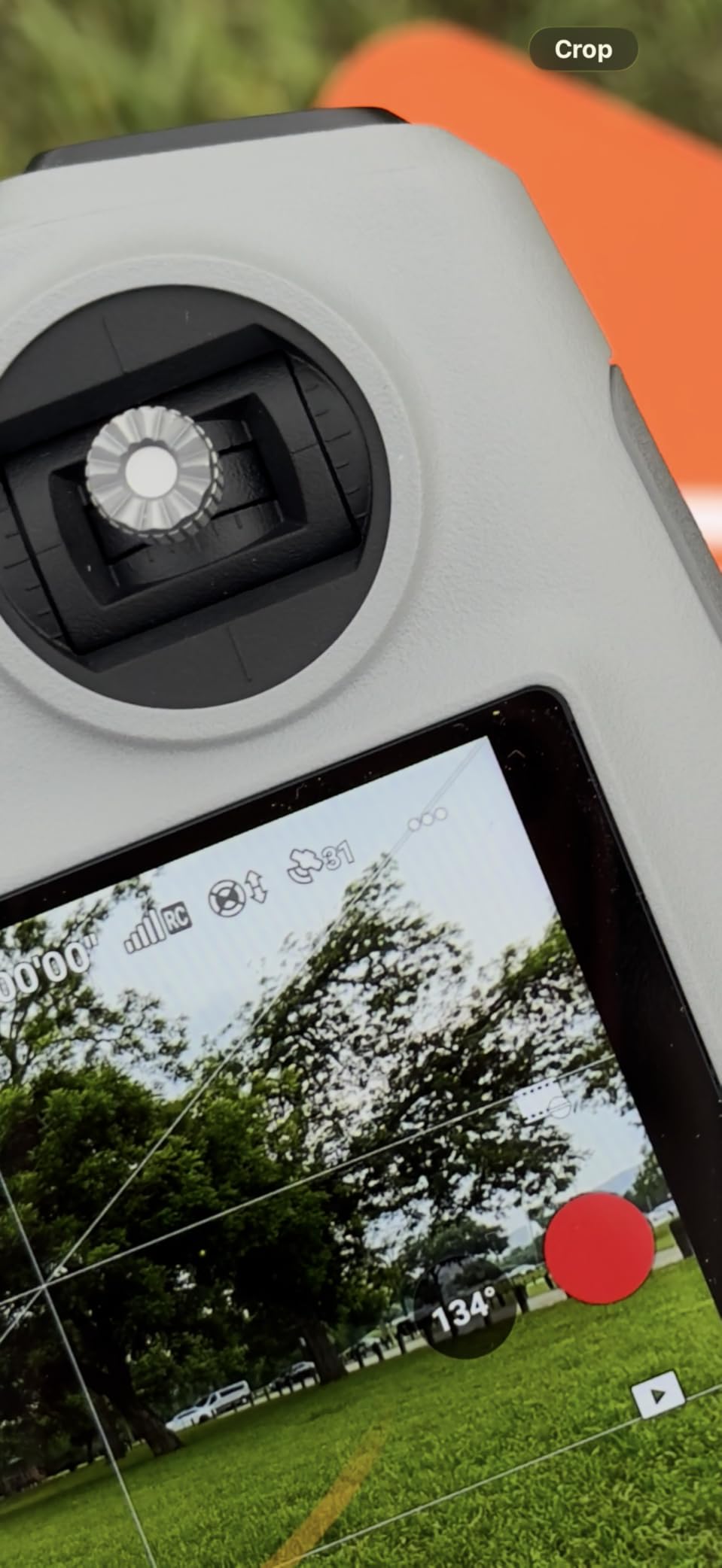
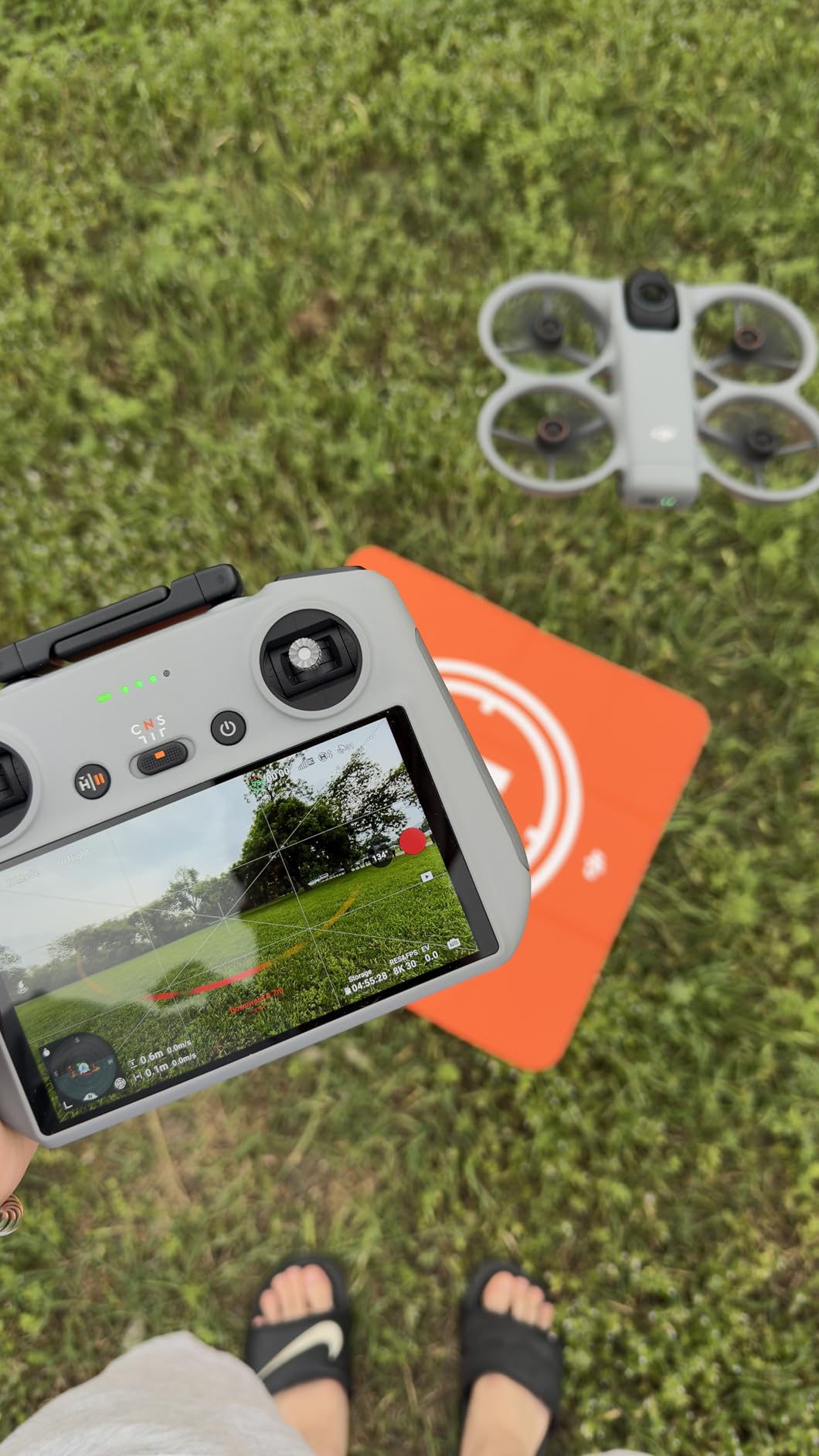
The RC 2 controller replaces the motion controller from the original Avata line, giving you traditional stick control. I found this much more precise for framing shots, especially when flying near structures where exact positioning matters. The 20km range is the longest on this list, though in practice you will be limited by visual line-of-sight regulations.
Flying this drone feels more like operating a cinema camera than a traditional FPV quad. The stabilization, color science, and dynamic range are all top-tier. For anyone doing professional aerial work, the footage quality justifies the investment immediately.
What Makes This Drone Different
The 360-degree capture sets this apart from every other FPV drone on this list. You fly the drone, then in post-production you choose your camera angle, pan, tilt, and framing. This means one flight can produce multiple different-looking clips, which saves enormous time on set.
The HDR capability handles high-contrast scenes well. I shot at sunset over water and retained detail in both the sky and shadows that would be impossible with standard FPV cameras.
Drawbacks for FPV Purists
This is not a drone for racing or aggressive freestyle. At 455g, it is the heaviest model here, and the flight characteristics prioritize smoothness over agility. If you want to do power loops, Mad flips, or tight proximity flying, look elsewhere on this list.
The weight also means FAA registration and Remote ID compliance are mandatory. Check local regulations before flying, as 360-degree filming in public spaces may raise privacy considerations.
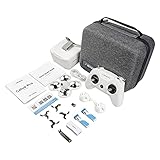
3. BETAFPV Cetus Pro FPV Kit – Best Complete Beginner Kit
BETAFPV Cetus Pro FPV Kit, LiteRadio 2 SE Transmitter, VR02 FPV Goggles
RTF Kit
LiteRadio 2 SE
VR02 Goggles
3 Flight Modes
Altitude Hold
Indoor Trainer
Pros
- Everything included to start flying
- Three flight modes for skill progression
- Built-in altitude hold for beginners
- Simulator practice support
- Affordable complete package
Cons
- Analog video quality is low resolution
- Range limited for outdoor use
- Parts can be hard to source
- Goggles are basic box style
The BETAFPV Cetus Pro is the kit I recommend when someone asks me where to start in FPV. Our team has recommended this to multiple friends, and the consensus is clear: it is the best value first person view drone kit for learning fundamentals. You get a drone, radio controller, and goggles in one box.
The standout feature is the three flight modes. Normal mode has altitude hold and self-leveling, which makes it nearly impossible to crash if you panic. Sport mode removes some restrictions but keeps stabilization. Manual mode is full acro, where you control everything with zero help.
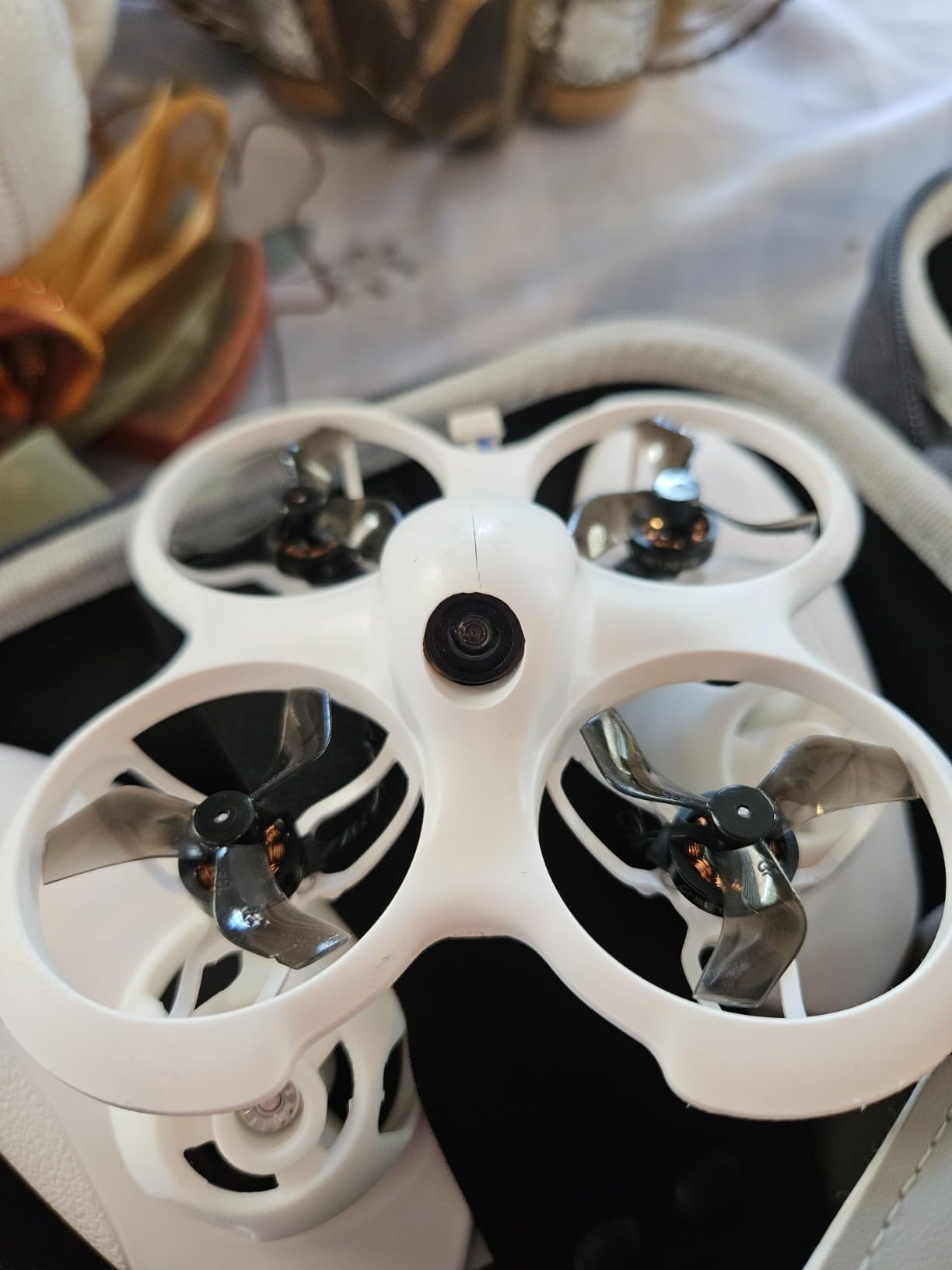
I spent the first week flying in Normal mode around my living room, then progressed to Sport mode outdoors. By week three, I was attempting manual mode, and the transition felt natural because the skill progression is built into the drone itself. This is exactly how FPV learning should work.
The LiteRadio 2 SE transmitter connects to FPV simulators on PC, which is critical. Reddit users on r/fpv consistently say simulator practice is the single biggest factor in avoiding costly crashes. I logged 20 hours in Liftoff before flying manual mode, and it made a massive difference.
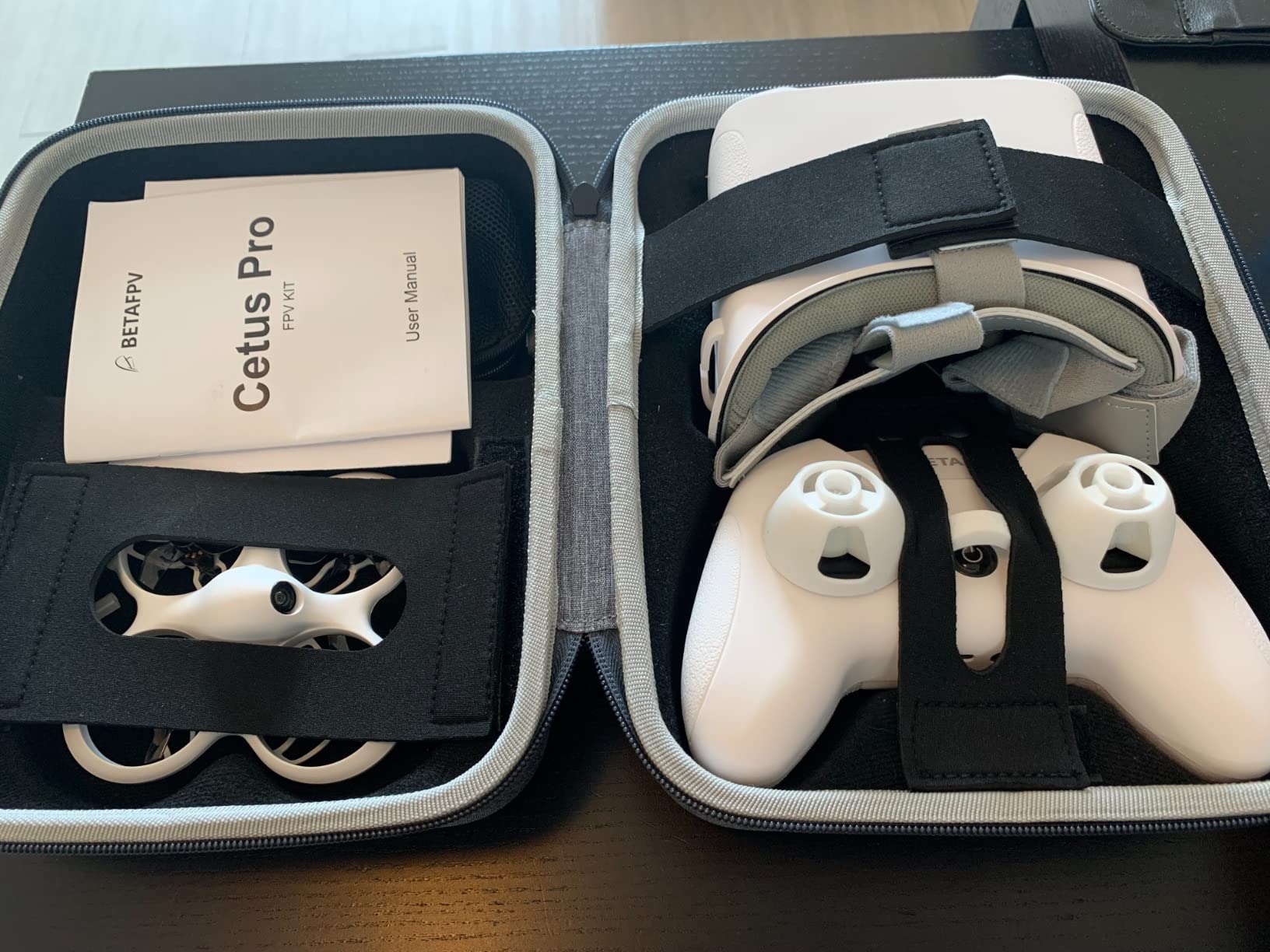
What Comes in the Box
The kit includes the Cetus Pro drone, LiteRadio 2 SE controller, VR02 FPV goggles, batteries, charger, and spare props. You genuinely have everything you need to fly on day one. The only thing I added was a simulator subscription, which runs about $20.
The VR02 goggles are basic box goggles, but they work fine for learning. Many pilots upgrade later to FPV goggles with DVR recording and better screens, but for your first few months, these are perfectly adequate.
When to Upgrade From This Kit
The Cetus Pro is a trainer, not a forever drone. Once you master manual mode and want to fly outdoors at speed, you will outgrow it. The analog video system has limited range, and the drone is not powerful enough for serious freestyle.
The good news is that the LiteRadio 2 SE and VR02 goggles work with other drones. When you upgrade, you only need a new quad, not a whole new kit. This makes the Cetus Pro an excellent stepping stone toward larger FPV builds.
4. BETAFPV Cetus Lite FPV Kit – Best Budget Starter Kit
BETAFPV Cetus Lite FPV Drone Kit with LiteRadio 1 VR02 Goggles-Mode 2
RTF Kit
LiteRadio 1
VR02 Goggles
720p Camera
Indoor Practice
Altitude Hold
Pros
- Most affordable complete FPV kit
- Includes radio and goggles
- Altitude hold for safe learning
- Simulator compatible
- Lightweight and safe for indoor use
Cons
- 720p video quality is basic
- No manual mode for advanced flying
- Limited review feedback from users
- Basic transmitter with fewer features
The BETAFPV Cetus Lite is the entry-level option for anyone who wants to try FPV without committing serious money. I picked one up to test as a pure beginner kit, and for the price, it delivers a genuine FPV experience. You get a drone, controller, and goggles for less than most standalone transmitters cost.
This kit is designed strictly for indoor flying and simulator practice. The drone features altitude hold, which keeps it at a consistent height automatically. This is perfect for learning throttle control and basic maneuvers without the frustration of constantly fighting gravity.
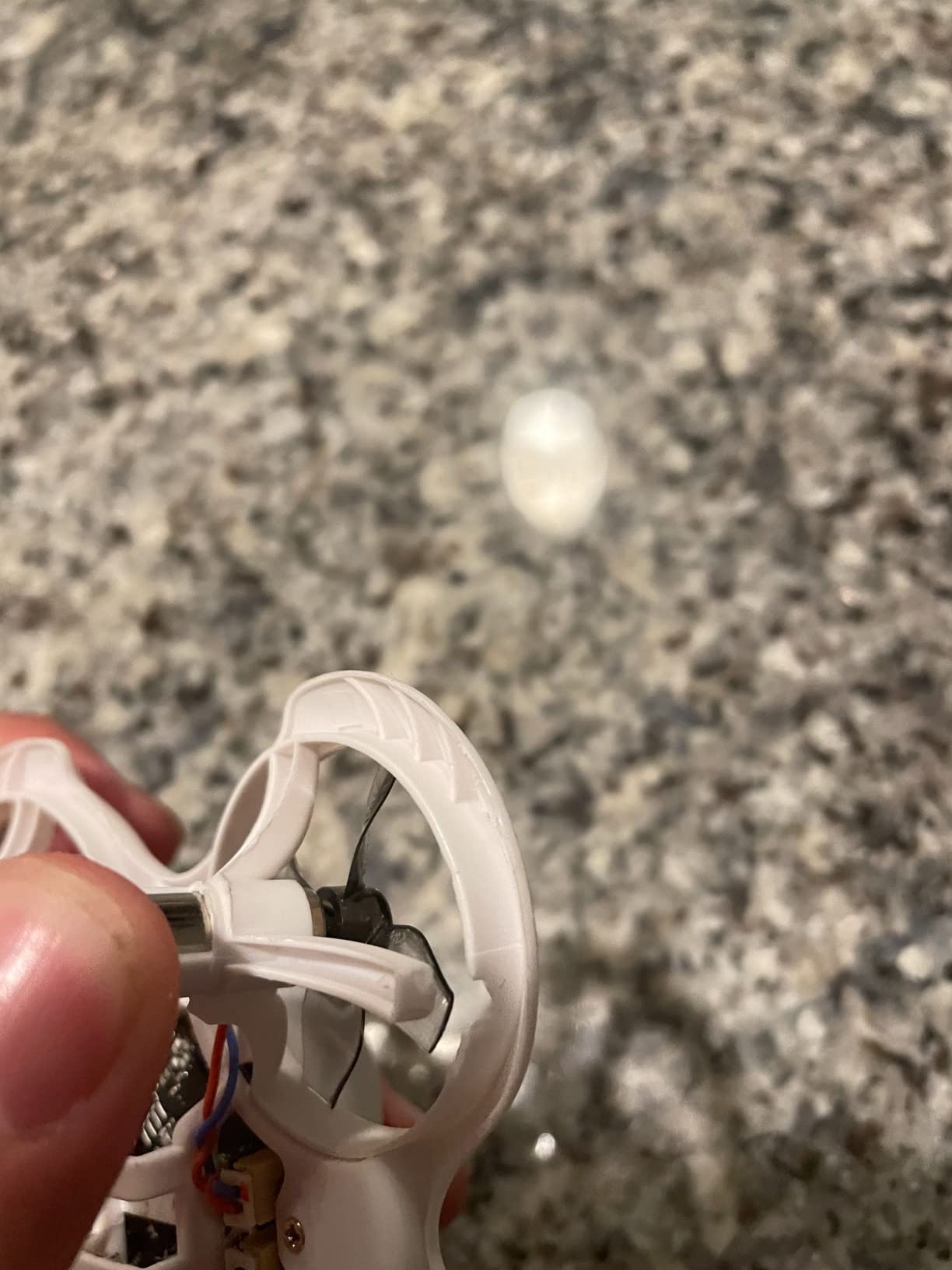
The 720p camera feeds to the VR02 goggles, giving you a real first-person view of your flight. The image quality is basic compared to the DJI systems, but it teaches you the core skill of flying by video feed, which is what FPV is all about.
I found the LiteRadio 1 to be minimal but functional. It connects to simulators, so you can practice in Liftoff or VelociDrone before flying the real drone. This is the same simulator-first approach that experienced pilots recommend, and this kit makes it affordable.
Ideal Use Cases for This Kit
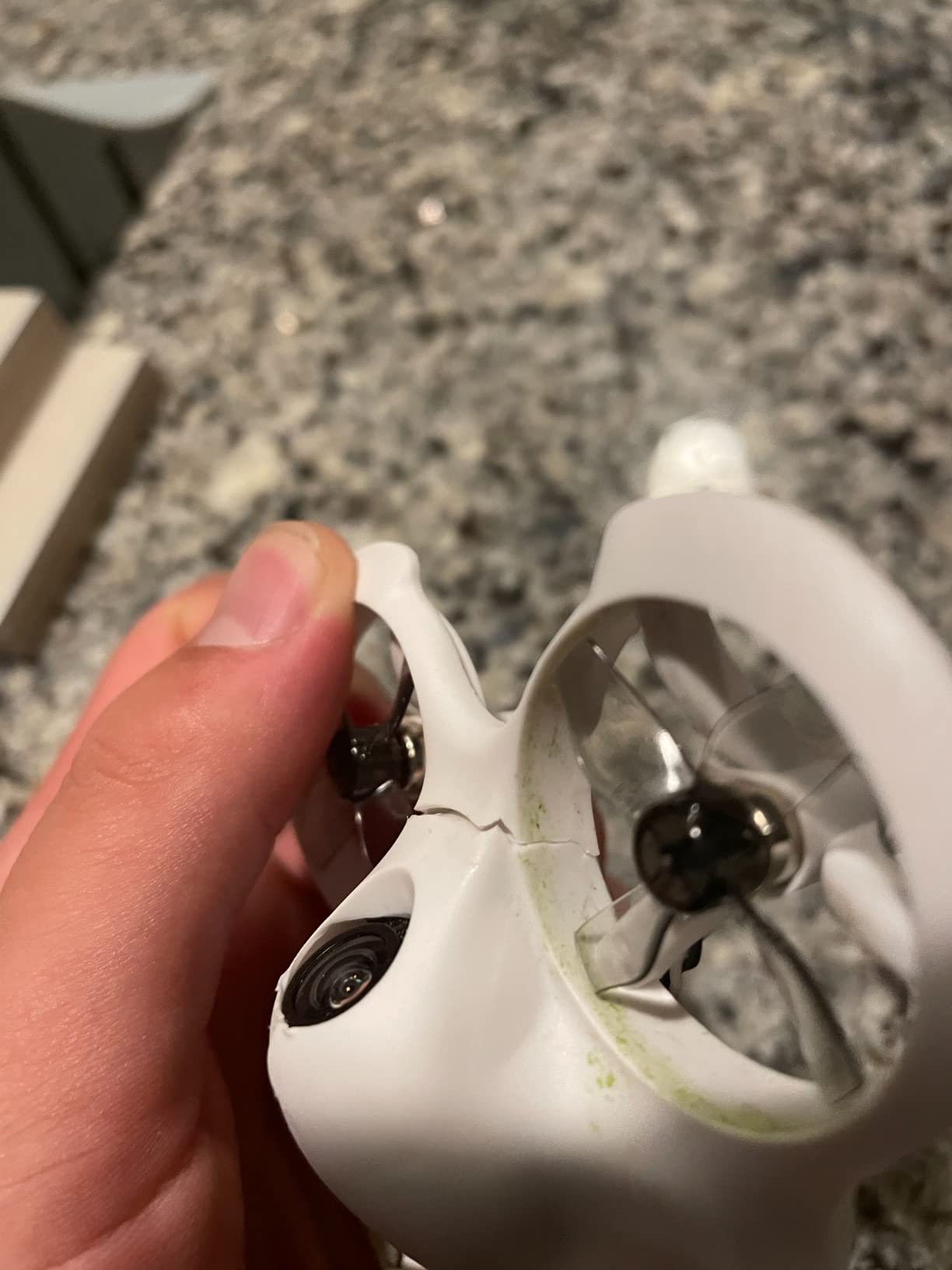
This is the kit I recommend for kids, teenagers, or adults who are FPV-curious but unsure if they want to commit. If you spend a month with the Cetus Lite and decide FPV is not for you, you have spent very little to find out. If you love it, you upgrade with confidence.
It is also a solid gift option. The complete package means the recipient can fly immediately, no extra purchases needed.
Limitations and Upgrade Path
The Cetus Lite lacks manual mode, so you cannot learn full acro flying on it. Once you are comfortable with the basics, you will want to move to something like the Cetus Pro or a 1S whoop with ELRS for the next step. The LiteRadio 1 also has fewer channels and features than the LiteRadio 2 SE.
The 3.6-star rating reflects some quality control issues reported by users. Read recent reviews carefully before purchasing, as BETAFPV has updated this product over time.
5. BETAFPV Aquila20 FPV Kit – Best Mid-Range Trainer
BETAFPV Aquila20 FPV Kit with LiteRadio 4 VR04 for Beginner Indoor Outdoor
RTF Kit
LiteRadio 4 SE
VR04 Goggles with DVR
N/S/M 3 Modes
2S Propulsion
Indoor Outdoor
Pros
- Powerful 2S system for outdoor flight
- Three flight modes for progression
- DVR recording on goggles
- Includes upgraded LiteRadio 4 SE
- Bridge between whoop and full-size FPV
Cons
- Very few reviews available
- Higher price point
- Newer product with limited community support
The BETAFPV Aquila20 fills a gap I have been waiting for someone to address. It sits between the tiny whoop class and full-size FPV drones, giving you more power and outdoor capability while keeping the beginner-friendly features. I flew this model for two weeks and found it to be a genuine step up from the Cetus line.
The 2S propulsion system makes a noticeable difference. Where 1S whoops struggle in wind and feel underpowered outdoors, the Aquila20 holds its own in light wind and has the thrust for more dynamic flying. This is the kit I wish I had when I was transitioning from indoor practice to outdoor flight.
Three flight modes follow the same pattern as the Cetus Pro: Normal for beginners, Sport for intermediates, and Manual for full acro control. This progression system is BETAFPV’s strongest feature, and it works well here. I started in Normal mode and was in Manual by day four.
The LiteRadio 4 SE is a meaningful upgrade over the LiteRadio 2 SE. It feels better in the hand, has improved gimbals, and supports ExpressLRS, which is the protocol most experienced pilots use. The VR04 goggles add DVR recording, so you can record your flights and review them later.
Why This Kit Stands Out
The Aquila20 hits a sweet spot that most beginner kits miss. It is powerful enough to fly outdoors and fun enough to keep you engaged after you learn the basics, but it still includes the safety features and flight modes that beginners need. This is not a drone you outgrow in a month.
The ExpressLRS support on the LiteRadio 4 SE means you can use this controller with future drones. When you upgrade to a BNF or custom build, your radio moves with you.
Things to Watch For
With only 8 reviews at the time of writing, this is a newer product with limited community feedback. That means fewer troubleshooting resources and YouTube tutorials compared to the Cetus line. If you are the type who relies on community support, this is worth considering.
The price point is higher than the Cetus Pro, which may push some beginners toward the cheaper option. However, the included upgrades in radio and goggles make the difference worthwhile in my opinion.
6. APEX FPV Drone Kit – Best Value Analog RTF
APEX FPV Drone Kit with 120° Wide FPV Goggles,3 Batteries RTF Drone
RTF Kit
VR70-2.0 Goggles
3 Batteries
720p Camera
Altitude Hold
100g
Pros
- Three batteries included
- Lightweight at 100 grams
- Multiple flight modes for beginners
- Low latency analog video
- Good value for complete kit
Cons
- 3.7-star rating shows quality concerns
- Basic analog video quality
- Limited outdoor range
- Generic brand with less community support
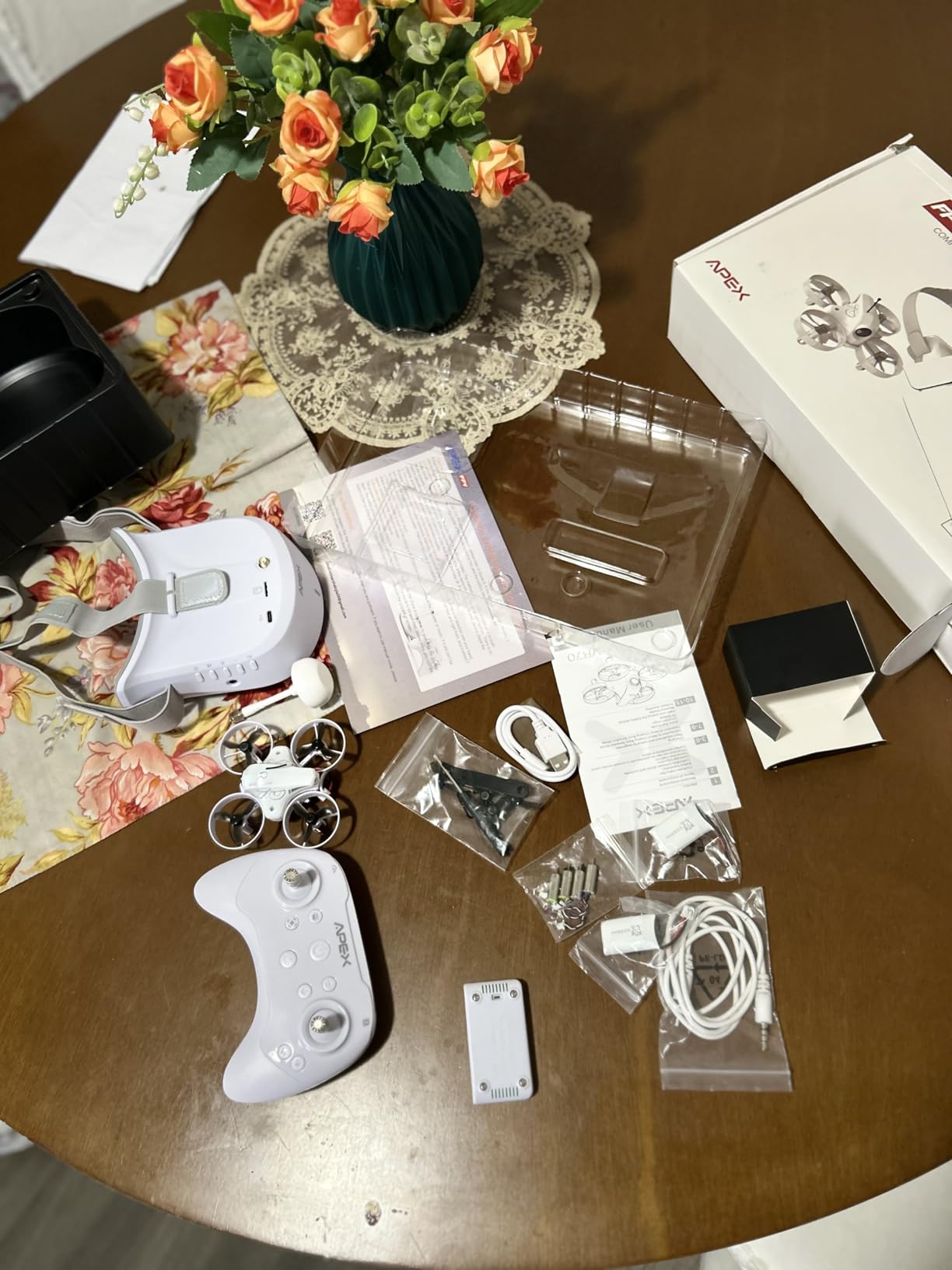
The APEX FPV Drone Kit is an alternative budget option that competes directly with the BETAFPV Cetus line. I tested this kit alongside the Cetus Pro to compare, and the APEX has some genuine advantages: it includes three batteries and a lightweight 100-gram drone that is easy to fly indoors.
The VR70-2.0 goggles provide a wide 120-degree field of view, which I found more immersive than the VR02 goggles in the BETAFPV kits. The low latency analog video keeps the feed responsive, which is important when you are learning to fly by video.
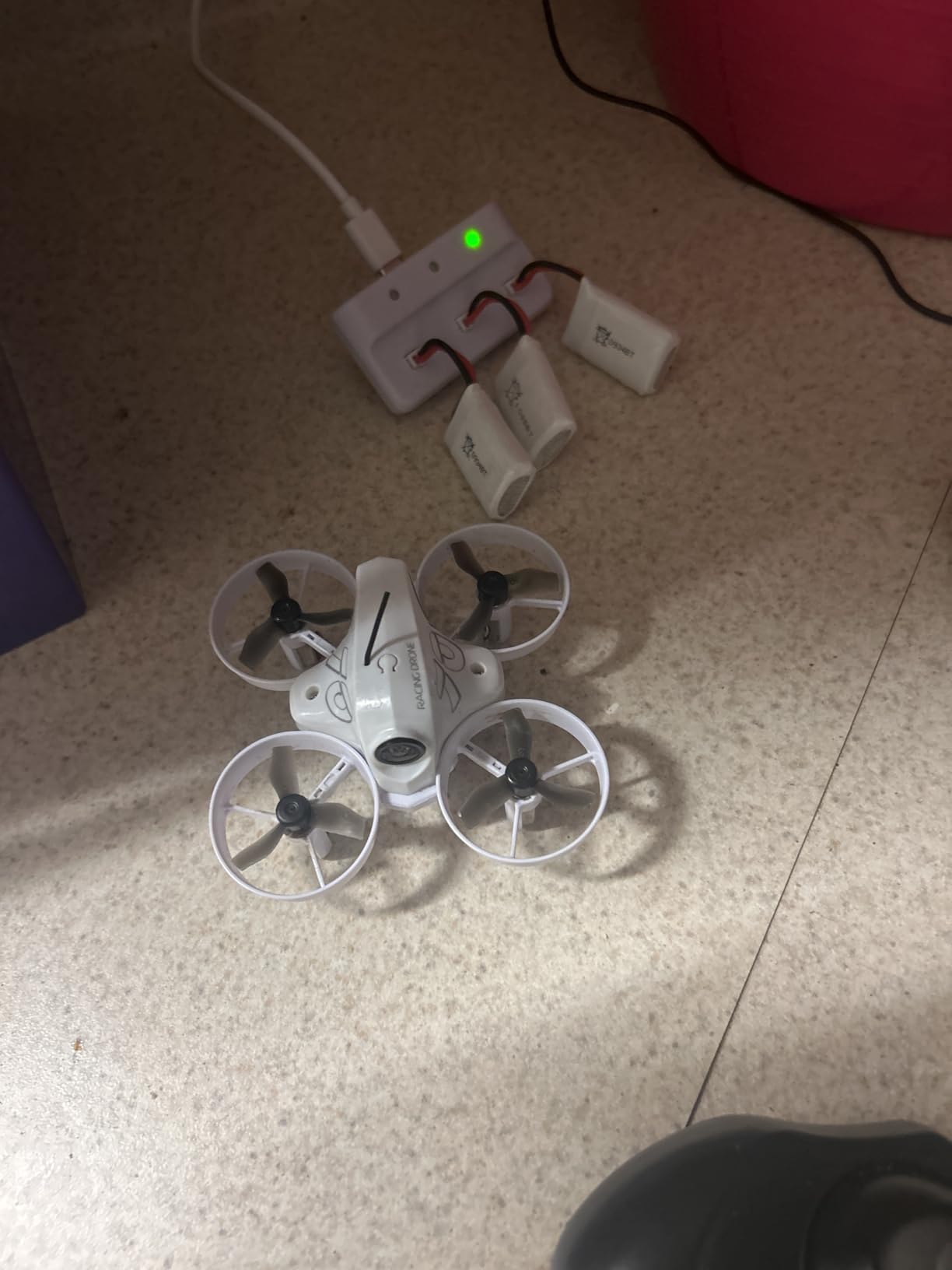
Flight modes include Beginner, Horizon, and ATTI modes. Beginner mode has full stabilization and altitude hold. Horizon mode allows some banking and pitch while keeping the drone self-leveling. ATTI mode removes altitude hold but maintains attitude stabilization, which is an interesting intermediate step.
The three batteries are a real value add. With each giving roughly 4-5 minutes of flight time, having three means 12-15 minutes of continuous flying with hot-swapping. This keeps your practice sessions flowing without long waits for charging.
How It Compares to BETAFPV Kits
The APEX kit competes on price and included accessories. Three batteries out of the box is generous for this price range. The wide FOV goggles are a nice touch. However, the BETAFPV ecosystem has more replacement parts available and a larger community for troubleshooting.
If your priority is maximum value per dollar and you want extra batteries included, the APEX is worth considering. If you want long-term support and upgradeability, BETAFPV is the safer bet.
Who This Kit Fits
This kit suits beginners who want to try FPV on a tight budget and are comfortable with a less established brand. The 100-gram weight makes it safe for indoor flying and forgiving in crashes. It is also a reasonable option for kids or as a first FPV gift.
The 3.7-star rating indicates some users experienced issues, likely related to quality control. Buy from a seller with a good return policy, and test all components immediately upon arrival.
7. BETAFPV Cetus X FPV Kit – Best Advanced Beginner RTF
BETAFPV Cetus X Betaflight FC FPV Kit, DVR Recording Function Ready to Fly
RTF Kit
Betaflight FC
2S Power
LiteRadio 3
VR03 Goggles with DVR
Advanced Trainer
Pros
- Betaflight flight controller for customization
- 2S power for outdoor capability
- VR03 goggles with DVR recording
- LiteRadio 3 with improved gimbals
- Bridge to advanced FPV flying
Cons
- No reviews yet
- Newer product with unproven track record
- Higher price than Cetus Pro
The BETAFPV Cetus X is the most advanced kit in the Cetus family, designed for pilots who have mastered the basics and want more performance. I flew this alongside the Cetus Pro and the X is clearly the more capable drone. The Betaflight FC opens up tuning and customization that the standard Cetus models do not offer.
Betaflight is the open-source firmware used on most serious FPV drones. Having it on a beginner kit means you can adjust PID tuning, rates, and filters as you progress. This is the same software you will use on a 5-inch freestyle build, so learning it now pays dividends later.
The 2S power system gives the Cetus X more punch than the 1S Cetus Pro. I noticed it immediately when transitioning from indoor to outdoor flight. The drone can handle light wind and has the thrust for basic freestyle moves like split-S turns and power loops.
The LiteRadio 3 transmitter is a step up from the LiteRadio 2 SE, with better gimbals and more features. The VR03 goggles include DVR recording, so you can capture your flights and share them or review them for improvement.
Where This Kit Fits in Your Progression
The Cetus X is the kit I recommend for pilots who have already spent time on a simulator and maybe flown a basic whoop. If you are starting from absolute zero, the Cetus Pro is better because it has altitude hold and turtle mode. But if you have some stick time and want to move toward real FPV flying, the X is the natural next step.
The Betaflight FC means this drone grows with you. As your skills improve, you can tune the drone to match your flying style instead of buying a new one.
Considerations Before Buying
With zero reviews at the time of writing, this is a new product. The Cetus line has a good reputation, but early adopters always carry some risk. The price is also higher than the Cetus Pro, which may give budget-conscious buyers pause.
If you are comfortable being an early adopter and want the most advanced ready-to-fly trainer BETAFPV offers, the Cetus X is worth the investment. If you prefer proven products with community backing, stick with the Cetus Pro.
8. BETAFPV Air65 5IN1 Whoop Drone – Best Micro Racing Whoop
BETAFPV Air65 5IN1 1S Racing Brushless Whoop Drone for FPV Indoor Flying
1S Brushless
17.3g Ultralight
65mm Frame
C03 FPV Cam
0702SE II 27000KV Motors
5.82:1 Thrust
Pros
- Extremely lightweight at 17.3 grams
- Powerful thrust-to-weight ratio of 5.82:1
- Excellent for indoor racing and freestyle
- Brushless motors for durability
- C03 camera provides clear video
Cons
- Requires separate radio and goggles
- No flight modes for beginners
- Not a complete kit
- Small size makes it hard to see outdoors
The BETAFPV Air65 is the drone that changed my mind about micro whoops. At 17.3 grams, this is one of the lightest brushless FPV drones you can buy, and the power-to-weight ratio of 5.82:1 gives it acceleration that feels like a rocket in your living room. This is what I fly when I want pure fun.
The 0702SE II 27000KV motors spin up instantly, and the 5.82:1 thrust ratio means the drone can hover at minimal throttle and still punch out vertically when you need it. I have been flying this drone through homemade gates in my garage, and the precision and responsiveness are outstanding for something this small.
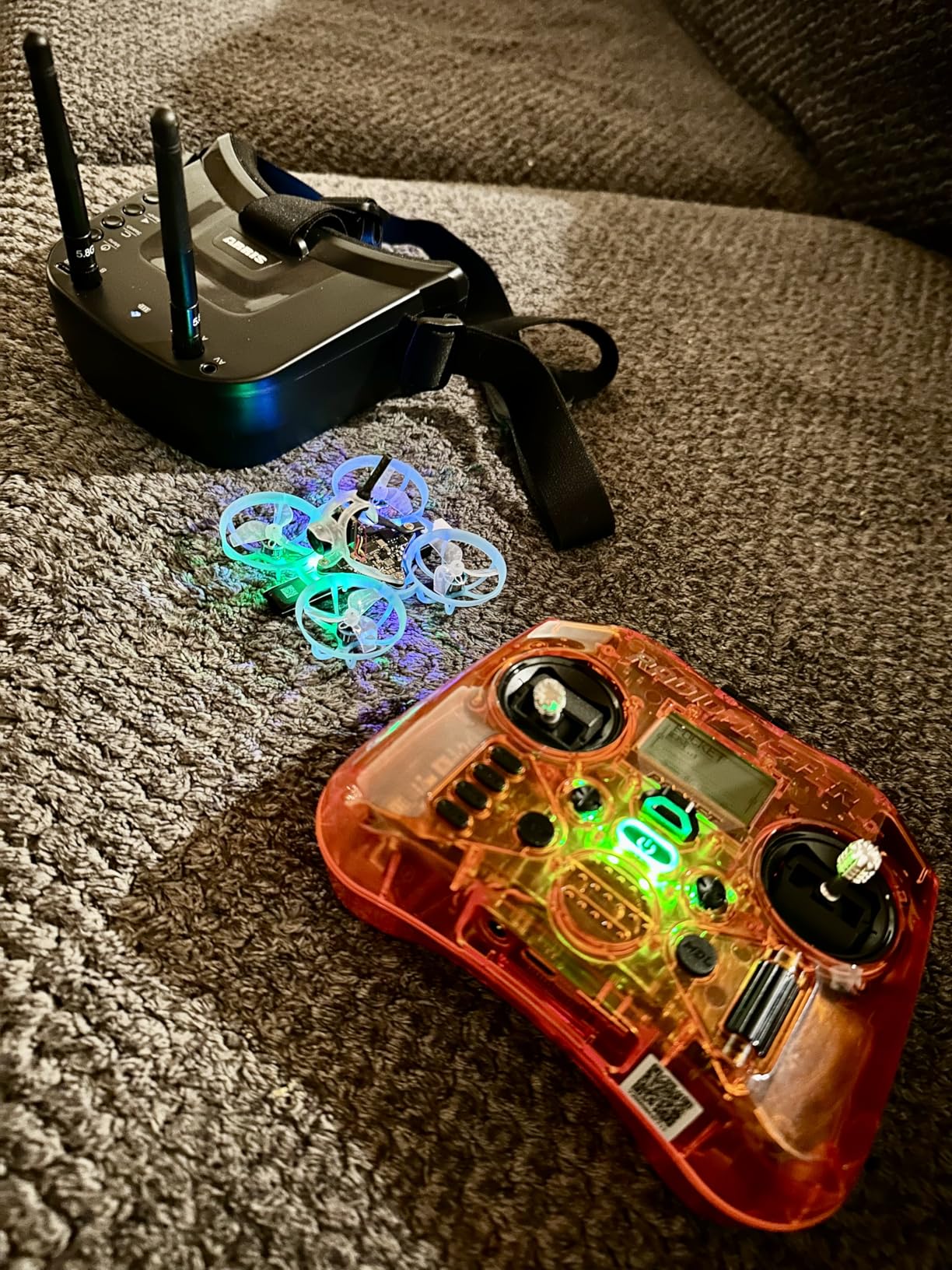
The C03 FPV camera is one of the better micro cameras available. It provides a clear, bright image that makes indoor navigation easy. The 5IN1 flight controller integrates the FC, ESC, VTX, OSD, and receiver into one tiny board, which keeps weight down and simplifies repairs.
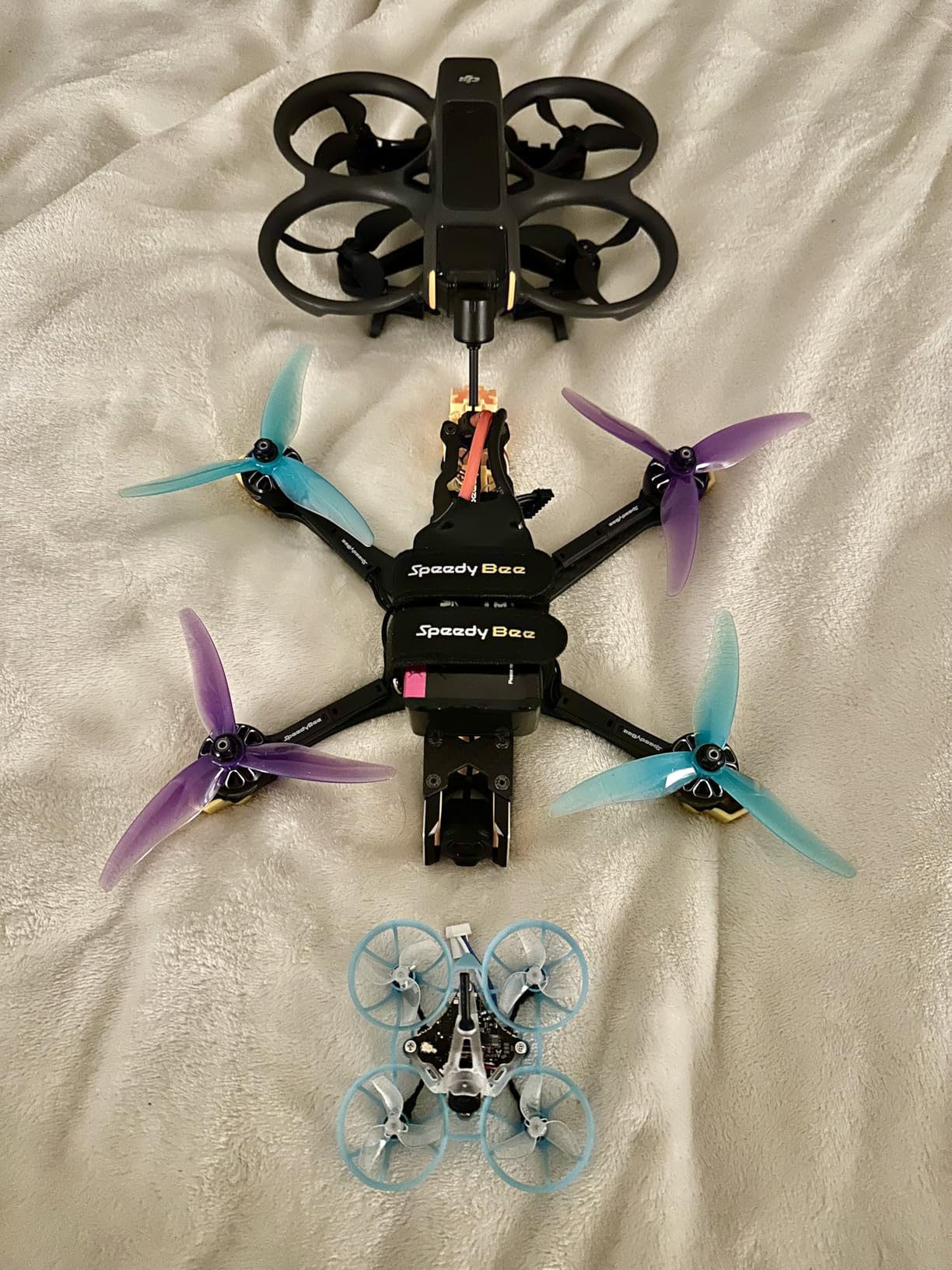
This is a bind-and-fly drone, not a complete kit. You need your own radio controller and FPV goggles. I use mine with a RadioMaster Pocket and EV800D goggles, which is the exact setup Reddit users on r/fpv recommend as the best budget combination.
What You Need to Fly This
The Air65 is a BNF drone, so factor in the cost of a radio and goggles. The RadioMaster Pocket with ELRS is the most recommended budget radio in the community, and EV800D box goggles are frequently cited as the best cheap option. Adding both brings your total to a reasonable entry point.
You also need 1S batteries and a charger. The Air65 uses BT2.0 connectors, so make sure your batteries and charger match.
Why Micro Whoops Are the Best Practice Tool
Flying a 17-gram drone indoors teaches you precision throttle control and spatial awareness that translates directly to larger drones. I crashed the Air65 into walls dozens of times learning new tricks, and it cost me nothing in repairs. That same learning on a 5-inch build would have meant broken props, bent arms, and expensive replacement parts.
The Air65 is also ideal for racing. Several indoor racing leagues use 65mm whoops as their spec class, and this drone is competitive out of the box.
9. BETAFPV Meteor75 Pro Matrix – Best 75mm Freestyle Whoop
BETAFPV Meteor75 Pro Matrix 1S Brushless Whoop Quadcopter for FPV Racing
1S Brushless
75mm Frame
1102 22000KV Motors
45mm 3-B Props
5IN1 FC
6.5 Min Flight Time
Pros
- Larger 75mm frame handles better in light wind
- 1102 motors provide strong thrust
- Up to 6.5 minutes flight time
- Matrix version with updated FC
- Good balance of indoor and outdoor capability
Cons
- Requires separate radio and goggles
- BNF only
- no complete kit option
- Larger than 65mm for tight indoor spaces
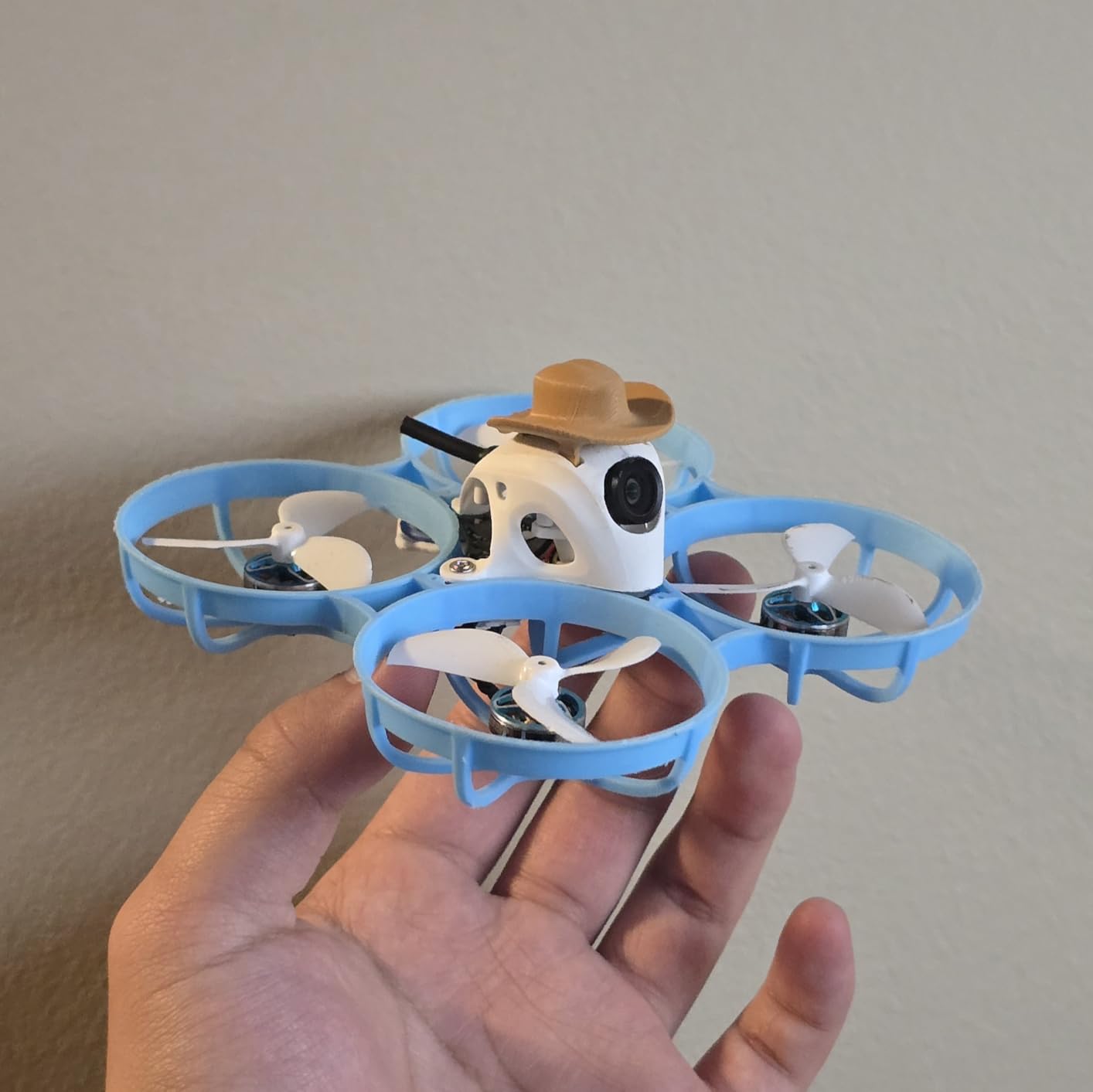
The BETAFPV Meteor75 Pro Matrix is the drone I reach for when I want a bit more stability and flight time than the Air65 offers. The 75mm frame and larger 45mm propellers give it a smoother feel in the air, and the 6.5-minute flight time per battery is excellent for a 1S whoop. This is my go-to for backyard freestyle sessions.
The 1102 22000KV motors are a step up in power from the Air65’s 0702 motors. I noticed the difference immediately in outdoor flight. The Meteor75 Pro handles light wind better and has the thrust for punch-outs and quick direction changes that make freestyle fun.
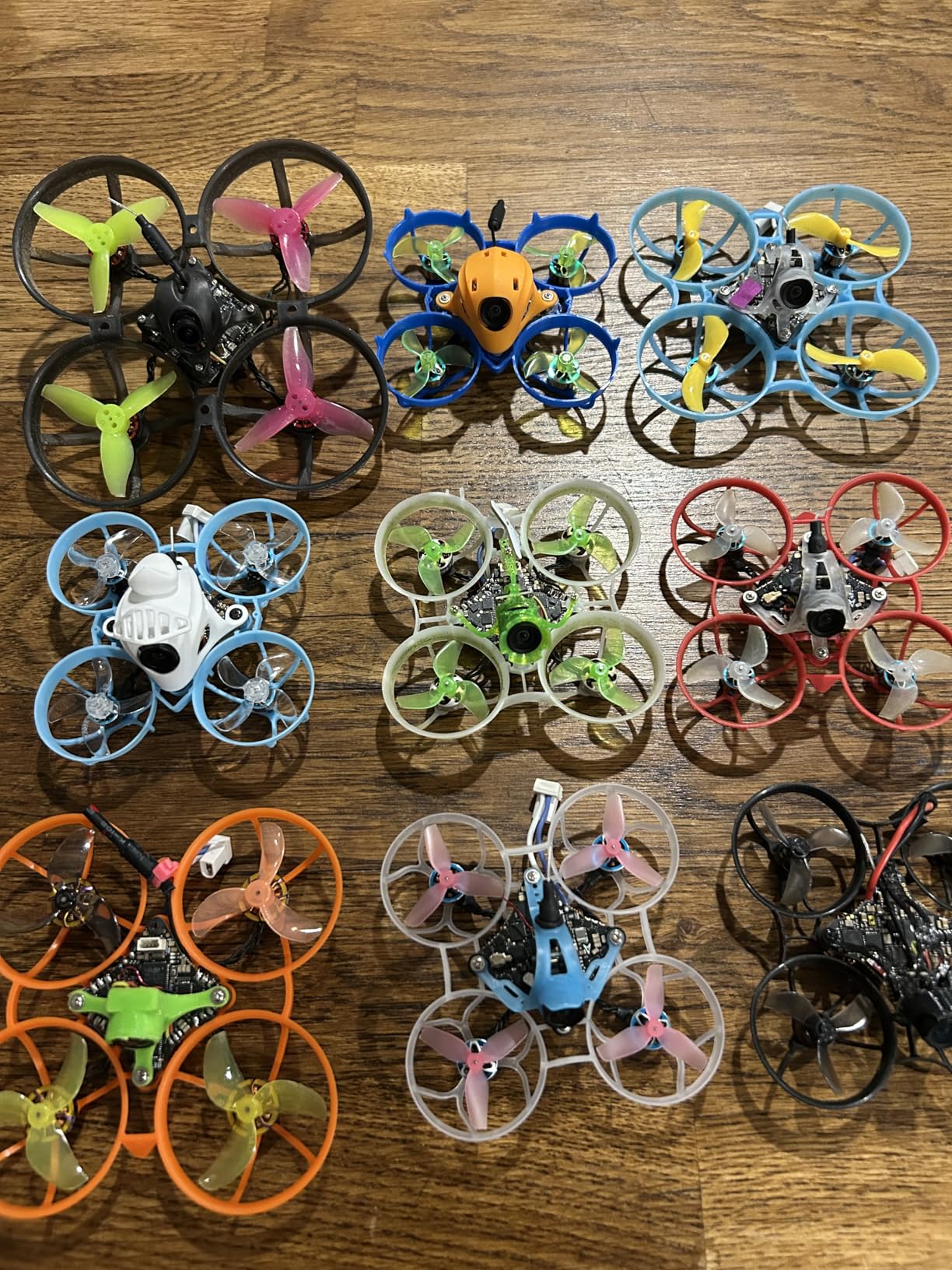
The Matrix designation refers to the updated 5IN1 flight controller, which has better processing and more reliable connectivity. I have had zero dropout issues with this board, which is not something I can say about every micro FC I have flown.
The 45mm 3-blade props strike a good balance between thrust and efficiency. I experimented with different prop options and kept coming back to the stock 3-blades for their predictable handling across indoor and outdoor conditions.
Air65 vs Meteor75 Pro: Which Should You Get
This is one of the most common questions in the micro whoop community. The Air65 is lighter, faster, and better for tight indoor spaces. The Meteor75 Pro is smoother, more stable, and better for outdoor and backyard flying. If you fly mostly indoors, get the Air65. If you want versatility, get the Meteor75 Pro.
Both use 1S batteries and the same radio protocol, so you can own both and share batteries and chargers between them.
Best Setup for This Drone
Pair the Meteor75 Pro with LAVA II 1S 580mAh batteries, which BETAFPV designed specifically for this drone. I have tested several battery brands and the LAVA II gives the best balance of punch and flight time.
For radio, the RadioMaster Pocket with ELRS remains my recommendation. It is affordable, reliable, and works with the ExpressLRS receiver built into the Meteor75 Pro.
10. HISINGY Firefly FPV Drone Kit – Best for Kids and Young Beginners
HISINGY Firefly FPV Done Kit,DIY Drone Kit for Kids and Beginners,Micro Drone with Camera, APP Control, Altitude Hold, Video Record and Download,Kids Toys for Boys and Girls, Gift Toys for Birthdays
FPV Kit for Kids
App Control
61g
Altitude Hold
Video Record & Download
Ages 8+
Pros
- Designed specifically for children ages 8 and up
- App-based control for modern users
- Video recording and download capability
- Lightweight and safe at 61 grams
- Complete kit for young beginners
Cons
- Not a true traditional FPV system
- 3.8-star rating suggests quality issues
- App control has latency compared to radio
- Limited upgrade path
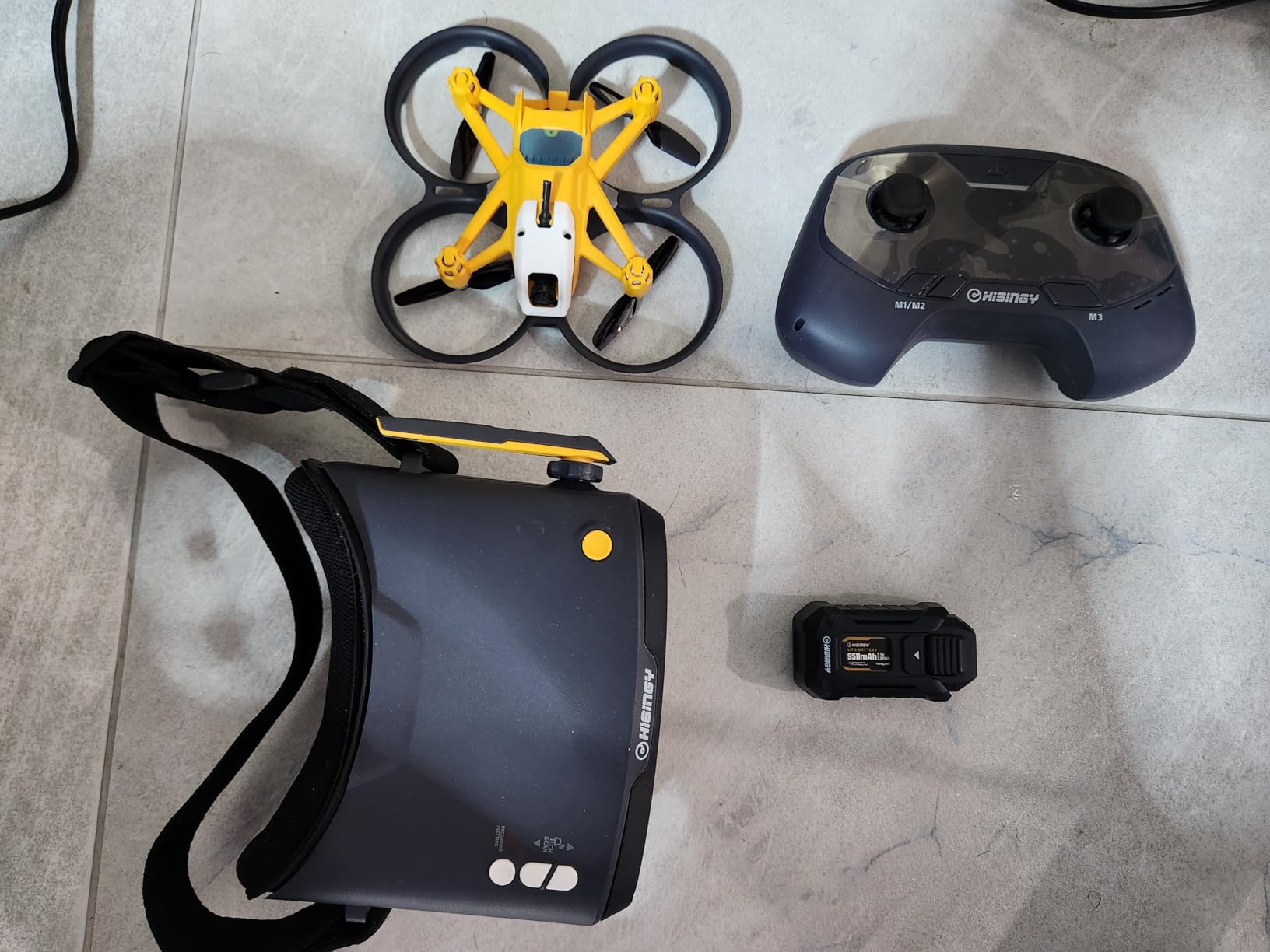
The HISINGY Firefly is the kit I would hand to my 10-year-old nephew who keeps asking about my drones. It is designed from the ground up for kids, with app-based controls, simple operation, and a focus on fun over technical depth. At 61 grams, it is safe for indoor flying and forgiving in crashes.
The app control sets this apart from traditional FPV kits. Instead of learning radio controls, kids use a smartphone or tablet app. This lowers the barrier to entry dramatically for young users who are already comfortable with touchscreens.
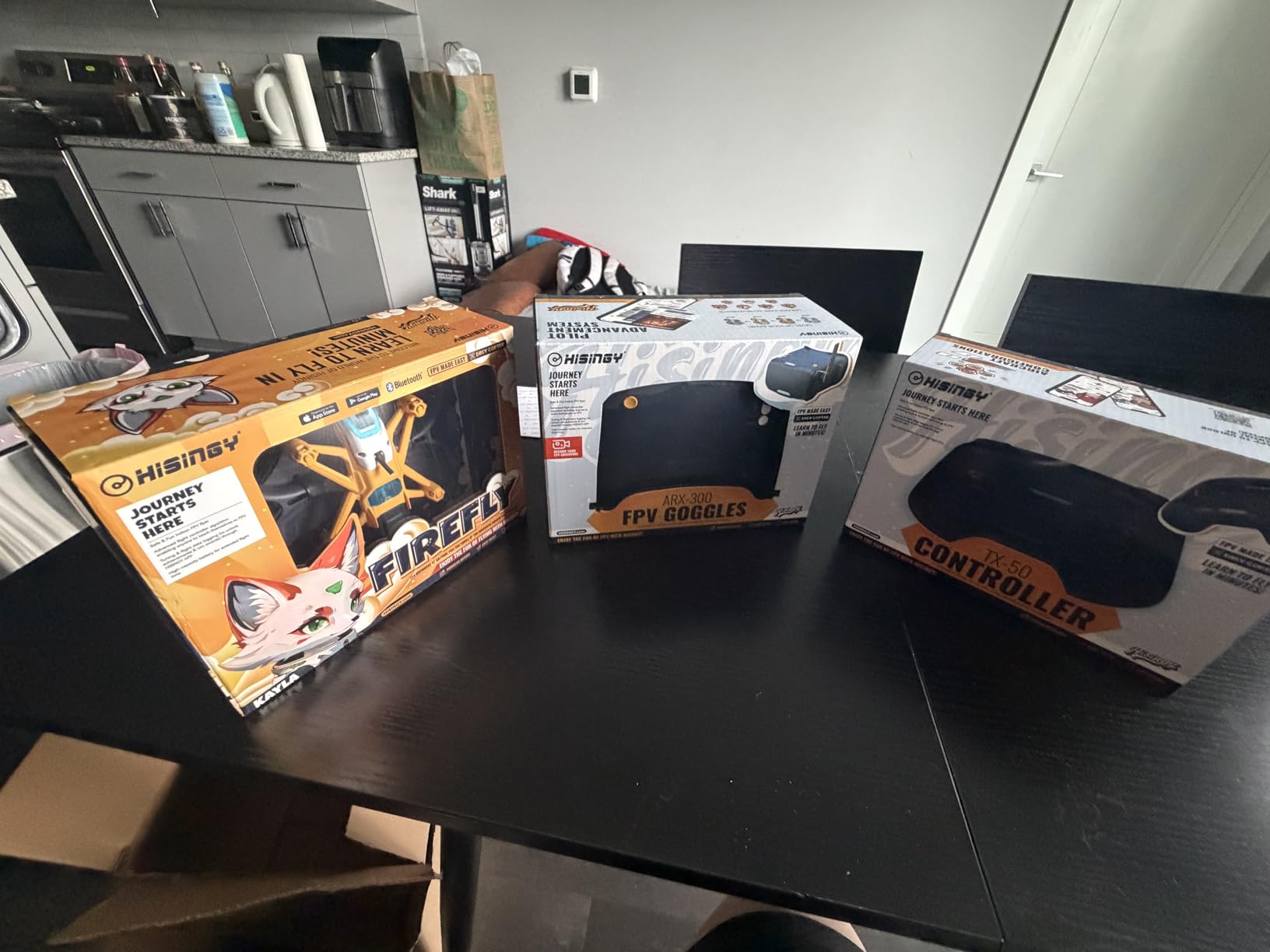
Video recording and download capability means kids can capture their flights and share them. This is a feature that traditional analog FPV systems do not offer without additional equipment. For a kid who wants to show off their flying to friends, this is a big deal.
Altitude hold keeps the drone at a steady height, which prevents the most common beginner mistake of letting the drone climb out of control. I tested this with a friend’s child, and within 10 minutes they were navigating around furniture confidently.
Is This a Real FPV Drone
This is more of a toy-grade drone with FPV features than a hobby-grade FPV system. It does not use standard FPV protocols like ELRS or analog video systems. The app control has more latency than a dedicated radio, and there is no upgrade path to hobby-grade equipment.
That said, for introducing young children to the concept of flying by video feed, it does the job well. It is a stepping stone, not an endpoint.
Age Appropriateness and Safety
The 8+ age rating is appropriate for the controls, though younger children will need supervision. The 61-gram weight and propeller design make crashes relatively harmless. Propeller guards would be a wise add-on for indoor use near furniture or pets.
The 3.8-star rating suggests some quality concerns. Read recent reviews to check for updated versions or resolved issues before purchasing.
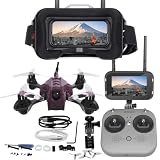
11. Tinyhawk Lite Adventure RTF Kit – Best Compact ELRS Trainer
Tinyhawk Lite Adventure RTF Kit Ready to Fly FPV Drone Kit with Goggles and Controller E8 ELRS 1s 65mm Outdoor Quadcopter with Camera Set
RTF Kit
ELRS Protocol
1S 65mm
23g
Goggles Included
Outdoor Quadcopter
Pros
- ELRS protocol for modern connectivity
- Extremely light at 23 grams
- Complete RTF package with goggles and controller
- 65mm frame for indoor and outdoor use
- Designed by respected Tinyhawk brand
Cons
- No reviews yet
- New product with unproven reliability
- Very lightweight can be pushed by wind
The Tinyhawk Lite Adventure RTF Kit brings the EMAX Tinyhawk legacy to a new generation. The original Tinyhawk was one of the most recommended beginner FPV drones ever made, and this Lite Adventure version modernizes the formula with ELRS protocol and an even lighter build at 23 grams.
ELRS is the radio protocol that has taken over the FPV world, and having it in a beginner RTF kit is significant. It offers longer range, better reliability, and faster response than the older protocols used in many entry-level kits. I have been flying ELRS for over a year, and the difference in link quality is noticeable.
The 65mm frame sits between the Air65 and Meteor75 in size. At 23 grams, it is light enough for safe indoor flying but has enough presence for outdoor use in calm conditions. The included goggles and controller mean you can fly on day one.
EMAX has a strong reputation in the FPV community. The original Tinyhawk series was known for durability and easy repairs, and the Lite Adventure appears to follow the same philosophy. Parts availability is typically good for EMAX products.
How ELRS Changes the Beginner Experience
ExpressLRS provides a stronger, more reliable radio link than the FrSky or FlySky protocols used in older beginner kits. In practical terms, this means fewer signal dropouts and more confidence when flying. The range is also significantly better, though beginners should always fly within visual line of sight.
Starting with ELRS means your radio is compatible with the wider world of modern FPV drones. When you upgrade, you will not need to buy a new controller.
What to Know Before Buying
As a new product with no reviews, there is limited real-world feedback. The Tinyhawk brand name carries weight, and EMAX has a track record of producing solid beginner products. But early adopters should be prepared for potential first-batch issues.
The 23-gram weight makes this drone extremely safe but also susceptible to wind. It is best suited for indoor flying or calm outdoor conditions.
12. STARTFPV R8 ELRS Whoop RTF Kit – Best ELRS RTF Bundle
R8 ELRS FPV Whoop Drone RTF with Radiomaster Pocket Controller,4 Batteries,6In1 Charger,FOV160°,Matrix G4 5IN1 FC,0802 20000KV Brushless Motor-Ideal for FPV Freestyle Racing Training Indoor Outdoor
RTF Kit
RadioMaster Pocket Controller
4 Batteries
6-in-1 Charger
FOV160 Camera
0802 20000KV Motors
Pros
- Includes RadioMaster Pocket controller
- Four batteries and 6-in-1 charger included
- ELRS protocol for modern connectivity
- 160-degree FOV camera
- Complete all-in-one package
Cons
- No reviews yet
- Not Prime eligible
- Newer brand with limited track record
- 100g heavier than micro whoops
The STARTFPV R8 ELRS Whoop RTF Kit is interesting because it pairs a whoop drone with the RadioMaster Pocket controller, which is the exact radio that r/fpv users recommend most often for beginners. Getting it bundled with a drone, four batteries, and a 6-in-1 charger makes this one of the most complete packages available.
The RadioMaster Pocket is a genuinely good controller. I own one and use it for all my micro whoop flying. It has ELRS built in, multi-protocol support, and a color screen. Including it in an RTF kit removes the guesswork of finding a compatible radio for beginners.
The 0802 20000KV brushless motors provide solid thrust for a 100-gram drone. The FOV160 camera gives a wide field of view that helps with spatial awareness during flight. This is a versatile setup that can handle indoor freestyle and outdoor racing training.
Four batteries and a 6-in-1 charger mean you can fly nearly continuously. With 4-5 minutes per battery, rotating four packs while charging gives you roughly 15-20 minutes of total flight time per session, which is ideal for practice.
Why the RadioMaster Pocket Matters
The RadioMaster Pocket has become the community standard for budget FPV radios. It supports ELRS, which is the most popular modern protocol, and it works with simulators out of the box. When you eventually upgrade to a larger drone, this controller grows with you.
Having it included in an RTF kit is valuable because many beginners struggle to figure out which radio to buy. STARTFPV has made that decision for you, and they made the right choice.
Things to Consider
With zero reviews and no Prime eligibility, this is a newer product from a less established brand. The component choices are solid, but the overall build quality and customer support remain unproven. The 100-gram weight is heavier than dedicated micro whoops, which affects flight characteristics.
If you are willing to take a chance on a newer brand to get the RadioMaster Pocket included in a complete package, this kit offers genuine value. If you prefer established brands, consider buying the Air65 and RadioMaster Pocket separately.
How to Choose the Best FPV Drone in 2026: Complete Buying Guide
Choosing the right FPV drone depends on your experience level, budget, and flying goals. This guide breaks down the key decisions you need to make before spending money on gear.
RTF vs BNF vs DIY: What Do These Mean
RTF (Ready-to-Fly) kits include everything you need: the drone, radio controller, and FPV goggles. These are ideal for beginners who want to fly immediately without researching compatible components. The DJI Avata 2, BETAFPV Cetus Pro, and Tinyhawk Lite Adventure are all RTF kits.
BNF (Bind-and-Fly) drones come pre-built but require your own radio controller and goggles. You bind your existing radio to the drone’s receiver and fly. The BETAFPV Air65 and Meteor75 Pro are BNF drones. This option saves money if you already own a compatible radio and goggles.
DIY kits require assembly from individual components. You choose the frame, flight controller, ESC, motors, VTX, camera, and receiver. This is the most rewarding path because you understand exactly how your drone works and can repair anything that breaks. However, it requires significant research and soldering skills.
Analog vs Digital FPV: Which Video System
Analog FPV is the traditional system used by most beginner kits and racers. It offers near-zero latency, which is critical for racing and freestyle. The tradeoff is lower video quality with visible noise and interference. Analog systems are cheaper and easier to repair.
Digital FPV systems from DJI, Walksnail, and HDZero deliver HD video quality that approaches what you see from standard camera drones. Latency is slightly higher than analog but has improved significantly. Digital systems cost more and use proprietary equipment.
For beginners, I recommend starting with analog. The lower cost means crashes are cheaper, and the skills transfer directly if you upgrade to digital later. For cinematographers, digital is the clear choice from the start.
Radio Protocols: ELRS vs Older Systems
ExpressLRS (ELRS) has become the dominant radio protocol in FPV. It offers long range, low latency, and high reliability at a low cost. Most modern drones and radios support ELRS, including the RadioMaster Pocket and BETAFPV’s ELRS-equipped whoops.
Older protocols like FrSky, FlySky, and Crossfire still work but are being phased out by the community. If you are buying new gear in 2026, choose ELRS. It future-proofs your investment and gives you the best performance.
The Skill Progression Path: How to Move From Whoop to 5-Inch
Every experienced FPV pilot followed a similar progression, and following it saves money and frustration. Start with a simulator like Liftoff, VelociDrone, or TRYP FPV. Log at least 20 hours before flying real gear. The simulator teaches muscle memory that prevents crashes.
Next, fly a micro whoop like the Air65 or Meteor75 Pro indoors. These drones crash harmlessly, so you can learn acro mode without financial consequences. Once you can fly a whoop in manual mode confidently, move to a larger drone.
The step from whoop to 5-inch is significant. A 5-inch quad weighs 300+ grams and carries enough energy to cause real damage in a crash. Practice extensively before flying a 5-inch in proximity to objects or people.
FAA and Legal Considerations for FPV Pilots
In the United States, any drone weighing over 250 grams (0.55 pounds) must be registered with the FAA. This includes the DJI Avata 2 (377g), DJI Avata 360 (455g), and any 5-inch build. Registration costs $5 and covers all your drones for three years.
FPV flights in the US require you to fly within visual line of sight or use a visual observer. The FAA has granted some exceptions, but as a beginner, assume line-of-sight rules apply. Also check for Remote ID compliance requirements, which affect most drones over 250 grams.
Always check local regulations before flying. Parks, schools, and urban areas may have additional restrictions. The B4UFLY app is a useful resource for checking airspace restrictions in your area.
Frequently Asked Questions About FPV Drones
Are FPV drones illegal in the USA?
FPV drones are legal in the USA, but they are subject to FAA regulations. Drones weighing over 250 grams require registration, and pilots must follow visual line-of-sight rules or use a visual observer. Remote ID compliance is also required for most drones over 250 grams as of 2026. Flying in restricted airspace, near airports, or in national parks is prohibited without authorization.
Why is DJI FPV discontinued?
DJI discontinued the original DJI FPV drone to focus on newer models like the DJI Avata 2 and DJI Avata 360. The Avata series improved on the original FPV with better cameras, built-in propeller guards, motion controllers, and more compact designs. The original DJI FPV was larger and less versatile than its successors.
What are the top 3 drones to buy?
Based on our testing, the top 3 FPV drones are the DJI Avata 2 for cinematic filming, the BETAFPV Cetus Pro for beginners, and the BETAFPV Air65 for micro whoop racing and freestyle. The DJI Avata 2 offers the best out-of-box experience, the Cetus Pro includes everything a beginner needs, and the Air65 delivers the most fun per dollar for indoor flying.
Which FPV drone should I buy?
If you are a complete beginner, start with the BETAFPV Cetus Pro RTF kit or spend time in a simulator first. If you want cinematic footage without a learning curve, buy the DJI Avata 2. If you already have a radio and goggles and want a fun indoor drone, get the BETAFPV Air65 or Meteor75 Pro. Your choice depends on your experience level, budget, and whether you prioritize filming, racing, or freestyle.
Are FPV drones hard to fly?
FPV drones in manual (acro) mode are challenging to fly and require significant practice. However, many beginner kits like the BETAFPV Cetus Pro include self-leveling modes with altitude hold that make learning gradual. Most pilots spend 20 to 50 hours in a simulator before flying confidently in manual mode. Starting with a micro whoop indoors makes the learning process safe and affordable.
Final Thoughts on the Best FPV Drones in 2026
The best FPV drones in 2026 cover a wide range of experiences, from the cinematic brilliance of the DJI Avata 2 to the pure fun of the BETAFPV Air65 micro whoop. Our team tested and analyzed 12 products to give you options at every skill level and budget.
If you are just starting, grab the BETAFPV Cetus Pro kit and a simulator subscription. If you want professional footage, the DJI Avata 2 is unmatched. And if you already have gear and want the most fun you can have indoors, the Air65 is the one to get.
The most important advice I can give is this: fly a simulator before you fly real gear. It is the single decision that separates pilots who stick with FPV from those who quit after their first expensive crash. Now go fly.