
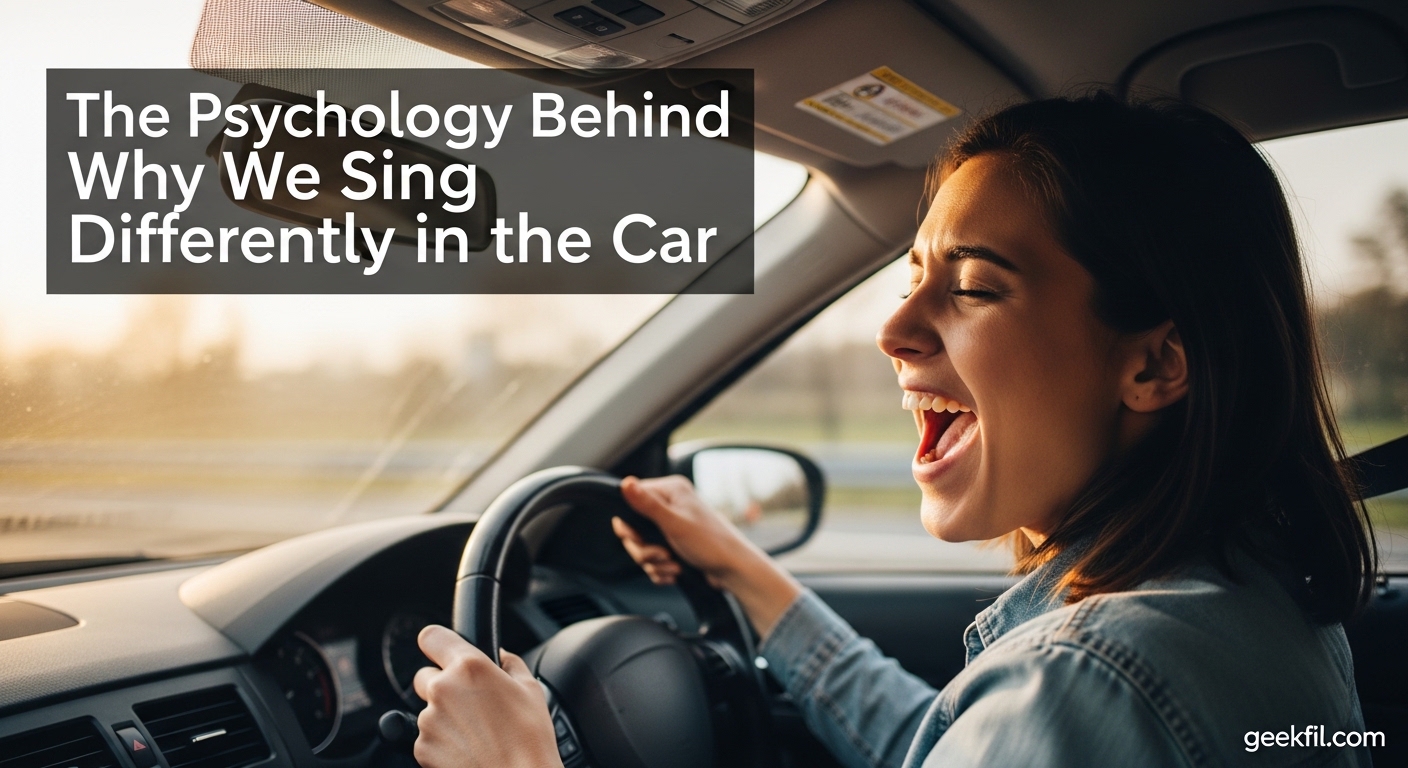
You are cruising down the highway, windows up, favorite playlist blasting. The chorus hits, and suddenly you are not just humming along. You are belting out every note like you are headlining a stadium tour. Your hands grip the steering wheel like a microphone. For those few minutes, you are the main character in your own music video.
But here is the strange part. If someone walked into the room while you were singing at home, you would probably clam up. Yet in your car, you sing with a freedom and confidence that disappears the moment you step onto a karaoke stage or even hum in the shower with the door unlocked.
The psychology behind why we sing differently in the car is fascinating. It is not just about liking music. There are real neurological, emotional, and environmental factors at play that transform your vehicle into the ultimate private concert venue. In this guide, I will break down the science behind this phenomenon and explain why your car might be the best therapy session you never knew you were having.
Table of Contents
How Singing in the Car Affects Your Brain Chemistry
When you sing in the car, your brain becomes a chemical cocktail of happiness. This is not metaphorical. Research has consistently shown that singing triggers the release of several powerful neurotransmitters that directly impact your mood and well-being.
The Dopamine Rush
Dopamine is your brain’s reward chemical. It is the same neurotransmitter released when you eat delicious food, win a game, or receive a compliment. When you sing along to music you love, your brain floods with dopamine. This creates an immediate mood boost that explains why you feel happier after a good car singing session.
The connection is so strong that studies have linked music-triggered dopamine release to reduced symptoms of depression and anxiety. Your commute suddenly becomes less about traffic and more about self-medication through melody.
Oxytocin and Social Bonding
Oxytocin is often called the love hormone because it is released during social bonding, hugging, and physical connection. Here is the fascinating part: singing also triggers oxytocin release, even when you are alone. This is why singing in the car can feel strangely connecting and comforting.
Your brain processes singing as a social activity, releasing bonding chemicals that reduce feelings of isolation. For solo drivers, this is particularly valuable. That 45-minute commute no longer feels like solitary confinement. It feels like hanging out with your favorite artist.
Serotonin and Stress Reduction
Serotonin regulates mood, sleep, and stress levels. Singing has been shown to increase serotonin production, which helps explain why you feel calmer and more centered after a singing session in traffic. Instead of road rage, you experience road relaxation.
The combination of dopamine, oxytocin, and serotonin creates what researchers call the singer’s high. It is similar to runner’s high but accessible to anyone with a car and a radio. No gym membership required.
The Privacy Factor: Why No Audience Changes Everything
One of the most powerful psychological elements of car singing is the complete absence of an audience. This matters more than you might think. Performance anxiety affects nearly everyone to some degree. Even professional musicians report elevated stress when they know they are being evaluated.
The Judgment-Free Zone
In your car, there is no one to hear you miss a note. No one to judge your song choice. No one to comment on your pitch or your dramatic hand gestures. This absence of external evaluation creates a psychological safety net that allows for complete authentic expression.
I have noticed this in my own experience. I can barely hum when someone else is in the house. But in my car? I am hitting high notes I did not know I had. The privacy is liberating. It removes the mental filter that usually stops us from expressing ourselves fully.
Confidence Through Isolation
The isolation of your car does something interesting to your confidence. Without the possibility of being overheard, you take risks you would never take otherwise. You try that falsetto. You attempt the rap verse. You sing with a volume and enthusiasm that would embarrass you in any other context.
This confidence-building aspect is why many voice coaches actually recommend singing in the car as practice. It builds muscle memory and vocal strength without the self-consciousness that often sabotages beginners.
The Invisible Audience Effect
Interestingly, even when you drive with passengers, you often sing differently than you would at a party or on stage. The car creates a semi-private bubble. Your passengers are not an audience expecting a performance. They are co-participants in the commute. This lowers the stakes and preserves some of that judgment-free feeling.
Of course, solo driving remains the ultimate freedom. When you are alone, you can be completely uninhibited. You can process emotions through song without worrying about what anyone thinks. That emotional processing is a key part of the psychological benefit.
The Acoustic Advantage: Why Your Voice Sounds Different in the Car
Have you ever noticed that your voice sounds better in the car than it does anywhere else? You are not imagining it. There is real acoustic science behind why we sing differently in the car, and it has to do with the unique sound environment your vehicle creates.
Enclosed Space Sound Reflection
Cars are essentially small, enclosed boxes with hard, reflective surfaces. When you sing in your car, your voice bounces off the windows, dashboard, and doors, creating natural reverb and resonance. This acoustic effect smooths out vocal imperfections and creates a fuller, more polished sound.
Think of it like singing in a tiny concert hall. The enclosed space amplifies certain frequencies and masks others. Your voice blends with the reflected sound, creating what audio engineers call a wet signal. It is forgiving and flattering to the human voice.
The Small Room Effect
Acoustically, cars function similarly to vocal booths in recording studios. They are small enough to prevent sound from dissipating but enclosed enough to create controlled reflection. This small room effect emphasizes lower frequencies and adds warmth to your voice.
In contrast, singing in a large open space or outdoors allows your voice to scatter. You hear more of your raw, unamplified sound, which often feels thinner and exposes more flaws. The car gives you the opposite experience. You hear a version of your voice that is enhanced by the environment.
Why This Matters for Psychology
The acoustic advantage creates a positive feedback loop. When you sound better to yourself, you sing with more confidence. That confidence makes you sing louder and more freely. The result is a better performance, which reinforces the behavior.
This is why many people report being better singers in their car than anywhere else. The environment is literally working in your favor, creating ideal conditions for vocal expression. Your brain receives positive auditory feedback that encourages you to keep singing.
Emotional Regulation and Stress Relief Through Car Karaoke
Beyond the brain chemistry and acoustics, singing in the car serves a powerful psychological function: emotional regulation. It is one of the most accessible forms of self-soothing available, and you probably do it without even realizing why.
Processing Unspoken Emotions
Music gives us language for emotions we struggle to express. When you sing along to a breakup song after a hard day, you are not just entertaining yourself. You are processing grief, anger, or loneliness through the lyrics and melody. The car becomes a mobile therapy session.
I have personally found that singing after a stressful workday helps me transition from work mode to home mode. The music creates a boundary between the stress of the office and the peace of home. By the time I pull into my driveway, I have processed the day’s tensions through song.
Commute Stress Transformation
Commutes are notoriously stressful. Traffic, deadlines, and the rush to get somewhere on time create a perfect storm of anxiety. Singing interrupts this stress cycle. It forces your brain to focus on melody, rhythm, and lyrics instead of frustration.
Research shows that singing while driving can actually improve focus and alertness. It keeps your brain engaged without creating the cognitive load of a phone call or podcast. You remain present and attentive while simultaneously regulating your emotional state.
Road Rage Prevention
The dopamine and serotonin released during singing counteract the cortisol and adrenaline that fuel road rage. When someone cuts you off, your natural response might be anger. But if you are mid-chorus, you are less likely to escalate. The music anchors you.
Some psychologists even recommend singing as a deliberate anger management technique for drivers prone to road rage. It is hard to stay furious when you are belting out your favorite anthem. The emotional shift happens almost automatically.
Physical Benefits of Belting Out Tunes Behind the Wheel
The psychology behind why we sing differently in the car is not just in your head. There are real physical benefits that contribute to the overall experience and explain why it feels so good.
Diaphragmatic Breathing
Singing requires deep, diaphragmatic breathing. This type of breathing activates your parasympathetic nervous system, which is responsible for rest and relaxation. It is the opposite of the shallow chest breathing we do when we are stressed.
When you sing in the car, you are essentially doing breathing exercises without realizing it. Each phrase requires controlled exhalation. Each breath between lines is deeper than normal. Over a 20-minute commute, this adds up to significant physical relaxation.
Oxygen and Alertness
Deep breathing increases oxygen flow to your brain. This improves alertness, which is particularly valuable during long drives or when you are feeling drowsy. Singing keeps your brain oxygenated and engaged in a way that passive listening cannot match.
Some research suggests that singing while driving can be as effective as caffeine for maintaining alertness on long trips. The combination of oxygenation, mental engagement, and emotional stimulation creates a natural wakefulness.
Tension Release
Many of us carry tension in our neck, shoulders, and jaw without realizing it. Singing requires you to relax these muscles to produce sound properly. The physical act of opening your mouth wide, dropping your jaw, and projecting your voice releases built-up tension.
After a good car singing session, you might notice your shoulders are lower, your jaw is unclenched, and your neck feels looser. This physical relaxation reinforces the emotional benefits and creates an overall sense of well-being.
The Solo Drive: Isolation, Control, and Connection
Solo driving creates a unique psychological state that amplifies all the benefits we have discussed. Understanding why we sing differently when alone in the car requires looking at the psychology of isolation and control.
Filling the Social Gap
Humans are social creatures. Extended solitude, even when chosen, creates a subtle sense of disconnection. Singing fills this gap. It simulates social interaction by engaging the parts of your brain associated with communication and emotional expression.
When you sing along with an artist, you are technically alone, but psychologically, you are participating in a shared emotional experience. The artist’s voice and your voice merge. The lyrics become your story. This parasocial connection reduces the loneliness of solo drives.
Sense of Control
Driving requires constant attention and responsiveness to external factors: traffic, lights, other drivers. It can feel chaotic and unpredictable. Singing restores a sense of control. You choose the song. You control the volume. You decide when to sing and when to stop.
This control is psychologically restorative. In a world full of obligations and external demands, your car becomes a space where you make the rules. The music is yours. The performance is yours. That autonomy matters for mental health.
The Transition Ritual
Many people use car singing as a ritual to mark transitions. The morning commute playlist prepares you for work. The evening sing-along helps you decompress. These rituals create psychological boundaries between different parts of your life.
Without them, work stress bleeds into home life, and morning grogginess follows you to the office. Car singing creates a defined transition space. By the time you arrive, you have mentally shifted gears, thanks in part to the emotional processing that happens through music.
Frequently Asked Questions About Singing in the Car
Does singing in the car make you a better singer?
Yes, singing in the car can improve your vocal skills. The private environment reduces performance anxiety, allowing you to practice without self-consciousness. The acoustics in your car also provide positive auditory feedback, building confidence. Regular practice in this low-pressure setting strengthens your diaphragm, improves breath control, and builds muscle memory for pitch and tone.
Why do songs sound different in the car?
Songs and your voice sound different in the car because of the enclosed space acoustics. Hard surfaces like windows and dashboards create sound reflection and natural reverb. This small room effect amplifies lower frequencies and smooths out vocal imperfections. The confined space prevents sound from dissipating, creating a fuller, more resonant sound similar to a recording studio vocal booth.
What happens to your brain when you sing in the car?
When you sing in the car, your brain releases a cocktail of feel-good chemicals including dopamine, oxytocin, and serotonin. Dopamine creates a reward response and mood boost. Oxytocin provides feelings of connection and bonding. Serotonin reduces stress and promotes calm. This combination creates the singer’s high, a state of elevated mood and reduced anxiety.
Is singing while driving dangerous?
Singing while driving is generally safe and can actually improve alertness. Unlike phone calls or texting, singing does not require visual distraction or complex cognitive processing. It keeps your brain engaged and oxygenated. However, excessive emotional involvement in the music or performing complex hand gestures could be distracting. Moderate singing to familiar songs is considered low-risk.
Why do I only sing in my car and nowhere else?
You probably only sing in your car because it offers a unique combination of privacy, acoustics, and psychological safety. The enclosed space prevents others from hearing you, eliminating judgment and performance anxiety. The acoustics make you sound better, creating positive feedback. Additionally, the association between driving and music creates a habit loop that makes car singing feel natural while other settings feel exposed.
Conclusion: Embrace Your Car Karaoke Sessions
The psychology behind why we sing differently in the car is a fascinating blend of brain chemistry, acoustic science, and emotional regulation. Your car is not just transportation. It is a mobile therapy booth, a private concert hall, and a judgment-free zone rolled into one.
When you belt out tunes behind the wheel, you are triggering dopamine, oxytocin, and serotonin releases that improve your mood and reduce stress. You are benefiting from acoustic properties that make you sound better than you do anywhere else. You are creating a private space where performance anxiety disappears and authentic expression flourishes.
So the next time you catch yourself singing at full volume on the highway, do not feel silly. Feel smart. You are engaging in one of the most accessible forms of self-care available. You are processing emotions, reducing stress, and maybe even becoming a better singer. Keep the windows up, the playlist going, and the high notes coming. Your brain will thank you.