
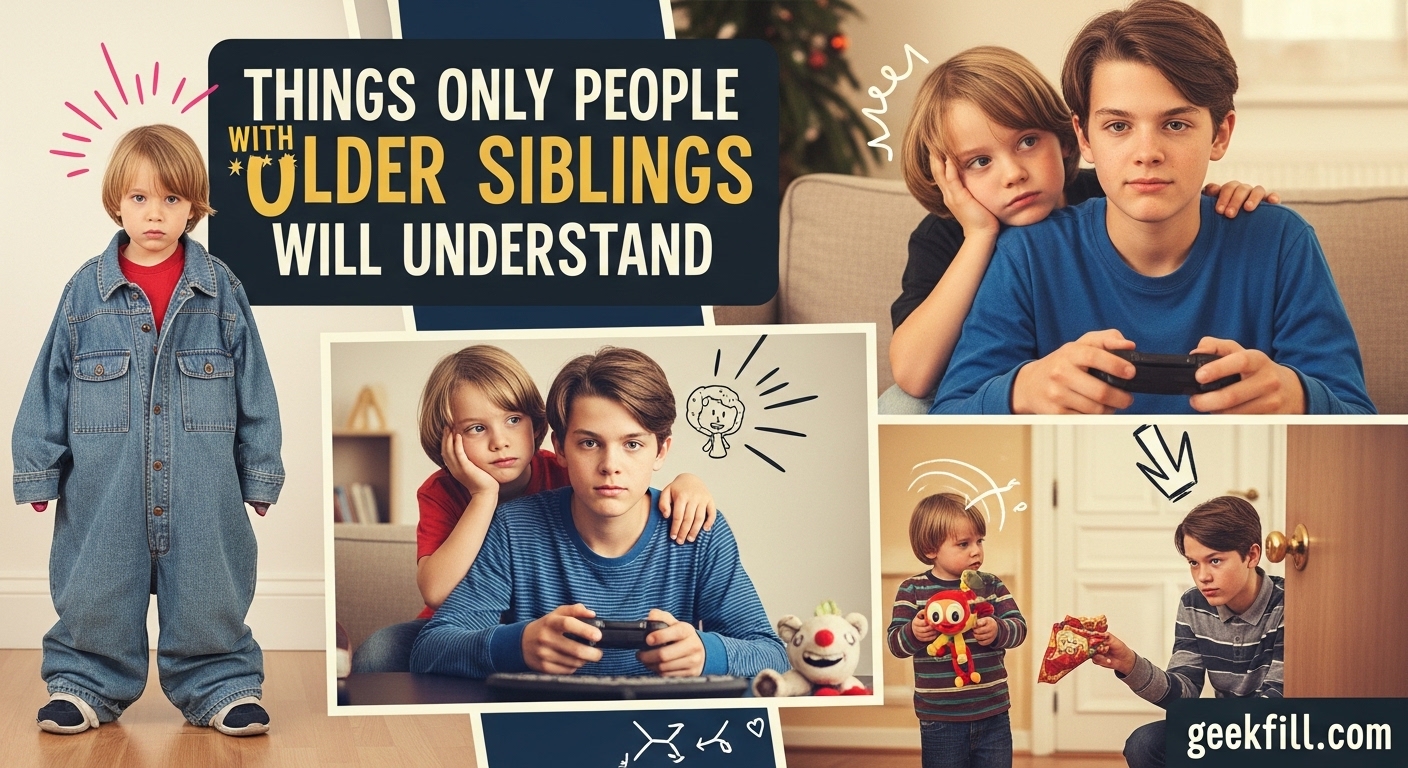
Growing up with an older sibling means experiencing a childhood filled with unique moments that only you and your fellow younger siblings can truly appreciate. From wearing clothes that already had stories written into their fabric to hearing your name butchered through a lineup of your siblings’ names, these shared experiences create an unspoken bond.
In this article, I will walk you through ten things only people with older siblings will understand. Whether you are still living at home or reminiscing about childhood from your own apartment, these points will hit home in ways that might make you laugh, cringe, or text your older sibling immediately.
Our team at Geek Fill spent weeks reading through forum discussions, childhood psychology research, and sharing our own sibling stories to create this list. What we found is that while technology and social media have changed how siblings interact in 2026, the core experiences remain surprisingly consistent across generations.
Table of Contents
10 Things Only People With Older Siblings Will Understand
These ten points capture the essence of growing up as the younger child. Each one represents a rite of passage that shaped who you became.
1. Hand-Me-Downs Were Your Entire Wardrobe
Your childhood wardrobe consisted almost entirely of clothes your older sibling had already broken in. Those jeans with the worn-out knees? Your sibling fell on the playground in them three years ago. That faded band t-shirt? They grew out of it after obsessing over that artist for one summer.
I remember getting my first “new” clothes that were actually mine, and it felt like winning the lottery. The tags were still attached, the fabric wasn’t stretched, and nobody had spilled juice on it yet. Hand-me-downs taught us resourcefulness, but they also made us deeply appreciate anything that came straight from the store with our name on it.
The fashion choices weren’t always yours either. You inherited your sibling’s style preferences, whether you liked them or not. By the time you could choose your own clothes, you’d already developed oddly specific opinions about what fabrics feel right against your skin.
2. Your Parents Called You by Every Sibling’s Name First
Your parents had a mental Rolodex of names they had to cycle through before landing on yours. You’d hear “Jamie! No, wait, Alex! I mean… Taylor!” before they finally got to you. It became a running joke at family gatherings, but deep down it taught you that you were part of a sequence, not a standalone entity.
This phenomenon doesn’t stop at siblings either. Family pets, cousins, and even fictional characters made it into the name rotation. I once had my mom call me by our childhood dog’s name when I was sixteen. You learned to respond to anything remotely similar to your actual name.
The silver lining? You developed a thick skin about identity. You understood that names are just labels and that your place in the family was secure, even if your parents couldn’t remember which kid you were in the moment.
3. Living in Someone Else’s Shadow at School
Walking into a classroom and hearing “Oh, you’re [Sibling’s Name]’s brother/sister!” became your standard introduction. Teachers who had your older sibling three years prior already had expectations set before you opened your mouth. If your sibling was a straight-A student, you felt pressure to match that. If they were the class clown, you had to work twice as hard to be taken seriously.
The comparisons weren’t always verbal, but they were constant. Your report cards came with knowing looks from teachers who remembered your sibling’s perfect attendance or impressive science fair project. You couldn’t just be yourself; you had to either live up to or differentiate yourself from the standard that was already set.
This experience shaped how you approached new environments throughout your life. You learned to either embrace the connection or establish your independence early. Either way, you developed a sense of identity that was forged in opposition to or in harmony with someone else’s reputation.
4. The “Because I’m Older” Excuse Was Law
“Because I’m older” was the ultimate trump card in any sibling argument. It didn’t matter how logical your point was or how right you were. Age was the currency that bought authority in your household. Your older sibling got the bigger piece of cake, the first pick of movie, and the final say in any dispute because they arrived on Earth first.
This arbitrary hierarchy governed everything from who got to shower first to who controlled the TV remote. You learned the fine art of negotiation, bribery, and strategic timing. If you wanted something, you had to wait until your sibling was out of the house or asleep.
The unfairness of it all was maddening as a child, but looking back, you can see how it taught you patience and creative problem-solving. You became an expert at finding loopholes and alternative routes to get what you wanted.
5. You Never Had a Real Babysitter
While your friends had professional babysitters or neighborhood teenagers watch them, your parents simply left you with your older sibling. This arrangement meant you were always supervised by someone who had a vested interest in making your life difficult while maintaining plausible deniability with your parents.
The power dynamic was fascinating. Your sibling had just enough authority to boss you around, but not enough maturity to handle actual emergencies. I remember my older sister once trying to cook dinner for us and nearly burning down the kitchen. We never told our parents about that one.
This pseudo-babysitting arrangement taught you resilience and self-reliance. You learned to entertain yourself, solve your own problems, and occasionally manipulate your sibling into doing what you wanted by threatening to tell on them.
6. Player Two Was Your Permanent Role
Whether you were playing video games, board games, or imaginary adventures, you were always Player Two. Luigi to their Mario, Robin to their Batman, the sidekick to their hero. The controller with the sticky joystick was yours. The slightly broken action figure was your assigned character.
Video game sessions were particularly illuminating. You sat on the floor watching them play for hours, waiting for your turn that would inevitably last five minutes before they “accidentally” hit the reset button. You became an expert at backseat gaming, shouting advice they never asked for and would never follow.
This dynamic taught you about hierarchy and waiting your turn. It also gave you a unique perspective on leadership and support roles. You learned that every hero needs someone backing them up, even if that someone is perpetually annoyed about it.
7. The Front Seat Was a Luxury You Rarely Experienced
Shotgun rules in your household were written in stone, and your older sibling had permanent dibs. You spent years in the back seat, staring at the back of their head, wondering what it felt like to control the radio and have actual leg room. The front seat was a mythical place of power and air vents that actually reached you.
Car rides became strategic battles. You learned to sprint to the car faster, develop “dibs” systems, and negotiate trades using snacks or favors. I once traded my entire week’s allowance for three front-seat rides to school.
The rare occasions when your sibling wasn’t in the car felt like winning the lottery. You’d slide into that front seat with the reverence of someone sitting on a throne, adjusting the mirrors that would inevitably be reset before your sibling got back in.
8. Being Told You Had It “So Much Easier”
According to your parents and older sibling, you had it easy. They had to break in your parents, test the boundaries, and suffer through stricter rules. By the time you came along, your parents were tired, the rules were relaxed, and you supposedly got away with everything.
What they never acknowledged was the pressure of following a path already paved. You had to live up to their achievements while navigating a world that had already seen your family name. The rules might have been looser, but the expectations were well-established.
This narrative of the “easy” younger sibling ignores the reality of being constantly compared to someone who got there first. You learned to either rebel against the established pattern or perfect it, but you never got to simply exist without context.
9. The Mixed Blessing of Having a Built-in Protector
Your older sibling was simultaneously your biggest bully and your fiercest protector. Nobody else was allowed to mess with you; that was their exclusive right. If anyone at school gave you trouble, your sibling would step in with the intensity of a bodyguard, despite having made your life miserable that same morning.
This protective instinct extended to friends, teachers, and even extended family. You learned that sibling rivalry was a private affair. What happened between you stayed between you, and woe to any outsider who tried to interfere.
This duality taught you about unconditional love disguised as antagonism. You knew that beneath the teasing and competition was someone who genuinely cared about your wellbeing. It created a bond that transcended the daily conflicts and established a foundation of trust that often lasts into adulthood.
10. You’ll Always Be the “Baby” of the Family
No matter how old you get, you will always be the baby in your family’s eyes. When you visit home as an adult, you fall back into childhood patterns. Your achievements are met with surprise, as if your family forgot you grew up. Your opinions are sometimes dismissed with the same tone used when you were ten.
This eternal childhood status has its perks and frustrations. Family gatherings involve relatives commenting on how much you’ve grown, even when you’re in your thirties. Your parents still offer to do your laundry when you visit, and your sibling still treats you like you need protection.
The dynamic shifts as you all age, but the fundamental roles remain. In 2026, you might be a professional with a mortgage and responsibilities, but at Thanksgiving dinner, you’re still the youngest child reaching across the table for the potatoes.
Modern Sibling Dynamics in the Digital Age
While these ten points capture timeless experiences, modern technology has added new layers to sibling relationships. Social media means you can keep tabs on your sibling’s life without actually talking to them. Family group chats have replaced kitchen table conversations. Video calls allow you to stay connected across continents.
However, the core experiences remain unchanged. Hand-me-downs might come from online thrift stores now, and video games are played over the internet rather than on the same couch, but the power dynamics, the comparisons, and the bond remain as strong as ever.
Post-pandemic sibling relationships have taken on new significance. Many of us spent months or years separated from family, making us appreciate these connections more deeply. The shared childhood experiences that once felt annoying now feel like precious common ground.
Frequently Asked Questions
Which sibling usually has the highest IQ?
How does birth order affect relationships?
What are the benefits of having older siblings?
Why do parents compare siblings?
Do older siblings affect personality development?
Conclusion: Things Only People With Older Siblings Will Understand
Growing up with an older sibling shaped you in ways you might not even realize. Those hand-me-downs taught you adaptability. The constant comparisons built your resilience. The hierarchy established your understanding of power dynamics. And beneath all the frustration and competition was a bond that often becomes one of the most important relationships in your life.
The ten things we covered here represent more than just funny childhood memories. They are the building blocks of family dynamics that influence how you approach relationships, handle conflict, and understand your place in the world. Whether you’re currently living with your sibling or haven’t seen them in months, these shared experiences connect you in ways that transcend distance and time.
Take a moment to appreciate your older sibling, even if they still call you by the wrong name sometimes. Send them a text, share this article, or plan a visit. The bond between siblings is one of life’s most enduring gifts, and it all started with those small, frustrating, wonderful moments that only you two truly understand.